Anne is a former patient from a women’s asylum trying to carve out a new life for herself in a world that doesn’t understand her. Newcomer Lawrence is desperate to develop his talent as a photographer and escape the restrictions of his puritanical upbringing. Ellis, an army surgeon, has lived through the trauma of one civil war and will do anything to avoid another bloodbath.
Each keeps company with the restless beasts of Paris’ Menagerie, where they meet, fight their demons, lose their hearts, and rebel in a city under siege.
A dazzling historical epic of love and survival, Stef Penney carries the reader captivated through war-torn Paris.
This was my first Stef Penney novel, but it certainly won’t be my last. I was so happy to get an early ARC through NetGalley and thrilled to receive a beautiful proof copy in the post. I must admit I did that thing of being drawn in by the beautiful and eye-catching cover art. I love animals too, so although I’ve come to this later than I should, it was always hovering around and I yearned to read it and see it live up to the promise of that cover. This historical novel opens in May 1870 within the city of Paris. This isn’t the city of culture and romance, it’s a city on the verge of revolution and war. The three characters are also in transition: Anne Petitjean has been released from a women’s asylum and is now trying hard to begin her new life; Lawrence Harper has moved to the city from Canada, running away from a strict and puritanical upbringing and hoping to become known for his photography; Ellis Butterfield has lofty American connections and is an aspiring poetry, but as an Army medic he’s just escaped one civil war and may be about to get stuck in another. These very different figures met at the Paris Menagerie and feel a connection to the animals there.
Probably due to my mental health background and history of supporting a lot of people at this halfway stage of recovery, Anne’s experience really touched me. She tried to come to terms with her experiences in hospital and I thought the benefits she got from spending time with the animals in the menagerie really rang true. Her relationship with the tigress Marguerite was wonderful. I felt sympathy for Lawrence too, trying to come to terms with his homosexuality in a time when it really wasn’t accepted. There were other background characters too, all revolving around animals, but these two seemed to stay on my mind. The author has chosen this turbulent, transition point in history because it throws our characters into change. It’s a tense and dangerous period of unrest but also so complicated period as the city is placed under siege by Prussian forces, until eventually the French force surrender. Following this, radicals who were ordinary Paris citizens, staged a revolution under the banner of the ‘Paris Commune’. They managed to hold the city for several months and I thought the author weaved the tale of her individual characters into this tense historical background with great skill. She manages to represent the reality of this difficult time for the ordinary people in Paris who just wanted to live their lives. To some extent, their energy would have been taken up with basic survival, but our characters are trying to map out a future too. If you are very sensitive towards animals and our treatment of them, I will say there are some themes you might struggle with. The author has included allusions to the keeper’s struggle to feed the animals during the food shortages. Unfortunately, some would have to be destroyed and there were people who traded their meat on the black market. I love animals so this was hard, but I understood that this is a story of survival for the people as well as the animals. I usually read books set in the aftermath of war, but this made me think about the beginnings and how the calm and routine of everyday life is suddenly ripped apart. I thought the author told the tale well and while I was reading I was completely immersed in the powerful sense of place she created and found it very hard to drag myself away. It’s a book I’ve continued to think about in the weeks since and that’s a testament to the evocative atmosphere and the powerful story the author created.
Out now in paperback from Quercus
Meet the Author
Stef Penney is a screenwriter and the author of three novels: The Tenderness of Wolves (2006), The Invisible Ones (2011), and Under a Pole Star (2016). She has also written extensively for radio, including adaptations of Moby Dick, The Worst Journey in the World, and, mostly recently, a third installment of Peter O’Donnell’s Modesty Blaise series.
The Tenderness of Wolves won Costa Book of the Year, Theakston’s Crime Novel of the Year, and was translated into thirty languages. It has just been re-issued in a 10th anniversary edition.
It seems to be a year of incredible debuts and this one is definitely going to stay with me. We open at a dinner party. Robyn and her wife Cat are hosting an evening for their friends Willa and Jamie, Robyn’s brother Michael and his partner Liv, and Cat’s brother Nat and his new girlfriend Claudette. It’s the first time the group will meet Claudette and Robyn hopes to make it a chilled, relaxed evening. Robyn and Michael grew up in a rambling and ramshackle farm house in the south west of the UK. Their father Chris was a potter and it was a bohemian, relaxed place to grow up. Robyn had a scholarship for a private girl’s school and she ‘buddies’ with Willa who was a new sixth former. They shared a study bedroom and Robyn soon learns that Willa’s life is overshadowed by the disappearance of her sister Laika. Her boyfriend Jamie is a wine merchant who lived in South Africa and his confidence can become overbearing. Michael’s girlfriend Liv is a psychologist and she begins a discussion about implicit and explicit memories. Our explicit memories include times, dates and places and they tend to be formed by older children. Implicit memories are usually from unconscious emotional recollections and can be an amalgamation of several memories, as well as a few bits of what others have told us. These are memories created when we’re very small, usually pre-school age. Jamie isn’t convinced and Liv’s assertions seem to unsettle the party. As Jamie gets louder, Willa tells a memory of being tickled until she wets herself. She has always hated being tickled. However, someone in the party knows this isn’t actually Willa’s memory. It’s her sister Laika’s.
One of Willa’s other memories is that her sister called their dad’s personal assistant his ‘sexetary’ but doesn’t know why. This shows us that we only ever know part of the bigger picture. The author uses several narrators to show us that we can be present at the same event but see it totally differently. Laika had a memory of knocking over a tiered cake full of sugar flowers. In fact she’d stepped into the pantry to pick off the flowers and let them melt on her tongue. Then her dad and his secretary stepped into the cupboard and start to fool around. Laika is horrified and tries to get out, but then her dad notices her and is furious. He grabs her arm and yanks her out from under the shelf with so much force there’s an audible snap as he breaks her arm. Laika is screaming from pain but also because her dad is naked from the waist down. When her mother appears she’s confused by his explanation that her arm just broke; ‘things don’t break on their own’ she replies. Willa is a witness to her father’s abuse of Laika and her mother, but she is his ‘PP’, short for prized possession. I hated this sense of ownership. In her own narrative Laika talks about feeling rage and there were places where I really felt it. On one occasion, when Laika has tried to trim her own fringe, her father pins her down and hacks her hair off with the scissors. The sense of powerlessness that comes across in this scene made me feel physically sick. At a family gathering Laika finds a baby bird and takes it to her parents for advice, but her aunt snatches it from her and throws it into the waiting jaws of her dogs. Willa submits and doesn’t provoke her father, but Laika won’t and this makes his treatment of her even worse. Willa doesn’t even realise they’ve spent their childhood utterly controlled, because she’s never been anywhere else. She thinks all families are the same until she stays with Robyn’s parents in the school holidays. Their easy way of being, the gentle nurturing love and the emphasis on people not things is a revelation to Willa. By contrast her home is a sterile mausoleum to her father’s achievements with pictures of him with important people and shelves of prized Chinese ceramics without a speck of dust.
Another theme in the book is that of kintsugi, a Japanese practice of putting broken pottery back together with glue mixed with liquid gold. The broken pot becomes more beautiful because of it’s cracks. Robyn’s family is like this. They each show each other their broken parts and that familial love, acceptance and non-judgemental compassion is the glue that makes a person whole. By contrast, Willa’s father’s ceramics are distant and pristine, not to be handled. They have the same brittle beautiful exterior he expects from the women in his family, because their behaviour reflects on him. When we move into Laika’s narrative, we see another show of love and what it can do for someone who’s never had it. As she leaves home that morning she hides at a house she’s often seen in passing. It stands alone and is the home of an elderly lady who has many cats. She plans to sneak in and stay just one night to think about her next steps, but ends up staying for a while. The lady, Frieda, has nobody. There’s a carer who’s supposed to stay till lunchtime but only stays half an hour. Laika feeds Frieda properly, cares for her and she also listens. Frieda’s last living relatives are avaricious and only come round to see if they can find the family jewellery. Frieda knows what it is to powerless at the hands of a tyrant. As a German Jew she had to escape to the UK during WW2, but her sister didn’t make it. She knows that people only leave their friends and family if they’re desperate.
At school Willa needed the closeness of another person and enjoyed the physical comfort of sleeping next to Robyn. This blossomed into a relationship. For Robyn this was first love and their break-up just before exams was hard for her. She didn’t get the grades she’d wanted for medicine so instead she studied radiography. As an adult, Robyn has found Cat, a woman she knows she can build a life with and maybe become parents. Willa comes back into her life fifteen years later and has made a website about her sister Laika where people can post any sightings and Willa can write to her. When someone claims to have seen her she comes to Robyn for support and they fly to Thailand at a moment’s notice, much to Cat’s surprise. Cat wants a commitment and not to be second best. So she makes a choice to keep Willa as a friend, but to put Cat and their family first. When the couple visit Willa’s home it’s like an out of body experience. Crammed into a tiny flat in London, the couple are overwhelmed by the scale of the house. The wealth on display is slightly shocking, but the women, including Willa’s mother, have a great time. They read by the pool, visit local landmarks and cruise around in their convertible with George Michael on full blast. When her dad appears unexpectedly, Cat and Robyn look on open mouthed as Willa and her mother run to get changed into flowery dresses and start to wait on his every whim. They have become Stepford wives. We realise that Willa has always conformed, whereas Laika disrupted the picture perfect family. After her visit to Robyn, Willa tries to push her father a little but it takes Frank Zappa at full volume to really get under his skin. It’s clear at the dinner party that Jamie is Willa repeating a pattern. He’s so like her father and the pair get on well, with Willa’s weekends filled with visits home so they can play golf together. In fact Jamie spends more time with her father than he does with Willa. They share so many attributes and behaviours: the drinking and womanising, long trips abroad, strident right wing views, lack of empathy and he breaks things. In fact it’s his assertion ‘it just broke’ that wakes Willa up and makes her realise this is not normal.
The psychological dynamics of the dinner party are explained by the narratives from Robyn, Willa and Laika. This is a thriller, finding out what happened to Laika, complex in its psychology and often philosophical too within it’s twisty thriller structure. We each carry hidden histories within us, some aspects of which are subconscious. There are parts of that history that give us strength and resilience, others that give us an outlook of loving life, and others that help us fulfil our potential. Other parts of our history can unravel us. In counselling there’s a brick wall analogy. Something happens to us that we don’t process or resolve, so it sits there like a faulty brick. We continue to build our wall, but because of that dodgy brick the wall isn’t stable, it wobbles and might even collapse. In order to rebuild a strong wall, we must use the counselling process to slowly take away each brick until we reach the one that’s faulty. Then we remove it and replace it with a much healthier brick that comes from talking therapy, helping the client process trauma so their new wall stands the test of time. I loved the analogy of the natural pool where Robin’s parents take everyone to bathe. It’s a direct contrast to the sterile and man made pool at Willa’s home, that her mother turns into a rose garden. By contrast the natural pool at Robyn’s family home is filled with this self-made family that includes their friends too. Robyn and Michael’s family have so much love that it can easily take in others, old friends and new generations. Their love is like the natural spring that feeds the pool, constantly flowing and endlessly replaced.
‘I think about my duties and obligations […] as a decent human being. The things I have always known and understood , the things I’m prepared to stand up for, put my name to, hold myself accountable for. I think about my beautiful parents and how their love has helped me grow into the person I am.’
Meet the Author
Sarah Easter Collins grew up in Kent and studied at Exeter University before moving to Botswana and later Thailand and Malawi. A mother to a wonderful son, she now lives on Exmoor with her husband and two dogs. She is a graduate of the Curtis Brown Creative novel-writing course and holds a diploma in creative writing from Oxford University. When not writing, she works as an artist.
One week in Cape Cod. The perfect family holiday. What could possibly go wrong…?
For the past two decades, Rocky has looked forward to her family’s yearly escape to Cape Cod. Their rustic beach-town rental has been the site of sweet memories, its quirky furniture and mismatched pots and pans greeted like old friends.
Now, sandwiched between her children who are adult enough to be fun but still young enough to need her, and her parents who are alive and healthy, Rocky wants to preserve this golden moment forever. This one precious week when everything is in balance; everything is in flux.
But every family has its secrets and hers is no exception.
With her body in open revolt and surprises invading her peaceful haven, the perfectly balanced seesaw of Rocky’s life is tipping towards change…
Rocky and her husband Nick have reached that middle point in life where adults seem to be at their most stretched. They’re coping with children who have left home or are living at university as well as increasingly elderly parents who need more help than they have before. This is the sandwich of the title. The emotions are conflicting, from the parental support a fledgling teenager still needs to the worry about their independence, as well as the feelings of loss that that come from empty nest syndrome. As for parents, it’s like a whole new stage in the relationship defined in the novel as ‘anticipatory grief’ because as they become increasingly frail there’s a constant reminder that the clock is ticking. This reminder of their mortality brings up feelings of loss and a sense of our own life being at their point where more is behind us than in front of us. I’m saying ‘we’ because I fall bang in the middle of this category. I have parents who have endless medical appointments, particularly Dad who seems to have surgery on a yearly basis like some sort of annuity. However, I also have one stepdaughter away at university, really stretching her wings as she ends her second year and moves in with her boyfriend. We’re only a quick call away though and we’ve gained a third child in the boyfriend. We miss her more than I can express. Then we have my other stepdaughter, one of the generation whose education has been massively affected by COVID. She has so many plans with friends that we now see her less so the loss is twofold. Then there’s the menopause, from sweating to vaginal atrophy it’s a veritable shitshow of symptoms that we’re just supposed to manage alongside everything else. To say I felt a kinship with our narrator Rocky, is an understatement. Again Catherine Newman has managed to put something on the page that’s raw, emotional and relatable. So much so that there were points in the book where I burst into tears.
Rocky is a great narrator in that I was immediately comfortable with her and believed in her world. This book was such an easy read and flowed so beautifully that I finished it in a day. A family trip to the Cape Cod holiday home they’ve rented since the children were small throws a family that’s scattered to the four winds, under one roof. Eldest child Tim is there with girlfriend Maya and student Willa has travelled from her college and meets them there. Later in the week grandma and grandad will join them for two days and of course there’s the ancient cat. They are rather piled in on tap of one another but they couldn’t come here to a different, bigger rental because so many of their memories have been made in this house. During the course of the week Rocky will learn and divulge some secrets, all of them filtered through her anxiety and what husband Nick calls a hint of narcissism. This family were so like my own that I deeply appreciated my upbringing, even though some of it wasn’t easy – we never had money, found a secret sibling then happily lost them again, mum and dad had their turbulent years. Yet I always felt loved and that’s what there’s a surfeit of in this family, everyone loves everyone else even when they disagree. Rocky is a passionate and emotionally intelligent mother, the sort of mum you might go to with a secret. She also happy to be schooled where she gets it wrong, especially where daughter Willa is concerned. She might use the wrong pronouns and need to check her privilege occasionally but largely she’s the sort of mum you want. She feels things almost too deeply and I understood that in her. She wants to breathe in her children when they’re little. She reminds me a little of something my mum and Mother, my great-grandmother, used to say when my brother and me were little: ‘ I could eat you on a butty without salt’.
I think Catherine Newman is brilliant when it comes to trauma and intergenerational family dynamics. There was a moment, as Rocky was reminiscing about a time when she miscarried that made me feel like she’d read my mind. I had recurrent miscarriages in my twenties and I’d never been desperate for children till I lost the first one. No one explained that grief can manifest in strange ways, in fact after my operation (which I’d had to consent to on a termination form) I was told when it would be physically possible to try again, but never that it might be a good idea to grieve first. To take time. As far as emotions went I was given a leaflet of phone numbers of women who’d had miscarriages – with the warning that in a lot of cases I might hear children in the background. I couldn’t bear to hear that so I didn’t call. What I do remember from that time was buying pregnancy tests in bulk and checking frequently whether I might be pregnant again, even if I’d already checked yesterday and knew I wasn’t. The author writes about Rocky staring at pregnancy tests, imagining she can see the second line in the window and trying again for the answer she really wants. I truly felt her pain in those moments and my own. I felt slightly less mad. To realise this was an understandable response to grief was so comforting. Every emotion I felt in those terrible couple of years was due to grief. I felt a failure, defective and terribly separate from people as if I was looking at life through a glass screen. Now thirty years later I’d like to thank Catherine for the way she handled this difficult story line because I finally felt less alone. I really admired the way she wrote about post-natal depression too. When my mum had my younger brother I was only four years old, but for years afterwards she had a morbid obsession that he was going to die. Every time something happened in his life she worried that this would be it. Now he would be taken away from her. I have to say that sometimes this felt very dismissive of me. Her explanation when I asked if she’d ever thought the same about me was that I could look after myself, despite me spending a long time in hospitals. This aspect of PND is something I’d never considered before and helped me to understand where she was coming from a little better.
I thought the author beautifully described how women are more aware of their bodies because we’re trained to be. In a medical world that’s often dismissive of things like period pain ( or anything that falls into the category of gynaecology and obstetrics) as a natural process, the author shows how these things truly feel physically and mentally. We have to ‘know’ as soon as we’ve got our period because the shame of being seen to bleed is fierce, especially as period shaming seems to be rife in secondary schools. Our minds and bodies are connected so we know if something is a normal pain or a pain that has a different feeling or intensity. As Rocky loses the idea of the baby she’s carrying, she’s also physically losing the baby. These moments are raw because the emotions are. There’s a desperation in physically losing a baby. The mind does gymnastics trying to find a way to keep them inside you where it’s safe. As Rocky reminisces about this time, the unresolved emotions are clear and perhaps stirred up by menopause symptoms and having her babies under one roof. I enjoyed Rocky and Nick’s marriage too. It’s not perfect and they haven’t really connected for a while, physically or mentally. When he stumbles on a long held secret it throws their dislocation into the spotlight and gives them the opportunity to talk. He still loves her, despite the fact she’s a bit of a narcissist. She recognises that throughout the holiday Nick has been cooking, organising, driving everyone and just quietly looking after everyone. They’ve been in their mum and dad roles for so long they’ve forgotten how to be Rocky and Nick. It’s something of a relief for Rocky to know that Nick still desires her, despite the expanding waistline and loss of libido. Also, as Nick points out, it’s hard to get close to someone when there’s a huge secret between them.
I connected with this novel so deeply and I raced through it in a day. I simply sat and read without music or any other distractions, that’s how engrossed I was in this family’s story. Each generation had it’s own issues to deal with. The grandparents are facing health issues and their eventual loss of each other, brought into sharp focus when grandma faints at the beach. Ricky’s son and his girlfriend are facing some huge life choices. Even great-grandparents cause a drama when Rocky’s dad lets slip that they were in a concentration camp, something Rocky’s never known. Rocky and Nick are the meat in this emotional sandwich. Catherine Newman has once again written a novel about family that is truthful, funny and life-affirming. I can easily see this being on my end of year list.
Published on 6th June by Doubleday
Meet the Author
Catherine Newman is the author of the kids’ how-to books How to Be a Person and What Can I Say?, the memoirs Catastrophic Happiness and Waiting for Birdy, the middle-grade novel One Mixed-Up Night, and the grown-up novels We All Want Impossible Things (Harper 2022) and Sandwich (Harper 2024). She edits the non-profit kids’ cooking magazine ChopChop and is a regular contributor to the New York Times, O, The Oprah Magazine, Cup of Jo, and many other publications. She lives in Amherst, Massachusetts, with her family.
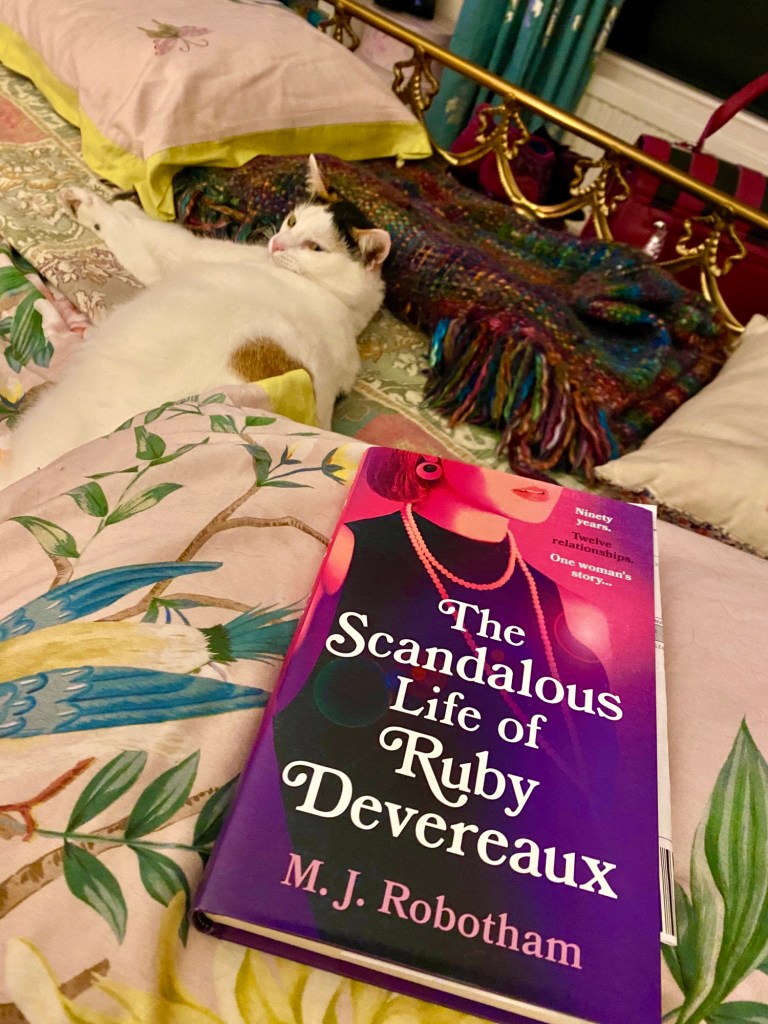
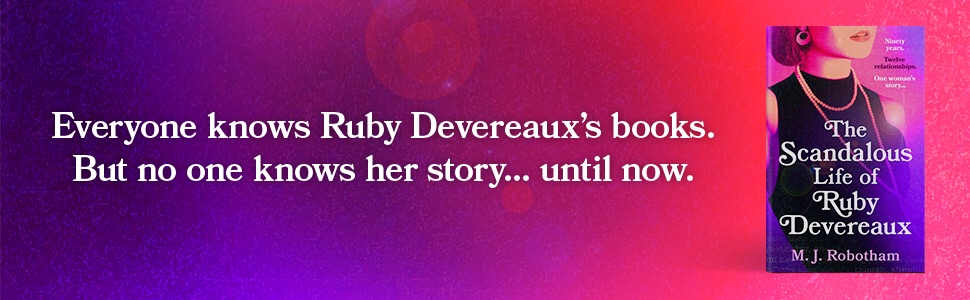
Everyone knows Ruby Devereaux’s books. But no one knows her story… until now.
From a teenager in wartime England to a veteran of modern-day London – via 1950’s New York, the Swinging Sixties, Cold War Berlin, Venice and Vietnam – Ruby Devereaux has lived one hell of a life: parties, scandals and conflict zones, meeting men and adventure along the way. In a writing career spanning seven decades and more than twenty books, she’s distilled everything into her work. Or has she?
There were times during this novel where I wished I was the transcriber in the room, just so I could be the first to hear this lifetime of stories. Ruby Devereaux’s editor is under pressure from above. Ruby is almost 90 years old and the publisher is determined to get the one last book she owes them. So her editor suggests that she closes her illustrious writing career with a memoir. Ruby was on the verge of packing up her typewriter, but she does perhaps have one story left in her, or maybe twelve…
The bulk of the book is Ruby’s memoir as told to her transcriptionist Jude, each chapter named after a man in her life and telling the story of their relationship. Although it’s not as simple as that, through these affairs she takes us through the latter half of the 20th Century and right across the world. It takes us through one woman’s history, but also the ever changing landscape of the world around her, taking in those unforgettable moments and some fascinating social history too. I used to be fascinated with my 90 year old grandmother and the changes she’d seen over a lifetime in the countryside: from horse drawn ploughs to huge tractors; from cycling everywhere to her children owning cars; from handwritten letters to online communication. This has similar vibes, but on a bigger scale as Ruby moves from peacetime to war and across three continents with the world constantly changing beneath her. The author weaves together the social history, world events and Ruby’s growing up with romance and scandal. Ruby has spent seventy years telling her character’s stories, but now it’s time for her own. It’s definitely a life well lived as it’s taken her to the 1950’s New York of the Mad Men, Berlin and Budapest during the Cold War, into Vietnam and into relationships with twelve different men. These are the men who’ve inspired her novels. Make no mistake though, this isn’t really about the men in her life, this is about Ruby. Each relationship captures where Ruby is at that point in her life; a chapter in her personal growth. Ruby easily outshines her male counterparts because she has such a zest for life and breaks society’s rules and expectations about women everywhere she goes. As a young girl in post-war England she’s very matter of fact about her first sexual experience, wanting it out of the way before she leaves home. She’s an incredibly resilient character, despite experiencing loss and heartbreak at a very young age. She makes a promise to herself and the person she’s lost to keep going, grabbing opportunities whenever they arise. Never realising that all along she’s writing the most exciting story she’ll ever tell.
It’s this resilience and insistence on saying yes to experiences that take her across the globe. Starting in London, she lives and falls in love in the romantic city of Venice, via a terrible experience in New York that spawns her second book. She then explores Saigon and Budapest, before finally ending up in Cornwall. She spends time in a commune, dabbles in the world of spying and has assignments in war zones. Just as in her love life, she’s tough and doesn’t dwell on failures or knock backs, she chalks it up to experience and moves on. There is a danger of some of the men in her life becoming a mere backdrop to Ruby and her escapades, it’s very hard to keep up with her energy. However the later sections in England felt a little more detailed and because they’re not as filled with adventures, the men have more room to develop. Their relationships with Ruby feel deeper and more real. Ruby is always at the centre though and I loved following her character development. We can see which experiences have given her strength and a sense of boundaries. I love a scandal so this was definitely a fun romp in parts, whilst also having a sense of reflection and self-awareness as Ruby becomes an older lady. There’s a bravery in her willingness to share her life, particularly her emotions and those difficult parts of her life – relationships that went wrong, the loss, motherhood and her mental health. However, despite this we’re caught up in Ruby’s humour and ability to heal. I think the author has created a brilliant character and blended actual history with her life very well. Ruby is such an incredibly memorable character and I enjoyed spending time in her company.
Published by Aria 11th April 2024
Meet the Author
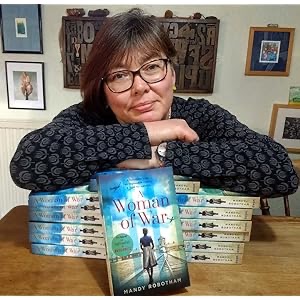
M J Robotham had wanted to write from a very young age, inspired by the book ‘Harriet the Spy’. However life got in the way and it was journalism and having a family keeping her occupied. She was a midwife for several years, but started to write seriously after completing an MA in Creative Writing. her first novel was A Woman of War followed by The Secret Messenger set in occupied Venice.
Her next two books were set in pre and post war Berlin, then wartime Norway, both are places she loves to visit. In her spare time she visits the gym, to knit unusual things and enjoys the music of Jack Savoretti,
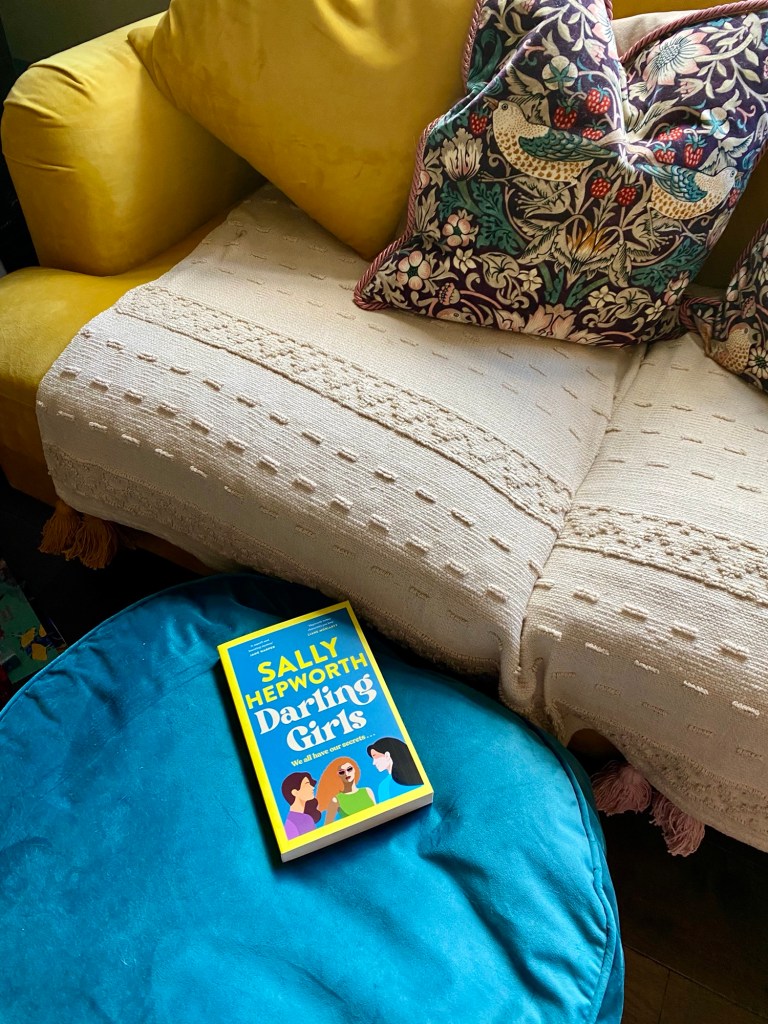
Sally Hepworth is a new author to me, so I was interested in reading this thriller based within the Australian child protection system, most notably one foster home called Wild Meadows. Three girls grew up there under the care of Miss Fairchild, described like an 1980’s Barbie doll, and thought to be one of the best foster parents in the system. The three girls are now grown women. Jessica was the first long term foster child and now runs a home organising business and is married to Phil. Lately, she’s been suffering panic attacks and is using benzodiazepines to control her anxiety. Norah is a ballsy and confrontational woman who doesn’t stand for any nonsense. She is currently being blackmailed by a taxi driver whose nose she broke in an altercation. She sent him a picture of her breasts so he didn’t go to the cops, but now he wants more. Alicia is a social worker in a child protection team, trying to save children who might otherwise end up with a childhood like hers. She has a tentative relationship with her housemate Meera who she has just kissed, but struggles to be vulnerable and accept that she’s worthy of love. They are called back to Wild Meadows when building work unearths the body of a baby. As they travel back to where they spent their childhood, memories start to emerge about their traumatic childhoods at the hands of Miss Fairchild. It becomes clear that their present problems are an echo of that terrible start in life. How will they cope with digging up everything that happened back then and what will happen when Miss Fairchild arrives?
I felt incredibly sorry for Jessie who was the first foster child, conditioned to love Miss Fairchild (who she calls Mum) and to do anything that pleases her including cleaning the house from top to bottom. She and Miss Fairchild are a team and even though the work is sometimes hard, she knows Miss Fairchild loves her. Jessie is the favourite and being the favourite is wonderful – until someone else comes along. When Norah arrives without warning, Jessie is put out. So she tries even harder to please her mother and doesn’t understand when she’s rejected. It’s hard to watch, because even Norah can see it’s like kicking a puppy. Jessie’s confusion and feelings of dejection have turned her into a people pleaser. She’s now married to Phil, who seems kind but still Jessie is compelled to please him and appear perfect at all times. If she’s not perfect, no one will love her. Before she leaves with her sisters Jessie reaches a new low by stealing benzodiazepines from a client’s bathroom cabinet. When she’s rumbled, Jessie switches off her phone and leaves with her sisters. I really enjoyed Norah, who comes to Wild Meadows second and ousts Jessica from the favourite position. It’s not that Norah dislikes Jessie, it’s just that she’s been in other homes and knows that it’s best to be the popular kid. Despite this the girls start a tentative friendship and soon Norah is sleeping next to Jessie and sticking up for her at school. They are sisters and sisters stick together. Norah is now single and lives with her three rescue dogs, named after the first thing they destroyed after they arrived; Converse, Thong and Couch. liked her sense of humour and her ability to look after herself, although the taxi driver issue is out of hand and Norah knows that if he goes to the police she’s breached her good behaviour
order and may go to prison. Alicia, made the least impression on me as a child but perhaps the greatest impression as an adult. She soon bonds with the other two girls and they give each other some semblance of a normal home, playing music together, staying up late talking and devising ways to deal with their foster mother. Now Alicia is battles everyday for kids in the system. It’s as if in saving them, she saves herself. Her friendship with Meera is strong but when it starts to become something more she panics. Never used to the full package when it comes to relationships, she can’t believe that she can keep everything she and Meera already have plus have a romantic relationship too. Sex and love don’t go together in Alicia’s world. She’s avoiding the issue by travelling with her sisters, but when Meera turns up out of the blue she has to bring her past and present together.
Between these timelines there are small chapters that I found really interesting because although we don’t know who is speaking, we know it’s with a psychiatrist or therapist. This unnamed woman is talking about her childhood, which is truly horrific to read and a heads up for anyone who is triggered by reading about child abuse, this is a really tough. To be honest the abuse depicted across the book is physical, sexual, mental, financial and spiritual. I think this narrative really got to me because I grew up in an evangelical church and even though my experience there wasn’t abusive, it was as if women were second class citizens only there to be good, supportive wives and defer to men. What this woman goes through is much worse and as she relates it to the psychologist he seems to have weird ‘tells’ that the also speaker notices. As her story progresses he leans forward, perhaps more interested then neutral. She can see emotions in his eyes as she talks. He’s sympathetic. He’s distraught about what she’s been through. Is she telling the truth or is her story embroidered, gathering momentum as she sees him react. Playing his emotions, but to what end? I was hooked by this narrative, horrified but fascinated in equal measure because there was definitely something going on.
As news reports start to bring in a stream of younger women the authorities refer to them as ‘the babies’. The three sisters hadn’t remembered them except for Amy, a cute two year old who fell in love with her older sisters, infuriating Miss Fairchild who wanted the babies to love only her. What if Amy is the baby under the house? Surely now Miss Fairchild will be taken in for questioning? Sally Hepworth has written three women here that you will really be rooting for, in fact you might even identify with one of them. Miss Fairchild is the perfect villain, with her angelic looks and ability to manipulate any story to place her in a better light. Does this make her a murderer though? It isn’t just the central mystery that keeps you hooked though. Will Norah’s altercation with the taxi man catch up with her? The tension slowly builds around Jessie whose latest client noticed some diazepam missing and isn’t letting it go. When Meera arrives unannounced Alicia has to face her friend, but also explain their close relationship to her sisters. Can she accept Meera’s love and her own sexuality? The author keeps this tension up to the very end, with a couple of revelations and a twist that was really clever and I didn’t expect. I read this so quickly, desperate to see some characters get their comeuppance and others to see justice done. I especially enjoyed the resolution of the therapy sessions. This book will definitely keep you reading, but be prepared. You might not be able to put it down.
Out now from MacMillan
Meet the Author
Sally Hepworth is the New York Times bestselling author of nine novels, including The Good Sister and The Soulmate. Her latest novel, Darling Girls, was released in Australia in September 2023, and will be released in North America in April 2024.
Drawing on the good, the bad and the downright odd of human behaviour, Sally writes incisively about family, relationships and identity. Her domestic thriller novels are laced with quirky humour, sass and a darkly charming tone. They are available worldwide in English and have been translated into twenty languages.
Sally lives in Melbourne, Australia, with her three children and one adorable dog. She has recently taken up ocean swimming (or to put it more accurately, ocean dipping)
Eadie lives an unusual life in her garden city home, situated next to a cemetery. Far from being macabre and frightening, the dead are often this lonely little girl’s best friends. They provide her with somewhere to go and talk, without censorship or interruption. Her Mum and Dad work jobs outside the home, one in the day and one at night, but the rest of their time is spent at their desks in the family living room each completely engrossed in their writing work. She is an outsider at school, without friends and a target for kids like Patrick Semple. Patrick is relentless in his bullying of Eadie and it takes her a long time to find her little tribe. Her friend Josh lives with his grandfather who has a convenience shop, he’s also a concentration camp survivor. She also makes friends with Celeste, who’s lived in France and her mother, Sandrine, is an alcoholic. These are her first friends her own age, as up until now she’s mainly hung out with Michael, an elderly man who tidies the cemetery and Ross who plays the bagpipes at funerals. Eadie is feeling so settled with her life, but these three young friends are on the cusp of a huge change. All three will be going to different universities and while Eadie likes to think nothing will change, distance does have an effect on relationships and the whirlwind of Fresher’s Week will immerse them in their new lives. Will they still have time for each other? More importantly, will Eadie be able to leave the difficulties of her childhood behind her and make a life in Manchester?
Freya North beautifully inhabits the world of a young child and the fears and preoccupations that are their daily lives. It immediately swept me back to my own childhood and moments when I was afraid or felt like I didn’t belong. In my first year of primary school at age 5 we lived so rurally I had to get on a public service bus and remember when to get off and how much to pay the driver. It left me anxious about public transport ever since. I was also bullied, being poor but having a place at the local grammar school wasn’t easy and I never had the right clothes. My family also went to an evangelical church which made me different and restricted my social life. I really identified with Eadie, for feeling that her background was less than perfect. I felt Eadie’s pain. As children, if people tell us we’re odd or wrong in some way we internalise that feeling and assume they’re right. Eadie’s parents are not neglectful, but they are a very definite twosome, seemingly unaware that their only daughter is achingly lonely and suffering from immensely low self-esteem. As adults we can step back and see that her bully is probably suffering too, but children don’t realise this. As the group of friends grow towards leaving school, the changes are not easy for Eadie to cope with. What will happen to their trio as they all go their separate ways? While Josh and Celeste are excited about what’s coming, Eadie is anxious. What will Manchester hold? Will she be accepted?
I love the North West of England, my family are originally from Liverpool but my best friend is a Mancunian and we’ve spent an enormous amount of time there over the years, mainly seeing gigs from Manchester bands like Elbow. However, I grew up in the late 1980s and early 1990s and I was an indie kid. I started with The Smiths and Morrissey through to the Madchester scene and although I was too young for the halcyon days of the Hacienda I did love New Order with a passion and Bizarre Love Triangle is one of my favourite ever tracks. I felt immediately transported back to the reign of Tony Wilson, when New Order would be in residence and the club was heaving. North captures perfectly the heady days of the summer of love – the advent of Acid House and Ecstasy. Here, having made friends, Eadie finds her place of worship. She loves ‘the Hac’. She can be found on the dance floor in just a sports bra and shorts combo, able to dance all night with a raging thirst from E and a feeling of well-being to the whole world. This is before and the terrible deaths that occurred. Eadie and her friends rent a house on Hathersage Road, across the road from the amazing Baths with its art nouveau interiors. This is her home now. In fact she becomes so comfortable in her life here that she stops going home, she stops writing to friends and lives completely in the moment. It’s when things start to change that Eadie begins to struggle. Housemates have plans for their second year, placements abroad, moving back into halls and Eadie starts to fall apart. An unexpected face from the past comes back to haunt her too. After a warning from the barman at the local pub where she works, that the Hacienda is being run by drug gangs and that means violence. This leads to an unexpected blast from the past and is the catalyst for a breakdown. Eadie finds herself unable to complete work and even starts to question whether to stay at university. With her housemates making different plans for next year, Eadie can feel the foundations of her life shaking.
Freya North captures perfectly how secrets and traumatic experiences can follow us through life. If left unaddressed, our life is like a wall with a fault in it’s foundations. It can only be fixed by removing the upper layers until you reach and remedy the original fault. Eadie has covered her trauma over with many different layers: her friendships with the residents of the cemetery; alcohol and E; the Hacienda and acid house. I felt something with Eadie’s story, because of my own recent experiences with old friends. We can experience so much difficulty and pain in life that we feel far removed from those friends we’ve had in the past, but often they’re still there, just waiting for a sign that they can help or support us. I loved Eadie’s relationship with Kip, which isn’t perfect but the love is all the more real for those imperfections. His love is shown in actions rather than words and is stretched to it’s limits at times. Eadie is one of those people who takes a long time to work out who she is and what she wants to do in life, that is until she takes care of her unfinished business and then she flies.
Out now from Mountain Leopard Press
Meet the Author
I’m the author of 15 bestselling novels and am so excited to bring you my 16th novel: THE UNFINISHED BUSINESS OF EADIE BROWNE. I know you can read the blurb here – but I wanted to tell you how important and personal this book is to me… Much of it was drawn from my own memories of leaving home for Manchester Uni in the late 80s and remembering what that FELT like. Also, I live outside Welwyn Garden City in Hertfordshire – and I became interested in the visionary ethos of the Garden City movement. Because lockdown cancelled all the lovely centenary celebrations planned for Welwyn Garden City, this novel also serves as my tribute to the town and its Founder. I hope you’ll enjoy the novel – unlike Little Wing, my previous novel which flew out of me in 4 months flat, I really toiled over Eadie Browne; writing and rewriting and REWRITING until I was confident I’d written my best book yet… this much I owe to you, my lovely readers.
2021 marked the 25th anniversary of the publication of my first novel Sally! My 15th novel Little Wing was written during the first lockdown. Set partly in the Outer Hebrides and interweaving the secrets and lies of two families over two time frames – it was a joy to research and write and certainly kept me sane during the Pandemic. I’ve always been focussed on a sense of place being a key feature of my writing – settings being a leading character, not merely a backdrop. Previous locations have included North Norfolk, British Columbia, Derbyshire, Vermont, France, Scotland, Wales, Cornwall… I’m an avid reader too – and the novels of Barbara Trapido, Jane Gardam, Rose Tremain and Mary Wesley inspired me to write. I hope you enjoy my books – please keep in touch via my website, Facebook, Twitter and Insta! Happy Reading! Sign up for my newsletter (via my website)
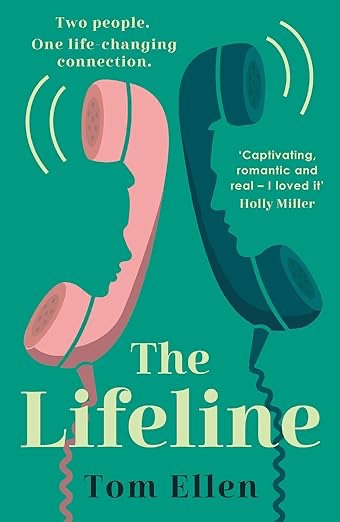
If I learned one life lesson from Tom Ellen’s lovely romance novel, it’s that I’m not the only one who has a weird celebrity crush on Richard Ayoade. What a relief! Usually I get quizzical looks and awkward questions when I admit this, so I felt vindicated. I often say I don’t like romances, but I really did enjoy this story about Annie and Will. They met one day in Paris when Will’s band The Defectors were the next up and coming Indie band. Annie is sent out to interview them before a gig and hits it off with cute frontman Will Axford, who I was imagining as my Indie crush Damon Albarn. Annie finds his floppy hair, dimples and the gap between his front teeth very sexy. He seems to be clicking with her, but she’s still surprised when he catches up with her after the interview and suggests they spend the day together. Later as they watch the sunset from the Pont Alexandre III bridge, he asks if they can meet after his gig on the same spot. So, Annie is standing there at 11pm waiting for Will to arrive but when he still isn’t there at 11.30pm she gives herself a good talking to, fancy falling for the patter of a rock star. He’s probably with another girl already or tries this on every girl he meets. How stupid to think he would genuinely like her! As she pays for an extortionate last minute hotel room on her credit card, she’s already mentally writing up her interview full of anger and disappointment.
Fast forward five years and Annie works for an internet magazine, one of those that suck us into a blur of 1980’s celebrities and what they look like now or the best ever one hit wonders. It’s not what she wanted to do when she started out, with a pile of short stories and novel proposals, but it pays the bills and she loves her colleague Lexi. So, when she’s asked by her boss to write a new “Where Are They Now?’ series to go with some very lucrative advertising revenue, she jumps at the chance to do something more interesting. Then her boss asks her to track down The Defectors. Behind the scenes Annie is having a hard time. Her father died just over a year ago and her different approach to his cancer diagnosis has left her estranged from her mother and sister. Her live-in boyfriend Dom isn’t her dream man, they’re just muddling along while friends are making huge life changes like marriage and baby. The thought of losing Dom or her job scares her, but maybe a big change is exactly what she needs? As she tries to track down The Defectors she sees one of them has shared a phone number on a black background, which stands out in the usual technicolour of Instagram. It’s for a lifeline called Green Shoots, a listening ear for those who are bereaved, anxious and lonely. Annie needs someone to listen to everything that goes round in her mind, so decides to call using her middle name Pia. When Jack answers she finally feels she can open up.
Jack volunteers at the lifeline as often as he can but he doesn’t use his real name. Of course he has regulars and I fell in love with these callers, perhaps because they reminded me so much of my own work in mental health. Work I’m not well enough to do at the moment. I understood that fondness for certain callers, because it’s hard to avoid clicking with people, however we meet them. There’s Eric who calls and often makes hilarious commentary on whatever he’s watching. Some of these programmes, despite his advanced years, are things like Love Island and Made in Chelsea. I fell in love with him straight away and those times when he called feeling low I was heartbroken. Then there’s the breathing lady, who calls just to have someone to breathe with, until she feels calmer. Jack and Pia hit it off on the phone straight away, there’s energy between them. So when she says she’ll call back, he finds himself looking forward to her call. I really felt for Jack because working with people and their deepest emotions can forge strong connections, it’s hard to be detached from some callers. I loved that his friend and colleague Tanvi felt the same way too. He had been avoiding the get togethers and catch ups with other volunteers, mainly because he’s struggling with making friends and being social. Years before, there was a friend that Jack wished he could have been there for and he finds the guilt is crippling.
I felt for Annie too, especially her journey through grief and the struggle to cope when her father was diagnosed with terminal cancer. The author presents beautifully how even the closest people can grieve in their very different ways. There’s a need to give each other space and respect what they need to do in order to cope. It’s so hard when someone is terminally ill and perhaps their wishes don’t align with our own. It’s hard to let go of someone we love, even when we know they’re ready. I thought the author paced the story perfectly and the misunderstandings on the road to romance were believable, rather than formulaic ones that sometimes make me groan in romance novels. I really liked and understood these characters, so I was truly into their story and didn’t notice the romance tropes as much. Equally, I loved the revelations along the way, because as Annie found more dead ends in her search for Will Axford and his band, I began to wonder whatever did happen to him? This was a thoughtful, bittersweet novel about love and the people we lose along the way, and I read every word hoping our two main characters would find each other.
Out now from HQ
Meet the Author
Tom is an author and journalist from London, England. He is the co-writer of three critically acclaimed Young Adult novels: LOBSTERS (which was shortlisted for The Bookseller’s inaugural YA Book Prize), NEVER EVERS and FRESHERS. His solo adult debut novel is the romantic comedy ALL ABOUT US (HQ/HarperCollins, published October 2020). His books have been widely translated and are published in 20 countries. He is a regular contributor to Viz magazine, and has also written for Cosmopolitan, Empire, Evening Standard Magazine, The Daily Mash, Glamour, NME, ESPN, ShortList, Time Out London, Vice, Stylist and many more.
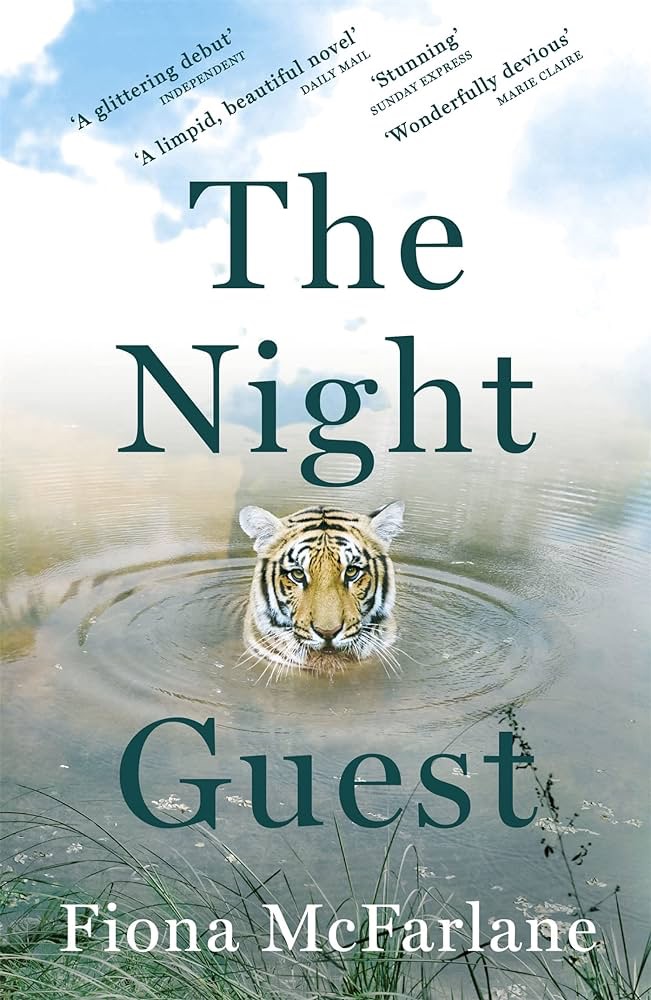
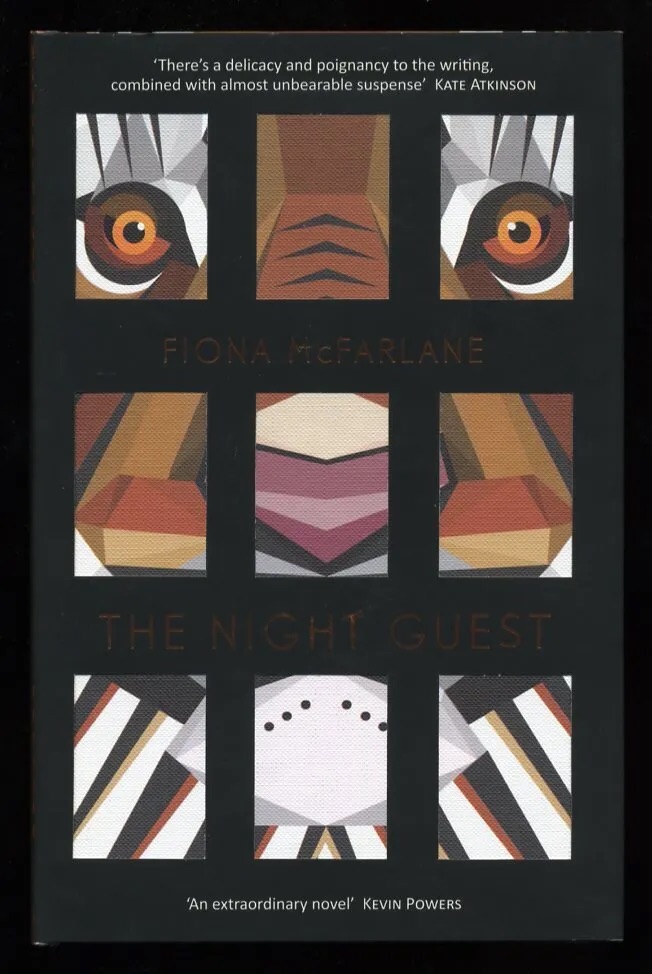
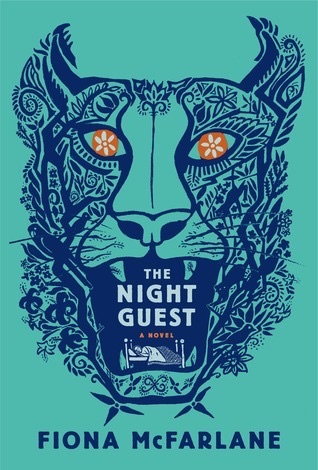
Booksellers often joke about customers who come into their shop and ask for help finding a book: they either don’t have the title but vaguely remember the author; they don’t know the author but know there was a bird on it or the book was blue; they saw the book on that programme, the one with Sara Cox but don’t know which episode or even the series it was from; it’s an old book, they read it at school; they think it was set in China, or maybe South America. On it goes and more often than not, once the mystery is solved, they ask the bookseller to write it all down on a slip of paper then go home and order it from Amazon. I was having that sort of experience with this unusual novel, in fact nobody I asked had ever heard of it. Possibly not helped by my description – ‘ it had an old lady in it and a tiger came to visit her at night.’ Inevitably most people heard ‘tiger’ in the story or on the cover and I’d be answered with Life of Pi or The Tiger Who Came To Tea, excellent books but not the one I was looking for. Then finally one day the title sort of came to me. I say sort of, because I kept calling it The Night Visitor which sounds like a creepy name for incontinence or night sweats! I’d taken the book out from the library originally and when funds allowed I wanted to have a copy on my shelves. It is there on Amazon, but maybe pop it on your charity shop list because it is a little gem.
The book tells the story of Ruth, an elderly lady who lives alone in a remote house on the coast of Australia. She has family but her son has relocated for work, meaning that day to day help isn’t something he can provide. Her sonphones regularly, but he’s busy with work, kids and a home of his own. However, he does start to worry when she rings to tell them she’s had a night guest; a large tiger came to visit in the night. At first she woke up scared there might be an intruder, but it was a handsome tiger instead. Her son suggests that perhaps she was dreaming? Ruth is adamant, the tiger woke her and she wasn’t asleep. Her son and his wife confer and decide they’re worried. What if their mother’s mind is going? How will they manage to get her the help she needs? Their mother can be low in mood at times, mainly because she’s spending so much time alone and that leads to ruminating on the past such as her girlhood in Fiji. One of my favourite tropes is the unreliable narrator and that’s what we have in Ruth. Her story is so implausible she must be losing her marbles. What unfolds is an unusual psychological thriller with a side order of magic realism, which I love.
The book tells the story of Ruth, an elderly lady who lives alone in a remote house on the coast of Australia. She has family but her son has relocated for work, meaning that day to day help isn’t something he can provide. Her sonphones regularly, but he’s busy with work, kids and a home of his own. However, he does start to worry when she rings to tell them she’s had a night guest; a large tiger came to visit in the night. At first she woke up scared there might be an intruder, but it was a handsome tiger instead. Her son suggests that perhaps she was dreaming? Ruth is adamant, the tiger woke her and she wasn’t asleep. Her son and his wife confer and decide they’re worried. What if their mother’s mind is going? How will they manage to get her the help she needs? Their mother can be low in mood at times, mainly because she’s spending so much time alone and that leads to ruminating on the past such as her girlhood in Fiji. One of my favourite tropes is the unreliable narrator and that’s what we have in Ruth. Her story is so implausible she must be losing her marbles. What unfolds is an unusual psychological thriller with a side order of magic realism, which I love. morning after the tiger visits a woman knocks on Ruth’s door. She introduces herself as Frieda and claims to have been sent by the government to help Ruth clean the house and stay on top of things. She’s also from Fiji, so Ruth can talk to her about the past and those memories and regrets that occupy her mind. It would seem that Frieda awakens something in Ruth that’s lain dormant till now. Her memories of Fiji become even more intense and flourish under Friedan’s gaze. In the back of my mind I was a little suspicious that much like the tiger, Frieda might not be everything she seems. Alternatively, she might be everything she seems and more. Ruth is more vulnerable than she cares to admit, a woman whose memory and understanding of events may not be accurate. Her mind wanders, but is she knowingly lapsing into daydreams or does she believe the fantasy? I felt concerned that while Ruth was narrating the more fantastical aspects of her daily life, like her visiting tiger, underneath there might be something more dangerous going on. Elderly people who have altered consciousness are so vulnerable to manipulation and abuse, whether it be sexual, physical, emotional, spiritual or financial. As changes were revealed, baby step by baby step, they were going unnoticed by Ruth. I was desperate for her to sit up and realise something odd was going on, before the results became permanent.
There are things in life that we choose not to see. We erect a wall to shield ourselves and never look over it so we can say ‘I didn’t know…’ This is often the case when someone we love is in deteriorating health, especially if they’re our parents who used to look after and support us. I think this is what Ruth’s son is doing, closing his eyes to the fact that their situations have reversed and now mum needs him. Ruth’s vulnerability is sad, because she’s so open to exploitation. It’s not just that her mind might be affected cognitively, but that she’s so lonely she craves someone to be interested in her. If someone enjoys spending time with her, they could quickly form a bond and shut everyone else out. As Frieda starts to infiltrate all parts of Ruth’s life, taking on more and more responsibility for her affairs, Ruth’s determination and independent spirit become worn down and she starts to depend on Frieda. In contrast with Frieda, Ruth does come across as mentally frail. Whereas the carer is the life and soul of the party. Ruth’s worsening nightmares of being stalked in her own home by a striped predator could be pure imagination, allegorical, magical or a manifestation of a sixth sense telling Ruth she’s in danger. This is a brilliantly complex debut, with layers of manipulation and deception that extend to the reader. All the way through I kept thinking I didn’t want my life to end up like this. Despite this, I was compelled to keep reading and I’ve never forgotten it. Now, thankfully, I have my own copy so I can re-read whenever I like.
‘She searches for ways to stop feeling so lonely you fear your brain will melt and your heart will stop and your skin will never be touched again. She searches for ways to make herself feel better. The online forum has been a lifeline. A lifesaver. She can chat to counsellors when she needs to or other women who struggle with similar issues. Every week she receives a piece of advice to help her on the road to recovery or, as she calls it, the road to normality. The path to living a life.’
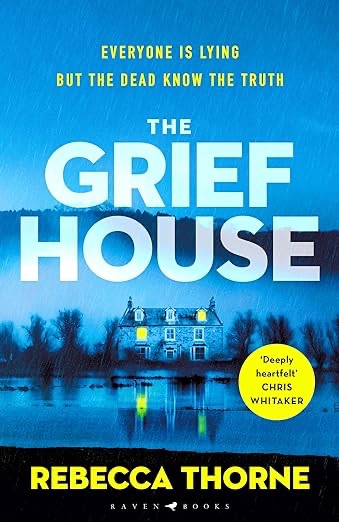
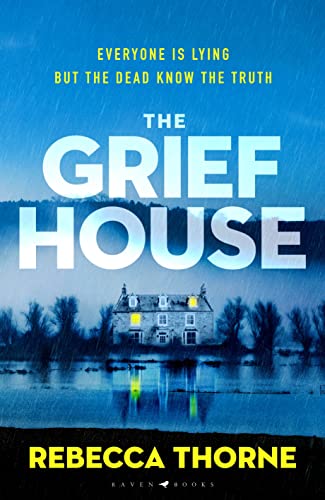
Blue makes a decision to deal with her unresolved grief and trauma with a residential course she sees advertised when she’s at a low ebb. At Hope Marsh House participants are offered counselling, art therapy and meditation with married couple Molly and Joshua Park. Blue has been struggling for a long time, culminating in the death of her mother with whom she had an uneasy relationship. However her grief journey begins with the loss of her stepfather Devlin, a rotund man with a fondness for kaftans and a talent with tarot. His own skills are based in clever observation, carefully worded open questions and more than average perception, but in Blue he recognises something he isn’t. A lonely child with strong, natural,psychic abilities. Prior to meeting Devlin, Blue’s mother has managed a rather haphazard upbringing at best with choices for Blue that are based in her own problems and inadequacies rather than what’s best for her child. Blue has been home-schooled but any learning was provided by magazines, television and whatever books Blue could lay her hands on. As a result she had no friends and was thought of as weird by the kids nearby. Her mother is equally isolated, not helped by the fact they move constantly. What exactly are they running from? So, Devlin’s attention is welcomed by both mother and daughter. Losing him to a heart attack was devastating and Blue became parent to her heartbroken mother, taking responsibility for her mum’s worsening mental health, the family’s income and single-handedly running Devlin’s mediumship business. Maybe it will take a place like Hope Marsh House to deal with the lonely and exhausting rut Blue finds herself in? It will be kill or cure….
‘And how long have you had your … talents?’ he said. Blue didn’t know what to say. Was hitting a saucepan with a wooden spoon a talent? Was babysitting a toddler in a dry bath whilst her mother cried herself to sleep a talent? She could wash her own clothes in the steel kitchen sink, she could heat soup and tins of beans, she could sing all the words to ‘May the Circle Be Open’. Is this what the strange man meant? She was five years old. She didn’t know.’
The author tells Blue’s story using different timelines: one gives us the present and focuses in on the retreat at Marsh House, while the others are in flashbacks to Blue’s life before her trip and further back in vignettes of her childhood. The flashbacks give us the building blocks of Blue’s personality and the strange abilities she has. She is a little girl simply longing for love and care, we can see this from the way she blossoms if praised by Devlin. Even more than that, the most powerful thing Devlin does is seemingly very simple – when Blue comes off stage, Devlin simply asks ‘are you ok, lass’? These four words mean more to her than anything else because they bypass the person she is on stage and the money her gift can make them and instead asks how she is. He knows and acknowledges what this gift costs her and how arduous a whole show can be, but mainly it’s just a dad checking in on his daughter. It means a lot to Blue, who has probably never been asked if she’s ok before. No one has ever cared enough. It is his care of her that she misses so deeply. I wondered if there were elements of personality disorder. Does Blue know who she is? When Devlin lives with them she’s at her happiest, but I was confused about her relationship with the other two children who live with them – Bodhi and the baby. They seem to be there, but she rarely relates to them. In fact she actively seems to avoid them and almost looks past them if they appear in her eye line.
Other short sections of the book include a story about a loving married couple who haven’t been able to have children, but look after a little girl who lives in a nearby flat with her elder brother. Unfortunately he is a drug addict and the couple, James and Marie, provide that stable family unit for Jessica. They dread something happening to Jessica’s brother because she could then be taken away from them. I knew that this couple related to Marsh House in some way, but I wasn’t sure how. Why does Blue keep hearing the same three girls names, Jessica, Eleanor and Lauren? Who is the strange long haired girl that appears in Sabrina’s room and opens the door when they’re not there. When she appears Blue starts to feel sick and a feeling of dread comes over her, a couple of times she comes close to passing out. The apparitions also have a way of spoiling her food, making it smell like rotten eggs or rubbish bins. They want to be noticed, but what are they trying to tell her?
The retreat itself is disturbed by a storm and the nearby river bursting it’s banks, threatening the house itself. Instead of the therapy they’re supposed to be receiving Blue and the other able bodied participant Sabina, help Mr Park with unblocking debris from the bridge to help the river flow on it’s normal path. The only other resident is Milton, an older man who uses a wheelchair and seems weakened by a lung disease that causes coughing fits. He’s been to the retreat several times, but seems incredibly grumpy with Molly and her husband. He also avoids any of the activities and even rebuffs Molly’s late night cocoa ritual. Is he just one of life’s misanthropes or is there more going on? Obviously, as a therapist, it’s Molly I’m fascinated with. I’ve been through a major bereavement and have run courses like the ones Molly advocates using a combination of meditation and group therapy using creative writing and art. I found her manner with the participants overwhelming at times. Even before the flood interrupted the normal flow of things there was a boundary issue that I couldn’t put my finger on. As time went on I realised the couple had no children, so who is the little girl in the picture that’s hidden in their own private sitting room? Who is the girl that Blue can see, if no children have lived there? Molly seems to mother her guests. It’s difficult to create clear boundaries when working in your own home and especially when participants are also eating with you and staying overnight. However, there’s something about the way Molly nurtures her clients that feels off. There’s a power imbalance at play, almost as if she is the parent and they are children. It’s this element in her personality and the care she gives that Milton seems to resist or even reject outright. Blue is particularly susceptible to her methods, because she has never had a nurturing mother figure. I felt protective towards Blue (my own maternal instinct at play) and my instinct was telling me she needed to keep her wits about her. The author created a sense of impending doom and as the worst of the storm hit it felt like a warning.
I don’t want to reveal any more, because I think the the story unfolds at the right pace and the truths are revealed slowly. The revelations come in both timelines, as Blue unearths the truths about her mother Bridget by looking through archived newspapers in the library. The secrets come out as if they’ve always been there in Blue’s mind, she just needed something to unlock the door. There will be moments at Hope Marsh House where you wonder what’s going on, placing you in exactly the same position as our main characters. The reader discovers the answers when the characters do so we feel their disorientation, confusion and fear. There were one or two moments that were genuinely terrifying! I enjoyed the growing bond between the three guests at Marsh House, something that Blue has never had before and exactly what she needs. I stayed up late to get to the end and I wasn’t disappointed, although it did lead to some disturbing dreams that night. This was a really great read with a perfect balance between psychological thriller and haunting, gothic tale.
Published Jan 18th by RAVEN Books
Meet the Author
Rebecca lives in the West Country with her family and their cat. She has written two best-selling novels under the name Rebecca Tinnelly: Never Go There and Don’t Say A Word, both published with Hodder.
‘She searches for ways to stop feeling so lonely you fear your brain will melt and your heart will stop and your skin will never be touched again. She searches for ways to make herself feel better. The online forum has been a lifeline. A lifesaver. She can chat to counsellors when she needs to or other women who struggle with similar issues. Every week she receives a piece of advice to help her on the road to recovery or, as she calls it, the road to normality. The path to living a life.’
Blue makes a decision to deal with her unresolved grief and trauma with a residential course she sees advertised when she’s at a low ebb. At Hope Marsh House participants are offered counselling, art therapy and meditation with married couple Molly and Joshua Park. Blue has been struggling for a long time, culminating in the death of her mother with whom she had an uneasy relationship. However her grief journey begins with the loss of her stepfather Devlin, a rotund man with a fondness for kaftans and a talent with tarot. His own skills are based in clever observation, carefully worded open questions and more than average perception, but in Blue he recognises something he isn’t. A child with strong psychic abilities. Prior to meeting Devlin, Blue’s mother has managed a rather haphazard upbringing at best, making choices for Blue that are based in her own problems and inadequacies rather than what’s best for her child. Blue has been home-schooled but any learning was provided by magazines, television and whatever books Blue could lay her hands on. As a result she had no friends and was thought of as weird by the kids nearby. Her mother is equally isolated, not helped by the fact they move constantly. What exactly are they running from? So, Devlin’s attention is welcomed by both mother and daughter. Losing him to a heart attack was devastating and Blue became parent to her heartbroken mother, taking responsibility for her mum’s worsening mental health, the family’s income and single-handedly running Devlin’s mediumship business. Maybe it will take a place like Hope Marsh House to deal with the lonely and exhausting rut Blue finds herself in? It will be kill or cure….
‘And how long have you had your … talents?’ he said. Blue didn’t know what to say. Was hitting a saucepan with a wooden spoon a talent? Was babysitting a toddler in a dry bath whilst her mother cried herself to sleep a talent? She could wash her own clothes in the steel kitchen sink, she could heat soup and tins of beans, she could sing all the words to ‘May the Circle Be Open’. Is this what the strange man meant? She was five years old. She didn’t know.’
The author tells Blue’s story using different timelines: one gives us the present and focuses in on the retreat at Hope Marsh House, while the others are flashbacks to Blue’s life before her trip and further back in vignettes of her childhood. The flashbacks give us the building blocks of Blue’s personality and those strange abilities she has. She is a little girl simply longing for love and care, we can see this from the way she blossoms if praised by Devlin. The most powerful thing Devlin does is seemingly very simple – when Blue comes off stage, Devlin simply asks ‘are you ok, lass’? These four words mean more to her than anything else because they bypass the person she is on stage and the money her gift can make for the family and instead asks how she is. He knows and acknowledges what this gift costs her and how arduous a whole show can be, but mainly it’s just a dad checking in on his daughter. It means a lot to Blue, who has probably never been asked if she’s ok before. No one has ever cared enough. It is his care of her that she misses so deeply. I wondered if there were elements of a personality disorder in Blue. Does she even know who she is? When Devlin lives with them she’s at her happiest, but I was confused about her relationship with the other two children who live with them – Bodhi and the baby. They seem to be there most of the time, but she rarely relates to them. In fact she actively seems to avoid them and almost looks past them if they appear in her eye line.
Other short sections of the book include a story about a loving married couple who haven’t been able to have children, but look after a little girl who lives in a nearby flat with her elder brother. Unfortunately he is a drug addict and the couple, James and Marie, provide that stable family unit for Jessica. They dread something happening to Jessica’s brother because then she could be taken away from them. I knew that this couple related to Hope Marsh House in some way, but I wasn’t sure how. Why does Blue keep hearing the same three girls names, Jessica, Eleanor and Lauren? Who is the strange long haired girl that appears in Sabrina’s room and opens the door when they’re not there. When she appears Blue starts to feel sick and a feeling of dread comes over her, a couple of times she comes close to passing out. The apparitions also have a way of spoiling her food, making it smell like rotten eggs or rubbish bins. This little girl wants to be noticed, but what is she trying to tell her?
The retreat itself is disturbed by a storm and the nearby river bursting it’s banks, threatening the house itself. Instead of the therapy they’re supposed to be receiving Blue and the other able bodied participant Sabina, help Mr Park unblock debris from the bridge to help the river flow on it’s normal path. The only other resident is Milton, an older man who uses a wheelchair and seems weakened by a lung disease that causes coughing fits. He’s been to the retreat several times, but seems incredibly grumpy with Molly and her husband. He also avoids any of the activities and even rebuffs Molly’s late night cocoa ritual. Is he just one of life’s misanthropes or is there more going on? Obviously, as a therapist, it’s Molly I’m fascinated with. I’ve been through a major bereavement and have run courses like the ones Molly advocates using a combination of meditation and group therapy with creative writing and art. I found her manner with the participants overwhelming at times. Even before the flood interrupted the normal flow of things there was a boundary issue that I couldn’t put my finger on. As time went on I realised the couple had no children, so who is the little girl in the picture that’s hidden in their own private sitting room? Who is the girl that Blue can see, if no children have lived there? Molly seems to mother her guests. It’s difficult to create clear boundaries when working in your own home, especially when participants are also eating with you and staying overnight. However, there’s something about the way Molly nurtures her clients that feels ‘off’. There’s a power imbalance at play, almost as if she is the parent and they are children. It’s this element in her personality and the care she gives that Milton seems to resist or even reject outright. Blue is particularly susceptible to her methods, because she has never had a nurturing mother figure. I felt protective towards Blue, my own maternal instinct was at play and my it was telling me she needed to keep her wits about her. The author created a sense of impending doom and as the worst of the storm hit it felt like a warning.
I don’t want to reveal any more, because I think the the story unfolds at the right pace and the truths are revealed slowly. The revelations come in both timelines, as Blue unearths the truths about her mother Bridget by looking through archived newspapers in the library. The secrets come out as if they’ve always been there in Blue’s mind, she just needed something to unlock the door. There will be moments at Hope Marsh House where you wonder what’s going on, placing you in exactly the same position as our main characters. The reader discovers the answers when the characters do so we feel their disorientation, confusion and fear. There were one or two moments that were genuinely terrifying! I enjoyed the growing bond between the three guests at Hope Marsh House, something that Blue has never had before and exactly what she needs. I stayed up late to get to the end and I wasn’t disappointed, although it did lead to some disturbing dreams that night. This was a really great read with a perfect balance between psychological thriller and haunting, gothic tale.






















 The Lotus Readers