Posted in Squad Pod

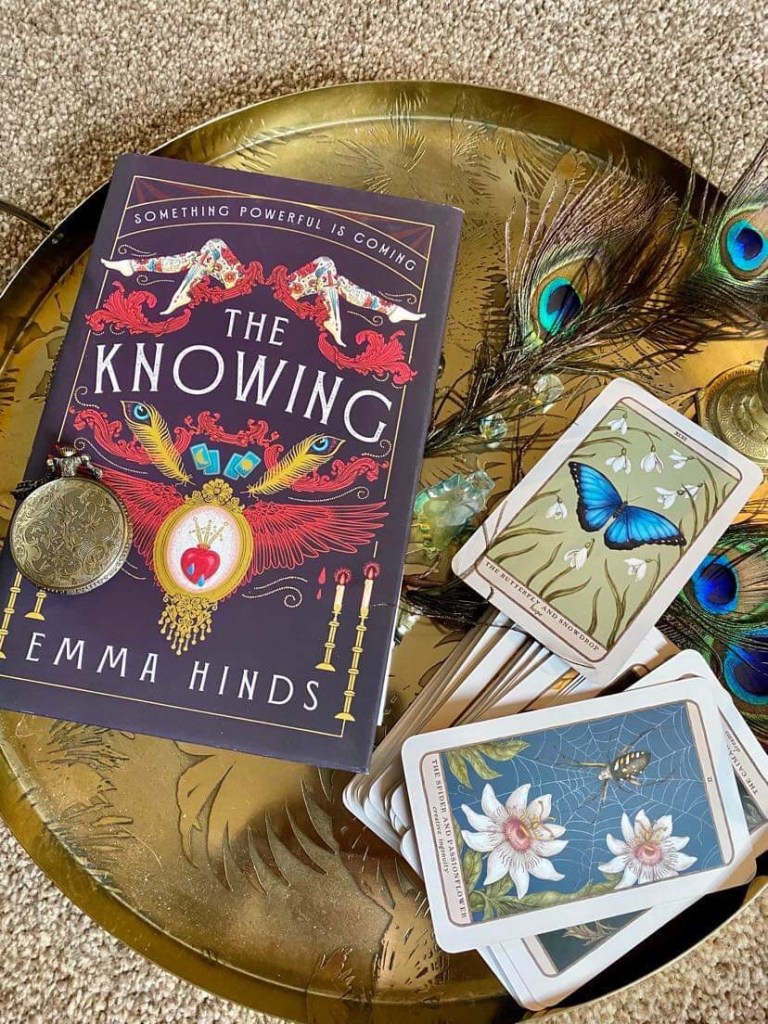
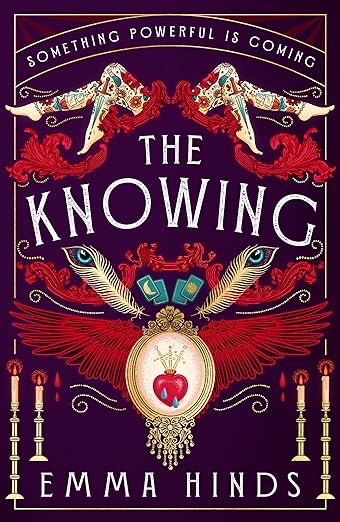
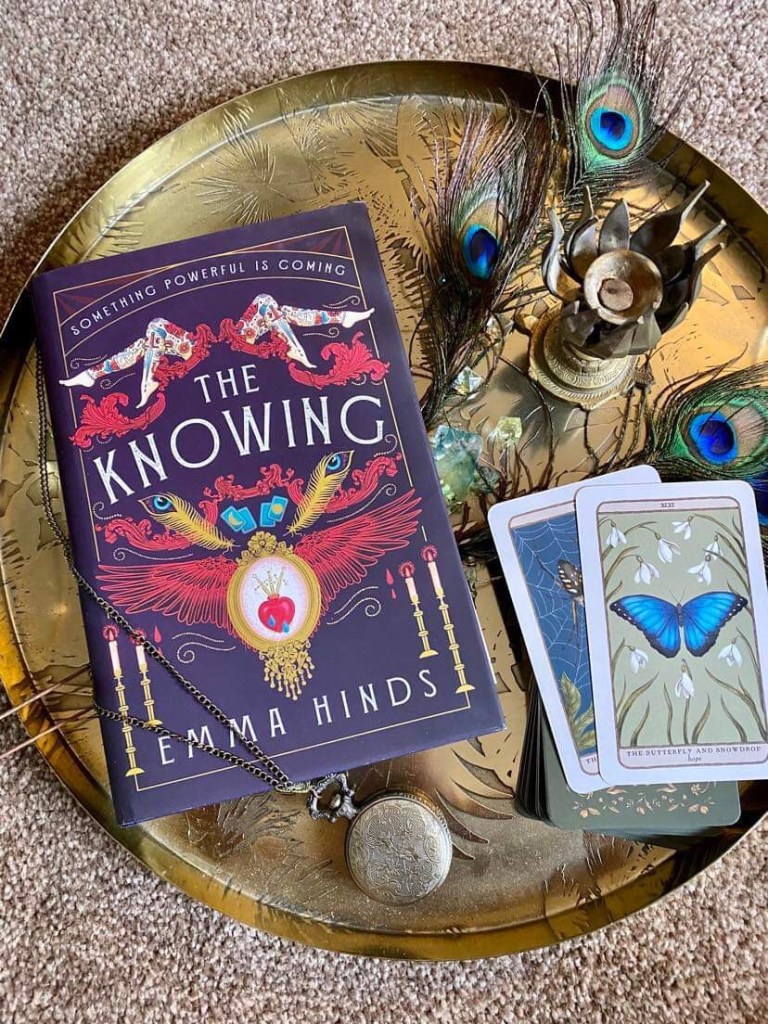
The Knowing by Emma Hinds

If this author had a certain readership in mind when writing this debut novel, she might as well have had a picture of me. I would have picked this book up on the strength of the cover alone. Three of my all time favourite books are: The Crimson Petal and the White set in the seedier areas of 19th Century London with a heroine is a prostitute called Sugar; The Night Circus that appears without warning, held together by real magic and the result of an epic battle between two magicians; The Museum of Extraordinary Things where our heroine is a mermaid, exhibited in a freak show at Coney Island. See what I mean? It’s perfect for me. The blurb promised me a tattooed mystic, a show run by a prostitute with dwarfism and real life New York gangs and Barnum as their contemporaries. It’s quite a heady mix and I was enthralled from page one. Flora is a tattoo artist and mystic, in an abusive relationship with a tattooist called Jordan, a member of an Irish gang the Dead Rabbits. She longs for escape from the slums of Five Points and the degrading relationship she’s been in since she was a teenager. Then she meets Minnie, a beautifully dressed woman whose dwarfism has led her to a career as a circus and freak show performer. Minnie promises Flora a career and life in an opulent town house uptown, not to mention her freedom. However, the freedom she’s promised comes with certain conditions.

Flora stays with Minnie, in her palatial bedroom and bathroom within the townhouse that belongs to her lover, Chester Moreton. Avoiding Chester’s advances seems to be one condition of Flora’s freedom, along with constant worry about being found by Jordan’s friends in the Dead Rabbits gang. She’s to earn her keep as a mystic, with her tattoos and tarot cards the centre of attention. Minnie knows that Flora’s skills run deeper, although she’s always been warned to hide them and ‘tell nuthin’. Flora’s gift is ‘the knowing’ an ability to summon the dead that’s always on the periphery of her performances, but kept at bay by Flora’s willpower. It’s when she’s pushed into allowing her spirit guide to break through that the trouble begins. At the Hotel du Woods she exposes the abuser and killer of a young boy, setting in motion a chain of events including suicide, murder and madness. Flora and Minnie escape and voyage to Manchester, where they try to survive on what they can earn from sex work and Flora’s tarot readings, but the past is never far behind and once again Flora finds herself at the centre of a love triangle where obsession and betrayal are medicated with drugs and alcohol and a tragic end seems inevitable.
I felt fully immersed in the novel immediately as the author creates an incredible sense of place. Five Points is grimy, deprived and controlled by gangs. I loved how the author used the grotesque throughout the novel and particularly where she’s describing the slums of New York and Manchester, filled with rats, unwashed bodies and an ever present grime that’s sticky on the skin. This took me straight back to university and Kristeva’s theory of abjection. The things that women’s bodies can do are magical or monstrous. Flora’s body is a conduit, allowing the dead to speak through her. Minnie’s body is seen as grotesque by others, but she wears angel’s wings and when she’s in bed with Flora it’s the softness of her skin that’s noticed first. All women have a transformative power to produce another life, when their pregnancy isn’t terminated by the men in their lives. The author doesn’t hold back when describing the reality of life for women, particularly women like Flora who haven’t had choices. Bodies seem divorced from minds when it comes to sex with men, as torsos become slabs of meat, breaths are whisky sour and skin is raw, red and broken. Sex is rarely consensual and always comes with violence. It’s a grim world so any chance to escape into a better future is welcome. The gentle and pleasurable attentions of Minnie are a promise of things to come, where Flora could have choices and sexual experiences that come from a loving place instead of a place of ownership.

No one here is perfect. Each character is morally grey and I loved that complexity in their personalities and the ambiguity it brought to their actions. I was also transfixed by the sheer power of Flora’s ‘knowing’. Mediumship has become something of a joke these days, a formulaic stage show where people are picked out of the audience and told that Grandad left the priceless clock in the attic or under the floorboards. It’s always benign and a little bit boring. Flora’s spirits are not there to guide her and they’re definitely not benign. They want to expose truths, tell the subject’s darkest secret and even mete out punishment where necessary. The first seance at Hotel du Woods is successful from one viewpoint – the spirits do come through – but a disaster from the other side when a vengeful spirit talks a man into killing himself. No one will be booking them again! Flora will have to learn how to control the spirit’s power and keep the vengeful ones at bay. Strangely, for a story where our main character is prevented from carrying children, this felt like a story about mothers too. It’s about the lack of a mother when growing up and how the lack of motherly love and protection feels, but it also shows the people who fill that void and become mother figures. This could be a difficult read for some, especially the sexual violence, but it would have been the daily reality for women living in 19th Century slums and for some women in upper Manhattan townhouses. I desperately wanted Flora to survive and have the right people around her, to give her the feeling of being loved and wanted. This is an addictive read of vengeance, betrayal and obsessive love and I couldn’t stop reading until I knew the truth of Flora’s fate.
Meet the Author
Emma Hinds is a queer novelist and playwright from Manchester. She focuses on untold historical Queer narratives and her debut novel, The Knowing, from Bedford Square Publishers is coming in January 2024.
Posted in Publisher Proof

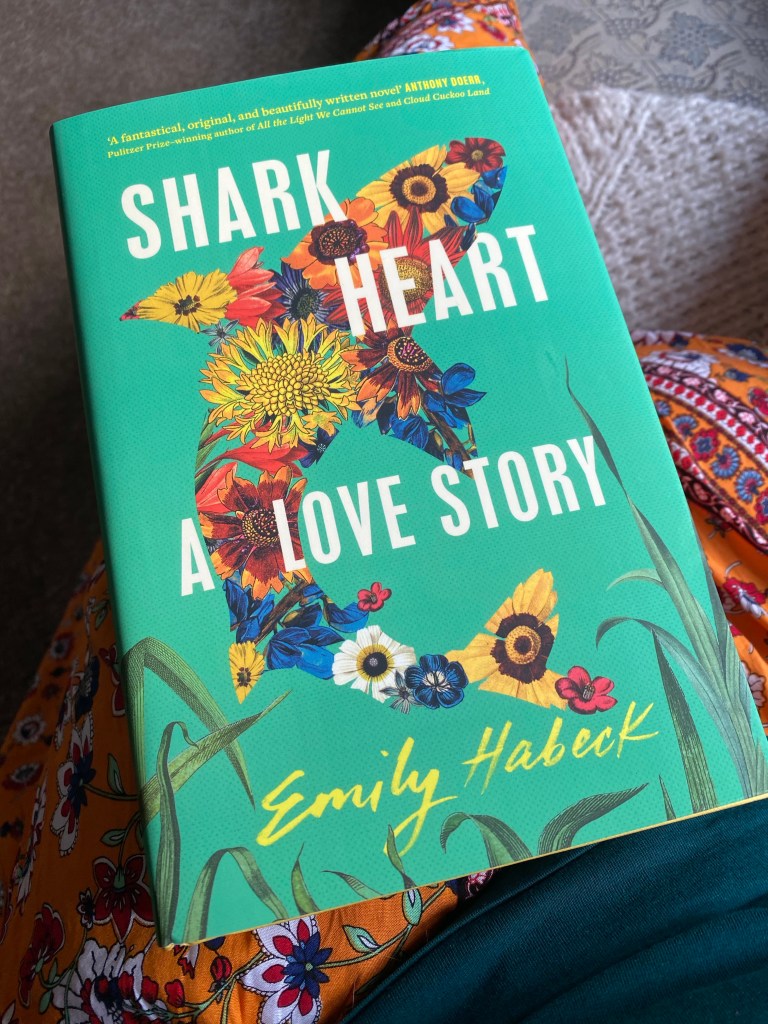
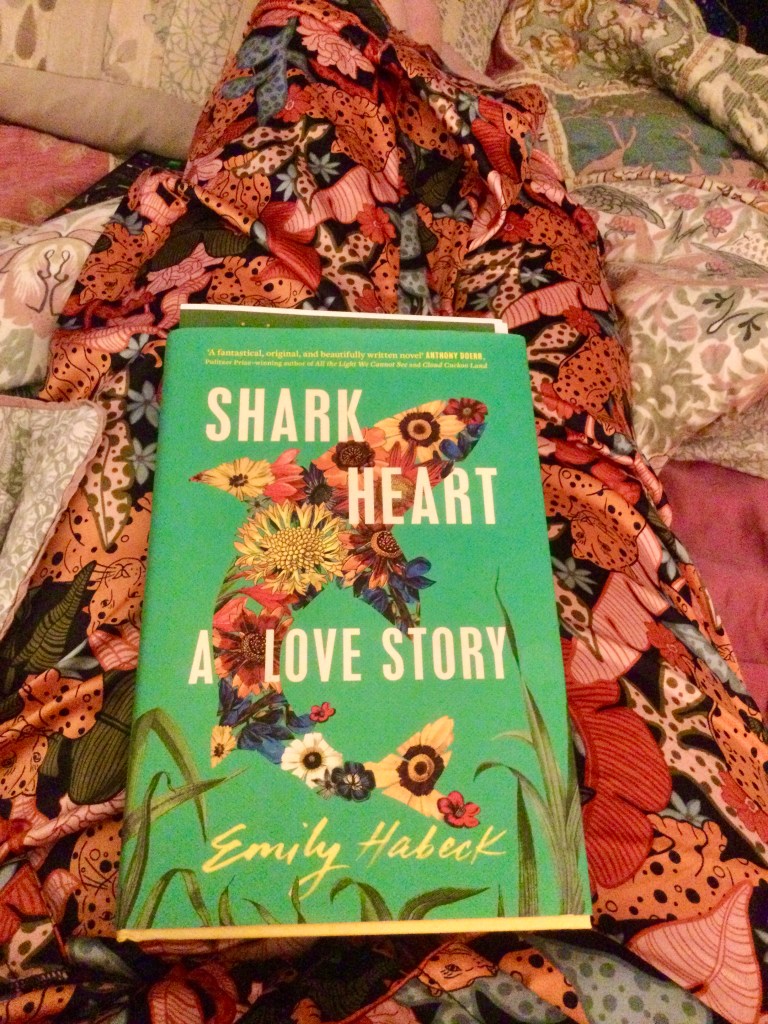
Shark Heart by Emily Habeck

When Ella from Hachette Books messaged me to say there was a book she thought would be right up my street I was a little surprised. I didn’t think the publicists would know me and my book choices well enough to make predictions about what I’d like. I was wrong. She knew exactly who this book was for. ‘It’s about a man turning into a Great White Shark’ she told me, well what’s not to like? I was hooked on the idea before the book even arrived. Lewis and Wren have fallen in love. They’ve no idea that their first year of marriage will also be their last. It’s only weeks after their wedding when Lewis receives a rare and shocking diagnosis. He has an unusual mutation. Although he might retain some of his consciousness, his memories and possibly his intellect, his body will become that of a Great White Shark. Lewis is complicated, an artist at heart he has always wanted to write the great American play for his generation. How will his liberal and loving heart beat on within the body of one of the earth’s most ruthless predators? He also has to come to terms with never fulfilling his dreams, but expressing that anger with shark DNA in his system has huge repercussions. He has to come to terms with leaving Wren behind, for her own safety. Wren wants to fight on. To find a way of living and loving each other as Lewis changes. She is told that there will come a point when this will be too dangerous. Lewis will then have to live in a state run facility or free in the ocean. It’s when she sees a glimpse of his developing carnivorous nature that a memory from her past is triggered. Wren has to make a terrible, heart-wrenching decision.

I felt emotionally devastated by this beautiful novel that uses a fantastical premise to unleash experiences of grief, love, loss and potentially, healing. Wren and Lewis reminded me of my relationship with my late husband. We married after six weeks and even then I knew I wouldn’t have him forever. I had almost seven years until I lost him. This book explained how my own grief experience felt. After Jez’s death I felt furious with anyone who said ‘Jez would think..’ or claimed they could sense his presence. I could feel nothing. No voice, no presence, nothing. It was as if he had never existed. For Lewis there becomes a point when his incessant desire to feed will become his overriding thought, strong enough to wipe out all others, will that include his love for Wren? He will not exist as Lewis anymore, the doctors tell Wren, he will not even know who she is, because he will be all shark. Wren has to come to terms with letting Lewis go, but how do you walk away from the most precious thing in your life? I had a point where I had to decide that I couldn’t look after my husband any more. I was exhausted, we had no carers in place and it didn’t feel safe to try and go it alone. Besides, as his brother told me, I had to start building a life without Jez. I cried more the night he went into nursing care, than when he died, because I felt I’d let him down and I knew he would die. He did, only six weeks later. Wren is told the same after a terrible violent incident occurs at the after-party for the play Lewis’s students have worked on. Wren calls the specialist nurse for advice, but she urges Wren that it’s time. Will they be able to say goodbye?

Despite these similarities to my life, it wasn’t Lewis’s story that broke my heart, It was Wren’s story. This is not the first time Wren has had to say goodbye. When she was barely a teenager her mother also had a rare diagnosis, but her mutation was that of a Komodo Dragon, equally deadly and impossible to live with. One scene between Wren and her mother, as she leaves her in the state facility, was so deeply moving I cried. I found it unbearable. This is what’s astonishing about Emily Habeck’s debut. It seems so fantastical, yet is utterly real in it’s experiences and emotions. Using such unusual animals as the mutation/illness creates a distance from the feelings involved. Some readers might even think the premise ridiculous – but the terrible anticipation, the moment of loss, the grief and relentless momentum of life are exactly the same. It doesn’t matter whether it’s the decision to put an elderly parent in a home or a Komodo Dragon into a facility, the guilt and pain as you walk away feels identical. It isn’t all relentless misery though. We meet Wren’s mother as the teenager she once was, experiencing love for the first time. We also go back to Lewis and his new life in the ocean, as his emotions flit between loss and what’s for dinner. His friendship with Margaret is so funny. She was once a human too and she’s been looking for another hybrid to talk to, and boy does she talk?! She’d try the patience of a shark. In a beautifully unusual way and in an almost poetic prose, this beautiful debut is about life. It’s ups and downs, the horrendous losses and the gains: the naivety of first love, becoming a mother, our love and care for an elderly parent, friendships and realising that a special little girl sees you as her dad. Life is constant adaptation, evolving and developing all the time. Every end is a beginning. This is such a special novel, an incredible debut with such a keen grasp of what being human is all about. I can see this becoming an all-time favourite for me. It quite simply took my breath away.

Meet the Author

Emily Habeck has a BFA in theater from SMU’s Meadows School of the Arts as well as master’s degrees from Vanderbilt Divinity School and Vanderbilt’s Peabody College. She grew up in Ardmore, Oklahoma. Shark Heart is her first novel.

Published on 3rd August by Jo Fletcher Books

Posted in Netgalley

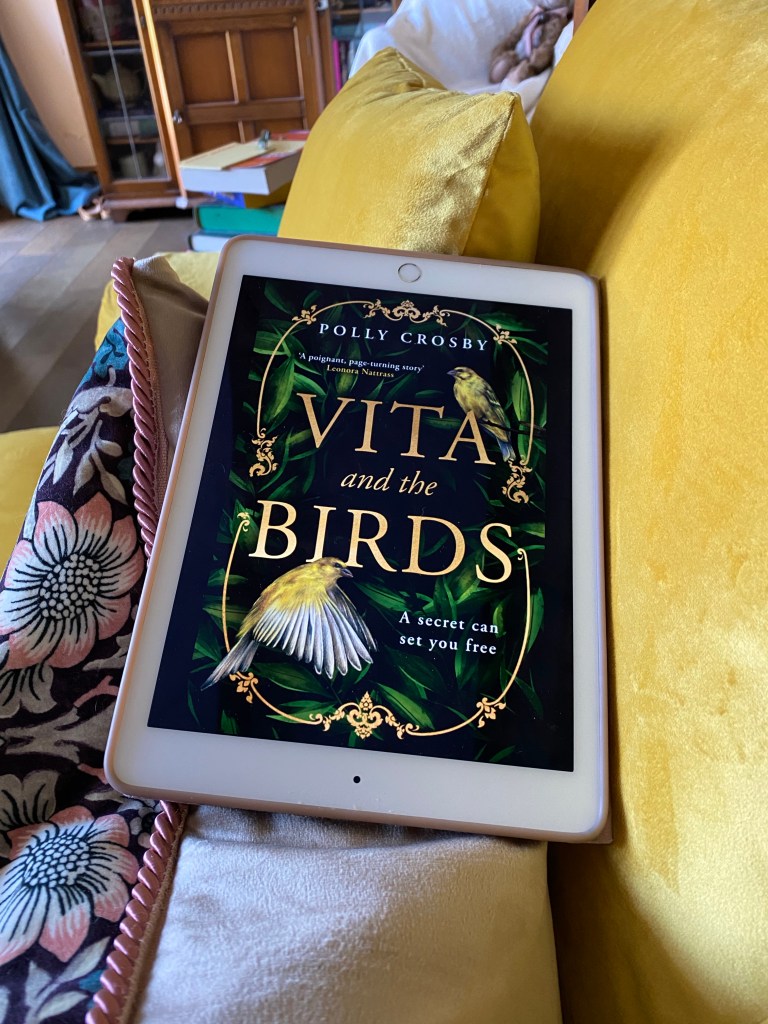
Vita and the Birds by Polly Crosby

1938: Lady Vita Goldsborough lives in the menacing shadow of her controlling older brother, Aubrey. But when she meets local artist Dodie Blakeney, the two women form a close bond, and Vita finally glimpses a chance to be free.

1997: Following the death of her mother, Eve Blakeney returns to the coast where she spent childhood summers with her beloved grandmother, Dodie. Eve hopes that the visit will help make sense of her grief. The last thing she expects to find is a bundle of letters that hint at the heart-breaking story of Dodie’s relationship with a woman named Vita, and a shattering secret that echoes through the decades.

What she discovers will overturn everything she thought she knew about her family – and change her life forever.

I’ve looked forward to the new Polly Crosby novel for a while, it was one of my most anticipated books of 2023. I love her writing so I gave myself a lovely sunny weekend to completely wallow in the story. It seemed fitting that I was outside, since nature plays a strong part in the novel both metaphorically and as an extra character that’s often more vivid than the inner spaces. Eve has felt adrift since her mum Angela died so her four brothers think it might be good for her to take a trip to the coast and clear out their grandmother’s studio. Grandmother Dodie was a painter and lived a fairly basic life in a small ramshackle studio just off the beach. Eve has fond memories of childhood holidays there, when her brothers would snuggle up with her like sleepy puppies on the studio floor at night. Close by is the strangely alluring Cathedral of the Marshes, a glass building so imposing it has the presence of such a holy building. Once, when she was a teenager, Eve had taken a dare to go into the cathedral with Elliot, one of the local boys. She remembers being terrified, but doesn’t remember much else about that night apart from seeing a painting standing on an easel. Strangely, it was a portrait of her and she ran out into the night, never to return. How will it feel to be back in a place that she has feared, but that still holds some of her best childhood memories? When she finds Dodie’s letters and reads of her relationship with Vita, she is plunged into a completely hidden part of her grandmother’s life.

This is a dual timeline novel, so through the letters we go back to the outbreak of WW2 and Dodie’s early years at the studio. She met one of her more notorious neighbours, Vita Goldsborough, resident of Goldsborough Hall and an owner of the glass cathedral. Vita and her brother Aubrey are the subject of gossip in the village. The stories are varied: Vita went mad and was put in a psychiatric hospital; Vita and Aubrey committed incest; they were to blame for ‘the vanishings’. They didn’t mix in the village and the stories around the siblings seemed to multiply and when a local girl vanished they were the first to be blamed by villagers. Strangely, as Eve arrives, a boy goes missing. It seems like an echo of the past, a foreshadowing, as if this is a thin place where memories and historical events seem close enough to touch. The physical sorting of her grandmother’s belongings is a simple enough task, she will just hire a skip, but when it comes to finding things that evoke memories and emotions they’re not so easily thrown away. Now Eve finds herself questioning the past and discovering things about this place and her beloved grandmother that she’d never imagined.

I thought this was a fascinating story highlighting women’s history and showing how much Victorian attitudes still prevailed in aristocratic society. The way Aubrey Goldsborough thinks feels around forty years out of date and the power he has over his sister we would now label as coercive control. Vita tries to explain to Dodie that his hold over her is so powerful he doesn’t have to force her, he simply has to tell her what to do and she obeys. He wants Vita to be respectable and only spend time with the right sort of people. Becoming friends with a bohemian artist like Dodie was definitely unexpected and she is the epitome of the wrong sort of company. Vita decides that Dodie must paint her portrait, something that her brother can’t really object to. Aubrey would like her to make a good marriage, but Vita’s interactions with men are fast and short-lived. Vita’s rebellions had to be passive aggressive – she gathers her jewels and keeps them in a box chained to the bottom of a pond in the glass cathedral. Hopefully, she can sell them without Aubrey knowing and have some financial freedom. She and Dodie hide in plain sight after Aubrey goes to war. They set up home in the cathedral, able to see everything around them, but thanks to the reed beds outside they are very unlikely to be seen. In another echo of her grandmother’s past, Eve meets an elderly lady in the village who asks to have her portrait painted. Eve isn’t usually a portrait painter, but can’t turn down the generous money offered for the work. She has the key to the cathedral and suggests they use it for their sitting, so Eve stands where her grandmother did many years before. What might this lady know about that time and her grandmother’s life?

The outside spaces seem to have an effect on Eve and I noticed a more natural, authentic part of her shine through. When she’s wild swimming or having a campfire on the beach with her brothers it feels like she belongs here. I was fascinated with how Polly plays with interior and exterior spaces, mirroring the parts of themselves her characters are revealing and concealing. Dodie’s studio has one glass side, leaving the whole living space open to view and her only concession to privacy is a screen where her models can undress. This is so in keeping with Dodie’s character, she is who she is and nothing is usually concealed. A beautiful detail comes when Eve is aware that putting the light on opens the space up to the outside like a stage set, but switching it off opens up the landscape outside. The cathedral is something of a paradox because I thought at first the glass would be very exposing, but Aubrey had designed it with living spaces that were kept private. I was imagining it like a Victorian glasshouse or orangery, very ornate with an almost tropical climate inside. The central ‘Turkish Room’ where Vita sits for her portrait has an otherworldly feel, with a smell of vegetation and rotting fruit. A large pool sits at the centre and church pews are placed around it upholstered with Turkish throws and pillows. There’s a sensuality to this space, the heavy warmth and the softness of pillows contrasts sharply with the glass. The room is hidden by the marsh reeds and it feels like a world apart, a feeling echoed by the ornamental bird cage engraved just for them. It holds Vita’s canaries, until one day they escape out through a hole in the roof. Yet they come back and visit Vita, eating out of her hand and filling the room with beautiful bird song. The name Eve finds scratched on the cage alongside that of Vita and Dodie should be no surprise. It’s a hope that person will return and bring a new generation back to the cathedral, represented by the flock of yellow and brown canaries Eve sees fly into the cathedral – the ancestors of those first two birds returning to their home.

As with previous novels, Polly really knows how to pile on the layers of mystery and create an undercurrent that’s quite unnerving: the painting that looks like Eve; the birdcage and the names engraved on it; the earrings Eve finds under the sink in the studio that she’s never seen her grandmother wear. Eve’s mind plays tricks on her, confused by the likeness between Vita and her grandmother, but also with herself. She’s still confused about that night when she was a teenager, when she went into the cathedral on a dare. Did she really hear a woman’s voice? Was she holding something when she ran away? Was it a shard of glass? As we move towards finding out what happened in the cathedral all those years ago the tension builds and I worried whether the two women would be safe from someone like Aubrey. Eve knows that he was found dead in the cathedral cut by a shard of glass, but was it suicide or murder? Whatever happened to Vita, someone her grandmother never talked about? There’s also the question of Eve’s mum Angela, born around the same time period but brought up by Dodie alone and has never known her father. As Goldsborough Hall was obliterated by a bomb during the war, only the cathedral remains and I wondered who owned it now? I was totally engrossed by this point and dishes went unwashed, the dog went unwalked and my other half, who knows when I’m lost in a story, kept me amply supplied with tea and toast. I do this strange thing when I’ve really enjoyed a book, I seem to hug it to my heart as if it can reach the characters inside. This was one of those books. It’s a beautiful hidden love story and an intriguing mystery as well, told with compassion and empathy.

Meet the Author

Polly Crosby grew up on the Suffolk coast, and now lives with her husband and son in the heart of Norfolk.

Polly’s third novel, Vita & the Birds, came out in May this year. Her first novel for young adults, This Tale is Forbidden – a dystopian fractured fairytale with hints of the Brother’s Grimm and The Handmaid’s Tale – is out in January next year with Scholastic.

In 2018, Polly won Curtis Brown Creative’s Yesterday Scholarship, which enabled her to finish her debut novel, The Illustrated Child. Later the same year, she was awarded runner-up in the Bridport Prize’s Peggy Chapman Andrews Award for a First Novel. Polly received the Annabel Abbs Creative Writing Scholarship at the University of East Anglia.

Polly can be found on Twitter, Instagram & Tiktok as @WriterPolly

Website: pollycrosby.com

Posted in Squad Pod

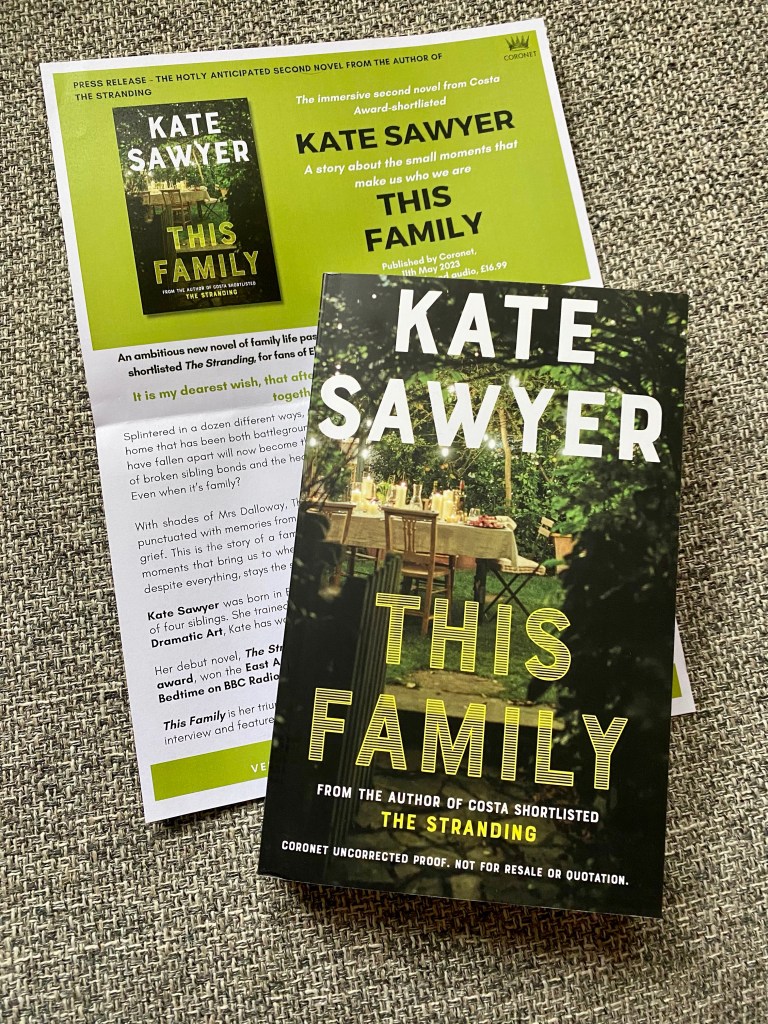
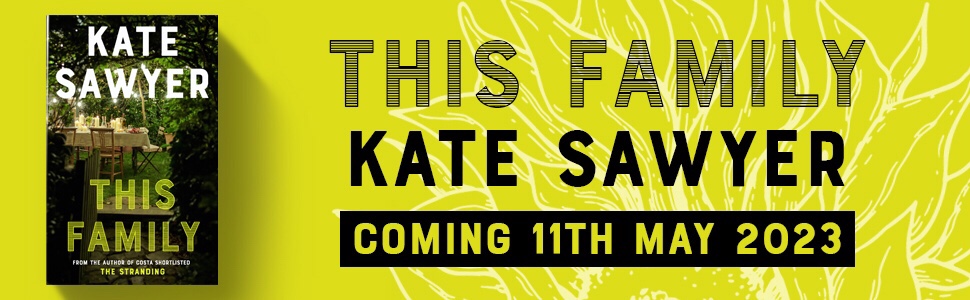
This Family by Kate Sawyer

I fell in love with Kate Sawyer’s imagination and writing skill when I read her debut novel The Stranding, so I was excited when the Squad Pod were able to confirm her new novel for our May book club. I didn’t know what to expect, whether there would be more of the same dystopian themes and emotional intelligence that I’d loved before or something completely different? This Family is different in that it’s set on one day where a family, with all it’s fractures and memories, are celebrating a wedding day. I often read books where I know I’m getting only a fragment of a much bigger picture. Kate Sawyer writes on several levels at once, from the personal to the universal. Each character has their inner world, their current outer world, other times and events, other people’s perspective on the character and events, then national and international concerns. It’s like someone shaking out the contents of my mind into a big jumble and seeing every single thought: I need to get some bread, last night’s dinner party was boring, thoughts of another dinner party years ago where I said something stupid, a worry about my dad’s health, thoughts on the book I’m reading, concern about the state of the health service and the war in Ukraine. Kate constructs her characters with all those levels creating a tapestry of this family’s life and how they all fit together to make a beautiful whole.

This was one of those books where I was conscious of empathising with an older character – Mary – who is getting married today and wants to have just one day where everyone behaves and is thinking of her happiness above their own concerns. She wants Phoebe to stay sober. She wants Emma to speak to her sister. Could her first husband Richard not be a dick? That’s all she wants. Just one day. As the family come together we see aspects of the day from different perspectives with all of the details I’ve mentioned. We see Phoebe’s inner thoughts. Then Mary’s thoughts and impressions of Phoebe. Rosie brings up a global concern – usually climate change, but Mary says it’s banned for one day. There is talk of COVID, the financial crisis, and even small boats crossing the Channel. Life is a tapestry of all these things, multi-layered and with contrasting colours. Kate gives each character their section, but she includes those events over the last few years that have stopped us all in our tracks like 9/11, theBoxing Day tsunami, the London terror attacks. Mary’s thread of worry when she hears of the tsunami, knowing one of her daughters is in Thailand. The thought she might be hurt pushing aside all irritations and harsh words. As a worker in the NHS Rosie’s proximity to the terror attacks and the pandemic cause other’s concern. This family is a jumble of memories, hurts caused, joint history, change, and then those moments of sharp focus when all that matters is their love for each other.

Their relationships are complex and at first it’s hard to know who everyone is and how they relate to each other. In fact the story of Mary is told so slowly I didn’t know who she was marrying until at least half way through the book. Going back over time, characters were married to different people and the relationships change. Even the sisters relationships with each other turn out to be complicated, yet they are still family. Emma’s story hit me deeply, because it was a story of childlessness and grief tearing lives apart. Emma married Michael, who was Phoebe’s best friend at university. Their marriage suffered due to pregnancy loss and when they lose their son, just as Emma was starting to think everything would be okay, it’s Mary that she asks for. She shuts Michael out and starts divorce proceedings, holding tightly to her feelings and unable to take on anyone else’s feelings of loss. Yet Michael will be at the wedding and will Emma be able to face him? There’s also her sister Phoebe to face and she has had a family, including a newborn. There’s a lack of communication between these two sisters, all pent up anger, jealousy and loss that they must put aside at least for today. When the truth of their rift is revealed the scene physically winded me. I felt for Emma, but could also see she’s her own worst enemy at times. It made me think about my own childlessness and the things people have said to me that hurt deeply at the time, but I could see if I held on to them I was hurting myself. At a time of great loss Emma cuts out the very people who might have helped and has missed seeing her niece and nephew.

Phoebe is a real talking point to and discussing her with other members of the squad has been enlightening, with many disliking her intensely. I could see where she’s hurt people with her reckless temper and with her addiction. Phoebe is now sober and married with a family, somewhere it’s hard to imagine her being when we delve into her past. I could understand how the family feel cannibalised by Phoebe’s successful newspaper column and her book, Mary particularly. She tried not to read it because she didn’t want to be blindsided by something her daughter recalls, in her own inimitable way. Phoebe needs her family, but their relationships with her are being slowly devoured, sentence by sentence. I found it interesting that when others recall terrible things Phoebe has done in the past, she really couldn’t see their position because she’s clouded by drink. She feels sorry for herself and can’t see past the self pity to wonder how others feel. As she recalls the terrible thing she said to her sister all the feelings of shame come bubbling to the surface, but she repeats a mantra to herself – ‘I do not hate myself; I hate the actions of my addiction’. She accepts that even though she has made amends, Emma doesn’t have to forgive her or accept her apology. Phoebe can only forgive herself.

I loved the meta-fiction element of how the story is told. Mary comments on the nature of stories, how the same event can be viewed differently by every person who was there just as the book’s structure shows. The wedding, when it finally arrives, feels like a natural full stop. As Mary looks out of the kitchen window and sees the three sisters laughing under the tree that made her want this house, she sees closure. As they laugh in the dappled un light and Emma holds her nephew Albie for the first time something has healed. This beginning – the start of Mary and her husband’s married life – is also an ending. He commits to a new chapter, leaving his first wife behind, but knowing that both he and Mary share their memories. Mary is moving from the house that the sisters have spent their whole lives in. She knows she will miss that tree. But she will no longer have the care of her previous mother-in-law, Irene. She observes that this day is only the end of a chapter, not the end of the book. More will happen, shown in that surprising fragment of an ending. We long for the closed answer, the neat and tidy ending, but that’s not life. Life is unexpected, messy, cruel and joyous. Then the author throws in a shock we aren’t expecting and despite Phoebe having done so much damage to this family, I didn’t want this ending for her. Yet her daughter Clara is only looking back, a memory she grasps at but can’t fully know. Is it a true memory, or is it a memory constructed from other people’s stories of that day? The author is always questioning how we construct reality, whether there is one true account of an event, or whether the story is fragmented, fluid and ever changing? This was a fascinating read psychologically and really made me think about how others see events we’ve shared and how families choose to overlook each other’s faults and bad behaviour, to come together and choose love, again and again.

Published by Coronet 11th May 2023

Kate was born in Bury St Edmunds, Suffolk, UK where she grew up in the countryside as the eldest of four siblings, after briefly living with her parents in Qatar and the Netherlands. 

Kate Sawyer worked as an actor and producer before turning her hand to fiction. She has previously written for theatre and short-film. Having lived in South London for the best part of two decades with brief stints in the Australia and the USA she recently returned to East Anglia to have her first child as a solo mother by choice.

Posted in Throwback Thursday

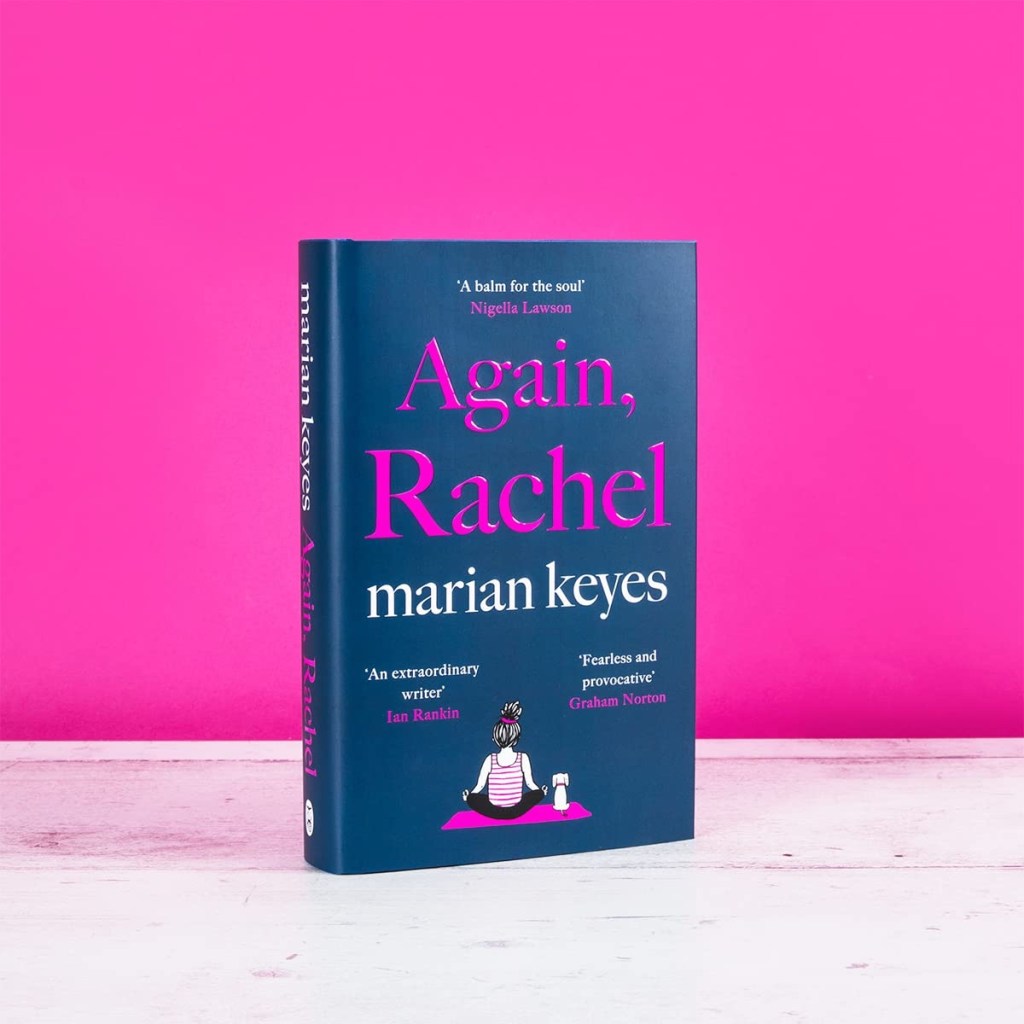
Again Rachel by Marian Keyes

Over the last couple of weeks I’ve had the brilliant experience of buddy reading with my eldest stepdaughter. I bought her Rachel’s Holiday and this sequel Again, Rachel for Christmas and she decided to read them in her down time from revising for her A’Levels. I realised it would be a great opportunity to share the reading experience together. I finished this on my weekend away and I genuinely found it hard to look up from the story. For the author, the anxiety of revisiting a much loved character must be huge, because I felt it too. I’d kept it on one side for this long because of that anxiety. I loved Rachel and the whole Walsh family and I wasn’t sure I wanted to know what happened next. We’re twenty years on from the end of the last book and Rachel is settled, with a job she loves and a happy home. She works as a senior counsellor at The Cloisters – the place where she started her own recovery journey. She owns a beautiful little house and a garden that’s become an unexpected part of her ongoing recovery and mental well-being. She also has a little dog, Crunchie. There’s also a man, Nick Quinliven (known as Quin) who has a penchant for trying new and exciting things from from the latest restaurant to wild swimming and escape rooms. They haven’t said they love each other yet, but he is an important part of her life. Life is great until Rachel hears that Rose Costello has died. Rose was her mother-in-law and although she hasn’t seen her since she and Luke divorced, she does feel an obligation. Should she go to the funeral or not?

Rachel and Luke have never spoken since he left their Brooklyn flat several years ago and cut all contact. I kept thinking what on earth could have separated these two people who really loved each other? Skilfully taking us back and forth in time, Marian Keyes constructs the intervening years as Rachel copes with the unexpected present and the painful past. Rachel’s whole life is upended as she sees Luke for the first time and tries to cope with the emotions of their reunion. However, she’s also plunged deeply into the past and the reasons she and Luke ended. Rachel is emotionally intelligent and knows all about buried trauma, but is surprised when she experiences all of those emotions afresh as if it only happened yesterday. It upsets her equilibrium, but has that sense of calm recovery merely been a front? Rachel hasn’t wilfully deceived others. She’s deceived herself. Is her version of what happened back then even the truth? If given the chance to connect with Luke and unpick their past, should she take it?

Marian Keyes really knows her stuff when it comes to addiction and mental health. It’s always a joy to read her books because they’re so emotionally intelligent. This framework provides so much depth to the characters and their story. Here she shows us a wounded healer, as Rachel struggles through addiction and loss, but still supports clients to achieve psychological change. I love her courage, because anyone who uses their own pain to help others is an incredible human being. I love how Keyes describes group sessions, as Rachel keeps her boundaries and sticks to her script, no matter how strongly she might be identifying with the client or feeling deeply moved by their story. We get to see that conflict in her; as a human being she might want to comfort that person, but as a therapist she must hold back to effect change. She knows that sometimes it’s important to sit with the feelings, to truly feel negative emotions without distractions or outside comfort. They always pass. I loved the wisdom she’s acquired over the years and how she rides to cope with her own trauma the same way.

I was deeply moved by Luke and Rachel’s experience because I’ve been through something similar. It made some parts hard to read, but it was written beautifully and with an accuracy I really appreciated. Keyes offsets the sadness with the usual comic touches, with Walsh family conferences being a great source of humour. All the sisters have their own idiosyncratic characters, causing conflict at times but we know that love is always present. Mrs Walsh is typically overbearing and contrary and her upcoming ‘surprise’ birthday party is an extra source of stress, especially when she decides to invite her ex-son-in-law. Luckily, the meticulously organised Claire has everything in hand, despite also trying to negotiate a session of swinging for her and her husband. Husband Adam is reluctant, but once convinced he becomes so enthusiastic that Claire is furious with him! The love stories are convincing and both Rachel’s current beau Quin and ex-husband Luke have their strengths. I held out hope for Quin and Rachel because I thought they suited each other. However, once Luke is on the scene the chemistry and unfinished business between him and Rachel is undeniable. Quin isn’t the only obstacle either, Luke’s partner Callie is with him in Ireland and seems very determined to keep Rachel close. I didn’t know if Rachel and Luke would be able to move past their history and connect again, as the people they are now. I loved how they tried their hardest to work through what happened, despite the pain it’s clearly causing. Could they possibly remain friends and share their loss, after all only the two of them can fully understand what they went through. Despite knowing that that Rachel didn’t need either man to build a happy life, I knew where my loyalties as we approached the end. Oh what an ending!! I was snap chatting my stepdaughter and we’d both cried buckets at the ending. I was so glad that Marian Keyes had been brave enough to revisit Rachel again.

Published by Penguin 13th April 2023

Marian Keyes is the international bestselling author of Watermelon, Lucy Sullivan is Getting Married, Rachel’s Holiday, Last Chance Saloon, Sushi for Beginners, Angels, The Other Side of the Story, Anybody Out There, This Charming Man, The Brightest Star in the Sky , The Mystery of Mercy Close, The Woman Who Stole My Life, The Break and her latest Number One bestseller, Grown Ups. Her two collections of journalism, Making it up as I Go Along and Under the Duvet: Deluxe Edition are also available from Penguin.

Posted in Netgalley, Squad Pod

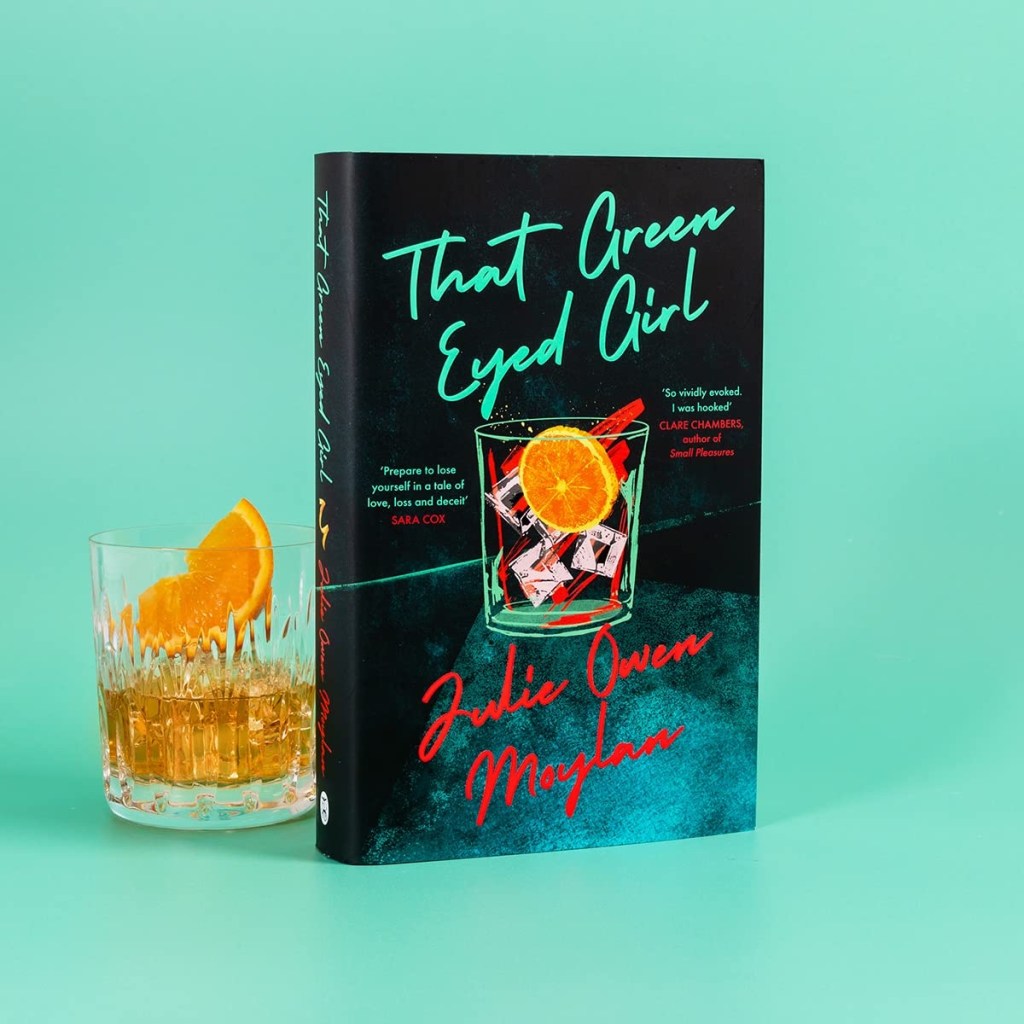
That Green-Eyed Girl by Julie Owen Moylan

The drinks glass and flashes of almost neon colour on this book’s cover were striking on NetGalley. To me they signified city living, the bar scene and potential for glitz and glamour – I’ve probably watched too much Sex and the City. However, the women depicted here were a long way from flashy, fashionista, New York City Girls. In fact there are only a couple of nights out in the whole book. This is a different NYC, where real people live and work day to day, just trying to get by in a city that’s exciting, but expensive and tough. In a split narrative, set partly in 1955 and partly in 1975, this is a novel that writes back to women’s history. It opened my eyes to a time when women were persecuted for the way they choose to live their lives. In 1955 Dovie Carmichael and her friend Gillian work together as teachers and share an apartment. The friends have a lot in common: they love jazz, a glass of whiskey at night and lazy Sundays at home. The pair guard their private time very carefully, until one day when the wrong person gets a glimpse into their lives, changing everything. Twenty years later teenager Ava Winter lives in the same apartment with her Mum and her Dad, when he’s around and not with his mistress. Ava’s mum is not well mentally and Ava is struggling to live a normal teenage life, preferring to stay home to keep an eye on her. She becomes fascinated with a mysterious box and letter sent to their address from France. Inside are letters, a butterfly necklace and a photograph with LIAR scrawled across a woman’s face. Ava wants to know the story behind the box. Who was this woman, that lived in her home and what do the letters say?

The theme that stood out to me more than anything was loneliness. I felt a contrast between the huge open city and the small private spaces where secrets are kept. The characters I felt most connection with were Ava and Dovie, both struggling to keep secrets about their living situation. The mistake Dovie and Gillian make allows a very manipulative woman to take advantage of them. Judith works at the same school and does come across as a lonely woman, but has allowed her situation to develop bitterness and envy in her character. In the guise of struggling to find an affordable apartment, she inveigles her way into Dovie and Gillian’s home and relationship. It’s clear she wants friends, but seemingly can’t stand to see two people who are happy in each other’s company and if she can’t have it for herself she might just set out to destroy it. Ava is also lonely and I think she senses a similar feeling in the box of keepsakes she discovers, it’s that connection with the sender’s loneliness that makes her so determined to find the person this box was meant for. It’s also a distraction from how miserable her own life is. With her mum and dad estranged she is often solely looking after her mother who seems severely depressed and liable to harm herself. It’s almost a role reversal, with Ava looking after her welfare instead of the other way round. I felt deeply for this young girl going through the usual teenage phases of a crush on a boy in the neighbourhood, a worry about how she looks and fitting in, and both the anticipation and fear of what comes next in life. On top of this her father uses his precious time with Ava to chat up the waitress in their favourite diner. Her mother is deteriorating, screaming and muttering through the night and Ava is so worried about the neighbours hearing her or her friend finding out what home is really like since her dad left. The scenes of her alone in their cold apartment, willing her mum to settle for the night and wishing her dad was there, were vivid and moving.

Whether in New York or Paris the settings are beautifully evoked and I could feel the change in time period from just a few well written sentences. Even the usually romantic Paris has it’s downsides because this is the reality of living there, rather than the dream. I felt the author really got under the surface of these cities and showed me what it was like to be a New Yorker. I found the LGBTQ+ scene so interesting and the contrast between women who kept their relationships secret, with more openly gay women in NYC or Paris, was beautifully portrayed. Dovie has never ventured into meeting other women and the scene where she visits a club stayed with me. There’s an innocence about Dovie that contrasts sharply with the sophisticated women she sees there, some of whom are scathing of Dovie’s lack of knowledge about being openly lesbian in 1955. I don’t think she really understood the danger she faced which could be anything from losing her job to being arrested or put into an asylum. I was just as shocked to realise that women who were open about their sexuality, or discovered, were subject to arrest and even ECT treatment to curb their ‘unnatural’ activities or desires. The nightclub raid where Dovie is helped to escape through a bathroom window is unbelievably tense and so poignant when we realise it’s link to 1975. The way police manhandle and sexually assault the women reminded me of how the suffragettes were treated so many decades earlier. The idea was to break the women’s resolve and remind them what they were really for – the amusement, desires and dominance of men. Reading these women’s experiences made me so angry, but also opened a door into a world I am ashamed to say I knew little about. At heart this is a love story and all the way through I wanted to know what had happened in that apartment in 1955 and I also hoped that Ava would find the intended recipient of the box from Paris. For me this book had a similar impact to the television series It’s A Sin. This was an emotionally captivating story that’s sure to stay with me and has inspired me to read more about the history of sexuality and the fight LGBTQ+ people still have for equal rights across the globe. It left me with a lump in my throat, thinking about how love can last a lifetime, even beyond separations and loss. I really look forward to reading more from this talented author in the future.

Meet The Author

Julie Owen Moylan is a writer whose short stories and articles have appeared in New Welsh ReviewHorizon Literary Review, and The Voice of Women in Wales Anthology

She has also written and directed several short films as part of her MA in Film. Her graduation short film called ‘BabyCakes’ scooped Best Film awards at the Swansea Film Festival, Ffresh, and the Celtic Media Awards. She also has an MA in Creative Writing, and is an alumna of the Faber Academy’s Writing a Novel course. 

Her debut novel THAT GREEN EYED GIRL was published by Penguin Michael Joseph on May 12 2022.

She is currently working on her second novel SPANGLELAND

Posted in Personal Purchase

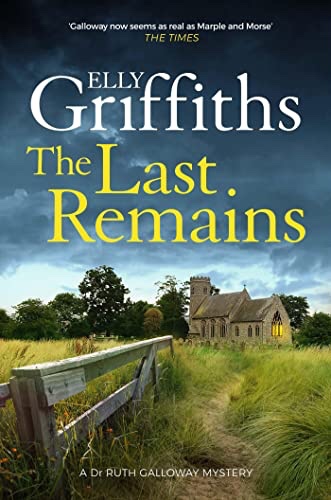
The Last Remains by Elly Griffiths

It’s always a treat to be back in Norfolk with Dr. Ruth Galloway, in fact it feels like I’m visiting an old friend. One of those friends you maybe only see once a year, but you just pick up where you left off like you’ve never been apart. This time we’re in the very North of Norfolk, branching into Cambridgeshire and even my home city of Lincoln too. The last book was set in the middle of the pandemic and in The Last Remains we’re still dealing with the aftermath. There’s a sense of dislocation from regular life, but weirdly there’s restlessness and a lsense of urgency too. An urge to start getting things done. It’s no surprise that several characters have big changes on the horizon. Ruth’s university are thinking of scrapping the archaeology department. Nelson remains single, but is still living in the marital home he shared with wife Michelle. Cathbad is still struggling with the ongoing symptoms of long COVID, much to his partner Judy’s concern. The group of friends are once again drawn together by a body. This one is walled up in an old cafe that’s being renovated. Ruth thinks the skeleton is female and has been placed there deliberately. She’s not ancient either, with Ruth ruling that the bones are not historic and likely to have only been there twenty years. What follows is a delve into the more recent past and a group of archaeology students spellbound by the knowledge of their tutor Leo Ballard. Could this go back to an evening of students and their tutor camping in the forest and talking about Norfolk mythology? At least there is one person to ask who’s very close to home and he’s always around where strange Norfolk legends are concerned.

The case is a complex one, with the themes of twinning and disguises. There are also interesting contemporary issues, especially for anyone like me who went to university for the first time in the 1990s. If we apply today’s standards of conduct to the relationships between students and tutors in the past, it’s clear the lines are more blurred. Leo Ballard was happy to have his students at his home and have camping trips with them too. The students would also congregate at the cafe where the body is found – The Green Man. The cafe was run by a man called Peter Webster who had two daughters- Gaia and Freya – who also studied archaeology. However, the walled up skeleton is a student from Lincoln called Emily who was on the receiving end of a blow to the head. Emily was a student at Cambridge University and went missing after the camping trip to Grimes Graves, a prehistoric flint mine. It was thought she had been travelling on the train to Lincoln to visit her parents, but was seen to get off at Ely and simply vanished. I was creeped out by Leo Ballard immediately and I didn’t like his manner when talking about young girls. He seemed to take advantage of his position to lure young students into relationships with him. Freya Webster points out that he never visited the cafe himself, but he felt present because of how much his students talked about him. His following of students felt like a cult, impressed by his knowledge and taken in by his stories. In fact he wasn’t above a bit of theatre, since all students remember seeing a strange figure with horns emerging from the woods when they were camping. Was this a group hallucination or did someone in the group want to genuinely scare the students?

Cathbad, everyone’s favourite druid, is not his usual self. He is still experiencing breathing problems when exerting himself, he sleeps more than he used to and has difficulties remembering things. It seems that even he is questioning his longevity and is acting out of character, such as taking the whole family to mass at Easter. So, when he goes missing, his partner Judy is distraught. I think she fears he’s gone walkabout, a spiritual walk taken when the individual knows they’re going to die. It’s a change that Ruth is struggling to deal with, especially since Cathbad has always seemed invincible. She’s facing enough changes of her own with the department of archaeology under threat of closure and she questions what more she could have done, but she’s written books and even had a television series. She’s probably the nose high profile archaeology tutor she can think of. She doesn’t like changes that threaten her and Kate’s settled existence on the salt marshes, next door to the sister she has only recently found. Kate is now at secondary school and is used to the changes of the last year. She is not surprised at the occasional presence of Nelson in the early morning and he also arrives most Saturday evenings bearing pizza. Ruth has a lot of respect for Nelson’s wife Michelle, who had the guts to break the endless deadlock of their three sided relationship. She has moved to Blackpool with Nelson’s youngest, George. Now that Nelson is free though, she isn’t sure what it means or what she wants. She senses Nelson moving ever closer to the big discussion of their future, but finds herself avoiding it. She can’t imagine ever being anywhere but here with Kate and Flint, looking out to sea from her little cottage. However, what if Michelle returned?

There’s plenty of tension here, in the case and in the relationships. The sequence with Ruth and Kate at Grimes Graves made me feel claustrophobic! Ruth has interest from David, another department member, and his declaration of love has surprised her, despite friend Shona saying it was obvious. David is going to work at Uppsala University in Sweden and would like Ruth to go with him, where a new post is waiting for her. If she stays at UNN there’s an assistant dean’s position possible. I felt like Ruth was waiting for a big gesture from Nelson. She doesn’t want him by default, just because Michelle has gone. When Michelle returns and is at their marital home, Ruth disengages. Nelson needs to choose and he needs to do it independently. Will he do this or will it just be easier to slip back into his marriage? Does Michelle even want that? I like that Ruth loves her independence and values her life without a man very highly. He has to prove what he will add to her life, because it’s really great as it is. I was on the edge of my seat wondering what she would choose. I was also worried for Cathbad, but loved the way these friends come together as a community. Judy and Ruth support each other and their children get along really well too, so they come together to wait for Cathbad’s return, trying not to think about the alternative. I will say that there’s a wedding a the end, but I’m not telling you which characters tie the knot. It’s going to be fascinating to see Ruth, perhaps in a new location and different job going forward. However, I think there will always be part of her and Flint’s spirit wandering the marshland.

Out now from Quercus

Meet The Author

Elly is the author of two crime series, the Dr Ruth Galloway books and the Brighton Mysteries. Last year she also published a stand-alone, The Stranger Diaries, and a children’s book, A Girl Called Justice. She has also previously written books under my real name, Domenica de Rosa (I know it sounds made up). The Ruth books are set in Norfolk, somewhere Elly went for holidays in her childhood, but it was a chance remark of my husband’s that gave me her idea for the first in the series, The Crossing Places. They were crossing Titchwell Marsh in North Norfolk when her husband, who’s an archaeologist, mentioned that prehistoric people thought that marshland was sacred ground. Because it’s neither land nor sea, but something in-between, they saw it as a bridge to the afterlife; neither land nor sea, neither life nor death. In that moment, she said, she saw Dr Ruth Galloway walking towards her out of the mist… Elly lives near Brighton with Andy. They have two grown-up children and a cat called Gus who accompanies her as she writes in the garden shed.

Posted in Romance Rocks, Throwback Thursday

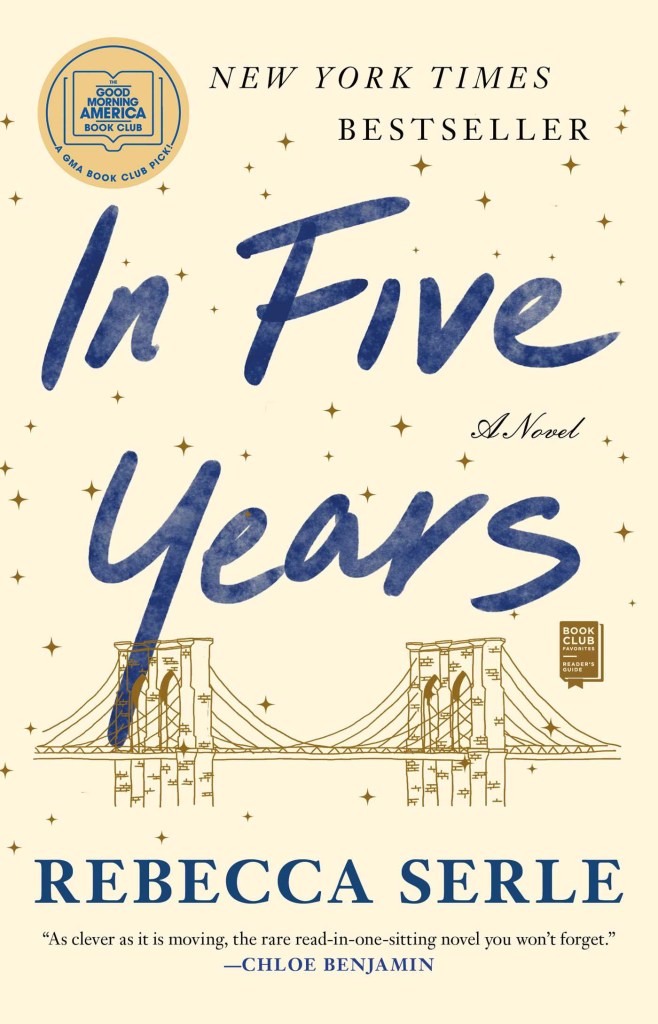
Throwback Thursday! In Five Years by Rebecca Searle for Romance Rocks.

This book surprised me, delighted me and broke my heart. It was not at all what I expected, but was all the more special for that. Cleverly, Serle wrong foots the reader into thinking this is a straight forward romance, but it really isn’t. It’s about love and just as our heroine Dannie is some times unsure what love looks like, so is the reader. We are used to certain conventions and have expectations about how a love story will unfold. It teaches us that sometimes we don’t notice or fully appreciate what we already have.

Dannie is a corporate lawyer, living in Manhattan and dating the eminently eligible David. David and Dannie live together after dating for two years. They have done everything according to an unspoken, but very correct timetable; everything about their relationship is planned and just right. In fact their relationship is so predictable that when David suggests dinner at the Rainbow Room, Dannie knows he’s going to propose. She says yes when he presents the perfect engagement ring, but they don’t plan their wedding. They continue to drift along as they are, until Dannie has the dream. This vivid dream shows a loft apartment in Dumbo with interior design details such as an art print of an optician’s chart with a witty slogan. It’s nowhere Dannie can imagine living. It’s trendy and edgy. She and David live in Gramercy Park. A perfect location for their work and fitting for where they are in life. Yet, the Dumbo apartment feels comfortable. Then a man appears. She’s never met him before but yet there is a connection, something she can’t define. As he moves closer she feels actual electricity. She has never felt this before. Like some huge force compels them to be together. When she wakes, Dannie feels strange, like she’s questioning everything around her.

Dannie has planned to see her friend Bella. They have been friends since boarding school and are still incredibly close. Bella takes more risks than Dannie and in some ways Dannie sees her as someone who doesn’t finish things, perhaps a bit of a flake. Bella loves art, she lives to travel and has a more bohemian outlook on life. Dannie has a more settled and perhaps, conventional life where work is the priority and her stable relationship with David simply ticks along. Up until now Bella hasn’t had a stable relationship in her life, but she has brought someone important to meet Dannie. When he walks in, Dannie is shocked to see the man from her dream. She panics and decides to do everything she can to stop her dream from coming true. But life can take strange turns and a series of events unfold that she never imagined. They make her rethink everything about how to live life and how to love.

I became so involved with Dannie and Bella’s story that it was hard to put the book down towards the end. The story crept up on me from something very light to an emotional tale about the strength of female friendship. These girls are life partners. Their presence sustains each other in ways that romantic relationships sometimes don’t. Bella’s mother lets slip that she purposely placed her daughter in the same school as Dannie, because she saw them together and could not part them. The very structure of the book teaches the reader something. We learn, at the same time as Dannie, that the happy ending is not always about a man, because love comes in many forms. Also, that loss and love are the same thing. When we grieve it just proves how much we loved. I found myself becoming very emotional towards the end of the book and that rarely happens. I found the writing so truthful and similar to my own experience of grief that I had a lump in my throat. I loved the ending and the fact it wasn’t predictable elevated the book above the ordinary. I will be hugging my friends a little closer and appreciating all the people in my life who love me.

Meet the Author

Rebecca Serle is an author and television writer who lives in New York and Los Angeles. Serle developed the hit TV adaptation of her YA series Famous in Love, and is also the author of The Dinner List, and YA novels The Edge of Falling and When You Were Mine. She received her MFA from the New School in NYC. Find out more at RebeccaSerle.com.

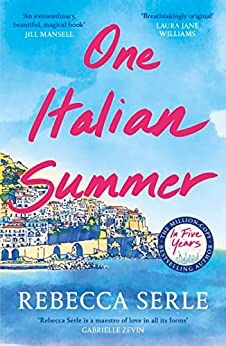
Her latest novel One Italian Summer came out in paperback last year and was a wonderful look at love, mothers and daughters, and the things we learn about ourselves through travelling.

Posted in Random Things Tours

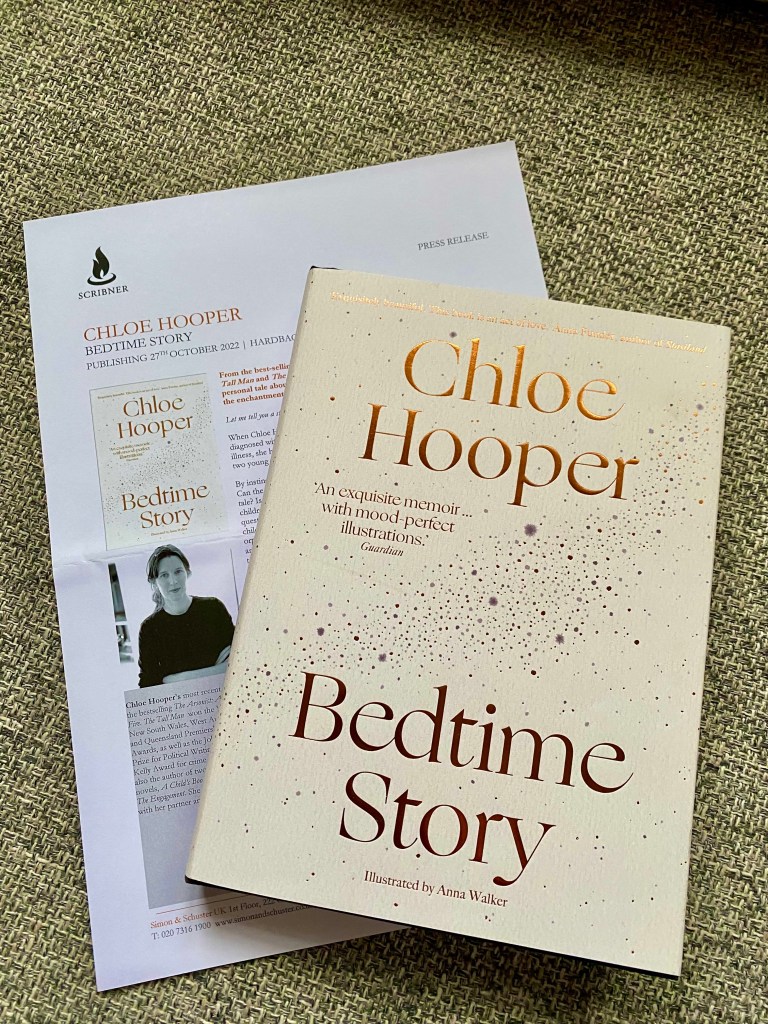
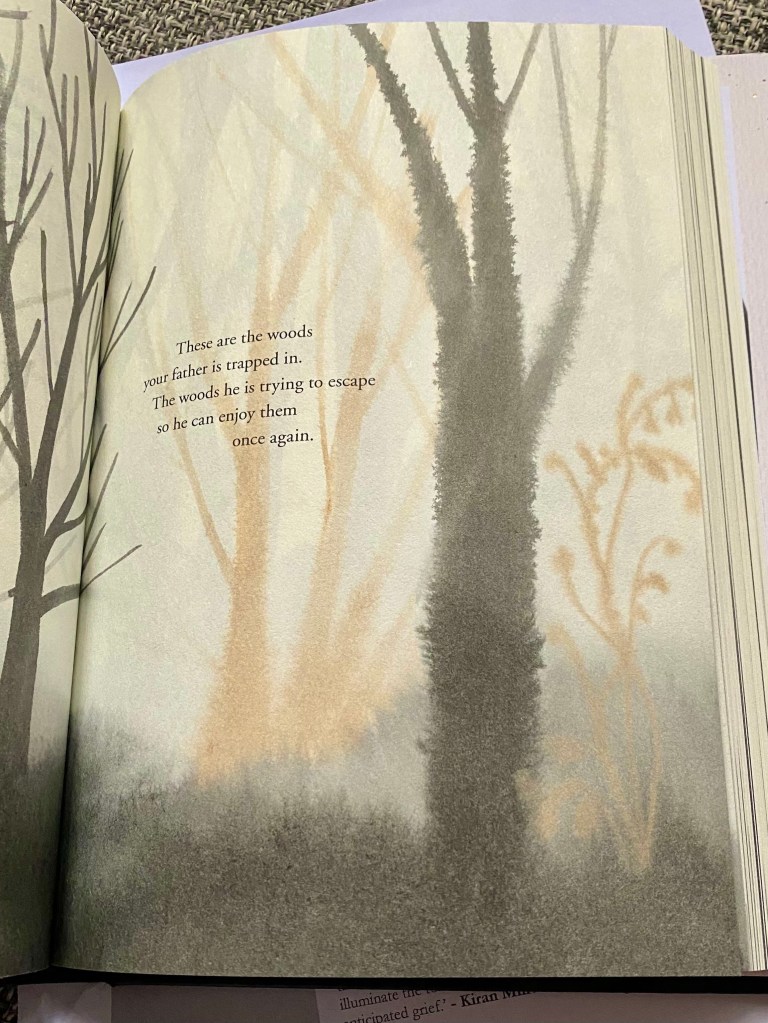
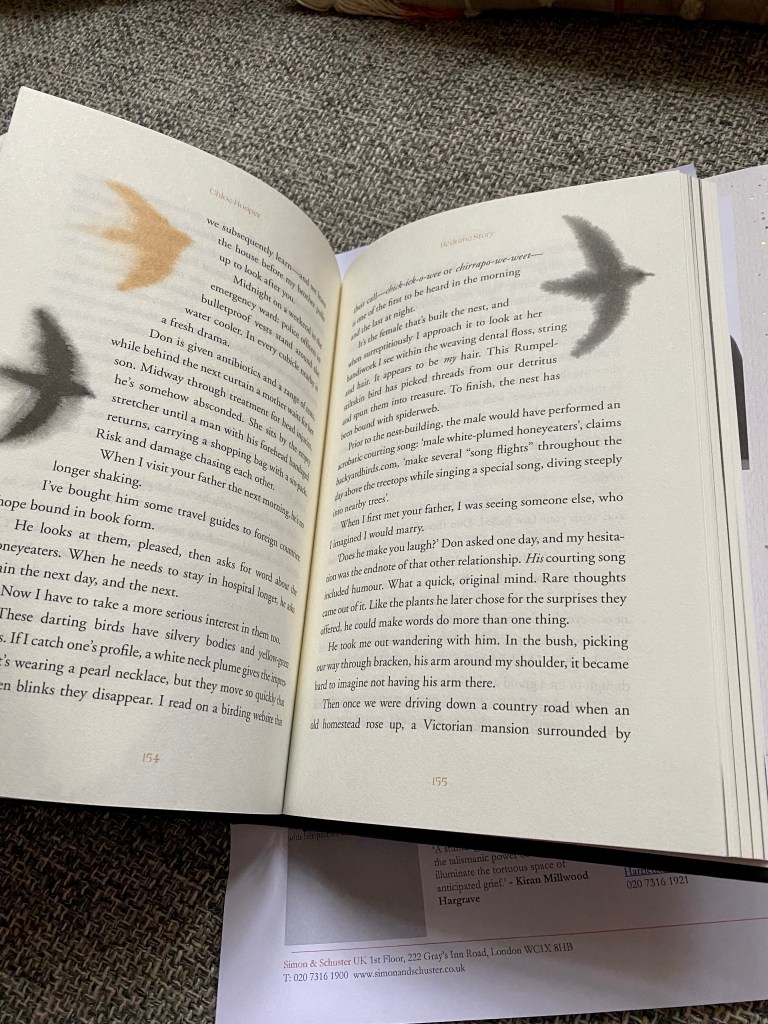
Bedtime Story by Chloe Hooper

Whenever I’ve been faced with difficulties in life, my instinct is to reach for a book that helps. It might be a self-help or nonfiction manual, it might be a novel that closely echoes my own experience, or it could be a memoir that tells a similar story from a totally different perspective. I’ve been helped by so many books over the years: Havi Carel’s Illness helped me cope with my invisible disability, several books about coercive control and psychological abuse helped me through a terrible break-up and books like Small Dogs Can Save Your Life and The Year of Magical Thinking helped me negotiate my first year of being a widow. Books have helped me understand the world in so many different ways, so I was fascinated with the concept of Chloe Hooper’s beautiful book Bedtime Story. In the same way I’d always reached for literature, Chloe Hooper had turned to children’s stories to hopefully find a way through a terrible situation.

Let me tell you a story…

When Chloe Hooper’s partner was diagnosed with a rare and aggressive illness, she had to find a way to tell their two young sons. By instinct, she turned to their bookshelves. Could the news be broken as a bedtime tale? Is there a perfect book to prepare children for loss? Hooper embarks on a quest to find what practical lessons children’s literature—with its innocent orphans and evil adults, magic, monsters and anthropomorphic animals—can teach about grief and resilience in real life.

From the Brothers Grimm to Frances Hodgson Burnett and Tolkien and Dahl—all of whom suffered childhood bereavements—she follows the breadcrumbs of the world’s favourite authors, searching for the deep wisdom in their books and lives. Both memoir and manual, Bedtime Story is stunningly illustrated by the New York Times award-winning Anna Walker. In an age of worldwide uncertainty, here is a profound and moving exploration of the dark and light of storytelling.

I was first drawn by the look of this book and felt really lucky to receive such a beautiful proof copy. However, it wasn’t long before it was the beauty of the words that seduced me. Hooper manages to convey so much in her choice of words. She talks about childhood bedtimes and how ‘you lie in the fresh anarchy of the dark’ once reading is over and it’s time for the lights to go out. I loved the use of the word ‘anarchy’ because that’s exactly how it feels when the light goes off and the ordinary shapes of furniture and well worn toys become something completely different. The darkness allows them to metamorphose into whatever horror they like. It reminded me of childhood trips to the toilet in the middle of the night, when flushing the toilet and turning off the bathroom light would leave me momentarily without sight or hearing. I would run down the hallway on my tiptoes and leap from the threshold of my bedroom onto the bed, just in case whatever lurked under there grabbed hold of my ankle.

I completely understood the author’s need to move into researching children’s stories at a time of such great loss. When I lost my husband I was writing about my experience, but found myself veering off towards the Victorian form of mourning with all it’s rules and regulations. Reading about Queen Victoria’s loss of Prince Albert in a non-fiction format felt safer than reading a novel. It was all facts and couldn’t suddenly ambush me with emotion. The author was obviously looking for answers, but I wondered if she too was looking for reassurance in the dark. Trying to find a correct or right way to do something that is unimaginable. There is something strangely comforting about reading that someone else has faced this. In fact if you think about it this wre ads a mot ptyuuere are a lot of orphans and lost children in literature. Anne of Green Gables, Pip in Great Expectations, Jane Eyre, Mary Lennox in The Secret Garden, Heathcliff in Wuthering Heights – it was a more common experience to loo your parents in the 19th Century. In fact many of the authors themselves suffered childhood bereavements so perhaps their storytelling was a way of writing out that experience from the safety of adulthood, trying out what might have happened to them in that situation, or perhaps exploring their greatest fears at the time. So maybe from these stories there are clues to the better ways of helping a child through the experience, a way in which ‘the right words are an incantation, a spell of hope for the future’.

When working as a writing therapist with people who’ve had life-changing diagnoses, one of the first exercises I do with people is to imagine their illness is a monster. They must of course think about how it looks, but also how it smells and the texture of it’s skin or fur. How does it move across the room and if it came in now what would it do? Would it sit, talk to the group or slink off to a corner and stay aloof or separate? How does it behave with them? What is it’s personality and it’s drive? This is a fascinating exercise and brings so many different responses to the surface to talk about within the group. Of course this is only how we perceive it to be. Our illness and our symptoms, don’t care about us. We are irrelevant to them. It’s what their presence does to us that’s important, how we respond to it – anxiety, fear, dread, anger. Hooper writes about monsters within narratives in interesting ways. On one hand they are amoral, unstoppable and all powerful. As Hooper writes, her husband’s cancer cells are completely indifferent to him and what kind of person he is. Similarly, the Basilisk doesn’t care that it’s Harry Potter he’s trying to eat, because in the monster’s world Harry isn’t the poor, orphaned, centre of the universe, he’s just a meal. On the other hand, the monster can be fashioned from what lurks within ourselves such as the tree monster in Patrick Ness’s A Monster Calls. This monster is seemingly fashioned from Conor’s mother’s illness, but actually he isn’t there for her. He’s there for Conor. While adults feed him platitudes and half-truths, the monster is straight with him and confronts him with a terrible truth, so awful that Conor can’t bear to face it. He’s finally able to tell the monster of his terrible feelings, that he’s so tired of his mother’s illness that he wants her ordeal to end. He is ashamed of feeling this, but in saying it he becomes free. It shows the desperate need for an outlet, away from the parents, where the child can express everything they feel, even the negative and shameful narratives they tell themselves.

If all this sounds powerful, thit is. What I love about this book and the reason I want to use it with clients, is that it doesn’t sugar coat anything. It’s not syrupy sweet, but tells iiīiiooooôoothe truth about trying to live while potentially dying. Anticipating the death of someone you love is like a slow torture and Hooper doesn’t compromise. This is about that daily struggle to be a family and continue to make sense of a world that has suddenly become scary, hostile and uncertain. The love she has for her children won’t let her lie to them, but somehow they find solace in the stories and imaginary worlds she studies. There’s a way in which it teaches them how to accept that our time here and our time together is finite. Or, to quote from The Fault in our Stars, some infinities are bigger then others. I found Hooper’s narrative utterly unique and incredibly beautiful, full of strength, a resilience within the grief. She tells us that as soon as we describe something that’s happened to us in words, we’ve placed it a step or two further away, in order to examine it and understand it better. That’s what’s happening throughout the book and we go along that personal journey with her and her family. It’s such a privilege. However, it’s also a book that treasures literature and shows us how important stories are to our culture. When we bring our children up with stories, we’re sharing something imaginative and magical but we’re also equipping them for everything life can throw at them, because without stories we have no way to make meaning of our existence and experiences.

Out now from Scribner.

Meet the Author.

Chloe Hooper’s most recent book is the bestselling The Arsonist: A Mind on Fire. The Tall Man: Death and Life on Palm Island won the Victorian, New South Wales, West Australian and Queensland Premiers’ Literary Awards, as well as the John Button Prize for Political Writing, and a Ned Kelly Award for crime writing. She is also the author of two acclaimed novels, A Child’s Book of True Crime and The Engagement. She lives in Melbourne with her partner and her two sons.

https://www.theguardian.com/books/2022/may/13/bedtime-story-by-chloe-hooper-review-an-extraordinary-treasure-of-hope-and-grief

Posted in Romance Rocks!

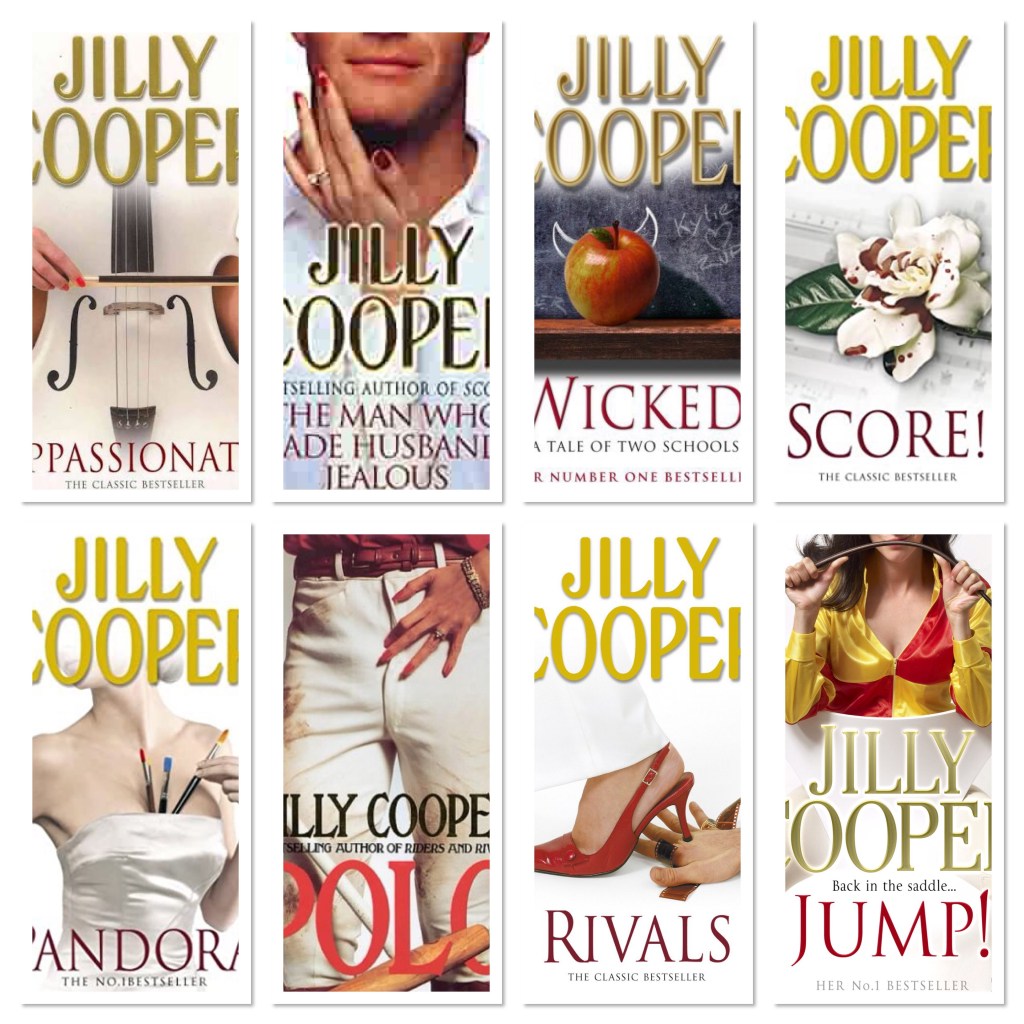
Valentine’s Reads – Jilly Cooper’s Rutshire Novels.

This month I’m supporting my fellow Squad Podders by highlighting writers of romance, whether that is their specific genre or just a part of their books mingled with fantasy, humour or mystery. If you want completely escapist romance with a side order of sexy, rich, characters cavorting around the English countryside then Jilly Cooper is your author. My first introduction to Jilly Cooper was finding her earlier 1970’s books on mum’s bookshelves. These weren’t the romances, but the humorous and witty digs at society found in her books on class and feminism. I remember very clearly my mum reading to me from one of them and as a working class family we found the middle classes utterly tragic so she would read descriptions of the Teale family. I’ll never forget Jen Teale who was so demure she wore six pairs of knickers. When mum was a bit low we would get a book down and I would read or act out the funnier bits and we’d all fall about laughing. It wasn’t until I was in sixth form that I encountered her handsome hero, Rupert Campbell-Black. One girl had brought Rivals into the common room and was reading out the filthy bits – ‘tit fault’ could be heard ringing round the tennis courts for weeks that summer term. I bought a copy of Riders and realised her work had so much story, as well as those famous rude bits. What I loved about Riders was the description of Penscombe and it’s jumble of treasures, dogs, books and grounds full of beautiful horses. Then as the rivalry became apparent between Rupert the school bully and his victim, the gypsy Jake Lovell I was completely caught up in the story. Her characters were well fleshed out and Rupert’s disastrous marriage to the American hunt saboteur Helen, was a fascinating clash of cultures, class and personality. I was soon utterly gripped by the world of showjumping, the bed hopping and the relationships sacrificed to ambition.

I think characters are a strength of Cooper’s even though some are almost caricatures and her rendering of Northern accents is hilariously wide of the mark. Each book tends to have a virtuous or kind woman – Taggie O’Hara, Kitty Rannaldini, Daisy or Lucy – who are perhaps not conventionally attractive, slightly shy and a bit downtrodden. It gives us someone to root for. On the other hand there are absolute horrors as well like narcissistic opera diva Hermione Harefield, the wicked but talented Roberto Rannaldini, or the chaotic and faithless Janey Lloyd-Foxe. It doesn’t matter that they’re not realistic, this is a romp through the upper classes – a part of society that Jilly Cooper knows more about than me. There’s always a lusty man to fall in love with too, someone tortured and secretive like the director Tristan de Montigny in Score, a bumbling innocent with looks to die for like Lysander Hawksley in The Man Who Made Husbands Jealous, or the gorgeous Luke Alderton in Polo, who loves the spoiled young polo player Perdita even when she chooses his brother Red. From showjumping, to television, to gigolos, polo players, orchestras, film making and horse racing Jilly takes us through each world with great knowledge and detail, often making the animals just as strong in character as the humans. I’m particularly fond of the labradors Mavis and Badger, and Taggie’s faithful little mongrel Gertrude.

Then there are the romances! There are several in every book and of course the over-arching love story of all – Rupert and Taggie. In Riders I felt so sad for Fenella whose hero worship of Billy Lloyd-Foxe becomes an unrequited crush, then a doomed love affair. In Polo I was rooting for Daisy, the mother of our heroine, who had been so focused on looking after others that she couldn’t believe the dashing polo player Ricky France-Lynch would be interested in her. I followed the fortunes of Rupert and Helen’s daughter Tabitha very closely. She’s impulsive and makes a passionate, but very difficult marriage to Isa Lovell, the eldest son of Rupert’s enemy Jake Lovell. Any chance she had of a more stable and loving relationship, through the novel Score particularly, had me keeping my fingers crossed. Of course it’s Rivals where the best and most beguiling love story begins and to see the bed-hopping Rupert Campbell-Black falling head over heels for the shy, dyslexic and unconventionally beautiful Taggie was deeply enjoyable. I was a similar age to Taggie when reading Rivals and still very romantic. Now I look at their relationship a little differently, but every few years I re-read a couple of the novels and I still feel a little starry eyed about them. They pop up in all the novels after Rivals and their relationship is probably the most successful in Cooper’s fictional Gloucestershire.

Cooper gives the reader a glimpse into a glamorous and wealthy world most of us would never know about. The hotels are 5 star, the fashion is designer, and the travel is first class. This is a world of elite sport and the game of kings – yes the Prince of Wales does pop up in Polo. There’s the world of classical music following the Rutshire orchestra in both Appassionata and Score, where the countryside becomes a backdrop for a twentieth century update to Don Giovanni. Pandora takes us into the art world and her latest Jump and Mount we’re back with horses, but in a horse-racing capacity rather than show jumping. Her only mis-steps for me are when she steps outside of this privileged world and tries to write about the working classes or a Northern character. Her book Wicked focuses on a struggling state school being mentored by the local public school where some of our usual suspects pop up, such as Rupert and Taggie Campbell Black’s children. I found her working class and city dwelling characters stereotypical and I inwardly cringed to such an extent I didn’t keep the book. Watch out for the accent of George Hungerford in Score for an example of how Northerners speak too. These are small quibbles though in a series of novels full of humour, bedroom romps, glamour, money and total escapism. The countryside is stunning and characters live in the most picturesque surroundings you’ll feel you’ve been on a holiday. Mainly though you’ll keep coming back for the love stories: hoping that the plump, bespectacled Kitty Rannaldini will escape the clutches of her evil husband with the handsome Lysander Hawksley; whether dog loving, shy, make-up artist Lucy will ever be noticed by the glamorous and mercurial Tristan de Montigny. Cooper uses all of the romantic conventions to her advantage. There are always obstacles to the couple’s love, distractions and conventions that can’t be crossed. There might be an age barrier, a man whose a confirmed bachelor, families that are locked into a bitter feud or a difficult marriage to negotiate. There are so many of these obstacles, that you’ll wait with your heart in your mouth as Taggie drives to collect Rupert Campbell-Black from his trip aboard, hoping desperately that he’ll overlook them and let her fall into his arms.

Meet the Author


Jilly Cooper is a journalist, author and media superstar. The author of many number one bestselling novels, she lives in Gloucestershire.

She has been awarded honorary doctorates by the Universities of Gloucestershire and Anglia Ruskin, and won the inaugural Comedy Women in Print lifetime achievement award in 2019. She was appointed CBE in 2018 for services to literature and charity.