Posted in Netgalley

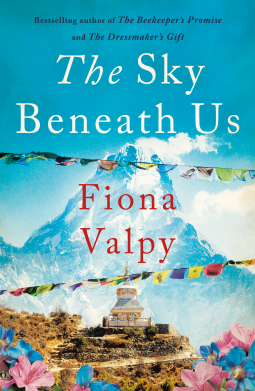
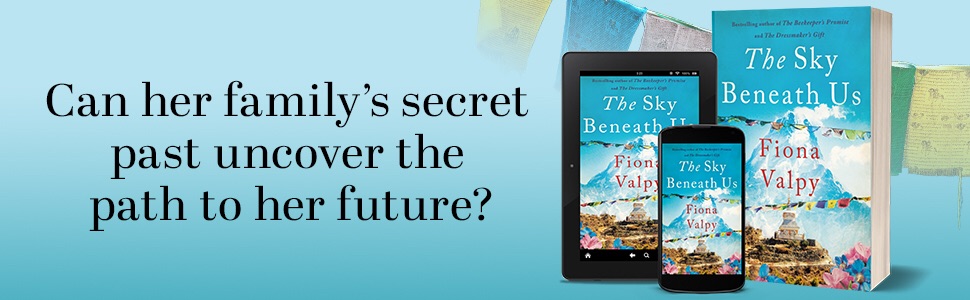
The Sky Beneath Us by Fiona Valpy 

Fiona Valpy is a newish author to me, someone that I’ve come across while blogging and I always request her books on NetGalley. I know I’m going to get a read that’s focused on women, their history and characters going through an experience that changes their outlook on life. I love the psychology behind these stories and this new novel was no exception, taking our main character through her family history to explore her identity and her direction now she’s in middle life. In two timelines we meet Violet Mackenzie- Grant and her great niece Daisy almost a century later. In 1927, Violet is leaving the family estate to focus on a new and exciting career path for women. Having watched her sister settle into the role of wife, Violet wants her life to be different and enrols at The Edinburgh School of Gardening for Women. Manual labour isn’t really what her family had in mind for her daughter, but Violet is so excited especially when she gets the chance to use her drawing skills to sketch plant specimens for the Edinburgh Botanical Gardens. She is thrilled to see the amazing plants being brought back from expeditions all over the world. Little does she know that this work will inspire a journey of her own; the trek of a lifetime to Kathmandu and beyond. In 2020, her great niece Violet Loverack has always dreamed of retracing Violet’s steps ever since she discovered her journals at the family home in Scotland. Her plant hunting exploits inspired Daisy’s own career as a landscape gardener, but from her tiny flat in London, Kathmandu has always seemed a long way away. Now divorced and with her last daughter leaving home for university, she’s made the decision to go on the trip of a lifetime. As she arrives in Nepal, ready for her trek into the Himalaya, fate has a different plan in store for her in the shape of the COVID pandemic. It prevents her mother joining her on the trip and soon after her arrival, the country is shut down leaving her stuck mid-way to the village Violet mentions with her two Sherpas. She must now undertake her journey alone with her guides, hoping for shelter at the same village. As she starts to piece together all the parts of Violet’s story she uncovers long held family secrets, can they inspire Daisy to find her own path forward and build a new life for herself? 

I was so inspired by this story, especially the adaptability and courage of these women. It gave me the travel bug too and I booked a little trip to Venice half way through! Violet is an incredible character, brave and perhaps a touch naïve at first. She doesn’t want to be restricted by what her family and society expect for her, but isn’t quite prepared by how strong their beliefs and rigid class structure is. Even going away to study us a massive step away from that path of marriage and children her parents were hoping for and manual labour for a woman of Violet’s class is possibly unheard of. There’s an openness and freedom to how she thinks that’s partly being young, part never challenging the status quo before and partly her own restless spirit. Things changed rapidly after WW1 for both women and the rigid class structure of the Edwardians. There’s a definite generational gap between those who remember those early years of the early Twentieth Century and those born after the war. Men were more scarce and that applied particularly to women of Violet’s social standing. There were more spinsters at that time, but the war also had an effect on class. It’s a change watchers of Downton Abbey saw between the dowager Duchess played by Maggie Smith and her granddaughter Sybil, who elopes with the young chauffeur. The family also struggled to keep the estate financially viable and many aristocratic families at this time had to give up their stately homes or married American heiresses who were only to keen to gain a British title in return for fixing the stately home’s roof or paying the multiple death duties. Young people of the 1920’s were the flappers and bright young things of the ‘Roaring Twenties’. Violet’s parents seem relatively relaxed about her studying, but probably assume Violet will give it all up when the right man comes along. In finding him, I’m not sure Violet understood how restricted her choices actually were. 

When Violet meets Callum Gillespie at the botanic gardens it’s a meeting of minds as well as hearts. Both love gardens and are inspired by the intrepid plant hunters who travel all over the world to bring back the specimens that Violet is sketching. They are experimenting by cultivating seeds and cuttings to see which plants grow well in the Scottish climate. Violet’s home is situated where the Gulf Stream brings milder temperatures and along with it”s mountainous countryside it could be the perfect site to cultivate plants coming from Nepal. Violet has fallen in love with the stunning Himalayan poppy, it’s sky blue petals and orange centre jumps out from the page and she’d love to grow it back home. Callum is going on the next expedition to Nepal, but first Violet takes him to meet her parents. It’s fair to say she’s stunned by their reaction. They insist that there’s no future in their relationship. He’s so far beneath them in class, that they couldn’t possible give their blessing to the relationship. Violet must break off their relationship. Determined to be with Callum, they both leave and spend the night in a nearby bothy together, cementing their union before a trip to Callum’s parents where they expect a better reception . Sadly things are equally awkward. Callum’s mother is uncomfortable when Violet tries to help out with tea. They are more used to working for people of Violet’s class, and to Callum’s embarrassment they act more like servants than family. They tell Callum he should look for a wife from his own class because this will never work and he could ruin Violet’s chances of a more suitable marriage. As Callum leaves for Nepal the pair are downcast and worry for their future. They continue to write to each other over the weeks and Violet becomes ever more sure that he is her soulmate. Surprise news makes Violet realise she wants to be with him, wherever he is and with the help of her sister she sets off to Nepal where life changing events await her. 

Years later Daisy is setting out on the same journey. She’s recently been very uncertain about the direction of her life now she’s no longer a wife or a full-time Mum. I loved following her journey, taking Violet’s steps into the Himalaya and at such an extraordinary time too. While the landscape itself is unchanged, more and more tourists have made their own attempts to conquer Everest. Previously, the Nepalese people thought it disrespectful to the mountain goddess to climb her, but since then both the Tibetan and Nepalese governments have allowed tourism in the area. Of course this has opened up the small communities to the rest of the world and allowed communication links to and from the area. It was fascinating to read about the effects of tourism on the people and the delicate eco-system around them. Sherpas are now employed to to tackled the most dangerous aspects of climbing Everest. They know the mountain, the weather and the best paths to take. Some are employed to create paths of ladders across the glaciers and many lives are lost, depriving families of their fathers and the income. It was clever to set Daisy’s journey in the pandemic because she gets to see the valley where Violet lived without tourists. The place feels untouched and even more remote as tourists have rushed home and the villages are locked down. So Daisy gets to experience the trek very much like Violet did, it’s quiet, there’s nobody on the same path and when she reaches the village she’s so surprised to a warm welcome. She’ll have to quarantine of course, but she has a family here with so many cousins she’s lost count. She also has access to the rest of Violet’s journals and will be able to read what remains of her life story. Just as these people did for Violet when she arrived a century ago, they now take Daisy in and look after her, 

I loved the equality of the village and I’m sure this is what Violet enjoyed too. There’s no class structure and seemingly no judgement either. She was taken in and as soon as a house becomes available it is cleaned and given to her for as long as she needs it. They don’t find industrious and hard working women an anomaly. This is somewhere Violet can settle and now Daisy can meet Violet’s descendants. Their societal structure is based on community and sharing. No one is without, but equally no one has ownership either. I loved how Daisy is inspired by the villagers and their generosity. It sparks a fire in her for community garden, partly to put something back into this wonderful place, a replacement for what years of visitors have taken. She also thinks it could work back home in Scotland, sharing some of the land that’s been her privileged birthright with the community. She inspires her daughters to improve the estate with an organic gardening project and more ethical values. The settings in the novel are incredible, equally beautiful but it’s hard not to be in awe of the incredible landscapes Daisy uncovers on each day’s trek. The valley between the mountains has its own climate and a unique combination of plants. I was blown away by the author’s description of the flower meadow which I pictured as a living rainbow of roses, rhododendrons and climbers. Of course there are also those vivid blue poppies and yes, I have already sourced some seeds. The idea of being above the clouds was incredible, almost as if it’s a magical, heavenly place. 

Of course there are some darker moments. COVID hits the family hard, just as typhoid hit Violet’s plans a hundred years earlier. The trek is challenging as Daisy struggles with the altitude and the stamina required to reach the village, in fact she’s stunned by how sure footed and physically fit the older members of the community are. This was heartbreaking in parts but also incredibly uplifting. It left me thinking I could start to tick off those bucket list items and fulfil those dreams I had for my life but set aside when I first became ill. Daisy’s Sherpa has a great way of combatting her fears and anxieties about completing the trek. He tells her to keep taking small steps, one in front of the other and I think this is great advice for any overwhelming task and life in general. You only fail if you give up. 

 Out 10th September from Lake Union Publishing.

Meet the Author

Fiona is an acclaimed number 1 bestselling author, whose books have been translated into more than thirty different languages worldwide.

She draws inspiration from the stories of strong women, especially during the years of World War II. Her meticulous historical research enriches her writing with an evocative sense of time and place.

She spent seven years living in France, having moved there from the UK in 2007, before returning to live in Scotland. Her love for both of these countries, their people and their histories, has found its way into the books she’s written. Fiona says, “To be the first to hear about my NEW releases, please visit my website at http://www.fionavalpy.com and subscribe to the mailing list. I promise not to share your e-mail and I’ll only contact you when there’s news about my books.”


Posted in Random Things Tours

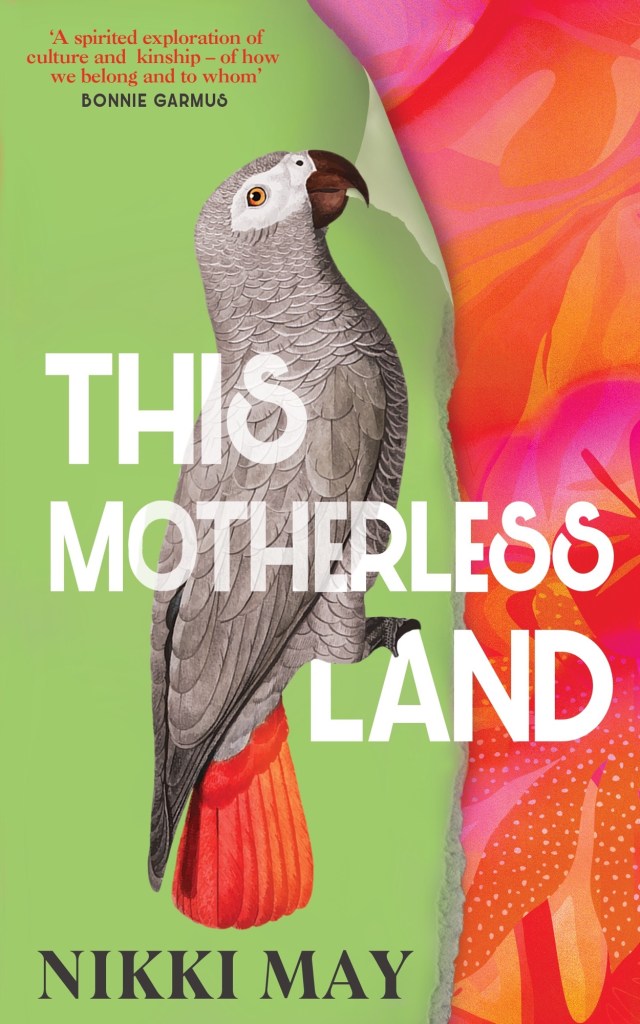
This Motherless Land by Nikki May.

This book was an absolute joy to read, which may sound strange considering the subject matter but somehow it awakened my senses, stirred my emotions and kept me reading. In fact I read it so quickly I was finished in an evening that turned into morning before I knew it. Funke lives in Nigeria with her mother, known as Misses Lissie to most people, her father and brother Femi. Mum is a teacher and Dad works at the university. Their entire world is shattered one morning as they make their normal run to school when their mother’s car fails to stop and ploughs directly under a lorry. The drivers side of the car is destroyed but Funke’s side is left completely unscathed. She loses her mother and brother in a moment. In his grief, her father Babatunde is inconsolable and he takes it out on Funke. How did she get out without a scratch? Encouraged by his superstitious mother, he calls Funke a witch and insists she must be protected by some magical being. Seeing how Funke will be treated by her grandmother, her aunties put their heads together and decide she should be sent for a while to her mother’s family in England. Her white family. Funke is ripped away from everything she knows and sent to The Ring, the mansion where her mother and Aunty Margot grew up. There, although she isn’t being hit or accused of evil spells, she feels the resentment of Aunt Margot and her cousin Dominic. They call her Kate, after all it’s easier than pronouncing Funke isn’t it? There’s no colour, bland food and where she was accused of being white in Nigeria, here she is seen as black – with all the racist connotations that come alongside it. Especially in white, upperclass Britain. England’s only saving grace is her cousin Liv. Liv scoops her up and feeds her comfort food. The problem is it’s not the food or the comfort she’s used to.

This is a book about being in between. Funke’s mother was ostracised by her family for marrying a Nigerian man. Aunt Margot sees Lizzie’s relationship with Babatunde as the reason for her own engagement being called off just before the wedding. In her eyes Lizzie was selfish, pursuing her own feelings at the expense of her family. She feels Lizzie had the looks, the charisma and the man she loved, while Margot was left heartbroken and with parents who seemed to miss Lizzie more than they enjoyed Margot’s presence. She sees Funke as her mother’s daughter and a threat to her own children. Her parents seem to love Kate, as they’ve christened her, and Margot doesn’t want her to take all the attention, the love and their eventual inheritance. She’s a bitter woman who is very hard to like. Sadly for Funke, history repeats itself and on the night of their prom a series of events mean they must drive home early. Liv is drunk and high. Yet even Funke, who is teetotal, feels unwell. Dominic throws caution to the wind and decides to drive them home, despite his own drinking, and a terrible accident occurs. Everyone survives but Liv suffers a bad break to her leg. In the aftermath Dominic asks Funke to admit to driving, which she agrees to, not knowing that covering for her cousins will lead to her life being uprooted for the second time.

Funke feels like she belongs nowhere. In Nigeria when her mother was alive they had a wonderful life, even if children would follow her singing a song about her pale skin. That’s nothing to the blatant racism she faces in England, but she faces it down and it fuels her will to succeed. Then she’s back in Nigeria and is again the odd one out. This time she’s in her dad’s new family and their lifestyle in the village is very different to the childhood she remembers on the university compound. His new wife and their children eat and live in ways her dad would have dismissed as ‘bush’ when Funke was a child. Her small brother and sister are black and fascinated with her pale, mixed race skin. Things are familiar, such as the spicy red stew and the heat, but it’s a changed land without her mother in it. At least in England she didn’t expect her mother to be there. Now she faced with the shock of her absence all over again. Will she ever find home? Meanwhile, back in Britain, when Liv finally comes round from the accident she asks for Kate. What will her mother tell her?

I thought the author brilliantly showed how different people cope with mental pain. Funke takes a bottle top from her mother’s hoard (for craft projects) and holds it in her hand so hard that it cuts into her palm. Liv is horrified that she’s hurt herself like this, but for Funke it’s the only thing that distracts her from the grief of losing her and her brother. Liv also deals with motherly absence, but externalises her feelings in a different way. She has a mother who is present, just not for her. Liv starts to drink excessively, uses marijuana and acid tabs to blank out the feelings that she isn’t loved and therefore isn’t worth anything. When we’re children and we’re rejected by a parent, we never assume it’s the parent’s fault and we don’t stop loving them. Instead we internalise their criticism and think we are the problem. Liv has a lot of casual sex because she thinks it sex is all she really has to offer. Meanwhile Funke struggles to give love and truly trust someone. She is in a relationship with a young man who is keeping his true sexuality under wraps, because it’s not accepted in his family or community. The younger people are aware he’s gay and call Funke his ‘beard’, but how far can she take this relationship? What if he suggests a more permanent arrangement and is Funke willing to give her life away so easily? The the same root cause, a loss of the mother figure they so needed, affects both girls, it just manifests in different ways. With them both on opposite continents, how will they ever find each other again? The spaces between can be painful and isolating places to be and the author depicts that with such tenderness and understanding. However, liminal spaces are also freeing. Being in-between gives us the space to choose, to take bits and pieces from each place, each family and make our own identity. I found the end chapter so uplifting and it gave me hope that we can each forge our own identity, once we’ve explored who we truly are. This is a fascinating, touching story about growing up and how we become who we are. It’s vibrant, atmospheric and an absolute must read.

Meet the Author

Born in Bristol, raised in Lagos, I’m proud to be Anglo-Nigerian. I ran a successful ad agency before turning to writing and now live in Dorset with my husband, two standard schnauzers, and way too many books.

My debut novel WAHALA was inspired by a long (and loud) lunch with friends. It was published around the world in January 2022 and is being adapted into a major BBC TV drama. This Motherless Land is my second novel.

Posted in Publisher Proof

The Bookshop Ladies by Faith Hogan

One sure way to entice us bookworms is to write a book about books and this one has all the warmth, friendship and female empowerment we would expect from a Faith Hogan novel. It’s like receiving a big warming hug, but in book form. Our central character is Joy and we meet her at a hugely traumatic point in her life. Joy lives in Paris with her husband Yves Bachand, a well-known art dealer who has made the career of many a new struggling artist. Joy has a very successful career of her own in public relations. Everything is turned upside down when Yves suffers a massive heart attack and in his dying moments manages to tell Joy he has a daughter. Over the next few weeks as Joy starts to comes to terms with losing her husband, she’s also trying to get her head around his dying words. Could he possibly have been unfaithful? The whole idea adds a new level of devastation because Joy and Yves couldn’t have children of their own. Their solicitor approaches Joy about an unusual request in his will, he has bequeathed a painting he owned to a girl called Robyn. When Joy returns home she goes into Yves’s office where the painting hangs and studies it, trying to see what he saw in this particular work of the Seine. Joy takes in the muddy coloured water, the litter and the green surroundings and thinks it could be a river anywhere. There is nothing to suggest this is the Seine that lovers travelling to Paris dream of walking along. Where are the honey coloured stones, the lampposts and the bridges? It takes time for her to notice anything about it she likes, but there is a streak of light that catches her eye in the top corner. The more she looks at it the more she wonders whether it was this glimmer that kept bringing Yves back to the painting. A promise that the grey cloud would lift and the sun would break through changing the whole scene to something altogether more hopeful. In this moment she makes a decision, she will travel to a Ireland and put this painting in the hands of Robyn herself.

We’re back in the gorgeous coastal village of Ballycove, where our other main character Robyn lives. Robyn has a small bookshop, with largely second hand books on various subjects from rare birds to trains. It’s been just ticking over for several years and while Robyn’s family own the building, including her flat above the shop, she has taken over the stock from it’s previous owner Douglas who has retired. To say the shop is a little tired is an understatement and it really needs some pizzazz to bring it back to life again. Yet it is lovely in it’s own way with it’s floor to ceiling bookshelves and their carvings of animals, little rooms for every subject and a darling little children’s section in a small nook. Although Robyn has put the stock onto online book sites she isn’t exactly turning a profit and she wonders if she’s made a big mistake. Her grandfather Albert suggests that she hire someone or find a volunteer to do a few hours in the shop to free Robyn up for business planning and working on her vision for the shop. Into this scenario walks Joy, renting the flat above Albert’s and hoping to stay for only a couple of weeks in order to pass on the painting. She can see that it belongs with Robyn as it was painted by her mother Fern. Joy both welcomes and dreads meeting Robyn and definitely her mother. If she can do it quickly, almost like ripping off a band aid, she can get the painting handed over and be back on a plane to Paris in no time. However, she hadn’t factored Robyn into the equation. She walks past the shop twice plucking up courage and when she does finally walk in she’s so taken aback by this girl who looks so much like Yves she could only be his daughter. Stunned into silence, Robyn’s chatter takes over and she assumes that Joy is there to apply for the position she advertised in the window. In her stunned state Joy doesn’t argue and soon she is Robyn’s new book assistant. Joy walks away wondering what on earth she’s done and how she’ll cope if Robyn’s mum turns up before she leaves.

I really enjoyed the women in this novel, especially Joy who is so resilient and generous with her time, her emotions and her heart. I felt like Ballycove worked it’s usual magic, but Joy matches it, bringing her enthusiasm and joie de vive to the bookshop. She’s using her professional skills of course, but there is just that touch of enchantment about her too. She’s like a bookish Mary Poppins, thinking up events and little touches to brighten the place including a toy train track which is one of my favourite parts of the brilliant Barter Books in Alnwick, Northumberland. Yet it’s the fact that she’s giving her time and expertise freely to her husband’s secret daughter that makes her all the more extraordinary. Yet I think she gets something special from Robyn too. Robyn allows her to spend time with someone with the characteristics and mannerisms of Yves and in a sense it seems to comfort her that he’s still here in the form of this shy, bookish girl. I also think Robyn balances some of the grief Joy went through when they lost their own baby who would have been a similar age. I was waiting to see what would happen when Robin’s mother Fern arrived. Would Fern immediately know who Joy was and what would it do to her relationship with Robyn? I felt sad that Joy might lose everything she’s built in Ballycove and the sense of family she’s enjoyed with Robyn and her grandfather. There’s a lovely little romantic subplot and a lot of personal growth on Robyn’s part, particularly the unresolved emotions around being bullied at school. The word that always best describes Faith’s writing is charming. It’s like making new best friends and although her stories are emotional and raise serious issues, they are always uplifting too. This felt like a lovely warm hug in a book and added lots of ideas to my imaginary future bookshop.

Meet the Author

Faith Hogan is an award-winning, million copy best selling author. She is a USA Today Bestseller, Irish Times Top Ten and Kindle Number 1 Best Selling writer of nine contemporary fiction novels. Her books have featured as Book Club Favorites, Net Galley Hot Reads and Summer Must Reads. She writes grown up women’s fiction which is unashamedly uplifting, feel-good and inspiring.

Her new summer read The Guest House By The Sea is out now and it’s a great big welcome back to Ballycove for her readers.

She writes twisty contemporary crime fiction as Geraldine Hogan.

She lives in the west of Ireland with her family and a sausage-loving Labrador named Penny. She’s a writer, reader, enthusiastic dog walker and reluctant jogger – except of course when it is raining!

http://www.faithhogan.com

http://www.Facebook/FaithHogan.com

Twitter @gerhogan

Instagram @faithhoganauthor

Posted in Throwback Thursday

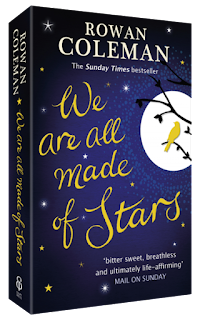
Throwback Thursday! We Are All Made Of Stars by Rowan Coleman

This book was originally published in 2015, but the first time I’ve read it is after reading Rowan Coleman’s novel The Girl at the Window. I do like to feature books as I discover them, rather than trying to chase the latest or next best thing.This may sound weird but I actually picked this up as light relief between a couple of deeply dystopian reads. I think there is an incredible skill in writing about such a serious subject but with such a lightness of touch and an edge of romance. Coleman has a group of characters, all linked to the Marie Francis hospice in some way. The story comes from all their points of view interspersed with letters written from patients in their final days, revealing secrets and emotions that have been held back, offering advice or instructions on where the money has been left.

These letters are written by Stella, who works at the hospice at night, giving her plenty of time to listen to patients and capture their last words. Behind her professional exterior Stella has her own problems. Her night shifts have become a way of avoiding problems at home. Her husband Vinny was a soldier and has returned home after losing his leg in a bomb blast. Now they feel like different people who are unable to connect and Stella runs miles every day to avoid her fear this is the end of their marriage. One of the letters Stella writes leads us to Hugh. Hugh is an academic researcher and collects artefacts relating to death such as death masks, Victorian mourning brooches and photos of dead loved ones. Hugh’s mum left when he was small leaving a suicide note. This personal tragedy has possibly lead to his research and has left him very isolated and scared of connection. When a single mum moves next door with her son, Hugh’s cat Jake starts to spend time there and they name him Ninja. This shared cat brings them closer, but will Hugh be able to form a relationship with his new neighbours and how will he cope when Stella delivers a letter that will change his life?

Finally, we meet Hope who is a young woman with cystic fibrosis recuperating at the hospice before returning home. Hope’s best friend and lifelong hanger on is Ben. They have been close friends for years and he has seen her in the worst moments of her illness. He visits every day at the hospice, and patients and staff start to notice that maybe there’s more than friendship here. Hope doesn’t think so, but she is starting to realise that she is missing out on things in life. Her friendship with a young girl, Issy, begins to make her think. Issy is terminally ill and tells Hope how sad she is to be leaving life when she has experienced so little. She makes Hope promise to live life to the full and try all the experiences Issy has missed out on. This inspires Hope and she asks Ben to help her fulfil this promise, knowing it might change their relationship forever.

It was Hope and Stella’s narratives that most resonated with me. I knew how I wanted their narratives their narratives to end happily. I know how it feels to have your plans cut into by an illness so young, the need to have new experiences and live like any other girl in their early twenties. I remembered the hen nights missed and friends celebrating graduations, weddings and births of their first children when I had none of these things in sight. So I identified with Hope’s need to do as much as possible before time runs out. Yet, I also felt for Stella, who tries her hardest to make people’s last wishes a reality while her own life is falling apart. She gives constantly, at home and the hospice, so when she finds she can maybe reunite two people she throws caution to the wind. I wanted her and Vinny to find their way through their difficulties and come together again, but with his survivor’s guilt and difficulties coming to terms with his amputation it’s no easy task.

This book seems so light and easy to read but is packed full of real, honest and deep emotions across the characters. Maybe I found the subject easy to enjoy, because I’m used to this world. I know people who might read the hospice setting and pass it over, but they’d be missing out. This book relates what life limiting illness is really like; it’s not easy, but you can still live well and all the other parts of life like learning, being fulfilled, finding meaning and feeling love are still very much part of the experience. Within these characters, and the letters Stella writes for her patients, are glimpses of human life that take us far beyond them as patients and closer to them as people.

Published by Ebury Press and available in all formats.

Meet the Author

I’m Rowan Coleman, and I live in England with my husband, 4 children and 2 dogs! The Girl at the Window is my 14th novel is my twelfth novel. I am also the author of the internationally bestselling THE MEMORY BOOK, the double award winning THE RUNAWAY WIFE, and the NYT bestseller THE ACCIDENTAL MOTHER and the Zoe Ball ITV Bookclub pick THE SUMMER OF IMPOSSIBLE THINGS. Growing up dyslexic made my dream of becoming a writer seem impossible, but I never gave up trying and in 2001 I won Young Writer of the Year competition in Company Magazine. This lead to the publication of my first novel, and I’ve never looked back since.

Posted in Sunday Spotlight

Sunday Spotlight! Great Celebrity Memoirs.

I’m not a usual reader of celebrity memoirs. I know there’s a certain snobbery in bookish circles for the celebrity memoir, so I thought I’d get that in there before you click away to another blog. I’m all for whatever gets people reading to be honest, but it’s a rare book that sits above the usual ghost written Christmas fare. These are memoirs that sit above the ordinary, that have touched me emotionally or made me laugh, that have surprised me with the beauty of their writing or their inventiveness, or even revealed incredible stories that kept me gripped to the final page. Some you may have heard of while others are lesser known, but just as compelling.

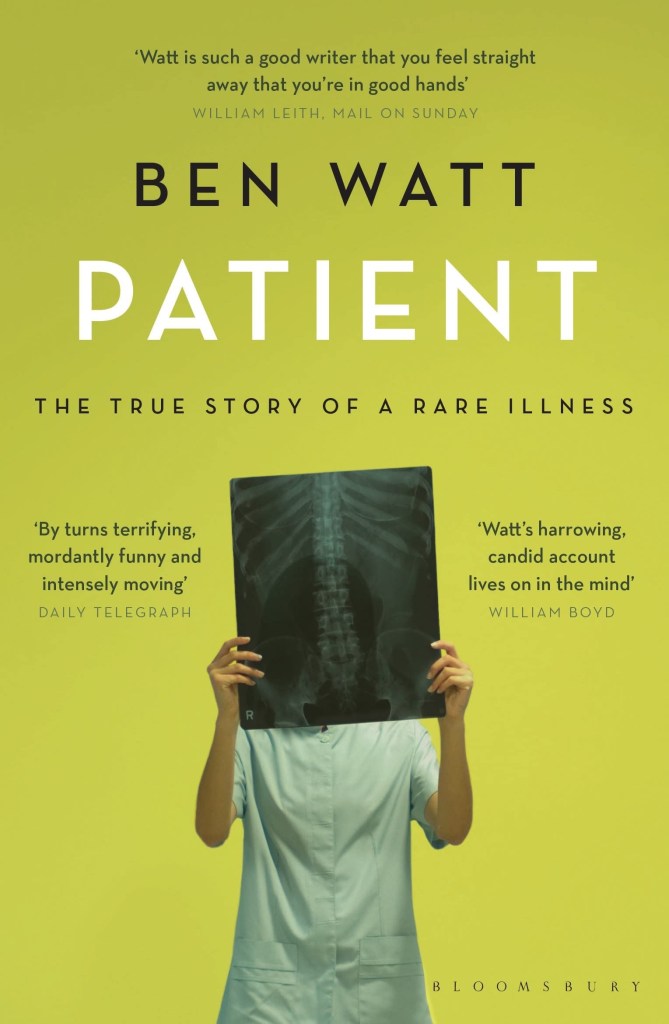
Patient by Ben Watt.

‘In the summer of 1992, on the eve of a trip to America, I was taken to a London hospital with bad chest pain and stomach pains. They kept me in for two and half months. I fell very ill – about as ill it is possible to be without actually dying – confronting a disease hardly anyone, not even some doctors, had heard of. People ask what was it like, and I say yes, of course it was dramatic and graphic and all that stuff, but at times it was just kind of comic and strange. It was, I suppose, my life-changing story.’

Benn Watt is half of the band Everything But The Girl and his short memoir covers a period when his bandmate Tracey Thorn was also his partner. In 1992, when I was taking my ALevels and listening to his band, Ben contracted a rare life-threatening illness that baffled doctors and required months of hospital treatment and operations. This is the story of his fight for survival and the effect it had on him and those nearest him. I recommend this book because it is beautifully written and captures the feeling of being seriously unwell perfectly. He describes coming institutionalised, so in sync with the day to day running of the ward that he could tell to the second when the newspaper lady was going to enter the ward. I love his play on ‘Patient’ as noun and verb at the same time, the patience it requires to endure the diagnostic process and to cope with what I call ‘hospital time’ – where ‘I’ll be a minute’ means half an hour. Only two years after his book is set, I was going through my own lengthy periods of hospitalisation, enduring unpleasant tests and realising there are limits to medical science. It’s an incredibly scary place to be and Ben conveys that so well, as well as the strange feeling when discharged when the patient goes from totally dependent to alone. I remember after a lengthy hospital stay, sitting in my flat thinking it was getting close to mealtime and that I was hungry, then a second later realising I had to make my own food! What he captures best is the realisation that what he expected to be a short interlude in his life, is actually becoming his life. The narrowing of his horizons from someone who toured the world to a resident of a single ward, or even to an individual bed.

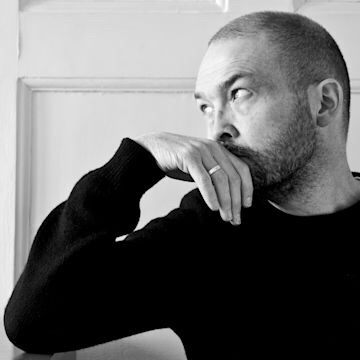
Ben Watt

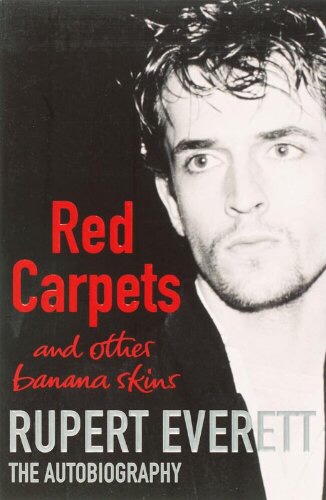
Red Carpets and Other Banana Skins by Rupert Everett

I became fascinated with Rupert Everett after seeing him on Graham Norton’s chat show and finding him both hilarious and painfully honest, both about himself and others. I loved his wit and comic timing in My Best Friend’s Wedding and especially in the Oscar Wilde films he starred in. I was pleased to find he was a devotee of Wilde, who wanted to make an honest film about his later life. My best friend from university always sends me a book at Christmas and I was lucky enough to receive a signed copy of his second memoir Vanished Years. I made sure I found a copy of his first memoir above so I could read them back to back. They both lived up to my expectations. I seem to remember first noticing him in conjunction with Madonna back in the 80’s and he had come across as a pretty boy in that context, but there is so much more to that rather spoiled exterior. His performance in Another Country was exceptional and his eventual film of Oscar Wilde was extraordinarily moving, but it is the drama of his private life that has attracted more attention than his talent. These memoirs show that he has always been surrounded by interesting and notorious people, becoming friends with Andy Warhol by the time he was 17. He has been friend to some of the most famous women in the world: Donatella Versace, Bianca Jagger, Sharon Stone and Faye Dunaway. This notoriety and films such as Dunstan Checks In overshadow incredible work with the RSC and I finally saw him shine on stage in the West End as Professor Higgins in Pygmalion.

I have always known, from his interview with Graham Norton, that Everett is a raconteur, but these memoirs show he can write a great story too. He has an uncanny ability to be at the centre of dramatic events: he was in Berlin when the wall came down, in Moscow at the end of Communism and in Manhattan on September 11th. The celebrity stories are deliciously gossipy and terribly honest. It seems Everett doesn’t hold anything back, whether he’s lampooning someone else or himself. His second memoir is again mischievous, but also touching with stories from childhood and early life. He takes the reader on an amazing journey around the world and from within the celebrity circus from LA to London. I loved the addition of family stories, such as a pilgrimage to Lourdes with his father that is both hilarious and moving. There’s a misguided step into reality TV that goes horribly wrong. A lot of celebrity authors are easy on themselves, writing solely from their own perspective rather than presenting life objectively. Everett is unfailingly honest, presenting his flaws and tragedies with the same scrutiny and irreverence he gives to others. Both books are incredibly enjoyable, a journey with the best and most disreputable storyteller you will ever meet.

Rupert Everett as Oscar Wilde

The Storyteller by Dave Grohl.

One of my favourite video clips recently was of the Westboro’ Baptist Church protesting outside a Foo Fighter’s gig. Then with perfect timing around the corner came a couple of majorettes, followed by a flat bed truck with a band playing The Beatle’s ‘All You Need Is Love’. On the back stood Dave Grohl with a microphone, shouting out their love for the protestors. I’ve always known that Grohl was a good guy and despite only enjoying some of the Foo Fighter’s music I’ve always thought he was an interesting and enlightened person. I’ve also wondered how he recovered following the suicide of Nirvana front man and personal friend Kurt Cobain, an event that stood out in my mind in the same way the death of John Lennon did for my parents. I loved Grohl’s humour and willingness to make an idiot of himself. My best friend and I rewatched the Tenacious D video for Tribute where Grohl is painted red and given an amazing pair of horns as Lucifer. I was bought this book last Christmas by my stepdaughters. However, it was only recently, after the death of another bandmate and friend Taylor Hawkins, that I picked it up and read a few pages every night in bed.

Grohl addresses my reservations about about celebrity memories straight away, stating that he’s even been offered a few questionable opportunities: ‘It’s a piece of cake! Just do four hours of interviews, find someone else to write it, put your face on the cover, and voila!’. Grohl writes his early experiences with fondness and an obvious nostalgia. He found the writing process much the same as writing songs, with the same eagerness to share the stories with the world. He has clearly linked back to old memories and emotions, feeling as if he was recounting ‘a primitive journal entry from a stained notebook’. He has definitely embraced the opportunity to show us what it was like to be a kid from Springfield, Virginia with all the crazy dreams of a young musician. He takes us from gigging with Scream at 18 years old, through his time in Nirvana to the Foo Fighters. What’s lovely is that same childlike enthusiasm while jamming with Iggy Pop, playing at the Academy Awards, dancing with AC/DC and the Preservation drumming for Tom Petty or meeting Sir Paul McCartney at Royal Albert Hall, hearing bedtime stories with Joan Jett or a chance meeting with Little Richard, to flying halfway around the world for one epic night with his daughters…the list goes on. We may know some of these stories, but what he promises is to help us reimagine these stories, focused through his eyes. I’ve seen reviews that claim he has glossed over or withheld some of the truth of his experiences, particularly around Kurt Cobain with Courtney Love absent from proceedings. I don’t think this is being disingenuous, I think this is what Dave Grohl is like – generous, humble and honest with regard to his own take on events. Perhaps he feels other people’s stories are their own and not his to tell. I was so impressed with how grounded he is and how aware of the most important things in his life: his family; his daughters; his friends; those who remind him of where he’s come from; and lastly, his music.

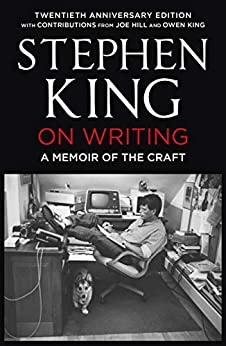
On Writing: A Memoir of the Craft by Stephen King.

Stephen King begins this memoir with the accident that he says has made the last twenty years of his life an incredible gift. With some humour he recounts being on his four mile daily walk and taking a break to relive himself in the woods. As he was returning to the road, a van driver was simultaneously trying to prevent one of his dogs rummaging in a beer cooler. This unlucky coincidence meant King was in a position to be struck as the van swerved off the road. A man who witnessed the crash watched as the impact threw King up and over the van, smashing the windscreen with his head and propelling him into a ditch 14 feet away. Local man, Donald Baker, found King ‘in a tangled-up mess, lying crooked, and had a heck of gash in his head. He kept asking what had happened.’ The van driver seemed devoid of emotion or panic, claiming he thought he’d hit a deer until he noticed King’s bloody glasses on his front seat. In a strange parody of his bestselling novel Misery King was left hospitalised with a shattered hip and pelvis, broken ribs, a punctured lung and fractured femur. The driver died only one year after the accident, from unrelated causes. It took King months to recover, with some limitations remaining to this day.

This strange hybrid book comes out of that time, from that trauma which affected him mentally as well as physically, back to his childhood, his early adult life, his marriage and the drinking that nearly cost him his relationship. If people read this hoping to read a masterclass or a shortcut to writing a bestseller, they’ll be disappointed. You don’t need a fancy masterclass to be a writer, you simply need to write. However, he does explore his own process and influences. There’s some practical advice on character building and plotting, showing how a spark of an idea was turned into Carrie. He also talks about pace, plots and presentation of a manuscript. He talks about he origins and development of certain books and uses examples of other writer’s work to illustrate what he’s advising. What he can’t do is identify that magic or spark that made him a No 1 bestseller for almost half a century. I enjoyed his stories about his early adult years when he was struggling financially, but was so persistent. The jobs he had to take to support his family, when the writing simply wasn’t paying. He was teaching by day and writing in the evenings. He also talks about the perceptions of him in the industry, perceptions I have always thought unfair, that despite incredible economic success and prolific output, he will never be considered a good writer. I loved his advice to write in a room with blinds and a closed door, if you’re not distracted by a view it is easy to disappear into a vista of your own making. He also plays loud rock music, but that wouldn’t be for me, I need silence or calm background music, no TV and no talking. It’s true that every writer needs their own best conditions for writing – although a closed door with no interruptions seems universal – you will need to find your own process. However, I do think he hits upon something important about life, like Dave Grohl, and that is the importance of family to ground us and stand by us while we create and especially when economic success does come.


Posted in Random Things Tours

Lost Property by Helen Paris

It took me about five pages to be drawn into Dot Watson’s quirky world and her love for the lost property office in which she works for London Transport. If anything is lost, be it on a cab, bus or train this is where honest people bring their found items. Dot is like the backbone of the office and the other workers would be lost without her. A lover of proper procedure and organisation, Dot is the ‘go to’ employee for anyone starting work with the team, or just to answer a question about an item. Dot thinks lost things are very important, almost like an extension of that person. Their lost item can tell her a lot about the person they are and she fills the lost luggage tags with as much detail as possible so that they have the greatest chance of locating it. Dot believes that when a person is lost to us, their possessions can take us right back to the moment they were with us. When Mr Appleby arrives at the office to find his lost piece leather hold-all it is what the case contains that moves Dot. Inside is a tiny lavender coloured purse that belonged to his late wife and he carries it everywhere. Something inside Dot breaks for this lonely man and she is determined she will find his hold-all. Her search becomes both the driving force of Dot’s story and the key to unlocking her own memories.

Dot has been working at the lost property office for years, but it isn’t the life she expected to be living. In her early twenties, travel was her main driving force in life and she was living the dream in Paris. Being multi-lingual Dot had exciting plans to travel the world, but all her dreams come to a halt when her father dies suddenly and traumatically, by throwing himself in front of a train. Dot’s relationship with her father was complicated, as he doted on her and they spent a lot of time together. However, as the youngest child by some years and because she hero worshipped her father, she didn’t always see things clearly. There are secrets at the heart of the family, kept for all the right reasons, but causing misunderstanding and resentment. When her father died Dot rushed home, but the trauma of his death affects the whole family deeply and it seems to put Dot’s life on hold. Now her collection of travel guides are her window on the world she once wanted to explore, but she is firmly stuck in her mum’s flat and still working in a job that was once a stop gap. Her only other activity is her regular visit to her mum in the nursing home. While her sister lives further afield, she constantly rings Dot to remind her of things and get updates on their Mum. She is pressuring Dot to get the flat viewed and sold so their lives can start again, but Dot is avoiding her. To add to her family stress, Neil from work is promoted to be their manager and the changes he wants to bring in are also disturbing Dot. He wants to reduce the amount of time they keep items, but what if something goes to auction and they can’t get it back? Dot seems to freeze, staying in the lost property office at night and looking tirelessly for Mr Appleby’s hold-all.

Dot is such a sympathetic character. She’s funny, resourceful and actually quite formidable when at full strength. We go back and see a naïve young girl, for whom Daddy is the centre of the universe. They spend a huge amount of time together which she has always viewed as the result of having a special relationship. As she goes back its interesting to see how others viewed the same events, with totally different conclusions. Their family story is so sad and brings home to us the benefits of living in such a tolerant and open society today. If Dot has been viewing her life through the wrong lens, how will she cope when she finally sees it all? Dot thinks she’s weak, but she’s actually incredibly strong. Some of the things she goes through, not just in the past, but during her time sleeping at the property office are really traumatic. She will take more time to process it all, but I loved the author’s importance in the human power to change, to take stock and move forward with life. I think the writer has been clever in her debut novel to write a light, uplifting story, but with so many darker layers underneath. It’s a real accomplishment to imbue a character that could have become a caricature, with life and authenticity. I love her optimism too, leaving us with the knowledge that no matter what the trauma, we have the power to change ourselves and our lives for the better. I heartily recommend this book to other readers, but they must prepare to fall in love with it as I did.

Meet The Author


Helen Paris worked in the performing arts for two decades, touring internationally with her London-based theatre company Curious. After several years living in San Francisco and working as a theatre professor at Stanford University, she returned to the UK to focus on writing fiction. As part of her research for a performance called ‘Lost & Found’, Paris shadowed employees in the Baker Street Lost Property office for a week, an experience that sparked her imagination and inspired this novel.

Posted in Publisher Proof

A Little Hope by Ethan Joelle

Set in an idyllic Connecticut town over the course of a year, A LITTLE HOPE follows the intertwining lives of a dozen neighbours as they confront everyday desires and fears: an illness, a road not taken, a broken heart, a betrayal.

Freddie and Greg Tyler seem to have it all: a comfortable home at the edge of the woods, a beautiful young daughter, a bond that feels unbreakable. But when Greg is diagnosed with a rare and aggressive form of cancer, the sense of certainty they once knew evaporates overnight. Meanwhile, Darcy Crowley is still coming to terms with the loss of her husband as she worries over her struggling adult son, Luke. Elsewhere, Ginger Lord returns home longing for a lost relationship; Ahmed Ghannam wonders if he’ll ever find true love; and Greg’s boss, Alex Lionel, grapples with a secret of his own.

Ethan Joella’s novel feels perfect for this moment in life. Since 2020 our world has changed irreparably, for some this means that every day life has changed so they no longer work in an office full of other people, or they’ve missed going out over the past two years, or had their exams cancelled. For others it means learning to live with loss, coping mentally with the work they did on the NHS frontline or dealing with the challenges of long COVID. For me it has meant still being super careful when I go out, avoiding large and crowded gatherings and my mobility being reduced because of treatment that’s been postponed indefinitely. Thanks to long periods of isolation, we are all used to living in our own world and can even be overwhelmed by what we’re facing inside our own front doors. To some degree, the plight of the Ukrainian people has brought us out of our own concerns and back into a collective again. We want to help and take action. It has given us perspective. This novel works in the same way. It feels inspired by the realisation we are only a small part of the jigsaw that makes up life. It’s the literary equivalent of that feeling I always get on the train in the dark, when I can see the human theatre of everyday life through the glowing windows of people who don’t shut their curtains. Every passing window is a snapshot of life. Ethan Joelle gives us a different life per chapter, as we meet the residents of the small US town of Wharton, Connecticut. Each chapter is separate, but related, and through the author’s lens we are granted access to the extraordinary lives captured within each unremarkable window.

We start with Freddie, who is coping with the fact that husband Greg has just been diagnosed with a cancer of the white blood cells called multiple myeloma. Not only that, they haven’t yet told their young daughter Addie. Freddie is just trying to process the news, but is worrying about what Greg’s diagnosis will do to their daughter at the same time. The author then takes us into Greg’s world, into his working life, where he has concerns that haven’t even crossed Freddie’s mind yet. His worries are caught up with what kind of man he is if he can’t work and provide for his family. His boss is trying to support him, but there’s a wall of denial and false optimism to get through, and what if that wall is the only structure holding him up? We weave through the lives of other Wharton residents, such as Iris, Darcy, Ginger, Luke and Ahmed. Each life is so preciously unique, their take on their world so different and beautifully human.

We are all familiar with the hashtag #BeKind and memes that remind us we never know what others are going through. Through these stories this really is brought home to the reader, as our characters touch on each other’s lives, sometimes without knowing what they’re coping with just under the surface. Yet, while taking us through every experience from infidelity to loss, the book never feels overwhelming or melancholy. Yes I wanted to shed tears from time to time, but somehow there is always a ray of hope. It reminded me that things like community, friendship, shared experiences and compassion can change everything. The author doesn’t hold back on how difficult and painful life can be, but yet always finds some element of joy that reminds us what a gift it is too. This book is poetic, achingly beautiful and full of empathy for the human condition.

Meet The Author

Ethan Joella teaches English and Psychology at the University of Delaware and specialises in community writing workshops. His work has appeared in River Teeth, The International Fiction review, The MacGuffin, Delaware Beach Life and Third Wednesday. He lives in Delaware with his wife and two daughters and is of Irish heritage.

Posted in Publisher Proof

Another Life by Jodie Chapman.

Published by Michael Joseph, 1st April 2021.

Nick and Anna work the same summer job at their local cinema. Anna is mysterious, beautiful and from a very different world to Nick.

She’s grown up preparing fot the end of days, in a tightly-controlled existence where Christmas, getting drunk and sex before marriage are all off limits.

So when Nick comes into her life, Anna falls passionately in love. Their shared world burns with poetry and music, cigarettes and conversation – hints of the people they hope to become.

But Anna, on the cusp of adulthood, is afraid to give up everything she’s ever believed in and everyone she’s ever loved. She walks away and Nick doesn’t stop her.

Years later, a tragedy draws Anna back into Nick’s life.

But rekindling their relationship leaves Anna and Nick facing a terrible choice between a love that’s endured decades, and the promises they’ve made to others along the way.

Wow! I expected a love story and received so much more from this wonderful read. Jodie Chapman has managed to capture all of life’s stages as we to and fro through the years with Anna and Nick. Told mainly by Nick, we begin on Christmas Eve in NYC 2018, then we tumble back through the years: to when he meets Anna; to his childhood years and everything beyond. Everything we come to learn about Nick’s personality, his closed off manner and inability to let anyone close, is made clear by one childhood event. So dreadful and emotional that it brought me up short. I had to close the book for a moment to process it and think about what such a loss could do to a young boy.

Nick and Anna first meet in their early twenties, while working at their local cinema. In the heat soaked days of summer 2003, their love burns with a similar intensity, as only young love can. They seem opposites. Nick is quiet and has a solidity to his character. Anna is more intense and emotion driven. These differences could balance each other out, but instead they mean the relationship never fully catches light. Anna’s fervency could come from her deeply religious upbringing. Her beliefs are strong and part of her, not just as a religion but as a culture, a way of being. If she’s to throw that life away she doesn’t just lose her church, she loses her friends, her family, her certainty in the way she sees the world. Only promises of Nick’s real feelings could persuade her to let go of these ties. Yet Nick isn’t built for such intensity of feeling. His calmness and solidity come from a place of not wanting to feel such extremes of emotion. He closes off just when Anna needs assurances. It is a short lived romance that never fully gets off the ground. Yet, this is not the last time they will meet, as they are thrown together again several times over a lifetime.

Love in all its forms is celebrated here, not just romantic love, but sibling love, family love, and love of a religion or way of life. Nick and his brother Sal have such a special relationship, condensed into that opening section, which is set in Manhattan. Nick pours a lifetime of shared love and memories into just a few pages and it grabs you, it pulls you into the story. In a way Sal is more like Anna, more fiery and quick to share his thoughts and feelings. Despite this difference in their characters the brothers are very close. We’re taken deeper into their lives together later in the novel, almost as if Nick has had to take the time to open up to the reader. These chapters are infused with nostalgia for the late eighties and early nineties – probably because I was a teenager back then, but also because they have the feel of faded home movies and I could almost here the sound of an old-fashioned projector running in the background. The author lulls us into a sepia toned dream and then shatters our emotions again as we revisit that terrible life changing event, but in greater detail. We see that this has affected both brothers, but in different ways. It also feels like one of those moments where everything clicks into place and our understanding of Nick’s behaviour and personality opens up completely.

I understood the young Anna well, because I was brought up within the confines of religion. My primary school years were spent partly in Catholic school and I made my first communion and confession, then inexplicably my Mum jumped to an evangelical church which became all encompassing. It was our Sundays, then weekly prayer meetings, house group, youth group and social events. In hindsight I was being indoctrinated and at times my parents actually scared me, because their behaviour was so out of character. If I liked a boy, my head would start whirling with how much my parents might disapprove, how they would act, the constant teaching of purity and dating exclusively within the faith and its rules. Often I found myself in the painful position of ‘just friends’ with someone I really liked, because I was too frightened to go out with them. I understood that Anna needed to hear more about how Nick felt. Did he love her? She couldn’t wait and let things play out because she didn’t have the freedom.

Personally, I realised that I needed to face whether or not I believed in this system of religion, independent from my parents. Not for a relationship, but for me. Then, although we didn’t always agree, I could make my own life choices based on my moral compass and not someone else’s. This is something Anna needed to learn too, whether she wanted that religious life or something different for herself in the future, because within some religions there is no compromise. I did appreciate the author’s autobiographical influence here, because I learned more about the Jehovah’s Witnesses and their faith. It gave me a more nuanced picture than I had previously and helped me understand Anna’s choices. I also loved the touch of having Anna’s emails and poems throughout, because it is the only way we hear her voice unmediated by Nick.

The background of Nick’s parents marriage was a great addition to the novel, because it shows us how two very different people can be together. Eve is one of those people whose warmth can light up a room. She’s also keenly intelligent, not just intellectually but emotionally too. She can definitely read the men in her life. Her husband Paul is hard to like, because he’s more austere and can be unpredictable. It’s as if he’s resentful of something, and while it’s hard to understand what that might be at first, Nick does eventually discover why his father was so difficult. From the outside, people would shake their heads and wonder why this couple are together and how the relationship works. Marriage is a secret room, and only the two people inside it truly have the key to open its door. This book also feels like a key. A key to the inside of Nick and how he sees his life and relationships. A privileged and rare look into how he truly thinks and feels, but only for those who open it’s pages. I feel very lucky to be one of those few and I hope you will too.

Meet The Author

Born and raised in England, Jodie spent a decade as a photographer before returning to her first love of writing. She lives in Kent with her husband and three sons. Another Life is her first novel, coming April 2021.

Instagram: @jodiechapman
Twitter: @jodiechapman