Posted in Personal Purchase

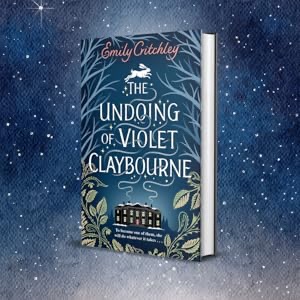
The Undoing of Violet Claybourne by Emily Critchley 

This was my read for over Christmas week and having started a couple of novels only to put them down again, I was beginning to think I’d lost my reading mojo. I was crying out for something that would draw me in quickly so I went for a tried and tested genre. A genre that maybe has a title, but I don’t know it. A preference I blame on reading Jane Eyre as a very imaginative ten year old. The formula is: huge rambling country house; time period from Victorian – 1930’s; young unsure girl/woman; aristocratic families with huge secrets. This fantastic novel from Emily Critchley fit the bill perfectly and was the only thing that drew me away from watching Black Doves all in one go! Our heroine is Gillian Larking, a rather invisible girl at boarding school who does her best to fit in but has no real friends. Gillian has lost her mother and with her dad working in Egypt feels very much alone. However, when she gets a new roommate that feeling starts to change. Violet is a bright, lively girl whose first goal is to break school rules and sneak up onto the school roof to check out the view. Despite her mischievous and seemingly confident nature, Violet is anxious and has a series of rituals to perform that help her cope: 

“She had to do certain things at certain times, like twirl around on the spot before she flushed the lavatory or touch a door handle twice before she opened a door. I often caught her whispering certain words to herself three times or counting to fifty on her fingers. When I asked her why she had to do these things, she struggled to tell me. For protection, was all she would say, or so that nothing bad will happen.”

She is also prone to emotional outbursts when things become overwhelming. Gillian is seemingly more aware that as young ladies of the middle and upper classes they must manage their emotions. She herself has had moments of despair and loneliness but has kept her tears for under the covers late at night. She also aware that girls in packs tend to sniff out weakness or odd behaviour and worries whether Violet’s rituals or ‘undoings’ as she calls them, could affect both their positions at school. Yet the other girls don’t seem to bother Violet and Gillian wonders whether that’s because she’s from a wealthy family. As Christmas approaches Gillian is delighted to receive an invitation from Violet to spend the holidays with her family at Thornleigh Hall. There she is dazzled by their slightly shabby country home, being waited on by the servants and Violet’s rather beautiful older sisters. Emmeline, the oldest and definitely in charge, wafts around in old Edwardian gowns whereas Laura is a rather more modern and fragile beauty. Both girls accept Gillian as one of their own, but their new friendship is tested by an incident on Boxing Day that will reverberate through the years. 

I have a soft spot for books set between the two World Wars and this had a lot of the themes pertinent to aristocratic families of the time. Thornleigh Hall is badly in need of repair but has a faded grandeur that is still impressive to Gillian. They’re a family living a way of life that ended twenty years before. They clearly don’t have the funds to maintain their estate, but Gillian notices the lavish breakfasts laid out every morning under silver dishes. Emmeline, the eldest sister, is the family’s great hope. She must find a suitor with money and secure the family’s fortunes with a sensible marriage. She has a candidate in mind, much older than her but definitely of the right class and enough money to save the hall for another generation. Gillian is enthralled by the sister’s unique style and confidence and realises that to some extent her friend Violet is the odd one out. Her nervous rituals, like her need to read Peter Pan over and over, suggest a deep insecurity in her character and even a fear of growing up. She warns Gillian that her sisters are not all they seem to be, but Gillian feels accepted for the first time in her life. There was an element of L.P. Hartley’s The Go-Between in her relationship with the sisters because she is naive and doesn’t realise when she’s being manipulated. On that fateful Boxing Day, Emmeline takes charge as always, instructing Gillian and Laura to lie or even pass blame onto a man who lives in the lodge house. Gillian feels obliged to go along with the plan because they’ve been kind to her. Again there are shades of another book here, Ian McEwan’s Atonement, where naivety and misunderstanding could lead to a terrible end for an innocent man of a lower social status. The full implications of these lies are utterly life changing for Violet, but almost no one escapes unscathed.

The novel is structured into four parts, taking us to different points in the life of Gillian and her relationship to the events of that Christmas in 1938. I’ve already mentioned L.P.Hartley’s The Go-Between and the first section has echoes of it’s opening page, from the naivety and social position of Gillian to the sense of delving into a past that’s long dead with it’s own social codes; “the past is a foreign country – they do things differently there’. We start the novel in 1999 when Gillian visits Thornleigh Hall, now under the guardianship of the National Trust. Over a slice of lemon and poppy seed cake, she ponders life from her time as a guest here to the recent death of her husband and the diary from 1938 that she’s come across while clearing out cupboards. This 1999 visit to Thornleigh is like travelling into the past as she strolls the rooms now on show and sees Lord and Lady Claybourne in the dining room complaining about their eggs and Laura in her stockinged feet reading a book on the library sofa. There is so much about this first chapter that draws us in: the suggested tragic circumstances of some members of the family; the emotional state of Gillian as a young girl who has lost her mother and is desperate for a role model; there’s also the hint of darker secrets lurking underneath the surface of this beautiful stately home. In the other three parts we’re taken to the aftermath of that fateful day in 1938 and then to London in 1942 where Gillian bumps into Laura’s husband Charlie. 

Finally part four brings us to the 1990s when Gillian and the Claybourne sisters are old women, taking us full circle to the beginning of the book. In each part there shocking revelations that leave Gillian in no doubt that the secrets from all those years ago are still having their effect. She has received a letter from Henry Cadwallander who has written to Gillian at his Aunt Violet’s request. Will she meet Violet and let her know that with the wisdom of experience she now understands her warning about the older sisters? I wondered if there would be closure or whether Gillian is always fated to be a horrified observer of the Claybourne’s family dynamics? This was an enthralling and fascinating look at a tumultuous time in history and it’s effects on one aristocratic family, observed through the eyes of a naive visitor. The author has created an incredible atmosphere that drew me in so strongly I felt like I was there. This is an amazing debut from Emily Critchley and I look forward to reading more of her work. 

Out now from Zaffre Books

Meet the Author

Emily Critchley has an MA in Creative Writing from Birkbeck, University of London. She currently lives in Hertfordshire in the UK. 

Posted in Netgalley

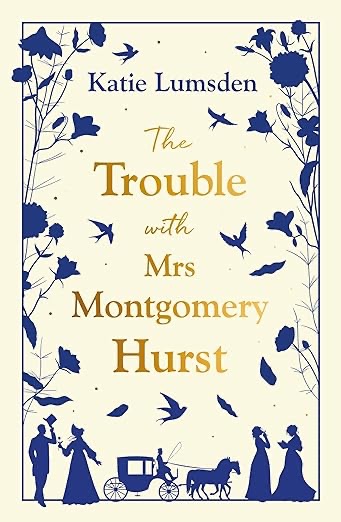
The Trouble With Mrs Montgomery Hurst by Katie Lumsden

A single man in possession of a large fortune must be in want of a wife – so why choose her?

Katie Lumsden’s first novel – The Secrets of Hartwood Hall – was a fantastically addictive Gothic mystery where nothing was as it seemed. This second novel has the feel of Jane Austen; light, witty and full of gossip. In this comedy of manners, where class and family reputation is everything, scandal is just around the corner. Amelia Ashpoint is comfortable with her life as it is. She and her brother Diggory live at home with their wealthy father and younger sister Ada in their newly built mansion in the county of Wickenshire. Summer 1841 and at the start of marriage season Amelia is 23 and her father has decided he wants to secure a husband for her. He has his hopes for Mr Montgomery Hurst, the most eligible bachelor in their social set and the owner of stately home Radcliffe Park. At previous dinners and dances, he has sought Amelia for his dance partner and they chat comfortably together at dinner. Their easy manner has been noted in society. However, at the next society ball there is intrigue and shock. Mr Hurst has been secretly engaged elsewhere, to an unknown widow with three children. Their friends are appalled but Amelia feels nothing but relief. She has no interest in marriage at all. It seems society has big expectations for Amelia, but her heart lies in a very different direction.

There’s so much to like in this Regency tale and Amelia is the centre of the centre of that. She’s an intelligent young woman who really knows her own mind and accepts who she is. She also knows where her heart lies but realises it can never be made public. It’s interesting to watch her slowly realise that she’s no longer a girl but is considered a grown-up and there are expectations on young women to marry. She imagined spending her days at the family home with her father, never having to marry but hasn’t realised what her father already knows. He isn’t going to be here forever. He’s becoming anxious about making sure she is settled, because the truth is all of them will have to marry. The house and estate will go to her brother and whoever he chooses to marry will become the mistress of Ashpoint Hall. Ada is still a girl but there won’t necessarily be room for Amelia. If only everyone could have as simple and happy a marriage as the new Mrs Hurst. When Amelia visits Radcliffe she is heartened by their easy manner with each other and the very natural relationship he seems to have built with his new stepchildren. Everyone around Amelia, including her best friend Clara and even her brother Diggory, appears to understand this unwritten rule – it’s time to find a mate.

The author portrays Wickenshire society beautifully, detailing how much traditional country society has changed. The differences can be seen in the village’s gentleman’s club The Lantern, where one floor is for those deemed gentlemen and downstairs is for tenants and tradespeople. People like the foreman of the Ashpoint Brewery Mr Lonsdale and military men like Major Alderton. The Ashpoints are not aristocracy themselves, in fact Ashpoint Hall is relatively new despite it’s grandeur. They may be new money, but the fact they have so much of it qualifies them as acceptable in polite society. The Earl and Countess of Wickford are the pinnacle of county society, so when they have a ball, they invite everybody, including the Major and Mr Lonsdale, but they can only get away with this behaviour because they’re aristocracy. If anyone else invited such men to a soirée it could reflect badly on the host. However, the author shows very strongly that just because someone is viewed as a gentleman it doesn’t mean they behave as one. Amelia’s brother Diggory is horrified to find that his best friend Alistair, Viscount of Salbridge and heir to the current Earl, has a guilty secret. His behaviour shows he has no regard for those reliant on him for their wages, the roof over their head, or even for a woman’s honour. This discovery leads to such a parting of the ways that Diggory starts to frequent downstairs at The Lantern. The usual downstairs clientele would be considered beneath him normally, but he’s growing up quickly and making his own life choices. Ever since he decided to propose to Lady Rose he’s started a steep learning curve, working every day in the brewery and preparing to take over from his father. He’s also keen on showing Lady Rose’s parents that his intentions are serious, realising that men are not born with integrity and honour. Money is also no guarantee of a man’s good character. Falling in love has set Diggory on the path to be a better man, also abstaining from drinking and the dangerous levels of gambling that have been the norm for him and the Viscount.

Amelia also has to grow up a lot throughout the novel. The subject of a woman’s honour and her marriageability are the strongest theme in the novel. It’s clear that societies like Wickenshire are in flux. Amelia has been insulated by her father’s money, so up until now the reality of a woman’s choices in life haven’t touched her. It is only her money that makes Mr Hurst a possible mate, otherwise he would be completely out of reach. Meanwhile, some titled families are beginning to find themselves financially unstable, meaning they are having to cast their nets wider to find suitable marriage partners. Where once only a title would do, families might need to consider new money and potential grooms may have to support the whole family or maintain a huge mansion. This could be good news for Diggory and Lady Rose, who is horrified to find her parents in dire straits and in a hurry to find her a husband. If Diggory doesn’t secure his bride, anyone reasonably respectable might do! For Amelia it’s her best friend Clara’s potential suitors that shock her the most as she’s always assumed they were of the same mind. However, Clara’s family don’t have the financial stability of the Ashpoints so she doesn’t have the luxury of turning down good offers, even if it isn’t her inclination to marry. Amelia grows up and gains a lot of perspective listening to her friend’s dilemma, realising how lucky she is to have a family who can support her for life and a fledgling writing career to fall back on should her father’s plans come to nothing. When rumours start to spread about Mrs Montgomery Hurst, Amelia realises how even a whiff of scandal can ruin a woman and how polite society shuns those who stray from the accepted conventions. Could there be a way for Amelia to use her position to still the gossiping tongues and sway polite society to accept the family? This is also a timely reminder that her own perpetual single status could be the cause of gossip.

I loved this wonderful homage to Austen. It has everything: characters of all classes; light comedy; smart social events; a dissection of Regency love and the marriage market. The author then brings in themes that we might consider more modern, such as infidelity, domestic abuse and LGBTQ+ relationships too. Just as Sarah Waters did with the Victorian novel, Katie uses the format of a Regency novel to show us that these types of relationships did exist when Austen was writing. It’s a form of writing back; she’s placing people and themes that were not included in literature of the time back into their historical context and exploring how they might fit in that time period. It gives us a richer and more varied sense of how society might have been, touching on subjects that didn’t really start to appear in literature until Queen Victoria was on the throne. It was only a few decades later that the Brontë’s wrote about more complex relationships: Jane Eyre’s love for a married man, Anne Brontë’s Tenant of Wildfell Hall escaping from an abusive and violent marriage or Emily Brontë’s slightly incestuous and abusive relationship between Cathy and Heathcliff. These are very different novels though with a darker tone.

Katie has instead taken all the lightness and wit of Austen, making her novel such a pleasure to read, but brining darker and more complex themes under the surface. The opening scene of chaos as the Ashpoint family get ready for a ball while Ada sobs at the unfairness of having to stay at home, is reminiscent of the Bennett sisters in a similar situation. For Austen, the comedy of Mrs Bennett’s nerves, the preposterous Mr Collins and Mr Elton, as well as the romance of the storylines disguised more complex themes of a woman’s place in society and their inability to inherit, not to mention the awful fate of an unhappy marriage. Upon the death of their father, girls were often left at the mercy of distant male relatives and had no say over their own fate. Our heroine Amelia simply wants to achieve the best outcome for herself, knowing she doesn’t want to marry. All she wants is to live in her childhood home, write her books and to enjoy the company of her brother’s family when he inherits. Most of all she wants to have the personal freedom that characters like Lady Rose and her friend Clara sadly can’t have. You’ll keep turning the pages, hoping she can achieve it.

Meet the Author

Katie Lumsden read Jane Eyre at the age of thirteen and never looked back. She spent her teenage years devouring nineteenth century literature, reading every Dickens, Brontë, Gaskell, Austen and Hardy novel she could find. She has a degree in English literature and history from the University of Durham and an MA in creative writing from Bath Spa University. Her short stories have been shortlisted for the London Short Story Prize and the Bridport Prize, and have been published in various literary magazines. Katie’s Youtube channel, Books and Things, has more than 25,000 subscribers. She lives in London and works as an editor.

Posted in Netgalley

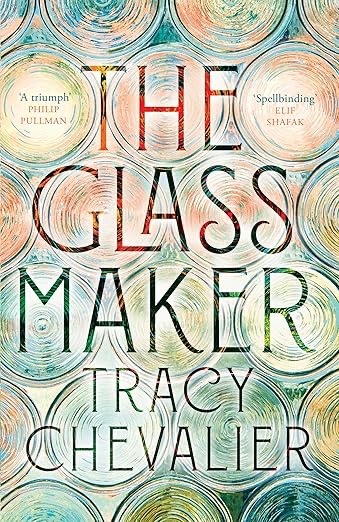
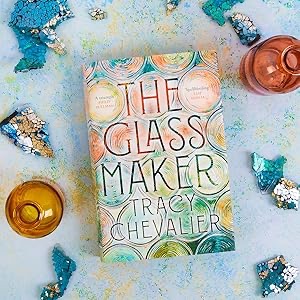
The Glass Maker by Tracey Chevalier

Orsola is the spirited teenage daughter of the Rosso family, all glassmakers from the tiny Venetian island of Murano. She’s very young when she sees her father bleed out in the workshop after he’s struck in the neck by a shard of glass while making pieces for a chandelier. Out of his two sons, the youngest is quiet, solid and dependable and would have made the perfect maestro, while his eldest Marco is loud, egotistical and very proud of his skill with glass. Now the entire family’s fortunes lie on his shoulders as the eldest always inherits the title of maestro from their father. He needs to support everyone from his widowed mother Laura and her youngest daughter Stella. His promotion leaves room for another servente to become the apprenticed glassmaker, second only to the maestro. In an unusual move Marco employs Antonio, originally a fisherman he has always wanted to work with glass. For Orsola it is love at first sight. Meanwhile, she is looking for ways to supplement the family’s income and visits their patron and merchant, a Dutchman called Klingenhorn. He suggests that she approach the only female glassmaker in the city to teach her how to make glass beads over a heated lamp. Once her beads are of the right quality, Klingenhorn agrees to place an order and she sets to work with determination. Orsola is our window on the Rosso family and she imparts both their history and the history of the island with it’s amazing glassmaking heritage. It is a history filled with love, passion, duty, tragedy and ingenuity, plus a little touch of the magic that Venice has in abundance. 

It’s hard not to fall in love with Orsola because she’s so brave and independent, attacking life with a fearlessness that aligns her with the most important woman working in glass, Maria Barrovier. The family business is run by the men of the family, leaving the women powerless. Her mother has a great business brain and younger brother Giacomo would have definitely been a safer pair of hands, churning out the same simple glassware for daily use. Yet thanks to a circumstance of birth they are all at the mercy of the mercurial Marco. He is so dissatisfied with their usual output of plates and goblets that have been the Rosso’s bread and butter, he wants to make more ornate and decorative glass, but misses the fact that it still has to be functional.  Orsola keeps her own business dealings with Klingenhorn a secret from her family, telling them her bead making is merely a hobby. Her budding romance with Antonio is intoxicating, but she knows immediately that he wouldn’t be her brother’s choice for a husband. They spend moonlit nights marooned on Antonio’s boat dreaming of a life where they can be together, away from the rivalry his presence has caused in the workshop. The Rosso’s business is a rollercoaster and they have to face hardship, change focus and rebuild several times. The author takes us from the 17th Century plague that hit Venice hard, all the way through to the COVID pandemic. While centuries pass in the real world, somehow everything happens within Orsola’s lifetime. When I visited Venice for the first time, particularly in the evening, I had a strange feeling I might turn a corner and be in another century. Orsola rarely leaves Murano and Venice, only once venturing to the mainland, rowed by Klingenhorn’s slave. I felt that if Orsola actually set foot on the mainland she would suddenly age by decades. 

The time difference felt strange at first, but it soon felt completely normal. We get to experience the city’s heyday as a bustling port, filled with merchants and people of all races and places. We see that dwindle as time goes on and slowly native Venetians leave and tourists move in. The author explores issues that are important to the island today: the worsening of the acqua Alta; the building of flood defences in the lagoon; cruise ships dwarfing the city and disgorging hundreds of tourists into San Marco at once; the shops selling cheap Chinese versions of local crafts such as mask makers, leather workers and glass makers, undercutting local artists; the changing flora and fauna, illustrated by the dolphins reported in the lagoon during COVID when only residents were left in the city. The author explores that conundrum of the negative impact of tourism on the city, while also acknowledging the city’s absolute dependence on it’s visitors. The endless lament that Venice is sinking, only serving to heighten people’s desire to see it. There are those who feel Venice has become a theme park of of it’s original self. I utterly adore Venice and I’m going next year for what will probably be the last time as it is difficult for a disabled person to get around. The author mentions a Las Vegas hotel where a microcosm of Venice has been created, with some visitors thinking they no longer need to travel to see the city. Yet it’s picture perfect bridges and clean canals are miles away from the real Venice. Of all my memories of Venice, the most important are those that are far from perfect. It’s the churn of the mud in the Grand Canal and silty smell of the mud, the washing hanging above your head, meeting locals and their dogs walking after dinner and the sound of squeaking rubber against the dock as the vaporetto leaves it’s stop. We always laugh about the old man we met crossing a bridge into Castello who farted loudly, before laughing uproariously! I feel that spooky sensation I had walking round the back of La Fenice after dark and the smell of candles and incense as we heard mass in an unexpectedly beautiful church. It was watching everyday things that gave me an idea of living in Venice: the grocery deliveries; being rushed to hospital or having the rubbish collected by boats. It’s all these things that make Venice real and not a film set. 

Of course I was longing for Orsola to reunite with her one love Antonio and I won’t ruin your enjoyment by telling all, except to say that just like the real Venice, real life is rarely a romantic novel. However, what I enjoyed most was Orsola herself because she is a pioneer and an incredible business woman. In fact she succeeds precisely because she is a woman. While Marco inherits the business, his ego and inability to change could have derailed the whole family. The women in this novel ‘manage’ the men, working around them and often slowly drip feeding ideas and solutions to the men until they adopt the idea as their own. Whereas Marco never asks for advice and rarely takes it, Orsola recognises the shortcomings of the business or when a crisis is looming. She knows who to ask, consulting with Klingenhorn and his replacement Johnas, Maria Barovier and the women of Cannaregio about threading and stacking seed beads. Even as the novel comes up to date she’s still diversifying, opening a second shop in a busy tourist Calle of Venice itself and employing someone to crate the glass balloons and trinkets that are easily packaged and stowed in a suitcase. She survives by being pragmatic, recognising when to challenge and when to do her duty, even if her temper does get the better of her at times. The depth of research that’s gone into her story and the author recommends many sources in her brilliant afterword. She creates a Venice I recognise, full of beauty and history but also a real and imperfect place, reliant on the very thing that destroys it. She captures the soul of the island and of Murano too and the people who feel themselves as Muranese first and foremost. I loved the magic of these places and how it attracts the eccentric and eclectic characters who have made it their home over the years. From Casanova, to Peggy Guggenheim and the previous owner of her home, the Marchessa and her pet Cheetahs. It is a moving, vibrant and intelligent novel that I know I will want to read again and again.  

The Borough Press 12th September 2024
Meet the Author

Tracy is the author of 11 novels, including the international bestseller GIRL WITH A PEARL EARRING, which has sold over 5 million copies and been made into an Oscar-nominated film starring Scarlett Johansson and Colin Firth. American by birth, British by geography, she lives in London and Dorset. Her latest novel, THE GLASSMAKER, is set in Venice and follows a family of glass masters over the course of 5 centuries.

Posted in Publisher Proof

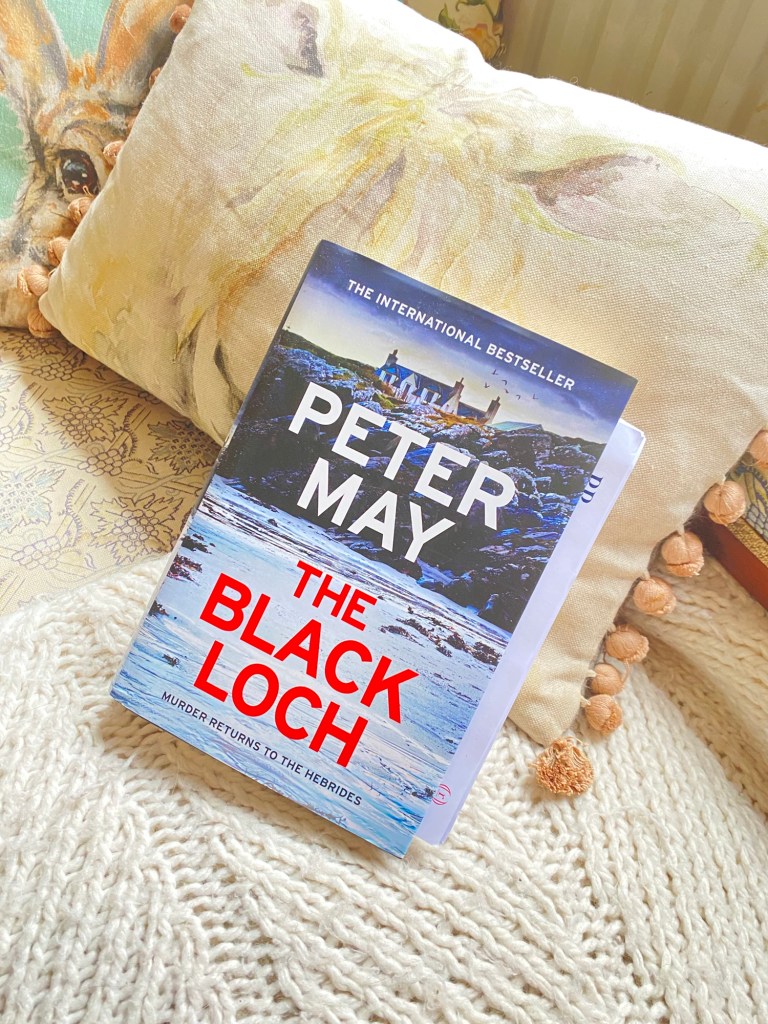
The Black Loch by Peter May

Readers probably won’t believe this but this is my first Peter May novel. I’ve had his books on my ‘authors to explore’ list for when I’m second hand book shopping, but something always gets in the way of me reading them. So, when I was offered this blog tour I jumped at the chance to finally read one. I love books set in Scotland and I am a particular fan of Tartan Noir – crime novels and mystery novels from authors like Doug Johnstone and Val McDermid. I was immediately drawn into the incredible scenery and atmosphere of the Isle of Lewis. This is the fourth in a trilogy, so I’ve definitely got some catching up to do where Fin McLeod is concerned. Once a detective and now retired, Fin is drawn back to Lewis when Caitlin Black’s body is discovered on a remote beach. Only eighteen years old, Caitlin was a student at the Nicholson Institute. It emerges that she was having an illicit affair with Fionnlagh McLeod, her teacher and a married man twenty years her senior. Fionnlagh soon becomes the prime suspect and is arrested on suspicion of her rape and murder. He is also Finn’s son. Finn knows he must return to Lewis to support his daughter-in-law and granddaughter. He also knows, despite the evidence against him, that he must try to clear his son’s name. As Fin travels around the island, he is drawn into past memories and soon realises this crime has echoes back into his own teenage past on the island. A terrible accident at a salmon farm caused two deaths, just as the industry started to expand on the island and become a multi-million pound concern. This is a journey of family ties, secret relationships and a bleak and unforgiving landscape, where violence, revenge and revelations converge. 

Fin and his wife Marsaili both grew up on the island, so it holds echoes of their relationship over the years. It’s strange for them to be back on Lewis after a ten year absence and awkward to turn up on Fionnlagh’s doorstep where his wife Donna is devastated by the possibility that her husband has killed his teenage lover. Their daughter Eilidh is happy to see her grandparents and currently oblivious about her father’s fate, but it’s clear to see the damage Fionnlagh’s exploits have had on Donna. These early chapters felt like being sucked down into a whirlpool of memories. There’s such an incredible sense of place and the use of Gaelic words and names feels foreign, strange and somehow magical at the same time. There are tourists enjoying the white sandy beaches, but we’re taken down below the surface to the realities of living somewhere so remote and bleak. Then further down to the horrors underneath where salmon are eaten alive by lice in their cages, where beached whales gasp their last agonising breath on the sand and a beautiful girl with her whole life ahead of her can be thrown over a cliff like rubbish.

He finally reached the Black Loch just before seven-thirty. He parked above the beach as sunlight fanned out towards him across cut-crystal water, revealing the secret colours that concealed themselves on the shore, among rocks and boulders and the seaweed washed up to dry along the high-tide mark. To his right, cliffs of Lewisian gneiss rose steeply out of the water and he could just see the gables and chimneys of the house that stood above them overlooking the bay. He cast his eyes down again to the water’s edge and left footprints in the wet sand as he followed the curve of the day towards the looming black of the cliffs. Somewhere here Caitlin’s body had been washed ashore.”

Peter May has portrayed the environment, whilst also showing the extent to which climate change and the eco- industry have impacted the surroundings he’s known for his whole life. The old cottages are damp and battered, some being refurbed by incomers with money either as family homes or holiday cottages. New houses are squat, one-storey dwellings built to blend with the sand and the heather with large  windows giving uninterrupted views of the landscape. Younger islanders are focused on eco-activism with Caitlin Black and her friend Isobel starring in a programme about the island’s ecology. They care about fish farming practices driven by the market across the globe for salmon. Practices that prevent wild salmon from swimming up river to spawn as well as terrible conditions for the farmed salmon too. Huge cages that once held a few hundred salmon now hold a hundred thousand, with such a high mortality rate they’re having to take them from the cages and dump them into rock crevices formed from by the tide. They lay there rotting until the sea washes them away.

The activist’s aerial shots exposing the illegal dumping of dead fish, and the zombie salmon, half eaten by sea lice, swimming listlessly around in cages where anything up to twenty-five percent of fish were already dead. She listened in horror as he conjured up an image of the stinking, maggot-ridden morts […] and the 1000-litre containers of formaldehyde that a desperate Bradan Mor was using to try to kill the sea lice.”

Fin’s narrative takes us on his investigations around the island, trying to find evidence to disprove the police’s theory that his son is a killer. A task made much more difficult when his DNA matches samples taken from Caitlin’s body. Why would he rape someone he’s been sleeping with for months? This is according to locals who’d noticed their clandestine comings and goings from a derelict cottage by the sea. Despite the urgency of the present moment, Fin is also pulled inexorably into the past, because this island has a huge hold and power. I felt centuries of history in the land it’s people and their relationships. This is sometimes positive, as Fin remembers beach parties where he first met Masaili as a teenager and they make love on the beach in the present, grasping a tiny moment of happiness and connection in the hurt and devastation. The most terrible memories involve a scheme to steal fish from the fish farm and pass them off as wild salmon, for a ghillie from the estate to sell on. Fin goes along with it despite his misgivings, but the scheme is originally suggested by Niall. A group of teenagers meet and drive to the fish farm several times, but one night there’s an awful storm and a sense of foreboding. This enterprise leads to two deaths and creates a suspicion in Fin about his friend Niall. If he is willing to steal from his own family and brush aside the death of a friend, is he capable of murder? Niall’s surname is Black and Caitlin is his daughter.

It feels as if the island has a consciousness. It sees your past and your future as clearly as the present, almost as if they’re happening simultaneously. I felt it when Finn walked across the very place he stood with Masaili when they were first meeting at six years old and she had two pigtails. She also called him Finn for the first time, christening him with a nickname he still uses. This is a thin place, unchanged for centuries. It also said something about how we experience the world. We are rarely solidly who we are in the present, with past and future forgotten. We are simultaneously all the selves we’ve ever been. In this way Fionnlagh can be a good father, a talented teacher and a suspect in a murder. There are also darker moments from Fin and Marsaili’s past that come alive here. Her narration is a rare moment in the novel but she relives a night in Glasgow from their university years, when she found Finn in bed with another girl in their student flat? It makes us realise that Finn isn’t wholly the upstanding man we think he is, he was also the cause of so much hurt, rather like his son. 

There’s a sense in which this trauma is generational, not just in individual families but in the island itself. The environment has always been harsh and people have found it to survive. It’s a hunting and fishing community and other nearby islands, like St.Kilda, became uninhabitable in the early Twentieth Century due to the difficulty of growing and catching enough food for the islanders. Fin takes us back to a conversation he had with his grandfather about the whaling industry, brutal tales of harpooning these majestic creatures and turning the sea red. It links to the beached whales in the bay, possibly drawn off course by one of them being unwell and in distress. As the vet assesses these giant creatures and people desperately try to save them he talks about a tradition in the Faroe Islands where they draw whales to the shore then hack them to pieces. Fin has violent memories of being forced to join a seasonal slaughter. In his last summer before university, Fin felt like a black cloud had descended because he and his friend Artair had been chosen to join the guga hunters. This was a four hundred year old tradition where twelve men would travel to An Sgeir, an island no more than a rock in the middle of the ocean. A guga was a young gannet, once hunted in a desperate need for food, their slaughter was now a rite of passage. Hunters killed two thousand birds in a fortnight, then they would be plucked and salted. Fin felt disgusted by the idea, but it seemed unavoidable and it would be dishonourable to give up your place.

“Neither Artair nor I wanted to spend two weeks on that bleak and inhospitable rock, scrambling among the blood and shit that covered the cliffs, slaughtering defenceless birds.”

This was a tense and complex case with so many possible suspects, and Peter May also keeps us guessing about Fionnlagh. Perhaps he could be the killer, after all he does confess. In a way this created a crime novel that didn’t revolve completely on whodunnit, but on the tensions between different characters and also their environment. He also creates a compelling picture of the beautiful and intelligent victim, Caitlin Black. A girl as embedded in the island as Fin, with a deep passion for the island’s environment and it’s flora and fauna. She epitomises the gap between generations, but also between those who want to protect the island and those who are making a generous living by exploiting and polluting it. I loved how deep the island and it’s history ran in these people, something I can understand having lived right next to the River Trent for most of my life. In fact the first thing I did when moving into my last village twelve years ago was go to the river bank and take off my sandals to feel the river bank under my feet. The river and it’s daily tidal bore, the smell of fresh cut hay, the cool of the forest, the crunch of dry pine needles underfoot as well as the smell of straw bales in the sun and freshly turned earth are all in my soul. They make up part of who I am and although I moved away for study, I have returned and unknowingly into the same village where my great-great grandmother is buried. Our ancestors call to us and this is definitely what Fin and Marsaili are feeling, as well as need to be close to Fionnlagh, Donna and Eilidh. This is something he couldn’t have imagined ten years ago, but now he wonders if it’s where they belong. Perhaps this means future additions to the series and on the basis of 5is novel, I’ll be the first in the queue if it does.

“He leaned over to kiss her and remembered that little girl with the pigtails who had walked him up the road from the school to Crobost Stores giving him the nickname that had stuck for the rest of his life.”

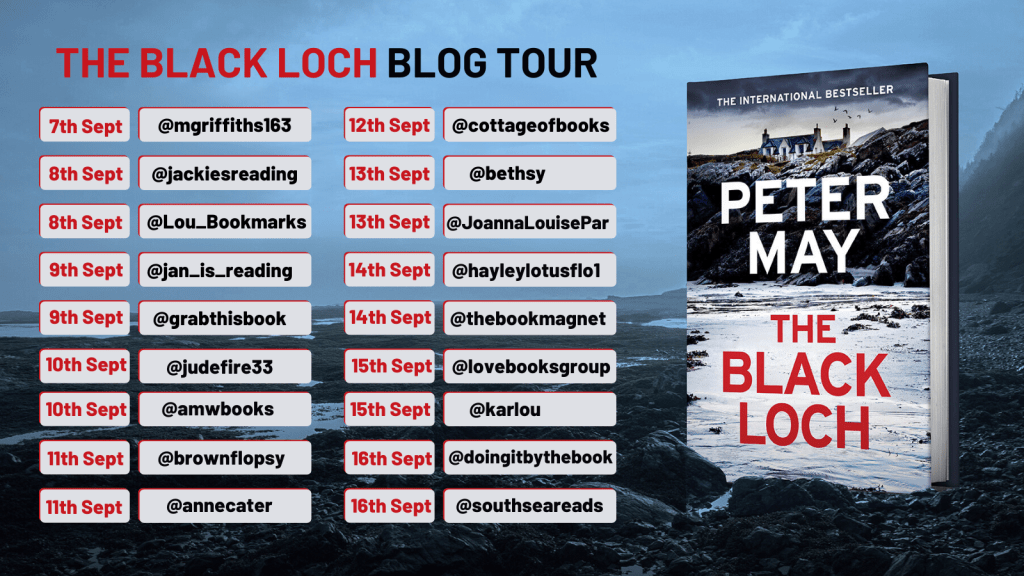
Out on 12th September from RiverRun Books, an imprint of Quercus.

Meet the Author

Peter May was born and raised in Scotland. He won Journalist of the Year at twenty-one and was a published novelist at twenty-six. When his first book was adapted as a major drama series for the BBC, he quit journalism and became one of Scotland’s most successful television dramatists. He created three prime-time drama series, led two of the highest-rated series in Scotland as a script editor and producer and worked on more than 1,000 episodes of ratings-topping drama before deciding to leave television and return to his first love, writing novels.

Posted in Publisher Proof

The Secret Orchard by Sharon Gosling 

I’ve really enjoyed Sharon’s last couple of novels, because I love their mix of strong female protagonists who are facing challenges and growing into themselves. This novel focuses on sisters Nina and Bette, set on their family’s farm in Scotland. When their father dies they have no choice but to be under the same roof for the funeral. The sisters are very different, Bette is ten years older than Nina so the age gap meant they weren’t very close anyway, but when Bette left for university she never came back to the farm. Living in London, Bette is a sought after divorce lawyer and her work is her life. She flies back to Scotland the day before the funeral and aims to leave the next day. Nina is hostile towards her sister, she has the opinion that Bette left the farm and never looked back. As their mother tries to smooth things over, Nina is shocked to discover that Bette and her father kept in regular contact by email and that Bette paid for the new roof on the barn. Both sisters are shocked at the will reading when they find out that their father left them both the farm in two equal shares. However, there are massive debts to manage and Nina has always left the finances to their father, preferring to do the farm work than sit in the office. This is the only safe place Nina and her son Barnaby have ever lived. Could they be about to lose it? When getting the farm valued, Bette and the agent walk the perimeter on the land and stumble across a secret orchard, tucked away with it’s entrance concealed off the coastal path. Could this hidden fruit be the answer to their money woes and possibly a mystery to bring both of them together? 

We’re drawn in by an intriguing prologue that suggests an historic love story between two local but rival families. I was dying for Bette and Nina to do some digging on this story and unravel their orchard’s complex back story. The author leaves the crumbs of this story to tantalise us while we move through the present day and the emotional aftermath of Nina and Bette’s father’s death. It’s clear from the outset that these two sisters could be an incredible team. Nina is good at the day to day farming work, rushing between baling and milking while also being there for her son Barnaby. I was on board with Barnaby straight away because he wears his Spider-Man costume everywhere, possibly even to his grandfather’s funeral. This titbit of character and humour reminded me of a little boy who always attended our church for Saturday evening mass and would go up the aisle during communion dressed in costume. Watching his long tail wend it’s way up the aisle so the priest could give a blessing to a mini dragon absolutely made my week. His mum made him take the head off for the blessing, but it was straight back on as he skipped back to his seat. Barnaby is a delight and I enjoyed watching him build a relationship with his Aunt Bette. Bette is brilliant with the financial and legal details, something nether Nina or their father has been able to do. She sets herself the task of working methodically through their chaotic office and showing the bigger picture; they might have been working themselves to the bone, but was all this work actually generating profit? 

Bette understands legal procedures and processes too. When she explains they’ll have to get the farm valued Nina immediately flares up, she doesn’t want to sell the farm. She assumes Bette is looking to cash in, but when Bette explains it’s just the first stage in any plan they make whether that’s to sell or to finance the farm better for the future. She’s calmer and more patient with the process and because Bette’s less attached to the land she can make sensible, dispassionate choices which is just as vital for the farm’s survival. Added to the main plot of saving the farm there are a couple of sub-plots. Nina is often helped out around the farm by neighbouring farmer Cam, who is very capable and good with Barney, not to mention easy on the eye. What would I take for friendship to turn into love. There’s also the mystery of why Bette left the farm so definitively all those years ago and when Ryan enters the picture her reaction left me wondering if he was involved. Cam suggests a visit from an expert he knows, to see if the orchard is viable and what would be the best way to bring some income from it. Nina has never known why her sister left, so her reaction to Ryan is puzzling for her. He has great ideas for the apple trees, some of which appear to be very old species that are rarely grown. He sets them on a programme of managing the trees, pruning and grafting them to enhance their health and yield. There isn’t an off putting amount of detail on how to turn the orchard into a cider business, but there’s enough to pique the reader’s interest and I was rooting for the sister’s success. 

The sisters have such depth to their characters and their lack of communication with each other has led to so much misunderstanding between them. Nina comes across as quite bitter towards Bette and to some extent she sees her sister as someone who has everything: the job, the money and the fancy London lifestyle. Actually it’s Nina whose had everything – a wonderful relationship with her father and precious time working together. She has Barnaby and although her relationship with his father broke down, she loves her son more than anything. With her mother living abroad with her new husband, Nina has taken on the lion’s share of the work around the farm and keeping an eye of their father but Bette has never expected any financial gain from the business, assuming that it belongs to Nina. I could see how the new plans might bring about a better personal relationship between them and I was kept reading by the promise of a warmer relationship between them, the makings of a new generation of the family. There’s a lot of forgiving to do here, but once they’d discussed why Bette left in the first place I could see another life opening up, one in which she might stay. As always with this author, this was such an uplifting and heartwarming story. The potential for both sisters to have their own love stories was also joyous to read, especially if you’re a sucker for an ‘enemies to lovers’ scenario. There are setbacks of course, some of them natural disasters and others caused by deep-seated rivalry. Sharon Gosling writes this type of story beautifully, as she weaves the threads of the sister’s story and the mystery surrounding the orchard’s origin, not to mention why it had been hidden all these years. The setting is wonderful, particularly the orchard with the salt air and the sounds of waves crashing against the cliffs. It’s so romantic and I loved the detail of how the salt permeates and changes the taste of the fruit making it so unique. This was a wonderfully escapist novel, driven by the character’s of Bette, Nina and of course, Barnaby. I thoroughly enjoyed being in their world for a while and I’m sure you will too.

Out 12th September from Simon and Schuster

Meet the Author

I’ve been writing since I was a teenager, which is now a distressingly long time ago! I started out as an entertainment journalist – actually, my earliest published work was as a reviewer of science fiction and fantasy books. I went on to become a staff writer and then an editor for print magazines, before beginning to write non-fiction making-of books tied in to film and television, such as The Art and Making of Penny Dreadful and Wonder Woman: The Art and Making of the Film.

I now write both children’s and adult fiction – my first novel was called The Diamond Thief, a Victorian-set steampunk adventure book for the middle grade age group. That won the Redbridge Children’s prize in 2014, and I went on to write two more books in the series before moving on to other adventure books including The Golden Butterfly, which was nominated for the Carnegie Award in 2017, The House of Hidden Wonders, and a YA horror called FIR, which was shortlisted for the Lancashire Book of the Year Award in 2018. My last children’s book (to date) is called The Extraordinary Voyage of Katy Willacott, and was published by Little Tiger in 2023.

My debut adult novel, The House Beneath the Cliffs, was published by Simon & Schuster in August 2021. Since then I’ve written three more: The Lighthouse Bookshop, The Forgotten Garden, and The Secret Orchard, which is out in September 2024. My adult fiction tends to centre on small communities – feel-good tales about how we find where we belong in life and what it means when we do. Although I have also published full-on adult horror stories, which are less about community and more about terror and mayhem…

I was born in Kent but now live in a very small house in an equally small village in northern Cumbria with my husband, who owns a bookshop in the nearby market town of Penrith.

Taken from Sharon’s Amazon Author Page.

Posted in Netgalley

The Dark Wives by Anne Cleeves

Vera is another of my favourite female detectives. She’s like a little, inquisitive bird. She’s generally a bit grumpy and sharp when the occasion demands it. She’s stubborn and lives for her job, knowing instinctively which of her team is best for which task and often expecting long days and nights. That’s definitely the case when a missing person report comes in for a young girl called Chloe living in care. Even more disturbing is the discovery of a body in the nearby park. This young man with a head injury turns out to be a new recruit to the children’s home called Josh Woodburn. Josh was a student but had recently taken a part-time post as a support worker and had worked closely with Chloe. She had come to the home after her mother was hospitalised with mental health problems. Despite the offer to stay with her paternal grandparents Chloe chose the home. She was learning to express herself, trying things on and seeing what fitted. Josh had encouraged her to write about her feelings, so she was journaling daily and dabbling with poetry. The social workers at the home had noticed she maybe had a slight crush on the new worker, so they can’t imagine her harming Josh. On the night Chloe disappeared Josh had come into work and then popped out again, everyone else was enjoying film night and pizza. Their only clue is that a dark, high end Volvo had been seen parked outside the home a few times recently. At the moment, Vera and the team don’t know if they’re looking for a vulnerable witness who is missing or the fleeing perpetrator. Either way they need to find her as soon as possible, before anyone else is harmed. 
The team are getting used to new girl Rosie, as they lost one of their own on the last case. Rosie is what Vera considers a proper Geordie with the obligatory fake eyelashes, fake tan and never going out with a coat. Vera is determined she will have to get used to the breadth of their patch which takes in both cities and vast countryside. Joe is suspicious and is watching her closely, but actually she has good instincts and her empathic manner with the victim’s families yields results and they seem to trust her. Chloe’s grandparents live in Whitley Bay, after selling up their farmhouse in the country. Her granddad tells them how sorry he is that they haven’t made more effort with her. Sadly her parent’s difficult split lead to bitterness and Chloe’s father felt she blamed him for her mother’s mental health. Her grandad would message her and take her out to the hills where they used to live and an old bothy that he still owned with an incredible view. They would take a picnic and simply enjoy being in the open air together. He admits that her relationship with her grandma was more difficult. His wife owns a boutique and was always trying to get Chloe to make more of herself, disliking the Goth look that Chloe had adopted. Vera can see that Chloe doesn’t fit the stereotype of a child in care; she still has connections with family and hasn’t been drawn into drink, drugs or violence. Vera keeps asking herself – what is Chloe running away from? 

Josh’s parents are obviously shocked and grief stricken, but also confused. They had no idea he’d taken a job and financially he didn’t need to work. He could have lived at home and gone into university, but he wanted the full student experience and they could afford it so why not? Josh’s big love was film so the work isn’t even linked to his course at all. His father wonders if he was still trying to impress a girl he’d been involved with called Stella. Stella’s family ran an organic farm where people with mental health issues or who were homeless could help out and gain work experience. Stella seemed almost embarrassed by Josh’s comfortable, middle-class background and put him on the spot. What was he doing to make a difference in the world? Maybe taking this job was a way of showing her he did have a social conscience. Coincidentally the farm is near the village of Gilstead, where Chloe’s granddad’s bothy is. Could Chloe be hiding out there until she can get away. When they arrived at the bothy the next day, Vera is horrified by what they find. There’s another body and the suggestion that someone has been living here. This body must have something that links it to Josh and Chloe, not just that they’re from the same care home but something they seem to be missing at the moment. Gilstead is a pretty village that tourists like to take a look at and this week is no exception. This week sees the annual witch hunt in the village, where children search for the ‘witch’ on the hills and in the dark. Outside the village are three monolithic stones, the so-called ‘Dark Wives’ of the title. Eerie posters of an all seeing eye appear in cottage windows to repel witches and let them know the villagers have their eye on them. It seems a little odd and creepy but essentially harmless. 

The relationships in the team are interesting and Joe’s relationship with Vera is problematic, not least because he feels stuck between his boss and his wife. Sometimes he feels like he’s always trying to please women, whether he’s at work or home. Vera lives alone and doesn’t always understand that responsibility to another person. She seems to assume everyone is as free as she is when she suggests a pie and ping after work. Other times she’s almost motherly and affectionate towards him. It was really interesting how this case seemed to get under Vera’s skin and bring back memories of her father. She still lives in his old cottage with all his things surrounding her and never seems to make it her own. Is she just camping there? Or setting down roots? She thinks about her relationship with her father and how difficult he could be when drunk. Maybe she understands Chloe’s need for a stable and loving parent who’s there for her, instead of the other way round. Sometimes police work is a thrilling chase and other times it’s doing the boring background checks and looking at the detail. This case is a bit of both, but the finale of the Gilstead Witch Hunt is genuinely spooky. With the monolithic Dark Wives in the background and the sun setting, the village comes alive with people taking to the hills to look for the witch. It’s dark and menacing, so as Vera, Joe and Rosie set out with them there’s real tension in the air. Chloe could be out here in the dark, but so could a killer. As they stumble around in the cold, with Rosie finally wearing a coat, it was hard to know whether screams were just excited kids or something more sinister. I love Anne Cleeves’s plots because they’re like a labyrinth, looping round and back on themselves. There are always secrets to unravel within families and these ones are no exception, they’re also emotional because these families are struggling or have broken apart. Most of all I love Vera. She’s like a little terrier and leaves no stone unturned in her determination to find a killer. 

Out now from Pan McMillan

Meet the Author

Ann is the author of the books behind ITV’s VERA, now in it’s third series, and the BBC’s SHETLAND, which will be aired in December 2012. Ann’s DI Vera Stanhope series of books is set in Northumberland and features the well loved detective along with her partner Joe Ashworth. Ann’s Shetland series bring us DI Jimmy Perez, investigating in the mysterious, dark, and beautiful Shetland Islands…

Ann grew up in the country, first in Herefordshire, then in North Devon. Her father was a village school teacher. After dropping out of university she took a number of temporary jobs – child care officer, women’s refuge leader, bird observatory cook, auxiliary coastguard – before going back to college and training to be a probation officer. In 1987 Ann moved to Northumberland and the north east provides the inspiration for many of her subsequent titles.

For the National Year of Reading, Ann was made reader-in-residence for three library authorities. It came as a revelation that it was possible to get paid for talking to readers about books! She went on to set up reading groups in prisons as part of the Inside Books project, became Cheltenham Literature Festival’s first reader-in-residence and still enjoys working with libraries.

In 2006 Ann Cleeves was the first winner of the prestigious Duncan Lawrie Dagger Award of the Crime Writers’ Association for Raven Black, the first volume of her Shetland Quartet. The Duncan Lawrie Dagger replaces the CWA’s Gold Dagger award, and the winner receives £20,000, making it the world’s largest award for crime fiction.

Ann’s books have been translated into sixteen languages. She’s a bestseller in Scandinavia and Germany. Her novels sell widely and to critical acclaim in the United States. Raven Black was shortlisted for the Martin Beck award for best translated crime novel in Sweden in 200.


Posted in Squad Pod Collective

The Drownings by Hazel Barkworth

This is a fascinating read from Hazel Barkworth, capturing so much about the times we’re in while also exploring themes of identity, obsession, use of social media and modern day witch-hunts. Serena was born to swim. Her body is honed by years of training to be the best. When she thinks about her body, she imagines it sleek and pointed like an arrow shooting through the water. Her trainer Nico thinks she can go as far as the Olympics and within the family her winning streak makes her the centre of attention. Then one day it all goes wrong, because despite her training, focus and visualising the win, she loses. She can’t fathom why or what went wrong, but to add to her shock she then slips in the changing area and damages her knee. Now she’s on crutches and cannot swim at all. She knows she will not be ready to meet the next Olympics and the disappointment is crushing. Even worse, within her family, attention shifts to her cousin Zara. Zara has always had issues with her body image, but started an Instagram account promoting body positivity. Her curated Insta in shades of peach, teal and gold, is gathering momentum. She is blossoming in her success and has enough followers for companies to start sending her free products in the hope she might promote them. Just as Zara is making peace with her body and finding success, Serena has no idea who she is. With most of her time previously taken up with diet, exercise, warm-ups and time-splits, she doesn’t recognise herself. Her body only had one purpose and now it’s let her down. How can she be Serena, when the Serena she knew doesn’t even exist any more?

Serena decides to take up a place at university, at Leysham Hall, where her cousin already has a place. Here they both fall under the spell of their feminist lecturer in history, Jane. Serena meets her entirely by accident when walking the grounds one night. She sees a young woman poised by the edge of the river, that rushes downstream at this point of the campus. There have been warnings about this stretch of water, young women going missing and discussions about lighting the area always come to nothing. When the girl disappears, Serena rushes forward to help her. There is no hesitation when she realises the girl isn’t a strong swimmer and is in serious trouble. She leaps in and then Jane appears, just in time to help Serena bring the girl up to the surface and out. She doesn’t notice much about her that night, but she does end up in Jane’s history tutorial group and from that point on she feels drawn to the academic. It’s not a sexual attraction, she doesn’t want to be with her, it’s more that she wants to be like her. She loves the unfussy but stylish way that Jane dresses. She admires the knowledge and passion she has about her subject. Totally at odds with her dress sense, Jane’s tutorial room is a riot of colour turning the functional and boring space into something cozy and colourful. There are so many mementoes of places she’s been, feminist posters, colourful rugs and cushions. Mostly, I felt Serena is drawn to the fact that Jane seems so entirely sure of who she is.

A few of my reads this year have touched on a couple of very specific themes and when I thought about why, I could see that this is a product of the times we’re in. There’s the theme of witches and the witch hunting of the 17th Century which grew rife due to the obsession of James I /James VI of Scotland. The second was the influence and power gained by becoming part of all-male, elite, private school gangs like the Bullingdon Club, a club in which David Cameron, Boris Johnson and George Osborne were all members. The club carried out ‘pranks’ such as trashing the restaurant they met in and simply fixing the problem with family money. They burned ten and twenty pound notes in front of homeless people. I also believe this club may have been the source of the Infamous David Cameron and pig story. At Serena’s college it’s the Carnforth Club, named after their school founder they are robed from head to foot to keep their identities secret. As far as witches go, the words witch-hunt are being co-opted by men in powerful positions who don’t like it when their actions have consequences. We have seen it in the aftermath of the #MeToo movement, where men who are finally facing courts of law after years of abuse and sexual assault allegations, are claiming they are victims. The most recent is Russel Brand who has used his YouTube channel to protest his innocence, but has the tried to rehabilitate himself by becoming ‘born again’ and hiding within the Trump family, of all places. These and other men like Prince Andrew. Kevin Spacey, Jeffrey Epstein and Harvey Weinstein have all used the excuse that the media want to take them down. However, it’s not a witch-hunt when you’re one of the most privileged demographics of the world. If you’re moaning about witch-hunts you must genuinely be a victim and since most of these men are always punching down, I think we’re being gaslit.

The original witch-hunts were brutal and targeted mainly women. Jane tells them that witch trials took place where they now study and in fact, the place where Serena had jumped in to rescue a student was where witches were ducked. After a brutal interrogation that included torture, coercion and violation, suspected witches were taken to a river and ‘ducked’. If they drowned they were innocent but if they lived they were declared a witch and burned alive. Jane places this within a feminist framework. We know that ‘witches’ were usually women who lived alone, earned their own living from medical and herbal knowledge, often helped deliver babies in their area and helped other women. By offering advice on things like fertility, preventing pregnancy and helping girls in trouble, local ‘wise women’ gave the women around them some control and autonomy when it came to their own bodies. A woman like his is a threat to men and to the teachings of the established church. No wonder James I worked to the edict from Exodus ‘ thou shalt not suffer a witch to live’. Working as a counsellor and in chronic pain management for years I often realise I have quite a few friends who might come under suspicion from the witch finders.

Both Serena and Zara are dazzled by Jane, Serena has even wondered if Jane and Zara may be attracted to each other. Using Zara’s quite considerable social media platform, they encourage young women in the college to speak out about any sexist and misogynistic treatment they’ve suffered there, particularly if linked to the Carnforth Club. They are soon inundated with messages alleging everything from online abuse to sexual assault. Their anger comes to a head one night at a rally where both Zara and Jane will speak to any of the students who will turn up. Round a campfire they start to share their stories, with the evening rounded off with a call to arms. They must campaign for change. At the crucial moment, Zara is expecting the megaphone to be passed over, but instead Jane chooses to hand it to Serena. Fired up by the atmosphere Serena dives in and starts to rally the women and she is inspired. The night ends as Serena starts to lead a ritualistic dance and before she knows it she’s the leader, whipping up the women into a frenzy as they take off their clothes and follow her. Next day Serena is a little bemused at what happened, but it felt right at the time and she went with it. Even as she goes to sleep, someone is sharing a photograph of her naked and marching in the light from the campfire. It’s sent to the whole college. In the aftermath, Jane wants them to keep up the momentum and break into the hall, where a portrait of the college founder and instigator of the Carnforth Club has pride of place. While most of the group are happy to break in and cause mischief, Jane is considering something much darker and more dangerous. Will everyone go along with her plan? Since the rally, Serena has noticed that Zara is not herself. She seems to have lost some of her audience and her confidence seems to be following. Now that Serena is finding herself, it seems that Zara is losing herself.

The tension really builds here as the author takes us into final third of this thriller and I was fascinated to see how it turned out. I felt for Serena who seems to have found confidence and a sense of what kind of woman she wants to be, but is it real? She struck me as one of those children who’ve been pushed into specialising too early in life with no back-up plan. In all those dark, early mornings at the pool and the times she had to say no to social occasions to train, there’s someone who isn’t allowed to explore who she is and what she enjoys. Her time is so limited and she doesn’t form any meaningful friendships either. How do we know what we love in life if we’ve never tried anything else? She also has a very distant relationship with her own body that’s merely an athletic instrument. She’s used to ignoring aches and pains, divorcing her mind from how far she’s pushing her growing body and never seeing her it as a source of pleasure. Then suddenly she’s surplus to requirements and has no other plan. Placed into the chaos of fresher’s week and meeting so many different and strong characters must be bewildering. When people ask about herself, who is she? She struck me as a borderline personality, who takes on the issues and characteristics of whoever she’s with. She’s vulnerable, used to obeying authority figures and having them control everything down to her food. Zara seems equally fragile though, growing up in the shadow of a cousin who might go to the Olympics is not easy. She’s so proud of her influencer award and in a way, her Insta has been as much about her own validation and acceptance of her body, as it has about inspiring others. Once her star begins to fade, Zara’s confidence plummets and she becomes desperate to make her mark. The author shows us how fragile today’s young women can be with misogyny seemingly rife and the added pressure of a global audience on social media. I wasn’t sure how far either of these girls might go to impress their tutor and display who they are. That’s if this is who they are? This was a brilliant contemporary thriller that asks serious questions about how the authentic self forms within this confusing and dangerous world.

Published 1st August by Review.

Meet the Author

Hazel grew up in Stirlingshire and North Yorkshire before studying English at Oxford. She then moved to London where she spent her days working as a cultural consultant, and her nights dancing in a pop band at glam rock clubs. Hazel is a graduate of both the Oxford University MSt in Creative Writing and the Curtis Brown Creative Novel-Writing course. She now works in Oxford, where she lives with her partner. Heatstroke was her first novel and The Drownings is her second.

Posted in Random Things Tours

This Motherless Land by Nikki May.

This book was an absolute joy to read, which may sound strange considering the subject matter but somehow it awakened my senses, stirred my emotions and kept me reading. In fact I read it so quickly I was finished in an evening that turned into morning before I knew it. Funke lives in Nigeria with her mother, known as Misses Lissie to most people, her father and brother Femi. Mum is a teacher and Dad works at the university. Their entire world is shattered one morning as they make their normal run to school when their mother’s car fails to stop and ploughs directly under a lorry. The drivers side of the car is destroyed but Funke’s side is left completely unscathed. She loses her mother and brother in a moment. In his grief, her father Babatunde is inconsolable and he takes it out on Funke. How did she get out without a scratch? Encouraged by his superstitious mother, he calls Funke a witch and insists she must be protected by some magical being. Seeing how Funke will be treated by her grandmother, her aunties put their heads together and decide she should be sent for a while to her mother’s family in England. Her white family. Funke is ripped away from everything she knows and sent to The Ring, the mansion where her mother and Aunty Margot grew up. There, although she isn’t being hit or accused of evil spells, she feels the resentment of Aunt Margot and her cousin Dominic. They call her Kate, after all it’s easier than pronouncing Funke isn’t it? There’s no colour, bland food and where she was accused of being white in Nigeria, here she is seen as black – with all the racist connotations that come alongside it. Especially in white, upperclass Britain. England’s only saving grace is her cousin Liv. Liv scoops her up and feeds her comfort food. The problem is it’s not the food or the comfort she’s used to.

This is a book about being in between. Funke’s mother was ostracised by her family for marrying a Nigerian man. Aunt Margot sees Lizzie’s relationship with Babatunde as the reason for her own engagement being called off just before the wedding. In her eyes Lizzie was selfish, pursuing her own feelings at the expense of her family. She feels Lizzie had the looks, the charisma and the man she loved, while Margot was left heartbroken and with parents who seemed to miss Lizzie more than they enjoyed Margot’s presence. She sees Funke as her mother’s daughter and a threat to her own children. Her parents seem to love Kate, as they’ve christened her, and Margot doesn’t want her to take all the attention, the love and their eventual inheritance. She’s a bitter woman who is very hard to like. Sadly for Funke, history repeats itself and on the night of their prom a series of events mean they must drive home early. Liv is drunk and high. Yet even Funke, who is teetotal, feels unwell. Dominic throws caution to the wind and decides to drive them home, despite his own drinking, and a terrible accident occurs. Everyone survives but Liv suffers a bad break to her leg. In the aftermath Dominic asks Funke to admit to driving, which she agrees to, not knowing that covering for her cousins will lead to her life being uprooted for the second time.

Funke feels like she belongs nowhere. In Nigeria when her mother was alive they had a wonderful life, even if children would follow her singing a song about her pale skin. That’s nothing to the blatant racism she faces in England, but she faces it down and it fuels her will to succeed. Then she’s back in Nigeria and is again the odd one out. This time she’s in her dad’s new family and their lifestyle in the village is very different to the childhood she remembers on the university compound. His new wife and their children eat and live in ways her dad would have dismissed as ‘bush’ when Funke was a child. Her small brother and sister are black and fascinated with her pale, mixed race skin. Things are familiar, such as the spicy red stew and the heat, but it’s a changed land without her mother in it. At least in England she didn’t expect her mother to be there. Now she faced with the shock of her absence all over again. Will she ever find home? Meanwhile, back in Britain, when Liv finally comes round from the accident she asks for Kate. What will her mother tell her?

I thought the author brilliantly showed how different people cope with mental pain. Funke takes a bottle top from her mother’s hoard (for craft projects) and holds it in her hand so hard that it cuts into her palm. Liv is horrified that she’s hurt herself like this, but for Funke it’s the only thing that distracts her from the grief of losing her and her brother. Liv also deals with motherly absence, but externalises her feelings in a different way. She has a mother who is present, just not for her. Liv starts to drink excessively, uses marijuana and acid tabs to blank out the feelings that she isn’t loved and therefore isn’t worth anything. When we’re children and we’re rejected by a parent, we never assume it’s the parent’s fault and we don’t stop loving them. Instead we internalise their criticism and think we are the problem. Liv has a lot of casual sex because she thinks it sex is all she really has to offer. Meanwhile Funke struggles to give love and truly trust someone. She is in a relationship with a young man who is keeping his true sexuality under wraps, because it’s not accepted in his family or community. The younger people are aware he’s gay and call Funke his ‘beard’, but how far can she take this relationship? What if he suggests a more permanent arrangement and is Funke willing to give her life away so easily? The the same root cause, a loss of the mother figure they so needed, affects both girls, it just manifests in different ways. With them both on opposite continents, how will they ever find each other again? The spaces between can be painful and isolating places to be and the author depicts that with such tenderness and understanding. However, liminal spaces are also freeing. Being in-between gives us the space to choose, to take bits and pieces from each place, each family and make our own identity. I found the end chapter so uplifting and it gave me hope that we can each forge our own identity, once we’ve explored who we truly are. This is a fascinating, touching story about growing up and how we become who we are. It’s vibrant, atmospheric and an absolute must read.

Meet the Author

Born in Bristol, raised in Lagos, I’m proud to be Anglo-Nigerian. I ran a successful ad agency before turning to writing and now live in Dorset with my husband, two standard schnauzers, and way too many books.

My debut novel WAHALA was inspired by a long (and loud) lunch with friends. It was published around the world in January 2022 and is being adapted into a major BBC TV drama. This Motherless Land is my second novel.

Posted in Netgalley

The Instrumentalist by Harriet Constable

Wow! What an incredible debut this is. I absolutely consumed this book and even found myself furtively reading in the middle of the night with a tiny torch. Anna Maria della Piétro is a fascinating heroine and while not always likeable, I found myself rooting for her. Like all the girls at the Piétro, Anna Maria is an orphan, posted through the tiny hatch in the Ospedale Della Pietá often with a note or keepsake from the unlucky girl who had leave her child behind. The author shows us the incredible splendour of Venice, a place I fell completely in love with, contrasted with it’s destitution and desperation. A state that seems more likely for women, especially those from a poorer background. The convent brings up it’s girls very strictly, according to the Catholic faith and the virtues of hard work from scrubbing the floors or working in the nursery. It is also a college of music. Each girl is taught at least one instrument with the best trying out for the orphanage’s orchestra, the figlio. Those chosen will work with the master of music and they will play in the some of the most beautiful basilicas and palazzos in all of Venice. Anna Maria’s great love is the violin and there’s no doubt she will try to become the best.

Anna Maria is a bundle of youthful exuberance, fireworks, talent and ambition. She practically leaps off the page and it seems impossible for her to fail. She starts by aiming to be noticed by the master of music and after that to be the youngest member of the figlio. No sooner is one ambition fulfilled then she’s already thinking of the next. The rewards are also intoxicating – not that Anna Maria cares much for the lace shawls from Burano, but she is partial to the small pastries with candied peel and spices that she loves to share with friends Paulina and ?? Through them we see the girl rather than the musician. They bring out a lightness of spirit, playfulness and a sense of sisterhood. The love she has for her custom made violin is absolutely infectious and when she becomes the favourite of the music master will those girlish aspects of her character remain? Constable shows us a dark underbelly, both to the Ospedale and their music programme. Although the alternatives are even worse. She also shows us huge disparity between the rich and poor in Venice. As visitors we only see the beauty and history of this incredible city, but once I did catch a glimpse of the systems that keep the city going. While waiting on a jetty to catch my water taxi one early morning I met the dustbin men of the city, having to negotiate tiny lanes and creaking jetties to clear up after all the visitors. When Anna Maria gets to play at private palazzos, the grandeur is overpowering. After her performances she is showered with lavish gifts that are at home where she plays but out of place in her bare room. She also notices that those orphans who don’t excel are easy pickings for the rich patrons of the Ospedale. Unsurprisingly, Anna Maria wants to escape the fate of becoming a wife to a much older man and putting aside her talent. As she is taken under the wing of a female patron, Elizabetta ?? She’s impressed by incredible dresses and Elizabetta’s elegant palazzo, but this patron also uses her wealth for good. She shows Anna Maria another fate for the cities’ poor women, by taking her to a brothel where the wealthy woman helps with supplies ensuring these women can make their living in safe and clean surroundings. She points out to Anna the danger in becoming a favourite – there are always people lining up to replace you. When the master is fickle or arrested by a newer, talented young girl what would happen to Anna? It makes her think about the person she replaced for the first time.

I loved the synaesthetic aspect to Anna Maria’s talent because it really added to my understanding of why she loves it so much. I have tastes that are related to colour, so if I see a garden full of beautiful yellow daffodils my mouth begins to water and I get the sensation and taste of lemon sherbet sweets. As Anna Maria plays, colours dance through her and the flurry of colour gives us a sense of how transformative it is for her to play. She is utterly lost in this moments. She’s floating within a rainbow of colour. Even when she begins to compose the written notes on the page are hastily drawn because she’s somewhere else experiencing a unique explosion of sound and colour. Even though she’s not always likeable I was still rooting for her. However some of her tougher decisions are made from within the context of survival. Only by being ruthless and getting to the position of power she craves can she feel safe. Then she can make better, more equitable decisions from a place of safety. This is an incredible story, made all the more powerful because Anna did exist. While this is a novelisation rather than an autobiography she was real and so was her music master . He is a mercurial and sometimes cruel man whose identity remains unspoken – although I did realise who he was part way through. I loved that this is written as a feminist counterpoint to his fame, highlighting a woman of equal talent who is cheated in a creative partnership and ends up with her woke stolen and uncredited. This is an abusive relationship characterised by manipulation, exploitation and a fascination with talented pre-pubescent young girls. Harriet has created a brilliant work of historical fiction that gives voice to one such young woman full of spark, talent and incredible drive to succeed. Her book is totally immersive, plunging us into a world where women were expendable, only there to parrot and enhance a man’s talent. It’s a powerful and compelling tale that I’m sure I’ll still remember when it comes to my end of year favourite books.

Out on 15th August from Bloomsbury

Meet the Author

Harriet Constable is an award-winning journalist and filmmaker living in London. Her work has been featured by the New York Times, the Economist, and the BBC, and she is a grantee of the Pulitzer Center. Raised in a musical family, The Instrumentalist is her first novel. It has been selected as one of the Top 10 Debuts of 2024 by the Guardian.

Posted in Publisher Proof

The Midnight Hour by Eve Chase.

I was looking forward to the new Eve Chase novel, but really surprised to win a competition for a hardback copy plus a vase of my favourite flowers, peonies. All I’d done was describe what I loved about Eve’s writing: her female characters; the secrets from the past just waiting to spill out; the gothic feel and atmosphere she creates, especially around old houses; lastly, it’s the dynamics she creates between the characters particularly the mothers and daughters. I feel that in this novel she has gathered all those aspects together beautifully with an intriguing plot and such a relatable central character in Maggie. Maggie is an author, living in Paris and struggling with writer’s blog. Something from her shared past with brother Kit keeps coming into her mind. Her mother Dee Dee died from cancer recently and Maggie was there for her, until her last moments. Her mind keeps being drawn back to her late teenage years when Dee Dee was a famous model, living in the Notting Hill area of London, close to the Portobello Road with it’s antique and collectible traders.

One summer morning, Maggie wakes up to find that Dee Dee hasn’t come home. This isn’t too unusual, late parties and sometimes modelling shoots can drag on into the night and she isn’t worried. She loves spending time with Kit anyway. Kit is using his skateboard when he has a fall, breaking one of the wheels. A stranger comes to their aid, dusting Kit down and trying to repair the wheel. He introduces himself as Wolf and when his eyes lock with Maggie’s they’re the clearest blue she’s ever seen, his name becomes him. There’s also an instant spark between them and for Maggie it’s instantaneous, first time and first sight love. He recognises the connection too. It’s what makes him take the skateboard back to his uncle’s antique shop so he can use his tools to fix Kit’s skateboard properly. Just so he has an excuse to go back. These are emotional days as Maggie navigates this new feeling, but also concern for her mother who still hasn’t come home. She calls Dee Dee’s friends and they rally round but still no one knows where she is. Maggie needs to leave her Paris flat and travel back to England and Aunt Cora’s house in the country. It’s time to ask some questions and catch up with Kit. Once in London she makes her way to the old Notting Hill house with the pink door and bumps into a man on his way out. She’s surprised to see this is a much older Marco, Dee Dee’s hairdresser. He tells Maggie he’s digging out the basement of the house, sending her into a complete panic. Maggie knows that secrets lurk in the garden of their old home and it might not be long before they’re found.

Eve really gives us time to get to know Maggie and Kit. As a child Kit was the baby of the family, adopted by Dee Dee when Maggie was a little older. His blonde curls and sunny disposition give him an angelic demeanour and he’s certainly noticed by Wolf who dotes on him. Even grumpy Gav at the antiques shop falls under Kit’s spell, especially when he sees his polishing skills! As an adult Kit is more wary, now a dealer and collector himself, he has learned that not every customer is as honest as they appear. He does have a big heart though, so when an old gentleman comes into his life asking Kit to source some pieces for his new home, he wants to help. Roy appears a little down on his luck and Kit senses a loneliness under the surface. Of course someone’s appearance isn’t necessarily indicative of how wealthy they are, so Kit takes his request at face value. It’s only when Roy starts to turn up unannounced, wants to go for dinner and then talks his way into Kit’s flat that he starts to wonder if Roy is what he appears to be. In fact he isn’t even sure he likes him. He needs to be firm to shake him off but Kit dislikes confrontation and wonders whether he should trust his instincts, or is he just being paranoid? It’s lovely to have Maggie back in the country, they’re still close, but she seems consumed by that summer years ago when they first met Wolf. Kit isn’t sure what happened that summer, but he knows that one night Maggie took him from their home in a hurry and they ended up on a train to Aunt Cora’s in Paris. He knows she was protecting him but doesn’t know why and he knows his mum was missing for a while. They never returned to the Notting Hill house, instead moving to Cora’s in the country, into the house of their grandparents. Kit promises to look for Wolf, finding his real name helps and soon Kit has him tracked down to one of the better auctioneers in London. Will seeing Wolf again put Maggie back on track?

I fell in love with Maggie. I was a similar age when I first fell I love and reading about her summer with Wolf brought back all those feelings. The wonderment when someone suddenly becomes your absolute world. The beautiful surprise when they feel exactly the same. The discovery of sexual chemistry, totally losing yourself in another person, being vulnerable physically and emotionally, it’s all here. In very delicate strokes Eve sketches a teenage girl who is emotional and intelligent. Little hints about her physical appearance makes us aware that she is a curvy girl, she wears glasses and is a little lacking in confidence. She’s astonished that Wolf loves these things about her and Eve captures that self-consciousness, the apprehension about revealing her body to this young man totally swept away by his obvious desire for her. It’s honestly so beautifully captured that it took me right back there. Maggie’s an incredible sister to Kit and nurtures him with a fiercely maternal love that I think comes from him being so much younger. It takes days before she starts to struggle a little with the responsibility, because Kit’s that age where he’s on all the time. Her feelings for her mother range from concern, to anger and incomprehension. It’s Aunt Cora who has always been the fuck-up of the family, an addict who would arrive at Christmas and grace everyone with her acerbic tongue and disappear again. However, she’s been clean for some time when Maggie and Kit arrive in Paris and it seems strange to Maggie that she’s so together and furious with Dee Dee for leaving them alone. Cora concentrates everything on Kit and Maggie, who is heartbroken and possibly hiding something about the last days they were in London.

You will be swept up by the romance, the mystery and the relationships between the women. I loved the atmosphere of the Notting Hill setting and I always love the smell and sound of an antique or junk shop: the library feel of quietness and reverence; the smell of beeswax; the ticking and chiming of several clocks. I always find myself drifting into another time when I’m in an antique shop. The mystery of adult Kit’s visitor grabbed me too, because his influence is subtle and I found myself questioning just like Kit does. Is he being manipulative or is this a coincidence? Did he intend to do that? Is he lingering for genuine reasons or for some other nefarious purpose? I wasn’t sure, but felt an undercurrent of danger for Kit if he didn’t keep his wits about him. What the story tells us is a therapist’s mantra really – unresolved emotions and trauma will always bring themselves to the surface. Whether through a similar event happening or a big change in our lives, these memories float to the surface with more resonance than they should all this time later. This is because they weren’t processed properly the first time. So Maggie is feeling a torrent of emotions as if she’s still a teenager and they’re just as confusing, painful, beautiful and overwhelming. She and Wolf never had a proper ending and I found myself longing for that closure to happen when she comes back to England. This was a wonderful read, deeply emotional but also a compelling mystery. I honestly think this is Eve’s best novel yet!

Out Now from Michael Joseph.

Meet the Author


Eve Chase is an internationally bestselling British novelist who writes rich, layered and suspenseful novels, thick with secrets, unforgettable characters and settings. Her latest novel, The Midnight Hour – ‘Her best yet…I loved every word’ – Claire Douglas – publishes June ’24, in the UK. Other novels include, The Birdcage, The Glass House (The Daughters of Foxcote Manor, US) a Sunday Times top ten bestseller and Richard and Judy Book Club pick, The Vanishing of Audrey Wilde (The Wildling Sisters, US) which was longlisted for the HWA Gold Crown Award, and Black Rabbit Hall, winner of Paris’ Saint-Maur en Poche prize for Best Foreign Fiction. She works in the Writer’s Shed at the bottom of her garden, usually with Harry, her golden retriever.

Say hello @evepollychase on Instagram, X, and Facebook