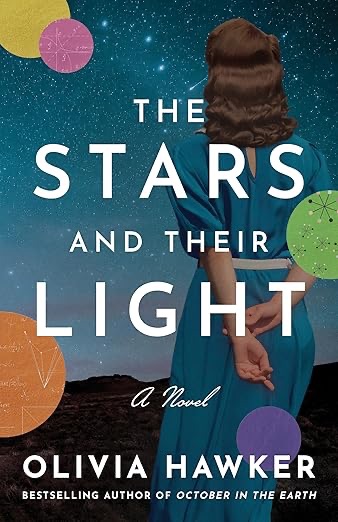
I was instantly fascinated with the subject matter of this book – the 1947 Roswell Incident in New Mexico. As any good X-Files fan knows this was the most famous potential UFO sighting in history. An unidentified craft lands in a field and local workers find objects they can’t identify. There are witnesses too who can’t explain what they’ve seen, even though the government claims it’s merely a stray weather balloon. This felt very pertinent at a time when unexplained phenomena, particularly in the USA, are once again giving rise to conspiracy theories such as the Blue Beam Project. Here we meet Betty Campbell whose father Roger is based at Roswell and brings home an object from the landing site. Roger and his friend Harvey Day have been on the recovery team and are shocked by what they found. Both men served in WW2 so they’ve seen action, but this has Roger so confused he goes against orders and takes a fragment home to his family. However, when his daughter Betty handles it, she develops stigmata. Lured by a possible miracle the Catholic Church sends Sister Mary Agnes to stay at a local convent and investigate this apparent miracle.
This book was different to anything I’ve read before, but was a combination of many genres I love to read – science fiction, historical fiction and family drama. Sister Agnes is part of a local cloistered order, but here she will act as their PR in a way, liaising with local people and being the supportive face of the order. She is certainly the only person supporting the Campbell family, as Roger’s superiors start to shut down speculation. Betty is being ostracised in town and desperately needs a friend. She’s scared, confused and lonely. There are complex emotional matters here, such as how we cope when something we’ve seen surpasses our own understanding or clashes with our faith. There’s a loss of belonging – whether it be to the army, the church or a social group. I thought the interactions between Betty and Mary Anne were full of a yearning to understand and cope with a faith that might waver in the face of unexpected evidence. The clash between the Catholic Church and this encounter with the unknown is an almighty one, but it’s also a clash between the patriarchy and a young girl deemed ‘not holy enough’ to be visited by a miracle according to the bishops who come to witness the stigmata. If it isn’t a miracle what exactly is it? When the church maintains their stance that what’s above our world is heaven and the earth and all it inhabitants were all made over seven days, it seems reasonable to ask who made the other planets? Not to mention the galaxies beyond. Is Betty being punished or rewarded with this miracle? Especially when she discloses that her chosen course of study at college was going to be astrophysics. The church’s attitude is about trying to keep the status quo. Readers who have a faith or who are unable to stretch their mind beyond the established narrative on UFO sightings, might find the novel’s tone disrespectful but I quite enjoyed the anti-establishment feeling.
I would categorise the book as historical fiction more than sci-fi because it’s exploration of attitudes as they were at the time is the central theme of the book. It doesn’t take the UFO story forward or leap into alien worlds. The church’s role and attitudes were specific to the time period too, a plan of shutting downthe claims and gossip to keep the church’s current role and influence in the community. Now poor Betty’s plight would be all over Facebook in seconds. I thought the characters, particularly Betty and Mary Anne were well written and felt very real. Their interactions were authentic and rooted within a desire to help. It’s a slow but utterly unique story that I felt fully explored such an unprecedented experience and the way people were affected by it. The author’s note at the back is an absolute mine of information about Roswell and the historical documentation on the event. We’re also told about the author’s own experiences, which show how she’s managed to write these characters and experience with such authenticity. This was different to sci-fi because it focused on the earth and human interaction with a UFO experience, as well as the response of powerful institutions whose first instinct is to reinforce the existing belief systems and behaviours. I felt that Mary Anne and Betty’s relationship almost existed outside that and became a therapeutic relationship for both concerned. This was unusual, interesting and made me think about my beliefs and how I’d come to hold them.
Meet the Author
Olivia Hawker is the pen name of American author Libbie Grant. Olivia writes historical “book club” fiction, for which she has appeared on the Washington Post bestseller list and has been a finalist for the Washington State Book Award and the Willa Literary Award. Her novel One for the Blackbird, One for the Crow, a favorite of readers around the world, was among Amazon’s Top 100 Bestselling Books of 2020. Under her real name, she writes literary fiction, and—via her podcast, Future Saint of a New Era—experiments with modern storytelling techniques that transcend the limitations of the printed word. A permanent resident of Canada, she divides her time between Victoria, BC and the San Juan Islands of Washington State. For more information, please visit hawkerbooks.com.
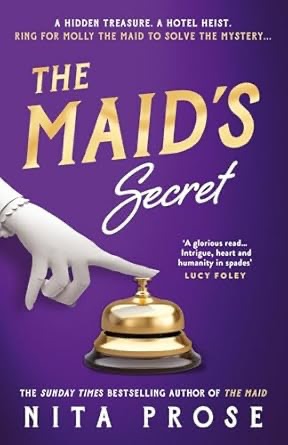
It was a joy to be back in Molly the Maid’s company again. It always takes just a couple of sentences for me to feel like I never left her world. In some ways her life could be seen as unchanged. She’s still Molly, as wholly herself as ever, living in her late grandmother’s flat with her fiancé Juan, chef at the Regency Grand. In other ways things have changed, Molly manages the maids and has become ‘Events Manager’ so she’s definitely gone up in the world at work. Two important events loom in the near future – Molly and Juan’s wedding at City Hall is on the horizon – but today the two darlings of the antique world are filming an episode of their TV show Hidden Treasures in the tearoom of the hotel. Beagle and Brown are known jointly as the Bees. They wear a lot of velvet, bow ties and smoking jackets and are the married presenters of the show that runs like our own Antiques Roadshow. People queue to have their valuables appraised in the hope of either owning a secret masterpiece or appearing on the TV. At the last moment, before they leave the flat that morning, Juan suggests Molly takes her grandmother’s box of treasures, including a highly decorated egg that came to her from the Grimsthorpe estate. When the Bees see this particular treasure their eyes light up. They seem to know immediately that this is very special and they must get it on camera. As the cameras roll they tell Molly that this looks like a lost Russian imperial egg, possibly the prototype for all the ones that followed. It’s one of a kind, decorated with rubies and emeralds by Fabergé himself. It’s worth could be several million dollars. Molly doesn’t seem to take the news in and wants to carry on as normal, but as the clip is shared online it becomes impossible and Mr Preston has to take them home. The couple sit in their flat utterly shell shocked. Will life ever be the same again?
Things go from bad to worse when Molly agrees to auction the egg at the hotel, again run by Brown and Beagle. It might be the only way to return things to normal. She can’t imagine being wealthy and so far has only committed to a slightly larger wedding. As the auction reaches fever pitch, all eyes are on the egg in it’s glass case on the podium. As the hammer goes down at ten million dollars there are celebrations across the room and no one notices, until the Bees draw attention back to the egg, that there’s just an empty case. The author follows this story as the police are called in and an investigations get underway, but between this narrative are chapters from the past. It isn’t long after the auction when Mr Preston reunites Molly with a different relic from the past – her late grandmother’s diary. The ornate key to open it has always been in her grandmother’s cabinet but Molly has never known what it was for and she isn’t ready to open it just yet. We still get the tale though, written directly to Molly in a series of letters. We might learn about her past with Mr Preston, but also why she was estranged from her whole family. We also might find out what might her give up her daughter, Molly’s mother Maggie.
Molly is the heart and soul of the book though and she doesn’t disappoint. She is genuinely flummoxed by people’s reaction after the valuation. As guests and even fellow staff start to photograph her working, Molly just wants to get on. In the main people just want to congratulate her but Cheryl is her usual self, taking and selling pictures of NYC’s newest potential millionaire. Molly doesn’t understand what’s changed because she’s the same person with exactly the same values as before. When the egg is stolen, all she wants to do is help the police to recover it, although she isn’t necessarily happy about the chaos it’s brought to her life. Molly is a great detective though and admired by Police Detective Stark for her ability to notice patterns and follow the logic of a case. She also has an encyclopaedic knowledge of the hotel, which might be invaluable when working out how someone could steal something in plain sight. I did feel sorry for Molly, especially when she’s talked into trying on wedding dresses in a high end store by her protégée Lily. The pair are horrified to find out it is a publicity stunt for the TV cameras. Molly truly believes she has everything she could want – her job, Juan, Mr Preston, their home. She’s almost given up on her mother who does make an appearance here. A child never loses that tiny bit of hope when it comes to a parent and it’s so heartbreaking to see Molly taking this chance. I was desperately hoping Maggie was there for the right reasons.
Molly’s grandmother’s narrative reads like a fairy tale. A young girl with wealthy but distant parents, becomes a pawn in their game when fortunes are running low. They know that their business is going to fail and a rival is trying to buy it up. As the money dries up their daughter might be the only way they can revive their fortunes. Unfortunately Molly’s grandmother is more interested in her education than making an advantageous marriage. She’s fallen in love already although she’s fighting it. John is the nephew of their housekeeper, has a scholarship at the same school and has been given access to family’s library for his studies. They have an instant spark with lots of banter and academic competition, but her head is turned when she has the chance to date the fabulously handsome and wealthy son of the man who’s buying their company. If she pleases him, maybe their fortunes will be saved. He’s certainly charming, but is that all surface? The dairy feels like a cautionary tale for young women and men do not come out of it very well. Molly doesn’t really need to read it as she’s always listened to her grandmother’s advice. However, it might just give her a clue…
This is a charming and heart-warming read that brings Molly full circle in terms of her background and having her life exactly where she wants it. There is a special joy in a character like this who you can absolutely root for. Her modest wants in life are refreshing and old fashioned in a way. As many point out, it’s rare to see one of the little people, rewarded by a quirk of fate. I knew there were so many obstacles to overcome, not just the theft but the question of ownership and provenance if it was returned. I knew that it would be a great read either way because Molly is the sort of character who will find her happiness with or without the golden egg.
Meet the Author
Nita Prose is the author of the Molly the Maid series, including THE MISTLETOE MYSTERY, THE MYSTERY GUEST, and THE MAID, which has sold more than 2 million copies worldwide and was published in over forty countries. A #1 NEW YORK TIMES bestseller and a GOOD MORNING AMERICA Book Club Pick, THE MAID won the Ned Kelly Award for International Crime Fiction, the Fingerprint Award for Debut Novel of the Year, the Anthony Award for Best First Novel, and the Barry Award for Best First Mystery. THE MAID was also an Edgar Award finalist for Best Novel. Nita lives in Toronto, Canada, in a house that is moderately clean.
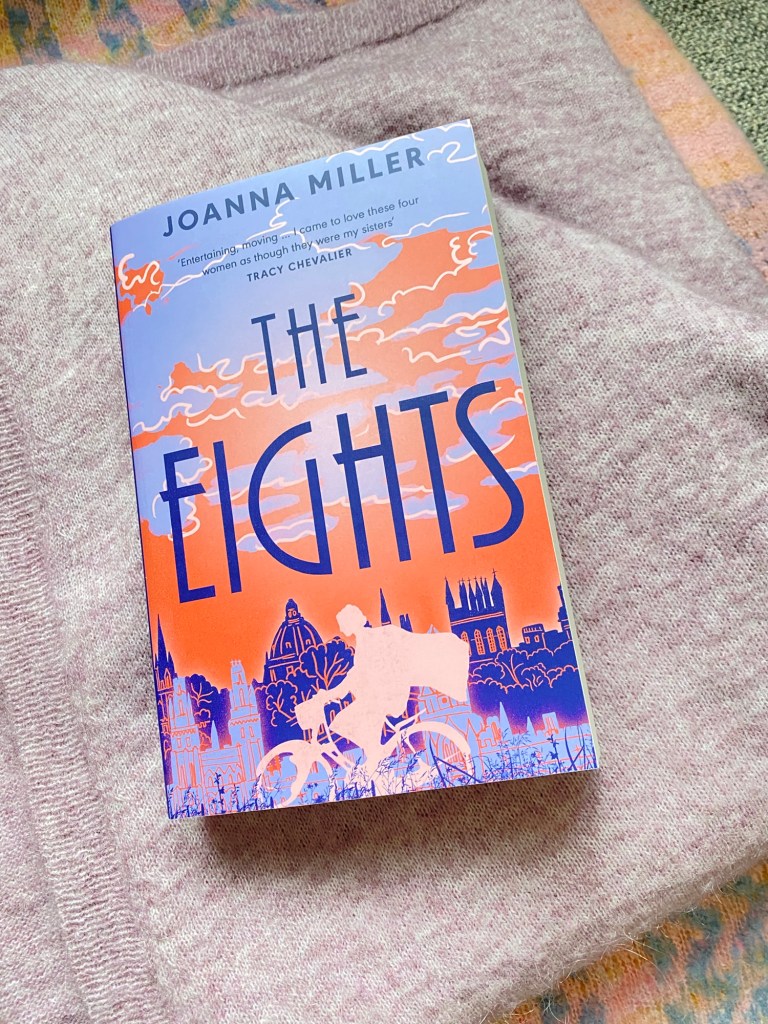
I pre-ordered this book as soon as I read the blurb. I could see myself falling in love with this story of four pioneering women who attend Oxford University as part of the first cohort to gain an actual degree. The four women arrive at Oxford in a time of great upheaval. The First World War has ended and women have just been awarded the vote. Women have experienced more freedom during war time, by working to replace enlisted men, volunteering for the war effort. Beatrice comes from a progressive family, with a suffragette mother who attended Oxford herself. Beatrice is very political, obviously a feminist and is used to being noticed, as she’s usually the tallest woman in a room. Marianne is a scholarship student, but she seems to have secrets. She returns home every other weekend and struggles financially but she is determined to get what education she can. Ottoline (Otto) comes from a wealthy family, but is haunted by volunteering for a nursing role during the war. She found it so distressing, she was redeployed as a driver giving patients transportation rather than working on the front line. She’s had symptoms of PTSD ever since, but also feelings of shame that she couldn’t do her duty. Dora also struggles with the consequences of war. She received a letter from her fiancé Charles’s regiment to inform her he’d been killed, then only two weeks later her brother George also lost his life. She still sees Charles wherever she goes and being so close to his university only serves to keep him at the forefront of her mind. These four girls are assigned to a corridor where the rooms start with the number eight, giving them their affectionate nickname. This seemingly random allocation starts strong friendships as the girls help each other negotiate their university work, their memories of the war and being taken seriously by their male counterparts.
Oxford University is the oldest English- speaking university in the world, having and I was amazed to read it was founded in the 11th Century. The first colleges for men were fully established 200 years later and the Bodleian Library opened in 1602. Women were only starting show interest in an Oxford education in the late 1800s and four women’s colleges were established, however even after years of negotiation to do the same courses as men, women had to be chaperoned to lectures. I was also amazed that despite doing exactly the same exams, women could not be awarded degrees and dons would still refuse to teach them. I couldn’t imagine doing all that work, then having nothing tangible to show for it. It must have been soul-destroying. The author’s story begins after women got the vote and it took until 1920 for women to become fully enrolled at the university as men had been, a ritual called matriculation. The author lays out this facts at the beginning of the novel, which is brilliant for setting the scene generally but also allows us into what is an exclusive world with it’s own language and culture. She separates her book into the named terms – such as Michaelmas or Hilary – and lays out the dress code and rules, different for men and women. She also lets us into what the exams are called and has a glossary at the back in case you get lost. Finally she splits her first chapter between the four girls so we get a really good sense of who they are and where they’re from.
This is a real character led novel from Joanna Miller, creating a similar feel to those novels I loved as a girl such as the Little Women series or What Katy Did At School. With both of those novels I felt like I knew the characters and they would be great fun to be friends with. I loved the secret societies, the scrapes they got into and the character building lessons learned. This has all that, but with great emotional heft and real, gritty issues from that time period. I loved how the characters developed over time and how each of the friends supported but also changed each other with their different backgrounds and perspectives on the world. I felt Marianne’s predicament strongly, in that she’s landed with three friends who are reasonably comfortable financially. I felt it when they all swapped presents for Christmas, but Marianne couldn’t afford to buy for each of them, so instead created a framed favourite poem each. Her offerings are always from the heart and she’s definitely the most thoughtful and most serious of the girls. She also has the hurdle of illness to climb over, as well as whatever takes her home on weekends. The others notice that she’s never managed her reading so what is she doing? She has the constant fear of not passing the year and losing her scholarship, so she’s mentally preparing herself for the eventuality of only spending one year studying. Ottoline is probably her opposite, in fact if it wasn’t for her love of maths she might be tearing about London with her sister and the rest of the Bright Young Things. There’s the rather imperious side to Otto, such as the way she’s always scuttling into tearooms and the nickname ‘Baroness’ that she earned in the war. However, there’s a softer side too and that terrible sense of failure she still feels. Yet she definitely comes through for Marianne when she contracts flu. Otto proves capable of dealing with bodily fluids, cooling Marianne in the bath and even washing her down with a damp cloth. She is even the first to uncover Marianne’s secret and guards it ferociously.
Beatrice is living with the weight of her mother’s success, both as a student of Oxford and a suffragette. She is a woman of ‘considerable reknown’ and this has given Beatrice an interesting childhood. She now has several hobbies – writing letters to politicians and watching debates in the commons, propagating orchids and being able to read Ancient Greek. She seems the perfect fit for Oxford but has never really lived in close proximity to other young women or lived anywhere but the family home in Bloomsbury. Two key events in the book seem to shape her future. She meets a young woman called Ursula who is outspoken, political and wears men’s clothing, which is much more comfortable than women’s. Beatrice is bowled over by her new acquaintance and is determined to wear men’s shirts and ties from then on. There is also the ceremony for her mother who will finally be awarded an Oxford degree. There’s a constant push and pull between who Beatrice is and where she has come from; does she accept and enjoy the legacy of her mother, or does she move away from it? Through her we learn about some of the most harrowing aspects of the suffragette’s fight, particularly the way the women were treated as protestors and prisoners. Dora is a delightful girl from the country, who comes to university seeming rather old-fashioned. Her longer skirts and waist length hair seem incongruous when hemlines are rising and hair is being shingled shorter than ever. Yet she’s weighed down with the early throes of bereavement and has come to Oxford in the hope of feeling closer to the memory of her fiancé who should have come to Queen’s College. She wants more from life than to pour tea, play whist and prop up her mother whose grief is inconsolable. Dora will perhaps change the most and with a terrible shock to come, she may have to make a decision between the new life she has created or her old one.
I loved every moment I spent with these young women. They are all equally interesting and important so I couldn’t pick one I gelled with most. I loved Beatrice’s awakening, her straight forward manner and her bravery. Otto made me laugh and became so much more nuanced than the spoiled rich girl she could have been. Dora’s gentle strength is admirable, especially when it is tested. Marianne is the dark horse of the group, but she’s surprising and has a strong sense of what is right for her. This is a favourite time period for me so I loved the clothing, the outings, the rising tide of women wanting more from life than a ring and motherhood. These women are the birth of who we are now and I think the author was really successful in portraying issues that are still relevant. As we see women’s rights being eroded and the misogyny on social media, the novel is also about how men treat women. It can even be seen in small ways, such as the pranks played on the women by male students. However, it’s also the control wielded by a father figure or professor, the deception and double-standards men use to manipulate women, the sexual predator or abuser who finds a chance moment or a position of power to commit violence. I believe that just the chance to pursue their education with the freedom men take for granted, is a huge step for the women in terms of status but also self-confidence. However, it is the friendship of these four women, first and foremost, that helps them grow. Their unflinching support and understanding of each other is beautifully drawn and brings to mind something I’ve always said to women on my ‘authentic self’ workshops; men may come and go, but it’s the women in your life who will hold you up’.
Out now from Fig Tree
Meet the Author
Joanna has always loved stories – even from an early age, when the Headteacher complained to her parents that she had read all the books in the school library. Joanna went on to study English at Exeter College, Oxford and later returned to the University to train as a teacher.
After ten years in education, she set up an award-winning poetry gift business. During this time, she wrote thousands of poems to order and her rhyming verse was filmed twice by the BBC.
Unable to resist the lure of the classroom, Joanna recently returned to Oxford University to study for a diploma in creative writing. THE EIGHTS is her debut novel and is inspired by her love of local history and historical fiction.
When Joanna is not writing, she is either walking her dog or working in the local bookshop. She lives with her husband and three children near the Grand Union Canal in Hertfordshire, UK.
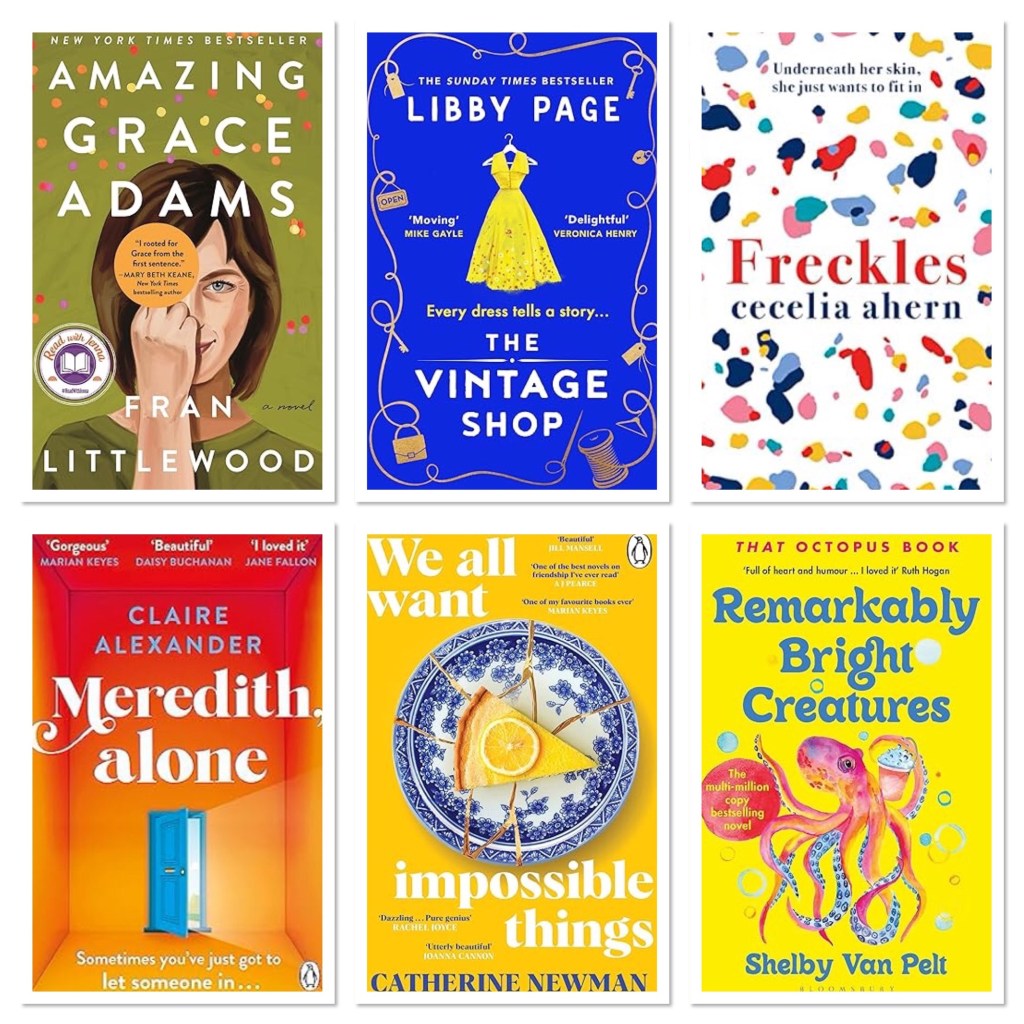
Today I’m talking about the recent reads that I found uplifting or comforting, followed by a reminder of some reads I’m looking forward to this year. These are books I couldn’t put down, not because they were twisty or thrillers but because I loved the characters so much I had to know if they were going to change, to overcome their obstacles or have that breakthrough they needed to make life better.These are books of friendship, life changes, finding ourselves, romance, getting older and communicating with an octopus. I promise you’ll be getting all the feels.
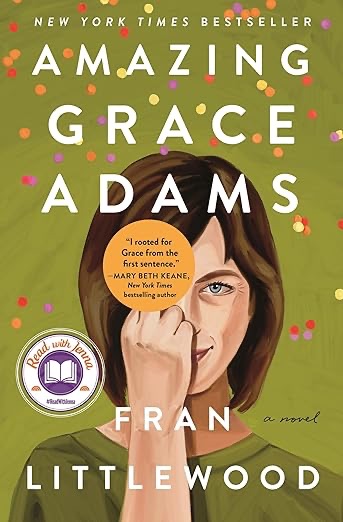
Grace is one of those characters that you fantasise about having cocktails with and you already know you’d have the best time. Grace is stuck in traffic, it’s a boiling hot day and she’s melting. All she wants to do is get to the bakery and pick up the cake for her daughter’s birthday. This is one hell of a birthday cake, not only is it a Love Island cake; it has to say that Grace cares, that she’s sorry, that will show Lotte she loves her and hasn’t given up on their relationship. It’s shaping up to be the day from hell and as Grace sits in a tin can on boiling hot tarmac, something snaps. She decides to get out of the car and walk, leaving her vehicle stranded and pissing off everyone now blocked by a car parked in the middle of a busy road. So, despite the fact her trainers aren’t broken in, she sets off walking towards the bakery and a reunion with Lotte. There are just a few obstacles in the way, but Grace can see the cake and Lotte’s face when she opens the box. As she walks she recounts everything that has happened to bring her to where she is now.
As Grace closes in on Lotte’s party, sweaty, dirty and brandishing her tiny squashed cake, it doesn’t seem enough to overturn everything that’s happened, but of course it isn’t about the cake. This is about everything Grace has done to be here, including the illegal bits. In a day that’s highlighted to Grace how much she has changed, physically and emotionally, her determination to get to Lotte has shown those who love her best that she is still the same kick-ass woman who threw caution to the wind and waded into the sea to save a man she didn’t know from drowning. That tiny glimpse of how amazing Grace Adams is, might just save everything.
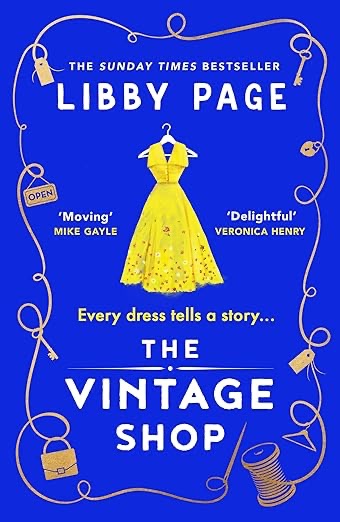
Our heroine is Lou, who moved to a small market town to care for her mother who was terminally ill. Since her death Lou has worked hard, selling the family home and buying a shop with flat above in the town centre. With builder Pete upstairs creating her living space, Lou has opened the shop and is looking at ways to save money and boost business. Pete puts her in touch with Maggie, another lady who has gone through a big change. Maggie’s a grandmother and often looks after her grandchildren in the house that was the family home. Maggie’s husband recently left her for a younger woman and she is rattling round in the big house. So, when Pete suggests that she rents a room to Lou until her flat is ready it turns out to be a lifeline for both of them. Finally, we have Donna, who works at her family’s hotel in the US. When her mother suffers a sudden mini-stroke, her conscience causes her to disclose a family secret – they are not Donna’s birth parents, her mother was a woman from a small market town in England. The thing that links these disparate women is a vintage dress. 1950’s in style and a stunning buttercup yellow this dress has a full circle skirt just made for dancing. Embroidered with meadow flowers, the dress hangs above the counter in Lou’s vintage shop and is the only item that isn’t for sale. It’s flanked by a picture of her mother Dorothy, the owner of the beautiful dress. I love vintage clothes and the descriptions of her shop really did draw me in. This story is about women supporting and inspiring each other and being their best selves. I liked the emphasis on self- care, from the clothing to taking control and finding our passion in life, instead of being the care givers we’re often expected to be. I felt like I’d been given a warm hug and I came away from the story smiling. There were strong female characters, forging friendships and achieving long held dreams. There are deep emotional aspects bringing flavour and depth to her story, but also enough icing and sprinkles to lift the spirits. Here the sprinkles were one of my favourite things, vintage clothing.
Allegra Bird’s arms are scattered with freckles, a gift from her beloved father. But despite her nickname, Freckles has never been able to join all the dots. So when a stranger tells her that everyone is the average of the five people they spend the most time with, it opens up something deep inside. The trouble is, Freckles doesn’t know if she has five people. And if not, what does that say about her? She’s left her unconventional father and her friends behind for a bold new life in Dublin, but she’s still an outsider. Now, in a quest to understand, she must find not one but five people who shape her – and who will determine her future.
Told in Allegra’s unique and vivid voice, this book is so heartwarming and full of humour. It’s about finding your own authentic self and being proud of where you’re from. The author contrasts genuine, warm and accepting people with the false, Instagram brigade who are more interested in how life looks than how it is. I loved the contrast between the city streets of Dublin and the wild Atlantic island Allegra calls home. She has to make a decision about where her home is, which place truly suits the person she is instead of the woman she thought she had to be. All through the novel I found myself smiling and that was exactly what I needed at this moment.
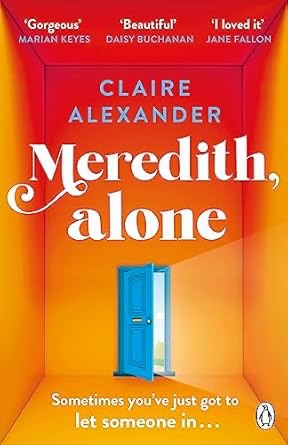
This was one of those books where it only took a couple of pages for me to be ‘in’ the author’s world and completely convinced by her main character. Meredith hasn’t left her house for more than a thousand days, but her inner world is so rich and full. She was absolutely real to me and I could easily imagine having a coffee and a catch up with her. We meet her at a crossroads in life. She’s trying to make changes. Her daily life is quite full, she works from home as a writer and between work she bakes, exercises by running up and down the stairs, reads and fills in jigsaws of amazing places from all over the world. The jigsaws are the key. Meredith doesn’t stay inside from choice, just standing outside her front door gives her a wave of rising panic. Meredith feels a terrible fear, her heart starts hammering out of her chest, her throat begins to close and she feels like she’s going to die. However, as she looks at yet another jigsaw of something she’d love to travel and see in person, she becomes determined to live a fuller life. Meredith has sessions with an online counsellor and a new addition to her weekly calendar is a visit from Tom, who is a volunteer with a befriending society. With this support and that of her long time best friend Sadie, can Meredith overcome her fear and come to terms with the events behind her phobia?
The gradual upsurge of positivity in Meredith’s life is exhilarating to read, but it’s also necessary because I knew that I was also getting closer to finding out what had brought Meredith home one day, close her door and not go out again. Claire Alexander balances this beautifully and where many authors might have gone for the schmaltzy ending, she doesn’t. She keeps it realistic and in doing so made me aware of everything that Meredith has had going for her all along. She’s so self-aware, independent and knows who she is. Above all, even as she starts to overcome her demons she’s determined to do it on her own two feet. She appreciates support, but gives it as well. She doesn’t want to become dependent on an emotional crutch. Meredith is perfectly ok. Alone.
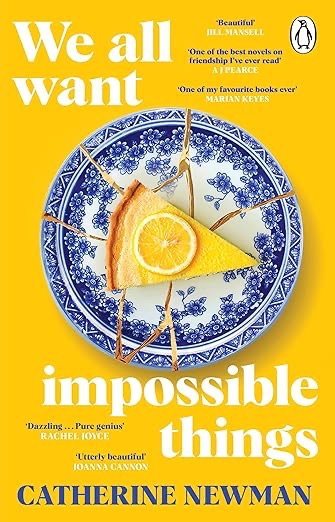
This book was a joy. That’s going to seem odd when I explain what it’s about, but it is joyful and full of life. Even though at it’s centre there’s a death. Ash and Edi have been friends forever, since childhood in fact. They’ve gone through adolescence together: survived school; other girls; discovering boys and even that awkward phase of starting adult life, when one went to college and the other stayed behind. They’ve both married and been each other’s maids of honour and become mothers. Instead of any of these things pulling them apart they’ve remained platonic partners in life. However, now Edi is unwell and decisions need to be made. After years of struggle with being, treatment, remission and recurrence, Edi now has to decide how she’ll be dying. With all the hospices locally being full, Ash makes an offer – if Edi comes to a hospice near Ash, she can devote time to being with her and Edi’s husband can get on with every day life for her son Dash. There’s a hospice near Ash that’s like a home from home, with everything that’s needed medically, but the informality and personal touch of a family. Now Ash and Edi have to negotiate that strange contradiction; learning how to live, while dying.
This is just the sort of book I enjoy, full of deep emotion but also humour, eccentric characters and situations. It takes us through a process of how someone’s life and death changes those around them, with unexpected behaviours and consequences all round. Before you think this sounds schmaltzy and sentimental I can assure you that these characters are not perfect. The author provides us with this loving picture but then undermines it slightly, so it isn’t perfect. We are imperfect beings and no one knows how they will react in a time like this, until we’re there. Catherine Newman shows this with realism, charm, humour and buckets of compassion.
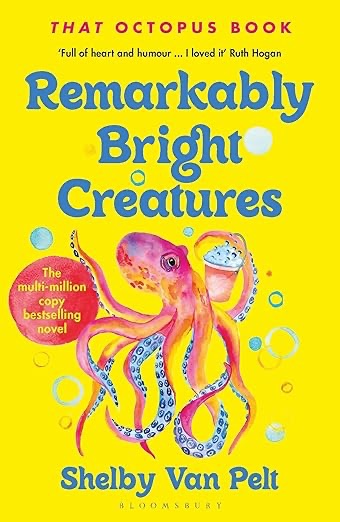
I bought a second hand copy of this book with absolutely no knowledge of what I was getting, but when the first page is narrated by an octopus I’m there. After Tova Sullivan’s husband died, she began working the night cleaner shift at the Sowell Bay Aquarium. Ever since her eighteen-year-old son, Erik, mysteriously vanished on a boat over thirty years ago keeping busy has helped her cope. One night she meets Marcellus, a giant Pacific octopus living at the aquarium who sees everything, but wouldn’t dream of lifting one of his eight arms for his human captors – until he forms a remarkable friendship with Tova. Ever the detective, Marcellus deduces what happened the night Tova’s son disappeared. And now Marcellus must use every trick his old body can muster to unearth the truth for her before it’s too late…
This is a thoroughly charming and unusual story that I happily spent a weekend reading. Our central characters Tova and a man called Cameron are so believable with interesting quirks. There’s a lovely humour to the story and it’s highly original, especially Marcellus who I’ll admit, I did fall in love with. His presence is surreal but adds so much to the story. Backed up by a cast of family and friends who really care for our characters, Cameron and Tova take us through grief, loss and regret towards new opportunities. This is a thoughtful story and Marcellus is worth the read alone.
Upcoming Novels For Your Wishlist
The Women at Ocean’s End by Faith Hogan 5th June 2025 Aria
The Light a Candle Society by Ruth Hogan 26th June 2025 Corvus
The Forest Hideaway by Sharon Gosling 28th August 2025 Simon & Schuster
The View from Lake Como by Adriana Trigiani 17th July 2025 Penguin
Dear Mrs Lake by AJ Pearce 3rd July 2025 Picador
Births Deaths & Marriages Laura Barnett 3rd June 2025 Doubleday
Table for One by Emma Gannon 24th April Harper Collins
One Night at the Chateau by Veronica Henry Out Now Orion
It was all she ever wanted. Until her dreams came true…
The moving new novel about the young Diana.
Diana believes in love. Growing up amid the fallout of her parents’ bitter divorce, she takes refuge in romantic novels. She dreams of being rescued by a handsome prince.
Prince Charles loves his freedom. He’s in no rush to wed, but his family have other ideas. Charles must marry for the future of the Crown.
The right girl needs to be found, and fast. She must be young, aristocratic and free of past liaisons.
The teenage Diana Spencer is just about the only candidate. Her desperation to be loved dovetails with royal desperation for a bride.
But the route to the altar is full of hidden obstacles and people with their own agendas.
When she steps from the golden carriage on her wedding day, has Diana’s romantic dream come true?
Or is it already over?
Princess Diana hit the headlines when I was nine years old, perfect timing for me to buy into the fairytale and fall in love with her. I had my hair cut into Diana’s short style and I had one of her jumpers, well an Asda version, covered in sheep with one little black sheep in the bottom corner. When we look back at her life in retrospect, it could be that she was trying to tell us something. This book focuses on Diana’s earlier years, from her schooldays until that fairytale of a wedding which seemed to cement her into the consciousness of everyone, across the world. It was interesting to read more about her single life before dating Charles, a period that struck me as interesting when it was dramatised in The Crown. She had a busy, fun lifestyle sharing a flat with three friends and working in a nursery. Then as soon as the engagement was announced she was taken into apartments at Buckingham Palace, totally closed off from outside, but also from other members of the royal family. It was quiet, almost like a church, with no one reachable by phone and Charles on a tour abroad. His only thought in terms of company was to introduce her to Camilla Parker Bowles.
The book did well when describing the dysfunctional way the Royals live. It’s an almost surreal existence with very specific rules to live by. When I read how much time each member spends alone I started to understand why they all have dogs. They don’t eat together daily, non-royals don’t come to the palace unless invited and each royal has their own quirks. For a 18-19 year old wandering round empty rooms and not being able to talk to friends must have been totally isolating. It was for her security of course, but it also meant she could be trained to fit the role she would play. She must have been so lonely. I’ve clearly read a lot of the same books as the author, because I knew about King Charles’s very odd boiled egg habits and the Queen Mother’s exploits in her home at Clarence House, but there were some things that were new to me.
It was clear that Diana was a young girl full of life and romantic ideas about men and marriage. Wendy Holden tells the story through the eyes of Diana, her best friend at boarding school Sandy and Stephen Barry who was the Prince of Wales’s valet. The girls read paperback romances, the type of story written by Diana’s relative Barbara Cartland. When the girls imagine love at the age of 13, they imagine it being: ‘like a particularly delicious bath, deep and warm, with lots of bubbles.’ It conjures up a sense of comfort and pampering that I do actually feel sometimes with my other half, but a man who doesn’t know what love means isn’t equipped to love like that. The only people who pampered him were his servants, how can you provide what you’ve never had? I think Holden has captured the essence of a girl in adolescence, dreaming what her life might be. She’s a lively, bubbly girl who loves music and the company of others. She has a shy charm that’s so endearing, but her parents divorce has left a mark and I wondered whether it instilled in her a determination to get it right, which left me feeling a little sad for her.
The second section of the novel definitely has a a melancholy feel, that shows us how well the author has brought the fun, young Diana to life. This is such a contrast. It also makes us realise how young she was to get married anyway, never mind becoming a future Queen of England. It is only six years since that journey with Sandy to boarding school. So, when she becomes engaged to the then Prince of Wales she was probably still expecting the comfort and care of a warm bath. She must have been disappointed at this moment. I always feel that Diana married the people on that day, rather than Charles. When she has some late doubts her sister Sarah warns her that her face is already on the tea towels. It’s too late. The pressure must have been immense. She has spent months hounded by the press and the famous moment where photographers captured her with a see through skirt is just one incidence of naivety on her part. She’s been getting thinner and her wedding dress needed taking in constantly. This isn’t the fairy tale love she’s dreamed about, more the matchmaking of two grandmothers living in the past and desperately trying to break off Charles’s adulterous relationship with Camilla.
I think the author attempted something very difficult here, to create a unique view of a story that’s a modern parable. Everyone knows a version of what happened. So, to create something that captures the voice of the most well known woman in the world, while bringing something new to her story, is near impossible. I think she partly succeeds. I didn’t learn anything new, but I did feel that I was listening to Diana in this story. It doesn’t have that compelling quality, because we already know about the divorce in 1996 and her death only a year later. I felt there was a bit of fire in this girl, despite her naivety. The rude awakening that she was simply a brood mare fuelled a fightback – the Andrew Morton book, the interview with Bashir and that last poignant summer are her pushing back against a system she felt used and abandoned by. A desperate need to be heard. I thought it was interesting to know she spent time with Princess Margaret, another young, royal woman who learned early on that her happiness came very low on the list of priorities. The royals never tried to be her family, missing that warmth and heart Diana was known for. I think this warmth, plus her fight and desire to buck the system is perhaps inherited by her son Harry. This was a well-researched book that really captured the spirit and personality of the most famous woman in the world.
When one of my favourite authors writes a new book I always experience a confusing mix of emotions. Excitement and anticipation mix with fear; will I love it as much as I love their last book? I don’t want to be disappointed. Since there’s a new Liz Gilbert out this year I thought I’d share my review of her last novel, City of Girls. Like a lot of readers my first encounter with Gilbert’s writing was Eat, Pray, Love; a book that was nothing short of a cultural phenomenon, not to mention the following hit film. For me, it was her novel The Signature of All Things that caught the imagination. The combination of a sparky and intelligent heroine, the feminist theme and the historical detail came together in a beautifully woven story. So as the publication date approached for this new novel I desperately wanted it to live up to her first.
I shouldn’t have worried. City of Girls is a joyous, exhilarating riot of a book. Our narrator, Vivian, plunges us into 1940s Manhattan where she is sent by her parents after expulsion from Vassar. There she is placed in the care of her Aunt Peg who runs the, slightly ramshackle, Lily Theatre. I was suddenly immersed in the bohemian world of theatre people where Vivian soon finds her niche. At Vassar she made friends by creating outfits for the other girls on her trusty sewing machine. So, in her new rooms above the theatre she is soon surrounded by showgirls wanting costumes. I have an interest in fashion and sewing, so I really enjoyed the descriptions of Vivian’s creations, made on a shoestring with a lot of help from Lowtsky’s vintage clothing store downtown. Yet not everything is as it seems on the surface. Is her friendship with showgirl Celia as mutual as it appears? What influence does the matronly and doom laden Olive have over Aunt Peg? Where is Uncle Billy, whose rooms Vivian has been using since her arrival?
Some of these questions are answered during the production of the brand new play City of Girls. Aunt Peg’s friend Edna Parker Watson comes to stay after losing her London home during the Blitz. Edna is a talented theatre actress who is petite, beautiful and impeccably dressed. She arrives at the Lily with her huge wardrobe and her very famous and much younger husband, Arthur. Every member of the theatre company does their very best to get this musical off the ground and make it a success. Vivian works hard on her costume designs, but also finds herself becoming an unofficial PA and friend to Edna. Determined to put on the best show they can to turn the Lily Theatre’s fortunes around, Aunt Peg agrees to audition for new actors. When Vivian meets Anthony, the new leading man, she falls in love for the very first time. But alongside the awakening of first love, Vivian will also have her eyes opened to how cruel showbiz and the wider world can be. Several revelations teach her that not everyone can be trusted, the most unexpected people can come to your aid, and Vivian realises she has been walking around with her eyes closed. As the Second World War moves ever closer to their shores Vivian is left with a reckoning of her own. Does she want the respectable, quiet life her family expects or does she want to make her own way in a city and a career that is anything but quiet?
You will fall in love with Vivian as she takes you into her past and candidly shares her exploits in 1940s NYC. She takes you from theatre, to nightclub to a dingy apartment in Hell’s Kitchen where she conducts her first love affair. She holds nothing back and I felt her delight at encountering the bohemian characters of the theatre, her passion and ingenuity for costume work and her discovery of a city laid out before her like a playground. She allows us to experience her growing up with every triumph and mistake she makes along the way. Such an engaging central character is well matched with other beautifully drawn female characters from the dowdy killjoy Olive who has surprising depths, the enigmatic Edna Parker Watson, the brisk and sometimes foolhardy Aunt Peg to the glamorous showgirl Celia who leads our narrator into a world of nightclubs, make-up and disposable men. The women in this novel are strong, surprising and all teach Vivian something about the kind of woman she wants to be. The novel emphasises the importance of strong female role models or mentors in both our personal and working life. I found myself torn between bingeing on this book or savouring it slowly: I wanted to know what happened next but I didn’t want my adventures with Vivian to come to an end.
Meet the Author
Elizabeth Gilbert is an award-winning writer of both fiction and non-fiction. Her short story collection Pilgrims was a finalist for the PEN/Hemingway award, and her novel Stern Men was a New York Times notable book. In 2002, she published The Last American Man, which was a finalist for both the National Book Award and the National Book Critics’ Circle Award. She is best known for her 2006 memoir Eat, Pray, Love, which was published in over thirty languages and sold more than seven million copies worldwide. The film, released in 2010, stars Julia Roberts and Javier Bardem. Committed: A Sceptic Makes Peace with Marriage, a follow-up to Eat, Pray, Love, was published in 2010. Elizabeth Gilbert lives in New Jersey, USA.
This is the story of The Greatest Funambulist Who Ever Lived…
Born into a post-war circus family, our nameless star was unwanted and forgotten, abandoned in the shadows of the big top. Until the bright light of Serendipity Wilson threw her into focus.
Now an adult, haunted by an incident in which a child was lost from the circus, our narrator, a tightrope artiste, weaves together her spellbinding tales of circus legends, earthy magic and folklore, all in the hope of finding the child… But will her story be enough to bring the pair together again?
I’ve recently read Nydia’s incredible new novel Sycorax, in fact today is her publication day. So I thought it might be time to revisit her debut novel, also a real favourite of mine.
Sometimes all you can say when you finish a book is ‘Wow’. When that happens I close the book and have a moment of reverence. I need a few moments, in silence, to take in what I’ve read. I often need overnight before I can start a new book. I suppose you could describe it as being haunted – the thought of a scene or a letter in a book that invaded your thoughts when you least expect it. It stays there, sometimes forever, to become a part of you. In the same way a particular aria or love song might forever float through your head. Some books lie on the surface, they pass the time, they amuse, and I do enjoy them but they don’t stay. Others get into your brain, like a complex puzzle you have to keep fiddling with, this way and that, until you find a solution. Some books enter your soul, they make you feel real physical emotions, they make you wonder in the same way you did as a child when a book took you away on a marvellous adventure. They touch you soul deep. This is one of those books.
Nydia Hetherington is a sorceress. She has conjured up this box of terrors and delights from the depths of her imagination and it is incredible. We follow Mouse as she crawls, peeps, stumbles and walks around the incredible show that is a circus. Billed as a tale about the Greatest Funambulist Who Ever Lived I was expecting glitz and glamour, the front of house show. However, the author cleverly goes deeper than that, far behind the curtain. Incredible descriptive passages draw us in to Mouse’s world from the smell near the big cats enclosure, the feel of a llama’s fur against your skin, the cramped but colourful quarters of the circus folk and the volatile relationship between her mother Marina and father Manu. So focussed on each other, her parents seem barely aware of her existence as she watches the drab and grubby circus folk become stars of the ring with their make-up, sequins and feathers. Her freedom gives us access to every part of this wondrous world, but freedom has its dark side and for Mouse this is really a tale of parental neglect. She is brought up by the circus, by the mother of the company Big Gen and her husband Fausto and eventually by Serendipity Wilson, the flame haired high wire artists who takes Mouse under her wing. Under her tuition Mouse becomes an incredible tightrope walker, able to take her place under the spotlight like her parents.
Serendipity with her flaming hair that glows like amber is from the Isle of Man and brings with her all the mythology of the islands. She weaves incredible stories for Mouse, who now sleeps in her wigwam, in much the same way as mystical fog weaves around her according to her mood. She thinks that Manu and Marina barely notice she’s gone, but Manu enlists her help to get Marina performing again. They coax her into the tank to perform as a mermaid for the crowd. Even so, there is no discernible warmth between Mouse and her mother, Marina’s focus is always inward to her own problems. It is after her mother’s death that Mouse is handed a letter from her mother, in which she admits to never feeling love for her child and explains why. For me this was the most powerful part of the book, and brought me to tears. The author has cleverly placed this moment of stark reality within the magic and it gives the letter huge emotional impact. It hits home the idea that all freedom has a price. Mouse has never had a mother, except the warmth and care she’s had from Serendipity and never questions whether that will change.
Book ending these stories is an elderly Mouse, recounting these stories to a journalist. Living in New York, she recalls her arrival in the city and her expectations of Coney Island. She is older and recounts her past from a distance, but what comes across is terrible regret and sorrow around the disappearance of a child from the circus family. She is haunted by a flame haired Serendipity Wilson who, like all mothers, lives on as a voice in Mouse’s head; her inner critic commenting on all she does, only silent when Mouse truly lives in the moment. It’s in these sections that we see what the book is truly about. I expected a book about the spectacle of the circus, the showmanship and all that glitters. Instead this is a meditation on what it is to be human. The journalist asks the questions that go beneath Mouse’s surface and see the gritty truth; we are all flawed and we all make mistakes. This is a beguiling mix of myth, magic and human frailty. Truly brilliant.
Meet the Author
From Leeds — although born on Merseyside and spending the first few years of life on the Isle of Man — Nydia Hetherington moved to London in her early twenties to embark on an acting career. Later she moved to Paris where she created her own theatre company. When she returned to London a decade later, she completed a creative writing degree graduating with first class honours.
There are three rules about ghosts. Rule #1: They can’t speak. | Rule #2: They can’t move. | Rule #3: They can’t hurt you.
Ezra Friedman grew up in the family funeral home which is complicated for someone who can see ghosts. Worst of all was his grandfather’s ghost and his disapproving looks at every choice Ezra made, from his taste in boys to his HRT-induced second puberty. It’s no wonder that since moving out, he’s stayed as far away from the family business as possible.
However, when his dream job doesn’t work out, his mother invites him to Passover Seder and announces she’s running away with the rabbi’s wife! Now Ezra finds himself back at the funeral home to help out and is soon in the thick of it. He has to deal with his loved ones and his crush on Jonathon, one of their volunteers. Jonathon is their neighbour so Ezra is trying to keep the crush under wraps while also dealing with Jonathon’s relative, a spectre who’s keen on breaking all the rules. Ezra must keep his family together and avoid heartbreak, but is starting to realise there’s more than one way to be haunted.
This book came totally out of left field and I didn’t know what to expect at all, but I fell in love with it. I do connect to books about grief and loss as it’s something I’ve gone through but I also loved it’s emphasis on family, culture and tradition. Yes the book is about grief, but it’s also about love. Ezra is a Jewish trans man so it’s also firmly based in the queer community and I enjoyed that too. The romance is quiet and more of a slow burn than the heat of passion, tempered by Jonathon’s recent loss of his father. It depicts the chaos and disruption of death beautifully, especially in how it affects family members differently and can come between them. Ezra and the funeral staff treat deceased persons with respect; they’re both gentle and caring in their work with them and their grieving families. The author takes us deeply into the customs and rituals surrounding a death in a Jewish family and I find this so interesting because we can all learn from each other’s ceremonies and traditions. I felt that their attention to detail and the respect they had for the people brought to their funeral home was ultimately life affirming. Their deference shows how precious life is and that our relationships with family are the most important thing of all.
I also loved the author’s focus on something that I think is the secret to a happy and contented life – being your authentic self. We can see how Ezra’s connection to his communities – family, religion and the queer community – grounds him and reminds him of who he is. When we’re not true to who we are we start to feel dislocated and uncomfortable. Through Ezra’s story we explore how to find yourself again and hopefully be your authentic self. The book felt so much more than a romance, because it’s really a family story too. With a delicate touch the author also brings a light humour to the story, softening the grief and loss without being disrespectful which is a difficult balance to find. It surprised me that this was a debut novel because she’s managed that balance perfectly. My only criticism is that I was hoping for more ghosts. They were more of a background feature than relevant to the plot and from the blurb and title I expected more. Having said that it’s still a great story and I’d love to read more from this writer.
Published Aug 2024 from Trapeze.
Meet the Author
Shelly Jay Shore (she/they) is a writer, digital strategist, and nonprofit fundraiser. She writes for anxious queer millennials, sufferers of Eldest Daughter Syndrome, recovering summer camp counselors, and anyone struggling with the enormity of being a person trying to make the world kinder, softer, and more tender. Her work on queer Jewish identity has been published by Autostraddle, Hey Alma, and the Bisexual Resource Center.
I was born in Scunthorpe in the the 1970s and our family had a fairly set weekend tradition. On Saturdays mum and dad would take us into town on Saturday mornings where we would visit the market and mum would take us to Scunthorpe Library. This was a huge brick building in a square full of pigeons and had a entrance that was a glass pyramid giving it a strange futuristic look. I was left in the children’s library to make my choices. I was always a voracious reader and started reading more grown-up novels when I was ten, my first being Jane Eyre. I loved it when all my classmates were reading the scheme in class and I was allowed to sit in the library alone and read by choice. I can still smell that library when I think about it. But it was in the Scunthorpe library that I first met the Moomins and I’ve been hooked ever since. These plump white hippo- like creatures were so cute and I loved the range of characters Tove Jansson had created. From the tiny light-up hattifatteners that brushed against your legs and felt like nettle stings to the determined and bitey Little My, I’d never read anything like it and I’m sure part of me thought there might be an unknown corner of Finland where they actually lived. Moomin House was a blue tower by a lake surrounded by snow and ice. I’ve recently found out that Finland doesn’t just have the Moominland theme park, there is a genuine Moomin House where you can spend your holiday. It’s the perfect combination for me and my other half, I can immerse myself in reading and he can fish the lake.
Despite having an actual theme park, the Moomin’s world created by Tove Jansson is not a sanitised pink Disney experience where everything is beautiful and everyone is safe. Yes, there are floating clouds you can ride, fantastical creatures full of character and the safe space of Moomin House, always welcoming and happy to see you. Yet, the family have ups and downs from comets, floods and an evil hobgoblin. In Comet in Moominland Moomintroll and his friend Snufkin set off on a quest to find out about a comet hurtling towards earth. In Moomin Summer Madness the Moomin are flooded out of their home and have to go on a trek to find another. In the final book Moominvalley in November, the other characters are waiting for the Moomins to arrive, but there’s no sign of them. As we wait with the others there is a palpable sense of absence and potentially loss. Our beloved friends are often in peril, suffering anxiety or are openly depressed and despairing of life. I realised when I was older just how carefully the books address worries that children and adults both have. Sometimes, it’s a worry or issue that is affecting the real world at the time Tove Jansson was writing. It’s easy to see the comet in the first book as an allegory of real world concerns about nuclear warfare. When read now we can see issues about climate change and the experience of being a refugee in Moominsummer Madness. The Snork Maiden is in love with Moomintroll and worries about her appearance, particularly her plumpness. Snufkin comes and goes from Moomin House, sometimes needing a quest with his friend and sometimes he needs quiet, only his fishing rod and flute for company. This could be read as the response to sensory overload experienced by introverts and people on the autistic spectrum. There’s the rather melancholy Hemulen, he’s a botanist who likes to wear dresses. Mymble is a single mother to Little My who’s a force to be reckoned with. All of these creatures seem to find solace and community spending time with the Moomins.
I always felt that the Moomin house was like my own. The welcoming, non-judgemental and loving Moomin Mamma and Papa are so like my mum and dad. My brother and I did have a penchant for waifs and strays, sometimes people and sometimes animals. We’d bring them home and look after them for a while. I had a friend who would ring my mum and ask if they could come for tea, then he’d wait for me outside school and go home with me on the bus. To be honest he did worry my dad a bit with his huge flared jeans and red Mohican. I was probably a square teenager, I didn’t really rebel and we were brought up in church. I did wonder sometimes what our friends got out of being with us, but at fifty years old I can see that some of our friends were drawn to the comfort and stability of my family. My mum was always home, was a great cook and accepted everyone. My dad was a bit more concerned, especially about boys, but he was a youth worker and used to relating with teenagers. My brother is Snufkin through and through, preferring solitude to being with people and enjoying nothing more than fishing with his dog. He walks off into nature for a weekend with his tent and a fishing rod on his back. My late husband was rather like the Hemulen, not that he wore dresses, but he had that professorial air and focus. I’m an absolute Snork Maiden, impossibly romantic and a little too plump.
I think Tove Jansson created beautiful, endearing characters that would appeal to children, but she doesn’t hold back when it comes to plot. That’s the enduring appeal of these books and the merchandising that has exploded over the years. If friends or family go to Covent Garden they always bring me something from The Moomin Store. I have jewellery, note books, Christmas baubles (including a Moomin House), posters, mugs and glasses. I have a beautiful shadow box and various travel mugs and water bottles. So I couldn’t resist this beautiful Folio Society anniversary edition of Finn Family Moomintroll. As you can see it has beautiful illustrations and I absolutely treasure it. This year is the 80th Anniversary of the book so I’m looking forward to a year of the comfort and nostalgia I still get from these beautiful books.
Meet the Author
In the nineteen-fifties and sixties, one of the most famous cartoonists in the world was a lesbian artist who lived on a remote island off the coast of Finland. Tove Jansson had the status of a beloved cultural icon—adored by children, celebrated by adults. Before her death, in 2001, at the age of eighty-six, Jansson produced paintings, novels, children’s books, magazine covers, political cartoons, greeting cards, librettos, and much more. But most of Jansson’s fans arrived by way of the Moomins, a friendly species of her invention—rotund white creatures that look a little like upright hippos, and were the subject of nine best-selling books and a daily comic strip that ran for twenty years.
I love reading debuts because you’re never sure what you’re going to find and this tale of two adult siblings who lose their parents suddenly has all the family dynamics and trauma that I love to untangle in a novel. Jamie and Caz are used to their parents being top of the social scale in their area, a small village close to a market town in Yorkshire. Their family home is a hall in the centre of the village, where Jamie still lives alongside his parents having not found his career path yet. Caz has left home, but has a chequered history of teen pregnancy and alcoholism. She married husband Steve after he came to work on the hall’s electrics when her first little girl was only a baby and she had been sober for several months. Now they live in a cottage a short drive away from her childhood home and recently she’s had another baby. The catalyst to their problems is the loss of their parents. One Sunday both siblings are there for lunch when Jamie and his father clash over what he sees as his son’s fecklessness when it comes to making a life for himself. Jamie has secured a job with the local estate agents but desperately needs to sell a house this month. The best thing in his life is his recent relationship with local vet Zoe. What Jamie loves is his piano, but he doesn’t think he has the skill of a concert pianist. This Sunday he decides not to take his father’s criticism and storms out in a huff. That night the hall goes up in flames, so fast that no one could escape and the hall is burned to the ground.
For both siblings the village now looks like a set of teeth with one missing. The huge gap left in the centre is soon boarded so no one can see the wreckage, but it doesn’t allay the shock. Caz is immediately emotional, dazed even and takes refuge with Ruth, their housekeeper who lived next to the hall. Jamie seems frozen. The only thing he wants to save is his piano but it is damaged, maybe beyond repair. Insurance will take care of it and will hopefully rebuild the hall, but do they want that? They have no idea about their parent’s wishes, for the meantime Jamie has to buy some clothes and moves in with Zoe. It’s very early in their relationship but Jamie thinks they’ll get along fine. As he moves through life like an automaton, Caz starts to slide downhill. Gin was her usual tipple, but avoiding that she thinks an occasional glass of wine won’t hurt. One glass soon becomes a bottle and as she starts to hide her stash from Steve we can see that this could be a serious relapse. So can Jamie, but he’s having his own problems. The turmoil in his life is too heavy for the early stages of a relationship. Zoe had no relationship with his parents and although she can listen, she still has her own routine of riding and looking after her horse, whereas at the moment Jamie is sleepwalking through work and every time they are intimate, visions of the hall burning down come into his mind and ruin the moment. He’s not sure if he’s dealing with his grief at all. When Zoe decides they need some space from each other, he moves out to Caz and Steve’s house. Now he’s noticing that his sister isn’t coping either and his nieces are suffering. How can the siblings best help each other to cope?
I loved how the author shows grief hitting people in different ways. In some ways Jamie has never had to grow up. Living under his parent’s roof has enabled to try jobs and leave them with minimum consequences, while away hours in the village pub and not think beyond tomorrow. Caz has also depended on her parents, dropping out of university pregnant and with an alcohol problem. She moved home and had her baby there, until Steve actually walked through the door for a contracting job and they fell in love. For both of them, there’s now no safety net and the place filled with all those memories has gone too. Jamie also fears the loss of his piano, which has been lifted from the wreckage and been sent to a specialist repairer by the insurers. Music was the way that Jamie processed his emotions and without it he seems strangely neutral all the time, occasionally tapping out melodies using his fingers on whatever surface he find. Caz is more erratic, grabbing convenience foods instead of her usual home cooked meals and forgetting the girls activities or even to wash their uniforms. When the drinking starts Steve stays away from it, leaving Jamie with a full time job and two small children to feed and get out of the door in the open. He knows teachers have noticed the girls are a bit unkempt, but he doesn’t want to drop his sister in it. He just keeps smiling and nodding that everything’s okay. There’s only one person that won’t have the wool pulled over their eyes and that’s their parent’s housekeeper Ruth. Caz fears not letting the emotions out. Jamie thinks if he gives in and feels his emotions he might fall apart completely.
Through Jamie the author shows how grief can change our outlook on life completely. He becomes sentimental about an old couple looking for a house. He has a beautiful Georgian house on the books and he’s shown it to a rude and superior client with an enormous dog who didn’t seem interested. Then he has an adorable old couple who want to downsize and be closer to amenities, but he needs a studio to work in and it is in town. When he shows it to them he knows it should be theirs and when they offer he is ecstatic and shakes hands. Then the first woman comes back and offers 10k over the asking price, but Jamie says it’s already sold and turns her offer down, much to the fury of his manager. Jamie feels different, where once he might have taken the high offer now he can’t. Does he see his own parents in the old couple? Or is it that loss has given him a conscience? I really identified with this because after being seriously ill I returned to my work as an advertising rep only to struggle with selling newspaper space. It felt so trivial in the scheme of things I simply didn’t have the killer instinct. This was when I was sacked but went on to train as a counsellor and worked with the Mental Health Team in my area. It felt like I’d helped someone every day I went to work and it felt more in tune with my changing values.
I really felt for Jamie and wanted him to get his piano back and be able to express himself more. I was also so happy at his care for his nieces and his loyalty to his sister. Underneath the immaturity Zoe was concerned about, he’s a kind, perceptive and caring man. I was hoping they would find a way back to each other. Similarly I wanted Steve to reconnect with his wife and family and realise that while keeping a roof over their head was important, so was spending time together as a family. The author’s setting is perfect and having lived in villages all my life, I knew they come with beautiful countryside around them, but also residents who want to know all of your business. As my parents get older I do wonder what it might be like when they’re gone and I’m now the oldest member of the family. They’re my anchor, but so is my brother and I know our relationship will probably be stronger. I think the author makes it clear how seismic a shock it is when someone close to us dies. I loved the play on musical terms because the storyline has a tempo and Jamie is our conductor, desperately trying to keep the orchestra together towards the crescendo and beyond. This is a thoughtful and real story that had a lot of heart in it.
Out now from Flying Dog Press
Meet the Author
Joanna Howat trained as a journalist and worked as a news producer for BBC Radio 5 Live. She now lives in her native North Yorkshire with her family and two spaniels, and is a keen classical pianist. Crescendo is her first published novel.