Posted in Personal Purchase

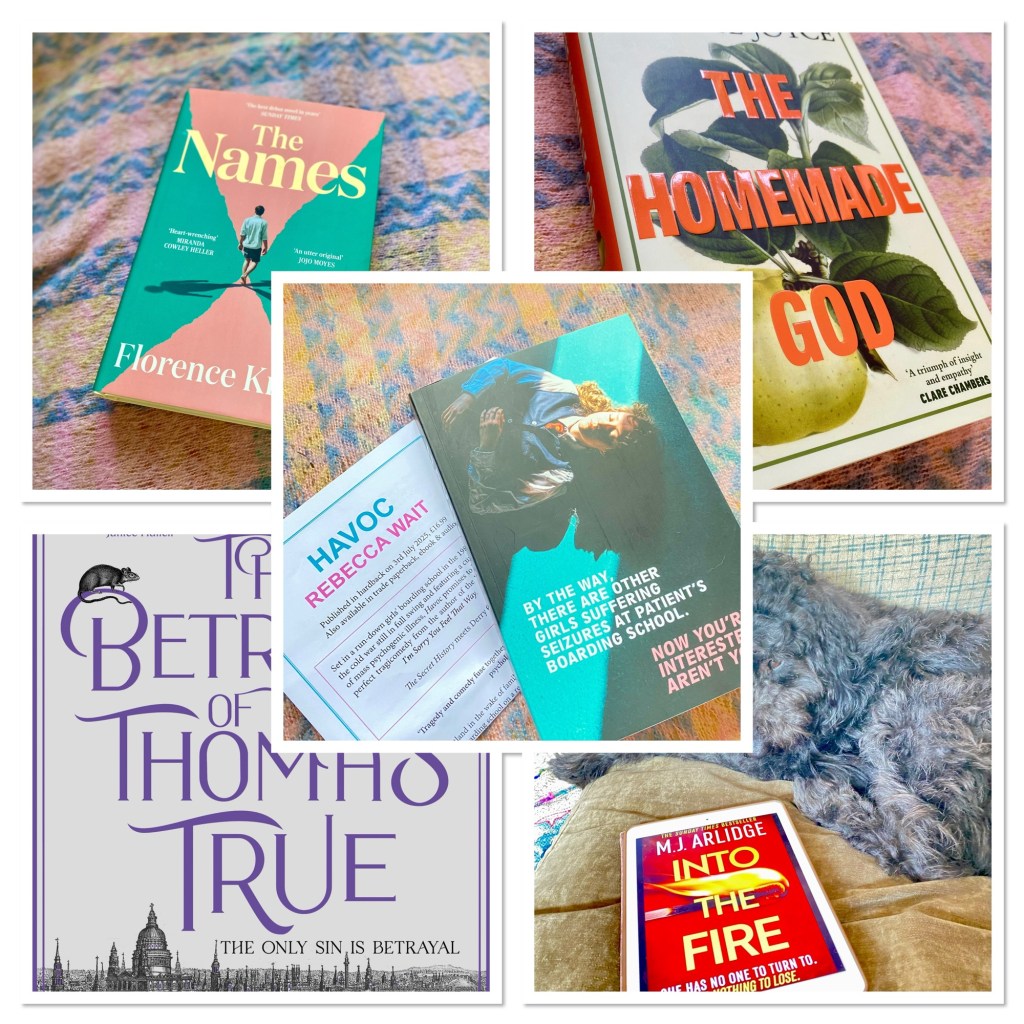
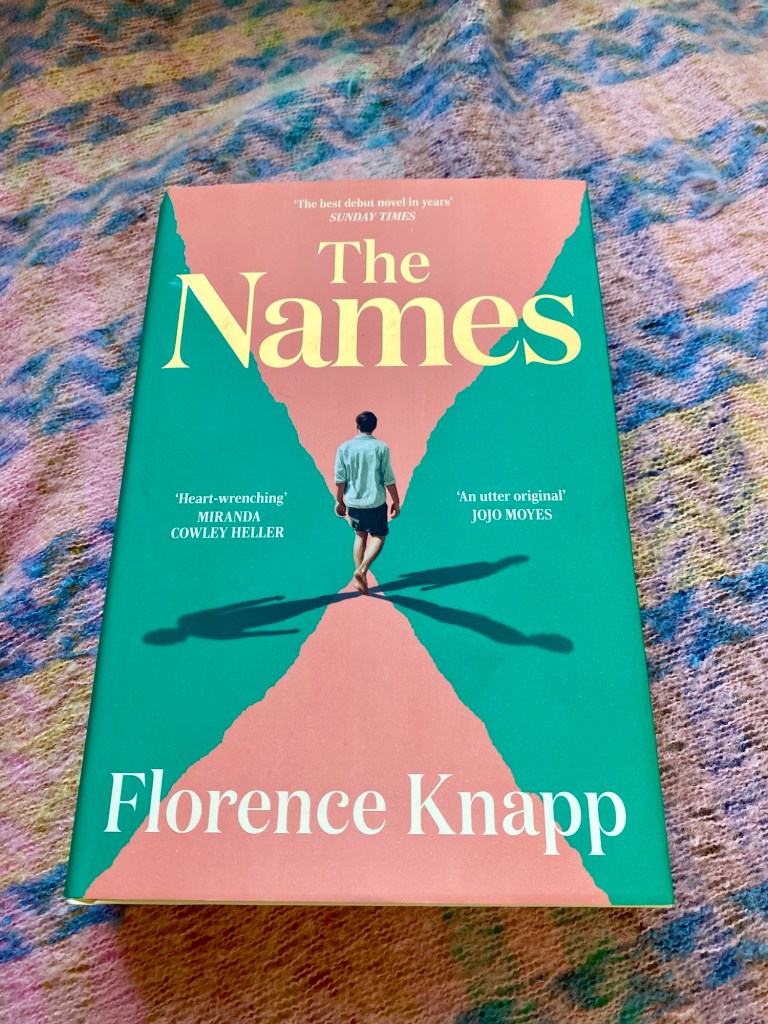
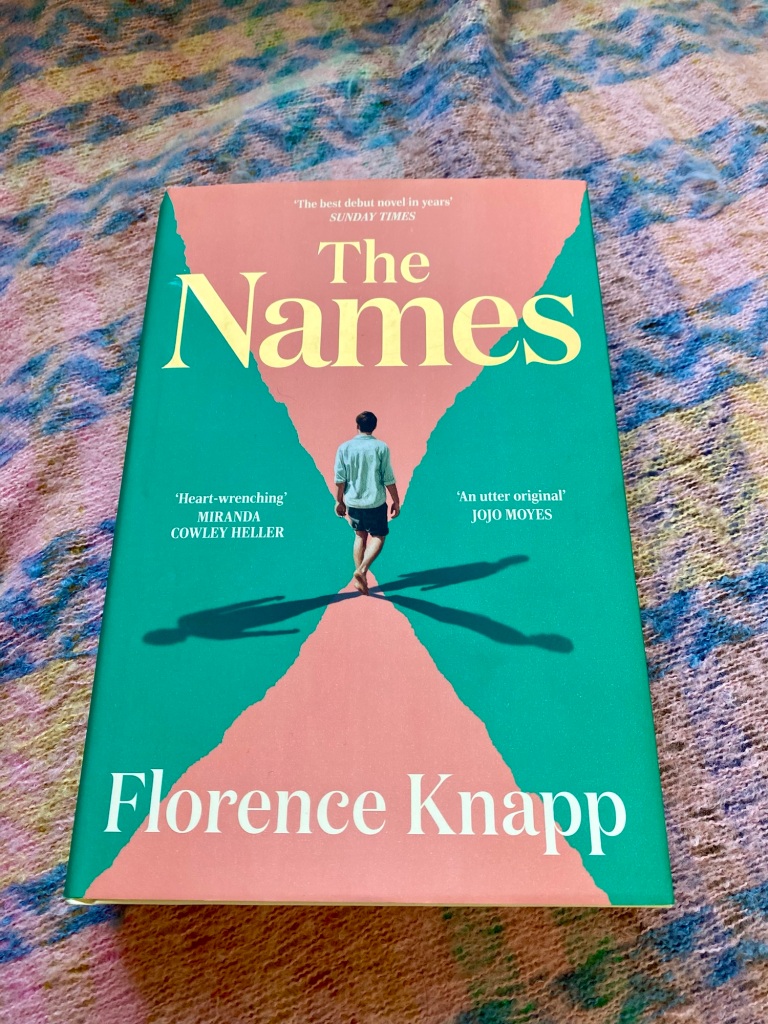
The Names by Florence Knapp

This is one of those books that’s been on the periphery of my wishlist for ages, but I’ve never had time to pick it up. I always set aside a bit of money for visiting a book shop when we go on holiday so when we visited the Lake District this was the first book I saw when I walked into a bookshop in Pooley Bridge. Afterwards, as I looked through the purchases in the pub I read the first few lines, then read the whole chapter and I told my other half it was something special. In 1987 Cora is going to register the birth of her baby boy. His name has been settled on for some time. Cora’s husband has chosen his own name for his son, Gordon. But it wouldn’t be Cora’s choice. Cora’s choice would be something that doesn’t tie him so obviously to his father. She thinks Julian would suit him. Little sister Maia looks in the pram at her brother and decides he looks like a he should be called Bear. All of these options swirl around in Cora’s head. In this moment, Cora has the power to make a choice and it’s done. It can’t be changed. What would happen if she went with Julian or even Bear? In the short term Gordon would be furious. How bad would it be this time? Long term, would it change her baby’s character or path in life? That’s exactly what Florence Knapp does. The book splits into three narratives and we discover what happens to this whole family, depending on Cora’s baby boy’s name. 

We then move on seven years and meet Bear, a name that proves to be a catalyst for change. Or we meet Cora’s choice, Julian – the choice she hoped would break him free from domineering generations of Gordons. Although, what if he is called Gordon? Brought up by a cruel father to continue in the same mould perhaps? Or he might just break free from the shackles of his name. Each life is sparked by this one decision and it isn’t just Cora’s son’s story. This is the life of the whole family with all its ups and downs. It’s about how trauma shapes lives and whether love brings healing and hope to every version of who we are. Even her minor characters absolutely shine. Grandmother Silbhe and her friend Cian are so wonderful, modelling healthy male/female relationships for Julian and Maia. Cian is also Julian’s mentor at work, bringing out a creative side that needs nurturing. Julian needs to work with his hands and meeting fellow creatives helps him find his tribe. Lily is lovely character and we get to know her most during bear’s narrative. I loved how she has to find a balance between giving Bear the freedom he needs without breaking her own boundaries in the relationship. It’s an utterly compelling debut and zooms straight into the list of best books I’ve read so far this year. The author brings incredible psychological insight to a story about how our names shape our identity, our relationships and our life choices. Something we didn’t even choose. Can it influence us to a huge extent, or do we become the same person no matter what the choice? 

One of our family narratives is that mum wanted to call me Little Green after the Joni Mitchell song. Mum is definitely a hippy and Dad is definitely not. My whole life I’ve said ‘thank goodness for Dad’, as I ended up with Hayley Marsha Ann which felt unusual enough. However, when I read the lyrics of the Joni Mitchell song, it was just so beautiful. Written for a child she had when she was very young. She felt she was too young to be a mum and gave her up for adoption. The song is so full of the hopes a mother would have for their daughter: 

“Just a little Green

Like thе color when the spring is born

There’ll be crocuses to bring to school tomorrow

Just a little Green

Like the nights when the Northern lights perform

There’ll be icicles and birthday clothes

And sometimes there’ll be sorrow.”

The book made me wonder whether I’d be a different person now had I been Little Green. Would I have been more confident? Perhaps I’d have been more comfortable in my creativity. Might I have written my book by now? How could I have failed with a name imbued with such hope? I liked that the author included the meaning of all the character’s names at the back of the book. It’s fascinating to look at them after reading knowing they were so carefully chosen. 
Each of three arcs has its share of joy and heartache as Cora’s children cope with the aftermath of that day in 1987. For Gordon the legacy of his father is perhaps the most damaging as Cora feared. Growing up in his father’s presence means he could pass on the misogyny passed down through all the Gordons in his ancestry. It damages his relationship with his mother as he can be used as a tool for his father to oppress Cora further or to spy on her behaviour. It will also affect his own relationships with women, both his sister and potential partners – his teenage crush on Lily becomes something that’s very hard to read, but it’s right to include it. The author depicts inter-generational trauma and how it can damage the next generation in different ways. Abusers can’t always break patterns and sometimes I was compelled to read on in sheer hope. 

Each narrative has its moments of emotion where you have to look up from the book and breathe for a moment. Just to take it in. However, one narrative broke me. I was reading quietly in the same room as my husband and I actually responded out loud. He had to give me a cuddle because I did have tears coming and I’m astonished by the writer’s ability to absorb to that degree. To make words into a flesh and blood person I can shed tears over and another who has the potential to become a monster. Gordon Sr really is terrifying in his reach and I felt Cora’s constant fear and the way she made herself small, not taking up space or making him notice her. The author doesn’t forget Maia either and the effect this monster has had on her life, emphasised in a single moment of panic and horror. Yet would she have become a doctor without witnessing his competence as a doctor or his patient’s respect for his skills. Throughout her love for her brother shines through. This is an absolutely incredible debut with a brilliant grasp of domestic abuse and how it affects every member of a family, their friends and even neighbours. She depicts how the children and grandchildren in this chain have to consciously break the chain. As a daughter and a wife of two men who’ve survived violence in the home I know the struggle to change things and I felt the truth of Knapp’s depiction. It’s easily one of my best reads so far his year (what a year we’re having) and I have no doubt it will still be up there in December. 

Meet the Author

You can find out more about my writing, or what I’ve been reading lately, on the other pages. But for now, a few things about me.

I live just outside London with my husband, our dog, and sometimes one (or two) of our now-adult children. Some of my favourite things are: words, photo booths, old tiles, rain, long phone calls, clothing with pockets, book covers, dimples (I don’t have any of my own, but I covet the cheeks of those who do), houses lit up at night, the word eiderdown, notebooks, kaleidoscopes, homemade soup, Italy, taking photos, book chat, hummus, barre, house plants, a thick duvet with wool blankets piled on top, hand-stitching, making lists.

I’m less keen on condiment bottles, driving on motorways, and socks where the heel slips down.

Posted in Squad Pod Collective

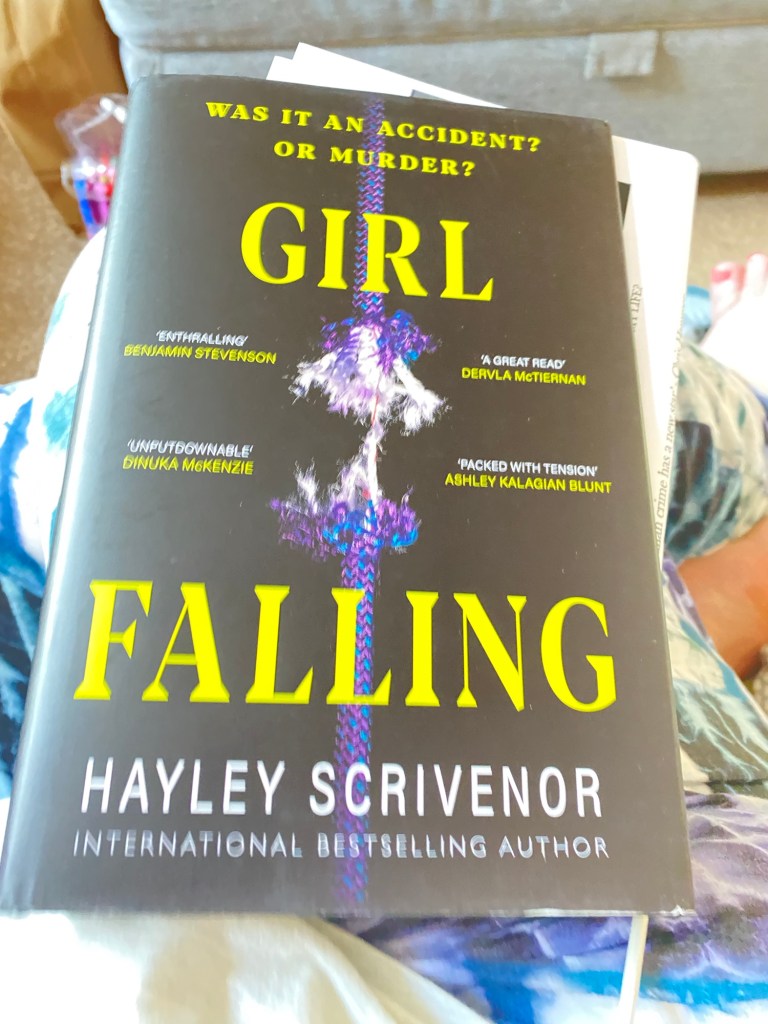
Girl Falling by Hayley Scrivenor 

Finn is taking her girlfriend Magdu climbing for the first time. Magdu is nervous about heights so Finn is taking extra special care to explain everything about the abseil they’re attempting. As Finn lowers herself over the edge to control the descent from beneath, she is sure she has Magdu ready and composed on the blue rope, with friend Daphne on the red rope. She’s waiting to feel the weight of someone lowering them selves over the edge, but is surprised when it seems to be the wrong side. Magdu was meant to come over first but this is the red rope so it must be Daphne. The next thing Finn sees is Magdu hurtling towards her and then towards the ground, with a haunting scream. As both Finn and Daphne are taken in to the police station for questioning, Finn starts to think of an earlier time in her life when someone else she loved fell to their death. The truth of that day is something she’s only ever shared with Daphne. This time it’s a potential murder investigation so she’s going to have to protect herself, but might that mean the end of her friendship with Daphne?

My goodness this was a deliciously toxic friendship to get my therapist’s mind whirring. Finn and Daphne meet at school after a very traumatic occurrence in Finn’s family life. Finn is so vulnerable and hasn’t shared with anyone what truly happened when her little sister Suzy lost her life on a family camping trip. Suzy fell from a cliff edge in the night, but is that all there is to it? Daphne, who has also suffered the loss of a sibling, so knows exactly what to do with someone in that state of mind. She can’t change anything but she can sit with Finn and share her sadness and guilt. Finn is our narrator and we see everything through her eyes and she’s also been struggling with her sexuality, until Magdu comes along.  However, I could also see how the combination of Finn’s kindness and fear of being exposed, left her open to exploitation. I didn’t fully bond with Finn as a narrator, I was unsure whether to trust her or not. She did set off my maternal streak though, because I wanted to see her safe and protected. She’s kind and cares about the environment, her family and climbing. My instinct was that she needed to be as far away from Daphne as possible. She’s manipulative, knowing exactly what and how much to tell Finn to draw her into her confidence and keep her beholden. I wasn’t even sure whether it was the truth. 

I felt, very early on, that Daphne wanted Finn all to herself. When Finn first introduces her to Magdu at a club, its not long before Daphne finds a way to get Magdu alone. She lets slip a secret, making sure Finn doesn’t know exactly how much of the story she’s revealed. As Magdu leaves after the confrontation, Daphne tells Finn it’s her own fault. If she’d wanted Daphne to lie she could have just told her. I was unsure whether Daphne and Finn’s relationship is platonic or romantic, but I was sure about it’s complexity. There’s no room for a third person. Finn tells us about Daphne’s hair and how beautiful she is, there’s clearly an attraction but Daphne also likes to flirt with the male climbers in front of Finn. On the day of the accident there’s a very handsome climber hanging around at the top of the cliff with a huge hunting knife and Daphne makes a bee line for him. She’s used Finn’s grief and guilt and their shared loss of a sibling, to keep her constantly on a tight rein. I felt like Daphne was absolutely capable of harming Magdu. She potentially harms their relationship then reminds Finn that she is the only person who truly knows her, that it’s the two of them against the world. Yet Finn isn’t innocent in this toxic mix, she is complicit by not telling Magdu the same secrets that Daphne knows. Finn is a troubled soul, plagued with insomnia and often going for midnight walks. I thought she needed to choose between her friend and her lover, but I also wondered what Daphne was capable of doing if Finn  chose Magdu. In amongst all the psychological machinations and flashbacks the author keeps bringing us back to the present and the more precise methods of the police investigations. 

The flitting back and forth between the narrators gives rise to the tension that keeps you reading. Both are utterly unreliable and untrustworthy, especially when we think about the enormity of their secrets. The two are bonded and no one else could come between them, it’s as if Finn has been in a relationship with Daphne all along without realising. I craved some input from Daphne’s perspective because I imagined her version of events would look very different, although not necessarily true. They would also be a fascinating insight into her mind. I kept coming back to personality disorders and the way people portray their lives to the rest of the world. Daphne genuinely struck me as a person with potential narcissistic personality disorder. She has a version of the long held friendship she’s had with Finn and she’s keen on putting that version in front of others, especially Magdu. To use an inelegant phrase it’s like a dog marking their territory. The question is, how much of that version is actually true? One of the markers of NPD is the person’s manipulation of both people and events, but it isn’t a conscious action. They believe in their truth wholeheartedly, sometimes repeating a made-up narrative over and over until it actually becomes a the truth in their mind. When they first meet, Daphne and Finn discuss their shared experiences and Daphne explains how she chose to rewrite her story as an ancient myth, invoking Greek gods and particularly epic poetry. She has taken the heightened and exaggerated heroism of these stories to spin her own life narrative and has rewritten her personality to match. I wasn’t sure about the ending I would get, but there was a twist and it was a satisfying conclusion. My only criticisms of the book would be that it was slow in parts and I felt the author could have used the setting more, because apart from a mention of the Blue Mountains I didn’t feel the characters connected with it enough, especially Finn. However, this was a very character driven thriller which really enjoy and it’s deep delve into the motivations and desires of Finn and Daphne were absolutely compelling. 

Meet the Author

Hayley Scrivenor is the author of DIRT TOWN, which published internationally in 2022 (published as DIRT CREEK in the U.S., where it was a USA TODAY bestseller) and quickly became a #1 Australian bestseller. The novel has been shortlisted for multiple national and international awards. In 2023, it won a Lambda Literary Award and General Fiction Book of the Year at the Australian Book Industry Awards. DIRT TOWN has been translated into several languages. GIRL FALLING, described as “a remarkable exercise in complex storytelling written in Scrivenor’s idiosyncratic, metaphorically vivid prose”, is her second novel.

Hayley has a PhD in Creative Writing from the University of Wollongong and lives on Dharawal country, on the east coast of Australia.

Posted in Sunday Spotlight

Sunday Spotlight: Going Down Under

I’ve always been unconsciously drawn to books set in Australia and New Zealand, perhaps because I have family in both countries and want to familiarise myself with their lives. My mum lived there as a ten pound Pom in the 1960’s, leaving Liverpool behind and living in hostels meat Sydney. My grandad loved it out there and would tell us about nature, mostly horrific stories of people having spider’s nest in their ears or brains. My brother-in-law went out to New Zealand to work as a tree surgeon on a huge farm. He met the love of his life out there, Jenny, and although Jan died a few years after my husband I’m still in touch with Jenny and my two nephews. I was also hugely influenced by mum who was an enormous fan of The Thorn Birds – although hated Rachel award as Meggie in the TV mini-series. I’ve always thought that people down under are resilient, rather sweary and very straightforward. They say what they think – something I admire even where I don’t agree. I love the diversity of the cities and fascinated by Aboriginal and Māori. Some of my choices were read on my post-colonial literature course at university, a module that I found so inspiring and forced me to read writers I’d never have picked up as a casual reader. Here are just a few of the books and authors that can take you on a trip round both countries.

Classics

When her wealthy family prepares to host a lavish summer party, the young, hitherto sheltered Laura Sheridan suddenly feels a kinship with the staff and the helpers hired to set up the venue for the festivities. As she learns of the death of one of their working-class neighbours, this burgeoning sense of class consciousness is heightened by a realization of her own mortality. Published in 1922, at the height of literary modernism, ‘The Garden Party’ is now considered one of the key texts of that movement. This volume, which also includes all of Katherine Mansfield’s other published short stories, is an invaluable resource for anyone wishing to discover one of the early twentieth century’s finest writers. I first read this collection at university and I still have it today because it stands up against any short story collection from that period.

Integrating both Maori myth and New Zealand reality, The Bone People became the most successful novel in New Zealand publishing history when it appeared in 1984. Set on the South Island beaches of New Zealand, a harsh environment, the novel chronicles the complicated relationships between three emotional outcasts of mixed European and Maori heritage. Kerewin Holmes is a painter and a loner, convinced that “to care for anything is to invite disaster.” Her isolation is disrupted one day when a six-year-old mute boy, Simon, breaks into her house. The sole survivor of a mysterious shipwreck, Simon has been adopted by a widower Maori factory worker, Joe Gillayley, who is both tender and horribly brutal toward the boy. Through shifting points of view, the novel reveals each character’s thoughts and feelings as they struggle with the desire to connect and the fear of attachment.

Compared to the works of James Joyce in its use of indigenous language and portrayal of consciousness, The Bone People captures the soul of New Zealand. After twenty years, it continues to astonish and enrich readers around the world.

Mythology and contemporary Māori life are woven together seamlessly in this spectacular collection by Aotearoa’s foremost short story writer.

The titular story ‘Bird Child’ plunges you deep into Te Kore, an ancient time before time. In another, the formidable goddess Mahuika, Keeper of Fire, becomes a doting mother and friend. Later, Grace’s own childhood vividly shapes the world of the young character Mereana; and a widower’s hilariously human struggle to parent his seven daughters is told with trademark wit and crackling dialogue.

Moving artfully across decades, landscapes, time and space, with tenderness and charm, Bird Child and Other Stories shows an author as adept and stimulating as ever. This isn’t an easy read but fascinating and the comparison between Māori and other creation myths from around the world was fascinating.

Contemporary Fiction

Cassy smiled, blew them a kiss.

‘See you in September,’ she said.

It was a throwaway line. Just words uttered casually by a young woman in a hurry. And then she’d gone. 


It was supposed to be a short trip – a break in New Zealand before her best friend’s wedding. But when Cassy waved goodbye to her parents, they never dreamed that it would be years before they’d see her again. 
Having broken up with her boyfriend, Cassy accepts an invitation to stay in an idyllic farming collective. Overcome by the peace and beauty of the valley and swept up in the charisma of Justin, the community’s leader, Cassy becomes convinced that she has to stay.

As Cassy becomes more and more entrenched in the group’s rituals and beliefs, her frantic parents fight to bring her home – before Justin’s prophesied Last Day can come to pass. I love Charity Norman’s writing because she gets to the heart of family relationships and shows how families can fracture when placed under stress. I’d recommend any of her books but this one is set in New Zealand. I highly recommend Remember Me and Home Truths.

At a suburban barbecue one afternoon, a man slaps an unruly boy

The boy is not his son. 

It is a single act of violence, but the slap reverberates through the lives of everyone who witnesses it happen.

Christos Tsiolkas presents the impact of this apparently minor domestic incident through the eyes of eight of those who witness it. It’s honestly hard to find someone to like here, but it is a fascinating look at contemporary Aussie relationships. It’s an unflinching interrogation of the life of the modern family, a deeply thought-provoking novel about boundaries and their limits…

The Lambert sisters have secrets…

When 15-year-old Cathy Lambert runs away from her Dublin home, she is scared and pregnant. Settled in New Zealand with her new son Conor she believes the secret she carries will never be revealed…

Rebecca Lambert was eighteen when her parents died and she took responsibility for her younger sisters. Years later, she is haunted by fears she hoped she’d conquered.

Freed from family duties, mother of three Julie Chambers is determined to recapture the dreams of her youth.

Married to a possessive older man, Lauren Moran embarks on a frantic love affair that threatens to destabilise her fragile world.

Anxious to make peace with her three sisters, Cathy invites them to her wedding.

But as the women journey together through New Zealand towards their reunion, they are forced to confront the past as the secret shared histories of the Lambert sisters are revealed. I couldn’t put this book down as it’s a great mix of emotions, adventure, secrets and a lot of humour.

EVERY ENDING IS A NEW BEGINNING…

Ruth is ignoring the news. Like most people, she has relationship problems, job stress, friends and family who need her. Ruth has a life.

But the news is about to catch up with Ruth, and her problems are going to be swept away…along with the rest of the world. While on a plane to New Zealand, something starts to happen to the world. Arriving, Ruth makes her way to her coastal destination but never expected to be sharing the inside of a dead whale with a stranger as a world ending event happens. It takes this to change Ruth’s outlook completely. Only when the comforts and complications of her old existence are gone, does she finally realise how she might be able to live to the fullest. This was a mesmerising debut from Kate and I still recommend it constantly. It made me think about something drastic like this happening in my lifetime, but also question why we fall in love with the people we do and how commitments to others are nurtured and lad

Romantic Fiction

Love isn’t an exact science – but no one told Don Tillman.

A thirty-nine-year-old geneticist, Don’s never had a second date. So he devises the Wife Project, a scientific test to find the perfect partner. Don has a regimented life of work

Enter Rosie – ‘the world’s most incompatible woman’ – throwing Don’s safe, ordered life into chaos.

But what is this unsettling, alien emotion he’s feeling? . . .

This is a deeply funny, but emotional and fascinating in terms of Don’s neuro-divergence. He eats the same meal on the same night every week as part of his rotation of menus. His life felt like a never-ending to-do lust and I knew that he would drive me up the wall. Rosie is a woman of great patience! However, I also knew that my lack of systems and routine would have an equally detrimental effect on his mental health. Watching how these two people try, fail and try again to communicate their needs and feelings within the relationship is a lesson for every couple. It’s also brilliantly funny. There is a trilogy now so treat yourself to all of them.

In the rugged Australian Outback, three generations of Clearys live through joy and sadness, bitter defeat and magnificent triumph, driven by their dreams, sustained by remarkable strength of character… and torn by dark passions, violence and a scandalous family legacy of forbidden love.

The Thorn Birds is a poignant love story, a powerful epic of struggle and sacrifice, a celebration of individuality and spirit. Most of all, it is the story of the Clearys’ only daughter, Meggie, who can never possess Ralph de Bricassart, the man she so desperately adores. Ralph will rise from parish priest to the inner circles of the Vatican… but his passion for Meggie will follow him all the days of his life.

What a saga this is and I have to say the book is ten times better than the series, mainly because we get more of the family dynamic and get to know Meggie as a little girl. Her story of slowly growing up with such a harsh mother really builds and we understand more her bond to the young priest who befriends her, noticing that in a family of many sons she is largely ignored. He is her knight in shining armour and the only one, after her eldest brother is gone, who will hug and comfort this lonely girl. Catholic readers will recognise how powerful the religion is for Irish families and the schooling that nuns provide. The book is an epic and covers Father Ralph’s lifetime, but it has an incredible sense of place and time and really is worth a read for that alone.

n 1929, Beattie Blaxland had dreams. Big dreams. She dreamed of a life of fashion and fabrics. One thing she never dreamed was that she would find herself pregnant to her married lover, just before her nineteenth birthday. 

In 2009, Emma Blaxland-Hunter was living her dream. A prima ballerina with the London Ballet, she had everything… Until the moment she lost it all. 

Separated by decades, both women must find the strength to rebuild their lives. A legacy from one to the other will lead to Wildflower Hill, a place where a woman can learn to stand alone long enough to realise what she really wants.

I’d never read this author before so it came as a complete surprise when I enjoyed it so much. It is historical fiction too, but I loved that this was a ballsy woman who was determined to succeed at Wildflower Hill and her love story with an aboriginal worker would have been so transgressive at the time. It’s an unashamedly romantic story and if you enjoy love with a side order of feminism, family secrets and a dual-timeline this is for you.

Historical Fiction

A faded photograph. An abandoned house. A wartime mystery. . .

1939: On the eve of war, young English heiress Grace Grey travels from London to the wilderness of Tasmania. Coaxed out of her shell by the attentions of her Irish neighbour, Daniel – Grace finally learns to live. But when Australian forces are called to the frontline, and Daniel with them, he leaves behind a devastating secret which will forever bind them together.

1975: Artist Willow Hawkins, and her new husband, Ben, can’t believe their luck when an anonymous benefactor leaves them a house on the remote Tasmanian coast. Confused and delighted, they set out to unmask Towerhurst’s previous owner – unwittingly altering the course of their lives.

2004: Libby Andrews has always been sheltered from the truth behind her father Ben’s death. When she travels to London and discovers a faded photograph, a long-buried memory is unlocked, and she begins to follow an investigation that Ben could never complete. But will she realise that some secrets are best left buried . . .?

This gorgeous story that spans the twentieth century was one of my books of the year last year. The mystery of how all these timelines added up, the beautiful setting of Tasmania and the historical context around WW2 drew me in. The love story is simply gorgeous and potentially heart-breaking. I know this is a story I’ll want to read again.

1896, Bannin Bay, Australia. When British pearl-boat captain Charles Brightwell goes missing out at sea, rumours of mutiny and murder swell within the bay’s dens and back alleys. Only his headstrong daughter, Eliza, refuses to believe her father is dead, and sets out on a dangerous journey to uncover the truth.

But in a town teeming with corruption, prejudice, and blackmail, Eliza soon learns that the answers she seeks might cost more than pearls. How much is she willing to sacrifice to find them?

This incredible debut is richly atmospheric from the get go, throwing us straight into the strangeness of 19th Century Western Australia as if it is an alien landscape. In fact that’s exactly what it is for the Brightwell family, particularly Eliza whose childhood eyes we see it through for the the first time. The adult Eliza has to negotiate her way through the community’s corruption, violence, blackmail and the criminal elements of the pearling business. All the while reading her father’s diary for clues and guiding us to some fascinating characters, some of which are based on historical figures. You’ll love Eliza’s early feminist stance and sense of adventure. The twists and turns her journey takes are gripping and pull you deep into the story. It’s a fantastic debut, full of life and death, just like it’s setting.

Crime Fiction

A killer targeting pregnant women.

A detective expecting her first baby…

The shocking murder of a heavily pregnant woman throws the New Zealand city of Dunedin into a tailspin, and the devastating crime feels uncomfortably close to home for Detective Sam Shephard as she counts down the days to her own maternity leave.

Confined to a desk job in the department, Sam must find the missing link between this brutal crime and a string of cases involving mothers and children in the past. As the pieces start to come together and the realisation dawns that the killer’s actions are escalating, drastic measures must be taken to prevent more tragedy.

For Sam, the case becomes personal, when it becomes increasingly clear that no one is safe, and the clock is ticking…

There’s something about Aussie and NZ crime fiction. It’s gritty and immediate. This is the fifth in Vanda’s Sam Shepherd series and I can honestly say they’re all brilliant but this one …. I was on the edge of my seat! It feels like Sam has just let her guard down and accepted what’s next in her life, when everything could be ripped away from her. Even though she’s the one who most understood the killer’s motivations, will she still be shocked by their identity? Sam’s vulnerability is terrifying and I was praying that she would be okay, as if she’s a living and breathing human being. That’s the power of Vanda Symon’s writing and how much of that magic she’s poured into this brilliant character.

Lou O’Dowd travels across the world from Australia to Edinburgh for a job with the organisation SASOL. Her new life will be living with her cousin and working shifts at a halfway house for high risk offenders including two killers, a celebrity paedophile, and a paranoid coke dealer. After orientation, Lou will be on shift alone dealing with these offenders with little more than her own instinct to guide her. What could possibly go wrong?

Lou is a controversial character, living off a sugar daddy for a while she’s had no need to work, but when the relationship ends disastrously she has no choice but to leave. On her first day in Edinburgh she meets a man at a play who has a similar attitude to risk, enjoying mainly outdoor sex. He comes from a rich family, so maybe he could be more than a fling? I loved how the mundane domesticity of the job was mixed with genuine fear and horror of what could happen if residents flare up. There’s an evening ritual of cocoa for each resident, but it has to be to perfectly timed in order to interrupt one resident’s suicide ritual. These are the extremes a job like this entails, but it’s only the beginning….

A few more suggestions:

Posted in Personal Purchase

Vianne by Joanne Harris

As Vianne scatters her mother’s ashes in New York, she knows the wind has changed and it’s time to move on. She will return to France, solo except for her ‘little stranger’ who is no bigger than a cocoa bean but very present in her thoughts. Drawn to the sea she blows into Marseille and to a tiny bistrot where owner Louis is stuck, struggling with grief for decades after losing his wife Margot. She charms herself into a waitressing job for bed and board, but with his blessing she starts to cook for his regulars using the recipe book Margot left behind. Louis has one stipulation, she mustn’t change the recipe at all. She revives the herb garden and starts to make friends, including Guy who is working towards opening a chocolate shop. This is going to be the place to have her baby, but then she must move on. She can see her child at about six years old, paddling by some riverboats tethered nearby, but she can also see the man her mother feared. The man in black. Vianne has inherited a peculiar kind of magic that urges her to fix the lives of those around her and give them what their heart truly desires. This is fine when it’s discerning their favourite chocolate, but can cause problems when it becomes meddling. Her mother warned her that she shouldn’t settle too long in one place and Vianne knows she has the strength to leave whenever she feels it’s right, but is thinking about those around her? 

What a joy it is to be back in Vianne’s world. It’s like being back with an old friend and in a couple of sentences we’d picked up where we left off. This is a younger Vianne, aware of her burgeoning abilities, but inexperienced in the power she holds and it’s effects on others. Part of that ability is a natural charm and willingness to work hard. She takes time to win people over. She’s happy to take on a challenge whether it’s the recipe book, the garden or the chocolate shop. She merely softens the edges of all this with a ‘pretty’ here and there or tuning into someone’s colours. She has a natural ability to make the best of things, whether it’s adding a vase of flowers to a room or a pinch of chocolate spice here and there. It doesn’t do the work, it just deepens the flavours or enhances what’s there. There’s that little bit too much optimism, not fully reading a situation before wading in, that comes with youth and inexperience. She’s streetwise, used to watching her back. She knows how to protect herself and when to run, but lacks emotional intelligence. She’s unaware that breaking down someone’s defences can leave them vulnerable or even broken. Vianne doesn’t have a malicious bone in her body though, just youthful exuberance and emotional immaturity. 

As always there are wonderfully quirky characters with lots of secrets to uncover and others who become real through memory, artefacts or reviving something they loved and giving it life. Louis has a grumpy exterior, not as grumpy as his friend Emile, but definitely a tough shell and a rigid routine. Every day he cooks for his regulars never deviating from the recipes or her kitchen equipment. Vianne has to use specific pans for certain dishes and ancient utensils that could do with an update, but she doesn’t complain. On Sundays he visits the cemetery, but instead of going to the soulless high rise mausoleum where Margot is laid to rest, he visits her favourite poet and leaves a red rose. Vianne is touched by his adherence to this routine, but it’s only when she is in touch with Margot’s spirit that she can see the full, complicated picture. As she uses the kitchen she feels Margot’s sadness and anxiety. Her need for a baby comes through strongly. Was this the unhappiness at the centre of their marriage? Emile is very difficult to get a handle on, he doesn’t respond to Vianne’s charm or her chocolates. His concern is that she will take advantage of Louis, but the more she seems to settle the more hostile he gets. I enjoyed Guy and the chocolate shop, but it’s another occasion where she doesn’t get the bigger picture. Guy is quite similar to Vianne in temperament, drive and enthusiasm. He seems utterly different in character to his friend Mahmet. Vianne notices Mahmet’s more pessimistic nature and concerns about money. She puts it down to the friend’s different backgrounds and experience, but I could see that Mahmet was a realist and his concerns might be valid. It becomes clear that Guy is a dreamer and as a child of rich parents has never faced the consequences of disaster. He also has a tendency to bail out when things get difficult. 

Motherhood is the major theme of the book from Vianne’s pregnancy to the sadness of Margot and the relationship Vianne had with her own mother. There were memories of Vianne’s mother throughout and she has to battle with her mother’s voice constantly. She has internalised her mother’s voice to such a degree that it’s become one of her own inner voices. She fights against it, letting herself feel that natural urge to belong especially when Louis starts to get ready for the baby’s arrival. Part of her wants to stay, but her mother’s adage about becoming too comfortable is insistent. Is there something they were always running from? She’s angry with her mum in some ways, thinking about what she’s missed out on – a home, a wider family, school and friends her own age. It may be there was a good reason for their anonymity but her mum was all she knew making it all the more devastating when she died and Vianne was left utterly alone. Vianne’s own glimpses of motherhood are in the future, when her baby is a small child. She’s absolutely sure it’s a girl and the name Anouk comes to her. It seems that although her instinct and inner voice suggest they keep moving, she doesn’t want Anouk to have the upbringing she did. She wants Anouk to have a sense of belonging, a school and local friends, which gave me a lovely flash forward to Chocolat and Anouk running wild through the village with a pack of friends behind her. She remembers an instance when her mother insists they leave behind Vianne’s toy rabbit to teach her not to get attached to things. Is it Vianne’s memory of this incident and longing for that toy rabbit that conjures up her daughter’s later imaginary friend, the rabbi Pantoufle? I loved these little links to the future. 

The details and images they conjure up are always the best part of this series for me, because they take me on a visual journey. I was fascinated to read in her Amazon bio that she has synaesthesia, because I do with certain colours and I can feel that in her writing. The author weaves her magic in the detailed recipes of Margot’s book, the incredible chocolates that she and Guy create and the decorative details of their display window with it’s origami animals and chocolate babies. The most beautiful part is how Vianne brings people together. Yes, it’s partly magic but it’s also her kindness and lack of judgement. The noodle shop next door to the chocolate shop leaves rubbish and oil drums in the back alley which are an eyesore. When they’re reported the owner blames Mahmet, possibly due to his seemingly unfriendly demeanour. Vianne spends weeks taking them chocolates and chatting, slowly gaining their trust until they’re helping out for opening day. She even manages to get Louis and the fierce Emile to visit the shop, even though it’s in a part of the city Emile swears neither of them will visit. It’s when we see what Vianne can accomplish on days like this that we see her at her best – thinking forward to her Easter display window in her own shop or the meals cooked for friends under starlit skies. Vianne is a glowing lantern or a warm fire, she draws people to her light and to bask in her warmth. This is also why readers who love the Chocolat series return again and again. We simply want to be with Vianne and that’s definitely a form of literary magic. 

Out Now From ORION

Meet the Author

Joanne Harris (OBE, FRSL) is the internationally renowned and award-winning author of over twenty novels, plus novellas, cookbooks, scripts, short stories, libretti, lyrics, articles, and a self-help book for writers, TEN THINGS ABOUT WRITING. In 2000, her 1999 novel CHOCOLAT was adapted to the screen, starring Juliette Binoche and Johnny Depp. She holds honorary doctorates from the Universities of Sheffield and Huddersfield, is an honorary Fellow of St Catharine’s College, Cambridge, and a Fellow of the Royal Society of Literature.

Her hobbies are listed in Who’s Who as ‘mooching, lounging, strutting, strumming, priest-baiting and quiet subversion of the system’. She is active on social media, where she writes stories and gives writing tips as @joannechocolat; she posts writing seminars on YouTube; she performs in a live music and storytelling show with the #Storytime Band; and she works from a shed in her garden at her home in Yorkshire.

She also has a form of synaesthesia which enables her to smell colours. Red, she says, smells of chocolate.

Photo ©Frogspawn

Posted in Random Things Tours

Happy Is The One by Katie Allen

Robin is exactly half way through his life. Like Mark Twain before him, Robin came into the world with Halley’s Comet in 1986 and fully expects to go out again when it returns in 2061. Recently he’s had a huge life change. He’s moved back to his home town of Eastgate to care for his sick father, who due to a disability has had one accident too many. Robin had a well-regimented life in London with girlfriend Gemma. He also had a boring well-paid job as an accountant. Now everything has been thrown up in the air and he’s living in a tiny bedroom surrounded by boxes he hasn’t unpacked. He’s trying to forge a relationship with a father who can’t communicate and who he never connected with as a child. There are childhood ghosts to face and a new connection with Astrid, fellow outsider and professor at a nearby university. She’s brutally straightforward and Robin has never met anyone like her. She’s also hiding something, but he’s hiding even more from her. Can Robin make friends, help his father and accept this is the next chapter of his life?

This was a great book that’s simply joyful to read, even while addressing some really difficult themes. Robin is a great character to spend time with. I found myself feeling quite protective of him, despite his rather pernickety ways. I could honestly feel his anxiety and he copes by planning for eventualities that might never happen. He ekes out money, setting a daily amount for a minimal food plan and then bulk shopping at Costco. He’s worked out how long his savings will last, trying to keep Dad’s care to a minimum so he can afford it for longer. He seems at odds with everyone; not communicating with his father, bickering with Jackie who is his father’s man carer, and not even trying to find old friends. I’ve been a carer and I felt how overwhelmed he is by everything when he climbs up on the roof for some peace. He has to connect in order to get this new chapter of life started. However, to do that he has to accept that this is his life for now. The daytime telly shows, the sorting of meds and lifting his dad off the loo is life. He doesn’t seem to realise that while he fights it, he remains standing still. If he accepts Astrid’s friendship, unpacks the boxes and breathes, life will get better. 

My two favourite characters are the forthright Astrid and Jackie. Astrid is a strong character and has a lot to say, but enough quirks to humour Robin and push him just a little into enjoying life. She embraces and accepts where he is in life, happily trawling Costco for savings. His relationship with her little boy is lovely too. No one can go through life as an island though and Eastgate is a small place. It’s almost inevitable that these new relationships are uncomfortably entangled with others he’s been trying to avoid. Jackie is wise and more of an asset than Robin realises as he spends weeks trying everything to avoid her – even climbing onto the roof. She’s brilliantly written because I’ve met carers like this and they’re worth their weight in gold. Nothing phases her and she is soon onto Robin’s ways. She reminded me of an incredible carer called Barbara who worked in a pair looking after my late husband. She was wider than she was tall and smoked like a chimney between calls. She was also matter of fact, never allowing him to be embarrassed about any aspect of his care. Barbara had seen it all and her stories had him in fits of laughter. I knew he was in safe hands with her, an incredible weight off my mind when I had to go in to University. Barbara passed out one day at work and died only a few days later, from a brain tumour she didn’t know she had. She was caring for people at the end of their lives, not knowing she was close to her own.

The wonderful relationship between Robin and old friend Danny felt so genuine and the way they talked to each other felt exactly like people who’ve known each other from childhood. There’s a shorthand and we start to realise some of Robin’s quirks have been there a while. You get the sense that if they were going on a bike ride Robin would spend so long getting prepped with wet weather gear and a puncture repair kit that they’d run out of time. Danny on the other hand would set off as is and get soaking wet, then tell everyone the story for years. Danny is full of life and has a great business idea to run past Robin, but can he be tempted to take the risk? Robin is eking out an existence that goes way off into the distant future, but our futures change all the time and one day he’ll start living yet another chapter. Living is right now! It’s not when we have money, or have lost weight, or when we have better health. It’s now, when we’re skint, fat and feeling ill. Whatever life looks like right now, we absolutely must live. Many people don’t get the time to waste. Of course, when we find out why Robin is so adamant about his comet theory – while being forced to evaluate his choices by a strident Astrid – it all becomes clear. A heart-breaking tale emerges, just as Robin is faced with yet another loss. He’s forced to admit why he jumped off a cliff into the water when he was a child. He thinks he can’t die, because once he survived something and can’t make sense of it. In fact immortality is the only explanation that does make sense to him. He’s doing what humans do, we subscribe meaning to events that have none. It’s just messy, terrifying, random and heart-breaking life. Katie infuses this difficult truth with beauty, humour and hope because life is beautiful and joyous too, if you let it be. 

Out 22nd May from Orenda Books

Meet the Author

Katie Allen was a journalist and columnist at Guardian and Observer, starting her career as a Reuters correspondent in Berlin and London. Her warmly funny, immensely moving literary debut novel, Everything Happens for a Reason, was based on her own devastating experience of stillbirth and was a number-one digital bestseller, with wide critical acclaim. Katie grew up in Warwickshire and now lives in South London with her family.

Posted in Netgalley, Throwback Thursday

Missing Pieces by Laura Pearson

I’ve read a little bit of Laura Pearson before, so I did come to this expecting a moving and powerful story. It didn’t disappoint. When Bea is born it should have been a healing, new chapter for the family – mum, dad and older sister Esme. However, Bea was born to a family struggling in the aftermath of a tragedy. Esme was only seven years old when her sister Phoebe died suddenly and unexpectedly. It hits Esme hard because she was supposed to be looking after her sister. Their dad Tom feels an immense weight of guilt because he shouldn’t have stayed out later than expected. Esme’s mother is also wrestling with guilt and blame, she’d briefly popped next door to help a neighbour knowing that Tom would be home imminently. This is a story of a family, years later, struggling with unimaginable loss. How can they learn to forgive each other, or themselves?

Laura splits the story into two sections: the first months after Phoebe’s death interspersed with a narrative where Bea is trying to understand what happened to her family a couple of decades later. These feelings are coming to the surface because she herself is pregnant. I really enjoyed the section in the present day as Bea searches for the truth when her parents won’t ever talk about it. It reminded me of something my mum has recently done. Her first sister, Teresa, died on Bonfire Night 1959 and although she doesn’t remember everything she does have a memory of a tiny coffin that my grandad was carrying and putting in a black car. Mum tracked down a community group who were looking for the resting place of their stillborn babies in the same area where she grew up. Back then, if there was no money for a funeral or a grave plot then a baby might have been buried in a coffin with someone else or in a grave for several bodies. Three years ago she was able to take my grandma to a ceremony at the graveyard in Liverpool where a memorial was finally in place for babies lost and buried in a pauper’s grave on the site. It’s easy to underestimate how much the death of a baby affects other children in the house and i think we all underestimated how it still affected my grandma who is now 91. 

Bea feels like she’s lost part of her identity. This loss is part of their joint family history and no one is addressing or memorialising it. Of course this is tough for other family members, all of whom blame themselves. The loss for Bea and her older sister Esme is threefold: they lost a sister, they lost the relationships and life experiences they would have had as three sisters and they lost the happy family life they might have had if their parents hadn’t been carrying the weight of all that grief and guilt. As for the other characters in the book, I did find Linda a bit of a struggle. It’s clear she’s never fully connected with Bea and when we go back in time we can see her conflicting emotions over being heavily pregnant. She is buried by her grief for Phoebe and feels bad for being pregnant again. She doesn’t want to replace Phoebe and sometimes wishes she wasn’t pregnant. A combination of fear, guilt, sadness and anger take over and she really wasn’t there for Esme or Bea, once she’s born. In the past sections there’s an oppressive atmosphere that hasn’t fully lifted, even in the girl’s adulthood. Esme can’t talk with her father so Bea doesn’t stand a chance when wanting to ask questions. It would mean delving back into the pain and communicating honestly, but no one wants to go back into the raw grief and horror of that day. Bea wonders how she can be a good mother when she has no relationship with her own. Will the family be able to rally around her, find a way to talk and become a united family again?

It’s a trademark of Laura’s books that characters are forced to talk about difficult and frightening experiences or situations they find themselves in. I love the openness and honesty these issues need and it is like a counselling process if people can start sharing and healing. I did shed some tears at times. I thought the author’s depiction of the parent’s grief was realistic and raw. We’re let into every aspect of a characters mind, no matter what their thoughts might be. I could genuinely feel these character’s emotions and pain. Yes, this is intense. Somehow through, this isn’t off-putting. We’re given just enough glimpses of hope to lift the story, personified by the new start Bea’s baby brings to the family. I found myself gripped, willing these people to give themselves a break and stop being angry with themselves and each other. This is an emotional but satisfying novel that shows healing is possible, if we’re willing to do the work. Beautifully written, emotional and ultimately hopeful. 

Out now from Boldwood Books

Meet the Author

Laura Pearson is the author of five novels. The Last List of Mabel Beaumont was a Kindle number one bestseller in the UK and a top ten bestseller in the US. Laura lives in Leicestershire, England, with her husband, their two children, and a cat who likes to lie on her keyboard while she tries to write.

Posted in Personal Purchase

Fifty Minutes by Carla Jenkins 

Therapy was meant to solve her problems, not make them worse…

Smart twenty-year-old Dani is desperate to overcome her eating disorder, leave her dead-end job and return to her hard-won place at university. Using her limited earnings, she decides to start seeing a psychotherapist.

Richard Goode is educated, sophisticated and worldly-everything Dani aspires to be. As he intuitively unpicks her self-loathing, Dani assumes the fantasies she’s developing about him live only in her head. That is, until things take a shocking turn…

Descending into a maelstrom of twisted desire, manipulation and mistrust, the power struggle between Dani and Richard escalates until she’s forced to make a decision that might finally give her the freedom she deserves.

Dani has hit rock bottom. Her eating disorder is out of control and her declining mental health has meant suspending her place at university where she was studying English Literature. She’s now living in a flat with her sister Jo and her boyfriend Stevie, having to share with his daughter Ellie when she’s there for weekends. She’s working as a pot-washer to pay the bills, but longs to go back to university. Despite having very little money, she decides to see a therapist and has a session with Richard. She feels at home in Richard’s room, in the quiet with the smell of books and furniture polish. She feels like he listens and he seems perceptive, noticing her low self-esteem and anxiety. So she takes the decision to continue therapy with him, although he’s expensive. She starts to feel more positive, greatly reducing her bingeing and purging cycle. 

This was a setting I was very familiar with and although Richard has all the right certificates, counselling spiel and does detect Dani’s self-loathing, I kept feeling something wasn’t right. I couldn’t pinpoint anything in detail but I was concerned for Dani. She is so vulnerable. Her attraction to him wasn’t surprising. To have a man listen and understand her might be a first. He also embodies all the things she wants for her own life; qualifications, respect from others, a better standard of living. She has attachment issues so I was sure Richard would have expected some element of transference to creep into the relationship. I was also unsure about Dani’s home life. Her sister’s boyfriend, Stevie, seems like he’s easy going, tv loving, stay at home partner. He’s a good dad to Ellie, but with Dani I wondered if he wasn’t overstepping the mark. He likes things kept neat and tidy, the rent paid on time and Ellie to be safe and happy. There are a couple of occasions when he goes in quite hard on Dani for not being fit for work in the morning or for leaving her room in a state. I wasn’t sure whether this was concern or control? The author cleverly makes the reader unsure and with Dani in such a vulnerable place I was on high alert, like a mum of fledgling baby birds.

The author also keeps us unsure about Dani, not in the sense of believing her narrative, but as to whether she can genuinely break out of the cycle she’s in. As the book begins she’s still bingeing and purging as a means of managing her emotions, in fact this process is like a metaphor for how she manages her whole life. She wants her needs met, to feel emotionally filled or satiated. Then she needs to rid herself of it, to push it away before it gets taken away perhaps? She longs to be loved, but self-sabotages; something that Richard is very aware of and points out. Neither of the sisters have had that feeling of being loved or that they can feel safe within it, sure it won’t be taken away. They have been, at the very least, neglected by both parents. The girls are close, but are not as bonded as sisters can be within a loving family. There are times when Jo acts without realising what effect that behaviour might have on Dani. Thank goodness for Pat from work, who is steadfast in her care of Dani. Even in a complete crisis it is Pat who’s there for her, not her sister who’s busy making her own mistakes. Even when she’s been rebuffed or Dani has lashed out, Pat gives consistent care in a very motherly way and we see that best when Dani is ill. Dani doesn’t know she is beautiful. She knows men are attracted to her red hair and blue eyes, but never knows deep down that she’s worth anything. Besides, it’s always desire rather than love and care. However, she is adamant that she wants more from life. She wants to get better and study again. She knows this will help her get a better future, but she also thinks she’ll gain respect from others. She says that education is the only thing that can’t be taken away from her. I really understood that. 

The attraction to Richard is so complicated, but is bound up in her wanting a better life. There is an initial jolt of chemistry too. It’s something that should be talked about in the room, using the transference to work on Dani’s real needs for affection and worth. There is also counter-transference and both should be easy to recognise by a therapist who has Richard’s level of experience. She loves the way he reinforces her positive behaviours and finds ways forward, but she doesn’t realise she’s doing the work. He’s guiding her, but the achievements are hers. The author places clever little ‘lightbulb’ moments, such as Dani realising the picture she has of Richard in her mind, where he’s sitting in an armchair reading by lamplight, is actually an amalgam of an image she has of her father. It’s also very telling that when she’s sees him in casual rather than professional clothing, she feels let down and that attraction fades. It’s interesting that as boundaries start to break down, the last person she wants to confide in are Pat and Stevie, suggesting that she sees them as parental figures in her life. She knows if she tells them that they’d be angry and she wants to avoid that. She doesn’t like them being angry with her, but also they’d be angry on her behalf and might demand action. I thought it was interesting that she recognises Stevie in a parental role, when talking to her sister. Jo complains that he’s a homebody and they don’t really have fun together any more, but Dani points out that Stevie has always been a homebody. She tells her that this is the type of man she needs, even conceding that when he gets cross she doesn’t mind because at least he cares. 

Of course as counselling boundaries start to be overturned Dani starts to spiral. It’s a really tough part to read, because I was feeling parental towards her. She puts herself in some incredibly dangerous situations, trying to find experiences that fulfil her needs. I was hoping that she’d realise she’d pressed the self-destruct button before it was too late. She has the resources to succeed, but can she utilise them when she feels so unstable? Honestly, my heart ached for this girl and that tells you a lot about my issues with clients! I wished she’d gone to a female counsellor. She needed that female nurturing, a mother’s care and love. When it comes to a need and parents like Dani’s the only answer is to choose our family. There are further behaviours and revelations I won’t go into for fear of ruining the suspense and eventual outcome, but I was genuinely scared that Dani couldn’t pull back from the mess she was in. When someone has listened to your innermost thoughts they are a formidable agent for change and an even more powerful opponent. I had everything crossed that I’d underestimated Dani and that she could find those reserves to get through to the other side. This was a fantastic debut novel, full of suspense and stirring the emotions of the reader with real finesse. 

Out now from Trapeze Books

Posted in Personal Purchase

Eighteen Seconds by Louise Beech

My mother once said to me, ‘I wish you could feel the way I do for eighteen seconds. Just eighteen seconds, so you’d know how awful it is.’

I was reading this raw and painful memoir to discuss at my local book club Pudding and Pages. Sadly, my health wasn’t great that day and I wasn’t able to go. So I decided to tell all of you about it instead, because I love Louise’s writing and I identified very strongly with some of her experiences. This is such a psychologically astute story, from someone who has done a lot of work on their childhood trauma, even while being traumatised anew with the shock that comes on an ordinary morning. Normally, Louise would take her children to school and then have a walk along the path at the side of the River Humber and underneath the bridge itself. Her husband asks if she will take her walk earlier than normal as he has a package being delivered later and needs her to be home. She agrees, completing her walk earlier than usual, and returning home to a call from one of her sisters. Their mother has thrown herself off the Humber Bridge, it’s only by changing her schedule that Louise didn’t witness it. This call hits the reader like a punch to the gut and I’m sure that’s how she must have felt. If you’ve ever had a similar call you’ll know it hard to communicate the force of that moment. Your mind is still at home holding the phone while your body is grabbing the car keys and scrambling to reach A+E as soon as possible. 

Honestly, the siblings are shocked to find their mother alive when they reach the hospital. She landed, not in the water but on the path, causing multiple broken bones, internal bleeding and head injuries. As they navigate those first few hours Louise contrasts them with inserts that are flashbacks to their childhood. Their mum’s first suicide attempt flashes through her mind. The three girls were placed with grandma for several month, but Baby Colin had to be taken into foster care. Although losing their mum was terrifying for Louise’s younger twin sisters it must have been desperately traumatic for Colin who lost his whole family that day. She describes these months with grandma as the safest and most loved she ever felt. Their return to their mother heralded the worst years of their childhood, the abuse ranged from neglect to prioritising her own needs and emotions over that of her children. New relationships always came first, placing them in grave danger as she plunged headfirst into alcoholism. For Louise, as the eldest, it meant being a second mum to the other three while mum partied. In a way Louise became the identified problem of the family – she’s miserable, no fun and constantly moaning according to her mother and her male friends. It was an immense struggle to keep the younger ones happy, especially the girls who worried every time the door closed that their mother would ever come back. The didn’t know she was choosing to be in the pub. Louise’s attempts to get her mother to see what effect her alcoholism was having on the twins were met with either silence or insults, depending on which friend was drinking with her at the time. She just wants her mum to be responsible for her own children. 

This is such a hard read in parts but it isn’t without humour and hope. Once her mum is recovered enough to talk again, her sense of humour is restored and she is remarkably charming when she wants to be. I loved how the siblings handled her, with a patience and humour she barely deserves at times. I loved the sibling’s family WhatsApp group, including their Uncle Edwin who’s in Australia. Their ability to share gallows humour, even in the worst of circumstances reminded me a little of my family. Their discussions about her underwear and accusing Colin of sneaking it away, descends into uproar when he tells them it looks better on him. ‘Well you haven’t seen it on Edwin’, one of his sister’s hits back. My family and I used gallows humour all the time when my husband was dying. From my own experience I recognised the bulldozing that happens in MDT Discharge meetings, where everyone is agreeing to a plan you haven’t said yes to. Once I was told by an NHS Continuing Care nurse that my opinion didn’t really count because I wasn’t a nurse. No consideration to the fact that the care was happening in my house and I was the only full-time carer. In fact I was carrying out medical tasks such as pump feeding, suction and catheterising, so to all intents and purposes I was nursing him. The horror of realising there was nowhere for my husband to die broke me, because he didn’t have cancer so couldn’t go to a hospice. He wanted to come home but I couldn’t do it alone, Louise writes about similar issues in a very matter of fact way, because that’s the only way to be at times like this – blunt and forthright. Then in between the family uses humour to deal with a hurt that can’t heal and can’t change. 

I read this at a difficult time for my family, because my mum and her two sisters are dealing with care for my 90 year old grandmother, who has been a very difficult woman. My mum has felt completely overlooked by her mother, often left out of decisions or not considered when it comes to family memories or possessions. As the only daughter with any memory of her grandma (always referred to as Mother) she had hoped to be given her engagement ring when the time came, with her sisters receiving the wedding and engagement ring of their own mum. She was really upset to find her middle sister had been given Mother’s ring, with the other two going to her youngest sister. It wasn’t the item as much as the memory, not helped by my grandma saying ‘well the others really wanted them and I knew you wouldn’t make a fuss’. This total lack of consideration opened a Pandora’s box of hurt, including a terrible decision made when the family returned from a spell in Australia in the late 1960s. Having to accept housing away from their home city of Liverpool, they settled in Scunthorpe but both of my grandparents needed to work. My mother was twelve and her two sisters were pre-school age, so my grandma didn’t register my mum for school and left her at home caring for the younger children. This lack of education was devastating for my mum who felt like she was sacrificed for the good of her sisters and also felt ashamed that she had few qualifications. It affected her opportunities but also her confidence, leading to life long mental health issues. Despite this my mum shows incredible intelligence, is well-read and has had a lot of psychotherapy. I think that at the age of 72 she is very in touch with her authentic self and knows that she needs to ration the time spent with her mother, place careful boundaries around herself and us and accept a relationship that’s very one sided. I recognised a lot of my mum in Louise’s personal growth and that motherly relationship with her younger siblings. This book made me realise there are families like ours where intergenerational trauma is a very real part of life. I think the book holds out a lot of hope that with boundaries, solid friendships, somewhere to express the negative emotions and a lot of humour it’s possible to survive narcissistic parenting. Lastly, I admire Louise’s honesty and openness in writing this memoir so beautifully and I hope it has proved both cathartic and healing for her too.

Meet the Author

Louise Beech lives in East Yorkshire and grew up dreaming of being a writer but it took many years and many rejections for her to finally get a book deal in 2015, aged 44. Her debut, How to be Brave, got to No4 on Amazon and was a Guardian Readers’ Pick; Maria in the Moon was described as ‘quirky, darkly comic and heartfelt’ by the Sunday Mirror; The Lion Tamer Who Lost was shortlisted for the Popular Romantic Novel of 2019 at the RNA Awards and longlisted for the Polari Prize 2019; Call Me Star Girl was Best magazine’s Book of the Year 2019; I Am Dust was a Crime MagazineMonthly Pick; and This Is How We Are Human was a Clare Mackintosh Book Club pick. In 2023 her new novel, End of Story, will be published under the pen name Louise Swanson. Louise regularly writes short stories for magazines, blogs, and talks at universities and literary events.

Posted in Netgalley

The Stars and Their Light by Olivia Hawker 

I was instantly fascinated with the subject matter of this book – the 1947 Roswell Incident in New Mexico. As any good X-Files fan knows this was the most famous potential UFO sighting in history. An unidentified craft lands in a field and local workers find objects they can’t identify. There are witnesses too who can’t explain what they’ve seen, even though the government claims it’s merely a stray weather balloon. This felt very pertinent at a time when unexplained phenomena, particularly in the USA, are once again giving rise to conspiracy theories such as the Blue Beam Project. Here we meet Betty Campbell whose father Roger is based at Roswell and brings home an object from the landing site. Roger and his friend Harvey Day have been on the recovery team and are shocked by what they found. Both men served in WW2 so they’ve seen action, but this has Roger so confused he goes against orders and takes a fragment home to his family. However, when his daughter Betty handles it, she develops stigmata. Lured by a possible miracle the Catholic Church sends Sister Mary Agnes to stay at a local convent and investigate this apparent miracle. 

This book was different to anything I’ve read before, but was a combination of many genres I love to read – science fiction, historical fiction and family drama. Sister Agnes is part of a local cloistered order, but here she will act as their PR in a way, liaising with local people and being the supportive face of the order. She is certainly the only person supporting the Campbell family, as Roger’s superiors start to shut down speculation. Betty is being ostracised in town and desperately needs a friend. She’s scared, confused and lonely. There are complex emotional matters here, such as how we cope when something we’ve seen surpasses our own understanding or clashes with our faith. There’s a loss of belonging – whether it be to the army, the church or a social group. I thought the interactions between Betty and Mary Anne were full of a yearning to understand and cope with a faith that might waver in the face of unexpected evidence. The clash between the Catholic Church and this encounter with the unknown is an almighty one, but it’s also a clash between the patriarchy and a young girl deemed ‘not holy enough’ to be visited by a miracle according to the bishops who come to witness the stigmata. If it isn’t a miracle what exactly is it? When the church maintains their stance that what’s above our world is heaven and the earth and all it inhabitants were all made over seven days, it seems reasonable to ask who made the other planets? Not to mention the galaxies beyond. Is Betty being punished or rewarded with this miracle? Especially when she discloses that her chosen course of study at college was going to be astrophysics. The church’s attitude is about trying to keep the status quo. Readers who have a faith or who are unable to stretch their mind beyond the established narrative on UFO sightings, might find the novel’s tone disrespectful but I quite enjoyed the anti-establishment feeling.

I would categorise the book as historical fiction more than sci-fi because it’s exploration of attitudes as they were at the time is the central theme of the book. It doesn’t take the UFO story forward or leap into alien worlds. The church’s role and attitudes were specific to the time period too, a plan of shutting down the claims and gossip to keep the church’s current role and influence in the community. Now poor Betty’s plight would be all over Facebook in seconds. I thought the characters, particularly Betty and Mary Anne were well written and felt very real. Their interactions were authentic and rooted within a desire to help. It’s a slow but utterly unique story that I felt fully explored such an unprecedented experience and the way people were affected by it. The author’s note at the back is an absolute mine of information about Roswell and the historical documentation on the event. We’re also told about the author’s own experiences, which show how she’s managed to write these characters and experience with such authenticity. This was different to sci-fi because it focused on the earth and human interaction with a UFO experience, as well as the response of powerful institutions whose first instinct is to reinforce the existing belief systems and behaviours. I felt that Mary Anne and Betty’s relationship almost existed outside that and became a therapeutic relationship for both concerned. This was unusual, interesting and made me think about my beliefs and how I’d come to hold them.                                                                                                                                                                                                                                                                                                                       

Meet the Author

Olivia Hawker is the pen name of American author Libbie Grant. Olivia writes historical “book club” fiction, for which she has appeared on the Washington Post bestseller list and has been a finalist for the Washington State Book Award and the Willa Literary Award. Her novel One for the Blackbird, One for the Crow, a favorite of readers around the world, was among Amazon’s Top 100 Bestselling Books of 2020. Under her real name, she writes literary fiction, and—via her podcast, Future Saint of a New Era—experiments with modern storytelling techniques that transcend the limitations of the printed word. A permanent resident of Canada, she divides her time between Victoria, BC and the San Juan Islands of Washington State. For more information, please visit hawkerbooks.com.

Posted in Netgalley

The Maid’s Secret by Nita Prose 

It was a joy to be back in Molly the Maid’s company again. It always takes just a couple of sentences for me to feel like I never left her world. In some ways her life could be seen as unchanged. She’s still Molly, as wholly herself as ever, living in her late grandmother’s flat with her fiancé Juan, chef at the Regency Grand. In other ways things have changed, Molly manages the maids and has become ‘Events Manager’ so she’s definitely gone up in the world at work. Two important events loom in the near future – Molly and Juan’s wedding at City Hall is on the horizon – but today the two darlings of the antique world are filming an episode of their TV show Hidden Treasures in the tearoom of the hotel. Beagle and Brown are known jointly as the Bees. They wear a lot of velvet, bow ties and smoking jackets and are the married presenters of the show that runs like our own Antiques Roadshow. People queue to have their valuables appraised in the hope of either owning a secret masterpiece or appearing on the TV. At the last moment, before they leave the flat that morning, Juan suggests Molly takes her grandmother’s box of treasures, including a highly decorated egg that came to her from the Grimsthorpe estate. When the Bees see this particular treasure their eyes light up. They seem to know immediately that this is very special and they must get it on camera. As the cameras roll they tell Molly that this looks like a lost Russian imperial egg, possibly the prototype for all the ones that followed. It’s one of a kind, decorated with rubies and emeralds by Fabergé himself. It’s worth could be several million dollars. Molly doesn’t seem to take the news in and wants to carry on as normal, but as the clip is shared online it becomes impossible and Mr Preston has to take them home. The couple sit in their flat utterly shell shocked. Will life ever be the same again?

Things go from bad to worse when Molly agrees to auction the egg at the hotel, again run by Brown and Beagle. It might be the only way to return things to normal. She can’t imagine being wealthy and so far has only committed to a slightly larger wedding. As the auction reaches fever pitch, all eyes are on the egg in it’s glass case on the podium. As the hammer goes down at ten million dollars there are celebrations across the room and no one notices, until the Bees draw attention back to the egg, that there’s just an empty case. The author follows this story as the police are called in and an investigations get underway, but between this narrative are chapters from the past. It isn’t long after the auction when Mr Preston reunites Molly with a different relic from the past – her late grandmother’s diary. The ornate key to open it has always been in her grandmother’s cabinet but Molly has never known what it was for and she isn’t ready to open it just yet. We still get the tale though, written directly to Molly in a series of letters. We might learn about her past with Mr Preston, but also why she was estranged from her whole family. We also might find out what might her give up her daughter, Molly’s mother Maggie. 

Molly is the heart and soul of the book though and she doesn’t disappoint. She is genuinely flummoxed by people’s reaction after the valuation. As guests and even fellow staff start to photograph her working, Molly just wants to get on. In the main people just want to congratulate her but Cheryl is her usual self, taking and selling pictures of NYC’s newest potential millionaire. Molly doesn’t understand what’s changed because she’s the same person with exactly the same values as before. When the egg is stolen, all she wants to do is help the police to recover it, although she isn’t necessarily happy about the chaos it’s brought to her life. Molly is a great detective though and admired by Police Detective Stark for her ability to notice patterns and follow the logic of a case. She also has an encyclopaedic knowledge of the hotel, which might be invaluable when working out how someone could steal something in plain sight. I did feel sorry for Molly, especially when she’s talked into trying on wedding dresses in a high end store by her protégée Lily. The pair are horrified to find out it is a publicity stunt for the TV cameras. Molly truly believes she has everything she could want – her job, Juan, Mr Preston, their home. She’s almost given up on her mother who does make an appearance here. A child never loses that tiny bit of hope when it comes to a parent and it’s so heartbreaking to see Molly taking this chance. I was desperately hoping Maggie was there for the right reasons. 

Molly’s grandmother’s narrative reads like a fairy tale. A young girl with wealthy but distant parents, becomes a pawn in their game when fortunes are running low. They know that their business is going to fail and a rival is trying to buy it up. As the money dries up their daughter might be the only way they can revive their fortunes. Unfortunately Molly’s grandmother is more interested in her education than making an advantageous marriage. She’s fallen in love already although she’s fighting it. John is the nephew of their housekeeper, has a scholarship at the same school and has been given access to family’s library for his studies. They have an instant spark with lots of banter and academic competition, but her head is turned when she has the chance to date the fabulously handsome and wealthy son of the man who’s buying their company. If she pleases him, maybe their fortunes will be saved. He’s certainly charming, but is that all surface? The dairy feels like a cautionary tale for young women and men do not come out of it very well. Molly doesn’t really need to read it as she’s always listened to her grandmother’s advice. However, it might just give her a clue…

This is a charming and heart-warming read that brings Molly full circle in terms of her background and having her life exactly where she wants it. There is a special joy in a character like this who you can absolutely root for. Her modest wants in life are refreshing and old fashioned in a way. As many point out, it’s rare to see one of the little people, rewarded by a quirk of fate. I knew there were so many obstacles to overcome, not just the theft but the question of ownership and provenance if it was returned. I knew that it would be a great read either way because Molly is the sort of character who will find her happiness with or without the golden egg. 

Meet the Author

Nita Prose is the author of the Molly the Maid series, including THE MISTLETOE MYSTERY, THE MYSTERY GUEST, and THE MAID, which has sold more than 2 million copies worldwide and was published in over forty countries. A #1 NEW YORK TIMES bestseller and a GOOD MORNING AMERICA Book Club Pick, THE MAID won the Ned Kelly Award for International Crime Fiction, the Fingerprint Award for Debut Novel of the Year, the Anthony Award for Best First Novel, and the Barry Award for Best First Mystery. THE MAID was also an Edgar Award finalist for Best Novel. Nita lives in Toronto, Canada, in a house that is moderately clean.