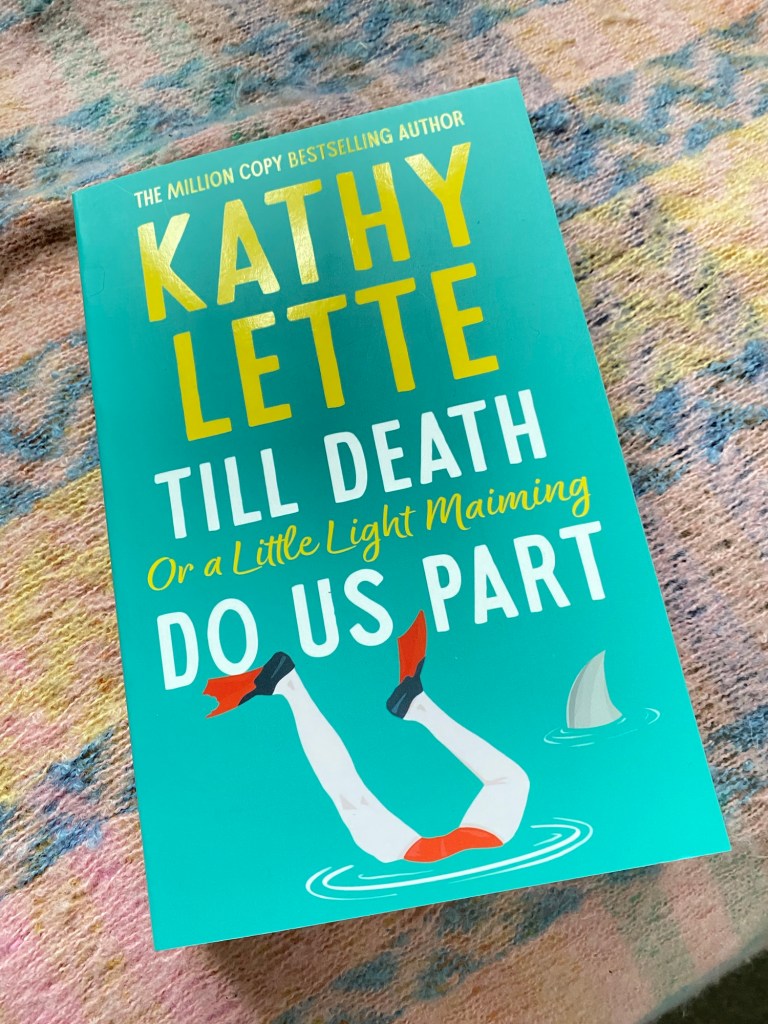
When she hears a man has been killed by a Great White shark, Gwen races to the beach only to find that all that remains of her husband is his swimming cap and a piece of torn, blood-stained wetsuit. Her grief is soon interrupted by Tish, screaming for information about the accident. When Gwen reassures her that it’s her husband, Jason Riley, who’s perished, Tish’s response is earth-shattering for them both: Jason was her husband too.
The women’s mutual animosity is not assuaged when they learn that Jason recently sent all his – make that their – money to a mysterious ‘business partner’ in Egypt called Skye. But when they fly to Cairo to confront her, they find another grieving widow whose life-savings have gone missing…
As this double-crossed threesome cross continents in their search for truth and retribution, they start to realise they’re embarking on a journey of self-discovery, renewal and friendship too.
I’ve read Kathy Lette before so I was expecting ballsy women, lots of wit, perhaps some raunchy behaviour and definitely laughter. I wasn’t disappointed. I’ve seen this described as a revenge caper and that is the perfect description. Gwen has a happy life with her children and second husband Jason, who’s a real hottie. He is a big blonde surfer type with a sprinkling of grey, but a body honed to perfection by Iron Man training. She sometimes wonders how they got together. She sees herself as a rather ordinary widow nearing her sixties, while he’s a lot younger and so fit. However, tragedy comes along when Jason is training. Gwen hears on the radio that there’s been a shark attack in the bay and she makes her way there immediately. When she arrives, she knows by the scrap of wetsuit on the sand that the lost man is Jason. She hardly has time to breathe before a leather clad ball of fury catapults herself into the situation. Tish is there because she thinks her husband is missing too, she’s married to a tall, blonde hunk called Jason. Surely they can’t both be married to the same man?
Gwen wants to quietly go home and cope with the double shock of Jason’s death and the news that he’s a bigamist. Tish has the grip of a small terrier and has about a million questions that Gwen is incapable of answering. She’s totally gobsmacked by Tish’s biker girl style, they couldn’t be more different so why was he attracted to both of them? It seems that when Gwen thought he was working or training, he was with Tish and vice versa. They’ve been together a similar amount of time. They make a very uncomfortable trip to Jason’s lawyer, Tish is adamant there should be a will and she wants to see it. She invested a large amount of money in a business start-up he was working on. Gwen is keeping her cards close to her chest but she too has invested some of her widow’s inheritance in his endeavours. Where has it gone? They soon find out. His lawyer tells them that Jason signed a document that transfers their joint investment to a woman in Cairo. Tish wants to be on the next plane and wants Gwen to go with her. Can they find this woman, solve the mystery of her connection to Jason and retrieve their money?
I found the novel intriguing and funny at first. Tish is an absolute ball of energy and her power as a character did overpower everyone else slightly. I wonder if Kathy based Tish on her most extrovert side. I felt a little bit like the momentum of the story was lost in long verbal exchanges between the two women that seemed more about the jokes than developing characters or their relationships. Some are admittedly very funny, but when they come thick and fast the humour sometimes misses the mark. It’s also difficult to change the tone and I think the novel could have done with some light and shade. However, it’s a madcap caper that takes on an escapist feel as we travel all over the world with the women and try to work out if Jason faked his own death and whether they’ll be able to retrieve their money. Cairo brings even bigger surprises, leading to Tanzania, the Maldives and throughout Europe. It’s an absurd plot, but it is fun and a great escape read. I read this in one afternoon and had some laugh out loud moments. There’s also some lovely female camaraderie as these women start to come together, overcoming their differences to bond and keep chasing their love rat husband. I really enjoyed the suggestion that there’s a re-evaluation of life as women reach middle-age. A realisation that if we are going to do the things we’ve always wanted we need to start planning now. It’s the chance to throw off things that no longer suit us – not just in our wardrobes! In amongst the action and the laughs is the very profound idea that just when you learn to make the most of your life, it is almost over.
For more information on Kathy Lette and her books visit
Calvin owns Therapy, the bakery of his dreams in an idyllic village in the Lake District, but business is a little quiet. He’s reluctant when wife Vicky suggests social media but it’s not long before assistant Tara has filmed and posted a reel of him making brownies. Suddenly he’s a local celebrity. It seems everyone wants a piece of Chef Calvin and creepy little DMs start to arrive, including some from a stranger claiming to be his biggest fan. At the same time a local recluse has been found dead on a nearby beach, buried up to the neck in sand and left for the tide to come in. Detective Imogen Edwards is under pressure to solve the case, but who would plan such a long, drawn out murder and did they stay to watch the man’s fate? Calvin’s admirer turns up at Therapy, just as Tara is injured and unable to work. Much to his wife Vicky’s horror, new girl Mel ends up standing in and Calvin offers her a job. At least until Tara returns. Then events seem to start spiralling out of control and Calvin doesn’t know who to trust or what to do. Perhaps these wheels were put in motion a long time before, putting those Calvin loves in terrible danger.
This is such a page turning thriller that I swept through it in an afternoon and evening. Seemingly unrelated events start to make potentially intriguing patterns. Mark Edwards has a way of sending your mind down a dozen different paths before getting to the truth. He also has the skill of leaving horrifying images in your head. This time it was the sight of Leo James’s head sticking out of the sand as the tide went out. I have a fascination with Anthony Gormley’s Another Place also known as the Iron Men of Crosby Beach in Liverpool. There is something slightly macabre and even profound about watching the tide come in, slowly submerging some figures underwater completely. This was a terrible human version and I couldn’t help musing on how it must have felt to be left waiting for the tide and what sort of man could watch it unfold. I enjoyed the internet element of the story and how reluctant Calvin is to put himself and his bakery out there – something which makes more sense later in the novel. I could understand his reticence. While Book Twitter was once a benign space, there are now arguments and attempts to police what other people are reading. It seems it’s no longer acceptable to separate art and the artist and I definitely spend less time there. When Tara creates her video, the baker starts to gain customers very quickly and this is definitely welcome. However, it comes with a side order of relative fame and that means teenagers want to take a look as well as a certain amount of women. Mel is one of these and the timing of her arrival in the bakery seems very suspect. Both Tara and Vicky are suspicious and my radar for emotionally damaged women was definitely going off. She seems to establish herself as someone who needs to be rescued, something that is Calvin’s kryptonite. She drops hints about a group of teenagers making a nuisance of themselves on the beach near her cottage and trying to intimidate or frighten her.
It soon becomes clear that Calvin is a rescuer. He has lived in the Lakes all his life and has an experience when he was a teenager that makes him susceptible to women needing him to be the hero. His teenage sister died in a car accident and in flashbacks we go back to that summer and the lead up to this awful event, it’s clear that Calvin carries a lot of guilt around her death but this is only half the story. Our other narrative is that of the murder and the police investigation. Imogen’s first port of call is the dead man’s home which isn’t easy to find, tucked away in the woods and completely off grid. Inside they find the most hideous paintings, possibly created by Leo himself. They show visions of torment and retribution in hell and seem to be inspired by Heironymus Bosch. The house is spartan and gloomy, suggesting that Leo leads a lonely and possibly depressed lifestyle. The paintings point towards his state of mind, but does he believe someone else should receive this punishments or himself? If himself, it seems like at least one other person agreed with him. When Imogen finds a young local girl called Billie lurking nearby she’s determined to find her link to this unusual man. In fact Imogen and Calvin’s wife Vicky seem the most level-headed of the characters. Imogen is a good police officer, methodical and not easily swayed by one thread of the investigation. She lets it reveal itself, but is still only minutes behind the culprit at times. Everything is linked and she just has to find that one person who holds the key. She does come under pressure from above but stays focused.
Vicky is perceptive and there were times I was mentally screaming at Calvin to listen to his wife. She senses someone has been in their house early on and is adamant she didn’t close their bedroom door and shut their cat Jarvis inside. She also wants rid of Mel, not specifically because she has feelings for Calvin, but because she simply doesn’t trust her. Where has she sprung from and why does she seem so keen to please? She thinks the story about teenagers is a deliberate ploy. The tension in each of the narratives is heightened and when Vicky disappears, Imogen has to work out whether this a choice to take time for herself after a row, or something more serious. Although when she speaks to Calvin and finds out that Vicky owns an animal rescue centre, it does seem unlikely for her to leave without warning leaving everything to her assistant Louise. As Imogen starts to join the dots I was praying she wouldn’t be too late for Vicky. How would Calvin cope if he lost Vicky after losing his sister, especially if Mel is involved? As Mel lures him into accompanying her home I was on tenterhooks over whether she would proposition him or whether something more disturbing was going on? The author takes us through some serious twists and turns, just when I thought my suspicions about a character were mistaken they were back on the hook again. I didn’t get to the truth before Imogen though and I managed to do that really annoying thing of rushing through to the end, then wishing I’d taken it slower. This is a first class thriller and has whetted my appetite beautifully for his latest book, The Wasp Trap.
Meet the Author
I write books in which scary things happen to ordinary people, the best known of which are Follow You Home, The Magpies, and Here To Stay. My novels have sold over 5 million copies and topped the bestseller lists numerous times. I pride myself on writing fast-paced page-turners with lots of twists and turns, relatable characters and dark humour. My next novel is The Wasp Trap, which will be published in July in the UK/Australia and September in the US/Canada.
I live in the West Midlands, England, with my wife, our three children, two cats and a golden retriever.
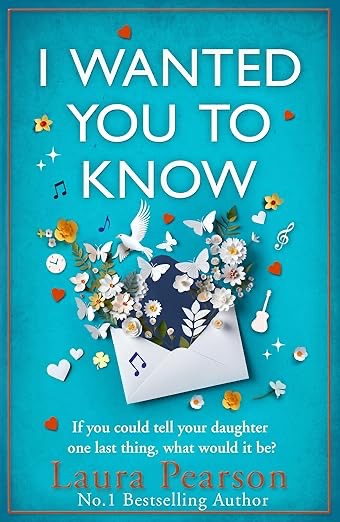
Dear Edie, I wanted you to know so many things. I wanted to tell you them in person, as you grew. But it wasn’t to be.
This wonderful book left me uplifted and sad all at the same time. This is the bittersweet story of Jessica, a young single mum who finds out she has cancer. As the novel opens, Jess and her baby daughter Edie, have recently moved back home with her Mum. Jess had left home for university, but circumstances have forced her back to her home town. This main narrative, set in Jess’s present, is interspersed with letters written by Jess to her baby. Each letter starts with ‘ I wanted you to know’ and through them we learn about the life she had at university, her relationship with Jake and the unexpected pregnancy that changes everything. The timing of this baby is all wrong, falling just as Jess’s boyfriend Jake is offered a tour with his band. Determined that Jake should follow his dream, the couple had decided to separate, but Jess’s own father left when she was young and she doesn’t want the same for her daughter. So she continues to keep him up to date with baby news until Jake’s contact with slowly fizzles out and Jess comes to the conclusion he is not interested in the pregnancy or having a relationship with daughter Edie. By the time Edie is born, the couple are no longer in regular contact and Jess has to face up to the fact she will be a single mother. Jess approaches her post-natal check up feeling daunted and then receives the news that changes everything. Jess has breast cancer. Now, a new beginning that’s daunting but joyous and filled with hope for the future, is overshadowed by weighty decisions, difficult conversations and the horrible fear that she may have to leave Edie facing life without her.
The narrative gave me a very real sense that the time Jess has left is ebbing away like the sands of an hourglass. As treatment options fail, Jess has so much left undone. Jess’s devastation that she won’t be able to be go through all the milestones that mothers and daughter enjoy together is palpable. So in order to be sure she’s there for these moments Jess begins the letters that will let her daughter know where she comes from and how much her mum loved her. This is even more vital when we realise that Jess’s past relationship with her own mum is far from perfect. However, despite some rough patches, her mum is stepping up and we never doubt that she loves her daughter and wants to help. Even if she does make some terrible mistakes in the way she handles things and on one occasion does one of the worst things you can do to someone with a terminal or life-limiting illness; she takes Jess’s power away. I was genuinely worried whether Jess would be strong enough to take it back.
The way Jess copes with Jake made me long for her to find her voice, even if just for her baby’s sake. She is so worried about ruining Jake’s tour that she doesn’t keep him informed. His contact with her simply dries up and although she is hurt and shouldering her fears about becoming a mum by herself, she doesn’t contact him. Then as the shock of the cancer diagnosis hits she is even more paralysed. If she does let him know, and he cuts his dream short, will he always resent her and his daughter. She doesn’t even know how he feels any more, but knows she wouldn’t want him to return to her because of the cancer. Realistically though, she needs to let him meet his daughter. They have to forge a relationship, especially if she does not respond to treatment. The most compelling relationship for me was the friendship between Jess and Gemma. This novel is a love letter to female friendship and I liked that this relationship felt the most ‘fleshed out’ in the whole story. Right from the start Gemma is backing Jess up while juggling a job and babysitting Edie when she’s not working. Where the other relationships throw up complications, Gemma seems to know what Jess needs before anyone else. She counteracts Jess’s mum’s tendency to judge and make decisions that don’t include her. Instead she is quietly there all the time, and has an ability to sink into the background when Jess needs time alone or with Edie. Most importantly she encourages Jess but doesn’t take her choices away. She makes it clear that Jess needs to speak to Jake, but stays out of their relationship. When Jess’s mum oversteps the mark, Gemma gives her friend encouragement to speak and permission to be angry. Their relationship shows that our friends are often more supportive than family. It teaches us that our female friendships are often the long term relationships in our lives and that the best friends sustain each other, even in the most difficult situations.
I like that the last words In the book are Jess’s own in the form of her final letter to her daughter. I did have a lump in my throat reading some parts of this and at different points I thought how authentic the voice was, especially in Jess’s letters because they are unfiltered. Often, when reading or watching fictional accounts of illness I become frustrated by inaccuracies or events that are totally impossible. This comes from the life experiences I bring when reading a book. When reading this I felt it was well researched or that someone had used their own experiences to tell Jess’s story. I wasn’t surprised to read that Laura Pearson had a similar diagnosis of breast cancer because her experience shone through. The bewilderment and fear of those closest to Jess felt true to my experience; I lost my husband to the complications of multiple sclerosis when he was only 42 and I was 35. I remember two strong and very contrary feelings. On one hand I was constantly busy and overwhelmed with the paraphernalia of caring for someone who’s dying. I was panicked that time was slipping away from us and I resented it being spent dealing with feeding tubes, chest physiotherapy and the constant fear of infection. While other days felt like a nightmare, living a parallel life where the same routine was replayed over and over while everyone else was getting on with the real business of life. We became a small, committed unit with only one focus and as I read the novel I could see Jess’s loved ones doing the same. They drop out of normal everyday life to focus on their loved one and as I was reading I was aware of the devastation they would feel if they lost Jess anyway. When the person you love becomes terminally ill, and you become their carer, the sense of loss after their death seems compounded by suddenly having no purpose. I went from caring for my husband 70+ hours a week to waking up with nothing to do all day. It complicates the grief. The loss becomes multiple; the person you love, your role as spouse, your job and purpose, structure and status are all gone. The final chapters of Laura’s novel brought this back to me.
I was also heavily invested in Jess’s emotions, she becomes a young, single Mum knowing this new life may be cut brutally short. Jess barely has time to enjoy Edie, before she has to worry about leaving her. She has come to terms with her choice to postpone university and encourage Jake to follow his dream because she assumes, like we all do, that she has all the time in the world. She might not have time to pick up these parts of her life and she may not have time to settle into being a Mum. Questions constantly flash through her mind. If Jake returns, does he love her or is he only there because she’s so ill? How will he cope becoming a single Dad and who might he form relationships with in the future? Most heartbreaking of all; what if Edie doesn’t remember her? This is what prompts her to start writing. She wants to write down everything she thought or felt about her new baby and also pass on those bits of motherly wisdom that would be otherwise lost. Even if Edie does lose her Mum, she will have a constant sense of her through those letters and the pieces of advice she gives. Most importantly, she will know that at this crucial moment of her Mum’s life, she was so glad of her decision to have Edie and that Edie’s loss is uppermost in her mind.
The author delivers weighty subject matter with a real lightness of touch. At times I was reading with a lump in my throat, but I always looked forward to picking up Jess’s story and spending time in her world. The reader always brings something to the book and in this case, my reading experience was more poignant because of my own loss and possibly because of the limitations due to my own long term health problems. I think the author has been so clever to write about a life-changing experience, but never let it become too heavy to read. Despite the heartbreak, there are moments of every day humour and I felt genuinely uplifted by the depiction of female friendship. In difficult times I have found that even whether I’ve had a committed partner or not, it is my female friends who are always constant and hold me up when I can’t do it for myself. Jess and Gemma embody this and I found myself hoping that the author had a Gemma during her own illness. Mostly, I am very grateful that Laura Pearson had the bravery to write about something so close to her own experience, and to write about it with humour, honesty and raw emotion.
Meet the Author
Thanks so much for taking a look at my books. I write what some people call emotional women’s fiction and others call book club fiction. It doesn’t really matter what it’s called – I mostly write about women living ordinary lives and the extraordinary things that sometimes happen to them. I set my novels in places I’ve lived – London, Leicestershire, Cheshire, Southampton – and I people them (mostly) with the kind of women I’d like to meet.
Some themes I find myself returning to again and again are sibling relationships, enduring friendships, women supporting women, and the tiny decisions that can alter the course of a life. I hope you find something here you’d like to read.
When I’m not writing or reading, I’m usually hanging out on Twitter (@laurapauthor), so I might see you there, too.
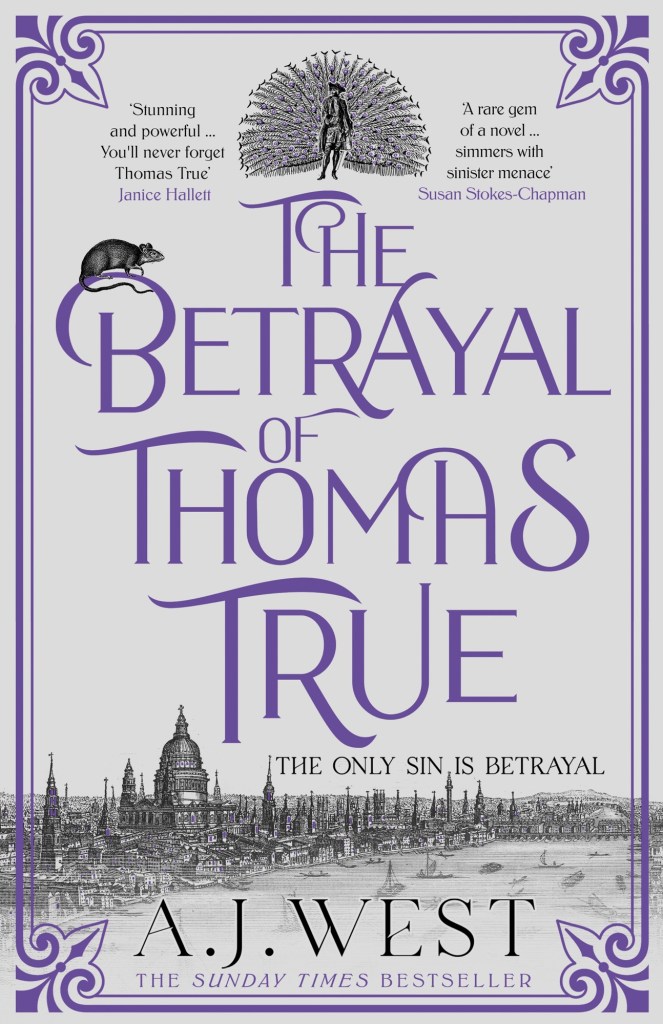
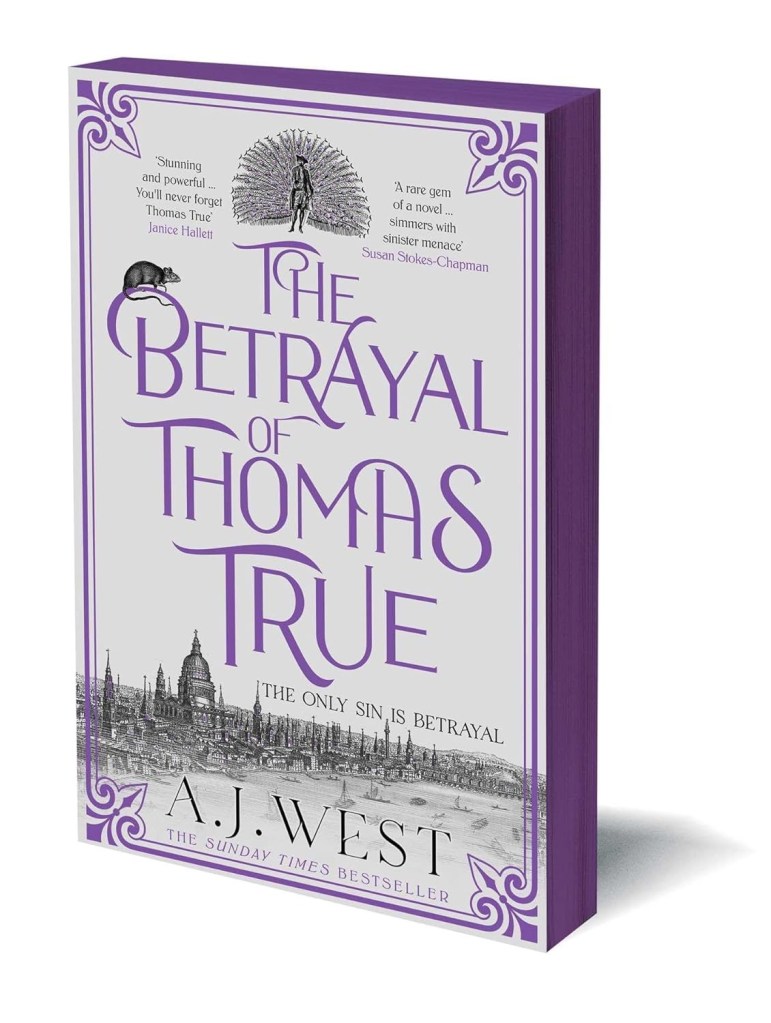
In simple terms, this fascinating book is a love story. Two people meet in unlikely circumstances and fall in love. However, it’s so much more than that, but that’s what happens when something as simple as love is an act of subversion or rebellion. When I last read a novel like this I was on my 18th Century literature module at university and I had the luck to be taught and supervised for my dissertation by Dr. Ian McCormick who was an 18th Century literature specialist and also taught our Gothic, Grotesque and Monstrous module. He wrote a book called Secret Sexualities, a collection of 17th and 18th Century writing that covered cultural constructions of eunuchs, hermaphrodites, cross dressing, mannish women, female husbands, trials for sodomy and other legal injustices. I was absolutely fascinated because it was an utterly different picture from the 18th Century literature I’d read before. To be honest that was mainly Jane Austen and from her writing you might think that a fellow’s main preoccupation was finding a suitable wife and all women were waiting for Mr Darcy to come along – although I’m a Captain Wentworth girl, all day long. What my tutor’s book did for me was the academic equivalent of Sarah Water’s transgressive novelisation of the 19th Century. Variations in sexual preference is nothing new and taking a marginalised group and placing them firmly within their historical context is what is going in with A.J. West’s novel. Thomas True is well-researched, beautifully characterised and fits perfectly into its time period rather like an 18th Century version of Tipping the Velvet.
The book that came most to mind, because of its bawdy humour and characterisation of a young innocent seduced into licentiousness on their adventures into the big city, was Moll Flanders by Daniel Defoe. However, I also had Tom Jones in mind by Henry Fielding, a picaresque novel where our hero embarks on a journey and is lured into bawdy and roguish adventures. A picaresque novel is also critical of the society it represents, using satire to make its point usually in the favour of the lower classes. Here our hero is drawn into the ‘Molly’ culture, practiced at Mother Clap’s house and while considered corrupt by some, it turns out to be less judgemental and violent than both the religious and legal communities, both seemingly riddled with cruelty and corruption. In this case they employ a spy known by the mollies as the ‘Rat’, his purpose is to give up individual mollies to the justices who would have them hung. The hangings are a horribly public spectacle with the crowd baying for blood and the selling of candles or other mementoes by shop keepers. This is where the novel sits for me, yes it’s crime fiction, historical fiction and also a love story, but it’s the picaresque novel’s bawdy, episodic and satirical mix that grounds Thomas firmly in the tradition of 18th Century literature.
Thomas sets off for London to escape a miserable family life, where he’s clearly not the man his father would like him to be. On his journey he is accidentally parted from his coach and luggage, deciding to trust a huge bear of a man who offers him help. What he doesn’t know is that Gabriel is a Molly, one of a group of men who enjoy dressing in women’s clothes and have names for their alter egos. They also prefer the love of another man, something taboo and unnatural in contemporary society. The law would punish them by death. Thomas can’t possibly know how important this moment will be in his life, but it’s pivotal to his journey, his future and his heart. Far from the genteel worlds of Bridgerton and Jane Austen, the author creates a richly imaginative setting that brought all my senses to life – but not in a good way. London is grim, overcrowded and disgusting. One scene where a body needs to be extracted from a ditch full of sewage is revolting. The two rescuers slipping and sliding into faeces and almost losing the body to the depths. Even Mother Clap’s has a grotesque feel. These are not the preened and powdered men you might expect. Gabriel is huge, hairy and spends all day doing a heavy building job. The atmosphere is also dark and threatening, if the mollies are the light then their nemesis belongs in the shadows as do the curious urchins who are so ignored and forgotten they’ve literally become the darkness they inhabit in the menacing surroundings of Alsatia. The ever present fear of not knowing who the Rat is, make even the lighter scenes hum with tension. While the mollies are dancing, wearing their finery or even sneaking off to be ‘married’ – their euphemism for sex – no one knows if the Rat is among them, watching and biding his time.
How far would the Rat go to gain information or incriminate the mollies? I was intrigued as to what their motive was? Religion, fear, money or more personal motives? Whatever the Rat, or the justice’s motives they mete out terrible violence. As if the public hangings were not enough, the Rat is handy with a knife too. One molly has his tongue cut out and another is stabbed and left in sewage. Being pilloried turned out to be way more violent than being popped in the stocks for the afternoon and being pelted with rotten vegetables. This is all told in the same detail the author describes the London streets running with urine and smelling so bad it takes a few days to become immune to it. It brings a reality into sharp focus, this isn’t just our current climate of punching down against the poorest and most vulnerable or venting hate on social media. This is wanting someone dead for the perceived crime of who they love. Thomas is naive, clumsy, endearing and ripe for the picking. He guides us through most of this in wide eyed wonder at first, but we also have Gabriel’s take on events and he really is the opposite of Tom. He is older, has known who he is for a long time and battles with regret, grief and shame. Gabriel is haunted, emotionally and literally. His profession means he’s in an intensely masculine environment, working on completing St. Paul’s and the chandlers where Tom is learning a trade. He’s drawn to Tom’s naivety and excitement at the new life he’s found and his molly name – Verity True Tongue. They’re so different but have that chemistry. It’s undeniable, but only Gabriel who fully understands the price they may pay for choosing each other.
I was bowled over by the incredible detail in the setting but also the characters they meet. Every one of the mollies is different are so different from each other. Some are welcoming and nurturing, while others are cynical and suspicious. I have a hatred for people who want to control other’s behaviour through a moral or religious code. Thomas’s family believe they’re doing the right things to save their souls and to lie with a man is a sin against God. The justices are no better than- using the legal code to outlaw sodomy, but then resorting to punishments of horrific violence without irony. It’s inevitable that with such blood lust and religious fervour, we might have to say goodbye to some of the wonderful characters yet it is still devastating when it happens. This group of men, when in their safe environment, are full of joy, fun and laughter. When they are free to be themselves they create an incredible atmosphere. It’s a party I’d love to go to and I honestly can’t wait for it to become a film. The eventual ending might leave you needing a box of tissues, but the journey Thomas and A.J. West takes us on is glorious.
Meet the Author
A.J. West’s bestselling debut novel The Spirit Engineer won the Historical Writers’ Association Debut Crown Award, gaining international praise for its telling of a long-forgotten true story. His second novel, The Betrayal of Thomas True, is published July 2024.
An award winning BBC newsreader and reporter, he has written for national newspapers and regularly appears on network television discussing his writing and the historical context of contemporary events.
A passionate historical researcher, he writes at The London Library and museum archives around the world.
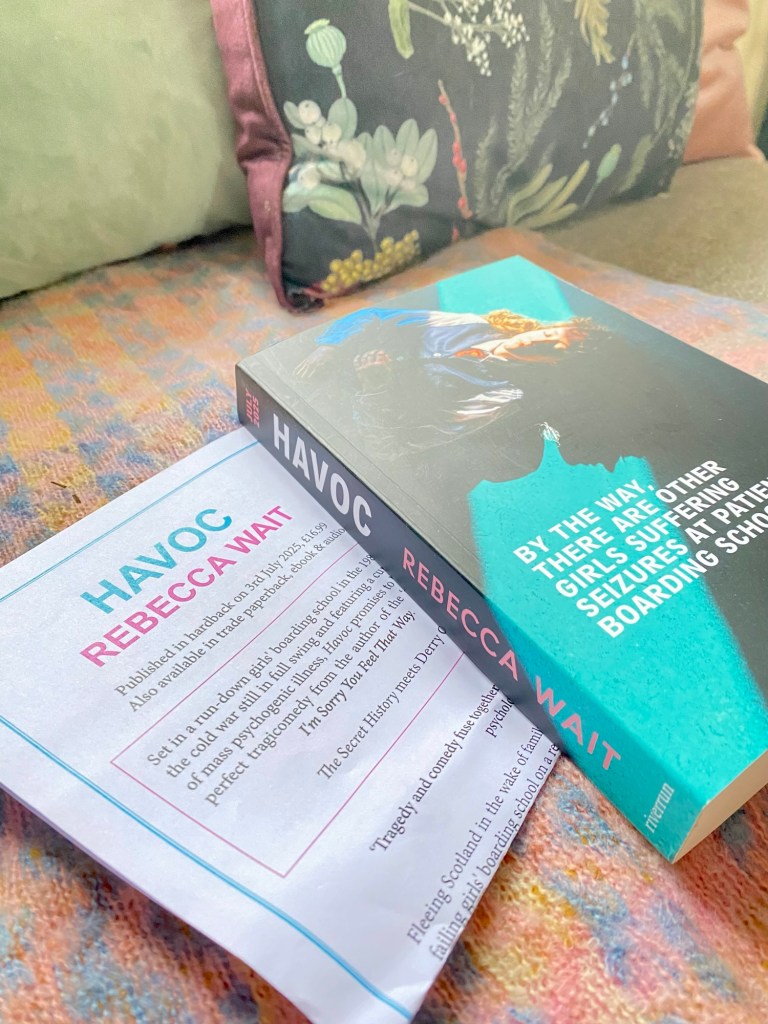
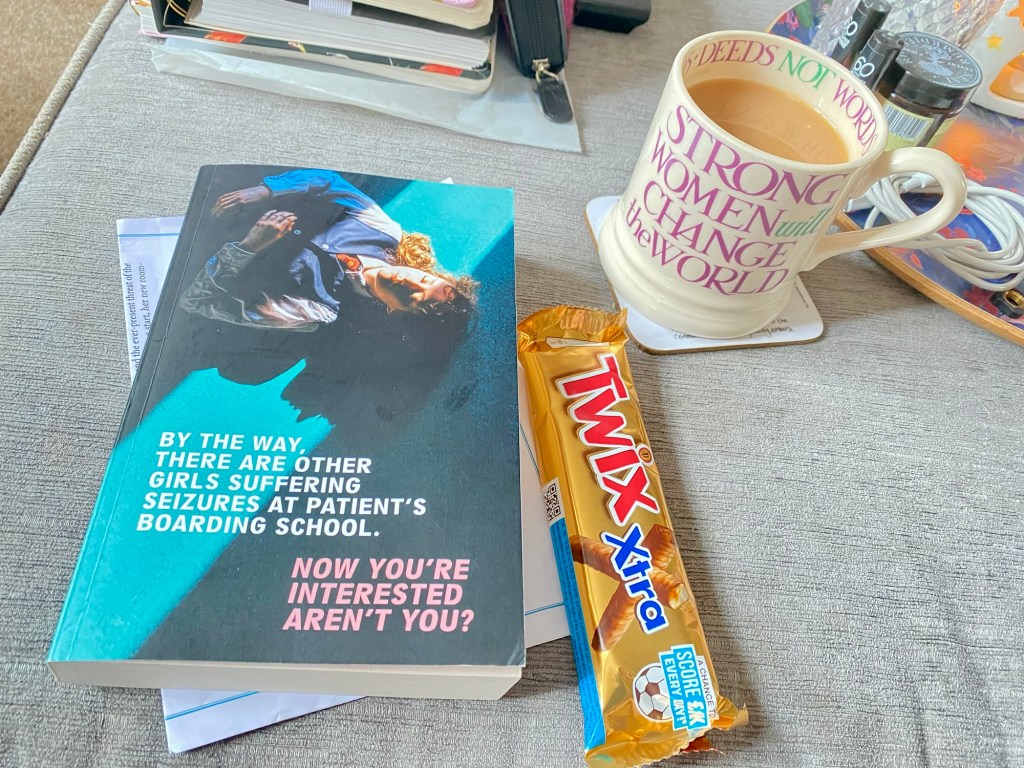
Havoc is one of the Squad POD Collective’s featured books this month and is a brilliant combination of school drama, mystery and dark comedy featuring a wonderful character called Ida. Ida and her family live on a remote Scottish island after fleeing from her mother’s controlling boyfriend Peter. What started as a lonely but safe place to live, has become impossible since her mother did something unforgivable and the island’s inhabitants turn against them. Deciding she wants to leave, Ida looks for private boarding schools who provide scholarship places. She finds a school as far away from Scotland as she can find. St Anne’s sits on the south coast of England, so remote that the only diversion is a bus ride to a small town with a choice of two tea rooms. The school are terribly surprised when their scholarship student turns up, no one ever has before, so they don’t have anywhere suitable to put her. The school is ramshackle and in danger of falling off the cliffs and the food is questionable and often tastes of fish, even when it isn’t. Ida is placed in a double room with school miscreant Louise and starts to settle in. However, things take a very strange turn when Head Girl Diane becomes unwell, starting with strange jerks of the arms and soon descending into a full blown seizures. Soon after, Diane’s friend April is sick and then starts the familiar pattern of jerks. By the time a third girl has the same symptoms outside agencies such as environmental health, doctors and the police start to descend on the school. Is this illness a virus, or is it environmental? Or could it be something more sinister like poison?
Not only is this a fascinating mystery, the characters are so endearing and I loved the deliciously dark sense of humour. We follow Ida’s story but also that of geography teacher Eleanor. Both are characters are quiet and unassuming but with hidden depths. Eleanor is coping with a change of living arrangements rather like Ida. She was all set to marry boyfriend Anthony, but it was suddenly called off. She’s been used to living in a solo room at the school, but a space in one of the sought after flats has come available. The problem is it means sharing with fellow teacher Vera and they’re not exactly friends, but she’ll gain a sitting room and a kitchen and surely they can get on? Then the first ever male teacher arrives and it’s clear that he’s quiet and ill equipped to deal with the dreamy and rather nosy English teachers. He and Eleanor get along well though, often lunching together at school and sharing the bus into town on their rare day off. However, he does seem to lack a back story and after what happened with Anthony, she’s very wary.
Despite some serious subject matter and St Anne’s having a rather 1980’s morbid fascination with the nuclear holocaust, there is a lot of humour and witty exchanges, even if they are rather black (my favourite kind of comedy). Both Eleanor and Ida have to accommodate their rather forthright and eccentric roommates. Louise comes with many warnings from the school mistress, but their meeting is hilariously slapstick after a mishap with a trapdoor. Louise seems to sense Ida’s intriguing hidden depths and they definitely share an affinity for causing mayhem. As their friendship developed I did worry for the rest of the school’s pupils. Eleanor’s roommate Vera is a comic delight and I imagined her as a young Miriam Margoyles – abrupt to the point of rudeness and very definite in her opinions. On a visit to the tearoom in town she berates the poor waitress for not having Battenberg cake. When she suggests their Victoria Sponge, Vera exclaims loudly that it’s usually dry. Then as she eats it, loudly confirms to the other patrons that is just as dry as she expected. She has no filter, volume control or embarrassment. In between the main narrative, are faxes from the neurologist treating the girls and his previous colleague and even these take a turn you won’t expect. He writes of his concern about Diane, the first girl who fell ill and his confusion at the symptoms displayed by the others. He is the first to notice strange anomalies in the seizures but has a hard time convincing his colleagues, the police and the environmental health of his eventual diagnosis.
I enjoyed the medical mystery at the heart of this novel, just as interesting as a crime novel with plenty of twists and turns along the way. Having had a rather unusual neurological condition myself this was an accurate representation of how our bodies can surprise and betray us. Of course this has the added intrigue of multiple patients at once and the cause being very difficult pin down — is it poison, environmental or the rather unusual and fishy meals from the school kitchens? There are other mini mysteries too such as why Eleanor didn’t get married and what made new teacher Matthew move to an isolated all girls school? Once the press are on the trail of the mystery illness many more secrets could come to light, including why Ida arrived in the first place. Ida is such an interesting teenager and her growing friendship with roommate Louise is both touching and unexpected. The author has captured the inner world of Ida so authentically that you feel connected to her and the interactions between the students is a familiar combination of funny, bitchy and a little bit guarded. So when the guard drops and real emotions spill out it is all the more surprising and touching. This was an absolute treat to read and I have no hesitation in recommending it.
Meet the Author
Rebecca Wait is the author of four novels, the most recent of which, I’m Sorry You Feel That Way, was a book of the year for The Times, Guardian, Express, Good Housekeeping and BBC Culture, and was shortlisted for the Nota Bene Prize.
Her previous novel, Our Fathers, received widespread acclaim and was a Guardian book of the year and a thriller of the month for Waterstones.
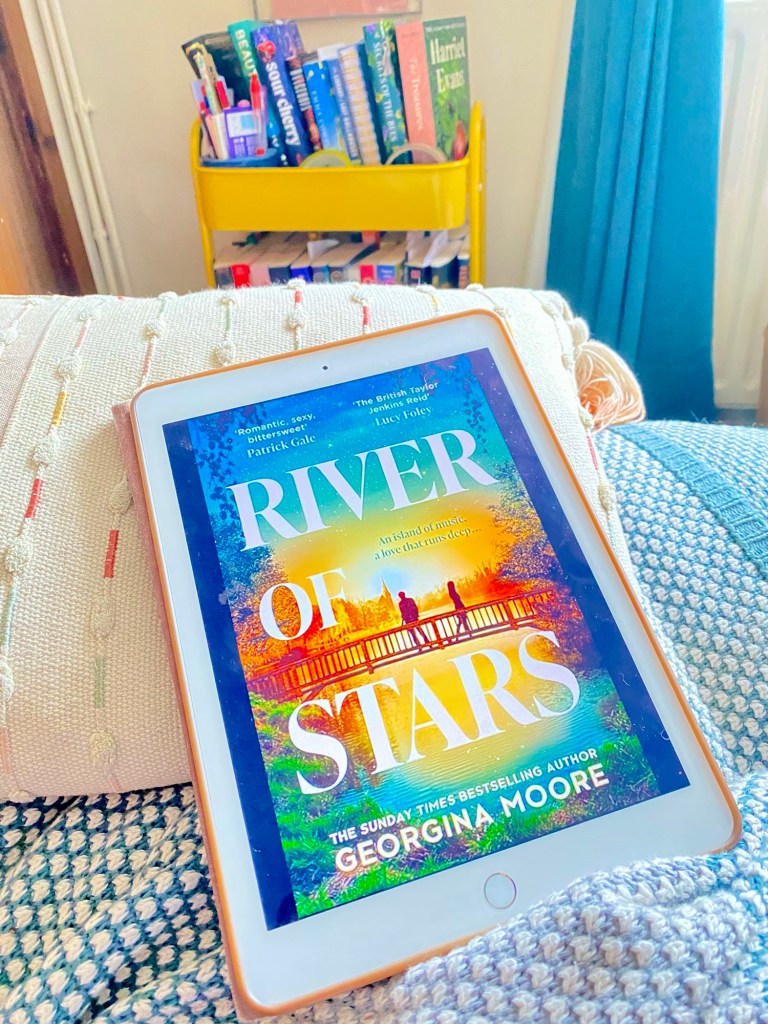
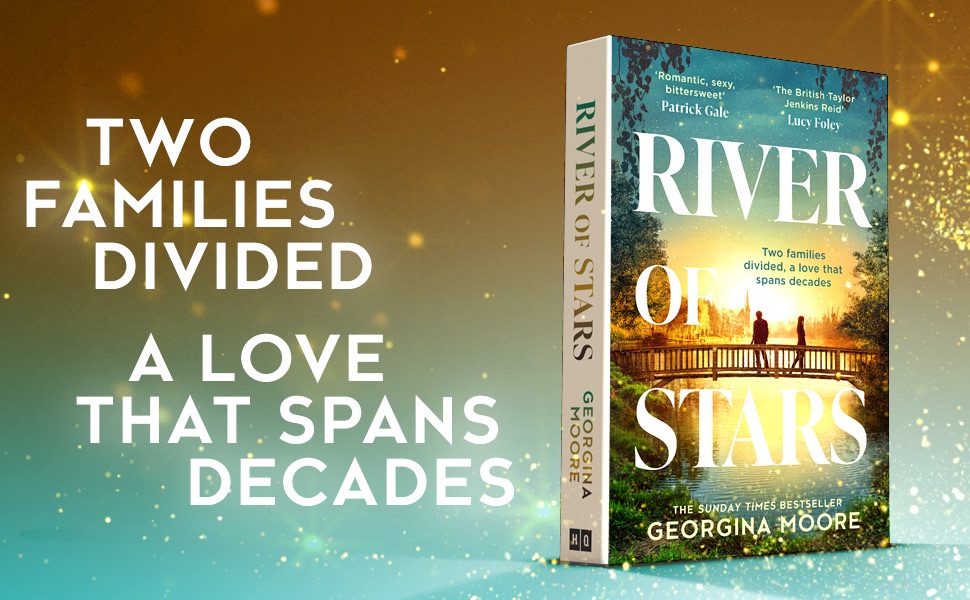
This book has the magical ability to captivate the reader. I found myself a fishing widow one night last week so I went to bed early and started reading. When I woke up the next morning I picked it straight back and read through to the end. I hadn’t even removed my glasses to sleep. The author has managed to make this feel like an escape, as well as heart-achingly romantic and with a bohemian setting that appealed to the creative in me. Walnut Tree Island is in a tributary of the Thames and back in the 1960s the owner, George, managed to turn a part derelict hotel into a sought after music venue. Based on Eel Pie Island, Walnut Tree is a harmonious combination of up and coming musicians, artists and picturesque riverboats and in 1965 is a weekly Mecca for young people. One of them is Mary Star, a young girl with a beautiful voice and a head full of dreams. It’s there one night when musician and up and coming front man Ossie Clark notices Mary in the crowd as she’s hoisted up on someone’s shoulders. Ossie is about to hit the big time, but he’s captivated by Mary and when he meets her he encourages her to sing with him. They are so in love and lay down in the grasses by the Wilderness – the most beautiful part of the island. When reality hits Mary knows she has to make a choice for both of them, although Ossie doesn’t reject the idea of becoming a father. He asks her to go to America with him, but the adults in her life, including George, make her realise how difficult that’s going to be. There will be compromises and although Ossie can’t see it now, what if he resents her and their baby? She’s left with her baby Ruby and a broken heart, but also a place to live on the island gifted by George.
Years later her granddaughter Jo experiences first love on the island. Used to running wild between Mary’s cottage Willows and houseboats, she meets George’s grandson Oliver when he visits the island. He’s the island’s heir, but such things don’t matter to young people and they have a magical summer thinking their love is all they need to sustain them. Now Oliver has returned from NYC as the new owner of Walnut Tree Island which has become a thriving community of musicians and artists all supported by Mary who is the mother of the community. The whispers over what might happen to the island start fairly quickly, not least the ownership of Willows that has always been a verbal agreement with George. Jo now teaches art to children in one of the houseboats. Once an incredible artist she seems to lose her confidence in creating and her career never fully got off the ground. How will she cope with Oliver back on the island, as handsome as ever, but with a touch of New York sophistication. More to the point, how will Oliver feel seeing Jo again? It’s not long before the red-headed firebrand is at his door, fighting on behalf of Mary and the rest of the community. But does she really know what his plans are? Changes are coming to the island, but some things are as constant as the river flows. Could their love be one of them?
As in her debut novel The Garnett Girls, Georgina has created a family of very strong women and allows them to tell their own tale. We also have the narrative of one of Jo’s closest friends, Sophie, who is another stalwart of the island community along with her husband Dave who runs the boatyard. I found Mary’s story so sad because she doesn’t get to fulfil her dreams of being a singer and loses the love of her life in Ossie. After that she has friends and protectors. Firstly there’s Oliver’s grandfather George who makes sure Mary and her baby have a roof over their head because he feels responsible for her and Ruby. Yet there’s no romance on her part and she still loves Ossie. I thought she made a huge sacrifice not going with him, but she doesn’t want to hold him back and as George points out he needs to be available to his adoring fan base. She never hears from him, until he makes the call no mother wants to receive. Then there’s Gotlibe, whose mixed-race relationship with Mary did raise eyebrows in the 1970s. She can’t remember when their relationship became more friends than lovers. Is now too late to change things? She is the undisputed Mother of the island, the first one called when something goes wrong or a resident needs advice, she’s the chair of the resident’s association and the first to volunteer for any of the island’s celebrations. I loved the island’s sense of community and their shared philosophy of finding joy in the small things and celebrating life whenever they get the opportunity.
I thought Sophie’s husband Dave was a lovely man, happy with his lot in life and not really needing anything accept his boatyard, friends, a cold beer and Sophie. He was Oliver’s best friend that summer so it’s not long before they’re catching up. Sophie knows that her best friend Jo is struggling with his presence after all this time. She has a city job as a West End Theatres PR, a job that she loves despite it being stressful at times. She’s fascinated with Oliver, who has travelled, lived and worked in Manhattan. So when he calls and asks her for a drink in London after work she is tempted. Dave seems destined to settle even further into island life. Nearing 40 he wants to start a family but Sophie doesn’t want a baby and has secretly continued to take the pill. She’s drawn to Oliver, but is it really him or the sense of freedom he represents? However, it’s Jo you will root for throughout the novel, because despite her tendency to self-sabotage and fly off the handle she’s a truly lovely person and a loyal friend. I think I felt an affinity for her because I have a tendency to self-sabotage my writing. I start full of hope, then read it back and think ‘who would want to read this?’ Jo went to study in Florence, but ended up in a relationship with someone who derided her talent and put doubts in her mind. When they broke up she flew straight home without finishing her course and has never painted again. After Oliver’s return something clicks and she feels an urge to paint, including an abstract of her mother, Ruby. Gotlibe is hoping she’ll exhibit them when they open for the public in the summer. I loved Jo’s return to Italy because it elevated the novel beyond the romance and into the tough part of working on one’s self. Watching characters bloom is my favourite thing and Jo’s eyes are opened to her part in how her life has turned out. The realisation that other people might have had similar setbacks, but stayed and carried on is huge. She chose to believe the criticism and allowed it to affect half of her life. When she meets up with old friend Claudia it encourages her to take some risks, to settle into herself, wear some colour and own it. Is Oliver also a risk worth taking?
Oliver and Jo originally bonded over a shared trauma, the loss of someone close. I was unsure whether the romance could or even should rekindle. The romantic in me wanted it, but he’s made choices that could derail their reunion. Jo doesn’t know if he’s still the Oliver she knows, or is he just playing at island life? He could turn round and evict them all tomorrow. I felt that Jo needed to see that Oliver knew the value of what he’d inherited, both it’s history and the unique community that now live there. If he commits to the island could they have a future? The island is magical, completely encapsulating the Japanese concept of ‘wabi-sabi’ with the beauty of it’s imperfections. The part derelict hotel was a perfect venue with it’s fairy lights and candles, giving off a nostalgic 1960’s boho that I loved and I know my mum will too. I was thinking of her throughout reading this book because in the early 1970s my mum travelled to London for a Neil Diamond concert with an invitation to meet him beforehand. My Grandad insisted on going with her, but waited outside when she went to meet him backstage. My mum said ‘if I don’t come back he’s asked me to run away with him and I’m going.’ I loved her innocence in thinking this and her guts for saying it to my rather anxious grandad. It was a time that was less cynical, where teenage girls did think dreams might come true and that love would conquer anything and it’s that spirit that this novel evokes. Of course Mum didn’t run off with Neil, affectionately called ‘Dima’ in our family because I couldn’t say his name properly, but they did correspond and she ran his UK fan club too. I hope there’s an alternate universe where my mum did get to run off with Neil. Just as I hope for one where Mary agreed to go on tour with Ossie and their daughter, living happily ever after. This is a gorgeous bitter sweet novel that will remind you of the posters you had on your bedroom wall, of those pangs of first love, of roads not taken. It also made me fall in love with the resilient and rebellious Star women and the community they called home. I’m happy to say this is the perfect summer read.
Out Now from HQ Stories
Meet the Author
Georgina Moore grew up in London and lives on a houseboat on the River Thames with her partner, two children and Bomber, the Border Terrier. The Garnett Girls was her debut novel and is set on the Isle of Wight, where Georgina and her family have a holiday houseboat called Sturdy. Georgina’s new novel River of Stars is published on 3rd July and is inspired by the legendary Eel Pie Island and its colourful history as a rock and roll haven in the 1960s, and by her own life on the river.
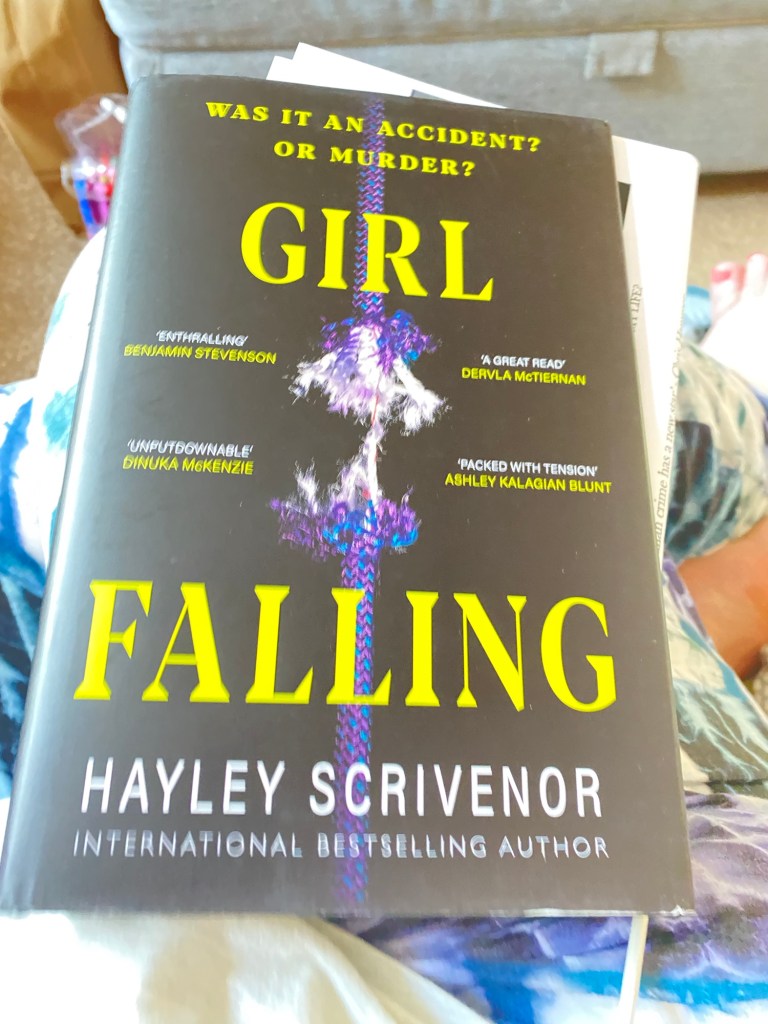
Finn is taking her girlfriend Magdu climbing for the first time. Magdu is nervous about heights so Finn is taking extra special care to explain everything about the abseil they’re attempting. As Finn lowers herself over the edge to control the descent from beneath, she is sure she has Magdu ready and composed on the blue rope, with friend Daphne on the red rope. She’s waiting to feel the weight of someone lowering them selves over the edge, but is surprised when it seems to be the wrong side. Magdu was meant to come over first but this is the red rope so it must be Daphne. The next thing Finn sees is Magdu hurtling towards her and then towards the ground, with a haunting scream. As both Finn and Daphne are taken in to the police station for questioning, Finn starts to think of an earlier time in her life when someone else she loved fell to their death. The truth of that day is something she’s only ever shared with Daphne. This time it’s a potential murder investigation so she’s going to have to protect herself, but might that mean the end of her friendship with Daphne?
My goodness this was a deliciously toxic friendship to get my therapist’s mind whirring. Finn and Daphne meet at school after a very traumatic occurrence in Finn’s family life. Finn is so vulnerable and hasn’t shared with anyone what truly happened when her little sister Suzy lost her life on a family camping trip. Suzy fell from a cliff edge in the night, but is that all there is to it? Daphne, who has also suffered the loss of a sibling, so knows exactly what to do with someone in that state of mind. She can’t change anything but she can sit with Finn and share her sadness and guilt. Finn is our narrator and we see everything through her eyes and she’s also been struggling with her sexuality, until Magdu comes along. However, I could also see how the combination of Finn’s kindness and fear of being exposed, left her open to exploitation. I didn’t fully bond with Finn as a narrator, I was unsure whether to trust her or not. She did set off my maternal streak though, because I wanted to see her safe and protected. She’s kind and cares about the environment, her family and climbing. My instinct was that she needed to be as far away from Daphne as possible. She’s manipulative, knowing exactly what and how much to tell Finn to draw her into her confidence and keep her beholden. I wasn’t even sure whether it was the truth.
I felt, very early on, that Daphne wanted Finn all to herself. When Finn first introduces her to Magdu at a club, its not long before Daphne finds a way to get Magdu alone. She lets slip a secret, making sure Finn doesn’t know exactly how much of the story she’s revealed. As Magdu leaves after the confrontation, Daphne tells Finn it’s her own fault. If she’d wanted Daphne to lie she could have just told her. I was unsure whether Daphne and Finn’s relationship is platonic or romantic, but I was sure about it’s complexity. There’s no room for a third person. Finn tells us about Daphne’s hair and how beautiful she is, there’s clearly an attraction but Daphne also likes to flirt with the male climbers in front of Finn. On the day of the accident there’s a very handsome climber hanging around at the top of the cliff with a huge hunting knife and Daphne makes a bee line for him. She’s used Finn’s grief and guilt and their shared loss of a sibling, to keep her constantly on a tight rein. I felt like Daphne was absolutely capable of harming Magdu. She potentially harms their relationship then reminds Finn that she is the only person who truly knows her, that it’s the two of them against the world. Yet Finn isn’t innocent in this toxic mix, she is complicit by not telling Magdu the same secrets that Daphne knows. Finn is a troubled soul, plagued with insomnia and often going for midnight walks. I thought she needed to choose between her friend and her lover, but I also wondered what Daphne was capable of doing if Finn chose Magdu. In amongst all the psychological machinations and flashbacks the author keeps bringing us back to the present and the more precise methods of the police investigations.
The flitting back and forth between the narrators gives rise to the tension that keeps you reading. Both are utterly unreliable and untrustworthy, especially when we think about the enormity of their secrets. The two are bonded and no one else could come between them, it’s as if Finn has been in a relationship with Daphne all along without realising. I craved some input from Daphne’s perspective because I imagined her version of events would look very different, although not necessarily true. They would also be a fascinating insight into her mind. I kept coming back to personality disorders and the way people portray their lives to the rest of the world. Daphne genuinely struck me as a person with potential narcissistic personality disorder. She has a version of the long held friendship she’s had with Finn and she’s keen on putting that version in front of others, especially Magdu. To use an inelegant phrase it’s like a dog marking their territory. The question is, how much of that version is actually true? One of the markers of NPD is the person’s manipulation of both people and events, but it isn’t a conscious action. They believe in their truth wholeheartedly, sometimes repeating a made-up narrative over and over until it actually becomes a the truth in their mind. When they first meet, Daphne and Finn discuss their shared experiences and Daphne explains how she chose to rewrite her story as an ancient myth, invoking Greek gods and particularly epic poetry. She has taken the heightened and exaggerated heroism of these stories to spin her own life narrative and has rewritten her personality to match. I wasn’t sure about the ending I would get, but there was a twist and it was a satisfying conclusion. My only criticisms of the book would be that it was slow in parts and I felt the author could have used the setting more, because apart from a mention of the Blue Mountains I didn’t feel the characters connected with it enough, especially Finn. However, this was a very character driven thriller which really enjoy and it’s deep delve into the motivations and desires of Finn and Daphne were absolutely compelling.
Meet the Author
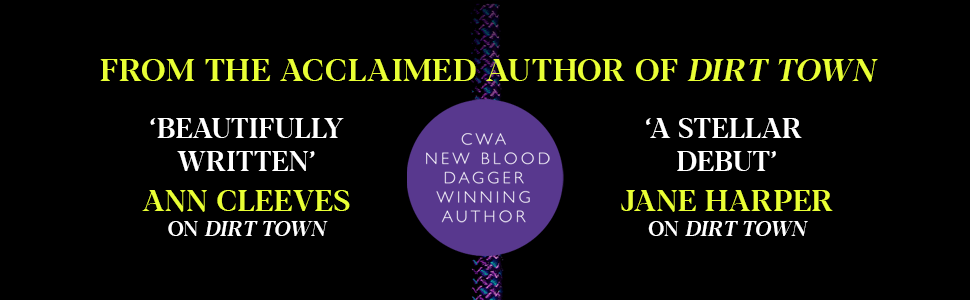
Hayley Scrivenor is the author of DIRT TOWN, which published internationally in 2022 (published as DIRT CREEK in the U.S., where it was a USA TODAY bestseller) and quickly became a #1 Australian bestseller. The novel has been shortlisted for multiple national and international awards. In 2023, it won a Lambda Literary Award and General Fiction Book of the Year at the Australian Book Industry Awards. DIRT TOWN has been translated into several languages. GIRL FALLING, described as “a remarkable exercise in complex storytelling written in Scrivenor’s idiosyncratic, metaphorically vivid prose”, is her second novel.
Hayley has a PhD in Creative Writing from the University of Wollongong and lives on Dharawal country, on the east coast of Australia.
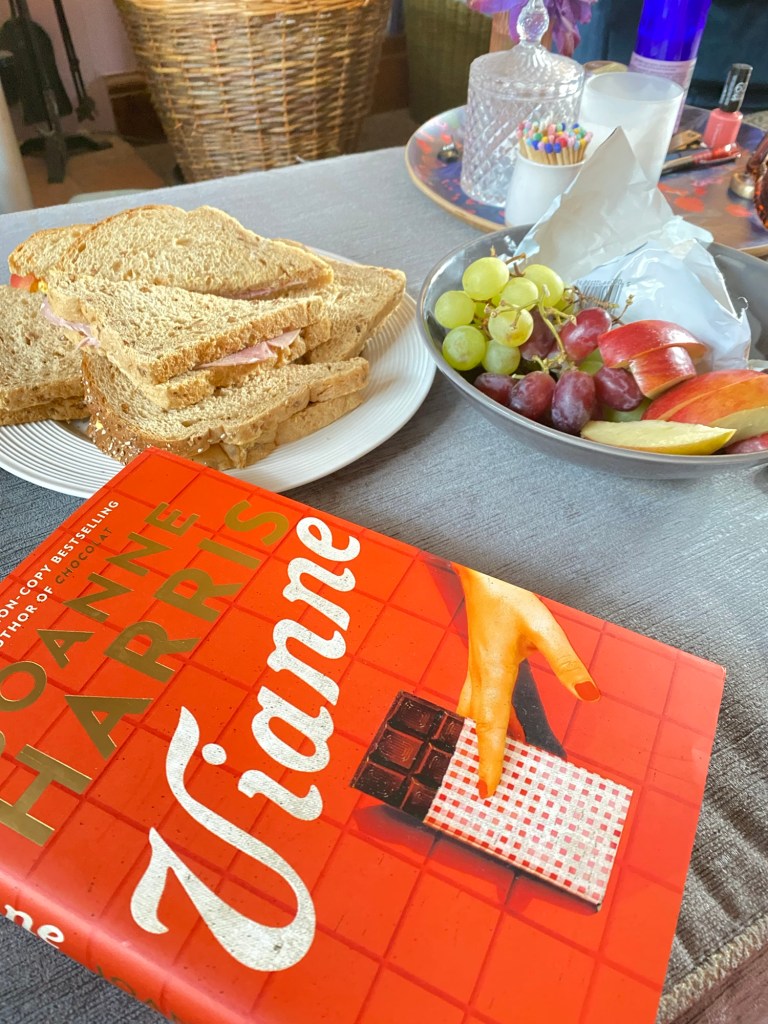
As Vianne scatters her mother’s ashes in New York, she knows the wind has changed and it’s time to move on. She will return to France, solo except for her ‘little stranger’ who is no bigger than a cocoa bean but very present in her thoughts. Drawn to the sea she blows into Marseille and to a tiny bistrot where owner Louis is stuck, struggling with grief for decades after losing his wife Margot. She charms herself into a waitressing job for bed and board, but with his blessing she starts to cook for his regulars using the recipe book Margot left behind. Louis has one stipulation, she mustn’t change the recipe at all. She revives the herb garden and starts to make friends, including Guy who is working towards opening a chocolate shop. This is going to be the place to have her baby, but then she must move on. She can see her child at about six years old, paddling by some riverboats tethered nearby, but she can also see the man her mother feared. The man in black. Vianne has inherited a peculiar kind of magic that urges her to fix the lives of those around her and give them what their heart truly desires. This is fine when it’s discerning their favourite chocolate, but can cause problems when it becomes meddling. Her mother warned her that she shouldn’t settle too long in one place and Vianne knows she has the strength to leave whenever she feels it’s right, but is thinking about those around her?
What a joy it is to be back in Vianne’s world. It’s like being back with an old friend and in a couple of sentences we’d picked up where we left off. This is a younger Vianne, aware of her burgeoning abilities, but inexperienced in the power she holds and it’s effects on others. Part of that ability is a natural charm and willingness to work hard. She takes time to win people over. She’s happy to take on a challenge whether it’s the recipe book, the garden or the chocolate shop. She merely softens the edges of all this with a ‘pretty’ here and there or tuning into someone’s colours. She has a natural ability to make the best of things, whether it’s adding a vase of flowers to a room or a pinch of chocolate spice here and there. It doesn’t do the work, it just deepens the flavours or enhances what’s there. There’s that little bit too much optimism, not fully reading a situation before wading in, that comes with youth and inexperience. She’s streetwise, used to watching her back. She knows how to protect herself and when to run, but lacks emotional intelligence. She’s unaware that breaking down someone’s defences can leave them vulnerable or even broken. Vianne doesn’t have a malicious bone in her body though, just youthful exuberance and emotional immaturity.
As always there are wonderfully quirky characters with lots of secrets to uncover and others who become real through memory, artefacts or reviving something they loved and giving it life. Louis has a grumpy exterior, not as grumpy as his friend Emile, but definitely a tough shell and a rigid routine. Every day he cooks for his regulars never deviating from the recipes or her kitchen equipment. Vianne has to use specific pans for certain dishes and ancient utensils that could do with an update, but she doesn’t complain. On Sundays he visits the cemetery, but instead of going to the soulless high rise mausoleum where Margot is laid to rest, he visits her favourite poet and leaves a red rose. Vianne is touched by his adherence to this routine, but it’s only when she is in touch with Margot’s spirit that she can see the full, complicated picture. As she uses the kitchen she feels Margot’s sadness and anxiety. Her need for a baby comes through strongly. Was this the unhappiness at the centre of their marriage? Emile is very difficult to get a handle on, he doesn’t respond to Vianne’s charm or her chocolates. His concern is that she will take advantage of Louis, but the more she seems to settle the more hostile he gets. I enjoyed Guy and the chocolate shop, but it’s another occasion where she doesn’t get the bigger picture. Guy is quite similar to Vianne in temperament, drive and enthusiasm. He seems utterly different in character to his friend Mahmet. Vianne notices Mahmet’s more pessimistic nature and concerns about money. She puts it down to the friend’s different backgrounds and experience, but I could see that Mahmet was a realist and his concerns might be valid. It becomes clear that Guy is a dreamer and as a child of rich parents has never faced the consequences of disaster. He also has a tendency to bail out when things get difficult.
Motherhood is the major theme of the book from Vianne’s pregnancy to the sadness of Margot and the relationship Vianne had with her own mother. There were memories of Vianne’s mother throughout and she has to battle with her mother’s voice constantly. She has internalised her mother’s voice to such a degree that it’s become one of her own inner voices. She fights against it, letting herself feel that natural urge to belong especially when Louis starts to get ready for the baby’s arrival. Part of her wants to stay, but her mother’s adage about becoming too comfortable is insistent. Is there something they were always running from? She’s angry with her mum in some ways, thinking about what she’s missed out on – a home, a wider family, school and friends her own age. It may be there was a good reason for their anonymity but her mum was all she knew making it all the more devastating when she died and Vianne was left utterly alone. Vianne’s own glimpses of motherhood are in the future, when her baby is a small child. She’s absolutely sure it’s a girl and the name Anouk comes to her. It seems that although her instinct and inner voice suggest they keep moving, she doesn’t want Anouk to have the upbringing she did. She wants Anouk to have a sense of belonging, a school and local friends, which gave me a lovely flash forward to Chocolat and Anouk running wild through the village with a pack of friends behind her. She remembers an instance when her mother insists they leave behind Vianne’s toy rabbit to teach her not to get attached to things. Is it Vianne’s memory of this incident and longing for that toy rabbit that conjures up her daughter’s later imaginary friend, the rabbi Pantoufle? I loved these little links to the future.
The details and images they conjure up are always the best part of this series for me, because they take me on a visual journey. I was fascinated to read in her Amazon bio that she has synaesthesia, because I do with certain colours and I can feel that in her writing. The author weaves her magic in the detailed recipes of Margot’s book, the incredible chocolates that she and Guy create and the decorative details of their display window with it’s origami animals and chocolate babies. The most beautiful part is how Vianne brings people together. Yes, it’s partly magic but it’s also her kindness and lack of judgement. The noodle shop next door to the chocolate shop leaves rubbish and oil drums in the back alley which are an eyesore. When they’re reported the owner blames Mahmet, possibly due to his seemingly unfriendly demeanour. Vianne spends weeks taking them chocolates and chatting, slowly gaining their trust until they’re helping out for opening day. She even manages to get Louis and the fierce Emile to visit the shop, even though it’s in a part of the city Emile swears neither of them will visit. It’s when we see what Vianne can accomplish on days like this that we see her at her best – thinking forward to her Easter display window in her own shop or the meals cooked for friends under starlit skies. Vianne is a glowing lantern or a warm fire, she draws people to her light and to bask in her warmth. This is also why readers who love the Chocolat series return again and again. We simply want to be with Vianne and that’s definitely a form of literary magic.
Out Now From ORION
Meet the Author
Joanne Harris (OBE, FRSL) is the internationally renowned and award-winning author of over twenty novels, plus novellas, cookbooks, scripts, short stories, libretti, lyrics, articles, and a self-help book for writers, TEN THINGS ABOUT WRITING. In 2000, her 1999 novel CHOCOLAT was adapted to the screen, starring Juliette Binoche and Johnny Depp. She holds honorary doctorates from the Universities of Sheffield and Huddersfield, is an honorary Fellow of St Catharine’s College, Cambridge, and a Fellow of the Royal Society of Literature.
Her hobbies are listed in Who’s Who as ‘mooching, lounging, strutting, strumming, priest-baiting and quiet subversion of the system’. She is active on social media, where she writes stories and gives writing tips as @joannechocolat; she posts writing seminars on YouTube; she performs in a live music and storytelling show with the #Storytime Band; and she works from a shed in her garden at her home in Yorkshire.
She also has a form of synaesthesia which enables her to smell colours. Red, she says, smells of chocolate.
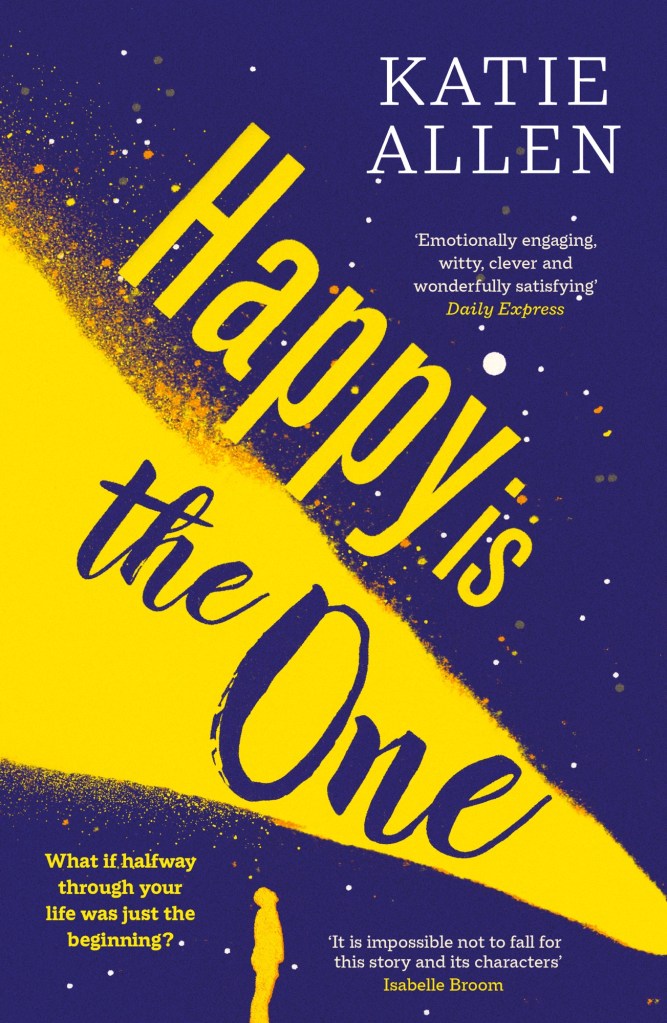
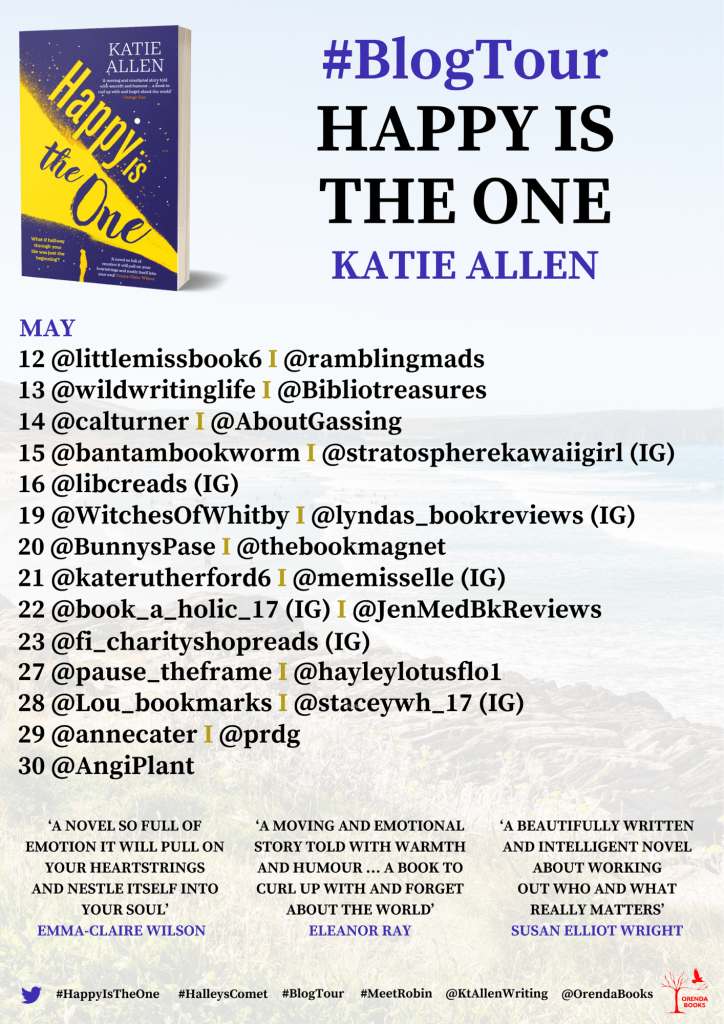
Robin is exactly half way through his life. Like Mark Twain before him, Robin came into the world with Halley’s Comet in 1986 and fully expects to go out again when it returns in 2061. Recently he’s had a huge life change. He’s moved back to his home town of Eastgate to care for his sick father, who due to a disability has had one accident too many. Robin had a well-regimented life in London with girlfriend Gemma. He also had a boring well-paid job as an accountant. Now everything has been thrown up in the air and he’s living in a tiny bedroom surrounded by boxes he hasn’t unpacked. He’s trying to forge a relationship with a father who can’t communicate and who he never connected with as a child. There are childhood ghosts to face and a new connection with Astrid, fellow outsider and professor at a nearby university. She’s brutally straightforward and Robin has never met anyone like her. She’s also hiding something, but he’s hiding even more from her. Can Robin make friends, help his father and accept this is the next chapter of his life?
This was a great book that’s simply joyful to read, even while addressing some really difficult themes. Robin is a great character to spend time with. I found myself feeling quite protective of him, despite his rather pernickety ways. I could honestly feel his anxiety and he copes by planning for eventualities that might never happen. He ekes out money, setting a daily amount for a minimal food plan and then bulk shopping at Costco. He’s worked out how long his savings will last, trying to keep Dad’s care to a minimum so he can afford it for longer. He seems at odds with everyone; not communicating with his father, bickering with Jackie who is his father’s man carer, and not even trying to find old friends. I’ve been a carer and I felt how overwhelmed he is by everything when he climbs up on the roof for some peace. He has to connect in order to get this new chapter of life started. However, to do that he has to accept that this is his life for now. The daytime telly shows, the sorting of meds and lifting his dad off the loo is life. He doesn’t seem to realise that while he fights it, he remains standing still. If he accepts Astrid’s friendship, unpacks the boxes and breathes, life will get better.
My two favourite characters are the forthright Astrid and Jackie. Astrid is a strong character and has a lot to say, but enough quirks to humour Robin and push him just a little into enjoying life. She embraces and accepts where he is in life, happily trawling Costco for savings. His relationship with her little boy is lovely too. No one can go through life as an island though and Eastgate is a small place. It’s almost inevitable that these new relationships are uncomfortably entangled with others he’s been trying to avoid. Jackie is wise and more of an asset than Robin realises as he spends weeks trying everything to avoid her – even climbing onto the roof. She’s brilliantly written because I’ve met carers like this and they’re worth their weight in gold. Nothing phases her and she is soon onto Robin’s ways. She reminded me of an incredible carer called Barbara who worked in a pair looking after my late husband. She was wider than she was tall and smoked like a chimney between calls. She was also matter of fact, never allowing him to be embarrassed about any aspect of his care. Barbara had seen it all and her stories had him in fits of laughter. I knew he was in safe hands with her, an incredible weight off my mind when I had to go in to University. Barbara passed out one day at work and died only a few days later, from a brain tumour she didn’t know she had. She was caring for people at the end of their lives, not knowing she was close to her own.
The wonderful relationship between Robin and old friend Danny felt so genuine and the way they talked to each other felt exactly like people who’ve known each other from childhood. There’s a shorthand and we start to realise some of Robin’s quirks have been there a while. You get the sense that if they were going on a bike ride Robin would spend so long getting prepped with wet weather gear and a puncture repair kit that they’d run out of time. Danny on the other hand would set off as is and get soaking wet, then tell everyone the story for years. Danny is full of life and has a great business idea to run past Robin, but can he be tempted to take the risk? Robin is eking out an existence that goes way off into the distant future, but our futures change all the time and one day he’ll start living yet another chapter. Living is right now! It’s not when we have money, or have lost weight, or when we have better health. It’s now, when we’re skint, fat and feeling ill. Whatever life looks like right now, we absolutely must live. Many people don’t get the time to waste. Of course, when we find out why Robin is so adamant about his comet theory – while being forced to evaluate his choices by a strident Astrid – it all becomes clear. A heart-breaking tale emerges, just as Robin is faced with yet another loss. He’s forced to admit why he jumped off a cliff into the water when he was a child. He thinks he can’t die, because once he survived something and can’t make sense of it. In fact immortality is the only explanation that does make sense to him. He’s doing what humans do, we subscribe meaning to events that have none. It’s just messy, terrifying, random and heart-breaking life. Katie infuses this difficult truth with beauty, humour and hope because life is beautiful and joyous too, if you let it be.
Out 22nd May from Orenda Books
Meet the Author
Katie Allen was a journalist and columnist at Guardian and Observer, starting her career as a Reuters correspondent in Berlin and London. Her warmly funny, immensely moving literary debut novel, Everything Happens for a Reason, was based on her own devastating experience of stillbirth and was a number-one digital bestseller, with wide critical acclaim. Katie grew up in Warwickshire and now lives in South London with her family.
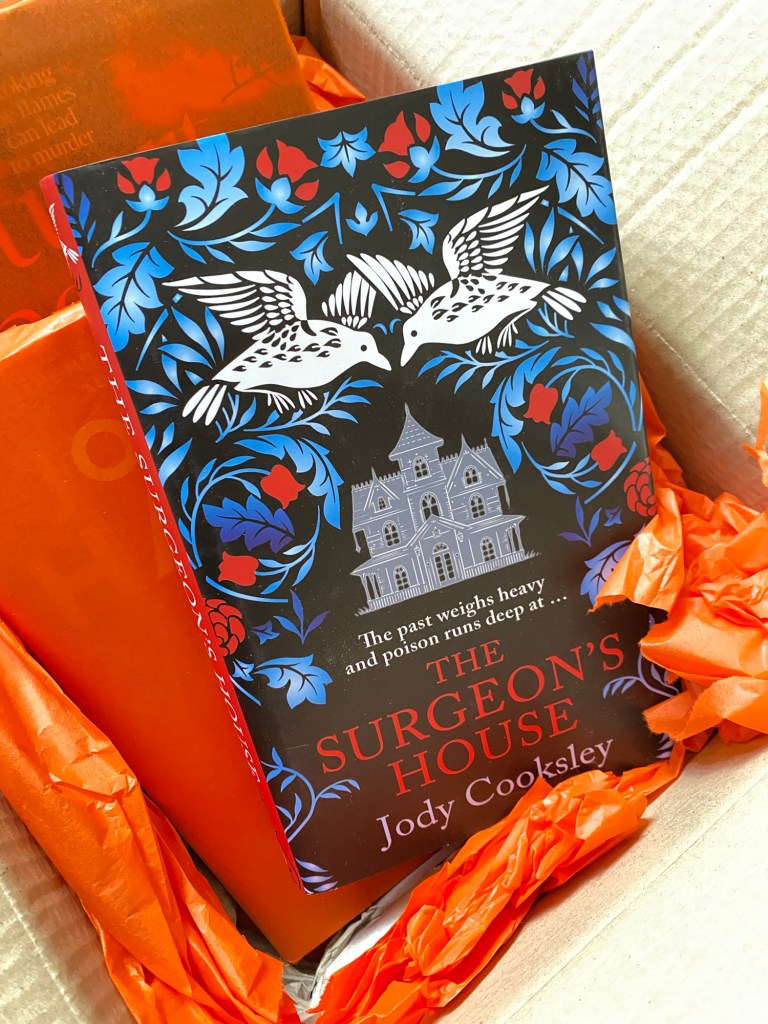
Rebecca and husband George run Evergreen House as a home for young girls and their illegitimate children, often called a house for ‘fallen women’. This has been a positive change. Previously, Rebecca’s sister Maddie was the woman of the house as the wife of Dr Everley. Maddie is recovering well after being on trial for the murder of her baby and the revelation that the Everley family had a tradition of hideous experimentation on the bodies of babies to create strange chimeras. Rebecca knows their tenure here is precarious. The Everley family still own the house, but with Dr Everley dead and his sister Grace in a prison asylum no one currently needs it. The small household are very close so all are devastated when the cook and centre of their household, Rose, is murdered. Rebecca is shocked by the death of her friend in what seems to be a random act. Rose’s death isn’t the end of the mysterious events at Evergreen. Rebecca fears the past is coming back to haunt them, the murderous and twisted legacy of the Everley family is hard to ignore. What was a sanctuary is becoming dangerous as the evil presence continues it’s work. With the charity board also tightening their grip on the house, Rebecca must draw out the murderer and discover their purpose.
This was a great companion novel to The Small Museum which told the story of Maddie’s marriage to Dr Everley. Rebecca was once one of Grace Everley’s fallen girls, but this was just a way of acquiring babies for her brother. It was great to see Maddie again especially so happy with her partner Tizzy. They are both regular visitors to Evergreen. There’s such a positive atmosphere and the residents are able to live alongside their babies, unlike the terrible Magdalen Laundries where babies were taken for adoption and their mothers were forced into heavy labour to repent their sin, repay their debt and make a profit for the church. The truth is that most of these girls have been manipulated, coerced or abused. Rebecca works on the premise that they shouldn’t be punished twice. There’s a lovely parallel with Maddie’s paintings of mythical women that she’s submitting to the Royal Academy Summer Exhibition. Helen of Troy is seen as the cause of the Trojan War, but she had no agency in the story. She’s desired by a man who abducts her by force. Medusa is raped in the temple of Athena, but the goddess chooses to punish her for desecrating the temple, giving her snakes for hair and a gaze that turns men to stone. Neither woman asked for what happened to them. Maddie has painted them on huge powerful canvasses, a monument to women mistreated by men.
The house is becoming a hive of activity in the lead up to Easter. The children are excited, painting eggs and helping their mums to weave colourful baskets. So it is a shock to them when Rose is gone. She was always helping the children to bake and had a listening ear for anyone in the household who needed it. It’s as if the heart has been taken from their home. Downstairs at Evergreen has always been a different matter. Psychologist, Dr Threlfall practises in the basement at the behest of Grace Everley. He ensured Maddie wasn’t wrongly convicted of the murder of her baby and Rebecca is grateful, but is slightly suspicious of what he’s researching. He has an interest in eugenics, measuring the girl’s heads, the placement of their features and notes any patterns. He’s trying to create a taxonomy of fallen women as if their sin might be predicted by physical characteristics. Rebecca worries he’s been inspired by old Dr Everley’s research into pain – especially when she hears one of the girl’s scream from his room. Then there’s the room next door where one of the servants is practising her taxidermy, in an unhygienic way! It’s as if the interests and hobbies of the Everley’s are ingrained in the fabric of the house.
In between Rebecca’s narrative, we have Grace Everley’s. She’s incarcerated and seems to be teetering on the brink of insanity. Used to manipulating people with her beauty, her finery is a thing of the past and her beautiful hair has been completely shaved off. She’s still incensed that Dr Threlfall testified for Maddie, sending her brother to the gallows. What she cares about most and the focus for her vengeful thoughts, is that her father’s work isn’t being continued. She takes us back to her teenage years and participating in her father’s pain research – now she is utterly stoic and she can completely separate mind from body, blocking out her pain receptors. I did feel a tiny bit of sympathy for her because she didn’t stand a chance growing up in that environment. Having been used by her father she could have been a submissive mouse, but instead she became powerful and used her feminine charms to control the men around her. Could she still have that influence?
The men in the novel are mainly concerned with controlling their environment and all the women in it. Dr Threlfall is the last link between the Everley family and Evergreen House. He may be an effective doctor but his interest in eugenics is concerning. It always leads to controlling people’s behaviour and persecuting those who don’t fit the rigid ideal. It lead to some of the biggest atrocities of the 20th Century. Looking to categorise a type of woman who ends up in trouble, lets men off the hook for what happens to them. Mr Lavell is equally discriminatory. He thinks that women who have children out of wedlock must be punished for their actions and only the Bible and physical work will remind them of the terrible choices they’ve made. He finds Rebecca’s methods too lenient and would like the children sent to the orphanage. Then he’d bring laundry in for the women, to keep them penitent and make a profit for the charity board. Only George is absolutely steadfast to his wife. When a woman turns up at the door asking for kitchen work, Rebecca goes her a chance even though her references will need chasing after the fact. Things start to deteriorate quickly once Angela is in charge in the kitchen and it’s definitely not the heart of the home any more. She could have a bedroom but chooses to bed down in the cupboard where Dr Everley kept his specimens. She doesn’t try to make connections and won’t have children baking in the kitchen. Rebecca is concerned and then incensed when she suspects her of selling one of the women’s stories to a Penny Dreadful. When one of the youngest children falls ill, Rebecca knows for sure that something evil lurks in the house. She feels assailed from all sides, evil from within and outside forces trying to force their own agenda. She has to solve the mystery before the charity board get wind of their problems and use it to close them down.
This was a tense and atmospheric read. I could feel the warmth and happiness slowly being sucked from Evergreen House. It did feel evil, like a creeping black mould slowly covering everything. This really showed the inequality in society and how the fates of these women are decided by men; especially ironic when men are complicit, if not to blame for their supposed fall. One man seeks a genetic reason for their loose morals. Another feels they haven’t atoned for their sin. While a third would take away their children and punish them with hard labour. Not a single one questions their own behaviour or even doubts their right to pass judgement. Yet there are admirable women calmly showing compassion, understanding and professionalism, while stuck in this patriarchal system. Grace Everley gives me the shivers, but she is a victim too. I was held in suspense over who was the murderer and whether Rebecca’s home could remain the loving and caring space women need. There were heart-stopping moments, especially towards the end. The scene in the garden had me holding my breath. This is the perfect gothic mystery, especially for fans of historical fiction who like a touch of feminism on the side. This is a must-buy, for the engrossing story and for the gorgeous cover too.
Out Now from Allison and Busby
Meet the Author
Jody Cooksley is an author represented by literary agent Charlotte Seymour at Johnson & Alcock.
In 2023 she won the Caledonia Novel Award with The Small Museum, a chilling Victorian thriller that was published in hardback, ebook and audio with Allison&Busby in May 2024. Paperback publication was February 2025 and the sequel, The Surgeon’s House will be published in hardback, e-book and audio in May 2025.
Previous novels include award-nominated The Glass House, a fictional account of Victorian pioneer photographer, Julia Margaret Cameron (Cinnamon Press, 2020), and How to Keep Well in Wartime (Cinnamon Press, 2022)
She is currently writing more Victorian gothic novels. She has previously published essays, short stories and flash fiction.
Jody works in communications and lives in Surrey with her husband, two sons, two forest cats and a dangerous mountain of books.








 The Lotus Readers