Posted in Orenda, Random Things Tours

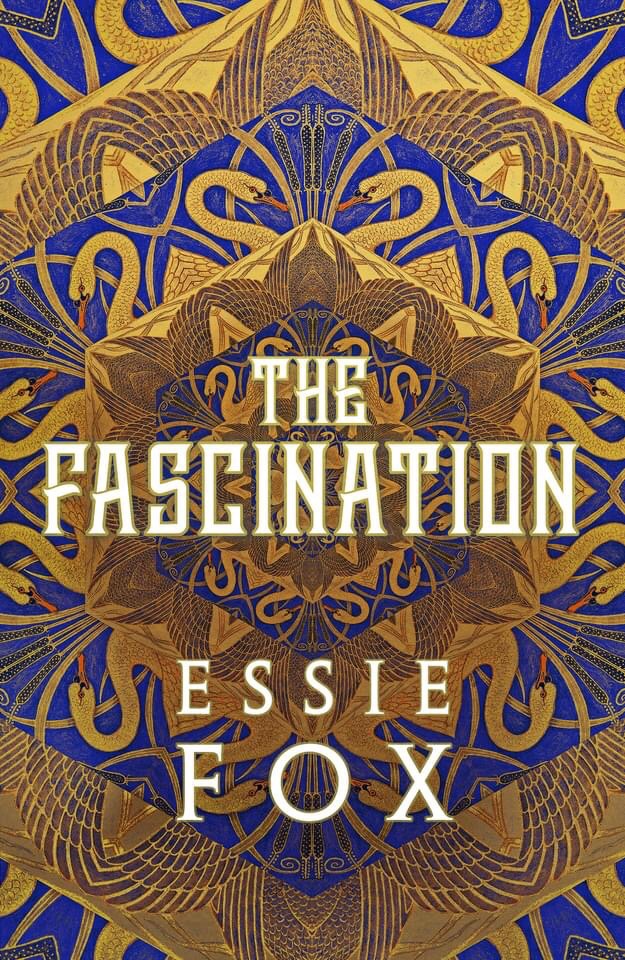
The Fascination by Essie Fox.

Victorian England. A world of rural fairgrounds and glamorous London theatres. A world of dark secrets and deadly obsessions…

Twin sisters Keziah and Tilly Lovell are identical in every way, except that Tilly hasn’t grown a single inch since she was five. Coerced into promoting their father’s quack elixir as they tour the country fairgrounds, at the age of fifteen the girls are sold to a mysterious Italian known as ‘Captain’.

Theo is an orphan, raised by his grandfather, Lord Seabrook, a man who has a dark interest in anatomical freaks and other curiosities … particularly the human kind. Resenting his grandson for his mother’s death in childbirth, when Seabrook remarries and a new heir is produced, Theo is forced to leave home without a penny to his name. Theo finds employment in Dr Summerwell’s Museum of Anatomy in London, and here he meets Captain and his theatrical ‘family’ of performers, freaks and outcasts.

But it is Theo’s fascination with Tilly and Keziah that will lead all of them into a web of deceits, exposing the darkest secrets and threatening everything they know…

Exploring universal themes of love and loss, the power of redemption and what it means to be unique, The Fascination is an evocative, glittering and bewitching gothic novel that brings alive Victorian London – and darkness and deception that lies beneath…

As regular readers to this blog know, I am never happier than when I’m reading a book about the seedy underbelly of Victorian society. I love being able to disabuse people of the notion that the Victorians were so buttoned up they would cover the legs of a grand piano! In fact the Victorians were no different to us, trying to keep a veneer of respectability on the surface whilst having all manner of private interests and lifestyles underneath. Essie Fox has created an absolute phantasmagoria of fairgrounds, travelling ‘snake oil’ salesmen, freak shows and private bestiaries. Her vivid descriptions really grabbed me early on and they create such a strong, colourful sense of place. This is the written equivalent of The Greatest Showman or a Baz Lurhmann film like Moulin Rouge, a dazzling spectacle that tantalises the senses. However, as with all shows, away from the bright lights and trickery there is a darker history and the author doesn’t shy away from showing it to us. There are those addicted to opium to dull their mental and physical pain and others who are dependent on the fake ‘cures’ offered by the twin’s father. Out of all people who are other, some find the relative safety of a troupe or family put together by someone like the Captain, others are less lucky and end up enslaved, forced into degrading displays with no means of escape. There are greedy men, pillaging the world for various specimens of flora and fauna, similarly there are more specialist collecting men like Lord Seabrook who keeps a private collection of human freaks with no understanding that these are people not specimens.

Women are shown to be particularly vulnerable to exploitation. Our central characters, Keziah and Matilda are sold, but are very lucky to end up with the Captain who keeps them and places Matilda in various pantomimes and shows in the West End. There’s a conflict here between our outlook on disability today and that of 150 years ago. We might look at freak shows and displays with distaste, but without a welfare state and with superstition and shame surrounding disabilities and disfigurements, they were a legitimate and lucrative way to earn money. If the decision to display their unusual body was an independent one and they received a decent portion of the money they earned it could allow a person with a disability to support themselves. Matilda has the addition of a beautiful voice, a talent that would interest London theatres rather than a freak show or circus. The vulnerability of all women is shown by those like Mrs Miller, friend and patron of our hero Theo, who admits to an unexpected pregnancy in her youth and a baby born with wings or shoulder blades that developed outside the skin. Her condition left her penniless and abandoned by her lover, then bereaved when she wakes after the birth to be told her child has died. Women with differences were exploited terribly, from freak shows to private displays in gentlemen’s clubs and large private homes, all the way to brothels who had workers for the more unusual tastes. I feared for the twins who are both vulnerable, but especially Matilda who craves the pretty clothes, the bright lights and the adulation of the crowd. The author fills her performances with a sense of wonder as she flies over the heads of her audience with her iridescent fairy wings. Her love for this incredible feeling does lead her down a dangerous path, with Keziah and the Captain worried for her life.

The twins path crosses with Theo’s as they travel with their father and the fairground, but it’s as he meets them again in London that their stories cross over and his fascination with them continues. His father, Lord Seabrook, has a love of human curiosities and the ruthless way he dispenses with his own son made me wonder what lengths he might go to if he sees something he wants for his collection. I enjoyed the crossover between Theo’s interest in medicine as a career and the way he ends up earning a living at Dr Summerwell’s Museum of Anatomy. Obviously, medical researchers are also interested in difference and disfigurement, just with a slightly different gaze. Yet I don’t think Theo expected to be in a shop with leathery bats wings hanging from the ceiling and a model of the insides of a pregnant woman on display. The history of medicine is fascinating and this type of medical study leads to the classification and medicalisation of disability we see today. The author cleverly explains the changes in how disfigurements were viewed in the character of Martha who has a hare lip and wears a veil outside to cover her face. In times past a ‘hare’ lip, now known as a cleft lip/palate, would have been viewed with superstition and it was thought to be caused by a hare startling the pregnant woman. It’s now known that the lip and palate don’t develop properly and it’s usually corrected by surgery. Here Essie Fox tells us about the new operations in the 19th Century using pieces of wood or a piece of flesh taken from the leg to stitch the skin over and close the gap. It shows how something once inexplicable goes from being magical or suspicious to become something medical to be cured. I really enjoyed and appreciated the background research lying underneath the fantastical surface.

This really is a magical bit of storytelling with a couple of great heroines who I was rooting for throughout and a hero I was very unsure of till the end. I admit to being a little bit in love with the Captain with his long silver hair, his musical talent and his lost love. Having a disability myself I was firmly on the side of those thought of as ‘other’ and there are messages here about accepting difference that are just as pertinent in the 21st Century. I also felt there were warnings about over-medicalising difference. Labels are important in some ways, but they can also restrict and mislead. When counselling, if I see people with my disability, multiple sclerosis, I remind them that this is known as the ‘snowflake’ disease; from a distance it’s the same, but when you look closer we’re all uniquely different. This is a wonderfully Gothic tale, but is also full of colour, humour, love and life – in all it’s wonderful forms.
Meet the Author

Essie Fox was born and raised in rural Herefordshire, which inspires much of her writing. After studying English Literature at Sheffield University, she moved to London where she worked for the Telegraph Sunday Magazine, then the book publishers George Allen & Unwin – before becoming self-employed in the world of art and design.

Always an avid reader, Essie now spends her time writing historical gothic novels. Her debut, The Somnambulist, was shortlisted for the National Book Awards, and featured on Channel 4’s TV Book Club. The Last Days of Leda Grey, set in the early years of silent film, was selected as The Times Historical Book of the Month. Her latest novel, The Fascination is based in Victorian country fairgrounds, the glamour of the London theatres, and an Oxford Street museum full of morbid curiosities.

Essie is also the creator of the popular blog: The Virtual Victorian She has lectured on this era at the V&A, and the National Gallery in London.
Posted in Throwback Thursday

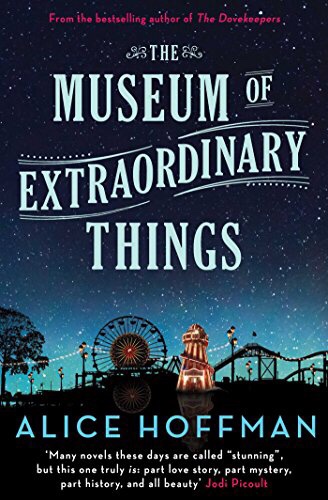
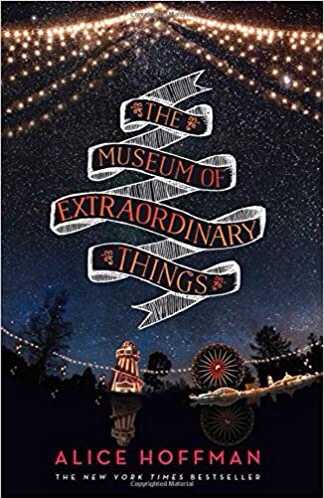
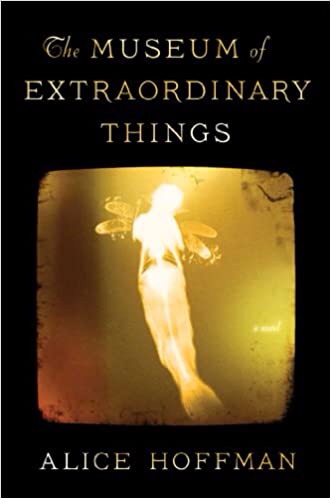
Throwback Thursday! The Museum of Extraordinary Things by Alice Hoffman.

From the bestselling author of The Dovekeepers comes a spectacularly imaginative and moving new novel in the vein of The Night Circus that has been acclaimed by Jodi Picoult as ‘truly stunning: part love story, part mystery, part history, and all beauy’.

New York City, 1911. Meet Coralie Sardie, circus girl, web-fingered mermaid, shy only daughter of Professor Sardie and raised in the bizarre surroundings of his Museum of Extraordinary Things. 

And meet Eddie Cohen, a handsome young immigrant who has run away from his painful past and his Orthodox family to become a photographer, documenting life on the teeming city streets. One night by the freezing waters of the Hudson River, Coralie stumbles across Eddie, who has become enmeshed in the case of a missing girl, and the fates of these two hopeful outcasts collide as they search for truth, beauty, love and freedom in tumultuous times.

I was inspired to revisit this novel after reading and reviewing Elizabeth MacNeal’s Circus of Wonders at the weekend. Regular readers will know how much I love Alice Hoffman and that The Night Circus is one of my favourite books of all time. What you might not know is that I love the age of La Belle Époque, Art Nouveau, New York City, and anything to do with the circus and freak shows. So, it stands to reason that I would fall madly in love with this incredible novel. Tucked within this wealth of aesthetic and historical details is the story of what it really means to be ‘other’ and how that difference affects us politically, culturally and psychologically. However, it also shows that, when people labelled as different come together, a powerful subculture can emerge. A subculture that rejects everyday societal norms, turning them upside down and creating different rules and markers of status? There’s also the interesting and complex issues around freak shows. Now, they horrify us. They are associated with thoughts of the Elephant Man and years of disability awareness training has left people viewing them as exploitative and cruel. However it could be that the issue is more complex and there are other ways to look at them?

The novel takes us to turn of the century NYC and we really meet the city in its formative years. While there are residential buildings, factories and the beginnings of what will be Manhattan, there are areas where it is still wilderness and it is here that Hoffman takes us to meet Eddie. He is a photographer, living in a friend’s shack in what will eventually become Queens. While out with his camera, early one morning, he sees what he thinks is a mermaid slipping through the grey and choppy dawn waters of the Hudson. She’s a strong swimmer too. Cutting through the swell with ease. However, when he sees her properly, he can see she’s a girl. What he doesn’t know is that Coralie Sardie does have a physical impairment – she has webs between her fingers and toes. This slight difference inspires her father to exploit her, keeping her separate from other children so she never questions him. She grows up uncomfortable with others, shy and ashamed of her physical difference. Her father, self-proclaimed man of science and keeper of curiosities, has an idea for Coralie. He aims to be the only showman with a real live mermaid.

Eddie is a Jewish immigrant, also brought to NYC by his father. The trauma of this journey and of losing his mother, leaves Eddie struggling to adjust. His father however, completely falls apart, making Eddie feel responsible for his parent rather than being a child. They are estranged from each other and as a result Eddie has become dislocated from his religion and culture too. The novel follows these two characters, Eddie and Coralie, as they make their way towards each other and pursue the feelings that seemed to hit them both at first sight. He’s also pursuing his own path as a photographer, rather than studying towards a profession like medicine as his father would have wanted. The work he does, particularly his photos of a fire in a sweat shop and the attractions of Coney Island, is fascinating and compelling.

Eddie’s work contributes to the historical setting and the sense of place Hoffman creates here. New York City in its infancy, already has the pull that still sends countless tourists there every year. It becomes a character in its own right, achieved by Hoffman’s historical research and the richly layered descriptions she constructs. The sights and smells of Coney Island and its fairgrounds are intoxicating and the account of a fire in a clothing sweat shop is particularly memorable. This was based on the real Triangle Shirtwaist factory fire, where girls living above the workshops were trapped and jumped from the windows to their death rather than burn. This sets Eddie down the road of investigative journalism and photography, rather than art photography. What will he make of Coney Island? More importantly, what will he make of Sardie’s museum and it’s main attraction?

Coralie knows she has been groomed for her father’s museum her whole life. The webbing she has on her hands is usually hidden by gloves, but at the age of 10 she is given a birthday gift that seals her future.

It stood in place of honour; a large tank of water. On the bottom of the tank were shells from all over the world. From the Indian Oceans to the China Sea. Beneath that title was carved one word alone, my name, Coralie. I did not need further instructions. I understood that all of my life was mere practice for this very moment. Without being asked, I slipped off my shoes, I knew how to swim.’

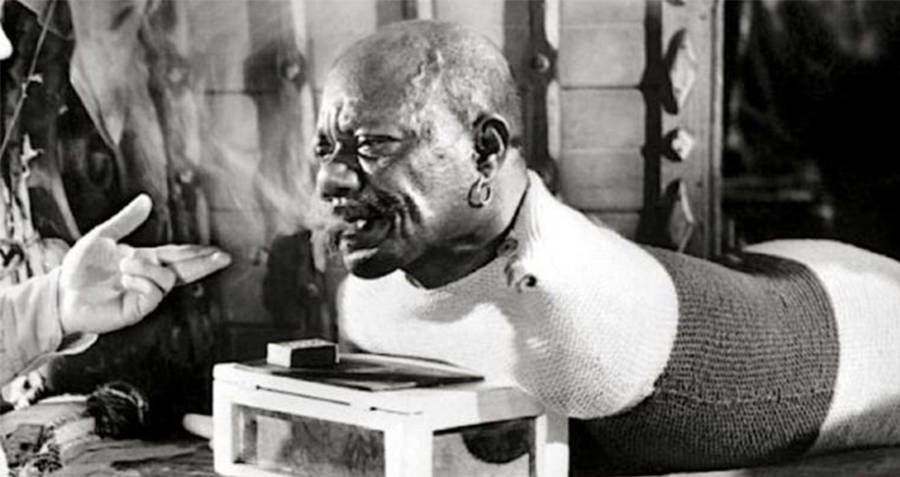
Her cruel father, only seemed to see Coralie in terms of ownership and monetary value. He has been making her take freezing cold baths, and practice staying under he water as long as she could. He gives her a breathing tube for the tank, but she barely needs it since her swims in the Hudson in winter. She will now be exhibited as a mermaid, alongside other ‘freaks‘ such as a woman without arms who has been given silk butterfly wings by Sardie. There’s a ‘beast’, completely covered in hair and a woman so pale she seems translucent. After looking at freak shows as part of my undergraduate degree, my feelings about them became more complicated. Yes, of course there is an element of exploitation in a figure like Sardie and his real life counterpart, Barnum. Yet, for a lot of the exhibits, this is the first sense of freedom they’ve had and their only chance to live independently. Often locked away in their towns and villages, by parents who either didn’t want others to see them, or felt like they were protecting their child. Parents might sell their child to a man like Sardie, feeling like they would be looked after or just to make money for the rest of the family. This might be the first time they encountered a community of people with differences like them. While we might think it barbaric to ‘show’ people with disabilities, it might be the only job open to them and give them a more comfortable living than they ever imagined. Real life ‘exhibit’ Prince Randian was brought to the USA by Barnum, and was known as The Human Torso amongst other names. He was born without arms and legs, and was usually dressed in a one piece, tight fitting garment. He appeared in the controversial Tod Browning film Freaks and had a party piece of rolling and smoking a cigar. His take was that he was being paid handsomely for simply doing normal everyday activities. We have to ask the question – who is exploiting who? There is also kudos in being the most transgressive as the disability subculture turns expectations upside down.

Prince Randian

I love this book. I enjoyed the character of Maureen – the Sardie’s housekeeper – and her love story with the wolf man. She has so much loyalty, and love for Coralie, that she stays despite Sardie’s insults and unreasonable behaviour. Being at the centre of these unusual people, we realise they have the same hopes and dreams as anyone else. Being in a group seems to give confidence to the individual characters and I loved seeing them grow into their authentic selves. There’s an acceptance of their differences, which maybe wasn’t present in their small villages and towns, where they stood out or even became a target. The performers have a complex relationship with what they do. It elevates them, thousands of people flock to see them, they are well paid and the thing that’s always been a negative part of their life, has become their meal ticket. Coralie and Eddie have had the same yearning in their childhoodthey want to be free, not held to account by their fathers, their religion or their obligations. Most of all though, this is a love story and they want to be together just like any other couple.

Further Reading:

Fiction:

Circus of Wonders by Elizabeth MacNeal.

Miss Peregrine’s Home For Peculiar Children by Ransom Riggs.

Non-Fiction:

The Body and Physical Difference by David T. Mitchell and Darren L. Snyder.

Freakery: Cultural Spectacles of the Extraordinary Body by Rosemary Garland Thomson.