Posted in Netgalley

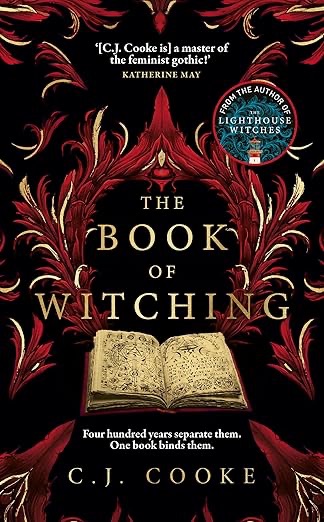
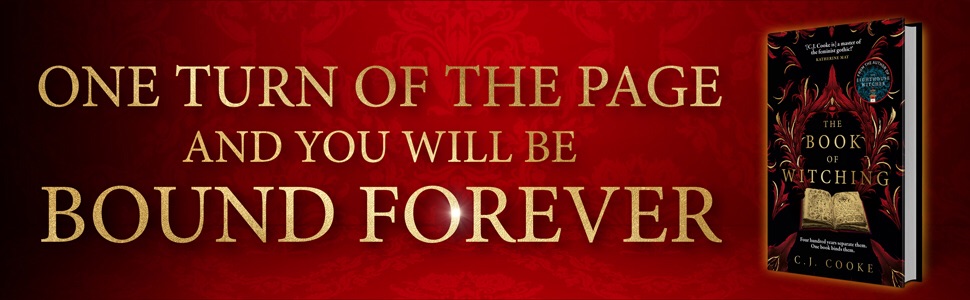
The Book of Witching by C.J.Cooke

On a small uninhabited island off Orkney, the body of a young man is found burned alongside a girl who is barely alive. She has suffered terrible burns to her arms and hands. When Clem receives the call that her daughter Erin is in the burns hospital in Glasgow, she races to her bedside and is horrified to find her in a coma with her damaged eyes stitched shut. Erin had been on a trip to Orkney with her boyfriend Arlo and a new friend Senna, leaving her daughter Freya with Clem. Arlo has been found dead, but Senna is missing. Erin desperately looks for clues as to how this has happened and is startled by a sudden vision of a strange book, with a bark cover and black pages that appear to be blank. Searching her daughter’s room she finds a note that reads ‘Arlo’s hands will need to be bound’. Could Erin have harmed her friends? We’re taken back to 16th Century Orkney as Alison Balfour wakes up and finds both of her children missing in the middle of the night. She tracks them to a clearing where masked and robed figures are holding a ceremony, initiating her children into the Triskele, just as she once was. Her own mother steps forward with the Book of Witching, inviting her grandchildren to ‘sign’ the book with a primal scream. Only a few weeks later she is approached by a nobleman when visiting her husband, who is working as a stone mason on the cathedral. He asks if Alison could create a powerful hex that would end the life of a powerful Earl. She refuses, so it’s a huge shock when she is arrested for practising witchcraft and thrown into a dungeon. Alison knows she has only ever used herbs and charms to help people with their ailments, particularly women. However, she knows what will follow; interrogation, violation and torture unless she confesses to something she didn’t do. Then she faces burning, with her only hope that she is strangled before the fire takes hold. Alison’s story is interwoven with Clem’s story, set in present day Glasgow where she lives with her daughter Erin. Clem is devastated when out of the blue she receives a call from the city’s burns unit. Erin has been admitted to the unit with serious burns and is in an induced coma. Clem is confused because Erin was on a trip to Orkney with her boyfriend Arlo and her friend Savannah. Now Arlo is dead, Savannah is missing and Erin has terrible burns to her arms and hands. She was found on the beach of Gunn, an uninhabited island off Orkney. Why were they in such a remote place and why is Clem had a vision of a blackened, bark covered book which opens to reveal a woman burning at the stake? 

C.J. Cooke combines these two stories into a narrative about Scottish heritage, the history of witchcraft and of women. She creates an eerie atmosphere where supernatural abilities abound, based within a breadth of research around the 17th Century moral panic about witches spearheaded by King James himself. These earlier sections are an unusual mix that ground us within the history of a place, but also creates a sense of unease. Alison renounced the Triskele years before and is angry with her mother for going behind her back, so when she’s arrested for witchcraft it’s a shock. The period where Alison is interrogated is incredibly accurate and hard to read in parts. She is entirely at the mercy of the powerful men who keep her in a filthy dungeon, restrict food and water, then use intimidation, violation and torture to elicit a confession. The historical background to the witch trials in Scotland has come up in a couple of novels this year and it might seem strange to the reader that such a belief in witchcraft existed. King James VI of Scotland had a marriage contract with a Danish princess, but her voyage to Scotland is threatened by fierce storms. Witch burnings had already swept across Germany and into Scandinavia and there are rumours that a witch had cursed the princess’s voyage. The North Berwick trials started a wave of panic over witches who might be accused of something as silly as causing a farmer’s cows to stop giving milk. King James voyaged across the North Sea to collect his bride, but does become obsessed with witchcraft using the Malleus Maleficarum as his witch finder’s bible. It includes the idea that witches will have a mark on their body where the devil has left his mark. One of the men interrogating Alison uses a pin to test marks on her naked body, looking for one that doesn’t produce pain when stabbed by the needle. He claims to have found the mark under Alison’s tongue, but also perceives the outline of a hare that turns into a shadowy figure. They are so sure of what they’ve seen that Alison almost thinks she’s seen it herself, but she’s starving, dehydrated, filthy and exhausted from being walked up and down all night to prevent her sleeping. Yet every time she denies their accusations, until they start hurting the people she loves. 

Clem meanwhile is horrified by the state of her daughter who is on a ventilator to protect her airway. She’s so vulnerable that she’s even grateful for the presence of her ex-husband at Erin’s bedside. She’s devastated for Arlo’s parents and for those waiting to hear news of Savannah. They’d only become friends very recently and there had been no red flags. Now the police are sniffing around the ICU, waiting for Erin to wake up and give them her account of what happened. When Clem pops home she goes into Erin’s room to feel her daughter. As she looks around she finds a slip of paper and written in Erin’s hand is he instruction that ‘Arlo’s hands must be bound ‘. That is exactly how Arlo was found. Instinctively, Clem pockets the evidence before the police ask to search their home. She must protect her daughter. Yet when Erin wakes up she claims to be someone else. Someone called Nyx. Clem only has to hear her voice to know that this is not her daughter. For me Alison’s narrative is more compelling, possibly because we’re in the midst of the action and everything is so immediate as we experience it through her eyes. By contrast we come into Clem’s story after the terrible event has happened. She’s in the dark, desperately trying to work out what has happened to her daughter. This only gets more complex as Erin wakes up different and she isn’t sure whether it is a case of ICU psychosis as her nurse suggests. This is a psychiatric response to the strange environment where sleep deprivation, being dependent on others and the sensory overload from the various machines and lights being on constantly. It’s also disorientating to wake up and find part of your life is missing. Yet there’s clearly a paralysing fear that something much worse is wrong. Erin has been through something so traumatic she’ll never recover or never be Erin again. The more Clem uncovers the more she feels something paranormal is at play. 

I was so impressed with the historical detail put into this novel and how real it made Alison’s experience. The punishments she and her family go through are more horrific than any of the paranormal stuff. We might fear the unexplained and the unknown but the things humans do to each other are far worse. I’ve loved this writer since her first novel and this one had me utterly gripped because she captures the fear of being labelled, noticed as different and blamed for things you haven’t done. Many witches served a purpose in their community, particularly for fellow women and I think she captured the complexity of that position. What’s the difference between giving a herbal remedy, a harmless charm or a spell and who makes that decision? Certainly not women and not those who are powerless or living in poverty. Even the most altruistic intention can be misconstrued or twisted by someone malicious. This was a dangerous time to be a wise woman. I also loved how the author based her story in a magic that was so powerful it could still wreak havoc today. This is another solid read from a fascinating author who has rapidly become a favourite of mine and a ‘must buy’ writer.

Published by Harper Collins 10th Oct 2024

Meet the Author

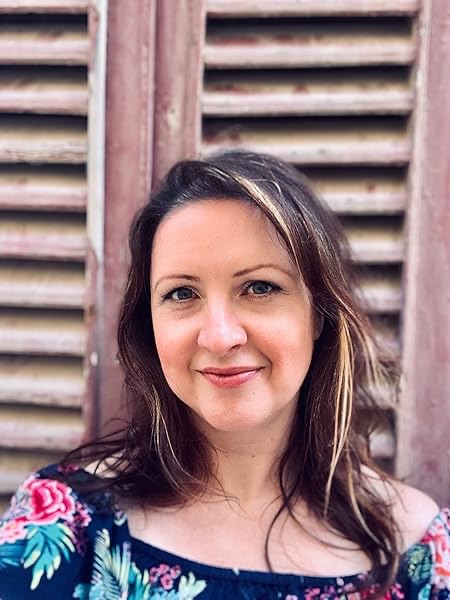
C J Cooke (Carolyn Jess-Cooke) lives in Glasgow with her husband and four children. C J Cooke’s works have been published in 23 languages and have won many awards. She holds a PhD in Literature from the Queen’s University of Belfast and is currently Senior Lecturer in Creative Writing at the University of Glasgow, where she researches creative writing interventions for mental health. Two of her books are currently optioned for film. Visit http://www.cjcookeauthor.com

Posted in Squad Pod Collective

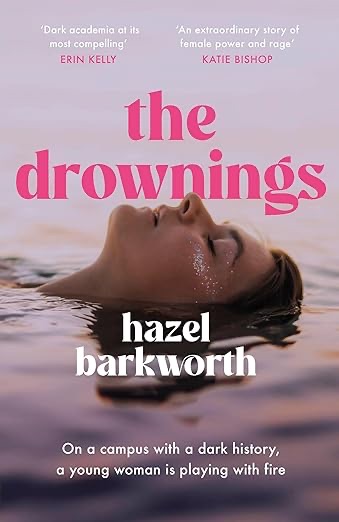
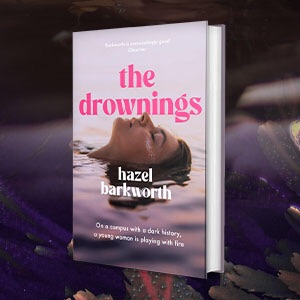
The Drownings by Hazel Barkworth

This is a fascinating read from Hazel Barkworth, capturing so much about the times we’re in while also exploring themes of identity, obsession, use of social media and modern day witch-hunts. Serena was born to swim. Her body is honed by years of training to be the best. When she thinks about her body, she imagines it sleek and pointed like an arrow shooting through the water. Her trainer Nico thinks she can go as far as the Olympics and within the family her winning streak makes her the centre of attention. Then one day it all goes wrong, because despite her training, focus and visualising the win, she loses. She can’t fathom why or what went wrong, but to add to her shock she then slips in the changing area and damages her knee. Now she’s on crutches and cannot swim at all. She knows she will not be ready to meet the next Olympics and the disappointment is crushing. Even worse, within her family, attention shifts to her cousin Zara. Zara has always had issues with her body image, but started an Instagram account promoting body positivity. Her curated Insta in shades of peach, teal and gold, is gathering momentum. She is blossoming in her success and has enough followers for companies to start sending her free products in the hope she might promote them. Just as Zara is making peace with her body and finding success, Serena has no idea who she is. With most of her time previously taken up with diet, exercise, warm-ups and time-splits, she doesn’t recognise herself. Her body only had one purpose and now it’s let her down. How can she be Serena, when the Serena she knew doesn’t even exist any more?

Serena decides to take up a place at university, at Leysham Hall, where her cousin already has a place. Here they both fall under the spell of their feminist lecturer in history, Jane. Serena meets her entirely by accident when walking the grounds one night. She sees a young woman poised by the edge of the river, that rushes downstream at this point of the campus. There have been warnings about this stretch of water, young women going missing and discussions about lighting the area always come to nothing. When the girl disappears, Serena rushes forward to help her. There is no hesitation when she realises the girl isn’t a strong swimmer and is in serious trouble. She leaps in and then Jane appears, just in time to help Serena bring the girl up to the surface and out. She doesn’t notice much about her that night, but she does end up in Jane’s history tutorial group and from that point on she feels drawn to the academic. It’s not a sexual attraction, she doesn’t want to be with her, it’s more that she wants to be like her. She loves the unfussy but stylish way that Jane dresses. She admires the knowledge and passion she has about her subject. Totally at odds with her dress sense, Jane’s tutorial room is a riot of colour turning the functional and boring space into something cozy and colourful. There are so many mementoes of places she’s been, feminist posters, colourful rugs and cushions. Mostly, I felt Serena is drawn to the fact that Jane seems so entirely sure of who she is.

A few of my reads this year have touched on a couple of very specific themes and when I thought about why, I could see that this is a product of the times we’re in. There’s the theme of witches and the witch hunting of the 17th Century which grew rife due to the obsession of James I /James VI of Scotland. The second was the influence and power gained by becoming part of all-male, elite, private school gangs like the Bullingdon Club, a club in which David Cameron, Boris Johnson and George Osborne were all members. The club carried out ‘pranks’ such as trashing the restaurant they met in and simply fixing the problem with family money. They burned ten and twenty pound notes in front of homeless people. I also believe this club may have been the source of the Infamous David Cameron and pig story. At Serena’s college it’s the Carnforth Club, named after their school founder they are robed from head to foot to keep their identities secret. As far as witches go, the words witch-hunt are being co-opted by men in powerful positions who don’t like it when their actions have consequences. We have seen it in the aftermath of the #MeToo movement, where men who are finally facing courts of law after years of abuse and sexual assault allegations, are claiming they are victims. The most recent is Russel Brand who has used his YouTube channel to protest his innocence, but has the tried to rehabilitate himself by becoming ‘born again’ and hiding within the Trump family, of all places. These and other men like Prince Andrew. Kevin Spacey, Jeffrey Epstein and Harvey Weinstein have all used the excuse that the media want to take them down. However, it’s not a witch-hunt when you’re one of the most privileged demographics of the world. If you’re moaning about witch-hunts you must genuinely be a victim and since most of these men are always punching down, I think we’re being gaslit.

The original witch-hunts were brutal and targeted mainly women. Jane tells them that witch trials took place where they now study and in fact, the place where Serena had jumped in to rescue a student was where witches were ducked. After a brutal interrogation that included torture, coercion and violation, suspected witches were taken to a river and ‘ducked’. If they drowned they were innocent but if they lived they were declared a witch and burned alive. Jane places this within a feminist framework. We know that ‘witches’ were usually women who lived alone, earned their own living from medical and herbal knowledge, often helped deliver babies in their area and helped other women. By offering advice on things like fertility, preventing pregnancy and helping girls in trouble, local ‘wise women’ gave the women around them some control and autonomy when it came to their own bodies. A woman like his is a threat to men and to the teachings of the established church. No wonder James I worked to the edict from Exodus ‘ thou shalt not suffer a witch to live’. Working as a counsellor and in chronic pain management for years I often realise I have quite a few friends who might come under suspicion from the witch finders.
Both Serena and Zara are dazzled by Jane, Serena has even wondered if Jane and Zara may be attracted to each other. Using Zara’s quite considerable social media platform, they encourage young women in the college to speak out about any sexist and misogynistic treatment they’ve suffered there, particularly if linked to the Carnforth Club. They are soon inundated with messages alleging everything from online abuse to sexual assault. Their anger comes to a head one night at a rally where both Zara and Jane will speak to any of the students who will turn up. Round a campfire they start to share their stories, with the evening rounded off with a call to arms. They must campaign for change. At the crucial moment, Zara is expecting the megaphone to be passed over, but instead Jane chooses to hand it to Serena. Fired up by the atmosphere Serena dives in and starts to rally the women and she is inspired. The night ends as Serena starts to lead a ritualistic dance and before she knows it she’s the leader, whipping up the women into a frenzy as they take off their clothes and follow her. Next day Serena is a little bemused at what happened, but it felt right at the time and she went with it. Even as she goes to sleep, someone is sharing a photograph of her naked and marching in the light from the campfire. It’s sent to the whole college. In the aftermath, Jane wants them to keep up the momentum and break into the hall, where a portrait of the college founder and instigator of the Carnforth Club has pride of place. While most of the group are happy to break in and cause mischief, Jane is considering something much darker and more dangerous. Will everyone go along with her plan? Since the rally, Serena has noticed that Zara is not herself. She seems to have lost some of her audience and her confidence seems to be following. Now that Serena is finding herself, it seems that Zara is losing herself.

The tension really builds here as the author takes us into final third of this thriller and I was fascinated to see how it turned out. I felt for Serena who seems to have found confidence and a sense of what kind of woman she wants to be, but is it real? She struck me as one of those children who’ve been pushed into specialising too early in life with no back-up plan. In all those dark, early mornings at the pool and the times she had to say no to social occasions to train, there’s someone who isn’t allowed to explore who she is and what she enjoys. Her time is so limited and she doesn’t form any meaningful friendships either. How do we know what we love in life if we’ve never tried anything else? She also has a very distant relationship with her own body that’s merely an athletic instrument. She’s used to ignoring aches and pains, divorcing her mind from how far she’s pushing her growing body and never seeing her it as a source of pleasure. Then suddenly she’s surplus to requirements and has no other plan. Placed into the chaos of fresher’s week and meeting so many different and strong characters must be bewildering. When people ask about herself, who is she? She struck me as a borderline personality, who takes on the issues and characteristics of whoever she’s with. She’s vulnerable, used to obeying authority figures and having them control everything down to her food. Zara seems equally fragile though, growing up in the shadow of a cousin who might go to the Olympics is not easy. She’s so proud of her influencer award and in a way, her Insta has been as much about her own validation and acceptance of her body, as it has about inspiring others. Once her star begins to fade, Zara’s confidence plummets and she becomes desperate to make her mark. The author shows us how fragile today’s young women can be with misogyny seemingly rife and the added pressure of a global audience on social media. I wasn’t sure how far either of these girls might go to impress their tutor and display who they are. That’s if this is who they are? This was a brilliant contemporary thriller that asks serious questions about how the authentic self forms within this confusing and dangerous world.

Published 1st August by Review.

Meet the Author

Hazel grew up in Stirlingshire and North Yorkshire before studying English at Oxford. She then moved to London where she spent her days working as a cultural consultant, and her nights dancing in a pop band at glam rock clubs. Hazel is a graduate of both the Oxford University MSt in Creative Writing and the Curtis Brown Creative Novel-Writing course. She now works in Oxford, where she lives with her partner. Heatstroke was her first novel and The Drownings is her second.

Posted in Squad Pod

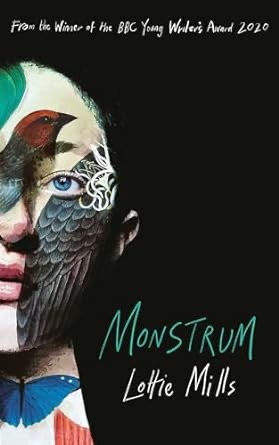
Monstrum by Lottie Mills

This is a very personal review, because when you have a disability it’s impossible to read a collection of stories about bodily difference and it not feel personal. I was diagnosed with Multiple Sclerosis in 1995, but originally broke my back at 11 years old and after years of pain developed Myofascial Pain Syndrome and disc degeneration. Disability and difference have been part of my life for so long but yet I never feel fully part of that world. That’s because my disabilities are usually invisible and I don’t really belong in either world. I even read this while struggling with my health and finally catching COVID. I’m typing up my review while in bed after a radio frequency denervation, where a heated needle is guided towards the compressed nerves and burns them to disrupt the pain messages that refer nerve pain to my legs and lower abdomen. All this goes on behind closed doors because I’m simply unable to get up and out. Then when I can go out, I appear to have very little wrong with me unless I’m using my stick or a crutch. I’m doing what’s called ‘passing’ – able to look like everyone else while having disabilities. So it’s hard to put across how moved I was by this collection portraying ‘otherness’ and how able-bodied people respond to it. Using mythology, fairy tales and a touch of Shakespeare, Lottie Mills has managed to put across so much about life with a disability and what happens when it brushes up against an able-bodied society that’s considered the norm. However, in her world these disabilities become abilities, sometimes magical ones.

The first story in the collection introduces us to a magical island where Cal and his daughter have a beautiful life of warm sand, sea and a night sky glittering with stars. He tells her stories about bear people and she asks him if they are bear people? Yes they are he says, although her mother wasn’t. She was from a human world that’s about to clash disastrously with theirs. In the human world, there’s so much that Cal can’t do because it isn’t set up like their island. In the human world Cal becomes disabled. We then see what happens when human agencies come up against their little family with disastrous consequences. Instead of concentrating on what he can do, they look at him through the prism of their own abilities and only the things he can’t do. How can he possibly look after his daughter properly when he’s so disadvantaged? Mills takes disability theory here and applied it to her character’s lives, which judging by the name Cal (Caliban) come from the type of magical island Shakespeare describes in The Tempest. Caliban has been more recently portrayed in productions of the play as a black man, a slave, or an asylum seeker rather than a monster. Mills makes the point that Caliban is only a monster when we make him one. The original model of disability is a medical one that assumes there is one ideal healthy body and anything that differs from that is wrong and needs to be fixed. When used in a social context it tells you that the things you can’t do in the world are down to your difference from the norm. However, the social model tells us that it is the way the world is set up that creates the disability. For example if all buildings eradicated stairs, creating ramps and lifts within the normal building model, the environment becomes accessible to all. If Cal is viewed in his own environment, he is capable of looking after his daughter. I was desperate for them to be reunited and I also felt a personal yearning to be part of Cal’s world. This fairy tale explains that while agencies like social services and the NHS might think they are doing the right thing for someone, there is often a better solution. That solution champions individuality and concentrates on what the person can do, rather than what they can’t.

In another story we meet a young disabled woman who craves the perfect pain- free body, something I could definitely identify with right now. However, when her wish is granted she finds it difficult to let go of her disabled identity. This was a fascinating exploration of how disability affects the person psychologically. If a disability is innate then it’s the only body that person has ever known. They know the world’s expectations of that body, their own perception of what they might achieve within that body and how able-bodied people perceive them. If the disability is acquired it can be a long and painful process to come to an acceptance of your new body. You must grieve the body you have lost, as well as all the things you expected to do with that body. I have heard many friends tell me that while they’d happily give up chronic pain or a particular aspect of their disability, they wouldn’t want to go through a reverse change and be able-bodied again. There is even a fear of becoming able-bodied again, with all the expectations that places on a person. This story perfectly encapsulates that fight within the self and how far our disabilities are assimilated into our idea of who we are. I loved Lottie’s use of horror and settings where disability has often found a home such as the circus or fairground. Freak shows were popular in the 19th Century, in both the UK and USA, with different bodies placed on show for entertainment and wonder. In fact Coney Island in New York was a hugely successful venue for such shows, where businessmen and entertainers like Barnum were making money from the display of people with differences and disabilities. It certainly wasn’t the wonderful musical extravaganza portrayed in The Greatest Showman. However, it was a place where someone with a disability could make their own money, live in a community where difference was appreciated and accommodated and achieve a level of fame. She lets us know that these issues are complex and look very different from person to person.

There is a beauty in this world of ‘otherness’ and it’s a world made up of an incredible mix of ingredients. Every person with a disability is different so the variety of experience is endless and hybrid bodies, unusual pairings/families and queer love thrives here. Lottie has found a way of balancing how the world sees us and how we see ourselves. She has used magic realism and alternative communities to show the strength there is in accepting disability and making a life with it, rather than constantly fighting to change yourself and remain in the able-bodied world. What was the most interesting thing to me was her understanding of how these issues affect the world of writing and how there are accepted narrative tropes around disability. I studied for a PhD, sadly never completed, where I was looking at how disability is portrayed in autobiography and memoir and whether this was driven by an author’s internalisation of society’s expectations or whether the publishing industry is biased towards narratives that are acceptable to able-bodied readers and they know will sell widely. The public like people who battle against their disability and illness, preferring words like ‘fight’, ‘overcome’ and ‘survive’. The accepted narrative trope is that of a journey from the dark days of diagnosis towards the rehabilitation and a triumphant ending of cure or a successful life, despite the disability. Often people with disabilities read these narratives and feel inadequate for struggling, for not achieving a similar level of ability and success. Mainly they don’t feel represented. Here Lottie shows us these stereotypes and gives us something different – individuality, community and love. Her narratives don’t follow the accepted tropes, instead focusing on acceptance, owning a disability and living with it in a way that works for the character rather than an able-bodied reader. Lottie’s writing manages to latch onto the reader and not let go, but for me it was her refusal to conform and instead confront people’s perceptions of disability. I’m hopeful for much more from this talented writer and that publishers are starting to see the value of individual and adventurous disability narratives that truly represent such a vibrant and varied community.

Published by Oneworld Publications May 2024.

Meet the Author

Lottie Mills was born in Hampshire and grew up in West Sussex, Hertfordshire, and Essex. She studied English at Newnham College, Cambridge, and contributed to Varsity and The Mays during her time there. In 2020, she won the BBC Young Writers’ Award for her short story ‘The Changeling’, having been previously shortlisted in 2018. Her work has been broadcast on BBC Radio 1 and BBC Radio 4, and she has appeared on programmes including Look East, Life Hacks, and Woman’s Hour to discuss her writing. Monstrum is her debut book.

Posted in Netgalley

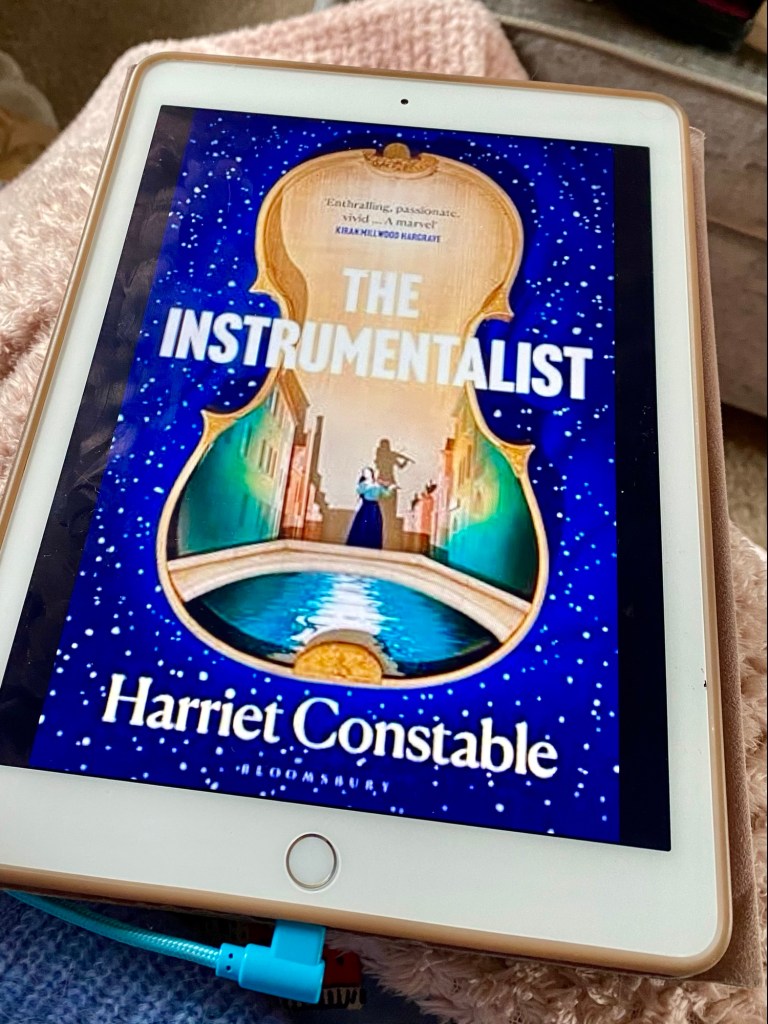
The Instrumentalist by Harriet Constable

Wow! What an incredible debut this is. I absolutely consumed this book and even found myself furtively reading in the middle of the night with a tiny torch. Anna Maria della Piétro is a fascinating heroine and while not always likeable, I found myself rooting for her. Like all the girls at the Piétro, Anna Maria is an orphan, posted through the tiny hatch in the Ospedale Della Pietá often with a note or keepsake from the unlucky girl who had leave her child behind. The author shows us the incredible splendour of Venice, a place I fell completely in love with, contrasted with it’s destitution and desperation. A state that seems more likely for women, especially those from a poorer background. The convent brings up it’s girls very strictly, according to the Catholic faith and the virtues of hard work from scrubbing the floors or working in the nursery. It is also a college of music. Each girl is taught at least one instrument with the best trying out for the orphanage’s orchestra, the figlio. Those chosen will work with the master of music and they will play in the some of the most beautiful basilicas and palazzos in all of Venice. Anna Maria’s great love is the violin and there’s no doubt she will try to become the best.

Anna Maria is a bundle of youthful exuberance, fireworks, talent and ambition. She practically leaps off the page and it seems impossible for her to fail. She starts by aiming to be noticed by the master of music and after that to be the youngest member of the figlio. No sooner is one ambition fulfilled then she’s already thinking of the next. The rewards are also intoxicating – not that Anna Maria cares much for the lace shawls from Burano, but she is partial to the small pastries with candied peel and spices that she loves to share with friends Paulina and ?? Through them we see the girl rather than the musician. They bring out a lightness of spirit, playfulness and a sense of sisterhood. The love she has for her custom made violin is absolutely infectious and when she becomes the favourite of the music master will those girlish aspects of her character remain? Constable shows us a dark underbelly, both to the Ospedale and their music programme. Although the alternatives are even worse. She also shows us huge disparity between the rich and poor in Venice. As visitors we only see the beauty and history of this incredible city, but once I did catch a glimpse of the systems that keep the city going. While waiting on a jetty to catch my water taxi one early morning I met the dustbin men of the city, having to negotiate tiny lanes and creaking jetties to clear up after all the visitors. When Anna Maria gets to play at private palazzos, the grandeur is overpowering. After her performances she is showered with lavish gifts that are at home where she plays but out of place in her bare room. She also notices that those orphans who don’t excel are easy pickings for the rich patrons of the Ospedale. Unsurprisingly, Anna Maria wants to escape the fate of becoming a wife to a much older man and putting aside her talent. As she is taken under the wing of a female patron, Elizabetta ?? She’s impressed by incredible dresses and Elizabetta’s elegant palazzo, but this patron also uses her wealth for good. She shows Anna Maria another fate for the cities’ poor women, by taking her to a brothel where the wealthy woman helps with supplies ensuring these women can make their living in safe and clean surroundings. She points out to Anna the danger in becoming a favourite – there are always people lining up to replace you. When the master is fickle or arrested by a newer, talented young girl what would happen to Anna? It makes her think about the person she replaced for the first time.

I loved the synaesthetic aspect to Anna Maria’s talent because it really added to my understanding of why she loves it so much. I have tastes that are related to colour, so if I see a garden full of beautiful yellow daffodils my mouth begins to water and I get the sensation and taste of lemon sherbet sweets. As Anna Maria plays, colours dance through her and the flurry of colour gives us a sense of how transformative it is for her to play. She is utterly lost in this moments. She’s floating within a rainbow of colour. Even when she begins to compose the written notes on the page are hastily drawn because she’s somewhere else experiencing a unique explosion of sound and colour. Even though she’s not always likeable I was still rooting for her. However some of her tougher decisions are made from within the context of survival. Only by being ruthless and getting to the position of power she craves can she feel safe. Then she can make better, more equitable decisions from a place of safety. This is an incredible story, made all the more powerful because Anna did exist. While this is a novelisation rather than an autobiography she was real and so was her music master . He is a mercurial and sometimes cruel man whose identity remains unspoken – although I did realise who he was part way through. I loved that this is written as a feminist counterpoint to his fame, highlighting a woman of equal talent who is cheated in a creative partnership and ends up with her woke stolen and uncredited. This is an abusive relationship characterised by manipulation, exploitation and a fascination with talented pre-pubescent young girls. Harriet has created a brilliant work of historical fiction that gives voice to one such young woman full of spark, talent and incredible drive to succeed. Her book is totally immersive, plunging us into a world where women were expendable, only there to parrot and enhance a man’s talent. It’s a powerful and compelling tale that I’m sure I’ll still remember when it comes to my end of year favourite books.

Out on 15th August from Bloomsbury

Meet the Author

Harriet Constable is an award-winning journalist and filmmaker living in London. Her work has been featured by the New York Times, the Economist, and the BBC, and she is a grantee of the Pulitzer Center. Raised in a musical family, The Instrumentalist is her first novel. It has been selected as one of the Top 10 Debuts of 2024 by the Guardian.

Posted in Squad Pod

The King’s Witches by Kate Foster

Having only just read her debut The Maiden, I was very keen to get started on this second novel from Kate Foster. This novel is based during the reign of Elizabeth I and James VI of Scotland (James I of England). I knew of James VI’s obsession with witches after studying the Malleus Malificarum at university while writing about disability representation in fiction. I looked at witches while discussing how disfigurement and disability in novels is used as a symbol for evil. The Malleus Maleficarum was the bible for witch finders, describing all the behaviour and characteristics of possible witches and signs to look out for. The book features in this novel as a guide for James VI, who had been alarmed by news of witch hunts in Germany. His proposed bride, Princess Anna of Denmark, set sale for Scotland in 1590 and was driven back by catastrophic storms. The storms were blamed on witches in Denmark and when James travelled to meet her in Norway he heard allegations of witchcraft first hand. Around the same time, in North Berwick, a housemaid called Geillis Duncan was accused of sorcery and when tortured she implicated several other witches, allegedly conspiring with the Earl of Bothwell to take the throne from the King. Kate Foster has taken this history and weaves a story from three women’s points of view, giving a feminist slant on the witch trials that killed thousands over the next two centuries, the majority of them women over forty.

There are three narratives in the book, each one from women who hold different positions in society. Princess Anna of Denmark was a young girl of fourteen when he was betrothed to James VI and attempted to reach Scotland. This has been updated to seventeen in the novel, but at either age there’s an enormous pressure on her shoulders. She has been sent on the basis of a Scottish hand-fasting, if she should please James within the next year he will marry her. If not, she will be ruined for any other marriage and her future looks set to be a life within an abbey. Adding to the pressure, there is a witch burning just before they leave and Anna is compelled to watch, because burnings are a warning to all women. Anna is sickened by what she sees and can’t forget it, convinced as they set sail that the witch is stood on the harbour cursing the voyage and her union with the Scottish king. As it is the sailing does feel cursed because the weather is terrible, sea-sickness is rife and when Anna meets her Scottish tutor Henry every thought of the king is driven from her mind. Anna’s companion and lady-in-waiting is Kristen Sorenson, a pious woman who once lived in Scotland. She is charged with keeping Anna focused on her duty, but she also has her own personal reasons for wanting the royal marriage to be a success. Jura is a housemaid working in the house of the local bailie in North Berwick. Her mother was a cunning woman, treating local women’s ailments with natural ingredients and she passed her knowledge on to Jura. She heals the daughter of the house from a rash and redness on her face using an oatmeal poultice and soon other women in their circle are asking for cures of their own. However, she and the daughter clash over a dalliance with a local farmer’s son and when Baillie Kincaid starts to force his attentions on Jura she decides to flee to Edinburgh. All three women are now caught up in the witchcraft rumours and may have to come together in order to save themselves.

Within a few chapters of the book I felt taken right back to the 16th Century. The witch burning scene in Denmark is see through Anna’s eyes and it is sickening and barbaric to imagine people killed in this way. Before she sees Doritte Olsen burned Anna mentions that even though she is to be betrothed, she doesn’t feel like a woman yet. She doesn’t fully know who she is. She can’t eat and can’t sleep, smelling the smoke on her own hair and knowing that on the beach, Doritte Olsen is still burning down to ash. She starts to see that women have no power in this world and the burning is a lesson – this is what happens if women step outside their role. It left me knowing I was in a different world, where women’s roles are wholly defined by men. Jura senses freedom as she flees to the capital city. Her descriptions of Edinburgh are so vivid as she marvels at houses with four storeys that put the whole street in shadow. She is dazzled by Canongate with it’s gleaming shop fronts, tennis courts and cork-fighting pits. She marvels that her mother never told her such variety existed in one place. The use of Scottish dialect in Jura’s narrative really helps ground the reader in that place and her use of bawdy language made me smile and feel warm towards her.

Here and there, Kate uses letters between the chapters and they had the effect of reminding me that a true story lies behind this novel. After their first night together, she strategically places a letter to the king from his friend Douglas Murray, a fictional character who stands in for a series of lovers the king is known to have had. In a letter that is mainly keeping the king up to date with news from court, he signs off with a curious line:

‘Mostly I await your return […] so that we might embrace each other once more in the manner to which we have become so dearly accustomed’.

The consensus among 21st Century historians is that the king was homosexual or bisexual, but in the context of this story it makes us realise that Anna’s task is a difficult one. She truly will be a wife in duty only and she knows this as she tells Kristen it feels unnatural to be intimate with someone she doesn’t care for in the right way. Her role is to stay quiet and bear children, turning a blind eye to the king’s extra curricular activities. Anna’s description of their intimate relations made me feel sick for her, she senses there is no ‘longing’ in him and I realised that should she become Queen this is her life. She won’t be able to have lovers and her only romance in life would be the way she feels for her tutor Henry. In fact James seems more aroused when torturing potential witches. How I wanted her to run away.

The only women in the novel with a small amount of freedom are those able to earn their own money like Jura and her Aunt Mary who is a healer and cunning woman in Edinburgh. Mary lives alone on what she earns, not in any sort of luxury but at least she has autonomy. The ability to consult a cunning woman is vital for women who might want to stop a pregnancy, boost their fertility or need a charm for love or protection. In this way these autonomous women empower the women around them and accusations of witchcraft subdue not just the woman accused, but every woman in that area. When Jura heals Hazel Kincaid’s facial rash and gets the chance to meet with other local women who gather at the house, she glimpses the chance of a better life:

‘I like healing far better than I like polishing and sweeping and mibbie, one day, soothing grumbling guts and easing flaking skin will help me out of horrible Master Kincaid’s house and away from his prick, and able to rent a dwelling of my own.’

The hypocrisy of the men in the book is infuriating at times. The renowned witch finder Dr Hemmingsen from Copenhagen assures the king that he has a unique way to identify witches, using a bodkin to prick them and find the devil’s mark on their body – the only spot where it won’t hurt. In the same package he has sent the king a golden amulet for protection, carved by a man who knows how to ward off evil. It seems signs and charms are only witchcraft when a man says they are. In fact Anna has never heard so much about the practises of witches as she does from the king, regaling her with tales of baby-killing and orgies with man, woman and beast. Kristen tells Anna that James is becoming a danger to ordinary women and his fervour is a kind of madness, or a licence to abuse and degrade women. Anna has a realisation; a woman’s body is never truly her own, no matter what their position in society. Whether you’re a housemaid whose master decides you’re his property, a witch who can be stripped and examined by men who call themselves god-fearing, or a princess whose family hand-fasted her to James Stuart and didn’t ask her if it was what she wanted. Women must work together if they want to survive. These women are strong, but are they intelligent enough to try and outsmart a king? Kate is brilliant with twists and turns, so I wasn’t surprised to find a few revelations towards the end. I was driven to finish to know what happened to all three women and whether any of them would achieve the freedom they craved. This was a compelling and atmospheric read and cements Kate Foster’s position as a writer of historical fiction at it’s best.

Published on 6th June by Mantle Books

Meet the Author

Kate Foster has been a national newspaper journalist for over twenty years. Growing up in Edinburgh, she became fascinated by its history and often uses it as inspiration for her stories. The Maiden won the Bloody Scotland Pitch Perfect 2020 prize for new writers and is long-listed for the Women’s Prize for Fiction. She lives in Edinburgh with her two children.

Posted in Personal Purchase

The Invisible Hour by Alice Hoffman

After a few years building on the Practical Magic series, I was looking forward to seeing what Alice Hoffman would come up with next. She has based her story around the writer Nathaniel Hawthorne and his classic novel The Scarlet Letter and introduces us to two young women facing difficulties. Ivy is from a rich Boston family and when she finds herself pregnant at 16, she truly expects support. The father of her baby retreats into his wealthy family and the elite university he’s due to attend, taking no responsibility for the predicament they’re both in. Facing her pregnancy alone she talks to her parents who also wash their hands of her, not wanting the stigma or embarrassment. Ivy decides to leave home and climbs out of the bedroom window, setting out to see a friend who she knows will have an idea. She suggests they leave together and make their way out to a religious community she’s heard of in Blackwood, Massachusetts, with a charismatic leader called Joel Davies. When her father decides to look for her several months later he finds the worst, Ivy has a little girl called Mia and has become the leader’s wife. Mia grows up in Joel’s community and he decides who is in favour and what is a transgression. Everyone is punished, but the women particularly so – they might have their hair cut off or even be branded with a letter. Women are not allowed reproductive rights, but nor do they get to keep their children. Children belong to everyone and after a few days with their mother, sleep in dormitories. Books are not allowed and as she grows up books are Mia’s particular downfall. She finds her way to the public library and starts to read American classics like Little Women and Huckleberry Finn. Then she finds a copy of The Scarlet Letter, beautifully bound and very old. On the fly leaf is a dedication:

To Mia. You were mine and mine alone.

Is it perhaps her mother, who does show her special attention despite the rules. She tucks the book into her dress and keeps it. Reading in the barn, where she has loosened a board to keep her treasures behind. She has a small landscape painting of the view from the community’s buildings. Land that was left to Joel by his first wife Carrie. Carrie was also a rich girl, but one who had assets to bring to this Puritan community. Carrie was a great painter, but was often punished lest she become too vain about it. On the back of this painting is an inscription about the lands she owns and a promise that Joel will get to keep it ‘as far as the eye can see’.

One day during the apple harvest, a terrible accident happens and Ivy is killed. Mia is distraught, but as her mothers body is carried away she grabs the red boots that Joel uncharacteristically bought for her mother to have as a keepsake. She knows that now it’s either run or stay forever. Grabbing The Scarlet Letter and the painting she takes a leap, out of the bedroom window and across the fields to the library. The librarian had noticed Mia lurking in there, reading in the warmth. She had a feeling the girl was in trouble so she gave her a key and invited her to let herself in if she is ever in danger. She understands that to keep Mia safe they must move quickly, so she packs up the car and takes her somewhere he won’t know, because nobody knows. She has a long-term partner, a woman she doesn’t live with but trusts implicitly. She knows that with them, Mia should be able to thrive without the community breathing down her neck, to go to school and read to her heart’s content and have the life she has dreamed up for herself.

She also sensed that Joel was a man who wouldn’t give up Mia without a fight.

Of course it wouldn’t be an Alice Hoffman without something magical happening and here Mia experiences a time slip and finds herself in the same time and place as her hero Nathaniel Hawthorne. He hasn’t yet written The Scarlet Letter, in fact he’s on the verge of giving up writing altogether. When he meets Mia their connection is instant despite the centuries between them. They start a love affair, but what will the consequences of that be? Anything they do will change the future. Could her presence in his world mean that the very book that brought her here, no longer exists? In fact the consequences of their love could be even more life changing for both of them. Can she stay in his world? Is there any way he could come into hers? Mia is becoming aware that Nathaniel may have to sacrifice his writing for them to be together and she’s not sure she can let him do that. All the while, her father Joel is still watching and waiting.

I loved the play on The Scarlet Letter here because it shows us how powerless women have been across the centuries. I loved how Alice Hoffman creates this magical setting. The landscape, particular the woods and river, feel like something out of A Midsummer Night’s Dream. It would be easy to dismiss her work as whimsical and romantic, but underneath is a fierce feminist manifesto and an equally fierce defence of the written word. I was aware as I read the novel that it could go the same way as other books that have supported women’s reproductive rights and end up banned. The way the religious community prevent women from controlling their own fertility is a representation of what’s happening in some states of America. Abortion has always been a controversial topic in the US and the rights of women in some areas have reverted back to the early 20th Century. Jodi Picoult often cites Alice Hoffman as her favourite writer and a huge influence on her own work. In some states of America Jodi Picoult’s work is banned from libraries and schools because it concerns issues like abortion, teenage pregnancy, fertility treatment and same sex marriage. Here Hoffman is hugely critical of a community that doesn’t value women’s education, burns books and leaves them with no rights over their own bodies. There’s a part of her magical landscape where desperate women have taken matters into their own hands. They’ve taken herbs or potions to end their pregnancies and have created a burial place for the children they’ve lost and those they can’t bear to have.

Mia’s surrogate parents are the antithesis of Joel’s community. They are intelligent and progressive women who actively encourage questioning and reading. They remind Mia that no matter how moral and righteous a community might seem, if it restricts education, burns books and controls women, believing them to be inferior to men, then it is on the way to being fascistic. It’s so sad that Joel won’t let women read but then uses letters to punish them and control their behaviour, by literally branding them into the skin in a ceremony. Instead of wearing a scarlet letter, an adulteress would be branded on the upper arm with a letter ‘A’. Words and books are the source of our knowledge and that scares men like Joel. This is a brave book and will probably be underestimated, but women have been speaking their truth in ways that fly under the radar for centuries; films or books dismissed as ‘chick lit’ or ‘rom coms’; jingly, bright pop music with dark or subversive lyrics; pretty pink fashion branding the wearer as stupid, like Elle in Legally Blonde. I think there are people who will see the beautiful landscape, the time travel and magical feeling of this nook and underestimate it. I’m hoping readers look for the deeper themes here and see what Alice Hoffman was doing when choosing to use The Scarlet Letter. It’s a much beloved classic that she clearly loves, but it’s also a perfect basis for a story about these women. The ending is perfect for the autumn in that it’s bittersweet. We love the beautiful fall colours, particularly in the part of the USA where the book’s set. Those brightly coloured leaves bring us joy, but they’re also signalling an ending. The beauty of loss. 🍂

Published on 17th August by Scribner

Meet the Author

Alice Hoffman is the author of thirty works of fiction, including Practical Magic, The Dovekeepers, Magic Lessons, and, most recently, The Book of Magic. She lives in Boston. Her new novel, The Invisible Hour, is forthcoming in August 2023. Visit her website: http://www.alicehoffman.com

Posted in Personal Purchase

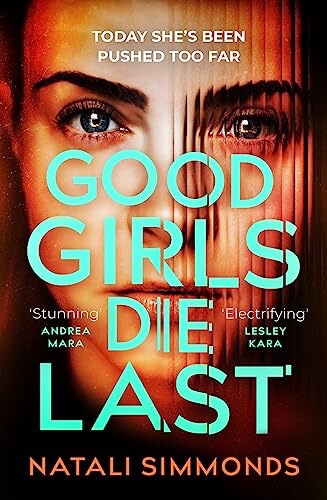
Good Girls Die Last by Natali Simmonds

Wow! This is a searingly raw story, simmering with righteous anger and injustice. Set on a boiling hot summer’s day, you can almost smell the tarmac and diesel fumes. You can hear the traffic noise and feel the agitation and impatience of people trying to get to work without exchanging a word with anyone else. It’s too hot to breathe let alone exchange a friendly word. I had the unnerving experience of reading our heroine’s thoughts and hearing my own words. During the day from hell that Em was experiencing, it felt like some of my own thoughts and frustrations were running round her head. They just need awakening. I have to be honest and say that my age is more in line with another heroine from earlier this year – Amazing Grace Adams – who had her own walk of rage, fuelled by love. However, Em’s voice is a millennial war cry that becomes a national phenomenon in the space of a day. As she leaves her landlord’s bed that morning she expects to look smart for work, especially since she has a HR meeting and expects to be offered a permanent role after completing three months maternity cover with great results. Finally she’s catching an evening flight back home to Spain for her little sister wedding. Her actual day is a complete clusterfuck!

It was her very first thoughts and actions as she woke in the morning that started to build that inner fury in me. First of all her name isn’t Em, or Emily and not even Emma. It’s Emygdia. Everyone shortens it for her. To something that’s more manageable for them. This is an indication of what’s to come and references all those things about women that people find ‘too much.’ Em gets up quietly, so as not to disturb her landlord Matt – son of a Tory MP and an absolute dick. She wouldn’t want to wake him up. She gathers her clothes quietly and scurries away as if she has done something wrong. It’s Matt who’s in the position of power. It’s Matt who has a long-term girlfriend. It’s Matt who started this little fling. Yet it’s Em who has to leave the flat to accommodate his weekend with the saintly Rebecca. It’s Em who shouldn’t be so sexy and irresistible. It’s Em who buys into this bullshit and scurries quietly to her own room as if nothing has happened. As if she doesn’t exist. It made me wonder, what is it she’s so scared of? In fact, what are women so afraid of?

‘you warm-blooded Mediterranean types’, he says ‘all that passion eh? You can’t control yourselves.’ Ah yes the Spanish thing. He talks about that a lot. My long thick hair, the way I use my hands when I talk, my olive skin, how red my lips are, how dark my eyes are, how round my breasts are. What do English girls look like in bed then? Maybe they just lie there silent, pale and still. I doubt it. Maybe that’s just Rebecca.’

This sets up a central idea in the book and it’s title. It’s classic Madonna-Whore complex, the misogynistic idea that there are women you sleep with and women you marry. ‘Emmy’ as Matt calls her, is definitely the former. Like obliging little opposites of a dichotomy Rebecca and Em have never met, but Em has Facebook stalked her. Rebecca, who hates being called Becca, isn’t a large breasted, wild haired, sexy inconvenience. She’s a pale, pretty girl who wears her hair in plaits at the weekend and has a rabbit called Sniffles. She dislikes spicy food and even her favourite colour is mild – who likes mint? She wears loose sundresses and flat sandals. Her figure can’t be seen. She even has freckles. Could anyone be less threatening? This is the type of woman men like Matt idealise, they are the wives and mothers, not to be sullied or degraded in any way. This type of thinking also applies to serial killers. As the character of Rose explains, while men are killing women who deserve it they’re notorious, they’re given sexy nicknames and people make documentaries about them. It’s ok to kill the ‘Ems’ of this world: immigrant girls, homeless girls, nagging wives, pushy girlfriends, women who sell themselves, who wear slutty clothes, who walk home late at night. It’s only when they kill the ‘Rebecca’ types that people sit up and take notice. Girls who are nice, who don’t take risks, who don’t deserve it, who are innocent little angels. This attitude is prevalent in real life, I remember it from both the police and the media during the Yorkshire Ripper investigation. It starts small. Men shout ‘cheer up’ or ‘give us a smile’ as if we owe them a nice expression! As if we owe them pretty. Then there’s the man who wants to buy you a drink, to put their arm round you or touch your waist. It’s a continuum that, at it’s most extreme, encompasses those who use, abuse and even kill. Em has encountered all of these types before – the sexual harassment that costs her a job, the violent father, the user landlord and those she meets throughout the day right up to the London Strangler.

I loved how the author wrote about the body and how ‘other’ women’s natural bodily functions seem to be. There’s a disgust conveyed by men that women buy into and internalise. The shame of being caught out by a period in a public place must be a lot of women’s worst nightmare. When I read it I physically cringed on Em’s behalf. It was interesting that this was the point she meets Rose, who simply accepts this woman she’s just seen cleaning herself up and having to pee outdoors. It doesn’t make her look away or form a value judgement. This isn’t the only bodily function that Em is trying to avoid – sweat, sore armpits where her blouse was too tight, foot blisters – they’re all unladylike and shouldn’t be seen. I go loopy when I see Naked Attraction where women’s vulvas are often praised as ‘all neat and tucked in’ and ‘hygienic’ for having no pubic hair. Apparently we should also have a thigh gap and be in proportion. Sometimes they seem keen to erase so much of us, it’s a wonder we don’t just disappear. Rose is the furious feminist voice in the novel and she’s almost like a mentor to Em, listening and giving frank advice where needed plus the odd political rant here and there. She is her own woman and lives life on her terms. Could Em ever be like that? Could she acknowledge with her friends and her religious family that the love of her life is Nikki, a woman? Could she live a happier life focused on what she loves? Em seems to realise that her destiny is to be an example. Only she can discover which direction to go and the best way to achieve it.

Out now from Headline and currently 99p on Kindle

Meet The Author

Natali Simmonds began her career in glossy magazines, then went on to manage marketing campaigns for big brands. She’s now a creative brand consultant, freelance writer, and fiction author, writing gritty and unflinching stories full of complex women and page-turning suspense (and sometimes a little magic).

Simmonds’ dark, feminist thriller debut, Good Girls Die Last, has been optioned for a television series by STV. As N J Simmonds, Natali penned the fantasy trilogy The Path Keeper and Son of Secrets, and in 2022 was shortlisted for the RNA Fantasy Award for the last book in the series, Children of Shadows. She’s one half of paranormal romance author duo, Caedis Knight, and has also written for manga. 

When she’s not writing or consulting, she’s a columnist for Kings College London’s ‘Inspire The Mind’ magazine, and lectures for Raindance Film School. Originally from London, Natali now divides her time between Spain, the UK, and the Netherlands where she can be found drawing, reading in her hammock, or complaining about cycling in the rain.

Posted in Sunday Spotlight

Sunday Spotlight! Sarah Waters and her Victorian Novels.

This week my spotlight is on an author who drew me in with her incredible Victorian historical novels. I was knocked out by the depth of research, the incredible storytelling and how sexy they were compared to the rather buttoned-up novels from the period. I first became aware of her work when the BBC serialised her novel Tipping the Velvet – a beautiful, but obscure pornographic reference to performing oral sex on a woman. Of course much of the hysterical and prurient coverage in the media was about the sexual aspect of the story. Mostly, I think, due to the relationships and sex scenes being between women. This obsession with sexuality totally bypassed the novel’s picaresque structure, it’s likeness to the work of Charles Dickens and our heroine Nan’s journey of self-discovery. It completely missed what Waters was doing; the book is always described as a lesbian romp, but it is much more than that. Waters was writing back to this point in history and the period’s literature which is largely populated and preoccupied with heterosexual couples and the institute of marriage. The art and literature acceptable to the establishment was influenced by the middle class family values presented by Prince Albert and Queen Victoria. The literary canon mirrors what society presented as the norm or even the ideal. I’ve heard people say that homosexuality and bisexuality is ‘everywhere’ now and ‘you didn’t hear about lesbians in my day’. Actually, the last phrase is more accurate than we might think. No, we didn’t hear about the LGBTQ+ community, not because LGBTQ+ people didn’t exist, but because they were not open with their sexuality and certainly didn’t write about it. Waters openly admits she isn’t writing about characters that existed, lesbianism was so undercover in Victorian London that there is no record of it at all. Waters is redressing that balance. She’s creating characters to represent these minorities and the hidden subculture where they might have belonged.

I was fascinated with the research Sarah Waters must have done to create the rich and vivid worlds that she portrays. One page in and you know exactly where you are, because she engages all of your senses immediately. In Tipping the Velvet, Nan’s upbringing was in Whitstable, Kent. Her working class family own an oyster restaurant and Nan helps out, so when she first meets the performer Kitty Butler she is ashamed of how her hot hands smell. Kitty removes her gloves to shake hands and Nan is mortified by “those rank sea-scents, of liquor and oyster-flesh, crab-meat and whelks, which had flavoured my fingers and those of my family for so many years we had ceased, entirely, to notice them”. Nan is mortified that she smells like a herring, but Kitty assuages her fears, kissing her hands and telling her she smells like a mermaid. This type of description reminded me of Oscar Wilde’s prose in The Picture of Dorian Gray, especially the opening where the lush lilacs are in bloom and the scent is heavy, overpowering and intoxicating to the point of nausea. The descriptions have an element of synaesthesia and wrap themselves around the reader like a mist, taking us to that exact moment. I also loved the switching of gender, allowing characters to experience Victorian London as both sexes in one person and what a different place it could be. Men were largely the only sex who could have these picaresque adventures or ‘romps’ as they are sometimes called, but Waters opens up a whole different world to her characters in just a change of clothes. Waters uses clothes erotically with scenes of dressing and undressing and to represent the gender gap. When Nan and Kitty dress as men the clothes are simpler, they allow an ease of movement and a freedom that women don’t have. She then describes the putting on of chemises, stays, stockings and ribbons, both in the erotic sense of being tied up or bound like a gift, but also to represent the restriction of women. In the most dramatic sense the corset restricts even the woman’s ability to breath. Whereas when Kitty is performing as a ‘masher’, a male drag act, her clothing physically gives her the freedom to perform, but also gives her a pass to be comical and bawdy.

Keeley Hawkes and Rachel Stirling on the cover of the TV series tie in of Tipping the Velvet.

While I enjoyed Tipping the Velvet. I loved Affinity. It has that deliciously gothic feel alongside the same themes of feminism and sexuality. It is a much darker novel, especially if we compare it’s conclusion with the arguably happy ending and the self-actualisation she allows Nan in Tipping the Velvet. Affinity looks at power and possession, it’s very sensual rather than a ‘romp’ and could be categorised as a psychological thriller in the same vein as Daphne Du Maurier’s Rebecca. Set in late September 1874, we meet Margaret Prior, who is thirty years old and described as plain. She hasn’t been sought after on the marriage market and has to find a way to make her life meaningful, but respectable. So she becomes a ‘lady visitor’ at Millbank Women’s Prison, hoping to find purpose after suffering a period of mental breakdown and enforced rest at her parent’s home for the last two years. The pentagonal Millbank corridors seem endless and the doors with their inspection slits become symmetrical, until she opens one and hears ‘a perfect sigh, like a sigh in a story.’ This sigh belongs to the medium Selina Dawes. Margaret’s charitable role is to bring comfort to the women behind bars, but this woman is incredibly different to the poor, sad and often downtrodden women she’s seen until now. This plain woman on the verge of thirty has come to comfort those behind bars, several of whom Waters brings to instant, sad life. Margaret is instantly transfixed by the vision she sees in the ‘eye’ of the door. Selina is captured in a private moment (or is she?) with her face turned towards the sunlight stroking her own cheek with a violet. Margaret finds this pose sensual and records in her diary that ‘she put the flower to her lips, and breathed upon it, and the purple of the petals gave a quiver and seemed to glow…” Could Margaret be that violet?

Selina Dawes is not only beautiful, she’s intelligent and exciting to talk with. The conversations between the two women are thrilling and charged with sexual tension. Selina challenges Margaret’s views on spiritualism as fanciful and suggests that since such a place as Millbank exists, couldn’t anything be real? Strangely, Margaret does become confronted with evidence of the supernatural. First a locket disappears from it’s place in her room, then on another occasion, flowers magically appear. Most strange of all is how much Selina knows about her, even the things she keeps hidden, and very soon she tells Margaret she loves her. Waters weaves Margaret’s weekly diary entries with past ones that reveal a previous attachment to the woman who is now her sister-in-law, including a plan to abscond together to Italy. Clearly, this adventure never happened. We are also privy to Selina’s writing, mainly about her life before prison and how she came to be there. As the visits go on, Margaret starts to accept that Selina has some sort of supernatural power and believes that she is a victim of a miscarriage of justice. Selina asserts that she did not assault a woman at a séance, but were those séances real or fraudulent? I felt desperately sorry for Margaret who appears to have a better life, but in reality both women are in prison. Margaret’s prison is built on class and convention, a mother who doesn’t give her any space and the knowledge that her desires will never be acceptable to her family or society. I was so desperate for her escape.

Zoë Tapper and Anna Madely on the cover for the TV tie-in of Affinity

The third of her Victorian novels is Fingersmith and it really is her masterpiece in my opinion. We’re back in the Dickensian-esque back streets of London and the world of the fingersmiths or pickpockets. The first half of the book is about Sue Trinder, brought up in a nest of thieves with a female Fagin called Mrs Sucksby at the helm. Then one of Mrs Sucksby’s associates comes to her with a plan. ‘Gentleman’ has been planning a con and if it pays off they’ll be very rich; even better than that, it’s all legal. It all depends on Sue to play the part of a lady’s maid to a rich and very isolated young woman. The Gentleman has been wooing this wealthy heiress, who goes by the name of Maud. Very sheltered, with only her Uncle for company, Maud was born an orphan in the asylum where her mother gave birth. Sue’s job is to become her maid and gain the lady’s confidence, so that she can influence Maud into accepting Gentleman’s proposal of an elopement. As soon as they’re married he controls her fortune and if between them they can gaslight her into an asylum, he will make it worth Sue’s while. However, Sue likes Maud and they begin sharing confidences and become friends. Now Sue is conflicted about their plan, but it’s here that Waters has created a twist to end all twists. It’s the best twist in literature and I won’t be convinced otherwise! I can’t tell you anymore about the book without ruining it for those who haven’t read it yet and if you haven’t I’m so jealous that you get to experience it for the first time.

Sally Hawkins and Elaine Cassidy on the cover of the TV tie-in for Fingersmith

These three novels are not linked by anything except their historical period, but in each one you are immersed completely into the 19th Century and the most unsavoury locations and aspects of it. We recognise these filthy streets, this poverty and these villains thanks to Dickens and his Nancy, Bill Sykes and Fagin. When I pick up one of these novels for a re-read I feel like I’m indulging myself because they’re so rich, evocative and sumptuous in both world-building and storytelling. I enjoy her later novels too, but these three were the closest I’ve ever come to that feeling of being a child and discovering the incredible storytelling of Little Women or Jane Eyre for the first time. They always take me back to that formative experience of falling into a book and never wanting to come back out into the real world.

Posted in Publisher Proof

The Seven Necessary Sins For Women and Girls by Mona Eltahawy.

Fuck the Patriarchy!

This incredible book is a battle cry. So I thought I’d start with one. The one Mona uses whenever she is asked to speak at a podium on feminism. I started reading this morning, thinking I would sample a couple of chapters each day over the weekend, but before I knew it, the clock said 3pm and I’d read the whole thing. Once finished, I felt a renewed anger about things that had happened in my life, some of which chimed with the author’s experience. She shows that the patriarchy isn’t just ‘over there’ in the restrictions women live with in Saudi Arabia or in conflicts like the Balkan War or the massacre in Rwanda where rape was used as a weapon. It isn’t just with the celebrities and actors who accused Harvey Weinstein, it’s just that their voices were heard louder than the young black teenagers who accused R.Kelly. Every woman, regardless of race, colour, religion, class, sexuality or the gender they were assigned at birth, are ruled by a global patriarchy. It’s here, with a 47 year old middle class, disabled woman living in the rural wilds of Lincolnshire. You can shop at Waitrose and still be fucked by the patriarchy.

In case you wondered about the profanity, it’s one of the seven necessary sins the author would like women to reclaim and use to fight for equality. So I’m reclaiming it, because this book roused me and made me angry (another necessary sin).

‘Patriarchy is universal. Feminism must be just as universal. I want patriarchy and all who benefit from it to have the same look of terror, as that man in a Montreal club who, before he ran away, took a look at me so he could see the woman who dared strike back. I want patriarchy to know that feminism is rage unleashed against its centuries of crimes against women and girls around the world, crimes that are justified by ‘culture’ and ‘tradition’ and ‘it’s just the way things are’, all of which are euphemisms for ‘this world is run by men, for the benefit of men’. We must declare a feminism that is robust, aggressive and unapologetic. It is the only way to combat a patriarchy that is systemic.’

Every woman who reads this book must be roused by these words and understand that unless we all fight this, unless we all fight dirty and loud, nothing will change.

I could tell you about the author’s arguments, the incredible and eloquent rage that comes through in her writing, and the journey that brought her to who she is today, but I want you to discover this for yourself. I want you to read it and find your own connections to the arguments, the events she describes and have your own awakening. I can tell you about two ways I felt a personal connection with the author’s story and as I was reading how a righteous anger started to awaken within me.

I had a late awakening, about ten years ago really. That sounds terribly late, but there are reasons for that. I believe my mother was a feminist. Until I was around ten years old, she subscribed to Spare Rib magazine and read feminist books. However, our parents then discovered a new church – an offshoot of the American Evangelicals that the author talks about in her book – and everything changed. Despite having been in the Roman Catholic Church previously I hadn’t been old enough to feel it’s restrictions and I had always felt the ability to argue with it’s teachings, encouraged by the visits of our priest to school every week for question and answer sessions. So unfortunately, just as I was becoming a teenager, I came up against one of the most fanatical and restrictive forms of Christianity we could find. I was taught I should be quiet, demure, pure, and ruled by my father. I was taught a shame I’d never felt before, an awkwardness about a body that was growing, sprouting, forming curves too obvious to fit into their rigid boxes. I had to cover up, be modest, but still dress like a girl. Then as I grew older, I was taught the most important rule of all; I should not share my body with anyone else. The author describes this from the Islamic perspective:

‘My upbringing and faith taught me that I should abstain until I married. I obeyed this until I could not find anyone I wanted to marry and grew impatient. I have come to regret that it took my younger self so long to rebel and experience something that gives me so much pleasure.’

It’s a reminder that the ‘cult of virginity’ isn’t restricted to just one religion or culture.

For me, weird youth group sessions ensued where we were taught about which sexual activities were ‘acceptable’ -kissing – and that everything else should be saved for marriage. I was told about the ‘Silver Ring Thing’ phenomenon sweeping America, where a teenage girl would go through a ceremony where she pledged to her father that she would remain a virgin until she married. A silver pledge ring was then placed on her wedding finger, until it was removed for her wedding ring; one symbol of ownership replaced by another. I remember feeling that this was beyond creepy. My sexuality had nothing to do with my father. He didn’t own my body. Eventually I made the decision for myself that what I did with my body was my own business. I couldn’t imagine that God would truly be that interested in what a young woman did with her body. Evangelicals believe that the Bible is the actual word of God, but the truth was the Bible was written by men, edited by men, for the benefit of men. I reasoned that a supreme being had better things to do than police my vagina! So I did what I wanted and lied about it for a quiet life. Once old enough to decide I stopped going to church. This was the 90s, and I would sometimes drive to pick up Mum from church playing Rage Against the Machine and wearing my Hello Boys T-shirt and Wonderbra. We thought we had it sussed, that our mothers had sorted out this feminist lark. We were ladettes. We thought we could drink like men, have sex like men, and do any job we liked. The Spice Girls told us we had girl power and we believed it, but it was all surface and no substance. The patriarchy remained.

Years later, now a 35 year old widow with a disability, and in a very vulnerable place, I met up with my old youth pastor from the church. He didn’t attend any more and assured me he didn’t hold any of the beliefs he’d been trying to in-still us with as teenagers. I realise now that my world had turned upside down and I was looking for safety, but I mistook control for security. As we embarked on a relationship I felt happy and I really needed something positive in my life, not realising that given time, I could find my own happy. I thought the church was the origin of his patriarchal ideas, but really he’d been searching for a community that thought like he did. A place he could find a good, quiet, chaste girl who wouldn’t question walking three steps behind. The abuse started as soon as we were engaged, phases of total withdrawal of attention, time, and sex. Followed by rages if I questioned his behaviour, kicking furniture, throwing things and threats to leave. He was master of this house, he made the decisions, just like at work where he employed seven workers – all women. He isolated me from family and friends and made it quite clear that I was fat, ugly and nobody else would want me if he left me. If I’d had a bad spell with my multiple sclerosis he said I was lazy, needed to try a bit harder and did I realise how hard it was to find me attractive when I was ill? He flaunted cards and Facebook contact from other women and raged if I dared to complain. Luckily my family are persistent, so to get rid of them he took a huge gamble. Behind my back he made sexual advances to my Mum who was ‘more his type and age’ he admitted he liked her ‘quiet nature’ and had ‘fancied her for some time’. When I found out, a huge rage took hold of me so I drove home and asked ‘why haven’t you packed your bags yet?’ I ran round like a whirlwind, packing his bags and I threw them and him out onto the drive. I told him that I knew about his antics and that he had been psychologically abusive for the past three years. I told him I was done. That I wasn’t scared of him leaving any more. I’d rather be alone.

I couldn’t stop thinking about the letter he sent me afterwards, still controlling the situation by telling me he didn’t want to be with me any more, as if I hadn’t thrown his arse out on the driveway. He wrote that he found me ‘too much’. He wanted a Madonna and had found a whore. That he’d tried and tried but he simply couldn’t control me. Everything he wanted in a wife, was described by Mona in her chapter on profanity.

‘Women are supposed to be ‘less than’ and not ‘too much’. Women are meant to be quiet, modest, humble, polite, nice, well-behaved, aware of the red-lines. They are supposed to tread softly and within their limits. I am proud to be described as ‘too loud, swears too much, and goes too far’. When a woman is ‘too much’ she is essentially uncontrollable and unashamed. That makes her dangerous’.

At first his letter made me cry, I was hurt and vulnerable. Then that anger was roused again as I realised I liked the woman he described in that letter. She sounded fun, ballsy and exciting. She was intelligent and didn’t take any shit. She was formidable. So I made a pact with myself that I would always be that formidable woman and teach other women to do the same. Now I have two stepdaughters and I encourage them to speak up, to get angry, to be feisty and loud. This is the passage I read to them this weekend:

‘What would the world look like if girls were taught they were volcanoes, whose eruptions were a thing of beauty, a power to behold and a force not to be trifled with’.

I want my girls to know this. To go out into the world unashamed, uncontrollable and ready to smash the patriarchy for themselves and their sisters around the world. This book reignited my fervour. It may challenge you and your beliefs, but you must read it. Mona Eltahawy is a force to be reckoned with and I applaud her for this manifesto. It is moving and comes from a deeply felt sense of injustice. It is necessary. It’s impolite, brave, forthright and packs a mighty punch. Read it, then give it to your daughters, your nieces and your friends, because every woman should read this.

Meet The Author.

Mona Eltahawy is a feminist author and award-winning commentator and public speaker. Her work has been published in The Guardian, The New York Times, The Washington Post and other publications around the world. She is a frequent commentator on current affairs on the BBC, CNN and Al Jazeera and other media outlets, where her goal is always to disrupt patriarchy. She is the author of Headscarves and Hymens and recently launched her feminist newsletter Feminist Giant. Follow her on Twitter and Instagram: @monaeltahawy

About Tramp Press

Tramp Press was launched in 2014 to find, nurture and publish exceptional literary talent. Based in Dublin and Glasgow, they publish internationally. Tramp Press Authors have won, been shortlisted and nominated for many prizes including the Irish Post Book of the Year, the Booker Prize, the Costa, the Desmond Elliot Prize and the Guardian First Book Award.

Please check out the other bloggers on the tour: