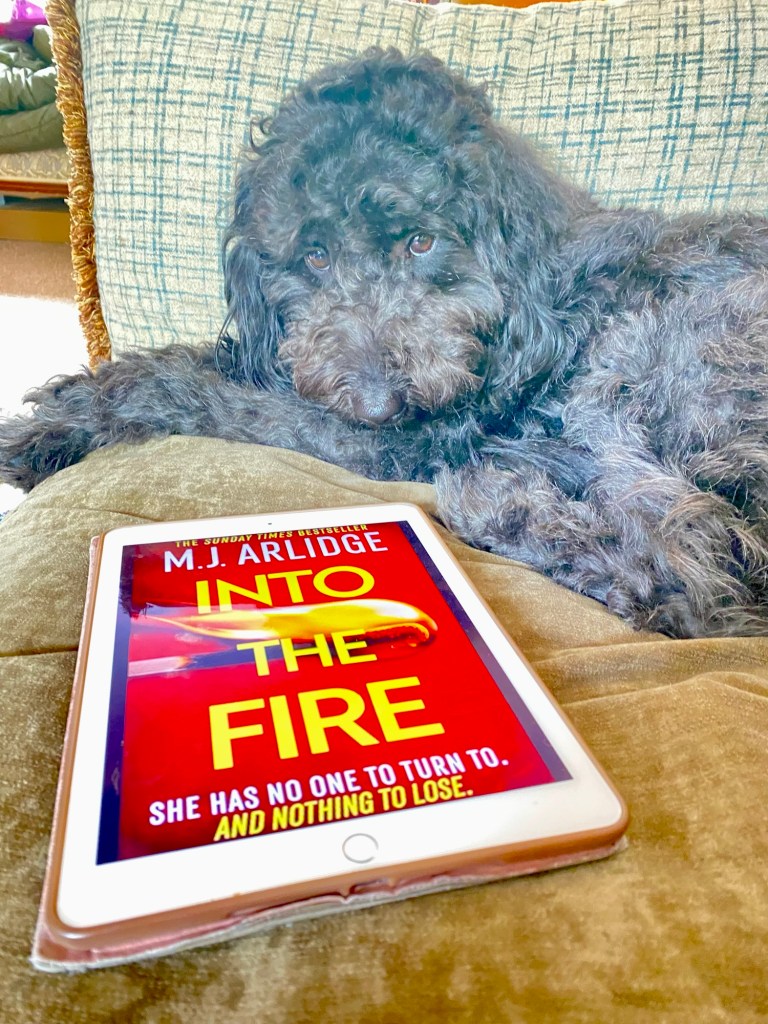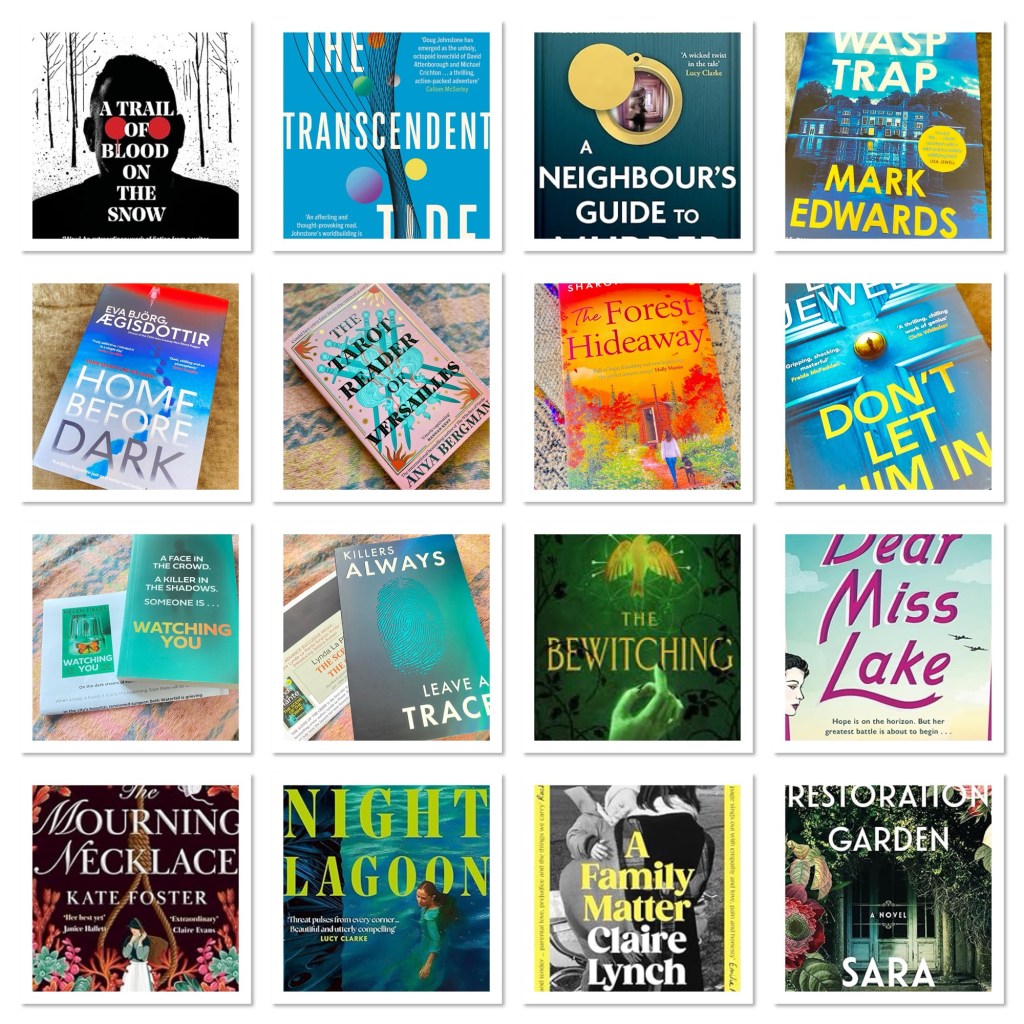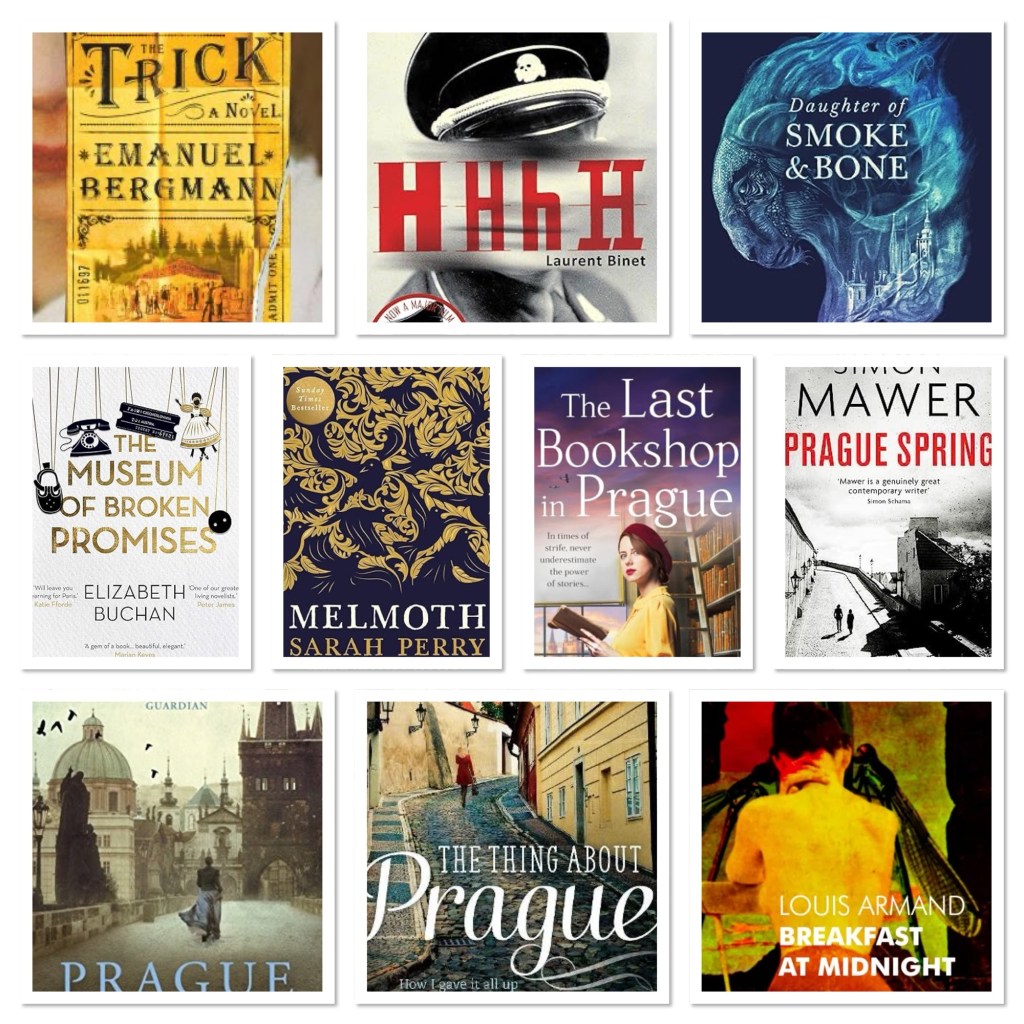
I was born in Scunthorpe in the the 1970s and our family had a fairly set weekend tradition. On Saturdays mum and dad would take us into town on Saturday mornings where we would visit the market and mum would take us to Scunthorpe Library. This was a huge brick building in a square full of pigeons and had a entrance that was a glass pyramid giving it a strange futuristic look. I was left in the children’s library to make my choices. I was always a voracious reader and started reading more grown-up novels when I was ten, my first being Jane Eyre. I loved it when all my classmates were reading the scheme in class and I was allowed to sit in the library alone and read by choice. I can still smell that library when I think about it. But it was in the Scunthorpe library that I first met the Moomins and I’ve been hooked ever since. These plump white hippo- like creatures were so cute and I loved the range of characters Tove Jansson had created. From the tiny light-up hattifatteners that brushed against your legs and felt like nettle stings to the determined and bitey Little My, I’d never read anything like it and I’m sure part of me thought there might be an unknown corner of Finland where they actually lived. Moomin House was a blue tower by a lake surrounded by snow and ice. I’ve recently found out that Finland doesn’t just have the Moominland theme park, there is a genuine Moomin House where you can spend your holiday. It’s the perfect combination for me and my other half, I can immerse myself in reading and he can fish the lake.
Despite having an actual theme park, the Moomin’s world created by Tove Jansson is not a sanitised pink Disney experience where everything is beautiful and everyone is safe. Yes, there are floating clouds you can ride, fantastical creatures full of character and the safe space of Moomin House, always welcoming and happy to see you. Yet, the family have ups and downs from comets, floods and an evil hobgoblin. In Comet in Moominland Moomintroll and his friend Snufkin set off on a quest to find out about a comet hurtling towards earth. In Moomin Summer Madness the Moomin are flooded out of their home and have to go on a trek to find another. In the final book Moominvalley in November, the other characters are waiting for the Moomins to arrive, but there’s no sign of them. As we wait with the others there is a palpable sense of absence and potentially loss. Our beloved friends are often in peril, suffering anxiety or are openly depressed and despairing of life. I realised when I was older just how carefully the books address worries that children and adults both have. Sometimes, it’s a worry or issue that is affecting the real world at the time Tove Jansson was writing. It’s easy to see the comet in the first book as an allegory of real world concerns about nuclear warfare. When read now we can see issues about climate change and the experience of being a refugee in Moominsummer Madness. The Snork Maiden is in love with Moomintroll and worries about her appearance, particularly her plumpness. Snufkin comes and goes from Moomin House, sometimes needing a quest with his friend and sometimes he needs quiet, only his fishing rod and flute for company. This could be read as the response to sensory overload experienced by introverts and people on the autistic spectrum. There’s the rather melancholy Hemulen, he’s a botanist who likes to wear dresses. Mymble is a single mother to Little My who’s a force to be reckoned with. All of these creatures seem to find solace and community spending time with the Moomins.
I always felt that the Moomin house was like my own. The welcoming, non-judgemental and loving Moomin Mamma and Papa are so like my mum and dad. My brother and I did have a penchant for waifs and strays, sometimes people and sometimes animals. We’d bring them home and look after them for a while. I had a friend who would ring my mum and ask if they could come for tea, then he’d wait for me outside school and go home with me on the bus. To be honest he did worry my dad a bit with his huge flared jeans and red Mohican. I was probably a square teenager, I didn’t really rebel and we were brought up in church. I did wonder sometimes what our friends got out of being with us, but at fifty years old I can see that some of our friends were drawn to the comfort and stability of my family. My mum was always home, was a great cook and accepted everyone. My dad was a bit more concerned, especially about boys, but he was a youth worker and used to relating with teenagers. My brother is Snufkin through and through, preferring solitude to being with people and enjoying nothing more than fishing with his dog. He walks off into nature for a weekend with his tent and a fishing rod on his back. My late husband was rather like the Hemulen, not that he wore dresses, but he had that professorial air and focus. I’m an absolute Snork Maiden, impossibly romantic and a little too plump.
I think Tove Jansson created beautiful, endearing characters that would appeal to children, but she doesn’t hold back when it comes to plot. That’s the enduring appeal of these books and the merchandising that has exploded over the years. If friends or family go to Covent Garden they always bring me something from The Moomin Store. I have jewellery, note books, Christmas baubles (including a Moomin House), posters, mugs and glasses. I have a beautiful shadow box and various travel mugs and water bottles. So I couldn’t resist this beautiful Folio Society anniversary edition of Finn Family Moomintroll. As you can see it has beautiful illustrations and I absolutely treasure it. This year is the 80th Anniversary of the book so I’m looking forward to a year of the comfort and nostalgia I still get from these beautiful books.
Meet the Author
In the nineteen-fifties and sixties, one of the most famous cartoonists in the world was a lesbian artist who lived on a remote island off the coast of Finland. Tove Jansson had the status of a beloved cultural icon—adored by children, celebrated by adults. Before her death, in 2001, at the age of eighty-six, Jansson produced paintings, novels, children’s books, magazine covers, political cartoons, greeting cards, librettos, and much more. But most of Jansson’s fans arrived by way of the Moomins, a friendly species of her invention—rotund white creatures that look a little like upright hippos, and were the subject of nine best-selling books and a daily comic strip that ran for twenty years.
Lila’s life is built on shifting sands at the moment. Lila is a single mum to Celie and Violet since her husband died revealed his affair with Mayja, a yummy mummy from the school gates. His betrayal was made worse by the fact Lila was promoting her book, on how to have a successful marriage. Her mum died recently and stepdad Bill and has slowly moved himself from their bungalow a few doors away, into Lila’s house along with his piano and healthy eating regime. To add a further unexpected surprise her biological father Gene turns up looking for a bed. Gene is a hellraiser, a drinking and partying actor whose claim to fame is playing the captain of a starship in a 1960’s sci- fi series. He’s still living off that fame and Lila is unsure whether she can trust him. Bill and Gene can’t stand each other. However, she gives him the sofa bed in her office, where she’s trying to produce three chapters of a new book that her agent is chasing. Lila wanted to write something honest, but the publisher is looking for the humorous and sexy exploits of a newly divorced woman. How can she write in one dad’s bedroom, while her other dad is practising his piano and planning garden renovations. Not to mention dreading school pick-up and having to see her husband’s girlfriend wafting around like a butterfly, waiting for her son Hugo. The final nail in the coffin comes when Mayja announces she’s pregnant. The last thing Lila feels like doing is pursuing romance, but to keep her agent and publisher happy and the roof over their heads she is going to have to come up with some sexy exploits. Enter Jensen the gardener and Gabriel the architect, but can Lila carve out any time for them or herself?
Lila’s house is something quite rare in fiction, which sometimes feels full of American fridge freezers and Quooker taps. It has quirks like ancient coloured bathroom suites and a toilet that blocks regularly. Celie is 16 and clearly dealing with something at school that she won’t talk about. Violet has had to cope with a boy in her class now being her step-brother, not to mention no longer being the baby. Pressure builds for them all as Mayja becomes unwell and has to be at hospital until the birth of their baby. They are living of the last of Lila’s money from her first book, but it won’t last forever and submitting one of the most raw and honest pieces of writing she’s ever done only to see it rejected, is very hard to take. I had my hear set on Jensen from the minute he came to do the garden because there’s no barrier or mask with him, what you see is what you get. As he and Lila start to talk about Bill’s plans for the garden, often sharing a brew outdoors and chatting, there’s a clear friendship growing. He’s so easy to talk to and remarkably open. Gabriel is his polar opposite in a lot of ways, there’s an instant attraction for Lila and a lot of messaging back and forth but I could sense that he wanted to be in control of their interactions. I am very wary of men who pick you up and then put you away when they’re done, like a worn and boring plaything. There’s a lot of humour in Lila’s attempts to gather sexploits for her book, but there’s clearly potential for people to get hurt too. I also learned a few terms, most notably ‘bread crumbing’ which I’ve been subjected to a couple of times. Similarly, a previous partner described me as ‘too much’ so I had a t-shirt made with ‘too much’ on it and wore it proudly, sad for myself that I spent time on someone who wasn’t enough. This is something Lila comes to realise, maybe Dan’s affair was a symptom of their relationship going wrong? If only she’d known it was ok to take up space.
‘She thinks sometimes that she always felt she was a little too much for him, too needy, too angry, too sad, too hysterical.’
I really fell in love with this family, as unwieldy as it is somehow it does work. I admired Lila, who tries her best to be on board with the changes in her life especially around her marriage. She knows that the girls will have a sibling but can she accept Dan and Mayja as part of that family? Their relationship does hurt her, but her feelings aren’t going to stop them becoming parents and she wants her girls to have a good relationship with the baby. I thought she was incredibly brave to try and put herself back in the dating pool, something I’ve always avoided. I used to say that if someone comes into my life that’s fine, but I’m not wasting my free time on people I potentially don’t like, especially when there are good books waiting on my TBR! Luckily my husband did just that. He walked (fell) into my front door and I feel like we’ve never stopped talking since. You can see the work Lila has done on herself as she dispenses little bits of wisdom on the way:
The dynamic between Gene and Bill is funny too, it’s immediately antagonistic but their bickering made me smile. Bill is angry thanks to all the things Lila’s mother, Francesca, has told him and for his desertion of his wife and daughter. Bill sees Lila as his daughter and has never had any competition for her affections. There’s obviously a fear that Gene will pick Lila up and then drop her again, even worse there’s now Celie and Violet to consider. Bill has always shown love in the way he cooks healthy meals for the girls, picks them up from school and spends time with them. Gene wants to have fun with them, Violet is especially fond of snuggling up on the couch after school and watching her new Grandad’s old sci-fi series. Celie is more difficult to befriend, but Gene is surprisingly perceptive and works out what’s wrong, giving her good solid advice that works. Far from this being a bed for a couple of nights, Lila can actually see him fitting in with their family and that scares her. Especially when she finds out there are secrets about his relationship with her mother that surprise her and potentially hurt Bill.
I read this books so quickly because I felt I was observing a real family, with all the chaos and the rollercoaster of emotions that comes with it. I loved that in a family with so many people, there was always someone who could be there for somebody else, like Gene is there for Celie. There’s so much acceptance in this novel and it’s a great message for a New Year where we are pushed into thinking we need to detox, eat less, go the gym, run 5k and all that other rubbish. Lila learns to accept the change in her life, but will she move on when she’s ready, rather than for a book deal? She also has to accept that a person can have huge flaws, but still have a place and the ability to be a support for others. Bill has to accept Francesca is not coming back and the Gene who hurt Francesca all those years ago isn’t the Gene in front of him now. Both the girls have to accept that they now share their father, but could build a new relationship with Mayja and their new sibling that enhances their life. There are so many breakthroughs here that I can’t list them all, but I did identify hugely with a scene where Lila finally takes some time for herself and has a massage, encouraged by her friend. In the final throes of my last relationship I visited a Bowen Therapist and had a similar experience.
‘something wells in her, an emotion unlocked by the reality of another human being touching her, listening to Lila’s body, feeling its pain and its tensions and carefully remedying them. Suddenly, she feels a great swell of something overwhelming her. Grief ? Gratitude? She isn’t sure. She becomes aware that she is weeping, the tears running unchecked through the hole where her face is nestled, dropping onto the floor, her shoulders vibrating with an emotion she can no longer hold back.’
This was a beautifully written moment where someone is just there for Lila and the weight of holding everybody up can fall from her shoulders. It’s the first time she has taken for herself and all the emotions she’s kept in check can come out. I love how Jojo Moyes writes women and the mental load we carry for everyone around us. A load more exhausting than childcare, housework, career all rolled into one. Here she lets go and it’s the point at which she starts to rebuild her life. Does she pick the gardener or the sexy architect? I’ll leave that for you to find out.
Out on 11th Feb from Michael Joseph.
Meet the Author
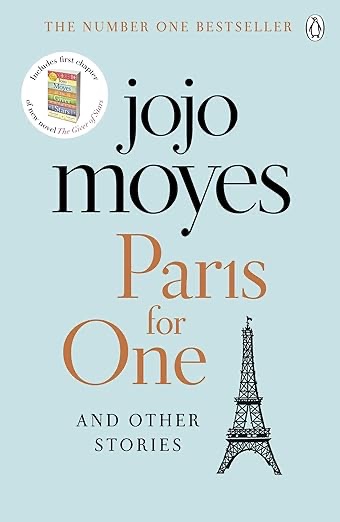
Jojo Moyes is a novelist and journalist. Her books include the bestsellers Me Before You, After You and Still Me, The Girl You Left Behind, The One Plus One and her short story collection Paris for One and Other Stories. The Giver of Stars is her most recent bestseller and Reese Witherspoon Book Club Pick. Her novels have been translated into forty-six languages, have hit the number one spot in twelve countries and have sold over thirty-eight million copies worldwide.
Me Before You has now sold over fourteen million copies worldwide and was adapted into a major film starring Sam Claflin and Emilia Clarke. Jojo lives in Essex with her family.
This book was so beautifully written and so deeply painful that I was out of breath towards the end. When I put it down I had to sit in silence for a while and just digest it all. It’s the story of a woman trying to leave a relationship that is tying her down and eating her alive. Everything she was before – bright, intelligent and full of life – has been worn away. Enduring her husband’s treatment, as well as having two children in four years, mean Ciara has had enough. She can see his behaviour as a pattern and despite being absolutely terrified she needs to find the strength to go. Ciara has no real support, her family is Irish but live in London and despite her yearning to see her mum sister the law states that she can’t take the children out of Ireland without the written permission of their father. Her only option is the housing office, present as homeless and hopefully get some emergency accommodation. As she meets other women in the same situation, she founds out that emergency and temporary have a very different meaning to the housing department. They offer her a temporary hotel room, but some women on the floor have lived there for a year so it’s going to be a long slog. This small double room with one bed and no view is the first place they’ve felt even remotely safe, even if they do have to go down a separate staircase so they don’t bump into tourists. Will Ciara have the strength to stay away and build a new life for herself?
Money is something else she needs to work on because she knows nothing will come from him, even when she knows she is pregnant for a third time. They can’t live on what the government provides. It’s only going to cover day to day subsistence and she needs to be able to put money aside, to rent somewhere that’s a new home for them all. She needs to find a place where they can put themselves back together. I loved the solidarity between the women living in the hotel. They work together, being there for each other’s kids when they need to interview or view houses. They make each child’s birthday special, as well as decorating the whole corridor for Halloween and Christmas. Some of the hotel staff help too, particularly the porter Diego. Ciara lands a job doing what she did before the girls, teaching English as a foreign language and having to learn Irish on the side. It’s a hard way to live, having to get about on foot and working on her Irish after she’s put the girls to bed. I was saying in my head ‘please don’t go back’ over and over.
Ciara’s husband terrified me. He follows a pattern, having love-bombed Ciara in a whirlwind romance he changes straight after she moves to Ireland and they’re married. His restrictions and rages, plus the birth of both girls have left Ciara stuck at home, friendless and a constant target. I recognised the fear she was feeling on a daily basis, quietly tip-toeing around him, desperate to avoid igniting his unpredictable rage. Trying to keep her girls shielded from the worst. I have to make an admission here so that you can understand the strength of my reaction to this novel. For four years, after I lost my husband, I was in an abusive relationship. I was incredibly vulnerable and although he didn’t touch me physically I was terrified of him. I was subjected to manipulation, rage and withdrawal of affection all because I was terrified of being left alone. I was so scared he would leave if I didn’t keep him happy and then I’d be left alone with my grief. I’d needed a happy ending so badly, I sleepwalked into a nightmare. I allowed myself to be totally disrespected and abused. I know it wasn’t my fault. He is responsible for his own actions, but I still felt so much guilt about when the relationship was failing. So for me this book was really personal and it was so well-written that I felt Ciara’s story bodily. When I finished my chest was tight and my throat was sore. I felt absolutely wrung out.
Ciara wondered what would happen when he was awarded visitation by the courts? She knows he won’t hurt the girls but he might use them against her. What if he doesn’t bring them back? This particular fear heightens after she goes into labour early. How can she hand over a completely defenceless baby? It’s clear to see his misogyny when he reacts to finally having a son and I feared that he might keep him. I felt really uncomfortable about the nestling crows he brings home to Ciara when they’re still together. They’re in their nest, barely a few days old and he wants to hand rear them. They are so bald and vulnerable and I was scared he would hurt them, but he seems to enjoy the control he has over these helpless creatures. After Ciara flees he is left with one crow, now feathered and able to leave the nest he keeps it in the house, shitting and shedding feathers everywhere. He tethers it with a long lead outside, showing it the freedom it could have but keeping it for himself. It feels unbearably cruel. It’s such a clever and chilling metaphor. This is not a comfortable read, especially if you’ve been through an ordeal like Ciara’s. What helps is when an author is brave enough to use their own experience or research to get it right for readers who’ve survived abuse. He author has written this so carefully and made Ciara’s life so real that I felt seen. I find that the more I read about other experiences of coercive control and psychological abuse the stronger I feel. Yes, I was left with tension, but I was also left with triumph. It is possible to leave men like this. It’s possible to live a full and happy life. I read on hoping with all my heart that Ciara would make it through and build a new life for her and her children. Underneath my fear I was storing up hope for her. I hoped she knew how much strength she had. She could leave. After all, I did.
Out on 30th Jan from Simon & Schuster
Meet the Author
Roisín O’Donnell is an award-winning Irish author. She won the prize for Short Story of the Year at the An Post Irish Book Awards in 2018, and was shortlisted for the same prize in 2022. She is the author of the story collection Wild Quiet, which was longlisted for the Edge Hill Short Story Prize and shortlisted for the Kate O’Brien Award. Her short fiction has featured in The Stinging Fly, The Tangerine, the Irish Times and many other places. Other stories have been selected for major anthologies such as The Long Gaze Back, and have featured on RTÉ Radio. Nesting is her first novel. She lives near Dublin with her two children.
For years and years, when I’m asked the question which book has hit me hardest emotionally I’ve always had to say One Day by David Nicholls. It’s the last book that made me cry spontaneously for one of the characters. I still remember the exact line. Now I’ll be able to say Leaving was the last book that absolutely tore my heart out. Sarah sees Warren, who she dated for a while in their college years. She had ended it, unsure whether they were a good fit. Yet they never stopped thinking about each other. Sarah is divorced now and lives alone in her country home with her dog Bella for company. She has a daughter who’s married and lives a distance away with her husband and two children. Sarah works at a gallery, currently putting together an exhibition about the Bloomsbury Group. Warren lives just outside Boston and has his own architectural practice in the city. He’s married to Janet, exactly the sort of wife he has needed: attractive, a good hostess and great mum to their daughter Kattie who is an older teenager. However, his wife is also a snob, very aware of who should be in their social circle and how things should be done. They don’t talk about current affairs together, listen to an opera or read the same books. Perhaps their marriage has always been like this, but it feels empty since he saw Sarah again. Can he spend the rest of his life in this marriage as he promised or can he be with Sarah? If he leaves what price will he have to pay?
This novel is so clever in the way it engages with your morals and emotions. I was so caught up with the romance of Sarah and Warren, so much sweeter because it is second time around. I felt their urgency. It’s unthinkable thar they shouldn’t grab, what feels like, a last chance of happiness. I felt so much for Sarah, who is an intelligent and self-sufficient woman post divorce. She has such a solitary life, seemingly with a handful of friends. Her life is made up of her job, her home with poodle Bella and occasional visits with her daughter and son-in-law. I loved the tender moments she has with her dog, something I understand completely and just as important as anyone else when considering big life decisions. It feels like she’s where she belongs on the edge of the reservoir walking with her canine companion, so in tune together. She does feel a little remote from her daughter, wanting to be like other grandmothers who look after their grandchildren regularly and have one multi-generational family. Sarah doesn’t quite feel invited into her daughter’s life. I didn’t feel any dislike for her or begrudge her happiness with Warren, even though it comes at the cost of his wife’s happiness. They felt easy and uncomplicated together. Sarah thinks of his wife but doesn’t feel like the other woman because he was hers first. Their relationship is a continuation of something started long ago, or is this simply their justification for something outside their normal moral code. The author beautifully captures those heady romantic moments of a new relationship with simple moments, the joy of receiving flowers or the secret smile that comes from a loving text in the middle of a working day. Sarah doesn’t lie to her own children, she tells them she’s seeing someone from her past. That he’s married. They are happy for her.
Warren’s life is more complicated. The author takes us between his and Sarah’s inner thoughts seamlessly. They are two halves of a whole. By comparison his married life feels mundane and rather one note, but it’s unfair to compare a new love or even a recaptured love with thirty years of married life. A few deft touches show us a marriage that’s become routine, Janet’s red house dress being just one. The reappearance of a frozen chicken pot pie is a beautifully used example. It appears early on, only to be replaced with a beautifully cooked beef bourguignon as Janet tries to win her husband back. It promises so much, this is how it will be from now on. Only to revert to chicken pot pie again, but it isn’t just a pie, it signifies a marriage that’s fallen back into a well worn groove. It screams ‘is this it?’ Janet has done nothing wrong, they haven’t had a bad marriage and when Warren feels the weight of those years there’s a fondness, a gratitude for all those shared moments that make up a marriage. He is both grateful for them and buried beneath them. Does he deserve to climb out from underneath them? Or is it an unforgivable betrayal of everything they’ve shared as a couple and a family?
I loved some of the subplots to the main love story. I found Sarah’s work fascinating. I remember talking to someone ar the V & A about one of their fashion exhibits and the process of creating something with such impact. I hadn’t known a job existed where you could sit and discuss a artist’s work, then choose the pieces you want to tell a story. I thought the quandary over whether to go with a well- known scholar on the Bloomsbury group versus a newer academic voice echoed the love story so completely. The best known scholar may promise something new but will likely deliver something competent but safe. The newer voice might offer something dynamic and new but they aren’t a very big name yet, is newer always better? Sarah’s daughter’s third pregnancy isn’t easy and terrible news brings Sarah deeper into their lives and closer to her grandchildren. I also loved how Kattie’s wedding placed stress on her whole family, especially where Janet wants the big, formal society wedding and her daughter starts to feel overwhelmed. The wedding planner tells them that a wedding is basically a microcosm of society, the one of which their family is a part. People aren’t perfect, so weddings never are either. Neither is marriage.
Everything about this novel rings true, from the details that set each scene to the love story that binds everything together. It’s exquisitely written, drawing you in so very slowly, then unravelling quickly to it’s emotional conclusion. There’s a point in the book where I have never wanted to slap a character more! Even though their actions are understandable and possibly morally justified, I was still absolutely furious and had to share the story with my husband whose immediate response was exactly the same. Once an affair starts to turn into something more, so many decisions have to be made and the sacrifices those choices will create become stark and very real. Sarah has imagined living with Warren, but she’s always thought of them at her home. This is where she rebuilt herself after her divorce. It’s a place she loves and doesn’t think she can give up. Arguably, Warren’s choices are even more difficult. He knows if he does this, his relationship and happiness with Sarah will come at the cost of someone else’s feelings. On the scales does one happiness outweigh another? Or are some costs simply too great? I simply loved this book and although it’s only January but I have no doubt this will be in my best books list come the end of the year. I would happily read everything else the author’s ever written.
Published by Magpie Feb 2024
Meet the Author
Roxana Robinson is the author of eleven books: seven novels, three story collections, and the biography of Georgia O’Keeffe. Four of these were New York Times Notable Books.
Robinson was born in Kentucky, but grew up in Bucks County, Pennsylvania. She attended Bennington College and graduated from the University of Michigan. She worked in the art world, specializing in the field of American painting, before she began writing full-time. Her novel, Cost, was a finalist for the NEBA, was named one of the five best fiction books of the year by the Washington Post and received the Fiction Award from the Maine Publishers and Writers Association.Her novel, Sparta, was named one of the ten best books of the year by the BBC, and won the James Webb Award for Distinguished Fiction from the USMC Heritage Foundation, and the Fiction Award from the Maine Publishers and Writers Association. Her fiction has appeared in The Atlantic, The New Yorker, Harper’s, Tin House, Best American Short Stories, and elsewhere. Her non-fiction has appeared in The New York Times, The Washington Post, Bookforum, Harper’s, and elsewhere. She was twice a finalist for the NBCC Balakian Award for Criticism and has received fellowships from the National Endowment for the Arts and the Guggenheim Foundation. She teaches at Hunter College, has twice served on the board of PEN, and was President of the Authors Guild, where she continues to serve as a member of the Council. She lives in New York and Connecticut, and spends as much time as she can in Maine.
I love reading debuts because you’re never sure what you’re going to find and this tale of two adult siblings who lose their parents suddenly has all the family dynamics and trauma that I love to untangle in a novel. Jamie and Caz are used to their parents being top of the social scale in their area, a small village close to a market town in Yorkshire. Their family home is a hall in the centre of the village, where Jamie still lives alongside his parents having not found his career path yet. Caz has left home, but has a chequered history of teen pregnancy and alcoholism. She married husband Steve after he came to work on the hall’s electrics when her first little girl was only a baby and she had been sober for several months. Now they live in a cottage a short drive away from her childhood home and recently she’s had another baby. The catalyst to their problems is the loss of their parents. One Sunday both siblings are there for lunch when Jamie and his father clash over what he sees as his son’s fecklessness when it comes to making a life for himself. Jamie has secured a job with the local estate agents but desperately needs to sell a house this month. The best thing in his life is his recent relationship with local vet Zoe. What Jamie loves is his piano, but he doesn’t think he has the skill of a concert pianist. This Sunday he decides not to take his father’s criticism and storms out in a huff. That night the hall goes up in flames, so fast that no one could escape and the hall is burned to the ground.
For both siblings the village now looks like a set of teeth with one missing. The huge gap left in the centre is soon boarded so no one can see the wreckage, but it doesn’t allay the shock. Caz is immediately emotional, dazed even and takes refuge with Ruth, their housekeeper who lived next to the hall. Jamie seems frozen. The only thing he wants to save is his piano but it is damaged, maybe beyond repair. Insurance will take care of it and will hopefully rebuild the hall, but do they want that? They have no idea about their parent’s wishes, for the meantime Jamie has to buy some clothes and moves in with Zoe. It’s very early in their relationship but Jamie thinks they’ll get along fine. As he moves through life like an automaton, Caz starts to slide downhill. Gin was her usual tipple, but avoiding that she thinks an occasional glass of wine won’t hurt. One glass soon becomes a bottle and as she starts to hide her stash from Steve we can see that this could be a serious relapse. So can Jamie, but he’s having his own problems. The turmoil in his life is too heavy for the early stages of a relationship. Zoe had no relationship with his parents and although she can listen, she still has her own routine of riding and looking after her horse, whereas at the moment Jamie is sleepwalking through work and every time they are intimate, visions of the hall burning down come into his mind and ruin the moment. He’s not sure if he’s dealing with his grief at all. When Zoe decides they need some space from each other, he moves out to Caz and Steve’s house. Now he’s noticing that his sister isn’t coping either and his nieces are suffering. How can the siblings best help each other to cope?
I loved how the author shows grief hitting people in different ways. In some ways Jamie has never had to grow up. Living under his parent’s roof has enabled to try jobs and leave them with minimum consequences, while away hours in the village pub and not think beyond tomorrow. Caz has also depended on her parents, dropping out of university pregnant and with an alcohol problem. She moved home and had her baby there, until Steve actually walked through the door for a contracting job and they fell in love. For both of them, there’s now no safety net and the place filled with all those memories has gone too. Jamie also fears the loss of his piano, which has been lifted from the wreckage and been sent to a specialist repairer by the insurers. Music was the way that Jamie processed his emotions and without it he seems strangely neutral all the time, occasionally tapping out melodies using his fingers on whatever surface he find. Caz is more erratic, grabbing convenience foods instead of her usual home cooked meals and forgetting the girls activities or even to wash their uniforms. When the drinking starts Steve stays away from it, leaving Jamie with a full time job and two small children to feed and get out of the door in the open. He knows teachers have noticed the girls are a bit unkempt, but he doesn’t want to drop his sister in it. He just keeps smiling and nodding that everything’s okay. There’s only one person that won’t have the wool pulled over their eyes and that’s their parent’s housekeeper Ruth. Caz fears not letting the emotions out. Jamie thinks if he gives in and feels his emotions he might fall apart completely.
Through Jamie the author shows how grief can change our outlook on life completely. He becomes sentimental about an old couple looking for a house. He has a beautiful Georgian house on the books and he’s shown it to a rude and superior client with an enormous dog who didn’t seem interested. Then he has an adorable old couple who want to downsize and be closer to amenities, but he needs a studio to work in and it is in town. When he shows it to them he knows it should be theirs and when they offer he is ecstatic and shakes hands. Then the first woman comes back and offers 10k over the asking price, but Jamie says it’s already sold and turns her offer down, much to the fury of his manager. Jamie feels different, where once he might have taken the high offer now he can’t. Does he see his own parents in the old couple? Or is it that loss has given him a conscience? I really identified with this because after being seriously ill I returned to my work as an advertising rep only to struggle with selling newspaper space. It felt so trivial in the scheme of things I simply didn’t have the killer instinct. This was when I was sacked but went on to train as a counsellor and worked with the Mental Health Team in my area. It felt like I’d helped someone every day I went to work and it felt more in tune with my changing values.
I really felt for Jamie and wanted him to get his piano back and be able to express himself more. I was also so happy at his care for his nieces and his loyalty to his sister. Underneath the immaturity Zoe was concerned about, he’s a kind, perceptive and caring man. I was hoping they would find a way back to each other. Similarly I wanted Steve to reconnect with his wife and family and realise that while keeping a roof over their head was important, so was spending time together as a family. The author’s setting is perfect and having lived in villages all my life, I knew they come with beautiful countryside around them, but also residents who want to know all of your business. As my parents get older I do wonder what it might be like when they’re gone and I’m now the oldest member of the family. They’re my anchor, but so is my brother and I know our relationship will probably be stronger. I think the author makes it clear how seismic a shock it is when someone close to us dies. I loved the play on musical terms because the storyline has a tempo and Jamie is our conductor, desperately trying to keep the orchestra together towards the crescendo and beyond. This is a thoughtful and real story that had a lot of heart in it.
Out now from Flying Dog Press
Meet the Author
Joanna Howat trained as a journalist and worked as a news producer for BBC Radio 5 Live. She now lives in her native North Yorkshire with her family and two spaniels, and is a keen classical pianist. Crescendo is her first published novel.
When Ruby McTavish Callahan Woodward Miller Kenmore dies, she’s not only North Carolina’s richest woman, she’s also its most notorious…
This addictive thriller was set in the Blue Ridge Mountains and gave off distinct Saltburn vibes with it’s resident family and the outsiders who’ve come to stay. Camden was adopted by the infamous Ruby McTavish, Carolina’s richest woman and childhood victim of a kidnapping plot. Camden has been estranged from his adoptive mother for years, walking away from the family money and living an ordinary life with wife Jules. When he receives a visit from his cousin he can’t ignore his family any longer. Ruby has left Ashby House, the family home, to Camden despite the fact he doesn’t live there or speak to any of the family that do. His first instinct, on being asked to return to his childhood home is to refuse, but Jules persuades him that they should take the trip. Ashby House is famous because Ruby McTavish was kidnapped from the grounds when she was a small child, but then returned. Ruby was famous locally: for the kidnapping, for the wealth she inherits from her father Alexander McTavish who was a lumber magnate and for the amount of times she was married. Can Camden make peace with his eccentric step-family members who rely on Ashby House for a roof over their heads? Or will he sign away his inheritance and turn his back on them forever?
Ashby House is as eccentric and jumbled up as the family that remains and is set in a beautiful spot with the Blue Ridge Mountains providing it’s backdrop.
‘Built in 1904 by lumber magnate Alexander McTavish, the house is as eccentric as the family who owns it. Part Victorian, part Palladian, it features smooth gray stone and peaked roofs, marble patios and leaded windows. It should not work and yet, miraculously—almost mystically—it does. Guests of the home have commented that there’s something about Ashby House that makes you feel as if the rest of the world does not exist. As if you could stay safely tucked behind its walls forever and want for nothing else.’
Jules is charmed by the house, particularly the view from the porch up to the mountains. Up till now she has been satisfied with their life and their cosy little flat. She was used to being anonymous. Now she can’t shop in town without special treatment, everyone seems to know that she’s Camden McTavish’s wife. Even if some family members thought Cam shouldn’t inherit, not being a blood McTavish, the town seemed to accept him. As the remaining family members at Ashby start to manipulate and jostle for position, I wondered whether Jules was growing rather fond of the life that her husband had vowed to leave behind. Though it was becoming clear that being part of this particular family is a bit of a poisoned chalice. It felt all the time that a game was being played out but I had no idea who had devised it. I loved Ruby’s letters, beautifully placed between the main narrative, explaining her motivations and serving up some brutal honesty about her husbands. Strangely, although her behaviour is reprehensible, it’s hard not to like Ruby. She’s audacious, daring and has a dark humour I really enjoy. However, she’s also self-centred and devious. In fact most members of the family could be described this way. Ashby House is a viper’s nest of ego, deception, manipulation and avarice. I worried that Cam and Jules would submit to it’s deathly grip. Could that incredible porch view and the ease of a life with money win them over?
The first chapters of the book are a little slow and I was unsure about where it was going at first. After that we get Ruby’s letters, but also the family history that Cam wants no part of, as well as a build up in the tension between the family members. This starts to grab you and the pace picks up all the way to the end. I started to wonder where revelations might come from next! While everyone was under one roof it started to feel like an old-fashioned detective novel/film with an ensemble cast and a plot straight from a Knives Out or Agatha Christie film. This unusual mansion is something of a labyrinth, with each family member quietly plotting and conspiring in their own corner of the building. The slightly overgrown grounds, mountains and sheer cliffs gave plenty of opportunities for ‘accidents’. The author was brilliant at a quick reveal, then immediately hitting you with another suspicion or question. I loved the long running theme of nature or nurture. Is deception in the McTavish blood or is it simply learned by watching generations of machinations nesting in Ashby House?
Out now from Headline
Meet the Author
Rachel Hawkins (www.rachel-hawkins.com) was a high school English teacher before becoming a full-time writer. She lives with her family in Alabama, and is currently at work on the third book in the Hex Hall series. To the best of her knowledge, Rachel is not a witch, though some of her former students may disagree….
This was my read for over Christmas week and having started a couple of novels only to put them down again, I was beginning to think I’d lost my reading mojo. I was crying out for something that would draw me in quickly so I went for a tried and tested genre. A genre that maybe has a title, but I don’t know it. A preference I blame on reading Jane Eyre as a very imaginative ten year old. The formula is: huge rambling country house; time period from Victorian – 1930’s; young unsure girl/woman; aristocratic families with huge secrets. This fantastic novel from Emily Critchley fit the bill perfectly and was the only thing that drew me away from watching Black Doves all in one go! Our heroine is Gillian Larking, a rather invisible girl at boarding school who does her best to fit in but has no real friends. Gillian has lost her mother and with her dad working in Egypt feels very much alone. However, when she gets a new roommate that feeling starts to change. Violet is a bright, lively girl whose first goal is to break school rules and sneak up onto the school roof to check out the view. Despite her mischievous and seemingly confident nature, Violet is anxious and has a series of rituals to perform that help her cope:
“She had to do certain things at certain times, like twirl around on the spot before she flushed the lavatory or touch a door handle twice before she opened a door. I often caught her whispering certain words to herself three times or counting to fifty on her fingers. When I asked her why she had to do these things, she struggled to tell me. For protection, was all she would say, or so that nothing bad will happen.”
She is also prone to emotional outbursts when things become overwhelming. Gillian is seemingly more aware that as young ladies of the middle and upper classes they must manage their emotions. She herself has had moments of despair and loneliness but has kept her tears for under the covers late at night. She also aware that girls in packs tend to sniff out weakness or odd behaviour and worries whether Violet’s rituals or ‘undoings’ as she calls them, could affect both their positions at school. Yet the other girls don’t seem to bother Violet and Gillian wonders whether that’s because she’s from a wealthy family. As Christmas approaches Gillian is delighted to receive an invitation from Violet to spend the holidays with her family at Thornleigh Hall. There she is dazzled by their slightly shabby country home, being waited on by the servants and Violet’s rather beautiful older sisters. Emmeline, the oldest and definitely in charge, wafts around in old Edwardian gowns whereas Laura is a rather more modern and fragile beauty. Both girls accept Gillian as one of their own, but their new friendship is tested by an incident on Boxing Day that will reverberate through the years.
I have a soft spot for books set between the two World Wars and this had a lot of the themes pertinent to aristocratic families of the time. Thornleigh Hall is badly in need of repair but has a faded grandeur that is still impressive to Gillian. They’re a family living a way of life that ended twenty years before. They clearly don’t have the funds to maintain their estate, but Gillian notices the lavish breakfasts laid out every morning under silver dishes. Emmeline, the eldest sister, is the family’s great hope. She must find a suitor with money and secure the family’s fortunes with a sensible marriage. She has a candidate in mind, much older than her but definitely of the right class and enough money to save the hall for another generation. Gillian is enthralled by the sister’s unique style and confidence and realises that to some extent her friend Violet is the odd one out. Her nervous rituals, like her need to read Peter Pan over and over, suggest a deep insecurity in her character and even a fear of growing up. She warns Gillian that her sisters are not all they seem to be, but Gillian feels accepted for the first time in her life. There was an element of L.P. Hartley’s The Go-Between in her relationship with the sisters because she is naive and doesn’t realise when she’s being manipulated. On that fateful Boxing Day, Emmeline takes charge as always, instructing Gillian and Laura to lie or even pass blame onto a man who lives in the lodge house. Gillian feels obliged to go along with the plan because they’ve been kind to her. Again there are shades of another book here, Ian McEwan’s Atonement, where naivety and misunderstanding could lead to a terrible end for an innocent man of a lower social status. The full implications of these lies are utterly life changing for Violet, but almost no one escapes unscathed.
The novel is structured into four parts, taking us to different points in the life of Gillian and her relationship to the events of that Christmas in 1938. I’ve already mentioned L.P.Hartley’s The Go-Between and the first section has echoes of it’s opening page, from the naivety and social position of Gillian to the sense of delving into a past that’s long dead with it’s own social codes; “the past is a foreign country – they do things differently there’. We start the novel in 1999 when Gillian visits Thornleigh Hall, now under the guardianship of the National Trust. Over a slice of lemon and poppy seed cake, she ponders life from her time as a guest here to the recent death of her husband and the diary from 1938 that she’s come across while clearing out cupboards. This 1999 visit to Thornleigh is like travelling into the past as she strolls the rooms now on show and sees Lord and Lady Claybourne in the dining room complaining about their eggs and Laura in her stockinged feet reading a book on the library sofa. There is so much about this first chapter that draws us in: the suggested tragic circumstances of some members of the family; the emotional state of Gillian as a young girl who has lost her mother and is desperate for a role model; there’s also the hint of darker secrets lurking underneath the surface of this beautiful stately home. In the other three parts we’re taken to the aftermath of that fateful day in 1938 and then to London in 1942 where Gillian bumps into Laura’s husband Charlie.
Finally part four brings us to the 1990s when Gillian and the Claybourne sisters are old women, taking us full circle to the beginning of the book. In each part there shocking revelations that leave Gillian in no doubt that the secrets from all those years ago are still having their effect. She has received a letter from Henry Cadwallander who has written to Gillian at his Aunt Violet’s request. Will she meet Violet and let her know that with the wisdom of experience she now understands her warning about the older sisters? I wondered if there would be closure or whether Gillian is always fated to be a horrified observer of the Claybourne’s family dynamics? This was an enthralling and fascinating look at a tumultuous time in history and it’s effects on one aristocratic family, observed through the eyes of a naive visitor. The author has created an incredible atmosphere that drew me in so strongly I felt like I was there. This is an amazing debut from Emily Critchley and I look forward to reading more of her work.
Out now from Zaffre Books
Meet the Author
Emily Critchley has an MA in Creative Writing from Birkbeck, University of London. She currently lives in Hertfordshire in the UK.
For the last four years I’ve been choosing my favourite books of the according to the year – Top 23 of 2023. I realised that would have to stop, otherwise I’d be doing my top 30 in a few years and that would be ridiculous. So I’ve limited myself to 20 and it’s been so hard. I’ve had to be ruthless. I enjoyed every one of these books, despite their different genres, because of the psychological elements: anxiety about the state of the world; relationship dynamics; becoming radicalised; events from the past marring the future; what makes someone kill; growing up with loss. Also, as you’d perhaps expect considering everything we have to worry about in today’s world, there are allusions to climate change, anti -vaxxers, pandemics, war, misogyny and violence against women, the wellbeing industry and psychological problems. There’s so much to wrap your reading brain around here so I’m going to whet your appetite…
This Squad Pod read from early 2024 kept me on the edge of my seat throughout. It was like a breath of fresh air. Cole is a great husband to wife Melanie, in fact he would definitely say he’s one of the good guys. So when his marriage ends he can’t understand what he’s done wrong. In the aftermath he moves to an isolated coastal area and meets artist Lennie who lives in the cottage on the cliff. Soon they’re tentatively embarking on a relationship, but when two activists go missing during their coastal walk to publicise violence against women it disrupts everything and the police are starting to ask questions. The twists in this book are brilliantly executed and totally unexpected. It’s daringly different and left me so much to think about.
Charity Norman always leaves us with a lot to think about, but this latest novel was particularly thought provoking. Scott and Livia have two children and are always on call to help Scott’s brother, who has Down’s Syndrome. It’s Scott’s inability to help his brother one Saturday morning followed by his sudden death that starts a downward spiral. One careless comment about his brother’s care sets Scott on a search for answers, branching into medical conspiracy theories and the dark web. So when son Noah falls ill, Scott has an online community ready to feed into his distrust and his grip on reality starts to slide, dragging his family with him. As their marriage begins to fall apart, Livia can’t support or even understand her husband’s perspective. In fact he’s become a danger to his children and she must protect them, whatever it takes. This is a brilliantly drawn study of how social media can lead to obsession and allow sinister, unscrupulous people to take advantage of those who are vulnerable. It’s also a painfully accurate depiction of marriage breakdown and a perfect book club choice.
This was another book where marriage breakdown is depicted in painstaking detail. It reads like a thriller where different perspectives and revelations constantly change our perceptions of a situation. It’s like a whodunnit, except the death we’re mourning is the death of a relationship. Bea and Niklas have been together for thirty years and live a comfortable life in Stockholm with their children. Yet one night, after what feels like a trivial argument Niklas walks out and doesn’t come home. Weeks pass where Niklas takes a break and Bea is constantly pushing for answers, but when he returns to their flat he stuns Bea by asking for a divorce. For Bea this has come completely out of the, but is it as unexpected as she claims? Bea narrates the first half of this novel and halfway through the narrative returns to the beginning and Niklas tells us his version of events, which is very illuminating and may change the readers mind about their marriage. This is a simple device that works to devastating effect. I felt genuinely sad for this couple, because neither of them are bad people. It explores boundaries and the unhealthy reasons people can end up together. It’s also a response to grief, beautifully played out over decades. Utterly brilliant.
This is the fifth instalment of Will Dean’s Tuva Moodysson series and it was an absolute cracker. Tuva is investigating further north from Gavrik to an even more isolated town on the edge of the arctic circle. Essleburg is a town where everyone knows everyone else and there’s only one way in or out. A huge tunnel under a mountain provides access to the town, but closes down at night. Once you’re in, you’re in for the night and so is everyone else. From her hotel room at the sun-bed store Tuva sets out to look for a missing teenage boy, drawn by the fact that he is also deaf. But when bodies are found Tuva must face facts, the boy could be one of the victim and if not, could he be the killer? With it’s usual quirky characters and alien landscape, Tuva’s world is as isolating as it is disorienting. As usual Will Dean knows when to ratchet up the tension and when Tuva is in danger it’s absolutely heart-racing stuff.
As all of you know I’m a massive Skelf fan and this addition to the series was brilliant. Every Skelf novel begins with a funeral and they rarely go off without a hitch. This one is no exception, with a drone buzzing the ceremony and it’s guests. Could it be to do with the deceased or has someone got it in for the Skelf women? Jenny’s case follows on from the last book and the cops they investigated for sexually abusing young girls in the travelling community. Both are inexplicably out on bail and Jenny likes to know where they are at all times. Daughter Hannah’s case concerns Brodie the new recruit to the undertaking business. Brodie finds strange scrabbled marks around his baby son’s grave and Hannah sets up a camera, but when told that Brodie hears voices she wonders if he might have gone to the grave and acted subconsciously. Dorothy’s case comes from her involvement with a community choir that includes some Ukrainian war widows. One of the women, Yanna, has gone missing. Her husband Fedir was killed over a year ago and now she’s left her two small children with her mother-in-law. Could she have returned to Ukraine to fight, or has something happened to her? Each of the Skelf women feel vulnerable this time and I felt like the author was playing on my emotions a little. I could sense we were on the verge of a huge change and it left me on tenterhooks throughout.
I absolutely loved this book. From the very first line – ‘there is someone in the house’ – this book grabs you and never lets go. Our narrator is at her secluded home with her two small children in a blizzard. The sound she hears is a familiar one, a tread on the stairs to her room, but it’s unusually heavy and slow. She has a split second to make the decision – does she hide, try to run or stay and fight. Will all three of them get out alive and if they do will anyone believe her? The first thing that hit me about this book was the unique the narrator’s unique voice. We see everything through her eyes and experience everything her body goes through – the heart-stopping tension of that first night with it’s immediate threat renders everything else unimportant. I should trust what she is experiencing. It’s just so incredibly odd. This tall intruder seems to have two voices: one is harsh and angry the other is soft, wheedling – a voice you might use for children as he asks them to ‘come out little pigs, little pigs are more delicious’. Her little girl identifies him as ‘Corner Man’ from her nightmares. Often sitting in the corner of her bedroom at night whispering to her. My heart was in my throat at this point! Was he real or something supernatural? Could he possibly be real if this is true? Yet I wondered if this overwrought mother is imagining this person, but that opens up a more frightening prospect – is she hallucinating and terrorising her own children with her delusions. The author plays with the reader beautifully from start to finish.
Surprisingly this was my first Peter May novel and is a sequel to his crime novels set in the Hebrides. Once a detective and now retired, Fin is drawn back to Lewis by family, when Caitlin Black’s body is discovered on a remote beach. Only eighteen years old, Caitlin was a student at the Nicholson Institute. When it emerges that she was having an illicit affair with Fionnlagh McLeod, her teacher and a married man twenty years her senior he becomes the prime suspect and is arrested on suspicion of her rape and murder. He is also Finn’s son. He must return to Lewis to support his daughter-in-law and granddaughter. He must also, despite the evidence against him, that he must try to clear his son’s name. As Fin travels around the island, he is drawn into past memories and soon realises this crime has echoes back into his own teenage past on the island. A terrible accident at a salmon farm caused two deaths, just as they started to expand on the island and become a multi-million pound industry. This is Finn’s journey, of family ties, secret relationships and the bleak and unforgiving landscape, where violence, revenge and old loyalties converge.
Frances McGrath is your typical All American teenage girl, living with her family on Coronado Beach, California. She has memories of growing up on that beach, swimming and surfing with her brother Finley. She is from a good family and expectations are that she will have the ‘right’ marriage and become a mother. However, things change when Finley makes a huge decision; he decides to enlist for Vietnam. It’s no surprise that he might go into military service at some point. Frankie’s dad has a wall in his office called the ‘Hero’s Wall’ where every family member’s military service is celebrated with cuttings, photos and medals. All the men, anyway. Yet not many of their friends and family members have sons who’ve voluntarily enlisted for Vietnam. There are ways of avoiding the draft, depending on who you know. Yet Finley enlists of his own accord, possibly believing the American government’s assertions that they must fight communism in Vietnam, lest it become even more widespread. Within weeks there’s a knock at the door; Finley has been killed in action. In a whirlwind of grief Frankie starts looking into her options. She wants to honour her brother and become a hero worthy of her father’s wall. Both the Air Force and Navy need a nurse to complete a long period of training before they’re posted to work in the field. However, if she enlists in the US Army, they’ll post her out to Vietnam after basic nursing training. Much to her parent’s shock Frankie is soon on her way to Vietnam. This is an incredible story about the horrors of war, falling in love and giving voice to the women forgotten in military history.
There have been some incredible historical novels this year, but I really was blown away by this story set just after WW1 and progressing to the mid-twentieth century. Two German sisters, Leni and Annette, live in Berlin and when we first meet them they’re in dire straits, living in a makeshift shelter in an abandoned garden. Thanks to war and the influenza epidemic they’ve lost their family. Leni gets a chance to earn some money at a notorious and rather seedy cabaret club called Babylon Circus. The naive and rather shy Leni becomes a cigarette girl in a second hand and pinned costume that just covers her modesty, but she is at first shocked by what she sees. With shades of the musical Cabaret the author creates a club that is a mirage of clever lighting, fairground mirrors and risqué musical numbers. It’s enchanting by dark and unwelcoming by day, but it doesn’t matter because this is the type of fun that can only be had at night. Everything is overseen by owner Dieter, a man with his own disguise having left half his face on a battlefield. When pianist Paul arrives, he and Leni start to gravitate towards each other. But Paul has a plan to leave Berlin and he would like to take Leni with him. We then move forward to the Cold War and a divided Berlin, where Annette has travelled from America to visit her sister and niece. The tensions and secrets of the Babylon Circus years still hang over the sisters, can they come to terms with the choices they made back then? Can Leni find a second chance of happiness? The author depicts her characters and the time period perfectly, with so much atmosphere. It’s an absolute must read.
Another amazing story set in Berlin is Josie Ferguson’s The Silence In Between. Imagine waking up and a wall has divided your city in two. Imagine that on the other side is your child…
Lisette is in hospital with her baby boy. The doctors tell her to go home and get some rest, that he’ll be fine. When she awakes, everything has changed. Because overnight, on 13 August 1961, the border between East and West Berlin has closed, slicing the city – and her world – in two. Lisette is trapped in the east, while her newborn baby is unreachable in the west. With the streets in chaos and armed guards ordered to shoot anyone who tries to cross, her situation is desperate. Lisette’s teenage daughter, Elly, has always struggled to understand the distance between herself and her mother, but perhaps she can do something to bridge the gap between them. What begins as the flicker of an idea turns into a daring plan to escape East Berlin, find her baby brother, and bring him home. The author takes us effortlessly back and forth in time to understand this family and my heart kept breaking for them over and over for. While I struggled to read it at first, I’m so happy that I went back to it because it was breathtaking. It was as if someone had bottled both moments in time and simply poured them onto the page, raw and confronting. This is an absolute must read for historical fiction fans and a book I will definitely go back to in the future.
Thanks for reading part one. Part 2 is coming tomorrow.
A single man in possession of a large fortune must be in want of a wife – so why choose her?
Katie Lumsden’s first novel – The Secrets of Hartwood Hall – was a fantastically addictive Gothic mystery where nothing was as it seemed. This second novel has the feel of Jane Austen; light, witty and full of gossip. In this comedy of manners, where class and family reputation is everything, scandal is just around the corner. Amelia Ashpoint is comfortable with her life as it is. She and her brother Diggory live at home with their wealthy father and younger sister Ada in their newly built mansion in the county of Wickenshire. Summer 1841 and at the start of marriage season Amelia is 23 and her father has decided he wants to secure a husband for her. He has his hopes for Mr Montgomery Hurst, the most eligible bachelor in their social set and the owner of stately home Radcliffe Park. At previous dinners and dances, he has sought Amelia for his dance partner and they chat comfortably together at dinner. Their easy manner has been noted in society. However, at the next society ball there is intrigue and shock. Mr Hurst has been secretly engaged elsewhere, to an unknown widow with three children. Their friends are appalled but Amelia feels nothing but relief. She has no interest in marriage at all. It seems society has big expectations for Amelia, but her heart lies in a very different direction.
There’s so much to like in this Regency tale and Amelia is the centre of the centre of that. She’s an intelligent young woman who really knows her own mind and accepts who she is. She also knows where her heart lies but realises it can never be made public. It’s interesting to watch her slowly realise that she’s no longer a girl but is considered a grown-up and there are expectations on young women to marry. She imagined spending her days at the family home with her father, never having to marry but hasn’t realised what her father already knows. He isn’t going to be here forever. He’s becoming anxious about making sure she is settled, because the truth is all of them will have to marry. The house and estate will go to her brother and whoever he chooses to marry will become the mistress of Ashpoint Hall. Ada is still a girl but there won’t necessarily be room for Amelia. If only everyone could have as simple and happy a marriage as the new Mrs Hurst. When Amelia visits Radcliffe she is heartened by their easy manner with each other and the very natural relationship he seems to have built with his new stepchildren. Everyone around Amelia, including her best friend Clara and even her brother Diggory, appears to understand this unwritten rule – it’s time to find a mate.
The author portrays Wickenshire society beautifully, detailing how much traditional country society has changed. The differences can be seen in the village’s gentleman’s club The Lantern, where one floor is for those deemed gentlemen and downstairs is for tenants and tradespeople. People like the foreman of the Ashpoint Brewery Mr Lonsdale and military men like Major Alderton. The Ashpoints are not aristocracy themselves, in fact Ashpoint Hall is relatively new despite it’s grandeur. They may be new money, but the fact they have so much of it qualifies them as acceptable in polite society. The Earl and Countess of Wickford are the pinnacle of county society, so when they have a ball, they invite everybody, including the Major and Mr Lonsdale, but they can only get away with this behaviour because they’re aristocracy. If anyone else invited such men to a soirée it could reflect badly on the host. However, the author shows very strongly that just because someone is viewed as a gentleman it doesn’t mean they behave as one. Amelia’s brother Diggory is horrified to find that his best friend Alistair, Viscount of Salbridge and heir to the current Earl, has a guilty secret. His behaviour shows he has no regard for those reliant on him for their wages, the roof over their head, or even for a woman’s honour. This discovery leads to such a parting of the ways that Diggory starts to frequent downstairs at The Lantern. The usual downstairs clientele would be considered beneath him normally, but he’s growing up quickly and making his own life choices. Ever since he decided to propose to Lady Rose he’s started a steep learning curve, working every day in the brewery and preparing to take over from his father. He’s also keen on showing Lady Rose’s parents that his intentions are serious, realising that men are not born with integrity and honour. Money is also no guarantee of a man’s good character. Falling in love has set Diggory on the path to be a better man, also abstaining from drinking and the dangerous levels of gambling that have been the norm for him and the Viscount.
Amelia also has to grow up a lot throughout the novel. The subject of a woman’s honour and her marriageability are the strongest theme in the novel. It’s clear that societies like Wickenshire are in flux. Amelia has been insulated by her father’s money, so up until now the reality of a woman’s choices in life haven’t touched her. It is only her money that makes Mr Hurst a possible mate, otherwise he would be completely out of reach. Meanwhile, some titled families are beginning to find themselves financially unstable, meaning they are having to cast their nets wider to find suitable marriage partners. Where once only a title would do, families might need to consider new money and potential grooms may have to support the whole family or maintain a huge mansion. This could be good news for Diggory and Lady Rose, who is horrified to find her parents in dire straits and in a hurry to find her a husband. If Diggory doesn’t secure his bride, anyone reasonably respectable might do! For Amelia it’s her best friend Clara’s potential suitors that shock her the most as she’s always assumed they were of the same mind. However, Clara’s family don’t have the financial stability of the Ashpoints so she doesn’t have the luxury of turning down good offers, even if it isn’t her inclination to marry. Amelia grows up and gains a lot of perspective listening to her friend’s dilemma, realising how lucky she is to have a family who can support her for life and a fledgling writing career to fall back on should her father’s plans come to nothing. When rumours start to spread about Mrs Montgomery Hurst, Amelia realises how even a whiff of scandal can ruin a woman and how polite society shuns those who stray from the accepted conventions. Could there be a way for Amelia to use her position to still the gossiping tongues and sway polite society to accept the family? This is also a timely reminder that her own perpetual single status could be the cause of gossip.
I loved this wonderful homage to Austen. It has everything: characters of all classes; light comedy; smart social events; a dissection of Regency love and the marriage market. The author then brings in themes that we might consider more modern, such as infidelity, domestic abuse and LGBTQ+ relationships too. Just as Sarah Waters did with the Victorian novel, Katie uses the format of a Regency novel to show us that these types of relationships did exist when Austen was writing. It’s a form of writing back; she’s placing people and themes that were not included in literature of the time back into their historical context and exploring how they might fit in that time period. It gives us a richer and more varied sense of how society might have been, touching on subjects that didn’t really start to appear in literature until Queen Victoria was on the throne. It was only a few decades later that the Brontë’s wrote about more complex relationships: Jane Eyre’s love for a married man, Anne Brontë’s Tenant of Wildfell Hall escaping from an abusive and violent marriage or Emily Brontë’s slightly incestuous and abusive relationship between Cathy and Heathcliff. These are very different novels though with a darker tone.
Katie has instead taken all the lightness and wit of Austen, making her novel such a pleasure to read, but brining darker and more complex themes under the surface. The opening scene of chaos as the Ashpoint family get ready for a ball while Ada sobs at the unfairness of having to stay at home, is reminiscent of the Bennett sisters in a similar situation. For Austen, the comedy of Mrs Bennett’s nerves, the preposterous Mr Collins and Mr Elton, as well as the romance of the storylines disguised more complex themes of a woman’s place in society and their inability to inherit, not to mention the awful fate of an unhappy marriage. Upon the death of their father, girls were often left at the mercy of distant male relatives and had no say over their own fate. Our heroine Amelia simply wants to achieve the best outcome for herself, knowing she doesn’t want to marry. All she wants is to live in her childhood home, write her books and to enjoy the company of her brother’s family when he inherits. Most of all she wants to have the personal freedom that characters like Lady Rose and her friend Clara sadly can’t have. You’ll keep turning the pages, hoping she can achieve it.
Meet the Author
Katie Lumsden read Jane Eyre at the age of thirteen and never looked back. She spent her teenage years devouring nineteenth century literature, reading every Dickens, Brontë, Gaskell, Austen and Hardy novel she could find. She has a degree in English literature and history from the University of Durham and an MA in creative writing from Bath Spa University. Her short stories have been shortlisted for the London Short Story Prize and the Bridport Prize, and have been published in various literary magazines. Katie’s Youtube channel, Books and Things, has more than 25,000 subscribers. She lives in London and works as an editor.
In Manhattan, Melina Green finds out that women’s voices are worth less than a man’s. Theatre critic Jasper Tolle eviscerates a play she has entered into a competition and it knocks her confidence so badly she finds it difficult to get her theatre career off the ground. Years later, her best friend Andre encourages her to write about her ancestor, 16th Century poet Emilia Bassano. Emilia has been described as the ‘dark lady’ of Shakespeare’s sonnets. Melina is inspired, furiously researching Emilia’s life and the possibility that she might have written for the stage, despite it being banned in Elizabethan England. She then wonders if she used a pseudonym or submitted her work under another playwright. Melina starts to read about the Shakespeare conspiracy – what if the bard didn’t write all those incredible plays after all? There are many theories out there about who could have written them, but what if the playwright was Emilia? Melina is inspired, ferociously writing her play. Andre is also inspired, after they celebrate her finishing the play and Melina sleeps, he decides to enter the play into a festival taking place ‘off off Broadway’. Cleverly deleting the last few letters of her name he enters it with the more ambiguous Mel Green. Could this be her big break and her chance to prove that women writers are still sidelined, even in the 21st Century?
I’m a huge fan of Jodi Picoult and I met her when she was in the UK promoting her book Sing You Home. Her books usually follow a pattern of presenting controversial issues -abortion, racism, the Holocaust – then testing them through the legal process. The first book that really caught the UK imagination was My Sister’s Keeper where a young girl takes her parents to court for medical autonomy, after she has donated blood and bone marrow to her sister with leukaemia. She’s had no say in these medical procedures and feels like she’s spare parts for her sister. This new novel is a complete departure from this tradition and it reads like a labour of love. I collected my copy from The Rabbit Hole Bookshop in Brigg and had read several chapters while we drove to Liverpool. Picoult has a brilliant way of drawing you straight into the character’s world and this book is no exception, despite it spanning several centuries. Picoult’s best novels are the ones where she can touch on her Jewish heritage such as one of my favourites, The Storyteller. This has definitely played a part here and the passion with which she tells Emilia’s story makes everything come alive.
Emilia is the sort of character I fall in love with. She’s determined, intelligent and dreams of being much more than women are allowed to be. Life deals her a terrible hand at times, but she tries to make the best of it. Sometimes she’s desperately struggling to survive and other times she’s living in the lap of luxury. Historically we only know fragments of Emilia’s life but she is mentioned in an article written by Elizabeth Winkler entitled ‘Was Shakespeare a Woman?’ We know that Emilia was from a Jewish family who kept up a pretence of Christianity outside their home. They were court musicians under Elizabeth I which dragged Emilia into the fringes of court life. Most information on her comes from the diary of Simon Forman who was an astrologer/doctor and he describes her as a woman who is sexually progressive and has one illegitimate child. He describes her as the paramour of Lord Hunsdon until she became pregnant and was then married off to a minstrel. Hunsdon was Lord Chamberlain with responsibility for entertainment and the theatre. Foreman describes her as beautiful and intelligent, but gives her the sad news that she will become pregnant again, but will miscarry. Picoult uses these small facts and others she’s found to flesh out this fascinating woman and pose the theory that she could, at least in part, have written the plays attributed to Shakespeare. The page is the only place where Emilia has any power or agency. She was brought up by a countess away from her family, the head of the family then sells her to Hunsdon as a courtesan and then to the minstrel Alphonso who squanders all of the money Hunsdon settled on her. Could this lack of agency have possibly create female characters with the sass of Beatrice, the adventurer in Viola, the manipulative and power hungry Lady MacBeth or the shrewish Katherine?
There is so much to love here, from Emilia’s personal story with it’s twists and turns, to the fascinating possibility that Shakespeare is merely a front rather than our greatest ever playwright. I enjoyed the idea of this woman who occupies a liminal space in so many ways: Italian by descent batt living in England; living humbly but entertaining the dazzling heights of Elizabeth’s court; Jewish but masquerading as Christians; living a rich lifestyle with Hunsdon but in the precarious position of a courtesan; a woman hiding her immense talent behind a man. Every single part of her life is a masquerade, in fact there are only two men she is herself with. She lets go with her secret lover Southampton and her great friend Kit Marlow – a friendship that beautifully echoes Melina and Andre’s relationship centuries later. Picoult’s skill in setting a scene takes us directly into Elizabethan London and we see the city at it’s extremes due to Emilia’s huge changes in fortune. The house she grows up in is a far cry from the humble home of her family and Hunsdon’s home is grander still. Then what follows are terrible years of hardship and violence, where she’s little more than a servant. They have very little to eat and we really see the squalor and poverty of the capital in those moments. I enjoyed the idea of literary salons as a space where women can freely share their talent and it’s only her position as Hunsdon’s mistress that gives her access to contemporaries like Spenser, Jonson and Marlow. I felt like even if the reader doesn’t agree with Picoult’s theory on Shakespeare her evidence is compelling and you realise she loves Britain and it’s literary tradition.
The modern day narrative does pose some interesting questions about authorship, especially the opportunities for women. As someone who reads female authors the majority of the time it seems like the opportunities are there at first glance. Yet I took on board all the points made here, how in a commercial space it’s hard as a woman to secure financial backing for their creative ideas. Especially where those who hold the purse strings are men. Although I was interested in Melina’s story I didn’t feel as connected to her as a character in the same way I did with Emilia. When the historical story is so dramatic and heartfelt it can overshadow the present day narrative. Overall though I loved this book and it’s up there with my favourites of the year so far. I felt completely transported to Elizabethan London. As for the premise, it’s an interesting one and the afterword brilliantly backs up her theory with points from her background research. It certainly gave me something to think about where Shakespeare is concerned. I could see why people question his authorship, but I can also see the all the reasons why such claims are rubbished and denied. What I’m taking away though is what an incredible woman Emilia was, with or without the possibility she was a playwright. I’ll definitely enjoy exploring around the subject further and I know this is a book I’ll be re-reading in the future.
Published 10th October by Penguin
Meet the Author
Jodi Picoult is the #1 New York Times bestselling author of twenty-nine novels, including Mad Honey, Wish You Were Here, The Book of Two Ways, A Spark of Light, Small Great Things, Leaving Time, and My Sister’s Keeper, and, with daughter Samantha van Leer, two young adult novels, Between the Lines and Off the Page. Picoult lives in New Hampshire.
Follow Jodi Picoult on Instagram, TikTok, Facebook, and Twitter: @jodipicoult