Posted in Personal Purchase

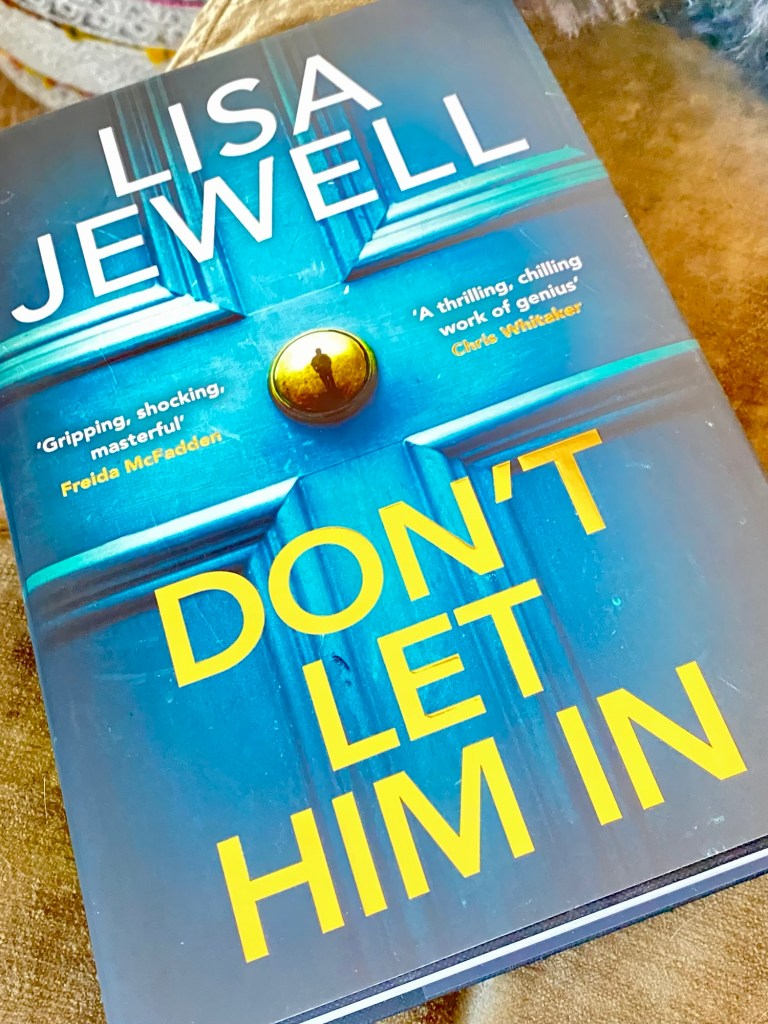
Don’t Let Him In by Lisa Jewell

There was a pivotal moment in this book that made me go cold. It sent me back twelve years when I was trying to understand how someone could treat others so badly, in what seemed like a deliberately cruel way. I remembered something my counsellor said at the time; I was spending all my time trying to work out someone’s motivation and what had happened in life to make them behave that way, instead of considering the impact on me and how unacceptable the behaviour was. Some people just don’t think like others. Nick is a tall silver fox with a lot of charm and a knack with the ladies. He seems to know exactly what will please someone. Exactly the right gift to soften someone. To get under their defences. It’s almost as if he has empathy,  but don’t be fooled. He’s just wearing a human suit. 

Nina and her daughter Ash live in the bougie seaside town of Whitstable in Kent. They are grieving for husband and father Paddy, who was killed when a man having a mental health crisis pushed him into an oncoming train. Ash has been living at home since her own mental health deteriorated. She was living in a house in London with two other girls but she developed a crush on her boss, that turned into an obsession. She claimed to have letters from him, but it turned out she’d written them herself and she was eventually diagnosed with borderline personality disorder. She’d just come home to recover when Paddy was killed. When her mum receives a parcel in the post Ash is intrigued. It’s beautifully wrapped, with a note inside from a man who has heard about Paddy’s death. He used to work with him in the 1990s when Paddy was just starting out. The gift wrapped box contains a Zippo lighter he borrowed but never returned. Since then Paddy has built a restaurant empire, with his flagship restaurant in Whitstable and two others down the coast. He benefitted greatly from the area’s development into the weekend getaway spot for Londoners. Nick’s note explains he is now a troubleshooter, brought into eateries and hotels to assess what’s not working and put it right. There is of course a number, should Nina wish to thank him for his thoughtfulness. Over the next few months Nick and Nina start to WhatsApp each other and then go out for a drink. Ash is glad to see her mum with a glow, but there’s something about Nick that’s just ‘off’. She can’t be sure and maybe she’s viewing this situation through her own grief or her personality disorder, but something isn’t right. She needs to find out more about him before he becomes a permanent fixture. 

It’s so hard to review Lisa’s books without letting things slip, but I’ll try my best. Most authors might have written a thriller based purely on the scenario above – is it the mentally ill daughter or the mum’s new boyfriend that’s the problem? Slowly drawing out the tension of whether she’s right or so unwell that she’s dreadfully mistaken. Lisa Jewell isn’t most authors so she takes that premise and builds an absolutely labyrinthine mystery that’s absolutely spellbinding. In multiple narratives and timelines we meet various women who are struggling in their relationships, all of which are linked by strange or abusive behaviour. There are different behaviours: gaslighting, manipulation, financial embezzlement and even disappearances. In some cases these women are married and have children, in others they’re older and widowed. There were so many conundrums, not least how these men are affording the lifestyle they’re living. Meanwhile, Ash has decided to take help from ‘Mad’ Jane Trevally, her dad’s old girlfriend from the 1990s. Surely if Nick was around for a while, Jane would remember him. Jane did have some obsessive qualities of her own back in the day, so maybe she’s not the best person for Ash to be hanging out with. She knows her mum would be furious. However, when they do meet, Jane tells Ash that Paddy categorically did not have a lighter. He was always taking the matches from the kitchen or cadging a light from other people, so much so that it was an ‘in’ joke with friends and customers. So whose lighter was in that parcel and why did he send it? 

I galloped through this book as we went backwards and forwards in time, every time learning a little more and inching towards the truth. I loved the fragile Ash who is at that stage of recovery where she doesn’t fully trust her own mind. Is she making too much of this? Is she just paranoid? Worst of all, if she finds something questionable, will her Mum even believe her? She’s so lonely at this point, she doesn’t have many friends to talk to and feels bad she’s had to bounce back home at her age. Her mum deserves to be happy and she might ruin it all. Just when you think you have all the answers, the author takes it to the next level! There were twists here that I wasn’t expecting and I felt very relieved that I got away from my own situation relatively easily, if not unscathed. This book is like a twisted knot in a necklace. It takes a long time to loosen it, but suddenly the whole thing unravels before your eyes. This is masterful thriller that absolutely begs to be devoured in a couple of sittings, from an author who gets better and better. 

Meet the Author

LISA JEWELL was born in London in 1968.

Her first novel, Ralph’s Party, was the best- selling debut novel of 1999. Since then she has written another twenty novels, most recently a number of dark psychological thrillers, including The Girls, Then She Was Gone, The Family Upstairs, The Family Remains and The Night She Disappeared, all of which were Richard & Judy Book Club picks.

Lisa is a New York Times and Sunday Times number one bestselling author who has been published worldwide in over thirty languages. She lives in north London with her husband and two daughters.

Posted in Random Things Tours

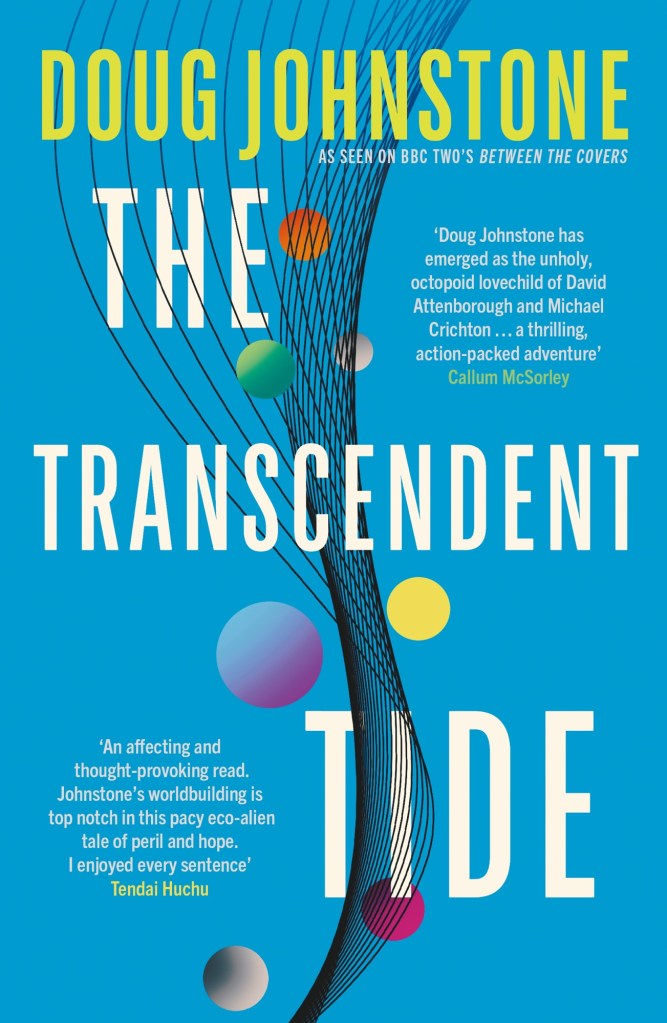
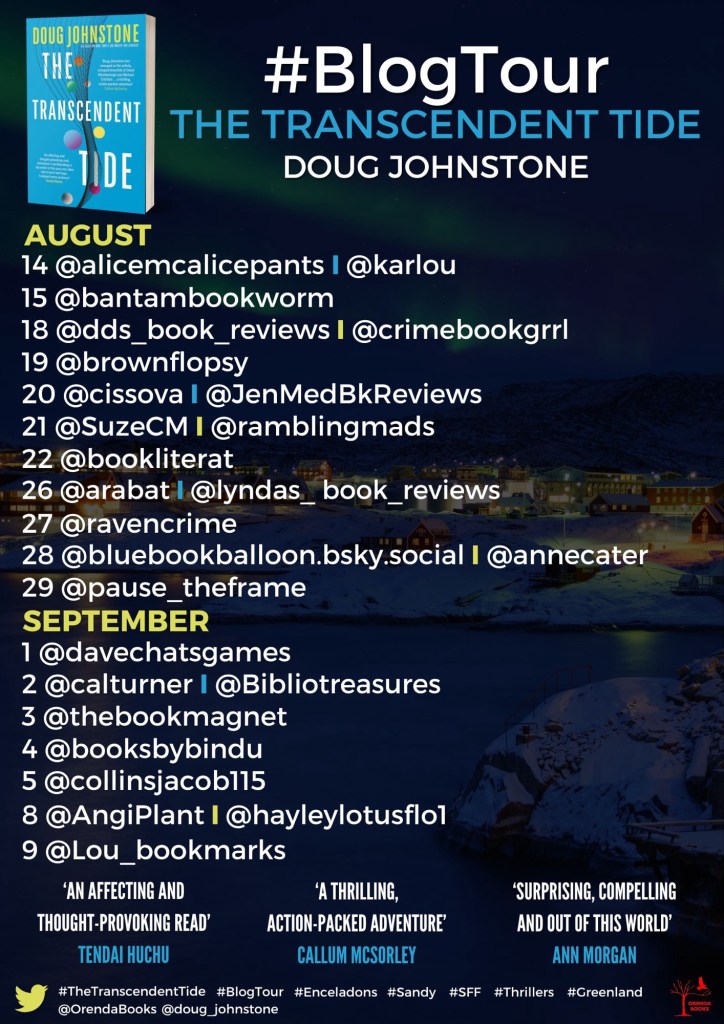
The Transcendent Tide by Doug Johnstone 

The Enceladons are back! We left them on the up, having destroyed the American facility that captured and tortured them with a tsunami wave. Lennox, Heather as well as Ava and her daughter Chloe were recovering from the torture they suffered and had to make a big decision, to leave for the Arctic as part of the Enceladon community or stay on land. Heather chose to leave with them. Now the remaining friends have established new lives. Lennox and his girlfriend Vonnie are studying together at university. Ava and Chloe are settled with Ava’s sister, but they all miss the group especially Heather, Sandy and Xander. It’s hard not to miss the extraordinary experiences they had, such as Lennox becoming part of Xander and flying off into space. It is Ava who brings everyone back together after Chloe appears to suffer a stroke, only to return back to normal, just as the friends did after first meeting Sandy. A follow-up MRI shows a brain tumour and Ava has a difficult decision to make: does she stay put and follow the medical route or does she try to find the Enceladons? She wonders whether the torture Chloe endured or her communications with the creatures could have caused this illness? She also remembers how Sandy cured Heather’s cancer and decides to take her daughter to Greenland. At the same time, Lennox and Vonnie are approached by an Norwegian tech billionaire who wants to meet the enceladons. Even the logo of his new company is a moon being held in giant tentacles. The couple are very unsure and inside I was screaming at them not to work with him, but when Ava contacts them about Chloe they both agree to work with him under certain conditions. Will those conditions be met and is this man as trustworthy as he seems? 

Niviaaq is our first new character, an Inuit woman who has lived in her small community on Greenland her whole life. The community still live like their ancestors with the principals of working with nature, not against it and they are feeling the effects of climate change. Glaciers are melting and species like polar bears are unable to hunt for food. Out on her boat, Niviaaq encounters another vessel, upturned and badly damaged. She also finds a man floating upside down in the water, hypothermic and barely alive. His coat has a symbol of a moon and octopus with the word ‘Sedna’, the name of an Inuit sea monster. She drags the man into her boat and takes him for medical help. The Inuit people have several legends of strange monsters  but lately the Northern Lights have been very active and people have seen strange glowing objects on the ice. Are these signals that something is going to happen? I loved this character throughout the book, mainly because she is so wholly and unselfconsciously her self. She is a strong woman, mentally and physically. She can take care of herself, taught from a young age how to use a rifle, to sail boats and fish on the ice floes. She doesn’t show off about this strength, it is simply part of her that can be used whenever it’s needed. She is used to long spells of time alone so she comes across as self-contained and very grounded. She is calm and gentle, not chatty but only speaking when necessary. I loved that she and Ava had an instant affinity and I could see how cozy and safe Ava would feel when with her, something she needs after her experiences with her violent husband. 

As always with Doug there are politics behind the actual story and setting it in Greenland, when it has been a constant topic in the media since Donald Trump came back into power had to be deliberate. It brought back to me how brash and ignorant the US Vice-President JD Vance appeared when he visited earlier this year. His first comment, that nobody had warned him how cold it was, just made me groan with embarrasment. It was no surprise that he was only welcome at the US Airforce Base. Their blatant and greedy desire for Greenland and parts of the Ukraine is all about mineral mining, taking what they need and further damaging the fragile ecosystem for its human and animal inhabitants. There are only two reasons a multi-billion dollar organisation would build a base there, either to exploit Greenland or the Enceladons. Probably both. Even though the business owner Karl Jensen initially impresses Lennox with his reaction to meeting the enceladons, while I was still very wary. He calls Sandy and Xander ‘they’ without prompting, because they don’t see themselves as individuals but as a collective. I loved this because it shows how easy it is to shift your perception and take care with other people’s feelings – it reminded me of the series of Taskmaster where I pointed out to my husband that Greg Davies had been using ‘they’ as Mae Martin’s pronoun for the whole series and he hadn’t even noticed. 

He seems to have a deep and profound experience on their first dive and when Sandy connects with him telepathically he suddenly understands everything that is wrong with the world. It’s the capitalism, the greed and simply exploiting every resource the earth has to give, without once considering whether it is ours to take. We don’t treat our fellow creatures as equals but as something we have dominion over and the right to kill for resources or for pleasure. We kill for yet more, when we already have so much. It’s an absolute tour de force of a speech and for a moment life is hopeful. However, as is pointed out by Vonnie, no one becomes a billionaire through philanthropy. Human nature intervenes suddenly and with finality, because it’s just so much easier to carry on as we are instead of making those personal and political changes. This is where Niviaaq is a brilliant contrast to mankind in general. When she and Ava have to take shelter in the hunting hut – one of several up and down the glacier, always ready for anyone to use – it made me realise how much the Inuit people have in common with the Enceladons. As she’s offered whale blubber to eat, Ava refuses it with a shudder. Niviaaq explains that the whale is suited to the environment they both live in and if they do hunt a whale, every single part of it is used. Eating two tiny chunks of it will give them the calories they need to survive the cold and the exertions of the journey ahead. To kill it, then refuse to use it for the purpose of staying alive is an insult. It made me realise that if people had stayed in their tribes and clans and used their original principles in this way – just like the Aboriginal and Māori people, and the Native Americans – we would have always lived in harmony with the earth. It’s possible certain animals wouldn’t be extinct and we might not have faced climate change. Their creation myths are so different too, not giving us dominion over the animals but being a harmonious whole. Or is human nature always determined to chase money and progress until we wipe ourselves out? 

I won’t divulge any more of the plot because that would ruin it for you. I get so excited about reading Doug’s books because reading them is a little like connecting with one of Sandy’s tentacles for a second. Ideas and light bulb moments appear in my brain and I have to write down all these weird notes and things to look up before I can review. Then I rabbit on about them to anyone who will listen for months to come! You can read these books on a surface level and they are still brilliant. The characters are full of heart and love for each other and their Enceladon friends. It’s also full of heart racing action sequences that would be amazing on screen – especially when all of the animals come along. You become so absorbed that you forget it’s all a bit weird, then you read a sentence like ‘Chloe was playing ball inside Sandy’ and it blows your mind. However, if you do delve under the surface it’s a profound comment on our times, our politics and capitalist lifestyles. Read the whole series and you’ll see how the author balances profundity, action, romance, sci-fi and humour like a magician. You’ll finish them, as I did, with a tear in your eye for these extraordinary creatures and a world with so much more variety and beauty than we’ll ever deserve. The Enceladons wake people up – yes I’m using that word ‘woke’ often thrown about as an insult these days, but why wouldn’t you want to shake an alien octopus’s tentacle and become enlightened, compassionate, open and perhaps your very best self? 

Out Now from Orenda Books

Meet the Author

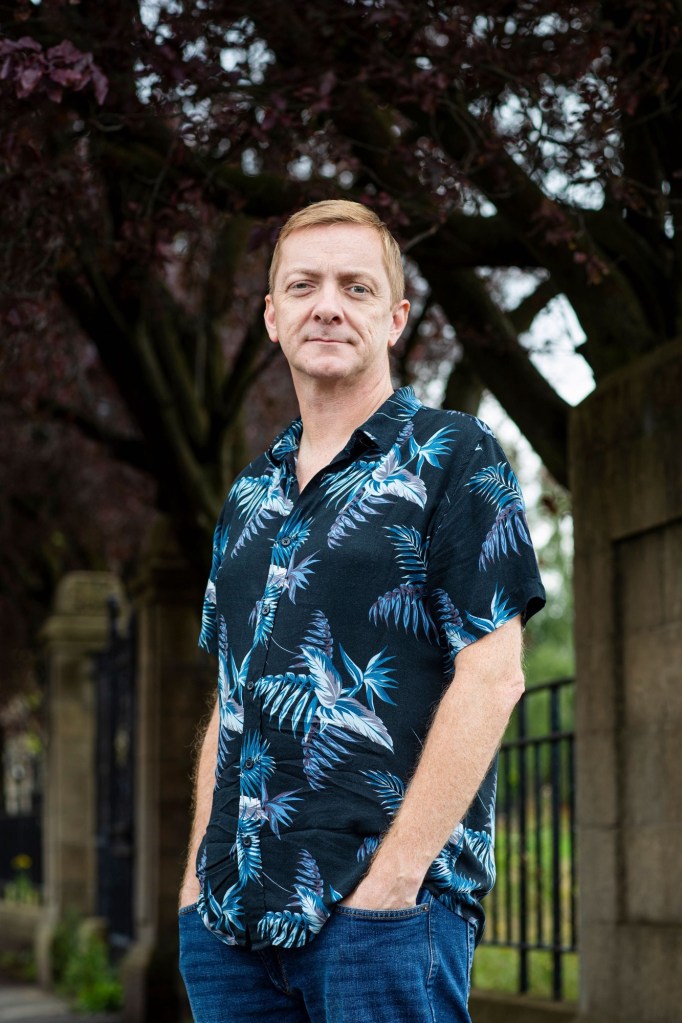
Doug Johnstone is the author of 18 previous novels, most recently Living Is a Problem (2024) and The Collapsing Wave (2024). The Big Chill (2020) was longlisted for Theakston Crime Novel of the Year, and Black Hearts was shortlisted for the same award. Three of his books, A Dark Matter (2020), Breakers (2019) and The Jump (2015), have been shortlisted for the McIlvanney Prize for Scottish Crime Novel of the Year.

He’s taught creative writing and been writer in residence at various institutions over the last decade, and has been an arts journalist for over twenty years. Doug is a songwriter and musician with six albums and three EPs released, and he plays drums for the Fun Lovin’ Crime Writers. He’s also co-founder of the Scotland Writers Football Club, and has a PhD in nuclear physics. He lives in Edinburgh.

Posted in Netgalley

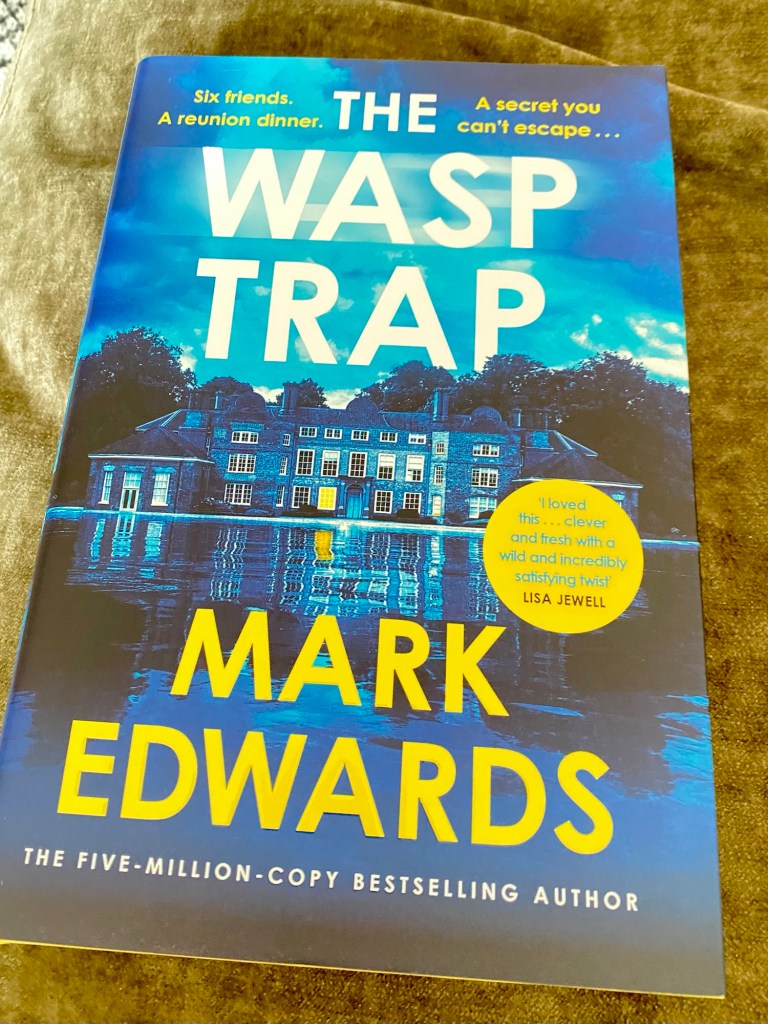
The Wasp Trap by Mark Edwards 

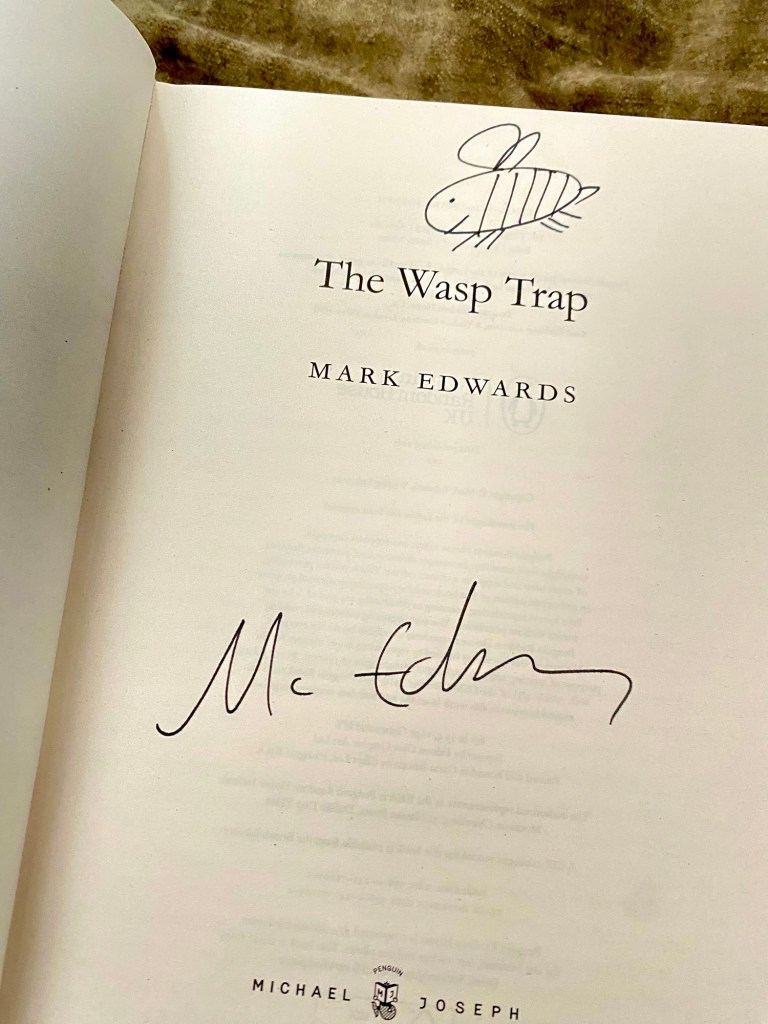
It’s been so enjoyable to read two of Mark Edwards’s novels back to back. I found myself completely engrossed and The Wasp Trap was definitely an interesting premise. Will is travelling to his friends Theo and Georgina’s house for a reunion dinner. Years ago, at their elite university in the 1990’s, Will and his group of friends were selected by their professor to spend the summer at his house in the countryside and work with him on a project he’s developed. He wants to create the first online dating site, one that truly works by using psychology. He wants the group to create an algorithm based on personality types – such as the Myers-Briggs scale, often used in business more than psychology. He recruits a mix of coders, web designers, psychology graduates and creatives like Will, who has an ambition to write a book. Here, he is tasked by finding a name for the site and Sebastian wants it to be poetic. That shouldn’t be difficult for a man who’s falling in love, with fellow student Sophie and after seeing an unusual butterfly he chooses “butterfly.net”. A little creepy when we consider what happened to those butterflies once they were caught. Lily is definitely the lynchpin intellectually, the person trying to create an algorithm that works, but even she’s distracted. Within the research are papers on using certain tests to determine whether someone is a psychopath. Since the team are being used as guinea pigs for the dating questionnaires why not use them for this? No one’s going to turn out to be a psychopath are they? This side research becomes named as “The Wasp Trap”. Decades later, as the group converge for dinner, it’s clear there’s so much to talk about, not least the disappearance of Georgina and Theo’s daughter Olivia. Why are they still holding the reunion? Who are the strange couple doing the cooking for the night? As secrets begin to unravel about that summer it’s clear this isn’t going to your average reunion. 

I have to get it out first and foremost. I didn’t like any of these people, but Theo and Georgina are one of those couples I love to hate. The perfect home, perfect careers and plenty of money to throw around, not to mention those lovely teenage daughters too. How much was this reunion about rubbing other people’s noses into their success, especially Will who gets plenty of comments about his never finished book? They don’t seem like parents whose daughter is missing, because I’d be beside myself if it was one of my stepdaughters. I certainly wouldn’t be able to concentrate on a dinner for people I hadn’t seen for years. Make no mistake, these are the people who make me avoid school reunions like the plague. There’s so much nostalgia here and that element I did enjoy. I was a sixth former in the early nineties and I loved all that Manchester scene music and played my Stone Roses album so much it drove my mum and dad crazy. I was also a massive Pulp and Blur fan and still love those films of that decade from Tarantino and Danny Boyle through to Four Weddings and a Funeral. So I do reminisce, but I kept the most important friends and still see them, I don’t need to see the others thanks very much. My ‘now’ is much more interesting than my yesterday. Professor Sebastian certainly chose his students well because there are some incredibly intelligent people here, but I’m not sure about their emotional intelligence or morality. Will seems to have the most emotional intelligence but is hampered by his fear of failure when it comes to his career and love. In the past he’s clearly in love with Sophie, but fears telling her so much that he misses his chance. Will he do so again? It’s no surprise then that it’s Will who senses a weird atmosphere with the catering couple. I was so caught up with the emotional drama between these people that it was a shock when the chef and his assistant burst into the room with guns and give an ultimatum. They have a set amount of time to tell a secret they’ve been holding since that summer. When they come back into the room time is up; they either tell the secret or someone will be killed. Even though this is what they promise to do, I’m not sure I quite believed it. So when they come back in and the shooting starts it definitely concentrates the mind a bit, but the problem is they all have secrets. How do they know which secret the couple want to know? 
As usual with Mark Edwards, the tension is almost painful. Especially those last few minutes of time before Callum returns with his gun and he’s definitely not bluffing. There’s a body in the hall to prove his intent. Of course, being the people they are, they start wondering if they can somehow outwit their captors by causing a distraction and one of them getting out of the house. Will does wonder if there’s a third conspirator hidden upstairs though. Despite the tension, there’s also that incredibly awkward sense of having to expose your darkest secrets in front of people you were at college or university with. I’ve spent most of my life embarrassed by something, so I could feel their reluctance to be shamed in this way. It’s as if the tables have been turned and the unpopular or bullied kids have decided to get their revenge but Callum certainly wasn’t at university with them so how could he know their secrets? He definitely seems to be getting a kick out of terrifying people he sees as better off in life, they certainly don’t have the upper hand now. There is one person though who knows something terrible happened that weekend and who was involved in covering it up. They’ve kept it to themselves all these years. Was it linked to the psychopath tests Lily was running on her friends without them knowing? Maybe one of them did turn out to be a psychopath and if they did, are they in the room?

I was on tenterhooks as the body count started to rise and I found myself rooting for Sophie and Will against the odds. I loved the appearances of the family’s fat cat here and there throughout the action and that he’s the only one who knows someone is definitely upstairs. There are two people from that summer who aren’t here tonight. Local girl Eve was their age, employed by the Professor to clean and cook for everyone over the summer but often around in the group’s leisure time too. There was also Sebastian’s nephew, an extra when it came to socialising and chilling out at weekends that summer, but not really one of them. He was usually running errands for his uncle but when he did join them he was a divisive figure, in fact some found him a bit creepy. Will had conversations with Sophie about how strange it was for him to still be driving the classic car that his parents had been killed in. Their outsider status shows in the fact that neither of them are there tonight, but could they be the key to a secret? I was absolutely gripped in the final chapters and couldn’t wait to find out which secret Callum wanted and what was his link to the group? I was also interested in where Theo and Georgina’s daughter was. We do know by this point who is upstairs but would they intervene or remain hidden? One thing is for sure, as the secrets come out it’s quite clear that no one is going to come out of this well. This is definitely one reunion they’ll wish they lost the invitation to. Brilliantly twisty, full of complex and unpleasant characters and so tense my teeth hurt. 

Out now from Michael Joseph

Meet the Author

I write books in which scary things happen to ordinary people, the best known of which are Follow You Home, The Magpies, and Here To Stay. My novels have sold over 5 million copies and topped the bestseller lists numerous times. I pride myself on writing fast-paced page-turners with lots of twists and turns, relatable characters and dark humour. My next novel is The Wasp Trap, which will be published in July in the UK/Australia and September in the US/Canada. 

I live in the West Midlands, England, with my wife, our three children, two cats and a golden retriever.

Posted in Netgalley

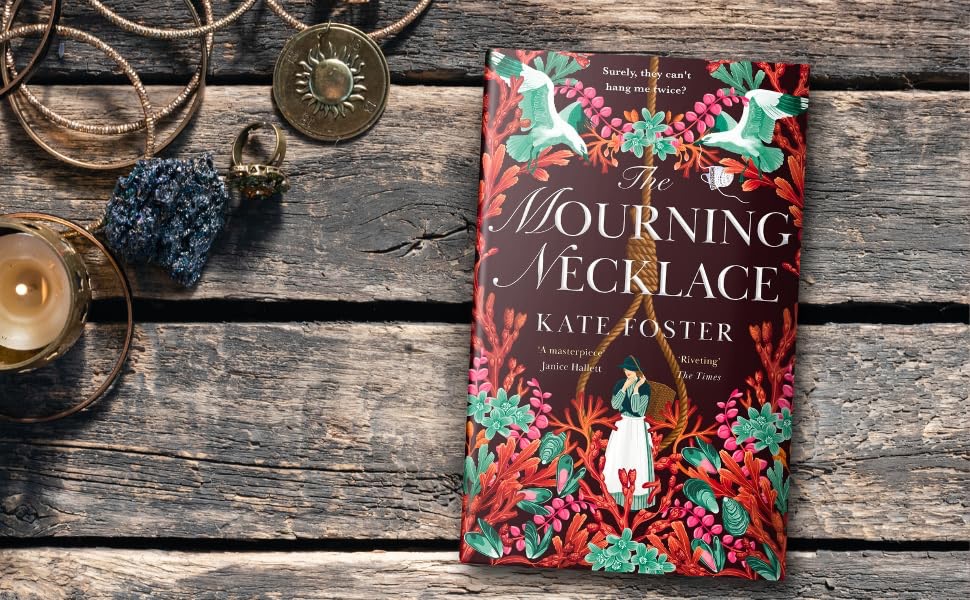
The Mourning Necklace by Kate Foster

Inspired by an infamous real-life case, The Mourning Necklace is the unforgettable feminist historical novel from the Women’s Prize-longlisted author of The Maiden, Kate Foster.

They said I would swing for the crime, and I did . . .

1724. In a tavern just outside Edinburgh, Maggie Dickson’s family drown their sorrows, mourning her death yet relieved she is gone. Shame haunts them. Hanged for the murder of her newborn child, passers-by avert their eyes from her cheap coffin on its rickety cart.

But as her family pray her soul rests in peace, a figure appears at the door.

It is Maggie. She is alive.

Bruised and dazed, Maggie has little time for her family’s questions. All that matters to her is answering this one: will they hang her twice?

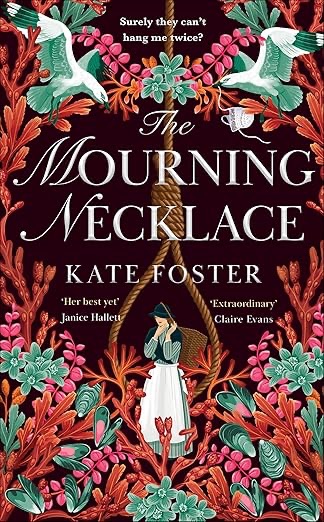
What a brilliant advocate Kate Foster is for these women she finds in historical documents, often in dire situations in their time for ‘crimes’ it’s hard to comprehend today. Although, in our heroine Maggie’s case, this has novel does have some relevance to modern day America where politicians seemingly wish to revert to the Puritan values last seen when the first settlers arrived and James VI of Scotland was on the throne. In some states we have recently seen women arrested after stillbirths or miscarriages, something I find disturbing and is deeply traumatic for a bereaved woman in her most vulnerable state. This is the fate that awaits Maggie, but first Kate takes us back to how Maggie ended up in this terrible situation. Maggie and her younger sister Joan have grown up in a coastal village known for its fishing and the strong, hardworking women that mend the nets and clean the fish ready for market. It’s a hard life and not one that Maggie wants forever. She dreams of living in London and making her own life there. So, when Patrick Spencer walks into their cottage one evening, with his sparkling eyes and easy charm Maggie sees someone like her, who wants to make their own luck. He has come to ask father if he could store some items in their safe – something the family do from time to time for tea merchants. These are altogether different ingredients, they are ingredients for perfume. Patrick wants to open his own perfume shop and will occasionally be passing through with expensive ingredients, could they agree a price to store them? Maggie knows she isn’t the beauty of the family because anyone can see that’s Joan. She isn’t even the favourite, but she does know that if Patrick is looking for a wife to support and help him in business that she’s the best choice. When he takes her out walking one evening she hopes that perhaps he’s seen someone as ambitious and hardworking as he is. Their courtship and marriage are a whirlwind and they’re soon living in a bungalow closer to the centre of the village. Married life is not what Maggie expected, after all her only example is her mother and father and they’ve always come in third place after his drinking and his temper, but she’s in thrall to Patrick. So, it’s a terrible shock when she hears the news that a press gang has visited the hotel bar in town and they’ve taken Patrick into the navy. 

Maggie doesn’t have many choices. She’ll need income in a short while or she must return to her family. Maybe this is the only chance she has of getting herself to London and as the days go by she’s ever more sure that she’s having a baby, it must be now. Her mind is made up by a terrible betrayal and she sets off, reaching a a quiet market town where she picks up some work in the inn, concealing her pregnancy and living in an upstairs room. However, the truth always finds a way out and it’s not long before she finds herself standing in front of the justices to answer charges of concealing a pregnancy and infanticide. 

I was fascinated by Maggie’s story immediately, desperate to find out how she survived the gallows and whether she could advocate well enough for herself to avoid a second hanging. She’s a dreamer, but she’s also determined and incredibly intelligent. It’s this combination of qualities that Patrick sees in her and why he thinks she will be a good partner to him. Although his wandering libido destroys their chances all too quickly. Maggie’s ambition to carry on her plans after his disappearance has all the impetuosity and ignorance of youth. She would never be able to hide her pregnancy for long, if she’d been honest about being pregnant and her husband deserting her I had a feeling that the innkeeper might just have given her a chance anyway. There is curiosity about her though and an attempt at friendship teaches her that there are far worse ways to live than being a fishwife. It also puts her in the path of a local doctor who is so unpleasant that I wanted to wash my hands just reading about him. However, it’s the early arrival and sudden death of her daughter that has her transported to Edinburgh. This is a capital case and must be heard by the best justices in the land, although it’s common knowledge they drink at lunchtime. What’s amazing about Maggie is her ability to adapt and keep going. Despite being dealt a terrible hand, her will to survive and to appreciate the humble life she once had is admirable. She is a match for any man, whether it’s a hangman, the justices, her husband or even her violent and drunken father. She will make sure she has her dues from Patrick Spencer and that she will remove her mother and sister from the cottage where they’ve spent their lives fearing payday and her father’s visit to the inn. She is a better woman than me because I’d have left my sister there. Joan is one of those characters you want to slap, but I think that Maggie can see she was just another starry eyed girl being manipulated by a man used to getting his way. 

As always Kate’s novels are rich with description, placing us very firmly in Scotland and in very different establishments. Maggie’s family live in a one room cottage and all of them work incredibly hard, but they need the extra money they make from holding onto goods for those avoiding the law or the tax office. Despite a poor existence the family have a rich community around them and a long tradition of fishwives. When she’s in Kelso Maggie learns that the women of Fisherrrow are well thought of and known for their hard work. It’s the heritage she wants to escape that gets her first job. The cottage where she lives with Patrick is a step up but still a world away from the women who would buy his perfumes. The doctor in Kelso has a grand house, but once Maggie knows what takes place within its walls she could never envy it. All of is thrown into stark relief by the squalor of where she’s held awaiting trial. It’s filthy, filled with vermin and women willing to exchange sexual favors with the guards for extra privileges. Maggie would rather go hungry. Each of these worlds is beautifully rendered and I could see it all very clearly in my mind’s eye. 

I am amazed by the talent of Kate Foster that she is able to find these cases from Scottish history and breathe life into them. She takes them from a simple story in a news sheet of the time and like many of us who aspire to write she thinks ‘this would make a good novel’ and actually fleshes out these characters and places with what must be endless research. She creates women who feel like they could be one of us. Instead of being a distant newspaper headline they become real, with hopes and dreams and make incredibly relatable mistakes. Having lost my own babies I felt so much for Maggie at that moment and understood completely her need to say her own goodbye. For a long time it has been just the two of them and I could see that it would feel strange to involve others, they’d never known her anyway. I flew through the rest of the novel to find out how Maggie would move on from her moment on the gallows, should she be successful in arguing for her life first. Would she go back to her fishing village and the shared room with her parents? Would she make bold choices in order to remain independent? Or would she look for the man who set all this in motion and look for revenge or reparations? I loved the idea of the scar round her neck as a mourning necklace. There’s something about setting making inner wounds visible that resonates very strongly with humans. How many of us go on to have a tattoo after a traumatic or memorable event? Anyone who has gone through a profound experience has a sense of being stationary as the rest of the world keeps turning. When recently bereaved I wondered why people couldn’t see just how changed I was and I was frustrated by my inability to explain. Losing a baby is so hard because you are a mother, but because you don’t have a child no one ever sees you that way. Maggie could see her scar as a mark of shame, to be covered. However, she chooses to wear it with pride because it is proof that her little girl lived. I felt proud of Maggie, which might be a strange thing to say about a fictional character, but I was so happy that she took the path she did. Hardened by experience, she thinks of her fellow women first, but doesn’t allow that experience to completely rob her of a future. This is the best of her novels so far and that’s a high accolade considering how good they were. 

Meet the Author

Kate Foster worked as a national newspaper journalist for more than twenty years before becoming an author. Growing up in Edinburgh, she became fascinated by its history and often uses it as inspiration for her stories. Her previous novels include The Maiden, which won the Bloody Scotland Crime Debut of the Year and was longlisted for the Women’s Prize for Fiction, and The King’s Witches. The Mourning Necklace is her third novel. She lives in Edinburgh with her two children.

Posted in Netgalley

Dear Miss Lake by A.J. Pearce

It was lovely to be back with the gang at Woman’s Friend magazine and particularly with our narrator Emmy Lake as they enter the final and arguably most difficult stretch of WW2. After five years of war both the team and their readers are tired. As a way of boosting morale at the magazine Emmy suggests they all decamp to Bunty and Harold in the countryside. As Hitler’s V1 and V2 bombs start to hit, it will certainly be safer. Emmy strongly feels they all need a boost in order to keep supporting and inspiring the women who read their magazine. If they’re tired and the magazine suffers, how will their readership keep the fight going? Although they’ll still be working, the children, the animals and the beautiful countryside should have the desired effect. Plus, for Emmy, she’ll be closer to where her husband Charles is posted and she’ll be with her best friend Bunty. Emmy throws herself into rural life and is soon organising games nights, competitive knitting and planning the very important wedding of their officer administrator Hester and her fiance Clarence. She also has an important phone call from the ministry to travel abroad and report from the French field hospitals looking after the wounded. She even manages to mastermind a break into husband Charles’s barracks before they’re both deployed. Emmy has no idea how much she’s going to need those around her in the coming months as her hardest test is yet to come. On their return to London after the summer she receives a telegram to say that Charles is missing, presumed captured, in enemy territory and she has the agonising wait for the confirmation letter. Then Hester receives a blow when Clarence calls to say he’s being deployed in three days, two days before their planned wedding. Hester is inconsolable and after catching Emmy in a moment of frustration, she disappears. However, Emmy isn’t one to dwell on her misfortunes for long and I wondered what schemes and plans she would hatch next. 

This is a very fitting end to the Emmy Lake series, because it showed, no matter how Pollyanna our attitude is, it is okay to sometimes find we’ve run out of steam. It’s hard to imagine what five years of war must feel like when we take into consideration women having to work, look after children, support their husbands and face the fear of losing someone important to them or even their home if situated in London or other major cities. The nearest thing we have to such upheaval is the COVID pandemic and that meant two years of shielding for me. However, I still had tv to stream, books to read and could send myself little treats from Amazon or Betty’s tearooms. I can’t imagine how I’d have felt if I was exhausted from working, missing my husband, had the possibility of a bomb coming through the ceiling and had to find the tenth thing to do with a cabbage. Although the Lakes and friends are relatively okay financially, many were not and the author brings in these experiences through the magazine where some readers are infuriated with the magazine’s rather chirpy, optimistic tone or want to vent about the desperate situations they’re in. I loved the storylines about unexpected pregnancies as I could really understand getting carried away in the moment when someone you love is being deployed to fight, perhaps never to return. I could also imagine myself being swept off my feet by an American GI or one of the Polish airman posted only a few miles away from my village all those years ago. I could absolutely understand why some readers lost their faith in the magazine and whether it’s writers truly understood the predicaments some readers were in. I could also understand if Emmy did run out of patience, because sometimes the only answer is ‘talk to the people who love you’ no matter how angry or disappointed they might seem at first. It always gets easier.

 When news arrives that Charles’s secret mission was Arnhem and he’s been captured behind enemy lines, it takes a while for Emmy’s emotions to catch up with the news. She has all the information at her fingertips, having had years of finding out what to do for her readers. Practically she’s doing all she can, plus organising the Christmas Fair and making connections with other POW wives. She’s particularly proud of the piece she wrote for the ministry on the military hospitals so hopes for another mission. When she, the editor and publisher are pulled in for a chat the news isn’t good. It’s this that seems to bring her to a standstill. Returning to the magazine office she’s despondent and feels a deep sense of injustice, leading to a sudden and misdirected rant. Things go from bad to worse when the next morning, Hester has gone missing. Emmy knows she took her cancelled wedding plans hard, but surely that’s not the reason for her disappearance? Could it have been her own moment of anger and emotion that provoked this sudden reaction? Emmy realises how much of a lifeline they all are to each other and resolves to find her, whatever it may take. 

A.J. Pearce has written a triumph of a series in this quartet of books and in her main character too. We’ve experienced the ups and downs of different editors and publishers, the staff’s other responsibilities for their families and war jobs such as the fire service or driving ambulances, as well as terrible losses on the battlefield and in the Blitz. Through what seems on the surface to be a light-hearted and perhaps frivolous lens, I’ve learned so much about what it was like to be a young woman during WW2. It’s given me an insight into my grandparent’s generation – my Aunty Connie who was an unmarried mother and a subsequent marriage to my Uncle John who suffered from PTSD after his ship was attacked and his friend was blown up right next to him. My grandad went into the army just as war was ending and experienced the other side’s struggles – German cities destroyed by our bombardments and people living in the ruins of their homes. I don’t know if I’d have the strength and determination to contribute in the way people did, something brought into sharp focus when I had to discuss what the war in Ukraine could mean for those who’ve served in the forces but are still under reserve? Could I cope if he was called back in?

Strength is one of those things we find reserves of when the situation demands it of us and I have no doubt I could keep the ‘home fires burning” but I certainly don’t have the grit that some of the Ukrainian women are showing, having lost their husband then joining up to fight themselves. I feel the author doesn’t let us forget the sacrifice and loss in people’s lives at this time, but still manages to bring in humour and a defiantly upbeat make do and mend attitude. This is the closest I’ve seen Emmy come to breaking point and it’s hard to do when you’re the one whose role it is to buoy everybody else up. As she finds out though, those who she’s helped and supported are so happy to be able to return the favour and support her. This is a set of books I always recommend, to women of all ages, because it’s so easy to relate to one of the characters and absolutely root for them. The main impression I take away from them is that sense of female solidarity. The instinct we have to come together, share the load and make each other’s lives a little easier – from taking on someone’s children all the way down to being there with a meal or a shoulder to cry on. Emmy uses her writing to do the same and triumphs in being exactly what the magazine promises – the Woman’s Friend. 

Meet the Author

AJ Pearce was born in Hampshire, UK. Her favourite subjects at school were English and History, which now (finally!) makes sense.

Her debut novel Dear Mrs Bird was a Sunday Times Bestseller and Richard and Judy Bookclub Pick. It was shortlisted for Debut of the Year at The 2019 British Book Awards and has been published in the USA, Canada and Australia and in translation in over fifteen languages.

Dear Mrs Bird was the first in AJ’s series The Wartime Chronicles which now includes Yours Cheerfully and Mrs Porter Calling. Her books are funny, sometimes extremely sad, but always uplifting stories about a group of women standing together to face the challenges of World War II.

The fourth and final book in the series, Dear Miss Lake, will be published in the UK on 5 July 2025 (and on 3 August in the USA and Canada).

When not writing books, AJ enjoys being fairly rubbish at a variety of hobbies and has recently started to learn to paint, with so far messy although enthusiastic results.

Follow AJ on Instagram, Facebook and Threads: @ajpearcewrites.

Posted in Monthly Wrap Up

Best Books July 2025.

I’ve had a lovely reading month because even the books I had for blog tours, turned out to be fantastic reads. Any of these could easily make my end of the year list and some are by authors I’ve never read before. Others were from series I’d lost touch with and one has an incredible back story of the struggle the author had to get it published. I feel very privileged, looking back and realising what an incredible month of reading I’ve had. I’m already looking forward to next month’s choices.

This was one of those unexpected joys, a book I’d heard very little about and chose to read with my Squad Pod just on a short synopsis. I had no idea whether I’d enjoy it or not, but it turned out to be fascinating and very apt, because I’d been reading about Functional Neurological Disorder. Havoc is a brilliant combination of school drama, mystery and dark comedy featuring a wonderful character called Ida who lives on a remote Scottish island with her mother and sister, after fleeing from her mother’s boyfriend Peter. What started as a lonely but safe place to live, became impossible when her mother did something unforgivable and the island’s inhabitants turned against them. Deciding she wants to leave, Ida looks for private boarding schools who provide scholarship places and discovers one, as far away from Scotland as she can find. St Anne’s sits on the south coast of England, so remote and underwhelming that the school are terribly surprised when their scholarship student actually turns up. No one ever has before, so they don’t have anywhere suitable to put her. The school is ramshackle and in danger of falling off the cliffs and the food is questionable and often tastes of fish, even when it isn’t. Ida is placed in a double room with school miscreant Louise and starts to settle in. However, things take a very strange turn when Head Girl Diane becomes unwell, starting with strange jerks of the arms and soon descending into full blown seizures. Soon after, Diane’s friend April is sick and then starts the familiar pattern of jerks. By the time a third girl has the same symptoms outside agencies such as environmental health, doctors and the police start to descend on the school. Is this illness a virus or is it environmental? Could it be something more sinister like poison? This was a fascinating and often amusing read, with an illness that shares the symptoms of FND – a syndrome where neurological symptoms are present and real, but are often somatic. Although it’s also possible some malign force is at work, especially when rat poison appears in an unexpected place. Louise and Ida are a dastardly duo and I also loved the friendship between the school’s geography teacher and her strident and rather cynical flatmate. Little surprises are everywhere and I would love to meet the characters again,

This book was the total opposite of the last in that I’ve heard nothing but praise for A.J.West’s newest novel. I’d loved The Spirit Engineer so much and I knew the struggle he’d had to get this published, but he believed in it and I’m so glad he was picked up by my favourite indie publisher Orenda Books. A match made in heaven. Having been supervised for my university dissertation by a lecturer who specialises in 18th Century Literature and secret sexualities, this was the perfect marriage of subject and style for me. I love when post-modern authors write back to a time in history to place people into their historical context. These are people who were erased from history due to their disability, sexuality or the colour of their skin. This has been done so well by authors like Sarah Waters who features 19th Century lesbians, Lila Cain whose main character were freed slaves in The Blackbirds of St Giles and Suzanne Collins, whose novel The Crimson Petal and the White is narrated by Sugar, a young prostitute with a disability.

Thomas True wears its vast amount of research lightly and definitely follows the style of the picaresque novel, where a young naive person makes their way into the big wide world with some humorous and rather risqué adventures. This young innocent travels to seek his fortune in London and is robbed on the highway, falling into the ‘wrong’ company – here this is the Molly House run by Mother Clap. A giant but gentlemanly man called Gabriel has brought him here and he is intrigued by the merriment, the wearing of women’s clothes and the safety of a place without scrutiny. This is above all a love story.  Thomas can’t possibly know how important this moment will be in his life, but it’s pivotal to his journey, his future and his heart. Far from the genteel worlds of Bridgerton and Jane Austen, the author creates a richly imaginative setting that brought all my senses to life – but not always in a good way. London is grim, overcrowded and disgusting. One scene where a body needs to be extracted from a ditch full of sewage is revolting. Even Mother Clap’s has a grotesque feel. These are not the preened and powdered men you might expect. Gabriel is huge, hairy and spends all day doing a heavy building job. He and Thomas have a complicated journey, one naive and optimistic and the other haunted by his past. You’ll be transfixed, hoping for their outcome to be a happy one but knowing this is a city that punishes ‘mollies’ by hanging and when the mysterious ‘rat’ betrays the men from Mother Clap’s the danger becomes very real. You can tell I loved it by the amount I write about it! It’s a definite must read.

I knew from the first page that this novel was going to be special and it is utterly brilliant and an unbelievably good debut from Florence Knapp. It’s 1987 and Cora is going to register the birth of her baby boy. His name has been settled on because Cora’s husband has chosen his own name for his son – Gordon. But it wouldn’t be Cora’s choice. Cora’s choice would be something that doesn’t tie him so obviously to his father. She thinks Julian would suit him. Little sister Maia looks in the pram at her brother and decides he looks like he should be called Bear. All of these options swirl around in Cora’s head. In this moment, Cora has the power to make a choice and it’s done. It can’t be changed. What would happen if she went with Julian or even Bear? In the short term Gordon would be furious. How bad would it be this time? Long term, would it change her baby’s character or path in life? This is exactly what Florence Knapp does with her story. The book splits into three narratives and we discover what happens to this whole family, depending on Cora’s choice for her baby boy’s name. 

We then move on seven years and meet Bear, a name that proves to be a catalyst for change. We also meet Cora’s choice, Julian – the choice she hoped would break him free from domineering generations of Gordons. Although, what if he is called Gordon? Brought up by a cruel father to continue in the same mould perhaps? Or he might just break free from the shackles of his name? Each life is sparked by this one decision but it isn’t just Cora’s son’s story. This is the life of the whole family with all its ups and downs. It’s about how trauma shapes lives and whether love brings healing and hope to every version of who we are. Even her minor characters absolutely shine. Grandmother Silbhe and her friend Cian are so wonderful, modelling healthy male/female relationships for Julian and Maia. Cian is also Julian’s mentor at work, bringing out a creative side that needs nurturing. Julian needs to work with his hands and meeting fellow creatives helps him find his tribe. Lily is lovely character and we get to know her best during Bear’s narrative. I loved how she has to find a balance between giving Bear the freedom he needs without breaking her own boundaries in the relationship. It’s an utterly compelling debut and zooms straight into the list of best books I’ve read so far this year. The author brings incredible psychological insight to a story about how our names shape our identity, our relationships and our life choices. Something we didn’t even choose. Can it influence us to a huge extent, or do we become the same person no matter what the choice? 

Rachel Joyce is a must-buy author for me and she gets better and better. This brilliant novel focuses on a bohemian family; Vic the father who is an artist and his four children – Netta, Susan, Iris and Goose (short for Gustav and the only boy). They’ve been parented by Vic and a series of au pairs after the sudden death not long after Iris was born. Their father’s art came first always and the conditions he needed in order to create were paramount so the oldest girls often played the mother role for Iris and Goose, especially when Vic inevitably slept with the au pairs. Vic was not an artist celebrated by the establishment. The description of his paintings brought Jack Vettriano to mind, criticised heavily by the art world, but very popular with the public. Now grown up, his children are stunned when Vic starts losing weight and drinking green, sludgy health drinks. His diet is being looked after by his new girlfriend, 27 year old Bella-Mae. None of his children have met her and she doesn’t seem keen to try. Within weeks Vic announces they’re engaged and Netta suggests that they all stand back and give this the space it needs to fizzle out. A couple of weeks later, Vic announces their marriage with a single photograph from the family home in Orta on Isola Son Guilio with Bella-Mae in such a heavy veil they can’t make out her face. They are staying at the house, situated on an island in the middle of a lake, but only two days later Netta is stunned by a phone call from a stranger called Laszlo, claiming to be Bella’s cousin. Vic has been dragged from the lake, drowned after a morning swim went wrong as the mist descended. Why would Vic go swimming in the mist? His children come together to travel to Orta, to finally meet their new stepmother and to find out whether she has killed their father. 

Bella isn’t what the siblings expect and nor is the villa, which has been changed in decor and atmosphere. She seems insubstantial and too fragile to have caused such an uproar. Especially when they’ve pictured her with an iron will, imposing her diet on their father and gaining their inheritance. She will prove to be a mirror through which each of them evaluate their lives. I love family sagas and this one is brilliant. It’s psychologically fascinating and I’m not going to ruin that for you by delving too deeply. I was absolutely transfixed! I couldn’t work out whether there was deliberate manipulation at play or if this was just a case of an outsider causing people to view everything through a different lens. Is Bella a destructive force or a helpful one? Whatever she is, the siblings will have to look at themselves, their choices and their relationship to their father. Some revelations will be explosive and take place in the open air- one particular meal is cataclysmic. Other revelations are quieter, insidious or internal but no less devastating. An utterly brilliant read for someone who loves complicated and tangled relationships. I LOVED it.

This book opened with a heart-stopping scene that set the pace for the rest of the story. Helen is relaxing after meeting her lover in a luxury hotel. While he has a shower, she is in her nightgown and robe enjoying the night time view over downtown Southampton. Movement suddenly catches her eye and she’s drawn to a woman who’s running down a darkened street towards a precinct of shops, pursued by two men. As they catch up, one of them pulls out a bicycle chain and starts to beat the woman. Helen doesn’t wait or think, tearing out of the hotel room and down several flights of stairs as she’s too impatient to wait for the lift. She tears down the dark street hoping that someone has called the police. Helen flies at one of the attackers, who is taken completely by surprise and she soon disables the second attacker before turning to the woman who has been badly beaten. She looks like she’s from the Middle East perhaps, with two very distinctive tattoos placed on her forehead and chin. Unfortunately, Helen has committed the cardinal sin of combat and has turned her back on her attackers. The next thing she feels is a huge bang to her head and then everything goes dark. This opening scene tells me this will be a gritty, modern thriller with a kick-ass heroine. 

This is the thirteenth novel in the DI Helen Grace series and I’m seriously out of touch with the character, having only read the first couple of novels after picking them up in a book swap. Helen is working on her own initiative after handing in her notice at the end of the last novel, with her protege Charlie being promoted in her place. Helen doesn’t know what the next step is, but she’s been enjoying the break. The only thing she misses is the camaraderie of a team and although she has enough money to really think about what’s next, she is anxious about it. Although life will bring it’s own answer soon enough and it might be the last thing she’s expecting. She starts to investigate alone, feeding into Charlie who is trying to target traffickers and their victims coming through the port in lorries and containers. The story is told mainly through Helen’s eyes, but also through the narratives of two other women. Viyan is another trafficked Kurdish Syrian woman and Emilia is a journalist whose father is dying in prison. At first we’re not sure how all of these narratives fit together but slowly they form a cohesive picture. Helen is formidable! You will hold your breath for the final showdown and all the women involved. Each short punchy chapter is action packed and will keep you reading ‘just the next chapter’ until it’s 2am. I now need to set aside time and read the ten novels between this and the last one I read. I’ll probably load up the kindle with them before I go on holiday so I can carry on without interruption. This was a belting, action-packed, female led, crime thriller and I recommend it highly. 

August TBR

Posted in Sunday Spotlight

Sunday Spotlight. City Break in a Book: Prague

Prague is one of those places on the bucket list that I’ve never managed to get to, but I’m very drawn to it. There’s something about Prague that’s a touch gothic, mystical and dark. It strikes me as being like Venice, a place where you can almost touch the layers of history. A thin place, where you might take a wrong turn and end up in the 18th Century. Prague knows you are temporary, while it endures forever. That is probably just a romantic notion, but I’m looking forward to testing out my impressions. Much of the fiction I’ve read deals with the city’s history and I’m hoping some of these choices might tempt you to visit too, if only in one of these books.

An intriguing and almost hallucinogenic novel that has Kafka in its DNA. Blake is a pornographer who photographs corpses. Ten years ago, a young man becomes a fugitive when a redhead disappears on abridge in the rain. Now, at the turn of the millennium, another redhead has turned up in the morgue, and the fugitive can’t get the dead girl’s image out of his head. For Blake, it’s all a game — a funhouse where denial is the currency, deceit is the grand prize, and all doors lead to one destination: murder. In the psychological noir-scape of Kafkaville, the rain never stops, and redemption is just another betrayal away. Armand is an Australian writer who lives in Prague and is director of the Centre of Critical and Cultural Theory. This is definitely not for everyone, but just go with it as he strips bare this society and reveals it in all its decadence.

Prague Spring is a wonderfully atmospheric portrait of the city as well as a political and historical thriller with dashes of espionage. It’s the summer of 1968, the year of love and hate, of Prague Spring and Cold War winter. Two English students, Ellie and James, set off to hitch-hike across Europe with no particular aim in mind but a continent, and themselves, to discover. Somewhere in southern Germany they decide, on a whim, to visit Czechoslovakia where Alexander Dubcek’s ‘socialism with a human face’ is smiling on the world. Meanwhile Sam Wareham, a first secretary at the British embassy in Prague, is observing developments in the country with a mixture of diplomatic cynicism and a young man’s passion. In the company of Czech student Lenka Konecková, he finds a way into the world of Czechoslovak youth, its hopes and its ideas. It seems that, for the first time, nothing is off limits behind the Iron Curtain. Yet the wheels of politics are grinding in the background. The Soviet leader, Leonid Brezhnev is making demands of Dubcek and the Red Army is massed on the borders. How will the looming disaster affect those fragile lives caught up in the invasion? This is a great read about a city teetering on the edge of one of it’s most significant moments in history.

The banned books club was only the beginning; a place for the women of Prague to come together and share the tales the Germans wanted to silence. Is she brave? No, she’s just a bookshop girl doing whatever she can.

For bookshop owner, Jana, doing the right thing was never a question. So when opportunity comes to help the resistance, she offers herself – and her bookshop. Using her window displays as covert signals and hiding secret codes in book marks, she’ll do all in her power to help.

But the arrival of two people in her bookshop will change everything: a young Jewish boy with nowhere else to turn, and a fascist police captain Jana can’t read at all. In a time where secrets are currency and stories can be fatal, will she know who to trust? If you enjoy Kristin Hannah you’ll love this story from WW2.

Oh my friend, won’t you take my hand – I’ve been so lonely! 

One winter night in Prague, Helen Franklin meets her friend Karel on the street. Agitated and enthralled, he tells her he has come into possession of a mysterious old manuscript, filled with personal testimonies that take them from 17th-century England to wartime Czechoslovakia, the tropical streets of Manila, and 1920s Turkey. All of them tell of being followed by a tall, silent woman in black, bearing an unforgettable message. Helen reads its contents with intrigue, but without knowing everything in her life is about to change. I love creepy little novellas like this and Sarah Perry does everything right here. I loved the almost Victorian ‘Dear Reader’ and the Dracula-like inclusion of letters and diaries. The fear comes from that very Freudian juxtaposition of repulsion and fascination or death and desire. It assumes we all have that thing we’ve done that we wish we hadn’t, buried at the back of the mind or written in a decades old diary. Melmoth is the embodiment of the thing we’ve repressed and she will come for you. Dark, mysterious, thrilling and scarier than you’d think.

Paris, today. The Museum of Broken Promises is a place of wonder and sadness, hope and loss. Every object in the museum has been donated – a cake tin, a wedding veil, a baby’s shoe. And each represent a moment of grief or terrible betrayal. The museum is a place where people come to speak to the ghosts of the past and, sometimes, to lay them to rest. Laure, the owner and curator, has also hidden artefacts from her own painful youth amongst the objects on display. A marionette from her time in Czechoslovakia as a teenager.

Prague, 1985. Recovering from the sudden death of her father, Laure flees to Prague. But life behind the Iron Curtain is a complex thing: drab and grey yet charged with danger. Laure cannot begin to comprehend the dark, political currents that run beneath the surface of this communist city. Until, that is, she meets a young dissident musician. Her love for him will have terrible and unforeseen consequences. 

It is only years later, having created the museum, that Laure can finally face up to her past and celebrate the passionate love which has directed her life. It may seem strange that someone would base their whole life’s work on an experience at the age of 18, but that misunderstands the power of traumatic experiences. While the objects in the museum may seem mundane, their importance is in the wealth of emotion in those memories. It is by holding or valuing these things that we remain connected to the past and the person in it.

Errand requiring immediate attention. Come.

The note was on vellum, pierced by the talons of the almost-crow that delivered it. Karou read the message. ‘He never says please’, she sighed, but she gathered up her things. 

When Brimstone called, she always came. 

In general, Karou has managed to keep her two lives in balance. On the one hand, she’s a seventeen-year-old art student in Prague; on the other, errand-girl to a monstrous creature who is the closest thing she has to family. Raised half in our world, half in ‘Elsewhere’, she has never understood Brimstone’s dark work – buying teeth from hunters and murderers – nor how she came into his keeping. She is a secret even to herself, plagued by the sensation that she isn’t whole. Now the doors to Elsewhere are closing, and Karou must choose between the safety of her human life and the dangers of a war-ravaged world that may hold the answers she has always sought.

I’m not usually a fan of fantasy but this is an exception and Prague is the perfect setting for a girl with blue hair who does the bidding of a chimera who’s part human, ram and lion! Karou is my kind of heroine and I’d happily take her for a drink. I blew through the first third of the novel without thinking, just wishing I had an imagination like this.

This is probably best described as ‘faction’, while it is shelved as a novel there is so much fact in it that it reads like a true crime story, except the author keeps interrupting his own narrative. Two men have been enlisted to kill the head of the Gestapo, in a mission named Operation Anthropoid. In Prague, 1942 two Czechoslovakian parachutists are sent on a daring mission by London to assassinate Reinhard Heydrich – chief of the Nazi secret services. Known as ‘the hangman of Prague’, ‘the blond beast’ and ‘the most dangerous man in the Third Reich’. His boss is Heinrich Himmler but everyone in the SS says ‘Himmler’s brain is called Heydrich’, which in German spells HHhH. 

It is an incredible story, occasionally interrupted so the author can point out something he’s made up for dramatic effect – such as, ‘I don’t really know if a tank was the first vehicle to enter Prague’. Or even re-writing a paragraph if he later finds he got it wrong. It’s strange and a little jarring but you get used to it. In fact I don’t doubt his research, you will see the acres of documents and history books in his bibliography. This is a very clever panorama of the Third Reich told through the life of one outstandingly brutal man, a story of unbearable heroism and loyalty, revenge and betrayal. It is a moving work of fiction you will not forget.

Prague 1939. When the Nazis invade, Eva knows the danger they pose to Jewish families and the only way to keep her daughter Miriam safe is to send her away – even if it means never seeing her again. Eva is taken to the concentration camp Terezin, her secret is at risk of being exposed.

In London, Pamela volunteers to help find places for the Jewish children arrived from Europe. Befriending one unclaimed little girl, Pamela brings her home. Then when her son enlists in the RAF, Pamela realises how easily her own world could come crashing down…

Moving between England and Czechoslovakia this is a heart-rending story made all the more poignant for me as my mother-in-law Hana was sent from Poland as a child to England, separated from all her family and was eventually reunited with her mother after the war. I loved the themes of motherhood and music too. This is one of those historical novels that concentrates on emotion and character rather than acres of detail, but thar makes it all the more heart-rending.

In 1934, a rabbi’s son in Prague joins a traveling circus, becomes a magician, and rises to fame under the stage name the Great Zabbatini, just as Europe descends into World War II. When Zabbatini is discovered to be a Jew, his battered trunk full of magic tricks becomes his only hope for survival.

Seventy years later in Los Angeles, ten-year-old Max finds a scratched-up LP that captured Zabbatini performing his greatest illusions. But the track in which Zabbatini performs the spell of eternal love—the spell Max believes will keep his parents from getting divorced—is damaged beyond repair. Desperate for a solution, Max seeks out the now elderly, cynical magician and begs him for help. As the two develop an unlikely friendship, Moshe discovers that Max and his family have a surprising connection to the dark, dark days the Great Zabbatini experienced during the war.

With gentle wisdom and melancholy humor, this is an inventive, deeply moving story about a young boy who needs a miracle, and a disillusioned old man who needs redemption.

Posted in Throwback Thursday

The Darkest Water by Mark Edwards

Calvin owns Therapy, the bakery of his dreams in an idyllic village in the Lake District, but business is a little quiet. He’s reluctant when wife Vicky suggests social media but it’s not long before assistant Tara has filmed and posted a reel of him making brownies. Suddenly he’s a local celebrity. It seems everyone wants a piece of Chef Calvin and creepy little DMs start to arrive, including some from a stranger claiming to be his biggest fan. At the same time a local recluse has been found dead on a nearby beach, buried up to the neck in sand and left for the tide to come in. Detective Imogen Edwards is under pressure to solve the case, but who would plan such a long, drawn out murder and did they stay to watch the man’s fate? Calvin’s admirer turns up at Therapy, just as Tara is injured and unable to work. Much to his wife Vicky’s horror, new girl Mel ends up standing in and Calvin offers her a job. At least until Tara returns. Then events seem to start spiralling out of control and Calvin doesn’t know who to trust or what to do. Perhaps these wheels were put in motion a long time before, putting those Calvin loves in terrible danger. 

This is such a page turning thriller that I swept through it in an afternoon and evening. Seemingly unrelated events start to make potentially intriguing patterns. Mark Edwards has a way of sending your mind down a dozen different paths before getting to the truth. He also has the skill of leaving horrifying images in your head. This time it was the sight of Leo James’s head sticking out of the sand as the tide went out. I have a fascination with Anthony Gormley’s Another Place also known as the Iron Men of Crosby Beach in Liverpool. There is something slightly macabre and even profound about watching the tide come in, slowly submerging some figures underwater completely. This was a terrible human version and I couldn’t help musing on how it must have felt to be left waiting for the tide and what sort of man could watch it unfold. I enjoyed the internet element of the story and how reluctant Calvin is to put himself and his bakery out there – something which makes more sense later in the novel. I could understand his reticence. While Book Twitter was once a benign space, there are now arguments and attempts to police what other people are reading. It seems it’s no longer acceptable to separate art and the artist and I definitely spend less time there. When Tara creates her video, the baker starts to gain customers very quickly and this is definitely welcome. However, it comes with a side order of relative fame and that means teenagers want to take a look as well as a certain amount of women. Mel is one of these and the timing of her arrival in the bakery seems very suspect. Both Tara and Vicky are suspicious and my radar for emotionally damaged women was definitely going off. She seems to establish herself as someone who needs to be rescued, something that is Calvin’s kryptonite. She drops hints about a group of teenagers making a nuisance of themselves on the beach near her cottage and trying to intimidate or frighten her. 

It soon becomes clear that Calvin is a rescuer. He has lived in the Lakes all his life and has an experience when he was a teenager that makes him susceptible to women needing him to be the hero. His teenage sister died in a car accident and in flashbacks we go back to that summer and the lead up to this awful event, it’s clear that Calvin carries a lot of guilt around her death but this is only half the story. Our other narrative is that of the murder and the police investigation. Imogen’s first port of call is the dead man’s home which isn’t easy to find, tucked away in the woods and completely off grid. Inside they find the most hideous paintings, possibly created by Leo himself. They show visions of torment and retribution in hell and seem to be inspired by Heironymus Bosch. The house is spartan and gloomy, suggesting that Leo leads a lonely and possibly depressed lifestyle. The paintings point towards his state of mind, but does he believe someone else should receive this punishments or himself? If himself, it seems like at least one other person agreed with him. When Imogen finds a young local girl called Billie lurking nearby she’s determined to find her link to this unusual man. In fact Imogen and Calvin’s wife Vicky seem the most level-headed of the characters. Imogen is a good police officer, methodical and not easily swayed by one thread of the investigation. She lets it reveal itself, but is still only minutes behind the culprit at times. Everything is linked and she just has to find that one person who holds the key. She does come under pressure from above but stays focused.

Vicky is perceptive and there were times I was mentally screaming at Calvin to listen to his wife. She senses someone has been in their house early on and is adamant she didn’t close their bedroom door and shut their cat Jarvis inside. She also wants rid of Mel, not specifically because she has feelings for Calvin, but because she simply doesn’t trust her. Where has she sprung from and why does she seem so keen to please? She thinks the story about teenagers is a deliberate ploy. The tension in each of the narratives is heightened and when Vicky disappears, Imogen has to work out whether this a choice to take time for herself after a row, or something more serious. Although when she speaks to Calvin and finds out that Vicky owns an animal rescue centre, it does seem unlikely for her to leave without warning leaving everything to her assistant Louise. As Imogen starts to join the dots I was praying she wouldn’t be too late for Vicky. How would Calvin cope if he lost Vicky after losing his sister, especially if Mel is involved? As Mel lures him into accompanying her home I was on tenterhooks over whether she would proposition him or whether something more disturbing was going on? The author takes us through some serious twists and turns, just when I thought my suspicions about a character were mistaken they were back on the hook again. I didn’t get to the truth before Imogen though and I managed to do that really annoying thing of rushing through to the end, then wishing I’d taken it slower. This is a first class thriller and has whetted my appetite beautifully for his latest book, The Wasp Trap. 

Meet the Author

I write books in which scary things happen to ordinary people, the best known of which are Follow You Home, The Magpies, and Here To Stay. My novels have sold over 5 million copies and topped the bestseller lists numerous times. I pride myself on writing fast-paced page-turners with lots of twists and turns, relatable characters and dark humour. My next novel is The Wasp Trap, which will be published in July in the UK/Australia and September in the US/Canada. 

I live in the West Midlands, England, with my wife, our three children, two cats and a golden retriever.

Posted in Squad Pod Collective

The Forgotten Garden by Kate Morton

As part of the Squad Pod, I’ve been re-reading this novel in its new edition and I’ve really enjoyed my reintroduction to these interesting characters and the incredible atmosphere the author creates around the Blackhurst Estate in Cornwall. Our story begins in 1913, when a little girl sits forlorn on the harbour side, using her white suitcase as a seat. The authoress told her she was going on an adventure and she’d stayed hidden for such a long time, but now she doesn’t know when the authoress is coming. The harbour master notices her and resolves that if she’s still there when he finishes work, he will have to take her home to his wife. Surely someone will come for her in a day or two? The mystery of the authoress and the little girl took me from 1900 to 2005, in the company of three women who have a link to that little girl in 1913. Eliza lives in London digs with her mother and twin brother at the turn of the Twentieth Century but finds life changes suddenly after her brother is killed in an accident with a coach and horses. She is taken to the Blackhurst Estate in Cornwall to be the companion of Rose, the daughter of the family, who is an invalid and rarely leaves her bedroom. Then in 2005 there is Cassandra, living in Australia and also facing upheaval after the death of her beloved grandmother Nell. Cassandra has lived with her gran since her mother left her there when she was a little girl. She promised to return and never did, leaving her mother Nell to raise her daughter. Together they run an antiques business and after Nell’s death, Cassandra is stunned to find a series of sketches by American artist Nathaniel Walker in her grandmother’s belongings. There’s also a small white case and inside there is a book of strange fairy tales also illustrated by the artist, but the writer is unfamiliar. Eliza Makepeace doesn’t seem to be well known but Cassandra is happy to do some digging and understand what link exists between this famous painter, an obscure writer and her grandmother. After the funeral, Cassandra’s great aunties explain that Nell was the baby in the family, arriving some time after them since their father found her on the Maryborough harbour alone. He decided that Nell needed to know about her true origins before he died, but her sisters wonder if that was the right thing to do. It left her a little distanced from them, as if she didn’t know where she belonged anymore. 

Interspersed between Cassandra and Eliza’s narratives is that of Nell, who did her own detective work on who she was decades before. In fact she had plans to make a big change before her daughter turned up with Cassandra and asked her if she would look after her for a short while. Nell knew that once her daughter was gone, neither of them would ever see her again. This put her own plans to one side but Nell never regretted bringing up Cassandra. Cassandra takes her book of fairy tales to a book dealer who explains that Eliza Makepeace was linked to the Blackhurst Estate in Cornwall. In fact Nathanial Walker was married to Rose, the daughter of the family. When Nell’s lawyer confirms that Cassandra has been left a small cottage on the Cornish coast she is intrigued and before long is on a flight to the UK. From there we are catapulted into the past where Eliza is adjusting and trying to make friends with Rose who has been ill for most of her childhood. Her regime is overseen by her rather formidable mother while her father seems largely absent, secretly longing for the return of sister Georgina who ran away to London with a menial worker from the estate. All of these separate story lines are linked beautifully by the author over the course of the novel, telling the story of a family beset by tragedy, but also shaped by rigid control, manipulation and jealousy. All of this is set within the beautiful backdrop of Cornwall and its history of fishing and smuggling as well as its stunning scenery. Cassandra’s cottage sits above the cliffs looking down to the sea, but has a stone wall around it. She wonders why someone would block off that incredible view, but also whether they were blocking people from seeing out or in? It must have been a gloomy existence. When Cassandra hires a local gardener to remove the tree that’s partially growing inside the cottage they discover a crawl space under the back wall and inside an overgrown but entirely enclosed garden. The walls that cradle the garden create a deep sense of belonging, as if the birds sing just for her. It’s a peaceful space, almost frozen in time. 

Cassandra is also interested to know how Nell ended up buying the property and why she never came back. Speaking to the village’s estate agent Robin gives her a lot of insight and the date Nell bought the cottage starts to make sense to her. Through Robin’s father, a retired fisherman, she hears some of the cottage’s history from a smuggling lookout to the home of the Authoress, a beautiful red- headed lady who used to live at Blackhurst. The actual manor has slowly become a hotel and Cassandra learns more by talking to the owner, who has refurbished the house and made some fascinating finds. She shares some scrapbooks with Cassandra, made by Rose who later became the wife of Nathaniel Walker. Rose was an invalid and her scrapbooks show a young girl’s imaginings from fairies to beautiful dresses and what she imagined her wedding to be like. Not that anyone expected she would meet anyone to marry. Her cousin Eliza tells her strangely dark fairytales and encourages her to aim for some of her dreams, to travel and perhaps get married someday. When she is married, her longings become focused on having a child, but will that be possible for her and if not, how can she find another way to become a mother? Kate Morton gives us little revelations as we go along, taking us back into the past to show us exactly what transpired and another jigsaw piece of this mystery slots into place. 

I loved how vividly Morton describes the squalor of turn of the century London and the harsh way of life for those just trying to keep a roof over their head. Blackhurst is the perfect name for the estate in Cornwall, named after an outcrop of black rock that juts out into the sea and provides an incredible lookout for the brave who enjoy the crashing waves and the seaspray. The estate feels like a mausoleum in contrast to Cornwall’s natural beauty. It is somewhere where people are shut away and miserable, with Rose in bed and her father shut away in his study and harbouring his secret obsessions. The cottage is accessed through the maze and it feels like a walkway to another world as it opens out in Eliza’s garden. What could possibly have caused two cousins to be entirely separate, with the maze as the barrier between their properties? I loved the theme of motherhood throughout, especially the loss of mothers for Eliza, Nell and Cassandra. One of the saddest parts for me was when Nell finds out that she isn’t a blood member of her Australian family and it changes her outlook, leading to her own trip to Cornwall. There’s even a touch of romance for one character who’s suffered a terrible loss. Reading this again has made me realise how rich Morton’s writing is and how reading her books probably led me to me enjoying this genre so much and current writers like Amanda Geard and Kate Lumsden. This is a sweeping epic of a mystery, with great characters and dark gothic undertones which I’ve thoroughly enjoyed rediscovering. 

Meet the Author

KATE MORTON is an award-winning, Sunday Times and New York Times bestselling author. Her novels – The House at Riverton, The Forgotten Garden, The Distant Hours, The Secret Keeper, The Lake House, The Clockmaker’s Daughter and Homecoming – are published in over 45 countries, in 38 languages, and have all been number one bestsellers around the world.

Kate Morton grew up in the mountains of southeast Queensland and now lives with her family in London and Australia. She has degrees in dramatic art and English literature, and harboured dreams of joining the Royal Shakespeare Company until she realised that it was words she loved more than performing. Kate still feels a pang of longing each time she goes to the theatre and the house lights dim.

“I fell deeply in love with books as a child and believe that reading is freedom; that to read is to live a thousand lives in one; that fiction is a magical conversation between two people – you and me – in which our minds meet across time and space. I love books that conjure a world around me, bringing their characters and settings to life, so that the real world disappears and all that matters, from beginning to end, is turning one more page.”

Posted in Throwback Thursday

Throwback Thursday: I Wanted You to Know by Laura Pearson.

Dear Edie, I wanted you to know so many things. I wanted to tell you them in person, as you grew. But it wasn’t to be.


This wonderful book left me uplifted and sad all at the same time. This is the bittersweet story of Jessica, a young single mum who finds out she has cancer. As the novel opens, Jess and her baby daughter Edie, have recently moved back home with her Mum. Jess had left home for university, but circumstances have forced her back to her home town. This main narrative, set in Jess’s present, is interspersed with letters written by Jess to her baby. Each letter starts with ‘ I wanted you to know’ and through them we learn about the life she had at university, her relationship with Jake and the unexpected pregnancy that changes everything. The timing of this baby is all wrong, falling just as Jess’s boyfriend Jake is offered a tour with his band. Determined that Jake should follow his dream, the couple had decided to separate, but Jess’s own father left when she was young and she doesn’t want the same for her daughter. So she continues to keep him up to date with baby news until Jake’s contact with slowly fizzles out and Jess comes to the conclusion he is not interested in the pregnancy or having a relationship with daughter Edie. By the time Edie is born, the couple are no longer in regular contact and Jess has to face up to the fact she will be a single mother. Jess approaches her post-natal check up feeling daunted and then receives the news that changes everything. Jess has breast cancer. Now, a new beginning that’s daunting but joyous and filled with hope for the future, is overshadowed by weighty decisions, difficult conversations and the horrible fear that she may have to leave Edie facing life without her.


The narrative gave me a very real sense that the time Jess has left is ebbing away like the sands of an hourglass. As treatment options fail, Jess has so much left undone. Jess’s devastation that she won’t be able to be go through all the milestones that mothers and daughter enjoy together is palpable. So in order to be sure she’s there for these moments Jess begins the letters that will let her daughter know where she comes from and how much her mum loved her. This is even more vital when we realise that Jess’s past relationship with her own mum is far from perfect. However, despite some rough patches, her mum is stepping up and we never doubt that she loves her daughter and wants to help. Even if she does make some terrible mistakes in the way she handles things and on one occasion does one of the worst things you can do to someone with a terminal or life-limiting illness; she takes Jess’s power away. I was genuinely worried whether Jess would be strong enough to take it back.


The way Jess copes with Jake made me long for her to find her voice, even if just for her baby’s sake. She is so worried about ruining Jake’s tour that she doesn’t keep him informed. His contact with her simply dries up and although she is hurt and shouldering her fears about becoming a mum by herself, she doesn’t contact him. Then as the shock of the cancer diagnosis hits she is even more paralysed. If she does let him know, and he cuts his dream short, will he always resent her and his daughter. She doesn’t even know how he feels any more, but knows she wouldn’t want him to return to her because of the cancer. Realistically though, she needs to let him meet his daughter. They have to forge a relationship, especially if she does not respond to treatment.
The most compelling relationship for me was the friendship between Jess and Gemma. This novel is a love letter to female friendship and I liked that this relationship felt the most ‘fleshed out’ in the whole story. Right from the start Gemma is backing Jess up while juggling a job and babysitting Edie when she’s not working. Where the other relationships throw up complications, Gemma seems to know what Jess needs before anyone else. She counteracts Jess’s mum’s tendency to judge and make decisions that don’t include her. Instead she is quietly there all the time, and has an ability to sink into the background when Jess needs time alone or with Edie. Most importantly she encourages Jess but doesn’t take her choices away. She makes it clear that Jess needs to speak to Jake, but stays out of their relationship. When Jess’s mum oversteps the mark, Gemma gives her friend encouragement to speak and permission to be angry. Their relationship shows that our friends are often more supportive than family. It teaches us that our female friendships are often the long term relationships in our lives and that the best friends sustain each other, even in the most difficult situations.


I like that the last words In the book are Jess’s own in the form of her final letter to her daughter. I did have a lump in my throat reading some parts of this and at different points I thought how authentic the voice was, especially in Jess’s letters because they are unfiltered. Often, when reading or watching fictional accounts of illness I become frustrated by inaccuracies or events that are totally impossible. This comes from the life experiences I bring when reading a book. When reading this I felt it was well researched or that someone had used their own experiences to tell Jess’s story. I wasn’t surprised to read that Laura Pearson had a similar diagnosis of breast cancer because her experience shone through. The bewilderment and fear of those closest to Jess felt true to my experience; I lost my husband to the complications of multiple sclerosis when he was only 42 and I was 35. I remember two strong and very contrary feelings. On one hand I was constantly busy and overwhelmed with the paraphernalia of caring for someone who’s dying. I was panicked that time was slipping away from us and I resented it being spent dealing with feeding tubes, chest physiotherapy and the constant fear of infection. While other days felt like a nightmare, living a parallel life where the same routine was replayed over and over while everyone else was getting on with the real business of life. We became a small, committed unit with only one focus and as I read the novel I could see Jess’s loved ones doing the same. They drop out of normal everyday life to focus on their loved one and as I was reading I was aware of the devastation they would feel if they lost Jess anyway. When the person you love becomes terminally ill, and you become their carer, the sense of loss after their death seems compounded by suddenly having no purpose. I went from caring for my husband 70+ hours a week to waking up with nothing to do all day. It complicates the grief. The loss becomes multiple; the person you love, your role as spouse, your job and purpose, structure and status are all gone. The final chapters of Laura’s novel brought this back to me.


I was also heavily invested in Jess’s emotions, she becomes a young, single Mum knowing this new life may be cut brutally short. Jess barely has time to enjoy Edie, before she has to worry about leaving her. She has come to terms with her choice to postpone university and encourage Jake to follow his dream because she assumes, like we all do, that she has all the time in the world. She might not have time to pick up these parts of her life and she may not have time to settle into being a Mum. Questions constantly flash through her mind. If Jake returns, does he love her or is he only there because she’s so ill? How will he cope becoming a single Dad and who might he form relationships with in the future? Most heartbreaking of all; what if Edie doesn’t remember her? This is what prompts her to start writing. She wants to write down everything she thought or felt about her new baby and also pass on those bits of motherly wisdom that would be otherwise lost. Even if Edie does lose her Mum, she will have a constant sense of her through those letters and the pieces of advice she gives. Most importantly, she will know that at this crucial moment of her Mum’s life, she was so glad of her decision to have Edie and that Edie’s loss is uppermost in her mind.

The author delivers weighty subject matter with a real lightness of touch. At times I was reading with a lump in my throat, but I always looked forward to picking up Jess’s story and spending time in her world. The reader always brings something to the book and in this case, my reading experience was more poignant because of my own loss and possibly because of the limitations due to my own long term health problems. I think the author has been so clever to write about a life-changing experience, but never let it become too heavy to read. Despite the heartbreak, there are moments of every day humour and I felt genuinely uplifted by the depiction of female friendship. In difficult times I have found that even whether I’ve had a committed partner or not, it is my female friends who are always constant and hold me up when I can’t do it for myself. Jess and Gemma embody this and I found myself hoping that the author had a Gemma during her own illness. Mostly, I am very grateful that Laura Pearson had the bravery to write about something so close to her own experience, and to write about it with humour, honesty and raw emotion.

Meet the Author

Thanks so much for taking a look at my books. I write what some people call emotional women’s fiction and others call book club fiction. It doesn’t really matter what it’s called – I mostly write about women living ordinary lives and the extraordinary things that sometimes happen to them. I set my novels in places I’ve lived – London, Leicestershire, Cheshire, Southampton – and I people them (mostly) with the kind of women I’d like to meet. 

Some themes I find myself returning to again and again are sibling relationships, enduring friendships, women supporting women, and the tiny decisions that can alter the course of a life. I hope you find something here you’d like to read. 

When I’m not writing or reading, I’m usually hanging out on Twitter (@laurapauthor), so I might see you there, too. 

With love, 

Laura

Taken from Laura’s Amazon author page,