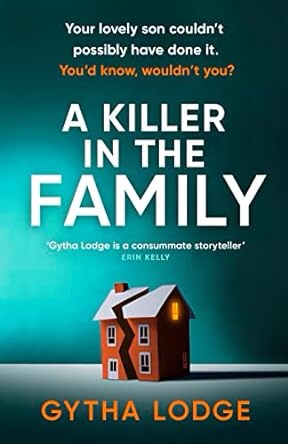
Aisling would do anything for her family – but can she protect a killer?
I had about three false starts with this book. Having read all her other books in the series when I won them in a competition on Twitter, I was intrigued to see what was next. I would read a bit, then a blog tour would come along or an urgent bit of bookpost would fall through the door and I would have to set it aside. I was so glad to finally get going with it again on holiday and it didn’t take me long to race through to the finish. The story gained both momentum and tension from about chapter four onwards. We’re back with Detective Chief Inspector Jonah Sheen’s team as the uncertainty of his private life is overshadowed by a terrible case and a man nicknamed the Bonfire Killer. He has killed two women already and the police have very little to go on. Then single mum and game developer Aisling, puts her DNA on an ancestry site. She’s thrilled to find a match, but that piece of her she felt was missing might come with some serious baggage – starting with an interview with CID. Aisling’s DNA is a match to the crime scene and possibly the Bonfire Killer himself, so the police have their eye on her two sons, Ethan and Finn, as well as her long lost father. There are secrets in this family, not limited to her missing parent. Will she be willing to unearth a painful past to prevent someone else suffering a painful future?
Aisling is an interesting and unexpected central character, with a life that isn’t everything it seems. She has gone to great lengths to avoid her past and she isn’t the only one in the family. Her father, Dara Cooley, went missing years before. As the team try to crack the case, they break into smaller working groups to find Dara Cooley, chase up the DNA and interview suspects that arise, and investigate a stud farm where a horse has been taken and killed, then burned on a pyre. Could it be linked to the case? The detectives spend time with the farmer and his two sons, trying to establish who would want to hurt their mare, Merivel. There are so many blind alleys and red herrings, but they have to be followed just in case one of them leads to a breakthrough. I loved the complications around an Irishwoman named Anneka Foley and her potential relationship to the case. One of Aisling’s sons is in a band, that one of the killer’s victims had a fascination with and that’s before we get to the exploration of Aisling’s own teenage years. I was suspicious, but loved Aisling’s loyalty to her sons. Her ‘first love’ story was so relatable and digging into the past can stir up a lot of feelings, especially when an unexpected visitor turns up. She’s unusual, a gamer who likes to play at home with her sons, but is also quietly very successful as a developer in her own right. She’s been tough and dedicated to her boys. Can she come to terms with her past and open herself up to a different future?
The team are on form, but I particularly loved the subplot around Juliette who is receiving unwanted attention from an old boyfriend. At a couple of crime scenes there have been markers that he might be around again: her favourite hot coffee and a waterproof jacket left on the bonnet of her car on a cold wet night. We see the strain she’s under, but she still does her job. It’s a subplot that seemed to have petered out but now returns with deadly consequences. This was a story I’ll love to see concluded in the next book. Then there’ Jonah’s private life, where trying to do the right thing seems to have backfired spectacularly. How does he extricate himself from this without causing further harm? Will the right path still be open to him when he does? With a fascinating background of Ireland’s poverty and the ways in which people struggled with a restrictive religious society, this is a fascinating thriller with so many different aspects to it. Gytha Lodge brings all these seemingly disparate strands together and successfully resolves most of them, only leaving us with one cliffhanger. But it is a humdinger of a cliffhanger! All of this as well as a atmosphere and tension you could cut with a knife, this is another brilliant read from a consummate crime writer.
Meet the Author
Gytha Lodge is a multi-award-winning playwright, novelist and writer for video games and screen. She is also a single parent who blogs about the ridiculousness of bringing up a mega-nerd small boy.
She has a profound addiction to tea, crosswords and awful puns. She studied English at Cambridge, where she became known quite quickly for her brand of twisty, dark yet entertaining drama. She later took the Creative Writing MA at UEA.
Her debut crime novel, She Lies in Wait, has been published by Penguin Random House in the US and UK, and has also been translated into 12 other languages. It became an international bestseller in 2019, and was a Richard and Judy book club pick, as well as a Sunday Times and New York Times crime pick.
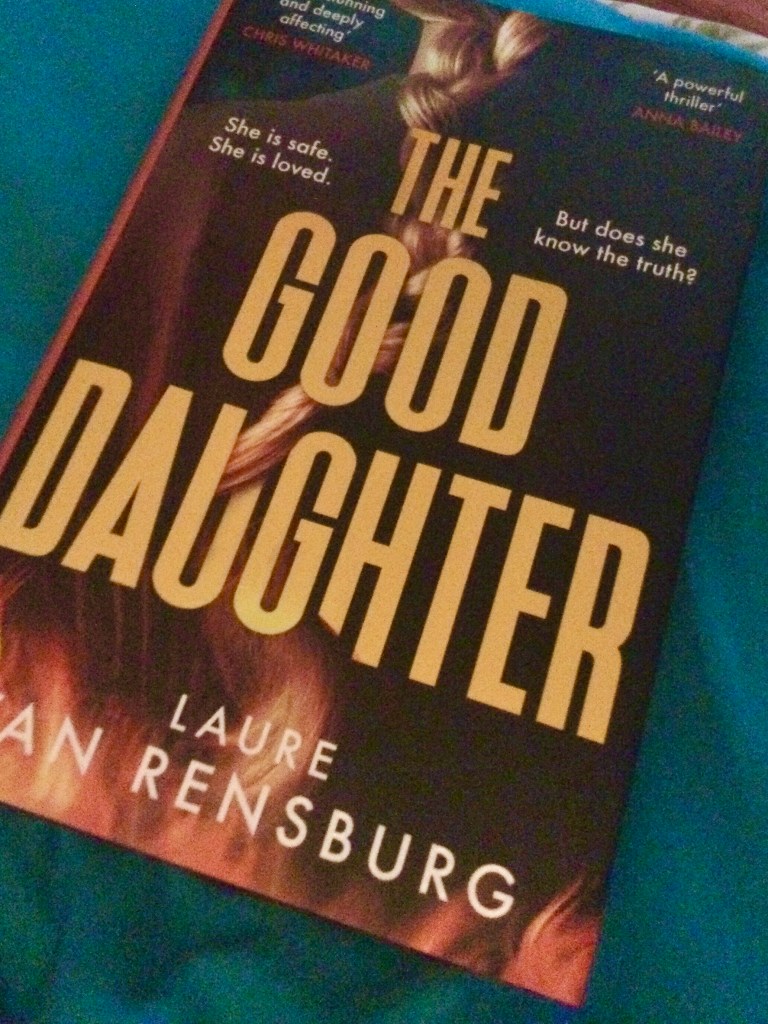
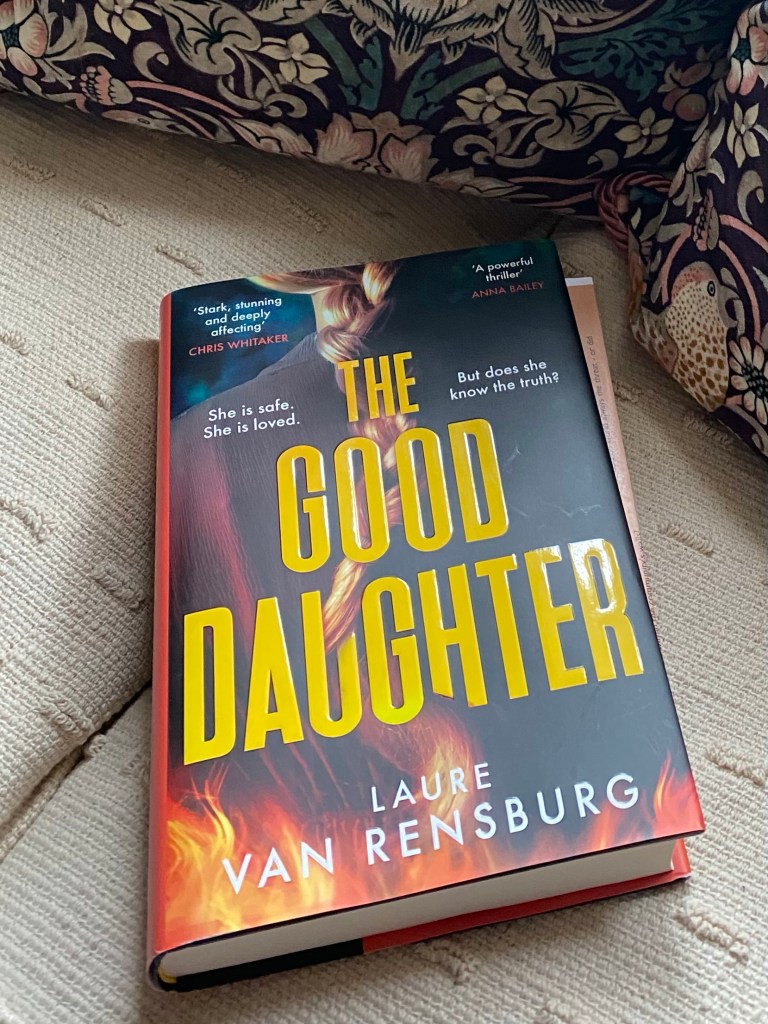
Abigail is a proud member of the New America Baptist Church. A Christian community miles away from the nearest town in South Carolina, she is safe from the depraved modern world.
She is a good daughter. A valued member of the community.
So when she is the sole survivor of a fire that burns her family’s home to the ground, it seems like a tragic accident.
Until a surprising discovery is made: before the fire, Abigail let a stranger in.
Who was the stranger? What started the fire? And was the outside world always the threat – or did danger lurk within the community’s walls?
I became completely immersed in this fascinating story about faith and the complexities of memory while on holiday. Having spent part of my childhood in a church from the American Christian Fundamentalist tradition, I am always alert to the insidious nature of spiritual abuse and cultish techniques used to entrap converts in evangelical churches. The book opens with a death, immediately filling the reader with questions and drawing them into the story. A document tells us about the wreckage of the house, following a fire. From there the author tells her story in two parts: the present day and then back to three weeks before the fire happened. In between these two timelines there are more documents and discussions that work like ‘real life’ pieces of evidence. There are news reports, public comments and podcast transcripts, all working to verify the story and establish a factual perspective opposing the emotion and confusion of our narrator. The opening is dramatic and emotive, as we realise Abigail has lost her parents; Genevieve and Pastor John Heywood were discovered dead after the fire. Yet Abigail survived. Her parent’s congregation are secretly suspicious about Abigail and think she may have started the fire. The police are beginning to think the same, but what reason does Abigail have for doing something so awful? She’s always been a good girl, dutiful and obedient. Or is that just an act? We experience everything through Abigail and her mind is a complex and intense place to be. She felt like a real person to me very quickly.
Their neighbourhood, in a remote part of South Carolina, is entirely made up of New American Baptist church members. The church members, including Abigail’s family, live according to strict rules based on the Bible. They don’t mix with non-church members and have a domestic life where the man is the head of his household. He goes out into the world to provide for his family and the wife is the homemaker, looking after the house and their children according to the principles laid down by her husband. This is a philosophy I’m very familiar with and I remember, even from a young age, wondering how could I possibly defer to my husband if he happened to be a complete idiot? Abigail doesn’t question the religious rules that govern her life, but then she meets a stranger who changes everything. Summer comes to the community to interview church members for a podcast she’s making about the New American Baptist Church. She asks to interview Abigail. They are completely different in terms of life experience but a friendship starts to grow. It’s fascinating watching the changes in Abigail and her characterisation is excellent, as is that of Summer. She is a catalyst of so much and the storytelling is strong, but follows an unpredictable path. It’s a slow start, then as Summer arrives the story takes off and becomes the pacy and addictive psychological thriller I expected from this writer.
Laure Van Rensburg has taken a very sensitive, difficult subject and has managed it with a great deal of care and empathy. It’s hard to tell such a powerful story with the right amount of sensitivity, while also creating a gripping narrative that keeps readers turning the pages, but I think the author has managed that balance well. We’re taken deeper into life on the plantation with brilliant descriptive passages that create insight into the group. There’s a lot here that wasn’t weird to me, although I think it would be for most readers. If I say to people religious fundamentalism most people don’t really know what that means. I was taught to take every word in the Bible as the absolute truth: Noah built an ark, we all come from Adam and Eve and the world was created in 7 days. Every word comes direct from God with no room for interpretation, symbolism, or the historic period or culture it was written in. Years later, when studying literature at university, I was asked to consider the Bible as a book. I had to research how it was produced, when and by whom. It’s obvious why all books included in the New Testament are written by men. It became a written text in AD325 and powerful men decided what went in (at least that explains the prominence of St. Paul the misogynist). Emperor Constantine and a council of men had the final say, but when the reformation swept through Europe in the 16th Century there was a further split on the books included by the existing Roman Catholic Church and the newly formed Protestant belief system. It’s no wonder then, that the New Testament preaches female modesty and subservience; it suited the church and the men in control of it.
When you imagine that that belief system preached to you every Sunday, borne out by the way your home functions it’s clear to see the damage it can do to self-esteem and the way young women form relationships. That was certainly the case for me. It’s a potent recipe of coercive male control and dominance over women and I could feel a familiar conflict brewing within Abigail as she tries to follow the path forced upon her by both the religious group and all the families around her, but starts to wonder if there’s more. Of course the church is judged and treated with suspicion from outside the community, but there’s no room for questions inside. Questioning the status quo is seen as rebellion, a loss of faith or even a spiritual battle going on within the soul. However, as with all organisations, there are disturbing secrets that lies beneath. I will admit that this was difficult to read in parts, because it set off a chain of little light bulb moments for me. Although, I think it would be an emotional experience for any reader. There’s a creeping sinister feeling, but the increasing tension and twists in the tale keep you glued to the page. I came away feeling so many emotions, but mainly I was so angry, for Abigail and the other young women in the community. Of course some of that anger was for me and the other young women who grew up in my church, many of whom I’m in contact with and who, despite all of them leaving the church in their teens and twenties, are still affected by the experience and their internalisation of the church’s teachings. As Amber’s real memories began to appear I was hooked and had to know what had happened and how she was going to move forward.
I am so impressed by the level of research Laure Van Rensburg has done into this type of church and the sinister way it works. She has really captured the narrative that’s constructed, using the Bible to create an outmoded and illusory vision of the world. If you follow their teachings and actively apply them to your life, God will protect you and keep you safe. The loneliness felt by church members when something bad happens to them or their family is heart-breaking; I was told that my multiple sclerosis would be healed by prayer and when it wasn’t it couldn’t be a failure of God, or their prayer. It was my lack of faith. I found Laure’s writing absolutely mesmerising, the Newhaven community felt just as real as Abigail. I could see it vividly in my mind’s eye. Then when she allowed the outside world to encroach on the narrative it came as a shock, because you realise just how far these people are removed from modern society and even reality. Your mind will flit between whether Abigail is genuinely traumatised by the community and the terrible night of the fire, or whether she’s a psychologically astute and proficient liar. It has a slow start, but by the end I was questioning everything! For me, although it’s at the extreme end of experience in a church like this, the teachings and the coercion were no surprise at all. Most readers will be familiar with these but see them as the practices of cults or churches like the Latter Day Saints. I think they might be a lot more comfortable imagining this mistreatment of women is confined to religions like Islam. It will surprise a lot of readers to learn that a modern Christian church could be like this. They do exist, both here and in USA. As both the restriction of women’s rights over her own body and book banning is in progress now in some US states, the timing of this book is just right. It’s not much of a leap from here to The Handmaid’s Tale. I found this a disturbing, dark and addictively intense read that you really won’t want to put down.
Meet the Author
Laure Van Rensburg is a French writer living in the UK and an Ink Academy alumna. Her stories have appeared in online magazines and anthologies such as Litro Magazine, Storgy Magazine, The Real Jazz Baby (2020 Best Anthology, Saboteur Awards 2020), and FIVE:2:ONE. She has also placed in competitions including 2018 & 2019 Bath Short Story Award.
The Good Daughter is out now from Michael Joseph Books
She is a stay-at-home mother of three with boundless reserves of patience, energy and love. After being friends for a decade, this is how Liz sees Jess.
Then one moment changes everything.
Dark thoughts and carefully guarded secrets surface – and Liz is left questioning everything she thought she knew about her friend, and about herself.
As regular readers know, between my blog tour and current fiction reads I always like to go back and read an author’s earlier works. I thoroughly enjoyed this novel from Anatomy of a Scandal writer Sarah Vaughan, first published in 2020. It starts with an ordinary evening on duty for Liz, who is a registrar in paediatrics. She’s called down to A&E to see a ten-month-old baby presenting with strange symptoms. She’s been vomiting, and seems drowsy but doesn’t have a temperature which rules out a virus or infection. However, Liz is familiar with this particular baby girl, because she belongs to her best friend Jess and she’s definitely not acting normally. Jess has always seemed an absolute natural when it came to motherhood, certainly more than Liz. Jess made parenting seem easy, spending so much time making sure her children have the right foods, and lots of activities to try and nurture their minds. She’s the stay at home full time parent, but where Liz would struggle without working, Jess seems born for the role. Yet, this is not the same Jess that Liz knows outside of work – she’s edgy and claims her daughter had a fall. All children fall and through no fault of the parent, but the accident Jess describes doesn’t account for the boggy head injury that Liz can feel at the back of her baby’s head. Why would Jess lie?
Told through different perspectives, from Jess to Liz, this is a brilliant domestic thriller with tension so tight it might snap. This tension in the writing echoes Jess’s mind, at any time she might completely unravel but that doesn’t mean she hurt her baby. Vaughan is exceptional at drip feeding us a little at a time. A tiny bit of extra information here. A new viewpoint there. But never more than you need to keep the story flowing. It’s a powerful and emotive story, but Vaughan never descends into sentimentality or melodrama, this is sharp, addictive and never slows down, insisting you read another chapter, then another.
She is painfully honest about parenthood, so much so that it’s painful to read at times. Especially when the perspective shifts to one of the children and we’re suddenly reminded in the midst of all this, just how vulnerable they are. We are never really aware, until it happens to us or a close friend or family member, just how transformative giving birth can be. Some births are difficult, violent even. Yes, it’s a time of incredible joy and celebration, but my friends were exhausted in those first few days. Exhausted to the point of being almost catatonic. They were uncomfortable, dealing with caesarean scars and infection, stitches, painfully swollen breasts so that every bit of them seemed to be either hurting or leaking! It didn’t look like fun to me and there was a small part of me that was a little bit glad I couldn’t have children. We hear comedians and celebrities publicly talking about how difficult parenting can be and it isn’t just the body that’s affected. The birth can leave you feeling traumatised. The lack of sleep wears you down and you can’t remember things. Then your mind can play tricks on you. Are you really up to this? What if you’re not doing this right? Some women don’t bond with their baby straight away then berate themselves for being terrible mothers. We know so much more about post-natal depression and post-partum psychosis these days, but women still get missed because they’re too scared to say how they feel. If you’re having thoughts of harming your baby, how can you tell anyone?
I think this story that will resonate with many women. Jess and her baby really do pluck your heartstrings. At first I was so suspicious, because she’s cagey and closed off. I couldn’t understand why you would wait nearly six hours to get help for an obvious head injury. I was pretty sure where the narrative was going, but then the author surprised me with a new perspective and a huge twist that was really unexpected. This is a far darker path than I’d expected. Domestic thrillers are one of my a favourite genres and this is up there with the best. It really delves under the layers of motherhood and overturns that old expectation that every woman is naturally maternal. That post-natal depression can happen to anyone, even when they’ve not experienced it with their other children. It brings home to the reader that looking after a newborn baby is a giant undertaking and it how vital it is to ask for help. This is such a perceptive novel with an unexpectedly treacherous conclusion. Sarah Vaughan is an incredibly clever writer, balancing both our sympathy for Jess and her baby, but also our thriller reader’s desperation to uncover what has happened.
Published by Simon and Schuster 2020
Meet the Author
Sarah Vaughan is the international bestselling author of the Number one Netflix TV series, Anatomy of a Scandal, and four other novels. A former journalist, she read English at Oxford before training at the Press Association and spending 11 years at the Guardian as a news reporter and political correspondent. After having her second baby, she left to freelance, and eventually to write fiction. Two women’s fiction novels followed before Anatomy of a Scandal, her 3rd novel and her first courtroom drama/psychological thriller, heralded a new direction and became an instant international bestseller. Sold to 24 countries, it was also a Sunday Times top five bestseller, spending 10 weeks in the top 10 charts; a kindle number 1 bestseller; and one of Richard & Judy’s best dozen books of the decade. In April 2022, it dropped as a six-part Netflix mini-series, written by David E Kelley and Melissa James Gibson, and starring Sienna Miller, Michelle Dockery, and Rupert Friend. In its first 3 days, it debuted at number 3 worldwide and was the number 1 most watched Netflix TV show in multiple countries, including the UK and US. In its first 3 days alone, it notched up 40.28 million viewing hours.
Little Disasters, published during the first and third lockdowns, was a Waterstone’s Thriller of the Month and is in the process of being adapted for a UK broadcaster. It was also WH Smith paperback of the month, a Kindle bestseller, and has been published in the US and various other countries. Reputation, published in March 2022, has also been optioned by the team behind Anatomy of a Scandal with a view to being developed for TV. It will be published in the US in July, and in various other countries throughout the year
‘This is my family story. From all I’ve sown together, through all I couldn’t ask. I want to be the bud who makes it.’
In Blooms tells of strength, survival, forgiveness, resilience and determination, and the fierce love and unbreakable bonds between mothers and daughters.
Ever since Sol’s untimely death left her pregnant and alone at twenty-two, Delph’s kept herself small as a form of self-protection. Now, over a decade later, she lives with their daughter Roche and her new partner Itsy, a kind and protective cabbie, on the fourteenth floor of Esplanade Point on the Essex coast.
But Delph’s protective bubble bursts when Roche moves in with her estranged nan, Moon. Feeling on the outside of the bond between her fierce-yet-flaky tarot-reading mother and volatile martial-arts-champion daughter, Delph begins questioning her own freedom. And when Roche’s snooping into her grandmother’s past unearths a familial line of downtrodden women; a worrying pattern emerges. Has keeping small and safe truly been Delph’s choice all these years…?
I don’t believe in trigger warnings, despite their intended purpose to flag up material that may ‘trigger’ difficult emotions in the reader, I feel that they might stop someone experiencing a connection with a text. It might well be a trigger, but that doesn’t always have to mean it’s a negative one. It might be a trigger that starts a healing process. If anyone should have avoided this book it was me, because I was Delph. I lost the love of my life in my early thirties and then sleepwalked into a coercive and damaging relationship. Yes, it was a hard read at times, but it wasn’t remotely negative. Moon, Delph and Roche are three generations of a family. Each woman has her own issues, but they all stem from one place. Right back at the beginning. As the book opens Roche can no longer live with her mother and Itsy, the man she’s been living with for most of Roche’s life. So she decamps to her grandmother Moon’s house. Roche can’t stand Itsy, he dislikes her and wishes she wasn’t there. In fact what he wants is Delph all to himself, it’s easier to control someone who’s isolated. Delph has had a glazed over look ever since he arrived in her life and she doesn’t seem like her mum anymore. Delph has done everything she can to keep Itsy happy. She’s changed how she dressed, made herself less beautiful, stayed at home and stopped going out with friends. Every day she makes herself smaller to make more space for him and Roche can’t watch it anymore. However, things are changing slowly. Delph has a job she enjoys at B & Q, new connections with her colleagues and today she has made a choice. Delph is pregnant and she knows deep down in her soul that ‘the thought of more years, more life, tied to him’ is more than she can bear. She goes secretly on her own for an abortion, the quietest but most powerful act of rebellion she can make. Then comes her opportunity, Itsy receives a phone call from Jamaica to tell him his mother is dying. He must jump straight on a flight, so Delph lets him go alone, knowing that now she has several weeks to herself. She doesn’t stop Roche from moving out and accepts this as her time to heal, time to be the parent that so often Roche has to be for her. However, this isn’t the only recovery needed in the three generations of this family thanks to the actions of men.
I felt at first that I was slowly piecing together the story of a client. Being a person- centred therapist means letting the client choose what they want to talk about. I would use my counselling skills to tease out that story and ask questions where it needs to be clarified or where I might only be getting one perspective. Here the story has it’s own pace and each woman narrates her own section. We flit back and forth between the women, also delving into the past here and there. It’s like doing a jigsaw puzzle but only being handed one piece at a time, then another from a different place. It takes some time to perceive the whole and that was definitely the case here. Only we the reader can see where they all are in relation to one another. The reality of being a woman in today’s world is explored fully, there is no doubt that these women’s lives would have been immeasurably better had they not encountered the men they do. It takes Roche to articulate this properly with the words and wisdom of her generation.
“Roche knows, remembers, how her life changed at around the time she started secondary, and her bubble of invisibility popped. How, despite the school uniform screaming otherwise, she very suddenly became the inhabitant of a woman’s body, complete with a depressing self-awareness that this was now Roche’s life until one day men deemed her invisible again. In fairness, it’s not her contemporaries who usually do the perving – no, it’s men, grown–ass men who have always done the bulk of the wolf–whistling, the innuendoes and basic compliments that they expect her to ‘smile, love’ and be grateful for.”
As a middle aged woman I now know the power of that invisibility and how, in many ways, it’s a blessing.
I love how carefully the author drew the threads between generations, those behaviours that create a pattern of intergenerational trauma. There are moments in her journey where Delph needs her daughter by her side, but she recognises that it’s a selfish need. Delph’s lived experience stops her; “is not for a child to fix the parent. Nor is Roche the ointment to Delph’s current troubles”. She’s spent enough time trying to help Moon. Then we go back into Moon’s early years, when her grandmother is in hospital, suffering from mental ill health. Her name was still Joy back then and her job is to dispense sunshine to a women who can’t even remember her name. ‘Come on,’ Ma says, in a giddy-up way. ‘You know how happy your little face always makes her.’ This a learned behaviour, people pleasing and exactly what Delph is trying to avoid for her own daughter, three generations later. By sitting with her own pain, Delph is avoiding instilling that behaviour in Roche, she’s actively breaking the cycle. Yes, there are traumatic moments in these women’s lives, Moon’s story being particularly harrowing, but we can also see the women’s determination to change. It’s that change and what it means for Roche that brings such an uplifting feeling to the book. For me it’s Delph’s struggle that touched me deeply. The loss of Sol, who’d been there her entire life, is devastating. So moving out of Itsy’s orbit and the mental paralysis she’s been living with means opening up her emotions. That’s all of the emotions including her grief, but it’s a process that needs to happen so that Roche can talk about her father openly and in a joyful way. I found myself more engrossed in the later stages of the book as I had to see whether these women could heal together. This is beautifully written and manages to be funny, moving and hopeful.
Meet the Author
Eva Verde is a writer from East London. Identity, class and female rage are recurring themes throughout her work and her debut novel Lives Like Mine, is published by Simon and Schuster.
Eva’s love song to libraries, I Am Not Your Tituba forms part of Kit De Waal’s Common People: An Anthology of Working-Class Writers. Her words have featured in Marie Claire, Grazia, Elle and The Big Issue, also penning the new foreword for the international bestselling author Jackie Collins Goddess of Vengeance.
Eva lives in Essex with her husband, children and dog.
The Stargazers does something I’ve been trying to put across in my own WIP. It shows us that our own story, as we have experienced it and tell it to others, is only one strand of an infinite tapestry. Sarah Fox and her husband Daniel are moving in to their new house on The Row. It’s a ‘proper house’, meaning that as you walk through it you can imagine your child taking their first steps in the hallway or using the tree swing in the garden. It reminded me of when we were looking at houses and we viewed an incredible place that felt to me like a grown up house. It had all the children’s heights written on the wall next to the kitchen door and also a little family of llamas, painstakingly cut out and coloured in, then clear varnished onto a beam in the living room. It was a proper family home and I think this is a little bit of what Sarah feels as they cross the threshold of No 7. Does this make them grown-ups? Perhaps amplified by the fact that Sarah has never known a real family home until now. Sarah and her sister Victoria (Vic) spend their early childhood in the family home of Fane Hall, one of the most splendid stately homes in the south of England. When their grandfather, the heir, dies. They are awaiting the return of Great Uncle Clive. He will become the Earl because Sarah’s mother, Iris, cannot inherit the house being a woman. Iris has doubts, but hopes that since the death of both her father and her husband, Uncle Clive will be benevolent and allow them to remain living in the west wing of Fane. Yet the man who returns from war with a new wife, Aunt Dotty, does not see things the same way. Fane is his, and instead he grants them a small flat in Kensington.
Years later, after Iris has repeated endlessly to her daughters that Fane is her house regardless of inheritance law, they fall on hard times. So she tells the girls to pack and brazenly moves into Fane, occupying a different wing to Clive. Time has been hard on Fane and it seems like her Uncle has allowed it to fall down around him. Every room feels ransacked and amazing collections like the taxidermy animals have been thrown on the floor, their glass cases broken and the smell emerging into the house. There’s also a far worse smell. Many of the toilets are blocked, the bathrooms unusable and their smell permeating throughout. This is the legacy of WW2 and Fane being used by the British forces, not very carefully it would seem. Uncle Clive is dirty, shambling and penniless. A game seems to resume between her Uncle and her mother Iris, with the girls caught in-between, often forgotten and at times completely neglected. Then Iris sends the girls to boarding school and settles in at Fane waiting for him to die. This means that for long periods Sarah has to leave her only friend in the world. The only one who understands her home situation and gets to know her one to one. They are the stargazers. Sarah climbs out of her window in the middle of the night to meet him at a large tree, big enough to sit in and watch the night sky. There they don’t have to talk about their home lives, it’s simply understood. This young boy lives with the lady who runs the post office, but she’s a foster mum. He tells her they need to look forward to their futures not their pasts, to their dreams of being a musician and a film maker.
As we work our way through these different layers of family history, it works like a set of Chinese boxes, one story tucked inside another and we learn a little more from each. Sometimes, an event in Sarah’s childhood helps us understand the present. Then we read a snippet from Iris’s past that informs us about why she treats her own children badly. The adult Sarah we meet in her house in London is very different, as her life shrinks a little. She has two small children and spends all day taking care of them. She doesn’t have time for daily music practice and her hands become stiff so she can’t stretch to pluck the cello strings. Where once she played cello professionally, it now sits in the corner of a room upstairs untouched. Husband Daniel is a bit clueless about how Sarah feels. He’s a fellow artiste, but he’s an actor and television producer and he still gets to leave the house each day. He also starts a long Sunday lunch tradition for the neighbours which seems to a euphemism for come into the house, drink all day and neglect to clear up after themselves. Sarah struggles a bit in this chaos, especially when something outside of their daily routine happens – like her sister turning up to stay when Sarah had completely forgotten them. Instead of embracing the chaos and simply saying ‘I’ve forgotten completely, come on into the madhouse’ she tries to cover the fact that she’s not remembered, putting untold pressure on herself.
There’s a saying in counselling that no two children have the same parent, that applies strongly to Vic and Sarah. They are very different people, possibly due to the way they responded to emotional abuse as children: one was compliant and the other, despite being scared, was defiant. Not only was Iris psychologically damaging, she was neglectful. She is constantly forgetting to feed them, doesn’t buy them the right clothes for school and ensures they are seen as different both by the children of the village and even their school friends. At school Vic becomes a huge hit with the popular group and seems worshipped by the younger girls. When asked to show her loyalty to the group she doesn’t hesitate, even when that loyalty means shunning her little sister. There is bullying that’s uncomfortable to read and gave me the shivers. In choosing the popular girls, Vic has ensured her safety but has also signed up for a lifetime of putting on a front. Sarah may be shunned but at least she can be herself. I felt sorry for Vic, after all she is also the product of abuse, but in turning into an abuser herself she started to lose my sympathy. Especially when it comes to their treatment of Sarah’s music teacher and an act that has lifelong repercussions.
I thought this book was fascinating from a psychoanalytic perspective showing how we find ways of surviving abuse childhood that become part of our personality. In a twist I didn’t expect, a Sunday dinner at Sarah and Daniel’s goes south fast when their little girl disappears. The reasons why surprised me, because I was never quite sure where the stories were going to join up or who might be lurking from the past. Sarah’s eventual return to Fane in adulthood doesn’t work out in the way she might have hoped, but it helps her finally face up to what happened there. The final paragraphs show us the irony of Iris clinging to Fane and to life. She is still muttering to herself that Fane is hers and what would have happened had she been a boy? Did she get what she wanted in the end? Is the estate viable or have terrible compromises been made? As we find the answers to these questions we also see Iris’s decline as compared with the little girl she must have been when she first visited the house. This final flashback is brilliantly thought out and placed. That first visit can’t fully vindicate Iris, there is never an excuse for her actions towards her own children, but it could shed some light on what happened to set these wheels in motion. It might even explain her unshakable belief that Fane is hers. This is a great book about family, intergenerational trauma and the adults we grow up to be, because of the children we once were.
Published by Headline Review 14th September 2023
Harriet is the author of thirteen novels, two of them are Richard and Judy book club selections, several have been Top Ten Bestsellers, one won the Good Housekeeping Book of the year prize, but the accolade she’s most proud of is the lady on Twitter who wrote last month that she thought my books were real ‘knicker grippers’. As Harriet says on her Amazon author page ‘I suppose that’s all you can hope for isn’t it?’
Her first novel, Going Home, came out in 2005 and her last was The Beloved Girls, published in paperback in April 2022. She wishes she’d tried another job sometime but she can’t imagine not writing. She has written since she was a child, first on books I stapled together with paper then notebooks, then a laptop that crashed and lost all of the novel she was writing in secret back in 2002. (So now she backs her work up properly) Her first novels were more about relationships and people in London and had more chicklit themes and the later ones are darker and more about families and secrets and houses and the past. Those themes have always been in her books, but as she’s grown older she’s enjoyed exploring them more. She has so many stories in her head all the time and adores knowing that her job means that she can carry on telling them.
If asked how she’d describe her books she’d say she wants them to be gripping, involving, heartwarming stories about families and mysteries in the past with a Gothic tinge. This one definitely fits that description.
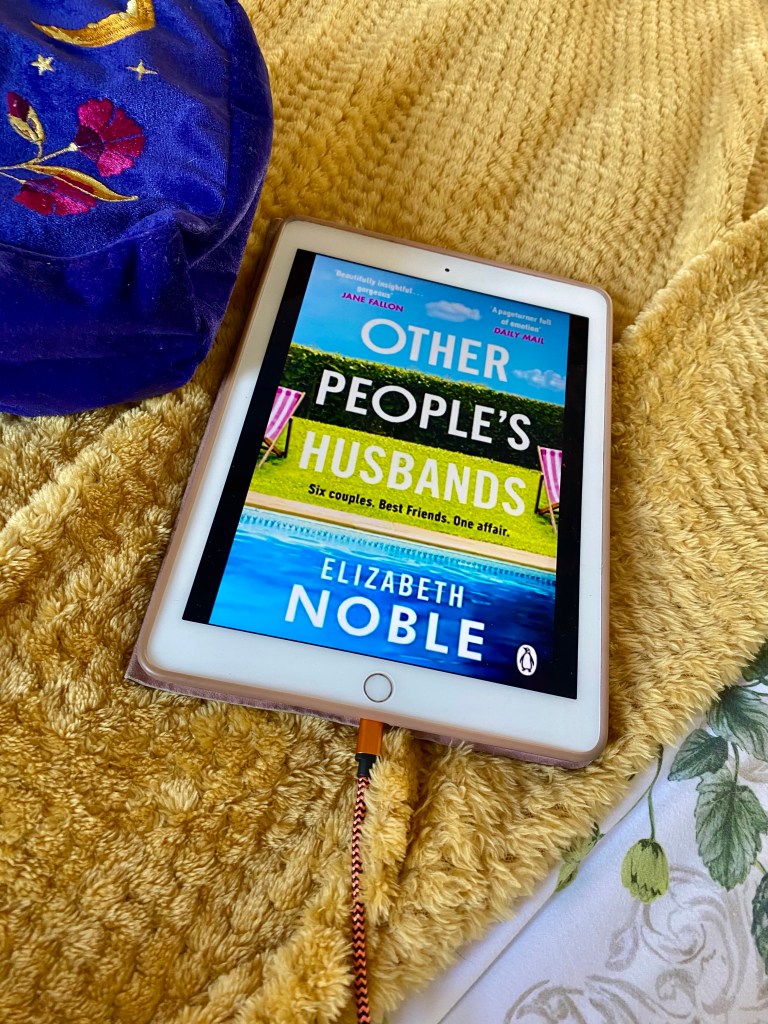
Elizabeth Noble’s domestic drama is focused around a solid group of friends. Six women and their husbands have been a ‘pack’ for several years after chat at the school gates led to lunches, then dinners and now regular get togethers like their annual May Day bank holiday. Traditionally this weekend is always spent together, sometimes abroad but usually at Annie’s picturesque holiday cottage. Annie loves sharing her home with her closest friends and is the best host, often heading down there a couple of days before the others to air the house out and prepare the bedrooms. This is where the ripples begin. In previous years Annie remembers all the kids coming along, playing in the pool and shrieking with laughter. More recently it’s just been the adults and the first day usually involves getting out of travelling clothes and spending the afternoon by the pool, the men in their swimming shorts and the women in sensible Boden one piece swimsuits, an unspoken rule. Kit and Natalie are late for everything and this weekend is no exception, so everyone is already lounging outdoors when Natalie joins them. This is the moment that everything changes, as Natalie strolls out in a high legged red bikini walks the length of the pool and climbs in. The red is as subtle as a matador’s cape, but will anyone take up the challenge? All the women know without speaking that this is a betrayal of the sisterhood, an open sexual invitation, a red flag. Even a couple of the men mention it, later on in bed with their wives they say it was a statement, pure theatre, something that shouldn’t be a surprise considering Natalie is an actress. Yet her husband Kit barely seems to notice.
However, one of the husbands noticed a long time ago that Nat is beautiful. In fact over twenty years there have been several moments – a glance, a brush of the fingers, a hand that lingers on a shoulder, a kiss that strays from the cheek to the edge of the mouth. Will this now become something more? The author lets the tension rise beautifully. She perfectly captures how one action acts like a ripple in a pond within a group like this. It would affect every one of the friends and the next generation who have grown their own friendships over the years. Natalie is feeling restless and expressing that in her clothing and changing her routine. She and husband Kit have a small flat in London that she can pop to on the train and visit galleries or go shopping. Previously she’s been held to the routine of children at home but now she’s free from that and has time for herself. Her husband Kit seems absolutely solid and a great dad, but Natalie misses that frisson of attraction and electricity between two people. So, when she and Dom accidentally bump into each other in London she doesn’t have anywhere to be or to rush back for, so they can enjoy the warmth of a city evening. Joining others who are sat on the embankment, looking at the river and enjoying a bottle of wine or ice cream. The heat between them is obvious, but there’s always been something to stop them before. Dom loves his wife, she’s solid and dependable but their sex life has dwindled of late and they don’t seem to have made the transition back from family to being a couple again. His attraction to Natalie, something he felt at their very first meeting, has never diminished. What if they now have a chance to be together? Whereas Natalie seems to agonise over her husband and children finding out, Dom doesn’t seem to think about the catastrophe this would cause.
Noble has written their characters very carefully so that I really did care about Natalie despite her actions. I enjoyed her relationship with daughter, listening to Temple’s marriage problems and going away with her for the weekend for some quality time. Natalie’s issues were largely her own and they had nothing to do with her relationship with Kit. Dom’s wife Sarah was very organised, something that seemed to fit with her job as a schoolteacher. She often organised group get togethers and was very family orientated. She knew that her sex life with Dom had slipped a bit of late but she wasn’t too worried. She thought that sex did tend to dwindle a little when people reached middle age and had been together so long. That didn’t mean they didn’t love each other. However, she had really been too busy to stop and think about whether they actually did still love each other. The author’s ability to get inside the mind of these characters was incredible and I enjoyed how the story was split between various different members of the group, including the next generation who were facing changes of their own. I loved how the women tried to remain friends with each other, despite everything that was happening around them.
While this intense drama was going on it was balanced by a peek into these couple’s lifestyle. I coveted Annie’s holiday home with it’s old fashioned charm. The events they’re all invited to, such as one of their daughter’s weddings being held in the garden at home, were lavish and beautifully arranged. These were dreamy interludes between the domestic drama that I drifted through, thoroughly enjoying how lovely they were. There was also a gorgeous little romance developing between two of the next generation, who had spent years climbing trees and running through sprinklers in each other gardens, but were now confused because their feelings were changing. In the main it was the women who stood out in this novel, whereas a lot of the husbands simply faded into the background. These were strong women, having to keep afloat careers, family commitments, parents and marriages. These are the ‘middle’ years where children still need you and parents start to rely more on their children. It’s a little like spinning plates, but at least these ladies had gorgeous homes and getaways. Let’s be honest, no one here is struggling on minimum wage. It’s gloriously gossipy though and I felt like a thoroughly spoiled fly on the wall by the end. Perfect for by the pool reading, this really was an enjoyable and addictive domestic drama.
Meet the Author
Elizabeth Noble is the internationally bestselling author of The Reading Group, The Friendship Test, Alphabet Weekends, and Things I Want My Daughters to Know. She lives in New York City with her husband and their two daughters.
The Grand Life Apartments are a series of dwellings with beautiful garden surroundings in the coastal city of Chennai. It’s residents are varied and each one has their own sections to the story. Kamala is a dentist on the edge of retirement who counts down the days to her annual visit from daughter Lakshmi who is studying at Oxford University in the U.K. Her tendency towards religious offerings and a more traditional view on marriage and family, sometimes put her at loggerheads with Lakshmi. Revathi is 32 and a successful engineer who lives alone, something her mother never tires of reminding her is not normal. She is reaching her expiry date in the arranged marriage market. Reva likes her freedom and has entertained thoughts that maybe not everyone is cut out for marriage and a family, but hasn’t dared tell her mother who is setting up her latest ‘introduction’. Then there is Jason, a young British chef who has impulsively decided to work at an exclusive hotel in Chennai. He has been driven from his London home by an awful break-up that he’s struggling to get over. In the meantime he is making friends with his neighbours and helping out Mani, the owner of the apartments. Mani is facing his own struggle though. A developer offered him a sum of money for the apartments, planning to level them and their gardens so they can extend their luxury apartment blocks across the street. Mani refused their offer, setting off a dangerous and dramatic series of events that will bring the residents together.
I thoroughly enjoyed this slice of life in Chennai, narrated by the the various inhabitants of Grand Life Apartments. I feared a sanitised setting, rather like the The Great Exotic Marigold Hotel’s beautifying of India. However, here the author manages a great balance of being honest about the difficulties of India, whilst also showing it’s warm welcome and sense of family and community. She also showed how travelling or working in the city could sustain someone and take them on an uplifting and life changing journey. A setting with this dichotomy of incredible positives versus the difficulties of corruption and poverty, is very difficult to write in a light-hearted novel. It takes serious skill and I was surprised to find it was a debut novel. It was no surprise to learn that Hema had been a travel writer, because when reading I did feel like I was there. This wasn’t the tourist route either, but real people living and working in the heat and smog of the city. The heat comes across strongly (possibly more to do with my menopause when I think about it) and the dust laying over everything. There was a great mix of things that are comforting and welcoming, but other stories and mentions that reinforced the foreignness of India. These momentary snippets of Indian daily life were brilliant, I loved Jason Skyping his mum who was terrified to see a lizard walking up the wall of his living room! ‘Oh that’s just Lizzie the Lizard’. The apartment’s beautiful gardens are a wonderful touch of old and new, as well as the place where residents tend to come together. It’s a unifying force for the residents and allows young and old to come together – such as on Kamala’s birthday where a power cut and Jason’s rice pudding are central to the impromptu celebration.
This is a book where the characters are really important, because the story comes out of their relationships and personality. Kamala’s daughter Lakshmi comes to stay and with incredible bravery shares a secret about her life that she knows will shock and possibly disappoint her traditional and religious mother. I loved the detail of Kamala’s life, the descriptions of her spice filled cooking and the rituals of her worship at her homemade shrine, with the flowers she buys to accompany her prayers. There’s a solidity about Kamala, she knows who she is and what she believes. Now her thoughts on life are being challenged and she’s having to step out of her comfort zone and let go of the things she expected for her life. I loved the scenes with her friend Sundu (a formidable woman and lawyer) when they come to England. Sundu forces Kamala into trainers on their trip to London and is often amused by her rather blinkered view of the world. The scene with the group of young men on a corner and Kamala’s observation that they smelled of a spice she’d never encountered before, made me laugh out loud.
I felt something for Reva, a connection of some sort although I couldn’t pinpoint why. The way Reva wants to be really does rub up against cultural and familial expectations in her personal life, whilst also coming up against the patriarchy at work. She’s an engineer who knows her own talent and ability to manage a team, but she finds her experience and ability overlooked by management. She’s thinking of moving to another company if they choose to promote a man over her this time, but is she too old to start again or choose a start-up company? She’s contemplating the same risk in her personal life. The pressure she feels from her mother, who doubts her prospects on the marriage market as a woman in her thirties, means she meets men that her mother has arranged. We see her on these ‘dates’ and she does meet nice men, but is ‘nice’ enough? Her mother can’t control Reva’s inner voice and it tells her to hold out for a love match. She knows it’s a risk, but what would happen if she didn’t find love? She would live the life she lives now: working, meeting friends, socialising with her neighbours and checking in on the older residents like Mani and Kamala. Would that be so bad? Does her freedom mean that much to her?
Finally there’s Jason and he has the part of an Englishman abroad. He’s an incredibly sensitive man who has come to Chennai on an impulse to avoid heartbreak at home. His relationship with Elizabeth came to an abrupt end and he’s facing that period of ruminating on the state of their relationship. He was imagining marriage, possibly a family and he thought they were on the same page. Clearly she wasn’t, so was she tricking him or was he simply so caught up in his own expectations he never noticed that she was lagging some way behind. He does spend time checking her social media profiles, dreading but knowing that eventually he will see a hand on her shoulder or a grinning face next to hers. However, when the news comes, it’s nothing he expected and he feels sick. It feels like a betrayal. I was desperately holding out hope that Jason would blossom in Chennai and I loved reading tiny steps towards this. His relationship with Kamala is based on food, she wants him to experience real South Indian food and he desperately wants to impress her. She feels like a grandmother figure to him and he’s so respectful of her. His relationship with Mani is great too and I loved how he helped with the garden, understanding how important it is to Mani and his memories, but also making small changes that help it sustain the lives of the people currently living at the flats. I was more than a little bit desperate for him to forget his heartbreak and maybe spend time with someone a little closer to his new home.
The corruption seen in the building company plot line isn’t the only real or gritty bit of the tale. Begging comes up a few times and Reva thinks about women who fall foul of the social rules and can find themselves drowned in the village pond! There’s also a young boy who rushes around delivering from the local store and has a manner like a little old man. It was great to have this edge because it made India feel real, rather than a Disneyfied version. I found the book, especially Jason and Reva’s journeys, really inspiring. They’ve both made big choices in life – to go away to university, to become a chef, to fly to the other side of the world even! I loved the way Jason was learning a new skill, with Kamala’s advice and making steps towards moving forward in life, by getting rid of his social media. Could they perhaps move forward towards each other? I kept hoping. I had visions of their setting as the perfect haveli with a stone courtyard, beautifully scented climbers and water feature at the centre with just the right trickling sound. I was scared for Mani and not just because the developer’s threatening behaviour worsened. With all of his memories tied up in these apartments, it would be an emotional upheaval for him to leave. I was left with some questions unanswered and I hope this means a sequel might be in the pipeline. I wondered: where Jason and Reva’s lives might go; how Lakshmi might build her life, knowing how much her mum is trying to understand; would Sundu be able to save the apartments? I was deeply invested in these characters and their journeys. The author engaged my senses and my emotions in her debut novel, so much so that I’m already waiting for what comes next.
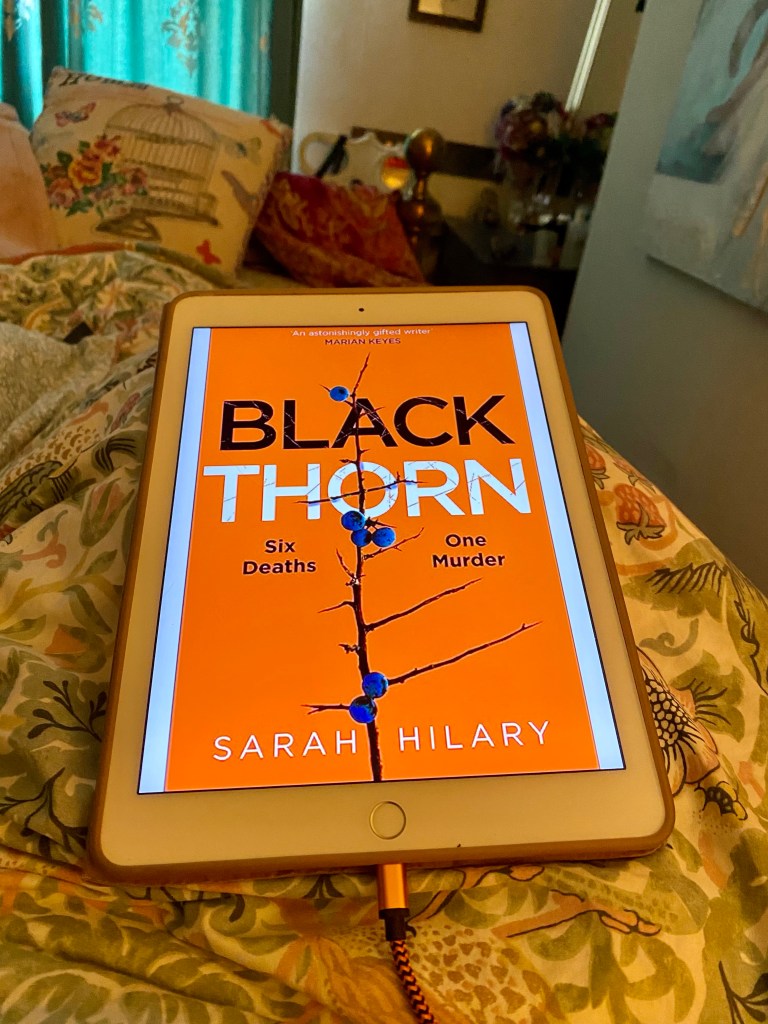
Sarah Hilary has this amazing ability to leave the reader floundering between law, morality and ethics. I never quite know who I’m rooting for. Who’s in the right or the wrong? I come to different answers depending on the lens I’m viewing it through – someone can be within the law whilst being morally questionable. I often find myself stopping to wonder if I even like any of the characters. This is one of those stories that expose the dark underbelly of what looks like the dream neighbourhood. The houses at Black Thorn are like those you see in the Omaze giveaway adverts. The opening scenes of a neighbourly barbecue show us two very different narratives: the jolly and friendly neighbours enjoying each other’s hospitality; the neighbour who breaks into the party with a grudge. Is Luke Dearborn a nutter and a conspiracy theorist? Is there something rotten at the heart of this dream housing development?
The timeline slips back and forth from pre to post-abandonment. Both timelines race towards Day 0, the day of ‘abandonment’ and possibly the truth about what has been happening, both to the houses and the people living there. I was interested in the word ‘abandonment’ because it feels as if it’s in the wrong context. It describes the development as something with feelings rather than bricks and mortar. Also ‘abandonment’ suggests an element of choice, when actually the residents were forced to leave by the authorities. It was an evacuation more than abandonment, a word that gives the sense of an unloved child rather than an inanimate house. Adrian is affected the most because not only did he sell the development, he bought one for his family. This leaves him on site for all the problems to come to his door, creating enormous stress for all of them. It’s almost as if Adrian fell for his own sales patter. He’s sold the units as state of the art living with coastal views through the huge glass sections at the back of the house. It seems a bleak setting to me, the last places before you drop off the edge of the world! They’re also described as luxury, but it feels like a Scandi design, more minimalist. To me luxury means softness, comfort, colour and warmth. These rooms seem to be more about impressing others than thinking what is comfortable for long term residents. Maybe they’d be better holiday homes. Even their gimmick of fake diamonds scattered throughout seems wrong, they’re hard and cold and not something you’d want to tread on in bare feet. Trevor, his business partner, manages to escape this by going off site or bedding down in one of the unsold units where he can’t be seen. In our flashbacks we know that six people die, but what of? Is there poison in the heating systems or is it carbon monoxide poisoning? Adrian clearly feels responsible, falling into a deep depression. Trevor is still hanging around, being cocky and unwilling to admit that corners were cut or mistakes made. Through Agnes we slowly untangle a whole web of deceit and lies, but Trevor is one of those people where nothing sticks. It’s Adrian who might end up taking the blame.
The character I seemed to view things through was Agnes, because I think she represented the reader – an outsider, lost, in the dark and vulnerable. She’s part of a family – her father Adrian was the salesman for this development – but has lived in London for a number of years. She’s had some distance from the project and can look at it with fresh eyes. Yet for a girl whose in her twenties, Agnes seems very naïve and a bit lost. We know that Agnes has split with her girlfriend so may be feeling vulnerable, but she is suspicious of her family’s new home at once. It’s almost as if her nervous system is affected by them. There’s something in the walls, there are trenches in the gardens and her pet rabbit dies. In the aftermath, her family are now living in a caravan park near her friend Errol and his grandmother Bette who was the cleaner at Black Thorn. Her friendship with Errol is warm and open and she’s welcomed into their caravan in a way that feels natural compared to the fractured and strained relationships elsewhere. Her father is almost catatonic and her mother is working round the clock trying to keep her family safe. Agnes is desperately trying to keep younger brother Christie safe, but he is lured back to the development. He walks along the coast road every day and breaks into a house, slowly going through what’s left and choosing his favourite items to take back to the caravan. Agnes feels she must protect him, particularly from Trevor who seems to exert a malign influence over Christie. Agnes knows first hand exactly how far Trevor will go to get what he wants.
As always the author’s writing is incredible. She keeps the reader on edge, never knowing who is lying or who’s in the wrong. She gives us ambiguous characters like Erica who masqueraded as a butcher’s assistant to deliver meat for the BBQ, keen to stay to show them how best to cook it and get to know the residents. Yet she’s not who she says she is and her deceit will place her in danger. Even the person we spend most time with, Agnes, is hard to connect with. As in real life, everyone has their faults, but it isn’t just that. I struggled because no one seemed to be showing human feelings or genuineness. As a result there were a couple of points in the book where I didn’t feel enough for the characters to be completely invested in the story so it stalled a little for me. However, I did want to know what exactly had happened in the houses and it was that need to know the truth that kept me reading. I had to wait till the very end for some characters to show how they really felt; until now feeling totally numb and shocked, or trying to hold it together and be the strong one for everyone else. This was an addictive read and did keep me guessing till the final page.
Published by Macmillan 13th July 2023
Meet the Author
Sarah Hilary’s new novel BLACK THORN will be published in summer 2023 by Pan Macmillan. Her first standalone FRAGILE came out in 2021. Mick Herron called it ‘a dark river of a book’ while Erin Kelly said, ‘Timeless, tense and tender, Fragile will worm its way deep into your heart.’
Sarah’s debut SOMEONE ELSE’S SKIN won Theakstons Crime Novel of the Year 2015. It was a World Book Night selection and Richard & Judy Book Club pick. The latest in her D.I. Marnie Rome series NEVER BE BROKEN was published by Headline in 2019.
Evil creatures here abound. We must speak in voices low. All night long I’ve heard the sound. Of breath upon the window.
Sixteenth-century verse by Þórður Magnússon á Strjúgi
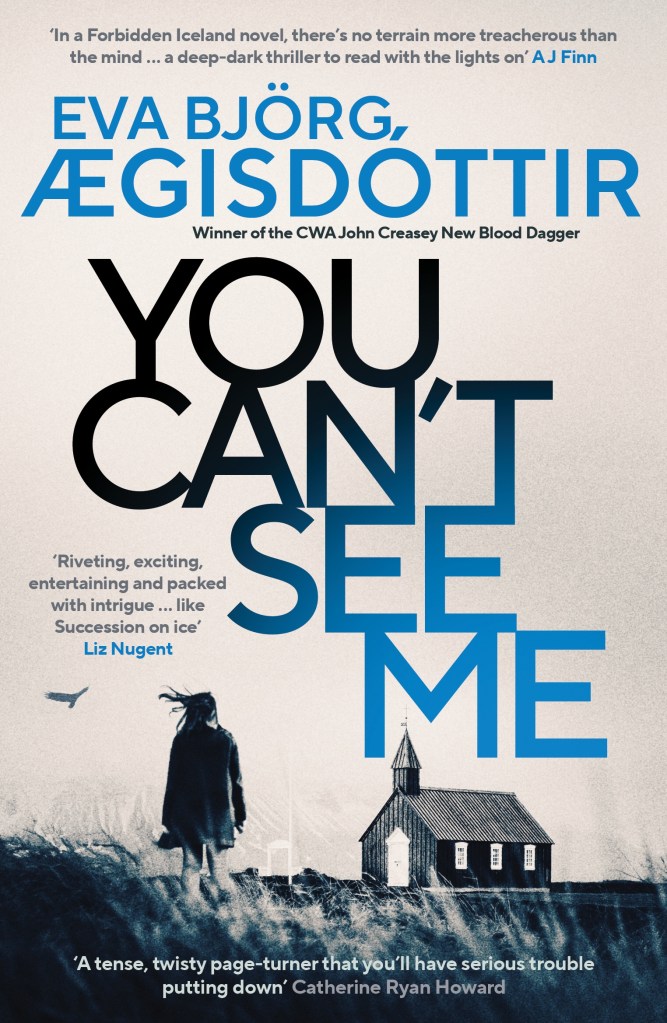
The wealthy, powerful Snæberg clan has gathered for a family reunion at a futuristic hotel set amongst the dark lava flows of Iceland’s remote Snæfellsnes peninsula.
Petra Snæberg, a successful interior designer, is anxious about the event, and her troubled teenage daughter, Lea, whose social- media presence has attracted the wrong kind of followers. Ageing carpenter Tryggvi is an outsider, only tolerated because he’s the boyfriend of Petra’s aunt, but he’s struggling to avoid alcohol because he knows what happens when he drinks … Humble hotel employee, Irma, is excited to meet this rich and famous family and observe them at close quarters … perhaps too close… As the weather deteriorates and the alcohol flows, one of the guests disappears, and it becomes clear that there is a prowler lurking in the dark. But is the real danger inside … within the family itself?
I LOVED the first two books in the Forbidden Iceland series, featuring detective Elma, recently returned to her home town of Akranes after several years working in Reykjavik. This story is a prequel and we meet her eventual partner Sæver as he looks into some very strange events surrounding a family reunion. This is not your average family though and I don’t think I’ve ever wanted to be at a party less! My sympathies were largely with hotel employee Irma who views the Snæberg family as if they are a totally different species. In a way they are, set apart by their successes and their wealth from the everyday hotel employee. So wealthy in fact that they’ve hired this entire luxury hotel for the weekend, with a full itinerary of activities and boozy dinners at night. It isn’t long before tensions and differences come to light: judgements and opinions on each other’s partners; family members who’ve lost touch and resent each other; teenagers who’d rather be elsewhere; parents who can’t connect with their children. All cooped up together for a whole weekend. As the author moved our point of view from one character to another we realise this family has so many secrets.
The setting is isolated and bleak. No amount of candlelight could ever convince me that concrete looks anything but brutally uncomfortable. However, thanks particularly to interior designer Petra Snæberg who can’t stop snapping for her Insta followers, the hotel’s phone is ringing and bookings are going through the roof. Set on a remote peninsula there is nowhere to go, except the equally bleak outdoors and with a set itinerary in place there’s no escape from each other. The atmosphere the author creates is incredible and had me veering from suspicious to unsettled to really creeped out. The uncovered windows leave guests feeling exposed, realising that if a light goes on they are lit up like a theatre stage. Not helped by the fact that an app controls heating and lighting, so easy to plunge another guest into darkness or into light by accident or just when they least expect it. We realise that certain people are watching others, but we’re not exactly sure why, whose stare is benign and whose stare means danger is lurking? Some narrators send icy cold shivers down the spine. Petra’s daughter Lea receives a message from an unknown number:
The video is dark, taken outside at night. Instinctively I bring the phone closer to my face, to see better. I turn up the volume. The sound crackles with the wind, then I hear a crunching of gravel. Footsteps. Someone is walking outside, along a gravel path. The video ends with the sound of a throat being cleared and a cough. I turn to the window, feeling the sweat break out all over my body. Isn’t there a gravel path leading to the hotel? Again I hear a rustling sound outside the door, then more knocking. Two taps, like before. Tap, tap.
Some of the scariest moments happen to Petra too. There’s a tension between her and her cousin Stefania who grew apart years ago when they were teenagers. An awkward drink with the two women and Stefania’s brother Viktor starts to open up old wounds. Petra is haunted by a misunderstanding that had tragic consequences, but does she even know the full story? Why does she find her hotel room door open when she’s been inside, showering and sleeping? Then there’s the creepy notes under the door. It’s enough to make the hair stand up on the back of your neck.
Then there’s Irma, who seems intrigued by this glamorous family who are so ‘together’. They’re Insta-perfect and seem so far outside her experience. She mocks Petra’s overuse of the word ‘sanctuary’ which is what your home is supposed to be, a place that reflects who you are. When Irma thinks of her flat it’s merely a box and her shelves are merely a place to keep stuff. It’s boring, functional and sparse – does that reflect who she is?
Mum always said I had an overactive imagination. As a child I lived in a world that no one else could see. One that was much brighter and better than the real one, like a fairy tale or story, because as I turned the pages of books I became the characters. […] But the older I got, the more difficult it became. I started comparing myself to other people. I realised that the flat Mum and I lived in probably wasn’t that tasteful, and the life we lived wasn’t actually that exciting. Perhaps it wasn’t so desirable after all to be constantly moving from place to place, constantly changing schools and spending most of my evenings alone at home.“
She imagines living like the family do, envious of the freedom to walk around the supermarket and pick up whatever they want, with no fear of their bank card being rejected. Irma’s not completely taken in by appearances though, while she scrolls she reminds herself of the gap between the selves we are on social media and the reality. She looks forward to people watching, spotting where the cracks are. Those tiny resentments. The things they keep from each other. After all, no family is perfect.
However it’s Lea who I’m most scared for because she’s just so vulnerable. Lea is a confused teenager and she is never without her phone. A lack of friends and support at home has left her so open to exploitation. She has a friend called Birger who might be staying nearby, maybe they might finally meet? Lea seems to get validation from his messages on her photos. In fact it’s that very validation and a need to be seen that convince her to do something dangerous. She realises how exposed she is too late and the signs that she’s struggling are being missed, until she walks out into the sea in all her clothes. All the ‘what ifs’ begin to race through her mind, but not once does she wonder whether Birger might not be who he claims to be. Then there’s Gulli, an older man who’s very appreciative of her posts and so easy to talk to, but the unease sets in when he too turns out to be nearby. There’s the old man she saw wandering the corridors, even though her family are the only guests. Is it her aunt Oddny’s unusual boyfriend Tryggvi, an outsider thanks to his job as a joiner and his unique dress sense? Could he be watching? Lea begins With her mum embroiled in secrets and lies of her own, will anybody notice that Lea is standing on a knife edge. Lea is being watched of course, but is that enemy looking in through the windows or are they closer? Inside the building?
The suspense builds beautifully and reaches fever pitch on the last night. Tryggvi falls drastically off the wagon on an important anniversary. Petra has made a bloodstained find in one of the bedrooms. Victor’s much younger, pregnant girlfriend has left the hotel in the night despite being unable to drive. Lea is also drinking heavily, scared about who is stalking her. While Petra has a long overdue conversation about the past, but can she trust her version of events? As a storm begins to roll in, cutting the hotel off from civilisation, horrifying truths bubble to the surface. Someone who has been waiting a long time for their moment makes their move in this complicated chess game. We don’t always see those who hide in plain sight and those we think we know could be monsters in disguise. I love this author’s ability to get inside the heads of her characters and pull the reader along with her. Here she builds a labyrinth of clues, red herrings and suspicious characters that I found absolutely impossible to resist. That’s why I was awake at 3am, with my attention split between the page in front of me and my ears attuned to even the slightest creak downstairs. After all you never know who might be watching.
Published by Orenda Books Thursday July 6th.
Meet the Author
Born in Akranes in 1988, Eva Björg Ægisdóttir studied for an MSc in globalisation in Norway before no one can be trusted, as the dark secrets returning to Iceland to write her first novel. Combining writing with work as a stewardess and caring for her children, Eva finished her debut thriller The SCnreæakboenrgthfeaSmtaiilrys,awrheicuhnwcaosvpeurbelidsh…edaind the 2018. It became a bestseller in Iceland, going on to win the Blackbird Award. Published in English by Orenda Books in 2020, it became a digital number-one betseller in three countries, was shortlisted for the Capital Crime/Amazon Publishing Awards in two categories and won the CWA John Creasey Dagger in 2021. Girls Who Lie, the second book in the Forbidden Iceland series was shortlisted for the Petrona Award and the CWA Crime in Translation Dagger, and Night Shadows followed suit. With over 200,000 copies sold in English alone, Eva has become one of Iceland’s – and crime- fiction’s – most highly regarded authors. She lives in Reyjavik with her husband and three children.
Thanks to Anne Cater at Random Things Tours and Orenda Books for having me on the blog tour, to see more reviews and giveaways follow the rest of the tour.
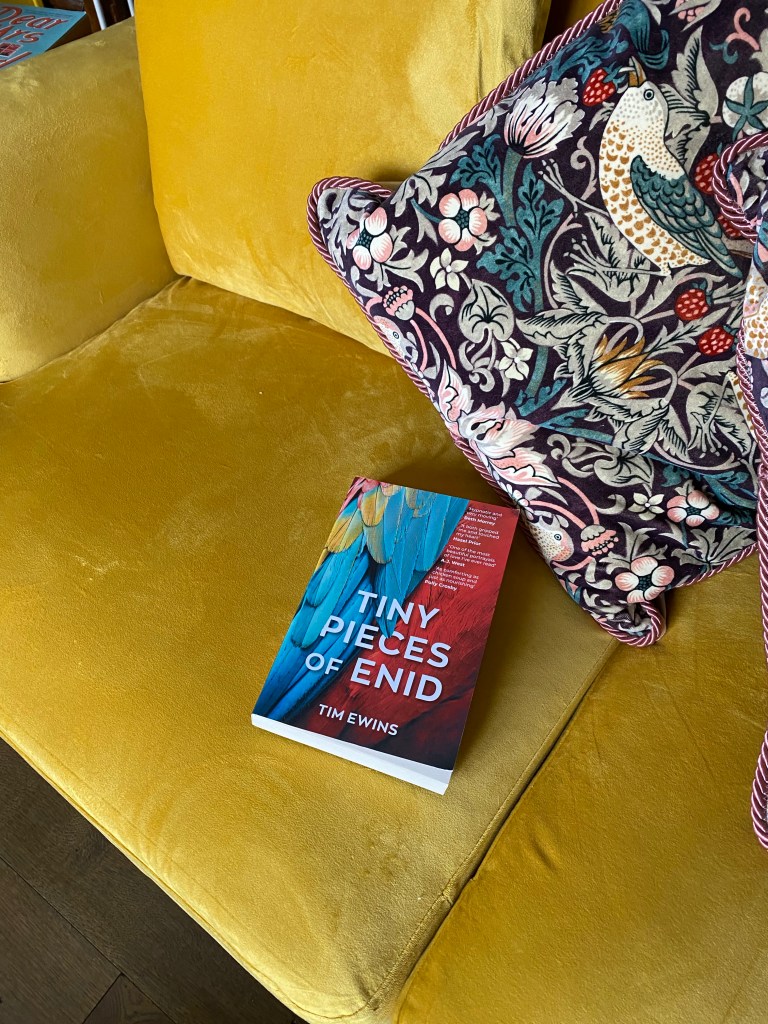
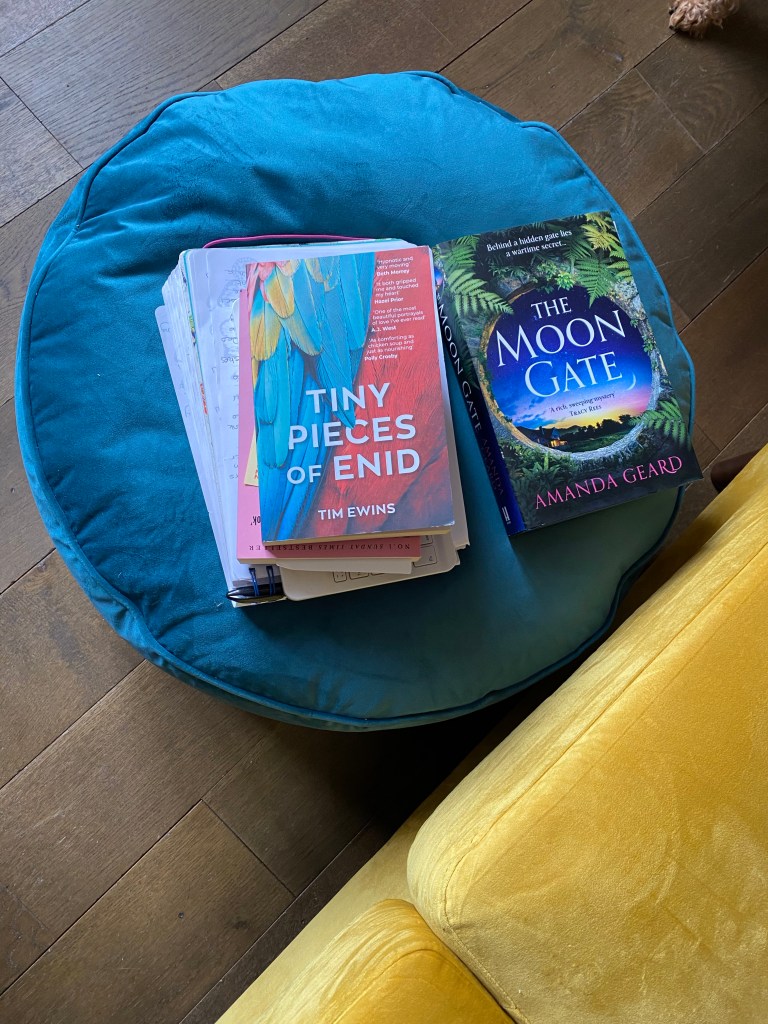
I was so emotionally invested in this deeply moving story, written with such care and empathy for the characters, but also the people who are going through similar experiences in real life. I would also suggest hankies or tissues, a big bar of chocolate and a cat to cuddle. This is an incredible read – but you will cry, in fact if you don’t there’s probably something wrong with you. Our heroine Enid has had a stroke and also has a diagnosis of dementia. She has aphasia causing problems with comprehension and formulation of words. Often, people with aphasia know what they want to say, but find something stops them expressing it. Having looked after people who’ve had a stroke I know it is one of the most frustrating neurological symptoms someone can have. The author has set the book inside Enid’s brain – we learn that she’s not completely senile, in fact she has moments of incredible clarity and is often witty, with a great sense of humour. However, she is forgetful and shows a lot of frustration about her lot. Enid has lived with husband Roy for many years, but after another incident at home their daughter Barb has to make a horrible decision. She decides her mum would be better in a specialist nursing home, but this means separating her from her beloved husband. Enid believes that this is a temporary separation and that soon Roy will come live with her in the nursing home. Meanwhile Roy is trying to cope alone, missing his wife terribly but having to plod on without her.
In the home Enid meets Olivia, a young mum who frequently visits another resident and they have an affinity. While they might seem to be very different on the surface, they connect on a deep emotional level. Every time Olivia visits, Enid is reminded of her first marriage and the memories are painful. Enid’s husband was violent and she can see that Olivia’s husband is also a very angry man. She wants to help, to explain that she doesn’t have to stay with him, that there is happiness beyond here. The fact that Olivia and Enid become friends, despite all of Enid’s challenges is so important because Enid’s life experience could help Olivia make a definitive decision. To save her own life. Their experience shows that friendship comes in so many forms and we shouldn’t make snap judgements about who can bring something meaningful to our lives. It made me think of an observation I made a long time ago, when someone has a long term illness their life doesn’t stop at the time of diagnosis. Some people seem to think that an unwell person steps out of life, has treatment, then comes back when they’re cured but it isn’t so. There are so many of us out here, like Enid, living with an illness and even if our lives look different they’re still meaningful and worthwhile.
When Enid isn’t watching life pass by she’s remembering, it’s like her own personal movie running behind her eyes. She sees Roy, from their earlier life together and when they’re falling in love after the trauma of her first marriage. There’s her old home and her daughter Barb who was fascinated with birds, her Tom Jones & Elvis records waiting to be played. She then remembers a scar she has on her forehead. When was that from? It feels like another life. Then she’s back with Roy. Remembering their love story. Roy is her best friend.
The way the author has constructed Enid’s inner world is brilliant. All the information is there, but it’s fractured and complicated. It isn’t always there when she needs it. She’s a time traveller, not present in the moment but enjoying her early years with Roy. Then she’s with a little girl, her daughter. These memories are so clear, but the moments of lucidity are so fleeting and we’re aware that eventually they may disappear altogether. I’ve worked in a dementia unit and every week I would push one of our residents down through the village to the home he’d shared with his wife. He seemed to have no idea where we were, he was rarely, fully in the room. Mostly we would do jigsaws and he would try to wipe his nose on my cardigan. One day we were sat with his wife in the kitchen and I was helping him with his cup of tea when he looked over at her. Then he looked at me and said ‘I don’t know who this lady is, but isn’t she kind? I like her’. It made me cry that they had a whole history that he couldn’t recall, but in that moment he knew she was special. There was a little glimmer of feeling. It’s hard to live separately from someone you’ve had a life with, especially when the relationship hasn’t ended. You’re living like a single person again and while you can always visit your partner (and appreciate the respite from being a full time carer) there are parts of that person you miss. The tragedy is you didn’t need to separate from the person, just their condition. So it was easy to understand Roy’s decline without Enid, he’s lost the shared jokes, the conversational shorthand and that sense of it being the two of them against the world. Although Enid is safe, part of Roy will wish she was still at home with him. I would imagine he must miss her sense of mischief more than anything. Enid will try anything to be with Roy again, and she relies on an imaginary parrot to help her.
Tim Ewins has written a really special book with such fully rounded characters who have busy inner lives, including Enid. I have a long-term illness and it’s great to read a writer who understands that journey and shows how rich our lives can be, even if they are different. My late husband had the same illness as me and this book reminded me of the snatched moments we spent together between carers, district nurses, palliative stays and hospital admissions. Despite all of that ‘stuff’ no one could take away that connection we had and some of my happiest memories were in those snatched moments; the tiny pieces of life that Enid remembers might seem commonplace, but they are the very moments I’ve treasured and remembered ever since. This is a special book, written with such heart and compassion.
Meet The Author
Tim has enjoyed an eight-year stand-up career alongside his accidental career in finance.
He has previously written for DNA Mumbai, had two short stories highly commended and published in Michael Terence Short Story Anthologies, and enjoyed a very brief acting stint (he’s in that film Bronson, somewhere in the background). We Are Animals is his first novel.
When not writing, he enjoys travel, reading (of course), cycling and spending time with his wife, son and dog in Bristol. Follow him on Instagram @timewins and @quickbooksummaries where he writes inaccurate but humorous book reviews.












 The Lotus Readers