Posted in Personal Purchase

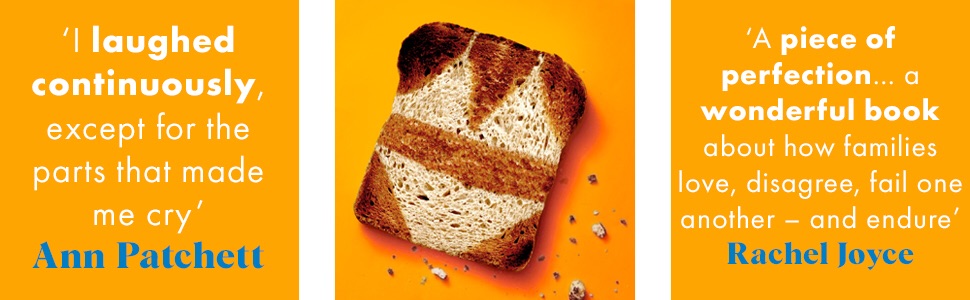
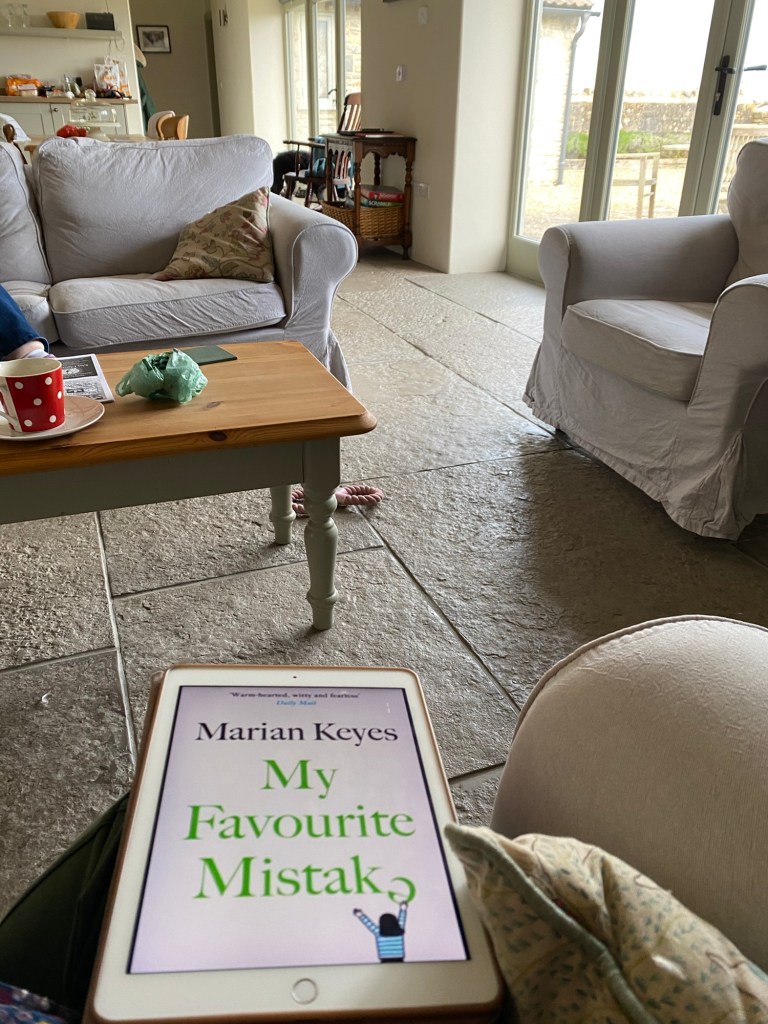
My Favourite Mistake by Marian Keyes

I’m going to say it.

I am a Marian Keyes superfan.

I love her tweets or whatever the hell we call them now. I love her honesty. I love her Strictly fandom. I especially love her sense of humour. I love that her books have drawn my stepdaughter into daily reading, because of course more than anything I love her writing. She puts all her quirk, wit and self-awareness into the characters she writes. She is a writing goddess! She gets better year on year and I loved this dive straight back into the Walsh family after Again, Rachel. Rachel has always been my favourite Walsh, but in this latest novel Anna really did steal my heart. Anna is nearing her fiftieth birthday and her high flying PR role in the beauty business is wearing a little thin. Although she’s always loved living in NYC, the pandemic left her feeling the distance from her family in Ireland. After losing her husband Aidan in a terrible car accident several years ago, her contact with his family in Boston has waned. Her subsequent relationship with Angelo – a ‘feathery stroker’ – has been conducted with respect, equality and a deep fondness, but never passionate, all consuming love. With a need to be near those she loves, she gives notice on her job, her apartment and her relationship.

Her family think she’s gone mad and she almost starts to think she’s made a huge mistake when a sudden job opportunity comes her way. Her sister’s friend Bridie has been building a luxury hotel and spa on farmland near the coast, but the project has hit the buffers. Locals have vandalised the site leaving machinery sabotaged and the luxury bungalows daubed with paint. Bridie and her husband have had the worst news, their daughter has been diagnosed with cancer and needs their total focus. What they need is an experienced but down to earth PR who will be able to converse with the locals in town, find out what their grievances are and hopefully, get the project moving forward again. Anna is booked into the local hotel and can be ready to hit the ground running, but there’s just one snag. The finance broker who has put together the deal for Bridie’s project is Joey Armstrong. Joey was part of the Irish ex-pat community in New York when Anna and Rachel first moved out there. He was also one of the ‘Real Men’, a group of long haired, tight jeaned, rock gods who included Rachel’s husband Luke. Joey was hot. All tawny haired, with the most kissable mouth Anna had ever seen, not to mention his jeans which were just on the wrong side of decent. The first night they met Anna felt an immediate vibe and was full of anticipation until her sister Helen walked in. She saw Joey’s eyes immediately slide over her and become laser focused on her beautiful sister. Anna was immediately slighted and when Helen and Joey left together she decided to dispel this particular lean hipped rock god to the back of her mind. However, this wasn’t the last time their paths crossed. Joey has always been a mix of old flame and thorn in Anna’s side. Can she put aside their past and work together on this project?

Anna has that wonderful characteristic that can’t be taught, she has an easy charm and an ability to talk to anyone from building contractors to the lady of the manor. She takes to M’town straight away, working out who are the cornerstones of the community and who has something to lose from the development at Bridie’s farm. Knowing that her NYC clothes won’t work in rural Ireland, she dresses in jeans and a waterproof coat and pulls her hair back in a ponytail. Minimal make-up leaves her looking fresh-faced and the facial scar from her accident with Aidan is exposed. She’s shrewd enough to realise that it gives her an advantage, no matter whether they people feel sorry for her, are curious or think it shows honesty and openness. She’s smart and has similar skills to her sister Rachel when it comes to communication. The openness, lack of judgement and appreciation that Rachel shows her clients in the counselling room, is equally fruitful when trying to get to the bottom of why certain people in town are against the development. Anna genuinely cares and within days can see where mistakes were made, where a concern was overlooked or an individual was inconvenienced. She can make the most insignificant person feel like the centre of her world and is soon making friends. We follow her investigation and watch her become more and more embedded in this quirky but beautiful little place. In between we see glimpses into Anna’s past, from the before and after devastation of Aidan’s death to her relationship with best friend Jackie and her daughter Trea. Jackie has been her best friend, a relationship that even survived Jackie’s fraught relationship with Joey. When Jackie becomes pregnant, Anna puts aside her own feelings for Joey and becomes her birthing partner and almost a co-parent to Trea. However, something happens to jeopardise their friendship and the women have barely spoken since.

A Marian Keyes romance is never just heart and flowers. It’s always about the heroine’s personal baggage and need for self-growth too. Often I prefer the inner growth to the potential relationship, but not in this case. I absolutely loved this couple and their story. We all have that someone who got away. For me it was a lanky and eccentric music lover called Glynn who would turn up at the door unannounced – often sporting flowers from the graveyard or my dad’s own flowerbeds. There was rarely any warning with Glynn, he might be waiting for me at school having invited himself for tea or have walked five miles from town with some song lyrics scribbled on a postcard that I just had to have. We would lie on my bed and listen to the Cocteau Twins, Ride and The Smiths. My dad would despair at his Joe Bloggs wide leg jeans with frayed hems that dragged mud and grass into the house. He had hair like Clint Boon from the Inspiral Carpets and a huge billowing parka that I stole and wore for two years straight. He also had a complicated home life and often reminded me of Snufkin from The Moomins, who loved the solidity and dependability of Moomin House but also needed time to wander alone whenever it suited him. I was hopelessly in love with him, but it took him three years to finally ask me out and I was scared that it was finally happening that I panicked and refused. Even now, every few months or so he sends me a Spotify track by House of Love or Northside and I love that little reminder of teenage love. Similarly, Joey and Anna have a very long history with several near misses and a deep friendship when he let her close. Although they’ve never had a romantic relationship it is Anna and not one of his many lovers who knows the truth about his upbringing and how damaging those years were. He has trusted her with his deepest secrets, but he has also hurt her, possibly more than anyone else in her life. He has also caused her to lose her closest friend. Yet Anna knows that once she also wounded Joey deeply, the details of which we only find out late in the story.

I loved the pace of the romance, with Marian Keyes knowing exactly when to drop in a flashback that explains everything and keeping that ‘will they/ won’t they’ tension without it seeming artificial. Often with rom coms I feel like obstacles are there just for the sake of it, but the flow is natural and I never felt like the outcome was a done deal. There were so many obstacles and items of baggage it felt like they were on the luggage conveyor belt at Gatwick. There’s everything from the past – him choosing Helen, then Jackie and then most of NYC if Mrs Walsh is to be believed, before Anna. Joey has so much work to do, not just about his childhood but about the here and now. Blending families isn’t easy and he has three adorable boys as well as Trea to think about. They’re both temporarily working on this project and in M’town so what happens when the hotel is built or if Birdie has enough and changes her plans? Anna might be healed physically, but her scar does bother her and has changed her life in ways she didn’t imagine. It does work as a filter, anyone it clearly bothers has no place in her bed. However, at times it does play on her confidence and when she sets up an online suggestion inbox for the locals there are enough hurtful comments to remind her of a time when she wasn’t okay. Joey is fit to murder the culprits but Anna rises above it and keeps moving forward, despite the hurt and the reminder that Joey didn’t even choose her before the accident. So, why would he choose her now? Is it possible to remain friends when they’re so close? Finally, there’s the beautiful setting, nobody does small town Ireland like Keyes and these people are imperfect, but hilarious. Some of their concerns are petty, but others are grounded in years and years of tradition. Work is hard to find in a small town so local tradesmen not being asked to contract was a huge mistake, but easily smoothed over once Anna explains the artistry and level of finish expected. Could Anna thrive somewhere like this, or is she just passing through? I loved, loved, loved this book and being on holiday I had the luxury of sitting in the garden in Glastonbury and reading right through to the end. This is peak Marian Keyes and if you don’t fall in love with Anna or her love story with Joey there’s clearly something a little bit wrong with you.

Meet the Author

Marian Keyes is the international bestselling author of Watermelon, Lucy Sullivan is Getting Married, Rachel’s Holiday, Last Chance Saloon, Sushi for Beginners, Angels, The Other Side of the Story, Anybody Out There, This Charming Man, The Brightest Star in the Sky , The Mystery of Mercy Close, The Woman Who Stole My Life, The Break and her latest Number One bestseller, Grown Ups. Her two collections of journalism, Making it up as I Go Along and Under the Duvet: Deluxe Edition are also available from Penguin.

Posted in Random Things Tours

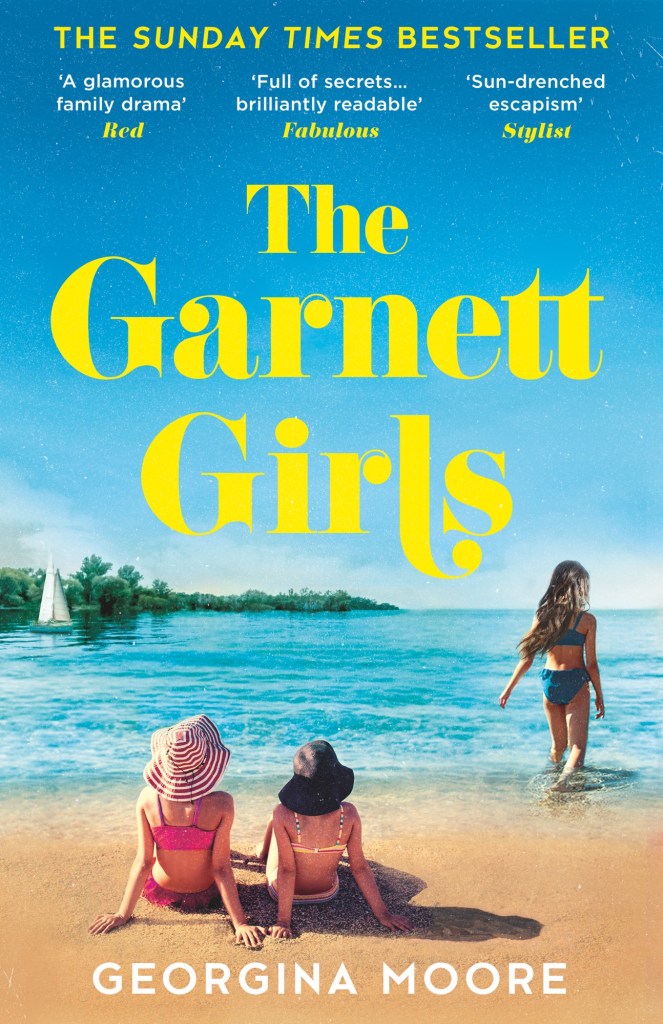
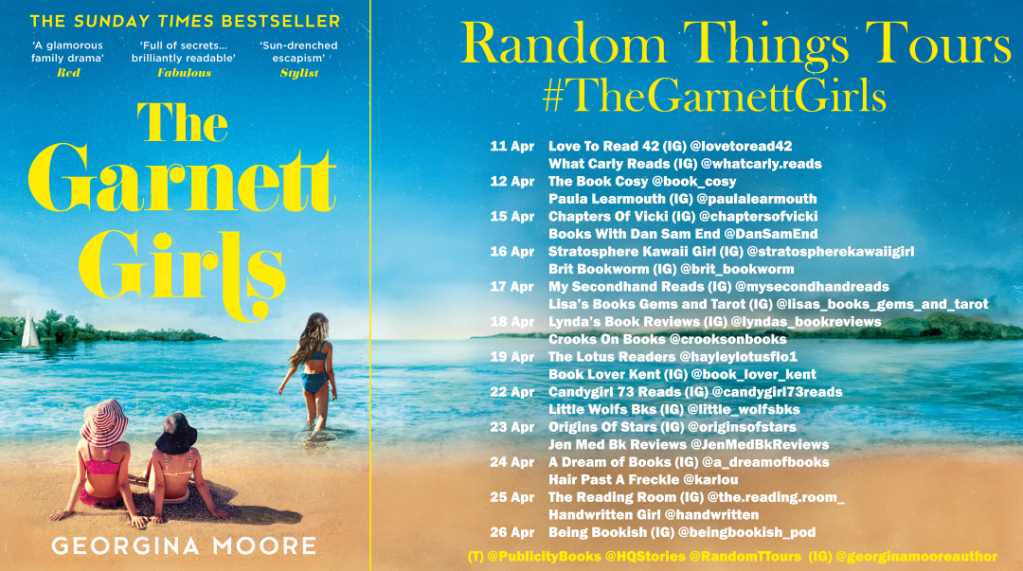
The Garnett Girls by Georgina Moore

Regular readers will know how much I love stories of large families, their complicated dynamics and the psychological ins and outs of why they are, the way they are. This was the perfect read for me and I was immediately intrigued by the deep family secrets at the centre of the three sister’s relationships with their mother Margo. The three sisters are: eldest, Rachel married to Gabriel with two small girls and a career as a lawyer; Imogen, the playwright who is anticipating long term boyfriend William to conduct the perfect proposal while being unsure whether it’s what she wants. Then there’s Sasha, the fierce and rather wild youngest sister, who is struggling between her family and her coercive husband Phil while family friend Johnny watches on, wildly in love with her. The sisters live in the shadow of their mother Margo and father Richard’s tempestuous love affair and marriage which sadly ended in divorce. His drinking and their arguing lead to Richard walking out, to join his secret other family. None of the girls have ever seen their father since that day. Rachel remembers moving to their holiday home Sandycove from their house in London and Margo being unwell. She and Imogen, along with their Aunt Alice try to keep the house running, but Sasha is still a baby struggling to cope with Margo’s unavailability. In the present day, every one of the Garnett girls is carrying a secret, but Sasha’s secret has the potential to blow the family apart.

I loved the community on the island, where the family home has always stood. Rachel and Gabriel now live in Sandycove with their children. Rachel works in London during part of the week and Gabriel works as a counsellor but also looks after the home and the girls. Sandycove is still the official place where the Garnett family get together for special occasions and Margo is constantly popping in and out, helping with cooking and childcare. She now lives at at The Other Place, a bungalow up in the village. It’s here she conducts day to day life and her illicit love affairs, kept separate from her family, who often know a lot more than she realises. Because they’re together in the week, Gabriel and Margo often plan family get togethers and outings. This bothers Rachel who knows they’re only trying to take the burden from her, but she often feels like Sandycove isn’t their own, it belongs to everyone. In gaining the family legacy they’ve also lost something. Their close knit days of just the four of them are gone. Imi’s story starts in beautiful Venice where her perfect boyfriend William is set to propose. She knows this because Margo and Rachel are calling on a daily basis to hear what they’ve been up to. They’ve been a couple for a long time now and her family love William. They think he’s perfect too and Imi knows that if she vocalised her doubts to her mum or one of her sisters they’d think she’s lost her mind. On her return the read through of her play is set to begin and an up and coming Hollywood star has been cast in the lead role. Imi isn’t sure about Rowan and worries that it may be the worst kind of stunt casting, but from the moment she meets the actress, she can’t stop looking at her. Having always felt her relationship falls short of her parent’s great love, finally Imi knows what a coup de foudre feels like. Sasha has had a radical and fierce short haircut that she knows Margo will hate and will make her look very different from her sisters. Sasha is holding on to something else they’ll hate too, she is in contact with their father Richard and his family. Over the course of the novel, all the secrets hoarded by the sisters will come out. Can their close knit relationships survive?

Each of the three sisters are beautifully drawn by the author and became completely real to me very quickly. I loved their family dynamic too, even though I might find it a little bit suffocating if they were mine! Margo especially is a lot to take, with her daily phone calls and constant ‘pop-in’s’. There’s also the potential embarrassment of her sexual adventures, although I did enjoy her liberation and openness about having an active sex life as a grandmother. Sandycove has so many deep emotions buried in it’s walls. It almost runs like a stately home, with a list of annual events for family and friends that are a fixture in the village calendar. The family’s parties are incredible and I’d love to go to one! I thought the way the author used flashbacks was clever, because they helped me understand each of the women. So we see Sandycove as the home of 16 year old Margo who thinks she’s met the love of her life. Margo’s mother is unconvinced and is determined to keep this older man away from her daughter. Margo isn’t easily dissuaded from her love affair and ropes her sister Alice into helping her, eventually fleeing her childhood home with Richard in tow. Her self-awareness doesn’t stretch to realising that she’s now doing just the same with her own daughters – so sure that William is the one for Imi she’s planning the wedding before the proposal. We also go back to the moment when this family fell apart; this past event answered a lot of questions for me. I loved the moment of realisation for Rachel that her need for independence lies back there, in fact it was about survival. Yet she knows her independence made Margo feel unwanted and also masked a need to live up to her mother’s expectations and a fear of being unable to. She didn’t want to live somewhere that people came up to her in the street to tell her how like Margo she was. She wanted to live somewhere there was no Margo, maybe then there’d be enough space left for her to be Rachel. She knows that now these old feelings put a distance between her and Gabriel, in fact the whole family see strong, capable Rachel without thinking how exhausting it must be at times, how she can never be vulnerable.

Imi longs for someone to listen, so much so that on the day of her Venice proposal she drinks at the hotel bar with a young man just because he doesn’t talk over her, or assume what she wants in her life. When William proposes he uses the words ‘it’s what everyone wants’ before asking if it’s what she wants. It’s as if she’s ripe for rebellion, but doesn’t know how yet. Sasha’s rebellion is rather more visible, the short platinum blonde crop is a backlash against the long flowing hair that makes her a Garnett girl. Her identity is visible in the way she looks, with her slightly severe and spiky clothes and her red-soled high heels. She picks at Imi for accepting Margo’s bullying and interference, knowing straight away that Margo had bought Imi’s dress for the engagement party. Sasha can see that though she is beautiful she isn’t comfortable in it. In fact Imi wasn’t even comfortable with the party. Yet Sasha soon returns to Phil’s side, as he lurks in the doorway looking put out. He hates Garnett parties and prefers to have Sasha to himself; there are deep-seated reasons why Sasha has fallen into this possessive relationship, mistaking control for love. I thought these labyrinthine dynamics were brilliantly done, so real and perfectly in tune with coercive control and how intergenerational trauma works. I knew it was going to take the revelation of all the family secrets, probably in an explosive Garnett way, for these dynamics to change and for the girls and Margo to heal. I was so sucked into their world that I read the book in two sittings, desperate to see the girls speak their truth and start controlling their own lives. I also wanted healing for Margo too, because she’s been at war with an idea for the past twenty years. Her impression of the man who left her and the life he left her for is all in her head and it’s maybe time to face reality. The Garnett women can only move forward by being honest and real with each other and themselves. This was a wonderful read for people like me – the nosey and psychologically trained. It’s astute, beautifully written and full of strong women who are talented, ambitious and intelligent. It was a joy to read.

Published in paperback this month by HQ Stories.

Check out the rest of the blog tour

Meet the Author

Georgina Moore grew up in London and lives on a houseboat on the River Thames with her partner, two children and Bomber, the Border Terrier.   The Garnett Girls is her first novel and is set on the Isle of Wight, where Georgina and her family have a holiday houseboat called Sturdy. Georgina is working on her second novel, Walnut Tree Island, which will be published in 2025.

Posted in Netgalley

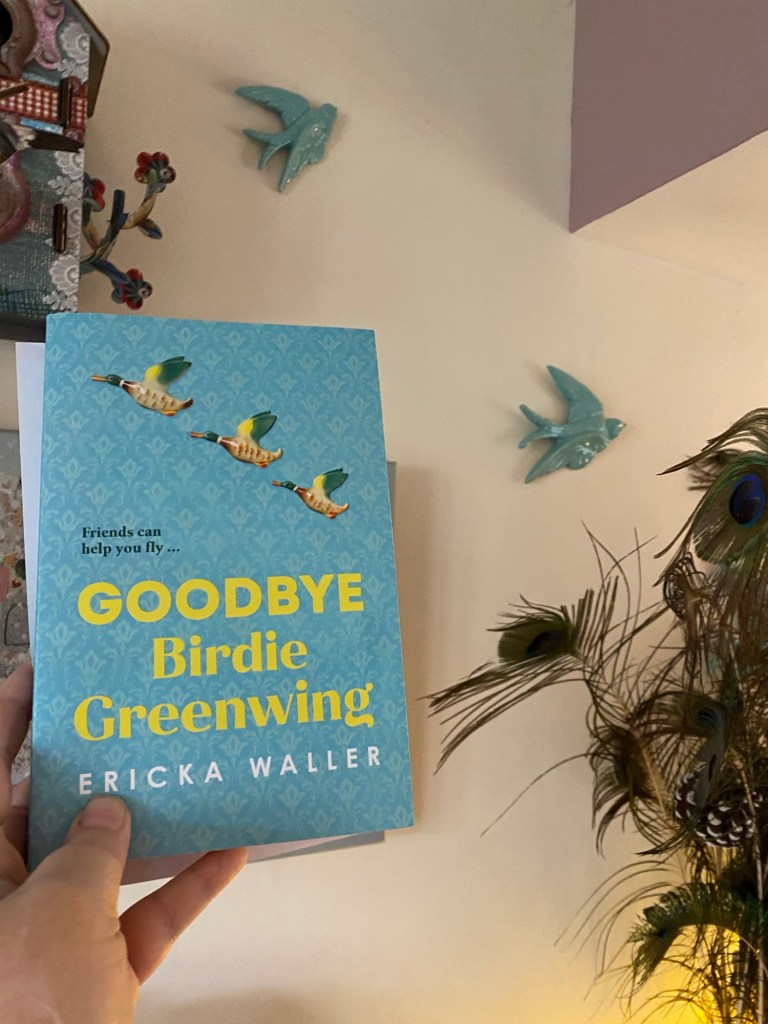
Goodbye Birdie Greenwing by Ericka Waller


Birdie Greenwing has been at a loose end ever since her beloved twin sister and husband passed away. Too proud and stubborn to admit she is lonely, Birdie’s world has shrunk. But then some new neighbours move in to the house next door. 

Jane has come to Brighton for a fresh start, away from her ferociously protective mother Min. While Jane finds it hard to stand up for herself, her daughter Frankie has no problem telling people what she does and doesn’t want. Ada Kowalski has come to England to follow her dreams, but her new life is harder than she expected.

When a series of incidents brings their lives crashing together, the three find that there is always more to a person than meets the eye …

Goodbye Birdie Greenwing celebrates relationships in all their quirky, complicated uniqueness. It is a story about the choices we make and how we justify them. About finding out who we are, not who other people think we should be.

I read Ericka’s novel in a day because I simply loved being in the presence of these lovable and contrasting characters. As I met each one I could see the impact they could have on each other’s lives. As the author takes us inside their everyday lives, their inner worlds and their pasts she looks at family dynamics, sisters, mothers and daughters, but also the whole question of being a woman in the 20th and 21st Century. In fact there was a point when I was reminded of America Ferrara’s speech in the film Barbie. It addresses the choices we make, the expectations placed on us within our families, by other women and by society at large. She takes us into that contrast of who we are, how we compare that to our internal and learned ideas of what the word ‘woman’ means. Birdie, our central character, is a elderly woman living alone in Brighton with her little dog Audrey. She lost her sister Rose and husband Arthur several years ago. She is stunned when tests at hospital confirm she has cancer, but before the doctor can give her more information and make a plan Birdie has walked out. Her oncologist Ada recognises that determined walk and the lift of Birdie’s chin. She realises that Birdie is going to face this alone and she worries that she will struggle without the help that can be offered. In fact Ada realises that Birdie lives on her street, so takes to walking past and checking for telltale signs that Birdie is struggling. Ada is also lonely after relocating to Britain from Poland. Used to life on an isolated farm and a very different society, Brighton can be a lot to take on. Despite friendly overtures from her secretary Denise and Connie in the WRVS cafe Ada is solitary, except for the time she spends helping Aleksey and Lech in the Polski Sklep. When a new intern starts on her team Ada’s teamwork skills will be tested, not to mention her social skills. Finally, there’s Jane and her daughter Frankie who have recently moved in next to Birdie from Bristol. Jane is struggling with the guilt of moving away from her mother Min, although her sister Suki is out in Asia just living her life as she chooses. They used to be so close, but now all she gets are emojis. Her daughter Frankie’s bluntness and practical nature might seem like a hindrance when forming new connections, it certainly gets Jane called into school enough, but could her lack of inhibitions and tact actually help them make friends?

There are two mysteries in the novel and I enjoyed watching them slowly unravel. There’s the mystery of what has happened to Birdie’s husband and sister, Arthur and Rose. At first I wondered if they’d run away together but Birdie’s guilt seems to have lasted for decades. The other mystery is what has broken the relationship between Jane and her sister Suki? Suki is distant and even when she rings to speak to Min, she’s very quick to end the call if Jane is present. Jane tries hard, sending her sister funny videos, memories of their childhood and information about Min but only gets emojis or a thumbs up in return. Each of the women have a sister and their relationships with them are fascinating. Birdie always felt responsible for Rose as she had rheumatoid arthritis. When she met Arthur and fell in love she hadn’t imagine she might have to make a choice, so when Arthur asks her to marry him she hesitates. What about Rose? Luckily Arthur had realised that the two sisters were a package deal. Birdie felt guilty that Rose wouldn’t have the same choices in life and whether there was something she did wrong, before they were born, that led to her sister’s disability. Birdie worried that she’d somehow pushed herself forward in the womb and take more than her share. Now Rose was ill as a result. Jane and Suki’s rift seems to date back to when the sisters went travelling together. Jane returned from Thailand with Frankie and moved back in with Min, but Suki stayed. They are very different women, with contrasting life choices but that shouldn’t stop them being sisters. Ada has a sister called Ania, but she has chosen a very different life. While Ada is saving lives in a different country, Ania lives close to their parents and is married with children.

I’ve never had a sister, but it seems as if they provide an instant comparison; they are the mirror in which your own life is reflected. Ada feels like the ‘bad’ sister, the one who followed her own dreams rather than staying to work the family farm. This choice has cut her off from the family in a way. She knows they sacrificed a lot for her education, so she sends part of her salary home every month and when she visits takes them gifts. She wants to show them that their sacrifice was worth it and she is doing well. However, this changes her standing in the family and while there’s no red carpet for Ania, when Ada comes home she is treated like a guest, placed in the best room and given the special soap saved for visitors. She feels like a stranger in her childhood home. She would be happy to throw on jeans and help with the animals but they won’t let her. It’s hard for her to accept these two sides of herself; the Ada who would happily muck out the cows and the Ada who wears a suit and saves lives. She thinks that her parents value Ania more because she made the ‘right’ choices and is still part of the community. Whereas Ada’s life is outside their experience and difficult to understand, her ambitions are perhaps unnatural as opposed to motherhood. Similarly, Jane had wanted to have children, a revelation that took her by surprise, whereas Suki knew she didn’t want motherhood. Could there misunderstanding be explained by this difference? Could Suki feel guilty or even selfish for not having children and making life choices based on what she wants? However, just because you’re childless, it doesn’t mean you can’t ‘mother’ people. There’s also a generational difference in the way they mother, with Min’s tactless and sometimes hurtful words seeming like they belong in another century. There’s a way in which Min and Frankie are very similar in character, but now everything has to have a label. Jane wonders why Frankie has to be pigeon-holed and defined in some way. Why is it always Frankie that’s in the wrong? She has a much softer way of mothering that ironically Frankie often sees as fussing and she much prefers the more practical attitude of grandmother Min.

Where Waller really moved me, was where these quirks of character benefitted someone else. Where even those aspects that you’d struggle to call positive found their place in the world. Frankie has no inhibitions and Jane is called into school when she gives a classmate a frank assessment of her braces, including the trapped cabbage. She doesn’t understand why the things she says are wrong when they’re true. When Birdie has a short stay in hospital and has the realisation that she might be in her final days it’s not medical professionals Jane or Ada that she needs. At first it’s Frankie who goes in and decides to help, making Birdie comfortable and making her some lunch. The two rub along nicely together, probably because there’s no fuss with Frankie and I understood that need for someone who isn’t flowery, overly chatty or phased by her illness. Similarly Min is the perfect carer for Birdie, she suggests that being of the same generation might make Birdie feel more comfortable and even Ada has to agree that their dynamic works. Min and Frankie’s help reminded me of how Ada’s parents would help their neighbours out. On her visit to family in Poland, Ada noticed how her mother’s farmhouse provided a quiet place for people to get away, like the neighbour who comes in on Saturday mornings to read his paper. This communal way of living is echoed by Aleksey and Lech who happily feed Ada; their fondness is shown in a practical way. Ada’s secretary Denise is stunned when, after years of finding her a bit of a cold fish, Ada offers her a home after the split from her husband. It shows we should accept people as they are, because we all show emotion and affection in different ways.

I felt like this was another book about connection, both with others and with ourselves. It’s a subject I find fascinating and I’m picking it up a lot lately in fiction. I wonder whether this is an unconscious response to the isolation of the pandemic. The author is brilliant at depicting those little inhibitions and we hear them in each woman’s narration. Jane hovers on the edge of a ‘huddle’ at work because she doesn’t know if she’ll be welcome or not. Ada doesn’t knock on Birdie’s door for professional reasons but also because she doesn’t want to impose. They all have to learn how to connect with who they are. Jane needs to learn to assert herself more, to accept her life choices and explore why she’s spent years of her life as a single woman. Suki’s guilt over the choices that were right for her stop her having a relationship with Jane and Frankie, but it was the right choice. As Ada compares herself with Ania she needs to see that it was right for Ania to stay near family and become a mum, but that moving away and using her skills to help others was the right choice for her. Even Birdie, who is the central character around which these interesting women revolve but she too has a lot of acceptance to do. She must accept this new vulnerability and need for help from others, as well as accepting she deserves it. Mostly she needs to forgive herself, for something that wasn’t even her fault. She has punished herself for years and it is the lovely Connie (whose collection of innuendo laden mugs rivals my own) in the hospital’s WRVS café who helps her see that while she still has time this is her time. While we still have life, we must live it. Whether we have months, days or hours left, we must live them.

Meet the Author

Ericka Waller is 38 and lives in Brighton with three daughters, too many pets and a husband.

She is an award winning blogger and columnist.

When not writing she can be found walking her dogs, reading in the bath or buying stuff off eBay.

Posted in Throwback Thursday

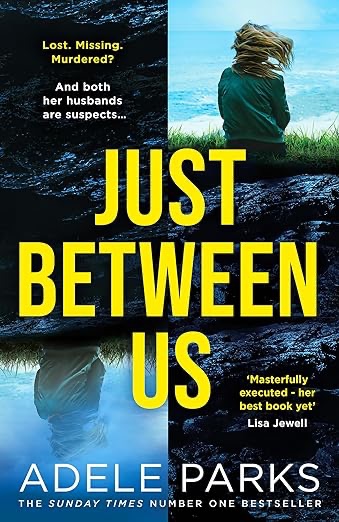
Just Between Us by Adele Parks

For some reason, I wasn’t fully engaged with Adele Parks’s last novel Both of You and I wasn’t expecting a sequel. I didn’t really like any of the characters involved. Kylie has two pseudonyms and two lives: half the time she’s Leigh, wife to Mark and stepmum to Oli and Seb; the rest of the time she’s Kai, wife to Dutch banker Daan Jaanssen and lives in an upmarket apartment with luxury clothes, cosmetics and holidays. The two seem to balance Kylie’s complicated needs, she’s equally at home having dinner in a Michelin starred restaurant as she is eating sand filled butties on a cold beach with the kids. Kylie’s other important relationship is Fiona, her friend of many years who has become part of the family and unofficial aunty to the boys. There isn’t a single person in Kylie’s world who knows about her double life, until one day she disappears. Now the whole world knows about Kylie’s bigamous marriages and the husbands and children are dragged into a police operation and a media frenzy. This sequel picks up after the first, when we’ve just found out who has been keeping Kylie prisoner. Just when we think it’s all over, we’re only halfway there.

I won’t ruin any of the twists and turns of either book, because this is one of those you need to start without any idea what’s going on. We have the original characters including the rather wise and interesting DCI and we have small chapters from every point of you. However, there are some newbies too and it was here where the book really took off for me. I was so eager to know what the hell was going on and where these people fit into the original story. We are in the depths of lockdown and Kenneth has been shielding alongside his grown-up daughter Stacie. Stacie is in the early stages of recovery from cancer treatment and she has fought hard to keep living. She deliberately doesn’t look at herself but knows she looks a little beaten up with her shorn hair and the scarring. Sadly, she has the added complication of amnesia after falling so dangerously ill so she doesn’t even remember treatment or anything before that. Thankfully she has Kenneth to fill in the blanks and he seems like such a caring and loving dad, luckily he’s also a retired GP so he’s perfectly placed to reassure Stacie and support her recovery. They have a quiet routine of daily dog walks, cooking and board games. They’re in the town of Lyme Regis and Stacie does feel like she knows the place and her dad has told her about her engagement to local lad Giles. She called the wedding off two weeks before the date and moved to Paris. Then something odd happens. Stacie is on the beach when she feels a sensation of being watched. Up on the promenade there is a woman staring at her with a fierce intent. She wonders if this is someone who knew her from before. So, she makes her way over, keeping a safe social distance and introduces herself, explaining that she might look a little different, because she’s had cancer. No, the woman says, you’re not Stacie. This is a moment where the hairs go up on the back of the neck, but we don’t know who the woman is or how well she knows Stacie and Kenneth. What possible reason could she have to confuse a woman who’s had cancer treatment and lost her memory?

I enjoyed having more input from the husbands and Kylie’s two stepsons this time around. The boys are incredibly loyal to her, despite being hurt by finding out about her second husband and let’s not forget, all of them are grieving. Daan Jaanssen also shows an incredible amount of loyalty and concern, especially considering he’s being charged with Kylie’s kidnap and murder. Does this mean he didn’t do it or is he putting up a smokescreen in the hope of walking free? Mark is angry and bitter, perhaps because he’s was her husband first. He is on the verge of making mistakes because of that anger. Seb and Ollie show maturity and enormous love beyond their years and put their own Dad to shame. The short, sharp chapters keep the momentum going and definitely have that ‘one more chapter’ addictive quality. Be prepared to set aside a day to finish it when you can’t put it down. This is definitely one of those sequels where you need to read the first novel, there’s a little bit of exposition about Kylie’s ordeal but not too much. The main question is what happened to her afterwards? Is she dead as the police think? This is a great thriller from Adele Parks and it made me feel back on track with loving her writing.

Meet the Author

Adele Parks MBE is the author of twenty-three bestselling novels including the recent Sunday Times hit Just Between Us and the audible Number One sensation One Last Secret. Over 5 million English editions of her work have been sold and she is translated into 31 different languages.

Her number one bestsellers Lies Lies Lies and Just My Luck were both shortlisted for the British Book Awards and have been optioned for development for film & TV.

41,000+ 5 star reviews have kindly been written by her fans on Amazon 🙂

She is an ambassador of the National Literacy Trust and the Reading Agency: two charities that promote literacy in the UK.

Adele was born in North Yorkshire and has lived in Botswana, Italy and London and is now settled in Guildford, Surrey.

In 2022 she was awarded an MBE by King Charles III for services to literature.

Connect with Adele Parks on Twitter @adeleparks, Instagram @adele_parks and Facebook @OfficialAdeleParks or visit her website for more information.

Posted in Netgalley, Publisher Proof

Nightwatching by Tracy Sierra

Yesterday upon the stair I met a man who wasn’t there,

He wasn’t there again today, oh how I wish he’d go away.

Antagonish by Hugo Mearns

My grandad taught me the first few lines of the poem above. I think it appealed to his sense of humour. I thought it was a riddle and I used to ask ‘but is he there or not?’ This is the very question this whole book revolves around from the first line – ‘there is someone in the house’. Our unnamed narrator wakes in the night as a strange noise breaks through her sleep. I was told by a book reviewer I respect enormously that this was brilliant and she was absolutely right. Although I drove my husband crazy by waking him up to ask if he remembered locking the door. He hadn’t always and I knew I wouldn’t sleep until one of us had crept downstairs and checked. Preferably not me. This is the situation all of us dread, waking to that unexpected noise in the night and finding there is an intruder. Our narrator is at her secluded home with her two small children in a blizzard. The sound she hears is a familiar one, a tread on the stairs to her room, but it’s unusually heavy and slow. She has a split second to make the decision – does she hide, try to run or stay and fight. Will all three of them get out alive and if they do will anyone believe her?

The first thing that hit me about this book was the unique voice this mother has. We see everything through her eyes and experience everything her body goes through – mainly fear. There’s the heart-stopping tension of that first night, the immediate threat rendering everything else unimportant. Yet there are other fears lurking underneath – will the police believe her, will it stir up questions about her husband’s absence, what will her father-in-law make of what has happened? She is waiting for people to doubt her and the reader doubts her too. Always on the lookout for unreliable narrators, I did wonder whether I should trust what she was experiencing. It’s just so incredibly odd. This tall intruder seems to have two voices: a raspy harsh voice when he’s angry then more of a soft, weedling voice. A voice you might use for children as he asks them to ‘come out little pigs, little pigs are more delicious’. As he does this right next door to their hiding place, it’s even more terrifying. Her little girl whispers to her mum that it’s the ‘Corner Man’ from her nightmares, he sits in the corner of her bedroom at night and whispers to her. My heart was in my throat at this point! Was he real or something supernatural? Could he possibly be real if this is true? I wondered if this overwrought mother is imagining this person, but that opens up a more frightening prospect – is she hallucinating and terrorising her own children with her delusions? The author plays with the reader beautifully. Just as I was starting to think the narrator is completely crazy, she addressed my concerns.

‘How nice it would be to be crazy instead of correct. For t all to be a psychotic break. To have her husband come down those stairs. She’d pop out of the hidden place relieved – rated – to meet his look of confusion’.

This is a woman who is used to being misunderstood and there’s no shortage of men around, happy to convince her that she’s strange, hysterical and marked as different in some way. There’s an awful moment, recalled while hiding, when her husband told his father he was not going to continue studying law. She hears his father’s fury down the phone:

‘You never behaved this way before you met that girl. Christ. She’s disfigured’.

Our narrator has vitiligo – a long term skin condition where areas of skin lose melanin and become paler, creating a patchy complexion. People stare and perhaps mistrust her, worried they may catch a skin disease or worse. Added to this, she’s a newish mum full of hormones, perhaps she’s a bit anxious and over-protective. She’s recently bereaved, having nursed her terminally ill mother-in-law. Maybe she’s not in the best frame of mind. All of this and the fact that she’s a woman, mean the police will be unsure or just plain rude about her. They keep explaining there’s no evidence: no footsteps in the snow; nothing of any value is stolen – in fact the items she does mention are probably lose or mislaid by the children. They don’t sound like the type of things someone would steal. They’ll turn up.

While hiding from one monster, we learn that she’s battling another in the shape of her father-in-law. Honestly, I have never wanted to climb into a book and punch someone more. He is a bully, but everyone else placates him. He is ashamed of his son, even more ashamed of his disfigured daughter-in-law. He hates the noise of his newborn grandson and his wife apologises! Even while his wife is dying, he sits with his feet up watching television and creates holy hell if he’s disturbed. His daughter-in-law does all the work and is rarely appreciated or thanked. He wants his grandson to man up and stop being a wuss. Worst of all he’s aggressive, violent even. Having him in charge of her children is the worst outcome of all. This mother is also fiercely protective. A passing incident where a stranger commented on her daughter and pulled the drooping strap of her sundress back onto her shoulder, really bothers the mother. You can feel her hackles rising in much the same way she reacts when her father-in-law criticises her son. She has very keen instincts and it’s fascinating to see how those instincts can be eroded, mainly by men who still consider women a hair’s breadth away from hysteria and the asylum. It shows that we’re not just gaslighted by individuals, it can be institutional, perpetuated by organisations like the police force or as I’ve found in my own life, the medical profession.

The whole setting is brilliantly eerie. A secluded mansion house with woods behind and five acres of open pasture between them and the next house. The house was built in 1722 with two staircases, higgledy-piggledy rooms and even it’s very own graveyard. She loves the house, even though it’s totally impractical and a nightmare to heat. She’s got to know each creak and bang, it’s night noises, but never imagined when she viewed the house that she’d be fleeing into the secret space next to the chimney, where the builders walled in the labyrinthine brick work. They never imagined being walled in. It’s a place where ghostly presences and hidden secrets would be easy to believe. Yet it’s not all scary. There are some wonderfully tender moments between the mother and her children and we can feel how torn she is when she has to be sharp with them, to keep them quiet and safe. I had no idea where this story might go and the author was one step ahead of me all the way. I might have finished this incredible thriller, but I’m still carefully locking the doors at night and when the cat decided she’d rattle our door to upstairs at 3am my heart did beat a little faster. I can’t believe how assured and psychologically complex it was for a debut! If you only buy one thriller this year, make it this one.

Out now from Viking

Meet the Author

Tracy Sierra was born and raised in the Colorado mountains. She currently lives in New England in an antique colonial-era home complete with its own secret room. When not writing, she works as an attorney and spends time with her husband, two children, and flock of chickens. Nightwatching is her debut novel.

Posted in Netgalley

Has Anyone Seen Charlotte Salter? by Nicci French.

Charlotte and Alec Salter have four teenage children and live in the small village in East Anglia. We meet them on Alec’s 50th birthday where a big evening party is planned for most of the village as well as family. Yet at the beginning of the party there are no Salters present. Charlotte went for a walk and hasn’t returned. Alec did same, but they didn’t go together or in the same direction. Fourteen year old Etty is worried. The last of the Salters and yet to leave home she is starting to panic. She loves her mum, but if she is gone, for whatever reason, that means she has to spend two years at least in the company of her father. Just the two of them. Alone.

In the days that follow as the police investigate, there are rumours that Charlotte and family friend Duncan Ackerley were having an affair. Of course it was more widely known that Alec was seeing villager Mary Thorne, in fact his own daughter heard him on the phone to her from the other line the night of the party. When the Ackerleys invite the Salters for Christmas Day, only Lottie turns up at first, her brothers are late and Paul is probably giving it a swerve altogether. Yet Etty thinks it would be worse to sit at home, staring, worrying and jumping at every sound. As dinner time approaches, the Ackerley’s start to wonder where Duncan has got to. He’s been out for a walk, possibly down to the boat as there is a super high tide and he needs to move it. It’s Etty and Giles that start to look for him and he does try to shield her eyes as they come closer and see that Duncan is slumped in the water, dead. We move between the party night and the Christmas days that follow and twenty years later when all the Salters are once again in residence at the family home.

Everything about the house is dated and dilapidated, including their father Alec who is succumbing to dementia. Etty, ever the lawyer, is organising his move into a nursing home and the clearance of their parents possessions. For this job she has found a bright and organised woman called Bridget. She gathers the siblings and tells them that the easiest way is for them to put specific coloured post-its on their must have items, then she takes away the rest for sorting, selling and recycling. It’s emotional, especially since there are now only three of them. Their brother Paul never coped with life and the loss of their mother and sadly committed suicide on the anniversary of her disappearance. Meanwhile, now a TV personality, Morgan Ackerley is home to record a podcast on that Christmas, speculating on what happened to Charlotte and his father. This is going to stir up the village and make life difficult for both families. When a sudden event leads to yet another death, the police are called and a new detective looks at the old files as well as this new case. Are they linked in some way? Despite her boss seeming to warn against digging up what’s been long buried, this detective is determined to find out what happened to Charlotte Salter.

Seeing how much these families have changed over time is so interesting and I found myself wondering how different the Salters and Ackerleys might have been if this crime hadn’t happened. Etty melted my heart a little bit because she’s clearly so close to her mum and on the night of the party she’s the one who’s trying to raise the alarm because she knows something isn’t right. The boys are largely off doing their own thing and seem almost inured to the state of their parent’s marriage. The consensus is they’ve probably had a row, but Etty knows that despite a row, or their dad being on the phone to Mary Thorne at 2am the night before, there is no way that her mum wouldn’t turn up to his birthday party. She has always kept up appearances in that way. She even looks at her father and wonders whether he could have killed her. Her relationship with each parent couldn’t be more different, there’s a distance between Etty and her father both in the past and the present. In fact he doesn’t seem that invested in any of his children. Yet Etty can still imagine the smell of her mum’s perfume and what she would be wearing and I could imagine Charlotte hugging her daughter, her perfume just one of the many scents that signify home. With only the boys and her distant father left who will she go to for hugs? I could feel her panic as realises that after Christmas, the boys will go back to jobs and university and she will be left alone with their father for two years. I could also see the shadow of this huge loss in the adult Etty: an awkwardness about whether the family kiss to greet each other or not; keeping a lawyer’s professional manner at all times; doing all the organising and keeping busy so she can remain detached. She doesn’t cry, even when finding memories of their childhood. She holds herself stiffly, almost brittle and I wondered how much it would take for her to break.

There are many ghosts here. It’s not just Etty who was changed. They all feel the loss of their brother Paul deeply and he’s the empty chair at the table, even now. They tiptoe around each other, trying not to open old wounds but when a fire is started at Bridget’s home a new murder investigation is opened. Either the arsonist didn’t realise Bridget was at home, or didn’t care. Was their aim to kill the house clearer or was it to hide evidence that she’d unwittingly taken into her home alongside the Salter’s belongings? I found this mystery so intriguing that I couldn’t stop reading and I loved the psychological aspects of how these unsolved crimes had affected the families and the village as a whole. There were a couple of crucial points past and present where everyone I suspected seemed to be going for a walk alone – without even having a dog as an excuse! I was suspecting that Lottie’s husband wasn’t as advanced in dementia as she seemed, but couldn’t be sure. The reveals were satisfying, but it was the methods of concealment that really blew me away and I loved how thorough the investigating detective was. She wanted to be sure, whether or not it disturbed or upset some people and I loved that about her. Mainly I thought about how the author successfully showed the long term effects of a crime like this, even years on from the actual incident. These children were all changed forever and the villagers have lived under a fog of suspicion for years. Etty particularly left me thinking of all the events I’ve been able to enjoy with my mum over the last 50 years, that she and Charlotte had missed out on. Finding a balance between the real emotions that surround a crime and creating a page-turning mystery is difficult, but here I think the authors have really pulled it off.

Out 29th Feb in Hardback from Simon and Schuster

Meet the Author

Nicci French is the pseudonym of English husband-and-wife team Nicci Gerrard and Sean French, who write psychological thrillers together

Posted in Netgalley

The Guest by B.A. Paris

I was so glued to this story about a group of friends and the entanglements between them that I read it in one sitting. The action focuses on two couples: Iris and Gabriel who live in a village with their daughter Beth who is currently enjoying a gap year at a dog rescue centre in Greece. Their friends are Laure and Pierre, who reside in Paris. The couples met on holiday, while Laure and Pierre were on honeymoon and Gabriel and Iris had only been married a year. They became firm friends, seeing each other every year and Laure even became their daughter Beth’s godmother. However, this visit is different. Laure has turned up alone, saying Pierre has confessed to having a daughter with a woman he spent the night with at the start of their marriage. Laure needs space to think and so does Pierre, could she stay with them for a short time? Of course the answer is yes, but it’s not an easy time. Gabriel is taking a long period of leave from his job as a GP, because he has struggled mentally after finding a teenage boy who fell into the nearby quarry. He did all he could for Charlie, but sadly he died before the ambulance arrived. Those last moments with the dying boy have weighed heavy on Gabriel, especially his final words. He has decided to use his time off restoring the walled garden that has grown wild over the years. Friends from their village, Esme and Hugh, offer their gardener and handyman Joseph to give Gabriel a hand with the more back breaking jobs. As these people collide over the summer, guests will outstay their welcome, relationships become strained, and huge secrets are on the verge of being disclosed as obsession and jealousy boil over. 

Our story is mainly told by Iris, who throws herself into looking after their new guest in a lull she has between interior design jobs (although she calls herself an ‘enhancer’). Laure is petite and chic, sometimes making Iris feel ungainly by comparison. The irritations are small at first – for some reason Laure hasn’t brought many clothes with her, but when she borrows from Iris’s wardrobe she always seems to pick the very thing Iris was planning to wear and it looks better on their guest. Then after a couple of weeks Laure rearranges their kitchen, meaning everyone is opening the wrong drawers and cupboards and any job takes twice as long. Iris asks her to put it back, but Laure meant no offence, she just thought it made more sense the new way. There are no signs of her seeing Pierre either. In fact no sign of him at all. Gabriel had extended an offer of help, could he perhaps go over to Paris and give him a listening ear? There’s no reply. It’s uncharacteristic of him. When Laure finally goes to Paris for talks, she’s back by evening of the same day saying that he didn’t turn up at the flat. As the summer moves along, the constant presence of another person starts to chafe at Iris’s goodwill. There are only so many times she can listen to the same story, or pull apart their relationship in every detail. Gabriel is also struggling but at least he has his garden escape, but he’s under pressure to speak to the mother of Charlie. He had passed Charlie’s last words to paramedics at the scene, but actually meeting his mother would be difficult. In some ways it might bring closure, but unfortunately Gabriel has kept something to himself. To save his mother more grief he told them Charlie sent his love to her, but that isn’t what Charlie said at all. 

The author has a brilliant way of creating our interest in these characters, even though I wasn’t particularly rooting for any one of them – although I did have enormous sympathy for Iris because Laure felt like an emotional vampire and I’m rubbish with houseguests too. However, I was addicted to finding out what would happen to them next. Which of the various secrets they were keeping from each other would actually be exposed? Joseph is very intriguing and seemingly very tempting for the women who meet him. He feels like a drifter, living in Hugo and Esme’s converted outhouse and picking up gardening jobs here and there. He’s rootless and very tight lipped about his life before arriving in the village, could he have something to hide? Iris certainly thinks so and wonders if there is a secret liaison going on, perhaps with Esme or even Laure as the summer lingers on with no sign of Pierre. As the tension grows and unease develops, you won’t want to stop reading. Even as events implode this small group of friends and you think you have all the answers, you don’t. This is a brilliant thriller, really cementing the author as a definite ‘must buy’ for me. 

Published 20th February 2023 by Hodder and Stoughton.

Meet the Author

B.A. Paris is the New York Times and Sunday Times bestselling author of seven novels including the word-of-mouth hit, Behind Closed Doors, and her latest thriller, The Guest.

Over 7 million editions of her work have been sold worldwide and her books have been translated into 41 languages. Three of her novels have been optioned for major screen adaptations with films of Behind Closed Doors, The Breakdown and The Therapist in development.

Before becoming an author, B.A. Paris, who spent most of her adult life living in France, worked in finance as a trader before retraining as an English teacher. She and her husband then ran a language school together whilst bringing up their five daughters. Today, she writes from her cottage in Hampshire, England.

Follow B.A. on Twitter and Instagram at @baparisauthor. You can also find her on Facebook, Goodreads, and BookBub. Sign up to her newsletter for teasers, giveaways and updates.

Posted in Throwback Thursday

The Night Guest by Fiona McFarlane

Booksellers often joke about customers who come into their shop and ask for help finding a book: they either don’t have the title but vaguely remember the author; they don’t know the author but know there was a bird on it or the book was blue; they saw the book on that programme, the one with Sara Cox but don’t know which episode or even the series it was from; it’s an old book, they read it at school; they think it was set in China, or maybe South America. On it goes and more often than not, once the mystery is solved, they ask the bookseller to write it all down on a slip of paper then go home and order it from Amazon. I was having that sort of experience with this unusual novel, in fact nobody I asked had ever heard of it. Possibly not helped by my description – ‘ it had an old lady in it and a tiger came to visit her at night.’ Inevitably most people heard ‘tiger’ in the story or on the cover and I’d be answered with Life of Pi or The Tiger Who Came To Tea, excellent books but not the one I was looking for. Then finally one day the title sort of came to me. I say sort of, because I kept calling it The Night Visitor which sounds like a creepy name for incontinence or night sweats! I’d taken the book out from the library originally and when funds allowed I wanted to have a copy on my shelves. It is there on Amazon, but maybe pop it on your charity shop list because it is a little gem.

The book tells the story of Ruth, an elderly lady who lives alone in a remote house on the coast of Australia. She has family but her son has relocated for work, meaning that day to day help isn’t something he can provide. Her son phones regularly, but he’s busy with work, kids and a home of his own. However, he does start to worry when she rings to tell them she’s had a night guest; a large tiger came to visit in the night. At first she woke up scared there might be an intruder, but it was a handsome tiger instead. Her son suggests that perhaps she was dreaming? Ruth is adamant, the tiger woke her and she wasn’t asleep. Her son and his wife confer and decide they’re worried. What if their mother’s mind is going? How will they manage to get her the help she needs? Their mother can be low in mood at times, mainly because she’s spending so much time alone and that leads to ruminating on the past such as her girlhood in Fiji. One of my favourite tropes is the unreliable narrator and that’s what we have in Ruth. Her story is so implausible she must be losing her marbles. What unfolds is an unusual psychological thriller with a side order of magic realism, which I love. 

The book tells the story of Ruth, an elderly lady who lives alone in a remote house on the coast of Australia. She has family but her son has relocated for work, meaning that day to day help isn’t something he can provide. Her sonphones regularly, but he’s busy with work, kids and a home of his own. However, he does start to worry when she rings to tell them she’s had a night guest; a large tiger came to visit in the night. At first she woke up scared there might be an intruder, but it was a handsome tiger instead. Her son suggests that perhaps she was dreaming? Ruth is adamant, the tiger woke her and she wasn’t asleep. Her son and his wife confer and decide they’re worried. What if their mother’s mind is going? How will they manage to get her the help she needs? Their mother can be low in mood at times, mainly because she’s spending so much time alone and that leads to ruminating on the past such as her girlhood in Fiji. One of my favourite tropes is the unreliable narrator and that’s what we have in Ruth. Her story is so implausible she must be losing her marbles. What unfolds is an unusual psychological thriller with a side order of magic realism, which I love.  morning after the tiger visits a woman knocks on Ruth’s door. She introduces herself as Frieda and claims to have been sent by the government to help Ruth clean the house and stay on top of things. She’s also from Fiji, so Ruth can talk to her about the past and those memories and regrets that occupy her mind. It would seem that Frieda awakens something in Ruth that’s lain dormant till now. Her memories of Fiji become even more intense and flourish under Friedan’s gaze. In the back of my mind I was a little suspicious that much like the tiger, Frieda might not be everything she seems. Alternatively, she might be everything she seems and more. Ruth is more vulnerable than she cares to admit, a woman whose memory and understanding of events may not be accurate. Her mind wanders, but is she knowingly lapsing into daydreams or does she believe the fantasy? I felt concerned that while Ruth was narrating the more fantastical aspects of her daily life, like her visiting tiger, underneath there might be something more dangerous going on. Elderly people who have altered consciousness are so vulnerable to manipulation and abuse, whether it be sexual, physical, emotional, spiritual or financial. As changes were revealed, baby step by baby step, they were going unnoticed by Ruth. I was desperate for her to sit up and realise something odd was going on, before the results became permanent.

There are things in life that we choose not to see. We erect a wall to shield ourselves and never look over it so we can say ‘I didn’t know…’ This is often the case when someone we love is in deteriorating health, especially if they’re our parents who used to look after and support us. I think this is what Ruth’s son is doing, closing his eyes to the fact that their situations have reversed and now mum needs him. Ruth’s vulnerability is sad, because she’s so open to exploitation. It’s not just that her mind might be affected cognitively, but that she’s so lonely she craves someone to be interested in her. If someone enjoys spending time with her, they could quickly form a bond and shut everyone else out. As Frieda starts to infiltrate all parts of Ruth’s life, taking on more and more responsibility for her affairs, Ruth’s determination and independent spirit become worn down and she starts to depend on Frieda. In contrast with Frieda, Ruth does come across as mentally frail. Whereas the carer is the life and soul of the party. Ruth’s worsening nightmares of being stalked in her own home by a striped predator could be pure imagination, allegorical, magical or a manifestation of a sixth sense telling Ruth she’s in danger. This is a brilliantly complex debut, with layers of manipulation and deception that extend to the reader. All the way through I kept thinking I didn’t want my life to end up like this. Despite this, I was compelled to keep reading and I’ve never forgotten it. Now, thankfully, I have my own copy so I can re-read whenever I like.

Posted in Publisher Proof

The London Bookshop Affair by Louise Fein

Books and Bramble, the perfect combination.

Historical fiction is one of the genres I enjoy most and I’m drawn to Louise Fein’s novels because she always finds an interesting time period then looks at it from an unexpected viewpoint. It makes you rethink events you thought you knew all about. Here she has chosen post-WW2 London and the dawning of the early 1960’s when Kennedy is president and the Cuban missile crisis is looming. Her heroine is Celia, an ordinary young woman with older parents who are stricter than most and perhaps don’t understand her modern preoccupations and ambitions. I always imagine the ‘swinging sixties’ when I think of London at that time, but progress like that hasn’t quite reached Southwark yet. Celia is working at a second hand bookshop, that specialises in antique and collectible books. Yet her heart yearns for adventure. The world is on the cusp of space travel, women’s liberation and the Beatles. It’s also rather closer to nuclear war than most realised as the USSR and USA start a terrifying game of brinkmanship. Celia wants to protest against the testing and gathering of weapons far more powerful than the Hiroshima bomb. She also chasing her dream career – she’s signed up for classes at Pitmans to gain the secretarial skills that might get her a job at the BBC. The little life her mum leads is not for her and she’s definitely not going to settle for Sam, the boy next door.

The catalyst for change is the bookshop’s new owner Mrs Denton, a dainty well dressed lady who is living alone in the flat above the shop. She seems more interested in shopping than books and offers Celia a raise to manage the shop as she sees fit. Mrs Denton has two regular male visitors: an older man called Mr Humphries who has wandering eyes and a scar down his face and a younger, handsome American called Septimus who Celia is drawn to. Could he be another pathway to a different life. The changes in Celia’s life are interspersed with a different timeline following a young woman called Anya Moreau who is dropped behind enemy lines in 1943. She’s been trained to help the French Resistance disrupt the Germans by sending messages back home via a wireless transmitter. She is betrayed by a double agent and faces torture to divulge her secrets, but she never betrays her cause. Meanwhile Celia finds a connection to this woman and in her desperation to know more she comes across the mysterious Miss Clarke who opens Celia’s eyes to the murky world of espionage running under the surface of everyday life. Possibly even in her own family. I felt for Celia’s parents who have always been protective of their girl, so much so that she sometimes feels suffocated. However their determination to keep Celia away from the past is understandable when we find out the truth.

I throughly enjoyed both timelines and Louise always has a wealth of research underpinning her story making it feel so real. I believed entirely in these two brave young women and their conviction to support their country. I loved seeing Celia’s political awakening as she talks to friend Daphne about the secret nuclear bunkers being dug out in the English countryside and the drastic measures to move works of art out of London – her shock at the immorality of a government that chooses to save art, but keeps it’s ordinary citizens in the dark is a real moment of growth. Her friendship with one of Mrs Denton’s visitors, Septimus, is also a place where she can freely discuss and share ideas about the world. This freedom to debate is new to Celia and you can see her growing all the time. At home her mum turns the tv off when the depressing news is on and Dad never talks about the war. In fact there seems to be a silence between them. I was excited and scared for Celia as her world opens up. The secrets she starts to discover will change her life forever, but will they leave her with the confidence to choose her own path and who will walk it with her? The emotional scenes between mum and daughter are really heart rending as finally everything is brought into the light. The pace of the novel really picked up towards the end as both stories come to their conclusions and different options start to open up before her. I really hoped Celia would choose wisely and not throw away everything about her home while still gaining some of the adventures she’s set her heart on. This was a great read and would make a fantastic film or TV series one day.

Published by William Morrow on Feb 29th 2024

Meet the Author

Louise writes historical fiction, focusing on unheard voices or from unusual perspectives. Her debut novel, Daughter of the Reich (entitled People Like Us in the UK edition) was published in 2020 into 13 territories and is set in 1930’s Leipzig. The book was shortlisted for the RSL Christopher Bland Prize 2021 and the RNA Historical Novel of the Year Award, 2021. Louise’s second novel, The Hidden Child, was published in 2021 and is centered around the eugenics movement in 1920’s England and America. It was a Globe & Mail bestseller in Canada. Her third novel, The London Bookshop Affair, about one woman’s journey to uncover secrets of her past, set against a backdrop of espionage and looming nuclear war in 1962 London, will be published in January 2024. 

Louise, previously a lawyer and banker, holds an MA in Creative Writing from St Mary’s University and now writes full time. Equally passionate about historical research and writing, she loves to look for themes which have resonance with today’s world. Louise lives in the Surrey countryside, UK, with her family, and is a slave to the daily demands of her pets.

For more information, go to https://www.louisefein.com and sign up to Louise’s newsletter. She also posts regularly to her blog at

https://www.louisefein.com/blog-and-news, or follow her on Facebook, https://www.facebook.com/louisefeinauthor; Twitter, https://twitter.com/FeinLouise; or Instagram, https://www.instagram.com/louisefeinauthor

Posted in Netgalley, Publisher Proof

Maud Horton’s Glorious Revenge by Lizzie Pook.

Maud’s sister Constance is on a ship sailing to the Northern Passage, on a mission to find Franklin’s expedition ship. She has always craved adventure and climbed out of her bedroom window, taking the disguise of a cabin boy called Jack Aldridge. Does she really comprehend the dangers that could befall her should the men on board discover a woman on their vessel? On the same voyage is the rather strange and macabre Edison Stowe who has managed to get aboard as a scientific officer – mainly involving the killing and gathering of animals, as bone specimens or in jars. When Constance is lost on the voyage, the rather quiet and timid Maud is determined to find out what has happened to her sister. She devises a plan to get close to and expose Edison Stowe. Telling her grandfather she’s on a trip to the country, she embarks on a rather ghoulish steam train journey. Stowe has a money making scheme to turn various public hangings into a tourist attraction and Maud becomes one of his tourists. The author uses three different narrative voices to tell her story. A diary written by Constance on the voyage was returned to her family and gives us a front row seat for the horrors but also the wonders of the voyage complete with edible arctic creatures, ‘esquimaux’ women and the northern lights playing overhead. Then in the present day there’s Edison Stowe’s narrative of his day to day life, living in Mr Inchbold’s bone shop and dodging debt collectors. His debts being the reason behind his execution tourism. Finally, there’s Maud, whose narrative hangs everything together and provides context with memories of the sister’s lives and her own relentless quest for the truth.

Maud and Constance are fascinating characters, both sisters with the hearts of lions and nerves of steel. It just takes Maud longer to realise she is every bit as adventurous and brave as her sister. Maud has the disarming advantage of beauty and a composed, modest manner that makes her seem the ideal ‘Angel in the House’. Her knowledge of pharmacy and toxicology is honed by years of helping her grandfather in his shop. She is proud of her sister and has never believed the official version of her death, but we never realise the extent of her plotting and planning until the final few chapters. What an opponent she has in the villainous Edison Stowe! Not since Uriah Heep have I felt so uncomfortable while reading about a character. He constantly made me want to wash my hands. He’s a strange contradiction in all sorts of ways: dressed like a gentleman but absolutely penniless; seemingly genteel but capable of moments of extreme violence against those weaker than himself, people or animals. He seems oddly unmoved by inflicting violence, but has strange fits of illness, where he appears to pass out as well as seeing and hearing things, including people long dead.

I was absolutely fascinated by this novel from start to finish. I love books that subvert what we think about the supposedly straight laced Victorians, especially women. She doesn’t downplay the dangers women faced, especially those that try and move outside of their boundaries. It was interesting that it was far more successful for Maud to use her strengths as a woman, than to try and be like a man like Constance. I enjoyed the more macabre and decadent tastes of the Victorians such as Mr Inchbold having a shop full of animal skeletons and a bear welcoming people at the door, the popularity of the gruesome murder room at Madame Tussaud’s and the fascination with collecting such ghoulish souvenirs as Staffordshire figures of the people they’ve just watch hang. Lizzie always creates such a fabulous sense of place and I was feeling the arctic cold and really smelling the crowds, both at the hangings and in the pub at the quay where sailors come unwashed and straight off the boats and monkeys are racing round the tables. These little extra details keep you immersed in her worlds. We even get an unexpected love story that further breaks the image people have of the Victorians. This is such an incredible story and a must for people who love their historical fiction to surprise and compel them.

Published by Picador, Hardback and Kindle Editions 1st Feb 2024.

Meet the Author

Lizzie is an award-winning writer and journalist. She is the author of Moonlight and the Pearler’s Daughter, a STYLIST and WOMAN & HOME ‘Best Books of 2022’ pick.

Lizzie began her career in women’s magazines, covering everything from feminist motorcycle gangs to conspiracy theorists, before moving into travel writing, contributing to publications including Condé Nast Traveller, Lonely Planet and the Sunday Times.

Her assignments have taken her to some of the most remote parts of the world, from the uninhabited east coast of Greenland in search of polar bears, to the trans-Himalayas to track snow leopards. She was inspired to write Moonlight and the Pearler’s Daughter, her debut, after taking a road trip through Australia with her twin sister after the death of their father. A chance visit to the Maritime Museum in Fremantle led her to an exhibition about a family of British settlers involved in the early pearl diving industry. Thus began an obsession and a research journey that would take Lizzie from the corridors of the British Library to isolated pearl farms in the farthest reaches of northwest Australia.

She lives in London.