Posted in Netgalley

The Stargazers by Harriet Evans

The Stargazers does something I’ve been trying to put across in my own WIP. It shows us that our own story, as we have experienced it and tell it to others, is only one strand of an infinite tapestry. Sarah Fox and her husband Daniel are moving in to their new house on The Row. It’s a ‘proper house’, meaning that as you walk through it you can imagine your child taking their first steps in the hallway or using the tree swing in the garden. It reminded me of when we were looking at houses and we viewed an incredible place that felt to me like a grown up house. It had all the children’s heights written on the wall next to the kitchen door and also a little family of llamas, painstakingly cut out and coloured in, then clear varnished onto a beam in the living room. It was a proper family home and I think this is a little bit of what Sarah feels as they cross the threshold of No 7. Does this make them grown-ups? Perhaps amplified by the fact that Sarah has never known a real family home until now. Sarah and her sister Victoria (Vic) spend their early childhood in the family home of Fane Hall, one of the most splendid stately homes in the south of England. When their grandfather, the heir, dies. They are awaiting the return of Great Uncle Clive. He will become the Earl because Sarah’s mother, Iris, cannot inherit the house being a woman. Iris has doubts, but hopes that since the death of both her father and her husband, Uncle Clive will be benevolent and allow them to remain living in the west wing of Fane. Yet the man who returns from war with a new wife, Aunt Dotty, does not see things the same way. Fane is his, and instead he grants them a small flat in Kensington.

Years later, after Iris has repeated endlessly to her daughters that Fane is her house regardless of inheritance law, they fall on hard times. So she tells the girls to pack and brazenly moves into Fane, occupying a different wing to Clive. Time has been hard on Fane and it seems like her Uncle has allowed it to fall down around him. Every room feels ransacked and amazing collections like the taxidermy animals have been thrown on the floor, their glass cases broken and the smell emerging into the house. There’s also a far worse smell. Many of the toilets are blocked, the bathrooms unusable and their smell permeating throughout. This is the legacy of WW2 and Fane being used by the British forces, not very carefully it would seem. Uncle Clive is dirty, shambling and penniless. A game seems to resume between her Uncle and her mother Iris, with the girls caught in-between, often forgotten and at times completely neglected. Then Iris sends the girls to boarding school and settles in at Fane waiting for him to die. This means that for long periods Sarah has to leave her only friend in the world. The only one who understands her home situation and gets to know her one to one. They are the stargazers. Sarah climbs out of her window in the middle of the night to meet him at a large tree, big enough to sit in and watch the night sky. There they don’t have to talk about their home lives, it’s simply understood. This young boy lives with the lady who runs the post office, but she’s a foster mum. He tells her they need to look forward to their futures not their pasts, to their dreams of being a musician and a film maker.

As we work our way through these different layers of family history, it works like a set of Chinese boxes, one story tucked inside another and we learn a little more from each. Sometimes, an event in Sarah’s childhood helps us understand the present. Then we read a snippet from Iris’s past that informs us about why she treats her own children badly. The adult Sarah we meet in her house in London is very different, as her life shrinks a little. She has two small children and spends all day taking care of them. She doesn’t have time for daily music practice and her hands become stiff so she can’t stretch to pluck the cello strings. Where once she played cello professionally, it now sits in the corner of a room upstairs untouched. Husband Daniel is a bit clueless about how Sarah feels. He’s a fellow artiste, but he’s an actor and television producer and he still gets to leave the house each day. He also starts a long Sunday lunch tradition for the neighbours which seems to a euphemism for come into the house, drink all day and neglect to clear up after themselves. Sarah struggles a bit in this chaos, especially when something outside of their daily routine happens – like her sister turning up to stay when Sarah had completely forgotten them. Instead of embracing the chaos and simply saying ‘I’ve forgotten completely, come on into the madhouse’ she tries to cover the fact that she’s not remembered, putting untold pressure on herself.

There’s a saying in counselling that no two children have the same parent, that applies strongly to Vic and Sarah. They are very different people, possibly due to the way they responded to emotional abuse as children: one was compliant and the other, despite being scared, was defiant. Not only was Iris psychologically damaging, she was neglectful. She is constantly forgetting to feed them, doesn’t buy them the right clothes for school and ensures they are seen as different both by the children of the village and even their school friends. At school Vic becomes a huge hit with the popular group and seems worshipped by the younger girls. When asked to show her loyalty to the group she doesn’t hesitate, even when that loyalty means shunning her little sister. There is bullying that’s uncomfortable to read and gave me the shivers. In choosing the popular girls, Vic has ensured her safety but has also signed up for a lifetime of putting on a front. Sarah may be shunned but at least she can be herself. I felt sorry for Vic, after all she is also the product of abuse, but in turning into an abuser herself she started to lose my sympathy. Especially when it comes to their treatment of Sarah’s music teacher and an act that has lifelong repercussions.

I thought this book was fascinating from a psychoanalytic perspective showing how we find ways of surviving abuse childhood that become part of our personality. In a twist I didn’t expect, a Sunday dinner at Sarah and Daniel’s goes south fast when their little girl disappears. The reasons why surprised me, because I was never quite sure where the stories were going to join up or who might be lurking from the past. Sarah’s eventual return to Fane in adulthood doesn’t work out in the way she might have hoped, but it helps her finally face up to what happened there. The final paragraphs show us the irony of Iris clinging to Fane and to life. She is still muttering to herself that Fane is hers and what would have happened had she been a boy? Did she get what she wanted in the end? Is the estate viable or have terrible compromises been made? As we find the answers to these questions we also see Iris’s decline as compared with the little girl she must have been when she first visited the house. This final flashback is brilliantly thought out and placed. That first visit can’t fully vindicate Iris, there is never an excuse for her actions towards her own children, but it could shed some light on what happened to set these wheels in motion. It might even explain her unshakable belief that Fane is hers. This is a great book about family, intergenerational trauma and the adults we grow up to be, because of the children we once were.

Published by Headline Review 14th September 2023

Harriet is the author of thirteen novels, two of them are Richard and Judy book club selections, several have been Top Ten Bestsellers, one won the Good Housekeeping Book of the year prize, but the accolade she’s most proud of is the lady on Twitter who wrote last month that she thought my books were real ‘knicker grippers’. As Harriet says on her Amazon author page ‘I suppose that’s all you can hope for isn’t it?’

Her first novel, Going Home, came out in 2005 and her last was The Beloved Girls, published in paperback in April 2022. She wishes she’d tried another job sometime but she can’t imagine not writing. She has written since she was a child, first on books I stapled together with paper then notebooks, then a laptop that crashed and lost all of the novel she was writing in secret back in 2002. (So now she backs her work up properly) Her first novels were more about relationships and people in London and had more chicklit themes and the later ones are darker and more about families and secrets and houses and the past. Those themes have always been in her books, but as she’s grown older she’s enjoyed exploring them more. She has so many stories in her head all the time and adores knowing that her job means that she can carry on telling them.

If asked how she’d describe her books she’d say she wants them to be gripping, involving, heartwarming stories about families and mysteries in the past with a Gothic tinge. This one definitely fits that description.

Posted in Author’s Choice

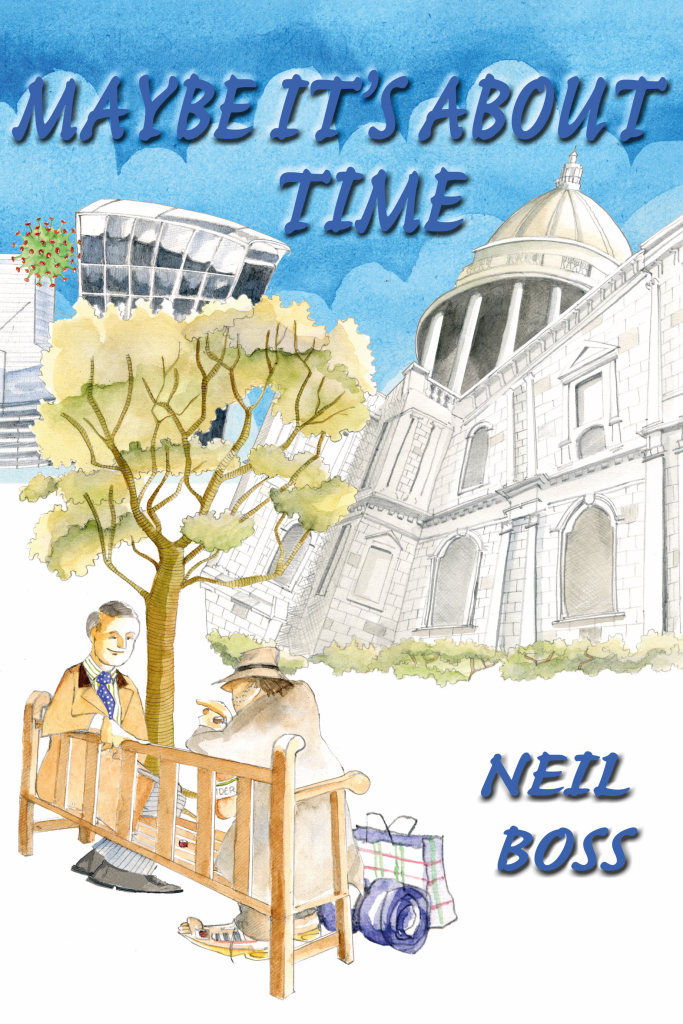
Maybe It’s About Time by Neil Boss

This is Neil’s first novel and fulfils a long held ambition, possibly fuelled by the exact same crisis that hits all of his characters. It’s clear that there’s going to be some sort of social awakening for Marcus at this mid-point in his life. He’s been totally immersed in The Firm’s culture until recently and he’s only just realising how blinkered he’s been as he starts to see people in difficulties all around him – like the homeless man he shares a coffee with on the bench outside St. Paul’s Cathedral. His narration is alternated with that of Claire, who also has a huge landmark building dominating the skyline, Grenfell Tower. This is the south of Kensington and a place where gentrification is slowly pushing poorer and ethnic minority residents out of the area. Claire’s flat is social housing, it’s small but is also cozy and quite quirky especially her reconditioned egg chair that she worked on herself. Her children Alexa and NAME are well looked after and we get the sense that despite the shoplifting Claire is a great mum, just struggling to get by on the universal credit that’s supposed to keep her and her family fed. Claire relies on Gavin quite heavily for emotional support. She’s estranged from her family and friends fell by the wayside long ago. She’s happy to be offered a coffee by one of the new mums at school, Beverley who’s been living in Hong Kong and lives in a home straight out of an interiors magazine. Gavin also brings a little luxury into her life, with his Fortnum’s teas and now offering to come and cook a meal for her in the flat with his neighbour Marcus. For Claire it’s a chance to put on one of her dresses and have someone else cook for a change, something a step up from pasta and cottage pie. For Marcus it’s a chance to have something different from his wife and daughter’s relentless descent into veganism, something he doesn’t remember signing up for.

Marcus’s sections do have some financial jargon but it’s fairly easy to get a grasp of the type of company he works for and he certainly has some fun at their expense. His sections are laced with humour; training sessions in communicating without micro-aggression, joyless drone employees who ditched having fun before university, unhelpful departments like TOOL who seem guaranteed to take a financial pitch and turn it into a pantomime. I particularly loved his lock-down game ‘Through the Zoomhole’ complete with erotic paintings. His home life isn’t short of comic moments either, with his son’s contraband scotch eggs hanging out of his bedroom window advertising entirely the wrong sort of supermarket for their area. He hears about the mystery virus in China at the beginning of the year and his regular attempts to draw people’s attention to it fall on deaf ears. He becomes increasingly anxious as it draws nearer, incredulous that nothing is being prepared but still never realising the shattering personal impact it will have on his life. For Claire, who has asthma, and other residents of the flats it could be even worse. Mr Mahoney who pops in for cake and The Chase every afternoon is very elderly, neighbour Ian who has motor neurone disease and both could succumb to the virus. There’s a great contrast made in how the virus hits those in poverty hardest: Marcus’s boss Kelvin scoots down to his second home in Cornwall just before the lockdown starts whereas Claire and two children are locked down in a tiny flat with no outdoor space of their own. Those who can afford to bulk buy can hoard basic household items and food, whereas universal credit keeps claimants hand to mouth and if the shelves are empty on payday the only answer is to go without. As the circumstances really bite and Gavin is shut away on his parent’s estate in Scotland, it is Marcus who steps up for Claire in altruistic ways he might never have expected before.

I was lucky enough to have a discussion about the book with the author and I mentioned feeling conflicted about the balance of the story. There were long passages describing Marcus’s job where perhaps just a couple of scenes would have given us a flavour of working at The Firm and why Marcus was falling out of love with his role. I think it was an area where the author’s wealth of experience meant the writing flowed and more judicious editing could have cut some of that back. Neil felt the book needed this amount of focus on The Firm because he wanted to satirise the work culture and the corporate world in general. We discussed character and I observed that we had narration from Marcus and Claire throughout but nothing from Gavin’s perspective until the very end. He has some interesting anomalies in his life. He’s wealthy enough to have grown up on an estate in Scotland and while he isn’t the heir, he isn’t short of money. His flat next to Marcus would be unaffordable on a social worker’s pay and his extravagant taste in tea, wine and food is that of someone with an independent source of income. His lifestyle is possible due to a large inheritance from his grandfather, but this has dwindled a little – something explored briefly at the end of the novel and Neil promised there is more focus on this in his next instalment. I worried about Gavin because he seems such a solitary character and I found myself wondering what he did on those evenings when he wasn’t having dinner with Marcus. He has no significant other and dating or previous relationships are never mentioned. I wondered whether he had a lifestyle that wouldn’t have fit in with his wealthy and traditional family, hence the distance between his life and theirs. He is the most intriguing of the three main characters and these questions were never answered, so it was great to discuss them with Neil. I told him how much I wanted to hear Gavin’s perspective and live for a while inside his head so felt this was a wasted opportunity. Neil was happy that I was so involved with his character and told me that he deliberately left the question of Gavin’s sexuality ambiguous. He felt that Gavin was attracted to Marcus, but wanted the reader to think and make their own minds up. It’s a surprise when we do have a section narrated by him and witness something that came completely out of the blue and made me worry about his future. We discussed how, on the whole, I thought the novel made it’s point well and I really enjoyed the social justice aspects of the story as Marcus came ever closer to possibly changing his life. I was intrigued as to whether his wife Alice would be open minded enough to go with him and make radical changes to their lives. I certainly hoped so.

Out Now

I retired from a career in the corporate world in November 2019 with three objectives. To travel around the world and fly fish in the most exotic locations, to play my electric guitar better than I do and to write a novel that I could be genuinely proud of. The pandemic and lockdown in March 2020 put my first two objectives on hold leaving me no option but to start writing. Two and half years later, ‘Maybe It’s About Time’, my first novel, was published.

As a piece of work, I am incredibly proud of it. It makes me laugh and cry in equal measure. I am even more proud that readers seem to be enjoying it just as much and it is getting great reviews. 

Travel and fly fishing has now started again, my guitar playing is improving and a sequel to ‘Maybe It’s About Time’ is planned to start in 2023!

Posted in Netgalley

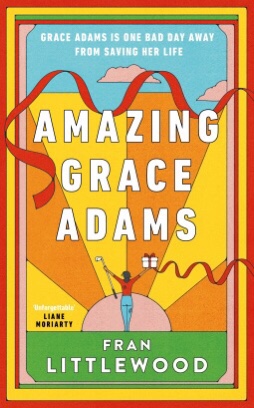
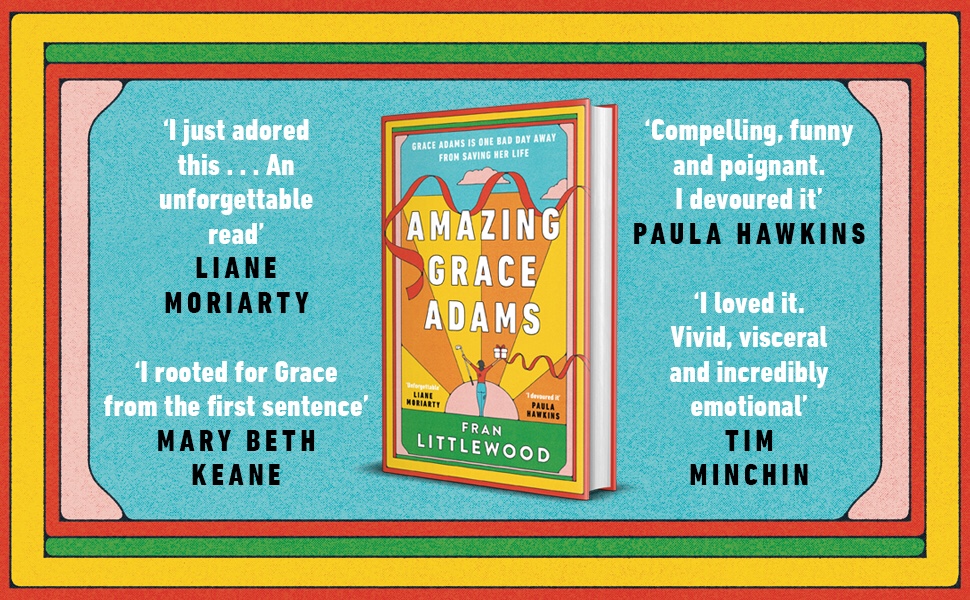
The Amazing Grace Adams by Fran Littlewood

It’s possibly way too early to start picking candidates for favourite books of 2023 – I’m still deliberating over 2022 – but I think this book is certainly going to be in contention. Grace is one of those characters that you fantasise about having cocktails with and you already know you’d have the best time. Grace is stuck in traffic, it’s a boiling hot day and she’s melting. All she wants to do is get to the bakery and pick up the cake for her daughter’s birthday. This is one hell of a birthday cake, not only is it a Love Island cake; it has to say that Grace cares, that she’s sorry, that will show Lotte she loves her and hasn’t given up on their relationship. It’s shaping up to be the day from hell and as Grace sits in a tin can on boiling hot tarmac, something snaps. She decides to get out of the car and walk, leaving her vehicle stranded and pissing off everyone now blocked by a car parked in the middle of a busy road. So, despite the fact her trainers aren’t broken in, she sets off walking towards the bakery and a reunion with Lotte. There are just a few obstacles in the way, but Grace can see the cake and Lotte’s face when she opens the box. As she walks she recounts everything that has happened to bring her to where she is now.

When we first meet Grace she’s living alone, estranged from husband Ben and even from her teenage daughter Lotte. She’s peri-menopausal, wearing trainers her daughter thinks she shouldn’t be wearing at her age and she’s had enough. There’s that sense of the Michael Douglas film Falling Down except when the meltdown comes all she has is a water pistol filled with river water, an embarrassingly tiny Love Island cake and a blister on her heel. Then in flashbacks we can follow Grace all the way back to the start, to when she and Ben met at a competition for polyglots. We also get Ben’s point of view here too, so we see her through his eyes and fall in love with her too. He describes her as looking like Julianne Moore, her hair in a messy up do with the odd pencils tucked in. She suggests that, should she win the prize of a luxury hotel break in Cornwall, they should go together. It’s a crazy suggestion, but deep down, he really wants to go with this incredible woman. Once there, the first thing she does is dive into the sea to save a drowning woman. Ben has never met anyone so free and fearless. Yet on their return four months pass before Grace tracks him down and they meet at the Russian Tea Room. There Grace tells him that he’s going to be a father, he doesn’t have to be in, but can they come to an agreement? Of course Ben is in, he was never out. There love story is touching and yet honest at the same time, it’s not all schmaltzy romance – for example after coming together in Cornwall, Grace’s bed is full of sand. It’s so sad to contrast these early months with the distance between them now, what could possibly have brought them to this place.

I eagerly read about Grace and Lotte’s relationship because I’m a stepmum to a 13 and 17 year old girl. I thought this was beautifully observed, with all the ups and downs of two women at either end of a battle with their hormones. There’s that underlying sadness, a sort of grief for the child who called out for her Mum, who let Mum play Sutherland her hair and would lie in an entwined heap on the sofa watching films. Grace aches to touch her daughter in the same way she did when she was a toddler, but now Lotte watches TV in her bedroom and shrugs off cuddles and intimacy of the physical or emotional life. Pulling away is the normal process of growing up and reminds me of the ABBA song ‘Slipping Through My Fingers’. In the film Mamma Mia, Meryl Streep plays Donna as she helps her daughter get ready for her wedding. In the cinema with my Mum I could see she was emotional and now with my own stepdaughters I can understand it. I just get used to them being a certain age and they’ve grown, with one going to university next year I’m going to be so proud of her, but I’m going to miss her terribly. There’s also a terrible fear, as Grace sees her daughter’s behaviour at school deteriorate and her truant days start to add up, she’s desperate to find out what’s wrong, but Lotte won’t talk. She’s torn between Lotte’s privacy and the need to find the problem and help her daughter, but some mistakes have to be made in order to learn. Grace might have to sit by and watch this mistake unfold and simply be there when it goes wrong. No doubt, she thinks, Grace is involved with a boy and it will pass, but the reality is so much worse.

The truth when it comes is devastating, but feels weirdly like something you’ve known all along. Those interspersed chapters from happier times are a countdown to this moment, a before and after that runs like a fault line through everything that’s happened since. As Grace closes in on Lotte’s party, sweaty, dirty and brandishing her tiny squashed cake, it doesn’t seem enough to overturn everything that’s happened, but of course it isn’t about the cake. This is about everything Grace has done to be here, including the illegal bits. In a day that’s highlighted to Grace how much she has changed, physically and emotionally, her determination to get to Lotte has shown those who love her best that she is still the same kick-ass woman who threw caution to the wind and waded into the sea to save a man she didn’t know from drowning. That tiny glimpse of how amazing Grace Adams is, might just save everything.

Published by Michael Joseph 19th Jan 2023.

Posted in Netgalley

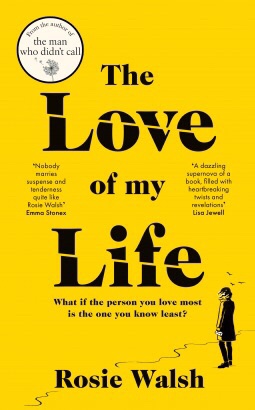
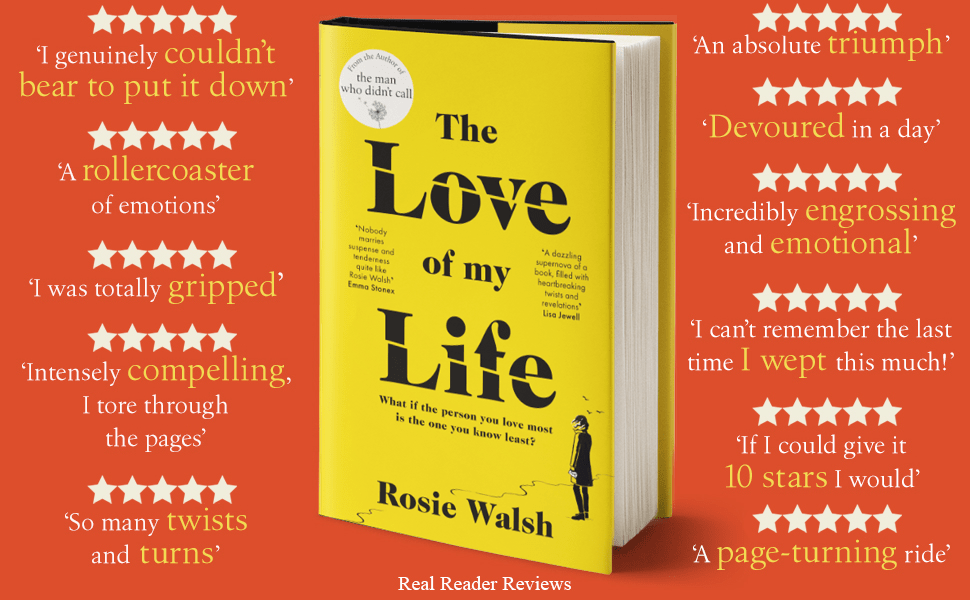
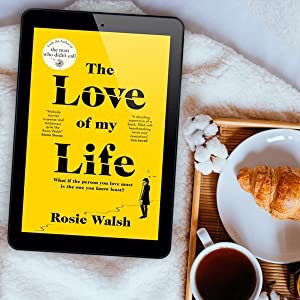
The Love of My Life by Rosie Walsh

This is only Rosie Walsh’s second novel, but she’s established herself as one of those authors. Authors who draw you in, leave you wondering what the hell is going on, then pull the rug from under you by turning everything on it’s head. She’s also brilliant at building complex characters, the sort that stay with you. I know that Emma will stay with me for a long time. Emma is an academic, married to Leo and mum to three year old Ruby. Her field of study is the creatures that are brought in by the tide and then swept out again, her claim to fame was finding a new mutation of a Japanese crab. This took her through her masters and eventually resulted in a TV series. Leo adores Emma and the feeling is mutual, but things have been tough lately as Emma has had cancer. Leo is an obituary writer at a newspaper and because Emma was a TV personality the department was writing a ‘stock’ – an obituary they keep on file just in case. Leo asks if he can add some notes that he’d been writing and it’s here that Leo notices something wrong. Emma didn’t graduate from the university she said she did. It’s a minor thing, but along with a lot of messages from very odd male fans and her ‘disappearing times’ when she takes herself away to get her head straight, Leo’s mind is running through hundreds of scenarios. He can’t believe Emma would have an affair, but it’s the simplest explanation. He keeps digging and will have to confront her with what he’s found. Emma is becoming anxious, especially when he starts asking questions. How can she convince him that the life they’ve had together and the love she has for him is true? When everything else has been a lie.

I don’t know any other author who so beautifully combines a tender love story with aspects of a domestic thriller. Usually doubt is cast on the central relationship to such a degree that the reader stops rooting for them. Here I was really confused, because I believed in Leo and Emma. Each character felt so real and they were easy and comfortable together. When we flashed back to their marriage proposal it was probably the wrong moment, rushed and definitely not Insta-ready, but it was touching and honest. I really felt Emma’s eagerness to be with Leo. I couldn’t believe she would then have an affair, but the evidence did point that way. As the truth started to come out I felt so emotional for this young woman, who really had no one left to help her make good choices once she’d lost both parents. No one is harder on Emma than she is on herself and it was sometimes sad and painful to be in her head. I thought the author used the landscape beautifully and knowing Alnmouth well, I could see how it’s cottages and incredible view of the sea would soothe the mind. Although I’ve also been therein the midst of a storm and as the waves lashed against the rocks and driving rain set in, it was very inhospitable. I think this shows the extremes of Emma’s mood as she’s gone through her life, dealing with very deep lows and then sunny, enthusiastic highs.

Her house in Hampstead Heath, which was her grandmother’s, gives us some indication of how her mind feels. She’s never sorted through her grandmother’s things, so is living a new life cluttered with reminders of the past. She feels safe there, it’s possibly the only place she ever has. Leo is coming from a solid background. I loved his relationship with his brother and it’s likely he’s never felt truly lost and alone. Rosie Walsh has created a very rare novel and engrossing novel. So much so that every time I was away from Leo and Emma’s story I longed to back home with my book. She’s packed her book full of twists and turns, but with so much tenderness and love it never fully veered into domestic noir. Despite her secrets and lies, I never stopped wanting Emma to be with Leo and her little girl. I came away feeling that we never truly know another person’s journey, but we can empathise and try to understand. Emma’s mistake was thinking Leo wouldn’t love her if he knew the truth, but maybe she has underestimated the depth of that love.

Published on 23rd June 2022 by Mantle

Meet The Author

Rosie Walsh is the internationally bestselling author of two novels, the global smash hit THE MAN WHO DIDN’T CALL, and – new for 2022 – THE LOVE OF MY LIFE, a heart-wrenching, keep-you-up-all-night emotional thriller, which was an instant New York Times bestseller and stayed in the German top ten for several weeks. 

Rosie Walsh lives on a medieval farm in Devon, UK, with her partner and two young children, after years living and travelling all over the world as a documentary producer and writer. 

The Man Who Didn’t Call (UK) / Ghosted (US) was her first book under her own name, and was published around the world in 2018, going on to be a multimillion bestseller. 

Prior to writing under her own name she wrote four romantic comedies under the pseudonym Lucy Robinson. When she isn’t parenting or writing, Rosie can be found walking on Dartmoor, growing vegetables and throwing raves for adults and children in leaking barns.

Posted in Random Things Tours

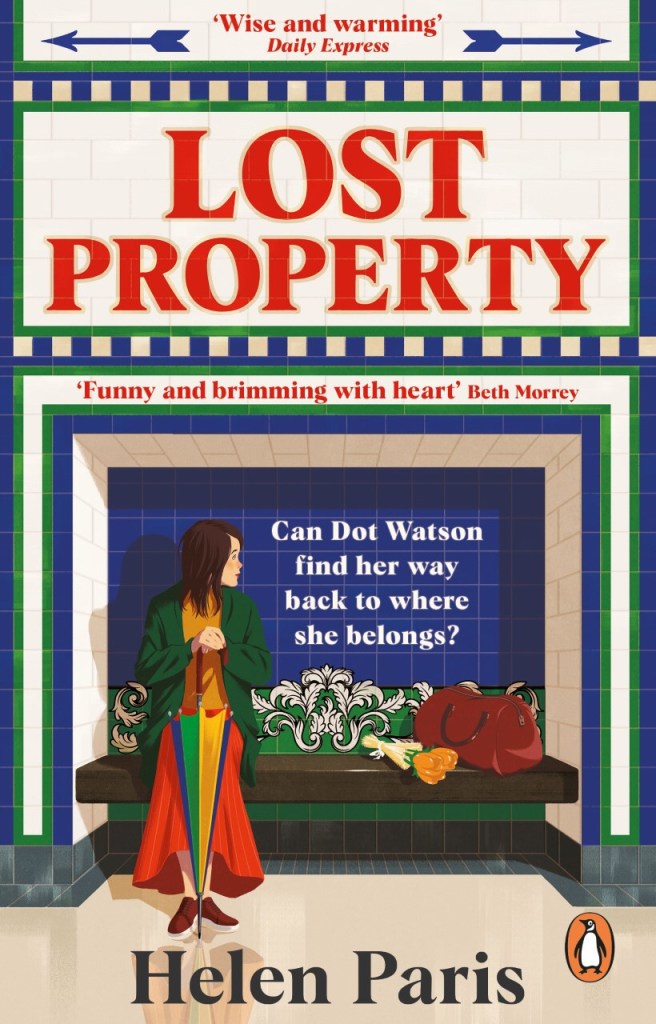
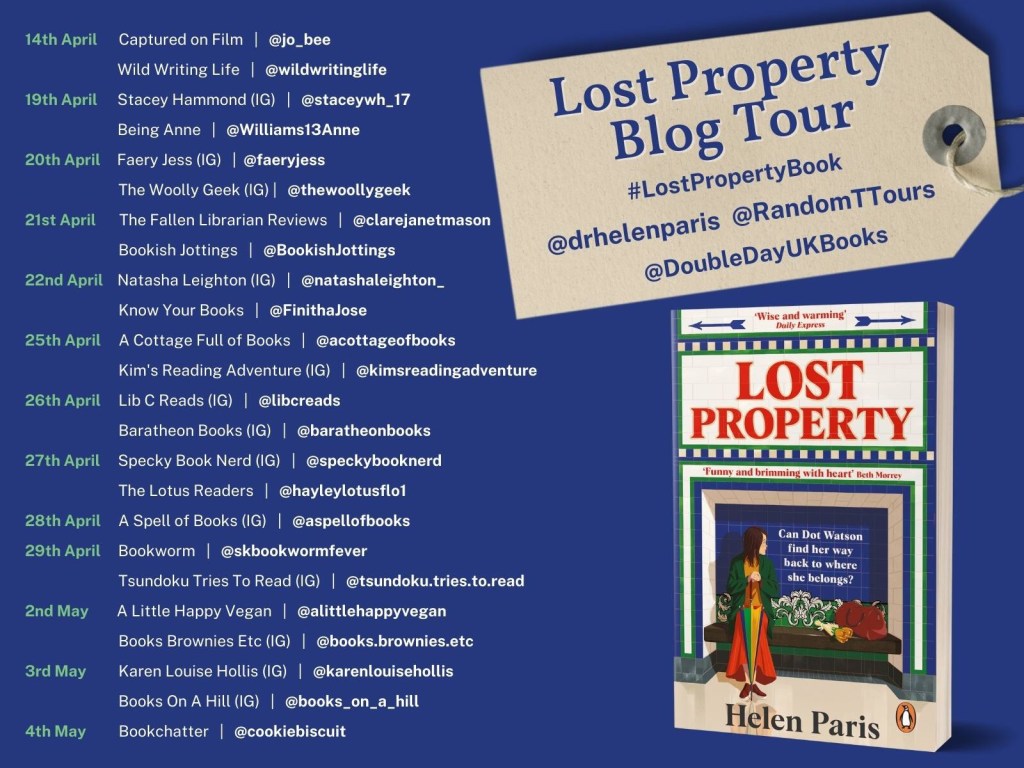
Lost Property by Helen Paris

It took me about five pages to be drawn into Dot Watson’s quirky world and her love for the lost property office in which she works for London Transport. If anything is lost, be it on a cab, bus or train this is where honest people bring their found items. Dot is like the backbone of the office and the other workers would be lost without her. A lover of proper procedure and organisation, Dot is the ‘go to’ employee for anyone starting work with the team, or just to answer a question about an item. Dot thinks lost things are very important, almost like an extension of that person. Their lost item can tell her a lot about the person they are and she fills the lost luggage tags with as much detail as possible so that they have the greatest chance of locating it. Dot believes that when a person is lost to us, their possessions can take us right back to the moment they were with us. When Mr Appleby arrives at the office to find his lost piece leather hold-all it is what the case contains that moves Dot. Inside is a tiny lavender coloured purse that belonged to his late wife and he carries it everywhere. Something inside Dot breaks for this lonely man and she is determined she will find his hold-all. Her search becomes both the driving force of Dot’s story and the key to unlocking her own memories.

Dot has been working at the lost property office for years, but it isn’t the life she expected to be living. In her early twenties, travel was her main driving force in life and she was living the dream in Paris. Being multi-lingual Dot had exciting plans to travel the world, but all her dreams come to a halt when her father dies suddenly and traumatically, by throwing himself in front of a train. Dot’s relationship with her father was complicated, as he doted on her and they spent a lot of time together. However, as the youngest child by some years and because she hero worshipped her father, she didn’t always see things clearly. There are secrets at the heart of the family, kept for all the right reasons, but causing misunderstanding and resentment. When her father died Dot rushed home, but the trauma of his death affects the whole family deeply and it seems to put Dot’s life on hold. Now her collection of travel guides are her window on the world she once wanted to explore, but she is firmly stuck in her mum’s flat and still working in a job that was once a stop gap. Her only other activity is her regular visit to her mum in the nursing home. While her sister lives further afield, she constantly rings Dot to remind her of things and get updates on their Mum. She is pressuring Dot to get the flat viewed and sold so their lives can start again, but Dot is avoiding her. To add to her family stress, Neil from work is promoted to be their manager and the changes he wants to bring in are also disturbing Dot. He wants to reduce the amount of time they keep items, but what if something goes to auction and they can’t get it back? Dot seems to freeze, staying in the lost property office at night and looking tirelessly for Mr Appleby’s hold-all.

Dot is such a sympathetic character. She’s funny, resourceful and actually quite formidable when at full strength. We go back and see a naïve young girl, for whom Daddy is the centre of the universe. They spend a huge amount of time together which she has always viewed as the result of having a special relationship. As she goes back its interesting to see how others viewed the same events, with totally different conclusions. Their family story is so sad and brings home to us the benefits of living in such a tolerant and open society today. If Dot has been viewing her life through the wrong lens, how will she cope when she finally sees it all? Dot thinks she’s weak, but she’s actually incredibly strong. Some of the things she goes through, not just in the past, but during her time sleeping at the property office are really traumatic. She will take more time to process it all, but I loved the author’s importance in the human power to change, to take stock and move forward with life. I think the writer has been clever in her debut novel to write a light, uplifting story, but with so many darker layers underneath. It’s a real accomplishment to imbue a character that could have become a caricature, with life and authenticity. I love her optimism too, leaving us with the knowledge that no matter what the trauma, we have the power to change ourselves and our lives for the better. I heartily recommend this book to other readers, but they must prepare to fall in love with it as I did.

Meet The Author


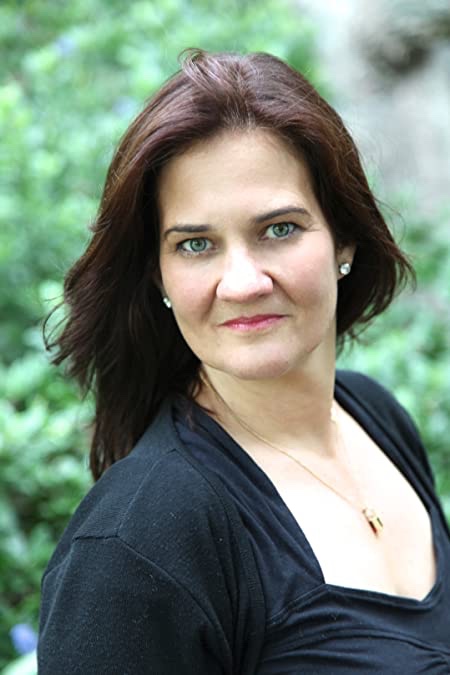
Helen Paris worked in the performing arts for two decades, touring internationally with her London-based theatre company Curious. After several years living in San Francisco and working as a theatre professor at Stanford University, she returned to the UK to focus on writing fiction. As part of her research for a performance called ‘Lost & Found’, Paris shadowed employees in the Baker Street Lost Property office for a week, an experience that sparked her imagination and inspired this novel.

Posted in Throwback Thursday

Throwback Thursday! The New Woman by Charity Norman.

I’ve been reading Charity Norman for several years and I never tire of the way she builds her characters, full of depth and complexity. She excels at revealing characters slowly, one layer at a time, and putting them in complicated emotional situations. This is one such example and despite being published in 2017 it seems very timely as debate rages about transgender rights on social media and in the news. This is a family drama, where we are brought into the seemingly idyllic life of Luke Livingstone. As we meet Luke, he’s seen as the perfect family man with a beautiful home in rural Oxfordshire and a solid career as a solicitor. He is respected as a pillar of the local community with a long standing marriage, as well as being a good father and grandfather. However, Luke has spent his whole life hiding a secret about who he is and he’s not sure he can keep it under wraps much longer. He has been hiding a truth about his identity and it’s such a fundamental truth that he knows disclosure will rock his business, his standing in the local community and will shock his family. He might become an outcast. Yet, he might have to destroy his image and the way others see him, if he’s to stop the slow destruction of his inner self. He has to become the person, the woman, he knows he truly is, whatever the cost. Luke is focusing on his eventual rise from the ashes and the rebuilding of his life, but first he must face the flames.

As the novel opens, Luke is so desperately unhappy he is considering suicide. Luckily, someone intervenes and sends him on a different path – the possibility of becoming the woman he is inside. He has always kept this feeling under wraps because of his parents and has now followed a very conventional path with his marriage to Eilish, fatherhood and now a grandparent to Nico. Now his parents are gone, he feels more free to pursue his own happiness, but that’s made harder when you know your own happiness will impact on your family. My heart went out to him, but also to Eilish who has loved and lived with this man for most of her life. Luke is a wonderfully sympathetic character and I can’t agree with some reviewers who have referred to him as ‘selfish’ for pursuing his own happiness. Luke was born in a different time, with more pressure to conform to society’s norms and values, as well as parents who were more traditional. As a young teenager, his feelings about his gender were only just growing and without transgender role models, either locally or on television, there’s no template for where to go and who to confide in. It would seem that he genuinely fell in love with his wife, rather than chose her specifically to conceal his true identity, and he still loves her, despite wanting to change gender.

The central dilemma is that in order to successfully birth his female identity, his male identity – the husband and father his family know and love – has to die. This is a slow bereavement process as they hear the news, then see their family member begin to dress as a woman, to take that identity into the world to be seen by work colleagues, family friends and his children’s friends. Just as this process is hard for Luke, it’s equally hard for the family – I loved the inclusion of a politically aware daughter, full of support for causes like equal rights for the LGBTQ+ community, but finding it a very different prospect when the person involved is her own father. She acknowledges her father’s rights in principle, but that doesn’t stop the feelings of hurt and loss she’s suffering. Similarly, I felt deeply for Eilish who is losing the man she loves, but has to ask herself the question of whether she has to lose the person she loves too. I’m not sure about the conclusion to their relationship, and I’d be interested in knowing how common it is in real life.

I thought this book was a fascinating read and really started me thinking about how it must feel to be in the wrong body, in a society that still expects us to conform to the established norm. It really did show what transgender people go through, just to be who they are. For me, Norman’s book avoided all the controversy and cancel culture we see going on in society today, by focusing in on Luke and his family. This is one character’s experience and doesn’t make assumptions or create a stereotypical experience. It isn’t negative about Luke’s experience either, the viewpoints belong to him or his family members and while they may be upset or shocked by his news as individuals, the overall narrative remains positive and non-judgemental which I loved. I know some will ask whether a fictionalised account is appropriate, because such controversial and complex stories are often best told by ‘own voice’ writers. However, I felt that the author had insight, whether that’s through personal experience or research. It is a book that started many conversations at home about the distinction between gender and sexuality, how it would feel to be Luke and the overwhelming fear that has kept him in his male identity in so long, and how it would feel if it was our Mum or Dad. Luke deserves to be who he truly is and in order to keep his family, he must continue to be a parent and grandparent as Lucia. It’s a book that challenges the reader’s own preconceptions and I love it when a book makes me think like this, plus it makes it a great book club choice. This was informative, absorbing, deeply moving and is a story that has stayed with me over the last four years.

Meet The Author.

Charity is the author of six novels. She was born in Uganda, brought up in draughty vicarages in the North of England and met her husband under a truck in the Sahara desert. She worked for some years as a family and criminal barrister in York Chambers, until, realising that her three children barely knew her, she moved with her family to New Zealand where she began to write.

After the Fall was a Richard & Judy and World Book Night title, The New Woman a BBC Radio 2 Book Club choice. See You in September (2017) was shortlisted for best crime novel in the Ngaio Marsh Awards. Her sixth, The Secrets of Strangers, was released on 7th May 2020 and is also a Radio 2 Book Club choice. 

Charity loves hearing from readers. Please visit her on facebook.com/charitynormanauthor or Twitter: @charitynorman1

Posted in Personal Purchase

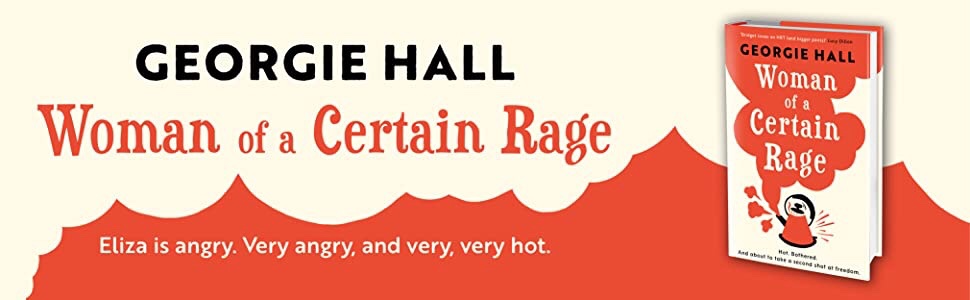
Woman of a Certain Rage by Georgie Hall.

Recently life had a started to get on top of me a little bit. I felt overwhelmed; with my partner being unwell, my MS not coping with the heat, and several things in the house going wrong. The dishwasher flooded the kitchen, then two weeks later the washing machine did the same, but lifted the entire floor too. Finally, I emptied my bath water and came downstairs to find it had christened the kitchen island and we had a lovely new hole in the ceiling. I’m immune-compromised so I’m still avoiding crowds and wearing masks. Finally, there’s the effect of the menopause when dealing with all those things. I’m far more likely to burst into tears these days. Masks mean I sweat more – not just a little glow, I can look like I’ve just got out of the shower in ‘tropical moments’. Then my reading glasses steam up, but I can’t take them off because I can’t read anything. I’ve taken a short break from blog tours and deadlines to deal with some of this and spending some time reading exactly what I want. So, I’m on the couch, a cold flannel on my neck, with two fans pointing at me, as few clothes as I dare to wear, and an ice cold can of coke in my hand. I was browsing my NetGalley shelf when this title jumped out at me. It could not have been more apt.

Eliza feels like she’s going crazy. She’s emotional, keeps forgetting things, feels angry and she’s hot, oh so hot.

This is a smart and funny novel about love, life and a second shot at freedom for rebellious women of a certain age. Late for work and dodging traffic, Eliza is still reeling from the latest row with husband Paddy. Twenty-something years ago, their eyes met over the class divide in oh-so-cool Britpop London, but while Paddy now seems content filling his downtime with canal boats and cricket, Eliza craves the freedom and excitement of her youth. Fifty sounds dangerously close to pensionable: her woke children want to cancel her, a male motorist has just called her a ‘mad old bat’ and to cap it all her hormones are on the run. Who knew menopause was puberty’s evil older sister? But then a moment of heroism draws an unexpected admirer, and Eliza sets out to discover whether the second half of life can be a glass half full after all. She might suffer mental fog and night sweats – and have temporarily mislaid her waist – but this is her renaissance.

I bonded with Eliza immediately and not just because of the menopause. We’re a similar age, so I could identify with growing up in the Britpop era – I fell totally in love with Damon Albarn, a love which has lasted a lifetime. All of our references points were the same, and having inherited two beautiful stepdaughters in their tweens and teens I could really appreciate Eliza’s relationship with her daughter. I also have a strong relationship with an elderly dog. Menopause is causing tension in Eliza’s marriage, particularly annoying for her is the loss of libido. That deep connection she and Paddy once had seems to have gone, lost in the logistics of family life and life stresses around their finances. Eliza’s realisation that she’s becoming invisible has extended into her working life too. She has always wanted to be a stage actress, but her career has never really taken off. Now she’s getting less and less work, and aside from one Japanese tourist who thinks she’s Emma Thompson, she feels very under appreciated. She’s doing voice work, reading audiobooks mainly, plus has a side job showing people around properties for a local estate agent. All of the everyday stresses in her life – marriage, family tensions mixed with financial concerns, having ‘woke’ children, her youngest son who is on the spectrum – leave her feeling exhausted. Into this low point steps a handsome Italian restauranteur, who happens to have taken over her family’s favourite bistro from his uncle. Exuding charm from every pore, he flatters Eliza and makes her feel desirable when of late she’s felt men’s eyes pass over her and to her teenage daughter. It’s like one big ‘hormotional’ perfect storm and I wondered whether anyone would come out of it unscathed.

It’s easy to love Eliza; she’s loving, caring, vivacious and witty. However, her husband Paddy grew on me too and I felt a great deal of empathy for his own middle aged struggles. There is growing evidence of male menopause, despite society being largely dismissive and calling it a ‘midlife crisis’. Jokes about middle-aged men trying to recapture their youth with hair transplants, sports cars and unwise affairs with younger women are still commonplace. Yet the NHS recognises a group of symptoms similar to those experienced by women – irritability, insomnia, weight gain, loss of muscle mass, erectile dysfunction, loss of libido and memory problems. Some doctors have questioned whether these are symptoms of a loss of testosterone, but the NHS classify it as a psychological syndrome characterised by increased levels of depression and raised anxiety amongst men in their late forties and fifties. Paddy is definitely going through something like this, but he has had a lot to contend with. His father’s death and the loss of the narrow boat they worked on together hit him hard. Eliza’s family bought the boat so he could still work on it, but that brings its own guilt and shame because Paddy could not afford to do this himself and run it. His wife earns more than he does and she’s starting acting like a crazy person. He thinks her loss of libido is down to him being a failure as a man. This book hinges on the fact that problems occur when couples stop communicating.

The author really pitched this book perfectly, balanced between the serious issues and the comic moments. Her other characters were well rounded, with interesting quirks to their personalities or hidden depths. I thought her sister was an infuriating superwoman who could juggle everything perfectly, but when she cooked Sunday dinner she was in a complaining, sweaty, heap like I am on Sundays! Her mum had depths of hidden wisdom and despite never seeming to ask, had a pretty accurate idea of what was going on. I found Eliza’s daughter infuriating though. She was very preachy and deeply committed to social justice and women’s rights. Despite agreeing with her in some cases I found her speeches annoying and the long Shakespeare quotes pretentious. I think this is how the author intended her though. She was an exaggeration of my stepdaughter’s generation and I could see a lot of our 15 year old in Summer’s causes and the way she spoke. I think the youngest son’s autism was handled well too. When she found out the real reason he wouldn’t use his allocated transport to get to school I was heartbroken for him. All anyone wants is for someone to understand them and listen to how it feels, rather than dismissing them with a lazy stereotype or the ableism on show here. The final adventure was both funny and poignant, and I left the book feeling like I’d been seen and acknowledged. I also had a huge smile on my face, because it had really lifted my spirits, so much so that I would really love another instalment of Eliza and her family in the future.