Posted in Publisher Proof

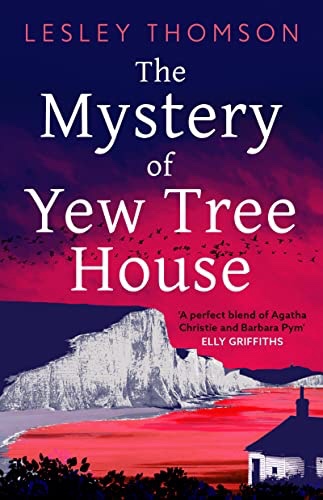
The Mystery of Yew Tree House. The Detective’s Daughter Series – Book 9

As Stella Darnell arrives at Yew Tree House, it seems like an idyllic little place to spend the summer. Like any village, Bishopstone has it’s past and a dark side lurking beneath the surface. The holiday is a trial of sorts for her, partner Jack Harmon and his seven-year-old twins, Milly and Justin, not forgetting Stanley the dog. Stella‘s thoughts and feelings around a more permanent living arrangement with Jack is always changing, but what better way to trial the arrangement? As they disembark and start to explore it’s clear that the house is a little dilapidated once you look closer. Stanley and Millie, both as lively and full-on as each other, are soon tramping round the garden making discoveries. The house belongs to the Stride family, two sisters Stevie and Rosa live in the annex while eking out their state pension by renting the main house for holidays. Perpetually single, the two women can’t afford to run Yew Tree House, but can’t afford to leave either. It’s clear that some parts of the house are past their best, but cleaning company owner Stella, can see past that and once the place has had a good scrub it will be adequate for a family holiday. However, the house has a complex history, especially the period during WW2 when Stevie and Rosa were girls, living with mum Adelaide and an evacuee called Henry. Their Dad Rupert is called up but loses his life at Dunkirk, leaving his family to make their own way in the midst of rationing and the bombings while their house is also used as a meeting place for the Home Guard. When Millie is exploring one day she finds an old pill box in the garden (a concrete guard post or dug-out from where volunteers would defend the coastline) putting past and future on a collision course. Inside is a skeleton, with a hole in it’s skull that’s been caused by serious force. Jack and Stella may have fallen upon a murder mystery for their popular podcast, but as the aged vicar glares at them from his cemetery across the road, it could be that not everyone wants the truth to be discovered.

This is a book within a series based around Jack’s true crime podcast and I would recommend reading the others to better understand the relationships in this story. I felt I connected better with the wartime section of the story and I think it was because regular readers will know these characters well. Jack is rather blindly optimistic about their first family holiday, leaving readers and Stella as the more doubtful parties on this journey, especially when we meet the redoubtable Milly. Despite being of primary school age, Millie is possibly in charge of every room she walks in and if I were Stella, I’d be imagining what this exuberance might look like when ramped up by teenage hormones! A terrifying thought. I didn’t pick up the chemistry between Stella and Jack at first, but they clearly have a joint passion for solving mysteries and presenting true crime stories that’s rather infectious. I really liked the fact that both characters were connected to the area, bringing an added element to their sleuthing as I felt they had a stake in the village’s history and a real thirst for the truth. I thought the author created an interesting balance, not only between the two timelines, but with a contrasting lightness and shade of the plot. Family life is very lively and full of fun, especially with Stanley’s antics, and there was an almost Famous Five style coziness to the mystery. However, as foreshadowed by the glowering vicar in the book’s opening, there are darker undertones that become even more pronounced as we travel back to the 1940’s.

War isn’t the only cloud over Rosa and Stevie’s family, there is a missing girl too and the anxiety felt by Adelaide Stride about her two girls is very real. I felt Adelaide’s uneasiness around some of the guard, who move freely around the downstairs at night. The house is split between normal family life upstairs, with the realties and tension of war downstairs. There’s a sense this is men’s business and the presence of them in her family home must have added to her worries about her girls. Can Adelaide trust them? It seems clear she has her instincts and one character definitely raised her hackles (and mine). Tension and suspense build in both timelines, with some creepy moments but the wartime sections were the more disturbing. The present day sections have plenty of humour, the directness and attitude of Miliie, as well as plenty of twists to keep the reader on their toes. The fact that some of the characters from the 1940’s still live in the vicinity added to the tension towards the end of the book, as I wondered if any of them were still a danger in the present day. What might they do to keep certain secrets buried? Stella and Jack would need to keep their little family safe, all the while uncovering a tale that holds the heartbreak and tragedy of WW2, alongside a vengeful and murderous secret.

Meet the Author
Lesley Thomson was born in 1958 and grew up in London. She went to Holland Park Comprehensive and the Universities of Brighton and Sussex. Her novel A Kind of Vanishing won The People’s Book Prize in 2010. Lesley combines writing with teaching creative writing. She lives in Lewes with her partner.
Posted in Netgalley

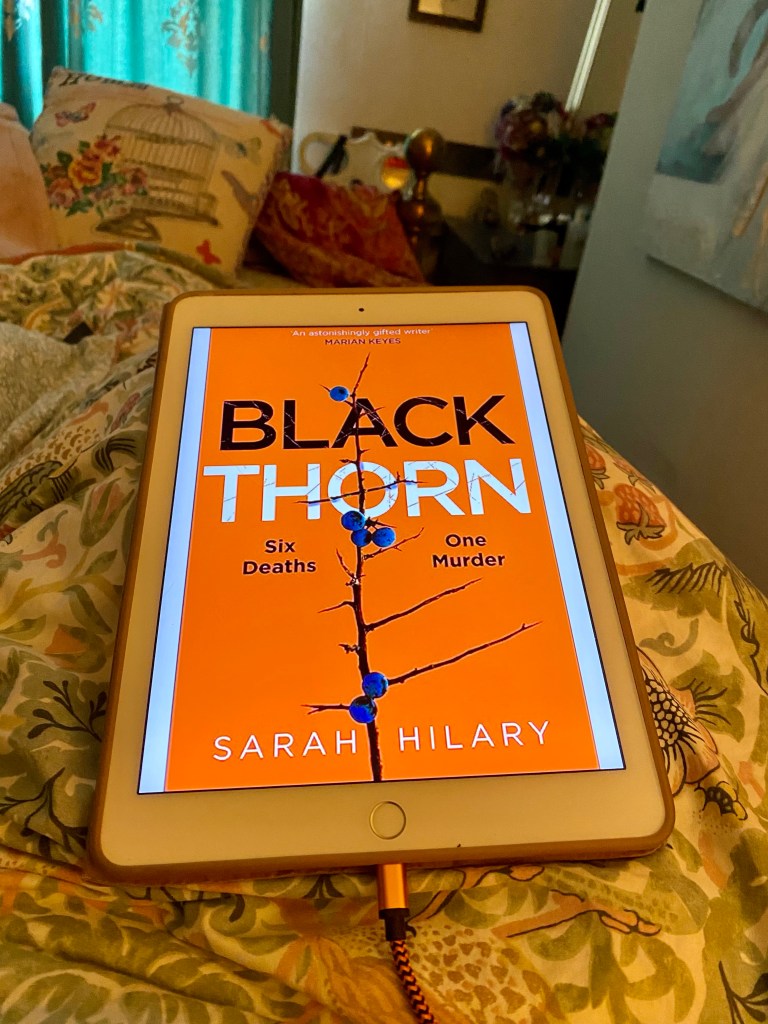
Black Thorn by Sarah Hilary

Black Thorn by Sarah Hilary

Sarah Hilary has this amazing ability to leave the reader floundering between law, morality and ethics. I never quite know who I’m rooting for. Who’s in the right or the wrong? I come to different answers depending on the lens I’m viewing it through – someone can be within the law whilst being morally questionable. I often find myself stopping to wonder if I even like any of the characters. This is one of those stories that expose the dark underbelly of what looks like the dream neighbourhood. The houses at Black Thorn are like those you see in the Omaze giveaway adverts. The opening scenes of a neighbourly barbecue show us two very different narratives: the jolly and friendly neighbours enjoying each other’s hospitality; the neighbour who breaks into the party with a grudge. Is Luke Dearborn a nutter and a conspiracy theorist? Is there something rotten at the heart of this dream housing development?

The timeline slips back and forth from pre to post-abandonment. Both timelines race towards Day 0, the day of ‘abandonment’ and possibly the truth about what has been happening, both to the houses and the people living there. I was interested in the word ‘abandonment’ because it feels as if it’s in the wrong context. It describes the development as something with feelings rather than bricks and mortar. Also ‘abandonment’ suggests an element of choice, when actually the residents were forced to leave by the authorities. It was an evacuation more than abandonment, a word that gives the sense of an unloved child rather than an inanimate house. Adrian is affected the most because not only did he sell the development, he bought one for his family. This leaves him on site for all the problems to come to his door, creating enormous stress for all of them. It’s almost as if Adrian fell for his own sales patter. He’s sold the units as state of the art living with coastal views through the huge glass sections at the back of the house. It seems a bleak setting to me, the last places before you drop off the edge of the world! They’re also described as luxury, but it feels like a Scandi design, more minimalist. To me luxury means softness, comfort, colour and warmth. These rooms seem to be more about impressing others than thinking what is comfortable for long term residents. Maybe they’d be better holiday homes. Even their gimmick of fake diamonds scattered throughout seems wrong, they’re hard and cold and not something you’d want to tread on in bare feet. Trevor, his business partner, manages to escape this by going off site or bedding down in one of the unsold units where he can’t be seen. In our flashbacks we know that six people die, but what of? Is there poison in the heating systems or is it carbon monoxide poisoning? Adrian clearly feels responsible, falling into a deep depression. Trevor is still hanging around, being cocky and unwilling to admit that corners were cut or mistakes made. Through Agnes we slowly untangle a whole web of deceit and lies, but Trevor is one of those people where nothing sticks. It’s Adrian who might end up taking the blame.

The character I seemed to view things through was Agnes, because I think she represented the reader – an outsider, lost, in the dark and vulnerable. She’s part of a family – her father Adrian was the salesman for this development – but has lived in London for a number of years. She’s had some distance from the project and can look at it with fresh eyes. Yet for a girl whose in her twenties, Agnes seems very naïve and a bit lost. We know that Agnes has split with her girlfriend so may be feeling vulnerable, but she is suspicious of her family’s new home at once. It’s almost as if her nervous system is affected by them. There’s something in the walls, there are trenches in the gardens and her pet rabbit dies. In the aftermath, her family are now living in a caravan park near her friend Errol and his grandmother Bette who was the cleaner at Black Thorn. Her friendship with Errol is warm and open and she’s welcomed into their caravan in a way that feels natural compared to the fractured and strained relationships elsewhere. Her father is almost catatonic and her mother is working round the clock trying to keep her family safe. Agnes is desperately trying to keep younger brother Christie safe, but he is lured back to the development. He walks along the coast road every day and breaks into a house, slowly going through what’s left and choosing his favourite items to take back to the caravan. Agnes feels she must protect him, particularly from Trevor who seems to exert a malign influence over Christie. Agnes knows first hand exactly how far Trevor will go to get what he wants.

As always the author’s writing is incredible. She keeps the reader on edge, never knowing who is lying or who’s in the wrong. She gives us ambiguous characters like Erica who masqueraded as a butcher’s assistant to deliver meat for the BBQ, keen to stay to show them how best to cook it and get to know the residents. Yet she’s not who she says she is and her deceit will place her in danger. Even the person we spend most time with, Agnes, is hard to connect with. As in real life, everyone has their faults, but it isn’t just that. I struggled because no one seemed to be showing human feelings or genuineness. As a result there were a couple of points in the book where I didn’t feel enough for the characters to be completely invested in the story so it stalled a little for me. However, I did want to know what exactly had happened in the houses and it was that need to know the truth that kept me reading. I had to wait till the very end for some characters to show how they really felt; until now feeling totally numb and shocked, or trying to hold it together and be the strong one for everyone else. This was an addictive read and did keep me guessing till the final page.

Published by Macmillan 13th July 2023

Meet the Author

Sarah Hilary’s new novel BLACK THORN will be published in summer 2023 by Pan Macmillan. Her first standalone FRAGILE came out in 2021. Mick Herron called it ‘a dark river of a book’ while Erin Kelly said, ‘Timeless, tense and tender, Fragile will worm its way deep into your heart.’

Sarah’s debut SOMEONE ELSE’S SKIN won Theakstons Crime Novel of the Year 2015. It was a World Book Night selection and Richard & Judy Book Club pick. The latest in her D.I. Marnie Rome series NEVER BE BROKEN was published by Headline in 2019.

Visit http://www.sarahhilary.com for news, updates and reviews.

Posted in Netgalley

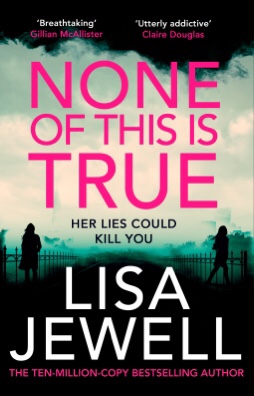
None Of This Is True by Lisa Jewell.

I always look forward to a new novel by Lisa Jewell, because I know I’m going to be engrossed in it for the weekend, oblivious to everything else that’s going on around me. This new novel was so addictive I’m not sure I looked up and luckily my other half knows when to disappear into his workshop and to deliver a hot brew on the hour. I have no idea how this writer manages to be so prolific, but thank goodness she does! She always manages to find a new angle to the thriller and this novel has a really interesting premise based around the phenomenon of podcasts. One of our protagonists, Alix, has been running a successful weekly podcast based around women’s lives and interviewed women who would inspire her listeners. However, it was time for some new ideas and so far Alix hasn’t had one. Then she meets Josie Fair. Josie is celebrating her forty-fifth birthday with her husband in a restaurant that’s a little more upmarket than they would usually book. She notices a group at a large table celebrating the birthday of a rather glamorous woman. Later in the night, the women bump into each other in the lady’s loo. Josie mentions to Alix that they share a birthday and is surprised to discover they are both 45 years old. They make a joke about being birthday twins then go back to their tables where the huge contrast between them becomes clear. Alix’s table is filled with friends, flowers and balloons whereas Josie is having a quite dinner, just her and her husband Walter. A few days later they accidentally meet again outside Alix’s children’s school. This time they chat about Alix’s work and Josie admits she’s been listening to some of Alix’s podcast since they met. Alix has made a successful series interviewing inspiring women, but admits she’s now looking for a change of direction. Josie volunteers herself as a subject, admitting that she’s about to go through some major life changes and seemingly convinced that Alix’s listeners will want to hear her story. They swap contact details and each comes away feeling positive, but Josie wasn’t exaggerating. Big changes are on the way, just not in the positive, life-affirming way Alix is used to. After interviewing Josie once Alix knows her story will appeal to listeners, because despite being very unsettled by her subject, she can’t help wanting to dig further.

The format really does work, with the interviews providing so much information to unravel and tantalise the reader. In-between we see the effect Josie’s revelations have on her own family life and on Josie’s as well. Each interview works very like a counselling session, but perhaps most like the early sessions when the client is telling you their story so far and what brings them to therapy. Alix is a fantastic listener and allows Josie to tell her story in her own way and at her pace, only asking questions to clarify or encourage her interviewee to expand on a point. I detected a subtle shift as the interviews progressed, but it’s almost imperceptible. While at first Alix is in control of the project, Josie starts to take charge both of the content and how often they meet and work together. This could simply be a woman finding her confidence or having an emotional need to offload her story quickly, while she has the courage. Josie weaves a tale of grooming and domestic abuse that’s not easy to listen to. Her husband Walter is much older and very set in his ways, they started their relationship when Josie was a teenager and Walter was in his thirties. There are little clues to the control he has over his wife, such as wearing double denim to please him and not having a job, even though their daughters are beyond school age. At this point I feared for Josie, but also for her daughters: why has one left home at 16 and why does the other one seem locked in her bedroom with a diet that consists of nothing but baby food? One tiny act of Josie’s made me go cold. Each time she visits, she starts to take small items from Alix’s home, starting with a coffee pod that she hides in her underwear drawer.

As Josie becomes more involved in Alix’s life, Alix’s Instagram lifestyle seems to erode.

“She thinks of Alix’s home: from the front, a neat, terraced house with a bay window, no different to any other London Victorian terraced house, but inside a different story. A magazine house, ink-blue walls and golden lights and a kitchen that appeared weirdly to be bigger than the whole house with stone-grey cabinets and creamy marble counters and a tap that exuded boiling water at the touch of a button. A wall at one end reserved purely for the children’s art!”

Her husband Nathan has always had issues with alcohol, but they really come to the fore. He’s always had a line he doesn’t cross, but now he starts to stretch to one more drink, staying out later with work colleagues, going out for a normal lad’s night then not coming home. Alix knows that once it reaches a certain time, it’s likely he will be on a bender, only coming home when he’s run out of funds or sobered up. Where is he when he doesn’t come home? Alix starts to doubt Nathan’s fidelity and finds herself searching for evidence. As the stress at home cranks up a notch, Alix notices that Josie is pushing the boundaries of their agreement. She turns up where Alix doesn’t expect her, stays longer than their agreed session and Alix can’t tell if she’s becoming subsumed by Josie’s world, or if Josie is starting to take over hers. There’s a claustrophobic feeling and a sense of menace starts to creep in, as Josie controls her story and will only let it unfold in the way she has planned. I sensed something was very wrong and wanted Alix to back off the story, even though it could make her name in the world of podcasts. Alix seems transfixed by Josie’s story, her life is like a car crash you can’t look away from and although part of Alix has the journalistic interest in a great story, another part is fascinated by the horror of what Josie is telling her. In much the same way as the reader is fascinated too, I genuinely couldn’t put the book down until I’d worked out what was going on. Were Josie’s revelations putting herself and Alix in danger from Walter? Will telling her story change Josie, acting as the catalyst to leave the situation and get help for her daughter? I kept wondering about the other daughter, the one who left home. I couldn’t help but think she might be the key to the truth about Josie and Walter’s marriage.

I thought the structure, using the podcast for Josie to tell her story, was really clever considering how popular true crime podcasts are these days. I thought the idea for Alix’s podcast, interviewing inspirational women was very like the Megan podcast in tone showing how up to the minute Lisa Jewell has been in the creative way she frames her story. As coercive control is now so well known, as compared to four or five years ago. Everyone understands what it means and terms like ‘gaslighting’ have become the norm, showing up in soap storylines and all over social media. I think what Lisa has tapped into here is the overuse of these terms, so much so that they’ve become diminished. It seems that daily someone is claiming their ex was a narcissist but these are huge psychological labels that shouldn’t be used lightly – in the same way people say ‘I’m a bit OCD’ the real understanding of the disorder has become lost. It isn’t all about arranging your kitchen shelves so the labels show at the front. We are all educated into believing the victim of abuse, but in a society where these terms are so misused, should we reserve a little bit of judgment? If I was Alix I might have been inclined to walk away from the story – especially as she starts to have questions and doubts – to concentrate on my own problems. Josie’s story and it’s fallout are almost too messy and she seems very adept at knowing when Alix is doubting her, on one occasion turning up on the doorstep having apparently confronted Walter, and definitely outstaying her welcome. Lisa Jewell really is a master at these dark, almost nightmarish, stories about women’s lives while weaving so many twists and turns the reader can’t stop guessing until they’ve reached the final page. While I’ve enjoyed her recent novels I was absolutely gripped by this one and think she’s outdone herself. The setting and situation are so believable, the characters are incredibly well drawn, full of enough flaws and contradictions that you’ll be questioning everything they tell you.

Published by Random House 20th July 2023

Thank you to the publisher for allowing early access to the novel in exchange for an honest review.

Meet the Author


LISA JEWELL was born in London in 1968.

Her first novel, Ralph’s Party, was the best- selling debut novel of 1999. Since then she has written another nineteen novels, most recently a number of dark psychological thrillers, including The Girls, Then She Was Gone and The Family Upstairs and The Night She Disappeared, all of which were Richard & Judy Book Club picks.

Lisa is a New York Times and Sunday Times number one bestselling author who has been published worldwide in over twenty-five languages. She lives in north London with her husband, two teenage daughters and the best dog in the world.

Posted in Netgalley, Publisher Proof

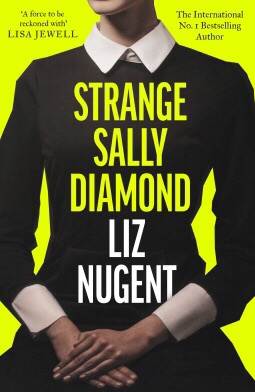
Strange Sally Diamond by Liz Nugent

The first thing I have to say is ‘Wow! What an opening.’ I read the first page then went to find my other half so I could read it to him. He’s one of those people who say ‘just chuck me in a bin bag’ so I thought he’d love it too. Of course it’s horrifying, but I also found it blackly comic and with Irish ancestors myself I can honestly say it’s an Irish trait. We laugh at the story of Mother – my great-grandmother – putting her head in the oven and wondering why it was taking too long. Slowly realising it was an electric oven. Tragic, horrifying, but hilarious at the same time. I felt this all the way through the story of Sally Diamond, a young woman having to negotiate a new life after the death of her incredibly protective father. He was an academic doctor and it turns out Sally was his subject. He leaves Sally letters to read after his death to give her all the information about what to do next. However, Sally can be very literal and by carrying out his verbal wishes to be in a bin bag, it turns out she may have committed a crime. Luckily family friend and GP Angela comes to the rescue, explaining to the police that Sally is ‘different’ she’s been sheltered and her childhood before her adoption was very traumatic. In fact her father left specific instructions in his letters, but as Sally points out he should have labelled the envelope ‘open this as soon as I’ve died’. Sally learns that she was born in terrible circumstances and it’s only chance that saved her. How will Sally cope with the detailed news about her past and how will she integrate into the community and learn how to manage by herself?

I found Sally rather endearing, despite her tendency to ask personal questions and disappearing to play the piano when things get too much. Sally knows that her mother died, in fact she committed suicide after their escape. Sally was born Mary Norton, in a locked extension attached to the home of Connor Geary and his son. Sally’s mother was abducted by Geary and brought back to the specially built annex where he chained her to the radiator. Denise Norton was subjected to all forms of abuse and violence and gave birth to her daughter in captivity. They were only found when a burglar broke into the house and Denise shouted to him ‘I am Denise Norton’ over and over, in the hope he’d tell the authorities. Sally doesn’t remember anything about her earliest years, but when she’s sent a grubby, old teddy in the post she knows instinctively that he’s hers. Sally was adopted by the husband and wife psychologist team who were treating her and her mother after they left hospital. After a short space of time, it became clear that Denise would not recover well and it was decided that in order for her to develop, Mary must be removed from her mother. Tragically, as soon as this happened, Denise committed suicide. Ever since, and with the new name Sally, she has lived an isolated rural life in Ireland. Sally has her quirks: she asks deeply personal questions; she would tear out her hair if upset; she could be extremely violent. As we followed Sally’s journey it started to feel really uplifting and I was so happy for her, finding the ability to live a fuller life would be a real happy ending to the story.

Then the book changes and we’re listening to a boy called Peter from New Zealand, having emigrated from Ireland. I found Peter’s father terrifying, he is a misogynist and incredibly controlling to the extent of telling his son he has a rare disease that means he can’t touch other people. This lie will have terrible consequences, when Peter tries to make connections with others. Slowly a terrifying story emerges about their home in Ireland and the ghost who lived through the wall. Sometimes he’d hear the shrieks and moans from that room. When Peter was left to be looked after by the ghost, something terrible happened and the trauma has stayed with him for life. I felt so moved by Peter’s story, but terrified by what he could become. I felt as if the loss of his friend Rangi that was the turning point. Peter can also be extremely violent and even though he is assailed by guilt afterwards, the damage is done. I hoped and hoped for a point of redemption for him. When his father starts to build a barn and look for another victim he has no choice but to be complicit. If something happened to his father, would he able to come clean and let them victim go? Does he ever wonder about what happened to his mother’s family in Ireland?

I was hoping that these two damaged people would get to meet each other. Both of them need family and a sense of where they’re from, even when the truth is awful to comprehend. The author has such a talent for playing with the reader’s emotions, letting us feel for a character then finding out they’ve done something terrible or making us feel sorry for a character we dislike, because of something they’ve experienced. Her characters are always complicated and flawed, but this was the next level. I loved watching Sally start to thrive with the support of those around her. She uses the money she inherits to renovate a cottage closer to the village. She starts to build relationships with her dad’s sister Aunt Christine and her Uncle Mark too. The high point is a lovely party at Sally’s cottage with a bouncy castle for the kids, which she is even persuaded to try herself. Then a stranger from New Zealand turns up at her door and I was riveted to the story from then on to see how this will affect Sally. Can two damaged people console and support each other, or will they drag each other down? We are about to witness the difference of growing up on opposite sides of the wall. This was a fascinating novel, especially if you love psychological thrillers and studying how someone’s start in life contributes to the person they are. I was also fascinated with the idea that those who heal can also hurt. When your adopted child is also your subject, your academic reputation and possibly even your funding, lines become blurred. I desperately wanted a happy ending for Sally because she’d made so much progress but can so much trauma ever be left behind? The author created a character that I was so emotionally invested in, she will definitely stay with me. She’s so complex and nuanced that she felt completely real to me. The book is incredible and is up there with my top reads of this year, it’s one of those that will keep coming back to me until eventually I grab it from the shelf and read it again.

Meet the Author

Liz was born in Dublin in 1967, where she now lives. She has written successfully for soap opera, radio drama, television plays, short stories and animation for children.

Liz’s first novel Unravelling Oliver was published to critical and popular acclaim in March 2014. It quickly became a firm favourite with book clubs and reader’s groups. In November of that year, it went on to win the Ireland AM Crime Novel of the Year at the Bord Gais Energy Book Awards and was long listed for the International Dublin Literature Prize 2016. She was also the winner of the inaugural Jack Harte Bursary provided by the Irish Writers Centre and the Tyrone Guthrie Centre in Dec 2014. Her second novel, Lying in Wait, was published in July 2016 and went straight to number 1 where it remained for seven weeks. Liz won the Monaco Bursary from the Ireland Funds and was Writer in Residence at the Princess Grace Irish Library in Monaco in Sept/Oct 2016. In Nov 2016, Lying in Wait won the prestigious RTE Ryan Tubridy Listener’s Choice prize at the Irish Book Awards.

Aside from writing, Liz has led workshops in writing drama for broadcast, she has produced and managed literary salons and curated literary strands of Arts Festivals. She regularly does public interviews and panel discussions on all aspects of her writing.

Posted in Squad Pod

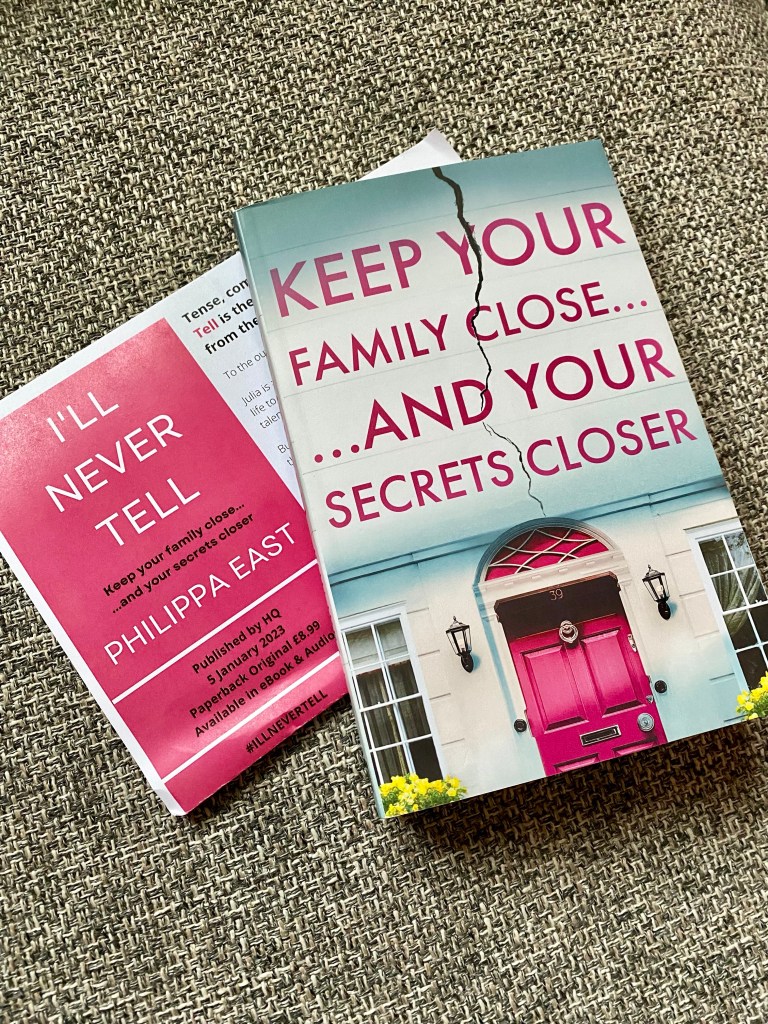
I’ll Never Tell by Philippa East

Keep your family close and your secrets closer….

To the outside world, the Goodlights are perfect.

Julia is a lawyer, Paul a stay-at-home dad who has dedicated his life to helping their daughter Chrissie achieve her dreams as a talented violinist. But on the night of a prestigious music competition, which has the power to change everything for Chrissie and her family, Chrissie goes missing. She puts on the performance of a lifetime, then completely disappears. Suddenly every single crack, every single secret that the family is hiding risks being exposed.

Because the Goodlights aren’t perfect. Not even close.

Wow this book is tense! Tense enough to give you a migraine. East has a way of writing that flows so well, but is paced to give a really slow drip drip of information. It’s clear from just the day to day activities of the Goodlights that something is ‘off’ and my brain was skittering all over the place to work it out, rather like Bambi on the ice. The author pulls off a clever trick, by letting the Goodlights speak for themselves. She’s not explicit, but their inner talk and actions allow the evidence to pile up; something is badly wrong here, but the author withholds just enough that we don’t know what is that is. As I read on, my brain was coming up with more and more questions. What’s with Julia’s parents and their strange attitude towards women’s behaviour? Why is Paul so obsessed with his stepdaughter’s career and so rigid with her regime? Is it the result of a thwarted desire in his own life and will Chrissie snap under the pressure? What’s with the strange background conversations between Julia’s mother and Paul? I’m not surprised at all when Chrissie goes missing, the only surprise is that she didn’t go sooner.

I found Paul’s attitude with Chrissie really disturbing. I understand wanting the best for your child, but this is creepy. Not only does he control her potential career and keep her practicing, he looks after her diet, her free time and leaves her with no privacy – even policing her phone, from quickly checking the screen when a notification comes in, to demanding to look through all her messages and emails. Does he have her on such a short lease to prevent something happening, or is he reacting to something that’s happened before? There’s a strange dynamic between Chrissie’s grandmother and Paul. I was disturbed by her attitude towards her daughter and granddaughter with her suggestion that certain behaviours are in the blood and there’s something tainted in their DNA. It’s almost as if they appreciate Paul more than their own flesh and blood. At times Celina speaks to him as if he’s a member of staff. There are pictures hidden in Julia’s childhood bedroom of a time at university when she appears free and perhaps part of a hippy group, implying experimentation with drugs and promiscuity. Celina is concerned that her ‘tainted blood’ has passed to Chrissie and tells Paul ‘I can smell it on her’ giving an unpleasant image of an animal in heat. Was she the instigator of the rigid regime Paul imposed on his stepdaughter or was she merely the gatekeeper? Patriarchies often depend on women to uphold their rules. I felt uncomfortable all the way through this novel, but in retrospect I think this was down to my own experience in an abusive relationship. There’s now something in me that is repulsed by males like Paul exerting power over the women in their family, exerting coercive control and gaslighting those they are supposed to love most. This tells me that the author’s depiction is successful, or it wouldn’t have made me feel this way.

Throughout the novel my brain was drifting back to Jane Eyre and Jean Rhys’s response Wide Sargasso Sea and the anti-heroine Bertha Mason. Bertha (whose name is actually Antoinette) is Mr Rochester’s first wife, doomed to a life locked in an attic, because of her unnatural passions and hereditary madness. She works as a contrast to the still and quiet Jane, who was constantly told to rein in her passionate nature when she was a child. Bertha’s fate could have been Jane’s. However, in her book Wide Sargasso Sea, Jean Rhys gives Bertha a back story where Rochester marries then rejects the wife who was too passionate in the bedroom and enjoyed his advances – the inference being that a wife should meekly accept sexual advances, but not relish them. I felt throughout East’s novel, that a similar misogynistic double standard is at play. When we delve into Julia’s inner world we can see how insidious emotional abuse is, because these ideas are running through her head constantly. She doubts her own instincts and worries that Chrissie’s disappearance is a consequence of her failure to ‘behave’ in the way she’s been taught. Paul and Julia don’t fully communicate either, operating in completely different spheres with him at home and her at work. Law is such a demanding career and Julia works constantly, almost like it’s a penance, rarely interacting with Paul or Chrissie and never involved in her daughter’s strict regime. It’s almost as if she’s abdicated all responsibility for her to Paul, but is that choice or a mistaken belief that he’ll do a better job than her? There’s also the shadowy figure of Francis, someone she doesn’t want near her family and seems to fear. This really is a toxic mix, a family who seem shielded from scrutiny by their money and once you delve beyond appearances, are a million miles away from the ordinary. Will Chrissie be found and is her disappearance down to a malign outside influence as they all suspect? Whatever has happened to Chrissie, you’ll not stop reading till you work out what is so deeply wrong at the heart of this family?

Published on 12th January by HQ

Thanks to HQ and the Squad Pod Collective for my proof copy.

Posted in Publisher Proof

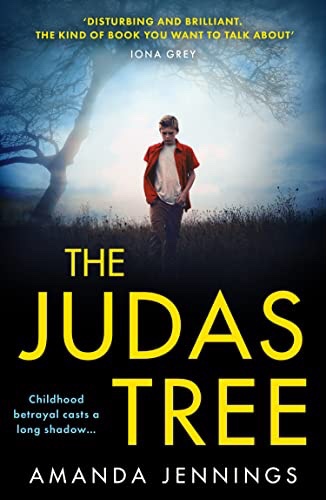
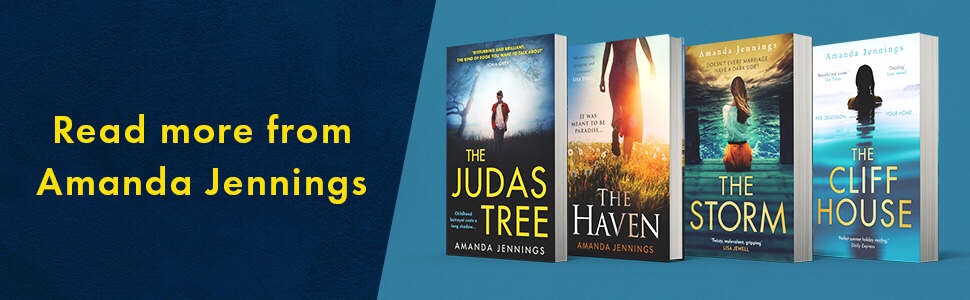
The Judas Tree by Amanda Jennings

Harmony and Will have been together for a long time and live in a garden flat in London. They are the couple that most of their friends and family would say are meant to be together. Harmony’s closest friend, Amanda and her husband, throw a party where Harmony bumps into a man she feels an instant chemistry with. They talk for a while and when he suggests they just get into the car and leave together, she’s shocked to find that part of her responds to his suggestion. Harmony goes to find Will and imagines she will never see this man again. It’s only a few days later, that the couple go to lunch with Amanda who explains that they are also entertaining one of her husband Ian’s clients. Client Luke isn’t new to Harmony, he’s the man from the party, but much to her surprise, Luke isn’t new to Will either.

In fact Will’s reaction goes far beyond his explanation that he knew Luke at School. I knew immediately there was something much worse. Harmony has always wondered why Will is so cagey about his past, especially because he’s very stubborn in his outlook about becoming a parent himself. His childhood was so bad, he can’t imagine being a good parent. He is great with Amanda’s kids, but adamant he and Harmony should remain childless. So when Harmony became pregnant a few months ago he wasn’t going to be overjoyed. In fact when she tragically lost their baby, Harmony was devastated and Will’s first emotion was relief, not that he’s told her this. She has now realised how much she wants a child, but isn’t hopeful of changing his mind. It was while they were slightly at odds with each other, that Luke had bumped into a confused and vulnerable Harmony. Luke continues to be charming, intelligent and very forthright about his attraction to Harmony, including turning up at her work. Her head is turned, but despite that she knows she loves Luke. She wants to be his wife, but what if they don’t want the same things any more? When Ian introduced Luke has such a charismatic way about him. She could see though, that Will was horrified to see Luke again. His explanation that they were at boarding school together seems plausible, but she knows there’s more and so do we.

Amanda Jennings has a clever way of introducing you to characters and they don’t grab you immediately, because you’re taking in the world they’re in and the clues about the story. Then suddenly, by about the fifth page, she’s got you caught in a vice like grip. That was certainly the case here, as the sophisticated city lives these characters live is a world away from a country mouse like me. Yet as soon as Luke met Harmony, I knew there was something off and that he had an agenda. He intervenes between the couple at the perfect time too, not that he could have know that – or could he? Luke has a strange magnetism around him even when he’s at school. Will’s early life is sad and his father is abusive. I could understand why he didn’t want to relive it, but when we don’t talk about things they gain an importance they often don’t warrant. We know that whatever is at the root of the animosity between Luke and Will, it’s something humiliating, shameful and life changing. Jennings beautiful times her chapters so we get a bit of the present day and then a snippet of Will’s story. They way it’s eked out keeps you reading and it’s a story that’s horrifying and devastating for these young boys. I won’t say any more, but when we meet a classmate of theirs later on in the novel I wanted to push him under a bus! The fact that things like this happen at boarding school isn’t surprising, but creating or turning a blind eye to an environment like this should be criminal.

Harmony is an interesting character because she almost acted as if she had no choices. I think she’s still in that numb stage of grief and in this vulnerable state people make bad decisions. She seemed to have low self-esteem and really struggled to create boundaries. When Luke starts to encroach on her workplace and not take no for an answer, I was mentally screaming at her to say no and walk away. I wanted her to make a scene and call the police. Especially at first, because she’s done nothing wrong in chatting to a man at a party. I also wanted her and Will to communicate. The key to everything are those secrets that Will has been keeping, things that have happened that make him sure he’s unloveable and unfit to be a parent. It’s Harmony’s fear of encroaching on those boundaries that leads to her keeping her own secrets in turn. The author slowly turns the screw and the tensions rise, making it impossible to put the book down. I was glued to the story, hoping for the couple to break their silence and come together. This had all the ingredients of a great thriller and has real psychological insight into bullying and trauma. It was also brilliant to read a thriller where psychological healing is such an important part of the equation, as well as the thrilling twists and turns.

Meet The Author

As opposed to this latest novel, Amanda’s previous novels The Storm, In Her Wake and The Cliff House, are all set in Cornwall, in Newlyn, St Ives, and Sennen respectively. Cornwall is where her heart truly lies! Her mother’s side of the family is from Penzance and she holds many blissful memories of long summers spent there. She is never happier than when she’s beside the sea, though she’s also fond of a mountain, especially when it’s got snow on it. When she’s not beside the sea or up a mountain or sitting at my desk, you can usually find her chatting on the radio as a regular guest on BBC Berkshire’s weekly Book Club, or loitering on Twitter (@mandajjennings), Facebook and Instagram (@amandajennings1). She loves meeting and engaging with readers, whether that’s on social media, or at libraries, book clubs and literary festivals. If you see her out and about at an event do say hello! You can find more information on her webpage: http://www.amandajennings.co.uk

Posted in Netgalley

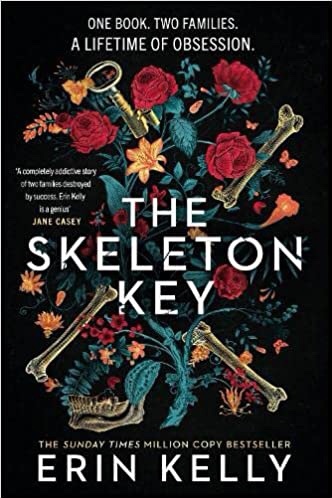
The Skeleton Key by Erin Kelly

I’ve been reading Erin Kelly since her debut The Burning Air and she’s pretty much unbeatable in her ability to grip the reader and immerse them in her world of domestic noir. This was read in a very enjoyable weekend with Alice Feeney’s Daisy Darker so I was knee deep in my favourite territory – arty, bohemian families, with big rambling houses, full of eccentricities and dark secrets. I was ready for skeletons to start tumbling out of closets and that was almost literally the case here. The Churcher’s and the Lally’s have a history that goes back decades and now they live in each other’s pockets, in two adjoining houses on Hampstead Heath, smelling of oil paint and weed. Back in the the 1970’s, when their friendships and marriages began, artist Frank used some old folk verses to create a picture book full of clues to hidden treasure. The story is macabre, as a young woman named Elinore is suspected of infidelity and murdered by her husband. He then scatters her bones in sites across the British Isles. The verses in the book, The Golden Bones, contain clues to the whereabouts of hidden treasure – a one off, tiny gold skeleton with a jewel set in it’s pelvis. When the book caught the public imagination, a group calling themselves The Bonehunters emerged and with the birth of the internet hunters and enthusiasts could solve clues together, pass on information and stoke rumours. Unfortunately, for some it became an obsession and twenty years later, Frank’s daughter – also named Eleanor- is attacked outside her school by a knife-wielding woman who is certain the final piece of treasure – the pelvis – resides within her actual body.

It’s no surprise that as the book reaches it’s fiftieth anniversary, speculation and concern from some parts of the family, has reached fever pitch. With the help of son Dom, the book has been re-issued in a Golden Anniversary edition, complete with locations for people to check in online. The families come together at the houses on the heath, to film for a television special about the book, including a secret unveiling that Frank’s been planning. As he gives a speech, under a tree on the heath, to everyone assembled and on camera, it’s clear he’s planned a publicity stunt. Could this be the final piece of treasure? However, even Frank is shocked when one of his grandchildren climbs the tree and instead of treasure pulls free a woman’s pelvis. The book follows the aftermath of this gruesome discovery, how it affects both families and starts a police investigation. Everyone is under suspicion. The author takes us back into the past, shows us events from different characters point of view, and turns the reader into a Bonehunter of sorts, trying to work out who this woman was and how her pelvis ended up buried in a tree on the heath.

We meet Eleanor again, but this time as a woman and she prefers it when people call her Nell. She weirdly had my dress sense, although I might draw the line at dungarees from now on having read the criticisms about them on middle-aged women! Anything to do with the book raises Nell’s blood pressure and it’s hardly surprising. It has influenced how she lives, as anonymously as possible on a narrow boat that she moves every so often on the London waterways. She claims this is to avoid mooring rates, but it also feels part of her PTSD, the need to keep moving and be hyper-vigilant. She has more than one reason to stay safe these days, because her step-daughter from a previous relationship is living with her. Unbeknown to social services her father left a long time ago. Nell hasn’t had much luck with friends or relationships and she blames the book for this too. She feels she can’t trust anyone since she fell in love with Richard when she was a teenager and he turned out to be an investigator, hunting the final bone on behalf of a rich Bonehunter. His protestations that he loved her anyway fell on deaf ears and she was left heartbroken. Now she’s more paranoid than ever and terrified that the police investigation will bring social services back into their lives.

I was fascinated with the dynamics of these two families living on top of each other in a way that was almost like a commune. The children would flit between houses, gravitating towards the parent who seemed most able to give that parental attention that they needed. Their friendship starts in the 1970’s as they shared ideas, drugs and a desire to create art. The families are so close that when Frank’s son Dom and Lal’s daughter Rose are found kissing it almost feels incestuous. Now there are shared grandchildren, linking them through blood. Where once there was equality, even if they were so poor there was nothing to share, now it seems like everyone functions for Frank. He is the successful artist and his whims should be accommodated. He felt like a law unto himself to me: working when he wants; neglecting his family; indulging his sexual appetites wherever he can. His mercurial temperament is excused because of his talent, but some family members already find him unbearable. Lal’s drinking seems to distract everyone from Frank’s bad behaviour and his decline has been very useful. It eliminates him as artistic competition too. We travel back to one particular night several times from different viewpoints. Wanting to break away from The Golden Bones Frank has created a collection of beautiful nude paintings. However, unable to let them show on their own merits, Frank has let it be known that every model in the show is one of his conquests. The tongues start to wag and by opening night it’s at fever pitch. I can’t work out whether he underestimates the family, or whether it’s a deliberate attempt to humiliate and dominate, but one of the models seems familiar. If Frank’s suggestion is true, he has betrayed everyone close to him. To make things worse he’s openly flirting with a waitress, in front of his wife and children. Luckily, Lal gets predictably drunk, drawing the attention and concern elsewhere.

In the present day both Lal and Frank are arrested, leaving the family scrabbling for the truth. Will it pull them all together or apart? The psychological interplay between family members is brilliantly done. Nell and Dom mean everything to each other, working as each other’s stability since both parents are absent when consumed by their work or drink and drugs. Dom and Rose’s relationship is borne out of the same impulse, desperately seeking stability and being steadfast in providing it for their own children. Nell has to decide whether this family is healthy for her and her daughter. The dynamic between Frank and his family becomes clearer as the novel goes on, with a wife seemingly dependent on medication to cope and Dom desperately trying to protect her. Frank is like a puppet master, in a strange echo of his role in the book, he’s choreographing events and controlling how they act, using distraction to hide what he doesn’t want them to see. He uses friend Lal as a whipping boy, in a terribly destructive dynamic. Frank can do what he wants as long as Lal is drinking and flying into rages, alienating his family. I felt there was a rivalry there and even a contempt for Lal, whose use is to be the comparison point – as long as Lal’s life and work is worse, then Frank is okay. Lal is, quite simply, a scapegoat. Even so, it is Nell’s character arc that I loved because she has to confront a lot of her past and start to build a better future as a family of two. Her strength is shown in the real quest of the book, not for golden bones, but for the truth. However messy, unexpected and inconvenient that might be.

Published 1st September 2022 by Hodder and Stoughton.

Meet The Author

Erin Kelly is perhaps best know for her novel He Said/She Said, about a young couple who witness a rape and, after the trial, begin to wonder if they believed the right person. Her first novel, The Poison Tree, was a Richard and Judy bestseller and a major ITV drama starring Myanna Buring, Ophelia Lovibond and Matthew Goode. She’s written four more original psychological thrillers – The Sick Rose, The Burning Air, The Ties That Bind.

She read scores of psychological thrillers before she heard the term: the books that inspired me to write my own included Endless Night by Agatha Christie, Rebecca by Daphne du Maurier and A Fatal Inversion by Barbara Vine. Her books are atmospheric thrillers, always about people trying to atone for, escape, or uncover a past crime. She says she’s more interested in what happens before the police arrive – if arrive they ever do – than how murder is solved.

Email via http://www.erinkelly.co.uk 

Book club http://www.erinkelly.co.uk/subscribe 

Blog http://www.erinkelly.co.uk/blog

Twitter @mserinkelly

Facebook @erinkellyauthor

Posted in Publisher Proof

The Family Remains by Lisa Jewell

Ever since reading Lisa Jewell’s novel The Family Upstairs I’ve been hoping she’d write a sequel. The book was certainly satisfying as a standalone, but the characters were so complex and their situation so traumatic I was certain it would bubble up to the surface sooner or later. Detective Samuel Owusu thinks the same, when human remains are found washed up on the banks of the Thames by a mud lark. When he sends the bones for forensic examination it’s clear that she was murdered; there’s an injury to the skull that could only have come from blunt force trauma. The other clue from the bag is a mulch of leaves, unusual ones for London, taking him to a mansion house in Chelsea. There, thirty years ago, three people were found dead in a kitchen and upstairs was an unharmed baby girl with a rabbit’s foot tucked into her cot. The clues are pointing to two missing teenagers, Henry and Lucy Lamb, belonging to two of the deceased. Yet, neighbours had said they hadn’t seen the children for years. We follow DCI Owusu’s investigation, but also this missing brother and sister who are doing some investigating of their own. They’re looking for a third teenager, Phinneas Thomsen, son of the third deceased adult and also a resident of the Chelsea mansion, hoping he can make sense of their childhood. Why was the Thames body separate from the other three and what was her link to the adults living there? The house has just sold for over seven million pounds and it’s owner is a young woman called Libby, so she must be their first port of call. This is just the first step in untangling a very dark web of trauma, murder and a family who have tried to bury secrets that just won’t stay dead.

Lisa Jewell really is the master of this domestic noir genre. She could have plodded along, unravelling secrets from long ago and it would still have been a very good book. However, she doesn’t take the easy option, she chooses to introduce new characters and storylines that are equally compelling and link into to the Cheyenne Walk mystery. As well as Samuel, Henry and Lucy narrating the story, we have a woman called Rachel narrating a present day storyline too. Rachel is a jeweller, just waiting for a big store to pick up her designs and thrust her work into the limelight. After years of dating and not finding the one, she meets a man called Michael who seems almost perfect for her. He is attractive, attentive, wealthy and seems available emotionally, which makes a change from other men she’s dated. He’s been married before, to a woman he met while she was busking in France and he was staying at his home in Antibes. Rachel doesn’t really pry into his past and all Michael volunteers is that she was musical and ‘a nightmare.’ Her name was Lucy. In a whirlwind, Rachel and Michael get married and she’s of an age where people don’t tend to take you aside and ask if its all moving a bit fast. Perhaps friends are just glad that this has finally happened for her and her father seems happy for her too, believing Michael to be that rare thing – an older, unmarried, great bloke. On honeymoon, amongst the rose petal strewn sheets and days spent reading by the ocean, Rachel thinks she might suggest a bit of fun in the bedroom. She’s happy with vanilla sex, but wonders if some light BDSM games might bring variety. She unpacks some special underwear, some ties and a leather whip and is looking forward to a fun night, but Michael looks embarrassed, then furious. He flies into a rage, accusing her of having no class, sleeping around and ruining their honeymoon. Rachel is bewildered as he storms off to sleep separately and refuses to talk about it. All she can hope is that he calms down, but she is starting to feel like she must apologise, although she doesn’t really know why. How can she return from her honeymoon and tell anyone her husband is disgusted by her?

I loved how these four narratives were interwoven, because they cleverly show us how abuse in all it’s forms leaves it’s legacy. Whether it’s self-hatred and body dysmorphia, a deep seated rage thats ready to boil over, or a desperate need for love and a tendency to repeat the patterns of childhood. I thought Rachel’s story was particularly compelling, because I’ve experienced that pattern of abuse – the love bombing, rejection, gaslighting and fits of rage. I hated Michael and really understood her need to find Lucy and talk to her. It felt like she’d lost the ability to trust her own judgement, so if there was someone else he was abusive to, she could start to accept and own her own truth. Her confidence had sunk so low she was struggling to fight for herself, but as soon as Michael’s behaviour affected someone else she loved she was able to stand up to him. Henry is also struggling with what happened in childhood, his twisted and confused emotions surrounding Phinn were complex. Phinn was held up as an example of what a boy should be, with Henry receiving punishments and neglect for not being more like him. We might expect Henry to feel hatred and even harbour harmful thoughts about Phinn, and to an extent he does feel these things. There’s a part of him that never wants to see Phinn again. However, there is a part of him that is still the little boy who wants to please, so he has changed the way he looks and now looks at Phinn in the mirror every morning. There’s definitely an element of hero worship and sexual desire too. I was actually scared of what Henry might do if he ever found Phinn, who is thought to be working on a game reserve in Africa. Lucy is living with her brother at the start of the book, along with her two children. Henry’s upmarket flat with it’s high thread count sheets and all the right TV packages is the height of luxury to her two children. They have slept in some terrible places while homeless and they don’t want to be on the run again. Lucy is scared and not just about the events in her childhood, because she’s been replicating the pattern of abuse she learned to endure at Cheyne Walk, into her adult relationships. She’s also used to running from people she owes money to. She hopes that now the house is sold, she can find a secure and happy home for her children close enough to keep in touch with her brother. She knows that Henry is more fragile than he seems, but also that there’s a darkness at his centre and she doesn’t know what might happen if he ever lets it come to the surface.

The pace of the novel is pretty fast and I almost read it in one sitting. Short chapters mean it’s very easy to get caught by that little voice that goes ‘just one more chapter won’t hurt’ when it’s gone midnight and you have to be up in the morning. The tension is builds, then decreases, then builds again by using clever tactics like finding something out at the end of a chapter, then the next chapter going back in time or dismissing what you’ve just found out. Although the storyline seems clear she throws in little curveballs like a spot of blackmail here or an unexpected murder there, to take us off the main track. I found some dark humour in two people turning up to murder the same person. I thought that the author also managed to inject some hope for the future too, in what has been a very dark and painful story. If you’ve been through childhood abuse, domestic violence and sexual violence there are some tough paragraphs here and there. I must admit I found some of the coercive control and verbal abuse difficult, and I found myself holding my breath in parts, but that’s how I knew the author had got it absolutely right. This was a fantastic sequel, that I would say needs to be read after the first novel and not as a stand-alone. It really stands up to the power of the first novel with it’s tension, darkness and psychological game playing but also offers some measure of healing too. A fantastic sequel from an author at the top of her game.

Meet The Author

Lisa Jewell has written and published another sixteen books, since her debut Ralph’s Party, from the ‘curry and flatmates’ novels of the nineties and noughties like Thirtynothing, One Hit Wonder, A Friend of the Family and Vince & Joy, to more family-themed novels like After The Party, The Making of Us and The House We Grew Up In and more recently, psychological thrillers such as I Found You, Then She Was Gone, Watching You and The Family Upstairs, which charted in the summer of 2019 at number one in the hardback charts.

Lisa lives in London with her husband, two daughters, two hairy cats, two nervous guinea pigs and a lovely auburn dog. She writes every day, a minimum of one thousand words, in a cafe, with no access to the internet, in two to three hour sessions

Posted in Netgalley, Throwback Thursday

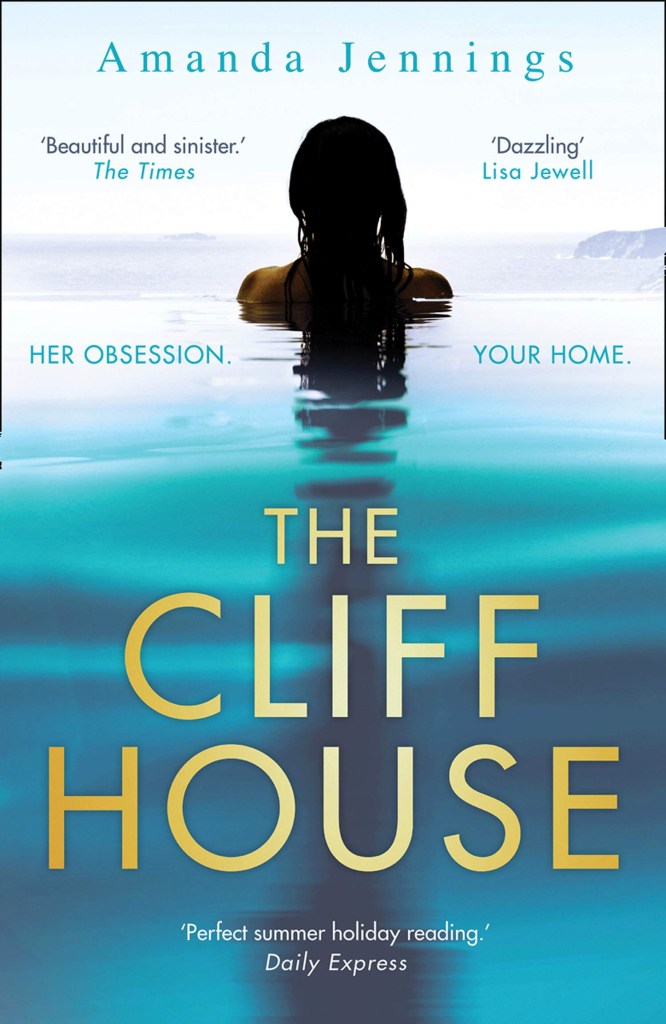
Throwback Thursday! The Cliff House by Amanda Jennings.

With the summer holidays upon us already I thought I’d flag up some great holiday reads on Throwback Thursday. I often pick up books about Cornwall as it is a favourite haunt of mine, somewhere I love to go in the summer. It’s a romantic, beautiful setting, but it’s history of struggle between the haves and have nots goes back through the centuries. This tension between Cornwall’s local population and it’s wealthy visitor is just as highly charged today and still resonates through the pages of this book set largely in the 1980s.

Tamsyn is as local as it gets. Her grandfather worked the tin mines, her father was a lifeboat volunteer alongside his work, but her brother is struggling to find work that’s not seasonal. Tamsyn’s attachment to The Cliff House to a beautiful coastal property just outside her village comes to a head in the summer of 1986. To her, the house represents an escape, a lifestyle that’s completely out of range for her and represents the perfect life. It’s also her last link to her father, who brought her here to swim in the pool when he knew the owners were away. Her father felt rules were made to be broken and they both considered it madness to own such a slice of perfection overlooking the sea yet rarely visit except for a few weeks in the summer. Now he’s gone, Tamsyn watches the Cliff House alone and views it’s owners, the Davenports, as the height of sophistication. Their life is a world away from her cramped cottage, her Granfer’s coughing into red spattered handkerchiefs and their constant struggle for money.

Tamsyn’s family are firmly have nots. Her hero father died rescuing a drowning child and now she has to watch her mother’s burgeoning friendship with the man who owns the chip shop. Her brother is unable to find steady work, but finds odd jobs and shifts where he can, to put his contribution under the kettle in the kitchen. Mum works at the chip shop, but is also the Davenport’s cleaner. She keeps their key in the kitchen drawer, but every so often Tamsyn steals it and let’s herself in to admire Eleanor Davenport’s clothing and face creams and Max’s study with a view of the sea. Yet, the family’s real lives are only a figment of her imagination until she meets Edie.

Edie Davenport is a disaffected teenager with heavy eye make-up, black clothing and a love of The Cure. The two girls hit it off after bumping into each other on the cliff and Tamsyn learns that Edie has been expelled from her exclusive girl’s school. She has a spiky relationship with her Mum and as readers we can see why, but Tamsyn seems oblivious to the problems of the family; a family that the reader can see is already disintegrating. Max hides away writing and is accused of having multiple affairs by his wife. Eleanor is an alcoholic, on medication for depression and seemingly paranoid about her husband’s behaviour. As the summer goes on, their relationships worsen and we get a sense that the Davenports are the worst kind of rich people; to quote from The Great Gatsby, they are people who are careless of the lives of others. The summer party shows the couple at their decadent worst and it is fitting that the final acts of the novel occur surrounded by the detritus of that night.

Tamsyn wishes her mum were more like Eleanor at times. She thinks Eleanor is so kind by helping with her make-up, painting her nails and even letting her borrow her clothes, but these are easy gestures when money isn’t an issue. We can we that Eleanor never sees Tamsyn as an equal to her own daughter. The scene where Tamsyn realises that she hasn’t been invited to the Davenport’s party, but is instead expected to work in the kitchen, is particularly painful. I found myself very drawn in with Tamsyn’s narrative – possibly because I was an awkward teenager from a poor background at a school full of middle class kids. I longed to have the things they did, the fashionable school shoes and bags instead of the clunky, unattractive ones that were built to last. However, was this familiarity and empathy for her emotional state, blinding me to the faults in her character. It’s clear she’s becoming obsessed with the house and family, but could I be underestimating just how attached she is to a home she could never own. As Edie meets Tamsyn’s brother Jago and another family member falls under the Davenport’s spell, Tamsyn’s jealousy becomes obvious. Is she jealous that he’s taking Edie from her, or is Edie taking up the time she might have spent with her brother? There is a creeping sense that from here, these entangled lives and simmering tensions will reach a crescendo – rather like Jago points out, the seventh wave is always the largest and comes crashing towards the cliff, drowning the rocks down below.

The crescendo is certainly explosive and in the quiet aftermath, true characters and motivations are revealed. Some characters surprised me completely, and I found myself wanting to read their sections again. Would they read differently now I knew the truth and the eventual outcome? I think the author was very cleverly keeping some characters deliberately understated, leaving the more volatile and explosive characters driving the surface narrative. I was left with questions around how we feel and act once we get what we’ve always wanted? Do we bask in the glory and celebration of the win, or are we left haunted by what we chose to do in order to succeed? Is our victory the fulfilment we’ve been chasing or is it largely empty? Ultimately, as a reader, it made me think about the trust we place in the narrators of a story and how effective it can be when we find out our trust in some characters was completely misplaced.

Published by HQ 7th May 2018

Meet the Author

On her Amazon author page, Amanda Jennings says she loves anything with a dark vein and secrets which affect families. Her books tend to fall into the psychological suspense category. Her books, The Storm, In Her Wake and The Cliff House are all set in Cornwall: Newlyn, St Ives, and Sennen respectively. Her mother’s side of the family is from Penzance and she has strong memories of long summers spent there as a child. She is happiest when beside the sea, but is also fond of a mountain, especially when it’s got snow on it. When she’s not beside the sea or up a mountain, she’s sitting at her desk, you can usually hear her chatting on the radio as a regular guest on BBC Berkshire’s weekly Book Club, or loitering on Twitter (@mandajjennings), Facebook and Instagram (@amandajennings1). She loves meeting with and engaging with readers, whether that’s on social media, or at libraries, book clubs and literary festivals. You can find more information on her webpage: http://www.amandajennings.co.uk

Posted in Netgalley, Publisher Proof

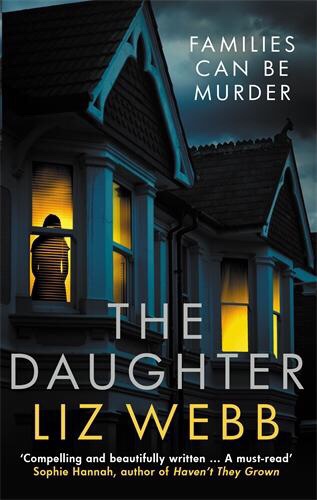
The Daughter by Liz Webb

One of the first things my therapy supervisor said to me was ‘no two kids have the same childhood, even those who grow up together’. This kept going through my mind as I started to read Liz Webb’s book and grew ever more apt as the story unfolded. As regular readers know I do like to indulge in a good thriller and despite knowing nothing about the book or the author, something drew me in when I read the blurb. I’m so glad I took the chance to read it because it is a dark, psychological, and unsettling domestic noir based around the violent death of the charismatic mum in the Davidson family. Hannah doesn’t always have her life on track and she lives away from her physicist father Phillip, but is called when he ends up in hospital. Now suffering with Alzheimer’s and at the end of his life, Hannah has to make a tough choice; does she leave him in the hands of strangers or should she be the one to nurse him in his final months? It’s not long before Hannah finds herself back home and falling into a time warp. Not only has her father left the decorating and furnishings back in the 1990’s, there are piles of magazines and other detritus still littering the same place. It’s as if he stopped when his wife Jennifer was found in the woods at the back of the house, with a kitchen knife plunged into her chest. Hannah finds her surroundings bringing memories and inevitable questions to the forefront of her mind; no one was ever charged for her mum’s murder. This house is haunted. Her mum’s most successful photographs are still hung on the walls and her dark room is untouched, the wardrobe is full of her colourful clothes with the ghost of Chanel No 5. Just the faintest trace touches the air when Hannah runs a hand over her mother’s clothes. Hannah’s very presence completes the picture, she’s a waif compared to the overweight woman she’s been for most of her life. Now she’s the image of her mum, so much so that an unexpected glimpse in a mirror makes her jump. Her brother Ryan, now a famous actor, has commented on her ‘stuckness’, her inability to move beyond that day in the 1990’s. Hannah doesn’t think she’ll ever be able to move forward and pursue a life for herself, until she can resolve what truly happened that day and who killed her mother.

I did find myself rooting for Hannah, despite her flaws and her past behaviour – with more revelations popping up when I didn’t expect them. She feels more vulnerable and is honest about how broken she is by the past. The author carefully keeps her on that edge so I was mostly on board with her version of events, but every now and again I would question whether she was truly a reliable narrator. There was her drinking and the impression she has of her family life and her mother. She sees her mother as a beautiful free spirit, with her gorgeous rainbow clothes, her glamorous and creative career as a photographer with it’s world of gallery openings and meeting other artists. She sees her parents as very different, her father being much older and in a more steady career as a physics professor. When her parents couldn’t be there, Mrs Roberts and her husband from next door would step in with her more old-fashioned parenting style and her good looking son Marcus. This return home and her father’s deterioration seem to trigger something in Hannah and her brother is convinced she’s in a downward spiral where her mental health is concerned. He now stars in a BBC murder mystery series based in Spain, where his wise-cracking detective solves murders within the ex-Pat community and has famous co-stars happy to swap a guest starring role for a week in the sun. He’s also written a book titled Solving Me which Hannah thinks is pompous at best, but probably arrogant and a potential challenge. His childhood is peppered with incidents of their parents arguing, usually about their mother’s behaviour and he’s completely convinced that their father murdered her after years of being pushed too far.

I loved how the author balanced the story with the darkness and tension, broken by the realties of being a carer and the humorous little allusions to her father’s research subject. Their pets are named after Feynmann (the dog) and Schrödinger (the cat of course) á la Sheldon’s cats in The Big Bang Theory. The Schrödinger reference is very apt with Hannah alluding to their mother as potentially living and dead at the same time. For years her head has been full of simultaneous movie reels, each one with a different ending to the story, she would love to be able to shut down all those other screens and see what really happened. The caring details, everything she’ll need to bring Dad home from the hospital, are spot on. One detail I loved because it showed experience, or at least talking to those with it, and it was the ‘shit-stained’ sole of her father’s foot visible to to a person standing at the bottom of the bed but often missed by the busy healthcare assistant doing this morning’s strip wash. The investigation she conducts gives her a lot more questions about her mother, as she remembers her. She’s warned by the original detective on the case that she might not like what she finds. Even her mum’s art seems to hold clues: the close-ups of tiny domestic objects till it’s hard to know what they are; the fascination with motorcycle stuntman Evil Knieval and the moment of being in free fall; an entire series called Falling showing objects in that moment before they land. What she seemed to forget is that Evil Knieval’s stunts finally went too far with disastrous consequences. As the revelations about Jennifer Davidson begin the story becomes even more fascinating, because Hannah gets to see the person her mum was before becoming a parent and whether motherhood changed her at all. I enjoyed the interplay between the siblings and was engrossed in finding out whose version of events was closer to the truth. This was incredibly well-written, tense and psychologically very clever. It left me thinking about how others see our parents and who they truly are when they’re not being mum and dad.

Meet the Author

Liz Webb originally trained as a classical dancer, then worked as a secretary, stationery shop manager, art class model, cocktail waitress, stand-up comic, voice-over artist, script editor and radio drama producer, before becoming a novelist. She lives in North London with her husband, son and serial killer cat Freddie.