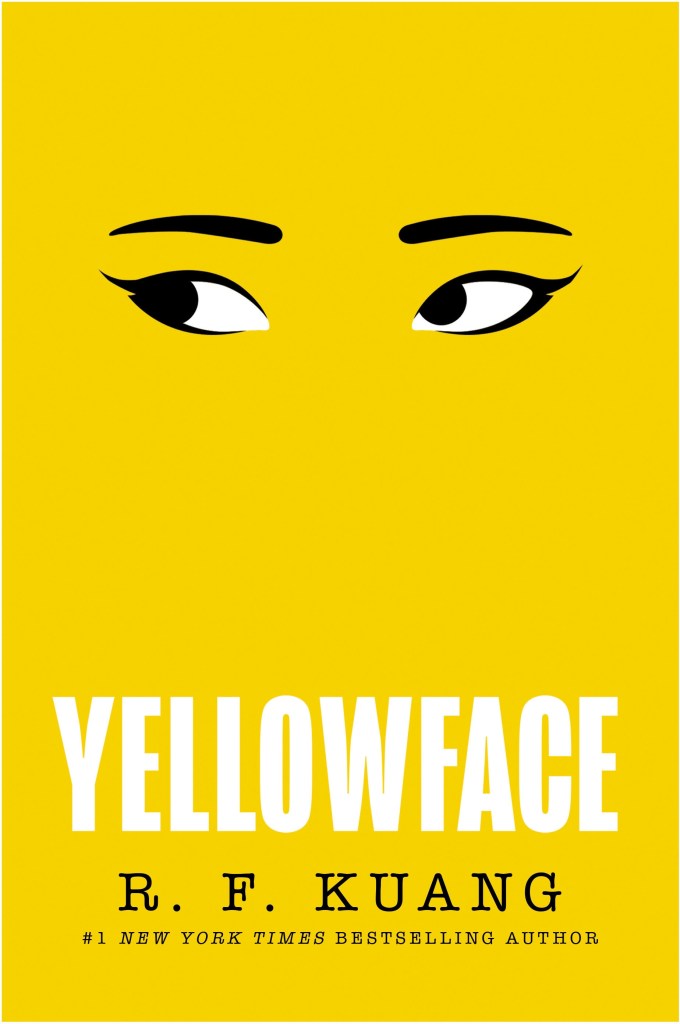
White lies. Dark humor. Deadly consequences… Bestselling sensation Juniper Song is not who she says she is, she didn’t write the book she claims she wrote, and she is most certainly not Asian American–in this chilling and hilariously cutting novel from R.F. Kuang
June Hayward and Athena Liu were in the same year at Yale and both debuted in the same year in publishing. Yet that’s where the similarities end. Athena is picked up immediately in the world that’s always looking for the next big thing. Stories about basic white girls just aren’t cutting it any more, so Athena is a cross genre literary darling. Her death is a freak accident that allows June an opportunity, she acts impulsively and steals Athena’s work in progress. Her work is an interesting novel about Chinese labourers and their part in WW1 helping the British and the French. Could she perhaps edit the manuscript and submit it to her own agent? Would it be wrong to start a new pseudonym? Enter the ethnically ambiguous new novelist June Song.
This was a brilliant inside look at issues and timely arguments within the publishing industry. In the past couple of years I’ve seen the question of authentic voices rage back and forth, especially interesting to me when it comes to writers with disabilities and the way disabled characters are written. Is it more important that a marginalised story is told or is who tells it the vital issue? This can be especially urgent when it’s a previously untold story or a hidden part of history. June has so much success with the book, but struggles to protect her secrets. One wrong word could expose her, so how far will she go to protect her new identity?
I’m always fascinated with books where I don’t like any of the characters because it usually means I’m learning something. I think some readers are uncomfortable with this. Athena is the wronged party and should therefore be ‘likeable’. In fact racist or more accurately model minority thinking means that a Western audience might expect the Athena to be sweet, pretty, docile and diligent just because she’s Asian. The qualities are positive, but allow no room for difference unlike the endlessly unique white characters created every day by Western writers. Huang broaches the idea that the industry’s criteria for deciding which Asian writers to publish is based within this flawed expectation. There’s also an issue around the type of subject matter chosen by publishers. In the wake of George Floyd’s death a lot changed in the publishing industry and we all talked a lot about diversity, but when I think of the subject matter of books I’ve read from ethnically diverse writers, particularly African American or Black British writers, they have all contained sexual abuse, violence or intergenerational trauma. Can we say this is a true reflection of the experience of people from those communities? Or do publishers expect this type of story from black writers and favour publishing them over other narratives? Do we only accept marginalised voices when they’re saying things we expect, things that make us comfortable because they echo our ideas about that particular community?
June truly believes that she’s becoming the minority in the writing world. That unless you’re a BIPOC writer you can’t get a look in from agents and publishers. The focus is on ‘own voice’ fiction and no one wants to hear from yet another white girl. I thought about the controversy around the book American Dirt when reading this. Writing is all about imagination and an author can imagine anything. An author can also research anything, but is research enough when you’re attempting to write from the perspective of someone with a disability, or someone LGBTQ+. I have to mention the proliferation of books from a neuro-divergent perspective by writers who have experience in this area, but who aren’t neuro-divergent themselves. I can understand the concern about it, but I’ve also really learned from some of these books and been led to other reading so I could educate myself. Where does ‘own voice’ writing end? Are we saying that a male writer can’t write in the voice of a female character? Writing is all about creativity so if we can only ever write from our own viewpoint wouldn’t it get a little boring? Should publishers accept a manuscript from a white writer who’s writing outside their own experience, if they are inundated with own voice manuscripts of equal merit?
“She’s using the pen name Juniper Song to pretend to be Chinese American. She’s taken new author photos to look more tan and ethnic, but she’s as white as they come. June Hayward you are a thief and a liar. You’ve stolen my legacy and now you spit on my grave’.
I loved that this book addressed those big issues, but it was also entertaining, delicious and disturbing in equal measure. I really enjoyed the ins and outs of the publishing world and the gossipy social media ‘blow-up’ feel of the book. Then there were moments that were more uncomfortable and challenging. It addressed what a lonely job it is to be a writer and how that isolation magnifies other aspects of being an author such as the negativity of social media and the perils of comparison. I wasn’t sure about June but that meant her character stayed with me. On one hand I felt she deserved to be exposed, but when I saw the reality of that I felt really bad for her. This was such a clever novel, so complex, full of amazing contemporary issues and always entertaining.
Meet the Author
Rebecca F. Kuang is the #1 New York Times bestselling and Hugo, Nebula, Locus, and World Fantasy Award nominated author of Babel, the Poppy War trilogy, and the forthcoming Yellowface. She is a Marshall Scholar, translator, and has an MPhil in Chinese Studies from Cambridge and an MSc in Contemporary Chinese Studies from Oxford. She is now pursuing a PhD in East Asian Languages and Literatures at Yale.
When Jasmine is suddenly widowed at 17, she seems fated to a life of quiet isolation in the small Indian village where she was born. But the force of Jasmine’s desires propels her explosively into a larger, more dangerous, and ultimately more life-giving world. In just a few years, Jasmine becomes Jane Ripplemeyer, happily pregnant by a middle-aged Iowa banker and the adoptive mother of a Vietnamese refugee. Jasmine’s metamorphosis, with its shocking upheavals and its slow evolutionary steps, illuminates the making of an American mind; but even more powerfully, her story depicts the shifting contours of an America being transformed by her and others like her – our new neighbors, friends, and lovers. In Jasmine, Bharati Mukherjee has created a heroine as exotic and unexpected as the many worlds in which she lives. For me this was an incredible eye-opener into the immigrant experience and how identity is formed and changed, both by the British culture imposed on India, and the cultures Jasmine encounters on her travels.
Award-winning Indian-born American author Bharati Mukherjee was born in Calcutta (now called Kolkata) in 1940, the second of three daughters born to Bengali-speaking, Hindu Brahmin parents. She lived in a house crowded with 40 or 50 relatives until she was eight, when her father’s career brought the family to live in London for several years. Mukherjee is best known for her novels “The Tiger’s Daughter” (1971); “Wife” (1975); “Jasmine” (1989); “The Holder of the World” (1993); “Leave It to Me” (1997); “Desirable Daughters” (2002); “The Tree Bride” (2004); and “Miss New India” (2011). Her short story collections and memoirs include “Darkness” (1985); “The Middleman and Other Stories” (1988); and “A Father”. Non Fiction works include: “Days and Nights in Calcutta”; and “The Sorrow and the Terror.”
Nigeria. Things Fall Apart by Chinua Achebe – One of the BBC’s ‘100 Novels That Shaped Our World’
A worldwide bestseller and the first part of Achebe’s African Trilogy, Things Fall Apart is the compelling story of one man’s battle to protect his community against the forces of change. Okonkwo is the greatest wrestler and warrior alive, and his fame spreads throughout West Africa like a bush-fire in the harmattan. But when he accidentally kills a clansman, things begin to fall apart. Then Okonkwo returns from exile to find missionaries and colonial governors have arrived in the village. With his world thrown radically off-balance he can only hurtle towards tragedy. First published in 1958, Chinua Achebe’s stark, coolly ironic novel reshaped both African and world literature, and has sold over ten million copies in forty-five languages. This arresting parable of a proud but powerless man witnessing the ruin of his people begins Achebe’s landmark trilogy of works chronicling the fate of one African community, continued in Arrow of God and No Longer at Ease. This is a deeply moving look at how empire changed people’s lives and took apart their communities.
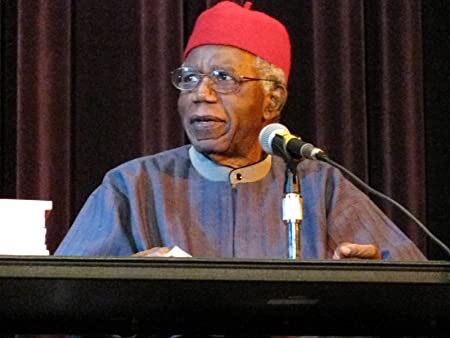
Chinua Achebe was a Nigerian novelist, poet, professor, and critic. His first novel Things Fall Apart (1958) was considered his magnum opus, and is the most widely read book in modern African literature. Raised by his parents in the Igbo town of Ogidi in South-Eastern Nigeria A titled Igbo chieftain himself, Achebe’s novels focus on the traditions of Igbo society, the effect of Christian influences, and the clash of Western and traditional African values during and after the colonial era. His style relies heavily on the Igbo oral tradition, and combines straightforward narration with representations of folk stories, proverbs, and oratory. He also published a number of short stories, children’s books, and essay collections.
Also Chimimanda Ngozie Adichie
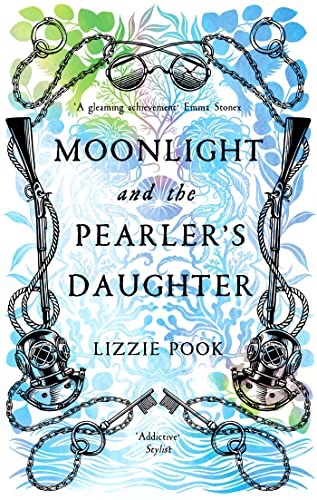
Australia: Moonlight and the Pearler’s Daughter by Lizzie Pook
It is 1886 and the Brightwell family has sailed from England to make their new home in Western Australia. Ten-year-old Eliza knows little of what awaits them in Bannin Bay beyond stories of shimmering pearls and shells the size of soup plates – the very things her father has promised will make their fortune. Ten years later, as the pearling ships return after months at sea, Eliza waits impatiently for her father to return with them. When his lugger finally arrives however, Charles Brightwell, master pearler, is declared missing. Whispers from the townsfolk point to mutiny or murder, but Eliza knows her father and, convinced there is more to the story, sets out to uncover the truth. She soon learns that in a town teeming with corruption, prejudice and blackmail, answers can cost more than pearls, and must decide just how much she is willing to pay, and how far she is willing to go, to find them.
This incredible debut is richly atmospheric from the get go, throwing us straight into the strangeness of 19th Century Western Australia as if it is an alien landscape. In fact that’s exactly what it is for the Brightwell family, particularly Eliza whose childhood eyes we see it through for the the first time
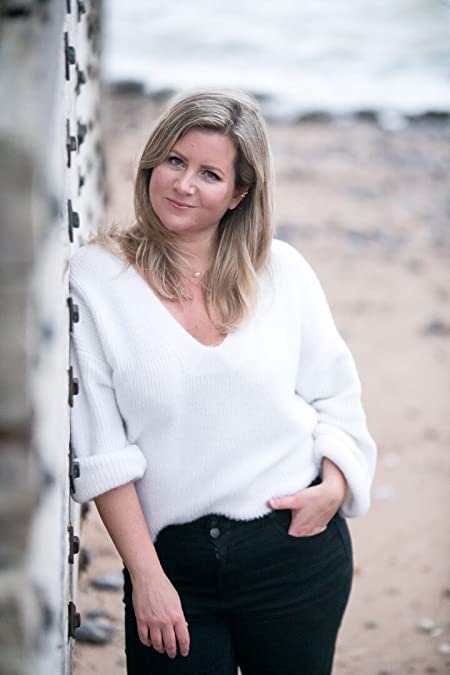
Lizzie is an award-winning writer and journalist. She is the author of Moonlight and the Pearler’s Daughter, a STYLIST and WOMAN & HOME ‘Best Books of 2022’ pick.
Lizzie began her career in women’s magazines, covering everything from feminist motorcycle gangs to conspiracy theorists, before moving into travel writing. Her assignments have taken her to some of the most remote parts of the world, from the uninhabited east coast of Greenland in search of polar bears, to the trans-Himalayas to track snow leopards. She was inspired to write Moonlight and the Pearler’s Daughter, her debut, after taking a road trip through Australia with her twin sister after the death of their father. A chance visit to the Maritime Museum in Fremantle led her to an exhibition about a family of British settlers involved in the early pearl diving industry. Thus began an obsession and a research journey that would take Lizzie from the corridors of the British Library to isolated pearl farms in the farthest reaches of northwest Australia.
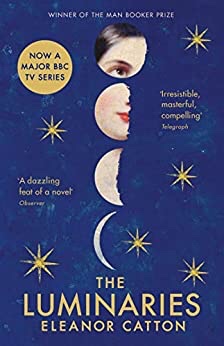
New Zealand: The Luminaries by Eleanor Catton
It is 1866, and Walter Moody has come to make his fortune upon the New Zealand goldfields. On arrival, he stumbles across a tense gathering of twelve local men, who have met in secret to discuss a series of unsolved crimes. A wealthy man has vanished, a whore has tried to end her life, and an enormous fortune has been discovered in the home of a luckless drunk. Moody is soon drawn into the mystery: a network of fates and fortunes that is as complex and exquisitely patterned as the night sky. The Luminaries is an extraordinary piece of fiction. It is full of narrative, linguistic and psychological pleasures, and has a fiendishly clever and original structuring device. Written in pitch-perfect historical register, richly evoking a mid-19th century world of shipping and banking and goldrush boom and bust, it is also a ghost story, and a gripping mystery. I loved this epic tale of mystery and adventure, with a spooky edge. This has recently been adapted for television and is worth a watch.
Eleanor Catton MNZM (born 24 September 1985) is a Canadian-born New Zealand author. Her second novel, The Luminaries, won the 2013 Man Booker Prize. In January 2015, she created a short-lived media storm in New Zealand when she made comments in an interview in India in which she was critical of “neo-liberal, profit-obsessed, very shallow, very money-hungry politicians who do not care about culture.”
Also Janet Frame
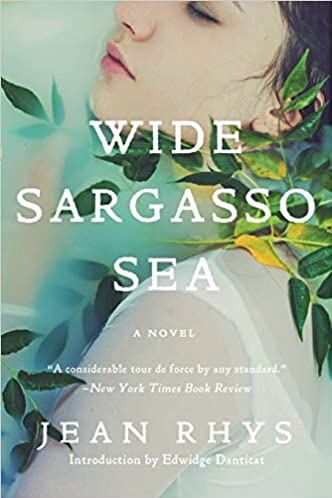
Jamaica and Dominica. Wide Sargasso Sea by Jean Rhys
I first read this novel while at uni, as a post-colonial response to Jane Eyre by Charlotte Brontë. Rhys was fascinated by Bertha Mason, Mr Rochester’s wife and the original ‘Madwoman in the Attic’. Born into the oppressive, colonialist society of 1930s Jamaica, white Creole heiress Antoinette Cosway meets a young Englishman who is drawn to her innocent beauty and sensuality. After their marriage, however, disturbing rumours begin to circulate which poison her husband against her. Caught between his demands and her own precarious sense of belonging, Antoinette is inexorably driven towards madness, and her husband into the arms of another novel’s heroine. This classic study of betrayal, a seminal work of postcolonial literature, is Jean Rhys’s brief, beautiful masterpiece. I loved how Rhys breathed life and a complex identity into a character seen as a Gothic monster, trying to burn her husband in his bed and stabbing her own brother. It raises questions about identity and colonialism, women’s identity and sexual desire. It also shows a great modernist contrast to the original novel.
Jean Rhys was born in Dominica in 1894. After arriving in England aged sixteen, she became a chorus girl and drifted between different jobs before moving to Paris, where she started to write in the late 1920s. She published a story collection and four novels, after which she disappeared from view and lived reclusively for many years. In 1966 she made a sensational comeback with her masterpiece, Wide Sargasso Sea, written in difficult circumstances over a long period. Rhys died in 1979.
Recent and Favourite Reads from Black British Writers
Louise Hare – This Lovely City. The experiences of the Windrush generation in 1950’s London, combining crime fiction and a love story.
Lizzie Damilola Blackburn – Yinka, Where Is Your Huzband? Nigerian-British young women negotiating courtship, identity, marriage and motherhood. Yinka is single and is constantly reminded of this by her mum and aunties. Funny, but touching too. You’ll fall in love with Yinka!
Bernadine Evaristo – Girl, Woman, Other. Stories exploring black womanhood from Newcastle to Cornwall. A series of stories looking at identity, race and motherhood in modern Britain. Winner of the Booker Prize.
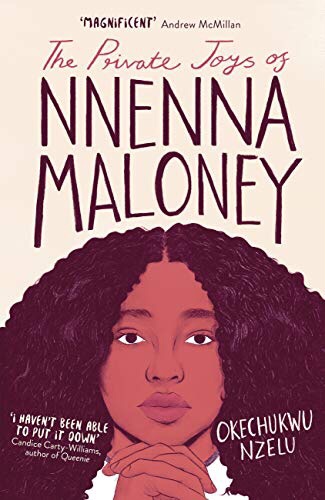
Okechukwu Nzelu -The Private Joys of Nnenna Maloney. Set in Manchester, this is the story of Nnenna Maloney through her journey of trying to connect with Igbo-Nigerian culture as she reaches adulthood.
Paul Mendez – Rainbow Milk. This queer literary debut follows Norman, a Jamaican immigrant in 1950s Black Country battling racism, disability and personal conflict, as he rebels against his religious upbringing.
Leanne Dillsworth – Theatre of Marvels. Black British actress Zillah performs as a tribeswoman in a variety show. Looking at spectacle, identity and exploitation in Victorian London.
Andrea Levy – Small Island. WWII and the Windrush in London. Exploring expectations against reality for Jamaican settlers in the U.K. Looking at loss and the aftermath of war, but also mixed race relationships and identity.
BBC Arts and The Reading Agency have announced the titles for the Big Jubilee Read, a reading for pleasure campaign celebrating great reads from celebrated authors from across the Commonwealth to coincide with Her Majesty The Queen’s Platinum Jubilee. The full list can be found by following the link below. The seventy titles consist of ten books from each decade of Her Majesty The Queen’s reign, offering a brilliant selection of beautiful and thrilling writing produced by authors from a wide range of Commonwealth countries.
The campaign enables readers to engage in the discovery and celebration of great books and shines a spotlight on lesser-known books and authors that deserve recognition.The books were chosen by an expert panel of librarians, booksellers and literature specialists from a “readers’ choice” longlist. Delivered with public libraries, reading groups, publishers, bookshops, and authors, the Big Jubilee Read campaign will use the proven power of reading to unite the public around the shared stories that define our social and cultural heritage.
Follow the latest developments on social media: @ReadingAgency @BBCArts @ACE_National #BigJubileeRead
You can find the list of 70 books and resources for your own reading group or book club via the link below
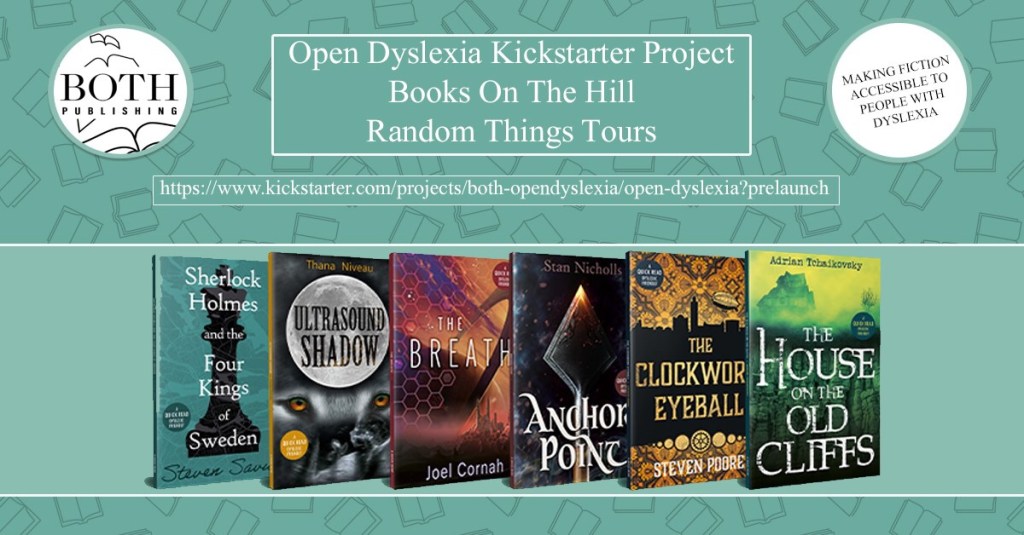
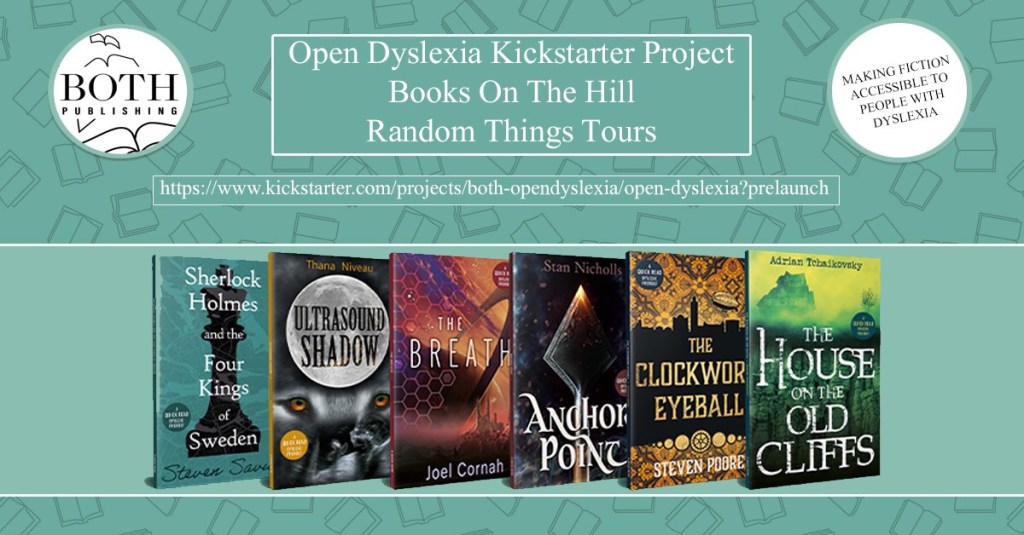
Today I’m hosting something a little different on my blog. A project that aims to help adults with dyslexia access fiction. This was important to me, not because I am diagnosed with dyslexia, but my MS means I experience cognitive and physical symptoms that make it difficult for me to read. To have the hobby you love more than anything affected like this is so frustrating and makes me anxious that one day I will lose the ability to enjoy a book altogether. I combat this with: assistive technology; reading real print books instead of e-books; larger print and reading on a bigger screen help too. I think because of my own difficulties, I really appreciate any project that opens up great books to all. So, when Anne at Random Things Tours asked, I jumped at the chance to publicise Books on the Hill’s new diversity project: ‘Open Dyslexic.’
The Project.
It’s aim is to publish good quality fiction, for a minority group not provided for by the U.K’s traditional mass book market. It also provides booksellers with a new tool in their drive to increase diversity and inclusion. We have created a new publisher BOTH Press to do this.
Books on the Hill is passionate about helping people who have dyslexia, or have any difficulty with reading, to access the joy of good fiction. There are great books out now for children with dyslexia, with specialist publishers like Barrington Stokes and mainstream publishers such as Bloomsbury doing their part. However, there are sadly very few books for adults with Dyslexia in traditional mass market publishing. Dyslexia is a learning difference that primarily affects reading and writing skills. The NHS estimates that up to 1 in every 10 people in the UK have some form of dyslexia, while other dyslexic organisations believe 1 in 5 and more than 2 million people in the UK are severely affected.
Dyslexia does not stop someone from achieving. There are many individuals who are successful and are dyslexic. Famous actors, such as Orlando Bloom; Entrepreneurs like Theo Paphitis, and many, many more, including myself. All of who believe dyslexia has helped them to be where they are now. Dyslexia, though, as I can attest to, does not go away. You don’t grow out of it, and so we are acknowledging that and trying to without being patronising, create a selection of books that will be friendly to people who deal with dyslexia every day.
Since we started the project in 2019, Books on the Hill have had many adults customers with dyslexia come in shop the asking for something accessible to read. For example, one customer asked if we stocked well known novels in a dyslexic friendly format. Unfortunately we had to say no, as they just don’t exist. We explained what we are trying to achieve by printing our own and she replied:
“I have been reading [children dyslexic] books but they are a bit childish so am really happy I have found your company!! Thanks so much again and thank you for making such a helpful and inclusive brand – it means a lot.”
This response is not isolated. We have had many adults come in to the shop with dyslexia, who do not read or struggle to read and they they believe dyslexic friendly books would have real impact on their reading for pleasure.
The Team
Books on the Hill is Alistair Sims. He is the manager and commander-in-chief of the bookshop (though his partner, Chloe and his mother, Joanne, who set up the bookshop with him, may disagree with this description ). Alistair is dyslexic and has a PhD in history and archaeology. Alistair could not read until he was 13 and is passionate about helping anyone who has difficulty reading. He is the driving force behind BOTH Press and has been involved in every step in this project, from finding award winning authors to contribute, the cover design, and the road to publication, including setting up for distribution.
Books on the Hill are collaborating with Chrissey Harrison, who is also an local author and member of North Bristol Writers Group. Chressey and Alistair have designed the book-covers together, with Chrissey creating the finished product we now look on at awe with. Nearly all the design work has been done by Chrissey, and she is also in charge of the printing process, typesetting. We are so proud and appreciative to be working with her. Special mention must go to Harrison Gates, who runs Nine Worthy, and who has dedicated his time and expertise to produce our print catalogue for us free of cost. Joanne Hall is an author, editor and formerly the Chair of BristolCon, Bristol’s premier (and only) science fiction and fantasy convention. We must give a huge thank you to Jo for proof reading the stories free of cost. Vicky Brewster has edited all the new stories by the authors. She specialises in editing and beta reading long-form fiction. Vicky is a great professional editor.
The Books.
We have been so fortunate that many great authors have agreed to contribute to this project. All are brilliant authors and are names I am sure you will recognise.
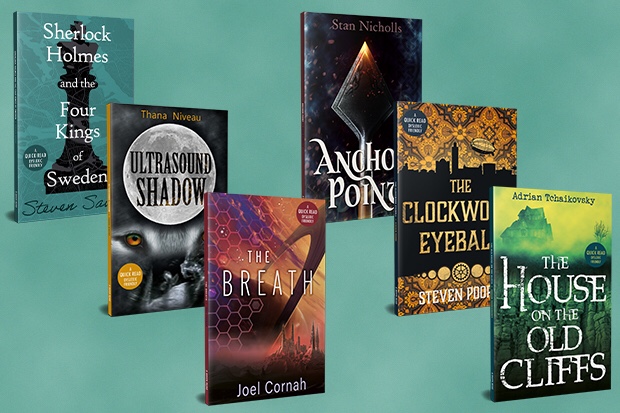
Stan Nicholls, who has been a great support to Alistair Sim, particularly with my PhD. He is the author of many novels and short stories but is best known for the internationally acclaimed Orcs: First Blood series.
Steven Savile, the fantasy, horror and thriller writer, now lives in Stockholm whose father is a customer of the BOTH bookshop.
The horror duo that is Thana Niveau and John Llewellyn Probert, both well established and engaging authors and also residents of Clevedon. Adrian Tchaikovsky is an Arthur Clark Award winner and best known for his series Shadows of the Apt, and for his novel Children of Time. Steven Poore is the highly acclaimed fantasy writer who Alistair met at his first fantasy convention in Scarborough.
We finish the Magnificent Seven with Joel Cornah, who also has dyslexia, and with whom Alistair participated in a podcast on dyslexia for the Clevedon Literature 2020 ‘Festival in the Clouds’.
How Can You Help?
We are launching a Kickstarter beginning in April 2nd 2021 for 30 days, with the focus on paying for the printing of our books and giving us starting capital to continue to print more titles. There will be many ways you can be involved in this. You can contribute on the Kickstarter website itself. There will be a number of different options of donating money, in which you will receive rewards, such as ebooks of a title or a paperback of one or more of the titles to be published. In addition a unique reward from authors who are contributing to the project. You can still contribute outside the kickstarter. We are happy to receive your help in the shop, where we will have a donation box available.
For more information and to contribute to the Kickstarter please follow this link:







 The Lotus Readers