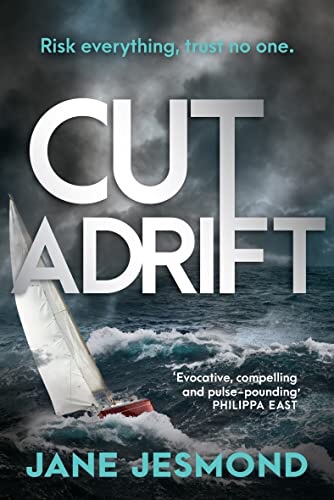
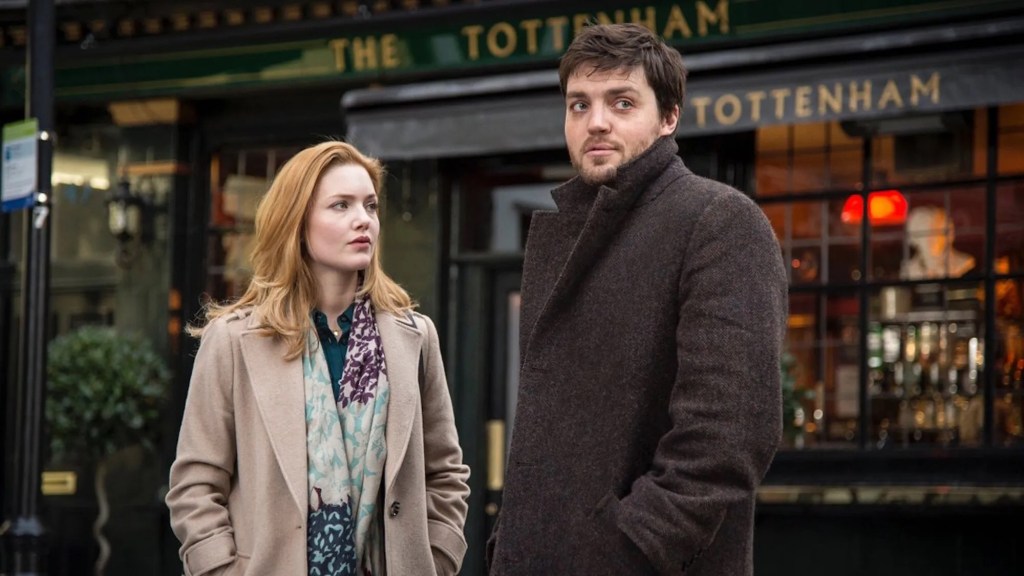
I really enjoyed our first outing with Jenifry (Jen) Shaw so I jumped at the chance to read the second outing for this daring and independent woman. Jen is taking time off to go climbing and has chosen Alajar, Spain as her destination, drawn in by a mysterious postcard showing a bar with decorative cork tiles on the ceiling. We met the shadowy undercover police officer Nick back in Cornwall and in the brief time they met their combined skills kept each other alive. There was also a connection between them that couldn’t be explored due to Nick being pulled straight back into another case. So when the postcard arrives with ‘wish you were here’ as the only message, Jen decides to take a chance and find the bar hoping this might be the right time to connect properly. Their time is limited though and it’s not long before Nick is off on another case. Jen does have a family issue to sort out though. Her brother has called in a panic to say that their father is planning to sell the family farm in Cornwall and the only person who can stop him is their mother. As usual their mother is elsewhere and not easy to contact, apparently teaching yoga to refugees in Malta. Jen takes advantage of Nick’s absence to fly to Malta in the hope of explaining to her mother what she needs to do to save the farmhouse where Jen and her brother grew up.
When Jen arrives though, her mother seems to be in the middle of a crisis with a family of refugees. The mother Nahla is an old friend of Morwenna’s and she’s with her two children Aya and Rania in a state of distress. This links back to a heart stopping prologue where we see that Nahla’s husband has been killed in Libya and the family have fled the country in a boat bound for Malta. Aya is so traumatised that she’s silent and both Rania and her mother are displaced and shellshocked by their experience. Now they’re forced into a refugee camp where disease, crime and trafficking are rife and no one can be trusted. Jen knows her mother and there’s no point trying to bring Morwenna’s mind back to home when she’s on a crusade. Jen’s now committed to helping Morwenna bring her friend and her daughters out of the refugee camp and settle them into a new home. The story is both heart stopping and heart rending. The author knows exactly how to pace her story with thrilling, fast paced set pieces followed by periods of calm that gave me chance to breath and think about what’s just happened. The scene with the fire in the clinic on the refugee camp had me gritting my teeth with anxiety, as Jen desperately tries to save those inside through the roof. Jen’s climbing skills are always at the forefront of the action and I trust her skills, but a part when she’s having to free climb a cliff with a complete novice was nail-bitingly tense.
The Maltese setting is fascinating with a sharp contrast between the picturesque streets with bougainvillea cascading prettily from the walls and the squalor of the camp. The distance between the Malta of the tourist trail and the Malta of those who arrive in the trafficker’s boats is vast. Morwenna is living across the two worlds, set up in a beautiful home with her lover Peter but entering the camp every day to teach yoga and help out at the clinic. The desperation of the refugees is made very clear and the way the traffickers ruthlessly exploit that desperation is horrifying. Nahla expects their escape from Libya to be uncomfortable and frightening, but she doesn’t expect their belongings to be discarded, to be forced into fighting others to make sure her and her children are on the boat, or to have her youngest child Aya hit when she can’t help but cry. Aya’s behaviour from there on is that of a deeply traumatised child, who automatically folds herself into tiny spaces without complaint knowing not to make a sound until she’s told to come out of hiding. Both girls are so vulnerable, clinging to the only person they recognise and so open to exploitation. It is difficult for Jen to get to the bottom of who is behind trafficking from the Maltese camp and when it becomes clear that secret services are also embedded in the camp it becomes even more complex. They have an entirely separate agenda, trying to separate potential terrorists using large movements of people from the Middle East and North Africa to slip into the UK undetected.
Jen is even more of a force to be reckoned with in this second novel and seems surprised at the connection she makes with Nahla’s daughter, particularly Rania. She’s more than an equal for those refugees stirring up trouble in the camp and her fitness skills mean she can escape many tense situations, but there were times when I was very worried. Her urge to protect the girls left her very vulnerable at times, luckily there was help from others but there were a couple of occasions when this was resolved by coincidences that stretched my credibility a little. Despite that I understood why the author had made those choices, for the development of other aspects of the story. Overall this was a page turning thriller, with a heroine I really enjoyed spending more time with.
Published by Verve 28th Feb 2023
Meet the Author
Jane Jesmond writes crime, thriller and mystery fiction. Her debut novel, On The Edge, the first in a series featuring dynamic, daredevil protagonist Jen Shaw was a Sunday Times Crime Fiction best book. The second in the series, Cut Adrift, will be published in Feb 2023, and A Quiet Contagion, an unsettling historical mystery for modern times, in Nov 2023. Although she loves writing (and reading) thrillers and mysteries, her real life is very quiet and unexciting. Dead bodies and dangerous exploits are not a feature. She lives by the sea in the northwest tip of France with a husband and a cat and enjoys coastal walks and village life. Unlike her daredevil protagonist, she is terrified of heights!
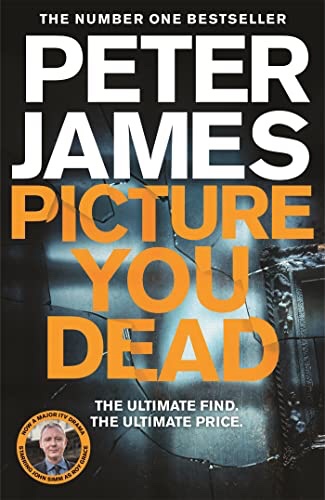
Detective Superintendent Roy Grace finds himself plunged into an unfamiliar and rarefied world of fine art. Outwardly it appears respectable, gentlemanly, above reproach. But beneath the veneer, he rapidly finds that greed, deception and violence walk hand-in-hand.
It was lovely to be back in the world of Roy Grace, a character I was introduced to by a lovely new neighbour nearly ten years ago. When she moved in across the road from me with her English teacher daughter, they both had an extensive library. So, she asked me over for a cup of tea and to look through their boxes of duplicate books. She’d noticed I had a substantial library of my own when she popped round to introduce herself. This unexpected rummage through their cast offs brought both Elly Griffiths and Roy Grace to my notice. Luckily for me, both mum and daughter had a full set of Grace novels so I was able to spend a few weeks slowly working my way through his entire story. I managed to get access to Peter James’s latest through Netgalley a couple of months ago, but have been a little late in writing up my review.
This time Grace’s case takes him into the world of art collecting and finds that when a collector wants a particular painting, they might pursue it using any means at their disposal, even murder. Everything is set in motion by a couple called Harry and Freya Kipling, an ordinary couple who work as a builder and a teacher. On their weekends they like nothing more than browsing car boot sales for bric a brac and on one particular day Harry brings home a hideous painting of an old hag. He explains to Freya that he bought it for the ornate frame, hoping they could use it for a different painting. He leaves it in the conservatory, but on a sunny day the heat coming through the glass starts to burn the painting. That’s when the couple notice there’s something completely different underneath and after asking an expert Harry cleans the picture with acetone. Underneath is a fêtes galantes style painting of a couple in a garden that looks like others by Fragonard. Of course Harry doesn’t imagine for a minute that it’s worth anything, but for fun they attend a local filming of the Antiques Roadshow. As they queue up in front of the painting expert, they’re shocked to be taken aside and told the he would like to do some quick research on the their picture before filming. He then drops a bombshell, that this painting could be a missing Fragonard; the Spring painting in a series on the seasons. Alone it’s worth upwards of a million pounds, but with the others in the series it’s worth much more. The Kipling’s treat the painting almost like a ticking time bomb, something that worsens when their episode of the roadshow is televised. Now everyone knows they own this painting, including people who want it and will stop at nothing to obtain it.
This is an incredibly tough time for CSI Grace and his wife Cleo, he has only just lost his son Leo in a tragic accident and they are preparing for his funeral. Leo had only lived with Roy and Cleo for a few months, after his mother Sandy’s death in Munich. Sandy was Roy’s first wife who went missing early on in his career, causing so many problems and putting Roy in a position as suspect in her disappearance. He hadn’t even known Sandy was still alive, let alone he had a son, so it’s been a rollercoaster of combined grief and joy. To find out he had a son was shocking and to lose him so soon afterwards has been terrible, plus Cleo is close to giving birth to their second child together. His DI Glen Branson is at loggerheads with his fiancé over her job as a journalist, specialising in crime. Her ambition can mean criticising the force, something Glen is very sensitive about. With all this at home, at work Roy and Glen are looking at a cold case, the murder of an antiques and art dealer on his return home one evening. He was killed in his car on his own drive, as he waited for his electric gates to open, by someone who knew his movements very well. When the Kiplings have their house broken into, with nothing taken, it seems certain to be linked to their appearance on the Antiques Roadshow. Then when another body turns up, this time outside the home of renowned art forger Dave Hegarty, the coincidences start to pile up. As Roy’s team work their way through the collectors of Fragonard, will he find one who’s willing to kill to complete their collection?
This is a very different world to the one Roy’s team usually inhabit, but as always where huge amounts of money are involved, people are ruthless. The author is an absolute master at giving us moments of personal joy and anguish, alongside extreme tension and fear. One section of the book has a home invasion that’s absolutely heart-stopping! Then next we’re at Leo’s funeral, an incredibly personal moment where we’re taken into Roy’s anger over Sandy’s disappearance and guilt about his relationship with his son. Alongside this is the anticipation about the birth of his second child with Cleo, due in the next few weeks. The case is fascinating and I fell completely into this world of art collecting, from those who can afford the real thing to the world of forgeries where being as good as Dave Hegarty can bring plaudits and plenty of cash too. I felt so bad for the Kiplings, who had simply bought a painting at a boot sale and didn’t deserve any of the horror and stress that followed. It was good to be back with the team again; Tanya showing her usual organisation and Norman’s terrible jokes from the 1980’s really bringing the reader back into their world. Then of course there’s Brighton, with the usual mix of the seedy and strange that comes with Roy’s job and how it contrasts with the quieter rural life he’s chosen for his family. I only hope from here on there’s less personal turbulence for a character I’ve come to enjoy so much.
Meet The Author
Peter James is a UK No.1 bestselling author, best known for his Detective Superintendent Roy Grace series, now a hit ITV drama starring John Simm as the troubled Brighton copper. Much loved by crime and thriller fans for his fast-paced page-turners full of unexpected plot twists, sinister characters, and accurate portrayal of modern day policing, he has won over 40 awards for his work including the WHSmith Best Crime Author of All Time Award and Crime Writers’ Association Diamond Dagger.
To date, Peter has written an impressive total of 19 Sunday Times No. 1s, sold over 21 million copies worldwide and been translated into 38 languages. His books are also often adapted for the stage – the most recent being Looking Good Dead.
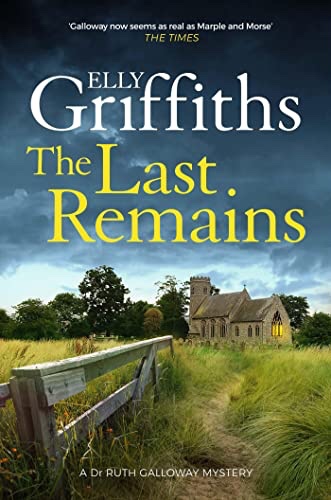
It’s always a treat to be back in Norfolk with Dr. Ruth Galloway, in fact it feels like I’m visiting an old friend. One of those friends you maybe only see once a year, but you just pick up where you left off like you’ve never been apart. This time we’re in the very North of Norfolk, branching into Cambridgeshire and even my home city of Lincoln too. The last book was set in the middle of the pandemic and in The Last Remains we’re still dealing with the aftermath. There’s a sense of dislocation from regular life, but weirdly there’s restlessness and a lsense of urgency too. An urge to start getting things done. It’s no surprise that several characters have big changes on the horizon. Ruth’s university are thinking of scrapping the archaeology department. Nelson remains single, but is still living in the marital home he shared with wife Michelle. Cathbad is still struggling with the ongoing symptoms of long COVID, much to his partner Judy’s concern. The group of friends are once again drawn together by a body. This one is walled up in an old cafe that’s being renovated. Ruth thinks the skeleton is female and has been placed there deliberately. She’s not ancient either, with Ruth ruling that the bones are not historic and likely to have only been there twenty years. What follows is a delve into the more recent past and a group of archaeology students spellbound by the knowledge of their tutor Leo Ballard. Could this go back to an evening of students and their tutor camping in the forest and talking about Norfolk mythology? At least there is one person to ask who’s very close to home and he’s always around where strange Norfolk legends are concerned.
The case is a complex one, with the themes of twinning and disguises. There are also interesting contemporary issues, especially for anyone like me who went to university for the first time in the 1990s. If we apply today’s standards of conduct to the relationships between students and tutors in the past, it’s clear the lines are more blurred. Leo Ballard was happy to have his students at his home and have camping trips with them too. The students would also congregate at the cafe where the body is found – The Green Man. The cafe was run by a man called Peter Webster who had two daughters- Gaia and Freya – who also studied archaeology. However, the walled up skeleton is a student from Lincoln called Emily who was on the receiving end of a blow to the head. Emily was a student at Cambridge University and went missing after the camping trip to Grimes Graves, a prehistoric flint mine. It was thought she had been travelling on the train to Lincoln to visit her parents, but was seen to get off at Ely and simply vanished. I was creeped out by Leo Ballard immediately and I didn’t like his manner when talking about young girls. He seemed to take advantage of his position to lure young students into relationships with him. Freya Webster points out that he never visited the cafe himself, but he felt present because of how much his students talked about him. His following of students felt like a cult, impressed by his knowledge and taken in by his stories. In fact he wasn’t above a bit of theatre, since all students remember seeing a strange figure with horns emerging from the woods when they were camping. Was this a group hallucination or did someone in the group want to genuinely scare the students?
Cathbad, everyone’s favourite druid, is not his usual self. He is still experiencing breathing problems when exerting himself, he sleeps more than he used to and has difficulties remembering things. It seems that even he is questioning his longevity and is acting out of character, such as taking the whole family to mass at Easter. So, when he goes missing, his partner Judy is distraught. I think she fears he’s gone walkabout, a spiritual walk taken when the individual knows they’re going to die. It’s a change that Ruth is struggling to deal with, especially since Cathbad has always seemed invincible. She’s facing enough changes of her own with the department of archaeology under threat of closure and she questions what more she could have done, but she’s written books and even had a television series. She’s probably the nose high profile archaeology tutor she can think of. She doesn’t like changes that threaten her and Kate’s settled existence on the salt marshes, next door to the sister she has only recently found. Kate is now at secondary school and is used to the changes of the last year. She is not surprised at the occasional presence of Nelson in the early morning and he also arrives most Saturday evenings bearing pizza. Ruth has a lot of respect for Nelson’s wife Michelle, who had the guts to break the endless deadlock of their three sided relationship. She has moved to Blackpool with Nelson’s youngest, George. Now that Nelson is free though, she isn’t sure what it means or what she wants. She senses Nelson moving ever closer to the big discussion of their future, but finds herself avoiding it. She can’t imagine ever being anywhere but here with Kate and Flint, looking out to sea from her little cottage. However, what if Michelle returned?
There’s plenty of tension here, in the case and in the relationships. The sequence with Ruth and Kate at Grimes Graves made me feel claustrophobic! Ruth has interest from David, another department member, and his declaration of love has surprised her, despite friend Shona saying it was obvious. David is going to work at Uppsala University in Sweden and would like Ruth to go with him, where a new post is waiting for her. If she stays at UNN there’s an assistant dean’s position possible. I felt like Ruth was waiting for a big gesture from Nelson. She doesn’t want him by default, just because Michelle has gone. When Michelle returns and is at their marital home, Ruth disengages. Nelson needs to choose and he needs to do it independently. Will he do this or will it just be easier to slip back into his marriage? Does Michelle even want that? I like that Ruth loves her independence and values her life without a man very highly. He has to prove what he will add to her life, because it’s really great as it is. I was on the edge of my seat wondering what she would choose. I was also worried for Cathbad, but loved the way these friends come together as a community. Judy and Ruth support each other and their children get along really well too, so they come together to wait for Cathbad’s return, trying not to think about the alternative. I will say that there’s a wedding a the end, but I’m not telling you which characters tie the knot. It’s going to be fascinating to see Ruth, perhaps in a new location and different job going forward. However, I think there will always be part of her and Flint’s spirit wandering the marshland.
Out now from Quercus
Meet The Author
Elly is the author of two crime series, the Dr Ruth Galloway books and the Brighton Mysteries. Last year she also published a stand-alone, The Stranger Diaries, and a children’s book, A Girl Called Justice. She has also previously written books under my real name, Domenica de Rosa (I know it sounds made up). The Ruth books are set in Norfolk, somewhere Elly went for holidays in her childhood, but it was a chance remark of my husband’s that gave me her idea for the first in the series, The Crossing Places. They were crossing Titchwell Marsh in North Norfolk when her husband, who’s an archaeologist, mentioned that prehistoric people thought that marshland was sacred ground. Because it’s neither land nor sea, but something in-between, they saw it as a bridge to the afterlife; neither land nor sea, neither life nor death. In that moment, she said, she saw Dr Ruth Galloway walking towards her out of the mist… Elly lives near Brighton with Andy. They have two grown-up children and a cat called Gus who accompanies her as she writes in the garden shed.
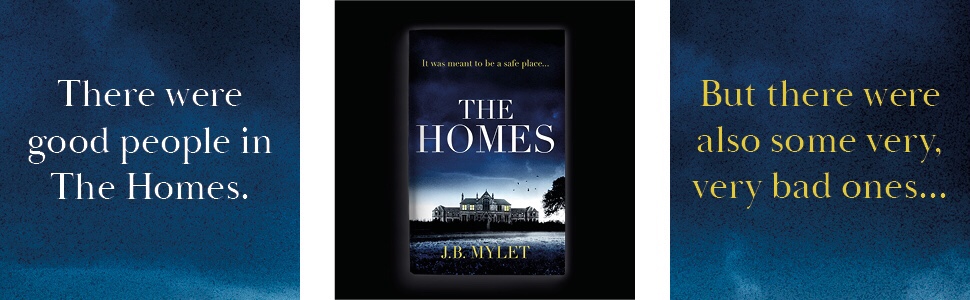
Lesley and Jonesy have been in foster care together ever since they can remember, in the same room and often in the same bed if Jonesy creeps in late at night. Our narrator is Lesley and she stands out as a little different from the other girls in the homes. She’s clever and goes to the grammar school instead of the one on site. She’s good at maths and seeing patterns in things, so what starts happening at the homes seems to her like a puzzle she can solve. Because someone at the homes is killing girls, possibly raping them and killing them. Who could it be?
The Homes are a sprawling institution made up of 30 cottages filled with the orphans of Glasgow and those needing care. So large, it has it’s own hospital, church and school, with every cottage run by a house mother and father with a Christian ethos. Set in the 1960’s and based on the Quarrier’s orphan village near the Bridge of Weir, where the author’s mother spent some of her childhood. He writes these girls as very isolated and dealt with at a distance, not just from their families, but from the staff too. He throws us in at the deep end with a morning that Lesley’s been dreading. Today she has to face the school bully Glenda, who lives a few cottages up. The adults know that Lesley is very likely to take a beating, but they do nothing. As she leaves for her school bus, Lesley can see a crowd of girls gathering at Glenda’s gate hoping for blood. It’s fair to say they get a bit of a surprise when the encounter doesn’t play out the way they expect. I felt as if the children were treated like animals, like when I’ve brought rescue cats home and left them to sort out their hierarchy amongst themselves. Even so, I would worry if any of them were distressed or fighting. These kids are fed, watered and disciplined, but they’re not cherished.
Only once called by her Christian name, Morag is known as Jonesey and she is a larger than life character. I loved the little characteristics that Lesley relates to us, such as the giggling in church, the constant chatter, and the way she often slips into Lesley’s bed at night but still isn’t restful. Even in her sleep Lesley is often woken by Jonesey’s jerking limbs, she’s like a puppy whose brain is asleep but whose body is still on the go. She’s absolutely irrepressible and incredibly loyal to Lesley, often waiting outside for her bus to arrive in the early evening, wriggling like that excited puppy again. By contrast, Lesley is outwardly very quiet. Her inner world is lively though, bright and full of questions. She has a dogged determination that helps her at school with tricky maths problems, but proves to be a nuisance to the police and the perpetrator of these terrible murders. Unfortunately, her amateur sleuthing is not quick enough to save the third victim. In between the case we learn a lot about the upheaval Lesley has suffered in life. She’s visited by her gran mostly, but she isn’t great at answering all the questions Lesley has. She’s clearly very fond of her granddaughter, but doesn’t want to get into the minutiae of why her mother placed her in care. Her mother visits less, but when the answers finally come there are painful truths to process. I was so glad she had Jonesey and her therapist Eadie but I worried for her going forwards and eventually leaving care. I bonded with Lesley, enjoying her intelligence and sense of fun as well as the way she coped with difficult situations.
A bit like Lesley I suspected every character along the way, knowing that people who work with children are not always doing it for the right reasons. There are people at the homes who are there for their own ends. There are various levels of abuse going on in the community. They’re forced into a religious upbringing they may not want and the expectations, particularly of girls, is tied up in that Christian morality. The discipline is down to each house parent and is always strict, but could also be violent and humiliating. At worst these children are preyed upon by the most horrific kinds of abuser and the tension builds towards a conclusion that not only unmasks a killer, but blows the lid open on everything that is wrong with the institution. I thought the historical setting was captured incredibly well, not so much the location but the emotional landscape of the 1960s. This was a time of secrets, when children were seen and not heard and definitely didn’t have rights. A time when young women were still shamed for their burgeoning sexuality and perfectly normal urges and their consequences. This was the time when my mother was growing up and it felt as if the author had the context just right. I thought the author perfectly balanced Lesley’s personal realisations and growth, with the tension of the murder investigation. As the inhabitants of Lesley’s cottage sit down for Sunday lunch with their houseparents, the Pattersons, she has a very grown up revelation. In the space of her week, this is the only time they feel ‘like a big normal family’ and it’s becoming apparent that all adults will eventually let her down. By the end I realised Lesley had drawn me into her story to such an extent I was wondering about her future. Despite the murders being solved, I was reluctant to close the book and leave her behind.
Published by Viper, 26th May 2022.
Meet the Author
J.B. Mylet was inspired to write The Homes based on the stories his mother told him about her childhood. She grew up in the infamous Quarrier’s Homes in Scotland in the 1960s, along with a thousand other orphaned or unwanted children, and did not realise that children were supposed to live with their parents until she was seven. He felt this was a story that needed to be told. He lives in London.
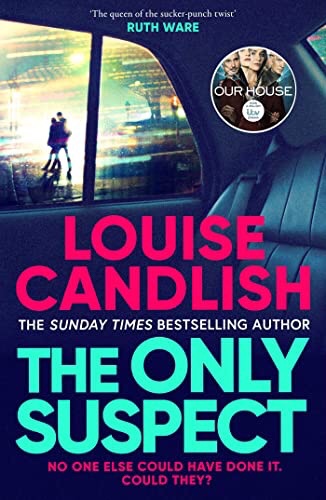
Alex lives in one of a row of cottages, once intended for workmen, now homes for middle class Londoners looking for more space in the suburbs. He lives with wife Beth and their dog Olive, enjoying quite a settled and peaceful existence. Even Alex’s job as an auditor has a certain amount of quiet respectability about it – some might even say boring respectability. However, when Beth’s pregnant friend Zara ends up without a roof over her head, she becomes a catalyst for change in the house and in Alex and Beth’s marriage. She becomes a third party in the relationship, staying much longer than expected and even worse, she and Alex don’t get on. They start to butt heads over his indifference to Beth’s interests, such as trying to get the pathway opposite them opened up and turned into a community nature trail. As Zara and Alex continue to clash, Beth notices things – for example his indifference to Zara’s pregnancy, especially considering they’ve been told they can’t have children – and this starts to bother her. He has no social media presence, won’t have his photo taken and is very threatened by Zara’s questions about his past. When he explodes, after Beth buys him an Ancestry DNA kit for his birthday she seriously starts to wonder. What is her husband so scared about?
The author sets this uneasy dynamic in the present day, but interweaves it with another timeline, around twenty years in the past. A young man called Richard narrates his own love story with a temp girl he meets in the foyer of their offices. She has just started to eat lunch in the foyer because there’s a new frozen yoghurt machine. After a few lunchtimes chatting in the building, they start meeting for lunch, either sitting outside or taking strolls into St. James’s Park. As they get to know each other, Richard is starting to fall for Marina, but their time together is so rationed. He can never take her out after work, she goes straight home. She can never stay the night, except for Thursdays, but even then she arrives later in the evening and disappears early next morning. They never go to Marina’s flat. In fact he’s surprised when she agrees to come to his birthday party, organised by new flatmate Rollo. Rollo is sure he knows what’s going on and can’t believe Richard is so naïve- Marina is hiding something, or perhaps someone.
Louise Candlish really is clever when it comes to twists and turns and this novel has a couple of whoppers. Some I didn’t see coming at all, both in the past and the present. There are a couple of red herrings too, just to make the story more interesting and send the reader down a few blind alleys. The characters are nuanced and full of faults, making it harder to work out which ones have the normal human flaws and which are just downright evil. I found Beth’s friend Zara so annoying, she’s inquisitive and inserts herself into private conversations and really does seem to have a bee in her bonnet about Alex. She’s manipulative too, using Beth’s grief at being unable to have a child to get comfortable in their home. It felt like she had no intention of leaving, involving Beth more and more in the pregnancy and actively baiting Alex in front of his wife. It could be that she just thinks Alex treats her friend badly, but it could be that she wants Beth and the house to herself. In our past section I felt some sympathy with Richard because he was just so trusting and is let down badly. As the events in the past start to escalate the book becomes so tense. I was addicted, reading the last half in one long session. Alex is as tense as we are and his desperation to stay in the background of Beth’s community venture starts to look very suspicious. Beth is angry because he’s being unsupportive, but it’s possibly much more than that. I could see that he was experiencing real fear, but what does he think will be discovered and what is the link to the nature trail? It’s a labyrinthine plot but I didn’t miss a thing, totally focused on the outcome of this mystery. Candlish has an incredible knack for creating these middle class communities that look the height of respectability from the outside and turn out to be anything but. Thankfully, I didn’t get attached to any of the characters so I could take a twisted sense of pleasure in watching this particular house of cards come tumbling down. This book is addictive, intense and as always, an absolute treat.
Published 2nd February 2023 by Simon and Schuster UK
Meet The Author
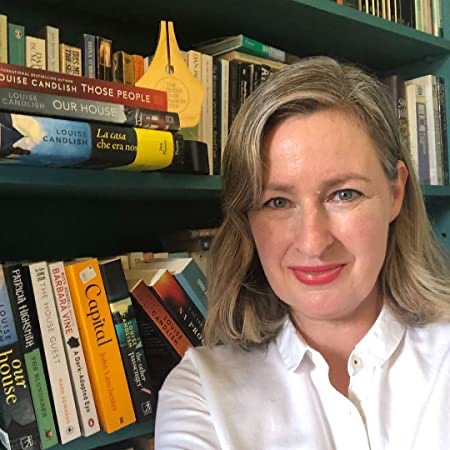
Louise Candlish is the Sunday Times bestselling author of fourteen novels. Our House, a #1 bestseller, won the Crime & Thriller Book of the Year at the 2019 British Book Awards, was longlisted for the 2019 Theakston Old Peculier Crime Novel of the Year, and was shortlisted for the Goldsboro Books Glass Bell Award. It is soon to be a major ITV drama made by Death in Paradise producers Red Planet Pictures. Louise lives in London with her husband and daughter. Visit her at LouiseCandlish.com or connect with her on Twitter @Louise_Candlish.
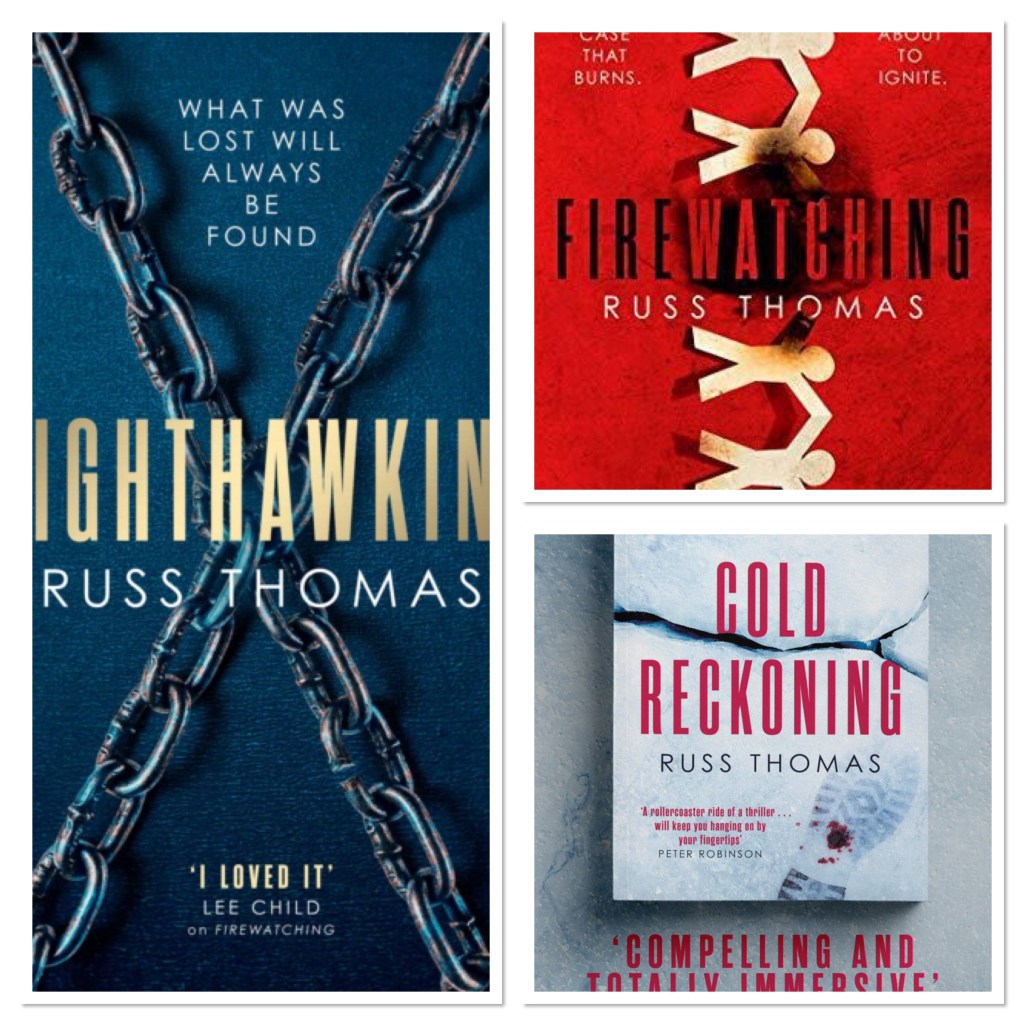
I picked Russ Thomas’s last novel on NetGalley because I noticed it was set in Sheffield. Since I live just across the river from South Yorkshire, Sheffield is our nearest big city. It’s my ‘go to’ place for the theatre, concerts and decent shopping. In fact Meadowhall was vital when I was a teenager, because we were pre-internet and if you didn’t shop further afield you would find yourself at a club in the same Dorothy Perkins top as everyone else. So my introduction to DS Tyler was actually the second book in the series called Nighthawking and it was set around the Winter Gardens. I found myself drawn in by the case being investigated, but also by Adam himself. He’s a rather complicated character with a difficult childhood and the trauma of finding his father hanging in the family home when he came home from school. Subsequent investigations into Richard Tyler’s death concluded it was a suicide, brought about by corrupt dealings with organised crime and the fear of being discovered. As if that’s not hard enough to live down, Adam’s godmother and the woman who brought him up is now DCI Diane Jordan. Adam is either treated with suspicion for being corrupt like his father or for being the DCI’s pet. Finally, there’s his sexuality, which shouldn’t have a bearing on his work relationships, but probably does in a macho environment like the police force.
Since I had organised time to spare this December to read freely – a true Christmas gift for a book blogger – I decided to read both the first and the latest instalments of the series. In the first novel, Firewatching, Adam picks up a case that’s both cold and red hot. A body is found bricked up in the walls of a country house, a house that’s lain empty since the disappearance of the owner several years before. From the injuries to the fingers of the body, it’s clear the victim was walled in alive. DI Dogget is on board for the murder case so Adam is called in to work alongside him. However, it’s soon clear that the case does have a connection to Adam and he’s soon hopelessly compromised. Matters in his personal life also become tangled in the case, but most disturbing is that the reader knows someone close to Adam is not what they seem. They’re a blogger, but their muse is fire. How far will they go to entertain their readers? This is a fantastic start to a series, managing to establish a character and his back story, while still presenting a solid and tricky crime to solve. I loved the two elderly ladies linked to the big house, living close by in their little bungalow. They have lived together nearly all of their lives, after a friendship cemented by helping out in the horror of the Blitz where fire destroyed large swathes of London. Adam’s friend was also interesting, a woman civilian in the station who wants to get him involved in the LGBTQ+ group and improve his social life. She is dragging him out pubbing and clubbing when she can persuade him. Police officers have to tread very carefully though in their local pubs and clubs. You never know who you might meet. This is an incredible Russian doll of a case with one crime inside another needing to solved before they get to the truth of the house’s terrible history.
The third and latest novel, Cold Reckoning, is now available in paperback and starts with a very effective cold isolated country walk. Matilda Darke is escaping the claustrophobic house she shares with her mum and the caring role she has now her mum has fibromyalgia. It’s a clear, crisp morning near the lake and Matilda hears a gunshot. Making her way home she stumbles across a man coming out of a cabin. Neither expected the other to be there, but his cold hard stare sends an immediate chill through Matilda and she knows this man means her harm. So she runs and never stops to even look behind her. This opening leaves us asking so many questions. Was this where the gunshot came from? Was she right to be scared? Does the man know Matilda and her walking routine, or was she just in the wrong place at the wrong time? Adam’s life is also upside down, because DCI Diane Jordan, his godmother, has gone missing. This is so out of character he knows something is terribly wrong and with the search for her on his mind he’s called on to help DI Doggett with a very strange case. In a lakeside cabin there are signs of a struggle and blood spatter consistent with a gunshot wound, but there’s no body. Nearby though, a body is suspended in a frozen lake. The man has no wounds and has been dead a lot longer than this lake has been frozen. How do these two things fit together or are they a complete coincidence?
I thought this latest novel was clever, not just the case which again strays close to home for Adam, but the details of the characterisation. From their rather gruff and begrudging start back in the first novel Doggett and Tyler have become a team. There’s a trust that’s built between them and they are keeping a lot of information close to their chests, the knowledge of a possible conspiracy between the police, local dignitaries and organised crime. It might even have a bearing on Adam’s father’s death, but there’s still a lot to unravel. Their close conversations and sudden silences when others enter the room has been noticed. DC Rabbani has come a long way since Tyler seconded her to CID in the first novel. She has great instincts, is good with people and she’s furious that the other two members of the team have been keeping something from her. So furious that she could be persuaded to keep the acting Chief Constable in the loop about their suspicions. Rabbani wants to be part of the team, and although the two detectives only want to protect her, she sees their secrecy as a lack of trust. Tyler is a conundrum. Seeing him try to take steps towards improving his mental health is great, but he can only let some of his guard down. He’s also not learned a lesson about keeping his private life and working life separate. By this third instalment I felt like I’d really come to know these characters and care about them. Added to that, the cold cases really are complex, taking us back into the past and into situations that people have tried to leave behind. Witnesses are reluctant and when they’re being asked to remember twenty years ago their memories can be shaky. DI Tyler is a flawed hero, but he does want to find the truth and bring justice to those who have been wronged. However far back he has to dig to find the answers. Im now looking forward to our fourth instalment.
Meet the Author
RUSS THOMAS was born in Essex, raised in Berkshire and now lives in Sheffield. After a few ‘proper’ jobs (among them: pot-washer, optician’s receptionist, supermarket warehouse operative, call-centre telephonist, and storage salesman) he discovered the joys of bookselling, where he could talk to people about books all day. Firewatching is his debut novel, followed by Nighthawking and Cold Reckoning.
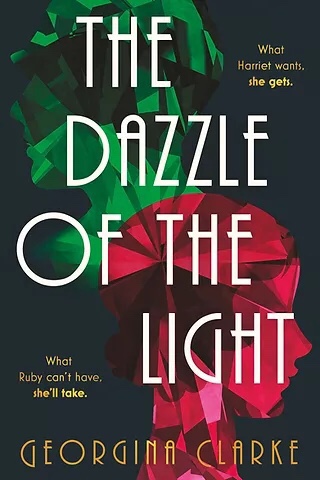
Just a couple of weeks ago I was waxing lyrical about Kate Atkinson’s novel Shrines of Gaiety and then another novel passes my way covering the same territory and the same time period. While I loved Atkinson’s novel on it’s own merits, this one feels more urgent and alive. I felt immediately in the story and fascinated by the two main female characters. Ruby is one of a female gang known as the Forty Thieves (the Forties) who commit crimes from pick-pocketing for the young members to shoplifting and even jewellery theft for those more experienced members. Ruby has been one of the Forties for years and due to her looks doesn’t always attract suspicion in the fancier stores. In fact, she’s on a joint job with her lover Billy from the Elephant Boys, when she first runs into Harriet Littlemore. Harriet is the real deal, a young woman from a very good family, engaged to an up and coming member of parliament. Harriet has ambitions beyond being an MP’s wife, she wants to be a journalist and her father permitted her to ask for a job with the evening paper. She’s been hired to write pieces for the woman at home, such as ways to wear the new style of hat, but Harriet has ambitions for so much more, thinking she might write a piece about the young thief she’s seen. However, her fascination with Ruby seems to be much more than journalistic interest.
The story follows these two women as they each pursue their ambitions. Ruby wants to do more work with the Elephant Boys. She wants to take on bigger jobs and wear beautiful clothes and jewellery. When she meets Harriet again, on a shoplifting run in a department store, she cheekily suggests she should update her style. Perhaps she should cut her hair in the new shingled way that’s the height of fashion, Ruby tells her, then she could wear the new style of hat she’s considering. Like a woman in a trance, Harriet goes to a French hairdresser and has her long hair cut short. She’s amazed by how much it suits her and hopes to see Ruby with her new fashionable look, even if it does cause a stir at home, particularly with her traditional mother. She’s furious when the story about the jewellery heist she witnessed is written by one of the male reporters at the paper. So she decides to write a piece on Ruby, the Jewel of the Borough, and gets one of the artists to draw a sketch from her description. In a way, Harriet admires Ruby. She sees Ruby’s freedom, her nerve and confidence, and contrasts it with her own restrictions. She has no idea what her article will truly mean for Ruby. We see what Harriet can’t, because we’ve met the rest of the Forties and Ruby’s other mentor Solly, who runs a jewellery business. The women of the Forties are in a hierarchy, with Annie ? At the top. Many have been thieving since they were children, looked after by the Forties in return for their tiny hands making their way into pockets. The ones that are married are struggling to feed their kids and to avoid their husband’s fists. Most have done time in Holloway and without the Forties, they and their families would be cold and hungry. From Ruby’s perspective, money is freedom and Harriet certainly has plenty of that.
I loved the way the author showed, that despite their differences in class and means, Ruby and Harriet are still second class citizens due to their gender. Although Ruby has earned some equality thanks to her sleight of hand and is chosen by leader Annie, to do jobs with the Elephant Boys, her personal life is very different. Solly is a father figure to her and always keeps a room for above the jewellers, but when it comes to her lover Billy she has no real power. She has confidence in her allure, but when she’s forced to lie low for a while Billy soon moves on to the next warm body. She often has to give up her body to seal a deal, whether it’s a little extra for the man who fences the more risky pieces of jewellery she’s stolen or romancing someone to get information out of them for Peter who runs the nightclub. This work gives her a rather glamorous roof over her head when she really needs it, but she definitely earns her money. Peter has a big job coming up with the Elephants, something that involves men of money and influence. Ruby has no clue how respectable these men are, or their standing in society. It seems to her that all men will use women, no matter how respectable they may seem. Harriet is completely powerless when it comes to the men in her life. She has a life set up for her as Ralph’s wife and her parents can’t understand why she isn’t satisfied with her lot. She has money, beautiful clothes and a handsome fiancé who is going to be a man of great influence. They can’t understand that she wants something for herself, something she has earned on her own merits. I couldn’t put the book down because I wanted both of these women to break out of the prison they are in, choose a different life and perhaps become close. I didn’t want the system to win.
The setting for this fascinating story is beautifully built by the author. We’re post-WW1, a period of huge shifts in the class system and changes for both men and women. The author shows how the class system and expectations of women have changed through Harriet’s relationship with her parents. They still have pre-war attitudes and are expecting Harriet to fall in line. Even the changes she makes to her appearance show that shift from the restrictions of Edwardian dress and the relative freedom of the 1920’s fashions with shorter skirts, no restrictive undergarments and shorter hair. These fashions suit women who are busier and don’t have hours to dress in the morning. Financial changes mean only the very wealthy can afford the help of a ladies maid every morning. Ruby can wear the latest fashions to please herself, when she can afford them. She loves the glamour of the clothes she wears to the club, where she needs to attract the more discerning gentleman.
For the men, those who were in the trenches found them democratising. Bullets and shells don’t care about the class you’re from and although there was still a hierarchy, they died in the mud together. This led to some strange allegiances back in the post-war world. It’s clear to Ruby that there’s a big job on the cards, Billy has hinted as much and her time at the club throws her close to the planning. There are men involved who would never normally give the Elephant Boys the time of day, so they must need them to do the dirty work. These are men from the highest class, who usually drink at their club or the Savoy, but don’t mind slumming it at the club if it makes them money or the company of a woman like Ruby. I desperately wanted some of them to get their come uppance, knowing that’s not always the way of the world. The real winners though are those that can move between worlds, like Peter Lazenby. Though the polish and charm of all these men hides something more brutal. Despite her misdemeanours I was as charmed by Ruby as Harriet was and I wanted her to find a middle ground where she survives comfortably. As for Harriet I wanted her to break out of her parent’s upper class restrictions. I wanted her to have a love affair with someone unsuitable and a friendship with Ruby, if not a full on passionate affair. This was a fantastic book, full of characters, historical detail and that verve and energy that seems synonymous with 1920.
Published by Verve Books 17th November 2023
Meet The Author
Georgina Clarke has always been passionate about stories and history. The Lizzie Hardwicke novels give her the opportunity to bring to life her love of the eighteenth century and her determination that a strong, intelligent and unconventional woman should get to solve the crimes – rather than be cast in the role of the side-kick. Georgina was born in Wolverhampton, has degrees from Oxford, Cambridge and London, but now lives in Worcester with her husband and son and two lively cats.
Her first two novels, Death and the Harlot and The Corpse Played Dead, are published by Canelo. She is currently cooking up plots for the next novels in the series.
If you would like to visit her website, you can find her at:
‘In movies the monsters are always zombies, vampires, or some weird kind of mutant, but in this moment his eleven year old brain tells him he was wrong all this time. What he’s looking at now are monsters. Real monsters.’
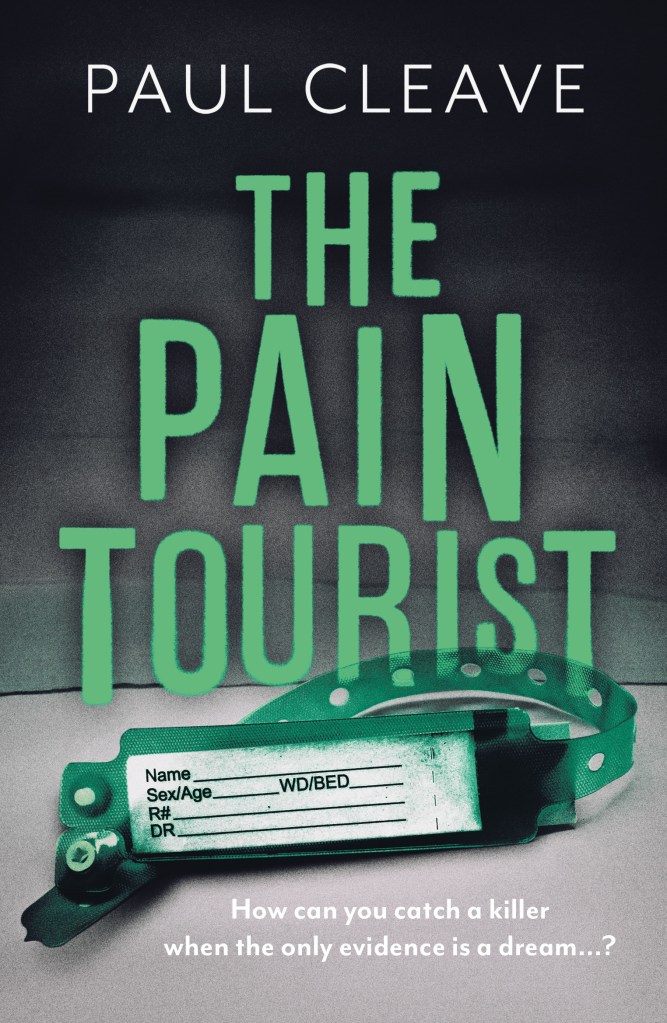
I loved the central premise of this novel from Paul Cleave, the idea that there are pain tourists – people who gain satisfaction from soaking up the pain and misery of others. I’ve always used the term ‘emotional vampires’ to describe something similar and it has levels, from those who revel in reading lurid tabloid coverage of a celebrity break-up to something much more disturbing. We all know those people who have a tendency to insert themselves into other people’s life dramas and grief or who get a kick out of watching true crime or the accounts of serial killers, such as the page after page of obscene detail that filled the pages of tabloids following the discoveries at Cromwell Street, the home of Fred and Rose West. It seems lately as if everyone is watching serial killer documentaries and actors from Dominic West to David Tennant are queueing up to play them. I think here, by imagining the more disturbing lengths someone might go to in order to feel part of that crime or tragedy, the author really made me think about this trend.
The novel opens as a tense and violent crime is being committed. An eleven year old named James is watching his parents being threatened at gunpoint by three masked men who have broken into the family home in the night. As the intruders try to obtain the whereabouts of a safe from his parents, using whatever means to make them talk, James is trying to set up an escape plan for his sister Hazel. As both James and his mother’s lives were threatened, my heart was racing wondering why his parents don’t tell the gunmen! James’s quick thinking saves his sister, in a heart-stopping escape she gets to a neighbouring house, but it earns him a bullet to the head after watching both his parents killed. The terrible tragedy is compounded by the fact James’s family did not have a safe. However, one had been recently fitted a few doors away where a diamond dealer had just moved in with his family.
Cleverly, Cleave then splits the narrative in two directions, in an almost ‘sliding doors’ type story. James’s life continues into the future with his family intact or James comes out of a nine year coma, convinced he’s been living a life way beyond the four walls of his hospital room. For the cops who worked the case, a lot has happened in the last nine years since they failed to solve the murder of Hazel and James’s parents. Theo Tate left the force and is now a private investigator after a terrible tragedy touched his own family. Rebecca Kent is still a police officer, but is marked by tragedy in a more physical way, every reaction from strangers reminds her she now has a scar running down her face. The pair come together to revisit the case, when Kent is informed that James has woken up. Now, despite her relentless hunt for a serial killer nicknamed Copy Joe, Kent is tasked with reopening the cold case. Feeling hopeful that James may remember some new detail to add to existing evidence she also wonders if he could become a target for the killers, who are still at large? James can’t speak, but can communicate with pen and paper. The investigators are shocked by the detail packed into James’s story as he starts to write more. His ‘ComaWorld’ diary seems to flow out of him with very little thought or res. Nine notebooks, one per year, document a life unlived by anyone but James. Familiar names and events start to become apparent to his sister, such as his accuracy on each day’s weather or the book she was reading to him slipping into the narrative. What nobody expected him to reveal is that Kent has more than one serial killer on her hands.
This was such an original and complex thriller. As you might expect, considering I’m a writing therapist, the ‘Coma World’ stories were fascinating to me. The aspects of real life that Hazel notices are brilliant plot devices, but also play with the idea that the unconscious mind is still very much alive and picking up on what’s going on around it. From a therapy angle, James’s narrative could be seen as the mind’s way of healing itself while his body is asleep. One therapy technique I’ve seen involves the client writing a different narrative ending to something that’s happened. It helps the client discuss how a different ending might feel – would they feel more closure about the event for example? By exploring this, we can then discover and discuss why the real ending caused so many problems. The way James writes, in longhand and over a period of days fascinated me too. Is he scared if he doesn’t write it down it will be lost to the truth? The complex level of detail is incredible, as if he’s still seeing it running like a movie in his mind’s eye. I wondered how he kept it so rigidly to one year per book, suggesting there was a lot of detail he chose not to record. What we choose to edit out of a narrative is sometimes as important as what we leave in. When it becomes clear he’s been aware of other patients in the room, we can see how his mind is weaving their names and other facts into his narrative – he’s heard all their conversations too.
Tate and Kent were great characters to guide us through these complex interwoven cases. Kent is driven, but slightly less idealistic than Tate. She’s made peace with the fact that some cases don’t get solved in a way he hasn’t. It’s clear why she’s stayed inside the police force and he’s preferred to forge his own path. He’s an incredible investigator but perhaps not so good at office politics and coping with an imperfect system. Kent is desperately trying to solve the case of Copy Joe, a serial killer who copies the methods of previous serial killers, like the Christchurch Carver. Whoever he copies, he likes to leave the crime scene exactly the same way, almost like an homage to the murderers, showing his admiration. Are they looking for a fan of the ‘True Crime’ genre? Someone who perhaps started with the odd book, the podcasts, and the documentaries until he’s had to experience the same thrill. It’s an uncomfortable concept and made me question our enjoyment of such narratives, especially when true crime documentaries are constantly in the daily top ten on Netflix or other streaming service. When it comes to curiosity, how far is too far? When does an interest become an urge, an action. Tate’s private life was so devastatingly sad and I was moved by his visit with his wife. He loves her still and they sit and talk like any other married couple, the difference being, that as soon as Tate walks out of the room she will forget everything all over again. He chooses to bear a terrible loss alone. This showed another, devastating, side of brain injury -a patient who is physically capable, but with a brain that erases every interaction leaving a blank slate. She is happy in the moment, but that present moment is all she has.
From the explosive opening, which really gets the adrenaline flowing the tension ebbs and flows depending on the narrative or case we’re following that chapter. Towards the end, as all these cases come together in one terrible night, the heart really started pounding again. I did get a bit confused between locations and who was where towards the end. So I had to keep going back, desperately trying not to miss a moment as the twists and turns came thick and fast. I found it was Tate and Kent I was rooting for, not just that they would solve their cases, but that they would survive! I found the way James was constantly moved around in these final chapters a bit concerning. My experience in occupational health and care needs had me asking all sorts of questions. If James couldn’t walk how was he managing in these different spaces, using various different surfaces to sleep on from beds to couches? I kept wondering how he was getting to the loo – I’m laughing at myself as I write this, because honestly the way my brain works! This says so much about my inner life. I just kept thinking ‘how has he been discharged from hospital without an occupational therapy assessment and a multi-disciplinary meeting?’ Of course these facts are like the days James edits out of his narrative, not very interesting or helpful to the plot. The details of a character’s loo habits tend to dissipate the tension and excitement. This was an incredibly fast read, giving you some idea of the pace and that addictive pull you want in a thriller. Each character is cleverly written to draw you in, but you’re always left on edge and unsure. The multiple endings are brilliant, I just thought it was solved and I could breathe, then the author pulled the rug out from under me. Yet I loved that we get to have multiple endings, as James’s doctor suggests they write a book together, framing the narrative in yet another way.
Meet The Author
Paul is an award-winning author who often divides his time between his home city of Christchurch, New Zealand, where his novels are set, and Europe, where none of his novels are set. His books have been translated into over twenty languages. He’s won the won the Ngaio Marsh Award three times, the Saint-Maur Crime Novel of the Year Award, and Foreword Reviews Thriller of the Year, and has bee shortlisted for the Ned Kelly, Edgar and Barry Awards. He’s thrown his Frisbee in over forty countries, plays tennis badly, golf even worse, and has two cats – which is often two too many. The Pain Tourist is his (lucky) thirteenth novel
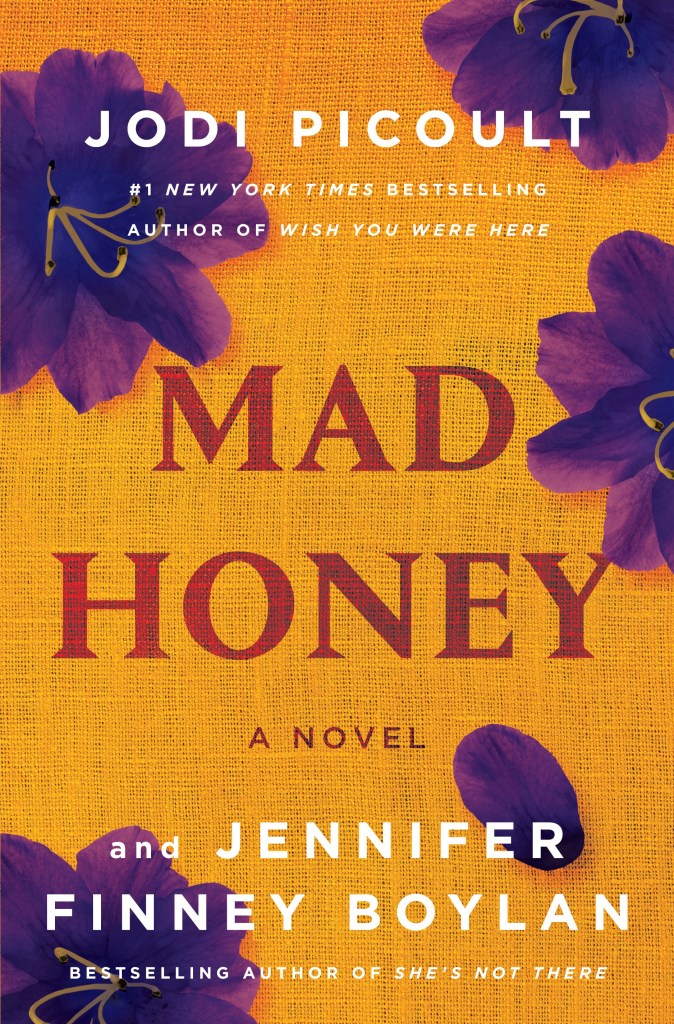
I was granted access to this novel on NetGalley and couldn’t wait to read it, bumping it to the top of my TBR when I had a free weekend. This is Jodi Picoult in her element. Her last book was an interesting take on the pandemic and a couple of her recent novels have been more experimental, moving away from the legal case structure of her earlier work. When I met Jodi Picoult several years ago I asked about her writing. Did she start with character, or was it the controversial issues she explores that start the writing process? Having covered racism, school shootings, teen suicide and abortion it seems that these complex issues drive her imagination. She admitted that these issues do spark her creativity and if an issue stays in her mind for a couple of weeks she knows it has potential. Then she starts to research and during that process, characters form and make themselves known to her. I loved the flow of Picoult’s writing and the tension she builds around the featured legal case, but thought she’d maybe moved away from this way of working. When Jennifer Finney Boylan approached her with the idea to write a book together with a trans character at it’s heart, Jodi Picoult had been thinking about setting a novel around trans rights for a number of years. The structure of Mad Honey feels like vintage Picoult and even where Jennifer Finney Boylan takes over the narration I didn’t notice a huge difference in tone or style. I’ve never read Jennifer Finney Boylan, but she is the first openly transgender American to write a bestselling book, a book that is now thought of as an important part of the transgender canon. She is the perfect writer to join Picoult in this venture that’s bound to be controversial considering the trigger warnings I’ve seen used. Picoult and Boylan haven’t shied away from controversy in choosing to write about one of today’s hottest and most complicated topics; the complexities of being transgender. Yet the combination of authors takes away the debate over ‘own voice’ narratives and brings a sensitivity and knowledge to the project it wouldn’t have had if Picoult had written alone.
We meet Olivia and her son Asher, who live near a small town in New Hampshire. When Asher was a toddler she fled her abusive marriage to return to the place she grew up. Her timing was perfect, as her father was starting to struggle physically and needed to teach Olivia all the wisdom he’d accrued in a lifetime of keeping bees. Now Olivia is the bee expert, tending daily to her hives where each queen bee is named after a musical diva: Celina, Gaga, Beyoncé. The toddler who was just steady enough on his feet to intervene when his father attacked his mother, is now a six foot ice hockey player in his final year before leaving for college. Asher is a popular teenager with lots of friends and now he has girlfriend Lilly too. Lilly understands starting over, so Olivia feels they have something in common. She likes Lily when she’s been over to the house and she’s successfully helped them with the bees, who are a good judge of character. Lilly feels happy for the first time in her life and Asher is a huge part of that, although there is still a part of her that wonders if she can truly trust him, be open and be vulnerable. Then out of the blue Olivia takes the call every parent dreads. It’s the police. Lily is dead and Asher has been arrested for her murder. She calls her brother Jordan to come to New Hampshire and be Asher’s lawyer. In her mind there’s no way that the gentle boy she knows could have done this. However, as the case starts to unfold she realises that Asher has hidden more than he’s shared. Could he be exhibiting the same tendencies as his father? As Olivia knows more than anyone, we rarely know the people we love as well as we think we do.
I think it’s incredibly hard to take on writing about someone else’s experience, especially someone from a minority group. When it comes to books about disability, my own minority, I do prefer ‘own voice’ narratives. After all, who better to write a character with a disability than a writer with a disability? Failing that I want to know that an author has done their very best to represent that minority, through research and spending time with people who have a disability. I want to know they’ve asked the hard and sometimes uncomfortable questions that take them to the heart of how living in that body might feel. Armed with that they can hopefully create a character who feels real rather than clichéd and avoids stereotypes. I have to be honest and say I don’t know enough about being transgender to judge whether the authors have everything right, but I can see they’ve tried and truly wanted to write about transgender rights in a mainstream novel that’s very likely to be a bestseller. I guess time will tell how the book is received as it moves out into the world. In her acknowledgments, Jennifer Finney Boylan quotes a terrible statistic; in the year that she and Picoult wrote the book, ‘more than 350 transgender people were killed around the world, more than a fifth of them inside their own homes’. This awful number stayed with me and I was glad these authors are starting a conversation, with a mainstream audience who might not seek out information about being transgender ordinarily. It helped me have a conversation with my 75 year old dad who becomes confused between gender and sexuality and is totally baffled by labels like transgender, transsexual, non-binary. I think these are conversations everyone should have and maybe the book is an entry point, inspiring people to read more ‘own voice’ narratives.
Picoult speaks for me when she says it never occurred to her to think of a transgender woman as anything other than a woman, but it was good to have my view challenged, because it showed me how vehemently some corners of society disagree with me. We are given a lot of background information that clearly comes from both author’s research, but is presented in the guise of Olivia educating herself. She talks about how common it is for animals to change gender, from clown fish to bearded dragons and female hyena’s who can have retractable penises. She’s pressing home the argument against those who claim transgender people are unnatural and that if you were not born with the sexual organs of a woman then you’re not a woman. There does seem to be a huge emphasis on the ability to procreate, but where does that leave women like me who can’t have children? Or those who’ve had a hysterectomy? Are we not real women too? I was very interested in something called ‘passing’, a concept that applies to race, disability, sexuality: an African-American man may be treated very differently if he has a lighter skin tone; a gay man may ‘pass’ as straight in order to be avoid prejudice at work; someone with an invisible disability like mine can be seen as able-bodied with all the benefits of both ways of being. If a transgender woman has a naturally feminine look she can pass as a woman more easily than someone who is is taller or broader. This ability to pass means no one, not even someone the transgender woman is in a sexual relationship with, need ever know that their assigned sex at birth was different. Of course this then begs the question of whether there is an obligation to disclose this information and when? All of this debate comes into the novel’s courtroom sections, in the guise of expert testimony so it doesn’t feel like endless exposition. There are times when opinions may be offensive to some readers, but I think they reflected the reality of being transgender and the discrimination faced.
The story flows beautifully and really grabbed hold of me quickly. I found myself unable to do anything until I’d finished reading, so I let uni work and household chores pile up, completely engrossed in the terrible situation both Asher and Lily’s mums find themselves in. I did feel this was Olivia and Ava’s story, despite our narrators being Lily and Olivia. For me the transition between the two writers is seamless. I really couldn’t tell whether I was reading Jodi or Jennifer’s writing and I know they worked hard at this, swapping sections for re-writes at times. I did feel for Olivia who has fled a terrible situation to protect her boy from her violent husband. I understood how she and Asher had become a tight unit, now challenged by Asher’s age and this new person coming into their small world. I thought the aftermath of being a victim of violence was tackled really well, as Olivia’s job keeps her hidden from the world. She doesn’t make friends and relationships haven’t been on her radar at all. I felt the weight of this massive change looming over them, Asher going away to college and leaving his mum alone for the first time. Her protection of them both has been necessary, but she must be lonely at times. It was interesting to see her reaction to a possible romance, could she take down those walls and start to build a life for herself? By contrast, Lily’s chapters are lighter than Olivia’s, capturing that moment of being on the cusp of adulthood. Lily is brim full of potential and possibility. She’s like a newly transformed butterfly taking it’s first flight. Then all of a sudden she’s gone and it feels like a light has been snuffed out. How much harder must it be for Ava, who has nurtured and protected her daughter in much the same way as Olivia has protected her son? Ava stayed with me after the book had ended because her loss is unimaginable and her only solace is to retreat into the natural world where she feels at home. I found myself hoping she experienced the healing power of nature and didn’t feel too lonely out there on the Appalachian Trail.
I enjoyed the bee analogy that ran through the book, the reference to Mad Honey referring to bees who’ve collected pollen from rhododendrons and laurels. Unfortunately the honey produced is poisonous, causing dizziness, convulsions and cardiac symptoms. The ancient Greeks used it in germ warfare, it’s success dependent on the eater’s expectations of sweetness not deadly poison. The analogy between this and Olivia’s husband is clear as she describes the love bombing in their early relationship and her utter shock when he first lashes out in anger. Her biggest fear is that Asher could be cut from the same cloth as his father, when she sees nothing but her sweet boy. However, she knows that her own mother-in-law would have struggled to accept that her boy was a monster behind closed doors. The tension is brilliantly handled, rising slowly as we get to the final days of the court when I found myself biting my nails! I wasn’t sure how I felt about Asher and the potential verdict, I wasn’t sure I believed his version of events and if Asher was found innocent, would we ever find out what happened to Lily? The twists and turns here were brilliant, with the killer blow delivered just as everything is starting to calm down.
I’m hoping that this novel can be a gateway novel, an introduction to the issues that inspires readers to really think about the experience of transgender people, hopefully inspiring readers to search out writing by transgender authors going forward. There is one scene where Olivia seeks out the woman who runs the town’s record store, because she’s known to be transgender. Here she gets to ask the her the questions that are running through her mind and although she’s a reluctant authority on the subject, she doesn’t get offended by Olivia’s insensitivity or ignorance. What she does reinforce for her is that no one can speak for all trans women, because ‘when you’ve met one trans woman, you’ve met one trans woman’. What it reinforces for me is that gender and sexuality are a spectrum, there are as many ways of being as there are people. Our need to categorise, label and compare creates a pyramid of bigotry and ultimately divides us. All we can hope is that future generations find ways of relating to each other that bridge these man made divides. It’s only then that all people can live ‘with power, and fierceness, and with love’ and, as one of our characters says, without the obligation ‘to explain and defend the things I have known in my heart since the day I was born.’
Mad Honey is published on 15th November by Hodder and Stoughton
Meet the Authors.
Jennifer Finney Boylan is a bestselling author, transgender activist and professor at Barnard College. She is also a contributing opinion writer for the New York Times. She has written thirteen books, including novels, collections of short stories, and her memoir. Her 2003 memoir She’s Not There: A Life in Two Genders was the first book published by an openly transgender American to become a bestseller and has become as ‘a seminal piece of the trans literary canon”.
Jodi Picoult is the #1 New York Times bestselling author of twenty-eight novels, including Wish You Were Here, The Book of Two Ways, A Spark of Light, Small Great Things, Leaving Time, and My Sister’s Keeper, and, with daughter Samantha van Leer, two young adult novels, Between the Lines and Off the Page. Picoult lives in New Hampshire. Her next novel, Mad Honey, co-written with Jennifer Finney Boylan, is available on November 15th.
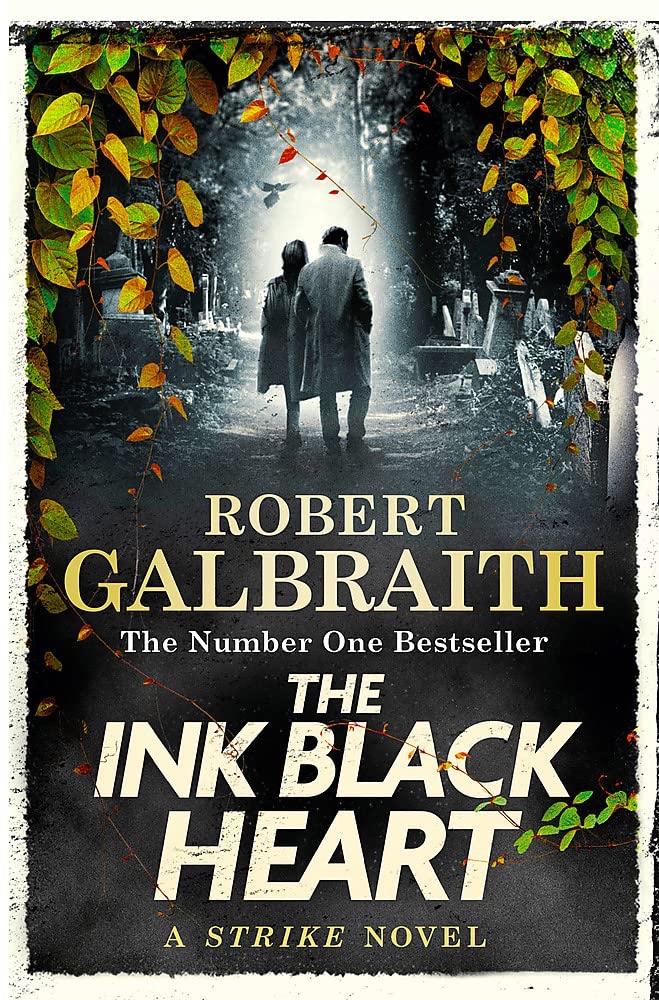
I have loved the characters of Cormoran Strike and his business partner Robin Ellacott for a long time, after seeing one of Robert Galbraith’s books in a charity shop and deciding to give it a go. I’ve bought every book in the series since and Strike has become one of my literary crushes – the troubled, wounded, war hero with a rescuer complex and rugged good looks is right up my street. Then there’s Robin, the country girl from Yorkshire who has bags of Northern common sense and is also brave, intelligent and caring. Their friendship works due to respect; he respects her intelligence and investigative abilities, whereas she respects his experience and never pushes beyond his boundaries. Their ‘will they/won’t they’ romance has had me on tenterhooks. I had heard this might be their last outing, so I was expecting their relationship to be resolved in some way. I also expected the main case to grab me immediately, just as their previous investigations did. This combination that has always kept the Strike books instantly readable, no matter if they do weigh the same as a house brick. The leading character’s issues aside, the cases have always been complex and multi-layered, with enough drama to keep me on the edge of my seat as I move towards the conclusion.
This time the agency is delving into two different worlds – the art world and the world of online gaming. Edie Ledwell and Josh Blay are artists who met while training and created a cult cartoon called The Ink Black Heart, set in Highfield Cemetery and peopled by odd little characters such as a talking human heart and a pale wispy ghost. The fans of this cartoon are real super fans, with two of them creating an online game for players to create a character and complete challenges around the graveyard. There was also a facility to meet other fans and talk on private channels during the game. However, fame is never straightforward and when Edie and Josh are found in Highfield Cemetery, attacked with a knife, rumours abound. With Edie dead at the scene and Josh paralysed in hospital, Strike and Robin are tasked to find out who had a grudge against the pair. Edie particularly, was bombarded with online abuse from misogynistic trolls, but it’s a character from the online game that Robin and Strike need to unmask. Anomie is a cloaked, faceless character, j one of the moderators and possibly even the creator of the game. The question is, how do they find someone, whose presence in the real and virtual world is a mystery?
It felt to me as if Robin really stepped up in this novel and took the primary role. Strike struggles physically this time, because years of not looking after himself have started to take their toll. His stump becomes inflamed and unable to take his prosthetic leg or bear his weight. Despite this Strike continues as long as he can, until even he has to accept medical help and enforced rest. So Robin’s detective skills come to the fore, as she infiltrates the art centre and commune, as well as the online game. I really enjoyed her undercover work on this case, firstly becoming Jessica a young woman who works in marketing and finance, but always wanted to explore her artistic side. She signs up to an art class at the centre to improve her skills and meet those who rubbed shoulders with Edie and Josh. She then visits comic-con as a journalist to interview someone they believe is very active in the game – Strike’s disguise amused me greatly here. I’ve always enjoyed Robin’s inner world and here I loved how much confidence her investigative role gives her. Her personal life has given her confidence a battering, especially now that her husband and the woman he was cheating with have a baby together. She has avoided her home town for a while, knowing they’ll be parading their offspring. Robin has worked out that it was the rape she went through at university that led to her settling with ex-husband Matthew. He was there and knew what had happened, it was infinitely easier than having to share this part of her past with someone new.Her feelings for Strike became more obvious when he turned up at her wedding and she left the celebrations to speak to him, much to husband Matthew’s disgust.
Strike is her best friend and she doesn’t want to lose that, but in this story other concerns also come to the fore. She feels inexperienced and unsophisticated in comparison to other woman she has seen with Strike, such as his ex-girlfriend Charlotte and his current girl Madeleine. Robin has no idea how beautiful she is, but Strike is very aware of the effect she has on men when she enters a room. What she doesn’t know is that Strike is currently comparing her with Madeleine, and his girlfriend is not doing well by comparison. Madeleine is well-groomed and always fully made up, plus she’s part of the same sophisticated London set as Charlotte. Strike has noticed the clean smell of Robin’s just washed hair and admires her simplicity. There are no games with Robin, she is always honest and says what she feels. Yet when Strike does weaken and try to kiss her when they go for birthday drinks, she looks so surprised that he interprets it as revulsion, but I think it’s fear. They are both frustrating, but the tension has to continue. The alternative is unthinkable, because people of my vintage remember Bruce Willis and Cybil Shepherd in Moonlighting and the disaster it became when their characters consummated years of flirting. If Strike and Robin ever did get together, I have no doubt it would have to be the end of the series.
It was within the case that I started to have some issues with the book. This is a long novel and the case concerned a wide range of people both real and virtual. Trying to remember where each character fit in the story was one thing, but when I realised they were possibly in the game with a user name too, it became much more complicated. I found it hard to follow the clues that pointed towards who Anomie was. There were also long sections written in private channels within the game. This felt awkward, although it wasn’t so bad when just two people were chatting, it became impenetrable to me when several channels were open at once with the same characters talking to different people at the same time. Although it gave an insight into how these characters communicated and talked behind each other’s backs, it was hard to keep track. The issues of misogyny and trolling felt like they’d come from the writer’s personal life and the type of trolling she’s been experiencing lately. Studies show that women who game online are exposed to misogynistic abuse and often use male avatars to avoid this type of trolling. So it was true to the story, but often felt she was trying to make a point, especially when we started skirting around subjects like trigger warnings and cancel culture. The sections that bothered me most were those around disability, particularly invisible disabilities and chronic illness. Strike is a hero, because of the war injury he sustained. He’s in that section of ‘acceptable’ disability that includes those who’ve acquired a disability in combat or try to ‘overcome’ their disability such as a Paralympian or other disability athlete. However, there are two characters in the book who have chronic illness, most notably ME or come under scrutiny from Strike and Robin as possible suspects in the case. Inigo uses a wheelchair and has an adapted home, character wise he is shown to have little patience, yelling at his children and wanting his environment just so. There’s an inference that his disability shouldn’t rule him out as the killer, as he could be playing on his symptoms. The second ME sufferer is a young girl who Strike goes to interview, but as he arrives at the house, she has fled out of the back door. This sudden movement immediately has him wondering whether she is also putting on her symptoms. However, Strike himself uses a flash of his disability to get into the family home – who would refuse a chair to a man with a prosthetic leg?
In the same breath the author does include articles about the Ink Black cartoon being ‘ableist’, showing an awareness of how problematic representations of disability can be. She also quotes the ‘spoonies’ blog, which refers to limited units of energy as spoons and exploring the difficulty of using more spoons than you have. I have always praised Galbraith’s depictions of Strike’s disability. Yes, he’s portrayed as a hero, but he’s not invincible as this novel’s physical difficulties shows. Where representation does become problematic here is that Strike is portrayed as wounded, but also a ‘hero’. He comes under the disability theory heading of a ‘supercripple’ – always able to perform beyond his abilities particularly when tasked with rescuing Robin. He’s also depicted as a sexual being, desirable to women still and clearly able to perform in the bedroom. Yet the character of Inigo, an ME patient, is not seen as sexual. In fact, again he’s under suspicion – aspersions are cast on his marriage, their sex life, and his character. I think this is possibly an attempt to show the reader how suspicious people are of those with invisible disabilities. It’s something I’ve experienced in my own life. However, there’s just something I’m uneasy about in these depictions. I was reminded of Ricky Gervais’s clever depictions of disability in The Office, where David Brent tries, in his own inimitable way, to educate his workers on how to approach a co-worker in a wheelchair. We’re supposed to be laughing at Brent, who’s so tone deaf he never asks how his colleague feels about being the subject of this impromptu lecture on disability awareness. He insults her as he tries his best not to, and that is the joke. Uneasily though, I wondered how many tone deaf people were laughing at what they complain is political correctness or at the wheelchair user who looks uncomfortable and embarrassed. This knife edge type of writing can go either way and I wondered how many people with ME would be comfortable with Galbraith’s representations of their disability. Since coming under scrutiny in the previous Strike novel for the depiction of a notorious serial killer dressing as a woman to lull the women he approached into a false sense of security. I would have thought it best to avoid controversial representations altogether. I have to take into account my own invisible disability, which may have prejudiced my feelings on the subject.
In all, this is another solid read from Galbraith, in terms of storyline and character development. It’s both entertaining and dramatic, with some complex and eccentric characters along the way. I love that we saw an even more vulnerable side to both characters, especially Strike. It was also great to see his dealings with ex-girlfriend, and trouble-maker, Charlotte taking a more realistic line. Maybe this clears the way for a different approach to matters of the heart for Strike and it’s this hope that will keep me looking out for the next instalment.
Holliday Grainger as Robin Ellacott and Tom Burke as Cormoran Strike in the BBC series.
Meet The Author.
Robert Galbraith’s Cormoran Strike series is classic contemporary crime fiction from a master story-teller, rich in plot, characterisation and detail. Galbraith’s debut into crime fiction garnered acclaim amongst critics and crime fans alike. The first three novels The Cuckoo’s Calling (2013), The Silkworm (2014) and Career of Evil (2015) all topped the national and international bestseller lists and have been adapted for television, produced by Brontë Film and Television. The fourth in the series, Lethal White (2018), is out now.
Robert Galbraith is a pseudonym of J.K. Rowling, bestselling author of the Harry Potter series and The Casual Vacancy, a novel for adults. After Harry Potter, the author chose crime fiction for her next books, a genre she has always loved as a reader. She wanted to write a contemporary whodunit, with a credible back story.
J.K. Rowling’s original intention for writing as Robert Galbraith was for the books to be judged on their own merit, and to establish Galbraith as a well-regarded name in crime in its own right.
Now Robert Galbraith’s true identity is widely known, J.K. Rowling continues to write the crime series under the Galbraith pseudonym to keep the distinction from her other writing and so people will know what to expect from a Cormoran Strike novel.