Posted in Random Things Tours

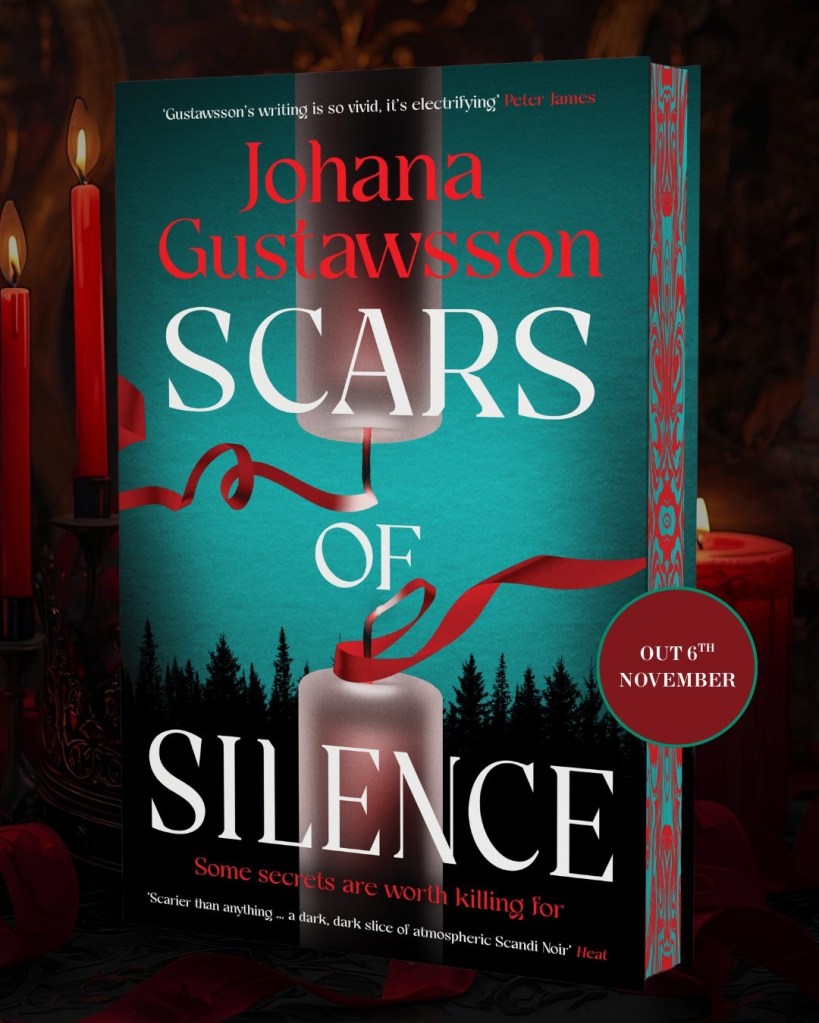
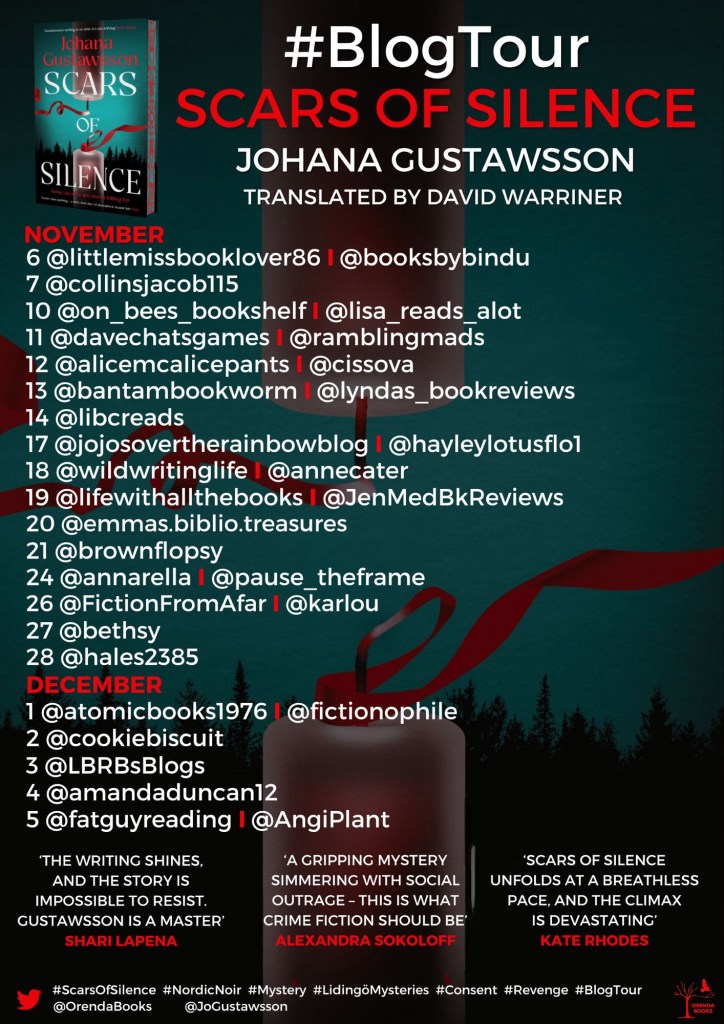
Scars of Silence by Johanna Gustawsson 

As autumn deepens into darkness in Lidingö, on the Stockholm archipelago, the island is plunged into chaos: in the space of a week, two teenagers, the son of the island’s mayor and that of a powerful businessman, are brutally murdered. Their bodies are left deep in the forest, dressed in white tunics with crowns of candles atop their heads, like offerings to Saint Lucia. Maïa Rehn has fled Paris for Lidingö, where her husband grew up, trying to come to terms with the death of their only child in a car accident. But when the murders shake the island community, the former police commissioner is drawn into the heart of the investigation, joining Commissioner Aleksander Storm to unravel a mystery as chilling as the Nordic winter. As they dig deeper, it becomes clear that a wind of vengeance is blowing through the archipelago, unearthing secrets that are as scandalous as they are inhuman. But what if the victims weren’t who they seemed? What if those long silenced had finally found a way to strike back? How far would they go to make their tormentors pay? And you – how far would you go?

I loved the timing of this novel from Johanna Gustawsson, her second set on the island of Lidingö in the cold, dark run up to Christmas. Here she bases her murder mystery around the feast of St Lucia and it begins when a body is found in the traditional dress of the festival. The victim is wearing a white tunic that’s been slit up the back, with a red sash and a crown of candles representing the festival of light. It reminded me of the locally held Christingle services, where small children in white hold a symbolic orange with a lighted candle in it and a red ribbon meant to symbolise Christ’s blood and his role as the Light of the World. It was something I’d never encountered before, being Catholic it wasn’t part of our tradition, but it fits into the many festivals that bring light to the winter months such as Hanukkah and Diwali. The festival and the victim’s clothing make the scene of the crime even more dramatic and hard to forget. It also throws up immediate questions about whether the date or the costume is a message from the killer. Visiting French detective Maia Rehn offers her help to local commissioner Aleksander Storm and they begin to investigate together. It soon becomes clear that the killer isn’t finished with the island community and the pair must work very fast, prizing secrets from people who are reluctant to talk and digging up long buried events that will devastate and destroy lives. 
One of the things I love most about this series is the atmosphere that the author builds. This is not the average crime novel, it definitely has a more Gothic feel that I would normally associate with folk horror. 

“It was hardly an ocean this mere strip of sea. A moat more like – cutting Lidingo off from the life of the Stockholm mainland. A ghost infested moat, surrounding a poisoned island”. 

This killing takes the community back several years to the murder and rape of a young woman dressed in her St Lucia costume. The victim is Jennifer, a well known and liked teenager in the community whose white dress and crown gives the impression of a angel in the snow. Jennifer was the daughter of Sophie Ackerman who bonds with Maia at a party, when they realise that both of them have lost a child. The pain and confusion of these unexpected and sudden losses have no descriptive word in the Swedish language, only the Sanskrit word ‘vilomah’ comes close, meaning ‘against the natural order.’ Motherhood and who we become when we lose a child is a theme of the novel and drives home that violent deaths affect a whole community. In fact, following the death of Jennifer Ackerman suspicions fell on her friend Gustav who found her body. The way the community treated Gustav, as well as the grief, caused him to commit suicide. It’s such an important theme that the novel’s opening takes us to a classroom on the island where Gustav’s mother holds everyone at gunpoint, blaming them for the death of her grief stricken son. These events and the darkening winter days hang heavy over the tiny island. Maia describes the loss of her son with such beautiful and haunting words that let us know he is still so present in her thoughts she almost expects him to materialise: 

‘He’s everywhere around me, so I’m always waiting for […] a word, a sound, the slightest caress from him. I find myself sniffing the air for the scent of him’.   

Sophie talks about her daughter Jennifer in the words of Cyrano de Bergerac, showing that she is still ever present for her too. It’s such a beautiful way of describing grief that comes in waves, some days it seems far away and other days it feels as if the loss was yesterday. I identified with this so much, knowing that even ten or twenty years on there are days when the grief feels painfully fresh. How much worse it must be with violent deaths where there are feelings of anger, guilt, resentment and so many questions left unanswered. 

‘Her name is in my heart like a bell. Every time I think of her it’s like I can hear that bell ringing and ringing and the memories and feelings resurface every time’. 

As the investigation unfolds it is clear that Maĩan and Aleks work quite differently, but complement each other. He is more of a facts person, whereas she picks up on emotion and her own feelings, heightened by tragedy, seem to have honed this skill. As an outsider she also seems more effective at getting people to talk, something that can be a struggle when a detective lives in the community they’re investigating. Their discoveries are both haunting and horrifying – especially a ‘trophy’ find that absolutely turned my stomach. Some of the themes were very timely, aside from the normal teenage themes of peer pressure, relationship angst and experimentation, there are also more up to date themes of incels, grooming and consent. I found it fascinating that Swedish law reform in 2018 placed the emphasis on positive consent so that rape was no longer defined by saying no, but the absence of actively saying yes. It recognises that when backed into a corner, freezing and becoming unresponsive are normal survival instincts and not consent, so threat and physical force don’t have to be present for an incident to be defined as rape. When we are finally taken to the night Jennifer Ackerman died it is hard to read, but that’s how it should be. This first incident is like a veil of darkness triumphing over light. It’s as if the island loses its innocence. I loved that the answers don’t come easily and the tendrils of the aftermath are everywhere. This is a vivid, symbolic and haunting crime story and the truth is devastating – a gradually revealed horror that has echoed down the generations of this isolated community. 

Out now from Orenda Books

Meet the Author

Born in Marseille, France, and with a degree in Political Science, Johana Gustawssonhas worked as a journalist for the French and Spanish press and Her critically acclaimed Roy & Castells series, including Block 46Keeper and Blood Song, has won the Plume d’Argent, Balai de la découverte, Balai d’Or and Prix Marseillais du Polar awards, and is now published in nineteen countries. A TV adaptation is currently under way in a French, Swedish and UK co-production. The Bleeding was a number-one bestseller in France and is the first in a new series. Johana lives in Sweden with her Swedish husband and their three sons.
Posted in Squad Pod Collective

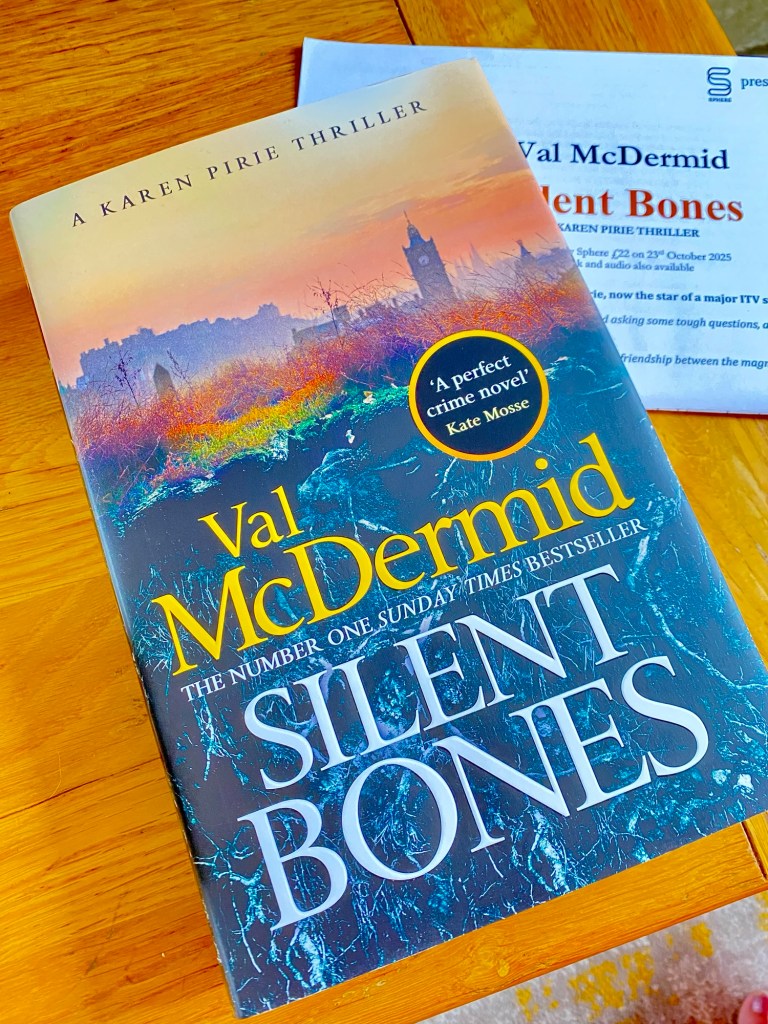
Silent Bones by Val McDermid 

It’s delightful to be back in the hands of a consummate storyteller like Val McDermid and to be reading with my fellow Squad Pod friends. She takes us straight into the story and I always feel like her characters are real people going about their business and we just drop into their world from time to time. Here the Historic Cases Unit are working two cases: the death of a high-end hotel manager and the identity of a body found after a landslip in heavy rain on the M73. Tom Jamieson’s death is flagged up by his brother in New Zealand. Thought to be an accidental death, Tom’s brother has footage that shows someone was behind Tom as he left the hotel after his shift and in the staircase where he met his death. If this man entered the steps after Tom and can be seen exiting then he must at least have seen Tom’s fall, or is there a more sinister explanation? The body in the M73 has to have been placed there deliberately. It turns out to be the body of investigative journalist Sam Nimmo, thought to have killed his pregnant girlfriend Rachel before going on the run about eleven years ago. The discovery opens up her murder case as well as Sam’s. I was hooked by the evidence that leads to a secretive book club of successful men who meet once a month in Edinburgh. They’re named the Justified Sinners, alluding to a James Hogg book that’s based on the Calvinist principle that once a person is ‘saved’ they can commit any sin, even murder, and still enter the kingdom of heaven. Is this a joke between literary friends or something more more? Have they stumbled upon an unofficial Freemasons’ club where the members share business tips and inside knowledge? The team start to wonder about the potential benefits of becoming one of the twelve members and whether those benefits are worth subterfuge or even criminal acts. 

Every time I pick up one of the books in this series the same thing happens. I start off slowly, savouring each chapter until about halfway, then I’m racing all the way to the end. It’s superbly plotted, creating a build-up of tension through the short chapters. Each chapter flits to a different viewpoint or separate lead in the cases, causing cliffhangers that last for three or four chapters. This means ‘just one chapter’ at bedtime becomes just three more and finally – I may as well finish. As we near the end of the book those revelations come thick and fast and I had to keep reading till I couldn’t keep my eyes open. I loved the red herrings thrown up in Sam Nimmo’s case as they try to find out what story he was working on. Every lead has to be followed and Jason is tireless on his match fixing leads but is this the story that got Sam killed? The political intrigue is as always murky and fascinating. Between the Independence Referendum and COVID there are plenty of possibilities for corruption and cover-ups. 

What I love most about Karen is her tenacity and absolute belief in her own skills as a police officer. She knows she’s a good detective and believes in the team she’s built, even if Jason and Daisy do bicker and become competitive. She knows how to use their skills and how much free rein to give them. I loved her conversations with the boss, the Fruit Gum and other men who outrank her. She doesn’t allow them any room for misogyny or sexism. When she’s told mockingly that the force can do better than rely on ‘women’s intuition’, she’s quick to tell him that it’s no different from a hunch or copper’s nose, a phrase male officers use frequently. She also won’t be bulldozed into moving their office, stating that it would mean longer commutes and distance from the research and forensic teams they rely on most. She also pushes for what she wants in the course of the investigation. When she doorsteps the Justified Sinners, their facilitator mentions they have plenty of pull with the Chief Constable who calls Karen and tells her to back off. She insists on him supplying a list of members before she does and even follows up in the morning to make sure she wasn’t fobbed off. Even in her private life she’s very sure of what she needs. She is still involved with Syrian refugee Rafiq who’s currently working as a surgeon in Canada. With British and US politics ‘beyond satire’ and political funding becoming ever more shady Karen does worry about their future. She’s flown to Montreal several times but she can’t wait until he has Canadian citizenship and can visit Scotland again, maybe even returning for good at some point. When she has a heartbreaking choice to make she faces it by staying true to herself, because she can be romantic but has a hefty dose of realism too. She can also be ruthless, at one point perhaps a little too ruthless for a softy like me. She has her eye on the end goal, not the other person’s feelings because in her eyes the end justifies the means. The truth is not found by treading lightly. 

I enjoyed getting to know more about Daisy and Jason’s home lives and it’s here where a bit of humour creeps in. Jason and Meera’s stake-out of a football match with the aftermath being a ‘follow that cab’ tour of Scotland’s motorways made me smile. Especially when the reward that clinched Meera’s attendance was a match day pie. Food looms large in Daisy and Stephanie’s relationship too, in fact Daisy eats so much that Jason is sure she has a tapeworm. That’s not a problem for Daisy, in fact she ponders that it might be the only thing that ensures she stays thin. She’s always scoring leftovers from lunches out and between Italian biscuits, french pastries and the South Indian curry that lures a suspect out of hiding I kept feeling hungry. All of this is to balance the darkness at the heart of these cases, where we see powerful and rich people doing what they like, safe in the knowledge that their status and privilege will always protect them from answering to their crimes. It’s also set in dark times and the weariness Karen feels about what’s happening in the world is something I’ve felt myself for the last couple of years, finding myself thinking the world can’t get any worse. Not only is a sex offending, fraudulent, narcissist running the biggest country in the world, but we have politicians here happy to emulate him. The book is rooted firmly in the now with cancel culture, the MeToo movement, the Covid pandemic and all the corruption surrounding it, as well as the cost of living crisis all pertinent to these cases. I think the team are feeling overwhelmed, even without the quagmire surrounding the Justified Sinners and Sam’s quest for the truth. Some characters did behave unpredictably, just like they do in life. The outcome isn’t straightforward and there were people to blame that I genuinely didn’t expect. This is an enthralling read from a writer at the very top of her game. Someone who knows exactly how to pitch a story and keep the reader engrossed until the final pages. She knows that the joy of a book is in the journey not just those final revelations and that sometimes we don’t get the answers we expect and it’s a better read for that.

Out on 23rd October from Sphere

Meet the Author

Val McDermid is a number one bestseller whose novels have been translated into more than forty languages, and have sold over eighteen million copies. She has won many awards internationally, including the CWA Gold Dagger for best crime novel of the year and the LA Times Book of the Year Award. She was inducted into the ITV3 Crime Thriller Awards Hall of Fame in 2009, was the recipient of the CWA Cartier Diamond Dagger in 2010 and received the Lambda Literary Foundation Pioneer Award in 2011. In 2016, Val received the Outstanding Contribution to Crime Fiction Award at the Theakstons Old Peculier Crime Writing Festival and in 2017 received the DIVA Literary Prize for Crime, and was elected a Fellow of both the Royal Society of Literature and the Royal Society of Edinburgh. Val has served as a judge for the Women’s Prize for Fiction and the Man Booker Prize, and was Chair of the Wellcome Book Prize in 2017. She is the recipient of six honorary doctorates and is an Honorary Fellow of St Hilda’s College, Oxford. She writes full-time and divides her time between Edinburgh and East Neuk of Fife.

Posted in Random Things Tours

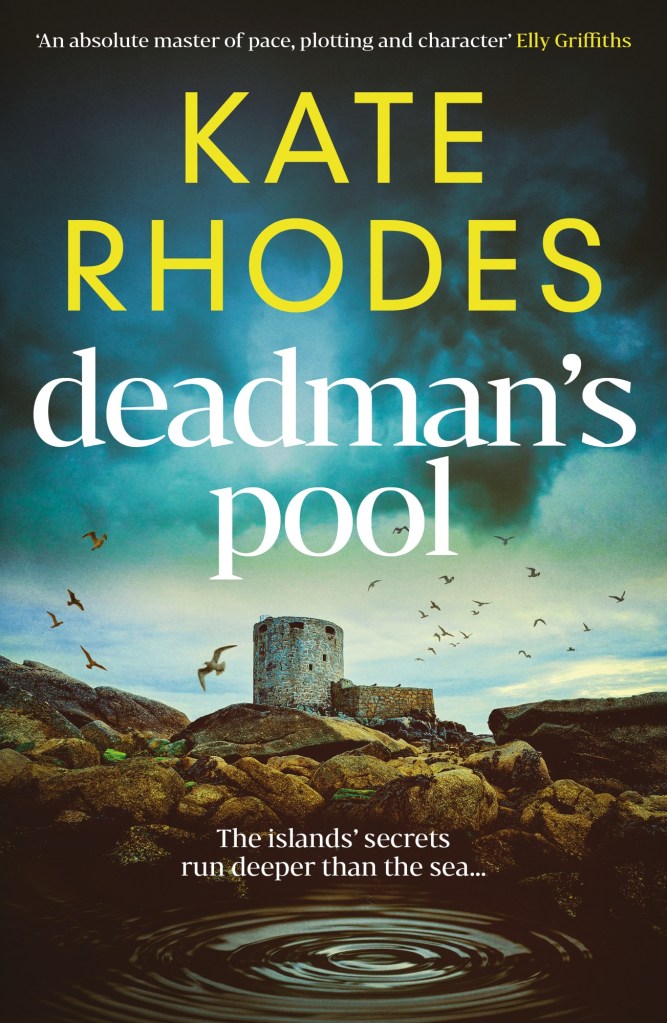
Deadman’s Pool by Kate Rhodes 

Winter storms lash the Isles of Scilly, when DI Ben Kitto ferries the islands’ priest to St Helen’s. Father Michael intends to live as a pilgrim in the ruins of an ancient church on the uninhabited island, but an ugly secret is buried among the rocks. Digging frantically in the sand, Ben’s dog, Shadow, unearths the emaciated and ruined remains of a young girl. The discovery chills Ben to the core. The victim is Vietnamese, with no clear link to the community – and her killer made sure that no one found her easily. The storm intensifies as the investigation gathers pace. Soon Scilly is cut off by bad weather, with no help available from the mainland. Ben is certain the killer is hiding in plain sight. He’s worried they are waiting to kill again – and at unimaginable cost.

When this blog tour request came through, I was intrigued by the blurb and the feel of the Scilly Isles as a backdrop for a murder investigation. Then I realised it was the eighth book in the Ben Kitto series, although the first in its new home at Orenda Books and it’s a perfect match. I was worried about whether I would be lost without all that back story. Thankfully I wasn’t lost at all. I was drawn in immediately by the opening chapter as Ben took Father Michael to St Helen’s, an uninhabited island that’s always been seen as the spiritual centre of the Scilly Isles. Father Michael uses one of my favourite phrases for places that feel holy and haunted at the same time: 

‘Christians call these places “thin”. The gap between us and the spiritual world is narrower here than any shrine I know, even Lourdes. It was hallowed ground for centuries.’ ‘It still feels haunted.’ The sky overhead is boiling with clouds.

I love the idea of thin places, that ghosts are not necessarily trying to haunt you, they’re just going about their business. In fact you’re probably as much of a fright for them as they are for you. It’s just that the veil between us and them has worn so thin we’ve become visible to each other. The author keeps this metaphor throughout the story and it soon becomes clear that the actual world also has its veils. We meet Mai, a girl trapped somewhere, unseen by those gardening only a small pane of glass away because they’re not looking down. There’s the gap between what the teenagers and the adults see; the rumour in school that there’s a network of well known adults trafficking children is dismissed as a conspiracy theory early on. But these young people lead a different lifestyle to the adults, they’re around in the dead of night travelling by boat to the uninhabited islands either to party or be where they can’t be seen. There are signs of a camp fire and drinks cans just inches from the body Ben and Father Michael discover, only a small layer of earth between the living and the dead. This mystical feel does extend to the body of the child, wrapped in what looks like a prayer shawl with jade charms left inside. There’s a sense of contradiction here, between the care taken to bury the body and the huge hole where the skull has been smashed. The atmosphere created by the author along with the description of the body make it one of the most horrifying I’ve read, emphasising that this is a human being clearly emaciated and treated with extreme violence. There’s also a loneliness to her final resting place, cut off from those living on the islands but also buried in a soil that isn’t her own. 

‘I crouch down to study the victim’s face more closely. There’s nothing inside the eye sockets except blackened hollows, but her exposed jaw catches my attention. Most of her teeth are intact, but several are blackened by decay. It’s unusual these days, when most kids obsess over their teeth, bleaching them to a perfect white.’

These are established characters but I felt that I knew them very quickly. Ben comes across as a gentle giant, huge in stature but easily affected by the cases he investigates. He comments that his wife Nina who works as a counsellor, has a way of detaching from the terrible things she hears at work while he doesn’t. Becoming a father hasn’t helped, especially when cases involve children like this one. When a baby is then left on the steps of the police station Ben is horrified. Their pathologist thinks the dead girl has Vietnamese heritage, if the baby is the same they have a monster on their hands and he has to face the fact that it is one of his neighbours. Until they know he has to make sure that there are no teenage girls who could have been concealing a pregnancy. It’s particularly distressing for Ben’s lifelong friend Zoe who has tried everything to become a mum, but I loved his sensitivity with her and the way he talked to the teenage girls he has to question. I loved how Nina’s violin playing allows him a meditation, sifting through the images of the day in his head and finding enough solace to sleep. 

“I can still feel the girl’s cold weight in my hands, when we lifted her from the sand, and see her blue-white skin. I have to find the monster who put her there, or she’ll be in my head forever. When I open my eyes again, Nina is returning her violin to its case, and it’s time we slept, before Noah wakes us again at dawn.”

We know someone is being kept prisoner because there are short narratives between Ben’s chapters told by a young girl called Mai. She lives in one room with constant fear of the door opening and her captor coming in. These are distressing scenes and really add to the urgency of finding this man. My nerves were shredded by one of Mai’s narratives where she’s been trying to break the rotten frame of a tiny window, high up in the room. It doesn’t give her much light because all she can see are the weeds and grasses of an unkempt garden, but one day as she’s working away on loosening the frame she sees the feet of someone cutting a lawn and she desperately wants them to notice her. The knowledge that she’s so close to this stranger but living in an entirely different world really got my heart racing. I was simply begging them to look down. The more we get to know her, the more Ben’s desperate search feels. There are potential suspects, particularly a musician who lives in an isolated position on the coast with a house that looks out to St Mary’s and a telescope trained on the horizon. He definitely has an odd manner but Ben needs much more than that to go on. The author pitched this quiet start to the investigation beautifully, it’s definitely not cozy but there’s a sense of waiting, the calm before the storm. It then kicks up a notch as the forensic examiner, Gannick, finds red carpet fibres and results on the baby’s DNA point to a young Vietnamese girl who’s fostered by a family on Bryher. Suddenly Ben has something to go on and he can’t move quickly enough. He sets the uniformed officers out to check households for red carpet and he sets out to the school to talk to the girl who is related to the abandoned baby. Now he’s sure that his suspect is an island resident, it’s just a race against time to find someone with a red carpet but also a cellar or storage area where someone could be kept and never seen.

One of my favourite characters was Gannick, the grumpy and brusque forensics specialist. Ben is privileged to have her company at home, where Nina seems to melt the icy facade in just a few minutes. There are some lovely moments where Ben just observes and appreciates her careful work and how she does everything to ensure she gets the evidence needed to lock this murderer away for a long time. He tells us she has severe and chronic back pain and he describes her using her crutches to swing across the terrain of St. Mary’s missing nothing. He knows she’s in considerable pain and as a woman with a similar disability I loved having a disabled character who isn’t instantly likeable or some sort of superhero. She’s just quietly getting on with her job the best way she can. There’s no redemptive character arc here and I loved that her disability and her grumpy attitude remain. Yet Ben does confide in her that he’s worried, that the closer they come to the offender the more danger his victim is in. Gannick acknowledges that ‘this one’s a psycho’ but they will definitely get him. As we come closer to the truth, the weather mirrors Ben’s turmoil: 

“The outside world is comfortless, though. When I pull back the curtain, breakers are lashing the shore. Seabirds are returning to Bryher in flocks, scattered by the breeze. It feels like we’re at the mercy of some savage force that’s trying to tear these islands apart.”

This is a fantastic crime novel, acknowledging both the savagery of someone who will traffic young women and keep them captive, but also the wildness and daily difficulty of living on these islands in the Atlantic. When a storm blows in people are cut off, there’s no way to travel between the islands and everything has to stop. Nina worries that as he’s older Noah won’t know what it’s like to be able to meet friends in town and to visit a cinema together. On the other hand he’ll have experiences other teenagers won’t like making a fire and cooking on the beach, camping on uninhabited islands and learning to drive a speedboat. I could see what Ben finds so special about this place and while there are many experiences he’ll only have rarely, there are others that some people don’t have in a lifetime. Yet the case does taint his idea that the islands are a safe place, to have had a crime that’s so serious happen right under his nose has left him feeling unsure and more suspicious of his fellow islanders. It’s going to be fascinating to see where things go from here for Ben Kitto. In fact I’m so fascinated that I’ve bought all the previous novels in the series to take on holiday with me and have a binge read. I’ve fallen in love with this unusual and wild backdrop but also with this giant of a man who carries the weight of the crimes he investigates with him. 

Meet the Author

Kate Rhodes is an acclaimed crime novelist and an award-winning poet, selected for Val McDermid’s New Blood panel at Theakston Old Peculier Crime Writing Festival for her debut, Crossbones Yard. She has been nominated twice for the prestigious CWA Dagger in the Library award, and is one of the founders of the Killer Women writing group. She lives in Cambridge with her husband, the writer and film-maker Dave Pescod, and visited the Scilly Isles every year as a child, which gave her the idea for the critically acclaimed Isles of Scilly Mysteries series.

Posted in Publisher Proof

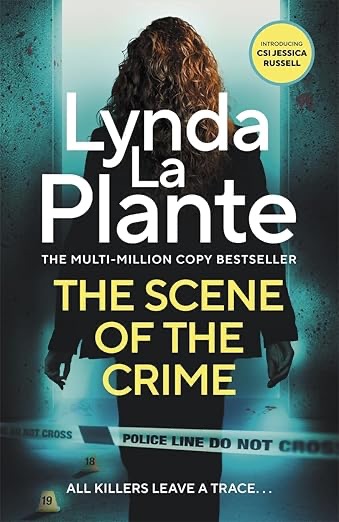
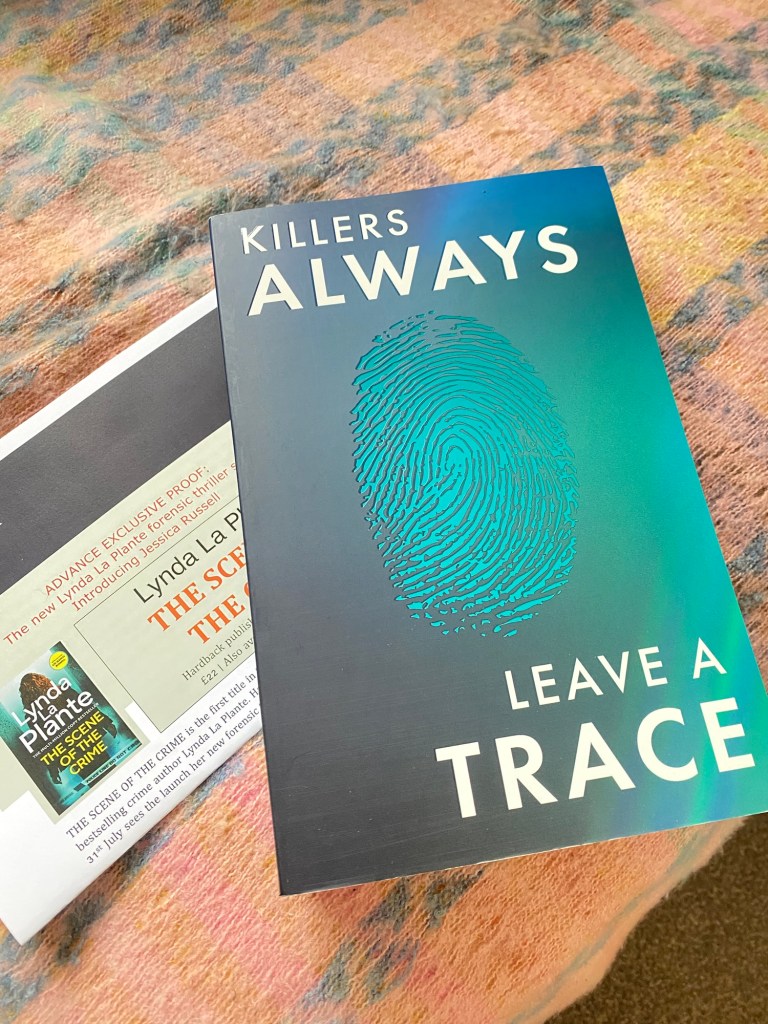
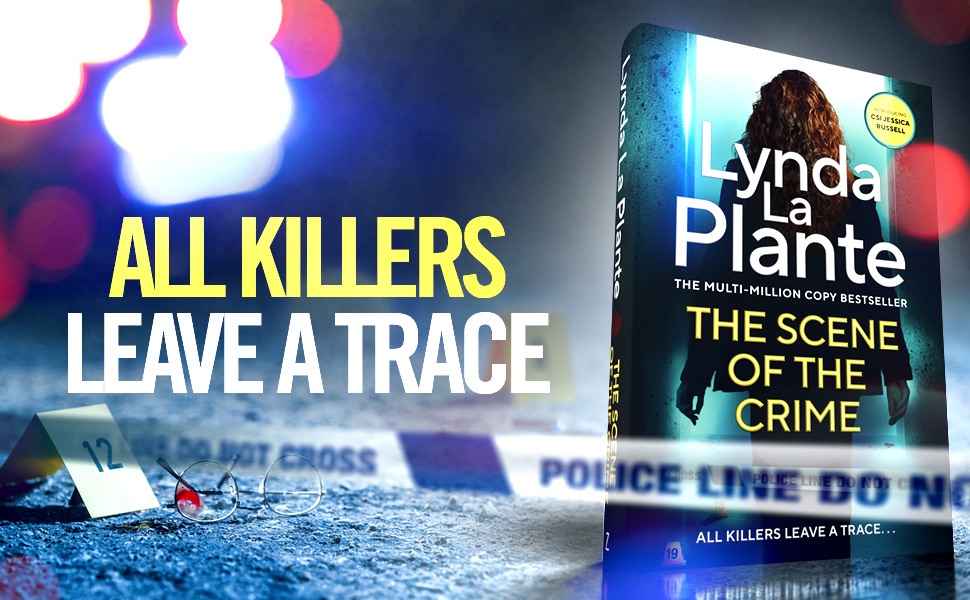
The Scene of the Crime by Lynda La Plante 

Jane Tennison was one of my tv heroines growing up. I was asked on my first ever counselling course to write down three characters who I admired and why – so I choose Linda from Press Gang (Julia Sawhala), Dana Sculley (Gillian Anderson) and Jane Tennison (Helen Mirren). They are characters and actresses I still admire today. I think it was their resolve, their competence and passion for their work and their intelligence. I wanted to have that belief in who I was and what I wanted to do. Jessica Russell is another strong character for the author, although outwardly she feels a little softer than La Plante’s other heroines. However, she has great confidence in her abilities and intellect as a forensic psychologist and head of the Met’s new MSCAN team. Jess, Diane and Taff have a lot of experience in working together and are hired to create this fast-track forensic team reserved for the most serious of the MET’s cases and they have to hit the ground running. A wine dealer has experienced a home invasion while he was sleeping upstairs. Johan de Clerk is a young South African man who has settled in London after marrying his wife Michelle and started a branch of his family’s wine company that supples their products direct to restaurants across the capital. The intruder disturbed him and when he came down to confront him there was a fight and the intruder fled, leaving Johan with serious stab wounds and a head injury. His sixty-thousand pound Rolex watch was taken along with money from a safe. While Johan fights for his life in hospital, Jess and her team make a start forensically examining the scene. This means working alongside DCI ?? Who seems almost personally affronted by the MSCAN team and is very brusque in his manner. Luckily they have his deputy DS Dave ?? Who seems very happy to work with the team and gels straight away. This is the case that will define whether the cost of their department is worth it’s while and whether Jess’s much talked about abilities are up to scratch. DCI Woods was on the interviewing panel for her job and didn’t want to appoint her, but was outvoted. This case is not going to be as straightforward as it seems because once you’ve thrown in a mystery late night visitor drinking in the cinema room, a furious and forensically aware spouse and Jess’s own personal link to the case there are a lot of variables. Oh, and the team have a leak too. Will Jess manage to bring this offender to justice?

I always look forward to a new Lynda La Plante character and Jess is going to be an interesting woman to get to know. She’s whip smart and confident when it comes to her job but rather more hesitant when it comes to her private life. She’s currently living with brother in their mother’s bungalow, an arrangement that works because although they’re quite different, they do understand one another. They have an interesting dynamic, having recently lost their mother they’re both grieving and Jess’s response to trauma is trying to control other parts of her life, such as her home environment. Chris has to intervene over the matter of hoovering first thing in the morning before work, when he’s trying to stay asleep. She’s wiping down surfaces as soon as something has touched them and insists on rinsing everything before it is stacked in the dishwasher, something Chris is more than happy to leave to the dishwasher. Although it’s possibly this need for correct procedure that makes her so good at her job and this one is creating more anxiety than most since it is the team’s first, but also because Jess is going to meet someone she hoped never to see again. Despite her rather fragile pre-raphaelite exterior (I see Kelly Reilly here) Jess has a core of steel and a willingness to place herself in very uncomfortable situations if it’s going to get the right result. This is especially important when she has an SIO who lacks experience, Woods was fast-tracked as a graduate and quickly promoted, but has no experience in uniform or with the minutiae of forensics, he relies very heavily on his deputy Dave who does most of the liaising with MSCAN. On Dave’s part that might have a lot more to do with Jess than his work ethic. Jess is loyal to her team, even to Guy who she doesn’t know well yet. She doesn’t hover over what they’re doing, she simply trusts them to do their jobs well and report in. Her mix of skills from the psychology of human behaviour to managing a crime scene are formidable. I think, if I’d been Dave I’d have been a little bit in awe of her. 

I found the case fascinating, solving only a small part of it before the end. I felt sure there was more to this married couple than met the eye. Nobody is known as ‘that bitch Belsham’ without a reason and I wondered if the victim’s wife’s reputation was built on more than her court appearances as a KC. She will certainly know criminal law as well as, if not better than, the police. She would be a formidable rival to them in court, although she can’t represent her husband, they would certainly talk about the best strategy together. This suspect can’t stop talking though, even overriding his solicitor’s advice. Even worse he’s known to a member of the team. Yet listening to his evidence they wonder whether this man could ever have been the dark shadow that invaded their nights and left them changed. Although he’s clearly been involved in criminal behaviour could he really have planned and executed that break in or overpowered a huge man like Johan de Clerk?                                                                                                                         

It was clever that the case kept moving in two different directions, drip feeding us a little about the investigation into their suspect and following the forensic evidence, but also investigating Johan de Clerk and even his family back in South Africa along with their wine business. The pacing is pitch perfect, just enough revelations to keep you reading but not so much that you’re running ahead of the team. Then there are the sections where there would be a CSI type montage of scientific testing and nerdy types delving into the devices like phones and tablets. It showed that every breakthrough in a case must be backed up by evidence – can they prove someone was where they claim to be? Can they prove a suspect’s alibi? Can they prove a connection between subjects? Everything has to be proved beyond reasonable doubt. I must admit there were places where I found the evidence overwhelming to keep track of and even though the characters are constantly in touch by phone I couldn’t imagine how they keep hold of all this information in their heads! Taff and Diane have bags and bags of things to test for DNA, Guy must have an inbox a mile deep because he is finding evidence to lock down the case against a suspect and also having the follow up theories and hunches the team might have. I had to let go sometimes and accept that I wasn’t going to understand or lock down every detail, just as long as it sounded plausible. I was reading a book, not running a forensic unit – a job I was more than happy to leave for Jessica. I was surprised by how much Jess actually did in terms of investigating and I could understand that she and DS Dave were coming a bit close to having the investigation blow up in their face. She questions people alongside Dave and offers profiling insights during interviews. I wasn’t sure whether the manager of a forensic team would be so involved with that side of a case, but I have the same criticism of Silent Witness and it’s still entertaining regardless and this is too. 

I think the author has achieved her goal of setting up a new series and a central character with a lot more to give. We’ve spent a lot of time with Jess, there was a fascinating case to get lost in and there are also clear hints where this might go next. There were whispers of a possible course with the FBI in Quantico for Jess, some hints of potential romance and I was sure there was a lot more to Guy who’s had a fascinating working life before MSCAN. There were also interesting aspects of her personal life I’d love to explore more such as Jess and her brother’s family background. Her brother is diagnosed with a life limiting disease that will affect them all in future books. We don’t learn much about Taff and Diane’s lives yet. All of which shows there is definitely room to grow here, which isn’t surprising given the author’s track record at plotting a series. I can see this being an addictive reading experience and I look forward to seeing where this series goes next. 

Meet the Author

Lynda La Plante was born in Liverpool. She trained for the stage at RADA and worked with the National Theatre and RDC before becoming a television actress. She then turned to writing – and made her breakthrough with the phenomenally successful TV series WIDOWS.

Her novels have all been international bestsellers. Her original script for the much-acclaimed PRIME SUSPECT won awards from BAFTA, Emmys, British Broadcasting and Royal Television Society as well as the 1993 Edgar Allan Poe Writer’s Award. 

Since 1993 Lynda has spearheaded La Plante Productions. In that time the company has produced a stunning slate of innovative dramas with proven success and enduring international appeal. 

Based on Lynda’s best selling series of Anna Travis novels, Above Suspicion, Silent Scream, Deadly Intent and Silent Scream have all adapted into TV scripts and received impressive viewing figures.

Lynda has been made honorary fellow of the British Film Institute and was awarded the BAFTA Dennis Potter Writer’s Award 2000.

On 14th June 2008 Lynda was awarded a CBE in the Queen’s Birthday Honours List (Writer and Producer for services to Literature, Drama and to Charity).

On 3rd October 2009, Lynda was honoured at the Cologne Conference International Film and Television Festival with the prestigious TV Spielfilm Award for her television adaptation of her novel, Above Suspicion.

Books penned by Lynda La Plante include: The Legacy, The Talisman, Bella Mafia, Entwined, Cold Shoulder, Cold Blood, Cold Heart, Sleeping Cruelty, Royal Flush, Above Suspicion, The Red Dahlia, Clean Cut, Deadly Intent and Silent Scream, Blind Fury (this entered the UK Sunday Times Bestsellers List at number 1 having sold 9,500 copies in its first two weeks), Blood Line, Backlash, Wrongful Death, and Twisted, which have all been international best-sellers. 

In Feb 2012 Lynda’s chilling tale of THE LITTLE ONE was published in conjunction with Quick Reads through Simon & Schuster UK.

Lynda’s latest book, Tennison, was published on 24th September 2015 and is the prequel the highly acclaimed Prime Suspect. The story charts Jane Tennison’s entry into the police force as a 22 year old Probationary Officer at Hackney Police Station in 1973.

Lynda La Plante is published in the UK by Simon & Schuster.

Lynda La Plante is published in the US by HarperCollins Publishers.

Please visit http://www.lyndalaplante.com for further information. You can also follow Lynda on Facebook and Twitter.

Posted in Compulsive Readers

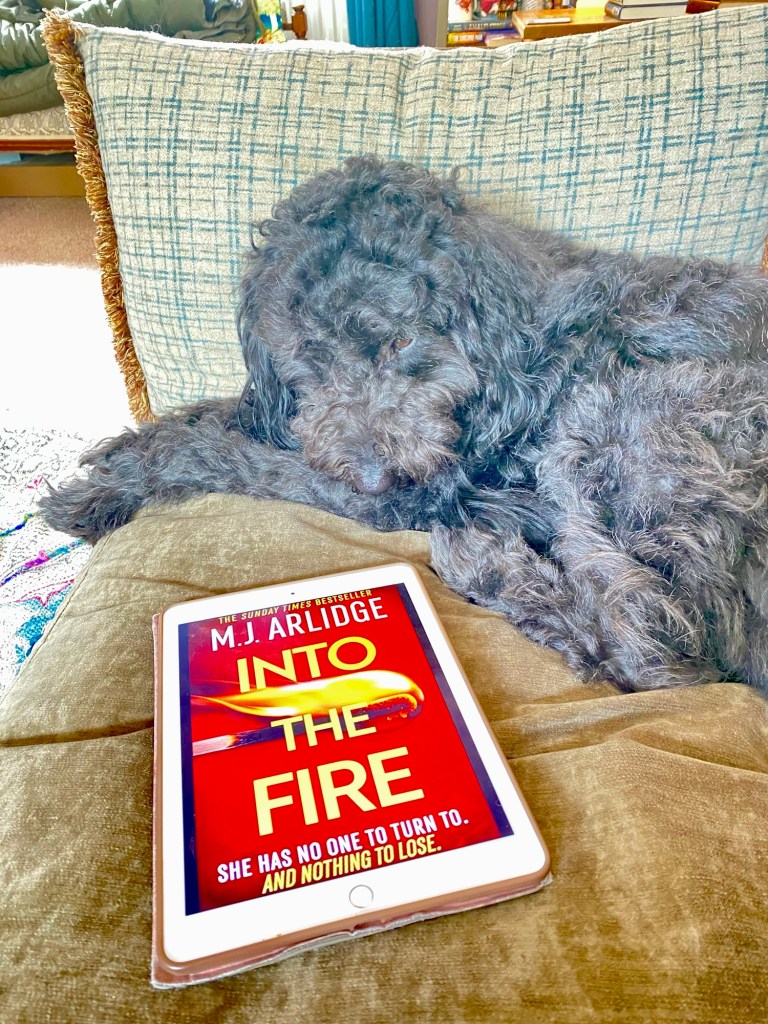
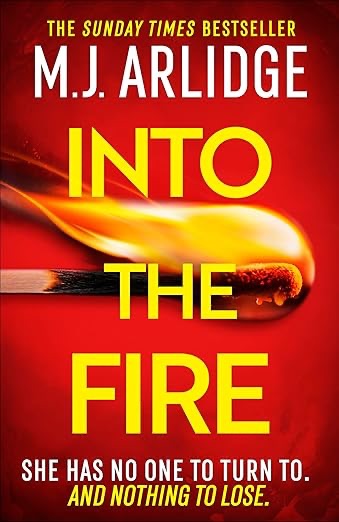
Into the Fire by M.J.Arlidge

This book opens with a heart-stopping scene that sets the pace for the rest of the story. Helen is relaxing after meeting her lover in a luxury hotel. While he has a shower, she is in her nightgown and robe enjoying the night time view over downtown Southampton. Movement suddenly catches her eye and she’s drawn to a woman who’s running down a darkened street towards a precinct of shops, pursued by two men. As they catch up, one of them pulls out a bicycle chain and starts to beat the woman. Helen doesn’t wait or think, tearing out of the hotel room and down several flights of stairs as she’s too impatient to wait for the lift. She runs down the dark street hoping that the only shop she saw with a light on has a customer or staff who’ve called the police. Helen flies at one of the attackers, who is taken completely by surprise and she soon disables the second, turning to the woman who has been badly beaten. She looks like she’s from the Middle East perhaps, with two very distinctive tattoos placed on her forehead and chin. Unfortunately, Helen has committed the cardinal sin of combat and has turned her back on her attackers. The next thing she feels is a huge bang to her head and then everything goes dark. This opening scene tells me this will be a gritty, modern thriller with a kick-ass heroine. 

This is the thirteenth novel in the DI Helen Grace series and I’m seriously out of touch with the character, having only read the first couple of novels after picking them up in a book swap. I’m sorry I didn’t read the rest. Helen is working on her own initiative in this novel. She handed in her notice at the end of the last, with her protege Charlie being promoted in her place. Helen doesn’t know what the next step is, but she’s been enjoying the break. The only thing she misses is the camaraderie of a team and although she has enough money to really think about what’s next, she is anxious about it. Although life will bring it’s own answer soon enough and it might be the last thing she’s expecting. She starts to investigate alone, feeding into Charlie who is trying to target traffickers and their victims coming through the port in lorries and containers. The story is told mainly through Helen’s eyes, but also through the narratives of two other women. Viyan is another trafficked Kurdish Syrian woman and Emilia is a journalist whose father is dying in prison. At first we’re not sure how all of these narratives fit together but slowly they form a cohesive picture. Viyan’s narrative is grim and brutal. I wanted everyone who moans about asylum seekers to read this novel and understand the desperation and the lies of the traffickers that drive them here.

This operation involves a Dutch trafficker and then a gang master who provides their labour for specific contracts, this one in the NHS. I was furious with the NHS procurement manager who has simply turned a blind eye when accepting an obviously low quote for services, knowing that somewhere along the line someone is being exploited. I think many people might be surprised if all migrants were removed from the labour market, because I think the care sector and the NHS would collapse. Here the migrants are working an NHS contract disposing of clinical waste. Not only are corners being cut where safety is concerned, but if she saw the conditions, the state of the workers and the brutality meted out the procurement manager would be ashamed. The beatings and whippings with chains are only the first in a series of punishments, leading up to the ultimate solution – the incinerator. In fact after hearing the horrific death of her friend, Viyan sees a chance to escape and takes it. Will she be able to escape the minders this time and if they catch up with her can she survive? 

Emilia is a journalist on the crime beat but we meet her as she visits her elderly father in hospital. He tells her he’s dying but wants her to know he has hidden some of his ill gotten gains at the home of his most recent partner. He wants Emilia to talk her way into the woman’s home, find his hiding place and bring out whatever’s inside the hold-all. Emilia knows there’s more to this than he’s saying, but sets out to try. This mission puts her in the path of Helen and the villains linked to her trafficking case. Having such strong women as our main characters was great and Viyan had all my empathy and admiration. I was so desperate for her to make it back to her family. Helen is formidable! Despite having horrendous violence dished out to her, she keeps going and can definitely hold her own when she’s not outnumbered. What I loved most about her, was her inability to turn away from injustice and suffering. She sees a terrible crime occurring and although she’s no longer in the force, she doesn’t walk away and hope someone else might deal with it. Where in the world could she use these natural skills that isn’t in the force? She’s also great at supporting and boosting other women, like her replacement Charlie, making sure she knows everyone has imposter syndrome and she does have what it takes. You will hold your breath for the final showdown and all the women involved. The short punchy chapters are action packed and keep you reading ‘just the next chapter’ until it’s 2am. I now need to set aside time and read the ten novels between this and the last one I read. I’ll probably load up the kindle with them before I go on holiday so I can carry one without interruption. This was a belting, action-packed, female led, crime thriller and I recommend it highly. 

Out 3rd July from Orion Books

Meet the Author

M.J. Arlidge is a novelist, screenwriter and producer. He is the author of the bestselling DI Helen Grace thrillers including: Eeny Meeny, Pop Goes the Weasel, The Doll’s House, Liar Liar, Little Boy Blue, Hide and Seek, Love Me Not, Down to the Woods, All Fall Down and Truth or Dare.

M.J. Arlidge has also worked in television for many years, specialising in high end drama production. In the last five years he has produced a number of prime-time crime serials for ITV, including TornThe Little House and Undeniable. He has written for Silent Witness and also pilots original crime series for both UK and US networks.

Posted in Throwback Thursday

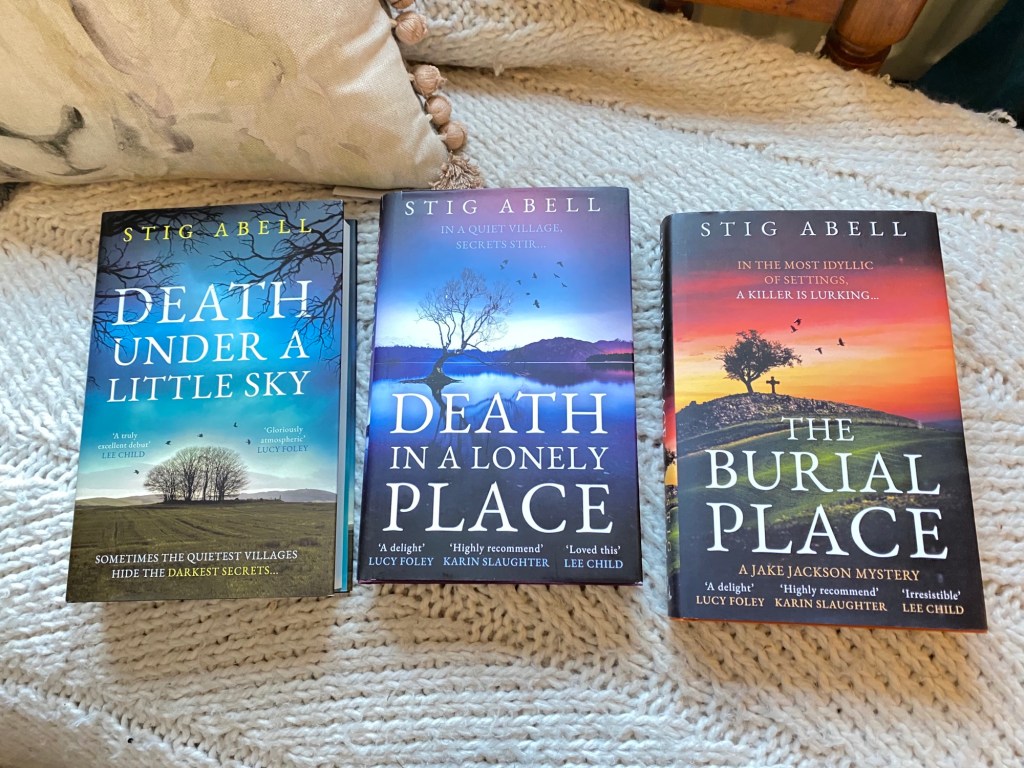
Death in a Lonely Place by Stig Abell

Jake Jackson is becoming settled two years after his Uncle Arthur died and left him his home at Little Sky. It’s also two years since the subsequent murder case that threatened everything he’d built there. Now he splits his time between Little Sky and the cottage shared by his partner Livia and her daughter Diana. His quiet routine is disrupted by the abduction of a little girl and local detective Watson, asks for his help. When they recover her in an isolated empty house, it almost feels too easy. The abduction seems to linked to a shadowy organisation whose calling card says ‘No Taboo’. Their business is providing experiences for bored rich people, where no request is refused. Using his contacts, analyst and retired detective Martha and investigator Aletheia, can Jake uncover the people behind the organisation? Then Livia receives a job offer from a new businessman in the area and she’s excited to view his stables and the horses. His offer seems to come with unusual conditions, including Jake and Livia’s presence at his mansion, Purple Prose, for a weekend of entertainment. Is it possible these two things are linked? Jake has never trusted coincidences and he isn’t going to start now.

This is a hard case for Jake, not just a small step up from his first case at Little Sky, but a whole staircase. He’s gone from local cold case murder to an international conspiracy run by people with seemingly endless means and reach. I wondered how on earth Jake’s small team would crack this one – it’s a real David and Goliath situation. There’s also a sense of something wholesome up against something unremittingly evil; the desire to have extreme experiences is one thing, but this is debauched. No sexual desire, bloodlust or act of cruelty is too much – as long as you can pay for it. Of course that leaves wealthy customers open to blackmail, especially those with responsible jobs or famous faces. I could understand Livia’s concerns about her safety and Diana’s. As Jake’s case starts to warm up, he is warned off. He’s attacked and also has a rather horrifying home delivery at Little Sky. There’s a part of Jake that can’t resist the investigative world, but it does put those he loves in huge danger. I don’t think I would be as patient as Livia. 

I have to say how much I loved Martha. She’s intelligent, shrewd and absolutely no nonsense. She was medically retired from the police after a shoot out left her so badly injured she had to have both legs amputated. I loved her calls with Jake and their crime writer sign offs. She proves herself a strong investigator without leaving her desk. There are great strong women in these novels and she’s definitely my favourite. I do have a soft spot for Sarah at The Nook, the local shop with a downstairs drinking establishment. She’s almost a mother figure to Jake, shaking her head at his more eccentric ways and making sure he has a warm drink and slice of cake. In turn he lifts and stacks her heavy produce. It’s interesting to consider that apart from Rose, Jake surrounds himself with women. Could this possibly be a response to the loss of his mother? We haven’t met Jake’s ex-wife Faye, but it would be interesting to look at their difficulties conceiving and whether never seeing her maternal side contributed to the breakdown of their marriage. He certainly appreciates Livia’s nurturing characteristics with Diana. 

This is much tougher and more brutal case for Jake than the last. I was surprised at his survival instinct, he seems like such a gentle person at home, but can mete out some serious violence where necessary. I wasn’t sure how I felt about this latent side to him, but he really takes some punishment too and suffers one ordeal that genuinely made my breathing a little panicky. I’m no good with small spaces. His judgement is impeccable though and when he’s asked to make a choice that tests the loyalty of those around him, he does make it, sending me tearing back through the pages for the clues. It’s a very tense ending and you will be on the edge of your seat through to the finale. I’m always so pleased that Jake, Livia and Diana have the peace of Little Sky to retire to when it’s all over. 

Stig Abell

Posted in Publisher Proof

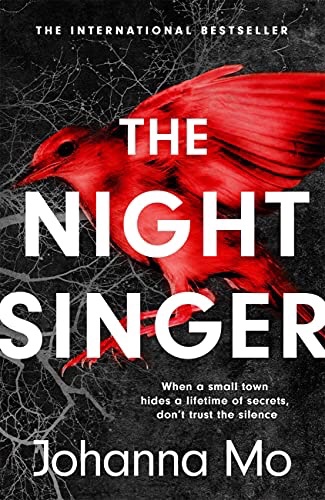
The Night Singer by Johanna Mo.

You’ve got no idea what you’re dredging up. You’re going to ruin everything.

The past is not going to stay buried in this unputdownable crime novel, the first in a series featuring Detective Hanna Duncker. Fans of Ragnar Jonasson and Ann Cleeves will be gripped by this moving and atmospheric crime novel, already a bestseller in Sweden. Hanna Duncker has returned to the remote island she spent her childhood on and to the past that saw her father convicted for murder. In a cruel twist of fate her new boss is the policeman who put him behind bars. On her first day on the job as the new detective, Hanna is called to a crime scene. The fifteen-year-old son of her former best friend has been found dead and Hanna is thrown into a complex investigation set to stir up old ghosts.

Not everyone is happy to have the daughter of Lars Duncker back in town. Hanna soon realises that she will have to watch her back as she turns over every stone to find the person responsible…

I was drawn deeply into Hanna’s world straight away in this brilliant piece of Scandi Noir. This is the first in Johanna Mo’s Island Murders trilogy, and is already a hit in Sweden. Hanna has returned to her home town of Öland for a post in the local police force. She has to hit the ground running though, because instead of quietly getting to know her colleagues, she is straight onto a crime scene. The body of a young 15 year old boy has been found and everything points to murder. Hanna is partnered with Erik and tasked with breaking the news to the boys family, but there’s one problem. The murdered boy’s mother Rebecka, went to school with Hanna and recognises her the minute she opens the door. If she’d hoped to keep her past secret, or at least in the background, this case will blow her identity wide open. Joel’s birth father also went to school with Hanna and has a reputation for being a bully, in fact Rebecka has openly admitted he was violent during their relationship. Could he possibly have killed his own son? It’s clear that Hanna could be very beneficial to the enquiry – Rebecka trusts her instantly and confides in her on their first visit. Yet her ex-husband Axel, now a well-known businessman in Öland, seems antagonised by Hanna’s presence. In his first interview, Axel tries to manipulate and wrong-foot Hanna by bringing up their past, even twisting the truth to hurt her. He even notices her ‘tell’, because when she’s anxious her fingers automatically rub her arm where her nightingale tattoo is.

‘She wanted to tear back the black material covering her tattoo of a nightingale, the bird that would help keep the darkness at bay. After her mother’s death, her grandmother had given her a small wooden nightingale to keep by her bedroom window. She claimed that because nightingales sing at night, it would help Hanna with her nightmares, but her bad dreams hadn’t gone anywhere. When she complained, her grandmother had stroked her cheek and said: I know those dreams are horrible, but they would be even worse without the bird. Those words had taken hold, and Hanna had kept the bird ever since’.

Yet there’s a worse secret in Hanna’s past than anything that happened at school. She is Lars Duncker’s daughter and his conviction for murder 16 years earlier is still fresh in a lot of the local’s minds. Can her past stay where it belongs, enabling Hanna to remain focused on who murdered Joel? Could being the daughter of a murderer actually help her to solve the crime she’s investigating? Or will being Lars Duncker’s daughter draw attention away from the case?

Johanna Mo

I loved the structure of this novel, as one timeline follows the investigation and the other tracks the preceding 24 hours, from Joel’s point of view. I found the second timeline really emotional, because this is Joel unfiltered, as only his closest friend knows him. We learn things about him and his life that his parents don’t know, some of which really hit me in the heart as a step-mum of teenagers.

‘As usual. Mum won’t believe him if he tells her how dark and ugly he is inside. She won’t believe what he is thinking about doing. Everything he has already done. But he’s so tired of acting. Of pretending to be someone he isn’t’.

The thought that they might keep things to themselves, scared of my reaction, made me so sad. Yet, this felt like an honest depiction of teenage life, where our friends rather than our family probably know us best. Where crime fiction is often focused on action, or the thrilling twists and turns, this felt quieter and more real. In fact the reason I originally started to read and watch Scandi Noir was because it depicted how violent crime affected the families and friends involved. This reminded me of a another crime writer I read this month, Eva Björg Aegisdottir, who does this very well in her Forbidden Iceland series. It felt like a more feminine gaze showed the devastation caused emotionally. From Joel’s nuclear family and slowly tracking outwards to friends, teachers, neighbours we see all the victims of a murder. Joel’s story takes centre stage, rather than his killer.

I thought the detail of the case was incredible, with every little lead followed up until the truths of the whole town start to come to light. A murder investigation unearths all kinds of secrets and lies before it can be solved. It was interesting to watch Hanna as she tries to settle back in to her home town, and make friends with her colleagues. The author cleverly shows how both she and Erik could come out of an interaction with very differing ideas about what the other one thinks. Hanna assumes people will be prejudiced against her when they find out whose daughter she is, and some are, because someone is ringing her work phone with silent calls which escalate to sounds of a fire burning and a blood curdling scream. As each narrative came closer to revealing the answers, the tension started to build. I liked that the story dealt with a very timely issue and all aspects of the case felt well resolved. However, when it comes to Hanna’s own story, there were enough loose ends left to explore in more detail over the next couple of books. I would recommend this to all crime lovers, but particularly those who enjoy an intelligent, complex and emotional crime novel that focuses on the victims rather than fetishising the killer.

Published 3rd August 2021 by Headline Review

Check out the rest of the blog tour for more about The Night Singer.

Thanks to Headline Review for inviting me on the blog tour.

Posted in Publisher Proof, Random Things Tours

Girls Who Lie (Forbidden Iceland Vol 2) by Eva Björg Aegisdottir

I was meant to be reading this for the recent Random Things Tour, but have been taking a break for family stuff and my health. However, I did read Vol 1 of this series last year so found it very difficult to see the next novel on my TBR and not dive in. So here are my thoughts, a little late, but surely it’s always good to hear someone praise your work? No matter how late they are.

The author opens the novel on a freezing cold day and a bleak volcanic crime scene, immersing us straight into both the story and the landscape. Two boys, wandering on the local lava fields have found a body in a small cave. They frightened themselves at first into thinking they’d found a black imp, the body was so dark. However, our heroine and police investigator Elma, believes it may be the body of Marianna, a single mum who disappeared from town seven months previously. Thought to have committed suicide, Marianna left a short and cryptic note on the kitchen table for her daughter Hekla, then was never seen again. Now, it’s clear that this is a murder, and as Elma reviews the files from the previous year, when this started as a missing person investigation, she finds the work less than satisfactory. She can see so many unanswered questions to follow up. Hekla is now in foster care, with a couple who have fostered her many times, before when Marianna was struggling or disappeared. Now Elma’s team will have to wade into the previous investigation, social services files and the difficult life of a children whose parent simply struggled to cope.

I loved the complex psychology behind this story of teenage pregnancy, family expectations and how to be a parent. Added to that is othe challenge of preventing emotional pain passing to another generation. Our investigation is interspersed with a narrative of a young teenage girl who tells us about her life as the mother of an unwanted child. Her identity is not revealed and we don’t know this girl’s connection to the main plot, but her narrative is sad and traumatic to read both for her and her baby daughter. Meanwhile Elma is beginning to understand the difficult and disconnected relationships that surrounded Marianna and her daughter. Hekla was first placed with foster parents at the age of three when Marianna left her home alone while she went on a drug binge. Hekla’s foster parents were a wealthy, stable couple who made no attempt to hide how much they would have loved to take Hekla on permanently, but Child Protection Services had a policy of trying to keep children with their birth families as much as possible. Elma can see the theory behind this, but starts to wonder whether it’s a policy that actually fails children in practice. So, Hekla leads a life of moving back and forth between Marianna, who was harsh and belittled her daughter, and a foster mother who wanted to be more than her support family. If Hekla had been given the choice, she would have chosen to stay with her support family, but instead was pulled between them, both literally and emotionally. She describes how she feels:

It’s strange to be six years old and feel as if you’re a black stain on a white sheet. As if the world is in headlong flight and all you can do is grab hold and try not to fall off.’

Trying to act as gently as possible, Elma must speak to both Hekla and her support family about inconsistencies in their stories. She doesn’t want to cause more distress, but Hekla is a girl of secrets and perhaps lies too. There are parts of this story that might be upsetting for someone who has been through the care system or had a dysfunctional parent. Marianna is barely able to cope with her own life, never mind being a parent. I love that we are party to Elma’s thought processes around the case, and on her private life. As she reflects at the end of each day, the author hints strongly at unresolved trauma in Elma’s own past. There’s also the dilemma in her private life, where the loss of her partner to suicide has affected her more than she lets on. She’s not ready to have real, deep feelings for someone, preferring no strings encounters. Yet she does have feelings for someone, and if she doesn’t act on them, will it be too late? The proximity of her family, and the support she receives from them, is both helpful and irritating by turns. This is her home town, so she knows all the allegiances and quirks of the community, something which can have its own problems when investigating such an emotive crime.

The first half is slower and more thoughtful, giving the reader time to soak up the atmosphere and Hekla’s experiences. In the second part, the pace quickens and the past also catches up as our mystery narrator is revealed – a reveal that had me reassessing everything I’d thought before. In a world where every thriller boasts twists and turns galore, this one packed a punch, was truly clever and had played with my misconceptions of who it might be. Another thing that really hit home for me, as the stepmum to two teenage daughters, was just how damaging the constant wrangling between co-parents becomes. I thought the character of Hekla was pitched perfectly, with a deep understanding of being a teenage girl. She showed that need to belong, to be accepted, whilst also feeling complete isolation – that nobody in the world understood her or had felt what was going in on her head. This is an age where being singled out as different is painful, it takes time to work out that your originality is your super power. This was a tense and compelling read, with undercurrents of deep melancholy that seemed to come from Elma and the forbidding landscape. This was a psychologically astute murder mystery, with deep empathy and a strong sense of place. I would recommend it highly.

Meet The Author

Born in Akranes in 1988, Eva moved to Trondheim, Norway to study MSc in Globalisation when she was 25. After moving back home having completed her MSc, she knew it was time to start working on her novel. Eva has wanted to write books since she was 15 years old, having won a short story contest in Iceland. Eva worked as a stewardess to make ends meet while she wrote her first novel, The Creak on the Stairs. The book went on to win the Blackbird Award, was shortlisted (twice) for the Capital Crime Readers’ Awards, and became a number one bestseller in Iceland. Eva lives with her husband and three children in Reykjavík, and she’s currently working on the third book in the Forbidden Iceland series.

Posted in Red Dog Press

Far From The Tree by Rob Parker.

If a man is guilty, the son is often guilty by association. What was that saying? An apple never falls far from the tree. That’s what everyone would think.

This is my first time reading Rob Parker and it definitely won’t be my last. It only took a couple of pages for me to be drawn in to DI Brendan Foley’s complicated world and from a personal perspective I loved that it was partially set in my family’s stomping ground around Liverpool. The fact that I knew every setting as the story unfolded added to the gritty reality of this brilliant crime novel. DI Foley’s life becomes very complicated when a trench containing 27 bodies, in various states of decomposition, turns up in woodland on his Warrington patch. It encroaches on family life immediately as he has to leave his son’s own christening to attend and his wife Mim has to hold the fort. However, things become even more complicated, and terrible, for his family, when one of the 27 turns out to be Brendan’s nephew Connor.

We learn how conflicted the Foley family are as the case develops further. The strength of character it has taken for Brendan to be different shines through. I loved the balance between the family story and the case in hand, and the tension between the two as the answers to one seem a little too close to home. Each character was so well drawn I could imagine them clearly. I loved DS Madison, policewoman and part-time boxer. She’s loyal and disciplined, so when she’s asked to bend the rules she has a hard choice to make – does she stick to the letter of the law or trust her own moral compass? Sometimes the legal route isn’t the ethical one. Hoyt also stood out as a colourful character, combing pomade through his hipster beard while taking phone calls from the public. Every one of them will have their loyalty tested and family is the threat used to change loyalties in ways unthinkable before. Some members of the team have terrible choices to make and will act in ways they never imagined possible to keep their loved ones safe. The tension is these scenes is unbearable, especially the one with a body bag and a child’s toy rabbit.

The action is incredible and the way the author writes is almost filmic in these moments. He has a way of starting these scenes with something unexpected and so startling, you have to go back and read it twice to make sure you did read it – like the man having his nose shot clean off! That set piece as two motorbikes unleash automatic weapons on a van full of men is so fast and slick it could have come from a Christopher Nolan film. As the final showdown approached I couldn’t tear myself away from the novel for a second. As the action bounced between a boxing match, the police station and a house in Huyton (no surprise there!) events left me breathless. It’s amazing what we might do when those we love most are in danger. I love how the author explores what pressure like that can do to someone and how blurred the lines between good and bad really get. There’s no holding back on how bloody and terrible these crimes can be, and it was slightly disorientating to see so much violence in a place I visit for fun. I’ve stayed a few times in the Titanic Hotel and have often wondered what goes on in the tiny industrial units that line the surrounding streets. It made me think what might really be going on behind the facade of an auto spares unit!

This was a great read, engaging from start to finish and with a lead character I was truly rooting for. His wife Mim was clearly a strong woman who could take the helm when necessary but was also able to tell Brendan straight when he wasn’t on the right course. Strangely, it is his dad, with whom he has the most conflict, who tells him where his loyalties should lie. There are times you should be home with your wife and family. The ending wasn’t what I expected, but left me realising there is light and shade in all areas of life. Even with something we imagine is very black and white, like the law, there are always shades of grey. It’s simply a case of how much compromise we can live with and how far the apple really does fall from the tree.

Meet The Author

Rob Parker is a married father of three, who lives in Warrington, UK. The author of the Ben Bracken thrillers, Crook’s Hollow and the Audible bestseller Far From The Tree, he enjoys a rural life, writing horrible things between school runs. Rob writes full time, attends various author events across the UK, and boxes regularly for charity. He spends a lot of time in schools across the North, encouraging literacy, story-telling and creative-writing, and somehow squeezes in time to co-host the For Your Reconsideration film podcast, appear regularly on The Blood Brothers Crime Podcast, and is a member of the Northern Crime Syndicate.

Posted in Netgalley

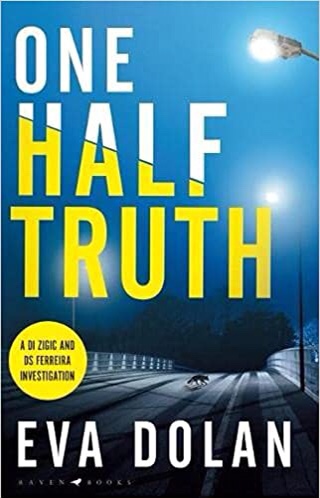
One Half Truth by Eve Dolan

I really enjoyed this police procedural set in Peterborough which is part of a series I’ve often read before. Zigic and Ferreira are the detectives looking for a killer when young student Jordan is shot dead walking home from watching football at a club. The club is for men who worked at Greenaway’s factory, but the factory is long gone and so are the jobs. This left skilled engineers consigned to the scrap heap in their fifties – an age where getting new employment is very difficult. The club lingers on as a reminder and is still frequented by a group of men bonded together due to their shared experience, with a lot of bitterness and anger remaining. So what was a young man like Jordan doing there and how had he ended up shot in the back of the head, execution style, close to the Parkway on his shortcut home?

The story line grabbed me straight away, possibly because my family are working class enough to have experienced what these men have gone through, but in the mining and steel manufacturing industries. I’ve seen what it does to a man to leave him unemployed near retirement age. Jordan really stood out as one of the good guys in life, using his writing to stand up to big business and expose corruption. Of course we only experience him through his deeds and other people’s impressions of him, but that’s enough for me to feel he was ambitious to be a journalist, but also had some integrity. He wanted to do the job to write the big stories, not doorstep celebrities or cover fun days for the local paper. He’d already been published in the Big Issue, the piece that told the stories of the men at the club and the reason he knew and bonded with them. He’d shown how their mental health suffered after redundancy, that many had lost their wives and families too, some had even lost the roof over their heads. The fact that he’d stayed in contact with these men, tells the detectives that the club is the best place to start investigating.

There are three stories that Jordan was working on with the potential to ruffle important feathers. One is about a social care company attached to a woman called Sheila Yule, but she is very wary of even speaking to the police and appears scared. Then there’s the death of the owner of Greenaway’s, in a helicopter crash. It had been ruled an accident but could Jordan have found out otherwise? Finally, he was looking into a housing development on the outskirts of the city, where Ferreira had almost bought a flat. Any one of these stories would have made this an interesting book, so to give us all three was generous and created a few red herrings along the way. There were so many leads to follow that the pace never let up and the story never flagged. All three stories were right up my street politically, so I really enjoyed delving into the detail and the thinking Jordan would have gone through when researching. All the undercurrents of deprivation, corruption, the collusion of big business and local politics couldn’t have been more timely and they fit perfectly with how I see the world.

There were some great bits of character revealed in Ferreira and Zigic’s home lives. Ferreira’s competitive streak comes out when her partner, and fellow police officer, wants to have his hunch on the case confirmed. The next minute they’re bantering about paint colours and wallpaper. The comical scene of Zigic and his wife clearing out his wardrobe was eerily familiar and very funny. These are the lives they go back to after working long hours and it was enjoyable to see those glimpses of their home selves. Both Zigic and Ferreira have a conviction to see justice done and hate being told what they can and can’t investigate from higher up. In this case, high ranking police officers being too cosy with local councillors and big business in the area. Ferreira is slightly more reckless and I love how she takes things into her own hands at the end. I like her fire and her need to get to the truth – whoever is involved. There are twists I didn’t expect, but I was glad of them, because they changed an outcome I was struggling to accept. This was solid, intelligent, crime writing with a lot of heart and a social conscience so I enjoyed it immensely.

Meet The Author


Eva Dolan was shortlisted for the CWA Dagger for unpublished authors when only a teenager. The four novels in her Zigic and Ferreira series have been published to widespread critical acclaim: Tell No Tales and After You Die were shortlisted for the Theakston’s Crime Novel of the Year Award and After You Die was also longlisted for the CWA Gold Dagger. She lives in Cambridge.