Posted in Netgalley

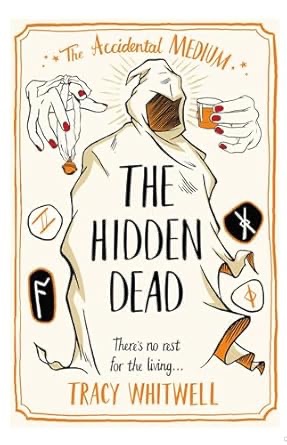
The Hidden Dead by Tracy Whitwell 

I couldn’t wait to read this, after reading the third book in this series earlier in the year. So I snagged it on NetGalley and read it immediately full of anticipation. I wasn’t disappointed. I love Tanzy and her adventures, usually she’s confined to the UK but this time she’s a little further afield. When she meets charming Icelandic giant Einar in a bar I did wonder whether vampires were about to debut in the series. His ability to ‘glamour’ Tanz seemed almost supernatural. Soon they’re sharing champagne and a bit of naked dancing too. When he invites her to his holiday cabin in Iceland to get some writing done, she decides to be impetuous and throw caution to the wind. This impulsive decision takes her to an isolated cabin with log burners, cosy decor and of course the odd spectre or two, After their first night together Tanz wakes up alone, without even a note and no plans for Einar’s return. She’s annoyed but not heartbroken. At the least she has a few days holiday in a country cabin for free and time to process her last case. Maybe she could start working on ideas for her own play? However, Iceland has its ghosts just as much as London. Did Tanz really think they would leave her alone? 

In a nightmare, Tanz sees a man staring over the edge of a cliff. Is he going to jump? Before she can act a second person appears, a strange man whose eyes seem bottomless and hold universes. She can hear a woman crying outside her cabin and eventually a vision comes of this woman and her empty relationship with a man who doesn’t appear to love her. She follows him to work and finds him in bed with another woman, she screams and Tanz can hear his roaring anger as she wakes. It’s clear there’s a mystery here and she’s going to have to find the crying woman to work out why she needs her help. She doesn’t know if it’s going to be dangerous, especially without her friend Sheila in tow. Yet there are signs of protection: the rowan tree at the front porch; the feeling in the bedroom as if there’s a protection spell around her; the strange man from her dream who seems to be magical. Tanz knows she must help the woman, who becomes increasingly desperate and starts to bang on all the lodge’s windows to make herself heard. Tanz just doesn’t know how to help. When her distant neighbour pays a call there’s an instant connection and Tanzy puts it down to the fact they’re both a bit witchy. Birta has the most amazing cabin a short hike away with a seventies style interior that’s retro and cozy. With their combined knowledge and skills surely they can find what their distressed ghost is looking for? 

I loved the character of Thor who is Einar’s friend but also a cab driver. He helps Tanz escape the cabin for a while. He has such a wholesome feel about him and is the complete gentleman. He listens to Tanzy’s story and doesn’t seem fazed by her experiences, although the knocking at the cabin is a bit unsettling. Tanzy feels very comfortable and safe around him, as he takes her under his wing. He really does take care of her, cooking for her and showing her some of the sights too. He has been friends with Einar for many years and knows how he operates. He wants Tanzy to feel like her time in Iceland hasn’t been wasted and his care of her really makes her examine why she is drawn towards unavailable men rather than those that show her how much they care. She tends to put nice men in the friend zone before anything has had a chance to develop. There’s part of her that’s addicted to the adrenaline that comes with a ‘bad boy’ and she hasn’t realised before that love doesn’t have to come with a side order of drama. Thor also accepts every bit of Tanz, her charisma and attitude but also the spooky and paranormal side of her life too. He doesn’t ridicule or belittle her psychic abilities, showing real interest and a willingness to help as far as he can. He really does take on her quest as his own, but also knows when to step back – when and where it’s her time to shine. He’s not overwhelmed by her and for someone who might be described as too much, there’s safety and security in that. But can safety and security be sexy? 

I’d guessed some of the mystery brought by the distressed woman but thoroughly enjoyed the journey as Tanzy looked for a way of fulfilling her wishes. This takes help from Thor, new friend Birta and the ‘hildunfolk’. All our usual characters are here, including Sheila and Tanzy’s delightful ‘little mam’ whose always there at the end of the phone. She is often more aware of her daughter’s exploits than you’d expect from all the way over in Newcastle. I thought the author delved beautifully into Tanzy’s character and her romantic choices particularly. She has to examine her choices; to follow an unsuitable and unavailable man all the way to Iceland, but to banish a kind, available and warm man to the couch. Why won’t she let good men love her? It works well with the unfolding of the mystery around the cabin and how the choices we make because of desire are often destructive and life-changing. It seems we can be left with so many regrets that they follow us into the afterlife. I enjoyed some of the final revelations, particularly around the character of Birta. This is another solid addition to the Accidental Medium series and I felt like I’d spent a few hours with an old friend. I have a list of literary characters I’d love to have for dinner and Tanzy is definitely there at the table, possibly next to Mr Tumnus. Although she’d have to promise not to flirt with him.

Out on 13th February Pan MacMillan

Meet the Author

Tracy Whitwell was born, brought up and educated in the north-east of England. She wrote plays and short stories

from an early age, then moved to London where she became a busy actress on stage and screen. After having her son, she wound down the acting to concentrate on writing full time. Many projects followed until she finally found the courage to write the first in her Accidental Medium series, a work of fiction based on a whole heap of crazy truth​. Apart from the series, Tracy has written novels in several other genres and also writes mini self-help books as the Sweary Witch.

Tracy is nothing like her lead character Tanz in The Accidental Medium. (This is a lie.)

Posted in Netgalley

Cross Bones (The Accidental Medium 3) by Tracy Whitwell

There’s a queue at her door, and not all of them are living …

If you haven’t had the pleasure of meeting Tracy Whitwell’s character Tanz yet, you’ve been missing out. This bold, sweary Geordie actress and accidental medium is a delight and this is her third adventure in the series. Tanz is being torn in two directions as she reluctantly agrees to do a fringe play in London, but is also suddenly ‘activated’ as her spirit guide Frank explains. She is sent a new guide who she calls ‘Soft Voiced Lass’ and her flat is suddenly teeming with visions and apparitions, including a nurse who is on duty and walks through the wall into Tanz’s bedroom, which is quite a feat when you don’t have any legs! Luckily she has friend and fellow medium Sheila to rely on, but there’s a lot of sleeping with the light on too. As the play she’s been cast in becomes more dramatic off stage than on, Tanz has time on her hands and is guided down to Southwark and a cemetery known as Cross Bones. This is the burial place of the Winchester Geese, so called because they were prostitutes licensed by the Bishop of Winchester. After their deaths it was decided they could not be buried in consecrated ground and so this small burial ground became theirs and many of the poor in the same parish. Tanz is greeted by a horrific vision of the ground in the Victorian period, when overcrowded tenements spread diseases like wildfire and deaths from cholera, typhus and consumption were the daily norm. What Tanz sees isn’t an ordinary graveyard though. The smell hits her first; death, smoke and sewage creates a miasma that seems to cling to your clothes. In the yard Tanz can see a grave digger with a woman screaming at him, when she looks down she can see some fingers and a skull where he has been digging a body up to make room for more. She is overwhelmed and doesn’t really know what her purpose is here, just that it isn’t going to be easy.

The gates at Crossbones Graveyard

I love Tanz because she’s one of the most real people I’ve ever met in a book, despite the spooky stuff that surrounds her. She’s very down to earth, independent and has a few vices. She’s also very compassionate with the living people she helps and the dead ones too even if they do scare her. She has a couple of solid friends, especially Sheila, but sometimes she gets lonely, especially as she gets older and sees friends pairing off and making new lives together. She’s in the same flat, still scraping by with no big break in sight. The play she’s rehearsing is comical and the small company has such vivid characters they leap off the page. Gerald is a particularly fun addition to her circle – an elderly actor with the old school manners of a man who was inspired to act by Olivier and Gielgud. Everyone except the playwright knows the play is rubbish and the sexual politics in the company are impossible to work with. At home different visions pop up, from an Irish family who look like they’re starving, to a woman at a sewing machine and very strangely, a ghost that lurks in the hallway with a blackened face. She knows all of this must make sense to someone and keeps visiting Southwark and doing her research into the area. The history behind the story is fascinating and had me searching and reading for information afterwards. Eventually the graveyard was used for all the poor in the area and with an influx of families from Ireland, escaping the dreadful famine ( to quote Sinead O’ Connor ‘there never really was one’) overcrowding was common. The place inside that should have been somewhere to view the dead, especially for Catholic families who prefer to have an open coffin, became a charnel house. There were rotting bodies everywhere from those they had no room to bury and those who’d been dug up to make room for more. It’s a vision of hell, made worse when the traumatised gravediggers, dulled by compassion fatigue and possible PTSD, started playing skittles with human skulls. No wonder the woman in Tanz’s vision is screaming.

No 2 in The Accidental Medium Series

Tanz thinks her visions relate to a single Irish family, the family she sees in a tenement room starving and looking completely shell-shocked by their circumstances and their losses. When Tanz sees a soldier called Robert, shot in the head and looking for his wife she starts to piece things together. Could this be several generations of the same family and could any of them still be alive? Between the spooky action there’s a huge injection of dark humour that I really appreciated. I love Tanz’s slightly prophetic phone calls from her ‘mam’ who strangely seems to always know when her daughter’s up to something while scolding Tanz for meddling in spooky situations. Thank God she doesn’t find out about the black faced woman, the homeless man and the knife! There’s also a side order of romance in this novel, with a younger police officer stirring up rather unexpected feelings for Tanz. Usually she wouldn’t consider a younger man, especially one of the good guys, but maybe now is the time for changing habits. It’s nice to see Tanz meet someone who likes and respects her for a change. Maybe Tanz has developed some boundaries and boosted her self-worth enough to accept that someone like this could like her. She’s also stopped the habit of always keeping her eye on the exit in her romantic affairs. She’s taking her gift seriously and maybe has to accept that it’s this type of work that she finds most fulfilling. Although, she also makes a radical move in her acting career too. It’s lovely to see Tanz in such a strong position in life, she’s ready to take on the world and I can’t wait for her next adventures.

Out on 17th July from MacMillan

The first novel in the series.

Meet the Author

Tracy Whitwell was born, brought up and educated in the north-east of England. She wrote plays and short stories

from an early age, then moved to London where she became a busy actress on stage and screen. After having her son, she wound down the acting to concentrate on writing full time. Many projects followed until she finally found the courage to write the first in her Accidental Medium series, a work of fiction based on a whole heap of crazy truth​. Apart from the series, Tracy has written novels in several other genres and also writes mini self-help books as the Sweary Witch.

Tracy is nothing like her lead character Tanz in The Accidental Medium. (This is a lie.)

If you’d like to know more about Crossbones Graveyard this is a great site to start with:

Posted in Squad Pod

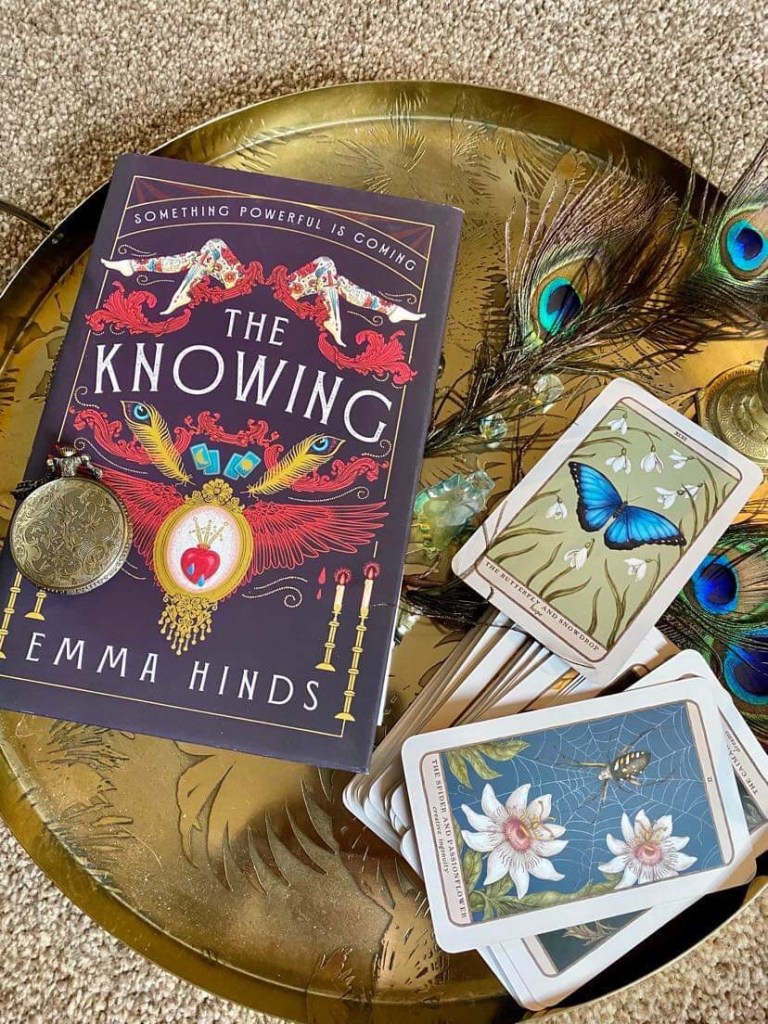
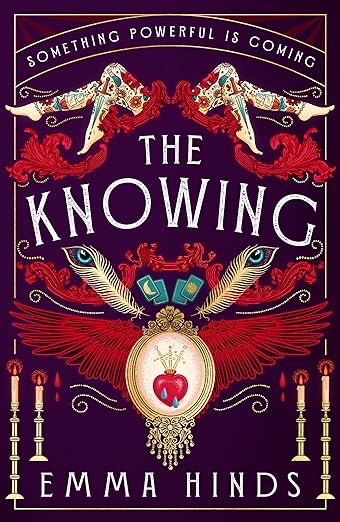
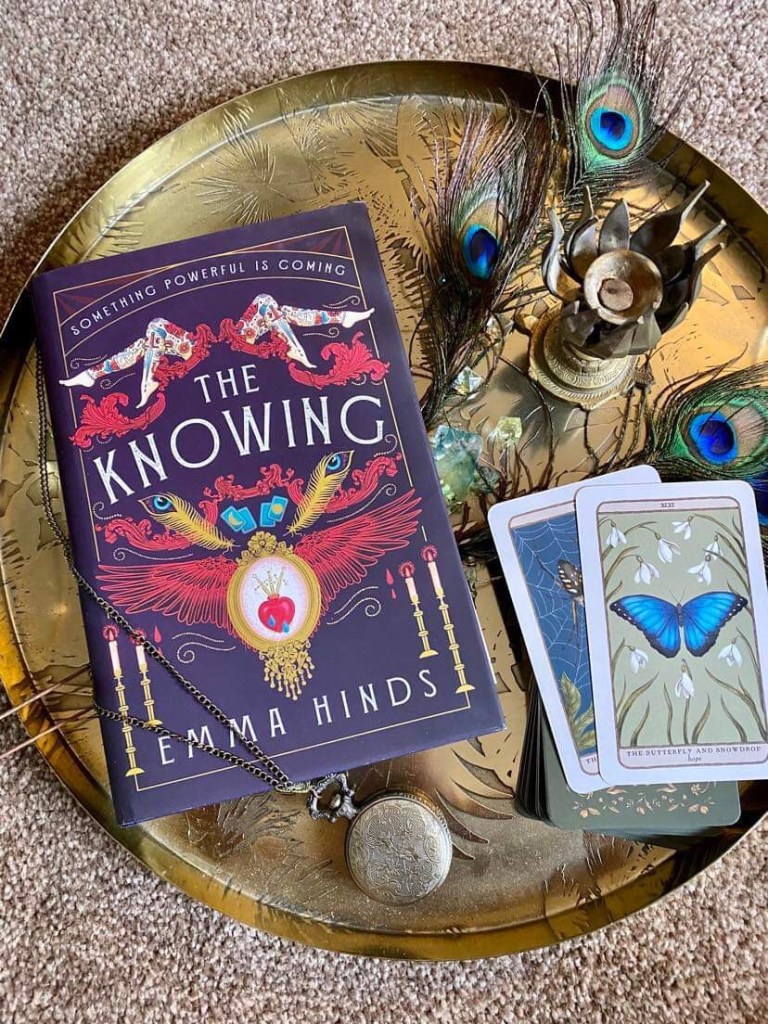
The Knowing by Emma Hinds

If this author had a certain readership in mind when writing this debut novel, she might as well have had a picture of me. I would have picked this book up on the strength of the cover alone. Three of my all time favourite books are: The Crimson Petal and the White set in the seedier areas of 19th Century London with a heroine is a prostitute called Sugar; The Night Circus that appears without warning, held together by real magic and the result of an epic battle between two magicians; The Museum of Extraordinary Things where our heroine is a mermaid, exhibited in a freak show at Coney Island. See what I mean? It’s perfect for me. The blurb promised me a tattooed mystic, a show run by a prostitute with dwarfism and real life New York gangs and Barnum as their contemporaries. It’s quite a heady mix and I was enthralled from page one. Flora is a tattoo artist and mystic, in an abusive relationship with a tattooist called Jordan, a member of an Irish gang the Dead Rabbits. She longs for escape from the slums of Five Points and the degrading relationship she’s been in since she was a teenager. Then she meets Minnie, a beautifully dressed woman whose dwarfism has led her to a career as a circus and freak show performer. Minnie promises Flora a career and life in an opulent town house uptown, not to mention her freedom. However, the freedom she’s promised comes with certain conditions.

Flora stays with Minnie, in her palatial bedroom and bathroom within the townhouse that belongs to her lover, Chester Moreton. Avoiding Chester’s advances seems to be one condition of Flora’s freedom, along with constant worry about being found by Jordan’s friends in the Dead Rabbits gang. She’s to earn her keep as a mystic, with her tattoos and tarot cards the centre of attention. Minnie knows that Flora’s skills run deeper, although she’s always been warned to hide them and ‘tell nuthin’. Flora’s gift is ‘the knowing’ an ability to summon the dead that’s always on the periphery of her performances, but kept at bay by Flora’s willpower. It’s when she’s pushed into allowing her spirit guide to break through that the trouble begins. At the Hotel du Woods she exposes the abuser and killer of a young boy, setting in motion a chain of events including suicide, murder and madness. Flora and Minnie escape and voyage to Manchester, where they try to survive on what they can earn from sex work and Flora’s tarot readings, but the past is never far behind and once again Flora finds herself at the centre of a love triangle where obsession and betrayal are medicated with drugs and alcohol and a tragic end seems inevitable.

I felt fully immersed in the novel immediately as the author creates an incredible sense of place. Five Points is grimy, deprived and controlled by gangs. I loved how the author used the grotesque throughout the novel and particularly where she’s describing the slums of New York and Manchester, filled with rats, unwashed bodies and an ever present grime that’s sticky on the skin. This took me straight back to university and Kristeva’s theory of abjection. The things that women’s bodies can do are magical or monstrous. Flora’s body is a conduit, allowing the dead to speak through her. Minnie’s body is seen as grotesque by others, but she wears angel’s wings and when she’s in bed with Flora it’s the softness of her skin that’s noticed first. All women have a transformative power to produce another life, when their pregnancy isn’t terminated by the men in their lives. The author doesn’t hold back when describing the reality of life for women, particularly women like Flora who haven’t had choices. Bodies seem divorced from minds when it comes to sex with men, as torsos become slabs of meat, breaths are whisky sour and skin is raw, red and broken. Sex is rarely consensual and always comes with violence. It’s a grim world so any chance to escape into a better future is welcome. The gentle and pleasurable attentions of Minnie are a promise of things to come, where Flora could have choices and sexual experiences that come from a loving place instead of a place of ownership.

No one here is perfect. Each character is morally grey and I loved that complexity in their personalities and the ambiguity it brought to their actions. I was also transfixed by the sheer power of Flora’s ‘knowing’. Mediumship has become something of a joke these days, a formulaic stage show where people are picked out of the audience and told that Grandad left the priceless clock in the attic or under the floorboards. It’s always benign and a little bit boring. Flora’s spirits are not there to guide her and they’re definitely not benign. They want to expose truths, tell the subject’s darkest secret and even mete out punishment where necessary. The first seance at Hotel du Woods is successful from one viewpoint – the spirits do come through – but a disaster from the other side when a vengeful spirit talks a man into killing himself. No one will be booking them again! Flora will have to learn how to control the spirit’s power and keep the vengeful ones at bay. Strangely, for a story where our main character is prevented from carrying children, this felt like a story about mothers too. It’s about the lack of a mother when growing up and how the lack of motherly love and protection feels, but it also shows the people who fill that void and become mother figures. This could be a difficult read for some, especially the sexual violence, but it would have been the daily reality for women living in 19th Century slums and for some women in upper Manhattan townhouses. I desperately wanted Flora to survive and have the right people around her, to give her the feeling of being loved and wanted. This is an addictive read of vengeance, betrayal and obsessive love and I couldn’t stop reading until I knew the truth of Flora’s fate.

Meet the Author

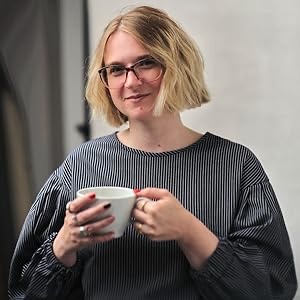
Emma Hinds is a queer novelist and playwright from Manchester. She focuses on untold historical Queer narratives and her debut novel, The Knowing, from Bedford Square Publishers is coming in January 2024.

Posted in Netgalley

Madame Burova by Ruth Hogan.

I absolutely love Ruth Hogan’s novels, because they have interesting, quirky characters that I always want to know more about and stories that are ultimately uplifting. I was immediately fascinated by Imelda Burova, with her Russian-Romany background and her gorgeous borzoi Dasha. Imelda has inherited her mother’s fortune telling booth on the seafront in Brighton. Not that Shunty-Mae has gone anywhere. She comes to help when the booth is busy in the summer season and has a disconcerting habit of sitting behind the curtain at the back then interjecting the odd comment when least expected! Imelda is invited to read for people as part of the entertainment staff at the holiday park and this introduces her to a whole new group of people. There’s the three mermaid sisters, a contortionist, Jeanie who has the voice of an angel and the dark, handsome wall of death rider Cillian. Imelda feels an immediate spark with Cillian, but Jeannie’s femme fatale friend Vivien makes it clear that Cillian is off limits. Book ending this tale of 1970s Brighton is our other heroine Billie, who is in a vulnerable place having lost her university job, her marriage and her mum. She receives some life changing news from her Dad, that sends her on a trip to Brighton to meet a mysterious woman who holds two brown envelopes. These will give Billie some clues to a mystery that has spanned forty years, and a love story that has lasted through time.

I really felt for Billie, who has reached a point in life where everything is changing, but she’s willing to take on the challenges she faces. She finds her seventy year old benefactress inspiring and starts to be drawn into the world of Brighton. She meets a family named after precious stones who run the cafe next door to the fortune tellers booth. She has help getting a new project off the ground with a lovely man called Treasure. Then there’s a man she meets on the train who travels all the way to St Pancras once a week just to play the piano. Plus a man who seems to be just a passing eccentric, using his elastic bands to send colour messages to the CIA or MI5, but who witnesses a crucial event that answers so many questions. In the time she spends in Brighton, Billy starts to feel at home. What could fate have in store for her here and is she brave enough to follow the path?

The earlier sections, told by Madame Burova with a heavy dose of hindsight, are so evocative of the 1970s. There’s an incredible bohemian feel to the interiors, such as the decor of the booth, the stunning gypsy caravan that sits in the garden for occasional sleepovers, not to mention Madame Burova’s wardrobe. Lush fabrics and vintage clothes float my boat so I was in heaven here. The central love story is brief, but all encompassing. Cillian is the perfect hero – I was thinking Peaky Blinders as I was reading him so it was hilarious to find ‘Cillian Murphy’ left on a page in the NetGalley copy! It shows that Ruth Hogan and I are on the same page when it comes to passionate love interests. He and Imelda are clearly made for each other, so watching Vivien try to come between them is infuriating. Not that Cillian helps, his taciturn nature and avoidance of fuss can lead to misunderstandings. Imelda isn’t sure whether he’s playing the field, but his eyes are firmly trained on her all the time. I was transfixed by the love story and hoping against hope that Imelda wouldn’t have her heart broken.

This is such a charming and whimsical novel, with a a huge side helping of nostalgia for the time of the seaside holiday heyday. A time when people did take their families to a holiday park and take part in all the entertainments on offer. I love the way Brighton fits Billy perfectly, with her vintage style, bowler hat and the opportunity she gets to potentially bring that retro vibe to the seafront seems perfect. Will she take the chance? More importantly, will the quest that brought her to Brighton and to meet Madame Burova, come to a happy end? I was satisfied with the end, despite the heartache along the way and came away with a real feeling of joy. Along with the apple blossom coming in and birds nesting in the garden, this book has been like a little breath of spring.

Meet The Author

A car accident led to Ruth Hogan taking her wish to be a writer more seriously and the result was THE KEEPER OF LOST THINGS – a Richard and Judy Book Club pick. Since then she has had two further novels published, THE WISDOM OF SALLY RED SHOES and QUEENIE MALONE’S PARADISE HOTEL and for her fourth, MADAME BUROVA, she learned to read Tarot cards and developed a hankering for a traditional vardo and pony.

‘I live in a chaotic Victorian house with an assortment of rescue dogs and my long-suffering husband. I am a magpie; always collecting treasures (or ‘junk’ depending on your point of view), a huge John Betjeman fan and I would very much like a full-size galloping horses carousel in my back garden. As a full-time author I am living the dream, and I’m so grateful to all my readers for making that possible. I love hearing from you, so please feel free to drop me a line on Twitter, Instagram or Facebook.’ From Ruth’s author page on Amazon.com

Posted in Throwback Thursday

Throwback Thursday! The Illusionists and Daughter of the House by Rosie Thomas.


My experience of finding these two novels by Rosie Thomas shows that the old cliché ‘never judge a book by its’ cover’ does sometimes apply. I was browsing on my kindle (a lethal pastime) and looking through my recommendations when I came across Daughter of the House. The cover had a magical, ‘circus’ feel that I loved so I had to discover more. It had an historical setting pre- WWI onward; a period I’d been drawn to that year. It also promised a brave, enlightened woman at the centre of the story about growing up in an unconventional musical hall family. I bought it based on cover alone, then realised it was the second in a series of books.The first was The Illusionists and I knew from the cover of top hats, decks of cards and magic wands that this was the series for me. It’s rare for me to find a magical novel set in the late Victorian period that I haven’t read. The title seemed familiar though and it was only the next morning that I found (among the many piles of books that litter the corners of my house) I had a hardback copy of the same novel, but had never picked it up to read. The cover was very different, depicting a bridge over an almost impressionistic river scene, that told me nothing about the contents inside. A friend had bought me the book when it first came out, but due to that cover and the lack of a synopsis on the back it kept being recycled to the bottom of the TBR pile. It showed me a difference between buying physical books and kindle copies. I am often alerted to unusual and highly enjoyable novels via kindle store or apps like Goodreads that I wouldn’t necessarily pick up in a book shop due to the cover. Of course the bonus was that I now had two great novels to read back to back and I was not disappointed by either of them.

Set in 1885 the first novel follows the story of Eliza who is a young woman limited by lack of money whose only choices for the future seem to be the domesticity of an advantageous marriage (an idea she finds suffocating) or a degrading downward spiral towards life on the streets. Despite the massive social changes happening in fin de siècle London, women have less chance of making their fortune and living life on their own terms. Then she meets the charismatic and ambitious illusionist Devil Wix. Devil is haunted by traumatic events in his childhood, but is determined to become a household name and successful entrepreneur in the theatre world. We follow Devil’s mission as he puts together a band of quirky misfits to put on the greatest show London has ever seen in the run down Palmyra Theatre. During the 12 years covered by the novel Devil is by turns alluring, brilliant and often comical. However, from his friend’s and Eliza’s point of view he can be elusive, maddening and deceptive when he wants to be. Somehow though, the reader is able to forgive him anything. Perhaps this is because we are charmed by him in the same way Eliza is. Two friends work alongside Devil. His magician friend Carlos and set/props designer Jasper. Carlos is a dwarf in stature, but has mighty magical ambitions of his own and with Devil creates new and memorable illusions to stun audiences. Jasper is more of a scientist who tinkers away in his workshop creating the props for the illusions, but has also designed an automaton he names Lucy. As soon as Eliza comes into their world it is as if the circle of friends is complete and they work together to create a magical show. Although it seems inevitable that they will be together, Devil and Eliza’s courtship is a slow dance. Their budding relationship sees Eliza step outside what is thought to be respectable for a Victorian woman and embark upon an alternative life she never thought possible. For Devil the relationship brings him the stability he has never had and a partner in work and life who can match him for determination, ambition and creativity.

The magical and more supernatural elements of the novel are balanced beautifully with the historical period detail. Eliza chooses to live in a women’s hostel and work for a living even before she becomes involved with the theatre crowd. This is a bold, modern choice that tells us a lot about her character. The author uses Eliza’s sister as the contrasting Victorian ideal of ‘The Angel in the House’. Eliza’s visits to her sister’s home show us that traditional Victorian domestic life, but while Eliza loves her nieces and nephews she doesn’t envy her sister’s position in society and often seems relieved to return to her unconventional life. She treads a very fine line between what is and isn’t respectable by socialising in bars with Devil, Carlos and Jasper, staying alone with Devil in his flat, becoming a life model at the art school and performing on the stage. She is confounded by her need for Devil to be faithful and exclusive to her.


We also see economic change and social mobility throughout the novel. Devil promotes his shows in a way that has never been done before. First he utilises Eliza’s art student friends to create mysterious adverts across the city, that develop a buzz about his show. He then creates street illusions that are easy to transport and perform, then performs these ‘pop-up’ illusions in the street, handing out leaflets to stunned onlookers. By choosing his streets carefully he attracts wealthy audiences who are happy to spend money and this ensures the theatre is packed night after night. Due to this method of promoting his theatre, and the different audience he attracts, Devil changes what is acceptable as entertainment in upper class circles. Whereas music hall was thought to be low culture and only for the working classes, Devil exploits the human need to ‘keep up with the Joneses’ and makes his theatre the place to be seen.. His entrepreneurial skills result in an upward mobility for his family so they can live in a beautiful area of London and have more opportunities that he had. This is where the story develops into the second novel and into a background of even more turbulent times in the early 20th Century.

Daughter of the House centres on Devil and Eliza’s daughter Zenobia (known to the family as Nancy) against the backdrop of WWI, the Suffragette movement and the decline of music hall. The novel opens as the family embark upon a boat trip and tragedy strikes when the captain decides they must return to port because of a storm. The boat crashes into the marina and it is a fight for survival for Devil and Eliza and all of their children. Thomas creates a beautiful metaphor here in Nancy’s fight to stay above the water as her large Victorian skirts and petticoat become water-logged and start dragging her under. This foreshadows Nancy need to live a different life and break free of Victorian expectations of women, perhaps even more radically than her mother did. In the struggle Nancy not only saves herself, but her brother too and it is here we see the beginnings of her resilience and determination. It is also here that we see the first glimpse of what she calls her ‘Uncanny’ – the ability to see beyond the physical world. Nancy fights against this unique gift and doesn’t want anyone to know about her ability. Yet it is because of this accident that family friend Mr Feather does become aware of her abilities. As his beloved sister is lost in the accident, he begs Nancy to foresee where she is and this episode sets off an obsession that never goes away.


The Palmyra theatre is struggling and Devil has been hiding the true extent of their financial difficulties from his family. Eliza’s growing role as a mother has meant taking time away from managing the theatre and Devil does not have her administrative or financial skills. Eliza loves her children, but is frustrated in the very role she never really wanted. Meanwhile Devil flounders in his management of the Palmyra, making bad financial decisions and failing to provide what modern audiences want to see. As the crisis deepens Nancy becomes aware that her gift, hidden until now, might be the only answer to her family’s problems. The late Victorian appetite for mesmerism, hypnosis and spiritualism has continued into the 20th Century and Nancy’s gift soon begins to fill the theatre. So, as WWI draws to a close, the Palmyra is once again playing to packed houses as grieving families in their thousands want to find their lost sons, fathers and husbands still lying unfound in the battlefields of France. Thomas shows the social and historical change of three difficult decades so cleverly especially the wake of WWI as women become more in control of their lives and a country grieves a generation lost. For those who survived, the need for to forget the horrors of war can be seen at the raucous country house parties of Nancy’s theatre friends. The breakdown of class barriers becomes apparent as Nancy’s brother transcends his family’s social class, becoming an officer in the army and attracting a wife from an aristocratic family. Alternative ways of living are explored as the author shows us more women living alone, and Nancy’s gay best friends who have openly set up home together. Yet, we also see what post-war living could be like for the lower classes who acquired injuries, but can’t afford adequate care or rehabilitation. Nancy’s brother returns home with shell-shock and finds coping with the outside world beyond his capabilities, instead finding solace in his garden.

The book explores Nancy’s struggle with a rare and beautiful gift that can also be terrifying and unexpected. Her rivalry with Mr Feather highlights the darker side of clairvoyance and ultimately ends in unwanted confrontation. We see the need in people who desperately want to hear from their lost loved one only to be disappointed. A disappointment that can develop into an obsession and an inability to move forward in the grieving process. Nancy wrestles to maintain the purity and honesty of her gift; never pretending or creating hope where there is none. Audiences fail to realise that she is unable to control her gift. It isn’t like picking up a telephone, she doesn’t know who or what will come through. However, audiences want the reassurance that they were seeking, or the guarantee their loved one lives on somewhere in the afterlife and is waiting for them. Nancy tries to give no promises and does not want to offer false reassurance, if forced to give the exact promise they seek, she feels she has betrayed herself and her gift. This is the difference between true clairvoyance and show business and for Nancy they are uneasy bedfellows. What she sees is not always spectacular nor the happy ending an audience might be hoping for. This dilemma rang true for me as something all people with these gifts might face and it shows that making money from her ‘Uncanny’ is not as going to be as easy as her father’s magic tricks; if she is going to do it with integrity.


I would recommend reading both of these books, but they do stand-alone too. The Wix family are entertaining and intriguing, the historical backdrop is well researched, and even the smaller characters are well written and memorable. Carlos’s determination to overcome his disability is inspiring and his friendship with Devil, like all showbiz partnerships, is full of ups and downs. Eliza’s sister and brother-in-law are there to provide a contrast to the Wix’s unconventional relationship, but their characters are still well-rounded and the relationship between the sisters feels real. Eliza’s realisation that having children is all consuming and life-changing creates an unexpected affinity with her sister. She recognises that even if you want an alternative way of life, children always create a need for a strong family network and support around you. In the early 20th Century women’s lives are changing, but not that much. Eliza’s daughter, Nancy, realises that even though she is more accepted as a strong independent woman she is still hampered by her class and bohemian background. Despite feeling free to pursue her love for a married man, she finds that this freedom is not all she imagined it would be and yearns for more. If you want page turning story-telling with a supernatural and magical twist then these are the books for you.

Posted in Random Things Tours

Throwback Thursday! The Accidental Medium/ Gin Palace by Tracey Whitwell.

Synopsis | Tanz is living in London and still grieving her friend Frank, who died in a car crash three years ago. As acting jobs dry up, she has to find a normal job to fund her cocktail habit. When she starts work in a new age shop, Tanz discovers that the voices she’s hearing in her head are possibly real psychic messages, not the first signs of schizophrenia. Alarmed, she confronts her little mam and discovers she is from a long line of psychic mediums. Despite a whole exciting new avenue of life opening up to Tanz, darkness isn’t far away and all too soon there’s murder in the air. In book two, after her fast paced introduction to the world of clairvoyance, Tanz is hiding in bed, having nightmares about a suicidal psychopath, drinking red wine, irritating her cat and waiting to be evicted. Life as she knew it seven months ago has turned on its head and only the prospect of a new TV job in Newcastle and a month with her best friend Milo can help pick her up off the floor. But when she gets home, the Newcastle of more than a century before decides to haunt her bringing all kinds of spooks and horrors with it

Review | Tanz is a cocktail drinking, straight talking, Geordie actress, with a talent for swearing. She is an absolute breath of fresh air. Within pages she felt like my long lost friend and I was mentally inviting her to my fantasy dinner party (alongside Mr. Tumnus, Ruth Galloway, Sugar from The Crimson Petal and the White, Jo March, and Vianne Rocher).

I read both of these short novels in a weekend and have been left longing for more. The story begins as Tanz is working at a new age shop, between acting jobs. She has made friends with one of the ‘readers’ in the shop, but is starting to have an inkling that her own family might have their own gift. Her Mam seems to have prophetic dreams, but doesn’t make a big thing of it even though her grandmother was a Romany. Tanz had started hearing voices, but wondered if it was a symptom of grief following the sudden death of her friend Frank three years before. She even starts to worry if she could he schizophrenic. Luckily she has a great mentor at hand – Sheila is another reader at the shop, an older woman with years of experience in this strange world of mediumship. She describes Tanz as a ‘natural’ and her strong reaction to an odd couple who visit the shop seems to set them on an investigative path. Sheila is vital to Tanz and their friendship grows as the mystery becomes disturbing and dangerous. What are this strange couple hiding and why is Tanz hearing a woman wailing every time they’re near? Despite being terrified Tanz and Sheila let their spirit guides lead them towards the answers and into danger.

Gin Palace situates Tanz back in her hometown of Gateshead, where she has a role in a TV series after months without work. She would have loved the main role, but is playing the tart with greasy hair, dark circles under the eyes and the shortest skirt. She’s the only one with a genuine Geordie accent. After her introduction to clairvoyance, she was hoping for a quieter time, but it seems the spirits aren’t ready to leave her alone. Tanz finds herself haunted by visions of an 18th Century Gateshead and the tenements down by the docks. On a ghost walk she finds out about the brutal murder of a prostitute, the terrible warehouse fire that razed the tenements to the ground, and the role gin played in the lives of these unfortunate residents. This gives her some background but doesn’t explain the violent man who keeps beating her to death in terrifying dreams. Nor does it explain her visions of a little boy who looks like the Artful Dodger, with the face of a pitiful waif one moment, and eyes that burn like the coals of hell the next. Is she being warned off? Or is there another mystery the spirit world like her to unearth?

I loved both of these books for their characters and the company of Tanz. I loved her Mam and Dad, who are traditional Northerners through and through. They were very like my parents – always half way down a cup of tea, have tea at 5pm and seemingly happy to potter at home together. Tanz’s dad has his shed to tinker in, but her ‘little Mam is always there with some very down to earth and wise advice. I love how Whitwell presents mediumship and it’s effects on the practitioner. Sheila teaches Tanz how to protect herself against certain types of spirits, but there are still times when she is terrified by what transpires in her own mind and in front of her. Her nightmares affect her sleep, she feels unnerved and often wonders if her gift is worth it. It’s great if it helps someone, but otherwise it’s very inconvenient and not making her any money. It made me think of taking a counselling session, it can be exhausting and the counsellor needs a self-care regime in place to replenish their reserves. I enjoyed Tanz’s loyalty, not just to her close friends, but to those people she picks up along the way and even those from the spirit world who need release. Her bravery in confronting the scarier paranormal events, while being absolutely terrified, is endearing. By the second book she is starting to trust her powers a little, to understand the strength of her gift and her guides. These books are fresh, modern and comfortingly Northern. The mix of gothic and supernatural subjects, with this down to earth, 21st Century heroine is different and such great fun. Tanz is a woman you’d like to go for a few cocktails with and the mingling of her familiar worldly worries and her other worldly gift is irresistible.

Biography|Tracy Whitwell was born, brought up and educated in Gateshead in the north east of England. She wrote plays and short stories from an early age, then had her head turned and ran off to London to be an actress. By 1993 she was wearing a wig and an old fashioned dress and pretending to be impoverished on telly in a Catherine Cookson mini-series, whilst going to see every indie/rock band she could afford.

After an interesting number of years messing about in front of the camera and traveling the world though, Tracy discovered she still loved writing and completed her first full length play. A son, many stage-plays, screenplays and two music videos followed until one day she realised she was finally ready to do the thing she’d longed to do since she was six. She wrote her first novel. A crime/horror/comedy tale about an alcohol-soaked, gobby, thrill-seeking actress who talks to ghosts. (Who knows where the inspiration came from, it’s almost like she based it on her own ridiculous life.) Then she wrote a follow up and realised she couldn’t stop writing books.

Now Tracy lives in north London with her son, still travels whenever possible and has written novel number four. Now being edited.