Posted in Publisher Proof

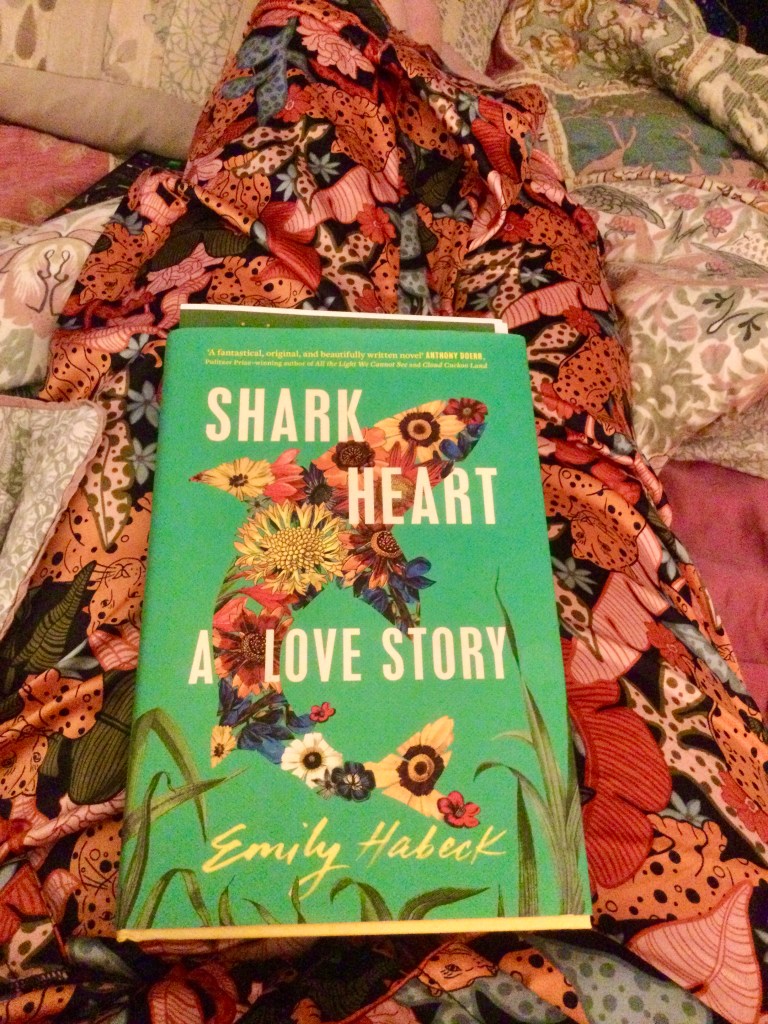
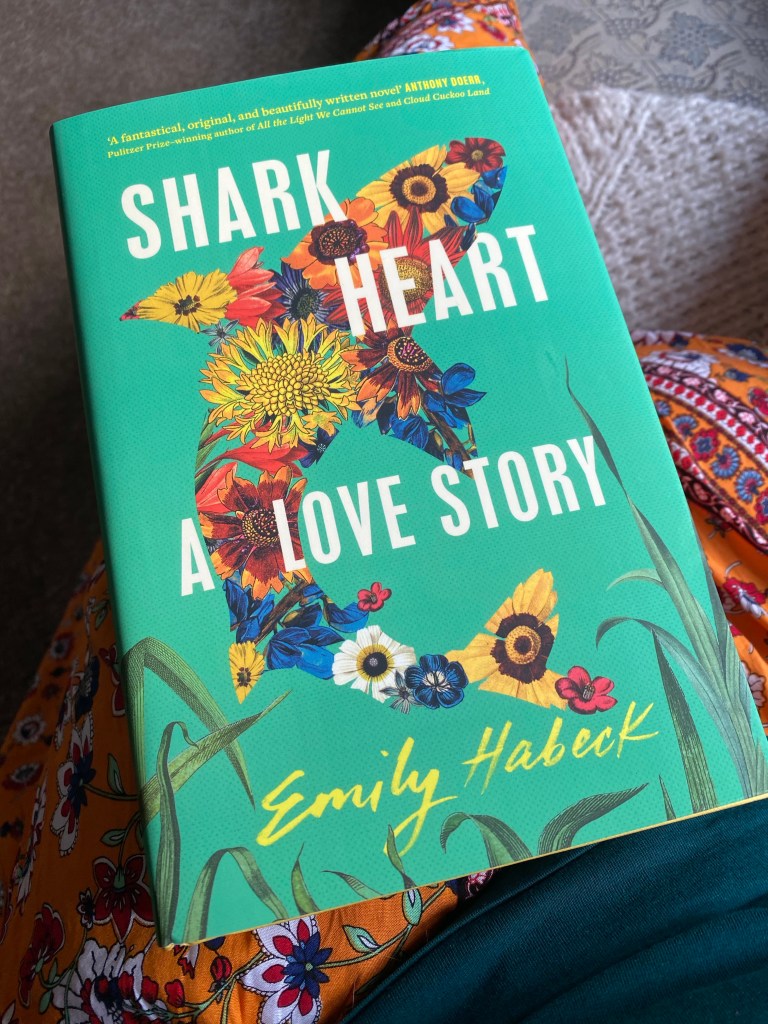
Shark Heart by Emily Habeck

When Ella from Hachette Books messaged me to say there was a book she thought would be right up my street I was a little surprised. I didn’t think the publicists would know me and my book choices well enough to make predictions about what I’d like. I was wrong. She knew exactly who this book was for. ‘It’s about a man turning into a Great White Shark’ she told me, well what’s not to like? I was hooked on the idea before the book even arrived. Lewis and Wren have fallen in love. They’ve no idea that their first year of marriage will also be their last. It’s only weeks after their wedding when Lewis receives a rare and shocking diagnosis. He has an unusual mutation. Although he might retain some of his consciousness, his memories and possibly his intellect, his body will become that of a Great White Shark. Lewis is complicated, an artist at heart he has always wanted to write the great American play for his generation. How will his liberal and loving heart beat on within the body of one of the earth’s most ruthless predators? He also has to come to terms with never fulfilling his dreams, but expressing that anger with shark DNA in his system has huge repercussions. He has to come to terms with leaving Wren behind, for her own safety. Wren wants to fight on. To find a way of living and loving each other as Lewis changes. She is told that there will come a point when this will be too dangerous. Lewis will then have to live in a state run facility or free in the ocean. It’s when she sees a glimpse of his developing carnivorous nature that a memory from her past is triggered. Wren has to make a terrible, heart-wrenching decision.
I felt emotionally devastated by this beautiful novel that uses a fantastical premise to unleash experiences of grief, love, loss and potentially, healing. Wren and Lewis reminded me of my relationship with my late husband. We married after six weeks and even then I knew I wouldn’t have him forever. I had almost seven years until I lost him. This book explained how my own grief experience felt. After Jez’s death I felt furious with anyone who said ‘Jez would think..’ or claimed they could sense his presence. I could feel nothing. No voice, no presence, nothing. It was as if he had never existed. For Lewis there becomes a point when his incessant desire to feed will become his overriding thought, strong enough to wipe out all others, will that include his love for Wren? He will not exist as Lewis anymore, the doctors tell Wren, he will not even know who she is, because he will be all shark. Wren has to come to terms with letting Lewis go, but how do you walk away from the most precious thing in your life? I had a point where I had to decide that I couldn’t look after my husband any more. I was exhausted, we had no carers in place and it didn’t feel safe to try and go it alone. Besides, as his brother told me, I had to start building a life without Jez. I cried more the night he went into nursing care, than when he died, because I felt I’d let him down and I knew he would die. He did, only six weeks later. Wren is told the same after a terrible violent incident occurs at the after-party for the play Lewis’s students have worked on. Wren calls the specialist nurse for advice, but she urges Wren that it’s time. Will they be able to say goodbye?

Despite these similarities to my life, it wasn’t Lewis’s story that broke my heart, It was Wren’s story. This is not the first time Wren has had to say goodbye. When she was barely a teenager her mother also had a rare diagnosis, but her mutation was that of a Komodo Dragon, equally deadly and impossible to live with. One scene between Wren and her mother, as she leaves her in the state facility, was so deeply moving I cried. I found it unbearable. This is what’s astonishing about Emily Habeck’s debut. It seems so fantastical, yet is utterly real in it’s experiences and emotions. Using such unusual animals as the mutation/illness creates a distance from the feelings involved. Some readers might even think the premise ridiculous – but the terrible anticipation, the moment of loss, the grief and relentless momentum of life are exactly the same. It doesn’t matter whether it’s the decision to put an elderly parent in a home or a Komodo Dragon into a facility, the guilt and pain as you walk away feels identical. It isn’t all relentless misery though. We meet Wren’s mother as the teenager she once was, experiencing love for the first time. We also go back to Lewis and his new life in the ocean, as his emotions flit between loss and what’s for dinner. His friendship with Margaret is so funny. She was once a human too and she’s been looking for another hybrid to talk to, and boy does she talk?! She’d try the patience of a shark. In a beautifully unusual way and in an almost poetic prose, this beautiful debut is about life. It’s ups and downs, the horrendous losses and the gains: the naivety of first love, becoming a mother, our love and care for an elderly parent, friendships and realising that a special little girl sees you as her dad. Life is constant adaptation, evolving and developing all the time. Every end is a beginning. This is such a special novel, an incredible debut with such a keen grasp of what being human is all about. I can see this becoming an all-time favourite for me. It quite simply took my breath away.

Meet the Author

Emily Habeck has a BFA in theater from SMU’s Meadows School of the Arts as well as master’s degrees from Vanderbilt Divinity School and Vanderbilt’s Peabody College. She grew up in Ardmore, Oklahoma. Shark Heart is her first novel.

Published on 3rd August by Jo Fletcher Books

Posted in Monthly Wrap Up

Monthly Wrap -Up July 2023

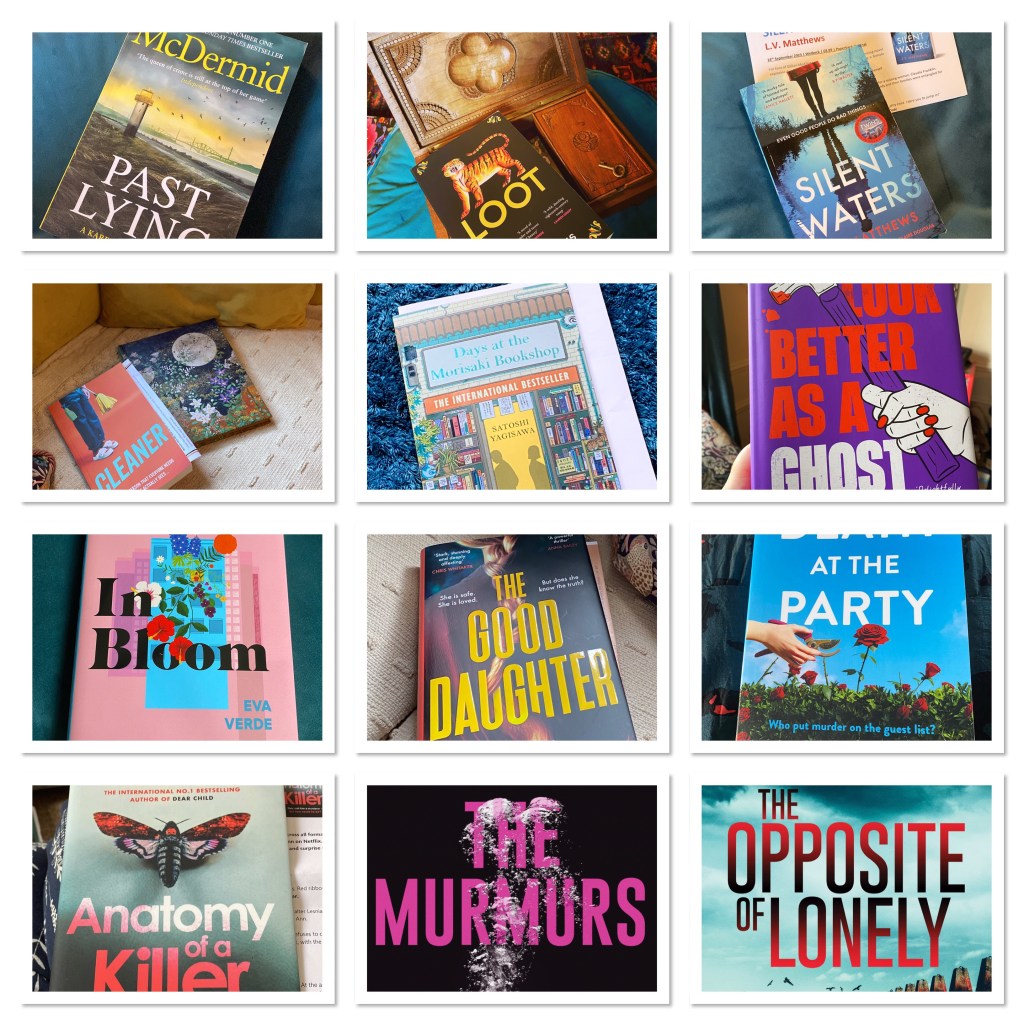
As we pass the half way point of the reading year, I’m reading so many great books that I’m panicking about my end of year favourites. There wasn’t a bad read at all this month, but these are my absolute favourites of the bunch. With all the wet weather there isn’t a great deal to do outdoors so it’s been a blissful month for reading. Although, I must admit to a little bit of FOMO as people pop off to various festivals that are currently prohibitive due to cost and the fact I’m still recovering from my back procedure. Currently I can manage to be up and about for about 15 minutes at a time, but I’m hoping that will improve soon. I hope you’ve all had a brilliantly bookish July!

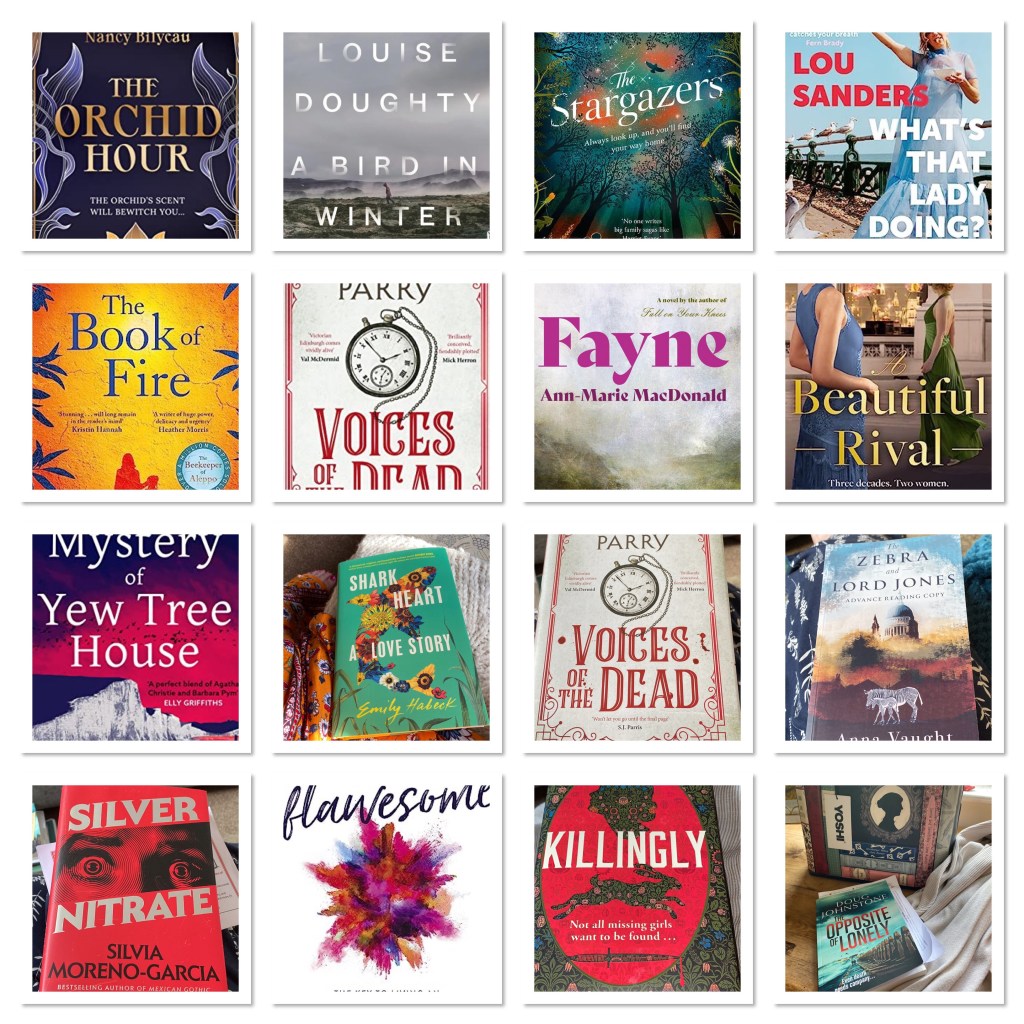
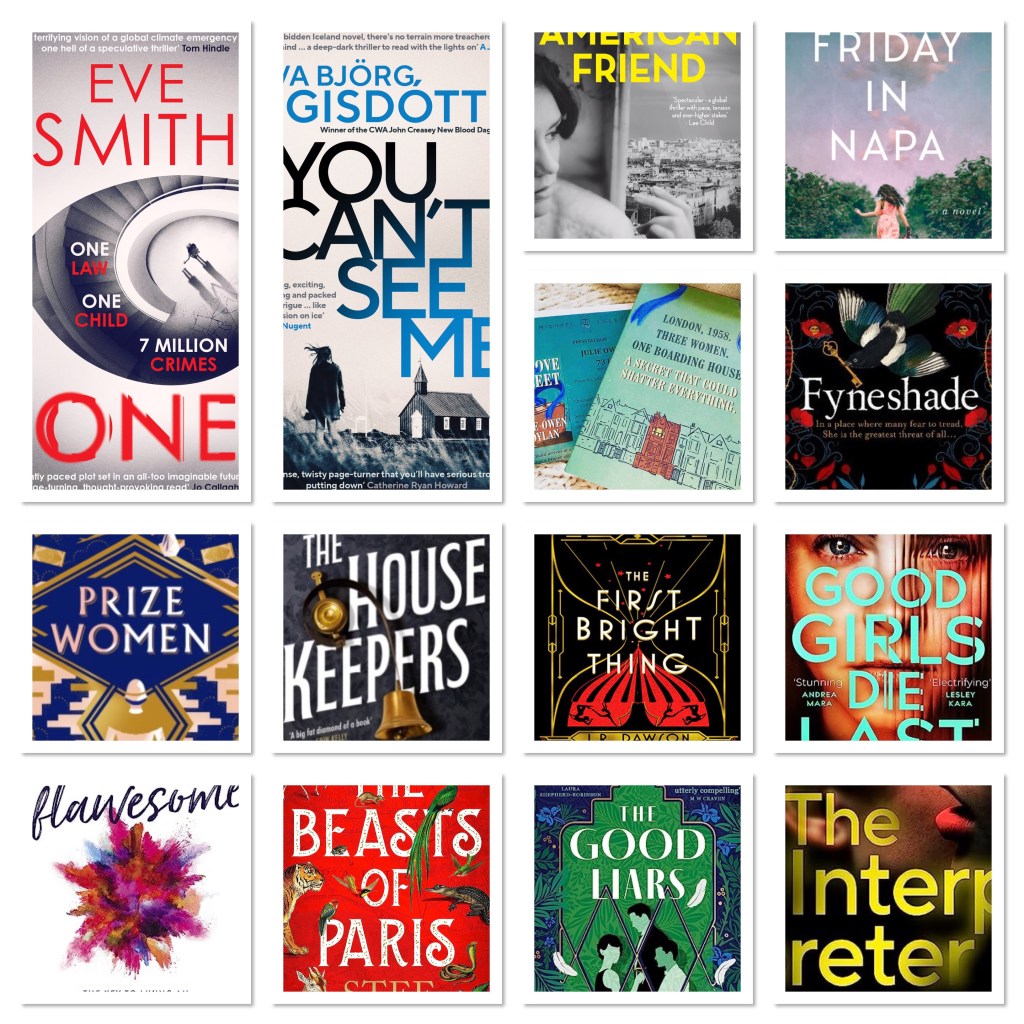
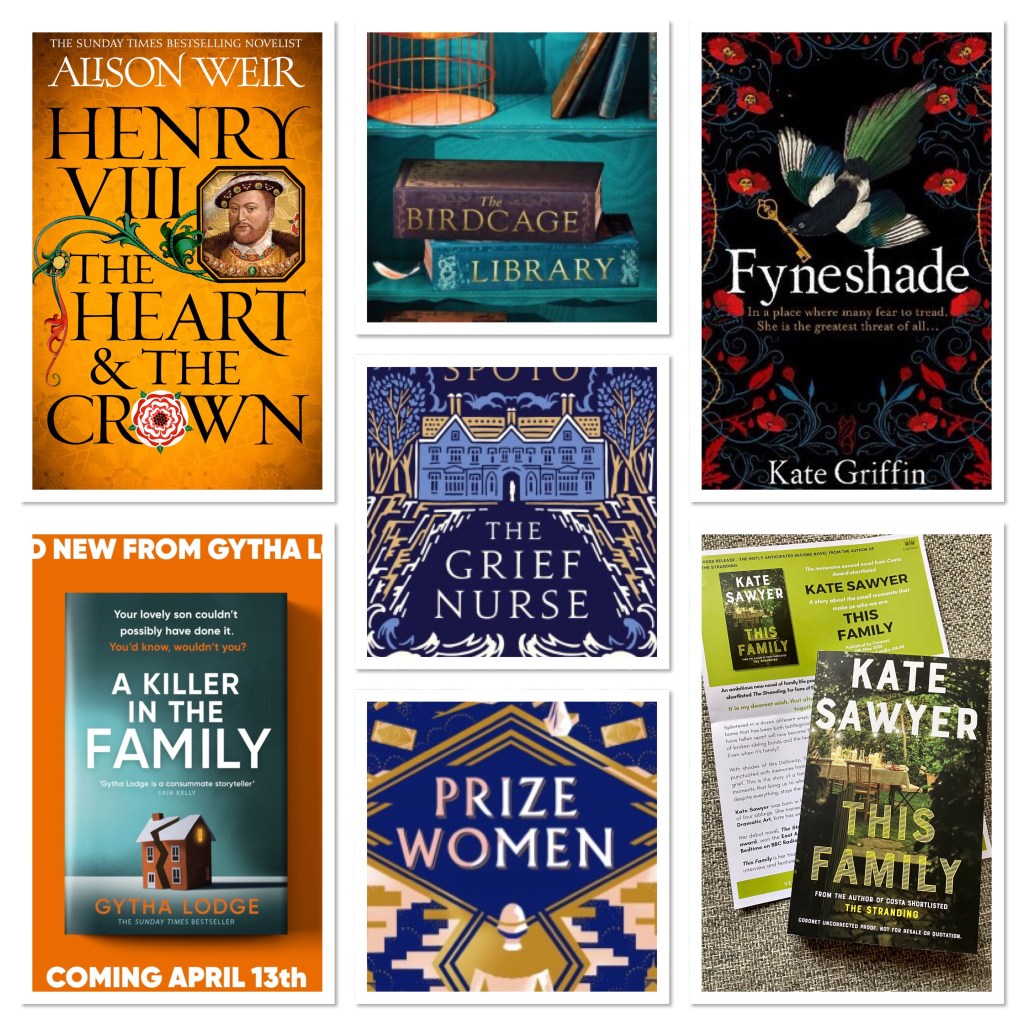
I loved this rather gothic dual timeline mystery from Freya Berry, with a fascinating setting of taxidermy and exotic animals. In 1932, Heinrich Vogel employs adventurer Emily Blackwood to come to his castle in Scotland and catalogue his taxidermy animal collection. She soon realises that she’s looking for a rather different treasure and through a book called The Birdcage Library, she follows the clues of another woman to bunches of paper secreted around the castle. In these papers is the diary of Heinrich’s sister-in-law Hester Vogel, who committed suicide by throwing herself from the Brooklyn Bridge. Emily becomes immersed in Hester’s life, as she is separated from the work she enjoyed to be a society wife and becomes stuck between two Vogel brothers. This is a fascinating story with amazing set pieces involving hummingbirds and the menagerie of animals in Vogel’s collection. As she reads Emily becomes increasingly suspicious about the remaining brother and exactly what is the real treasure he seeks? Sinister, intriguing and with two intelligent heroines.

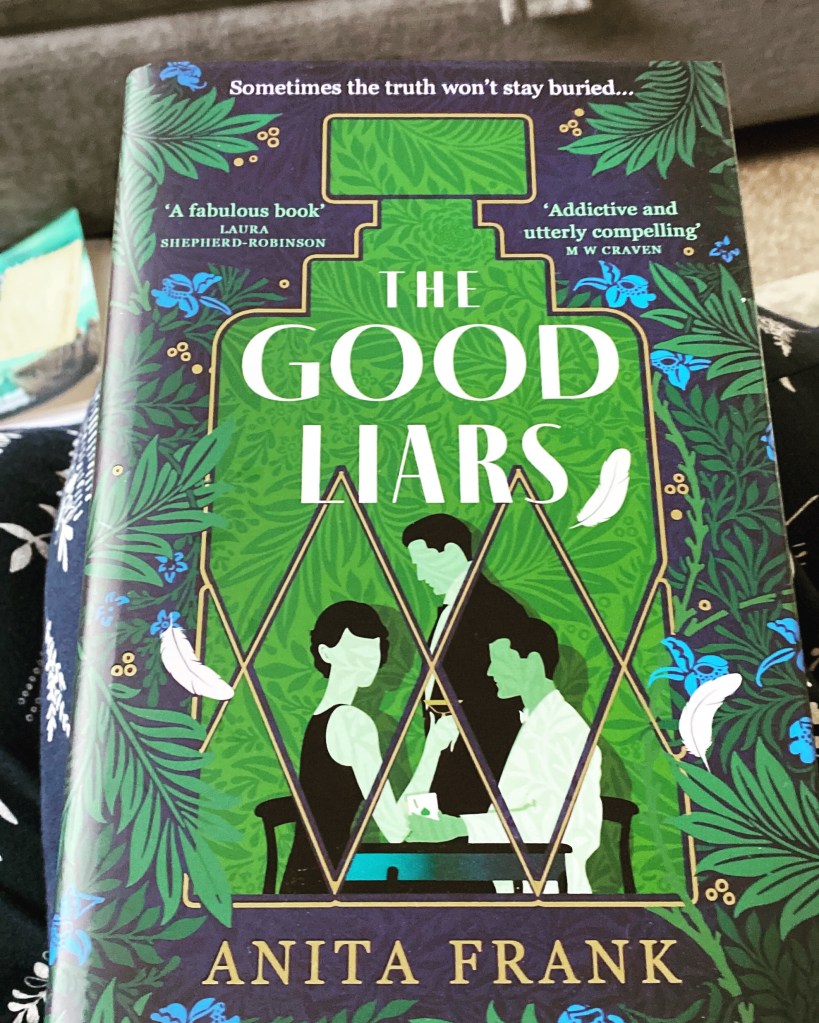
This is another mysterious house with lots of conundrums to solve and isn’t this beautiful Art Deco cover incredible too? Sarah is a new employee arriving at Darkacre, the family seat of the Stilwells. Like many aristocratic families, WW1 has wreaked havoc on the men in this family. When their father died, the eldest son Hugo became the heir of Darkacre. Yet his time as heir was very short – he was killed on his return to the front leaving middle brother Maurice as heir to the Stilwell estate. Maurice was not prepared to be the master of the house and with double death duties already crippling the estate, he has learned fast. Unfortunately, he has returned from war a changed man too, plagued by nightmares, flashbacks and extreme responses to loud noises, an ailment then referred to as shell shock. With youngest brother Leonard severely disabled by his war injuries and struggling to come to terms with the loss of his limbs, the family are depleted and barely coping. However, as Leonard so cryptically tells us, perhaps it is no more than they deserve? Sarah’s arrival is the catalyst for this story and it isn’t just the relationship between family members that points to there being issues at Darkacre, soon a series of unexplained happenings start to gnaw away at the nerves of even the most stoic inhabitants. Especially the arrival of a mysterious, masked detective who claims to be trapped by rising water as a storm descends. A storm that rumbles all night, both outside and inside Darkacre. Exactly what is this family hiding? Brilliantly set in it’s time, with issues of loss and disability handled incredibly well

Wow! This is a searingly raw story, simmering with righteous anger and injustice. Set on a boiling hot summer’s day, you can almost smell the tarmac and diesel fumes. You can hear the traffic noise and feel the agitation and impatience of people trying to get to work without exchanging a word with anyone else. It’s too hot to breathe let alone exchange a friendly word. Em needs to get through her day at work, stay smart for her appraisal then find her way across London to reach the airport to catch an evening flight to Spain for her sister’s wedding. What follows is a total clusterfuck! This book is impossible to put down as the heat, her appraisal and strikes on public transport conspire to ruin her day. Not to mention the psychopath running round London and strangling women. Then she gets her period. I finished this book overnight because I just had to know what happened next. Em is determined and with the help of some new friends she is reminded that she doesn’t have to keep her landlords secrets, nor is it her fault that her much older, married boss sexually harassed her. It’s time to stop accepting the state of things and fight back. As Em becomes an unlikely heroine, this is a shocking indictment of the world we inhabit as women and a reminder not to accept it. Powerful, visceral and thought provoking.

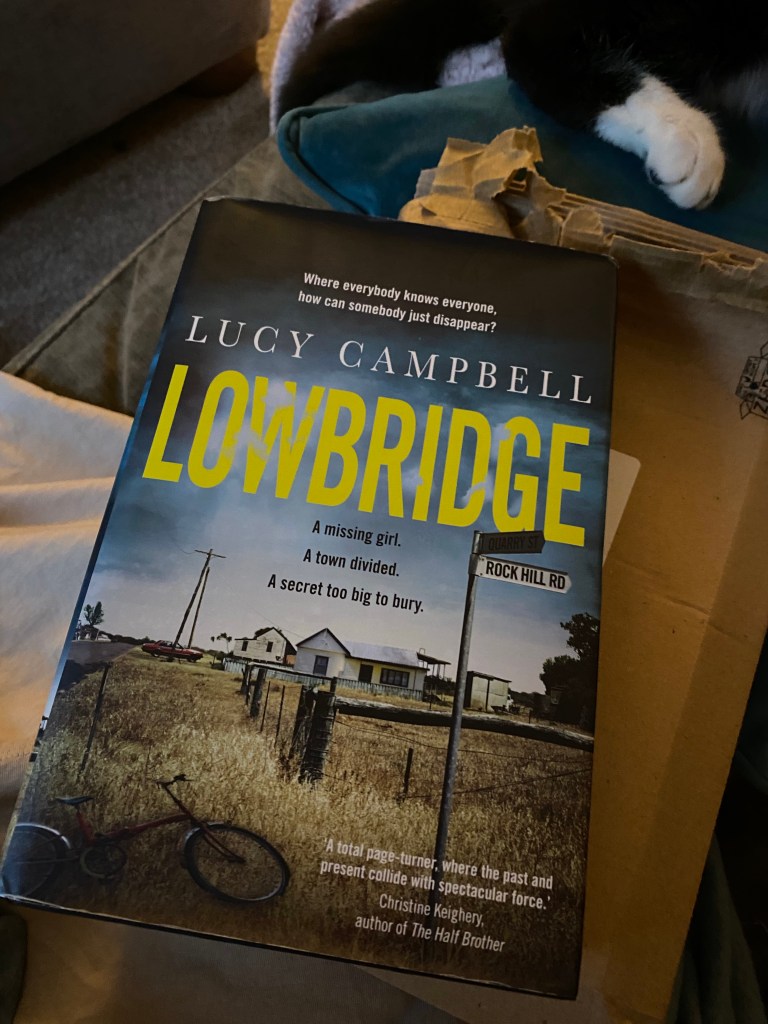
This story is a slow burn, dual timeline mystery set in small town Australia. Katherine has moved to her husband James’s hometown of Lowbridge, a town with a very clear line between ‘the haves and have-nots’. Katherine is struggling with her mood and self-medicating with drink. James is hoping that the move will help her and has made it clear that they can’t continue as they are. He encourages her to get dressed and leave the house or go for a run like she used to. It’s clear something momentous has happened and their lives have imploded, but they are each dealing with it in different ways. When she does leave the house, Katherine accidentally stumbles across the town’s historical society and shows an interest in the exhibition they’re putting together. It’s something she can potentially help with and it’s enough to get her leaving the house. However, when she comes across a thirty year old mystery, problems start to arise. The disappearance of a young girl called Tess during the summer of 1987 has remained unsolved and Katherine thinks it may be time to highlight the case and perhaps jog people’s memories. She knows she must involve Tess’s family in the decision, but she doesn’t expect opposition from anyone else. It’s James’s opposition that surprises her most. He tells her to leave the mystery alone, that it will stir up trouble and it’s would be unhealthy for her to become wrapped up in another family’s grief. Katherine is determined though and with Tess’s family on board she starts to research what happened in 1987. Who has the most to lose from her findings? A brilliant depiction of how loss affects individuals and a whole town. Thoughtful, honest and addictive.

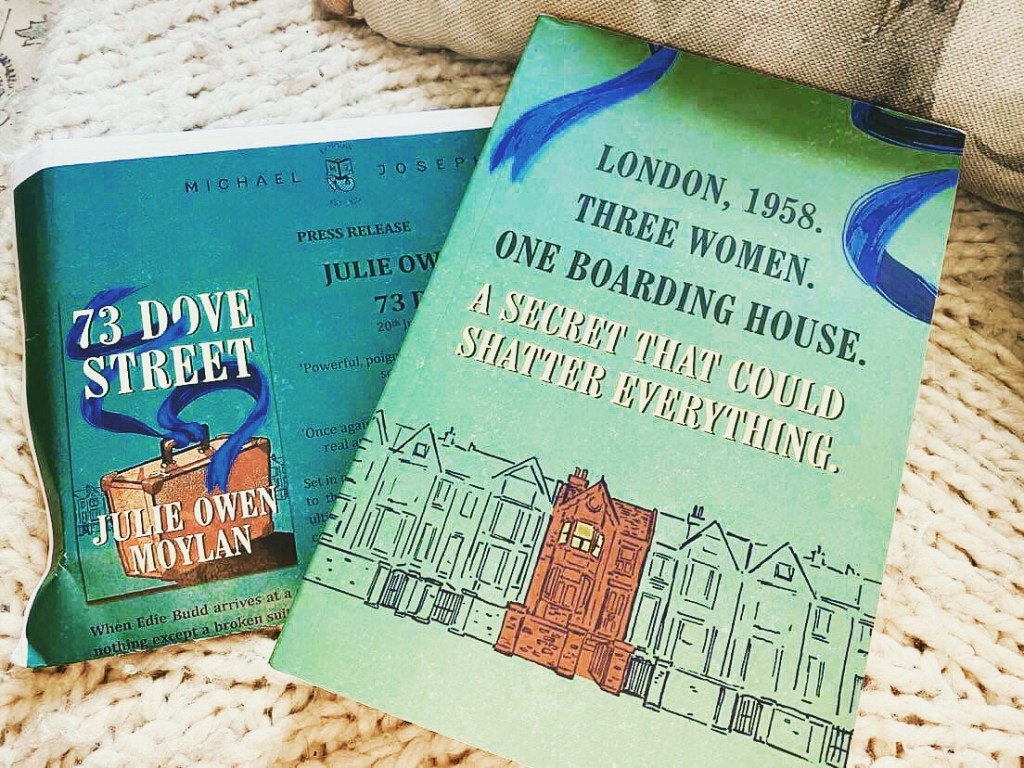
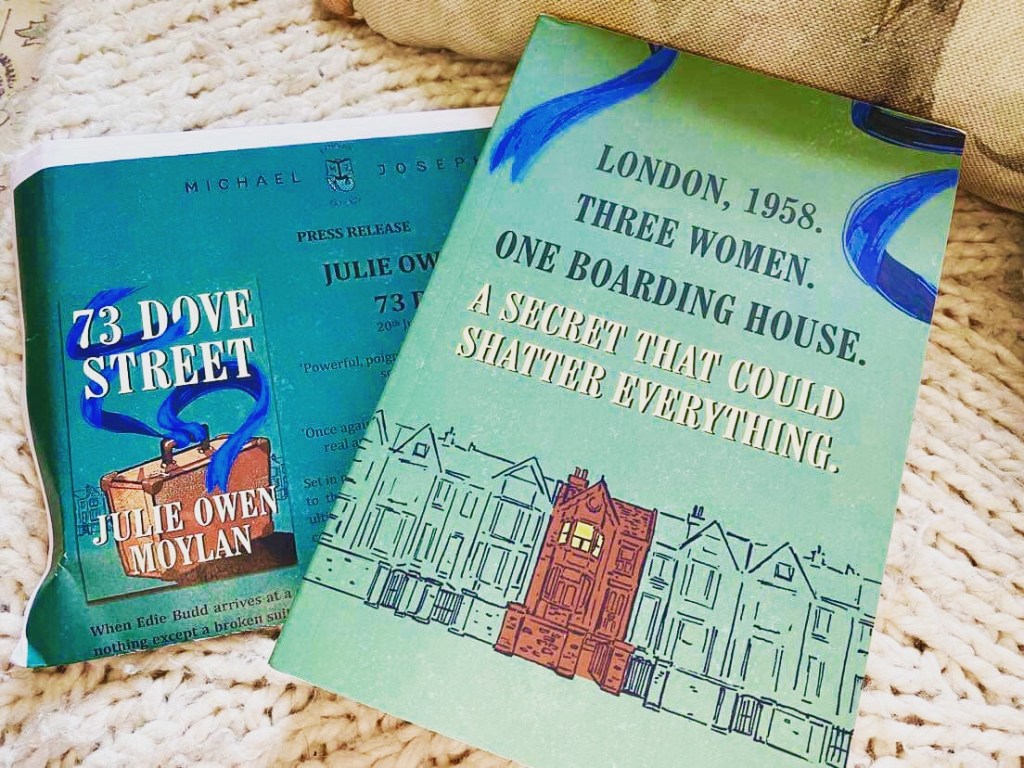
73 Dove Street is Julie Owen Moylan’s third novel and I thought it was a brilliant depiction of ordinary women’s lives in post-war Britain. What an incredible writer Julie Owen Moylan is, because within a few pages I was absolutely immersed in 1950’s London. This is a London I haven’t visited too often in literature, the haunted and broken post-war period rather than the glory and the drama of the the war itself. Here the war has a ghostly presence, shown by children climbing piles of rubble or an incomplete street that looks like a mouth with one of it’s teeth missing. The story is told through three women; Edie, Tommie and Phyllis. It’s Edie we follow to 73 Dove Street where she hopes to look at a room, with just a single suitcase and an envelope full of cash. Edie is almost put off by the mattress and pile of men’s clothes burning fiercely just outside the yard, but a voice summons her from an upstairs window and she recognises a place she can lie low. What is she hiding from? Tommie lives in the room below and works for an eccentric socialite who was once wealthy and popular. Outside work Tommie is lured to the seedy nightlife of Soho and the man she can’t quit. Phyllis is the landlady of 73 Dove Street, burning her husband’s belongings in the street after she discovered a terrible betrayal. She puts on a good front, an armour that she needs to cope with a past she won’t talk about. Slowly each woman’s story is unravelled and as we hear them it is so emotional, I found it deeply moving. It isn’t just the bombed houses that are missing. There are people locked in wartime, trying to carry on by avoidance, distraction or stepping around something there’s only one way through. I found this part of the book so beautifully rendered by this wonderful writer that the emotions were deeply felt.
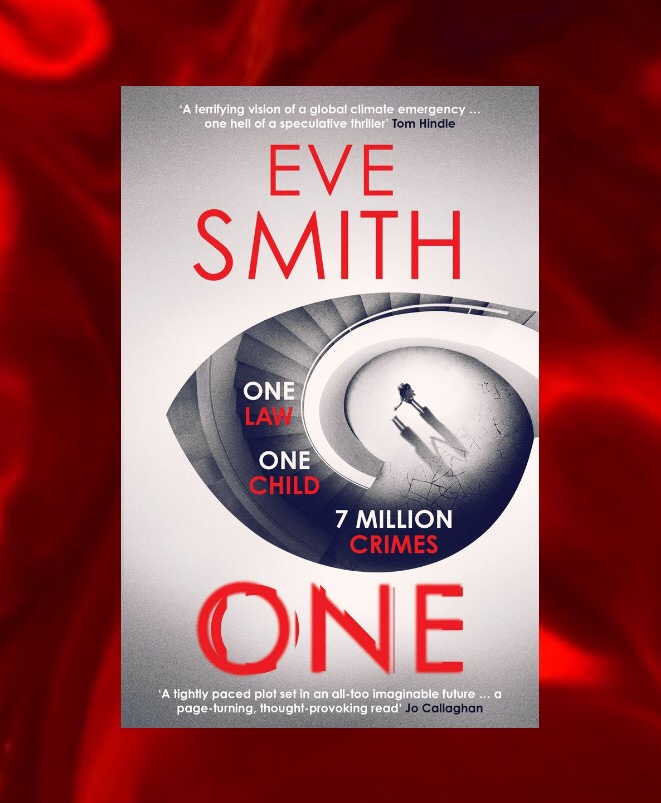
A catastrophic climate emergency has spawned a one-child policy in the UK, ruthlessly enforced by a totalitarian regime. Compulsory abortion of ‘excess’ pregnancies and mandatory contraceptive implants are now the norm, and families must adhere to strict consumption quotas as the world descends into chaos. Kai is a 25-year-old ‘baby reaper’, working for the Ministry of Population and Family Planning. If any of her assigned families attempts to exceed their child quota, she ensures they pay the price. Until, one morning, she discovers that an illegal sibling on her Ministry hit- list is hers. And to protect her parents from severe penalties, she must secretly investigate before anyone else finds out. Kai’s hunt for her forbidden sister unearths much more than a dark family secret. As she stumbles across a series of heinous crimes perpetrated by the people she trusted most, she makes a devastating discovery that could bring down the government … and tear her family apart. I LOVE that Eve Smith doesn’t baby her readers. If there are hover cars that’s what she gives us. A two word description. No long flowery explanations of how they came to be, she just tells us what IS. She expects our own imaginations to keep up. The immediacy of her writing brings us slap bang in the middle of this alien world and it’s exhilarating. This is a great addictive thriller, involving one of women’s most emotive issues. It’s an emotional, intelligent and imaginative read from a writer who’s fast becoming my go-to for speculative and dystopian literature.

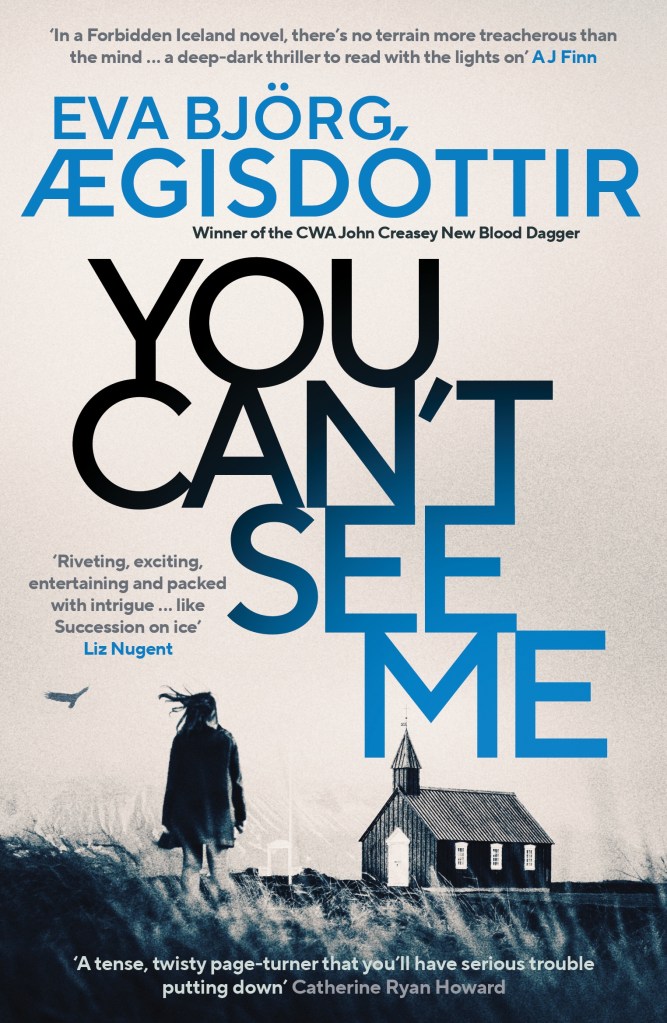
I LOVED the first two books in the Forbidden Iceland series, featuring detective Elma, recently returned to her home town of Akranes after several years working in Reykjavik. This story is a prequel and we meet her eventual partner Sæver as he looks into some very strange events surrounding a family reunion. This is not your average family though and I don’t think I’ve ever wanted to be at a party less! My sympathies were largely with hotel employee Irma who views the Snæberg family as if they are a totally different species. In a way they are, set apart by their successes and their wealth from the everyday hotel employee. So wealthy in fact that they’ve hired this entire luxury hotel for the weekend, with a full itinerary of activities and boozy dinners at night. It isn’t long before tensions and differences come to light: judgements and opinions on each other’s partners; family members who’ve lost touch and resent each other; teenagers who’d rather be elsewhere; parents who can’t connect with their children or each other. All cooped up together for a whole weekend. As the author moved our point of view from one character to another we realise this family has so many secrets. As a storm begins to roll in, cutting the hotel off from civilisation, horrifying truths bubble to the surface. Someone who has been waiting a long time for their moment makes their move in this complicated chess game. We don’t always see those who hide in plain sight and those we think we know could be monsters in disguise. I love this author’s ability to get inside the heads of her characters and pull the reader along with her. Here she builds a labyrinth of clues, red herrings and suspicious characters that I found absolutely impossible to resist. That’s why I was awake at 3am, with my attention split between the page in front of me and my ears attuned to even the slightest creak downstairs. After all you never know who might be watching….

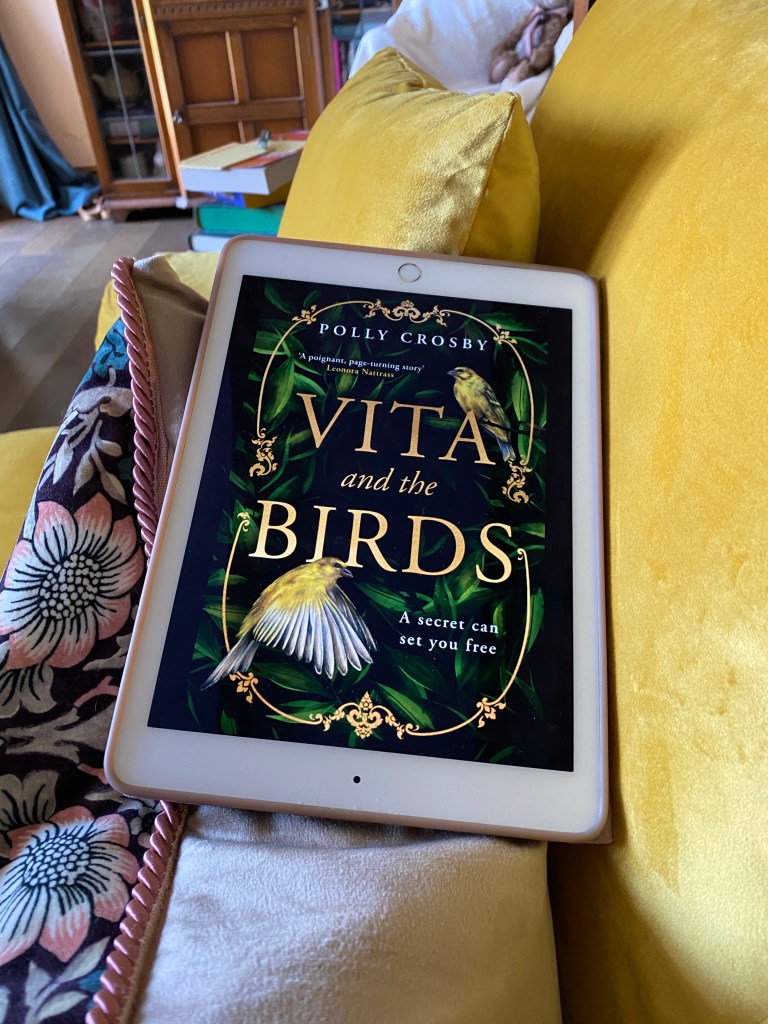
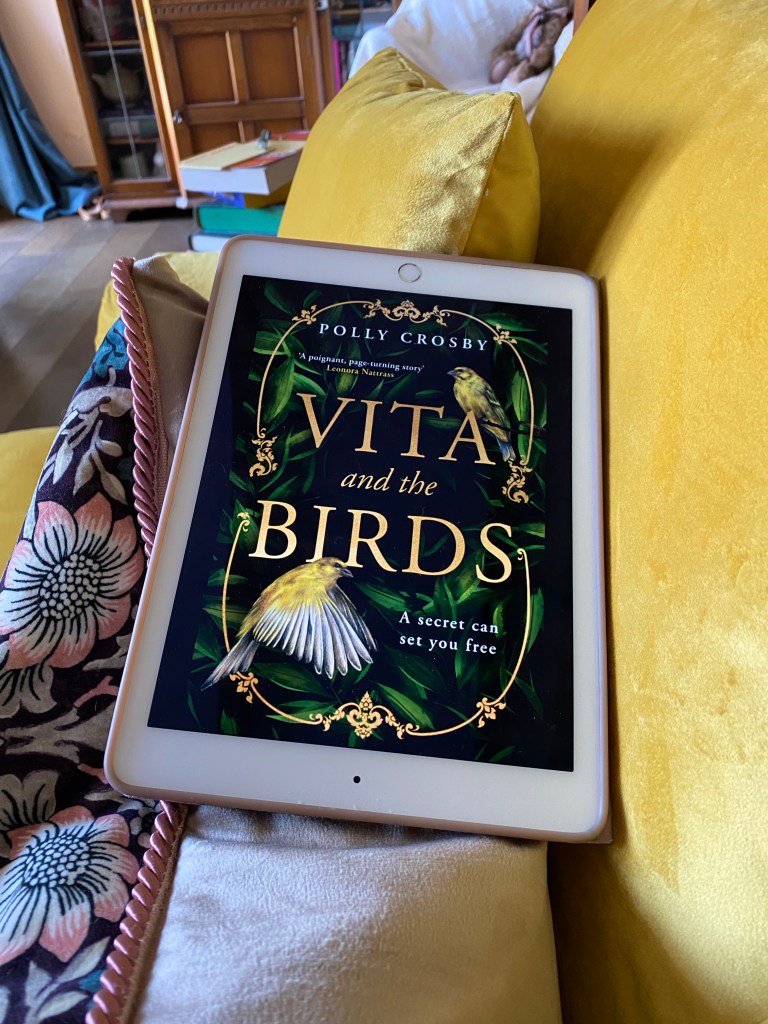
I’ve looked forward to the new Polly Crosby novel for a while. I love her writing so I gave myself a lovely sunny weekend to completely wallow in the story. Eve has felt adrift since her mum Angela died, so her four brothers think it might be good for her to take a trip to the coast and clear out their grandmother’s studio. Grandmother Dodie was a painter and lived a fairly basic life in a small ramshackle studio just off the beach and all have fond memories of childhood holidays there. Close by is the strangely alluring Cathedral of the Marshes, a glass building so imposing it has the presence of such a holy building. Once, when she was a teenager, Eve had taken a dare to go into the cathedral with Elliot, one of the local boys. She remembers being terrified and running, but doesn’t remember much else about that night apart from seeing a painting standing on an easel – a portrait of her. How will it feel to be back in the place that still holds some of her best childhood memories? She finds a box under the sink filled with Dodie’s letters and reads of a hidden relationship and is plunged into a completely hidden part of her grandmother’s life, a powerful love affair with repercussions that lasted decades. We’re pulled back into the past to see what happened. As I was reading about the past I kept wondering who owned Goldsborough Hall now? The answer took many unwashed dishes and unhoovered floors to unravel. This was a beautiful hidden love story and an intriguing mystery as well, told with compassion and empathy.

What a brilliant month and as we creep closer to the end of the year I’m even more worried about how I’ll choose between them for the best of the year! I’ve been away this month and wanted to catch up on some books in series that I’ve only partly read. So I have to mention Matt Wesolowski’s Six Stories series. I took the remaining four books to Shropshire with me and out of all of them, it was Changeling that made the hairs stand up on the back of my neck. Not helped by the fact we were out in the very area between Chester and Wrexham featured in the story. This was a brilliant mystery and supernatural thriller combined and I can honestly say Ive never been disappointed by one of his books. I also enjoyed a paperback from Elizabeth Noble with the title Other People’s Husbands where the balance of a group of couples shifts when two people decide to have an affair. This was a brilliantly balanced novel that gives us the viewpoint of the two adulterers as well as other members of they’re social group. Can friendship and marriages triumph over this mistake, or has it blown everything apart? Both will appear in the next month on Throwback Thursday with a full review. Finally I must mention this lovely novel which was a Squad Pod Collective choice for July that I’m a little late starting. Minor Disturbances at Grand Life Apartments by Hema Sukumar was a very enjoyable holiday read about the residents of a an old set of apartments in Chennai, South India. This is a relaxing read, full of incredible detail with each resident facing a personal dilemma as well as the possible compulsory purchase of their homes. Review to come in the next few days. See you next time and here’s a peek at next month’s TBR!

Posted in Squad Pod

73 Dove Street by Julie Owen Moylan

What an incredible writer Julie Owen Moylan is, because within a few pages of starting her new novel I was absolutely immersed in 1950’s London. This is a London I haven’t visited too often in literature, the haunted and broken post-WW2 period rather than the supposed glory or the drama of the the war itself. Here the war has a ghostly presence, shown by children climbing piles of rubble or an incomplete street that looks like a mouth with one of it’s teeth missing. The story is told through three women; Edie, Tommie and Phyllis. It’s Edie we follow to 73 Dove Street where she hopes to look at a room, with just a single suitcase and an envelope full of cash. Edie is almost put off by the mattress and pile of men’s clothes burning fiercely just outside the yard, but a voice summons her from an upstairs window and she recognises a place she can lie low. What is she hiding from? Tommie lives in the room below and works for an eccentric socialite who was once wealthy and popular. Outside work Tommie is lured to the seedy nightlife of Soho and the man she can’t quit. Phyllis is the landlady of 73 Dove Street, burning her husband’s belongings in the street after she discovered a terrible betrayal. She puts on a good front, an armour that she needs to cope with a past she won’t talk about.

This author is absolutely brilliant at creating a feeling and time period, from the dark and depressing post-war London to the interiors of both No 73 and the more upmarket house where Tommie works.

“It was one of those London streets that had become a canvas of tatty boarding houses: windows filled with crooked pieces of cardboard saying ‘Room to Let’. The houses all looked the same: bay-fronted with scruffy front gardens filled with dustbins, and children loitering on doorsteps with their runny noses and scraped knees.“

She makes a beautiful observation about these streets, that where once there were hints of colour, London is now bombed back to dreary black and white. People are trying to drag their lives out of wartime monochrome, but fail every time. There are houses with the front ripped off and the contents still inside, looking like a grotesque full-size doll’s house. Through Tommie’s childhood experiences we can see what it was really like to be in one of those houses as she remembers a direct hit on her family home and being sat in the suffocating dark rubble until a hand breaks through to save her. These memories are so powerful and evocative, they really bring the reality of the Blitz to life. It’s clear that one of the reasons why London is so bleak is that it’s people are traumatised and numb. As well as the lack of money, rationing and their surroundings, these people haven’t even begun to recover. They’re vulnerable and in the case of our main characters, they’re trying to battle on alone.

I was immediately on board with Edie and loved the way the author built up her relationship with Frank. It was one of those situations where I could clearly see what was going to happen and I was mentally screaming at Edie to walk away. This is a man who knows how to choose the right woman, the one who will fall for his charms and become hooked on the way he operates. He likes to keep a woman on edge, waiting for his affection and easily moulded to what he wants by withholding that affection. Sadly it’s a pattern that’s only noticeable when you’ve been through it and Edie is a quiet, inexperienced girl who’s bowled over by his subtle manipulations. She’s so unformed and brought out such a protective mode in me. In a typical pattern he follows any glimpse of anger or violence with apologies and huge gestures.

“Frank’s pale blue eyes never left Edie’s face. Pleading with her without saying a word, desperate to make everything right between them. ‘Will you marry me, Edie? Say you will . . .’ The words tumbled out before Edie could stop and think about them. ‘Yes, of course I will.’ Her arms wrapped around his neck; her good wrist covering the bruises on the other one. His mouth felt tender and warm on hers and for that moment she couldn’t hear the daft comments or applause from the pub, it was just her and Frank”.

The abuse Edie suffers is a hard read, but such an authentic representation of domestic violence in all it’s forms. I am from a working class family, with some very strong women on both sides especially in those aunties old enough to get married during the war. They often comment on how the generations beneath theirs are too quick to split up or divorce and that marriages in their generation tended to stay together. Yet, when I hear the reality of some of their marriages – the drinking, gambling, physical and sexual violence, financial abuse and infidelity – I wonder what’s the point of a long marriage that has only left them grieving and traumatised? The author shows how economic and psychological difficulties prevented women from leaving terrible relationships. I was interested to read the author’s comments about her own family and how the strong women in it had given her inspiration for the book.

I haven’t spoken about Phyllis much, although towards the end of the book it was her experience that had tears pouring my down my face. At the beginning we see through Edie’s eyes the burning pile of men’s clothes outside No 73 and we could guess at what had happened in her marriage. She’s full of anger at her husband, but as the story develops we get the feeling there is something more underlying her feeling of being wronged. We get the picture of a marriage rather like the bombed out houses – a facade remains but it’s been empty for some time. When we hear the full story it is so emotional, I found it deeply moving and could identify with this woman whose abrupt manner is simply the amount of protection she needs to get through each day. It isn’t just the bombed houses that are missing. There are people locked in wartime, trying to carry on by avoidance, distraction or stepping around something there’s only one way through. I found this part of the book so beautifully rendered and deeply felt. Julie has dedicated this book to her grandmother and the strong, working class women in her family. She has really done them proud with this wonderful historical novel.

Published by Michael Joseph 20th July 2023

Meet the Author

Julie Owen Moylan was born in Cardiff and has worked in a variety of jobs, from trainee hairdresser and chip shop attendant at sixteen to business management consultant and college lecturer in her thirties.

She then returned to education to complete her Master’s degree in Film before going on to complete a further Master’s degree in Creative Writing. Julie is an alumna of the Faber Academy’s Writing a Novel course. She lives in Cardiff with her husband and two cats.

Julie can be found on Twitter: @JulieOwenMoylan

Posted in Monthly Wrap Up

June Wrap-Up 2023

Hello Readers, this has been a very tough personal month and it’s a surprise to me when I look at my blog to find how much I’ve read and then written about the above books. These are some of the best books I’ve read this year and for some it’s meant reading a couple of prequels beforehand which were equally good. I haven’t posted towards the end the month because I’ve had a bereavement. I lost my beloved dog Rafferty and I’m still not fully taking it in, never mind anything else. My energy is low, my sleep pattern is ruined and I feel bereft without his warm body next to mine. When Rafferty finally started to struggle with his heart it was difficult to contemplate a life without him in it. He’s been with me for sixteen years and it’s not been enough. Usually when reading he’s as close to me as he can be, so it’s odd without him. As we move forward we’re going to try and do some of those things that have been impossible while he’s been ill. We’re staying in a hotel for the weekend, returning to our old habit of visiting the cinema weekly and perhaps going abroad which we haven’t done in five years. I know that I’ll slowly learn to live with the loss and we’re all lavishing lots of love on our two cats which they’re lapping up! Here’s a quick look at my favourites this month, all of which I recommend highly.

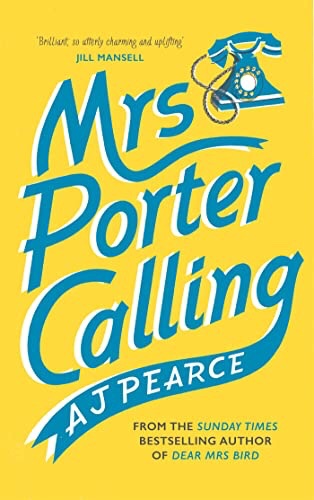
This was a Squad Pod Collective read and since this was the third in the Emmy Lake series I decided to read all three and they were all fantastic. They’re based in WW2 and are full of historical detail, but also genuinely uplifting. We follow Emmy as she goes to work for a magazine, the Women’s Friend, in the hope of starting a career as a reporter. However, her job is to sort through and choose the letters for the problem page, presided over by the formidable Mrs Bird. Her rules are clear, nothing vulgar or remotely distasteful will ever grace her page. Yet Emmy is a modern woman who thinks differently, she would love the page to offer solutions and ideas for real problems faced by real women, tasteful or otherwise. By the start of this book, she has achieved that goal and is in charge of the problem page as well as writing a series of features on women doing war work. Things are settled when the owner is persuaded to sign the magazine over to his niece Mrs Porter in lieu of her inheritance. She has an entirely different vision for the magazine, a scrapbook of society parties and weddings, real fashion instead of the tips for looking good on a budget and no more dreary war features. How can Emmy and her colleagues keep their loyal readership, whilst trying to get rid of Mrs Porter? It’s not all magazine talk though. There are serious storylines set around Emmy and her friend Bunty’s work with the fire service and the horrors of the Blitz. There’s romance and having to keep the faith while the one you love is far away fighting in another country. There’s also a lovely camaraderie between women, as Emmy becomes closer to women from her war work articles. The issues facing women in WW2 were new to me and they’re shown in the raw, but still overall the books leave you feeling inspired by this loveable character’s resilience and spirit.

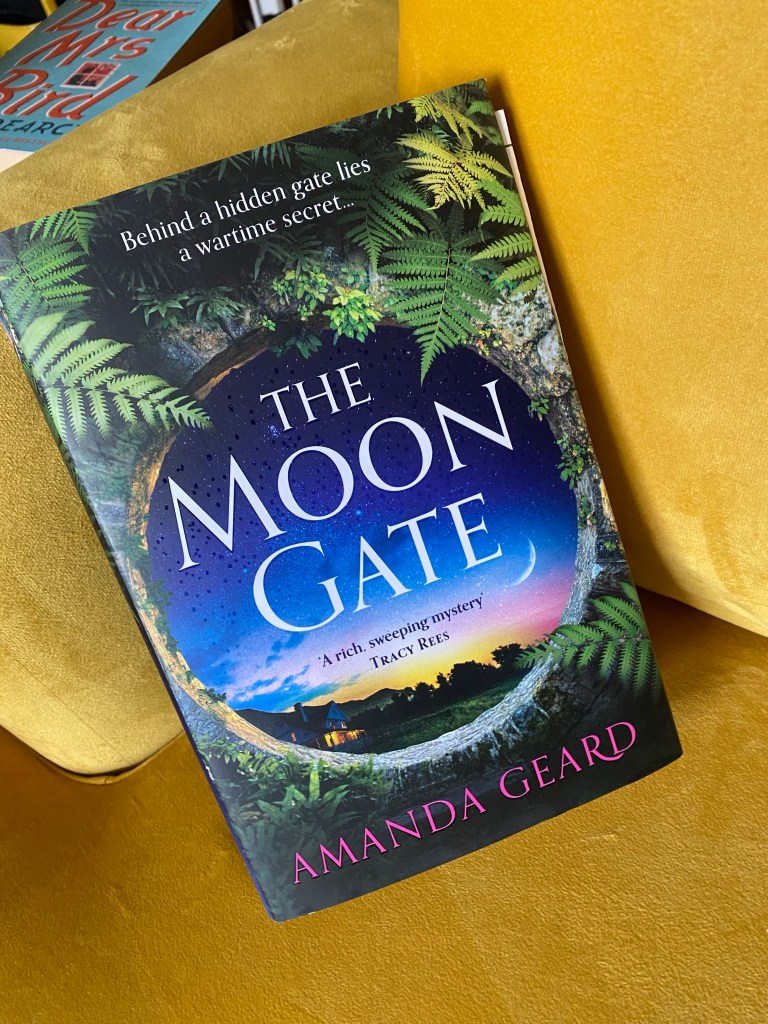
Another historical novel here from Amanda Geard, also set in WW2 but down under in Tasmania, intertwined with a storyline from the 1970’s and another towards the end of the 20th Century. The story begins as war seems inevitable and two little girls are sent to their aunt and uncle’s house Towerhurst in Tasmania, in the hope they’ll be safe from a war that’s expected to be contained within Europe. Grace Grey is Marcus and Olive’s niece, while Rose who travels with her is the daughter of their housekeeper. Rose is quite beautiful and the one people notice first, whereas Grace is rather awkward preferring to spend her time writing and reading poetry. They’ve escaped a household where the views of Oswald Moseley have become their cause and Grace’s mother was a proud black shirt. In Tasmania Grace falls for charismatic Daniel McGillycuddy, but can she seen past Rose’s beauty? What is it about these teenagers that spawns a story that lasts half a century? In the 1970’s Willow and Ben receive an anonymous inheritance, a house called Towerhurst in NW Tasmania. It sends Ben on a journey to find out about Tasmanian poet Daniel McGillycuddy, who returned to his native Ireland after fighting in WW2. Ben’s fact finding trip to London leads to a tragic accident and Willow bringing up their baby alone. In 2004 Libby flies from Tas to London to claim a satchel her father lost at the Moorgate Tube disaster. Using the clues within she tries to uncover a mystery that dates back to those two girls escaping the Blitz in 1936. This is the story of an incredible love, interrupted by war but never diminished.

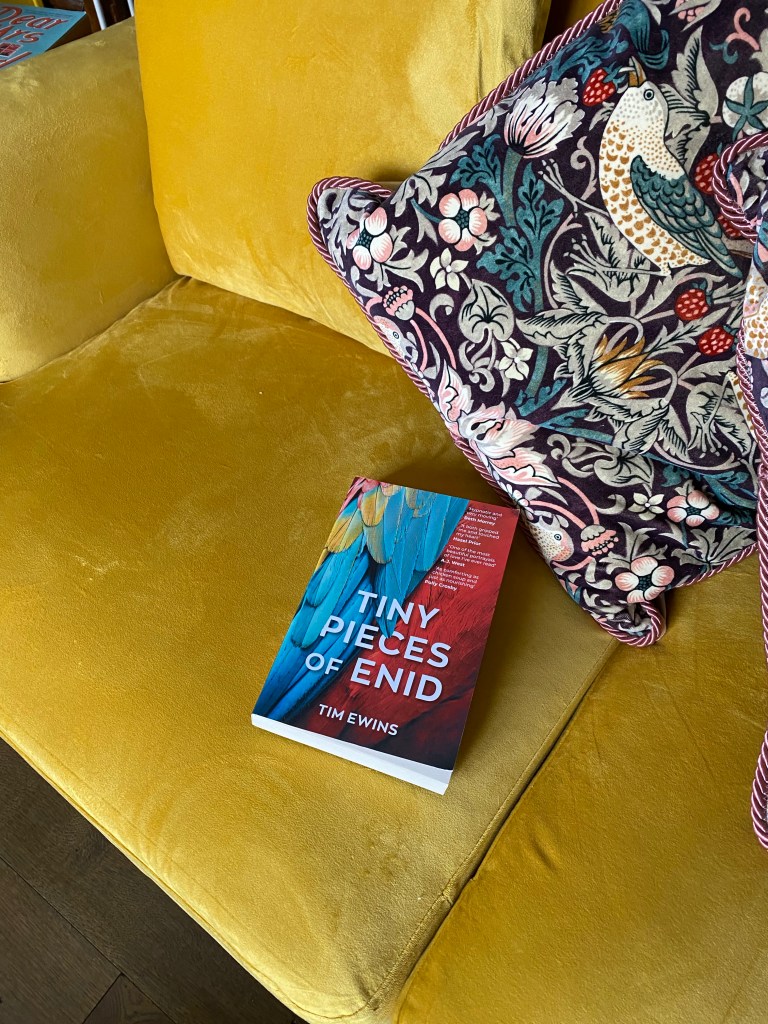
My recommendations for this novel were some tissues, some chocolate and a cat to cuddle. I found it so deeply moving. Enid is struggling with aphasia, a symptom of stroke and dementia that affects comprehension and formulation of words. In fact Enid’s dementia is causing accidents and confusion, so much so that daughter Barb wonders if she should be living alone. However, this would mean separating her from her husband Roy, a devastating blow for both of them. Enid thinks this is temporary and Roy will join her in due course, meanwhile Roy is at home alone missing his wife. Tim Ewins writes Enid in such an intricate and beautiful way: sometimes she is watching life pass her by, sometimes she’s in the past falling in love with Roy or playing with her little girl and other times she’s further in the past with her first husband and all the terrible memories she has of his anger and violence. She’s experiencing all this in the same day, believing each reality to be the present. However, sometimes she has a surprising clarity and is very present, with a great sense of humour. Being so in touch with her past allows her to recognise the signs when a visitor comes in for another resident. Sometimes, Olivia is with her husband and Enid can see what this man is, he’s angry and dismissive. Enid builds a friendship with Olivia, but she wants to help her, to make her see that she doesn’t have to stay and that there is happiness, just look at her and Roy. I loved how Tim shows his main character living with an illness, despite her different realities she has formed a friendship and made someone’s life better. Tim has tacked his subject with his usual compassion and care, creating a book that had me reaching for the tissues.

I’m a big fan of Polly Crosby and this beautiful historical novel has cemented her position as a ‘must-buy’ author. In 1997, Eve is encouraged by her brother to stay in the rundown artist’s studio where her grandmother Dodie lived on the coast. Having lost Dodie and her mother, Eve has felt a little lost. This place reminds her of them both and family holidays where she and her brothers would fall asleep cuddled together like puppies after a day on the beach. Behind the studio stands the incredible Cathedral of the Marshes, a glass construction built by the Goldsborough family in the early part of the 20th Century. When clearing out her grandmother’s things, Eve discovers that Dodie had a link to the building. She painted Vite Goldsborough there, just before the war in 1938. In an echo of the past, Eve takes a commission to paint a local lady who is the key holder for the building. It’s the first time she’s been inside since accepting a dare to go in when she was a teenager. Slowly Eve begins to uncover long buried secrets that change the way she thought of her grandmother and also that night she first entered the glass cathedral and saw a portrait of herself. It’s a wonderful history of a family’s female line during the 20th Century and how much has changed for women in terms of making choices. This is a beautiful historical story of friendship, love and being your true self, no matter what others may think.

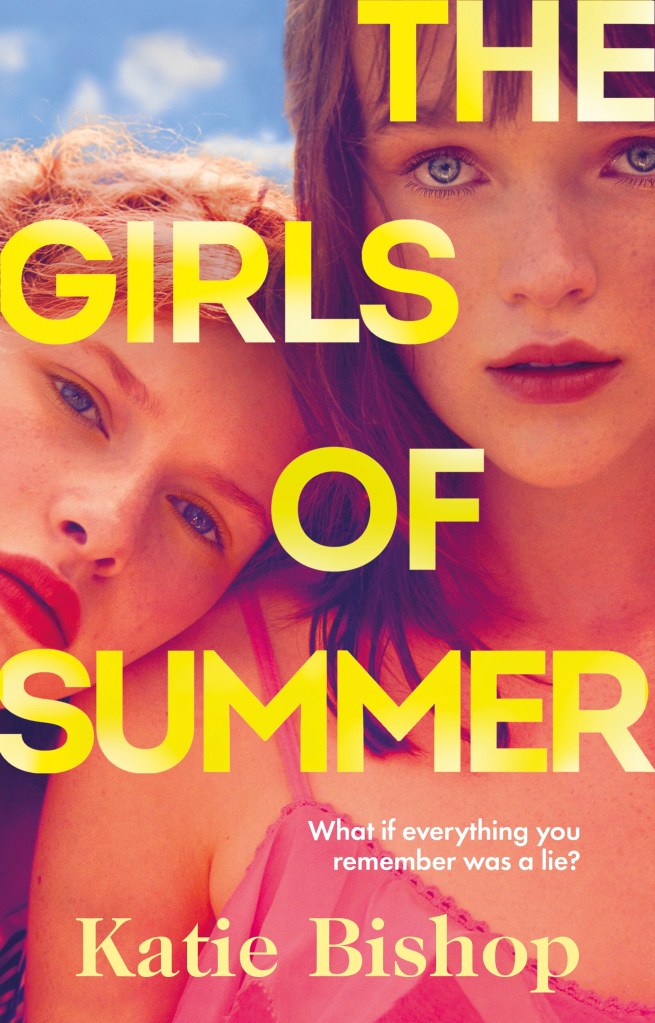
This is one of those books that takes precedence over everything, from the TV to the housework. I was utterly engrossed! Rachel is in her thirties and married to Tom, but part of her heart is still with a man she met on a Greek island in the summer after her A’Levels. Alistair was her first love and their relationship was special. It has given Rachel something to aim for in relationships because their love was the ideal. It was what love is supposed to feel like and Rachel isn’t sure she’s ever had that since. She and Tom almost ‘fell’ into living together, it was easy and they are best friends. Alistair was the kind of love everyone dreams of and her memories are reignited when she and Tom visit the island as a couple and they see one of the girls Rachel knew back then. As they talk an altogether murkier story emerges, of a nightclub staffed entirely by young women and the parties with older, wealthy men who like pretty girls around, especially young pretty girls. Rachel decides to find Alistair and reassure herself that what they had was the real thing. Yet in the background, stories of exploitation and manipulation starts to emerge. Could Rachel have everything wrong? This is a brilliantly addictive story, perfectly pitched for the #MeToo generation and even those of us who lived through very different attitudes towards women. It’s a book that’s ripe for adaptation, in a similar vein to The White Lotus series. Be aware though, once you’ve started the book, nothing will get done for the next 24 hours.

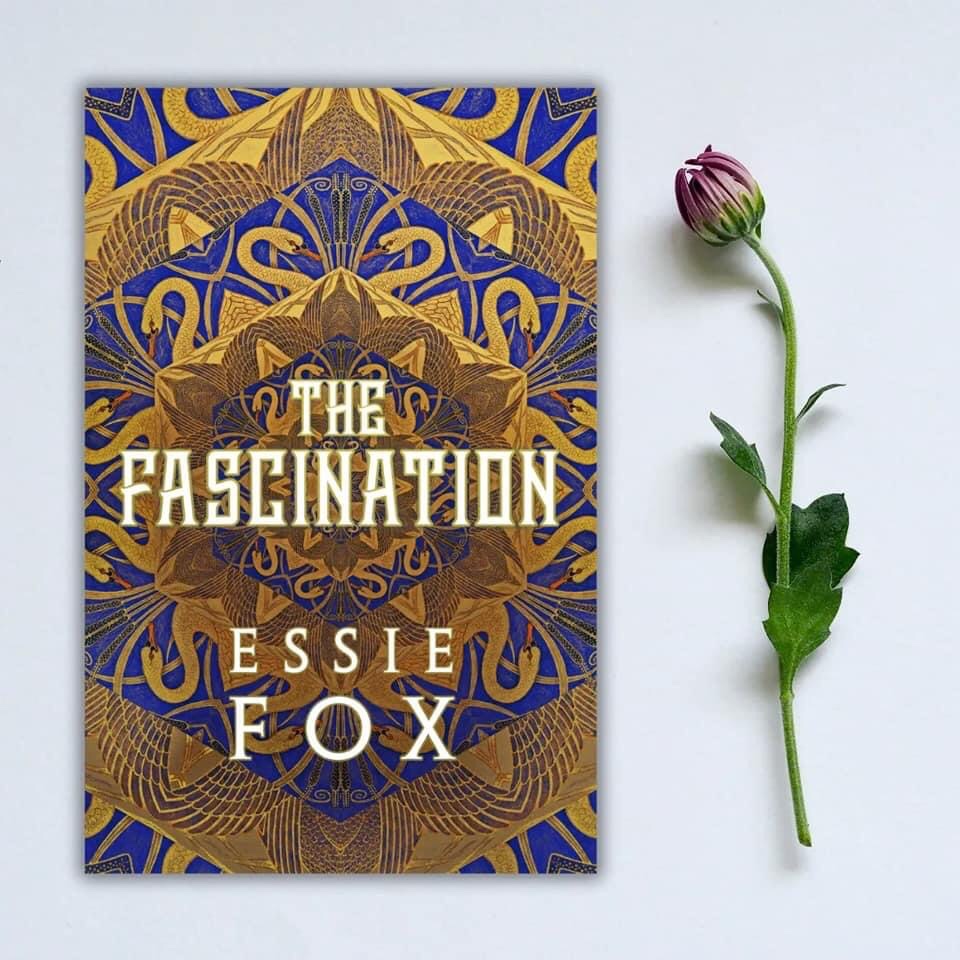
Essie Fox is an amazing author who covers subjects very close to my heart. The Fascination takes us to Victorian London and shows the seedy underbelly of what everyone thinks was a prim and buttoned-up society. We start in the rural fairgrounds and twin sisters Tilly and Keziah Lovell, whose father is a snake oil salesman, selling his elixir to people desperate for a cure. However it isn’t long before the girls are wanted as attractions, especially Tilly who is a perfect copy of her sister but in miniature. When their father sells them they end up with a troupe of curiosities working for the enigmatic Captain and Tilly is immediately in demand in London’s West End. Meanwhile, Theo first meets the girls when the fairground visits close to his home. His domineering father Lord Seabrooke has a unique collection of curiosities and exotic animals, so when Theo sees the girls he is fascinated. The lord’s remarriage is a turning point and Theo is cast out to find his own way in the world. His ambitions to be a doctor are thwarted without his father’s money, but his skills are a good fit for Dr Summerwell’s Museum of Anatomy in London. The girls and Theo’s paths will cross again, but it’s not long before his father hears of Tilly and her beautiful voice. If a man will discard his own son, just how ruthless will he be when pursuing a new item for his collection? Essie Fox has created an incredible world of fairgrounds, freak shows and theatre that was so perfect for this reader, fascinated as I am by disability history. I felt like I was watching a Baz Lurhmann film as the details of the fairground and the West End came to life. I was also frightened for the girls, desperate to know how their stories would end. This is an exciting and unusual period novel, telling the story of people who would have been considered ‘other’ and their unusual lives.

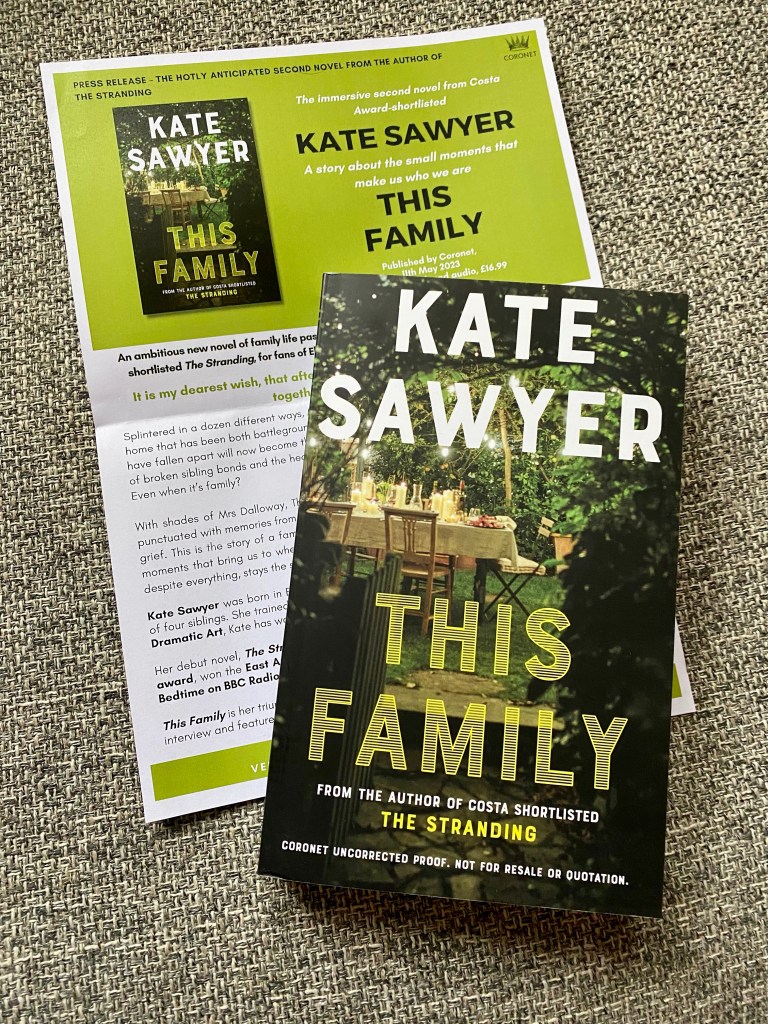
My final choice is the lovely Kate Sawyer and her new novel This Family. Set on one day, the matriarch Mary’s wedding day, this slightly fractured family come together and set aside all their differences to celebrate. Mary has three daughters and for this one day she wants Emma to speak to her sister Phoebe, she wants Phoebe to stay sober and for Rosie to stay quiet about the climate crisis. Just this once. Mary still lives in the house the girls grew up in and their father Richard lives in the annexe with his mother, who Mary has been looking after. The house is sold, so everyone is saying goodbye to a house full of memories including the huge tree in the garden where they’ll be eating dinner. Each sister has something to overcome. Emma’s childlessness has consumed her, so facing her new niece and nephew will be difficult. Phoebe hasn’t spoken to Emma for years. Rosie is the baby of the family, but her appearance in the family was difficult for the older sisters. Over the course of the day we hear from each sister’s viewpoint about their lives, sometimes the same event but from two different perspectives. The author shows us how different an event can look from two different perspectives. From all these fragments she weaves a tapestry of this family. She is always questioning how we construct reality, whether there is one true account of an event, or whether the story is fragmented, fluid and ever changing? This was a fascinating read psychologically and really made me think about how others see events we’ve shared and how families choose to overlook each other’s faults and bad behaviour, to come together and choose love, again and again.

Here’s next month’s TBR:

And finally here’s a picture of my beloved Rafferty, ‘helping’ with my reading.

Posted in Monthly Wrap Up

April Wrap-Up 2023

It’s been a strange month and I haven’t read very much so I thought I’d share a very quick wrap-up for April. I’ve had a viral infection on top of my usual MS health issues so it’s not been easy to concentrate at all. Basically I had one of those months where all the wheels fell off! I’ve missed blog tours, forgotten publication day posts and have read about half of what I expected to. I also forgot my MOT was due, missed my mobile payment and got locked in a toilet! I felt like a disaster zone. I felt like a really bad blogger too. I hate letting people down, so I had to give myself a stern talking to. Although I know it’s important to keep our obligations and post about the books I’m lucky enough to be sent, there are times when I get overwhelmed and need to give myself a break. Of course I let tour organisers and publicity teams know when I can’t or haven’t met a date or tour asap, but I had to give myself a break. So that’s what I’ll be doing this week, checking through my diary and being realistic about what dates I can meet, and those I will be a little late on. I’m so grateful for all the books I’m sent and I know they’re sent for a reason, but I think it’s ok to sometimes admit to having taken on too much or that everyday life or health has cut into the reading time I usually have. I find that most tour organisers are lovely and kind about these difficulties. I have to remember that I’m not superwoman and I can’t do everything.

Someone Else’s Shoes is the latest novel from Jojo Moyes and follows two very different women as they accidentally end up with each other’s shoes after an accidental bag swap at the spa. One lives in the penthouse of the spa hotel, whereas the other is a print company salesperson who’s using a spa voucher before it runs out. As one woman, in cheap borrowed pumps, finds her life starting to implode the other finds that her borrowed Christian Laboutins are giving her confidence as well as contracts. This is a great look at how the other half live, but also a wonderful tale of female friendship and how powerful the support of other women can be.

Every Happy Family is a great novel about family, but written like a thriller. This is the first time in years that Minnie and Bert have had their three children under one roof for Christmas. Lizzie, Jess and even their eldest son Owen has come over from Australia. However, Owen’s teenage girlfriend Nora is also in the village, organising the clearance and sale of her mother’s house after her death. Owen became estranged from his parents after his break-up from Nora. Would it be wrong to invite her to share Christmas with them? Using flashbacks, the author slowly reveals what happened all those years ago and why the family are still feeling the fallout to this day.

Thirty Days in Paris was a brilliant escapist read where we follow Juliet as she rents a loft apartment in Paris to spend thirty days writing her book. She has been working for years as a ghost writer, but now she wants to write her own story. With an empty nest and newly divorced, she makes her way towards her future. But Juliet has been keeping a secret for the last two decades and she needs to resolve the past, before any more time passes. This is a romantic story, filled with beautiful French food, fashion and all the sights. I found myself quite lost in it’s pages and craving a city break as I turned the final page.

The Gin Palace is the second outing for Tracey Whitwell’s character Tanz who I fell in love with in her first novel The Accidental Medium. Tanz can talk to ghosts, but it’s a gift she didn’t want and she finds their constant chattering exhausting. When she’s offered an acting job in Newcastle, a new image starts to haunt her of an old Gin Palace with a very sinister figure guarding the door. With a little bit of detective work, Tanz starts to piece together the history of the building she’s seeing. The closer she gets though, the sinister figure takes the form of a poltergeist and he’s determined to keep his secrets hidden. He’s used to scaring people away, but he’s never met someone like Tanz before. This is a brilliant series, spooky but modern and seriously funny.

Strange Sally Diamond was an incredible read and another truly original novel from Liz Nugent. Sally can’t understand why people are so upset with her. When she asked her dying father about his final wishes he told her to put him out with the rubbish. So why are people angry that she put his body in the incinerator? Now Sally is in the glare of the village, the national press and has a strange watcher from the other side of the world. She finds out her childhood was not what she thinks, but can she overcome the horrors of that time and live as an independent adult? Maybe make friends, own a house and get a job? Do we ever escape our childhood? This is a brilliant psychological thriller, with a fascinating central character.

My May TBR
Posted in Fiction Preview 2023

Never Ever by Colleen Hoover and Tarryn Fisher. First Chapter Preview.

Charlie Wynwood and Silas Nash have been best friends since they could walk. They’ve been in love since the age of fourteen. But as of this morning… they are complete strangers. Their first kiss, their first fight, the moment they fell in love… every memory has vanished. Now Charlie and Silas must work together to uncover the truth about what happened to them and why. But the more they learn about the couple they used to be… the more they question why they were ever together to begin with.

Forgetting is terrifying but remembering may be worse…

The Number One Sunday Times bestselling author of It Ends with Us joins forces with the New York Times bestselling author of The Wives for a gripping, twisty, romantic mystery unlike any other.

1 Charlie


A crash. Books fall to the speckled linoleum floor. They skid a few feet, whirling in circles, and stop near feet. My feet. I don’t recognize the black sandals, or the red toenails, but they move when I tell them to, so they must be mine. Right?
A bell rings. Shrill.
I jump, my heart racing. My eyes move left to right as I scope out my environment, trying not to give myself away.
What kind of bell was that? Where am I?
Kids with backpacks walk briskly into the room, talking and laughing. A school bell. They slide into desks, their voices competing in volume. I see movement at my feet and jerk in surprise. Someone is bent over, gathering up books on the floor; a red-faced girl with glasses. Before she stands up, she looks at me with something like fear and then scurries off. People are laughing. When I look around I think they’re laughing at me, but it’s the girl with glasses they’re looking at.
“Charlie!” someone calls. “Didn’t you see that?” And then, “Charlie…what’s your problem…hello…?” My heart is beating fast, so fast.
Where is this? Why can’t I remember? “Charlie!” someone hisses. I look around. Who is Charlie? Which one is Charlie?
There are so many kids; blond hair, ratty hair, brown hair, glasses, no glasses…
A man walks in carrying a briefcase. He sets it on the desk.
The teacher. I am in a classroom, and that is the teacher. High school or college? I wonder. I stand up suddenly. I’m in the wrong place. Everyone is sitting, but I’m standing…walking.
“Where are you going, Miss Wynwood?” The teacher is looking at me over the rim of his glasses as he riffles through a pile of papers. He slaps them down hard on the desk and I jump. I must be Miss Wynwood.
“She has cramps!” someone calls out. People snicker. I feel a chill creep up my back and crawl across the tops of my arms. They’re laughing at me, except I don’t know who these people are.
I hear a girl’s voice say, “Shut up, Michael.”
“I don’t know,” I say, hearing my voice for the first time. It’s too high. I clear my throat and try again. “I don’t know. I’m not supposed to be here.”
There is more laughing. I glance around at the posters on the wall, the faces of presidents animated with dates beneath them. History class? High school.
The man—the teacher—tilts his head to the side like I’ve said the dumbest thing. “And where else are you supposed to be on test day?”
“I… I don’t know.”

“Sit down,” he says. I don’t know where I’d go if I left. I turn around to go back. The girl with the glasses glances up at me as I pass her. She looks away almost as quickly.
As soon as I’m sitting, the teacher starts handing out
papers. He walks between desks, his voice a flat drone as he tells us what percentage of our final grade the test will be. When he reaches my desk he pauses, a deep crease between his eyebrows. “I don’t know what you’re trying to pull.” He presses the tip of a fat pointer finger on my desk.
“Whatever it is, I’m sick of it. One more stunt and I’m sending you to the principal’s office.” He slaps the test down in front of me and moves down the line.
I don’t nod, I don’t do anything. I’m trying to decide what to do. Announce to the whole room that I have no idea who and where I am—or pull him aside and tell him quietly. He said no more stunts. My eyes move to the paper in front of me. People are already bent over their tests, pencils scratching.
Fourth Period History
Mr. Dulcott
There is a space for a name. I’m supposed to write my name, but I don’t know what my name is. Miss Wynwood, he called me.
Why don’t I recognize my own name? Or where I am? Or what I am?
Every head is bent over their papers except mine. So I sit and stare, straight ahead. Mr. Dulcott glares at me from his desk. The longer I sit, the redder his face becomes.
Time passes and yet my world has stopped. Eventually, Mr. Dulcott stands up, his mouth open to say something to me when the bell rings. “Put your papers on my desk on the way out,” he says, his eyes still on my face. Everyone is filing out of the door. I stand up and follow them because I don’t know what else to do. I keep my eyes on the floor, but I can feel his rage. I don’t understand why he’s so angry with me. I am in a hallway now, lined on either side by blue lockers.
“Charlie!” someone calls. “Charlie, wait up!” A second later, an arm loops through mine. I expect it to be the girl with the glasses; I don’t know why. It’s not. But, I know now that I am Charlie. Charlie Wynwood. “You forgot your bag,” she says, handing over a white backpack. I take it from her, wondering if there’s a wallet with a driver’s license inside. She keeps her arm looped through mine as we walk. She’s shorter than me, with long, dark hair and dewy brown eyes that take up half her face. She is startling and beautiful.
“Why were you acting so weird in there?” she asks. “You knocked the shrimp’s books on the floor and then spaced out.”
I can smell her perfume; it’s familiar and too sweet, like a million flowers competing for attention. I think of the girl with the glasses, the look on her face as she bent to scoop up her books. If I did that, why don’t I remember?
“I—”

“It’s lunch, why are you walking that way?” She pulls me down a different corridor, past more students. They all look at me…little glances. I wonder if they know me, and why I don’t know me. I don’t know why I don’t tell her, tell Mr. Dulcott, grab someone random and tell them that I don’t know who or where I am. By the time I’m seriously entertaining the idea, we’re through a set of double doors in the cafeteria. Noise and color; bodies that all have a unique smell, bright fluorescent lights that make everything look ugly. Oh, God. I clutch at my shirt.
The girl on my arm is babbling. Andrew this, Marcy that. She likes Andrew and hates Marcy. I don’t know who either of them is. She corrals me to the food line. We get salad and Diet Cokes. Then we are sliding our trays on a table. There are already people sitting there: four boys, two girls. I realize we are completing a group with even numbers. All the girls are matched with a guy. Everyone looks up at me expectantly, like I’m supposed to say something, do something. The only place left to sit is next to a guy with dark hair. I sit slowly, both hands flat on the table. His eyes dart toward me and then he bends over his tray of food. I can see the finest beads of sweat on his forehead, just below his hairline.
“You two are so awkward sometimes,” says a new girl, blonde, across from me. She’s looking from me to the guy I’m sitting next to. He looks up from his macaroni and I realize he’s just moving things around on his plate. He hasn’t taken a bite, despite how busy he looks. He looks at me and I look at him, then we both look back at the blonde girl.
“Did something happen that we should know about?” she asks. “No,” we say in unison.
He’s my boyfriend. I know by the way they’re treating us. He suddenly smiles at me with his brilliantly white teeth and reaches to put an arm around my shoulders.
“We’re all good,” he says, squeezing my arm. I automatically stiffen, but when I see the six sets of eyes on my face, I lean in and play along. It’s frightening not knowing who you are—even more frightening thinking you’ll get it wrong. I’m scared now, really scared. It’s gone too far. If I say something now I’ll look…crazy. His affection seems to make everyone relax. Everyone except…him. They go back to talking, but all the words blend together: football, a party, more football. The guy sitting next to me laughs and joins in with their conversation, his arm never straying from my shoulders. They call him Silas. They call me Charlie. The dark-haired girl with the big eyes is Annika. I forget everyone else’s names in the noise.
Lunch is finally over and we all get up. I walk next to Silas, or rather he walks next to me. I have no idea where I’m going. Annika flanks my free side, winding her arms through mine and chatting about cheerleading practice. She’s making me feel claustrophobic. When we reach an annex in the hallway, I lean over and speak to her so only she can hear. “Can you walk me to my next class?” Her face becomes serious. She breaks away to say something to her boyfriend, and then our arms are looped again.
I turn to Silas. “Annika is going to walk me to my next class.”
“Okay,” he says. He looks relieved. “I’ll see you…later.” He heads off in the opposite direction. Annika turns to me as soon as he’s out of sight. “Where’s he going?”
I shrug. “To class.”
She shakes her head like she’s confused. “I don’t get you guys. One day you’re all over each other, the next you’re acting like you can’t stand to be in the same room. You really need to make a decision about him, Charlie.”

She stops outside a doorway.
“This is me…” I say, to see if she’ll protest. She doesn’t. “Call me later,” she says. “I want to know about last night.”
I nod. When she disappears into the sea of faces, I step into the classroom. I don’t know where to sit, so I wander to the back row and slide into a seat by the window. I’m early, so I open my backpack. There’s a wallet wedged between a couple of notebooks and a makeup bag. I pull it out and flip it open to reveal a driver’s license with a picture of a beaming, dark-haired girl. Me.
Charlize Margaret Wynwood 2417 Holcourt Way New Orleans, LA
I’m seventeen. My birthday is March twenty-first. I live in Louisiana. I study the picture in the top left corner and I don’t recognize the face. It’s my face, but I’ve never seen it. I’m…pretty. I only have twenty-eight dollars.
The seats are filling up. The one beside me stays empty, almost like everyone is too afraid to sit there. I’m in Spanish class. The teacher is pretty and young; her name is Mrs. Cardona. She doesn’t look at me like she hates me, like so many other people are looking at me. We start with tenses.
I have no past. I have no past.
Five minutes into class the door opens. Silas walks in, his eyes downcast. I think he’s here to tell me something, or to bring me something. I brace myself, ready to pretend, but Mrs. Cardona comments jokingly about his lateness. He takes the only available seat next to me and stares straight ahead. I stare at him. I don’t stop staring at him until finally, he turns his head to look at me. A line of sweat rolls down the side of his face.
His eyes are wide. Wide…just like mine.

Published 28th February by HQ

Posted in Romance Rocks, Throwback Thursday

Throwback Thursday! Mix-Tape by Jane Sanderson for Romance Rocks!

I love this book. Perhaps it’s because I had a Dan. A musician who started as my best friend and who I fell in love with. I was 18 and he took me to my first prom. His band were playing and it was 1991 so perms were everywhere and we were just adopting grunge. I would turn up for school in jumble sale floral dresses with my ever present oxblood Doc Martens. They played some of my favourite songs that night: some that were contemporary like Blur and others were classics like Wild Thing. I most remember Waterloo Sunset. Then, like a scene in a rom-com we walked across town to his house – me in a polka dot Laura Ashley ball gown and him in his dinner suit with the bow tie undone. He had a ruffled shirt underneath that he’d bought from Oxfam. We crept into the house and into the playroom so we didn’t wake anyone, then watched When Harry Met Sally. I remember a single kiss and then we fell asleep, but the love carried on over the years.

When I think of Elliot I always think of those famous best friend couples, like Harry and Sally or later, Emma and Dex in One Day. Now I can add Dan and Ali to the list. Alison and Dan live in Sheffield in the late 1970s when the city was still a thriving steel manufacturer. Dan is from the more family friendly Nether Edge, while Alison is from the rougher Attercliffe area, in the shadow of a steel factory. They meet while still at school and Dan is transfixed with her dark hair, her edge and her love of music. Their relationship is based on music and Dan makes mix tapes for her to listen to when they’re not together such as ‘The Last Best Two’ – the last two tracks from a series of albums. What he doesn’t know is how much Alison needs that music. To be able to put it on as a wall of sound between her and her family. Dan never sees where she lives and doesn’t push her, he only knows she prefers his home whether she’s doing her homework at the kitchen table, getting her nails painted by his sister or sitting with his Dad in the pigeon loft. Catherine, Alison’s mum, is a drinker. Not even a functioning alcoholic, she comes home battered and dirty with no care for who she lets into their home. Alison’s brother, Pete, is her only consolation and protection at home. Both call their mum by her first name and try to avoid her whenever possible. Even worse is her on-off lover Martin Baxter, who has a threatening manner and his own key. Alison could never let Dan know how they have to live.

In alternate chapters we see what Alison and Dan are doing in the present. Now a music writer, Dan splits his time between a canal boat in London and home with his partner Katelin in Edinburgh. Alison has written a new novel ‘Tell the Story Sing the Song’ set in her adopted home Australia and based round an indigenous singer. It’s a worldwide hit and she finds herself in demand, having to negotiate being interviewed and getting to grips with social media. She has an affluent lifestyle with husband Michael and has two grown up daughters. She has a Twitter account that she’s terrible at using and it’s this that alerts Dan, what could be the harm in following her? The secret at the heart of this book is what happened so long ago back in Sheffield to send a girl to the other side of the world? Especially when she has found her soulmate. She and Dan are meant to be together so what could have driven them apart? Dan sends her a link via Twitter, to Elvis Costelloe’s ‘Pump It Up’, the song she was dancing to at a party when he fell in love with her. How will Alison reply and will Dan ever discover why he lost her back in the 1970s?

I believed in these characters immediately, and I know Sheffield, and loved how it was described with affectionate detail by the writer. The accent, the warmth of people like Dan’s dad, the landmarks and the troubled manufacturing industry are so familiar and captured perfectly. Even the secondary characters, like the couple’s families and friends are well drawn and endearing. Cass over in Australia, as well as Sheila and Dora, are great characters. Equally, Dan’s Edinburgh friend Duncan with his record shop and the hippy couple on the barge next door in London are real and engaging. Special mention also to his dog McCullough who I was desperate to cuddle. Both characters have great lives and happy relationships. Dan loves Katelin, in fact her only fault is that she isn’t Alison. In Australia, Alison has been enveloped by Michael’s huge family and their housekeeper Beatriz who is like a surrogate Mum. It’s easy to see why the safety and security of Michael’s family, their money and lifestyle have appealed to a young Alison, still running away from her dysfunctional upbringing. She clearly wants different for her daughters and wishes them the sort of complacency Dan had, sure his parents are always there where he left them. But is the odd dinner party and most nights sat side by side watching TV enough for her? She also has Sheila, an old friend of Catherine’s, who emigrated in the 1970s and flourished in Australia. Now married to Dora who drives a steam train, they are again like surrogate parents to Alison. So much anchors her in Australia, but are these ties stronger than first love and the sense of belonging she had with Dan all those years before?

About three quarters of the way through the book I started to read gingerly, almost as if it was a bomb that might go off. I’ve never got over the loss of Emma in One Day and I was scared. What if these two soulmates didn’t end up together? Or worse what if one of them is killed off by the author before a happy ending is reached? I won’t ruin it by telling any more of the story. The tension and trauma of Alison’s family life is terrible and I dreaded finding out what had driven her away so dramatically. I think her shame about her mother is so sad, because the support was there for her and she wouldn’t let anyone help. She’s so fragile as a teenager and on edge. Dan’s mum had reservations, she was worried about her youngest son and whether Alison would break his heart. I love the music that goes back and forth between the pair, the meaning in the lyrics and how they choose them. This book is warm, moving and real. I loved it.

And what of my Daniel? Well he’s in Sheffield strangely enough. Happily partnered with three beautiful kids. I’m also happily partnered with two lovely stepdaughters. We’re very happy where we are and with our other halves. It’s nice though, just now and again, to catch up and remember the seventeen year old I was. Laid on his bedroom door, with my head in his lap listening to his latest find on vinyl. Or wandering the streets in my ballgown, high heels in one hand and him with his guitar case. Happy memories that will always make me smile.

Meet the Author

A former BBC Radio 4 producer, Jane Sanderson’s first novel – Netherwood – was published in 2011. She drew on much of her family’s background for this historical novel, which is set in a fictional mining town in the coalfields of Yorkshire. Ravenscliffe and Eden Falls followed in the two subsequent years, then in the early summer of 2017, This Much Is True was published, marking a change in direction for the author. This book is a contemporary tale of dog walks and dark secrets and the lengths a mother will go to protect her family. 

Jane lives in Herefordshire with her husband, the journalist and author Brian Viner. They have three children.

Her book Waiting for Sunshine is published in paperback on 23rd March 2023, with my review coming soon.


‘Who would name a child Sunshine, then give her away?’

Chrissie has always wanted to be a mother. After months of trying to adopt, she and her husband Stuart finally get the news that a little girl named Sunshine is waiting for them.

Abandoned at a young age, the child comes to them without a family history, and it feels like a fresh start for all of them. But when fragments from Sunshine’s previous life start to intrude on her new one, the little girl’s mysterious past quickly becomes Chrissie’s greatest fear …

Posted in Romance Rocks

It Was Always You by Emma Cooper

On the last night in October 1999 the clocks went back, and Ella and Will’s love began. A teenage Ella sat around a bonfire drinking with her future husband and her oldest friend Cole. As Ella wandered away from the group, she found herself leaning against a derelict
archway before passing out. The next day, Ella remembered fractured images of a conversation with a woman in a green coat and red scarf but dismissed it as a drunken dream.

Twenty-three years later, with her marriage to Will in trouble, and Cole spiralling out of control, Ella opens a gift which turns her life upside down: a green coat and red scarf. When she looks in the mirror, the woman from the archway is reflected back at her. As the last Sunday in October arrives, Ella is faced with a choice.
Would she choose a different life, if she could do it again?

This was an interesting read from Emma Cooper, looking at how the course of our whole life can change from very small decisions and the effects of these changes on our long term relationships. Ella is married to Will with two children and a big birthday approaching when she has a strange sense of life coming full circle. She opens her birthday presents to find a coat, scarf and brooch combination she recognises. Twenty-three years earlier at a party, she strolled away from the fireside to avoid watching her crush Will kissing another girl and saw a woman wearing exactly these clothes. It was almost as if the woman was on the other side of a mirror, visible but unable to be heard. Even though Ella can’t hear her, she knows that whatever she’s trying to tell her is a warning. Now she knows that woman was definitely her future self and she can’t help but wonder exactly what she was trying to warn her about. Life has definitely changed suddenly, because as their youngest left the family home for university, Will suddenly dropped the bombshell that he was leaving. Ella knows they’ve been drifting, in fact it runs deeper than that, Ella knows that Will would not have chosen the life they’ve had. She can pinpoint every surprise and life event thrown their way that derailed the life Will would have chosen, travelling the world playing guitar in a rock band. Ella has always known that she loved Will more than he loved her, so perhaps he need to spend some time discovering what he wants the rest of his life to look like.

Emma Cooper’s last novel was an absolute tearjerker and I really loved it. She gets that everyday drudgery that is part of being a family and here she portrayed beautifully how romance is hard to maintain when there is illness, two children to look after, family crises and those little curveballs that life likes to throw into the mix every so often. Cooper structures her book around these moments in Will and Ella’s lives together, such as her sudden pregnancy in Paris that she feels derailed Will’s music career. What she forgets is that Will did have a choice too and it was a joint decision to get married and have their baby. The fact that Will was fired from the band as a result was a terrible thing to happen, but wasn’t Ella’s fault. The flashbacks worked well in explaining the present day, from Ella’s perspective but Ella isn’t the only one in the relationship and I wondered if these two had ever properly communicated with each other. The problem with not communicating is that Will is also labouring under a misapprehension; he knows that he’s always loved Ella more than she loved him and now, with both children gone, it’s time for her to think about her choices and perhaps right a wrong. Will has felt in competition with Ella’s best friend Cole for many years, even the first day he met Ella’s family Cole was already there and part of the furniture. When Ella was struggling with depression, Will was just starting his career as a music teacher and simply couldn’t be there as much as he would have liked. Cole was there, burping and changing both babies, bringing chocolate and endless energy and literally propping Ella up. He has loved Ella since they were kids and he’s the first person Ella calls when something’s wrong – like when Will walks out the door 23 years later. Cole knows that Ella loves Will, even in his worst moments dealing with family trauma and his own alcoholism he knows Will and Ella should be together. He knows the power of Will’s charisma, because he’s felt it himself. In fact he and Will have a difficult history; Will’s brother drowned when he was left alone by a river, Will was saving Cole who had jumped in. This past leaves an uneasy feeling between them and has Ella desperately trying to please them both.

I enjoyed the carefree period Will and Ella have in France with the band. Will is offered the chance of playing guitar with a band and the couple rent a small apartment where they can have privacy and live outside of that hotel environment. It takes several mornings of Ella throwing up for a neighbour to point out she might perhaps be pregnant. The thought has never entered her head, but the neighbour is right. They expect their idyllic interlude to carry on, but once they announce their news and intention to get married, Will is summoned by the band manager and sacked. Young girls like to fantasise about their rock stars and married with a baby isn’t the look he wants for the band. So the couple return to Britain and to a life that looks a little more conventional. The author really doesn’t sugar coat the experience of parenthood. I was there in that living room with Ella, dealing with a two year old and a baby. It felt dark, oppressive and a total contrast to the freedom she had in France. With Will having to put in the long hours to support his new family, Ella feels like she’s doing this alone. So when friend Cole steps in to help it feels like a lifeline. He notices that Ella is desperately unwell and it’s his insight into his friend and his willingness to help that did make me waver on whether Will really was the right person for her. I don’t think I ever fully bonded with Will as a character. I didn’t know him in the same way as Cole or Ella and I think this was to some extent about the author’s description of him. He was so good looking and even Cole admits he’s the archetypal romantic leading man – he’s the man the girl should get. I didn’t know whether the author was trying to subvert the genre and have Ella realise that the less than perfect Cole, with all his issues, is the right man for her. In fact I was unsure of what would happen right up to the very end. This is a romantic read with an edge of reality, but maybe that makes it a more contemporary fairytale.

Meet The Author

EMMA COOPER is the author of highly acclaimed book club fiction novels and is known for mixing humour with darker emotional themes. Her debut, The Songs of Us, was snapped up in multiple pre-empts and auctions and was short-listed for the RNA contemporary novel of the year award. Her work has since been translated into seven different languages.

Emma has always wanted to be a writer – ever since childhood, she’s been inventing characters (her favourite being her imaginary friend ‘Boot’) and is thrilled that she now gets to use this imagination to bring to life all of her creations. She is now also an editor for Jericho Writers, where she has worked with traditionally published authors, as well as new aspiring writers. Emma spends her spare time writing novels, drinking wine and watching box-sets with her partner of twenty-eight years, who still makes her smile every day.

Posted in Sunday Spotlight

Sunday Spotlight! My Life With Fay Weldon.

I’ve been a fan of Fay Weldon’s writing my whole reading life, from the time I finished the reading scheme at school and started to read proper grown-up novels. My imagination was really stirred when the TV series Life and Loves of a She-Devil hit our screens in 1986. I was thirteen, the age when a program with even a hint of sexual content was the subject of school playground chatter – if we’d had phones back then the boys would have been showing us all the ‘dirty bits’. I wasn’t allowed to watch the series. Those were the years of my parents being in an evangelical church and completely losing their minds. Anything thought to be a bad influence, particularly if it had sexual content, was banned. Pre-marital sex was a huge no-no, to the point I had to pretend to be seeing something else when all my friends went to see Dirty Dancing. Yet my reading material wasn’t policed quite as strongly and I raided the library for books by the author who’d caused all this furore. I fell in love with her combination of dramatic relationships, strong and transgressive women, feminism, and a sprinkle of magic realism.

Of course my first port of call was The Life and Loves of a She-Devil and it crossed almost every boundary I’d ever been given. After her husband reveals he’s leaving her for his delicate and dainty mistress Mary Fisher, wife Ruth lots herself in the cloakroom and starts a transformation. She will leave being a vulnerable, human woman behind. She will become a she-devil. What follows is a rather visceral journey to becoming a creature without feeling, capable of wreaking the ultimate revenge. I loved her freedom, even when it meant making choices that I couldn’t believe, like sleeping with the dirty old park keeper in his cluttered shed. Her power was intoxicating and her sheer force is too much for the old man who has a seizure. Ruth takes on many guises to get to where she wants to be – joining a commune where food is minimal and hard work is a daily reality in order to lose weight. Her sexuality is completely fluid as she sleeps with women and men, a priest and the doctors who carry out her extensive cosmetic surgery. I loved that there was no judgement and no boundaries. I think the best revenge is to live well rather than follow Ruth’s path, but it’s a bold path and it’s the ultimate in evil.

At the edge of 18, while studying for my A’Levels and applying to universities, I was drawn to the book Growing Rich. The three girls at the centre of this novel – Carmen, Annie and Laura – live in a rural village called Fenedge and are at the same crossroads in life that I was. Local businessman Bernard ? Has sold his soul to the devil, in return for the fulfilment of all his desires and one of them is Carmen. Unfortunately, Carmen is not easily obtained. The girls have always dreamed of flying far away from their little village and no one has wanted to leave more than Carmen. However, it’s Annie who flies off to the glaciers and mountains of New Zealand and into the arms of the man of her dreams. Laura gets married and starts having babies. So it’s Carmen who seemingly stays still and is ripe for the picking with Sir Bernard and the Devil in pursuit. However, they underestimate Carmen’s will and self-worth. She is not giving away anything, including her virginity, until she’s good and ready but she’s not above enjoying Sir Bernard’s inducements to change her mind. This is a beguiling mix of hormones, magic, astrology and a deadly game with the ultimate adversary.

The Cloning of Joanna May asks questions about motherhood, identity and the ethics of scientific research, whilst also being an entertaining and humorous read. Joanna believes herself to be unique, but when she is unfaithful her rich husband exacts a terrible revenge. He fractures her identity by creating Jane, Julie, Gina and Alice, four sisters young enough to be her daughters and each one is a clone of Joanna May. If there are five of us, what makes us an individual? Is self innate or formed by experience? Is self even a constant thing? Weldon has the wit and creativity to explore and answer those questions, in very cunning ways. How will they withstand the shock of meeting and if they do become close, could Carl, Joanna’s former husband and the clones’ creator, take the ultimate revenge for his wife’s infidelity and destroy her five times over? This is a witty and deceptive read, that’s much deeper than it seems especially where science has now caught up with fiction.

Finally, there’s Splitting and Affliction, both of which concentrate closely on state of mind and sense of identity. Affliction is a remarkably easy read – despite it’s difficult subject matter. I don’t know whether I’d fully grasped how abusive this man was at the time I first read it, but reading it again having gone through the experience for real wasn’t comfortable. Spicer is the abusive husband in question, he’s selfish, he undermines wife Annette and has a full set of skills from victim blaming and gaslighting to being physically, emotionally and financially abusive. We’re unsure whether Spicer has always displayed such extreme behaviour, because he has started to see a therapist which seems to have been the catalyst for talking about these issues. It’s a clever and witty novel, but is probably for those who like their comedy jet black not those who are sensitive about physical violence, alternative health converts, or trendy London types. The premise is that Annette and Spicer’s marriage is doing okay, even if not entirely faithful. This is the second time around and the proof that they’re enjoying their newfound sex life is a baby on the way. Spicer becomes embroiled with two hypnotherapists after becoming jealous when Annette writes a successful novel and starts to see things differently. Annette seems to be changing too, each seems to think the other person’s perception is altered and it becomes very difficult to work out which narrative is reality. I enjoyed the depiction of unscrupulous therapists and there’s a lot of humour despite some traumatic themes and events.

Splitting covers similar ground in that a couple are at war and perceptions might not be what they seem. Lady Angelica Rice was teenage rock sensation Kinky Virgin, but she gave up her career to marry Sir Edwin Rice. Unfortunately he turned out to be lazy and completely bankrupt, so in this unhappy union Angelica’s ‘splitting’ began: a chorus of four women in her head, each with an opinion and all of them clamouring to be heard. Now, eleven years on, Edwin is suing her for divorce and her alter egos want their revenge – the usually meek Jelly, the sexually insatiable Angel, the competent and practical Angelica and Lady Rice make a formidable team. It’s a slightly chaotic novel, with many voices and the possibility of more emerging over time as she deals with a derelict house. Is this really a house or do the rooms represent parts of Angelica’s identity. How can she ever find her real self, with four women and only one body to house them all? Is she going to be able to fight for her place and does she even want it anymore? I wondered whether she would ever be able to reconcile these different identities or if the splitting would continue.

One of the most interesting of her written works was her 2002 autobiography, wittily titled Auto Da Fay, where she still played with ideas of identity and the ability to capture a person in writing. She conveyed the difficulty of writing a life that is continuing to grow, change and evade you, even while you’re trying to pin it down in words. She was born in New Zealand, the youngest of two sisters born during her mother Margaret Jepson’s short marriage to Dr Frank Birkinshaw. Her birth is interesting, because it is surrounded by themes of turbulence, change, dislocation and separation. After a large earthquake in Napier spooked Margaret, she fled to a rural sheep farm for three months, away from their normal home, their things and her husband who was being unfaithful. It was an emotional earthquake that echoed down through the women of the family, derived from Fay’s aunt who was discovered in bed with her Uncle at the age of 17. The family fall out caused psychosis in that the aunt never recovered from, possibly because she was blamed rather than the Uncle. Weldon felt her grandmother deserved blame too, because she had failed her daughter. Her mother’s upbringing was very bohemian, she was shaken by her experience in New Zealand and returned to England. There she lived with her husband’s extended family and gave birth to her daughter, who she named Franklin but became known as Fay. This could have been the basis of her interest in split identities, as she noted that she had to take library books out in the name Franklin but was always Fay when she read them. In fact she ended up studying psychology at university, started her writing career drafting pamphlets for the foreign office then became an agony aunt in a national newspaper.

Fay Weldon

For someone who’d been taught there was one correct way of living, reading about Fay’s life was inspiring and gave me permission to make mistakes. Fay’s marriage to a school teacher who was twenty-five years her senior, with an agreement that her sexual needs would be satisfied by partner’s outside the marriage. I was fascinated by how she wrote about this period of her life, distancing herself from it by referring to herself in the third person. It was during her marriage to her second husband that she wrote her first novel The Fat Woman’s Joke in 1967. It was as if her creativity was unleashed as she wrote thirty novels in quick succession, along with television plays and a version of Pride and Prejudice where she played with the marital politics of Mr and Mrs Bennett. This was to become a theme in her work, becoming more and more extreme as she found magical ways for women to transform themselves in order to negotiate a male dominated world. This could land her in hot water, particularly in her ‘she-devil’ sequel The Death of a She-Devil where a man must change gender in order to inherit, something she blamed on fourth wave feminism and a lesbian character who did not relate to men at all. Sometimes, it was as if she enjoyed controversy, such as writing a novel containing product placement for a luxury jewellery brand. At the end of her autobiography she says nothing interesting happened to her after thirty, she was just scribbling; but she was also offering controversial views on rape, porn, cosmetic surgery and transgender rights. At 91, she was still creating, supporting other authors and managing to keep herself in the public eye. For me, she dared to make women misbehave. She made them powerful, badly behaved, successful but also gave them permission to fall apart. I didn’t agree with everything she said, but I loved her ability to confound, to say the thing you didn’t expect and create these complex psychological and magical worlds to get lost in.

Posted in Sunday Spotlight

Sunday Spotlight! D.S. Adam Tyler Series by Russ Thomas

I picked Russ Thomas’s last novel on NetGalley because I noticed it was set in Sheffield. Since I live just across the river from South Yorkshire, Sheffield is our nearest big city. It’s my ‘go to’ place for the theatre, concerts and decent shopping. In fact Meadowhall was vital when I was a teenager, because we were pre-internet and if you didn’t shop further afield you would find yourself at a club in the same Dorothy Perkins top as everyone else. So my introduction to DS Tyler was actually the second book in the series called Nighthawking and it was set around the Winter Gardens. I found myself drawn in by the case being investigated, but also by Adam himself. He’s a rather complicated character with a difficult childhood and the trauma of finding his father hanging in the family home when he came home from school. Subsequent investigations into Richard Tyler’s death concluded it was a suicide, brought about by corrupt dealings with organised crime and the fear of being discovered. As if that’s not hard enough to live down, Adam’s godmother and the woman who brought him up is now DCI Diane Jordan. Adam is either treated with suspicion for being corrupt like his father or for being the DCI’s pet. Finally, there’s his sexuality, which shouldn’t have a bearing on his work relationships, but probably does in a macho environment like the police force.

Since I had organised time to spare this December to read freely – a true Christmas gift for a book blogger – I decided to read both the first and the latest instalments of the series. In the first novel, Firewatching, Adam picks up a case that’s both cold and red hot. A body is found bricked up in the walls of a country house, a house that’s lain empty since the disappearance of the owner several years before. From the injuries to the fingers of the body, it’s clear the victim was walled in alive. DI Dogget is on board for the murder case so Adam is called in to work alongside him. However, it’s soon clear that the case does have a connection to Adam and he’s soon hopelessly compromised. Matters in his personal life also become tangled in the case, but most disturbing is that the reader knows someone close to Adam is not what they seem. They’re a blogger, but their muse is fire. How far will they go to entertain their readers? This is a fantastic start to a series, managing to establish a character and his back story, while still presenting a solid and tricky crime to solve. I loved the two elderly ladies linked to the big house, living close by in their little bungalow. They have lived together nearly all of their lives, after a friendship cemented by helping out in the horror of the Blitz where fire destroyed large swathes of London. Adam’s friend was also interesting, a woman civilian in the station who wants to get him involved in the LGBTQ+ group and improve his social life. She is dragging him out pubbing and clubbing when she can persuade him. Police officers have to tread very carefully though in their local pubs and clubs. You never know who you might meet. This is an incredible Russian doll of a case with one crime inside another needing to solved before they get to the truth of the house’s terrible history.

The third and latest novel, Cold Reckoning, is now available in paperback and starts with a very effective cold isolated country walk. Matilda Darke is escaping the claustrophobic house she shares with her mum and the caring role she has now her mum has fibromyalgia. It’s a clear, crisp morning near the lake and Matilda hears a gunshot. Making her way home she stumbles across a man coming out of a cabin. Neither expected the other to be there, but his cold hard stare sends an immediate chill through Matilda and she knows this man means her harm. So she runs and never stops to even look behind her. This opening leaves us asking so many questions. Was this where the gunshot came from? Was she right to be scared? Does the man know Matilda and her walking routine, or was she just in the wrong place at the wrong time? Adam’s life is also upside down, because DCI Diane Jordan, his godmother, has gone missing. This is so out of character he knows something is terribly wrong and with the search for her on his mind he’s called on to help DI Doggett with a very strange case. In a lakeside cabin there are signs of a struggle and blood spatter consistent with a gunshot wound, but there’s no body. Nearby though, a body is suspended in a frozen lake. The man has no wounds and has been dead a lot longer than this lake has been frozen. How do these two things fit together or are they a complete coincidence?

I thought this latest novel was clever, not just the case which again strays close to home for Adam, but the details of the characterisation. From their rather gruff and begrudging start back in the first novel Doggett and Tyler have become a team. There’s a trust that’s built between them and they are keeping a lot of information close to their chests, the knowledge of a possible conspiracy between the police, local dignitaries and organised crime. It might even have a bearing on Adam’s father’s death, but there’s still a lot to unravel. Their close conversations and sudden silences when others enter the room has been noticed. DC Rabbani has come a long way since Tyler seconded her to CID in the first novel. She has great instincts, is good with people and she’s furious that the other two members of the team have been keeping something from her. So furious that she could be persuaded to keep the acting Chief Constable in the loop about their suspicions. Rabbani wants to be part of the team, and although the two detectives only want to protect her, she sees their secrecy as a lack of trust. Tyler is a conundrum. Seeing him try to take steps towards improving his mental health is great, but he can only let some of his guard down. He’s also not learned a lesson about keeping his private life and working life separate. By this third instalment I felt like I’d really come to know these characters and care about them. Added to that, the cold cases really are complex, taking us back into the past and into situations that people have tried to leave behind. Witnesses are reluctant and when they’re being asked to remember twenty years ago their memories can be shaky. DI Tyler is a flawed hero, but he does want to find the truth and bring justice to those who have been wronged. However far back he has to dig to find the answers. Im now looking forward to our fourth instalment.

Meet the Author

RUSS THOMAS was born in Essex, raised in Berkshire and now lives in Sheffield. After a few ‘proper’ jobs (among them: pot-washer, optician’s receptionist, supermarket warehouse operative, call-centre telephonist, and storage salesman) he discovered the joys of bookselling, where he could talk to people about books all day. Firewatching is his debut novel, followed by Nighthawking and Cold Reckoning.