Posted in Sunday Spotlight

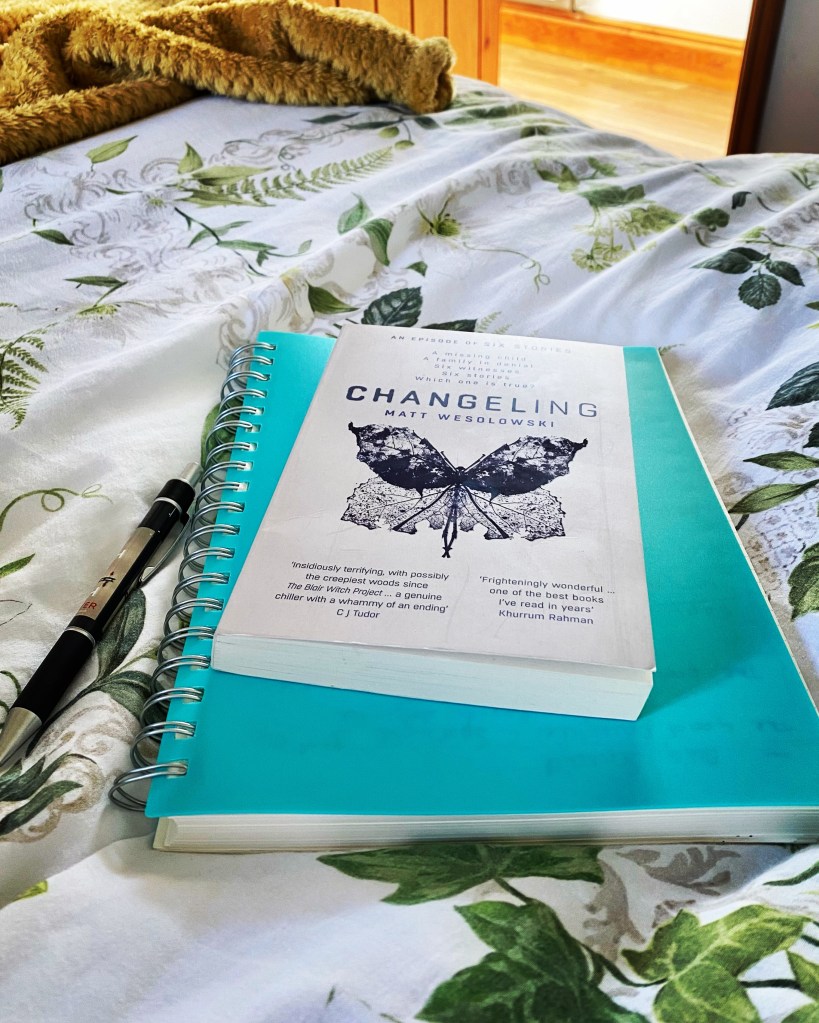
Changeling by Matt Wesolowski

I spent some of my recent holiday going back to the earlier books in a series I picked up half way through. I often review for Orenda books blog tours and this has meant picking up on some fabulous authors who are on the fourth or fifth book in a series. I then slowly buy the previous novels in the series and take them on holiday so I can wallow in them for a couple of days. So, it was with no idea of the subject matter, except it would be a mystery and was being revisited by a podcast called Six Stories where Scott King interviews six people connected to the case. It’s not that he expects or aims to solve the case, although that’s a possibility, it’s about hearing different voices, perhaps ones that haven’t been heard or have something to add to their original evidence. I had no idea of the geographical location in The Changeling, nor could I have predicted reading it when I did. The case begins on Christmas Eve 1988 when Sorrel Marsden is travelling along the Wentshire Forest Pass, a road between Chester and Wrexham in North Wales. He hears a knocking sound in the car and decides to pull over in a lay-by to investigate. As he gets out he glances back to check on his son Alfie who is fast asleep in his booster seat in the back. Sorrel checks under the bonnet of the car, but not seeing anything obvious he decides to continue his journey. However, as he drops the bonnet he notices the rear passenger door is open and Alfie’s booster seat is empty. He looks for his son on the edges of the forest, but with no clue where Alfie has gone he goes to the phone box and calls the police.

We holidayed on the welsh borders, with the River Wye running through the garden of the cottage. We were travelling back from Chester Zoo when I started to read The Changeling and I’d passed navigation duties to my stepdaughter so I could put my feet up in the back. So I read Sorrel Marsden’s account of his son’s disappearance as we drove from Chester into Wales! Wesolowski is skilled at creating a setting that slowly unnerves the reader and I felt this as I read about the history of the forest and the interview King does with a contractor working on the construction of a holiday park. He was working in the forest at the time of Alfie’s disappearance and tried to help with the search for the boy. Not that searching was easy, as floodlights that worked earlier that day completely malfunctioned when needed. It was also impossible to move vehicles from the area of the search, the very embodiment of a ghost in the machine or gremlins in the works. The builder claimed that strange events started happening when they tried to remove ancient trees from the woodland. With normal tools not working, they were reduced to hacking at the trunks of the trees with little success except for a few blood injuries. They were sleeping onsite in temporary buildings when the knocking started, insistent and gaining in volume despite having no visible source. Most fanciful were his stories of seeing an animal out the corner of his eye, possibly a goat or wild boar. What i found most chilling though were the voices, whispery and urgent little voices that were indecipherable but angry in tone. Sorrel Marsden has made a point of walking the pass every year on the anniversary of Alfie’s disappearance. He never claims to hear or see anything on his treks, but they do serve a purpose. They set him up as the victim, the hero of the piece, especially then compared with Alfie’s mother Sonia who has never taken part in the search or been interviewed about her son. Until now.

The character’s in the novel are open to interpretation and our impression of them might change, depending on whose account we are listening to. Part of Sorrel’s story of that night is as damning for Sonia as her absence at memorials and other events. He claims to have suggested to spend Christmas with his estranged wife and son, but as Sonia’s drinking worsened he decided to remove Alfie from his mother’s care and return with him to his own home in Wrexham. This would have given people a terrible impression of Sonia and as an uncaring and unfit mother. Yet we haven’t heard her or anyone else’s opinion, only Sorrel’s. People tend not to question or accuse the bereaved and with Sorrel being found by police curled up in the phone box in a foetal position, it’s hard to blame those in attendance for treating him with care and compassion. Yet Sonia does consent to meeting King and talks for the first time about that awful Christmas. She doesn’t deny drinking, but has some explanations for her actions. She claims that Sorrel is an unusual man, with an ability to draw people to him that goes beyond his looks or personality. She recalls being belittled and controlled. Yes she struggled as a very young and isolated mum, but no help came. Despite claiming she was a bad mother, Sorrel left her alone with Alfie and rarely visited. I loved the women who contacted Scott King to tell their story of encounters with Sorrel. Like a mini ‘Me Too’ movement these women come together to talk about coercive control, psychological abuse, strange knocking sounds keeping them awake and leaving them unnerved. These women have incredible strength and having experienced a relationship like this I had my suspicions about Sorrel Marsden.

Sorrel is controlled, especially in his work as a chef. Other kitchen workers comment on his admiration for the military way of running a kitchen, a system of rules and regulations he also expects in his kitchen at home. Women refer to an unusual feeling they’d experience, as if he had them in an enchantment. It made me think of the word ‘glamour’ in the way it’s applied to witches – folk tales tell of a witch’s ability to ‘glamour’ people, to only show those sides of themselves they wish to be seen, often appearing as a beautiful young woman when they are in fact a shrivelled old woman. If we look at it realistically, Sorrel is a master manipulator and serial abuser able to charm and convince women to trust him. He then slowly isolates them, breaks down their confidence, gaslights them and convinces them they are worthless. When his story is picked apart there are holes everywhere, including a past link to the forest. When Alfie is a toddler he suggests a family camping holiday to the forest, with a friend of his called Wendy to help with the childcare. On this trip Alfie ‘disappeared’ into the forest for the first time, found by Sorrel who walks back into the clearing with his son in his arms. Both Sonia and Wendy claim that Alfie was never the same after this trip. I could only wonder why Sorrel would have taken them to a wood with no facilities and such a haunted reputation. Did Sorrel know what was in the woods? Was Alfie some sort of sacrifice? From then on Sonia would hear strange voices and knocking when no one was there.

The section that genuinely lifted up the hairs on the back my neck seemed a bit tenuous at first. King interviews a man whose mother has recently died. She was a teacher back in the 1980’s and as part of her training she was gathering research on pupils who had behavioural issues. When she died her son found the research in the attic and was intrigued by her notes on Child A, because Child A was Alfie Marsden. Delyth recorded his behaviour on several occasions and the more she saw, the more scared she was. Alfie would turn his back on other pupils, deliberately not participating in what everyone else is doing. Alone with him, Delyth heard muttering and although he wasn’t moving, she could hear a strange knocking. There were times where she was scared to look him in the face. Yes, other teachers warned her that he might bite or lash out, but with her he was unnaturally still as if he was listening somewhere else or to something else. Did Alfie just have behavioural issues or was there something more sinister at play? Were the knockings and strange voices similar to those mentioned by the building contractors or by the women who knew Sorrel?

By the final stages of the book I was wondering exactly who is The Changeling of the story? Was Alfie’s sudden change after visiting the forest on the camping trip a sign that he was possessed or changed in some way? Or was Sorrel’s affinity with the forest a sign that he’d been there before? A Changeling is a child swapped in it’s infancy by the fairy folk, either because something wrong or because fairies want to strengthen their fairy blood. The behaviour of a Changeling is ‘unresponsiveness, resistance to physical affection, obstreperousness, inability to express emotion, and unexplained crying and physical changes such as rigidity and deformity.’ Some are unable to speak at all. I was also a little unnerved by the psychic who was brought in after Alfie’s disappearance, then stalled proceedings by saying Alfie was ‘in a Royal Court.’ It has never made sense and it never changed. As she corresponds with Scott I was unnerved by her, what does she know and how? There are a couple of utterly brilliant twists towards the end, neither of which I’d expected and one made me rethink everything I’d read up to that point, in a Sixth Sense way. I wanted to go back and reread with that knowledge, to see how I’d missed it. This was a brilliant and disturbing novel, a clever mix of psychological and supernatural elements that’s very addictive and will stay with you long after the book is finished.

Out now from Orenda Books

Meet the Author

Matt Wesolowski is an author from Newcastle-upon-Tyne in the UK. He is an English tutor for young people in care. Matt started his writing career in horror, and his short horror fiction has been published in numerous UK- and US-based anthologies, such as Midnight Movie Creature, Selfies from the End of the World, Cold Iron and many more. His novella, The Black Land, a horror set on the Northumberland coast, was published in 2013. Matt was a winner of the Pitch Perfect competition at the Bloody Scotland Crime Writing Festival in 2015. His debut thriller, Six Stories, was an Amazon bestseller in the USA, Canada, the UK and Australia, and a WHSmith Fresh Talent pick, and film rights were sold to a major Hollywood studio. A prequel, Hydra, was published in 2018 and became an international bestseller. Changeling, the third book in the series, was published in 2019 and was longlisted for the Theakston’s Old Peculier Crime Novel of the Year. His fourth book, Beast, won the Amazon Publishing Readers’ Independent Voice Book of the Year award in 2020. Matt lives in Newcastle with his partner and young son, and is currently working on the sixth book in the Six Stories series. Chat to him on Twitter @ConcreteKraken.

Posted in Monthly Wrap Up

Monthly Wrap -Up July 2023

As we pass the half way point of the reading year, I’m reading so many great books that I’m panicking about my end of year favourites. There wasn’t a bad read at all this month, but these are my absolute favourites of the bunch. With all the wet weather there isn’t a great deal to do outdoors so it’s been a blissful month for reading. Although, I must admit to a little bit of FOMO as people pop off to various festivals that are currently prohibitive due to cost and the fact I’m still recovering from my back procedure. Currently I can manage to be up and about for about 15 minutes at a time, but I’m hoping that will improve soon. I hope you’ve all had a brilliantly bookish July!

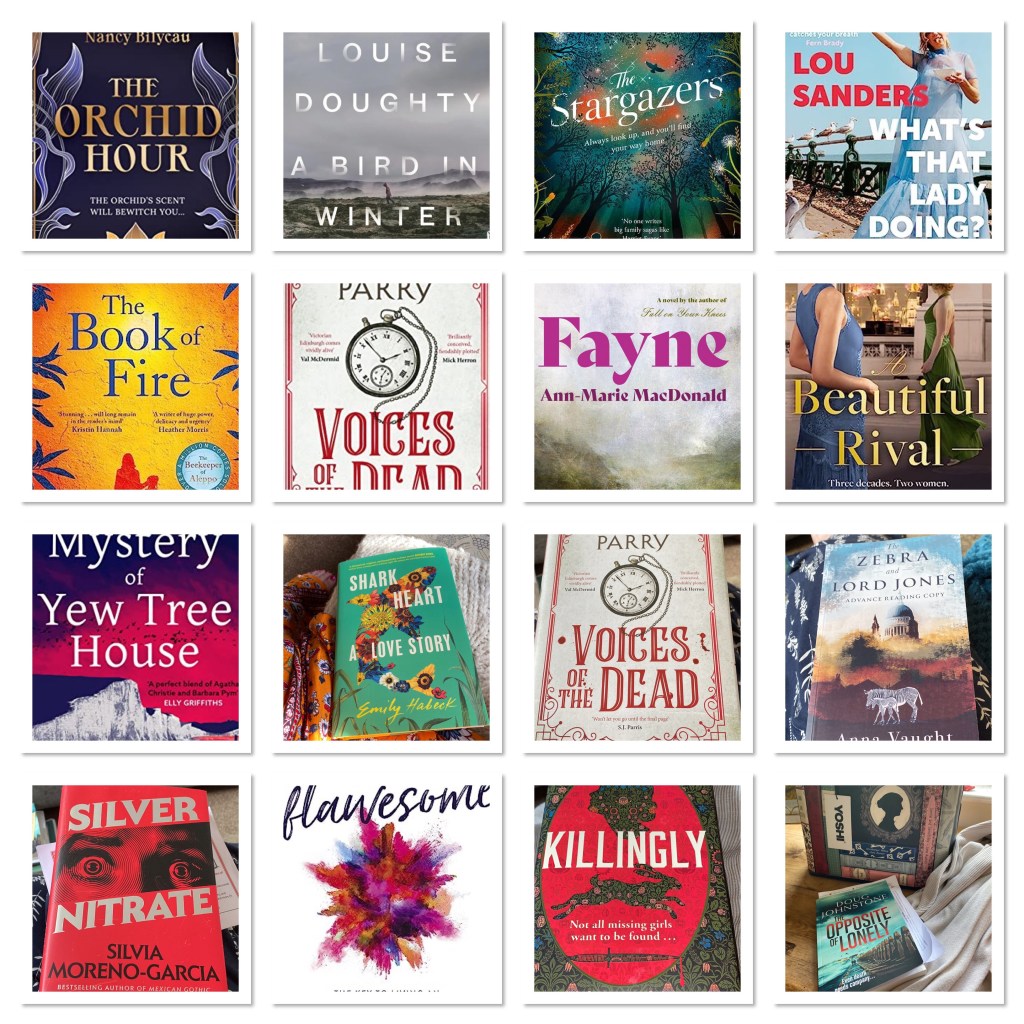
I loved this rather gothic dual timeline mystery from Freya Berry, with a fascinating setting of taxidermy and exotic animals. In 1932, Heinrich Vogel employs adventurer Emily Blackwood to come to his castle in Scotland and catalogue his taxidermy animal collection. She soon realises that she’s looking for a rather different treasure and through a book called The Birdcage Library, she follows the clues of another woman to bunches of paper secreted around the castle. In these papers is the diary of Heinrich’s sister-in-law Hester Vogel, who committed suicide by throwing herself from the Brooklyn Bridge. Emily becomes immersed in Hester’s life, as she is separated from the work she enjoyed to be a society wife and becomes stuck between two Vogel brothers. This is a fascinating story with amazing set pieces involving hummingbirds and the menagerie of animals in Vogel’s collection. As she reads Emily becomes increasingly suspicious about the remaining brother and exactly what is the real treasure he seeks? Sinister, intriguing and with two intelligent heroines.

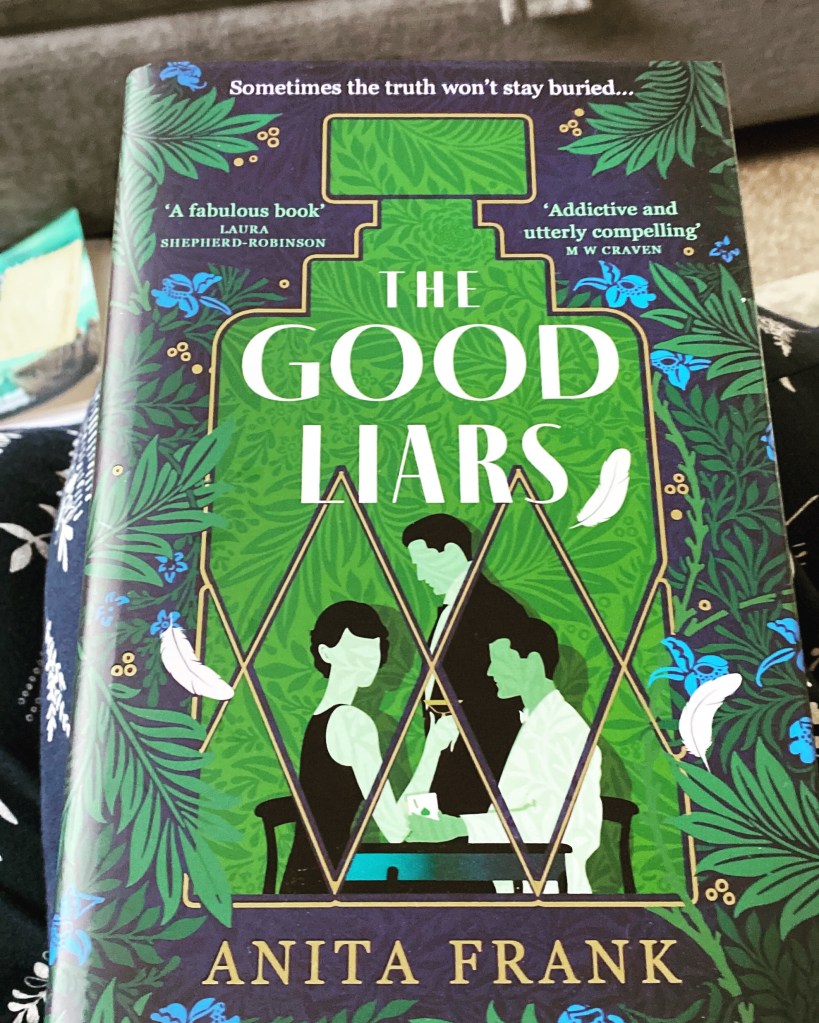
This is another mysterious house with lots of conundrums to solve and isn’t this beautiful Art Deco cover incredible too? Sarah is a new employee arriving at Darkacre, the family seat of the Stilwells. Like many aristocratic families, WW1 has wreaked havoc on the men in this family. When their father died, the eldest son Hugo became the heir of Darkacre. Yet his time as heir was very short – he was killed on his return to the front leaving middle brother Maurice as heir to the Stilwell estate. Maurice was not prepared to be the master of the house and with double death duties already crippling the estate, he has learned fast. Unfortunately, he has returned from war a changed man too, plagued by nightmares, flashbacks and extreme responses to loud noises, an ailment then referred to as shell shock. With youngest brother Leonard severely disabled by his war injuries and struggling to come to terms with the loss of his limbs, the family are depleted and barely coping. However, as Leonard so cryptically tells us, perhaps it is no more than they deserve? Sarah’s arrival is the catalyst for this story and it isn’t just the relationship between family members that points to there being issues at Darkacre, soon a series of unexplained happenings start to gnaw away at the nerves of even the most stoic inhabitants. Especially the arrival of a mysterious, masked detective who claims to be trapped by rising water as a storm descends. A storm that rumbles all night, both outside and inside Darkacre. Exactly what is this family hiding? Brilliantly set in it’s time, with issues of loss and disability handled incredibly well

Wow! This is a searingly raw story, simmering with righteous anger and injustice. Set on a boiling hot summer’s day, you can almost smell the tarmac and diesel fumes. You can hear the traffic noise and feel the agitation and impatience of people trying to get to work without exchanging a word with anyone else. It’s too hot to breathe let alone exchange a friendly word. Em needs to get through her day at work, stay smart for her appraisal then find her way across London to reach the airport to catch an evening flight to Spain for her sister’s wedding. What follows is a total clusterfuck! This book is impossible to put down as the heat, her appraisal and strikes on public transport conspire to ruin her day. Not to mention the psychopath running round London and strangling women. Then she gets her period. I finished this book overnight because I just had to know what happened next. Em is determined and with the help of some new friends she is reminded that she doesn’t have to keep her landlords secrets, nor is it her fault that her much older, married boss sexually harassed her. It’s time to stop accepting the state of things and fight back. As Em becomes an unlikely heroine, this is a shocking indictment of the world we inhabit as women and a reminder not to accept it. Powerful, visceral and thought provoking.

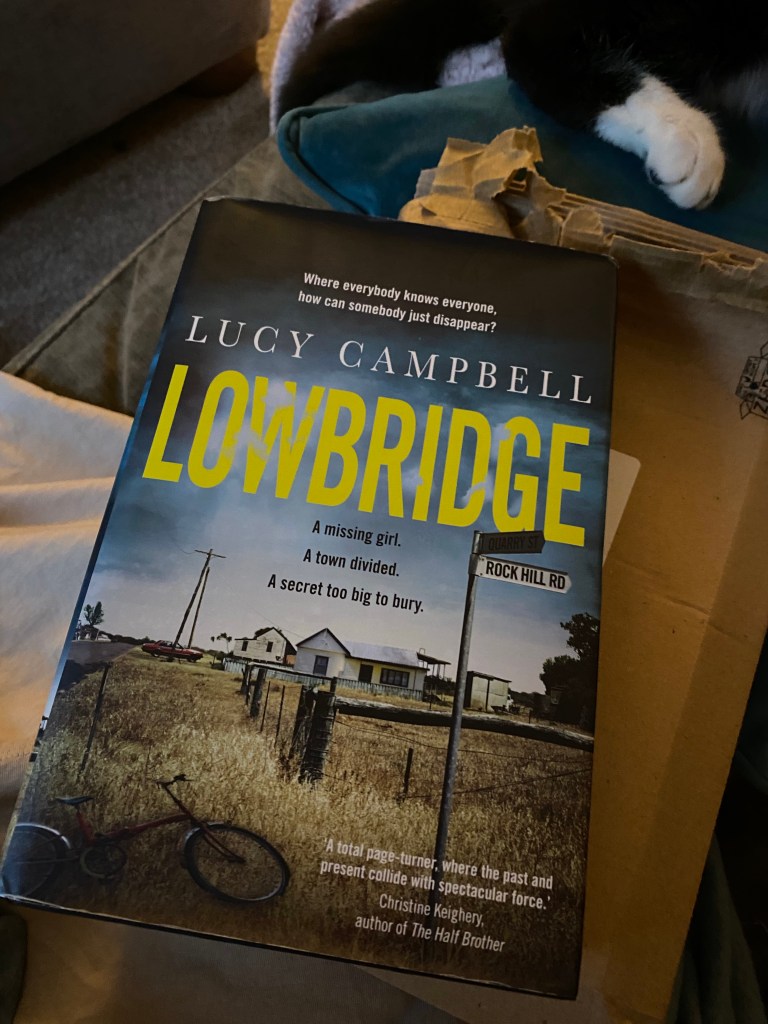
This story is a slow burn, dual timeline mystery set in small town Australia. Katherine has moved to her husband James’s hometown of Lowbridge, a town with a very clear line between ‘the haves and have-nots’. Katherine is struggling with her mood and self-medicating with drink. James is hoping that the move will help her and has made it clear that they can’t continue as they are. He encourages her to get dressed and leave the house or go for a run like she used to. It’s clear something momentous has happened and their lives have imploded, but they are each dealing with it in different ways. When she does leave the house, Katherine accidentally stumbles across the town’s historical society and shows an interest in the exhibition they’re putting together. It’s something she can potentially help with and it’s enough to get her leaving the house. However, when she comes across a thirty year old mystery, problems start to arise. The disappearance of a young girl called Tess during the summer of 1987 has remained unsolved and Katherine thinks it may be time to highlight the case and perhaps jog people’s memories. She knows she must involve Tess’s family in the decision, but she doesn’t expect opposition from anyone else. It’s James’s opposition that surprises her most. He tells her to leave the mystery alone, that it will stir up trouble and it’s would be unhealthy for her to become wrapped up in another family’s grief. Katherine is determined though and with Tess’s family on board she starts to research what happened in 1987. Who has the most to lose from her findings? A brilliant depiction of how loss affects individuals and a whole town. Thoughtful, honest and addictive.

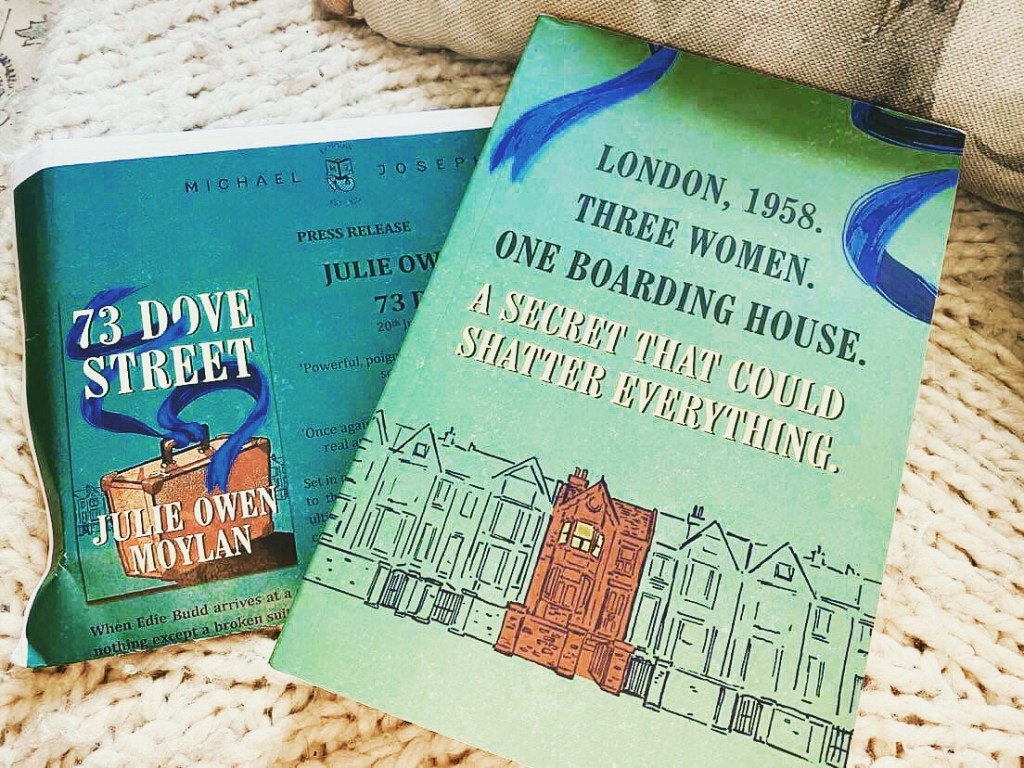
73 Dove Street is Julie Owen Moylan’s third novel and I thought it was a brilliant depiction of ordinary women’s lives in post-war Britain. What an incredible writer Julie Owen Moylan is, because within a few pages I was absolutely immersed in 1950’s London. This is a London I haven’t visited too often in literature, the haunted and broken post-war period rather than the glory and the drama of the the war itself. Here the war has a ghostly presence, shown by children climbing piles of rubble or an incomplete street that looks like a mouth with one of it’s teeth missing. The story is told through three women; Edie, Tommie and Phyllis. It’s Edie we follow to 73 Dove Street where she hopes to look at a room, with just a single suitcase and an envelope full of cash. Edie is almost put off by the mattress and pile of men’s clothes burning fiercely just outside the yard, but a voice summons her from an upstairs window and she recognises a place she can lie low. What is she hiding from? Tommie lives in the room below and works for an eccentric socialite who was once wealthy and popular. Outside work Tommie is lured to the seedy nightlife of Soho and the man she can’t quit. Phyllis is the landlady of 73 Dove Street, burning her husband’s belongings in the street after she discovered a terrible betrayal. She puts on a good front, an armour that she needs to cope with a past she won’t talk about. Slowly each woman’s story is unravelled and as we hear them it is so emotional, I found it deeply moving. It isn’t just the bombed houses that are missing. There are people locked in wartime, trying to carry on by avoidance, distraction or stepping around something there’s only one way through. I found this part of the book so beautifully rendered by this wonderful writer that the emotions were deeply felt.

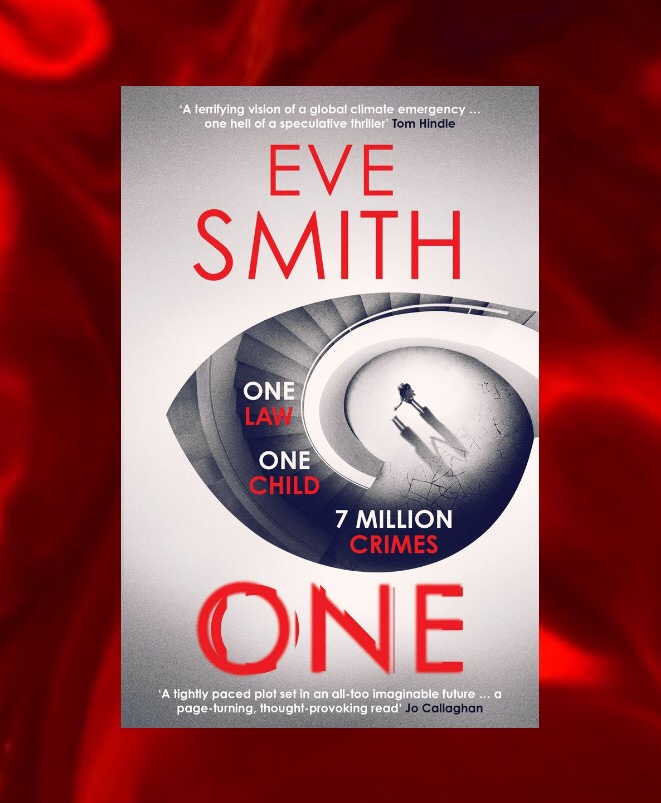
A catastrophic climate emergency has spawned a one-child policy in the UK, ruthlessly enforced by a totalitarian regime. Compulsory abortion of ‘excess’ pregnancies and mandatory contraceptive implants are now the norm, and families must adhere to strict consumption quotas as the world descends into chaos. Kai is a 25-year-old ‘baby reaper’, working for the Ministry of Population and Family Planning. If any of her assigned families attempts to exceed their child quota, she ensures they pay the price. Until, one morning, she discovers that an illegal sibling on her Ministry hit- list is hers. And to protect her parents from severe penalties, she must secretly investigate before anyone else finds out. Kai’s hunt for her forbidden sister unearths much more than a dark family secret. As she stumbles across a series of heinous crimes perpetrated by the people she trusted most, she makes a devastating discovery that could bring down the government … and tear her family apart. I LOVE that Eve Smith doesn’t baby her readers. If there are hover cars that’s what she gives us. A two word description. No long flowery explanations of how they came to be, she just tells us what IS. She expects our own imaginations to keep up. The immediacy of her writing brings us slap bang in the middle of this alien world and it’s exhilarating. This is a great addictive thriller, involving one of women’s most emotive issues. It’s an emotional, intelligent and imaginative read from a writer who’s fast becoming my go-to for speculative and dystopian literature.

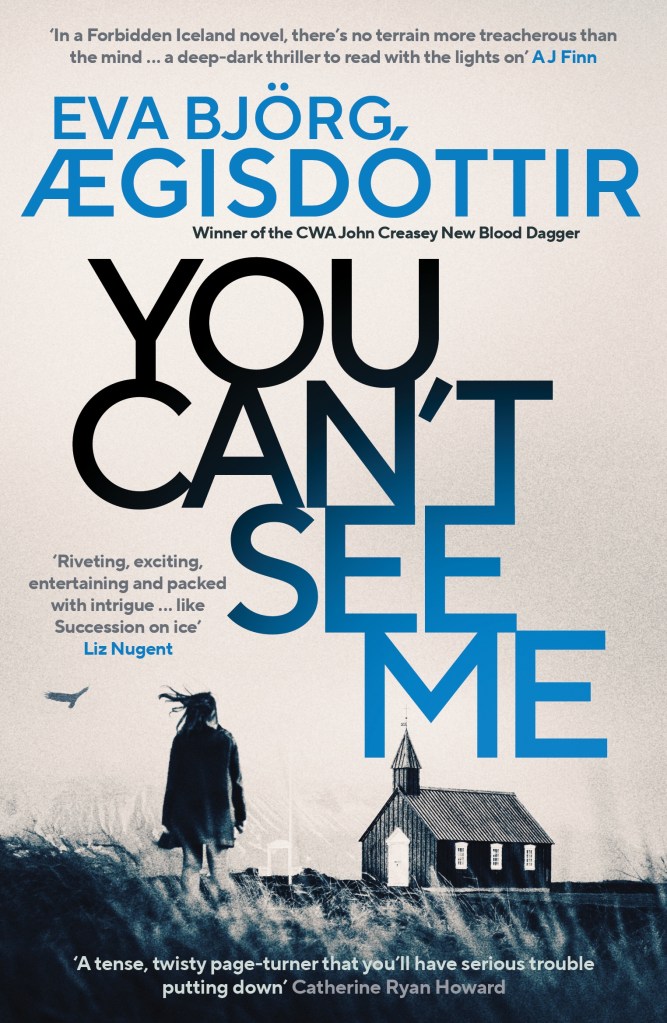
I LOVED the first two books in the Forbidden Iceland series, featuring detective Elma, recently returned to her home town of Akranes after several years working in Reykjavik. This story is a prequel and we meet her eventual partner Sæver as he looks into some very strange events surrounding a family reunion. This is not your average family though and I don’t think I’ve ever wanted to be at a party less! My sympathies were largely with hotel employee Irma who views the Snæberg family as if they are a totally different species. In a way they are, set apart by their successes and their wealth from the everyday hotel employee. So wealthy in fact that they’ve hired this entire luxury hotel for the weekend, with a full itinerary of activities and boozy dinners at night. It isn’t long before tensions and differences come to light: judgements and opinions on each other’s partners; family members who’ve lost touch and resent each other; teenagers who’d rather be elsewhere; parents who can’t connect with their children or each other. All cooped up together for a whole weekend. As the author moved our point of view from one character to another we realise this family has so many secrets. As a storm begins to roll in, cutting the hotel off from civilisation, horrifying truths bubble to the surface. Someone who has been waiting a long time for their moment makes their move in this complicated chess game. We don’t always see those who hide in plain sight and those we think we know could be monsters in disguise. I love this author’s ability to get inside the heads of her characters and pull the reader along with her. Here she builds a labyrinth of clues, red herrings and suspicious characters that I found absolutely impossible to resist. That’s why I was awake at 3am, with my attention split between the page in front of me and my ears attuned to even the slightest creak downstairs. After all you never know who might be watching….

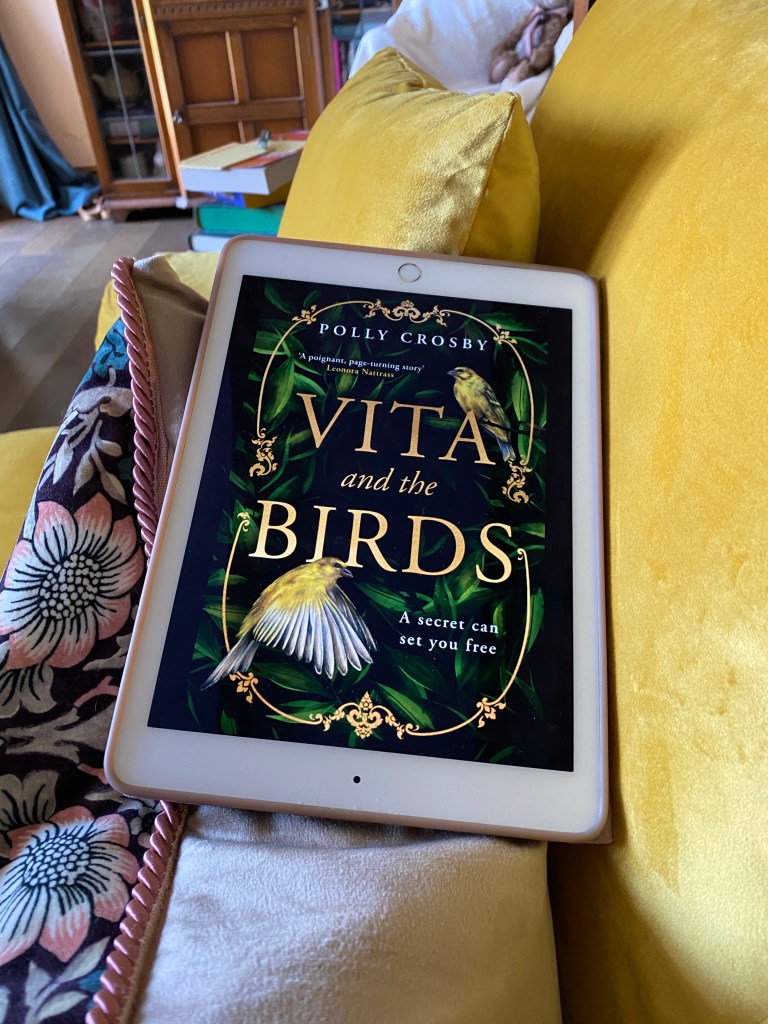
I’ve looked forward to the new Polly Crosby novel for a while. I love her writing so I gave myself a lovely sunny weekend to completely wallow in the story. Eve has felt adrift since her mum Angela died, so her four brothers think it might be good for her to take a trip to the coast and clear out their grandmother’s studio. Grandmother Dodie was a painter and lived a fairly basic life in a small ramshackle studio just off the beach and all have fond memories of childhood holidays there. Close by is the strangely alluring Cathedral of the Marshes, a glass building so imposing it has the presence of such a holy building. Once, when she was a teenager, Eve had taken a dare to go into the cathedral with Elliot, one of the local boys. She remembers being terrified and running, but doesn’t remember much else about that night apart from seeing a painting standing on an easel – a portrait of her. How will it feel to be back in the place that still holds some of her best childhood memories? She finds a box under the sink filled with Dodie’s letters and reads of a hidden relationship and is plunged into a completely hidden part of her grandmother’s life, a powerful love affair with repercussions that lasted decades. We’re pulled back into the past to see what happened. As I was reading about the past I kept wondering who owned Goldsborough Hall now? The answer took many unwashed dishes and unhoovered floors to unravel. This was a beautiful hidden love story and an intriguing mystery as well, told with compassion and empathy.

What a brilliant month and as we creep closer to the end of the year I’m even more worried about how I’ll choose between them for the best of the year! I’ve been away this month and wanted to catch up on some books in series that I’ve only partly read. So I have to mention Matt Wesolowski’s Six Stories series. I took the remaining four books to Shropshire with me and out of all of them, it was Changeling that made the hairs stand up on the back of my neck. Not helped by the fact we were out in the very area between Chester and Wrexham featured in the story. This was a brilliant mystery and supernatural thriller combined and I can honestly say Ive never been disappointed by one of his books. I also enjoyed a paperback from Elizabeth Noble with the title Other People’s Husbands where the balance of a group of couples shifts when two people decide to have an affair. This was a brilliantly balanced novel that gives us the viewpoint of the two adulterers as well as other members of they’re social group. Can friendship and marriages triumph over this mistake, or has it blown everything apart? Both will appear in the next month on Throwback Thursday with a full review. Finally I must mention this lovely novel which was a Squad Pod Collective choice for July that I’m a little late starting. Minor Disturbances at Grand Life Apartments by Hema Sukumar was a very enjoyable holiday read about the residents of a an old set of apartments in Chennai, South India. This is a relaxing read, full of incredible detail with each resident facing a personal dilemma as well as the possible compulsory purchase of their homes. Review to come in the next few days. See you next time and here’s a peek at next month’s TBR!

Posted in Netgalley, Publisher Proof

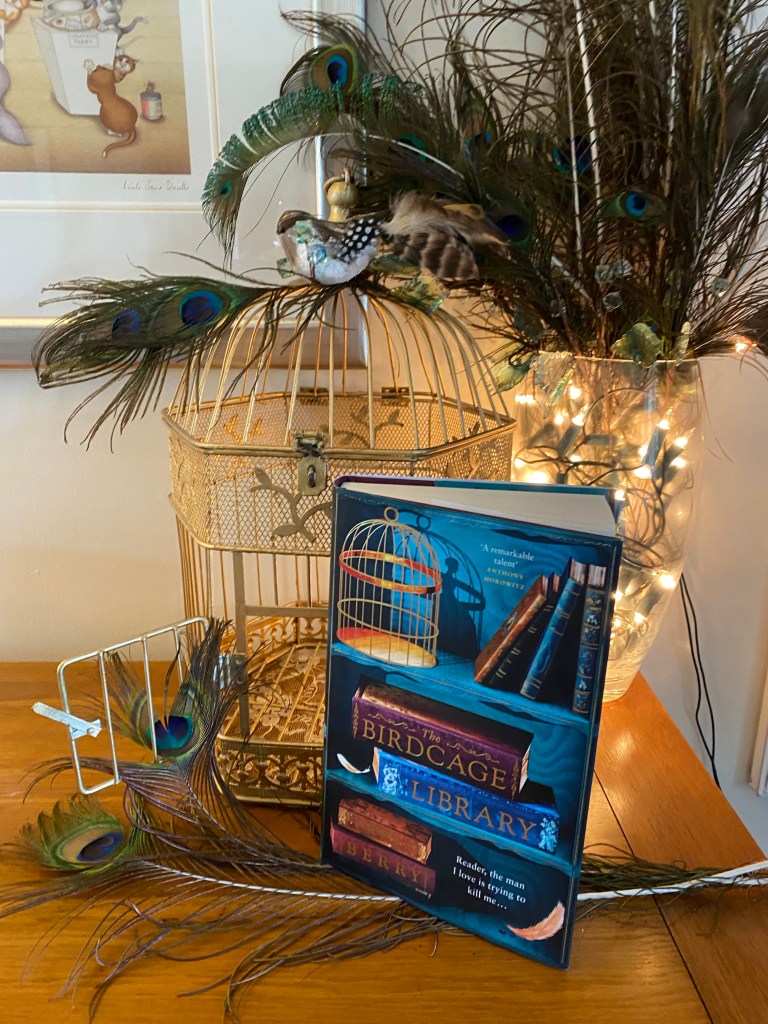
The Birdcage Library by Freya Berry

Dear Reader, the man I love is trying to kill me ….

In 1932 Emily Blackwood, an adventurer and plant collector, is employed by Heinrich Vogel to solve a puzzle. A treasure is hidden in his remote Scottish castle and he has employed her to find it. Her excavations take us back several years to New York and a young woman called Hester caught between two brothers and the family business of supplying rare animals to society homes and show business. As Emily follows the clues she discovers torn out clumps of pages from their hiding places around the castle. These tell Hester’s story in her own words and Emily starts to piece together this part of the Vogel’s family history. However, the discovery means she also starts to question her host, the isolated place she’s staying and whether or not she is safe within it’s walls. As Emily solves the clues and we race towards her final conclusions I found myself anxious and thoroughly addicted to Freya Berry’s intriguing and puzzling mystery.

I also found myself rather spellbound by the a book because it features one of my more macabre favourite things – I have to admit that vintage taxidermy has a strange fascination for me and the quirkier it is the better. Victorian tableaux with their anthropomorphised animals really do make my heart flutter. Rationally, I know it’s horrible and undignified for these beautiful creatures but I can’t resist a squirrel tea party. This book is set at a time when killing these beautiful living creatures and posing them for the collections of rich men is huge business. The Scottish castle has it’s owncollection, but we are also taken back a few years to Heinrich Vogel’s youth when he and his brother were the source of all these wondrous creatures. In one example, sourcing a vast collection of hummingbirds to be the talking point of an exotically themed gathering for the great and good of New York Society.

Emily rather reminded me of another incredible heroine, botanist Alma Whittaker in Elizabeth Gilbert’s wonderful novel The Signature of all Things. Like Alma she is intelligent, curious and forges her own path in the world of scientific discovery. I loved that Emily wasn’t like other women in society, usually depicted in fiction as diverted by dances and adorning themselves for the marriage market. She is an academic and sets foot in places across the world that many men haven’t yet reached, never mind the supposed fairer sex. That said, her biggest adventure and challenge is trying to be acknowledged for her expertise within an academic system that’s firmly a patriarchy. It is a lack of funds that put Emily in Vogel’s orbit, when he hears of her employment cataloguing the Rothschild’s butterfly collection. He feels that only the intelligent and ingenious Miss Blackwood will do as he wishes to catalogue his own incredible collection of taxidermy creatures. It doesn’t take long for Emily to discover there’s a more intriguing task though. Heinrich Vogel’s sister-in-law Hester famously threw herself to her death from the Brooklyn Bridge. From an old book entitled The Birdcage Library, Emily deciphers clues that lead her to the remains of Hester’s diary and her words pull Emily into a past filled with clues, explaining all that happened to the Vogel brothers and Hester’s relationship with them.

The highest form of love is indistinguishable from liberty.

Freya Berry uses her historical knowledge perfectly. It grounds the story within it’s time, using real people and places to anchor Hester’s account until it feels like part of history rather than fiction. The world she describes is so rich, alive with sound and colour, creating an all round sensory experience for the reader. I felt like I knew this world inside out. As many of you know, the birdcage is a potent symbol for me, one that I have tattooed on my body as a reminder to never let anyone put me inside one again. Here Freya Berry uses it as a metaphor for the way high society and wealth keep women from living the fullest lives they could. A cage is a cage, even if it’s a gilded one. The women in New York society may have money enough to adorn themselves with the feathers of birds of paradise, but they would never have the freedom that Emily has had to travel abroad and see these birds living in their native habitat – something infinitely more valuable than wearing them as a hat. Despite having a central role in the Vogel’s business operations, Hester is soon relegated to the parlour when her brother-in-low returns to New York. The business is going in a different direction, as her husband pursues the kind of fame and fortune earned by Barnum. Her creativity, business acumen and financial know how are sidelined and she finds herself bored and dissatisfied. Her distraction from the boredom and bewilderment of being relegated to the parlour, is a destructive one.

As Emily gets closer and closer to the final parts of Hester’s diary, she realises that the repercussions of what happened in New York are still playing out, but now she is in the middle. I was actually starting to be scared for her safety. The arrival of Vogel’s nephew Yves made me wonder if Emily could find an ally in this isolated castle? Or is she doomed to live out Hester’s life, caught between two Vogel men? The novel is the perfect combination of historical novel and mystery, with just the right edge of gothic darkness. There are echoes of both Jane Eyre and Rebecca here, two of my all time favourites. Freya Berry has created two interesting and intelligent heroines in Hester and Emily, and I was enthralled by their stories till the final page. I think you will be too.

I am no bird; and no net ensnares me

Jane Eyre by Charlotte Brontë

Meet the Author


Freya Berry always loved stories, but it took several years as a journalist to realise she loves the kind of truth that lies in fiction, not reality. (Or, to put it another way, making stuff up is more fun.) 

Her second novel, The Birdcage Library, is out now, a gothic mystery and literary treasure hunt packed with twists. A 1930s adventuress discovers an old book containing clues about the disappearance of a woman who vanished 50 years before. Set between a Scottish castle in the 1930s and an exotic animal emporium in Gilded Age New York, it’s a gothic tale of secrets, obsession and murder. Oh, and taxidermy. 

Her first novel The Dictator’s Wife, a high-stakes exploration of power, glamour and complicity, was published in 2022. It was shortlisted for the Authors’ Club First Novel Award, a pick for the BBC’s flagship book show Between The Covers, and The New European’s novel of the year. 

Freya lives in London and graduated with a double first in English from Cambridge. She spends more time reading smutty fantasy novels than she likes to admit.

Posted in Squad Pod

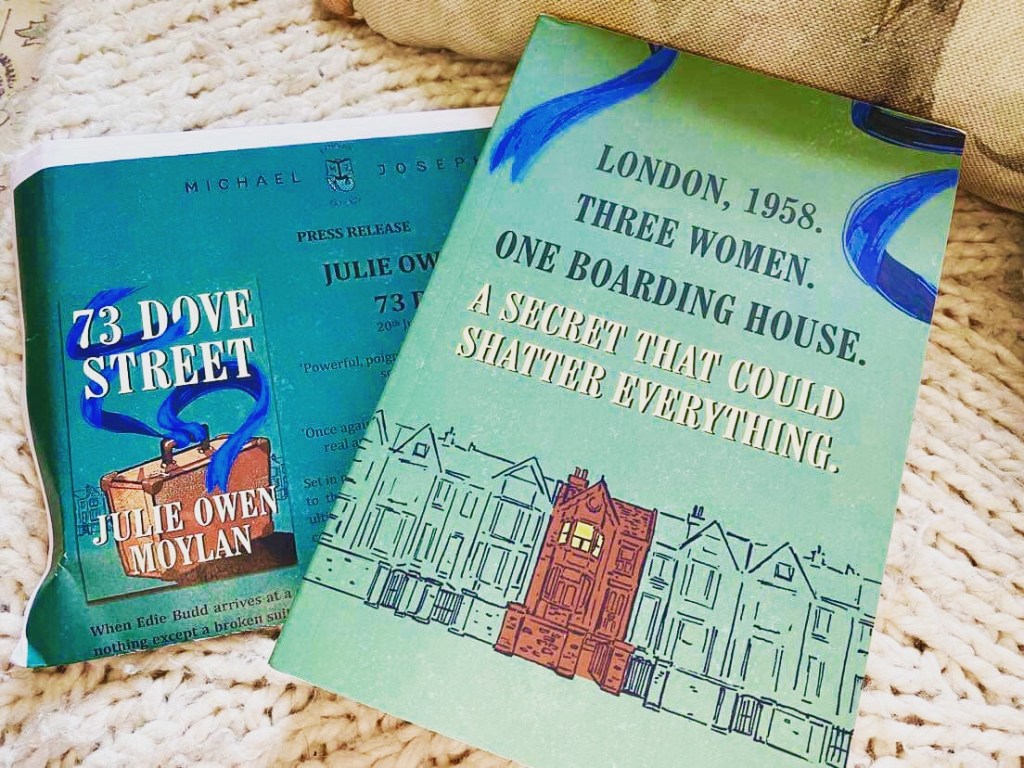
73 Dove Street by Julie Owen Moylan

What an incredible writer Julie Owen Moylan is, because within a few pages of starting her new novel I was absolutely immersed in 1950’s London. This is a London I haven’t visited too often in literature, the haunted and broken post-WW2 period rather than the supposed glory or the drama of the the war itself. Here the war has a ghostly presence, shown by children climbing piles of rubble or an incomplete street that looks like a mouth with one of it’s teeth missing. The story is told through three women; Edie, Tommie and Phyllis. It’s Edie we follow to 73 Dove Street where she hopes to look at a room, with just a single suitcase and an envelope full of cash. Edie is almost put off by the mattress and pile of men’s clothes burning fiercely just outside the yard, but a voice summons her from an upstairs window and she recognises a place she can lie low. What is she hiding from? Tommie lives in the room below and works for an eccentric socialite who was once wealthy and popular. Outside work Tommie is lured to the seedy nightlife of Soho and the man she can’t quit. Phyllis is the landlady of 73 Dove Street, burning her husband’s belongings in the street after she discovered a terrible betrayal. She puts on a good front, an armour that she needs to cope with a past she won’t talk about.

This author is absolutely brilliant at creating a feeling and time period, from the dark and depressing post-war London to the interiors of both No 73 and the more upmarket house where Tommie works.

“It was one of those London streets that had become a canvas of tatty boarding houses: windows filled with crooked pieces of cardboard saying ‘Room to Let’. The houses all looked the same: bay-fronted with scruffy front gardens filled with dustbins, and children loitering on doorsteps with their runny noses and scraped knees.“

She makes a beautiful observation about these streets, that where once there were hints of colour, London is now bombed back to dreary black and white. People are trying to drag their lives out of wartime monochrome, but fail every time. There are houses with the front ripped off and the contents still inside, looking like a grotesque full-size doll’s house. Through Tommie’s childhood experiences we can see what it was really like to be in one of those houses as she remembers a direct hit on her family home and being sat in the suffocating dark rubble until a hand breaks through to save her. These memories are so powerful and evocative, they really bring the reality of the Blitz to life. It’s clear that one of the reasons why London is so bleak is that it’s people are traumatised and numb. As well as the lack of money, rationing and their surroundings, these people haven’t even begun to recover. They’re vulnerable and in the case of our main characters, they’re trying to battle on alone.

I was immediately on board with Edie and loved the way the author built up her relationship with Frank. It was one of those situations where I could clearly see what was going to happen and I was mentally screaming at Edie to walk away. This is a man who knows how to choose the right woman, the one who will fall for his charms and become hooked on the way he operates. He likes to keep a woman on edge, waiting for his affection and easily moulded to what he wants by withholding that affection. Sadly it’s a pattern that’s only noticeable when you’ve been through it and Edie is a quiet, inexperienced girl who’s bowled over by his subtle manipulations. She’s so unformed and brought out such a protective mode in me. In a typical pattern he follows any glimpse of anger or violence with apologies and huge gestures.

“Frank’s pale blue eyes never left Edie’s face. Pleading with her without saying a word, desperate to make everything right between them. ‘Will you marry me, Edie? Say you will . . .’ The words tumbled out before Edie could stop and think about them. ‘Yes, of course I will.’ Her arms wrapped around his neck; her good wrist covering the bruises on the other one. His mouth felt tender and warm on hers and for that moment she couldn’t hear the daft comments or applause from the pub, it was just her and Frank”.

The abuse Edie suffers is a hard read, but such an authentic representation of domestic violence in all it’s forms. I am from a working class family, with some very strong women on both sides especially in those aunties old enough to get married during the war. They often comment on how the generations beneath theirs are too quick to split up or divorce and that marriages in their generation tended to stay together. Yet, when I hear the reality of some of their marriages – the drinking, gambling, physical and sexual violence, financial abuse and infidelity – I wonder what’s the point of a long marriage that has only left them grieving and traumatised? The author shows how economic and psychological difficulties prevented women from leaving terrible relationships. I was interested to read the author’s comments about her own family and how the strong women in it had given her inspiration for the book.

I haven’t spoken about Phyllis much, although towards the end of the book it was her experience that had tears pouring my down my face. At the beginning we see through Edie’s eyes the burning pile of men’s clothes outside No 73 and we could guess at what had happened in her marriage. She’s full of anger at her husband, but as the story develops we get the feeling there is something more underlying her feeling of being wronged. We get the picture of a marriage rather like the bombed out houses – a facade remains but it’s been empty for some time. When we hear the full story it is so emotional, I found it deeply moving and could identify with this woman whose abrupt manner is simply the amount of protection she needs to get through each day. It isn’t just the bombed houses that are missing. There are people locked in wartime, trying to carry on by avoidance, distraction or stepping around something there’s only one way through. I found this part of the book so beautifully rendered and deeply felt. Julie has dedicated this book to her grandmother and the strong, working class women in her family. She has really done them proud with this wonderful historical novel.

Published by Michael Joseph 20th July 2023

Meet the Author

Julie Owen Moylan was born in Cardiff and has worked in a variety of jobs, from trainee hairdresser and chip shop attendant at sixteen to business management consultant and college lecturer in her thirties.

She then returned to education to complete her Master’s degree in Film before going on to complete a further Master’s degree in Creative Writing. Julie is an alumna of the Faber Academy’s Writing a Novel course. She lives in Cardiff with her husband and two cats.

Julie can be found on Twitter: @JulieOwenMoylan

Posted in Publisher Proof

The Dog Sitter Detective by Antony Johnston

Meet Gwinny, an unlikely bloodhound, and her four-legged friends determined to dig up the truth.

Penniless Gwinny Tuffel is delighted to attend her good friend Tina’s upmarket wedding. But when the big day ends with a dead body and not a happily-ever-after, Gwinny is left with a situation as crooked as a dog’s hind leg.

When her friend is accused of murder, Gwinny takes it upon herself to sniff out the true culprit. With a collection of larger-than-life suspects and two pedigree salukis in tow, she is set to have a ruff time of it.

When I was offered a chance to review this novel I jumped at it because it sounded so quirky and charming. I was pulled into the novel quickly because it was a book that was perfect for the time – a cozy crime novel in the middle of some dark Scandi Noir – but also due to the author’s vivid characters. It was like putting on a cozy blanket and escaping into an Agatha Christie novel with added dogs. It had all the expected ingredients of a cozy crime novel; a country house, a wedding and the worst present of all – a body in the library. Especially when that body is one of the wedding party! At first it seems like an open and shut case, because the person stood over the body must be the main suspect. It’s not as simple as it looks though, the author has the odd red herring and revelation up her sleeve sending the police and the reader scurrying off in the wrong direction. Gwinny lives in an affluent part of town and from the outside it’s not exaggerating to say she lives with a certain amount of luxury. However, she is asset rich and money poor, with a bank balance that could do with a cash injection. Quickly! Since her father became ill she has been his sole carer and her acting career has paused indefinitely. She knows she can’t keep herself in the black if nothing changes.

A posh country wedding offers the perfect chance to pause and enjoy herself. So making promises to address the situation on her return, she plans to enjoy watching her best friend Tina walk down the aisle. Once the body is found the wedding grinds to a halt and for some reason Gwinny is volunteered to look after Spera and Fede, two beautiful Saluki dogs. With the dogs in tow she gets to work on the murder mystery, with her intuition and talent for deduction she knows straight away that something is ‘off’. I really enjoyed Gwinny’s character because she is so formidable, rather like that eccentric spinster aunt who has no time for idiots and won’t take any nonsense, from anyone. She can be rash and jump in with both feet, but she’s kind and incredibly loyal too. Even though she’s only just acquired the dogs she really does put herself out to protect them especially when other people don’t want them around. Her companion is Alan Birch, a retired police detective however, they blend perfectly together as an investigating team. The plot twists and turns in quite a modern thriller style, but then the author brings in that classic final scene when all the characters are brought together to unmask a murderer. It felt like the author loved this genre and although he updates it slightly, I think he really did give an elegant nod to classic cozy crime through his main character and the setting. Meanwhile keeping the story quite modern and crafting an ending that satisfies the reader. This was an enjoyable escape from everyday life and I would recommend it to anyone who enjoys classic crime novels with a dash of humour and a sprinkle of clever deduction.

Published by Allison and Busby 18th May 2023

Meet the Author

Photo Credit: Sarah Walton Photography

ANTONY JOHNSTON is a New York Times bestselling writer and podcaster. For more than twenty years he’s written books, graphic novels, non-fiction, videogames, film, and more. Much of it has been done with a snoozing hound curled up in his study.

Antony’s crime and thriller titles include the Brigitte Sharp spy thriller novels (The Exphoria Code, The Tempus Project and The Patrios
Network
) currently being developed for TV by Red Planet; The Fuse, a series of sci-fi murder mystery graphic novels (starring an older female police detective); adapting Anthony Horowitz’s Alex Rider books to graphic novels; and the Charlize Theron movie Atomic Blonde, which was adapted from Antony’s graphic novel. He also wrote Stealing Life, an SFF crime caper novel, and Blood on the Streets, a ‘superhero crime noir’ for Marvel comics.

His productivity guide The Organised Writer has helped authors all over the world take control of their workload, and he interviews fellow writers on his podcast Writing and Breathing. Antony is joint vice chair of the Crime Writers’ Association, a member of the International Thriller Writers group, a Shore Scripts screenwriting judge, and formerly sat on the Writers’ Guild of Great Britain’s videogames committee. Born in Birmingham, Antony grew up in nearby Redditch before moving to London for work. He now lives and works close to Pendle Hill in Lancashire.


Find out more about Antony’s other work at AntonyJohnston.com, and follow him on Twitter at @AntonyJohnston.

Visit https://dogsitterdetective.com/

Posted in Random Things Tours

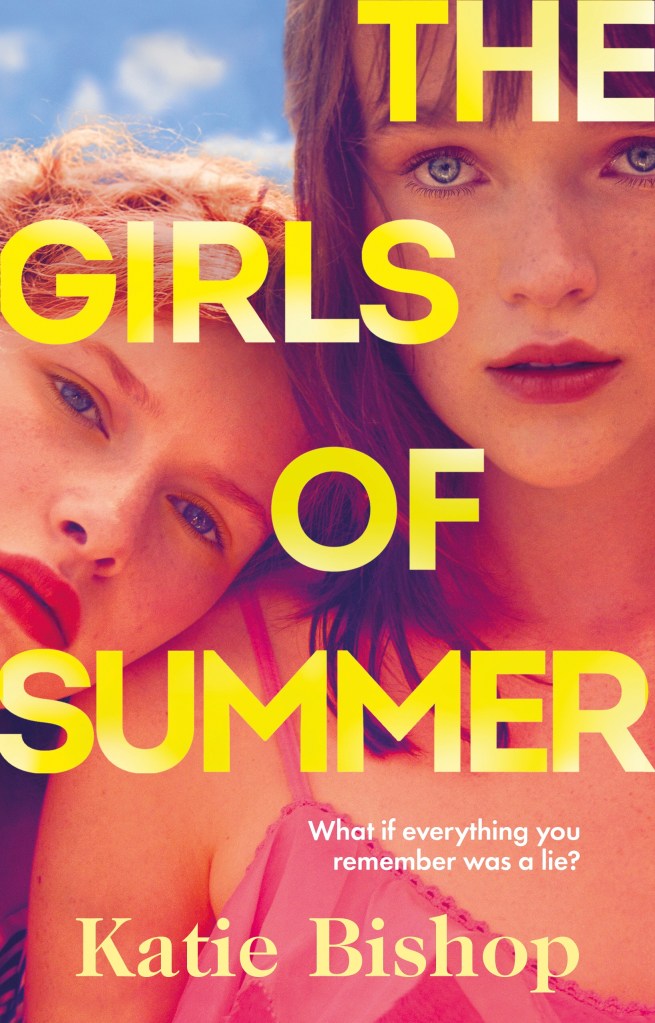
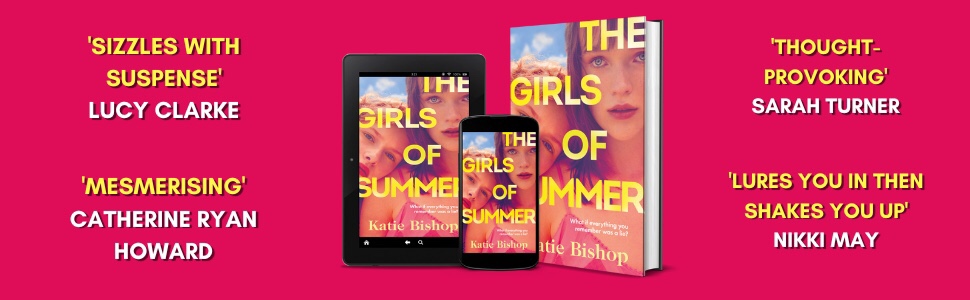
The Girls of Summer by Katie Bishop

Rachel has loved Alistair since she was seventeen.

Even though she hasn’t seen him for sixteen years and she’s now married to someone else.

Even though she was a teenager when they met.

Even though he is almost twenty years older than her.

Now in her thirties, Rachel has never been able to forget their golden summer together on a remote, sun-trapped Greek island. But as dark and deeply suppressed memories rise to the surface, Rachel begins to understand that Alistair – and the enigmatic, wealthy man he worked for – controlled much more than she ever realized.

Rachel has never once considered herself a victim – until now.

I devote a lot of my time to reading, but there are times when a book makes me drop everything. I carry it in my bag to read while waiting for appointments. It takes precedence over Netflix and all the other streaming channels that lure us into watching the screen every evening. I spent my whole morning in pyjamas reading, because I needed to finish this novel in one greedy gulp. I was completely transfixed by this story of a young girl taking a holiday to Greece that completely changes her life. Rachel is a naïve seventeen years old when she sets out to the island for a holiday with her friend Caroline. She sells it to her worried parents as being no different to a gap year, just a year earlier than normal. Once on the island they meet a group of girls who work in a local bar, belonging to entrepreneur Harry Taylor. When Rachel meets his right hand man Alistair she feels an immediate attraction but does he feel the same way? Surely she isn’t going to capture the attention of a handsome and sophisticated older man. She does notice him looking at her and it sends a shiver through her. Rachel has never thought of herself as beautiful, especially next to the other girls here, but as Alistair singles her out for attention she feels special. They have a connection, so strong that she makes a huge decision. She isn’t going to return to England with Caroline at the end of the holiday. She is going to work in the bar alongside the girls she’s made friends with and share their rather chaotic house nearby. Why would she return to her parent’s suffocatingly ordinary semi and her A’Levels when she can be on this golden island with Alistair and frequent the glamorous parties held by his mysterious boss at his enormous villa in the hills?

The structure of the book is interesting, because usually in time slip novels we have a protagonist in the here and now trying to solve a mystery interspersed with glimpses into the past that make sense of the present. Here the author turns that on it’s head. Rachel, now in her thirties and married to Tom, knows what happened in the past. She holds her relationship with Alistair up on a pedestal, their love was special and those months with him on a beautiful Greek island have been her benchmark of how love should be. It’s a revisit to the island with Tom and bumping into Helena that starts to unravel the rather idealised past she’s been narrating to us. The present actually deconstructs her past. As each new revelation washes over Rachel in the present it takes us into a past that’s changed a little, becoming murkier and more sinister. Rachel is still friends with Jules, a friend she made on the island who was separate to the bar. In fact it’s Jules who gives seventeen year old Rachel a warning, the locals think there’s something ‘off’ about the bar and perhaps it would be best to stay away. In the present Jules and her husband have Rachel and Tom over for dinner. They’re chatting about having a family, but Rachel and Tom have been trying for around a year without success. Tom mentions that they’ve talked about seeing a doctor to have a few things checked out when Rachel responds angrily that he wants to see a doctor, she hasn’t agreed to anything. Her harsh responses change the night and seem out of character. She’s told us about how easy it was to fall in love with Tom and how they’d taken steps to move in together almost without realising it, when she’d stayed for a few days while some work was being done on her flat. Of course by now we know that Rachel has Alistair’s number and has made plans to see him again. Could that have made her less invested in her future with Tom? Later we see that she’s stashed her contraceptive pills in a box of sanitary towels under the bathroom sink, she’s still been taking one regularly every day.

IT’S TOO HOT to be outside for long. Sweat is starting to dampen my scalp, thickening in the roots of my hair and pooling in the crevices of my collar bone. My t-shirt sticks to my spine and my arms are tinged pink, an ungainly line of skin beginning to blister along the top of my thigh in the almost unseasonable blaze of sun. I curl my toes into the damp sand and feel the sharpness of a small shell against the sole of my foot.

Our setting so powerful, that beautiful sun soaked island with the sound of boats rocking rhythmically in the harbour and that incredible opening line that took me straight back to standing in the sea and feeling that sharp edge of a sea shell. She captures that push and pull between the tourists and the locals who, even thought they’re in exactly the same place, see it completely differently – rather like Rachel and the other girls. I could see the slightly scruffy house they all share and the chaos and fun of getting ready together, sharing clothes and cheap bottles of wine. Harry’s house in the hills is another contrast, sleek and modernist with contemporary art on the walls. Even the sea looks different from high in the hills, appearing flat and smooth like a lake on the surface, but with dangerous riptides underneath. The present sections mainly take place in London and the author shows us the city as visitors probably don’t see it. She describes a rather special Sunday evening feel to the tube when it’s almost empty and strangely quiet, as if having a rest before the Monday morning commuter rush. She describes sudden rain showers and people having to improvise and use their handbag to shield their hair from the downpour. Rachel loves living in the capital, compared to her parent’s suburban family home. There’s an energy and unpredictability to it’s rhythms, a sense that there are so many options, anything could happen. Whereas home has a particular tameness and routine that Rachel finds stifling. Could Rachel’s decision to stay on the island and even her attraction to Alistair have something to do with the way she views her mum and dad’s life? We see Rachel fighting something similar in her marriage, the ordinariness igniting that constant yearning for something more, something others can’t see:

She was ‘hoping this trip would reignite some of the heat that has been missing from my marriage. Instead, I look across at my husband and feel faintly repulsed. His underarms are damp and staining the shirt he put on especially for our last night here. He’s staring out at the sea, but I know he isn’t seeing it the way I do. To him it could be anything. Any view, anywhere. To me the swell of the tide speaks of secrets, the salty air smelling irrevocably of promise.’

It’s very easy to understand the teenage Rachel. I fell in love at seventeen and had my heart broken. For years I idealised that relationship, using it as a benchmark for subsequent relationships that in hindsight had much more potential. She is so naïve that she can’t see what’s happening and how much she is being controlled. It’s almost apt that the book should come out in the light of the Phillip Schofield scandal, because it struck me how the responses to what happened are very different to the responses we might have had when I was seventeen in the early 1990s. Our gradual understanding of coercive control, grooming and power imbalances in relationships have coloured the way we view all relationships completely. An affair with a much older man probably wouldn’t have raised much of an eyebrow then, it’s only with hindsight that it becomes worrying. It’s only once the affair is viewed through the prism of our later experiences, such as having our own daughters, that our perspective changes. The #MeToo movement has changed how we see things. When I watched the film Bombshell I talked with friends I’ve had since I was a teenager and as the author writes in her afterword, we’ve all had experiences: of being groped without consent while waitressing or working behind a bar; having a boss who was a bit ‘handsy’ or made inappropriate comments; being touched an a crowded dance floor at a club. One of the most disturbing stories I have ever heard was from a woman who had known ‘wrestling’ between boys and girls in the school playground turn into sexual assault. I love that my stepdaughters are so much better informed than I was and are very conscientious about keeping each other safe when out with friends, although it frustrates me that they have to be so vigilant just to go out on a Friday night.

The Girls of Summer was born out of this strange and sometimes conflicting intersection between nostalgia and trauma, memories and the truth, power and sexuality. It explores the grey areas of consent, deepening a debate that has shifted and broadened since the #MeToo hashtag first took social media by storm. It interrogates what it means when we are forced to reframe a narrative that is so central to who we are that we aren’t sure who to be when that narrative turns out to be false. Is it better to face up to this truth, and all of the pain that comes with it, or to keep it hidden in the dark?

The Girls of Summer, Afterword

Watching the teenage Rachel walk into danger is upsetting because this reader was ahead of the narrative and knew something was very wrong with the island set-up, particularly the extravagant parties. There was no explanation for all the male party guests and the mysterious Harry rarely appeared. On her way to a party, Rachel is excited and hopes Alistair loves her dress, she’s grateful that the girls have been invited never realising that they are the reason for the party. The gaslighting afterwards was painful to read – ‘you had fun didn’t you?’ Or ‘don’t feel bad about what happened, it’s okay, you enjoyed it.’ When they’re in the middle of that level of pressure, manipulation and controlling the narrative how would they be able to see through it and understand what’s truly going on? Even for an adult Rachel it’s hard. Her relationship with Alistair and it’s veracity is part of who she is, how she views men and relationships and determines her friendships with the very women who might understand her most. When the truth of everything is revealed, the horror of the Full Moon party and further painful revelations, it’s so hard for her to absorb and accept it. I found it deeply sad that even towards the end of the book, Rachel has still held a tiny shred of hope that her version of the relationship with Alistair will prove to be the love story she wanted.

When the truth is so deeply painful and damaging, isn’t it understandable that she would want to sugar coat things a little? To push away the truth and not have to confront what happened to you. To not feel like a victim. I could truly understand the women coming together to confront the past and I found myself thinking about how powerful men frame the narrative. They talk about a cabal or coven of women coming together to destroy them. Women who have been taking drink or drugs and having an encounter they bitterly regret in the morning. I can only imagine what effect it must have on the individual, to hear comments like Prince Andrew’s ‘I have absolutely no memory of ever meeting that woman’. For Rachel, who lost absolutely everything that summer, the denial of her experience actually brings the first chink of light into her situation. I felt hopeful that with the help of this group of women, friends like Jules and an acceptance of the truth she could start to rebuild. The fact that I’m talking about Rachel like this, as a real person, is testament to the brilliant writing of Katie Bishop. She has created a real, flesh and blood woman in Rachel and I found myself almost wishing I could see her as a client, I so wanted a recovery for her. This is a powerful story, that may trigger some people who’ve had similar experiences, but it’s important for stories like this to be told. I could really see this as a television series, with some reviewers seeing a similarity with The White Lotus – a beautiful setting, a luxury resort and the dark truths lurking underneath all that perfection. I loved the ending though, a return to that beautiful place but with the ability to see the reality instead of a fantasy. I wanted her visit to the island to be different to the one she had with Tom at the beginning of the book. To accept that she will never feel the excitement and promise she felt all those years ago, but that she will experience new feelings that are every bit as worthwhile.

I had thought I could recapture something of how I felt all those years ago by coming back here, but it has only served to remind me how slippery and impossible it is to summon the past. Perhaps this is simply the nature of growing up. Of growing older. Perhaps I will never feel the same again.

Meet The Author

Katie Bishop is a writer and journalist based in the UK. She grew up in the Midlands before moving to Oxford to work in publishing in her early twenties. Whilst working as an assistant editor she started writing articles in her spare time, going on to be published in the New York Times, Guardian, Independent and Vogue.

Katie started writing The Girls of Summer during the first UK COVID lockdown, after becoming increasingly interested in stories emerging from the #MeToo movement. The novel is inspired by her own experiences of backpacking, and by her interest in how our personal narratives can be reshaped and understood in light of cultural and social changes.

In 2020, Katie moved back to the Midlands, and now lives in Birmingham with her partner. She is a full-time writer.

Posted in Squad Pod

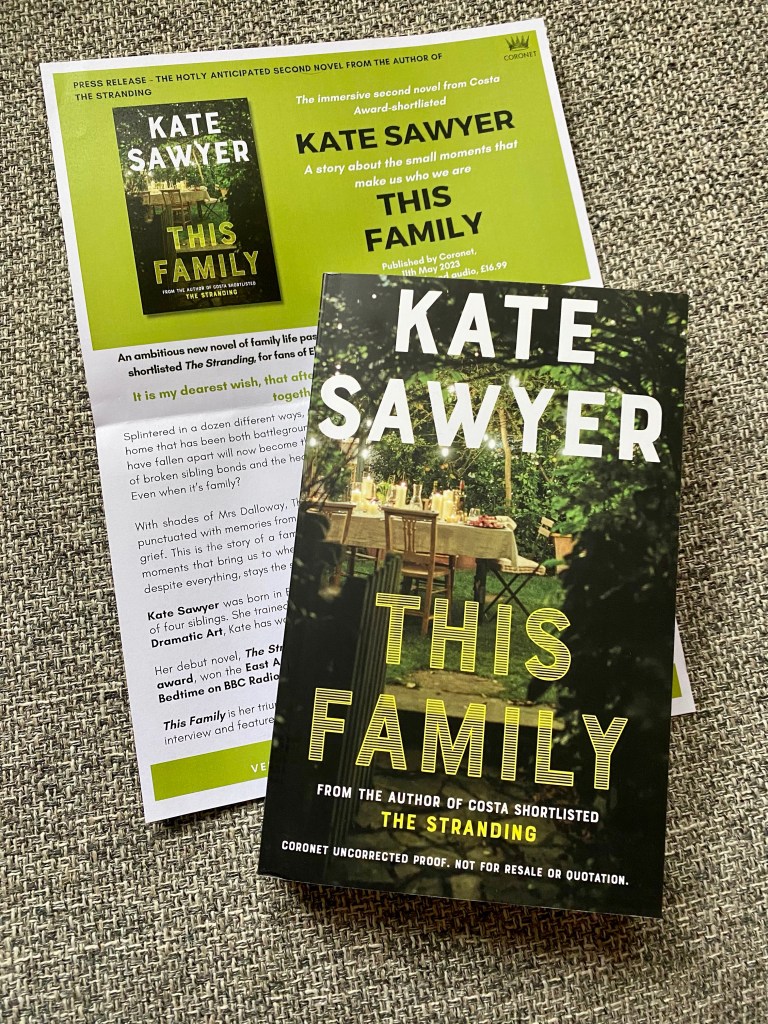
This Family by Kate Sawyer

I fell in love with Kate Sawyer’s imagination and writing skill when I read her debut novel The Stranding, so I was excited when the Squad Pod were able to confirm her new novel for our May book club. I didn’t know what to expect, whether there would be more of the same dystopian themes and emotional intelligence that I’d loved before or something completely different? This Family is different in that it’s set on one day where a family, with all it’s fractures and memories, are celebrating a wedding day. I often read books where I know I’m getting only a fragment of a much bigger picture. Kate Sawyer writes on several levels at once, from the personal to the universal. Each character has their inner world, their current outer world, other times and events, other people’s perspective on the character and events, then national and international concerns. It’s like someone shaking out the contents of my mind into a big jumble and seeing every single thought: I need to get some bread, last night’s dinner party was boring, thoughts of another dinner party years ago where I said something stupid, a worry about my dad’s health, thoughts on the book I’m reading, concern about the state of the health service and the war in Ukraine. Kate constructs her characters with all those levels creating a tapestry of this family’s life and how they all fit together to make a beautiful whole.

This was one of those books where I was conscious of empathising with an older character – Mary – who is getting married today and wants to have just one day where everyone behaves and is thinking of her happiness above their own concerns. She wants Phoebe to stay sober. She wants Emma to speak to her sister. Could her first husband Richard not be a dick? That’s all she wants. Just one day. As the family come together we see aspects of the day from different perspectives with all of the details I’ve mentioned. We see Phoebe’s inner thoughts. Then Mary’s thoughts and impressions of Phoebe. Rosie brings up a global concern – usually climate change, but Mary says it’s banned for one day. There is talk of COVID, the financial crisis, and even small boats crossing the Channel. Life is a tapestry of all these things, multi-layered and with contrasting colours. Kate gives each character their section, but she includes those events over the last few years that have stopped us all in our tracks like 9/11, theBoxing Day tsunami, the London terror attacks. Mary’s thread of worry when she hears of the tsunami, knowing one of her daughters is in Thailand. The thought she might be hurt pushing aside all irritations and harsh words. As a worker in the NHS Rosie’s proximity to the terror attacks and the pandemic cause other’s concern. This family is a jumble of memories, hurts caused, joint history, change, and then those moments of sharp focus when all that matters is their love for each other.

Their relationships are complex and at first it’s hard to know who everyone is and how they relate to each other. In fact the story of Mary is told so slowly I didn’t know who she was marrying until at least half way through the book. Going back over time, characters were married to different people and the relationships change. Even the sisters relationships with each other turn out to be complicated, yet they are still family. Emma’s story hit me deeply, because it was a story of childlessness and grief tearing lives apart. Emma married Michael, who was Phoebe’s best friend at university. Their marriage suffered due to pregnancy loss and when they lose their son, just as Emma was starting to think everything would be okay, it’s Mary that she asks for. She shuts Michael out and starts divorce proceedings, holding tightly to her feelings and unable to take on anyone else’s feelings of loss. Yet Michael will be at the wedding and will Emma be able to face him? There’s also her sister Phoebe to face and she has had a family, including a newborn. There’s a lack of communication between these two sisters, all pent up anger, jealousy and loss that they must put aside at least for today. When the truth of their rift is revealed the scene physically winded me. I felt for Emma, but could also see she’s her own worst enemy at times. It made me think about my own childlessness and the things people have said to me that hurt deeply at the time, but I could see if I held on to them I was hurting myself. At a time of great loss Emma cuts out the very people who might have helped and has missed seeing her niece and nephew.

Phoebe is a real talking point to and discussing her with other members of the squad has been enlightening, with many disliking her intensely. I could see where she’s hurt people with her reckless temper and with her addiction. Phoebe is now sober and married with a family, somewhere it’s hard to imagine her being when we delve into her past. I could understand how the family feel cannibalised by Phoebe’s successful newspaper column and her book, Mary particularly. She tried not to read it because she didn’t want to be blindsided by something her daughter recalls, in her own inimitable way. Phoebe needs her family, but their relationships with her are being slowly devoured, sentence by sentence. I found it interesting that when others recall terrible things Phoebe has done in the past, she really couldn’t see their position because she’s clouded by drink. She feels sorry for herself and can’t see past the self pity to wonder how others feel. As she recalls the terrible thing she said to her sister all the feelings of shame come bubbling to the surface, but she repeats a mantra to herself – ‘I do not hate myself; I hate the actions of my addiction’. She accepts that even though she has made amends, Emma doesn’t have to forgive her or accept her apology. Phoebe can only forgive herself.

I loved the meta-fiction element of how the story is told. Mary comments on the nature of stories, how the same event can be viewed differently by every person who was there just as the book’s structure shows. The wedding, when it finally arrives, feels like a natural full stop. As Mary looks out of the kitchen window and sees the three sisters laughing under the tree that made her want this house, she sees closure. As they laugh in the dappled un light and Emma holds her nephew Albie for the first time something has healed. This beginning – the start of Mary and her husband’s married life – is also an ending. He commits to a new chapter, leaving his first wife behind, but knowing that both he and Mary share their memories. Mary is moving from the house that the sisters have spent their whole lives in. She knows she will miss that tree. But she will no longer have the care of her previous mother-in-law, Irene. She observes that this day is only the end of a chapter, not the end of the book. More will happen, shown in that surprising fragment of an ending. We long for the closed answer, the neat and tidy ending, but that’s not life. Life is unexpected, messy, cruel and joyous. Then the author throws in a shock we aren’t expecting and despite Phoebe having done so much damage to this family, I didn’t want this ending for her. Yet her daughter Clara is only looking back, a memory she grasps at but can’t fully know. Is it a true memory, or is it a memory constructed from other people’s stories of that day? The author is always questioning how we construct reality, whether there is one true account of an event, or whether the story is fragmented, fluid and ever changing? This was a fascinating read psychologically and really made me think about how others see events we’ve shared and how families choose to overlook each other’s faults and bad behaviour, to come together and choose love, again and again.

Published by Coronet 11th May 2023

Kate was born in Bury St Edmunds, Suffolk, UK where she grew up in the countryside as the eldest of four siblings, after briefly living with her parents in Qatar and the Netherlands. 

Kate Sawyer worked as an actor and producer before turning her hand to fiction. She has previously written for theatre and short-film. Having lived in South London for the best part of two decades with brief stints in the Australia and the USA she recently returned to East Anglia to have her first child as a solo mother by choice.

Posted in Author’s Choice

Maybe It’s About Time by Neil Boss

This is Neil’s first novel and fulfils a long held ambition, possibly fuelled by the exact same crisis that hits all of his characters. It’s clear that there’s going to be some sort of social awakening for Marcus at this mid-point in his life. He’s been totally immersed in The Firm’s culture until recently and he’s only just realising how blinkered he’s been as he starts to see people in difficulties all around him – like the homeless man he shares a coffee with on the bench outside St. Paul’s Cathedral. His narration is alternated with that of Claire, who also has a huge landmark building dominating the skyline, Grenfell Tower. This is the south of Kensington and a place where gentrification is slowly pushing poorer and ethnic minority residents out of the area. Claire’s flat is social housing, it’s small but is also cozy and quite quirky especially her reconditioned egg chair that she worked on herself. Her children Alexa and NAME are well looked after and we get the sense that despite the shoplifting Claire is a great mum, just struggling to get by on the universal credit that’s supposed to keep her and her family fed. Claire relies on Gavin quite heavily for emotional support. She’s estranged from her family and friends fell by the wayside long ago. She’s happy to be offered a coffee by one of the new mums at school, Beverley who’s been living in Hong Kong and lives in a home straight out of an interiors magazine. Gavin also brings a little luxury into her life, with his Fortnum’s teas and now offering to come and cook a meal for her in the flat with his neighbour Marcus. For Claire it’s a chance to put on one of her dresses and have someone else cook for a change, something a step up from pasta and cottage pie. For Marcus it’s a chance to have something different from his wife and daughter’s relentless descent into veganism, something he doesn’t remember signing up for.

Marcus’s sections do have some financial jargon but it’s fairly easy to get a grasp of the type of company he works for and he certainly has some fun at their expense. His sections are laced with humour; training sessions in communicating without micro-aggression, joyless drone employees who ditched having fun before university, unhelpful departments like TOOL who seem guaranteed to take a financial pitch and turn it into a pantomime. I particularly loved his lock-down game ‘Through the Zoomhole’ complete with erotic paintings. His home life isn’t short of comic moments either, with his son’s contraband scotch eggs hanging out of his bedroom window advertising entirely the wrong sort of supermarket for their area. He hears about the mystery virus in China at the beginning of the year and his regular attempts to draw people’s attention to it fall on deaf ears. He becomes increasingly anxious as it draws nearer, incredulous that nothing is being prepared but still never realising the shattering personal impact it will have on his life. For Claire, who has asthma, and other residents of the flats it could be even worse. Mr Mahoney who pops in for cake and The Chase every afternoon is very elderly, neighbour Ian who has motor neurone disease and both could succumb to the virus. There’s a great contrast made in how the virus hits those in poverty hardest: Marcus’s boss Kelvin scoots down to his second home in Cornwall just before the lockdown starts whereas Claire and two children are locked down in a tiny flat with no outdoor space of their own. Those who can afford to bulk buy can hoard basic household items and food, whereas universal credit keeps claimants hand to mouth and if the shelves are empty on payday the only answer is to go without. As the circumstances really bite and Gavin is shut away on his parent’s estate in Scotland, it is Marcus who steps up for Claire in altruistic ways he might never have expected before.

I was lucky enough to have a discussion about the book with the author and I mentioned feeling conflicted about the balance of the story. There were long passages describing Marcus’s job where perhaps just a couple of scenes would have given us a flavour of working at The Firm and why Marcus was falling out of love with his role. I think it was an area where the author’s wealth of experience meant the writing flowed and more judicious editing could have cut some of that back. Neil felt the book needed this amount of focus on The Firm because he wanted to satirise the work culture and the corporate world in general. We discussed character and I observed that we had narration from Marcus and Claire throughout but nothing from Gavin’s perspective until the very end. He has some interesting anomalies in his life. He’s wealthy enough to have grown up on an estate in Scotland and while he isn’t the heir, he isn’t short of money. His flat next to Marcus would be unaffordable on a social worker’s pay and his extravagant taste in tea, wine and food is that of someone with an independent source of income. His lifestyle is possible due to a large inheritance from his grandfather, but this has dwindled a little – something explored briefly at the end of the novel and Neil promised there is more focus on this in his next instalment. I worried about Gavin because he seems such a solitary character and I found myself wondering what he did on those evenings when he wasn’t having dinner with Marcus. He has no significant other and dating or previous relationships are never mentioned. I wondered whether he had a lifestyle that wouldn’t have fit in with his wealthy and traditional family, hence the distance between his life and theirs. He is the most intriguing of the three main characters and these questions were never answered, so it was great to discuss them with Neil. I told him how much I wanted to hear Gavin’s perspective and live for a while inside his head so felt this was a wasted opportunity. Neil was happy that I was so involved with his character and told me that he deliberately left the question of Gavin’s sexuality ambiguous. He felt that Gavin was attracted to Marcus, but wanted the reader to think and make their own minds up. It’s a surprise when we do have a section narrated by him and witness something that came completely out of the blue and made me worry about his future. We discussed how, on the whole, I thought the novel made it’s point well and I really enjoyed the social justice aspects of the story as Marcus came ever closer to possibly changing his life. I was intrigued as to whether his wife Alice would be open minded enough to go with him and make radical changes to their lives. I certainly hoped so.

Out Now

I retired from a career in the corporate world in November 2019 with three objectives. To travel around the world and fly fish in the most exotic locations, to play my electric guitar better than I do and to write a novel that I could be genuinely proud of. The pandemic and lockdown in March 2020 put my first two objectives on hold leaving me no option but to start writing. Two and half years later, ‘Maybe It’s About Time’, my first novel, was published.

As a piece of work, I am incredibly proud of it. It makes me laugh and cry in equal measure. I am even more proud that readers seem to be enjoying it just as much and it is getting great reviews. 

Travel and fly fishing has now started again, my guitar playing is improving and a sequel to ‘Maybe It’s About Time’ is planned to start in 2023!

Posted in Cover Reveal, Squad Pod

Orenda Books and Awais Khan Cover Reveal!!!

Author of the bestselling #NoHonour @AwaisKhanAuthor returns with an exquisite, heart-wrenching, eye-opening new novel #SomeoneLikeHer

And LOOK at this jacket!

The blurb:

A young Pakistani woman is the victim of an unthinkable act of vengeance, when she defies tradition … facing seemingly insurmountable challenges and danger when she attempts to rebuild her life.

Multan, Pakistan. A conservative city where an unmarried woman over the age of twenty-five is considered a curse by her family.

Ayesha is twenty-seven. Independent and happily single, she has evaded

an arranged marriage because of her family’s reduced circumstances. When she catches the eye of powerful, wealthy Raza, it seems like the answer to her parents’ prayers. But Ayesha is in love with someone else, and when she refuses to give up on him, Raza resorts to unthinkable revenge…

Ayesha travels to London to rebuild her life and there she meets Kamil,

an emotionally damaged man who has demons of his own. They embark on a friendship that could mean salvation for both of them, but danger stalks Ayesha in London, too. With her life thrown into turmoil, she is forced to make a decision that could change her and everyone she loves forever.

Exquisitely written, populated by unforgettable characters and rich with

poignant, powerful themes, Someone Like Her is a story of love and family, of corruption and calamity, of courage and hope … and one woman’s determination to thwart convention and find peace, at whatever cost…

Out in August! Pre-order your copies today!

Print – https://geni.us/AXv7bEbook – https://geni.us/6hAyuR

Meet The Author

Awais Khan is a graduate of the University of Western Ontario and Durham University. He has studied creative writing with Faber Academy. His debut novel, In the Company of Strangers, was published to much critical acclaim and he regularly appears on TV and Radio. The critically acclaimed No Honour was published in 2021. Awais also teaches a popular online creative writing course to aspiring writers around the world. He is currently working on his third book. When not working, he has his nose buried in a book. He lives in Lahore.

Posted in Netgalley

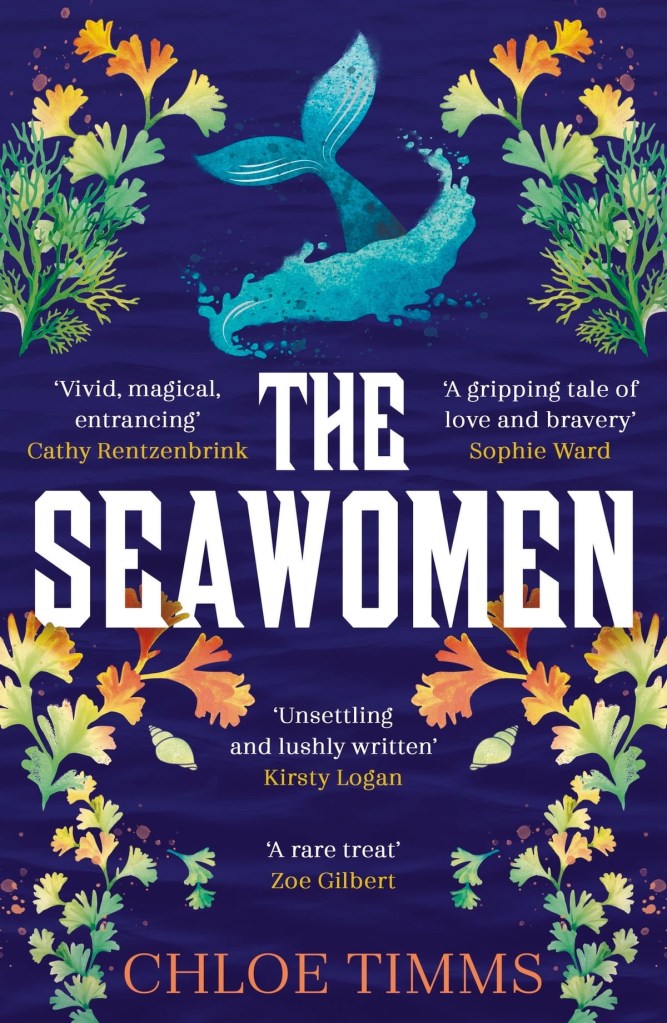
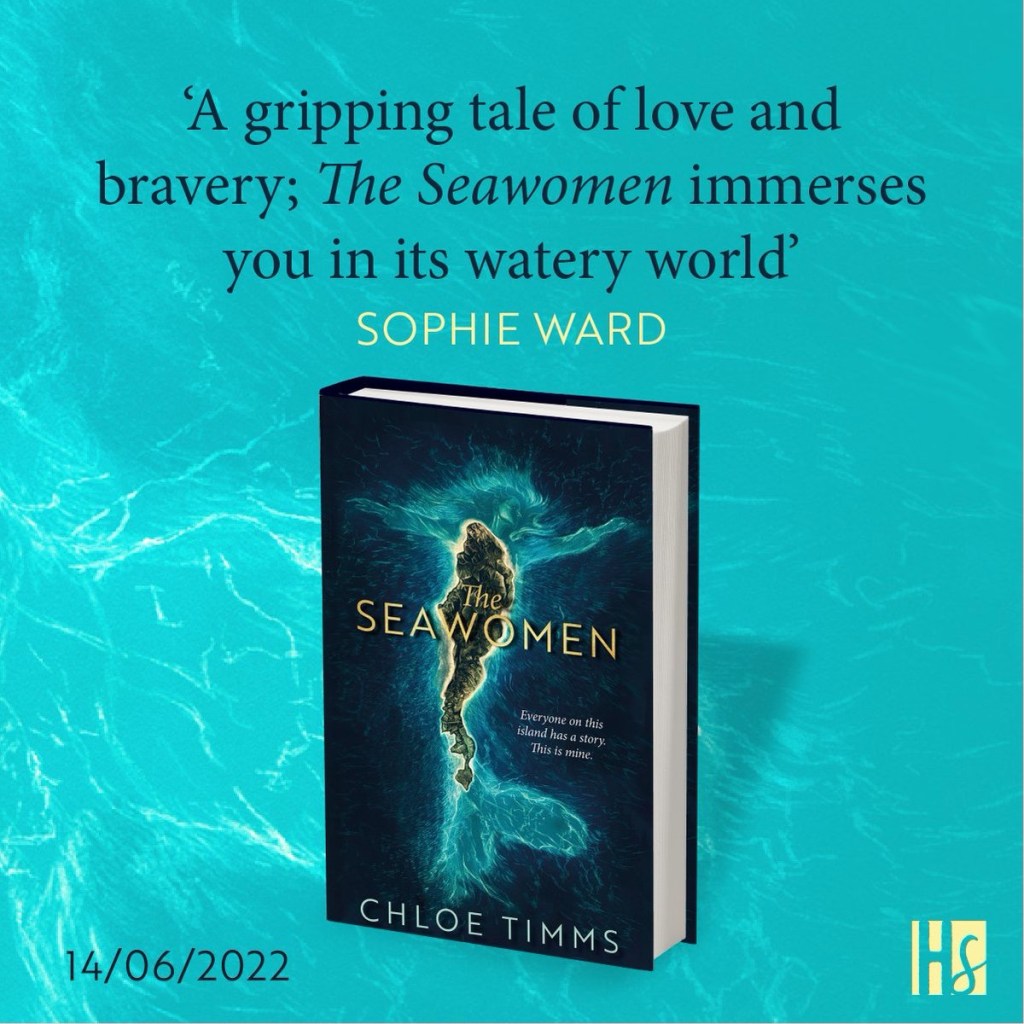
The Seawomen by Chloe Timms

The memory of that day is a part of me now, tough like hardened skin. You never forget your first. You hope and pray it will be the last you ever see. You already know. Deep down. It’ll happen again and you will have to watch. The screaming, the waiting, watching her body tied down, the boat rocking and shunting, capsizing. Drowning. The point where you can see with your own eyes what it means to be a woman.

Wow! This book was so evocative, from the author’s descriptions of the island’s landscape to the way of life followed by it’s inhabitants. It felt oppressive and bleak, but also strangely mystical. On an isolated island with no access to the ‘Otherlands’ beyond, a religious community observes a strict regime policed by male ‘Keepers’ and female ‘Eldermothers’ under the guidance of their leader Father Jessop. There were shades of The Handmaid’s Tale in this community, that polices it’s borders and it’s women. Women must not go near the water, lest they be pulled into the wicked ways of the Seawomen, seemingly a species of Mermaid. The water can breed rebellion in the women and cause bad luck for the islanders. Any woman could be singled out by the Eldermothers, so they must learn to keep their heads down and stay away from the water. Any bad luck – crop failure, poor fishing quotas, storms, pregnancy loss – all can be blamed on the community’s disobedient or disloyal women, influenced by the water. Each girl will have their husband picked out for them and once married, the Eldermothers will assign her a year to become a mother. If the woman doesn’t conceive she is considered to be cursed and is put through the ordeal of ‘untethering’ – a ceremonial drowning where she is tethered to the bottom of a boat. Esta is a young girl who lives with her super religious grandmother, but often asks questions about the mum she has never known. Her grandmother insists she sees a darkness in Esta and is constantly praying and fasting so that Esta doesn’t go the same way as her mother. The sea does call to Esta and she goes to the beach with her terrified friend Mull, to feel the water. There they see something in the waves, something semi-human, not a seawoman, but a boy. Will Esta submit to what her community has planned for her or will she continue to commune with the water?

The book opens with a description of an untethering ceremony, throwing us directly into the brutality of the Keepers and the terror of the drowning woman. It’s a visceral opening and cleverly leaves the reader very aware of the fate our heroine could face. I felt this really added to the atmosphere of the book, raising the tension and our trepidation for this bold and intelligent young woman. We don’t want to see her life mapped out for her with all the restrictions it implies, but we equally don’t want to see her become the next victim of this barbaric, patriarchal society. I also felt strangely unmoored by the setting. I saw in my mind’s eye, a rugged and weather beaten Scottish isle, miles from it’s neighbours, yet I couldn’t pinpoint it’s place in history. The clothing and the attitudes are strangely old-fashioned. The religion is very puritan in tone: a personal relationship with God is encouraged, along with modesty, industry, male domination and of course obedience. Having been brought up in an evangelical church I can honestly say these attitudes and expectations, especially the pressure on young women, is still alive and well in those types of communities. So we could be in the 19th Century or it could be yesterday. Father Jessop’s preaching is that that Otherlands are toxic, their land contaminated and their ability to produce wholesome food curtailed by their inability to listen to their God. This gave me the sense of a dystopian future, where perhaps global warming has decimated most of the planet and only these remote outposts survive. Adding to this sense of disorientation are the islander’s names, more like surnames than forenames the men have names like Morley or Ingram whereas the women have names like Seren and Mull. I felt genuinely uneasy about the island and felt something evil lurked under the piety and the fatherly control, something far uglier, that a rebel like Esta might awaken.

Esta’s questing mind is what drives the story forward. There are too many secrets in her background. She knows that the burn scarring on one side of her face happened when she was a baby and the house burned down killing her mother and whoever else was inside. Only Esta survived and her grandmother’s negativity surrounding her only daughter is excessive and this doesn’t allow Esta to ask questions or hear about a different side to her mother. She knows that there’s more to her history than she’s been told. Another conundrum is her grandmother’s cousin Barrett, a fisherman who lives by the harbour, as close to the water as he could be. He lives alone after the death of his wife and is possibly the only islander to have come across a Seawoman up close and was injured in the process. However, he doesn’t talk about his wife or where he went in the sea after her death. There are too many questions for a girl who’s already unsure whether she believes in the dark myths of the Seawomen, or the darkness she is potentially harbouring at her centre. Despite her upbringing there is a part of Esta that does question, that challenges and most importantly can accept that those in authority might be wrong. It’s a self belief and confidence that will stand her in good stead for what’s to come.

I had so many suspicions and theories of my own as the story unfolded, not just about Esta’s past, but about the patriarchal society itself. The last third of the book really did pick up the pace and we see the iron will of Father Jessop and the cruelty he is prepared to inflict in order to stay in control. I was so deeply pulled in by Esta’s will and her instinct to get away, that I felt anxious. I wanted her to have something in life that most of us take for granted, another person who truly cares for her and loves her. This feeling intensified as she is promised in marriage and goes to live with her husband’s family; a family who have a very low opinion of her and a husband who loves someone else. The way the author opens up the truth of the island is by using one of the older women who has some of the answers and also shows Esta that there are others who think the way she does, they just fly under the radar so they remain safe. To Esta this is unthinkable, to know the truth but continue to live under the false tyranny imposed on them feels cowardly to her. What will happen when the Esta’s story reaches its conclusion, when she might face the very ceremony she feared so much at the beginning? Will these free thinking individuals stand up for her? Even more important to me, was whether or not Esta reaches the Otherlands and the freedom she longs for, or whether she is fated to be forever one with the sea.

Published 14th June 2022 by Hodder Studio

Meet The Author

Chloe Timms is a writer from the Kent coast. After a career in teaching, Chloe studied for an MA in Creative Writing at the University of Kent and won a scholarship for the Faber Academy where she completed their six-month novel writing course. Chloe is passionate about disability rights, having been diagnosed with the condition Spinal Muscular Atrophy at 18 months old, and has campaigned on a number of crucial issues. The Seawomen is her first novel.