Posted in Publisher Proof

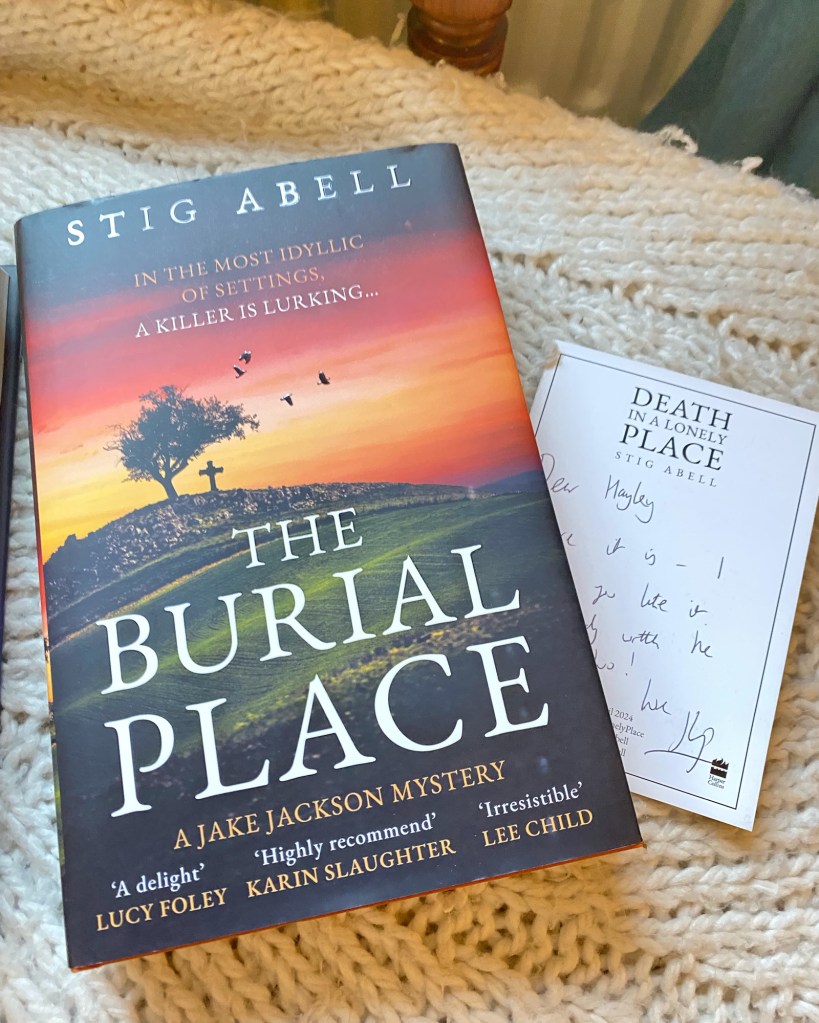
The Burial Place by Stig Abell

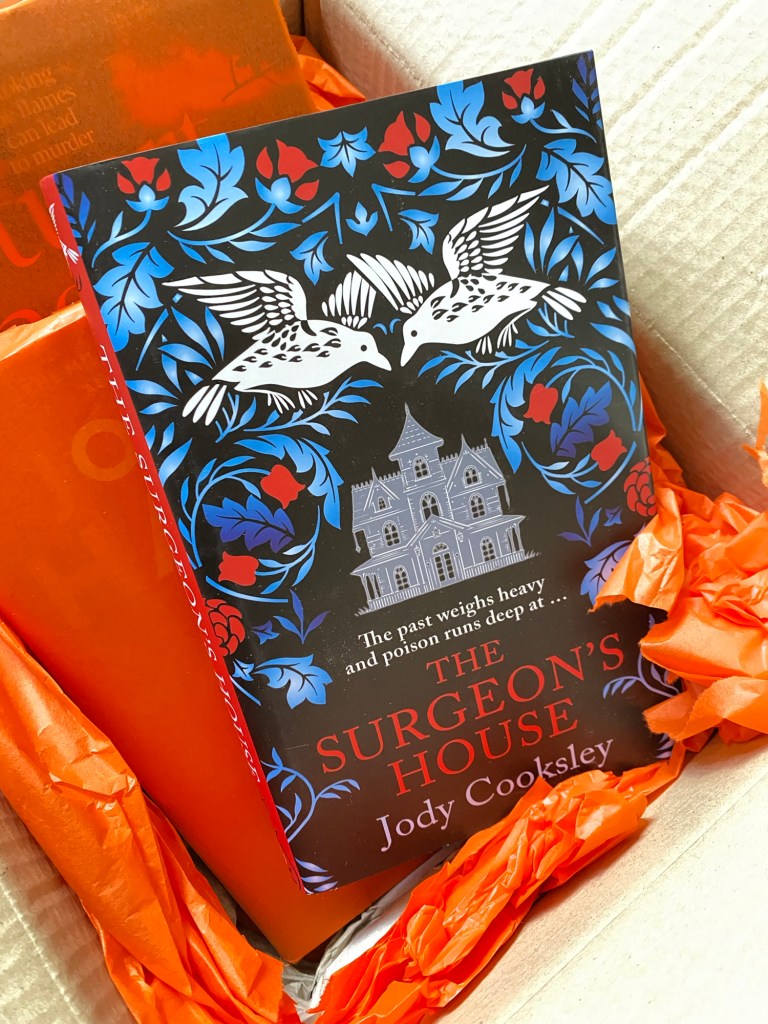
I was so lucky to be sent a copy of this new book in the Jake Jackson series, based on a conversation about my love of Martha – an abrupt but super intelligent analyst and crime writer. I love a no nonsense woman and Martha is one of the best bits of this series. After Jake and his ‘team’ tangled with an international criminal gang in the last book, this is more of a home grown mystery but just as dangerous. There has been an archaeological dig close to Little Sky and a recent hoard of treasure found close by. The ownership of this treasure is in dispute because it’s unclear who owns the land it was found in. Meanwhile, work carries on for the archaeologists, academics and local enthusiasts who have been working on the site, but when a body is found it must shut down. It’s hard for new DCI McAllister to understand the motive and being new to the area he enlists Jake’s help, both for his investigative skills and his local knowledge. The community are aware that several nuisance letters have been sent to the dig office and various people who’ve worked on the site. They’re a strange mix of threats, Bible verses and ancient prophecies signed off by Wulfnoth – an ancient Briton purportedly from the area. The writer promises a terrible end for the dig and whoever benefits from the treasure found. Can Jake find the killer before anyone else is hurt? 
Again it’s mainly the brilliant characters that attract me in this novel. Although it’s also interesting to see Jake working with his team, I noticed that Livia is fully committed this time and has definitely earned a chair at the table with Jake, Martha and Aletheia. They are definitely growing closer, since the finale of the last case ended with Livia driving through the wall of her own front room to save their lives. She and her daughter have relocated to Little Sky while the house is being repaired. I must admit I didn’t fully take on board all the dig characters, but the dig itself and the history behind it was really interesting. I’ve often wondered how digs are run and they’re every bit as complex as I thought, with a real mix of motivations and different pressures. Some people have their jobs and reputations on the line, while others seem to have more personal reasons for taking part. What’s difficult for Jake to understand is the gap between letters written when the first dig started and those that came when the second dig site and treasure were discovered. It’s as if Wulfnoth comes out of retirement for some reason, possibly the treasure or could it be more complex than that?

One of the other interesting aspects of the story is the importance of belonging and the sacredness of land. The fact that the burial place of the title holds both ancient and recent burials shows an interesting continuation of the land’s purpose. Jake hears one of the academics talking about different layers or strata of soil, but it all looks like mud to him. The same can be said of the ancient remains, having newly buried bodies on top, as if years of history is mimicking the layers of soil. We live upon years and years of history, something I think about regularly having never moved far away from the River Trent. I have ancestors who are Dutch and arrived in the area with engineer Vermuyden in the 14th Century, designing and creating a system of drainage that would create much of Lincolnshire’s farmland. The fact that my father has spent more than thirty years of his life working as a land drainage engineer, without knowing this history, feels like an echo but also a sense of belonging to that particular land. If I’m ever feeling a bit lost I go the river, take off my shoes and stand barefoot on the bank. Then I know I’m home and on the bank of the same river where I took my first steps. Jake talks about how human spirituality is linked to water, from sacred springs to floating lanterns and wishing wells. Humans have cast their prayers and wishes on water for generations. Livia brings up belonging in one of their case discussions. She doesn’t understand how anyone could feel so connected to ‘patches of ground’. Aletheia points out that Livia has a rare ability to belong, to fit exactly where she is. Her own family roots are in Ghana, but points out that she is now where she is because her ancestors were uprooted. People who are removed or separated from land that belonged to their ancestors for generations can struggle to belong. It’s Livia’s ability to belong, as another woman of colour that she’s really commenting on, because Aletheia does understand that if someone is cheated out of their birthright it can become an obsession. 

Across the book, new relationships are being built and I love that, in what could have been a very lonely place, Jake’s has a healthy support system around him. I did worry a little for Martha though, even though the author writes her with great affection I did feel her ‘aloneness’ in this novel, something I’m describing carefully because there’s a difference between alone and lonely. I feel he writes about her disability with great understanding. Martha lost both her legs in a shoot out when working as a detective and he describes her as suffering constant pain. I’ve suffered chronic pain for many years, particularly nerve pain so I know how strange and maddening it can be. I have had referred pain, very similar to phantom limb pain, where the site of pain bears no relation to the actual problem. Without my medication I have constant burning sensation outside my body – for those of you who are a certain age I often describe this as my ‘Ready Brek’ feeling. The author refers to Martha’ ability to function on drugs that are prescription and those that aren’t. Her skill is a sad one, known to most pain patients, where she copes with a certain level of pain and can still function but there are also days where functioning is impossible. There’s a real sense of sadness that while she can numb the pain it is ever present. I found this portrayal so authentic and possibly researched through lived experience. 

Jake is already an introspective man but he has a lot to think about in this book. He and Livia have decided to start a family together, much to Diana’s disgust. It almost seems like fate when his ex-wife Faye needs to see him. He’s just starting to have concerns about infertility, because he and Faye split up after a traumatic time trying to have a family. He’s worried that it’s taking a while for him and Livia. What if he’s the problem? It’s immediately obvious when they meet that Faye is pregnant and they have a lovely heart to heart in the park. It’s clear that Faye is in a good place and Jake is so happy for her, but nagging doubts are creeping in. If Faye can get pregnant without him, what does it mean for him and Livia’s chances? I still find many male detectives and investigators who don’t have this complex inner life and I love that Jake does. He might seem like a moody loner at times, someone who keeps his feelings hidden even from himself, but he’s just a deep thinker and so empathic. Even when he finds a body, his response is different. He is appalled by the body of one murdered woman who has been left exposed and was potentially murdered during sex. He feels for her dignity and has an urge to cover her up, even though he knows he can’t and must preserve the crime scene as is. It’s as if he takes on the shame this woman might have felt at being left exposed and perhaps taken for a fool by her lover. He has such a strongly developed feminine side and this helps enormously when dealing with Diana. She is clashing with Livia about potentially having a new baby around. Jake is the one who manages to calm her down and show her the positives. I’m so glad Jake has Little Sky and all it offers to balance out these tumultuous feelings. I think his Uncle Arthur knew him very well. 

Posted in Netgalley

The Princess by Wendy Holden 

It was all she ever wanted. Until her dreams came true…

The moving new novel about the young Diana.

Diana believes in love. Growing up amid the fallout of her parents’ bitter divorce, she takes refuge in romantic novels. She dreams of being rescued by a handsome prince.

Prince Charles loves his freedom. He’s in no rush to wed, but his family have other ideas. Charles must marry for the future of the Crown.

The right girl needs to be found, and fast. She must be young, aristocratic and free of past liaisons.

The teenage Diana Spencer is just about the only candidate. Her desperation to be loved dovetails with royal desperation for a bride.

But the route to the altar is full of hidden obstacles and people with their own agendas.

When she steps from the golden carriage on her wedding day, has Diana’s romantic dream come true?

Or is it already over?

Princess Diana hit the headlines when I was nine years old, perfect timing for me to buy into the fairytale and fall in love with her. I had my hair cut into Diana’s short style and I had one of her jumpers, well an Asda version, covered in sheep with one little black sheep in the bottom corner. When we look back at her life in retrospect, it could be that she was trying to tell us something. This book focuses on Diana’s earlier years, from her schooldays until that fairytale of a wedding which seemed to cement her into the consciousness of everyone, across the world. It was interesting to read more about her single life before dating Charles, a period that struck me as interesting when it was dramatised in The Crown. She had a busy, fun lifestyle sharing a flat with three friends and working in a nursery. Then as soon as the engagement was announced she was taken into apartments at Buckingham Palace, totally closed off from outside, but also from other members of the royal family. It was quiet, almost like a church, with no one reachable by phone and Charles on a tour abroad. His only thought in terms of company was to introduce her to Camilla Parker Bowles. 

The book did well when describing the dysfunctional way the Royals live. It’s an almost surreal existence with very specific rules to live by. When I read how much time each member spends alone I started to understand why they all have dogs. They don’t eat together daily, non-royals don’t come to the palace unless invited and each royal has their own quirks. For a 18-19 year old wandering round empty rooms and not being able to talk to friends must have been totally isolating. It was for her security of course, but it also meant she could be trained to fit the role she would play. She must have been so lonely. I’ve clearly read a lot of the same books as the author, because I knew about King Charles’s very odd boiled egg habits and the Queen Mother’s exploits in her home at Clarence House, but there were some things that were new to me. 

It was clear that Diana was a young girl full of life and romantic ideas about men and marriage. Wendy Holden tells the story through the eyes of Diana, her best friend at boarding school Sandy and Stephen Barry who was the Prince of Wales’s valet. The girls read paperback romances, the type of story written by Diana’s relative Barbara Cartland. When the girls imagine love at the age of 13, they imagine it being: ‘like a particularly delicious bath, deep and warm, with lots of bubbles.’ It conjures up a sense of comfort and pampering that I do actually feel sometimes with my other half, but a man who doesn’t know what love means isn’t equipped to love like that. The only people who pampered him were his servants, how can you provide what you’ve never had? I think Holden has captured the essence of a girl in adolescence, dreaming what her life might be. She’s a lively, bubbly girl who loves music and the company of others. She has a shy charm that’s so endearing, but her parents divorce has left a mark and I wondered whether it instilled in her a determination to get it right, which left me feeling a little sad for her.  

The second section of the novel definitely has a a melancholy feel, that shows us how well the author has brought the fun, young Diana to life. This is such a contrast. It also makes us realise how young she was to get married anyway, never mind becoming a future Queen of England. It is only six years since that journey with Sandy to boarding school. So, when she becomes engaged to the then Prince of Wales she was probably still expecting the comfort and care of a warm bath. She must have been disappointed at this moment. I always feel that Diana married the people on that day, rather than Charles. When she has some late doubts her sister Sarah warns her that her face is already on the tea towels. It’s too late. The pressure must have been immense. She has spent months hounded by the press and the famous moment where photographers captured her with a see through skirt is just one incidence of naivety on her part. She’s been getting thinner and her wedding dress needed taking in constantly. This isn’t the fairy tale love she’s dreamed about, more the matchmaking of two grandmothers living in the past and desperately trying to break off Charles’s adulterous relationship with Camilla.

I think the author attempted something very difficult here, to create a unique view of a story that’s a modern parable. Everyone knows a version of what happened. So, to create something that captures the voice of the most well known woman in the world, while bringing something new to her story, is near impossible. I think she partly succeeds. I didn’t learn anything new, but I did feel that I was listening to Diana in this story. It doesn’t have that compelling quality, because we already know about the divorce in 1996 and her death only a year later. I felt there was a bit of fire in this girl, despite her naivety. The rude awakening that she was simply a brood mare fuelled a fightback – the Andrew Morton book, the interview with Bashir and that last poignant summer are her pushing back against a system she felt used and abandoned by. A desperate need to be heard. I thought it was interesting to know she spent time with Princess Margaret, another young, royal woman who learned early on that her happiness came very low on the list of priorities. The royals never tried to be her family, missing that warmth and heart Diana was known for. I think this warmth, plus her fight and desire to buck the system is perhaps inherited by her son Harry. This was a well-researched book that really captured the spirit and personality of the most famous woman in the world. 

Out Now from Mountain Leopard Press

Posted in Random Things Tours

My Sister’s Killer by Mari Hannah

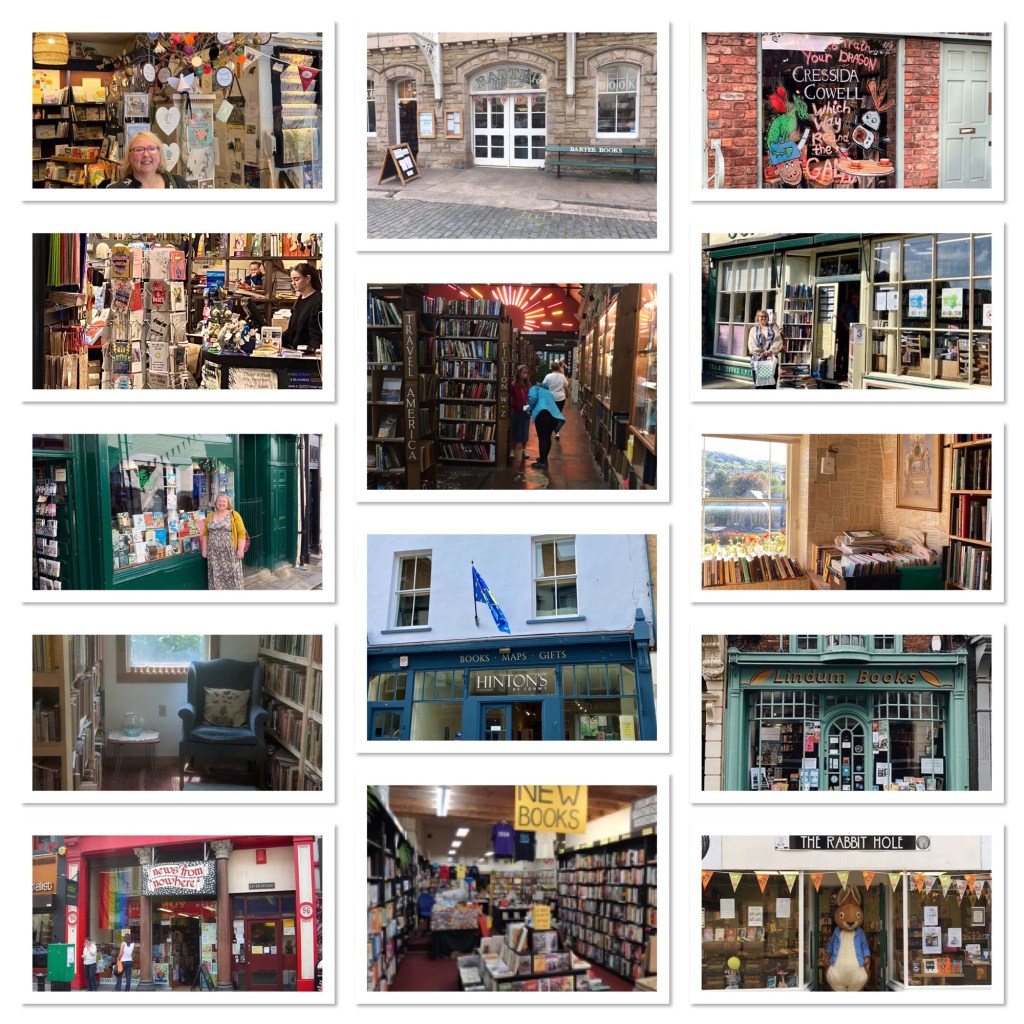
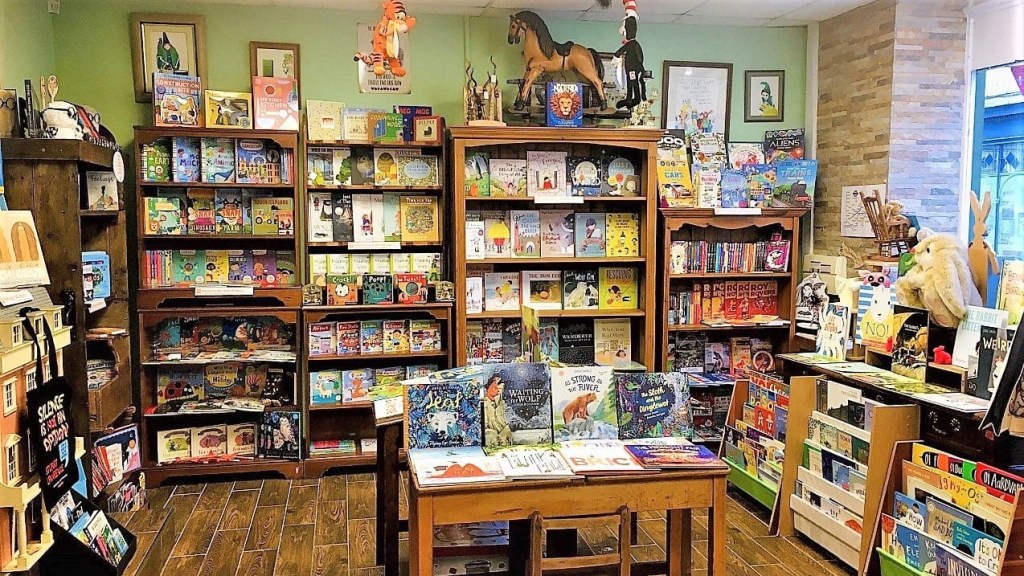
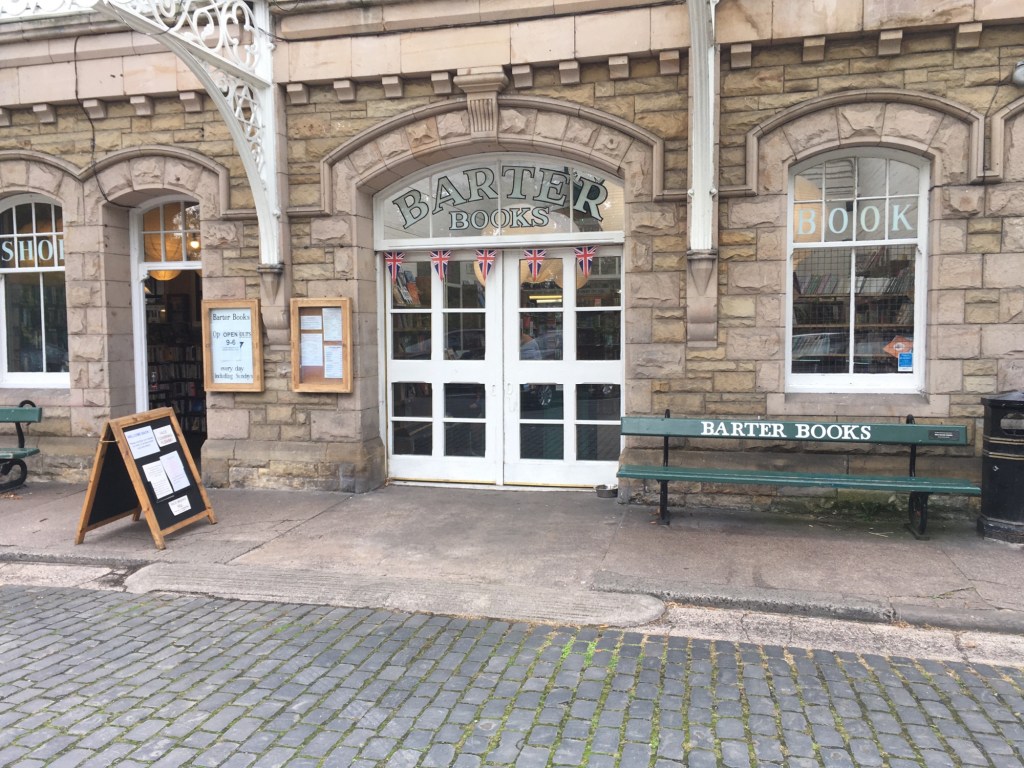
I’ve slowly been collecting the Stone and Oliver series over the past year, after one took my fancy in Northumberland’s famous Barter Books in Alnwick. Since then I’ve grabbed the paperbacks wherever I found one so I could read them all in order. Then this blog tour offer came along so I jumped at reading one completely out of sequence. Now I can’t wait for the rest of the story! 

Frankie Oliver and David Stone have been working together in the same MIT for the a few years, in their Newcastle headquarters jokingly referred to as ‘Middle-Earth’. However, the novel starts in a much darker place, many years before, when another detective is called to a body found on some waste ground. Horrified, he drops to the floor unable to contain his devastation. The body on the ground is his daughter. It’s such a powerful and emotive opening, leaving us in no doubt that this is a defining event for the loved ones of this girl. An absence that they still feel every day. For her dad it’s complicated by the fact he’s a murder detective and he missed Joanna’s last call. It’s arguable that this case is the very reason that her sister, Frankie Oliver, became a detective. She and David are an incredible team at work and have the potential to take their relationship further. It’s clear there’s been some ‘will they won’t they’ over the course of the previous novels. Now Frankie is taking a break from the team in Newcastle, a promotion to DI means she must fill a post back in uniform for a while, based out of the most northerly police station in the county, Berwick-Upon-Tweed. Frankie accepts and the team organise a leaving ‘do’. It’s there that Dave overhears an argument that immediately propels him back to the murder of Frankie’s sister. What’s said between the two men outside the venue sparks an idea in Dave’s mind. He has had an idea of how to investigate the cold case, but knows that he doesn’t want to bring more pain to the family. Hopefully Frankie’s secondment to Berwick means they won’t have to. 

Meanwhile Frankie’s first job is an RTC on the A1 and in the total chaos she finds a little boy handcuffed in the back of a van. The driver and passenger are dead and the van is a write off so Frankie can’t believe this little boy has survived. As she rescues him, an onlooker tells her that a man escaped out of the back doors straight after the crash. This opens up a trafficking case that might take her straight back out of uniform again. The boy, Amir, takes to Frankie. Possibly the first person in a long time who has made him feel safe. She shows a real maternal side with him and her sister-in-law Andrea is sure that Frankie’s sister Rae will feel the same. Andrea and Rae have been looking at fostering, much to Frankie’s surprise. Could they be the right fit for this terrified boy? Dave has been missing Frankie’s presence but he knows that solving the case of what happened to Joanne matters to her more than anything. He has just one officer -Indira- and a limited time scale to investigate. Frankie is the only person he wants to talks to but she can’t know until and if, they make an arrest. Especially since he suspects the murderer may have been closer than they ever imagined.

This really is a nail-biting story, written in very short chapters that are easy to devour very quickly. So many have a cliff-hanger ending too. The setting is beautifully captured in it’s contradictions: the modernity and buzz of Newcastle with the contrast of the wild countryside and beautifully rugged coastline. There are differences in policing too as we can see from Frankie’s time on the Scottish Borders. I really fell in love with Frankie’s family, because they are so loving and nurturing with each other. I could see how taking in Amir could be the best thing for him, but it could also put the tightly knit Olivers under stress or even into danger. I kept thinking about how distraught the family would be if something happened to him or to those like Andrea and Frankie who are trying to put the child trafficking gang out of business. The author cleverly uses these family dynamics, as well as Dave and Indira’s gentle and nuanced interviewing on the murder case, as a contrast or perhaps a breather between Frankie’s more nail-biting action sequences. The only drawback was that I’d be so desperate to know what happened next for Frankie that I might not take in all the detail of the quieter chapter in between. Of course that says more about my lack of patience than the book. As for the relationship between Frankie and Dave, I was very much invested despite not knowing everything that’s gone before. I can see both their perspectives and there are so many reasons not to take a risk, but if we never take a risk we might never know what might have been. It reminds me of the inspirational quote about fear of falling; ‘but imagine, what if you fly?’ 

Meet the Author

Multi-award winning Mari Hannah is the author of the Stone & Oliver crime series, the Ryan & O’Neil series and the DCI Kate Daniels series.
In July 2010, she won a Northern Writers’ Award for Settled Blood. In 2013, she won the Polari First Book Prize for her debut, The Murder Wall. She was awarded the CWA Dagger in the Library 2017 as the author of the most enjoyed collection of work in libraries. In 2019, she was awarded DIVA Wordsmith of the Year. In that same year, Mari was Programming Chair of the Theakston Old Peculier Crime Festival. In 2020, Mari was named as DIVA ‘Wordsmith of the Year’ and won Capital Crime’s ‘Crime Book of the Year’ award.

She lives in Northumberland with her partner, an former murder detective.

To find her or see where she’s appearing, visit her events page at: marihannah.com or follow her on Twitter @mariwriter.

Posted in Monthly Wrap Up

My Best Reads February 2025

Dear Book Lovers,

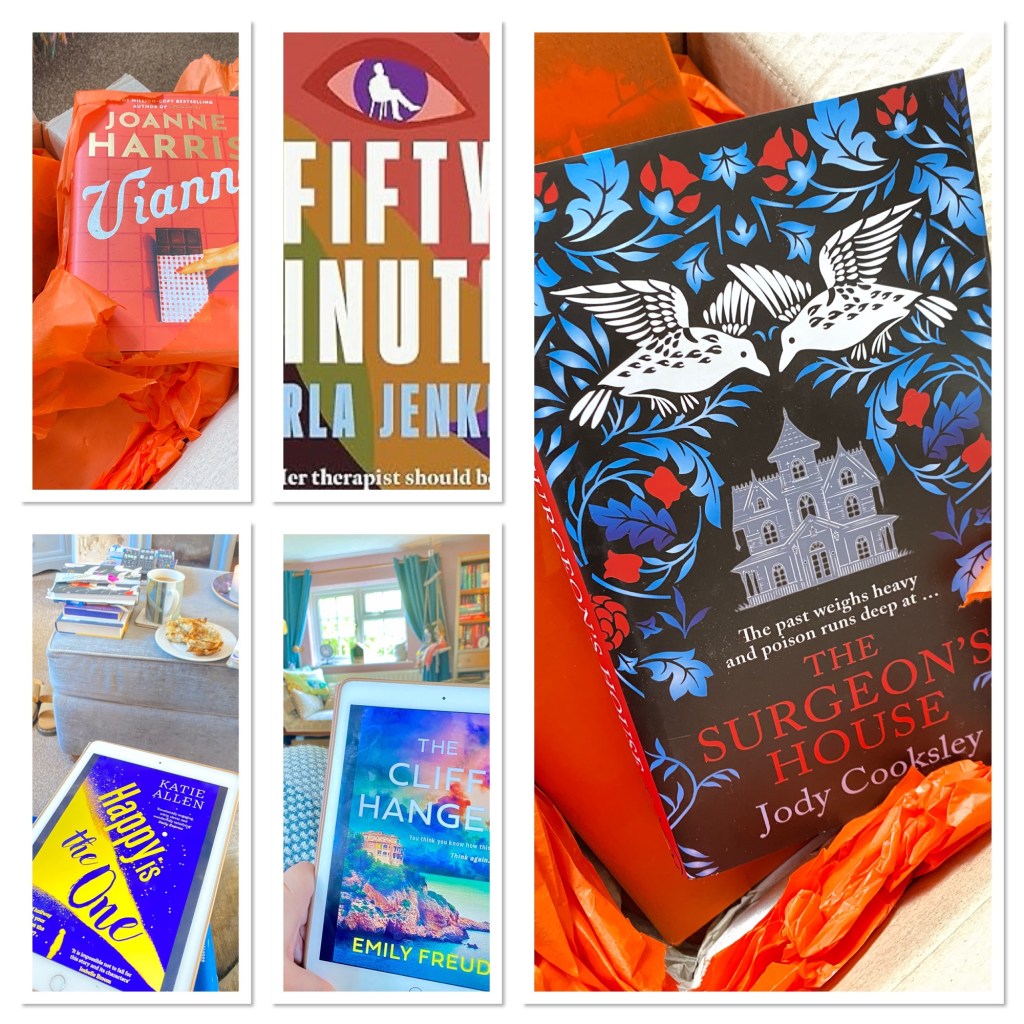
How did the month of love treat you? In typical form I’ve not been reading romance novels, but instead I’ve been reading about witches, murderous ghosts, grooming psychopaths, Icelandic spirits and a time detective. It’s been a very much needed month of distraction and escape. I’ve moved from London to Iceland, Manchester to Alaska, Victorian London and the island of Shakespeare’s The Tempest. All are a little scary in places, but I devoured all of them. So my health issues continue and I’ve been having tests so it’s great to have had some lovely proof copies to take along with me and enjoy in the waiting room.

 Fiona Smith is new on the street and is trying to get to know her neighbours. Ethan and Emma Dove seem like a lovely couple, in fact they’re the ideal family. Their kids Dylan and Rose are targeted by the two tearaways who live across the road who circle the other teenagers on their scrambler bikes, as their German Shepherds circle their terrified cockapoo Lola. Fiona intervenes and when later one of the boys has a terrible accident their parents are convinced someone caused the tyre blowout that resulted in a head injury. It couldn’t have been Fiona could it? The boy’s parents can’t find a trace of Fiona online so no red flags. However, the elderly lady called Iris who lives on the corner, she’s sure she’s seen Fiona before but can’t quite put her finger on where. When Fiona offers to look after Ethan and Emma’s daughter Rosie for the summer she has definitely become a feature in their lives. Their son Dylan is unsure. He definitely doesn’t need a babysitter, but it isn’t just that. Fiona unnerves him. He’s noticed that when no one is looking her expression becomes neutral, like a robot. Rose is enraptured though and they begin to visit Fiona’s favourite places and play chess together when it’s raining. All the time Fiona is monitoring Rose. Has she seen a glimmer of herself in this ordinary seeming teenage girl? As Fiona starts to test out Rose’s limits, Ethan and Emma are oblivious to what’s happening to their daughter. There are some heart-stopping moments as the novel comes towards the final showdown and I was absolutely gripped. In fact if you want a thriller thats hard to put down, go for any of Mark Edwards’s novels. You wont’s be disappointed.

Our story starts in 1768 on a sugar cane plantation in Jamaica, where a slave rebellion has been brewing. The signal will be sent to all the slaves by drum and Daniel has heard their rhythm. He needs to get to the house where his sweetheart Adanna works for the mistress. When Daniel realises the house is already ablaze he leaves with his little sister Pearl, hoping to find a way to get off the island. His story then jumps to 1782 and the aftermath of the War of Independence where free slaves who fought for the British were promised a new life in England. Daniel was one such soldier under Major Edward Fitzallen, whose life he saved. Edward and his wife Elizabeth have taken Daniel and Pearl under their wing, but when Edward is wounded he knows he wants to ensure that Daniel and Pearl have a future in England and calls witnesses to his signature on a new will and testament. It hands all his worldly goods over to Daniel, telling him to call on his brother James to inform him of Edward’s demise and Daniel’s new position as his heir. Daniel naively expects the Fitzallen brothers to be equally honourable and he underestimates James who drugs Daniel, then throws the new will and all proof of Daniel’s claim and rank into the fire. Now Pearl and Daniel are abandoned in London with nothing. This is such meticulously researched historical fiction, where you’ll become utterly immersed and enthralled by Daniel and Pearl’s struggle to survive.

I couldn’t wait to read this, after reading the third book in this series earlier in the year. So I snagged it on NetGalley and read it immediately full of anticipation. I wasn’t disappointed. I love Tanzy and her adventures, usually she’s confined to the UK but this time she’s a little further afield. When she meets charming Icelandic giant Einar in a bar I did wonder whether vampires were about to debut in the series. His ability to ‘glamour’ Tanz seemed almost supernatural. Soon they’re sharing champagne and a bit of naked dancing too. When he invites her to his holiday cabin in Iceland to get some writing done, she decides to be impetuous and throw caution to the wind. This impulsive decision takes her to an isolated cabin with log burners, cosy decor and of course the odd spectre or two, After their first night together Tanz wakes up alone, without even a note and no plans for Einar’s return. She’s annoyed but not heartbroken. At the least she has a few days holiday in a country cabin for free and time to process her last case. Maybe she could start working on ideas for her own play? However, Iceland has its ghosts just as much as London. Did Tanz really think they would leave her alone? She will only succeed in this case if she relies on the help of others, neighbour Birta and taxi driver, Thor.
She also has a lot of self-reflection to do. Why won’t she let good men love her? It works well with the unfolding of the mystery around the cabin and how the choices we make because of desire are often destructive and life-changing. It seems we can be left with so many regrets that they follow us into the afterlife. I enjoyed some of the final revelations, particularly around the character of Birta. This is another solid addition to the Accidental Medium series and I felt like I’d spent a few hours with an old friend. I have a list of literary characters I’d love to have for dinner and Tanzy is definitely there at the table, possibly next to Mr Tumnus. Although she’d have to promise not to flirt with him.

This was a very spooky second visit to the unusual police department, housed in Manchester’s Tib Street Ballroom. We follow DI Andy Joyce, his team and their consultant Peggy who has some otherworldly skills and expertise. We’re at the Palace Theatre, where the cast are struggling to rehearse their play thanks to a dark, swirling and angry spirit. For some reason it wants them dead or the play cancelled at the very least. Lady Bancroft’s Rose has been performed only three times since 1922, but there has been a mysterious death each time. Particularly affected is Lavinia, a blonde actress who has taken over the play’s main role, since the original actress is now too traumatised to continue. Lavinia seems to be the focus of most of the spooky activity and she’s quite happy to cast Andy in the role of her rescuer – cue a few eye rolls from Peggy. More disturbing than the theatre is Andy’s home, the same cottage he grew up in with mum Agatha and brother Rob. While he knows Rob is there, he’s never been a difficult or angry ghost. Now strange things have started happening that make him think the ghost is angry, leading his guilt over Rob’s death to go into overdrive. With Andy and Peggy at odds with each other, will he ever found out what’s going on? I thought the author managed to combine all the elements of her story well, although it wasn’t the theatre case that caught my attention most. It was the terrifying scenes at Andy’s house and the ‘will they, won’t they” of him and Peggy. I love the humour laced through the action, especially the North West tone. I love that female characters are in the thick of the action and Marnie is honestly the ghost that keeps on giving. Part three of this fabulous series is coming soon.

I was utterly mesmerised by this unusual grown-up fairy tale. Having read the author’s work before I was expecting a certain strangeness and this story definitely delivered. It’s hard to write about without revealing anything and you need to go into this book without spoilers. The story is told through the eyes of Birdie and her little girl Emmaleen. Birdie is a young, single mum. She’s living in a cabin out behind the bar where she works for Della. Birdie is just getting by. She has a wild spirit and although she loves Emmaleen, she’s not the most consistent parent. We meet her on a beautiful morning where she has woken up from the night before relatively unscathed. Yes, she’s a bit hungover and she knows Della is going to have words for her when she goes into work. For now though, the woods and creek are calling her, so she takes her fishing rod and leaving Emmaleen asleep and alone she walks through the trees and down to the water. When she gets back to the cabin, Emmaleen is gone. It’s a man called Arthur who eventually emerges from the woods with Birdie’s daughter on his shoulders and she’s never been more relieved. She knows Della will have something to say about this and she does move her onto the day shift, as a comment on her partying and parenting lifestyle. She has to bring Emmaleen into the lodge with her, but she sits colouring and doesn’t pester while she’s trying to work. Arthur comes in most mornings. She’s fascinated by this strange, wild man. Birdie thinks he smells of wild places, mossy and like earth. When he asks Birdie if she and Emmaleen would like to make a home out there in the mountains, there is only one answer. Yes. But there’s a hidden animal pelt under the earth near the cabin and caribou bones under the bed. How long before Birdie and Emaleen learn the terrifying truth about Arthur? I had a real maternal fondness for this young woman and her acceptance of this taciturn young man. Love comes in so many different forms and even though I could feel something looming on the horizon for this new little family I was hoping against hope for the transformative power of love. 

I was entranced by this beautifully lyrical tale of the unseen sorcerous of Shakespeare’s The Tempest. This is my favourite Shakespeare play because I love its atmosphere and the use of musical sounds to conjure up this enchanted island, ruled by the magician Prospero. Sycorax isn’t present in the play, but is mentioned as a sorcerous and mother of Caliban, who is depicted as a monster and a slave to Prospero. The author wants to give Sycorax a voice, one that she doesn’t have in the play, to tell us in her own words what it was like to be treated with suspicion and cruelty. Sycorax’s story is an emotional one as she wrestles with her identity, her illness, her powers and the loneliness of being an outcast. Each time her powers grow the more isolated she becomes.The author is clearly so passionate about this book and giving her central character a voice and I think she achieves it beautifully. 

The story unfolds slowly while the author immerses us in the world Sycorax inhabits, at first with her parents. I really felt like I was in the presence of a magical being and it was the sounds that really grabbed me – the tinkle of sea shells on her mother’s anklets, the sounds of the sea, the lazy buzz of the honey bees they keep. By creating this mindful and harmonious background the author makes sure that when something does interrupt, it tears through this idyll and comes as a shock. These shocks are usually driven by men. There’s a constant sense of give and take between Sycorax and her universe. Strangely the more she’s affected by illness, the more powerful she becomes. The power comes in the shape of wisdom and resilience, things that come with time and getting to know how your illness affects you. By working with it, Sycorax knows what her body can do and how much activities will take out of her. Beautiful young women with unusual powers rarely go unnoticed and unexploited. Nydia has written a beautiful piece of work that takes us full circle to The Tempest. She’s managed to bring 21st Century injustices to the forefront without losing any of the magical beauty of the original play.

That’s all for now, but here’s a quickly glimpse of my March TBR.

Posted in Squad Pod

After the Fire by Charlotte Rixon 

This is the story of girl meets boy.

And then everything goes wrong . . .

Ever since they first met at university, Beth and Nick have circled in and out of one another’s lives: supporting each other through grief, marriage, divorce, career crises and family dramas.

Fourteen years ago, when they were on the cusp of adulthood, they both survived a devastating fire that sent their lives in different directions. And they’ve been running ever since: from the pain, from the memories, and most devastatingly of all, from the guilt.

But no matter how hard they try, there’s something else they can’t run from. The inescapable, terrifying truth: they’re in love with each other.

But how can they move forward, when neither of them can stop looking back?

I always say I don’t like romance, then a book like this comes along and I’m all in. Maybe it’s being over 50, but stories of first love grab me in the feels. Especially tragic first love. The thing is we’ve all had the experience of love that’s come at the wrong place or the wrong time, so reading a love story like Beth and Nick’s brings up memories and feelings of nostalgia. Our first love experiences are so intense and when feeling are unrequited or interrupted they can stay with us for the rest of our lives. Beth and Nick have a brilliant first meeting. They’re placed in the same flat at university and Beth walks into the shared bathroom and gets an eyeful! Beth is the last person to join the flat because she’s been ill so relationships have already been established. The other two girls, Rosa and Anna, were best friends before university and Nick is already in a relationship with Anna. Beth senses some chemistry between her and Nick, but she tries hard to ignore it. Nobody wants to be the girl who steals their flatmate’s boyfriend in the first weeks of the first term. When he turns up to watch her in drama club she thinks he must feel the same. 

It’s Nick who takes action. He breaks up with Anna and invites Beth on a late night walk. As they walk there’s just so much anticipation. The author builds to their first kiss with all that yearning and tension around who will make the first move. When they spot the fire in their building it’s already well ablaze and Anna is killed. 

Wracked with survivor’s guilt, Nick leaves university. Beth struggles to cope, feeling like Nick has abandoned her. She decides to stay and finish her drama course. Lives move on. Yet feelings for each other and about the tragic start to their time at university, still linger. The author tells the story through both characters and over 15 years as they build careers and relationships. They both think of each other. They try to keep in touch as friends and their paths do meet from time to time, but they’re always held back by the past. They do try to support each other, so when Beth’s long-term relationship breaks down, she finds herself wanting to talk to Nick. I really felt their longing for that first love and their thoughts that maybe it could have worked. Then reality crashes in and those feelings of guilt cloud their hopes. Yet the novel isn’t schmaltzy. There are meaty issues here like domestic violence and mental health, not to mention those trauma related feelings they’ve never really shared with each other.  

If there was ever a book to emphasise the importance of counselling or simply talking to each other, it’s this one. Until Nick and Beth talk through what happened and how it’s affected them since, they will always be haunted by Anna’s death. When trauma is left unresolved people find unhealthy ways to deal with those hidden emotions. Nick has a rescuer personality, developed because he never again wants to feel like he did back then as the cause of Anna’s sadness in her final hours. I love that Beth writes about what happened and her feelings for Nick because at least she’s processing the trauma, because the more we talk about it the less power it has. The tension in the novel comes from wondering if this pair will ever come together at the right time and place. Will they get the chance to put things right? Can they ever find their way back to each other? I was deeply invested and filled with hope for them. The author has written a beautiful love story, but it has impact because it isn’t a fairy tale and these two characters feel absolutely real. At the end I felt like comparisons to One Day, the archetypal friends to lovers classic, are entirely justified. 

Out now in paperback from Aria.

Meet the Author


Charlotte Rixon is the pen name of Charlotte Duckworth, USA Today-bestselling author of suspense fiction published by Quercus. Charlotte studied Classics at Leeds University and went on to gain a PGDip in Screenwriting. She worked for many years as a magazine journalist, and is a graduate of the Faber Academy ‘Writing A Novel’ course. You can find out more about her on her website: charlotterixon.com.

Posted in Netgalley

The Hidden Dead by Tracy Whitwell 

I couldn’t wait to read this, after reading the third book in this series earlier in the year. So I snagged it on NetGalley and read it immediately full of anticipation. I wasn’t disappointed. I love Tanzy and her adventures, usually she’s confined to the UK but this time she’s a little further afield. When she meets charming Icelandic giant Einar in a bar I did wonder whether vampires were about to debut in the series. His ability to ‘glamour’ Tanz seemed almost supernatural. Soon they’re sharing champagne and a bit of naked dancing too. When he invites her to his holiday cabin in Iceland to get some writing done, she decides to be impetuous and throw caution to the wind. This impulsive decision takes her to an isolated cabin with log burners, cosy decor and of course the odd spectre or two, After their first night together Tanz wakes up alone, without even a note and no plans for Einar’s return. She’s annoyed but not heartbroken. At the least she has a few days holiday in a country cabin for free and time to process her last case. Maybe she could start working on ideas for her own play? However, Iceland has its ghosts just as much as London. Did Tanz really think they would leave her alone? 

In a nightmare, Tanz sees a man staring over the edge of a cliff. Is he going to jump? Before she can act a second person appears, a strange man whose eyes seem bottomless and hold universes. She can hear a woman crying outside her cabin and eventually a vision comes of this woman and her empty relationship with a man who doesn’t appear to love her. She follows him to work and finds him in bed with another woman, she screams and Tanz can hear his roaring anger as she wakes. It’s clear there’s a mystery here and she’s going to have to find the crying woman to work out why she needs her help. She doesn’t know if it’s going to be dangerous, especially without her friend Sheila in tow. Yet there are signs of protection: the rowan tree at the front porch; the feeling in the bedroom as if there’s a protection spell around her; the strange man from her dream who seems to be magical. Tanz knows she must help the woman, who becomes increasingly desperate and starts to bang on all the lodge’s windows to make herself heard. Tanz just doesn’t know how to help. When her distant neighbour pays a call there’s an instant connection and Tanzy puts it down to the fact they’re both a bit witchy. Birta has the most amazing cabin a short hike away with a seventies style interior that’s retro and cozy. With their combined knowledge and skills surely they can find what their distressed ghost is looking for? 

I loved the character of Thor who is Einar’s friend but also a cab driver. He helps Tanz escape the cabin for a while. He has such a wholesome feel about him and is the complete gentleman. He listens to Tanzy’s story and doesn’t seem fazed by her experiences, although the knocking at the cabin is a bit unsettling. Tanzy feels very comfortable and safe around him, as he takes her under his wing. He really does take care of her, cooking for her and showing her some of the sights too. He has been friends with Einar for many years and knows how he operates. He wants Tanzy to feel like her time in Iceland hasn’t been wasted and his care of her really makes her examine why she is drawn towards unavailable men rather than those that show her how much they care. She tends to put nice men in the friend zone before anything has had a chance to develop. There’s part of her that’s addicted to the adrenaline that comes with a ‘bad boy’ and she hasn’t realised before that love doesn’t have to come with a side order of drama. Thor also accepts every bit of Tanz, her charisma and attitude but also the spooky and paranormal side of her life too. He doesn’t ridicule or belittle her psychic abilities, showing real interest and a willingness to help as far as he can. He really does take on her quest as his own, but also knows when to step back – when and where it’s her time to shine. He’s not overwhelmed by her and for someone who might be described as too much, there’s safety and security in that. But can safety and security be sexy? 

I’d guessed some of the mystery brought by the distressed woman but thoroughly enjoyed the journey as Tanzy looked for a way of fulfilling her wishes. This takes help from Thor, new friend Birta and the ‘hildunfolk’. All our usual characters are here, including Sheila and Tanzy’s delightful ‘little mam’ whose always there at the end of the phone. She is often more aware of her daughter’s exploits than you’d expect from all the way over in Newcastle. I thought the author delved beautifully into Tanzy’s character and her romantic choices particularly. She has to examine her choices; to follow an unsuitable and unavailable man all the way to Iceland, but to banish a kind, available and warm man to the couch. Why won’t she let good men love her? It works well with the unfolding of the mystery around the cabin and how the choices we make because of desire are often destructive and life-changing. It seems we can be left with so many regrets that they follow us into the afterlife. I enjoyed some of the final revelations, particularly around the character of Birta. This is another solid addition to the Accidental Medium series and I felt like I’d spent a few hours with an old friend. I have a list of literary characters I’d love to have for dinner and Tanzy is definitely there at the table, possibly next to Mr Tumnus. Although she’d have to promise not to flirt with him.

Out on 13th February Pan MacMillan

Meet the Author

Tracy Whitwell was born, brought up and educated in the north-east of England. She wrote plays and short stories

from an early age, then moved to London where she became a busy actress on stage and screen. After having her son, she wound down the acting to concentrate on writing full time. Many projects followed until she finally found the courage to write the first in her Accidental Medium series, a work of fiction based on a whole heap of crazy truth​. Apart from the series, Tracy has written novels in several other genres and also writes mini self-help books as the Sweary Witch.

Tracy is nothing like her lead character Tanz in The Accidental Medium. (This is a lie.)

Posted in Sunday Spotlight

Sunday Spotlight: A Work of Art

Artists are an endless source of material for novelists and have fascinated me for most of my adult reading life. I think we afford artists the right to behave badly, because what they do feels like alchemy. To be able to take mere pen and paint and turn it into something that’s beautiful or utterly new is magical to someone like me who can only just manage to sketch something if I have lots of time and patience. I stick to colouring for my artistic endeavours. If I think about it I’ve been going to art galleries since my teenage years when the chance to see Klimt’s work at Tate Liverpool was too exciting to pass on. I loved ‘The Kiss’ but this exhibit took his work and placed it into the context of the secessionist movement, just one branch of Art Nouveau. I continued to visit exhibits on Art Nouveau, at the Kelvingrove Gallery in Glasgow to see the Glasgow School exhibits, The Met in New York a few times, as well as the Guggenheim there and in Venice. I visited London for many exhibits at the V and A and the Tate including Lucian Freud, a painter I’ve come to appreciate more recently. One of my great loves are the Pre-Raphaelites, since having the chance to study their work at university. We visit my mum’s hometown of Liverpool very frequently and I’m a regular at the Walker Gallery and Lady Lever gallery in Port Sunlight both of which have a great collection of Pre-Raphaelite work. Artists are often unconventional, have complicated love lives and some have a reputation for being hellraisers. Is it any wonder that we love to read about them? I usually jump at the chance and have quite a collection! here are a few of my favourite novels that feature painters.

Mistral’s Daughter by Judith Krantz

I have a very cracked and broken copy of this novel and I’ve read it several times. I blame it for starting my fascination with painters, I used to swipe it off mum’s bookshelves when I was a teenager. It’s romantic and sexually explicit, two things teenagers are definitely interested in! It follows the story of three generations of women from Paris to New York. We first experience Maggie Lunel’s journey to become an artist’s model. She is chosen by Julian Mistral and becomes his muse, as well as his lover until his ego and arrogance make her walk out. Years later, Maggie’s daughter Teddy is working as a fashion model. Her father Perry Kilkullen was the last man Maggie would fall in love with. Teddy has a job in France posing with artists for a fashion shoot and as soon as she poses with Mistral it is love at first sight. Mistral is married, but he leaves and sets up home with Teddy, never returning to America. Fauve Lunel is Mistral’s daughter, brought up with her grandmother Maggie she visits Mistral in the summer at his villa in the south of France. Fauve is a talented artist and begins to look into her family roots, finding out they are Jewish. When she realise Mistral might have been a collaborator during WW2 the revelation tears father and daughter apart, will they ever reconcile? This is a great story, romantic and bit racy too.

The Marriage of Oppositesby Alice Hoffman

As you all know by now, I’m a big fan of Alice Hoffman, but when I first picked up this novel on publication day I found it was very different from her usual books. We always expect to find strong women in Hoffman’s novels but there’s usually an element of magic realism to her work. Our heroine Rachel is definitely a strong woman, but magic takes a back seat for this novel that reads more like an biography. Rachel lives on the stunning island of São Tomé or St Thomas and is the mother of Camille Pissarro, one of the founders of Impressionism. Rachel is brought up with a strict Jewish faith, but she has always dreamed of getting off the island and going to Paris. Unfortunately Rachel has no choice and is married off to a widower with three children. Nevertheless she makes of the best of things until her husband dies suddenly. When his nephew Frédéric comes from Paris to settle the will and there is an instant spark between them. For once Rachel decides to make decisions for her own life and begins a passionate affair. The scandal that ensues when they marry has the whole island in uproar, but Rachel stands firm and will not be moved. This is a beautiful story, set on a lush island that’s described in gorgeous detail by Hoffman – she made me want to go there. I loved her relationship with her son and hoped that one day she would get to go to Paris as she dreamed.

Notes From An Exhibition by Patrick Gale

Set in the beautiful county of Cornwall, around Newlyn and Penzance, this is the story of a family struggling with secrets, brought back to the place they were born after a tragedy. Their mother, celebrated artist Rachael Kelly, is found dead in her Penzance studio after struggling with the creative highs and devastating lows that have coloured her life. As her family try to make sense of their mother’s life and it’s effect on them, devastating secrets come to light. As always with Patrick Gale the level of empathy in this book is incredible, he understands how different people think and respond to events. His depiction of mental illness is so authentic and heart-breaking. Rachael’s bi-polar disorder is the source of her art, but Gale also explores how it affects the rest of her working life and how it impacts on her family, especially her children. This is a favourite of mine and I’ve read it several times, but it never loses it’s power.

The Flames by Sophie Haydock

I devoured this brilliant book by Sophie Haydock, where she takes four women painted by artist Egon Schiele. Set in Vienna in 1912, on the back of the secessionist movement and artists like Gustav Klimt, Schiele paints four women and Sophie gives them a voice. Gertrude is in awe of her brilliant older brother, often posing for him but envying his freedom and agency. Then there’s Vally, a model for Klimt who’s trying to work her way out of poverty. Then sisters Edith and Adele move into the apartment building opposite Schiele’s in Vienna. The daughters of wealthy parents, they are not the type of girls who usually model for an artist and are expected to marry well. Yet both become embroiled with Schiele, professionally and privately. A portrait is always how the artists sees or wants to present you to the world, here the women step out from behind that image and tell their own story.

The Paris Muse by Louise Treger

Louise Treger’s 2024 novel concerns the life, or more accurately the love, of Dora Maar – a photographer and painter who lived in Paris for most of her life and most notably, during the German occupation in WWII. Born Henrietta Theodora Markovitch in 1907, she was known as a surrealist photographer exhibiting alongside Dali and other notable surrealists. She used her photographic art to better represent life through links with ideas, politics and philosophy rather than slavishly photographing what was naturally there. She was exhibited in the Surrealist Exposition in Paris and the International Surrealist Exhibition in London in 1936. In the same year she was exhibited at MOMA in NYC. She first encountered Picasso while taking photos at a film set in 1935, but they were not introduced until a few days later when Paul Elduard introduced them at Cafe des Deux Magots. They met in quite a dramatic way that showed her intent to catch his eye. She sat alone and using a pen knife she drove the blade between her splayed fingers and where she missed, blood stained the gloves she wore. The fact that Picasso kept these gloves and packed them away with his treasured mementoes is a metaphor for their entire relationship – he fed from her emotions. The author allows Dora to tell her own story and we are inside her mind at all times. We could say this is only her viewpoint of their relationship, but in a world where she is most known through her relationship with a man instead of her own work, Treger is simply redressing the balance. This is tough to read in parts, showing the ego of Picasso and how his call for freedom in their relationship, means his freedom. I felt sad for Dora, possibly influenced by some of my own experiences. She seemed like a smaller woman at the end with none of her original vitality and flamboyance. I’m so glad to know that her art lives on and is still exhibited as part of the surrealist canon. 

The Blue Hour by Paula Hawkins

WELCOME TO ERIS – A TIDAL ISLAND WITH ONLY ONE HOUSE, ONE INHABITANT, ONE WAY OUT. . .

A place that is unreachable from the Scottish mainland for twelve hours each day. Once the hideaway of Vanessa, a famous artist whose husband disappeared twenty years ago. Now home to Grace. A solitary creature of the tides, content in her own isolation. Local GP Grace, often referred to as Vanessa’s companion or friend, might have inherited Eris. However, Vanessa’s artworks were left to an art foundation set up by her first agent. The curator of the foundation is Becker, hired for his expertise in Vanessa’s work. He is under pressure from the new owner to extract the last of Vanessa’s work from Eris. They have tried polite enquiries, legal letters and ultimatums but they are sure this has all been in vain and that Grace is deliberately holding back. Now a situation has arisen with one of Vanessa’s found object installations already on display in the gallery. A visiting doctor is convinced that the bone suspended in a glass box is human. They withdraw the box from view and contemplate having to break it open to have the bone properly tested. The unspoken thought on everyone’s mind is whether this might solve the mystery of Vanessa’s missing husband? It’s an opportunity for Becker to tell Grace face to face, but also to address the missing works that must be on Eris. He feels this is the best way forward; a last ditch attempt before legal action. However, visiting Eris is not without it’s risks. Are all of it’s secrets and lies about to be uncovered? This is a great thriller, full of questions about what an artist needs to be able to create, who owns an artwork and when does friendship become obsession?

New Reads To Look Out For …

Sophie Haydock is delving back into the art world with her novel about the women surrounding the artist Matisse.

This is the story of three women – one an orphan and refugee who finds a place in the studio of a famous French artist, the other a wife and mother who has stood by her husband for nearly forty years. The third is his daughter, caught in the crossfire between her mother and a father she adores. Amelie is first drawn to Henri Matisse as a way of escaping the conventional life expected of her. A free spirit, she sees in this budding young artist a glorious future for them both. Ambitious and driven, she gives everything for her husband’s art, ploughing her own desires, her time, her money into sustaining them both, even through years of struggle and disappointment. Lydia Delectorskaya is a young Russian emigree, who fled her homeland following the death of her mother. She is trying to make a place for herself on France’s golden Riviera, amid the artists, film stars and dazzling elite. Eventually she finds employment with the Matisse family. From this point on, their lives are set on a collision course. Marguerite is Matisse’s eldest daughter. When the life of her family implodes, she must find her own way to make her mark and to navigate divided loyalties. Based on a true story, Madame Matisse is a stunning novel about drama and betrayal; emotion and sex; glamour and tragedy, all set in the hotbed of the 1930s art movement in France. In art, as in life, this a time when the rules were made to be broken…
Out from Doubleday on 6th March 2025

PROVENCE, 1920

Ettie moves through the remote farmhouse, silently creating the conditions that make her uncle’s artistic genius possible. Joseph, an aspiring journalist, has been invited to the house. He believes he’ll make his name by interviewing the reclusive painter, the great Edouard Tartuffe. But everyone has their secrets. And, under the cover of darkness, Ettie has spent years cultivating hers. Over this sweltering summer, everyone’s true colours will be revealed.

Because Ettie is ready to be seen. Even if it means setting her world on fire. This book will transport you straight to the south of France and straight to the heart of one woman’s rage.

Out on 30th Jan from John Murray Press.

Posted in Random Things Tours

The Blackbirds of St Giles by Lila Cain

Our story starts in 1768 on a sugar cane plantation in Jamaica, where a slave rebellion has been brewing. The signal will be sent to all the slaves by drum and Daniel has heard their rhythm. He needs to get to the house where his sweetheart Adanna works for the mistress, the house slaves aren’t in on the secret and he wants to get there in time. The field slaves might harm the house slaves along with their masters, perceiving their lives to be easier and their loyalties divided. When Daniel realises the house is already ablaze he leaves with his little sister Pearl, hoping to find a way to get off the island. His story then jumps to 1782 and the aftermath of the War of Independence where free slaves who fought for the British were promised a new life in England. Daniel was one such soldier fighting with the British under Major Edward Fitzallen, whose life he saved. Edward and his wife Elizabeth have taken Daniel and Pearl under their wing, meaning that both brother and sister have a level of education and independence one might think unusual for Jamaican slaves. When Edward is wounded he knows he won’t make the voyage home and calls Daniel to his side. He wants to ensure that Daniel and Pearl have a future in England and calls witnesses to his signature on a new will and testament. It hands all his worldly goods over to Daniel, telling him to call on his brother James to inform him of Edward’s demise and Daniel’s new position as his heir. Daniel naively expects the Fitzallen brothers to be equally honourable and he underestimates James who drugs Daniel, then throws the new will and all proof of Daniel’s claim and rank into the fire. Now Pearl and Daniel are abandoned in London with nothing.

There were many black soldiers shipped over here with the promise of a new life, without any provision made for them when they arrived. Many ended up in the area of St Giles, home to the infamous Rookery which was a warren of corridors and rooms under Covent Garden and accessed through St Giles church crypt. Here lived those forgotten black slaves, Irish immigrants escaping famine and others who had no means to live. People like Daniel and Pearl were outcasts from civilised society and known as the Blackbirds of St Giles, living in dark caves where sewage ran in channels through the rooms. The book was so beautifully detailed, taking us effortlessly into the late 18th Century like time travellers. I could sense absolutely everything from the steady thrum of the drums in Jamaica to the smells of London squalor and it’s poorest residences. The divide between those in poverty and those who are rich is a deep canyon, all the more shocking to Daniel who has become used to a certain deference and to Pearl who barely remembers the plantation and has grown up by Elizabeth Fitzallen’s side with all the privileges of a middle class young woman. Daniel and Pearl’s new home is a dark underground cave where it’s a choice between breathing or being cold because smoke from the fire can’t dissipate and simply sits in the room with them, making them cough and their eyes water. The rooms are filled with a sense of dark foreboding, worsened when Daniel sees the first ceremony with their self-styled King. I loved how the Black Apollo club is a haven by contrast with such an open and accepting feeling. Here black men are relaxed, having a drink or playing chess with friends. It’s a glimpse into the far future, because many of their customers can only dream of a time they’re not a servant, regarded with suspicion or hidden as a dirty secret. There’s also a contrast with Elias’s lodgings as King of the Rookery, he doesn’t share the dark caves of his subjects but instead enjoys plush lodgings policed by a beautiful, prowling cheetah called Infanta. 
The sense of terrible injustice is palpable and I was desperate for Daniel to get what is owed to him. Daniel and Pearl have been defrauded and it all feels worse because of the dignity and command he’s had under Edward Fitzallen. I found myself rooting for them both pretty quickly. Their friendship meant that Pearl was always well-dressed and learned to read, something of a privilege for a young black woman born into slavery. The only man who could have corroborated Daniel’s claim is back on his ship by the time Daniel wakes from being drugged. There’s no way to get what he’s owed now. It’s only when he starts training with ex-boxer Melkie Trimme at his St Giles gym that Daniel starts to feel a sense of purpose and pride again. If he can beat the European champion then he and Pearl can get better lodgings and start to repay the kindness shown to them by young girl Jen who has organised their place at The Rookery, brought them food from her pub job and introduced him to some of the most influential men she knows. Daniel is drawn to her, but is still plagued with guilt about Adanna.

For me the women were particularly interesting. In the literature written or set in the 18th Century we’re used to the upper and middle classes, not people like these at the bottom. If we think of the Regency novels of Jane Austen and the more contemporary Bridgerton series the women are accomplished, but it’s all focused on making a good marriage. Women who are poor have no time for accomplishments as they’re too busy surviving, but they have more agency and autonomy. Jen is such a pretty girl but she’s fiery and used to making her own decisions. She has very little but she’s surviving and shows kindness and generosity to those she cares about. Having survived an horrific childhood she is keen for rebellion and knows that Daniel might have what it takes to lead people out of The Rookery and end Elias’s tyranny. She also takes Pearl under her wing and guides her into earning her own money for herself. Daniel wants to protect Pearl and keep her in the middle-class propriety she’s been used to, but this is no use to her when they’re living in a squalid underground cavern. Pearl really rises to the occasion with very little complaint, starting to work at the pub with Jen, then sneaking out in the evening for singing engagements. She has a beautiful voice and Jen thinks it might be her ticket out of the slums. As for the Marquise, she has used her beauty and poise to get where she is. When we’re let into her opulent townhouse Daniel is shocked at the squalor most black immigrants are living in compared to her. How could a black woman reach the heights she has? That’s without mentioning the residence in France or her wardrobe, full of all the gowns and perfumes she can wear. Could there be hints of a darker truth underneath the opulence?

All in all this is a fantastic historical novel; vivid and dark, but ultimately hopeful. I love it when authors take a character and write them back into the period of history they’ve been erased from. Middle class writers would rarely write about the people of The Rookery. Even Charles Dickens didn’t hint at this underground life, despite his interest in those living in poverty. Obadiah is such a great character, a disabled resident of the Rookery whose intellect and philosophies are articulate and inspiring. The fact that he runs the brotherhood at the Black Apollo and has a place at the head of the planning table is amazing. The other men do look up to him as their oracle. It seems strange to imagine that the novels of Jane Austen are only a few years away, because in them we never hear of people like this. It’s easy to forget that not everyone lives in the countryside and working class women are out there making things happen, working everyday and not at home with an embroidery hoop on their lap hoping for a gentleman caller. There’s no one from a different country and even the poor are ‘distressed gentlefolk’. Comparing this world with Austen’s shows how urban, dynamic and exciting London is, especially if women and people of all races have an opportunity to create their own future. Some did, like Olaudah Equiano who was enslaved to a master and a role in the Royal Navy. He came to Britain at the same time as Daniel and once he’d bought back his freedom had become a merchant. Sadly he had to stop travelling when he was almost captured and sold back into slavery in Georgia. However, he did write a memoir that’s still in print today. I came away from this book with everything crossed for Daniel and Pearl, as well as Jen. I was so immersed in the story that it felt strange to look up and find myself back in my own living room. 

Meet the Author

Writing together as Lila Cain, Marcia Hutchinson and Kate Griffin are the co-writers and creators of The Blackbirds of St Giles, the first of two books centred on the lives of members of the little-known black community in Georgian London. United by their passion for history and a strong desire to tell an unfamiliar – and hugely resonant – story, Kate and Marcia are delighted that ‘Blackbirds’ and its sequel will be published by Simon & Schuster.

Marcia Hutchinson worked as a lawyer before founding educational publishing company Primary Colours and was awarded an MBE for services to Cultural Diversity in 2010. Her solo debut novel Mercy is due for publication in summer 2025. 

Kate is the author of Fyneshade (Viper), a stand-alone Neo-Victorian gothic novel of witchcraft in a house of dark secrets. She is also the writer of the popular Kitty Peck thriller series (Faber and Faber) set in the Music Halls of Victorian London. After studying English Literature at university, Kate worked as assistant to a London antique dealer, as a journalist and in PR. Until recently she was Head of Communications for Britain’s oldest conservation charity, The Society for the Protection of Ancient Buildings (SPAB). Her love of old buildings and the stories they tell continues to inspire her.

Posted in Squad Pod Collective

Leaving by Roxana Robinson. 

For years and years, when I’m asked the question which book has hit me hardest emotionally I’ve always had to say One Day by David Nicholls. It’s the last book that made me cry spontaneously for one of the characters. I still remember the exact line. Now I’ll be able to say Leaving was the last book that absolutely tore my heart out. Sarah sees Warren, who she dated for a while in their college years. She had ended it, unsure whether they were a good fit. Yet they never stopped thinking about each other. Sarah is divorced now and lives alone in her country home with her dog Bella for company. She has a daughter who’s married and lives a distance away with her husband and two children. Sarah works at a gallery, currently putting together an exhibition about the Bloomsbury Group. Warren lives just outside Boston and has his own architectural practice in the city. He’s married to Janet, exactly the sort of wife he has needed: attractive, a good hostess and great mum to their daughter Kattie who is an older teenager. However, his wife is also a snob, very aware of who should be in their social circle and how things should be done. They don’t talk about current affairs together, listen to an opera or read the same books. Perhaps their marriage has always been like this, but it feels empty since he saw Sarah again. Can he spend the rest of his life in this marriage as he promised or can he be with Sarah? If he leaves what price will he have to pay? 

This novel is so clever in the way it engages with your morals and emotions. I was so caught up with the romance of Sarah and Warren, so much sweeter because it is second time around. I felt their urgency. It’s unthinkable thar they shouldn’t grab, what feels like, a last chance of happiness. I felt so much for Sarah, who is an intelligent and self-sufficient woman post divorce. She has such a solitary life, seemingly with a handful of friends. Her life is made up of her job, her home with poodle Bella and occasional visits with her daughter and son-in-law. I loved the tender moments she has with her dog, something I understand completely and just as important as anyone else when considering big life decisions. It feels like she’s where she belongs on the edge of the reservoir walking with her canine companion, so in tune together. She does feel a little remote from her daughter, wanting to be like other grandmothers who look after their grandchildren regularly and have one multi-generational family. Sarah doesn’t quite feel invited into her daughter’s life. I didn’t feel any dislike for her or begrudge her happiness with Warren, even though it comes at the cost of his wife’s happiness. They felt easy and uncomplicated together. Sarah thinks of his wife but doesn’t feel like the other woman because he was hers first. Their relationship is a continuation of something started long ago, or is this simply their justification for something outside their normal moral code. The author beautifully captures those heady romantic moments of a new relationship with simple moments, the joy of receiving flowers or the secret smile that comes from a loving text in the middle of a working day. Sarah doesn’t lie to her own children, she tells them she’s seeing someone from her past. That he’s married. They are happy for her. 

Warren’s life is more complicated. The author takes us between his and Sarah’s inner thoughts seamlessly. They are two halves of a whole. By comparison his married life feels mundane and rather one note, but it’s unfair to compare a new love or even a recaptured love with thirty years of married life. A few deft touches show us a marriage that’s become routine, Janet’s red house dress being just one. The reappearance of a frozen chicken pot pie is a beautifully used example. It appears early on, only to be replaced with a beautifully cooked beef bourguignon as Janet tries to win her husband back. It promises so much, this is how it will be from now on. Only to revert to chicken pot pie again, but it isn’t just a pie, it signifies a marriage that’s fallen back into a well worn groove. It screams ‘is this it?’ Janet has done nothing wrong, they haven’t had a bad marriage and when Warren feels the weight of those years there’s a fondness, a gratitude for all those shared moments that make up a marriage. He is both grateful for them and buried beneath them. Does he deserve to climb out from underneath them? Or is it an unforgivable betrayal of everything they’ve shared as a couple and a family? 

I loved some of the subplots to the main love story. I found Sarah’s work fascinating. I remember talking to someone ar the V & A about one of their fashion exhibits and the process of creating something with such impact. I hadn’t known a job existed where you could sit and discuss a artist’s work, then choose the pieces you want to tell a story. I thought the quandary over whether to go with a well- known scholar on the Bloomsbury group versus a newer academic voice echoed the love story so completely. The best known scholar may promise something new but will likely deliver something competent but safe. The newer voice might offer something dynamic and new but they aren’t a very big name yet, is newer always better? Sarah’s daughter’s third pregnancy isn’t easy and terrible news brings Sarah deeper into their lives and closer to her grandchildren. I also loved how Kattie’s wedding placed stress on her whole family, especially where Janet wants the big, formal society wedding and her daughter starts to feel overwhelmed. The wedding planner tells them that a wedding is basically a microcosm of society, the one of which their family is a part. People aren’t perfect, so weddings never are either. Neither is marriage.

Everything about this novel rings true, from the details that set each scene to the love story that binds everything together. It’s exquisitely written, drawing you in so very slowly, then unravelling quickly to it’s emotional conclusion. There’s a point in the book where I have never wanted to slap a character more! Even though their actions are understandable and possibly morally justified, I was still absolutely furious and had to share the story with my husband whose immediate response was exactly the same. Once an affair starts to turn into something more, so many decisions have to be made and the sacrifices those choices will create become stark and very real. Sarah has imagined living with Warren, but she’s always thought of them at her home. This is where she rebuilt herself after her divorce. It’s a place she loves and doesn’t think she can give up. Arguably, Warren’s choices are even more difficult. He knows if he does this, his relationship and happiness with Sarah will come at the cost of someone else’s feelings. On the scales does one happiness outweigh another? Or are some costs simply too great? I simply loved this book and although it’s only January but I have no doubt this will be in my best books list come the end of the year. I would happily read everything else the author’s ever written.

Published by Magpie Feb 2024

Meet the Author

Roxana Robinson is the author of eleven books: seven novels, three story collections, and the biography of Georgia O’Keeffe. Four of these were New York Times Notable Books. 

Robinson was born in Kentucky, but grew up in Bucks County, Pennsylvania. She attended Bennington College and graduated from the University of Michigan. She worked in the art world, specializing in the field of American painting, before she began writing full-time. Her novel, Cost, was a finalist for the NEBA, was named one of the five best fiction books of the year by the Washington Post and received the Fiction Award from the Maine Publishers and Writers Association.Her novel, Sparta, was named one of the ten best books of the year by the BBC, and won the James Webb Award for Distinguished Fiction from the USMC Heritage Foundation, and the Fiction Award from the Maine Publishers and Writers Association. Her fiction has appeared in The Atlantic, The New Yorker, Harper’s, Tin House, Best American Short Stories, and elsewhere. Her non-fiction has appeared in The New York Times, The Washington Post, Bookforum, Harper’s, and elsewhere. She was twice a finalist for the NBCC Balakian Award for Criticism and has received fellowships from the National Endowment for the Arts and the Guggenheim Foundation. She teaches at Hunter College, has twice served on the board of PEN, and was President of the Authors Guild, where she continues to serve as a member of the Council. She lives in New York and Connecticut, and spends as much time as she can in Maine.

Posted in Blogger Life

Bright New Year! Bright New Books!

If you’re anything like me you probably spent the last days of December looking at lists of books you should be reading in 2025. I’ve even made my own list of the ones I’m most looking forward to. It’s also the time of year where we choose how we’re going to track our reading and whether we’re going set ourselves a challenge. There’s the Goodreads annual challenge where you try to read even more books to meet your target, there’s Storygraph which I don’t know anything about. I do Goodreads mainly because there’s a record of what I’ve read so I can do my end of year posts. There are other ways to challenge ourselves, such as choosing to read more classics or the Agatha Christie challenge where you read through her works during the year. As those of you will know I’m struggling with my health at the moment so I decided to take a hiatus from blog tours and Squad POD activities to read by mood for a while and be free from obligations. I’m really enjoying it, even if I am missing the camaraderie of the squad at times, that excitement of all reading a book together and talking about it is hard to beat. 

Some non-fiction favourites of mine.

I’m not big on New Years Resolutions, it’s the wrong time of year and too much pressure.  So my only change for this year is to act on something I noticed from struggling so much this year. When I’m in a reading slump I noticed that I managed to get going again by reading non-fiction. It seemed to be a mix of memoir, humour, crime, history and fashion. Over the past couple of years I’ve been reading books by celebrities, often comedians and actors: Phillipa Perry, Lou Sanders, David Mitchell, Rupert Everett and Miriam Margoyles to name a few. I’ve read some brilliant memoirs on illness and death such as Patient by Ben Watt, Lucky Man by Michael J. Fox and Christopher Reeve’s memoirs. I loved reading memoirs by comedians Lou Sanders and Fern Brady who both detailed difficulties they faced being late diagnosed with autism and ADHD. I also found myself drawn to books of letters or diaries and I’ve loved reading Virginia Woolf’s diaries but also Kenneth William’s diaries which happen to be hilarious and sad at the same time. I have a thing about the Mitford sisters and dip in and out of their letters to each other regularly. So this year I’m going to read a non-fiction book every month. Ive found twelve non-fiction books I haven’t read yet and I’m going to pick one every month to read and review. I’m excited to get started on them. I wish you all a Happy New Year and I hope you enjoy all the challenges you’ve set yourself this year. 

Here’s the info on my choices:

Mind-Whispering by Tara Bennett-Goleman from Ebury

Always Take Notes: Advice From The Worlds Greatest Writers. Simon Akam and Rachel Lloyd. Ithaca Press from Bonnier Publishing

What about Men? By Caitlin Moran. From Ebury. Penguin Publishing

Unwell Women by Elinor Cleghorn. Wiedenfeld & Nicolson.

Tove Jansson Work and Love by Tuula Karjalainen. Penguin Books.

The Mysterious Case of the Victorian Female Detective by Sara Lodge. From Yale University Press.

MILF by Paloma Faith from Ebury Publishing/ Penguin Random House

The Peepshow: The Murders at 10 Rillington Place. By Kate Summerscale. From Bloomsbury.

Want. Written by Anonymou. Edited by Gillian Anderson. Simon & Schuster UK.

The Dress Diary of Mrs Anne Sykes by Kate Strasden. Chatto & Windus.

The Untamed Thread by Fleur Woods. By Koa Press.

Jane Austen’s Wardrobe by Hilary Davidson. From Yale University Press.