Posted in Publisher Proof

Let In The Light by Gerard Nugent.

I truly enjoyed this story based around the music scene in Glasgow, most specifically Hope Street where Richie Carlisle works in a music shop. We first meet him after he’s had his big musical break and is now back in his home town. Despite working all day alongside musical instruments he doesn’t play much these days, so it’s only when Ally comes into the shop with an idea for a community music group using the local pub as a venue that he thinks of picking up the guitar again. Richie has settled into his life, where he lives alone,but has his son Finn on weekends and has Sunday dinner round at his mums. He knows everyone on Hope Street by name and it feels as if Richie has a little community around him.

It’s a far cry from a few years before when one night playing in the local pub’s Friday Night Jukey! changes the course of his life. A handful of musicians would come ready to play and the audience would shout out requests – always starting with the Proclaimers o”f course. On this night Richie notices a beautiful woman and when she asks for Crowded House he decides to go for a more obscure track, w.hich gets them talking afterwards. There’s something special about her. On the same night he is approached by a manager in the music industry looking for a vocalist for Karl King’s band. He thinks Richie might fit the bill, despite having a complicated past with Karl. Here are two chances in one night: to start a relationship with Penny and see where it goes, or to head down to London and the possibility of music stardom. He tries a compromise and promises to give it five months, and if the band hasn’t taken off he will come back to Glasgow. Penny agrees to a long distance relationship and when his song Let in the Light is recorded both of them think this is it, they are bound for the charts. However, that isn’t what fate has in store for them.

Richie is such a likeable character, in the present day it’s clear he cares about his family and his much older boss at the music shop. He still cares about Penny, even though they’ve broken up and their son Finn ( the Finn brothers from Crowded House) is his absolute world. He’s a little melancholic and stuck in a routine, so the music group could be good to take him out of that head space. It may also shake off his fear of performing, performing in front of others causes huge anxiety ever since he seize up on stage years before at a festival. It’s like he can feeling his throat closing and he can’t even gasp for breath, never mind get out a tune. Ally’s group seems to bring him out of himself and as he closes his eyes to sing he feels at one with performing again. He’s noticed Ally, giving out a bit of encouragement here and listening to another person’s problems there. Whenever she pops into the shops she’s a little ray of sunshine and I started to get the feeling she might be very good for Richie. Yet, he still can’t get Penny out of his mind. When she suddenly announces that she might return down under to her home country of New Zealand Richie can’t believe that she would take Finn away with her.

Everything is changing. The pub may be closing. His old music manager is back in the picture with news about Karl King. Penny puts the house up for rent. He’s at his most vulnerable when he’s asked to perform one final gig at the pub in Hope Street. Can he do it? This might seem a light story, and the writing certainly is. It’s funny in parts too. Yet it has a central message about being true to who you are, and where you’re from. It’s very positive about mental health and how it’s possible to find ways to manage these emotions when they get out of proportion. It suggests looking to our communities for help and support too, many other people have the same struggles and can have the best tips. I really wanted Richie and Finn to succeed. However, I did find myself a bit irked with Penny. So much so I was hoping he’d end up with Ally. When Penny decides to move back home, it’s like she hasn’t even thought of how devastating this will be, not just for Richie, but for the wider family. Finn belongs to all of them and needs them all in his life. The story of Karl King, tells us that we need roots and ways of belonging to get by in life. None of us can stand alone. This is a great novel, with moving, realistic characters and an enjoyable musical plot. Now I need to go and create a Spotify playlist of the songs featured and inspired by reading this book.

Meet The Author

Gerard was born and raised in Edinburgh, Scotland. He moved to England in his 20s and worked in various northern towns before settling in beautiful Yorkshire with his family and two guinea pigs. He has written three albums (two of which will never be released!) In 2019, he attended a writing class to help him generate ideas for further songwriting, but, instead, started writing a novel.

And this is where it’s ended up. Stay tuned.

Posted in Netgalley, Random Things Tours

The Lost Hours by Susan Lewis.

The latest Susan Lewis is a little different, in that it has all the usual family drama, but with the added element of a police procedural. The Crayce family live down in the south west of the country, on the moors in Devon and come across as a very privileged family. The land they own encompasses three houses, two lots of stables, a farm, a ménage and a shooting school. The family businesses allow eldest brother David and his wife Annabelle to send their children to private school, holiday abroad every year and be the envy of the locals. David and his brother Henry grew up in the main house, and were the basis of a local social group ‘The Moorauders’. Good looking and well off, this pair were the catch of the county. It raised eyebrows, and tempers, when David married an outsider, Annabelle- known as Annie. However, she is now part of the furniture and an irreplaceable part of the family’s business empire looking after the admin for the shooting school, farm and Julia’s horse and donkey sanctuary. Julia is Henry’s second wife and is probably Annie’s best friend, often popping across for coffee or to ‘cocktail me up’ at the end of a hard day. From a distance this family has it all, but is everything as perfect as it seems? When David and Annie’s daughter Sienna is picked up by the police for shoplifting a teddy bear, an ugly truth at the centre of the Crayce family comes to the fore.

Twenty years before, when David was engaged to Annie, the two brothers and their father went on an alcohol fuelled bender that ended in a party at the farmhouse. A few weeks later, local teenager Karen Lomax is found dead in an old railway carriage. A precocious teenager, who displayed a wild streak, died of a blow to the head and her murderer has never been found. Now that police have Sienna’s DNA sample, they are shocked to find a link to this old, unsolved case. One of the Crayce men left a trace of themselves behind, a sample of semen from Karen’s clothing shows a familial match to the Crayce’s. This puts David, Henry, and their father Dickie in the spotlight as suspects. Until their DNA is compared to the sample, the family will have to wait and in those two weeks, secrets and lies are revealed.

I found the novel a little slow at first, and having little patience with the champagne and pearls set, I found it hard to warm to the characters or their situation. So it really is down to the skill of this writer that I started to warm to Annie. I felt like she had gone through an awful lot with David, especially in the early years before the children. There were hints of psychological issues linked to David’s military service, which would have been around the time of the Balkan War. Annie describes sudden mood changes, a tendency to drink too much, nightmares and rages. While he had never physically hit her, she did worry about being in the wrong place when he had a nightmare. These episodes were the lost hours of the novel’s title. She had also struggled with his behaviour when drunk and there were even hints of his infidelity on these occasions. At the time of the farmhouse party they were very close to getting married, and there was a consensus in both families that if he messed up again she would call off the wedding. I felt like Annie was very used to listening to others, and making sure their needs were met, from the children and family to friends. Even her relationship with sister-in-law Julia is based very much on her arriving to have a drink and have her problems with Henry listened to. I kept waiting for her to have an epiphany and recognise her own needs in this nightmare, especially when the police’s focus starts to narrow.

My main concern was the voice that felt absent from the tale and I felt that was a deliberate choice on the part of the author. Murder victims don’t get to have a voice anymore and that’s what Lewis was trying to portray. The one person who had all the answers, couldn’t give them and had to rely on doctors and forensic experts to let us know what happened and at whose hands. However, we would never have her account or thought process and I really felt that absence, especially when old wine bar customers are saying she dressed provocatively or had fantasies that weren’t appropriate. Yet, there isn’t the same disapproval of the much older men who recognised and took advantage of her open nature and strong sex drive. There’s a deeply sad moment when her father says that they still loved her anyway, despite her wild side. I wanted to take him aside and say ‘of course you did and you shouldn’t have to apologise for that’. There was an obvious comparison between Annie and David’s daughter who was a similar age to Karen when she made her shoplifting mistake. The local police allowed Sienna to apologise to the shopkeeper and make financial recompense. Her family connections seemed to let her off lightly. Would Karen have been offered the same way out, if she had made a similar mistake? Karen paid for her teenage mistakes with her life. I think Lewis was pointing out the gender differences and the class differences in these areas. David and Henry, and to some extent their father, were living a teenage life full of parties, alcohol and risky sex, but they weren’t censured by those around them. Their women tended to forgive them and they didn’t lose their social or financial standing locally. It isn’t just a question of gender, but highlights the difference between land and property owners, and those who live in the suburbs or the council estates.

Our other ‘outsider’ is DS Natalie Rundle, new to the area and having to hit the ground running with this unexpected cold case, suddenly becoming red hot. She isn’t local so she doesn’t have the same preconceptions or the same loyalties. Without her, this case might never be solved, because she asks the difficult questions and never rules anyone out. In fact I didn’t expect the outcome, so the author was able to surprise me. Though when I thought about the themes I’d pulled out of the narrative, such as class, difference and wanting to belong, it did seem to fit. I found this novel successful because it was the usual ‘Aga saga’ we expect from Lewis, but with some edge. It questions whether these perfect lifestyles can ever be that perfect behind the scenes. It shows that where there is an ‘in’ crowd, there are those longing to join or feeling they just don’t make the cut. She also identifies an exploitation of young women from outside the posh clique. I think this is why the chapters beyond the murderer being unmasked are so important. They’re about different elements in this community coming together, creating equality and for a teenager like Sienna to remember and honour a young girl who went before her. Yes, these conversations are uncomfortable, but there’s an element of owning past behaviour and trying to make amends. Forcing themselves to be uncomfortable is the only way change will happen. This element of justice having to be served in the community as well as court, was an interesting one and really gave this novel the edge for me.

Meet The Author

Susan Lewis is the internationally bestselling author of over forty books across the genres of family drama, thriller, suspense and crime. She is also the author of Just One More Day and One Day at a Time, the moving memoirs of her childhood in Bristol during the 1960s. Following periods of living in Los Angeles and the South of France, she currently lives in Gloucestershire with her husband, James and mischievous dogs, Coco and Lulu.
To find out more about Susan Lewis:
http://www.susanlewis.com
http://www.facebook.com/SusanLewisBooks
@susanlewisbooks

Posted in Personal Purchase

The Lost Apothecary by Sarah Penner.

With crackling suspense, unforgettable characters and searing insight, The Lost Apothecary is a subversive and intoxicating debut novel of secrets, vengeance and the remarkable ways women can save each other despite the barrier of time.

Hidden in the depths of eighteenth-century London, a secret apothecary shop caters to an unusual kind of clientele. Women across the city whisper of a mysterious figure named Nella who sells well-disguised poisons to use against the oppressive men in their lives. But the apothecary’s fate is jeopardized when her newest patron, a precocious twelve-year-old, makes a fatal mistake, sparking a string of consequences that echo through the centuries.

Meanwhile in present-day London, aspiring historian Caroline Parcewell spends her tenth wedding anniversary alone, running from her own demons. When she stumbles upon a clue to the unsolved apothecary murders that haunted London two hundred years ago, her life collides with the apothecary’s in a stunning twist of fate―and not everyone will survive.

2021’s Most Highly Anticipated New Books Newsweek
Most Anticipated Books of 2021 Popsugar

Nearing her ten-year anniversary, Caroline stumbles on a secret that changes everything, and is now exploring London alone on a holiday booked to celebrate with her husband. There is an element of numbness in her response, as she reflects on the life she’d expected to have here in the U.K. Caroline is English and had plans to for a post-graduate career, when she met her husband who had a great job, back home in the States. She chose to follow her heart and is reflecting on all she gave up for the relationship, when she stumbles across a man who takes tourists out mudlarking. When she joins them, she finds wandering the shoreline looking for objects in the mud, strangely relaxing. She follows their guide’s advice that she shouldn’t look for an object, but look at patterns in the mud for an absence of something. Not long after she finds her bottle, an apothecary bottle, with a crude etching of a bear.

The object sends us back to the 18th Century and our second narrator, Eliza. Eliza is only twelve years old, but wise beyond her years in some ways. She is working as a lady’s maid, for a mistress whose husband has a wandering eye and even more worrying wandering hands. These don’t just extend to his mistress, but sometimes to Eliza, who wakes up one day having been drugged with no recollection of what has happened to her. Unable to stomach his infidelity, Eliza’s mistress sends her to a mysterious apothecary who resides in Bear Alley. There she will enter the shop front, and as instructed, leave her mistresses’s instructions in a barrel. The apothecary will make up a tincture or poison for the buyer’s purpose and it will be ready to collect the next day. Nella, the mysterious apothecary, creates a poison for the purpose of killing the husband. However, they are at crossed purposes, because Eliza’s mistress intends the poison for their dinner guest, her husband’s lover. The consequences of this mix-up will be life changing, for Eliza and Nella.

This was a brilliant eye-opener to women’s lives in 18th Century London, and an interesting comparison to 21st Century women too. Despite our usual thinking that females lives were quite restricted, here in Nelly and Eliza, we have two women who are acting quite independently. It showed me how we can be mislead in our perceptions of a time period and the people in it, highlighting how important academic research is. We tend to think of the late 18th Century and Regency periods in terms of Jane Austen – all polite, restrained, conversation and bonnets. However, that is only highlighting one class of women and here we see that there were women living on the margins, independent of the marriage market and making their own living. Eliza’s mistress is wholly dependent on her husband, so the fear around his relationship with another woman is not emotional, but financial and based on what others will think. If set aside, she would potentially lose her home, her comfortable living and her place in polite society. Nella lives a poorer life with no status in society, but she’s dependent on no one. Her shop and her trade are hers alone. She’s also a woman focused on helping the sisterhood, her potions and poisons are only sold for the healing or help of women. In fact when she finds out the poison Eliza seeks for her mistress is to harm another woman, she wants to destroy it.

In contrast, we imagine that a 21st Century woman would be in a better position than Eliza’s mistress, but is Caroline truly as independent as Nella? She had dreams and plans for her life, that were set aside when she met her husband because his career was established back in the USA. She then changed continents, leaving behind her dreams, her family and friends. She’s then dependent upon her husband financially and for his social circle, there’s no support network for her and she finally admits to herself that she’s been unhappy in the relationship for some time. When she takes the vial she’s found to Gaynor at the British Library a whole world opens up in front of her. She is enthusiastic, full of life and starts to gain back some agency in her own life. So when her husband unexpectedly arrives to join her, how will she feel about his desire to save their relationship? Caroline has to learn to be her own woman again and relish that sense of independence that Nella loved and protected two hundred years earlier.

I thought the author conveyed both 18th and 21st Century London really well. I could imagine myself there with all the sights and smells she conjured up. I loved the description of the apothecary shop, back in its heyday and as it was when Caroline rediscovered it. That she would find the very book where Nella recorded women who would otherwise be forgotten, was an amazing thought. These were women who wouldn’t be recorded in history largely written by men. When I first studied 18th Century literature I realised how narrow my knowledge of the period was, focussed on battles and adventure rather than the domestic. I remember Moll Flanders being a bawdy, unexpected eye opener of how one woman uses what she can to survive in life. Sometimes, we apply 21st Century standards to women living in an entirely different world and I loved that the author turned that on its head and asked whether we’re any more free? Even if the choices she made to get there were entirely her own, Caroline has still been living in a gilded cage. The ending of Nella and Eliza’s story was unexpected, but showed the strength of female friendship and solidarity. I found myself hoping that Caroline would do the same – to choose an unexpected and unknown future of her own making. This was a brilliant read, historical fiction at its best and an incredible debut from an author I’ll be watching in the future.

Meet The Author


Sarah Penner is the New York Times bestselling author of THE LOST APOTHECARY (Park Row Books/HarperCollins), available now wherever books are sold. THE LOST APOTHECARY will be translated into two dozen languages worldwide. Sarah and her husband live in St. Petersburg, Florida with their miniature dachshund, Zoe. To learn more, visit SarahPenner.com

Posted in Publisher Proof

The Deception of Harriet Fleet by Helen Scarlett.

When I’m looking at the blog tours that are available to me, nothing makes me jump on board quicker than the words ‘atmospheric Victorian chiller’. I can’t get enough of this genre, so I was really looking forward to spending the weekend immersed in this debut novel.

1871. An age of discovery and progress. But for the Wainwright family, residents of the gloomy Teesbank Hall in County Durham the secrets of the past continue to overshadow their lives.

Harriet would not have taken the job of governess in such a remote place unless she wanted to hide from something or someone. Her charge is Eleanor, the daughter of the house, a fiercely bright eighteen-year-old, tortured by demons and feared by relations and staff alike. But it soon becomes apparent that Harriet is not there to teach Eleanor, but rather to monitor her erratic and dangerous behaviour – to spy on her.

Worn down by Eleanor’s unpredictable hostility, Harriet soon finds herself embroiled in Eleanor’s obsession – the Wainwright’s dark, tragic history. As family secrets are unearthed, Harriet’s own begin to haunt her and she becomes convinced that ghosts from the past are determined to reveal her shameful story.

For Harriet, like Eleanor, is plagued by deception and untruths….

This ‘governess sent to brooding gothic mansion’ story is becoming a genre of its own. Having read modern versions of the tale such as Madam and The Turn of the Key recently, it was good to go back to Victorian England and the roots of this tale that has its origins in Turn of the Screw and Jane Eyre. The structure is clever, in that we start in 1849 with a prologue and a narrator that doesn’t introduce themselves. As I read, I started to feel intrigued, but that soon turned into an uneasy feeling that this character was shifty and manipulative. Their narration doesn’t flow, but the scene that follows has impact, even though it is brief. We then jump forward and the author gives us a bit of distance from events – an older Harriet recounting the tale in her old. The parts she relates are pacey and tense, so when I was jerked back to the present, I wanted the next instalment and what came next. All of this creates a novel that is very hard to put down once started and led to a lot of boxes left unpacked in my new house!

The tale Harriet tells moves us to 1871, to Co Durham and the country house Teesbank Hall. Far away from the urban areas and deep into the countryside, it’s remoteness gives us the sense that anything could happen and no one would know – the Victorian equivalent of ‘in space no one can hear you scream’. Added to the sense of isolation and foreboding in the environment we learn that no one has lasted long in the role of governess here. However, we’re not sure that Harriet has many other choices. She’s running from something and that means she may not have been too vigilant about what she’s running towards. She ignores warnings from locals about the house’s macabre history and the isolation, but does feel a little apprehensive as she walks up the drive. What if they aren’t the respectable, ordinary family they have led her to believe they are? Yet, Harriet Caldwell is an assumed name, suggesting that she hasn’t been too free with the truth about her own past.

Her pupil Eleanor, the daughter of the Wainwright family, is incredibly bright, but also obsessed by her own family history. She’s plagued by dark secrets and tragic incidents in their past. Eleanor draws Harriet into their heritage, but is it a heritage she wants any part of, especially when her own secrets are haunting her? Harriet soon finds that Eleanor’s breadth of knowledge is good, perhaps even better than her own, so she doesn’t need a teacher. Her role seems more like that of a guardian or carer, observing Eleanor’s behaviour and being vigilant against the angry, hysterical fits she apparently suffers with.The family would like Harriet to observe and report back to them, and even though she feels like a spy she knows she has no choice, if she wants to stay hidden. The feeling in the house is oppressive, with the parents almost at war with each other and the grief over their tragically murdered son twenty years before still affecting them deeply. In fact, the only welcoming and calm presence seems to be that of their other son Henry.

There are a lot of aspects to the mysteries here, but all of them are hauntings in a way. There are some potentially ghostly goings on, but also the lingering emotions of past events, the fear of something or someone catching up with you and the way secrets, lies and even intense marital discord can leave an impression on a house and it’s inhabitants. As Harriet slowly reveals her reasons for fleeing Norfolk on one hand, she is also uncovering the terrible murder of Samuel Wainwright back in 1849. However, it isn’t just the suppression of these secrets that are highlighted in the novel, its the psychological damage caused when someone can’t be their true self, openly and without judgement. There’s also an element of gaslighting in the denial of certain truths and the frightening ease with which men will declare their wives and other female relatives insane when they become inconvenient or dangerous.

I think the book succeeds beautifully in showing 21st Century readers how powerless women really were in the 19th Century. This thread in the novel reminded me of the Wilkie Collins’s The Woman in White. Another novel where, once used, a woman is consigned to an asylum if she threatens a man’s status or respectability. However, married women like Mrs Wainwright were also stuck, unable to own their own property or have their own money. A husband could have a sympathetic doctor label his wife as insane or hysterical, and sign her away to an asylum without censure. Even the word hysteria has gender implications in that it’s linked to the word for the uterus – hystera – only women can be labelled hysterical. A man is allowed to be angry, upset and even lash out without any judgement or negative connotations relating to his gender. Whereas women are still labelled unstable, unbalanced and insane. This is how the original madwoman ended up in the attic.

I found myself deeply sympathetic towards Eleanor, who is trapped by the house, by the past and by her father. On first meeting her, she seems a little paranoid and distrustful of most of the family. However, as the story develops I started to admire her intelligence and her desire to speak out. I felt she was stifled by her family, and almost imprisoned at the hall, where memories of 1849 still haunt her. This girl will never flourish if she doesn’t get away and I had such hopes for her time in London with her brother Henry. I hoped it would create an escape for her and a chance to meet like-minded, progressive people. There is also a burgeoning friendship developing between Harriet and Eleanor, that’s broken when the trip comes to an end and Eleanor feels Harriet is to blame. It is after this trip, when she is at her most vulnerable, that the past comes back to taunt her and I found myself holding my breath, waiting for the consequences.

This is an absorbing novel, with several mysterious strands to follow and I think readers will be split over the characters and whose story they are most invested in. While I wanted the mystery surrounding Samuel’s murder to come to light, it was the women’s fates that kept me engrossed to the very end. This was an enthralling gothic mystery, with the pace of a modern thriller and strong feminist overtones. It’s a fantastic debut and I can’t wait to see what’s next for this author.

Published Quercus 1st April 2021 Paperback Edition

Helen Scarlett is a writer and English teacher based in the north east of England. Her debut historical novel, The Deception of Harriet Fleet, is a chilling take on nineteenth-century classics such as Jane Eyre seen through modern eyes. It is set in County Durham, close to where Helen lives with her husband and two daughters.

Posted in Random Things Tours

The April Dead by Alan Parks.

NO ONE WILL FORGET . . .

In a grimy flat in Glasgow, a homemade bomb explodes, leaving few remains to identify its maker.

Detective Harry McCoy knows in his gut that there’ll be more to follow. The hunt for a missing sailor from the local US naval base leads him to the secretive group behind the bomb, and their disturbing, dominating leader.

On top of that, McCoy thinks he’s doing an old friend a favour when he passes on a warning, but instead he’s pulled into a vicious gang feud. And in the meantime, there’s word another bigger explosion is coming Glasgow’s way – so if the city is to survive, it’ll take everything McCoy’s got . .

I was lucky enough to be on the blog tour for the third book in Alan Parks’s Harry McCoy series, so it was a real treat to be able to read this one straight away, back to back. This is real Sottish Noir at its best as we follow a new case for Harry, in the crime ridden streets of 1970s Glasgow. I visit Glasgow a lot, and love its galleries, architecture and museums but this isn’t touristy, post-City of Culture, Glasgow. This city is grimy and dangerous, plagued by violence from criminal and sectarian gangs. Harry grew up in these rough, tenement areas of the city and it’s where his friendship with Steve Cooper started; back in their childhoods way before Harry became a police officer, and Stevie went in a very different direction. Harry’s loyalty to his old friend, means that he’s there at the prison gates when Steve gets out after a six-month stretch inside. Steve’s position as the boss of a criminal enterprise means he has to pick up where he left off – looking for whoever betrayed him. Loyalty is vital to an organisation like Steve’s and he won’t rest till he knows where the leak is. No matter how much he still feels like the big crime boss he always was, things have changed. Harry drops him at his old council flat knowing that even his own loyalty may be called into question.

The case Harry investigates is one of a bombing, not that unusual in the 1970s as the sectarian troubles in Ireland spread over to the mainland. However, the IRA’s targets are usually more illustrious than a flat in Woodlands. The only casualty seems to be the bomber with his remains scattered around the property. This is usually a job for Special Branch, so Harry is shocked to find it falls to him, and his sleep deprived colleague Wattie, to investigate. Wattie has become a father and is an easy target for DCI Murray. Murray thinks Wattie isn’t up to the job and Wattie begs McCoy for support, especially when the DCI piles a murder investigation on top of his other work. To make things worse for Harry, the prime suspect in the murder is Steve Cooper. Harry is well and truly in the middle, trying to keep the peace and his loyalty to many different people at once. His main concern is that there will be a bigger bomb, a more public target, and a long list of casualties. When this happens, Harry finds his loyalties called into question again, this time from a Special Branch officer who thinks McCoy may have connections to the IRA.

This investigation will lead Harry into the past, and a history of British military atrocities committed as the empire collapsed and beyond. The bomber follows an old army leader with murderous loyalty, and Harry stumbles across terrible hidden truths. The dark, atmospheric house in the country will stay with me, it’s terrible secrets never known until now as Harry uncovers evidence of torture and killing. Have these horrible acts ended though? Or is someone still carrying out killings in this terrible place? As if Harry doesn’t have enough to do, he’s also charged with finding a missing son of an ex- naval captain. Donnie Stewart was based in Scotland following in his father’s footsteps in the navy, but now he’s gone AWOL. His father travels to Scotland from retirement in America, keeping the pressure on Harry to leave no stone unturned looking for Donnie.

There is so much going on here, and so many loose ends to chase. However, one of the things I love about this series is that the author doesn’t just focus on the plot. He puts the characters and the intricacies of their relationships front and centre too. The relationship between Steve and McCoy is particularly interesting, especially in this instalment where pressure is placed on them both. It’s very interesting to see how Harry balances his job upholding the law, with his loyalty to his friend. Steve drags him into the fight with another crime boss, trying to use Steve’s recent time in prison as a chance to muscle in on his patch. This stretches Harry to his limits and place some edge into their relationship. Yet there is still that sense of a long held friendship that allows some black humour to creep in, even when the stakes are high. McCoy has a similar rapport with his colleague Wattie, but also some sensitivity too. He empathises with Wattie’s position as a new dad, and shows his concern. This is a sensitivity that spills over into his dealings with Donnie Stewart’s father too. I had the sense this wasn’t just being a good police officer, it was a softer side to Harry that maybe had something to do with getting older. What I loved most though is the author’s love of the wonderful city of Glasgow, in all its dark and dirty 1970s glory. He highlights the social injustices of the city, and the wry humour of its people. I would highly recommend this series to anyone who loves crime fiction and I look forward to May in the series.

Check out the other bloggers on the tour and their thoughts on The April Dead.

Meet The Author

Before beginning his writing career, Alan Parks was Creative Director at London Records and Warner Music, where he marketed and managed artists including All Saints, New Order, The Streets, Gnarls Barkley, and Cee Lo Green. His love of music, musician lore, and even the industry, comes through in his prize-winning mysteries, which are saturated with the atmosphere of the 1970s music scene, grubby and drug-addled as it often was. Parks’ debut novel, Bloody January, propelled him onto the international literary crime fiction circuit and won him praise, prizes, and success with readers. The second book in the Harry McCoy series, February’s Son, was a finalist for a MWA Edgar Award. Parks was born in Scotland, earned an M.A. in Moral Philosophy from the University of Glasgow, and still lives and works in the city he so vividly depicts in his Harry McCoy thrillers.

Posted in Netgalley

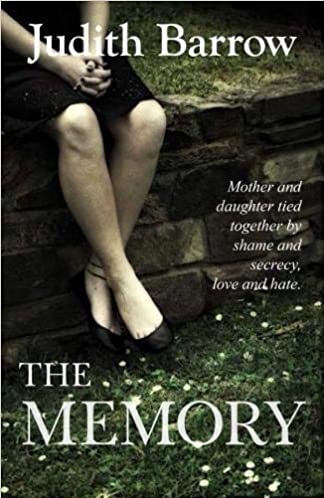
The Memory by Judith Barrow.

A common phrase I use in therapy is that ‘no two children have the same parent’ and that phrase kept popping in my head during this novel. This is said because of different circumstances into which each sibling is born. Parents can: be more anxious with a first child, than with younger siblings; or react to a practical change such as a child being ill; or experience post-natal depression; might be going back to work with one child, then stay home with another; be responding to a life event such as a death in the wider family; have different financial circumstances with each child. All of these can change the amount of time, patience, ability to bond that the parent has and affect the relationship between parent and child, as well as the child’s personality going forward.

In this novel we follow dual timelines as Judith Barrow lets the story of a mother/daughter relationship slowly play out. We uncover a singular moment in time that shapes the whole family, especially daughter Irene. We begin in the early 2000s when Irene is caring for her mother who is dying. She is going through all those emotions familiar to the caring role; she’s exhausted and veers between feeling it’s the right thing to do and a deep resentment, that we sense has a root way back in the past. Irene is experiencing a feeling she’s had before, a feeling that her mother has possibly experienced too. The contradictory feeling of hating someone, whilst also loving them fiercely. We go back to 1963 and the birth of Irene’s baby sister Rose. Rose had Down’s Syndrome, and her birth signalled massive changes to Irene’s life, not just in 1963 but for many years to come. As her parent’s fragile marriage truly begins to fall apart, Irene has to turn to her grandmother for support in coping with the dysfunction at home. She feels compelled to protect her little sister from the worst of it and feels an intense love for Rose. Yet, she’s also missing out. Her home life and responsibilities aren’t like other girls of her age and she becomes isolated but for Sam, her friend who eventually becomes her husband. When her father leaves, she is effectively separate from him and despite his weakness, she loves him very much. Her mother is eaten up by resentment and the cares of bringing up two children alone. Then, just as Irene could be making choices about what to do with her life and preparing for her future, her beloved grandmother becomes ill. So, everything that Irene could have dreamed for her life is sacrificed for the care of her family, This made me so angry and I felt deeply for Irene who never gets to fulfil her dreams or shape her own future. Essentially, her own life is sacrificed for the needs of her family.

When our two timelines meet we can see a full picture of what impact Rose’s life and death has had on this family, and particularly her older sister. Rose, Irene and their mother are trapped in a constant whirl of love, care and resentment. Still in the childhood home she can’t leave because she feels her sister’s memory there. At the centre of these feelings is a specific event, but one she doesn’t fully understand because she was a child. The only thing she can do is stay close to the places of her childhood and of her little sister. She’s haunted, but only because she can’t let Rose go. As our narrator, Irene is beautifully constructed – from the sparse and minimal understanding she has of the adult world at eight years old, all the way to a grown woman who doesn’t know who she is without someone to care for. Anyone who has cared for someone long term knows how much it takes from you physically, but also emotionally. You are stripped of your identity until your only reason for being alive is to keep someone else alive. Then, what comes after? How does the carer get themselves back?

It’s not that Irene is without love. No, there has been a lot of love in her life from the love between her and her husband Sam. Her love for her grandmother. Her fiercely protective love for Rose. Will she finally be able to navigate this difficult path and unearth that memory she’s never fully understood? Then, if she does find the truth, will she able to live with its consequences? This is a brilliant study of one woman’s psyche and shows how ordinary lives are often extraordinary.

Meet The Author

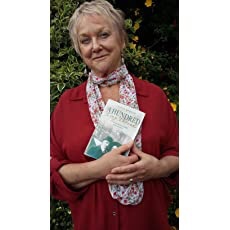
Judith Barrow, is originally from Saddleworth, a group of villages on the edge of the Pennines, but has lived in Pembrokeshire, Wales, for over forty years.


She has an MA in Creative Writing with the University of Wales Trinity St David’s College, Carmarthen. BA (Hons) in Literature with the Open University, a Diploma in Drama from Swansea University. She is a Creative Writing tutor for Pembrokeshire County Council and holds private one to one workshops on all genres.

Her next book, The Heart Stone, is due to be published by https://www.honno.co.uk/ in February 2021.

Posted in Netgalley

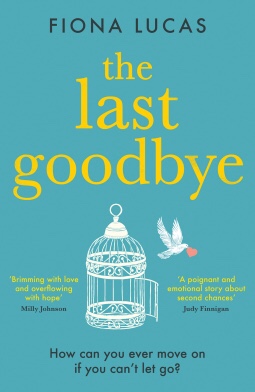
The Last Goodbye by Fiona Lucas

This romantic comedy had an unusual premise, but first attracted me because of the cover! I have a tattoo exactly the same on my lower back with a quote from Jane Eyre, so I was interested to know why the image represented the book.

Our female protagonist, Anna, is in the throes of grief after the death of her husband. The plot hinges on an interesting device – Anna calls her dead husband’s phone number and weirdly, someone answers. A tentative friendship develops allowing her to explore the anger, numbness, false starts and maelstrom of emotions as she rebuilds her life after such a huge loss. The first call happens on a New Years Eve just over two years since Anna lost Spencer. She has been coerced by her friend Gaby to go to a party and is suffering just one of several attempts over the last few months to set her up with a nice man. Of course whenever Anna meets someone new, it’s like a klaxon goes off in her head screaming ‘not Spencer’ over and over again. On this night Anna flees the party and heads for the comfort of home and for emotional support she rings Spencer’s mobile number, thinking that hearing his voice on the answerphone will reassure her. However, instead of hearing Spencer’s voice, a strange man comes on the line saying ‘ I beg your pardon’.

As more weeks pass and Anna feels so scared of leaving Spencer behind and living in the moment, she continues to call the number and talk to the man at the end of the phone. A friendship starts to emerge between her and the man who has inherited Spencer’s old number. His name is Brody and Anna starts to realise she is not the only one who wants to live in the past. Brody gives Anna the space to grieve. He doesn’t know Spencer so he has no vested interest or conflicting opinion to intrude on Anna’s grief process. In this way he acts rather like a therapist with empathy, zero judgement and a hope Anna will get through this. Other people in her life either want Anna to move forward when she is not ready, or to wallow in grief. Her friends seem to think two years is enough time to start moving forward and although they are well-meaning their interventions annoy Anna and push her too far too soon. Spencer’s mother Gayle wants to envelop Anna in her grief process. She assumes that because they both loved Spencer, their grieving process is the same. Anna keeps up their tradition of Sunday lunch together, just like when Spencer was alive, but also pores over old photo albums and still wants them to mark anniversaries like his birthday together. In her presence Anna becomes suffocated by grief and guilt when she thinks about moving on with her life. Anyone new in Anna’s life would seem like an insult to Gayle. There is nowhere she can do this grieving thing her way, honestly and openly.

My counselling supervisor used to say that if you find yourself giving the same piece of advice to several clients, it may be something you should look at for your own life. This is definitely the case with Brody, as he gives Anna advice he could do with listening to. Brody is living an isolated existence on Dartmoor with his dog. He allows Anna’s emotions to take the lead in their phone calls, but doesn’t seem keen to divulge his own. I started to wonder why he is living the life of a hermit. What is he hiding away from? Between Brody and her best friend Gabi, Anna starts to feel she can gather all these broken fragments of herself together and start to rebuild. The author found a unique structure for the novel, that allowed Anna’s raw grief to find its voice in these late night phone calls. Brody becomes Anna’s closest friend and with Gabi’s help, she now has hope and a way forward that is so uplifting for the reader. Both the main characters have such moving stories they bring a lump to the throat and their journey through grief is brilliantly rendered by the author. She shows us that each person’s grief is individual, it has its own path with unique highs and lows. She also depicts something I often say to – you can’t get round or climb over grief, the only way out is through it. I could see Anna reaching for the other side of her pain and I found myself wishing for Brody to find his way out too.

What a beautifully written account of grief this is. I was moved and uplifted, and the experience of grief felt very authentic. So what about the cover image and that tattoo? My husband died in 2007 and I rushed my grief journey, only to end up in an abusive relationship that took three years to leave. So, on my fortieth birthday I had my birdcage tattoo and underneath the words from Jane Eyre ‘ I am no bird; and no net ensnares me’. It reminds me I can get through anything so it feels like a fitting image for Anna and Brady’s story.

Meet the Author

Fiona Lucas is an award-winning author of contemporary women’s fiction. The Last Goodbye is her first novel written under this name, but she’s been writing heartwarming love stories and feel-good women’s fiction as Fiona Harper for more than a decade. During her career, she’s won numerous awards, including a Romantic Novel Award in 2018, and chalked up a no.1 Kindle bestseller. Fiona lives in London with her husband and two daughters

Posted in Random Things Tours

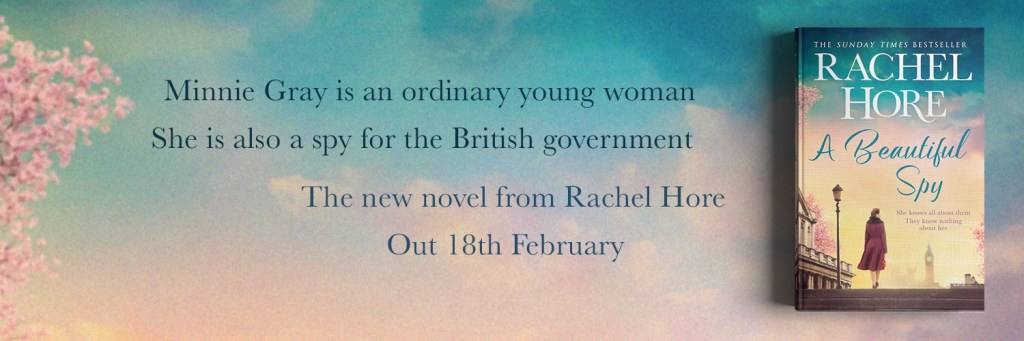
A Beautiful Spy by Rachel Hore

Minnie Gray is an ordinary young woman.
She is also a spy for the British government.

It all began in the summer of 1928…

Minnie is supposed to find a nice man, get married and have children. The problem is it doesn’t appeal to her at all. She is working as a secretary, but longs to make a difference.

Then, one day, she gets her chance. She is recruited by the British government as a spy. Under strict instructions not to tell anyone, not even her family, she moves to London and begins her mission – to infiltrate the Communist movement.

She soon gains the trust of important leaders. But as she grows more and more entangled in the workings of the movement, her job becomes increasingly dangerous. Leading a double life is starting to take its toll on her relationships and, feeling more isolated than ever, she starts to wonder how this is all going to end. The Russians are notorious for ruthlessly disposing of people given the slightest suspicion.

What if they find out?

I became very fond of Minnie Gray as I started to read this interesting new novel by Rachel Hore. Based on the true story of Olga Gray, a young woman recruited by Maxwell Knight in the 1930s, to infiltrate The Friends of the Soviet Union, the author has cleverly blended fact and fiction to create an intriguing and interesting novel. I loved how Minnie felt a little like a square peg in a round hole – even at home in Edgbaston with her mother (where she feels most like she belongs) she’s restless and somehow a little different to the others. At a garden party, she gravitates towards a woman playing croquet; a woman of very individual and modern style. It’s as if she recognises a woman like this wouldn’t be afraid of shaking things up. They talk about the possibility of Minnie making a move to London, that maybe she could be recommended as someone to work for the government. Minnie is so excited, this might just be that direction and purpose in life she’s been looking for. She wants something for herself, not the stereotypical marriage to a nice middle class man to produce 2.4 children, that her mother expects. She’s fed up of being at parties, dangled before an ever dwindling pool of eligible gentlemen. Her excitement, turns to hope as she waits for a phone call and watches the letterbox, but nothing comes. It’s only when she’s lost hope that a call comes for her to interview and she meets her ‘handler’ Max.

I loved the eccentric ‘Britishness’ of the people Minnie meets in her new life. Most interesting is Max, who has a flat like a menagerie, full of various animals including a parrot. She goes to work at the communist organisation as someone interested in helping others, rather than the cause itself. In order to supplement her income, she takes another niche job, typing for a distressed gentlewomen’s charity. Here she makes friends with another typist and starts to have something like a social life. Minnie is thriving out there on her own, but we are privy to her inner thoughts. She’s plagued with self- doubt – ‘is she doing this right?’ It often seems to her that she’s achieving very little, not important enough within the party to make a difference or furnish Max with anything useful. However, espionage is a long game, and the more insignificant and innocuous someone seems the better. Eventually she seems so much a part of the furniture that she is chosen to do something she never imagined. Having never been further than London, Minnie will be undertaking a mission to India as her career in espionage really takes off.

I could see how much work had gone into research, as well as mixing fact and fiction in such a way that it becomes authentic. The author embedded Minnie into the 1930s from her clothes, to societal norms and mentions of world events such as the rise of Nazism. In snippets of chat at the communist organisation I could hear ideas and concerns about the working class and keeping them on board with a left leading political party. This disenfranchised class would be easy pickings for Oswald Moseley’s fascist party in a couple of years time. This is a time of political turmoil across Europe, as the tensions started in the aftermath of WW1 begin to boil over. The author really emphasises the fear and trepidation of choosing a double life, especially as a woman. I loved Minnie’s determination to be different and do something important, despite often feeling lonely and scared. I felt the author balanced this well with her need for adventure, as well as the excitement and thrill that keeps her going as the work gets more and more dangerous. I thoroughly enjoyed this fascinating book. Rachel Hore has created a wonderful heroine who I found inspiring and authentic, with just a hint of vulnerability that made her so sympathetic. I felt completely transported to the 1930s, due to the author’s knowledge of this time period and her deeply layered descriptions of Minnie’s world. I could close my eyes and picture every setting – Minnie’s home, Max’s flat full of animals, an overcrowded train in India and the wall of heat before the monsoon rain. This was an excellent read for anyone who likes their historical fiction and enjoys determined and original heroines whose courage takes them on amazing adventures.

Meet The Author

I came to writing quite late, after a career editing fiction at HarperCollins in London. My husband and I had moved out to Norwich with our three young sons and I’d had to give up my job and writing was something that I’d always wanted to try. I originally studied history, so it was wonderful finally to put my knowledge to good use and to write The Dream House, which is partly set in the 1920s in Suffolk and London.

Most of my novels are dual narrative, often called ‘time slip’, with a story in the present alternating with one set in the past. I love the freedom that they give me to escape into the past, but also the dramatic ways in which the stories interact. My characters are often trying to solve some mystery about the past and by doing so to resolve some difficulty or puzzle in their own lives.

The books often involve a lot of research and this takes me down all sorts of interesting paths. For The Glass Painter’s Daughter I took an evening class in working with coloured glass. My creations were not very amazing, but making them gave me insight into the processes so that my characters’ activities would feel authentic. For A Week in Paris I had to research Paris in World War II and the early 1960s through films and books and by visiting the city – that was a great deal of work for one novel. Last Letter Home involved me touring a lot of country houses with old walled kitchen gardens in search of atmosphere and to explore the different kinds of plants grown there.

Places often inspire my stories. The Memory Garden, my second novel, is set in one of my favourite places in the world – Lamorna Cove in Cornwall – which is accessed through a lovely hidden valley. A Place of Secrets is set in a remote part of North Norfolk near Holt, where past and present seem to meet. Southwold in Suffolk, a characterful old-fashioned seaside resort with a harbour and a lighthouse, has been a much loved destination for our family holidays and has made an appearance in fictional guise in several of my novels, including The Silent Tide and The Love Child. Until very recently I taught Publishing and Creative Writing part-time at the University of East Anglia, but I’ve just become a full-time writer.

I hope that you are able to find my books easily and enjoy them – I am always happy to hear from readers!

Happy reading!  

Visit Rachel at http://www.rachelhore.co.uk, or follow her on Twitter @rachelhore or Facebook

Posted in Damp Pebbles Tour

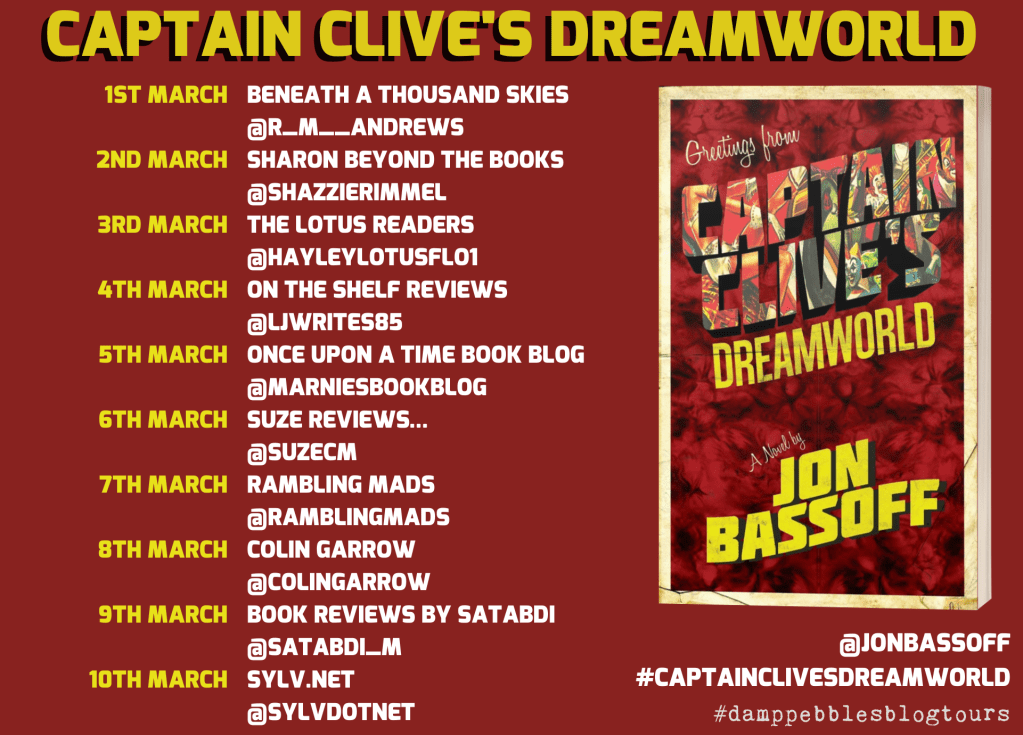
Captain Clive’s Dreamworld by John Bassoff.

After becoming the suspect in the death of a young woman, Deputy Sam Hardy is reassigned to the town of Angels and Hope, which, within its borders, holds the once magnificent amusement park, Captain Clive’s Dreamworld. When he arrives, however, Hardy notices some strange happenings. The park is essentially empty of customers. None of the townsfolk ever seem to sleep. And girls seem to be going missing with no plausible explanation. As Hardy begins investigating, his own past is drawn into question by the town, and he finds himself becoming more and more isolated. The truth—about the town and himself—will lead him to understand that there’s no such thing as a clean escape.

This is such an incredible mix of genres and influences! I’ve seen so many suggestions but for me at different times I felt: The Truman Show, Hot Fuzz, Black Mirror and 1984. Every so often a little lightning strike of recognition would occur – such as everyone denying someone’s presence or dropping strange sayings like ‘the greater good’ – and my brain would fire off into a film or TV series. I also think it’s no coincidence that a lot of these references are visual. This book grabbed hold of my visual memory and didn’t let go. It also felt like a cautionary tale, bringing up some of the same points as Russell T. Davies’s Years and Years. It read as a warning against rampant consumerism and the sort of faux nostalgia people cling to that made Brexit happen in the U.K. I find it strange that a book with so many points of recognition still managed to feel entirely unique.

At first, Sam thinks Angels and Hope seems like a lovely place to live. Almost idyllic. At the centre of this community is the amusement park Captain Clive’s Dreamworld; the town was built to house staff of the park. It’s motto is ‘Where dreams really do come true’ and you could be forgiven for thinking they have. Sam isn’t the average man though, and he starts to notice anomalies. No one ever seems to visit the amusement park for a start, so why are the staff necessary? There’s also the problem of Bridget Bishop, a girl that no one else in the town seems to remember now she’s gone missing. Or maybe they can remember her but are denying her existence? This is the last straw for Sam and he starts to investigate what’s really going on in the village. This is where the book becomes very disturbing, in a couple of scenes that are unexpected and disturbing. However they do seem to fit what I know about Bassoff’s writing, he likes to mash-up genres and expectations. The scenes are also in-keeping with the idea that seems to be the undercurrent of this novel; life is unexpected, our place in it is total chance.

Bassoff seems to be posing the idea that we like to create myths and religions in order to give life pattern and purpose, but they are an illusion. Real life doesn’t seem to have any sense to it and we’re so scared by that, we have to create philosophies that make sense of it. When something terrible happens there is an emotional seismic shock in society, in my lifetime that’s probably 9/11 or the death of Princess Diana. Then, conspiracy theories spring up around the event. People would rather believe a shadowy conspiracy of men in grey, headed up by the Duke of Edinburgh arranged Diana’s death. This is more palatable then a Princess was driven at high speed, by a man who’d been drinking, only to die in a tragic car accident while being pursued by paparazzi. Having watched a bit of David Lynch over the years I was reminded of some of his work. In Twin Peaks we had the beautiful Laura Palmer who is found dead in the river wrapped in plastic and a beautiful town goes into mourning for its Homecoming Queen. However, as people slowly begin to tell their stories it’s clear that this town didn’t know the reality of being Laura Palmer. She was addicted to cocaine, suffering from sexual abuse and sleeping with most of men or women she came into contact with. I remember being quite disturbed by the scenes from the night Laura is killed and her cousin Maddie. This book does the same as Lynch’s work on Twin Peaks and in films like Blue Velvet. Places have a surface, but underneath there’s a dark underbelly that most people never see. So, the revealing scenes are disturbing, but they are also needed for the story being told. The surface story of this book is disgraced cop is moved to a small town with an amusement park promising dreams that come true. Dig a little deeper and we find something terrible.This is far from a world where dreams come true, unless your dreams are nightmares.

Posted in Random Things Tours

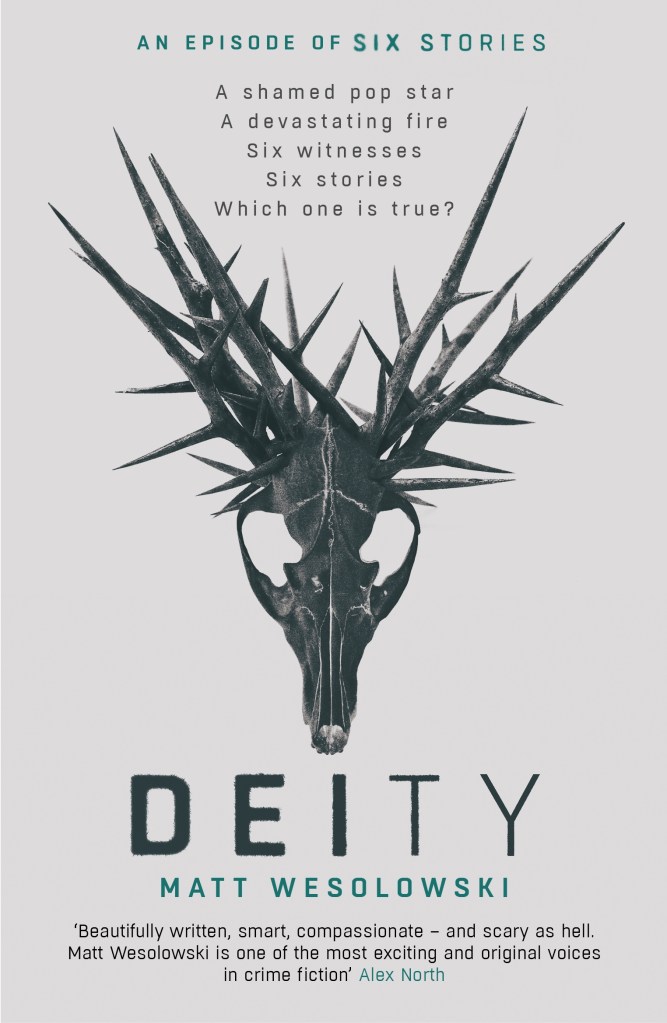
Deity by Matt Wesolowski.

I’m not sure I was fully prepared for the reading experience offered by Matt Wesolowski in his ‘Six Stories’ novel Deity. I was blown away by how creative and unique it is – roving between crime, mystery, the supernatural, and commentary on celebrity culture.

A shamed pop star

A devastating fire

Six witnesses

Six stories

Which one is true?

When pop megastar Zach Crystal dies in a fire at his remote mansion, his mysterious demise rips open the bitter divide between those who adored his music and his endless charity work, and those who viewed him as a despicable predator, who manipulated and abused young and vulnerable girls.

Online journalist, Scott King, whose Six Stories podcasts have become an internet sensation, investigates the accusations of sexual abuse and murder that were levelled at Crystal before he died. But as Scott begins to ask questions and rake over old graves, some startling inconsistencies emerge: Was the fire at Crystal’s remote home really an accident? Are reports of a haunting really true? Why was he never officially charged?

Dark, chillingly topical and deeply thought-provoking, Deity is both an explosive thriller and a startling look at how heroes can fall from grace and why we turn a blind eye to even the most heinous of crimes…

This is book five in a series started back in 2017, based around the structural idea of six podcasts, presented by character Scott King, that attempt to investigate and solve a cold case. The subject here is Zach Crystal, pop megastar and controversial figure, who died in a fire at his home in the Scottish Highlands. So much of his tale is familiar. A humble background, with music first made at home in the garage with his sister. Followed by paying his dues in the back rooms and clubs of the Midlands until fame came calling. At the height of his career, Zach Crystal disappeared into the wilds of Scotland into a property he crowned ‘Crystal Forest’. Then, just as he reappeared and announced a new album, there was a fire at his home and Zach’s body was found in the ruins. On each podcast, Scott invites a witness to talk about the case, and shares media evidence to shed more light on events. He never leads the witness or voices an opinion; the podcast is given over to to the witness, what they experienced and their theory on what happened to Zach Crystal. King’s a skilled interviewer, asking subtly probing questions that open up the interview, but never summarising or concluding. He merely lets the story tell itself, and it’s up to the listener/ reader to make up their own minds. This leaves us with a dilemma; who or what do we believe?

What grabbed me immediately about the book was how timely it is, especially in the wake of the #MeToo movement. There are many stars who’ve had a downfall in the past twenty years, but this story reminded me most strongly of Michael Jackson, because he was a music superstar who still divides opinion, years after his death. There are all the stories about his upbringing, the plastic surgery, Bubbles the chimp, and the fairground. Then there’s the ‘sleepovers’ with young boys, that he claimed were totally innocent, despite the payments made to their parents. The world seemed to be divided with many reading the rumours, watching the documentaries and concluding something dark and disturbing was happening at Neverland. Is there ever a situation where it’s ok for a grown man to sleep in the same bed as a little boy he barely knows? However, there are just as many people still fiercely defensive of Jackson, supporting him at court, calling him an innocent and labelling his detractors as cynics, then creating shrines when he died. Zach Crystal has a similar cultish following defending him while dark rumours circulated about parties hosted at his Scottish hideaway for possibly exploited, and at worst murdered, girl fans.

Often with thrillers, pace and tension are given priority, but here the story is thought provoking and the reader is given space to make those connections, such as the kind between fiction and our reality. In just the last two weeks we’ve seen women go public to expose their alleged abusers with both Shia LaBeouf and Marilyn Manson at the centre of accusations. It made me think about the difference between image and reality when it comes to celebrities. At what point do we think we know a celebrity? If we have a hero on a pedestal do we become blind to their behaviour? If the celebrity is paying the wages of a whole entourage, who would stand up and tell the truth? It’s only in the last week that I fully took on board the extent to which Justin Timberlake was complicit in the difficulties experienced by his ex-girlfriend Brittany Spears. Sometimes, the fact we enjoy someone’s music or find a celebrity attractive, influences us to overlook their behaviour. If someone is treated as a god, does it always cause them to exploit that, in terrible ways? All of these parallels were going through my mind as I read each witnesses response to Zach’s disappearance. King sits back and allows each account to speak for itself, leaving it up to the reader to accept or dismiss their version of events.

I loved the way the author cleverly combined a contemporary setting and such up to the minute issues, but also wove in elements of myth and folklore. I also loved the way that each episode, and it’s different perspectives, revealed more about the man behind a carefully constructed image. One episode brings in the possibility that a supernatural creature is stalking the Crystal Forest and that it was responsible for the deaths of two young fans. Then another perspective came and seemed plausible, then another, until I found myself immediately doubting the last. Instead of actually writing each twist and turn on the page, the author relies on it happening in the reader’s own mind. Of course, each reader brings their own concerns and biases to the book, so potentially the twists and turns could be different for every single reader. The author has incredible restraint in telling us just enough, never forcing a point of view. This was an incredible reading experience, from an accomplished and intelligent writer keen to explore the more dangerous and dark aspects of human nature. Meanwhile, allowing the reader to take their mind for a walk through these podcasts, sifting through evidence and forming their own conclusion. I noticed Matt Wesolowski named the ‘Dark Lord of Northumbrian Noir’ and that seems a very apt title. His vision in creating these novels is astounding, so much so that I was tempted to go back immediately and read the previous Six Stories novels one after another.

About The Author

Matt Wesolowski is an author from Newcastle-upon-Tyne in the UK. He is an English tutor for young people in care. Matt started his writing career in horror, and his short horror fiction has been published in numerous UK- and US-based anthologies, such as Midnight Movie Creature, Selfies from the End of the World, Cold Iron and many more. His novella, The Black Land, a horror set on the Northumberland coast, was published in 2013. Matt was a winner of the Pitch Perfect competition at the Bloody Scotland Crime Writing Festival in 2015. His debut thriller, Six Stories, was an Amazon bestseller in the USA, Canada, the UK and Australia, and a WHSmith Fresh Talent pick, and film rights were sold to a major Hollywood studio. A prequel, Hydra, was published in 2018 and became an international bestseller. Changeling, the third book in the series, was published in 2019 and was longlisted for the Theakston’s Old Peculier Crime Novel of the Year. His fourth book, Beast, won the Amazon Publishing Readers’ Independent Voice Book of the Year award in 2020.