‘Oh my friend, won’t you take my hand – I’ve been so lonely!’
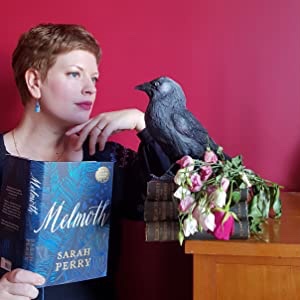
This week for Throwback Thursday – which has rolled onto Friday since I’m in a remote part of Wales with poor internet access – I’m going to take a spooky turn and tell you about one of the most terrifying and gloriously gothic novels I have ever read. Melmoth the Witness is a figure from mythology, or is she? Known as one of the woman who witnessed the tomb on the morning that Christ resurrected, she is now an eternal traveller. Wandering the centuries she lures people into following her, whereupon they too become damned to an eternity of itinerant, solitary wandering.
Set in the beautifully, atmospheric city of Prague we meet a woman called Helen who finds a manuscript. It tells of a winter in Prague, with all the darkly gothic details of cobbled streets, shadowy corners, and jackdaws patrolling the city walls. One winter night in Prague, Helen Franklin meets her friend Karel on the street. Agitated and enthralled, he tells her he has come into possession of a mysterious old manuscript, filled with personal testimonies that take them from 17th-century England to wartime Czechoslovakia, the tropical streets of Manila, and 1920s Turkey. All of them tell of being followed by a tall, silent woman in black, bearing an unforgettable message. Helen reads its contents with intrigue and some scepticism, but everything in her life is about to change. We follow Helen’s story, but within it are all the other stories and lives, creating a Russian doll style tale, but where each incarnation has the same sense of menace and impending doom.
This is based on an 1820 novel by Charles Robert Maturin called Melmoth the Wanderer, that very few people will have read. I studied a wonderful module at university entitled The Gothic, Grotesque and the Monstrous and I know from experience that early gothic novels can be long winded and difficult to read. What was found terrifying in 1820 does not necessarily translate today. In the original novel, Melmoth is a man who makes an almost Faustian pact, in this version she is one of the women who visits Christ’s tomb. She could have borne witness to the resurrection, but lied and is now damned to wander the world forever. She’s like a Sybil, heralding evil and disastrous events, but never listened to and doomed to witness the worst humans can do to each other over and over. I love the ambiguity of her pleas to ‘take her hand and follow her’ because she’s lonely, is she friend or foe? Her pleas are all the more tempting because she’s a woman and we associate that with gentleness, nurturing and perhaps even needing protection. There’s also the element of seduction and persuasion that might make a gentleman take her lonely hand. I think Sarah Perry made this choice because of those qualities. How much more effective could a woman be in gathering souls?
I love how Prague is turned into a haunted city and it’s history certainly might have drawn the wanderer to it’s cobbles. The city is the book’s second biggest character, dark and mysterious with magical landmarks like the astronomical clock. Perry’s descriptions of night in the city are haunting, and if I ever visit the capital I might well look over my shoulder when out in the evening in the same way I do in Venice. It is the perfect backdrop for the modern section of the novel, with every inch of the city steeped in history and the endless pull between light and darkness. Perry brings to life fears we have all had, as Helen draws the curtains at night, because she fears looking up at the window and seeing that lonely, beseeching face. The most terrifying thought is that Melmoth bears witness to anything we have ever done, including those awful things we hope no one witnessed or found out about.
I think an important aspect of the novel for me is something any sort of ‘listener’ has to think about. It’s the toll witnessing takes on a person. This book is brief compared to the original novel, but still takes in the breadth of the horrors experienced in Prague throughout the 20th Century. It made me imagine being present to witness the trenches of WW1, the Holocaust, and so many other atrocities and personal tragedies. I’ve worked in mental health for twenty years and I’m taking a break at the moment to study. I know the emotional toll that listening to people’s stories can take on the listener or observer. For Melmoth, this would be so much worse because she has to sit back and witness all of humanity’s horrors. Even worse, she has no power to change anything, but is doomed merely to witness. No wonder she wants other souls to witness with her, she must feel the weight of the horrors yet to come.
The ‘Fierce Five’ have always been the best of friends. Gail, Allie, Emily, Stacie and Diana are all different in character, but have complimented each other. Gail is the organised one who tends to get them altogether. Allie is quiet and tends to be more introspective than the others. Emily is the traditional one, with her twins and husband Adam at the centre of everything she does. Stacie has been married twice, someone who is proud of being straight talking, but is still holding a lot inside. Finally there’s Diana who came from a more deprived background than the others and has a more cynical or realist’s perspective on life. They are all invited by Gail to celebrate her 35th birthday at her cabin, an isolated and atmospheric spot in the Scottish Highlands. The girls plan on catching up, having a drink and enjoying the remote location where they’re removed from their everyday lives. However, when a snow storm threatens to cut them off completely, events are set in motion that no one expected.
This was my first book from Carys Jones and she certainly knows how to ratchet up the tension. This wasn’t my first remote chalet thriller this year because there have been a few books with a similar premise such as Catherine Cooper’s The Chalet and Ruth Ware’s One by One. I found this story compulsively readable, with well-drawn characters and a real sense of surprise and menace. The story is told in two timelines, the current stay in the cabin and then back into the girl’s pasts where we could explore their past interactions and the events that shaped who they are. These sections were not necessarily chronological, but each section informed the situation in the present. A third section is written as the transcript of a police interview with an unnamed person of interest. Since one of these transcripts starts the book off, we know how important they are to the story and that something very very wrong has happened on the girl’s weekend.
The storm is menacing and I felt like the author depicted it like a sixth character in the novel. Even though it’s outside, it seems to influence what happens inside, so as the storm builds so do the friend’s emotions. When the storm is at it’s height the secrets, and lies of the book’s title, come to the surface and events take a drastic turn. I loved the way the author depicted this complicated friendship, because it was realistic. Often large friendship groups like this do have factions – two of the group who are closer than the others, another pair keeping a secret from the group or one member feeling isolated from the others. It’s impossible for groups like this to weather the years without changes happening. Individual experiences shape and change us over time and that might mean friendships wax and wane, but in groups like this those changes can cause resentment and jealousy. This happens especially if two people bond over an experience they’ve both had, switching allegiances such as friends who’ve both have children tending to gravitate towards one another. As the secrets come tumbling out and the girls battle to cope with the revelations and the effects of the storm things reach boiling point. Which of the friends will snap? This is an entertaining novel about old friendships that might just put you off your next school reunion. Tense, claustrophobic, and an unexpected ending. I’ve been reading this in a remote cabin in North Wales and it definitely added to the experience!
Wow! Will Dean does like to put his heroine in some terrifying situations. There is so much about this series that I love, then a good 20% that makes me feel a bit sick or unsettled. In the last book it was snakes that had me a bit on edge. This time? Well it’s saying something when a severed head is the most comfortable thing about Tuva’s investigation.
We’re back in Gavrik, deep in the northern most part of Sweden and Tuva is back at the local newspaper, but has a more senior role and a new colleague to oversee in the shape of eager young newbie Sebastian. In fact, things are pretty good in Tuva’s world. Best friend Tammy is back in her food truck dishing up the best Thai food around. Tuva is in a steady relationship with police officer Noora, which works really well although they have to keep a boundary between police work and what ends up in the paper. As part of her new role, the Gavrik newspaper will now also cover the nearby hilltop community of Visberg. With a treacherous ascent road through the forest, there’s really enough danger in this assignment, but when Tuva stops for a moment in her truck, she winds down the window and hears a terrified human scream. Never one to run away from danger, she hurries towards the noise and finds a woman covered with blood and a body, without it’s head. The man is Arne Persson: resident of Visberg; local plumber; member of the choir and the town’s chamber of commerce. Tuva’s introduction to Visberg is going to be an unpleasant one. Instead of getting to know the residents and building trust, every one of them will know she discovered Persson’s headless body and every one of them could be a possible suspect.
Dean has a wonderful way of describing these remote northern towns and their eccentric residents. I often wonder whether it is living in such an inhospitable environment breeds eccentricity or whether odd individuals are attracted to it’s remoteness. Quirky details are brought into the narrative that feel surreal and put the reader on edge. Local pizza maker Luke Kodro obliges residents with the oddest pizza toppings I’ve ever heard of – ‘fillet steak, onion, mushroom, bearnaise, peanuts and banana’. However, many view him with suspicion because he’s from Bosnia and one even names him as the ‘our local, friendly, war criminal’. There’s also Hans Wimmer who has a shop in the town square selling all sorts of timepieces, but down in the basement has rare clocks including some handmade ‘organic’ examples. We also meet old friends like the Sorlie sisters, running a pop-up shop selling their unique trolls and masks for the town’s peculiar celebration Pan Night. Tuva asks about this festival, but most residents are secretive about what it entails. Even the sisters warn Tuva that it’s a celebration for hill folk only and that outsiders aren’t welcome after dark. This piques Tuva’s curiosity and she overcomes her revulsion enough to buy an animal mask from the sisters and plans to gate crash. The Pan Night chapter is a highlight of the book for me and the way the author covers all the senses gives the reader a truly immersive experience. There a bonfires, falling apples being crushed underfoot, animal masks, people walking backwards or getting frisky under park benches and the most disgusting balloons it’s ever been my misfortune to imagine. In this town, any one of the residents might have killed Arne Persson and I was a long way from solving the case.
I love how Tuva has changed since the first novel. There was a guarded quality to her at first, a sense of keeping herself separate that might have something to do with her deafness or possibly life experiences. Here there’s a softening to her character. She’s still brave and resilient, with an intrepid sense of adventure, but her ties to people have always been minimal. Her friend Tammy has recovered well from her kidnap ordeal and they are still close, looking after each other as family. Her boss Lena also looks after Tuva in a motherly way that’s very different to the difficult relationship Tuva had with her late mother. I noticed a relationship building between Tuva and the little boy at the flat next door, who isn’t having the easiest family life and seems to trust Tuva. She agrees to baby sit him on a couple of occasions and is touched by his faith in her. I guess most importantly, the biggest change is her long term relationship with Noora. This seems to have a stabilising effect on Tuva, although the relationship terrifies her as much as it makes her happy. What is the future for the couple? Could Tuva be comfortable even sharing her living space with another person? She isn’t sure, even though she knows she loves Noora.
This book picks you up and takes you on a fascinating and thrilling ride that builds in tension to a terrifying ending that I didn’t see coming at all. I had to stop reading at one point, because I realised I was so tense I was gritting my teeth! I’m sure the author has a hotline to my fears and this ending tapped into them perfectly. Needless to say, if I was Tuva, I’d be packing up the Hilux and leaving the hill folk to murder each other! I think the way the author depicts Tuva’s deafness is interesting. Usually Tuva uses it to her own advantage – taking her hearing aids out when she’s writing a piece means she can focus and taking them out at home means she can’t hear next door. However, it can also leave her vulnerable and the author uses it to intensify the horror element of the book, particularly towards the finale. There’s something about another person touching her hearing aids that feels so personal and also like a violation, depending on who it is. Every time I know a Tuva Moodyson book is coming, the excitement starts to build. By the time it’s in my hands I’m ready to drop all my other reading to dive in. Of course when something is so anticipated there’s also a fear about whether the book will live up to expectations. Bad Apples did not disappoint and is a fabulous addition to this excellent series.
Published by Point Blank on 12th October 2021.
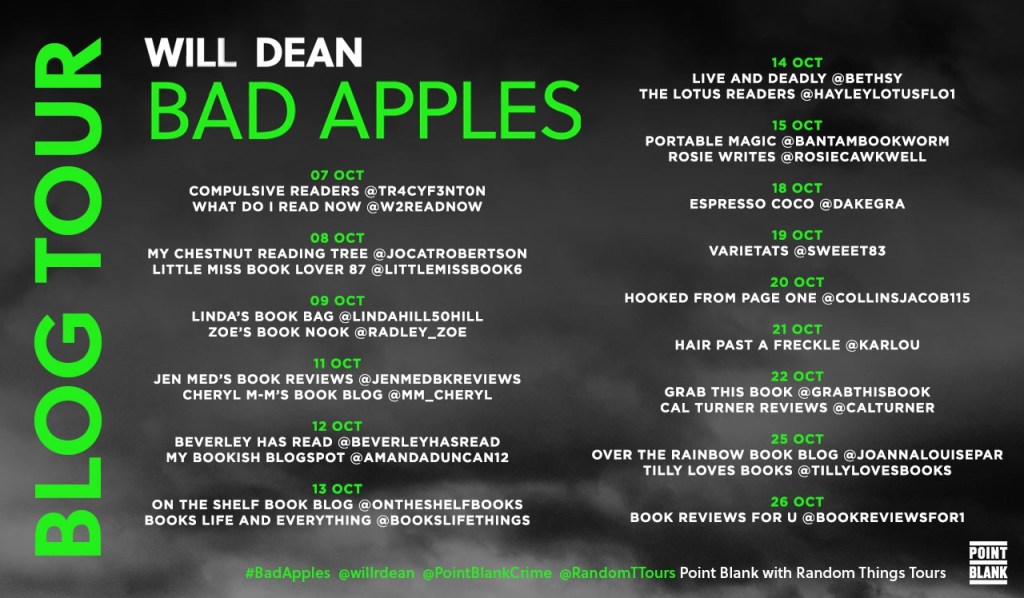
Why not check out the other reviews on the blog tour..
Meet The Author.
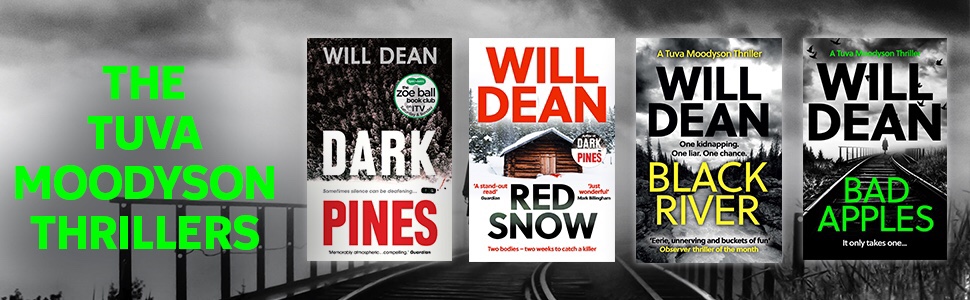
If you don’t already follow Will Dean on Twitter you’re missing out on fantastic photos, including those of his huge St Bernard and the country surrounding his cabin in the woods. He grew up in the East Midlands and had lived in nine different villages before the age of eighteen. His debut novel, Dark Pines, was selected for Zoe Ball’s Book Club, shortlisted for the Guardian Not the Booker prize and named a Daily Telegraph Book of the Year. The second Tuva Moodyson mystery, RedSnow,won Best Independent Voice at the Amazon Publishing Readers’ Awards, 2019, and was longlisted for the Theakstons Old Peculiar Crime Novel of the Year 2020. His third novel, Black River, was chosen as Observer Thriller of the Month. Will Dean lives in Sweden where the Tuva Moodyson novels are set.
‘Now I regret everything. I regret making Ísafold’s favourite Barbie doll do the splits and breaking it. I regret sneaking into her make-up and ruining her new eye-liner by experimenting with it. I regret the times I called her short-arse once I had grown taller than her. I regret losing the scarf that was a gift from her first boyfriend. I regret the time we had a row, and I called her a whore. I regret not calling her. I regret not getting the first flight to Iceland the last time she needed help.’
I’ve found myself reading more Scandi and Scottish Noir of late and Icelandic Noir has many of the same traits that draw me to the genres; intelligent and independent female protagonists, an unflinching look at death and loss, and the unapologetic darkness at the heart of the tale. I’ve had the pleasure of reading Lilja Sigurdardóttir before and this novel grabbed my attention very early on with it’s reluctant protagonist, quirky characters, and an almost lunar landscape lit up by twenty four hour daylight. Āróra is being pestered by her mother. She hasn’t heard from Āróra’s sister Īsafold for over two weeks now and she’s very worried. She wants Āróra to fly out to Iceland and find out what’s going on from Īsafold’s partner Björn and their family who are still based there. Āróra lives in the north east of England and rarely goes back to Iceland, despite being born there. She mainly travels there when Īsafold needs rescuing from Björn. The whole family have known for some time that she is suffering domestic violence, but despite several attempts to help and convince her to leave, Īsafold always returns to Björn. Āróra has given up trying to help her sister; you can’t help someone who doesn’t want to be helped. Even now she is reluctant to drop everything and intervene, but her mother is insistent and two weeks is a long time to be silent.
I enjoyed spending time in Āróra’s company and her narration is our main view of the story, although there are short chapters from the perspective of other characters that either add to our knowledge of Īsafold’s life, or contain a clue or twist in the tale. The two sisters have never had an easy relationship and Āróra sees herself as very different from her sister. She describes Īsafold as tiny, almost elfin, with long brown hair and a beauty that she feels is far removed from her own looks. Āróra feels almost giant-like in comparison to her sister, she has a strong body and is statuesque with lighter hair. There’s a sense of inferiority here, as Āróra weighs up her own looks, even if she is thought of as attractive by others she doesn’t see it herself. Other characters however, do describe her as beautiful like her sister and while she’s definitely taller and of a stronger build, many have known she is Īsafold’s sister as soon as they’ve seen her, including the neighbours at Īsafold’s building. In fact, she hasn’t been in Iceland long before attracting a man called Hákon at her hotel. As Āróra starts to question Īsafold’s neighbours about her disappearance she is disturbed to be told that Īsafold has flown to be with her family in the U.K; she never arrived, but did she even leave? Some neighbours have their own reasons for remaining hidden or cagey about Īsafold’s business, but one thing rings true in all their statements. Īsafold was in danger every day she chose to stay with Björn. Grimur in particular gave Īsafold a safe space to come when Björn had attacked her and he would patch her up while trying to talk her into leaving. It never worked.
The author cleverly sets us on edge with certain characters in subtle ways, such as a throwaway line that makes you stop and think or a behaviour that seems suspicious, like a literary double-take. This was a particular favourite:
‘He zipped his jacket up to the neck and walked away. There were only ten minutes before the bus was due. He had finished the walk around the city centre he had decided to take after the film was over. But seeing Björn with a new woman had wrecked any pleasure he might have had from his walk, and now he just wanted to go home and shave all over.’
He seems genuinely upset by Björn’s new girlfriend, who he stumbles on in a nearby restaurant. Everything written in this passage has a sense of real concern and introduces us to someone who must have cared for his friend a great deal. The end line though, is a stroke of genius, and tells us there is something very unusual or possibly disturbed about this character. Olga who lives opposite, hasn’t really noticed much, but she’s trying not to arouse suspicion as she has an asylum seeker living with her who might be denied leave to remain any day. She and Omar are like mother and son. He looks after her with more care than her own family and she trusts him. However, when he is told he can’t remain in Iceland there’s a sudden rage she’s never seen before. When she finds out he used the passport of a murdered man to enter the country she isn’t sure what to think. Olga has never felt scared of Omar but she does start to wonder what he might be capable of. At first my money was on Björn being the killer, then Grimur, and every time there was a new revelation I found myself questioning what I knew and shifting allegiance. In this way the author keeps the reader on their toes. I loved that the book was intelligent and didn’t give up information too easily.
The sense of place was well developed and had an almost alien quality to it that is so strange and adds atmosphere. First of all the reader is wrong footed with twenty four hour daylight, because it is Sumarsólstöður. This is the peak mid-summer solstice, in a whole summer of the midnight sun. Research seems to show that Icelanders actually benefit from this period, because they are outside longer each day. However, I felt the author used it very effectively to add to an eerily strange sense of place. We see Āróra’s Uncle Daniel, compulsively weeding round the edges of his driveway in the early hours of the morning when he can’t sleep. He’s trying to be quiet because he doesn’t want to wake the neighbours, and I felt a sense of loneliness in him being the only person awake. Yet there would also be something special about it, as if the sun had risen to create an extra day just for you. Along with other countries close to the Arctic Circle, there’s a magical aspect to this place where water shoots out of the ground and lava fields look like a barren moonscape. The author also sets the events of the book within recent history. Āróra is a financial investigator and happens upon some interesting accounting irregularities when researching one character. The banking crisis looms over this subplot where she has to decide whether to follow her investigative hunch or let it go and concentrate on her sister.
Most importantly and very moving, is the depiction of the relationship between two sisters. The sibling rivalries, the roles of eldest and youngest, and that push and pull between loving and resenting each other. Āróra has always felt second best to her sister, particularly in terms of their appearance. There are times when she feels obligated to check on Īsafold, rather than wanting to do it for herself. Āróra hates having the role of the sister who ‘rescues’ because she’s aware of how a drama triangle works. Īsafold is continuously putting herself in the role of victim and even though she’s been given nothing but positive encouragement and support from Āróra she can soon flip the switch and say she’s being pushed and persecuted into leaving. I actually wondered whether this behaviour had lead to her death? Had someone become so tired of helping, only to hear her being beaten again the following week, that they’d snapped? Yet Āróra reminisces about the last time Īsafold called her and she chose not to come. Would that have been the turning point? What if she’d said the right thing this time and her sister chose to return to England, safe and sound. In fearing her loss, Āróra stops seeing a problem and starts seeing her sister. The barrier between them melts away as she lists her regrets and acknowledges she hasn’t been the perfect sister either. But is it too late? This was a fascinating tale, from a clever author whose words can manipulate us into racing through the thrilling twists and turns, then stop us in our tracks with a moving tribute from one sister to another.
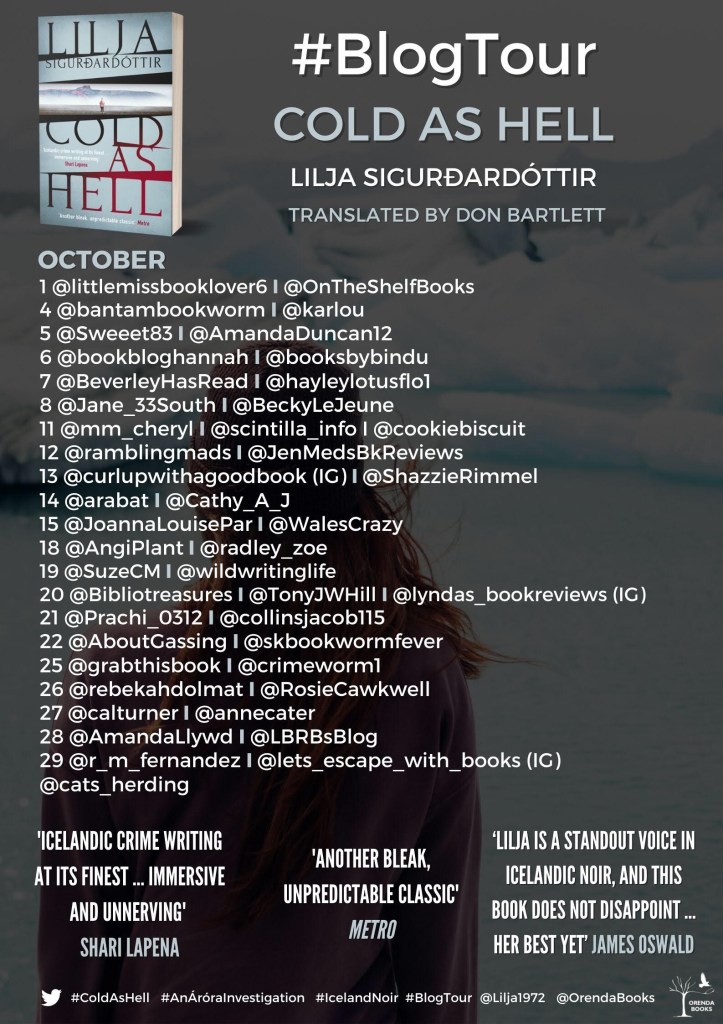
Published by Orenda Books and out now.
Meet The Author.
Icelandic crime-writer Lilja Sigurdardóttir was born in the town of Akranes in 1972 and raised in Mexico, Sweden, Spain and Iceland. An award-winning playwright, Lilja has written four crime novels, with Snare, the first in a series and Lilja’s English debut shortlisting for the CWA International Dagger and hitting bestseller lists worldwide. Trap soon followed suit, with the third in the trilogy Cage winning the Best Icelandic Crime Novel of the Year, and was a Guardian Book of the Year. Lilja’s standalone Betrayal, was shortlisted for the Glass Key Award for Best Nordic Crime Novel. The film rights have been bought by Palomar Pictures in California. Lilja is also an award-winning screenwriter in her native Iceland. She lives in Reykjavík with her partner.
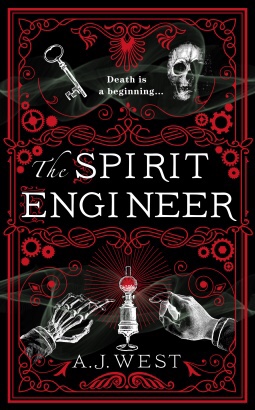
I’d anticipated this book for a couple of months having been told by my Squad Pod ladies that it was going to be a fantastic read. It certainly was, and even more than that, it was surprising too. Our setting is the city of Belfast, the Titanic sinking is still fresh in everyone’s minds. It’s especially fresh at Professor William Crawford’s house since his brother-in-law Arthur was on the ship. Crawford is our narrator and he introduces us to his happy, but chaotic household as the novel opens. He is a man of science, working at an institute both furthering scientific enquiry and teaching the next generation of engineers. He’s a sceptic, so when he finds out that his wife is visiting a medium and has been trying to contact her brother Arthur, he’s shocked and angry. There’s no question that this girl is a fraud, stringing his wife along with a show put on with the help of her shady family. Yet, the couple have lost their son Robert and Crawford’s grief is overwhelming. So when he hears Robert’s voice calling to him alongside an angry, vengeful Arthur who blames Crawford for his death, a small crack grows in his scepticism. What if he were to apply his scientific rigour to to this girl medium’s powers? If he could prove a link exists between this world and the next he could make a name for himself, not just in Ireland but all over the world.
I found the tone of the book quite unique and fresh. We see Crawford’s world through his eyes and this gives us a chance to really know him. I loved that he had the petty work grievances and rivalries that are familiar to us today. His pomposity and stuffiness could get him into scrapes with other people who don’t understand his Edwardian ‘Sheldon Cooper’ tendencies. At home his need for routine and things done a certain way is met with a certain amount of fond irritation. The children tend to break through the veneer of grumpiness and when a mysterious new maid appears, she seems to know him so well and has what he needs ready before he even misses it. I loved comic little scenes like the undignified moving of naked statues at the institute. When chosen for a special job before an important dinner, Crawford’s self-importance starts to show itself. His disgust when he finds out he’s just a removal man is so funny, a situation that’s made worse when family patron Aunt Adelia accuses him of manhandling a naked woman at an upstairs window. Sometimes it’s the author’s description of a character, as seen by Crawford, that raises a smile. Crawford’s colleague Stoupe is described as:
‘Damn it, there was no escape, and no creature on earth moves so quickly as an irritating man. He danced over the tiles towards me, grinning, all arms and sweat, dressed preposterously in a baggy velvet suit, pursing his lips like a kissing pig. He gave a courtly bow before standing far too near, smelling of lavender, whisky and damp, short tufts of blonde hair.’
There are other sections of the book where his privileged position as a white, middle-class man of some scientific standing, gives him so much power he starts to abuse it. One section that I found really disturbing was his insistence that the medium, Miss Goligher, prove her gift is genuine by submitting to different tests and examinations. He forces Rose, their maid, to cavity search the unfortunate girl in an enormous abuse of power. There is also the burning of his son Robert’s comfort blanket which felt particularly cruel. The seance scenes are intense and confusing. At one point attendees are tied up and blindfolded as per Crawford’s instructions, but he still finds it difficult to understand what exactly is going on. In America, a meeting with Arthur Conan Doyle and Harry Houdini show the circles he’s starting to travel in. They add authenticity to the period and subject matter, because even though William Crawford’s experiences were documented historically, the book fictionalises them. Similarly both Conan Doyle and Houdini were fascinated with phenomena like mesmerism and mediumship. As an aside, Conan Doyle was famously taken in by two small children who claim to have photographed fairies in their garden, so his eagerness to see proof of mediumship and his note of caution feel consistent with his known experiences. What I loved more than anything was the author’s ability to surprise, because as we neared the end I had no idea how the book and Crawford’s investigations would conclude. The theme of dishonesty is there right from the start, in Arthur’s reasons for being on Titanic, to the hidden note from their old maid who left in a hurry, and Elizabeth’s absence at weekly church meetings. By the end I felt triple bluffed, but couldn’t help smiling at how clever the author had been. As many of our characters find out, when it comes to being dishonest, the person we deceive most often is ourselves.
Published on 7th October 2021 by Duckworth Books
Meet The Author
A.J. West grew up in Buckinghamshire, before studying English Literature in Preston. He worked as an award-winning network television and radio news presenter and reporter before appearing on the legendary reality television programme Big Brother, where he became a household name, though the specific household is yet to be identified. He stumbled upon the troubling case of William Jackson Crawford and his paranormal investigations while working for the BBC in Northern Ireland. He has been spellbound ever since.
I don’t know if it’s the same for everyone else, but September has flown by this year. I took a short break from blog tours and other obligations because we had so much going on at home. It’s been a wonderful opportunity to read what I want and although there are still three blog tour books, every single one of these I enjoyed immensely. Autumn always feels very celebratory to me because I have my birthday, Halloween, Bonfire Night then into December. I always have an MS relapse in September as the change of seasons begins. The fluctuation of temperature from one day to the next seems to irritate my central nervous system so I’m currently struggling with vertigo, blurred vision and nerve pain. I’ve shared my reading couch with my followers on Instagram and I’ve popped a pic at the bottom of this round-up so you can imagine me reclining with my dog and reading some of next months promising new releases. Happy Autumn everyone 🎃 🍁
The Shadowing by Rhiannon Ward.
In Southwell, just up the road from where I live, is a restored workhouse owned by the National Trust. I have been meaning to visit for a long time and I think this book will be the thing that pushes me into making the time. This is a delicious slice of Gothic/Historical fiction with an interesting female heroine. Hester is from a Quaker family in Bristol, with a tyrannical father who is rather extreme in his beliefs. He doesn’t allow colour or music in his home, and despite having a stroke he can still catch Hester with a slap here and there. Her mother Ruth receives a letter from Southwell Union Workhouse informing the family of the death of Hester’s sister Mercy. Mercy disappeared with the youngest boy’s tutor a short while ago, despite being engaged to the son of family friends. It was a scandal and their father has forbidden them to talk about Mercy ever since. It seems Hester was abandoned by her suitor and now her parents would like Hester to travel to Southwell, to find out what happened to Mercy and where she is buried. This is the furthest Hester has travelled alone and she anxiously wonders what she will find. Her quest is complicated by a gift she can’t control. Hester has a ‘shadowing’, meaning she can see and feel spirits. This gift may prove useful especially as she can feel Mercy by her side already. This is a fabulous book, with a Gothic atmosphere, a plucky and likeable heroine and that hint of the supernatural.
The Spirit Engineer by A.J.West.
This is my current read. I’m halfway through and I’m enjoying it so much it has already become a favourite . Set in Belfast, just two years after the Titanic sank, this is a society with a growing interest in spiritualism and seances to contact their lost loved ones. Professor William Crawford has always been a man of science and reason, but when he finds his wife has secretly been sitting in a circle he follows her one evening. However, instead of exposing the medium as a sham he hears voices – possibly from the other side? This intrigues him, but would spirits really make contact through him or is this a parlour trick? This is actually based on a true story and features real people in William Crawford and medium Kathleen Goligher. It also involves Arthur Conan Doyle who was fascinated with mesmerism and other supernatural happenings, and Harry Houdini, famous escapologist and magician. I was pulled into William’s world immediately, and I’m really enjoying the humour as well as the spooky goings on. A fantastic read so far and my review will follow in a couple of days.
The Lighthouse Witches by C. J. Cooke.
This is a fascinating tale from the writer of last year’s The Nesting. Set on a remote Scottish Island, with a hint of The Wicker Man about it, Liv and her three daughters arrive at a lighthouse named The Longing. We’re not sure what they’re driving away from but Liv jumped at an opportunity to paint a mural in the lighthouse for an eccentric millionaire who wants to use it as a writing retreat. The girls set up home in the bothy next door, but then some unusual happenings leave them wondering exactly what’s going on in this lonely place. There are some really unsettling scares for the family: a baby floating in flood water that turns out to be a doll; a child’s skinny arm creeping out from behind Liv’s paint supplies; a near naked and very dirty little boy appearing at the bothy, with no one on the island interested when he disappears again. Liv wonders why the lighthouse is named The Longing and finds a whole history involving the island’s women and the 16th – 17th Century witch hunts sanctioned by King James IV. This is a brilliant combination of the supernatural and the historical. I enjoyed it immensely.
Troubled Blood by Robert Galbraith.
Despite it’s incredible size, there wasn’t a second of this fifth book in the Cormoran Strike series that I didn’t enjoy. From the moment Strike meets his new client I was engrossed in the story. I must admit to being a little in love with the tall, dark, private investigator. I love the author’s slightly shabby descriptions of him with his unkempt curly hair, awkward gait from his prosthetic leg and his broken nose. However. I’m also incredibly fond of his business partner Robin and the obvious love that flows between them, despite both of them denying it, even to themselves. We meet the pair with Strike’s agency in a good place – there’s a waiting list for clients, three new members of staff and Robin is now a full partner in the business. Some things stay the same though -Robin still drives the Land Rover, Strike is still smoking and living in the attic above the office, and there is still that unresolved tension around how Robin and Strike really feel about each other. Strike is in Cornwall, visiting his aunt and uncle, the closest people he has to parents. Strike’s father is Johnny Rokeby, rock musician and tabloid fodder. Strike’s mother was a beautiful, bohemian groupie who never had an idea of how to be a mum and abandoned Strike to his Aunt Joan in his primary school years. Joan is possibly, after Robin, the most important person in his world and she’s had a diagnosis of terminal cancer. While drinking with best mate Davey at the local pub, Strike is approached by two women. Anna tells Strike the story of her mother’s disappearance over forty years ago. She was working as a GP in London and saw a last minute patient, before leaving to meet a friend in a nearby pub. She never arrived. Despite extensive investigations she appears to have vanished into thin air. They make an agreement with Strike that he will look into it for a year. With several investigations ongoing and a long waiting list, this looks like the busiest the agency has ever been, but how will Strike manage his workload and spend time with Joan when he needs to? The case is a labyrinth of twists and turns, and the GP sounds like a fascinating woman. There are a few side cases that create extra interest and even humour. This is the most personal of the Strike novels as we watch him deal with losing the woman who has been a mother to him. The personal and the private investigations are balanced well and I was drawn in by both.
Freckles by Cecilia Aherne
This book by Cecilia Aherne was a complete surprise, considering I’ve never enjoyed her books before. Something about the blurb on NetGalley caught my eye and before I knew it I’d succumbed to her latest character. Allegra Bird’s arms are scattered with freckles, a gift from her beloved father. But despite her nickname, Freckles has never been able to join all the dots. So when a stranger tells her that everyone is the average of the five people they spend the most time with, it opens up something deep inside.The trouble is, Freckles doesn’t know if she has five people. And if not, what does that say about her? She’s left her unconventional father and her friends behind for a bold new life in Dublin, but she’s still an outsider. Now, in a quest to understand, she must find not one but five people who shape her – and who will determine her future. I truly fell in love with Allegra’s view of the world and how she copes within the confusing levels of human emotion she encounters. I found nearly all the characters in the novel endearing, Allegra’s daily routine was set in stone, but people seem hellbent on disrupting that! This wouldn’t be a Cecilia Ahern book without being heartwarming and full of humour, but this story is more complex than that. There are darker characters, parts that are more painful or remain unresolved, that show a real maturity and development. It’s about being proud of where you’re from, but also finding your authentic self – a journey that sometimes needs some distance from where we grew up. I loved the contrast between the city streets of Dublin and the wild Atlantic island Allegra calls home. In a way this is the decision she has to make. Where is home? Which place truly suits the person she is instead of the woman she thought she had to be in order to be accepted. Does she know that when we are our authentic selves, we attract people to us anyway. Our true five perhaps? All through the novel I found myself responding emotionally to the story, but Allegra’s character simply made me smile and perspective on her world made me smile inside. Not that she needs it, because I know millions love her writing, but if Ahern keeps writing characters like Freckles, she has found herself a brand new fan.
Blasted Things by Lesley Glaister
This is the first novel I’ve ever read by Lesley Glaister and when I finished, I couldn’t believe I’d never heard of her before. Set in one of my favourite historical periods, during and after WW1, this novel was evocative and moving. The author clearly has a deep understanding of the period and the rapidly shifting society her characters are living in. Her characters are fully rounded, with depths to get lost in and the effects of trauma to unravel and understand. This is an exploration of the effects of war and loss on our two main characters, Vincent and Clementine. The scars are both physical and mental, halting their progress as they try to move forward and making it very difficult to be who they truly are. When they, quite literally, bump into each other a strange relationship emerges that will have a haunting resolution. I could see these two people in my mind’s eye and I found myself thinking about them, even when the book was closed. Clem is working as a nurse at the front when she meets Powell, a doctor in the Red Cross hospital but also her soulmate. However, he died in a freak accident and Clem is seriously injured. When she recovers she has to cope with her grief and the matter of her fiancé from before she ‘ran away to war’. Her reaction is to opt for safety, so married to a GP and a mum, we meet Clem again. She is a shadow of the woman she was. So when she’s in an accident with a man who reminds her of Powell what will she do? Haunting, historical tale that will make you think about the consequences of war.
The Hidden Child by Louise Fein.
Set pre- WW2 like her previous novel People Like Us this is set in England instead of Germany and looks at the eugenics movement through the experiences of one family. We meet sisters, Eleanor and Rose, whose parents died young, and as a result of supporting each other from then on, have been inseparable. The book opens as Eleanor and her daughter Mabel set off on their pony and cart to meet Rose at the railway station. She is returning from a period of time in Paris, to live with Eleanor and her husband Edward. However, before Rose arrives something very strange happens to Mabel, as she sits quietly on the grass outside the station. One of the train guards notices first and alerts Eleanor, who rushes over to sit by her daughter. Mabel is making repetitive jerky movements, her eyes have rolled back and she is oblivious to Eleanor’s attempts to rouse her. Once it’s passed, Mabel seems exhausted and she travels back to the house, wrapped in a blanket and looking very sleepy. Eleanor’s concern is twofold: firstly, will Mabel be ok? Secondly, how will husband Edward respond if it happens again, considering he’s one of the leading lights of the eugenicist movement? I felt so much for Mabel in this story, unable to control her own body or what happens to her as her parents disagree over the best way to keep her safe. I felt the story was also about Eleanor’s journey, from obedient and traditional wife to realising she must change her relationship with Edward if she’s to save her daughter. This is a fascinating insight into eugenics and it’s effect on the lives of those deemed ‘undesirables’ in society. I loved its focus on the English and American atrocities committed in it’s name, showing it wasn’t solely the Nazis who believed in a master race. A brilliant piece of historical fiction.
Next month is so exciting. Here are just some of the books on my tbr for October
And the return of one of my all-time favourite heroines Tuva Moodyson in Will Dean’s Bad Apples.
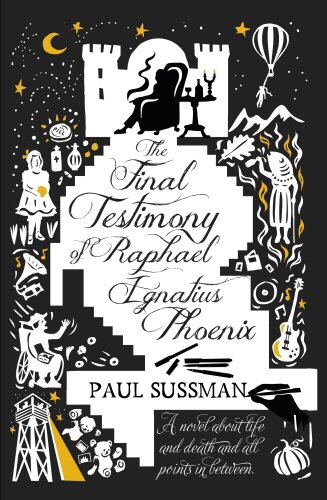
Something very strange happened while I was reading Paul Sussman’s book. I was up at night feeling unwell and made it half way without even taking a break. I had never read any of his books so as far as I knew this could have been a debut novel or one of hundreds. I launch straight into books without reading introductions, forewords or acknowledgements because I don’t like to be swayed by them. I don’t want someone else to tell me how to read a book, or in what context; I like to make up my own mind and read them later. I must admit on this occasion I was drawn in by the cover, but beyond that and the back cover blurb I knew nothing.
I realised half way through that I was reading with a smile on my face, despite feeling physically grotty! It made me smile because of the dark subject matter, the humour and sheer ingenuity of Raphael. I put it to one side and thought ‘I really wish my husband Jez had been around so I could read this to him’. He died 7 years before I found this novel and prior to his death he couldn’t read himself. He couldn’t hold a book and couldn’t see to read for himself. He could get listening books but there were certain, funny, books that we liked to share so we could fall about laughing together. They would usually be ingenious, darkly comic and just a little bit bad – rather like this. This was definitely one of those books. I then turned to the foreword and noticed it was written by Paul Sussman’s wife Alicky. I was so sad to read that she had been through the same loss I had, but amazed by the parallel. I contacted her and she was lovely, sharing about her loss and listening to mine.
The character of Raphael Phoenix is irresistible. A cantankerous old pensioner, living alone in a castle, he decides that 100 years of living is enough. He has a plan and he also has a pill. He has had the pill his whole life since his birthday party with his childhood friend Emily. Emily’s father is a chemist and in his poison cupboard, among the ribbed glass bottles, is an innocuous white pill with a simple nick in one side. It has very particular ingredients that ensure an almost instant and painless death and it is the only thing he wants for his birthday so the pair replace the pill with mint of the very same size, with a nick from the edge to match. Raphael keeps the pill with him through his incredible life either in his pocket, in a gold ring or in more difficult circumstances, sellotaped under his armpit. He trusts his pill and knows that it will deliver the death he wants as he sits in his observatory, with an expensive glass of red wine (over £30 a bottle) watching the millennium fireworks. However, before then he has a story to tell us, several stories in fact, which take us through some of the most important periods of the 20th Century and he has a very peculiar way of splitting these stories into sections. Raphael has had some very singular life experiences, and has a talent for getting into scrapes and challenges. Even more surprising are his ways of getting out of them.
I had no idea what to expect and so I was surprised and charmed by this magical piece of work. It manages to be both, earthy and funny, but also incredibly poignant. The only two things he can depend on through his life are the pill and his friend Emily. Emily isn’t always by his side, but just manages to be there at the right times and seems to set his various destinies in motion. Raphael works backwards with his tales until the reader is desperate to know how all of these incredible twists and turns are set in motion and also whether his trusty pill will work so he gets the end he has been working so hard towards. I would read this if you enjoy dark humour and tall tales and like your narrators to be, ever so slightly, morally ambiguous. It is darkly enchanting and I fell in love with it.
‘At the turn for the Northside quays, the bus missed the lights. A woman in front of Kate said to the person next to her, ‘There’s so much traffic we’re going backwards.’ The seatmate agreed and the conversation went relentlessly round, each of them talking over the other, saying the same things, until Kate felt that she might never get off the bus. The windows had fogged again and the vents at her feet piped sour heat up to her face. She popped a button on her coat, elbowing popped a button on her coat, elbowing the man beside her by mistake. ‘Sorry,’ she said. He ignored her and leaned forward for another bite of his breakfast bap. The yolk split, smearing the ketchup like pus into blood. Kate moved as far away from him as she could, which was not very far at all. Her right ear started to ring, a kind of static fuzzing inside her head. Across the aisle, a toddler screamed, his sharp little cries sucking the light right out of the sky.’
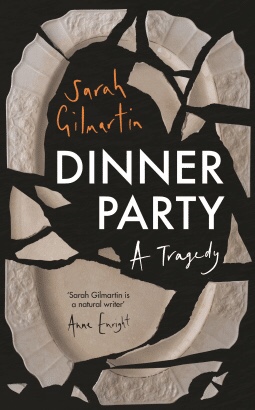
This book was one of those ‘slight’ novels but it really does pack an emotional punch. As I started to read Dinner Party, my brain meandered back to my university days and the first time I read Mrs Dalloway by Virginia Woolf, which was like nothing I’d ever read. The above quote, following Kate through the city as she shops for the dinner party she’ll be holding that evening, reminded me of the scene where Clarissa Dalloway takes the omnibus. The writing is simply beautiful, we’re on a bus ride so nothing much happens but everything happens all at once. We get such a sense of Kate from this short passage: her anxieties, her fears, the irritability with other passenger’s foibles, the disgust with food and how her senses become overloaded to the extent that a baby crying takes all the joy out of her.
Today Kate is cooking a meal for her siblings to mark the sixteenth anniversary of their sister Elaine’s death. Every year the Gleeson siblings gather, but this year is a little different. Elaine was Kate’s twin, and she still feels utterly bereft:
‘But a twin can never get over a twin. It was like someone asking you to forget yourself.’
Kate has decided to host the dinner party for her two brothers and her sister-in-law in the flat she plans to leave soon after. As the four settle round the table, to enjoy the food Kate has taken so much trouble over, they begin to talk about their mother. Peter defends her as he always does, but Ray and his wife Liz challenge his excuses for her cantankerous nature. When they leave, earlier than she expected, Kate performs the mental ritual of counting the number of bites she’s taken. Several life events seem to have plunged her into a crisis. She has just been rejected by the married man she’s been having an affair with, which somehow seems worse now she’s thirty-three. Her work holds no challenge and could be done by a junior colleague and she has fewer friends to support her. This is not her first mental crisis, they started in her third year at university when she was hospitalised for anorexia. Counting bites and controlling her food offered an escape from the pain of loss that never seems to go away, not to mention her mother’s anger and constant criticism. The author then takes us to a year later, as another dinner party marks the seventeenth anniversary of Elaine’s death but this time things are different for all three siblings.
This is a psychologically complex novel and I loved that, being a therapist. Kate is constantly over-thinking, re-evaluating and performing rituals in an exhausting monologue that seems constant for her. As the product of a critical parent, her self-talk is largely negative. She has internalised her mother’s criticism and now carries it with her wherever she goes. It stifles her ability to self-soothe, a vital skill for adult life that allows us to make ourselves feel better. Instead she needs constant input and encouragement from something outside herself, often a person who shows merely a hint of kindness or approval. However, another means of gaining approval is through achievement and Kate is definitely an over achiever, constantly setting herself standards and markers against which she can better herself and feel more valued:
‘She could never pin down the problem; it was a shifty kind of thing, something to do with routine. Shopping in the same supermarket, buying the same foods, wearing the same outfit in different colours, or even with things she enjoyed like music or exercise, running the same stretch of beach, having to reach the railing she’d reached the day before—all these arbitrary markers of success or failure that seemed to somehow captivate and imprison her. Devika said it was just the break-up blues making her feel inadequate, but the truth was, it had been going on for years, long before Liam, this impulse to do things to exhaustion. It was extreme living. Or it was living for two. Wringing the sponge, Kate felt the energy leave her body. She sat on a stool and began to count. Three. Then five—no four—it was only four. And a sprout. Less than ten bites in total, a miracle with all the food.’
The author has created incredible multi-dimensional characters here with all their flaws and imperfections on show. We spend a lot of time inside Kate’s head and it’s a very tiring place to be. Even shopping and cooking for this simple dinner becomes a marathon as she stretches her culinary abilities with a Baked Alaska for dessert that doesn’t make the table. However, don’t think this is a litany of misery. The author’s depiction of the sibling’s dreadful mother is almost comical in it’s awfulness. Yes it’s a very dark sense of humour, but I understand it. This is just one of the defensive strategies the siblings have; if they find her funny it doesn’t hurt so much. Despite Kate being our doorway into this world, it’s important to remember that Elaine’s death isn’t just Kate’s loss. This is a family tragedy and everyone grieves in their own way and at their own pace. Kate seems to know that their mother’s irascibility has been heightened by the loss of her daughter. All the remaining siblings know they can’t measure up to a ghost. The Elaine their mother misses probably isn’t a real person any more. A mother doesn’t just grieve her daughter, she grieves the life she’d imagined for that child: the achievements and milestones of life like her wedding day, or a first grandchild. Death has erased Elaine’s flaws, creating a saint-like girl that no living child could live up to. Perhaps this is why the siblings hold their anniversary dinner without their mother, or maybe because her criticism has subtly damaged each of them, just in different ways. Yet, their mother isn’t a two-dimensional monster, which she could have become in a lesser writer’s hands.
I liked the structure of bookending the story with each, very different, dinner party. I could imagine the book being turned into a play or screenplay very easily. I loved the forays back into the past, to see all the siblings but mainly how Kate and Elaine related to each other. The past sections truly do inform the present, either explaining a sibling’s present behaviour or simply showing us the depth of what this family have lost. With themes of mental ill health, anorexia and suicide this isn’t an easy read at times, but nor should it be. The author is showing us how tragedy can be a legacy, one event leading to inter generational pain and trauma. I found her depiction of this moving, but also helpful in a strange way. Some parts are painful, especially if you’ve lost someone very important to you like I have. However, it’s also enlightening and leaves you feeling that you’re not alone in the world. That there are other people who have once felt and thought like you. The trick is to stop the pain passing on to the next generation, to let the trauma end with you. This is a wise and beautifully written debut from an author I’ll be watching out for in the future.
Published by Pushkin Press, 16th Sept 2021.
Meet The Author
SARAH GILMARTIN is a critic who reviews fiction for the Irish Times. She is co-editor of the anthology Stinging Fly Stories and has an MFA from University College Dublin. She won Best Playwright at the inaugural Short+Sweet Dublin festival. Her short stories have been published in The Dublin Review, New Irish Writing and shortlisted for the RTÉ Francis MacManus Short Story Award. Her story ‘The Wife’ won the 2020 Máirtín Crawford Award at Belfast Book Festival.
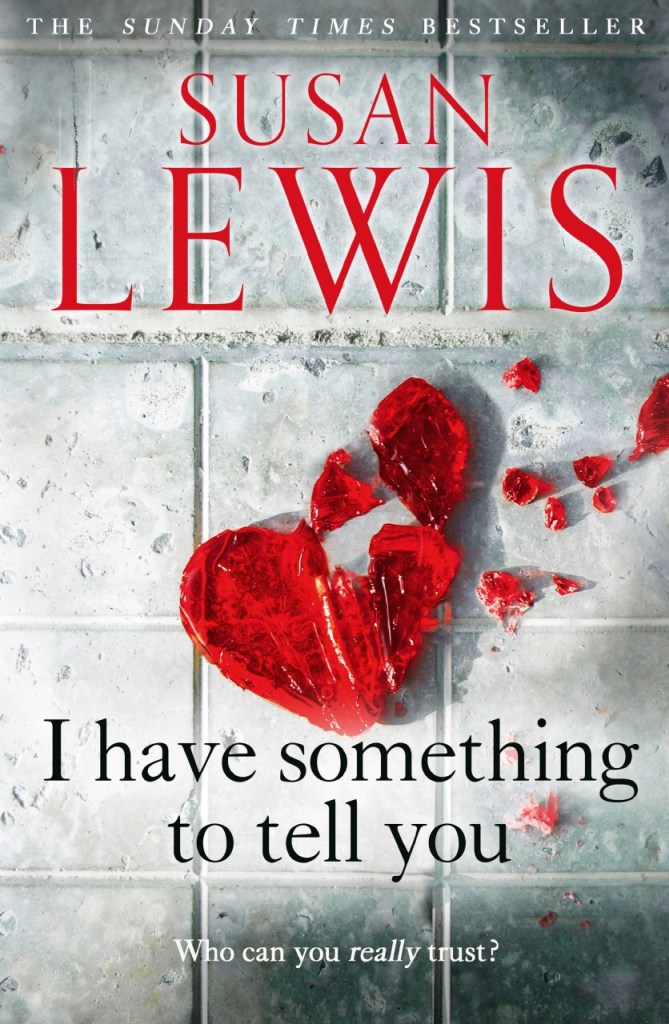
With her usual focus on families and relationships, this prolific author has turned her hand to crime fiction for new novel I Have Something To Tell You and she’s created a very competent murder mystery. Jay and her husband Tom work in the law; Jay is the senior solicitor in her father’s old law firm and Tom is a barrister in chambers across town. They live in Clifton, and have two teenage children who are very excited to be taking a gap year in their education and going travelling. When a new case comes to Jay, everything in her perfect world starts to shift. Edward Blake, local architect and property developer, has been arrested for the murder of his wife Vanessa. The details are perfect tabloid fodder, young beautiful wife is found strapped to her bed with stirrup straps, naked and it looks like she’s been strangled. Jay knows this is going to be an interesting case and immediately leaves for the police station, where she meet DI Ken Bright and his right hand woman DS Hamble. He’s quite clear that it does not look good for her client. Last night he had arrived home, realised his wife was not there but didn’t find that odd. Possibly because their house splits at the top of the stairs – to the right is a master bedroom suite where Edward Blake retires and to the left the guest bedrooms. It is only the next morning when Blake starts to become concerned for his wife’s welfare and when checking the guest bedrooms, just in case she came in late and didn’t want to disturb him, he finds his wife’s body. He now finds himself the prime suspect and he’s relying on Jay to keep him out of jail. Who has killed Vanessa and can Jay succeed in helping her client?
I enjoyed the double storyline, as time was split equally between the case and Jay’s personal life which hits rock bottom as she works with her client. With their children’s imminent departure on their travels, Jay and husband Tom have been looking forward to some quality time together. Both work long hours and this is their chance to slow down, maybe take some time off here and there, and start to enjoy their time together again. Daughter Liv has been struggling in an ‘on again – off again’ relationship with the son of one of their friends and Jay is there as a listening ear. However, it’s Tom who lobs an absolute bombshell into their lives and we get to see how Jay copes under the double pressure of a tough murder case, and trouble at home. At home Jay finds it difficult to sleep and to keep her head. At least work, tough as it is, gives her some respite from troubles at home. She finds an unlikely listener in her client, no matter what state his case is in, Blake notices if Jay is off colour or has things on her mind. He enquires whether she is ok and Jay admits to feeling emotional and being concerned for her marriage. However, this is only a moment of weakness, I was fascinated by the way Jay is usually able to put her game face on and lose herself in the case, undertaking investigations with her trusty P.I. Joe, and becoming embroiled in all the twists and turns.
I thought I’d identified the murderer at the halfway point, but I got it wrong which was a great surprise. Blake and Vanessa’s lives were complicated by another death in the family, and grief had eaten away at their lives and relationship. Vanessa is very troubled and vulnerable from that point on. I found myself a little uneasy with Blake and his position as ‘victim’ in their marital problems. Motives range from sexual jealousy to wrangling over money and potential inheritance. We meet a whole host of characters during the investigation, some of them real horrors that it must have been great fun to write. Vanessa’s stepmother sticks in my mind, because she’s a manipulative and vindictive old woman. She’s sitting on a fortune thanks to the ruined, Gothic, pile she insists on living in even though she can barely afford to heat it. This should be inherited by Vanessa, but could other members of the family have resented that? Especially since Blake and Vanessa already own three incredible properties where they live.
The author pitched her characters perfectly, whether it’s the professional, middle-classes or those who’ve had their money a bit longer. These characters all have beautiful, elegant, homes that sport giant kitchens/ family rooms where they can cook, dine and watch TV together. Blake’s a property developer so his own home is spectacular and very seductive. It’s real Country Homes and Interiors perfection, with it’s well placed riding boots in the hallway and bifold doors in the rear extension with incredible views of the Cotswolds. I wanted to live there. I’d have even taken the guest bedroom where the body was found! Each character had something that made the reader suspicious of them, and I looked forward to each new revelation in the case. I liked Jay’s relationship with her investigator Joe, ex police officer and friend of her father’s, he is a solid presence in her life when everything else is shifting. The author brings in themes of empty nest syndrome, infidelity, betrayal, and the impact of trauma. I thought her portrayal of long-term relationships was probably very realistic. She showed how we change as we get older, but also how life events change people and their priorities, creating the potential to derail even the strongest of marriages. The ending was unexpected, leaving one final twist for last which is always satisfying and not tying up every loose end neatly in a bow. This was an enjoyable read and a successful foray into crime fiction and domestic noir.
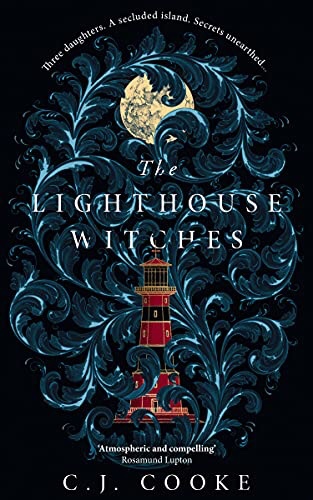
This book has been one of my most anticipated reads of 2021, because I loved the blurb of course, but also because I’ve had a lot of luck this year with fantastic books that have a lighthouse on the cover. The Lighthouse Witches was even darker than I expected and I enjoyed it immensely. In the late 1990s, artist Liv Stay finds herself homeless and without work so travels all the way up to Scotland and an island called Lòn Haven where a friend has recommended her to paint a mural. She travels to the coast, with her three daughters Saffy, Luna and Clover. There she meets Isla, caretaker of the bothy they’ll be staying in next door to the sea lashed lighthouse where she’ll be painting the mural. The mural is planned out on a large roll of paper and Liv is bemused to see a diagram of sorts, full of runic symbols she doesn’t understand. Getting this accurate in a circular building is her first challenge, and the second is to inject some of her own creativity in the design to make it beautiful. The girls are a bit shell-shocked to be brought to this remote and wild place, and there are certainly some unanswered questions as to why and how they ended up somewhere so remote and creepy. Liv carries a huge secret inside her, but the family are about to find out that Lòn Haven holds its share of secrets and ancient beliefs too, causing the whole family to disappear.
The story is told through different characters in three main time zones. Liv narrates the main section in the 1990s, then we meet her grown-up daughter Luna twenty years later, but we also go back into the history of the island and the witch trials of the 17th Century. The grown-up Luna is drawn back to the island when her sister Clover is found. However, to Luna’s shock, her contact Eilidh the social worker takes her to a little girl. Clover should be around thirty years old. Yet, Clover recognises her childhood toy and his name; she immediately squeezes Gianni the Giraffe like an old friend. Luna can’t understand why the social services haven’t noticed the anomaly in Clover’s date of birth, but her instinct is to protect her sister. So when asked, Luna fudges her date of birth and takes Clover away with her to the Air BNB she’s booked. At times, once they’ve settled, Luna does wonder if everything is okay with her sister. There’s the strange marking like a brand on her skin, which has four tiny numbers inscribed. There’s also a look she has, as if she isn’t present in her body and doesn’t recognise Luna. Over a couple of days she also displays some disturbed behaviour. Luna finds Gianni with his insides pulled out and his head cut off and then Clover floods the bathroom on purpose. Luna is desperately trying to find some sort of disease or syndrome that might have regressed her sister’s age. The only other explanation is a supernatural one and Luna isn’t sure she’s ready to accept the the local folklore she heard when she went missing all those years ago. However, she’s pregnant and alone with Clover in the middle of nowhere, so what if she isn’t her sister?
The author creates a brilliant atmosphere across all three time periods, starting with the name of the lighthouse, The Longing. Rather than full on horror, it’s a sense of the uncanny that starts to unsettle the reader. We all know that sense of rising tension when we feel so on edge, that anything would scare us. Here, it’s glimpsing a baby in the water that’s flooding the floor of the lighthouse, when it’s just a doll; a small child’s arm reaching out from behind Liv’s art materials; or opening a door to see your own double standing there. As we delve into the past and the history of The Longing, we are faced with the real-life horror of the 17th Century witch trials encouraged by King James, the first joint King of England and Scotland who ascended the throne after Elizabeth I died without an heir. Women with skills such as herbalism or midwifery could come under suspicion, but more usually local disputes and grudges led to women being branded a witch. In this case the local midwife, her friends and their daughters have all been accused and in matters like this the islanders stick to the rule ‘thou shalt not suffer a witch to live’. Accused women in this time period were often checked for the Devil’s mark – a mole, birthmark or blemish of any kind – had their hair shorn, were stripped, humiliated and then burned. The history of the island shows that a burning happened on the very rock, that now serves as a foundation to The Longing. I wondered how the old beliefs, in the fae or fairies, witches, and strange children called wildlings still held sway in the present day. In the 1990’s narrative there is still a definite undercurrent of ancient beliefs, with their followers having enough reach to influence both the police and the richest man on the island, owner of the bothy and lighthouse. Liv comes up against the reach of these believers when she reports seeing a small boy who looks like he’s been living wild. The police don’t want to know when she reports him missing, and it feels as if they view her as a nuisance, someone who doesn’t understand the island’s ancient way of life. When you visit Lòn Haven, as Luna does years later, there’s a sense of the ancient past existing alongside the present, as if time isn’t linear but looped upon itself.
I did get a little confused at times, especially with the elements of time being manipulated, through the cave known as the Witches Hide. There is old magic here. I was trying to understand the marks and numbers branded on Clover and others, and match them to the different time frames. In the end I gave up and decided to just go with it. I found this quote, in a letter from mother to daughter, very apt:
‘I’m not sure if I’ll make it, Luna. I’m not sure I’ll be able to hang on long enough to see you one last time. I’m going to try. But if not, if I slip away before I get the chance to hold you again, I wanted to write down the story of what really happened on Lòn Haven. As you’ll see, Cause and Effect in this tale do not fit easily together. The pieces are odd and mis-shaped because truth is messy and porous’.
I enjoyed the ending, despite feeling it was untidy. I thought it was a great story of women, and how their power and position changes over time. It also has a lot to say about mothers and daughters, how they communicate and the stories they tell each other to help navigate a world that can be set against women. I felt so much for Saffy, a very confused 15 year old who, in the midst of all the supernatural activity, is dealing with the usual teenage angst. Unsure of herself and this new place, she is lured into sexual activity and sending explicit pictures to one of the local boys. This is a girl who desperately needs her Mum, and isn’t getting any support or advice. There’s one occasion where Liv honestly has no idea where Saffy’s been for the last 24 hours. I wanted to give this girl a massive cuddle and help her set boundaries that she’s comfortable with instead of being coerced. The author mixes the present day perfectly with ancient folklore, supernatural happenings, and time travel, which is not an easy feat. Not to mention the depth of historical research that underpins the more fantastical elements. So, it seems my attraction to books with lighthouses on the cover, has paid off once again.
Meet The Author
C J Cooke (Carolyn Jess-Cooke) lives in Glasgow with her husband and four children. C J Cooke’s works have been published in 23 languages and have won many awards. She holds a PhD in Literature from the Queen’s University of Belfast and is currently Senior Lecturer in Creative Writing at the University of Glasgow, where she researches creative writing interventions for mental health. Two of her books are currently optioned for film. Visit http://www.cjcookeauthor.com


















 The Lotus Readers