A TENSE, TICKING-BOMB THRILLER SET IN A GRITTY NEAR-FUTURE LONDON
LONDON 2027
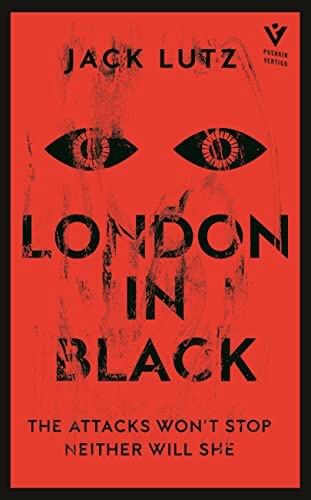
Terrorists deploy London Black, a highly sophisticated nerve gas, at Waterloo Station. For ten percent of the population – the ‘Vulnerables’ – exposure means near-certain death. Only a lucky few survive.
LONDON 2029
Copy-cat strikes plague the city, its Vulnerable inhabitants kept safe by regular Boost injections. As the anniversary of the first attacks draws near, DI Lucy Stone, a guilt-ridden Vulnerable herself, is called to investigate a gruesome murder of a scientist. Her investigation soon unearths the possibility that he was working on an antidote – one that Lucy desperately needs, as her Boosts become less and less effective. But is the antidote real? And can Lucy solve the case before her Boosts stop working?
I felt thrust into a post-apocalyptic London in this mix of dystopian thriller and police procedural. I was immediately on board with our narrator Lucy, a super sweary and ballsy detective. A very young DI who’s well known amongst colleagues for not taking any bullshit, but also bringing with her a huge amount of baggage. She has a tough exterior, even using boxing to cope with her mental health, but is constantly treading a fine line between losing her temper and having a panic attack. She is also a ‘super recogniser’ – able to recognise anyone if she has seen them before, even if it was just passing them in the street. It’s quite something to read how her brain works as she almost shuffled through the faces stored in her brain like a game of Guess Who. Her constant medical issues are enough to induce panic as she faces measuring her Boost levels constantly, then worries when they seem low for that time of day. There’s also the event that happened – a terrible trauma that she hates to recall and doesn’t talk about. All of this creates quite a flawed and frustrated character, but I did see past a lot of the guarded behaviour and found her quite endearing. Maybe because she has this huge vulnerability. Flashbacks take us to her life before the Waterloo Station event and the normal life she’s known is suddenly eroded. Her pharmacist boyfriend realises she’s a ‘Vulnerable’, but thinks she’s safe because of all the Boosts they have at the hospital pharmacy. It’s when he realises that there aren’t enough and doses will have to be rationed that the scale of what has happened hits him. They have gone from a world where anything they need is accessible to them to one where their security, health and welfare is in doubt. It’s such a massive shift in their living standards it’s hard to comprehend. When we come back to Lucy’s present and see her psyching herself up to inject, the reality of how reliant she is on these booster injections is visible in her black and bruised abdomen.
I found it hard to believe that this is a debut novel, it’s incredibly well plotted and so imaginative. It’s hard enough to create a dystopian thriller that’s believable, but I think the plausibility was helped by recent terrorist attacks and the pandemic. We know now that these things can happen so the deployment of London Black seems like a possible future event, as scary as that is. I thought it was clever that even society’s language has been changed by the attack, in much the same way that we have new phrases and words in common use since the start of the pandemic. The idea of being a ‘vulnerable’ scared me, so Lucy’s determination to take part in the world and investigate this murder impressed me. The severity of the symptoms is horrifying so I’d be locked in my flat with a food delivery service on speed dial. I really did have a constant low level anxiety throughout. However, the murder case is so intriguing I couldn’t put the book down. Who would kill a man that might have the antidote the world is looking for? It’s Lucy’s only hope for a normal life so her determination to solve the murder is understandable. I really loved her developing relationship with DI King and would love to see more of them both going forward in future novels. The author has plotted a great crime novel on the back of a dystopian thriller. It’s anxiety inducing, compelling and has a complex heroine that I was rooting for throughout.
Published by Pushkin Vertigo April 2022.
Meet The Author
Jack Lutz lives in London with his wife and daughter. He is fascinated by the city he calls home and loves to read about and explore it. The idea for London in Black came to him as he changed trains on the Tube. London in Black is his first novel.
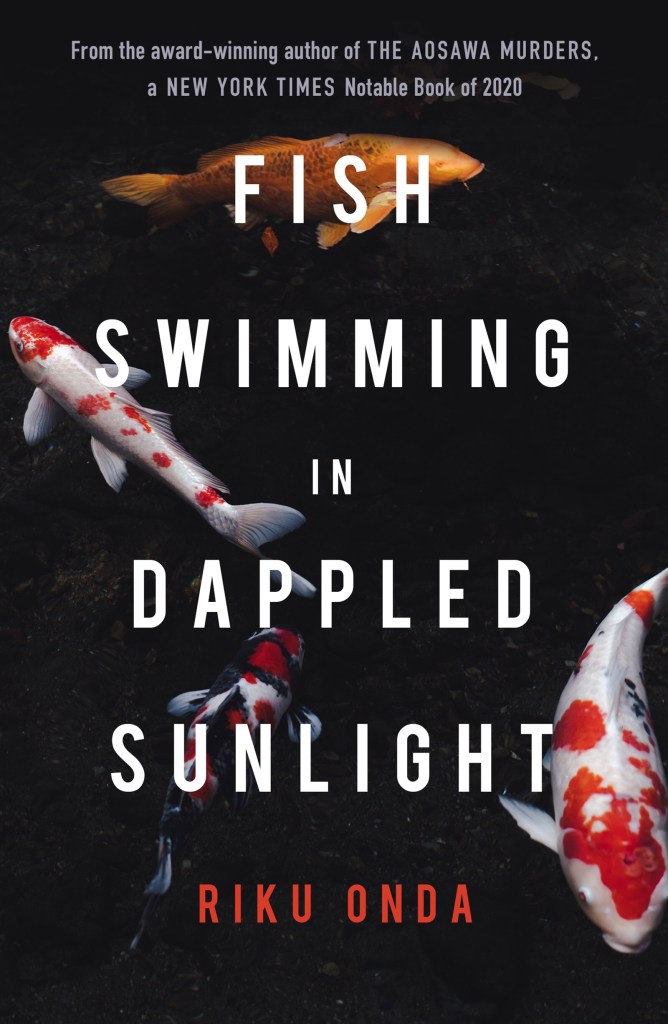
This book was an incredibly different reading experience considering it followed an historical fiction novel and a Regency romance. All that lush description and melodrama, followed by this very spare and quiet novel set over one night and mainly in one empty apartment. The contrast was stark and showed that we don’t need very much to convey a story and engage the reader. So short that I read it in one afternoon, this is a story of two people moving out of a flat and agreeing to spend their final night of the tenancy together. Aiko and Hiro are our only characters and their relationship has broken down since taking a trip together, trekking in the mountains of northern Japan. During the trek their mountain guide died inexplicably and both believe the other to be a murderer. This night is their last chance to get a confession out of each other and finally learn the truth. Who is the murderer and what actually happened on the mountain? This is a captured evening where a quiet battle of wills is taking place and the shocking events leading up to this night will finally be revealed.
My first assumption was that Hiro and Aiko are a couple, breaking up after living together, perhaps during their university years. The author conveys an eerie atmosphere, the couple are quite subdued and it’s almost as if they aren’t fully there. Have their minds sprung forward to their next step in life, or backwards to when things were different? There are those annoying marks and shadows on the walls that show where their furniture and pictures once were. The couple feel similar to those marks, like ‘ghostly shadows’ on the rug they’re merely an imprint of what was once present. Even their conversation is sparse, but when we’re taken into their minds we can see that’s where they really live. So much is going on emotionally and intellectually that I could imagine them giving off a sound, like a hum or buzz to signify the intensity of their inner thoughts. We never move out of the room, but we delve into the recent and distant pasts through their inner world. In the room with each other, they start in a quiet and measured way, then with each new piece of information they start to calculate and consider the other. This is where the tension builds, we can feel it inside them and it’s only a matter of time before it spills over into the room. Then comes the first accusation and the pace picks up. It’s not long before the first revelations begin.
I thought that the author used metaphors and memories beautifully and wove them into the psychological game being played. One is the ‘Pearl Earring’ song by Yumi Matsutoya that Hiro remembers an old girlfriend listening to when he was at school. The memory is triggered by Aiko saying she lost an earring while packing. In the song the girl throws her pearl earring under her lover’s bed when she knows it’s the last time she’ll be there. Aiko suggests she doesn’t want this reminder of her lover so throws it away, perhaps after ceremonially throwing the other at a place with special meaning. Hiro gives it more of a metaphorical meaning – one half of a pair is no use without the other. Is this what he thinks about him and Aiko. Aiko hasn’t lost her earring, she has stuffed it in his backpack and claims not to know why. She describes it as a landline, just waiting for him to find it. I think we leave things behind when we want to return or be remembered. The one that resonated most with me was the fish metaphor, where the title of the book comes from:
I see sunlight flickering through the trees. Fragments of the stifled emotions and desire we do not put into words, flit across them, like shadows moving through the wavering light. Deep below the dappled sunlight, fish twist and turn at the bottom of a dark-blue pool […] it is impossible to see them clearly or count them.
Aiko notices their presence, in and out of this room as she thinks of the fish. She sees Hiro has retreated mentally, he’s deep inside his own head just like the fish who disappear into the darker reaches of the pool with a flick of their fins. They are completely present with each other only fleetingly, as dappled sunlight dances across and illuminates them. They come together, then scuttle into the darkened corners, nursing their wounds and planning their next move. The same metaphor occurs at a pivotal point in the novel and gives a sense of the light illuminating different worlds, universes and possibilities.
I’m being so careful not to give away a single revelation or twist, but there are a few and they are unusual and surprising. This is a really unique psychological thriller, it seems sparse, but actually has so much depth and richness. I found myself completely immersed in this couple’s story, both the visible and the invisible. Still playing with memory, the pair delve into their childhoods, trying to work out what makes each other tick and discover how they ended up here. One has more memories of their childhood than the other, but can we trust what we remember? Our impression of something, may be no more than a fleeting glimpse of a much bigger picture. We may have based a lifelong idea of a situation or person on a mere fragment. Even the things we use to jog our memory can be misleading, such as photographs. Hiro muses on how we’re pushed into smiling for photos, to look like we’re enjoying ourselves and love the people we’re with. If we believe our photo albums, the picture we have of the past is distorted. There are so many things going on behind the scenes that are never captured – the moments in the deep blue water.
Published by Bitter Lemon Press 16th June 2022.
Meet The Author
Author: Riku Onda, born in 1964, has been writing fiction since 1991 and has published prolifically since. She has won the Yoshikawa Eiji Prize for New Writers, the Japan Booksellers’ Award, the Yamamoto Shūgorō Prize and the Naoki Prize. Her work has been adapted for film and television.
Translator: Alison Watts is an Australian-born Japanese to English translator and long time resident of Japan. She has wrote the translation of The Aosawa Murders, Aya Goda’s TAO: On the Road and On the Run In Outlaw China and of Sweet Bean Paste by Durian Sukegawa. Published by BITTER LEMON PRESS•E: books@bitterlemonpress.com Distributed by TURNAROUND PUBLISHER SERVICES•T: 020 8829 3000 PR by Alex Hippisley-Cox• T: 07921 127077 E: alex@ahipcoxpr.co.uk
I thoroughly enjoyed Fiona Graph’s first novel Things That Bounded because of the wonderfully detailed historical context she wove around her story. Here she does the same for her characters Theo and Zac, who meet during WWII and survive Dunkirk together. After this experience they become lovers. Theo works at Bletchley Park with Alan Turing, then goes to work in the Foreign Office after the war, while Zac works for MI6. They have a good life. However, this is a time where the love they’ve found with each other, isn’t accepted in the way it is now. Homosexuality is a crime and it’s not hard to imagine how stressful it must be to hide your true self as soon as you leave your front door. The pressure of being an outcast takes it toll on their mental health, with Zac becoming so severely depressed he has to go away. Can this beautiful relationship survive?
I love how Fiona Graph creates her characters, then uses them to drive the story forward. There’s a quiet bravery in their choice to be together in a society doesn’t accept them. The fact that they’re establishment figures is interesting too, both working as civil servants for a system of government that actively persecuted them. The fear of being outed, particularly at work, must have been incredible. Add to that the very real fear of being assaulted, arrested and ultimately being jailed for nothing more than loving each other. There’s the loneliness too, where straight couples can be open and make connections with their neighbours or work colleagues, these men can’t. They can’t invite anyone into their lives and be honest about their love for each other. This means avoiding friendships and relying solely on each other, placing further strain on the couple; they have to be everything to each other. This intensity is hard to maintain and I was so invested in their love for each other, that I was genuinely upset when the pressure became too much.
The author presents the mundane everyday things that happen when two people live together, because of course the men live just like any other couple, gay or straight. She does this by showing their routine, the domestic detail of everyday life is touching. This is all Zac and Theo want, the ability to live like anyone else. It makes us realise how brave men of this generation had to be, just to have what a straight couple probably takes for granted. It drives home the sense of injustice they must have felt. It seems galling that they fought side by side like every other man in WWII, but back in the ordinary world they have to live with a terrible fear of betrayal and prosecution. I kept reading as I was longing for their love to triumph over everything. However unrealistic that might be. The author’s setting was beautifully evoked and I felt firmly in the mid – 20th Century. I felt the most important thing Graph succeeds in doing is to show us, through these characters, the experience of so many men who were vilified and criminalised for loving the ‘wrong’ person. Yet we never feel that Theo and Zac are just ciphers created for this purpose. They feel wholly real and I was so involved with their emotional journey that I almost expected to look up from my book and see them there. Also, this could have been relentlessly miserable, but it isn’t. There’s something hopeful and uplifting about their courage and their enduring love for each other. I truly wanted them to triumph over the obstacles that faced them and for their love, despite the challenges it brings, to remain undimmed.
Meet The Author
Fiona Graph lives in London.
Her first novel, ‘Things That Bounded‘, was published in October 2020.
Powerful men can get away with murder…for only so long.
After a life of hardship, Mary Jane McCord’s life in Rapid City, South Dakota, finally hits a sweet spot. She finds happiness and her singing career takes off. Everything is looking up until she uncovers the dark and secret obsessions of two high-profile men.
Twenty years pass but the people closest to Mary Jane have not forgotten.
Will they bring the truth out into the light?
I had never read this author before and found this latest novel an unusual reading experience. Told in fragments, this is the story of a South Dakota town full of tensions and secrets. There isn’t even one main thread, but what links each fragment and each character is the death of MJ McCord. Mary Jane was as beautiful as Marilyn Monroe, more beautiful even some would say. After a difficult and unsettled childhood with mum Marjorie, MJ’s life looks like it’s finally coming good. She’s married to a lovely man who’s older, but gives her kindness, stability and wisdom. He thinks that MJ is beautiful on the inside as well as the outside, and its that inner beauty that captivates him, because it’s a rare thing in his experience. His money helps her with a dream of becoming a singer and she’s just on the cusp of being known. He knows she’s looked elsewhere of late, but it’s her age and he can overlook it. Then he gets some devastating news, MJ goes to a party at the home of one of the town’s superstar football players, Jordan Pinault, but never comes home. It seems that MJ has been playing away with Jordan, they had a row and MJ picked up a gun. She shot herself in the head.
The fragments of the story meander around this event, moving back and forth in time, to people close to MJ and those with only a tangential connection to that tragic night. I’ll be honest and say that first of all I was confused. The structure and order of the chapters doesn’t always make sense and it’s only when you start to get closer to the events of that night, that things become clearer. In fact the sections in the second half of the novel, seem to fit together easier and make more sense. Each fragment is told by a different person, but not everyone uses their given name, instead using a nickname, or they have a Native American name as well as a more Americanised/Anglicised name for work. This confused me even further. However, when it does become clear it’s like a fog lifting. I’m guessing this structure was deliberate and echoes the confusion and layers of half truths around Jordan Pinault and Ricky Nwafo. They have hidden their secrets behind layers of money, respectability, knowing the right people and the hero worship many in the town still have for them.
This town only has a surface sheen. The author shows us how there are people who matter in Rapid City and people who don’t. Despite America claiming not to have a class system, it certainly does have a hierarchy and here it seems the Lakota people are at the bottom of the pile. The Lakota people are also known as Teton Sioux and live the furthest West of any of the Sioux tribes. The author depicts the Lakota as an integral part of the town, but a struggling one. One character remembers being told in school of the ‘Lazy Lakota’ and one of the Lakota characters hates seeing this characteristic in his nephews who sit around in a trailer, drinking most of the day. There is also petty criminality, such as small time drug dealing and theft. We get the impression that discrimination does still exist, in the job market particularly, which leaves Lakota families in poverty compared with the rest of the population.
There’s also a streak of misogyny throughout, with physical and sexual violence still the norm. I felt so deeply for Celena, a Lakota girl who is friends with MJ and crops up at different points in the book. We see her sleeping at parties when she’s younger, in rooms where her unconscious state leaves her very vulnerable. In later years we see her sleeping in the trailer she shares with family, despite the noise of the TV and the kids around her. My first impression, from her teenage years, was that she must be really drunk or perhaps experimenting with drugs? Of course this is other people’s assumption too. Back in her teens, men joke about what they could do to her in this state, and as a woman her family despair of her. In a section narrated by her Uncle, he finds her asleep in their trailer alongside her grandmother, with the TV on and her cousins drinking and shouting in another room. He marvels at how she can sleep in so much noise and calls her lazy. It’s only when we finally hear Celena’s voice that we find out she has narcolepsy, a neurological condition where the brain can no longer regulate the patient’s sleep cycle. She is so used to people not understanding or believing she has a medical condition, that she doesn’t even bother correcting them anymore. Having had secondary narcolepsy, due to having MS and a viral infection, I know how scared and vulnerable it feels to be unable to stop yourself falling asleep. I did it on busy trains, in cafes and even at the opera. Sometimes I could hear everything around me, but couldn’t speak or open my eyes. So my heart went out to her, because once when she feel asleep at a party, her best friend MJ killed herself with a gun. What happens when those half remembered moments start coming back to her?
The author weaves a complex story here and the best thing to do is not worry too much about whether you have the story straight. Just go along with it, from person to person and slowly the truth starts to emerge. There is an incredible sense of place, almost dreamlike in places, but a town immersed in the surrounding nature, especially for the Lakota. There’s a real sense of shabbiness, poverty and sleaze just below the surface. While Jordan and Ricky are just as culpable, the character of town counsellor Beverley Burgess made me feel sick and there were sections that are a hard read. The author showed how certain people become revered in small isolated towns. We know from contemporary cases of rape and abuse that in many cases, ball players are shielded from scrutiny and have the money to afford the best lawyers. In fact it’s this culture of hero worship that allows these crimes to flourish in the first place. There are always people who know the full truth of what’s going on at the time, but no one wants to point the finger at the star. Young ball players have those ideals of being athletic and good looking, popular with girls and can get to good schools with their skills. They are like the alpha males in a town, and ball teams become part of the fabric of society with local sponsorship and charity work. The ball players gain a sense of entitlement that can allow them to mistreat and manipulate others, especially girls who are blinded by their looks and popularity. There is an element of nostalgia and escapism for the spectators, reliving their own past glories or just wishing they’d fulfilled their potential when they were young. I would hope, in the wake of the #MeToo movement that some change has taken place with people looking long and hard as to why they hero worship athletes.
This novel takes a hard look at small town America through this one incident. What is it that’s positive in these small communities, but also what’s missing? If we liken them to areas in the UK, they seem like our old mining communities where the work that’s been guaranteed for generations dries up and people are left in poverty, unable to afford or aspire to university. Young people have to settle for the work that’s available or move away and in these areas there are many young men who yearn to be footballers, boxers, MMA fighters and young women who want to be models, singers or reality TV stars, because it seems more attainable than expensive years of university education. I thought the book was atmospheric, mysterious and complex. It wasn’t like anything else I’ve read this year and left me thinking long after the book ended.
Published 6th May 2022 by Friday Press
Meet the Author
Kelly Creighton facilitates creative writing classes and teaches English as a foreign language. She is the author of the DI Harriet Sloane series, two standalone crime novels (Souls Wax Fair and The Bones of It), two short fiction collections (Bank Holiday Hurricane and Everybody’s Happy), and one book of poetry. Kelly lives with her family in County Down, Northern Ireland.
Susan Lewis is so prolific. I first came across her writing when I was looking for something to read between counselling clients at work. At the MS Therapy Centre where I worked there was a charity shop and someone had brought in a huge pile of books for sale. There I found a few books by this author. I’d never read her before but soon found myself hooked and bought all the Susan Lewis books in the bag. I’ve read most novels since and love joining blog tours for her latest books. This is another delve into crime fiction for Lewis and is based around a community on the south coast called Kesterley-On-Sea, where a small group of people have cultivated some very complex relationships. There’s Jeannie, who works as a publisher, and her husband Guy who is a neurosurgeon and they live at Howarth Hall, a Manor House with beautiful gardens leading to the sea. Not far away, lives Estelle a celebrated debut novelist who hasn’t managed to produce a follow up as yet, and her husband Neil who is a landscape gardener. They have a daughter, Chloe and Estelle’s assistant Primrose lives in an annexe next door. Centre of the community is the Seaview Café where the owner Fliss lives in an apartment above with her son Zac. Jeannie used to be Estelle’s publisher. Neil is Jeannie’s gardener and friend. Fliss used to be married to Neil and he is Zac’s father. When Jeannie goes missing one January day all of these relationships will come under scrutiny. Trying to make sense of this is Cara Jakes, a new trainee investigator who is young, intelligent and eager to prove herself. When she teams up with detective Andee Lawrence to look into the disappearance, she is determined to find out what has really happened to Jeannie. Cara begins to question the residents of this close-knit community, sure that someone has a secret to hide. However, how can she separate the truth within these complicated connections, especially when some of them are lying?
Lewis has undertaken a very difficult task with this novel, not only does she have complicated relationships to untangle, she moves us back and forth to the months leading up to Jeannie’s disappearance and the weeks following. Then she sets it all within the pandemic, which must have been a nightmare to track considering the complicated rules and lockdown dates. I barely know what I was doing and where I was over the past couple of years, never mind following imaginary people through the same rules and regulations. It did make the story more believable though and I was amused to read how difficult these characters found it to interpret and stick to the rules. I don’t think there’s a single character who doesn’t break them at some point, but it’s café owner Fliss who is finding the pandemic the most difficult. Having started her business just before the outbreak, the lockdowns have damaged her financially and without the help of a group of volunteers taking food out in deliveries the business wouldn’t be making any money at all. Her son Zac is also helping and has moved in with her for lockdown, though he usually lives with his dad Neil and Estelle. I think Fliss was the character I most felt for and I was sure there was a secret to why she was living alone and how her marriage to Neil fell apart, when they are clearly both so fond of each other. Despite these secrets, Fliss and Neil feel the most understandable and empathic characters in the novel for me.
Our missing person, Jeannie, is a dynamic professional woman, who I found interesting but difficult to understand. When Cara and Andee first visit her husband Guy they’re confused about the delay in reporting her missing. He explains how their demanding jobs mean they can often miss each other for a couple of days, but he also says something very strange. He suggests that Jeannie might want him to think she’s missing as some sort of test. She’s also made it clear that she finds their gardener Neil attractive and takes long walks with him. There’s an element of game playing going on in their relationship and I’m not sure I liked either of them very much. There is a strained relationship between her and Estelle too, as Jeannie published her novel but then dropped her when a follow up wasn’t forthcoming. Their relationship never recovered so Jeannie’s long walks with Estelle’s husband seem unkind. Yet there are secrets in Jeannie’s past that might explain her character, and they explosively come to light when her brother arrives from New Zealand. I found Estelle a puzzle too. She seems fragile and easily distressed, but also self-centred and very difficult to bond with. Her only friend seems to be her assistant Primrose, but she’s paid to be there. I could see she was insecure in her relationship with Neil, believing him still in love with Fliss, so when she is offered friendship from an unlikely source she jumps at the chance of some outside support. Her relationship with her daughter seems awkward too, as if she’s almost scared to be her mum. Lewis untangles this particular thread slowly and with great care, and it’s clever how it’s woven into Estelle’s character, but also the case the police are pursuing.
I don’t want to reveal any more about the entanglements between these characters, but there are many revelations along the way, both in the past and the present. I found it hard to like any of them, aside from Fliss, but they are fascinating. The dual timeline is clever because it keeps the tension of the case and all it’s twists and turns, while also exploring characters and events in more detail in the past. The women’s characters and backgrounds are explored enough to answer a lot of the questions that cropped up in my mind as I was reading. I didn’t feel the men’s past or motivations were explored as closely so I came away feeling I didn’t know them as well. However, that did make it more exciting when they were questioned as suspects, because they were more of a mystery. We also saw how the female investigation team of Andee and Cara have to draw a line between their work and their private lives, very difficult in a small town where everybody knows each other and uses the same facilities. I didn’t work out what had happened to Jeannie before the team did, because when everyone is lying and holding secrets it’s hard to know what’s coming next. I felt like someone was hiding in plain sight, never showing their true character. This was an enjoyable thriller, full of psychologically complex characters making dreadful mistakes and one clever and manipulative suspect to unmask.
Meet the Author
Susan Lewis is the internationally bestselling author of over forty books across the genres of family drama, thriller, suspense and crime, including I Have Something To Tell You, One Minute Later, My Lies, Your Lies and Forgive Me. Susan’s novels have sold over three million copies in the UK alone. She is also the author of Just One More Day and One Day at a Time, the moving memoirs of her childhood in Bristol during the 1960s.
Susan has previously worked as a secretary in news and current affairs before training as a production assistant working on light entertainment and drama. She’s lived in Hollywood and the South of France, but now resides in Gloucestershire with husband James, two stepsons and dog, Mimi. @susanlewisbooks
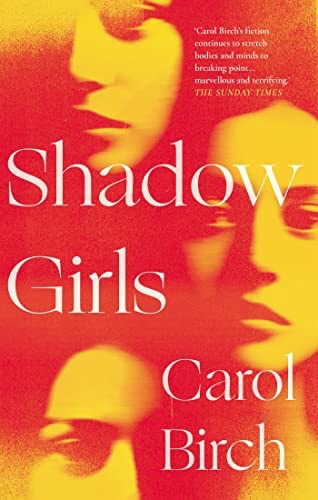
Manchester, 1960s. Sally, a cynical fifteen-year-old schoolgirl, is much too clever for her own good. When partnered with her best friend, Pamela – a mouthy girl who no-one else much likes – Sally finds herself unable to resist the temptation of rebellion. The pair play truant, explore forbidden areas of the old school and – their favourite – torment posh Sylvia Rose, with her pristine uniform and her beautiful voice that wins every singing prize.
One day, Sally ventures (unauthorised, of course) up to the greenhouse on the roof alone. Or at least she thinks she’s alone, until she sees Sylvia on the roof too. Sally hurries downstairs, afraid of Sylvia snitching, but Sylvia appears to be there as well.
I was drawn to reading this novel by the promise of a ghostly story, but it wasn’t at all what I expected. The novel is split into three parts: penumbra, umbra and anteumbra. All I understood from this and my teenage Latin lessons was that part two would be shadowy and opaque, umbra being the shadow cast during an eclipse. So the opening section would be the lead up to these events and this was the unexpected part. Birch begins her novel with an ordinary everyday tale of Sally’s school days. Set in Manchester in 1960’s, the author spends a lot of time setting up her characters and letting us get to know them. Sally and her best friend Pamela are fifteen years old and somewhat rebellious. Pamela is troubled and disliked by most of the pupils as well as Sally’s family, who are concerned about this girl’s influence over their daughter. There was a lot about this opening that I recognised from my own school days 20 years later; pushing the boundaries, forming friendships, first relationships and a bit of bullying. Together they bend the rules by playing hooky from P.E, climbing on the roof at lunchtime to smoke and eat their pack-ups and eating all the free samples in the food hall at Lewis’s Department Store. Like all girls of this age she is coping with the challenges of growing up, and has doubts about her first serious boyfriend, Rob. However, they really enjoy tormenting Sylvia Rose, an old-fashioned, slightly upper-class girl in their class who has a promising classical voice. Sally could have made a friend of Sylvia, because they do have some of the same interests, but instead she follows Pamela and makes fun of Sylvia. The girls do escalate, so some of their tricks go too far, leaving Sylvia humiliated in front of the entire school.
The girls are attracted by superstition and obtain a ouija board to secretly use during their breaks. The ouija board predicts a dark season approaching, but the girls do not want to believe it. They are also warned by one of their teachers, but the unthinkable does happens and the consequences could haunt Sally for the rest of her life. The author, slowly and cleverly, charts the course of these fun loving and boisterous girls as they become anxious and fearful young women. Since we’re told the story from Sally’s point of view, we get to know her best and her inner world is built. It is not easy to be a teenager, because we’re always in conflict and easily influenced by others through peer pressure. It’s a time when mistakes are made and we have to hope we don’t regret them forever. I was drawn to the novel because of the blurb that describes it as having “elements of the ghost story” and these all take place in the second part of the book. Rather than a ghost story, I would call suggest that there are uncanny or supernatural events within a story about adolescence and growing up. There is so much emotional energy around teenagers and that definitely plays into this story. The terrible tragedy that ensues will affect Sally badly, but also the whole school and in the final part of the book, set around twelve years later, the past really does start to haunt her. Sally returns to Manchester after working around the country and starts to re-connect with old school friends. the area where she grew up and reconnects with several of her old schoolmates. The pace picks up here and we’re definitely in “ghost story” mode, as the author really does use supernatural elements to terrify, quite effectively in parts. What’s most effective for me is that underlying ambiguity; do we take these events literally or does this narrator have some serious mental health issues?
Carol Birch’s novel is a clever combination of school tale, coming of age drama and ghost story. I think that readers coming to this for a straightforward ghost story, should be warned that the thrill and the fear do come, but not for a while. It’s a slow burn rather than a twisty, turny thriller that keeps readers on the edge of their seat. When the ghostly elements did come, they were effective and left me feeling a bit edgy, not knowing what was real and what was a figment of Sally’s imagination. There is a feeling of foreboding, something is going to turn out badly; but is that a ghostly payback or the just the product of Sally’s diseased imagination? The final part also has important reflections on mental health and the psychological aftershocks of grief. The haunting atmosphere will stay with you long after I turned the final page.
With every misfortune there is a blessing and within every blessing, the seeds of misfortune, and so it goes, until the end of time.
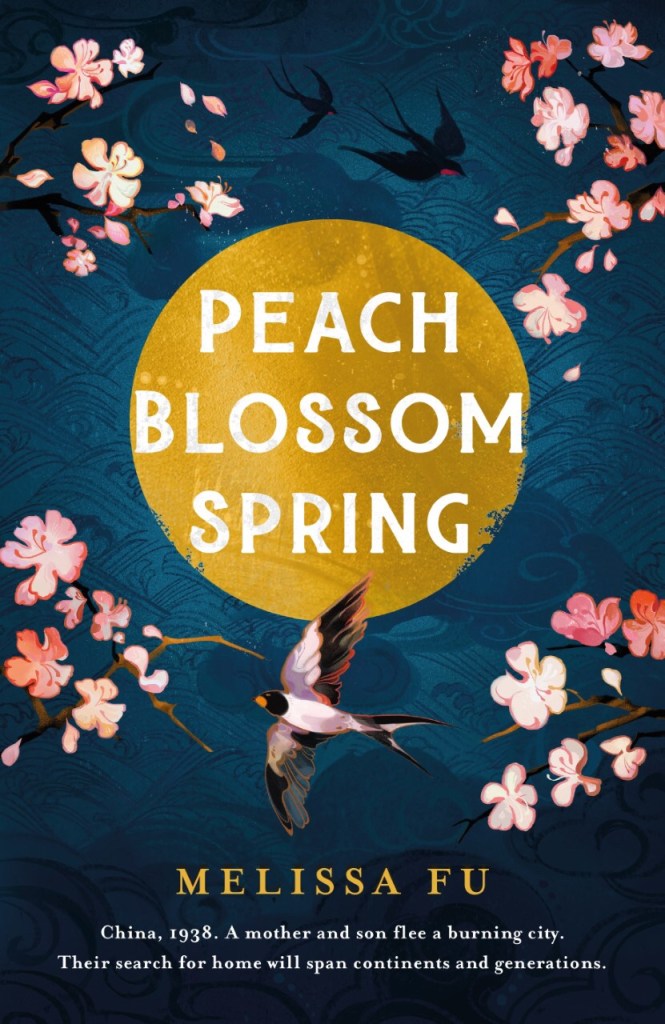
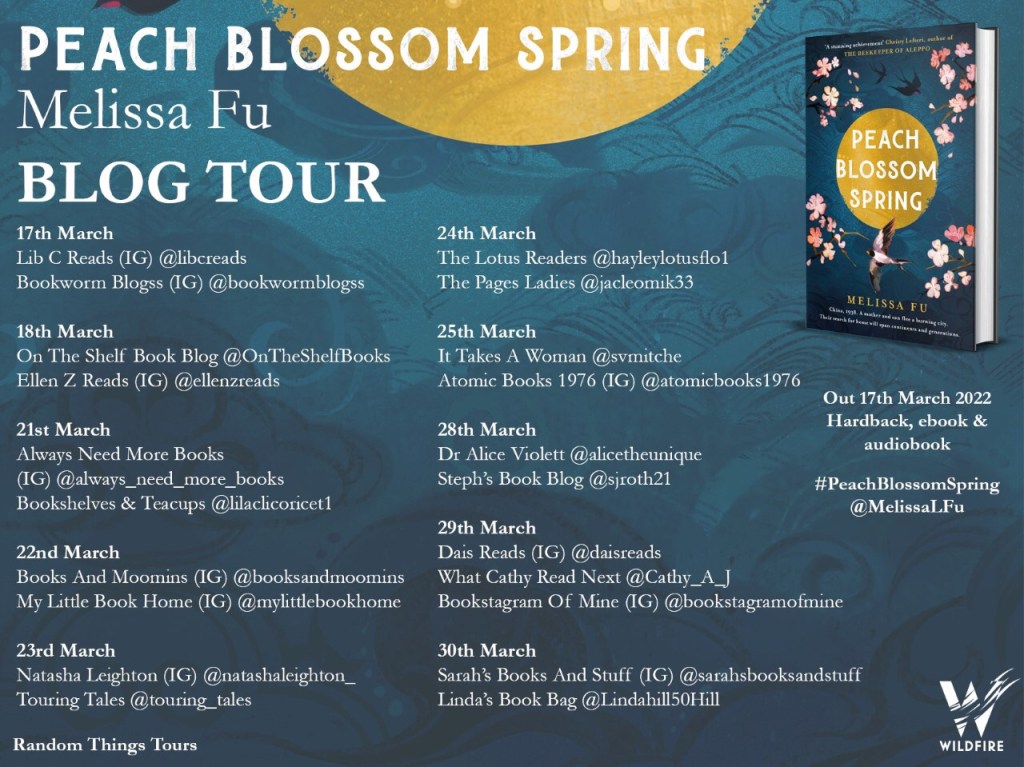
It is 1938 in China, and the Japanese are advancing. A young mother, Meilin, is forced to flee her burning city with her four-year-old son, Renshu, and embark on an epic journey across China. For comfort, they turn to their most treasured possession – a beautifully illustrated hand scroll. Its ancient fables offer solace and wisdom as they travel through their ravaged country, seeking refuge.
Years later, Renshu has settled in America as Henry Dao. His daughter is desperate to understand her heritage, but he refuses to talk about his childhood. How can he keep his family safe in this new land when the weight of his history threatens to drag them down?
Spanning continents and generations, Peach Blossom Spring is a bold and moving look at the history of modern China, told through the story of one family. It’s about the power of our past, the hope for a better future, and the search for a place to call home.
As they are torn from the only home he has ever known, Renshu’s mother Meilin, tells him stories from a scroll she has carried with them as their most precious possession. One story she tells is that of Peach Blossom Spring, a fisherman passes through a cave that becomes so narrow he can only just squeeze to the other side. There he finds a kind of Eden, with flowering peach trees and the all the wonders of nature. It’s a peaceful place, but eventually there is a dilemma to solve. Once he leaves this place, he cannot return. If he stays, he can never return to his old life. Meilin tells him the fisherman stays and builds a life in this new place, leaving everything that came before. The book is divided into sections from WW2 to the latter part of the 20th Century, as we follow events from China when Renshu is a little boy, to his middle age and the life of his daughter Lily in the USA. This structure shows how his early experiences shape the man he becomes, but also the parent he becomes and the daughter he shapes along with his wife Rachel. The author weaves together themes of identity, women’s history, politics and conflict, as well as inter- generational trauma so beautifully, yet all the while framing Renshu’s life through this ancient Chinese story that’s still relevant today.
I think that reading this while watching the horrific images of war in Ukraine, really brought the plight of Meilin and her son more vividly to life for me. That fear, the desperation of grasping what you can, then running with only the things you carry. I’ve been thinking about it a lot. The trauma and displacement these characters, and the real people who inspired them, went through fleeing from city to city as the war crept closer and the only option was escape to Taiwan. The author’s descriptions of fire bombed cities, cramped underground shelters, and the terrifying trip down the white waters of a narrow river in a deep ravine conveyed the panic and desperation of Meilin and her family. I found the descriptions of sheltering underground so claustrophobic, with that many people crammed into the space the air becomes limited and the bombs above so loud you can’t even think. I could imagine being a child in that situation, totally powerless and trying to make sense of what you’re being told – that the dark, cramped space that scares you more than anything is the only thing that might keep you alive. Renshu’s panic is described so well I felt it, so it was no surprise when these panics resurfaced in middle age. Renshu (or Henry as he becomes known) is a curious, intelligent boy who loses his father before really knowing him and is reliant on his Mum for his very survival. We read these early turbulent experiences through Meilin’s eyes and what stayed with me so strongly was her quiet strength. There are situations where it is impossible to have a voice, where all she can do is endure. Through her section of the books what stayed with me is that the price of war is very different for women than it is for men.
Meilin does not even have time to process the loss of her husband, and has to live under the charity and protection of her brother- in -law. Even though he constantly tells her that they are family and it is his pleasure to look after them, she knows his wife does not feel the same way. She’s uncomfortable and thinks of returning to her own family, but in the chaos of conflict how does she know they’re even alive? The risks she takes to be independent from her husband’s family are huge and they don’t always pay off. I was particularly affected by the ordeal she endures while trying to sell their family scroll – the only thing of value they have left. Yet she’s resourceful, always looking for work and a roof over their heads, working hard to keep Renshu safe and financially provided for. All the sacrifices she is making for him, to go to a good school and university, are clouded by the painful realisation that every step of her effort will take him further away from her. She must be lonely, especially when the companionship and support she receives from other women is broken when their men slowly return. She learns to rely on herself instead of others, especially men who always want something in return and curtail her freedom. She only relies on her brother-in- law where she knows his government connections will help Renshu get to school in America. Yet she doesn’t take any of his offers for herself, of marriage and she never asks for anything from Renshu either. In the 1970s when President Carter wins the US election, then officially recognises the communist government of China, it’s Renshu who worries about bringing her to the US. In fact when they realise there’s a mix up in his own official paperwork, Meilin is quietly resigned to living out her days in Taiwan. She doesn’t seem angry at the ‘mistake’ made by her brother-in-law, even though I felt it was a deliberate ploy to keep her close by. All she asks is for Renshu to plant an orchard, but it will take several years for him to fully understand her meaning.
The settings are so incredibly full of life and it was fascinating to compare Renshu’s surroundings in China and Taiwan with his new home in America. I experience synaesthesia and I found the settings of Shanghai and Taiwan an overload on the senses. In fact when Renshu reached his lodgings in America it felt like a sudden silence as if I’d gone deaf. Renshu himself has to go outside and marvel at the quiet of his empty street with everyone inside their homes. Compared to Meilin’s visit to market, filled with people, vendors shouting, the colour and variety of produce, it seems to lack colour and life. I saw one place in colour and one in black and white. I wondered if the noise and bustle had simply followed on from the noises of war for Renshu, but in his first months in the US it is simply the sound of home. He might have experienced less culture shock in a bustling city like New York or Chicago, but in the mid-west it must have felt like the colour and music had been drained from the world. However, quiet doesn’t necessarily mean safe and there are insidious dangers in an anti-communist America of the 1950’s with McCarthyism in the air. Renshu’s Uncle has given him a contact in America who warns him of the dangers of seeming too sympathetic to his home country and it’s politics. He suggests he stick to Henry, the Western name that Renshu chose on a friend’s advice, but also to avoid gatherings with other Chinese students. Anything anti-Communist could see him in trouble with the government at home, whereas anything pro-Communist might mark him out as trouble to the American authorities. So, even as Henry, he is walking a tightrope, constantly on alert and perhaps missing out on friendships that might have made him less alone. His regular listening to Chopin in the university library is an expression of his emotions, he feels an affinity with the music as if it articulates something he can’t as yet.
In this epic story the author has beautifully portrayed inter-generational trauma, something that can’t be escaped no matter how many oceans you put between you and your past. There is a psychological theory that society’s seemingly expanding mental health issues are caused by trauma from as far back as the early Twentieth Century and is a legacy of two world wars. Men who went to war became distant and emotionally closed off fathers, a problem that then passes to another generation who don’t know how to be affectionate, emotional and available. The effect of that stiff upper lip mentality of the 1940s can be seen in a generation’s rebellion of the 1960’s. Just as the author describes the giant destructive force of the two bombs dropped on Hiroshima and Nagasaki, trauma creates a shockwave that rapidly spreads outward affecting everyone in its path. It takes a strong person to stand up and say I will not pass this trauma on to my children. Renshu is traumatised by war. His existence started with minute to minute thinking, the mind fully occupied with the basic needs of food, shelter and safety. Never in one place for long, Meilin and Renshu are powerless and can never really stop to enjoy any period of good fortune, because they know it can be taken away from them again in a click of the fingers. Meilin understands this. She sees that her boy has struggled to move fully away from that short term thinking – he has been able to have some aspirations though and the relative luxury of safety, a constant income and roof over his head, a long and happy marriage. Yet she sees that he still struggles to trust it all. This is why Meilin tells him to plant an orchard, because a man who plants an orchard knows there will be a tomorrow and that he will still be in the same place, watching them grow.
Meet The Author
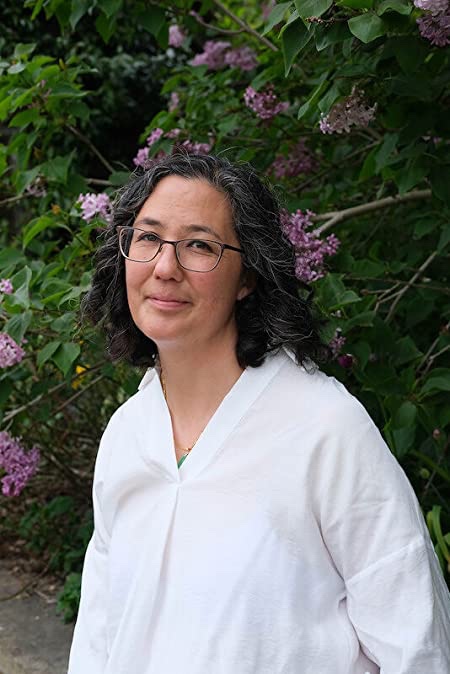
Melissa Fu grew up in Northern New Mexico and now lives near Cambridge, UK, with her husband and children.With academic backgrounds in physics and English, she has worked in education as a teacher, curriculum developer, and consultant. Melissa was the regional winner of the Words and Women 2016 Prose Competition and was a 2017 Apprentice with the London-based Word Factory. Her work appears in several publications including The Lonely Crowd, International Literature Showcase, Bare Fiction, Wasafiri Online, and The Willowherb Review. In 2019, her debut poetry pamphlet, Falling Outside Eden, was published by the Hedgehog Poetry Press. In 2018/2019, Melissa received an Arts Council England, Developing Your Creative Practice grant and was the David TK Wong Fellow at the University of East Anglia.
Tassie Morris is everyone’s favourite wedding photographer, famous for her photos of offbeat ceremonies and alternative brides. Yet commitment is proving impossible for Tassie herself, who cannot forget her first love.
When she’s sent to photograph a ceremony on Schiehallion – the Fairy Hill of the Scottish Caledonians – she meets Dan, who might be the one to make her forget her past. That is, until a family crisis begins a chain of events that threaten to destroy not only Tassie’s love life, but her entire career.
Set in a colourful world of extraordinary weddings, Shoot the Moon explores the complexities of different kinds of love: romantic love, mother love, friendship. And, ultimately, the importance of loving yourself.
There was an awful lot to admire in this novel about a young woman who makes her living capturing the love of others, while struggling to find the love she needs. I say needs rather than wants, because Tassie doesn’t really know what she wants or even the type of man that’s best for her. Largely this is because she’s stuck on a relationship she had when she was a teenager. I really felt for this woman, because she has so much going for her, but doesn’t realise it. She has had an exciting career in photography across the world, but more recently has worked for a U.K. wedding magazine. Tassie is given a file containing all the details of a wedding that her work colleague and friend has picked for their next real wedding feature. Tassie then travels down to that wedding to photograph it for the magazine. I particularly loved this rock and roll wedding, with the bride in a black dress and the mother of the bride performing the ceremony in her role as vicar. The author captures the beautiful details of the wedding so well I felt I was there. The Scottish wedding is also spectacular, not just the ceremony but the scenery around them. Scotland is the first time I see Tassie truly relax and let go of plans and schedules, leaving her phone to one side. It’s a moment of quiet in an otherwise busy story. In her spare time Tassie is a homebody, either tackling some of the DIY on her flat or tending the well-kept garden where she grows herbs and vegetables. She seems comfortable with who she is.
However, she doesn’t seem to know who she is when it comes to finding a partner. She harks back to her teenage years and the time she spent as Alex’s girlfriend. I love the way the author depicts our formative romantic relationships as something that shapes our love life into the future. Her seemingly perfect relationship with Alex possibly wasn’t that great, but when we put our rose tinted glasses on it can seem. Also, teenage relationships don’t have the pressures that our adult relationships do. They’re intense because it’s a new experience, but also because we don’t have the constraints or worries of work, money, mortgages and children. We have all the time in the world to be in love when we’re younger. Tassie only sees Alex occasionally these days and I wondered how much the relationship really suited his agenda, but left Tassie quite lonely and blocked her from moving on. There was an emotionally intelligent look at how attachment issues affect our relationships too; if we fear abandonment then we might put up with difficult behaviour just to avoid confrontation and potentially being abandoned again. I think Tassie is aware that Alex is not a fulfilling relationship for her, but can she cope with the feelings of being without it? Dan is a fantastic romantic lead character and has a lot of the qualities Tassie values in a man. He seems like someone who is straightforward, honest and loyal. Their personalities fit together well and he seems ready for a serious relationship, but can she take that step with someone she’s just met without fearing abandonment?
The author pulls everything together well as Tassie’s world changes completely when she makes a mistake at work and risks the reputation of the magazine. She has to think quickly because living in a London flat with her lifestyle won’t be financially sustainable. This seems like rock bottom for her, but could it possibly be a blessing in disguise? Could it be the right time to go home to the farm, given that her lifelong issues with her mum are still causing her emotional pain? Maybe it will also give her the opportunity to try something completely new as a career? I was keeping my fingers crossed for her because I wanted her to feel comfortable with who she was and feel whole. She might also be ready for that real, committed relationship to come along – but I didn’t need that for a happy ending. My only criticism of the book is that there were moments I felt like I was reading a different story. At the beginning we learn that Tassie sees a little blonde girl, who could be an imaginary friend, except Tassie continues to see her from time to time. Tassie feels like they’re connected in some way, but doesn’t know how. I found this really interesting and it had a different feel to the rest of the book. It didn’t seem to fit with the lighter tone around the wedding magazine and I had a feeling this could have been the start to quite a different novel. It’s a small thing, and I did like the way it was tied into her childhood anyway. All in all this was a great read for Valentine’s Day, and should suit romance readers as well as those who like their romances to have some emotional depth.
Meet the Author
Bella Cassidy grew up in the West Country – reading contemporary romances, romances, historical novels, literary fiction… just about anything she could lay her hands on. After a few years in London, working as a waitress and in PR and advertising, she went to Sussex to read English – despite admitting in her pre-interview that this rather sociable period in her life had seen her read only one book in six months: a Jilly Cooper. She’s had an eclectic range of jobs: including in the world of finance; social housing fundraising; a stint at the Body Shop – working as Anita Roddick’s assistant; as a secondary school teacher, then teaching babies to swim: all over the world.
She’s done a lot of research for writing a wedding romance, having had two herself. For her first she was eight months pregnant – a whale in bright orange – and was married in a barn with wood fires burning. The second saw her in elegant Edwardian silk, crystals and lace, teamed with yellow wellies and a cardigan. Both were great fun; but it was lovely having her daughter alongside, rather than inside her at the second one.
A beautiful old apartment block, far from the glittering lights of the Eiffel Tower and the bustling banks of the Seine.
Where nothing goes unseen, and everyone has a story to unlock.
The watchful concierge The scorned lover The prying journalist The naïve student The unwanted guest
There was a murder here last night. A mystery lies behind the door of apartment three.
When things go wrong at home in London, Jess is ready for a fresh start. She’s broke, and she’s suddenly left her job. Maybe things would look better from somewhere else? Jess jumps on the train to Paris and makes a quick call to her brother Ben to say she’s on her way. Ben should be set with work and an apartment now, but he did seem unimpressed or distracted when she called. Or was there someone with him? Either way she’s here now and for some reason Ben isn’t answering her calls or messages. She’s also taken aback by the size and luxury of his apartment block, surely Ben can’t afford to live somewhere like this? So with no money and nowhere else to stay, she manages to pick the lock and get in. Next morning there’s still no word from him and the questions keep coming. Why is the cat bloodstained? Why are his neighbours so unfriendly and mysterious? Jess is sure that her brother has been harmed, but by who and why?
This was an enjoyable thriller and I liked the structure, that allowed us behind the other doors at apartment building No 12 and into the worlds of these strangely eclectic residents. We were also taken back in time to Ben’s arrival at the apartments so we could see how his relationship built with the other residents. Who did he get on with and why? It also showed up my own misconceptions about people: I expected Ben to have made a beeline for the beautiful Camille in her tiny bikini; that the grumpy man Jess sees at the beginning to be a relative of the concierge; that Mimi would be the kind, girl next door type. Nothing is what it seems with these residents. However, the residents were not the only ones with secrets. Ben had never told Jess what he was working on in Paris. As for Jess, we don’t know exactly what forced her to flee England or how she’s ended up alone and penniless. We do find that they are half-brother and sister, forced into care at an early age and very close to each other, because their experience of parents is that they can’t be trusted. It is very out of character for Ben to forget or ignore her in this way. Jess is very resourceful, soon finding people she can talk to about her brother, including the residents, although they were less than welcoming. She has good investigative skills that she’s possibly learned from her brother and meets with a friend of his who may be helpful. I couldn’t decide whether I liked her or not, but kept reminding myself that no one is above suspicion, even family.
The writer immerses us in the less salubrious side of Paris. No fairy lit boat rides on the Seine for Jess as she heads deeper into the city’s underbelly. This is not a pretty Paris, but it is compelling and different especially when compared to the apartment building. Although we don’t have to go into the streets, the difference in social class can be see in the courtyard garden where the concierge lives in what sounds like a shed. It’s a humble home and it seems Ben is the only resident who treats her like an equal. She’s shocked by his kindness and is the person who gives us the most snippets about what’s really going on with the residents of these luxury flats. She is invisible to these wealthy people, but she’s always watching, eager to catch those little indiscreet moments that happen when people think you’re invisible. I had a lot of empathy for her, because she’s stuck. She knows too much and has too little to move on in life. I didn’t really like or connect with any of the other characters and that makes it hard to care about what happens to them. However, I’m not sure we’re meant to like them. We’re obviously drawn to Jess because of the position she’s in and her tenacity (and sometimes recklessness) in pursuit of the truth. This book hangs on the mystery and it’s twists and turns. I did enjoy the revelations and the cliffhangers, because there were things I didn’t expect, especially Ben’s life in the building and interactions with other residents. This is a fast, addictive thriller where you’re never sure what will happen next, but when it does everything can be turned on it’s head.
Meet the Author
Lucy Foley is a No.1 Sunday Times bestselling author. Her contemporary murder mystery thrillers, The Hunting Party and The Guest List, have sold over a million copies worldwide and also hit the New York Times and Irish Times bestseller lists. The Guest List was a Waterstones Thriller of the Month selection, a Reese’s Book Club pick, it was chosen as one of The Times and Sunday Times Crime Books of the Year, and it won the Goodreads Choice Award for best mystery/thriller. Lucy’s novels have been translated into multiple languages and her journalism has appeared in publications such as Sunday Times Style, Grazia, ES Magazine, Vogue US, Elle, Tatler and Marie Claire. Lucy lives in Brussels with her husband their baby.
To keep her children safe, she must put their lives at risk … In suburban Australia, Mim and her two children live as quietly as they can. Around them, a near-future world is descending into chaos: government officials have taken absolute control, but not everybody wants to obey the rules. When Mim’s husband Ben mysteriously disappears, Mim realises that she and her children are in great danger. Together, they must set off on the journey of a lifetime to find Ben. The government are trying to track them down, but Mim will do anything to keep her family safe – even if it means risking all their lives. Can the world ever return to normality, and their family to what it was?
Every time I read a new dystopian novel I end up feeling a little disturbed about how close it is to the world we’re in now. Especially with the extreme weather events, potential for WW3 and the lingering pandemic all competing for our attention. Yet for some reason I’m drawn to them and when they’re done well they blow me away. There have been a few dystopian novels sitting high on my ‘Books of the Year’ list for the past two years running.
This was another novel set in the near future, where severe climate change events and continued terrorist attacks have made the government take drastic action. They now have a totalitarian government, run under the sinister title of the “Department”. Humans have been installed with the type of microchips anti-vaxxers are terrified by, allowing the government to keep tabs of every single citizen. All civil liberties and freedoms have been swept aside for the false promise of round the clock security provided by their privacy being invaded. Any dissent is dealt with quickly and without mercy, and there are purpose built compounds ready to house anyone who speaks out. Many go in, but nobody comes out again, a though that fills me with dread considering I’m writing this as Russia is dismantling any left-wing TV or radio station and announcing new laws to curb anyone even labelling their invasion of the Ukraine as a war instead of a ‘special military operation.’
So when officials from the Department tell Mim is tell Mim that her husband Ben is missing, she has to think quickly and tactically about the best plan of action for her and their children Essie and Sam. When officials arrive at her home to department to “help and advise’ she knows that she’s being trapped. Their advice warns her to stay home and they offer her some official looking forms to sign, but without giving her a chance to read them. Finally, they’re asked to surrender their Passports. This might be run of the mill stuff in a dictatorial regime, but Mim isn’t so easily controlled or fobbed off. Ben had been working in Indonesia, at a gold mine, so Mim is used to him being away from home, but he’s never been unexpectedly delayed or kept at his place of work without some notice. However, his return ‘in the next few days’ allows Mim time to think and delay telling anyone they know. The only other person who. knows the truth is Raquel – a foreign, independent journalist who had happened to ring because she had heard Ben had disappeared on the grapevine. Mim decides to run, knowing that officials will take them as security to lure Ben to them if they don’t already have him.
The story of this family on the run makes a great thriller, the pace is mostly superb and I was rooting for this family. The Department are relentless though, and Mim finds her way blocked, not just by the confiscated passports, but by frozen bank accounts and phone calls where her children are threatened if she doesn’t return home. I felt torn about Mum’s decision making. I applauded her for sticking to her principles and the belief that her children are in more danger living within this totalitarian regime than by running any. The other half of me was thinking she was crazy to risk their lives this way. An old friend of Mim’s takes the family on a treacherous sea voyage to find Ben, but I kept wondering whether she could trust her friend or if there are ulterior motives. I found some of Mim’s choices here difficult to understand and the story seemed to slow as they tried to reach Borneo. However, once there and towards the end the pace changed suddenly and my only criticism of the book would be that this huge change in pace made the final section feel like it passed too quick, giving me a bit of an anti-climactic feel. I thought the Big Brother elements of the novel were well established and the government felt truly terrifying in their scope and methods of punishment. I enjoyed the fact that it made me think, not just about the politics, but about being a mother in this oppressive situation and the decisions I would have made for my children. Was it worth putting their lives in immediate danger to avoid the potential future consequences of staying put? I found it involving, intelligent and eerily prescient, with the ability to start a few dystopian nightmares of my own.
Published in paperback by Harper Collins on 3rd March 2022.
Meet the Author
Kate Mildenhall is a writer and education project officer, who currently works at the State Library of Victoria. As a teacher, she has worked in schools, at RMIT University and has volunteered with Teachers Across Borders in Cambodia.
Skylarking was her debut novel. She discovered the story while on a camping trip and she wishes for more such fruitful adventures. She lives with her husband and two young daughters in Hurstbridge, Victoria.