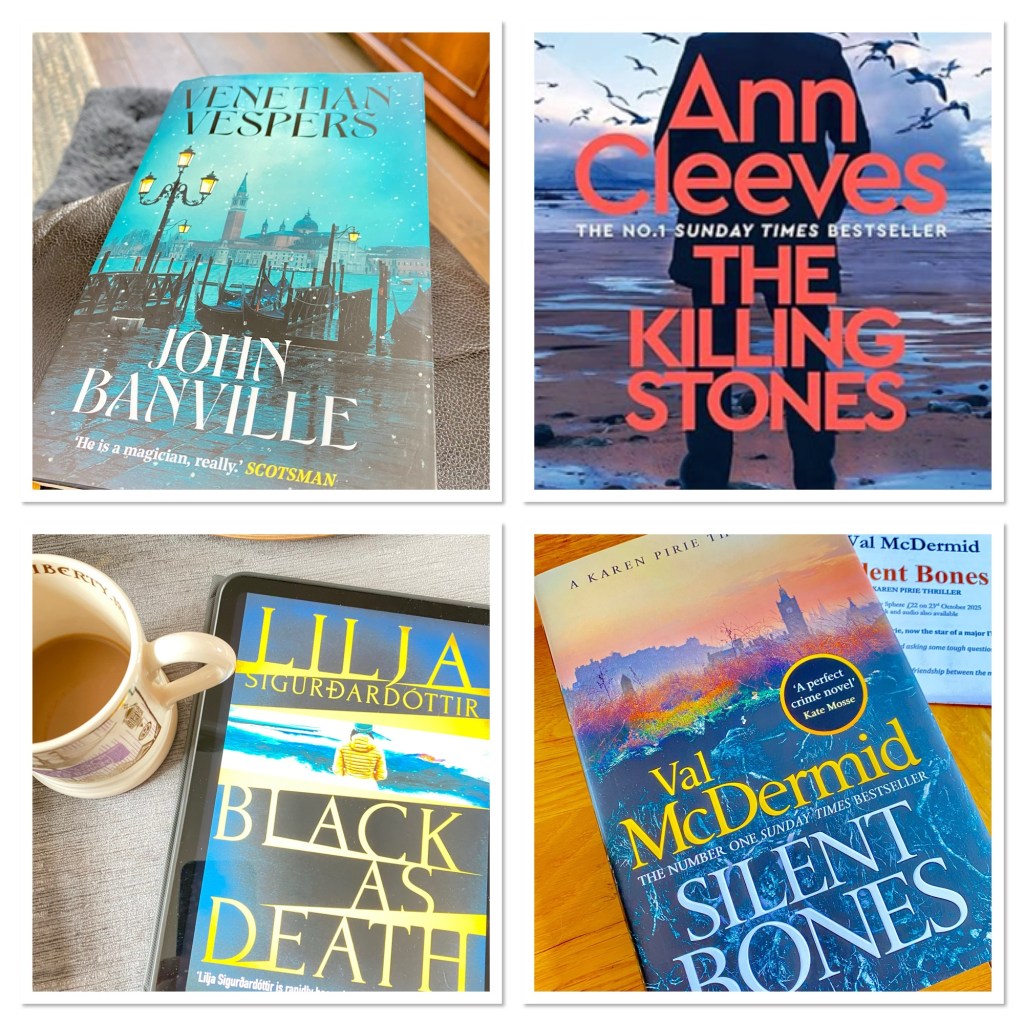
Posted in Random Things Tours

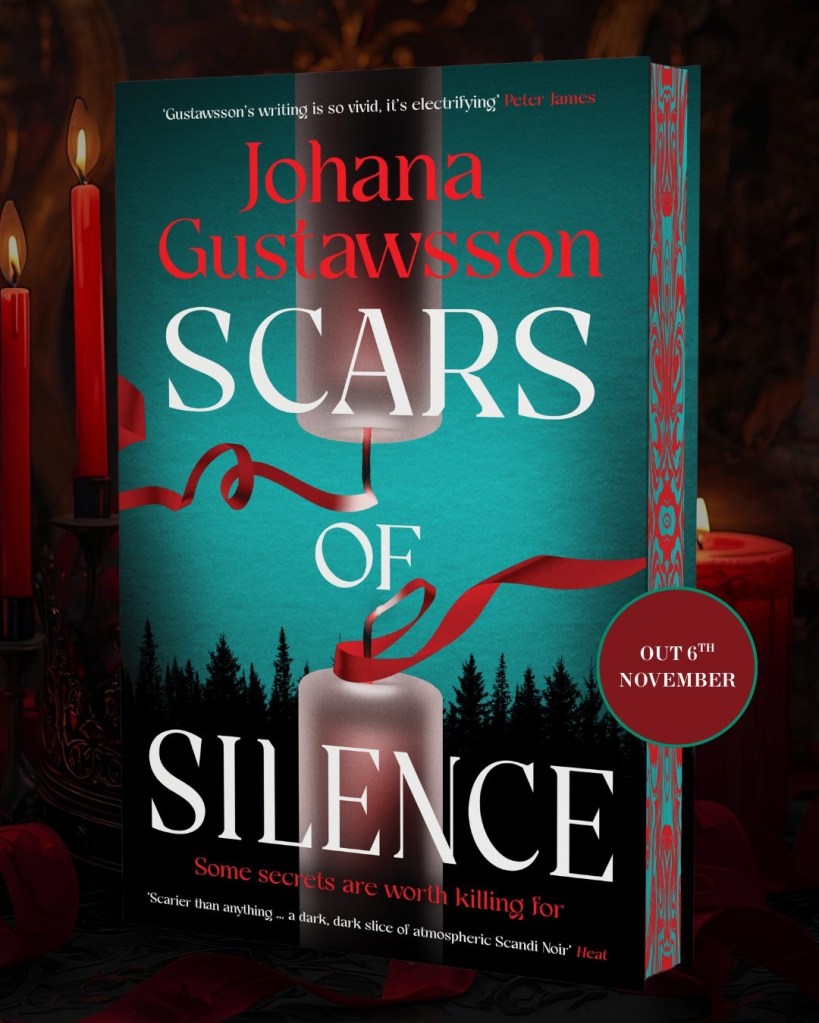
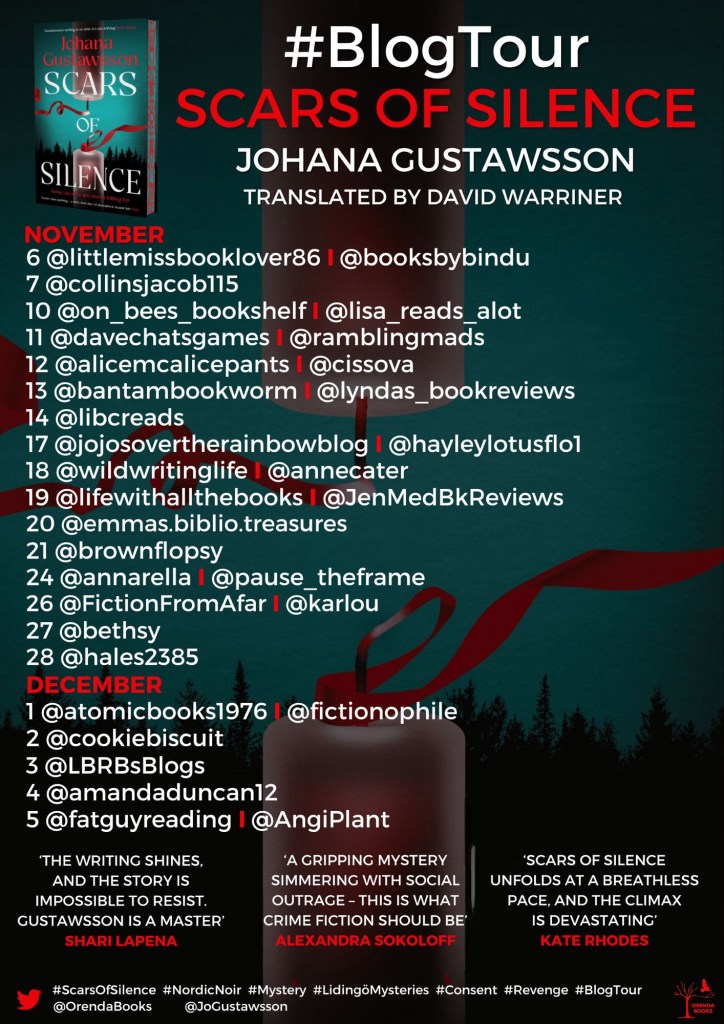
Scars of Silence by Johanna Gustawsson 

As autumn deepens into darkness in Lidingö, on the Stockholm archipelago, the island is plunged into chaos: in the space of a week, two teenagers, the son of the island’s mayor and that of a powerful businessman, are brutally murdered. Their bodies are left deep in the forest, dressed in white tunics with crowns of candles atop their heads, like offerings to Saint Lucia. Maïa Rehn has fled Paris for Lidingö, where her husband grew up, trying to come to terms with the death of their only child in a car accident. But when the murders shake the island community, the former police commissioner is drawn into the heart of the investigation, joining Commissioner Aleksander Storm to unravel a mystery as chilling as the Nordic winter. As they dig deeper, it becomes clear that a wind of vengeance is blowing through the archipelago, unearthing secrets that are as scandalous as they are inhuman. But what if the victims weren’t who they seemed? What if those long silenced had finally found a way to strike back? How far would they go to make their tormentors pay? And you – how far would you go?

I loved the timing of this novel from Johanna Gustawsson, her second set on the island of Lidingö in the cold, dark run up to Christmas. Here she bases her murder mystery around the feast of St Lucia and it begins when a body is found in the traditional dress of the festival. The victim is wearing a white tunic that’s been slit up the back, with a red sash and a crown of candles representing the festival of light. It reminded me of the locally held Christingle services, where small children in white hold a symbolic orange with a lighted candle in it and a red ribbon meant to symbolise Christ’s blood and his role as the Light of the World. It was something I’d never encountered before, being Catholic it wasn’t part of our tradition, but it fits into the many festivals that bring light to the winter months such as Hanukkah and Diwali. The festival and the victim’s clothing make the scene of the crime even more dramatic and hard to forget. It also throws up immediate questions about whether the date or the costume is a message from the killer. Visiting French detective Maia Rehn offers her help to local commissioner Aleksander Storm and they begin to investigate together. It soon becomes clear that the killer isn’t finished with the island community and the pair must work very fast, prizing secrets from people who are reluctant to talk and digging up long buried events that will devastate and destroy lives. 

One of the things I love most about this series is the atmosphere that the author builds. This is not the average crime novel, it definitely has a more Gothic feel that I would normally associate with folk horror. 

“It was hardly an ocean this mere strip of sea. A moat more like – cutting Lidingo off from the life of the Stockholm mainland. A ghost infested moat, surrounding a poisoned island”. 

This killing takes the community back several years to the murder and rape of a young woman dressed in her St Lucia costume. The victim is Jennifer, a well known and liked teenager in the community whose white dress and crown gives the impression of a angel in the snow. Jennifer was the daughter of Sophie Ackerman who bonds with Maia at a party, when they realise that both of them have lost a child. The pain and confusion of these unexpected and sudden losses have no descriptive word in the Swedish language, only the Sanskrit word ‘vilomah’ comes close, meaning ‘against the natural order.’ Motherhood and who we become when we lose a child is a theme of the novel and drives home that violent deaths affect a whole community. In fact, following the death of Jennifer Ackerman suspicions fell on her friend Gustav who found her body. The way the community treated Gustav, as well as the grief, caused him to commit suicide. It’s such an important theme that the novel’s opening takes us to a classroom on the island where Gustav’s mother holds everyone at gunpoint, blaming them for the death of her grief stricken son. These events and the darkening winter days hang heavy over the tiny island. Maia describes the loss of her son with such beautiful and haunting words that let us know he is still so present in her thoughts she almost expects him to materialise: 

‘He’s everywhere around me, so I’m always waiting for […] a word, a sound, the slightest caress from him. I find myself sniffing the air for the scent of him’.   

Sophie talks about her daughter Jennifer in the words of Cyrano de Bergerac, showing that she is still ever present for her too. It’s such a beautiful way of describing grief that comes in waves, some days it seems far away and other days it feels as if the loss was yesterday. I identified with this so much, knowing that even ten or twenty years on there are days when the grief feels painfully fresh. How much worse it must be with violent deaths where there are feelings of anger, guilt, resentment and so many questions left unanswered. 

‘Her name is in my heart like a bell. Every time I think of her it’s like I can hear that bell ringing and ringing and the memories and feelings resurface every time’. 

As the investigation unfolds it is clear that Maĩan and Aleks work quite differently, but complement each other. He is more of a facts person, whereas she picks up on emotion and her own feelings, heightened by tragedy, seem to have honed this skill. As an outsider she also seems more effective at getting people to talk, something that can be a struggle when a detective lives in the community they’re investigating. Their discoveries are both haunting and horrifying – especially a ‘trophy’ find that absolutely turned my stomach. Some of the themes were very timely, aside from the normal teenage themes of peer pressure, relationship angst and experimentation, there are also more up to date themes of incels, grooming and consent. I found it fascinating that Swedish law reform in 2018 placed the emphasis on positive consent so that rape was no longer defined by saying no, but the absence of actively saying yes. It recognises that when backed into a corner, freezing and becoming unresponsive are normal survival instincts and not consent, so threat and physical force don’t have to be present for an incident to be defined as rape. When we are finally taken to the night Jennifer Ackerman died it is hard to read, but that’s how it should be. This first incident is like a veil of darkness triumphing over light. It’s as if the island loses its innocence. I loved that the answers don’t come easily and the tendrils of the aftermath are everywhere. This is a vivid, symbolic and haunting crime story and the truth is devastating – a gradually revealed horror that has echoed down the generations of this isolated community. 

Out now from Orenda Books

Meet the Author

Born in Marseille, France, and with a degree in Political Science, Johana Gustawssonhas worked as a journalist for the French and Spanish press and Her critically acclaimed Roy & Castells series, including Block 46Keeper and Blood Song, has won the Plume d’Argent, Balai de la découverte, Balai d’Or and Prix Marseillais du Polar awards, and is now published in nineteen countries. A TV adaptation is currently under way in a French, Swedish and UK co-production. The Bleeding was a number-one bestseller in France and is the first in a new series. Johana lives in Sweden with her Swedish husband and their three sons.

Posted in Monthly Wrap Up

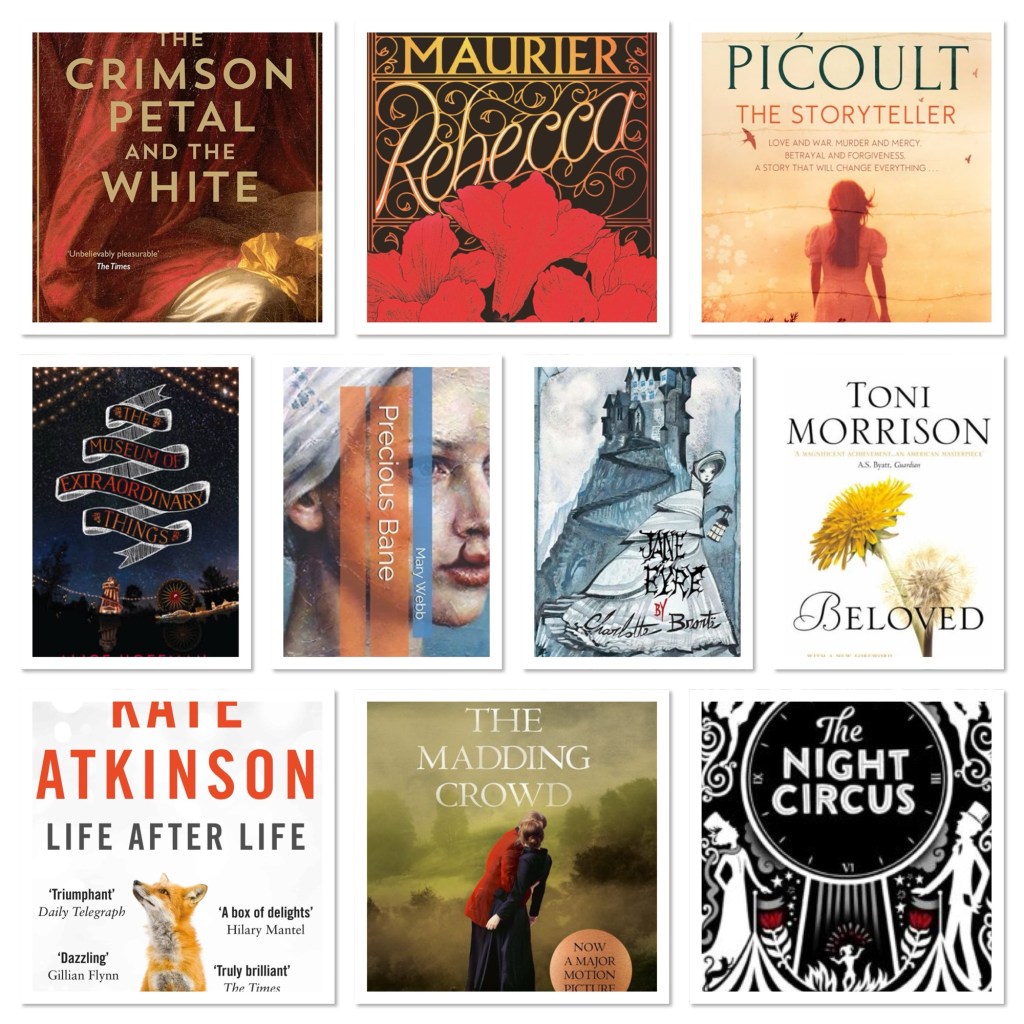
Best Reads October 2025

October brought many several wonderful things, as birthday months so often do. As always we went away, this time for two weeks in Dumfries and Galloway for book shopping at Wigtown and fishing for my other half. We knew we were onto a winner as we turned off the single track road onto a farm track that was a mile long! I’ve never stayed somewhere so quiet and because it was a Dark Skies area we got to stargaze too, with a meteor shower being a high point of the fortnight. I finally got to check out The Bookshop, run by author Shaun Bythell. The daily occurrences in the shop are depicted in his three books and I grabbed the latest one along with some second hand purchases too. As well as all the shops in Wigtown we stumbled across a little gem called Gallovidia Books in Kircudbright. This was a treasure trove of new fiction, poetry and children’s books as well as a good collection of biographies. The owner was very knowledgeable, definitely a real book lover and he recommended one of my choices above as his wife was reading it and was torn between savouring and devouring it. We alternate on holiday, when it’s a fishing day I stayed on the farm and had a fabulous view to enjoy while reading and getting some of my own writing done. After a couple of months without a kitchen it was a joy to come home to everything finished so I now have a functional kitchen again.

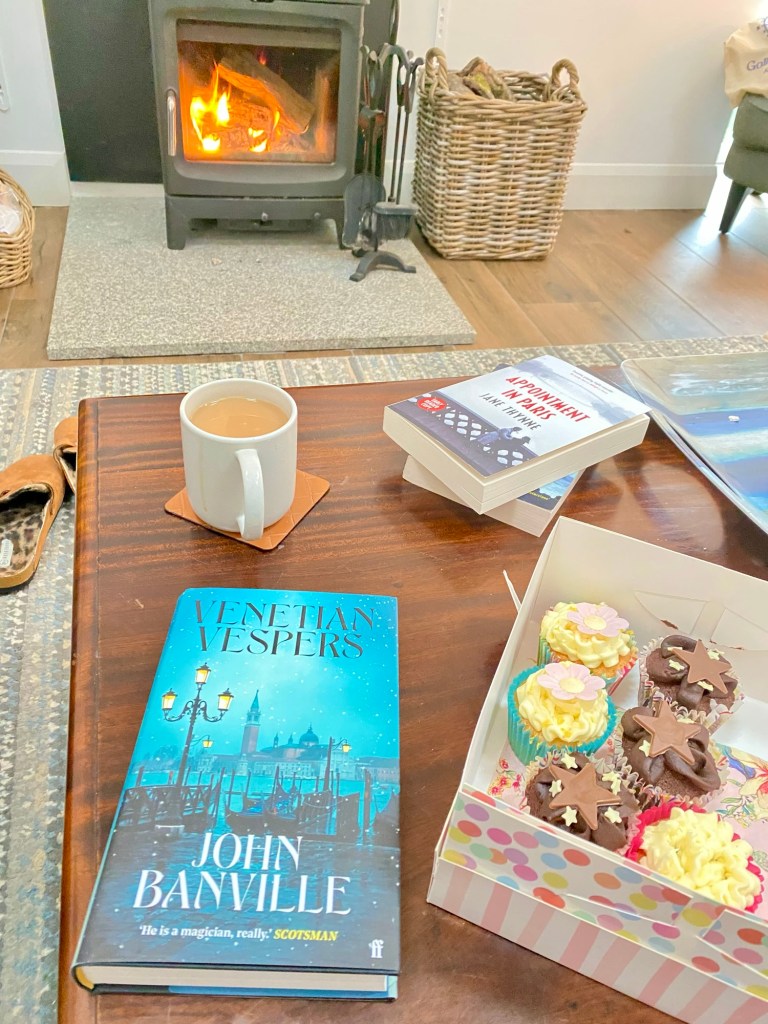
Bought on recommendation from the owner of Gallovedia Books I couldn’t wait to read this atmospheric book so dived straight in, This felt like the perfect autumn read – a sinister mystery filled with atmosphere and a slowly building sense of menace. Evelyn Dolman embarks on his honeymoon with his new wife Laura and it proves to be anything but the honeymoon he expected. With Laura settling in early for the night at Palazzo Dioscuri he decides to go for a walk and perhaps a drink somewhere close by and she suggests Florian, a cafe that first opened in 1720 and still serves Venetian visitors today. A chance meeting is followed by a night of drinking and one unforgivable act. So when he wakes in the morning, sluggish and nauseous and finds his wife isn’t next to him in bed, he imagines she has taken herself to another room. However, as the morning progresses it becomes clear that Laura has simply disappeared. 

There are clues to what is transpiring here but they are subtle. The writer has incredible sleight of hand and they seem inconsequential or at list explicable. Some completely passed me by. As I opened the book again for writing this review it made me think of The Sixth Sense and how no one saw the clues on their first watch of the film but when they watched for a second time they couldn’t believe they’d missed them. Each character is slippery and elusive with an unpredictable quality that felt dangerous. I lived this uncanny feeling the author created which grows organically from the city. This is a sparking jewel of a city that’s risen from the mud and brackish waters of the lagoon. Evelyn mentions the fin de siécle, that time of decadence towards the end of the 19th Century and that timing certainly informs some of the events in the book, particularly the fluid social order and sexual licentiousness. We’re told constantly that Venice is decaying and sinking. One day it may be completely under water, but the decay isn’t what you see when you first visit. Venice bewitches you with its golden domes, Morrison arches, coloured glass and the way sparkling light from the surface of the water bathes everything in a soft light. Then suddenly, only a street away you notice a tree growing out of someone’s house and at night most residences seem in darkness now that families can no longer live in the water logged lower floors. Banville captures this ‘double’ city utterly, describing the timeless romance of a gondolier serenading his passengers but also the jarring sound of the vaporetto. We see the sparkling water but also smell the mud as the passing boats churn it up. He links this duality with human nature, our surface selves and the real us, even the parts we avoid and keep locked away. Everything about this novel is a conjuring trick and I fell head over heels in love with it. 

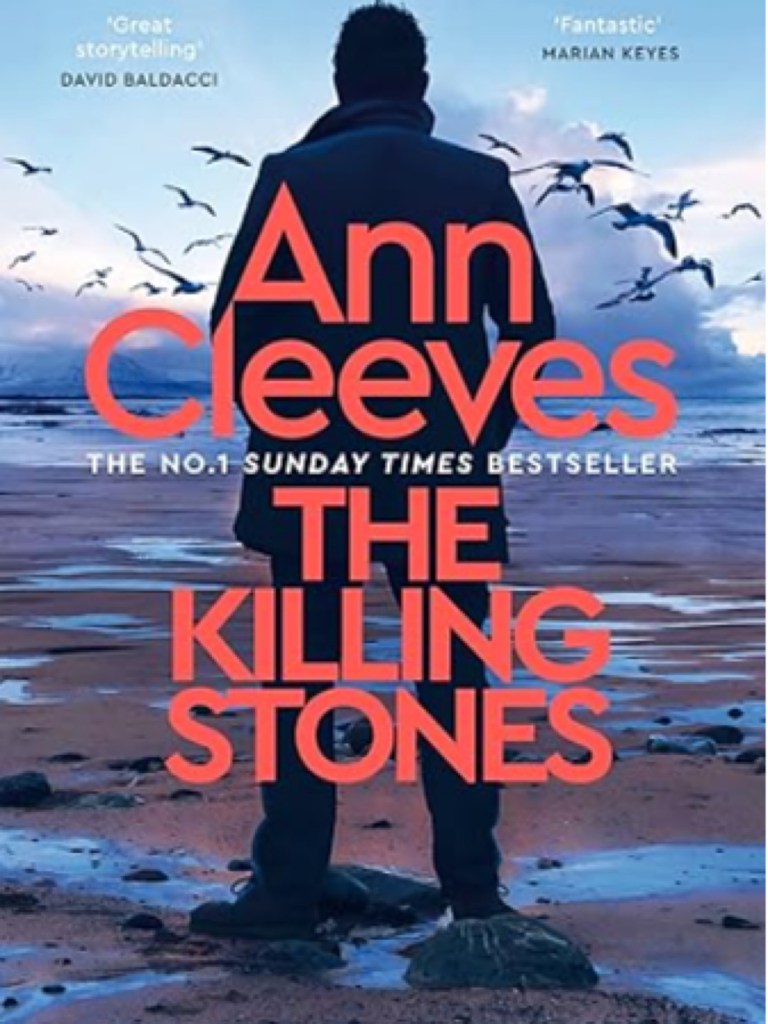
I can barely contain my happiness at being back in the world of Jimmy Perez, this time in the Orkney islands where he grew up. Jimmy is living with partner Willow Reeves, who’s both his boss and heavily pregnant with his child. It’s Christmas and the couple are looking forward to the celebrations. Jimmy’s stepdaughter Cassie is spending the holidays with her father Duncan and his family on Shetland, so it just the two of them and son James. For the police, Christmas isn’t a holiday and as a huge storm passes across the islands, terrible discoveries are made. Everywhere there’s storm damage, but when a body is found at an ancient archaeological site Jimmy is devastated to find out it’s his childhood friend Archie Stout. Archie is a well known ‘larger than life’ character who’s the centre of every gathering and runs the family farm with a wife and two teenage sons. Jimmy finds that Archie has suffered a blow to the head and the murder weapon is a Neolithic stone covered in ancient runes and Viking graffiti, one of a pair taken from the heritage centre. Now Willow and Jimmy must investigate their friends and neighbours to solve the murder in the run up to Christmas, where events will traditionally bring the whole island together. The uncomfortable truth is that the murderer is likely to be someone they know and that means nobody is safe. 

I really loved Willow and the atmosphere she creates at home, particularly around Christmas. Just as dedicated to her work as Jimmy she takes an active role in the investigation, her pregnancy not holding her back at all. She knows it’s a delicate situation, working together and being in a relationship, especially when she’s the boss. Somehow they manage to keep the personal and the work life separate and she seems to know which responsibilities she must let Jimmy bear and those she’s happy to share. As Christmas Eve approaches fast she’s not running around like a headless chicken trying to make sure they have all the right things, they have food and she points out something I say every year – the shops are only closed for one day. It’s the traditions and being together that are the most important thing. She’s a great interviewer though, brilliant at picking up what people are not saying. She reads their body language and their tone, plus knowing each islander’s history helps too. What she picks up on are the unexpected or secret alliances, such as Archie’s investment in the hotel or his in-law’s apparent friendship with a regularly visiting academic. The case is fascinating, covering potential adultery, family tensions, environmental disagreements and historical conflicts, as well as academic jealousy. As everyone gathers on Christmas Day for The Ba and someone goes missing, my nerves were like violin strings! It’s this gradually rising tension alongside the beautifully drawn relationships that make Anne Cleeves’s novels. Jimmy has always had incredible empathy for others, feeling his own loss alongside theirs and understanding behaviour that might at first glance seem inexplicable. This is a hugely welcome return for Jimmy, both in a different landscape and place in life. Hopefully it’s the first of many. 

The haunting final chapter to an award-winning series

And a final reckoning…

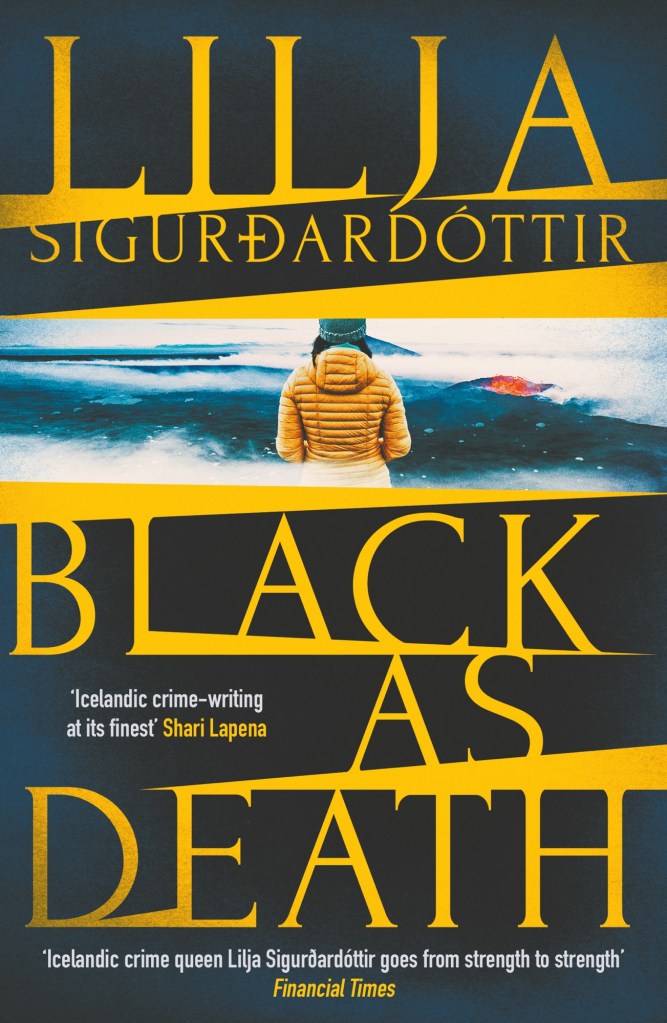
With the fate of her missing sister, Ísafold, finally uncovered, Áróra feels a fragile relief as the search that consumed her life draws to a close. But when Ísafold’s boyfriend – the prime suspect in her disappearance – is found dead at the same site where Ísafold’s body was discovered, Áróra’s grip on reality starts to unravel … and the mystery remains far from solved. To distract herself, she dives headfirst into a money laundering case that her friend Daníel is investigating. But she soon finds that there is more than meets the eye and, once again, all leads point towards Engihjalli, the street where Ísafold lived and died, and a series of shocking secrets that could both explain and endanger everything…

I’ve been hooked on the story of Áróra and the case of her missing sister Ísafold for a few years now and the tension has slowly gripped the reader ever tighter with each novel as each one has brought it’s revelations. With this being the reason Àrora is in Iceland, it’s always been the over-arching narrative, but other cases run alongside. The combination of Áróra’s skills as a financial investigator plus the skills and powers of Daniel and Helena who are detectives, complex cases are profiled and attacked from different directions, making them a formidable team. We meet everyone after the discovery of Ísafold’s body in a suitcase deep within a fissure in a lava field. They were directed to it by an unusual little girl who claimed to be the reincarnation of Ísafold, something that was difficult for Daniel to accept. There’s so much more to understand and we get the narrative through different viewpoints, aside from Áróra, Daniel and his colleague Helena. Felix has fallen into working for a local dealer and we see his fear as the bag he has been sent to collect has disppeared from the car while he was getting some food. There are also flashbacks to the last few months Ìsafold was alive and we finally hear her story in her own voice, which I loved.

We’ve always had suspicions but have never known who killed Ísafold. The novel is gripping and of course we want this mystery resolved, but I didn’t feel any of that racing tension or triumph that I often get from thrillers when the killer’s revealed, especially when I’m right. This was just so desperately sad. I found myself taking a moment for this under confident woman who was so far out of her depth. A woman whose emotions dictated her life decisions. I was harrified and had that strange empty feeling of loss. A loss I knew Áróra would feel. The question is, if she does get all the answers she needs, what will Áróra do next? Unlike her sister Áróra has a clear sense of what she wants and needs to be happy and fulfilled. She makes decisions based on self-knowledge and it remains to be seen whether Daniel is a part of that eventual happiness. 

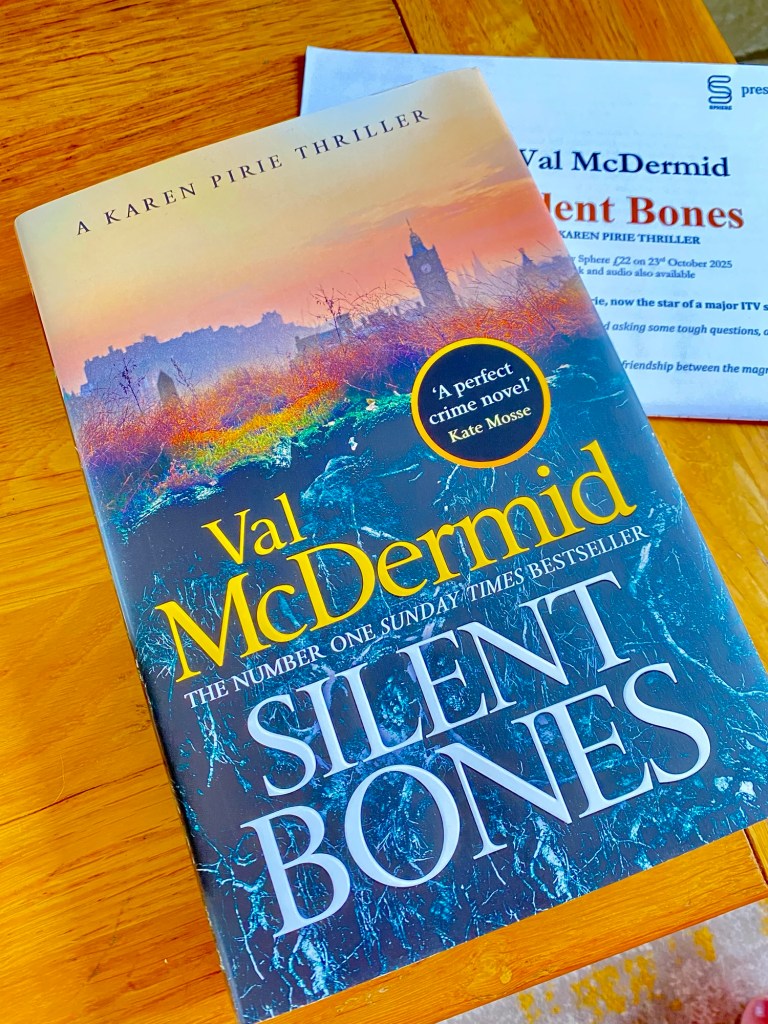
It’s delightful to be back in the hands of a consummate storyteller like Val McDermid. She takes us straight into the story and I always feel like these characters are real, going about their lives and then we drop into their world from time to time. Here the Historic Cases Unit are working two cases: the death of a high-end hotel manager and a body found after a landslip in heavy rain on the M73. Tom Jamieson’s death is flagged up by his brother in New Zealand. Thought to be an accidental death, Tom’s brother has footage that shows someone was behind Tom as he left the hotel after his shift and in the staircase where he met his death. If this man entered the steps after Tom and can be seen exiting then he must at least have seen Tom’s fall, or is there a more sinister explanation? The body in the M73 has to have been placed there deliberately. It turns out to be the body of investigative journalist Sam Nimmo, thought to have killed his pregnant girlfriend Rachel before going on the run about eleven years ago. The discovery opens up her murder case as well as Sam’s. I was hooked by the evidence that leads to a secretive book club of successful men who meet once a month in Edinburgh. They’re named the Justified Sinners, alluding to a James Hogg book that is based on the Calvinist principle that once a person is ‘saved’ they can commit any sin, even murder, and still enter the kingdom of heaven. Is this a joke between literary friends or something more sinister? Have they stumbled upon an unofficial Freemasons’ club where the members share business tips and inside knowledge? The team start to wonder about the potential benefits of becoming one of the twelve members and whether those benefits are worth subterfuge or even criminal acts. 

The book is rooted in the now with cancel culture, the MeToo movement, Covid and the corruption around it and the cost of living crisis all pertinent to these cases. I think the team are feeling overwhelmed, even without the quagmire surrounding the Justified Sinners and Sam’s quest for the truth. I thought that some characters did behave unpredictably, just like they do in life. The outcome isn’t straightforward and there were people to blame that I genuinely didn’t expect. This is an enthralling read from a writer at the very top of her game. Someone who knows exactly how to pitch a story and keep the reader engrossed until the final pages. She knows that the joy of a book is in the journey and that sometimes we don’t get the answers we expect. 

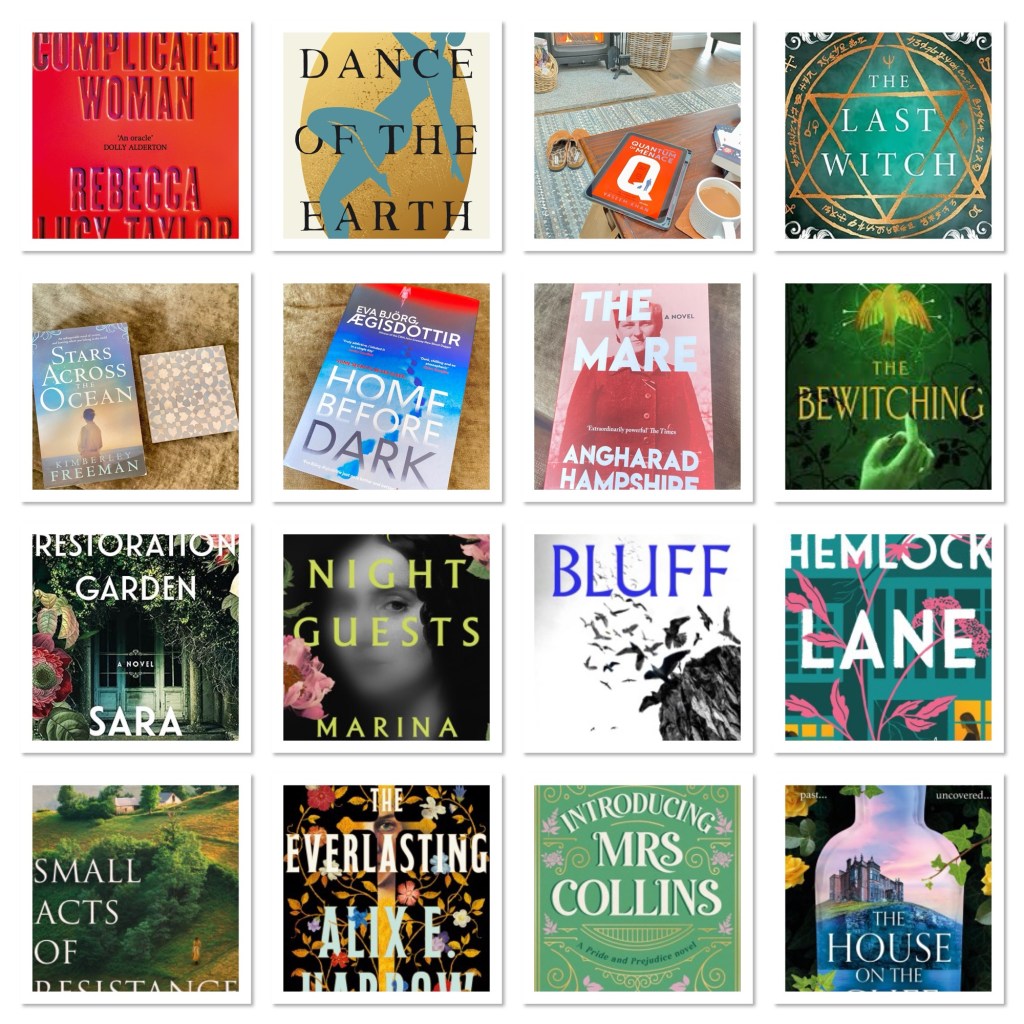
It’s getting quieter as we move into the last months of the year but here’s my expected reading for November:

Posted in Random Things Tours

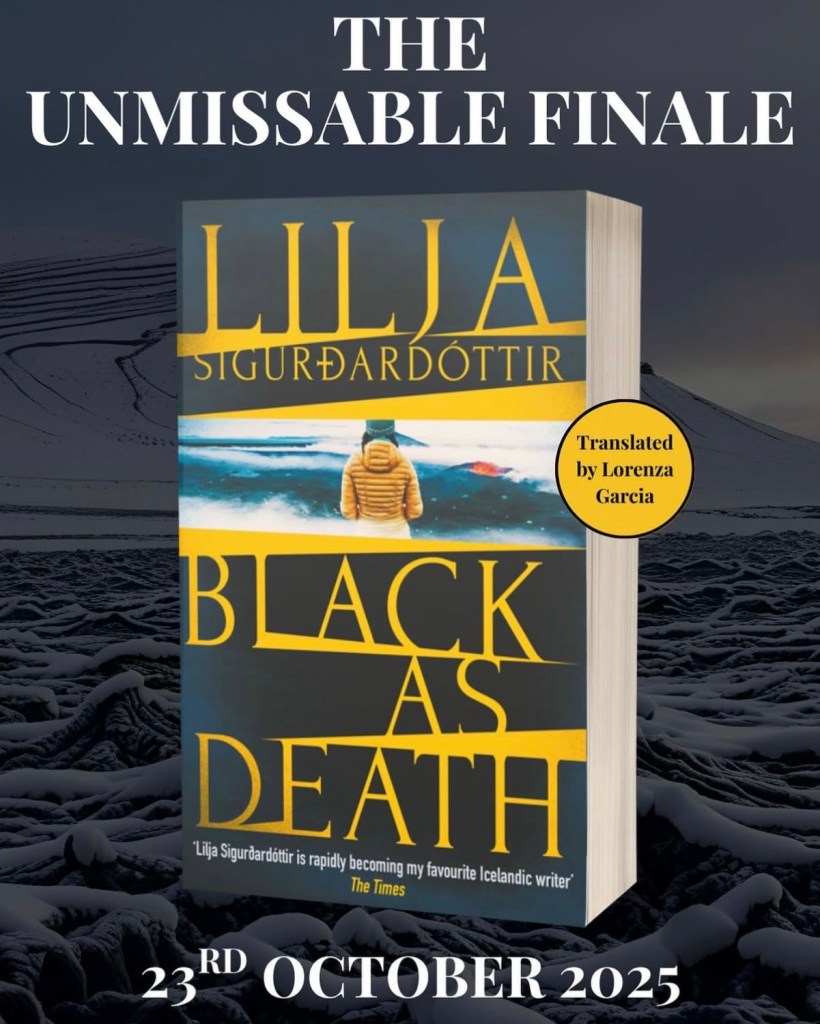
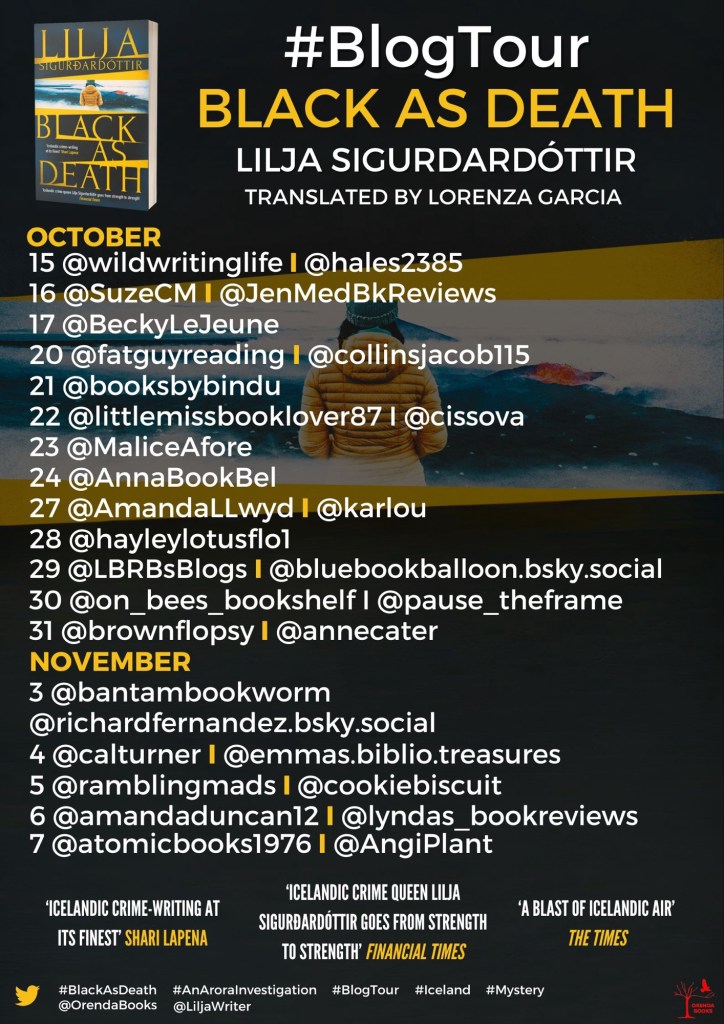
Black as Death by Lilja Sigurdardóttir  

The haunting final chapter to an award-winning series…

And a final reckoning…

With the fate of her missing sister, Ísafold, finally uncovered, Áróra feels a fragile relief as the search that consumed her life draws to a close. But when Ísafold’s boyfriend – the prime suspect in her disappearance – is found dead at the same site where Ísafold’s body was discovered, Áróra’s grip on reality starts to unravel … and the mystery remains far from solved. To distract herself, she dives headfirst into a money-laundering case that her friend Daníel is investigating. But she soon finds that there is more than meets the eye and, once again, all leads point towards Engihjalli, the street where Ísafold lived and died, and a series of shocking secrets that could both explain and endanger everything…

I’ve been hooked on the story of Áróra and the case of her missing sister Ísafold for a few years now and the tension has slowly gripped me ever tighter as each novel has brought its revelations. With her disappearance being the reason Àrora is in Iceland, it’s always been the over-arching narrative, with other cases running alongside. The combination of Áróra’s skills as a financial investigator plus the skills and powers of Daniel and Helena who are detectives, means complex cases are profiled and attacked from different directions, making them a formidable team. We’re back with everyone after the discovery of Ísafold’s body in a suitcase deep within a fissure in a lava field. They were directed to it by an unusual little girl who claimed to be the reincarnation of Ísafold, something that was difficult for Daniel to accept. As Áróra’s boyfriend, his hackles were raised particularly with her parents who he suspected of feeding ideas and information to their daughter with the aim of deceiving them. But what possible motive could they have? As we meet our characters again, Áróra occasionally has the urge to go back and visit the family, but there’s been nothing new from her reincarnated sister for some time as if the thread that bound them has broken or the little girl’s age means the channel that was open between this life and the next has now closed. With Bjorn found in the same fissure as Ísafold many new questions are thrown up. Not least the one aspect of Ísafold’s death has remained a secret up till now. Daniel doesn’t know how to tell Áróra that her sister’s body was found without a heart. 

There’s so much to understand here and we get the narrative through different viewpoints, not just from Áróra, Daniel and his colleague Helena. One narrator named Felix has fallen into working for a local dealer and we see his fear as the bag he was sent to collect disappears from the car while he’s getting some food. This theft draws his ties to this man ever closer, with no real chance of escape. There are also flashbacks to the last few months Ìsafold was alive and we finally hear the story in her own voice, which I loved. There’s a lot of crossover between these two narratives in terms of control and manipulation. The means used to tie Felix to the drugs gang are diabolical, making sure he ‘owes’ the boss and keeping him firmly onside. On one hand the boss demands total loyalty from its operatives but on the other he uses treachery to keep everyone in their place. Bjorn’s treatment of Ísafold feels even worse, because this is someone is supposed to love her. We have always known that Ísafold’s partner was violent, in fact Áróra’s guilt about her sister is based around their last phone call when for the first time Áróra decided not to run to her sister’s aid. The downstairs neighbour Grimur had also testified to the violence his neighbour suffered, but hearing it from the victim adds another layer to the narrative. We can feel how vulnerable Ísafold is and the tenderness Bjorn treats her with from time to time, that glimmer of a meaningful connection he drip feeds to her guarantees her forgiveness again and again. Almost more than the violence I hated that he took away her only bit of independence by making her leave the job she loved, to work with elderly people. At first it’s a suggestion, then he flatters her by saying how good she would be in a caring role, but the truth is he wants to coerce her into stealing their drugs. There’s a realisation that Bjorn is a low level dealer, just doing enough to get by but slowly coming to the attention of the bigger players who feel their territory has been encroached upon. Could this be the beginning of the end for the couple?

The tense and twisty parts narrative also follows Daniel’s investigation into a local coffee chain, where every barista seems to tell customers that their other sites are busier. What he finds is a company with a large turnover but no real evidence of where that money is coming from. None of their shops are in tourist areas and they seem to take a large amount in cash, an unusual thing these days. He also finds a couple of complaints from the director’s home of criminal damage, that they later chose not to pursue. This seems like a case where Áróra’s financial skills could be utilised and she throws herself into it, with dangerous consequences. This is where the couple work so well together, although there’s a recklessness to Áróra that Daniel finds difficult. He would never get in her way, she’s tough and quite capable of looking after herself physically but it’s in his nature to worry about those he cares for. He knows that her weight training and work are her ways of sublimating her frustration that she still doesn’t have all the answers about her sister. With Helena currently working the case he has a choice to make, if answers come does he let Helena break the truth to her, or does he choose to do that himself? Although he could have the chance to comfort and support her as he’s wanted, will she let him? Or will he always be the man who told her the harshest and most painful truth she will ever hear? 

We’ve always had suspicions but have never known who killed Ísafold. The novel is gripping and of course we want this mystery resolved, but I didn’t feel any of that racing tension or triumph that I often get from thrillers when the killer’s revealed. This was just so desperately sad. I found myself taking a moment for this under confident woman who was so far out of her depth. A woman whose emotions dictated her life decisions. I was horrified and had that strange empty feeling of loss. A loss I knew Áróra would feel. The question is, if she does get all the answers she needs, what will Áróra do next? Unlike her sister Áróra has a clear sense of what she wants and needs in order to be happy and fulfilled. She makes decisions based on self-knowledge and it remains to be seen whether Daniel is a part of that eventual happiness. This has been an incredible series from the author, combining a good mystery with real intelligence and depth of emotion played out on a bleak and forbidding landscape.

Out now from Orenda Books

Meet the Author

Icelandic crime writer Lilja Sigurðardóttir was born in the town of Akranes in 1972 and raised in Mexico, Sweden, Spain and Iceland. An award-winning playwright, Lilja has written eleven crime novels, including Snare, Trap and Cage, making up the Reykjavík Noir trilogy, and her standalone thriller Betrayal, all of which have hit bestseller lists worldwide. Snare was longlisted for the CWA International Dagger, Cage won Best Icelandic Crime Novel of the Year and was a Guardian Book of the Year, and Betrayal was shortlisted for the prestigious Glass Key Award and won Icelandic Crime Novel of the Year. The film rights for the Reykjavík Noir trilogy have been bought by Glassriver. Cold as Hell, the first book in the An Áróra Investigation series, was published in the UK in 2021 and was followed by Red as Blood, White as Snow and Dark as Night. TV rights to theseries have been bought by Studio Zentral in Germany. Lilja lives in Reykjavík with her partner and a brood of chickens.

Posted in Netgalley

The Light a Candle Society by Ruth Hogan

Ruth Hogan is one of my cozy authors. These are books I read when I need comfort and boy did I need it last week. I’m having the kitchen renovated, not just new units but ripping out the floor and ceiling, putting in new joists and laying a floor that’s been so wonky I’ve tripped over it a couple of times. We’ve taken out an island that was hogging all the space and finally new units are slowly going in. I’ve been without a kitchen sink for a fortnight and my other half has wired the oven up in the garage so everything we cook has to be oven or microwave only and I keep meeting neighbours as I’m walking past with oven gloves and a tray of chicken kievs. I’m washing up in the bath tub (not while I’m in it) so this time last week I lost my marbles and we’ve been staying in a holiday cottage nearby for some quiet. So I’ve spent a lovely week being mostly unreachable, laying back in a huge bubble bath with a view, and reading my cozy books. 

So let’s talk about the book which was a lovely oasis of calm in my personal chaos. It covered a subject close to my heart. My first job in mental health was as a support worker and since I lived in a small town I would often see clients I worked with on days off and even for years after I left. These were usually single people, living alone and only just managing to function with the basics. They were so isolated and when I stopped working I would volunteer at a local community centre twice a week to have a drop-in place for people struggling or feeling isolated. Sometimes though I would find out someone had died and if I wasn’t too late I would go to the funeral. However if someone is estranged from their family due to their mental health history and lived alone I wouldn’t always be able to find out when and where it was. I hated the idea of no one being there, so I immediately understood our main character George and where he was coming from. He has lost his wife Audrey and takes her flowers every week down at the cemetery. It’s there he meets Edwin, a local undertaker who appears to be lurking by the bins. He explains that he’s watching the new council worker responsible for the funerals of those who had died without family or funds of their own. Edwin is making sure that new recruit Niall knows what he’s doing and giving the person the reverence and dignity they can. George hates the idea of such a lonely send off with no one to witness your journey beyond this life. He muses about it and talks to his friends at the Dog and Duck pub where he goes to the quiz night. He would like to mark these funerals in some way so he invites Edwin to join his group at the pub for a chat. From a simple wish to be there for these send offs the Light a Candle Society is born. 

Like all Ruth’s books this has a wonderful cast of interesting and quirky characters, many of whom do live alone. There’s Roxy, George’s friend and colleague from the library where he works part-time. She has an alternative look, with tattoos and piercings and is probably not the person you’d expect to be so close with an older widower. Slowly we’re drawn into their circle. There’s Elena from the florist who does George’s flowers for Audrey every week and would like to make a contribution to the funerals. There’s Captain and his dog Sailor, one of the library regulars who comes in and reads most days. He talks very little about himself, only seeming to warm up when people pet his canine companion. Then there’s Briony who works for the local paper and decided to write a piece about the funerals, something she can take to her rather dismissive and sneaky boss and show him she can write more than a few words about someone’s giant vegetable. Her downstairs neighbour Allegra is an absolute riot and I would have loved to be friends with her. She has led a rather colourful life and acts like a mentor to Briony, pushing her to trust her own instincts and talent. Briony needs her combination of feminism, cocktails and a kindly kick up the behind. 

The funerals grow when Edwin tips George off about a house clearance firm, who log all the deceased belongings, sorting through them for valuables and taking them away to sell. He agrees to tip George off if he’s doing the house of someone who has no relatives or friends, allowing him to come to the house and get more of a sense of who they were. From there he can write a eulogy that matters and resonates with anyone who does come along unexpectedly. The author has created short chapters that take us back in that person’s life in between the main narrative, showing us a moment from their life and the sometimes devastating circumstances of their death. It’s a reminder that no matter who it is or how their lives have ended, we can’t judge because we haven’t lived their life or experienced the unique and sometimes traumatic circumstances they find themselves in. This resonated strongly with me having had clients with addictions and mental illnesses that have driven family away. I was so touched by one young man who had the dream and potential of become a professional footballer. I was also touched by Captain who slowly builds a relationship with Roxy for a very particular purpose. When we’re taken back into his life it explains completely why a man called Captain lived so far from the sea. I may have shed a tear or two there.

As the society grows it takes in people who would have otherwise been alone. There are younger people like Briony or Niall who have often moved to start a career they’ve longed for, but have to then make a life far away from home where they don’t know anyone. There are older people who have retired and perhaps lost their partner who have the time and the enthusiasm for the society. However the society is also a lifesaver for them, getting them out of the house and making new connections. They’ve needed to make friends and have a home from home like the Dog and Duck to meet new people and of course, come to quiz night. There are potential romances but they’re kept quite low key because they’re not the story’s focus. The focus is one friendship and how the society isn’t just honouring those who have died, it’s making sure that lonely people who might easily have become one of the statistics, are looked after. It made me think of people I’ve let go off in life. Those I’ve lost touch with when one of us has moved or has had a partner who isn’t keen on me or vice versa. It reminded me that when someone pushes you away, it might be the time when they need you the most.  

Meet the Author

My new novel – THE LIGHT A CANDLE SOCIETY – is out in NOW! It’s about a man called George McGlory – recent widower, part-time librarian, pub quiz enthusiast and lover of loud shirts – who witnesses a public health funeral and is deeply moved by the sight of the lonely coffin with no flowers and no mourners in attendance. George believes that everyone deserves a decent send-off and decides to do something about what he calls these ‘lonely funerals’ – and so THE LIGHT A CANDLE SOCIETY is formed. The book contains a number of short stories which give a glimpse into the lives of those whom George and his friends take it upon themselves to honour and remember in their own unique way. Despite it being a story about funerals, it’s full of life, love, humour, community and human connections. And, of course, there is a very special dog!

THE PHOENIX BALLROOM, MADAME BUROVA, THE KEEPER OF LOST THINGS, THE WISDOM OF SALLY RED SHOES and QUEENIE MALONE’S PARADISE HOTEL – are out now in all formats.

I was brought up in a house full of books, and grew up with an unsurprising passion for reading and writing. I also loved (and still do) dogs and ponies, seaside piers (particularly the Palace Pier in Brighton) snow globes and cemeteries. And potatoes. So of course, I was going to be a vet, show jumper, or gravedigger. Or potato farmer.

Or maybe a writer…

Posted in Personal Purchase

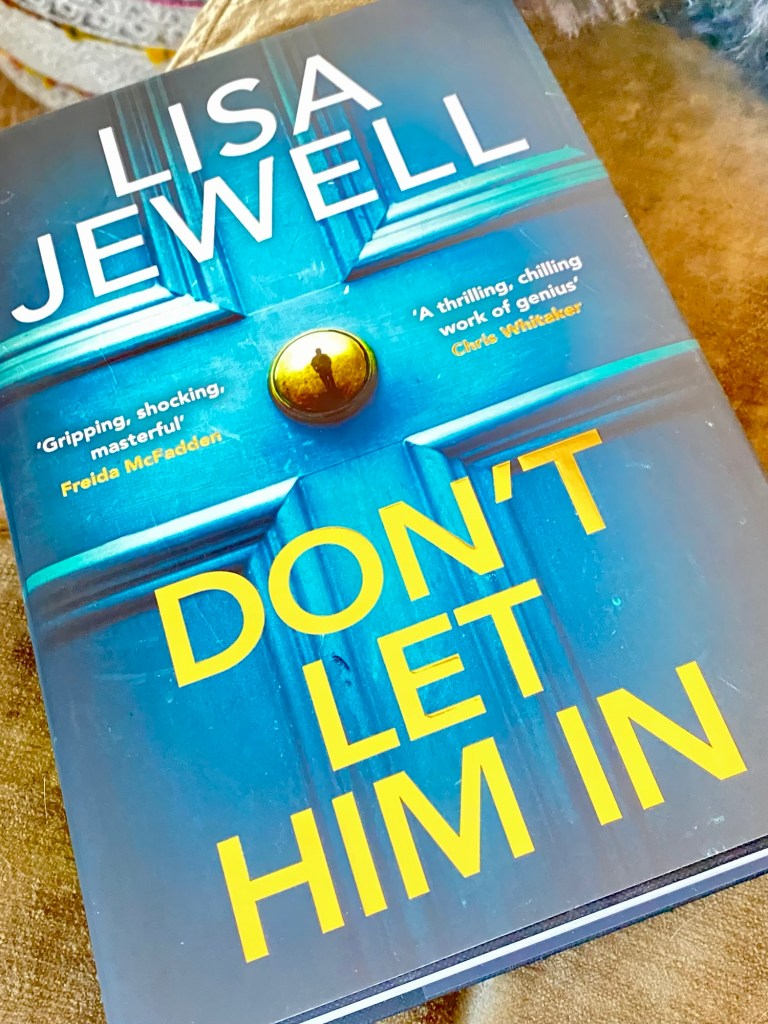
Don’t Let Him In by Lisa Jewell

There was a pivotal moment in this book that made me go cold. It sent me back twelve years when I was trying to understand how someone could treat others so badly, in what seemed like a deliberately cruel way. I remembered something my counsellor said at the time; I was spending all my time trying to work out someone’s motivation and what had happened in life to make them behave that way, instead of considering the impact on me and how unacceptable the behaviour was. Some people just don’t think like others. Nick is a tall silver fox with a lot of charm and a knack with the ladies. He seems to know exactly what will please someone. Exactly the right gift to soften someone. To get under their defences. It’s almost as if he has empathy,  but don’t be fooled. He’s just wearing a human suit. 

Nina and her daughter Ash live in the bougie seaside town of Whitstable in Kent. They are grieving for husband and father Paddy, who was killed when a man having a mental health crisis pushed him into an oncoming train. Ash has been living at home since her own mental health deteriorated. She was living in a house in London with two other girls but she developed a crush on her boss, that turned into an obsession. She claimed to have letters from him, but it turned out she’d written them herself and she was eventually diagnosed with borderline personality disorder. She’d just come home to recover when Paddy was killed. When her mum receives a parcel in the post Ash is intrigued. It’s beautifully wrapped, with a note inside from a man who has heard about Paddy’s death. He used to work with him in the 1990s when Paddy was just starting out. The gift wrapped box contains a Zippo lighter he borrowed but never returned. Since then Paddy has built a restaurant empire, with his flagship restaurant in Whitstable and two others down the coast. He benefitted greatly from the area’s development into the weekend getaway spot for Londoners. Nick’s note explains he is now a troubleshooter, brought into eateries and hotels to assess what’s not working and put it right. There is of course a number, should Nina wish to thank him for his thoughtfulness. Over the next few months Nick and Nina start to WhatsApp each other and then go out for a drink. Ash is glad to see her mum with a glow, but there’s something about Nick that’s just ‘off’. She can’t be sure and maybe she’s viewing this situation through her own grief or her personality disorder, but something isn’t right. She needs to find out more about him before he becomes a permanent fixture. 

It’s so hard to review Lisa’s books without letting things slip, but I’ll try my best. Most authors might have written a thriller based purely on the scenario above – is it the mentally ill daughter or the mum’s new boyfriend that’s the problem? Slowly drawing out the tension of whether she’s right or so unwell that she’s dreadfully mistaken. Lisa Jewell isn’t most authors so she takes that premise and builds an absolutely labyrinthine mystery that’s absolutely spellbinding. In multiple narratives and timelines we meet various women who are struggling in their relationships, all of which are linked by strange or abusive behaviour. There are different behaviours: gaslighting, manipulation, financial embezzlement and even disappearances. In some cases these women are married and have children, in others they’re older and widowed. There were so many conundrums, not least how these men are affording the lifestyle they’re living. Meanwhile, Ash has decided to take help from ‘Mad’ Jane Trevally, her dad’s old girlfriend from the 1990s. Surely if Nick was around for a while, Jane would remember him. Jane did have some obsessive qualities of her own back in the day, so maybe she’s not the best person for Ash to be hanging out with. She knows her mum would be furious. However, when they do meet, Jane tells Ash that Paddy categorically did not have a lighter. He was always taking the matches from the kitchen or cadging a light from other people, so much so that it was an ‘in’ joke with friends and customers. So whose lighter was in that parcel and why did he send it? 

I galloped through this book as we went backwards and forwards in time, every time learning a little more and inching towards the truth. I loved the fragile Ash who is at that stage of recovery where she doesn’t fully trust her own mind. Is she making too much of this? Is she just paranoid? Worst of all, if she finds something questionable, will her Mum even believe her? She’s so lonely at this point, she doesn’t have many friends to talk to and feels bad she’s had to bounce back home at her age. Her mum deserves to be happy and she might ruin it all. Just when you think you have all the answers, the author takes it to the next level! There were twists here that I wasn’t expecting and I felt very relieved that I got away from my own situation relatively easily, if not unscathed. This book is like a twisted knot in a necklace. It takes a long time to loosen it, but suddenly the whole thing unravels before your eyes. This is masterful thriller that absolutely begs to be devoured in a couple of sittings, from an author who gets better and better. 

Meet the Author

LISA JEWELL was born in London in 1968.

Her first novel, Ralph’s Party, was the best- selling debut novel of 1999. Since then she has written another twenty novels, most recently a number of dark psychological thrillers, including The Girls, Then She Was Gone, The Family Upstairs, The Family Remains and The Night She Disappeared, all of which were Richard & Judy Book Club picks.

Lisa is a New York Times and Sunday Times number one bestselling author who has been published worldwide in over thirty languages. She lives in north London with her husband and two daughters.

Posted in Squad Pod Collective

Watching You by Helen Fields

A few of Helen Field’s characters come together in this gripping novel that starts with someone being stalked in Jupiter Artland, the park where Laura Ford’s ‘Weeping Girls’ statues are situated. They become the only witnesses to an unspeakable act. It’s a great setting for a murder with five sculptures, each one of a little girl weeping in different poses. I’m a lover of public art but these are genuinely creepy and have an uncanny quality to them. I can’t think of a more fitting place to be hit with a shovel and buried alive – one of my worst ever fears. It’s a bold beginning and we get three more murders like this, each with a narrator who sounds almost bored and melancholy. It’s as if they’re present, able to recount every detail, but detached at the same time. They’re the literary equivalent of the archetypal TV pathologist weighing a pair of lungs one moment and eating a sandwich the next. It’s clear that Lively, Salter and the MIT have a serial killer on their hands but with each murder so different, how will they build a case? Superintendent Overbeck engages Dr Connie Woolwine to profile the killer and run the investigation, but it does seem to the team that the crimes and potential suspect don’t fully fit. 

The story has several threads, each focusing on different characters. We go back a few years to a young artist named Molly who is being stalked and harassed with even parcels of rotting fruit and maggots turning up on her doorstep. She feels watched when outside and inside she is harassed by parcels and online rumours, or even worse deep fake videos. There’s the usual porn, but stranger and more sinister scenarios like her hurting an animal. It’s taken a toll on her mental health and her career. With the police unable to help she sinks further. We also have a character called Karl Smith, a carer for his father who had a stroke not long after his wife had a cardiac arrest. While surgeon Beth Waterfall tries everything to save her she dies on the operating table. So when his complaint against the hospital isn’t upheld Karl starts to see his mother. It’s mainly at home and she’s very unsettling. She’s clearly never been a nice woman to her son. She is a grotesque figure who Karl finds repellent. Not only is she unkempt and smelly, she likes to unsettle Karl by sitting very close and wafting her rotten breath into his face. She is cruel and determined that he keep up his campaign against Beth Waterfall. DI Sam Lively watches Beth try to save one of the victims, a homeless man with multiple stab wounds, and they strike up a friendship and a fledgling relationship. So when Sam receives a wound to his neck and it’s Beth that treats him, she takes him home afterwards to recover. It’s a gentle romance that works really well and he finds out Beth had a daughter, who took her own life after a campaign of stalking and harassment. The puzzle pieces are coming together, but I knew there would still be some surprises in store and I was gripped, waiting to find out if my suspicions were right. Desperately hoping they weren’t. 

Dr Connie Woolwine is an acquired taste, but is always fascinating. Here I could see how she could really get under the skin of both suspects and colleagues. Brodie accuses her of snobbery, but it’s not that simple. Connie seems to relish having her suspicions about someone, then having them confirmed. She often tells people what she thinks without considering their reaction and it’s this compulsion to see what makes someone tick that might come across as thinking she knows better. It’s not a class snobbery, it’s an intellectual snobbery. I just love working people out, because the complexities of our brains are simply amazing. I’ve recently been reading up on Functional Neurological Disorder where neurological symptoms are present in the patient, without any disease activity. It’s as if the brain simply forgets how to send and receive messages from certain parts of body but without any of the disease activity common to neurological diseases like MS or Parkinson’s Disease. Symptoms range from functional weakness in a limb, to dramatic paralysis and seizures. It’s amazing how powerful the brain is and how it can be doing something so disabling in the background without knowing why, although it’s thought that the brain processes might mental stress or trauma as physical pain. However, this is nothing compared to Connie’s findings about the brain producing a brilliant twist at the end. I’m always pulled in two directions with Connie, she’s utterly brilliant but more than a little odd (talking to corpses) and manipulative, particularly where Brodie is concerned. She knows the power she has over him, but isn’t honest about it. She seems to fully relax and be herself when she visits Midnight, who is living a bucolic existence in Devon with her sister Dawn who has CP. With Dawn, ‘Wooly’ can drop her ‘therapist’s demeanour’ and just be in the moment. Dawn has no guile and has never learned to hide her emotions.

There’s some heart-stopping action here, especially in the finale which is brilliant. Salter and Connie are quite the team, with Salter able to jump in and secure a suspect while Connie has them otherwise engaged. I love that Helen’s female characters are mothers, carers and wives, whilst also competent at work, even formidable. Overbeck is brilliant, always holding MIT to a high standard, ready with a stern talking to and wears three inch heels all day! She tells Connie she’ll give her the name of the her nail technician because her nails are disgusting and it did make me smile. It’s a novelty to see Connie on the back foot for a change. The murder scenes are genuinely scary or moving. I was especially affected by the murder of Mrs Singh who is a lonely older lady, the victim of her own success. She made the huge move from India to Scotland in the hope of her children having a better life and he does, but that means they’re usually far away from you. She describes a boy who grew up with a Scottish accent, as if he was already moving away from her. The many pictures of her grandchildren attest to the distant between them. Her death is brutal and desperately sad. I loved how Helen brought all the puzzle parts together, despite such disparate victims who had nothing in common, not even their deaths. I could see Karl Smith had a rage in him but it mainly seemed to be for his own parents, could he be murdering complete strangers? I became more addicted as the novel went on until last night when I couldn’t leave the last few chapters and stayed up till 2am. Now I keep falling asleep. This is such a psychologically fascinating thriller that’s given me lots of side reading to keep up with Connie’s final verdicts. I can’t wait to see where she and Brodie end up next. 

Out now from Avon Books

Meet the Author

A Sunday Times and million copy best-selling author, Helen is a former criminal and family law barrister. Every book in the Callanach series has claimed an Amazon #1 bestseller flag. ‘Perfect Kill’ was longlisted for the Crime Writers Association Ian Fleming Steel Dagger in 2020, and others have been longlisted for the McIlvanney Prize, Scottish crime novel of the year. Helen also writes as HS Chandler, and has released legal thriller ‘Degrees of Guilt’. In 2020 Perfect Remains was shortlisted for the Bronze Bat, Dutch debut crime novel of the year. In 2022, Helen was nominated for Best Crime Novel and Best Author in the Netherlands. Now translated into more than 20 languages, and also selling in the USA, Canada & Australasia, Helen’s books have won global recognition. She has written standalone novels, The Institution, The Last Girl To Die, These Lost & Broken Things and The Shadow Man. She regularly commutes between West Sussex, USA and Scotland. Helen can be found on X @Helen_Fields

Posted in Netgalley

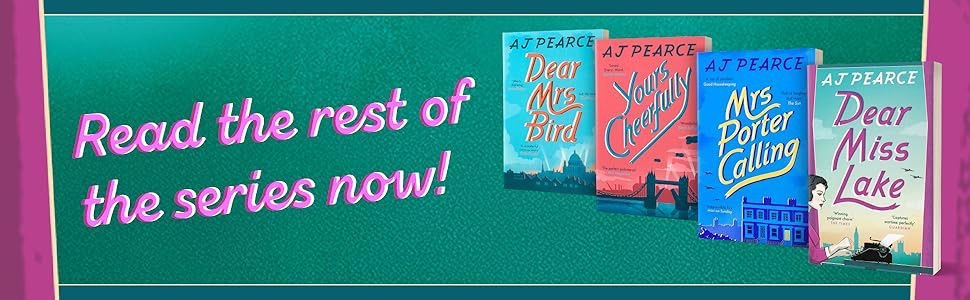
Dear Miss Lake by A.J. Pearce

It was lovely to be back with the gang at Woman’s Friend magazine and particularly with our narrator Emmy Lake as they enter the final and arguably most difficult stretch of WW2. After five years of war both the team and their readers are tired. As a way of boosting morale at the magazine Emmy suggests they all decamp to Bunty and Harold in the countryside. As Hitler’s V1 and V2 bombs start to hit, it will certainly be safer. Emmy strongly feels they all need a boost in order to keep supporting and inspiring the women who read their magazine. If they’re tired and the magazine suffers, how will their readership keep the fight going? Although they’ll still be working, the children, the animals and the beautiful countryside should have the desired effect. Plus, for Emmy, she’ll be closer to where her husband Charles is posted and she’ll be with her best friend Bunty. Emmy throws herself into rural life and is soon organising games nights, competitive knitting and planning the very important wedding of their officer administrator Hester and her fiance Clarence. She also has an important phone call from the ministry to travel abroad and report from the French field hospitals looking after the wounded. She even manages to mastermind a break into husband Charles’s barracks before they’re both deployed. Emmy has no idea how much she’s going to need those around her in the coming months as her hardest test is yet to come. On their return to London after the summer she receives a telegram to say that Charles is missing, presumed captured, in enemy territory and she has the agonising wait for the confirmation letter. Then Hester receives a blow when Clarence calls to say he’s being deployed in three days, two days before their planned wedding. Hester is inconsolable and after catching Emmy in a moment of frustration, she disappears. However, Emmy isn’t one to dwell on her misfortunes for long and I wondered what schemes and plans she would hatch next. 

This is a very fitting end to the Emmy Lake series, because it showed, no matter how Pollyanna our attitude is, it is okay to sometimes find we’ve run out of steam. It’s hard to imagine what five years of war must feel like when we take into consideration women having to work, look after children, support their husbands and face the fear of losing someone important to them or even their home if situated in London or other major cities. The nearest thing we have to such upheaval is the COVID pandemic and that meant two years of shielding for me. However, I still had tv to stream, books to read and could send myself little treats from Amazon or Betty’s tearooms. I can’t imagine how I’d have felt if I was exhausted from working, missing my husband, had the possibility of a bomb coming through the ceiling and had to find the tenth thing to do with a cabbage. Although the Lakes and friends are relatively okay financially, many were not and the author brings in these experiences through the magazine where some readers are infuriated with the magazine’s rather chirpy, optimistic tone or want to vent about the desperate situations they’re in. I loved the storylines about unexpected pregnancies as I could really understand getting carried away in the moment when someone you love is being deployed to fight, perhaps never to return. I could also imagine myself being swept off my feet by an American GI or one of the Polish airman posted only a few miles away from my village all those years ago. I could absolutely understand why some readers lost their faith in the magazine and whether it’s writers truly understood the predicaments some readers were in. I could also understand if Emmy did run out of patience, because sometimes the only answer is ‘talk to the people who love you’ no matter how angry or disappointed they might seem at first. It always gets easier.

 When news arrives that Charles’s secret mission was Arnhem and he’s been captured behind enemy lines, it takes a while for Emmy’s emotions to catch up with the news. She has all the information at her fingertips, having had years of finding out what to do for her readers. Practically she’s doing all she can, plus organising the Christmas Fair and making connections with other POW wives. She’s particularly proud of the piece she wrote for the ministry on the military hospitals so hopes for another mission. When she, the editor and publisher are pulled in for a chat the news isn’t good. It’s this that seems to bring her to a standstill. Returning to the magazine office she’s despondent and feels a deep sense of injustice, leading to a sudden and misdirected rant. Things go from bad to worse when the next morning, Hester has gone missing. Emmy knows she took her cancelled wedding plans hard, but surely that’s not the reason for her disappearance? Could it have been her own moment of anger and emotion that provoked this sudden reaction? Emmy realises how much of a lifeline they all are to each other and resolves to find her, whatever it may take. 

A.J. Pearce has written a triumph of a series in this quartet of books and in her main character too. We’ve experienced the ups and downs of different editors and publishers, the staff’s other responsibilities for their families and war jobs such as the fire service or driving ambulances, as well as terrible losses on the battlefield and in the Blitz. Through what seems on the surface to be a light-hearted and perhaps frivolous lens, I’ve learned so much about what it was like to be a young woman during WW2. It’s given me an insight into my grandparent’s generation – my Aunty Connie who was an unmarried mother and a subsequent marriage to my Uncle John who suffered from PTSD after his ship was attacked and his friend was blown up right next to him. My grandad went into the army just as war was ending and experienced the other side’s struggles – German cities destroyed by our bombardments and people living in the ruins of their homes. I don’t know if I’d have the strength and determination to contribute in the way people did, something brought into sharp focus when I had to discuss what the war in Ukraine could mean for those who’ve served in the forces but are still under reserve? Could I cope if he was called back in?

Strength is one of those things we find reserves of when the situation demands it of us and I have no doubt I could keep the ‘home fires burning” but I certainly don’t have the grit that some of the Ukrainian women are showing, having lost their husband then joining up to fight themselves. I feel the author doesn’t let us forget the sacrifice and loss in people’s lives at this time, but still manages to bring in humour and a defiantly upbeat make do and mend attitude. This is the closest I’ve seen Emmy come to breaking point and it’s hard to do when you’re the one whose role it is to buoy everybody else up. As she finds out though, those who she’s helped and supported are so happy to be able to return the favour and support her. This is a set of books I always recommend, to women of all ages, because it’s so easy to relate to one of the characters and absolutely root for them. The main impression I take away from them is that sense of female solidarity. The instinct we have to come together, share the load and make each other’s lives a little easier – from taking on someone’s children all the way down to being there with a meal or a shoulder to cry on. Emmy uses her writing to do the same and triumphs in being exactly what the magazine promises – the Woman’s Friend. 

Meet the Author

AJ Pearce was born in Hampshire, UK. Her favourite subjects at school were English and History, which now (finally!) makes sense.

Her debut novel Dear Mrs Bird was a Sunday Times Bestseller and Richard and Judy Bookclub Pick. It was shortlisted for Debut of the Year at The 2019 British Book Awards and has been published in the USA, Canada and Australia and in translation in over fifteen languages.

Dear Mrs Bird was the first in AJ’s series The Wartime Chronicles which now includes Yours Cheerfully and Mrs Porter Calling. Her books are funny, sometimes extremely sad, but always uplifting stories about a group of women standing together to face the challenges of World War II.

The fourth and final book in the series, Dear Miss Lake, will be published in the UK on 5 July 2025 (and on 3 August in the USA and Canada).

When not writing books, AJ enjoys being fairly rubbish at a variety of hobbies and has recently started to learn to paint, with so far messy although enthusiastic results.

Follow AJ on Instagram, Facebook and Threads: @ajpearcewrites.

Posted in Sunday Spotlight

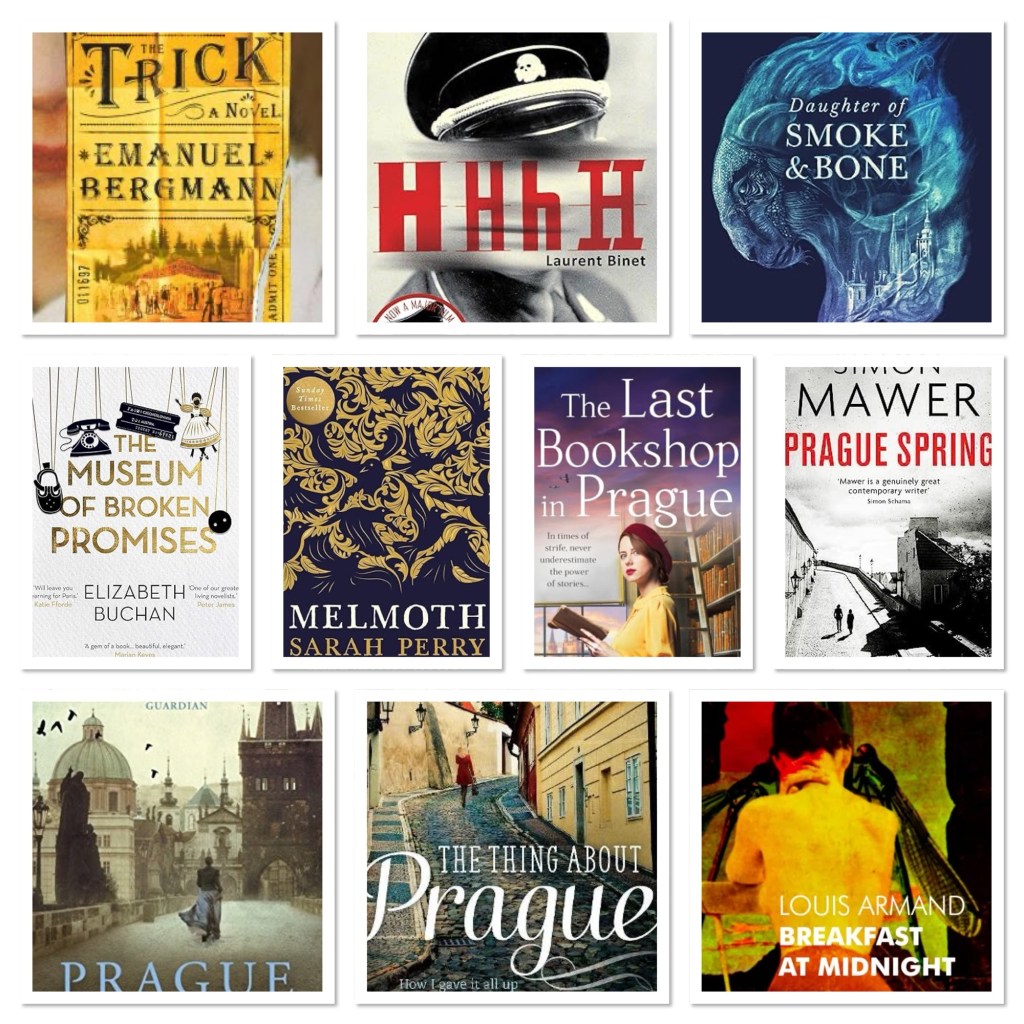
Sunday Spotlight. City Break in a Book: Prague

Prague is one of those places on the bucket list that I’ve never managed to get to, but I’m very drawn to it. There’s something about Prague that’s a touch gothic, mystical and dark. It strikes me as being like Venice, a place where you can almost touch the layers of history. A thin place, where you might take a wrong turn and end up in the 18th Century. Prague knows you are temporary, while it endures forever. That is probably just a romantic notion, but I’m looking forward to testing out my impressions. Much of the fiction I’ve read deals with the city’s history and I’m hoping some of these choices might tempt you to visit too, if only in one of these books.

An intriguing and almost hallucinogenic novel that has Kafka in its DNA. Blake is a pornographer who photographs corpses. Ten years ago, a young man becomes a fugitive when a redhead disappears on abridge in the rain. Now, at the turn of the millennium, another redhead has turned up in the morgue, and the fugitive can’t get the dead girl’s image out of his head. For Blake, it’s all a game — a funhouse where denial is the currency, deceit is the grand prize, and all doors lead to one destination: murder. In the psychological noir-scape of Kafkaville, the rain never stops, and redemption is just another betrayal away. Armand is an Australian writer who lives in Prague and is director of the Centre of Critical and Cultural Theory. This is definitely not for everyone, but just go with it as he strips bare this society and reveals it in all its decadence.

Prague Spring is a wonderfully atmospheric portrait of the city as well as a political and historical thriller with dashes of espionage. It’s the summer of 1968, the year of love and hate, of Prague Spring and Cold War winter. Two English students, Ellie and James, set off to hitch-hike across Europe with no particular aim in mind but a continent, and themselves, to discover. Somewhere in southern Germany they decide, on a whim, to visit Czechoslovakia where Alexander Dubcek’s ‘socialism with a human face’ is smiling on the world. Meanwhile Sam Wareham, a first secretary at the British embassy in Prague, is observing developments in the country with a mixture of diplomatic cynicism and a young man’s passion. In the company of Czech student Lenka Konecková, he finds a way into the world of Czechoslovak youth, its hopes and its ideas. It seems that, for the first time, nothing is off limits behind the Iron Curtain. Yet the wheels of politics are grinding in the background. The Soviet leader, Leonid Brezhnev is making demands of Dubcek and the Red Army is massed on the borders. How will the looming disaster affect those fragile lives caught up in the invasion? This is a great read about a city teetering on the edge of one of it’s most significant moments in history.

The banned books club was only the beginning; a place for the women of Prague to come together and share the tales the Germans wanted to silence. Is she brave? No, she’s just a bookshop girl doing whatever she can.

For bookshop owner, Jana, doing the right thing was never a question. So when opportunity comes to help the resistance, she offers herself – and her bookshop. Using her window displays as covert signals and hiding secret codes in book marks, she’ll do all in her power to help.

But the arrival of two people in her bookshop will change everything: a young Jewish boy with nowhere else to turn, and a fascist police captain Jana can’t read at all. In a time where secrets are currency and stories can be fatal, will she know who to trust? If you enjoy Kristin Hannah you’ll love this story from WW2.

Oh my friend, won’t you take my hand – I’ve been so lonely! 

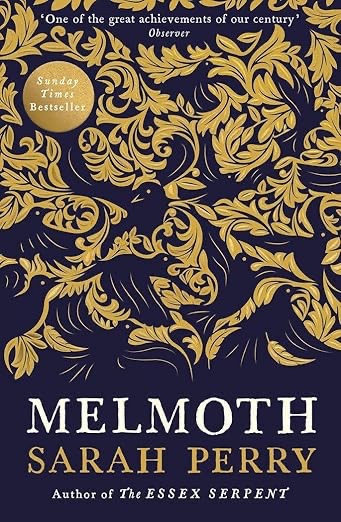
One winter night in Prague, Helen Franklin meets her friend Karel on the street. Agitated and enthralled, he tells her he has come into possession of a mysterious old manuscript, filled with personal testimonies that take them from 17th-century England to wartime Czechoslovakia, the tropical streets of Manila, and 1920s Turkey. All of them tell of being followed by a tall, silent woman in black, bearing an unforgettable message. Helen reads its contents with intrigue, but without knowing everything in her life is about to change. I love creepy little novellas like this and Sarah Perry does everything right here. I loved the almost Victorian ‘Dear Reader’ and the Dracula-like inclusion of letters and diaries. The fear comes from that very Freudian juxtaposition of repulsion and fascination or death and desire. It assumes we all have that thing we’ve done that we wish we hadn’t, buried at the back of the mind or written in a decades old diary. Melmoth is the embodiment of the thing we’ve repressed and she will come for you. Dark, mysterious, thrilling and scarier than you’d think.

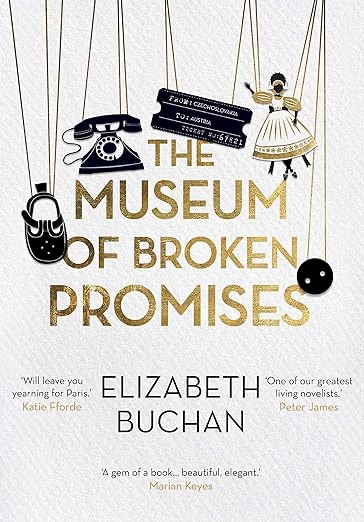
Paris, today. The Museum of Broken Promises is a place of wonder and sadness, hope and loss. Every object in the museum has been donated – a cake tin, a wedding veil, a baby’s shoe. And each represent a moment of grief or terrible betrayal. The museum is a place where people come to speak to the ghosts of the past and, sometimes, to lay them to rest. Laure, the owner and curator, has also hidden artefacts from her own painful youth amongst the objects on display. A marionette from her time in Czechoslovakia as a teenager.

Prague, 1985. Recovering from the sudden death of her father, Laure flees to Prague. But life behind the Iron Curtain is a complex thing: drab and grey yet charged with danger. Laure cannot begin to comprehend the dark, political currents that run beneath the surface of this communist city. Until, that is, she meets a young dissident musician. Her love for him will have terrible and unforeseen consequences. 

It is only years later, having created the museum, that Laure can finally face up to her past and celebrate the passionate love which has directed her life. It may seem strange that someone would base their whole life’s work on an experience at the age of 18, but that misunderstands the power of traumatic experiences. While the objects in the museum may seem mundane, their importance is in the wealth of emotion in those memories. It is by holding or valuing these things that we remain connected to the past and the person in it.

Errand requiring immediate attention. Come.

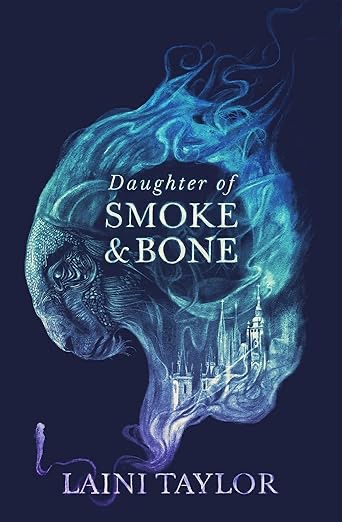
The note was on vellum, pierced by the talons of the almost-crow that delivered it. Karou read the message. ‘He never says please’, she sighed, but she gathered up her things. 

When Brimstone called, she always came. 

In general, Karou has managed to keep her two lives in balance. On the one hand, she’s a seventeen-year-old art student in Prague; on the other, errand-girl to a monstrous creature who is the closest thing she has to family. Raised half in our world, half in ‘Elsewhere’, she has never understood Brimstone’s dark work – buying teeth from hunters and murderers – nor how she came into his keeping. She is a secret even to herself, plagued by the sensation that she isn’t whole. Now the doors to Elsewhere are closing, and Karou must choose between the safety of her human life and the dangers of a war-ravaged world that may hold the answers she has always sought.

I’m not usually a fan of fantasy but this is an exception and Prague is the perfect setting for a girl with blue hair who does the bidding of a chimera who’s part human, ram and lion! Karou is my kind of heroine and I’d happily take her for a drink. I blew through the first third of the novel without thinking, just wishing I had an imagination like this.

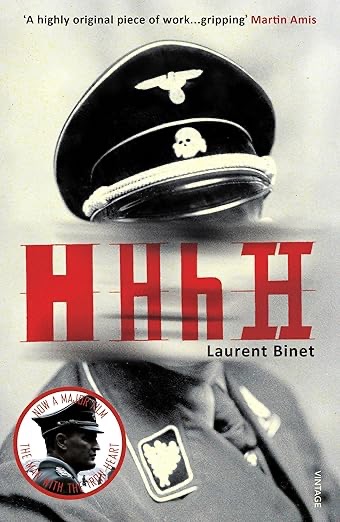
This is probably best described as ‘faction’, while it is shelved as a novel there is so much fact in it that it reads like a true crime story, except the author keeps interrupting his own narrative. Two men have been enlisted to kill the head of the Gestapo, in a mission named Operation Anthropoid. In Prague, 1942 two Czechoslovakian parachutists are sent on a daring mission by London to assassinate Reinhard Heydrich – chief of the Nazi secret services. Known as ‘the hangman of Prague’, ‘the blond beast’ and ‘the most dangerous man in the Third Reich’. His boss is Heinrich Himmler but everyone in the SS says ‘Himmler’s brain is called Heydrich’, which in German spells HHhH. 

It is an incredible story, occasionally interrupted so the author can point out something he’s made up for dramatic effect – such as, ‘I don’t really know if a tank was the first vehicle to enter Prague’. Or even re-writing a paragraph if he later finds he got it wrong. It’s strange and a little jarring but you get used to it. In fact I don’t doubt his research, you will see the acres of documents and history books in his bibliography. This is a very clever panorama of the Third Reich told through the life of one outstandingly brutal man, a story of unbearable heroism and loyalty, revenge and betrayal. It is a moving work of fiction you will not forget.

Prague 1939. When the Nazis invade, Eva knows the danger they pose to Jewish families and the only way to keep her daughter Miriam safe is to send her away – even if it means never seeing her again. Eva is taken to the concentration camp Terezin, her secret is at risk of being exposed.

In London, Pamela volunteers to help find places for the Jewish children arrived from Europe. Befriending one unclaimed little girl, Pamela brings her home. Then when her son enlists in the RAF, Pamela realises how easily her own world could come crashing down…

Moving between England and Czechoslovakia this is a heart-rending story made all the more poignant for me as my mother-in-law Hana was sent from Poland as a child to England, separated from all her family and was eventually reunited with her mother after the war. I loved the themes of motherhood and music too. This is one of those historical novels that concentrates on emotion and character rather than acres of detail, but thar makes it all the more heart-rending.

In 1934, a rabbi’s son in Prague joins a traveling circus, becomes a magician, and rises to fame under the stage name the Great Zabbatini, just as Europe descends into World War II. When Zabbatini is discovered to be a Jew, his battered trunk full of magic tricks becomes his only hope for survival.

Seventy years later in Los Angeles, ten-year-old Max finds a scratched-up LP that captured Zabbatini performing his greatest illusions. But the track in which Zabbatini performs the spell of eternal love—the spell Max believes will keep his parents from getting divorced—is damaged beyond repair. Desperate for a solution, Max seeks out the now elderly, cynical magician and begs him for help. As the two develop an unlikely friendship, Moshe discovers that Max and his family have a surprising connection to the dark, dark days the Great Zabbatini experienced during the war.

With gentle wisdom and melancholy humor, this is an inventive, deeply moving story about a young boy who needs a miracle, and a disillusioned old man who needs redemption.

Posted in Squad Pod Collective

Death or a Little Light Maiming Do Us Part by Kathy Lette 

One dead husband. Three grieving widows.

When she hears a man has been killed by a Great White shark, Gwen races to the beach only to find that all that remains of her husband is his swimming cap and a piece of torn, blood-stained wetsuit. Her grief is soon interrupted by Tish, screaming for information about the accident. When Gwen reassures her that it’s her husband, Jason Riley, who’s perished, Tish’s response is earth-shattering for them both: Jason was her husband too.

The women’s mutual animosity is not assuaged when they learn that Jason recently sent all his – make that their – money to a mysterious ‘business partner’ in Egypt called Skye. But when they fly to Cairo to confront her, they find another grieving widow whose life-savings have gone missing…

As this double-crossed threesome cross continents in their search for truth and retribution, they start to realise they’re embarking on a journey of self-discovery, renewal and friendship too.

I’ve read Kathy Lette before so I was expecting ballsy women, lots of wit, perhaps some raunchy behaviour and definitely laughter. I wasn’t disappointed. I’ve seen this described as a revenge caper and that is the perfect description. Gwen has a happy life with her children and second husband Jason, who’s a real hottie. He is a big blonde surfer type with a sprinkling of grey, but a body honed to perfection by Iron Man training. She sometimes wonders how they got together. She sees herself as a rather ordinary widow nearing her sixties, while he’s a lot younger and so fit. However, tragedy comes along when Jason is training. Gwen hears on the radio that there’s been a shark attack in the bay and she makes her way there immediately. When she arrives, she knows by the scrap of wetsuit on the sand that the lost man is Jason. She hardly has time to breathe before a leather clad ball of fury catapults herself into the situation. Tish is there because she thinks her husband is missing too, she’s married to a tall, blonde hunk called Jason. Surely they can’t both be married to the same man? 

Gwen wants to quietly go home and cope with the double shock of Jason’s death and the news that he’s a bigamist. Tish has the grip of a small terrier and has about a million questions that Gwen is incapable of answering. She’s totally gobsmacked by Tish’s biker girl style, they couldn’t be more different so why was he attracted to both of them? It seems that when Gwen thought he was working or training, he was with Tish and vice versa. They’ve been together a similar amount of time. They make a very uncomfortable trip to Jason’s lawyer, Tish is adamant there should be a will and she wants to see it. She invested a large amount of money in a business start-up he was working on. Gwen is keeping her cards close to her chest but she too has invested some of her widow’s inheritance in his endeavours. Where has it gone? They soon find out. His lawyer tells them that Jason signed a document that transfers their joint investment to a woman in Cairo. Tish wants to be on the next plane and wants Gwen to go with her. Can they find this woman, solve the mystery of her connection to Jason and retrieve their money? 

I found the novel intriguing and funny at first. Tish is an absolute ball of energy and her power as a character did overpower everyone else slightly. I wonder if Kathy based Tish on her most extrovert side. I felt a little bit like the momentum of the story was lost in long verbal exchanges between the two women that seemed more about the jokes than developing characters or their relationships. Some are admittedly very funny, but when they come thick and fast the humour sometimes misses the mark. It’s also difficult to change the tone and I think the novel could have done with some light and shade. However, it’s a madcap caper that takes on an escapist feel as we travel all over the world with the women and try to work out if Jason faked his own death and whether they’ll be able to retrieve their money. Cairo brings even bigger surprises, leading to Tanzania, the Maldives and throughout Europe. It’s an absurd plot, but it is fun and a great escape read. I read this in one afternoon and had some laugh out loud moments. There’s also some lovely female camaraderie as these women start to come together, overcoming their differences to bond and keep chasing their love rat husband. I really enjoyed the suggestion that there’s a re-evaluation of life as women reach middle-age. A realisation that if we are going to do the things we’ve always wanted we need to start planning now. It’s the chance to throw off things that no longer suit us – not just in our wardrobes! In amongst the action and the laughs is the very profound idea that just when you learn to make the most of your life, it is almost over. 

For more information on Kathy Lette and her books visit

https://www.kathylette.com/

Posted in Throwback Thursday

The Darkest Water by Mark Edwards

Calvin owns Therapy, the bakery of his dreams in an idyllic village in the Lake District, but business is a little quiet. He’s reluctant when wife Vicky suggests social media but it’s not long before assistant Tara has filmed and posted a reel of him making brownies. Suddenly he’s a local celebrity. It seems everyone wants a piece of Chef Calvin and creepy little DMs start to arrive, including some from a stranger claiming to be his biggest fan. At the same time a local recluse has been found dead on a nearby beach, buried up to the neck in sand and left for the tide to come in. Detective Imogen Edwards is under pressure to solve the case, but who would plan such a long, drawn out murder and did they stay to watch the man’s fate? Calvin’s admirer turns up at Therapy, just as Tara is injured and unable to work. Much to his wife Vicky’s horror, new girl Mel ends up standing in and Calvin offers her a job. At least until Tara returns. Then events seem to start spiralling out of control and Calvin doesn’t know who to trust or what to do. Perhaps these wheels were put in motion a long time before, putting those Calvin loves in terrible danger. 

This is such a page turning thriller that I swept through it in an afternoon and evening. Seemingly unrelated events start to make potentially intriguing patterns. Mark Edwards has a way of sending your mind down a dozen different paths before getting to the truth. He also has the skill of leaving horrifying images in your head. This time it was the sight of Leo James’s head sticking out of the sand as the tide went out. I have a fascination with Anthony Gormley’s Another Place also known as the Iron Men of Crosby Beach in Liverpool. There is something slightly macabre and even profound about watching the tide come in, slowly submerging some figures underwater completely. This was a terrible human version and I couldn’t help musing on how it must have felt to be left waiting for the tide and what sort of man could watch it unfold. I enjoyed the internet element of the story and how reluctant Calvin is to put himself and his bakery out there – something which makes more sense later in the novel. I could understand his reticence. While Book Twitter was once a benign space, there are now arguments and attempts to police what other people are reading. It seems it’s no longer acceptable to separate art and the artist and I definitely spend less time there. When Tara creates her video, the baker starts to gain customers very quickly and this is definitely welcome. However, it comes with a side order of relative fame and that means teenagers want to take a look as well as a certain amount of women. Mel is one of these and the timing of her arrival in the bakery seems very suspect. Both Tara and Vicky are suspicious and my radar for emotionally damaged women was definitely going off. She seems to establish herself as someone who needs to be rescued, something that is Calvin’s kryptonite. She drops hints about a group of teenagers making a nuisance of themselves on the beach near her cottage and trying to intimidate or frighten her. 

It soon becomes clear that Calvin is a rescuer. He has lived in the Lakes all his life and has an experience when he was a teenager that makes him susceptible to women needing him to be the hero. His teenage sister died in a car accident and in flashbacks we go back to that summer and the lead up to this awful event, it’s clear that Calvin carries a lot of guilt around her death but this is only half the story. Our other narrative is that of the murder and the police investigation. Imogen’s first port of call is the dead man’s home which isn’t easy to find, tucked away in the woods and completely off grid. Inside they find the most hideous paintings, possibly created by Leo himself. They show visions of torment and retribution in hell and seem to be inspired by Heironymus Bosch. The house is spartan and gloomy, suggesting that Leo leads a lonely and possibly depressed lifestyle. The paintings point towards his state of mind, but does he believe someone else should receive this punishments or himself? If himself, it seems like at least one other person agreed with him. When Imogen finds a young local girl called Billie lurking nearby she’s determined to find her link to this unusual man. In fact Imogen and Calvin’s wife Vicky seem the most level-headed of the characters. Imogen is a good police officer, methodical and not easily swayed by one thread of the investigation. She lets it reveal itself, but is still only minutes behind the culprit at times. Everything is linked and she just has to find that one person who holds the key. She does come under pressure from above but stays focused.

Vicky is perceptive and there were times I was mentally screaming at Calvin to listen to his wife. She senses someone has been in their house early on and is adamant she didn’t close their bedroom door and shut their cat Jarvis inside. She also wants rid of Mel, not specifically because she has feelings for Calvin, but because she simply doesn’t trust her. Where has she sprung from and why does she seem so keen to please? She thinks the story about teenagers is a deliberate ploy. The tension in each of the narratives is heightened and when Vicky disappears, Imogen has to work out whether this a choice to take time for herself after a row, or something more serious. Although when she speaks to Calvin and finds out that Vicky owns an animal rescue centre, it does seem unlikely for her to leave without warning leaving everything to her assistant Louise. As Imogen starts to join the dots I was praying she wouldn’t be too late for Vicky. How would Calvin cope if he lost Vicky after losing his sister, especially if Mel is involved? As Mel lures him into accompanying her home I was on tenterhooks over whether she would proposition him or whether something more disturbing was going on? The author takes us through some serious twists and turns, just when I thought my suspicions about a character were mistaken they were back on the hook again. I didn’t get to the truth before Imogen though and I managed to do that really annoying thing of rushing through to the end, then wishing I’d taken it slower. This is a first class thriller and has whetted my appetite beautifully for his latest book, The Wasp Trap. 

Meet the Author

I write books in which scary things happen to ordinary people, the best known of which are Follow You Home, The Magpies, and Here To Stay. My novels have sold over 5 million copies and topped the bestseller lists numerous times. I pride myself on writing fast-paced page-turners with lots of twists and turns, relatable characters and dark humour. My next novel is The Wasp Trap, which will be published in July in the UK/Australia and September in the US/Canada. 

I live in the West Midlands, England, with my wife, our three children, two cats and a golden retriever.