Posted in Random Things Tours

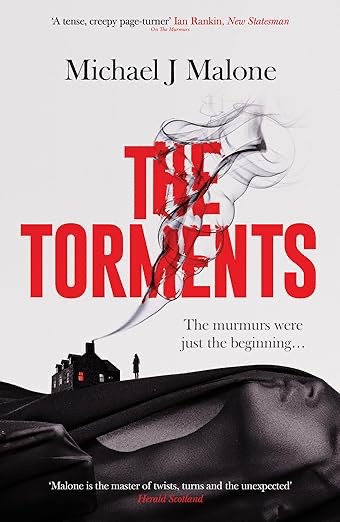
The Torments by Michael J. Malone

I was bowled over by the first novel in the Annie Jackson series – The Murmurs. I already knew that Michael was an incredible writer, able to bring great compassion and intelligence to his characters while delivering a page turning thriller. The added elements of the paranormal and Scottish folklore really grabbed my attention and fulfilled my craving for all things weird and gothic. Here we find Annie living in her little cottage with a view of the loch, the only place that gives her peace from ‘the murmurs’ that can strike at any time beyond the walls of her home. The murmurs are sibilant whispers letting her know that someone close by is near to death. A vision of a skull appears over the person’s face, followed by a horrible premonition of how they meet their fate. One day, while working a shift in the local coffee shop, Annie can hear the whispers and feel the rising nausea. This vision is for a young local man called Lachlan. Annie sees a terrible car accident and Lachlan’s vehicle wrapped around a tree. Torn between warning him and drawing attention to herself, or walking out and ignoring the vision, Annie chooses a middle ground. She tells him his tyres are bald and he really should change them. Even this course of action backfires as only hours later she is berated by a man who comes to tell her Lachlan is dead and she could have prevented it, but didn’t. The rumours about her powers go into overdrive as people realise Annie is the woman who found the bodies of several murdered women. 

Annie can’t win. She’s either dismissed as sinister or even mad or she stays quiet and is blamed for whatever ensues. Desperately wanting to hide from the world, she hopes her little cottage will continue to protect her from the murmurs, but hadn’t banked on how angry locals would be. They break her windows and target her house with red paint. Thankfully, her twin brother Lewis arrives to stay and help just as their adoptive aunt visits, hoping that Annie’s gift might help someone in need. She wants them to look into a missing person case; a young man called Damian has disappeared and she suspects something sinister has happened to him. Damian has had a very complicated past, including ending up in prison on one occasion, but in recent months he had calmed down due to the birth of his son Bodhi. While Annie is keen to explain that she isn’t a medium and can’t find people on command, Lewis thinks they might be able to help. Why not research and interview people like a private investigator? Then during their investigation if anything comes up for Annie they can act on her ideas. What awaits them is a surprising and complex puzzle, that seems to include the dark arts and a woman with the ability to ‘glamour’ others. This time Annie could be in serious danger. 

Michael moves us through different timelines and perspectives, from Annie and Lewis’s investigations to new characters called Ben and Sylvia who are pupils at a private school several years earlier. I found their tutor very disturbing, almost grooming both of them into his fascination with the occult. He’s chosen exactly the right students to draw into his web, students who are distanced or estranged from family and potentially vulnerable. His name is Phineas Dance – an awesome name for the villain of the piece! He gives them a reading list including Alastair Crowley and other proponents of the dark arts and they take to his teaching very well, particularly Sylvia who we watch become more obsessive as she matures. Their training involves ritualistic sacrifice, as well as the attainment of wealth and success – using their new powers to ensnare other followers of celebrity and influence. This leaves them both free rein to operate where they live, having local dignitaries in their pocket. Every few years they have a chance of ensnaring the Baobhan Sith, a mythical female deity who can unleash havoc. All they need is a sacrifice and who better than Annie? The author excels at creating a nail-biting game between Sylvia and Annie’s powers, with Sylvia drawing Annie towards her beautiful home and Annie’s murmurs being suppressed then surging again. Annie is confused by this strange sensation, that feels as if her brain is dialling in and out of a radio station! I was mentally begging her to resist Sylvia’s strange abilities and stay with her brother who is in a battle of his own. He’s using detective work to find out about their missing man Damien and unearthing a possible link to a terrible fatal accident that happened when he was only a teenager. Could this incident be behind Damien’s reckless and addictive behaviours? I loved his interactions with the detective working the missing person’s case, Clare is deeply suspicious of the brother and sister team at first. However, when she has an inkling that corruption might be at play she works in tandem with Lewis and they make a formidable team. I even detected a a bit of chemistry between them. This is a fast moving case, especially when Annie is targeted, meaning you won’t be able to put the book down until you know if she can be found before the ritual sacrifice begins. 

When you finish this book you’ll feel like you’ve been on a fairground ride! The author has a brilliant way of engaging the reader’s emotions, drawing us into the character’s inner lives in a depth that can be rare in thrillers. It’s his ability to make us root for this brother and sister pairing that drives this novel. I feel so much for Annie, who hasn’t asked for this strange ability she has but has to live with the consequences and it’s a lonely life. She’s misunderstood and shunned by people who really don’t understand how powerless and frightened she feels. It was great to see her with the back up of her brother, who accepts her abilities without question and doesn’t judge. Their bond felt very real and setting aside the paranormal elements of their quest, they did remind of the close bond I have with my own brother. When you add these characters to a great case, full of drama and danger, it makes for a very satisfying reading experience. I absolutely raced to the conclusion, never expecting the outcome and enjoying the twists along the way. It left me hoping for more from Annie and Lewis, with a hope that Annie gets a little bit of respite from the murmurs first.  

Published by Orenda Books 12th September 2024

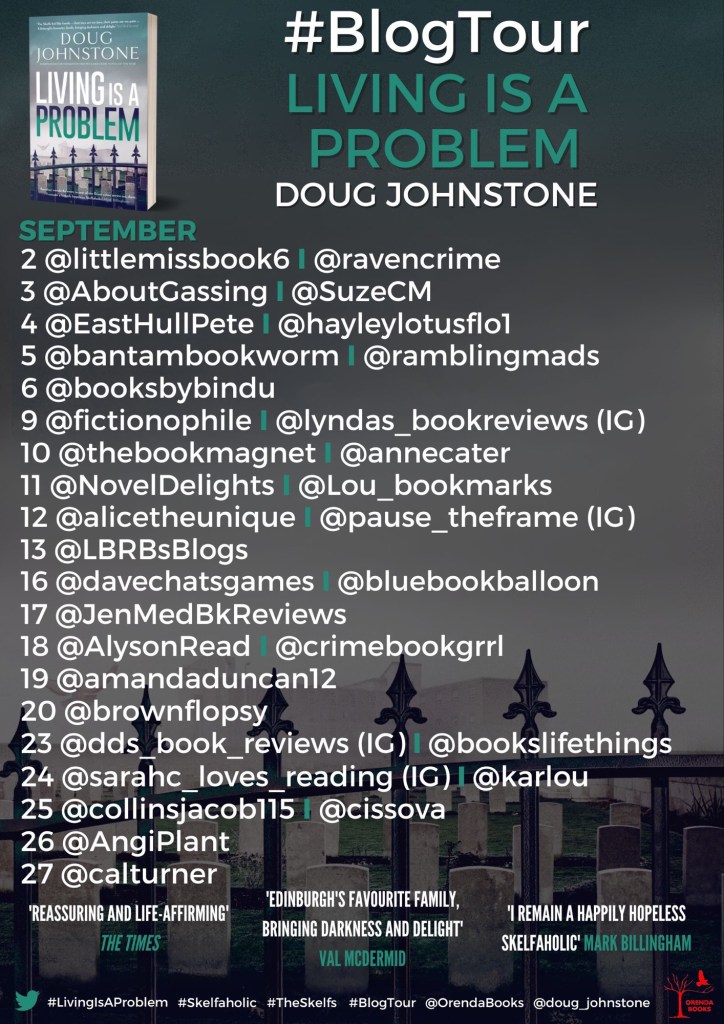
For more reviews check out these bloggers on Septembers blog tour.

Meet the Author

Michael Malone is a prize-winning poet and author who was born and brought up in the heart of Burns’ country. He has published over 200 poems in literary magazines throughout the UK, including New Writing Scotland, Poetry Scotland and Markings. Blood Tears, his bestselling debut novel won the Pitlochry Prize from the Scottish Association of Writers. His psychological thriller, A Suitable Lie, was a number-one bestseller, and the critically acclaimed House of Spines, After He Died, In the Absence of Miracles and A Song of Isolation soon followed suit. A former Regional Sales Manager at Faber & Faber, he has also worked as an IFA and a bookseller. Michael lives in Ayr.

Posted in Orenda, Random Things Tours

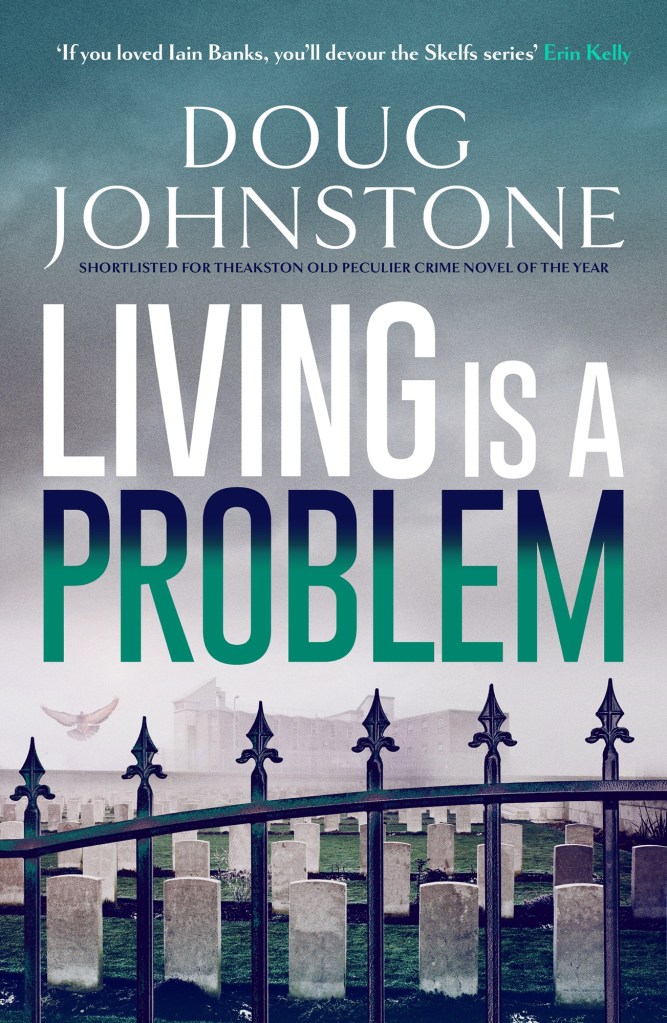
Living is a Problem by Doug Johnstone.

Living is a problem, because everything dies. Biffy Clyro

Every Skelf novel begins with a funeral, but they rarely go off without a hitch. This one is no exception, with a drone buzzing the ceremony. Could it be to do with the deceased or has someone got it in for the Skelfs? Jenny’s following the case from the last book, keeping an eye on the cops they investigating for sexually abusing young girls in the travelling community. Both are inexplicably out on bail and Jenny likes to know where they are, talking to Webster’s wife and setting up surveillance cameras. Hannah’s case also links back to the last book, concerning Brodie the new recruit to the undertaking business. Brodie had been living on the streets since the loss of his baby son broke his world apart. He has found strange scrabbled marks around his son’s grave that don’t look like they’ve been done by an animal. Hannah agrees to set up a camera, but being told that Brodie hears voices she wonders if he might have gone to the grave and acted subconsciously. Dorothy’s case comes from her involvement with a community choir that includes some Ukrainian war widows. One of the women, Yanna, has gone missing. Her husband Fedir was killed over a year ago and now she’s left her two small children with her mother-in-law. Could she have returned to Ukraine to fight, or has something happened to her? Each of the Skelf women feel vulnerable this time and I felt like the author was playing on my emotions a little. I could sense we were on the verge of a huge change and it left me on tenterhooks throughout.  

Hannah’s vulnerability comes from finishing her PhD and feeling a bit lost. While there’s always work in the family businesses she doesn’t know if it’s what she wants to do forever. She’s happily married to Indy but worries about her fascination with powerful older women, such as the astronaut Helen in the last novel and now a professor, Rachel Tanaka who researches into people who hear voices. Is it simply that she’s attracted to their power and position in academia or is it a sexual attraction? I wondered whether it was their competence and their certainty in their career and outlook that she craved. Having Jenny for a mum can’t always have been easy, especially when she was drinking. Then there was her relationship with Hannah’s dad Craig, which was full of fighting and volatility. It could have been scary for her. Maybe these older women feel more stable and dependable and she’s craving what she missed as a child? Jenny felt vulnerable throughout the novel. Part of this was entering into a new relationship, a time when your feelings are on the line and you’re not sure whether it will work out or not. This relationship comes with the extra pressure of knowing him for a long time. She is aware that if it does go wrong, more than her own feelings are at stake. Also Webster and Low, the police officers Jenny is a witness against, are piling on the pressure. They’re facing accusations of sexual assault and the beating of Dorothy and Thomas, but are on bail. Jenny feels unsafe, especially when Webster pulls a knife on her in the street. She petitions the officer in charge to have them dealt with for intimidating a witness. Until they’re remanded everyone is vulnerable. Thomas is not coping and Jenny has started having the odd drink or two. Where will it end? 

Dorothy feels the most vulnerable to me. She’s still working on funerals and investigating, and it’s clear how much her drumming and being part of a band is a solace for her. Usually, Dorothy and Thomas have been a united front. It’s always been a strong relationship, based on friendship, but now she can feel a shift in him. The beating they took from Webster has left them both at a low ebb, but instead of coming together to recover, she feels that their experience has separated them. Thomas seems distant and inward looking, he’s also started the process of Swedish Death Cleaning – sorting through his belongings and giving away what he no longer needs. Even though he explains that it is not just for those who are dying, Dorothy is uneasy that he appears to be putting his affairs in order. She has suggested PTSD and counselling, but he wants to deal with things in his own way. His way started to scare me. What happens when an experience changes your partner beyond recognition? I sensed impending doom and I was on high alert as Dorothy tried to find out what his plans were. I was genuinely scared for her and every time she seemed close to danger my heart skipped a beat. I realised just how fond I was of this badass grandmother. As we moved towards a potentially terrible conclusion I could barely breathe. Could I cope with losing the amazing matriarch of this family? Within her thoughts was a counsellor’s lament: 

‘Sometimes she got it wrong, but she always attempted to have empathy. She tried to see things from the point of view of Yana, Oliver, Veronika and Camilla. She tried to understand Thomas, as well as Griffiths and Webster and Low, their victims Billie and Ruby’. 

Sometimes we have so much empathy for others that we forget about ourselves. Our own anger and sadness gets pushed to the bottom of the pile as we try and try to understand why people do what they do. Each of the Skelf’s cases has a surprising ending and a particularly devastating one for all the women.

As usual the author included his mix of science, philosophy and spirituality. The phone box in the garden is still doing it’s bit, helping the bereaved speak to their loved ones. The funeral business is changing towards being even more sustainable, signified by the new wording on their business information. The Skelfs are now ‘natural undertakers’ rather than funeral directors. It changes the focus and places the dead person and their family at the centre of planning the funeral they want, rather than a stranger dictating what happens. Their resomation rather than cremation system is going well, they’ve stopped embalming altogether and they have mushroom suits that speed up the process of decomposition and improve the soil. They also have their own funeral site for burials and the move towards wicker and cardboard coffins is becoming accepted practice. They are still working with the council on the Communal Funeral Project, providing funerals for people who are homeless or destitute. Hannah is interested in the concept of panpsychism, the idea that everything in the universe has consciousness. Therefore every element is conscious, earth, air, water and fire. Even a rock has an essential spirit. I was also fascinated with the Hearing Voices movement, something I’ve been aware of from working in mental health, but the statistic that one in ten people hear voices or have auditory hallucinations was surprising. I have a medication that causes auditory hallucinations and I only take it at night, so as I’m going to sleep I can hear a constant murmur as if someone is having a conversation downstairs or the radio has been left on. Luckily I know what it is, but for people with direct and often damaging voices it must be so hard to ignore. I loved that there are other cultures where hearing voices is more accepted, normal even. Maybe people who hear voices are simply more in tune with the essential spirit in all things? 

Sometimes, the only thing that keeps the Skelfs (and us) going is hope. There’s usually a wellspring of hope in these novels. A hope for recovery from addiction. Interesting and unusual ways of coping with grief, such as the wind phone. The people these women lift up, like Archie and now Brodie, leaves the reader with a sense that they are on the right side, a glimpse of a more compassionate and inclusive future – something that feels all too distant these days. No other workplace would have employed Archie who has Cotard’s Syndrome, the delusion that he’s dead. Brodie is a risk, he’s been homeless and is in deep grief for his little boy Jack. When his ex, Phoebe, tells Hannah that he hears voices she has to think about this carefully. Could Brodie be mentally unwell? Is this that one time when their trust and nurturing instinct is wrong? I felt there was a little less hope here. Along with the vulnerability comes doubt and there seemed to be a lot of it. Although that’s no surprise when the very people we expect to serve and protect, like Webster and Low, are capable of using that trust and abusing it. Or when the person we share our most intimate moments with can change beyond recognition. Sometimes we have to grieve for those still living. One of the most hopeful things mentioned in the novel was The Future Library Project, which is commissioning new books by writers every year for the next one hundred years. They won’t be read until 2114. This seemed like such an act of hope. The assumption that in a hundred years people will still be hungry for stories, for novels that help them make sense of the world and the people in it. Yet, I kept thinking back to the title of the novel, a quote taken from a Biffy Clyro song that is tattooed on a homeless man whose funeral they’re planning. The full quote is ‘living is a problem, because everything dies’. It felt like an acceptance that life is a series of seasons, or chapters in a book and the story must have ups and downs in order to feel complete. There are beginnings and endings, but some ending arrive before we’re ready. I’m always hoping for one more book in this incredible series and I know whenever the end comes it will be too soon and I’ll miss these incredible women so much. 

Published by Orenda Books on 12th September 2024

Meet the Author

Doug Johnstone is the author of seventeen novels, many of which have been bestsellers. The Space Between Us was chosen for BBC Two’s Between the Covers, while Black Hearts was shortlisted for and The Big Chill was longlisted for Theakston Crime Novel of the Year. Three of his books – A Dark Matter, Breakers and The Jump – have been shortlisted for the McIlvanney Prize. Doug has taught creative writing or been writer in residence at universities, schools, writing retreats, festivals, prisons and a funeral home. He’s also been an arts journalist for 25 years. He is a songwriter and musician with six albums and three EPs released, and he plays drums for the Fun Lovin’ Crime Writers, a band of crime writers. He’s also co-founder of the Scotland Writers Football Club and lives in Edinburgh with his family.

Posted in Random Things Tours

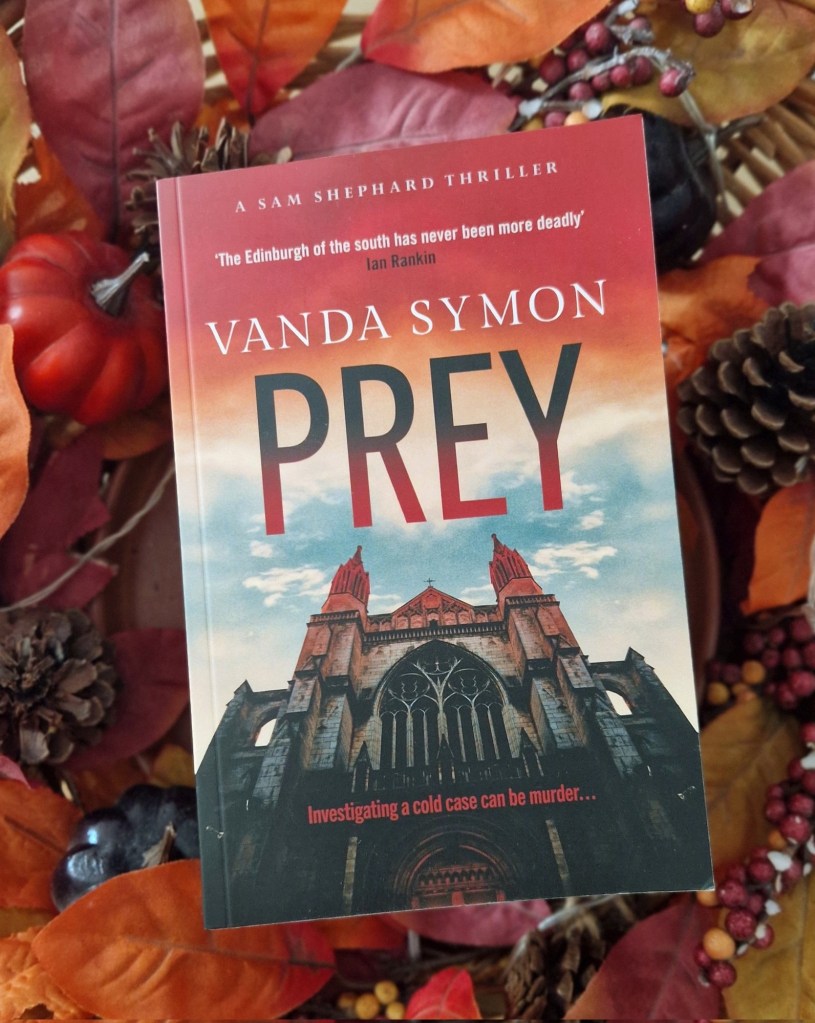
Prey by Vanda Symon 

Sam Shephard is on the verge of returning to work after maternity leave and the traumatic circumstances around Amelia’s birth. In order to make the transition as easy as possible, Paul is staying home with Amelia for the first week Sam returns. As is predictable, her boss DI Johns isn’t the most welcoming and gives her a cold case – the murder of Rev. Mark Freeman outside his own church. There’s one potential issue, Mark Freeman was the father of DI Johns wife Felicity. Felicity’s mother has been diagnosed with cancer and the boss would like her to go to her grave knowing who killer her husband. My first thought was that this had the potential to blow up in his face: he’d be all over her progress, creating conflict of interest for Sam that would be exploited if a case ever went to court. He was also being his typical sensitive self by ensuring that his mother-in-law would spend her final months reliving the most terrible experience of her life. Rev. Freeman was found at the bottom of the stone stairs leading up to the church entrance. He had been stabbed in the stomach by a small knife, but that wasn’t the cause of death. His subsequent fall down the steps broke his neck, immediately cutting off his ability to breathe. Horrifically he was found by his son Callum, who had ventured back out into the pouring rain when his father hadn’t returned home after the service. Yet we know at least one other person witnessed the killing, because the book begins with their anonymous account of the murder. The boss has essentially handed Sam a poisoned chalice and she fears one of two outcomes – she won’t be able to solve the case, so will be held responsible for disappointing his wife and her mother or she will solve it, making the previous investigation seem incompetent and potentially tearing his family apart in the process. If we as readers know one thing, it’s that Sam will not rest until the case is solved. 

I loved the happy family life Sam and Paul have created with baby Amelia. Their relationship feels like a real long-term partnership with the added bonus that Paul is also a detective. They understand that it’s hard for either of them to switch off when they’re working a case, so can happily bounce ideas and theories off each other in the evening. The addition of Amelia to their relationship is something they’ve taken in their stride. It isn’t always easy. There’s a return to work poonami that had me laughing; how do you shit in your own hair? There’s also an afternoon where each thinks the other is picking her up from childcare, but other than this they’re coping well. The author brings home to us the difficulties of being a working mum. Sam misses Amelia and has to call home to check in and hear what they’re doing. There’s also the issue of expressing milk at work, the family room is at her disposal but it feels awkward and isn’t as private as it could be. It doesn’t take long to get used to her new routine though and she’s soon busy using the time to go through interview notes and test out different scenarios. Paul is incredibly supportive, totally backing Sam up in her eventual decision to swap to bottle-feeding. Of course her mother has plenty to say, but she’s besotted with her granddaughter so that helps ease tensions. This is a case that brings up a lot of personal feelings and memories for Sam, because she too was brought up in a church environment and talking to Callum and Felicity, Mark Freeman’s children, brings up some memories of her own that it might be time to disclose. 

“What I hadn’t factored in, though, was the emotional toll it took. The wrench of being away from Amelia when I loved every second of being in her company. The regret about going back to work and putting her into childcare, which felt like paying for someone else to bring up my child. And the guilt over the immense sense of relief I felt at getting away from her and from the relentless demands and responsibility of looking after a baby.”

The Freeman children and their mother are first on the list of people Sam needs to re-interview, but as she suspected, keeping her boss away from her case is difficult. He blows up over the fact she’s interviewed his wife without his knowledge and express permission. He wants all access to the family to come through him, but Sam stands her ground. If his fingerprints are all over this case it doesn’t matter what she finds out. The case would be thrown out of court, a fate even worse than failing to find the killer. I loved how Sam stuck to her guns though and called him out in front of the whole team. He has to stay away from the case and trust her. If he keeps a stranglehold on who she can talk to and what avenue her investigation takes, he will ultimately be responsible for it’s failure. The Freeman family seem lovely, but as Sam knows that’s no indicator of innocence. Sam has had a church upbringing, something I have in common with her, so we know better than anyone that sometimes people hide within a congregation. Their Christianity is a mask, a mask that seems to confer an unquestioning trust on them.  Most people Sam talks to see the Reverend as a saint, but Sam isn’t taken in and knows she just has to ask the right people. Luckily, she has two potential witnesses: Aaron Scott was an operative in an Organised Crime Group and he certainly appears ferocious with his size and his Māori tattoos, then there’s Mel Smythe, former youth leader and now a drunk living in a hostel. What Aaron tells her blows the Freeman’s timeline totally off kilter and gives her a glimpse into an angrier and self-righteous Mark Freeman. Mel was well-known for being a bit of a rebel, mainly because she was gay yet she was still a youth leader. I found myself wondering whether the church was quite progressive after all. Despite her heavy involvement at the church during the time of the murder, she was soon caught up in the aftermath. She also brings throws new light on the case, but only twenty-four hours later she’s dead. Stabbed in the stomach in her lonely and bleak hostel room. 

The author brings up something about church people that I was very aware of as a Christian teenager. They can seem welcoming, hospitable, even saint-like but if you breach one of their most important rules you can meet a completely different side to that person. While they might preach forgiveness, there are certain things they hold true and they are immovable. Aaron certainly places a new spin on the Reverend, with whom he’d had a great friendship. What he overheard that night showed that when faced with a challenge to his Christian values he wasn’t so great at forgiving. Mel Smyth backs up his story with a revelation of her own, a problem that was brought to her perhaps because she was different and lived outside the traditional Christian view of relationships. These new statements show that the original investigation missed so many leads or simply didn’t follow them up. That it took the saintliness of the Reverend and others around him at face value, perhaps because he was a figure of authority in the community. It’s also leading her towards conclusion that the boss isn’t going to like. As the rest of the team, including Paul, take on the Mel Smyth case Sam feels more supported. She knows that Paul and Shortie have her back and trust her methods to get results. I loved how the author gave us more on the relationship between Sam and her mother too, especially now she has a grandchild to dote on. It’s clear to see in any conversation with her mother where Sam’s self-doubt and over-thinking come from. Trying to please a critical parent is a self-defeating task and even here when talking about the Reverend Freeman case, her mother shows a total belief in the church and it’s figures of authority that’s probably hard for us to fathom in this day and age. Yet it gives us some indication of why the original case had been conducted in the way it was and how powerful church figures were several decades ago. 

At the end of the case I felt so sad, that belief in the church and it’s rules were often put before the well-being and love of family and the real and flawed people who make up a congregation. I felt it because I lived it, being a teenager in an evangelical church was no picnic and I got out as soon as I could. I regularly see other waifs and strays who are no longer in the church and thankfully we get a lot of humour and relief or closure from each other. We can say ‘that was a bit mad wasn’t it?’ and hear confirmation that yes, it was utterly bonkers. I was so incredibly proud of Sam to know she was ready to talk to her mother about what happened during those years. It’s common that having your own child triggers feelings about your childhood and how you were parented, especially where there are unresolved issues. It’s no coincidence that in this novel she’s ready to take on the boss and the past, perhaps not just because of Amelia but because of the family unit she’s building with Paul. That was the feeling I took away from this novel overall, it’s main theme is family whether that’s a nuclear family in its most traditional sense, a work family that grows in professions like policing, or a church family. It also gave me a reminder that in all of these relationships, it’s communication and honesty that are the most important facets. If those two things are broken or over-shadowed by authority, a web of secrets and lies are woven that can prove very difficult to unravel. I love Sam, she’s a no bullshit character and at this moment when I am still struggling with my health and keeping up, she gave me some healthy reminders that it’s ok to let things slide a little. This was another great novel in this series, Sam is a character I’d love to go for a drink with and seeing her stand up to her boss was a real highlight! 

“I suspected I’d get bored and frustrated with a life of domestic bliss. I certainly wasn’t cut out to be a domestic goddess. Six months of maternity leave had driven that home. Fortunately for me, I wasn’t aware of anyone dying from a lack of vacuuming, bed-making and not managing to get out of their PJs all day.”

Out in August 2024 from Orenda Books

Meet the Author

Vanda Symon is a crime writer from Dunedin, New Zealand, and the President of the New Zealand Society of Authors Te Puni Kaituhi o Aotearoa. The Sam Shephard series, which includes Overkill, The Ringmaster, Containment, Bound and Expectant, hit number one on the New Zealand bestseller list, and has also been shortlisted for the Ngaio Marsh Award. Overkill was shortlisted for the CWA John Creasey (New Blood) Dagger and Bound and Expectant have been nominated for USA Barry Awards. All five books have been digital bestsellers, and are in production for the screen. She is also the author of the standalone thriller Faceless, and lives in Dunedin with her family.

Posted in Random Things Tours

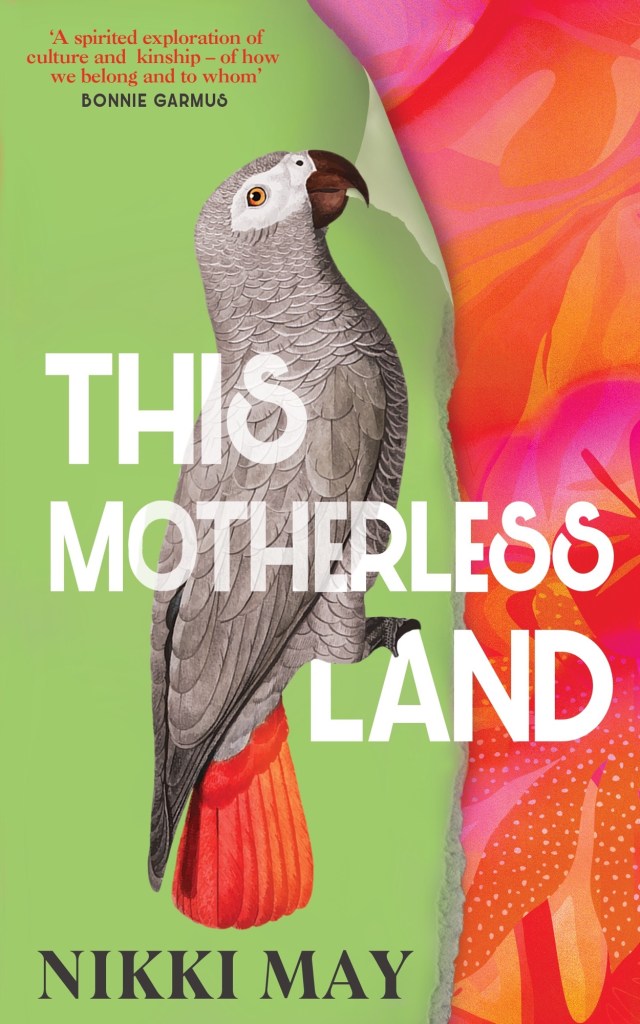
This Motherless Land by Nikki May.

This book was an absolute joy to read, which may sound strange considering the subject matter but somehow it awakened my senses, stirred my emotions and kept me reading. In fact I read it so quickly I was finished in an evening that turned into morning before I knew it. Funke lives in Nigeria with her mother, known as Misses Lissie to most people, her father and brother Femi. Mum is a teacher and Dad works at the university. Their entire world is shattered one morning as they make their normal run to school when their mother’s car fails to stop and ploughs directly under a lorry. The drivers side of the car is destroyed but Funke’s side is left completely unscathed. She loses her mother and brother in a moment. In his grief, her father Babatunde is inconsolable and he takes it out on Funke. How did she get out without a scratch? Encouraged by his superstitious mother, he calls Funke a witch and insists she must be protected by some magical being. Seeing how Funke will be treated by her grandmother, her aunties put their heads together and decide she should be sent for a while to her mother’s family in England. Her white family. Funke is ripped away from everything she knows and sent to The Ring, the mansion where her mother and Aunty Margot grew up. There, although she isn’t being hit or accused of evil spells, she feels the resentment of Aunt Margot and her cousin Dominic. They call her Kate, after all it’s easier than pronouncing Funke isn’t it? There’s no colour, bland food and where she was accused of being white in Nigeria, here she is seen as black – with all the racist connotations that come alongside it. Especially in white, upperclass Britain. England’s only saving grace is her cousin Liv. Liv scoops her up and feeds her comfort food. The problem is it’s not the food or the comfort she’s used to.

This is a book about being in between. Funke’s mother was ostracised by her family for marrying a Nigerian man. Aunt Margot sees Lizzie’s relationship with Babatunde as the reason for her own engagement being called off just before the wedding. In her eyes Lizzie was selfish, pursuing her own feelings at the expense of her family. She feels Lizzie had the looks, the charisma and the man she loved, while Margot was left heartbroken and with parents who seemed to miss Lizzie more than they enjoyed Margot’s presence. She sees Funke as her mother’s daughter and a threat to her own children. Her parents seem to love Kate, as they’ve christened her, and Margot doesn’t want her to take all the attention, the love and their eventual inheritance. She’s a bitter woman who is very hard to like. Sadly for Funke, history repeats itself and on the night of their prom a series of events mean they must drive home early. Liv is drunk and high. Yet even Funke, who is teetotal, feels unwell. Dominic throws caution to the wind and decides to drive them home, despite his own drinking, and a terrible accident occurs. Everyone survives but Liv suffers a bad break to her leg. In the aftermath Dominic asks Funke to admit to driving, which she agrees to, not knowing that covering for her cousins will lead to her life being uprooted for the second time.
Funke feels like she belongs nowhere. In Nigeria when her mother was alive they had a wonderful life, even if children would follow her singing a song about her pale skin. That’s nothing to the blatant racism she faces in England, but she faces it down and it fuels her will to succeed. Then she’s back in Nigeria and is again the odd one out. This time she’s in her dad’s new family and their lifestyle in the village is very different to the childhood she remembers on the university compound. His new wife and their children eat and live in ways her dad would have dismissed as ‘bush’ when Funke was a child. Her small brother and sister are black and fascinated with her pale, mixed race skin. Things are familiar, such as the spicy red stew and the heat, but it’s a changed land without her mother in it. At least in England she didn’t expect her mother to be there. Now she faced with the shock of her absence all over again. Will she ever find home? Meanwhile, back in Britain, when Liv finally comes round from the accident she asks for Kate. What will her mother tell her?

I thought the author brilliantly showed how different people cope with mental pain. Funke takes a bottle top from her mother’s hoard (for craft projects) and holds it in her hand so hard that it cuts into her palm. Liv is horrified that she’s hurt herself like this, but for Funke it’s the only thing that distracts her from the grief of losing her and her brother. Liv also deals with motherly absence, but externalises her feelings in a different way. She has a mother who is present, just not for her. Liv starts to drink excessively, uses marijuana and acid tabs to blank out the feelings that she isn’t loved and therefore isn’t worth anything. When we’re children and we’re rejected by a parent, we never assume it’s the parent’s fault and we don’t stop loving them. Instead we internalise their criticism and think we are the problem. Liv has a lot of casual sex because she thinks it sex is all she really has to offer. Meanwhile Funke struggles to give love and truly trust someone. She is in a relationship with a young man who is keeping his true sexuality under wraps, because it’s not accepted in his family or community. The younger people are aware he’s gay and call Funke his ‘beard’, but how far can she take this relationship? What if he suggests a more permanent arrangement and is Funke willing to give her life away so easily? The the same root cause, a loss of the mother figure they so needed, affects both girls, it just manifests in different ways. With them both on opposite continents, how will they ever find each other again? The spaces between can be painful and isolating places to be and the author depicts that with such tenderness and understanding. However, liminal spaces are also freeing. Being in-between gives us the space to choose, to take bits and pieces from each place, each family and make our own identity. I found the end chapter so uplifting and it gave me hope that we can each forge our own identity, once we’ve explored who we truly are. This is a fascinating, touching story about growing up and how we become who we are. It’s vibrant, atmospheric and an absolute must read.

Meet the Author

Born in Bristol, raised in Lagos, I’m proud to be Anglo-Nigerian. I ran a successful ad agency before turning to writing and now live in Dorset with my husband, two standard schnauzers, and way too many books.

My debut novel WAHALA was inspired by a long (and loud) lunch with friends. It was published around the world in January 2022 and is being adapted into a major BBC TV drama. This Motherless Land is my second novel.

Posted in Random Things Tours

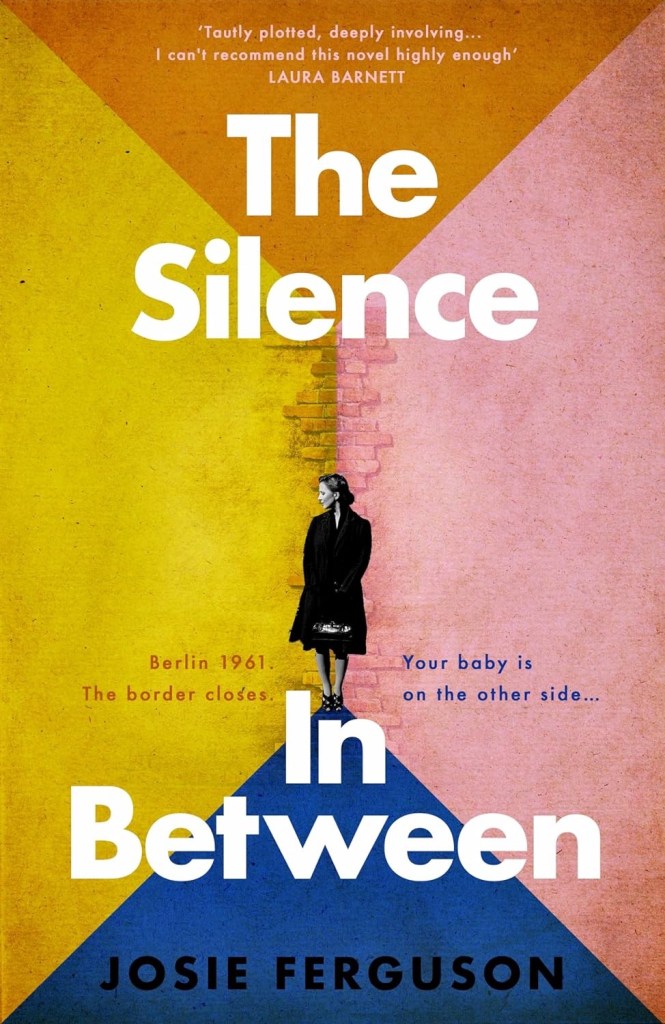
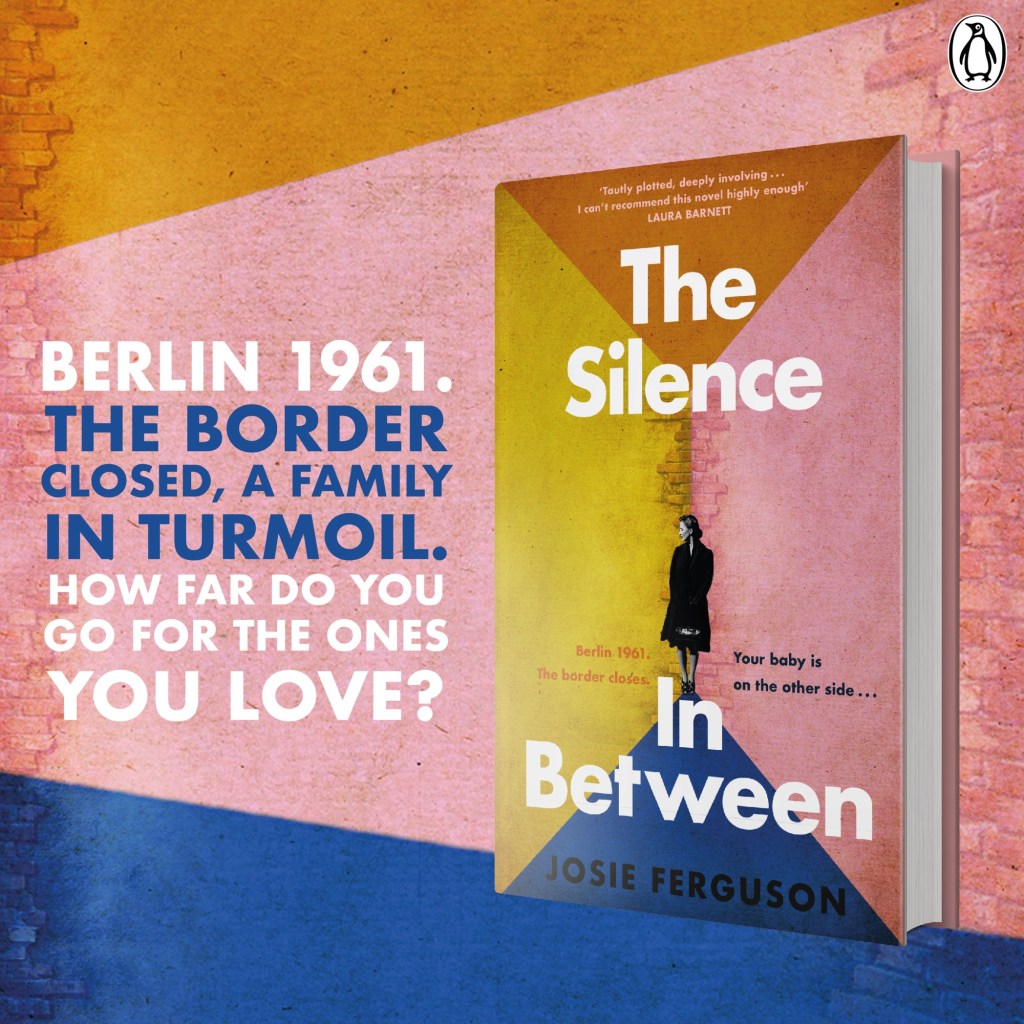
The Silence In Between by Josie Ferguson

‘Evil demanded little of me. It merely asked me to stay silent – to do nothing. And I complied.’

Imagine waking up and a wall has divided your city in two. Imagine that on the other side is your child…

Lisette is in hospital with her baby boy. The doctors tell her to go home and get some rest, that he’ll be fine.

When she awakes, everything has changed. Because overnight, on 13 August 1961, the border between East and West Berlin has closed, slicing the city – and the world – in two.

Lisette is trapped in the east, while her newborn baby is unreachable in the west. With the streets in chaos and armed guards ordered to shoot anyone who tries to cross, her situation is desperate.

Lisette’s teenage daughter, Elly, has always struggled to understand the distance between herself and her mother. Both have lived for music, but while Elly hears notes surrounding every person she meets, for her mother – once a talented pianist – the music has gone silent.

Perhaps Elly can do something to bridge the gap between them. What begins as the flicker of an idea turns into a daring plan to escape East Berlin, find her baby brother, and bring him home….

This book filled me with such complex and difficult emotions I had to put it aside for a couple of weeks and read it when I felt stronger. I don’t know whether it was the theme of baby loss, something I’ve sadly experienced, or whether it was because I felt unwell but the response was visceral. There’s a scene in Friends where Joey finds the emotion of Little Women so upsetting he has to put the book in the freezer, something he’s only done with books that terrify him before. As I clicked out of my digital ARC and snapped the cover of my iPad closed with a snap, I felt like I needed to bury it under a few pillows so it couldn’t reach me. As Lisette realises that she can’t get to her son, I felt that maternal bond stretched to it’s limit. Until it begins to tear. When I started to feel better I restarted it and it really is an exceptional piece of writing. If you love historical fiction and work that really burrows into the human psyche and our complex emotions then this is an absolute must read for you. The quote above really hit home with me because this is something Lisette expresses when she sees Jews being marched out of Berlin to an unknown but terrible fate. In fact the family seem to avoid rumour and talk about them being placed somewhere else, whether that’s another city or country. During the war, when Lisette stumbles across the mass movement of Jewish people from her neighbourhood a woman calls out in desperation, pleading with Lisette to take her baby. Lisette feels so much guilt for looking away, for pretending not to hear, but I put myself in her shoes and couldn’t see what else she could do. If she’d been seen taking the baby she could have been arrested or killed. I thought she was so hard on herself.

The author sets her story across two timelines: one at the end of the WW2 and the other is set in the months following the erection of the Berlin Wall in 1961. She starts her story in the hours between Lisette leaving her sick baby son in the West Berlin hospital and the authorities beginning to build the wall. It really is a matter of hours. The panic when she realises she can’t get back to him is devastating and I felt her grief so deeply. Then we go back Berlin in 1945, when the war is really beginning to bite. The promised victory seems more and more distant: food is scarce; more men are being called up; bombs are starting to fall on Berlin. This is where ordinary German people, at least those who haven’t bought into Hitler’s rhetoric, are starting to realise that victory is a long way away. Maybe, they might even lose. Often in dual timeline novels I am drawn to one story line more than the other, but here the author strikes a perfect balance. Both timelines are compelling, evocative, terrifying and deeply moving.

The depth of research behind these wonderful characters and their devastating story is clear from the outset. It was brilliant to be able to read more in the author’s notes because if you’re like me and only remember the Berlin Wall coming down, there’s a lot to learn here. Firstly I had no idea of the geography. In my brain there was a wall running through the capital because Berlin was fairly central to Germany. That is not the case at all. The county was divided, but Berlin was within the East German side of the country. Previously, people living in East Germany could openly travel to the West of the country. Comparing the two sides, Lisette is aware of her side of Berlin seeming like a monochrome version of the world but they could travel across to the more colourful and vibrant side. This colour wasn’t just to do with Western money, Lisette is aware of living in fear of the Stasi, a network of agents who spy on their own citizens. I had no idea that West Berlin was essentially split amongst the allies so there were distinct areas patrolled by the French, American and British forces. It’s the small horrific details that hit home though – there were streets on the edge of the new barrier that provided an escape route if you passed through one of the houses but as the days go by the windows are slowly bricked up. These facts ground the author’s story in it’s time and place, both timelines showing a city divided. From the rhetoric of 1945 that slowly separates the Jewish residents using derogatory language and propaganda, the targeting of their businesses and homes, forcing them to wear a yellow star and subjecting them to violence before removing them from their neighbourhoods towards the trains that will take them to Belsen and Auschwitz. Then we’re thrust into the paranoia of the 1960’s where even your neighbour might be a Stasi spy and I had my suspicions about their neighbour with her budgie in it’s cage – a metaphor for the new cage they find themselves in. They sell the wall as an ‘anti-fascist barrier’ with strange echoes of Putin’s excuses for the invasion of Ukraine. Elly’s father isn’t the only one who realises that this is not for keeping others out, it’s for keeping them in. The city’s buildings are still peppered with bullet holes and bomb damage, a visual representation of it’s residents who bear the internal scars of war. War is indiscriminate. Once it comes to ordinary people there’s never a bad and good side, every resident is affected by poverty, trauma and loss.

I loved the more unusual aspects of the characters, such as Lisette’s daughter Elly, who has a synaesthetic way of encountering the world. She knows that the people of this city have lost their music. She experiences others in terms of a melody only she can hear that expresses their emotional state. It is the first thing that connects her to the Russian soldier she meets. They don’t speak each other’s language but Elly can feel his music and for the first time it combines with hers creating a beautiful harmonious melody. Along with her mother’s silenced voice, people have lost that unique way of expressing themselves through sound. In East Germany there are many ways to be silenced and the Stasi have instilled a fear in their own people, that they’re always being listened to. I loved reading the notes at the end of the book and it has already inspired me to read further. I knew about the Berlin Wall of course but not where it was situated and how the rest of Germany was divided was totally new to me. I sort of knew one side was communist and the other wasn’t, but that was all. I hadn’t even realised that Berlin was situated inside the East part of the country. I’d imagined just one long dividing wall down the country that also separated Berlin, with a no man’s land between. I hadn’t known that until the 1960’s people could pop easily between East and West Berlin, giving them the possibility of escaping into the west permanently. With the hospital on one side of the wall and their home on the other Lisette starts to fall apart, but not all was rosy in this household to begin with. We get a glimpse into how things have been for all three generations in the flat, there are so many memories weighing these people down, one more haunting than the other. Yet we are given a little hope when one family decides they must get to the other side. Adventurous and thrilling as it is, their life is at stake, something that really hits home when they see someone try to swim across. The author takes us effortlessly back and forth in time to understand this family and my heart kept breaking for them over and over for. While I struggled to read this at first, I’m so happy that I went back to it because it was breathtaking. It was as if someone had bottled both moments in time and simply poured them onto the page, raw and confronting. This is an absolute must read for historical fiction fans and a book I will definitely go back to in the future.

Meet the Author

Born in Sweden, to a family of writers and readers, Josie Ferguson moved to Scotland when she was two. She returned to Sweden in her twenties, where she completed a vocational degree in Clinical Psychology (MSc). Upon graduating, she moved to London to pursue a career in publishing, something she had dreamed about since delving into fictional worlds as a child, hidden under the duvet with a torch.

She later moved to Asia in search of an adventure and a bit more sun. She currently works as a freelance book editor in Singapore, where she lives with her husband and two young children. While training to become a clinical psychologist, Josie learned about the complexity of human nature, something she explores as a writer. She believes books about the past can change the future and she aspires to write as many as possible. The Silence in Between is her debut.

Posted in Random Things Tours

The Divorce by Moa Herngren

There are two sides to every story…

This is one of those books that needs to be discussed. A perfect book club choice or book you can foist onto a friend because you will want to discuss it. As the cover suggests this is a marriage and a book that splits into two – one of life’s seismic fault lines that has a very definite before and after. Niklas and Bea have been married for over thirty years with two teenage daughters Alexia and Alma. They have what most people would consider the perfect life. They live in a beautiful and sought after area of Stockholm in an apartment that Bea has spent so much time perfecting. They are currently remodelling the kitchen, but it’s bespoke and at huge cost. Niklas is a doctor and has recently taking a job heading up a maternity department. Historically, Bea stayed home with the girls and more recently took a job with the Red Cross. It doesn’t pay a lot but with Niklas’s new wage they don’t need to worry about it. As we meet the family they are preparing to take their annual summer holiday to Holgreps and the home of Niklas’s parents. They go every year at the same time as his brother Henke because this is the only time the cousins get to be together. Niklas has forgotten to book the ferry tickets and Bea is furious. This means spending an extra week in the sweltering heat of the city with no outside space or a long drive to a different ferry crossing. He only has to do one thing, she does everything else and he’s so wrapped up in his new job he can’t do it.

“Bea is busy emptying the dishwasher in the kitchen, but she stops as he comes in. The look on her face is demanding […] Her jaw seems tense, and he can see her chest rising and falling rapidly beneath her blouse. She is disappointed. No, disappointed probably isn’t the right word. She’s angry. Furious. How the hell could you forget to pay the bill? This means we can’t go to Gotland tomorrow, the tickets are all sold out!”

“Niklas feels like shouting back at her, telling her there are worse things. Like being a single mother who has just found out that her newborn son has Down’s syndrome, for example. Or being the man on the ICU ward, watching over his wife as his stillborn daughter is taken down to a cold storage unit two floors below. He feels like roaring that his head is so full there isn’t room for the damn ferry tickets and all the terrible, exhausting planning she has apparently had to do. Niklas wants to shout, but instead he turns and walks away while she is mid-sentence. He can hear Bea’s agitated voice behind him, but to his surprise, he just keeps on walking […] Each step is a relief.”

Bea narrates the first part of the book and we get the sense she feels badly done too. Niklas wouldn’t be where he is without her and she has made sure he lives up to his potential. She talked him into accepting the new job because left to his own devices he would still be pottering along in his paediatrician role at the small local hospital. It’s the same with the apartment, he couldn’t see the problem with the existing kitchen. He’d have made do with it for years, never thinking about what the room could be. Bea looks forward to Hogreps every year, she never really had much of a family herself especially after her brother Jacob died. In the aftermath Niklas had taken her to stay with his parents and on her first mornings there, his mother Lillias took Bea wild swimming. She credits those mornings with saving her sanity, more effective than counselling. Niklas had been Jacob’s friend so they shared their grief and it brought them together. Bea has always thought that anything they do together becomes fun, even if it’s taking items to the recycling tip. So it comes as a huge surprise to her when Niklas sends her a text message to say he isn’t coming home. There’s no further explanation and she doesn’t know if he means he isn’t coming home that afternoon, till tomorrow or at all. Bea’s texts and voicemails are ignored so she tells him that their daughter was expecting him to take her out in the car and she’s upset. She’s still ignored and infuriatingly, when she checks in with their daughter Alma says it’s okay. Her dad has called her and said he’ll take her another time. As one night seems to be extending, Bea is beside herself. Niklas says he wants space, but what from and how long for? Where is he staying? She’s going through that strange feeling that the person you shared space with; the person you could touch whenever you wanted; the person who you spoke to several times a day, is now off limits. It was clear to me that the balance of power had shifted in this relationship but I couldn’t understand why.

“Bea picks up her phone again, staring at the screen as though she an coax Niklas into sending her another message. An explanation of why he is acting so oddly […] but the only messages in their chat thread are Bea’s own attempts to reach him. A long string of questions and exclamation marks. CAPS. Angry emojis. Furious red faces with slanting eyebrows and bubbling volcano heads. Demands for communication”.

“The condescending pat on the head, talking to him as though his choices are reprehensible. As though it’s him who is in the wrong, who is unhinged, when all he is trying to do is be true to himself. The clear subtext is that his feelings don’t matter, and nor do his choices or wishes.”

Halfway through the novel, as Bea sets off with her girls to Hogreps and their stay with the in-laws, Niklas takes over the narration. I’d got used to my narrator at this point and I was feeling some empathy with Bea who is clearly distraught. Yet now I started to hear her husband’s story and his inner world: the pressure he’s under at work; the diagnosis he feels he should have made that changed someone’s outcome; the responsibility of financially supporting his family and keeping up with Bea’s remodelling ambitions. He’s on the proverbial hamster wheel and feels totally trapped. The author puts across his tension and despair so beautifully and I could feel the panic in his mind. I started to feel that Bea’s needs were seen as more important than his, not just in the marriage but with his family too. This is a problem rooted in the way they became a couple, both were grieving for Bea’s brother Jacob but she had the claim of being his sister. He took her to his family as this lonely, wounded little bird and they all took her under their wing. Niklas was effectively pushed to one side, not only negating his grief for his best friend but piling on the pressure. He now feels held to account, forced to swallow his own needs and look after Bea at all costs. It isn’t until he ends up talking to one of their neighbours at a party that he even realises he has a choice. The sense of freedom he gets from someone listening to him is exhilarating. Everyone assumes he’s having a midlife crisis, but is he? As he and Bea go to couple’s therapy can they save their marriage?

‘She knows exactly what song Lillis means. ‘If You Love Somebody Set Them Free’ by Sting. Bea herself has never even a fan. Surely freedom also involves responsibility? Taking responsibility for those you love? She doesn’t have a problem with giving other people space, but leaving your partner in the lurch? That’s just cowardly.”

“She has liberated his mind somehow. Lifted the hundred-kilo weight from his chest. Sometimes he wonders what might have happened if they’d met earlier. Would he have been able to avoid all this? Would he have forgiven himself sooner? Realised that he isn’t responsible for other people – other than his children, of course – or at least not in a way that makes him a slave.

I loved how the author shows us the difference in communication styles between these two characters. Bea is performative and you are never in doubt about how she’s feeling. He anger and distress leap out immediately, even all the way back to the beginning and Jacob’s death. Niklas seems shell-shocked by Jacob’s death and he internalises all of the feelings he has to look after Bea. However, it starts to become clear there are bigger things hidden deep inside this couple than tears. Grief is complicated and Niklas’s feelings have been discounted from the beginning, by his parents Lillis and Tores, by Bea and by himself. He hasn’t allowed himself to process what happened and this becomes his coping style. So, when he finally does start to express his feelings they come as a surprise to Bea and to him. He can’t blame her for not knowing how he’s felt, because he’s never tried to tell her. Or is it more that there’s never been room for anything but Bea’s feelings. As we go back and forth, especially section three which passes between the two of them, secrets come to surface that I really didn’t expect. It’s also interesting to see how the people around the couple adjust and cope with what’s going on, brought into sharp focus by the illness of Tores. I felt so much for Bea because she has a lot of catching up to do, it’s as if the world has moved on without out her suddenly. Then in Niklas’s sections of the story I could feel how free he is, exploring his likes and dislikes, changing long held traditions and doing things he never expected like having a tattoo. They might look like mistakes from the outside, but it’s his exploration and he’s finally finding his authentic self. This novel is so beautifully written and exquisitely structured to have impact on the reader. Reading this felt like a counselling session and I mean that in the best way possible. We delve deeply into these two characters and their shared history, looking for clues and patterns of behaviour till we can understand why they’ve reached this crisis point. The question of whether they can come together again and be a family I will leave you to find out.

“Maybe things are different for Bea and Niklas because their life together began in tragedy, with Jacob’s death. Because that, strangely enough, is what brought them together. Maybe that’s why she knows they can handle anything: because they fell in love at rock bottom. She wouldn’t have survived without Niklas”.

Out Now in hardback from Manila Press

Meet the Author

Moa Herngren is a journalist, former editor-in-chief of Elle Magazine and a highly sought-after manuscript writer. She is also the co-creator and writer on Netflix hit- show Bonus Family.
Alice Menzies is a freelance translator based in London. Her translations include work by Jonas Hassen Khemiri, Fredrik Backman, Tove Alsterdal and Jens Liljestrand.

Posted in Random Things Tours

Boys Who Hurt by Eva Björg, Ægisdottir

Translated by Victoria Cribb

We’re back with Detective Elma in the fifth of the author’s Forbidden Iceland series and she is just returning to work from maternity leave when a body is found in a holiday cottage by a lakeside. The victim’s name is Thorgeir, he has grown up in Akranes and in a coincidence typical to small towns, his mother is Elma’s neighbour. The holiday cottage belongs to the family and the evidence suggests Thorgeir was not alone – there were two wine glasses and a lacy thong is found under the bed. He is found in the bed, with stab wounds and the line of a well known hymn written on the wall behind the bed, in blood. With Saever on paternity leave with their daughter Adda, Elma works alongside her boss Hörour to solve the murder. Several leads come to light. Thorgeir was working with his friend Matthías on an exercise and well-being app and had secured a large sum of money as an investment, but from an unexpected source. The hymn is well known, often sung at a popular Christian camp for teenagers and refers to the washing away of sin – had Thorgeir needed such forgiveness? Matthías and his wife Hafdis mentioned a young woman that Thorgeir had been seeing recently, but there is no sign of Andrea anywhere. The friends had often attended camps together as teenagers, but on one such occasion a young man had died out on the lake in the night, in similar circumstances to Thorgeir’s father’s death a few years before. It’s soon clear that many secrets are hidden in Akranes, some of them within Elma’s own home.

I love Elma’s character and what a refreshing change to read about a working woman whose partner is providing the childcare. There’s also none of the usual guilt or tension around her return to work, even as the case becomes more intense and late nights become the norm. She seems to have taken motherhood in her stride and she and Saever seem settled and happy. It’s sad that in the 21st Century this should stand out so much. Usually I read female characters caught between home and work, struggling from lack of sleep and feeling guilty. It’s great to see a woman who is a new mum, as well as a competent detective. The mothers in this novel and their relationships with their children were incredibly complex and psychologically fascinating. I was intrigued by Thorgeir’s elderly mother Kristjana, who happens to live next to Elma and Saever. She’s known as a drinker and is familiar to most people as the owner of a dry cleaners in town. She and Thorgeir didn’t seem close, but she had helped him financially. Was this out of love or guilt? There was something fishy about the business’s finances too, a thread that Höreur picked up and investigated. Kristjana’s home isn’t lavish and she doesn’t look like someone with the sort of money the accounts suggest. Saever finds her behaviour bizarre, even to the point of having to intervene one afternoon when he notices she’s dancing naked with the curtains open. She’s had tablets and alcohol, possibly due to grief and hinting at a troubled inner life but when questioned there’s a wall she puts up that’s metres and years thick. Hafdis is also a fascinating character, she asks for a divorce at the beginning of the book but where has she found the money to move on so quickly. Her relationship with Matthías is already over in her eyes, but I was shocked by her coldness towards her daughter Olof. The family have been having therapy, because Olof has been self-harming but Hafdis doesn’t even seem to have factored her daughter into her plans. Olof confides in her father about her mother, not that she gives her a hard time but that she looks at her daughter as if she’s nothing. What else might such a ruthless woman be capable of?

Saever is at home, but when he’s unpacking he comes across a box that doesn’t belong to them. In fact it belongs to previous residents, full of school exercise books and a holiday journal from the very year that the boy was killed on the lake. It belongs to Mani, one of the group staying in the same cabin as the dead boy, alongside Heioar, Hafdis, Thorgeir and Matthías. This draws him into the investigation and Elma isn’t surprised to find him at the station researching, while bouncing Adda on his knee. I loved the little Icelandic details on child care, such as wrapping the baby up warmly then popping them in the open air for a sleep. I didn’t expect to enjoy Elma working without Saever, but I really enjoyed Höreur being a part of the investigation and found myself amused by his grumpiness. His hip injury brings out a resistant and stoic side to his character, the pain making him increasingly snappish. The case has so many twists and turns that it’s hard to put down and little clues that seem to snag in your brain. I spent most of the book wondering about a second large bloodstain in Thorgeir’s family cottage, strategically covered with a rug. I was sure it was important and every time we got closer to the truth I kept thinking ‘but what about the bloodstain?’

Elma is perfect for the more complex investigative work because she occupies a liminal space in town, she’s both known and not known. Having been born in Akranes and having family that goes back generations in the town, there’s an element of belonging that gets her in the door. However, she’s spent her career so far in Reykjavik meaning she isn’t so involved that she can’t ask difficult questions. She doesn’t have the deference to the elders of the town that others might so she’s bold and doesn’t mind stirring things up a little. She definitely riles the old police chief Otto, so much so that he lets his true nature show. He is so angry that he verbally attacks Elma where it really hurts referring to her previous partner’s suicide and implying she should look closer to home for people who are keeping secrets. It sometimes feels like every home in Akranes holds an ocean of pain and unresolved trauma. There’s so much going on just under the surface, an intergenerational trauma that seems to come partly from religion and partly from rigid expectations. Elma is horrified when Heioar’s parents seem like good people, they adopted him and it seems to have been a good fit, but behind this surface is a very different family life and a total rejection of anything or anyone that doesn’t fit their ideals. I wondered how these women like Kristjana and Heioar’s mother were able to look the other way when their men are treating their children badly. Whether through religious conviction or control the fathers have ruled their homes quite literally with a rod of iron. One of the most complex relationships is between Thorgeir and his new girlfriend. I was fascinated with her narratives showing how attraction and repulsion can co-exist between two damaged people. Also, one terrible deed doesn’t define a person. This was a brilliant thriller, exposing a dark underside to Akranes and keeping me guessing to the very end.

Out from Orenda Books on June 20th 2024

Meet the Author

Eva is an Icelandic author of the bestselling Forbidden Iceland series and her books have been published all over the world. Her first book, The Creak on the Stairs, won the Crime Writers Association New Blood dagger, the Blackbird Award and was shortlisted for the Amazon Publishing Awards and the CrimeFest Specsavers Debut Awards.

In the series she writes about my hometown Akranes, a small town just forty minutes outside of Reykjavík with population of around 8000 people. She writes about dysfunctional families and relationships. She has a degree in Sociology and Criminology and is very much interested in human behaviour, which is perhaps evident in the books.

Eva grew up in Akranes and fell in love with reading at the age of 5. She moved to Norway in her twenties to study her Masters Degree and lived there for two years. When she moved back to Iceland she began writing her first novel, as she had always wanted to write a book. She has been a full time writer ever since it was published!

Posted in Random Things Tours

Toxic by Helga Flatland

When Mathilde is forced to leave her teaching job in Oslo after her relationship with eighteen-year-old Jacob is exposed, she flees to the countryside for a more authentic life.

Her new home is a quiet cottage on the outskirts of a dairy farm run by Andres and Johs, whose hobbies include playing the fiddle and telling folktales – many of them about female rebellion and disobedience, and seeking justice, whatever it takes.

Toxic was a perfect read for me because the author creates such psychologically detailed characters and a setting so real I felt like I was there. Helga never underestimates the intelligence of her readers, assuming we’ll make sense of these complex characters and their backgrounds. The story is structured using two narrative voices, that of Mathilde and Johs. Johs’s narrative establishes both his family and the setting of the farm where Mathilde will make her new home. At first the narratives seemed completely divorced from each other; life at the farm is only just starting to undergo change after the rather stifling management of their grandfather Johannes, whereas Mathilde is a city dweller who seems hellbent on pushing boundaries and pursuing freedom. It is that search for freedom, during the COVID pandemic, that starts Mathilde hankering after a more rural life and losing her job is the catalyst for taking action. Quickly I became so drawn in by the two narratives that I stopped worrying about a link and once Johs and Mathilde are on the same farm their differences create a creeping sense of foreboding.

Mathilde is a teacher by profession, teaching students up to the age of 18. She is approached by a student, Jakob, and doesn’t even seem to stop and think about what the consequences of a potential affair might mean either for him or for her job and reputation. I was shocked that when called in by the school’s principle she doesn’t even try to deny it. She rationalises that he’s an adult, over 18, so it isn’t illegal. Everything was consensual and in fact Jakob approached her and she has proof of his pursuit in their messages. She was no longer teaching him directly when their affair began. Yet she doesn’t seem to be defending herself with an underlying awareness that what she’s done is at least unethical and an abuse of power. It’s as if she really can’t see the problem. Mathilde has very few boundaries it seems and allows her wants and needs to become her driving force. She doesn’t seem to recognise that she’s made an active choice, instead assuming their encounters were inevitable or ‘just happened’. Her indifference in the meeting at work, becomes obsession afterwards as she messages Jakob frantically wanting to talk. Jakob isn’t an innocent party in this, to me he seems largely indifferent emotionally even when the relationship is at it’s peak. It’s lust rather than an emotional connection on his part and I even felt there was an element of pride that he’s bedded a teacher. He rather likes the status the conquest gives him amongst his friends. He comes across very cold. I was interested to see if she would hear from him again, once she leaves Oslo.

The farm and it’s family are a world of difference to Mathilde’s city routine. Their life is regimented, ruled by the routine of the dairy cattle and the calendar for their arable crops. Andres is the brother who inherited the farm, but it is a family concern and even their elderly mother has the same hardened attitude and work ethic. Even if Johs has decided to take his day off, he often sees his mother rather pointedly starting tasks she thinks he should be doing. There’s a definite imbalance between the way Johs and Andres are treated by their parents. Johs is often quietly infuriated by his brother, who is paranoid about COVID symptoms and often takes sick days when there’s very little wrong. Yet on those days their mother happily picks up Andres chores without any of the attitude she gives Johs. He sees his mother as a cold woman and I would have to agree. She doesn’t show her love for her husband or Johs and even though she appears to spoil Andres she sometimes barely talks to them, just silently follows the routine the farm has always had probably since she was a little girl. Grandfather Johannes looms like a dark shadow over everything, not just the small house where he lived his final years, but the main house too. Johs feels his presence strongly in the living room, where he spent his final days in a hospital bed largely silent except for sudden, shocking expletives and insults about their grandmother. One evening he suddenly yells that he doesn’t want to spend eternity in the same grave as that ‘whore’. There’s an unspoken code here, one that’s different for men and women.

The author uses local Nordic myths and songs to give us a sense of the history of the area, but also the attitudes towards modernity and women. I found these songs harmless at first, simply an understandable part of a community where families have remained for generations. However, the more I heard, especially with their interpretations from granddad Johannes who performs them on his Hardinger fiddle, the more the content felt controlling and misogynistic. He seems to prefer women who are seen and not heard, who don’t interfere in the business of men but work hard and remain loyal to their husbands. All the songs seem to reference young women who want more than the traditional life, who might fall in love with the wrong man or try to leave. They always end with the woman suitably punished, imprisoned somewhere or even killed. I felt that Johannes actively believed in these values and indoctrinated his family with them. That’s not to say his grandsons had an easy life, because he expected hard work on the farm, excellence on the fiddle (Johs is considered not good enough) and feats of strength and masculinity when out in nature, such as making them dive naked into a high waterfall when they were only boys. Johannes was a bully and I hate people who bully. Johs believes his grandad is responsible for his mother’s coldness, towards him and his father. If you never receive love, how can you give it? While Andres has a wife and child, Johs has remained single and lives alone in the big house. He wants to make changes to modernise how they farm and has succeeded in getting the milking process mechanised. Now he wants to rent their grandparents small house next door to his and this brings Mathilde into their orbit.

This is where the book’s tension starts to build and I couldn’t imagine how Mathilde’s lack of boundaries and open sexuality would fit in here. Johs is drawn to her and watches her from his windows that overlook her garden. He seems to find her differences fascinating, although the more everyday aspects of her character do irritate him. She wants to make changes to the house, which he doesn’t mind, in fact the more she erases the smell of his grandfather the better. It’s her lack of work ethic and her waste that he finds difficult. In the spring she asked to plough up some of the lawn to create a vegetable patch, but then never plants anything. By the autumn it’s a muddy patch of weeds but still she sits by it reading a book with no attempt to clear it. She doesn’t cut the lawn and the property is looking shabby. This brought back a reminder of living with my Polish father-in-law who couldn’t understand why we were remodelling our garden but not planting a single vegetable. I was creating a garden we could sit in, enjoy the fresh air and beautiful flowers. He saw it as a waste of land when we could have been self-sufficient. He loved that his other son had bought a property and immediately ploughed up the tennis courts and planted potatoes. It was simply a different background and life experiences coming up against each other. It’s the same here, two totally different upbringings have created different values and lifestyles. Yet I felt that an antipathy was building towards Mathilde and that one wrong move could cause this tinder box to ignite. With her lack of boundaries, that wrong move seemed very possible. I was surprised by where the ending came, although not shocked. As I took a moment and thought back, every single second we spend with each character is building towards this moment. Utterly brilliant.

Meet the Author

Helga Flatland is one of Norway’s most awarded and widely read authors. Born in Telemark, Norway, in 1984, she made her literary debut in 2010 with the novel Stay If You Can, Leave If You Must, for which she was awarded the Tarjei Vesaas’ First Book Prize. She has written six novels and a children’s book and has won several other literary awards. Her fifth novel, A Modern Family (her first English translation), was published to wide acclaim in Norway in August 2017 and was a number-one bestseller. The rights have subsequently been sold across Europe and the novel has sold more than 100,000 copies. One Last Time was published in 2020 and also topped bestseller lists in Norway. Helga lives in Oslo.

Out on 23rd May from Orenda Books

Posted in Random Things Tours

The Night in Question by Susan Fletcher

“Florrie learned, long ago, that society forgets an old person was ever young.”

When I was nineteen I started a summer job in a nursing home and went back to the work on and off for several years, both as a carer and an activities organiser. I was so fond of the first set of ladies I looked after, in fact I still have photos of them all and remember their quirks and their stories. I was deeply fond of Mary, an eighty year old lady with hair she could sit on. Other carers didn’t want to be bothered washing and drying her hair, but I loved it and would plait it for her and arrange it into the topknot she liked that left her looking like Little My from the Moomin books! She was convinced I was a boy, despite the dress that was our uniform. This was the nineties and I think she was confused by the crop I’d had, inspired by Demi Moore in Ghost. Having listened to a lot of stories from all my ladies, when I became an activities organiser I was determined to show carers that the people they looked after had once been young and full of dreams too. So many times I’d watched carers get someone out of bed and talk over them to each other instead of including them in their conversation. I worked with each resident on collecting photos and telling stories about their lives for a display that would hang outside the door on their room. It would give carers and visitors subjects to ask about but also help them see people instead of bodies. This lovely, gentle novel from Susan Fletcher reminded me of these times and some of the stories I uncovered from the residents I worked with – amazing, heart-breaking and life changing stories. Florrie Butterfield is one such resident. At the age of 87 and after losing her leg, she has decided to take charge of her future and move into a rather smart residential home called Babbington Hall, set within the beautiful Oxfordshire countryside with a church nearby. She’s now a wheelchair user, but still wants to keep some independence so chooses a place where she can have a ‘suite’ allowing her to manage for herself as much as possible. Florrie has just settled in to her new home in a converted apple store when one of her new friends, Arthur, is found dead in the gardens.

Suffering a bout of insomnia later that night, Florrie decides to take a look at an advancing thunder storm and makes her way over to the window. As she throws open the window she hears a scream and something falls heavily from the third floor of the hall. When Florrie looks down she realises with horror that it is Renata Green, the home’s young manager. Surely she can’t have survived such a fall? In the ensuing moments Florrie is helped back to bed, with many entreaties from the staff not to stand and wander around. Inside she is cursing her disability, she wants to race up the stairs to Renata’s room immediately and find whoever pushed this lovely young woman to what must surely be her death. As the day goes on, she is interviewed by the police and is confused by their questioning, they seem to be suggesting that Renata was depressed and had nothing to live for in the lead up to her fall. However, Florrie knows different, because that very day Renata had approached for for a discussion about matters of the heart. Renata was in love with someone and had singled out Florrie as a woman who might understand. Their exchange had made Florrie feel hopeful that she might make a friend, that she might be of some use. Renata chose her confidante well because Florrie does indeed have hidden depths. In her room is a box of keepsakes that remind her of the love affairs she’s had with some very different men. Florrie is pleased to be asked, charmed that Renata could see underneath her age and disability to the woman inside. The reader is taken on the journey into Florrie’s past lives and loves, while in the present she works alongside fellow resident Stanhope Jones to uncover the truth about what happened to Renata, treating it as attempted murder. She also hints at an incident in her past that she’s spent a lifetime trying to keep covered up, one night that looms so large in her life it splits it into before and after. Will we find out what happened on the night in question?

Florrie is a fascinating character and I loved that an elderly lady, who are often completely invisible to those younger than themselves, becomes our guide through this journey. She has a kindness and approachability about her that seems to set people at ease, but we shouldn’t let her sunny nature disarm us, because inside is a razor sharp mind. As she investigates the mystery I could see how good it was for her to have such a responsibility in her life again. Alongside the present mystery, we also get to know how Florrie reached this point in her life and I loved reading about her childhood, wondering which events shaped her into the woman she is today. There’s a depth and strength to her character that’s built up of so many layers and for me it was like working with a counselling client – while keeping the presenting issue in mind I delve deeply into the past, drawing out those events that have had the biggest impact and contribute to the client’s current problems. It’s rare to find book characters that are so reflective and self aware. The author also fills the rest of Babbington Hall with some interesting characters, each one detailed and with their own role in the community. While Florrie lives in her own apartment converted from an old apple store, residents with more complex needs are based within the main hall. There are those who are more introverted and keep to their own rooms, while others are the life and soul of the place. The so-called ‘Elwood twins’ keep the gossip mill in action, while simultaneously claiming that they never stick their nose where it isn’t wanted. Stanhope is also one of the more ambulant residents and is a great foil for Florrie, able to investigate parts of the home that Florrie can’t reach. She immediately dispatches him to Renata’s third floor room where she wants him to note the details of the crime scene and any clues to Renata’s last moments before the fall. He is equally unconvinced and confused as to why the police are willing to write the incident off as a fall. Florrie knows that any clues or evidence might be ruined if the staff get to Renata’s room first and start cleaning. However the only clue seems to be a single magenta envelope. It feels like Florrie has sensed a kindred spirit in this quietly spoken, kind woman who has found love in her forties. She wonders if Renata also has keepsakes that might hint at the person beyond her working role. Is she another woman who has lived an interesting life, grabbing hold of chances at love and adventure that might seem unexpected for someone so unassuming.

The pace and structure of the novel are perfectly crafted; the author reveals a little at a time, just enough to move the story along but keeping us waiting for the next clue. Florrie reveals her own story through the six loves of her life, from her diplomat husband of thirty years Victor Plumley, all the way back to her first love Teddy Silversmith. Of course Teddy was involved with ‘the night in question’, the happenings in Hackney that anchor this story and provide it’s title. Only when we know what happened that night and the cause of the scars on Florrie’s knuckles that have silvered with time, can we truly understand her life since. It was interesting to see that her childhood was governed by two very individual women, her mother Prudence who is probably best described as an eccentric and her Aunt Pip. Her father was a policeman, killed on duty when Florrie was very young and Aunt Pip moved in to help look after her and her older brother Bobs who was injured during WW2. It is lovely to read about Florrie’s relationship with her brother and how it changed after his return from war. We also find out that Aunt Pip left an abusive marriage to come live with them, showing a great strength and willingness to forge her own path that possibly brushed off on her niece. In all Florrie can count six loves in her unconventional life, all of whom are very different: the charming Gaston Duplantier who she meets in Paris: Jack Luckett, a very physical, good looking man in Africa; the mysterious sounding Hassan abu Zahra and Dougal Henderson. Through each love we learn about Florrie’s globe trotting life and her freedom of spirit, culminating in a wealth of experience and wisdom that might seem unexpected in the octogenarian lady she is now. It is these very experiences, that would probably go ignored by most younger people, that help Florrie and Stanhope solve the mystery of Renata’s ‘fall’. The author judges perfectly where to reveal the Hackney business, when it has most impact and brings a lump to the throat. It is a gift to be able to bring such depth and feeling to what could have been just another cozy crime novel about charming elderly residents playing detective. This book is so much more than that, revealing a rich and eventful life that could teach us so much about taking chances and not missing out on our potential. It also explores the corrosive nature of secrets, especially for the person holding on to them. I left Florrie the same way I used to feel after looking into the past with a resident – that I’d uncovered a treasure trove of experiences and met their young selves. I felt like I’d met a friend.

Meet the Author

Susan Fletcher was born in Birmingham and studied English Literature at the University of York. 

Whilst taking the MA in Creative Writing at the University of East Anglia, she began her first novel, Eve Green, which won the Whitbread First Novel Award (2004) and Betty Trask Prize (2005). Since then, Susan has written seven novels – whilst also supplementing her writing through various roles, including as a barperson, a cheesemonger and a warden for an archaeological excavation site near Hadrian’s Wall. Most recently, she has been a Royal Literary Fund Fellow at the University of Worcester.

She lives in Warwickshire. 

Thank you to Transworld Publishing, Alison Barrow, Susan Fletcher and Random Things Tours for inviting me to join the blog tour.

Posted in Random Things Tours

The Garnett Girls by Georgina Moore

Regular readers will know how much I love stories of large families, their complicated dynamics and the psychological ins and outs of why they are, the way they are. This was the perfect read for me and I was immediately intrigued by the deep family secrets at the centre of the three sister’s relationships with their mother Margo. The three sisters are: eldest, Rachel married to Gabriel with two small girls and a career as a lawyer; Imogen, the playwright who is anticipating long term boyfriend William to conduct the perfect proposal while being unsure whether it’s what she wants. Then there’s Sasha, the fierce and rather wild youngest sister, who is struggling between her family and her coercive husband Phil while family friend Johnny watches on, wildly in love with her. The sisters live in the shadow of their mother Margo and father Richard’s tempestuous love affair and marriage which sadly ended in divorce. His drinking and their arguing lead to Richard walking out, to join his secret other family. None of the girls have ever seen their father since that day. Rachel remembers moving to their holiday home Sandycove from their house in London and Margo being unwell. She and Imogen, along with their Aunt Alice try to keep the house running, but Sasha is still a baby struggling to cope with Margo’s unavailability. In the present day, every one of the Garnett girls is carrying a secret, but Sasha’s secret has the potential to blow the family apart.

I loved the community on the island, where the family home has always stood. Rachel and Gabriel now live in Sandycove with their children. Rachel works in London during part of the week and Gabriel works as a counsellor but also looks after the home and the girls. Sandycove is still the official place where the Garnett family get together for special occasions and Margo is constantly popping in and out, helping with cooking and childcare. She now lives at at The Other Place, a bungalow up in the village. It’s here she conducts day to day life and her illicit love affairs, kept separate from her family, who often know a lot more than she realises. Because they’re together in the week, Gabriel and Margo often plan family get togethers and outings. This bothers Rachel who knows they’re only trying to take the burden from her, but she often feels like Sandycove isn’t their own, it belongs to everyone. In gaining the family legacy they’ve also lost something. Their close knit days of just the four of them are gone. Imi’s story starts in beautiful Venice where her perfect boyfriend William is set to propose. She knows this because Margo and Rachel are calling on a daily basis to hear what they’ve been up to. They’ve been a couple for a long time now and her family love William. They think he’s perfect too and Imi knows that if she vocalised her doubts to her mum or one of her sisters they’d think she’s lost her mind. On her return the read through of her play is set to begin and an up and coming Hollywood star has been cast in the lead role. Imi isn’t sure about Rowan and worries that it may be the worst kind of stunt casting, but from the moment she meets the actress, she can’t stop looking at her. Having always felt her relationship falls short of her parent’s great love, finally Imi knows what a coup de foudre feels like. Sasha has had a radical and fierce short haircut that she knows Margo will hate and will make her look very different from her sisters. Sasha is holding on to something else they’ll hate too, she is in contact with their father Richard and his family. Over the course of the novel, all the secrets hoarded by the sisters will come out. Can their close knit relationships survive?
Each of the three sisters are beautifully drawn by the author and became completely real to me very quickly. I loved their family dynamic too, even though I might find it a little bit suffocating if they were mine! Margo especially is a lot to take, with her daily phone calls and constant ‘pop-in’s’. There’s also the potential embarrassment of her sexual adventures, although I did enjoy her liberation and openness about having an active sex life as a grandmother. Sandycove has so many deep emotions buried in it’s walls. It almost runs like a stately home, with a list of annual events for family and friends that are a fixture in the village calendar. The family’s parties are incredible and I’d love to go to one! I thought the way the author used flashbacks was clever, because they helped me understand each of the women. So we see Sandycove as the home of 16 year old Margo who thinks she’s met the love of her life. Margo’s mother is unconvinced and is determined to keep this older man away from her daughter. Margo isn’t easily dissuaded from her love affair and ropes her sister Alice into helping her, eventually fleeing her childhood home with Richard in tow. Her self-awareness doesn’t stretch to realising that she’s now doing just the same with her own daughters – so sure that William is the one for Imi she’s planning the wedding before the proposal. We also go back to the moment when this family fell apart; this past event answered a lot of questions for me. I loved the moment of realisation for Rachel that her need for independence lies back there, in fact it was about survival. Yet she knows her independence made Margo feel unwanted and also masked a need to live up to her mother’s expectations and a fear of being unable to. She didn’t want to live somewhere that people came up to her in the street to tell her how like Margo she was. She wanted to live somewhere there was no Margo, maybe then there’d be enough space left for her to be Rachel. She knows that now these old feelings put a distance between her and Gabriel, in fact the whole family see strong, capable Rachel without thinking how exhausting it must be at times, how she can never be vulnerable.

Imi longs for someone to listen, so much so that on the day of her Venice proposal she drinks at the hotel bar with a young man just because he doesn’t talk over her, or assume what she wants in her life. When William proposes he uses the words ‘it’s what everyone wants’ before asking if it’s what she wants. It’s as if she’s ripe for rebellion, but doesn’t know how yet. Sasha’s rebellion is rather more visible, the short platinum blonde crop is a backlash against the long flowing hair that makes her a Garnett girl. Her identity is visible in the way she looks, with her slightly severe and spiky clothes and her red-soled high heels. She picks at Imi for accepting Margo’s bullying and interference, knowing straight away that Margo had bought Imi’s dress for the engagement party. Sasha can see that though she is beautiful she isn’t comfortable in it. In fact Imi wasn’t even comfortable with the party. Yet Sasha soon returns to Phil’s side, as he lurks in the doorway looking put out. He hates Garnett parties and prefers to have Sasha to himself; there are deep-seated reasons why Sasha has fallen into this possessive relationship, mistaking control for love. I thought these labyrinthine dynamics were brilliantly done, so real and perfectly in tune with coercive control and how intergenerational trauma works. I knew it was going to take the revelation of all the family secrets, probably in an explosive Garnett way, for these dynamics to change and for the girls and Margo to heal. I was so sucked into their world that I read the book in two sittings, desperate to see the girls speak their truth and start controlling their own lives. I also wanted healing for Margo too, because she’s been at war with an idea for the past twenty years. Her impression of the man who left her and the life he left her for is all in her head and it’s maybe time to face reality. The Garnett women can only move forward by being honest and real with each other and themselves. This was a wonderful read for people like me – the nosey and psychologically trained. It’s astute, beautifully written and full of strong women who are talented, ambitious and intelligent. It was a joy to read.

Published in paperback this month by HQ Stories.

Check out the rest of the blog tour

Meet the Author

Georgina Moore grew up in London and lives on a houseboat on the River Thames with her partner, two children and Bomber, the Border Terrier.   The Garnett Girls is her first novel and is set on the Isle of Wight, where Georgina and her family have a holiday houseboat called Sturdy. Georgina is working on her second novel, Walnut Tree Island, which will be published in 2025.