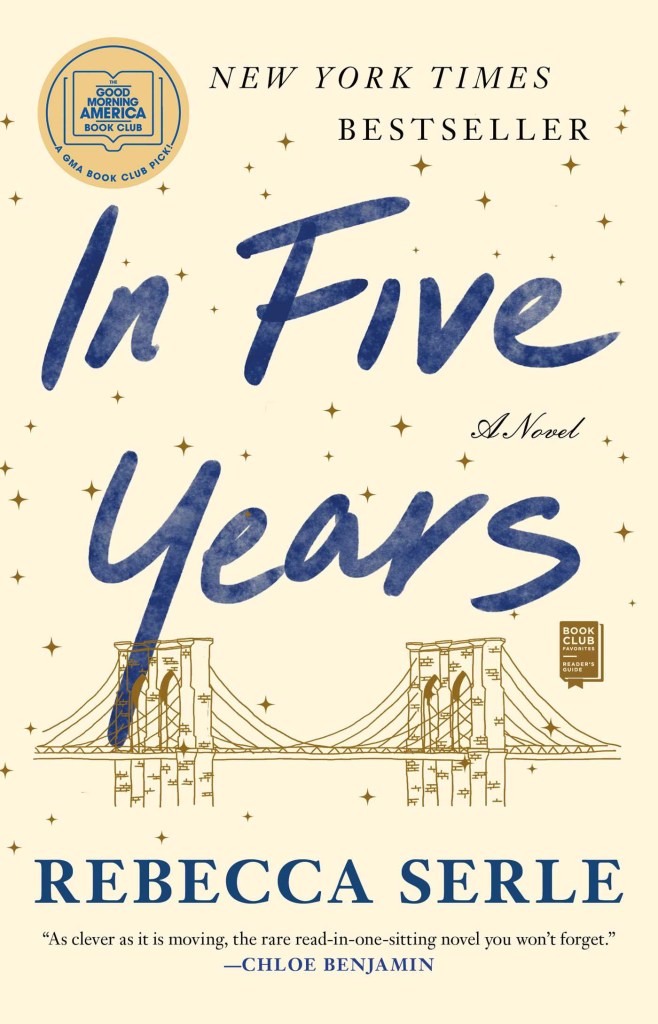
This book surprised me, delighted me and broke my heart. It was not at all what I expected, but was all the more special for that. Cleverly, Serle wrong foots the reader into thinking this is a straight forward romance, but it really isn’t. It’s about love and just as our heroine Dannie is some times unsure what love looks like, so is the reader. We are used to certain conventions and have expectations about how a love story will unfold. It teaches us that sometimes we don’t notice or fully appreciate what we already have.
Dannie is a corporate lawyer, living in Manhattan and dating the eminently eligible David. David and Dannie live together after dating for two years. They have done everything according to an unspoken, but very correct timetable; everything about their relationship is planned and just right. In fact their relationship is so predictable that when David suggests dinner at the Rainbow Room, Dannie knows he’s going to propose. She says yes when he presents the perfect engagement ring, but they don’t plan their wedding. They continue to drift along as they are, until Dannie has the dream. This vivid dream shows a loft apartment in Dumbo with interior design details such as an art print of an optician’s chart with a witty slogan. It’s nowhere Dannie can imagine living. It’s trendy and edgy. She and David live in Gramercy Park. A perfect location for their work and fitting for where they are in life. Yet, the Dumbo apartment feels comfortable. Then a man appears. She’s never met him before but yet there is a connection, something she can’t define. As he moves closer she feels actual electricity. She has never felt this before. Like some huge force compels them to be together. When she wakes, Dannie feels strange, like she’s questioning everything around her.
Dannie has planned to see her friend Bella. They have been friends since boarding school and are still incredibly close. Bella takes more risks than Dannie and in some ways Dannie sees her as someone who doesn’t finish things, perhaps a bit of a flake. Bella loves art, she lives to travel and has a more bohemian outlook on life. Dannie has a more settled and perhaps, conventional life where work is the priority and her stable relationship with David simply ticks along. Up until now Bella hasn’t had a stable relationship in her life, but she has brought someone important to meet Dannie. When he walks in, Dannie is shocked to see the man from her dream. She panics and decides to do everything she can to stop her dream from coming true. But life can take strange turns and a series of events unfold that she never imagined. They make her rethink everything about how to live life and how to love.
I became so involved with Dannie and Bella’s story that it was hard to put the book down towards the end. The story crept up on me from something very light to an emotional tale about the strength of female friendship. These girls are life partners. Their presence sustains each other in ways that romantic relationships sometimes don’t. Bella’s mother lets slip that she purposely placed her daughter in the same school as Dannie, because she saw them together and could not part them. The very structure of the book teaches the reader something. We learn, at the same time as Dannie, that the happy ending is not always about a man, because love comes in many forms. Also, that loss and love are the same thing. When we grieve it just proves how much we loved. I found myself becoming very emotional towards the end of the book and that rarely happens. I found the writing so truthful and similar to my own experience of grief that I had a lump in my throat. I loved the ending and the fact it wasn’t predictable elevated the book above the ordinary. I will be hugging my friends a little closer and appreciating all the people in my life who love me.
Meet the Author
Rebecca Serle is an author and television writer who lives in New York and Los Angeles. Serle developed the hit TV adaptation of her YA series Famous in Love, and is also the author of The Dinner List, and YA novels The Edge of Falling and When You Were Mine. She received her MFA from the New School in NYC. Find out more at RebeccaSerle.com.
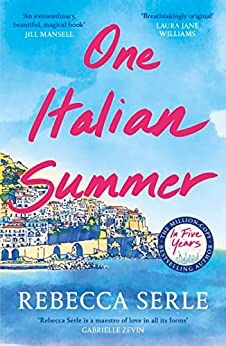
Her latest novel One Italian Summer came out in paperback last year and was a wonderful look at love, mothers and daughters, and the things we learn about ourselves through travelling.
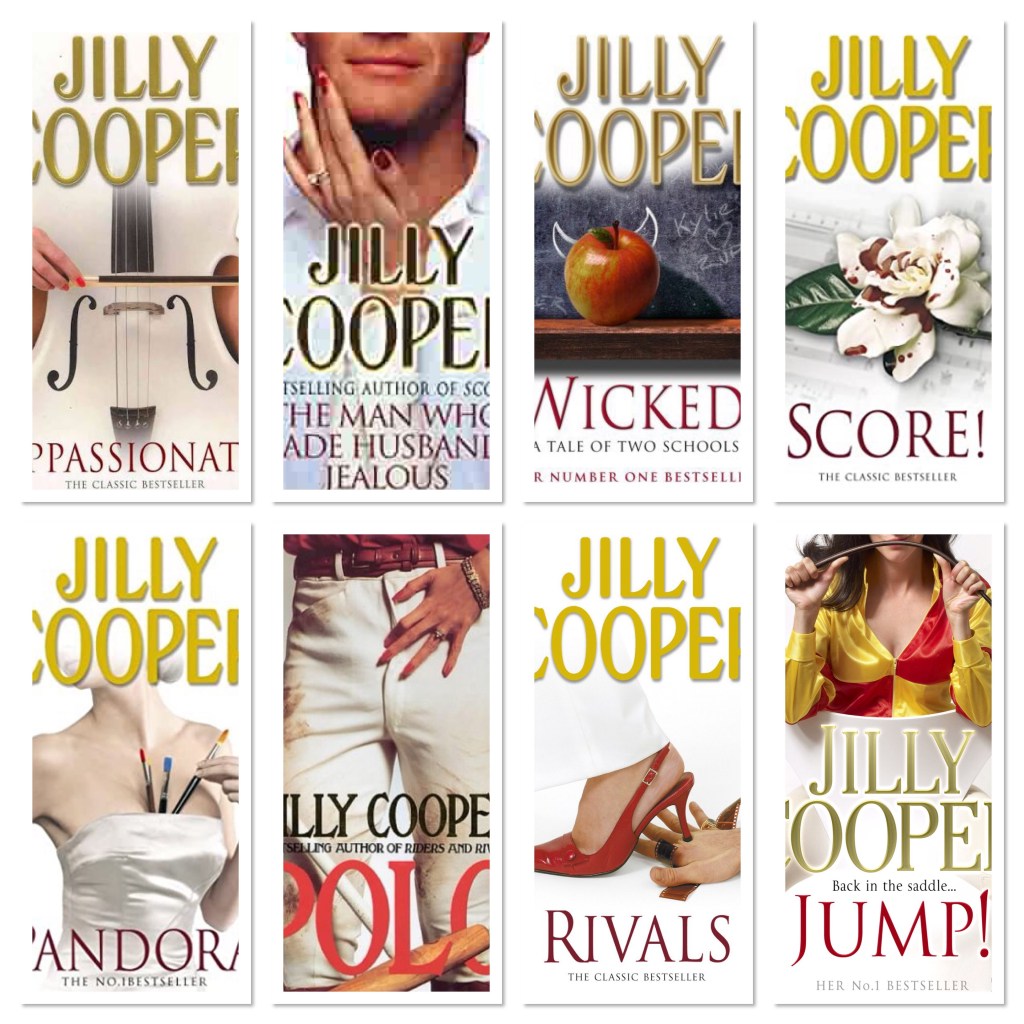
This month I’m supporting my fellow Squad Podders by highlighting writers of romance, whether that is their specific genre or just a part of their books mingled with fantasy, humour or mystery. If you want completely escapist romance with a side order of sexy, rich, characters cavorting around the English countryside then Jilly Cooper is your author. My first introduction to Jilly Cooper was finding her earlier 1970’s books on mum’s bookshelves. These weren’t the romances, but the humorous and witty digs at society found in her books on class and feminism. I remember very clearly my mum reading to me from one of them and as a working class family we found the middle classes utterly tragic so she would read descriptions of the Teale family. I’ll never forget Jen Teale who was so demure she wore six pairs of knickers. When mum was a bit low we would get a book down and I would read or act out the funnier bits and we’d all fall about laughing. It wasn’t until I was in sixth form that I encountered her handsome hero, Rupert Campbell-Black. One girl had brought Rivals into the common room and was reading out the filthy bits – ‘tit fault’ could be heard ringing round the tennis courts for weeks that summer term. I bought a copy of Riders and realised her work had so much story, as well as those famous rude bits. What I loved about Riders was the description of Penscombe and it’s jumble of treasures, dogs, books and grounds full of beautiful horses. Then as the rivalry became apparent between Rupert the school bully and his victim, the gypsy Jake Lovell I was completely caught up in the story. Her characters were well fleshed out and Rupert’s disastrous marriage to the American hunt saboteur Helen, was a fascinating clash of cultures, class and personality. I was soon utterly gripped by the world of showjumping, the bed hopping and the relationships sacrificed to ambition.
I think characters are a strength of Cooper’s even though some are almost caricatures and her rendering of Northern accents is hilariously wide of the mark. Each book tends to have a virtuous or kind woman – Taggie O’Hara, Kitty Rannaldini, Daisy or Lucy – who are perhaps not conventionally attractive, slightly shy and a bit downtrodden. It gives us someone to root for. On the other hand there are absolute horrors as well like narcissistic opera diva Hermione Harefield, the wicked but talented Roberto Rannaldini, or the chaotic and faithless Janey Lloyd-Foxe. It doesn’t matter that they’re not realistic, this is a romp through the upper classes – a part of society that Jilly Cooper knows more about than me. There’s always a lusty man to fall in love with too, someone tortured and secretive like the director Tristan de Montigny in Score, a bumbling innocent with looks to die for like Lysander Hawksley in The Man Who Made Husbands Jealous, or the gorgeous Luke Alderton in Polo, who loves the spoiled young polo player Perdita even when she chooses his brother Red. From showjumping, to television, to gigolos, polo players, orchestras, film making and horse racing Jilly takes us through each world with great knowledge and detail, often making the animals just as strong in character as the humans. I’m particularly fond of the labradors Mavis and Badger, and Taggie’s faithful little mongrel Gertrude.
Then there are the romances! There are several in every book and of course the over-arching love story of all – Rupert and Taggie. In Riders I felt so sad for Fenella whose hero worship of Billy Lloyd-Foxe becomes an unrequited crush, then a doomed love affair. In Polo I was rooting for Daisy, the mother of our heroine, who had been so focused on looking after others that she couldn’t believe the dashing polo player Ricky France-Lynch would be interested in her. I followed the fortunes of Rupert and Helen’s daughter Tabitha very closely. She’s impulsive and makes a passionate, but very difficult marriage to Isa Lovell, the eldest son of Rupert’s enemy Jake Lovell. Any chance she had of a more stable and loving relationship, through the novel Score particularly, had me keeping my fingers crossed. Of course it’s Rivals where the best and most beguiling love story begins and to see the bed-hopping Rupert Campbell-Black falling head over heels for the shy, dyslexic and unconventionally beautiful Taggie was deeply enjoyable. I was a similar age to Taggie when reading Rivals and still very romantic. Now I look at their relationship a little differently, but every few years I re-read a couple of the novels and I still feel a little starry eyed about them. They pop up in all the novels after Rivals and their relationship is probably the most successful in Cooper’s fictional Gloucestershire.
Cooper gives the reader a glimpse into a glamorous and wealthy world most of us would never know about. The hotels are 5 star, the fashion is designer, and the travel is first class. This is a world of elite sport and the game of kings – yes the Prince of Wales does pop up in Polo. There’s the world of classical music following the Rutshire orchestra in both Appassionata and Score, where the countryside becomes a backdrop for a twentieth century update to Don Giovanni. Pandora takes us into the art world and her latest Jump and Mount we’re back with horses, but in a horse-racing capacity rather than show jumping. Her only mis-steps for me are when she steps outside of this privileged world and tries to write about the working classes or a Northern character. Her book Wicked focuses on a struggling state school being mentored by the local public school where some of our usual suspects pop up, such as Rupert and Taggie Campbell Black’s children. I found her working class and city dwelling characters stereotypical and I inwardly cringed to such an extent I didn’t keep the book. Watch out for the accent of George Hungerford in Score for an example of how Northerners speak too. These are small quibbles though in a series of novels full of humour, bedroom romps, glamour, money and total escapism. The countryside is stunning and characters live in the most picturesque surroundings you’ll feel you’ve been on a holiday. Mainly though you’ll keep coming back for the love stories: hoping that the plump, bespectacled Kitty Rannaldini will escape the clutches of her evil husband with the handsome Lysander Hawksley; whether dog loving, shy, make-up artist Lucy will ever be noticed by the glamorous and mercurial Tristan de Montigny. Cooper uses all of the romantic conventions to her advantage. There are always obstacles to the couple’s love, distractions and conventions that can’t be crossed. There might be an age barrier, a man whose a confirmed bachelor, families that are locked into a bitter feud or a difficult marriage to negotiate. There are so many of these obstacles, that you’ll wait with your heart in your mouth as Taggie drives to collect Rupert Campbell-Black from his trip aboard, hoping desperately that he’ll overlook them and let her fall into his arms.
Meet the Author
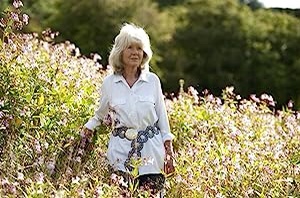
Jilly Cooper is a journalist, author and media superstar. The author of many number one bestselling novels, she lives in Gloucestershire.
She has been awarded honorary doctorates by the Universities of Gloucestershire and Anglia Ruskin, and won the inaugural Comedy Women in Print lifetime achievement award in 2019. She was appointed CBE in 2018 for services to literature and charity.
I read this in two long bursts – one of which started at 3am. It’s a book I couldn’t put down because all I wanted was these two people back together. The harsh realities of grief and lifelong family rifts are well drawn by the author and completely believable. All of these people are trying to move forward despite their lives missing a beat one day on a country road, where a split second decision has lifelong consequences. This book explores grief, loss, loyalty, loneliness and the eventual incredible ability the human heart has to heal.
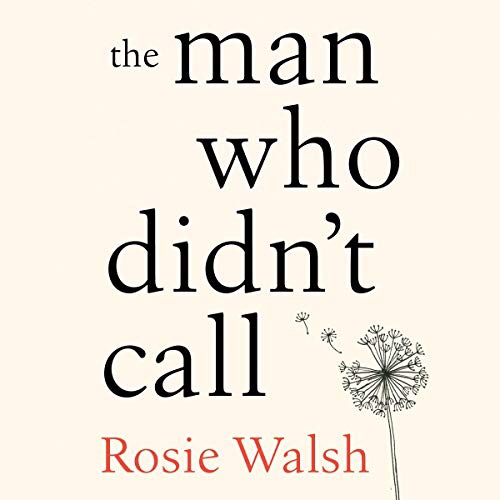
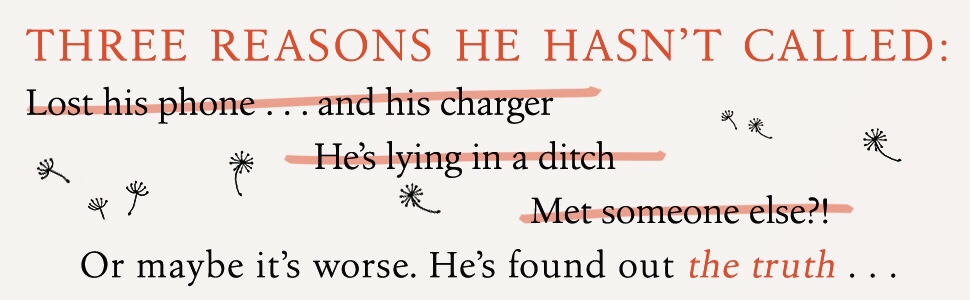
Sarah has a 7 day whirlwind romance with Eddie. They meet by chance on a country road while Sarah is visiting her parents. She thinks Eddie just might be the one. But, Eddie goes away on holiday and she never hears from him again. Is Eddie a heartless playboy who never intended to call? Did Sarah do something wrong? Or has something terrible happened to him? Instead of listening to friends and writing this off as a one night stand, Sarah begins to obsess and is determined to find the answer. Every clue she has comes to a dead end and she is in danger of completely losing her dignity. As her time back home in the UK starts to run out, Sarah looks for clues to track Eddie down. What she hears is confusing her further. His friend doesn’t give the simple answer, that Eddie has moved on, but gives her a warning; if she knows what’s best for her, she needs to stop looking for Eddie.
Walsh has successfully intertwined a love story with a mystery. I veered between wondering if Sarah was becoming irrational and willing her to succeed. Interspersed with the narrative are beautiful letters of love and loss addressed to the writer’s sister, affectionately nicknamed ‘Hedgehog’. The letter writer’s sister died when they were young, but we don’t know what happened or who the letter writer is. If Sarah is the author of the letters does this loss have something to do with the warning she’s been given? Is her sister the key – not just to Eddie’s disappearance, but to why Eddie was on that particular stretch of road on that day?
I quickly became invested in Sarah and Eddie’s story. I think we’ve all been subjected to the watched phone that never rings and how crazy it can make us. It could have made me dislike Eddie early on, but for some reason I never did. I’m definitely a hopeless romantic so I seemed to accept Sarah’s hope that this could still work out. The other characters in the novel are also well-written and compelling. I’m a therapist so I was particularly interested in Eddie’s mother and her mental ill health. I think her symptoms and the way she manipulated Eddie showed a streak of narcissism. She finds it impossible to see this situation from his point of view, only how it might her. Anything that threatens their dynamic as carer and patient is a huge threat to her and she responds with emotional blackmail and hostility. Eddie is as much a prisoner of her mental ill health as she is. I also had empathy for Sarah’s friend Jenny who is struggling to conceive and undergoes IVF treatment to the point of financial ruin. Her character probably leapt out at me because I’m also not able to have children, and know how difficult it can be to come to terms with. Her stoicism and determination to support her friend in the face of her own loss is very moving.
I stayed up until 2am to finish the book, because I had everything crossed that the mystery would be explained and these two people could move forward together. To different degrees, all the novels characters are imprisoned by the past and losses they can’t accept. My husband died when he was 42 and I was 35. It’s like a chasm opened up and I had to choose between staying on one side forever, with the past and my feelings of loss and fear. Or I could choose to jump over that chasm into a new future. I never forget what happened or the love I have for Jerzy, but twelve years later I have a wonderful partner and two beautiful stepdaughters. Thankfully, I had the bravery to move forward knowing I can’t lose my memories of the past, but I still have a future full of possibilities I never imagined. That’s what the characters in the novel are trying to do. Grief is different for everyone and there are always tensions between those who are trying to heal and those who can’t imagine healing because it feels like a betrayal. Rosie Walsh draws these different threads together beautifully, creating a bittersweet novel that captures the incredible ability the human heart has to heal.
Meet the Author
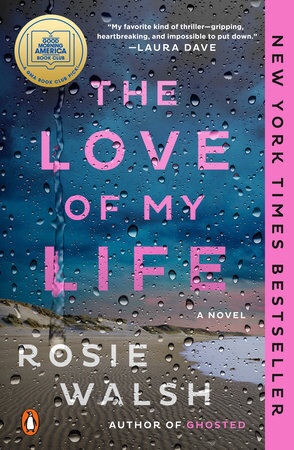
Rosie Walsh is the internationally bestselling author of two novels, the global smash hit THE MAN WHO DIDN’T CALL, and – new for 2022 – THE LOVE OF MY LIFE, a heart-wrenching, keep-you-up-all-night emotional thriller, which was an instant New York Times bestseller and stayed in the German top ten for several weeks.
Rosie Walsh lives on a medieval farm in Devon, UK, with her partner and two young children, after years living and travelling all over the world as a documentary producer and writer.
The Man Who Didn’t Call (UK) / Ghosted (US) was her first book under her own name, and was published around the world in 2018, going on to be a multimillion bestseller.
Prior to writing under her own name she wrote four romantic comedies under the pseudonym Lucy Robinson. When she isn’t parenting or writing, Rosie can be found walking on Dartmoor, growing vegetables and throwing raves for adults and children in leaking barns.
Rosie’s new novel The Love of my Life is another heartbreaking romance, mixed with an addictive mystery you’ll be begging for one more chapter.
I have held you every night for ten years and I didn’t even know your name. We have a child together. A dog, a house. Who are you?
Emma loves her husband Leo and their young daughter Ruby: she’d do anything for them. But almost everything she’s told them about herself is a lie. And she might just have got away with it, if it weren’t for her husband’s job. Leo is an obituary writer and Emma is a well-known marine biologist, so, when she suffers a serious illness, Leo copes by doing what he knows best – reading and writing about her life. But as he starts to unravel her past, he discovers the woman he loves doesn’t really exist. Even her name is fictitious.
When the very darkest moments of Emma’s past life finally emerge, she must somehow prove to Leo that she really is the woman he always thought she was . . . But first, she must tell him about the love of her other life.
Available now in hardback and on Kindle, but due out in paperback in July 2023.
I love this book. Perhaps it’s because I had a Dan. A musician who started as my best friend and who I fell in love with. I was 18 and he took me to my first prom. His band were playing and it was 1991 so perms were everywhere and we were just adopting grunge. I would turn up for school in jumble sale floral dresses with my ever present oxblood Doc Martens. They played some of my favourite songs that night: some that were contemporary like Blur and others were classics like Wild Thing. I most remember Waterloo Sunset. Then, like a scene in a rom-com we walked across town to his house – me in a polka dot Laura Ashley ball gown and him in his dinner suit with the bow tie undone. He had a ruffled shirt underneath that he’d bought from Oxfam. We crept into the house and into the playroom so we didn’t wake anyone, then watched When Harry Met Sally. I remember a single kiss and then we fell asleep, but the love carried on over the years.
When I think of Elliot I always think of those famous best friend couples, like Harry and Sally or later, Emma and Dex in One Day. Now I can add Dan and Ali to the list. Alison and Dan live in Sheffield in the late 1970s when the city was still a thriving steel manufacturer. Dan is from the more family friendly Nether Edge, while Alison is from the rougher Attercliffe area, in the shadow of a steel factory. They meet while still at school and Dan is transfixed with her dark hair, her edge and her love of music. Their relationship is based on music and Dan makes mix tapes for her to listen to when they’re not together such as ‘The Last Best Two’ – the last two tracks from a series of albums. What he doesn’t know is how much Alison needs that music. To be able to put it on as a wall of sound between her and her family. Dan never sees where she lives and doesn’t push her, he only knows she prefers his home whether she’s doing her homework at the kitchen table, getting her nails painted by his sister or sitting with his Dad in the pigeon loft. Catherine, Alison’s mum, is a drinker. Not even a functioning alcoholic, she comes home battered and dirty with no care for who she lets into their home. Alison’s brother, Pete, is her only consolation and protection at home. Both call their mum by her first name and try to avoid her whenever possible. Even worse is her on-off lover Martin Baxter, who has a threatening manner and his own key. Alison could never let Dan know how they have to live.
In alternate chapters we see what Alison and Dan are doing in the present. Now a music writer, Dan splits his time between a canal boat in London and home with his partner Katelin in Edinburgh. Alison has written a new novel ‘Tell the Story Sing the Song’ set in her adopted home Australia and based round an indigenous singer. It’s a worldwide hit and she finds herself in demand, having to negotiate being interviewed and getting to grips with social media. She has an affluent lifestyle with husband Michael and has two grown up daughters. She has a Twitter account that she’s terrible at using and it’s this that alerts Dan, what could be the harm in following her? The secret at the heart of this book is what happened so long ago back in Sheffield to send a girl to the other side of the world? Especially when she has found her soulmate. She and Dan are meant to be together so what could have driven them apart? Dan sends her a link via Twitter, to Elvis Costelloe’s ‘Pump It Up’, the song she was dancing to at a party when he fell in love with her. How will Alison reply and will Dan ever discover why he lost her back in the 1970s?
I believed in these characters immediately, and I know Sheffield, and loved how it was described with affectionate detail by the writer. The accent, the warmth of people like Dan’s dad, the landmarks and the troubled manufacturing industry are so familiar and captured perfectly. Even the secondary characters, like the couple’s families and friends are well drawn and endearing. Cass over in Australia, as well as Sheila and Dora, are great characters. Equally, Dan’s Edinburgh friend Duncan with his record shop and the hippy couple on the barge next door in London are real and engaging. Special mention also to his dog McCullough who I was desperate to cuddle. Both characters have great lives and happy relationships. Dan loves Katelin, in fact her only fault is that she isn’t Alison. In Australia, Alison has been enveloped by Michael’s huge family and their housekeeper Beatriz who is like a surrogate Mum. It’s easy to see why the safety and security of Michael’s family, their money and lifestyle have appealed to a young Alison, still running away from her dysfunctional upbringing. She clearly wants different for her daughters and wishes them the sort of complacency Dan had, sure his parents are always there where he left them. But is the odd dinner party and most nights sat side by side watching TV enough for her? She also has Sheila, an old friend of Catherine’s, who emigrated in the 1970s and flourished in Australia. Now married to Dora who drives a steam train, they are again like surrogate parents to Alison. So much anchors her in Australia, but are these ties stronger than first love and the sense of belonging she had with Dan all those years before?
About three quarters of the way through the book I started to read gingerly, almost as if it was a bomb that might go off. I’ve never got over the loss of Emma in One Day and I was scared. What if these two soulmates didn’t end up together? Or worse what if one of them is killed off by the author before a happy ending is reached? I won’t ruin it by telling any more of the story. The tension and trauma of Alison’s family life is terrible and I dreaded finding out what had driven her away so dramatically. I think her shame about her mother is so sad, because the support was there for her and she wouldn’t let anyone help. She’s so fragile as a teenager and on edge. Dan’s mum had reservations, she was worried about her youngest son and whether Alison would break his heart. I love the music that goes back and forth between the pair, the meaning in the lyrics and how they choose them. This book is warm, moving and real. I loved it.
And what of my Daniel? Well he’s in Sheffield strangely enough. Happily partnered with three beautiful kids. I’m also happily partnered with two lovely stepdaughters. We’re very happy where we are and with our other halves. It’s nice though, just now and again, to catch up and remember the seventeen year old I was. Laid on his bedroom door, with my head in his lap listening to his latest find on vinyl. Or wandering the streets in my ballgown, high heels in one hand and him with his guitar case. Happy memories that will always make me smile.
Meet the Author
A former BBC Radio 4 producer, Jane Sanderson’s first novel – Netherwood – was published in 2011. She drew on much of her family’s background for this historical novel, which is set in a fictional mining town in the coalfields of Yorkshire. Ravenscliffe and Eden Falls followed in the two subsequent years, then in the early summer of 2017, This Much Is True was published, marking a change in direction for the author. This book is a contemporary tale of dog walks and dark secrets and the lengths a mother will go to protect her family.
Jane lives in Herefordshire with her husband, the journalist and author Brian Viner. They have three children.
Her book Waiting for Sunshine is published in paperback on 23rd March 2023, with my review coming soon.
‘Who would name a child Sunshine, then give her away?’
Chrissie has always wanted to be a mother. After months of trying to adopt, she and her husband Stuart finally get the news that a little girl named Sunshine is waiting for them.
Abandoned at a young age, the child comes to them without a family history, and it feels like a fresh start for all of them. But when fragments from Sunshine’s previous life start to intrude on her new one, the little girl’s mysterious past quickly becomes Chrissie’s greatest fear …
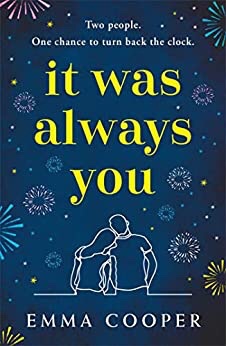
On the last night in October 1999 the clocks went back, and Ella and Will’s love began. A teenage Ella sat around a bonfire drinking with her future husband and her oldest friend Cole. As Ella wandered away from the group, she found herself leaning against a derelict archway before passing out. The next day, Ella remembered fractured images of a conversation with a woman in a green coat and red scarf but dismissed it as a drunken dream.
Twenty-three years later, with her marriage to Will in trouble, and Cole spiralling out of control, Ella opens a gift which turns her life upside down: a green coat and red scarf. When she looks in the mirror, the woman from the archway is reflected back at her. As the last Sunday in October arrives, Ella is faced with a choice. Would she choose a different life, if she could do it again?
This was an interesting read from Emma Cooper, looking at how the course of our whole life can change from very small decisions and the effects of these changes on our long term relationships. Ella is married to Will with two children and a big birthday approaching when she has a strange sense of life coming full circle. She opens her birthday presents to find a coat, scarf and brooch combination she recognises. Twenty-three years earlier at a party, she strolled away from the fireside to avoid watching her crush Will kissing another girl and saw a woman wearing exactly these clothes. It was almost as if the woman was on the other side of a mirror, visible but unable to be heard. Even though Ella can’t hear her, she knows that whatever she’s trying to tell her is a warning. Now she knows that woman was definitely her future self and she can’t help but wonder exactly what she was trying to warn her about. Life has definitely changed suddenly, because as their youngest left the family home for university, Will suddenly dropped the bombshell that he was leaving. Ella knows they’ve been drifting, in fact it runs deeper than that, Ella knows that Will would not have chosen the life they’ve had. She can pinpoint every surprise and life event thrown their way that derailed the life Will would have chosen, travelling the world playing guitar in a rock band. Ella has always known that she loved Will more than he loved her, so perhaps he need to spend some time discovering what he wants the rest of his life to look like.
Emma Cooper’s last novel was an absolute tearjerker and I really loved it. She gets that everyday drudgery that is part of being a family and here she portrayed beautifully how romance is hard to maintain when there is illness, two children to look after, family crises and those little curveballs that life likes to throw into the mix every so often. Cooper structures her book around these moments in Will and Ella’s lives together, such as her sudden pregnancy in Paris that she feels derailed Will’s music career. What she forgets is that Will did have a choice too and it was a joint decision to get married and have their baby. The fact that Will was fired from the band as a result was a terrible thing to happen, but wasn’t Ella’s fault. The flashbacks worked well in explaining the present day, from Ella’s perspective but Ella isn’t the only one in the relationship and I wondered if these two had ever properly communicated with each other. The problem with not communicating is that Will is also labouring under a misapprehension; he knows that he’s always loved Ella more than she loved him and now, with both children gone, it’s time for her to think about her choices and perhaps right a wrong. Will has felt in competition with Ella’s best friend Cole for many years, even the first day he met Ella’s family Cole was already there and part of the furniture. When Ella was struggling with depression, Will was just starting his career as a music teacher and simply couldn’t be there as much as he would have liked. Cole was there, burping and changing both babies, bringing chocolate and endless energy and literally propping Ella up. He has loved Ella since they were kids and he’s the first person Ella calls when something’s wrong – like when Will walks out the door 23 years later. Cole knows that Ella loves Will, even in his worst moments dealing with family trauma and his own alcoholism he knows Will and Ella should be together. He knows the power of Will’s charisma, because he’s felt it himself. In fact he and Will have a difficult history; Will’s brother drowned when he was left alone by a river, Will was saving Cole who had jumped in. This past leaves an uneasy feeling between them and has Ella desperately trying to please them both.
I enjoyed the carefree period Will and Ella have in France with the band. Will is offered the chance of playing guitar with a band and the couple rent a small apartment where they can have privacy and live outside of that hotel environment. It takes several mornings of Ella throwing up for a neighbour to point out she might perhaps be pregnant. The thought has never entered her head, but the neighbour is right. They expect their idyllic interlude to carry on, but once they announce their news and intention to get married, Will is summoned by the band manager and sacked. Young girls like to fantasise about their rock stars and married with a baby isn’t the look he wants for the band. So the couple return to Britain and to a life that looks a little more conventional. The author really doesn’t sugar coat the experience of parenthood. I was there in that living room with Ella, dealing with a two year old and a baby. It felt dark, oppressive and a total contrast to the freedom she had in France. With Will having to put in the long hours to support his new family, Ella feels like she’s doing this alone. So when friend Cole steps in to help it feels like a lifeline. He notices that Ella is desperately unwell and it’s his insight into his friend and his willingness to help that did make me waver on whether Will really was the right person for her. I don’t think I ever fully bonded with Will as a character. I didn’t know him in the same way as Cole or Ella and I think this was to some extent about the author’s description of him. He was so good looking and even Cole admits he’s the archetypal romantic leading man – he’s the man the girl should get. I didn’t know whether the author was trying to subvert the genre and have Ella realise that the less than perfect Cole, with all his issues, is the right man for her. In fact I was unsure of what would happen right up to the very end. This is a romantic read with an edge of reality, but maybe that makes it a more contemporary fairytale.
Meet The Author
EMMA COOPER is the author of highly acclaimed book club fiction novels and is known for mixing humour with darker emotional themes. Her debut, The Songs of Us, was snapped up in multiple pre-empts and auctions and was short-listed for the RNA contemporary novel of the year award. Her work has since been translated into seven different languages.
Emma has always wanted to be a writer – ever since childhood, she’s been inventing characters (her favourite being her imaginary friend ‘Boot’) and is thrilled that she now gets to use this imagination to bring to life all of her creations. She is now also an editor for Jericho Writers, where she has worked with traditionally published authors, as well as new aspiring writers. Emma spends her spare time writing novels, drinking wine and watching box-sets with her partner of twenty-eight years, who still makes her smile every day.
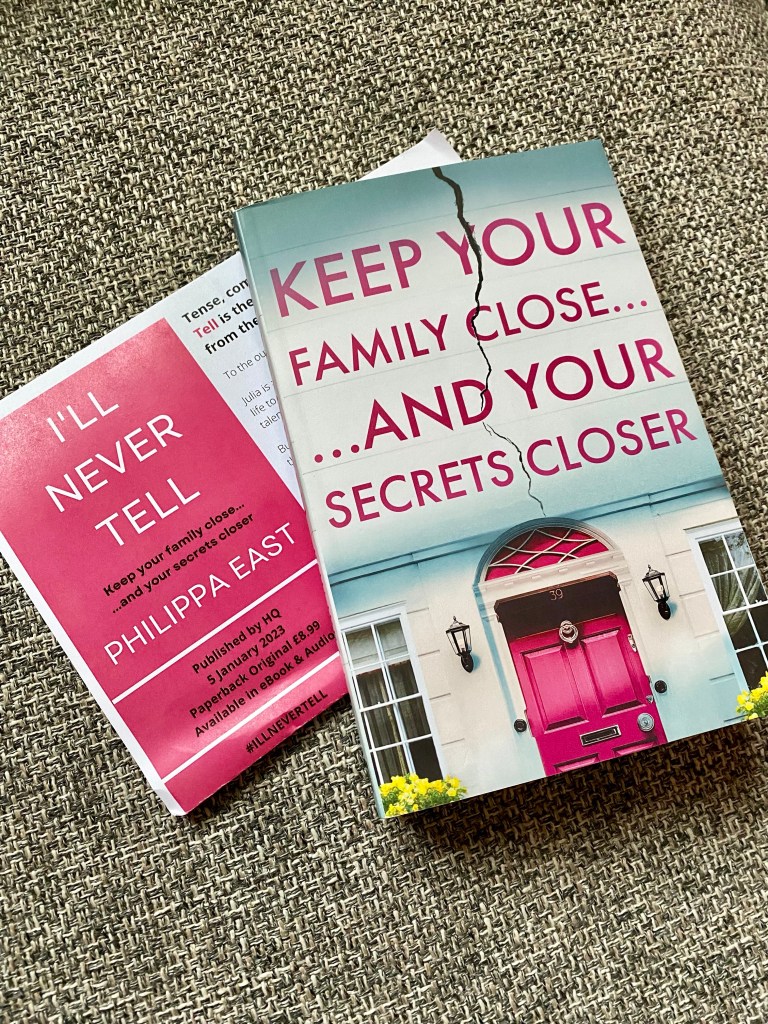
Julia is a lawyer, Paul a stay-at-home dad who has dedicated his life to helping their daughter Chrissie achieve her dreams as a talented violinist. But on the night of a prestigious music competition, which has the power to change everything for Chrissie and her family, Chrissie goes missing. She puts on the performance of a lifetime, then completely disappears. Suddenly every single crack, every single secret that the family is hiding risks being exposed.
Because the Goodlights aren’t perfect. Not even close.
Wow this book is tense! Tense enough to give you a migraine. East has a way of writing that flows so well, but is paced to give a really slow drip drip of information. It’s clear from just the day to day activities of the Goodlights that something is ‘off’ and my brain was skittering all over the place to work it out, rather like Bambi on the ice. The author pulls off a clever trick, by letting the Goodlights speak for themselves. She’s not explicit, but their inner talk and actions allow the evidence to pile up; something is badly wrong here, but the author withholds just enough that we don’t know what is that is. As I read on, my brain was coming up with more and more questions. What’s with Julia’s parents and their strange attitude towards women’s behaviour? Why is Paul so obsessed with his stepdaughter’s career and so rigid with her regime? Is it the result of a thwarted desire in his own life and will Chrissie snap under the pressure? What’s with the strange background conversations between Julia’s mother and Paul? I’m not surprised at all when Chrissie goes missing, the only surprise is that she didn’t go sooner.
I found Paul’s attitude with Chrissie really disturbing. I understand wanting the best for your child, but this is creepy. Not only does he control her potential career and keep her practicing, he looks after her diet, her free time and leaves her with no privacy – even policing her phone, from quickly checking the screen when a notification comes in, to demanding to look through all her messages and emails. Does he have her on such a short lease to prevent something happening, or is he reacting to something that’s happened before? There’s a strange dynamic between Chrissie’s grandmother and Paul. I was disturbed by her attitude towards her daughter and granddaughter with her suggestion that certain behaviours are in the blood and there’s something tainted in their DNA. It’s almost as if they appreciate Paul more than their own flesh and blood. At times Celina speaks to him as if he’s a member of staff. There are pictures hidden in Julia’s childhood bedroom of a time at university when she appears free and perhaps part of a hippy group, implying experimentation with drugs and promiscuity. Celina is concerned that her ‘tainted blood’ has passed to Chrissie and tells Paul ‘I can smell it on her’ giving an unpleasant image of an animal in heat. Was she the instigator of the rigid regime Paul imposed on his stepdaughter or was she merely the gatekeeper? Patriarchies often depend on women to uphold their rules. I felt uncomfortable all the way through this novel, but in retrospect I think this was down to my own experience in an abusive relationship. There’s now something in me that is repulsed by males like Paul exerting power over the women in their family, exerting coercive control and gaslighting those they are supposed to love most. This tells me that the author’s depiction is successful, or it wouldn’t have made me feel this way.
Throughout the novel my brain was drifting back to Jane Eyre and Jean Rhys’s response Wide Sargasso Sea and the anti-heroine Bertha Mason. Bertha (whose name is actually Antoinette) is Mr Rochester’s first wife, doomed to a life locked in an attic, because of her unnatural passions and hereditary madness. She works as a contrast to the still and quiet Jane, who was constantly told to rein in her passionate nature when she was a child. Bertha’s fate could have been Jane’s. However, in her book Wide Sargasso Sea, Jean Rhys gives Bertha a back story where Rochester marries then rejects the wife who was too passionate in the bedroom and enjoyed his advances – the inference being that a wife should meekly accept sexual advances, but not relish them. I felt throughout East’s novel, that a similar misogynistic double standard is at play. When we delve into Julia’s inner world we can see how insidious emotional abuse is, because these ideas are running through her head constantly. She doubts her own instincts and worries that Chrissie’s disappearance is a consequence of her failure to ‘behave’ in the way she’s been taught. Paul and Julia don’t fully communicate either, operating in completely different spheres with him at home and her at work. Law is such a demanding career and Julia works constantly, almost like it’s a penance, rarely interacting with Paul or Chrissie and never involved in her daughter’s strict regime. It’s almost as if she’s abdicated all responsibility for her to Paul, but is that choice or a mistaken belief that he’ll do a better job than her? There’s also the shadowy figure of Francis, someone she doesn’t want near her family and seems to fear. This really is a toxic mix, a family who seem shielded from scrutiny by their money and once you delve beyond appearances, are a million miles away from the ordinary. Will Chrissie be found and is her disappearance down to a malign outside influence as they all suspect? Whatever has happened to Chrissie, you’ll not stop reading till you work out what is so deeply wrong at the heart of this family?
Published on 12th January by HQ
Thanks to HQ and the Squad Pod Collective for my proof copy.
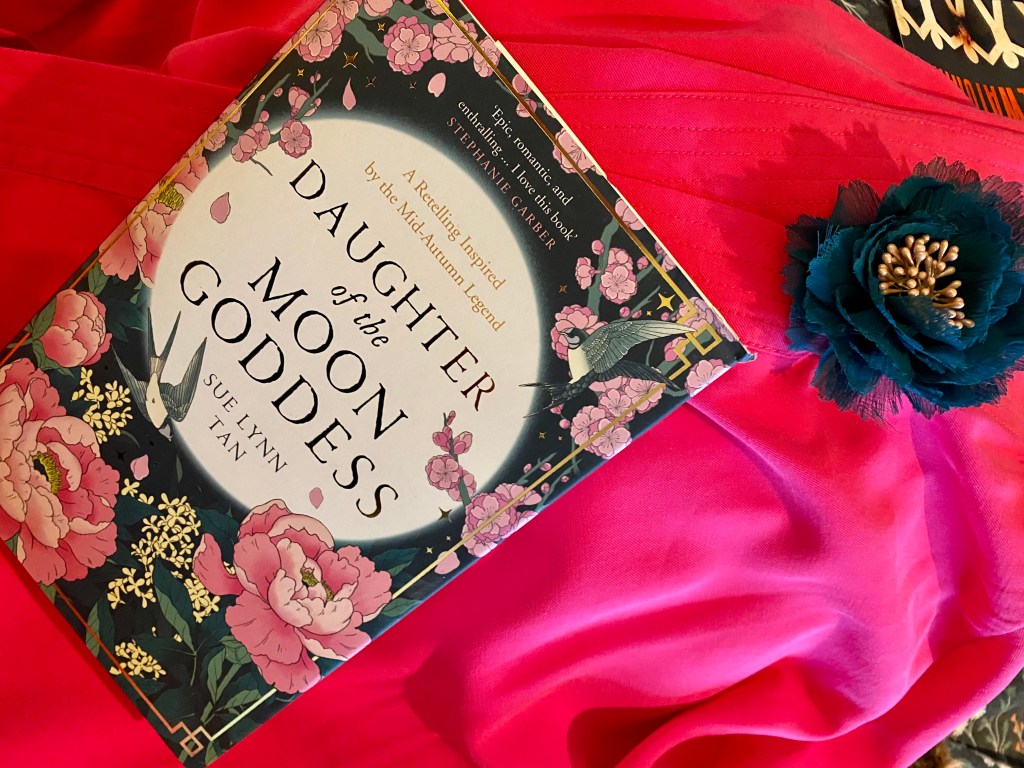
I am a huge fan of Damon Albarn – I haven’t gone crazy, this is relevant – from the first 12 inch Blur single I bought in 1989, to Gorillaz and all the solo projects in-between I’ve been there. For me, the most amazing piece of work he’s composed is Monkey: The Opera which I went to see at the Royal Opera House in Covent Garden and then again at Lincoln Centre in NYC. I’d seen the ‘Monkey Magic’ series when I was a child, me and my brother loved the hilarious and badly dubbed chronicles of Monkey and his quest. However, in the opera house, when the music started and the curtains opened this Monkey was simply magical, like a window to another world. The music was exquisite and the set was just incredible, with floating clouds and giant bamboo, underwater realms and ancient gods and spirits lurking above while Monkey learns what his journey is about. I’d honestly never seen anything like it. So, when I picked up this beautiful book I put the music on so I had a soundtrack to my reading experience and it fitted together beautifully. Used to Greek, Roman and Celtic mythology, Albarn’s soundtrack felt like fitting music for the entirely alien, but rich and evocative mythology I was becoming immersed in.
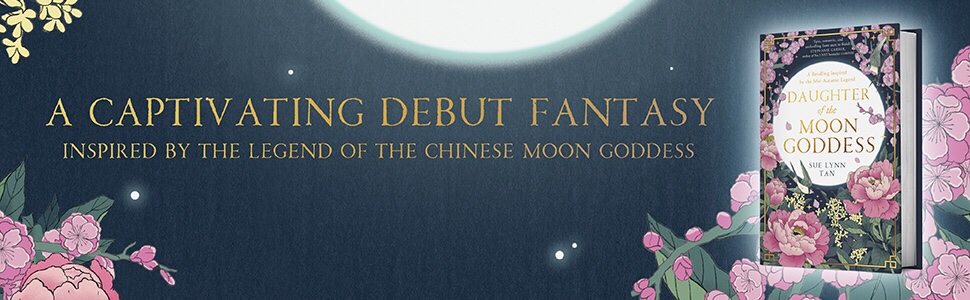
This incredible debut novel from Sue Lynn Tan is a mix of mythology, spirituality, magic and Bildüngsroman- that wonderful and almost untranslatable word that relates to books focused on a young person growing up. Our heroine is Xingyin a young woman who has grown up on the moon, hidden from a powerful Celestial Emperor who placed her mother Chang’e in exile for the theft of his elixir of mortality. Xingyin’s life has been a lonely one and as she grows she longs for new experiences and places. Now Xinying is coming into her power and as her magic increases, she is discovered. Now she must flee the moon and leave her mother behind, knowing that she’s pitted against the most powerful immortal leaving both their lives at risk. Alone, powerless, and afraid, she makes her way to the Celestial Kingdom, a land of wonder and secrets. Disguising her identity she works as a servant, but then seizes a lucky opportunity to train in the Crown Prince’s service. Xingyin starts learning to master archery, magic, and the strange attraction between her and the emperor’s son. I loved being back in a world within the clouds. The author’s beautifully lyrical language is so vibrant and she really does bring this stunning world to life. This celestial realm is woven from layers of description about the clothing, the food, the buildings and the unique magical elements, creating a setting and atmosphere that’s suitably awe inspiring.
I found Xingyin’s inner journey interesting too, because she develops so much from the naïve young girl at the beginning. I loved that she is following a path to be a warrior, something that seems rare for women in Western mythologies. I learned so much about Chinese culture through her obligations to family, particularly the mother/daughter relationship and the concept of honour and how it informs her ambitions. Her focus is to free her mother from exile and this brings out an incredible determination in Xingyin. She starts out unable to fend for herself and she shows both patience and grit, achieving each goal on the way to her destiny. She has to learn the history of these Immortal Realms in order to negotiate her way forward. She also has to practice her magic and the find the best way to utilise it in her quest. I loved how the author kept a steady pace in these early sections, the slower pace echoing that Xingyin is only at the beginning of her journey and she feels those same emotions we do when our goals are still so far away. The pace really speeds up when Xingyin has undergone her initial training and the army leaves to test it’s recruits in battle. I really enjoyed the extraordinary monsters from Chinese legend that the army must defeat for Xingyin to really fulfil her potential as a battle-hardened warrior. The author beautifully describes that uncertainty and fear soldiers must feel before a battle – the self-doubt that can creep in and takes hold. Yet Xingyin manages to feel this and still maintain her warrior-like demeanour. She isn’t just a killing machine. Throughout her endeavours she has kept her own deep seated sense of morality and a self-awareness that allows her to set boundaries.
Aside from Xingyin’s quest there is also an element of romance in the novel; a love triangle that does dominate in parts and takes up an enormous amount of her head space. I wasn’t sure I needed the romance for the book to work, but I guess it’s part of a young girl’s journey into womanhood. She is torn between two men and seems on a rollercoaster of trying to understand her feelings for both. One minute she’s berating her own fickleness in wanting one and then the other, then is angry that whatever they do she can’t let either one of them go. I think the author is trying to capture the immaturity of relationships at this age and I felt the romance might have been pitched at a YA audience who would understand the angst better than this middle-aged reader. I didn’t want the romance to take over the storyline and distract Xingyin from her own journey and potential. I don’t read a enormous amount of fantasy, but this was a complete escape from normal everyday life and I found myself lost in it’s imagery and those wonderful mythical creatures. The author has a boundless imagination, shown in the sheer scale of this work and how she paints her world with words so that it’s beautifully rich, evocative and ultimately, enchanting. I’m looking forward to diving into her world again for the sequel to this incredible debut novel.
Published 20th Jan 2022 by Harper Voyager
Meet the Author
Sue Lynn Tan writes stories inspired by the myths and legends she fell in love with as a child. After devouring every fable she could find in the library, she discovered fantasy books, spending much of her childhood lost in magical worlds. Daughter of the Moon Goddess is her debut, the first in the Celestial Kingdom duology – a fantasy of immortals, magic and love, inspired by the beloved legend of the Chinese moon goddess, Chang’e.
When not writing or reading, she enjoys exploring the hills, lakes, and temples around her home. She is also grateful to be within reach of bubble tea and spicy food, that she unfortunately cannot cook.
This novel was a wonderful surprise when Sandstone Press kindly granted me a copy. We were only three weeks into January and I’d fallen immediately in love with a new literary heroine. I absolutely adored Sybil and felt so at home in her company I just kept reading all day. I then finished at 11pm was bereft because I wouldn’t be with Sybil any more. Yes, this is what happens to avid readers. We fall head over heels with a character, can’t put the book down, then suffer from book withdrawal. All day I was grumpy and reluctant to start a new book.
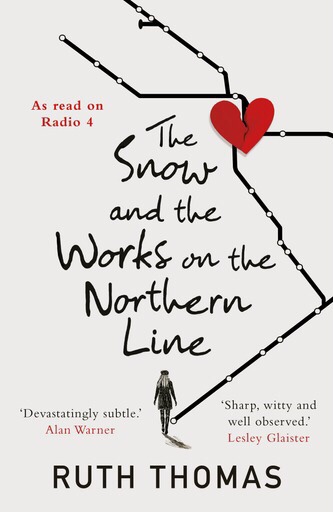
Sybil’s life is puttering along nicely. She has a job she enjoys at a London museum – Royal Institute of Prehistoric Studies (RIPS). There she produces learning materials, proof reads and indexes archaeological publications. She also helps people with research enquiries. She has a great boyfriend, Simon, who is a chef and likes to make her bread with obscure grains. Her quiet, settled life is turned upside down when she, quite literally, bumps into an old nemesis from her university days. Sybil and Simon have gone ice skating, where they spot Helene Hanson, Sybil’s old university lecturer. Sybil doesn’t want to say hello, after all Helene did steal some ideas from Sybil’s dissertation to further her own research into the Beaker people. They try to make their way over, very unsteadily, and end up careering into Helene’s group. In Sybil’s case she’s only stopped by the wall of the rink. She has a nasty bang on the head, and from there her life seems to change path completely. Only weeks later, Helene has stolen Sybil’s boyfriend and in her capacity working for a funding body, she has taken a huge interest in RIPS. Now Sybil’s workplace will be selling Helene’s range of Beakerware (TM) in the gift shop and they even welcome her onto their committee as chair of trustees. Sybil’s mum suggests a mature exchange of views, but Sybil can’t do that. Nothing but all out revenge will satisfy how Sybil feels. She’s just got to think of a way to expose that Helene Hanson as a fraud.
First of all I want to talk about the structure of the novel. As Sybil’s life starts to unravel, so does her narration. A suggestion from a friend leads Sybil to a poetry class at her local library, so prose is broken up with poetry and very minimal notes of what Sybil has seen that she hopes to turn into haiku. Haiku is a Japanese form of poetry with a set structure of thirteen syllables over three lines in the order of 5, then 3, and then 5 syllables. Having lived next to a Japanese meditation garden for several years I started to write and teach haiku as a form of meditation. It’s a form linked to nature and is very much about capturing small moments. So if Sybil sees something that might inspire her, it makes its way into her narration. I loved this, because I enjoy poetry, but also because it broke up the prose and showed those quiet still moments where Sybil was just observing. She works with found objects – most notably a little teacup, left on a wall, that has ‘ a cup of cheer’ written on the side. There’s a very important reason for the fragmentary narration, that I won’t reveal, but I loved it and thought it was so clever. Many of my regular readers will know why I connected with this narrative voice. It could be that this is the only visible symptom of the chaos in Sybil’s mind as she goes through a massive shift – physically from one flat to another – but also a mental shift towards living alone, to coping with her nemesis constantly popping up and to the heartbreak she’s gone through. We’ve all had to start new chapters in life so her situation is easy to relate to.
Helene’s organisation brings much needed funding to the museum, but with it come obligations. As chair of the trustees, she wants to change the very structure of the building and some of the precious display spaces might be sacrificed. Her commercial enterprise, recreating Beakerware (TM) for the museum gift shop, means the shop expanding into other areas. Exhibits that have been on display for years will be moved into storage to make room and Sybil dreads Helene using Simon as the face of the range, imagining giant posters of her ex greeting her every morning at work. To add insult to injury Helene even inserts herself into Sybil’s everyday job by adding a section into her boss Raglan’s upcoming book meaning that Sybil has to index Helene’s writing. Could there be a chance here, for Sybil to gain some satisfaction? However, as Sybil’s mum hints, revenge can be more damaging to the person seeking it. This book is character driven and they’re brilliantly drawn, funny, eccentric and human. Sybil’s boss Raglan Beveridge – who she observes sounds like a cross between a knitted jumper and a hot drink – is such a lovely man, easily swayed but kind and tries to ensure that Sybil is ok. I enjoyed Bill who she meets several times across the book, in different situations. He’s calm, funny, thoughtful and shows himself to be a good friend to Sybil, even while she’s barely noticing him! Helene seems to hang over everything Sybil does, like an intimidating black cloud promising rain to come. She is a glorious villain in that she has very few redeeming features, and tramples all over Sybil’s world at home and at work. The author cleverly represents this in the very structure of RIPS. Sybil likes her slightly fusty, behind the times little museum. There’s a sense in which it is precious, that the spaces within shelter some eccentric and fragile people. They’re like little orchids, who might not thrive anywhere else. They’re introverts, so need familiarity and quiet. How will they survive Helen’s onslaught?
On the whole this was a quiet book. As I was reading it, I was totally. engrossed and the outside world was muffled for a while. It reminded me of those mornings after snowfall, when the outside world is silenced. I felt a deep connection with Sybil. She’s offbeat, quirky and has a dark sense of humour. We meet her at her lowest point and while we’ve all been heartbroken, this was much more than that. I’ve been broken by life just once, but I was a like a vase, smashed into so many pieces I didn’t know if I could pull them all back together. Even if I did, I knew I would never be the same person. This is the process Sybil is working through and her grief is central to the novel. My loss felt so huge that it affected my actions – I left doors unlocked when I went out, forgot to pay bills, and started to make mistakes at work. I had always prided myself on being very ‘together’ and here I was falling apart. I discovered Japanese art that healed me in some way – it’s called Kintsugi and it’s the art of repairing broken ceramics with liquid gold or other contrasting metal. It shows the cracks, the evidence that this piece has been through something, but it’s still whole and it’s still beautiful. I feel this is Sybil’s journey and what she needed to hear was broken things can still be beautiful. This was a thoughtful novel, with serious themes but a lovely hint of humour running through. I still love it now, a couple of years later and my finished copy has pride of place on my bookshelves.
Q & A with Ruth Thomas.
1. The Snow and the Works on the Northern Line is very character driven – did the idea for the story or Sybil come first?
The setting came first, in fact. I wanted to write about a fusty old institute, and that’s how the Royal Institute for Prehistorical Studies (RIPS) began. I also wanted to write about Greenwich Park. It’s an early memory from childhood. I remember it being a beautiful but rather melancholy place.
2. The RIPS is a wonderful setting! Could you tell us a bit about it, and why you set The Snow and the Works on the Northern Line in a museum?
I love museums, especially small old-fashioned ones. They have so much character and lend themselves to description. I also wanted to tell the story of a museum artefact – how it fitted into someone’s life in the 21st century as much as the time when it was made.
3. Sybil’s voice is brilliantly handled – did you do anything in particular to pin that down when you started working on the novel, or to get in the zone each time you sat down to write?
I don’t think too much about voice before I begin – I just start with my own take on things, and after a while a character and voice shapes itself around those observations. I think the mood your character’s in has a big effect on the way they tell their story.
4. Quite early on in the book, Sybil joins ‘Poetry for the Terrified!’ at North Brixton Library – could you tell us a bit about that?
I love poetry but am a bit rubbish at writing it! I thought I’d harness that inability for Sybil too. At school, we were always supposed to find poetry profound. It can be fantastic and moving, of course, but sometimes you have to discover that in your own time.
5. One of the themes that stood out while reading The Snow and the Works on the Northern Line was grief – we’d love to hear about how you explored different aspects of grief.
I wanted Sybil’s grief to be reflected elsewhere in the book too. She thinks she’s alone with her heartbreak, but that’s one of the qualities of grief – you don’t necessarily know others are going through something similar. I also wanted to explore sorrow without writing a very sad book!
6. Was any of the office politics/social etiquette inspired by real life?
I love office politics! It’s one of the things I really missed during lockdown. Small-scale conversations and seemingly trivial things are what make me tick as a writer. At the momentI’m just having to focus a bit more on remembering the details.
Thank you so much to Sandstone Press and the SquadPod Collective for inviting me to share this lovely book with you again and thank you to Ruth Thomas for her contribution to this post.
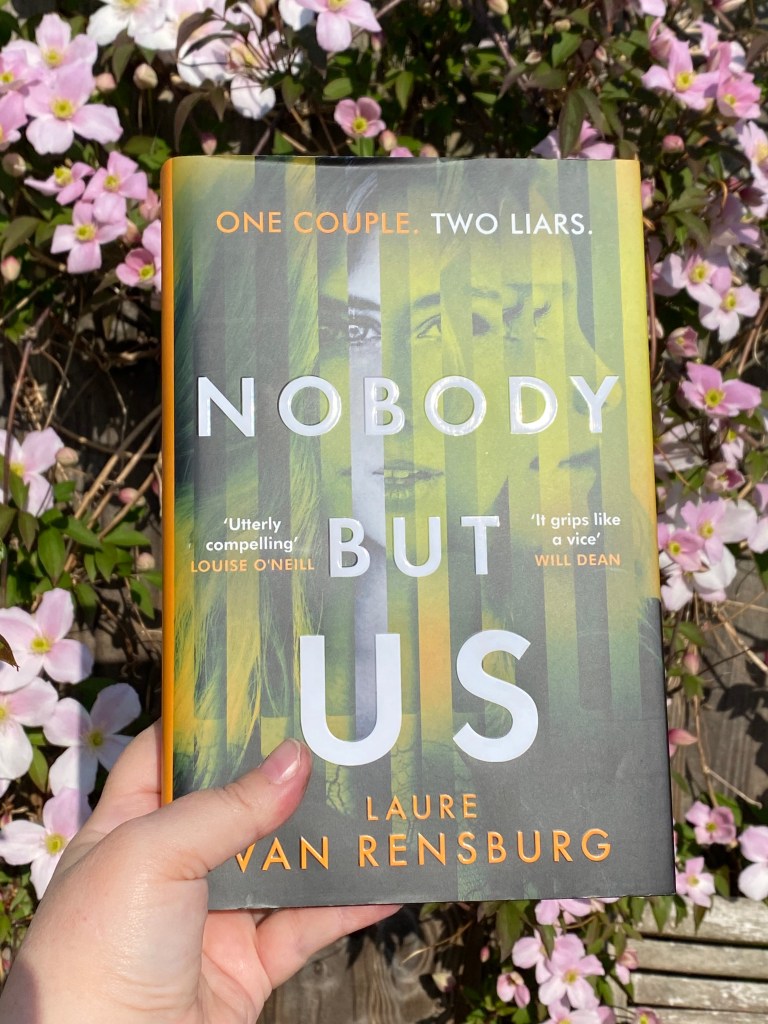
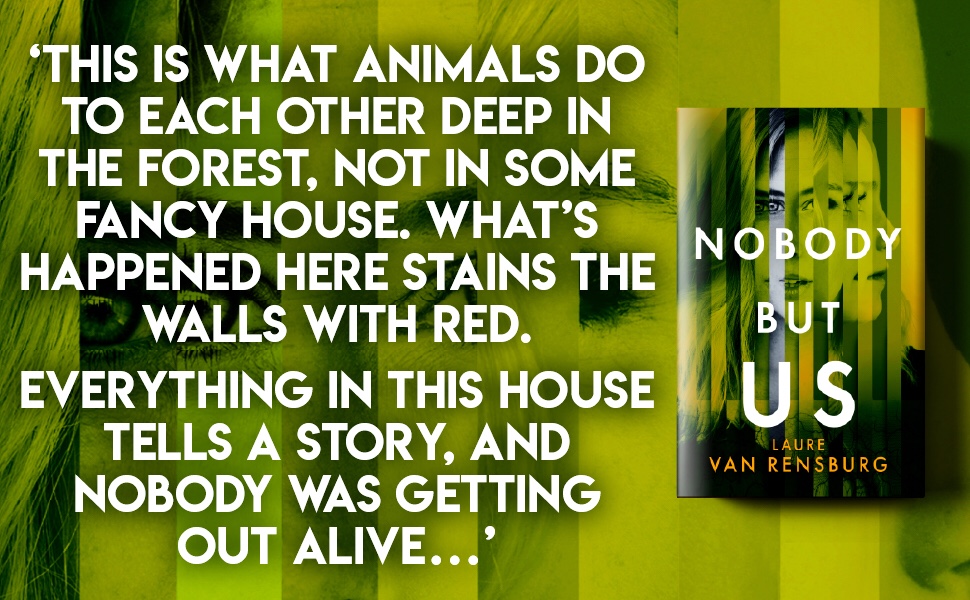
I heard such great things about this dark thriller that I’ve been chomping at the bit to read it asap! It was our Squad Pod read for last month and as usual I’m late. The blurb grabbed me right away and my mind went immediately to Gone Girl so I expected some twisted people and storylines. That tagline is designed to draw us in, but also has a hint of humour as if she’s mocking the genre – meet 2022’s most f*cked up couple. I was waiting for a gap in blog tours and managed to get a sunny weekend, my day bed set up in the garden and a willing slave to keep me supplied with drinks and adjusting my parasol. It didn’t take long to hook me.
Ellie and Steven have finally managed to find a gap in their busy schedules to get away for a few days and celebrate their six month anniversary. They’re heading to an isolated cabin in the woods, many miles away from the hustle and bustle of New York. It will be the perfect opportunity to spend some quality time together and really get to know each other. A perfect weekend for a perfect couple. Except, that’s not quite the truth. Ellie and Steven are far from perfect. They both have secrets. They’re both liar. Steven isn’t who he says he is. But then neither is she …
The setting was clever too, usually I’d expect a log cabin in the woods or a period house as a background, but this is a contemporary, architect’s house. I didn’t think a modern house could be scary, but I found it’s glass and steel exterior very unwelcoming – there’s nothing cosy about this weekend. In fact the perfection, the materials used and the sheer amount of space seem strangely oppressive. The contrast with the forest outside is jarring, the natural surroundings make it feel like the owner is pitting his house against the elements, imposing man made order on the natural chaos outside. Yet, when the storm sets in, nature seems to be getting it’s own back, with the large glass panels showing the storm’s fury. Trees are lashing against each other and the snow is coming thick and fast. In fact the weather adds to the sense of isolation, no one is coming to save them, no matter how much they scream.
The story is told by the two characters in turn, relating the details of their weekend away, but also drifting into their pasts so we get some idea of how Steven and Ellie came to this point. Still, the biggest revelations are kept back from us so we don’t have the full picture. This drip feed of information kept me hooked. I needed to know what happened next and who the characters really were under their facades. Mostly though I wanted to know what had set these dramatic events in motion. I couldn’t love these characters, so I wasn’t invested in one side or the other at first, but as the flashbacks came I was surprised to find I did have flashes of sympathy for Ellie or Steven, depending on what had happened to them.
I enjoyed the way the author played with that edge, between what was once acceptable and now isn’t. In light of the #MeToo movement many women in my 40+ age group who can look back at events from the 1990’s and think they wouldn’t be acceptable now: a stolen kiss at a party; a hand on the backside while waiting on a table; pressure to go further sexually than we might have been comfortable with. Now, relationships where there is any form of power imbalance are viewed as wrong. The married man and the teenage babysitter, the older boss and young employee, or student and tutor relationships were happening around me at that time and I don’t remember thinking they were intrinsically wrong, just a bit dodgy. Now, thirty years later, the mood is very different. But of course that’s only one aspect of this complicated story. This is a gripping, atmospheric and explosive novel. If you love thrillers this should definitely be on your summer reading list.









 The Lotus Readers