Posted in Squad Pod

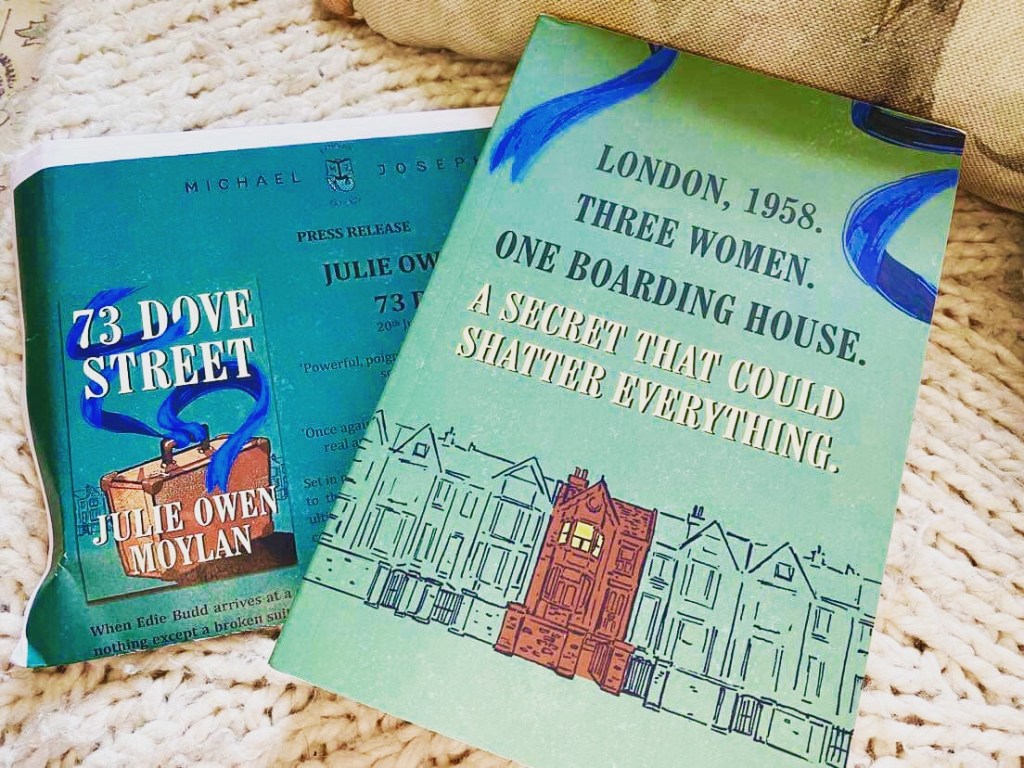
73 Dove Street by Julie Owen Moylan

What an incredible writer Julie Owen Moylan is, because within a few pages of starting her new novel I was absolutely immersed in 1950’s London. This is a London I haven’t visited too often in literature, the haunted and broken post-WW2 period rather than the supposed glory or the drama of the the war itself. Here the war has a ghostly presence, shown by children climbing piles of rubble or an incomplete street that looks like a mouth with one of it’s teeth missing. The story is told through three women; Edie, Tommie and Phyllis. It’s Edie we follow to 73 Dove Street where she hopes to look at a room, with just a single suitcase and an envelope full of cash. Edie is almost put off by the mattress and pile of men’s clothes burning fiercely just outside the yard, but a voice summons her from an upstairs window and she recognises a place she can lie low. What is she hiding from? Tommie lives in the room below and works for an eccentric socialite who was once wealthy and popular. Outside work Tommie is lured to the seedy nightlife of Soho and the man she can’t quit. Phyllis is the landlady of 73 Dove Street, burning her husband’s belongings in the street after she discovered a terrible betrayal. She puts on a good front, an armour that she needs to cope with a past she won’t talk about.

This author is absolutely brilliant at creating a feeling and time period, from the dark and depressing post-war London to the interiors of both No 73 and the more upmarket house where Tommie works.

“It was one of those London streets that had become a canvas of tatty boarding houses: windows filled with crooked pieces of cardboard saying ‘Room to Let’. The houses all looked the same: bay-fronted with scruffy front gardens filled with dustbins, and children loitering on doorsteps with their runny noses and scraped knees.“

She makes a beautiful observation about these streets, that where once there were hints of colour, London is now bombed back to dreary black and white. People are trying to drag their lives out of wartime monochrome, but fail every time. There are houses with the front ripped off and the contents still inside, looking like a grotesque full-size doll’s house. Through Tommie’s childhood experiences we can see what it was really like to be in one of those houses as she remembers a direct hit on her family home and being sat in the suffocating dark rubble until a hand breaks through to save her. These memories are so powerful and evocative, they really bring the reality of the Blitz to life. It’s clear that one of the reasons why London is so bleak is that it’s people are traumatised and numb. As well as the lack of money, rationing and their surroundings, these people haven’t even begun to recover. They’re vulnerable and in the case of our main characters, they’re trying to battle on alone.

I was immediately on board with Edie and loved the way the author built up her relationship with Frank. It was one of those situations where I could clearly see what was going to happen and I was mentally screaming at Edie to walk away. This is a man who knows how to choose the right woman, the one who will fall for his charms and become hooked on the way he operates. He likes to keep a woman on edge, waiting for his affection and easily moulded to what he wants by withholding that affection. Sadly it’s a pattern that’s only noticeable when you’ve been through it and Edie is a quiet, inexperienced girl who’s bowled over by his subtle manipulations. She’s so unformed and brought out such a protective mode in me. In a typical pattern he follows any glimpse of anger or violence with apologies and huge gestures.

“Frank’s pale blue eyes never left Edie’s face. Pleading with her without saying a word, desperate to make everything right between them. ‘Will you marry me, Edie? Say you will . . .’ The words tumbled out before Edie could stop and think about them. ‘Yes, of course I will.’ Her arms wrapped around his neck; her good wrist covering the bruises on the other one. His mouth felt tender and warm on hers and for that moment she couldn’t hear the daft comments or applause from the pub, it was just her and Frank”.

The abuse Edie suffers is a hard read, but such an authentic representation of domestic violence in all it’s forms. I am from a working class family, with some very strong women on both sides especially in those aunties old enough to get married during the war. They often comment on how the generations beneath theirs are too quick to split up or divorce and that marriages in their generation tended to stay together. Yet, when I hear the reality of some of their marriages – the drinking, gambling, physical and sexual violence, financial abuse and infidelity – I wonder what’s the point of a long marriage that has only left them grieving and traumatised? The author shows how economic and psychological difficulties prevented women from leaving terrible relationships. I was interested to read the author’s comments about her own family and how the strong women in it had given her inspiration for the book.

I haven’t spoken about Phyllis much, although towards the end of the book it was her experience that had tears pouring my down my face. At the beginning we see through Edie’s eyes the burning pile of men’s clothes outside No 73 and we could guess at what had happened in her marriage. She’s full of anger at her husband, but as the story develops we get the feeling there is something more underlying her feeling of being wronged. We get the picture of a marriage rather like the bombed out houses – a facade remains but it’s been empty for some time. When we hear the full story it is so emotional, I found it deeply moving and could identify with this woman whose abrupt manner is simply the amount of protection she needs to get through each day. It isn’t just the bombed houses that are missing. There are people locked in wartime, trying to carry on by avoidance, distraction or stepping around something there’s only one way through. I found this part of the book so beautifully rendered and deeply felt. Julie has dedicated this book to her grandmother and the strong, working class women in her family. She has really done them proud with this wonderful historical novel.

Published by Michael Joseph 20th July 2023

Meet the Author

Julie Owen Moylan was born in Cardiff and has worked in a variety of jobs, from trainee hairdresser and chip shop attendant at sixteen to business management consultant and college lecturer in her thirties.

She then returned to education to complete her Master’s degree in Film before going on to complete a further Master’s degree in Creative Writing. Julie is an alumna of the Faber Academy’s Writing a Novel course. She lives in Cardiff with her husband and two cats.

Julie can be found on Twitter: @JulieOwenMoylan

Posted in Squad Pod

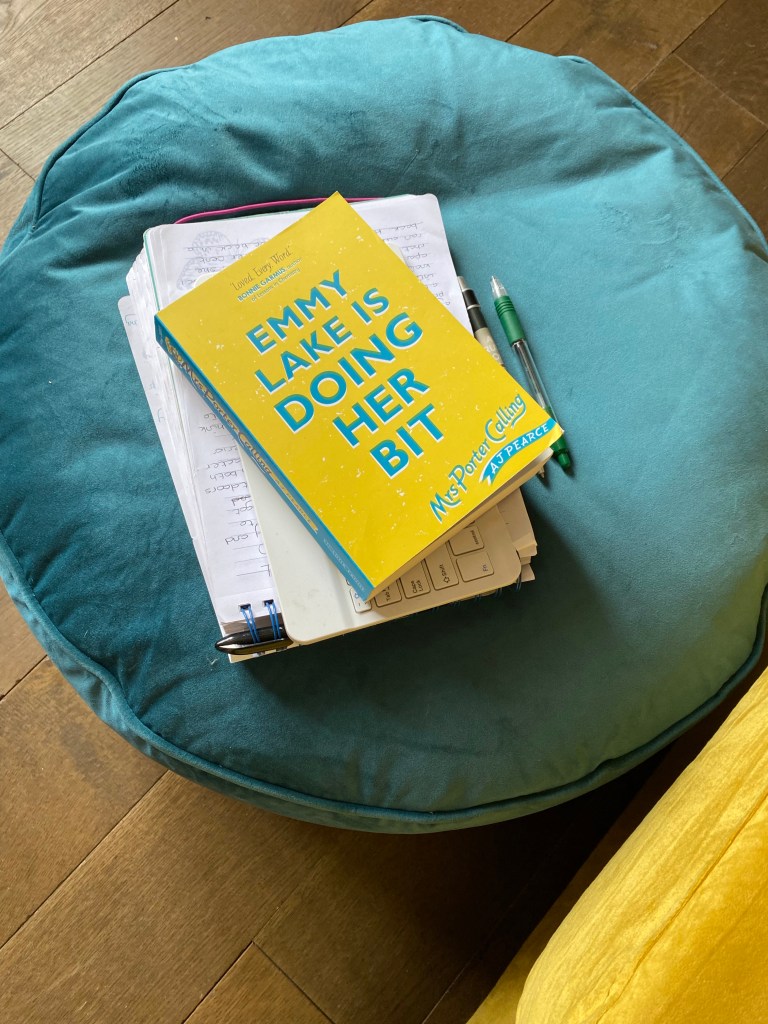
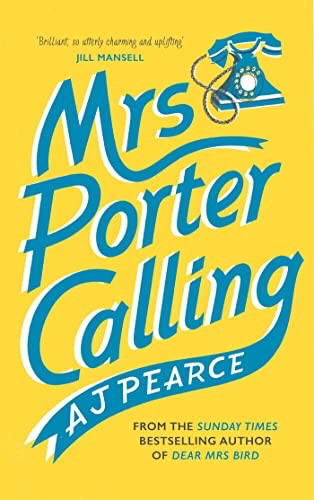
Mrs Porter Calling by A.J. Pearce.

I was new to A.J. Pearce’s world and her character Emmy Lake, so before reading Mrs Porter Calling, I decided to read the previous two novels; Dear Mrs Bird and Yours Cheerfully. Set in WW2, the books follow Emmy as she moves to London to start a career in journalism and soon finds herself in the middle of the Blitz, working for the fire brigade by night and living in her friend Bunty’s grandmother’s house. In Dear Mrs Bird, Emmy has taken up a job offer from Woman’s Friend magazine, working on the problem page. The formidable Mrs Bird is the agony aunt and Emmy must sort through the letters and weed out those that are deemed unsuitable – no funny business at all, not even a hint! Through the novel she moves from being engaged to single status, takes big risks in her job and works hard for the fire service at night dealing with the aftermath of the German bombing. I fell in love with this brave young woman who wants to move with the times and use her writing to help an extraordinary generation of women cope with the difficult situations they find themselves in. Over this and the next book, Yours Cheerfully, Emmy faces some serious challenges: being in love with someone far away and in danger; dealing with terrible loss; helping other young women who have been widowed or find themselves without a home. Yet this isn’t a tale of misery and hardship, there’s an almost relentless positivity to Emmy Lake that I absolutely loved. She’s perky, but not brittle. Her optimism and resilience seem to come completely naturally.

Yet in this latest book, Mrs Porter Calling, she will be facing some of her biggest challenges yet. Emmy has settled into being the lead on the magazine’s problem page and is continuing her series of articles on women who have taken on war work. Everything changes when the owner gifts Women’s Friend to his niece Mrs Porter in lieu of her inheritance. At first the team are optimistic about having a woman at the helm, but it soon becomes clear that Mrs Porter doesn’t want the magazine because of what it is. She wants to turn the magazine into her own scrapbook with society weddings and events alongside beauty and fashion articles that are a distraction from the war. Telling women what they should be rather than being a support. For a team who are used to teaching their readers to reuse and repurpose, this jump to expensive fashions and aspirational articles feels all wrong and Emmy thinks Mrs Porter has missed the whole point of the magazine. Women’s Friend is not aspirational, they don’t want to be dangling fripperies in front of their readers who can’t afford them. Emmy knows that if they change this much they will lose their readership. Even worse, Mrs Porter doesn’t want any more ‘dreary’ war work articles either. It seems that the realities of war haven’t reached her, the nightly bombs Emmy deals with must be muffled by all that jewellery and designer clothing. The team make a pact, to try and keep their beloved magazine as normal as possible while also introducing Mrs Porter’s ideas. In the meantime they will try everything to dishearten their new owner. Hopefully, if things become boring or difficult, she might drop her new hobby and move on. They just have to hope they have enough of a readership left when she does.

Away from the magazine, Bunty is still grieving for her fiancé and continuing her rehabilitation following the bomb blast they were caught in. However, there are signs that she is stating a tentative friendship with another fireman and Emmy has her fingers crossed that things may develop. Emmy and her husband Charles only had a two night honeymoon before he had to return to his posting, now he is moving into North Africa and Emmy depends on his letters. Both girls are forging new friendships with the women who work in a munitions factory and finding out it isn’t always easy to do your bit. I loved this aspect of the novel, because it taught me a lot about what WW2 was really like for women. Despite advocating that all women should find war work, to support their men overseas or help out on the home front, there were difficulties with this that the government seem to have overlooked. The author shows this through the factory women who have issues with childcare and finances. I was shocked to learn that when a Navy husband went missing his salary stopped immediately, but because he was missing and not dead, his wife couldn’t receive a widow’s pension. This loophole left women with no income and potentially homeless. If the factory women had children and worked awkward hours, they often couldn’t get childcare. Some women sneak their children into the factory and hide them so they can still work their shift and get paid, but if found they would be dismissed immediately. Emmy becomes involved in campaigning for factories to apply for the government grants available to set up a nursery for worker’s children. These are the women she wants to celebrate and help in her own time, but also in the magazine. These factory women don’t care about the lavish wedding of some honourable or other, they care about doing their bit, being able to keep a roof over their head and their man coming home.

Emmy has become a team player. Long gone are the early days of her career where she ran away with an idea without thinking of what it meant for those around her. What struck me so strongly was this sense of camaraderie and the sharing of everything – not just the hard stuff that the fire service go through together, but the food, celebrations, home, shelter and even families. I could see that Emmy was in exactly the right place to help when an unexpected loss devastates the factory women and Emmy herself. This tragedy could bring her the biggest challenge she’ll ever have, but I had no doubt she would rise to the occasion. I asked my partner whether he thought our current generation would pull together as well as this generation did and we weren’t sure, although we hoped so. Watching Emmy, exhausted from a day working, change into her uniform and put in a night shift on the fire service switchboard, then go home and reassure children whose house has been bombed out, made me wonder if I could do the same. The perky, excitable girl has become a woman, a woman with a core of steel. If you love historical fiction or just want an uplifting read about women dealing with daily adversity then this is the perfect book for you. I loved all three novels and have happily added them to my forever bookshelves.

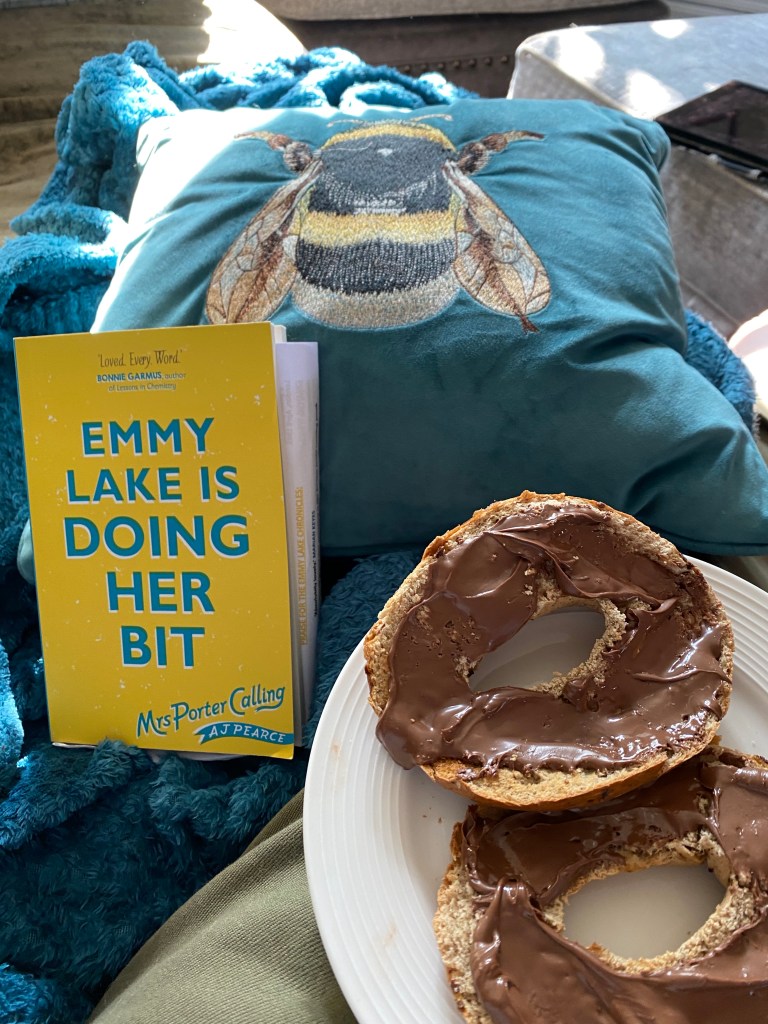
Weekend breakfast and a great book. Bliss!

Meet The Author

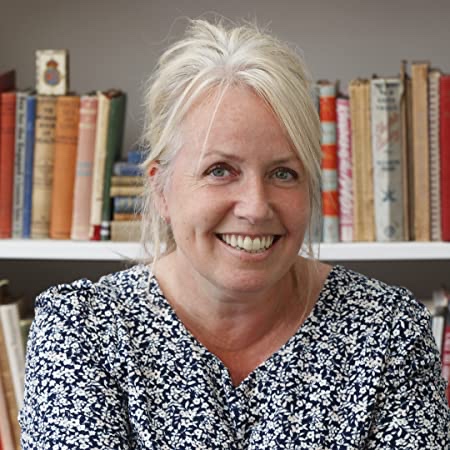
Pearce

AJ Pearce is the author of the Sunday Times Top 10 bestseller DEAR MRS BIRD, which was a Richard and Judy Book Club pick and shortlisted for Debut of the Year at the 2019 British Book Awards. It has been translated into fifteen languages and optioned for development for TV.Born in Hampshire, her favourite subjects at school were English and History, which now (finally!) seems to be making some sense. Her novel, Yours Cheerfully is the sequel to Dear Mrs Bird and is now available in paperback. AJ has just released the third novel in the Emmy Lake Chronicles series, Mrs Porter Calling. Follow AJ on Twitter, Instagram and Facebook: @ajpearcewrites

Posted in Squad Pod

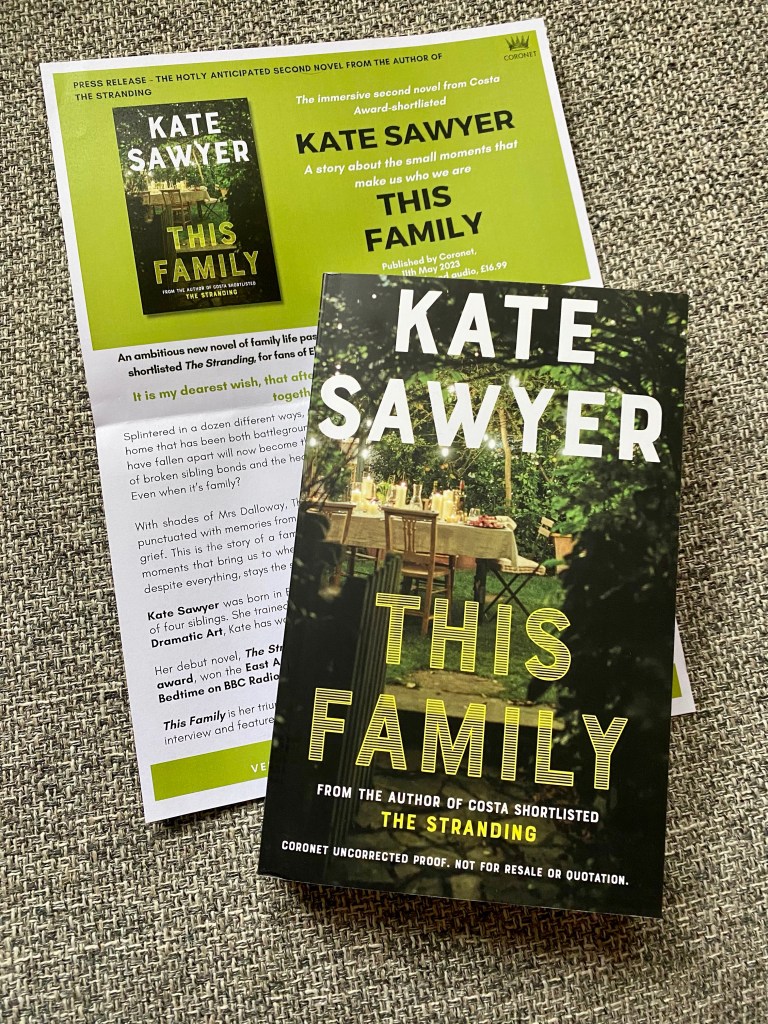
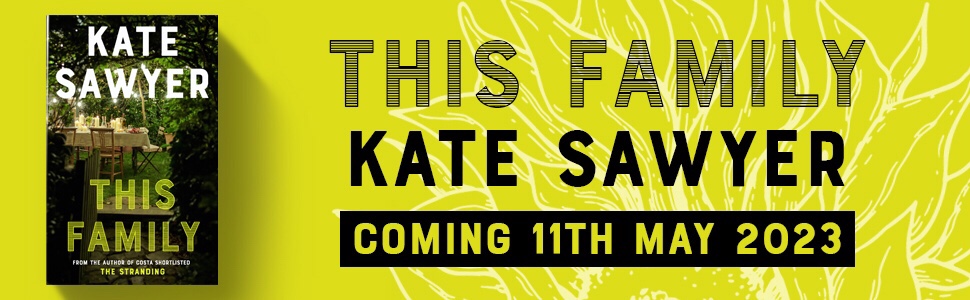
This Family by Kate Sawyer

I fell in love with Kate Sawyer’s imagination and writing skill when I read her debut novel The Stranding, so I was excited when the Squad Pod were able to confirm her new novel for our May book club. I didn’t know what to expect, whether there would be more of the same dystopian themes and emotional intelligence that I’d loved before or something completely different? This Family is different in that it’s set on one day where a family, with all it’s fractures and memories, are celebrating a wedding day. I often read books where I know I’m getting only a fragment of a much bigger picture. Kate Sawyer writes on several levels at once, from the personal to the universal. Each character has their inner world, their current outer world, other times and events, other people’s perspective on the character and events, then national and international concerns. It’s like someone shaking out the contents of my mind into a big jumble and seeing every single thought: I need to get some bread, last night’s dinner party was boring, thoughts of another dinner party years ago where I said something stupid, a worry about my dad’s health, thoughts on the book I’m reading, concern about the state of the health service and the war in Ukraine. Kate constructs her characters with all those levels creating a tapestry of this family’s life and how they all fit together to make a beautiful whole.

This was one of those books where I was conscious of empathising with an older character – Mary – who is getting married today and wants to have just one day where everyone behaves and is thinking of her happiness above their own concerns. She wants Phoebe to stay sober. She wants Emma to speak to her sister. Could her first husband Richard not be a dick? That’s all she wants. Just one day. As the family come together we see aspects of the day from different perspectives with all of the details I’ve mentioned. We see Phoebe’s inner thoughts. Then Mary’s thoughts and impressions of Phoebe. Rosie brings up a global concern – usually climate change, but Mary says it’s banned for one day. There is talk of COVID, the financial crisis, and even small boats crossing the Channel. Life is a tapestry of all these things, multi-layered and with contrasting colours. Kate gives each character their section, but she includes those events over the last few years that have stopped us all in our tracks like 9/11, theBoxing Day tsunami, the London terror attacks. Mary’s thread of worry when she hears of the tsunami, knowing one of her daughters is in Thailand. The thought she might be hurt pushing aside all irritations and harsh words. As a worker in the NHS Rosie’s proximity to the terror attacks and the pandemic cause other’s concern. This family is a jumble of memories, hurts caused, joint history, change, and then those moments of sharp focus when all that matters is their love for each other.

Their relationships are complex and at first it’s hard to know who everyone is and how they relate to each other. In fact the story of Mary is told so slowly I didn’t know who she was marrying until at least half way through the book. Going back over time, characters were married to different people and the relationships change. Even the sisters relationships with each other turn out to be complicated, yet they are still family. Emma’s story hit me deeply, because it was a story of childlessness and grief tearing lives apart. Emma married Michael, who was Phoebe’s best friend at university. Their marriage suffered due to pregnancy loss and when they lose their son, just as Emma was starting to think everything would be okay, it’s Mary that she asks for. She shuts Michael out and starts divorce proceedings, holding tightly to her feelings and unable to take on anyone else’s feelings of loss. Yet Michael will be at the wedding and will Emma be able to face him? There’s also her sister Phoebe to face and she has had a family, including a newborn. There’s a lack of communication between these two sisters, all pent up anger, jealousy and loss that they must put aside at least for today. When the truth of their rift is revealed the scene physically winded me. I felt for Emma, but could also see she’s her own worst enemy at times. It made me think about my own childlessness and the things people have said to me that hurt deeply at the time, but I could see if I held on to them I was hurting myself. At a time of great loss Emma cuts out the very people who might have helped and has missed seeing her niece and nephew.

Phoebe is a real talking point to and discussing her with other members of the squad has been enlightening, with many disliking her intensely. I could see where she’s hurt people with her reckless temper and with her addiction. Phoebe is now sober and married with a family, somewhere it’s hard to imagine her being when we delve into her past. I could understand how the family feel cannibalised by Phoebe’s successful newspaper column and her book, Mary particularly. She tried not to read it because she didn’t want to be blindsided by something her daughter recalls, in her own inimitable way. Phoebe needs her family, but their relationships with her are being slowly devoured, sentence by sentence. I found it interesting that when others recall terrible things Phoebe has done in the past, she really couldn’t see their position because she’s clouded by drink. She feels sorry for herself and can’t see past the self pity to wonder how others feel. As she recalls the terrible thing she said to her sister all the feelings of shame come bubbling to the surface, but she repeats a mantra to herself – ‘I do not hate myself; I hate the actions of my addiction’. She accepts that even though she has made amends, Emma doesn’t have to forgive her or accept her apology. Phoebe can only forgive herself.

I loved the meta-fiction element of how the story is told. Mary comments on the nature of stories, how the same event can be viewed differently by every person who was there just as the book’s structure shows. The wedding, when it finally arrives, feels like a natural full stop. As Mary looks out of the kitchen window and sees the three sisters laughing under the tree that made her want this house, she sees closure. As they laugh in the dappled un light and Emma holds her nephew Albie for the first time something has healed. This beginning – the start of Mary and her husband’s married life – is also an ending. He commits to a new chapter, leaving his first wife behind, but knowing that both he and Mary share their memories. Mary is moving from the house that the sisters have spent their whole lives in. She knows she will miss that tree. But she will no longer have the care of her previous mother-in-law, Irene. She observes that this day is only the end of a chapter, not the end of the book. More will happen, shown in that surprising fragment of an ending. We long for the closed answer, the neat and tidy ending, but that’s not life. Life is unexpected, messy, cruel and joyous. Then the author throws in a shock we aren’t expecting and despite Phoebe having done so much damage to this family, I didn’t want this ending for her. Yet her daughter Clara is only looking back, a memory she grasps at but can’t fully know. Is it a true memory, or is it a memory constructed from other people’s stories of that day? The author is always questioning how we construct reality, whether there is one true account of an event, or whether the story is fragmented, fluid and ever changing? This was a fascinating read psychologically and really made me think about how others see events we’ve shared and how families choose to overlook each other’s faults and bad behaviour, to come together and choose love, again and again.

Published by Coronet 11th May 2023

Kate was born in Bury St Edmunds, Suffolk, UK where she grew up in the countryside as the eldest of four siblings, after briefly living with her parents in Qatar and the Netherlands. 

Kate Sawyer worked as an actor and producer before turning her hand to fiction. She has previously written for theatre and short-film. Having lived in South London for the best part of two decades with brief stints in the Australia and the USA she recently returned to East Anglia to have her first child as a solo mother by choice.

Posted in Cover Reveal, Squad Pod

Orenda Books and Awais Khan Cover Reveal!!!

Author of the bestselling #NoHonour @AwaisKhanAuthor returns with an exquisite, heart-wrenching, eye-opening new novel #SomeoneLikeHer

And LOOK at this jacket!

The blurb:

A young Pakistani woman is the victim of an unthinkable act of vengeance, when she defies tradition … facing seemingly insurmountable challenges and danger when she attempts to rebuild her life.

Multan, Pakistan. A conservative city where an unmarried woman over the age of twenty-five is considered a curse by her family.

Ayesha is twenty-seven. Independent and happily single, she has evaded

an arranged marriage because of her family’s reduced circumstances. When she catches the eye of powerful, wealthy Raza, it seems like the answer to her parents’ prayers. But Ayesha is in love with someone else, and when she refuses to give up on him, Raza resorts to unthinkable revenge…

Ayesha travels to London to rebuild her life and there she meets Kamil,

an emotionally damaged man who has demons of his own. They embark on a friendship that could mean salvation for both of them, but danger stalks Ayesha in London, too. With her life thrown into turmoil, she is forced to make a decision that could change her and everyone she loves forever.

Exquisitely written, populated by unforgettable characters and rich with

poignant, powerful themes, Someone Like Her is a story of love and family, of corruption and calamity, of courage and hope … and one woman’s determination to thwart convention and find peace, at whatever cost…

Out in August! Pre-order your copies today!

Print – https://geni.us/AXv7bEbook – https://geni.us/6hAyuR

Meet The Author

Awais Khan is a graduate of the University of Western Ontario and Durham University. He has studied creative writing with Faber Academy. His debut novel, In the Company of Strangers, was published to much critical acclaim and he regularly appears on TV and Radio. The critically acclaimed No Honour was published in 2021. Awais also teaches a popular online creative writing course to aspiring writers around the world. He is currently working on his third book. When not working, he has his nose buried in a book. He lives in Lahore.

Posted in Squad Pod

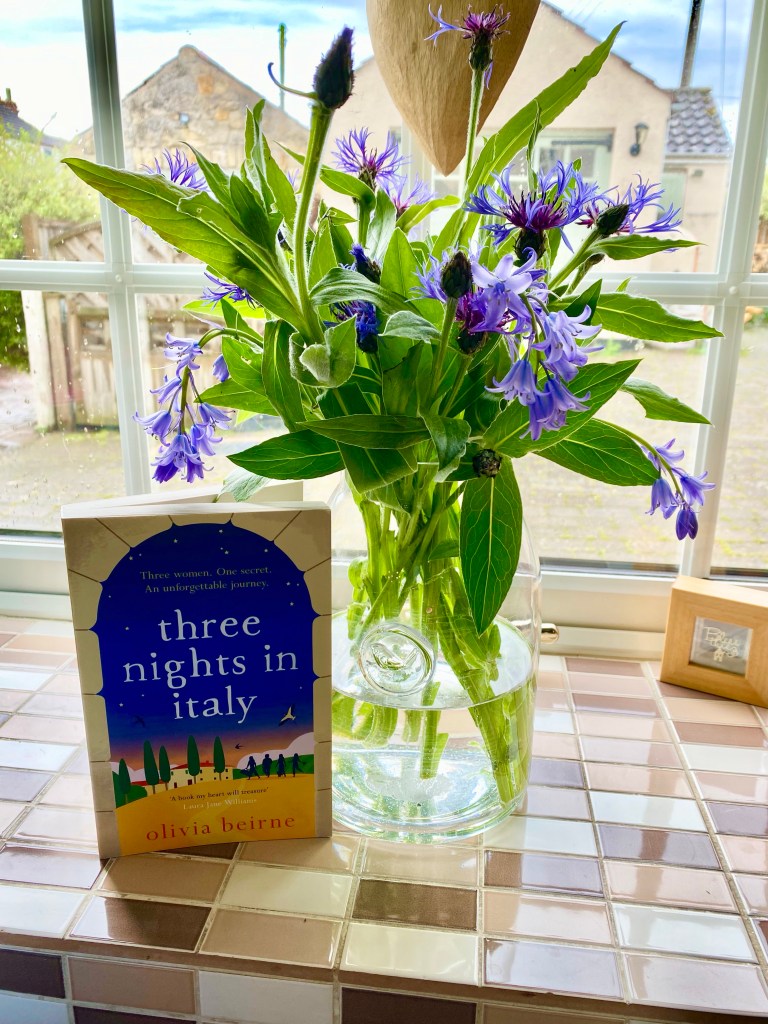
Three Nights in Italy by Olivia Beirne

As this novel opens Zoe has just lost her grandmother, a larger than life, charismatic artist who lived in Italy. Zoe and her mum Ange are left grieving in Cornwall, but they grieve differently and Zoe is worried about her mum, who appears to be in a trance but answers ‘fine’ when anyone asks how she is. Fine is a word banned in my counselling room, so I could understand Zoe’s concern. It’s a form of masking how we truly feel. Uncle Reg is dealing with all the legal and financial stuff, holding an auction of his mother’s belongings only a week after her funeral in Italy. Zoe and Ange plan to stay in Cornwall, but Zoe is uneasy about Uncle Reg and so was I. Her grandma promised her the beautiful emerald engagement ring that she claimed had magical properties. So, when Aunt Fanny turns up after being missing for fourteen years, she encourages them to travel out to Italy. She should know if it’s necessary, after all she was once married to Uncle Reg. With a reluctant agreement from Ange, they agree to travel to Italy for three nights only. They must go to grandma’s house and search for the ring before Uncle Reg even knows they’ve left the country.

Our young heroine Zoe shares the narrative in short, snappy sections with her friend Harriet, Mum Ange, and of course, Aunt Fanny. There are times when her voice gets a little lost amongst these other sparky and formidable women, especially Fanny who has chosen this diminutive of her true name Fenella just to see the blushes it causes. Zoe has stayed in her home town since school and works as a high end wedding coordinator. It’s as if she hasn’t really started in life, adept at creating and delivering the dreams of others she has forgotten her own. I loved her sparky little assistant Kitty who was giving off perky Reece Witherspoon vibes. Zoe hasn’t travelled, had a long term relationship or been to university. Her most important relationship is with close friend Harriet who also seems stuck, but we’re given more access to her inner world and she knows she’s treading water. It’s always been just Harriet and her mum, so it was a shock when Mum met someone and now has a newborn baby. They feel like a family and Harriet has felt like she doesn’t belong. Zoe has also had an all female upbringing made up of Mum and Aunt Fanny, along with holidays in Italy with her grandmother. Mum Ange remembers meeting Fanny just after she married her brother Reg and despite being so different they clicked instantly. Fanny is distinctly upmarket and while Reg always seemed embarrassed that his sister and niece were dressed by Next, Fanny never made her feel like that. With Reg working away the two women became Zoe’s parents and Zoe remembers the shock they felt when Fanny left suddenly and never contacted them till now. Zoe doesn’t have the pizzazz or individuality of her aunt or grandmother and it seems she has really suffered from the absence of these women in her life.

I enjoyed the women’s camaraderie and the way they supported each other. Despite seeming a bit disconnected from Mum at the moment, Zoe is devoted to her and wouldn’t think of leaving while she’s in this trancelike state. Aunt Fanny is the backbone of this group and such a formidable woman in her stilettos and her trademark ice-blonde bob that’s never out of place. She is loud, flirtatious and determined to live life to the full. She seems unbreakable and undaunted, buying everyone’s ticket to Italy, convincing Ange to come, overcoming obstacles and hiking in four inch heels! She grabs every opportunity to have fun and takes adversity in her stride, she even encourages the others to let their emotions out. Yet there are so many questions: where has she been for fourteen years? How does she keep her bob so immaculate? Does she really have a fortune from inventing a nail file? Why does she have other people’s credit cards? And why did she leave in the first place?

There is some romance too, with a love interest for Zoe in red-headed Sam who she meets by knocking a drink over him at the airport and pops up in the most unexpected places. They have a first date in Grandma’s town and I loved the women helping her get ready, just like they would when she was younger and going out. Even our older ladies (my age actually) have their flirtations, but this book is mainly about personal transformation though and finding your authentic self – something that’s not always easy for women who are bombarded with messages about who and how they should be. This is personified by Zoe’s grandmother whose presence is huge, despite her absence. I felt the book would have really benefited from more flashback moments between her, Ange and Zoe. She’s present in the laidback town where she lives, in her hillside home, and most of all in her paintings. The painting that’s a self-portrait of grandma in dungarees with her paint brushes in her pocket, seems to leap off the page with her life force. The depth and number of vivid colours show how vivacious she is and captures her love of life. It’s just so perfectly her, living her best life. I couldn’t bear to think of this stunning painting being sold at the auction. Even more than the engagement ring, it would have been the thing I had to keep. All I kept hoping was that Zoe could take some of grandma’s magic and apply it to her own life, to find out who she truly was and live her own fabulous, authentic life.

Thank you so much to Headline Review, Olivia Beirne and the Squad Pod Collective for the chance to read this book.

Meet the Author

Olivia Beirne is the bestselling author of The List That Changed My Life, The Accidental Love Letter and House Swap. She has worked as a waitress, a (terrible) pottery painter and a casting assistant, but being a writer is definitely her favourite job yet. Three Nights in Italy is her fourth novel.

Posted in Squad Pod

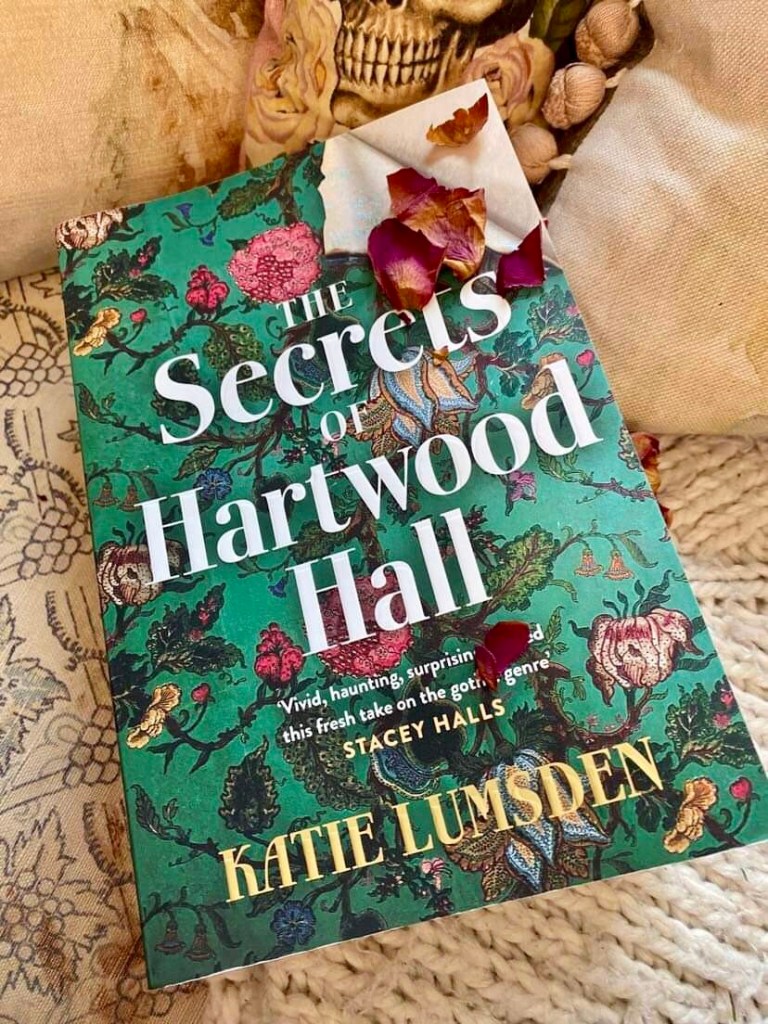
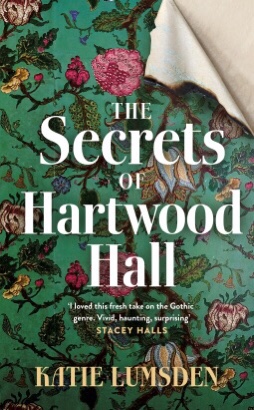
The Secret of Hartwood Hall by Katie Lumsden.

There couldn’t have been a better choice for a squad of female bookworms than this gothic mystery, full of spooky incidents, forbidden love, an orphan governess and within a house that holds many secrets. There was such a Jane Eyre feel about the book and also an hint of the Daphne Du Maurier opening as our narrator looks back to the hall’s approach.

‘when i think of Hartwood Hall, there are moments that come back to me again and again, moments that stain me, that cling like ink to my skin. My first view of the house: a glimpse of stone, of turrets and gables, tall windows and long grass’.

Our heroine is Margaret Lennox, recently widowed and forced to find paid work when her husband leaves his estate to his mother. She is offered a post by the mysterious Mrs Eversham, to educate her son Louis. This should be a moment of freedom for Margaret, but she notes the strange mood of the coach driver as soon as they enter the boundaries of the hall. Local people do not come near here. There is also a very clear rule: do not enter the East Wing of the house, because it is no longer used. As Margaret starts to find her way in Hartwood Hall and enjoys her time with Louis, she does notice a few strange things. She seems under suspicion from one of the existing staff, Susan. She has noticed Margaret’s response to a letter she receives at the breakfast table and is keen to find out more. Stranger than that, she has seen a distance figure in white out in the gardens and followed a figure with a candle down the stairs and towards the East Wing. Maybe the house is haunted, but there are other mysteries too such as what happened to Mr Eversham and why do people in the village treat this woman and her boy with such suspicion and fear?

I was hooked by this story straight away. Just like the author, Jane Eyre was the first grown up book I ever read and I was enthralled with it as a gothic story, years before I started to deconstruct it’s complexity at university. I was also hooked by the Sunday teatime BBC series starring Timothy Dalton as Mr Rochester. It’s the perfect mix of ghostly mystery, intrigue and romance. This book was inspired by the classic but breaks new ground of it’s own in terms of forbidden relationships, marital abuse, and freedom. The freedom of women making their own choices, having freedom of sexual expression and to earn their own living. The governess has always been a liminal figure in literature because they are educated more than other servants and even the woman of the house. They are usually single so have more freedom in their lifestyle and finances. Here Margaret is a widow, she chooses her own destiny and can shape her life as far as choosing where she works and for whom. She also has the choice of what to do with her spare time, no household chores or husband and family to consider. We learn that Margaret’s marriage was not a happy one and she has never felt the love that’s spoken of in literature and poetry. In fact she is surprised to learn it exists and it is joyous to watch her explore that chemistry, even if I did fear for her recklessness. She also becomes the face of Hartwood Hall in the village, choosing to take Louis to church and sit in the hall’s pew, whereas the hall’s gardener sits with his family. She even makes friends with the minister’s wife, although the rest of the village seem to avoid and ostracise them.

As always in these mysteries Margaret is drawn towards the very part of the house she is told not to enter, in fact it is a perfect way into the house after the main doors are locked at night. She is sure she’s seen a candle moving around the East Wing’s rooms when walking in the gardens one evening. There are also noises in the dead of night that can’t be accounted for, but for me the tension really arises at the less mysterious points in the novel. The sly, unpleasant Susan really made my pulse race at points and her blackmail of Margaret feels grubby. She really enjoys the power of knowing something that gives her power over the other person and she seems to enjoy taking something valuable or precious from her victim. The way she commits little acts of dissent when only Margaret is looking, such as stuffing bacon in her mouth in the breakfast room shows resentment about her position. As I could see Margaret settling and enjoying her new pupil I desperately didn’t want Susan to ruin it. The period where both Louis and Susan are ill was truly tense as the whole house waits for the fever of the measles virus to pass. The isolation of Mrs Eversham and her boy is brought into stark relief when they can’t secure a nurse from the village to care for the patients. Mrs Eversham is in despair:

‘So these people will let a child and a young woman die because they suspect me, because they distrust this house? […] Because they believe in ghosts and spirits and curses? Or because they think I am a woman of low character, that I have never had a husband?’

This speech reveals another possibility about their isolation, that Mrs Eversham’s widowhood is not what it seems. It also shows me that Mrs Eversham has a different set of morals to the Victorian norm, she is wiling to set aside ideas about decency and propriety when it comes to saving a life. Margaret is so relieved when Miss Davis appears from nowhere claiming she’s come from the further village of Medley because she heard there was a child who needed a nurse. Yet the other servants seem uncomfortable and even Mrs Eversham seems on edge. Margaret wonders whether Mrs Pulley knows something troubling about this young woman. This brings another yet another layer of mystery to the house: why isn’t Miss Davis as prejudiced against the hall as the locals? Where did she spring from so quickly? By this time I was fascinated and couldn’t stop myself from picking the book up at every opportunity to resolve all my suspicions. Needless to say that when the truth comes out, it was nothing I expected and I loved it! I loved that these strong, determined female characters were living according to their authentic selves. There’s a lot of discussion around the ending of Jane Eyre, I’ve even had an argument about it at a literature talk. A woman said that she felt let down by the ending and Jane’s choice to return to Rochester, because it betrayed her feminism. I argued that she goes back a different woman, with her own money and able to make her own choices. Rochester is her choice and their relationship is on her terms. The ending of Hartwood Hall definitely goes further. It was really heart-stopping, but also satisfying. Both Mrs Eversham and Margaret make their independent choices and decide to live life on their own terms. I throughly enjoyed this atmospheric gothic mystery and it’s strong, forward-thinking, female characters.

Meet the Author.

Katie Lumsden read Jane Eyre at the age of thirteen and never looked back. She spent her teenage years devouring Victorian literature. She has a degree in English Literature and History from the University of Durham and an MA in Creative Writing from Bath Spa University. Her short stories have been shortlisted for the London Short Story Prize and the Bridport Prize, and have been published in various literary magazines. Kate’s YouTube channel Book and Things has more than 20,000 subscribers and was long listed for the Book Vlogger of the Year Award at the London Book Fair Awards 2020. She lives in London and works in publishing.

Posted in Netgalley, Squad Pod

That Green-Eyed Girl by Julie Owen Moylan

The drinks glass and flashes of almost neon colour on this book’s cover were striking on NetGalley. To me they signified city living, the bar scene and potential for glitz and glamour – I’ve probably watched too much Sex and the City. However, the women depicted here were a long way from flashy, fashionista, New York City Girls. In fact there are only a couple of nights out in the whole book. This is a different NYC, where real people live and work day to day, just trying to get by in a city that’s exciting, but expensive and tough. In a split narrative, set partly in 1955 and partly in 1975, this is a novel that writes back to women’s history. It opened my eyes to a time when women were persecuted for the way they choose to live their lives. In 1955 Dovie Carmichael and her friend Gillian work together as teachers and share an apartment. The friends have a lot in common: they love jazz, a glass of whiskey at night and lazy Sundays at home. The pair guard their private time very carefully, until one day when the wrong person gets a glimpse into their lives, changing everything. Twenty years later teenager Ava Winter lives in the same apartment with her Mum and her Dad, when he’s around and not with his mistress. Ava’s mum is not well mentally and Ava is struggling to live a normal teenage life, preferring to stay home to keep an eye on her. She becomes fascinated with a mysterious box and letter sent to their address from France. Inside are letters, a butterfly necklace and a photograph with LIAR scrawled across a woman’s face. Ava wants to know the story behind the box. Who was this woman, that lived in her home and what do the letters say?

The theme that stood out to me more than anything was loneliness. I felt a contrast between the huge open city and the small private spaces where secrets are kept. The characters I felt most connection with were Ava and Dovie, both struggling to keep secrets about their living situation. The mistake Dovie and Gillian make allows a very manipulative woman to take advantage of them. Judith works at the same school and does come across as a lonely woman, but has allowed her situation to develop bitterness and envy in her character. In the guise of struggling to find an affordable apartment, she inveigles her way into Dovie and Gillian’s home and relationship. It’s clear she wants friends, but seemingly can’t stand to see two people who are happy in each other’s company and if she can’t have it for herself she might just set out to destroy it. Ava is also lonely and I think she senses a similar feeling in the box of keepsakes she discovers, it’s that connection with the sender’s loneliness that makes her so determined to find the person this box was meant for. It’s also a distraction from how miserable her own life is. With her mum and dad estranged she is often solely looking after her mother who seems severely depressed and liable to harm herself. It’s almost a role reversal, with Ava looking after her welfare instead of the other way round. I felt deeply for this young girl going through the usual teenage phases of a crush on a boy in the neighbourhood, a worry about how she looks and fitting in, and both the anticipation and fear of what comes next in life. On top of this her father uses his precious time with Ava to chat up the waitress in their favourite diner. Her mother is deteriorating, screaming and muttering through the night and Ava is so worried about the neighbours hearing her or her friend finding out what home is really like since her dad left. The scenes of her alone in their cold apartment, willing her mum to settle for the night and wishing her dad was there, were vivid and moving.

Whether in New York or Paris the settings are beautifully evoked and I could feel the change in time period from just a few well written sentences. Even the usually romantic Paris has it’s downsides because this is the reality of living there, rather than the dream. I felt the author really got under the surface of these cities and showed me what it was like to be a New Yorker. I found the LGBTQ+ scene so interesting and the contrast between women who kept their relationships secret, with more openly gay women in NYC or Paris, was beautifully portrayed. Dovie has never ventured into meeting other women and the scene where she visits a club stayed with me. There’s an innocence about Dovie that contrasts sharply with the sophisticated women she sees there, some of whom are scathing of Dovie’s lack of knowledge about being openly lesbian in 1955. I don’t think she really understood the danger she faced which could be anything from losing her job to being arrested or put into an asylum. I was just as shocked to realise that women who were open about their sexuality, or discovered, were subject to arrest and even ECT treatment to curb their ‘unnatural’ activities or desires. The nightclub raid where Dovie is helped to escape through a bathroom window is unbelievably tense and so poignant when we realise it’s link to 1975. The way police manhandle and sexually assault the women reminded me of how the suffragettes were treated so many decades earlier. The idea was to break the women’s resolve and remind them what they were really for – the amusement, desires and dominance of men. Reading these women’s experiences made me so angry, but also opened a door into a world I am ashamed to say I knew little about. At heart this is a love story and all the way through I wanted to know what had happened in that apartment in 1955 and I also hoped that Ava would find the intended recipient of the box from Paris. For me this book had a similar impact to the television series It’s A Sin. This was an emotionally captivating story that’s sure to stay with me and has inspired me to read more about the history of sexuality and the fight LGBTQ+ people still have for equal rights across the globe. It left me with a lump in my throat, thinking about how love can last a lifetime, even beyond separations and loss. I really look forward to reading more from this talented author in the future.

Meet The Author

Julie Owen Moylan is a writer whose short stories and articles have appeared in New Welsh ReviewHorizon Literary Review, and The Voice of Women in Wales Anthology

She has also written and directed several short films as part of her MA in Film. Her graduation short film called ‘BabyCakes’ scooped Best Film awards at the Swansea Film Festival, Ffresh, and the Celtic Media Awards. She also has an MA in Creative Writing, and is an alumna of the Faber Academy’s Writing a Novel course. 

Her debut novel THAT GREEN EYED GIRL was published by Penguin Michael Joseph on May 12 2022.

She is currently working on her second novel SPANGLELAND

Posted in Romance Rocks, Throwback Thursday

Throwback Thursday! In Five Years by Rebecca Searle for Romance Rocks.

This book surprised me, delighted me and broke my heart. It was not at all what I expected, but was all the more special for that. Cleverly, Serle wrong foots the reader into thinking this is a straight forward romance, but it really isn’t. It’s about love and just as our heroine Dannie is some times unsure what love looks like, so is the reader. We are used to certain conventions and have expectations about how a love story will unfold. It teaches us that sometimes we don’t notice or fully appreciate what we already have.

Dannie is a corporate lawyer, living in Manhattan and dating the eminently eligible David. David and Dannie live together after dating for two years. They have done everything according to an unspoken, but very correct timetable; everything about their relationship is planned and just right. In fact their relationship is so predictable that when David suggests dinner at the Rainbow Room, Dannie knows he’s going to propose. She says yes when he presents the perfect engagement ring, but they don’t plan their wedding. They continue to drift along as they are, until Dannie has the dream. This vivid dream shows a loft apartment in Dumbo with interior design details such as an art print of an optician’s chart with a witty slogan. It’s nowhere Dannie can imagine living. It’s trendy and edgy. She and David live in Gramercy Park. A perfect location for their work and fitting for where they are in life. Yet, the Dumbo apartment feels comfortable. Then a man appears. She’s never met him before but yet there is a connection, something she can’t define. As he moves closer she feels actual electricity. She has never felt this before. Like some huge force compels them to be together. When she wakes, Dannie feels strange, like she’s questioning everything around her.

Dannie has planned to see her friend Bella. They have been friends since boarding school and are still incredibly close. Bella takes more risks than Dannie and in some ways Dannie sees her as someone who doesn’t finish things, perhaps a bit of a flake. Bella loves art, she lives to travel and has a more bohemian outlook on life. Dannie has a more settled and perhaps, conventional life where work is the priority and her stable relationship with David simply ticks along. Up until now Bella hasn’t had a stable relationship in her life, but she has brought someone important to meet Dannie. When he walks in, Dannie is shocked to see the man from her dream. She panics and decides to do everything she can to stop her dream from coming true. But life can take strange turns and a series of events unfold that she never imagined. They make her rethink everything about how to live life and how to love.

I became so involved with Dannie and Bella’s story that it was hard to put the book down towards the end. The story crept up on me from something very light to an emotional tale about the strength of female friendship. These girls are life partners. Their presence sustains each other in ways that romantic relationships sometimes don’t. Bella’s mother lets slip that she purposely placed her daughter in the same school as Dannie, because she saw them together and could not part them. The very structure of the book teaches the reader something. We learn, at the same time as Dannie, that the happy ending is not always about a man, because love comes in many forms. Also, that loss and love are the same thing. When we grieve it just proves how much we loved. I found myself becoming very emotional towards the end of the book and that rarely happens. I found the writing so truthful and similar to my own experience of grief that I had a lump in my throat. I loved the ending and the fact it wasn’t predictable elevated the book above the ordinary. I will be hugging my friends a little closer and appreciating all the people in my life who love me.

Meet the Author

Rebecca Serle is an author and television writer who lives in New York and Los Angeles. Serle developed the hit TV adaptation of her YA series Famous in Love, and is also the author of The Dinner List, and YA novels The Edge of Falling and When You Were Mine. She received her MFA from the New School in NYC. Find out more at RebeccaSerle.com.

Her latest novel One Italian Summer came out in paperback last year and was a wonderful look at love, mothers and daughters, and the things we learn about ourselves through travelling.

Posted in Romance Rocks!

Valentine’s Reads – Jilly Cooper’s Rutshire Novels.

This month I’m supporting my fellow Squad Podders by highlighting writers of romance, whether that is their specific genre or just a part of their books mingled with fantasy, humour or mystery. If you want completely escapist romance with a side order of sexy, rich, characters cavorting around the English countryside then Jilly Cooper is your author. My first introduction to Jilly Cooper was finding her earlier 1970’s books on mum’s bookshelves. These weren’t the romances, but the humorous and witty digs at society found in her books on class and feminism. I remember very clearly my mum reading to me from one of them and as a working class family we found the middle classes utterly tragic so she would read descriptions of the Teale family. I’ll never forget Jen Teale who was so demure she wore six pairs of knickers. When mum was a bit low we would get a book down and I would read or act out the funnier bits and we’d all fall about laughing. It wasn’t until I was in sixth form that I encountered her handsome hero, Rupert Campbell-Black. One girl had brought Rivals into the common room and was reading out the filthy bits – ‘tit fault’ could be heard ringing round the tennis courts for weeks that summer term. I bought a copy of Riders and realised her work had so much story, as well as those famous rude bits. What I loved about Riders was the description of Penscombe and it’s jumble of treasures, dogs, books and grounds full of beautiful horses. Then as the rivalry became apparent between Rupert the school bully and his victim, the gypsy Jake Lovell I was completely caught up in the story. Her characters were well fleshed out and Rupert’s disastrous marriage to the American hunt saboteur Helen, was a fascinating clash of cultures, class and personality. I was soon utterly gripped by the world of showjumping, the bed hopping and the relationships sacrificed to ambition.

I think characters are a strength of Cooper’s even though some are almost caricatures and her rendering of Northern accents is hilariously wide of the mark. Each book tends to have a virtuous or kind woman – Taggie O’Hara, Kitty Rannaldini, Daisy or Lucy – who are perhaps not conventionally attractive, slightly shy and a bit downtrodden. It gives us someone to root for. On the other hand there are absolute horrors as well like narcissistic opera diva Hermione Harefield, the wicked but talented Roberto Rannaldini, or the chaotic and faithless Janey Lloyd-Foxe. It doesn’t matter that they’re not realistic, this is a romp through the upper classes – a part of society that Jilly Cooper knows more about than me. There’s always a lusty man to fall in love with too, someone tortured and secretive like the director Tristan de Montigny in Score, a bumbling innocent with looks to die for like Lysander Hawksley in The Man Who Made Husbands Jealous, or the gorgeous Luke Alderton in Polo, who loves the spoiled young polo player Perdita even when she chooses his brother Red. From showjumping, to television, to gigolos, polo players, orchestras, film making and horse racing Jilly takes us through each world with great knowledge and detail, often making the animals just as strong in character as the humans. I’m particularly fond of the labradors Mavis and Badger, and Taggie’s faithful little mongrel Gertrude.

Then there are the romances! There are several in every book and of course the over-arching love story of all – Rupert and Taggie. In Riders I felt so sad for Fenella whose hero worship of Billy Lloyd-Foxe becomes an unrequited crush, then a doomed love affair. In Polo I was rooting for Daisy, the mother of our heroine, who had been so focused on looking after others that she couldn’t believe the dashing polo player Ricky France-Lynch would be interested in her. I followed the fortunes of Rupert and Helen’s daughter Tabitha very closely. She’s impulsive and makes a passionate, but very difficult marriage to Isa Lovell, the eldest son of Rupert’s enemy Jake Lovell. Any chance she had of a more stable and loving relationship, through the novel Score particularly, had me keeping my fingers crossed. Of course it’s Rivals where the best and most beguiling love story begins and to see the bed-hopping Rupert Campbell-Black falling head over heels for the shy, dyslexic and unconventionally beautiful Taggie was deeply enjoyable. I was a similar age to Taggie when reading Rivals and still very romantic. Now I look at their relationship a little differently, but every few years I re-read a couple of the novels and I still feel a little starry eyed about them. They pop up in all the novels after Rivals and their relationship is probably the most successful in Cooper’s fictional Gloucestershire.

Cooper gives the reader a glimpse into a glamorous and wealthy world most of us would never know about. The hotels are 5 star, the fashion is designer, and the travel is first class. This is a world of elite sport and the game of kings – yes the Prince of Wales does pop up in Polo. There’s the world of classical music following the Rutshire orchestra in both Appassionata and Score, where the countryside becomes a backdrop for a twentieth century update to Don Giovanni. Pandora takes us into the art world and her latest Jump and Mount we’re back with horses, but in a horse-racing capacity rather than show jumping. Her only mis-steps for me are when she steps outside of this privileged world and tries to write about the working classes or a Northern character. Her book Wicked focuses on a struggling state school being mentored by the local public school where some of our usual suspects pop up, such as Rupert and Taggie Campbell Black’s children. I found her working class and city dwelling characters stereotypical and I inwardly cringed to such an extent I didn’t keep the book. Watch out for the accent of George Hungerford in Score for an example of how Northerners speak too. These are small quibbles though in a series of novels full of humour, bedroom romps, glamour, money and total escapism. The countryside is stunning and characters live in the most picturesque surroundings you’ll feel you’ve been on a holiday. Mainly though you’ll keep coming back for the love stories: hoping that the plump, bespectacled Kitty Rannaldini will escape the clutches of her evil husband with the handsome Lysander Hawksley; whether dog loving, shy, make-up artist Lucy will ever be noticed by the glamorous and mercurial Tristan de Montigny. Cooper uses all of the romantic conventions to her advantage. There are always obstacles to the couple’s love, distractions and conventions that can’t be crossed. There might be an age barrier, a man whose a confirmed bachelor, families that are locked into a bitter feud or a difficult marriage to negotiate. There are so many of these obstacles, that you’ll wait with your heart in your mouth as Taggie drives to collect Rupert Campbell-Black from his trip aboard, hoping desperately that he’ll overlook them and let her fall into his arms.

Meet the Author


Jilly Cooper is a journalist, author and media superstar. The author of many number one bestselling novels, she lives in Gloucestershire.

She has been awarded honorary doctorates by the Universities of Gloucestershire and Anglia Ruskin, and won the inaugural Comedy Women in Print lifetime achievement award in 2019. She was appointed CBE in 2018 for services to literature and charity.

Posted in Romance Rocks, Throwback Thursday

Romance Rocks: The Man Who Didn’t Call by Rosie Walsh

I read this in two long bursts – one of which started at 3am. It’s a book I couldn’t put down because all I wanted was these two people back together. The harsh realities of grief and lifelong family rifts are well drawn by the author and completely believable. All of these people are trying to move forward despite their lives missing a beat one day on a country road, where a split second decision has lifelong consequences. This book explores grief, loss, loyalty, loneliness and the eventual incredible ability the human heart has to heal.

Sarah has a 7 day whirlwind romance with Eddie. They meet by chance on a country road while Sarah is visiting her parents. She thinks Eddie just might be the one. But, Eddie goes away on holiday and she never hears from him again. Is Eddie a heartless playboy who never intended to call? Did Sarah do something wrong? Or has something terrible happened to him? Instead of listening to friends and writing this off as a one night stand, Sarah begins to obsess and is determined to find the answer. Every clue she has comes to a dead end and she is in danger of completely losing her dignity. As her time back home in the UK starts to run out, Sarah looks for clues to track Eddie down. What she hears is confusing her further. His friend doesn’t give the simple answer, that Eddie has moved on, but gives her a warning; if she knows what’s best for her, she needs to stop looking for Eddie. 

Walsh has successfully intertwined a love story with a mystery. I veered between wondering if Sarah was becoming irrational and willing her to succeed. Interspersed with the narrative are beautiful letters of love and loss addressed to the writer’s sister, affectionately nicknamed ‘Hedgehog’. The letter writer’s sister died when they were young, but we don’t know what happened or who the letter writer is. If Sarah is the author of the letters does this loss have something to do with the warning she’s been given? Is her sister the key – not just to Eddie’s disappearance, but to why Eddie was on that particular stretch of road on that day? 

I quickly became invested in Sarah and Eddie’s story. I think we’ve all been subjected to the watched phone that never rings and how crazy it can make us. It could have made me dislike Eddie early on, but for some reason I never did. I’m definitely a hopeless romantic so I seemed to accept Sarah’s hope that this could still work out. The other characters in the novel are also well-written and compelling. I’m a therapist so I was particularly interested in Eddie’s mother and her mental ill health. I think her symptoms and the way she manipulated Eddie showed a streak of narcissism. She finds it impossible to see this situation from his point of view, only how it might  her. Anything that threatens their dynamic as carer and patient is a huge threat to her and she responds with emotional blackmail and hostility. Eddie is as much a prisoner of her mental ill health as she is. I also had empathy for Sarah’s friend Jenny who is struggling to conceive and undergoes IVF treatment to the point of financial ruin. Her character probably leapt out at me because I’m also not able to have children, and know how difficult it can be to come to terms with. Her stoicism and determination to support her friend in the face of her own loss is very moving. 

I stayed up until 2am to finish the book, because I had everything crossed that the mystery would be explained and these two people could move forward together. To different degrees, all the novels characters are imprisoned by the past and losses they can’t accept. My husband died when he was 42 and I was 35. It’s like a chasm opened up and I had to choose between staying on one side forever, with the past and my feelings of loss and fear. Or I could choose to jump over that chasm into a new future. I never forget what happened or the love I have for Jerzy, but twelve years later I have a wonderful partner and two beautiful stepdaughters. Thankfully, I had the bravery to move forward knowing I can’t lose my memories of the past, but I still have a future full of possibilities I never imagined. That’s what the characters in the novel are trying to do. Grief is different for everyone and there are always tensions between those who are trying to heal and those who can’t imagine healing because it feels like a betrayal. Rosie Walsh draws these different threads together beautifully, creating a bittersweet novel that captures the incredible ability the human heart has to heal.

Meet the Author


Rosie Walsh is the internationally bestselling author of two novels, the global smash hit THE MAN WHO DIDN’T CALL, and – new for 2022 – THE LOVE OF MY LIFE, a heart-wrenching, keep-you-up-all-night emotional thriller, which was an instant New York Times bestseller and stayed in the German top ten for several weeks. 

Rosie Walsh lives on a medieval farm in Devon, UK, with her partner and two young children, after years living and travelling all over the world as a documentary producer and writer. 

The Man Who Didn’t Call (UK) / Ghosted (US) was her first book under her own name, and was published around the world in 2018, going on to be a multimillion bestseller. 

Prior to writing under her own name she wrote four romantic comedies under the pseudonym Lucy Robinson. When she isn’t parenting or writing, Rosie can be found walking on Dartmoor, growing vegetables and throwing raves for adults and children in leaking barns. 

Author photos © Anna Pumer Photography / Verity Rivers

Rosie’s new novel The Love of my Life is another heartbreaking romance, mixed with an addictive mystery you’ll be begging for one more chapter.

I have held you every night for ten years and I didn’t even know your name. We have a child together. A dog, a house.
Who are you?

Emma loves her husband Leo and their young daughter Ruby: she’d do anything for them. But almost everything she’s told them about herself is a lie. And she might just have got away with it, if it weren’t for her husband’s job. Leo is an obituary writer and Emma is a well-known marine biologist, so, when she suffers a serious illness, Leo copes by doing what he knows best – reading and writing about her life. But as he starts to unravel her past, he discovers the woman he loves doesn’t really exist. Even her name is fictitious.

When the very darkest moments of Emma’s past life finally emerge, she must somehow prove to Leo that she really is the woman he always thought she was . . . But first, she must tell him about the love of her other life.

Available now in hardback and on Kindle, but due out in paperback in July 2023.