Posted in Romance Rocks!

Valentine’s Reads – Jilly Cooper’s Rutshire Novels.

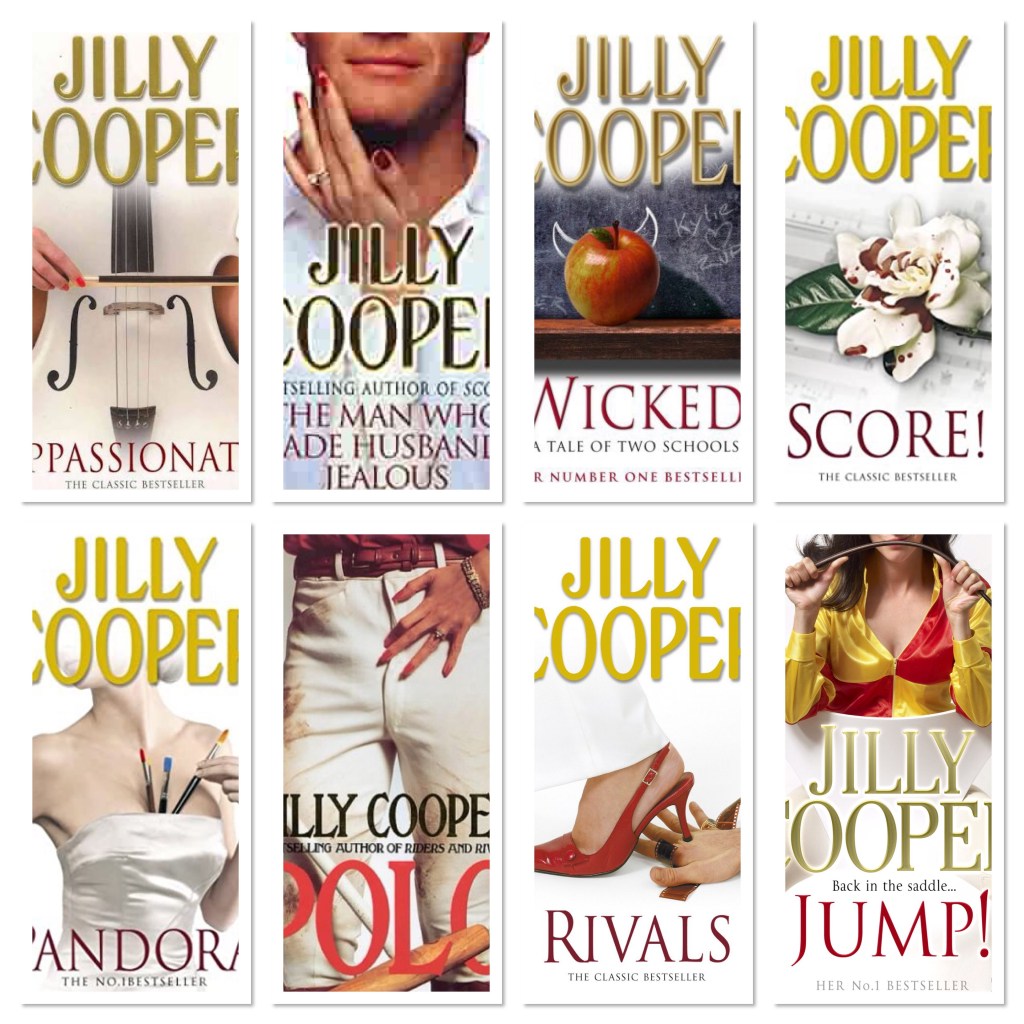
This month I’m supporting my fellow Squad Podders by highlighting writers of romance, whether that is their specific genre or just a part of their books mingled with fantasy, humour or mystery. If you want completely escapist romance with a side order of sexy, rich, characters cavorting around the English countryside then Jilly Cooper is your author. My first introduction to Jilly Cooper was finding her earlier 1970’s books on mum’s bookshelves. These weren’t the romances, but the humorous and witty digs at society found in her books on class and feminism. I remember very clearly my mum reading to me from one of them and as a working class family we found the middle classes utterly tragic so she would read descriptions of the Teale family. I’ll never forget Jen Teale who was so demure she wore six pairs of knickers. When mum was a bit low we would get a book down and I would read or act out the funnier bits and we’d all fall about laughing. It wasn’t until I was in sixth form that I encountered her handsome hero, Rupert Campbell-Black. One girl had brought Rivals into the common room and was reading out the filthy bits – ‘tit fault’ could be heard ringing round the tennis courts for weeks that summer term. I bought a copy of Riders and realised her work had so much story, as well as those famous rude bits. What I loved about Riders was the description of Penscombe and it’s jumble of treasures, dogs, books and grounds full of beautiful horses. Then as the rivalry became apparent between Rupert the school bully and his victim, the gypsy Jake Lovell I was completely caught up in the story. Her characters were well fleshed out and Rupert’s disastrous marriage to the American hunt saboteur Helen, was a fascinating clash of cultures, class and personality. I was soon utterly gripped by the world of showjumping, the bed hopping and the relationships sacrificed to ambition.

I think characters are a strength of Cooper’s even though some are almost caricatures and her rendering of Northern accents is hilariously wide of the mark. Each book tends to have a virtuous or kind woman – Taggie O’Hara, Kitty Rannaldini, Daisy or Lucy – who are perhaps not conventionally attractive, slightly shy and a bit downtrodden. It gives us someone to root for. On the other hand there are absolute horrors as well like narcissistic opera diva Hermione Harefield, the wicked but talented Roberto Rannaldini, or the chaotic and faithless Janey Lloyd-Foxe. It doesn’t matter that they’re not realistic, this is a romp through the upper classes – a part of society that Jilly Cooper knows more about than me. There’s always a lusty man to fall in love with too, someone tortured and secretive like the director Tristan de Montigny in Score, a bumbling innocent with looks to die for like Lysander Hawksley in The Man Who Made Husbands Jealous, or the gorgeous Luke Alderton in Polo, who loves the spoiled young polo player Perdita even when she chooses his brother Red. From showjumping, to television, to gigolos, polo players, orchestras, film making and horse racing Jilly takes us through each world with great knowledge and detail, often making the animals just as strong in character as the humans. I’m particularly fond of the labradors Mavis and Badger, and Taggie’s faithful little mongrel Gertrude.

Then there are the romances! There are several in every book and of course the over-arching love story of all – Rupert and Taggie. In Riders I felt so sad for Fenella whose hero worship of Billy Lloyd-Foxe becomes an unrequited crush, then a doomed love affair. In Polo I was rooting for Daisy, the mother of our heroine, who had been so focused on looking after others that she couldn’t believe the dashing polo player Ricky France-Lynch would be interested in her. I followed the fortunes of Rupert and Helen’s daughter Tabitha very closely. She’s impulsive and makes a passionate, but very difficult marriage to Isa Lovell, the eldest son of Rupert’s enemy Jake Lovell. Any chance she had of a more stable and loving relationship, through the novel Score particularly, had me keeping my fingers crossed. Of course it’s Rivals where the best and most beguiling love story begins and to see the bed-hopping Rupert Campbell-Black falling head over heels for the shy, dyslexic and unconventionally beautiful Taggie was deeply enjoyable. I was a similar age to Taggie when reading Rivals and still very romantic. Now I look at their relationship a little differently, but every few years I re-read a couple of the novels and I still feel a little starry eyed about them. They pop up in all the novels after Rivals and their relationship is probably the most successful in Cooper’s fictional Gloucestershire.

Cooper gives the reader a glimpse into a glamorous and wealthy world most of us would never know about. The hotels are 5 star, the fashion is designer, and the travel is first class. This is a world of elite sport and the game of kings – yes the Prince of Wales does pop up in Polo. There’s the world of classical music following the Rutshire orchestra in both Appassionata and Score, where the countryside becomes a backdrop for a twentieth century update to Don Giovanni. Pandora takes us into the art world and her latest Jump and Mount we’re back with horses, but in a horse-racing capacity rather than show jumping. Her only mis-steps for me are when she steps outside of this privileged world and tries to write about the working classes or a Northern character. Her book Wicked focuses on a struggling state school being mentored by the local public school where some of our usual suspects pop up, such as Rupert and Taggie Campbell Black’s children. I found her working class and city dwelling characters stereotypical and I inwardly cringed to such an extent I didn’t keep the book. Watch out for the accent of George Hungerford in Score for an example of how Northerners speak too. These are small quibbles though in a series of novels full of humour, bedroom romps, glamour, money and total escapism. The countryside is stunning and characters live in the most picturesque surroundings you’ll feel you’ve been on a holiday. Mainly though you’ll keep coming back for the love stories: hoping that the plump, bespectacled Kitty Rannaldini will escape the clutches of her evil husband with the handsome Lysander Hawksley; whether dog loving, shy, make-up artist Lucy will ever be noticed by the glamorous and mercurial Tristan de Montigny. Cooper uses all of the romantic conventions to her advantage. There are always obstacles to the couple’s love, distractions and conventions that can’t be crossed. There might be an age barrier, a man whose a confirmed bachelor, families that are locked into a bitter feud or a difficult marriage to negotiate. There are so many of these obstacles, that you’ll wait with your heart in your mouth as Taggie drives to collect Rupert Campbell-Black from his trip aboard, hoping desperately that he’ll overlook them and let her fall into his arms.

Meet the Author
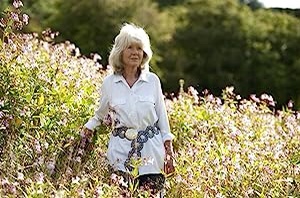

Jilly Cooper is a journalist, author and media superstar. The author of many number one bestselling novels, she lives in Gloucestershire.

She has been awarded honorary doctorates by the Universities of Gloucestershire and Anglia Ruskin, and won the inaugural Comedy Women in Print lifetime achievement award in 2019. She was appointed CBE in 2018 for services to literature and charity.
Posted in Romance Rocks, Throwback Thursday

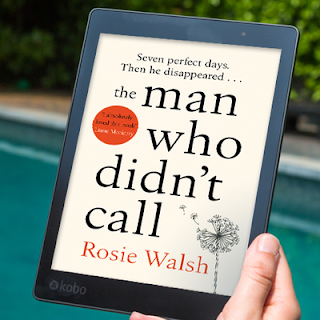
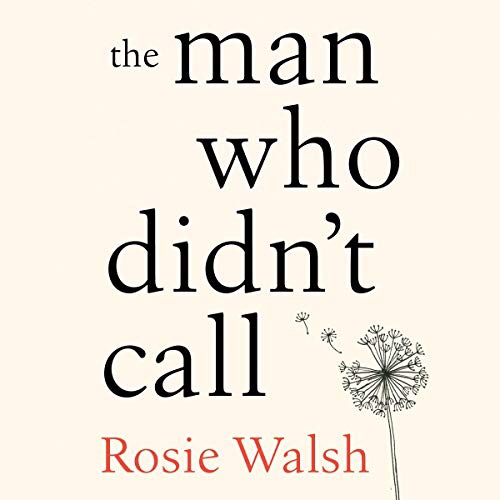
Romance Rocks: The Man Who Didn’t Call by Rosie Walsh

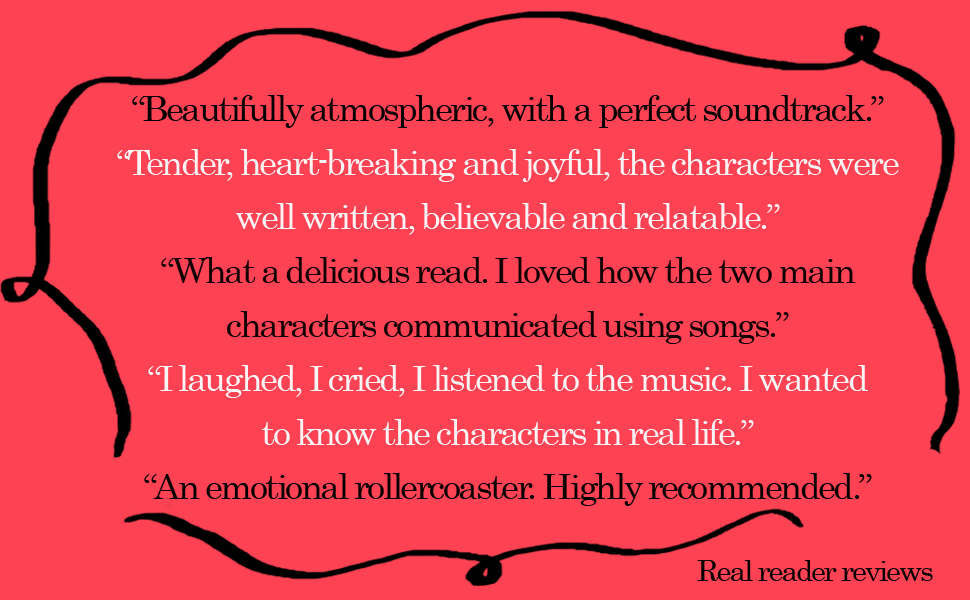
I read this in two long bursts – one of which started at 3am. It’s a book I couldn’t put down because all I wanted was these two people back together. The harsh realities of grief and lifelong family rifts are well drawn by the author and completely believable. All of these people are trying to move forward despite their lives missing a beat one day on a country road, where a split second decision has lifelong consequences. This book explores grief, loss, loyalty, loneliness and the eventual incredible ability the human heart has to heal.

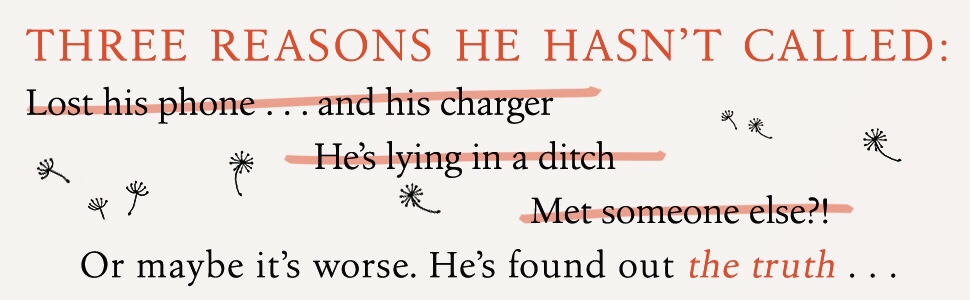
Sarah has a 7 day whirlwind romance with Eddie. They meet by chance on a country road while Sarah is visiting her parents. She thinks Eddie just might be the one. But, Eddie goes away on holiday and she never hears from him again. Is Eddie a heartless playboy who never intended to call? Did Sarah do something wrong? Or has something terrible happened to him? Instead of listening to friends and writing this off as a one night stand, Sarah begins to obsess and is determined to find the answer. Every clue she has comes to a dead end and she is in danger of completely losing her dignity. As her time back home in the UK starts to run out, Sarah looks for clues to track Eddie down. What she hears is confusing her further. His friend doesn’t give the simple answer, that Eddie has moved on, but gives her a warning; if she knows what’s best for her, she needs to stop looking for Eddie. 

Walsh has successfully intertwined a love story with a mystery. I veered between wondering if Sarah was becoming irrational and willing her to succeed. Interspersed with the narrative are beautiful letters of love and loss addressed to the writer’s sister, affectionately nicknamed ‘Hedgehog’. The letter writer’s sister died when they were young, but we don’t know what happened or who the letter writer is. If Sarah is the author of the letters does this loss have something to do with the warning she’s been given? Is her sister the key – not just to Eddie’s disappearance, but to why Eddie was on that particular stretch of road on that day? 

I quickly became invested in Sarah and Eddie’s story. I think we’ve all been subjected to the watched phone that never rings and how crazy it can make us. It could have made me dislike Eddie early on, but for some reason I never did. I’m definitely a hopeless romantic so I seemed to accept Sarah’s hope that this could still work out. The other characters in the novel are also well-written and compelling. I’m a therapist so I was particularly interested in Eddie’s mother and her mental ill health. I think her symptoms and the way she manipulated Eddie showed a streak of narcissism. She finds it impossible to see this situation from his point of view, only how it might  her. Anything that threatens their dynamic as carer and patient is a huge threat to her and she responds with emotional blackmail and hostility. Eddie is as much a prisoner of her mental ill health as she is. I also had empathy for Sarah’s friend Jenny who is struggling to conceive and undergoes IVF treatment to the point of financial ruin. Her character probably leapt out at me because I’m also not able to have children, and know how difficult it can be to come to terms with. Her stoicism and determination to support her friend in the face of her own loss is very moving. 

I stayed up until 2am to finish the book, because I had everything crossed that the mystery would be explained and these two people could move forward together. To different degrees, all the novels characters are imprisoned by the past and losses they can’t accept. My husband died when he was 42 and I was 35. It’s like a chasm opened up and I had to choose between staying on one side forever, with the past and my feelings of loss and fear. Or I could choose to jump over that chasm into a new future. I never forget what happened or the love I have for Jerzy, but twelve years later I have a wonderful partner and two beautiful stepdaughters. Thankfully, I had the bravery to move forward knowing I can’t lose my memories of the past, but I still have a future full of possibilities I never imagined. That’s what the characters in the novel are trying to do. Grief is different for everyone and there are always tensions between those who are trying to heal and those who can’t imagine healing because it feels like a betrayal. Rosie Walsh draws these different threads together beautifully, creating a bittersweet novel that captures the incredible ability the human heart has to heal.

Meet the Author


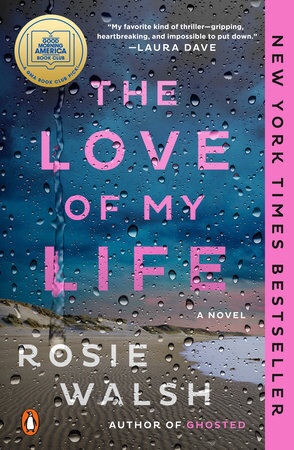
Rosie Walsh is the internationally bestselling author of two novels, the global smash hit THE MAN WHO DIDN’T CALL, and – new for 2022 – THE LOVE OF MY LIFE, a heart-wrenching, keep-you-up-all-night emotional thriller, which was an instant New York Times bestseller and stayed in the German top ten for several weeks. 

Rosie Walsh lives on a medieval farm in Devon, UK, with her partner and two young children, after years living and travelling all over the world as a documentary producer and writer. 

The Man Who Didn’t Call (UK) / Ghosted (US) was her first book under her own name, and was published around the world in 2018, going on to be a multimillion bestseller. 

Prior to writing under her own name she wrote four romantic comedies under the pseudonym Lucy Robinson. When she isn’t parenting or writing, Rosie can be found walking on Dartmoor, growing vegetables and throwing raves for adults and children in leaking barns. 

Author photos © Anna Pumer Photography / Verity Rivers

Rosie’s new novel The Love of my Life is another heartbreaking romance, mixed with an addictive mystery you’ll be begging for one more chapter.

I have held you every night for ten years and I didn’t even know your name. We have a child together. A dog, a house.
Who are you?

Emma loves her husband Leo and their young daughter Ruby: she’d do anything for them. But almost everything she’s told them about herself is a lie. And she might just have got away with it, if it weren’t for her husband’s job. Leo is an obituary writer and Emma is a well-known marine biologist, so, when she suffers a serious illness, Leo copes by doing what he knows best – reading and writing about her life. But as he starts to unravel her past, he discovers the woman he loves doesn’t really exist. Even her name is fictitious.

When the very darkest moments of Emma’s past life finally emerge, she must somehow prove to Leo that she really is the woman he always thought she was . . . But first, she must tell him about the love of her other life.

Available now in hardback and on Kindle, but due out in paperback in July 2023.

Posted in Romance Rocks, Throwback Thursday

Throwback Thursday! Mix-Tape by Jane Sanderson for Romance Rocks!

I love this book. Perhaps it’s because I had a Dan. A musician who started as my best friend and who I fell in love with. I was 18 and he took me to my first prom. His band were playing and it was 1991 so perms were everywhere and we were just adopting grunge. I would turn up for school in jumble sale floral dresses with my ever present oxblood Doc Martens. They played some of my favourite songs that night: some that were contemporary like Blur and others were classics like Wild Thing. I most remember Waterloo Sunset. Then, like a scene in a rom-com we walked across town to his house – me in a polka dot Laura Ashley ball gown and him in his dinner suit with the bow tie undone. He had a ruffled shirt underneath that he’d bought from Oxfam. We crept into the house and into the playroom so we didn’t wake anyone, then watched When Harry Met Sally. I remember a single kiss and then we fell asleep, but the love carried on over the years.

When I think of Elliot I always think of those famous best friend couples, like Harry and Sally or later, Emma and Dex in One Day. Now I can add Dan and Ali to the list. Alison and Dan live in Sheffield in the late 1970s when the city was still a thriving steel manufacturer. Dan is from the more family friendly Nether Edge, while Alison is from the rougher Attercliffe area, in the shadow of a steel factory. They meet while still at school and Dan is transfixed with her dark hair, her edge and her love of music. Their relationship is based on music and Dan makes mix tapes for her to listen to when they’re not together such as ‘The Last Best Two’ – the last two tracks from a series of albums. What he doesn’t know is how much Alison needs that music. To be able to put it on as a wall of sound between her and her family. Dan never sees where she lives and doesn’t push her, he only knows she prefers his home whether she’s doing her homework at the kitchen table, getting her nails painted by his sister or sitting with his Dad in the pigeon loft. Catherine, Alison’s mum, is a drinker. Not even a functioning alcoholic, she comes home battered and dirty with no care for who she lets into their home. Alison’s brother, Pete, is her only consolation and protection at home. Both call their mum by her first name and try to avoid her whenever possible. Even worse is her on-off lover Martin Baxter, who has a threatening manner and his own key. Alison could never let Dan know how they have to live.

In alternate chapters we see what Alison and Dan are doing in the present. Now a music writer, Dan splits his time between a canal boat in London and home with his partner Katelin in Edinburgh. Alison has written a new novel ‘Tell the Story Sing the Song’ set in her adopted home Australia and based round an indigenous singer. It’s a worldwide hit and she finds herself in demand, having to negotiate being interviewed and getting to grips with social media. She has an affluent lifestyle with husband Michael and has two grown up daughters. She has a Twitter account that she’s terrible at using and it’s this that alerts Dan, what could be the harm in following her? The secret at the heart of this book is what happened so long ago back in Sheffield to send a girl to the other side of the world? Especially when she has found her soulmate. She and Dan are meant to be together so what could have driven them apart? Dan sends her a link via Twitter, to Elvis Costelloe’s ‘Pump It Up’, the song she was dancing to at a party when he fell in love with her. How will Alison reply and will Dan ever discover why he lost her back in the 1970s?

I believed in these characters immediately, and I know Sheffield, and loved how it was described with affectionate detail by the writer. The accent, the warmth of people like Dan’s dad, the landmarks and the troubled manufacturing industry are so familiar and captured perfectly. Even the secondary characters, like the couple’s families and friends are well drawn and endearing. Cass over in Australia, as well as Sheila and Dora, are great characters. Equally, Dan’s Edinburgh friend Duncan with his record shop and the hippy couple on the barge next door in London are real and engaging. Special mention also to his dog McCullough who I was desperate to cuddle. Both characters have great lives and happy relationships. Dan loves Katelin, in fact her only fault is that she isn’t Alison. In Australia, Alison has been enveloped by Michael’s huge family and their housekeeper Beatriz who is like a surrogate Mum. It’s easy to see why the safety and security of Michael’s family, their money and lifestyle have appealed to a young Alison, still running away from her dysfunctional upbringing. She clearly wants different for her daughters and wishes them the sort of complacency Dan had, sure his parents are always there where he left them. But is the odd dinner party and most nights sat side by side watching TV enough for her? She also has Sheila, an old friend of Catherine’s, who emigrated in the 1970s and flourished in Australia. Now married to Dora who drives a steam train, they are again like surrogate parents to Alison. So much anchors her in Australia, but are these ties stronger than first love and the sense of belonging she had with Dan all those years before?

About three quarters of the way through the book I started to read gingerly, almost as if it was a bomb that might go off. I’ve never got over the loss of Emma in One Day and I was scared. What if these two soulmates didn’t end up together? Or worse what if one of them is killed off by the author before a happy ending is reached? I won’t ruin it by telling any more of the story. The tension and trauma of Alison’s family life is terrible and I dreaded finding out what had driven her away so dramatically. I think her shame about her mother is so sad, because the support was there for her and she wouldn’t let anyone help. She’s so fragile as a teenager and on edge. Dan’s mum had reservations, she was worried about her youngest son and whether Alison would break his heart. I love the music that goes back and forth between the pair, the meaning in the lyrics and how they choose them. This book is warm, moving and real. I loved it.

And what of my Daniel? Well he’s in Sheffield strangely enough. Happily partnered with three beautiful kids. I’m also happily partnered with two lovely stepdaughters. We’re very happy where we are and with our other halves. It’s nice though, just now and again, to catch up and remember the seventeen year old I was. Laid on his bedroom door, with my head in his lap listening to his latest find on vinyl. Or wandering the streets in my ballgown, high heels in one hand and him with his guitar case. Happy memories that will always make me smile.

Meet the Author

A former BBC Radio 4 producer, Jane Sanderson’s first novel – Netherwood – was published in 2011. She drew on much of her family’s background for this historical novel, which is set in a fictional mining town in the coalfields of Yorkshire. Ravenscliffe and Eden Falls followed in the two subsequent years, then in the early summer of 2017, This Much Is True was published, marking a change in direction for the author. This book is a contemporary tale of dog walks and dark secrets and the lengths a mother will go to protect her family. 

Jane lives in Herefordshire with her husband, the journalist and author Brian Viner. They have three children.

Her book Waiting for Sunshine is published in paperback on 23rd March 2023, with my review coming soon.


‘Who would name a child Sunshine, then give her away?’

Chrissie has always wanted to be a mother. After months of trying to adopt, she and her husband Stuart finally get the news that a little girl named Sunshine is waiting for them.

Abandoned at a young age, the child comes to them without a family history, and it feels like a fresh start for all of them. But when fragments from Sunshine’s previous life start to intrude on her new one, the little girl’s mysterious past quickly becomes Chrissie’s greatest fear …

Posted in Romance Rocks

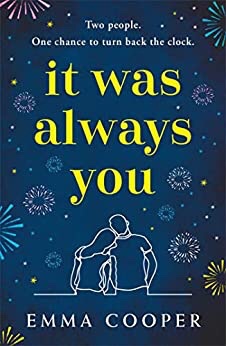
It Was Always You by Emma Cooper

On the last night in October 1999 the clocks went back, and Ella and Will’s love began. A teenage Ella sat around a bonfire drinking with her future husband and her oldest friend Cole. As Ella wandered away from the group, she found herself leaning against a derelict
archway before passing out. The next day, Ella remembered fractured images of a conversation with a woman in a green coat and red scarf but dismissed it as a drunken dream.

Twenty-three years later, with her marriage to Will in trouble, and Cole spiralling out of control, Ella opens a gift which turns her life upside down: a green coat and red scarf. When she looks in the mirror, the woman from the archway is reflected back at her. As the last Sunday in October arrives, Ella is faced with a choice.
Would she choose a different life, if she could do it again?

This was an interesting read from Emma Cooper, looking at how the course of our whole life can change from very small decisions and the effects of these changes on our long term relationships. Ella is married to Will with two children and a big birthday approaching when she has a strange sense of life coming full circle. She opens her birthday presents to find a coat, scarf and brooch combination she recognises. Twenty-three years earlier at a party, she strolled away from the fireside to avoid watching her crush Will kissing another girl and saw a woman wearing exactly these clothes. It was almost as if the woman was on the other side of a mirror, visible but unable to be heard. Even though Ella can’t hear her, she knows that whatever she’s trying to tell her is a warning. Now she knows that woman was definitely her future self and she can’t help but wonder exactly what she was trying to warn her about. Life has definitely changed suddenly, because as their youngest left the family home for university, Will suddenly dropped the bombshell that he was leaving. Ella knows they’ve been drifting, in fact it runs deeper than that, Ella knows that Will would not have chosen the life they’ve had. She can pinpoint every surprise and life event thrown their way that derailed the life Will would have chosen, travelling the world playing guitar in a rock band. Ella has always known that she loved Will more than he loved her, so perhaps he need to spend some time discovering what he wants the rest of his life to look like.

Emma Cooper’s last novel was an absolute tearjerker and I really loved it. She gets that everyday drudgery that is part of being a family and here she portrayed beautifully how romance is hard to maintain when there is illness, two children to look after, family crises and those little curveballs that life likes to throw into the mix every so often. Cooper structures her book around these moments in Will and Ella’s lives together, such as her sudden pregnancy in Paris that she feels derailed Will’s music career. What she forgets is that Will did have a choice too and it was a joint decision to get married and have their baby. The fact that Will was fired from the band as a result was a terrible thing to happen, but wasn’t Ella’s fault. The flashbacks worked well in explaining the present day, from Ella’s perspective but Ella isn’t the only one in the relationship and I wondered if these two had ever properly communicated with each other. The problem with not communicating is that Will is also labouring under a misapprehension; he knows that he’s always loved Ella more than she loved him and now, with both children gone, it’s time for her to think about her choices and perhaps right a wrong. Will has felt in competition with Ella’s best friend Cole for many years, even the first day he met Ella’s family Cole was already there and part of the furniture. When Ella was struggling with depression, Will was just starting his career as a music teacher and simply couldn’t be there as much as he would have liked. Cole was there, burping and changing both babies, bringing chocolate and endless energy and literally propping Ella up. He has loved Ella since they were kids and he’s the first person Ella calls when something’s wrong – like when Will walks out the door 23 years later. Cole knows that Ella loves Will, even in his worst moments dealing with family trauma and his own alcoholism he knows Will and Ella should be together. He knows the power of Will’s charisma, because he’s felt it himself. In fact he and Will have a difficult history; Will’s brother drowned when he was left alone by a river, Will was saving Cole who had jumped in. This past leaves an uneasy feeling between them and has Ella desperately trying to please them both.

I enjoyed the carefree period Will and Ella have in France with the band. Will is offered the chance of playing guitar with a band and the couple rent a small apartment where they can have privacy and live outside of that hotel environment. It takes several mornings of Ella throwing up for a neighbour to point out she might perhaps be pregnant. The thought has never entered her head, but the neighbour is right. They expect their idyllic interlude to carry on, but once they announce their news and intention to get married, Will is summoned by the band manager and sacked. Young girls like to fantasise about their rock stars and married with a baby isn’t the look he wants for the band. So the couple return to Britain and to a life that looks a little more conventional. The author really doesn’t sugar coat the experience of parenthood. I was there in that living room with Ella, dealing with a two year old and a baby. It felt dark, oppressive and a total contrast to the freedom she had in France. With Will having to put in the long hours to support his new family, Ella feels like she’s doing this alone. So when friend Cole steps in to help it feels like a lifeline. He notices that Ella is desperately unwell and it’s his insight into his friend and his willingness to help that did make me waver on whether Will really was the right person for her. I don’t think I ever fully bonded with Will as a character. I didn’t know him in the same way as Cole or Ella and I think this was to some extent about the author’s description of him. He was so good looking and even Cole admits he’s the archetypal romantic leading man – he’s the man the girl should get. I didn’t know whether the author was trying to subvert the genre and have Ella realise that the less than perfect Cole, with all his issues, is the right man for her. In fact I was unsure of what would happen right up to the very end. This is a romantic read with an edge of reality, but maybe that makes it a more contemporary fairytale.

Meet The Author

EMMA COOPER is the author of highly acclaimed book club fiction novels and is known for mixing humour with darker emotional themes. Her debut, The Songs of Us, was snapped up in multiple pre-empts and auctions and was short-listed for the RNA contemporary novel of the year award. Her work has since been translated into seven different languages.

Emma has always wanted to be a writer – ever since childhood, she’s been inventing characters (her favourite being her imaginary friend ‘Boot’) and is thrilled that she now gets to use this imagination to bring to life all of her creations. She is now also an editor for Jericho Writers, where she has worked with traditionally published authors, as well as new aspiring writers. Emma spends her spare time writing novels, drinking wine and watching box-sets with her partner of twenty-eight years, who still makes her smile every day.

Posted in Publisher Proof

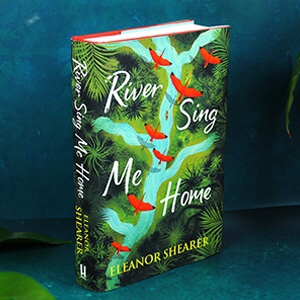
River Sing Me Home by Eleanor Shearer

This incredible debut novel grabbed hold of my mind and heart, never letting go until the final paragraph. I shed tears at several points in Rachel’s journey and she’s a character I won’t forget. We meet her working on a plantation in Barbados, at that strange point after slavery when plantations were instructed to free slaves, but their sense of freedom was short-lived as masters were able to keep slaves for a further six years as apprentices. So, despite being freed the day afterwards started just the same, at the crack of dawn and walking to the cane fields for a day of back breaking work. Having nothing meant that most had no other choice. Rachel is thinking of her children, several lost before they had a chance to live but others scattered to the four winds. Her boys Micah and Thomas Augustus and her girls Cherry Jane, Mary Grace and Mercy all taken from her in different ways. Only Cherry Jane spends a few years nearby as a house slave, but in her superior position she doesn’t acknowledge Rachel who is merely a field hand. One day she decides that she must find her children, she must know where they are and what happened to them, even if the news is that devastating final loss. Rachel says that as a slave she plants cane but nothing of her own. However her children came about, Rachel feels that they anchor her in this world and she can’t rest until she finds them. So she runs and with our hearts pounding we follow her.

As Rachel took her journey I kept thinking about my own mum. She always feels at her happiest when we’re all under her roof, all four generations. She told me that she feels like we’re all safe and there’s a feeling of completeness. I am not a mother, so until recently I hadn’t experienced anything like this, but now I am a step-mum and I do get a sense of relief when both my stepdaughters are here under my roof. There’s a feeling that I could close the curtains and we’d all be safe. I couldn’t imagine how it must feel to have those children stripped from you as commodities to be sold. As I finished reading the book on Holocaust Memorial Day, my mind was also taken to an account by a survivor on TikTok where she described her family being split apart into separate queues as they reached Auschwitz. She was placed in one queue bound for a factory sewing uniforms, but her mother and sister were deemed unsuitable for work and in the chaos was the final moment she saw them. It’s a similar atrocity, so huge that it’s hard to imagine or compute. A whole race of people are deemed as expendable and discarded with no more regard than swatting a fly. In amongst some powerful and distressing scenes in the book, one thing that hit me really hard was Rachel’s realisation that her emotions didn’t matter. As a younger woman she had held herself proudly and resolutely, determined that the actions of the overseer wouldn’t make her cry. As an older woman she realises that she could have owned her grief, it wouldn’t have satisfied or pleased the overseer to see her distress because she simply didn’t matter to him.

Rachel’s journey is a long one, across Barbados and over to Trinidad, and we experience every moment with her. The author provides vivid descriptions of each place Rachel experiences down to the way the earth feels under her feet. Cities give her a certain anonymity, but it’s in nature that I really felt Rachel’s freedom. The author layers sounds of birds, running water and wind through the trees with the feel of leaves or water against the skin. The water of the rivers are welcoming and help her journey: kayaking up the Demerara to look for runaway communities in the forest and Thomas Augustus; rushing down river holding an uprooted tree to avoid capture; feeling cocooned and supported by the water in a bathing pool. The runaway community are made up of escaped slaves and indigenous tribesmen who have survived the colonisation of their island and the forest both hides them and supports them. There is a sense of abundance in the food, the company and the mix of cultures that comes out in musical form. The ancient songs of Rachel’s African heritage come alive for her when mixed with slave songs and the music of the indigenous tribes represented. It seems fitting that it is in the forest that a marriage takes place and a baby is born – these are the building blocks of the future and that future is truly free.

I found some of the characters Rachel comes across on her travels fascinating and they add something to the tale by bringing their own experience, adjustment and acceptance of their situation. Nobody has adopted the very part of his identity forged by the slave experience, the sense that he is no one and belongs nowhere. Despite the negative connotations of the name, being nobody allows him to take his power back, to be anonymous, to escape unseen and leave a mark nowhere. He has been transitory ever since he started running, living a transitory life on the ships that travel between the islands, perhaps feeling more at home in the water than on the land he was enslaved by. I wondered whether Rachel’s quest would make a mark on him and if he would find a true home, whether that be a place or a person. I was also intrigued by Hope, whose very name embodies looking forward. She has found her place in Bridgetown by entertaining paying gentlemen. She is beautiful, impeccably dressed and seems to have found a independent way of living she’s at peace with. While some people don’t want to be seen with her, Rachel is not so judgmental. After all, Rachel tells us, men have been inside her but there she was the one who paid the price. The threat of sexual violence is alluded to but never explicit. Rachel won’t discuss or ask another woman how her children have come into being, because she knows the pain of a pregnancy where you pray the child you carry has no resemblance to it’s father. Equally she knows what it’s like to dread the birth of a child who might bear a resemblance to a man greatly loved and lost forever. We don’t know about the conception of any of Rachel’s children. Her ‘pickney’, as she calls them, are hers and hers alone and it is this that makes it imperative that she finds them. She needs to find them, in order to feel whole.

The whole journey is littered with joys and terrible grief, but Rachel knows she must keep going. She meets others who have started to build a new life, placing the past firmly behind them and never pining for it. They live firmly in the here and now with questions left unanswered and people left behind. For Rachel that isn’t enough. Her children are like the scattered pieces of a broken vase. She doesn’t expect her family to be perfect and knows that there will be cracks and missing pieces. Rachel is putting her broken vase back together and she will pour a substance into the cracks, bringing the pieces together until her past is whole again. The binding substance used in Japanese Kintsugi pottery is usually gold, each crack making the piece more beautiful. In Rachel’s case the binding substance is love. Love for those here, those found but far away and those gone forever. An all encompassing love symbolised by the birth of a baby in the forest.

There was a ‘feeling of complete, absorbing, unqualified love. The baby was a stranger, without speech, unknowable. It would be years before he could say what was on his mind. And yet, love did not wait. Love was there in the beginning – even before the beginning. Love needed no words, no introduction. Existence was enough.’

Published on 19th Jan by Headline Review

Meet The Author

Eleanor Shearer is a mixed race writer from the UK. She splits her time between London and Ramsgate on the coast of Kent, so that she never has to go too long without seeing the sea.

As the granddaughter of Caribbean immigrants who came to the UK as part of the Windrush Generation, Eleanor has always been drawn to Caribbean history. Her first novel, RIVER SING ME HOME (Headline, UK & Berkley, USA) is inspired by the true stories of the brave woman who went looking for their stolen children after the abolition of slavery in 1834. 

The novel draws on her time spent in the Caribbean, visiting family in St Lucia and Barbados. It was also informed by her Master’s degree in Politics, where she focused on how slavery is remembered on the islands today. She travelled to the Caribbean and interviewed activists, historians and family members, and their reflections on what it really means to be free made her more determined than ever to bring the hidden stories of slavery to light.

Posted in Squad Pod

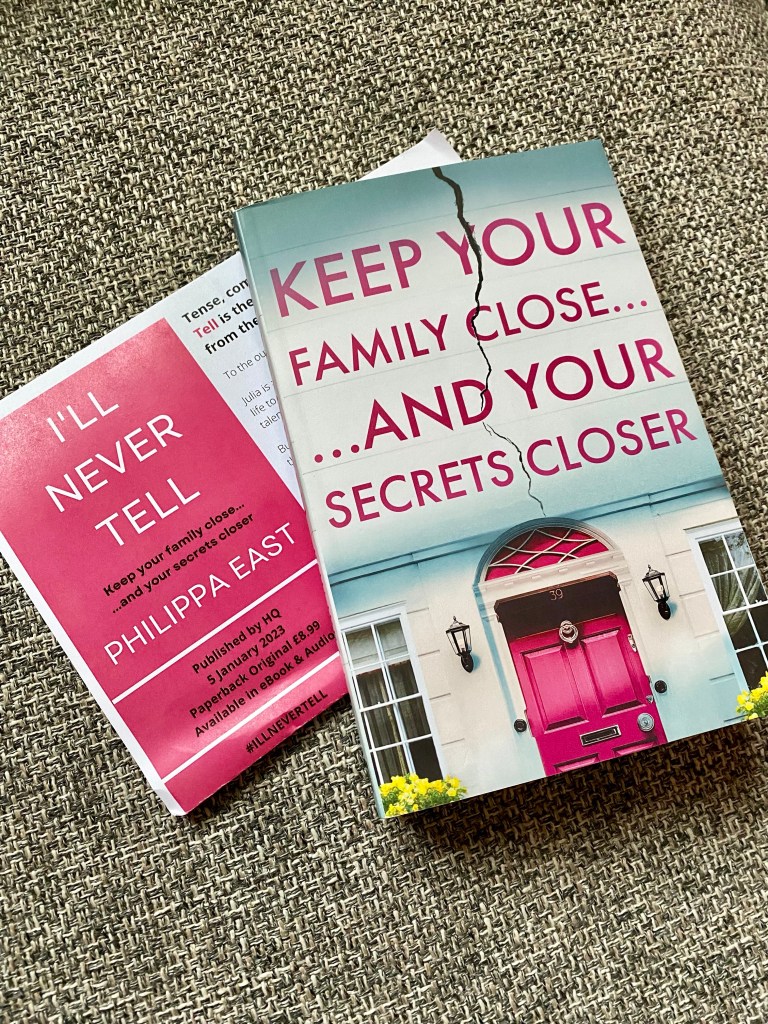
I’ll Never Tell by Philippa East

Keep your family close and your secrets closer….

To the outside world, the Goodlights are perfect.

Julia is a lawyer, Paul a stay-at-home dad who has dedicated his life to helping their daughter Chrissie achieve her dreams as a talented violinist. But on the night of a prestigious music competition, which has the power to change everything for Chrissie and her family, Chrissie goes missing. She puts on the performance of a lifetime, then completely disappears. Suddenly every single crack, every single secret that the family is hiding risks being exposed.

Because the Goodlights aren’t perfect. Not even close.

Wow this book is tense! Tense enough to give you a migraine. East has a way of writing that flows so well, but is paced to give a really slow drip drip of information. It’s clear from just the day to day activities of the Goodlights that something is ‘off’ and my brain was skittering all over the place to work it out, rather like Bambi on the ice. The author pulls off a clever trick, by letting the Goodlights speak for themselves. She’s not explicit, but their inner talk and actions allow the evidence to pile up; something is badly wrong here, but the author withholds just enough that we don’t know what is that is. As I read on, my brain was coming up with more and more questions. What’s with Julia’s parents and their strange attitude towards women’s behaviour? Why is Paul so obsessed with his stepdaughter’s career and so rigid with her regime? Is it the result of a thwarted desire in his own life and will Chrissie snap under the pressure? What’s with the strange background conversations between Julia’s mother and Paul? I’m not surprised at all when Chrissie goes missing, the only surprise is that she didn’t go sooner.

I found Paul’s attitude with Chrissie really disturbing. I understand wanting the best for your child, but this is creepy. Not only does he control her potential career and keep her practicing, he looks after her diet, her free time and leaves her with no privacy – even policing her phone, from quickly checking the screen when a notification comes in, to demanding to look through all her messages and emails. Does he have her on such a short lease to prevent something happening, or is he reacting to something that’s happened before? There’s a strange dynamic between Chrissie’s grandmother and Paul. I was disturbed by her attitude towards her daughter and granddaughter with her suggestion that certain behaviours are in the blood and there’s something tainted in their DNA. It’s almost as if they appreciate Paul more than their own flesh and blood. At times Celina speaks to him as if he’s a member of staff. There are pictures hidden in Julia’s childhood bedroom of a time at university when she appears free and perhaps part of a hippy group, implying experimentation with drugs and promiscuity. Celina is concerned that her ‘tainted blood’ has passed to Chrissie and tells Paul ‘I can smell it on her’ giving an unpleasant image of an animal in heat. Was she the instigator of the rigid regime Paul imposed on his stepdaughter or was she merely the gatekeeper? Patriarchies often depend on women to uphold their rules. I felt uncomfortable all the way through this novel, but in retrospect I think this was down to my own experience in an abusive relationship. There’s now something in me that is repulsed by males like Paul exerting power over the women in their family, exerting coercive control and gaslighting those they are supposed to love most. This tells me that the author’s depiction is successful, or it wouldn’t have made me feel this way.

Throughout the novel my brain was drifting back to Jane Eyre and Jean Rhys’s response Wide Sargasso Sea and the anti-heroine Bertha Mason. Bertha (whose name is actually Antoinette) is Mr Rochester’s first wife, doomed to a life locked in an attic, because of her unnatural passions and hereditary madness. She works as a contrast to the still and quiet Jane, who was constantly told to rein in her passionate nature when she was a child. Bertha’s fate could have been Jane’s. However, in her book Wide Sargasso Sea, Jean Rhys gives Bertha a back story where Rochester marries then rejects the wife who was too passionate in the bedroom and enjoyed his advances – the inference being that a wife should meekly accept sexual advances, but not relish them. I felt throughout East’s novel, that a similar misogynistic double standard is at play. When we delve into Julia’s inner world we can see how insidious emotional abuse is, because these ideas are running through her head constantly. She doubts her own instincts and worries that Chrissie’s disappearance is a consequence of her failure to ‘behave’ in the way she’s been taught. Paul and Julia don’t fully communicate either, operating in completely different spheres with him at home and her at work. Law is such a demanding career and Julia works constantly, almost like it’s a penance, rarely interacting with Paul or Chrissie and never involved in her daughter’s strict regime. It’s almost as if she’s abdicated all responsibility for her to Paul, but is that choice or a mistaken belief that he’ll do a better job than her? There’s also the shadowy figure of Francis, someone she doesn’t want near her family and seems to fear. This really is a toxic mix, a family who seem shielded from scrutiny by their money and once you delve beyond appearances, are a million miles away from the ordinary. Will Chrissie be found and is her disappearance down to a malign outside influence as they all suspect? Whatever has happened to Chrissie, you’ll not stop reading till you work out what is so deeply wrong at the heart of this family?

Published on 12th January by HQ

Thanks to HQ and the Squad Pod Collective for my proof copy.

Posted in Squad Pod

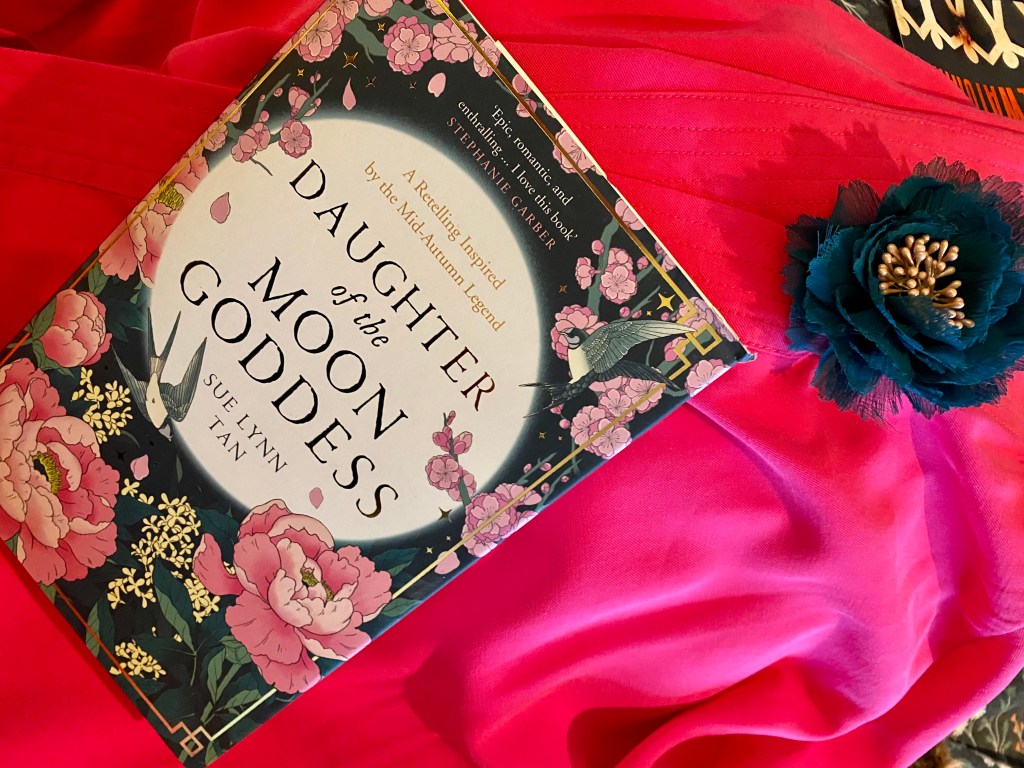
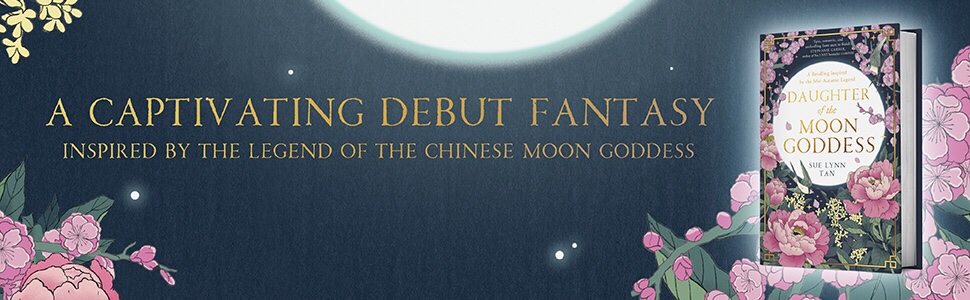
Daughter of the Moon Goddess by Sue Lynn Tan.

I am a huge fan of Damon Albarn – I haven’t gone crazy, this is relevant – from the first 12 inch Blur single I bought in 1989, to Gorillaz and all the solo projects in-between I’ve been there. For me, the most amazing piece of work he’s composed is Monkey: The Opera which I went to see at the Royal Opera House in Covent Garden and then again at Lincoln Centre in NYC. I’d seen the ‘Monkey Magic’ series when I was a child, me and my brother loved the hilarious and badly dubbed chronicles of Monkey and his quest. However, in the opera house, when the music started and the curtains opened this Monkey was simply magical, like a window to another world. The music was exquisite and the set was just incredible, with floating clouds and giant bamboo, underwater realms and ancient gods and spirits lurking above while Monkey learns what his journey is about. I’d honestly never seen anything like it. So, when I picked up this beautiful book I put the music on so I had a soundtrack to my reading experience and it fitted together beautifully. Used to Greek, Roman and Celtic mythology, Albarn’s soundtrack felt like fitting music for the entirely alien, but rich and evocative mythology I was becoming immersed in.

This incredible debut novel from Sue Lynn Tan is a mix of mythology, spirituality, magic and Bildüngsroman- that wonderful and almost untranslatable word that relates to books focused on a young person growing up. Our heroine is Xingyin a young woman who has grown up on the moon, hidden from a powerful Celestial Emperor who placed her mother Chang’e in exile for the theft of his elixir of mortality. Xingyin’s life has been a lonely one and as she grows she longs for new experiences and places. Now Xinying is coming into her power and as her magic increases, she is discovered. Now she must flee the moon and leave her mother behind, knowing that she’s pitted against the most powerful immortal leaving both their lives at risk. Alone, powerless, and afraid, she makes her way to the Celestial Kingdom, a land of wonder and secrets. Disguising her identity she works as a servant, but then seizes a lucky opportunity to train in the Crown Prince’s service. Xingyin starts learning to master archery, magic, and the strange attraction between her and the emperor’s son. I loved being back in a world within the clouds. The author’s beautifully lyrical language is so vibrant and she really does bring this stunning world to life. This celestial realm is woven from layers of description about the clothing, the food, the buildings and the unique magical elements, creating a setting and atmosphere that’s suitably awe inspiring.

I found Xingyin’s inner journey interesting too, because she develops so much from the naïve young girl at the beginning. I loved that she is following a path to be a warrior, something that seems rare for women in Western mythologies. I learned so much about Chinese culture through her obligations to family, particularly the mother/daughter relationship and the concept of honour and how it informs her ambitions. Her focus is to free her mother from exile and this brings out an incredible determination in Xingyin. She starts out unable to fend for herself and she shows both patience and grit, achieving each goal on the way to her destiny. She has to learn the history of these Immortal Realms in order to negotiate her way forward. She also has to practice her magic and the find the best way to utilise it in her quest. I loved how the author kept a steady pace in these early sections, the slower pace echoing that Xingyin is only at the beginning of her journey and she feels those same emotions we do when our goals are still so far away. The pace really speeds up when Xingyin has undergone her initial training and the army leaves to test it’s recruits in battle. I really enjoyed the extraordinary monsters from Chinese legend that the army must defeat for Xingyin to really fulfil her potential as a battle-hardened warrior. The author beautifully describes that uncertainty and fear soldiers must feel before a battle – the self-doubt that can creep in and takes hold. Yet Xingyin manages to feel this and still maintain her warrior-like demeanour. She isn’t just a killing machine. Throughout her endeavours she has kept her own deep seated sense of morality and a self-awareness that allows her to set boundaries.

Aside from Xingyin’s quest there is also an element of romance in the novel; a love triangle that does dominate in parts and takes up an enormous amount of her head space. I wasn’t sure I needed the romance for the book to work, but I guess it’s part of a young girl’s journey into womanhood. She is torn between two men and seems on a rollercoaster of trying to understand her feelings for both. One minute she’s berating her own fickleness in wanting one and then the other, then is angry that whatever they do she can’t let either one of them go. I think the author is trying to capture the immaturity of relationships at this age and I felt the romance might have been pitched at a YA audience who would understand the angst better than this middle-aged reader. I didn’t want the romance to take over the storyline and distract Xingyin from her own journey and potential. I don’t read a enormous amount of fantasy, but this was a complete escape from normal everyday life and I found myself lost in it’s imagery and those wonderful mythical creatures. The author has a boundless imagination, shown in the sheer scale of this work and how she paints her world with words so that it’s beautifully rich, evocative and ultimately, enchanting. I’m looking forward to diving into her world again for the sequel to this incredible debut novel.

Published 20th Jan 2022 by Harper Voyager

Meet the Author

Sue Lynn Tan writes stories inspired by the myths and legends she fell in love with as a child. After devouring every fable she could find in the library, she discovered fantasy books, spending much of her childhood lost in magical worlds. Daughter of the Moon Goddess is her debut, the first in the Celestial Kingdom duology – a fantasy of immortals, magic and love, inspired by the beloved legend of the Chinese moon goddess, Chang’e.

When not writing or reading, she enjoys exploring the hills, lakes, and temples around her home. She is also grateful to be within reach of bubble tea and spicy food, that she unfortunately cannot cook.

Find her on Instagram and Twitter @SuelynnTan, or on her website http://www.suelynntan.com

Posted in Publisher Proof

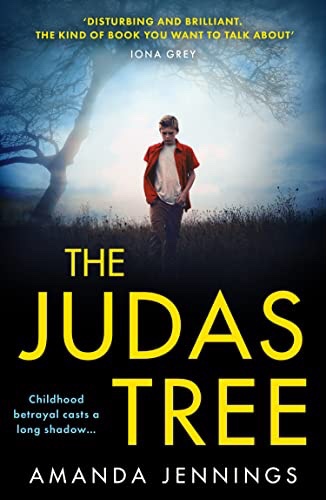
The Judas Tree by Amanda Jennings

Harmony and Will have been together for a long time and live in a garden flat in London. They are the couple that most of their friends and family would say are meant to be together. Harmony’s closest friend, Amanda and her husband, throw a party where Harmony bumps into a man she feels an instant chemistry with. They talk for a while and when he suggests they just get into the car and leave together, she’s shocked to find that part of her responds to his suggestion. Harmony goes to find Will and imagines she will never see this man again. It’s only a few days later, that the couple go to lunch with Amanda who explains that they are also entertaining one of her husband Ian’s clients. Client Luke isn’t new to Harmony, he’s the man from the party, but much to her surprise, Luke isn’t new to Will either.

In fact Will’s reaction goes far beyond his explanation that he knew Luke at School. I knew immediately there was something much worse. Harmony has always wondered why Will is so cagey about his past, especially because he’s very stubborn in his outlook about becoming a parent himself. His childhood was so bad, he can’t imagine being a good parent. He is great with Amanda’s kids, but adamant he and Harmony should remain childless. So when Harmony became pregnant a few months ago he wasn’t going to be overjoyed. In fact when she tragically lost their baby, Harmony was devastated and Will’s first emotion was relief, not that he’s told her this. She has now realised how much she wants a child, but isn’t hopeful of changing his mind. It was while they were slightly at odds with each other, that Luke had bumped into a confused and vulnerable Harmony. Luke continues to be charming, intelligent and very forthright about his attraction to Harmony, including turning up at her work. Her head is turned, but despite that she knows she loves Luke. She wants to be his wife, but what if they don’t want the same things any more? When Ian introduced Luke has such a charismatic way about him. She could see though, that Will was horrified to see Luke again. His explanation that they were at boarding school together seems plausible, but she knows there’s more and so do we.

Amanda Jennings has a clever way of introducing you to characters and they don’t grab you immediately, because you’re taking in the world they’re in and the clues about the story. Then suddenly, by about the fifth page, she’s got you caught in a vice like grip. That was certainly the case here, as the sophisticated city lives these characters live is a world away from a country mouse like me. Yet as soon as Luke met Harmony, I knew there was something off and that he had an agenda. He intervenes between the couple at the perfect time too, not that he could have know that – or could he? Luke has a strange magnetism around him even when he’s at school. Will’s early life is sad and his father is abusive. I could understand why he didn’t want to relive it, but when we don’t talk about things they gain an importance they often don’t warrant. We know that whatever is at the root of the animosity between Luke and Will, it’s something humiliating, shameful and life changing. Jennings beautiful times her chapters so we get a bit of the present day and then a snippet of Will’s story. They way it’s eked out keeps you reading and it’s a story that’s horrifying and devastating for these young boys. I won’t say any more, but when we meet a classmate of theirs later on in the novel I wanted to push him under a bus! The fact that things like this happen at boarding school isn’t surprising, but creating or turning a blind eye to an environment like this should be criminal.

Harmony is an interesting character because she almost acted as if she had no choices. I think she’s still in that numb stage of grief and in this vulnerable state people make bad decisions. She seemed to have low self-esteem and really struggled to create boundaries. When Luke starts to encroach on her workplace and not take no for an answer, I was mentally screaming at her to say no and walk away. I wanted her to make a scene and call the police. Especially at first, because she’s done nothing wrong in chatting to a man at a party. I also wanted her and Will to communicate. The key to everything are those secrets that Will has been keeping, things that have happened that make him sure he’s unloveable and unfit to be a parent. It’s Harmony’s fear of encroaching on those boundaries that leads to her keeping her own secrets in turn. The author slowly turns the screw and the tensions rise, making it impossible to put the book down. I was glued to the story, hoping for the couple to break their silence and come together. This had all the ingredients of a great thriller and has real psychological insight into bullying and trauma. It was also brilliant to read a thriller where psychological healing is such an important part of the equation, as well as the thrilling twists and turns.

Meet The Author

As opposed to this latest novel, Amanda’s previous novels The Storm, In Her Wake and The Cliff House, are all set in Cornwall, in Newlyn, St Ives, and Sennen respectively. Cornwall is where her heart truly lies! Her mother’s side of the family is from Penzance and she holds many blissful memories of long summers spent there. She is never happier than when she’s beside the sea, though she’s also fond of a mountain, especially when it’s got snow on it. When she’s not beside the sea or up a mountain or sitting at my desk, you can usually find her chatting on the radio as a regular guest on BBC Berkshire’s weekly Book Club, or loitering on Twitter (@mandajjennings), Facebook and Instagram (@amandajennings1). She loves meeting and engaging with readers, whether that’s on social media, or at libraries, book clubs and literary festivals. If you see her out and about at an event do say hello! You can find more information on her webpage: http://www.amandajennings.co.uk

Posted in Netgalley, Publisher Proof

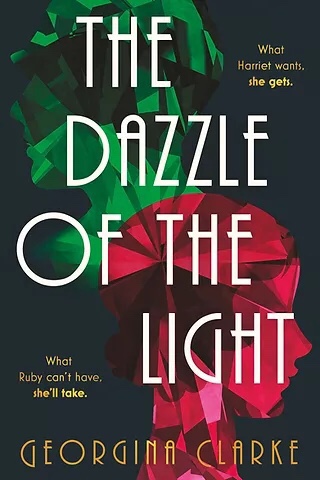
The Dazzle of the Light by Georgina Clarke

Just a couple of weeks ago I was waxing lyrical about Kate Atkinson’s novel Shrines of Gaiety and then another novel passes my way covering the same territory and the same time period. While I loved Atkinson’s novel on it’s own merits, this one feels more urgent and alive. I felt immediately in the story and fascinated by the two main female characters. Ruby is one of a female gang known as the Forty Thieves (the Forties) who commit crimes from pick-pocketing for the young members to shoplifting and even jewellery theft for those more experienced members. Ruby has been one of the Forties for years and due to her looks doesn’t always attract suspicion in the fancier stores. In fact, she’s on a joint job with her lover Billy from the Elephant Boys, when she first runs into Harriet Littlemore. Harriet is the real deal, a young woman from a very good family, engaged to an up and coming member of parliament. Harriet has ambitions beyond being an MP’s wife, she wants to be a journalist and her father permitted her to ask for a job with the evening paper. She’s been hired to write pieces for the woman at home, such as ways to wear the new style of hat, but Harriet has ambitions for so much more, thinking she might write a piece about the young thief she’s seen. However, her fascination with Ruby seems to be much more than journalistic interest.

The story follows these two women as they each pursue their ambitions. Ruby wants to do more work with the Elephant Boys. She wants to take on bigger jobs and wear beautiful clothes and jewellery. When she meets Harriet again, on a shoplifting run in a department store, she cheekily suggests she should update her style. Perhaps she should cut her hair in the new shingled way that’s the height of fashion, Ruby tells her, then she could wear the new style of hat she’s considering. Like a woman in a trance, Harriet goes to a French hairdresser and has her long hair cut short. She’s amazed by how much it suits her and hopes to see Ruby with her new fashionable look, even if it does cause a stir at home, particularly with her traditional mother. She’s furious when the story about the jewellery heist she witnessed is written by one of the male reporters at the paper. So she decides to write a piece on Ruby, the Jewel of the Borough, and gets one of the artists to draw a sketch from her description. In a way, Harriet admires Ruby. She sees Ruby’s freedom, her nerve and confidence, and contrasts it with her own restrictions. She has no idea what her article will truly mean for Ruby. We see what Harriet can’t, because we’ve met the rest of the Forties and Ruby’s other mentor Solly, who runs a jewellery business. The women of the Forties are in a hierarchy, with Annie ? At the top. Many have been thieving since they were children, looked after by the Forties in return for their tiny hands making their way into pockets. The ones that are married are struggling to feed their kids and to avoid their husband’s fists. Most have done time in Holloway and without the Forties, they and their families would be cold and hungry. From Ruby’s perspective, money is freedom and Harriet certainly has plenty of that.

I loved the way the author showed, that despite their differences in class and means, Ruby and Harriet are still second class citizens due to their gender. Although Ruby has earned some equality thanks to her sleight of hand and is chosen by leader Annie, to do jobs with the Elephant Boys, her personal life is very different. Solly is a father figure to her and always keeps a room for above the jewellers, but when it comes to her lover Billy she has no real power. She has confidence in her allure, but when she’s forced to lie low for a while Billy soon moves on to the next warm body. She often has to give up her body to seal a deal, whether it’s a little extra for the man who fences the more risky pieces of jewellery she’s stolen or romancing someone to get information out of them for Peter who runs the nightclub. This work gives her a rather glamorous roof over her head when she really needs it, but she definitely earns her money. Peter has a big job coming up with the Elephants, something that involves men of money and influence. Ruby has no clue how respectable these men are, or their standing in society. It seems to her that all men will use women, no matter how respectable they may seem. Harriet is completely powerless when it comes to the men in her life. She has a life set up for her as Ralph’s wife and her parents can’t understand why she isn’t satisfied with her lot. She has money, beautiful clothes and a handsome fiancé who is going to be a man of great influence. They can’t understand that she wants something for herself, something she has earned on her own merits. I couldn’t put the book down because I wanted both of these women to break out of the prison they are in, choose a different life and perhaps become close. I didn’t want the system to win.

The setting for this fascinating story is beautifully built by the author. We’re post-WW1, a period of huge shifts in the class system and changes for both men and women. The author shows how the class system and expectations of women have changed through Harriet’s relationship with her parents. They still have pre-war attitudes and are expecting Harriet to fall in line. Even the changes she makes to her appearance show that shift from the restrictions of Edwardian dress and the relative freedom of the 1920’s fashions with shorter skirts, no restrictive undergarments and shorter hair. These fashions suit women who are busier and don’t have hours to dress in the morning. Financial changes mean only the very wealthy can afford the help of a ladies maid every morning. Ruby can wear the latest fashions to please herself, when she can afford them. She loves the glamour of the clothes she wears to the club, where she needs to attract the more discerning gentleman.

For the men, those who were in the trenches found them democratising. Bullets and shells don’t care about the class you’re from and although there was still a hierarchy, they died in the mud together. This led to some strange allegiances back in the post-war world. It’s clear to Ruby that there’s a big job on the cards, Billy has hinted as much and her time at the club throws her close to the planning. There are men involved who would never normally give the Elephant Boys the time of day, so they must need them to do the dirty work. These are men from the highest class, who usually drink at their club or the Savoy, but don’t mind slumming it at the club if it makes them money or the company of a woman like Ruby. I desperately wanted some of them to get their come uppance, knowing that’s not always the way of the world. The real winners though are those that can move between worlds, like Peter Lazenby. Though the polish and charm of all these men hides something more brutal. Despite her misdemeanours I was as charmed by Ruby as Harriet was and I wanted her to find a middle ground where she survives comfortably. As for Harriet I wanted her to break out of her parent’s upper class restrictions. I wanted her to have a love affair with someone unsuitable and a friendship with Ruby, if not a full on passionate affair. This was a fantastic book, full of characters, historical detail and that verve and energy that seems synonymous with 1920.

Published by Verve Books 17th November 2023

Meet The Author

Georgina Clarke has always been passionate about stories and history. The Lizzie Hardwicke novels give her the opportunity to bring to life her love of the eighteenth century and her determination that a strong, intelligent and unconventional woman should get to solve the crimes – rather than be cast in the role of the side-kick. Georgina was born in Wolverhampton, has degrees from Oxford, Cambridge and London, but now lives in Worcester with her husband and son and two lively cats.

Her first two novels, Death and the Harlot and The Corpse Played Dead, are published by Canelo. She is currently cooking up plots for the next novels in the series. 

If you would like to visit her website, you can find her at: 

http://www.georginaclarkeauthor.com

She is also to be found tweeting (probably far too often than is good for her) at: 

@clarkegeorgina1

Posted in Publisher Proof

Blue Water by Leonora Nattrass

Death came aboard with the cormorant. It arrived on the seventh day of our voyage…

This is the secret report of disgraced former Foreign Office clerk Laurence Jago, written on the mail ship Tankerville en route to Philadelphia. His mission is to aid the civil servant charged with carrying a vital treaty to Congress that will prevent the Americans from joining with the French in their war against Britain.

When the civil servant meets an unfortunate ‘accidental’ end, Laurence becomes the one person standing between Britain and disaster. It is his great chance to redeem himself at Whitehall – except that his predecessor has taken the secret of the treaty’s hiding place to his watery grave.

As the ship is searched, Laurence quickly discovers that his fellow passengers – among them fugitive French aristocrats, an American plantation owner, an Irish actress and her performing bear – all have their own motives to find the treaty for themselves. And as a second death follows the first, Laurence must turn sleuth in order to find the killer before he has an ‘accident’ of his own.

I loved that atmospheric opening. The cormorant sitting there on the bow of the ship, nonchalantly drying it’s wings in the wind and oblivious to the superstitions it’s arousing in the crew. If you ever wanted to know what it was like to take a voyage from Falmouth to Philadelphia in the 18th Century then look no further than this novel from Leonora Nattrass. It is so detailed and grabs the reader immediately, within a couple of pages the ship was as real to me as the cat sitting on my lap. Everything from the period appropriate language to the workings of the ship come together to entice you back into the 1790s. I felt like all my senses were engaged from the feel of cold sea spray to the sound of a passenger throwing up over the stern rail. The discomfort and claustrophobia of being stuck on the ship, at one point for three days near the French coast thanks to the prevailing winds, is very apparent. I loved the little details like the full ‘piss-pot’ sliding up and down the deck, the cacophony of the dog barking incessantly at the turkeys they are transporting, and the bear cub that turned out to have ‘tolerable table manners’. The author also emphasises how cramped the cabins are, with Jago almost able to reach out and touch both walls. At least its his own space though and somewhere he can relax, which he does with a drop or two of laudanum to combat the stress he’s feeling from all the subterfuge.

I hadn’t read Black Drop, the first outing with Laurence Jago, but I think this stands well alone. It’s a clever idea to take your characters and put them into a totally different situation. Laurence is a likeable fellow, a disgraced foreign office clerk, with a few downfalls in his character. Not only does he like a drop of laudanum, he’s a little bit gullible when it comes to a pretty face. He is tasked with helping a civil servant who’s carrying an important treaty to the Americans, to prevent them joining the French in their war against the British. When they come up against a French warship in the channel the treaty needs to be hidden, so when a death occurs on board not only is the treaty lost, but there might be a murderer on board. There’s such a cast of characters on board: two French aristocrats escaping the changes in the run up to the revolution; an Irish actress; a man who is possibly a freed slave; a plantation owner; and a dancing bear! Most of them have a vested interest in the treaty and all of which could be a murderer. Of course Jago can’t rule out one of the crew being involved, perhaps hiding the treaty for financial gain. As for the murder, they are investigating a locked room mystery, it’s just that this room is a cabin.

I loved how the tension built as Jago tries to find the treaty and solve the murder, especially as the stakes grow ever higher and Jago himself could become a target for the murderer. I became more attached to him as the story progressed because I felt he was a bit of an innocent, totally out of his depth and with poor judgement, such as with Lizzie. He’s perpetually confused, which isn’t surprising considering his shipmates and their antics. One of the aristocrats holds a seance, the crew mates are full of maritime stories and superstitions, including the usual giant sea creatures, plus they’re eating slop and feel exhausted. I wasn’t surprised Jago’s brain was muddled!. Aside from the subterfuge and untrustworthy passengers, there’s the constant underlying tension of being unable to get off the boat and knowing that whoever committed the murder is still there too. Once they’ve left the sight of land, these misfits are stuck together for weeks. Oh, and I forgot about the pirates. This is a fabulous adventure, a murder mystery some full on comedy here and there. I’m now looking forward to going back and reading Jago’s first adventure.