Posted in Netgalley, Publisher Proof

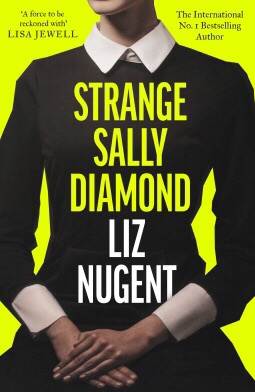
Strange Sally Diamond by Liz Nugent

The first thing I have to say is ‘Wow! What an opening.’ I read the first page then went to find my other half so I could read it to him. He’s one of those people who say ‘just chuck me in a bin bag’ so I thought he’d love it too. Of course it’s horrifying, but I also found it blackly comic and with Irish ancestors myself I can honestly say it’s an Irish trait. We laugh at the story of Mother – my great-grandmother – putting her head in the oven and wondering why it was taking too long. Slowly realising it was an electric oven. Tragic, horrifying, but hilarious at the same time. I felt this all the way through the story of Sally Diamond, a young woman having to negotiate a new life after the death of her incredibly protective father. He was an academic doctor and it turns out Sally was his subject. He leaves Sally letters to read after his death to give her all the information about what to do next. However, Sally can be very literal and by carrying out his verbal wishes to be in a bin bag, it turns out she may have committed a crime. Luckily family friend and GP Angela comes to the rescue, explaining to the police that Sally is ‘different’ she’s been sheltered and her childhood before her adoption was very traumatic. In fact her father left specific instructions in his letters, but as Sally points out he should have labelled the envelope ‘open this as soon as I’ve died’. Sally learns that she was born in terrible circumstances and it’s only chance that saved her. How will Sally cope with the detailed news about her past and how will she integrate into the community and learn how to manage by herself?

I found Sally rather endearing, despite her tendency to ask personal questions and disappearing to play the piano when things get too much. Sally knows that her mother died, in fact she committed suicide after their escape. Sally was born Mary Norton, in a locked extension attached to the home of Connor Geary and his son. Sally’s mother was abducted by Geary and brought back to the specially built annex where he chained her to the radiator. Denise Norton was subjected to all forms of abuse and violence and gave birth to her daughter in captivity. They were only found when a burglar broke into the house and Denise shouted to him ‘I am Denise Norton’ over and over, in the hope he’d tell the authorities. Sally doesn’t remember anything about her earliest years, but when she’s sent a grubby, old teddy in the post she knows instinctively that he’s hers. Sally was adopted by the husband and wife psychologist team who were treating her and her mother after they left hospital. After a short space of time, it became clear that Denise would not recover well and it was decided that in order for her to develop, Mary must be removed from her mother. Tragically, as soon as this happened, Denise committed suicide. Ever since, and with the new name Sally, she has lived an isolated rural life in Ireland. Sally has her quirks: she asks deeply personal questions; she would tear out her hair if upset; she could be extremely violent. As we followed Sally’s journey it started to feel really uplifting and I was so happy for her, finding the ability to live a fuller life would be a real happy ending to the story.

Then the book changes and we’re listening to a boy called Peter from New Zealand, having emigrated from Ireland. I found Peter’s father terrifying, he is a misogynist and incredibly controlling to the extent of telling his son he has a rare disease that means he can’t touch other people. This lie will have terrible consequences, when Peter tries to make connections with others. Slowly a terrifying story emerges about their home in Ireland and the ghost who lived through the wall. Sometimes he’d hear the shrieks and moans from that room. When Peter was left to be looked after by the ghost, something terrible happened and the trauma has stayed with him for life. I felt so moved by Peter’s story, but terrified by what he could become. I felt as if the loss of his friend Rangi that was the turning point. Peter can also be extremely violent and even though he is assailed by guilt afterwards, the damage is done. I hoped and hoped for a point of redemption for him. When his father starts to build a barn and look for another victim he has no choice but to be complicit. If something happened to his father, would he able to come clean and let them victim go? Does he ever wonder about what happened to his mother’s family in Ireland?

I was hoping that these two damaged people would get to meet each other. Both of them need family and a sense of where they’re from, even when the truth is awful to comprehend. The author has such a talent for playing with the reader’s emotions, letting us feel for a character then finding out they’ve done something terrible or making us feel sorry for a character we dislike, because of something they’ve experienced. Her characters are always complicated and flawed, but this was the next level. I loved watching Sally start to thrive with the support of those around her. She uses the money she inherits to renovate a cottage closer to the village. She starts to build relationships with her dad’s sister Aunt Christine and her Uncle Mark too. The high point is a lovely party at Sally’s cottage with a bouncy castle for the kids, which she is even persuaded to try herself. Then a stranger from New Zealand turns up at her door and I was riveted to the story from then on to see how this will affect Sally. Can two damaged people console and support each other, or will they drag each other down? We are about to witness the difference of growing up on opposite sides of the wall. This was a fascinating novel, especially if you love psychological thrillers and studying how someone’s start in life contributes to the person they are. I was also fascinated with the idea that those who heal can also hurt. When your adopted child is also your subject, your academic reputation and possibly even your funding, lines become blurred. I desperately wanted a happy ending for Sally because she’d made so much progress but can so much trauma ever be left behind? The author created a character that I was so emotionally invested in, she will definitely stay with me. She’s so complex and nuanced that she felt completely real to me. The book is incredible and is up there with my top reads of this year, it’s one of those that will keep coming back to me until eventually I grab it from the shelf and read it again.

Meet the Author

Liz was born in Dublin in 1967, where she now lives. She has written successfully for soap opera, radio drama, television plays, short stories and animation for children.

Liz’s first novel Unravelling Oliver was published to critical and popular acclaim in March 2014. It quickly became a firm favourite with book clubs and reader’s groups. In November of that year, it went on to win the Ireland AM Crime Novel of the Year at the Bord Gais Energy Book Awards and was long listed for the International Dublin Literature Prize 2016. She was also the winner of the inaugural Jack Harte Bursary provided by the Irish Writers Centre and the Tyrone Guthrie Centre in Dec 2014. Her second novel, Lying in Wait, was published in July 2016 and went straight to number 1 where it remained for seven weeks. Liz won the Monaco Bursary from the Ireland Funds and was Writer in Residence at the Princess Grace Irish Library in Monaco in Sept/Oct 2016. In Nov 2016, Lying in Wait won the prestigious RTE Ryan Tubridy Listener’s Choice prize at the Irish Book Awards.

Aside from writing, Liz has led workshops in writing drama for broadcast, she has produced and managed literary salons and curated literary strands of Arts Festivals. She regularly does public interviews and panel discussions on all aspects of her writing.
Posted in Squad Pod

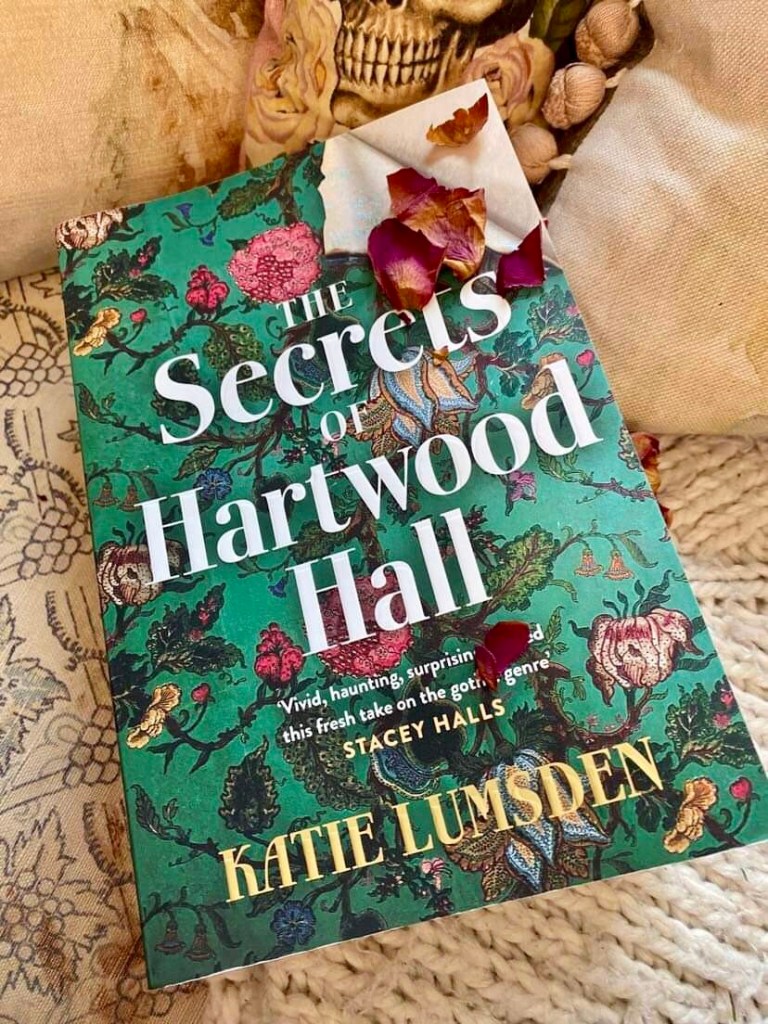
The Secret of Hartwood Hall by Katie Lumsden.

There couldn’t have been a better choice for a squad of female bookworms than this gothic mystery, full of spooky incidents, forbidden love, an orphan governess and within a house that holds many secrets. There was such a Jane Eyre feel about the book and also an hint of the Daphne Du Maurier opening as our narrator looks back to the hall’s approach.

‘when i think of Hartwood Hall, there are moments that come back to me again and again, moments that stain me, that cling like ink to my skin. My first view of the house: a glimpse of stone, of turrets and gables, tall windows and long grass’.

Our heroine is Margaret Lennox, recently widowed and forced to find paid work when her husband leaves his estate to his mother. She is offered a post by the mysterious Mrs Eversham, to educate her son Louis. This should be a moment of freedom for Margaret, but she notes the strange mood of the coach driver as soon as they enter the boundaries of the hall. Local people do not come near here. There is also a very clear rule: do not enter the East Wing of the house, because it is no longer used. As Margaret starts to find her way in Hartwood Hall and enjoys her time with Louis, she does notice a few strange things. She seems under suspicion from one of the existing staff, Susan. She has noticed Margaret’s response to a letter she receives at the breakfast table and is keen to find out more. Stranger than that, she has seen a distance figure in white out in the gardens and followed a figure with a candle down the stairs and towards the East Wing. Maybe the house is haunted, but there are other mysteries too such as what happened to Mr Eversham and why do people in the village treat this woman and her boy with such suspicion and fear?

I was hooked by this story straight away. Just like the author, Jane Eyre was the first grown up book I ever read and I was enthralled with it as a gothic story, years before I started to deconstruct it’s complexity at university. I was also hooked by the Sunday teatime BBC series starring Timothy Dalton as Mr Rochester. It’s the perfect mix of ghostly mystery, intrigue and romance. This book was inspired by the classic but breaks new ground of it’s own in terms of forbidden relationships, marital abuse, and freedom. The freedom of women making their own choices, having freedom of sexual expression and to earn their own living. The governess has always been a liminal figure in literature because they are educated more than other servants and even the woman of the house. They are usually single so have more freedom in their lifestyle and finances. Here Margaret is a widow, she chooses her own destiny and can shape her life as far as choosing where she works and for whom. She also has the choice of what to do with her spare time, no household chores or husband and family to consider. We learn that Margaret’s marriage was not a happy one and she has never felt the love that’s spoken of in literature and poetry. In fact she is surprised to learn it exists and it is joyous to watch her explore that chemistry, even if I did fear for her recklessness. She also becomes the face of Hartwood Hall in the village, choosing to take Louis to church and sit in the hall’s pew, whereas the hall’s gardener sits with his family. She even makes friends with the minister’s wife, although the rest of the village seem to avoid and ostracise them.

As always in these mysteries Margaret is drawn towards the very part of the house she is told not to enter, in fact it is a perfect way into the house after the main doors are locked at night. She is sure she’s seen a candle moving around the East Wing’s rooms when walking in the gardens one evening. There are also noises in the dead of night that can’t be accounted for, but for me the tension really arises at the less mysterious points in the novel. The sly, unpleasant Susan really made my pulse race at points and her blackmail of Margaret feels grubby. She really enjoys the power of knowing something that gives her power over the other person and she seems to enjoy taking something valuable or precious from her victim. The way she commits little acts of dissent when only Margaret is looking, such as stuffing bacon in her mouth in the breakfast room shows resentment about her position. As I could see Margaret settling and enjoying her new pupil I desperately didn’t want Susan to ruin it. The period where both Louis and Susan are ill was truly tense as the whole house waits for the fever of the measles virus to pass. The isolation of Mrs Eversham and her boy is brought into stark relief when they can’t secure a nurse from the village to care for the patients. Mrs Eversham is in despair:

‘So these people will let a child and a young woman die because they suspect me, because they distrust this house? […] Because they believe in ghosts and spirits and curses? Or because they think I am a woman of low character, that I have never had a husband?’

This speech reveals another possibility about their isolation, that Mrs Eversham’s widowhood is not what it seems. It also shows me that Mrs Eversham has a different set of morals to the Victorian norm, she is wiling to set aside ideas about decency and propriety when it comes to saving a life. Margaret is so relieved when Miss Davis appears from nowhere claiming she’s come from the further village of Medley because she heard there was a child who needed a nurse. Yet the other servants seem uncomfortable and even Mrs Eversham seems on edge. Margaret wonders whether Mrs Pulley knows something troubling about this young woman. This brings another yet another layer of mystery to the house: why isn’t Miss Davis as prejudiced against the hall as the locals? Where did she spring from so quickly? By this time I was fascinated and couldn’t stop myself from picking the book up at every opportunity to resolve all my suspicions. Needless to say that when the truth comes out, it was nothing I expected and I loved it! I loved that these strong, determined female characters were living according to their authentic selves. There’s a lot of discussion around the ending of Jane Eyre, I’ve even had an argument about it at a literature talk. A woman said that she felt let down by the ending and Jane’s choice to return to Rochester, because it betrayed her feminism. I argued that she goes back a different woman, with her own money and able to make her own choices. Rochester is her choice and their relationship is on her terms. The ending of Hartwood Hall definitely goes further. It was really heart-stopping, but also satisfying. Both Mrs Eversham and Margaret make their independent choices and decide to live life on their own terms. I throughly enjoyed this atmospheric gothic mystery and it’s strong, forward-thinking, female characters.

Meet the Author.

Katie Lumsden read Jane Eyre at the age of thirteen and never looked back. She spent her teenage years devouring Victorian literature. She has a degree in English Literature and History from the University of Durham and an MA in Creative Writing from Bath Spa University. Her short stories have been shortlisted for the London Short Story Prize and the Bridport Prize, and have been published in various literary magazines. Kate’s YouTube channel Book and Things has more than 20,000 subscribers and was long listed for the Book Vlogger of the Year Award at the London Book Fair Awards 2020. She lives in London and works in publishing.

Posted in Netgalley, Publisher Proof

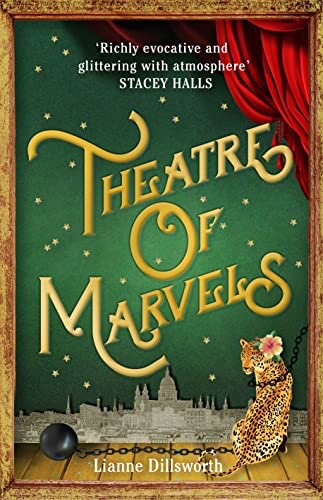
Theatre of Marvels by Leanne Dillsworth

You may have heard of Sarah Baartman, a Khoekhoe woman from South West Africa who was exhibited as a freak show attraction in 19th-century Europe under the name the Hottentot Venus. She was even exhibited after her death, with one showman dissecting her body and keeping her genitalia and skull. Another museum displayed her skeleton and a body cast, which were still exhibited up till the 1970’s. She was exhibited for her steatopygic body type, where body fat is concentrated on the bottom and thighs. This body type wasn’t seen in Europe and was perceived as a curiosity. She was also a subject of scientific interest, but through the gaze of racial bias and erotic projection. In the 19th Century her body could be viewed for two shillings and for a bit extra you could poke her with a stick. Her genitalia were of specific interest as they were said to show her sexual primitivism, although this was more about the men’s erotic projection than Sarah’s own sexuality or libido. Recently, black women in academia and culture have been using her story and reframing it as a source of empowerment, rejecting the ideals of white mainstream beauty, and embracing more curvaceous figures as a source of female beauty. This is the historical and social background that I had in mind while reading this fascinating debut novel from Lianne Dilsworth. I was swept up into her world straight away and my personal academic interest in disability and the display of ‘other’ bodies added to my enjoyment.

Our setting is a theatre and a group of performers from singers to magicians who perform a variety show under the watchful eye of Mr Crillick. His current headline act is Amazonia – a true African tribeswoman, dressed in furs and armed with a shield and spear, her native dancing brings down the house in Crillick’s show. The audience watch, transfixed with fear and fascination, never realising that she is a ‘fagged’ act. Zillah has never set foot in Africa and is in fact of mixed race heritage, born in East London. She is making her money by pretending to be what the, largely white, audience wants to see. It doesn’t sit well with Zillah, but she is alone in the world and does need to make money. Besides it’s better than the other options for a young woman who finds herself in poverty. She’s used to slipping between worlds on stage and in her private life, renting a room in the rough St Giles area of the city, but regularly making her way to a more salubrious area and the bed of a Viscount by night. She and Vincent have been lovers for some time, but he is estranged from his family and can easily keep her a secret, never even walking with her in public. Their shared bed is situated in the middle class home of her boss Crillick. Now, everything is about to change, as Zillah’s consciousness is raised in several ways.

First, she realises that Vincent will never admit to their relationship in public, as he yet again cancels plans to take her to Richmond for the day. Secondly, she meets a young black man called Lucien, who is campaigning in the street. He addresses her in Swahili, with a suggestion this may be the native language of her ancestors, and he places a question in her mind that she can’t shake off. How does it feel to earn money misrepresenting her ancestors? In fact she is representing her ancestors through the gaze of a white audience. The sense that this is wrong, has always been on the edge of her conscience, but Lucien gives her doubts a voice and opens a door towards embracing both sides of her identity. While she dismisses him at first, the thought of him seeing her as Amazonia seems to fill her with shame. Lucien is working on a campaign to relocate black and mixed race Londoners to Africa and the first site is in Sierra Leonne. Meanwhile, Crillick has returned from a trip abroad with shipping containers that suggest he’s been gathering props and it seems he’s been finding new acts too. He taunts Zillah with the suggestion he has found an act that may even eclipse her and one night at his house she sees a new act unveiled to a small group of people. She is horrified to see him parade a terrified women he’s called the ‘Leopard Lady’, with strange white patches all over her dark skin. The men in the party are fascinated, drawing near and touching her skin, even roughly scratching it to see if it comes off. When Zillah notices medical implements laid out on a tray, the horror of what might happen to this woman overwhelms her. She must rescue the Leopard Lady from Crillick’s clutches. There’s a freedom Zillah has compared to a lot of Victorian heroines we might remember, due to her station in life there are certain rules and etiquette of dress and behaviour that don’t apply. Although that freedom does come at a cost – poverty, not belonging anywhere, and the way she is viewed in more polite society. She knows that if she could be with someone like Lucien then she’d be settled in a place society expects of her, still in poverty but at least belonging to a community. Her feelings for Vincent can never come to anything, because his society would never accept her and they would always be a secret.

Through Zillah’s search for the Leopard Lady, we see the truth of a man wiling to make his money treating human beings as objects for display. Whereas before Zillah’s act has at least had the sheen of the theatre world, the Leopard Lady will not be afforded that excitement and sense of performance. This is because Zillah was acting a part, whereas this poor woman is being shown as she is because due to how she looks and where’s she’s from. Zillah chooses to put on her Amazonia costume and take to a stage, if living hand to mouth is ever a choice. Crillick’s plans revolve around his ‘Odditorium’, but in the meantime he plans to show his new acquisition privately to small groups of men. I could imagine these sordid gatherings taking place, with men enjoying an after dinner viewing where the woman is both viewed, potentially sexually assaulted and experimented on. It made me feel sick. I was willing Zillah on in her efforts to find and free the lady, and I found her quest tense and gripping. I thought Zillah’s awakening was handled really well, but I was in two minds about where I wanted her to story to end. Of course there’s an opportunity of relocation to a new life in Sierra Leone, but here I felt strangely similar feelings to those I had about another 19th Century heroine Jane Eyre. We know that Jane’s flight from Thornfield Hall, and the man she loves, is the right move for her. Yet despite the space and time it’s given her to process Rochester’s attempt at bigamy, I never warm to St John Rivers. Although he rescues her from the moors and gives her life purpose again, when he proposes, I can’t be the only reader who’s screaming ‘No’ in her head. As for Zillah, I though Lucien was a good, honest and intelligent man, but to me he feels like the wrong choice. The contrast between him and the passionate relationship she has with Vincent is rather like the two sides of her identity battling against each other. I was hoping that, for a while at least, she could find a way for herself, separate from them both.

This was an exciting and fascinating tale, with elements of the thriller and a central character who is resilient and brave in her quest. I found the settings of the theatre, and Crillick’s home, beautifully rich. Whereas the St Giles area is brought to life with descriptions of sights, smells, many bodies sharing rented rooms and even beds in an attempt to keep costs down. The author has backed up her tale with solid research into freak shows, the many layers of Victorian society and details of food, fashion and leisure time. Through her main character we get an insight into women’s lives, the realities of being bi-racial and the struggles of identity and belonging. I also enjoyed the themes of ‘otherness’ and how outsiders survive in society; the complexities of display and exploitation when weighed against poverty and deprivation. Can freak shows be acceptable if individuals make a choice to exhibit themselves? Or should any exhibition of ‘different’ bodies be unacceptable? This is a question that still needs debate in light of television shows that exhibit overweight and disabled bodies in a prurient way. I really liked Zillah‘s quest to rescue another woman in danger and her own personal journey too. I read this so quickly and will definitely be putting a finished copy on my bookshelves, because I know it’s one I’ll want to read again and again. I just know I’ll find more and more detail in this brilliantly atmospheric exploration of the dark corners of Victorian London.

Published Penguin 28th April 2022.

Meet The Author

Lianne Dillsworth

Lianne Dillsworth has MAs in Creative Writing and Victorian Studies and won a place on the London Library Emerging Writers Programme. She was first runner up in the 2020 SI Leeds Literary Prize for Black and Asian Women Writers in the UK. Lianne lives in London where she works on growing inclusion within the Civil Service. Theatre of Marvels is her debut novel.

Posted in Paperback Publication, Publisher Proof

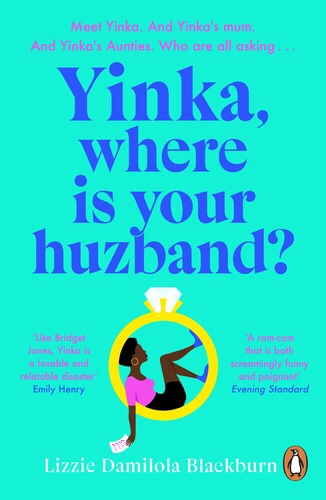
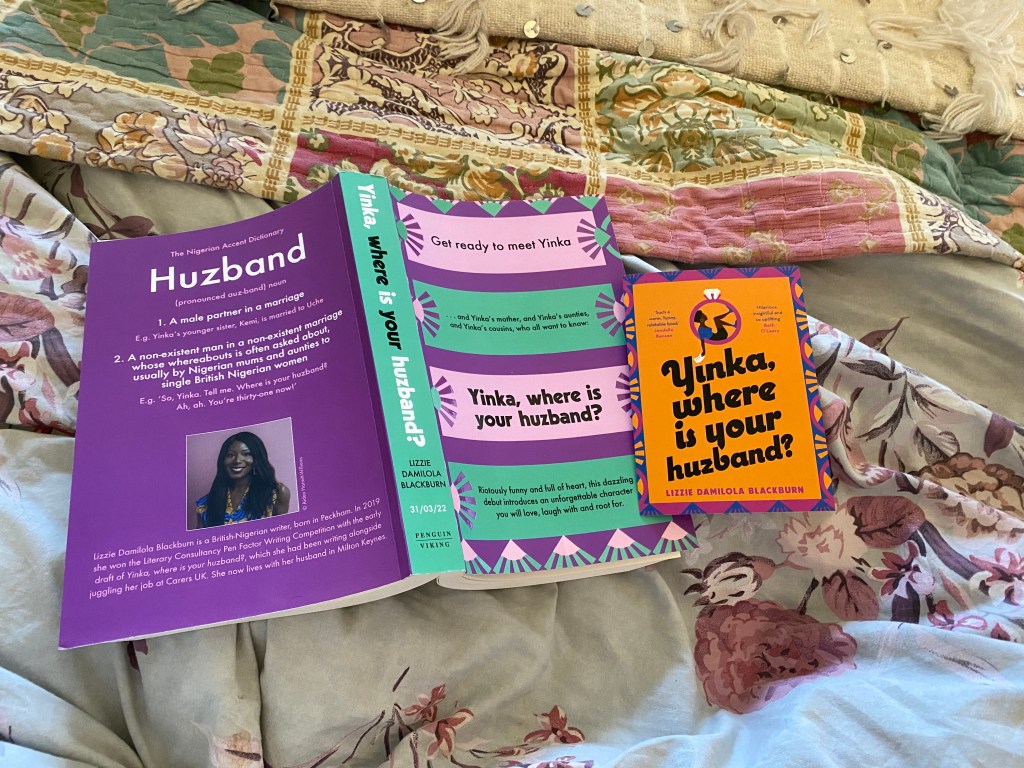
Yinka, Where Is Your Huzband? By Lizzie Damilola Blackburn

I have absolutely loved reading this charming and uplifting debut novel from Lizzie Damilola Blackburn and I already know it’s one I will keep on the bookshelves and read again in the future. It has such charm and a huge heart at it’s centre. Yinka is a 31 year old British Nigerian woman with a degree from Oxford and a brilliant job at an investment bank, but despite all that she has going for her, she hears only one thing from her mother and aunties. Why is she still single? What exactly is she doing wrong? A perfect storm of circumstances affects Yinka’s confidence: her baby sister Kemi is about to have a baby; her friend Rachel becomes engaged and starts planning her wedding; then she expects a promotion at work and is instead made redundant. When her Mum and Aunty Debbie both pray out loud for her to find a man at Kemi’s baby shower, Yinka feels humiliated. Using her project planning skills she decides on a course of action. She will find a man in time to take a date to Rachel’s wedding.

I found the themes of identity woven into the storyline fascinating and complex. At the start of the novel Yinka is wearing her hair short and natural, is more likely to be in jeans than traditional Nigerian fabrics and prefers to eat fried chicken than learn to cook African food. Yet there are so many opinions and judgements, both in her everyday life and on social media, on what it means to be a British Nigerian and an attractive, desirable black woman. The men she meets aren’t short of opinions either. Donovan, who she knows from her gap year working for charity, despairs of her lack of knowledge about hip-hop and music of black origin in general. She accepts an introduction to Alex, a single man at her Mum’s church and they start to chat on social media. He seems to think she should be more aware of her Nigerian culture. He voices surprise, and judgement, that she can’t cook Nigerian food and she doesn’t know many words of the Yoruba language. A Tinder meet up goes horribly wrong when her date makes the assumption she will sleep with him on their second date. When Yinka explains that part of her faith is prizing her virginity and that sex is sacred, something she would only do with her husband. He seems okay about it, but then ghosts her, finally accusing Yinka of misleading him, because this is something she should have made clear up front. Her experience with Emmanuel was the one I found most painful and my heart broke a little for her. He goes to her Mum’s church and she has to swallow her pride just to agree on a number exchange. On FaceTime though he seems disappointed and admits that he agreed to pass on his number, because he thought she was someone else. It’s not his fault, he says, but he does prefer girls with lighter skin. It’s not hard to see how these experiences and opinions chip away at Yinka until she feels like she’s lost herself.

Yinka is constantly receiving messages about the woman she should be, through her experiences, the constant badgering from her Mum, and from social media. The black women society deems beautiful have lighter skin in caramel tones, long and flowing Western hair, and are curvaceous. Yinka feels her skinny body, her J shape bottom and dark skin are not good enough. Even the messages she is receiving from her own family don’t help. Her Mum openly criticises her short Afro hair, it used to be so long and beautiful, how will she get a huzband if she doesn’t make an effort? Yinka has internalised these messages all her life – the lighter her skin, the rounder her bottom, the longer and more Western her hair, the more attractive she will be. She tries a wig for a date then is constantly terrified of the parting being off centre and when her date touches it she knows he has never dated a black woman before – black men know not to touch women’s hair. When she gets a weave and wears one of her friend Nana’s dresses, made from African fabric, her Mum radiates approval – see how pretty she is? My heart went out to her when she remembers her Dad saying to her that the moon is just as beautiful as the sunshine, that midnight has a beauty all of its own. Another problem is the comparisons her Aunties and her Mum make, between Yinka and her sister or her friends, creating division and resentment. Her mum’s constant praise of the beautiful light skinned Kemi, the little sister who has pipped Yinka to the post by getting married and now adding to the family with her new son Chinedu, makes Yinka resent her sister. They become more distant from each other and never talk about the way their mum behaves. Her cousin Ola even laughs when the older women badger Yinka and embarrass her, Ola is married with three children, but is she as happy as her aunties assume she is?

The two aspects of the book I related to so strongly were the culture around Pentecostal Christianity and the role of counselling. Yinka normally attends the Church of England, but her Mum and Aunties frequent the All Welcome Pentecostal church and this felt so familiar to me as I grew up in a New Life Pentecostal Church. I found the scenes with the church so humorous and true to life, especially the constant praying out loud, even at parties. It was a very hard church to grow up in and those teenage years onward when I was single I felt hounded by youth leaders telling me what I could and couldn’t do in a dating situation, that I should only date other Christians and then pushing me towards people I didn’t find remotely attractive. I had a ‘boyfriend’ at church when I was 12 and we only saw each other at youth group and church. It really was more of a friendship, but youth leaders treated it like a serious relationship and when I wanted to break up I was forced to pray about it in a group. The youth leader prayed that God would bring us back together in the future. I felt that single girls were treated with suspicion and that adults were just waiting to matchmake. I rebelled at 16 and walked away, because I felt judged and stifled. It was wonderful though, to read about these experiences and hear certain phrases like being ‘in the spirit’, the endless praying out loud, the sense of having elders to answer to, because it’s rare for someone to understand my experience. It’s even more rare to see it in fiction in a way that acknowledges its drawbacks, but also its benefits and the deep well of humour it provides.

Counselling is something that my church would have been very resistant to, but I am now a counsellor myself and I loved seeing how positively it was portrayed in the book. The use of writing as therapy is something I do with clients and I was moved by Yinka’s letter to her younger self, going back and undoing some of the negative judgements and ideals she had internalised. It was brilliant to see how it took Yinka deeper, into how imbalanced those parental injunctions had become once she lost her father. I wanted Yinka to realise she had two incredible role models to aspire to; her Aunty Blessing who is happy and fulfilled despite having no husband or children and her friend Nana who is simply not bothered with dating and is pouring her energies into building her fashion brand. I loved both of these women and how they really pull Yinka back from the brink, help her untangle the lies she’s told and work out what and where she really wants to be in life. It reminded me of the power of female friendship and how it is most often the women who will hold you up in life. I loved how Yinka’s changes through counselling rippled out to others around her too. Once she has started to talk there are relationships she can mend and maybe others that need some redefining and new boundaries set. Her realisations, about her Mum particularly, are interesting and Yinka’s bravery in trying to address how she has felt made me feel so proud of her. It showed how counselling doesnt just create change in one person, it can change the people around them too. I don’t know if Yinka will ever return, but she was a great character to spend time with and I’d definitely be first in the queue for more. This was a pleasure to read from beginning to end, full of strong female characters, emotionally aware and addressing some really tough issues in a humorous and ultimately uplifting way.

Meet The Author

Lizzie Damilola Blackburn is a British-Nigerian writer, born in Peckham, who wants to tell the stories that she and her friends have longed for but never seen – romcoms ‘where Cinderella is Black and no-one bats an eyelid’. In 2019 she won the Literary Consultancy Pen Factor Writing Competition with the early draft of Yinka, Where is your Huzband?, which she had been writing alongside juggling her job at Carers UK. She has been at the receiving end of the question in the title of her novel many times, and now lives with her husband in Milton Keynes.

Posted in Netgalley, Squad Pod

That Green-Eyed Girl by Julie Owen Moylan

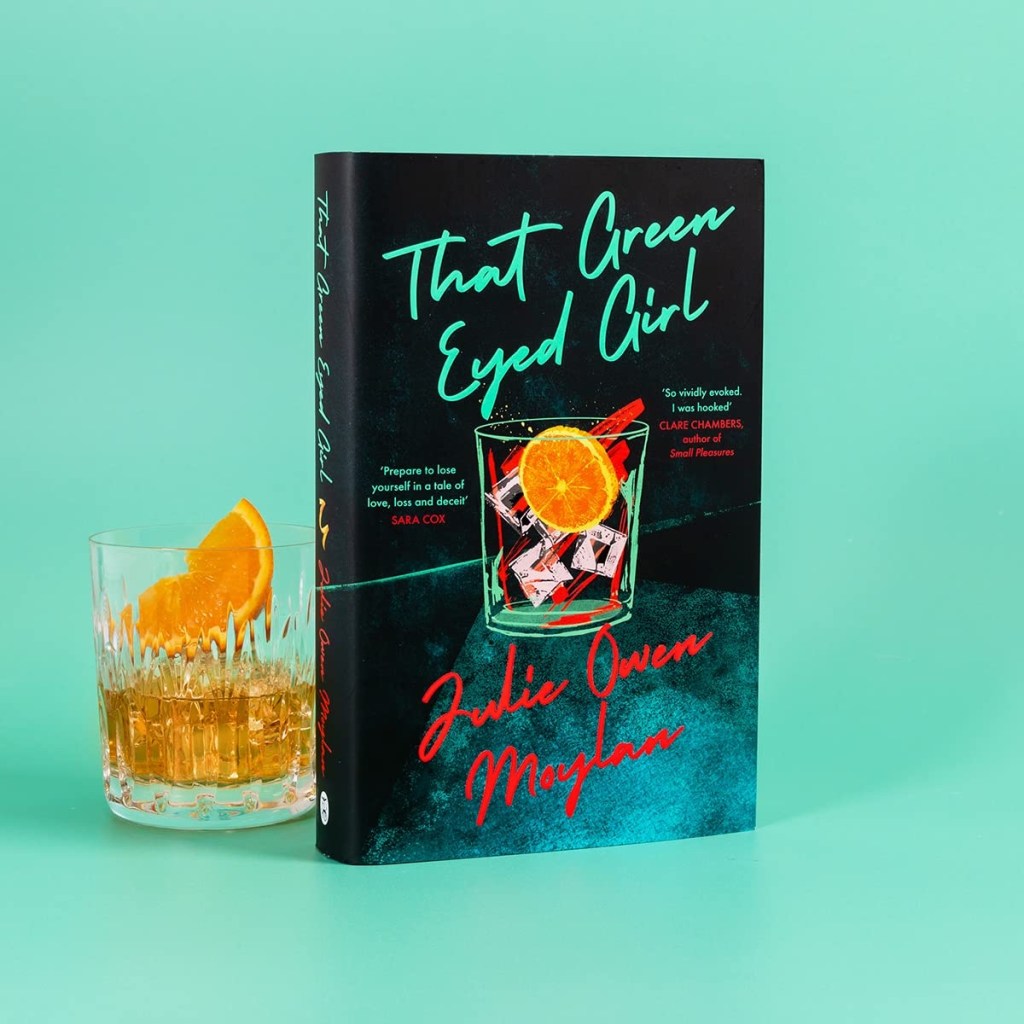
The drinks glass and flashes of almost neon colour on this book’s cover were striking on NetGalley. To me they signified city living, the bar scene and potential for glitz and glamour – I’ve probably watched too much Sex and the City. However, the women depicted here were a long way from flashy, fashionista, New York City Girls. In fact there are only a couple of nights out in the whole book. This is a different NYC, where real people live and work day to day, just trying to get by in a city that’s exciting, but expensive and tough. In a split narrative, set partly in 1955 and partly in 1975, this is a novel that writes back to women’s history. It opened my eyes to a time when women were persecuted for the way they choose to live their lives. In 1955 Dovie Carmichael and her friend Gillian work together as teachers and share an apartment. The friends have a lot in common: they love jazz, a glass of whiskey at night and lazy Sundays at home. The pair guard their private time very carefully, until one day when the wrong person gets a glimpse into their lives, changing everything. Twenty years later teenager Ava Winter lives in the same apartment with her Mum and her Dad, when he’s around and not with his mistress. Ava’s mum is not well mentally and Ava is struggling to live a normal teenage life, preferring to stay home to keep an eye on her. She becomes fascinated with a mysterious box and letter sent to their address from France. Inside are letters, a butterfly necklace and a photograph with LIAR scrawled across a woman’s face. Ava wants to know the story behind the box. Who was this woman, that lived in her home and what do the letters say?

The theme that stood out to me more than anything was loneliness. I felt a contrast between the huge open city and the small private spaces where secrets are kept. The characters I felt most connection with were Ava and Dovie, both struggling to keep secrets about their living situation. The mistake Dovie and Gillian make allows a very manipulative woman to take advantage of them. Judith works at the same school and does come across as a lonely woman, but has allowed her situation to develop bitterness and envy in her character. In the guise of struggling to find an affordable apartment, she inveigles her way into Dovie and Gillian’s home and relationship. It’s clear she wants friends, but seemingly can’t stand to see two people who are happy in each other’s company and if she can’t have it for herself she might just set out to destroy it. Ava is also lonely and I think she senses a similar feeling in the box of keepsakes she discovers, it’s that connection with the sender’s loneliness that makes her so determined to find the person this box was meant for. It’s also a distraction from how miserable her own life is. With her mum and dad estranged she is often solely looking after her mother who seems severely depressed and liable to harm herself. It’s almost a role reversal, with Ava looking after her welfare instead of the other way round. I felt deeply for this young girl going through the usual teenage phases of a crush on a boy in the neighbourhood, a worry about how she looks and fitting in, and both the anticipation and fear of what comes next in life. On top of this her father uses his precious time with Ava to chat up the waitress in their favourite diner. Her mother is deteriorating, screaming and muttering through the night and Ava is so worried about the neighbours hearing her or her friend finding out what home is really like since her dad left. The scenes of her alone in their cold apartment, willing her mum to settle for the night and wishing her dad was there, were vivid and moving.

Whether in New York or Paris the settings are beautifully evoked and I could feel the change in time period from just a few well written sentences. Even the usually romantic Paris has it’s downsides because this is the reality of living there, rather than the dream. I felt the author really got under the surface of these cities and showed me what it was like to be a New Yorker. I found the LGBTQ+ scene so interesting and the contrast between women who kept their relationships secret, with more openly gay women in NYC or Paris, was beautifully portrayed. Dovie has never ventured into meeting other women and the scene where she visits a club stayed with me. There’s an innocence about Dovie that contrasts sharply with the sophisticated women she sees there, some of whom are scathing of Dovie’s lack of knowledge about being openly lesbian in 1955. I don’t think she really understood the danger she faced which could be anything from losing her job to being arrested or put into an asylum. I was just as shocked to realise that women who were open about their sexuality, or discovered, were subject to arrest and even ECT treatment to curb their ‘unnatural’ activities or desires. The nightclub raid where Dovie is helped to escape through a bathroom window is unbelievably tense and so poignant when we realise it’s link to 1975. The way police manhandle and sexually assault the women reminded me of how the suffragettes were treated so many decades earlier. The idea was to break the women’s resolve and remind them what they were really for – the amusement, desires and dominance of men. Reading these women’s experiences made me so angry, but also opened a door into a world I am ashamed to say I knew little about. At heart this is a love story and all the way through I wanted to know what had happened in that apartment in 1955 and I also hoped that Ava would find the intended recipient of the box from Paris. For me this book had a similar impact to the television series It’s A Sin. This was an emotionally captivating story that’s sure to stay with me and has inspired me to read more about the history of sexuality and the fight LGBTQ+ people still have for equal rights across the globe. It left me with a lump in my throat, thinking about how love can last a lifetime, even beyond separations and loss. I really look forward to reading more from this talented author in the future.

Meet The Author

Julie Owen Moylan is a writer whose short stories and articles have appeared in New Welsh ReviewHorizon Literary Review, and The Voice of Women in Wales Anthology

She has also written and directed several short films as part of her MA in Film. Her graduation short film called ‘BabyCakes’ scooped Best Film awards at the Swansea Film Festival, Ffresh, and the Celtic Media Awards. She also has an MA in Creative Writing, and is an alumna of the Faber Academy’s Writing a Novel course. 

Her debut novel THAT GREEN EYED GIRL was published by Penguin Michael Joseph on May 12 2022.

She is currently working on her second novel SPANGLELAND

Posted in Orenda, Publisher Proof

Beautiful Shining People by Michael Grothaus

I don’t tend to read a lot of science fiction and dystopian novels, often because I find them depressing and life is tough enough at the moment. I often I feel as if the author has become so carried away with world building that they forget the human element of their story. Almost like watching one of those films where the special effects are amazing, but the characters and their dialogue is an afterthought leaving me with an empty feeling. This book sounded intriguing though and once I started reading it I was completely blown away. This is science fiction with a heart and a lot to say about the human experience. Our narrator John is an awkward 17 year old, from a dysfunctional family and with deeply personal body issues. He also happens to be a coding genius, talented in quantum code and greatly in demand by tech companies. He is spending some time in Tokyo while signing a deal with Sony and comes across a small cafe that offers ear cleaning. Inside he finds a huge Japanese man working behind the counter, a quirky dog with a spherical head and his owner, a pretty and rather enigmatic young girl called Neotnia. This chance meeting develops into an incredible journey that will take them from the neon city of Tokyo, to the tragic past of Hiroshima and finally the beautiful mountains of Nagano.

Michael Grothaus also takes us on a journey of genre, starting the novel with a chilled travelogue style, interwoven with a tender story of first love, via body shame and finally becoming a dystopian thriller. The author knows how to build a world that feels dislocated and distant from us with just one simple sentence, such as the description of the night sky with three objects visible from earth. The moon’s light picks out the twin space stations being built by the world’s two superpowers; China and the USA. The author’s journalism background and research into the world of fake video production has helped in creating a believable and brilliant backdrop of warring superpowers in a daily information war. ‘Deep Fake’ videos are used to produce fake news, meaning people must question, not just everything they read, but everything they see. Warfare has become a barrage of misinformation and cyber attacks, at their worst disrupting every aspect of daily life. He also weaves in social issues that are already evident worldwide for us, such as the rapidly ageing population in Japan. People are now routinely living into their nineties, but need care for longer and there simply aren’t enough young people to pay for or provide the care needed. This is a world that’s ours, but not as we know it. I loved how I would be relaxing in a park, looking at a familiar landscape of trees and pagodas and then I’d be blindsided by a tourist information bot. When the group all go on a car journey I couldn’t work out who was driving; the answer was no one. Often I didn’t know where we were going next but I was so bewitched by his writing that I’d have followed him anywhere.

I loved the relationship that builds slowly between Neotnia and John. She has a quiet, calming manner that seems to soothe him and a caring nature that John has never really experienced before. They seem to connect on a deep level very quickly, but there are people around her who are very protective. Goeido is a disgraced sumo wrestler and owns the cafe where Neotnia both lives and works. He doesn’t speak much, but John is aware of his concern because of the barely concealed scowling and head shaking. Neotnia takes John to a nursing home where she volunteers, to meet an elderly American man she has a friendship with. John enjoys meeting him, but also gets a feeling this meeting was some sort of test. Why are these men so protective of her? His relationship with Goeido only improves when they drink sake together and next morning John wakes up still in the booth where they had dinner. They seem to have connected, but John is very confused by a disturbing dream involving a bath and a toaster! Despite this John and Neotnia’s relationship does deepen and I was so drawn into their tender love story. There is something they’re both hiding and strangely it’s the biggest thing they have in common. Then comes the massive twist that I really didn’t see coming. The clues are there but the idea is so fantastical it’s quickly dismissed.

The beautiful backdrop of Japan really brought the place alive for me and made me think deeply about some aspects of it’s history. The city of Tokyo is wonderfully varied with it’s neon signs, bubblegum fashions, restful gardens and kamii shrines dotted everywhere. I learned more about Japanese belief systems, the differences between Buddhism and those who believe in kamii. The history around Hiroshima was so devastating, as was the knowledge that any advance in science seems to be harnessed for the purposes of war. The full impact of the bomb on the population of Hiroshima was devastating as the author tells us about those damaged by the blast, but left with terrible injuries. That complete change of abilities, identity and living standards could be seen as a more terrible end than those at the bomb’s epicentre who were simply vaporised. I loved how philosophies of life were discussed too. In conversation with Neotnia, John explains that her age group’s concerns and anxieties about the space stations and cyber attacks haven’t affected younger generations because they’ve never known anything different. This is probably something we’ve all experienced and it’s interesting to think that a small child now will grow up with the cost of living, climate change and hybrid vehicles as their norm. Whereas someone like me who has lived half their life really feels the changes and is more likely to find them unsettling. I found the end so emotional and I was moved by John’s thought that the common thread of humanity is suffering. It’s something I’ve thought about a lot, both in my personal life and in my therapy work. My brother says that I think everyone needs counselling, because I’m a therapist. I always reply that everybody needs counselling at some point in their life. Yet, John’s experience makes him rethink his original statement and this took me from heartbreak to a glimpse of hope. This is a beautifully written story that’s definitely science fiction, but is also a deeply felt love story about difference and human connection. If this isn’t your usual genre, please give it a go. I’m so glad that I did.

Published by Orenda 16th March 2023.

Meet The Author

Michael Grothaus is a novelist, journalist and author of non-fiction. His writing has appeared in Fast Company, VICE, Guardian, Litro Magazine, Irish Times, Screen, Quartz and others. His debut novel, Epiphany Jones, a story about sex trafficking among the Hollywood elite, was longlisted for the CWA John Creasey (New Blood) Dagger and named one of the 25 ‘Most Irresistible Hollywood Novels’ by Entertainment Weekly. His first non-fiction book, Trust No One: Inside the World of Deepfakes was published by Hodder & Stoughton in 2021. The book examines the human impact that artificially generated video will have on individuals and society in the years to come. Michael is American..

Posted in Publisher Proof

The Luminaries by Susan Dennard

From NYT bestselling author comes a haunting, high-octane contemporary fantasy for fans of The Chilling Adventures of Sabrina. Winnie Wednesday fights to take the deadly Luminary hunter trials in Hemlock Falls’ nightmare-filled forest.

Hemlock Falls isn’t like other towns. You won’t find it on a map, your phone won’t work here, and the forest outside town might just kill you…

Winnie Wednesday wants nothing more than to join the Luminaries, the ancient order that protects Winnie’s town—and the rest of humanity—from the monsters and nightmares that rise in the forest of Hemlock Falls every night. Ever since her father was exposed as a witch and a traitor, Winnie and her family have been shunned. But on her sixteenth birthday, she can take the deadly Luminary hunter trials and prove herself true and loyal—and restore her family’s good name. Or die trying.

But in order to survive, Winnie must enlist the help of the one person who can help her train: Jay Friday, resident bad boy and Winnie’s ex-best friend. While Jay might be the most promising new hunter in Hemlock Falls, he also seems to know more about the nightmares of the forest than he should. Together, he and Winnie will discover a danger lurking in the forest no one in Hemlock Falls is prepared for.

Not all monsters can be slain, and not all nightmares are confined to the dark.

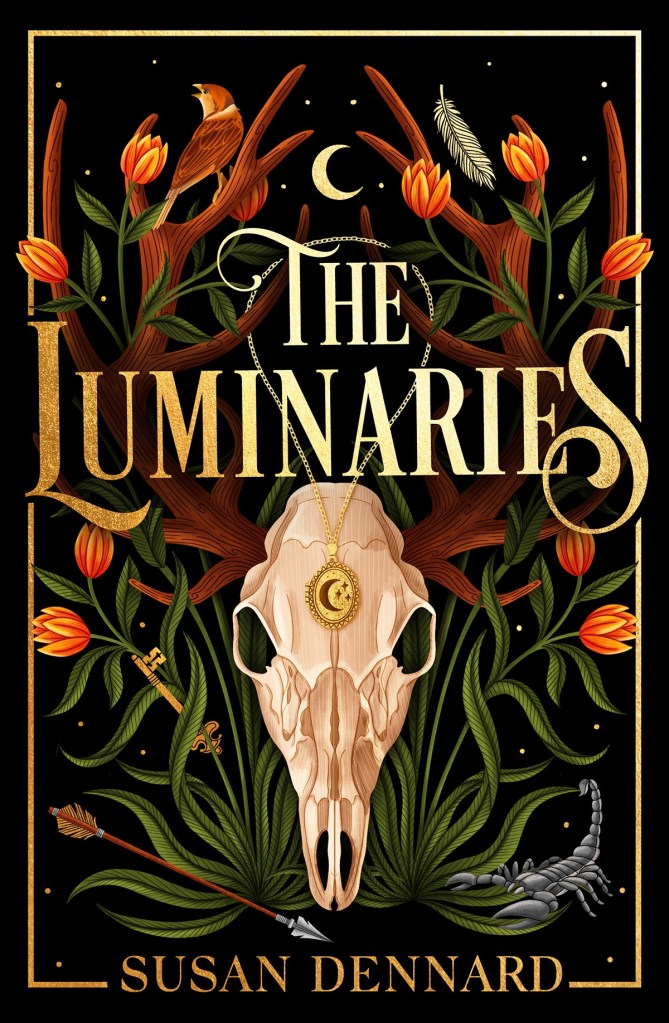
I’m always going to be sucked into a story where my heroine is named Winnie Wednesday, it’s gone straight on my list of potential cat names for the future. Of course one of my other strange interests is monsters, I even studied the Grotesque and Monstrous at university, so the beautifully described and illustrated monsters were exquisite. The novel had immediate appeal and didn’t disappoint. Winnie’s clan are known for belonging to a secret monster hunting society. In fact her family and her entire clan outcasts, thanks to the betrayal of her father. This is a matriarchal society and Wednesday is hoping to become the next clan leader, just like every generation of strong women in her family. Winnie is willing to risk her life on a deadly monster hunting trial, just for the chance to win back her family’s reputation and to be recognised as the foremost hunter of her generation.

The world building here is so creative and I was aware that the author is setting the scene for a series of novels, not a stand alone story. I’m a sucker for beautiful detail and there’s an abundance of it here, in Winnie’s home of Hemlock Falls, the creatures and the action scenes that follow during her mission. The mythology is based on beings that inhabit the surrounding forest, including the spirits who produce nightmares. I loved how Dennard wove an entire bestiary of mythological and paranormal creatures together all inhabiting her mystical forest. Could there be something as yet undiscovered lurking in the trees and if so, how dangerous might it be? Wednesday suspects this being could be a danger, not only to her quest, but to all the inhabitants of her town and their way of life.

As a main character I would suggest it’s impossible not to fall in love with Winnie. Once you have, you’ll be completely beguiled by her quest and you will be behind her all the way. That doesn’t mean she’s perfect, but many of her flaws come from her outcast status. For four years she’s been ostracised by friends and family, so she’s very self-reliant even if she is a little indecisive at times. She’s disconnected from others at an emotional level and doesn’t trust anyone around her. This lack of solid family background shows in the way she doubts herself, but despite this she keeps going. Her determination is incredible especially since the isolation from her society has meant she’s had to train herself with no resources at all. Despite this disadvantage her courage and abilities shine through. Out of the other characters, I enjoyed Winnie’s friendships with Bretta and Emma, because they’re the only people who show support and kindness aside from her mum and brother. There’s also a hint of romance with Jay Friday, a past friend of Winnie’s who could become something more. He’s a bit of a bad boy and I think their dynamic could develop nicely in future novels. The relationships with all other characters are established, but not developed and this can seem a bit slow. This is Winnie’s book though and the author is building our relationship with her, although I could really see the promise in these early interactions.

I loved reading this novel, it’s setting of Hemlock Falls and it’s history, the careful descriptions of each clan and their nightmares, and I liked the characters, too. It felt like a perfect base for an exciting series and I can already imagine how storylines might be expanded as we go on. It was such an easy book to read and the short chapters kept a lively pace, as well as being rather addictive late at night – just one more chapter won’t hurt will it? I’m itching to know more about Jay and his bad boy status, as well as how he and Winnie develop their romantic feelings. Of course there was a cliffhanger ending too and enough loose ends to lead us neatly into the sequel. I’m already looking forward to it.

Published 1st November 2022 by Daphne Press.

Meet The Author

Susan Dennard has come a long way from small-town Georgia. Working in marine biology, she got to travel the world—six out of seven continents, to be exact (she’ll get to you yet, Asia!)—before she settled down as a full-time novelist and writing instructor.

She is the author of the Something Strange and Deadly series, as well as the New York Times bestselling Witchlands series, and she also hosts the popular newsletter for writers, the Misfits & Daydreamers. When not writing, she is slaying darkspawn (on her PS4) or earning bruises at the dojo.

She lives in the Midwestern US with her French husband, two spoiled dogs, and two grouchy cats.

Posted in Publisher Proof

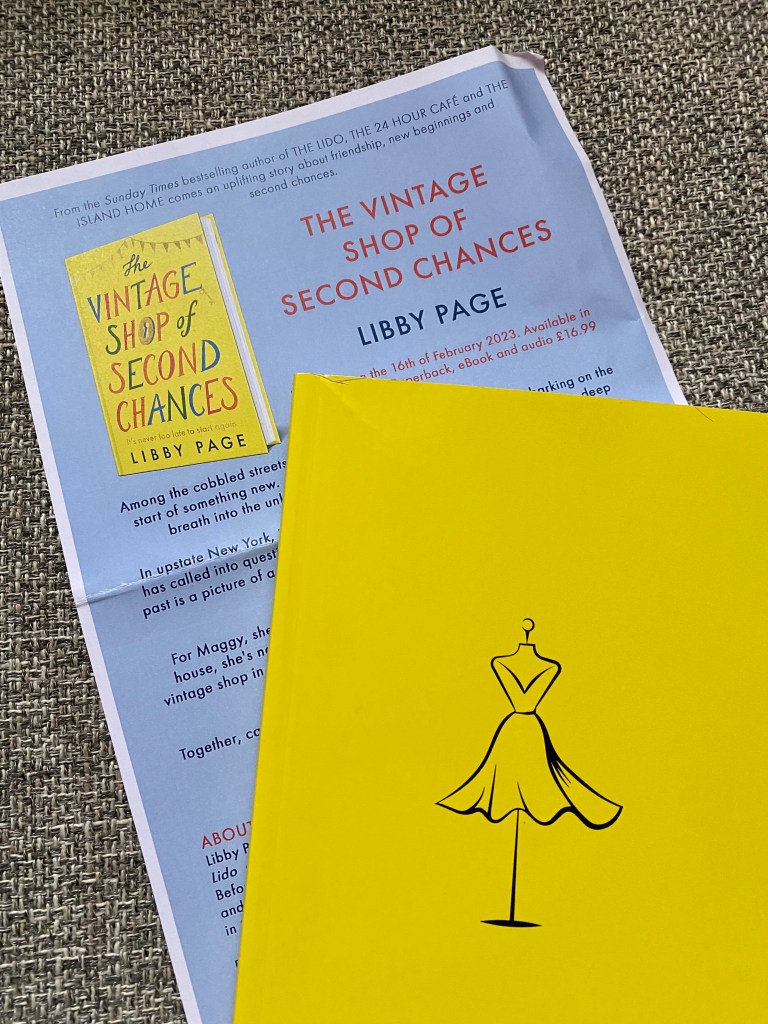
The Vintage Shop of Second Chances by Libby Page

Libby Page was one of those authors that completely passed me by until I started book blogging and this is the first of her novels that I’ve reviewed. I don’t know why I hadn’t picked up one of her books before, because reading this gave me the same feel as an Adriana Trigiani or Marian Keyes novel. There were strong female characters, female friendships, achieving ambitions and fulfilling long held dreams. There are deep emotional aspects bringing flavour and depth to her story, but also enough icing and sprinkles to lift the spirits. Here the sprinkles were one of my favourite things, vintage clothing. Our heroine is Lou, who moved to a small market town to care for her mother who was terminally ill. Since her death Lou has been working hard, selling the family home and buying a shop with flat above in the town centre. With builder Pete upstairs creating her living space, Lou has opened the shop and is looking at ways to save money and boost business. Pete puts her in touch with Maggie, another lady who has gone through a big change. Maggie’s a grandmother and often provides care for her grandchildren in the house that was the family home. However, her husband has recently left Maggie for a younger woman and she is rattling round in the big house. So, when Pete suggests that she rents a room to Lou until her flat is ready it turns out to be a lifeline for both of them. Finally, we have Donna, who works at her family’s hotel in the US. In a daily uniform of jeans and hotel sweatshirt, Donna follows a routine where she does the paperwork and the books and checks in on her elderly parents, but she too has a shock in store. When her mother suffers a sudden mini-stroke, her conscience causes her to disclose a family secret – they are not Donna’s birth parents, her mother was a woman from a small market town in England.

The thing that links these disparate women is a vintage dress. 1950’s in style and a stunning buttercup yellow this dress has a full circle skirt just made for dancing. Embroidered with meadow flowers, the dress hangs above the counter in Lou’s vintage shop and is the only item that isn’t for sale. It’s flanked by a picture of her mother Dorothy, the owner of the beautiful dress. I love vintage clothes and this dress, plus the descriptions of her shop really did draw me in. I love colour and just reading Lou’s outfits and her transformation of Maggie’s wardrobe made me smile and inspired me to be more colourful again. The warm feeling I got from Maggie and her beautiful home helped as well and within a couple of chapters I had completely relaxed into their world. Each woman had her own chapters throughout so we could see things through their viewpoint. While I felt an immediate kinship with Lou and Maggie, Donna seemed less accessible. She was very intent on routine and was considered abrupt or even rude by some people. I wondered if she was neuro divergent and suffering from anxiety, so her routines and uniform might have come from an inability to change or decide when under pressure. All these women face change and have to start life anew. In between their narratives are very short chapters from the past, where a young woman is making a yellow embroidered dress for a secret assignation with a man she’s fallen in love with.

I really enjoyed the journey to understanding the owner of the stunning dress and how it ended up at Lou’s shop. There is a revelation for all concerned when Donna gets on a plane and travels to England and to Lou’s shop. A series of letters between sisters add an extra clue to the mystery. Aside from this main story there are other subplots that also caught my imagination. I loved Maggie and her journey of rediscovery is a joyous one. When Lou arrives it’s clear Maggie is trained by years of looking after someone else: her husband, her children, guests. She’s not putting any love into herself and this shows in her completely black wardrobe. A little bit of input from Lou and she’s wearing orange with combinations of colours she didn’t expect. This small change and their growing friendship means that Maggie is busy for the first time in a long time. Her children can’t rely on her for free child care because she’s not home and this is just the start of Maggie accepting her divorce and creating a new life for who she is now. That’s partly a case of reconciling with her past and a summer in 1960’s London where she was the sort of girl who wore yellow Mary Quant boots and fell in love with an artist. There is romance here, but it’s not the only story. This story is about women supporting and inspiring each other and being our best selves. I liked that there was a lot of emphasis on self- care, from the colourful vintage clothes to taking control and finding our passion in life, instead of being the care givers we’re often expected to be. I came away from this story glad that society’s moral standards have changed and that for many women their lives are no longer ruined by shame or fear of what the neighbours might think. I felt like I’d been given a warm hug and I came away from the story smiling and inspired to wear some of my more colourful clothing.

Published on 16th Feb 2023 by Orion.

Libby Page graduated from The London College of Fashion with a BA in fashion journalism before going on to work as a journalist at The Guardian. After writing, her second passion is outdoor swimming. Libby lives in London, where she enjoys finding new swimming spots and pockets of community within the city. The Lido is her first novel. Follow her on Twitter @LibbyPageWrites and Instagram @TheSwimmingSisters

Posted in Netgalley, Publisher Proof

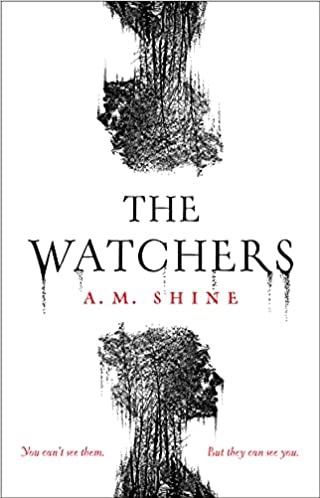
The Watchers by A.M.Shine Update!

I have some exciting news about this fabulously creepy debut novel by Irish author A.M. Shine. Yesterday it was reported that Ishana Knight Shyamalan, daughter of famous director and king of the plot twist M. Knight Shyamalan, will make her directorial debut with a film adaptation of The Watchers. Working with New Line Cinema and with her father as producer, it will be interesting to see if Ishana has her own directorial style or whether her father’s love of twists has influenced her. The script is also written by Ishana and sounds very promising, with the chief creative officer of New Line saying:

“Equal parts visual, immersive, and terrifying, the script grips you from the first page and never lets go.”

Screen Rant report that there’s no casting news as yet, but filming will begin later this year with a potential release date of June 2024. I have to tell you, I’m really excited about this and hope it has the style of an old fashioned horror film, keeping in mind that it’s what we don’t see that scares us most. I loved the surprise elements of her father’s films, such as The Village where a remote community is restricted by the terrible creatures who police their borders. I remember being blown away by the ending of The Watchers so I’m not sure it needs anything more than that to leave cinema goers satisfied. As for the eventual casting I would love to see Tilda Swinton as Madeleine, because I’m not sure anyone else has that unearthly look and authoritative demeanour. Below I’m sharing my review of the book from Nov 2021. Do read the book before seeing the film. You won’t regret it.

Ishana Knight Shyamalan

Wow! I’ve just finished this novel and what an ending. I feel slightly shell-shocked and a bit disturbed by this incredible horror novel that’s very hard to describe, and difficult to tell you about without spoilers. I’m going to try, so bear with me. I’ve been a fan of classic ghost stories for most of my reading life. I blame the more Gothic aspects of the Brontë’s for this obsession; the tall, ghoul who rends Jane Eyre’s bridal veil in two and the pale, ghostly, child’s hand that reaches though the glass and grabs Lockwood’s shaking hand in Wuthering Heights. From that grew a love of the gothic and monstrous, honed at university and now stated by wonderful ghost stories like these. I don’t call it horror, though I suppose it is, because I don’t like blood and gore. I love the creeping sense of dread, the strange apparition that appears behind you in the mirror, the fleeting glimpse of something not human or the sound of a child laughing or singing in a house where there are none. It even extends to my own writing, because when I wrote a story about hag stones for my uni writing workshop, my tutor messaged me to say she’d found it deeply unsettling.

We see most of the events in this novel through Mina, a young woman living in urban Ireland, who lives alone and has lost her mother. Now without family – except one sister who appears to phone once a month or so, just to feel disappointed – she is largely a loner. Her loves are sketching, red wines and her friend Peter who is a buyer and seller of various things and often pays Mina cash to travel and deliver his client’s purchases. On this occasions she’s to take a golden parrot to a remote part of Galway, but the day trip becomes something she lives to regret. Having broken down on the edge of a forest, Mina realises that the likelihood of anyone passing by and helping are probably minimal. So, with the parrot in tow, she sets off walking in the hope of finding a remote farmhouse with a phone that works. Her phone has died in the same second she pulled up in the car. Once in the forest Mina realises her mistake, it seems bigger than from outside and she’s concerned that the light might start to fade before she can get to the other side. She feels unnerved, although she can’t say why, then she hears a scream that isn’t human, but isn’t like any animal she’s ever heard either. As the shadows gather she is beginning to panic, when suddenly she sees a woman beckoning her and urging her to hurry. She’s standing by a concrete bunker and although that seems odd, Mina decides it’s better than staying out here to be found by whatever made that terrible noise. As they hurry inside and the door slams behind them, the screams grow in intensity and volume, almost as if they were right on her heels. As her eyes adjust to the light she finds herself in a room with a bright overhead light. One wall is made entirely of glass, but Mina can’t see beyond it and into the forest because it is now pitch dark. Yet she has the creeping sensation of being watched through the glass, almost like she is the parrot in a glass cage. A younger man and woman are huddled together in one space, so there are now four people in this room, captive and watched by many eyes. Their keepers are the Watchers, dreadful creatures that live in burrows by day, but come out at night to hunt and to watch these captive humans. If caught out after dark, the door will be locked, and you will be the Watcher’s unlucky prey. Who are these creatures and why do they keep watching?

I was absolutely entranced by this incredibly disturbing tale and loved the way the author created this unbelievable world inside the everyday. In the opening section Mina’s world is relatively normal, she goes about her day like any one of us. She has an irritatingly perfect sister, she gets lonely, she sometimes drinks too much wine. We can identify with these imperfections and relate to her. So when this ordinary woman, finds herself caught up in the extraordinary, we believe it because we already believe in her. These woods are like countless others, we’ve probably walked into similar situations ourselves and got lost. Yet, the author carefully leave tiny details, that are probably pricking up our ears and instinctively alerting us that something is wrong. The remoteness of the place, the way her phone suddenly stops working, the single strange cry she hears as if something is on lookout, alerting others to her presence. All of these are universal literary signifiers for ‘something’s not right here’. The author never describes the Watchers visually, again there are signs they leave behind and other sensory clues: the burrows in the ground, claw marks around the window, the revolting smell, their cries. Just as Mina is standing in the light, unable to see them lurking in the dark, so are we. Even when you think we’re going to ‘see’ them, we never fully do. The clues set our imagination on overdrive, we build the monsters in our heads which makes them so much scarier as they feed into our personal fears and phobias.

The characters and their dynamics are fascinating too. With the younger man and woman quite subservient to their ‘leader’ Madeleine, the lady who beckons Mina in out of the dark, there’s an almost parent and child dynamic already established. The room, entitled the ‘coop’, gives us the impression of hens let out to feed and water, but locked in at night for fear of predators. However, with that image of protection comes a question; hens are kept safe by farmers or owners who want them to produce eggs, so what are our four inhabitants meant to produce and who owns the coop? In helping Mina though, Madeleine hasn’t found another subservient child to lead. Mina is more independent and intelligent than that. She’s also a watcher herself, used to being alone and observing others, she sketches people secretly when in public places. The coop is no exception, she gets the urge to capture different expressions and moods in her fellow prisoners, particularly drawn to the planes and contours of Madeleine’s face. Mina doesn’t want to contest Madeleine’s authority, but she will contribute ideas and challenge those she thinks are wrong. I wondered if this would upset the existing dynamic, start a power struggle inside, and raise the tension even further. I was fascinated by how these others had ended up here and what would happen when they start to run out of food or something else that pushes them outdoors. Is there any way of escaping? This author has created a brilliantly layered horror, with an ending that was truly unexpected and even more terrifying. I have just explained the story to my next door neighbour and she’s already closed the curtains tonight! This was incredible and even better is the fact that it’s my first A.M. Shine novel so I have others to enjoy in the Christmas break. This novel is claustrophobic, unnerving and truly hard to put down.

Published by Head of Zeus – Aries. 14th October 2021

Meet The Author

A.M. Shine is an author of literary horror from the west of Ireland. He completed an MA in history before turning to writing, influenced by Gothic tales such as those by Edgar Allen Poe. His novels are grounded in their landscape, steeped in Irish folklore and language, and always influenced by history, horror and superstition.

Posted in Romance Rocks, Throwback Thursday

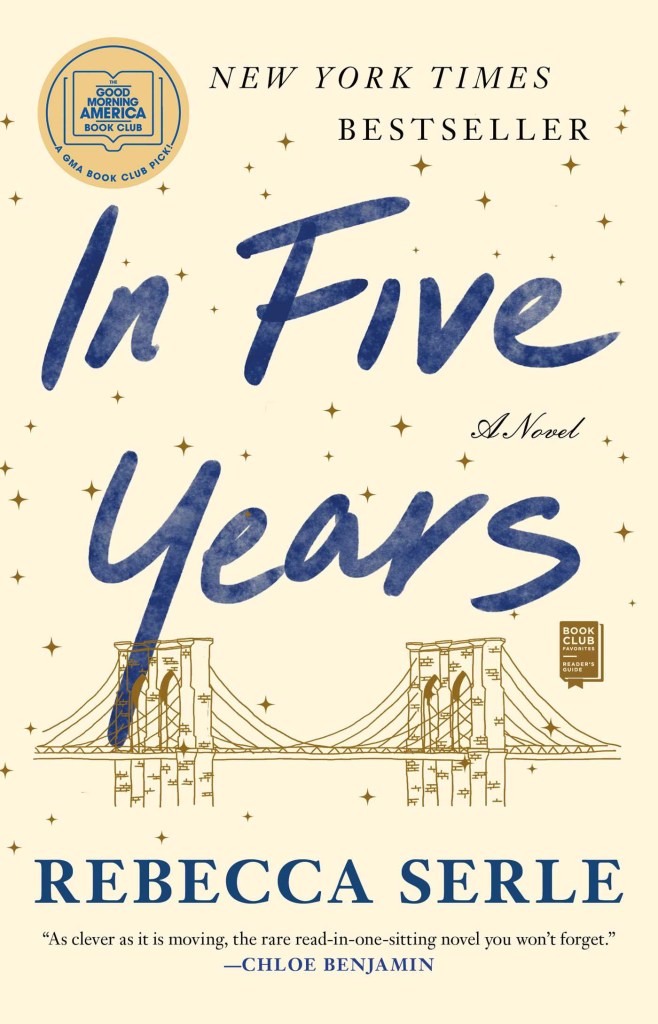
Throwback Thursday! In Five Years by Rebecca Searle for Romance Rocks.

This book surprised me, delighted me and broke my heart. It was not at all what I expected, but was all the more special for that. Cleverly, Serle wrong foots the reader into thinking this is a straight forward romance, but it really isn’t. It’s about love and just as our heroine Dannie is some times unsure what love looks like, so is the reader. We are used to certain conventions and have expectations about how a love story will unfold. It teaches us that sometimes we don’t notice or fully appreciate what we already have.

Dannie is a corporate lawyer, living in Manhattan and dating the eminently eligible David. David and Dannie live together after dating for two years. They have done everything according to an unspoken, but very correct timetable; everything about their relationship is planned and just right. In fact their relationship is so predictable that when David suggests dinner at the Rainbow Room, Dannie knows he’s going to propose. She says yes when he presents the perfect engagement ring, but they don’t plan their wedding. They continue to drift along as they are, until Dannie has the dream. This vivid dream shows a loft apartment in Dumbo with interior design details such as an art print of an optician’s chart with a witty slogan. It’s nowhere Dannie can imagine living. It’s trendy and edgy. She and David live in Gramercy Park. A perfect location for their work and fitting for where they are in life. Yet, the Dumbo apartment feels comfortable. Then a man appears. She’s never met him before but yet there is a connection, something she can’t define. As he moves closer she feels actual electricity. She has never felt this before. Like some huge force compels them to be together. When she wakes, Dannie feels strange, like she’s questioning everything around her.

Dannie has planned to see her friend Bella. They have been friends since boarding school and are still incredibly close. Bella takes more risks than Dannie and in some ways Dannie sees her as someone who doesn’t finish things, perhaps a bit of a flake. Bella loves art, she lives to travel and has a more bohemian outlook on life. Dannie has a more settled and perhaps, conventional life where work is the priority and her stable relationship with David simply ticks along. Up until now Bella hasn’t had a stable relationship in her life, but she has brought someone important to meet Dannie. When he walks in, Dannie is shocked to see the man from her dream. She panics and decides to do everything she can to stop her dream from coming true. But life can take strange turns and a series of events unfold that she never imagined. They make her rethink everything about how to live life and how to love.

I became so involved with Dannie and Bella’s story that it was hard to put the book down towards the end. The story crept up on me from something very light to an emotional tale about the strength of female friendship. These girls are life partners. Their presence sustains each other in ways that romantic relationships sometimes don’t. Bella’s mother lets slip that she purposely placed her daughter in the same school as Dannie, because she saw them together and could not part them. The very structure of the book teaches the reader something. We learn, at the same time as Dannie, that the happy ending is not always about a man, because love comes in many forms. Also, that loss and love are the same thing. When we grieve it just proves how much we loved. I found myself becoming very emotional towards the end of the book and that rarely happens. I found the writing so truthful and similar to my own experience of grief that I had a lump in my throat. I loved the ending and the fact it wasn’t predictable elevated the book above the ordinary. I will be hugging my friends a little closer and appreciating all the people in my life who love me.

Meet the Author

Rebecca Serle is an author and television writer who lives in New York and Los Angeles. Serle developed the hit TV adaptation of her YA series Famous in Love, and is also the author of The Dinner List, and YA novels The Edge of Falling and When You Were Mine. She received her MFA from the New School in NYC. Find out more at RebeccaSerle.com.

Her latest novel One Italian Summer came out in paperback last year and was a wonderful look at love, mothers and daughters, and the things we learn about ourselves through travelling.