Posted in Publisher Proof

Blasted Things by Lesley Glaister.

This is the first novel I’ve ever read by Lesley Glaister and when I finished, I couldn’t believe I’d never heard of her before. Set in one of my favourite historical periods, during and after WW1, this novel was evocative and moving. The author clearly has a deep understanding of the period and the rapidly shifting society her characters are living in. Her characters are fully rounded, with depths to get lost in and the effects of trauma to unravel and understand. This is an exploration of the effects of war and loss on our two main characters, Vincent and Clementine. The scars are both physical and mental, halting their progress as they try to move forward and making it very difficult to be who they truly are. When they, quite literally, bump into each other a strange relationship emerges that will have a haunting resolution. I could see these two people in my mind’s eye and I found myself thinking about them, even when the book was closed.

Clementine was a hands on during the war, volunteering as a Red Cross nurse close to the front. Her boyfriend Dennis had proposed and he didn’t want her to interrupt their lives. He didn’t fight, being a doctor he could claim to be needed by the patients in his area, so he wanted their lives together to start. Clem wanted to be part of the war effort, so along with her friend Gwen she ‘ran away’ (Dennis’s words) and became part of a medical unit. She wasn’t just taking temperatures either, her stomach is strong enough to be in the operating tent, helping to hold patients down during amputations and disposing of mangled limbs. The author’s depiction of working in the medical tents is vivid and gritty. I was able to imagine the struggle to keep wounds clean in the squalor and sick men comfortable on camp beds crawling with lice. The description of Clem’s hair stayed with me, tied up out of the way, but greasy and alive with lice. I could feel her desperate need to wash it, and the shock she feels when the doctor, Powell, finds hot water and washes it for her. I found that image so romantic, because he’d realised what she most wanted at that moment and provided it for her. He washes her hair with such kindness and a gentle touch, I almost fell in love with him myself. They have a deep and immediate connection, so Clem knows she must write to Dennis and explain what has happened.

However, before Clem can write two things happen. She realises she is pregnant and tragedy strikes, when the unit is bombed both Clem and Powell are injured in the blast. Clem has a picture in her brain, like a flashback, of a stove pipe from the boiler embedded in Powell’s back. She knows in that first second that she has lost him. Only days later she miscarries alone in the toilets, and this scene was so real and so emotive I cried. She’s lost the love of her life and now the last part of him has gone too. Numb and shocked she returns home and seems to sleepwalk into the same situation she left behind. In the next section of the book she is married to Dennis, who doesn’t know about her wartime experiences. They live above his doctor’s surgery and they have a child together, a little boy, but she grieves Powell and their little girl. I felt she was living behind a mask, being who she thinks she has to be rather than who she is. The ambivalence she feels towards her son is well represented, because she still grieves for that first child. There are physical signs, written on the body, that she has Edgar. The silvery stretch-marks mark the time she was pregnant, yet there are no signs of her daughter. It’s like she never existed.

Vincent meets Clem when she’s visiting her sister-in-law Harri. Feeling stifled, Clem goes out for some air and keeps walking, until she’s miles away and not sure of how to get back. She takes a quick breather at a bridge and steps into the road, just as a biker comes along. As he swerves to miss the crazy lady stood in the middle of the road, he loses control of his bike and crashes. Clem strangely sees something of Powell in him at that first glimpse. Actually, Vincent is a product of the same terrible war that left Clem bereft. For Vincent it left him wounded physically and emotionally. He has a facial disfigurement that means he wears a mask, literally and figuratively. Vincent has been left in a very reduced position by the war. His marriage has failed and the job he was assured would still be his when he returned from the front, has been taken away from him. How can a man who looks like him, be the face of an insurance company? He has nowhere to live, so he’s latched onto a woman called Doll, who runs a local pub. She’s easy with her favours, and Vincent takes advantage of this to lodge upstairs. He can’t cope with how much he’s lost and wants to replace it, with visions of marriage to Doll and being the welcoming host from behind the bar. He doesn’t love Doll, but they get on and there are worse places to be. Similarly, he notices how well dressed Clem is and thinks she might be manipulated into paying for his bike’s repairs. In the end, she visits him at the hospital and offers to pay, leaving her details and the possibility of a connection between them. They are both suffering the effects of trauma and might sense that shared perspective on the world. If Vincent is willing to settle with Doll, might this be another opportunity for him? What exactly can their relationship be?

I was worried for Clem, who is vulnerable. However, I was worried for Vincent too, he has lost so much and is vulnerable in his own way. He’s not one of the ‘glorious fallen’ heroes, and unlike Clem’s husband doesn’t have any status here at home either. He’s a reminder of exactly how ugly and terrible war can be, and nobody wants to remember. Dennis certainly doesn’t want to hear his wife’s tales of war. The author pitches him perfectly, a man who chose not to fight, but likes to remind everybody that he was fighting to keep the families of those soldiers fit and healthy. He represents the old order of things, with class barriers and men as head of the home. His need for control extends to his sister as well as his wife; there’s one right and respectable way to be in the world. When her friend Gwen visits for tea, he makes it quite clear that she’s not the right company. Not only did she get Clem to run away to war, but now she’s clearly having a lesbian relationship. His way of dealing with the world is on the wane though and he felt to me like a dinosaur that doesn’t know it’s extinct. He hasn’t been through the seismic change the others have and can’t identify with them. War has changed a whole generation of people around the world. I felt for Clem, who is part of this changed generation. She knows the future is different, but she’s chained herself to the past. Is it too late?

This was so beautifully written, with well-chosen words that create rhythm and take the reader on a journey through their senses. This explosion of sights, sounds and sensations bring an immediacy to the prose. This is not some long winded description of what a battlefield was like, it is the sounds and smells as they happen. I felt like I was there:

‘Where was the fear? She searched herself as she listened: sometimes the rat-tat-tat of gunfire, rapid and snippy like the keys of two vast, duelling typewriters battering out threats to each other on a paper sky; crumpings like oil drums being crushed by massive fists; a whistling followed by the soft whoomph of a missile striking, then virtual silence, then the battering of the typewriters again’.

The author truly does show us what’s happening and the contrast of passages like the one above and the quiet, clock-ticking, stillness of Clem’s home is so effective. No wonder Clem takes to walks; she needs to breathe. Every character is flawed, but no one is irredeemable. Through Clem she shows how women were restricted by society and I love that Gwen and her girlfriend had chosen a different path. Most poignantly, she shows how war interrupts lives and takes away people’s livelihoods, opportunities and in Clem’s case, even her creativity. I think this is one of the best books I’ve read on the aftermath of trauma. The author has so much compassion and empathy for her characters and because of that, so does the reader. I didn’t want this book to end and that’s the biggest compliment a reader can give.

Meet The Author.
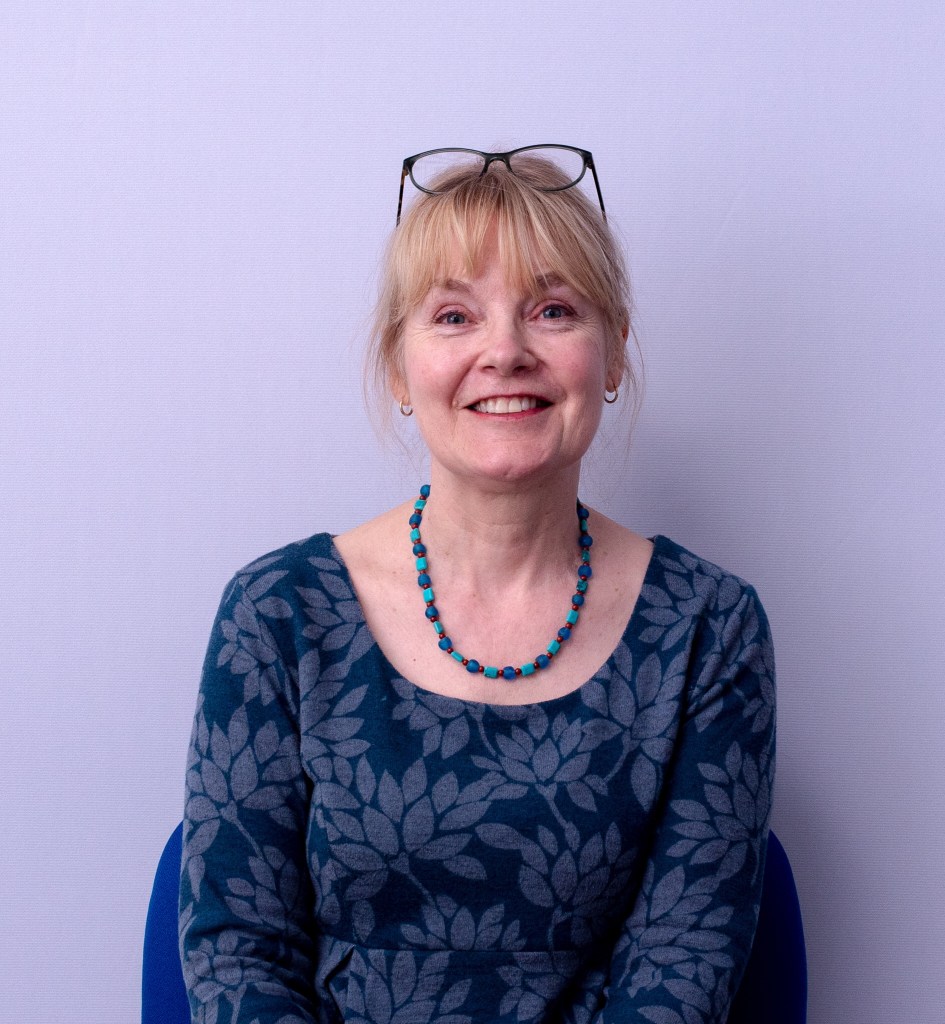
Lesley Glaister is a fiction writer, poet, playwright and teacher of writing. She has published fourteen adult novels, the first of a YA trilogy and numerous short stories. She received both a Somerset Maugham and a Betty Trask award for Honour Thy Father (1990), and has won or been listed for several literary prizes for her other work. She has three adult sons and lives in Edinburgh (with frequent sojourns to Orkney) with husband Andrew Greig. She teaches creative writing at the University of St Andrews and is a Fellow of the Royal Society of Literature.

Published by Sandstone Press on 7th May 2020

Posted in Publisher Proof, Random Things Tours

Freckles by Cecilia Ahern

It seems a strange admission to start a review with, but I’ve never liked Cecilia Ahern’s books. In fact P.S. I Love You brings me out in a rash. There has always been something too saccharin and sweet about them. So, when I was browsing NetGalley and saw her new novel I had pretty low expectations, but the blurb piqued my interest and here I am swallowing my words. So, when I had a chance to come on the blog tour, I had to take it. I wanted to let other readers, maybe those who hadn’t liked her other novels, know that Freckles is a fantastic read and I absolutely LOVED it.

Five people.

Five chances.

One woman’s search for happiness.

Allegra Bird’s arms are scattered with freckles, a gift from her beloved father. But despite her nickname, Freckles has never been able to join all the dots. So when a stranger tells her that everyone is the average of the five people they spend the most time with, it opens up something deep inside.

The trouble is, Freckles doesn’t know if she has five people. And if not, what does that say about her? She’s left her unconventional father and her friends behind for a bold new life in Dublin, but she’s still an outsider.

Now, in a quest to understand, she must find not one but five people who shape her – and who will determine her future.

Told in Allegra’s vivid, original voice, moving from modern Dublin to the fierce Atlantic coast, this is an unforgettable story of human connection, of friendship, and of growing into your own skin.

Our heroine, Allegra Bird, is quirky, surprising, incredibly loveable, and finds other human beings quite difficult to understand. She’s a parking warden in her little corner of Dublin and every day has a strict routine. She walks down to the bakery where owner, Spanner, greets her with a coffee and a Belgian waffle. She then follows her route, making sure that the same car is parked outside a certain hairdressers, then makes her way to where a yellow Ferrari is constantly illegally parked. She has a small flat in a large family home, with babysitting duties as part of the deal. On Fridays she goes to a small art gallery in town where there’s a life drawing class. It turns out she’s the regular model – I said she was surprising – and she is fascinated with how the artists approach her freckles. There are some freckles that she used to scratch into star constellations, and she’s fascinated to see if they ignore them or over dramatise them as if they’re huge, angry slashes. This is her daily routine, but when she gives the man with the yellow Ferrari his umpteenth ticket, something changes. He tells her she’s the sum of the five people she’s closest too and he doesn’t mean it as a compliment. As a reader we can see that from his perspective Allegra is a pernickety, humourless, jobsworth. However, we also know that Allegra is sensitive and this really hits home with her. She doesn’t have five people – but what if she could curate her five from people who inspire her or who are really successful? If the theory is correct, then by curating her five she could curate her life, becoming more successful in the process.

The joy I felt in this novel was from seeing how Allegra related to other people. For her, other people behave in totally illogical ways (and I have to say I was in agreement with her about some of them – particularly her dreadful landlady). I loved the relationship with Tristan, built from his inability to park his Ferrari legally. She thinks she’s simply being helpful by taking him forms for permits, so is baffled when he illogically persists in paying from hour to hour, relying on his rather lazy staff to keep an eye on the time. These two hate each other at first, but watching as they try to understand each other is wonderful. When Allegra goes back home to visit her Dad she thinks she might slot back into island life easily. She imagines, like people do when they move away, that nothing will have changed when they return. Will old friends be there for Allegra and make up her five? When she’s with her Dad, we see where some of her quirks come from, because he isn’t the best at picking up other people’s signals either. She finds out he’s been stopped from attending his choir because he’s made a pass at one of the administrators, who has felt uncomfortable and made a complaint. He’s a man stuck in the behaviour of an earlier decade, he seems baffled that just touching a woman on the knee is enough to be labelled a pervert. He has brought Allegra up by himself, but she had come to an age where she wanted to know more about her mother and life beyond this place stranded in the Atlantic. When the results of her search are revealed, I was genuinely surprised. I felt so protective of Allegra by this point, I was desperate for everything to work out the way she wanted. It was this hope that created so much tension towards the end, and I couldn’t stop reading.

I loved Allegra’s unique voice as she lets us into her mind and her world. This wouldn’t be a Cecilia Ahern book without being heartwarming and full of humour, but this story is more complex than that. There are darker characters, parts that are more painful or remain unresolved, that show a real maturity and development. It’s about being proud of where you’re from, but also finding your authentic self – a journey that sometimes needs some distance from where we grew up. The author contrasts genuine, warm and accepting people with the false, Instagram brigade who are more interested in how life looks than how it is. Her characters are brilliant here, more complex and nuanced than I’ve seen before. There are even some that turn out to be deeply narcissistic and I wanted to protect Allegra from them. I loved the contrast between the city streets of Dublin and the wild Atlantic island Allegra calls home. In a way this is the decision she has to make. Where is home? Which place truly suits the person she is instead of the woman she thought she had to be in order to be accepted. Does she know that when we are our authentic selves, we attract people to us anyway. Our true five perhaps? All through the novel I found myself responding emotionally to the story, but Allegra’s character simply made me smile and perspective on her world made me smile inside. Not that she needs it, because I know millions love her writing, but if Ahern keeps writing characters like Freckles, she has found herself a brand new fan.

Meet The Author


After completing a degree in Journalism and Media Communications, Cecelia wrote her first novel at 21 years old. Her debut novel, PS I Love You was published in January 2004, and was followed by Where Rainbows End (aka Love, Rosie) in November 2004. Both novels were adapted to films; PS I Love You starred Hilary Swank and Gerard Butler, and Love, Rosie starred Lily Collins and Sam Claflin. 

Cecelia has published a novel every year since then and to date has published 15 novels; If You Could See Me Now, A Place Called Here, Thanks for the Memories, The Gift, The Book of Tomorrow, The Time of My Life, One Hundred Names, How To Fall in Love, The Year I Met You, The Marble Collector, Flawed, Perfect and Lyrebird. 

To date, Cecelia’s books have sold 25 million copies internationally, are published in over 40 countries, in 30 languages. 

Along with writing novels, Cecelia has co-created the US ABC Comedy Samantha Who? and has created many other original TV projects.

Posted in Netgalley, Publisher Proof

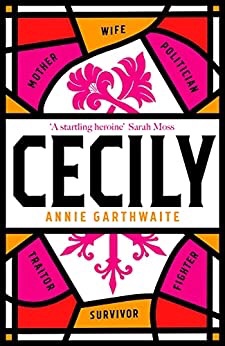
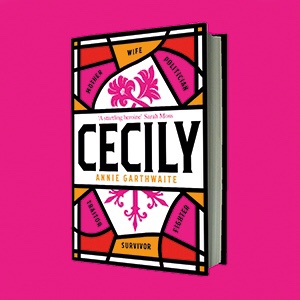
Cecily by Annie Garthwaite

I hadn’t heard of Cecily Neville and wasn’t exactly sure where she was within the characters I already knew in the period just before the cousin’s wars better known as The Wars of the Roses. I was familiar with women like Jacquetta Rivers, Elizabeth Woodville and Warwick, The Kingmaker, from my reading of Philippa Gregory. I was also aware of Anne Neville and Isobel Neville, Warwick’s daughters, who married the Duke of Clarence and Duke of York, later to become Richard III. I hadn’t realised that Cecily Neville was the mother to both those boys and King Edward IV. I was only a few chapters in before I realised that Cecily and I share a grandmother (well to me a great-grandmother goodness knows how many generations ago) Katherine Swynford. In fact Katherine lived around five miles from me, at both Torksey Castle and Kettlethorpe Hall in Lincolnshire. She was mistress, then wife of John of Gaunt and for a short period was Queen of England. One of her daughters, Joan, is the mother of Cecily Neville. The pair, Katherine and Joan, are buried not ten minutes from where I write this, in Lincoln Cathedral. There is something very exciting in reading about your ancestor, so it did change the experience of the book for me.

The opening scene, at the burning of Joan of Arc, is one of the most powerful I have ever read. Cecily narrates in the first person:

‘It’s no easy thing, to watch a woman burn. A young woman, who has seen only three more summers than yourself and claims the voice of God compels her actions. But there it is; the day’s work. And she must harden herself to it.’

It sets the scene for the rest of the novel perfectly, it gives us a jolt and prepares us for how brutal this period of history was. It gives us a sense of how women are treated, especially those who explicitly disdain the rules of society. Joan of Arc didn’t play by the rules. Cecily is determined to shape her own future, but though words and ideas instead of action. Court is a deadly game of chess and Cecily is always on her guard. Make no mistake this is a woman’s side of court life. Where her ideas and beliefs are put across, whether at the King’s council or on the battlefield, only men are present. We hear about battles through messengers, and the men left standing afterwards. We hear about the King meeting his council through Cecily’s husband Richard. Yet the idea starts when both of them talk last thing at night or out hunting, just the two of them so no one else can hear. Cecily campaigns through letters, befriending influential women and petitioning the Queen – although in this case she believes the Queen is truly the one in charge anyway.

Without her husband Richard though, Cecily would have no avenue to pursue her plans. This is an arranged marriage, as we see in the book the family are already marrying off their eldest daughter at the age of 10. After the ceremony, the young bride and groom go back and live with their families until the age of fourteen or fifteen when the bride and groom go to live in their marital home together. So, Cecily would have had the same rules apply to her match. Luckily it appears to have been a good match, in business and pleasure. Most importantly for Cecily, Richard regards her as an equal and listens to her in courtly and political matters. His respect for her, which seems unusual for the time, means that the men of her household and her sons listen to her as well. They value her judgement and her ability read a situation and the people involved. However, being a courtier isn’t an easy life. I won’t reveal the plot, but I will say that when you’re at the beck and call of a King, you have to hope that King is of good judgement and sound mind.

One aspect that really stood out to me, was that all the women are deeply affected by their fertility, or lack of it. Cecily and Richard have been married for eight years at the start of the book, but still haven’t had a living child. In fact by the end of the book, I couldn’t keep up with how many times she had been pregnant. There is a period in the middle of the book where she realises she’s been pregnant for the majority of the last few years. I was also surprised by the breadth of the families, with mothers still being pregnant at the same time as their elder daughters. When any woman in the book delivers a son I could feel their relief. Everything must be inherited by a son, who continues that aristocratic line. These years of wrangling over who has the strongest claim to the throne, as well as the death of his own elder brother, make sense of Henry VIII’s obsession to produce an heir. I think the author captures beautifully the pressure these women feel. Their sense of loss, even though infant mortality rates must have been quite high, runs deep. Giving birth is very much women’s work, and the blame for what they do or don’t produce sits squarely with them. It’s hard to imagine not being able to control your fertility; to decide when to start or when to stop having children.

The story flowed well, and for me could have benefitted from being slightly longer. There were large time jumps in a couple of places and I did have to keep looking people up, checking family trees and names as opposed to titles. That was me trying to make complete sense of it, to fit this piece in to the larger jigsaw I was more familiar with. This was a fascinating piece of history, bringing to life another incredible woman from this time period. She sits with Joan of Arc, and her contemporaries Jacquetta Woodville and Margaret Beaufort, as women who know how to fight a war of words. Like present day spin doctors they weave the tale they want the court and the country to see – Cecily suspects the Queen of weaving the most audacious tale of all. I was left with the sense that courtly life is a living game of chess, with human pieces. Those close to the throne could be lucky enough to remain in favour, but more likely are only two moves away from ruin. As for the ending, those with historical knowledge will be aware that Cecily’s schemes are only successful to a point and there is even more turmoil beyond the book’s final pages.

She is remembered as the mother of two Kings of England and grandmother to a Queen, but the painful truth is she outlived all of her sons. Even worse, she had to witness their treachery and betrayals of each other, including the disappearance of her eldest grandsons (and heirs to the throne) from the Tower of London, never to be found. Six years before Cecily’s death, her granddaughter Elizabeth married Henry VII finally uniting the houses of York and Lancaster. She even lived to see the birth of her great-grandson Henry VIII. Annie Garthwaite has fictionalised the life of a very powerful and intelligent woman, who has a much bigger hand in history and my own ancestry than I’d realised. Her work is well-researched, creating a book that is horrifying in places, but ultimately a compelling piece of historical fiction.

Published by Penguin, 29th July 2021

As part of the blogger group The Squad Pod, Cecily has been our book club choice for August. You can see our read-along chat at @Squadpod3 on Twitter.

Meet The Author

Annie Garthwaite turned to fiction after a 30-year international business career, fulfilling her lifelong ambition to write an account of Cecily Neville, matriarch of the House of York during the Wars of the Roses and mother of Edward IV and Richard III. Her obsession with Cecily and her family began in school and never left her. Setting off in the world of work, she promised herself that, at age 55, she would give up the day job and write. She did just that, completing her novel while studying for a creative writing MA at the University of Warwick. CECILY is her debut novel and, even before it’s publication, was named a ‘top pick’ by The Times and Sunday Times.

http://www.anniegarthwaite.com

Posted in Publisher Proof

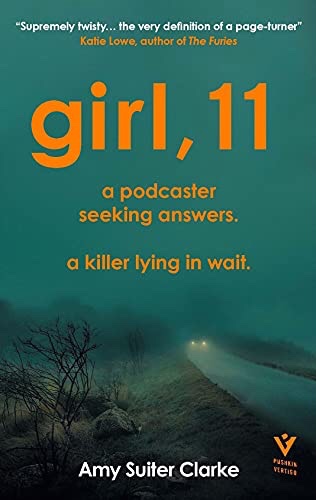
Girl, 11 by Amy Suiter Clarke.

VIGILANTE

True crime podcaster Elle Castillo has long been obsessed with The Countdown Killer.

VICTIMS

Twenty years ago, he went on a killing spree. Each new victim was a year younger than the last.

VENGEANCE

Now, he’s back.

Elle must stop the deadly countdown before the killer can claim his next victim.

Girl 11 is the perfect read for fans of True Crime, whether they’re addicted to Netflix series or listen to podcasts. True crime podcasts have played a part in two other books I’ve read in the past six months, so their popularity has come to the attention of authors wanting to keep their crime fiction as up to the minute as possible. Here, Elle is a podcaster turned sleuth and she is determined she has what it takes to catch the Countdown Killer. We’ve all sat and watched documentaries – I admit an addiction to Forensics: The Real CSI – and considered the evidence, only to find ourselves screaming at the the detectives on screen to go back and look at x or y that didn’t make sense or a witness who seemed a little too interested in the details of the crime. I imagine what it must be like to psychologically profile a suspect, or to come up against them in interview.

Elle takes armchair detecting one step further by carrying out her own investigation into crimes, often involving children. The structure of the book is clever, as a transcript of her podcast is placed between each chapter. This divides the book quite neatly into the detail of Elle’s past research into the crime, and the present day action that drives the story forward. This latest podcast on The Countdown Killer details crimes from twenty-four years ago. The killer abducted and murdered young women according to their age, starting at twenty, but then threatening to count down from there, reducing each victim’s age by one year each time. Then the killer stopped abruptly, leaving most crime enthusiasts thinking he was dead, but Elle isn’t so sure, especially when another child goes missing. When asked by the police to consult on the new case she considers whether it might be the same killer, but her colleagues start to question her judgement. Is she too fixated on the Countdown Killer? Also, is it wrong that every time I read that name I imagined a killer rampaging through the C4 Countdown studio?

I thought the set up of the book was excellent and the first half really grabbed my attention and pulled me into the story. I thought the ritual nature of the original murders and the whole of the cold case, was fascinating and if it was a real podcast I could imagine a lot of people enjoying the content. Yet, having set a brilliant scene and pace, I thought the second half of the book slowed down and didn’t keep me as engaged. I knew what was coming a little too much, and I waited patiently to be disproved or for a huge twist that didn’t come. Having read the Six Stories series of Matt Wesolowski, which also follows a cold case podcast, I felt this wasn’t as inventive as it could have been. I did really enjoy Elle though. She was an interesting and intelligent woman, very good at her job and almost forensic in the detail she brings to her podcasts. I felt there was more than just prurient interest in the crimes she details, she truly wants to solve these cases and get justice for the victims. I enjoyed the interviews she carries out with experts too. I thought her private life could have done with some fleshing out, because I felt I only knew Elle through her work, rather than feeling she was a fully rounded character. This was an interesting debut, and I think the format of the podcasts could work very well as a series going forward and I think there’s much more to come from this author in the future.

Published 26th April 2021 by Pushkin Vertigo.

Meet The Author

Amy Suiter Clarke is the author of GIRL, 11 and is a writer and communications specialist. Originally from a small town in Minnesota, she completed an undergraduate in theater in the Twin Cities. She then moved to London and earned an MFA in Creative Writing with Publishing at Kingston University. She currently works for a university library in Melbourne, Australia.

Posted in Netgalley, Publisher Proof

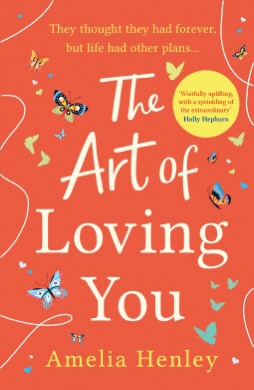
The Art of Loving You by Amelia Henry

Oh my goodness this beautiful novel really did pull at my heartstrings. It was stunningly romantic and reduced me to a hormonal weeping mess. I just knew something was going to happen to this lovely couple, because everything was perfect in their world and they were embarking on a project to help others. Libby and Jack were bringing to life his dream by developing an arts centre/retreat for underprivileged children. They already had the keys to the property and were ready to go, when a phone call changed everything. Just as I’d fallen in love with this gorgeous couple, the author shatters their lives. I don’t want to ruin the plot for everyone, so I’m not going to talk about what happens, but I am going to talk about the characters.

Libby is our narrator and I really felt for her so much. Her world has been so rocked that she’s struggling to trust anything or anybody. She’s scared of everything, because now she knows that the worst things we imagine can happen. The author cleverly lets Libby drop little hints and ideas about what’s coming next, they work like cliff hangers, so that I kept jumping to the next chapter and reading a bit more. Just a head’s up – can end up half way through without realising!

I loved Sid, just loved him. He has just moved into a care facility, because he needs extra support, and gifted Libby and Jack his house. This is the only way they’re able to realise Jack’s dream of opening the arts centre. Sid is like a surrogate grandfather to the couple, and the way his relationship develops with Libby as the novel progresses was really touching. At a time when she feels hopeless and lost, he is so supportive, positive and uplifting. I wanted my own Sid for his wise advice alone. I would love to read a whole book about Sid’s past, because I want to know how he came about his philosophy on life.

Although the book has an obvious film inspiration, I kept thinking of the moment at the end of the Steve Martin film Parenthood. He’s panicking because he walked out on his job and his wife has just announced she’s pregnant with baby No 4. His grandma starts to talk about the fairground, and while other people like safer rides like the dodgems, she loved the rollercoaster. He doesn’t get it at first, but later at his children’s play when everything starts to go wrong, he realises that instead of panicking, he could just laugh and go with it. Sit back and enjoy the ride. It makes you realise that how you view life is always a choice.

I don’t know much about the author, but I’d hazard a guess that this is someone who’s life experience has informed these characters and their situation. Truth and real pain shines out from these pages. Readers can tell if a person’s writing comes from their heart, and this truly does. It seems easy to dismiss ‘romance’ as something silly and frivolous when it isn’t. Love, real love, changes our lives. We move house for love, we change lifestyle, we make lifelong commitments. If we think about the love we have, from partners, friends, family, it’s without doubt the most uplifting thing in our lives. When we lose someone we love it’s devastating and life altering. Yet, we still love. This inner hope and endless capacity to love, is the most important thing we can write about, because it’s the most important thing in our lives. I felt the writer understood this. The story teaches us not to waste time, to hold on tight to those we love and to love life even when it isn’t ‘all beer and skittles’.

Published 21st July 2021 by HQ

Meet The Author

Amelia Henley is a hopeless romantic who has a penchant for exploring the intricacies of relationships through writing heart-breaking, high-concept love stories. 

Amelia also writes psychological thrillers under her real name, Louise Jensen. As Louise Jensen she has sold over a million copies of her global number one bestsellers. Her stories have been translated into twenty-five languages and optioned for TV as well as featuring on the USA Today and Wall Street Journal bestsellers list. Louise’s books have been nominated for multiple awards.

Posted in Publisher Proof

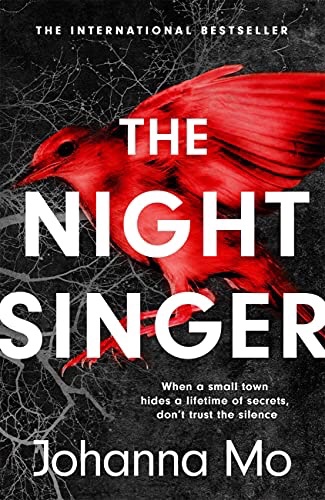
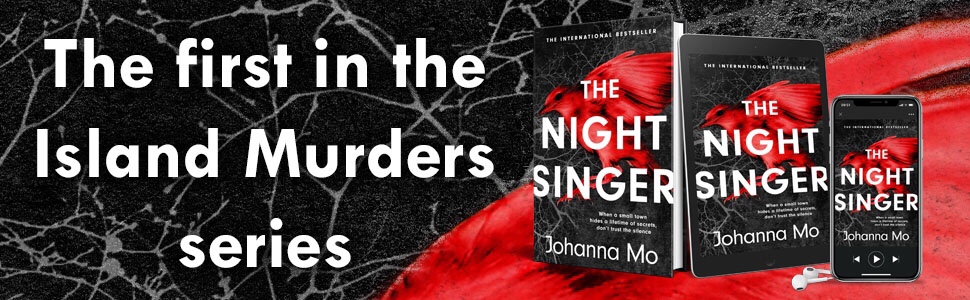
The Night Singer by Johanna Mo.

You’ve got no idea what you’re dredging up. You’re going to ruin everything.

The past is not going to stay buried in this unputdownable crime novel, the first in a series featuring Detective Hanna Duncker. Fans of Ragnar Jonasson and Ann Cleeves will be gripped by this moving and atmospheric crime novel, already a bestseller in Sweden. Hanna Duncker has returned to the remote island she spent her childhood on and to the past that saw her father convicted for murder. In a cruel twist of fate her new boss is the policeman who put him behind bars. On her first day on the job as the new detective, Hanna is called to a crime scene. The fifteen-year-old son of her former best friend has been found dead and Hanna is thrown into a complex investigation set to stir up old ghosts.

Not everyone is happy to have the daughter of Lars Duncker back in town. Hanna soon realises that she will have to watch her back as she turns over every stone to find the person responsible…

I was drawn deeply into Hanna’s world straight away in this brilliant piece of Scandi Noir. This is the first in Johanna Mo’s Island Murders trilogy, and is already a hit in Sweden. Hanna has returned to her home town of Öland for a post in the local police force. She has to hit the ground running though, because instead of quietly getting to know her colleagues, she is straight onto a crime scene. The body of a young 15 year old boy has been found and everything points to murder. Hanna is partnered with Erik and tasked with breaking the news to the boys family, but there’s one problem. The murdered boy’s mother Rebecka, went to school with Hanna and recognises her the minute she opens the door. If she’d hoped to keep her past secret, or at least in the background, this case will blow her identity wide open. Joel’s birth father also went to school with Hanna and has a reputation for being a bully, in fact Rebecka has openly admitted he was violent during their relationship. Could he possibly have killed his own son? It’s clear that Hanna could be very beneficial to the enquiry – Rebecka trusts her instantly and confides in her on their first visit. Yet her ex-husband Axel, now a well-known businessman in Öland, seems antagonised by Hanna’s presence. In his first interview, Axel tries to manipulate and wrong-foot Hanna by bringing up their past, even twisting the truth to hurt her. He even notices her ‘tell’, because when she’s anxious her fingers automatically rub her arm where her nightingale tattoo is.

‘She wanted to tear back the black material covering her tattoo of a nightingale, the bird that would help keep the darkness at bay. After her mother’s death, her grandmother had given her a small wooden nightingale to keep by her bedroom window. She claimed that because nightingales sing at night, it would help Hanna with her nightmares, but her bad dreams hadn’t gone anywhere. When she complained, her grandmother had stroked her cheek and said: I know those dreams are horrible, but they would be even worse without the bird. Those words had taken hold, and Hanna had kept the bird ever since’.

Yet there’s a worse secret in Hanna’s past than anything that happened at school. She is Lars Duncker’s daughter and his conviction for murder 16 years earlier is still fresh in a lot of the local’s minds. Can her past stay where it belongs, enabling Hanna to remain focused on who murdered Joel? Could being the daughter of a murderer actually help her to solve the crime she’s investigating? Or will being Lars Duncker’s daughter draw attention away from the case?

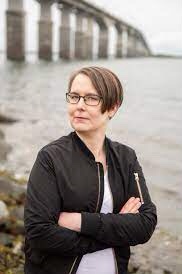
Johanna Mo

I loved the structure of this novel, as one timeline follows the investigation and the other tracks the preceding 24 hours, from Joel’s point of view. I found the second timeline really emotional, because this is Joel unfiltered, as only his closest friend knows him. We learn things about him and his life that his parents don’t know, some of which really hit me in the heart as a step-mum of teenagers.

‘As usual. Mum won’t believe him if he tells her how dark and ugly he is inside. She won’t believe what he is thinking about doing. Everything he has already done. But he’s so tired of acting. Of pretending to be someone he isn’t’.

The thought that they might keep things to themselves, scared of my reaction, made me so sad. Yet, this felt like an honest depiction of teenage life, where our friends rather than our family probably know us best. Where crime fiction is often focused on action, or the thrilling twists and turns, this felt quieter and more real. In fact the reason I originally started to read and watch Scandi Noir was because it depicted how violent crime affected the families and friends involved. This reminded me of a another crime writer I read this month, Eva Björg Aegisdottir, who does this very well in her Forbidden Iceland series. It felt like a more feminine gaze showed the devastation caused emotionally. From Joel’s nuclear family and slowly tracking outwards to friends, teachers, neighbours we see all the victims of a murder. Joel’s story takes centre stage, rather than his killer.

I thought the detail of the case was incredible, with every little lead followed up until the truths of the whole town start to come to light. A murder investigation unearths all kinds of secrets and lies before it can be solved. It was interesting to watch Hanna as she tries to settle back in to her home town, and make friends with her colleagues. The author cleverly shows how both she and Erik could come out of an interaction with very differing ideas about what the other one thinks. Hanna assumes people will be prejudiced against her when they find out whose daughter she is, and some are, because someone is ringing her work phone with silent calls which escalate to sounds of a fire burning and a blood curdling scream. As each narrative came closer to revealing the answers, the tension started to build. I liked that the story dealt with a very timely issue and all aspects of the case felt well resolved. However, when it comes to Hanna’s own story, there were enough loose ends left to explore in more detail over the next couple of books. I would recommend this to all crime lovers, but particularly those who enjoy an intelligent, complex and emotional crime novel that focuses on the victims rather than fetishising the killer.

Published 3rd August 2021 by Headline Review

Check out the rest of the blog tour for more about The Night Singer.

Thanks to Headline Review for inviting me on the blog tour.

Posted in Publisher Proof

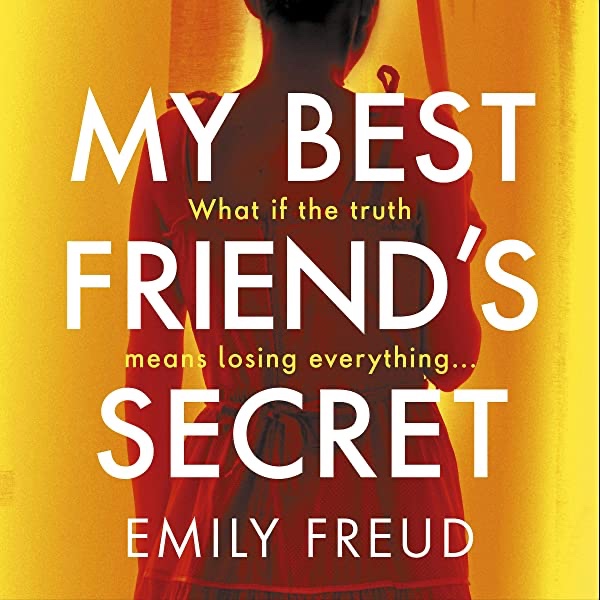
My Best Friend’s Secret by Emily Freud.

Kate Sullivan has a beautiful home, a job she loves and a handsome fiancé: all she’d ever dreamed of since getting sober and painstakingly piecing her life back together.

But a chance encounter with her old best friend Becky threatens Kate’s newfound and fragile happiness. Kate remembers nothing of their last drunken night out, the night Becky broke off their friendship without warning or explanation.

With Becky back in her life, Kate is desperate to make amends for the past. For the closure she craves, Kate needs to know what she did that ruined everything.

But what if the truth is worse than Kate could have imagined?

This novel gripped me from the beginning and I could relate this back to being a young woman, unsure of my place in the world and being uncomfortable in my own skin. It’s depiction of how our fears and demons can shape us if we let them, and the dangers of self-medicating our anxiety and lack of confidence. It was such a thoughtful and honest exploration of female friendship and what can happen when those bonds are broken. As is usually the case in this type of domestic noir when the novel opens Kate appears to have everything. She’s just about to marry her American fiancé Ben, they have a beautiful home and she’s settled into a job she loves as a teacher. However, all of this hasn’t come easily for Kate, because she spent a few of her young adult years totally out of control. Thanks to the 12-step programme she has found a way out of alcoholism, and is on an even keel.

Yet, her past does threaten her perfect future when she meets an old friend by chance. Back in her wilder, drinking, days Becky was a partner in crime. In fact the pair were best friends, until one drunken night out, after which Becky never spoke to Kate again. Kate has no memory of that night. On meeting Becky, she feels the need to make amends for whatever happened that night, even though she doesn’t remember what she’s done wrong.

What distinguished this book from the average thriller was Freud’s compassionate and thorough understanding of alcoholism and the psychological journey individuals take when they embark on their recovery with AA. It was beautifully written, slightly slow in parts, but infused with a creeping unease throughout. I loved the psychological ins and outs of Kate’s journey, because we are inside her mind as she battles her past and tries to hang on to the life she loves. Freud really does nail the complexity of our inner voices and how they can trip us up and knock us off balance. That endless negative chatter that tells us we can’t do this, we’re not worthy and don’t deserve the good things we have in our life. I felt so much empathy for Kate and wanted her to be resilient enough to resist the chatter, and stay on course. I thought the author showed incredible knowledge and compassion for how childhood trauma affects our lives, particularly the struggles to form good, solid relationships. This was a powerfully written thriller, and I will be looking out for whatever the author writes next.

Meet The Author

In her other life, Emily Freud makes TV. She has over ten years experience in development and production and has worked on some of the most loved, talked about and award-winning series in recent years. Credits include: Educating Yorkshire, First Dates, and SAS: Who Dares Wins. This lifelong fixation with story and character is the thread that runs through her work, and ultimately led to the pursuit of a writing career.

‘My Best Friend’s Secret’ is her debut novel, published by Quercus.

Posted in Publisher Proof, Random Things Tours

Girls Who Lie (Forbidden Iceland Vol 2) by Eva Björg Aegisdottir

I was meant to be reading this for the recent Random Things Tour, but have been taking a break for family stuff and my health. However, I did read Vol 1 of this series last year so found it very difficult to see the next novel on my TBR and not dive in. So here are my thoughts, a little late, but surely it’s always good to hear someone praise your work? No matter how late they are.

The author opens the novel on a freezing cold day and a bleak volcanic crime scene, immersing us straight into both the story and the landscape. Two boys, wandering on the local lava fields have found a body in a small cave. They frightened themselves at first into thinking they’d found a black imp, the body was so dark. However, our heroine and police investigator Elma, believes it may be the body of Marianna, a single mum who disappeared from town seven months previously. Thought to have committed suicide, Marianna left a short and cryptic note on the kitchen table for her daughter Hekla, then was never seen again. Now, it’s clear that this is a murder, and as Elma reviews the files from the previous year, when this started as a missing person investigation, she finds the work less than satisfactory. She can see so many unanswered questions to follow up. Hekla is now in foster care, with a couple who have fostered her many times, before when Marianna was struggling or disappeared. Now Elma’s team will have to wade into the previous investigation, social services files and the difficult life of a children whose parent simply struggled to cope.

I loved the complex psychology behind this story of teenage pregnancy, family expectations and how to be a parent. Added to that is othe challenge of preventing emotional pain passing to another generation. Our investigation is interspersed with a narrative of a young teenage girl who tells us about her life as the mother of an unwanted child. Her identity is not revealed and we don’t know this girl’s connection to the main plot, but her narrative is sad and traumatic to read both for her and her baby daughter. Meanwhile Elma is beginning to understand the difficult and disconnected relationships that surrounded Marianna and her daughter. Hekla was first placed with foster parents at the age of three when Marianna left her home alone while she went on a drug binge. Hekla’s foster parents were a wealthy, stable couple who made no attempt to hide how much they would have loved to take Hekla on permanently, but Child Protection Services had a policy of trying to keep children with their birth families as much as possible. Elma can see the theory behind this, but starts to wonder whether it’s a policy that actually fails children in practice. So, Hekla leads a life of moving back and forth between Marianna, who was harsh and belittled her daughter, and a foster mother who wanted to be more than her support family. If Hekla had been given the choice, she would have chosen to stay with her support family, but instead was pulled between them, both literally and emotionally. She describes how she feels:

It’s strange to be six years old and feel as if you’re a black stain on a white sheet. As if the world is in headlong flight and all you can do is grab hold and try not to fall off.’

Trying to act as gently as possible, Elma must speak to both Hekla and her support family about inconsistencies in their stories. She doesn’t want to cause more distress, but Hekla is a girl of secrets and perhaps lies too. There are parts of this story that might be upsetting for someone who has been through the care system or had a dysfunctional parent. Marianna is barely able to cope with her own life, never mind being a parent. I love that we are party to Elma’s thought processes around the case, and on her private life. As she reflects at the end of each day, the author hints strongly at unresolved trauma in Elma’s own past. There’s also the dilemma in her private life, where the loss of her partner to suicide has affected her more than she lets on. She’s not ready to have real, deep feelings for someone, preferring no strings encounters. Yet she does have feelings for someone, and if she doesn’t act on them, will it be too late? The proximity of her family, and the support she receives from them, is both helpful and irritating by turns. This is her home town, so she knows all the allegiances and quirks of the community, something which can have its own problems when investigating such an emotive crime.

The first half is slower and more thoughtful, giving the reader time to soak up the atmosphere and Hekla’s experiences. In the second part, the pace quickens and the past also catches up as our mystery narrator is revealed – a reveal that had me reassessing everything I’d thought before. In a world where every thriller boasts twists and turns galore, this one packed a punch, was truly clever and had played with my misconceptions of who it might be. Another thing that really hit home for me, as the stepmum to two teenage daughters, was just how damaging the constant wrangling between co-parents becomes. I thought the character of Hekla was pitched perfectly, with a deep understanding of being a teenage girl. She showed that need to belong, to be accepted, whilst also feeling complete isolation – that nobody in the world understood her or had felt what was going in on her head. This is an age where being singled out as different is painful, it takes time to work out that your originality is your super power. This was a tense and compelling read, with undercurrents of deep melancholy that seemed to come from Elma and the forbidding landscape. This was a psychologically astute murder mystery, with deep empathy and a strong sense of place. I would recommend it highly.

Meet The Author

Born in Akranes in 1988, Eva moved to Trondheim, Norway to study MSc in Globalisation when she was 25. After moving back home having completed her MSc, she knew it was time to start working on her novel. Eva has wanted to write books since she was 15 years old, having won a short story contest in Iceland. Eva worked as a stewardess to make ends meet while she wrote her first novel, The Creak on the Stairs. The book went on to win the Blackbird Award, was shortlisted (twice) for the Capital Crime Readers’ Awards, and became a number one bestseller in Iceland. Eva lives with her husband and three children in Reykjavík, and she’s currently working on the third book in the Forbidden Iceland series.

Posted in Publisher Proof

The Heights by Louise Candlish.

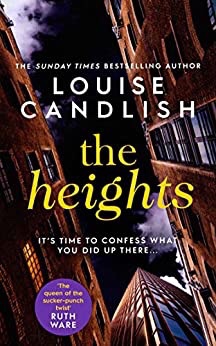
I feel slightly sucker punched only seconds after finishing this fantastic new thriller from Louise Candlish – a name I only came across when it appeared as a ‘you might also like’ recommendation on Amazon, but is now top of my list when it comes to twisty, delicious and impossible to put down thrillers. After the final twists in The Heights I think this might be her best yet. She has an incredibly incisive way of portraying middle class southern morés and the way they change and mutate under immense pressure. It’s like reading a weaponised Jane Austen for the 21st Century; what if Willoughby had been a killer or Wickham had kidnapped then killed Lydia? These are the same type of people, centuries apart, but still playing out gender and class politics. Except now it’s from a beautiful Victorian semi (with a large family room leading to bifold doors into the garden with pizza oven).

Kieran Watts has been dead for over two years. Yet, there he is, on the roof terrace of an exclusive building in Shad Thames. Called the heights – all lower case – this is a tall, thin building that you might not notice at all, had you not been standing in the window of the flat opposite. There are subtle changes. The physique for a start has had some work. There may even be a touch of plastic surgery here and there, but you know it’s him. Even though he’s meant to be dead. You were sure he was dead, because you were the one who had him killed.

Ellen Saint lives with husband Justin, their daughter Freya and Ellen’s son Lucas from her previous marriage to Vic. They really are the perfect family unit, with a shared parenting ethos for Lucas and everyone getting along well. Lucas is a bright teenager, possibly on course to apply to Oxbridge, who loves gaming and spending time with friends and girlfriend Jade. Then along comes Kieran Watts. Kieran moves nearby after being taking into care and placed into a foster home with Prisca. This puts him into the catchment area for Lucas’s school and on Kieran’s first day, Lucas is asked to ‘buddy’ Kieran and help him settle in. The two boys really hit it off and from here starts a spiral that’s only travelling one way, towards tragedy. Firstly, Lucas goes out a lot with Kieran and some older kids, who have cars. Then his grades start to slip and he uses bad language at home. Ellen fears his late nights, mornings in bed and red- rimmed eyes are down to drugs. She tries to reduce his time with Kieran, but only succeeds in pushing them together. Lucas and his girlfriend Jade, find Kieran funny. Ellen doesn’t. She sees the way Kieran looks at her. It’s bad enough when he’s dead behind the eyes, but when focused on her, Ellen sees defiance, challenge and threat. Tragedy strikes one evening, as the boys are out in Kieran’s car and veer off road into a lake. Kieran escapes, but Lucas’s seatbelt is jammed. Ellen can stop imagining her son in his final moments of realisation, panic and terrible fear. Kieran will be made to pay for this.

Ellen is a very single-minded character and I was never sure whether I liked her or not. There are times I think she was a snob, only wanting her son to be with other middle class kids. She also seems to be obsessed with Lucas at the expense of her daughter. Obviously she loves her children, but how much of her interest in Lucas is fuelled by his good looks, his academic prowess and future promise as a potential Oxbridge student. There is an element of Ellen’s concern which is caught up in what others think. She’s still very close with Vic, Lucas’s father, but he has a very different way of parenting. He has no qualms about Kieran, and let’s them hang out at his place. Ellen likes to think that she and Vic are on the same page and is proud of their ability to co-parent alongside her new husband Justin, but is Vic really in tune with Ellen’s values? I kept wondering if this small act of undermining Ellen, was a sign of greater betrayals to come. Similarly, Ellen acts unilaterally as soon as she sees Kieran at the heights. I was surprised that she never once talked with Justin, so they don’t work together on this discovery. After Kieran was sentenced for his part in Lucas’s accident, Ellen starts a media campaign about stronger sentencing for deaths caused by dangerous driving. However, Vic is her partner in this with Justin holding the fort at home. Don’t they agree? Or does Ellen simply disregard his feelings? Her love for her son and her deep sense of grief are driving her forwards and are stronger than her feelings for either husband or her daughter.

As usual Louise Candlish has written a fantastic thriller here. It has all the ingredients that keep you reading till the early hours. Short, snappy chapters keep the pace and tension throughout. There are twists and turns galore! Her incredible ability to analyse and dissect human nature is forensic in its detail. She lampoons middle class concerns here perfectly, from Ellen’s home that Vic remarks is just the right location and style for his ex-wife, to her determination that Lucas is Oxbridge material and shouldn’t be dragged backwards by someone like Kieran. Her children, on the other hand, are more than happy to mix with friends from different backgrounds. Ellen would probably consider herself liberal, but her actions and attitude betray other, perhaps more conservative values. Her very public campaign for longer sentencing seemed to be a distraction, something to throw herself into that potentially delays her grief. It was fascinating to see how such a seismic loss, affects each family member differently. This combination of raw family emotion and tense, thrilling, revelations makes for an incredibly intelligent and enjoyable read that’s impossible to put down until you read the final page.

Meet The Author

Louise Candlish is the author of 15 novels, a fact she can’t quite believe herself. THE HEIGHTS is her newest – Louise Candlish describes it as a ‘twisty revenge thriller whose narrator, Ellen, has a strange fear of heights known as ‘high place phenomenon’. You could say she’s my most Hitchcock-inspired character yet! I can’t wait for you to read it and share your thoughts.’

‘A bit about me: I live in a South London neighbourhood not unlike the one in my books, with my husband, teenage daughter, and a fox-red Labrador called Bertie who is the apple of my eye. Books, TV and long walks have been my top sanity savers during recent times. Oh, and wine’. From her Amazon Author page.

Posted in Netgalley, Publisher Proof

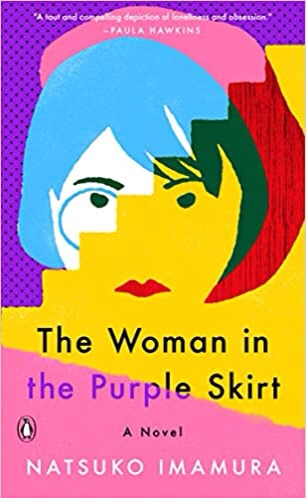
The Woman in the Purple Skirt by Natsuko Imamura.

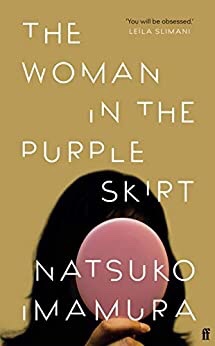
This was an unexpectedly quirky and refreshing take on the obsessional friendship trope, a theme I’ve loved ever since watching Single White Female back in the 1990’s. This is the first of the author’s novels to be translated into English from the original Japanese. I was surprised by that, because there was something about the writing style and the main character that I thought would appeal to the British reader. I thought earlier novels might have also appealed to British readers. The daily eccentricities of the the Woman in the Purple Skirt the man m were charming and intriguing, so it was that and my curiosity about the motives of the Woman in the Yellow Cardigan that drew me in to the story. There is also an interesting, melancholic sense of humour that struck me as something British reader would enjoy.

There are some characteristics that the two women share, such as living standards and finances. It’s possible that both are lonely and are living from hand to mouth, but what drives the Woman in the Yellow Cardigan to get up and watch her every move? What does she want? Eventually, she lures the Woman in the Purple Skirt to a job with the cleaning agency where she works as a hotel housekeeper. This brings the women into proximity, but instead of a friendship emerging, the Woman in a Purple Skirt falls into an affair with the boss. This is the main difference between the women; the Woman in a Yellow Cardigan only watches, while the Woman in a Purple Skirt actually lives. I felt this distinction very strongly and wondered whether there would be resentment or even anger towards the Woman in a Purple Skirt. This is where the book really ventures into thriller territory as the women meet and we see the dynamics of female relationships, the obsessiveness and that human need to be seen, recognised and even desired. This woman simply wants to be noticed and considered by someone else. Why do people recognise the Woman in the Purple Skirt? What does she have that makes people sit up and take notice?

I found myself thinking about the word ‘sonder’ – one I’m using for my own writing at the moment. It’s a German word to describe the realisation that every random passer by has a life as rich and varied as our own. This seems to be what the Woman in the Yellow Cardigan wants to know, the rich complexity of the Woman in the Purple Skirt’s life. The woman always wears a purple skirt, it is possibly this and her set daily routine that makes people notice her. As she leaves her apartment every day she is followed and insulted by neighbourhood children, in fact she’s great entertainment for the neighbours who seem equally fascinated by her set routine. Every day she walks to the bakery and buys a single cream cake, takes it to the same park bench and eats it. No one knows who her family are or where she’s from. Her jobs are temporary, she lives alone and doesn’t even attempt to relate to others. She is an enigma, and the Woman in the Yellow Cardigan watches her every move, until she knows her daily routine uby heart. Even her appearance is intriguing. From a distance she could pass for a schoolgirl, but up close she has liver spots that belie her age. Her hair is dry, she lives in a small, shabby apartment and is short on money. She looks like one thing, but could very well be another. She’s different, but seems to have carved a life out in the world, something that the Woman in the Yellow Cardigan seems to find so difficult.

I thought it was wonderful to have two such complex and multi-dimensional female characters, especially where the relationship between them is the focus. There was a peculiar creeping unease built into the narrative. Japan seems to exude ‘otherness’ like nowhere else, a theme explored in the film Lost in Translation. I lived next to a Japanese Garden for seven years, where English plants and trees were pruned into the shapes of Japanese topiary. Stepping into it from my cottage garden made felt like entering a surreal and alien landscape. That’s a little bit what this book felt like. It was original and refreshing, perfect for if you’re in a reading slump, and a fascinating take on the thriller genre.