Posted in Publisher Proof

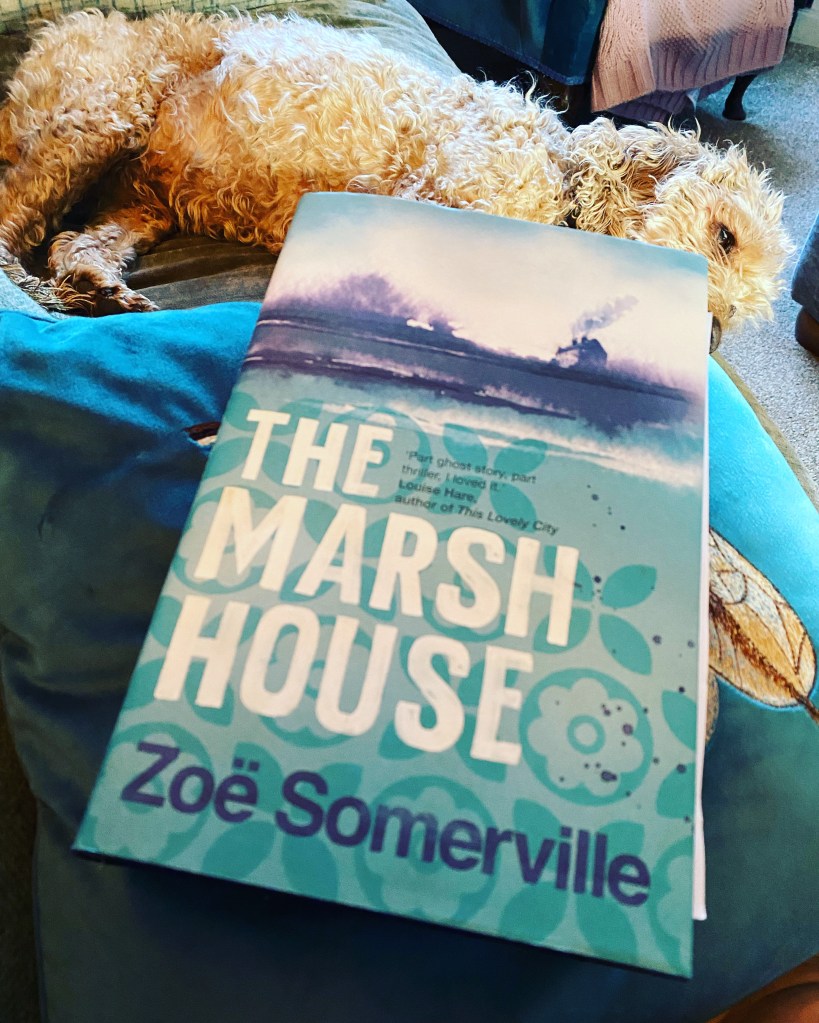
The Marsh House by Zoë Somerville

I simply loved this book. In fact, a finished copy arrived through the post and I started browsing the first page then couldn’t stop reading. So I read it straight through, finishing at 2am. It’s a split timeline story, beginning with Malorie and her daughter deciding to spend Christmas in a cottage on the Norfolk coast after an argument with her boyfriend. Malorie feels like a bad mother and wants to get one thing right – an idyllic holiday cottage Christmas for her daughter. Maybe if she achieves this one thing, she can convince herself she’s not as useless as she imagines. The sense of foreboding hits the reader immediately as the weather promises snow and Malorie becomes disoriented in the fog. She skids and ends up wedged into a hedge. The Marsh House itself is damp, dark and neglected. They cannot even see the sea through the mist. Malorie begins to wonder if this is a bad idea, but finds a pair of journals in the attic while searching for Christmas decorations, and she begins to read. Written by a young woman called Rosemary, who lived in the house, the journals tell a tale of a young woman’s crush on the boy from the big house. This young woman’s story paints a picture of 1930’s rural Norfolk, becoming a young mum and her husband’s link to fascism and Oswald Moseley in particular. Malorie can’t put the journals down, but alongside the house’s strange atmosphere, they are having an effect on her sleep and her state of mind.

I felt for Malorie straight away and her sprite of a daughter. Malorie is very hard on herself and has a negative inner voice, not helped by an over critical partner at home. Here she is capable, ordering logs and a turkey, rigging up a Christmas tree with vintage ornaments from the loft, and even managing real candles in their holders. However, even when she’s barely started the journals, the locals are giving her the house’s sordid history. That whiff of fascism becomes stronger when Malorie finds leaflets in the attic and the girl in the village shop asks if she knows what happened at The Marsh House? Tales of lost cocklers cut off by the tide that can still be heard screaming in the fog don’t help her state of mind. The house itself holds some scary relics too including a weird picture of women who perhaps lived here, one with bright green eyes that bore into you. I loved how the author drip fed these little bits of information, adding to the house’s history but also to the creepy tension that keeps building. It’s Malorie’s kinship with Rosemary, the writer of the journals, that drives the story forwards. The more she understands about the writer’s life, the more confused she becomes between fantasy and reality leading to some truly terrifying visions in the night. Why does she feel so connected with someone she’s never met who lived here thirty years before? Who is the strange woman with the large dog she sees from time to time, and why does she seem to be looking after the family by leaving logs to keep them warm?

I did enjoy Rosemary’s story too, her innocent crush on the boy from the family at the big house. She fantasises about what it would be like to have him like her too, to kiss her on the cheek and choose her above the more well to do girls in society. There does seem to be a part of him that is attracted to Rose, but she might also suit his purposes – a compliant country wife at home to keep the line going while he gallivants in London with Moseley’s social circle. Having read a bit about the Mitford sisters and Unity in particular, I had already known how popular fascism was in the ranks of the aristocracy and how some of our great country houses were used as meeting places for talks on appeasing Hitler. I hadn’t known of it’s hold in Norfolk and found this aspect of the book interesting. As time goes on and Rosemary is treated very badly by her husband it was clear that something terrible was going to happen, but the final revelations are truly shocking. I loved the way she delved into the complicated, emotional experience of becoming a mother. She opens up the inner world of these women, with their constant questioning of whether they’re good enough, or are they failing at this job we’re led to believe should come naturally? There is a special skill in weaving real historical events with fiction and this author is so talented and creative. She brings this area of England to life and makes the reader want to visit and search it out for themselves. The atmosphere was so evocative I spent two days with a ‘book hangover’ – unable to start another book because my emotions and senses were so embedded in Malorie’s story. I loved this so much I could have happily gone back to the first page and read it over again.

Published by Apollo 3rd March 2022

Meet The Author
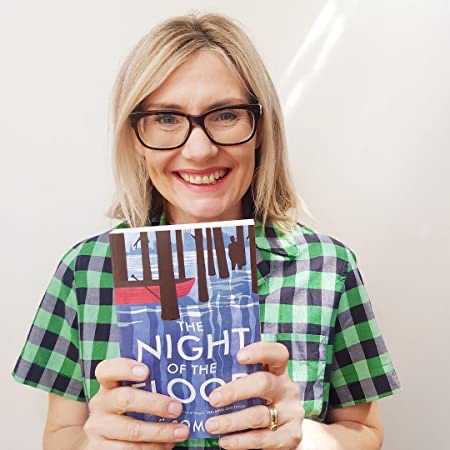
Zoë Somerville is originally from Norfolk, but has settled with her husband and children in the West Country. She works as an English teacher. Zoë began her debut novel, The Night of the Flood on the Bath Spa Creative Writing MA in 2016. It was published in September 2020. Her second novel, The Marsh House, a ghost story and mystery is published in March 2022. She is currently writing her third novel.

Posted in Publisher Proof

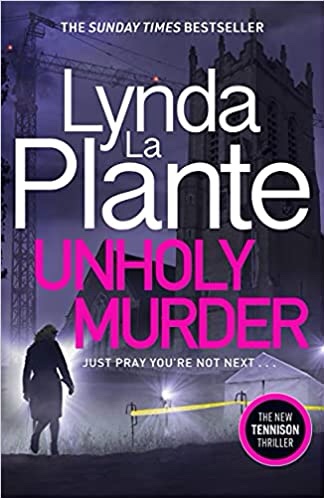
Unholy Murder by Lynda La Plante.

The great thing about having friends who are bloggers is that occasionally they have spare proofs lying around and are very generous in sharing them. I’m very lucky to be a member of the blogger’s group the Squad Pod Collective, they’re a great group of ladies and we all support each other so much. There are often spare, or unwanted, proofs trundling back and forth to each other through the post. However, this time I was lucky enough to receive a bundle of spares from a blogger more local to me and I’ve been sitting on them waiting for the New Year. I planned to take a lot less blog tours and read more by choice in 2022, because I’m back at university and didn’t want to become overwhelmed. Not that I’m finding it easy, especially when the siren song of blog tour organisers drifts into my inbox almost daily. I’m taking half the tours I did last year, which averages at about one a week. The bonus is that when I’m feeling frazzled with my uni reading I can read something really escapist or more gentle to offset the tension. Luckily for me, in my friend’s big box of books, was the latest crime novel featuring one of my all-time favourite fictional characters in books and television – Jane Tennison.

Starting with the eponymous Tennison back in 2015, Unholy Murder is the seventh novel in the Prime Suspect 1973 series. As prolific as ever, Lynda La Plante is delivering one of these novels per year and I’ve found it fascinating to watch the character we’re used to watching as a Detective Inspector, starting out in uniform and learning the ropes. This novel finds Jane as DS Tennison and embroiled in the case of a body found on a building society, in a coffin. The grounds where the developer is digging foundations used to belong to a convent that burned down a couple of decades earlier. The inhabitant of the strange metal coffin is dressed modestly, and her hands are entwined with both a crucifix and a rosary. So it would seem that the victim could be a nun. Who would kill a nun? The investigation will place Jane between developers keen to restart work and get the money rolling and a secretive Catholic diocese, desperate to sweep any evidence under the carpet. Not only is she concerned about finding the killer so many years later, but will she even be able to identify her?

I remember watching Prime Suspect as a very young teenager and I really admired Tennison. She was tough, clever and able to hold her own in a room full of men. I wanted to be a professional too, as good at my job as Tennison is. I even thought of being a police officer, but when it came to it I couldn’t meet the height restriction which was 5 feet and 5 inches back in the early 1990s. I loved her ability to read people, profile them psychologically and question them until they cracked. Of course if you asked my little brother why I used to love watching Prime Suspect he’d say because we were both bossy, but often bossy is a term used to silence ambitious women who are only giving orders. I was interested in the gender politics of the series, the way male officers would deride and try to undermine Tennison was shocking. The old boys network was working overtime, to wrong foot her and get her removed, especially if she had been made their superior. To me she was the first feminist character I’d really noticed in a lead role in a prime time tv series and i was inspired by that. She was also sexy, not afraid of asking for what she wanted in a partner. I couldn’t remember seeing a woman who was open and unapologetic in this way, even about one night stands. It was relationships she struggled with, finding that men wanted to be more important than the job. She was constantly apologising for not working regular hours, for not being available for family events and not being the little woman at home.

The great thing about these prequel novels is that we go back even further, to when a policewoman’s uniform included a matching handbag – useful for filling with stones and hitting criminals I guess. Jane is trying to make her mark, studying for her inspector’s exam and impressing the right people. The problem is that when she tries to impress she often goes off alone, takes unnecessary risks and leaves colleagues feeling that she’s holding out on them, to keep the best information to herself. Here she takes risks by befriending the parish priest and passing on a little more information than she should. She also keeps back something she’s seen because it doesn’t fit the way the investigation is heading, she wants to check it out for herself first. This puts her in considerable danger, as do her dating choices. The story of what has transpired in the old convent is harrowing, but believable and the author explores what happens when an institution cares more about it’s reputation than the truth. This should be scandalous, but seems very realistic, as is the reaction of Jane’s superior officer who has come up against the Catholic Church before. I am a Catholic and there was one detail that confused me. The nun in the coffin is Sister Melissa, but nuns would usually take saints names. I was taught by Sister Joan, Sister Anne and Sister Stephen (which at seven years old was incredibly funny). It’s a small thing, but these things jar in an otherwise well put together tale. I truly enjoyed the plot and spending time with a character I’ve known for a very long time. I would definitely recommend all of the Tennison series, for great storylines and the fascination of watching such a successful woman taking her first steps into the police force.

Meet The Author

Lynda’s latest book, Tennison, was published on 24th September 2015 and is the prequel the highly acclaimed Prime Suspect. The story charts Jane Tennison’s entry into the police force as a 22 year old Probationary Officer at Hackney Police Station in 1973.

Lynda La Plante is published in the UK by Simon & Schuster.

Lynda La Plante is published in the US by HarperCollins Publishers.

Please visit http://www.lyndalaplante.com for further information. You can also follow Lynda on Facebook and Twitter.

Posted in Publisher Proof

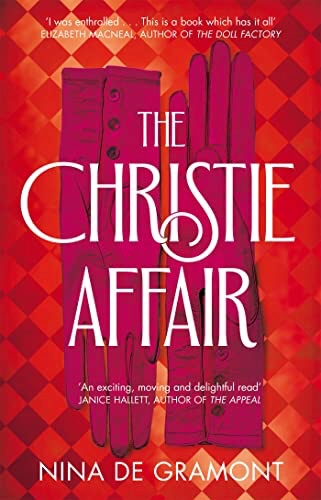
The Christie Affair by Nina de Gramont.

I enjoyed this fascinating novel that fictionalises the famous disappearance of Agatha Christie. On December 3rd 1926, after an argument with her husband Archie, Agatha Christie disappeared. Although there is still some mystery around her movements, it seems she crashed her car while driving down to London. Thousands of police officers and volunteers scoured the countryside near the crash site for Christie, but she was nowhere to be found. It was a huge news story with Arthur Conan Doyle becoming involved and famously hiring a spirit medium to find her whereabouts. She stayed missing for eleven days until she was found in a spa hotel in Harrogate, signed in under the surname of Archie’s lover. Contemporary theories were that this was a publicity stunt, even though Christie appeared to have been in a fugue state. She may have suffered a nervous breakdown after hearing the news that Archie was leaving her. Nina de Gramont weaves a complex tale around this incident, told through the eyes of Nan – Archie Christie’s mistress – an Irish woman whose pursuit of Archie had been so successful he decided to leave Agatha and divorce her, in order to marry Nan. This is only one part of the jigsaw that makes up the full story the author is telling, ranging back and forth and touching on various viewpoints, with the central figure never quite clear and the importance of peripheral figures more vital than I first realised.

We travel back to WW1 and it’s terrible effects on the years that follow. A time when the nation didn’t yet know that the peace they’d achieved was a mere interval of respite where recovery was barely possible. Nan is born of an Irish family, living in London, but is sent back to visit relatives in County Cork in summer since childhood. There she forms a friendship with Finnbarr, a dark Irish boy who has an affinity with animals, particularly his sheepdog Alby. Over the years their friendship grows into love and she is sure they will marry. A chance meeting on Armistice Day is a passionate interlude which leads to Nan being pregnant. Believing their marriage to be only a formality, Nan steals some money, laid aside by her Mum in case one of her daughters gets herself into trouble, and travels to Ireland and the farm. There she finds that Finn is delirious with fever from the Spanish Influenza brought back by returning soldiers. Denied by his family and with Finn thought to be at death’s door, she ends up in a Catholic Home for unmarried mothers. This place is really the genus of the story, because this isn’t Agatha’s tale, despite her being famous and the one who disappeared.

Meanwhile years later, as the Christie’s marriage implodes and Agatha disappears, we’re taken to a hotel in Yorkshire where Nan goes to stay and take a break before the transition of living with Archie. It’s a spa hotel with healing springs, two sets of newly wed couples and an Inspector Chiltern who has been sent to search for Mrs Christie. From these two time frames, the author cleverly weaves her story with the past gradually catching up with the present. I loved the historical detail of the story as the author uses everything from the decor to the women’s clothes to evoke the 1920s setting. There’s a sumptuousness to these descriptions that contrasts strongly with the earlier poverty, with the Magdalene Laundry section being particularly harrowing. I loved how playful the structure was, not quite revealing it’s genre. Is it a love story, an autobiography, or a detective novel? I also loved going back and forth in time, slowly picking up new threads of the story. I had no idea how they would all come together, but loved the way they did.

Meet The Author

Nina de Gramont’s latest novel, The Christie Affair, will be available In February, 2022. She is the author of a collection of short stories, Of Cats and Men, as well as the novels Gossip of the Starlings and The Last September. She has written several YA novels (Every Little Thing in the World, Meet Me at the River, The Boy I Love, and — under the pen name Marina Gessner — The Distance From Me to You). Nina teaches creative writing at the University of North Carolina Wilmington. She lives in coastal North Carolina with her daughter and her husband, the writer David Gessner. 

Learn more about Nina at http://www.ninadegramont.com

Posted in Publisher Proof, Random Things Tours

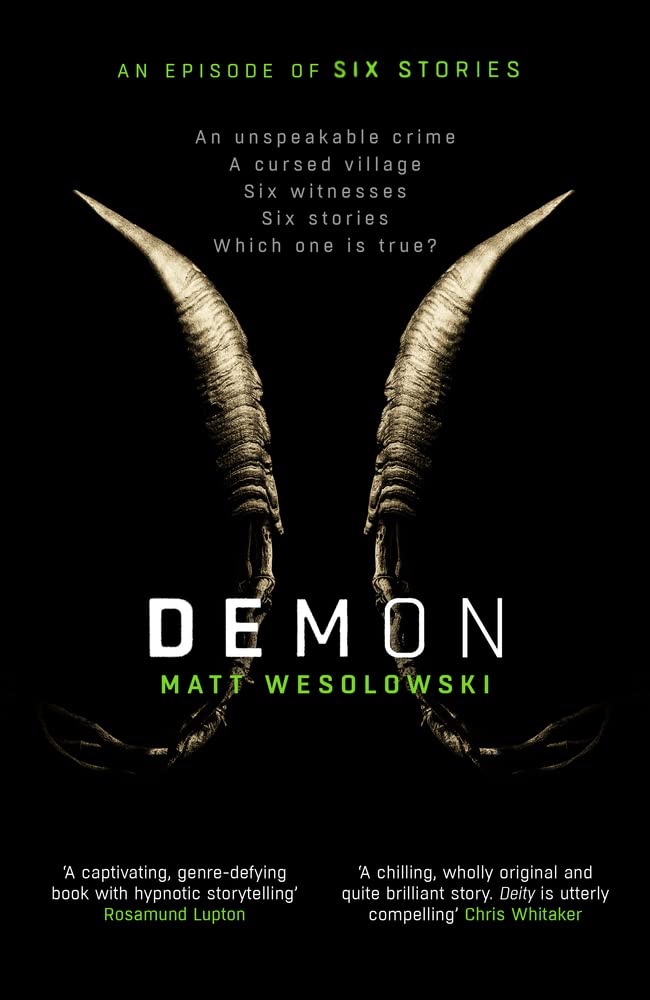
Demon by Matt Wesolowski

I was fascinated and blown away by this sixth novel in the author’s Six Stories series. As always the novel’s structure is based on a podcast format, where Scott King presents his investigation into a true crime case. Each podcast consists of six stories told by six people associated with the case, with additional emails, news reports and documents on the crime. This time King has chosen a highly emotive crime that reminded me of the James Bulger case. The novel takes us to the old mining village of Usslethwaite in Yorkshire, where a terrible crime was committed, one that shocked the world. In 1995 the murder of twelve year old Sidney Parsons, by two boys his own age, was front page news. The murderers were dubbed the ‘Demonic Duo’ by the press and as well as the usual speculation about both the boy’s upbringing and mental state, there was a whisper of something more sinister. The hills above Usslethwaite were reknowned as a place where witches congregated, all the way back to the 17th Century when witch-hunting was rife. Rumours of something dark and disturbing lurking in the caves near the crime scene had plagued the village for centuries, as well as more contemporary plagues of flies, animal deaths and a strange black shape seen nearby. Is there something supernatural and demonic about this crime? Or are they just hysterical excuses for a crime so savage no one can understand it? Now that the murderers have reached adulthood, they’re quite possibly rehabilitated and living somewhere in the U.K. Maybe now it’s time to hear the truth about what happened when Robbie and Danny formed a friendship and proceeded to commit this unspeakable crime.

I love the originality of this author’s work and his audacity in writing about subjects other writers might avoid. I was 20 years old when Robert Thompson and Jon Venables lured James Bulger away from his mother at a Liverpool shopping centre, then murdered him and left him on the train line in Walton. Everything I remember from that case also comes up in the course of King’s interviews about Usslethwaite. I remember being shocked by the murder, the age of Thompson and Venables, but also the savagery of the press and public towards the accused who were still children. Whilst the anger the crime aroused was understandable, I couldn’t understand grown men gathering outside a court to attack the prisoner transport. I kept wondering what their goal was. What would they do if they actually broke through to those boys? Even now, the mention of either boy, their incarceration or the new lives they now have kicks up a frenzy of controversy and rage. While Demon isn’t based on the Bulger case I did wonder if Wesolowski had it in mind, because he has managed to capture a lot of those conflicting feelings in this novel. Through his podcast guests we can look at different aspects of the Usslethwaite murder, and consider the differing perspectives on what happened. Although there is outrage that Scott King is even featuring this case, I can see that all he is trying to do is answer that universal question: Why? What drove these two boys to kill?

The psychological and paranormal aspects of the case are carefully intertwined here. Robbie is a newcomer to the village, fostered by a lovely, community minded couple who haven’t been able to have children. There is speculation on what Robbie went through before he was taken into care and whether he is the disruptive force behind the crime, with Danny simply taken along for the ride. However, Danny is quite a sad, lonely and disturbed little boy even before Robbie comes along. He found his mother when she had hung herself from the rafters of the barn. Rumours abound about his mother who was a herbalist and reiki healer – something rather frowned upon and misunderstood by some members of the village. In fact she was well regarded by her patients and it could be said that the suspicion was raised due to her occupation and how lucrative it seemed to be, more than anything she did. There were reports of her coming down from the caves with another person, scandalously naked. She was also thought to set fires and dance around them. However, to Danny she was the parent who brought warmth, love and softness to his life. Without her, he is left in the care of his father who is not a bad man, but is absorbed by work and struggles to show affection. Danny visits the caves to speak to his Mum, and thinks he might hear her, but in this dark place it’s hard to know who or what might reply.

The author is incredibly skilled at ratcheting up the tension, whether with more detail of the case or the next eerie happening. I often found myself reading yet another chapter so I could find out what was next. I found the paranormal elements clever, I wasn’t scared at first, but after a while the atmosphere built and I found myself uneasy. One night, my other half asked me to turn the bedside light off since it was late and I found myself unsure whether I wanted to carry on reading in the dark. The strange happenings in Robbie’s room at his foster home were very unsettling, from phantom footsteps to flies and a horrible smell that seems to permeate everything. There’s so much in this village that can’t be explained and is witnessed by lots of different people. Were these boys influenced by demons or was this a case of two very mixed up and lost boys doing something so terrible it would destroy the village, the victim’s family, and the rest of their lives. I loved the varied perspectives, especially those unexpected ones that took our understanding to another level. While never losing sight of the victim and his family’s loss, we get to explore the ideas of rehabilitation and how a perpetrator lives with their crime, especially ones so young. Can they ever make a life for themselves and get over the guilt? Or are they forever doomed to keep moving, constantly looking over their shoulder for fear of being exposed? I was fascinated with the question of whether a demon influenced these boys or whether we could call the boys demons. They are labelled monsters, but are they? Perhaps we just label them this way, because we can’t accept one human being could do this to another, let alone a child. This is another incredible read from this inventive and original author. I devoured it so quickly that I’m buying the whole series with this month’s book budget.

Meet The Author.

Matt Wesolowski is an author from Newcastle-Upon-Tyne in the UK. He is an English tutor for young people in care.

‘Six Stories’ was published by Orenda Books in the spring of 2016 with follow-up ‘Hydra’ published in the winter of 2017, ‘Changeling’ in 2018, ‘Beast’ in 2019 and ‘Deity’ in 2020.

‘Six Stories’ has been optioned by a major Hollywood studio and the third book in the series, ‘Changeling’ was longlisted for the Theakston Old Peculier Crime Novel of the Year, 2019 Amazon Publishing Readers’ Award for Best Thriller and Best Independent Voice.

‘Beast’ won the Amazon publishing award for Best Independent voice in 2020.

Posted in Netgalley, Publisher Proof

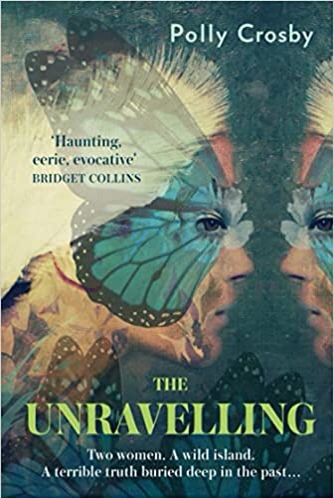
The Unravelling by Polly Crosby

When Tartelin Brown accepts a job with the reclusive Marianne Stourbridge, she finds herself on a wild island with a mysterious history. Tartelin is tasked with hunting butterflies for Marianne’s research. But she quickly uncovers something far more intriguing than the curious creatures that inhabit the landscape. Because the island and Marianne share a remarkable history, and what happened all those years ago has left its scars, and some terrible secrets. As Tartelin pieces together Marianne’s connection to the island, she must confront her own reasons for being there. Can the two women finally face up to the painful memories that bind them so tightly to the past?

I found the last chapter of this new novel incredibly moving and I was smiling through tears as I closed the book.

Polly Crosby you ruined me for other books, for at least a couple of days!

Marianne’s memories of the island take us back to the years between WW1 and WW2, when she lived in the same family home with her mother and father. The Stourbridges were the guardians of the island, through her mother’s side of the family. However, it was Marianne’s father who had taken control of the island and it’s resources. Her family were rich, relying on herrings and pearls to keep their fortunes buoyant and providing work for the islanders. Under Mr Stourbridge’s control the businesses were losing money so he needed to diversify, and settled on silk-making as a way out of difficulty. Mulberry trees and silkworms arrived on the island and Marianne was researching to find out how to produce the best silk thread, but didn’t know that her father had hired a silk girl to come and start things. Nan came to live in their house and although the girls built a friendship, Marianne missed time with her father which was now being sacrificed for Nan and the silk worms. I had so many thoughts and questions in my head by this point. How had the family’s fortunes changed so drastically? How sad it must be for Marianne’s mother to watch her family businesses taken from her and mismanaged simply because she was a woman. Who was Nan and why was she dominating so much of Mr Stourbridge’s time? The author drip feeds these memories into the present day story, answering some questions but leaving others so I was always waiting for the next memory to know what happened next. There was a growing tension in the house that led me to believe an explosion was coming, something that would change Marianne”s life forever. Each section shed light on something in the present day, but I wanted the whole story of why Marianne was so alone in her old age, when did her family leave the island but most of all why was the island requisitioned?

I loved the sense of the uncanny that the author created; a feeling that life on the island was like real life, but not quite. There are strange, unfinished or half destroyed buildings, eroded cliffs and houses that have been literally swallowed up by the sea. Tartelin’s island has a feel of dilapidated grandeur in it’s buildings. They must have once been extravagant and beautiful, like the pavilion where Tartelin meets the peacock, but slowly being broken down and reclaimed by the sea. This is a strong theme throughout the novel, the idea that nature will always find a way, like a flower growing from a tiny crack in the pavement. I found Marianne a fascinating character with the manner of someone very intelligent and far too busy to be bothered with trifles. Her exterior as this grumpy old woman probably brushes most people off, but Tartelin is more persistent than most. Watching these two women slowly learning to trust and understand one another was a joy. Marianne’s story, as it is revealed, moved me beyond words. Even though there’s a fantastical, dream-like quality to her recollections the emotions ring true and are devastating to witness. However, I also felt an incredible sense of joy over the ending too. This novel is evocative and bittersweet, full of rich detail and interesting women. I have no hesitation in recommending all of Polly Crosby’s writing, but this is extraordinary and will stay with me forever.

Published by HQ on 6th Jan 2022

Meet The Author

Polly Crosby grew up on the Suffolk coast, and now lives with her husband and son in the heart of Norfolk. Her debut novel, The Illustrated Child (The Book of Hidden Wonders in the US and Australia) is out now. Polly’s second novel, The Unravelling will be published in January ‘22.

In 2018, Polly won Curtis Brown Creative’s Yesterday Scholarship, which enabled her to finish her novel. Later the same year, The Illustrated Child was awarded runner-up in the Bridport Prize’s Peggy Chapman Andrews Award for a First Novel. Polly received the Annabel Abbs Creative Writing Scholarship at the University of East Anglia, and is currently working on her third novel.
Twitter: @WriterPolly

Instagram: @polly_crosby

Website: pollycrosby.com

Posted in Netgalley, Publisher Proof

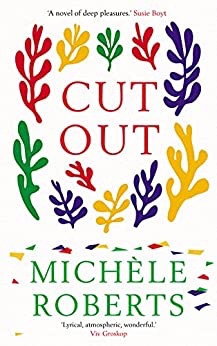
Cut Out by Michèle Roberts.

This is an interesting book, focused on the later years of Henri Matisse and those who cared for him. This was the period where Matisse was creating his famous ‘cut out’ works, works that are linked inextricably to the body that’s failing the artist and the structure of this novel. I visited Tate Modern for the Matisse exhibition a few years ago, and because I’ve studied disability theory and life writing I could see that these cut out pieces were a metaphor for a body that was failing, piece by piece. By taking a whole piece of paper, cutting out these shapes, and rearranging them to make a piece of art, I felt the artist was trying to communicate what it is like to have all the pieces, but no longer in the order that makes up a whole. When we become sick or disabled our body doesn’t work as a cohesive whole any more. The pieces are different, rearranged and not necessarily working together harmoniously anymore. In my writing therapy groups, often for people with disabilities, I encouraged journal work that experimented with structure. I wanted to encourage writing that was the embodiment of the writer’s illness or disability. The writing produced is often fragmentary, moving between long lyrical sentences and short, snappy statements. In my own work there are gaps where I don’t have the language to express how my multiple sclerosis feels or how my emotions process the change from day to day. Often fragmentary paragraphs don’t seem related at all – representing the nerve damage that occurs in this disease, preventing the signals that keep a body coherent and working in harmony with itself. As a group we talk to our illness, we give it a name and a body of its own, then chat to it and record what comes back.

I believe all of this is what Matisse was representing within a cut out piece and I’m sure that Michèle Roberts is doing something equally clever in the structure of this novel, that can seem a bit bewildering at first. Sentences are very free form, there are fragments from different unnamed characters, there is speech without punctuation and time differences that are not obvious straight away. Might this lack of structure alienate some readers? Quite possibly, but I don’t think Roberts is thinking about clarity, she’s making a work of art. The best thing to do is just go with it and let the writing flow over you, until the meaning becomes clearer. Sometimes, when we visit a gallery, we need time to engage with some pieces. We simply have to stop and look for a while with no expectations. In the same way, I did find myself having to go back and reread sections of this book, so it isn’t a quick read, and it won’t be for everyone.

In his final years, Matisse is living at the Hotel Regina in Nice, where he has a studio and is making his famous cut outs with the assistance of Lydia (Delectorskaya ). Eventually he cannot get out of bed and needs nursing care, for day to day living. One is named Monique and one voice of the novel is Clémence, a friend of another of his nurses. There’s also Clémence’s friend Camille, who is pregnant to another artist. In a later time we meet Denis, a man in his sixties who was adopted when he was a baby by friends of Clémence. Denis is attracted to a man called Maurice who he allows to sublet his flat while he’s away in Paris trying to uncover the secrets of his birth. All of these character’s stories come in ‘cut outs’ and the reader has to make sense of it. What we do get is an incredible sense of place, from Roberts’s long, lyrical and descriptive passages. We move from character’s memories, back in time to the actual events. The past explains the present day in parts, but not in others. While I didn’t feel I was fully engaged with the story, I did love the sensual descriptions of art and food, and my senses were fully engaged with these parts, The ending, when it came, was sudden and rather abrupt. It felt jarring after such a slow, meandering narrative. However it was a book that left me thinking and that’s never a bad thing.

Published by Sandstone Press 12th August 2021.

Meet The Author

Michèle Roberts is the author of fourteen critically acclaimed novels, including Daughters of the House, which won the WHSmith Literary Award and was shortlisted for the Booker Prize, and, most recently Ignorance, which was longlisted for the Women’s Prize for Fiction, 2013 and the Impac Award. Her memoir Paper Houses was a BBC Radio 4 Book of the Week.

Posted in Domestic Thriller, Publisher Proof

The Second Woman by Louise Mey.

I was truly gripped and unsettled by this domestic thriller, and it’s themes of control and coercion. The author truly understands this type of relationship and the psychological trauma that slowly trickles down to the rest of the family. Sandrine is our main character, a discreet, gentle and loving woman who doesn’t want much. She just wants a loving husband, someone who wants to go to bed with her every night and wake up with her every morning. She wants someone who shows his affection and holds her hand in front of others. She’s so concentrated in looking for this, that when Mr Langois appears on the horizon, he is going to be her ‘one’. Mr Langois does offer her some of what she wants. She now has a beautiful place to live and is close to his son, which does show an element of trust. Yet, she can’t forget that this is a house where a woman went missing. His first wife was there and then she disappeared. In fact, she is presumed dead, and Sandrine, who is discreet, loving and oh so grateful, slips into the void left behind. She has been doing her best to bring back a smile to the grieving husband and little Mathias. However, he will never really be her son, and Mr Langois is not really her man. In the back of her mind, she feels the woman who was there before, the one who made this house a home and belonged here in this family, Then suddenly the woman who’s been haunting Sandrine reappears. Alive. Sandrine’s world crumbles and falls apart.

This book is both compelling to read, but also intelligent and profoundly disturbing. Whereas the first half is largely setting the scene, the second part becomes more and more chilling. We are treated to all the twists and turns related to the disappearance of the first wife while she infiltrates Sandrine’s life; what follows is so insidious and feels evil. It’s very well written, with a brilliant depiction of Sandrine’s personality change, from a woman who only wanted to have her own man to love and feel loved back, to an obsessive. The obsession is borne of her low self-esteem and could lead her from jealousy into being a full-blown monster. The story is written with waves of the worst tension, and this never lets up, especially once Mr Langois’ first wife returns and begins manipulating. The author manages to scare us without a need for physical violence, something which doesn’t surprise me as I am a survivor of coercive control. By the time I’d found the strength to leave, I didn’t really know who I was anymore. It took so long to try and put myself back together. This book has that strange quality of being fascinating yet repulsive at the same tune. I sort of felt the way I do when watching nature documentaries. It’s incredible to watch the ability of the beautiful creature at the top of the food chain, but also dreadful to watch the pain and fear of the animal being hunted. It’s horrible, but you can’t turn away. This is such an immersive read, you’ll look up from the page and wonder where you are.

Published 2nd September 2021 by Pushkin Vertigo

LOUISE MEY is a Paris-based author of contemporary noir novels dealing with themes of domestic and sexual violence, and harassment, often with a feminist slant. The Second Woman is her fourth novel, and the first to be translated into English. LOUISE ROGERS LALAURIE is a writer and translator from French, including Frederic Dard’s The King of Fools and The Inspector of Strange and Unexplained Deaths by Olivier Barde-Cabucon, both published by Pushkin Vertigo. Her work has been shortlisted for the Best Translated Book Award, the Jan Michalski Prize for Literature and the Crime Writers Association International Dagger.

Posted in Netgalley, Publisher Proof

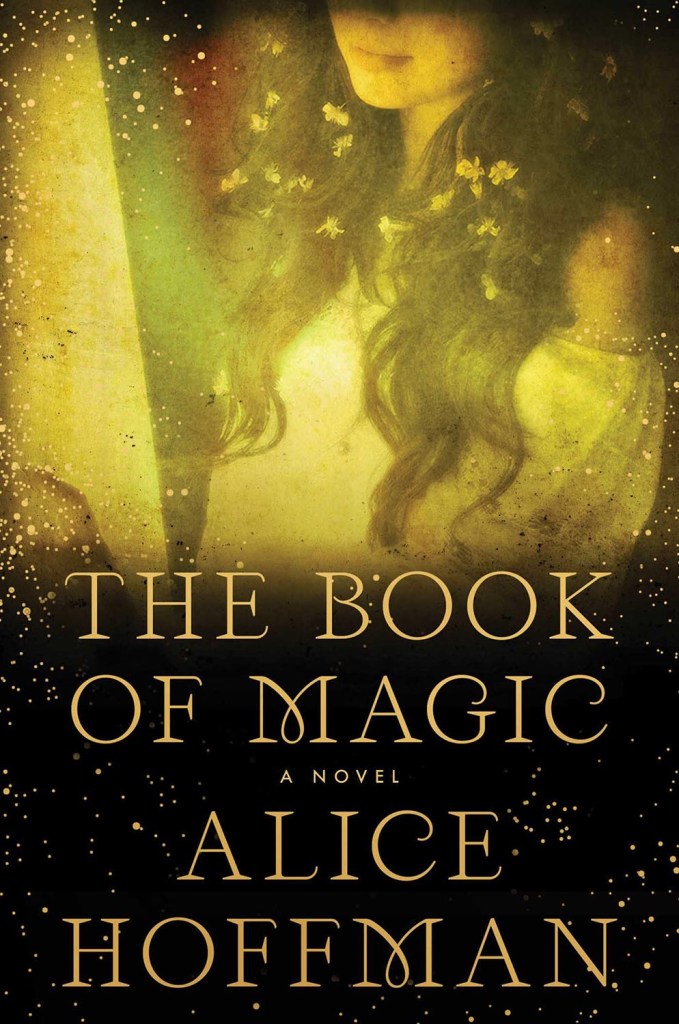
The Book Of Magic by Alice Hoffman

This has been one of my most anticipated novels for this year, then it’s publication date was changed to January 2022 and I was going to have to wait a bit longer. I finally snagged a copy on NetGalley last week, and its no surprise that I started to read it straightaway. Was it worth the wait?

This is the fourth and final book in Hoffman’s Practical Magic series and it really does come full circle. We have three generations of Owen’s sisters in this tale: Franny and Jet, Gillian and Sally, and finally Sally’s daughters Kylie and Antonia. In fact this really does take us full circle, rather like the symbol of the Ourobos, a snake swallowing its own tail which is, rather aptly, the symbol of dark magic. So, here we have those Owenses who have dabbled as practitioners of the dark arts, such as Franny and Jet’s brother Vincent. Could one of the younger members of the family be heading down that dark route and what would call them there?

Regular readers will know that the curse of the Owens family is lodged in the love part of their lives. This was a curse placed by Maria Owens who knew the truth of how women might become undone by men. The various family members have found their own ways of circumventing the worst of the curse, after Jet lost her true love as a teenager. Gillian is married, but she doesn’t live with Ben or wear a wedding ring. Sally has lived with a man but lost him very young and the heartache has closed her to that part of life. Now all she cares for are books. Antonia is married to her work as a doctor, but is having a baby with her gay best friend. However, for their youngest, Kylie, love has been part of her life for a long time. She is inseparable from her best friend Gideon but they have never spoken of their love for each other. Till now. Two losses happen to Kylie at once. The death watch beetle is clacking in the walls of the house on Magnolia Street where Sally, Kylie and both elderly aunts reside still. They have barely said their goodbyes, when Kylie’s Gideon is in a terrible accident and is so badly injured he is in a coma.

Kylie takes matters into her own hands and is drawn to a hidden Grimoire in the Owens Library. A Grimoire is a witches personal journal and book of magic. Kylie believes this book has the answer to ending the Owen’s curse, but the final pages are stuck together and she can’t enact the spell. Kylie returns to where the Owens story starts, in the original Essex county in England. Here she hopes to find the secret to opening the last pages of the book, but there are two warnings attached to her quest. She mustn’t trust the wrong person and if she is the one to overturn the curse, she must be prepared to lose everything. However, when Kylie is in danger, it will take Franny, Sally and her uncle Vincent to join the quest. Which one of them is the key to end the curse? And what price will they need to pay?

I struggled with the first few chapters of the book, but that might have more to do with me trying to read it Christmas week, when having a prolonged time to sit and read is impossible. Once I could spend some time with the story I really started to enjoy it. I welcomed the cross generational aspect to the story, and those reminders of everything that had gone before. From Levi Willard’s teenage love for Jet, Vincent’s years in NYC as a musician and all the way back to Maria Owens and her difficulties accepting the love of Samuel several centuries earlier. There are seeds of hope, as new life comes into the family, as Antonia’s love for Ariel takes her by surprise and new familiars seek out their human counterparts. Sally has always been interesting to me and her continued tightrope walk between the magic that is her birth right and her need to stay under the radar and keep her girl’s safe. The women are always treading a line between the future they are born with, shown on the right palm and the future they choose, shown on the left. I loved how her story ended, it felt satisfying and even full of hope, given the heartache that went before.

What stood out loud and clear was, that despite being cursed in love, the love the women have for each other is a blessing. In particular, Franny and Jet’s love for Sally and Gillian. Brought to the crooked house as small orphans, the aunts loved their nieces as their own and taught them everything they needed to be safe and understand the magic they were born with. Any trouble or danger brought both aunts running to help and protect them, even into their old age and especially in this story. This love stands out stronger than any other in all four books and never dies. Everything I love about Hoffman is there, her wonderful descriptions of nature and the women’s links to the natural world. Her descriptions of spells and their effects are fantastical and so vivid, especially the menacing red rain poisoning a whole community. I love that the books celebrate strong women, who support each other and their right to be individuals. This is a fitting end to a series that begins chronologically with persecution, betrayal and death. It ends with a sense of the Owens family being part of a community, playing a bigger part in the world and learning how to utilise their magic in harmony with the world.

Published by Scribner U.K. 6th Jan 2022.

Meet The Author.

Alice Hoffman is the author of thirty works of fiction, including Practical Magic, The Red Garden, The Dovekeepers and, most recently,The Museum of Extraordinary Things. She lives in Boston. Visit her website: http://www.alicehoffman.com

Posted in Netgalley, Publisher Proof

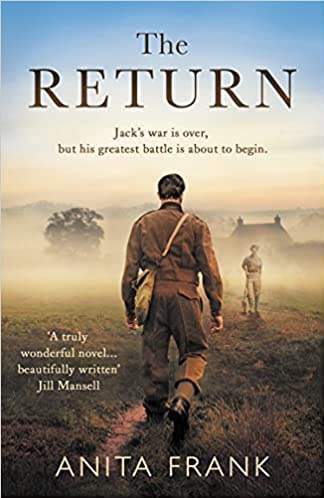
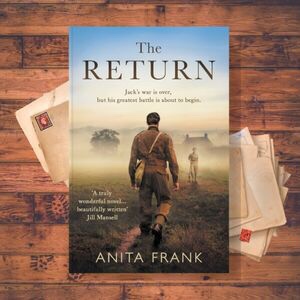
The Return by Anita Frank.

This beautiful story has just made it under the wire as I was compiling my Top 21 Books for 2021 and it truly deserves it’s place next to the others on the list. I was gripped by the story of Jack, who makes a very different promise to his new bride Gwen on the eve of WW2. Most soldiers are promising to see them again, to return, but Jack is quite clear. If he should survive the war, he won’t be back this way again. Gwen prays he keeps to his promise, but as they celebrate VE Day she does keep looking over her shoulder. What if he reneges on his promise? War has changed Jack and he is no longer the man who made that bargain. He wants to return and claim Gwen as his bride again, but little does he know that this could set in motion a chain of events that will leave he and Gwen fighting for what they love most.

We go back and forth in time throughout the book, but begins with Jack fleeing his home city on the night train, shielded by a friend who’s working on this nightly service down south from Newcastle. Jack is like many other young men in Newcastle, he’s a riveter in the shipyards and lives in a terrace house with his Mum and sister Jenny. One moment life is trundling along as normal, then the next a terrible twist of fate leads to a violent act of revenge. Stowing away on the night train, Jack plans to hop off somewhere far away where he can find work. So, as if from nowhere, he appears round the bend of a country lane to find a young woman who has fallen from her horse, but has her foot trapped in the stirrup. He hurries to help Gwen as her skittish horse takes off in the direction of the village. He takes her home to her family farm, where she helps her Dad with the dairy cattle and any other jobs that need doing. Lucky for Jack he’s arrived at a busy time on the farm, so while he stays for a home cooked meal to thank him for his service, Gwen’s dad Jim asked if he would like to stay and work. Jack accepts and as Gwen shows him his bed in the tack room, he thinks he may have fallen on his feet for the summer. What he doesn’t know is that Gwen is about to put him in a very difficult position. As he investigates a noise in the stack yard at night, he finds Gwen trying (and failing miserably) to quietly retrieve a ladder. She can’t pass her father’s door because the floor boards squeak. Reluctantly, he helps her climb up into her room, knowing that she must be meeting someone secretly and is surprised by how that bothers him.

I grew to like Jack, who is a young man of principles, only resorting to violence when someone he loves is hurt. He has an inbuilt moral compass, especially in his dealings with women and is very critical of anyone who doesn’t meet those standards of behaviour. He knows that in circumstances where young men lead women on and make false promises, it is the woman’s life and reputation that is ruined while the man just carries onto the next victim. He is a gentleman in his behaviour, even if he isn’t in position. I loved how he doesn’t have that family structure at home, but finds it with Jim and Gwen, and even housekeeper eventually. I didn’t always understand Gwen, although she is very young at the start of the novel and thanks to Jim’s overprotective nature, she’s quite naive. Something I did understand was her loyalty to the land and farm, it’s a way of life that’s in her blood and she isn’t afraid of hard work. She takes a very active part in the farm, from early morning milking, to driving tractors and locking the livestock up late at night. I thought the differences between gender and class were very pronounced in the novel. The women were far from passive in this rural community, with Gwen and Norah as great examples. It was interesting to see how the women from the hall were very separate from this industriousness – something that works against Gwen when it comes to being a mother.

The author creates a beautiful link between Gwen’s wholesomeness and the countryside – she’s miles away from the girls Jack has encountered in the city. She’s a young girl between places in society, she’s not in the lower classes but she’s not good enough for the landed gentry to consort with. At least not in public anyway. In the wartime sections of the book she’s well contrasted with land girl Norah, who has a cynical and knowing way about her. If they go the pub or an event, she soon disappears into a crowd of enthusiastic young men and seems completely at home flirting and telling stories that make them roar with laughter. Gwen is quieter, worried about how the farm will keep going with just her and Norah, wanting desperately to hold on to her father’s legacy. Besides, she knows the lies young men tell and the damage they can do. In those wartime sections, I felt the land and the countryside around it contrasted with the imagined battlefield far from here and the changes that farming had to come. Land was commandeered by the Ministry of Agriculture and fallow fields ploughed up for crops to feed the country. It was the beginning of the end for that quiet time when two ponies pulled the plough and two workers would weed the crop using a hoe. These passages of man working quietly within the countryside soon gives way to more modern farming methods which feel at odds with nature, rather than being harmonious. The author’s descriptions of animal and bird life are like a hymn to the old ways. I understood Jack’s need to return to this life, to feel at peace within it and allow the noise of battle, lodged in his head, to die down. However, I couldn’t see how he could stay either. I wondered constantly when the past would catch up with him and whether Gwen’s secrets could possibly remain hidden. This was a different slant on WW2, full of beautiful pastoral scenes and a relationship I was wishing would turn to love. A simply gorgeous read.

Meet the Author

Born in Shropshire, Anita studied English and American History at the University of East Anglia. She now lives in Berkshire with her husband and three children.

Posted in Netgalley, Publisher Proof

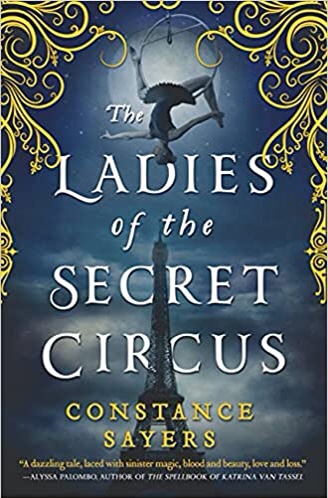
The Ladies of the Secret Circus by Constance Sayers.

The opening of this book, where Lara enchants her own wedding dress so it’s more to her liking, showed promise for the rest of the novel. Her marriage to Todd is the next morning, but as she’s waiting for her groom some bad news arrives. His best man is local law enforcement officer Ben and he tells her that Todd can’t be found. His car is found abandoned at a bend in the road where thirty years earlier another young man disappeared without a trace. Pete was in a band with Lara’s father, who has always been affected by the loss of his friend. Surely there’s a connection? Lara’s search for answers leads them to a journal written by her great-grandmother and the tale of a secret circus, where they perform using real magic. In Belle Èpoque Paris we follow the story of Cecile Cabot, Lara’s great grandmother, the subject of one in a series of three paintings by artist Émile Giroux. Cecile’s life is bound to the circus as is her sister Esme’s, but why are they cursed in this way and is it a price that the women in the family are still paying to this day?

From Lara’s wedding day onwards, the first section of the book set in idyllic Kerrigan Falls didn’t quite have the spark of that first scene. I worried that the book might be a bit saccharine sweet for my taste. It was typical small town America, but with barely any crime or unpleasantness. Residents seemed to get along easily and everyone cared about the town’s history, it’s beautiful period buildings and stunning setting. Lara bought the local radio station, her love of music coming from her famous musician father. I didn’t quite believe how lovely the place and it’s people were and I suspected there was a darker underbelly. This was hinted at in the the disappearances of these young men, but also the strange happenings in Lara’s life that started when she was a young girl and saw an unusual looking man and woman in their field who disappeared into thin air. Schooled by mum Audrey to keep her powers under wraps, Lara is sad about how her premonitions affect people. When she hears a vaguely familiar song, lurking underneath a track on one of her dad’s albums, she plays it on her guitar. The refrain is like a nagging tooth ache, but when her father hears it he goes white. It was one of Pete’s songs and they never recorded it.

I found it sad that these powerful women were having to hide their real selves to be accepted, especially when it came to love. Audrey’s marriage to Lara’s dad was blighted by Peter’s disappearance and now Todd was gone too. I really enjoyed Lara’s relationship with Ben, who was Todd’s friend and is just as invested in knowing what happened as Lara is. They’ve grown close trying to solve the mystery, but their relationship is full of unspoken feelings and guilt. When Audrey gifts Lara with a painting of her great-grandmother, to put up in her new home, the framer recognises it as a lost painting of Giroux. They then travel to Paris to meet an expert on the painter and have it’s provenance confirmed. It’s here that the story really took off for me, because the sense of place is wonderful and there’s a real momentum in their search for answers. The circus is the perfect antidote to the sweetness of Kerrigan Falls. I won’t ruin your discovery of this world, but it is truly fascinating, macabre, beautiful, magical and horrifying all at the same time. I was hooked by the scene the author was describing and fascinated by Lara’s family history. The small details, such as the circus only appearing to those with a personal invitation which bled if it was torn, were quite disturbing. The magic practiced there had parallels with Lara’s skills – simple tabby cats turned into ferocious big cats. There were surprises I hadn’t expected and Cecile’s final diaries are the vital first hand account of the circus’s history, as well as her own love story. I was immersed in this magical tale and didn’t really want it to end.

Published on 9th November 2021 by Redhook.

Meet The Author.

Constance Sayers is the author of A Witch in Time. A finalist for Alternating Current‘s 2016 Luminaire Award for Best Prose, her short stories have appeared in Souvenir and Amazing Graces: Yet Another Collection of Fiction by Washington Area Women as well as The Sky is a Free Country. Her short fiction has been nominated for the Pushcart Prize and Best of the Net. She received an MA in English from George Mason University. She lives outside of Washington D.C. Like her character in The Ladies of the Secret Circus, for many years, she was the host of a radio show from midnight to six.