Posted in Throwback Thursday

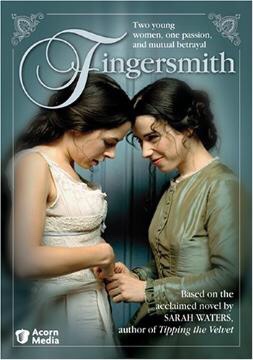
Throwback Thursday! Fingersmith by Sarah Waters.

Sarah Waters is one of my favourite writers. Anything she writes is a pre-order in my house, so there may be some bias in my next statement. For me, she is one of the best writers of the 20th Century with, hopefully, more to come. More recently, she has dabbled into the early 20th Century and even WW2 for her novels The Night Watch and The Little Stranger, but she started back in the 19th Century and this is my favourite from that series. Amazon calls her genre Lesbian Victoriana, which made me giggle a little, but I think Waters is doing more than that; she is chronicling women’s experience. She includes lesbian encounters and women falling in love with women, but in this book that’s an aside rather than the main focus of the plot. I think to term these novels as lesbian novels is reductive and has a sense of prurience. I remember the fuss and excitement when Tipping the Velvet was serialised at the BBC, and male journalists practically salivating over Rachel Stirling and Keeley Hawes. I think they’re intended to be read as women’s experiences of living in Victorian England, with the women’s sexual relationships as part of an unspoken subculture only just emerging into the open. She is using the device of ‘writing back’ to the historical period and bringing a group into the limelight who were hidden at the time and never portrayed in fiction. It’s about seeing the Victorian era and women’s lives in totally new eyes, and accepting that the literary canon only shows us a small part of a vibrant and varied world. As with history being written by the victor, literature of the early to mid 19th Century tends to be written by white, straight, middle-class males. Waters is trying to redress the balance and give us a minority viewpoint which I love.

Orphan, Sue Trinder, lives in a family of petty thieves and is trained to become a ‘Fingersmith’. Based in London, the den is run by a motherly woman who has a hard and ruthless side. All the thieves congregate and bring their wares to ready them for sale, while a baby farm is run on the side. It is here that a man called ‘Gentleman’ recruits Sue for a scam to defraud a wealthy heiress. We also meet a young woman called Maud Lily, she’s an orphan too, but with a home in a gloomy mansion as the ward of an odd Uncle. She has a very comfortable life, helping him with his work as some sort of secretary, but his subject matter might raise an eyebrow or two. He is an avid collector of Victorian pornography. This makes Maud very uncomfortable, but it seems an unspoken agreement that her help is in return for his protection. This strange upbringing makes Maud very sheltered and naïve in one respect, but also strangely knowing in others. Gentleman has devised a long con that starts when Sue is placed within the mansion as Maud’s lady’s maid. She will then encounter the Gentleman who will try to court Maud. They hope, that with Sue’s encouragement, Lily will fall for his charms. His long term aim is to marry her, because according to 19th Century marriage law, all of her fortune will then become his property. Then it’s a simple case of claiming she’s mad, and as long as a doctor agrees, a man could sign his wife into an asylum leaving him free to use her money. If she helps, Sue will be entitled to some of the ‘shine’.
As always with Sarah Waters books, the depth of research is obvious and this feels so real. The sense of place is so strong, in the filthy detail of the London terrace streets and the silent unease in the mansion. These two places feel entirely opposite. Where Sue grew up there’s constant noise, people running in and out, babies wailing upstairs and other people’s belongings being appraised and sold on. There’s squalor and poverty, so for her, the change to being a lady’s maid is a massive leap. By contrast the mansion is quiet with the sound of ticking clocks, days without seeing another soul. There’s a feeling of being imprisoned somehow, it’s stifling and the scene where she works in the library with her Uncle feel so uncomfortable. The tension as the con slowly starts to work is terrible. Then, in what is probably my favourite twist in fiction, the pace picks up and the reader is left reeling as everything changes.

In the second section of the book we go back in time a little to Maud’s story, some of this overlaps with the first part and some of it is her history and how she ended up closed away with only a perverted Uncle for company. We follow Sue’s journey as Maud’s lady’s maid and see how a friendship develops between the two young women. Maud is living like a prisoner and has experienced years of coercive control leaving her timid and unsure. The con would only work if Sue stays focused and doesn’t get involved with her new mistress, but their friendship is deepening and Sue is starting to have doubts about the plan. There is an attraction between the two women that was unexpected, but is there anyway to back out of the plan or is it too late? There is something hypnotic about this book. It is a long read, but unlike the Victorian novels it emulates, it didn’t feel long-winded or become boring. I was engaged at every point of the story, absolutely fascinated with the twists and turns of the plot and never quite sure who is telling the truth. I was desperate to find out who has really been conned in the end. This is one book where BBC adaptation is very good too, with great casting and a definite feel of the book.

However, the novel is perfection. It’s a historical thriller, told through unexpected heroines and delving into the more deviant side of Victorian life: pornography, pick-pocketing, theft, fraud, confidence tricksters, and baby selling. Not to mention the lesbian aspects of the storyline that would have been unthinkable in fiction of the time. In fact I clearly remember a tutor at university telling me that all the focus on deviant sexual behaviour was focused on gay men and prostitution – intimating that the thought of two women having a relationship was so taboo that it didn’t even exist in most Victorian minds. I loved that we were seeing a totally different section of Victorian society and it had a voice. There is a feel of Dickens in the poverty and living conditions, and of course he had his own wife detained in an asylum. However, there’s none of that Victorian moralising that comes with fiction of the period. This is the underclass speaking for itself and the character of Maud’s Uncle hits home the idea that even the middle classes were not necessarily as respectable and God-fearing as they seemed. I would recommend this to anyone who enjoys Victorian fiction whether in the form of historical novels or of the period. It’s also a great thriller with enough double-crossing and revelations to keep any reader satisfied. This really is Sarah Waters at the height of her writing powers and should be on your TBR list immediately.

Meet The Author.

Sarah Waters OBE, was born in Wales. She is the author of six novels, Tipping the Velvet, Affinity, Fingersmith, The Night Watch and The Little Stranger, which have been adapted for stage, television and feature film in the UK and US. Her novels have been shortlisted for the Man Booker Prize and the Women’s Prize for Fiction and she has won the Betty Trask Award; the Somerset Maugham Award; The Sunday Times Young Writer of the Year Award; the South Bank Show Award for Literature and the CWA Historical Dagger. Sarah has been named Author of the Year four times: by the British Book Awards, the Booksellers’ Association, Waterstones Booksellers; Stonewall’s Writer of the Decade in 2015; Diva Magazine Author of the Year Award and The Sunday Times Award for Literary Excellence in 2017, which is given in recognition of a writer’s entire body of work. Sarah was awarded an OBE in 2019 for services to literature in the Queen’s Birthday Honours. Sarah Waters lives in London.

Posted in Throwback Thursday

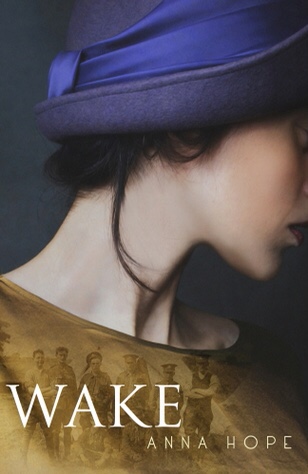
Throwback Thursday! Wake by Anna Hope.

She misses him. Fraser. Here in the shrunken hours of the night. She misses him still so much. Who is there to share her thoughts with? They wither inside her. She cannot even write them to him as she used to, can’t take a cup of tea back to bed and sit with a candle in the blackoutand think of him, trying to imagine where he is, what he sees. She cannot imagine where he is, because he is nowhere, he is nothing. All of the many tiny things that he was – the way he turned his head towards her, the slow breaking of his smile, the laughter in him, the roll of his voice; the way that he eased her, eased her – these are all gone. These are all dead.

Last year I couldn’t move on Twitter without seeing that someone was reviewing and reading Anna Hope’s Expectation. I’ve had such a ridiculous TBR that my copy is still languishing on the pile, but I wasn’t surprised to see the book become a runaway hit. I’d already fallen in love with her writing in 2014, when I read her novel covering the aftermath of WW1. Wake is a brilliant piece of historical fiction based around the real historical event, the creation of the Tomb of the Unknown Soldier. As he is taken from the fields of France, on his journey towards London, three women are linked by a mystery that is starting to unravel. As the Unknown Soldier is meant to provide closure to the war for the British people, these three women can’t look into the future while they are still inextricably linked to the past. Hetty’s wounded brother won’t speak, Evelyn grieves for her lost lover and Ada waits for confirmation of her son’s death, every day that she doesn’t get a telegram is another day he feels alive. We follow these three women over five days, while the selection of the Unknown Soldier is made and his journey towards Westminster Abbey begins. Slowly, a tragic tale of war’s aftermath emerges and links them all.

Hetty lives with her mother still, and her mute, shell-shocked brother. He can no longer work so Hetty has taken a job as a dance instructor at the Palais. It is there she meets an educated, wealthy, man who she quickly falls for. Every indication she has, makes her think he feels the same. However, there’s something she can’t put her finger on, a distance or sense of being unreachable that he has. Where does he go in his mind, when he seems distracted? Evelyn comes from a wealthier background, but feels equally lost. She’s working at the Pensions Exchange, where men returning from the front pass through, claiming benefit for their physical or mental wounds. Evelyn’s own loss is still raw and she feels detached from her parents who can’t understand her experience. She starts to become closer to her brother instead, because he is of her generation, also altered forever by his experience at the front. Ada is haunted by visions of the son she’s lost. She still sees him on the street and for a few moments she’s convinced he is alive. She also feels like she’s struggling alone, because her husband is grieving in his own way, becoming increasingly withdrawn. A door to door salesman attracts her attention and it’s so clear he has suffered from his war experiences and has struggled to find work. He exhibits some worrying symptoms but Ada recognises shell-shock. During one of his disturbed episodes he says the name of Ada’s son. Can she find out what happened to him? The tension really builds as the public spectacle comes closer, the ceremonial internment of this unknown young man can be a catalyst, allowing people to grieve for those whose bodies are lost forever on the fields of France or Belgium.

This is a very interesting part of history for me, because of the tumultuous social change that took place, especially for women. This period is where we saw huge adjustments and change within the aristocratic class. Some families had lost two generations, father and son or the ‘heir and spare’. This led to an estate crippled by death duties and having to be sold, or the new heir forced into reducing costs and servants, or searching for a more advantageous match – marrying American heiresses was sometimes the answer. These changes often brought less formality to the family. Women had worked throughout the war, in jobs usually done by men. There was tension on their return to the workforce, some women didn’t want to return to the home and men who couldn’t find work were reduced to begging or selling door to door. Crime was on the up and families were coming apart at the seams. There was a sense of the old order being overturned and old values like manners, morality and knowing your place being lost.

Finally I loved the significance of the title ‘Wake’ and it’s several meanings: to rouse from sleep; a ritual for the dead; the consequence or aftermath. All of these meanings are apt to the women in the book and their circumstances. This is the moment that the 20th Century finally dawned on people, and society woke from the Victorian era. Victoria’s reign had been so long that some people had never known another monarch, now there would be change from that Victorian order. The ritual refers to the Unknown Soldier, a representative of every man lost, but also representative of that death of the old order, and it’s sensibilities. The consequences of WWI were seismic, we had just fought the first mechanised war and it was hell on earth. Society did not know how to cope with the wounded who returned, whether the ranks of the physically disabled using wooden legs or metal masks to cover burns, or the shell-shocked, constantly trembling and lashing out when feeling threatened. Many ended up in institutions, because they were constant reminders of something younger people wanted to forget. The following few generations would be changed, with the war hanging over them like a giant monolith casting a long shadow. Why couldn’t people be allowed to forget? As the Unknown Soldier passes by someone comments ‘is this supposed to make it all okay?’ This is such a moving read and captures it’s era so perfectly it felt like being there, which isn’t an easy thing to achieve. I felt for each woman, but Evelyn particularly moved me. This is an exceptional piece of writing and a great introduction to this author’s work.

‘I’ll remember you he thinks, and as the gun carriage with it’s coffin and it’s dented helmet passes him by, he closes his eyes. Nothing will bring them back. Not the words of comfortable men. Not the words of politicians. Or the platitudes of paid poets.’

Meet The Author.

ANNA HOPE studied at Oxford University and RADA. She is the internationally prizewinning and bestselling author of Wake and The Ballroom. Her contemporary fiction debut, Expectation, explores themes of love, lust, motherhood, and feminism, while asking the greater question of what defines a generation. She lives in Sussex with her husband and young daughter.

Posted in Throwback Thursday

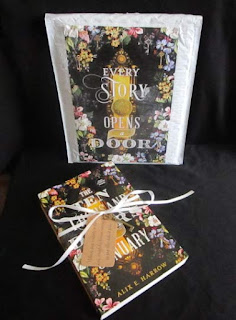
The Ten Thousand Doors of January by Alix E. Harrow.

January is a young girl with a great imagination. She lives with her guardian Mr Locke and her nurse/governess Mrs Wilde, while her father travels the world. Her father is an adventurer, travelling far and wide to find treasures for Mr. Locke’s collection. She misses him and sits in her room wrapped in the pink and gold bedspread he sent her from India. January is just becoming a teenager and starts to learn that her freedom and imagination are a threat. One day she writes about a door to another world and soon after she discovers the very door she has written. Stepping through, she sees a different land with a white shimmering city in the distance. She now sees she can have her own adventures without ever leaving the hall and the protection of Mr Locke. But her creativity is not seemly for young ladies and Mr Locke determines she is overstimulated and needs the rest cure. This involves lying in a plain room with nothing to occupy her mind. At first she runs wild and tears the curtains and bedspread in defiance, but then realises this simply plays into Mr Locke’s hands. Instead she chooses to comply on the surface and become the nice young lady he wants. Yet, all the time a sense of adventures grows within and we realise January is not going to be a nice young lady for long.


Harrow intersperses January’s story with a different narrative from a book that comes from her father. The story tells of a young girl named Adelaide or Ade to her family and the age old tale of a haunted house that all the local children stay away from because of the ‘boo hags’. Ade is more curious than she is scared, but in the cornfield outside meets a type of boy she has never seen before, called Yule Ian.We don’t know where these people fit into January’s story but their story hints at worlds as yet unseen and legends from every country in the world. It’s as if January’s restrictions of Victorian womanhood is the smallest Russian doll in a set, she is enclosed by bigger worlds than her own. Her existence is restricted by our modern standards, but what if our own existence is similarly restricted? I started to think of other worlds beyond this one where the rules of existence are totally different or without limit.


I truly loved this wonderful book. It took a few chapters for everything to click into place, but I was intrigued enough to keep going till the story made sense. January is a great central character and her need to break free from the constraints placed upon her by Mr Locke would be understood by every teenage girl. I think this is partly the novels success – Harrow has taken a familiar feeling from any teenage girl, but placed it within a magical world where there are no limits to existence. When January realises she can write doors into other worlds and follow them, more freedom than she ever imagined is hers for the taking. However, this freedom depends entirely on pleasing Mr. Locke and we learn later in the book that his guardianship of January is even more far reaching than even she thought. He has schooled and packaged January in a way that is acceptable to Victorian society. He has polished and locked her away like one of the many treasures in his collection.


The novel is full of characters who move beyond their bounds in one world, while finding themselves completely at home in another. Jane is sent as a companion for January, paid for by her traveller father who comes and goes plundering worlds for Mr Locke’s collections. Jane finds that in one world her fearlessness and hunting skills are integral to her culture and survival, but in January’s world she is expected to keep her eyes down and not challenge people who are her betters. In this world Jane is problematic because she is a woman with no breeding or class and because she is black. January’s friend Samuel has slightly more freedom than Jane because he is a man even though his class and skin colour are the same. Just as Locke categorises and catalogues his collections, it seems there is an unspoken taxonomy of people. January has side-stepped disapproval, despite being poor and mixed race, thanks to Locke’s fortune which keeps her in dresses, pearls and first- class travel. January is kept in a gilded cage, but it is still a cage.
I couldn’t see at first where Ade and Yule Ian fit into the narrative, but soon I realised how crucial they both are to January and the world she sees as she discovers her writing power. It takes huge courage to use that power, but increasingly January finds it is the only way she can protect herself and the freedoms she believes in. She wants to find her father or at least the last place connected to him and she will keep wrenching doors open until she finds the right one. A shadowy organisation is not far behind her though, run by The Founder. They want this world to stay on one course; a rigid world following a set pattern of Empire, industrial revolution and exploitation of other country’s resources. The magical worlds January visits are too unpredictable, because they signify endless change. What will The Founder do to keep the doors closed and how can January throw them wide open again in order to see her family?


For me this novel is so successful because even when we are in the most alien of worlds the author never forgets this is a human story. The family bonds and the aching loss of bereavement feel real and honest. These may be extraordinary characters but their emotions are very human and relatable. I found myself aching for January to be reconciled with her father and for his heartbreak to heal. The novel also has something important to say about love: it’s many forms from familial to friendship and romantic love; the compromises of successful relationships and the need to give the one we love freedom and space to grow. I was so sad to finish this story and almost resented the next book I picked up. It is inventive, extraordinary and touching in equal measure. It is my book of the year so far and I’m now ordering my hardback copy to keep.

Meet The Author

Alix E. Harrow has been a student and a teacher, a farm-worker and a cashier, an ice-cream-scooper and a 9-to-5 office-dweller. She’s lived in tents and cars, cramped city apartments and lonely cabins, and spent a summer in a really sweet ’79 VW Vanagon. She has library cards in at least five states.

Now she’s a full-time writer living in with her husband and two semi-feral kids in Kentucky. Her short fiction has appeared in Shimmer, Strange Horizons, Tor.com, Apex, and other venues, and The Ten Thousand Doors of January is her debut novel. Find her wasting time and having opinions at @AlixEHarrow on Twitter.

Posted in Throwback Thursday

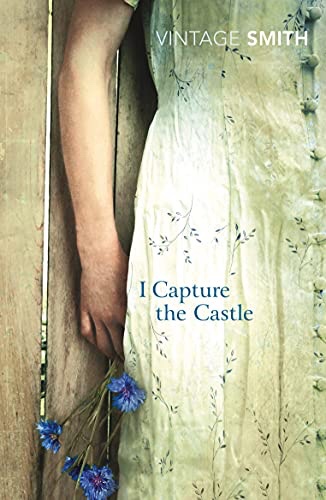
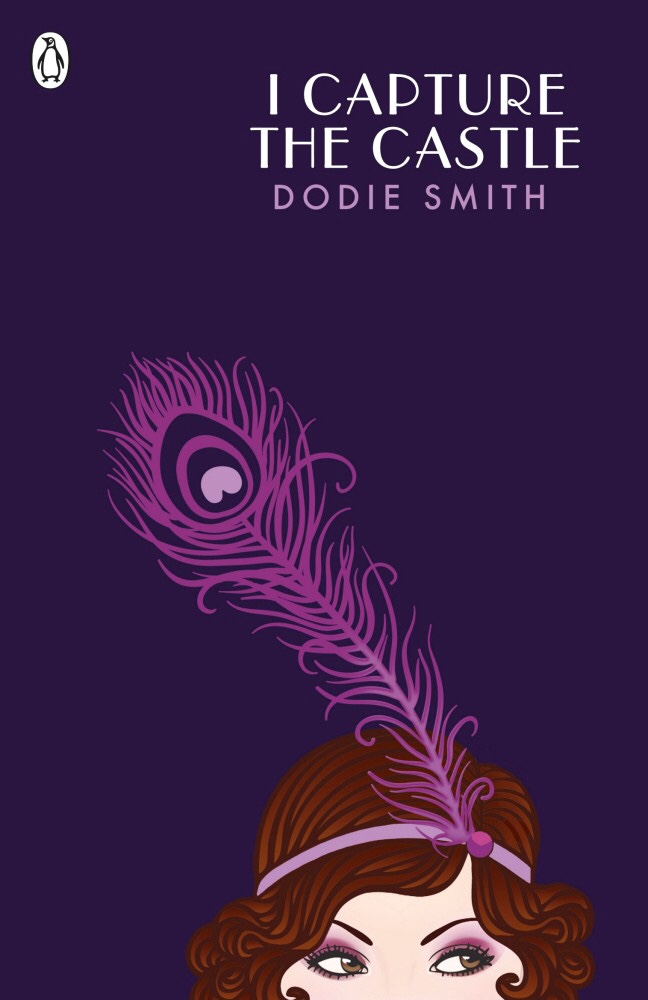
Throwback Thursday! I Capture the Castle by Dodie Smith.

“I write this sitting in the kitchen sink. That is, my feet are in it. The rest of me is on the draining board, which I have padded with our dog’s blanket and the tea-cosy.”

I’m going a long way back in time for Throwback Thursday this week. I read this book in my early teens, but still hold it close to my heart. I’d read 101 Dalmations much earlier and hadn’t realised that the author had written anything other than children’s books. The truth is I’d been waiting my whole life for a heroine like Cassandra Mortmain. There are a lot of different influences to blame for turning me into the adolescent I was. Years trawling round stately homes had given me a yearning for a house I could hide in. We lived in a 1960’s bungalow with just enough rooms to live in, but I longed to hear lines like ‘ Hayley? No I haven’t seen her since breakfast. Could she be in the pink drawing room?’ Period dramas, particularly 1970s productions of D.H. Lawrence novels and L.P. Hartley’s The Go-Between , both loved by my mum, had left me hankering after a wardrobe of full, floaty skirts and the sort of accessories that looked out of place. Like tramping down to the village shop wearing a feather boa, ten layers of petticoats, whilst dragging a grumpy spaniel. I would constantly imagine I was in a book or a film, walking the poor dog’s legs off while hoping to meet a man who looked like Mr. Rochester and lived in a Gothic mansion, minus the mad wife.

I also developed a fascination with Edith Holden thanks to the TV series of Country Diary of an Edwardian Lady and I even wrote off for a pack about the series. We already had the book, so I bought a sketchbook and some watercolour pencils with my pocket money. My brother and I would go out early, him with his fishing gear, and me with my books and paints. There was an old track down to the woods with a drainage dyke running alongside. About halfway down there were two willow trees that had bent so far over the water it was possible to climb up and lay down along the trunk. My brother would fish from his tree, and in mine I would paint flowers and butterflies and read my book. It was the closest thing I had to room of my own. So, in finding Cassandra Mortmain I felt like I’d found exactly who I was supposed to be. I wasn’t meant to be Hayley Baxter, lives in a sixties bungalow, with a working class family and no money. I was meant to be the broken down castle, bohemian sort of poor. Where parents were trying to make money from art, roof leaks dripped into buckets instead of being fixed and they were invited to tea by the landed gentry or their new American millionaire estate owners.

I loved Cassandra Mortmain’s confidence. She was determined she was going to be a writer and nobody told her she couldn’t be, so she was always curled up in some unlikely place, writing in her journal. If I said I wanted to write novels, my close family were supportive – my mum had always wanted to write. Wider family and friends would say ‘well, as long as you do well at school and have something to fall back on.’ There were aunts and uncles who would have been bemused if I walked constantly around with a journal and pen. Writing was seen as something you had to do – you wrote a letter, or a postcard – but not something pleasurable that you devote time to. That came much later, when I had my own home and my own wardrobe of floaty skirts. When I first read her story I was much like Cassandra herself, there were parts of life that she was recording without really knowing their importance or meaning. Although she narrates her own story, as an older reader there were things I understood that Cassandra didn’t as yet. This is a story of growing up and leaving some of that innocence of youth behind.

I thought on first reading that her sister Rose was incredibly beautiful, but grumpy and not very nice to be around. However, reading her years later I could see that because Rose was older, she understood more about the realities of life. For her, the broken roof and the lack of income were not romantic, but a real problem that needed fixing. Their father’s only published book can’t keep them forever and his writer’s block makes him a very difficult man to live with. Rather comically the women lock him in his study, in the hope that inspiration will strike when he’s forced to stare at his typewriter. It’s very clear to Rose that they are in dire financial straits. This is where the book takes on some Austen-like romantic tropes, as the Cotton family come to visit the estate where they are the rightful heirs and the Mortmains are their tenants. Mrs Cotton brings her two sons, the eldest Simon being the rightful heir, and Neil, the younger son. Simon is ‘detestably bearded’ but the most eligible and able to rescue the Mortmains from their current circumstances. Cassandra’s father and stepmother Topaz are seen as delightfully eccentric by the Cottons and the whole family are invited for dinner. This is where the romantic problems begin, as Simon is besotted with the beautiful Rose, and as Cassandra develops a crush on Simon, she is in turn adored by the Mortmain’s servant and helper, Stephen. Stephen is incredible handsome, but the Mortmain girls are about to find out that the heart is an unruly organ and wants what it wants. Despite this, it isn’t long before Rose announces her engagement to Simon. This solves so many of the Mortmain’s problems – it’s as if one of the Bennett sisters actually accepted Mr Collins. As the preparations for the wedding gather pace, Rose and Cassandra spend more time with the Cotton brothers.

Simon finds that he gets on well with Cassandra. He is the more cerebral of the brothers and while Rose is beautiful, she is not blessed with brains. Yet, Cassandra is too young for romance, and a very touching friendship starts to develop. The younger brother, Neil, is more stereotypically American, loud, brash and very active. He and Rose are usually swimming or messing around in boats, with Neil often play fighting or indulging in horse play. Cassandra has never seen her sister so lively, actually forgetting to be lady like and being in the moment. Everyone is touched to see Rose so happy, and assume it is her approaching wedding. To an adult reader the attraction between these two beautiful people is obvious, but Cassandra is stunned to find out they have run away together. If we hark back to Austen, her sister has turned out to be more of a Lydia than a Jane. How can the Mortmain’s fortunes be improved by their daughter’s marriage to the second son?

This is a novel drenched in charm and nostalgia. Interestingly, it was written by Smith when she was living in America, and that may explain it’s rose-spectacled view of England. There is something slightly melancholy in that we’re watching a young girl lose the charming innocence that makes her narration a delight to read. She falls in love, but not with the person who adores her and sees the devastation that can be caused by betrayal and jealousy. We realise, as Cassandra grows up in front of us, the chaos of a household run by adults who have no money and no rules, the embarrassment of having a stepmother who will happily walk around in the nude and that moment when you find your own sister inexplicable, because you understand storybook romance, but not adult desire. Cassandra is mostly in love with life. One character describes her as ‘the insidious type–Jane Eyre with of touch of Becky Sharp. A thoroughly dangerous girl.” Her narration makes even minor characters jump off the page and straight into your heart. Finally, I loved how Cassandra leaves us with an open ending. We shouldn’t be surprised that some loose ends are left dangling, because she has told us how much she hates ‘a brick wall happy ending.’ I think it’s true to say that in me, she found a reader as romantic about life as she is. This is one of those books I’ll re-read again and again, so I’m on the look-out for a very special copy to put on my forever shelves.

Posted in Throwback Thursday

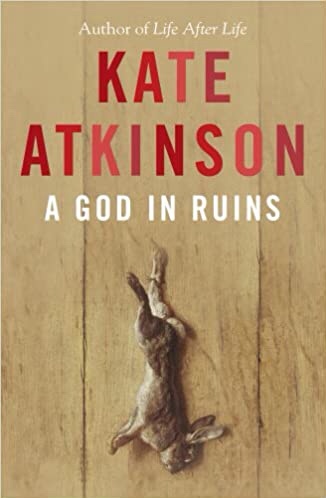
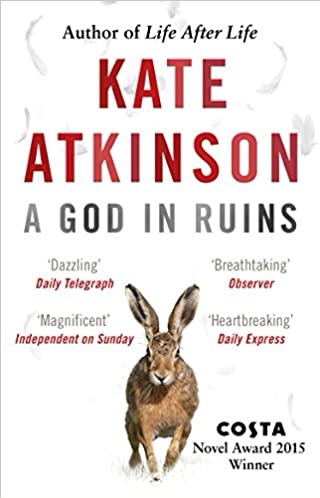
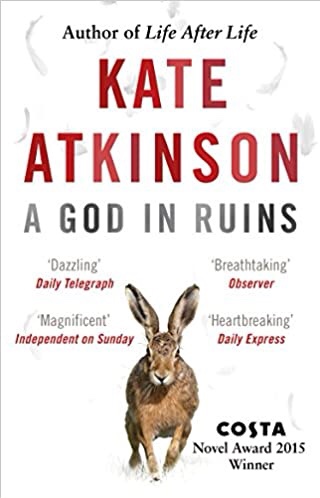
Throwback Thursday! A God In Ruins by Kate Atkinson.

Following on from last week, I wanted to feature this novel which is one of my favourites from the last twenty years and shows that Kate Atkinson is truly one of our best British novelists. It follows another wonderful novel about the Todd family, Life after Life, which focused on the many possible lives of Ted’s older sister Ursula. This is written as a standalone novel, rather than a sequel and has the honour of being one of the few books that genuinely made me cry towards the end. We meet Ted as he’s a pensioner, living in York, and dealing with living his life alone after the death of his wife. However, we don’t stay there, because as with Life After Life, Atkinson mixes past, present and future with great impact. The novel is also told from Teddy’s point of view, although he does seem slightly omniscient at times, knowing things he wasn’t present for. It is such a poignant history of a man who has lived through a world war, and it feels so authentic. In true Atkinson style, it cleverly manages to be a book about fiction itself.

In Life After Life when the focus was on Ursula, Teddy seemed to be set on course to marry childhood sweetheart Nancy and their life was portrayed as idyllic. Yet in this novel we see that their relationship was far from perfect. Despite this we do follow the lives of their daughter and granddaughter too, to great effect, because it opens up all the changes Ted has seen over his long life. Teddy’s mind often wanders back to his time as part of Bomber Command – something I’ve grown up with because I live in Lincolnshire which is known as Bomber County. In fact in the course of his work as a land drainage engineer, my Dad has accidentally dug up a whole Lancaster Bomber, probably trying to limp home to RAF Blyton, only a mile and a half away. Here the bomber raids were described so authentically, they were harrowing in parts and I could imagine the anxiety of waiting back at base to count the planes back in, knowing some would be missing.

Atkinson manages to combine the personal story of Teddy’s family, with societal shifts that occurred between the wartime generation and those who came of age in the second half of the 20th Century. Teddy is an old school gentleman, often showing acts of kindness and chivalry that make him very loveable. His values are challenged by his daughter Viola, the voice of her generation, who is always looking for the next cause to adopt. She campaigned for nuclear disarmament and supported the women protesting at Greenham Common. She’s a feminist and a vegan, something very unusual until fairly recently in the 21st Century. We are shown how the generation gap creates arguments in a family, where one generation fought in a war and later generations don’t appreciate or fully comprehend the sacrifices that were made for them. Viola could be seen as an unsympathetic character, especially when compared with Teddy’s service. However I wondered if her character developed as a reaction against Teddy’s courage and heroism. Such perfection is hard to live up to. In fact, when Viola tries to reconnect with friends from her travelling days she finds one of them has died and one works in finance – far from the ideals they held before. Unlike Teddy’s generation they have had a chance to regret behaviour and change outlook. Teddy’s friends will always be the same age.

I enjoyed the interesting structure of the novel where we float back and forth in time, between characters and settings. At times Atkinson lets slip a future plot, while still in the past. All of this felt very Virginia Woolf-esque and it suited the narrative. She is such a skilled writer that this never feels overtly literary or highbrow, it remains a light easy read. There is a huge twist at the end that has a bearing on everything you’ve read so far, but it’s not there just for the sake of it. Yes, it’s an excellent example of the post-modern novel, in a similar vein to Ian McEwan’s Atonement, but that’s not all. It’s impact of the twist was devastating to me and this is where tears emerged. This unexpected direction is truly a tribute to the men of Bomber Command, especially those who didn’t come home, like the men in the Lancaster my Dad dug up who were only a couple of miles from safety. This novel is simply one way Teddy’s life could have played out and it’s all the more powerful for it. This was an intelligent, well-researched and poignant novel that I think should be viewed as a modern classic.

Meet The Author

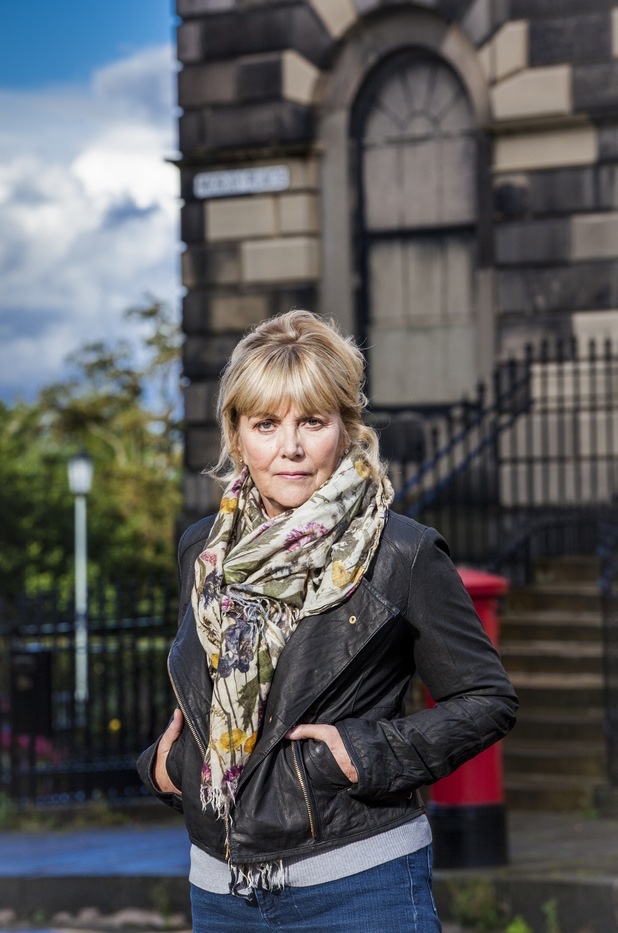
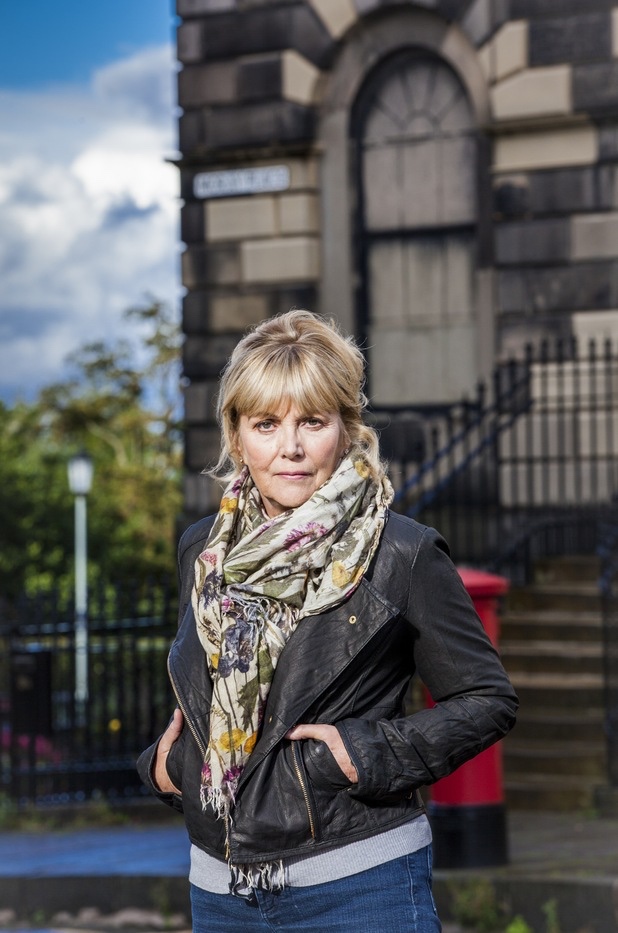
Kate Atkinson won the Whitbread (now Costa) Book of the Year prize with her first novel, Behind the Scenes at the Museum.

Her four bestselling novels featuring former detective Jackson Brodie became the BBC television series Case Histories, starring Jason Isaacs.Her 2013 novel Life After Life won the South Bank Sky Arts Literature Prize, was shortlisted for the Women’s Prize, and voted Book of the Year for the independent booksellers associations on both sides of the Atlantic. It also won the Costa Novel Award, as did her subsequent novel A God in Ruins (2015).

Posted in Throwback Thursday

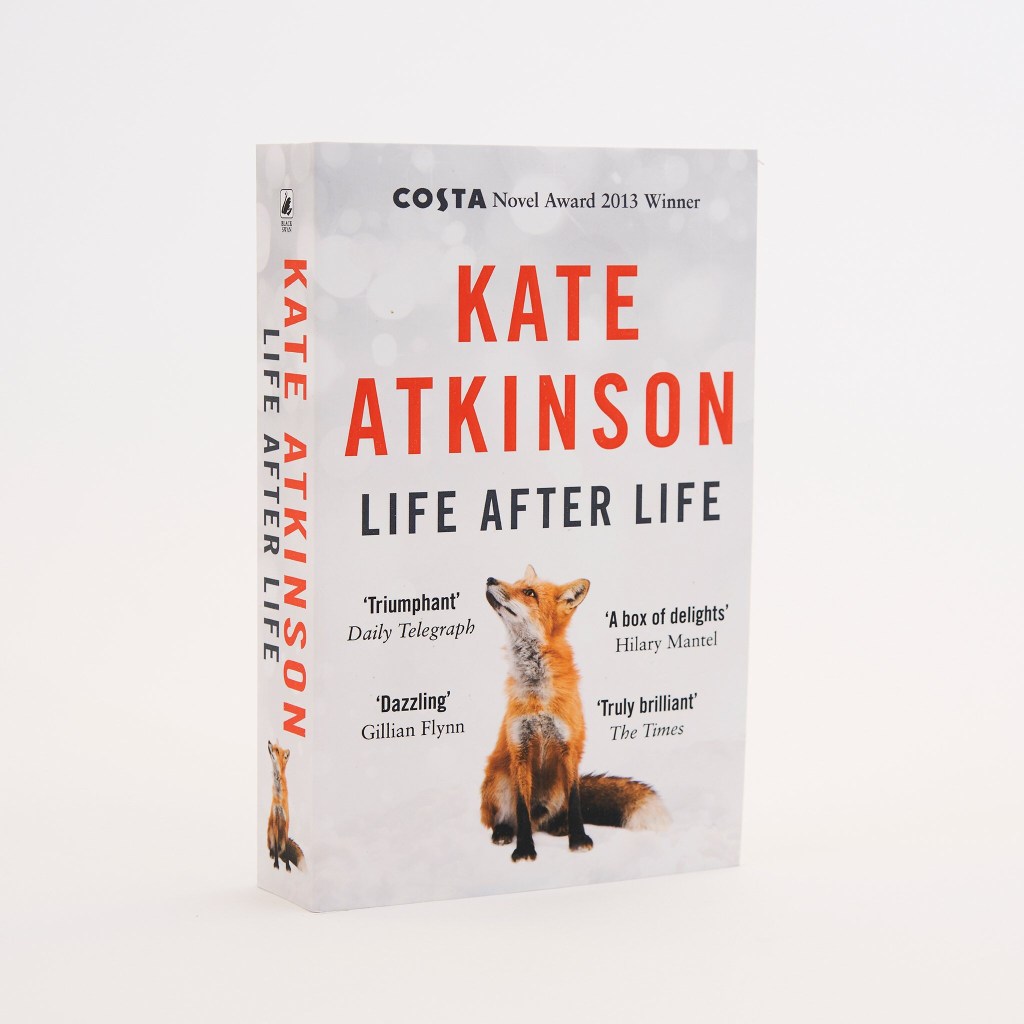
Throwback Thursday! Life After Life by Kate Atkinson.

Have you ever wished that you had a chance to do something all over again? To iron out the mistakes or maybe create a different outcome. To maybe get a second chance at life, right from the start; a life with a blank slate again. What if you had the chance to live your life again and again, until you finally got it right? What if there were second chances? And third chances? In fact an infinite number of chances to live your life? Would you eventually be able to save the world from its own inevitable destiny? And would you even want to?

Life After Life is one of my favourite novels of all time, alongside its sequel A God in Ruins. I loved her Jackson Brodie novels and Behind the Scenes at the Museum, but this novel is something extra special. I’d never read anything like it outside of sci-fi novels.

During a snowstorm in England in 1910, a baby is born and dies before she can take her first breath.

During a snowstorm in England in 1910, the same baby is born and lives to tell the tale.

Life After Life follows Ursula Todd as she lives through the turbulent events of the last century again and again. With wit and compassion, Kate Atkinson finds warmth even in life’s bleakest moments, and shows an extraordinary ability to evoke the past. Here she is at her most profound and inventive, in a novel that celebrates the best and worst of ourselves.

Atkinson does something profoundly special with this novel. It could have been a perfectly acceptable novel if it simply explored this baby girl’s lives from a personal and family perspective. However, Atkinson weaves Ursula’s personal story in with the state of flux in the early Twentieth Century. She takes in the demise of such upper middle class family’s like the Todd’s, from changes to social mobility, women’s roles becoming more prominent, and the loss of male members of the family due to WW1 and WW2. She explores the descent into WW2 and women’s roles in places like the war office and the secret services. In the multiple lives Ursula lives she can explore whether or not war could have been avoided, and what role she could have played in that mission. There’s so much going on that I can understand some reviewers finding it complicated to follow. The trick is to simply go with it. Eventually Ursula has longer lives where these issues can be explored in depth.

I fell in love with the Todd family and their genteel English way of life that can be summed up in a single phrase; ‘one does as one must, and then has tea’. All the female characters, including Sylvie and Pamela, are well fleshed out and it’s interesting to see what different paths their own lives took because of Ursula. I also had an incredible soft spot for Teddy – and loved that he got his own story in her follow up novel A God In Ruins. However, it is Ursula who holds our attention most and the endlessly inventive ways she dies in childbirth, from Spanish Flu, from drowning or by murder. She always has very strong perceptions, and experiences strong episodes of déja vu – although she doesn’t know she’s been here before, it seems she has gained some gifts from her other lives. There must be some residual wisdom from times when she’s been a mother or not, a wife or a mistress, someone who leads a quiet life in the country or goes to Germany and changes the course of history.

Atkinson’s sense of place is incredible. There are the lazy summers at the Todd family home, lounging in the garden or the kids exploring freely, climbing trees in the idyllic countryside. Her scenes in London are incredibly evocative, especially her descriptions based in historical fact. In one section their maid goes to a huge gathering in the capital to celebrate the end of WW1 and brings Spanish Flu back to the house. Her description of the London Blitz brings home how devastating and terrifying it must have been. We have a unique perspective as readers, we have an overview of every life Ursula lives, while she only knows the one she’s living in. Of course there are some events that repeat in every life – her birthday in 1910 is replayed twelve times – but these are important moments, where even the most subtle difference can send Ursula hurtling towards a different path in life. The novel evoked several other novels for me. The scenes at home with family in the early Twentieth Century reminded me of the long, languid summer of L.P.Hartley’s The Go-Between. Scenes in London during WW2, and the concept of written lives versus the truth, reminded me of Atonement by Ian McEwan. I never became bored of going back to the beginning, but the other characters in Ursula’s life are so strong and well-written, it seems odd that once she dies, they no longer exist either. The author explores the dynamics of family, class, and how that changes so much at this point in history. There’s also grief – for other people, a way of life, a loss of innocence – and how that affects characters differently. I think this is an astonishing novel, beautifully written and managing to be both playful in structure but profoundly moving at the same time.

Next week for Throwback Thursday I will be looking at Kate Atkinson’s sequel to Life After Life. A God in Ruins overlaps with Ursula’s story in places, but is more focused on her little brother Teddy.

Meet The Author

Kate Atkinson won the Whitbread (now Costa) Book of the Year prize with her first novel, Behind the Scenes at the Museum.

Her four bestselling novels featuring former detective Jackson Brodie became the BBC television series Case Histories, starring Jason Isaacs.Her 2013 novel Life After Life won the South Bank Sky Arts Literature Prize, was shortlisted for the Women’s Prize, and voted Book of the Year for the independent booksellers associations on both sides of the Atlantic. It also won the Costa Novel Award, as did her subsequent novel A God in Ruins (2015).

Posted in Throwback Thursday

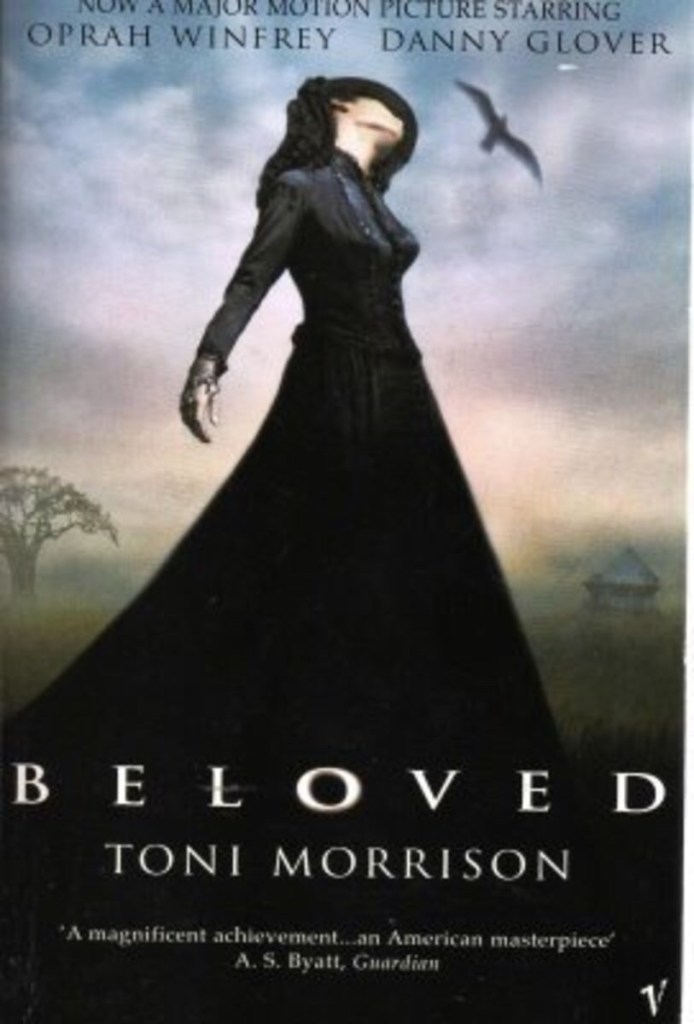
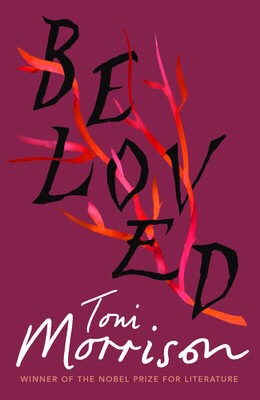
Throwback Thursday! Beloved by Toni Morrison.

Film tie-in paperback.

‘124 was spiteful. Full of a baby’s venom. The women in the house knew it and so did the children. For years each put up with the spite in his own way, but by 1873 Sethe and her daughter Denver were its only victims. The grandmother, Baby Suggs, was dead, and the sons, Howard and Buglar, had run away by the time they were thirteen years old — as soon as merely looking in a mirror shattered it (that was the signal for Buglar); as soon as two tiny hand prints appeared in the cake (that was it for Howard) […] leaving their grandmother, Baby Suggs; Sethe, their mother; and their little sister, Denver, all by themselves in the gray and white house on Bluestone Road’.

Beloved is one of those books that seeps into your soul and never really leaves. In that powerful opening paragraph we see a house full of supernatural activity. A house that men leave. Where only women have the strength to live alongside the demons of the past. The baby ghost who haunts Sethe is full of rage and throws tantrums like a toddler, yet instead of throwing her bottle on the floor she has the power to fling furniture at the wall, even the dog doesn’t escape unscathed. Sethe escaped Sweet Home, the farm where she was enslaved, over eighteen years ago. She has borne such terrible suffering and yet has survived, whole in body and mind. There is just this one thing, the possession of the house by her first daughter, who died when she was a baby. All it says on her grave stone is one word, Beloved. So when a teenage girl turns up at the house claiming to be her daughter, Sethe wants to believe it’s true. If it’s true, maybe what happened back at the farm was just a terrible dream. When Paul D arrives – a freed slave from the same place – his remembrances and ability to look forward instead of over his shoulder, will clash with Sethe who is stuck.

“To Sethe, the future was a matter of keeping the past at bay. The ‘better life’ she believed she and Denver were living was simply not that other one.” […] Yet the morning she woke up next to Paul D, the word her daughter had used a few years ago did cross her mind and she thought… Would it be all right to go ahead and feel? Go ahead and count on something?”

Until now, being in this liminal space is the only way she can be with her other daughter. Neither fully in the past, nor creating a new future, Sethe can’t move on without acknowledging the cost of slavery. At No 124, the ghost of slavery is literal and inescapable. Sethe may no longer be enslaved as the novel opens, but she can never forget what slavery as an institution did to her as a person. When a young woman claiming to be the now-adult Beloved comes to Sethe’s house, Sethe begins to believe that she might avoid facing the truth. Instead she might at last be able to forget: if Beloved is truly alive, then her terrible fate never happened, and so slavery may also be erased, forgotten, papered over. But it rapidly and inexorably becomes clear that forgetting is impossible. This incredible book has the feel of the supernatural, but it’s haunting is one of traumatic memory. Sometimes things happen to us that have to be pushed to the back of our minds. It’s as if we’ve accidentally forgotten, but really it’s a conscious choice to build a mental wall between our psychological ‘self’ and the trauma.

However, Sethe’s trauma is now embodied twice. The scar that covers her back looks like a tree. The lash has broken up and knotted the skin leaving a texture like bark. When Paul D sees her back for the first time, he does not flinch. Instead he traces the lines and kisses the branches, framing the mark of what she’s gone through as a positive thing. The tree could symbolise Sethe’s growth. She stands, a mighty oak of a woman, who doesn’t have to be cowed by her experience. Then Beloved arrives – an angry, spiteful young woman who seems to be very sweet at first, and only wants to be near the mother she’s never had. Denver and Paul D can also see Beloved so she’s not an apparition or figment of Sethe’s imagination. She’s a real woman. In the film, Beloved is played beautifully by Thandie Newton – full of languid grace and always fixing huge pleading eyes on Sethe whether she wants more sugar, more attention, more love. In fact her needs are like those of a baby and must be satisfied. There’s a baby’s narcissism in Beloved and she wants her newly found mother all to herself, trying every means possible to drive a wedge between Sethe and Paul D or her baby sister Denver. She’s not above lying, pleading or even seduction to get her mother to herself.

As Denver and Paul D leave, Beloved is satisfied. However, Sethe is slowly being drained by the girl. She loses energy and isn’t seen in her garden so much. She stops visiting the market for food. The women in the neighbourhood notice and share the strange stories they’ve heard: about a young woman suddenly living at number 124; that Sethe has lost her man; that her daughter Denver left for work in the city; and that Sethe grows thin waiting on her house guest hand and foot, while Beloved grows fatter. The women gather outside 124 in a prayer circle and began to ask God to take back this demon inhabiting Sethe and her home. They don’t believe Beloved exists, not as an actual flesh and blood girl. Can they give Sethe the strength needed to recognise this? Can she own and confront a crucial part of her past?

She will need all of her will for this embodiment of Beloved to leave. She has to recognise that she no longer needs a physical reminder, because instead she needs to integrate a terrible, horrifying act she committed into her psyche. She starts to accept that Beloved’s death was caused by slavery. The descriptions of what happened to Sethe at Sweet Home are truly harrowing and they need to be, so that we as readers understand her actions. Sethe remembers: the lashing that tore her back open; the awful scene in the barn where her husband, hiding in the rafters, is forced to see Sethe pinned down as their master’s sons suckle her baby’s milk away; the horrifying sight of Paul D wearing the ‘bit’ – a terrible metalwork mask that prevents him from speaking. The remarkable thing is that these experiences are not recounted with buckets of emotion. They are merely factual and all the more devastating in their quiet retelling.

In the aftermath of Beloved’s disappearance, Sethe starts to grieve. She acknowledges the beautiful little girl she held in her arms that day. The day that her love for her children was so great, she could not bear to see them taken back to the horror she’d fled. As Paul D tries to comfort her she keeps repeating ‘she was my best thing’.

“He leans over and takes her hand. With the other he touches her face. ‘You your best thing, Sethe. You are.’ His holding fingers are holding hers.”

Now Sethe must learn to put herself first. Not to forget Beloved, her first born who liked to eat the burned edges of bread, but to forgive herself. To place the blame at slavery’s door, rather than her own. Paul D has returned to something for the first time in a life where he’s done nothing but run. He can’t articulate his feelings for Sethe, but when he’s with her he can let the horrors that slavery inflicted on him melt into the background. She has shared his experience and this removes any shame he feels for being collared and yoked like an animal. His memories no longer remove his manhood from him. He encourages Sethe to move forward with him, to start experiencing less yesterdays and more tomorrows. Beloved, in hindsight, becomes an embodiment of their past. Resurrecting the past is always painful, and Beloved is painful, difficult and confusing to encounter. In Beloved, a traumatic history is restored and rescued from years of buried memories and enforced silence.

Posted in Throwback Thursday

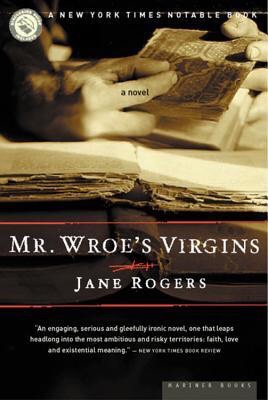
Throwback Thursday! Mr Wroe’s Virgins by Jane Rogers.

‘The Lord has instructed me to take of your number, seven virgins for comfort and succour.

In 1830, as he thought the end of the world approached, the charismatic, hunchbacked prophet of a religious sect settled in Lancashire heeds the biblical injunction and chooses seven virgins ‘for comfort and succour’. Basing her novel on the life of the real John Wroe, a leader of a group called the Christian Israelite Church, Rogers crafts an impeccable narrative, interweaving the diverse mindsets of some of the chosen women and the prophet during the nine months of complex interaction. Part morality tale, part history, packed with accurate details of early 19th century life, the stories of Leah, Joanna, Hannah and Martha unfold as they cope with the hypocrisy, blind beliefs and idealism of the sexually threatening prophet.
Told with humour, irony and a generosity that embraces even the sinister Wroe, this is a compelling story of astonishing depth, elucidating religious idealism, the beginnings of socialism and the ubiquitous position of women as unpaid labourers.

I came across this novel, even before the BBC TV series of the same name. Having seen/read both, I can recommend them equally, although I think the novel is slightly more successful in a few different ways. The way the book is structured into four different narratives allows the women’s characters to develop fully, as over nine months, the story of their lives unfold. Through them we come to experience all seven women: a pious believer; two sisters, still too young to understand their place in the world; a disabled woman; a beautiful, but egotistical woman; a mute and badly beaten woman; a girl donated by her aunt and uncle, who doesn’t believe in the prophet or his religion. It is only through the women that we experience the prophet, a clever reversal of power. In fact these narratives are the only power the women have at first, these are their only words free from restriction or religious dogma. This power shift is especially interesting when it comes to Martha, who is mute. When I first encountered her narrative I thought I’d bought a book with pages missing. However, it’s just Martha trying to express herself the only way she knows – depicted in staccato monosyllabic language, Martha writes about what she knows, eating and sleeping in the first instance. Yet instead of cutting off her narrative, Rogers leaves a blank page. This is the space into which Martha can develop and come to know herself. One of the most powerful parts of the book is watching this transformation.

We hear that Mr Wroe is a powerful speaker, and we can hear his preaching and religious teaching. However, we don’t fully come to know and understand the man. He doesn’t get to construct himself through language. So, we know something of his belief system and his interpretation of the Bible, but nothing personal. This could be because he is a conduit of God, simply meant to deliver God’s teaching. It also leaves him as something of an enigma. Why and when did he become the person he is today? The belief system he has is very selective, patriarchal and seems to benefit him more than his congregation. He sees no problem in allowing Leah to bring her illegitimate child to live with them. He accepts Hannah into the fold despite her lack of faith, and her doubts allow him to admit his own. He uses all the women as unpaid domestic servants and the exploitation doesn’t end there. He seduces the pious Joanna by convincing her that they will beget the new Messiah. For each woman his approach is different, but it works. I found his exploitation of Martha particularly difficult to read and his ability to take Joanna’s faith and use it against her in such a manipulative way is despicable. I don’t want to ruin the ending, so I’ll reserve any more detail, but such an arrangement can’t last and I kept reading hoping for the women’s emancipation.

I have always enjoyed this book and further reading shows it has stood the test of time. The historical detail is so accurate and the scene she sets is vivid – Martha’s time in the pig sty with the animals really sticks in my memory. It may seem hard to believe that any parent would willingly give up their daughters to this man. However, I understand how religious fervour can sweep through a community. Having family on my Dad’s side from the Isle of Axeholme, I know my ancestors would have experienced the Methodist revival started by John Wesley who hailed from Epworth. The real life Mr Wroe’s congregation firmly believed he was a holy man. Maybe they felt that God would look favourably upon them if they supported his vision. There were of course monetary reasons too; offloading a disabled or mute woman who would never earn money or marry could have helped a family who were stretched financially. Also, the stigma of having a disabled daughter, an old maid still living at home or a a girl who has a child out of wedlock could be wiped out by their inclusion in the prophet’s household, This can be a challenging read in parts, but worth the work as you become pulled in by the voices of these women. Little is known about the real ‘virgins’, but here Rogers gives them a voice and a power they clearly didn’t have in life.

Meet The Author

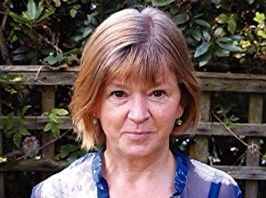
Jane Rogers has written 10 novels ranging from historical to contemporary to sci fi. Books include Mr Wroe’s Virgins (which she dramatised as an award-winning BBC drama serial), Island, and The Testament of Jessie Lamb (ManBooker longlisted, winner of the Arthur C Clarke Award 2012). Her short story collection Hitting Trees with Sticks was shortlisted for the Edgehill Award.
She also writes radio drama and Classic serial adaptations (most recently of John Wyndham and R.L. Stevenson).
Jane has taught writing to a wide variety of students, and is Professor Emerita at Sheffield Hallam University. She’s a Fellow of the Royal Society of Literature. Her latest novel, Body Tourists, is a dystopia set in 2040.

Posted in Throwback Thursday

The Legacy of Elizabeth Pringle by Kirsty Wark.

I’m wary of books written by people in the public eye. There are those who have clearly used a ghost writer. Others have no writing skill, just a big enough name to sell the book anyway. I worry for myself and all those other aspiring writers who won’t be able to get a book deal because the lists are full with celebrity memoirs and books set in Cornwall! However, there are some celebrity authors who get it right, often those who started out as reporters before becoming famous. Jeremy Vine’s debut novel was a pleasant surprise, and my stepdaughters loved David Walliams stories. I knew Dawn French could write well only a few pages into her memoir. I can now add Kirsty Wark to this list, since stumbling on her book second hand in Barter Books, Alnwick. I started to read it while still on holiday and loved it.

The author lets her characters tell the story. Firstly we are told Elizabeth’s story from her journal and we meet her at the beginning of the First World War, a time of big changes for her family. She is moving with her mum from the isolated family farm to the small fishing village of Lamlash on the Isle of Arran. The house they will live in is Holmlea, which has a beautiful sea view out to Holy Isle and the monastery. We are then immersed in Elizabeth’s life: their family friendship with the Duchess of Montrose; an incredible passion for gardening; all the relationships in her life. These relationships ebb and flow, but into her old age she has two men in her life. There is Niall the rather passionate gardener who works as an architect and Saul, a Buddhist monk from Holy Isle. When working in her front garden she notices a young woman, walking past with her baby in a pram. The young woman is Anna, and she is very taken with Holmlea and asks Elizabeth to contact her if she ever decides to sell it.

Our other narrator is Martha, the daughter of Anna Morrison, who is surprised to find her mother has been offered the legacy of a house on the Isle of Arran by a woman she’s never heard of before. Anna is now struggling with dementia, so much so that Martha is now her full time carer and deals with her finances. It is Martha who organises help for her mother and takes a trip up to Arran to see the house. So it is also up to Hannah to uncover Elizabeth’s reasons for leaving the house, but also discover more about her life and secrets. There was once a fiancé in Elizabeth’s life who moved out to Australia to start a sheep farm. Elizabeth was reluctant to go, feeling she needed to be there for her mother. She passes her time walking in the hills and during the war, helped in looking for lost and crashed airmen. Eventually, it is too late to follow her fiancé and at the end, Elizabeth has lived on Arran for 90 years. More recently she’s had friendships with a young man whose sister runs the local hotel and he has worked with her to create her beautiful garden. It is her friend Saul who encourages her to write her story down. He is a struggling Buddhist monk who is staying at Holy Island and meets Elizabeth when she volunteers in the gardens.

The books major strength is in description, creating a strong sense of place. This is a bleak but beautiful place, and she situates Arran and Holy Island as sustaining to the people who live there or come for solace. These islands feel like a cornerstone or anchor for the people who are born there and almost like medicine to those lonely or desperate people who seek them out. Gardens are featured heavily as a source of sustenance for the body and the soul and I truly understand that need to be in nature and feel your senses drink it in. I thought it was a wonderfully calm and quiet novel, but quiet doesn’t mean it’s without impact. I really loved Elizabeth’s story, it shows how quiet and seemingly unassuming people can have hidden depths. We often overlook the elderly, thinking they have lived their lives. I’ve worked in nursing homes and advocacy, and it’s surprising how many elderly people are cared for by people who don’t really know them and never try to. They talk to other carers as if the person they’re helping is deaf or not really there. I created a memory project where I found old photographs of residents and wrote down stories they told me about their lives. I then put up a display outside each bedroom, so that carers could see their residents as individuals with experience and stories to share. This book reminded me of that project and what a difference it made to the resident’s everyday lives.

Meet The Author

Kirsty Wark is a journalist, broadcaster and writer who has presented a wide range of BBC programmes for more than twenty five years, from the ground-breaking LATE SHOW to the weekly arts and cultural review show THE REVIEW SHOW and the nightly current affairs show NEWSNIGHT.

Kirsty has won several major awards for her work, including BAFTA Awards for Outstanding Contribution to Broadcasting, Journalist of the Year and Best Television Presenter. Her debut novel, THE LEGACY OF ELIZABETH PRINGLE, was published in March 2014 by Two Roads and was shortlisted for the Saltire First Book of the Year Award, as well as nominated for the International DUBLIN Literary Award. Her second novel, THE HOUSE BY THE LOCH, was inspired by her childhood memories and family, particularly her father. She is currently working on her third novel, set in Glasgow.

Born in Dumfries and educated in Ayr, Scotland, Kirsty now lives in Glasgow.

Posted in Throwback Thursday

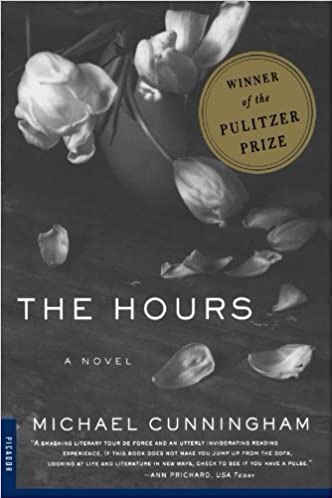
Throwback Thursday! The Hours by Michael Cunningham.

I came across The Hours in my university bookshop, as a companion piece to Virginia Woolf’s Mrs Dalloway. We were studying it for our Twentieth Century Literature module. I had read Woolf’s book very quickly, surprised by how modern it was in the way it was told. I did a disappointing essay based around the whether there were recognisable differences between Modernism and Postmodernism or whether it was simply a continuation of the same ideas. In hindsight I was arguing the wrong side, but the books stayed with me and I did enjoy the film adaptation of The Hours where Nicole Kidman won her Oscar playing Woolf. Arguably, it was Julianne Moore who really deserved an award, playing the second of Cunningham’s women who was sinking under the weight of motherhood and expectations in 1940’s Los Angeles. In the book I felt the same narrative was very strong, but I also enjoyed the Woolf sections – perhaps because she seemed to exist more strongly in the written word than in the flesh. The third narrative was a modern day meditation on Mrs Dalloway, as our character does the same things in one day that Woolf’s character does, but brought to a post- millennium New York City.

Our three women are Virginia Woolf, Laura Brown and Clarissa Vaughan – who is affectionately nicknamed Mrs Dalloway, by her terminally ill friend. The three timelines give us a glimpse into societal changes for women across the Twentieth Century. Yet it also shows us that there are experiences and struggles that are universal and echo down the centuries. For such a slim volume, the depth the author writes into his characters is extraordinary. I feel like I know these women, deep down to their soul. They’re going through some tough things here, with themes of illness, suicide and depression somehow explored sensitively despite the books brevity. Those who’ve read Mrs Dalloway know that it explores similar themes, despite feeling light and almost insubstantial. This is similar, as Clarissa goes out to buy flowers and Virginia takes tea with her sister Vita. These things are slight, but behind them is a turmoil of finding identity, moving beyond the tiny restricted role society expects, finding a way through tragedy and deep troughs of sadness. All three are searching for those elusive things we all want – love, happiness and a sense of who we truly are. Can we ever find these things or keep them? Are we doomed to live out our lives and others expect, rather than being our authentic selves. Most of us have to make do with one of these, or maybe all three for brief, elusive moments. How do we get through life without them? Or are we doomed to lurch desperately from one moment of happiness to another? When we are in those depths of depression or grief, how do we keep going and what would force us to take that final drastic action?

The answer is in those hours of the title. These are those happy, golden hours that we remember always. The memories we wish we could bottle and keep forever. These precious hours are the beauty of life and they illuminate all those dark moments. They are what keep us going, they hold within them the hope that things can change. That we will feel that way again and that they will warm our heart enough to get us through.

‘There’s just this consolation; an hour here or there where our lives seem, against all odds and expectations, to burst open and give us everything we ever imagined, though everyone but children (and perhaps even they) knows these hours will inevitably be followed by others, far darker and more difficult. Still, we cherish the city, the morning; we hope, more than anything for more.’