Posted in Throwback Thursday

Throwback Thursday: Fiction About the Tudors

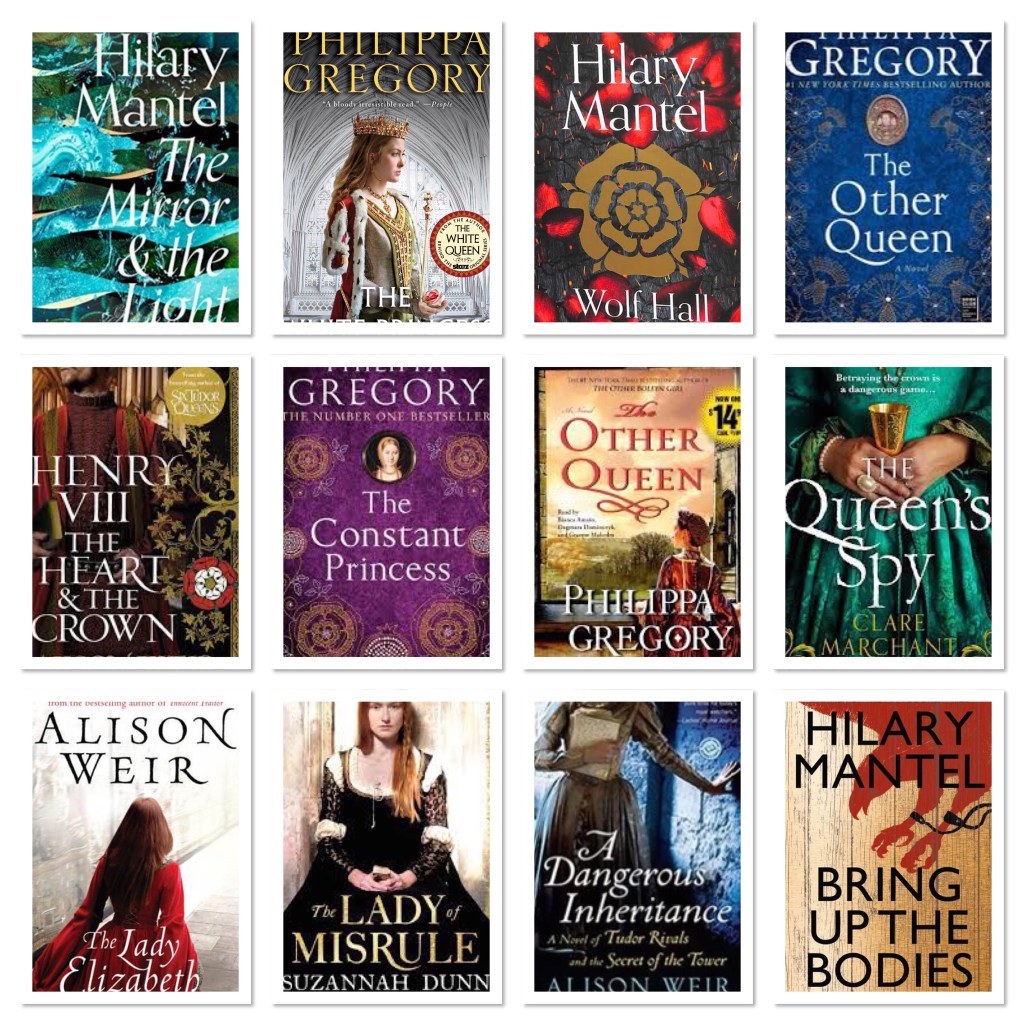
I’ve had this fascination with Henry’s wives and the whole Tudor dynasty since primary school, as I wrote about earlier in the week. It was my introduction to Philippa Gregory when I was in my twenties that really started the ball rolling. I started to learn about the women’s perspective behind these historical facts we all learn. I’d never known that Henry VIII had an affair with Anne Boleyn’s younger sister Mary or that it’s possible she had the King’s children just like Bessie Blount. I learned more about the political and religious machinations that hide behind the six marriages and their tragic ends. I hadn’t known about the uneasiness within Henry’s aristocratic courtiers and advisors about the commoners he was bringing in to advise him, such as Cardinal Wolsey and Thomas Cromwell. There were aspects of the Queen’s roles in events that opened up to me, such as their religious allegiances and how the marriages cemented Henry’s beliefs at the time and signalled his intentions to the rest of the world. I’d never known about how ladies in waiting were chosen or trained, often shipped to grand houses with aristocratic women overseeing their education. I’d also become fascinated about women on the periphery like Jane Rochford, who’d been married to Thomas Boleyn and had to give evidence against her own husband, then years later oversee the young Queen Katherine Howard only to be drawn into treachery yet again. I’d become interested in Bess of Hardwick after buying a book about her at Chatsworth House then going to an exhibition about her, including the household accounts written in her own hand. I knew that Chatsworth had been one of the houses where Mary, Queen of Scots was held, but not what her captivity did to her marriage and her reputation with Elizabeth I. There is such a rich seam of Tudor fiction in these areas, but I’m going to recommend some of my favourites that you will probably know, then some you might not as well as those still sitting on my TBR.

Great for Beginners

This is a great beginning because it’s outside the Queen’s series and deals with characters outside the actual court. Set in 1568, Elizabeth I has been on the throne for ten years, but hasn’t married and won’t choose a successor. Mary Queen of Scots has been forced to flee her own lands, due to rebellions and rash actions in her choice of husband. Her enemies have used her weaknesses and their perceptions of women to unseat her, leaving her on the mercy of her cousin, Elizabeth I. However, Mary is Catholic and advisors to the Queen don’t want to risk their already weak position against Catholic France and Spain. They also worry about her infant son James, another threat to the throne. Elizabeth’s advisor and spy master William Cecil comes up with a plan, Mary will be kept under house arrest, living with all the luxury a Queen should expect but unable to leave. He has to find a suitable couple to house Mary and decides upon Bess of Hardwick and her new husband George Talbot, who reside at Chatsworth House. Mary does not accept her house arrest though, bringing George Talbot under her spell and plotting to regain her throne in Scotland. Bess sees her husband’s deference to the young Queen and knows that if they are linked to her plotting, William Cecil will make sure they face the Tower or even the block. This is an interesting angle on Mary as we see her through the eyes of another woman, a very shrewd and intelligent woman who has managed to amass her own fortune along with estates and land left to her by her previous husband. I felt pulled into Mary’s story and despite feeling very sympathetic towards her I also felt angry on Bess’s behalf. Neither woman wanted to be in this position and I felt that frustration.

Set in 1539. It’s time for Henry to find a fourth wife after the tragic death of Jane Seymour. He has the heir and now he needs to have a spare. Since he is head of the church in England, it seems wise to take a Protestant Queen and Anne of Cleves fits the bill. Chosen from the painted likeness on the book’s cover and organised by Thomas Cromwell. The marriage falters immediately, when Henry dresses as a commoner to surprise his newly arrived wife to be she doesn’t even recognise him. Aggrieved, Henry tells Cromwell he finds her undesirable because she has too much flesh and smells unpleasant. His advisors are asked to pay court to the teenage Katherine Howard while a divorce agreement is reached. Anne Boleyn’s sister-in-law Jane Rochford returns to court and becomes close to the new Queen, desperately trying to cope with a young naïve and rather silly girl on one hand and the tyrannical Henry on the other. When Katherine starts to play dangerous games with Henry’s servant Thomas Culpepper, will Jane be able to avoid the block a second time? I love this period of the wives’s story because I think Anne of Cleves is the shrewdest of his wives, accepting his terms to live alone like his sister immediately and setting up home in palaces vacated by Wolsey and the Boleyn family. In fact the King got along very well with Anne and often joined her for dinner or to play chess in the evening. By contrast Katherine Howard’s tale is tragic and her eventual death is desperately sad as her courage fails her and she begs for her life.

Wider Reading

I have so much sympathy for this poor girl who is caught in a power play between political and religious factions. Jane Grey was the great niece of Henry VIII, a descendent of his closest friend Charles Brandon, Duke of Suffolk and Princess Mary – Brandon didn’t seek permission to marry Henry’s sister and their friendship faltered. Jane was actually the cousin of Edward IV, Mary I and Elizabeth I. At only 16 years old she is forced to marry into a powerful family – the Dudleys – as part of a plan to usurp the throne. When Edward IV dies, they decide to install Jane and her husband Guildford Dudley on the throne before Edward’s sister Mary can travel to London. The book is fascinating even if you do know the story of this nine day Queen and adds that human element behind the facts. Weir presents Jane as manipulated and physically abused by the powerful men who were desperate for her to take power on their behalf. There was the religious concern about having a Catholic queen on the throne and her allegiances with Spain. Would Mary return England to the Catholic faith? Might she seek a Catholic marriage with one of her European allies? Jane was a devout Protestant to the end, in fact it sustained and strengthened her when held in the Tower of London. I felt her dread towards the end and I felt so sad for her because she had so little control or peace in her short life.

The woman who outlived Henry VIII still had a tragic end. Her true love was Thomas Seymour and she expected after her first husband had died that she would have a husband of her choosing. Unfortunately Henry got there first with a surprise proposal and no one is allowed to refuse the King. Clever and sensible, she is known for being able to appease an increasingly cantankerous Henry. However, there is so much more to Katherine Parr than being a nursemaid to elderly husband. She published a religious text and proved a great stepmother to all of Henry’s children who joined them at court. It seemed as if love and motherhood had passed this woman by. After Henry’s death Thomas Seymour does jump in, determined not to miss the moment but with almost unseemly haste. Katherine thinks that finally she can have a husband of her choosing and love is on the cards. However, does Thomas have other plans? Could it be that Katherine’s house guest, the very young and spirited Elizabeth, is the reason he’s so keen on a quick marriage? As they marry and live together, Katherine soon becomes pregnant but her age and health are against her. With a wife on bed rest, Thomas has plenty of time on his hands and too little to do. Will Katherine know the happy family she always wanted? This book sticks closely to historical fact and is a fascinating read about one woman’s hopes and dreams dashed by duty.

The Tudors in Context

Hilary Mantel’s incredible Tudor trilogy starts with this introduction to Thomas Cromwell, set in the 1520’s when he was clerk to Cardinal Wolsey. His rise from lowly blacksmith’s son is a fascinating one and his eventual succession to Wolsey’s role as chief advisor to Henry VIII was not liked by aristocratic courtiers. Usually appointments like this were filled by dukes or earls, often from very specific families who traditionally held senior roles at court such as the Seymours. Wolsey is removed from office for failing to secure an answer to the King’s ‘Great Matter’, his divorce from Katherine of Aragon based on a biblical verse that states if a man should marry his late brother’s wife they will be childless. Henry did receive a special dispensation to marry Katherine when she was his heart’s desire, but several miscarriages later and only one daughter to succeed him, Henry is desperate for a male heir. Thomas is ambitious. He’s also a bully, with the ability to charm and manipulate to get the result he wants. He handles the King’s vacillations between romantic desire and murderous rage. He is pursuing Anne Boleyn who is not succumbing to his offer to be his exclusive mistress. She’s seen many women discarded by Henry, including her own sister and she’s playing a different game. Thomas is keen to install Anne as Henry’s wife because she shares his Protestant leanings and has a reformer’s agenda. Can Thomas secure Henry’s divorce and set in motion the English reformation? This is a different viewpoint on Henry and the turbulent moods that are starting to control both him and the court.

Elizabeth is a fascinating woman who grows up in the most tumultuous period in royal history: the Wars of the Roses or the Cousin’s War as it’s also known. She was the daughter of Edward IV and his wife Elizabeth Woodville, sister of the two lost princes in the tower, courted by her own uncle Richard III, but eventual wife of Henry VII and mother of Henry VIII. As Henry VII takes the throne from Richard III in battle, Elizabeth and her family are in a very precarious position. Her father’s death left the family fleeing to sanctuary as allegiances changed all around them. There are rumours she has been the mistress of Richard III. There is still no sign of her two younger brothers, Edward IV’s rightful heirs who were placed in the tower by her uncle and thought to be dead. As the Lancaster side take the throne she expects to live in sanctuary again, but her mother Elizabeth Woodville is a survivor and is in correspondence with the new King’s mother, the formidable Margaret Beaufort. She knows that her son’s reign is controversial and he needs to create a more peaceful England in order to secure the throne for his successors. Lancaster and York need to unite and Elizabeth is the last York princess. Their marriage is a symbol of peace an to represent that the white rose and the red rose are combined to create the symbolic Tudor rose, visible in many Royal palaces and historic buildings. Elizabeth presents a united front to the country, but their union was difficult. Henry was a paranoid man who dreaded Elizabeth’s brothers being found and was often suspicious of her mother too. This novel takes us into that marriage and sets the scene for Henry VIII’s unexpected reign, after the death of his brother Arthur, Prince of Wales. See also Philippa Gregory’s novel The White Princess.

My Tudor TBR
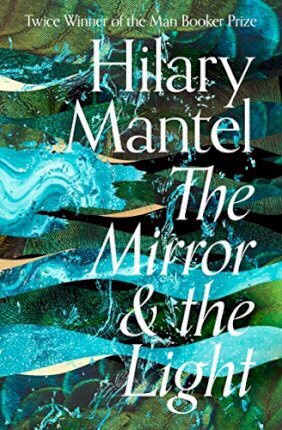
This is the third and final book in Hilary Mantel’s trilogy on Thomas Cromwell and takes us into his final years as Henry’s advisor. The book starts in 1536 when Anne Boleyn is decapitated with a french sword when Cromwell’s fortunes may be at their peak. Henry is settled with Jane Seymour who is expecting a baby. Calm reigns at court. Behind the scenes, Cromwell still has much to think about: rebellion, traitors and spies both at home and abroad. Can the nation shake off it’s Catholic past and move on? Or do the dead continually return to haunt us? The execution of Thomas More is playing on Henry’s mind particularly at this time. For Cromwell, the Spanish ambassador whispered something in his ear. A though that will not go away. Henry will turn on him too. As he always does in the end. With no family, title or private army behind him, Thomas has no one to defend him. It’s a lonely place to be, reliant solely on your own cunning to survive. This thought comes to life as the Queen dies and the lives of predator and prey move to their inevitable end. I know what happened to Thomas Cromwell, in fact I had to close my eyes when watching The Tudors and seeing his fate. That doesn’t stop me from wanting to read this book though, because Mantel’s research is extensive and she has an almost spooky ability to get inside a character’s mind and portray what those dry historical facts felt like. I must admit to being a little daunted by the size of this, so I think I’m going to separate it into readable sections and make it a daily reading goal.

I have this on the pile of books by the bedside, mainly paperbacks I’ve picked up from charity shops and second hand bookshops. It seems to provide or imagine a back story for Henry’s fifth wife that makes her plight even more tragic. Katherine is only twelve when she is sent to the home of the Duchess of Norfolk, a place where girls from aristocratic families go to train as ladies in waiting. As a member of the Boleyn family, this is a normal placement but she must have been aware of the terrible end her cousin met at Henry’s hands. Cat Tilney, another girl living in the house, is suspicious of Katherine. She thinks she’s only interested in clothes and boys, but is eventually drawn in by the young girl and they become close confidantes. When Katherine is called to court and drawn into the King’s orbit, Cat becomes her lady-in-waiting. Henry has set aside Anne of Cleves and despite Katherine only being 17 his advisors present the young girl as a possible successor. Henry is charmed by this charming young girl and at first married life is enjoyable on his side. However, Katherine is married to a much older man who is now in ill health and has a permanent leg ulcer that smells terrible. A rumours start to filter through the ladies-in-waiting that Henry can’t perform in the marital bed, whispers start to reach courtier’s ears about Katherine’s conduct. Girls that came from the Duchess of Norfolk’s home may have been entertaining much older men. In fact her present conduct is worse, because she’s already having an affair with King’s manservant Thomas Culpepper. Katherine is terrified and implicates others, including her childhood sweetheart Francis. Unknown to her though, Francis is now in a serious relationship with Cat Tilney. With Francis in the tower, Cat could save him, but but only by implicating the Queen and ensuring her death. I’m fascinated in reading this take on Katherine’s early life, which seems to show how vulnerable young women were at court and how they were always blamed for men’s actions.

I hope this gives you some ideas about where to start with historical fiction about The Tudors. It isn’t an exhaustive list and there’s plenty of non-fiction from various historical that’s equally fascinating, not to mention the debate on how male and female historicans often interpret material very differently and with potential bias. I do think Henry is more understandable when put in the context of his father’s reign. Henry wasn’t meant to be King and was allowed to spend time carousing with friends like Charles Brandon rather than learning about the constitutional obligations of the crown. Henry was an intelligent young man in terms of history, philosophy and religion, but wasn’t schooled in duty and service in the same way as his brother Arthur. He was also left at court with women: his mother, both grandmothers and his sisters were said to have spoiled him. His relationship with his father was complex considering he was the spare, but he was at court to see his father’s paranoia, his alleged affairs and his vacillating over whether Henry could marry Katherine of Aragon.

I’m interested in research that looks at the Tudor’s medical history. Henry’s jousting accident during his relationship with Anne Boleyn was a bad one, with Henry knocked out for some time afterwards. It is very possible he sustained a head injury at that time, not to mention the leg injury which became ulcerated and impossible to heal. The pain and restrictions of this ulcer certainly contributed to his obesity and terrible mood swings in later years. It is likely he was also impotent after his marriage to Jane Seymour, providing more insight into his comments on Anne of Cleves’s desirability; there was nothing wrong with him, she was too unattractive. I have also read about possible chromosomal abnormalities that might explain why both his first wives were unable to produce a male heir, with all male babies being miscarried or dying within a few days or weeks of their birth. Edward IV was a sickly child and died very young too, while his sisters Mary and Elizabeth lived into adulthood. All of this adds to our understanding of the Tudor’s reigns, but can’t fully excuse a man who was cruel and tyrannical. It does however give us insight into the experiences of the Tudor Queens and their daughters, most of whom met tragic ends either wholly or in part caused by men.
Posted in Throwback Thursday

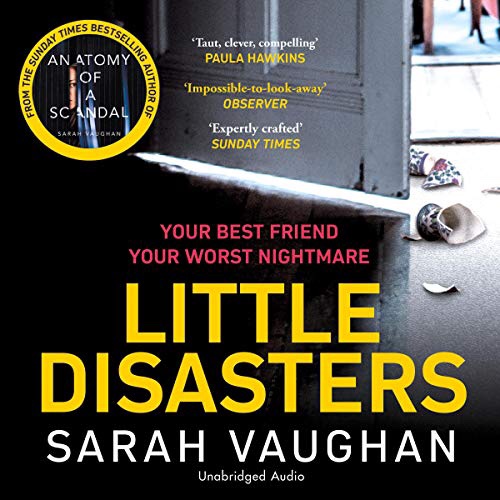
Little Disasters by Sarah Vaughan

You think you know her…

But look a little closer

She is a stay-at-home mother of three with boundless reserves of patience, energy and love. After being friends for a decade, this is how Liz sees Jess.

Then one moment changes everything.

Dark thoughts and carefully guarded secrets surface – and Liz is left questioning everything she thought she knew about her friend, and about herself.

As regular readers know, between my blog tour and current fiction reads I always like to go back and read an author’s earlier works. I thoroughly enjoyed this novel from Anatomy of a Scandal writer Sarah Vaughan, first published in 2020. It starts with an ordinary evening on duty for Liz, who is a registrar in paediatrics. She’s called down to A&E to see a ten-month-old baby presenting with strange symptoms. She’s been vomiting, and seems drowsy but doesn’t have a temperature which rules out a virus or infection. However, Liz is familiar with this particular baby girl, because she belongs to her best friend Jess and she’s definitely not acting normally. Jess has always seemed an absolute natural when it came to motherhood, certainly more than Liz. Jess made parenting seem easy, spending so much time making sure her children have the right foods, and lots of activities to try and nurture their minds. She’s the stay at home full time parent, but where Liz would struggle without working, Jess seems born for the role. Yet, this is not the same Jess that Liz knows outside of work – she’s edgy and claims her daughter had a fall. All children fall and through no fault of the parent, but the accident Jess describes doesn’t account for the boggy head injury that Liz can feel at the back of her baby’s head. Why would Jess lie?

Told through different perspectives, from Jess to Liz, this is a brilliant domestic thriller with tension so tight it might snap. This tension in the writing echoes Jess’s mind, at any time she might completely unravel but that doesn’t mean she hurt her baby. Vaughan is exceptional at drip feeding us a little at a time. A tiny bit of extra information here. A new viewpoint there. But never more than you need to keep the story flowing. It’s a powerful and emotive story, but Vaughan never descends into sentimentality or melodrama, this is sharp, addictive and never slows down, insisting you read another chapter, then another.

She is painfully honest about parenthood, so much so that it’s painful to read at times. Especially when the perspective shifts to one of the children and we’re suddenly reminded in the midst of all this, just how vulnerable they are. We are never really aware, until it happens to us or a close friend or family member, just how transformative giving birth can be. Some births are difficult, violent even. Yes, it’s a time of incredible joy and celebration, but my friends were exhausted in those first few days. Exhausted to the point of being almost catatonic. They were uncomfortable, dealing with caesarean scars and infection, stitches, painfully swollen breasts so that every bit of them seemed to be either hurting or leaking! It didn’t look like fun to me and there was a small part of me that was a little bit glad I couldn’t have children. We hear comedians and celebrities publicly talking about how difficult parenting can be and it isn’t just the body that’s affected. The birth can leave you feeling traumatised. The lack of sleep wears you down and you can’t remember things. Then your mind can play tricks on you. Are you really up to this? What if you’re not doing this right? Some women don’t bond with their baby straight away then berate themselves for being terrible mothers. We know so much more about post-natal depression and post-partum psychosis these days, but women still get missed because they’re too scared to say how they feel. If you’re having thoughts of harming your baby, how can you tell anyone?

I think this story that will resonate with many women. Jess and her baby really do pluck your heartstrings. At first I was so suspicious, because she’s cagey and closed off. I couldn’t understand why you would wait nearly six hours to get help for an obvious head injury. I was pretty sure where the narrative was going, but then the author surprised me with a new perspective and a huge twist that was really unexpected. This is a far darker path than I’d expected. Domestic thrillers are one of my a favourite genres and this is up there with the best. It really delves under the layers of motherhood and overturns that old expectation that every woman is naturally maternal. That post-natal depression can happen to anyone, even when they’ve not experienced it with their other children. It brings home to the reader that looking after a newborn baby is a giant undertaking and it how vital it is to ask for help. This is such a perceptive novel with an unexpectedly treacherous conclusion. Sarah Vaughan is an incredibly clever writer, balancing both our sympathy for Jess and her baby, but also our thriller reader’s desperation to uncover what has happened.

Published by Simon and Schuster 2020

Meet the Author

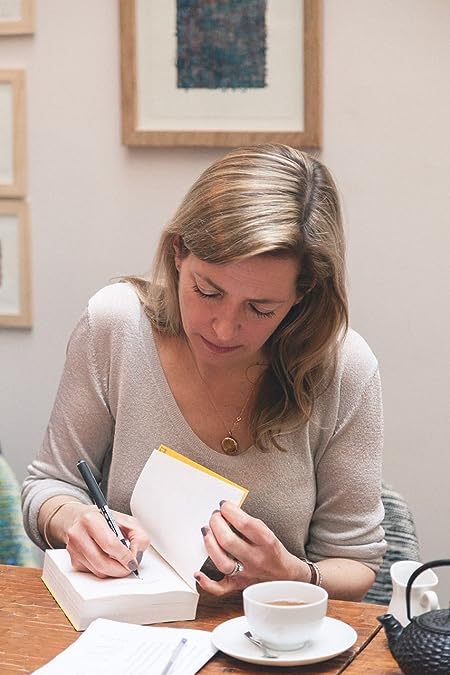
Sarah Vaughan is the international bestselling author of the Number one Netflix TV series, Anatomy of a Scandal, and four other novels. A former journalist, she read English at Oxford before training at the Press Association and spending 11 years at the Guardian as a news reporter and political correspondent. After having her second baby, she left to freelance, and eventually to write fiction. Two women’s fiction novels followed before Anatomy of a Scandal, her 3rd novel and her first courtroom drama/psychological thriller, heralded a new direction and became an instant international bestseller. Sold to 24 countries, it was also a Sunday Times top five bestseller, spending 10 weeks in the top 10 charts; a kindle number 1 bestseller; and one of Richard & Judy’s best dozen books of the decade. In April 2022, it dropped as a six-part Netflix mini-series, written by David E Kelley and Melissa James Gibson, and starring Sienna Miller, Michelle Dockery, and Rupert Friend. In its first 3 days, it debuted at number 3 worldwide and was the number 1 most watched Netflix TV show in multiple countries, including the UK and US. In its first 3 days alone, it notched up 40.28 million viewing hours.

Little Disasters, published during the first and third lockdowns, was a Waterstone’s Thriller of the Month and is in the process of being adapted for a UK broadcaster. It was also WH Smith paperback of the month, a Kindle bestseller, and has been published in the US and various other countries. Reputation, published in March 2022, has also been optioned by the team behind Anatomy of a Scandal with a view to being developed for TV. It will be published in the US in July, and in various other countries throughout the year

Posted in Throwback Thursday

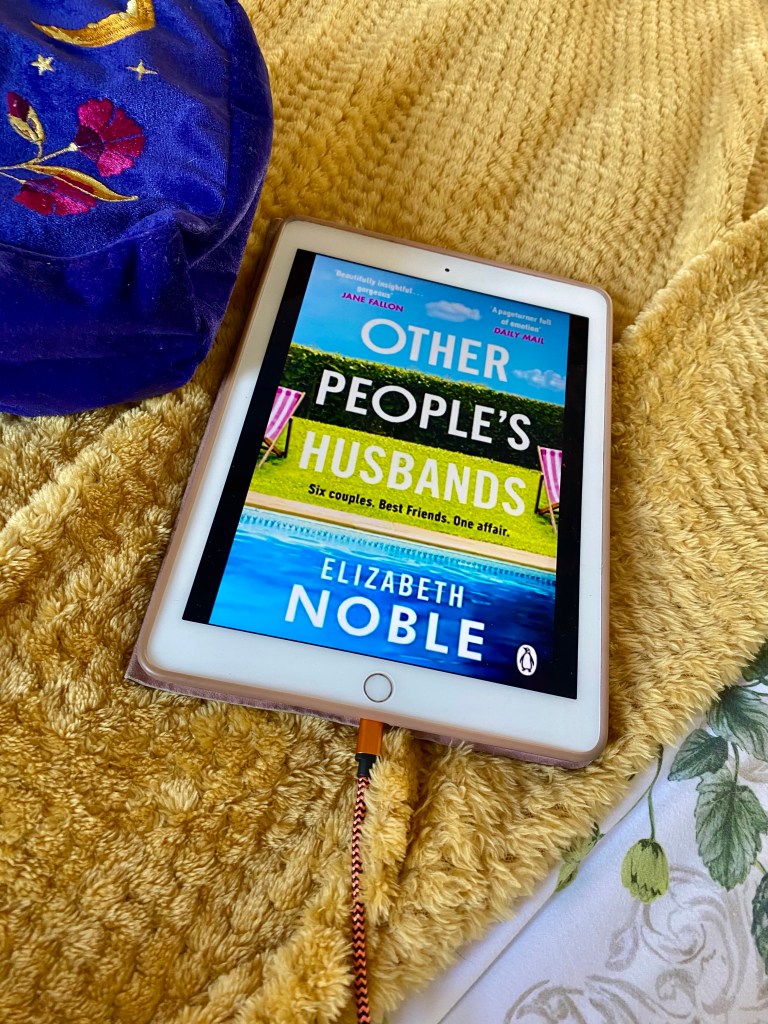
Other People’s Husbands by Elizabeth Noble

Elizabeth Noble’s domestic drama is focused around a solid group of friends. Six women and their husbands have been a ‘pack’ for several years after chat at the school gates led to lunches, then dinners and now regular get togethers like their annual May Day bank holiday. Traditionally this weekend is always spent together, sometimes abroad but usually at Annie’s picturesque holiday cottage. Annie loves sharing her home with her closest friends and is the best host, often heading down there a couple of days before the others to air the house out and prepare the bedrooms. This is where the ripples begin. In previous years Annie remembers all the kids coming along, playing in the pool and shrieking with laughter. More recently it’s just been the adults and the first day usually involves getting out of travelling clothes and spending the afternoon by the pool, the men in their swimming shorts and the women in sensible Boden one piece swimsuits, an unspoken rule. Kit and Natalie are late for everything and this weekend is no exception, so everyone is already lounging outdoors when Natalie joins them. This is the moment that everything changes, as Natalie strolls out in a high legged red bikini walks the length of the pool and climbs in. The red is as subtle as a matador’s cape, but will anyone take up the challenge? All the women know without speaking that this is a betrayal of the sisterhood, an open sexual invitation, a red flag. Even a couple of the men mention it, later on in bed with their wives they say it was a statement, pure theatre, something that shouldn’t be a surprise considering Natalie is an actress. Yet her husband Kit barely seems to notice.

However, one of the husbands noticed a long time ago that Nat is beautiful. In fact over twenty years there have been several moments – a glance, a brush of the fingers, a hand that lingers on a shoulder, a kiss that strays from the cheek to the edge of the mouth. Will this now become something more? The author lets the tension rise beautifully. She perfectly captures how one action acts like a ripple in a pond within a group like this. It would affect every one of the friends and the next generation who have grown their own friendships over the years. Natalie is feeling restless and expressing that in her clothing and changing her routine. She and husband Kit have a small flat in London that she can pop to on the train and visit galleries or go shopping. Previously she’s been held to the routine of children at home but now she’s free from that and has time for herself. Her husband Kit seems absolutely solid and a great dad, but Natalie misses that frisson of attraction and electricity between two people. So, when she and Dom accidentally bump into each other in London she doesn’t have anywhere to be or to rush back for, so they can enjoy the warmth of a city evening. Joining others who are sat on the embankment, looking at the river and enjoying a bottle of wine or ice cream. The heat between them is obvious, but there’s always been something to stop them before. Dom loves his wife, she’s solid and dependable but their sex life has dwindled of late and they don’t seem to have made the transition back from family to being a couple again. His attraction to Natalie, something he felt at their very first meeting, has never diminished. What if they now have a chance to be together? Whereas Natalie seems to agonise over her husband and children finding out, Dom doesn’t seem to think about the catastrophe this would cause.

Noble has written their characters very carefully so that I really did care about Natalie despite her actions. I enjoyed her relationship with daughter, listening to Temple’s marriage problems and going away with her for the weekend for some quality time. Natalie’s issues were largely her own and they had nothing to do with her relationship with Kit. Dom’s wife Sarah was very organised, something that seemed to fit with her job as a schoolteacher. She often organised group get togethers and was very family orientated. She knew that her sex life with Dom had slipped a bit of late but she wasn’t too worried. She thought that sex did tend to dwindle a little when people reached middle age and had been together so long. That didn’t mean they didn’t love each other. However, she had really been too busy to stop and think about whether they actually did still love each other. The author’s ability to get inside the mind of these characters was incredible and I enjoyed how the story was split between various different members of the group, including the next generation who were facing changes of their own. I loved how the women tried to remain friends with each other, despite everything that was happening around them.

While this intense drama was going on it was balanced by a peek into these couple’s lifestyle. I coveted Annie’s holiday home with it’s old fashioned charm. The events they’re all invited to, such as one of their daughter’s weddings being held in the garden at home, were lavish and beautifully arranged. These were dreamy interludes between the domestic drama that I drifted through, thoroughly enjoying how lovely they were. There was also a gorgeous little romance developing between two of the next generation, who had spent years climbing trees and running through sprinklers in each other gardens, but were now confused because their feelings were changing. In the main it was the women who stood out in this novel, whereas a lot of the husbands simply faded into the background. These were strong women, having to keep afloat careers, family commitments, parents and marriages. These are the ‘middle’ years where children still need you and parents start to rely more on their children. It’s a little like spinning plates, but at least these ladies had gorgeous homes and getaways. Let’s be honest, no one here is struggling on minimum wage. It’s gloriously gossipy though and I felt like a thoroughly spoiled fly on the wall by the end. Perfect for by the pool reading, this really was an enjoyable and addictive domestic drama.

Meet the Author

Elizabeth Noble is the internationally bestselling author of The Reading Group, The Friendship Test, Alphabet Weekends, and Things I Want My Daughters to Know. She lives in New York City with her husband and their two daughters.

Posted in Throwback Thursday

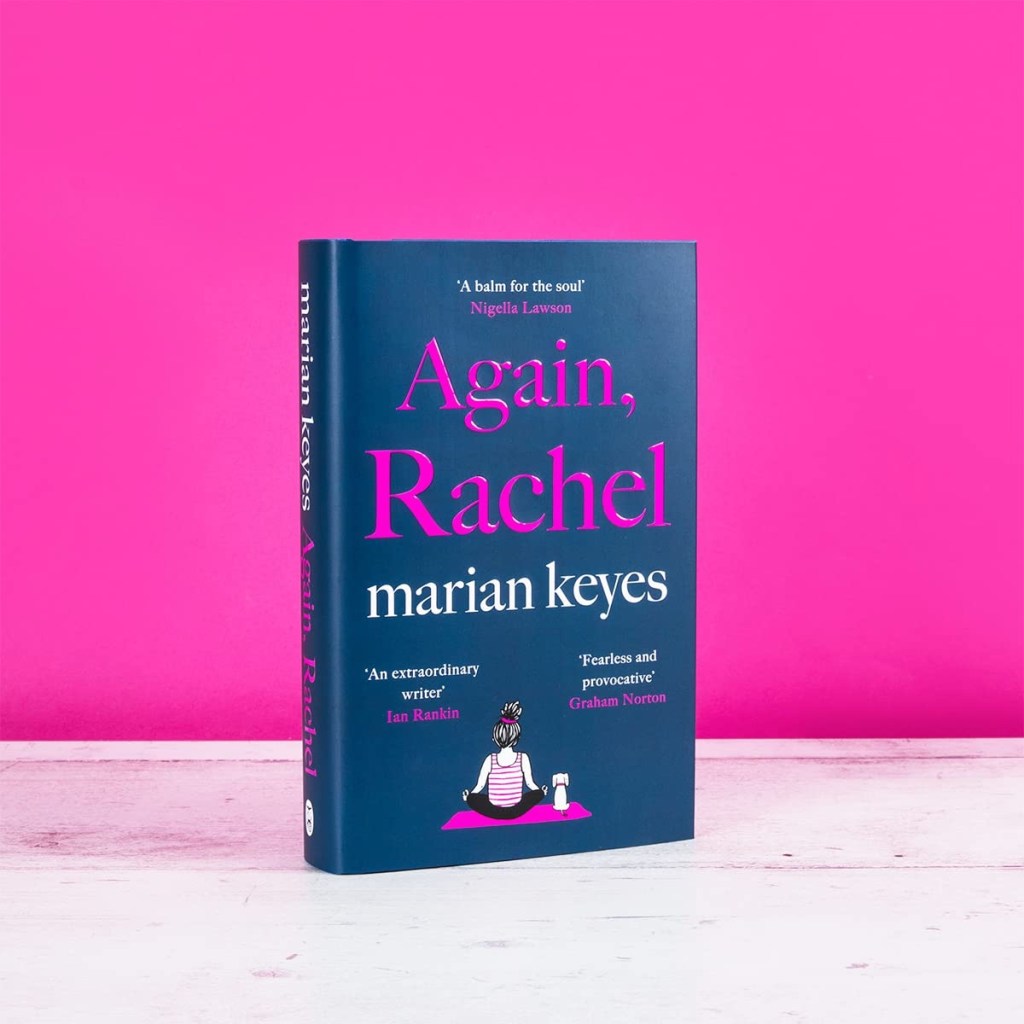
Again Rachel by Marian Keyes

Over the last couple of weeks I’ve had the brilliant experience of buddy reading with my eldest stepdaughter. I bought her Rachel’s Holiday and this sequel Again, Rachel for Christmas and she decided to read them in her down time from revising for her A’Levels. I realised it would be a great opportunity to share the reading experience together. I finished this on my weekend away and I genuinely found it hard to look up from the story. For the author, the anxiety of revisiting a much loved character must be huge, because I felt it too. I’d kept it on one side for this long because of that anxiety. I loved Rachel and the whole Walsh family and I wasn’t sure I wanted to know what happened next. We’re twenty years on from the end of the last book and Rachel is settled, with a job she loves and a happy home. She works as a senior counsellor at The Cloisters – the place where she started her own recovery journey. She owns a beautiful little house and a garden that’s become an unexpected part of her ongoing recovery and mental well-being. She also has a little dog, Crunchie. There’s also a man, Nick Quinliven (known as Quin) who has a penchant for trying new and exciting things from from the latest restaurant to wild swimming and escape rooms. They haven’t said they love each other yet, but he is an important part of her life. Life is great until Rachel hears that Rose Costello has died. Rose was her mother-in-law and although she hasn’t seen her since she and Luke divorced, she does feel an obligation. Should she go to the funeral or not?

Rachel and Luke have never spoken since he left their Brooklyn flat several years ago and cut all contact. I kept thinking what on earth could have separated these two people who really loved each other? Skilfully taking us back and forth in time, Marian Keyes constructs the intervening years as Rachel copes with the unexpected present and the painful past. Rachel’s whole life is upended as she sees Luke for the first time and tries to cope with the emotions of their reunion. However, she’s also plunged deeply into the past and the reasons she and Luke ended. Rachel is emotionally intelligent and knows all about buried trauma, but is surprised when she experiences all of those emotions afresh as if it only happened yesterday. It upsets her equilibrium, but has that sense of calm recovery merely been a front? Rachel hasn’t wilfully deceived others. She’s deceived herself. Is her version of what happened back then even the truth? If given the chance to connect with Luke and unpick their past, should she take it?

Marian Keyes really knows her stuff when it comes to addiction and mental health. It’s always a joy to read her books because they’re so emotionally intelligent. This framework provides so much depth to the characters and their story. Here she shows us a wounded healer, as Rachel struggles through addiction and loss, but still supports clients to achieve psychological change. I love her courage, because anyone who uses their own pain to help others is an incredible human being. I love how Keyes describes group sessions, as Rachel keeps her boundaries and sticks to her script, no matter how strongly she might be identifying with the client or feeling deeply moved by their story. We get to see that conflict in her; as a human being she might want to comfort that person, but as a therapist she must hold back to effect change. She knows that sometimes it’s important to sit with the feelings, to truly feel negative emotions without distractions or outside comfort. They always pass. I loved the wisdom she’s acquired over the years and how she rides to cope with her own trauma the same way.

I was deeply moved by Luke and Rachel’s experience because I’ve been through something similar. It made some parts hard to read, but it was written beautifully and with an accuracy I really appreciated. Keyes offsets the sadness with the usual comic touches, with Walsh family conferences being a great source of humour. All the sisters have their own idiosyncratic characters, causing conflict at times but we know that love is always present. Mrs Walsh is typically overbearing and contrary and her upcoming ‘surprise’ birthday party is an extra source of stress, especially when she decides to invite her ex-son-in-law. Luckily, the meticulously organised Claire has everything in hand, despite also trying to negotiate a session of swinging for her and her husband. Husband Adam is reluctant, but once convinced he becomes so enthusiastic that Claire is furious with him! The love stories are convincing and both Rachel’s current beau Quin and ex-husband Luke have their strengths. I held out hope for Quin and Rachel because I thought they suited each other. However, once Luke is on the scene the chemistry and unfinished business between him and Rachel is undeniable. Quin isn’t the only obstacle either, Luke’s partner Callie is with him in Ireland and seems very determined to keep Rachel close. I didn’t know if Rachel and Luke would be able to move past their history and connect again, as the people they are now. I loved how they tried their hardest to work through what happened, despite the pain it’s clearly causing. Could they possibly remain friends and share their loss, after all only the two of them can fully understand what they went through. Despite knowing that that Rachel didn’t need either man to build a happy life, I knew where my loyalties as we approached the end. Oh what an ending!! I was snap chatting my stepdaughter and we’d both cried buckets at the ending. I was so glad that Marian Keyes had been brave enough to revisit Rachel again.

Published by Penguin 13th April 2023

Marian Keyes is the international bestselling author of Watermelon, Lucy Sullivan is Getting Married, Rachel’s Holiday, Last Chance Saloon, Sushi for Beginners, Angels, The Other Side of the Story, Anybody Out There, This Charming Man, The Brightest Star in the Sky , The Mystery of Mercy Close, The Woman Who Stole My Life, The Break and her latest Number One bestseller, Grown Ups. Her two collections of journalism, Making it up as I Go Along and Under the Duvet: Deluxe Edition are also available from Penguin.

Posted in Throwback Thursday

Our Little Cruelties by Liz Nugent

In the famous words of Phillip Larkin, ‘they fuck you up your Mum and Dad’. Reading this book was a very interesting experience and patience definitely paid off. Had I given in to my impulses and thrown the book down in frustration during the first part, I would have missed out on a great read. The story of three brothers over their lifetimes is compelling, interesting and a great study in how mental health difficulties can be passed on from one generation to the next.

The structure of the novel is what I had difficulty with at first. The first section was narrated by the eldest brother, Will. Written in short chapters, slipping between decades, we see aspects of his childhood through to the present day where he is a successful movie producer. He meets his wife Kate through his brother Brian,when she’s brought to a family dinner. They have a little girl called Daisy, but Will is much more focused on work than he is his family. We get the sense that Kate is a long suffering woman who gets more support from Brian, who is now Daisy godfather. Brian is there for the birthdays and school concerts and Daisy has a great rapport with her Uncle. Will is dismissive of Brian and his lack of ambition. He is also dismissive of Luke, despite Luke’s success as a pop star in his late teens. He is close to his Mum and through flashbacks we see she favours him, quite openly.

Luke, by contrast, really gets the brunt of their mother’s moods. He is the youngest, the weakest but soon finds success as a pop star. However, in the later fragments of his life he has times of struggle, where his mental health is poor and he turns to drink or experiments with drugs. He is an unusual child with a religious fixation to the extent where the family priest thinks he has a vocation! The other boys use his goodness against him, it gets them extra food and attention, especially from their father. There are moments where it seems his life is on track and he could be happy, but others where I wondered if he was just not meant for this world. Finally, there’s Brian the middle brother. If Will is his Mum’s favourite and Luke is doted on by his Dad, it leaves nobody for Brian. He does seem fatally dragged between the two of them. Will is very dismissive of him, even though Brian does so much for his niece. He’s not grateful that Brian stands in for him or that he looks after Luke when his mental health deteriorates. In fact their relationship becomes so destructive that other family members get caught in the crossfire.

The genius of this book is its structure. During the first part, narrated by Will, I was ready to put the book down. I couldn’t stand him. He was arrogant, self-centred and treats women appallingly. If the whole book had been his viewpoint I might have thrown it out of the window. Just when I was at the point of giving up, I saw Luke’s name across the next section and it was such a relief. As the tale goes back and forth in time and perspective we see a tiny bit more of the whole. At a Bob Dylan concert at a local castle, Will ends up in a fight and is taken to hospital with Dad, leaving Luke to follow behind. Mum is also left behind at the castle and doesn’t arrive at the hospital till late. However, through Luke’s story we learn that something terrible happened to her, something that explains so much about how she behaves. When we finally get Brian’s section we see what a lifetime of being in the middle feels like. Overlooked, unconsidered and brushed aside. We find out things we already suspected and other things that surprise and enlighten us. Every single strand of this novel teaches us that we are only ever a small part of the picture and we must step back to see the whole.

This brings me to the second line of Larkin’s poem, which is the best; ‘they do not mean to but they do’. There are parts of this novel, particularly the way Dad behaves, where genuine mistakes are made and misunderstandings occur in the same way they do with any family. However there are other situations where the damage seems deliberate, especially in their mother’s attitude to Luke, Will’s intervention in Luke’s relationship, and in the treatment of Will’s daughter Daisy towards the end of the novel. These acts are more than little cruelties. They are deliberate, potentially causing lifelong psychological disturbance. This is a complex and interesting novel that moves from one narrow perspective to give us all the pieces of the emotional jigsaw puzzle that makes up this family. Liz Nugent is such an emotionally literate writer that I can’t wait to read her next work.

Meet The Author

Liz Nugent lives and writes in Dublin, Ireland. She is an award winning writer of radio drama, children’s animation soap opera and television plays. Her second novel, Lying in Wait, is to be published in July 2016. Unusually for a writer, Liz likes neither cats nor coffee and does not own a Breton top.

Liz Nugent’s new novel Strange Sally Diamond is out on March 2nd from Sandycove.

Posted in Romance Rocks, Throwback Thursday

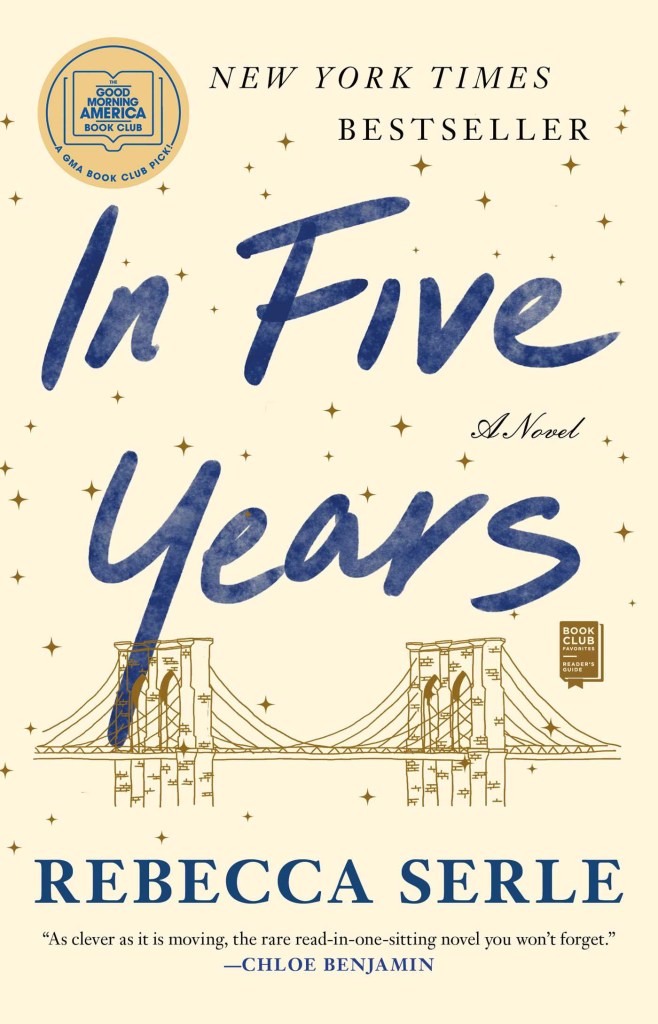
Throwback Thursday! In Five Years by Rebecca Searle for Romance Rocks.

This book surprised me, delighted me and broke my heart. It was not at all what I expected, but was all the more special for that. Cleverly, Serle wrong foots the reader into thinking this is a straight forward romance, but it really isn’t. It’s about love and just as our heroine Dannie is some times unsure what love looks like, so is the reader. We are used to certain conventions and have expectations about how a love story will unfold. It teaches us that sometimes we don’t notice or fully appreciate what we already have.

Dannie is a corporate lawyer, living in Manhattan and dating the eminently eligible David. David and Dannie live together after dating for two years. They have done everything according to an unspoken, but very correct timetable; everything about their relationship is planned and just right. In fact their relationship is so predictable that when David suggests dinner at the Rainbow Room, Dannie knows he’s going to propose. She says yes when he presents the perfect engagement ring, but they don’t plan their wedding. They continue to drift along as they are, until Dannie has the dream. This vivid dream shows a loft apartment in Dumbo with interior design details such as an art print of an optician’s chart with a witty slogan. It’s nowhere Dannie can imagine living. It’s trendy and edgy. She and David live in Gramercy Park. A perfect location for their work and fitting for where they are in life. Yet, the Dumbo apartment feels comfortable. Then a man appears. She’s never met him before but yet there is a connection, something she can’t define. As he moves closer she feels actual electricity. She has never felt this before. Like some huge force compels them to be together. When she wakes, Dannie feels strange, like she’s questioning everything around her.

Dannie has planned to see her friend Bella. They have been friends since boarding school and are still incredibly close. Bella takes more risks than Dannie and in some ways Dannie sees her as someone who doesn’t finish things, perhaps a bit of a flake. Bella loves art, she lives to travel and has a more bohemian outlook on life. Dannie has a more settled and perhaps, conventional life where work is the priority and her stable relationship with David simply ticks along. Up until now Bella hasn’t had a stable relationship in her life, but she has brought someone important to meet Dannie. When he walks in, Dannie is shocked to see the man from her dream. She panics and decides to do everything she can to stop her dream from coming true. But life can take strange turns and a series of events unfold that she never imagined. They make her rethink everything about how to live life and how to love.

I became so involved with Dannie and Bella’s story that it was hard to put the book down towards the end. The story crept up on me from something very light to an emotional tale about the strength of female friendship. These girls are life partners. Their presence sustains each other in ways that romantic relationships sometimes don’t. Bella’s mother lets slip that she purposely placed her daughter in the same school as Dannie, because she saw them together and could not part them. The very structure of the book teaches the reader something. We learn, at the same time as Dannie, that the happy ending is not always about a man, because love comes in many forms. Also, that loss and love are the same thing. When we grieve it just proves how much we loved. I found myself becoming very emotional towards the end of the book and that rarely happens. I found the writing so truthful and similar to my own experience of grief that I had a lump in my throat. I loved the ending and the fact it wasn’t predictable elevated the book above the ordinary. I will be hugging my friends a little closer and appreciating all the people in my life who love me.

Meet the Author

Rebecca Serle is an author and television writer who lives in New York and Los Angeles. Serle developed the hit TV adaptation of her YA series Famous in Love, and is also the author of The Dinner List, and YA novels The Edge of Falling and When You Were Mine. She received her MFA from the New School in NYC. Find out more at RebeccaSerle.com.

Her latest novel One Italian Summer came out in paperback last year and was a wonderful look at love, mothers and daughters, and the things we learn about ourselves through travelling.

Posted in Romance Rocks, Throwback Thursday

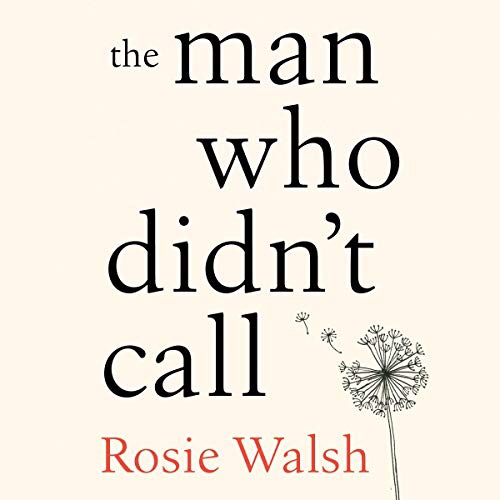
Romance Rocks: The Man Who Didn’t Call by Rosie Walsh

I read this in two long bursts – one of which started at 3am. It’s a book I couldn’t put down because all I wanted was these two people back together. The harsh realities of grief and lifelong family rifts are well drawn by the author and completely believable. All of these people are trying to move forward despite their lives missing a beat one day on a country road, where a split second decision has lifelong consequences. This book explores grief, loss, loyalty, loneliness and the eventual incredible ability the human heart has to heal.

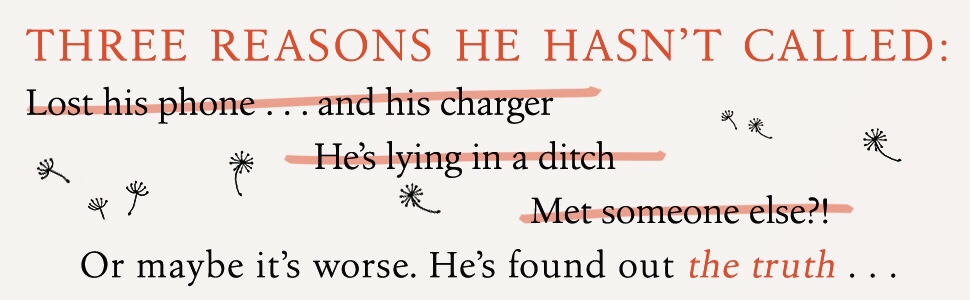
Sarah has a 7 day whirlwind romance with Eddie. They meet by chance on a country road while Sarah is visiting her parents. She thinks Eddie just might be the one. But, Eddie goes away on holiday and she never hears from him again. Is Eddie a heartless playboy who never intended to call? Did Sarah do something wrong? Or has something terrible happened to him? Instead of listening to friends and writing this off as a one night stand, Sarah begins to obsess and is determined to find the answer. Every clue she has comes to a dead end and she is in danger of completely losing her dignity. As her time back home in the UK starts to run out, Sarah looks for clues to track Eddie down. What she hears is confusing her further. His friend doesn’t give the simple answer, that Eddie has moved on, but gives her a warning; if she knows what’s best for her, she needs to stop looking for Eddie. 

Walsh has successfully intertwined a love story with a mystery. I veered between wondering if Sarah was becoming irrational and willing her to succeed. Interspersed with the narrative are beautiful letters of love and loss addressed to the writer’s sister, affectionately nicknamed ‘Hedgehog’. The letter writer’s sister died when they were young, but we don’t know what happened or who the letter writer is. If Sarah is the author of the letters does this loss have something to do with the warning she’s been given? Is her sister the key – not just to Eddie’s disappearance, but to why Eddie was on that particular stretch of road on that day? 

I quickly became invested in Sarah and Eddie’s story. I think we’ve all been subjected to the watched phone that never rings and how crazy it can make us. It could have made me dislike Eddie early on, but for some reason I never did. I’m definitely a hopeless romantic so I seemed to accept Sarah’s hope that this could still work out. The other characters in the novel are also well-written and compelling. I’m a therapist so I was particularly interested in Eddie’s mother and her mental ill health. I think her symptoms and the way she manipulated Eddie showed a streak of narcissism. She finds it impossible to see this situation from his point of view, only how it might  her. Anything that threatens their dynamic as carer and patient is a huge threat to her and she responds with emotional blackmail and hostility. Eddie is as much a prisoner of her mental ill health as she is. I also had empathy for Sarah’s friend Jenny who is struggling to conceive and undergoes IVF treatment to the point of financial ruin. Her character probably leapt out at me because I’m also not able to have children, and know how difficult it can be to come to terms with. Her stoicism and determination to support her friend in the face of her own loss is very moving. 

I stayed up until 2am to finish the book, because I had everything crossed that the mystery would be explained and these two people could move forward together. To different degrees, all the novels characters are imprisoned by the past and losses they can’t accept. My husband died when he was 42 and I was 35. It’s like a chasm opened up and I had to choose between staying on one side forever, with the past and my feelings of loss and fear. Or I could choose to jump over that chasm into a new future. I never forget what happened or the love I have for Jerzy, but twelve years later I have a wonderful partner and two beautiful stepdaughters. Thankfully, I had the bravery to move forward knowing I can’t lose my memories of the past, but I still have a future full of possibilities I never imagined. That’s what the characters in the novel are trying to do. Grief is different for everyone and there are always tensions between those who are trying to heal and those who can’t imagine healing because it feels like a betrayal. Rosie Walsh draws these different threads together beautifully, creating a bittersweet novel that captures the incredible ability the human heart has to heal.

Meet the Author


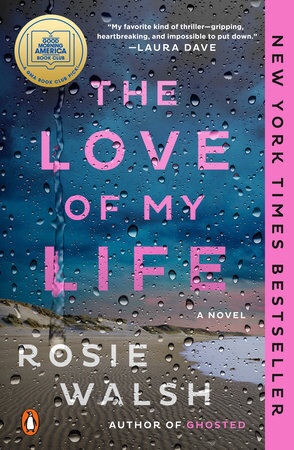
Rosie Walsh is the internationally bestselling author of two novels, the global smash hit THE MAN WHO DIDN’T CALL, and – new for 2022 – THE LOVE OF MY LIFE, a heart-wrenching, keep-you-up-all-night emotional thriller, which was an instant New York Times bestseller and stayed in the German top ten for several weeks. 

Rosie Walsh lives on a medieval farm in Devon, UK, with her partner and two young children, after years living and travelling all over the world as a documentary producer and writer. 

The Man Who Didn’t Call (UK) / Ghosted (US) was her first book under her own name, and was published around the world in 2018, going on to be a multimillion bestseller. 

Prior to writing under her own name she wrote four romantic comedies under the pseudonym Lucy Robinson. When she isn’t parenting or writing, Rosie can be found walking on Dartmoor, growing vegetables and throwing raves for adults and children in leaking barns. 

Author photos © Anna Pumer Photography / Verity Rivers

Rosie’s new novel The Love of my Life is another heartbreaking romance, mixed with an addictive mystery you’ll be begging for one more chapter.

I have held you every night for ten years and I didn’t even know your name. We have a child together. A dog, a house.
Who are you?

Emma loves her husband Leo and their young daughter Ruby: she’d do anything for them. But almost everything she’s told them about herself is a lie. And she might just have got away with it, if it weren’t for her husband’s job. Leo is an obituary writer and Emma is a well-known marine biologist, so, when she suffers a serious illness, Leo copes by doing what he knows best – reading and writing about her life. But as he starts to unravel her past, he discovers the woman he loves doesn’t really exist. Even her name is fictitious.

When the very darkest moments of Emma’s past life finally emerge, she must somehow prove to Leo that she really is the woman he always thought she was . . . But first, she must tell him about the love of her other life.

Available now in hardback and on Kindle, but due out in paperback in July 2023.

Posted in Romance Rocks, Throwback Thursday

Throwback Thursday! Mix-Tape by Jane Sanderson for Romance Rocks!

I love this book. Perhaps it’s because I had a Dan. A musician who started as my best friend and who I fell in love with. I was 18 and he took me to my first prom. His band were playing and it was 1991 so perms were everywhere and we were just adopting grunge. I would turn up for school in jumble sale floral dresses with my ever present oxblood Doc Martens. They played some of my favourite songs that night: some that were contemporary like Blur and others were classics like Wild Thing. I most remember Waterloo Sunset. Then, like a scene in a rom-com we walked across town to his house – me in a polka dot Laura Ashley ball gown and him in his dinner suit with the bow tie undone. He had a ruffled shirt underneath that he’d bought from Oxfam. We crept into the house and into the playroom so we didn’t wake anyone, then watched When Harry Met Sally. I remember a single kiss and then we fell asleep, but the love carried on over the years.

When I think of Elliot I always think of those famous best friend couples, like Harry and Sally or later, Emma and Dex in One Day. Now I can add Dan and Ali to the list. Alison and Dan live in Sheffield in the late 1970s when the city was still a thriving steel manufacturer. Dan is from the more family friendly Nether Edge, while Alison is from the rougher Attercliffe area, in the shadow of a steel factory. They meet while still at school and Dan is transfixed with her dark hair, her edge and her love of music. Their relationship is based on music and Dan makes mix tapes for her to listen to when they’re not together such as ‘The Last Best Two’ – the last two tracks from a series of albums. What he doesn’t know is how much Alison needs that music. To be able to put it on as a wall of sound between her and her family. Dan never sees where she lives and doesn’t push her, he only knows she prefers his home whether she’s doing her homework at the kitchen table, getting her nails painted by his sister or sitting with his Dad in the pigeon loft. Catherine, Alison’s mum, is a drinker. Not even a functioning alcoholic, she comes home battered and dirty with no care for who she lets into their home. Alison’s brother, Pete, is her only consolation and protection at home. Both call their mum by her first name and try to avoid her whenever possible. Even worse is her on-off lover Martin Baxter, who has a threatening manner and his own key. Alison could never let Dan know how they have to live.

In alternate chapters we see what Alison and Dan are doing in the present. Now a music writer, Dan splits his time between a canal boat in London and home with his partner Katelin in Edinburgh. Alison has written a new novel ‘Tell the Story Sing the Song’ set in her adopted home Australia and based round an indigenous singer. It’s a worldwide hit and she finds herself in demand, having to negotiate being interviewed and getting to grips with social media. She has an affluent lifestyle with husband Michael and has two grown up daughters. She has a Twitter account that she’s terrible at using and it’s this that alerts Dan, what could be the harm in following her? The secret at the heart of this book is what happened so long ago back in Sheffield to send a girl to the other side of the world? Especially when she has found her soulmate. She and Dan are meant to be together so what could have driven them apart? Dan sends her a link via Twitter, to Elvis Costelloe’s ‘Pump It Up’, the song she was dancing to at a party when he fell in love with her. How will Alison reply and will Dan ever discover why he lost her back in the 1970s?

I believed in these characters immediately, and I know Sheffield, and loved how it was described with affectionate detail by the writer. The accent, the warmth of people like Dan’s dad, the landmarks and the troubled manufacturing industry are so familiar and captured perfectly. Even the secondary characters, like the couple’s families and friends are well drawn and endearing. Cass over in Australia, as well as Sheila and Dora, are great characters. Equally, Dan’s Edinburgh friend Duncan with his record shop and the hippy couple on the barge next door in London are real and engaging. Special mention also to his dog McCullough who I was desperate to cuddle. Both characters have great lives and happy relationships. Dan loves Katelin, in fact her only fault is that she isn’t Alison. In Australia, Alison has been enveloped by Michael’s huge family and their housekeeper Beatriz who is like a surrogate Mum. It’s easy to see why the safety and security of Michael’s family, their money and lifestyle have appealed to a young Alison, still running away from her dysfunctional upbringing. She clearly wants different for her daughters and wishes them the sort of complacency Dan had, sure his parents are always there where he left them. But is the odd dinner party and most nights sat side by side watching TV enough for her? She also has Sheila, an old friend of Catherine’s, who emigrated in the 1970s and flourished in Australia. Now married to Dora who drives a steam train, they are again like surrogate parents to Alison. So much anchors her in Australia, but are these ties stronger than first love and the sense of belonging she had with Dan all those years before?

About three quarters of the way through the book I started to read gingerly, almost as if it was a bomb that might go off. I’ve never got over the loss of Emma in One Day and I was scared. What if these two soulmates didn’t end up together? Or worse what if one of them is killed off by the author before a happy ending is reached? I won’t ruin it by telling any more of the story. The tension and trauma of Alison’s family life is terrible and I dreaded finding out what had driven her away so dramatically. I think her shame about her mother is so sad, because the support was there for her and she wouldn’t let anyone help. She’s so fragile as a teenager and on edge. Dan’s mum had reservations, she was worried about her youngest son and whether Alison would break his heart. I love the music that goes back and forth between the pair, the meaning in the lyrics and how they choose them. This book is warm, moving and real. I loved it.

And what of my Daniel? Well he’s in Sheffield strangely enough. Happily partnered with three beautiful kids. I’m also happily partnered with two lovely stepdaughters. We’re very happy where we are and with our other halves. It’s nice though, just now and again, to catch up and remember the seventeen year old I was. Laid on his bedroom door, with my head in his lap listening to his latest find on vinyl. Or wandering the streets in my ballgown, high heels in one hand and him with his guitar case. Happy memories that will always make me smile.

Meet the Author

A former BBC Radio 4 producer, Jane Sanderson’s first novel – Netherwood – was published in 2011. She drew on much of her family’s background for this historical novel, which is set in a fictional mining town in the coalfields of Yorkshire. Ravenscliffe and Eden Falls followed in the two subsequent years, then in the early summer of 2017, This Much Is True was published, marking a change in direction for the author. This book is a contemporary tale of dog walks and dark secrets and the lengths a mother will go to protect her family. 

Jane lives in Herefordshire with her husband, the journalist and author Brian Viner. They have three children.

Her book Waiting for Sunshine is published in paperback on 23rd March 2023, with my review coming soon.


‘Who would name a child Sunshine, then give her away?’

Chrissie has always wanted to be a mother. After months of trying to adopt, she and her husband Stuart finally get the news that a little girl named Sunshine is waiting for them.

Abandoned at a young age, the child comes to them without a family history, and it feels like a fresh start for all of them. But when fragments from Sunshine’s previous life start to intrude on her new one, the little girl’s mysterious past quickly becomes Chrissie’s greatest fear …

Posted in Throwback Thursday

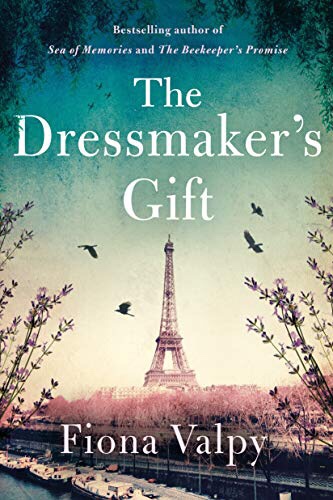
Throwback Thursday! The Dressmaker’s Gift by Fiona Valpy.

This book is a real hidden gem. I love fashion, so the idea of a dress that calls down through the years – the midnight blue satin, made of many pieces but with such tiny stitches it appears as if one piece of fabric – really appealed to me. Added to this, my in-laws history of escaping the Warsaw ghetto – at 8 years old in one case, and being sent to Siberia in the other – means I am interested in the threads of family history at a time of turmoil. My late husband’s  family has its own incredible story with repercussions that echo down the generation , so I understand that lives can be displaced and changed beyond recognition, with the results of that still being felt two generations later,

It is Harriet’s love for fashion and an old photograph that leads her to the door of a Paris fashion PR for a year long internship. She is loaned a room in the apartment above the office alongside another girl. Harriet knows this is the very apartment where her grandmother Clare lived in the 1940s. She has left behind a difficult situation!. Having finished university Harriet has been living with her father and stepmother, where she has never felt welcome. Her father sent Harriet to boarding school when he first lived with her stepmom, following her mums death. Her father seemed to find it difficult to cope with a grieving daughter and a burgeoning relationship. One of Harriet’s most treasured possessions is the photo she has of her grandmother Claire and her two best friends in Paris, Mirreile and Vivi. She also has a charm bracelet given by her grandmother and it’s charms show Harriet a story of who her grandmother was. When we are taken back into the past we learn more about these three women. All work in an atelier for the Paris fashion houses. We find out that Claire and Mirreille lived upstairs first, but are later joined by Vivi. All three are great seamstresses and are quick to become friends.

When the Germans arrive in Paris at first is it easy to carry on as normal. Yes, there are more German voices in the cafes and bars, more German vehicles in the streets, but people still order couture clothes. However, as the war really starts to bite things begin to change. The girls friendship survives Claire’s disastrous dalliance with a German officer, but afterwards she notices a difference in her friends. What mysterious work is Vivi doing in the atelier after hours? Who is the gentleman Mirreille is seen with and why is she often missing after curfew? The girls are about to be involved in the war in ways they didn’t imagined; ways that’s could mean paying the ultimate price.

Just like the stitches in a beautiful garments the threads of history are so beautifully intertwined with the fictional story of the girls. I read Alice Hoffman’s new novel in the last few weeks and it is also set in 1940s Paris so it was interesting to see the same historic events from a different viewpoint. I could see how much research the author had done and her skill in mentioning actual events without them feeling tacked on to the girls story was brilliant, I slowly came to care about each of the girls and although Vivi seems less accessible than the other two at first, it was interesting to see how central to Harriet’s history she becomes.

The detail is often harrowing to read and the idea that trauma can be passed through generations is one I’m familiar with because I’m a therapist and have read the same research as the author. She uses this beautifully in the novel, illustrating that the German’s horrendous acts of cruelty were on such a scale that it echoes down to the next generation. It is only when someone identifies the trauma in their family and gets professional help to let go of it’s effects, that someone can start to heal. I think I expected this book to be lighter and more focused on fashion from the blurb, but what I got was far superior: an incredible story of friendship and survival.

Meet The Author

Fiona is an acclaimed number 1 bestselling author, whose books have been translated into more than twenty different languages worldwide. She draws inspiration from the stories of strong women, especially during the years of World War II. Her meticulous historical research enriches her writing with an evocative sense of time and place.

She spent seven years living in France, having moved there from the UK in 2007, before returning to live in Scotland. Her love for both of these countries, their people and their histories, has found its way into the books she’s written.

Posted in Throwback Thursday

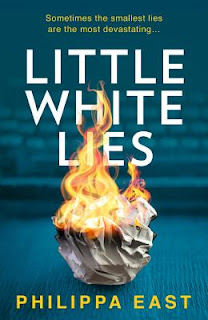
Throwback Thursday! Little White Lies by Philippa East.

Since our Squad Pod January book club choice is Philippa East’s I’ll Never Tell I thought this week I’d take you back to her debut novel.

This is an addictive and intelligent debut novel from author and therapist Philippa East. It’s a tale of a family coping with the aftermath of an abduction. Abigail White has been missing for seven years, after becoming separated from her mum, Anne, on a trip to London. Now aged 15, Abigail walks into a police station along with a younger girl. The novel flits between Anne’s viewpoint and that of Abigail’s cousin Jess. Jess and Abigail were born only four months apart and were more like twins than cousins. They had a special connection, and even after seven years apart Jess still feels she knows Abigail better than anyone. Her friend Lena warns Jess that Abigail has gone through a significant trauma and will have changed in ways they can’t see. Soon after her arrival at the police station, detectives discover that Abigail was taken from outside the tube station by a stranger. It seems that he was in the right place at the right time, just as Abigail became separated from her Mum and twin brothers. Anne had been trying to manage Abigail, the twins, a buggy and the train doors. Detective McCarthy has experience with abduction cases and uses his expertise to ask some probing questions: how did Abigail manage to wander off the platform and up to the street above, is this just a crime of opportunity or is there any chance at all that the family know this man?

Anne and her sister Lillian are close, but they are different. Lillian is the older sister and the ‘fixer’ who is organised, sensible and it seems to Anne as if she never makes mistakes. Anne’s life has been more complicated. Abigail’s birth father became an addict, causing difficulties with finances and the safety of their new family. With Lillian’s help, Anne left and despite trying to maintain contact with Abigail he has largely been absent. Anne then met Robert who has always considered Abigail his own daughter, creating a stable family unit for the first time. It is hard to imagine that Abigail could simply slot back into her family as if she never left. Anne is beset by doubts and concerns. Will Abigail expect her bedroom to be as if she never left? Can they let Jess back into her life at once or will she need time to adjust? Have the years of captivity and sexual abuse left her daughter so damaged she won’t recover? There is also the hint of a secret surrounding the moments before Abigail’s disappearance that day. Anne wonders what Abigail remembers and whether they should talk about that day. Lillian advises her to leave it alone. The tension between them and Anne’s concerns kept me hooked. To me, Abigail feels like a ticking time bomb and I found myself waiting for her to explode.

I felt that the author understood the psychology of trauma and she depicted beautifully the way a crime like this affects everyone around the victim. The trauma ripples outwards into the family like a drop of water on the surface of a pond. I really liked the insidious way that secrets are shown to damage trust and erode relationships. The depiction of Abigail is very cleverly written because it delves into the complexity of the relationship between the captor and the child. For example, Anne is startled by the findings of an educational psychologist who concludes that Abigail must have been home schooled. It seems strange that a man who has emotionally and sexually abused a child for seven years, would be concerned about their education. It made me think about the relationship between the child and the abductor. We can accept the negative aspects, but it is harder to accept that Abigail might have positive feelings toward her captor. It is as if, in order to survive mentally, she has had accepted captivity as her reality; when Cassingham abducts a younger girl it prompts her to act, but it still takes her a long time to find her voice again and be angry about her experience. The concern I had was whether Abigail would ever accept her new reality at home with her family.

I enjoyed the character of Jess and her struggle to understand the cousin who was once as close as her shadow. Can she trust that the same Abigail even exists any more? Can they jump back into easy familiarity or will Jess have to get to know this new Abigail who is the sum of her experiences? I truly empathised with her internal struggle between supporting her cousin and keeping the friends she has made since Abigail disappeared. Abigail might find it hard to fit when she has missed out on seven years of music and other popular culture. She is awkward, not knowing what to wear, how to do her hair or even how to speak. There is a gulf between her and other 15 year olds that might be too wide to bridge. It might be embarrassing for Jess, but for Abigail the frustration could be too much to cope with. She can’t find anyone who shares or truly understands her experience.

This was a great read, with believable characters facing a parent’s worst fear; their child has gone missing. I enjoyed the different perspective, focussing not on the abduction and police operation but on the issues faced when the child returns. It explores the family’s happiness and relief, only to find a relative stranger in their midst. Alongside this central narrative, East also explores the complexity of modern family relationships, and poses the question of whether we truly know the people we love and live alongside. Within the relationship of Jess and Abigail, we see the pains of growing up and fitting in, particularly the realisations that our elders are fallible and the World might not be as safe as we imagine.

I would like to thank NetGalley for this ARC in exchange for an honest review.