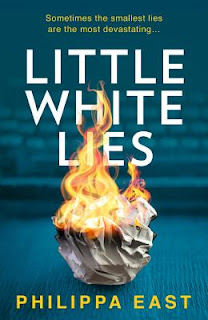
Since our Squad Pod January book club choice is Philippa East’s I’ll Never Tell I thought this week I’d take you back to her debut novel.
This is an addictive and intelligent debut novel from author and therapist Philippa East. It’s a tale of a family coping with the aftermath of an abduction. Abigail White has been missing for seven years, after becoming separated from her mum, Anne, on a trip to London. Now aged 15, Abigail walks into a police station along with a younger girl. The novel flits between Anne’s viewpoint and that of Abigail’s cousin Jess. Jess and Abigail were born only four months apart and were more like twins than cousins. They had a special connection, and even after seven years apart Jess still feels she knows Abigail better than anyone. Her friend Lena warns Jess that Abigail has gone through a significant trauma and will have changed in ways they can’t see. Soon after her arrival at the police station, detectives discover that Abigail was taken from outside the tube station by a stranger. It seems that he was in the right place at the right time, just as Abigail became separated from her Mum and twin brothers. Anne had been trying to manage Abigail, the twins, a buggy and the train doors. Detective McCarthy has experience with abduction cases and uses his expertise to ask some probing questions: how did Abigail manage to wander off the platform and up to the street above, is this just a crime of opportunity or is there any chance at all that the family know this man?
Anne and her sister Lillian are close, but they are different. Lillian is the older sister and the ‘fixer’ who is organised, sensible and it seems to Anne as if she never makes mistakes. Anne’s life has been more complicated. Abigail’s birth father became an addict, causing difficulties with finances and the safety of their new family. With Lillian’s help, Anne left and despite trying to maintain contact with Abigail he has largely been absent. Anne then met Robert who has always considered Abigail his own daughter, creating a stable family unit for the first time. It is hard to imagine that Abigail could simply slot back into her family as if she never left. Anne is beset by doubts and concerns. Will Abigail expect her bedroom to be as if she never left? Can they let Jess back into her life at once or will she need time to adjust? Have the years of captivity and sexual abuse left her daughter so damaged she won’t recover? There is also the hint of a secret surrounding the moments before Abigail’s disappearance that day. Anne wonders what Abigail remembers and whether they should talk about that day. Lillian advises her to leave it alone. The tension between them and Anne’s concerns kept me hooked. To me, Abigail feels like a ticking time bomb and I found myself waiting for her to explode.
I felt that the author understood the psychology of trauma and she depicted beautifully the way a crime like this affects everyone around the victim. The trauma ripples outwards into the family like a drop of water on the surface of a pond. I really liked the insidious way that secrets are shown to damage trust and erode relationships. The depiction of Abigail is very cleverly written because it delves into the complexity of the relationship between the captor and the child. For example, Anne is startled by the findings of an educational psychologist who concludes that Abigail must have been home schooled. It seems strange that a man who has emotionally and sexually abused a child for seven years, would be concerned about their education. It made me think about the relationship between the child and the abductor. We can accept the negative aspects, but it is harder to accept that Abigail might have positive feelings toward her captor. It is as if, in order to survive mentally, she has had accepted captivity as her reality; when Cassingham abducts a younger girl it prompts her to act, but it still takes her a long time to find her voice again and be angry about her experience. The concern I had was whether Abigail would ever accept her new reality at home with her family.
I enjoyed the character of Jess and her struggle to understand the cousin who was once as close as her shadow. Can she trust that the same Abigail even exists any more? Can they jump back into easy familiarity or will Jess have to get to know this new Abigail who is the sum of her experiences? I truly empathised with her internal struggle between supporting her cousin and keeping the friends she has made since Abigail disappeared. Abigail might find it hard to fit when she has missed out on seven years of music and other popular culture. She is awkward, not knowing what to wear, how to do her hair or even how to speak. There is a gulf between her and other 15 year olds that might be too wide to bridge. It might be embarrassing for Jess, but for Abigail the frustration could be too much to cope with. She can’t find anyone who shares or truly understands her experience.
This was a great read, with believable characters facing a parent’s worst fear; their child has gone missing. I enjoyed the different perspective, focussing not on the abduction and police operation but on the issues faced when the child returns. It explores the family’s happiness and relief, only to find a relative stranger in their midst. Alongside this central narrative, East also explores the complexity of modern family relationships, and poses the question of whether we truly know the people we love and live alongside. Within the relationship of Jess and Abigail, we see the pains of growing up and fitting in, particularly the realisations that our elders are fallible and the World might not be as safe as we imagine.
I would like to thank NetGalley for this ARC in exchange for an honest review.
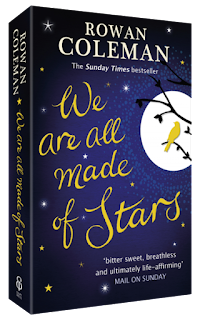
This book was originally published in 2015, but the first time I’ve read it is after reading Rowan Coleman’s novel The Girl at the Window. I do like to feature books as I discover them, rather than trying to chase the latest or next best thing.This may sound weird but I actually picked this up as light relief between a couple of deeply dystopian reads. I think there is an incredible skill in writing about such a serious subject but with such a lightness of touch and an edge of romance. Coleman has a group of characters, all linked to the Marie Francis hospice in some way. The story comes from all their points of view interspersed with letters written from patients in their final days, revealing secrets and emotions that have been held back, offering advice or instructions on where the money has been left.
These letters are written by Stella, who works at the hospice at night, giving her plenty of time to listen to patients and capture their last words. Behind her professional exterior Stella has her own problems. Her night shifts have become a way of avoiding problems at home. Her husband Vinny was a soldier and has returned home after losing his leg in a bomb blast. Now they feel like different people who are unable to connect and Stella runs miles every day to avoid her fear this is the end of their marriage. One of the letters Stella writes leads us to Hugh. Hugh is an academic researcher and collects artefacts relating to death such as death masks, Victorian mourning brooches and photos of dead loved ones. Hugh’s mum left when he was small leaving a suicide note. This personal tragedy has possibly lead to his research and has left him very isolated and scared of connection. When a single mum moves next door with her son, Hugh’s cat Jake starts to spend time there and they name him Ninja. This shared cat brings them closer, but will Hugh be able to form a relationship with his new neighbours and how will he cope when Stella delivers a letter that will change his life?
Finally, we meet Hope who is a young woman with cystic fibrosis recuperating at the hospice before returning home. Hope’s best friend and lifelong hanger on is Ben. They have been close friends for years and he has seen her in the worst moments of her illness. He visits every day at the hospice, and patients and staff start to notice that maybe there’s more than friendship here. Hope doesn’t think so, but she is starting to realise that she is missing out on things in life. Her friendship with a young girl, Issy, begins to make her think. Issy is terminally ill and tells Hope how sad she is to be leaving life when she has experienced so little. She makes Hope promise to live life to the full and try all the experiences Issy has missed out on. This inspires Hope and she asks Ben to help her fulfil this promise, knowing it might change their relationship forever.
It was Hope and Stella’s narratives that most resonated with me. I knew how I wanted their narratives their narratives to end happily. I know how it feels to have your plans cut into by an illness so young, the need to have new experiences and live like any other girl in their early twenties. I remembered the hen nights missed and friends celebrating graduations, weddings and births of their first children when I had none of these things in sight. So I identified with Hope’s need to do as much as possible before time runs out. Yet, I also felt for Stella, who tries her hardest to make people’s last wishes a reality while her own life is falling apart. She gives constantly, at home and the hospice, so when she finds she can maybe reunite two people she throws caution to the wind. I wanted her and Vinny to find their way through their difficulties and come together again, but with his survivor’s guilt and difficulties coming to terms with his amputation it’s no easy task.
This book seems so light and easy to read but is packed full of real, honest and deep emotions across the characters. Maybe I found the subject easy to enjoy, because I’m used to this world. I know people who might read the hospice setting and pass it over, but they’d be missing out. This book relates what life limiting illness is really like; it’s not easy, but you can still live well and all the other parts of life like learning, being fulfilled, finding meaning and feeling love are still very much part of the experience. Within these characters, and the letters Stella writes for her patients, are glimpses of human life that take us far beyond them as patients and closer to them as people.
Published by Ebury Press and available in all formats.
Meet the Author
I’m Rowan Coleman, and I live in England with my husband, 4 children and 2 dogs! The Girl at the Window is my 14th novel is my twelfth novel. I am also the author of the internationally bestselling THE MEMORY BOOK, the double award winning THE RUNAWAY WIFE, and the NYT bestseller THE ACCIDENTAL MOTHER and the Zoe Ball ITV Bookclub pick THE SUMMER OF IMPOSSIBLE THINGS. Growing up dyslexic made my dream of becoming a writer seem impossible, but I never gave up trying and in 2001 I won Young Writer of the Year competition in Company Magazine. This lead to the publication of my first novel, and I’ve never looked back since.
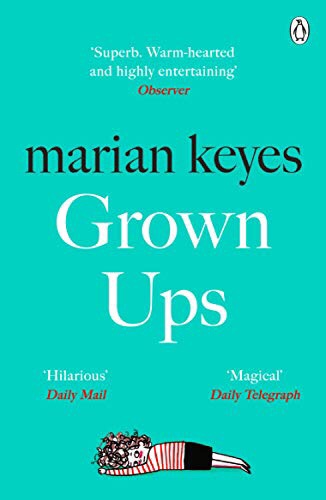
Years ago, when I was a book snob after my English lit degree, I wouldn’t have read Marian Keyes. It was firmly in the category of chick-lit and that meant it would be ‘easy-reading’. The literary equivalent of easy listening music, pleasant but no depth, just tinkling on in the background when I wanted my reads to grab me, make me think and blow me away. It was reading Jojo Moyes ‘Me Before You’ that put me onto Rachel’s Holiday and the Walsh family. Before I knew it I was racing through her back catalogue and loving every minute of it. It helps that she’s also an incredible woman, mad as a box of frogs and funny, enthusiastic about what she loves and chatters on ten to the dozen. She’d fit right in with my family and is one of the first people I’d invite to a fantasy dinner party. If I had to pick one thing about her writing that makes it so good, amply demonstrated in this novel, it’s that she provided a family tree to keep track of the characters and how they were related to each other, but I didn’t need it once. Each and every character was so real and so distinct that I felt I knew them all personally.
Ed, Johnny and Liam are brothers and enjoy a large extended family. Their background isn’t great, in fact their parents are awful people – demonstrated at their golden wedding anniversary when their father’s speech manipulated and put down each of his sons in turn. Ed has never had that feeling of being grounded, of belonging somewhere, until he met his wife Cara. She makes him feel safe. Cara has a head receptionist role at the Ardglass Hotel in Dublin and they have two children. Cara has always had problems with her body image and has been yo-yo dieting ever since Ed met her. She can’t seem to resist bingeing on chocolate and then hates herself for having no will-power, but is this cycle of overeating just a blip or is she heading for something more serious? Jonny and Jessie are the successful pair in the family, running their own chain of specialist food shops and a cookery school. Jessie had the original idea, with Jonny and his best friend Rory Kinsella going to work for her several years later. However, it was Rory who won Jessie’s heart and they were married with two children when he died suddenly. The Kinsella family were like a second family for Jonny, especially Rory’s dad Michael who had been a surrogate father since his own was so lacking. They all grieved together, until two years later when Jonny and Jessie found themselves drawn to each other. Surely the Kinsellas would be happy for them? Now years on, with three more children, and despite being a good husband and stepfather to Ferdia and Saoirse, the Kinsellas had cut themselves off from their former daughter-in-law. It was probably for this reason that Jessie focussed so much time on their family spending time together, all three brothers and their respective families spent Easter and many other holidays together, with Jessie even footing the bill to make it happen. Yet neither had ever really given up hope that everyone would be reunited in time, but time runs out and so does money.
Liam is the youngest brother, an ardent runner in his prime he now had to cycle thanks to a difficult knee injury. Handsome and charming, it never took very long for him to get what he wanted in life. Most would say he had a charmed life, despite his split with wife Paige and her relocation to the US with his two daughters, who are missed terribly by their cousins. In an incredible financial settlement, Liam lives in an apartment in Dublin paid for by Paige. When he meets Nell, a young set designer full of idealism and principles, he has to have her. Nell is beautiful, with cascades of pink hair and a quirky dress sense that comes from never buying anything new. She’s so passionate about art and conveying the message of a play through her set, plus she’s passionate about so many causes. The family love her and she brings her outlook on life to everyone, especially Liam’s nephew Ferdia who has similar opinions but never does anything to back them up. The family are surprised when the couple get married in an ice hotel on the arctic circle. Since the wedding though, despite Nell throwing herself into the family and their rather claustrophobic way of doing everything together, Liam hasn’t seemed the same. He starts to drop out of things she’s planned, branding them boring, and then chips away at her confidence. When she has a good review saying she’s the most exciting new designer in the country – he points out that Ireland is a very small place. He’s also very creepy, ogling his young niece’s friends and his nephew’s girlfriend. Nell is drawn to Ferdia, young, ethical and concerned with social justice, but can they be friends?
I loved how Marian Keyes presents the image of a perfect family that others must see, when they gather for an Easter Egg Hunt at a luxury hotel or holiday together in a Tuscan villa. Then she undermines it by showing that none of these people, or their relationships, are perfect. Her depiction of Cara’s eating problems were familiar to me because I’ve also had that urge to eat my feelings from time to time. I thought the way Cara down played the seriousness of her bulimia was realistic and the resistance to treating it as an addiction also rang true. Her counsellor was also brilliant, firm and not pulling her punches about the road ahead for Cara as a patient. If there was anyone I was rooting for it was Cara and husband Ed. Getting married again when you’re a widow is also something I know about and the relationship dynamics are so fragile. Luckily for me my lat husband’s family were very understanding and I treated them with respect, being up front and letting them know everything early on. I really felt for Jessie, but in the early chapters I really didn’t understand her desperate need for the whole family to get together constantly. There was a moment where she’s laid on a pool lounger with all the kids (bunnies) piled on top of her and she’s supremely happy. Then I got it. The friendship she had with Rory’s sisters Izzy and Keeva was the first real friendship she had and being part of the Kinsella tribe was just as important to her as it was to Jonny. She needed to belong. Strangely I also felt for Nell. I liked her as a person and thought she had been love-bombed by Liam into a marriage without truly knowing who he was. I really loathed him and that’s rare for me. He was lazy, living entirely off his ex-wife and not making any effort to see or maintain his relationship with his children. The way he commented on her talent and gaslighted her made me furious. I wanted Nell to have the romantic happy ending. In this book Marian Keyes has punctured that Instagram perfection many families seem to project these days. It’s also a welcome reminder that we never know what another person is going through, even the person lying next to us. I also found the message that we have to work on ourselves, take responsibility and live authentically, very empowering. I truly enjoyed my time as a fly on the wall with this family and laughed out loud so much that my other half commented on how much I seemed to be enjoying it.
Meet The Author
Marian Keyes is the international bestselling author of Watermelon, Lucy Sullivan is Getting Married, Rachel’s Holiday, Last Chance Saloon, Sushi for Beginners, Angels, The Other Side of the Story, Anybody Out There, This Charming Man, The Brightest Star in the Sky , The Mystery of Mercy Close, The Woman Who Stole My Life, The Break and her latest Number One bestseller, Grown Ups. Her two collections of journalism, Making it up as I Go Along and Under the Duvet: Deluxe Edition are also available from Penguin.
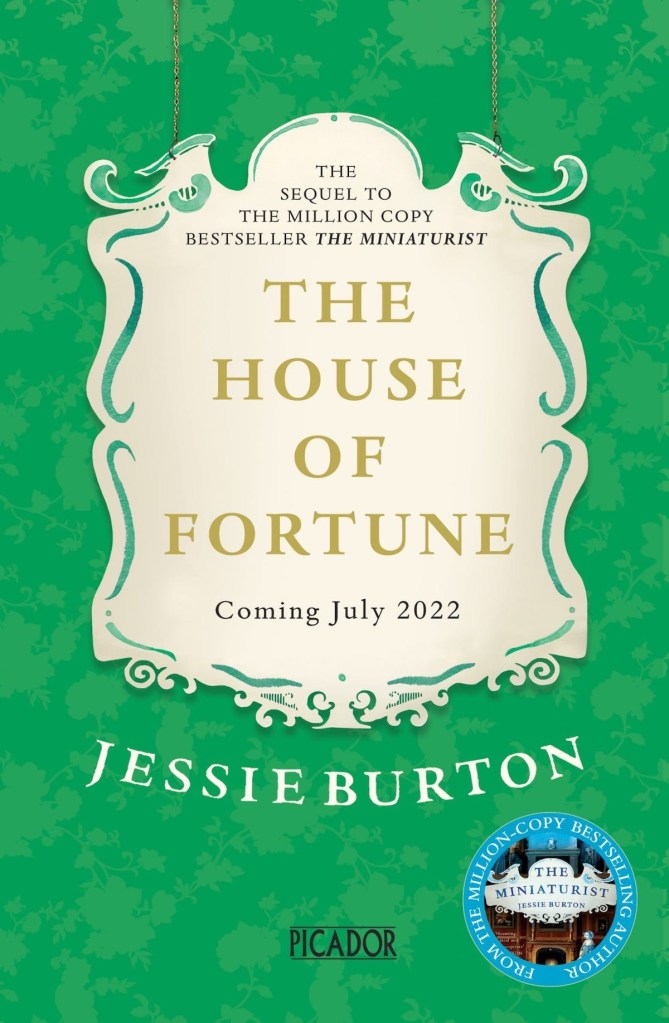
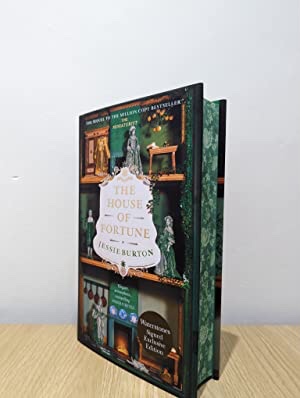
I have to admit to being a HUGE Jessie Burton fan. I picked up The Miniaturist in our tiny bookstore just on the strength of the cover and I wasn’t disappointed. It followed the story of Nella, who has just become married to wealthy Amsterdam merchant Johannes Brandt and has been uprooted from the country to a large home in the city. As a wedding present, Johannes has commissioned a cabinet house based on his incredible home. This is a home of secrets, from Johannes to his rigid sister Marin and even the servants, all have their hidden lives. It’s when Nella commissions pieces from an unseen miniaturist that clues start to emerge. What is the miniaturist trying to tell her and will she see it before it’s too late? I met Jessie at a book event in Lincoln where she read from the book and took questions from the audience. She told us that Nella’s cabinet house was based on an example in the Rijksmusem in Amsterdam, something I’d love to go and look at one day. Someone asked about the mystery at the centre of her debut novel; we never see more than a glimpse of the miniaturist, we don’t know what she wants from Nella or why she sends the tiny figures. Burton said she didn’t want to pin it down or have a big reveal, so there was a suggestion from the audience that she was leaving it open for a sequel. When I found out about House of Fortune, I was excited but also scared. What if it didn’t match up to the debut that I loved?
As soon as I started to read I was right back there in Amsterdam. Jessie is a master at creating atmosphere and her opening is so evocative. The house feels almost claustrophobic and I could imagine the smell of polish and Cordelia’s cooking wafting from the kitchen. This is still a secretive house, where the previous generation’s actions are impacting on the next. We are eighteen years on from the terrible events of Nella’s first year of marriage – Johannes’s horrifying death at the hands of the state and the revelation of his sister Marin’s affair with Otto, their black servant. Her pregnancy was concealed for months under severe layers of black clothing and resulted in the birth of daughter Thea and Marin’s death. Thea is now 18 and Nella is trying to weigh up whether her darker skin might count against her in the marriage market, or whether the Brandt name keeps her just on the side of respectability? She certainly receives her share of gossip and sideways glances, but as they rarely socialise it’s never mattered before. However, things are changing in the Brandt household and Thea may be the only way the family survives. Things are moving behind the scenes, in the same way the scenery moves in the plays Thea loves at the theatre, but who is doing the moving and arranging? Both Nella and Thea have sensed a little frisson, a sense of being watched, followed by the hairs standing up on the back of their necks. When brown paper parcels start to appear on the townhouse steps Cordelia wonders if the miniaturist is back and what is her purpose?
Even now, this strange mysterious figure remains in the shadows, a flash of blonde hair under a hood is all we get and that could be anyone. There are two sets of figures in play here- the ones made for Nella 18 years ago that have been hidden away in a trunk full of Marin’s things in the attic. Then there are new ones, the first being a carving of Walter who is the scenery painter at the theatre Thea frequents every week. He’s completely anatomically correct, possibly because the maker is alluding to how Thea feels about him. Could this perfectly rendered man be an allusion to Thea having knowledge of a man she shouldn’t have? Is her carving a commentary on something that’s already happened or a course of action that could still be avoided? The second gift is a house, a tiny mansion edged in gold that Thea has never seen before, followed by a perfect pineapple. Thea really isn’t aware that their relatively respectable life in the city’s greatest townhouse is built on a house of cards. This unusual family are at a crossroads, no longer able to sustain themselves. They are down to their last painting, Otto has lost his job and there are three mouths to feed plus an historic house to maintain. Nella can see only one option – they must accept some of the social invitations that comes their way and use them to find Thea a rich husband. Otto is less enamoured of Nella’s plan for his daughter. He would like her to have the freedom of love. He has a different plan, involving a botanist called Caspar and Nella’s derelict country home of Assendelft. What neither of them know is that Thea is conducting a private life of her own, one that come crashing down on all of their plans.
I loved that Burton took us to Nella’s childhood, with the walls of Assendelft full of memories, good and bad. Over the eighteen years since Johannes’s death she has become a force to be reckoned with and this reminds us of how naïve and young she was at the beginning. I felt sad that she had almost written herself off, pinning all their hopes for the future on Thea and not even considering that she could be the one pursued by potential husbands. Wealthy widows can be very attractive in the marriage market and nobody knows what Johannes’s arrangements were for his wife. I felt that Nella didn’t want marriage, having been free for eighteen years it would certainly be hard to adjust to a more conventional woman’s role. I also really enjoyed being taken into the world of the theatre, where Thea is transfixed by the stories being told on stage. Her fear that someone has seen her hanging around backstage, especially since spending time with Walter really came across strongly. I felt for her and I wanted Thea to remember what it felt like to be a teenager with her whole family’s fortunes weighing heavy on her shoulders. Otto was a benevolent father, but had no others ideas as to how they could survive without selling the Brandt house. I was compelled to keep reading, completely caught up in the world of this strange family of outsiders, but also wondering if this time the miniaturist would be unmasked and her purpose revealed. I throughly enjoyed being back in Nella’s world and it renewed my desire to go to Amsterdam to see the original cabinet house that fired up Jessie’s imagination.
Meet the Author
Jessie Burton is the author of the Sunday Times bestselling novels The Miniaturist, The Muse, and The Confession, and of the children’s book The Restless Girls. Her novels have been translated into 38 languages, and she is a regular essay writer for newspapers and magazines.
I was lucky enough to be sent a pre-publication copy of The Fortune Hunter via Twitter. I had never read Daisy Goodwin’s novels just her collections of poetry so this was a first for me and I was pleasantly surprised.
I like historical fiction and love the Victorian period particularly so what caught my imagination first were the historical details. I love clothes so the intricate descriptions of the layers in women’s Victorian clothing were very enjoyable. The details of fashion etiquette were interesting too; when and where certain clothing was worn and how those rules were affected by class were all fascinating too. In a world where the only detailed protocol we still use is probably at our weddings it is amazing to think that this is how the upper and middle classes lived their everyday lives. Having studied Victorian art as well as literature I was drawn in by the details of the heroine Charlotte Baird’s hobby of photography but then gradually I fell in love with Charlotte herself.
Charlotte is an heiress to the Lennox fortune and is a target for fortune hunters everywhere. Far from being the usual simpering Victorian heroine Charlotte is more of a bluestocking girl; educated and very intelligent. Instead of being caught up in a social whirlwind, as favoured by her brother and sister-in-law, Charlotte does not care for clothes, parties or the famous Lennox diamonds she owns, but does care passionately for her hobby of photography. Meanwhile her brother and his wife engage wholeheartedly in the social life she dislikes, because as the guardians of her fortune they live from the interest until Charlotte marries and takes the reins for herself (or more likely her husband does). At a party Charlotte meets the handsome and infamous Bay Middleton who is a horseman, hunter and famous playboy in his social set. They seem an unlikely match but Bay is drawn to Charlotte’s quiet manner and intelligence. She is not a great beauty, so those around her assume the worst and are very keen to protect her from fortune hunting. Yet Bay seems sincere about his fondness for Charlotte, that is until a rival appears on the scene and it’s not easy when your rival is the Empress of Austria.
Elizabeth (known as Sisi to close friends) was married when she was 16 to the Emperor of Austria. They had nothing in common but Eizabeth soon became known as one of the most beautiful and fashionable woman in 19th Century Europe. Her passion in life is riding and she arrives in England for the hunting season with a string of ponies and huge household. She cannot be rivalled in the hunting field but in England she does not know the terrain. Worried that she will lose her way or at worst, take a bad fall, it is suggested she should have a ‘pilot’. A pilot is a guardian who hunts alongside her, making sure she knows the way and getting her home safely. Bay Middleton is in a rest period before attempting his life’s ambition to win the Grand National and he is suggested for the role with the Empress. On the day of the hunt and for their first glimpse of the royal visitor Charlotte has set up her camera. She aims to capture the hunt in all their glory and is also tempted to take a photo of the Empress who is renowned for her hatred of photographs. Sisi knows she is not the unmarked beauty she was ten years ago and is at great pains to salvage her complexion by swathing her face in veal during the night. Charlotte takes a shot which the Empress deflects by holding up her fan, but the photo shows something else; Bay’s face shows his immediate and total enchantment with Sisi. The photograph has the potential to break Charlotte’s heart.
This book has the ability to grab you and then keep you reading. I started one day and read right through to finish the following night. I missed sleep to find out what would happen to Charlotte. The book has just enough detail to anchor you totally in upper class Victorian circles without bogging the reader down in swathes of description. It moved quickly and had me rooting for Charlotte all the way through because I felt a kinship with her; not quite beautiful, but patient, kind and modestly talented it is hard not to like her. By contrast Sisi is exposed as a frightened and spoiled woman who is used to getting what she wants without having to fight for it. She is worried about losing her looks and this is her main frailty. Sisi needs Bay in a way Charlotte does not; Sisi is fragile, melancholic and needs something to break the suffocating formality of her role. Whereas Charlotte, though heartbroken, has a plan to survive and live life her own way. I would say that the character of Bay really loses out to the women in the novel. He is not as vividly drawn as the Empress and I didn’t feel anything for him. I started to feel sorry for the Empress as the book went on, even as I disliked her. Charlotte infuriated me because of the passive way she was dealing with Bay’s very obvious affair with the royal visitor. Despite being shamed publicly by Bay’s behaviour she keeps her cool right up to the point of the exhibition at the academy and the displaying of that photograph. I won’t reveal the end, only to say that I half wished to read about Charlotte’s adventures as a photographer and pioneer, wherever in the world her talent and determination would take her.
Meet the Author
When Daisy Goodwin went to Cambridge University to study history her first assignment was on Queen Victoria and the media. She went to the library to consult her diaries. Queen Victoria wrote sixty two million words in her life time and when she pulled out the first leather bound volume she was overwhelmed by its size and weight. It fell open at the entry for 3rd Nov 1839, ” I saw my dearest Albert who was all wet in his white cashmere breeches with nothing on underneath.” She laughed out loud and the other readers looked at her with disapproval. This gave her a different perspective on Queen Victoria, as more than the boot faced old bag with a bonnet she had imagined, but as a woman after her own heart.
All Daisy Goodwin’s novels have been set in the Victorian era: the first is about a ‘dollar princess’ called Cora Cash who marries an English duke. The Fortune Hunter is the story of Sisi, the beautiful Austrian Empress who came to England to hunt – in the novel Sisi meets Queen Victoria. Daisy enjoyed writing this encounter so much – ‘Victoria’s voice came so easily to me, that I decided that my next next novel would be about the young Victoria. But as I started writing it, I thought it would make a great tv drama, which is how I ended up writing the PBS Masterpiece series Victoria, as well as my novel Victoria, a novel of a young Queen.’
When Daisy is not immersed in the nineteenth century, she lives in London with three dogs, two daughters and a husband.
You might also like…
My Last Duchess
Cora Cash has grown up in a world in which money unlocks every door. Her coming-out ball promises to be the most opulent of the gilded 1890s, a fitting debut for New York’s ‘princess’. Yet her fortune cannot buy her the one thing she craves — the freedom to choose her own destiny. For Cora’s mother has her heart on a title for her daughter, and in England — where they are bound, to find Cora a husband.
When Cora loses her heart to a man she barely knows, she soon realises that she is playing a game she does not fully understand — and that her future happiness is the prize.
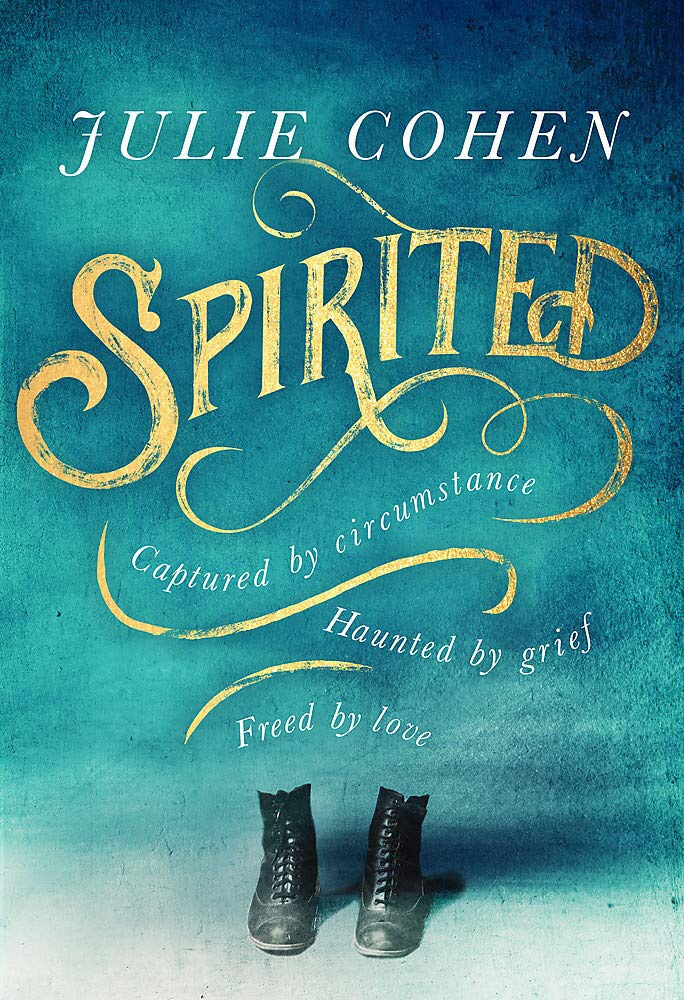
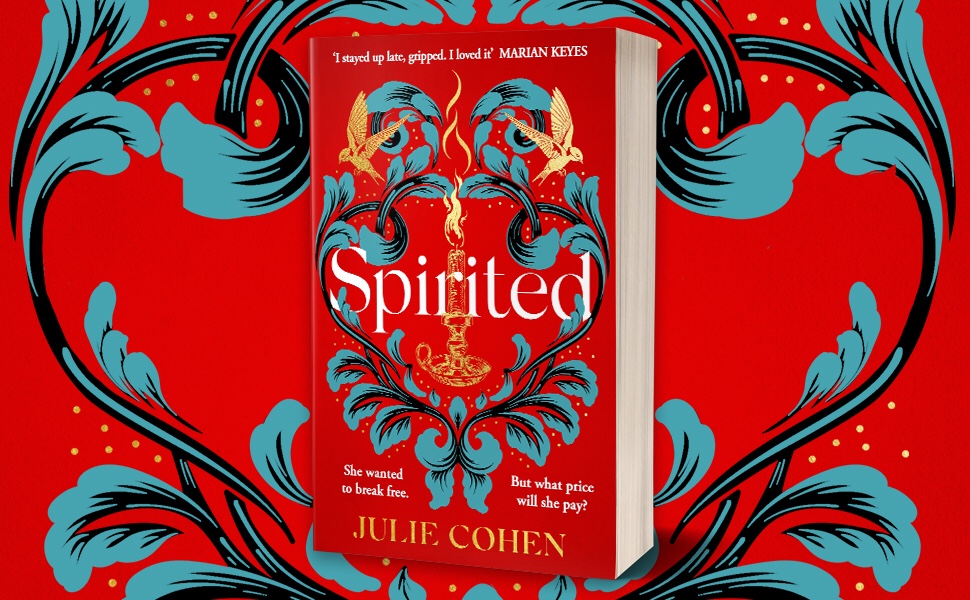
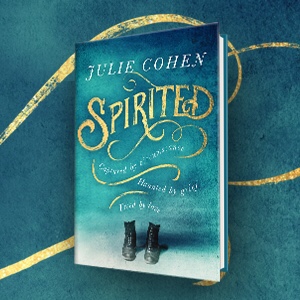
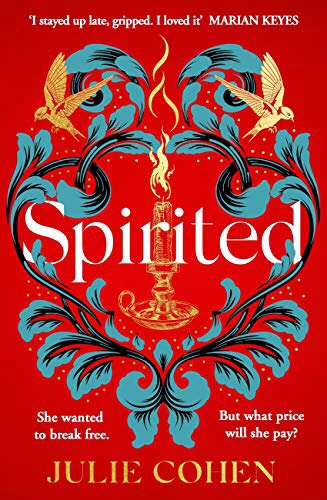
This week I’ve been writing a Sunday Spotlight post about the Victorian novels of Sarah Waters and while I was thinking about some of the themes of Affinity this book popped into my mind. So I decided to make it this week’s Throwback Thursday. At the time I’d never read Julie Cohen’s work, so I didn’t know what to expect from her writing. Only a few weeks before, on Twitter, I was discussing when a new Sarah Waters novel would be appearing. Spirited by Julie Cohen has definitely filled that gap. It’s also made an impact on me that’s all it’s own. Viola Worth has grown up cared for by her clergyman Father, as well as his ward, a little boy called Jonah. Viola and Jonah are the best of friends, spending their childhoods largely inseparable. As we meet them in adulthood, they are getting married, but in mourning. A lot has happened during the period of their engagement. Jonah had been out to India, staying at his family’s haveli and checking on his financial interests. For Viola, it’s been a tough time nursing, then losing, her father. He encouraged her in his own profession as a photographer and she has become accomplished in her own right. Viola’s father wanted her to marry Jonah, and they are still the best of friends, but the time apart has changed them and neither knows the full extent of the other’s transformation. As they try to settle into married life on the Isle of Wight, Jonah spends his time sketching fossil and bone finds with his scientific a friend. Viola feels cut adrift and without purpose, as we find out later she doesn’t even feel she is fulfilling her role as Jonah’s wife. Through new friends the couple meet a visiting spirit medium, although as daughter of a clergyman, Viola would never normally enjoy this type of entertainment. Little do they know, this woman will change their lives.
The author slips back and forth in time to tell us about Henriette, who worked her way in life from being a servant to a respected spirit medium. She is a woman who started with no advantage in life, and as a young servant models herself on the governess in the house, a French woman known as Madame to the family. Henriette diligently listens to the children’s French lesson and nurses a hope of a future where she doesn’t clean up after other people or have to wish for a roommate so she isn’t sexually assaulted in the night. Her attacker labels her a whore and one early morning, after there’s been a house party, she stumbles on a group of men in the stables betting. They are playing cards for money, but once they see Henriette they become intent on a different sport. It is Madame who interrupts the attackers and she gives Henriette advice from one woman surviving alone in the world to another. The author also takes us back to Jonah’s time in India. We discover that in social circles Jonah is a hero, because during a massacre he rescued a young girl who lived in his haveli after all her family are killed. Viola wonders if it is this experience that has changed Jonah. They live as if they are brother and sister, Jonah spends less time with her than before and at bedtime they still go to their separate bedrooms and sleep apart. Viola knows there is more between husband and wife but doesn’t really know what and has no idea who to talk to. Through Henriette, Viola is asked to take a photograph of a child who has died so the parents have an image to keep. No one is more stunned than Viola when she develops the image and sees a blurred figure standing next to the bed, the likeness to their child shocks and comforts the parents; they feel reassured that their child lives on in spirit. This experience, and her experience of her first proper female friendship, is like a floodgate opening for Viola. She starts to question the limits of her faith, whether there is more in life she would like to try and as time goes on, whether the burgeoning feelings she has for Henriette are friendship or something else.
I loved the feminist threads running through this novel. The central women in the novel are each in liminal spaces, different from the conventional Victorian women we see like Mrs Newham. Henriette is a self-made woman, unmarried and travelling from space to space offering her spiritualist services for enough to survive on. She has moved from bar girl, to servant, to nursing and losing her elderly husband, and now into a semi-respected occupation. She gets to visit the homes of those she might have once waited upon, but isn’t tied by their social rules and conventions. In India we meet Pavan, who has made the exceptional choice within her societal rules to become educated and has made huge sacrifices in order to achieve that. Love was not on her agenda, and when it comes she experiences a painful separation between her intellectual choice and her emotions. Viola may seem the most conventional of these women, but her relationship with her father has set her apart from others of her class. He believed in educating Viola the same way as Jonah, then teaches her the art of photography too, usually considered a male pastime. Viola is respectful of many conventions, but finds herself emboldened by Henriette and the new experiences she brings to her life. She tries bathing in the sea and is bold enough to start accepting her ‘gift’ of capturing spirits. Behind them all is the french governess Madame. The role of Victorian governess is the very definition of a liminal space: she works in the home but is not a servant, educated and unmarried, respectable, but not on the same level as the family she works for. She has power in that she works for herself, has and controls her own money and can choose to leave her position and join another family, in a different place. Her acknowledgment of Henriette’s fate, as a pretty face in the power of men, inspires Henriette to be more. It gives her aspiration, although she may never be a gentlewoman, with careful decision making she could be more like Madame.
It is within the physical liminal spaces where there are beautiful passages of writing from the author. The scene where Henriette and Viola go bathing is absolutely exquisite because I could feel everything. The strangeness of undressing in a darkened box on wheels, the feel of the swimming dress, the rough and tumble of being pulled into the sea by a horse, then opening the door to see nothing but the ocean in front of you. This is a play on conventional baptism for Viola. She fully immerses herself in the water, supported by Henriette, and feels a rebirth. The heaviness in the uncoiling of her hair and letting it float free signifies a freeing from the constraints of Victorian fashion, as is the unlacing of the corsets. As they trundle back up to the sand after their swim, Viola wishes they could stay in this space in the dark for the intimacy with Henriette, and the knowledge of the freedom she will feel as she opens the door and sees nothing but ocean. When the women share Viola’s room the writing is so tender. Viola worries what the servants might think, but Henriette frees her thinking again. Love between women does not exist, she tells her, there are laws and conventions regarding love between a man and a woman, and even the love between men. What they are to each other is beyond the thoughts of most people, the servants will see two friends staying together and nothing more. Pavan and Jonah, don’t meet in the main haveli but in an ancient old temple in its grounds, a space no longer used for its purpose and outside the family structure inside the house. They meet as two people of different cultures and beliefs, but find a connection so powerful that each would put their lives on the line for the other. Jonah wonders whether he could live a different life to the one laid out for him back in England. He’s seen other English men here who have married Indian women and had children. They’re neither totally respectable, but are not shunned either. This is a novel of people, particularly women, learning to live in the spaces between; the places that promise more freedom.
This was an original, emotional and beautifully written novel that weaves a powerful story from a combination of painstaking historical research and imagination. Each character is fully fleshed out and has a rich inner life. Where real events such as the 1857 Siege of Delhi are used in the novel, they are deeply powerful and the author treats them with respect. The elements of spiritualism and spirit photography are well researched and based on a real fascination for the paranormal in Victorian society. Cohen acknowledges that this is a novel about faith: religious faith, faith in the paranormal and that the ties to those we love don’t end in death; faith in romantic love and the promises we make to each other; even the faith she has in herself. In the acknowledgements to this novel Julie Cohen says ‘I wrote the first draft of this book when I thought my writing career was over’. Judging by this book, it’s far from over. However, by allowing herself to think of that possibility, she gave herself the space to write something truly extraordinary.
Meet The Author
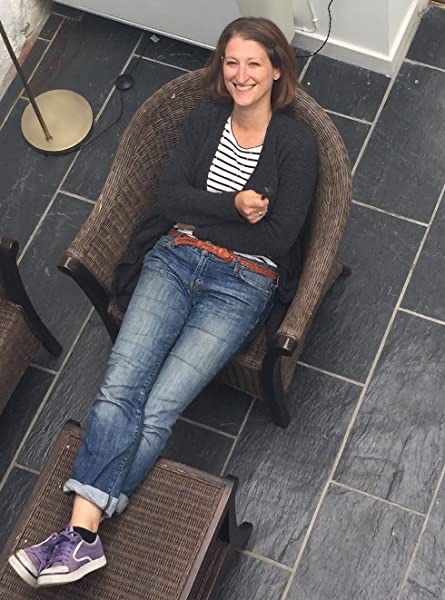
Julie Cohen grew up in the western mountains of Maine and studied English at Brown University and Cambridge University before pursuing a research degree in nineteenth century fairies. After a career as a secondary school English teacher, she became a novelist. Her award-winning novels have sold over a million copies worldwide. DEAR THING and TOGETHER were both selected for the Richard and Judy Book Club. Julie runs an oversubscribed literary consultancy which has helped many writers go on to be published. She is a Vice President of the Romantic Novelists’ Association, founder of the RNA Rainbow Chapter for LGBTQ+ authors, and a Patron of literacy charity ABC To Read. You can find Julie on Twitter: @julie_cohen or you can visit her website: http://www.julie-cohen.com
Latest Novel from Julie Cohen
‘Marriages end with a whisper, not a bang. Not an argument, which is after all about passion, waves crashing on a shore, but with the small pockets of coldness that an argument creates. It’s like islands. They don’t sink like Atlantis. They wear away, little by little, until all you’ve got left is a single rock and a light. A warning to safer travellers to stay away’.
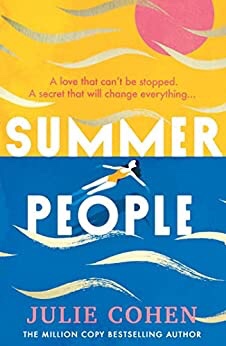
Sitting on my TBR is this latest novel from Julie Cohen, a very different novel to Spirited in that it’s contemporary, but still about love and relationships. The last time Vee left the shores of Unity Island, she thought she’d left forever. But this summer, she’s returning with her charming husband, Mike. Vee’s unexpected arrival, this time as one of the wealthy ‘summer people’, sets the small island community alight with gossip. What’s more, her childhood best friend, Sterling, is furious that she’s come back – Vee abandoned him when he needed her most.
And then Vee meets Rachel, Sterling’s wife, and a spark is ignited within her that she can’t extinguish. And as summer turns to autumn, long-buried secrets emerge that will cause a storm greater than any of them could ever have imagined.
But when autumn comes, who will sail away with the tide and who will choose to stay behind on the island…?
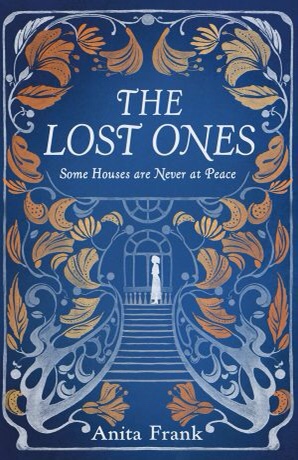
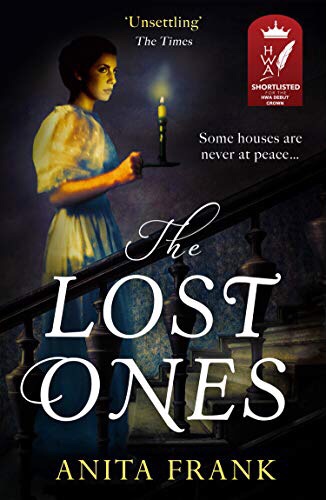
I’m always a real sucker for historical, gothic novels with strong female characters and this is up there with the best. The Lost Ones centres on Miss Stella Marcham and her new lady’s maid Annie Burrows. Stella is still in mourning for her fiancé Gerald who she lost in World War One. She keeps the locket he gave her close to her chest still. When she is invited to stay with her pregnant sister Madeline at her in-laws family home, Greyswick, she looks forward to a change of scenery. She sets out with Annie, who is a new addition to the household staff. Stella is unsure of Annie, but her family’s loyalty to the Burrows is long held and she resolves to get to know the unusual young woman.
Greyswick is a country estate, with formal gardens and ostentatious decor. Madeline is married to the heir of Greyswick, Hector Brightwood, who is away on business in London. At home are his mother Lady Brightwood and her companion Miss Scott, plus their staff, housekeeper Mrs Henge and ‘Cook’ whose name no one uses. However, Stella soon learns that they are not the only residents of her sister’s new home. Madeline confides that she can hear crying in the night and soon Stella finds a toy soldier in her bed. It’s not long before Stella is woken by the crying and follows the sound up the nursery stairs. On the stairs is a vivid portrait of a little boy with a hoop and in the background Stella sees a pile of toy soldiers. The portrait is of Lucien Brightwell, the original heir from Lord Brightwood’s first marriage, who died in a fall down the nursery stairs. This is only one of many secrets being kept by the Brightwood family and Stella senses a mystery to be solved. The creaks, bumps and cries in the night are her only clues.
This book sits in a long tradition and I had thought of Marian from Wilkie Collins’s The Woman in White even before Anita Frank mentions the book, as a reading recommendation from one character to another. When Hector returns home, bringing with him Mr Shears, I could sense tension between that old Victorian ideal of men who are ruled by reason and the women who use emotion, instinct and intuition even more. Frank’s book is set post-WW1 and the tensions of this changeable time are apparent. Women’s roles have evolved and Stella represents this change. She expected to be a married woman by now, but has instead chalked up experience nursing wounded soldiers and like most of the country is mourning a terrible loss. She is intelligent and restless after moving back into her ‘normal’ middle class role. She has also undergone psychiatric treatment following her bereavement, complicated by the fact that her severely wounded fiancé was brought to her hospital and care. She fears being thought of as mad or hysterical, so feels a constant pressure to be measured and rational. Other women in the novel are equally complex and class is another tension. Stella’s family are indebted to the Burrows family after Annie’s father died trying to save the younger sister, Lydia, from a house fire. Annie is acting as lady’s maid, a job beyond her experience, but is also trying to remain under the radar due to her own incredible gift that could mark her out as mad. Since the family lost their main bread winner Annie needs the job and doesn’t want to draw attention to herself, but Stella has her concerns. She has seen Annie talking to empty rooms and knows she saw something on the nursery stairs. Lady Brightwood’s companion Miss Scott lives in a very precarious position too, living with the family but being from a lower class than them. She was once a servant in the house, so how did she become so close to her mistress and does her devotion go beyond that of a companion? Also, what is her relationship with Mrs Henge and why is their contact so secretive?
Finally, the paranormal elements of the book are genuinely scary. The tension ratchets up from small events like the nighttime crying or the marble rolling across the room, both things that could possibly be explained away. Mr Shears tries to find a rational explanation for all of it and I did find myself thinking Annie’s presence was a potential cause. Then slowly, as people start to identify the poltergeist, the ante is upped and more characters experience events that seem impossible. The atmosphere is creepy and unsettling, reminiscent of Susan Hill or Laura Purcell. It also works as a female led detective story and builds to a denouement that doesn’t disappoint. Anyone who loves historical or gothic fiction will enjoy this novel. It’s a great Halloween read that sits beautifully in a genre the Victorians called sensation fiction. Perfectly pitched, beautifully written and full of interesting and complex female characters.
Meet The Author
Born in Shropshire, Anita studied English and American History at the University of East Anglia. She now lives in Berkshire with her husband and three children. Since The Lost Ones Anita has written a second novel, based during and after WW2. Her third novel The Good Liars is another work of historical fiction due out 8th June 2023.
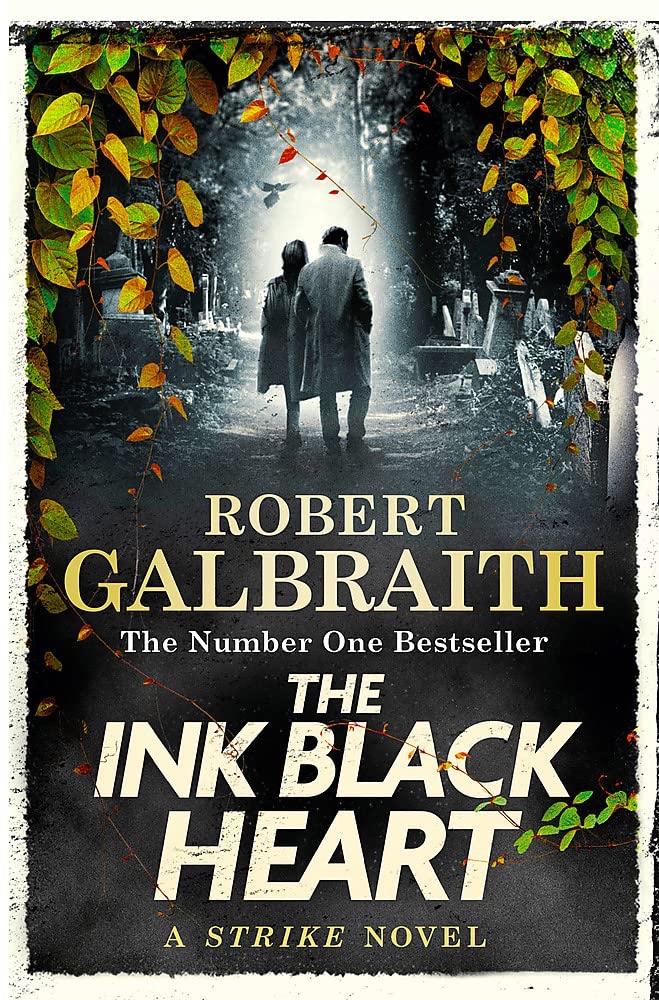
I have loved the characters of Cormoran Strike and his business partner Robin Ellacott for a long time, after seeing one of Robert Galbraith’s books in a charity shop and deciding to give it a go. I’ve bought every book in the series since and Strike has become one of my literary crushes – the troubled, wounded, war hero with a rescuer complex and rugged good looks is right up my street. Then there’s Robin, the country girl from Yorkshire who has bags of Northern common sense and is also brave, intelligent and caring. Their friendship works due to respect; he respects her intelligence and investigative abilities, whereas she respects his experience and never pushes beyond his boundaries. Their ‘will they/won’t they’ romance has had me on tenterhooks. I had heard this might be their last outing, so I was expecting their relationship to be resolved in some way. I also expected the main case to grab me immediately, just as their previous investigations did. This combination that has always kept the Strike books instantly readable, no matter if they do weigh the same as a house brick. The leading character’s issues aside, the cases have always been complex and multi-layered, with enough drama to keep me on the edge of my seat as I move towards the conclusion.
This time the agency is delving into two different worlds – the art world and the world of online gaming. Edie Ledwell and Josh Blay are artists who met while training and created a cult cartoon called The Ink Black Heart, set in Highfield Cemetery and peopled by odd little characters such as a talking human heart and a pale wispy ghost. The fans of this cartoon are real super fans, with two of them creating an online game for players to create a character and complete challenges around the graveyard. There was also a facility to meet other fans and talk on private channels during the game. However, fame is never straightforward and when Edie and Josh are found in Highfield Cemetery, attacked with a knife, rumours abound. With Edie dead at the scene and Josh paralysed in hospital, Strike and Robin are tasked to find out who had a grudge against the pair. Edie particularly, was bombarded with online abuse from misogynistic trolls, but it’s a character from the online game that Robin and Strike need to unmask. Anomie is a cloaked, faceless character, j one of the moderators and possibly even the creator of the game. The question is, how do they find someone, whose presence in the real and virtual world is a mystery?
It felt to me as if Robin really stepped up in this novel and took the primary role. Strike struggles physically this time, because years of not looking after himself have started to take their toll. His stump becomes inflamed and unable to take his prosthetic leg or bear his weight. Despite this Strike continues as long as he can, until even he has to accept medical help and enforced rest. So Robin’s detective skills come to the fore, as she infiltrates the art centre and commune, as well as the online game. I really enjoyed her undercover work on this case, firstly becoming Jessica a young woman who works in marketing and finance, but always wanted to explore her artistic side. She signs up to an art class at the centre to improve her skills and meet those who rubbed shoulders with Edie and Josh. She then visits comic-con as a journalist to interview someone they believe is very active in the game – Strike’s disguise amused me greatly here. I’ve always enjoyed Robin’s inner world and here I loved how much confidence her investigative role gives her. Her personal life has given her confidence a battering, especially now that her husband and the woman he was cheating with have a baby together. She has avoided her home town for a while, knowing they’ll be parading their offspring. Robin has worked out that it was the rape she went through at university that led to her settling with ex-husband Matthew. He was there and knew what had happened, it was infinitely easier than having to share this part of her past with someone new.Her feelings for Strike became more obvious when he turned up at her wedding and she left the celebrations to speak to him, much to husband Matthew’s disgust.
Strike is her best friend and she doesn’t want to lose that, but in this story other concerns also come to the fore. She feels inexperienced and unsophisticated in comparison to other woman she has seen with Strike, such as his ex-girlfriend Charlotte and his current girl Madeleine. Robin has no idea how beautiful she is, but Strike is very aware of the effect she has on men when she enters a room. What she doesn’t know is that Strike is currently comparing her with Madeleine, and his girlfriend is not doing well by comparison. Madeleine is well-groomed and always fully made up, plus she’s part of the same sophisticated London set as Charlotte. Strike has noticed the clean smell of Robin’s just washed hair and admires her simplicity. There are no games with Robin, she is always honest and says what she feels. Yet when Strike does weaken and try to kiss her when they go for birthday drinks, she looks so surprised that he interprets it as revulsion, but I think it’s fear. They are both frustrating, but the tension has to continue. The alternative is unthinkable, because people of my vintage remember Bruce Willis and Cybil Shepherd in Moonlighting and the disaster it became when their characters consummated years of flirting. If Strike and Robin ever did get together, I have no doubt it would have to be the end of the series.
It was within the case that I started to have some issues with the book. This is a long novel and the case concerned a wide range of people both real and virtual. Trying to remember where each character fit in the story was one thing, but when I realised they were possibly in the game with a user name too, it became much more complicated. I found it hard to follow the clues that pointed towards who Anomie was. There were also long sections written in private channels within the game. This felt awkward, although it wasn’t so bad when just two people were chatting, it became impenetrable to me when several channels were open at once with the same characters talking to different people at the same time. Although it gave an insight into how these characters communicated and talked behind each other’s backs, it was hard to keep track. The issues of misogyny and trolling felt like they’d come from the writer’s personal life and the type of trolling she’s been experiencing lately. Studies show that women who game online are exposed to misogynistic abuse and often use male avatars to avoid this type of trolling. So it was true to the story, but often felt she was trying to make a point, especially when we started skirting around subjects like trigger warnings and cancel culture. The sections that bothered me most were those around disability, particularly invisible disabilities and chronic illness. Strike is a hero, because of the war injury he sustained. He’s in that section of ‘acceptable’ disability that includes those who’ve acquired a disability in combat or try to ‘overcome’ their disability such as a Paralympian or other disability athlete. However, there are two characters in the book who have chronic illness, most notably ME or come under scrutiny from Strike and Robin as possible suspects in the case. Inigo uses a wheelchair and has an adapted home, character wise he is shown to have little patience, yelling at his children and wanting his environment just so. There’s an inference that his disability shouldn’t rule him out as the killer, as he could be playing on his symptoms. The second ME sufferer is a young girl who Strike goes to interview, but as he arrives at the house, she has fled out of the back door. This sudden movement immediately has him wondering whether she is also putting on her symptoms. However, Strike himself uses a flash of his disability to get into the family home – who would refuse a chair to a man with a prosthetic leg?
In the same breath the author does include articles about the Ink Black cartoon being ‘ableist’, showing an awareness of how problematic representations of disability can be. She also quotes the ‘spoonies’ blog, which refers to limited units of energy as spoons and exploring the difficulty of using more spoons than you have. I have always praised Galbraith’s depictions of Strike’s disability. Yes, he’s portrayed as a hero, but he’s not invincible as this novel’s physical difficulties shows. Where representation does become problematic here is that Strike is portrayed as wounded, but also a ‘hero’. He comes under the disability theory heading of a ‘supercripple’ – always able to perform beyond his abilities particularly when tasked with rescuing Robin. He’s also depicted as a sexual being, desirable to women still and clearly able to perform in the bedroom. Yet the character of Inigo, an ME patient, is not seen as sexual. In fact, again he’s under suspicion – aspersions are cast on his marriage, their sex life, and his character. I think this is possibly an attempt to show the reader how suspicious people are of those with invisible disabilities. It’s something I’ve experienced in my own life. However, there’s just something I’m uneasy about in these depictions. I was reminded of Ricky Gervais’s clever depictions of disability in The Office, where David Brent tries, in his own inimitable way, to educate his workers on how to approach a co-worker in a wheelchair. We’re supposed to be laughing at Brent, who’s so tone deaf he never asks how his colleague feels about being the subject of this impromptu lecture on disability awareness. He insults her as he tries his best not to, and that is the joke. Uneasily though, I wondered how many tone deaf people were laughing at what they complain is political correctness or at the wheelchair user who looks uncomfortable and embarrassed. This knife edge type of writing can go either way and I wondered how many people with ME would be comfortable with Galbraith’s representations of their disability. Since coming under scrutiny in the previous Strike novel for the depiction of a notorious serial killer dressing as a woman to lull the women he approached into a false sense of security. I would have thought it best to avoid controversial representations altogether. I have to take into account my own invisible disability, which may have prejudiced my feelings on the subject.
In all, this is another solid read from Galbraith, in terms of storyline and character development. It’s both entertaining and dramatic, with some complex and eccentric characters along the way. I love that we saw an even more vulnerable side to both characters, especially Strike. It was also great to see his dealings with ex-girlfriend, and trouble-maker, Charlotte taking a more realistic line. Maybe this clears the way for a different approach to matters of the heart for Strike and it’s this hope that will keep me looking out for the next instalment.
Holliday Grainger as Robin Ellacott and Tom Burke as Cormoran Strike in the BBC series.
Meet The Author.
Robert Galbraith’s Cormoran Strike series is classic contemporary crime fiction from a master story-teller, rich in plot, characterisation and detail. Galbraith’s debut into crime fiction garnered acclaim amongst critics and crime fans alike. The first three novels The Cuckoo’s Calling (2013), The Silkworm (2014) and Career of Evil (2015) all topped the national and international bestseller lists and have been adapted for television, produced by Brontë Film and Television. The fourth in the series, Lethal White (2018), is out now.
Robert Galbraith is a pseudonym of J.K. Rowling, bestselling author of the Harry Potter series and The Casual Vacancy, a novel for adults. After Harry Potter, the author chose crime fiction for her next books, a genre she has always loved as a reader. She wanted to write a contemporary whodunit, with a credible back story.
J.K. Rowling’s original intention for writing as Robert Galbraith was for the books to be judged on their own merit, and to establish Galbraith as a well-regarded name in crime in its own right.
Now Robert Galbraith’s true identity is widely known, J.K. Rowling continues to write the crime series under the Galbraith pseudonym to keep the distinction from her other writing and so people will know what to expect from a Cormoran Strike novel.
There are so many cliches we use in the world of book blogging but it’s hard not to use them when all of them applied to this original and unusual novel. This was an unputdownable, page turning, keep me up all night, edge of your seat thriller with intriguing characters and exotic settings.
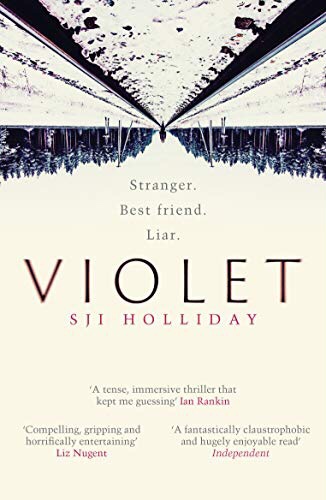
It was refreshing to read a thriller with a female protagonist who steals all of the limelight. Added to that she has a feisty female travel partner. In a genre where women are often prey and merely a catalyst for the real action, these women more than hold their own. Violet has tired of Thailand and her boyfriend wants to stay put. Far from being the island paradise she expected Thailand has become about the same scene, people and drugs. Violet decides to follow their itinerary without him and she does it in style. She makes her way to China but feels strangely alone and dislocated. When trying to organise a ticket for the Trans-Siberian railway Violet overhears a girl talking to the travel agent about her spare ticket. Her friend has had an accident and can’t travel, but the travel agent is no help and the girl has a spare ticket on her hands. Violet follows her to a bar and engineers a meeting that turns into dinner and many drinks. By the next day Violet has scored a ticket and a new travel companion in Carrie. By this time we have a few doubts about our narrator and I worried for Carrie and whether she knew what she was taking on board.
The rest of the novel is told in sections through Violet’s eyes and the emails that Carrie sends back to her injured friend back home. The girls have a stop off in Mongolia where they experience Nomadic life, sheep’s milk tea and a shamanic experience that threatens to put their friendship on a very different footing. Violet reads like someone with borderline personality disorder; despite her narration I don’t feel a coherent sense of self. I don’t think Violet knows who she is. Carrie starts to have her own doubts on the train and tries to create some space by befriending other passengers. Violet starts to panic. What if Carrie decides to go her separate ways? Violet’s friendship has become obsessive and potentially dangerous. However, when we reach Russia we start to see what both girls are really capable of.
The brilliance of Holliday’s writing is that we never really know what the girls are going to do next. This is not helped by the copious amounts of drink and drugs the girls partake in. It’s like being on a rollercoaster ride blindfolded. Just when you think you’ve worked Violet out, something else happens and your opinion changes. I loved the travel detail as well. It isn’t romanticised. It’s scuzzy and grimy. It dispels the backpacker myth of Thailand being a paradise better than The Beach did. Mongolia was at least an authentic experience, but the thought of ewe’s milk tea was grim. I loved the gritty realism and and the psychological manipulation. Living for a while in Violet’s head shows us how dark, obsessional jealousy manifests and left me feeling very uneasy. How much do we really know about what’s going on in someone else’s head? After all this, Holliday still surprised me with a final twist I didn’t see coming that turned everything I thought I knew on its head. It was like seeing The Sixth Sense for the first time, you want to pop back to the beginning and see it all over again with fresh eyes and try to pick up the clues. I read the end of this novel at 2am and was so blown away I had to wake up my other half and tell him all about it. This is definitely one of my books of the year.
Published 14th September 2019 by Orenda Books
Meet the Author
Susi (S.J.I.) Holliday is the bestselling Scottish author of 10 novels, a novella and many short stories. By day she works in pharmaceuticals. She lives in London (except when she’s in Edinburgh) and she loves to travel the world.
Yay! Tuva is back!! My current favourite literary heroine is back investigating another story in the remote and slightly quirky surroundings of the town of Gavrik, in Northern Sweden. We left Tuva at the end of Bad Apples on a cliffhanger, but Will Dean throws us straight into the action and the frozen forest. As Tuva is driving she finds a hunting dog at the side of the road, armoured but still injured. It’s owner isn’t far away and he blames wolves. As she rushes the dog and his owner to the vet, Tuva wonders if there are such wolf packs roaming the land close to Gavrik? She doesn’t know it yet, but there’s more than one type of wolf close by.
And when there’s a pack on the hunt no one’s safe….
Rose Farm is a closed community, home to a group of survivalists and completely cut off from the outside world. Until now. When a young woman goes missing within the perimeter of the farm compound Tuva must try to talk her way inside the tight-knit group to find her story.
In a frantic search, Tuva attempts to unmask the culprit and gains unique access to the residents. But soon she finds herself in danger of the pack turning against her – will she make her way back to safety so she can expose the truth?
At first, Tuva seems somewhat settled into everyday life, but sadly we soon find all is not well in her world. Her lover Noora, a Gavrik police officer, was shot in the last novel. She didn’t die, but nor did she recover. Noora now lies in a persistent vegetative state, uncommunicative and requiring round the clock care. Tuva’s emotions are complicated, she’s grieving for someone who is not here, but who hasn’t left either. It is Noora’s mother who has stepped in to care for her daughter. With incredible care and compassion, she has suggested that Tuva return to her work and life in Gavrik, while still accepting her as a vitally important part of Noora’s life.
The story of the missing girl is an intriguing one and perhaps less fast paced than the last novel. Elsa Nyberg was reported missing by her father and was last seen around the Rose Farm complex. Tuva takes a look at the heavily guarded compound, surrounded by high perimeter fencing, ditches, barbed wire and a military trained security man, always seen with a large dog by his side. It’s a bit of a contradiction, as two businesses run from the farm and are open to the public; a shop and café, plus a spa. There are definitely public and private faces in this community. On the quiet this community is nicknamed the ‘Wolf Pack’, a group trained to military standards, armed to the teeth and ready for the apocalypse. Or maybe they’re simply a benign group of ‘preppers’ with an underground bunker and a pantry full of tinned food? The central figure is a slightly reclusive figure called Abraham, a painter and philosopher who is ready for the end times. Tuva senses a story, especially when she finds out that a few decades before the resident farmer went berserk and almost killed his whole family before killing himself. The only survivor was a baby, just a few months old. Tuva wonders if history is repeating itself.
I am always amazed with Tuva’s tenacity, but also her audacity when investigating her stories. She is always brave, often to the point of recklessness. She certainly puts herself at the centre of things, driving onto the public part of the compound and engaging with those community members who work in the cafe and spa. At some points she even finds her way onto the private areas of the estate, even inside the main house where she finds some disturbing evidence of Elsa’s presence. I wasn’t as terrified for her life as I was in Bad Apples, but there was one section where security guard Andreas invites her to try the Wolf Pack’s underground obstacle test – if a potential member doesn’t complete the course they are not tough enough to join. The narrow underground chamber and tunnel fill with water, so that the tunneller must hold their breath and dive through and under small submerged areas. I couldn’t believe it when Tuva took up the challenge and disappeared underground, the tension ratcheting up by the second. This scene really tapped into my claustrophobia and left me a bit breathless! It reminded me how badass Tuva really is.
The murder is gripping and I was interested to know if any of the residents at Rose Farm were involved in it’s past tragedy. I was interested in how Tuva infiltrated online survivalist forums to get the low down on community members and to gauge what their beliefs and aims might be. Although any group has it’s weaker links and I started to wonder whether Abraham was who he seemed or was it an alias for someone else? In a complete contrast to the last book, this time people are not covering who they are with masks. Here we have wolves masquerading as everyday people. When Elsa’s body is found there is an ancient symbol tattooed in white ink on the back of her neck. It’s not anything that Tuva’s seen before, but does suggest an element of the occult or perhaps another part of the group’s initiation ritual. We’re used to quirks in Tuva’s investigations and all of the quirks from previous books are still here, such as the Troll sisters and the comically awful toppings offered at the pizza restaurant. There’s always a question of whether the remoteness breeds eccentricity, or whether eccentric people choose to pursue their way of life in an out of the way place. There are certainly more than the average share of murderers and Tuva is determined to find the truth, even if it places her in danger.
However, I do think this was a more subdued, thoughtful Tuva than in previous books. She’s valuing the people around her more, such as Lena and Tammy. She makes time to eat with Tammy out at the food truck and at home and even pursues the bond she’s made with the boy next door. I found it very touching that after a tough day she went to her neighbour and ask if she could read him a bedtime story, gaining comfort from the ritual. It’s a habit she’s started with Noora too, reading to her over FaceTime in the evening. She muses on her apartment, more as a home rather than just a place to crash when she’s exhausted. She wonders whether her memories of Noora in the apartment are too traumatic, but decides that she gains comfort from knowing they spent time together there. I was incredibly moved by the time she spends with Noora and the powerful feeling of belonging she gets simply by lying next to her. They don’t have to speak or hear in order to communicate. In fact, Tuva doesn’t have to struggle to communicate, which she often does, especially if her hearing aids are damaged or lost. With Noora she can take her hearing aids out and just ‘be’ and there is peace in that.
Published by Point Blank 8th September 2022
Meet The Author
Will Dean grew up in the East Midlands, living in nine different villages before the age of eighteen. After studying law at the LSE, and working many varied jobs in London, he settled in rural Sweden with his wife. He built a wooden house in a boggy forest clearing and it’s from this base that he compulsively reads and writes.















 The Lotus Readers