Posted in Throwback Thursday

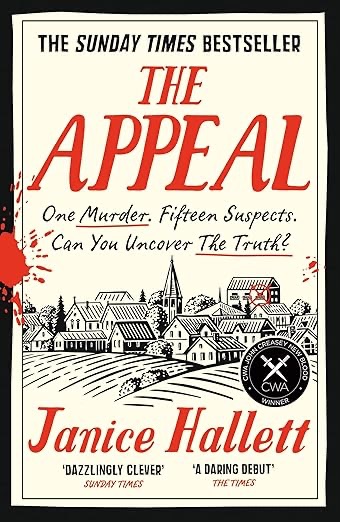
The Appeal by Janice Hallett

I came late to Janice Hallett with her novel The Alperton Angels so it’s taken a hiatus from blog tours to finally catch up with her debut novel The Appeal. If you’ve been wondering whether it lives up to the hype? It definitely does. We’re taken to the world of the Fairway Player, an am dram group in an affluent village. It’s time for the players to put on a production of Arthur Miller’s All My Sons and the usual suspects are readying themselves for auditions. Two events will affect the run: founder members Martin and Helen Hayward find out their granddaughter Poppy has a brain tumour and a new couple move into the village. Sam and Kel Greenwood are nurses and have completed years of aid work in Africa. As fundraising begins for Poppy to have experimental treatment in the USA everyone in the friendship group commits themselves to helping. All except one villager, who is suspicious and starts to make enquiries about the Hayward family. Someone within the players loses their life and another is already in prison on remand. QC Roderick Turner assigns law students Charlotte and Femi to the case. As they review the evidence they start to wonder if the right person is in prison and if even darker secrets lurk beneath? 

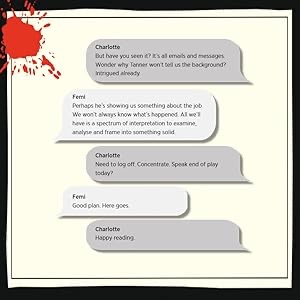
The first thing that’s different about this book is the structure. We’re told the story through the WhatsApp messages of Femi and Charlotte as they review the evidence in the form of texts, emails, letters and other documents. At first it’s a bit disorienting because there are so many characters and it’s hard to remember how they’re all related. Luckily there’s a good glossary of characters and they do simply ‘click’ after a while. It’s a bit like dropping into a conversation half way through but Femi and Charlotte act as a pit stop where the case so far is reviewed and the relationships clarified. There are two main strands to the story and they concern the alpha family, the rich and established Haywards and new recruits the Greenwoods. The Haywards own The Grange, a venue for events and health treatments and their family home. Sam and Kel are the latest Fairway recruits, championed by Isabel Beck who they know from work and is a rather lowly member of the group. They are an unknown quantity and could easily upset the dynamic, especially since they’ve been used to a very different and dangerous environment.

Isabel felt to me like the character who holds everything together. Not only does she link old and new residents, she is the most prolific email and text writer. While her output suggests she is a very popular resident who’s at the centre of everything that happens in the village, there doesn’t seem to be much correspondence the other way. In fact other residents ignore Isabel, bitch about her behind her back or are directly snappish and rude. She’s fascinating because the relationships you’d expect her to have from her constant communication don’t seem to exist. She pays court to Sam Greenwood who works alongside her on the geriatric ward, but there’s no real evidence that they’re friends. She feels like a child in the playground that no one wants to play with. She’s on the periphery of groups, desperately laughing at their jokes and joining their events, but is never the focus of their interest. She doesn’t seem to have a solid sense of who she is, bending to the whims of whoever she’s with desperately wanting to be liked. It’s painful to read about her planning to do things with people who have no intention of doing them – she mentions her and Sam going out to Africa but theres no correspondence to show this was ever a shared plan. She reads like a borderline personality and while I felt sorry for her she also made my skin crawl a little. She’s desperate for any sort of attention and people who are desperate do desperate things. I was also a little suspicious of Poppy’s oncologist, especially when a potential donor turns up who’s happy to give 100k to the appeal but wants assurances, such as the actual supplier of the drugs? Also he doesn’t understand why he’s paying the doctor in the UK when the treatment is in the US. The doctor’s replies are vague and I wondered who was trying to benefit – the doctor, the Haywards? 

Just as we settle into the community the author throws in a new variable, such as Kel and Sam’s friend who’s arrived on a break from his own work in Africa. He creates a disturbance at the yoga fundraiser giving Poppy an African doll that he claims has curative properties. He seems drunk and is possibly a drug user too. Could he have committed the murder? We really don’t know who the murderer is, even if we can work out a few of the reasons why. The most fascinating part to me is the psychological make-up of the characters and the dynamics between them. Aside from Isabel’s potential personality disorder, there’s the Greenwood’s PTSD from their aid work and the sad fact that the Haywards lost a child years before. The dynamics are clever with Alpha family The Haywards at the centre of the community, backed up by those who police the community and make their ideas happen. A new couple changes and disrupts the group dynamics where existing people know their place and dutifully follow the group rules. Then there’s those who think they’re in the community, but aren’t. Once you’ve started this novel you won’t be able to put it down. Im laid up in bed or the couch at the moment, so I read this straight through and loved every minute. 

Out Now from Viper Books

Meet the Author

Janice Hallett is the author of five best-selling novels. Her debut, The Appeal, was awarded the CWA Debut Dagger of 2021 and was a Sunday Times’ Bestseller, Waterstones’ Thriller of the Month and Sunday Times’ Crime Book of the Month. Her second novel The Twyford Code was named Crime & Thriller Book of the Year in the British Book Awards 2023. It was also a Sunday Times’ Bestseller and a Financial Times book of the year. The Mysterious Case of the Alperton Angels was an instant Times and Sunday Times bestseller on its launch in January 2023 and a Richard & Judy Book Club pick.

The Christmas Appeal, a fast, fun and festive novella, was launched in October 2023. It was a Times and Sunday Times bestseller.

Her latest novel The Examiner, was an instant Times and Sunday Times bestseller on its launch and is out now.

Her first novel for children aged 8-12 is A Box Full of Murders, out in June 2025.

Janice is a former magazine editor, award-winning journalist, and government communications writer. As a playwright and screenwriter, she penned the feminist Shakespearean stage comedy NetherBard and co-wrote the feature film Retreat.

Posted in Personal Purchase

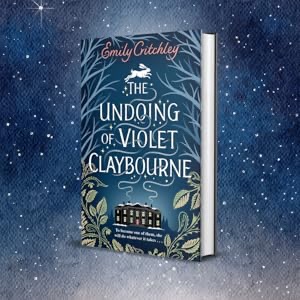
The Undoing of Violet Claybourne by Emily Critchley 

This was my read for over Christmas week and having started a couple of novels only to put them down again, I was beginning to think I’d lost my reading mojo. I was crying out for something that would draw me in quickly so I went for a tried and tested genre. A genre that maybe has a title, but I don’t know it. A preference I blame on reading Jane Eyre as a very imaginative ten year old. The formula is: huge rambling country house; time period from Victorian – 1930’s; young unsure girl/woman; aristocratic families with huge secrets. This fantastic novel from Emily Critchley fit the bill perfectly and was the only thing that drew me away from watching Black Doves all in one go! Our heroine is Gillian Larking, a rather invisible girl at boarding school who does her best to fit in but has no real friends. Gillian has lost her mother and with her dad working in Egypt feels very much alone. However, when she gets a new roommate that feeling starts to change. Violet is a bright, lively girl whose first goal is to break school rules and sneak up onto the school roof to check out the view. Despite her mischievous and seemingly confident nature, Violet is anxious and has a series of rituals to perform that help her cope: 

“She had to do certain things at certain times, like twirl around on the spot before she flushed the lavatory or touch a door handle twice before she opened a door. I often caught her whispering certain words to herself three times or counting to fifty on her fingers. When I asked her why she had to do these things, she struggled to tell me. For protection, was all she would say, or so that nothing bad will happen.”

She is also prone to emotional outbursts when things become overwhelming. Gillian is seemingly more aware that as young ladies of the middle and upper classes they must manage their emotions. She herself has had moments of despair and loneliness but has kept her tears for under the covers late at night. She also aware that girls in packs tend to sniff out weakness or odd behaviour and worries whether Violet’s rituals or ‘undoings’ as she calls them, could affect both their positions at school. Yet the other girls don’t seem to bother Violet and Gillian wonders whether that’s because she’s from a wealthy family. As Christmas approaches Gillian is delighted to receive an invitation from Violet to spend the holidays with her family at Thornleigh Hall. There she is dazzled by their slightly shabby country home, being waited on by the servants and Violet’s rather beautiful older sisters. Emmeline, the oldest and definitely in charge, wafts around in old Edwardian gowns whereas Laura is a rather more modern and fragile beauty. Both girls accept Gillian as one of their own, but their new friendship is tested by an incident on Boxing Day that will reverberate through the years. 

I have a soft spot for books set between the two World Wars and this had a lot of the themes pertinent to aristocratic families of the time. Thornleigh Hall is badly in need of repair but has a faded grandeur that is still impressive to Gillian. They’re a family living a way of life that ended twenty years before. They clearly don’t have the funds to maintain their estate, but Gillian notices the lavish breakfasts laid out every morning under silver dishes. Emmeline, the eldest sister, is the family’s great hope. She must find a suitor with money and secure the family’s fortunes with a sensible marriage. She has a candidate in mind, much older than her but definitely of the right class and enough money to save the hall for another generation. Gillian is enthralled by the sister’s unique style and confidence and realises that to some extent her friend Violet is the odd one out. Her nervous rituals, like her need to read Peter Pan over and over, suggest a deep insecurity in her character and even a fear of growing up. She warns Gillian that her sisters are not all they seem to be, but Gillian feels accepted for the first time in her life. There was an element of L.P. Hartley’s The Go-Between in her relationship with the sisters because she is naive and doesn’t realise when she’s being manipulated. On that fateful Boxing Day, Emmeline takes charge as always, instructing Gillian and Laura to lie or even pass blame onto a man who lives in the lodge house. Gillian feels obliged to go along with the plan because they’ve been kind to her. Again there are shades of another book here, Ian McEwan’s Atonement, where naivety and misunderstanding could lead to a terrible end for an innocent man of a lower social status. The full implications of these lies are utterly life changing for Violet, but almost no one escapes unscathed.

The novel is structured into four parts, taking us to different points in the life of Gillian and her relationship to the events of that Christmas in 1938. I’ve already mentioned L.P.Hartley’s The Go-Between and the first section has echoes of it’s opening page, from the naivety and social position of Gillian to the sense of delving into a past that’s long dead with it’s own social codes; “the past is a foreign country – they do things differently there’. We start the novel in 1999 when Gillian visits Thornleigh Hall, now under the guardianship of the National Trust. Over a slice of lemon and poppy seed cake, she ponders life from her time as a guest here to the recent death of her husband and the diary from 1938 that she’s come across while clearing out cupboards. This 1999 visit to Thornleigh is like travelling into the past as she strolls the rooms now on show and sees Lord and Lady Claybourne in the dining room complaining about their eggs and Laura in her stockinged feet reading a book on the library sofa. There is so much about this first chapter that draws us in: the suggested tragic circumstances of some members of the family; the emotional state of Gillian as a young girl who has lost her mother and is desperate for a role model; there’s also the hint of darker secrets lurking underneath the surface of this beautiful stately home. In the other three parts we’re taken to the aftermath of that fateful day in 1938 and then to London in 1942 where Gillian bumps into Laura’s husband Charlie. 

Finally part four brings us to the 1990s when Gillian and the Claybourne sisters are old women, taking us full circle to the beginning of the book. In each part there shocking revelations that leave Gillian in no doubt that the secrets from all those years ago are still having their effect. She has received a letter from Henry Cadwallander who has written to Gillian at his Aunt Violet’s request. Will she meet Violet and let her know that with the wisdom of experience she now understands her warning about the older sisters? I wondered if there would be closure or whether Gillian is always fated to be a horrified observer of the Claybourne’s family dynamics? This was an enthralling and fascinating look at a tumultuous time in history and it’s effects on one aristocratic family, observed through the eyes of a naive visitor. The author has created an incredible atmosphere that drew me in so strongly I felt like I was there. This is an amazing debut from Emily Critchley and I look forward to reading more of her work. 

Out now from Zaffre Books

Meet the Author

Emily Critchley has an MA in Creative Writing from Birkbeck, University of London. She currently lives in Hertfordshire in the UK. 

Posted in Personal Purchase

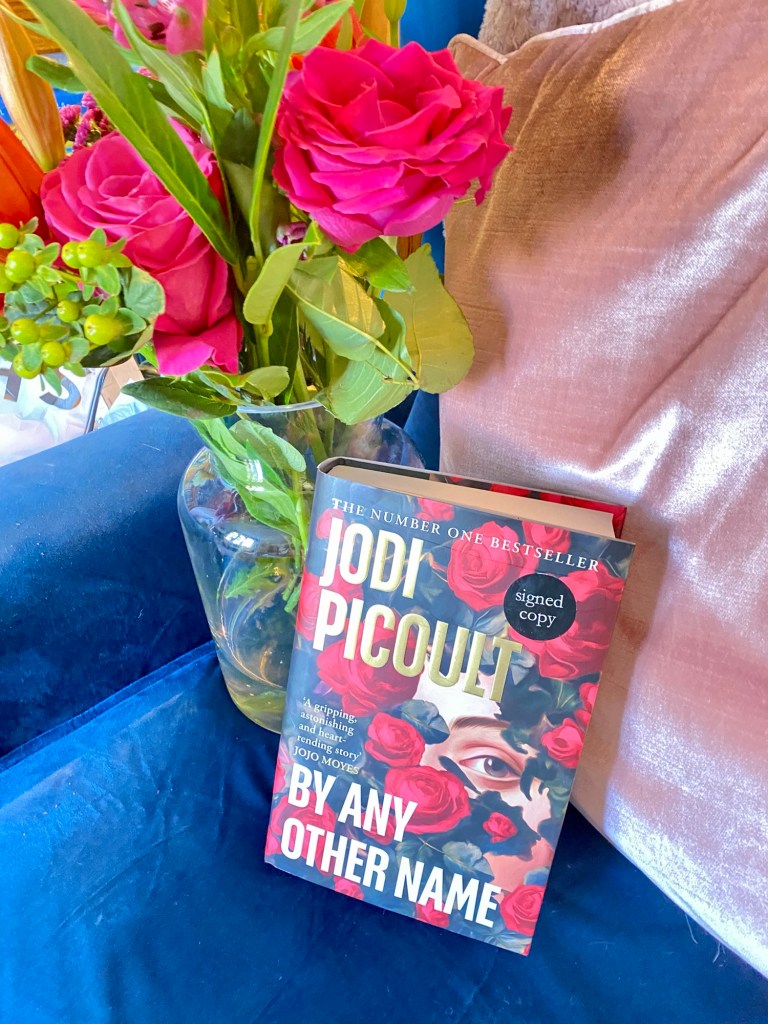
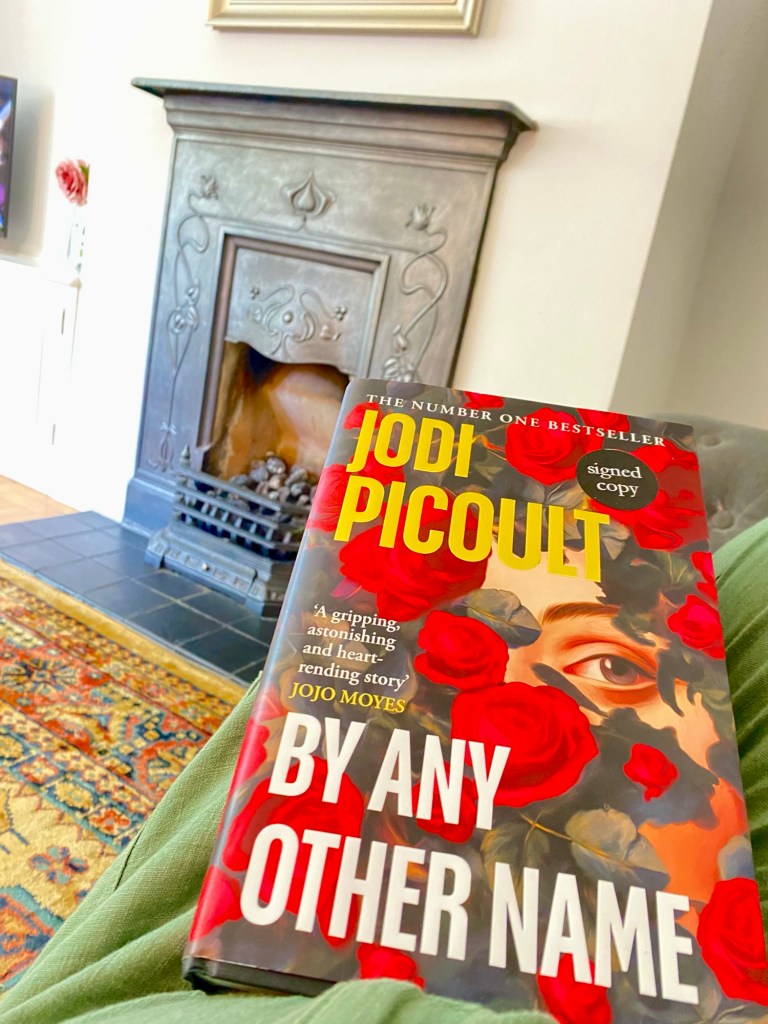
By Any Other Name by Jodi Picoult

In Manhattan, Melina Green finds out that women’s voices are worth less than a man’s. Theatre critic Jasper Tolle eviscerates a play she has entered into a competition and it knocks her confidence so badly she finds it difficult to get her theatre career off the ground. Years later, her best friend Andre encourages her to write about her ancestor, 16th Century poet Emilia Bassano. Emilia has been described as the ‘dark lady’ of Shakespeare’s sonnets. Melina is inspired, furiously researching Emilia’s life and the possibility that she might have written for the stage, despite it being banned in Elizabethan England. She then wonders if she used a pseudonym or submitted her work under another playwright. Melina starts to read about the Shakespeare conspiracy – what if the bard didn’t write all those incredible plays after all? There are many theories out there about who could have written them, but what if the playwright was Emilia? Melina is inspired, ferociously writing her play. Andre is also inspired, after they celebrate her finishing the play and Melina sleeps, he decides to enter the play into a festival taking place ‘off off Broadway’. Cleverly deleting the last few letters of her name he enters it with the more ambiguous Mel Green. Could this be her big break and her chance to prove that women writers are still sidelined, even in the 21st Century? 

I’m a huge fan of Jodi Picoult and I met her when she was in the UK promoting her book Sing You Home. Her books usually follow a pattern of presenting controversial issues -abortion, racism, the Holocaust – then testing them through the legal process. The first book that really caught the UK imagination was My Sister’s Keeper where a young girl takes her parents to court for medical autonomy, after she has donated blood and bone marrow to her sister with leukaemia. She’s had no say in these medical procedures and feels like she’s spare parts for her sister. This new novel is a complete departure from this tradition and it reads like a labour of love. I collected my copy from The Rabbit Hole Bookshop in Brigg and had read several chapters while we drove to Liverpool. Picoult has a brilliant way of drawing you straight into the character’s world and this book is no exception, despite it spanning several centuries. Picoult’s best novels are the ones where she can touch on her Jewish heritage such as one of my favourites, The Storyteller. This has definitely played a part here and the passion with which she tells Emilia’s story makes everything come alive. 

Emilia is the sort of character I fall in love with. She’s determined, intelligent and dreams of being much more than women are allowed to be. Life deals her a terrible hand at times, but she tries to make the best of it. Sometimes she’s desperately struggling to survive and other times she’s living in the lap of luxury. Historically we only know fragments of Emilia’s life but she is mentioned in an article written by Elizabeth Winkler entitled ‘Was Shakespeare a Woman?’ We know that Emilia was from a Jewish family who kept up a pretence of Christianity outside their home. They were court musicians under Elizabeth I which dragged Emilia into the fringes of court life. Most information on her comes from the diary of Simon Forman who was an astrologer/doctor and he describes her as a woman who is sexually progressive and has one illegitimate child. He describes her as the paramour of Lord Hunsdon until she became pregnant and was then married off to a minstrel. Hunsdon was Lord Chamberlain with responsibility for entertainment and the theatre. Foreman describes her as beautiful and intelligent, but gives her the sad news that she will become pregnant again, but will miscarry. Picoult uses these small facts and others she’s found to flesh out this fascinating woman and pose the theory that she could, at least in part, have written the plays attributed to Shakespeare. The page is the only place where Emilia has any power or agency. She was brought up by a countess away from her family, the head of the family then sells her to Hunsdon as a courtesan and then to the minstrel Alphonso who squanders all of the money Hunsdon settled on her. Could this lack of agency have possibly create female characters with the sass of Beatrice, the adventurer in Viola, the manipulative and power hungry Lady MacBeth or the shrewish Katherine? 

There is so much to love here, from Emilia’s personal story with it’s twists and turns, to the fascinating possibility that Shakespeare is merely a front  rather than our greatest ever playwright. I enjoyed the idea of this woman who occupies a liminal space in so many ways: Italian by descent batt living in England; living humbly but entertaining the dazzling heights of Elizabeth’s court; Jewish but masquerading as Christians; living a rich lifestyle with Hunsdon but in the precarious position of a courtesan; a woman hiding her immense talent behind a man. Every single part of her life is a masquerade, in fact there are only two men she is herself with. She lets go with her secret lover Southampton and her great friend Kit Marlow – a friendship that beautifully echoes Melina and Andre’s relationship centuries later. Picoult’s skill in setting a scene takes us directly into Elizabethan London and we see the city at it’s extremes due to Emilia’s huge changes in fortune. The house she grows up in is a far cry from the humble home of her family and Hunsdon’s home is grander still. Then what follows are terrible years of hardship and violence, where she’s little more than a servant. They have very little to eat and we really see the squalor and poverty of the capital in those moments. I enjoyed the idea of literary salons as a space where women can freely share their talent and it’s only her position as Hunsdon’s mistress that gives her access to contemporaries like Spenser, Jonson and Marlow. I felt like even if the reader doesn’t agree with Picoult’s theory on Shakespeare her evidence is compelling and you realise she loves Britain and it’s literary tradition. 

The modern day narrative does pose some interesting questions about authorship, especially the opportunities for women. As someone who reads female authors the majority of the time it seems like the opportunities are there at first glance. Yet I took on board all the points made here, how in a commercial space it’s hard as a woman to secure financial backing for their creative ideas. Especially where those who hold the purse strings are men. Although I was interested in Melina’s story I didn’t feel as connected to her as a character in the same way I did with Emilia. When the historical story is so dramatic and heartfelt it can overshadow the present day narrative. Overall though I loved this book and it’s up there with my favourites of the year so far. I felt completely transported to Elizabethan London. As for the premise, it’s an interesting one and the afterword brilliantly backs up her theory with points from her background research. It certainly gave me something to think about where Shakespeare is concerned. I could see why people question his authorship, but I can also see the all the reasons why such claims are rubbished and denied. What I’m taking away though is what an incredible woman Emilia was, with or without the possibility she was a playwright. I’ll definitely enjoy exploring around the subject further and I know this is a book I’ll be re-reading in the future.

Published 10th October by Penguin

Meet the Author

Jodi Picoult is the #1 New York Times bestselling author of twenty-nine novels, including Mad Honey, Wish You Were Here, The Book of Two Ways, A Spark of Light, Small Great Things, Leaving Time, and My Sister’s Keeper, and, with daughter Samantha van Leer, two young adult novels, Between the Lines and Off the Page. Picoult lives in New Hampshire.

Follow Jodi Picoult on Instagram, TikTok, Facebook, and Twitter: @jodipicoult

Posted in Personal Purchase

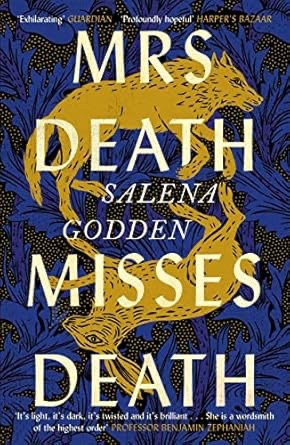
Mrs Death Misses Death by Salena Godden

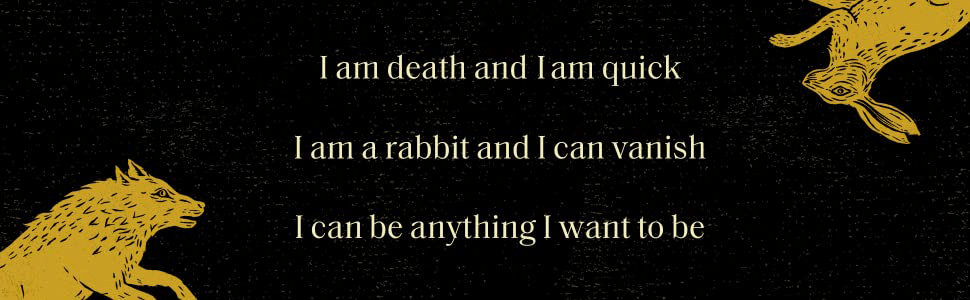
Wow! I loved this book! It’s been sitting on my shelf for a while. I’d bought it instinctively but hadn’t got round to reading it yet and our new local book club gave me the chance. The club is a brilliant combo of meeting other bookish people, talking about books and eating pudding. It’s like my fantasy night out. I found the book incredibly lyrical and philosophical and totally blew my mind. It also made me take a long hard look at myself. It’s hard to explain the story, except to say that it’s a journey. I am a total sucker for books that address the reader directly and here we’re addressed by Death herself. Yes, I did say ‘her’. She explains herself like this: 

‘The greatest trick man played was making you believe I was a man […] Surely only she who bears it, she who gave you life, can be she who has the power to take it. The one is she. And only she who is invisible can do the work of Death. And there is no human more invisible, more readily talked over, ignored and easy to walk past than a woman, a poor, old black woman.”

She weaves another narrative through Death’s monologues and that’s the story of Wolf. He is charmed by an old antique desk he sees through a shop window, not realising when he buys it that it belonged to Death. He is drawn to writing and feels this desk might unlock his discipline and creativity. As he writes, Death perches on the edge of the desk and talks to him. They met when he was very small, during the fire that killed his mother. Between this story, Death delivers monologues on modern life: our ridiculous preoccupations, the way our lives are moulded by society and those terrible events that are an indictment on us and our world. The description of the fire that kills Wolf’s mother is surely based on Grenfell. There are multiple deaths and the residents have been campaigning to be heard for some time, claiming that the tower block was a death trap. I read this as the enquiry was in the news and the injustice resonated so strongly. The lives lost were cheap. The issues in the block were never addressed because those in power don’t listen to the poor, the downtrodden, or the immigrants. They were unwanted in an area that was becoming gentrified and no one seems accountable. There were no alarms and no sprinklers and the fact that Wolf survived us a miracle. This brush with Death connects them both, a deep sense of injustice and grief. I found Death’s monologues wise and started to think of her voice as that of the author coming into the fictional world. Her description of grief felt right: 

“It’s like having a stone in your centre;  time smooths the edges like a pebble in a river, but it’s always there – a stone is a stone”. 

We’re given a glimpse of Wolf’s ancestry through the prism of death. Wolf’s mother is the latest in a long line of violent and terrible deaths: hanging, gunshot, fire, drowning. Does this ancestral history mark Wolf out as Death’s obvious companion? 

Mrs Death’s monologues on society are brilliant, whether it’s child abusing celebrities using their money, fame and even religion to disguise their misdeeds or social media moguls allowing spurious and fake news stories to mislead us about what is real. I loved her take on sexism and misogyny, starting off with our perceived surprise that she’s a woman. The misogyny begins at the beginning of time, with Eve and the garden of Eden. Women in creation myths and legends are always the trickster. They’re the person who draws men towards their deaths, like the Sirens. There’s Eve, Medusa, Kalima – all are the architect of man’s misfortune. She lists the crones, witches, hags and wicked stepmothers of fairy tales. We sound incredibly powerful in those terms, but women only lead people to their deaths and don’t have the power to end life, despite having the power to give birth to it. Perhaps it’s that power to create life that scares men so much. If you listen to right wing politicians, we’ve excused and accepted way too much in the name of tolerance. Yet, women are still openly viewed in these terms, think about Trump’s running mate J.B. Vance and his dig at childless, cat ladies. Being a slave to her womb is the only thing that makes a woman natural or fulfilled. 

‘It is exhausting how much space men want and how much credit and control man wants for mankind”. 

There were parts of Death’s monologues that made me take a look at myself and particularly how I consume. Even publishing comes under her scrutiny as she talks about the stories chosen for publication. It’s not necessarily the stories that are most creative, but those that sell. She posits a story about the struggles of poor people, the literary equivalent of a Ken Loach film. She wonders about whether it would sell without a hook? Vampires are popular these days aren’t they? Let’s set it in Sheffield. It’s like I, Daniel Blake but with vampires. That will sell. The Christmas monologue really hit home, because I’d spent three days moaning that my usual place for Christmas wrapping paper had changed their website and it wasn’t working properly. It was designed for America and had stopped recognising some UK post codes and I was fuming. They were going to sell out before I got mine. Talk about first world problems. 

“It’s not a proper Christmas without the deep fried pork-whip nutmeg balls. Quick! Shop! Consume!” 

We all have our favourite Christmas foods, but Christmas will still happen without them. We will still have those we love round us. Yet every year I drag myself to Sainsbury’s because I just have to get my supply of Ecclefechan tarts. While it’s good to have our own traditions and things that make our Christmas, wouldn’t it be okay if the wrapping paper didn’t match the tree? It made me thoroughly ashamed of myself.

What I found most profound was Death’s ideas around ageing and changing. Humans are not meant to stand still. We change constantly. At those times when I’m worrying about how I look and my weight, which has increased considerably over the last few years while I’ve been unwell. I tell myself that this is the best I’m ever going to look. When I look back to pictures from twenty years ago I realise how pretty I looked,  but I have to remember that in twenty years I’ll be seventy years old and I’ll probably do the same. I need to stop feeling inadequate. Stop the self- criticism. As Mrs Death says, it’s the love that matters. Even though our outsides change, inside you’re still you. Even when I’m old and wrinkled in my nursing home, with others doing the washing and caring, deep inside I’m still me. I can visit a lifetime of memories and imaginary palaces in my mind that have always been there. That never leaves. It reminded of some work I did in a nursing home. I planned it for two reasons. I wanted to talk residents through their memories and help them make a memory box. I also wanted to created a collage for each resident to put outside their rooms so that carers could see it and hopefully realise that the residents are people. They’re not just empty bodies to be serviced, because once they had busy, full lives just like their carers do. It makes a massive change to the standard of care because they can now relate to residents and talk to them, instead of over them. I loved doing it because it changed how carers related to the residents.

I loved how the book changed as I came towards the end. The prose starts to break up and poetry starts to take hold, firstly in- between longer prose sections but then longer verses. The prose becomes shorter, more statements than sentences. It’s like the descent into madness or dementia. Meaning becomes more difficult to decipher with only brief moments of lucidity. Wolf stays at a writing retreat and he seems to lose time. There are periods of unconsciousness. He wanders and rambles. It’s still beautifully lyrical but more instinctive. It comes from the soul. 

Ultimately this book won’t be for everyone but those that do like it, will love it. I came away feeling uplifted. I didn’t expect a book about death to be so life-affirming. Wolf realises that time is a man made form of control. It’s something man created to place structure on life. Without time how could we create ‘work’, regulated to certain hours of the day and measured in units for which we are paid. Time is control. He examines the words we use, such as ‘time of death’. Death seems overwhelmingly final, so much so that we might avoid thinking (or reading) about it. There’s only one time of death, but we do have the time of life every single day. It’s down to the way we look As Mrs Death says ‘it’s all in the phrasing’. 

Meet the Author


Salena Godden FRSL is an award-winning author, poet and broadcaster of Jamaican-mixed heritage based in London. In 2021 Canongate published her highly acclaimed debut novel ‘Mrs Death Misses Death’. It won The Indie Book Award for fiction and The Peoples Book Prize and was also shortlisted for The British Book Awards and The Gordon Burn Prize. 

Salena Godden’s work has been widely anthologised and broadcast on BBC radio and TV and film. Her essay ‘Shade’ was published in award-wining anthology ‘The Good Immigrant’ (Unbound, 2016). She has had several volumes of poetry published including ‘Under The Pier’ (Nasty Little Press, 2011) ‘Fishing in the Aftermath: Poems 1994-2014’ (Burning Eye Books, 2014) ‘Pessimism is for Lightweights – 13 Pieces of Courage and Resistance’ (Rough Trade Books, 2018) and also the childhood memoir ‘Springfield Road’ (Unbound, 2014). Her self-produced poetry album ‘LIVEwire’ (Nymphs and Thugs, 2016) was shortlisted for The Ted Hughes Prize. The Royal Society of Literature inducted Godden as a fellow FRSL in 2022. She is also a patron of Hastings Book Festival and an Honorary Fellow of West Dean, Sussex.

A new hardback edition of ‘Pessimism is for Lightweights – 30 Pieces of Courage and Resistance’ was published in February 2023 by Rough Trade Books, featuring revised and new material, an introduction by John Higgs and an Old English translation of the title poem by Emily Cotman. The poem ‘Pessimism is for Lightweights’ is on permanent display at The Peoples History Museum, Manchester. 

Salena Godden is currently working on three new books for Canongate: Literary childhood memoir ‘Springfield Road – A Poets Childhood Revisited’ and full poetry collection ‘With Love, Grief and Fury’ will be published together in May 2024. Plus an eagerly anticipated 2nd novel set in the ‘Mrs Death Misses Death’ universe will be published by Canongate in spring 2025.

Posted in Netgalley, Personal Purchase

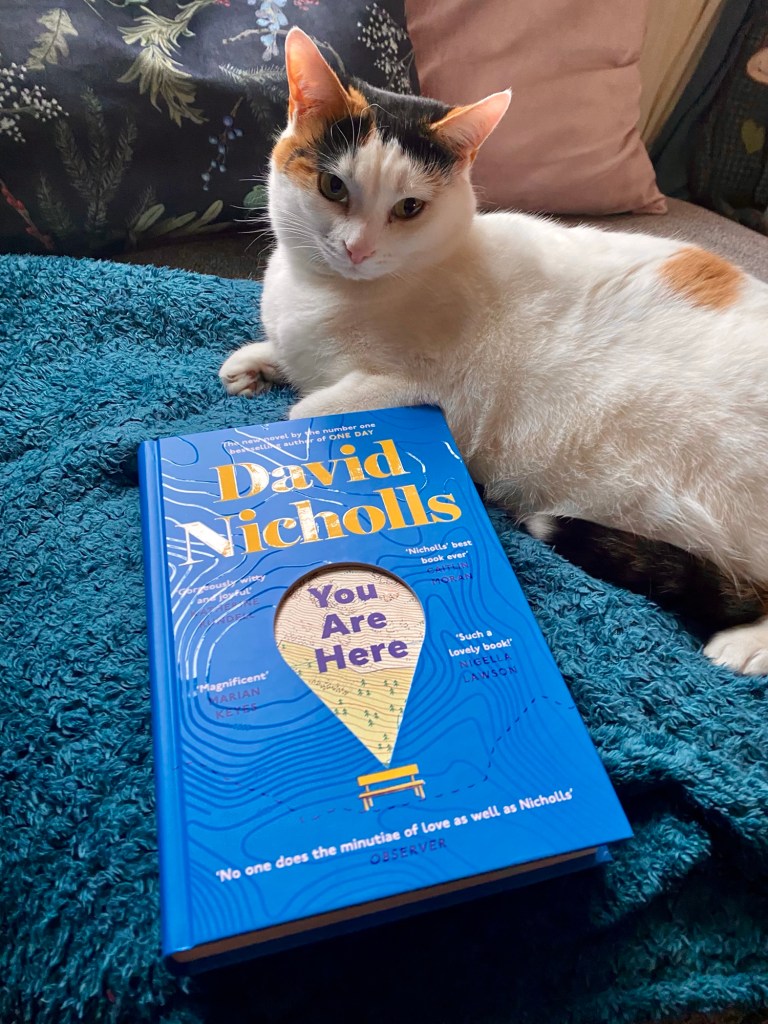
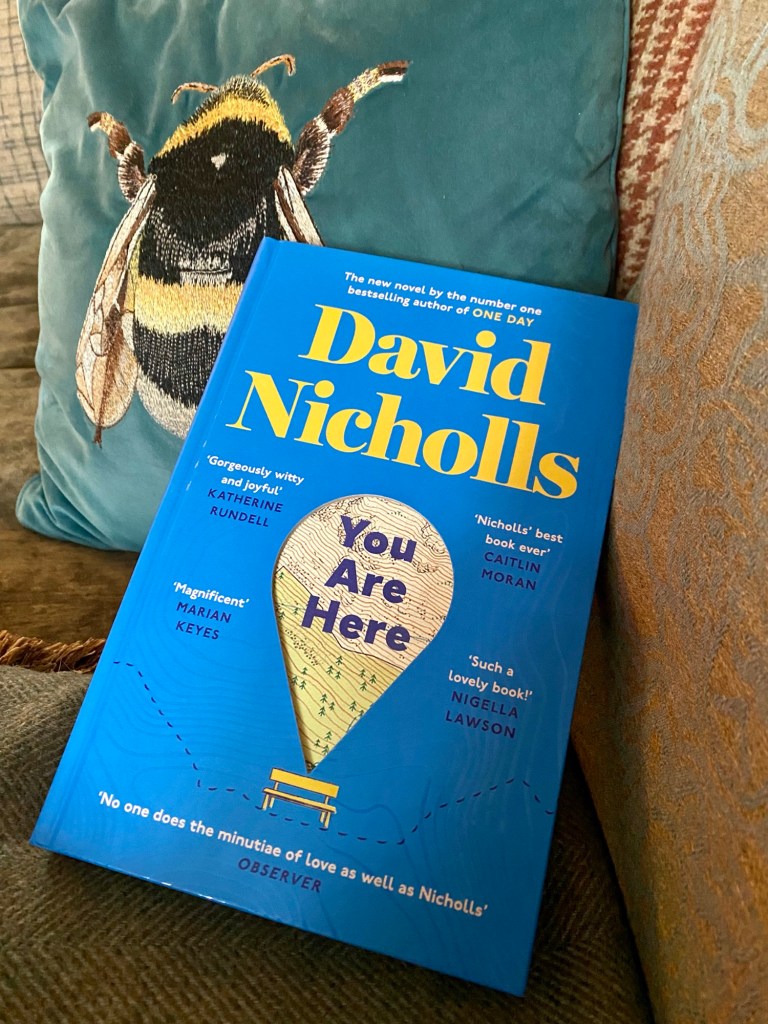
You Are Here by David Nicholls

I have had the joy of reading two books, each by one of my favourite authors, back to back on my holidays and I have genuinely loved it. David Nicholls has been a household name thanks to the new production of One Day on Netflix. The beauty of Nicholls’s novel about friends Emma and Dex makes it one of my favourites of all time and I’m definitely not alone. There was a time back in the 2000s where if you were on a train journey most of the people in your carriage were reading One Day. It was a book that utterly broke my heart because I believed in those characters so much and the shock of what happened is still with me, to such an extent that I haven’t been able to watch the last two episodes of the series. I can’t bear what’s coming. Similarly, both the book and BBC adaptation of his novel Us was deeply moving but utterly real. With the wonderful Tom Hollander as his lead, we become so emotionally invested in this couple, then just as they’re ready set to out for a once in a lifetime trip his wife asks for a divorce. Their plan, to spend all summer travelling around Europe, would be their last trip as a family, before their son leaves home for university. Can they set aside this bombshell and continue with their holiday? The set up in both these earlier novels is so simple and You Are Here is no different. A group of friends travel from London to the Lake District to walk some of Wainwright’s routes through Cumbria towards the Pennines. Cleo has invited four single friends; Conrad is meant for copy editor Marnie and Tessa is intended to get on with geography teacher and dedicated walker Michael who is extending his trip to walk the entire coast to coast, ending in Robin Hood’s Bay. Michael is still getting over separating from his wife so finds these social occasions difficult, much preferring solitude. Marnie spends much of her time alone too, so this will be a step out of their comfort zone for both of them. When the others bail out after a day of endless rain, Marnie and Michael are left to walk together. Can they both strike up a friendship?

David Nicholls has this amazing ability to articulate the minutiae of conversation and communication between the opposite sexes. He’s also brilliant with those tiny moments of shared humour, stolen glimpses and the body language of love. It may seem strange that a whole book is about two people walking across the country, but everything happens within that time spent together. After a couple of days Michael can see that Marnie is an inexperienced walker but determined, intelligent and well-read. She has been in relationships that eroded her confidence, has a keen sense of humour but tends to lose it a little when tired and hungry. Marnie is surprised by Michael. Although she knows little about geography she can appreciate how passionate he is about his subject, he wears his beard as a mask so that people keep their distance, is perfectly comfortable in his own company and is hurt very badly by the break-down of his marriage. This isn’t two young people swept up in the blind passions of love at first sight. This is a slow burn. It’s a potential romance that grows slowly and unexpectedly for both of them. It’s lovely to read a ‘real’ love story about people who are older and have been kicked about a bit by love in the past. Nicholls has alternated each character’s chapters, so we’re also taken into Marnie and Michael’s inner worlds. Within these chapters we have flashbacks through their lives and their past relationships, slowly learning what has built these people who are in front of us, trying to bring their lives together. We are also privy to private thoughts that let us know this couple could be perfect for each other. When bullied into social activity by friends we can see that they’re both introverts. Michael agrees to a plan just to make Cleo shut up. She means well, it’s just that for her the answer to a empty weekend is the presence of others, while it’s their absence that floats his boat. Similarly Marnie knows that a bit of socialising is expected, however…

‘She had become addicted to the buzz of the cancelled plan […]for the moment no words were sweeter to Marnie than ‘I’m sorry, I can’t make it.’ It was like being let off an exam that she expected to fail.’

I understood Marnie. I was the kid at school who was so excited to have finished the reading scheme by age eight, because while everyone else was reading to the teacher I had free library time. I would pull up a beanbag and disappear into the world of the Little Women or Jane Eyre, loving that I was alone, out of the hustle and bustle of the classroom I was free to be anywhere just by opening a book and stepping through a wardrobe. Marnie gives a similar description of her early reading years to mine, the weekly library visits and the devouring of anything I could find and making no distinction between what was deemed literature and what wasn’t. My only criteria was that I enjoyed it. I learned to enjoy activities with friends – ice skating, horse riding, cinema – but nothing beat that thrill of knowing a delicious book was waiting in my room.

‘Private, intimate, a book was something she could pull around and over herself, like a quilt.’

Reading is a little like Michael’s walking in that it takes me on a journey, but also helps me unplug from the stress of daily life. If I’m reading a physical book it’s even more separate from the world because it’s not alerting me to things on social media, emails or messages from friends with cat videos. Marnie wonders if her reserve and need for alone time comes from her upbringing with parents she’d describe as cautious and timid:

‘At no point did her parents move house, gamble, use an overdraft, change jobs, have affairs, go abroad, shout in public, park illegally, eat on the street or get drunk, and while they must have had sex at some point, this was covered up as carefully as a past murder. Marnie was the only evidence.’

Michael is taking in the world around him, but at a totally different pace. He can stop and concentrate slowly on a beautiful bird song or the reflection of the hills in a still lake. He is a Romantic with a capital ‘R’, perhaps not a flowers and surprise trip to Paris sort of man, but he can see poetry in the everyday. As they stroll the hills he truly does understand the Romantic poets, engaging Marnie in conversation about routes that William Wordsworth and his sister Dorothea might have taken. He tries to feel the state of the sublime and thinks he often finds it in a spectacular view that couldn’t have been seen any other way than walking off the beaten track. He is still so caught up in the breakdown of his last relationship, still to some extent thinking as part of a couple although it’s clear to his friends that his wife has definitely moved on. He’s been so disconnected from his wife, for so long that he didn’t know anything was wrong and the shock of the split was seismic. This is why Cleo invites him on the weekend in the first place, to try and point him forwards, rather than backwards. This is a spiritual and mental journey for him, as well as a physical one. Michael has that symptom of depression where you feel like you’re looking at the world through a thick pane of glass, removed from reality. This is a protective barrier too, he keeps his pain so deep inside himself he thinks no one can see it. It stops him from being able to express himself and he finds Marnie so performative at first. She rails against her sore feet, the weather, the mud – all things that are so part and parcel of hiking it wouldn’t occur to him to do the same. Her humour does break through occasionally.

‘You’re funny, but I’m the one with the lighter rucksack so who’s laughing?’ ‘That is true. I’ve got twelve pairs of pants in here, for three nights.’ ‘Why?’‘I don’t know. Maybe I worried I might shit myself four times a day.’ ‘Has that ever happened?’ ‘Not since my honeymoon.’

By the end my heart was breaking for these fledglings. I so wanted them both to be happy, even if they simply ended as friends. David Nicholls throws in one last obstacle that takes us by surprise, even while my heart was racing I could see how much it was needed for that character to have a final epiphany. He’s brilliant at creating that bittersweet feeling that comes as we’re older and have romantic baggage. At first when we lose someone the shock and pain is everything, then after time and doing a little bit of work on ourselves a day hopefully comes where we can look back and it not hurt. We can acknowledge the pain but not let it overwhelm us. In fact, eventually, we can look back and smile about the good times, the love that was shared and how glad we are that we experienced it. That we’re able to move forward and enjoy new adventures. I really understand this from my own life and I genuinely closed the book with a smile on my face, knowing that both Marnie and Michael have so much life to look forward to whether together or apart on their journey.

Out now from Hodder & Stoughton (Sceptre)

Meet the Author

David Nicholls is the bestselling author of Starter for Ten, The Understudy, One Day, Us, Sweet Sorrow and now You Are Here. One Day was published in 2009 to extraordinary critical acclaim: translated into 40 languages, it became a global bestseller, selling millions of copies worldwide. His fourth novel, Us, was longlisted for the Booker Prize for Fiction.

On screen, David has written adaptations of Far from the Madding Crowd, When Did You Last See Your Father? and Great Expectations, as well as of his own novels, Starter for Ten, One Day and Us. His adaptation of Edward St Aubyn’s Patrick Melrose, starring Benedict Cumberbatch, was nominated for an Emmy and won him a BAFTA for best writer.

He is also the Executive Producer and a contributing screenwriter on a new Netflix adaptation of One Day. His latest novel, You Are Here, is out now in hardback.

Posted in Personal Purchase

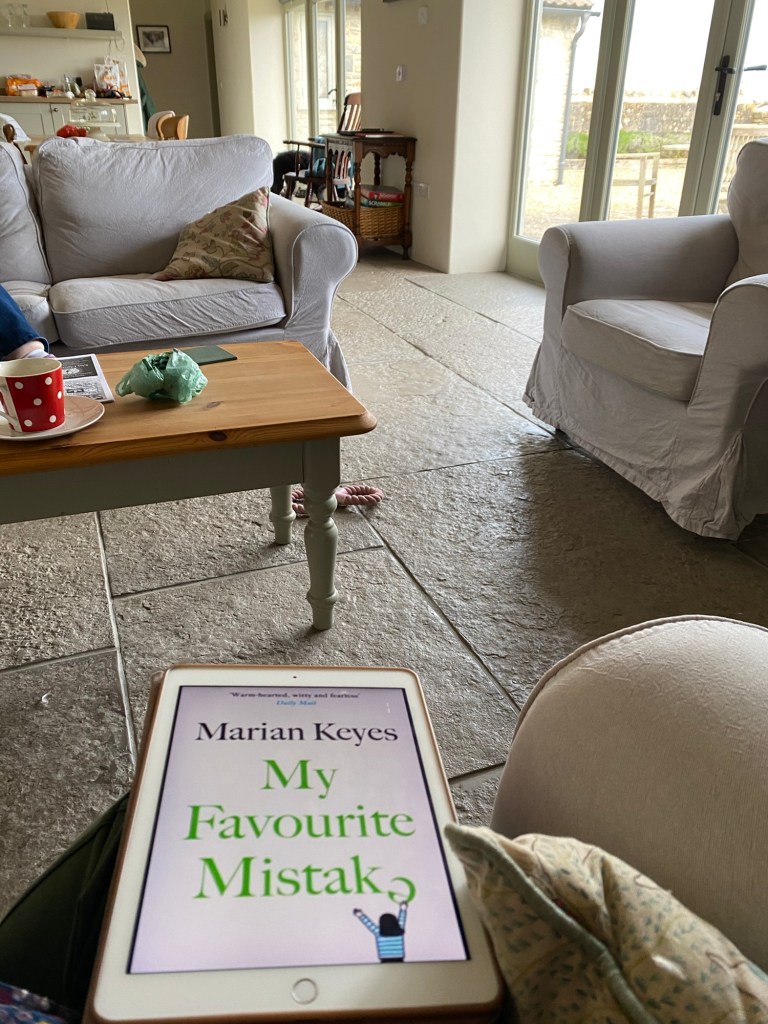
My Favourite Mistake by Marian Keyes

I’m going to say it.

I am a Marian Keyes superfan.

I love her tweets or whatever the hell we call them now. I love her honesty. I love her Strictly fandom. I especially love her sense of humour. I love that her books have drawn my stepdaughter into daily reading, because of course more than anything I love her writing. She puts all her quirk, wit and self-awareness into the characters she writes. She is a writing goddess! She gets better year on year and I loved this dive straight back into the Walsh family after Again, Rachel. Rachel has always been my favourite Walsh, but in this latest novel Anna really did steal my heart. Anna is nearing her fiftieth birthday and her high flying PR role in the beauty business is wearing a little thin. Although she’s always loved living in NYC, the pandemic left her feeling the distance from her family in Ireland. After losing her husband Aidan in a terrible car accident several years ago, her contact with his family in Boston has waned. Her subsequent relationship with Angelo – a ‘feathery stroker’ – has been conducted with respect, equality and a deep fondness, but never passionate, all consuming love. With a need to be near those she loves, she gives notice on her job, her apartment and her relationship.

Her family think she’s gone mad and she almost starts to think she’s made a huge mistake when a sudden job opportunity comes her way. Her sister’s friend Bridie has been building a luxury hotel and spa on farmland near the coast, but the project has hit the buffers. Locals have vandalised the site leaving machinery sabotaged and the luxury bungalows daubed with paint. Bridie and her husband have had the worst news, their daughter has been diagnosed with cancer and needs their total focus. What they need is an experienced but down to earth PR who will be able to converse with the locals in town, find out what their grievances are and hopefully, get the project moving forward again. Anna is booked into the local hotel and can be ready to hit the ground running, but there’s just one snag. The finance broker who has put together the deal for Bridie’s project is Joey Armstrong. Joey was part of the Irish ex-pat community in New York when Anna and Rachel first moved out there. He was also one of the ‘Real Men’, a group of long haired, tight jeaned, rock gods who included Rachel’s husband Luke. Joey was hot. All tawny haired, with the most kissable mouth Anna had ever seen, not to mention his jeans which were just on the wrong side of decent. The first night they met Anna felt an immediate vibe and was full of anticipation until her sister Helen walked in. She saw Joey’s eyes immediately slide over her and become laser focused on her beautiful sister. Anna was immediately slighted and when Helen and Joey left together she decided to dispel this particular lean hipped rock god to the back of her mind. However, this wasn’t the last time their paths crossed. Joey has always been a mix of old flame and thorn in Anna’s side. Can she put aside their past and work together on this project?

Anna has that wonderful characteristic that can’t be taught, she has an easy charm and an ability to talk to anyone from building contractors to the lady of the manor. She takes to M’town straight away, working out who are the cornerstones of the community and who has something to lose from the development at Bridie’s farm. Knowing that her NYC clothes won’t work in rural Ireland, she dresses in jeans and a waterproof coat and pulls her hair back in a ponytail. Minimal make-up leaves her looking fresh-faced and the facial scar from her accident with Aidan is exposed. She’s shrewd enough to realise that it gives her an advantage, no matter whether they people feel sorry for her, are curious or think it shows honesty and openness. She’s smart and has similar skills to her sister Rachel when it comes to communication. The openness, lack of judgement and appreciation that Rachel shows her clients in the counselling room, is equally fruitful when trying to get to the bottom of why certain people in town are against the development. Anna genuinely cares and within days can see where mistakes were made, where a concern was overlooked or an individual was inconvenienced. She can make the most insignificant person feel like the centre of her world and is soon making friends. We follow her investigation and watch her become more and more embedded in this quirky but beautiful little place. In between we see glimpses into Anna’s past, from the before and after devastation of Aidan’s death to her relationship with best friend Jackie and her daughter Trea. Jackie has been her best friend, a relationship that even survived Jackie’s fraught relationship with Joey. When Jackie becomes pregnant, Anna puts aside her own feelings for Joey and becomes her birthing partner and almost a co-parent to Trea. However, something happens to jeopardise their friendship and the women have barely spoken since.

A Marian Keyes romance is never just heart and flowers. It’s always about the heroine’s personal baggage and need for self-growth too. Often I prefer the inner growth to the potential relationship, but not in this case. I absolutely loved this couple and their story. We all have that someone who got away. For me it was a lanky and eccentric music lover called Glynn who would turn up at the door unannounced – often sporting flowers from the graveyard or my dad’s own flowerbeds. There was rarely any warning with Glynn, he might be waiting for me at school having invited himself for tea or have walked five miles from town with some song lyrics scribbled on a postcard that I just had to have. We would lie on my bed and listen to the Cocteau Twins, Ride and The Smiths. My dad would despair at his Joe Bloggs wide leg jeans with frayed hems that dragged mud and grass into the house. He had hair like Clint Boon from the Inspiral Carpets and a huge billowing parka that I stole and wore for two years straight. He also had a complicated home life and often reminded me of Snufkin from The Moomins, who loved the solidity and dependability of Moomin House but also needed time to wander alone whenever it suited him. I was hopelessly in love with him, but it took him three years to finally ask me out and I was scared that it was finally happening that I panicked and refused. Even now, every few months or so he sends me a Spotify track by House of Love or Northside and I love that little reminder of teenage love. Similarly, Joey and Anna have a very long history with several near misses and a deep friendship when he let her close. Although they’ve never had a romantic relationship it is Anna and not one of his many lovers who knows the truth about his upbringing and how damaging those years were. He has trusted her with his deepest secrets, but he has also hurt her, possibly more than anyone else in her life. He has also caused her to lose her closest friend. Yet Anna knows that once she also wounded Joey deeply, the details of which we only find out late in the story.

I loved the pace of the romance, with Marian Keyes knowing exactly when to drop in a flashback that explains everything and keeping that ‘will they/ won’t they’ tension without it seeming artificial. Often with rom coms I feel like obstacles are there just for the sake of it, but the flow is natural and I never felt like the outcome was a done deal. There were so many obstacles and items of baggage it felt like they were on the luggage conveyor belt at Gatwick. There’s everything from the past – him choosing Helen, then Jackie and then most of NYC if Mrs Walsh is to be believed, before Anna. Joey has so much work to do, not just about his childhood but about the here and now. Blending families isn’t easy and he has three adorable boys as well as Trea to think about. They’re both temporarily working on this project and in M’town so what happens when the hotel is built or if Birdie has enough and changes her plans? Anna might be healed physically, but her scar does bother her and has changed her life in ways she didn’t imagine. It does work as a filter, anyone it clearly bothers has no place in her bed. However, at times it does play on her confidence and when she sets up an online suggestion inbox for the locals there are enough hurtful comments to remind her of a time when she wasn’t okay. Joey is fit to murder the culprits but Anna rises above it and keeps moving forward, despite the hurt and the reminder that Joey didn’t even choose her before the accident. So, why would he choose her now? Is it possible to remain friends when they’re so close? Finally, there’s the beautiful setting, nobody does small town Ireland like Keyes and these people are imperfect, but hilarious. Some of their concerns are petty, but others are grounded in years and years of tradition. Work is hard to find in a small town so local tradesmen not being asked to contract was a huge mistake, but easily smoothed over once Anna explains the artistry and level of finish expected. Could Anna thrive somewhere like this, or is she just passing through? I loved, loved, loved this book and being on holiday I had the luxury of sitting in the garden in Glastonbury and reading right through to the end. This is peak Marian Keyes and if you don’t fall in love with Anna or her love story with Joey there’s clearly something a little bit wrong with you.

Meet the Author

Marian Keyes is the international bestselling author of Watermelon, Lucy Sullivan is Getting Married, Rachel’s Holiday, Last Chance Saloon, Sushi for Beginners, Angels, The Other Side of the Story, Anybody Out There, This Charming Man, The Brightest Star in the Sky , The Mystery of Mercy Close, The Woman Who Stole My Life, The Break and her latest Number One bestseller, Grown Ups. Her two collections of journalism, Making it up as I Go Along and Under the Duvet: Deluxe Edition are also available from Penguin.

Posted in Throwback Thursday

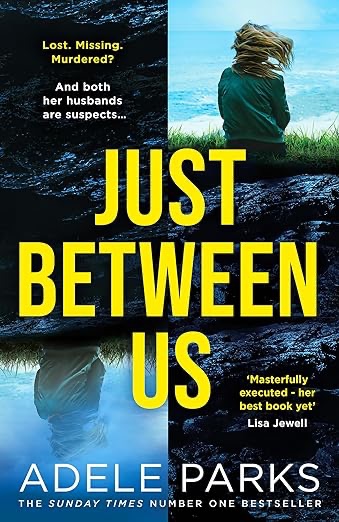
Just Between Us by Adele Parks

For some reason, I wasn’t fully engaged with Adele Parks’s last novel Both of You and I wasn’t expecting a sequel. I didn’t really like any of the characters involved. Kylie has two pseudonyms and two lives: half the time she’s Leigh, wife to Mark and stepmum to Oli and Seb; the rest of the time she’s Kai, wife to Dutch banker Daan Jaanssen and lives in an upmarket apartment with luxury clothes, cosmetics and holidays. The two seem to balance Kylie’s complicated needs, she’s equally at home having dinner in a Michelin starred restaurant as she is eating sand filled butties on a cold beach with the kids. Kylie’s other important relationship is Fiona, her friend of many years who has become part of the family and unofficial aunty to the boys. There isn’t a single person in Kylie’s world who knows about her double life, until one day she disappears. Now the whole world knows about Kylie’s bigamous marriages and the husbands and children are dragged into a police operation and a media frenzy. This sequel picks up after the first, when we’ve just found out who has been keeping Kylie prisoner. Just when we think it’s all over, we’re only halfway there.

I won’t ruin any of the twists and turns of either book, because this is one of those you need to start without any idea what’s going on. We have the original characters including the rather wise and interesting DCI and we have small chapters from every point of you. However, there are some newbies too and it was here where the book really took off for me. I was so eager to know what the hell was going on and where these people fit into the original story. We are in the depths of lockdown and Kenneth has been shielding alongside his grown-up daughter Stacie. Stacie is in the early stages of recovery from cancer treatment and she has fought hard to keep living. She deliberately doesn’t look at herself but knows she looks a little beaten up with her shorn hair and the scarring. Sadly, she has the added complication of amnesia after falling so dangerously ill so she doesn’t even remember treatment or anything before that. Thankfully she has Kenneth to fill in the blanks and he seems like such a caring and loving dad, luckily he’s also a retired GP so he’s perfectly placed to reassure Stacie and support her recovery. They have a quiet routine of daily dog walks, cooking and board games. They’re in the town of Lyme Regis and Stacie does feel like she knows the place and her dad has told her about her engagement to local lad Giles. She called the wedding off two weeks before the date and moved to Paris. Then something odd happens. Stacie is on the beach when she feels a sensation of being watched. Up on the promenade there is a woman staring at her with a fierce intent. She wonders if this is someone who knew her from before. So, she makes her way over, keeping a safe social distance and introduces herself, explaining that she might look a little different, because she’s had cancer. No, the woman says, you’re not Stacie. This is a moment where the hairs go up on the back of the neck, but we don’t know who the woman is or how well she knows Stacie and Kenneth. What possible reason could she have to confuse a woman who’s had cancer treatment and lost her memory?

I enjoyed having more input from the husbands and Kylie’s two stepsons this time around. The boys are incredibly loyal to her, despite being hurt by finding out about her second husband and let’s not forget, all of them are grieving. Daan Jaanssen also shows an incredible amount of loyalty and concern, especially considering he’s being charged with Kylie’s kidnap and murder. Does this mean he didn’t do it or is he putting up a smokescreen in the hope of walking free? Mark is angry and bitter, perhaps because he’s was her husband first. He is on the verge of making mistakes because of that anger. Seb and Ollie show maturity and enormous love beyond their years and put their own Dad to shame. The short, sharp chapters keep the momentum going and definitely have that ‘one more chapter’ addictive quality. Be prepared to set aside a day to finish it when you can’t put it down. This is definitely one of those sequels where you need to read the first novel, there’s a little bit of exposition about Kylie’s ordeal but not too much. The main question is what happened to her afterwards? Is she dead as the police think? This is a great thriller from Adele Parks and it made me feel back on track with loving her writing.

Meet the Author

Adele Parks MBE is the author of twenty-three bestselling novels including the recent Sunday Times hit Just Between Us and the audible Number One sensation One Last Secret. Over 5 million English editions of her work have been sold and she is translated into 31 different languages.

Her number one bestsellers Lies Lies Lies and Just My Luck were both shortlisted for the British Book Awards and have been optioned for development for film & TV.

41,000+ 5 star reviews have kindly been written by her fans on Amazon 🙂

She is an ambassador of the National Literacy Trust and the Reading Agency: two charities that promote literacy in the UK.

Adele was born in North Yorkshire and has lived in Botswana, Italy and London and is now settled in Guildford, Surrey.

In 2022 she was awarded an MBE by King Charles III for services to literature.

Connect with Adele Parks on Twitter @adeleparks, Instagram @adele_parks and Facebook @OfficialAdeleParks or visit her website for more information.

Posted in Netgalley, Personal Purchase

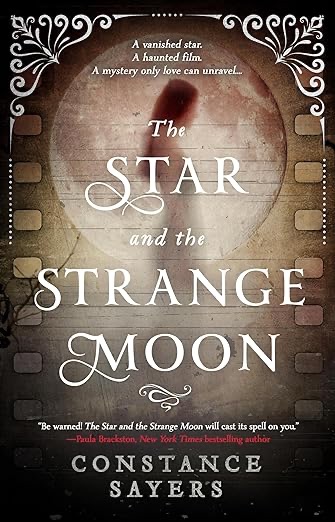
The Star and the Strange Moon by Constance Sayers.

Constance Sayer’s latest book has a lot of her literary trademarks: time slip narratives; a mystery to solve; magic realism and romance. She places her story in the world of Hollywood and film-making, with two main characters – the actress Gemma Turner and young film-maker Chris Kent. In 1968 Gemma is staying in London with her rock star lover Charlie Hicks when she is offered an unexpected film opportunity. Until now Gemma has been making a series of surfing films based in California, but she’s been longing to make something that has more critical acclaim. French director Thierry Valden is part of the nouvelle vague or new wave movement and has offered her the lead role in his next film L’Etrange Lune a vampire film set in 19th Century France. He seems open to changes and often works with improvisation so her long held skills as a writer might be needed too. However, when she gets to Thierry’s chateau the mood seems to have changed. She is greeted by Manon Valden, who warns Gemma off her husband immediately which isn’t very welcoming. Thierry doesn’t seem like the man she met before and when she reads the up to date script it still has the same stilted dialogue, despite the potential changes she had sent him. When she finally speaks to Thierry alone, he makes it clear that something has changed. He had envisioned more of a collaboration both on the script and possibly in the bedroom, but L’Etrange Lune will be his final film and he can’t afford to take risks. Gemma will have other opportunities for scriptwriting but he won’t. The next day as they’re filming in the nearby town of Amboise, Gemma has a scene where she runs down a darkened and cobbled alleyway, seconds after calling action the camera has suddenly lost her. Has she fallen on the cobbles? Are the dark shadows concealing her? Maybe she’s walked off in a huff. Yet it seems Gemma is genuinely gone and as they look back over the scene on film, frame by frame, she’s simply disappeared in front of their eyes.

Christopher Kent has had a strange fascination with the actress Gemma Turner since he was a child. Now at film school in 2007, his attachment to the actress stands out because she was never one of the greats – students aren’t usually hung up on obscure actresses from a handful of surf films. He remembers the day he first saw her, in a hotel where vintage black and white photos of actors were hung next to every door. In a very chaotic and traumatic childhood, this was one of those moments where he and his mum were without a roof over their heads. Chris could sense his mum was edgy and on the verge of a mood change, but as they approached their room and she saw the photo by the door she flew into a rage. She pulled the picture of Gemma Turner off the wall and smashed it, shouting personal insults and expletives. What was her link to the actress? Knowing Chris’s fascination with Gemma, his girlfriend and fellow student Ivy comes to him with a strange proposition. Every ten years Gemma’s final film, L’Etrange Lune, is shown to a select group of 65 guests at a randomly chosen cinema. Ivy’s father is one of the 65, but for this viewing he has offered Ivy his two place. They must wear a mask and cloak, but most importantly of all they must never approach or try to identify other members, nor can they talk about what they’ve seen. Chris doesn’t know what to make of the film. It seems to be a rather formulaic vampire movie, but there’s something odd about Gemma’s performance, almost haunting in fact. While in some places it’s fairly average, in other scenes there’s an incredible intensity to her acting. It’s almost as if she’s genuinely terrified.

I found the book a little slow at first, but once we reached Gemma’s disappearance I was hooked by this strange story. As we reach Gemma’s timeline in France and Chris starts investigating her disappearance several decades later, the pace of both timelines really picks up. There are suddenly enough strange and impossible happenings for the reader to start wondering what’s coming next. To be honest it felt like anything might happen! I loved the sense of evil created by the film – the strange melancholy that falls over those who see it, something that worsens if you keep going back every ten years. The rumours that the film changes in that decade are intriguing and suggest someone is still behind the lens. Could one of the 65 be playing tricks on the rest? Perhaps not letting on they have extra scenes that Thierry discarded, or that they have found an actress who is the double of Gemma Turner. Is something magical at work here? Despite all the warnings, I did understand Chris’s need to investigate, even when those he interviews start to feel the consequences of talking. This is such a clever concept and the author creates a real sense of mystery with wonderful period detail, especially in the 19th Century when there’s much discussion on the restriction and discomfort of women’s fashion especially in the summer. I also enjoyed 1960’s London where Gemma’s lover Charlie is part of a Fleetwood Mac-esque band where partners are swapped as readily as song lyrics. There’s even a very unexpected romance woven within this magical and unexpected series of times and worlds. What I wanted to see more than anything was for Chris to overcome the trauma of his childhood and fulfil his potential, wherever and whenever that might be.

Out in paperback from Piatkus 28th March 2024

Meet the Author

Constance Sayers is the author of A Witch in Time, The Ladies of the Secret Circus, and The Star and the Strange Moon from Hachette Book Group.

A finalist for Alternating Current’s Luminaire Award for Best Prose, her short fiction has been nominated for the Pushcart Prize and Best of the Net.

She received her master of arts in English from George Mason University and graduated magna cum laude with a bachelor of arts in writing from the University of Pittsburgh. She attended The Bread Loaf Writers Conference where she studied with Charles Baxter and Lauren Groff. A media executive, she’s twice been named one of the “Top 100 Media People in America” by Folio and included in their list of “Top Women in Media.”

She splits her time between Alexandria, Virginia and West Palm Beach, Florida.

Posted in Throwback Thursday

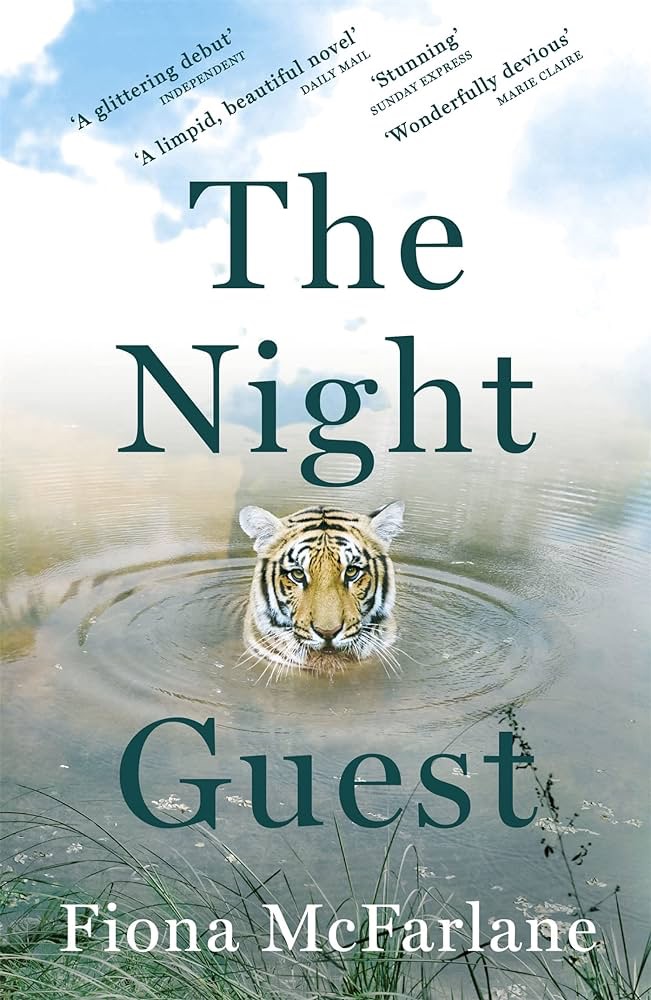
The Night Guest by Fiona McFarlane

Booksellers often joke about customers who come into their shop and ask for help finding a book: they either don’t have the title but vaguely remember the author; they don’t know the author but know there was a bird on it or the book was blue; they saw the book on that programme, the one with Sara Cox but don’t know which episode or even the series it was from; it’s an old book, they read it at school; they think it was set in China, or maybe South America. On it goes and more often than not, once the mystery is solved, they ask the bookseller to write it all down on a slip of paper then go home and order it from Amazon. I was having that sort of experience with this unusual novel, in fact nobody I asked had ever heard of it. Possibly not helped by my description – ‘ it had an old lady in it and a tiger came to visit her at night.’ Inevitably most people heard ‘tiger’ in the story or on the cover and I’d be answered with Life of Pi or The Tiger Who Came To Tea, excellent books but not the one I was looking for. Then finally one day the title sort of came to me. I say sort of, because I kept calling it The Night Visitor which sounds like a creepy name for incontinence or night sweats! I’d taken the book out from the library originally and when funds allowed I wanted to have a copy on my shelves. It is there on Amazon, but maybe pop it on your charity shop list because it is a little gem.

The book tells the story of Ruth, an elderly lady who lives alone in a remote house on the coast of Australia. She has family but her son has relocated for work, meaning that day to day help isn’t something he can provide. Her son phones regularly, but he’s busy with work, kids and a home of his own. However, he does start to worry when she rings to tell them she’s had a night guest; a large tiger came to visit in the night. At first she woke up scared there might be an intruder, but it was a handsome tiger instead. Her son suggests that perhaps she was dreaming? Ruth is adamant, the tiger woke her and she wasn’t asleep. Her son and his wife confer and decide they’re worried. What if their mother’s mind is going? How will they manage to get her the help she needs? Their mother can be low in mood at times, mainly because she’s spending so much time alone and that leads to ruminating on the past such as her girlhood in Fiji. One of my favourite tropes is the unreliable narrator and that’s what we have in Ruth. Her story is so implausible she must be losing her marbles. What unfolds is an unusual psychological thriller with a side order of magic realism, which I love. 

The book tells the story of Ruth, an elderly lady who lives alone in a remote house on the coast of Australia. She has family but her son has relocated for work, meaning that day to day help isn’t something he can provide. Her sonphones regularly, but he’s busy with work, kids and a home of his own. However, he does start to worry when she rings to tell them she’s had a night guest; a large tiger came to visit in the night. At first she woke up scared there might be an intruder, but it was a handsome tiger instead. Her son suggests that perhaps she was dreaming? Ruth is adamant, the tiger woke her and she wasn’t asleep. Her son and his wife confer and decide they’re worried. What if their mother’s mind is going? How will they manage to get her the help she needs? Their mother can be low in mood at times, mainly because she’s spending so much time alone and that leads to ruminating on the past such as her girlhood in Fiji. One of my favourite tropes is the unreliable narrator and that’s what we have in Ruth. Her story is so implausible she must be losing her marbles. What unfolds is an unusual psychological thriller with a side order of magic realism, which I love.  morning after the tiger visits a woman knocks on Ruth’s door. She introduces herself as Frieda and claims to have been sent by the government to help Ruth clean the house and stay on top of things. She’s also from Fiji, so Ruth can talk to her about the past and those memories and regrets that occupy her mind. It would seem that Frieda awakens something in Ruth that’s lain dormant till now. Her memories of Fiji become even more intense and flourish under Friedan’s gaze. In the back of my mind I was a little suspicious that much like the tiger, Frieda might not be everything she seems. Alternatively, she might be everything she seems and more. Ruth is more vulnerable than she cares to admit, a woman whose memory and understanding of events may not be accurate. Her mind wanders, but is she knowingly lapsing into daydreams or does she believe the fantasy? I felt concerned that while Ruth was narrating the more fantastical aspects of her daily life, like her visiting tiger, underneath there might be something more dangerous going on. Elderly people who have altered consciousness are so vulnerable to manipulation and abuse, whether it be sexual, physical, emotional, spiritual or financial. As changes were revealed, baby step by baby step, they were going unnoticed by Ruth. I was desperate for her to sit up and realise something odd was going on, before the results became permanent.

There are things in life that we choose not to see. We erect a wall to shield ourselves and never look over it so we can say ‘I didn’t know…’ This is often the case when someone we love is in deteriorating health, especially if they’re our parents who used to look after and support us. I think this is what Ruth’s son is doing, closing his eyes to the fact that their situations have reversed and now mum needs him. Ruth’s vulnerability is sad, because she’s so open to exploitation. It’s not just that her mind might be affected cognitively, but that she’s so lonely she craves someone to be interested in her. If someone enjoys spending time with her, they could quickly form a bond and shut everyone else out. As Frieda starts to infiltrate all parts of Ruth’s life, taking on more and more responsibility for her affairs, Ruth’s determination and independent spirit become worn down and she starts to depend on Frieda. In contrast with Frieda, Ruth does come across as mentally frail. Whereas the carer is the life and soul of the party. Ruth’s worsening nightmares of being stalked in her own home by a striped predator could be pure imagination, allegorical, magical or a manifestation of a sixth sense telling Ruth she’s in danger. This is a brilliantly complex debut, with layers of manipulation and deception that extend to the reader. All the way through I kept thinking I didn’t want my life to end up like this. Despite this, I was compelled to keep reading and I’ve never forgotten it. Now, thankfully, I have my own copy so I can re-read whenever I like.

Posted in Throwback Thursday

The Signature of All Things by Elizabeth Gilbert

‘Holding her robust infant, Beatrix murmured a prayer in her native Dutch. She prayed that her daughter would grow up to be healthy and sensible and intelligent, and would never form associations with overly powdered girls, or laugh at vulgar stories, or sit at gaming tables with careless men, or read French novels, or behave in a manner suited only to a savage Indian, or in any way whatsoever become the worst sort of discredit to a good family; namely, that she not grow up to be een onnozelaar, a simpleton. Thus concluded her blessing — or what constitutes a blessing, from so austere a woman as Beatrix Whittaker.’

Some people didn’t know Liz Gilbert until the film ‘Eat, Pray, Love’ came out, in fact I was surprised to learn how many people hadn’t known about or read the book. I’d really enjoyed the book and found the film ok, but thought it didn’t dwell enough on the psychological and spiritual aspects of her journey. It had a mixed reception at my book club where some really identified with her character, but others were screaming how lucky she was to have a publisher willing to fund her trip of a lifetime during her divorce as many have to continue getting the kids to school, going to work and only having the millisecond before sleep hit them to have anything resembling a spiritual or self-aware thought. I’d not expected the anger and jealousy that it evoked in some readers. So it was with trepidation that I approached her novel The Signature of all Things. If I’m honest I probably wouldn’t have sought it out, but I was in one of my favourite bookshops while on holiday in Wales and I saw it in the second hand section. It was such a beautiful book that I had to buy it and I flicked through it back at the holiday cottage, then was sucked in very quickly and all my planned reading went out of the window. I was stunned to be sailed around the globe from London to Amsterdam, Peru and Tahiti. Even more exciting was the heroine, Alma Whittaker, daughter of a famous explorer, plant hunter and botanist. I was drawn to her intelligence, her busy mind, her assertion that she is the equal of any man and the depths of her feelings.

The book begins be setting up Alma’s early life and family situation, so we meet her father and his beginnings in botany as a boy apprentice to a plant hunter- actually a punishment for some very sneaky thefts from Kew Gardens. His incredibly enterprising ideas mean that by the time Alma is born he is a very rich man, with a mansion in Philadelphia. His fortune has been made in the quinine trade, a medicine extracted from the Cinchona tree found in Peru then traded and grown around the world to produce a drug for malaria. At his home, White Acre, he and his wife have two daughters: Prudence their adopted daughter who follows an extraordinary path into abolitionism and Alma. Alma is a tall, large-boned girl who is described as ‘homely’, but is intelligent, determined and secretly contains well pools of sexual curiosity, all qualities that seem unusual for her gender in this time period. Her father’s belief that all people should be given the opportunities that enable them to manage others and excel in their own chosen field governs the household. ‘All’ really does mean all in William’s case and his daughters are given a thorough education at home, rivalling any man. Both he and his Dutch born wife are clearly progressives and Alma flourishes with the opportunities they give her to become a very accomplished botanist in her own right and perfectly able to develop her own projects and command the voyages necessary to hunt for the plant she has set her heart on. Unexpectedly, at an age when scholarly spinsterhood is expected to be her path, a painter visits White Acre and Alma falls deeply in love. This painter believes Joseph Boehme’s philosophy that all of nature contains a divine code, every flower and every creature – such as the Fibonacci sequence. Their two interests combine and while Ambrose is a utopian artist, often found to be painting orchids rather than studying them in a lab, they do have the same passion for nature. Where he saw life as divine and a guardian angel watching over him, Alma saw a life as a struggle where only the fittest survived, something she found out for herself when exploring:

“Then — in the seconds that remained before it would have been too late to reverse course at all — Alma suddenly knew something. She knew it with every scrap of her being, and it was not a negotiable bit of information: she knew that she, the daughter of Henry and Beatrix Whittaker, had not been put on this earth to drown in five feet of water. She also knew this: if she had to kill somebody in order to save her own life, she would do so unhesitatingly. Lastly, she knew one other thing, and this was the most important realization of all: she knew that the world was plainly divided into those who fought an unrelenting battle to live, and those who surrendered and died.“

Of course, this love is not the end of Alma’s story. Liz Gilbert isn’t going to let a man eclipse Alma or create a sappy rom-com ending to such a strong, feminist story. Alma and Ambrose represent two great schools of thought in the 19th Century, that of the spiritual and the scientific. These two schools of thought had equal status and often intermingled to this point, but as the century progressed a complete separation occurred where spirituality became a belief without reason and science became fact without a divine sense of wonder. Could the common ground that Ambrose and Alma thrive upon at first, survive the divide between their two disciplines? Make no mistake though, Alma is the protagonist here and she’s one of my favourite characters ever. I loved her drive (sadly lacking in this writer) and her preservation of it, no matter what. She can speak five languages at five years old! Oh and two dead ones. Her educational achievements aside, it was her confidence and self-belief that stood out to me. Yet here we are two centuries later in a crisis of confidence, with an epidemic of imposter syndrome and doubts about how to be women. Alma is wholly herself, even when at times that might seem steely, reserved and abrupt. She believes that everyone is the master of their own self, including women. It is sad that the introduction of Prudence to their family is the catalyst for Alma experiencing negative self- thoughts. She wishes to keep Prudence, who has been staying with the Whittakers since a family tragedy, but her presence is an opportunity for comparison – the ultimate thief of joy. Alma realises for the first time that she is not beautiful. She retreats into her work at moments of doubt or unhappiness, even extreme heartbreak and loss. It is her refuge and the one area of life that she can control and that she continues to be confident in. I truly admire her ability to continue. To live.

The research that Liz Gilbert must have undertaken for the verisimilitude of this novel is colossal. She writes with a 19th Century sensibility, keeping Alma completely grounded in her place and time. The first rule of creative writing – show, don’t tell – is so strongly in place that I felt like I was with Alma, only seeing or hearing things at the same moment she does. This brings such an immediacy to the novel that it gallops on at quite a right, especially considering this is the story of a 19th Century dowdy and academic spinster. It’s a book that a lot of people might not consider reading from the blurb, which is why it needs to be highlighted in this way. It ranges across biology, exploring, business, philosophy, science, the mystical and yes, the sexual. There are secrets kept all the way to the end that I really didn’t expect at all. I have to say that my favourite review of this book is a negative one. Mainly because it made me laugh out loud, but also because it unwittingly makes you want to read it.

“I was actually enjoying this and then at 49% a spinster has a spontaneous orgasm from holding hands with a dude in a closet.”

left by Goodreads Member, Sylvia, October 2nd 2015

I don’t know about you, but I’d want to read that book!

Meet the Author

Elizabeth Gilbert is the #1 New York Times bestselling author of Eat, Pray, Love, as well as the short story collection, Pilgrims—a finalist for the PEN/Hemingway Award, and winner of the 1999 John C. Zacharis First Book Award from Ploughshares. A Pushcart Prize winner and National Magazine Award-nominated journalist, she works as writer-at-large for GQ. Her journalism has been published in Harper’s Bazaar, Spin, and The New York Times Magazine, and her stories have appeared in Esquire, Story, and the Paris Review.