Posted in Personal Purchase

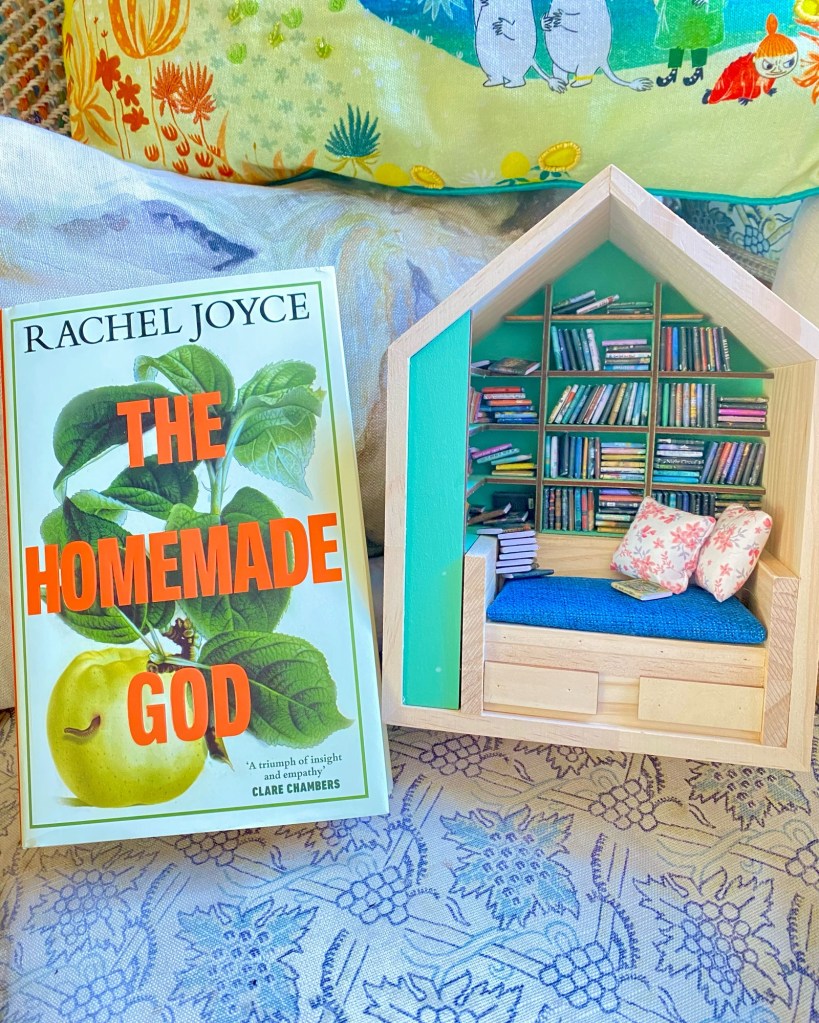
The Homemade God by Rachel Joyce

I have always loved Rachel Joyce’s work, especially the Harold Fry series, but I also adored her more recent novel Miss Benson’s Beetle. This novel was slightly different from her other work, while it did have an eccentric character on a very singular quest and kept that complexity of emotions she does so well, it also had an historical context which I loved. In A Homemade God we see similar complex relationships, but within a family who have a famous father. Vic Kemp is a painter and I have an absolute fascination with painter’s lives and relationships. I love art and have read widely on groups like the Pre-Raphaelite Brotherhood and the group who gathered around Vanessa Bell and Duncan Grant down at Charleston in Sussex. After seeing a Lucien Freud retrospective at the Tate I was intrigued by his family. His children seemed to be the epitome of that creative and eccentric family we come to expect from artists. Bohemian upbringings are just so interesting because of how the development and character of the children are affected by it and how that family copes with the ‘genius’ in their midst.

Here the family in question are Vic and his four children – Netta, Susan, Iris and Goose (short for Gustav and the only boy). They’ve been parented by Vic and a series of au pairs after the sudden death of their mother just after Iris was born. Their father’s art came first always and the conditions he needed in order to create were paramount, so the oldest girls often played the mother role for Iris and Goose, especially when Vic inevitably slept with the au pairs and they left. Vic was not an artist celebrated by the establishment. The description of his paintings brought Jack Vettriano to mind, criticised heavily by the art world, but very popular with the public. Many of Vic’s paintings had a sexual element to them, a sort of soft BDSM theme, except for his only painting of one of his children, Iris. Depicted on the beach with a sandcastle and a man in the background, it brings up mixed memories for Iris. Now grown up, his children are stunned when Vic suddenly starts losing weight and drinking green, sludgy health drinks. It’s just so out of character. His diet is being looked after by his new girlfriend, 27 year old Bella-Mae. None of his children have met her and she doesn’t seem keen on trying. Within weeks Vic announces they’re engaged and Netta suggests that they all stand back and give this the space it needs to fizzle out. A couple of weeks later, Vic announces their marriage with a single photograph from the family home in Orta on Isola Son Guilio with Bella-Mae in such a heavy veil they can’t make out her face. They are staying at the family villa, situated on an island in the middle of Lake Orta and only two days later Netta is stunned by a phone call from a stranger called Laszlo, claiming to be Bella’s cousin. Vic has been dragged from the lake, drowned after a morning swim went wrong as the mist descended. Vic knew that lake so well. Why would he go swimming in the mist? His children come together to travel to Orta, to finally meet their new stepmother and to find out whether she has killed their father. 

I really enjoyed the different personalities of the Kemp siblings and how they complement and clash with each other. Netta has definite older sister energy. She’s the most organised and ambitious of all the siblings with a background in law. She is the most cynical too, convinced Bella’s health drinks have poisoned her father and now after two days of marriage she could inherit everything. Her instinct was to ransack Vic’s London home for the anything resembling a will and to find Vic’s final painting. There’s nothing, but maybe he was painting in Orta? Susan is also older and very organised especially when it comes to food or her stepsons. Married to Warwick who is a much older man she has some empathy and understanding for her father’s relationship. She hasn’t worked, but stayed at home to look after Warwick’s boys which has been a thankless task as they’ve barely accepted her. Susan is passionate about food, but she chose a relationship without that same feeling. Perhaps viewing the volcanic nature of Vic’s relationships she decided to go for a calmer and more stable love. It has proved a successful partnership but there are wild depths underneath Susan’s calm exterior and when she meets Bella’s cousin Laszlo they might rise to the surface. 

Goose and Iris, the younger siblings, both seem lost somehow, perhaps because they don’t have those memories of their mother and only remember the erratic presence of Vic and the revolving au pairs. Since his father’s agent Harry set up Goose’s first exhibition, he has never painted again. When left alone just before his open view, he destroyed his canvasses and nobody knows why. He seemed catatonic and voluntarily checked into hospital for his mental health. He lives quite a lonely life and never talks about his sexuality or takes a partner home to meet family. He works quietly as his father’s studio assistant and lives alone. Iris lives alone too and she comes across a bit liked a startled fawn. She follows behind her sisters and dotes on her father more than others, struggling to keep her distance when Netta suggests it. She does keep secrets though, seismic in their power. As they all travel to their villa in Northern Italy, ready to confront their father’s 27 year old widow and her cousin, Netta tells them they have two objectives. Find anything that could be a will, even if it’s on the back of an envelope and find that last painting Vic claimed to be working on. 

Bella isn’t what the siblings expect and nor is the villa. The villa looks beautiful and tidy for once. Bella seems insubstantial and too fragile to have caused such an uproar. She looks like she might blow away in a breeze. Yet they’ve pictured her with an iron will, imposing her diet on their father and gaining their inheritance. She will prove to be a mirror through which each of them evaluate their lives. I love family sagas and this one is brilliant. It’s psychologically fascinating and I’m not going to ruin that for you by delving too deeply. I was absolutely transfixed! I couldn’t work out whether there was deliberate manipulation at play or if this was just a case of an outsider causing people to view everything through a different lens. Is Bella a destructive force or a helpful one? Whatever she is, the siblings will have to look at themselves, their choices and their relationship to their father. Some revelations will be explosive and take place in public – one particular meal is cataclysmic. Other revelations are quieter, insidious or internal but no less devastating. Goose’s story left me furious and devastated at the same time. The book works almost like therapy, but without the care and ethics. No one will come out of this trip unaffected.

The author made me think about how we view artists and our expectations of them – whether they are potters, painters or writers. We read about their messy and eccentric lives with fascination, but we don’t always consider the damage they do to those closest to them. I’ve always wondered how Lucien Freud’s daughters felt about posing for him, especially in their awkward teenage years. Iris’s story gave me some insight and made me feel deeply uncomfortable. This was such a beautifully complex study of a family’s dynamics and how each sibling positions themselves within it. Rachel Joyce has depicted the way we mythologise people within our family groups and the stories we choose to represent us. We choose stories to tell others who we are and when we do that we can embroider or edit for the effect we want. Think about the stories in your families and whether they’re honest or whether you are trying to represent yourselves within a particular class, religion or other social structure? Do we do this consciously or unconsciously? This is a very different novel for the author but it’s definitely built on her ability to present very deep emotions and the truth of human experience. I think it’s her best yet. 

After reading the novel, you might enjoy reading this article about Lucien Freud’s relationship with his daughter Annie.

https://www.vanityfair.com/culture/2013/10/lucian-freud-nude-portrait-daughter-annie#:~:text=His%20complex%20relationship%20with%20daughter,recalls%20the%20artist’s%20paternal%20demons.

Meet the Author

Posted in Personal Purchase

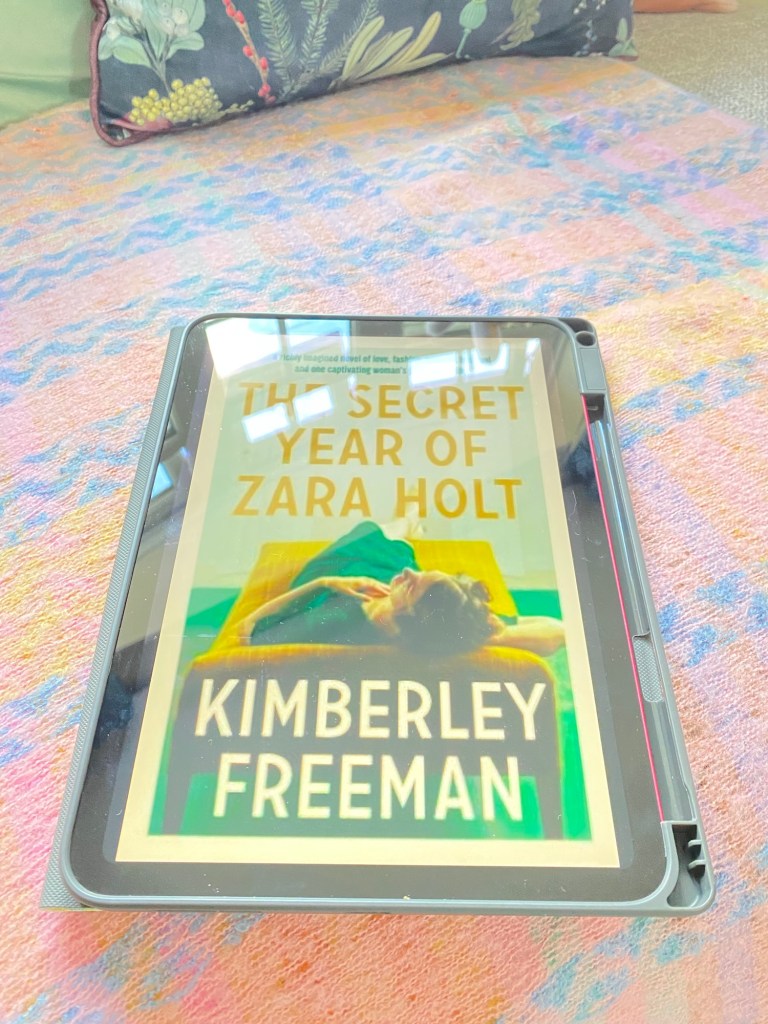
The Year of Zara Holt by Kimberley Freeman 

I discovered Kimberley Freeman’s novels about ten years ago and read all of them in one go. It was the combination of historical fiction, with an emphasis on Australian and women’s history that drew me and the romance element is always rooted in that context. I’ve been waiting a very long time for a new novel and this is particularly interesting as it’s based on a true story. I did drop everything to read it. She takes us through a large part of the early – mid Twentieth century through the life of Zara Holt. We join her as a teenager, living with her parents and dreaming of becoming a fashion designer. She spends hours drawing elaborate evening and wedding dresses with Betty her best friend. On a night out together Zara meets Harry, a handsome and ambitious young man who is aiming to get into law or politics. They have an instant connection and Zara feels it, almost like a jigsaw puzzle clicking into place. Their love will dominate her life as she also builds her own fashion empire and travels the world. As fiery as the couple are, it’s never an easy road and Zara will have to make difficult choices about whether she follows her head or her heart. 

I had to keep reminding myself that this was set in the earlier part of 20th Century. Zara feels like a woman far ahead of her time, so that when she comes up against male attitudes and societal expectations it feels like a surprise. It did take me a little while to realise she was a real woman, born in Kew Victoria in 1909 as Zara Kate Dickens. In 1929 when she was still just 19, she approached her father who was a successful businessman for a loan. She made the case that her sister had an expensive wedding and since she had no plans to get married in the near future, could she use the equivalent money to start her own business. With the money and her friend Betty in tow, she opened a dress shop called Magg. They provided a bespoke service with Zara designing for the client and Betty as the seamstress. When Betty got married and left the business, Zara tried to continue alone but was exhausted by her own success. At this point she was expecting a proposal from Harry, which wasn’t forthcoming. On her mother’s advice she liquidated the business, coming out with $1500 ($125,000 in today’s money). She used her money to travel the world, including an impromptu trip to India with Colonel James Fell who she met on her return voyage. James did propose and became her first husband, but this wasn’t the end of Harry and it wasn’t the end of Magg. 

Zara Holt

I found Zara such a compelling character and admired her boundless energy for business and travel. She is endlessly creative, never losing that urge to sketch a dress  or incorporate a detail she’s seen into a new collection. She was particularly inspired by her time in India and the bold colours and decorative flourishes in women’s clothing. In later years, as Harry becomes more important in government she has to try combining her business affairs with the role of a political wife, using her new contacts and always trawling markets in other countries for fabrics to ship back to India. With more age and experience she manages to keep Magg running, even expanding and hiring new seamstresses and designers. I loved her little rebellions, such as talking to a gathering of women about business rather than her life as ‘first lady’. She also changes an opera fundraiser to a fashion show, both rewarded by the enthusiasm of her audience. 

In her personal life she finds it a lot harder to stick to her guns. Harry is utterly single- minded and only proposes when he’s boxed into a corner. She has suspicions about his womanising early on, but it takes decades for him to be honest with her. He never makes promises he can’t keep, aside from his vows, and while he professes to love only her he will not hear ultimatums. What I found hardest to swallow was his disregard for places and people that were special to him and Zara as a couple, he trashes Zara’s special memories of finding a natural waterfall near Bingle Bay where they stay with close friends, eventually buying their own home there. Harry ruins both by taking a mistress there and my sympathies for him were gone at that moment. I wanted Zara to leave him and use all her energy into her work and children. I felt he did not hear her or deserve her. She is left with the age old compromise, that the little bit of him she does have is better than nothing. 

Zara and Harold Holt

Kimberley has Zara narrate the full story and that’s wise because she really is the main draw of the book. I was full of admiration for the way she bucked the system. When living in India she finds out that their head servant is taking such a huge cut of the other servant’s wages they can’t afford to eat. She’s told it’s best to turn a blind eye and that the British don’t meddle in servant’s affairs, but she has him fired anyway. She also builds a friendship with an Indian doctor and academic that she meets at the stables, often riding out with him in the mornings. Her husband James forbids this and is furiously jealous. She has a sense of fairness and equality in how she approaches life which is appealing and interesting when you read about some of the policies that Harry works hard for as prime minister, when he eventually gets there. She stands up for her interest in fashion and is incredibly proud of knowledge and skills she’s built. She can look at any woman and see what dress style will best suit her body and how to combine current trends with what will suit the client. She knows how confident a woman feels when she is well dressed and aims to give all her clients that feeling of looking their best. She also defends it as an art form. Her designs are her preparatory sketches and the fabrics are her paints, what is created from her imagination and these materials is no less an art than an oil painting in a gallery.

I wanted her to have the same confidence in her personal life and to trust that she will find someone who loves her and gives her the attention and fidelity she deserves. Yet her love for Harry seems to transcend his behaviour. If you know anything about the Holts it’s probably the mystery surrounding Harry’s disappearance while swimming in a bay he knew well. It is assumed he was caught in a rip tide and drowned, but his body was never found. Zara wrote her own book about their life together. Her achievements included winning ‘Gown of the Year’ in 1961 and in 1962 Miss Australia, Tania Verstak, wore a Magg gown in the Miss International contest, which she won. Zara also advised on Australian uniforms for events such as Expo ‘67 in Montreal and the Mexico Olympic Games in 1968. In 1979 she was appointed as chair of the Yves Saint Laurent board in Australia. She had a bubbly personality and could say the wrong thing, occasionally portrayed as a bit scatterbrained by the press she was actually incredibly astute with a business brain. She also claimed that her eye for fashion was inspired by her own figure, being rather short and round in shape – something I share with her. When she died in 1989 she left over $5 million dollars and several properties to her three sons. I think Kimberley Freeman does an incredible job of capturing this fascinating woman, including the odd hilarious public gaffe. I thoroughly enjoyed getting to know Zara and I’m sure many other readers will too. 

Out now from Hachette Australia

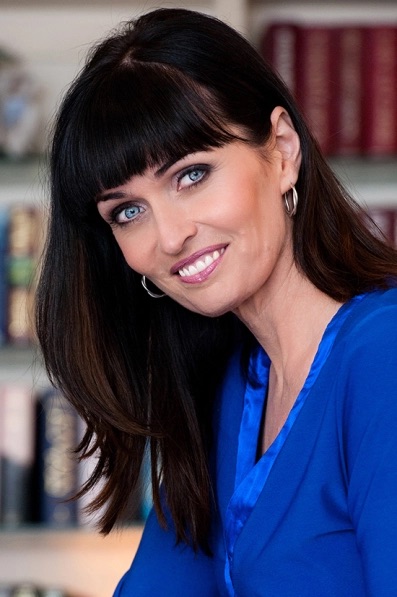
Meet the Author

Kimberley was born in London and her family moved back to Australia when she was three years old. She grew up in Queensland where she currently lives.

Kimberley has written for as long as she can remember and she is proud to write in many genres. She is an award-winning writer in children’s, historical and speculative fiction under her birth name Kim Wilkins. She adopted the pen name Kimberley Freeman for her commercial women’s fiction novels to honour her maternal grandmother and to try and capture the spirit of the page-turning novels she has always loved to read. Kim has an Honours degree, a Masters degree and a PhD from The University of Queensland where she is also a senior lecturer. She lives in Brisbane with her kids and pets and lovely partner.

Posted in Personal Purchase

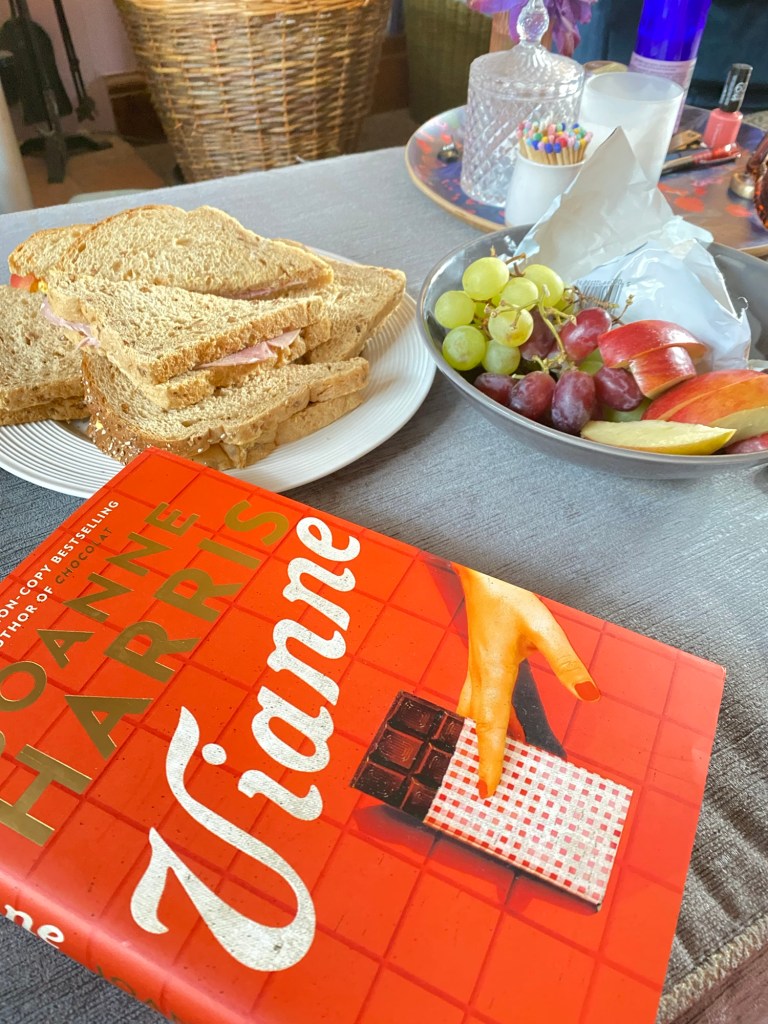
Vianne by Joanne Harris

As Vianne scatters her mother’s ashes in New York, she knows the wind has changed and it’s time to move on. She will return to France, solo except for her ‘little stranger’ who is no bigger than a cocoa bean but very present in her thoughts. Drawn to the sea she blows into Marseille and to a tiny bistrot where owner Louis is stuck, struggling with grief for decades after losing his wife Margot. She charms herself into a waitressing job for bed and board, but with his blessing she starts to cook for his regulars using the recipe book Margot left behind. Louis has one stipulation, she mustn’t change the recipe at all. She revives the herb garden and starts to make friends, including Guy who is working towards opening a chocolate shop. This is going to be the place to have her baby, but then she must move on. She can see her child at about six years old, paddling by some riverboats tethered nearby, but she can also see the man her mother feared. The man in black. Vianne has inherited a peculiar kind of magic that urges her to fix the lives of those around her and give them what their heart truly desires. This is fine when it’s discerning their favourite chocolate, but can cause problems when it becomes meddling. Her mother warned her that she shouldn’t settle too long in one place and Vianne knows she has the strength to leave whenever she feels it’s right, but is thinking about those around her? 

What a joy it is to be back in Vianne’s world. It’s like being back with an old friend and in a couple of sentences we’d picked up where we left off. This is a younger Vianne, aware of her burgeoning abilities, but inexperienced in the power she holds and it’s effects on others. Part of that ability is a natural charm and willingness to work hard. She takes time to win people over. She’s happy to take on a challenge whether it’s the recipe book, the garden or the chocolate shop. She merely softens the edges of all this with a ‘pretty’ here and there or tuning into someone’s colours. She has a natural ability to make the best of things, whether it’s adding a vase of flowers to a room or a pinch of chocolate spice here and there. It doesn’t do the work, it just deepens the flavours or enhances what’s there. There’s that little bit too much optimism, not fully reading a situation before wading in, that comes with youth and inexperience. She’s streetwise, used to watching her back. She knows how to protect herself and when to run, but lacks emotional intelligence. She’s unaware that breaking down someone’s defences can leave them vulnerable or even broken. Vianne doesn’t have a malicious bone in her body though, just youthful exuberance and emotional immaturity. 

As always there are wonderfully quirky characters with lots of secrets to uncover and others who become real through memory, artefacts or reviving something they loved and giving it life. Louis has a grumpy exterior, not as grumpy as his friend Emile, but definitely a tough shell and a rigid routine. Every day he cooks for his regulars never deviating from the recipes or her kitchen equipment. Vianne has to use specific pans for certain dishes and ancient utensils that could do with an update, but she doesn’t complain. On Sundays he visits the cemetery, but instead of going to the soulless high rise mausoleum where Margot is laid to rest, he visits her favourite poet and leaves a red rose. Vianne is touched by his adherence to this routine, but it’s only when she is in touch with Margot’s spirit that she can see the full, complicated picture. As she uses the kitchen she feels Margot’s sadness and anxiety. Her need for a baby comes through strongly. Was this the unhappiness at the centre of their marriage? Emile is very difficult to get a handle on, he doesn’t respond to Vianne’s charm or her chocolates. His concern is that she will take advantage of Louis, but the more she seems to settle the more hostile he gets. I enjoyed Guy and the chocolate shop, but it’s another occasion where she doesn’t get the bigger picture. Guy is quite similar to Vianne in temperament, drive and enthusiasm. He seems utterly different in character to his friend Mahmet. Vianne notices Mahmet’s more pessimistic nature and concerns about money. She puts it down to the friend’s different backgrounds and experience, but I could see that Mahmet was a realist and his concerns might be valid. It becomes clear that Guy is a dreamer and as a child of rich parents has never faced the consequences of disaster. He also has a tendency to bail out when things get difficult. 

Motherhood is the major theme of the book from Vianne’s pregnancy to the sadness of Margot and the relationship Vianne had with her own mother. There were memories of Vianne’s mother throughout and she has to battle with her mother’s voice constantly. She has internalised her mother’s voice to such a degree that it’s become one of her own inner voices. She fights against it, letting herself feel that natural urge to belong especially when Louis starts to get ready for the baby’s arrival. Part of her wants to stay, but her mother’s adage about becoming too comfortable is insistent. Is there something they were always running from? She’s angry with her mum in some ways, thinking about what she’s missed out on – a home, a wider family, school and friends her own age. It may be there was a good reason for their anonymity but her mum was all she knew making it all the more devastating when she died and Vianne was left utterly alone. Vianne’s own glimpses of motherhood are in the future, when her baby is a small child. She’s absolutely sure it’s a girl and the name Anouk comes to her. It seems that although her instinct and inner voice suggest they keep moving, she doesn’t want Anouk to have the upbringing she did. She wants Anouk to have a sense of belonging, a school and local friends, which gave me a lovely flash forward to Chocolat and Anouk running wild through the village with a pack of friends behind her. She remembers an instance when her mother insists they leave behind Vianne’s toy rabbit to teach her not to get attached to things. Is it Vianne’s memory of this incident and longing for that toy rabbit that conjures up her daughter’s later imaginary friend, the rabbi Pantoufle? I loved these little links to the future. 

The details and images they conjure up are always the best part of this series for me, because they take me on a visual journey. I was fascinated to read in her Amazon bio that she has synaesthesia, because I do with certain colours and I can feel that in her writing. The author weaves her magic in the detailed recipes of Margot’s book, the incredible chocolates that she and Guy create and the decorative details of their display window with it’s origami animals and chocolate babies. The most beautiful part is how Vianne brings people together. Yes, it’s partly magic but it’s also her kindness and lack of judgement. The noodle shop next door to the chocolate shop leaves rubbish and oil drums in the back alley which are an eyesore. When they’re reported the owner blames Mahmet, possibly due to his seemingly unfriendly demeanour. Vianne spends weeks taking them chocolates and chatting, slowly gaining their trust until they’re helping out for opening day. She even manages to get Louis and the fierce Emile to visit the shop, even though it’s in a part of the city Emile swears neither of them will visit. It’s when we see what Vianne can accomplish on days like this that we see her at her best – thinking forward to her Easter display window in her own shop or the meals cooked for friends under starlit skies. Vianne is a glowing lantern or a warm fire, she draws people to her light and to bask in her warmth. This is also why readers who love the Chocolat series return again and again. We simply want to be with Vianne and that’s definitely a form of literary magic. 

Out Now From ORION

Meet the Author

Joanne Harris (OBE, FRSL) is the internationally renowned and award-winning author of over twenty novels, plus novellas, cookbooks, scripts, short stories, libretti, lyrics, articles, and a self-help book for writers, TEN THINGS ABOUT WRITING. In 2000, her 1999 novel CHOCOLAT was adapted to the screen, starring Juliette Binoche and Johnny Depp. She holds honorary doctorates from the Universities of Sheffield and Huddersfield, is an honorary Fellow of St Catharine’s College, Cambridge, and a Fellow of the Royal Society of Literature.

Her hobbies are listed in Who’s Who as ‘mooching, lounging, strutting, strumming, priest-baiting and quiet subversion of the system’. She is active on social media, where she writes stories and gives writing tips as @joannechocolat; she posts writing seminars on YouTube; she performs in a live music and storytelling show with the #Storytime Band; and she works from a shed in her garden at her home in Yorkshire.

She also has a form of synaesthesia which enables her to smell colours. Red, she says, smells of chocolate.

Photo ©Frogspawn

Posted in Throwback Thursday

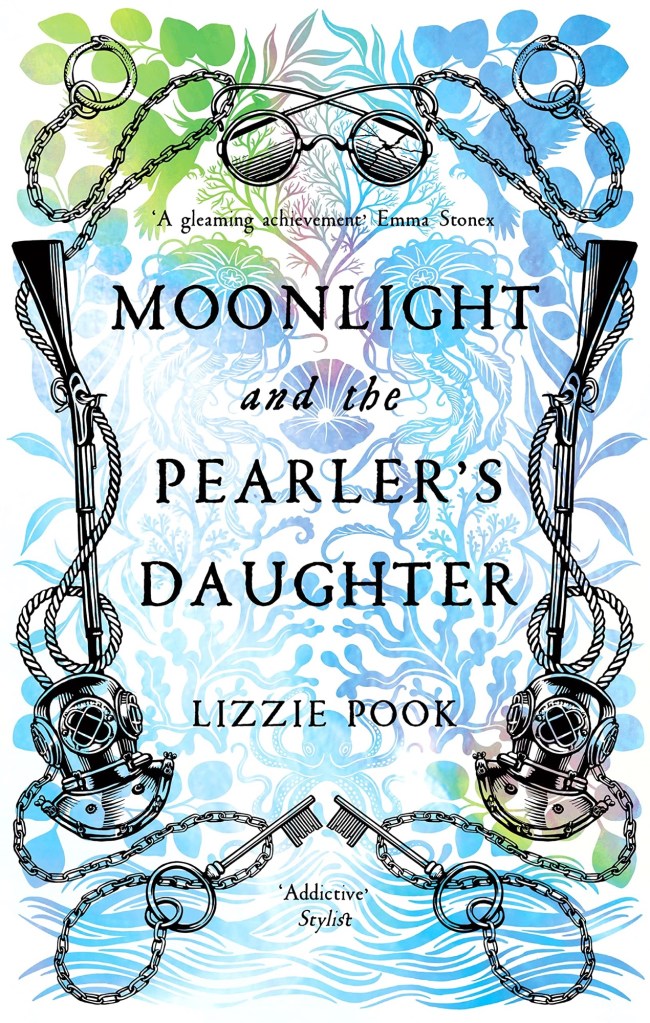
Throwback Thursday: Moonlight and the Pearler’s Daughter by Lizzie Pook


Fortune favours the brave . . .

It is 1886 and the Brightwell family has sailed from England to make their new home in Western Australia. Ten-year-old Eliza knows little of what awaits them in Bannin Bay beyond stories of shimmering pearls and shells the size of soup plates – the very things her father has promised will make their fortune. Ten years later, as the pearling ships return after months at sea, Eliza waits impatiently for her father to return with them. When his lugger finally arrives however, Charles Brightwell, master pearler, is declared missing. Whispers from the townsfolk point to mutiny or murder, but Eliza knows her father and, convinced there is more to the story, sets out to uncover the truth. She soon learns that in a town teeming with corruption, prejudice and blackmail, answers can cost more than pearls, and must decide just how much she is willing to pay, and how far she is willing to go, to find them.

Since this week’s Sunday Spotlight takes us on holiday Down Under, I thought I’d re-share my review of Lizzie Pook’s debut novel set in Australia. This incredible debut is richly atmospheric from the get go, throwing us straight into the strangeness of 19th Century Western Australia as if it is an alien landscape. In fact that’s exactly what it is for the Brightwell family, particularly Eliza whose childhood eyes we see it through for the the first time and in a particularly disgusting parody of baptism she is reborn as an Aussie when a bucket of fish guts is launched in their direction. Of course the fisherman apologises for the accident, but we’re left wondering if it’s anything but as he says the words ‘welcome to Bannin Bay’. It foreshadows an immediate imbalance between those who do the work and those who aim to make the money. Eliza’s father has been full of dreams, not just of pearls but the pearl shells to be turned into buttons, hat pins and pistol handles. Yet their unsuitability for this rough and ready environment can be seen as soon as they arrive in their fine clothing they must lift up from the red earth compared to the stevedores dirty vests and cut off trousers. Eliza describes her mother as ‘a dragonfly, once resplendent, marooned in a bucket of old slop water.’ Delicate Victorian ladies are not built for this environment that stinks of sweat, fish guts and the mineral tang of sea kelp. With this totally alien landscape the author creates a vivid backdrop for the incredible historical detail of her story, but also brings a mythic, almost fairy tale quality.

Only ten years after the prologue we meet an older Eliza, wiser to the ways of the Bay and she has developed into a interesting character. Women are either categorised as society women -‘white glove wearers’ – or harlots and it’s a source of irritation to the women in the community that she refuses to be either. Eliza is ploughing her own furrow, and whereas her friend Min’s childhood dreams developed from adventure on the high seas to the type of sailor she might marry, Eliza still craves adventure. She can see no use for a husband, although she doesn’t deny an interest in men which is quite a scandalous notion, even if her main interest is the contents of his library. Eliza’s knowledge of sailing and pearl diving is forensic in its detail and through exploring with her father she has developed a keen interest in the areas flora and fauna too. She is quite unlike the respectable women who still look like wedding cakes in the impossible heat. Her father has been on a voyage for the past three months and a lonely Eliza has been looking forward to his return, but as she sits and waits doubt starts to set in about whether the ship is returning. The light is fading as his lugger appears on the horizon, but her stomach fills with dread when she realises something is wrong. The ship’s flag is at half-mast. When her brother Thomas emerges she learns that her father is gone. While Thomas rushes to secure the business Eliza is left to find out the truth and while she’s told he went overboard, there are also tales of mutiny and murder. Eliza has to visit the sergeant to convince him that she suspects their father’s death was not an accident. Sergeant Archibald Parker is an unpleasant racist and his immediate action is to arrest aboriginal man Billy Balaari, but Eliza is told that Billy wasn’t even on the boat. When Billy escapes, the sergeant is completely focused on finding him, leaving Eliza to do the detective work herself. She finds her father’s diary and eventually sets sail on Father McVeigh’s lugger Moonlight with Axel Kramer and an aboriginal boy called Knife, determined to find the truth of what happened.  

I wasn’t surprised to know there was a very seedy underbelly to the trade where Eliza’s father hoped the build the family fortune. Where incomers make large amounts of money, there is always exploitation and in this case the workers have a very tough working life. Of course it’s the naive Australians who are exploited the most and the author doesn’t pull her punches when it comes to portraying the terrible treatment they receive. Families are torn apart as the strong are enslaved for labour on the Pearler’s boats, usually as pearl divers, the most dangerous job on board. The sheer weight of their gear is terrifying as they don lead boots and copper chest plates. It felt so claustrophobic to imagine them sinking slowly to the bottom of the sea, with only a line connecting them to the ship above. The imagined relief of being winched back to the surface was tempered by the danger of the bends, the pressure of resurfacing quickly forcing organs upward in the body leading to suffocation or leaving the diver ‘agonisingly crippled’. It made me feel a little bit anxious as I was reading their potential fates. If this wasn’t enough, aboriginals were treated as worthless, beaten and even killed without consequence. Eliza has to negotiate her way through the community’s corruption, violence, blackmail and the criminal elements of the pearling business. All the while reading her father’s diary for clues and guiding us to some fascinating characters, some of which are based on historical figures. I loved Eliza’s early feminist stance and her sense of adventure, and the twists and turns her journey takes are gripping and pull you deep into the story. This is a fantastic debut, full of life and death, just like it’s setting. The richness and depth in her storytelling marks Lizzie Pook out as a writer I’ll be watching out for in the future. 

Meet the Author

Lizzie is an award-winning writer and journalist. She has written for the  GuardianThe TelegraphThe TimesThe Evening Standard and Stylist. She is the author of Moonlight and the Pearler’s Daughter, a STYLIST and WOMAN & HOME ‘Best Books of 2022’ pick.

Lizzie began her career in women’s magazines, covering everything from feminist motorcycle gangs to conspiracy theorists, before moving into travel writing, contributing to publications including Condé Nast Traveller, Lonely Planet and the Sunday Times.

Her assignments have taken her to some of the most remote parts of the world, from the uninhabited east coast of Greenland in search of polar bears, to the trans-Himalayas to track snow leopards. She was inspired to write Moonlight and the Pearler’s Daughter, her debut, after taking a road trip through Australia with her twin sister after the death of their father. A chance visit to the Maritime Museum in Fremantle led her to an exhibition about a family of British settlers involved in the early pearl diving industry. Thus began an obsession and a research journey that would take Lizzie from the corridors of the British Library to isolated pearl farms in the farthest reaches of northwest Australia.

Posted in Netgalley, Throwback Thursday

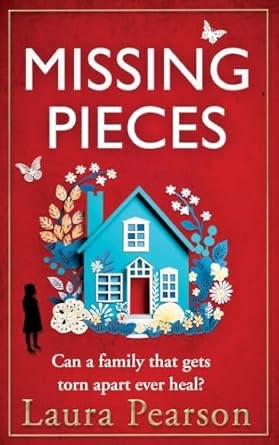
Missing Pieces by Laura Pearson

I’ve read a little bit of Laura Pearson before, so I did come to this expecting a moving and powerful story. It didn’t disappoint. When Bea is born it should have been a healing, new chapter for the family – mum, dad and older sister Esme. However, Bea was born to a family struggling in the aftermath of a tragedy. Esme was only seven years old when her sister Phoebe died suddenly and unexpectedly. It hits Esme hard because she was supposed to be looking after her sister. Their dad Tom feels an immense weight of guilt because he shouldn’t have stayed out later than expected. Esme’s mother is also wrestling with guilt and blame, she’d briefly popped next door to help a neighbour knowing that Tom would be home imminently. This is a story of a family, years later, struggling with unimaginable loss. How can they learn to forgive each other, or themselves?

Laura splits the story into two sections: the first months after Phoebe’s death interspersed with a narrative where Bea is trying to understand what happened to her family a couple of decades later. These feelings are coming to the surface because she herself is pregnant. I really enjoyed the section in the present day as Bea searches for the truth when her parents won’t ever talk about it. It reminded me of something my mum has recently done. Her first sister, Teresa, died on Bonfire Night 1959 and although she doesn’t remember everything she does have a memory of a tiny coffin that my grandad was carrying and putting in a black car. Mum tracked down a community group who were looking for the resting place of their stillborn babies in the same area where she grew up. Back then, if there was no money for a funeral or a grave plot then a baby might have been buried in a coffin with someone else or in a grave for several bodies. Three years ago she was able to take my grandma to a ceremony at the graveyard in Liverpool where a memorial was finally in place for babies lost and buried in a pauper’s grave on the site. It’s easy to underestimate how much the death of a baby affects other children in the house and i think we all underestimated how it still affected my grandma who is now 91. 

Bea feels like she’s lost part of her identity. This loss is part of their joint family history and no one is addressing or memorialising it. Of course this is tough for other family members, all of whom blame themselves. The loss for Bea and her older sister Esme is threefold: they lost a sister, they lost the relationships and life experiences they would have had as three sisters and they lost the happy family life they might have had if their parents hadn’t been carrying the weight of all that grief and guilt. As for the other characters in the book, I did find Linda a bit of a struggle. It’s clear she’s never fully connected with Bea and when we go back in time we can see her conflicting emotions over being heavily pregnant. She is buried by her grief for Phoebe and feels bad for being pregnant again. She doesn’t want to replace Phoebe and sometimes wishes she wasn’t pregnant. A combination of fear, guilt, sadness and anger take over and she really wasn’t there for Esme or Bea, once she’s born. In the past sections there’s an oppressive atmosphere that hasn’t fully lifted, even in the girl’s adulthood. Esme can’t talk with her father so Bea doesn’t stand a chance when wanting to ask questions. It would mean delving back into the pain and communicating honestly, but no one wants to go back into the raw grief and horror of that day. Bea wonders how she can be a good mother when she has no relationship with her own. Will the family be able to rally around her, find a way to talk and become a united family again?

It’s a trademark of Laura’s books that characters are forced to talk about difficult and frightening experiences or situations they find themselves in. I love the openness and honesty these issues need and it is like a counselling process if people can start sharing and healing. I did shed some tears at times. I thought the author’s depiction of the parent’s grief was realistic and raw. We’re let into every aspect of a characters mind, no matter what their thoughts might be. I could genuinely feel these character’s emotions and pain. Yes, this is intense. Somehow through, this isn’t off-putting. We’re given just enough glimpses of hope to lift the story, personified by the new start Bea’s baby brings to the family. I found myself gripped, willing these people to give themselves a break and stop being angry with themselves and each other. This is an emotional but satisfying novel that shows healing is possible, if we’re willing to do the work. Beautifully written, emotional and ultimately hopeful. 

Out now from Boldwood Books

Meet the Author

Laura Pearson is the author of five novels. The Last List of Mabel Beaumont was a Kindle number one bestseller in the UK and a top ten bestseller in the US. Laura lives in Leicestershire, England, with her husband, their two children, and a cat who likes to lie on her keyboard while she tries to write.

Posted in Personal Purchase

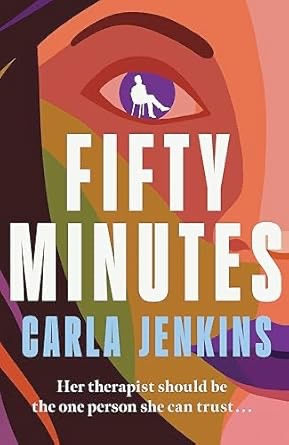
Fifty Minutes by Carla Jenkins 

Therapy was meant to solve her problems, not make them worse…

Smart twenty-year-old Dani is desperate to overcome her eating disorder, leave her dead-end job and return to her hard-won place at university. Using her limited earnings, she decides to start seeing a psychotherapist.

Richard Goode is educated, sophisticated and worldly-everything Dani aspires to be. As he intuitively unpicks her self-loathing, Dani assumes the fantasies she’s developing about him live only in her head. That is, until things take a shocking turn…

Descending into a maelstrom of twisted desire, manipulation and mistrust, the power struggle between Dani and Richard escalates until she’s forced to make a decision that might finally give her the freedom she deserves.

Dani has hit rock bottom. Her eating disorder is out of control and her declining mental health has meant suspending her place at university where she was studying English Literature. She’s now living in a flat with her sister Jo and her boyfriend Stevie, having to share with his daughter Ellie when she’s there for weekends. She’s working as a pot-washer to pay the bills, but longs to go back to university. Despite having very little money, she decides to see a therapist and has a session with Richard. She feels at home in Richard’s room, in the quiet with the smell of books and furniture polish. She feels like he listens and he seems perceptive, noticing her low self-esteem and anxiety. So she takes the decision to continue therapy with him, although he’s expensive. She starts to feel more positive, greatly reducing her bingeing and purging cycle. 

This was a setting I was very familiar with and although Richard has all the right certificates, counselling spiel and does detect Dani’s self-loathing, I kept feeling something wasn’t right. I couldn’t pinpoint anything in detail but I was concerned for Dani. She is so vulnerable. Her attraction to him wasn’t surprising. To have a man listen and understand her might be a first. He also embodies all the things she wants for her own life; qualifications, respect from others, a better standard of living. She has attachment issues so I was sure Richard would have expected some element of transference to creep into the relationship. I was also unsure about Dani’s home life. Her sister’s boyfriend, Stevie, seems like he’s easy going, tv loving, stay at home partner. He’s a good dad to Ellie, but with Dani I wondered if he wasn’t overstepping the mark. He likes things kept neat and tidy, the rent paid on time and Ellie to be safe and happy. There are a couple of occasions when he goes in quite hard on Dani for not being fit for work in the morning or for leaving her room in a state. I wasn’t sure whether this was concern or control? The author cleverly makes the reader unsure and with Dani in such a vulnerable place I was on high alert, like a mum of fledgling baby birds.

The author also keeps us unsure about Dani, not in the sense of believing her narrative, but as to whether she can genuinely break out of the cycle she’s in. As the book begins she’s still bingeing and purging as a means of managing her emotions, in fact this process is like a metaphor for how she manages her whole life. She wants her needs met, to feel emotionally filled or satiated. Then she needs to rid herself of it, to push it away before it gets taken away perhaps? She longs to be loved, but self-sabotages; something that Richard is very aware of and points out. Neither of the sisters have had that feeling of being loved or that they can feel safe within it, sure it won’t be taken away. They have been, at the very least, neglected by both parents. The girls are close, but are not as bonded as sisters can be within a loving family. There are times when Jo acts without realising what effect that behaviour might have on Dani. Thank goodness for Pat from work, who is steadfast in her care of Dani. Even in a complete crisis it is Pat who’s there for her, not her sister who’s busy making her own mistakes. Even when she’s been rebuffed or Dani has lashed out, Pat gives consistent care in a very motherly way and we see that best when Dani is ill. Dani doesn’t know she is beautiful. She knows men are attracted to her red hair and blue eyes, but never knows deep down that she’s worth anything. Besides, it’s always desire rather than love and care. However, she is adamant that she wants more from life. She wants to get better and study again. She knows this will help her get a better future, but she also thinks she’ll gain respect from others. She says that education is the only thing that can’t be taken away from her. I really understood that. 

The attraction to Richard is so complicated, but is bound up in her wanting a better life. There is an initial jolt of chemistry too. It’s something that should be talked about in the room, using the transference to work on Dani’s real needs for affection and worth. There is also counter-transference and both should be easy to recognise by a therapist who has Richard’s level of experience. She loves the way he reinforces her positive behaviours and finds ways forward, but she doesn’t realise she’s doing the work. He’s guiding her, but the achievements are hers. The author places clever little ‘lightbulb’ moments, such as Dani realising the picture she has of Richard in her mind, where he’s sitting in an armchair reading by lamplight, is actually an amalgam of an image she has of her father. It’s also very telling that when she’s sees him in casual rather than professional clothing, she feels let down and that attraction fades. It’s interesting that as boundaries start to break down, the last person she wants to confide in are Pat and Stevie, suggesting that she sees them as parental figures in her life. She knows if she tells them that they’d be angry and she wants to avoid that. She doesn’t like them being angry with her, but also they’d be angry on her behalf and might demand action. I thought it was interesting that she recognises Stevie in a parental role, when talking to her sister. Jo complains that he’s a homebody and they don’t really have fun together any more, but Dani points out that Stevie has always been a homebody. She tells her that this is the type of man she needs, even conceding that when he gets cross she doesn’t mind because at least he cares. 

Of course as counselling boundaries start to be overturned Dani starts to spiral. It’s a really tough part to read, because I was feeling parental towards her. She puts herself in some incredibly dangerous situations, trying to find experiences that fulfil her needs. I was hoping that she’d realise she’d pressed the self-destruct button before it was too late. She has the resources to succeed, but can she utilise them when she feels so unstable? Honestly, my heart ached for this girl and that tells you a lot about my issues with clients! I wished she’d gone to a female counsellor. She needed that female nurturing, a mother’s care and love. When it comes to a need and parents like Dani’s the only answer is to choose our family. There are further behaviours and revelations I won’t go into for fear of ruining the suspense and eventual outcome, but I was genuinely scared that Dani couldn’t pull back from the mess she was in. When someone has listened to your innermost thoughts they are a formidable agent for change and an even more powerful opponent. I had everything crossed that I’d underestimated Dani and that she could find those reserves to get through to the other side. This was a fantastic debut novel, full of suspense and stirring the emotions of the reader with real finesse. 

Out now from Trapeze Books

Posted in Personal Purchase

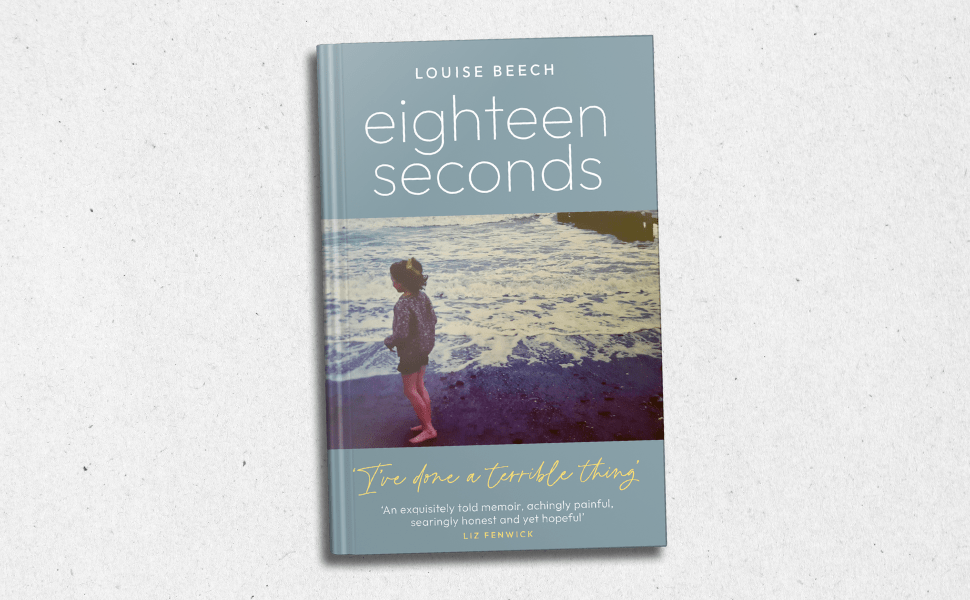
Eighteen Seconds by Louise Beech

My mother once said to me, ‘I wish you could feel the way I do for eighteen seconds. Just eighteen seconds, so you’d know how awful it is.’

I was reading this raw and painful memoir to discuss at my local book club Pudding and Pages. Sadly, my health wasn’t great that day and I wasn’t able to go. So I decided to tell all of you about it instead, because I love Louise’s writing and I identified very strongly with some of her experiences. This is such a psychologically astute story, from someone who has done a lot of work on their childhood trauma, even while being traumatised anew with the shock that comes on an ordinary morning. Normally, Louise would take her children to school and then have a walk along the path at the side of the River Humber and underneath the bridge itself. Her husband asks if she will take her walk earlier than normal as he has a package being delivered later and needs her to be home. She agrees, completing her walk earlier than usual, and returning home to a call from one of her sisters. Their mother has thrown herself off the Humber Bridge, it’s only by changing her schedule that Louise didn’t witness it. This call hits the reader like a punch to the gut and I’m sure that’s how she must have felt. If you’ve ever had a similar call you’ll know it hard to communicate the force of that moment. Your mind is still at home holding the phone while your body is grabbing the car keys and scrambling to reach A+E as soon as possible. 

Honestly, the siblings are shocked to find their mother alive when they reach the hospital. She landed, not in the water but on the path, causing multiple broken bones, internal bleeding and head injuries. As they navigate those first few hours Louise contrasts them with inserts that are flashbacks to their childhood. Their mum’s first suicide attempt flashes through her mind. The three girls were placed with grandma for several month, but Baby Colin had to be taken into foster care. Although losing their mum was terrifying for Louise’s younger twin sisters it must have been desperately traumatic for Colin who lost his whole family that day. She describes these months with grandma as the safest and most loved she ever felt. Their return to their mother heralded the worst years of their childhood, the abuse ranged from neglect to prioritising her own needs and emotions over that of her children. New relationships always came first, placing them in grave danger as she plunged headfirst into alcoholism. For Louise, as the eldest, it meant being a second mum to the other three while mum partied. In a way Louise became the identified problem of the family – she’s miserable, no fun and constantly moaning according to her mother and her male friends. It was an immense struggle to keep the younger ones happy, especially the girls who worried every time the door closed that their mother would ever come back. The didn’t know she was choosing to be in the pub. Louise’s attempts to get her mother to see what effect her alcoholism was having on the twins were met with either silence or insults, depending on which friend was drinking with her at the time. She just wants her mum to be responsible for her own children. 

This is such a hard read in parts but it isn’t without humour and hope. Once her mum is recovered enough to talk again, her sense of humour is restored and she is remarkably charming when she wants to be. I loved how the siblings handled her, with a patience and humour she barely deserves at times. I loved the sibling’s family WhatsApp group, including their Uncle Edwin who’s in Australia. Their ability to share gallows humour, even in the worst of circumstances reminded me a little of my family. Their discussions about her underwear and accusing Colin of sneaking it away, descends into uproar when he tells them it looks better on him. ‘Well you haven’t seen it on Edwin’, one of his sister’s hits back. My family and I used gallows humour all the time when my husband was dying. From my own experience I recognised the bulldozing that happens in MDT Discharge meetings, where everyone is agreeing to a plan you haven’t said yes to. Once I was told by an NHS Continuing Care nurse that my opinion didn’t really count because I wasn’t a nurse. No consideration to the fact that the care was happening in my house and I was the only full-time carer. In fact I was carrying out medical tasks such as pump feeding, suction and catheterising, so to all intents and purposes I was nursing him. The horror of realising there was nowhere for my husband to die broke me, because he didn’t have cancer so couldn’t go to a hospice. He wanted to come home but I couldn’t do it alone, Louise writes about similar issues in a very matter of fact way, because that’s the only way to be at times like this – blunt and forthright. Then in between the family uses humour to deal with a hurt that can’t heal and can’t change. 

I read this at a difficult time for my family, because my mum and her two sisters are dealing with care for my 90 year old grandmother, who has been a very difficult woman. My mum has felt completely overlooked by her mother, often left out of decisions or not considered when it comes to family memories or possessions. As the only daughter with any memory of her grandma (always referred to as Mother) she had hoped to be given her engagement ring when the time came, with her sisters receiving the wedding and engagement ring of their own mum. She was really upset to find her middle sister had been given Mother’s ring, with the other two going to her youngest sister. It wasn’t the item as much as the memory, not helped by my grandma saying ‘well the others really wanted them and I knew you wouldn’t make a fuss’. This total lack of consideration opened a Pandora’s box of hurt, including a terrible decision made when the family returned from a spell in Australia in the late 1960s. Having to accept housing away from their home city of Liverpool, they settled in Scunthorpe but both of my grandparents needed to work. My mother was twelve and her two sisters were pre-school age, so my grandma didn’t register my mum for school and left her at home caring for the younger children. This lack of education was devastating for my mum who felt like she was sacrificed for the good of her sisters and also felt ashamed that she had few qualifications. It affected her opportunities but also her confidence, leading to life long mental health issues. Despite this my mum shows incredible intelligence, is well-read and has had a lot of psychotherapy. I think that at the age of 72 she is very in touch with her authentic self and knows that she needs to ration the time spent with her mother, place careful boundaries around herself and us and accept a relationship that’s very one sided. I recognised a lot of my mum in Louise’s personal growth and that motherly relationship with her younger siblings. This book made me realise there are families like ours where intergenerational trauma is a very real part of life. I think the book holds out a lot of hope that with boundaries, solid friendships, somewhere to express the negative emotions and a lot of humour it’s possible to survive narcissistic parenting. Lastly, I admire Louise’s honesty and openness in writing this memoir so beautifully and I hope it has proved both cathartic and healing for her too.

Meet the Author

Louise Beech lives in East Yorkshire and grew up dreaming of being a writer but it took many years and many rejections for her to finally get a book deal in 2015, aged 44. Her debut, How to be Brave, got to No4 on Amazon and was a Guardian Readers’ Pick; Maria in the Moon was described as ‘quirky, darkly comic and heartfelt’ by the Sunday Mirror; The Lion Tamer Who Lost was shortlisted for the Popular Romantic Novel of 2019 at the RNA Awards and longlisted for the Polari Prize 2019; Call Me Star Girl was Best magazine’s Book of the Year 2019; I Am Dust was a Crime MagazineMonthly Pick; and This Is How We Are Human was a Clare Mackintosh Book Club pick. In 2023 her new novel, End of Story, will be published under the pen name Louise Swanson. Louise regularly writes short stories for magazines, blogs, and talks at universities and literary events.

Posted in Throwback Thursday

The Thin Place by C.D.Major 

I have a fascination for the idea of ‘thin places’ – where there’s only a thin veil between our world and the spirit world, or possibly passages to another time or dimension. I am swayed towards the idea that it’s where something traumatic happened and left an imprint on a place, so that however much time passes, the events of that day can break through and be replayed almost like an echo of the original event through time. Ava Brent is a journalist who is investigating one such place. The Overtoun Estate is a strange and looming presence over town and no one seems to know it’s specific history, but it’s rumoured to be a thin place, steeped in myth. The legend is about a bridge where it’s claimed many dogs have thrown themselves to their deaths. The locals steer clear and when Ava begins to ask questions the warm welcome she received at first becomes a cold shoulder. When she discovers that a sick young girl lived there, the sadness that surrounds the building starts to make sense. Ava is expecting her first child so is maybe susceptible to this tale, but a message scratched into a windowsill  fills her with horror. What happened here and is she really prepared for what she may discover? What might her fascination with this place cost? As her life begins to unravel, she knows she should cut her losses and walk away. Then threats start to arise, but Ava can’t deny that despite the fear she is compelled to return. 

This was an excellent slow burn gothic novel from an author that was completely new to me. I am interested in tales of motherhood and the paranormal, brought to my attention at university where I was influenced by Frankenstein and Rosemary’s Baby on my Gothic, Grotesque and Monstrous course. There’s something about the extraordinary changes in the body and the idea of another person growing inside you that’s open to the world of monsters; rather like a human set of Russian nesting dolls. I think it’s also horrifying when a horror exploits that moment when both mother and baby are at their most vulnerable. Ava is drawn to the specific bridge on the property, despite the strange and eerie feelings that congregate there. Ava is taken in by it’s ’otherworldliness’ and slowly it takes over her life. The author lets us into Ava’s inner world by devoting some of the narrative to her journal entries where page after page is devoted to her ramblings about the place. Her home life starts to become disrupted, self-care goes out of the window and even her pregnancy can’t compete with her drive to discover the truth. 

In between Ava’s story we’re taken back to the historic occupants of the house. In the 1920s it’s Marion who lives there, a newly wed who feels lonely as her husband is away a lot for work. Then twenty years later it’s Constance, the sick little girl who is almost a prisoner, kept inside by her over anxious mother. Is she really the sick one in her family? Or is there some other motivation keeping her life so limited? We never know during these narratives whether what we’re being told is the truth. Are the women seeing events truthfully or skewed through the filter of their own experience? We all the view the world through our own learning, experience and emotional state so we have to question whether Ava’s state of mind is colouring her judgement? Is Marion’s loneliness affecting how she views the house? Could Constance’s illness and solitary existence have left her vulnerable to suggestion? All three could be unreliable narrators and the atmosphere can’t help, a sense of unease that settles over them and us. The darkness and mood seem to follow Ava like a miasma, created by every bad thing that’s happened there. It’s this that envelops her and draws her back again. Some historic events are appalling and I was affected by the scenes of animal abuse, as well as pregnancy trauma that’s also depicted. The scenes detailing pregnancy complications left me needing a few deep breaths and a cup of tea. That just underlines how well written the book is. I swear that as the book went on my blood pressure was climbing along with Ava’s. I was also left with a disoriented feeling sometimes and I think it’s a clever writer who can echo the character’s experiences with the feelings she evokes in the reader. 

The supernatural elements were very subtly and gently done, with the mere suggestion of the paranormal being enough. The way I felt while reading proved that this was the type of gothic horror I really enjoy. It felt like a classic horror that creeps up on you woven in with the sort of historical background that really grounds the characters in their time. The author uses the supernatural elements and the terrible story of the dogs, to tell us something about mothers and daughters – daughters being an echo of every woman who has come before them in the family line. It’s also about how the women fit into their world and I loved how the author explored the expectations on women and pressure placed on them by others and society in general. The author’s notes at the end are so interesting too, especially the elements of the book based on a true story. Overall this was a great combination of gothic storytelling and a compelling historical thriller. 

Out Now from Thomas and Mercer

Meet the Author

C. D. Major writes suspenseful books inspired by strange true stories. Alongside her thrillers she writes big love stories as Cesca Major, rom coms under the pseudonym Rosie Blake and emotional women’s fiction as Ruby Hummingbird. All information about her books, Book Club Questions and more are over on her website http://www.cescamajor.com. Cesca lives in Berkshire with her husband, son and twin daughters. She can be found on Twitter, Facebook and Instagram and enjoys connecting with readers.

Posted in Throwback Thursday

Death in a Lonely Place by Stig Abell

Jake Jackson is becoming settled two years after his Uncle Arthur died and left him his home at Little Sky. It’s also two years since the subsequent murder case that threatened everything he’d built there. Now he splits his time between Little Sky and the cottage shared by his partner Livia and her daughter Diana. His quiet routine is disrupted by the abduction of a little girl and local detective Watson, asks for his help. When they recover her in an isolated empty house, it almost feels too easy. The abduction seems to linked to a shadowy organisation whose calling card says ‘No Taboo’. Their business is providing experiences for bored rich people, where no request is refused. Using his contacts, analyst and retired detective Martha and investigator Aletheia, can Jake uncover the people behind the organisation? Then Livia receives a job offer from a new businessman in the area and she’s excited to view his stables and the horses. His offer seems to come with unusual conditions, including Jake and Livia’s presence at his mansion, Purple Prose, for a weekend of entertainment. Is it possible these two things are linked? Jake has never trusted coincidences and he isn’t going to start now.

This is a hard case for Jake, not just a small step up from his first case at Little Sky, but a whole staircase. He’s gone from local cold case murder to an international conspiracy run by people with seemingly endless means and reach. I wondered how on earth Jake’s small team would crack this one – it’s a real David and Goliath situation. There’s also a sense of something wholesome up against something unremittingly evil; the desire to have extreme experiences is one thing, but this is debauched. No sexual desire, bloodlust or act of cruelty is too much – as long as you can pay for it. Of course that leaves wealthy customers open to blackmail, especially those with responsible jobs or famous faces. I could understand Livia’s concerns about her safety and Diana’s. As Jake’s case starts to warm up, he is warned off. He’s attacked and also has a rather horrifying home delivery at Little Sky. There’s a part of Jake that can’t resist the investigative world, but it does put those he loves in huge danger. I don’t think I would be as patient as Livia. 

I have to say how much I loved Martha. She’s intelligent, shrewd and absolutely no nonsense. She was medically retired from the police after a shoot out left her so badly injured she had to have both legs amputated. I loved her calls with Jake and their crime writer sign offs. She proves herself a strong investigator without leaving her desk. There are great strong women in these novels and she’s definitely my favourite. I do have a soft spot for Sarah at The Nook, the local shop with a downstairs drinking establishment. She’s almost a mother figure to Jake, shaking her head at his more eccentric ways and making sure he has a warm drink and slice of cake. In turn he lifts and stacks her heavy produce. It’s interesting to consider that apart from Rose, Jake surrounds himself with women. Could this possibly be a response to the loss of his mother? We haven’t met Jake’s ex-wife Faye, but it would be interesting to look at their difficulties conceiving and whether never seeing her maternal side contributed to the breakdown of their marriage. He certainly appreciates Livia’s nurturing characteristics with Diana. 

This is much tougher and more brutal case for Jake than the last. I was surprised at his survival instinct, he seems like such a gentle person at home, but can mete out some serious violence where necessary. I wasn’t sure how I felt about this latent side to him, but he really takes some punishment too and suffers one ordeal that genuinely made my breathing a little panicky. I’m no good with small spaces. His judgement is impeccable though and when he’s asked to make a choice that tests the loyalty of those around him, he does make it, sending me tearing back through the pages for the clues. It’s a very tense ending and you will be on the edge of your seat through to the finale. I’m always so pleased that Jake, Livia and Diana have the peace of Little Sky to retire to when it’s all over. 

Stig Abell

Posted in Personal Purchase

Death Under A Little Sky by Stig Abell

Jake Jackson has retired from his role as a detective and is the new found owner of Little Sky – a renovated farmhouse deep in the countryside and previously home to his Uncle Arthur. Jake left the MET and has recently separated from his wife Faye, so Arthur has gifted this legacy at just the right time. Whether it’s a temporary lull from the world or the hint of a new beginning only time will tell. When local vet Livia invites Jake to a village scavenger hunt where they search for a bag of relics. Yet when they find them, to their horror, these bones are very real and not ancient at all. Jake is enlisted by local police chief Watson to find out who the bones belong to and he stumbles across the death of a young woman called Sabine, a friend of his uncle. Sabine worked at a nearby arm and had gathered many friendships and admirers, but inexplicably fell or jumped from a balcony at the farm. People report a change in her mood and demeanour before her death. What had happened to her in the final weeks of her life? Jake becomes determined to find out whether this was an accident, suicide or murder. Someone wanted Sabine remembered, probably whoever took her bones from the mausoleum at the church and ensured a local would find them. Jake has to decide how involved he wants to be. Will his quiet self-sufficiency at Little Sky be enough, or will his detective’s brain need to be exercised? More worrying is how getting involved could put himself and others in danger, stretching new found and precious friendships to their limit. 

I can honestly say I fell in love with Stig Abell’s writing. This debut is right up there with my favourites in detective fiction – Val McDermid, Anne Cleeves and Elly Griffiths – and there’s a good reason why this sits beautifully with those female crime writers. It has that unique mix of an interesting case, alongside a poetic exploration of nature, personal growth and complicated human emotions including love. I find female crime writers do this mix so well and I don’t like crime fiction that’s all action and surface level relationships. This was perfectly balanced and could have been written specifically for me. Jake is at a really tough crossroads in life. He’s lost his uncle who was his only family, his job and his partner in life. Grief is definitely a factor in this huge life change. Arthur’s death has given him the financial security to put his life on pause. It’s allowing him to get to know his uncle’s life in a completely different way – by living it. He also gains insight from Arthur’s diaries and sketches. Jake builds a routine of his own gradually, but he doesn’t buy a television. Instead he listens to the jazz and classical music of Arthur’s vinyl collection and reads in his custom built crime fiction library. He starts to build new friendships, especially with Livia and her little girl Diana. There’s also local handyman Mack who helps him with new projects like the sauna down by the lake, Sarah at the village shop who allows him to use the phone and feeds him cake and Rose, a local rogue known only by his surname and a faint whiff of weed. There’s also the Doctor who seems to talk in Shakespeare quotes and helps Jake plant his first vegetable garden. I felt that Jake moved through a lot of his issues, time alone with his own thoughts helps that process. He has a daily routine of a run, followed by a swim in the lake and a shower, sometimes a sauna. I felt like he was slowly settling into a kind of peace, but now he’s found that calm will he ever be open to a bit of chaos and uncertainty? Even if the rewards could be amazing.

The setting is absolutely idyllic. Little Sky is this particular introverted bookworm’s dream. With no road to the property, acres of land, no internet or television it gives ‘quiet’ a whole new meaning. Who hasn’t waded through a day of texts, WhatsApp chat groups, news bulletins and wished the internet hadn’t been invented? Jake has a connection with nature that few get to forge. I once had a property with over an acre of land surrounding it and I could set aside whole evenings of chatter and streaming channels to watch my family of foxes playing in the orchard or letting the bats buzz passed me in the twilight. I felt so deeply grounded that I understood Jake’s reticence at letting the world back in. The case is what lures him into using technology, albeit away from Little Sky. He taps into old contacts and searches for details on Sabine’s death. The farm where she worked is run by a family, a mother with her two sons and her nephew. They are incredibly defensive from the start, convincing Jake that there’s something to hide. There are horrors occurring in the countryside, recently a few miles from us a traveller family were found to be keeping immigrants and people with learning disabilities for slave labour, keeping them in abject poverty and squalor, so nothing surprises me about rural crime. Jake is warned off several times, threatening his friendship with Livia. I had some patience with her point of view, she had her little girl to think of as well as Jake’s safety. 

The author has created wonderful characters and it was their absolute ‘human-ness’, if that’s a word, that made the novel for me. It showed that life in the countryside isn’t easy and can be very isolating, especially for a single young woman. Sabine has become the erotic fantasy of every man in a four mile radius, but it didn’t keep her safe from harm. Livia’s existing dynamic with Diana is well established, it’s the two of them against the world, so how could Jake fit into their lives, especially if he can’t promise to stay away from danger? I loved Jake’s getting to know Diana and the complicated feelings he had about having a child in his life. The whole concept of parenthood was explored with so much care and knowledge. I suffered recurrent miscarriage in my twenties and have never been able to have my own children. The author’s care as he delved into the pain and anxious hope of that experience was so deeply appreciated. It was interesting to consider it from the male perspective and it showed very clearly how it’s a journey that can tear couple’s apart. This experience obviously factors into how he feels about having a child in his life. Whether he can embrace the strange mix of chaos and routine that children bring remains to be seen. I loved how he related to Diana though, as a person in her own right, respecting their space as a twosome but also allowing them a stake in Little Sky – a gaggle of chickens named after Disney princesses (I’d call mine after 1970’s sit-com characters, Barbra, Margo, Sybil, Mildred and Mrs Slocombe). The book was leisurely , giving time to get to know the characters, explore Jake’s growth and recovery, and the building of new friendships. Then there are sudden flurries of action or violence that get the heart racing. Like all good crime fiction there are surprising reveals, but these things never take away from the reflective and intelligent feel of the story. I re-read this so I could go on and read the third book in the series and it still stands up so well. If I were ever to own a crime fiction library, Stig Abell would take pole position. 

Meet the Author

Stig Abell believes that discovering a crime fiction series to enjoy is one of the great pleasures in life. His first novel, Death Under A Little Sky, introduced Jake Jackson and his attempt to get away from his former life in the beautiful area around Little Sky, which was followed by his second novel, Death in a Lonely Place. This book is the third in the series, and Stig is absolutely delighted that there are more on the way. Away from books, he co-presents the breakfast show on Times Radio, a station he helped to launch in 2020. Before that he was a regular presenter on Radio 4’s Front Row and was the editor and publisher of the Times Literary Supplement. He lives in London with his wife, three children and two independent-minded cats called Boo and Ninja (his children named them, obviously).