Posted in Netgalley

The Imposter by Anna Wharton.

Publisher: Mantle

Published: 1st April 2021

ISBN: 978-1529037395

Chloe hasn’t had an easy life. As a child growing up in care she has had her fair share of being pulled from one place to another, never really knowing where home was. At least now she lives with her Nan, but she is struggling with the constant demands of Nan’s dementia. Sometimes she is torn between being at home for Nan and going to work. We meet her as they take a visit to the graveyard to leave flowers for Chloe’s mother. Chloe has to leave Nan by the grave to clean out the container for flowers. She is only gone a few moments, but when she gets back Nan is nowhere to be seen. Chloe frantically searches the cemetery, the copse behind the graves but she knows in the pit of her stomach this is it. If she calls the police because she has lost Nan they will alert social services. Nan’s social worker is pleased that Chloe wants to look after her Nan, but feels that the job is proving too much for someone working full time. She has been pushing for Nan to move into a home and Nan’s disappearance has made the argument for this even more compelling. While working she finds the story of a young girl who went missing from a playground and becomes fascinated with the case. Angela Kyle was at the park and disappeared while her father was distracted. Now she would be the same age as Chloe. As Nan is found and social services intervene, Chloe finds that the home they have recently shared will be sold for care fees. She then loses her job for taking the Kyle archive off the premises. Feeling totally adrift, Chloe wonders if she could be of help to the Kyle family. Maybe with her research she could help them find Angie.

Chloe work in the archives seems to take place at a similar time to when I was working for my local newspaper. A time when old-fashioned jobs like those who worked the printing press were being made redundant. I remember the warm, print smell in the afternoons and the smell of our archive, complete with a severe looking librarian who spent all day painstakingly cutting out and filing stories, and lending them out begrudgingly, as if she was lending her children! I remember our printing press being shut down. I remember the archive becoming digital. I used to sell advertising space then sit and design the advert on A4 requests with invoice slips attached. A man would collect them once a day and physically drive them to our art department who would magically turn them into adverts that appeared in features. Then it all became digital. I guess this gave me a way into the story, and a sense of what Chloe did and how it feels when your job is defunct. However, for Chloe it’s her whole purpose gone at once since she’s no longer her Nan’s carer. She visits the home, but Nan is only there sometimes and often protests she doesn’t have a granddaughter. I could feel Chloe’s sense of being adrift, without anything to anchor her.

She visits the fenland village where Maureen and Patrick Kyle now live. It is in the middle of nowhere, and their house is even outside the tiny hamlet set down a long drive. I live in Lincolnshire and can appreciate the endless flat fields and open sky, being able to see for miles and at night a huge expense of stars. By coincidence she sees an ad in the village shop for a lodger in the Kyle’s home. What better way to get to know the Kyles and try to solve the mystery? She can also solve the problem of losing her home. So she moves in with Maureen and Patrick and starts to get to know them, being honest about her past in care and her Nan, but not letting on that she knows about their daughter. She pretends to work in insurance and takes the bus every day into town, sometimes visiting Nan and other times visiting the playground where Angie went missing. However, lies are often found out and Chloe hasn’t fully thought through the implications of finding out the truth.

It was very hard to get to know Chloe and find out who she truly was, despite being party to her thoughts and feelings. I wondered if she was suffering borderline personality disorder, often categorised as a lack of cohesive self. She certainly fits the pattern and came from the type of disordered background that can lead to this type of mental illness. She was certainly exhibiting impulsive behaviour that she hadn’t fully thought through and formed intense but unstable relationships with others. Her friend Hollie, who had also gone through the care system, seemed like the only constant in her life. Although at times even she struggled to understand Chloe’s motivations and behaviour. I felt that the author treated Chloe’s behaviour sensitively and honestly. As Maureen started to behave in a motherly way towards Chloe, she responded like a daughter, possibly because this was the type of maternal affection that had always been missing from her life. This meant that she humoured the use of a special ‘Bunnikins’ plate and small cutlery for her at teatimes, where maybe someone else might have asked for something different. The pair bond very quickly, but she doesn’t cultivate the same bond with Patrick who seems to ask a lot of questions or Maureen’s friend Josie who seems suspicious of her presence. Chloe listens out for clues and finds Patrick slightly overbearing with his wife. They do have rows which she tries to listen to, but they also have a padlocked room that has no explanation.

The tension ratchets up slowly, starting as Patrick asks questions about where she works and Chloe getting a glimpse of what is hidden in the locked room. As she edges closer to the truth, she is in danger of being expelled from her new home or if someone in the house is responsible for Angie’s disappearance, could she be in serious danger? The need to know what had happened all those years before became addictive and I read the last chapters quickly and greedily! I was also fascinated by the dynamic building between Chloe and Maureen, who starts to suspect that Chloe might be her daughter. All the love and longing this mother has had for her missing girl starts to be lavished on Chloe and what’s so sad is that this is exactly what she has needed her whole life. There’s a point where the scales start tipping and I wondered if Chloe was starting to believe there could be some truth in it. She doesn’t remember her earliest years, so could she be Angie? Patrick goes along with this fiction, he doesn’t want to see his wife grieving another ‘daughter’ but he is uncomfortable and I started to wonder if he knew more than he was letting on. The ending when it comes is not sensational, but is sad, human and utterly tragic. However, there is another revelation coming that blew my mind a little. It was a bit like seeing The Sixth Sense then wanting to watch it again immediately with your new found knowledge. I thought the title was very apt, because Chloe is an imposter. She has no idea who she is, so becomes what other people need her to be. I truly hoped for a happier future for the character and her sense of isolation touched me. This was a great read, both as a mystery, but also has an exploration of what happens when we have no roots or anchor in life.

Meet The Author

Anna Wharton has been a print and broadcast journalist for more than twenty years, writing for newspapers including The Times, Guardian, Sunday Times Magazine, Grazia and Red. She was formally an executive editor at The Daily Mail. Anna has ghostwritten four memoirs including the Sunday Times Bestseller Somebody I Used To Know and Orwell Prize longlisted CUT: One Woman’s Fight Against FGM in Britain Today. The Imposter is her first novel.
Posted in Netgalley

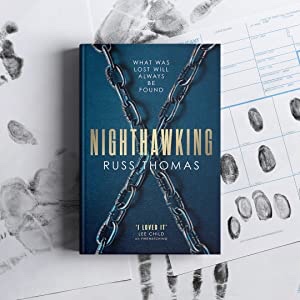
Nighthawking by Russ Thomas

Sheffield’s beautiful Botanical Gardens – an oasis of peace in a world filled with sorrow, confusion and pain. And then, one morning, a body is found in the Gardens. A young woman, dead from a stab wound, buried in a quiet corner. Police quickly determine that the body’s been there for months. It would have gone undiscovered for years – but someone just sneaked into the Gardens and dug it up.

Who is the victim? Who killed her and hid her body? Who dug her up? And who left a macabre marker on the body?

In his quest to find her murderer, DS Adam Tyler will find himself drawn into the secretive world of nighthawkers: treasure-hunters who operate under cover of darkness, seeking the lost and valuable . . . and willing to kill to keep what they find.

I live not too far from Sheffield and it’s a great city. As a family we’ve often popped on the train for a theatre matinee at The Crucible or The Lyceum. It’s my main gig venue too and in my younger days the City Hall and The Leadmill were regular haunts. I like the buzz of the city, the friendliness of the people and the chance to grab a bit of culture so close to home. So, when I was offered a proof of Russ Thomas’s new novel Nighthawking I jumped at the chance to read crime fiction based in the city. I hadn’t read his first Adam Tyler novel, so wasn’t sure what to expect, but I loved being shown this darker, criminal, underbelly of one of my favourite cities. There was a familiarity to the term ‘nighthawking’ too, because I’d recently read Elly Griffith’s latest Ruth Galloway novel The Nighthawks. The term refers to the practice of stealing archaeological artefacts, usually found by metal detector, under the cover of night. As someone who lives in a very rural area, I must admit I was a little creeped out by the concept of groups of men stumbling about in muddy fields in the dark. The archaeological aspect is at the centre of DS Tyler’s latest murder case. As the lead of the CCRU team, he selects cold cases for investigation. However, this case is reopened because the body of a young Chinese student is found buried within the Botanical Gardens. Curiously, she is found with two Roman coins over her eyes. Once she is identified as missing Sheffield University student Li Qiang – known as Chi- DS Taylor is tasked with finding her killer by reviewing the original missing person’s case closed months ago, just two weeks after her disappearance. At his side is DC Mina Rabbanni, a one woman powerhouse of intuition and initiative, but not above taking risks when it might lead to the truth.

In the background are a fascinating mix of possible suspects, from Chi’s own family, to other workers at the gardens, to university contacts and whoever had access to the very rare Roman coins found with her body. Interestingly, one man is both a volunteer at the gardens, but is also part of an amateur metal detecting group. The group’s leader encourages the detectorists in good practice, but a small group have been out detecting late at night and have stumbled on the find of a lifetime. A cache of gold Roman coins, potentially worth six figures if they could sell them on. However, usual practice is for the find to be declared, then the landowner would be due a share of any profits. The men decide to sell, but where would they find someone with the right contacts, knowledge of the black market, and who they could trust? The men split the coins for safekeeping, until they can find a way forward, so how did two of them end up buried with Chi. The team’s digging into Chi’s life uncovers some interesting potential leads. Her sister Juju lives in the city, with a new baby and her fiancé Rob. Ju is grief stricken by her death when they visit to inform her, but her fiancé had been in a relationship with Chi too, suggesting some animosity or tension between the sisters. I was keeping my eye on the fiancé too, because he seemed to pop up far too often and wasn’t always giving the full story. Chi had a complicated love life, including several sexual relationships, but no permanent partner. Also far from the model student, she seemed to be struggling at the university in her study of orchids, but yet religiously volunteered with the Botanic Gardens, suggesting a keen interest. Add to this a father who’s a Chinese diplomat and the pressures start to build.

I enjoyed that Tyler also had a lot going on in his personal life and seemed distracted, much to the concern of DI Jordan, his superior. CCRU is under scrutiny by Chief Constable Stevens – known as the Eel behind his back – and is in the firing line as cutbacks threaten the force. Tyler is still quietly investigating the apparent suicide of his father, and wonders if a local gangster might hold the key. There’s also his own brother’s disappearance weighing heavy on his mind. He’s stuffing up his relationship with Paul, who feels he simply can’t get his attention, even to tell him their relationship is over. Added to this Tyler takes a homeless teenager under his wing and goes out of his way to help him get a roof over his head. Tyler keeps his emotions and worries to himself and isn’t really one to share, but with everything bottled up is his eye on the case as much as it should be? Mina is the stand out character for me, so full of life and enthusiasm for her job, she leaps off the page. With her superior officer often AWOL, she gets her teeth into this case and won’t let go. Her intuition is telling her there’s something wrong with the original missing person’s case. There are barely any notes in the file, normal checks weren’t carried out and many people were not even interviewed. The original investigating officer is on long-term sick leave, but Mina has to ask the question; why was it assumed Chi had run off with a secret boyfriend and with what evidence? It looks like they simply didn’t care, but Mina suspects there may be more to this than a single officer not doing her job.

Somehow, Thomas weaves all these disparate threads and characters together beautifully. Drip feeding the reader information a little at a time and dropping the odd red herring along the way. The pace was perfect, even the minor characters felt interesting and fully rounded ( the new pathologist, Emma, is a real highlight) I would never have guessed what was going on or who was behind the murder, so it was a surprise. I thought Thomas was so clever in keeping those longer narratives bubbling along underneath the surface of the primary case. Tyler’s unexpected meeting with an old gangster – the Ronnie Kray of 1960’s Sheffield – moves the story of his father’s death along a little, ready for the next book. The hints at Mina’s background and it’s possible clash with her work as a police officer is touched upon, but I would be interested to see how that develops. I would also love to see more of her double act with Emma the pathologist. Then there’s the politics of policing, the potential fireworks over Mina’s findings and CCRU’s future going forward. Thomas took me to familiar places but placed them in a completely different light. He showed me the difference between a city as I would see it and as a police officer sees it, and that gap in perception is often what makes personal relationships so difficult. I’m really looking forward to getting to know Tyler better and to enjoying more of such well-paced crime fiction; rich in character, setting and storyline.

Published by Simon and Schuster 29th April 2021.

Meet The Author

RUSS THOMAS was born in Essex, raised in Berkshire and now lives in Sheffield. After a few ‘proper’ jobs (among them: pot-washer, optician’s receptionist, supermarket warehouse operative, call-centre telephonist, and storage salesman) he discovered the joys of bookselling, where he could talk to people about books all day. Firewatching is his debut novel.

Posted in Netgalley

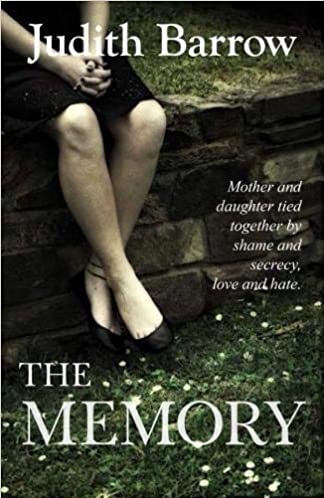
The Memory by Judith Barrow.

A common phrase I use in therapy is that ‘no two children have the same parent’ and that phrase kept popping in my head during this novel. This is said because of different circumstances into which each sibling is born. Parents can: be more anxious with a first child, than with younger siblings; or react to a practical change such as a child being ill; or experience post-natal depression; might be going back to work with one child, then stay home with another; be responding to a life event such as a death in the wider family; have different financial circumstances with each child. All of these can change the amount of time, patience, ability to bond that the parent has and affect the relationship between parent and child, as well as the child’s personality going forward.

In this novel we follow dual timelines as Judith Barrow lets the story of a mother/daughter relationship slowly play out. We uncover a singular moment in time that shapes the whole family, especially daughter Irene. We begin in the early 2000s when Irene is caring for her mother who is dying. She is going through all those emotions familiar to the caring role; she’s exhausted and veers between feeling it’s the right thing to do and a deep resentment, that we sense has a root way back in the past. Irene is experiencing a feeling she’s had before, a feeling that her mother has possibly experienced too. The contradictory feeling of hating someone, whilst also loving them fiercely. We go back to 1963 and the birth of Irene’s baby sister Rose. Rose had Down’s Syndrome, and her birth signalled massive changes to Irene’s life, not just in 1963 but for many years to come. As her parent’s fragile marriage truly begins to fall apart, Irene has to turn to her grandmother for support in coping with the dysfunction at home. She feels compelled to protect her little sister from the worst of it and feels an intense love for Rose. Yet, she’s also missing out. Her home life and responsibilities aren’t like other girls of her age and she becomes isolated but for Sam, her friend who eventually becomes her husband. When her father leaves, she is effectively separate from him and despite his weakness, she loves him very much. Her mother is eaten up by resentment and the cares of bringing up two children alone. Then, just as Irene could be making choices about what to do with her life and preparing for her future, her beloved grandmother becomes ill. So, everything that Irene could have dreamed for her life is sacrificed for the care of her family, This made me so angry and I felt deeply for Irene who never gets to fulfil her dreams or shape her own future. Essentially, her own life is sacrificed for the needs of her family.

When our two timelines meet we can see a full picture of what impact Rose’s life and death has had on this family, and particularly her older sister. Rose, Irene and their mother are trapped in a constant whirl of love, care and resentment. Still in the childhood home she can’t leave because she feels her sister’s memory there. At the centre of these feelings is a specific event, but one she doesn’t fully understand because she was a child. The only thing she can do is stay close to the places of her childhood and of her little sister. She’s haunted, but only because she can’t let Rose go. As our narrator, Irene is beautifully constructed – from the sparse and minimal understanding she has of the adult world at eight years old, all the way to a grown woman who doesn’t know who she is without someone to care for. Anyone who has cared for someone long term knows how much it takes from you physically, but also emotionally. You are stripped of your identity until your only reason for being alive is to keep someone else alive. Then, what comes after? How does the carer get themselves back?

It’s not that Irene is without love. No, there has been a lot of love in her life from the love between her and her husband Sam. Her love for her grandmother. Her fiercely protective love for Rose. Will she finally be able to navigate this difficult path and unearth that memory she’s never fully understood? Then, if she does find the truth, will she able to live with its consequences? This is a brilliant study of one woman’s psyche and shows how ordinary lives are often extraordinary.

Meet The Author

Judith Barrow, is originally from Saddleworth, a group of villages on the edge of the Pennines, but has lived in Pembrokeshire, Wales, for over forty years.


She has an MA in Creative Writing with the University of Wales Trinity St David’s College, Carmarthen. BA (Hons) in Literature with the Open University, a Diploma in Drama from Swansea University. She is a Creative Writing tutor for Pembrokeshire County Council and holds private one to one workshops on all genres.

Her next book, The Heart Stone, is due to be published by https://www.honno.co.uk/ in February 2021.

Posted in Netgalley

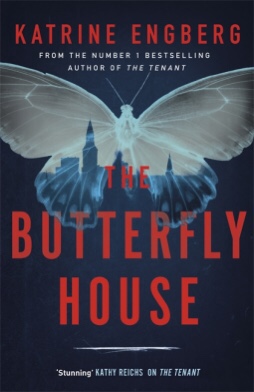
The Butterfly House by Katrine Engberg

In the coronary care unit at one of Copenhagen’s leading medical centres, a nurse fills a syringe with an overdose of heart medication and stealthily enters the room of an older male patient.

Six days earlier, a paperboy on his route in the centre of the city stumbles upon a macabre find: the body of a dead woman, lying in a fountain, her arms marked with small incisions. Cause of death? Exsanguination – the draining of all the blood in her body. Clearly, this is no ordinary murder.

Jeppe Kørner, recovering from a painful divorce and in the throes of a new relationship, takes on the investigation. His partner, Anette Werner, now on leave after an unexpected pregnancy, is restless at home. While Jeppe leads the official search, Anette can’t stop herself from doing a little detective work as well. But operating on her own exposes her to dangers she can’t even begin to realise.

As the investigation ventures into dark and dangerous corners, it uncovers an ambition and greed festering beneath the surface of caregiving institutions, all leading back to the mysterious Butterfly House . . .

I hadn’t come across the first novel in this series, but was intrigued by this pair of detectives. They seemed to bring something different to the role and life of a detective. The murders in the novel are particularly disturbing given that they take place within a hospital – usually a place of healing. An elderly patient in the coronary unit is killed by a syringe drawn up with an overdose of his heart medication. Six days earlier, a boy on his paper round found a dead woman in a fountain in the town centre. She died due to exsanguination, blood letting from thousands of tiny cuts, and her final moments must have been excruciating. Are the two cases linked and will Detectives Korner and Werner be able to find the killer?

I loved that Werner was home on maternity leave, bored and itching to join in on the investigation. I think, very realistically, she’s struggling with feeling powerless and dealing with the fact her pregnancy was unplanned. She didn’t expect it and can’t stop herself doing some detective work from home. However the problem with snooping alone is that she’s exposed to dangers she wouldn’t normally have to consider. Will she put herself in in harms way? Her partner, Korner, is coping with the aftermath of a painful divorce and now a new relationship. Will his mind be on the job? Together, this investigation will lead them into a dark corner of public institutions – their equivalent in this country would be social services and the NHS. Corruption and exploitation within these institutions seems likely as they continue their investigations.

The characterisation is brilliant. I really connected with Werner. Her husband has adapted well to unexpected fatherhood and can’t really relate to her struggle. Werner is 44 and feels the body she’s been connected to all her life, doesn’t belong to her anymore. The baby cries endlessly and she feels complete indifference. Her head’s still at work and she feels exhausted. Intrigued by what’s happening in her absence, she has a police scanner and makes fake runs for nappies in order to keep up with the case. The strength of her partnership with Jeppe shows in how much he’s missing her presence in the investigation, even for the qualities that really irritated him usually. I warmed to him too as he struggles on with a partner he can’t connect with and who can’t keep up with him. These people felt so real to me and the authors description of their worlds is just as immersive. I could imagine myself in this city, in the autumn air that the author describes. I found the medical histories of the victims fascinating and became really involved with the mental health and psychiatric aspects. The pace of the narrative was just right, fast enough to keep me reading while providing enough detail to pull me into the case. Often with thrillers I can feel short changed or rushed into a conclusion, but here the twists felt real and the conclusion was satisfying. This novel had everything I enjoy about the Nordic Noir genre and I will be following this series with great interest.

Published 14th Jan 2021 by Hodder and Stoughton.

Meet The Author

A former dancer and choreographer with a background in television and theater, Katrine Engberg launched a groundbreaking career as a novelist with the publication of her fiction debut, The Tenant. She is now one of the most widely read and beloved crime authors in Denmark, and her work has been sold in over twenty-five countries. She lives with her family in Copenhagen.

Posted in Netgalley

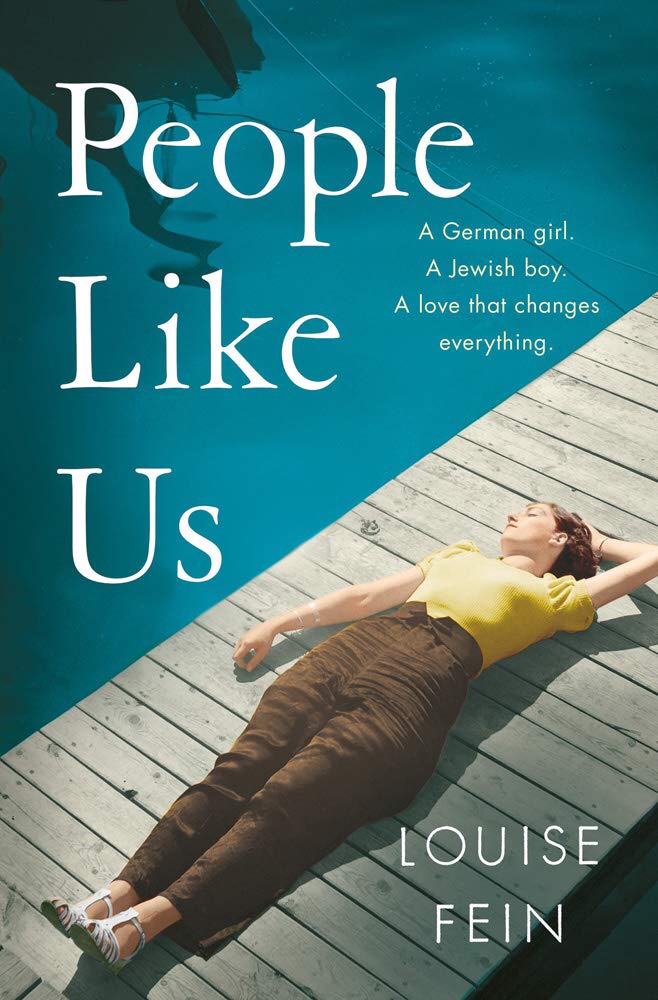
People Like Us by Louise Fein.

I was deeply affected by this novel about the rise of the Nazi Party in 1930s Germany, told from the perspective of a young girl living in Leipzig. The story opens as a young Herta is rescued from drowning by her brother Karl’s friend, Walter. It’s a powerful opener and a metaphor for the coming years, as Herta is slowly drowned by the tidal wave of nationalism, and fascism that overwhelms her country and changes her life altogether. Fein was inspired to write the novel after researching her family’s Jewish roots and eventual flight to London. During her research, she started to wonder how a country and it’s people could go from being a reasonable and tolerant society, to committing such atrocities against their fellow human beings. So, to explore that idea, she decided to write her novel from the perspective of an ordinary German child, slowly becoming brainwashed by the evil ideology. It’s the childhood innocence of Herta that makes this book work so well and allows us to have empathy, despite her allegiances.

Herta’s father has recently taken control of the city newspaper and his reward is their beautiful new family home, their servants and improved status in Leipzig society. He came from humble beginnings to marry Herta’s elegant French mother, but is now quickly rising through the SS ranks. Her elder brother Karl is in the Hitler-Jugend and she really wants to do her bit to make for Vati and Mutti proud of her too. So she pledges her life to the Fuhrer, to serve him and his purpose, totally unaware of its evil extent. Fein slowly shows us his plans, and along with some of our characters we’re like the proverbial frog in tepid water. Without our luxury of hindsight, we too wouldn’t have recognised how much danger we were in, until it was far too late and we boiled to death. There are those characters who truly embrace Hitler’s philosophy and purpose like Herta’s Vati, and below that are various levels of denial, collaboration and fear. Even Vati, has a jumbled mix of motivations: feelings of inferiority from his background and in his marriage; relishing the status and power; a certain amount of brainwashing.

Hitler’s propaganda machine was in full swing within Germany, aided by the country’s financial struggle since the Great War. The Weimar Republic, the post WWI government, signed the Treaty of Versailles in 1919. The treaty stated that Germany would take responsibility for the war, relinquish parts of its territory and pay reparations to the Allies. These policies caused huge social and economic hardship, a situation that the Nazis blamed on Jewish people and communists. A myth was even started that blamed the Jews for the signing of the treaty. Called the ‘stab-in-the-back’ legend, this story blamed Jewish infiltrators in government for the difficulties the German people were facing, despite the fact that many German Jews had served faithfully in the war. Now, the German people were worn down by hardship and poverty and were looking for someone to blame. Hitler exploited these conditions to devastating effect and ordinary Germans were taken in by it. So, when Jewish neighbours and friends started being restricted or sent to work camps, only very rare, brave individuals stood up for them.

The scene when Herta first realises something is very wrong is at school, and her teachers call on Jewish children to stand up in assembly. The shock is seeing her brother’s childhood friend Walter, singled out for abuse and ridicule. Walter can’t be a Jew. He’s the Aryan ideal, blonde and blue-eyed. Besides which, when she was very small Walter saved her from drowning. He had been a constant presence at the house when they were younger. Now here he was being called terrible names and sneered at by their new teacher. Herta is terribly confused, she has been told that Jews look a certain way, and act in a different way to her, but she feels that she and Walter are both the same. Bravely, she runs after him when he is expelled from school and triggers a friendship of her own. A friendship that as she grows-up, develops into love. What possible future can this relationship have under Nazi rule? Then, as it becomes ever clearer that Hitler will not rest until Germany is cleared of Jews, both Herta and Walter will have to make sacrifices and the legacy of these decisions will last until they are both very old.

I don’t want to say any more for fear of ruining the story, but there were many points where I was moved to tears by the situation these childhood friends and young lovers, found themselves in. The displacement of families during WW2 was extensive and with no way of tracing each other, there would have been people who never saw each other again. I married into a Polish family, my husband died several years ago and my father and brother-in-law more recently. My mother-in-law got out of Warsaw as a little girl, escaping through the sewers. Her mother stayed. Her father ended up in America. The family never reunited fully, with Hana finding out her father had ended up in the Boston area of the USA. He had searched but never found either of them. He assumed they had died and later remarried, never knowing that his wife and child did survive and were now in England together. Luckily when Hana found her other family, she embraced them and they in turn remained close to their English family. I felt that the author had really done her background research, possibly with families like mine. I believed in her world and characters immediately.

The background of Leipzig felt homely and friendly, but then developed into this menacing place where you didn’t speak or even spat at the old couple across the street. The night where Herta looks for Walter, knowing that violent confrontations will be taking place in the Jewish quarter, is so frightening and made me feel physically sick. It’s where the threats and rhetoric become real and deadly. Herta is only ever truly free in nature, walking her dog on a Sunday morning and sometimes seeing Walter. It’s harder for someone to conceal anything themselves in open fields and usually Herta can walk freely, enjoying the air and the birdsong. This place represents normality whereas the city is madness, chaos and murder. The ending broke my heart, as we contemplate with Herta on what the world will be like to a new generation. Will it be peaceful with the effects of war far behind, or will the ripples of this hatred and violence be felt for several generations more? I was so moved by this and the epilogue. Some books stay with you for life and I think this will be one of mine.

Published by Head of Zeus 7th May 2020.

Posted in Netgalley

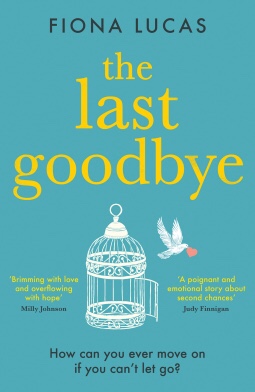
The Last Goodbye by Fiona Lucas

This romantic comedy had an unusual premise, but first attracted me because of the cover! I have a tattoo exactly the same on my lower back with a quote from Jane Eyre, so I was interested to know why the image represented the book.

Our female protagonist, Anna, is in the throes of grief after the death of her husband. The plot hinges on an interesting device – Anna calls her dead husband’s phone number and weirdly, someone answers. A tentative friendship develops allowing her to explore the anger, numbness, false starts and maelstrom of emotions as she rebuilds her life after such a huge loss. The first call happens on a New Years Eve just over two years since Anna lost Spencer. She has been coerced by her friend Gaby to go to a party and is suffering just one of several attempts over the last few months to set her up with a nice man. Of course whenever Anna meets someone new, it’s like a klaxon goes off in her head screaming ‘not Spencer’ over and over again. On this night Anna flees the party and heads for the comfort of home and for emotional support she rings Spencer’s mobile number, thinking that hearing his voice on the answerphone will reassure her. However, instead of hearing Spencer’s voice, a strange man comes on the line saying ‘ I beg your pardon’.

As more weeks pass and Anna feels so scared of leaving Spencer behind and living in the moment, she continues to call the number and talk to the man at the end of the phone. A friendship starts to emerge between her and the man who has inherited Spencer’s old number. His name is Brody and Anna starts to realise she is not the only one who wants to live in the past. Brody gives Anna the space to grieve. He doesn’t know Spencer so he has no vested interest or conflicting opinion to intrude on Anna’s grief process. In this way he acts rather like a therapist with empathy, zero judgement and a hope Anna will get through this. Other people in her life either want Anna to move forward when she is not ready, or to wallow in grief. Her friends seem to think two years is enough time to start moving forward and although they are well-meaning their interventions annoy Anna and push her too far too soon. Spencer’s mother Gayle wants to envelop Anna in her grief process. She assumes that because they both loved Spencer, their grieving process is the same. Anna keeps up their tradition of Sunday lunch together, just like when Spencer was alive, but also pores over old photo albums and still wants them to mark anniversaries like his birthday together. In her presence Anna becomes suffocated by grief and guilt when she thinks about moving on with her life. Anyone new in Anna’s life would seem like an insult to Gayle. There is nowhere she can do this grieving thing her way, honestly and openly.

My counselling supervisor used to say that if you find yourself giving the same piece of advice to several clients, it may be something you should look at for your own life. This is definitely the case with Brody, as he gives Anna advice he could do with listening to. Brody is living an isolated existence on Dartmoor with his dog. He allows Anna’s emotions to take the lead in their phone calls, but doesn’t seem keen to divulge his own. I started to wonder why he is living the life of a hermit. What is he hiding away from? Between Brody and her best friend Gabi, Anna starts to feel she can gather all these broken fragments of herself together and start to rebuild. The author found a unique structure for the novel, that allowed Anna’s raw grief to find its voice in these late night phone calls. Brody becomes Anna’s closest friend and with Gabi’s help, she now has hope and a way forward that is so uplifting for the reader. Both the main characters have such moving stories they bring a lump to the throat and their journey through grief is brilliantly rendered by the author. She shows us that each person’s grief is individual, it has its own path with unique highs and lows. She also depicts something I often say to – you can’t get round or climb over grief, the only way out is through it. I could see Anna reaching for the other side of her pain and I found myself wishing for Brody to find his way out too.

What a beautifully written account of grief this is. I was moved and uplifted, and the experience of grief felt very authentic. So what about the cover image and that tattoo? My husband died in 2007 and I rushed my grief journey, only to end up in an abusive relationship that took three years to leave. So, on my fortieth birthday I had my birdcage tattoo and underneath the words from Jane Eyre ‘ I am no bird; and no net ensnares me’. It reminds me I can get through anything so it feels like a fitting image for Anna and Brady’s story.

Meet the Author

Fiona Lucas is an award-winning author of contemporary women’s fiction. The Last Goodbye is her first novel written under this name, but she’s been writing heartwarming love stories and feel-good women’s fiction as Fiona Harper for more than a decade. During her career, she’s won numerous awards, including a Romantic Novel Award in 2018, and chalked up a no.1 Kindle bestseller. Fiona lives in London with her husband and two daughters

Posted in Netgalley

The Disappearance of Stephanie Mailer by Joel Dicker. Translation by Howard Curtis.

I’m revisiting this book and expanding on my original NetGalley review for this blog blast, as I recover from moving house and suffering an infection from a nasty cat bite! So, I’ve refreshed my memory and really thought about this interesting book again. First of all, here’s the blurb:

A twisting new thriller from the author of The Truth about the Harry Quebert Affair

In the summer of 1994, the quiet seaside town of Orphea reels from the discovery of four murders.

Two young police officers, Jesse Rosenberg and Derek Scott crack the case and identify the killer.

Then, twenty years later and just as he is on the point of taking early retirement, Rosenberg is approached by Stephanie Mailer, a journalist who believes he made a mistake back in 1994 and that the real murderer is still out there, perhaps ready to strike again. But before she can give any more details, Stephanie Mailer mysteriously disappears, and Rosenberg and Scott are forced to confront the possibility that her suspicions might have been proved true.

What happened to Stephanie Mailer?

What did she know?

And what really happened in Orphea all those years ago?

For me, this author manages to do something very clever with his novels. He writes thrillers that keep you hooked, while delivering a strangely relaxing read. It’s like the same feeling you get watching a really good TV series; in the days before multi-channels and Netflix, English dramas tended to be short and low budget, whereas American and Scandinavian channels invested money at their dramas, often delivering 22 episodes per season. These longer dramas allow every character to develop and lets the story breathe. If the series is a thriller there can be so many twists and turns over a longer time, red herrings can develop and be dismissed, and the tension of the last few episodes becomes unbearable. That’s what I felt happened with this book, it’s slow and characters change and surprise you. I think readers may have a bit of a marmite reaction to it – those who like their thrillers short and snappy will be frustrated, but those who love to explore character, setting, and a tale that meanders through many twists and turns before revealing the truth, will love it. It’s every shade of grey, rather like life.

The dual timelines of 1994 and 2014 work very well, with the past informing the future for the reader. Both cases are also intriguing and form an interesting contrast. The 1994 shootings are so dramatic, public and involve many victims, whereas the 2014 disappearance has a less public impact. I found myself constantly asking if Stephanie disappeared because of the 1994 case she’s investigating for an article – opening old wounds in a small town that wants to believe it caught it’s killer – or whether something more personal and unrelated was happening. The fact that she turns up just as Captain Jesse Rosenberg is about to retire seems too much of a coincidence though. Jesse is a likeable character, a good, honest cop whose diligence sets him apart. Despite his impending retirement, Stephanie’s disappearance and the knowledge that his findings on the original case were wrong, leave him determined to solve both cases before he leaves. However, Jesse and colleague Derek Scott became small town celebrities for solving the 1994 shootings, and maybe they liked the status and boost to their careers a little too much? It would be very difficult to accept they were wrong, but Jesse seems to do that and appears determined to find the truth of both cases. I also found myself questioning the circumstances of the original case. We know that the original investigation was wrong, but not why it was wrong. The mayor and his family were shot dead, but across the street a jogger called Megan is also shot, in the back of the head. Was this a case of wrong time, wrong place, for Megan? Did she see something that would have revealed the killer? Or should we be turning the whole case on its head? What if Megan was the intended victim all along?

These were just some of my thoughts as I wandered through this slice of small town life gone wrong. I love convoluted plots where I have no clue where I will end up in a few chapters time. All too often in thrillers, the truth is easy to work out early on, but here I had no idea and an array of clues and characters to decipher. This novel was long, but it has to be so the reader isn’t overwhelmed with the amount of information. It didn’t feel daunting though, and the writer’s technique of building tension towards small revelations throughout, certainly piqued my interest and kept me reading. Yes, maybe the novel might have benefitted from cutting a couple of characters or points of view. However, it might have lost that constant feeling of uncertainty needed in a good thriller. This is a slow burner of a novel, packed with possibilities and the odd red herring or two to keep the reader on their toes. In the last few chapters I couldn’t wait to uncover the truth, because the long build-up had intensified the tension. The manner in which the truth is revealed was a surprise, as if by accident rather than spelled out in black and white like a traditional detective novel. I felt this contributed to the ‘realness’ of the story; how many real life killers are arrested for something quite different at first? Life is full of multiple characters, faulty memories, strange cul-de-sacs and a million shades of grey, and that is exactly what the author has represented in this novel.

Posted in Netgalley

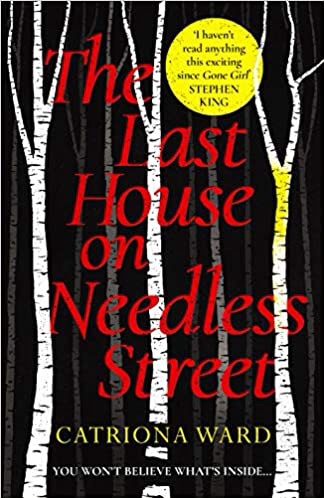
The Last House on Needless Street by Catriona Ward

Publisher: Viper (Serpents Tail) 18th March 2020

I finished this novel in a sort of shell-shocked silence. I felt like I needed to go straight back to the beginning and start again. It is extraordinary and unlike anything I’ve ever read before. It’s also very difficult to review without spoiling other reader’s experience of it, but I have to give it a go.

The house in question is the home of our first narrator Ted. As we read Ted’s view of the world we start to realise there is something unique and odd about the way he experiences the world. He made me feel uneasy. We get a sense that something is very wrong when the birds he loves to watch, are trapped and killed. Ted spends a lot of time thinking about an incident several years before when a little girl disappeared from the lake nearby and was never found. Others might have forgotten, but not Ted and not the girl’s sister who has a huge sense of guilt about her sister’s loss. Ted was a suspect at the time and it’s not hard to see why; he’s a slightly strange loner, living nearby in a ramshackle home with boarded up windows. The girl’s sister hasn’t forgotten that Ted was a suspect and decides to rent the house next door and watch him, in the hope of finally discovering where her sister is. CCTV proved Ted’s alibi at the time, but the sister’s convinced she has found the culprit.

Things take a very strange turn when we meet another narrator, Ted’s cat Olivia. In other hands this might have seemed twee or whimsical, but here it isn’t. It did give me a shock in the first instance, when a narrator I’d assumed to be human, stopped to lick the back of their legs! I loved the way the author played with language in these sections. Olivia doesn’t realised Ted is a name, she thinks it’s a word for his species, so all people are ‘teds’ and dogs are ‘brouhahas’. She describes her love for another of her species, a beautiful cat with emerald eyes that she sometimes spies preening herself, through the cat flap. She also has a belief system, including her very own god who she refers to as LORD. Yet there are aspects of this cat, that are distinctly not cat-like and I started to wonder if all wasn’t as it seemed. Could this cat be someone or something else entirely?

Other narrators are introduced and I was sometimes thoroughly confused, but never contemplated putting the book down. The beauty of the language and cleverness of the structure kept me going, determined to work out what exactly was going on. I was starting to be unsure which sections were real and what was illusion. The author is clearly hugely skilled at creating that sense of the uncanny – when everything seems normal and recognisable, but there is just that sense that something is off-kilter and sinister. This was so psychologically clever and I enjoyed Ted’s visits to the ‘bug man’ who appears to be some sort of psychotherapist, until he appears where we don’t expect him. I was so involved in this world of Ted’s that I was starting to forget the original crime, the loss of a little girl on the beachfront of the lake. The writing is so involving that I was inside Ted at times and the uneasy feeling is that you will never be able to get out. I guessed some of what is going on, but not the whole and I love the ambition and audacity. This is a unique, original and deeply creative piece of work that enthralled and stunned in equal measure. Ward is a writer of immense imagination and talent and I feel privileged to have been given the chance to read this before it hits the shelves and becomes a phenomenon.

Meet The Author

CATRIONA WARD was born in Washington, DC and grew up in the United States, Kenya, Madagascar, Yemen, and Morocco. She read English at St Edmund Hall, Oxford and is a graduate of the Creative Writing MA at the University of East Anglia. Her next gothic thriller, The Last House on Needless Street, will be published March 2021 by Viper (Serpents Tail). 

Ward’s second novel, Little Eve (Weidenfeld & Nicolson, 2018) won the 2019 Shirley Jackson Award and the August Derleth Prize for Best Horror Novel at the 2019 British Fantasy Awards, making her the only woman to have won the prize twice, and was a Guardian best book of 2018. Her debut Rawblood (W&N, 2015) won Best Horror Novel at the 2016 British Fantasy Awards, was shortlisted for the Author’s Club Best First Novel Award and a WHSmith Fresh Talent title. Her short stories have appeared in numerous anthologies. She lives in London and Devon.

Posted in Netgalley

The Sanatorium by Sarah Pearse.

I’ve been a little late to the party reading this thriller set in the Swiss Alps. Now I have, I can see why other bloggers have enjoyed it so much.It left me feeling chilled and genuinely claustrophobic. Elin’s brother Isaac invites her to celebrate his engagement to girlfriend Laure at a luxury hotel in Switzerland. The newly renovated hotel is Laure’s workplace and has a complicated history. An architectural triumph for the owner Lucas, the hotel was once a sanatorium for people with tuberculosis. Locals objected strongly to the project due to its position and liability to become cut off by avalanches, but there was also some disquiet about its history and the appropriateness of its new use. Elin and Isaac have a strained relationship, dating back to the accidental death of their little brother when they were children. However, she has been looking forward to trying again with Isaac and is excited to show her architect boyfriend Will around the hotel. Will is looking forward to relaxing with Elin after a tough year including her long sabbatical from work as a police officer. Elin is a detective, but isn’t currently working after an incident lead to her suffering flashbacks, panic attacks and other symptoms of PTSD. Can Will and Elin relax and enjoy their break, or will echoes of the past get in the way?

The author creates a edgy atmosphere immediately. We find out that Lucas’s business partner Daniel disappeared just as the hotel opened, thought to be swallowed up by an avalanche while taking his morning exercise. The remoteness is immediately apparent and I loved the way the author situates the hotel as a huge edifice almost doing battle with the surroundings. Guests can gaze directly out into the woodland and mountains. However, once the night falls and the lights are on, the hotel must be visible for miles. Guests can’t see out, but anyone could be looking in. The decor isn’t plush and ornate like a lot of hotels, but instead hints at the hotel’s past; almost like a luxury monk’s cell. There is nothing superfluous or showy about the bedrooms. There are also little glass display boxes where artefacts from the hotel’s archive are put on show. Elin doesn’t know whether they honour the past in a respectful way or whether they’re distasteful. There’s a real sense of the cold from outside, but also in the hotel’s decor. There’s nothing cozy or welcoming to offset the harsh weather.

It’s not just the venue that has a complicated relationship with the past. This whole visit is shrouded in secrets. Elin hasn’t told her brother that she’s taking a break from the police force. She also hasn’t told her partner Will about her previous friendship with Laure. Although it soon becomes clear that she’s not the only one keeping secrets. Her silence on certain subjects made me doubt her as a narrator creating an edgy reading experience. The venue seems to have tension built into its very foundations and I sensed something evil had happened there. Whatever had happened left an energy that rubbed off on the staff and guests. The author builds on the claustrophobic theme, by layering the imagery throughout the narrative. There is the history of patients literally struggling to breathe within these walls. Then there are Elin’s panic attacks, intensified by the scene where she is pushed into the plunge pool at the spa and struggles to force her way back to the surface. In flashbacks we learn of the tragic day at the beach when Isaac and Elin’s brother died, it’s always there simmering in the background and even Elin doesn’t seem to know the truth of what happened. There’s also the remote location, and the constant threat of avalanche. The author allows these feelings to build towards moments then describes moments of pure terror as an unknown assailant attacks, wearing a black rubber gas mask that makes a strange sucking and whistling noise. There were moments where I literally had to close the book and have a break with a cuppa!

There are a series of questions within the book, so there are a series of answers we’re chasing towards the end of the novel. Will we discover the truth of what happened when the hotel was Sanatorium du Plumachit? Will we find out what truly happened on the beach between Elin and her brothers? Who is behind the attacks at the hotel and what is their motive? The author has created a mystery that’s like a set of Russian dolls, moving from the present back to past events that still have a devastating hold on the here and now. The strange souvenirs left by the killer in glass boxes, are just like the exhibits from the archive, so there must be a link. I read the last few chapters in one go, because I simply had to know what was going on. There was a definite disregard for the next day that night as I was up till 3am racing through the revelations. I thought this was a brilliant thriller, full of atmosphere and with some genuine scares along the way. I absolutely loved it and would recommend it very highly.

Meet The Author

Sarah Pearse lives by the sea in South Devon with her husband and two daughters. She studied English and Creative Writing at the University of Warwick and worked in Brand PR for a variety of household brands. After moving to Switzerland in her twenties, she spent every spare moment exploring the mountains in the Swiss Alpine town of Crans Montana, the dramatic setting that inspired her novel. Sarah has always been drawn to the dark and creepy – remote spaces and abandoned places – so when she read an article in a local Swiss magazine about the history of sanatoriums in the area, she knew she’d found the spark of the idea for her debut novel, The Sanatorium. Her short fiction has been published in a wide variety of magazines and has been shortlisted for several prizes. You can find Sarah on Twitter @SarahVPearse and Instagram @sarahpearseauthor

Posted in Netgalley

One Night, New York by Lara Thompson.

At the top of the Empire State Building on a freezing December night, two women hold their breath. Frances and Agnes are waiting for the man who has wronged them. They plan to seek the ultimate revenge.

Set over the course of a single night, One Night, New York is a detective story, a romance and a coming-of-age tale. It is also a story of old New York, of bohemian Greenwich Village between the wars, of floozies and artists and addicts, of a city that sucked in creatives and immigrants alike, lighting up the world, while all around America burned amid the heat of the Great Depression.

It’s hard not to fall in love with Frances. It only took a few chapters and I was with her wholeheartedly – she simply feels so real. The narrative bounces back and forth from the top of the Empire State Building, all the way back to Frances leaving rural Kansas, but it is always Frances’s point of view we follow. As a poor girl in a thin dress and broken sandals she is noticed by a couple of bohemian types on the train, a photographer and journalist. They are looking for stories and characters that will appeal to a wealthy NYC elite, and poverty stricken farmers are making headlines as the Depression bites. They see something in Frances and want to photograph her, but she is meeting her brother at the station so she takes their card instead. We see her settled into Stan’s tenement flat, taking embroidery in for Mrs Bianchi next door. How does she go from this to contemplating an act of violence at the Empire State?

What we’re seeing is an awakening. It’s not so much a loss of innocence – I realise that went a long time ago when she relates the things she’s seen and suffered. In NYC, although she’ll still experience trauma, she also gains so much strength and self-knowledge. There’s an awakening that’s sensual as she learns to love the feel of fine fabrics on her skin and the joy of moving her body to music. She gains a love and understanding of art, responding emotionally to the most complex modern pieces as well as the photographs she takes with new friend Agnes. There’s also an awakening of sexual desire, something she has never experienced before.

The structure brings an amazing tension to the novel. We might think we’ve worked out what is going on, but it’s so much worse than I imagined. We are drip fed the events leading up to the present moment, and the author doesn’t reveal the man Frances and Agnes have lured to the building until right at the very end. The girls become friends before realising they are both affected by the ambitious men who will build this city. Women are disappearing and men have all of the power in this world. It is the resulting male privilege, such arrogance and certainty, that lures their victim to this precarious and windy place. Agnes and Frances are going to draw a line under this, a fatal one. It really chills to the bone when we find out the true extent of what these ‘disappeared’ women have gone through. Within this we also learn the reality of the Depression in Kansas, and the reality of Frances’s life with a brutal father, only curbed by the presence of Stan. I was so deeply sad for Frances. Dicky and Jacks constantly talk about Frances being wise beyond her years, with surprise. It’s no wonder, she’s been through so much.

This book really is an incredible debut with brilliant historical detail and decadent 1920s feel. The gap between the rural areas of the US and and up and coming city like NYC is wide, but we also see the massive poverty gap between NYC neighbourhoods from the Upper East Side into East Harlem. There’s a decadence here that’s evident from the parties at Jacks and Dicky’s home. These people are new money and the mix of bohemian artists, showgirls, businessmen and politicians is rife with exploitation. I was suspecting everyone of ulterior motives, wondering if anyone is untouched by the taint of money and debauchery. The wholesome and motherly Italian lady Mrs Bianchi gives an impassioned speech about leaving her homeland, only for her sons to be drunk and brawling every weekend. There’s a sense that the pinnacle of this age has been reached; this lifestyle cannot be maintained forever. By the closing chapters I was willing Frances to escape this terrible place, not unscathed of course, but at least alive and free to pursue some happiness with the person she loves. Once I’d finished, I found it hard to start a new book, because my head was firmly in NYC. My heart was still with Frances and that is always the sign of a great book.