Posted in Netgalley

Memphis by Tara M. Stringfellow

Joan can’t change her family’s past.
But she can create her future.

Joan was only a child the last time she visited Memphis. She doesn’t remember the bustle of Beale Street on a summer’s night. She doesn’t know she’s as likely to hear a gunshot ring out as the sound of children playing. How the smell of honeysuckle is almost overwhelming as she climbs the porch steps to the house where her mother grew up. But when the front door opens, she does remember Derek.

This house full of history is home to the women of the North family. They are no strangers to adversity; resilience runs in their blood. Fifty years ago, Hazel’s husband was lynched by his all-white police squad, yet she made a life for herself and her daughters in the majestic house he built for them. August lives there still, running a salon where the neighbourhood women gather. And now this house is the only place Joan has left. It is in sketching portraits of the women in her life, her aunt and her mother, the women who come to have their hair done, the women who come to chat and gossip, that Joan begins laughing again, begins living.

Memphis is a celebration of the enduring strength of female bonds, of what we pass down, from mother to daughter. Epic in scope yet intimate in detail, it is a vivid portrait of three generations of a Southern black family, as well as an ode to the city they call home.

There’s a point in this book where Miriam remembers her mother Hazel waking her up, leaving her little sister August asleep in bed, then she fixed her a breakfast fit for a king. There were green tomatoes and grits, spicy pork and scrambled eggs, and they were chatting like a normal day. Miriam was distracted by the delicious meal and didn’t notice her mother running the tap. Then suddenly she threw a whole jug of cold water over her daughter. Miriam thought her mother had lost her mind. All she said was ‘you ready’ and that afternoon took her to her first activist’s sit in. Miriam’s experience is similar to the one I had reading this incredible book. I’d just settled into the story when suddenly something was revealed that was so momentous I would have to take a moment, blind-sided by what had just happened. Memphis is the home of three generations of African-American women from grandmother Hazel, her two daughters Miriam and August, and Miriam’s daughters Myra and Joan. Their personal lives are set against a backdrop of American history from the early 1950s through to the 2000s, taking in world-changing events like the Kennedy assassinations and 9/11. Told in sections from each woman’s viewpoint, Stringfellow takes us back and forth across the 20th Century. Each step back in time informs the present, showing us where Joan has come from and each day forward moves Joan into her future.

I loved the earliest years where grandmother Hazel meets Myron and they fall in love. Their courtship is so sweet and has an innocence about it and I think that’s what makes later events such a shock. The fact that Myron has come so far and become part of law enforcement in those times feels like such an incredible achievement. Your fellow officers are supposed to be your brothers, but despite working alongside him, this all white squad don’t count him as one of them. We don’t see the lynching, but we don’t need to. Our place is with the women of this story. Hazel is nine months pregnant, filled with grief, anger and a frustration borne from knowing that whatever you achieve, however loud you scream, your achievement and voice mean nothing. The author managed to deeply touch me with that sense of powerlessness. There’s such a maelstrom of emotions when she gives birth: knowing this little girl will never know her daddy; wishing Myron was there to support her; the fear of knowing she’s alone as a parent and her girls depend on her; the joy of this new life coming into the world. These women feel so real because Stringfellow cleverly evokes the complexity of human emotions, it’s rare that we only feel one at a time. In grief we can still feel moments of joy and even if we are happy, there can be moments of doubt or fear. Such moments of inner conflict follow us into the second generation of women, sisters Miriam and August. When Miriam escapes domestic violence, returning to the house Myron built in Memphis, she’s torn in two directions. She really has nowhere else to go and she longs for home and the consolation and support of her sister, but Joan has a moment of recognition. Have they been here before? The truth is they have.

The women in this family are strong and they need to be. Some of what happens to them over their three generations is terrible and you will probably have a good cry like I did. I was touched by what Hazel, Miriam and Joan go through, but there were also quieter struggles that touched me such as August’s decision to care for her mother, the loneliness she must feel with both her mum and sister gone, the fear she feels for her son Derek, growing up as a black man in a place where shootings and gangs are commonplace. Her mixed feelings of guilt, anger and love that come with being a mother of a son who does things that are unforgivable. I also loved the camaraderie of her salon and the strength she gets from the women who are her customers and her community. I was touched by her ability to take pleasure and solace when it’s offered, despite it not being the love and companionship she craves – from the women in her life. The pain these women go through makes the good times even more enjoyable and I really felt the joy and relief when they came out of a tough time. The author manages to capture that sense of peace I have seen in my counselling room, when the long held fear, anger and shame that comes from trauma is finally let go. That need for revenge finally silenced. The chance for joy and celebration to fill the void left behind and communing with others who know your journey.

“𝘛𝘩𝘦 𝘧𝘳𝘢𝘮𝘦𝘥 𝘳𝘦𝘤𝘰𝘳𝘥 𝘤𝘰𝘷𝘦𝘳𝘴 𝘰𝘯 𝘵𝘩𝘦 𝘸𝘢𝘭𝘭𝘴 𝘴𝘩𝘰𝘰𝘬 𝘸𝘪𝘵𝘩 𝘵𝘩𝘦 𝘭𝘢𝘶𝘨𝘩𝘵𝘦𝘳. 𝘓𝘢𝘶𝘨𝘩𝘵𝘦𝘳 𝘵𝘩𝘢𝘵 𝘸𝘢𝘴, 𝘪𝘯 𝘢𝘯𝘥 𝘰𝘧 𝘪𝘵𝘴𝘦𝘭𝘧, 𝘉𝘭𝘢𝘤𝘬. 𝘓𝘢𝘶𝘨𝘩𝘵𝘦𝘳 𝘵𝘩𝘢𝘵 𝘤𝘰𝘶𝘭𝘥 𝘣𝘳𝘦𝘢𝘬 𝘨𝘭𝘢𝘴𝘴. 𝘓𝘢𝘶𝘨𝘩𝘵𝘦𝘳 𝘵𝘩𝘢𝘵 𝘤𝘰𝘶𝘭𝘥 𝘶𝘱𝘭𝘪𝘧𝘵 𝘢 𝘧𝘢𝘮𝘪𝘭𝘺. 𝘈 𝘤𝘢𝘤𝘰𝘱𝘩𝘰𝘯𝘺 𝘰𝘧 𝘉𝘭𝘢𝘤𝘬 𝘧𝘦𝘮𝘢𝘭𝘦 𝘫𝘰𝘺 𝘪𝘯 𝘢 𝘭𝘢𝘯𝘨𝘶𝘢𝘨𝘦 𝘱𝘳𝘪𝘷𝘢𝘵𝘦 𝘵𝘰 𝘵𝘩𝘦𝘮.”⁣

Meet the Author

Former attorney, Northwestern University MFA graduate, and Pushcart Prize nominee Tara M. Stringfellow’s debut novel Memphis (Dial Press, an imprint of Penguin Random House) is a multi-generational bildungsroman based on the author’s rich Civil Rights history. A recent winner of the Book Pipeline Fiction Contest, Memphis was recognized for its clear path to film or TV series adaptation and is due out in 2022. Third World Press published her first collection of poetry entitled More than Dancing in 2008. A cross-genre artist, the author was Northwestern University’s first MFA graduate in both poetry and prose and has been nominated for two Pushcart Prizes, as well as Best of the Net. Her poems have appeared in Collective Unrest, Jet Fuel Review, Minerva Rising, Women’s Arts Quarterly, Transitions and Apogee Journal, among others.

If she isn’t writing, she’s gardening. If she’s isn’t in Memphis, she’s in Italy.
Posted in Netgalley

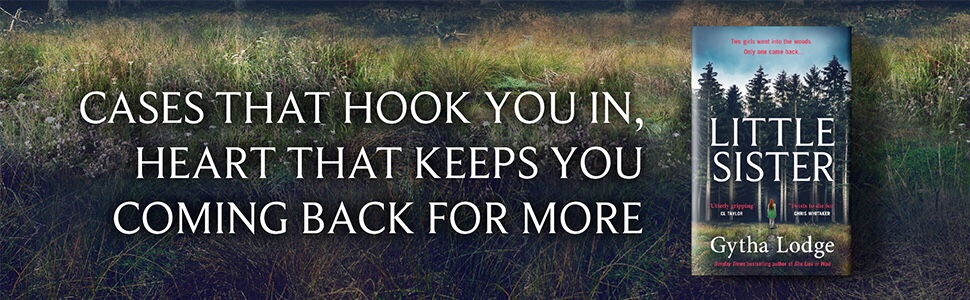
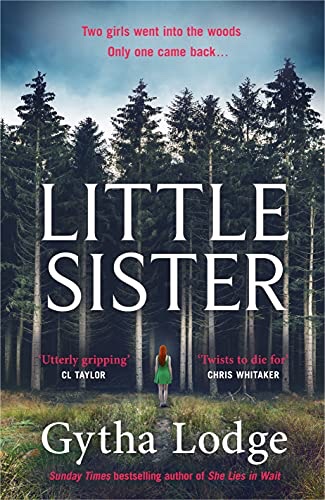
Little Sister by Gytha Lodge.

Two sisters went missing. Only one of them came back . . .
________

A teenage girl wanders out of the woods.

She’s striking, with flame-red hair and a pale complexion. She’s also covered in blood.

Detective Jonah Sheens quickly discovers that Keely and her sister, Nina, disappeared from a children’s home a week ago. Now, Keely is here – but Nina’s still missing.

Keely knows where her sister is – but before she tells, she wants Jonah’s full attention . . .

Is she killer, witness, or victim?

And will Jonah find out what Keely’s hiding, in time to save Nina?

Last year I was lucky enough to receive a prize from Gytha Lodge and now have three of her hardbacks, all individually signed. I haven’t had chance to read them and as I was granted access to this fourth novel in the series on NetGalley I decided to dive in and hope it would work as a standalone novel. I needn’t have worried at all. This was immediately accessible, yes there were aspects of Jonah’s life that I’m looking forward to finding out more about, but on the whole I could enjoy the mystery without feeling like I didn’t know my protagonist.

The opening scene is absolutely brilliant, vivid and shocking at the same time. Jonah sits in a warm beer garden with his baby in a pram at his side. He’s musing on life and his recent choice to return to a relationship with the mother of his child, leaving behind a burgeoning relationship with Jojo who he misses enormously. It takes a moment for him to notice the young woman who has come into the garden. She has red hair and her hands and chest are covered in blood. While others simply stare in shock, Jonah rings his partner Michelle to pick up the baby, then moves over to the girl and offers to get her a drink. They sit and her story starts to come out, but this is going to be a tricky interview and investigation. Jonah wants to take his time, go gently and not rush this young woman, who could be a victim, but could also be a suspect. Then she makes a revelation. Her name is Keeley and her sister is Nina, this could be Nina’s blood and of course they need to find her, but first Keeley wants to tell them a story.

Nina and Keeley have spent their entire childhood in care. Bouncing from children’s home to foster parent, they seem to have been magnets for predators at an early age. There are two foster homes where their placement failed. One was at the Murray-Watts, who live in a large house in the country with their son Callum and the right type of Range Rover. However, Keeley remembers a regime of cruelty and starvation, where their foster father was always pitting the children against each other and for punishment would lock them in a dark basement for days. His wife Sally might not be so cruel, but she never failed to do his bidding. From there to the Pinders, their home is a huge contrast situated on a council estate. There the girls made a complaint of sexual assault against their foster father who groomed them with trendy clothes, alcohol and watched Gossip Girl with them. This was all fine until he started to want things in return. The problem with these accusations is that nobody believed them, and even though they were removed from the homes in question, no one was prosecuted. Jonah and his excellent team have to tread a very fine line. Keeley comes across as cold and calculating one moment, but then like a broken little girl the next. Which is an act? Or are they both the same girl? Either way she won’t compromise; Jonah listens to her full story or she won’t tell them where Nina is. Time is ticking and if Nina is severely injured will she last to the end of the story?

I thought Keeley was a fascinating character, psychologically flawed and clearly traumatised by their past, however much of it is true. The girl’s social worker seems very sure that all the claims are false, just girls making up stories. However, it’s clear that some aspects of the girls accusations are true. So, if someone makes multiple accusations does it mean they’re all false? The book kept me guessing and there were times when I wondered whether I even trusted Keeley with her own sister. The chapters based around Jonah and the investigation are interspersed with Keeley’s first hand testimony. She shows all the traits of a psychopath; has she always been this way or has she been created by the treatment of those meant to care for her? If Nina has been subjected to the same treatment won’t she be afflicted psychologically too? I was also dying to know where these foster parents were. Pinder is giving the same story as the girl’s social worker, but the Murray-Watts have completely disappeared. Did the girls have help to weave a twisted treasure hunt for the police? I started to wonder if Keeley had known that Jonah was in the beer garden that day. She seems to be fascinated with his team so could one of them have come across the girls before?

There are some very dark stories here and they could be distressing for people who’ve gone through a similar experience, but it’s that darkness that keeps the reader wanting the truth and to see those responsible punished. If Keeley has planned how to elicit sympathy from the police, she certainly knows what she’s doing. As readers we are pulled along with Jonah from distress and empathy to disbelief and a sense that something is very, very wrong either with Keeley or the system. This is a great mystery, with huge twists in store and a police team I enjoyed getting to know. Now I’m looking forward to going back to the first novel in this series and filling in the gaps in my knowledge, while enjoying even more of this talented writer’s incredibly creative plots and dark, brooding atmosphere.

Meet The Author

Gytha Lodge is a multi-award-winning playwright, novelist and writer for video games and screen. She is also a single parent who blogs about the ridiculousness of bringing up a mega-nerd small boy. 

She has a profound addiction to tea, crosswords and awful puns. She studied English at Cambridge, where she became known quite quickly for her brand of twisty, dark yet entertaining drama. She later took the Creative Writing MA at UEA. 

Her debut crime novel, She Lies in Wait, has been published by Penguin Random House in the US and UK, and has also been translated into 12 other languages. It became an international bestseller in 2019, and was a Richard and Judy book club pick, as well as a Sunday Times and New York Times crime pick. 

Watching From the Dark, her second novel, was released in February 2020, with her third book lined up for spring of 2021. This fourth novel is published on 28th April 2022.

Posted in Netgalley

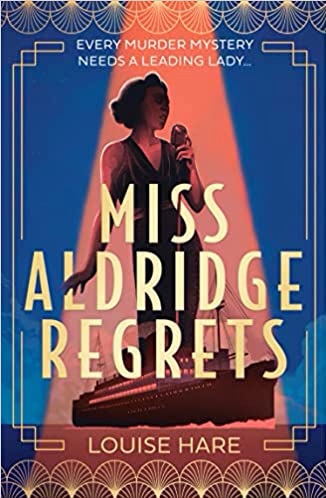
Miss Aldridge Regrets by Louise Hare

London, 1936

Lena Aldridge is wondering if life has passed her by. The dazzling theatre career she hoped for hasn’t worked out. Instead, she’s stuck singing in a sticky-floored basement club in Soho and her married lover has just left her. She has nothing to look forward to until a stranger offers her the chance of a lifetime: a starring role on Broadway and a first-class ticket on the Queen Mary bound for New York.

After a murder at the club, the timing couldn’t be better and Lena jumps at the chance to escape England. Until death follows her onto the ship and she realises that her greatest performance has already begun.

Because someone is making manoeuvres behind the scenes, and there’s only one thing on their mind…

MURDER

Miss Aldridge Regrets is the exquisite new novel from Louise Hare. A brilliant murder mystery, it also explores class, race and pre-WWII politics, and will leave readers reeling from the beauty and power of it.

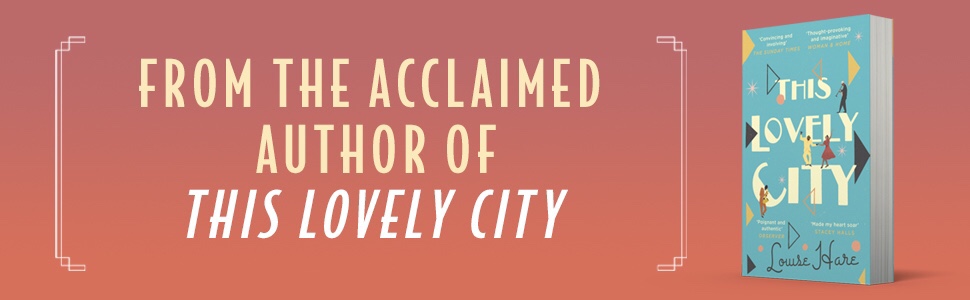
This is one of my most anticipated books of the year, mainly based on how much I loved her debut This Lovely City, but also because I loved the sound of this mix of historical fiction and murder mystery. It doesn’t disappoint and really has the feel of an Agatha Christie novel, not just the plot either, but the glamorous location, the wealthy passengers and the sumptuous descriptions of their clothes and jewellery. The story has its period detail spot on whether it’s the latest bathing suit or 1930’s politics. Woven within this whodunnit are themes of identity, belonging, family and class division. It’s gripping without being showy or depending on shocks, or endless twists and turns. It’s elegant and allows it’s secrets to unfurl slowly.

Lena is a sympathetic character, who has sacrificed the start of her own career to care for her father Alfie who has recently died after a long illness. In order to pay the bills Lena has worked with the club band, but she has ambition and has always wanted to work in the theatre, preferably the bright lights of the West End or Broadway. We get the sense that she’s good enough too. We meet her first as she embarks on her voyage across the Atlantic with a theatre producers assistant, strangely named Charlie Bacon. Charlie has offered her the chance of a lifetime, a part on Broadway in a new musical. This is a favour from Charlie’s boss who once knew Alfie and felt he owed him for an old transgression. The cabin is first class and Lena has never had such luxury, in fact she has a suitcase of clothes from best friend Maggie because she didn’t own anything grand enough for the first class dining room of the Queen Mary. There’s a sense in which she doesn’t feel like herself, sailing on someone else’s charity, in grand society and in someone else’s clothes. She then finds herself dining with the Abernathy’s. The head of this wealthy family is their father Frank, now disabled due to a stroke (apoplexy) but once an absolute tyrant and still uses the family riches to manipulate his children and grandchildren. Alongside the family are Frank’s assistant Daisy and his own private doctor.

At first Lena is a little intimidated by this entitled and often quite unpleasant bunch. This is a mix of knowing she isn’t of the same class, perhaps opting to gravitate towards Daisy and Dr. Wilding who are the help. However, Lena’s whiff of stardom seems to satisfy the family that she is suitable company and she’s certainly glamorous enough to fit in. However, there’s also the question of race, brought to the fore when Lena encounters one of the ship’s band Will. Will isn’t fooled by glamour or the first class ticket when they meet out on the deck by accident. He doesn’t even ask, simply identifies her as black like him. At first she denies this, not wanting to be found out. Lena has always been able to ‘pass’ because she is so light skinned, but later when she sees Will again she trusts him a little more and owns her identity. It brings home to us the difficulties of being mixed race, perhaps worse for Lena who has never known her mother and didn’t grow up with that side of her identity explored. We can only imagine the taboo nature of a relationship between a black man and a white woman in the early 20th Century, a time when eugenics was gaining a foothold on both sides of the Atlantic. There is discussion at the dinner table of Adolf Hitler and his successes in improving German life after WW1, but this is the run up to WW2 and knowing what comes next in the name of racial purity made this a sobering experience as a reader. Lena isn’t just playing with identity here, in America it may have an impact on her ambitions and her place in society. As Will observes its okay for the black men of the band to entertain the rich and white passengers, but not to fraternise with them and he’s very careful that he and Lena are not seen together. However, when Lena is asked down to steerage for an evening of music in the bar there, it is the most fun she seems to have on the whole voyage. It’s the only time she’s not on tenterhooks and can relax. She feels like she’s with her own kind – people without money and influence, people who scrape by, who play music and really let their hair down.

Yet, she is accepted upstairs and is a hit with both Eliza Abernathy and her daughter Carrie. Lena is invited to tea, asked to go bathing and meets up for drinks. She likes Carrie who seems so young and controlled by her family, desperate for some company of her own age. Eliza is Frank’s daughter, rather aloof at first and seemingly unaware that her husband is seducing Frank’s assistant Daisy when no one is looking. None of the family seem particularly happy, with a lot of sniping at dinner and all the vices of drinking, gambling and … It makes Lena nostalgic for her father and the easy way they got along, and also Maggie who despite her difficult marriage and the terrible drama of her husband Tommy’s recent murder, has always been like a sister to Lena. It’s a huge shock when the rich family patriarch starts to choke at dinner. Dr. Wilding springs into action, but it becomes clear nothing is obstructing his airway and he starts to foam at the mouth. Lena is horrified, he’s acting the same way Tommy did and rather horrifically he dies at the table. An investigation is started immediately and everyone is interviewed. We are privy to Lena’s thoughts and she’s terrified that what happened at the club has happened again here. She didn’t poison him, but maybe someone knows something about Tommy’s murder. Are they taunting her? Is this something to do with her? Surely its too much of a coincidence. The proximity of the group and the inability to get off the boat adds to the tension of the novel. Who will be next?

I thought the mystery was well thought out and unexpected too. There were a couple of moments where I wanted to shake Lena or shout at her not to do something. It really brings home to us that here Lena is alone in this new life. She’s without family and friends to protect or support her. As the bodies begin to pile up I was asking questions of everyone in the party, even Lena herself – could she be an unreliable narrator, committing crimes without really knowing? It all seemed such a big coincidence, but then when the revelations started coming it all made sense. I can honestly say I didn’t have a clue what was coming for Lena’s private life, or who was next in the murderer’s firing line. I thought the pace was perfection and the claustrophobic atmosphere of the Queen Mary, however luxurious, really added to the tension. The opulence of the setting, the fashion and Lena’s new wardrobe are dazzling and so perfectly in tune with the time period. I loved the author’s depiction of difficulties in identity and the distinctions of race and class for these passengers. The contradiction that the band are allowed to entertain first class passengers, but not sit with them, is something that will stay with me. As will the idea of ‘passing’, an interesting part of my own identity as someone with an invisible disability who sits uncomfortably between people with disabilities and the able-bodied. I loved This Lovely City and I think with this novel Louise Hare has repeated her success. I’ve already ordered my special signed copy, because this is definitely a keeper.

Published by HQ 28th April 2022

Meet The Author

Louise Hare is a London-based writer and has an MA in Creative Writing from Birkbeck, University of London. Originally from Warrington, the capital is the inspiration for much of her work, including This Lovely City, which began life after a trip into the deep level shelter below Clapham Common. This Lovely City was featured on the inaugural BBC TWO TV book club show, Between the Covers, and has received multiple accolades, securing Louise’s place as an author to watch. Miss Aldridge Regrets is her second novel.

Posted in Netgalley

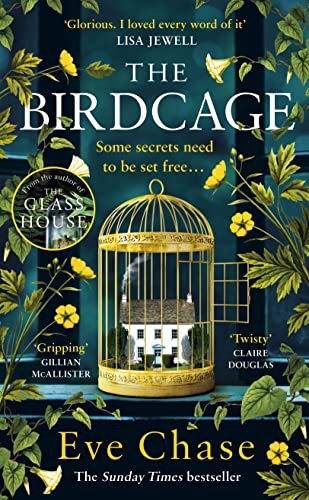
The Birdcage by Eve Chase

Eve Chase’s new novel had all the ingredients of a perfect read for me – quirky bohemian family, unconventional artistic father, large Cornish house and family secrets that have haunted his daughters for years. It’s the psychological impact of these family secrets that really make the novel. The story is told in a dual timeline, in the present Lauren, Kat and Flora are returning to Rock Point, her father’s mansion house on the Cornish Coast. He has invited them after many years away from the house, following a terrible incident that occurred on the day of the eclipse in August 1999. The events of this day are told in our second timeline. Lauren is the youngest by a few years, and on that day she was an adolescent , while her half-sisters Flora and Kat are older teenagers. Each girl has a different mother and their overlapping ages show the sexual profligacy of their father Charlie, a well-known artist. As he sits down with his three adult daughters, Charlie has a big announcement for them. The girls are expecting an illness or plans concerning his artwork, but they have a shock in store.

The complexity of this family’s relationships is at the core of this novel and I really enjoyed going back in time to work out why and how each woman’s personality was formed. On the surface Flora is the most conventional sister, with a husband and young son Raff, but is everything at home as happy as it seems on the surface? Kat is the most career minded sister having developed a well-being app. She is constantly checking her phone and looking for a reliable signal so she can work, but is she just busy or is the world of well-being more stressful than it should be? Lauren has had the most recent difficulties in life, nursing her mother Dixie who was terminally ill. After moving into a local hospice Dixie died, and although Flora invited her for Christmas Lauren didn’t come. These women are anxious to be together again. Flora and Kat used to tease Lauren, even bully her a little bit. The reasons for this become clearer, but Lauren has always thought it was about Dixie. Dixie was different to me 6 hCharles’s usual choice in women, she was unadorned apart from piercings, kept her hair shorter and was artistic in her own right. Indeed Charlie is touchingly affected by her death and seems to regard this separation as something he most regrets in life. Each sister’s personality fits perfectly with their back story: Flora’s hesitancy and submissive nature; Kat’s avoidance and distraction, creating workaholic tendencies; Lauren’s phobias, which are usually under control, but thanks to Bertha the parrot and the wealth of seabirds surrounding their home it can be a problem. The parrot has other tricks as well, mimicking the house’s occupants with phrases that only one person knows are true or false.

I thought the pace was clever, becoming more urgent in the past and present day at once propelling the reader towards the eclipse event and the effect of it’s revelations in the present. What was particularly clever was the way some people are only revealed in all their complexity, in the present. Angie, who worked as their au pair, was disliked by Lauren when she was a child. Lauren sensed her duplicitous nature and knew she wasn’t really there for them, describing her as hungry to get to Charlie like an art groupie. However, as an adult Lauren can see that this was more complicated and how she didn’t understand adult relationships. There’s a shift in years and awareness, where Lauren and her sisters can now see that Charlie wasn’t just a man beleaguered by women throwing themselves at him. He is an active participant in these complicated affairs and in bringing these girls into the world. He’s even passive at their visits, always pleased to see them but never negotiating with exes, or organising the logistics. Their gran does all the work, leaving Charlie free to paint in his studio, a place where only his models and Lauren are welcome. He’s never taken responsibility for his actions and as events unfold it’s possible that those actions have created a perfect storm of sibling jealousy and conflict.

That eclipse summer, Charlie has asked his three daughters to sit for a painting with the large ornamental birdcage. It’s the painting that will become his most well known and most valuable, in fact the girls are sorry it’s gone to art collector because as far as they know it’s his most personal. There’s a wealth of imagery in this painting, starting with the three sister’s pose, sitting together but not touching, like three separate islands. There’s the solemnity behind it too, the girls are not talking or cracking a joke and all three are staring out towards the viewer. Or is it towards the painter? In feminist readings of visual arts the bird within a cage represents the imprisonment of women, but also the gilded frame through which we view femininity. We can’t know the painter’s intention, but by painting it next to his daughters is he acknowledging their freedom? Or could he be pointing out a sexual double standard? He has been free to create these overlapping lives without censure, whereas their mothers and the girls have borne the gossip, shaming, poverty and hardship that comes with being a single parent. They’ve had to hear the whispers and insults about their morals, while he has been free to carry on with only the reputation of being bohemian to his name. Or could the birdcage contain his secret? The consequences of this secret we see on eclipse day, although it isn’t fully revealed until the present when it puts Lauren and her nephew Raff in danger. Only then will Charlie have to deal with how his behaviour has affected others, like ripples on a pond. This was an engaging tale of complex family ties and the psychological effect of a parent’s action. It has all the bohemian glamour of a country house occupied by an artist and a gorgeous atmospheric setting in beautiful Cornwall. I was gripped to the final page, having felt an affinity with Lauren and Flora I wanted to know how their stories turned out and the epilogue brings a satisfying ending to this family saga.

Published by Penguin on 28th April 2022

Eve Chase is an author who writes rich suspenseful novels about families – dysfunctional, passionate – and the sort of explosive secrets that can rip them apart. She write stories that she’d love to read. Mysteries. Page-turners. Worlds you can lose yourself in. Reading time is so precious: I try to make my books worthy of that sweet spot – she says on her Amazon.com author page.

Her office is a garden studio/shed with roses outside. She lives in Oxford with her three children, husband, and a ridiculously hairy golden retriever, Harry. She invites readers to say hello. ‘Wave! Tweet me! I love hearing from readers’.

Eve is on Twitter and Instagram @EvePollyChase and on Facebook, eve.chase.author.

Posted in Netgalley

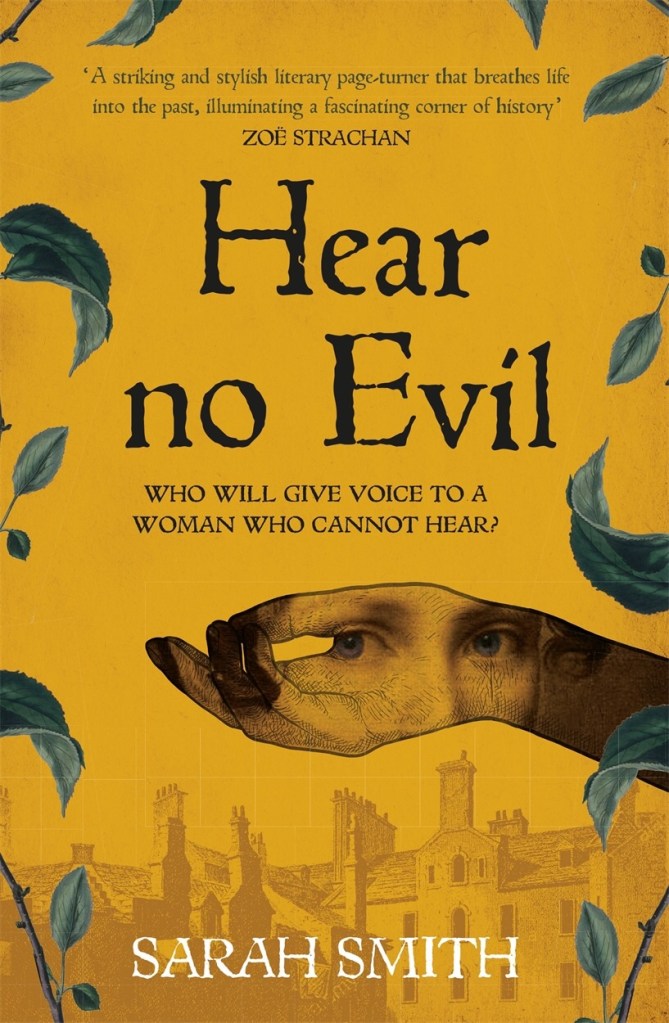
Hear No Evil by Sarah Smith.

It’s 1817 and a young woman is witnessed throwing a child into the River Clyde from the Old Bridge in Glasgow, the authorities are told. Based on a real case, this is a powerful piece of historical fiction from Sarah Smith and an interesting look into the 19th Century attitude to disability, and specifically deafness. The authorities are unable to communicate with their prisoner and as nothing is found at the river, Jean is taken to the Edinburgh Tolbooth in the hope of getting the truth. The High Court asks Robert Kinniburgh if he will communicate with their silent prisoner, to work out whether Jean is deaf or even fit for trial. Robert teaches at the Deaf & Dumb Institution and might be able to form a way of interpreting for the authorities. Jean only has two choices if a court finds her guilty, neither of which are desirable; death by hanging or imprisonment in an insane asylum. As Robert and Jean manage to construct a simple way of communicating, he starts to gains her trust, Jean starts to confides in her interpreter, imparting the truth. As Robert treads a fine line between interpreter and investigator, he becomes absolutely determined to clear her name before it is too late.

The novel’s basis in Scottish legal history means that Smith has researched her period deeply, wanting to tell her tale sensitively and with respect for these real-life characters. It is a perfect mix of fact, atmospheric setting, strong characters and an understanding of what life was like for someone with a disability in the early 19th Century. Kinniburgh has the difficult task of unravelling Jean’s story, immersing himself in the legal machinery of the Edinburgh court, and retracing Jean’s life up till that moment on the bridge. He is a teacher, not a lawyer, so he really has his work cut out. He is our eyes and ears in the story, following Jean’s life in the poverty stricken slums of Glasgow, experiencing her difficulties and finding out what happened in the final days before she came to be alone on the Old Bridge with her baby. He is a very humane main character, full of intelligence and compassion for others. Yet it us Jean Campbell who really made her way into my head and heart.

Obviously, the real Jean Campbell isn’t well known, but it felt like Smith really got under the skin of this girl. The details of her existence are brought vividly to life and Smith shows us that she was strong and full of dignity despite being so disenfranchised. Jean has gone through traumatic experiences, badly used by unscrupulous people only too happy to take advantage. Campbell’s deafness is central pillar of this book, it’s the reason for her poverty, the ordeals she has been subjected to and possibly the court case itself. How far were police officers influenced by her inability to speak. Just as there are now, there were prejudices and assumptions made about the Deaf community at the time, and we get some insight into how sign language evolved when it becomes the key by which Kinniburgh begins to earn Jean’s trust and unlock her story. I love that her story is reaching so many people through this novel.

I loved the settings, particularly the incredibly atmospheric opening which really set the scene for the rest of the novel. Smith’s period locations took me on a journey through time across two beautiful Scottish cities. The most vivid being Edinburgh’s dank and grimy Tolbooth prison which evoked claustrophobia for me. Equally vivid are Kinniburgh’s visits to the filthy poverty of Jean’s Glasgow home. I think that lovers of historical fiction will really enjoy this but I’d like to see it read by a wider audience, considering it’s message is sadly still relevant. We cannot judge fellow human beings until we have understood what has brought them to that point. We also need to make more effort to communicate with those who have a disability. It seems that we can revere them as Paralympians or military heroes, but many don’t pass the time of day with real people with disabilities in their daily life. Smith highlights this by taking us to this earlier time where, for those who were silenced, their disability could mean paying a very high price indeed. Jean could see this discrepancy and the way she was underestimated every day of her life:

‘She was aware of much more than people gave her credit for. Always had been…Not once did any hearing person treat her like she was the same as them.’

Published by Two Roads 3rd Feb 2022.

Posted in Netgalley

The Oceanography of the Moon by Glendy Vanderah.

After the untimely deaths of her aunt and mother, young Riley Mays moved from Chicago to her cousin’s Wisconsin farm. Here she found solace in caring for her extraordinary adoptive brother, exploring the surrounding wild nature, and gazing at the mystical moon—a private refuge in which she hides from her most painful memories. But ten years later, now twenty-one, Riley feels too confined by the protective walls she’s erected around herself. When a stranger enters her family’s remote world, Riley senses something he’s hiding, a desire to escape that she understands well.

Suffering from writer’s block, bestselling novelist Vaughn Orr has taken to the country roads when he happens upon the accommodating, if somewhat unusual, Mays family. He’s soon captivated by their eccentricities—and especially by Riley and her quiet tenacity. In her, he recognizes a shared need to keep heartbreaking secrets buried. As the worst moments of their lives threaten to surface, Riley and Vaughn must find the courage to confront them if they’re to have any hope of a happy future. With the help of Riley’s supportive family, a dash of everyday magic, and the healing power of nature, can the pair let go of the troubled pasts they’ve clung to so tightly for so long?

This is a book about people who have tragic secrets and a real need to process their experiences and heal. Both farm dwelling Riley and writer Vaughan have a similar need to disappear and escape from their physical four walls and the boundaries of their minds. Both are affected by trauma and really need to face it rather than avoid it, if they want to recover. Perhaps these two people with secrets in their past could attempt a slow recovery together. As is the norm for this writer, healing comes from nature, nurture, friendship, family and understanding.

The book is so beautifully written it’s easy to become mesmerised by the language and it’s this that first pulled me into the novel. I love atmosphere and description so this lyrical start was perfect for me. The story is definitely a slow burn, but the sense of place and emotion is hypnotic. The author plays with ideas of darkness within people and how we see ourselves – do we ever see ourselves as we truly are? People who’ve experienced trauma might find it hard to be their authentic selves, because how they feel can be dark, sad and fearful. Riley and Vaughan seemed to have embraced that darkness as part of their identity, when actually there’s so much about them that is lightness and joy. Sometimes, it’s easier to say you love the darkness than it is to do all the work it takes to cast it off. The novel is mainly that personal journey, moving towards the light with the help of family, nature and a little touch of spirituality too.

The moon imagery is interesting, because there is something magical about it: it’s pull on the earth, the seemingly magical way it controls tides and perhaps even moods. There is an otherworldly feel to the author’s imagery that takes us to an earth that is ours, but with some interesting quirks and a touch of surrealism. Here the love of the family is connected firmly to nature, space, and the galaxy. I didn’t need to believe this, I just went with it and enjoyed the journey. I was also touched by a couple of minor characters, Sachi and Kiran. Sachi has such a passion for Indian food and surrealist art and I love people who are passionate and excited about things. She is open hearted and happy to take in anyone, which she does with Riley and Vaughan. There’s an earth mother element to her nature which I loved. Kiran is only eight years old, but is an outstanding little fellow with so much character packed into his meagre years. He feels more comfortable dressed in girl’s clothing, collects fossils and takes apart clocks in order to make magic!

Around her own love of nature and spirituality, Vanderah weaves the story of two strangers who somehow understand each other deeply. The author takes the reader on a lyrical journey from the very depths of their tragic childhoods towards a place of healing; a healing that comes from the consolation of nature, the love of family, the nurturing of self-worth and the understanding that they deserve full and happy lives. I love description, atmosphere and characters who are unique and full of depth, so this story of emotions, regrets, and haunting memories, not to mention the glimpse of hope, was bound to capture my heart.

Published 22nd March 2022 from Lake Union Publishing.

Glendy Vanderah worked as an endangered bird specialist in Illinois before she became a writer. Originally from Chicago, she now lives in rural Florida with as many birds, butterflies, and wildflowers as she can lure to her land. Where the Forest Meets the Stars is her debut novel. Visit Glendy online at http://glendyvanderah.com/

Posted in Netgalley

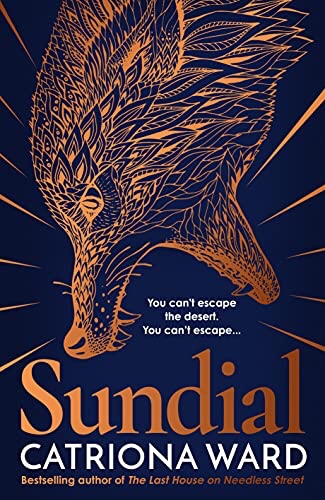
Sundial by Catriona Ward

I was left slightly shell-shocked by Catriona Ward’s new novel Sundial, a state of mind that is rapidly becoming her trademark as a writer after her mind – meltingly strange and clever previous novel The Last House on Needless Street. When people ask me what it’s like to read her novels I liken it to the early films of M. Night Shymalan. Remember when you first watched The Sixth Sense? I remember sitting in the cinema as the final credits rolled thinking ‘what have I just watched?’ Then wondering if I could simply stay for the next showing and watch it again, knowing what was actually happening. They’re novels that won’t immediately show up as film or TV adaptations, because directors will be scratching their heads, wondering how best to tell the story visually, while keeping the revelations under wraps till the end. I’m waiting to see how someone manages the narrating cat, but if anyone can do it it’s Andy Serkis, who is currently developing last year’s smash hit.

I haven’t read her earliest work, but didn’t know what to expect in this new novel and whether she would be able to deliver those WTF?? moments that characterised The Last House on Needless Street. Well it turns out she can and she has. At first I was reading what seemed like a normal family drama and I wondered if we were going to have a change in style. Then there was a moment, everyone who has read it knows where I mean, where the everyday and mundane became strange and distorted. I felt the hairs stand up on the back of my neck. Rob is mother to two daughters, Annie and Callie, and wife to Irving. They are a normal nuclear family, or so they seem. Rob finds out that Callie has the potential and the urge to hurt her little sister. She also finds that Callie is collecting the bones of small creatures, including a puppy from a dumpster. She also whispers to imaginary friends. Rob senses that there might be a darkness in Callie that reminds her of Sundial, the home in the desert where she grew up. Rob resolves to take Callie with her to the Mojave, and back to Sundial which has lain empty since she and Irving became a couple. She thinks this trip into the past will give her answers, but once there she is overwhelmed by memories of the past. Might she have to make a choice between her two children?

The author lets Rob start the story in the family home, establishing the dynamic of their family and the way we view them as readers. As we change to Callie’s narration, things seem very different. We realise that Callie is actually scared of her mother and this ‘mother/daughter’ trip they’re taking. She thinks Rob is looking at her differently and is worried about being alone with her. Consequently, we’re on edge with both narrators. I was never sure which one was telling me the truth of events or whether there is even is one established truth. The author is so brilliant at creating a ‘hall of mirrors’ effect where each reality becomes distorted, but in such a different way that I was struggling to get a grasp on who was dangerous and whether anyone would be leaving the desert in one piece.

With such complex books that are dependent on the scary location and unexpected revelations it’s very hard to know what to tell. I feel that Rob thinks she will shock Callie into a different path by telling her the story of her upbringing, even though I’m not entirely sure she has the ‘true’ version of events. We find out that she lived with her adoptive parents at the ranch, where dogs were kept for scientific experiments into behaviour. I’m not a huge believer of trigger warnings, but if you are genuinely upset or angered by this type of experimentation on animals then maybe this isn’t the book for you. I found this element disturbing and it definitely added to the dark atmosphere of their home. When we drop back into her childhood we know Rob believes that her father and stepmother, became a couple after the death of her mother who she only has fleeting memories of because she was so young. She doesn’t mind her stepmother, but feels an obligation to dislike her out of loyalty. However, slowly we slip through versions of this story rather like a set of never ending Russian dolls until I didn’t know who to trust. This is a perfect psychological horror where the supernatural elements may be real, or may be a delusion or hallucination formed by an unstable mind. There’s a truly sad moment where I can see Rob’s world could have become wider and full of life experiences we want for our children like friends, education and travel. Can she break with Sundial or will she be pulled inexorably back into her past?

It’s fair to say that no one is what they seem in this story. I was very interested in whether the family would be reunited again, but this seemed to become further and further away. There are believable elements; as a lot of people with horrific childhoods do, it seemed as if Rob may have replaced the ranch with another house of domestic horrors. Or had she been so tied to her past she had recreated it? There was manipulation and abuse evident alongside the hauntings. It would maybe be a stretch to say I enjoyed this book, because if it were possible I’d have been reading with my hands over my eyes! I didn’t always want to see or know more. Yet I can see that it’s a brilliant piece of writing that stirred up so many emotions from fear to hope, back to being completely terrified again.

Published by Viper 10th March 2022

Meet The Author

CATRIONA WARD was born in Washington, DC and grew up in the United States, Kenya, Madagascar, Yemen, and Morocco. She read English at St Edmund Hall, Oxford and is a graduate of the Creative Writing MA at the University of East Anglia.

The Last House on Needless Street’ (Viper Books, Tor Nightfire) was a Times Book of the Month, Observer Book of the Month, March Editor’s Pick on Open Book, a Between the Covers BBC2 book club selection, a Times bestseller, and is being developed for film by Andy Serkis’s production company, The Imaginarium.

Little Eve‘ (Weidenfeld & Nicolson, 2018) won the 2019 Shirley Jackson Award and the August Derleth Prize for Best Horror Novel at the 2019 British Fantasy Awards, making her the only woman to have won the prize twice, and was a Guardian best book of 2018. Her debut Rawblood (W&N, 2015) won Best Horror Novel at the 2016 British Fantasy Awards, was shortlisted for the Author’s Club Best First Novel Award and a WHSmith Fresh Talent title. Her short stories have appeared in numerous anthologies. She lives in London and Devon.

Posted in Netgalley

Insomnia by Sarah Pinborough

I was absolutely gripped by this incredible thriller! Emma is nearing her fortieth birthday and she can’t sleep. Her insomnia is triggering anxiety about her Mum and the reappearance of her sister Phoebe isn’t helping. Both girls were taken into foster care on the night of their Mum’s fortieth birthday, when she’d had a breakdown – could the same thing be happening to Emma? Her Mum always said she had inherited the bad blood in the family. As the days pass and irritability, paranoia, fear and the hallucinations start to kick in Emma starts to wonder. Is she going mad or is someone out to ruin her life? Just because you’re paranoid, it doesn’t mean someone isn’t out to get you.

This was a great read and I’ll be shouting about it until publication day. The way Emma disintegrates over the course of a few days is shocking, but believable as every relationship in her life is touched by this ‘madness’, until there’s really nothing left. Emma has always prided herself on being a competent solicitor, very organised and together. I was desperate to find out what happened in their childhood and why her sister Phoebe has popped up in her life right now. I felt there was an element of Emma not processing her childhood trauma. She’s locked it away in the back of her mind, but Phoebe’s appearance, and advice that she should visit their mother, seems like the trigger that unlocks these memories. It’s very common for people to set great store by the ages of their parents when trauma occurs – such as thinking you’ll have a heart attack before your 60th birthday because your Dad did. The worry and stress this causes can lead to a self-fulfilling prophecy.

What the author does, very cleverly, is muddy the waters; just when I was starting to think she was having a breakdown, other things start happening. Her young son keeps creating a strange macabre drawing of a terrible memory that haunts Emma. How could he know? Who has told him this happened? It can’t be anyone in the home, because they don’t know. Her dictated letters have turned into a mumbled series of numbers when her secretary plays back the dictaphone. Added to these strange and inexplicable events the author also throws in a number of stressors that would make anyone struggle with their mental health. At work she is trying to avoid the advances of a very unpleasant client, not only that but his ex-wife confronts Emma over losing custody of their boys. Emma’s tyres are slashed among other nuisance acts that start to pile up over the week, particularly affecting Emma’s job. It becomes hard for the reader to see which events can be explained away, which events are incredibly strange and what are normal daily obstacles made worse by Emma’s severe sleep deprivation. I was never fully sure what to attribute to who, what is real and what is imagined, and who is to blame?

This novel kept me on my toes right up till the end. I felt stressed and paranoid alongside Emma, and could really feel her sense of panic and powerlessness as her carefully constructed life unravels. There are some jump scares here and there that really did give me a jolt! The way the author drew me in was brilliant and I was firmly on Emma’s side, while constantly worrying that she might be an unreliable narrator after all. The ending was unexpected with final scenes that had me on the edge of my seat, glued to the action until the early hours. This really will be an addictive and thrilling film or TV series. Insomnia is a psychologically complex novel, intelligent and exciting till the last page. Pre-order your copy, because this is a cracking read.

Published byHarper Collins 31stMarch 2022.

Meet The Author.

Sarah Pinborough is a New York Times bestselling and Sunday Times Number one and Internationally bestselling author who is published in over 30 territories worldwide. Having published more than 25 novels across various genres, her recent books include Behind Her Eyes, now a smash hit Netflix limited series, Dead To Her, now in development with Amazon Studios, and 13 Minutes and The Death House in development with Compelling Pictures.

Sarah was the 2009 winner of the British Fantasy Award for Best Short Story and also the 2010 and 2014 winner of the British Fantasy Award for Best Novella, and she has four times been short-listed for Best Novel and was shortlisted for the British Book Award for best Thriller.

Sarah lives in the historic town of Stony Stratford, the home of the Cock and Bull story, with her dog Ted.

You can follow her on Twitter @sarahpinborough

Posted in Netgalley, Publisher Proof

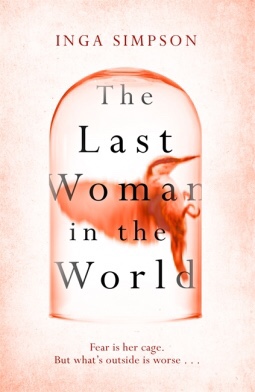
The Last Woman in the World by Inge Simpson

Fear is her cage. But what’s outside is worse…

It’s night, and the walls of Rachel’s home creak in the darkness of the Australian bush. Her fear of other people has led her to a reclusive life as far from them as possible, her only occasional contact with her sister.

A hammering on the door. There stand a mother, Hannah, and her sick baby. They are running for their lives from a mysterious death sweeping the Australian countryside – so soon, too soon, after everything.

Now Rachel must face her worst fears to help Hannah, search for her sister, and discover just what terror was born of us. . . and how to survive it.

I felt slightly breathless reading this story of destruction and apocalypse. So much so, that by the end I had very mixed feelings. I was glad to have finished the book, because I’d been feeling a low level panic and despair. However, it was so prescient and close to our current existence that I felt it needed to be read, however uncomfortable. This is a book borne of a fury that we treat our world the way we do. I write this as I’m laid on my bed – I’ve been unwell this week – watching Storm Eunice attempting to tear the roofing felt from the neighbour’s shed. It was only yesterday that I watched in disbelief as a town in Brazil was completely engulfed by a massive landslide. As I think of the state of our politics, the dreaded virus and the scenes from the Australian bushfires that left me distraught I know that the world Inga Simpson is writing about isn’t something far off future Armageddon. This could happen tomorrow. It is our now, not our future.

Yet still I veer between thinking I must do better and feeling that whatever I do will never count while those who actually have power can hold a ‘landmark’ climate change summit and not decide on anything worth the paper it’s typed on. Simpson has clearly felt a need for change for a very long time and this novel is her retort to our complacency and really does hit home. She uses the medium of the thriller to make our hearts race, our fears run rampant and spells out that this is our future if we don’t change right now. Where the films and books of my childhood concentrated on possible threats from outside – nuclear war in War Games, aliens in Close Encounters of the Third Kind and Alien. Here the threat is so real, because it’s already coming true. It comes from within. We are killing our own planet.

The setting is the city of Canberra, but it’s the incredible and unique flora and fauna of the Australian bush that’s so powerful in the novel. The author’s love for her homeland is so evident in her descriptions of the bush and it’s clear that the basis of the novel comes out of those terrible bushfires and the pandemic. I felt her pain at the loss of wildlife and their habitat. There are themes that flow through all of the authors writing – solitude, the need for quiet, a dislike of large crowded spaces and a total mistrust of elements of modern culture such as social media. The way Rachel feels as one by one these aspects of modern life disappear shows exactly how dependent we’ve all become on constant information and confirmation of events, beliefs and what other’s think.

‘It was a world gone silent. Silenced. There was no help. No news. No advice. No solution.’

I know people who might implode if they were left by themselves without a constant echo chamber of validation. Who do we become when our self is not reflected back to us? Already we can all see people’s standard of living slipping, their security eroded, their sense that someone is in charge and knows what to do about this, is shattered. We have all slipped down the scale from trying to be fully self-actualised beings, to being unable to keep ourselves warm. If there is no one to tell us how to cope we become very basic versions of a human – scraping by to survive and without the tools we once had to be self sufficient or alone. These are the aspects Simpson considers between the action and the conclusion the reader draws might be confronting and upsetting for some. At the very least it will make you think about the way you treat the world and your fellow humans, especially those who have to live in the future we’ve created. I have to say I felt like a product of capitalism when I read the following section:

‘Now it was too late and Isaiah, if he survived, would never see half the things she had seen, taken for granted, gulped down.’

There’s a great thriller here that is addictive, frightening and full of heart-stopping moments. Underneath is just as powerful, but quietly so. For this reader, that made it even more profound.

Published 24th Feb 2022 by Sphere.

Posted in Netgalley, Publisher Proof

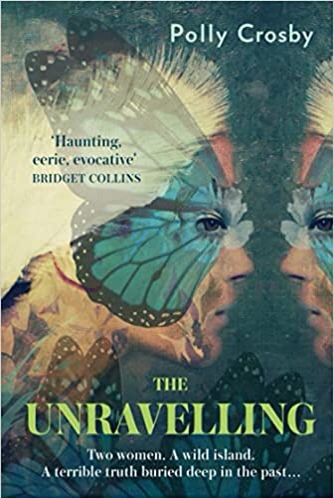
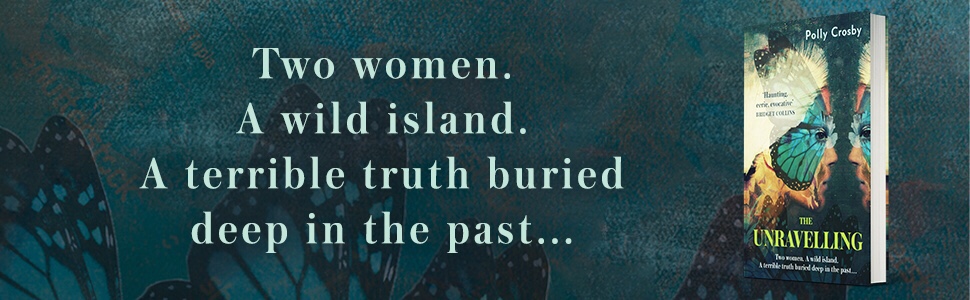
The Unravelling by Polly Crosby

When Tartelin Brown accepts a job with the reclusive Marianne Stourbridge, she finds herself on a wild island with a mysterious history. Tartelin is tasked with hunting butterflies for Marianne’s research. But she quickly uncovers something far more intriguing than the curious creatures that inhabit the landscape. Because the island and Marianne share a remarkable history, and what happened all those years ago has left its scars, and some terrible secrets. As Tartelin pieces together Marianne’s connection to the island, she must confront her own reasons for being there. Can the two women finally face up to the painful memories that bind them so tightly to the past?

I found the last chapter of this new novel incredibly moving and I was smiling through tears as I closed the book.

Polly Crosby you ruined me for other books, for at least a couple of days!

Marianne’s memories of the island take us back to the years between WW1 and WW2, when she lived in the same family home with her mother and father. The Stourbridges were the guardians of the island, through her mother’s side of the family. However, it was Marianne’s father who had taken control of the island and it’s resources. Her family were rich, relying on herrings and pearls to keep their fortunes buoyant and providing work for the islanders. Under Mr Stourbridge’s control the businesses were losing money so he needed to diversify, and settled on silk-making as a way out of difficulty. Mulberry trees and silkworms arrived on the island and Marianne was researching to find out how to produce the best silk thread, but didn’t know that her father had hired a silk girl to come and start things. Nan came to live in their house and although the girls built a friendship, Marianne missed time with her father which was now being sacrificed for Nan and the silk worms. I had so many thoughts and questions in my head by this point. How had the family’s fortunes changed so drastically? How sad it must be for Marianne’s mother to watch her family businesses taken from her and mismanaged simply because she was a woman. Who was Nan and why was she dominating so much of Mr Stourbridge’s time? The author drip feeds these memories into the present day story, answering some questions but leaving others so I was always waiting for the next memory to know what happened next. There was a growing tension in the house that led me to believe an explosion was coming, something that would change Marianne”s life forever. Each section shed light on something in the present day, but I wanted the whole story of why Marianne was so alone in her old age, when did her family leave the island but most of all why was the island requisitioned?

I loved the sense of the uncanny that the author created; a feeling that life on the island was like real life, but not quite. There are strange, unfinished or half destroyed buildings, eroded cliffs and houses that have been literally swallowed up by the sea. Tartelin’s island has a feel of dilapidated grandeur in it’s buildings. They must have once been extravagant and beautiful, like the pavilion where Tartelin meets the peacock, but slowly being broken down and reclaimed by the sea. This is a strong theme throughout the novel, the idea that nature will always find a way, like a flower growing from a tiny crack in the pavement. I found Marianne a fascinating character with the manner of someone very intelligent and far too busy to be bothered with trifles. Her exterior as this grumpy old woman probably brushes most people off, but Tartelin is more persistent than most. Watching these two women slowly learning to trust and understand one another was a joy. Marianne’s story, as it is revealed, moved me beyond words. Even though there’s a fantastical, dream-like quality to her recollections the emotions ring true and are devastating to witness. However, I also felt an incredible sense of joy over the ending too. This novel is evocative and bittersweet, full of rich detail and interesting women. I have no hesitation in recommending all of Polly Crosby’s writing, but this is extraordinary and will stay with me forever.

Published by HQ on 6th Jan 2022

Meet The Author

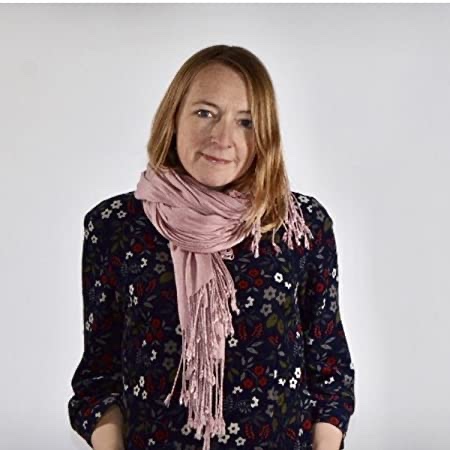
Polly Crosby grew up on the Suffolk coast, and now lives with her husband and son in the heart of Norfolk. Her debut novel, The Illustrated Child (The Book of Hidden Wonders in the US and Australia) is out now. Polly’s second novel, The Unravelling will be published in January ‘22.

In 2018, Polly won Curtis Brown Creative’s Yesterday Scholarship, which enabled her to finish her novel. Later the same year, The Illustrated Child was awarded runner-up in the Bridport Prize’s Peggy Chapman Andrews Award for a First Novel. Polly received the Annabel Abbs Creative Writing Scholarship at the University of East Anglia, and is currently working on her third novel.

Twitter: @WriterPolly

Instagram: @polly_crosby

Website: pollycrosby.com