Posted in Netgalley

Daisy Darker by Alice Feeney

This was a deliciously clever and fiendish tale from an author I’m starting to trust when looking for a thrilling read. This was so difficult to put down and was eerily reminiscent of one of Agatha Christie’s novels that I made a note of it, then I saw it mentioned in the finale, so I won’t ruin it by saying which one. As the tide comes in, the Darker family are congregating at the family seat for the matriarch’s birthday. Seaglass is a large house on an island with only a causeway linking it to Cornwall, so at high tide it is completely cut off from the rest of the world. The book’s action all takes place in the space of one high tide and the final Darkers are rushing across the causeway to get there on time. Gathered at Seaglass are a motley crew of Darkers across four generations from Gran down to her great-granddaughter Beatrice known as Trixie. In between are the son ?? a famous, but not wealthy conductor, his ex-wife Nancy and their three daughters Rose, Lily and Daisy. Not forgetting Popper the family dog. One latecomer is a young man called Connor, an unofficial family member who turned up on Seaglass’s beach one morning when the Darker sisters were small. Gran noticed that Connor was bruised and neglected, so from that moment she took him and his alcoholic father under her wing. One second is all it took for every Darker woman to fall in love with this lonely boy who has lost his mother.

Now Connor has arrived the games can begin and it’s soon clear that if any of the Darker family survive till low tide in the morning, they’ll be very lucky indeed. I loved how the author built the atmosphere. Seaglass is a labyrinthine house, but each downstairs room is arranged around a central hall and are linked by doors, so that when the girls were little they could open the space up and Lily would roller skate in circuits around the house. I really wanted their grandmother’s study: filled with books and art supplies that produced her beloved children’s books. Her first book was Daisy Darker and was inspired by her youngest granddaughter, who was found to have a heart defect when she was a child. I loved the family’s eccentricities and traditions, such as the clocking in machine at the front door where every family member has a card to punch in and out. There’s a blackboard wall in the kitchen, for impromptu poetry, and at the kitchen table there are individual chairs, painted for each family member – of course one is covered in daisies, just like Daisy’s converse trainers. We get a sense of the family’s longevity in their collections and special treasures, such as the bone and seaglass Scrabble set, bought by Gran’s agent and set to play a special part in the night’s proceedings.

Published by Macmillan 18th August 2022

Meet the Author


Alice Feeney is a New York Times million-copy bestselling author. Her books have been translated into over twenty-five languages, and have been optioned for major screen adaptations. Including Rock Paper Scissors, which is being made into a TV series by the producer of The Crown. Alice was a BBC journalist for fifteen years, and now lives in Devon with her family. Daisy Darker is her fifth novel. 

You can follow Alice on Instagram/Twitter: @alicewriterland

To find out more visit: http://www.alicefeeney.com

Posted in Netgalley

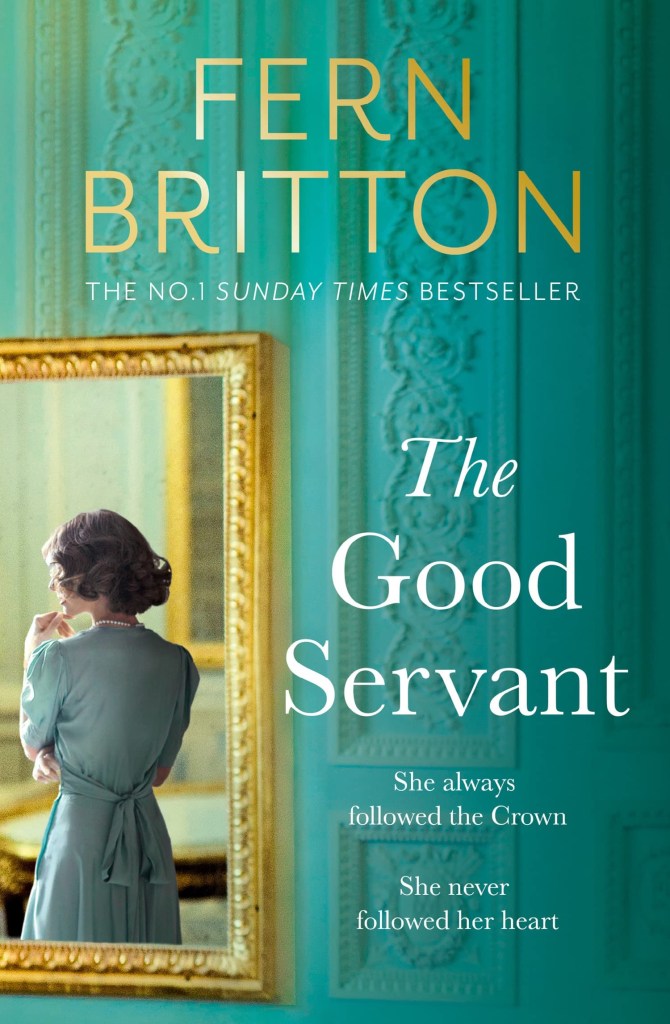
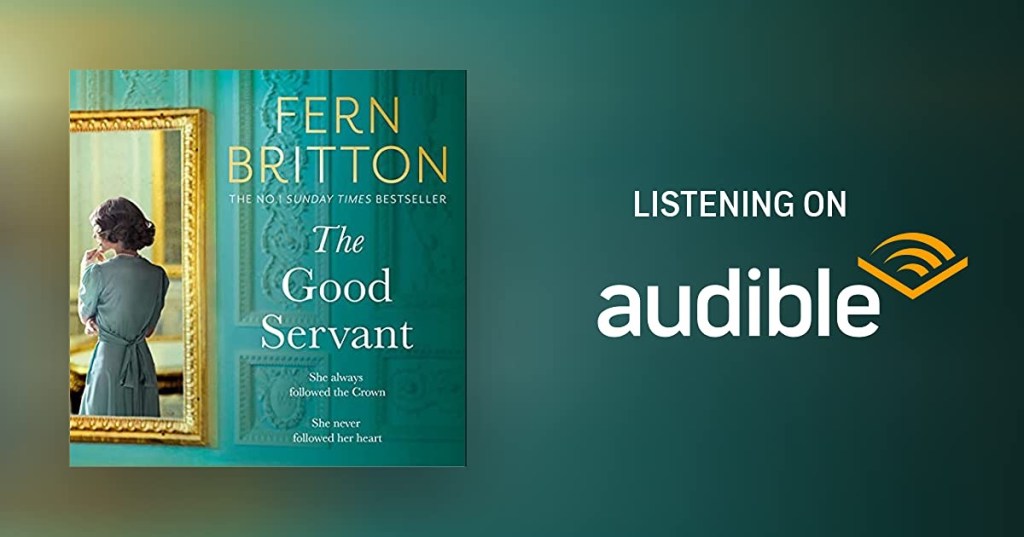
The Good Servant by Fern Britton

I wrote this review a fortnight ago, before the events of the last week. I’m always torn at times when there’s huge royal news, because I’m caught up between my ideals and the sheer spectacle of the event. It’s a trick that Kings and Queens have used throughout history, knowing that they are unpopular with some elements of society, they use the pomp and ceremony to charm and overwhelm them. I’ve lost count of how many times I’ve heard someone interviewed this week and they’ve said ‘I’m not really a Royalist, but the Queen’s done a great job, or has been a constant presence in my life.’ In a time of recession and a cost of living crisis, I have still seen people subjected to a ‘pile on’ on social media if they’ve dared to suggest that the state funeral will be costing a fortune. Heaven forbid they mention the problematic aspects of Queen Elizabeth’s reign from imperialism to her steadfast support of her son Andrew. I think when someone has lived as long as Queen Elizabeth, there will always be societal changes that cast earlier choices in a bad light. However, I do have a complex relationship with the Royal Family, from really loving Princess Diana when I was a little girl, to learning more about the aspects I find worrying, such as the denial of the Queen’s two Bowes-Lyon cousins who had multiple disabilities and were placed in an institution, but declared as dead. I hate the way Diana and now the Duchess of Suffolk were treated and how the love lives of Princess Margaret and even the now King, Charles III, were meddled with by older family members. I was shocked to realise that Prince Phillip’s sisters were married to members of the Nazi Party. The goings on behind the scenes are always fascinating though. The shadowy men in grey suits who actually run the show, schooled in the constitution and making sure that what comes first is the crown above all. It was this behind the scenes fascination that brought this book to my attention. I’ll admit that I’m usually a bit of a snob when it comes to celebrity books. Comedians and journalists are writing all the time, but when someone’s a presenter I never know what I’m going to get from a novel. I gave this a go because of how interested I am in the history of the Royal Family and I should admit to being an avid watcher of The Crown. I thought the story might be diverting at least, but I was actually pleasantly surprised to find myself truly involved with the story of Crawfie.

Fern Britton’s novel takes us back to London between the wars, a rather turbulent time of constant change; socially, economically and culturally. We travel back and forth between 1932 and 1936. In 1932 Marion Crawford is looking forward to a career as a teacher, when an opportunity presents itself. Unexpectedly, she is offered the role of governess to two Princesses. Elizabeth and Margaret are the granddaughters of George V from his second son, the Duke of York and his wife Elizabeth Bowes-Lyon (our Queen Mum). Just four years later and a huge change rocks the royal household, George V’s death paves the way for his eldest son David to succeed him as King. Choosing the regnal name Edward VIII, he is a rather controversial figure amongst the establishment, often disregarding court protocol and conventions and sometimes appearing too political. Edward causes concerns in his choice of companion too, the twice divorced American Wallis Simpson. His abdication, to marry the woman he loves changes the course of history and everyday life for the princesses and their governess. This unexpected constitutional crisis means Crawfie’s life will change forever. It has already been an adjustment to become part of a royal household and now she finds herself in this new position with new responsibilities – governess to the future Queen. The author really does portray this change well, always relating back to how this feels for our heroine, an ordinary young girl given extraordinary responsibility. Marion Crawford is our representative in this novel; the ordinary person living in the extraordinary. As a result we see familiar events from history made immediate and brought vividly to life, with the same sense of wonder and bewilderment that Crawfie feels.

I felt I was in the hands of an expert storyteller as this novel unfolded and I did feel Crawfie’s trepidation at the changes this brought to her life. It was so refreshing to see a well documented part of history told from the angle of a worker in the household, but someone who is neither upstairs or downstairs, but in that liminal role of governess. She is respectable, but not royal. She works for the family, but isn’t a servant. It’s a unique position, but sometimes a lonely one too. She is at the very heart and the future of the Royal Family, but will never be one of them. The author really brought this home to me, the individual working with the Royals must be available whenever they’re needed, no matter how lowly the position. It’s her future and position in this household that Crawfie must consider when she falls in love with George. He may be the love of her life, but can she choose him over her life with the princesses? I loved the sense of loyalty she feels, both to the Crown and her young charges. If she chooses them, their lives will become her life and they will be her children. Would this loyalty be repaid?

I won’t spoil the book by talking about the reality of Marion Crawford’s decision at this time and how her life played out, but she was torn between George and the royals her entire life. The author has told a story that’s an incredible glimpse into the Royal Family at this turbulent time. I felt like I was there as a fly on the wall! I ended up whipping through the story so quickly, possibly because it flows beautifully. There is no doubt about the extensive research that’s gone into the novel, but it wears this research lightly and never lapses into telling us what happened rather than showing us. This is both charming and thought provoking, giving us a glimpse of what it means to have a sense of duty, whether as a Queen or her governess. This was made all the more poignant this week, when most people who were asked what they admired about our Queen said it was her incredible sense of duty. Of course that duty can be eased by the riches and privilege of being a head of state. It must be so much harder to have such a strong sense of duty and loyalty without those benefits or the companionship of a family. Fern Britton has really brought a minor player in the history of our Royal Family to life with this novel and it would draw me to her writing in the future.

Published by Harper Collins 9th June 2022.

Meet The Author

Fern Britton is an English television presenter and journalist who has worked in current affairs and Newsrooms since 1980. In the 1990’s she hosted Ready Steady Cook for the BBC and through the 2000’s presented ITV’s flagship daytime magazine This Morning. Since then she has discovered the joy of writing novels and The Good Servant is her tenth. It is a breakaway from her usual theme of Cornish village life by the sea. The Good Servant focuses on a real woman who spent her twenties and thirties devoted to Princess Elizabeth and Princess Margaret as children. Fern lives in Cornwall with her four children and three cats.

Posted in Netgalley

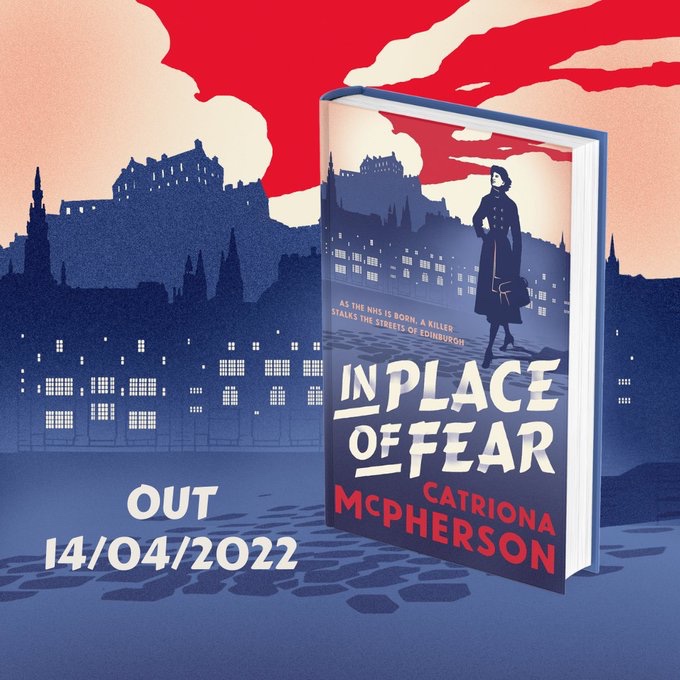
In a Place of Fear by Catriona McPherson.

‘Helen leaned close enough to fog the mirror with her breath and whispered, ‘You, my girl, are a qualified medical almoner and at eight o’clock tomorrow morning you will be on the front line of the National Health Service of Scotland.’ Her eyes looked huge and scared. ‘So take a shake to yourself!”

In Edinburgh, 1948. Helen Crowther leaves her crowded tenement for her own office in a doctor’s surgery. She is aware of other people’s opinions and disapproval- ‘Upstart, ungrateful, out of your depth’ – but she’s determined to take part in this incredible new service that will help so many people. She’s not even settled in when she blunders into a murder. Even though Edinburgh is the most respectable of cities, no one wants to stand up for justice, but Helen is determined to find the killer. She’s taken into a world she didn’t know existed, it’s darker than her own as hard as her own can be. Disapproval is now the least of her worries. Helen, known as Nelly, takes on a newly created position within the NHS, as a Medical Welfare Almoner. This was a position based within the free hospitals that is the forerunner to a hospital social worker. The very first almoner in the U.K. was Mary Stewart, appointed at the Royal Free Hospital of central London in 1895. The Royal Free was a charitable hospital and gave free medical treatment to those patients considered morally deserving, but unable to afford medical care. An Almoner would means test patient to ensure that only those deemed “appropriate” received free medical treatment. However, Stewart slowly reshaped her role of and fashioned the position into a medical social worker, referring patients to other means of medical and charitable assistance, visiting patients’ homes, and training almoners for positions at other voluntary hospitals.

Nelly is there in the role’s infancy and while she’s still finding her bearings in her new job she begins to notices that all is not as it should be. Nelly isn’t the type of person to brush things under the carpet, so she starts to investigate. There is so much more there than she expects, especially when a body is found in the garden of the house she’s been living in as part of her employment. Even then her curiosity about cause of death and any motive pushes her to carry on investigating, even if it puts her in danger. I felt like I really understood Nelly. I loved her no-nonsense attitude and her dogged refusal to let things go. She wants to make a difference to the patients she sees at the hospital and it was fascinating to be taken back to the birth of the NHS and see how it was implemented. New patients had no idea what help they were entitled to and no-one, even those working in it, fully knew how it worked. I thought that the title was a clever nod to Aneurin Bevan’s own book of the same name.

The mystery was clever and well paced, it kept me reading and surprised me at times, but it wasn’t my favourite part of the novel. I’m used to Edinburgh based stories taking me to the university and male dominated academia, which also suggests people of a certain class. The author focuses on the blue collar, working people of the city. We see a generation and class still struggling in the aftermath of war. This is the beginning of universal health care; health for everyone, not just those who can afford it. The writer gripped me from page one by bringing to life the sights, sounds, and smells of this point and place in time. As someone who has needed the NHS more than most, I found it so interesting to see how it began from a character working on the frontline and making tough decisions.

Meet The Author

Catriona McPherson was born in the village of Queensferry in south-east Scotland and left Edinburgh University with a PhD in Linguistics. Her historical fiction has been short-listed for the CWA Ellis Peters award and long-listed for Theakston’s Crime Novel of the Year, as well as winning two Agathas, two Macavitys, and four Leftys in the USA. Catriona lives most of the year in northern California, spends summers in Scotland, and writes full time in both.

Posted in Netgalley

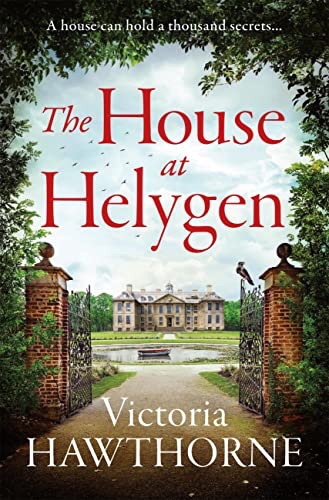
The House at Helygen by Victoria Hawthorne

An atmospheric historical suspense novel rich with familial secrets. The House at Helygen is a twisted tale of dark pasts, murderous presents and uncertain futures.

2019

When Henry Fox is found dead in his ancestral home in Cornwall, the police rule it a suicide, but his pregnant wife, Josie, believes it was murder. Desperate to make sense of Henry’s death she embarks on a quest to learn the truth, all under the watchful eyes of Henry’s overbearing mother. Josie soon finds herself wrestling against the dark history of Helygen House and ghosts from the past that refuse to stay buried.

1881

Eliza is the new bride who arrives at Helygen House with excitement at the new life she’s embarked upon. Yet when she meets her new mother-in-law, an icy and forbidding woman, her dreams of a new life are dashed. And when Eliza starts to hear voices in the walls of the house, she begins to fear for her sanity and her life.

Can Josie piece together the past to make sense of her present, or will the secrets of Helygen House and its inhabitants forever remain a mystery?

1881. Harriet and Edmund Fox were the first owners of Helygen House, a country retreat that, as is the usual in moneyed families, has ever since passed down the to the eldest male heir. From the original owners in 1847, it then passed to Eliza and Cassius Fox in 1881. Eliza has to spend a lot of time alone, because Cassius is away looking after his business interests. Eliza starts to feel lonely and misses her family. Not only that, there’s an eerie feeling in the house and Eliza’s is sure she’s heard voices at night and a baby is crying. Eliza daren’t tell anyone as she thinks she might be going mad.

2019: Henry Fox is found dead at his ancestral home in Cornwall. The police are quick to rule out foul play, because it looks to them like suicide. His wife Josie, who is pregnant, won’t believe Henry has killed himself. Yet his mother Alice is satisfied with the suicide verdict. Josie finds it difficult to deal with this woman, who has always held herself above Josie, as if she wasn’t good enough to be part of the family. She knows how excited Henry was about becoming a father, they had spent so much time getting their apartment renovated and even had plans to start a business together at the house. Something isn’t right and even through her grief Josie is absolutely determined to find the truth. As far as she’s concerned there’s a murderer somewhere at Helygen. Her mother-in-law’s attitude hasn’t helped Josie settle, but she has to admit the atmosphere has always been strange. There’s a strange feeling she can’t place, a haunting perhaps?

I enjoy dual timelines and this is a triple as we alternate between the 1840’s, the 1880’s and the present. It’s important that each timeline is equally interesting so it doesn’t just feel like a narrative device. Here I think they work. It feels as if Eliza and Josie are working together, even though they’re separated by centuries. Both are convinced that Helygen House has a dark past, that still lingers within the walls. The many tragic deaths over the years are starting to look sinister, even if it is just the eerie sensation and the voices driving occupants towards madness. There are enough family secrets to keep the tale moving forward and there is a continuous feeling of suspense to keep the reader wanting one more chapter. I loved the added theme of motherhood and how it might feel to be a new mum in a house like this one, where it really can’t help when sleeplessness and night feeds are brought into the mix. The place feels suitably Gothic whichever timeline you’re in and from the start I believed in this world completely. It does keep the reader guessing and I found myself wanting to know if the storyline resolved itself for both women. It was also interesting to add in the question of women’s rights in past centuries and compare it to the present day. A great, suspenseful and spooky novel with the gorgeous backdrop of Cornwall.

Published 14th April 2022 Quercus

Meet The Author


Victoria Hawthorne is a pseudonym of bestselling psychological suspense author Vikki Patis. She writes atmospheric historical suspense rich with familial secrets and strong female protagonists. THE HOUSE AT HELYGEN will be published in April 2022 by Quercus.

Posted in Netgalley

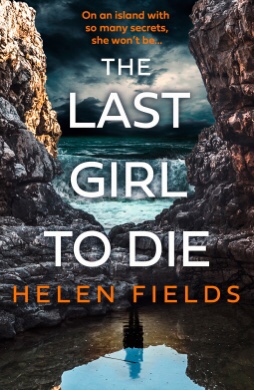
The Last Girl to Die by Helen Fields.

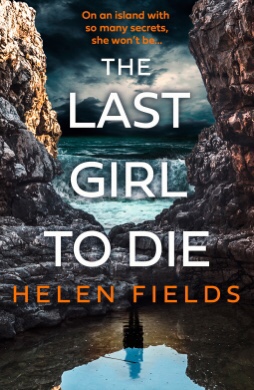
This book is one of my picks for the autumn and I really did pick an absolute cracker of a crime novel. It’s chilling, atmospheric and incredibly clever, especially at weaving the setting into the story. I read this straight through and halfway through my binge read I had to look it up and check that it really was a stand-alone novel. Sadie Levesque is a compelling central character: brave, resourceful, determined, intelligent and ever so slightly impulsive. I could easily imagine her as the backbone of a great crime series. Sadie is a private investigator based in Canada where she’s about to be the birth partner for her sister. She has time to fit in one last job, which takes her to Scotland and the atmospheric island of Mull. The Clark family recently moved to Mull from the United States to start a new life, but their plans have been derailed by the disappearance of their seventeen year old daughter Adriana. With her American accent and dark Latino looks, Adriana caused a stir among the teenagers of Mull and was very noticeable in her job at the local pub. Her desperate parents feel the local police force are doing very little to look for their daughter, possibly because they are outsiders. When Sadie finds the girl’s body while searching local teen hang outs, the police become hostile. Adriana has been drowned. The killer has sexually assaulted her, adorned her with a seaweed crown and filled her mouth and throat full of sand. Sadie’s immediate thought is she’s been silenced. Without police cooperation, Sadie must find the killer and is drawn into a mix of local folklore, witches, a misogynistic priest and a community that looks after it’s own. Will Adriana be the last girl to die?

The island is definitely a character in it’s own right here. It even narrates it’s own chapters. Nature is in every part of the book, starting with Sadie who seems more comfortable outside than in. She feels more powerful out there, sleeping in a tent and lurking around in the dead of night, observing the islanders. For the island’s teenagers, the beaches and stone circles become the backdrop for their vigils and parties. Of course Adriana is also found outdoors, in a cave adorned with the plants and products of the sea. There’s something folkloric about the way she is posed and especially the sand, which Sadie finds out is part of ancient lore dating back to the 16th Century if not further. It is part of a ritualistic killing, if her mouth is full of sand she can’t utter the truth about what or who killed her. It is a method used by witches to silence those who might identify them. The outdoors and the sea is in these people’s DNA for generations, many are fishermen and one of the island’s legends is of a ship from Spain that was wrecked on the coast of Mull. On board was a Spanish princess who had dreamed of a beautiful man on a Scottish island and saw him as they reached the shore at Tobermory and fell instantly in love. The man’s wife saw the look in the princess’s eyes and called on the Mull Witch who destroyed the vessel, killing all 300 souls on board. History tells us that the boat was part of the armada and that islanders sank the vessel, a terrible end for the sailors who were seeking help. These deaths, from the 16th century to the present leave their mark. The island is a living thing, we are told, it feels everything. I loved the poetic way the author writes in the island’s sections:

‘Sea deaths bring furious tides. The waves slap the sides of boats, knocking the sailors from port to starboard, and the fish thrash so hard they break nets. Shells smash, scattering vicious fragments on beaches to slice careless feet. Salty tears form an ocean.’

It’s following her instinct and looking into the death of a young woman years before that first sparks the idea of witchcraft. Flora Kydd’s father laments in the village pub that his daughter’s death was glossed over by the police. Her killer had never been found. Sadie finds the Kydd’s house covered with posies of flowers to deter witchcraft and dark symbols burned into the beams to ward off the evil eye. I loved the way the author paired witchcraft with feminism, showing a deep seated misogyny in some of the islands men, particularly the local priest. Sadie stumbles across a group of women in a forest clearing, late at night. They are naked, but covered in clay, dancing around a fire. Their leader, Hilda, talks to Sadie at length dismissing the idea of darker witchcraft and claiming to be a women’s group, offering support and learning the old healing ways of nature. They protest at a community meeting where women have been told they have a curfew and should stay indoors after dark. Hilda has a strong position on this, maybe men should stop killing women. Sadie’s thoughts are going in two different directions. Could Adriana have been killed by unscrupulous members of Hilda’s group who were pressuring her to join in? Or had she become one of the women dancing around the fire and been killed because she was deemed a witch? There are some twists to the final stages that came as a huge shock. I love to be surprised and I really was here, with my heart sat in my throat at times. Could the truth be more prosaic than the legends? That men kill and could use the excuse of ancient folklore and witchcraft to cover their tracks. I was torn between this more logical explanation and the sense of an ancient evil at play on this remote and wild island. If anyone knows, the island does.

Published by Avon 1st September 2022.

Meet the Author.

Helen is a former criminal and family law barrister. Every book in her brilliant Callanach series has claimed an Amazon #1 bestseller flag. The last book in the series, ‘Perfect Kill’ was longlisted for the Crime Writers Association Ian Fleming Steel Dagger in 2020, and others have been longlisted for the McIlvanney Prize, Scottish crime novel of the year. Helen also writes as HS Chandler, and has released legal thriller ‘Degrees of Guilt’. Her audio book ‘Perfect Crime’ knocked Michelle Obama off the #1 spot. In 2020 Perfect Remains was shortlisted for the Bronze Bat, Dutch debut crime novel of the year. Now translated into 16 languages, and also selling in the USA, Canada & Australasia, Helen’s books have won global recognition. Her historical thriller ‘These Lost & Broken Things’ came out in May 2020. Her first standalone thriller – The Shadow Man – from HarperColllins was published on February 4, 2021. She currently commutes between West Sussex, Scotland and California. She lives with her husband and three children. Helen can be found on Twitter @Helen_Fields for up to date news and information or at http://www.helenfields.co.uk.

Posted in Netgalley

Sunday Spotlight! Autumn Fiction: Crime, Thrillers and Mystery.

Who doesn’t love a great crime novel or mystery? It seems to be something that’s ingrained in us, perhaps since some of the first literary detectives like Sherlock Holmes. Our enduring love for Agatha Christie and our consumption of Sunday night cozy crime dramas tells me it’s in the blood somehow. I have a strange relationship with crime thrillers that is more to do with the snobbery of my secondary school than the books themselves. Thrillers are something I devour quickly and almost furtively, as if I should be ashamed of enjoying them. Yet some of my favourite contemporary writers are writers of thrillers and crime novels. As we know from last week’s Spotlight I love the Cormoran Strike novels, the Roy Grace series and Doug Johnstone’s Skelf series too. I also enjoy Sophie Hannah, Anne Cleeves, Elly Griffiths, Will Dean, Louise Candlish, Harriet Tyce, and Kate Atkinson’s Jackson Brodie series. I have started reading Agatha Christie too, after my father in law left me an anthology of her stories when he emigrated to New Zealand. So it was no surprise to me that eight of my most anticipated books for autumn were from this genre. See last week’s post too, for three more excellent crime novels on our way this autumn.

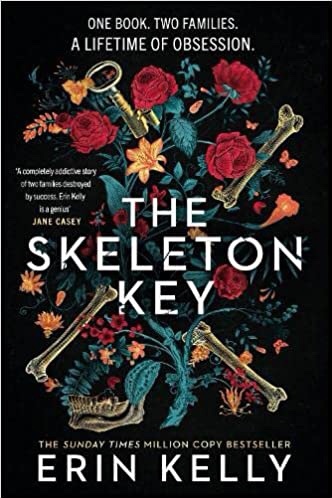
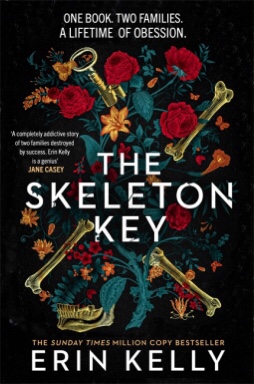
I remember being so impressed with Erin Kelly’s first book The Burning Air, but this book sounds like an incredible feat of imagination and ingenuity. It is ambitious and is one of those books that can only be written when a writer has some experience under their belt. It’s
Summer, 2021 and this is a reunion the family will never forget. Nell has come home at her family’s insistence to celebrate an anniversary. Her father is a writer and fifty years ago he wrote The Golden Bones, part picture book and part treasure hunt. It’s a fairy story about Elinore, a murdered woman whose skeleton was scattered all over England. The Golden Bones led readers via clues and puzzles to seven sites where jewels were buried – gold and precious stones, each a different part of a skeleton. One by one, the tiny golden bones were dug up until only Elinore’s pelvis remained hidden.

The book was a worldwide sensation and a whole community of treasure hunters was formed. The Bonehunters were in frenzied competition with each other, obsessed to a dangerous degree. People sold their homes to travel to England and search for Elinore. Marriages broke down as the quest consumed people. A man died. The book made Frank a rich man. Stalked by fans who could not tell fantasy from reality, his daughter, Nell, became a recluse. But now the Churchers must be reunited. The book is being reissued along with a new treasure hunt and a documentary crew are charting everything that follows. Nell is appalled, and terrified. During the filming, Frank finally reveals the whereabouts of the missing golden bone. And then all hell breaks loose. From the bestselling author of He Said/She Said and Watch Her Fall, this is a taut, mesmerising novel about a daughter haunted by her father’s legacy.

Published by Hodder and Stoughton 1st September 2022.

This standalone thriller from Helen Fields, known for the Luc Callanach series of novels, is an absolute belter of a novel. In search of a new life, seventeen-year-old Adriana Clark’s family moves to the ancient, ocean-battered Isle of Mull, far off the coast of Scotland. Then she goes missing. Faced with hostile locals and indifferent police, her desperate parents turn to private investigator Sadie Levesque. Sadie is the best at what she does. But when she finds Adriana’s body in a cliffside cave, a seaweed crown carefully arranged on her head, she knows she’s dealing with something she’s never encountered before. The deeper she digs into the island’s secrets, the closer danger creeps – and the more urgent her quest to find the killer grows. Because what if Adriana is not the last girl to die? This was a genuinely chilling story, combining the epic landscape, myths and legends, as well as some serious scares. The author embeds this modern murder into the island’s past, with even 16th Century shipwrecks, ancient standing stones and the community’s instinct to look after their own all playing a part in the mystery. Look out for my review on Tuesday this week.

Published by Avon 1st September

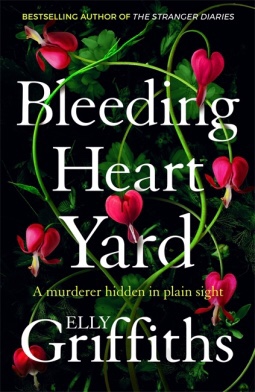
As everyone knows, I’m a huge fan of Elly Griffiths’s Ruth Galloway series, so I’m intrigued by this new thriller set in London featuring Detective Harbinder Kaur. A murderer hides in plain sight – in the police. DS Cassie Fitzgerald has a secret – but it’s one she’s deleted from her memory. In the 1990s when she was at school, she and her friends killed a fellow pupil. Thirty years later, Cassie is happily married and loves her job as a police officer. One day her husband persuades her to go to a school reunion and another ex-pupil, Garfield Rice, is found dead, supposedly from a drug overdose. As Garfield was an eminent MP and the investigation is high profile, it’s headed by Cassie’s new boss, DI Harbinder Kaur. The trouble is, Cassie can’t shake the feeling that one of her old friends has killed again. Is Cassie right, or was Garfield murdered by one of his political cronies? It’s in Cassie’s interest to skew the investigation so that it looks like the latter and she seems to be succeeding. Until someone else is killed.

This has some great early reviews and I’m really looking forward to it.

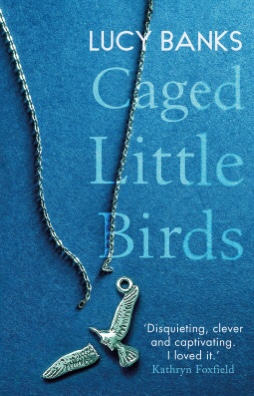
Described as disquieting and sensationally sinister in early reviews from fellow authors, there is a bit of buzz in the blogger community about this thriller from Lucy Banks. It’s set in that tension between someone who protests their innocence and has paid for their crime, versus the general public who often feel differently, seeing a criminal is their midst. The public think Ava’s a monster. Ava thinks she’s blameless. In prison, they called her Butcher Bird – but Ava’s not in prison any more. Released after 25 years to a new identity and a new home, Ava finally has the quiet life she’s always wanted. As she forges a friendship with her neighbour, however when the neighbour’s daughter comes to stay things change. Ava is convinced that she’s worked out who she is and when a brick comes through the window she knows that someone has discovered her secret. The lies she’s told are about to unravel. This is a real psychological suspense novel that really draws you deeply into the character’s experience. It poses the question of whether someone has ever paid for their crimes?

Published by Sandstone Press on the15th September 2022

When is the right time to be who you always were?

Jodi Picoult has always been a must read for me, ever since Her Sister’s Keeper, many years ago now. Here she collaborates with Jennifer Finley Boylan, an author I haven’t come across before. Billed as compelling and moving, this reminds me of earlier Jodi Picoult – a story built around a contentious, contemporary issue such as racism, abuse, school shootings or fertility and reproductive rights. Things that are a real flash point in modern America. Just as Picoult did with her novel Wish You Were Here, the authors have picked an up to the minute contemporary issue and I can already imagine challenging conversations around authenticity, identity and gender at every book club up and down the country.

We follow Olivia who fled her abusive marriage and returned to her hometown to take over the family beekeeping business when her son Asher was six. Now, impossibly, her baby is six feet tall and in his last year of high school, a kind, good-looking, popular ice hockey star with a tiny sprite of a new girlfriend. Lily also knows what it feels like to start over – when she and her mother relocated to New Hampshire it was all about a fresh start. She and Asher couldn’t help falling for each other, and Lily is truly happy for the first time. But can she trust him completely? Then out of the blue Olivia gets a phone call – Lily is dead, and Asher is arrested on a charge of murder. As the case against him unfolds, she realises he has hidden more than he’s shared with her. And Olivia knows firsthand that the secrets we keep reflect the past we want to leave behind ­­- and that we rarely know the people we love well as we think we do. This is my weekend read and I can’t wait to get started.

Published on 15th November 2022 by Hodder and Stoughton

That’s it for this week, but next week I’ll be looking at Fantasy, Magic and all things spooky.

Posted in Netgalley

An Italian Girl in Brooklyn by Santa Montefiore

We all remember that incredible feeling of first love, more than likely with rose tinted glasses, full of nostalgia and novelty. It was on my mind while reading this book, mainly that joyful moment when you realise that they actually love you too. It’s intoxicating. The first time I fell in love, I leapt in feet first and had my heart broken, but I held a candle for him for many years and had it set in my mind as a perfect love. With a lot of years and a bit more wisdom, I can see it differently. However, I was always be grateful for the experience, because it showed me how great my capacity for love was. How much better would this experience be when I was ready for it, if it came my way again? Our novel follows Evelina, a young woman living in a remote part of northern Italy. She lives with her parents, her sister Benedetta and two formidable old ladies, her grandmother and great aunt. Life is peaceful for most of the time, but as WW2 looms closer there are changes both personal and for the whole of Italy. The influence of Hitler and his agreements with Italy’s leader Mussolini, will change all of their lives forever.

The central relationship in the novel illustrates these changes most dramatically. People of the Jewish faith have lived in Evelina’s village for so long they are simply part of the fabric of the place. Evelina has never realised that their village tailors, the Zanotti family, are Jewish, so when she meets their son Ezra she can’t imagine any obstacles to the way she feels, apart from some parental misgivings about his ability to support her. Yet, the outside world is about to come crashing in on the tentative feelings growing between these two young people. Within Evelina’s family circle, it is Benedetta’s new husband who brings the new politics into their midst. A staunch supporter of Mussolini, he is behind Hitler’s initiative to rid Europe of Jewish people. When he brings his views to the breakfast table, Evelina’s father says his views are not welcome in his home. Sadly, Benedetta then leaves dutifully with her husband bringing a rift between them. They’ve heard terrible stories, of Jewish people being taken to a prison camp in the far North of Italy before being placed on a train bound for Auschwitz- Birkenau. Friends start to plead with Ezra’s father to leave and knowing what’s coming. When it does, Ezra evades capture and joins the Resistance. Evelina creates a safe space in their chapel for Resistance fighters to rest and replenish themselves. After a brief and family sanctioned relationship, with a Jewish girl from the village who worked for Evelina’s family, the closeness of war and the threat to his family combine to influence Ezra. He breaks his promise to her and comes to Evelina, assuring her of his long held love for her, despite their religious difference. He wants to be true to his emotions rather than please his parents. Thus far he had seen Evelina as out of reach, now a blissful courtship develops. As summer blooms alongside their love, they create memories neither will ever forget. So, when he is captured, Evelina’s grief is devastating. Yet, she waits until the news confirms the worst; Ezra and his entire family are dead. With the Italy she knows gone forever Evelina makes a huge decision, she will cross the Atlantic and make the voyage to New York to live with her aunty, in Brooklyn.

Evelina’s story is told across two time periods, forty years after the war in Brooklyn, then back in time to WW2 Italy as she has flashbacks. She’a now 63 and married to an older professor called Franklin, with whom she has a family. She has built a lovely, welcoming home for her family and their close friends, usually other immigrants from Italy and the much beloved Uncle Topino and her Aunt Madelina. It’s a loving environment and her relationship with Franklin is a very loving one, even though part of her heart will always belong to Ezra.

And their love for each other had deepened. She loved Ezra still, she would never stop loving him, but she loved Franklin too. It was, indeed, possible to love two men in very different ways. She realized now, in her wisdom, that there were many faces to love.’

This really is a sweeping epic with a central love story that stayed with me, although I had so much respect for Evelina’s husband Franklin too. I didn’t know a lot about Italy’s role during WW2 and the background research did open my eyes to how they ended up drawn into Hitler’s plans for the future. It shows how the Nazi’s ideology broke up previously peaceful communities and even families like Evelina’s. She and her sister are very close, but she has to circumvent Benedetta’s husband to communicate with her. When he’s eventually called up to fight, the sisters are reunited and the family live together through the rest of the war. I loved the connections and help both sisters give to the Resistance, both of them with relationships torn apart by war in very different ways. This was a beautiful story where familial love is concerned, but the central love story is heart rending and has a twist that will truly surprise you. I often find love stories lacking in substance, but this wasn’t one of them. It was my first Santa Montefiore novel, but I’m very sure it won’t be my last.

Published by Simon and Schuster 7th July 2022

Born in England in 1970, Santa Montefiore grew up in Hampshire. She is married to writer Simon Sebag Montefiore. They live with their two children, Lily and Sasha, in London. Visit her at http://www.santamontefiore.co.uk.

Posted in Netgalley

Small Angels by Lauren Owen

I love a gothic novel, something I put down to my first reading of Jane Eyre. Being only ten years old I read it as a ghost story, full of horrors like the Red Room and the haunted ghost-like creature stalking the corridors of Thornfield Hall, setting fire to Rochester’s bed and rending Jane’s wedding veil in two. So I picked this from the NetGalley shelves, my brain already turning towards the cooler air of September and the dark nights of the autumn. As it is I read it in the middle of a heatwave, but it still managed to send the odd chill up my spine. Chloe and Sam are getting married at Small Angels, a quaint little church in a wooded area with nearby Tithe Barn for their reception. The venue is situated near to Sam’s childhood village and they are the first couple to be married there. The owner has given them a key and they have a few days up to the wedding day to clean the dusty church and decorate both buildings. They’re staying at the Albatross, the village pub, and on the first night they gather to have a drink with their guests among the locals. One local man, Brian, approaches the couple to tell them a story about Small Angels that might make them rethink their plans. Others are more reticent, they don’t want Brian to tell the tale and ruin the couple’s big day. What Sam doesn’t know is that the person best placed to tell this tale is his own sister Kate.

We’re told this story from several perspectives and to be honest I did get a little confused at first. The current perspectives are split between Chloe and Kate. However, Kate also goes back to when she was a child and started a friendship with one of the Gonne girls. The Gonnes lived on a farm, close to Small Angels and Mockbeggar – the local woodland. For years they have kept up a ritual of lighting beacons every evening and ringing the church bells once a year, followed by a candlelight vigil overnight. The rest of the village have traditionally left the Gonnes to their lonely rituals, but Kate knows that the story Brian will tell the wedding party, might not be so far fetched. The Gonnes believe they are appeasing the ghost of Harry Child, a vicious and vengeful phantom who wants to keep the wood for his own, but is also very lonely. Kate is shocked to hear that one of the sisters she knew from childhood is living at the farm. Will all the generations of secrets surrounding the village come to light on her brother’s wedding day? Kate questions her brother’s sense in agreeing to hold it at Small Angels, no matter how much Chloe fell in love with it.

Chloe takes up the narrative, as the innocent bystander thrown into this strange village with it’s spooky history. Chloe has been the driving force behind the week’s celebrations and has no idea of the story Brian tells on the Hag Night. She is amazed that Sam has never told her and has thought Kate doesn’t like her because she’s seemed disinterested in their plans. She’s surprised that Kate has committed to helping out this week, not realising that she’s coming to keep an eye on things. The tension in this section is brilliant as we see Chloe sucked in by the legend and looking for local history at the library. She’s confused by the villagers avoidance of the subject, even her own in- laws are reluctant to discuss it. Chloe start to find her sleep disturbed and with Sam called away to work she’s alone at the Albatross. She can’t shake the feeling she’s being watched after taking a walk into the woods. While cleaning the church she hears an animal scratching at the door, then again at night. Has something or someone followed her? I was intrigued as to what it might want from Chloe and whether the wedding would ever happen.

The Gonnes seem to be the key to solving this mystery so I was fascinated with Lucia’s sections of the book, especially those that go back to her childhood. She lives at the farm with her father, her grandparents and three sisters: Elphine, Helena and Ruby. One day while playing, Lucia goes into the woods and finds a small boy to play with. He becomes her secret friend and his name is Harry. With all the adults working on the vines at the farm and keeping up the family rituals, it’s easy for her to slip away unnoticed. Besides she’s the black sheep of the family, Nan calls her Lucia the Bad, so I felt sorry for her and could understand why she was looking for friends. Years later she meets another teenage girl in the woods and is happy to have a second friend, but Harry isn’t so happy. He wants Lucia to himself and she’s never seen him angry. All the rituals in the world won’t satisfy his wrath and Lucia is terrified. What will happen to the Gonne family now?

As we countdown to the wedding the stakes become greater and the author creates a real sense of fear and horror. Whatever force is in the woods, it’s growing stronger by the day. The real cost of the wedding starts to become clear and I loved how the author brought experiences from the past into the present to terrify the wedding party. I had a real sense of my old Jane Eyre fears when Chloe wakes from a nightmare to find a tear in her wedding dress and her veil fashioned into a noose. I really felt the burden of the Gonne family, ostracised by the village and left with the responsibilities of Mockbeggar. Once I’d reached a third of the way in, I was hooked on the mystery in the same way Chloe was, wanting to find out more about the malicious spirit and why he is determined to terrify her. I was also fascinated by the Gonne sisters and why Lucia is the only one left at the farm. I was also interested in how long the locals had kept their heads in the sand, merely speeding up on the road out of the village to evade the woods. You’ll be asking all the same questions and more. This is a really atmospheric, modern, Gothic tale with enough scares that I kept the bedside light on once or twice.

Published by Tinder Press 2nd August 2022

Meet The Author

Lauren Owen is the author of THE QUICK and SMALL ANGELS. She studied at St. Hilda’s College, Oxford, holds an MA in Victorian Literature from Leeds University, and an MA in Creative Writing from the University of East Anglia, where she was awarded the Curtis Brown Prize. In 2017 she completed a PhD in English Literature with a thesis on vampires and the gothic in fiction.

Posted in Netgalley, Publisher Proof

Beyond a Broken Sky by Suzanne Fortin

Beyond A Broken Sky by Suzanne Fortin

I’m a big fan of historical fiction and Suzanne Fortin cemented her place as an author to look out for when I read her debut novel The Forgotten Life of Arthur Pettinger. Her combination of time-slip narrative, history and romance is irresistible. I’m interested in the stories people don’t tell us about themselves and the years spent at war often feel like a parallel dimension where people and stories were lost. People died, became displaced, or were simply too traumatised to relive the events of those years. For many, their ordinary every day lives stopped in 1939 and they lived a completely different life away from friends and family, with a new occupation and a changing sense of self. They could act completely out of character in the high pressure of combat or became worn down by the difficulties of being a civilian in a bombed city, living on rations and making new friendships with the unlikeliest people.To then return and pack everything that’s happened neatly away to restart where you left off seems impossible, but many people did. How often do we hear people say that their father or grandfather never talked about the war? My own father-in-law had been sent to a Russian work camp in Siberia, because his father was in the military. His brother didn’t survive, but he and his Mum escaped and lived in a forest camp with the Polish resistance, gradually walking their way down through the Middle East, across Northern Africa and into Europe and eventually England. I would never have known this incredible story if I hadn’t seen a photo of him as a boy, standing in front of the pyramids. My mother-in-law was a child in the Warsaw Ghetto who escaped through the sewer system. Yet neither dwelled on that life, preferring to look forward where life was less painful. Suzanne’s novels fill that gap, that silence where someone’s experience is perhaps too painful to share. She writes these stories that are often complex and present something new about the war, and about people, that I hand’s thought of before.

It just happened that I’d read Ruth Druart’s The Last Hours in Paris and Joanna Quinn’s The Whalebone Theatre very recently, both of which included characters who were enemy prisoners of war, brought to English camps, but often released into the community to help out farmers or do other work that helped the Allied war effort. Some of these men waited up to three years after the war ended to be returned to their homeland and working within communities led to friendships and relationships with some British people. In Fortin’s latest novel we are taken to Somerset in 2022. Telton Hall is the home of Jack Hartwell, a farmer in his eighties, trying to come to terms with the compulsory purchase of his land and home. Rhoda Campbell is a stained glass expert and restorer, visiting to look at a stained glass window designed by POW Paulo Sartori. She works for a museum that conserves old historic buildings and they hope to move the whole chapel and window to their site. However she finds Jack blocking the driveway in his tractor, in the hope of delaying a little bit longer. It takes Rhoda’s charm and the arrival of his son Nate to get things moving again. As the three of them look at the chapel, Jack’s terrier disappears down a gap between flagstones. Rhoda lays on her front to see where he’s gone and makes a terrible discovery, human bones buried underneath the flagstones. This puts in place a chain of events that reaches all the way back to WW2 and has an effect on Rhoda whose own brother is a missing person.

The story alternates between 2022 with Rhoda’s urge to investigate the mystery she’s uncovered and back to the end of WWII when a young woman called Alice Renshaw finds herself pregnant to an American airman, Brett. As she prepares to marry Brett at the village church, Alice is so happy even though it’s an uncertain future she faces, possibly over in America. However, Brett doesn’t turn up at the church and thanks to his father’s connections he is transferred out of the country immediately. Alice is heartbroken. A few weeks later she’s at Telton Hall, where Louise Hartwell takes on young girls ‘in trouble’ and finds homes for their babies with couples who can’t have children. Louise is also still running the farm, with the help of Jack who is ten, his step-brother Billy, who needs to walk with a stick after being wounded. There are also two Italian POW’s helping with the produce gardens, one of whom is Paolo Sartori. Every time the book delves into the past we hear a little more about the story of Telton Hall, the diverse characters staying there and the connections they form with each other. Each time we go back to WW2, we’re getting closer to the answers and the tension builds, while in the present those that would like Rhoda silenced, come ever closer.

I was gripped by the drama of Telton Hall in the 1930’s and desperate for the hateful Billy to get his just desserts before he can permanently hurt anyone. In the present I was convinced I wouldn’t like the answers to the mystery. I was worried that it would have an impact on characters I’d become attached to, who might have only acted badly due to the extreme circumstances. The ending was a surprise and gave me the answers, as well as putting a smile on my face knowing that there was a happy ending for some. I loved Alice’s ability to trust and love after her experience with Brett. I felt the author really captured that sense of displacement and dislocation that many felt during the war, their separation from ‘normal’ life and the way their actions within that time had repercussions for years to come. Ultimately, the story shows us the amazing ability we humans have to heal, our incredible resilience and capacity to love. This could manifest in holding on to a love that won’t die or in finding we have an endless capacity of love, even when our experiences have shown us a depth of loss that seems insurmountable. For Rhoda it means the possibility of letting love in, despite having no blue print of family life from her own childhood. This book is heartfelt and moving, showing us that like Rhoda’s stained glass we are made up of many parts, each experience and influence adding together to make something uniquely beautiful.

Published on 22nd July by Aria

Meet the Author

Suzanne writes historical fiction, predominantly dual timeline and set in France. Her books feature courageous women in extraordinary circumstances with love and family at the heart of all the stories. 

Suzanne also writes mystery and suspense as Sue Fortin where she is a USA Today bestseller and Amazon UK #1 and Amazon US #3 bestseller. She has sold over a million copies of her books and been translated into multiple languages.

Posted in Netgalley

The Blackhouse by Carole Johnstone

I loved this dark thriller from acclaimed author of Mirrorland Carol Johnstone, with its bleak setting, mysterious deaths and Norse folklore. Maggie Mackay is a successful investigative journalist, but has always been held back by a negative inner voice and terrible nightmares. She’s been haunted by the idea that there’s something wrong with her and she can see or sense darkness. She thinks this feeling is linked to her childhood and a small village in the Outer Hebrides called Blairmore. Maggie stayed there with her mother when she was very young and caused a furore when, out of nowhere, she claimed that someone in the village had murdered a man. She left the community in uproar, saying she was really a man called Andrew MacNeil who had lived in the village on the island of Kilmery. Her mother believed and encouraged her claims, but when they returned to the mainland this strange interlude wasn’t referred to again. Now 25, Maggie returns to the island, in search of answers. Mainly, she wants to find out if her claims could possibly have been true, but with her history on the island, Maggie may struggle to get people to talk to her. However, this is an island with few inhabitants, but a wealth of secrets and if Maggie gets too close to the truth she may be in serious danger.

Kilmery is sat across a causeway from Lewis and Harris, and the author makes this incredible place a real character of it’s own. It’s isolated position reinforces the feeling of loneliness that surrounds Maggie. She roams around the island, often alone and there were times she felt like an easy target, especially to someone who knows the terrain better than she does. Shipwrecks litter the coast and the author’s description of a ship coming to harm one stormy night enhances that feeling of danger.

‘It wasn’t the screams he remembered the most, although they crashed to shore inside the howling, furious wind and ricocheted around the high cliffs above the beach for hours. It wasn’t the storm or the roaring, foaming waves that carved great snaking wounds through the wet sand and stole its shape from under his feet.’

For Maggie, the island is changeable and I felt the way it was viewed echoed the journey she’s on through this dark, dangerous investigation to the hint of a possible brighter future. The wind, fog, and storms lashing against the rocks are unnerving, but there are places that Maggie finds peace. At the Oir na Tir standing stones, even with the wind and rain driving against them, Maggie senses their permanence. This is something that won’t be moved and stands like a sentinel, weathering every storm that’s passed over them. This is the kind of permanence Maggie wants in her own mind, a sense of peace that stays despite what life throws at her. Then there’s the meadow, shown to her by Will, one of the locals she befriends.

‘At the bottom of the hill is a vast green meadow stretching as far as the eye can see. It’s gorgeous, dotted with silver-still lochans, gold winter heather, and boulders covered in moss and orange lichen. It opens something inside my chest, precarious and fragile; a sense of longing that I suppose is awe or wonder. At this uncannily beautiful place full of a light and colour so at odds with the bronze desolation of those inland bens and glens […] I can feel the sting of ludicrous tears, and blink them away.’

This is machair, a type of dune grassland formed by sand and broken shells blown over from the beach. In opens up a sense of wonder in Maggie, like the childhood awe we have for Christmas and it’s magic. It’s almost as if this piece of the landscape connects her to the child she was before all of this happened. Can she trust it though?

I loved the link to the supernatural and Norse folklore, particularly the idea of ‘thin places’, something I’ve had a feeling about before. As an avid reader of the Outlander series, this ability to move into a different time or experience a haunting feels synonymous with Scotland. Old fisherman Charlie, who decides to talk to Maggie about the past, describes a thin place as where the space between this and other worlds is the shortest. The chance of seeing, knowing or feeling something from another world is high. There’s superstition within the fishermen, who never say a prayer aboard a boat, but douse it in whiskey and salt or even use burning rags to cleanse every corner of the boat, rather like smudging using sage twigs. It’s the ‘Vándr-varði’ that feel really disturbing, left anonymously outside The Blackhouse, where Maggie is staying. They’re mummified crows, old Norse talismans to guard against evil, but Maggie doesn’t know whether they’ve been left to protect her or whether she’s the evil that needs to be kept at bay. All of this superstition adds to the mystery Maggie is trying to solve, but she wonders whether it’s meant to spook her and warn her off the truth. The tension keeps building and by the time Maggie has a midnight visitor, my heart was racing.

The central mystery is fascinating and makes the book very difficult to put down. Charlie feels like the designated spokesperson for the islanders, he approaches Maggie with an apology for the way they treated her when she was a child and there’s a fatherly feel to the way he talks to her. On one hand I felt he was on Maggie’s side, but I also wondered whether he was a decoy – someone sent to give her just enough information, perhaps to deflect her from the reaching the truth. Other people greet her with outright hostility and I had a lot of admiration for Maggie’s tenacity considering how vulnerable she must feel, staying on the island as a lone woman. Maggie also has a bipolar diagnosis and I thought this was well portrayed by the author, even though it adds another layer of uncertainty – can we trust what Maggie is experiencing? I found Maggie’s narration more compelling than the male narrator, but overall loved the pace and the different perspectives that give us an insight into events back in the 1970’s. There were twists I didn’t expect and the final revelations about the mystery felt satisfying. I love how this author likes to wrong-foot her reader and although this was more gothic than horror, there were parts that were very unsettling and left me listening out for creaks in the dead of night. I came away from it with an uneasy feeling, not about the supernatural aspects, but more about what humans are capable of doing and how isolated communities like this one have the perfect environment in which to plot and keep secrets, in some cases for decades. This cements Carol Johnstone in my mind as an author to look out for and I will be buying a finished copy of this book for my collection.

Published 4th August by Harper Collins UK

Meet the Author

Scottish writer Carole Johnstone’s debut novel, Mirrorland, will be published in spring 2021 by Borough Press/HarperCollins in the UK and Commonwealth and by Scribner/Simon & Schuster in North America. 

Her award-winning short fiction has been reprinted in many annual ‘Best Of’ anthologies in the UK and the US. She has been published by Titan Books, Tor Macmillan, Simon & Schuster, and PS Publishing, and has written Sherlock Holmes stories for Constable & Robinson and Running Press.