Blog Feed

Posted in Netgalley

The Storm by Amanda Jennings. #HQ #NetGalley #TheStorm

Last year, Amanda Jennings book The Cliff House was one of books I’d most enjoyed for its wonderful sense of place, complex characters and gripping storyline. I was so excited to be offered the chance to read her new novel with NetGalley and I’ve spent the last two days utterly gripped by the story of Hannah. Hannah lives a life that a lot of people wish for: the big historic house; a handsome husband who’s in demand as a lawyer; enough money not to work, spending her hours walking her dog in the picturesque countryside and tend her garden. Her husband Nathan is attentive, and takes her to the best restaurants, brings her flowers and gifts of jewellery not because it’s her birthday, but ‘just because’. Yet, Hannah is deeply unhappy and plagued by memories of the past self she lost long ago. To get to the bottom of Hannah’s unhappiness we need to see behind the walls of her beautiful home and back to the late 1990s when she was carefree, working in her parent’s bakery and in love with a boy called Cam Stewart.

The book is split into different viewpoints and timelines, so the story is drip fed slowly with past events informing the present as we go along. The chapters are those pesky short ones that make you think ‘just one more’ until it’s 2am! This was definitely one of those situations when I had a good book and no respect for tomorrow. Through Hannah’s eyes we see the current state of her marriage to Nathan Cardew. What outsiders see as attentive, we can now see is control. Nathan’s family have lived in Cornwall for generations, but it is also the place where Nathan’s father committed suicide in his study by blowing his head off with a shotgun. This terrible incident could be the reason behind Nathan’s behaviour, but he is a classic insecure psychological abuser. Hannah and their son Alex are controlled down to the minute. Hannah does not drive, holds no credit cards or money in her own right and is not permitted to work. As far as Nathan is aware she has no friends, but behind his back she meets Vicky, her friend from their teenage years, just once a fortnight. They meet in the local cafe and Vicky brings Hannah the cigarettes she secretly smokes under a tree near her house. She has had to learn to cover her tracks well, because at teatime (at 5pm sharp) Nathan will ask for the return of his card and receipts for all the shopping she has done, down to the last penny. Nathan controls every area of Hannah’s life from her access to money and the outside world, to what she wears, and when they have sex. Yet Hannah tells the reader that she chose this, that marriage to Nathan was a choice and her own fault.

Hannah’s narration slips back to 1998, and the small fishing port of Newlyn where her parents have a bakery. By day she works in the bakery and at night she goes out with Vicky, visits the local pub and falls in love with a boy who works on a trawler. Cam has lived with local couple Sheila and Martin and their son Davy for many years. Both Cam and Davy work as fishermen, but their relationship can be antagonistic because Davy feels that his parents favour Cam. He refers to him as a cuckoo in the nest. Through Cam’s narration we see how he falls in love with the beautiful girl from the bakery. We also see the tough life of the trawler man and the difficult choices he has to make daily between earning a decent wage and putting the men’s lives on the line, especially when he knows a storm is brewing. The men exchange banter and give Cam a good ribbing about his girlfriend, although Davy is perhaps hoping to hit home with his news that Hannah once had a fancy date with Nathan Cardew who is now away working in Paris. Cam doesn’t care, he knows he loves her and they spend cozy evenings tucked away on Cam’s boat on an old sleeping bag. We start to see that Hannah’s current life hinges on one day when a terrible storm threatens the trawler while still out at sea. Cam has a choice, to spend a bit longer out at sea while the catch is good and risk being hit by the storm on their way back to port, or to prioritise their safety and accept a lower payday. His decision leads to a terrible accident that affects the whole crew. Their return to Newlyn culminates in a night out at the pub, where a shocked Cam is in one space with a resentful Davy, Nathan Cardew, who has just returned from Paris, is looking for Hannah, and finally Hannah herself is there with Vicky. The emotional storm that unfolds on this evening is so powerful it shapes all of their lives until the present day and puts the storm they experienced at sea into the shade.

Having been a victim of psychological abuse in a previous relationship, and managing to walk away after five years, I was desperate for Hannah to leave Nathan and walk away with her son Alex. It was the combination of wanting this escape, but also wondering how she got stuck in this relationship in the first place, that pushed me forward and kept me reading. I loved the way that past and present started colliding and Alex was the catalyst for that. Alex starts to question his dad’s behaviour and challenge his rules. Firstly he rebels in small ways such as coming in late for tea or drinking a can of coke in the house. Eventually, the tension comes to a head and having read his mum’s teenage diary Alex puts two and two together and goes looking for Cam. He can’t believe Nathan is his father, and suspects his Mum has kept a secret from him. The truth is the only thing that can create healing in this situation, but it will have to tear apart the status quo before that healing can happen.

Jennings has written another intense and believable psychological thriller, that’s gripping and full of twists and turns. Every character jumps off the page, and I love the detail of Cornwall, a place I love dearly. Hannah and Alex’s ending had a wisdom and integrity to it that I’m sure the author fought for above a more traditional ‘happy’ ending. It felt satisfying while still leaving the door open for what happens next. I have no doubt that this book will be as big a success as her last.

Posted in Personal Purchase

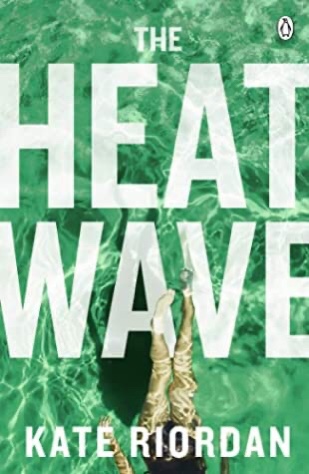
The Heatwave by Kate Riordan. #bookblogger #amreading #TheHeatwave

‘You fit into me like a hook into an eye, a fish hook an open eye’. Margaret Atwood

That opening quote really set the scene for me as a reader. It’s a shocking image. You read the first part and imagine the joining of two things meant to be together, made for each other in fact. The second part is visceral, violent and brings up images of the tussle between an angler and a fish; opposing forces, locked together in battle. Our narrator is Sylvie, born in France but now living in London with her daughter Emma. She’s divorced from Emma’s father Guy, who now lives in Paris with his second wife and young sons. It’s summer and Sylvie receives a message about their french home La Revieres. This is where Sylvie and her sister Camille grew up, but the family haven’t been there for ten years and vandals have started a small fire in one of the outbuildings. Sylvie decides its time to sell and plans for her and Emma to drive over to France for a small holiday, in order to tidy the house and put it on the market. As soon as they arrive, an unease starts to build in Sylvie and Emma, a sense that someone is watching them. What is the secret at the heart of this family and why is La Revieres so significant they haven’t been able to go back till now?

The book moves into three main time lines as Sylvie’s tale moves back and forth. The author builds a tense, oppressive atmosphere slowly. There’s the oppression of the heat, a window banging in the night in an unused room, and the menace of boys on mopeds driving up to the house at night. We realise Sylvie has a horrible unease about the unused room that belonged to ‘her’, where she still feels her presence. The novel takes us back to the early years of Sylvie and Guy’s marriage, when after an experience of loss, they have a little girl, but this is not Emma, this is Elodie. Sylvie describes an immediate, fierce love that she feels for her daughter. Elodie is perfect, with a little heart shaped face and eyes that develop into two distinct colours. One eye is almost amber and full of life, whereas the other remains blue with a deadness to it that is disconcerting. Her eyes are an outward signal of a duality in Elodie’s personality, part of her is loving and engaged with life but Sylvie also sees a side that is disobedient, manipulative and out of step with other people’s emotions.

I was so infuriated for Sylvie that Greg simply doesn’t see the same things she does, at times it feels like he’s being deliberately obtuse. He’s away so much with work and only seems to see the cute side of Elodie as she nestles in his lap. He sees her as an overwhelmed Mum, seeing something that isn’t there or overreacting to normal childhood naughtiness. Elodie’s outbursts do seem personal. She takes an inlaid wood jewellery box given to Sylvie by her father and carves an E deep into the lid. One day Sylvie finds her intent on something in the garden and finds she has eviscerated a small lizard. Finally, she visits a specialist who mentions the word I was already thinking – psychopathy. He explains that some children are born with a difference to the amygdala in the brain which leaves them unable to comprehend or recognise emotion. They need extra stimulus in order to feel. His assessment is that Elodie is one of those people, some grow out of the behaviour, whereas others remain unable to connect and display violent behaviour. Sylvie is devastated. This is her little girl, she would die for her, but has just had to admit that she’s afraid of her too. In the meantime, my tension is rising, because as I’m reading this devastating diagnosis I’m also wondering what Elodie’s reaction was when Emma was born.

The relationship between Sylvie and her daughter is so intense that it’s no wonder she still feels her presence in the family home. Emma wants information about her older sister and remonstrates with Sylvie; ‘

‘she was my sister, but I know barely anything about her, she died, you and Dad split up. We came to London. That’s it.’

It seems inevitable now they’re here that they will have to address the past. In the day Emma is finding Elodie’s old clothes, is wearing her turquoise necklace, but at night she’s on edge and scared there’s someone in the garden. Sylvie feels her too, almost as if she’s there, but has flitted just out of sight. Even their conversation about her hangs in the air like a spectre, wearing the glowing white sundress Emma has found.

‘Do you think her ghost might be here at La Reverie? The loosed words swirl in the gloom, bright and unearthly, like phosphorescence’.

Then, after a day out with their friend Olivier, and with the sulphurous smell of forest fires hanging in the air, they arrive back at La Reverie and Emma’s eyes suddenly come alive as a figure appears on the drive. Expecting her to blow away with the smoke, Sylvie’s thoughts race as her past and present collides into each other. It’s her. Could it be Elodie?

When I finished this novel I found I’d been holding my jaw really tight. Waiting for the past to reveal itself and others to see what Sylvie can is gripping. As the second part of the book begins we have another game of cat and mouse unfolding. It made me think about the lengths we would go to in order to protect our child and what it would take to change or override that instinct. How can we continue that protection, if it is at the expense of our other children? There are ghosts at La Reverie, not just the ghost of the Elodie who disappeared, but the Elodie that Sylvie and Greg expected when she first came into the world. Perhaps even before that, to the hope they had when that first flicker of life was felt after so much sadness.

Posted in Random Things Tours

Fleishman Is In Trouble by Taffy Brodesser-Akner. #RandomThingsTours #blogtour #FleishmanIsInTrouble

I really enjoy books with psychological insight and no one does psychological self-exploration like rich New Yorkers. Fleishman is a forty-something hepatologist, recently divorced from ambitious wife Rachel and discovering a whole new world of dating options. It sounds like a Woody Allen film, and there is some humour in his situation. Still as short and pathetic as he was in his teenage years full of romantic rejection, he was starting to ask himself whether he could actually be attractive? Or was it more the case that looks were not sexual currency any more and being a newly divorced doctor in NYC was enough to warrant the attention he was receiving, from the dating apps downloaded to his phone by a work colleague. He was being sent side-boob, aubergine emojis, ass crack and devils with little horns from women who were available right now, and for nothing more than ‘no strings’ sex. However, despite this huge change in how women date he is still processing what went wrong in his marriage to Rachel, a woman he describes as having the perfect geometric hair of a blonde Cleopatra. As the novel opens, Toby Fleishman wakes up to find a text message from his ex-wife to say she has used the emergency key he gave her, to drop the children at his flat in the night because she had to go on a work trip. This is a huge imposition, although he loves being with his children, because he has things to do, work to go to and social plans in place. Rachel may as well have left a note saying ‘welcome to being a woman’.

It soon becomes clear that the author has reversed the gender roles in Toby’s marriage. He has a great job, but he is the one who takes the children to school and changes his schedule to accommodate pick ups, but this only makes sense. Toby has a lack of ambition that drives Rachel to distraction, while she travels all over the world for her job as a PR consultant and also has a busy social life. Even though Toby, and our narrator, are quite scathing about her, I could understand her trying to live up to that ideal of having it all. Isn’t it what the media tells us all women want? This is a common misconception for both men and women; having it all is possible, just not all at the same time. Rachel comes across as quite a negative character, but perhaps that’s down to the people narrating and analysing her. I didn’t find Toby a very sympathetic character either. I think this was a bias in me, it’s hard to sympathise with Upper East Side New Yorkers who are high earning professionals, when you’ve been brought up in council houses.

These characters can do anything they want. They’ve forgotten that where they are in life is a series of choices made; Rachel has chosen to pursue her ambitions and become a Mum. Toby has an incredibly rewarding career, but he has also chosen to have children and be the one who leaves work early to accommodate that. They could make different choices, but don’t seem to know this. Maybe this is the downside to being at the top of Maslow’s Hierarchy of Need, because once you’ve self-actualised there’s a lot of space for introspection. However, despite the level of introspection and analysis these characters do, they’re not very self-aware. I found this novel so psychologically astute when dissecting modern marriage, parenthood and divorce. There are beautiful passages early on where our narrator discusses the deterioration of marriage and trying to move on. Toby keeps meeting people who want to know when the rot set in:

‘These questions weren’t really about him; no they were questions about how perceptive people were and what they missed and who else was about to announce their divorce and whether the undercurrent of tension in their own marriages would eventually lead to their demise’.

More people divorce these days and there is still a value judgement made, because older generations seemed to stay together. Were they immune to the misery of marriage difficulties? If a marriage is struggling, how do we make the decision to leave?

‘How miserable is too miserable?’

In a discussion with his old friend, and our narrator Libby, Toby talks about how hindsight and perspective can change our views of the whole marriage. Does the fact the marriage ended, mean it was wrong right from the start? He likens it to a game of Othello where you start out with a board full of white discs, but they slowly become black:

‘Now you look at the marriage, even the things that were formally characterised as good memories, as tainted and rotten from the start’.

His therapy sessions ring very true, his therapist Carla is working with him on sitting with uncomfortable feelings. So, when having conversations with people who are mining him for information he tries to pass that lesson on:

‘He was working on trying not to fill in this pause; he was working on letting the discomfort of the silence be the property of the person who was mining him for dirt.’

A further awakening comes about after Rachel leaves and doesn’t return, leaving Toby to cope with work, their children Solly and Hannah, and the maelstrom of remembering the children’s heavy schedule, plus the age of social media and mobile phones with a surly teenager. This leads to a certain understanding of Rachel’s position as his career starts to suffer and he realises the full responsibilities of modern parenthood.

Then the author switches to Rachel’s perspective and we see their marriage in a totally different light. She feels that Toby is intent on being unhappy. He sees her success as the reason for his failure, when actually her success allowed him to do exactly what he wanted for a living. From his perspective, Rachel does nothing but work and neglect him and the children. He never asks whether she’s happy. When she gets home he regales her with his problems, and never lets her put her feet up and relax for a minute. She doesn’t consider divorce:

‘She never once thought she deserved happiness. She never once wondered if there was something better out there. This was their marriage; this was their family. It was theirs, they owned it, they made it. If there was one thing she’d learned from her grandmother, it was an understanding that life isn’t always what you want it to be’.

It’s hard to believe this novel was a debut, because it was so insightful and contains a wisdom about the 21st Century attitude to relationships, marriage and divorce as well as the differences between men and women. It sheds a light on unacknowledged differences between men and women in society. It’s sharply observed and describes life in upper class New York beautifully. These people are so remote from me that it was almost like having the habitat and behaviour of a rare animal presented as a study. Fleishman is the subject of the book, but the main perspectives I took away were those of Rachel and Libby. The author presses home the idea that we never truly know the inner world of those we are most intimate with. He sees Rachel as this strong bossy career woman, when actually she’s incredibly fragile. I couldn’t help but think that if Fleishman is in trouble, then Rachel is on the edge.

Posted in Netgalley

The Truants by Kate Weinberg. #NetGalley #Bloomsbury #TheTruants

No one is quite what they seem in Kate Weinberg’s novel The Truants. Jess is a typical middle child in a middle class family, she feels overlooked and under appreciated. She thinks university is going to kick start her life, especially if she can be taught by her academic idol Lorna Clay. One Christmas an uncle had bought the family her book The Truants and Jess has chosen her university specifically to be taught by Lorna. In Freshers Week, full of a cold, she receives an email telling her she has been removed from Professor Clay’s class. Furiously she pens an email explaining that her only reason for coming to Norfolk was to take that class, venting her disappointment. She presses send and regrets it almost immediately. However, the return email isn’t what she expected. She is informed she has been moved to Professor Clay’s other module on Agatha Christie.

Also in Fresher’s week, Jess makes her first friend in Georgie, who finds her feeling ill and helps out. They start to enjoy university as a fresher should, getting out to parties, exploring campus and meeting other students. Georgie meets a South African journalist on a fellowship and disappears for a few days. Then takes Jess to a party where Alec will meet them. Unfortunately for Jess they’ve met before. While out running through the woods she comes across a hearse that is totally out of place. As she walks towards it she sees a coffin in the back, with two intertwined bodies inside. Before she can walk away the man looks up and straight into Jess’s eyes. She notices the blue iris, perfect except for a tiny splash of hazel. Now, at the party she is staring into the same eyes, but knowing that it wasn’t Georgie in the coffin with him.

This is a very intelligent and gripping novel, full of complex characters. There’s almost a pattern to the relationships, in that every one except Jess and Nick, who she meets at a party, is triangular. Lorna is able to see these patterns, and the weak points of a person, then uses this to exploit and play with them. At times she reminded me of a cat toying with a mouse, particularly where Jess is concerned. Jess has the traits of a borderline personality in that she has few boundaries and adopts the traits of the person she’s with. This is a very dangerous combination when we mix it with the hero worship she has for Lorna. Lorna’s partner, Professor Steadman, observes that perhaps she should be setting herself apart from her students rather than courting friendships with them. Lorna replies that she likes to spend time with people who interest her and sometimes that happens to be a student. Here she’s either missing his point, or being deliberately evasive. There can never be an equal relationship with her and a student because she is in a position of power over them. She is careless with these student’s lives.

Alec is another character who is careless with other people’s feelings. All of his relationships are triangular: him, Georgie and Jess; him, Jess and Nick; him, Georgie and the woman from the hearse. He has a way of weaving magic with his stories of South Africa, but he uses them to gain advantage, either to seduce, to diminish the other person’s point of view or feelings. There’s almost a sense of criticism, to tell a horrific or heroic story in order to manipulate the other person into thinking their feelings are silly or invalid by comparison to the hardship of others. He’s an accomplished liar, because he always uses some semblance of truth. He tells Jess of his difficult younger brother Sebastian (Basti) who would do something wrong and give Alec the blame. One particular story involves a yellow dressing table and a glass horse, which Basti throws from a window then blames Alec. Jess later finds out that this story is totally fabricated; Basti doesn’t exist in the form Alec represents and the glass horse never belonged to his mother, but to someone else very important to him and to Jess. The relationships are so entangled there has to be a moment when it all implodes.

I enjoyed watching the relationship with Lorna and Jess, as it moves from student/teacher to friends, then a motherly role. Just as you think she’s become a true friend, something else happens that leaves me questioning everything. I could never pin down whether something is for Jess or her own benefit. I think she likes Jess, as much as she can like anyone, but she always puts her own needs first. Jess wonders if perhaps her lover, Professor Steadman, had known Lorna best after all:

There was something unknowable at her centre, something that shifted and changed like a trick of the light. Something that Steady understood about her that had always been vanishing. That may have wanted to be mythologised and missed. But didn’t in fact, want to be found.

Jess has been trying to have a relationship with someone who didn’t really exist, not in a fixed and knowable form. Lorna strikes me as a character who would pop up somewhere else, inventing a totally new persona. I became obsessed with the unknowability of her and whether the whole mystery is planned from start to finish. Why does Lorna move Jess to her Agatha Christie class? Why does she draw attention to the poisons used in her novels right back in Jess’s first essay? I think the author talks to us through Lorna, warning us we can look too closely and try too hard to find the truth. The magic of this novel is the mystery.

Because in solving something, in pinning it down, in reducing it to one reality, something of the magic is lost?

Posted in Random Things Tours

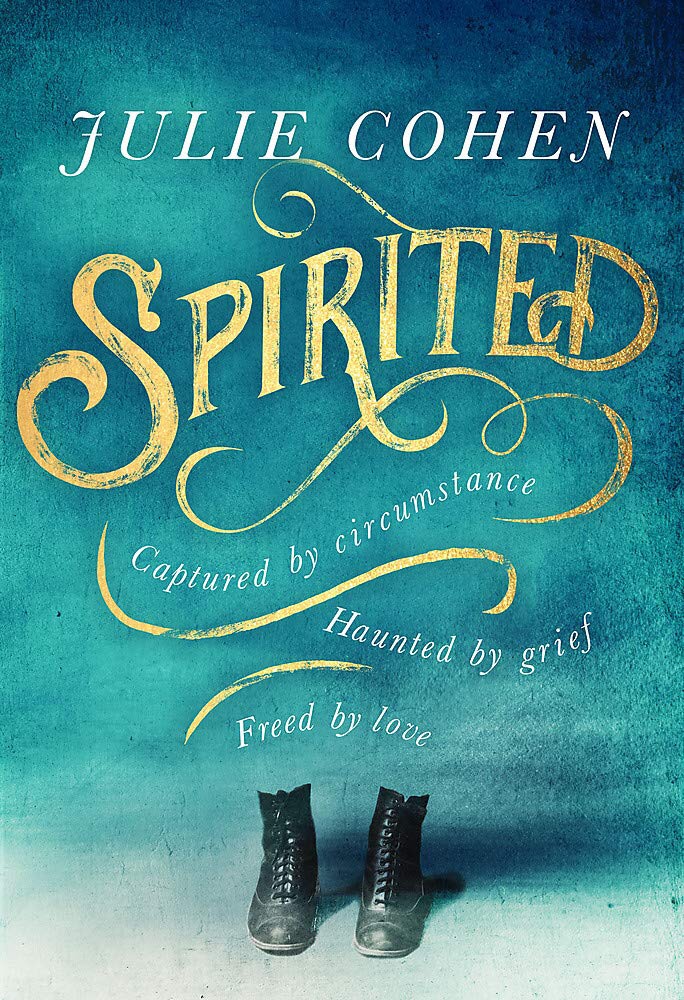
Spirited by Julie Cohen. #RandomThingsTours #blogtours #Spirited

I had never read Julie Cohen’s work before so I didn’t know what to expect from her writing. Only a few weeks ago on Twitter I was discussing when a new Sarah Waters novel would be appearing and Spirited by Julie Cohen has definitely filled that gap. It’s also made an impact on me that’s all it’s own. Viola Worth has grown up cared for by her clergyman Father, as well as his ward, a little boy called Jonah. Viola and Jonah are the best of friends, spending their childhoods largely inseparable. As we meet them in adulthood, they are getting married, but in mourning. A lot has happened during the period of their engagement. Jonah had been out to India, staying at his family’s haveli and checking on his financial interests. For Viola, it’s been a tough time nursing, then losing, her father. He encouraged her in his own profession as a photographer and she has become accomplished in her own right. Viola’s father wanted her to marry Jonah, and they are still the best of friends, but the time apart has changed them and neither knows the full extent of the other’s transformation. As they try to settle into married life on the Isle of Wight, Jonah spends his time sketching fossil and bone finds with his scientific a friend. Viola feels cut adrift and without purpose, as we find out later she doesn’t even feel she is fulfilling her role as Jonah’s wife. Through new friends the couple meet a visiting spirit medium, although as daughter of a clergyman, Viola would never normally enjoy this type of entertainment. Little do they know, this woman will change their lives.

The author slips back and forth in time to tell us about Henriette, who worked her way in life from being a servant to a respected spirit medium. She is a woman who started with no advantage in life, and as a young servant models herself on the governess in the house, a French woman known as Madame to the family. Henriette diligently listens to the children’s French lesson and nurses a hope of a future where she doesn’t clean up after other people or have to wish for a roommate so she isn’t sexually assaulted in the night. Her attacker labels her a whore and one early morning, after there’s been a house party, she stumbles on a group of men in the stables betting. They are playing cards for money, but once they see Henriette they become intent on a different sport. It is Madame who interrupts the attackers and she gives Henriette advice from one woman surviving alone in the world to another. The author also takes us back to Jonah’s time in India. We discover that in social circles Jonah is a hero, because during a massacre he rescued a young girl who lived in his haveli after all her family are killed. Viola wonders if it is this experience that has changed Jonah. They live as if they are brother and sister, Jonah spends less time with her than before and at bedtime they still go to their separate bedrooms and sleep apart. Viola knows there is more between husband and wife but doesn’t really know what and has no idea who to talk to. Through Henriette, Viola is asked to take a photograph of a child who has died so the parents have an image to keep. No one is more stunned than Viola when she develops the image and sees a blurred figure standing next to the bed, the likeness to their child shocks and comforts the parents; they feel reassured that their child lives on in spirit. This experience, and her experience of her first proper female friendship, is like a floodgate opening for Viola. She starts to question the limits of her faith, whether there is more in life she would like to try and as time goes on, whether the burgeoning feelings she has for Henriette are friendship or something else.

I loved the feminist threads running through this novel. The central women in the novel are each in liminal spaces, different from the conventional Victorian women we see like Mrs Newham. Henriette is a self-made woman, unmarried and travelling from space to space offering her spiritualist services for enough to survive on. She has moved from bar girl, to servant, to nursing and losing her elderly husband, and now into a semi-respected occupation. She gets to visit the homes of those she might have once waited upon, but isn’t tied by their social rules and conventions. In India we meet Pavan, who has made the exceptional choice within her societal rules to become educated and has made huge sacrifices in order to achieve that. Love was not on her agenda, and when it comes she experiences a painful separation between her intellectual choice and her emotions. Viola may seem the most conventional of these women, but her relationship with her father has set her apart from others of her class. He believed in educating Viola the same way as Jonah, then teaches her the art of photography too, usually considered a male pastime. Viola is respectful of many conventions, but finds herself emboldened by Henriette and the new experiences she brings to her life. She tries bathing in the sea and is bold enough to start accepting her ‘gift’ of capturing spirits. Behind them all is the french governess Madame. The role of Victorian governess is the very definition of a liminal space: she works in the home but is not a servant, educated and unmarried, respectable, but not on the same level as the family she works for. She has power in that she works for herself, has and controls her own money and can choose to leave her position and join another family, in a different place. Her acknowledgment of Henriette’s fate, as a pretty face in the power of men, inspires Henriette to be more. It gives her aspiration, although she may never be a gentlewoman, with careful decision making she could be more like Madame.

It is within the physical liminal spaces where there are beautiful passages of writing from the author. The scene where Henriette and Viola go bathing is absolutely exquisite because I could feel everything. The strangeness of undressing in a darkened box on wheels, the feel of the swimming dress, the rough and tumble of being pulled into the sea by a horse, then opening the door to see nothing but the ocean in front of you. This is a play on conventional baptism for Viola. She fully immerses herself in the water, supported by Henriette, and feels a rebirth. The heaviness in the uncoiling of her hair and letting it float free signifies a freeing from the constraints of Victorian fashion, as is the unlacing of the corsets. As they trundle back up to the sand after their swim, Viola wishes they could stay in this space in the dark for the intimacy with Henriette, and the knowledge of the freedom she will feel as she opens the door and sees nothing but ocean. When the women share Viola’s room the writing is so tender. Viola worries what the servants might think, but Henriette frees her thinking again. Love between women does not exist, she tells her, there are laws and conventions regarding love between a man and a woman, and even the love between men. What they are to each other is beyond the thoughts of most people, the servants will see two friends staying together and nothing more. Pavan and Jonah, don’t meet in the main haveli but in an ancient old temple in its grounds, a space no longer used for its purpose and outside the family structure inside the house. They meet as two people of different cultures and beliefs, but find a connection so powerful that each would put their lives on the line for the other. Jonah wonders whether he could live a different life to the one laid out for him back in England. He’s seen other English men here who have married Indian women and had children. They’re neither totally respectable, but are not shunned either. This is a novel of people, particularly women, learning to live in the spaces between; the places that promise more freedom.

This was an original, emotional and beautifully written novel that weaves a powerful story from a combination of painstaking historical research and imagination. Each character is fully fleshed out and has a rich inner life. Where real events such as the 1857 Siege of Delhi are used in the novel, they are deeply powerful and the author treats them with respect. The elements of spiritualism and spirit photography are well researched and based on a real fascination for the paranormal in Victorian society. Cohen acknowledges that this is a novel about faith: religious faith, faith in the paranormal and that the ties to those we love don’t end in death; faith in romantic love and the promises we make to each other; even the faith she has in herself. In the acknowledgements to this novel Julie Cohen says ‘I wrote the first draft of this book when I thought my writing career was over’. Judging by this book, it’s far from over. However, by allowing herself to think of that possibility, she gave herself the space to write something truly extraordinary.

Posted in Random Things Tours

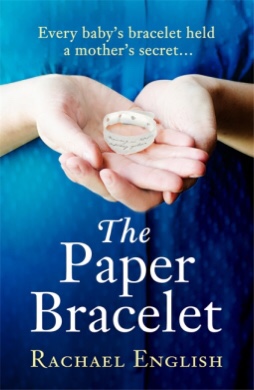
The Paper Bracelet by Rachael English. #RandomThingsTours #blogtours #ThePaperBracelet #Headline

Rachael English tells a very powerful story about a shameful part of Ireland’s history; the Catholic Church’s homes for ‘wayward girls’. We meet a young girl who has an affair with a married man from her village and becomes pregnant. Her devout parents send for the parish priest and follow his advice to send her to Carrigbrack, a home run by nuns for unmarried mothers. This was one of the now infamous Magdalene Laundries or Asylums that housed upwards of thirty thousand women from the late 18th to the late 20th centuries. The scandal around these institutions broke in the late 1990s when a mass grave was found at one home containing approximately 155 bodies. Since then a formal apology has been given by the Irish government to the women who survived and a compensation scheme set up to acknowledge the damage done by allowing the practice to continue unchallenged for so long. The stories of some of these women have made it into incredibly powerful films such as Philomena where Judi Dench plays a woman trying to find the son taken from her and given to an American family. However, what Rachael English has done incredibly well is create multiple characters showing varied experiences within this history, but also how these institutions affected the women’s families for generations.

There are two timelines across the novel: a present day setting where a retired nurse has a hidden box of paper bracelets, but also flashbacks to the mid-20th Century where we follow the young girl sent into Carrigbrack. In the present day, Kate is recently widowed and when attempting to tidy her husband’s things from the wardrobe comes across a box of tiny paper bracelets. Her niece Beth is staying with her and for the first time Kate tells another member of her family about the origin of all these bracelets. She explains being a nurse in an institution called Carrigbrack, and how saving the baby’s identity bracelets was her small way of preserving the only proof they existed. With them is a tiny notebook where she has recorded any small detail she can remember of their birth mother, date and given name. Beth becomes our equivalent in the book, the modern reader placing 21st Century values onto the past. She is very shocked that her aunt would have anything to do with a practice that now seems barbaric.

Kate describes a very different Ireland, where obedience to the church was paramount and people were more deferential and trusting of those in authority. Then, in a small community, it would be perfectly normal to ask the parish priest to intervene in family matters. More often than not it would have been unthinkable not to take his advice. Beth can’t imagine a country being so judgemental on it’s young women. For some of the youngest girls sex would have been non-consensual and their pregnancy a product of rape or abuse. Yet they were still treated as ‘fallen women’ and punished with heavy work, often right up to their due date. Many girls were kept for up to six months after giving birth to pay the home back for the care they’d received. Then, even if they’d formed a bond, their baby would be adopted, often illegally, and with no warning. Meanwhile, their rapist could still be a pillar of the community back home, maybe enjoying their legitimate family and still going to church with the very same parish priest who placed his victim in these institutions.

In order to portray a breadth of experience, the author has created many, very memorable, characters. My heart belongs to Winnie. Freckled, funny and incredibly mischievous with beautiful curly black hair, she is Patricia’s first real friend at Carrigbrack. Together, when they’re allowed to, they can share experiences and really laugh like the young girls they are. Even having her hair hacked off for insubordination doesn’t dull her spirit, but it tragically means that her cries that she’s in labour go ignored by the nuns while she’s working in the laundry. The consequences are heartbreaking and genuinely made me cry. I found myself desperately hoping that despite being broken with grief, Winnie would find her spirit again and we’d meet her in the later parts of the book. I did struggle a little bit with people’s names on occasion as we went back and forth. The women’s names were changed by the nuns so might have reverted to their own name. Nuns change their names when they join an order. The babies were named by their mother, often renamed by the nuns and again by their adoptive parents. I did get a sense of the bureaucratic nightmare these women faced to find their children again and why many survivor’s of the institutions might struggle with their identity. I found myself being drawn into solving this mystery of which characters belonged to each other. I was also more than a little intrigued by Katie herself. What had led her to work in such a place? Why did she feel so strongly about keeping the bracelets? Beth’s mother is very reticent to talk about the years Katie spent there. Does she simply still subscribe to the old ways and believe that the scandal was best left, swept under the carpet? I couldn’t stop thinking there was more to this frosty relationship.

The children who are found also have very varied experiences and are in different places in life, yet all have felt this yearning to find their roots. Some have been blessed in their adoptive families and are well supported in their search. Others have always felt rudderless and a little bit lost in life; without that sense of being grounded. I was interested in the story of Brandon whose wife Robyn has been urging him to follow up on Katie’s post. What he finally finds explains his lifelong sense of someone or something being missing from his life. He is very conflicted about his birth family, because it comes with what he sees as complications. Ailish is also memorable as she illustrates one possible result of a lifelong lack of self-confidence, borne from the knowledge she was an ‘unwanted’ baby. There is room to heal when these characters find out the truth: they were very much wanted, but stolen; their origins were complicated; or their mothers were forced into accepting they couldn’t care for a child. The reunion is only a beginning. I loved that these characters didn’t just find their birth family. These survivors start to form a network, another type of family, that can only be borne out of shared experience. Now a set of roots intertwined and grown strong from those terrible events that happened to them as young women or babies.

Posted in Random Things Tours

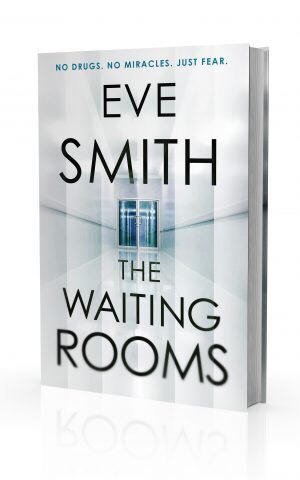
The Waiting Rooms by Eve Smith #OrendaBooks #TheWaitingRooms

Wow! This was a tough read in lockdown. There was one point where I was really sweating because it was making me so anxious. Last week I went out for the first time in eight weeks. It was a beautiful sunny day. With the windows down and the music on, it felt like any other summers day. Then we reached the medical centre. The queue outside the pharmacy was ten people deep, all of them were wearing masks. It was so disorientating. Eve Smith creates a world like this. It’s ours, but not quite. There’s a sense of the uncanny. It’s familiar, yet changed completely. This is a world ‘post-Crisis’ and three different women tell the story.

Lily is an older woman, living in a nursing home facility. She is nearing her 70th birthday and this is a huge milestone. After the ‘Crisis’ an act was passed to reduce access to antibiotics for the over 70s. The world became overrun with a resistant form of TB, seemingly spread at a series of large concerts where thousands were exposed to the virus. Life has now changed completely. People no longer keep cats, just in case they are scratched or bitten. Pets were declawed or simply put down. If they have money, elderly people can be cared for well and in comfort. If not or if they get infection they can be bundled off to dormitories of the dying. The author’s description of these wards and how they treat those who die there had me in tears it was so powerful. This is what happens when certain groups in society are devalued. Our treatment of them becomes less humane. They become objects, not people capable of being loved.

Kate is a nurse, working within this changed healthcare system. She works with people who are terminally ill and palliative care is very different to what we’re used to. If someone is over 70 and has a terminal diagnosis they have a choice; they can take their chances in an imperfect system with no interventions possible or they can come to a room with their family and end their life. Again, the author describes such a powerful scene when a man comes with his daughter and son-in-law to die. Kate is so professional, talking his choice through with his devastated daughter and explaining why treatment isn’t available for his cancer. Once he’s ready Kate hands him a glass of whiskey flavoured drug and waits until he’s ready to drink it. Only minutes pass before his pulse slows down and he peacefully passes away. Kate carries this out efficiently and with empathy. In fact it’s preferable to the alternative. No matter how humane it seems, it’s still chilling and sterile. We find out that Kate was adopted, and since the death of her adoptive Mum she’s been looking for her birth mother in her spare time. She’s looking for a woman over 70, who knows if she’s still alive.

Mary takes us back to pre-crisis times and her post-graduate days in South Africa. Mary is a botanist with an interest in finding new species of plant that may have medical applications. She meets Piet in a close call with a rhinoceros and he introduces her to the growing TB crisis in South Africa. He explains that AIDS has suppressed people’s immune systems to the point that they’re vulnerable to other infection. This form of TB is resistant and American drug companies aren’t queueing up to help. Could her research help him find a plant suitable for TB drugs? Piet has talked about radical ways of making the world look at what is going on. They spend more time together and have a trip out to his lookout where you can hear and see incredible wildlife. This is where their affair begins.

Every single thread of this story is compelling. I knew they were connected, but kept reading to find out how and why they were all separated. There was the added mystery of who was targeting Lily with newspaper cuttings, and cards. The eventual reveal was a surprise, but it was the revenge that was particularly devastating. The research that must have gone into the medical and scientific aspects of this novel is staggering. The short, factual sections that are either news reports, or scientific articles feel almost real. Every so often I needed to take my head out of the book and see the world as it is, not that it was much better once I turned on the news. I had to take a few deep breaths in the garden from time to time. This author created a credible dystopia, one that’s closer to the truth than a lot of people would like to think. Within that world we follow three interesting and intelligent women, trying their best in an imperfect system. The cold, sterile present contrasts sharply with the lush descriptions of South Africa. It scared me, made me think about my old age and the way we treat those older and sicker than us. I think it is a staggering work of genius, delicate and detailed, but inside a huge vision. I found it incredible.

Posted in Random Things Tours

The Girl from Widow Hills by Megan Miranda. #blogtour #CorvusBooks #RandomThingsTours #TheGirlFromWidowHills

Taking the missing child narrative and turning it into something different and new is quite a challenge, but I think this author is successful in exploring what happens beyond the initial drama, where most novels end. Arden Maynor disappeared when she was six years old. Thought to have left the house while sleepwalking, she is washed away by a flash flood and isn’t found till three days later, hanging onto the grate of a storm drain. In those moments, absolutely everyone in Widow Hills is focused on her and everyone is affected. From her and her mother, to the man who finds her, the journalists and photographers, rescue teams, police officers and those who treat her terrible shoulder injury at the hospital. There’s a flurry of publicity for all those concerned. Arden’s mother gets a book deal and a fund is set up to support Arden into the future. Then the next crisis happens and the Maynors are forgotten.

Twenty years on and Arden is renamed Olivia Meyer. She has used the remains of her fund to buy a house on the edge of a new town near the woods. She also has a job in administration at the local hospital and lives a fairly quiet life. She has a routine of work, dinner, a small glass of wine while watching TV and then bed. On Fridays she goes for a drink in a local bar with her friend from work, Bennett, and a new nurse called Elyse. She also has a friend in Rick, an older guy who lives next door, and they keep an eye on each other. This routine is unsettled when she receives a phone call telling her that her mother died seven months before and they need an address to send her belongings to. When the box arrives and she opens it, a cascade of memories come out with the objects. There isn’t much, but Olivia is most touched by the small bracelet with a silver ballet slipper charm attached. It’s something good she remembers from her childhood. She doesn’t remember much of the three days she was missing, apart from the dark, cold and wet. Afterwards, she feels her mother frittered money away, mainly into drug abuse and they drifted apart. That very night Olivia starts to sleepwalk again.

I enjoyed the author’s depiction of someone who is post-trauma. I understood Olivia’s need for quiet, security and routine. I did start to have questions as I read further. It seemed that Olivia’s narrative of her childhood and the trauma was very rote and something she’s defensive about. When she visits the sleep clinic about her sleepwalking, she can’t elaborate on it more than repeating her mother’s description. It’s almost as if she can’t recall the trauma from her own point of view. Even her memories of being missing seem strangely one note. She was missing for three days, but can only remember a small proportion of it. She couldn’t have been in the same place for three days, because the team searched there, so why can’t she remember where she was? As the stress builds, the big wall Olivia has around her memories and feelings starts to crumble and it’s interesting to see her start to question herself. Especially as the bodies start to appear.

I loved that the author showed us the flip side of Olivia’s experience; what it’s like to witness a trauma. Olivia meets the son of the man who found her and while she’s not sure if she can trust him she does listen. Nathan saw his Dad do something heroic, be plunged into a whirlwind of publicity, then left with nothing. There was no fund for the rescuer, no fund for his children, and there is a bitterness that Olivia might have had it easier with her funded education. Similarly, she meets one of the journalists who was there and helped with her mother’s book. She has adopted a lifestyle very like Olivia’s – quiet, and tucked away where she can’t be found. Olivia starts to see how a trauma she thought was hers, exclusively, has affected others like ripples on a pond. All the people she meets ask questions, till she can see there’s something about her experience that’s missing, and even goes as far as revisiting Widow Hills to remember. I had my suspicions, but the final revelation did surprise me. The author taught me that when reading thrillers I can’t trust anything I’m told, from the opening chapter, right up to the final page.

Posted in Uncategorized

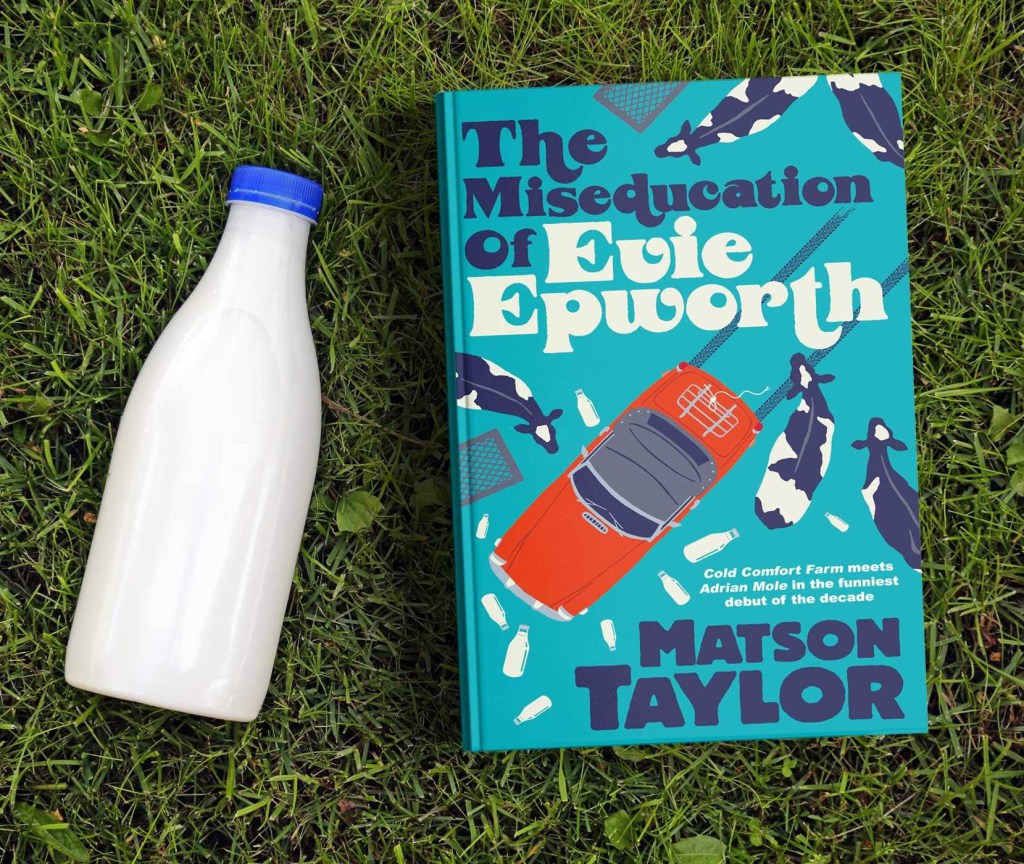
The Miseducation of Evie Epworth by Matson Taylor. #RandomThingsTours #blogtour #TheMiseducationofEvieEpworth #ScribnerBooks

I was only three pages in to this book and I knew that Evie was going to be one of my favourite literary characters. Favourite as in – on my list next to Jo March, Cassandra Mortmain and Adrian Mole, characters I’ve also experienced growing up and setting out into the world. The book was off to a good start anyway, then as we followed Evie jumping into her father’s MG to do the milk round there was a scene so funny I laughed out loud at 2am waking both the dog and my other half. I devoured this book in 24 hours, knowing part of me would be sorry when it ended, but not able to slow down either.

We meet Evie when she’s at a crossroads in life. She’s in that limbo summer between GCSE and deciding what to do next. Evie’s plan, if she gets the right results, is to do her A Levels. Till then she plans to spend the summer delivering milk from the family farm, baking with Mrs Scott-Pym next door, and reading all the books she can get her hands on. There is only one thing in her way; her Dad Arthur’s girlfriend, Christine. Chrissie has moved into the farmhouse and is setting about making changes. This is 1962 and she’s all for embracing the new. She wants to get rid of the old unhygienic wood in the kitchen, because what they need is some nice modern Formica. She’s already replaced the Range with an electric cooker, because she couldn’t work it. As Evie says, it takes quite an intellect to be outwitted by a kitchen appliance. Worst of all she’s replaced Evie’s Adam Faith clock with a chicken! It has always just been Evie and her Dad, Arthur, as far back as she can remember. Her mum died when Evie was little and she has no memories of her. Chrissie needs to be dealt with, but how? Arthur is a disappointment. Mrs Scott-Pym says he’s like all men, weak and easily confused by a pair of boobs.

I have lived in villages and on farms for my whole life so I can honestly say that the author’s depiction of the characters and events of country life are not exaggerated – no, not even that cow scene. There are still characters like this in rural villages. The comedy comes from the brilliantly blunt Yorkshire dialogue, the gap between what we as adults understand and Evie doesn’t yet, but mainly the amazing characters created by the author. Mrs Swithenbank is a comedy gem, always at the mercy of her explosive bowels. The long suffering Vera, Chrissie’s mother, who is never far behind her daughter like a human ‘buy one-get one free’ offer. Then, Mrs Scott-Pym’s daughter Caroline, comes into the village like a whirlwind and along with Evie shows that constant dilemma young people in villages face – do they stay put or go out into the wider world, perhaps needing to try the anonymity of the city? It can be hard to develop into your true self in a village where everyone knows who you are and any attempt to change is the object of ridicule. I remember a perm I had at 15, thinking I looked like Baby from Dirty Dancing, only to hear ‘ugh what have you done to your hair’ at every house on the pools round. I loved the depiction of the petty rivalries around the village show and what a surprise it is that Chrissie, who struggles with making toast, wins the best fruit cake. On top of everything else she does, the fact that she possibly cheated at the village show is viewed as the worst crime and given the last reveal.

Chrissie though is the best comic creation of the lot, but isn’t left to be one dimensional either. Though she is truly awful in a lot of ways, it’s clear that she’s from a poorer family in the village and her upbringing hasn’t been easy. There’s class war over the Range cooker for sure. She lets slip in an exchange with Evie that she’d done every job going, from waitressing to wiping arses. While that might excuse her yearning for an easier life, it doesn’t excuse her way of getting it. There are times when it’s all out war at the tea table and Arthur stays behind his paper hoping it will blow over. I loved her ever present ‘pinkness’ and a crimplene wardrobe that Evie observes doesn’t end in Narnia, but at a bingo hall in Scunthorpe (I love seeing my birthplace in print). Poor Vera is always struggling a few paces behind, usually sweating and doing all the fetching and carrying. Chrissie is always exhausted – I need to put my feet up, Mum put the kettle on – and always rushing towards getting another grasping finger on Arthur, preferably a finger with a ring on it. This should have been a mild flirtation or dalliance at most, everyone can see they are not suited.

There are interludes between Evie’s chapters where we see the meeting of her parents, Arthur and Diana. They are serene, even romantic chapters where we see them meet at a dance, get married in a rush during the war and settle at the farm. We see Diana form a friendship with Mrs Scott-Pym and rush round to tell her friend when Evie is on the way. There’s so much of this interesting woman left, hidden in plain sight such as a particular teaspoon in the drawer and the recipe book Mrs Scott-Pym has kept for Evie. It’s so sad that Evie and her Dad don’t talk about her more openly and honestly. If wishes and spells aren’t going to change this, there needs to be a catalyst. When Mrs Scott-Pyle falls down the stairs and her daughter Caroline arrives we see a force of nature equal to Chrissie. She wears elegant clothes, big black sunglasses and scarves tied round her neck like the French do. Evie is very impressed with her sophistication, but also her nerve. She cooks up a great scheme to get Evie out of working in the village salon, takes her to Leeds to shop in an Italian deli and has the means by which Chrissie’s true nature can be revealed. She is also the only lesbian Evie has ever met, leading to her asking visiting friends of Caroline’s whether they are a lesbian too as a conversation starter! Evie is trying on different futures, and may be adding Caroline as an extra role model alongside The Queen, Charlotte Bronte and Shirley MacLaine.

This novel is an absolute joy. A great read to cheer you up and honestly, make you laugh out loud. Every character is beautifully drawn and the comic timing is perfect. I couldn’t believe it was a debut, because it has all the confidence and timing of Sue Townsend and also made me think back further to the blunt Yorkshire characters of James Herriot. On a personal level I needed a lift, after being very strict with lockdown rules due to my MS, and this was just the lift I needed. Thank you Matson, for such a great set of characters and for providing exactly the book I needed at exactly the right time.

Posted in Uncategorized

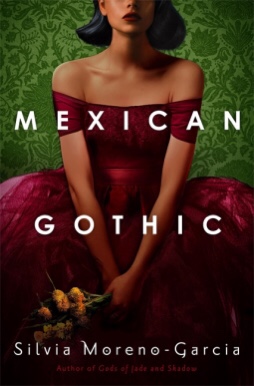
Mexican Gothic by Silvia Moreno-Garcia. #QuercusBooks #MexicanGothic #blogtour #NetGalley.

Wuthering Heights and Jane Eyre, those were Catalina’s sort of books. Moors and spiderwebs. Castles too, and wicked stepmothers who force princesses to eat poisoned apples, dark fairies cursing maidens and wizards who turn handsome lords into beasts.

When I first started this novel I was a little bit unsure, but I read the above paragraph and trusted it was the book for me. I have a smidgen of Catalina’s gothic, romantic sensibility about me and this book had all the elements I usually enjoy: a plucky heroine, a suitably wealthy but eccentric family, the possibly hysteric friend/family member who needs rescuing, a crumbling gothic mansion. So far, so usual. Then the first dream sequence happened and I sat straight up in bed, wondering what sort of dark, twisted fairytale I’d let myself in for. From that point on I found it curiously addictive – the sort of ‘still reading at 2am addictive’. By the end, I was awake because I was too scared to sleep!

Noemi Tabouda is dispatched by her uncle to High Place, the estate of the wealthy Doyle family. Virgil Doyle is the new husband of Noemi’s cousin and it is Catalina who has written an alarming letter begging to be rescued from a strange supernatural fate. The letter mentions fantastical happenings, such as people in the walls and a spectral voice speaking to her. Noemi wonders if her cousin needs to see a psychiatrist, because even though Catalina has a flair for the dramatic, she has never sounded so scared. The family know very little about the Doyle’s because Catalina and Virgil’s romance was a bit of a whirlwind. In Noemi’s limited time with him, he seemed very charming and had the dark brooding looks of a Byronic hero. This is a good chance to help Catalina get well, but also get to know the Doyle family a little better.

The author has created a brilliant setting in the Doyle family mansion High Place. It has a strange dual effect on Noemi of being luxurious and comfortable, but almost suffocating and overpowering. The past wealth of the family can be seen in every piece of silver, swish of velvet curtain and the eyes of past Doyle’s following her around the room. Noemi’s room is luxurious but shabby, as if the wealth has started to run out. The wallpaper has a curious pattern, but is also decorated with patches of damp. The bath is deep enough for a good soak but the fixtures and fittings are a little rusty. There are servants, but they are strangely silent and don’t even catch Noemi’s eye. The whole regime of the house seems very regimented to Noemi who is an informal, modern woman. Virgil’s father is definitely head of the house, but his sister Florence is the gatekeeper who makes sure his wishes are carried out. Noemi expected to breeze in and immediately pop in on her cousin, but finds she is barred. Apparently, the family doctor has decided she needs rest and a very quiet atmosphere. Noemi is told her cousin has TB, which has never been mentioned before, and doesn’t really account for the strange things Catalina mentioned in her letter.

Noemi is a great central character to follow through the story. She is sassy, intelligent and very determined to bring a little 20th Century thinking into High Place. I love that she isn’t afraid to ask questions, especially of the men who aren’t used to being held to account by women. This is how the author starts to subvert the gothic /fairytale genre – Catalina is the more ‘traditional’ heroine. Noemi brings in the local doctor to give her a second opinion, befriends the younger cousin Francis and enlists his help in understanding the family. She recognises that’s a lot of women have struggled to live with the Doyle’s regime. Howard had two wives, who were sisters and both died at High Place. A cousin, Ruth, took a shotgun to the family leaving Uncle Howard alive but horribly disfigured. From the village Noemi unearths stories of hundreds of silver miners going missing in the Doyle mines. It seems the family consume people, encapsulated by their horrible emblem of a snake eating its own tail.

The incredible nightmare sequences are vivid and visceral. At first I wasn’t sure which was real: was the regimented, almost Puritan, daily order of High Place the reality, or was it a thin veil of decency obscuring something more deadly and decadent. Just as mould was starting to be visible on the wallpaper, Noemi’s nightmares signal something breaking through, threatening to take over. This underlying force seems to understand the very soul of the person it tries to corrupt. In Noemi’s case her modern attitude to dating and female sexuality is used to draw her in against her will. She is a serial dater, choosing short dalliances where no one can get too close. So her nightmares have a strong sexual element, where Virgil Doyle lulls and seduces her, in her bath or in the middle of the night. She questions herself. Virgil repulses her, but does she desire him? Are these dreams conjured from her own subconscious or is something able to infiltrate her sleep and lure her down the corridors in her nightdress?

The truth of High Place and what happens there, when it is revealed, is truly horrific. There was a scene that literally made me gag! This may be one of those occasions when I truly hope they don’t make the book into a film – I wouldn’t be able to watch it! I felt that the author was playing with the reader and our own push and pull between fascination and revulsion. I found this very reminiscent of Dracula. There was an equally interesting tension around social change. The local miners exploited by the Doyle’s are part of the past, along with the family’s rules and position in society and their adherence to the ‘family doctor’. The new is represented by characters like Noemi and the mentions of her wardrobe full of the new styles and the young local doctor who tries to help Catalina. In the town the Doyle family are seen as weird eccentrics, possibly sinister, but no longer able to command respect as they would have a generation before. Their time is waning and these horrific acts are a fight, both for the family and the entity that lives alongside them. The author subverts the fairy tales Catalina loved in her youth and the original Gothic trope of a damsel in distress, rescued by a man. I truly enjoyed this novel, despite the fact it kept me awake at night worried that mushrooms were coming out of the wallpaper. Now, finally, I’d like to go and get some dreamless sleep.