Blog Feed

Posted in Personal Purchase

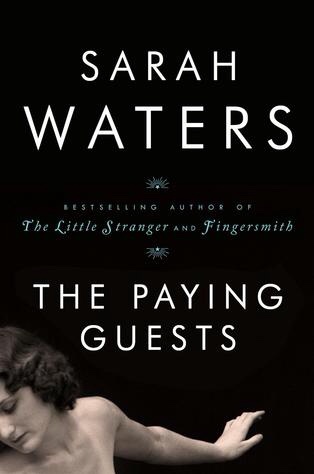
Throwback Thursday! The Paying Guests by Sarah Waters.

It’s been too long since we had a Sarah Waters novel and although I love her Victorian era fiction, this novel really did stay with me. In 1922 a mother and daughter live in a villa in Camberwell. A house once filled with the sounds of men – husbands, brothers and servants – is now largely quiet. Only the widow, Mrs Wray, and her daughter Frances remain. Impoverished by war and a lack of men to bring home the money, they are forced to rent out rooms in their home. Frances is a spinster, resigned to looking after her mother for the rest of her life, but with the arrival of tenants Lillian and Leonard Barber their house routine changes considerably. The couple do not come from the same class as the Wrays, and are the new, upcoming clerk class. However, no one could foresee the profound change their presence will make to Frances’s life as passions and frustrations mount. The Wray’s lives will never be the same again.

As some regular readers will know I love this post WW1 period of history. London is a very tense and unsettled place to live. The war followed by Spanish Flu has left generations in mourning, but has also managed to level out the class system, liberate women. Sadly it has also birthed a whole new dependent generation of people with disabilities and PTSD. Ex-servicemen might find a woman doing their job, who is very reluctant to give it up and return to the home. Or their disability prevents them from working at all, in some cases forcing them to beg on the street. The aristocracy are in decline – often hit by double death duties some are forced to go abroad, particularly the US, to look for a bride with money in order to prop up the estate. Women have moved out of the domestic sphere and have enjoyed the sense of freedom they’ve had. It’s a period of flux in a societal hierarchy that’s been in place for half a century or more. It’s a huge upheaval, but in such upheaval, previously suppressed groups can find their freedom.

I feel so much for Frances. The opportunities war brought to her are gone, but then so is the safety of her pre-war days when her father and brother were there to support and protect the household. Now she looks after her elderly mother alone, and now they can’t afford servants all the household tasks have fallen to her as well. She is sure she will die a spinster. She is also haunted by a lapse in self-control she gave in to during the war, scandalously involving another woman. Frances is haunted by her actions and now she knows how easy it is to lapse, she is even more determined to avoid impropriety. Their income is so depleted that Frances has prepared some of their upstairs rooms for use as a bed sit. They will now have to share their homes with a couple who are of a much lower class. The Barbers are shocking to Frances, and her mother, who are used to an element of deference from the lower classes. They are very direct and unencumbered by the manners and etiquette the Wrays are used to. Frances is desperately embarrassed by her lapse and their weakened circumstances. Taking in lodgers, or ‘paying guests’, is a humiliation for the family but they have no choice. The Barbers will have to be endured.

Sarah Waters cleverly takes a domestic space and uses it to illustrate the greater societal shifts of post-war Britain. Just as the aristocracy are having to relax the rules on who they marry, the Wrays have to get used to people they would never previously have entertained living in their home. Thinking they can remain separate and self-contained is an idea that simply doesn’t work in reality. Once they’ve settled in, the Barbers seem to encroach on the Wray’s private spaces. Their boundaries blur as the couple pass through Frances’s kitchen to get to the outside toilet. They meet each other on the landing in dressing gowns. With every cough or creak of the floorboards, Frances feels her quiet life being impinged upon. She is also finding her sexuality challenged again; she considered her war time experience with a woman a ‘one off’ incident. Now she senses an awakening as she gets to know Lillian. She knows women friends who live openly in London with their same sex partner. They are co-habiting with each other and being discreet, but true to who they are. Frances had chosen to stifle her feelings for fear of falling in love again and instigating her own ruin. The proximity of another woman could be challenging this and her connection to Lillian leads to a terrible act with far reaching consequences.

As usual with Waters, it was the strong characters and sense of place, that I engaged with first. I saw a review that called this crime fiction and of course it is, in that we have a crime and a nail-biting court case. It’s certainly a great addition to the crime genre, but it wasn’t the first things that stood out to me about the book. I love Waters’s women characters – they’re intelligent, complex and trying to be themselves in a world that wants to suppress and control them. Her depth of description makes her chosen historical period burst into life: the fabrics used in clothing, the objects in the Barber’s room, and the touch of forbidden skin. Her characters have rich inner lives and complex psychology. I would recommend this – and her other novels for anyone who loves historical or crime fiction. The court scenes are so tense and I found myself wishing and hoping for a particular outcome. That’s how good this author is, she can make you root for a character like they’re a real person and feel emotion for them. That shows how talented Sarah Waters is and if you’ve only read her Victorian fiction, make room for this on your book shelves.

Publisher: Riverhead Books 16th September 2014

Meet The Author
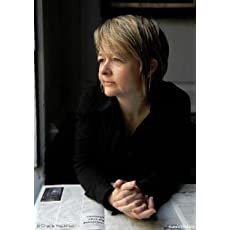
Sarah Waters was born in Wales in 1966 and lives in London. Author of Tipping the Velvet, Affinity, Fingersmith and The Night Watch, her most recent book is The Little Stranger. All of her books have attracted prizes: she won a Betty Trask Award, the Somerset Maugham Award and was twice shortlisted for the Mail on Sunday/John Llewellyn Rhys Prize. Fingersmith and The Night Watch were both shortlisted for the Man Booker and Orange prizes, and Fingersmith won the CWA Ellis Peters Dagger Award for Historical Crime Fiction and the South Bank Show Award for Literature. Tipping the Velvet, Affinity and Fingersmith have all been adapted for television.

Posted in Random Things Tours

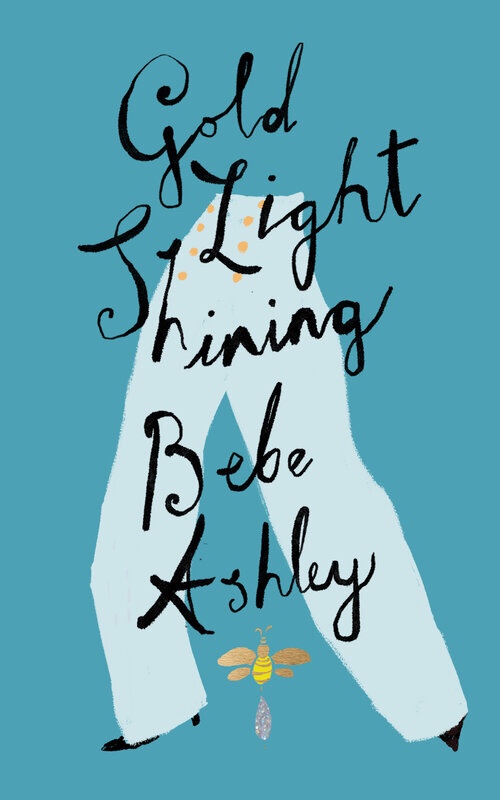
Gold Light Shining by Bebe Ashley.

I would describe Bebe Ashley’s collection as a poetic collage. It ranges across subjects as diverse as fashion, fandom, and families. Ashley elevates the internet into a poetic subject, puncturing the enduring snobbery of high and low culture. She shows us that the internet and some of its subjects are not the cultural wasteland people fear. Rather it is a window on whatever we choose to view from celebrity culture, to youthful yearnings, obsession, awakening sexuality and Harry Styles. The internet can be the cultural rainbow that lights up our grey lives. The focus may well be on our journey into adulthood, but there is another, wiser, voice too. The voice that knows some of this is momentary and that it is in building connections and communities that we find meaning. She also never forgets the meaning in our own families.

I grew up in the eighties, and we had to drive five or six miles to another village to the newsagent who reserved my copy of Look-In magazine, and then Smash Hits. This was my little window into the world and more specifically Adam Ant. My life might have been very different had I been able to access information and my fingertips. I loved the poem ‘Give Pop Music, Give Peace a Chance.’ It’s a grandmother, standing on a hill with her grandchildren reminiscing about this place, the seasons and her awakening to music and celebrity. As she sits in a sunken garden amongst the bluebells a young ranger starts to point out the beauty of the place. She knows. She knew it was beautiful before he was even born. She remembers that age of listening to music and feeling full of potential:

‘’a telegram from John and Yoko/ The thrill of running coloured chalk through the ends of her hair/She remembers sticking her thumb pad against the pin back/of a badge that served as her first concert ticket.’

She includes notes and allusions to Harry Styles, suggesting listening to his music while reading the poetry here. She starts the book with a quote of what looks like song lyrics, where he talks directly to his fans saying that he doesn’t understand or feel exactly what they do, but that he does ‘see’ each and every one of them. This assures the fans that they are noticed, that he appreciates them and this state of ‘fandom’ which is such a strong feeling as a teenage girl. In her poem The Boy Who the narrator gives a brilliant depiction of the chaos of a teenage party. She meets a boy in a Jesus T-shirt who is hiding in the bathroom to get away from people, but to enjoy the music. She lays in the bath and she listens to a tale of finding a friend ‘who he met in a gay club that he definitely didn’t know was a gay club’ and how this friend offered him their couch to sleep on while things were difficult at home.

Although these are longer poems than haiku, it feels like the poet is trying to do the same thing. All of these are brief moments in time, beautifully observed, and structured. The Boy Who is written as a long stream of consciousness with no punctuation or breaths. It’s like a story you’d quickly tell a friend about the party you attended the other night and where you disappeared to. In the final poem she imagines the object of her fandom in Japan, wearing an embroidered hoody and curls that are in need of a cut. The last two lines describe one such moment:

This is the one I’d most like to meet /Of all the moonstruck moments

This is a beautiful collection of poetry that imagines that rush of teenage hormones, burgeoning sexual feelings and the perfect pop star as an object of affection. There is a reverence and respect to how she describes Harry Styles here that I found really endearing. I loved though how the poet describes he importance of music and how we use it to complement or change our emotions. In Breakdown she brilliantly pinpoints the way we might use songs for heartbreak and it reminded me of my friend who was heartbroken and kept playing Coldplay’s The Scientist over and over in the car until me and her other friend stole the CD to break her mood. We were worried that the repetitive playing of it, was hampering her recovery. Here Ashley writes:

‘There was something serendipitous/ About being heartbroken during the release/ Of a heartbreak album, with the postman/ already tired of square sleeved parcels/ And the neighbours already sick of hearing/ Heartbreaker’s twelve songs on repeat.’

Music does affect and influence our emotions profoundly. If I hear certain Snow Patrol songs I’m reminded of a bereavement I had. If I hear ‘Yes’ by McAlmont and Butler it reminds me of feeling positive, hopeful and full of excitement for a new start in my life. Like most of us I even have mood playlists on Spotify for when I need cheering up, motivating or having a good cry. Ashley captures that feeling as well as teenage fandom and the inspiration she gets from Harry Styles’s lyrics. It’s a very readable and relatable collection, that I can tell I’m going to enjoy with further readings.

Meet The Author

Bebe Ashley lives in Belfast. She is a AHRC – funded PhD candidate at the Seamus Heaney Centre for Poetry. Her work can be found in Poetry Birmingham Library Journal, Poetry Ireland Review and others. When procrastinating from her PhD she takes British Sign Language and Braille classes, and writes pop culture articles for United by Pop, specialising in Harry Styles.

Posted in Random Things Tours

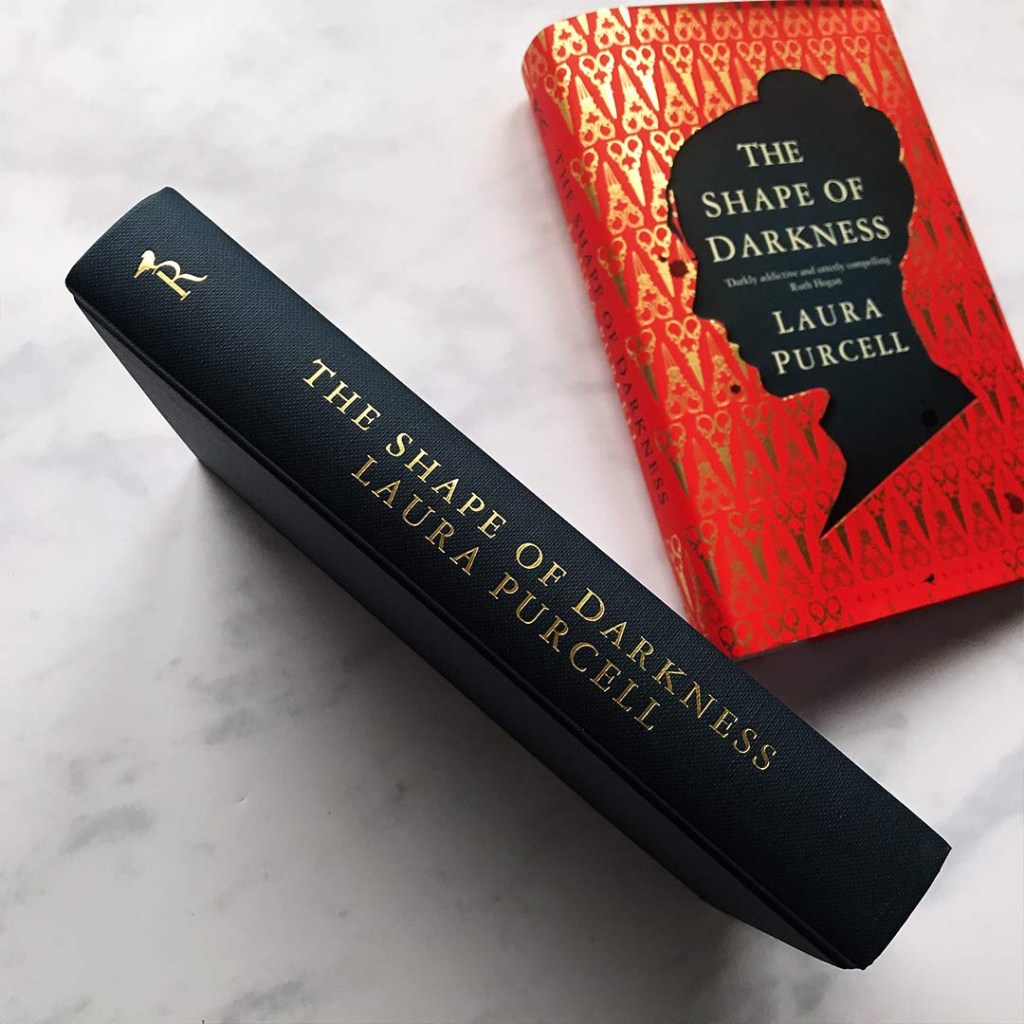
The Shape of Darkness by Laura Purcell.

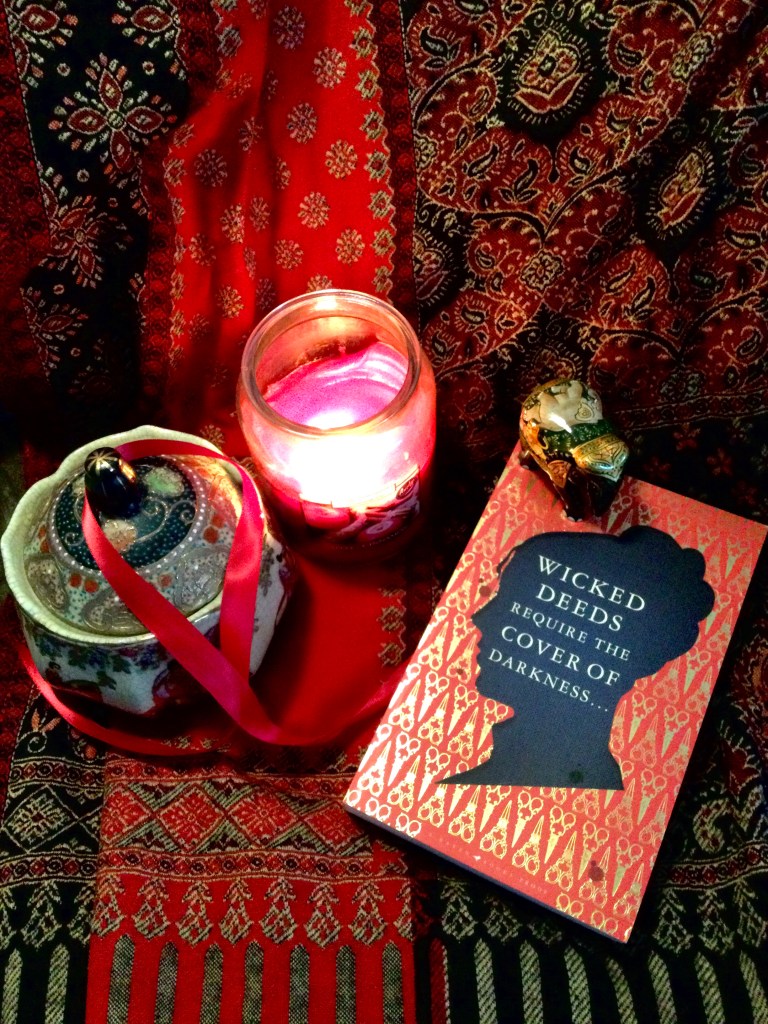
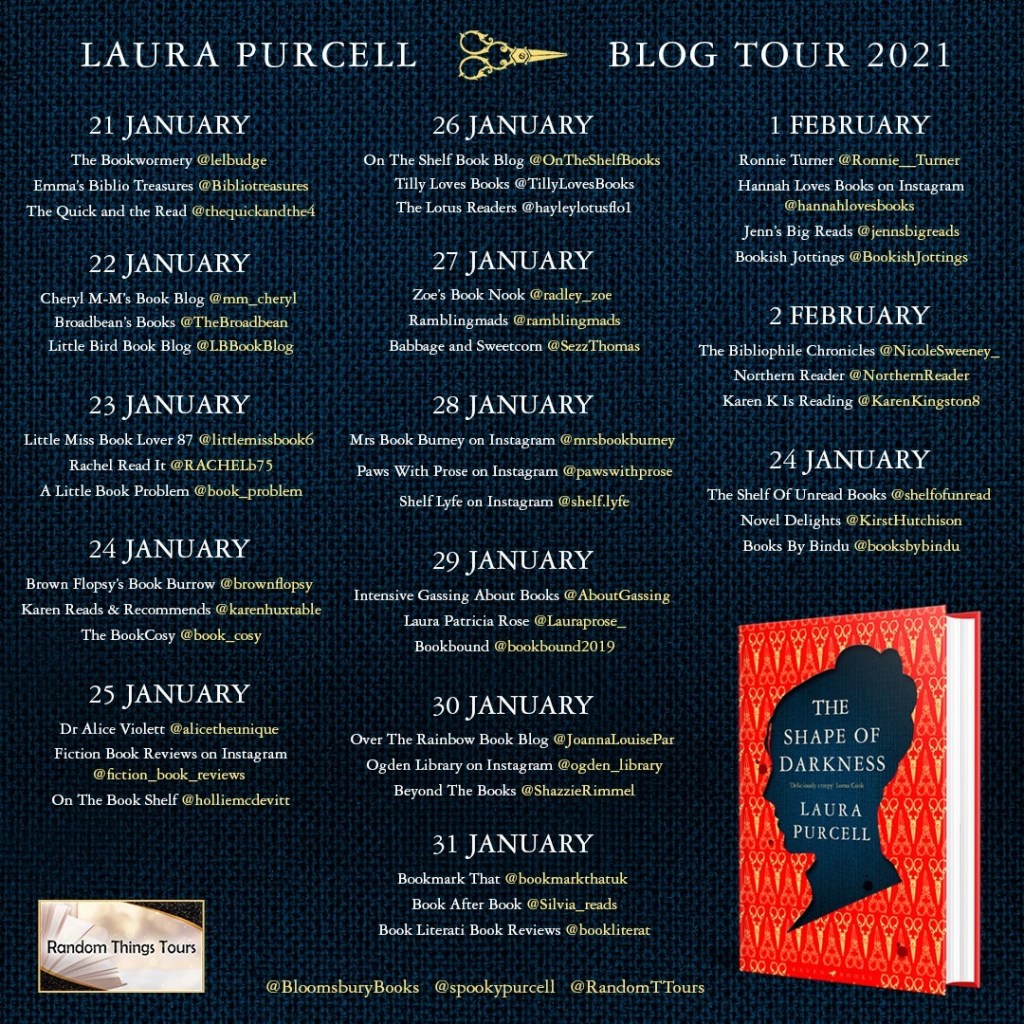
I must admit to being a bit of a fan girl when it comes to Laura Purcell. The mix of historical and gothic fiction is probably my favourite genre, so I had been impatiently awaiting the publication of her latest novel anyway. I jumped at the chance to join the blog tour, because she’s one of my favourites – in fact I had already pre-ordered a signed edition of this two months ago. So I came to it full of anticipation. I was hooked by the end of the first chapter and didn’t put it down. Our narrator is Miss Agnes Darken, living in Bath with her invalid mother and nephew Cedric. Agnes earns her money cutting silhouettes or ‘shades’ for people, but her art is put under threat not just by newer inventions, but by a mysterious killer stalking the people who have sat for her. Desperate for answers, Agnes visits a spirit medium – an albino child named Pearl who lives with her sister Miss Myrtle West, and an invalid father. Agnes and Pearl try to conjure the spirit of one of her murdered sitters, so they can find the killer. Unfortunately, they have underestimated the power of what they have unleashed.

The story is full of little twists and turns that unsettled me and kept me guessing. When Agnes finds the shade she cut of her first sitter with a squashed face, she ends up with the police on her doorstep. She was his last appointment before he was killed and the murder weapon was a mallet, in fact his face is quite ruined. Agnes is shocked, but could perhaps write this off as a coincidence. Maybe she simply caught the silhouette as she closed the book? I thought the awkward relationship with Simon, who is there when the police come, was really interesting. He is Agnes’s friend, but also a doctor and was married to her sister Constance. Yet it is Agnes and her mother who have Cedric, her sister’s son, living with them. I kept wondering how this had happened and it was these awkward relationships and the whiff of scandal that really caught my attention just as much as the supernatural element. Simon is deeply protective of Agnes and her health since she’d had pneumonia a few years previously. Yet there’s another concern underneath, her mental health and whether certain things are ‘too much’ for her delicate nerves.

The horror in Pearl’s household comes from poverty and working in dangerous environments as much as it does the supernatural. Pearl’s father has worked in a match factory and has succumbed to the horrific disease of ‘phossy jaw’ where the phosphorus used for the match heads, eats into the mouth and slowly poisons the victim. The descriptions of being able to see the workings of his jaw and of Simon trying to clean the area and burst abscesses on the gums is visceral and left me far more horrified than the seances held by Pearl and her half-sister Myrtle. Myrtle has named Pearl The White Sylph, which only adds to the air of mystery created by her snowy white hair and skin and the wispy glow of ectoplasm that can be seen emanating from her body when the lights are off. Pearl is exhausted and drained afterwards, and her fear of the spirits who take control of her is obvious. She fears them sitting in her body or speaking through her mouth. It seems her gift is involuntary and all the more genuine for that. When Agnes visits they have no idea what they may summon up together, whether in terms of the spirits or a plan that may prove even more deadly.

Agnes is haunted by her sister whether she visits Pearl or not, but the pair do have something in common; sisters who try to control their lives. Agnes’s sister Constance has wronged her sister terribly in life, but continues to be there in death. I love the tiniest details that are placed by the author to echo the relationship:

‘Agnes scrubs at her eyes with the handkerchief. She has gone through so many of them lately that she’s been forced to use Constance’s old ones; she has picked the initials out but the ghost of the letter C still marks the corner’.

I saw an echo of Daphne Du Maurier’s Rebecca in this, they way her initials are all over the house, marking everything the new wife has to touch. Here it is a way for Constance to be ever present for Agnes. Constance is like Agnes’s shadow, and just like Myrtle and Pearl there is a yin and yang to these sisterhoods. One sister the innocent and other the dominant, rule breaking force. It’s as if they’re two halves making a whole. I enjoyed the description of Constance’s wardrobe towards the end of the book and the bright colours of her gowns contrast strongly with Agnes’s jet black, almost Puritan style of dress. Agnes is giving off that sense of grief and this uniform of mourning can mask who someone is as effectively as a disguise.

I also loved the period detail in the book, not just the clothing, but the etiquette and position of women. Although Agnes struggles financially she does have some measure of freedom and runs her own household. She has Simon, her brother in law, as her protector and because he is a doctor and a widower there is no impropriety in this. However, she does need him for certain things such as talking to the police and dealing with other men, who simply don’t consider a woman as an equal. I also loved the descriptions of Agnes’s craft, the cutting machine that she barely uses in order to keep cutting by hand alive. There is an alchemy in the descriptions of her work, the magical way she’s able put a person’s character into what seems like a very flat, characterless medium. There is a great description of a session with a young man, who admits he would prefer the new- fangled photograph, but his mother prefers the old ways. Photography is a threat to Agnes’s business, and there’s an interesting thought process around the belief that too many photographs could diminish you as each photograph takes a bit of your soul.

‘Part of your soul would remain forever imprisoned in the glass lens. Sit for too many and you might be depleted. More alive in the photograph than in real life.’

I thought that could be my thought process when I’m worrying about my niece or stepdaughter’s ‘addiction’ to social media. I like to take breaks from social media, but I sometimes worry that they’re so obsessed with their online personas that they miss out on what’s actually happening in real life. Social media is an edited or even purposely cultivated idea of who we are, not our real selves. It’s good to hear that each generations worries about the same things.

This is an excellent gothic mystery, that grabbed me from the start and didn’t let go. I thought the characters were well developed and fascinating – even the ones who are no longer there! I liked that were transgressive females who had their own agency and independence. I enjoyed the author’s sense of place, the evil portents like the magpies and the build up of tension. I also liked the contrast between those living in poverty and those with a more middle class lifestyle. The supernatural elements are always spooky with Purcell, so the seances and visitations are unsettling, but so are the real life people. As the mystery deepens you won’t be able to stop reading, because you’ll have to know what’s going on. There’s a saying we use about timid people – afraid of your own shadow – and that’s what this book does, it makes us afraid of what others might see in us, and who we can become in the dark. An utterly brilliant addition to Laura Purcell’s work.

Why not check out some of the reviews of my fellow bloggers?

Meet The Author

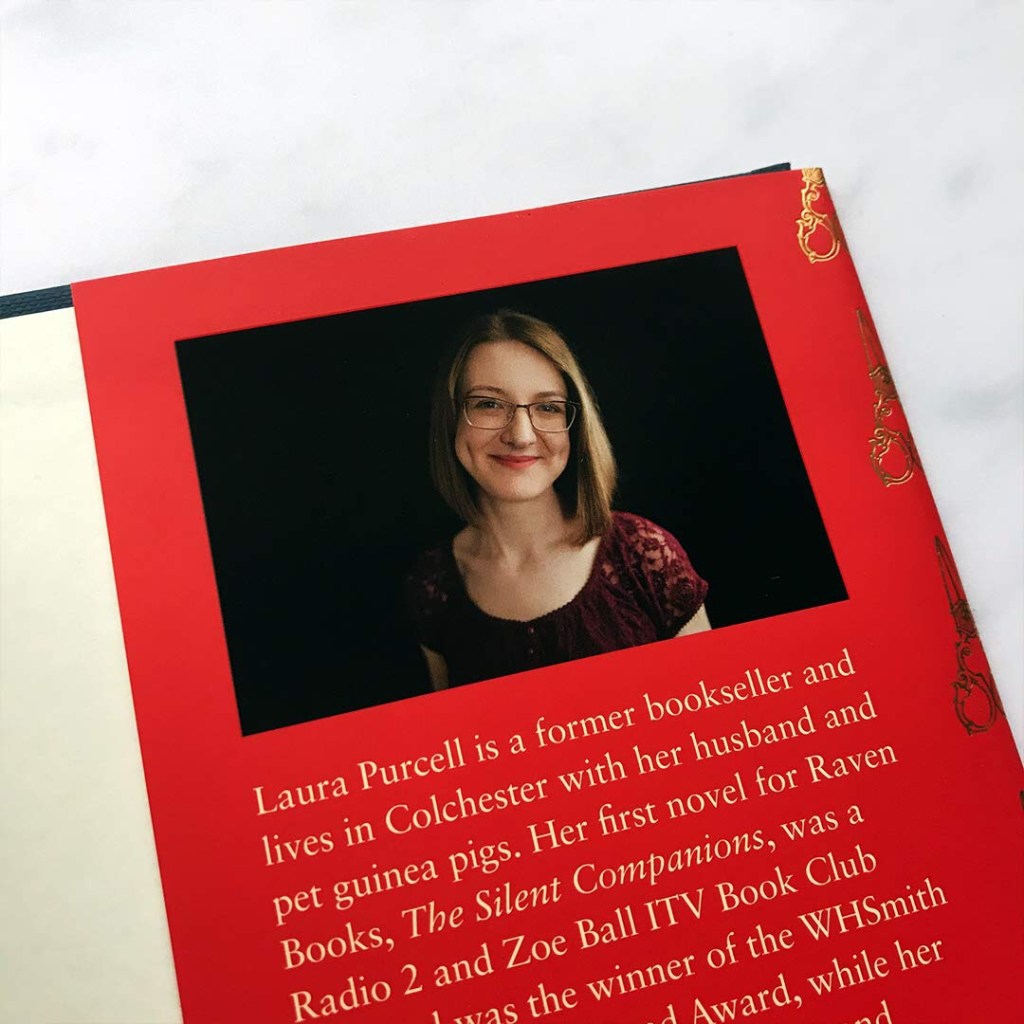
Laura Purcell is a former bookseller. She now lives in Colchester with her husband and their pet guinea pigs. Her first novel for Raven Books, The Silent Companions was a Radio 2 and Zoe Ball ITV book club choice. It was also the winner of the Thumping Good Read award. Her next novels The Corset and Bone China have cemented her reputation as the queen of the spooky but sophisticated page turner.

Posted in Netgalley

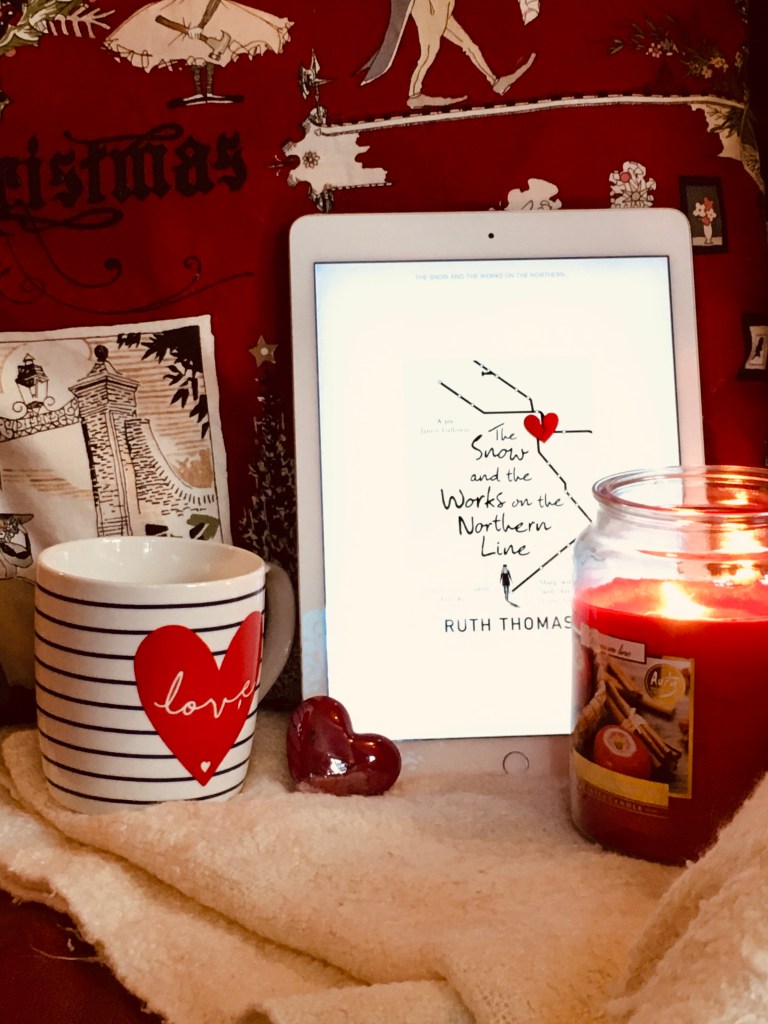
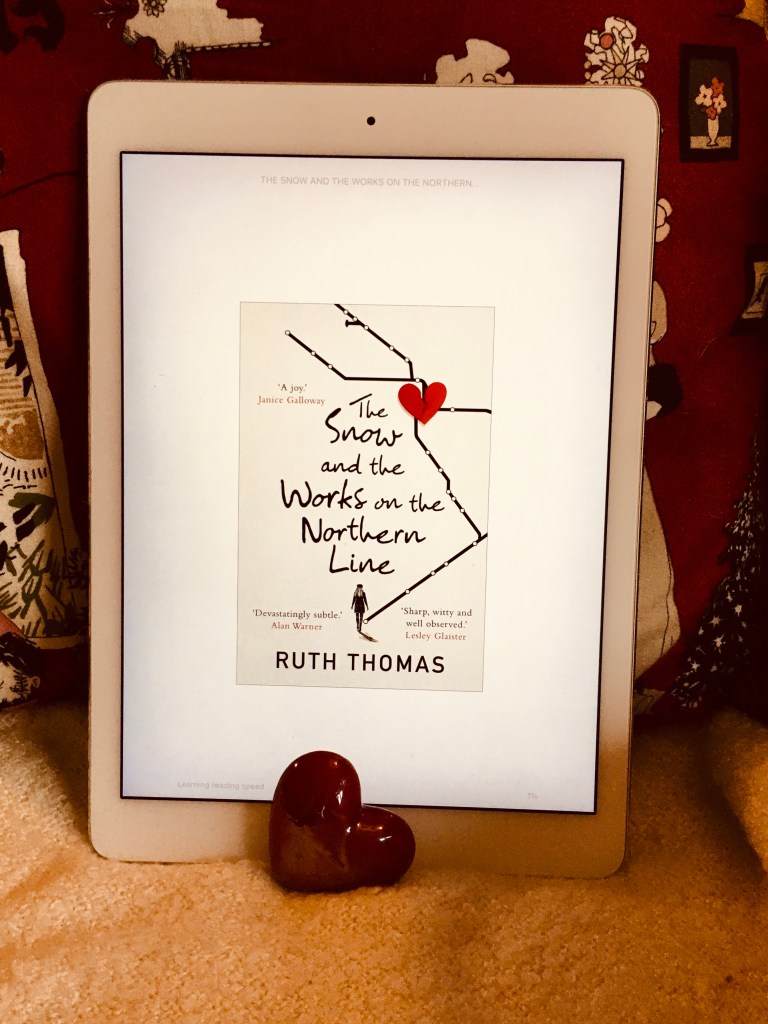
The Snow and the Works on the Northern Line by Ruth Thomas.

What a wonderful surprise this novel was. I’m clearly getting worse, we’re only three weeks into January and I’m already in love with a new literary heroine. I absolutely adored Sybil and felt so at home in her company that I just kept reading all day. I finished at 11pm and was bereft, because I wouldn’t be with Sybil any more. Yes, this is what happens to avid readers. We fall head over heels with a character, can’t put the book down, then suffer from book withdrawal. All day I’ve been grumpy and reluctant to start a new book.

Sybil’s life is puttering along nicely. She has a job she enjoys at a London museum – Royal Institute of Prehistoric Studies (RIPS). There she produces learning materials, proof reads and indexes archaeological publications, and helps people with research enquiries. She has a great boyfriend, Simon, who is a chef and likes to make her bread from obscure grains. Her quiet, settled life is turned upside down when she, quite literally, bumps into an old nemesis from her university days. Sybil and Simon have gone ice skating, where they spot Helene Hanson, Sybil’s old university lecturer. Sybil doesn’t want to say hello, after all Helene stole some ideas from her dissertation and put them into her research on the Beaker people. They make their way over, very unsteadily, and end up careering into Helene’s group and in Sybil’s case banging her head. She has a nasty bang, and from there her life seems to change path completely. Only weeks later, Helene has stolen Sybil’s boyfriend and in her capacity working for a funding body she has taken a huge interest in RIPS who will be selling her Beakerware (TM) in the gift shop and welcome her onto their committee as chair of trustees. Sybil’s mum suggests a mature exchange of views, but Sybil can’t do that. Nothing but all out revenge will satisfy how Sybil feels. She’s just got to think of a way to expose that Helene Hanson is a fraud.

First of all I want to talk about the structure of the novel. As Sybil’s life starts to unravel, so does her narration. A suggestion from a friend leads Sybil to a poetry class at her local library, so prose is broken up with poetry and very minimal notes of what Sybil has seen that she hopes to turn into haiku. This is a Japanese form of poetry with a set structure of thirteen syllables over three lines in the order of 5, then 3, and then 5 syllables. Having lived next to a Japanese meditation garden for several years I started to write and teach haiku as a form of meditation. It’s a form linked to nature and is very much about capturing small moments. So if Sybil sees something that might inspire her, it makes its way into her narration. I loved this, because I enjoy poetry but also because it broke up the prose and showed those quiet still moments where Sybil was just observing. She works with found objects – most notably a little teacup, left on a wall, that has ‘a cup of cheer’ written on the side. There’s a very important reason for the fragmentary narration, that I won’t reveal, but I loved it and thought it was so clever. Many of my regular readers will know why I connected with it though. These changes could just be a visible symptom of the chaos in Sybil’s mind as she goes through a massive shift – physically from one flat to another – but a mental shift towards living alone, to coping with her nemesis constantly popping up at her work space and to experience the heartbreak. We’ve all been there so her situation is easy to relate to.

The characters are brilliantly drawn, funny, eccentric and human. Sybil’s boss Raglan Beveridge – who she observes sounds like a cross between a knitted jumper and a hot drink – is such a lovely man, easily swayed but kind and tries to ensure that Sybil is ok. I enjoyed Bill who she meets several times across the book, in different situations. He’s calm, funny, thoughtful and shows himself to be a good friend to Sybil, even while she’s barely noticing him! Helene seems to hang over everything Sybil does, like an intimidating black cloud promising rain to come. She is a glorious villain in that she has very few redeeming features, and tramples all over Sybil’s world at home and at work. The author cleverly represents this in the very structure of RIPS. Sybil likes her slightly fusty, behind the times little museum. There’s a sense in which it is precious, that the spaces within shelter some eccentric and fragile people. They’re like little orchids, who might not thrive anywhere else.

Helene’s organisation brings much needed funding, but with it comes obligation. As chair of the trustees, she wants to change the structure of the building and all these precious spaces might be sacrificed. Her commercial enterprise, recreating Beakerware (TM) for the museum gift shop, means the shop expanding into other areas. Exhibits that have been on display for years will be moved into storage to make room and Sybil dreads Helene using Simon as the face of the range. Imagine giant posters of your ex greeting you every morning at work. To add insult to injury she inserts herself into Sybil’s everyday job by insisting on adding a section into Raglan’s upcoming book, meaning that Sybil has to index Helene’s writing. Could there be a chance here, for Sybil to gain some satisfaction? As Sybil’s mum hints though, revenge can be more damaging to the person seeking it.

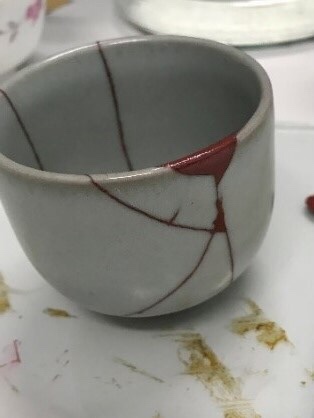
This was a quiet book. As I was reading it, I was engrossed and the outside world was muffled for a while. It reminded me of those mornings after snowfall, when the outside world is silenced. I felt a deep connection with Sybil. She’s offbeat, quirky and has a dark sense of humour. We meet her at her lowest point and we’ve all been heartbroken, but it was much more than that. I’ve been this broken by life, I was a like a vase, smashed into so many pieces I didn’t know if I could pull all those pieces back together. Even if I did, I knew I would never be the same person. My loss felt so huge that it affected my actions – I left doors unlocked when I went out, forgot to pay bills, and started to make mistakes at work. I had always prided myself on being very ‘together’ and here I was falling apart. I discovered Japanese art that healed me in some way – it’s called Kintsugi and it’s the art of repairing broken ceramics with liquid gold or other contrasting metal. It shows the cracks, that the piece has been through something, but it’s still whole. I felt that this applied to Sybil’s journey and the book’s structure too. Sometimes, broken things can be even more beautiful than they were before.

A piece of Japanese kintsugi

Meet The Author


Ruth Thomas is the author of three short story collections and two novels, as well as many short stories anthologised and broadcast on the BBC. Her writing has won and been shortlisted for various prizes, including the John Llewellyn Rhys Award, the Saltire First Book Award, the VS Pritchett Prize and the Frank O’Connor International Short Story Award. She lives in Edinburgh and is currently an Advisory Fellow for the Royal Literary Fund. The Snow and the Works on the Northern Line is her third novel.

Why not go back and check out the other reviews from the blog tour:

Posted in Personal Purchase

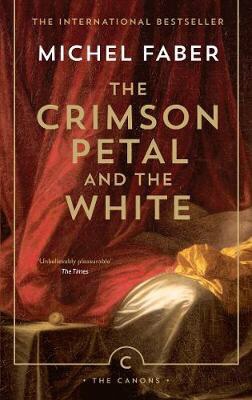
Throwback Thursday! The Crimson Petal and The White by Michael Faber.

Today is my first Throwback Thursday post where I tell you about a book that’s already in my collection. It can’t always be about brand new books. Especially at a time when people are struggling financially. All of my Thursday books should be available in your local library or might be found in a second hand book or charity shop. Hope you discover something new, but old at the same time 😊😊

Publisher: Canongate Books, 2014 – Paperback Edition

ISBN: 978-1782114413

Watch your step. Keep your wits about you; you will need them. This city I am bringing you to is vast and intricate, and you have not been here before. You may imagine, from other stories you’ve read, that you know it well, but those stories flattered you, welcoming you as a friend, treating you as if you belonged. The truth is that you are an alien from another time and place altogether.

This is a new feature for 2021 where I look back at a book that I’ve already read, possibly years ago, and bring it to reader’s attention. I was more than a little daunted by this brick of a novel by Michael Faber, but such is his incredible characterisation and ability to wrong foot you at every turn, that you’re left wishing you could stay in his world a little longer. This incredible work is the novel Dickens could gave written had not been constrained by the conventions and sensibilities of his age. In fact, this novel portrays a Victorian London slightly after Dickens time, where omnibuses take middle-class ladies to shop for fripperies, such as the soaps our hero William Rackham makes in the family factory. However, despite the period, it is not Rackham who occupies us or draws our attention. It’s the women in this novel who really hold the power. From poor Agnes, the long suffering wife of Rackham diagnosed with hysteria and confined to bed, to the alluring Sugar, a prostitute with a strange skin condition. I think it is Sugar who draws us into this tale, in much the same way she draws a man, the narrator beguilingly addresses us directly – perhaps in a parody of Jane Eyre’s ‘Reader I married him’. She makes it very clear that we may think we know London, we’ve read about it from other authors after all, but what she’s showing us is a London that was always there, but hidden from our eyes.

Sugar is just 19 years old, put on the game at a tender age, she is pale, and not even a beauty really. However, she has a reputation of mythic proportions, praised highly in More Sprees – the catalogue of London whores for those who are keen customers of brothels. Whilst the oft quoted estimate of a police magistrate was 50,000 prostitutes working in London in 1791, it’s likely this figure included unmarried women living with a partner, which was quite common in the working class communities. The British Library suggests a more accurate figure of 20,000, so for Sugar to be one of the best and even well-known is quite an achievement. Her entry in the book suggests that are acts she will perform that others don’t. William Rackham searches her out along with two friends who have the guide, although William seems more interested in drinking. Disillusioned with his job and married life, William has always wanted to be a writer, scribbling away at his desk in the big house, but has never finished anything publishable so his father drafts him in to to run the family business Rackham’s Soaps. His wife, Agnes, is rapidly turning into an invalid – spending much of her time in bed and only visited by the family doctor, convinced that the rest cure and his ‘treatments’ to correct potential hysteria will help. She doesn’t even remember she has a child.

When William does find Sugar, he is enamoured of her paleness, her compliance, and her keen brain. She is like no woman he’s ever met. He can talk about his business and she understands; perhaps the only woman who has truly understood him. However, there is one fly in the ointment. Agnes is still largely in bed, often distressed and resistant to the doctor’s visits, and unaware she is a mother. Their daughter needs to be kept quiet so that she doesn’t disturb her mother or William when he is working. As time goes on and keeping Sugar starts to become expensive, he has an idea. What if he were to move Sugar into the house as his daughter’s governess? There would be an answer to the problems posed by his child, and there would be no barrier to he and Sugar being together – even if he only has a short amount of time to spare. Anyone can see this is a disastrous idea, but ideas have never been William’s strong point. What will happen when every aspect of his life is under one roof?

These characters are so well drawn and our setting so painstakingly rendered with incredible detail, every time you pick up the novel it feels like you are there – with every smell and ribald comment of Sugar’s world. The lynch pin of the novel are the two women; Sugar and Agnes. With the two under one roof, William has the ideal situation for a man with a Madonna/Whore complex – one class of women for marrying and another for sex. Sugar has every sympathy for Agnes and soon has a shrewd idea of what is going on in this outwardly respectable home. Agnes is entirely an innocent, so much so she believes that demons ‘bleed’ her monthly. When she is subjected to sexual assault in the guise of examination by the doctor, Agnes is simply dosed with laudanum to keep her quiet. Every so often, even William visits his wife bed, taking what he can even when his wife is so drugged she can’t possibly consent or participate. For a young woman like Sugar who is used to women of bawdy conversation, who douche with vinegar next to each other and understand the mechanics of sex, Agnes is a complete innocent. In fact when she does see Sugar she thinks she is her Guardian Angel, something that Sugar is happy to cultivate. As William’s interest in Sugar wanes, she becomes furious and plots how she can help Agnes and Sophie. I also love that although William considers himself the literary figure, both women are writing daily. Sugar writes an erotic and bloody revenge novel on the men who have used and abused her. Meanwhile, Agnes keeps a daily diary, explaining what is happening to her and descending further into her ideas of angels and demons. Both women have a strength that William can only dream of.

I won’t ruin the end, because I recommend that you read it, especially those of you who love historical fiction. It’s really a race to find out whether our women will come out on top and how. If you’re used to historical fiction, you might expect things to be tied up neatly with a bow, but since this is a postmodern novel you won’t get that. In fact we !leave these people as abruptly as we came in with our all seeing narrator:

An abrupt parting I know but that’s the way it always is isn’t it?’


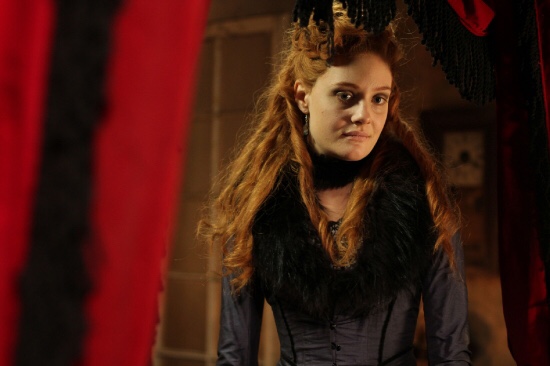
BBC Series The Crimson Petal and The White

The BBC series The Crimson Petal and the White was just as intriguing as the book and with an excellent cast. Romola Garai played Sugar, Gillian Anderson played her brothel madam and mother, and Chris O’Dowd took on his first drama role as William Rackham. The settings were authentic,the language of Sugar’s world and the lack of modesty in it’s women incredibly authentic. The series stayed very true to the book, was beautiful in terms of costume and sets, and even brought interest to lesser characters in the novel. Aside from the excellent main characters, Shirley Henderson memorably portrayed the religious reformer of prostitutes, Emmeline Fox. I always remember her tiny, hoarse voice and difficulties breathing which were a huge contrast to the conviction and fire within her. This was an excellent series, well worth searching out on DVD.

Posted in Netgalley, Random Things Tours

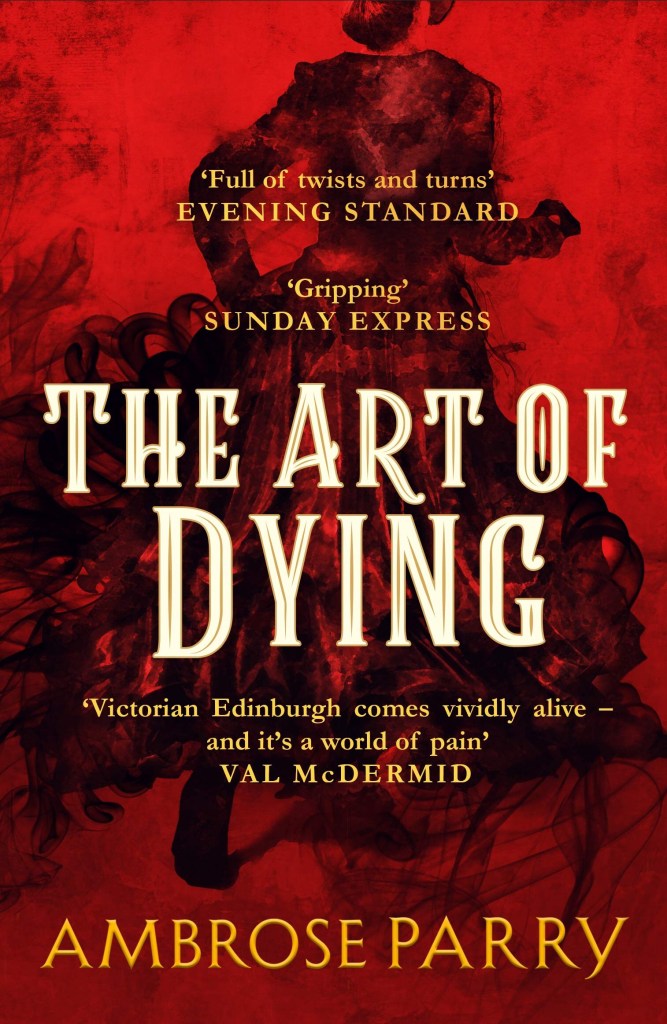
The Art of Dying by Ambrose Parry.

Today, I’m happy to be on the closing day of this blog tour for The Art of Dying. This interesting mix of murder mystery, historical/ medical drama and romance, creeps up on you slowly, until you’re determined to keep reading and see whether a killer is stalking the sick of Edinburgh. In fact at what point I couldn’t decide what I wanted to know more: would the killer face justice, would Raven reconcile with the woman he loved, who was stealing money from the surgery, would Sarah live and what the hell was Quinton up to? It’s hard to sleep with all that going round in your brain! I hadn’t read the first novel featuring Dr. Wilberforce Raven, but it was easy to catch up with this instalment set in Edinburgh in 1849. We really do hit the ground running as Raven is attacked in an alley way in Prague. In the dark and confusion one of the attackers draws a gun, Raven draws his knife and a shot rings out ricocheting off the narrow brick walls. Raven slashes his knife in the air from left to right. He thinks he made contact with an attackers throat, but he doesn’t know if he struck a fatal blow and doesn’t know who is shot.

This chaotic existence seems to be the way Raven lives, but will it follow him back to the streets of Edinburgh. He’s been offered a place under the prestigious obstetrician Dr. Simpson, who he trained under at medical school. He’s looking forward to being back in Edinburgh and in the hospitable, but slightly chaotic, family household. He’s also looking forward to getting away from the guilt that he may well have killed a man in Prague. The only downside involves women. He will be leaving Gabrielle behind – the woman he’s been seeing in Prague – but they’ve both known it was a short term relationship. More pressing than that, he’s wondering whether Sarah is still part of Dr. Simpson’s household. Sarah was originally the Simpson’s housemaid, but did assist the doctor in clinic at times. Raven was attracted to her intelligence and determination. They seemed drawn together by an invisible bond and the closer he gets to his old city, he can feel that bond tugging again. They way they’d been in the past, Sarah might have confidently expected a proposal and had it just been about love, Raven would have had no qualms. However, as a young doctor starting out in a profession where reputation is everything, could he risk marrying a house maid? What would Edinburgh society think and would he be risking his career?

I can’t say I warmed to Raven as a character. I found him arrogant and apt to jump to conclusions, especially where it would benefit him. More importantly, I found him cowardly. Especially in his dealings with Sarah. I had such a moment of satisfaction when he enquired after Sarah when arriving, using her maiden name. When the new house maid explains she is now Mrs Sarah Banks, I actually smiled. To find out that her new husband, Archie Banks, is also a doctor and has a comfortable lifestyle, is a huge life lesson for Raven. Here was a man with strength of his convictions. He had loved Sarah and married her, with no regard to his position or social standing. Of course, we find out later on, that Archie has a reason for not caring about such things but he’s still a man of honour. Sarah is an intelligent, but also perceptive woman, and this is her advantage as she and Raven come together to restore Dr Simpson’s reputation. During a difficult delivery, Simpson is rumoured to have missed a haemorrhage and the dead woman’s mattress was said to be so soaked with blood it had to be disposed of. Simpson expressly asks Raven not to look into the matter and certainly not to bother the grieving widower in his defence. Raven even has the odd worry about Simpson himself, especially his potential overuse of chloroform – Raven is served a drink laced with it on his first evening. Sarah, however, feels that Simpson is a good doctor and that there is something else underlying this need to discredit him.

This is not the only investigation going on in the household. A new employee, Mr. Quinton, is there to look after the admin and keep the books for the practice. Unofficially, he is trying to find the culprit for money going missing in the house. He wants to book drugs in and out too, and research patterns in the practice’s spending. There’s something about his persnickety nature and constant presence that’s very off putting. He doesn’t work in harmony with the house, but rather against it. He isn’t at the Uriah Heap level of obsequiousness, but that’s who I kept thinking of when he came into the story. I liked how the author brought in all these levels of surveillance. Quinton watches the household and practice, but he’s been under the steely eye of the butler since he arrived. Sarah is watching both Dr. Simpson, but also stumbles into another investigation while trying to clear his name. Raven is being watched, but is also watching others with Sarah. Their focus is split though: Sarah thinks Simpson’s name can be cleared and as the deaths pile up, the same name keeps cropping up, a nurse called Mary who has cared for people who seem to have lost their lives in suspicious circumstances. A sudden illness that involves seizures, unconsciousness, fatigue and weakness appears out of the blue, killing people in a matter of hours. Could this Angel of Mercy be an Angel of Death? Or could there be a rare new disease for Raven to discover? He daydreams about the acclaim it could bring if he has uncovered an unidentified disease. With the title Raven’s Malady running through his head, the two are on the look out for different things, but who will be proved right? More importantly will the investigators themselves be safe, as they trail all over Edinburgh to find answers?

If we add to this: a moneylender with a giant as his right hand man and some unexpected debtors on his books; a pregnancy; a bereavement; and a breakneck race to save someone’s life. The book is definitely jam packed with incident and tension, whether that be the tension of the race to find our culprit or the more ‘slow burn’ tension between Raven and Sarah. Our writers leave us with enough answers to feel satisfied and enough cliffhangers to look forward to the next book. This isn’t an easy balance to strike and I felt it was well – judged here. I was intrigued by the period detail when it came to surgery and obstetrics. I found myself won over by most of the characters. Sarah leapt off the page and when I read Mary’s chapters I was drawn into her upbringing and the terrible effect this had on her psychologically. This is a series I will look forward to revisiting and maybe even Raven might win me over next time.

Meet The Authors

This book is the second in the series featuring Dr Raven. This one is published by Canongate (Blackthorn) and will be available on March 2nd 2021. Ambrose Parry is a pseudonym for a collaboration between Chris Brookmyre and Marisa Haetzman. The couple are married and live in Glasgow.

Chris Brookmyre is the international bestselling and multi-award-winning author of over twenty novels, including Black Widow, winner of both the Theakston’s Old Peculier Crime Novel of the Year and the McIlvanney Prize for Scottish Crime Novel of the Year.

Dr Marisa Haetzman is a consultant anaesthetist of twenty years’ experience, whose research for her Master’s Degree in the History of Medicine uncovered the material upon which The Way of All Flesh was based.

Posted in Uncategorized

Life in Pieces by Dawn O’Porter

Over New Year I gave myself a short break from fiction because my concentration was poor and I couldn’t take in long, involved storytelling. This was due to a combination of events: I was affected by a mistake with my prescription medication; I was getting ready for Christmas with plans constantly changing; I had two chatty and excited stepdaughters in the house; we’d cancelled our wedding; and we’re mid – moving house. There were days that felt like nothing went right and I simply had no room in my brain or energy in my body. It felt like the ‘perfect storm’ of circumstances. This is the position that writer and broadcaster Dawn O’Porter found herself in last spring – only on a much more devastating scale. Just before the country went into lockdown Dawn received the news that her best friend, the super-talented and funny Caroline Flack, had taken her own life. She received this news out in LA where she now lives with her husband Chris O’Dowd and their two small boys. Shortly afterwards LA went into lockdown, followed by riots protesting the killing of George Floyd. Through all of this she was finding it difficult to write and like many of us decided to write a small blog each week – in Dawn’s case for Patreon subscribers. This book is the result of those blogs.

I love books like this, because they give me short sections to read that don’t require a lot of brain power. Reading like a diary, Dawn goes through the mundane, funny and terribly painful aspects of each day. Determined to keep her grief from her children, and unable to travel until the funeral date was definite, meant having to find ways of coping. Of crying in private, but being able to be mummy at a moment’s notice. She withdrew from social media and, once the funeral had taken place, the home became her whole world. It wasn’t that she could put the loss to one side, she felt Caroline in her head every moment every day. Having been very critical of celebrities who shared Caroline’s last messages after her death, the author manages to tread a fine line by joyfully reminiscing about her friend while not talking about her death and the circumstances surrounding it. This is not a book about Caroline, it is very firmly a book about Dawn and her own experience of the past year. It isn’t just about grief either, it’s about suddenly being a full-time Mum while trying to find space to create, how it feels to be British living in LA, and the huge social upheaval on their doorstep during the riots. Each section is the equivalent of a Polaroid snapshot of this extraordinary time.

Dawn has a such a definite and accessible narrative voice – she is brutally honest about her experiences whether they be physical or whether she’s relaying her complex interior monologue. I had the feeling nothing was censored and I could identify with those chaotic ‘family in lockdown’ moments even if the children in my house are more teenage than toddler. Those dilemmas of whether we bother to dress and groom or not, do we keep a set routine or do as we please, keeping up with exercise and eating well or just eating like it’s Christmas. Sadly, I think I largely failed in these challenges! I understood Dawn’s sense of only dealing with what’s in front of us – even if what’s in front of us is a shitstorm of tearful children, shitting animals, followed by puking animals and the inability to find a food delivery slot anywhere! These are common to everyone’s experience of the year. We’ve spent time with the same people every day, potentially doing the same things over and over. This heightens everything – tensions, emotions, worries. If we’re struggling with difficult emotions it forces us to face them, there’s no escape.

Between stories of disasters with the boys, food adventures and concerns about lockdown drinking, come global concerns. Dawn talks about her wardrobe and since we share a love of vintage this is something I really enjoyed, but it was interesting to think about in terms of the environmental impact of fashion – something I’ve been concerned about for a few years now. Her exploration of the riots in her neighbourhood stood out particularly to me. Again, her worries are at family level. Rioters are directly outside their home, the bins are set alight and she talks of keeping an emergency bag in case they have to leave in a hurry. Yet she is hugely sympathetic to the cause, profoundly moved by the terrible footage of a man begging for his life, and both she and Chris join the protests where they can. She writes eloquently about our white privilege, and how her black friends keep her on track when she’s not understanding something – if more of us admitted not knowing, a better dialogue would emerge. I went from laughing about a household mishap to grab a pen and note down some reading she recommended about white fragility. I think this is what I enjoy most about being in Dawn’s company – there’s room for silliness, raw honesty and emotion, then profound reflections on the bigger problems our society faces. It’s like a long evening with your best friends. My favourite anecdote involved a very famous red haired actress and our British humour about ‘gingers’ really not translating! This was a great read and I was sorry when it ended.

Meet The Author

DAWN O’PORTER lives in Los Angeles with her husband Chris, her two boys Art and Valentine, and her cat Lilu and dog Potato.

Dawn started out in TV production but quickly landed in front of the camera, making numerous documentaries that included immersive investigations of Polygamy, Size Zero, Childbirth, Free Love, Breast Cancer and the movie Dirty Dancing. Further TV work included This Old Thing, a prime-time Channel 4 show celebrating the wonders of vintage clothing. 

Dawn’s journalism has appeared in multiple publications and she was the monthly columnist for Glamour magazine. She is now a full-time writer of six books – although she would probably have written sixteen if it weren’t for her addiction to Instagram Stories. 

Most recently, Dawn has written the script for Especially for You, a jukebox musical using the infamous Stock Aitken and Waterman back catalogue. The show will open with a national tour in early 2020.

http://www.dawnoporter.co.uk
@hotpatooties
/DawnOPorter

Posted in Random Things Tours

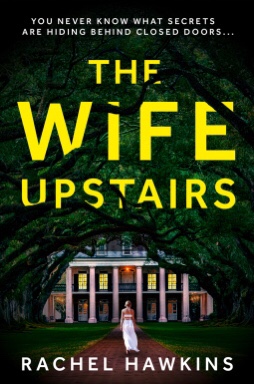
The Wife Upstairs by Rachel Hawkins

Publication: St.Martins Press (5th Jan 2021) ISBN: 1250245494

Jane Eyre is my favourite classic novel, and coming very close is Rebecca by Daphne Du Maurier – a retelling of the Jane Eyre themes relocated to Monte Carlo and large stately home in Cornwall in the 1930s. Over the years I’ve seen plays and ballets of the book, the inevitable film and tv adaptations ( Michael Fassbender as Mr Rochester – be still my beating heart). I love Jean Rhys’s novel Wide Sargasso Sea which is written as a prequel to Jane Eyre, telling the story of Rochester and Antoinette ‘Bertha’ Mason and their whirlwind marriage in the West Indies. The book has something new to say to every generation it seems and it is remarkable successful in most incarnations. So I jumped at the chance to read Rachel Hawkin’s novel The Wife Upstairs, where the author relocates Jane to the southern states of America and updates it to the present day. It’s clear that the author loves the original novel and knows it well. Here she has created an ambitious retelling which is Jane Eyre as a compelling murder-mystery, via ‘The Real Housewives of Alabama’.

Jane lives in the bad end of a Southern town, with slimy landlord John who despite being youth worker at his local church, isn’t above spying, leering and even a touch of blackmail. Jane’s background is chequered, but we know she aged out of the care system and has been going it alone with no family since. She ended up lodging with John out of desperation when she finds herself with nowhere to go. She creates a job walking the dogs of the wealthy residents of nearby Thornfield Estates – a gated community where the wives are far too busy with their beauty regimen, lunches and charity work to walk their own dogs. Jane envies their well-kept hair, their nails, their stunning homes and enviable lifestyles. What would she look like, if she had nothing to do all day but go the gym and spa?

It’s on one of her dog walks that she meets the widowed Mr Rochester. He is a self- made millionaire, with his own building contracting business, but it is his wife’s money that has really helped him climb to the status of his neighbours. Bea Rochester, was the creator and director of interiors catalogue business Southern Manors – a play on the famed hospitality and etiquette of the Southern states. Bea died just over a year ago in a boating accident with her best friend Blanche. Her way with interiors can be seen in the marital home, but also in most fashionable homes on the estate. Jane is surprised at how well she and Ed get along, and when he buys his own setter puppy for her to walk she takes it as a sign he wants her around. Very quickly, their easy chit chats over coffee become more. Jane describes herself as normal and ordinary, even plain, whereas Bea was a beauty – why would he want to go out with her? They keep their fledgling romance a secret and for a while Jane enjoys listening to the neighbourhood women wondering if Ed is dating, and who the mystery woman is. Just occasionally though, she gets the odd hint that everything wasn’t what it seemed with Bea and her friend Blanche who died with her. Together since college, to hear most of the women talk the two were like two happy peas in a pod. It’s only Eddie, and sometimes Blanche’s husband (drowning himself in drink) that hint otherwise – one suggestion being that Bea owes all she knows to Blanche and that a rivalry existed between them.

Rachel Hawkins

As Jane and Ed’s relationship becomes more serious and goes public, each one is keeping their own secrets. Jane doesn’t want Ed to know about where she’s lived with John so has left all her belongings behind. It turns out that John once shared a foster home with Jane and he knows a little more about her than she would like. Blanche’s husband Tripp seems devastated by his wife’s death, often disheveled and definitely drinking so much that Jane is on edge around him. Yet Ed doesn’t really talk about his late wife at all, and Jane can’t understand why. She’s seen pictures and they look like the perfect couple; Blanche was so beautiful and such a great businesswoman. I was starting to suspect that, just as her business was all about appearances, so was their marriage. Plus her body has never been found, Jane ponders over this and thinks that must surely disturb him? She sometimes has the crazy thought that Blanche isn’t really dead. When Ed secretly follows Jane back to her former flat and meets John, she is sure their relationship will be over. However, Ed seems unfazed by the grotty surroundings and knows just what to do to deal with John. It’s almost as if he’s more at home with Jane and the type of background she’s struggling to get away from. Maybe Jane is a better fit for for Ed, than his first wife was? Yet she doesn’t feel fully secure – even though she has access to the money, lives in the house and no longer walks dogs. Now the women who employed her to walk their dogs are having to get used to her in their social circle. They have been very gracious, but they do keep asking whether Ed will put a ring on it.

Further on, besides the main narrative where Ed does put a ring on it, we get a first person narrative from Bea with all the intricacies of her college life including meeting Blanche. This brought even more questions into my mind. If this was more of a ‘frenemy’ situation then is there more to their deaths than meets the eye? Bea reads like someone with a personality disorder, without a core sense of self and attaching herself to people she admires in order to emulate them. This reveal reminded me of Gone Girl, and from here the story really does twist and turn. The author plotted this well and really built the tension. It’s as if Jane has unknowingly stepped into a trap that is slowly and inexorably closing around her, until there’s no escape. The closer she gets to the truth of all the relationships here, the more danger she finds herself in. By this point I was constantly reading to see how this would end. Was Bea murdered and by whom? What was Blanche’s part in this tragedy? Will Ed’s secrets finally be revealed and what will he do to keep them hidden? This is a fast addictive read that will keep you guessing to the very end.

Posted in Random Things Tours

The Art of Creativity: Seven Powerful Habits to Unlock Your True Potential by Susie Pearl.

I was so excited to be offered a copy of this book to review because, when I’m not blogging, I’m a counsellor and writing therapist. Trying to unblock people’s potential is exactly what I do. I’m in the middle of an MA in Creative Writing and Well-being, so I’m also discovering the blocks to my own creativity too. I was looking forward to getting stuck into some of the exercises in Susie’s book and I was delighted to find they were more in depth and helpful than expected. They don’t just delve into the psyche, but give solid, practical advice too. This works like a one stop guide to taking risks, ignoring critics, releasing blocks and forming daily creative habits. It looks after the artist physically, mentally and even spiritually. I had expected a simple gift book, but it soon proved this was much more than that.

One exercise involved confronting fear and I decided to try this out because I have a lot of fears around the creative process – mainly lack of confidence in my writing ability, fear of revealing too much, offending someone or just embarrassing myself. Being an artist exposes us, not just to criticism, but to being really seen as we are – good and bad bits. It was interesting to write about things I fear – I have a terrible fear of clowns thanks to Stephen King – but in writing about it I realised it’s not the clown, but the disguise that’s the problem. Any sort of mask, face make-up or disguise had a similar effect. It’s a fear of people not being authentic, not showing me their true selves. So, the very thing I fear in other people, is what I fear in my writing. I had to ask if maybe I was the one wearing the disguise. I was then asked to use a journal to answer questions about the creative process and what scares me about it, and what my inner voice was like. I remembered trying a different handwriting when I was at primary school, only to have my work held up as an example of what not to do with our work. By trying something different I had ruined my work and needed to return to my usual writing. I remembered being so embarrassed. The same teacher used to make us do Mastermind every Friday morning where we would sit in a black chair at the front of the class and he would fire times tables sums at us on the clock. I used to dread Friday mornings and wanted to be ill so I didn’t have to take part. To move forward I need to work out my negative core beliefs about my creativity and then challenge them with positive affirmations.

Since encouraging people to journal is a major part of the work I do – in fact I’ve been teaching journaling and scrapbooking for mental health for eight years now – I was pleased to see it here as a cornerstone for creativity. I loved this explanation of why it works:

Allowing ideas and words to flow naturally from your brain to the page, without editing, helps the unconscious mind to swim to the surface and become seen and heard.’

It allows us to explore unfettered, not only the contents of our day and how we’re feeling, but in a creative context to explore what stops us creating. Surely if we can journal, we can write? The author suggests we use lists to determine what creative activity we want to do, list everything we think stops us from carrying this out, whether it’s an internal or external block. Then we can work out and suggest solutions for these blocks – I often find it helps to imagine to blocks and issues belong to someone else because that gives us the right mindset to solve them. If solving our own issues, we can have unconscious blocks that follow us even into our journal. In fact the author herself suggests it can help to imagine we are trying to help a friend rather than answering our own problems.

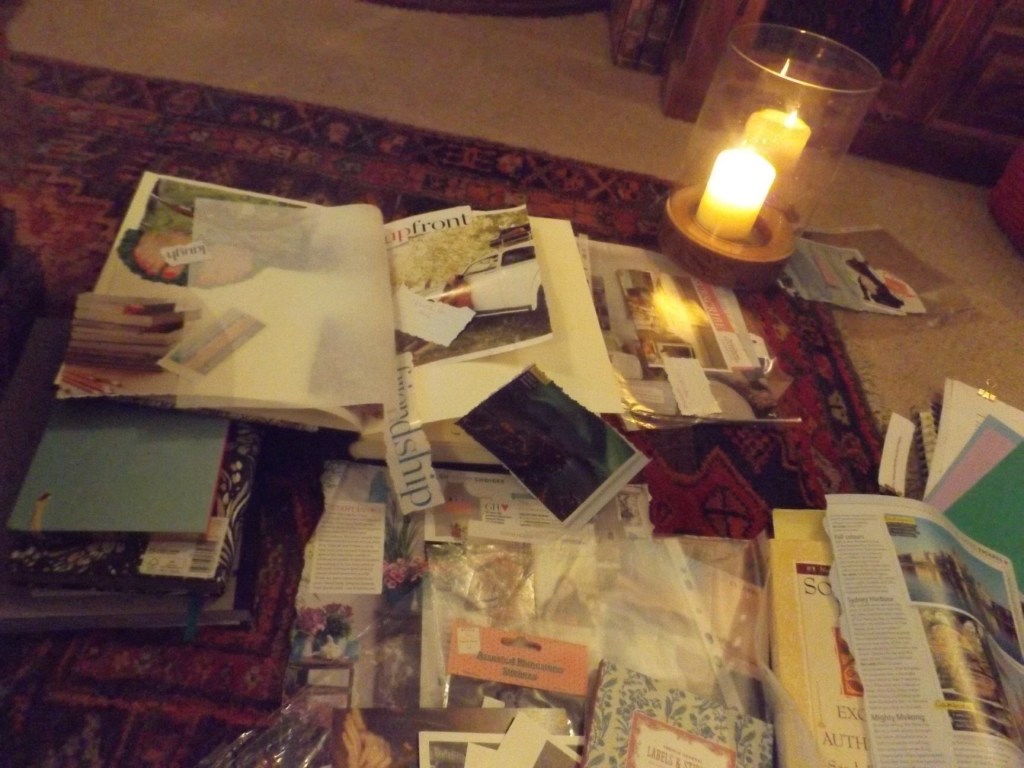
Scrapbooking on my authentic self

For me, the most useful section on a practical level is the section on mind maps. I am currently writing a series of pieces for my MA that explore my experiences nursing my late husband, but also the dynamics within his family and their flight from Poland during WW2. I hope that this will become a novel, because I have always wanted to be a writer. The author suggests a mind map and I use my scrapbook for these so I can use colour and collage and make it a piece of art in its own right. I want it to inspire me when I’m struggling, so aim to use family photos and pictures of the places I need to research or visit. She suggests using meditation for 15 minutes before starting, something I do in writing workshops because it stops chatter, calms the room and lets people focus on their own intentions. Usefully, she suggests key questions to ask yourself such as key themes, chapters and intention. However, she also suggests including questions about yourself such as – what are my unique credentials for writing this book? Why does it need to be written? What has inspired me to write this book? These are really positive questions because they get us to think positively about our skills and knowledge and can be used as encouragement when we’re feeling like we don’t have the skills, knowledge, or talent to do this! Something all writers feel at times.

At the back there’s a brilliant section on references and further reading that I know are really helpful because they’re all in my reference library at home. I think this is a really useful little book, great to fit in a bag to carry with you and will be useful for the future, not just as you work through it the first time. I’m looking forward to using it alongside my upcoming work, but also adding it to the libraries of other potential creators I know. It delivers much more than it promises as first glance. The most important concept it introduces is that of the ‘flow-state’ – ‘the mental state of being completely immersed in a task’. This stage isn’t just important for people creating a specific piece of work, because it links to that other buzz word for mental well-being- mindfulness. When we become so immersed in a task we lose track of time, we are practising mindfulness because we’re focused on only one thing at a time. We’re not checking the time, or social media and becoming distracted by everyday cares. We are simply being. This is something that everyone can benefit from.

Completed collages

Connect with the author by signing up for a newsletter at:

http://www.susiepearl.com

You can also connect with her at:

@susiepearlwriter

info@susiepearl.com

Posted in Personal Purchase

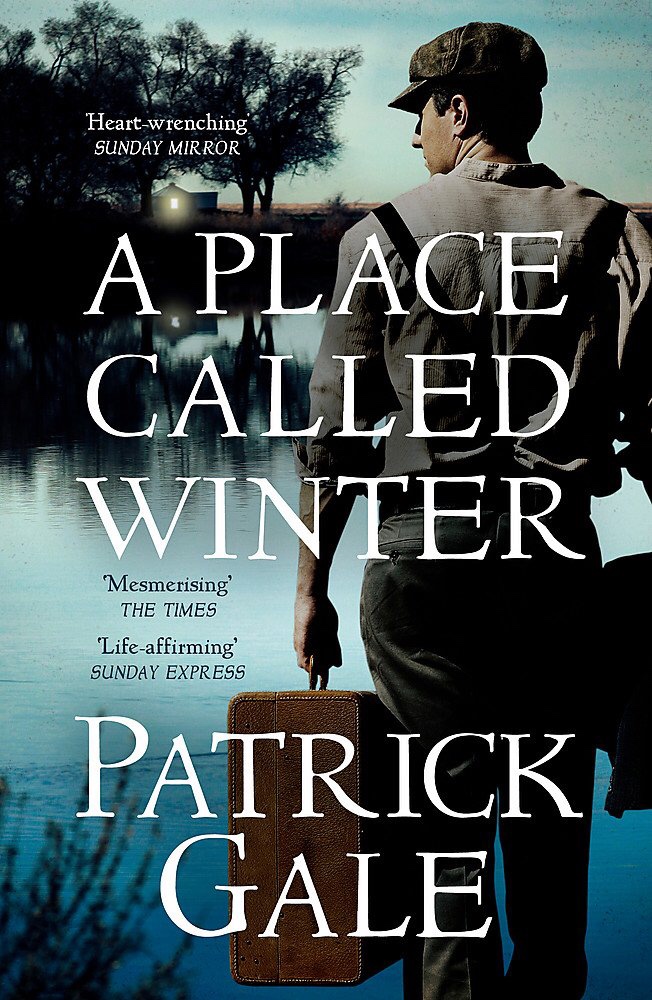
Throwback Thursday! A Place Called Winter by Patrick Gale.

Patrick Gale is one of those novelists I have so much confidence in, that I’ll buy their latest book straight away. I don’t need a review or blurb to tell me how good it is, if it’s Patrick Gale I’m going to enjoy it. In all his work there is such a warmth and empathy for his fellow humans. There’s an emotional intelligence in his work that makes him stand out and it was so evident in this novel based in the Edwardian period. Harry Cane is an upstanding member of society, living in a beautiful home with his wife and child. Many would think he has it all and he’s certainly followed a conventional path. He’s a quiet and shy man, who loves his child, but he also has a secret. He’s having an affair. Someone though, knows about his habits and has been watching him. He is offered a choice by his brother-in-law. If he leaves the country, avoiding the shame this could bring on their family, and starts again somewhere else, his wife and child will never know. If he stays, the shameful truth will emerge. Harry has been having an affair with a man.

The novel follows Harry on his way to Canada where he secures a ‘claim’ in a place called Winter. On his journey there he meets a man, villainous yet strangely magnetic, who will prove important in this new life. Leading to acts of cruelty, but also leading to his eventual happiness within a very unconventional family. I found my heart was inextricably bound up with Harry from an early stage of the novel. His relationship with his wife wasn’t passionate, but it was loving. I wondered if he’d spoken to her sooner, explained his true feelings, she might have listened. He married his best friend’s sister, so when he is discovered and threatened by his brother-in- law, there is an anger about their lost friendship too. I was gutted by him losing his daughter more than anything. In Canada, life is bleak and hard. For a man who has never worked hard or excelled at anything I wondered if he would be able to succeed. The work is back breaking, but Harry finds reserves of strength he didn’t know he had. He can cope with adversity, loneliness, war and even the brink of madness. I loved the arc of his self-knowledge; he leaves England believing himself a monster, but finds that he’s willing to fight to be loved. He knows he deserves it.

The historical context and sense of place are beautifully observed. We even see how the Cree are affected by the pioneers and the development of open prairie into farms. The love story is touching and I was rooting for them to find a way to be together, however unconventional. Patrick Gale always writes from a place of empathy and compassion for his characters and this book is no exception. This is a geographical journey, but also one of self-discovery. The title refers directly to a place, but also to a place where we live in isolation, without that one person who can mitigate the harshness of life. I felt like I lived alongside Harry, for every part of his journey. At the end I felt sad, but also like I’d experienced something real. That Harry’s life was like all human lives a combination of happiness, contentment, cruelty and loss. The author has written a novel here, that captures what it means to be human.

Meet The Author


Patrick Gale was born on the Isle of Wight in 1962. He spent his infancy at Wandsworth Prison, which his father governed, then grew up in Winchester. He now lives on a farm near Land’s End. He’s a passionate gardener, cook, and cellist and chairs the North Cornwall Book Festival each October. His sixteen novels include the Costa-shortlisted A Place Called Winter, A Perfectly Good Man and Notes From an Exhibition – both of which were Richard and Judy Bookclub selections – The Whole Day Through and Rough Music. His latest, Take Nothing With You is a tale of teenage obsession, sexuality, betrayal and music-making. You can find out more on his website http://www.galewarning.org.