“Christmas ought to be brought up to date, Maria said. It ought to have gangsters, and aeroplanes and a lot of automatic pistols.” – John Masefield, The Box Of Delights
My Christmas fascination with this particular book may owe more to the BBC adaptation, broadcast in the run up to Christmas in the Sunday teatime slot, than it does to the book. Although I do still have a copy, one I bought with a gift token I’d won at school for trying hard, sometime in the mid 1980s. I read the book after the series aired and was captivated by this strange tale of wolves, clergymen, gangsters and Herne the Hunter. I think it captured my imagination because this was Christmas, but not the Christian version of events. This tale owes more to pagan winter festivals, fairy folk and ancient magic. I have always felt there’s something magical and transformative about Christmas Eve. I’ve never celebrated Halloween, we belonged to a restrictive church that frowned upon any sort of occult meddling, so we had to go to ‘Light Night’ instead. Instead of the magical witching hour, I felt that anything could happen on Christmas Eve. Before our swap to a ‘happy clappy church’ I’d been brought up Catholic. For me there was nothing like the excitement of being woken up late at night, bundled into the car and travelling to Midnight Mass in the frosty cold when others were in bed. I felt like a nocturnal creature, up and about just as rabbits and badgers were popping up from their burrows and sniffing the night air. My brother and I would press our faces up against our windows, looking up into the sky as far up as we could, just in case we saw Father Christmas. Miraculously, he would always have been when we arrived home again. We loved seeing everyone’s Christmas lights on and landscapes turned a glittery white with frost. I had a sense that the veil between this world and others was very thin at this time of year. That there was still magic afoot in the world and I might see something mystical and strange, much like Kay does in this novel as he travels home by train for the holidays.
The magic box
In fact Kay’s adventure starts as soon as he sets out on his homeward journey by steam train. Kay thinks he hears wolves, but that’s impossible. He does meet an old Punch and Judy man though, who inevitably draws him into an adventure.
“And now, Master Harker, of Seekings,’ the old man said, ‘now that the Wolves are Running, as you will have seen, perhaps you would do something to stop their Bite?”
The BBC adaptation
The wolves he speaks of are not the howling ones outside. The wolves are Abner Brown and his dastardly crew of henchmen. They’re after a magic box that the old man uses to go small (shrink) or go swift (travel), and which he now gives to Kay so he can keep it safe. This box sets Kay off on marvellous adventures and although I don’t remember it all, there are parts that have stuck with me. I remembered a mouse who enters Kay’s room via tiny archway in the skirting board. As Kay shrinks to avoid Brown’s henchmen, he finds himself having to navigate the ‘rapids’ in a paper boat and then disappears for a while after finding a fairy door. He’s welcomed into a fairy gathering, attended by the King and Queen of the fairies. He’s not completely alone in his adventures either and new friend Maria is a plucky little character who wants the exciting Christmas quoted above. She’s incredibly posh, cut from the same cloth as the ‘boy’s own’ heroes and has an excellent line in slang.
‘They know better than to try that game on me. I’ve been expelled from three and the headmistresses still swoon when they hear my name breathed. I’m Maria Jones, I am: somewhat talked of in school circles, if you take the trouble to enquire.’
Such intrepid characters are needed to foil the plans of Abner Brown and his men, who seemed truly evil when I first saw them. What I loved though was that sense of ancient magic – ‘I do date from pagan times’ – mixed with the public school language and sensibility. There’s a sense of Kay’s quest turning him into a man or at least trying it on for size. It’s hilarious when he adopts an important tone and asks the family servant if she knows how to make him a posset. There’s also the wonderful vocabulary that sounds like it’s come from a Roald Dahl novel, with words like splendiferous, scrobbled and purple pim. This truly is a little magic box of a novel, with richly painted scenes of nature and fairies as well as unnerving moments like the boy trapped behind a waterfall. The best thing is that every time I think about this book a huge wave of Christmassy nostalgia washes over me.
This beautiful story has just made it under the wire as I was compiling my Top 21 Books for 2021 and it truly deserves it’s place next to the others on the list. I was gripped by the story of Jack, who makes a very different promise to his new bride Gwen on the eve of WW2. Most soldiers are promising to see them again, to return, but Jack is quite clear. If he should survive the war, he won’t be back this way again. Gwen prays he keeps to his promise, but as they celebrate VE Day she does keep looking over her shoulder. What if he reneges on his promise? War has changed Jack and he is no longer the man who made that bargain. He wants to return and claim Gwen as his bride again, but little does he know that this could set in motion a chain of events that will leave he and Gwen fighting for what they love most.
We go back and forth in time throughout the book, but begins with Jack fleeing his home city on the night train, shielded by a friend who’s working on this nightly service down south from Newcastle. Jack is like many other young men in Newcastle, he’s a riveter in the shipyards and lives in a terrace house with his Mum and sister Jenny. One moment life is trundling along as normal, then the next a terrible twist of fate leads to a violent act of revenge. Stowing away on the night train, Jack plans to hop off somewhere far away where he can find work. So, as if from nowhere, he appears round the bend of a country lane to find a young woman who has fallen from her horse, but has her foot trapped in the stirrup. He hurries to help Gwen as her skittish horse takes off in the direction of the village. He takes her home to her family farm, where she helps her Dad with the dairy cattle and any other jobs that need doing. Lucky for Jack he’s arrived at a busy time on the farm, so while he stays for a home cooked meal to thank him for his service, Gwen’s dad Jim asked if he would like to stay and work. Jack accepts and as Gwen shows him his bed in the tack room, he thinks he may have fallen on his feet for the summer. What he doesn’t know is that Gwen is about to put him in a very difficult position. As he investigates a noise in the stack yard at night, he finds Gwen trying (and failing miserably) to quietly retrieve a ladder. She can’t pass her father’s door because the floor boards squeak. Reluctantly, he helps her climb up into her room, knowing that she must be meeting someone secretly and is surprised by how that bothers him.
I grew to like Jack, who is a young man of principles, only resorting to violence when someone he loves is hurt. He has an inbuilt moral compass, especially in his dealings with women and is very critical of anyone who doesn’t meet those standards of behaviour. He knows that in circumstances where young men lead women on and make false promises, it is the woman’s life and reputation that is ruined while the man just carries onto the next victim. He is a gentleman in his behaviour, even if he isn’t in position. I loved how he doesn’t have that family structure at home, but finds it with Jim and Gwen, and even housekeeper eventually. I didn’t always understand Gwen, although she is very young at the start of the novel and thanks to Jim’s overprotective nature, she’s quite naive. Something I did understand was her loyalty to the land and farm, it’s a way of life that’s in her blood and she isn’t afraid of hard work. She takes a very active part in the farm, from early morning milking, to driving tractors and locking the livestock up late at night. I thought the differences between gender and class were very pronounced in the novel. The women were far from passive in this rural community, with Gwen and Norah as great examples. It was interesting to see how the women from the hall were very separate from this industriousness – something that works against Gwen when it comes to being a mother.
The author creates a beautiful link between Gwen’s wholesomeness and the countryside – she’s miles away from the girls Jack has encountered in the city. She’s a young girl between places in society, she’s not in the lower classes but she’s not good enough for the landed gentry to consort with. At least not in public anyway. In the wartime sections of the book she’s well contrasted with land girl Norah, who has a cynical and knowing way about her. If they go the pub or an event, she soon disappears into a crowd of enthusiastic young men and seems completely at home flirting and telling stories that make them roar with laughter. Gwen is quieter, worried about how the farm will keep going with just her and Norah, wanting desperately to hold on to her father’s legacy. Besides, she knows the lies young men tell and the damage they can do. In those wartime sections, I felt the land and the countryside around it contrasted with the imagined battlefield far from here and the changes that farming had to come. Land was commandeered by the Ministry of Agriculture and fallow fields ploughed up for crops to feed the country. It was the beginning of the end for that quiet time when two ponies pulled the plough and two workers would weed the crop using a hoe. These passages of man working quietly within the countryside soon gives way to more modern farming methods which feel at odds with nature, rather than being harmonious. The author’s descriptions of animal and bird life are like a hymn to the old ways. I understood Jack’s need to return to this life, to feel at peace within it and allow the noise of battle, lodged in his head, to die down. However, I couldn’t see how he could stay either. I wondered constantly when the past would catch up with him and whether Gwen’s secrets could possibly remain hidden. This was a different slant on WW2, full of beautiful pastoral scenes and a relationship I was wishing would turn to love. A simply gorgeous read.
Meet the Author
Born in Shropshire, Anita studied English and American History at the University of East Anglia. She now lives in Berkshire with her husband and three children.
Maybe Adrian Mole isn’t the first thought most readers might have when thinking about Christmas books. For me they are right up there with the funniest and most realistic Christmas Days in literature. Every diary, starting with The Secret Diary of Adrian Mole Aged 13 3/4, contains a Christmas and each one is disastrous, but also laugh out loud funny. We’ve all had such Christmas disasters, perhaps not with such alarming regularity, and while a lot of us run ourselves ragged in December to ensure everyone has the perfect day, it’s good to read something like this to remind us that Christmas still happens whether your napkins match your tree decorations or not. The true joy of the Moles is that they are a (fairly) normal family, but their Christmas Days are always fraught. When they’re all together, Grandma Mole can always find fault with something her daughter-in-law has done, usually there’s something wrong with the food or her darling son George is being hen-pecked. In the later years, as his parent’s complicated sex life can mean some extra bodies at the table, there is a tug of war over the gravy. The Mole family gravy is made with stock from giblets and was his grandmother’s recipe. His mum Pauline would fight to the death over her right to make the gravy. Here, if anything can go wrong, it will, whether it’s a culinary mishap, an ill thought out present, or natural disaster. Christmas 1981 was our first with the Moles, but it sets a precedent.
Friday December 25th (1981)
‘I went up to the bathroom and found my mother crying and running the turkey under the hot tap. She said, “The bloody thing won’t thaw out, Adrian. What am I going to do?” I said, “Just bung it in the oven.” So she did.
‘We went down to eat Christmas dinner four hours late. By then my father was too drunk to eat anything.’
Adrian is one of life’s innocents, even in adulthood, and it’s delightful to read his completely oblivious observations of others. His friend Nigel receives presents that might indicate to most people that he’s thinking about his sexuality. He’s also oblivious during the years that both his father and mother are pursuing affairs, most notably with ‘Stick Insect’ Doreen Slater. His head is often so full of his attempts to be an intellectual, his love for Pandora Braithwaite and his various anxieties that he misses what’s going on under his nose. One year Adrian invites Bert Baxter and his girlfriend Queenie for Christmas but hasn’t informed his Mum and Dad. It’s Christmas morning when he wakes his hungover parents to say they have to pick them up. Bert usually spends the day in his bungalow with Alsatian Sabre, eating pickled beetroot in his underpants, so this is definitely a step up.
Whoever the guests are, they bring their own drama with them. His parents seem inclined to come on the same day, but bring a new lover whether it’s ‘Rat-Faced Lucas’, Pandora’s father Ivan or ‘Stick Insect’ with Adrian’s step-brother in tow. I find Adrian’s maternal grandparents hilarious. Used to living in a potato field in Norfolk, and not used to company, the pair are very Biblical and disapprove of drinking and fornicating. Their glum faces at the dinner table make everyone feel guilty for having a good time. At Christmas 1982 it’s the turn of Adrian’s Aunty Susan. She is a prison warden and has leave to join them for Christmas Day, along with her glamorous friend Gloria. Adrian is so flustered by Gloria’s impressive cleavage he can’t even tell his Dad what part of the turkey he wants.
Saturday December 25th (1982)
‘When my mother asked me which part of the turkey I wanted, I said, ‘A wing please!” I really wanted breast, leg or thigh. But wing was the only part of the bird without sexual connotations.
‘I was given a glass of Bull’s Blood wine and felt dead sensual I talked brilliantly and with consummate wit for an hour, but then my mother told me to leave the table saying, “One whiff of the barmaid’s apron and his mouth runs away with him.”
1982 is the first year that Adrian has to think about gifts for his family. With typical tact he buys his mother a cookery book, but Pandora’s gift is more difficult. As outsiders we know what Pandora will think of her Woolworth’s locket (2 days later it has turned her neck green) but Adrian has a budget. I loved this description of Christmas Eve panic because we’ve all done it. Sucked in by the Christmas music and the knowledge it’s his last chance to buy before the big day, he goes ‘off list’ convinced he needs something extra.
Friday December 24th 1982
‘At 5.25 I had a panic attack and left the queue and rushed into Marks and Spencer’s to buy something. I was temporarily deranged. A voice inside my head kept saying: “Only five minutes before the shops shut. Buy! Buy!
As the years go by and Christmas becomes Adrian’s responsibility, he has to face providing for his expectant and excited son with very little cash coming in. As we tip into the 21st Century, I found this poignant note. Trying to lower his son’s expectations while desperately trying to keep the magic of Christmas intact he writes the following note from Santa.
Thursday December 14th 2000
I had to forge the following note from Santa tonight.I laid it on William’s pillow before I put him to bed.
Dear William Mole
I have been watching you all year, and have been pleased with your behaviour. However, I’m sorry to have to tell you that my elves have failed to manufacture enough PlayStation 2s, therefore you will not find this item on the sofa on December 25th.
P.S. 2000 elves have received redundancy notices
Yours,
Santa Claus, Greenland
These later Christmas entries are full of drama. Two years later, joining his parents in their new country abode, the Mole Christmas is overshadowed by the events of the previous year. The weather is bleak, the fields are muddy and they are in the middle of nowhere, not to mention that Adrian killed the ‘new dog.’
Wednesday December 25th 2002
‘The atmosphere in my parent’s living room was more Pinter than Dickens. There was a Christmas tree in the corner of the room but it was a scraggy affair and looked as though it was apologising for it’s almost bare branches. My mother had done her best with three sets of Christmas lights, baubles and tinsel. My mother said ‘it’s the anniversary of the new dog’s death. ‘Christmas Day will never be the same again. I will never forget the sight of that poor dog choking to death on a turkey bone.’
My original copy of Adrian Moles first diary.
Our final Christmas with Adrian takes us up to 2007, where we find Adrian and his family are living next door to his parents at ‘The Piggeries’. It’s a pretty bleak outlook for Adrian, whose kindness means he is overloaded with worries, at a time when he needs some support. Adrian is having treatment for prostate cancer daily and feels unwell, but he’s looking after daughter Gracie, while his wife Daisy is working as PA at Fairfax Hall for the new heir, Hugh Fairfax-Lycett. Adrian’s usual inability to see the elephant in the room means he hasn’t noticed her weight loss, her Gucci dress or the fact that she works late several times a week. Their Christmas is hijacked by the accident prone Bernard, Adrian’s colleague at the bookshop where he’s been working till it’s recent closure. Wonder son Brett Mole is back, having lost all of his money, his home and his car. On Christmas Eve Adrian and Daisy are having a problem familiar to most parents.
Christmas Eve 2007
Gracie’s main present was a mini trampoline. When we opened the box from Toys ‘R’ Us we discovered that it contained eighty separate components and that it lacked the special tool with which to build the soddin’ thing and which was vital to the trampoline’s successful self-assembly. So the boast on the outside of the box that ‘Within minutes your child will be having healthy, happy, bouncy fun!’ was a lie. At one thirty in the morning, when we were practically weeping with tiredness and realized that we had connected the springs upside down, Daisy gave me a look of pure hatred and said, ‘A proper man would have realized that the springs were on upside down,’ and stomped off to bed.
It’s clear to the reader what’s going on between Daisy and her boss, but the ever sharp and blunt Pandora – now their local MP – picks up on it straight away. She asks if Daisy is still buying matching underwear and draws her own conclusion. This could be really bleak, but in Townsend’s hands this Christmas is both funny and poignant. I loved Bernard’s nocturnal disaster as he gets up to visit the toilet, steps on the trampoline, bounces off the ceiling light and is found naked except for a strategically placed cushion with his ankle still trapped between the springs of the trampoline. The New Year party at Fairfax Hall is a turning point. Adrian finally notices his wife’s dress, is puzzled that all Hugh’s London friends seem to have met her and sees Daisy and Hugh photographed together in a society magazine. Then Pandora walks in, sees everything in a glance and is the first person to notice that Adrian looks very unwell. After a call from his Dad to collect Gracie, Adrian is forced to walk home, but Pandora leaves with him and her kindness is touching.
When we went next door, Pandora ordered me to put some dry clothes on. While I was changing into my pyjamas and dressing gown she cooked bacon and eggs and made a pot of coffee.
I won’t ruin the ending of the book because some people might be tempted to go and read these later books that they might have missed. You won’t be disappointed if you do. I felt it was a fitting end to the series, even if Townsend didn’t know it was to be her last. It was sad to leave behind such a human, intelligent and loveable character. Adrian is the embodiment of that quote attributed to John Lennon, from his song Beautiful Boy (Darling Boy); ‘Life is what happens to you while you’re busy making other plans’. We’re just happy he allows us to come along for the ride:
Little Women is one of my all time favourite books and the films, whether the old version Katherine Hepburn or the latest one with Saiorse Ronan, are essential viewing for me and my girls at Christmas. For my throwback posts this month I’m focusing on older books that truly give me those Christmas ‘feels’. That could be because they’re set at Christmas or they might have a special meaning associated with Christmas, such as something we would watch as a family or that I just happened to read at that time of year. As soon as it gets close to Christmas I think of Little Women, and it’s not just that first line of Jo’s; ‘Christmas won’t be Christmas without any presents’. The book begins and ends at Christmas and it highlights the way the family has changed in that time, who is lost and who has joined the March family. I think the fact that most of the film adaptations have that snowy New England appeal and the contrasting warmth of the March family’s home with it’s handmade decorations and open fire. It’s also the way the family celebrate and their values that really shine out to me. They have traditions, like the play they all prepare for in the evening, having so much fun that the lonely boy living next door with only an old Uncle for company yearns to join them. I see so many parallels with my own family in the Marches, even the love and support they offer to people who are struggling reminds me of the values my parents have instilled in me and my brother.
The recent adaptation of Little Women starring Saoirse Ronan and Timothy Chalumet.
Our family traditions are smaller, but important and poignant to us, especially as the years pass and people are missing from those celebrations or new members of the family have come along. Back in the late 1970’s when I was around seven years old, my Mum had a beautiful set of nativity figures and my dad made her a tiny stable complete with wood shavings for straw and a single light over the roof to represent the star. Every year we loved to put the crib up and it was the tradition that the youngest member of the family would place baby Jesus in the manger on Christmas Eve. That was my younger brother Terry and I remember him having to be lifted to reach the crib and my mum would steady his small hand to place him in safely. Now my brother is in his forties and is a grandad too, so his grandson Harvey places Jesus in the crib and soon it might be his younger brother Oakley who helps him. To have so many generations in one family is so lucky, but it’s also poignant when I notice that my dad can’t pick up his great-grandson and his hand isn’t so steady. Similarly, for the Marches there’s that bittersweet feeling within the celebration, the acknowledgement that someone is missing from the table. It’s a feeling I share when we have our Polish Christmas Eve tradition that remembers my late husband’s family, something we do alongside my sister-in-law and nephews over in New Zealand, now that she too is a widow. It gives us an opportunity to raise a glass and talk about our loved ones, to have that Christmas phone call and remember them together.
The March girl’s Christmas Supper from Mr Lawrence.
Charles Dickens set the standard for the typical Victorian Christmas, setting in stone some of the traditions we still keep today. In the same way, Louisa May Alcott defines the ideal New England Christmas of the 1800’s. The Civil War rumbles on quietly in the background, but Marmee and Hannah keep the home fires burning despite having little money, but what little they have they are willing to share. There is a glow of nostalgia around their plans that makes me feel welcomed into their world, but also inspires me to have a more simple Christmas where we make the presents and the emphasis is on time together, rather than money spent. In the end it’s the feelings that make the Christmases of the Little Women so appealing. It’s their simplicity when we look at them against the current onslaught of adverts, consumption and pressure to have the perfect Christmas- especially this year, when we had such a quiet one in 2020. There’s an urge to really overspend that’s all about rescuing the economy rather than true Christmas spirit. We could really learn from the March girls’s generosity in using the one dollar they each receive from Aunt March to make Marmee’s Christmas better. There’s a thoughtfulness in the gifts they give, even Amy who has a last minute change of heart and uses her whole dollar for Marmee’s cologne rather than buying the smaller bottle to save money for some drawing pencils. I like to think about the gifts I send, and I do make when I’m able – I’ve made my step-daughters zombie dolls in the past and this year I’m embroidering denim jackets. I also make Christmas Cakes and biscuits for neighbours, sloe gin and jams, because it feels good to put myself into he gifts and it’s lovely to make them with a friend, listening to Christmas music and enjoying the moment. This year we’re having a biscuit and truffle making day together with my carer’s children. It’s this effort to spend time with people that makes Christmas, because it creates memories. This is no different from the March girls practicing their Christmas play together or singing carols at Beth’s piano. My immediate family are not buying presents this year, because we can’t all afford to do it, so instead we’re having a meal together which we’ll enjoy so much more than stuff. To have a March Christmas we need to adopt a simpler approach, guided by values of generosity, kindness, thankfulness and love.
The March girls listen to a letter from their Father on Christmas Eve.
A poor, bare, miserable room it was, with broken windows, no fire, ragged bedclothes, a sick mother, wailing baby, and a group of pale, hungry children cuddled under one old quilt, trying to keep warm. How the big eyes stared and the blue lips smiled as the girls went in. “Ach, mein Gott! It is good angels come to us!” said the poor woman, crying for joy. “Funny angels in hoods and mittens,” said Jo, and set them to laughing. In a few minutes it really did seem as if kind spirits had been at work there. Hannah, who had carried wood, made a fire, and stopped up the broken panes with old hats and her own cloak. Mrs. March gave the mother the children round the fire, and fed them like so many hungry birds, laughing, talking, and trying to understand the funny broken English. “Das ist gut!” “Die Engel-kinder!” cried the poor things as they ate and warmed their purple hands at the comfortable blaze. The girls had never been called angel children before, and thought it very agreeable, especially Jo, who had been considered a “Sancho” ever since she was born. That was a very happy breakfast, though they didn’t get any of it. And when they went away, leaving comfort behind, I think there were not in all the city four merrier people than the hungry little girls who gave away their breakfasts and contented themselves with bread and milk on Christmas morning. “That’s loving our neighbor better than ourselves, and I like it,” said Meg, as they set out their presents while their mother was upstairs collecting clothes for the poor Hummels. Not a very splendid show, but there was a great deal of love done up in the few little bundles, and the tall vase of red roses, white chrysanthemums, and trailing vines, which stood in the middle, gave quite an elegant air to the table. “She’s coming! Strike up, Beth! Open the door, Amy! Three cheers for Marmee!” cried Jo, prancing about while Meg went to conduct Mother to the seat of honor.
Beth played her gayest march, Amy threw open the door, and Meg enacted escort with great dignity. Mrs. March was both surprised and touched, and smiled with her eyes full as she examined her presents and read the little notes which accompanied them. The slippers went on at once, a new handkerchief was slipped into her pocket, well scented with Amy’s cologne, the rose was fastened in her bosom, and the nice gloves were pronounced a perfect fit. There was a good deal of laughing and kissing and explaining, in the simple, loving fashion which makes these home festivals so pleasant at the time, so sweet to remember long afterward.
Little Women. Louisa May Alcott. Amazon Classics. 29th August 2017.
This has been a difficult reading month and I haven’t read as much as usual, but these were my favourite reads. Two members of the family have had surgery this month so a lot of the usual routine has been a bit upside down. The last week, while winter has started to bite a little, I’ve had a lot more pain and stiffness, as well as being plagued by MS symptoms of vertigo and fatigue. Some days I’ve felt like I only open my eyes when someone wakes me to have a meal. The countdown to Christmas also started in earnest, so I’ve been ordering early to avoid disappointment. I do the majority of my shopping online these days so it’s really a pleasure rather than feeling sweaty and unwell in a shop packed with other people. I did venture out with my stepdaughter last weekend to buy new decorations for our Christmas tree. It’s a tradition I set up to get to know them better and now it’s annual mission. Since it’s our first Christmas in the new house and our living room colour scheme has changed we decided to go pink and blue. We did well and how have an eccentric collection of tigers, monkeys, tiny pink Minis and VW Beetles with Christmas trees on the roof, slices of cake and topless unicorns wearing just a tutu! Mainly though, with my lowered immune system I’m trying to avoid large groups of people. Thankfully my booster is now booked, but it’s not until the end of December so I’m keeping to my strict bubble again until we know more about the new variant. So, that’s me. Out of the books I’ve read there have been some brilliant reads and don’t forget to check last Sunday’s Spotlight post which featured the books I’m buying as gifts this year.
The Ladies of the Secret Circus by Constance Sayers
We open in Kerrigan Falls with Lara on the eve of her wedding as she starts to enchant her wedding dress to make it perfect. However, in the morning the groom has disappeared, mysteriously leaving his car behind at the scene where another young man disappeared thirty years before. Both men have links to Lara and her family. In her search for answers, Lara finds her great- grandmother’s diaries and reads the tale of a circus so secret it can’t be seen. The circus is the perfect antidote to the sweetness of Kerrigan Falls. I won’t ruin your discovery of this world, but it is truly fascinating, macabre, beautiful, magical and horrifying all at the same time. I was hooked by the scene the author was describing and fascinated by Lara’s family history. The small details, such as the circus only appearing to those with a personal invitation which bled if it was torn, were quite disturbing. The magic practiced there had parallels with Lara’s skills – simple tabby cats turned into ferocious big cats. There were surprises I hadn’t expected and Cecile’s final diaries are the vital first hand account of the circus’s history, as well as her own love story. I was immersed in this magical tale and didn’t really want it to end.
Before My Actual Heart Breaks by Tish Delaney
Oh my goodness, my heart did break for the intelligent, spirited and strangely beautiful Mary Rattigan. She is a character who will stay with me, especially the childhood Mary and her battles with Mammy – a woman who I hated so strongly it was as if she was a real person! The Rattigan’s life on her parent’s farm is at odds with her romantic and wild nature. She wants to fly. She will not be satisfied until she flies out of her dirty and dangerous surroundings, leaving ‘The Troubles’ behind her. She doesn’t care where she goes, as long as she’s free and lives happily ever after. However, life has a way of grounding us and Mary is no exception. In a life punctuated by marriage, five children, bombings, a long peace process and endless cups of tea Mary learns that a ten minute decision can change a whole life. These lessons are hard won and she’s missed a hundred chances to make a change. Can she ever find the courage to ask for the love she deserves, but has never had? I am probably a similar age to Delaney so I felt an affinity with Mary and understood her. Mary’s need to be loved is so raw she can’t even articulate it. How can she understand or recognise love when she’s never felt it? She has been told she’s nothing, so nothing is what she deserves. Delaney writes about love and the realities of marriage with such wisdom and tenderness that I was rooting for Mary Rattigan till the very last page.
Wish You Were Here by Jodi Picoult
Diana and her boyfriend Finn live in New York City, he is a doctor and she works at an auction house for fine art, on the verge of promotion to become an Art Specialist at Sotheby’s. She’s trying to acquire a Toulouse Lautrec painting that hangs in the bedroom of a Japanese artist -loosely based on Yoko Ono. Then, everything changes. Finn and Diana have a very set life plan and part of that was an upcoming visit to the Galápagos Islands. However there are rumours flying around in the medical community of a strange new virus in Wuhan, China. It seems like SARS in that it affects breathing, because it causes pneumonia and requires huge amounts of resources to keep patients alive. Diana’s boyfriend feels torn, as a doctor he’s worried and thinks they should be preparing but the president is on TV telling everyone it’s no worse than flu. What’s the truth? When Finn’s hospital announces all leave is cancelled they know the virus is coming. Diana asks what they should do with the Galapagos holiday and he tells her to go without him. So she arrives on the last boat just as everything shuts down and she has to take the kind offer of an apartment from a cleaner at the hotel called Abuela. This is just the start of an amazing and uplifting adventure for Diana, in a paradise separate from the COVID-19 nightmare happening in New York. The joy of this book is that it takes the reader in several different directions, some of them very surprising indeed. This is my first full on pandemic novel and it was tough but surprisingly uplifting too. A real return to form from Picoult who I absolutely love.
On the Edge by Jane Jesmond
I was thoroughly gripped by this tense thriller set in Cornwall and concerning Jenifry Shaw – an experienced free climber who is in rehabilitation at the start of the novel. She hasn’t finished her voluntary fortnight stay when she’s itching for an excuse to get away and she finds one when her brother Kit calls and asks her to go home. Sure that she has the addiction under control, she drives her Aston down to her home village and since she isn’t expected, chooses to stay at the hotel rather than go straight to her family home. Feeling restless, she decides to try one of her distraction activities and go for a bracing walk along the cliffs. Much later she wakes to darkness. She’s being lashed by wind and rain, seemingly hanging from somewhere on the cliff by a very fragile rope. Every gust of wind buffets her against the surface causing cuts and grazes. She gets her bearings and realises she’s hanging from the viewing platform of the lighthouse. Normally she could climb herself out of this, most natural surfaces have small imperfections and places to grab onto, but this man made structure is completely smooth. Her only chance is to use the rapidly fraying rope to climb back to the platform and pull herself over. She’s only got one go at this though, one jerk and her weight will probably snap the rope – the only thing keeping her from a certain death dashed on the rocks below. She has no choice. She has to try. I was already breathless and this was just the opening! What follows is a thrilling debut that is so incredibly addictive you’ll want to read it in one go.
The Watchers by A.M. Shine
This is a disturbing and beautifully written horror novel about Mina, a young woman living alone in urban Ireland. She is largely a loner, except for her friend Peter who is a collectibles dealer and often pays Mina cash to travel and deliver his client’s purchases. On this occasion she’s to take a golden parrot to a remote part of Galway, but the day trip becomes something she lives to regret. Having broken down on the edge of a forest, Mina realises that the likelihood of anyone passing by and helping are probably minimal. So, with the parrot in tow, she sets off walking in the hope of finding a remote farmhouse. She feels unnerved, although she can’t say why, then she hears a scream that isn’t human, but isn’t like any animal she’s ever heard either. As the shadows gather she is beginning to panic, but sees a woman with a lamp standing by a concrete bunker and although that seems odd they hurry inside. As the door slams behind them, the screams grow in intensity and volume, almost as if they were right on her heels. As her eyes adjust to the light she finds herself in a room with a bright overhead light. One wall is made entirely of glass, but Mina can’t see beyond it and into the forest because it is now pitch dark. Yet she has the creeping sensation of being watched through the glass, almost like she is the parrot in a glass cage. A younger man and woman are huddled together in one space, so there are now four people in this room, captive and watched by many eyes. Their keepers are the Watchers, dreadful creatures that live in burrows by day, but come out at night to hunt and to watch these captive humans. If caught out after dark, the door will be locked, and you will be the Watcher’s unlucky prey. Who are these creatures and why do they keep watching? This really is terrifying and you won’t be able to stop reading until the very unnerving end.
Insomnia by Sarah Pinborough
This is a sneak preview of a release for next year and one I couldn’t resist reading on NetGalley as soon as I was approved. This book hooked me straight away, which isn’t surprising considering this author’s talent in creating nerve-tingling domestic noir. Emma has survived childhood trauma to make a success of her life and is now a well-respected solicitor with a lovely family and beautiful home. The only thing is she can’t sleep. As her fortieth approaches her insomnia gets worse and she is terrified, what if this is just the start of the breakdown her mother suffered at the same age? She always said that Emma had the ‘bad blood’ and as her symptoms increase Emma is coming apart. I read this in two sittings, engrossed by Emma’s story and trying to work out whether she is being set up and if so, who by? Look out for this one at the end of March 2022.
Recently I’ve begun to realise that one of the literary devices I love most is magic realism. For those who’ve never come across it before, or didn’t know they had, magic realism is a 20th Century style or genre where a novel’s story is mostly realistic but with magical elements that can sometimes feel out of place in the narrative. I think I became interested in this style of writing, from my favourite teenage author Fay Weldon. The Life and Loves of a She-Devil was dramatised at this point and was widely talked about in the media and at school – where any chance to see clips that would titillate were applauded. How innocent we were that, without the internet, we were reduced to TV dramas for our fix of nudity – now we can see six naked people being visually assessed in their pods at any time of day. Back in the 1990s we had to commit to storyline for a whole episode, just for a glimpse of side boob! I read all Fay Weldon’s back catalogue and became fascinated with the skilful way she mixed realistic settings with sudden supernatural, astrological or magical elements. There was an audacity to it that I loved. So, when I came to reading Like Water for Chocolate I was charmed straight away by the love story and the magical powers that Tita has, especially her ability to bake her emotions into her food.
Movie poster for the 1992 adaptation of the novel
Set in early 20th Century Mexico, we meet Tita, the youngest daughter of the family who is hopelessly in love with Pedro. Sadly, Mexican tradition dictates that older siblings marry to carry on the family name, make connections and ensure their financial future. Younger siblings are destined to be the caregiver in the family, remaining single and close to home to help their parents in their old age. Tita and Pedro are in love and Tita’s mother knows this, so what happens next seems unusually cruel. She leaves older sister Rosauro open to marriage and then schemes behind the scenes, as a result and feeling like he has no realistic chance with Tita, he marries Rosauro because then at least he will be able to stay close to his real love. It is their wedding day where we see the full structure of the novel unfold. Tita’s mother forces her to bake the wedding cake, but as she does Tita begins to cry and somehow her sadness leaches into the cake batter. As they serve the cake at the wedding, much to Tita’s surprise, the guests start to experience their own memories of lost loves. Soon the whole room is reminiscing and weeping. From the extraordinary event onwards the novel is split so that a recipe forms each chapter. We are always waiting to see what emotion will get baked or fried into each incredible Mexican recipe as Pedro and Tita circle each other, forever in unrequited love. Would they ever get a chance to be together?
Cover for the movie tie-in edition
I first read this novel when I was an impressionable twenty year old, still in love with the idea of romantic love. Now if I was asked to give advice to Tita, I’d probably say that life is way too short to spend it in such a torturous situation. Pack a bag and get a bus out of there. Build your own life. It’s not just the idea of her sister marrying Pedro, it’s watching the milestones of their life together. If Rosauro had children with him, Tita would be hurt all over again. Every day there would be a new reason to mourn what she could have had. Her reward for this sacrifice? Looking after a mother who’s becoming more infirm by the day knowing that she was the one who took away Tita’s chance of happiness and gave it to her sister. I remember reading and hoping that Pedro’s love for Tita would remain. I couldn’t bear the thought that Pedro might grow to love Rosauro over the years. I won’t ruin the ending for those who haven’t read this extraordinary book, but I will say that it’s one of the most unusual endings I have ever read. I have been known to recreate a recipe from a book, especially where recipes are an important part of the story. I’ve often done it for my book club, where we’ve eaten: chocolate cream pie while reading Kathryn Stockett’s The Help and honesty cake while reading Alice Hoffman’s The Story Sisters. Yet, I’ve never attempted one of Tita’s family recipes – perhaps because they seem so uniquely hers and enchanted by her particular brand of magic. This is a beautiful novel for those hopeless romantics or if you love to be immersed in the culture of the characters from old customs, to celebrations and their chosen foods for those occasions. This has been a book that has endured for me and still feels uniquely magical.
Lumi Cavazos as Tita in the 1992 film
Meet The Author.
Laura Esquivel is the award-winning author of Like Water for Chocolate, which has sold over four and a half million copies around the world in 35 languages, The Law of Love, and most recently, Between Two Fires. She lives in Mexico City.
The opening of this book, where Lara enchants her own wedding dress so it’s more to her liking, showed promise for the rest of the novel. Her marriage to Todd is the next morning, but as she’s waiting for her groom some bad news arrives. His best man is local law enforcement officer Ben and he tells her that Todd can’t be found. His car is found abandoned at a bend in the road where thirty years earlier another young man disappeared without a trace. Pete was in a band with Lara’s father, who has always been affected by the loss of his friend. Surely there’s a connection? Lara’s search for answers leads them to a journal written by her great-grandmother and the tale of a secret circus, where they perform using real magic. In Belle Èpoque Paris we follow the story of Cecile Cabot, Lara’s great grandmother, the subject of one in a series of three paintings by artist Émile Giroux. Cecile’s life is bound to the circus as is her sister Esme’s, but why are they cursed in this way and is it a price that the women in the family are still paying to this day?
From Lara’s wedding day onwards, the first section of the book set in idyllic Kerrigan Falls didn’t quite have the spark of that first scene. I worried that the book might be a bit saccharine sweet for my taste. It was typical small town America, but with barely any crime or unpleasantness. Residents seemed to get along easily and everyone cared about the town’s history, it’s beautiful period buildings and stunning setting. Lara bought the local radio station, her love of music coming from her famous musician father. I didn’t quite believe how lovely the place and it’s people were and I suspected there was a darker underbelly. This was hinted at in the the disappearances of these young men, but also the strange happenings in Lara’s life that started when she was a young girl and saw an unusual looking man and woman in their field who disappeared into thin air. Schooled by mum Audrey to keep her powers under wraps, Lara is sad about how her premonitions affect people. When she hears a vaguely familiar song, lurking underneath a track on one of her dad’s albums, she plays it on her guitar. The refrain is like a nagging tooth ache, but when her father hears it he goes white. It was one of Pete’s songs and they never recorded it.
I found it sad that these powerful women were having to hide their real selves to be accepted, especially when it came to love. Audrey’s marriage to Lara’s dad was blighted by Peter’s disappearance and now Todd was gone too. I really enjoyed Lara’s relationship with Ben, who was Todd’s friend and is just as invested in knowing what happened as Lara is. They’ve grown close trying to solve the mystery, but their relationship is full of unspoken feelings and guilt. When Audrey gifts Lara with a painting of her great-grandmother, to put up in her new home, the framer recognises it as a lost painting of Giroux. They then travel to Paris to meet an expert on the painter and have it’s provenance confirmed. It’s here that the story really took off for me, because the sense of place is wonderful and there’s a real momentum in their search for answers. The circus is the perfect antidote to the sweetness of Kerrigan Falls. I won’t ruin your discovery of this world, but it is truly fascinating, macabre, beautiful, magical and horrifying all at the same time. I was hooked by the scene the author was describing and fascinated by Lara’s family history. The small details, such as the circus only appearing to those with a personal invitation which bled if it was torn, were quite disturbing. The magic practiced there had parallels with Lara’s skills – simple tabby cats turned into ferocious big cats. There were surprises I hadn’t expected and Cecile’s final diaries are the vital first hand account of the circus’s history, as well as her own love story. I was immersed in this magical tale and didn’t really want it to end.
Published on 9th November 2021 by Redhook.
Meet The Author.
Constance Sayers is the author of A Witch in Time. A finalist for Alternating Current‘s 2016 Luminaire Award for Best Prose, her short stories have appeared in Souvenir and Amazing Graces: Yet Another Collection of Fiction by Washington Area Women as well as The Sky is a Free Country. Her short fiction has been nominated for the Pushcart Prize and Best of the Net. She received an MA in English from George Mason University. She lives outside of Washington D.C. Like her character in The Ladies of the Secret Circus, for many years, she was the host of a radio show from midnight to six.
‘If I could go back to being sixteen again, I’d do things differently.’
‘Everyone over the age of forty feels like that, you total gom,’ says my best friend Lizzie Magee.
Oh my goodness, my heart did break for the intelligent, spirited and strangely beautiful Mary Rattigan. She is a character who will stay with me, especially the childhood Mary and her battles with Mammy – a woman who I hated so strongly it was as if she was a real person! The Rattigan’s life on her parent’s farm in Ireland is at odds with her romantic and wild nature. She wants to fly. She will not be satisfied until she flies out of her dirty and dangerous surroundings, leaving ‘The Troubles’ behind her. She doesn’t care where she goes, as long as she’s free and lives happily ever after. However, life has a way of grounding us and Mary is no exception. In a life punctuated by marriage, five children, bombings, a long peace process and endless cups of tea Mary learns that a ten minute decision can change a whole life. These lessons are hard won and she’s missed a hundred chances to make a change. Can she ever find the courage to ask for the love she deserves, but has never had?
This book really did play with my emotions and there were times I felt completely wrung out by Mary’s life. It was emotionally and physically exhausting. Her Mammy is physically and psychologically abusive. Not above a slap, when hateful words aren’t having the effect she wants, Mammy is a ‘bitch’. Often turning up at the tea table with a bruised face or black eye, Mary longs for her father to intervene. However, he never opens his mouth, unless it’s to smoke his pipe. She loves him but at the same time, hates him for his silence and his cowardice. Mammy is a hypocrite, playing the perfect Catholic matriarch on the surface – always loving or feeding her sons, cooking perfect chicken roasts for her family and getting out the best china when the priest comes for tea. It broke my heart when she left Mary without tea, then next morning as the boys all line up for their lunch boxes Mary is given an empty one. I felt so emotional for this girl, who doesn’t expect any better. There are two women she can rely on for a little bit of maternal support and love, her Aunt Eileen who ruined herself and now lives with her illegitimate daughter Bernie and Bridget Johns who lives at the next farm across and is always ready with a cuppa and a shoulder to cry on. Both know what’s going on at Mary’s home and have taken her under their wing. Eileen goes as far as bringing the priest down to the farm when she feels Kathleen has gone way too far in disciplining Mary.
I was desperate for Mary’s eventual flight from the farm, following in the footsteps of her brothers. Sadly, she doesn’t get to fly as far as she expects; it seems she swaps one imprisonment for another. The emotionally gutting thing about Mary is that she always has a tiny kernel of hope. She underestimates her mother’s capacity for evil – but as long as everything looks ok to others and the parish priest, then her daughter’s happiness is Mammy’s top priority. There’s a point where Mary knows she’s done wrong, she expects to be punished and is willing to take it, but she hadn’t banked on giving up everything – her dreams, her education, her future. She doesn’t dream that her Dad would let that happen even if she does expect it from her Mammy. As a result she’s more angry with him than anyone. I don’t want you to think that this book is a drag to read. It really isn’t. There are some passages that are hilariously funny. Mary is irreverent, mischievous and has a few sayings that made me laugh out loud. I loved her description of her Mum backing out of the room so she didn’t ‘show her backside to the priest’. I went to a Roman Catholic primary school, but when we moved to a different area for my Dad’s work there wasn’t a school close enough and I went to the local school, followed by a grammar school when I passed my eleven plus. My mum was worried that I wouldn’t have the same teaching I did at primary, so I did lessons at the convent after school. Then I got to go on a Catholic kid’s retreat, in Derbyshire. We did loads of outdoor activities and had mass every evening at 6pm, with a young monk called Declan who everyone fancied and a rather bohemian priest who played guitar and had us singing every night. I remember being very proud that when the bishop came for tea, I was chosen to sit next to him. Our idea of fun was pretending to baptise each other in bed! So, Delaney’s description of Mary’s school holiday felt very familiar and made me laugh.
‘The groups would be mixed so we could hear what boys our own age, from the same religion, and the same class background for the most part, had to say about the Troubles and how they affected life in Carncloon, and what we had to say back. Fascinating stuff. Then after dinner, when we’d settled the cons and cons of people blowing ten bags of shite out of each other on a daily basis for twenty years, we were going to have a sing-song. Hymns and popular folk songs as Father Kevin, apparently, was a dab hand on the guitar’.
There’s a blasé tone to Delaney’s writing about ‘The Troubles’, but it’s clear from Mary’s narration that they have a huge impact on those that live alongside the unpredictability, hate, protests and rising violence. It comes very close to home on a couple of occasions and Delaney describes historical events that I remember vividly, particularly the murder of two undercover police officers who drove into an IRA funeral. I remember the headlines, the pictures and the descriptions of violence that no one could condone and how they caused friction in our family, between the Irish Catholic background of my Mum and the loyalty to the British Army instilled in my father. There were subjects we didn’t venture into or talk about. The hunger strikes were something I was very aware of and the conditions of the Maze Prison. I had a huge amount of admiration for Mo Mowlam who negotiated a peace process despite her cancer diagnosis. I am probably a similar age to Delaney so I felt an affinity with her and understood her. Mary’s need to be loved is so raw she can’t even articulate it. How can she understand or recognise love when she’s never felt it? She has been told she’s nothing, so nothing is what she deserves. Delaney writes about love and the realities of marriage with such wisdom and tenderness that I was rooting for Mary Rattigan till the very last page.
Meet The Author.
Tish Delaney was born and brought up in Northern Ireland at the height of the Troubles. Like a lot of people of her generation, she left the sectarian violence behind by moving to England. After graduating from Manchester University, she moved to London and worked on various magazines and broadsheets as a reporter, reviewer and sub-editor. She left the Financial Times in 2014 to live in the Channel Islands to pursue her career as a writer. Before My Actual Heart Breaks, her debut novel, will be published by Hutchinson in 2021.
If you are someone who receives a present from me at Christmas, don’t read on! I don’t want anyone to ruin their surprise. I love giving and receiving books at Christmas. We have a rule in our house, that apart from the authors I LOVE and pre-order, I’m not allowed to buy books after October so that my wish list is up to date and can be used. My family know how much I appreciate their bookish gifts but they also know that we’re rapidly running out of book shelves and might have to adopt a ‘one in – one out’ policy for a while. Of course my ARC shelf gets fuller by the week, but I do like to have final copies and support the author, especially those published by small indie publishers. I always say to my stepdaughters, when they ask me what I want for Christmas ‘a book and some chocolate’ and they’re now used to Sundays where I’m in pyjamas, snuggled up on the chaise langue with Baggins the cat on my knee, chocolate at my side and a book on the go. If you give me a book at Christmas, it means so much because you’re giving me a doorway into another world. I stay home a lot, especially in recent times, due to being susceptible to viruses and my MS and back injury getting progressively worse. I feel less alone when I have a great book I can get into and I love to share my finds at Christmas. I also love to find that one book that suits someone perfectly and when we catch up and they tell me all about reading it, I am always so happy. Here are some of the books I’m gifting this year.
The Christmas Poems by Carol Ann Duffy.
I loved Carol Ann Duffy’s Rapture and gifted it a few times to different friends. I often avoid ‘themed’ books at this time of year but this is a beauty. For her last ten years as Poet Laureate, Duffy has produced an annual Christmas poem taking us to places as diverse as the famous 1914 Christmas Day truce where German and British soldiers played a game of football together, to a lesser known 17th Century festival held on the frozen River Thames. There are ten poems in all, each one beautifully illustrated by artists like Lara Hawthorne and my personal favourite Rob Ryan. I’ll be buying this for people who like poetry and art, but also in bundles of homemade goodies like iced gingerbread and chocolate pudding truffles that we make a couple of days before Christmas. This is a lovely family book to keep and look at whenever you need a hit of Christmas.
Carol Ann Duffy Christmas Poems Published on 25th November by Picador.
Miss Benson’s Beetle by Rachel Joyce.
This is a total change of pace. A fantastically adventurous story about one woman’s quest for a golden beetle, but also about female friendship, finding the confidence to place importance on your own dreams and ultimately carving out your own space to be a woman who’s truly herself. I love Rachel Joyce’s work so I had high hopes for this novel and it didn’t disappoint. We follow Margery Bensonwho has a devastating moment of clarity in 1950, leaves her dead-end job and advertises for an assistant to accompany her on an expedition. She is going to travel to the other side of the world to search for a beetle that may or may not exist. Enid Pretty, in her unlikely pink travel suit, is not the companion Margery had in mind. And yet together they will be drawn into an adventure that will exceed every expectation. They will risk everything, break all the rules, and at the top of a red mountain, discover their best selves. I’m going to buy this for my feminist friends who will fall in love with Margery and her courage. I’m also going to buy it for my friends stuck in rut after lockdown and needing some inspiration. I know it worked for me!
Published in paperback on 21st April 2021 by Black Swan.
The Ladies of the Secret Circus by Constance Sayers.
Those two words on the front cover of this novel were enough to whet my appetite and I know exactly which friends will be as drawn to it as I was. ‘Decadent and macabre’ is a good summary of this novel which I wasn’t sure of at first, but came to appreciate as we travelled back in time to Belle Epoch Paris and a secret circus who perform by invitation only. Just to give you a taste of what to expect, the special invite is alive so if you tear it, it will bleed. Lara’s boyfriend Todd disappears on the eve of their wedding, never to be seen again. His disappearance echoes that of another young man thirty years before. Lara has spent the past year trying to find out what happened, alongside Todd’s best friend Ben who is the sheriff of Kerrigan Falls. However, Lara isn’t an ordinary girl, something we see as she enchants her own wedding dress. There are powers that seem to be hereditary, as Lara discovers when her investigating uncovers one of her great-grandmother’s journals. As she reads, she learns of a secret circus, one that appears to the person with a ticket. What will she find there and will it bring her fiancé back? Just as she starts to develop feelings for another. This is a perfect book for those who love fantasy and magical. Give to fans of The Night Circus by Erin Morgenstern, Circus of Wonders by Elizabeth MacNeal and A Girl Made of Air by Nydia Hetherington.
Constance Sayers
Midnight in Everwood by M.A. Kuzniar.
This is the perfect Christmas book because there are some beautiful special editions lurking at high street and indie book stores. This is one of those novels that splurging on a signed and special edition is absolutely worth it, especially for someone important to you. This is historical fiction, set in turn of the 20th Century Nottingham. It’s also a retelling of a Christmas story that most of us will know through Tchaikovsky’s beautiful music and grunge to the ballet. The author takes The Nutcracker and tells us a story of a young woman being confined by her class – Marietta Stelle wants to pursue her love of dancing and become a ballerina. However, Christmas is approaching and she must finish her Christmas Eve performance and take up her expected place in society. When a neighbouring townhouse is taken by Dr Drosselmeier, a mysterious toy maker, he becomes involved in the sets for the production. However, his work contains magic, very dark magic that transports Marietta to a sugar palace in an enchanted woodland. Will she ever get home again or is she trapped in Everwood for ever?
Published by HQ 28th October 2021
The Apollo Murders by Chris Hadfield.
I watched an interview with Chris Hadfield and knew this would be a great read for some of the men on my Christmas List. Chris was a test pilot in the Air Force when he was selected for astronaut training. He’s been up to the space station twice and in the interview he talked about doing a space walk to make repairs outside the station. In this thriller he takes us back to the Cold War and one final mission to the moon. Cleverly, this is history, but an alternate history. Three astronauts are trapped together in the lunar module, a quarter of a million miles from home. They’re also a quarter of a million miles from help. The political stakes are high for this mission and NASA are under pressure. There’s a rival Russian crew making for the moon at the same time, both hoping to retrieve an important bounty from the moon’s surface. Controller Kaz Zemekis must keep his crew on track, while feeling the pressure of the Russians hot on their heels. The Houston control room is close to breaking point. What they don’t know is not everyone on Apollo 18 is who they appear to be. I was lucky enough to have an ARC of this tense and fascinating novel, so I can vouch for it’s quality. Of course the technical know-how and experience the author has, bring this novel to life. It feels like you’re there and it really helps orientate you round this alien scene. I find it strangely freeing to imagine floating round in space, but here it’s incredibly claustrophobic too. This has a great write up from director James Cameron and Andy Weir, the author of The Martian. I agree with them that this is fascinating, heart-stopping and relentless.
Published by Quercus 12th October 2021.
Tenderness by Alison MacLeod.
I’m lucky enough to have a Mum who absolutely loved literature and without that I don’t think I’d be blogging and writing my own novel. Her favourite author was D.H. Lawrence and I remember being taken to see his house when I was little, and how happy that made her. We watched all the film adaptations together too. So this huge doorstep of a book is the obvious choice. Lady Chatterley’s Lover was always on our bookshelves, but it took me all the way to my late twenties before I read it for myself. What I was most stunned by was that this wasn’t a dirty book, it was so many things: an exploration of the aftermath of WW1; the disintegration of class boundaries, particularly the reduction of the aristocracy; disability and it’s effect on a person’s identity and their marriage; mechanisation and it’s effect on warfare, as well as positioning it opposite nature. Most of all it’s a story of love. I re-read it regularly and think it’s so complex, fascinating and tender. That’s where Alison McLeod’s book is pitched – is this a book that should be banned as obscene or is it a picture of tenderness? We jump the decades from Lawrence’s death bed where he takes account of his life, a betrayal committed in the war years and an image of red-headed woman in an Italian courtyard. Then we meet Jacqueline, travelling with her husband when she slips into a NYC court where a book is on trial. In a library, a young man and woman meet and make love. These stories are bound together by that one question; is it obscenity or is it tenderness? This is a moving book, beautifully written and a treatise on the power of fiction. This is wrapped ready for my Mum on Christmas Day.
Published on Bloomsbury Publishing 12th September 2021.
The Waiting Rooms by Eve Smith.
As my Dad gets older and his health has been getting worse, he’s had to do a lot of rest and recuperation and he has started reading more. I’ve learned a lot about what he enjoys reading and it turns out we both enjoy dystopian fiction. I bought him The Girl With All The Gifts one year and we got to have our first book conversation. This year I’m buying him another of my favourites, The Waiting Rooms. This is a tough read in a pandemic, but interesting, chilling and strangely prescient. In a not too distant future, a government ruling states that those over seventy-five years of age can’t have access to new antibiotics. Years of overuse have led to drug resistance so something as simple as a cat scratch can kill. Drastic action was needed to ensure that younger people have access to a small supply of newly created antibiotics. If an elderly person gets a scratch or infection it’s a death sentence. They have two choices, either wait to die a painful death in a state run hospital known as The Waiting Rooms. Alternatively you can visit a clinic where a doctor administers a lethal dose of medication, in a glass of whiskey should you choose. Kate works at such a clinic by day, but by night has been searching for her birth mother. However, her birth mother may hold many secrets about the crisis and Kate might not be the only one looking for her. I felt completely immersed in this world whether it was a version of our future or a pre-crisis South Africa which appears beautifully vivid against the bleak future. Haunting, tense and eerily recognisable, this book was one of my top 20 of 2020.
Published by Orenda Books April 2020
SAS Sea King Down by Mark ‘Splash’ Aston and Stuart Tootal.
This is another choice for my Dad, who served in the Royal Engineers and may have been selected for SAS training (he won’t confirm it, but certain things he says suggest this). He loves reading these series, even if he does grumble a bit about people revealing their experiences. Mark ‘Splash’ Aston joined the SAS in 1979 as part of D Squadron, SAS. This left him in prime position for deployment to the Falklands in 1982. They were at the frontline of taking back the islands, facing twin enemies of extreme weather and determined Argentinian troops. It was during one skirmish that the Sea King helicopter they were travelling in crashed into the freezing South Atlantic. Only nine survived and Splash was one of them, rescued and sent to a hospital ship nearby. Suspected of having a broken bones in his neck, he defied orders and hospital advice to return to his Squadron and finish what he’d started. Written with an experienced author, Stuart Tootal, the book gives us an insider view of an SAS unit and a war that was fought in my lifetime, in fact my cousin served out there in the RAF. I felt the tension and the hardship of serving in the SAS and I felt I was reading a truly authentic experience.
Published 13th May 2021 by Michael Joseph
The Snow Song by Sally Gardner.
This is a stunningly beautiful book that has always been appreciated wherever I’ve gifted it. It’s a feminist fable, and a love story with a touch of magic realism. We’re taken to a land perched on a mountain, covered by forests, and to one tribal village. The village elders are all men and tradition is all, including marital tradition. Our heroine Edith has fallen in love with a shepherd who took a trip away, promising he would return to her. The elders want her to marry the local butcher, and start to apply pressure, but Edith turns mute just as the snow starts to fall. The elders agree that if the shepherd returns when the snow melts she can have her wish, but if not she must marry the butcher. She will not speak until her love returns and this enchantment has far-reaching consequences for the villagers as well as her. Her stand starts to inspire other women in the village. This is a fable about the power of speech, and of silence. When everyone around you is shouting, silence can be the best way to be heard.
Published 12th Nov 2020 by HQ.
Medusa: Girl Behind The Myth by Jessie Burton.
Finally, we have this little gem from one of my favourite writers. Jessie Burton has taken one of Greek myth’s most well-known monsters and given her a feminist retelling, one I’m dying to share with my oldest stepdaughter. The gods have exiled Medusa to a far-flung island and turned her beautiful hair into living snakes. They are the only company she has until one day a boat comes to shore with the most beautiful boy on board. Perseus arrives full of charm and has the luck of the gods with him. He disrupts Medusa’s lonely existence and brings with him a future full of desire and betrayal. I have purchased signed editions of this beautiful book for friends and family who I know will love it. The illustrations by Olivia Lomenech Gill are gorgeous and the foil front of the special edition is stunning.
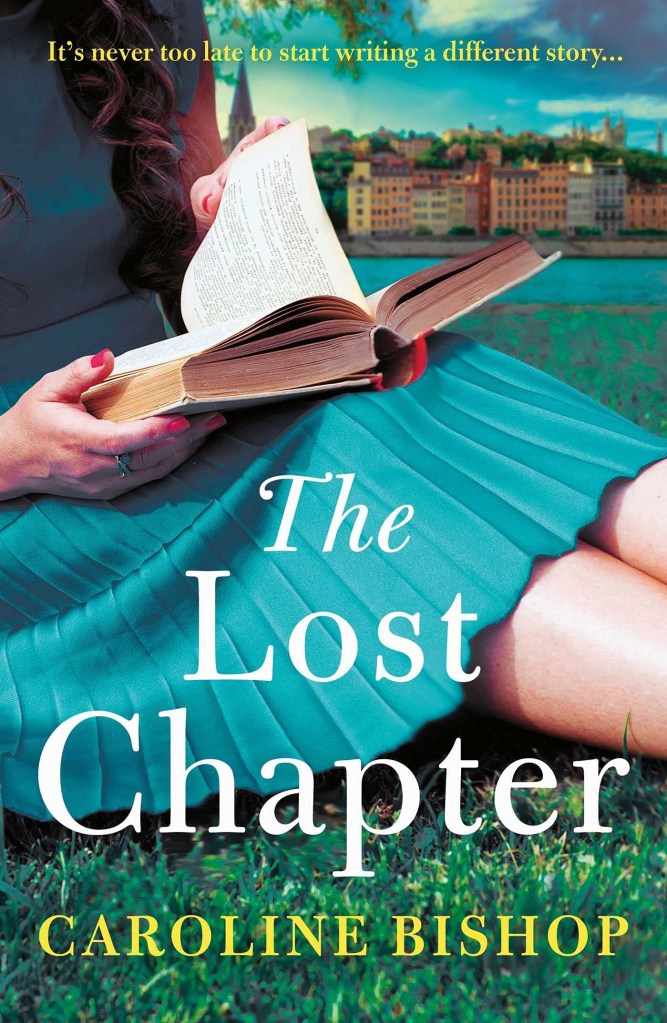
This was an incredibly charming book, so hopeful and uplifting. I’d read The Last of the Moon Girls so had some idea what to expect, but I actually preferred this tale of two women crossing paths in Paris. Soline works in the family’s bridal salon where a little bit of magic is sewn into the fabric. This magic gives each bride the promise of a long and happy relationship. However, there have been so many losses in WW2 that Soline’s hope has dampened and she has lost her faith in magic. She packs away her work in boxes, determined to forget the life she once enjoyed. We then join another woman, decades on from WW2. Rory has always wanted to open a gallery and she leases the same building that houses those pre-war wedding memories. Rory is also grieving, and knows the importance of remembrance, so when she finds a box with a vintage wedding dress and a pile of letters inside, she wants to return them to their rightful owner. The wedding dress looks unworn, but so much care and attention has gone into making it, Rory feels that the owner would want it returned. When she finds Soline, an unexpected friendship develops and the two women find a lot of parallels in their life stories. Is it possible that magic is still at work and these two women were destined to meet? Could Rory be the one to clarify and put right something that happened forty years ago?
I never seem to tire of these time slip novels and I really did enjoy this tale, with its little bit of magic thrown in. I am a believer that we shouldn’t fully lose that sense of magic we had as children, especially at this time of year. I think it’s only by keeping that childlike wonder and hope that we get to fully experience life. Here Soline has been closed off to magic, it’s been too painful to hope. However, when she and Rory cross paths and that faith is reignited, she starts to fully participate in life again and enjoy it. It was an easy read from the start so I looked forward to getting a mug of tea and my favourite chocolate slipping into their cozy world, even though there was some sadness in store for the our main characters. Soline and Rory do dominate and they are the most three-dimensional characters- none of the secondary characters have much depth. However, these were very personal stories and I don’t think the book would have felt as intimate if we’d had too many other viewpoints. Soline’s story follows her work in the bridal salon and her love for Anson, who has a difficult relationship with his father. As the Nazi’s start to infiltrate France, Soline escapes to America and it is her belief that Anson has died at their hands which knocks all the hope and joy out of Soline. She can’t continue with her work and watch others in love, fulfilling their destinies with each other.
Rory (short for Aurora) has a boyfriend called Hux. He’s a doctor and goes out to South Sudan to work with Doctors Without Borders, but is unfortunately captured. Rory doesn’t know where he is or even if he’s still alive. This is the experience that Rory and Soline have in common, they’re separated from their loves and have had to face up to the fact they may be dead – that might be preferable to thinking about what they could be going through instead. Both are very strong women, however, Rory is still entwined with her mother in a very unhealthy dynamic. She hasn’t realised she can simply walk away from her. The abuse is psychological and it is devastating to a young woman still growing up and finding out who she is. You might find that, like me, you’ll be mentally yelling at Rory to stand up to her mother. I just knew that if she finally did, it would be epic. It would be the catalyst to change her entire life. Rory might have the key to Soline’s wartime memories, but she has a lot to learn from Soline who has grown wise through loss and age. The book has a dusting of magic, but it’s subtle and more akin to perception than anything else. I often let people know how easy it can be to be manipulated into thinking someone’s a psychic by showing them how much I can intuit from them walking into a room and sitting down. As counsellors we do this all the time, reading people’s subtle cues in their body language and the words they choose to express themselves. It can be quite easy to work out why a client has come for counselling before they even open their mouths. So, the magic here isn’t overdone and is more about the sense of destiny and heightened perception we can get: in a house, when we walk into a party, or seeing a couple arguing in the DIY store. It’s also about that magical coincidence of these two women crossing paths, when they are perhaps the only person who could help and understand the other. I like this message that it’s not just romantic destiny that happens in lives. Soul mates are not always our romantic counterpart and I loved the friendship between these two. I think Soline helps Rory stand up and claim who she is.
Yes the ending is a bit schmaltzy, but I expected that and it didn’t ruin the book as some sugary endings can tip the book into being too saccharin and off-putting, I think this story has enough complication to keep the reader’s interest and something for everyone with the mix of historical period (although the 1980s doesn’t feel like history to me), dual narration, family strife and the mystery to solve. The tone of the novel is so relaxing and gentle, even when dealing with complex emotions. All in all, an intelligent story of love, loss, and friendship that I really enjoyed.
Published by Lake Union Publishing 1st October 2021
Meet the Author.
After twelve years in the jewelry business, Barbara Davis left the corporate world to pursue her lifelong dream of becoming a writer. She was born in Fair Lawn, New Jersey, but grew up and attended school in Florida. When she’s not writing she’s an avid reader, foodie, and lover of music, a rabid football fan, and a devoted Florida Gator. She also likes to travel with her husband/sweetheart, who over the years has learned much more about publishing and the craft of writing than he ever wanted to know.
Her most recent novel, THE KEEPER OF HAPPY ENDINGS, released October 1, 2021. She is currently working on her eighth novel, and professes to be just as delighted with her job as she was when she set her first word on the page!