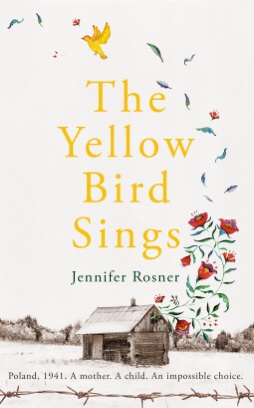
Jennifer Rosner’s novel is focused on Roza and her daughter Shira, who are hiding from the Germans in a confined space, in the loft of an old barn. This is Poland 1941 and stories have spread about what happens to any Jews found in town. Roza has already lost her husband and her parents were killed in front of her. She is determined that she will stay with and protect her 5 year old daughter. She also knows what can happen to people found to be concealing Jews, and out in the country there have been barn burnings and arrests. They must learn to be quiet, which is very difficult with a 5 year old, especially one as musical as Shira. Her grandfather made violins, her father played violin and Roza is a cellist. She thinks Shira may have a gift, because she’s always singing. In this confined space though, they must remain quiet. To keep her occupied, Roza encourages Shira’s pretence that they have a little yellow bird. The bird sits in Shira’s palm and sings, and they play at feeding it. It seems to keep Shira’s mind away from the hunger and cold, and when necessary it appears to keep the little girl calm.
Early in the novel, Roza devises a system of gestures so that she and her daughter can communicate, when it becomes too dangerous even for whispers. A hand clutched to the chest as if holding a gun, means soldiers. A brush of the fingers across the eyelids means to rest. I was interested to read that the author’s family are affected by hearing loss so this could possibly be the inspiration behind this moving detail of survival. The farmer is a neighbour and while he is performing an act of kindness, he also has ulterior motives. His wife enjoys taking the little girl for short walks round the farm, and introducing her to the animals. He takes advantage of his position to abuse Roza, who does whatever it takes to keep her daughter safe. The events of the book occupy only this small space and short time between the years 1941-44. Even though we don’t move away from this one space, until right at the end of the novel, it is clear that the atrocities of the Nazis are never far from Roza’s mind. We are told the story of a violin maker who is handed a violin for rebuild and repair, with the ashes of its owner still present inside it.
It’s hard to find a way to write a review that truly honours the terrible things people in Poland suffered during WW2. I had in-laws, both gone now, who came through terrifying ordeals to settle in this country after the war. My mother-in-law was not much older than Shira when she was transported out of the Warsaw Ghetto through the sewers of the city by herself. I can’t imagine what her parents went through just making that decision, never mind the sleepless nights worrying whether she would make it. The enormity of this choice hit me while reading about Roza’s eventual decision to leave Shira at the Catholic convent. It is the hardest choice to make, to completely focus on the survival of the child and not the mental anguish it will cause. To ignore your own needs to keep them with you. To know that separation might give them a better chance of survival than staying by your side. For Roza, it is the safest choice for her daughter, plus she will always have music in her life. I defy anyone to read this book and not be moved by this beautiful story. Despite the horrors of the war and their confinement and fear, this mother and daughter have carved out a small space of beauty, safety and trust. This is a bond that will never be broken no matter where in the world they both are. However, I have no doubt in my mind that Roza would do everything in her power to return to her daughter.
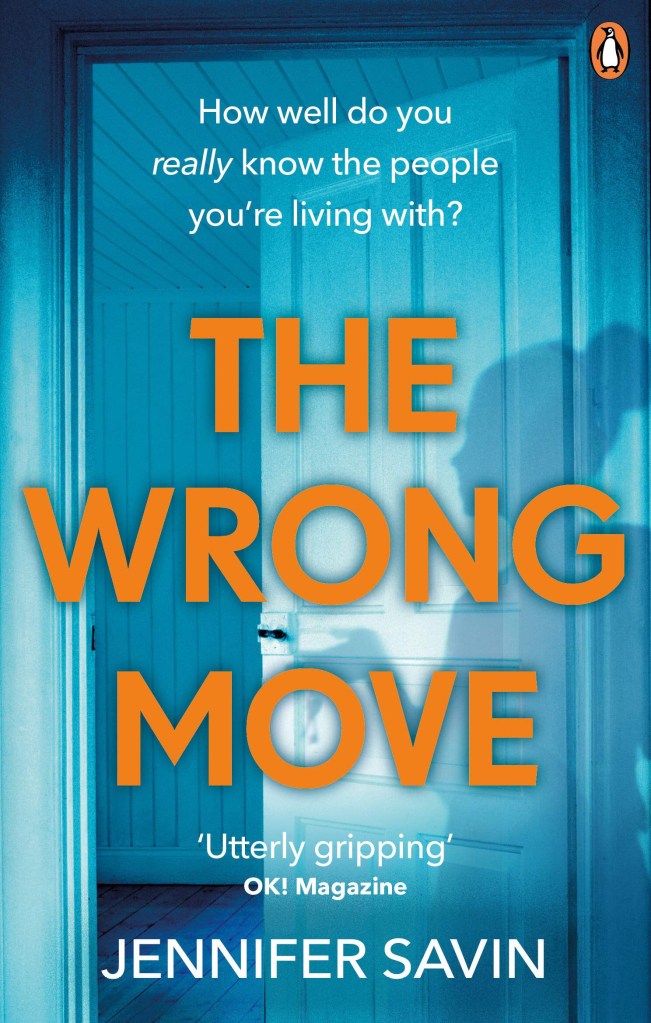
Jessie has made a very bold move in deciding to move to the city of Brighton. Since fleeing an abusive relationship she’s been living with her parents. Now, she feels it’s time to move forward with her life and she always enjoyed the vibrancy of the city. Her best friend Priya would also be nearby for support. So, she starts to look for a house share and through Ian at a letting agency she finds Maver Place. The house is a little bit shabby, but the room is a good size for her limited budget and she decides to go ahead. She is immediately drawn to housemate Lauren, who is friendly and offers to cook a meal to welcome her to the house. Marcus lives in the downstairs room and seems to keep to himself. Sofie is mainly at her boyfriend Henry’s house. This leaves Lauren and Jessie to bond.
The author cleverly builds the unease right from the start with very small incidents that could have innocent explanations: Marcus suddenly appearing behind her in the bathroom mirror; her laptop not being where she left it; a favourite bracelet missing. I found myself suspecting every one of the housemates at this stage, but for very different reasons. Sofie, who is usually bohemian, pink haired, and pierced suddenly starts copying Jessie’s look. She dyes her hair and cuts a fringe, then turns up in a polo neck that looks very like one of Jessie’s. I wondered if there was a ‘single, white, female’ vibe going on. On the other hand her boyfriend Henry is quite well-to-do and his mother definitely doesn’t approve of his choice in girlfriends. Maybe Sofie simply feels that Jessie’s style might be more acceptable? Marcus appears to skulk in his room mostly, doesn’t eat with the others and has strange, noisy nocturnal habits. It’s hard to know whether he’s a threat or is simply troubled. Added to these suspicions, Jessie finds a locket with an M on the front, lodged down the radiator. Lauren says it must belong to Magda the previous tenant of that room, and that she left in a hurry in the middle of the night. She left them in the lurch by not paying their share of the bills. Jessie wonders why someone would leave something so precious behind, but looking at the piles of post with many different names it seems Magda isn’t the only one.
Then the messages start, adding yet another layer of tension. There’s a What’sApp message here and there, and an email all seemingly from her ex, Matthew. Lauren ignores them at first, but as the pressure builds she starts to become paranoid. Could Matthew be causing these other strange occurrences and if so, how? Lauren sometimes thinks she’s seen him on the street, but she’s probably mistaken. When convinced by Lauren to go on a night out, Jessie feels uncomfortable. People can hide in crowds and anyone could be in a club. Strangely, they do run into Magda and her friends. Jessie can sense that Magda is very uncomfortable about meeting her old housemates, but it could be because she owes them money? Yet, she seems to be more fearful than guilty. Jessie tells Magda that she left a Facebook message about her missing locket, before her friends pull her away. Hopefully, they’ll be able to meet up and talk about her experience of living at Maver Place. Later, Jessie is feeling drunk and simply wants to get home to sleep. She can’t find the others so walks home alone, it’s isn’t too late, and not that far. As she’s passing Brighton Pavillion and thinking about how much she loves the building, she’s suddenly struck from behind. After several blows, Jessie is left unconscious at the edge of the grounds. Is it something to do with the coincidence of seeing Magda, could Matthew have been following her, or is this the work of someone closer to home?
If it sounds like my mind was working overtime, it really was. There was a point in the book where I felt completely disoriented with everything that was going on. I guess that’s how the author wanted us to feel, to understand Jessie’s experience. There were points where I was mentally screaming at her to pack a bag and get out of town! Even minor characters behaved in ways that aroused my suspicions. Quick chapters kept me reading and each one turned the mystery in a different direction. I was so confused with who was imitating who. The last few chapters had to be devoured all at once, just so I could find out who did it and get some sleep. It made me wonder whether we truly know the people we live with. When my stepdaughter goes off to university I’ll be using my counselling skills to vet any of her future housemates too. This is the sort of thriller that’s great to read over a weekend, with plenty of twists and turns to keep you guessing.
‘Even now; twenty-two years since he took the photograph, he still cannot quite believe the lack of blood’.
From the first line of this unusual novel I was ‘hooked’. Sorry, I couldn’t resist. It is true though. When I received the book I opened it and read the first paragraph. I wanted to drop everything there and then, never mind the TBR pile, and read this book. It really does grab you. The book starts in 2018 with a photograph of a man skewered through the feet by a meat hook and hanging in a cold store. The Butcher is still fully clothed, only his feet are bare and it is his feet that give the truth away. The wounds there are the only clue that he ‘isn’t just sleeping the wrong way up like a bat.’ This photograph will be displayed on a New York gallery wall for the very first time since it was taken twenty-two years ago.
The story goes back to 1996 and to a group of families surrounding The Butchers – eight men who travel to Irish farms slaughtering the cattle of those who still follow the old ways. The tradition is based on Irish folklore and a curse laid on Ireland by a widow who decreed that eight men must have a hand on the animal when it is killed:
‘And since the war had claimed all eight of her men. She decreed, henceforth, no man could slaughter alone; Instead, seven others had to beby his side. To stop the memory of her grief dying too’.
In rural Ireland in 1996 there is a sense of change in the air. There are less farmers who believe in the old ways and the BSE – mad cow disease – outbreak is on the horizon. The Butchers are setting out after the Christmas break at home with their families. Una’s father is getting ready to leave and her mother Gra is struggling with the separation. It’s a lonely life being a wife to a Butcher and this year Una’s father makes a promise; when they are slaughtering nearby around midsummer, he will try to spend a couple of nights at home. Gra’s sister Lena is married to Fionn and the families have lost touch with each other. Fionn is coping with his Lena’s diagnosis of a brain tumour by trying to raise money for experimental treatment. To raise the funds needed he has been pulled into illegal activities. His son Davey has heard a lot about the folklore surrounding The Butchers from his mother, but he has his sights set on life in the big city. Una has always wanted to follow in her father’s footsteps even though the ancient order is closed to girls. Her ambition could be thwarted when one of the eight Butchers is found hanging from a meat hook in the cold store. The remaining seven feel that now is the time for the tradition to die with him. Then twenty-two years later, the photograph appears in an exhibition. Can Una finally solve the case and find a killer?
I thought the author’s characterisation was detailed and believable. I bought into their stories straight away, but I was particularly moved by Fionn. His desperation shows as he’s awake in the depths of night stamping new labels on packs of beef. He has been sharp enough to see a chance to make money on Irish beef while buyers are avoiding British suppliers. He also has demons in his past, like a dependency on alcohol and he even admits assaulting his wife and son on occasions. In some way, his determination to get treatment for his wife, could come from guilt and feeling he could never atone for his mistakes. He treads a fine line between keeping his sobriety and helping his wife, but appearing to be ‘one of the boys’ when dealing with the smugglers taking his meat across the border. Una’s coming of age was also compelling and her sense of being an outsider as a child, because of her family’s beliefs struck a chord with me. I also identified with the way she sees her father as a ‘giant’ of a man, somehow interchangeable with the mountainous landscape. The changes between points of view worked really well and kept the narrative interesting. Each character shows how this moment in history heralded change for different groups in society; for young women like Una, for rural farmers, for Davey who is discovering his sexuality.
Although I wouldn’t class this as historical fiction – possibly because it feels like yesterday to me – I really enjoyed the subtle reminders of the mid 1990s. The author managed to signal time and place without going overboard into outright nostalgia. The story is always the most important thing. I think this accounts for the unusual mix of genres too; it is part crime novel, part coming of age story, and a mix of historical fact and folklore. I like the fact it’s difficult to pigeon-hole, because that’s what makes it unique. I think the author has cleverly matched a time of growth in Ireland’s history with the younger character’s development into adulthood. This is a time that I was moving from my teenage years into adulthood, leaving home and moving into a flat with a boyfriend for the first time. It was post-Brit Pop and wild nights out, morphing into cosy nights on the sofa watching Sex and the City. For Una it’s a time of challenging a strictly patriarchal society and tradition. Davey is forging his identity and coming to terms with his sexuality. For their parents this is a time of reckoning, of mulling over the decisions they made and wondering whether they were the right ones. For Ireland, these are the years that built towards the huge global banking crisis. There was an influx of money into the country and a more capitalist culture emerged, where development and consumption became the norm. Old superstitions had no place and even traditional values were being replaced with new laws on divorce and homosexuality. Yet whatever the changes, there is a steadfastness about the landscape that will always remain. I have never read the author before, so had no preconceptions about what the novel might or should be. I have loved the opportunity to read this unique, atmospheric and bittersweet novel.
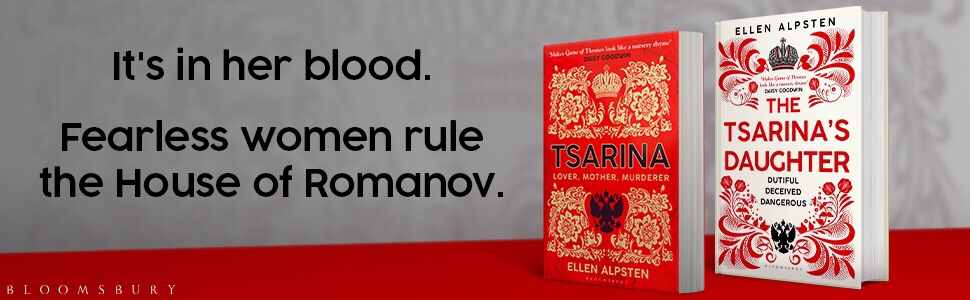
Catherine Alexeyevna rose from peasant beginnings to become one of the most powerful women in Russia as the second wife of Peter the Great. Known as Marta to her family she was born in 1684 in the village of Livonia. Her meteoric rise from illiterate servitude to the Russian throne is one of chance, but also, as the author puts it ‘intellect, wit and sensuality’. Her parents sold her into the service of a man called Vasilly from the town of Walk. The author pulls us into the world of this nine year old girl as she experiences the town for the first time. She is overwhelmed by the number of people and all the chimneys she can see, each one representing a family. In her wonder, she loses the count and becomes mesmerised by the foods being sold by street vendors. This experience inspires her and she begins to work in the kitchen, soon able to prepare delicious meals of her own.
It’s very hard not to admire the way this incredible woman rose through the ranks of Russian high society, almost always by catching the attention of men. This was a dangerous and volatile period of history and it must have taken a great deal of resourcefulness and cunning to succeed. She was observant, able to read people and their interactions, successful at manipulation and doesn’t let herself be used by men – unless she wants to be of course. There are moments when she is struggling but the right advice or opportunity seems to come along. She takes to heart a lesson taught by Menshikov, the Tsar’s best friend:
‘Use life’s surprises to your advantage. See your power over men like a hand of cards; play them, to trump your life’.
I really enjoyed it when the focus was on Catherine (Marta) and her rise. When she reaches her position as Peter the Great’s wife and Empress of Russia, the story starts to open up and include others within the court. When we’re not concentrating on Catherine, I wasn’t as engaged with the book, but maybe that was just me. Her life becomes swallowed up by the demands of being a monarch’s wife – the demands on her to produce an heir resulted in twelve pregnancies! The cruelty of Peter starts to come to the fore as well as his contrary nature. He upholds religious and cultural custom to a stubborn degree and then when it suits him, simply discards custom for his own advantage. He’s a textbook narcissist. Even though Catherine is surrounded by riches, lavish banquets and incredible jewels I didn’t envy her position. She knows the dangers of being his wife, because his first wife ended up in a prison cell and her lover was impaled alive, on a spike in Red Square.
Despite this being more fiction than biography, I think the author researched her subject well and worked hard to bring Catherine to life. There are some really dark moments of rape and torture, but this is probably an accurate portrayal of very bloodthirsty time in history. Its also a very sensual book, not just the lusty moments, which I really enjoyed, but also the author’s focus on the senses. The taste of the incredible dishes she creates, the smell of the incense and incredible interiors of the Russian Orthodox Church, all the way down to the sweat and fear of the torture chambers. When Catherine’s trying to keep Peter’s death a secret in order to keep the crown, I was drawn back into the action. As he lies there, dying in the Winter Palace, Peter has to face the fact he is leaving his country without an heir. His only son Alexei, was killed under interrogation for conspiring against him. This is when Catherine undertakes her greatest political manoeuvre and becomes Queen, despite Alexei’s son being the heir apparent. I enjoyed reading from Catherine’s perspective, especially considering the way her male enemies spread misogynistic stories about her suppose voracious sexual appetite. The book did it’s work in making me want to know more about this time and place in history. I’ll be going to All4 and watching their series starring Helen Mirren to learn more about this fascinating character.
Next month I will be reviewing the author’s next novel
Meet The Author
Ellen Alpsten was born and raised in the Kenyan highlands, where she dressed up her many pets and forced them to listen to her stories. Upon graduating from the ‘Institut d’Etudes Politiques de Paris’, she worked as a news-anchor for Bloomberg TV London. While working gruesome night shifts on breakfast TV, she started to write in earnest, every day, after work, a nap and a run. So much for burning midnight oil!
Today, Ellen works as an author and as a journalist for international publications such as Vogue, Standpoint, and CN Traveller. She lives in London with her husband, three sons, and a moody fox red Labrador.
‘Tsarina’ is her debut novel. For more information about her literary life follow her on social media.
‘I bet you didn’t know that bleach masks the smell of blood’.
What an explosive opening to a novel. My partner had picked this up when we were in a bookshop collecting an order. ‘You have to buy this’ he said ‘it’s right up your street’. That man knows me so well! This is a black hearted comic novel, the type you laugh at but feel as if you shouldn’t. The heroine is smart, feisty and fiercely loyal. The action moves at a breakneck pace. It’s whip smart, sarcastic and totally unique. I can’t believe it took me so long to find it.
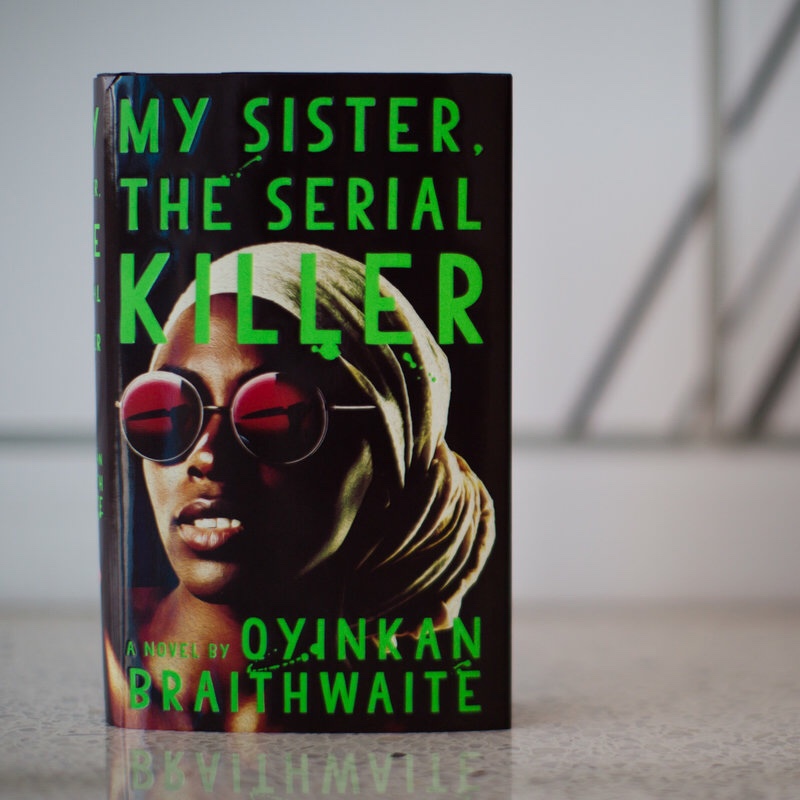
Korede is eating dinner when she receives a panicked call from her sister Ayoola. She was on a date with a poet called Femi, but now she’s asking her sister to come to his house. ‘Korede, I killed him’ she admits in the opening sentence. Korede’s reply tells us everything we need to know about this relationship.
‘I had hoped i would never hear those words again’.
In a split second we know that Ayoola has killed before and Korede, the big sister, has cleaned away the evidence. It’s not long before Korede is using her cleaning skills to tidy away Ayoola’s latest mistake. The girls live in Nigeria with their mother and one house maid. Korede is a nurse at the local hospital and Ayoola is a fashion designer who uses Instagram to sell her designs and runs them up on a sewing machine in her bedroom at home. Korede tells us they look very alike, down to the same beauty spot on the top lip. Yet somehow, Ayoola’s features have come together to create something harmonious and desirable. She has curves and is altogether the perfect example of beauty. Whereas Korede is tall and slim like a pencil. She has no curves and for some reason her features are not as appealing. We soon see that Ayoola is very aware of her charms and uses them to get what she wants. Even if that means treading over someone else to get it. Even if that someone else is her sister.
For a long time Korede has secretly been in love with Tade, a doctor within the hospital she works at. They are friends and he finds her indispensable as a work colleague. Korede feels they have a special connection and hopes that one day it will grow into something more. One day Ayoola turns up at the hospital to take Korede to lunch, and as soon as she has seen Tade she turns on the charm. Korede has done everything to keep them apart, but hopes that Tade’s integrity and intelligence will help him see past the surface. Sadly, Tade proves himself to be like every other man. Once she sees them together Korede knows all is lost and within hours he has sent a gift of orchids to express his interest. Ayoola tells him she prefers roses and within hours a second bouquet arrives. Korede looks on with her heart breaking. The only person she can talk to, honestly, is the one who can’t answer her. A patient in a coma has been Korede’s priest and she’s sat by his bedside confessing to everything, including the fear that Ayoola could kill Tade.
Korede gives us some background on the girl’s father and his abusive behaviour: beating Ayoola; trying to gain business advantages by giving his daughters to chiefs; bringing other women back to the family home and beating their mother. Their mother is largely passive, but Korede is in no doubt who the favourite daughter is. If Ayoola were to kill her friend Tade, it would still be Korede’s fault for introducing them. Korede jokes about this, but there is hurt and resentment underneath the gallows humour. Mum would never believe her precious baby girl is a killer. All of this tension builds beautifully. The short chapters speed the story along and my heart was racing, wondering what would happen to expose Ayoola’s murderous ways. How far will Korede go to save Tade? Or will she naturally choose covering up for her sister instead?
I read this brilliant novel in an afternoon and evening. It does race along at a cracking pace and it’s very hard to put it aside without reading one more chapter. I felt so sad for Korede that she isn’t valued by her parents and she constantly feels like the inferior sister. When she loses Tade to her sister my heart broke for her. Although what I really wanted was for her to find someone who cared only about her, who she could form a relationship with based on honesty. Although that could only happen if she is taken away from her family or she chooses to let the law catch up with her sister. I did find myself laughing and smiling inappropriately, mainly at Korede’s narrative voice and her sardonic turn of phrase. There were parts that shocked me, because a character behaved differently to how I expected. I found myself hating Ayoola, not because she was a murderer, but because she was so narcissistic. She expected her sister to continue covering up her crimes, but also disrespected her by pursuing Tade in front of her. The ending didn’t disappoint and actually found myself rooting for the girls not to get caught! A brilliantly transgressive and entertaining novel.
I have loved reading this novel while in lockdown, because it’s taken me away from my everyday life and thrown all my senses into the vibrant country of Haiti. I’ve been introduced to Haitian literature at university many years ago and love the author Edwidge Danticat. I’ve also read a lot about the history of the island and particularly the aftermath of the terrible earthquake, This novel follows four protagonists in that same time period. Charlie works as a hairdresser and has a great relationship with her grandmother but is estranged from her mother. Charlie has a traumatic past. These issues are both common to women in Haiti – trauma and the estrangement of families. Her grandmother Bea, thinks that Charlie needs a relationship with her mother to make sense of her past and find peace.Lizbeth has travelled to the island from Texas and is hoping to find her grandchild. She’s a widow, who has taken the courage to travel alone and find this part of her family that’s missing from her life. Senzy lives in Haiti and has a pivotal role in teaching these women true strength and resilience of spirit.
The descriptions of the island are immersive, I was assailed by sights, smells and colour until I’d built up such a vivid sense of place it was weird to look up and see my own living room! I enjoyed being educated about Voodoo. I knew how it came about as a combination of African animistic religions from the days of slavery and the French occupiers who practised Catholicism. It was interesting to see what the practice means to everyday Haitians and where spirituality fits into their lives. I also enjoyed the contradiction in both the island and the women of the novel. Haitian women are described as walking with ‘surety’, a pride and certainty in themselves. Rodriguez writes that you were left in no doubt they were not to be messed with. The island is equally bold and strong, but underneath there is some weakness – a sense that life here can be very fragile, despite its vibrant, powerful appearance.
Rodriguez will open some people9s eyes with her exploration of Haitian politics and society. There is, it seems, almost a resigned acceptance that corruption permeates all official organisations. As I know from my own reading, this extends to the NGOs too. The people have seen decades of this and it is now part of life. I find that so sad and struggle to imagine how trapped those at the bottom of society feel – nothing they do can make a difference. Through one of the narratives the author shows how corrupt the orphanages are in the country. Even those trying to help, might have ulterior motives.
Each woman felt real to me and I knew them well by the end of the novel. The author weaves their past into the narrative so we understand how they came to be here. They are well rounded with as many flaws as good points, but that only serves to make them more relatable. More than anything though I loved being immersed in this incredible place and the author completes the experience by giving us information on how to help and recipes to try. This is brilliant for me as I like to cook something to complement the book on my book club evenings. It is rare to come across a novel that balances both escapism and a social conscience but this book has both elements.
Meet The Author
Deborah Rodriguez spent five years teaching at and later directing the Kabul Beauty School, the first modern beauty academy and training salon in Afghanistan. Rodriguez also owned the Cabul Coffee House. She is now a hairdresser, a motivational speaker, and the author of the bestselling novel The Little Coffee Shop of Kabul. Deborah currently lives in Mexico where she owns the Tippy Toes Salon. To learn more about her visit http://www.debbierodriguez.com
Imagine walking into a museum. A quiet murmur as people move between the glass display cases. A woman next to you gasps and clutches her hand to her heart. A friend puts an arm round her. It’s hard to tell which of the exhibits has moved her. The old passport? The pearl ring? The children’s shoes, barely worn? Yes, that’s it. As they move on, you take your place in front of the shoes. The label reads:
‘You promised you would watch her’.
Even though these are not your shoes and you have no idea who it refers to, the feelings that come over you are overwhelming. The resentment, the anger, but underneath, the agony of loss. It almost takes your breath away. You can see a school uniform hung on the wardrobe door. Shiny new shoes underneath, ready for the first day back at school tomorrow. You can see a mother running around organising school bags. Her daughter in a bubble bath, looking forward to being clean and tidy for the next morning. Dad watching tv. Mum needs to bring washing from the dryer in the garage. She asks if he’ll keep an eye on her. Dad promises he’ll watch her, but his phone rings. Distracted, he is drawn into conversation. He is still on the phone and Mum is in the garage, when their daughter shouts for a towel. She waits. Then, she stands and putting her arms out to steady her, she tries to get out. She slips, hits her head on the tap and unconscious, she slips under the water. You think of your daughter, your niece, your goddaughter. If this was her….
This is the power of The Museum of Broken Promises. Situated in Paris and run by Laure, the museum is slightly different in that all of its exhibits are donated by the owner and each one represents a different promise broken. The most innocuous object could represent a life utterly changed. Each contributor is interviewed personally by Laure and she makes the decision to exhibit or not. In amongst all the exhibits Laure secretly displays items from her past, including a Czechoslovakian train ticket. She is tight lipped about her past, even with those closest to her. Even her stylish clothes and her tiny apartment are unobtrusive and indistinctive. Nothing stands out or gives her away. However, two things seem to be encroaching on her anonymity. The first is a tiny feral cat she finds on the street and decides to help, accidentally naming her Kotchka. This is against all her rules about remaining unattached. The second is a persistent freelance journalist called May who wants to write a piece on the museum in the hope of selling it to Vanity Fair. Against her better judgement and to appease her staff, who think it would be good for the museum, she agrees to let the girl shadow her. Laure soon finds that May is ruthless, despite assurances to the contrary, as she starts to ask questions about Laure’s past. A past that Laure would rather remained buried.
The author uses two other narrative strands to tell us Laure’s story. The first is Prague in 1985. After the death of her father, Laure has taken a job as nanny to a family spending summer in Czechoslovakia behind the Iron Curtain. She enjoys her work with the children, but has concerns about their mother Eva who has periods of depression. Their father, Petr, appreciates Laure’s work with the children, and occasionally goes out with them all for tea. He is a member of ‘the party’ and is possibly more important than he seems. It is only when Laure takes the children to a puppet show that her eyes start to be opened to the dangers of the country she’s living in. The marionettes act out stories far more political than she understands. When she visits the show by herself at night, she finds a rock band playing and sees Tomas for the first time. He is the lead singer and she feels a connection with him from the stage. The band are dangerously subversive with lyrics that speak of freedom and a right to choose. As Laure gets to know Tomas she soon realises she is walking a dangerous tightrope between worlds. Ten years later in Berlin, an older Petr is visiting the reunified city when he encounters Laure at a drinks party. Working as cultural attaché at the British Embassy, Laure is both repelled and drawn to her former employer. He may have answers to questions she has been holding inside for ten years, but does she truly want to know all that happened in Prague? Petr is drawn to Laure, but can he explain his actions in being part of the Communist regime and can he ever be forgiven for its abuses of power?
This is a powerful and moving story that I will be thinking about long after I’ve put it back on the shelf. The sense of each place is exquisite, especially the strange haunted quality of Prague. It is a city of ghosts, of people ‘disappeared’ by the regime and of hopes and dreams trodden underfoot. It is haunted by a girl in a beautiful black dress with pink flowers going to meet her lover on a summer’s evening. A girl who expects life to be simple and love to be enough. The same girl Petr finds beaten in a cell as the true brutality of the regime makes itself felt. I like the complexity of character’s motivations, such as in Petr’s chapters in Berlin where we see how his membership to the communist party cane about. His mother’s wish was for her son to be part of the communist ideal where each citizen is of equal value and wealth is shared. Her actions becomes understandable as a response to Fascism and her experience of seeing her mother beaten to death by Nazi soldiers. Her idea of communism is as naive as Laure’s idea of love. The author creates an uneasy sense of being watched across the whole novel. From the grey, ghostlike spies of Prague to the observant journalist May, who’ s so used to being a shadow, she appears to sink into the wall. Even Laure becomes accustomed to invisibility. She blends seamlessly into Paris, ever watchful and determined to never let anything breach her defences. Determined to never love another. Determined to never feel aching void of loss.
I believe this is the author’s best work to date. The historical detail anchors the story and made me think more about the context around global movements and political allegiances. I felt I learned a little more about what it would be like living and loving under oppressive regimes. It made me think about the promises we make in life, not just the big ‘official’ promises like our marriage vows but those small everyday promises we make and what happens when they go wrong. Sometimes the most insignificant promises we make to ourselves, our lovers, and our family can become life changing. That promise to watch the cake in the oven, when we’re not really listening and are distracted by the TV, results in a burnt cake and a smoke alarm beeping 99.9% of the time. But if you’re the 0.01% whose negligence results in the house burning down the result is life changing.
I loved the descriptions of exhibits in the museum and the stories behind them. I also grew attached to Laure, deeply affected by the losses she’s endured and desperately trying to keep control over her emotions. Yet, finding her defences breached by a small, scruffy cat. As an avid gatherer of ticket stubs, photos, drawings and handwritten letters I understand the power of an object to unlock memories and move us, especially where words are not enough. I understand how we use objects to contain our emotions where our bodies might allow them to overspill and become known. This novel is special, and just like the objects in Laure’s museum, it will be treasured as such.
In this romantic novel we meet two people who seem to be so perfect for each other it must have been very difficult for the writer to manufacture enough obstacles to keep them apart. Lottie Wentworth is ringing in the New Year with a little more gusto than normal. This is because she is so relieved to be rid of the ‘year of saying yes’, a scheme dreamed up by her friend Jess to jolt her out of the blues following a break-up. Lottie admits she has enjoyed some of the wild escapades they’ve been on, but now she’s ready for a different challenge. She’s used to being kind, doing favours for others and spending most of her time on her new business as a virtual assistant. Lottie thinks that it is now time for a year of saying no.
The first step has been to get herself a dog, a little scruff she has called Humphrey. When reclining on the sofa in her PJs with Humphrey next to her, she feels safe and comfortable. Apart from regular meet ups with Jess and the obligatory Sunday lunch round at her Mum and Dad’s, she is enjoying a quiet social life. She has fallen into the habit of daily FaceTime calls with her main client Seb. She is the virtual assistant for his charity which helps injured veterans adjust to life outside the army. Seb was injured by an IED and lost one of his legs as well as his best friend. They’ve become close friends, despite never meeting in person. Lottie is happy to tell him anything and they often speak when she’s still got bed hair. Unfortunately, more and more, Lottie has been feeling a little more than friendship and has developed a crush. She loves his work on the charity, his kindness and integrity, plus she has to admit to herself he is very attractive. So when he suggests that she accompany him to the theatre one evening, she agrees to go. Lottie is then on tenterhooks wondering how Seb sees this outing. Is this just friends meeting up, or does he want more? If he doesn’t want more, how will she cope with her crush in person? If he feels the same way, how will it affect her fledgling business if she becomes involved with a client?
There were times in the novel when I wanted to bang Seb and Lottie’s heads together. Lottie’s inability to say no and her inability to see that Seb might be interested in her, show quite low self-esteem. She doesn’t seem to realise she’s attractive, despite men hitting on her when she’s at parties. Seb clearly enjoys her company, and despite her family and Jess seeing they’re perfect for each other, Lottie still doesn’t see it. Her Mum seems rather amused when Lottie calls to ask if they can look after Humphrey a little longer. We get the feeling that Mum isn’t surprised at all. The family dynamic is an interesting one, especially when it comes to Lottie’s sister. Often those closest to us are the ones we need to say no to and Helen definitely needs to hear it. She assumes Lottie will host her monthly book club because she’s been asked to work. Helen is a stewardess, immaculately groomed and well put together. At Sunday lunch Lottie notices her sister’s self control when she only takes one roast potato. Lottie looks down at her own plate, very full and swimming with gravy, and feels inferior to her sister. She has hated hosting the book club in the past because the guests barely notice her, treat her more like a waitress and insists she shut Humphrey away in her bedroom. When Lottie says no, her sister can’t believe it and becomes angry, but Lottie stands her ground. She has to go outside afterwards to cool down. She even apologises to her parents for causing a scene, they are kind and in Helen’s absence agree that she shouldn’t be expected to do it. I found in interesting though that they don’t say anything to, or in front of, Helen. It could be that this is the root of Lottie’s low self-esteem; perhaps she has never felt good enough next to her sister.
This critical moment with her sister seems to give Lottie the courage to be more forthright and assert herself. When Jess and Harry have an engagement party, she has to deal with an entitled ‘posh boy’ who isn’t used to women saying no because of his money and status. Lottie says no very clearly and when he suggests Seb isn’t a real man due to his injury she flies to his defence. I get the feeling that Lottie finds it easier to stand up for those she loves, than she does for herself. In fact she might have a tendency to try and fix things, which doesn’t go too well when she’s invited for dinner with Seb’s family. These family dynamics are a real strength to this novel because they add depth to the characters and we understand them more in the context of their place in those families, I would have liked more of this. This is a good lockdown read because it is not taxing to read and is genuinely uplifting. We like these characters and want them to be together, happily curled up on a sofa with both their dogs.
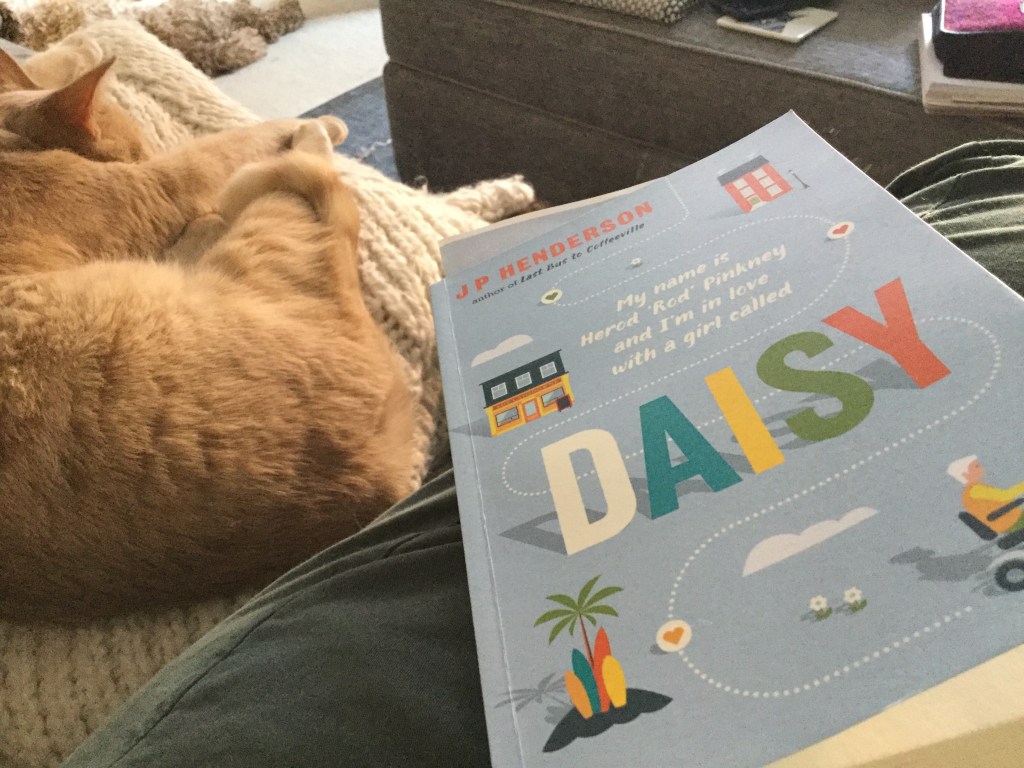
I was so happy, with the world seemingly going mad outside, to read this humorous and charming book with such a distinctive lead character. This is the first time that Herod ‘Rod’ Pinkney has fallen in love with someone he’s seen on television, apart from that passing crush on the late-night presenter of Sky News. This is definitely the first time he’s flown across the Atlantic to find them, but he’s very sure this is love and he’s destined to marry Daisy, who he saw on a ten year old episode of Judge Judy. This is Rod’s story, in his own words, guided by a man who collects glasses in the local pub. Rod is an unlikely hero, starting out as a ‘disappointment’ to his late parents, whose deaths left him a millionaire. He lives comfortably in London with a basement extension that houses his large collection of books as well as a man from next door called Donald who looks like Charles Manson. Donald fought in tunnels during the Vietnam War and now has a purpose built tunnel into Rod’s basement so he can breakfast on the grapefruit banned by his wife. Just occasionally, he also uses the basement to practice his trombone. On Thursday nights he forms a duo with Rod’s Peruvian friend Edmundo who plays pan pipes. However, to start their evening the three friends always open a bottle of wine and watch Judge Judy, which is how Rod first sets eyes on Daisy Lamprich.
If all this sounds a little eccentric to you, you’d be right. This is a gloriously eccentric book, filled with interesting characters and all narrated with Rod’s deadpan delivery and unique logic. There are so many laugh out loud moments, where Rod has no idea that he’s given anything but the logical answer. He worries about bringing his friends Donald and Edmundo together because one fought vehemently against communism in Vietnam whereas the other fought for communists in Peru. As it happens they get on famously, because they’re both musicians, both veterans and have mellowed with age. Until they met, Rod observed that that the only thing they have in common is being married to large women. Aside from the basement extension Rod’s home is kitted out with every conceivable disability aid. There are stairlifts to each level, bathrooms with grab rails, a wheel-in shower and a bath lift. He even invests in a mobility scooter to get around town, which gives him an eight mile radius. He doesn’t however, have a disability. He’s simply thinking ahead, to him it seems perfectly logical to conserve his energy now so his body doesn’t wear out. In fact once he’d had the stairlift idea he was a salesman’s dream, simply agreeing to every new modification suggested.
In these scenes we see he’s actually very vulnerable. I think underneath the light as air writing style and gentle humour the book does have something important to say. Rod’s money takes away any constraints on what he can do and spend, but given different economic circumstances I can imagine him getting into real trouble. He’s very trusting and therefore very lucky in the friends he meets. Although, that does work both ways – there probably aren’t many people who would make friends with a stranger they find tunnelling into their basement. Rod doesn’t judge, and his reward is an eclectic, but incredibly loyal group of friends. They form a supportive community that felt quite poignant at a time when we’re creating new connections and trying to support our neighbours. I loved being inside Rod’s head and seeing the world as he does, his narration reminded me of Eleanor Oliphant or The Rosie Project. I was totally immersed in his world and I was frequently chuckling to myself. It was the perfect antidote to the lockdown for me and I heartily recommend spending some time with Rod Pinkney, who was far from a disappointment to me.
‘It’s something she learned years ago -the hard way– and that she knows she will never forget: even the sweetest fruit will rot and fall into the earth, eventually. No matter how deep you bury the pain, the bones of it will rise up to haunt you ….like the echoes of a summer’s night, like the river flowing relentlessly on its course’.
I truly enjoyed this beautiful, haunting and heart rending book. Margot Sorrell couldn’t stand the idea of going home. She believed in moving forward, not looking back. But she receives a text from her sister Lucy in Somerset, saying simply ‘I need you’. So Margot, Lucy and the oldest sister Eve, congregate in the house they grew up in, beside the river. In such close proximity, it becomes difficult to keep the secrets they have been hiding, from themselves as much as each other. A wedding has brought the sisters together but the past may well tear this family apart. This gathering will change them all forever. They will have to confront terrible sorrow before a healing can begin, but only if they are open and tell the truth.
The author tells the story of the Sorrell siblings through different perspectives. Current events are happening in the brief ten day period of Lucy’s sudden wedding, so there’s tension straight away in the tight time period – these three have a lot of past hurt to get through. We also visit events in the past, in longer chapters that really evoke their time periods of the late 1980s, 2005 and finally 2009-10. These chapters provide a forensic analysis of the family and how they’ve suffered, with so little closure that there is still simmering hurt just under the surface. We see how the girls parents, Kit and Ted, met each other and came to be at the house. Their usual roles reversed when Kit’s career grew and suddenly she didn’t have the same time for the girls as before. She would forget things she’d promised and couldn’t be relied upon. This affected the girls badly, it stopped them bringing friends home and when their parent’s relationship finally broke down it was Margot, the youngest sister, who was stuck at home with grieving Kit while her sisters went to college. These strands are woven together very skilfully by the author to show that the emotions stirred up by the family unit being back together are hard to manage.
I loved how the sisters fall back into their long defined family roles as soon as they were within the family home. The atmosphere at Windfalls is darkly evocative and nostalgic. Like any family home, it is the space of our best memories, but also our greatest sorrows. The description is densely layered so I felt I was there in the room with these characters, feeling their emotions. There is duplicity, uncertainty, yearning and regret between these family members and all of it just under the surface. Cleverly, the author chooses to keep Margot’s secrets for the end of the novel and that creates another layer of tension as the time is whiled away and yet there are still so many things left unanswered. Once we get to the pivotal moments that still affect Margot to this day, it’s so painful and distressing. The family have always put her behaviour before she left home down to the family upheaval, but there is so much more than that and we really understand why she becomes the woman she is now. The shock of this is compounded by another event, this time in the present.
Margot changed deeply. What happens starts a long held resentment towards the family and her estrangement from her sisters, but also begins a cycle of self loathing and destruction. It’s not just the pain of the incident itself, it’s the fact that no one noticed. No one delves deeper or offers to help, and in these circumstances the family member turns their anger inward – how can someone develop self-worth when they’re so overlooked? Any attempt to help would now be too late and suddenly Margot’s actions make more sense. I shed tears for Margot, but also felt very deeply for Lucy. There are many dysfunctional family novels out there, but I felt that the author was psychologically astute and insightful. The characters are so well drawn and I felt completely swept away with their story and how this homecoming feels for them. My parents moved out of our childhood home a few years ago and it was strangely painful. I still haven’t been able to go back because it would feel odd to see strangers playing in the garden, where so much family drama played out. I would feel like a ghost, haunting the place I couldn’t leave behind. Where we grow up has seen so much; the full ebb and flow of family life. The energy of these events is somehow imprinted on the atmosphere like an emotional photograph. Sometimes, we have to to go back and confront these events, before we can truly understand them, to process them as a family and finally move forward with some sense of healing and acceptance.