Thank goodness for Orenda Books. Without them I would have missed out on some amazingly original fiction in the past year and some quirky, unique characters. I’m always surprised and often fascinated with the stories I encounter and Mexico Street was no exception. This is a crime novel with ill-fated lovers on the side, and a wisecracking, badass heroine to tell the story. It’s noir with a sense of humour.
This is the third of Simone Bucholz’s novels to feature state investigator Chastity Riley, but can be read as a stand-alone novel. At first Chastity presents as a bit washed up. She’s unkempt and tired looking. Her hair hasn’t seen a comb in a while, plenty of drinking and smoking as well as a chronic lack of sleep have taken their toll. However, if her looks make you think she’s less than capable, you’d be wrong. She has a very dry sense of humour, a sharp mind and is the best person to get to the bottom of this mystery. Cars are being set on fire all over the world, but here in Hamburg. one car has a man inside. His death needs close investigation, because it could have links to a well known crime family. The victim is Nouri Sarakhan. Nouri is the estranged son of a local gangster, is that the motive or is this just a coincidence?
Chastity’s partner, Stepanovic, is a an insomniac. If he sleeps, he dreams and he needs to avoid those. Chastity and Stepanovic, are a good team. He is supportive and a good friend as well as a partner even though they do spar and bicker. There’s a hint he would like to be more than friends, and the appearance of Chastity’s ex creates a gentle rivalry. Chastity and Stepanovic investigate the Sarakhan family, an immigrant clan denounced both by their own country and Germany. In fact, they are only allowed to stay in Germany, because there is nowhere else to send them. Their culture is very traditional and patriarchal so their treatment of women is misogynistic. The lovers at the centre of the story are our other two narrators. They come from different families so there’s a modern Romeo and Juliet feel to their story. Bucholz is evoking a different Hamburg from the one people might know. This is not on the average tourist trail. Even where one of their number has been killed, these closed communities don’t trust the police and will not cooperate with the investigation. Every scene in the investigation is full of tension and I was never sure of what would happen next.
The author creates s unique reading experience, with a combination of short, punchy sentences and others that read like poetry. It isn’t verbose though, even where a line is poetic, there’s never a word wasted. Through it all Chastity narrates the story with a dry wit that’s irresistible. Chastity’s chapters are alternated with narration from a younger Nouri. He tells us about a forbidden love affair with Aliza Anteri, a young woman from a rival family. These narratives add other layers to the novel, and describe families focused completely on the cohesion of their clan. There’s no room for individualism here, only the clan and their criminal enterprises matter. One man can’t stand against this; he simply doesn’t count. As Aliza has found out, women matter even less. Her story is a complicated one, full of troubles and heartache. As for Nouri, was his death the result of his love for Aliza or was it his desire to move away from his family’s criminal activities towards a more legitimate career?
I had no doubt that Chastity would solve the crime, but that doesn’t mean this is a formulaic crime novel. Far from it. The combination of the author’s unique writing style, Chastity’s dry wit and the young couple’s complex story, creates an original and engaging read. The way Chastity sees her environment and the people in it is so enjoyable. However, she’s not just toughness and dry wit, the author allows her to grow and become more self-aware. The setting comes to life, but it is the seedy, dark, underbelly of the city. Let’s just say I haven’t wanted to put Hamburg on my bucket list! At the centre of it all is a gritty and disturbing story that keeps the attention throughout. Now I need to go away and read the first two novels.
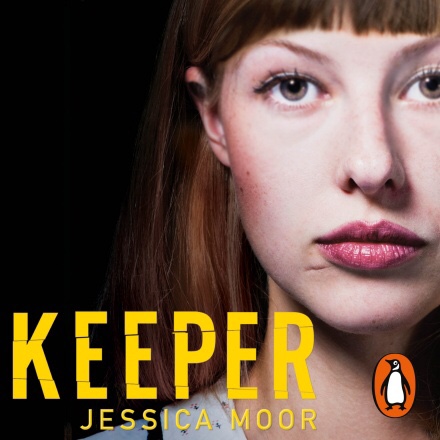
I was so excited to receive a preview copy of this literary thriller, which is a murder mystery, but is firmly focused on domestic abuse. This book’s exploration into forms of abuse is very timely, since it is only recently that coercive control and more psychological domestic abuse became a crime in its own right. In 2015 we became the first country in the world to make coercive control illegal and punishable by up to five years in prison. Sadly this was too late for me. In the wake of my late husband’s death in 2007 I started a relationship with a man I thought I knew very well; it took four years and a lot of courage to leave in 2012. I was very vulnerable when the relationship started and scared of being of being left, so he could manipulate me into spending money and overlooking behaviour that I would normally challenge. He would distance me from friends and family by creating conflict, or even making passes at them to make things awkward. He eroded my confidence with sly suggestions about my appearance, my clothes and my weight particularly. He would fly into a rage about people disrespecting him, not crediting him with achievements or just questioning his control. He would kick and throw things. I have no doubt, that if I stayed, this situation would have become physically violent. So, for me and anyone this has happened to, it was important that the book showed an authentic experience.
The author splits the novel into two time frames. In one Katie Straw’s body is found in the river at a known suicide spot. DS Whitworth and DC Brooke would be happy to write this one off as a suicide, but the local women’s refuge plead with them to look at it again. They are convinced Katie has been murdered. It doesn’t take long for them to realise that Katie Straw doesn’t exist, she has no official or digital footprint. As DC Brooke observes ‘she isn’t even on Facebook, and everyone is on Facebook‘. Our other narrative takes us back to a different Katie, in her first job since university and living back home with her parents. On a night out she meets Jamie, and although she’s unsure at first she embarks on a relationship with him. We see how this seemingly charming and personable young man manipulates her, controls her and strips her of all support systems.
This novel shines a light on the reality of domestic violence in today’s Britain and doesn’t shy away from showing how bleak a picture it is for people trying to help. Although men are also victims of domestic abuse, figures show more women experience what Katie goes through. Scenes written from within the refuge show the range of abuse – financial, spiritual, emotional, physical, sexual. We see how resident Nasir comes up against assumptions about forced marriage and honour killings. Some forms of abuse are seen as more harmful than others, with Katie herself feeling like an imposter or as if the abuse she’s suffered isn’t real because she wasn’t hit. The novel shows how austerity has affected services and how poverty is keeping women in dangerous situations. Women’s refuges are a safety net that’s desperately needed, and the author shows how even this service is so short of funds it is failing women and turning them away. Domestic violence and murder figures rise in times of recession, not because people argue more, but because there is simply nowhere to go. In a choice between being homeless and being abused, many choose the latter, especially where children are involved.
The author shows how an abuser can ‘love bomb’ their partner at first, dialling up the charm and romance in order to catch them off guard. Her attention to detail is incredible, and the writing beautifully poignant.
‘She learns to name the demon. To understand that just as cities can fall, without a shotbeing fired, a woman can relinquish herself piece by piece.’
This sentence shows beautifully how a woman starts to blame herself. In the face of someone’s manipulation, control and volatility it becomes important to make concessions, to pick your battles, to let some things go. The line made in the sand is breached so often, it seems easier to stop creating them. Eventually, the other person exerts total control and you wonder how you got here but the answer is like this, piece by piece. In her portrayal of DS Whitworth, the author shows us how easy it can be for cases like this to be brushed under the carpet. Investigating abuse is messy because it’s dealing with people’s relationships. I also think there’s an element of switching off to abuse, because it’s too ugly to take on board. When I escaped my relationship there were some friends who would neutralise my version of events with phrases like ‘everyone argues’ and ‘it’s best to be apart if you’re going to hurt each other’. This would incense me and I lost some friends because once I’d found the courage to leave there was no way I was going to gloss over what had happened. I wanted to speak my truth. Whitworth clearly wants to walk away from this and he represents a prevailing attitude about abuse that stops the sheer magnitude of the problem being addressed. Two unsure, and slightly squeamish men are forced to delve into something that’s women’s private business. They’re sympathetic to the terrible stories they hear at the refuge, and each have their strengths. However, Whitworth dislikes dealing with the passionate and headstrong manager of the centre Val Redwood. The subject seems to scare him.
Yet, the way to continue controlling someone is to control how other people see them. Staging someone’s suicide is the ultimate silencer, not only is the witness dead but everyone thinks she was unstable. There must have been something wrong with her Family and friends were told I was uncontrollable, difficult, too involved with my family and friends and not fully in the relationship. I even started to wonder if he was right. Maybe I was overreacting. Maybe all relationships were like this. Thankfully, I had a letter, written in his own hand telling me that I was ‘too much’ for him, I wouldn’t be controlled, didn’t toe the line. In an attempt to knock my confidence going forward he told me I would never find someone to take on my disability (MS), that he found it difficult to accept and off-putting; he couldn’t find me attractive. The letter would bring me back to reality. In every sentence it screamed ‘I can’t control you’. I found it he did this to his first wife, and his last girlfriend too. He left behind a box of old cards and letters full of sentences like: I’m so sorry, I’ll try harder, I’m sorry I’m so difficult to get along with, I’ll be a better wife, I’m sorry I don’t make you happy, I’m so sorry.
The suspense is absolutely heart-stopping. My hopeful nature, and probably my past experience, would have loved an ending where all the loose ends are tied up neatly. However, life isn’t like that. The end is abrupt and a bit brutal. We might learn the truth, but nothing is resolved; to paraphrase Moor’s final words -it’s still fucking raining. I said at the beginning that above all, the book had to be authentic and I guess the unexpected ending fits with that. This is an incredibly impressive debut that is original, well-researched and painfully true to experience.
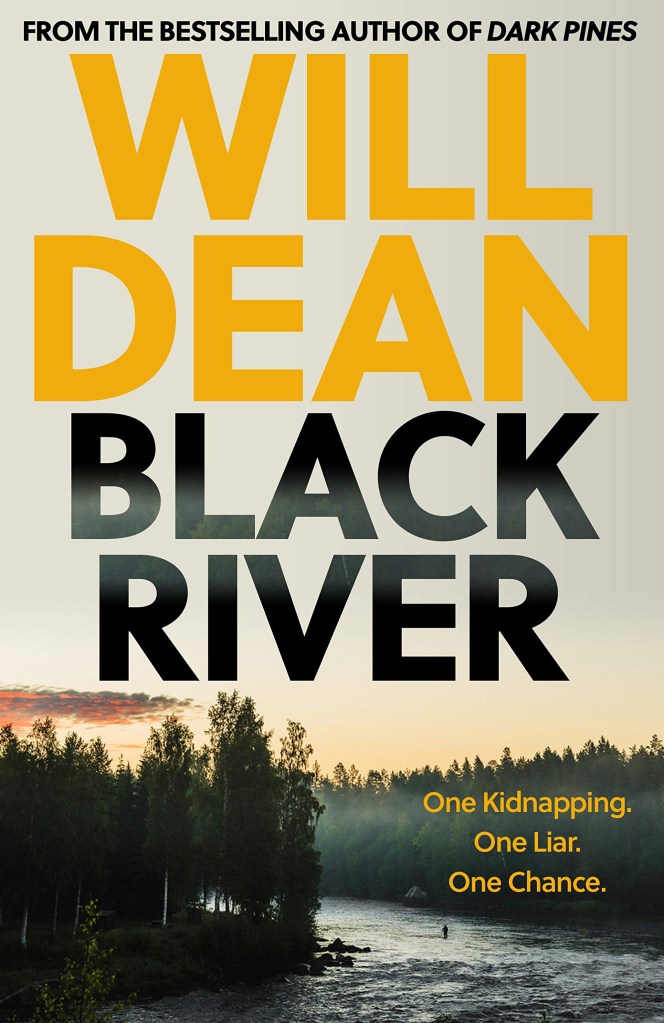
I started to get an uncanny and disturbing feeling while reading this latest book in the Tuva Moodyson series. It was as if the author had climbed into my head and discovered my two worst fears – snakes and confined spaces. There were a couple of scenes where I almost adopted the strategy of Joey from Friends and put the book in the freezer. I was determined not to give up though, because I’ve been waiting desperately for this next instalment! This is Tuva Moodyson 3 and picks up as she’s several weeks into her new job in Malmo. However, the Northern town of Gavrik does seem to exert a strange hold over her and just as she settling and has her apartment the way she’d like it, a phone call changes everything. Lena, editor of Gavrik’s local newspaper calls to say Tuva’s best friend Tammy has gone missing. It seems Tammy might have been abducted from her Thai street food van, with only a drop of blood left behind. Without a thought, Tuva jumps straight into the Hilux and makes her way back north.
It’s not long before we’re meeting even more of Gavrik’s eccentric inhabitants and I thought the Troll sisters were crazy. As Tuva points out, the police have to follow quality evidence, but as a journalist she can follow rumour and check out anyone who just seems odd. It seems Tammy has possibly dated Freddy from the shoe shop, who has ringlets, a soft baby face and a foot fetish beyond any imagination. The description of his unnaturally long fingers made me think of an Aye-aye, a nocturnal lemur. There are also rumours about Tammy and Karl-Otto whose family lives out by the river and whose Mum is known as Snake Sally. This is where Tuva comes across a community living in large shipping containers. There’s Sally who breeds and does all manner of unspeakable things with snakes. There are the ‘cousins’ who talk and act almost like Siamese twins and are maybe a little too close. Nearby two travelling foresters are ripping Utgard forest apart with tree harvesting machines. Tuva spends time with each of them and finds Sally the most welcoming, although it’s an uneasy conversation. Sally is dating Viktor the Viking Paramedic who has also dated Tammy in the past. Sally suggests her son was only fooling around with Tammy because he would only get serious about a Swedish girl. This suspicion of outsiders is something Tuva has experienced herself and no matter how many times she tells people that Tammy was born in Sweden, her Thai parentage seems to exclude her. This racism bleeds it’s way into the search when a local girl called Lisa also goes missing. Her family organise the public search and Tuva soon finds that Lisa’s face appears on more posters and inspires a bigger reward.
Will Dean is a master at creating that unsettling and uneasy feeling in the reader. It’s not just that there’s suspense, although there’s plenty of it, it’s genuine fear. Tuva’s deafness instantly adds to this, because we’re very aware that at night she has to take her hearing aids out and this leaves her very vulnerable. She stays in Lena’s garden in a ‘friggebod‘ which is an outside bedroom for guests. Although Lena double bolts the door, Tuva is still plagued by movement in the night and there is one scene that might leave me checking under my bed before I go to sleep for a while. The snakes and Sally’s ease with hatching and dispatching them unsettled me too. She uses the skins in nail art, for belts and for specialist taxidermy she sells online. She has every kind of snake and breeds in order to create beautiful skins. She tells Tuva that what she does is ethical because she uses all of the snake – something Tuva sees with her own eyes when Sally throws a still writhing rattlesnake on the BBQ. The cousin’s ability to mirror each other is also very strange and they have a lot of storage that they’re very protective about. When Tuva calls at the troll sister’s house she notices one of them is missing their eyelashes and concludes they probably fulfilled a special order for a troll with human lashes. They observe that the ‘snake river’ folk are odd, and if a woman making trolls from human body parts thinks you’re weird, you probably are.
I read the last quarter of the novel in one go because the suspense was just too much. I couldn’t leave it. Tuva’s ordeal towards the end of the story had me literally holding my breath. I had to keep stopping and reminding myself to relax. I think it’s all the more horrifying because of the perpetrator, and the cool, detached way he studies his specimens. I have never, in any of the Tuva novels, been able to work out who is behind the mystery and this was no exception. I love that I’m still questioning all the way to the end. The background of Midsommar is clever, because it is one of those folk festivals that has been portrayed in horror films. The sense of being an outsider, that everyone around you knows what’s coming next when you don’t, gives it a ‘Wicker Man’ vibe. Even Tuva has a sense of bewilderment because she’s a lone person amongst a tribe. The noise distorts her hearing and she wants to switch them off. There’s also such a nationalistic feel to the celebration that Tuva feels Tammy’s ‘otherness’ even more.
In amongst all this strangeness I enjoyed seeing Tuva’s character progression. She moved to Malmo to be nearer to her mum, but she has now died. We see more insights into their relationship when she talks to her Aunt Ida. The searches take place over Midsommar, a Swedish holiday where people gather together to eat, sing, and raise a ‘maypole’ covered in birch leaves and flowers. Girls wear white dresses and flower crowns, and eat picnics of herring, potato salad and Swedish strawberries. Tuva receives a call from her Aunt wondering where she is, and Tuva realises she hasn’t told her about her rescue mission up North. Ida has the ability to guilt trip her exactly like her Mum used to, but at least follows up with a text to say she missed her. Tuva knows this is a concession her mother would never have made. So there are possible new family connections to nurture, but Tuva also seems to realise that a lot of what she needs was always there in Gavrik. In Lena and Tammy she has friends who mother her, Thord is always there like a big brother and in the course of this novel her relationship with policewoman Noora progresses. I loved to see this Tuva, happy and loved as she deserves to be. At the end of the novel she is left at a crossroads and I’m looking forward to knowing where she goes next. Does she go back to Malmo or does she take advantage of an opportunity offered by Lena? Where is truly home?
This book grabbed me early and never let go. When a writer whisks you so convincingly to another time and place its such an incredible skill. I found myself in post-Windrush London where new people are making the capital their home and the huge social change is causing friction. As one mixed race character observes ‘she was no longer the odd one out’ as she went to the market. More people are arriving, wandering the streets, weighed down by layers thrown on haphazardly as the reality of a British winter starts to bite. However, as those first pioneers answered the call from the motherland, they’d found London not at all what they were expecting. The British government had put that call out to its colonies. They needed workers, to replace those men lost in WW2 and to rebuild cities recovering from the Blitz. Yet no one seemed grateful, no one said thank you and the living was far from easy.
We follow two main characters: Lawrie and Evie. They are courting in the old fashioned sense. Lawrie sees in Evie a nice girl, a girl who has been well brought up even though she has never known her father. He wants to do things properly, do right by her. So he calls and they go to the cinema or for a walk. Lawrie has come over from Jamaica and works part time as a musician in a local band and full time as a postman, with a sideline in the odd special black market delivery too. Evie has lived in London her whole life with her mother Agnes. They have been Lawrie’s neighbours ever since a rented room opened up at the house next door. The two women understand prejudice, because they too have been victims of it, and live a life kept very much to themselves. Evie is mixed race and Agnes, who is white, has been the subject of gossip and judgement ever since she Evie was born. So, although what transpires in the book may be shocking to us, it barely surprises them, because they know how people feel about any sort of difference from the white British norm.
The story splits into two time frames approximately one year apart. In one, Lawrie is cutting across Clapham Common at the end of his postal route when he hears a woman shouting. She has found a baby in the pond. Lawrie rushes to help, but they are both too late. The baby becomes the book’s central mystery and because she has black skin, suspicion falls upon the already beleaguered Jamaican community. Rathbone, is the police officer assigned to the case and he relishes causing problems for the community. His suspicions fall on Lawrie, as the first man on the scene, but Rathbone doesn’t just investigate, he sets out to ruin Lawrie’s life. However, there is a secret to this baby’s background that is closer to home than Lawrie imagines.
I found myself rooting for Lawrie and Evie. I wanted them to be able to make marriage plans and live the simple, quiet life they dreamed about. Her mother Agnes has had to be very strong, being an unmarried mother of a mixed race child meant being ostracised. Evie has a childhood memory of her mother having the neighbours for tea when, against her instructions, Evie was caught looking down through the banisters. They never have tea for the neighbours again. It takes Evie several years to make the link; she is the reason her mum has no friends or visitors. This same hostility is now experienced by the men who arrived on the Windrush and it must have been bewildering. To be asked to this country, to fill a shortage of labour and pull a country out of difficulty, then meet nothing but hostility and suspicion from its people seems so unjust.
A lot of the tension in the novel is around sex and relationships. When the band are booked to play a wedding, the British host is immediately taken aback but decides they can play. All is well until a woman stumbles on the dance floor and one of the band rushes to help. Her husband doesn’t appreciate his wife being touched by a black man and a brawl breaks out causing the band to run for their lives. Provocative women, like the character Rose, stir up tension even more. The men refer to her as Rita Hayworth, the red-haired Hollywood bombshell. When the men first arrive she helps with getting them settled. Then she offers to take Lawrie and his friend to the Lido, dazzling them in her bikini and flirting with Lawrie. She makes it very clear that she wants him with no thought to the consequences if her husband finds out. Interracial relationships are simply not accepted. As Agnes points out, her daughter Evie is far better off in a long term relationship with Lawrie, because although they come from very different places, society will view them as the same due to their skin colour.
I felt immersed in this world the author has created. From the cold mornings on Lawrie’s postal round, to the smoky nightclubs the band plays into the early hours. This is my grandparents generation so I could also imagine the homes, the struggle of still being on rations and for the women, trying to look nice on a tight budget. It reminded me of stories my grandma and great- aunts told me about going out dancing in post-war Liverpool. I felt so much for Evie, especiallywhen her whole story unfolded towards the end of the novel. There is a whole cast of interesting characters, but Evie and Lawrie are this novel’s heart and I desperately wanted life to work out for them. Louise Hare has written a vibrant book with an incredible sense of place and time, and interesting characters. I loved it.
Thanks to HQ and NetGalley for this ARC in exchange for an honest review.
If you liked this novel try Andrea Levy’s Small Island, adapted into a TV series by the BBC and now a play at the National Theatre.
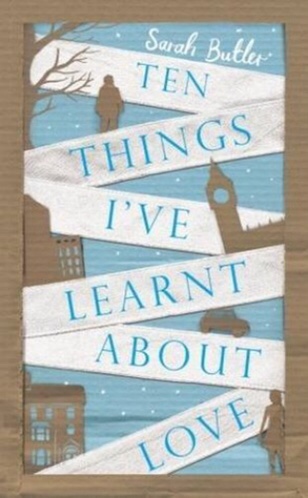
About 16 years ago now I had my first experience of trying to live alongside another generation. My then husband and I had to make a decision about where we needed to live for the next stage of life. I had finished my first degree and he had retired with ill health, from a post at The Open University. There was no need to stay in Milton Keynes any more and all my family were in Lincolnshire. My father in law Aleksander wanted to downsize, since he was rattling around in the big family home still. He had decided to spend a proportion of his year with my brother in law and his wife in New Zealand, so he could spend time with the grandchildren, and the rest with us. In Sarah Butler’s novel we meet a couple at a crossroads, working out what to do with the rest of their lives.
Aleks didn’t know his age. He was taken, with his family, from Poland to Siberia during WW2. His father was a cavalry officer, and families of the military were taken away to internment camps there. He never saw his father again, his elder brother died in Siberia, whilst Aleks and his mother escaped and joined a group of escapees in the forest. At the end of the war they walked their way to England via the Middle East, North Africa and the Mediterranean. Aleks was a quiet, stoic man who had endured a lot in his life. I never imagined we would clash as much as we did when living together. He would treat my 40 year old husband like he was a little boy – even coming into our bedroom to kiss him on the forehead! He had a precise routine and it was very difficult to move him from it. He walked to get his paper first thing, did the Sudoku and had a nap in the morning, food times were very important and he was sure I should be home by a certain time if I’d gone out so he could lock up. If a friend popped in to visit we would just settle down with a cuppa and he would pull up a chair and join in. Nothing was private and if something was happening we should do it together as a family. He would also clip amusingly apt newspaper articles and leave them for me – my personal favourite was the one about women with big bottoms living longer.
What I hadn’t realised was that in Poland three generations routinely live together, sometimes in very small apartments and it was normal to know each other’s business. He thought living with us meant being part of everything we did. I didn’t always value what he had to offer and now he’s gone, even though he lived on the other side of the world, I miss him terribly. In missing him I started to understand him. It started me thinking about how we view the older generation in this country. We don’t revere them for their experience or respect their knowledge – as Bet says in this novel we just want them tidied away into a home where we can visit at our convenience once a week then forget about them. If we don’t see the beauty or usefulness in something we tend to tuck it away where it can’t be seen, and this brutal truth extends to people. Getting older isn’t pretty.
Jack and Bet are in their eighties and have lived 44 of their years in Elephant and Castle, London. There’s a bewilderment about them both when they talk about their living situation. They had a house until the 1960s when the council decided on ‘slum clearance’ and built high rise tower blocks. Their flat, high up in the tower block, was full of light with huge windows and a view over the city. They loved their flat. Then forty years on the council decided the tower blocks had to come down. Now they’re in a small flat and their original home is hard for Jack to locate. Every morning, he strolls past the site and gazes through the wire fence at the diggers pulling down walls, revealing glimpses of bedroom wallpaper. It seems almost obscene, this exposure of people’s private spaces. He gazes into the air to see if he can work out where their home was, but there’s only empty air. They are totally displaced. It is while gazing through the fence that he meets Marinela, a twenty something photography student from Romania.
In every marriage there are secrets and Marinela seems to unlock them. Jack invites her to Their 70th wedding anniversary celebration and asks her to take a portrait of his wife. Marinela and Bet strike up a friendship. They seem to share a connection beyond their difference in age. I love how Sarah Butler depicts this friendship as one of equals. Marinela loves being with Bet, and at one point in the novel, at a party, she wishes she was sharing a pot of tea and stories at Bet’s home. Even when Bet gives her a dress, then the flat, there is an exchange of favours. Marinela goes to their home three times a week to clean, help them unpack and prep an evening meal. In return Bet takes her to Islington and shows her a flat, where Marinela can live in return for the work she does. Bet tells her that many years ago, before she and Jack started a family, she had an affair with Kit, an American. This flat was where they used to meet. Bet had the chance to leave Jack and go to America but she stayed. Jack knows about the affair, but when Kit died and left Bet the Islington flat he told her to give it back. Bet was paralysed, not able to see it but not able to return it either, it has simply been sitting empty. Now, finally, it can be of use. Bet is happy with the arrangement she’s made. Jack simply thinks Marinela visits a lot and the help means they can get Tommy, their son, off their back.
Tommy is a hard character to fathom and is equally hard to like at times. From the beginning we can see something missing in the relationship between Bet and her son. He lives alone and we learn that he’s been married twice and is dipping his toe in the water with internet dating. Bet notices he is dying his hair and wearing clothes for a much younger man, than his 60+ years. I felt like Tommy doesn’t see his parents as people in the same way Marinela does. In fact it’s very telling that he assumes Marinela must have an ulterior motive for hanging round his parents – it tells us how little he knows or understands them. He complains about the boxes left packed in the living room, but never offers to help with them, nor is he curious about their contents. His parents and their keepsakes are a treasure trove of stories and advice. Yet, Tommy pops by once a week gently pushing them to have Meals on Wheels, home care or even go into a nursing home. Does he even realise his parents love each other? He hasn’t realised or thought about the implications of most homes having a single occupant per room. What will he do when he finds out about his Mum’s secrets?
Jack is quieter than Bet and very thoughtful. He seems more bewildered by changes than Bet, less able to adapt. He sits between his son and Bet, always trying to keep the peace while usually offending one or both of them at once. However, he’s remarkably wise, especially about long marriages. He makes sure his son knows that Bet was a good wife and that after surviving this long as a couple, her infidelity is merely a blip in a whole lifetime of love. Early on in the novel he points out that if Bet doesn’t seem herself or their relationship seems strained the best thing to do is let it be, invariably things go back to normal. There were times he made me think, not just as a reader, but as a counsellor too. He made me think about our expectations of long term relationships. Yes it’s good to have boundaries, but these days do we draw our line in the sand way too early? Our life partner ( and us) is bound to make mistakes – sometimes really big ones. I remember once surprising a client dealing with infidelity, by pointing out she still had choices. She was grieving for her fairy tale ending and seemed to think the only solution was splitting up. I reminded her that she was allowed to forgive and work together to fix what was broken. As Jack seems to realise, infidelity isn’t always the worst transgression in a marriage.
I enjoyed the way Butler was exploring and commenting on love in the 21st Century. Marinela has left Romania after a bad break up with a married man. In London she has a friend, Harry, a post-graduate student at the university. She comments early on that she likes him but can’t imagine kissing him. Do we put people into labelled boxes or categories too soon? Why can’t we just relax, spend time together and slowly see what develops? Similarly, Tommy seems unsure about being his authentic self on the dating market. Where we can dismiss someone with a quick swipe to the right, what lengths will we go to, to appear younger, fitter and more appealing? Butler uses descriptions of the old couple’s appearance to press home the point that, especially for women, ageing can be hard to accept. Yet whenever he looks at her, Jack sees Bet’s beauty. Bet remembers wearing the green dress and being supremely confident in her young body, not just for the way she looks but for the ease of movement and the knowledge it will always do what she asks of it. As a person with MS I understand this loss of control; a realisation that your body can let you down. I liked the dissonance between the way Tommy sees their lives as all risk, whereas his parents are still surprised when their body fails them. We all remain young in our heads.
As you can probably tell by the amount I’ve written , I really did connect with this book and these characters. Their inner lives are so rich and full, despite their outer lives shrinking to four walls and a list of risk factors. I’m firmly behind Jack and Bet’s wish to remain independent and together, rather than packaged up neatly where they won’t trouble anyone. My heart broke every time Tommy tried to force them into dependence and his treatment of Marinela made me so angry. Somehow, even though the novel is a light, easy read, Butler engaged my emotions and drew me into this story. The link between the couple’s declining health and the decline of their surroundings is beautifully written. Jack and Bet are desperately trying to stay contained, physically and emotionally. If people see that they can’t cope, if social services start poking around, and if Tommy knows about his Mum’s past they will be as broken open and brutally exposed as the old flats and the sad glimpses of life within. If they stay intact, they can’t be separated. This might seem a slight book to some because of its gentleness and leisurely pace but I think that’s deliberate. Like Jack and Bet, the book seems low on action, but all of human life is in these pages. If I come across a client struggling in Tommy’s position, I would recommend they read this book before making decisions or choices on their parent’s behalf. It teaches us to engage with others at a slower pace, to get to know others and to find friends in unlikely places, wherever they’re from and however old they may be.
Thank you to Anne Cater at Random Things Tours for the chance to join the blog tour. Check out the list above for other reader’s responses to the novel.
Author Sarah Butler
If you enjoyed this book you might also enjoy:
This is the humorous story of two daughters trying to cope with the marriage of their elderly father Nikolai, to the very highly sexed and much younger Valentina. A brilliant look at being a first and second generation immigrant and the what the combined culture and generation gap does to our relationship. Nikolai sounded so much like my father in law I thought the writer might know him!
Sarah Butler’s debut novel that also touches on themes of age, decline and not judging people on first impressions. Alice returns home just in time to say goodbye to her dying father. Daniel has been homeless for thirty years but has come to view the London streets as his anchor and the inspiration for his art. This novel is about both rootlessness and homecoming.
There are parts of this novel that read like poetry, and totally transport you to the sights and sounds of St Kilda. It took me back to a trip I made to the Farne Islands to visit the breeding puffins. I remembered the way these ungainly little birds wobble as they land, like little clowns with wings. The smell and sight of the birds droppings covering the rocks. The constant bird calls filling the air and whipping away on the wind. The author has an incredible ability to create moments of stillness where all of the reader’s senses are engaged. The sense of place she creates is incredible, and I could see why the islanders feel the landscape is part of them.
Our islander is a young girl called Chrissie and we see the island through her eyes. She is a child when we first meet her and as she experiences this incredible community we build up a picture too. She describes how they survive and in Chrissie’s childhood it is becoming even harder. In the summer the island has tourists, who will buy locally made cloth and other handmade items. The islanders order provisions to be brought by boat, but as tourist numbers diminish, the community has to be more self-sufficient. Island men have a unique and dangerous way of scaling the cliffs for seabirds to cull and use for food. They keep livestock for milk and eggs, but only as long as they can afford to feed them. This scratch living needs numbers of people to carry out the labour, and even in Chrissie’s childhood, young people are starting to leave. They’re looking for work and a better way of life, and they might send money home, but St Kilda needs young, strong bodies to keep going.
The islanders are always interested when the Laird visits and this time, he brings his young son Archie. The laird wants his son to understand the estate he will inherit and he’s left to roam with the children of the island. They take him to all their favourite hiding places, swimming spots and up on the cliffs where they hunt for fulmars. Chrissie is a little bit star struck by Archie. His blond, fair, looks are striking and to a young girl living in poverty he must seem almost fantastical. This visit is on Chrissie’s mind, when years later Archie visits the island again. This time he is undertaking research for university and he brings his friend Fred with him. How will Chrissie feel now that they are both older?
Gifford slips between Chrissie’s childhood and a narrative that takes place in the 1940s. We see Chrissie’s life, now on the mainland, with her daughter Rachel. What happened to bring her away from the St Kilda community? We also hear from Fred, desperately trying to get to Spain after escaping the fate of many soldiers in the Scots regiment s a POW. He has to trust many people along the way, but there is leak in the chain of people willing to help POW’s escape over the Spanish border. When Fred encounters a familiar face, he wonders whether he can trust him, but really has no choice if he wants to get back.
At the centre of the novel is a misunderstanding that left me, as always, mentally pleading with them to talk to each other. I was left feeling I couldn’t trust a particular character involved in this and I was suspicious throughout the whole novel. However, what Gifford does is show us that people are complex and even those with bad character can carry out heroic acts. He most compelling character though is the island of St Kilda in all its rugged and windswept beauty. I think the most heartbreaking part of the novel though is the rift opening up between the St Kildan community and the land they call home. Everything they love about their home is what makes their way of life impossible. Gifford’s words are a poem, an elegy for a dying way of life and the grief of a community torn from their homeland.
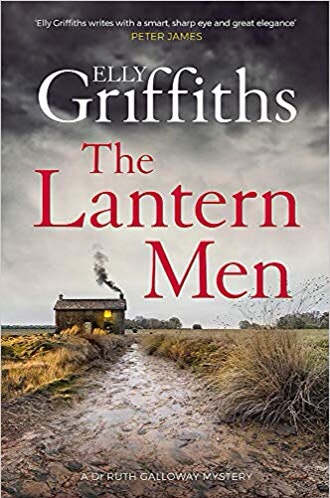
How lovely it is to pick up a new novel from one of my favourite series. It’s like putting on a favourite, worn-in pair of jeans. I love Dr.Ruth Galloway, Cathbad and Nelson like old friends, the type you only see once a year, but when you see them, you can simply pick up where you left off. It only takes a page and I’m immediately back in Norfolk, with big skies and the salt marsh. Dr Ruth Galloway is one of my favourite literary heroines. She’s super intelligent, independent, slightly overweight has hair that never does what it’s supposed to and is possibly sweating – to be honest the physical characteristics could be a description of me on any family photo we have. This is why so many female readers like her – she’s one of us.
In this novel there have been some big changes for Ruth and her daughter Kate. She has moved from her little cottage on the Saltmarsh into Cambridge, where she is teaching in one of the prestigious colleges and living with television presenter, Frank. They seem to have a happy existence, teaching and sharing care of Kate, and taking turns to cook. Even Flint the cat is trying to get used to urban living. These are the last few weeks of term and Frank is pushing for them to take a Mediterranean holiday together. Ruth has just returned from a week’s writing retreat at Grey Walls to finish her current book.
Back in Norfolk, DCI Nelson has just jailed Ivor March for murder and hopes he is going to disclose where more bodies are buried. Two were found at his wife’s Chantal’s home in the garden, covered in his DNA and that of his cat Mother Gabley. However, there are two more women Nelson wants to find. Ivor’s first wife is called Crissy and she just happens to run the artist’s retreat Grey Walls. This could just be a coincidence, but Nelson doesn’t like coincidences. March insists that he will disclose where the bodies are if Ruth takes charge of the excavation. Although Nelson makes it clear that she doesn’t have to say yes, Ruth does feel a certain excitement at being asked. There is also the added attraction of spending time with Nelson.
Matters become even more complicated when Ruth’s old boss, Phil, is attacked when cycling home. The attack is foiled by Cathbad (who else) who magically appears just as Phil has a heart attack. Then thief gets away with his backpack containing his laptop and notes on the first Ivor March excavations. A postcard arrives suggesting that Ruth will do the excavation job better than Phil. Of course, Ruth does make a discovery. Not only does she find the two bodies the team were expecting, but a third woman, buried much earlier. The investigation starts to revolve around the Grey Walls retreat and its previous inhabitants – a small group of artists and writers who had a labyrinthine love life. Nelson is also becoming suspicious of a local cycling group which also hosts some of the ex- Grey Walls inhabitants. He is even more concerned when his daughter joins them.
Griffiths beautifully weaves Norfolk folklore through this mystery. One of the dead women wrote a short story based on the legend of the Lantern Men. The Lantern Men are an explanation for the mysterious lights seen on the Saltmarsh late at night, that appear to help lost travellers but actually lure them to their deaths. Could this legend be the inspiration behind these killings? All the women killed also have the same physical attributes. They are tall, slim and have long blonde hair. During the novel I worried about both Nelson’s and Cathbad’s daughters who fit this profile. Could the killer have a specific type or do they have another target in mind? Even more worrying to Nelson is the realisation that if Ivor March is safely behind bars who is behind the postcard and the latest missing woman?
I loved this particular mystery. It had so many potential murderers I kept flitting from one to the other. I enjoyed how the Norfolk legend inspired local writers and artists. I was also interested in Ruth’s personal story. At a time when she is arguably more settled than ever why does she feel restless? She experiences a panic attack when swimming, but can’t think of a cause. When Phil says he might retire after his heart attack, she realises there will be a head of department post at her old university UNN. Could this possibly lure her back to Norfolk, the wild little cottage and the sea?
I felt lucky to have a whole day to myself so I could read this straight through. I’d been feeling poorly and needed to rest so I got the chance to read it all in one go. This was a great addition to the series and my interest in these characters and their complicated lives shows no sign of waning.
The subject matter of this book is very close to my heart, so despite the WW2 novel market feeling a bit saturated at the moment, I decided to give it a try. I have a disability and have studied disability and literature to post-grad level so Hitler’s treatment of disabled people and eugenics in general are subjects I’ve read about widely. I’ve encountered novels exploring the issue of eugenics in 20th Century North America. However, I have never seen it in a novel based in WW2.
The novel starts in Hamburg in 1926 when our two main characters, Richard and Paula, meet and fall in love. Soon after they marry, Paula becomes pregnant with twins. She gives birth to a boy and girl and this is the happiest time in their lives, with only one problem; their son Georg has been born deaf. They vow to protect him and have optimism that with his family’s help, all will be well. However, as I was reading, I was aware of the time period tucked in the back of my mind. I knew that the rise of Nazism was just around the corner and everything will change. This was uppermost in my mind as it had recently been depicted in the BBC series World On Fire. As the Nazis seize power, they begin to round up adults and children with disabilities for euthanising. Richard is a doctor and finds himself falsifying documents to help his patients. On a personal level he is hiding the disability of his own son. Will they be able to remain hidden, or even stay together?
What makes this book unusual is that we are reading about WW2 from the perspective of German citizens. Ordinary Germans suffered hardship through bombings and loss of both loved ones and their homes and livelihoods. In 2014 a memorial was unveiled in Berlin to commemorate the 300,000 German people killed by the Nazis. That’s without counting those in Poland, Austria and other occupied countries. The book ends Post-war and describes how the Germans were treated in the years following. I think the fact that this a German author accounts for the incredible detail and historical fact woven into the story. Where it lacked occasionally was in the emotions. This could be a realistic depiction of a culture shell shocked by war or it could just as easily be an issue with finding the right words in translation. I felt the book was well researched and characterised. It shows the other side of a war that we’re used to hearing about from the victor’s standpoint, I really enjoyed this different.
This book surprised me, delighted me and broke my heart. It was not at all what I expected, but was all the more special for that. Cleverly, Serle wrong foots the reader into thinking this is a straight forward boy-girl romance, but it isn’t. It is about love though and our heroine Dannie is sometimes unsure what love looks like. My experience reading this book showed me that I sometimes overlook love, when reading and in my own life. We’re used to reading certain conventions in a love story and have expectations about how that story will unfold. This novel teaches us that sometimes, when we’re looking for that special someone, we don’t notice or fully appreciate the love we already have.
Dannie is a corporate lawyer, living in Manhattan and dating the eminently eligible David. David and Dannie live together after dating for two years. They have done everything according to an unspoken timetable; everything about their relationship is planned and just right. In fact their relationship is so predictable that when David suggests dinner at the Rainbow Room, Dannie knows he’s going to propose. She says yes when he presents the perfect engagement ring, but they don’t plan their wedding. They continue to drift along as they are, until Dannie has the dream.
This vivid dream shows a loft apartment in Dumbo with interior design details such as an art print of an optician’s chart with a witty slogan. It’s nowhere Dannie has imagined living. It’s trendy and edgy. She and David live in Gramercy Park. A perfect location for their work and where they are in life. Yet, the Dumbo apartment feels comfortable. Then a man appears. She’s never met him before but yet there is a connection, something she can’t define. As he moves closer she feels actual electricity. She has never felt this before. Like some huge force compels them to be together. When she wakes, Dannie feels strange. Like she’s questioning everything around her.
She has planned to see her friend Bella. They have been friends since boarding school and are still incredibly close. Bella takes more risks than Dannie and in some ways Dannie sees her as someone who doesn’t finish things. Bella loves art, she lives to travel and has a more bohemian outlook on life. Dannie has a more settled and perhaps, conventional life where work is the priority and her stable relationship with David simply ticks along. Up until now Bella hasn’t had a stable relationship in her life, but she has brought someone important to meet Dannie. When he walks in, Dannie is shocked to see the man from her dream. She panics and decides to do everything she can to stop her dream from coming true. But life can take strange turns and a series of events unfold that she never imagined. They make her rethink everything about how to live life and how to love.
I became so involved with Dannie and Bella’s story that it was hard to put the book down towards the end. The story crept up on me from something very light to an emotional tale about the strength of female friendship. These girls are life partners. Their presence sustains each other in ways that romantic relationships sometimes don’t. Bella’s mother lets slip that she purposely placed her daughter in the same school as Dannie, because she saw them together and could not part them. The very structure of the book teaches the reader something. We learn, at the same time as Dannie, that the happy ending is not always about a man, because love comes in many forms. Also, that loss and love are the same thing. When we grieve it just proves how much we loved. I found myself becoming very emotional towards the end of the book and that rarely happens. I found the writing so truthful and similar to my own experience of grief that I had a lump in my throat. I loved the ending and the fact it wasn’t predictable elevated the book above the ordinary. I will be hugging my friends a little closer and appreciating all the people in my life who love me.
Coming Up For Air follows three people’s stories across three time zones linked by the theme of water. It starts by creating a narrative behind the resuscitation mannequin used across the world. ’Resuscitation Annie’ is based on the death mask cast from a woman found drowned in the Seine in the 1880s. She was never identified. Leipciger creates a beautiful narrative of how this woman might have lived in the period before her death.
We are then moved to the mid 20th Century, and a toy maker who is haunted by loss linked to water. Then from the 1980s to the present day we follow the story of a young woman drowning in her own lungs due to cystic fibrosis. The themes of loss and water weave these three tales together and even the reading process echoes these themes, because the novel inspires reflection and thoughts of our own mortality. It’s a quiet and introspective reading experience. I found myself thinking a lot about my own loss, my husband died of pneumonia and primary progressive MS in 2007 and also drowned in his own lungs. However, my MS is progressing and I wondered about my own life to come and the ways in which I do follow in his footsteps. That sounds like a morbid reflection, but there is a comfort in the shared elements of these experiences one hundred years apart. It made me think of the Jungian collective consciousness and how much of what we know is shared knowledge.
Water is a metaphor for life. We need it to live. We are drawn towards it – think how many visits we make to the sea, riverside attractions and streams. We build cities around rivers and prioritise sea views when we book a special holiday. We find it exhilarating and welcoming in equal measure. I go into warm water in order to soothe pain, to feel weightless and be able to move easier. It’s amazing how something can give us life, but also have the potential to suffocate, submerge and wash us away. It is strange for me to think about that moment when I float gently in the water and feel cushioned and pain free, but then also think that fluid in my own body could kill me.
The characters in the novel illustrate this dichotomy between life being given and taken away. We each make sense of tragedy in our own ways. For one, water takes life away but also takes away the pain and despair she has felt at the loss of love. For another, a macabre invention is a way out of feeling unbearable grief. A girl fights against a terrible disease that’s literally filling her lungs. Every one of these characters is in a fight with life – trying to live as long as possible, to live with unbearable pain, to leave a life they can no longer bear. Our experiences are not isolated from one another, they are all connected. It made me think about the point at which we truly leave this life. Is it when the heart stops beating or is it when there was no one left in this world to remember us.
This novel made me resolve to talk about Jerzy more, even with my new stepdaughters and nephews who didn’t meet him. I tell them he was charming, cheeky and clever. That when you lose someone the love continues. I found this novel moving, reflective and strangely hopeful. Whatever we experience in life, someone else will have been through it. It made me think of E.M.Forster’s Howard’s End and the exhortation to ‘only connect’.













 The Lotus Readers