Posted in Personal Purchase

Libraries Week

If it hadn’t been for libraries this blog wouldn’t exist and I would be a very different person. I have my mum, another avid reader, to thank for this. Every Saturday morning my father would drop us in Scunthorpe and go off to play football. We would do some shopping in the market, pay Radio Rentals for the telly and then best bit – we would go to the library and change our books.

Scunthorpe Library

In the 70s/80s the library was a very odd looking building that visitors entered through a glass pyramid. A type of working class Louvre, usually covered in poo from all the pigeons in the square! However, it was the magic gateway to culture for me. A place where the message board advertised local gigs and theatre productions and downstairs housed an art house cinema, where Mum famously fainted after being overcome by Kevin Costner on the wide screen. We were a low income family, living in the middle of nowhere in Lincolnshire. Dad’s basic wage from the drainage board had to keep all four of us and the pets. Books were loved but not a priority in the budget, so I had to wait for Christmas and birthdays to get book tokens. This building was my holy grail of reading and I read classics, comedies, books about growing up. This was my window on the world and it didn’t matter if I didn’t like one, I could just put it to one side and take it back the following week. Mum would go upstairs to choose her books and I was left to browse on my own and I could take all the time I wanted.

After the library we would grab a sandwich and get the 336 bus to Ashby where my grandma and grandad lived. We would stay there until Dad picked us up at teatime. In spring and summer I might sit out in the garden or in Grandad’s shed which always smelled of shallots and had a pair of curtains at the window. While he pottered doing jobs and I would read my book. Or in the colder months we’d be inside, with the gas fire on so high it gave me a headache, and my Grandad in his red all-in-one (he was ahead of his time when it came to onesies). He’d watch rugby league or an old black and white film, while I read or we would read together. Grandad was very fond of pioneer stories, adventure novels and Wilbur Smith.

These are just a few of my book choices from those earliest days of picking my own books and cultivating a love of reading:

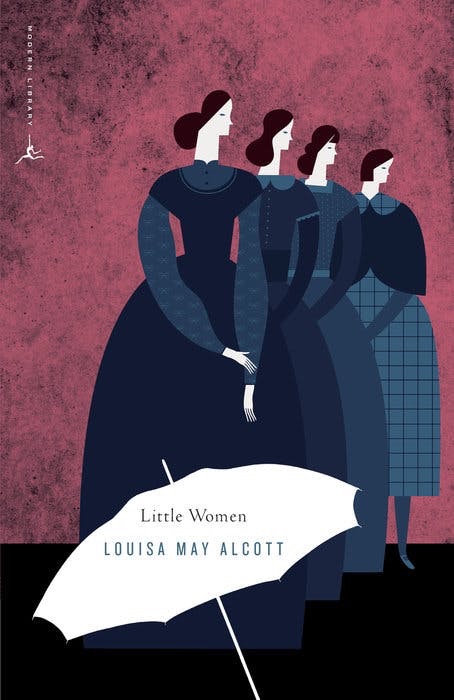
Little Women: This was the first book I read after completing the reading scheme at school. School had the first book, but I went to Scunthorpe Library to read the next stage of Meg, Jo, Beth and Amy growing up in civil war America. I borrowed this series so many times that I still know each girl’s story off by heart. Of course Jo is my favourite. I wanted to be a writer and have a room to work in with lots of books. However, I also grew to love Amy despite her haughty character and snobbish tendencies. These early attempts to seem genteel were affected and often satirised by her older sisters. Yet, Amy grows from there. She keeps a certain steeliness and determination to succeed, but becomes kinder, softer and more vulnerable. Her interest in the finer things though give her a certain polish, she is cultured and this gives her opportunities. Good Wives shows this growth. I love how this series seems to stay relevant for every generation, with the latest film taking an interesting, more feminist slant than before. I love this Puffin ‘In Bloom’ edition of the book.

What Katy Did: I chose to read about more 19th Century growing up with Katy Carr and her house full of brothers and sisters. Katy’s mother had died and her father worked long hours as a local doctor, leaving the siblings to run a bit wild. Until her father’s sister, Aunt Izzy takes over as housekeeper. The strangest thing about reading this series was Katy’s accident on the garden swing that leaves her paralysed. I had an accident and broke my back at a similar age and was temporarily stuck in bed. I remember wanting to be like Katy or her mentor Cousin Helen who was always cheerful and helpful, even though she was in constant pain and a wheelchair user. In later years I wrote about the illness of Katy and other 19th Century heroines such as Beth March and Pollyanna. They all learn to be well behaved and Christian young ladies through suffering, if you read them from a feminist viewpoint. Back then though I just loved the sequels to Katy’s story – the secret societies at school, the trunks of goodies sent from home, Katy’s travels across Europe, particularly the Venice carnival. I’m sure it was this book that made me determined to visit Venice when I was older.

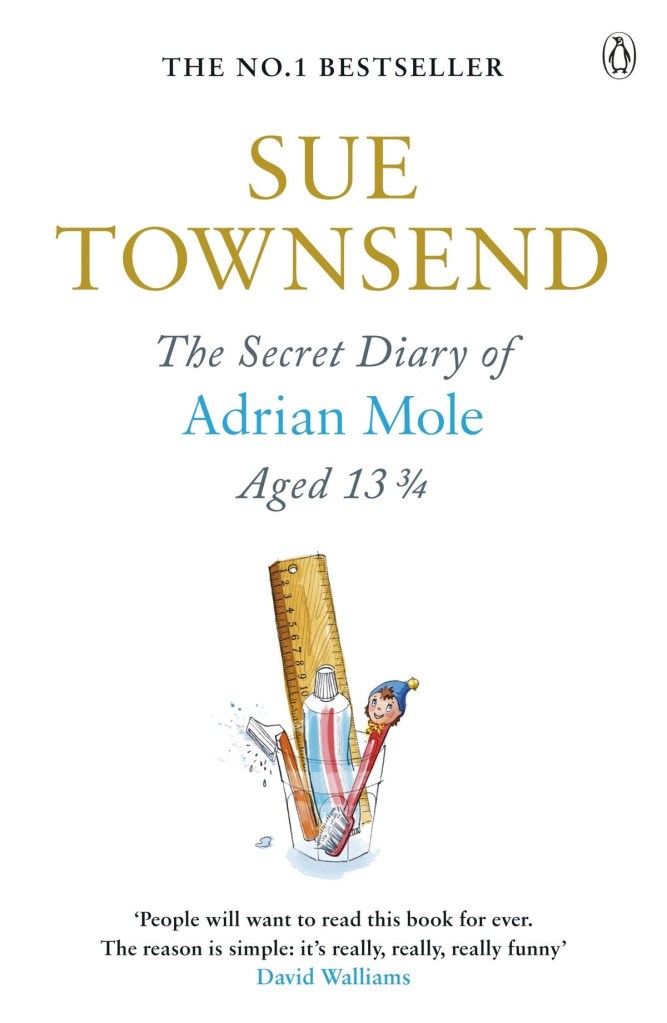
The Bagthorpes Saga: For humour I always enjoyed James Herriot’s stories, and later the Adrian Mole diaries, but the Bagthorpes were in a league of their own when it came to comedy. The four siblings William, Tess, Rosie and Jack were the children of writers – capable Agony Aunt Mrs Bagthorpe and the stressed out and highly strung scriptwriter Mr Bagthorpe. The whole family are always getting into scrapes with Grandma and their psychopathic four year old cousin Daisy behind all sorts of nefarious schemes. The siblings are all busy with accomplishments that Mrs Bagthorpe calls ‘strings to their bow’. All except Jack. Jack is the ordinary sibling, who enjoys walking his dog Zero and doesn’t really excel at anything. Aided by a hedgehog like housekeeper, Mrs Thorndyke, the Bagthorpe family lurch from one disaster to another; fires, floods, hauntings and kleptomaniac four year olds! I read these books over and over.

Pippi Longstocking: Pippi was one of those marvellous heroines who is an orphan so has no restrictions to her imagine or what she can get up to. Pippi Longstocking is only nine years old and lives all by herself with a horse, a monkey, a suitcase full of gold, and no grown-ups to tell her what to do. She’s wild and funny and her crazy ideas are always getting her into trouble! She devises adventures for her new found friends Tommy and Annika. Pippi performs at the circus, is reunited with her long-lost father, and takes her friends Tommy and Annika on a trip to the Canny Canny Islands. She also finds a squeazle, gives a shark a good telling-off, and turns 43 somersaults in the air. I loved her sense of adventure and wanted to feel as free as she did. I love the new gift editions illustrated by Lauren Child, they seem to capture the spirit of Pippi perfectly.

The Moomin Sagas: Oh how I love the Moomins! Today I have a Moomin dress, light box, mug collection and many other reminders of Tove Jansens eclectic characters. The Moomintroll family live in a tall blue house in Finland and are peaceful, happy creatures. Moominmamma is an earth mother type, always willing to feed another at her table and often taking in other creatures to help, such as the Hemulen – a tall, cross dressing botanist with depressive tendencies. Moominpapa likes nothing better than a quiet day fishing and smoking his pipe. Moomintroll is their son and has various friends such as Snufkin, a green clad, flute playing traveller who often wanders off to have adventures. Moomintroll’s love interest is the Snork Maiden, a Moomin with curly eyelashes, blond hair and a few cuddly extra pounds that she worries about (I feel a great affinity with her). There are adventures with eclipses, hobgoblins and comets, but it is the characterisation of these varied creatures that has always stuck with me and their philosophical musings on life. I’m considering a Moomin tattoo, perhaps Little My?

I’m thinking of a combi Moomin and reading tattoo to represent this childhood love of reading, all started with a library card.

Posted in Random Things Tours

Throwback Thursday! The Accidental Medium/ Gin Palace by Tracey Whitwell.

Synopsis | Tanz is living in London and still grieving her friend Frank, who died in a car crash three years ago. As acting jobs dry up, she has to find a normal job to fund her cocktail habit. When she starts work in a new age shop, Tanz discovers that the voices she’s hearing in her head are possibly real psychic messages, not the first signs of schizophrenia. Alarmed, she confronts her little mam and discovers she is from a long line of psychic mediums. Despite a whole exciting new avenue of life opening up to Tanz, darkness isn’t far away and all too soon there’s murder in the air. In book two, after her fast paced introduction to the world of clairvoyance, Tanz is hiding in bed, having nightmares about a suicidal psychopath, drinking red wine, irritating her cat and waiting to be evicted. Life as she knew it seven months ago has turned on its head and only the prospect of a new TV job in Newcastle and a month with her best friend Milo can help pick her up off the floor. But when she gets home, the Newcastle of more than a century before decides to haunt her bringing all kinds of spooks and horrors with it

Review | Tanz is a cocktail drinking, straight talking, Geordie actress, with a talent for swearing. She is an absolute breath of fresh air. Within pages she felt like my long lost friend and I was mentally inviting her to my fantasy dinner party (alongside Mr. Tumnus, Ruth Galloway, Sugar from The Crimson Petal and the White, Jo March, and Vianne Rocher).

I read both of these short novels in a weekend and have been left longing for more. The story begins as Tanz is working at a new age shop, between acting jobs. She has made friends with one of the ‘readers’ in the shop, but is starting to have an inkling that her own family might have their own gift. Her Mam seems to have prophetic dreams, but doesn’t make a big thing of it even though her grandmother was a Romany. Tanz had started hearing voices, but wondered if it was a symptom of grief following the sudden death of her friend Frank three years before. She even starts to worry if she could he schizophrenic. Luckily she has a great mentor at hand – Sheila is another reader at the shop, an older woman with years of experience in this strange world of mediumship. She describes Tanz as a ‘natural’ and her strong reaction to an odd couple who visit the shop seems to set them on an investigative path. Sheila is vital to Tanz and their friendship grows as the mystery becomes disturbing and dangerous. What are this strange couple hiding and why is Tanz hearing a woman wailing every time they’re near? Despite being terrified Tanz and Sheila let their spirit guides lead them towards the answers and into danger.

Gin Palace situates Tanz back in her hometown of Gateshead, where she has a role in a TV series after months without work. She would have loved the main role, but is playing the tart with greasy hair, dark circles under the eyes and the shortest skirt. She’s the only one with a genuine Geordie accent. After her introduction to clairvoyance, she was hoping for a quieter time, but it seems the spirits aren’t ready to leave her alone. Tanz finds herself haunted by visions of an 18th Century Gateshead and the tenements down by the docks. On a ghost walk she finds out about the brutal murder of a prostitute, the terrible warehouse fire that razed the tenements to the ground, and the role gin played in the lives of these unfortunate residents. This gives her some background but doesn’t explain the violent man who keeps beating her to death in terrifying dreams. Nor does it explain her visions of a little boy who looks like the Artful Dodger, with the face of a pitiful waif one moment, and eyes that burn like the coals of hell the next. Is she being warned off? Or is there another mystery the spirit world like her to unearth?

I loved both of these books for their characters and the company of Tanz. I loved her Mam and Dad, who are traditional Northerners through and through. They were very like my parents – always half way down a cup of tea, have tea at 5pm and seemingly happy to potter at home together. Tanz’s dad has his shed to tinker in, but her ‘little Mam is always there with some very down to earth and wise advice. I love how Whitwell presents mediumship and it’s effects on the practitioner. Sheila teaches Tanz how to protect herself against certain types of spirits, but there are still times when she is terrified by what transpires in her own mind and in front of her. Her nightmares affect her sleep, she feels unnerved and often wonders if her gift is worth it. It’s great if it helps someone, but otherwise it’s very inconvenient and not making her any money. It made me think of taking a counselling session, it can be exhausting and the counsellor needs a self-care regime in place to replenish their reserves. I enjoyed Tanz’s loyalty, not just to her close friends, but to those people she picks up along the way and even those from the spirit world who need release. Her bravery in confronting the scarier paranormal events, while being absolutely terrified, is endearing. By the second book she is starting to trust her powers a little, to understand the strength of her gift and her guides. These books are fresh, modern and comfortingly Northern. The mix of gothic and supernatural subjects, with this down to earth, 21st Century heroine is different and such great fun. Tanz is a woman you’d like to go for a few cocktails with and the mingling of her familiar worldly worries and her other worldly gift is irresistible.

Biography|Tracy Whitwell was born, brought up and educated in Gateshead in the north east of England. She wrote plays and short stories from an early age, then had her head turned and ran off to London to be an actress. By 1993 she was wearing a wig and an old fashioned dress and pretending to be impoverished on telly in a Catherine Cookson mini-series, whilst going to see every indie/rock band she could afford.

After an interesting number of years messing about in front of the camera and traveling the world though, Tracy discovered she still loved writing and completed her first full length play. A son, many stage-plays, screenplays and two music videos followed until one day she realised she was finally ready to do the thing she’d longed to do since she was six. She wrote her first novel. A crime/horror/comedy tale about an alcohol-soaked, gobby, thrill-seeking actress who talks to ghosts. (Who knows where the inspiration came from, it’s almost like she based it on her own ridiculous life.) Then she wrote a follow up and realised she couldn’t stop writing books.

Now Tracy lives in north London with her son, still travels whenever possible and has written novel number four. Now being edited.

Posted in most Anticipated 2021

Most Anticipated 2021! The 100 Days of Lenni and Margot by Marianne Cronin.

#The100DaysOfLenniAndMargot #Doubleday #Books2021 #MostAnticipated

Published: 18th February 2021

Publisher: Doubleday

ISBN: 0857527193

Synopsis | Life is short – no one knows that better than seventeen year-old Lenni Petterssen. On the Terminal Ward, the nurses are offering their condolences already, but Lenni still has plenty of living to do. When she meets 83-year-old Margot Macrae, a fellow patient offering new friendship and enviable artistic skills, Lenni’s life begins to soar in ways she’d never imagined.

As their bond deepens, a world of stories opens up: of wartime love and loss, of misunderstanding and reconciliation, of courage, kindness and joy. Stories that have led Lenni and Margot to the end of their days.

Fiercely alive, disarmingly funny, and brimming with tenderness, THE ONE HUNDRED YEARS OF LENNI AND MARGOT unwraps the extraordinary gift of life even when it is about to be taken away, and revels in our infinite capacity for friendship and love when we need it most.

My Thoughts | As soon as I read the synopsis for this book I knew it was meant for me. This is the type of world I understand; the kingdom of the sick. Not that I have a terminal illness, but I do have a life limiting illness and that puts me into a different bracket in society. I don’t do a 9-5, I have to spend a lot of time at home and I have no idea what the next day will bring. It’s a strange place to be; to have life in front of you, but knowing there are now limits to how I live and possibly how long I live for. It’s about learning to live, while dying.

That’s what Lenni and Margot understand. While the nurses are already saying their goodbyes, Lenni and Margot are making friends and learning how to carry on living. I love the idea of this cross generational friendship, because I do believe we can develop deep connections outside of our own age bracket. We have so much to offer each other. Older people bring their wisdom, experiences and perspective to the table. Whilst younger people can replenish a life with energy, knowledge of popular culture and technology that can enrich an older person, establish connections and reduce isolation. Also both are aware that they have limited time so put their all into the friendship, as well as the new experiences it brings. It sounds like a tearjerker, but one that that’s also uplifting and full of life lessons we could all do with learning.

Biography | Marianne Cronin is the author of ‘The One Hundred Years of Lenni and Margot, which took me six years to write and I’m very excited that their story is now reaching readers. Before She started working on writing fiction full-time, she worked in academia and has a PhD in Applied Linguistics but she doesn’t use the title ‘Dr’ on official documents because She’s scared of being asked to help in a medical emergency and having only a thesis on linguistics to help. She likes to write at night and when not writing, she can be found trying to be funny in various improv groups or watching her recently-adopted cat sleeping under my desk.

Follow the author at:

Instagram, @itsmariannecronin)

Twitter: @itsmcronin

Posted in Uncategorized

In Five Years by Rebecca Serle

This book surprised me, delighted me and broke my heart. It was not at all what I expected, but was all the more special for that. Cleverly, Serle wrong foots the reader into thinking this is a straight forward romance, but it really isn’t. It’s about love and just as our heroine Dannie is some times unsure what love looks like, so is the reader. The author shows us that we hold certain conventions and have expectations about how the story will unfold. This beautiful story teaches us that sometimes we don’t notice or fully appreciate what we already have.

Dannie is a corporate lawyer, living in Manhattan and dating the eminently eligible David. David and Dannie only begin to live together after dating for two years. They have done everything according to an unspoken timetable; everything about their relationship is planned and just right. In fact their relationship is so predictable that when David suggests dinner at the Rainbow Room, Dannie knows he’s going to propose. She says yes when he presents the perfect engagement ring, but they don’t plan their wedding. They continue to drift along as they are until Dannie has the dream.

Her vivid dream shows a loft apartment in Dumbo with interior design details such as an art print of an optician’s chart with a witty slogan. It’s nowhere Dannie can imagine living. It’s trendy and edgy. She and David live in Gramercy Park. A perfect location for their work and where they are in life. Yet, the Dumbo apartment feels comfortable. Then a man appears. She’s never met him before but yet there is a connection, something she can’t define. As he moves closer she feels actual electricity. She has never felt this before. Like some huge force compels them to be together. When she wakes, Dannie feels strange. Now she’s questioning everything around her.

She has planned to see her friend Bella. They have been friends since boarding school and are still incredibly close. Bella takes more risks than Dannie and sometimes Dannie sees her as someone who doesn’t finish things, maybe even a bit flakey. Bella loves art, she lives to travel and has a more bohemian outlook on life. Dannie has a more settled and perhaps, conventional life where work is the priority and her stable relationship with David simply ticks along. Up until now Bella hasn’t had a stable relationship in her life, but she has brought someone important to meet Dannie. When he walks in, Dannie is shocked to see the man from her dream. She panics and decides to do everything she can to stop her dream from coming true, but life can take strange turns and a series of events unfold that she never imagined. They make her rethink everything about how to live life and how to love.

I became so involved with Dannie and Bella’s story that it was hard to put the book down towards the end. The story crept up on me from something very light to an emotional tale about the strength of female friendship. These girls are life partners. Their presence sustains each other in ways that romantic relationships sometimes don’t. Bella’s mother lets slip that she purposely placed her daughter in the same school as Dannie, because she saw them together and could not part them. The very structure of the book teaches the reader something about love and our romantic expectations, we are learning alongside Dannie. The author shows that loss and love are linked; when we grieve it just proves how much we loved. I found myself becoming very emotional towards the end of the book. I found the writing so truthful and similar to my own experience of grief that I had a lump in my throat. I loved the ending and the fact it wasn’t predictable elevated the book above the ordinary. I will be hugging my friends a little closer and appreciating all the people in my life who love me.

Posted in Personal Purchase

Eudora Honeysett is, Quite Well, Thank You by Annie Lyons.

#EudoraHoneysett #OneMoreChapter #OMCReadalong

Published: One More Chapter

Date: 17th September 2020

ISBN: 0008405387

Synopsis | Eudora Honeysett is getting tired of life. If She can choose how to live her own life, why can’t she choose how to die her own death?

Eudora Honeysett is done – with all of it. Having seen first-hand what a prolonged illness can create, the eighty-five-year-old has no intention of leaving things to chance. With one call to a clinic in Switzerland she takes her life into her own hands.

But then ten-year-old Rose arrives in a riot of colour on her doorstep. Now, as precocious Rose takes Eudora on adventures she’d never imagined she reflects on the trying times of her past and soon finds herself wondering – is she ready for death when she’s only just experienced what it’s like to truly live?

Being offered this book was a real gift, because now I’ve discovered a new author I love. I can go back and read her other work and wonder why I’ve never come across Annie Lyons before. Thanks to Harper Collins and One More Chapter for bringing this writer and a beautiful character like Eudora to my attention. Eudora is 85 and lives alone in Cornwall with her cat Montgomery. She has sent what a lengthy illness and old age can do and doesn’t want a prolonged end to her life. Very decisively, she makes a call to Switzerland so she can organise an end to life on her terms, quickly, painlessly and without fuss. She’s quite sure no one will miss her. Her family are gone and the only people she knows are passing acquaintances, not friends.

Then a new family move in next door, with a little girl called Rosa. When the family introduce themselves to Eudora, she is mesmerised by this bright, bubbly little girl. She is like a whirlwind of love and fairy dust. Eudora has never had children so this is her first experience of spending time with one. Every experience they have together is brand new and Rosa has all the wonder and enthusiasm that has been .”missing from Eudora’s life. When she looks at life through Rosa’s eyes it becomes new, shiny and filled with hope. As they embark on adventures together, Rosa’s attitude to life starts to rub off on Eudora. She is enjoying life for the first time, trying new things and meeting new people. One of these new friends is Stanley and Eudora experiences making a new friend, with all the excitement and joy that brings. When the call comes from Switzerland will she be ready?

I think this book is an important lesson – to keep trying new experiences in life, no matter what your age and ability. Never assume you’ve done all the learning you’re going to do. When we throw ourselves into life, we get so much back. Eudora had backed away from life, possibly due to her past experiences, and as a consequence every day was the same isolated and limited existence. Together Rosa and Eudora throw the doors wide open and welcome life in. As a reader we bring our own experiences to books and I seem to be reading a lot of books lately that touch on my own life. I have a life limiting condition called multiple sclerosis, and when well enough, I work as a counsellor with people who have this condition and other disabilities. The ‘Switzerland option’ comes up a lot and many years ago someone I knew in my personal life did this. He threw a huge party for his final birthday, then flew to Dignitas and ended his life; MND was limiting him more each day and he was at the point where he was unable to swallow. When your life is limited, small pleasures can be so important. For him, the ability to enjoy and experience food was too much to lose. My own husband sometimes wished he’d taken this option towards the end of his life, but when we talked about those moments we had experienced together right up to the end, he agreed that he was glad not to have missed them.

It’s vital to continue to live, try new things and meet new people because all of those things enrich our lives. For me, I’m living something similar to Eudora’s experience. I found out many years ago that I would find it difficult to have children. After a third miscarriage, I made the decision that I couldn’t keep putting myself through this for the sake of my mental health. I have always felt that children are a gift, not a right, so I accepted that my life would follow a different path. When I met my partner after six years of living alone, I was aware he had two girls but got to know them very slowly. I didn’t want them to feel their relationship to their Dad had changed, or that I was trying to be their Mum, because they have a perfectly good one already. I was around but made sure they had plenty of alone time with Dad too. I was so worried about my effect on them that I underestimated the change they’d bring to my life. One afternoon when we’d all been living together a while, our fourteen year old came rushing in from a day out shouting for me and panicking; she’d spilled chocolate ice-cream down her white crop top and would I be able to get the stain out. I realised I was the ‘fixer’ of things, that she trusted me to be able to fix this for her. My partner found me in the downstairs bathroom crying into the Vanish stain remover! It was the moment I knew I was accepted and I was part of this family. They both bring such joy and fun into my life, and the experience of parenting I never expected to have and I love it, even though it’s not always easy.

I guess what I’m trying to say, is the book’s message really resonated with me. That we never really know when our life is over or when something new is going to come along and change everything. To make us see the mundane everyday in a totally different way. That’s what this novel does, and what makes it so uplifting. In a year that’s increasingly beginning to feel like Groundhog Day, this novel manages to lift the spirits and bring hope – quite an amazing feat when the central subject is death! This is the right time for a novel like this, if ever we needed an uplifting, joyous tale like this, it is now. This shows what an incredible writer Annie Lyons is, because she has taken a deep, difficult subject and yet left the reader feeling hopeful for the future. Eudora is such a great character, developing from a curmudgeonly old lady to someone full of life and love. I enjoyed the flashbacks to her past where we see how she came to be a lonely, isolated woman who doesn’t want to live. She goes on a huge journey emotionally, and the dual timeline shows us this – one journey leading to hopelessness and the current journey towards joy and re-engaging with all that life has to offer.

The portrayal of Rosa was brilliant, because of her innocence, especially where it is highlighted against Eudora’s character. Rosa doesn’t see age or grumpiness. Eudora, and Stanley from down the road, are simply two friends she can play with and create and create adventures for. She doesn’t see their potential limitations and I think that says something about the way we treat older people – is it society’s tendency to avoid ageing? Do we see their lives as over and assume they have nothing to contribute? Is it when society stops seeing them as worthwhile, that they become isolated and dissatisfied with life? We need to stop seeing ages, and other potential differences, and instead see people with so much to offer us. This is one of those books that has arrived without hype or fanfare, but has bloggers shouting from the rooftops. This book is emotionally intelligent, has multi-layered and well written characters, with a storyline that will draw you in and enrich your life. If you need a lockdown lift or the impetus to start living again then this wonderful book is for you.

Meet The Author | After a career in bookselling and publishing, Annie Lyons published five books including the best-selling, Not Quite Perfect. When not working on her novels, she teaches creative writing. She lives in south-east London with her husband and two children.

Posted in Uncategorized

Cover Reveal -Say Goodbye When I’m Gone

#SayGoodbyeWhenImGone #CoverReveal @RedDogTweets @SteveGone58

Synopsis| 1949: Rudy, A Jewish New Yorker snatches a briefcase of cash from a dead man in Los Angeles and runs away from his old life, into the arms of the Boston mob.

1966: Hinako, a young Japanese girl runs away from what she thought was the suffocating conformity of a life in Japan. Aiming to make a fresh start in America, she falls into the grip of an Hawaiian gang dubbed ‘The Company’.

1967: Rudy and Hinako’s lives collide in the city of Honolulu, where there is nowhere left for either of them to run, and only blood to redeem them.

Published by Red Dog Press.


Author biography:

Stephen J. Golds was born in London, U.K, but has lived in Japan for most of his adult life. He enjoys spending time with his daughters, reading books, traveling, boxing and listening to old Soul LPs. His novel Say Goodbye When I’m Gone will be released by Red Dog Press in October 2020 and another novel Always the Dead will be released by Close to The Bone Press January 2021.

Here’s the link to pre-order: http://mybook.to/SayGoodbye

Posted in Netgalley

If I Could Say Goodbye by Emma Cooper.

#NetGalley #HeadlineReview #IfICouldSayGoodbye

Published: 17th September 2020

Publisher: Headline Review

ISBN: 1472265041

What an incredibly emotional read this was for me. I found myself having a good old cry at 4am over Jen and her family’s story. It begins when Jennifer is adopted by a childless couple and four years later gets an unexpected little sister. Kerry is a determined, mischievous and curious little girl and the pair are incredibly close. In adulthood, the two are still inseparable. Jen now has husband Ed and two children while Kerry has a long term partner in Nessa, who she is hoping to propose to. When a terrible accident happens while the sisters are on a shopping trip for an engagement ring, Kerry is killed. Now Jen needs to find a way to carry on living, but the survivor’s guilt and grief are very strong. As Jen starts to lose herself in her memories of her sister, it becomes clear that Jen can’t let Kerry go. Yet, by keeping hold of her sister, will she end up losing her own family?

This is my second book by Emma Cooper and after reading this she has been bumped up to my list of favourites – those authors where I know I’m guaranteed a great story, emotional impact and believable characters. She has the talent to combine a big emotional punch, with a sprinkling of humour which isn’t easy to do. I honestly fell in love with these characters and their relationships with each other. Jen is a very organised and capable woman, who loves spending time with her family and creating a beautiful home. I loved her with Ed and the way the author has created a balance of the romantic and the mundane into their relationship. There’s enough of a love story to draw us in, but we see the normality too as they get the children ready for school, do the grocery shop and get involved with school activities. Underneath the daily grind though is a strong love and passion for each other. Yet it is becoming tested by changes in Jen. Ed has noticed that Jen doesn’t seem as organised as usual and is often staring off into space. Then at other times she is almost over-excited and far be it from him to complain about more sex, but well, he wasn’t complaining exactly… it just isn’t like his wife. He worries, but labels these changes as part of the grieving process. He doesn’t know what we know. Jen can still see Kerry and talk to her. Kerry has been fuelling the recklessness he’s seen such as daring Jen to leap off a cliff into the sea. There’s a point when Ed realises that this isn’t just getting lost in memories. For Jen, Kerry is as real as he is or even the children and what will he do when this starts to affect them?

This was a tough, but loving and humorous portrayal of the journey relationships take when one partner is struggling mentally. I found the alternate chapters between Jen and Ed so effective because we can see the same events through both sets of eyes, sometimes with very conflicting results. I was so torn because I loved both of them, I wanted them to be together but I could understand each viewpoint too. Ed wants his wife back, the person he fell in love with and his best friend. He wants to be a family, but wants to protect their children too. Jen has a heartbreaking dilemma. Does she follow medical advice and take the pills that might make Kerry disappear forever? The psychiatrist who sees Jen and diagnoses complicated grief understands what she’s feeling. This is survivor’s guilt; Jen wonders why she survived and Kerry didn’t. Kerry saved her life by pushing her away from the oncoming vehicle. In Jen’s mind she’s already killed her once. Now she feels like she’s killing her all over again.

This was a tough read because I struggle with complicated grief. In 2007, as regular readers will know, my husband died from pneumonia as a complication of Primary Progressive Multiple Sclerosis. It had been coming for some time, but for the final year of his life I was his carer for 24 hours almost every day, unless I had a Marie Curie nurse. He was dependent on me for food, drink, medication and all bodily functions, even breathing. Three months before he died I agreed that he needed to be admitted to a nursing home from hospital. One of our carers was injured and I couldn’t have managed alone. I knew when I made that choice it was very likely he would die. For a few weeks after his death, I would see him out of the corner of my eye, sitting in his wheelchair looking out into the garden. I could also hear the mechanism of his wheelchair and a little beep it used to make. I realised that this wasn’t really Jerzy, this was me being unable to let go. In therapy I talked about survivor’s guilt and how I felt I had killed him by sanctioning the nursing home. I knew rationally I couldn’t have done anything else, but emotionally it’s been very hard to accept my own choice. I also have multiple sclerosis but in a milder form and I discuss choices and possibilities at length with my new partner, because I would hate him to go through the same thing. Reading this was emotional, I did cry, but I also felt less alone with my experience.

The author has taken a really tough subject, but made it warm and humorous. I love the way Kerry is often doing things she did as a little girl like standing on her head or blowing bubblegum. She also sits in the oddest places and actively tries to make Jen laugh. The wider family were lovely too, willing to support and help out with the children or Jen. Her mum is always full of good sensible advice and their acceptance of this peculiar phenomenon is brilliant. The final scenes choked me up. They made me sad for what I lost back then as well as for Jen. I was desperate for her and Ed to make it and come back together as a family. The night I finished the book I was an angling widow! My partner and my brother went night fishing, so I was alone for the final chapters. I had a good cry on the dog – he’s very absorbent. I found myself very thankful for the new chance of love that I’ve had with my partner over the last couple of years. All I wanted to do was hold him close and tell him how much I loved him. This is an honest story about how complicated grief can be, but never lets us forget that where there is grief there is always great love.

Biography

Emma Cooper is a former teaching assistant, who lives in Shropshire, with her partner and four children. Her spare time consists of writing novels, drinking wine and watching box-sets with her partner of twenty-four years, who still makes her smile every day.

Her debut, The Songs of Us was snapped up in multiple pre-empts and auctions and is now being translated into seven different languages. Her last novel The First Time I Saw You was also a bestseller.

Posted in Random Things Tours

Unto This Last by Rebecca Lipkin.

#RandomThingsTours #BlogTour #UntoThisLast

Publication Date: 28th August 2020

Publisher: Book Guild Publishing Ltd

ISBN: 1913208826

Background and Synopsis |John Ruskin was a complicated and controversial man, mostly with regards to his relationships with young women. However, he was also a brilliant artist, important patron and critic of art and architecture. He championed the painter J.M.W Turner and the Pre-Raphaelite Brotherhood whose progressive work had all but barred them from the Royal Academy and polite society. In 1860 he shifted focus from writing about art and architecture, towards social issues including inequality within society. In a series of essays published under the title ‘Unto This Last’ he wrote that the only true wealth is society is the happiness of its people.

‘That country is the richest which nourishes the greatest number of noble and happy human beings’.

Rebecca Lipkin’s novel focuses on Ruskin’s personal happiness, in the period after the disastrous annulment of his marriage to Effie Gray, followed swiftly by her marriage to Pre-Raphaelite painter John Everett Millais. Ruskin was asked by the Marchioness of Waterford if he would give art lessons to her friend’s two daughters. Maria La Touche was a poet and novelist, and her daughters Emily and Rose are interested in art. Rose is only ten years old but shows prodigious talent. Ruskin plans to politely refuse the job, but something about Rose touches him deeply and before he knows it he’s soon visiting their mansion three times a week to give art tuition and spend time with the girls. This novel focuses on that relationship, but within the wider context of their families, his previous marriage and the views of the wider Victorian society.

My Thoughts | Ruskin’s affections for Rose La Touche were a bewildering source of joy, but also anxiety and depression at times. He found that he looked forward to her company and suffered greatly when she was away. Her mother Maria, was astonished by the usually reserved Ruskin allowing Rose to tease him, draw him into childish games and even lure him into a snowball fight in the garden. It was rare to see such a fastidious and serious man, so out of breath and disheveled. However, it is only when Rose takes a three month trip to Europe and falls ill that he truly realises the depth of his feelings. Yet, Rose is still only an adolescent and Ruskin is just over forty years old. The author takes us deep into the mind of this brilliant but troubled man, as he wrestles with himself and feelings he’s deeply unsure about.

Having read Ruskin’s work at university, I was worried that the prose would be long-winded and laborious to read in order to establish it within the Victorian setting. Yet the author made Ruskin’s mind accessible and uncluttered, while still grounding us firmly in the 19th Century. I have always been very interested in the strange relationship between Ruskin and his parents and there was plenty to think about here. Ruskin has an increasingly fractious relationship with his father John James, especially arguing about the placing of the Turner paintings owned by the family. In the 2014 film Effie Gray, written by Emma Thompson, we see a very dysfunctional relationship between Ruskin and his mother; when Effie and Ruskin return from honeymoon he is whisked upstairs by his mother for a bath. This novel shows a more nuanced relationship, but still a stifling only child/over-involved mother dynamic. John has been the apple of their eyes and their entire lives have been devoted to ensuring he excels in his field. They do worry about his feelings for this young girl and whether his life’s work is being side-lined so he can teach a child to draw a still life. They are also sceptical about the teaching he does for working class men, but he is adamant that it helps them lead fuller and happier lives.

John Ruskin painted by John Everett Millais

There are times when it’s hard to reconcile the man who has this type of empathy for those in a more lowly position, with the man who has developed feelings for such a young child. There is no record made of when Ruskin’s feelings begin to change towards her. I kept wondering why Mrs La Touche allowed the developing friendship, knowing the rumours surrounding the collapse of his first marriage? In fact we know that Effie Gray did contact and warn Rose’s family. He had also known Effie from childhood, befriended the family and eventually married when she came of age. This troubled part of his life is covered in the third part of the book so we can make comparisons. His devotion seems to be known in society because he even reproduced some of Rose’s earliest letters in his writings to preserve them. The scandal resonates through the decades and is even alluded to in Nabokov’s Lolita. He is such an introspective man and seems so earnest in his feelings that I actually worried about his mental health – what would happen if this should go wrong? I was impressed with the author’s ability to take us so deep within the psyche of this complicated man, to the point where I started to feel as if I knew him.

Rose is presented so vividly that it’s easy to see why Ruskin might be innocently charmed by her. Ruskin write of her:

‘Sometimes she had a surprising understanding of adult attitudes: at the next moment she was once more completely a child. She had a pretty way of making herself engaging, even coquettish, but could also be rather solemn […] I don’t know what to make of her […] She wears her round hat in the sauciest way possible—and is a firm—fiery little thing.’

Rose La Touche

So in his mind she is a precocious young lady with a very definite character. It’s hard to know if this is how all adults viewed her or whether this is Ruskin’s mindset showing; the words ‘coquettish’ and ‘sauciest’ suggesting a sexual connotation. Is this what he perceives because he has a troubling attitude towards girls? Or is it his life’s quest to find a wife who will behave as he wants? If he is looking for the Victorian ideal of an ‘Angel in the House’ maybe he feels he can mould a younger girl into this image of saintly womanhood.The author brings Rose to life so we are not confined to Ruskin’s gaze. I felt for this ‘fiery’ girl because she is so controlled, by Victorian society, but also by her very religious and dominant father. Her mother often seems elusive, which may be why Rose has such an independent air about her. However, Mrs La Touche also controls – through manipulation. I enjoyed the scenes where Rose lets go and plays with Ruskin and her sister, she needs to let loose and she is teaching him to do the same. Because of this sense of release they get from each other I found myself looking forward to those scenes where they can do this, he allows her to tease him and seems to drop his rather pompous guard. Yet, if he does propose marriage, would he continue to let Rose be this free and determined? I found myself alternating between relief that Ruskin was able to get outside his own head and enjoy himself in the moment, and concern that marriage to Ruskin would confine and depress Rose.

The author really has produced an amazing piece of work here; as rich in historical research as it in imagination I enjoyed the way the book includes letters between them and the atmosphere created as Rose moves through different countries from France to Italy and Switzerland. The vivid descriptions of these places are very painterly and I could really see how it must look to Rose. I didn’t fully know the ending to the story and won’t reveal it here, but as we compare the older man with his younger counterpart in part 3 we can see that Ruskin has mellowed with age. Yes his inner world is full of angst but outwardly he seems less petulant and guarded. I found empathy for him, where previously I thought he was a dreadfully pompous and repressed individual with a strange mix of arrogance and lack of confidence. The depth this author has gone to in order to uncover the hidden aspects of Ruskin is admirable. He now has some sympathy from me, despite my concerns about his need to control and perhaps groom young girls whose personality is not yet fully formed. This book has been an incredible undertaking and is an intelligent, interesting and admirable piece of work.

Meet The Author | Rebecca Lipkin had a passion for Victorian art and literature from a young age. She first discovered John Ruskin through E.M. Forster’s novel, ‘A Room with a View’, and later joined the Ruskin Society at the age of seventeen to learn more about Ruskin’s work. Rebecca pursued a career in journalism, specialising in arts writing and theatre reviews, and has worked for a number of national publications.

Posted in Random Things Tours

The Second Marriage by Gill Paul.

#RandomThingsTours #TheSecondMarriage #BlogTour @gillpaulAUTHOR

Published in UK: 24th August 2020

Publisher: Avon Books

ASIN: B084WS53XZ

Synopsis: From the internationally bestselling author of The Secret Wife comes a tale of love, sacrifice and betrayal, available now.

Published in the US as Jackie and Maria.

JACKIE | When her first marriage ends in tragedy, Jackie Kennedy fears she’ll never love again. But all that changes when she encounters…

ARI | Successful and charming, Ari Onassis is a man who promises her the world. Yet soon after they marry, Jackie learns that his heart also belongs to another…

MARIA | A beautiful, famed singer, Maria Callas is in love with Jackie’s new husband – and she isn’t going to give up.

Little by little, Jackie and Maria’s lives begin to tangle in a dangerous web of secrets, scandal and lies. But with both women determined to make Ari theirs alone, the stakes are high. How far will they go for true love?

My Thoughts | I was drawn to this book because I’ve always had an interest in the Kennedys and have read a lot of fiction and biography around Jackie and JFK. However, I didn’t know a lot about her marriage to Aristotle Onassis or how their relationship started considering he was in a long term relationship with opera star Maria Callas. I was interested to read a story I knew, but from the perspective of the two women involved rather than the men. I was quickly drawn into the narrative told in alternate chapters from both women and starting when they were still in their first marriages. Jackie is trying to cope with marriage into the politically obsessed Kennedy clan as well as grieving over a lost child and Jack’s indiscretions. Maria is married to Battista Menighini who manages her career, but feels unfulfilled without a child and misrepresented as a diva by the press. Both women have met Onassis and been invited to his yacht, since he likes to entertain the most famous people in the world. I wondered if either woman ever imagined in only a few years they would be rivals.

Both women’s characters were well drawn and I felt I really did get to know the real them, although I felt more of an affinity with Maria – possibly because she was led more by her emotions than Jackie. Although not the diva she was often portrayed as in real life, Maria acts on her emotions and seems more in touch with what she needs. As soon as she falls in love with Ari (Onassis) she acts on it, breaks the news to her husband and risks her reputation to be true to her heart. I also felt a kinship in her grief over struggling to be a mother, something she does have in common with Jackie who has had a miscarriage and loses a daughter at the beginning of the novel. In fact the women have more in common in their backgrounds than I realised, mainly in their relationships with their mothers.

Litsa Callas was a cold and distant mother, in fact such was her disappointment that Maria wasn’t a girl she didn’t even look at her baby daughter for four days. Throughout the novel we see her engage in manipulation, abuse and betrayal of her daughter including selling details of her relationship with Onassis to the world’s press and eventually writing a ‘tell-all’ book about her daughter. In a radio interview Callas recalls the lack of confidence she had in her looks, especially her weight, compared to her mother who was very slim. Callas felt ‘ugly and unwanted’ as a girl, added to this her mother pressed her into relationships with occupying Italian and German soldiers in order to gain money and food during the Axis occupation. Some sources claim that Maria came to no harm, but she sees it as a form of prostitution and the author writes about Maria telling Onassis that she was manhandled by soldiers and on one occasion was almost raped. In a moving account Maria claims her mother had no warmth or sympathy for her daughter on her return from this assault, just continued to put them at risk to earn money.

I was saddened by the scene where Jackie’s daughter is stillborn, adding to her pain Jack is on a flight and she only has her mother for support. Janet Auchincloss was authoritarian and austere, believing in money, beautiful homes and status rather than love and insisting on this for her daughters, regardless of the man. Jackie adored her father ‘Blackjack’ Bouvier who showered her with affection and presents. After her parents divorce, her mother was left short of cash until her remarriage and this left a big impression on Jackie. It was impressed upon her that security was more important than love, but there was still a touch of idealism in Jackie who thought she’d found both love and security in Jack. The author does a great job of showing the reader the differences that open up between Jackie and her in-laws. Jackie is a big reader, intelligent and interested in culture whereas the Kennedys live and breathe politics. She’s more of an introvert, who wouldn’t normally court the limelight and often wishes that Jack’s ambition could be curbed. She worries about the type of First Lady she will be, feeling under constant scrutiny from the Kennedys who think Jack’s wife should appeal more to the average American woman. Jackie’s interest in fashion is shown as a way she expresses herself and I felt this was maybe her only means of expression. Her mother stifles any emotion and she’s encouraged to ignore Jack’s indiscretions too. She isn’t allowed to be honest with anyone about how heartbroken she truly feels. I felt for her so much in the scene where she takes a call from Marilyn Monroe who makes it quite clear she is involved with Jack. Jackie recognises that Marilyn is very fragile and could damage his career irreparably, even in her heartbreak she is thinking of him. Even worse is the part where Jackie overhears a conversation that brings his indiscretions closer to home than she ever imagined in a double betrayal.

This is an immersive piece of historical fiction that completely transported me to the 1960s and the rich elite of the period. Using fashion, interiors and an in-depth knowledge of her characters Gill Paul drew me into a world of privilege I could never have imagined. She drew parallels between these two extraordinary women, but also between families who were as cursed as they were wealthy and powerful. I felt that both women’s upbringings drew them to men who were rich and powerful, but also controlling and possessive. There was no question of Maria or Jackie enjoying the sort of affairs that Kennedy and Onassis conducted. The intense control of their mothers almost groomed them for the lives they chose as women. Although it might have appeared more respectable, it’s not hard to draw parallels between Janet pushing the Bouvier sister towards rich husbands and Litsa pushing her daughters towards occupying soldiers. There was also a connection between their dislike of the limelight, and the ability to have their voices heard – ironic in the case of Callas with her incredible sound. I found myself feeling sad for both of them throughout. This is a great read, with interesting supporting characters and a series of beautiful settings such as Venice, the Greek Islands and the Kennedy Bouvier estates. I felt like one of the jet set while reading and the author added to my knowledge of these women with newly discovered evidence, such as the revelation that Onassis and Callas may have had a son, Omero, who died at birth. Using a depth of background research, the author has created an accessible, enjoyable and enlightening novel about two of the most famous women in the 20th Century.

The Author

Gill Paul’s historical novels have reached the top of the USA Today, Toronto Globe & Mail and kindle charts, and been translated into twenty languages. They include THE SECOND MARRIAGE (titled JACKIE AND MARIA in the US), two bestselling novels about the Romanovs – THE SECRET WIFE and THE LOST DAUGHTER – as well as WOMEN AND CHILDREN FIRST, which was shortlisted for the 2013 RNA Epic Novel of the Year award, NO PLACE FOR A LADY, shortlisted for a Love Stories award, and ANOTHER WOMAN’S HUSBAND, about links you might not have suspected between Wallis Simpson and Princess Diana.

Gill is also an author of historical non-fiction, including A HISTORY OF MEDICINE IN 50 OBJECTS. As well as writing, she speaks at libraries and literary festivals on subjects ranging from the Titanic to the Romanovs. Gill lives in London, where she is working on her tenth novel, and she swims daily in an outdoor pond.

 Follow the Author: 

www.gillpaul.com

Twitter @GillPaulAUTHOR

Instagram @gill.paul1

Do have a look at the other stops on the blog tour.

Posted in Uncategorized

Most Anticipated 2021! Nick by Michael Farris Smith

#NickCarraway #TheGreatGatsby #NoExitPress #NickNovel #MichaelFSmith

25 FEBRUARY 2021
Demy Hardback, £12.99 HB 9780857304544 | eBook 9780857304551. Author: Michael Farris Smith | Publisher: No Exit Press

Synopsis: This rich and imaginative novel from critically acclaimed author Michael Farris Smith breathes new life into a character that many know only from the periphery. Before Nick Carraway moved to West Egg and into Gatsby’s world, he was at the centre of a very different story – one taking place along the trenches and deep within the tunnels of World War I. Floundering in the wake of the destruction he witnessed first-hand, Nick embarks on a redemptive journey that takes him from a whirlwind Paris romance – doomed from the very beginning – to the dizzying frenzy of New Orleans, rife with its own flavour of debauchery and violence.
NICK is an inspired concept realised with delicate, rhythmic prose, profound characterisation and deep emotion. Charged with enough alcohol, heartbreak, and yearning to transfix even the heartiest of golden age scribes, NICK reveals the man behind the narrator who has captivated readers for decades.

I am so excited about this book and happy to be sharing it with you on my blog as one of my anticipated reads for next year. 2021 is the 125th anniversary of The Great Gatsby and what better time to explore its narrator more closely. I have always felt conflicted about Nick Carraway. We simply don’t know enough about him. He is the ultimate voyeur – on the edges of things, looking in but rarely participating. He’s a person in-between: not rich enough to be in the society circles of his cousin Daisy; not overtly masculine like Tom; not in love, just dating. He’s so neutral he’s accepted by all parties and in everyone’s confidence. He accompanies Tom on his adulterous activities, despite the fact he’s married to Nick’s cousin Daisy. He lets Gatsby meet Daisy at his home, even though she’s married. There’s a moral ambiguity to his behaviour and despite taking Jordan on a date, he does seem more comfortable in the company of men. I have so many questions about him so I’m excited to see how the author fits his life to these later events. Will we learn why he’s so easily drawn into this doomed situation?

Alongside the novel there will be a new edition of The Great Gatsby too.

ALSO AVAILABLE
a new edition of
The Great Gatsby with an introduction from Michael Farris Smith
PB 9780857304568 eBook 9780857304612