I’m so excited to reveal the cover for Chris McDonald’s new novel in the DI Erika Piper series published by Red Dog Press. I’m a big fan of this addictive series and I’m looking forward to seeing what Erika does next.
2013 – Rockstar Johnny Mayhem sits on his bed, holding a bloody baseball bat. On the floor, clutching a lavender rose in her fist, is his wife, Amanda, who he has just beaten to death. Erika Piper knows this because she is one of the first on the scene. Mayhem is arrested and led away, screaming that they’ve got the wrong man. But the evidence is irrefutable and when Mayhem is sentenced to life in prison, no one is surprised.
Now – Thanks to new evidence, Johnny Mayhem is a now free man. During a television interview, he issues a thinly veiled threat to those involved in the original case before seemingly disappearing off the face of the Earth. When the body of Mayhem’s dealer is found, Erika Piper is pulled from the safety of her desk job and thrown into the hunt for the Rockstar. Can she find Mayhem before he can enact his revenge on everyone involved, including Erika? Or, has he been telling the truth all along? Did the police really get the wrong man?
It sounds brilliant! It’s out on the 13th April 2021. You can pre-order the book using the links below:
Originally hailing from the north coast of Northern Ireland and now residing in South Manchester, Chris McDonald has always been a reader. At primary school, The Hardy Boys inspired his love of adventure before his reading world was opened up by Chuck Palahniuk and the gritty world of crime. A Wash of Black is his first attempt at writing a book. He came up with the initial idea whilst feeding his baby in the middle of the night, which may not be the best thing to admit, considering the content. He is a fan of 5-a-side football, heavy metal and dogs. Whispers in the Dark was the second installment in the DI Erika Piper series, and Chris is currently working on his latest series, The Stonebridge Mysteries, to be published by Red Dog Press in 2021.
This year Valentine’s Day is going to be a little different. I keep hearing it everywhere, especially on adverts trying to sell us goodies for a ‘stay at home’ Valentine’s Day. I have a strange relationship with holidays that expect us to do certain things (I refer to New Years Eve as ‘enforced jollity’) and Valentine’s Day is no different. At the very least I like my loved one to have a card on the day, somewhere I can write how much I love my partner in my own words. Other than that I’d rather we bought each other something we love – a book will be much more appreciated than a cliched gift, or we try and get something that’s more about our relationship and the in-jokes we have. He’s always called me ‘Wonder Woman’ because of what I manage despite my MS, so I have some lovely Wonder Woman Converse trainers and he has a Lego Wonder Woman who sits on his bedside table. Often we wait for a cheaper week to buy flowers and I really don’t do red roses. This year will be stranger than most because it’s the week we’re moving house. This year he has a framed print for the new house – two bumble bees, with tiny suitcases moving into their new home. I’m getting flowers when we’ve moved in so I can really enjoy them.
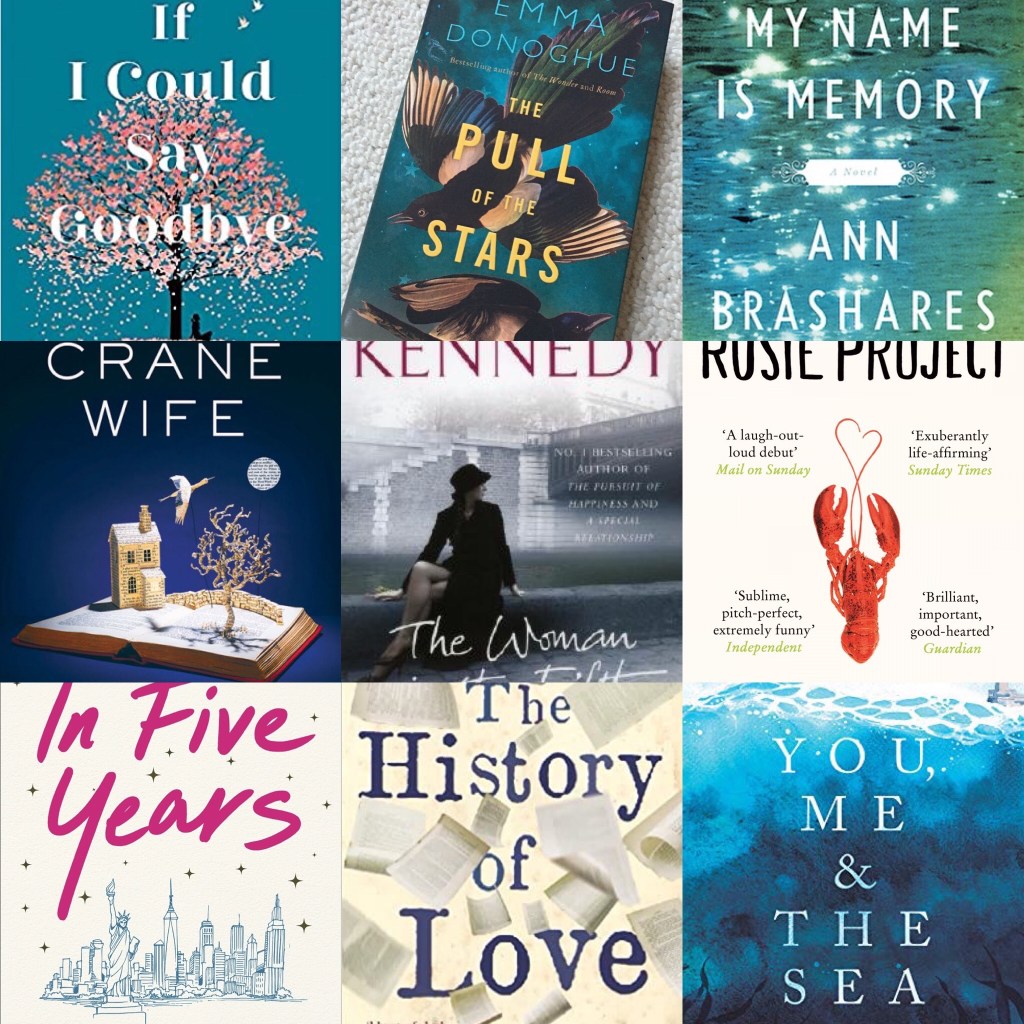
This year, what’s on my mind is that many people might be spending the day alone. When social media is full of people showing their cards and flowers, how hard must it be for those living alone or those recently separated or bereaved. I think the message of Valentine’s Day-to love each other- needs broadening to include other relationships. Love between friends, family, even the bond we have with our pets, all are very important to appreciate and not just because we’re in lockdown. We should appreciate this love all of the time. It might be nice this year to drop a card in the postbox to an elderly grandparent, a friend whose shielding or an Aunty whose just been divorced – they all need it. My life has been quite motivated by love and I was surprised to find my reading is too. I checked my Goodreads for last year, and I was so surprised to see how many were categorised as romance. Today though, in line with my thinking about Valentine’s Day – I thought I’d feature some books that are a bit unusual and are less of a conventional romance.
This book is the latest from a favourite writer of mine, Elizabeth Haynes. It’s probably the most conventional romance in my list, but it’s not just about two people. A love story between Rachel, who has run away from life, and Fraser who is hiding from his past. Yet, for me, the biggest character -that both people fall in love with-is the rugged landscape of the Isle of Must. At first Rachel wonders if she’s made a huge mistake, the island is bleak and rough. However, as the spring comes, it spreads its magic. Rachel falls in love with the island’s beauty; body and soul. I love that although this is a love story, it’s so much more than that. It’s a woman’s awakening into what her soul needs and who she really is at this point in her life. Fraser is an embodiment of the landscape, rugged and forbidding, until he too starts to reconcile with himself. Simply beautiful.
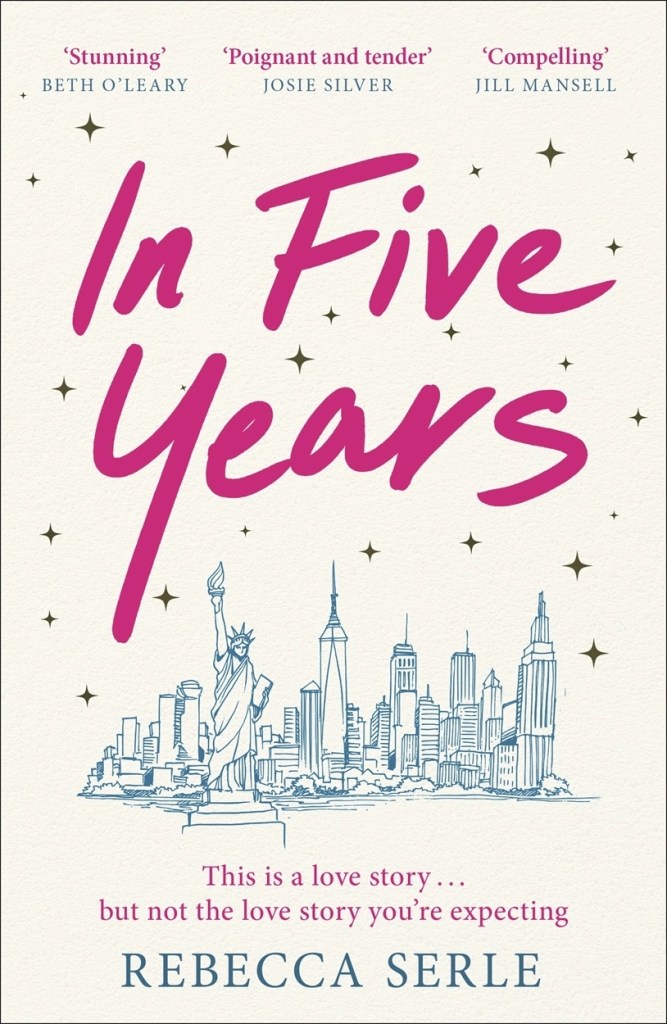
I absolutely loved this beautiful novel and I was totally wrong footed by it as well, because this is one book that really pushes the philosophy that there are many different types of love. Dannie has a very strict five year plan and goes after what she wants. With this focus she is now in the perfect apartment in the right part of Manhattan. She has secured the job she always wanted, and is engaged to the perfect man. So she’s shocked by a dream she has, that in five years time she is with a different man, in a loft apartment in a more ‘up and coming’ area. She’s also wearing a different engagement ring. She shakes off the dream, but it’s there in the back of her mind. Then, four and a half years later, she goes for a meal with her best friend Bella. Bella is Dannie’s polar opposite, but despite this they’ve been friends for a long time. Bella would never have a life plan. In fact Dannie has sometimes worried that she’s a bit flakey. She’s a bohemian, go with the flow, sort of girl and has been resolutely single for years. Now she’s bringing someone important to meet Dannie, but to Dannie’s horror Bella’s dinner guest is the man from her dream. How can she avoid the destiny that seems to have been planned out for her? I adored this book. It’s a beautiful love story, but was far from the one I was expecting as I read. It made me think about soul mates and how that doesn’t necessarily mean our romantic partner. Love comes from many different places and isn’t necessarily what or who we expect. Heart rending and beautiful.
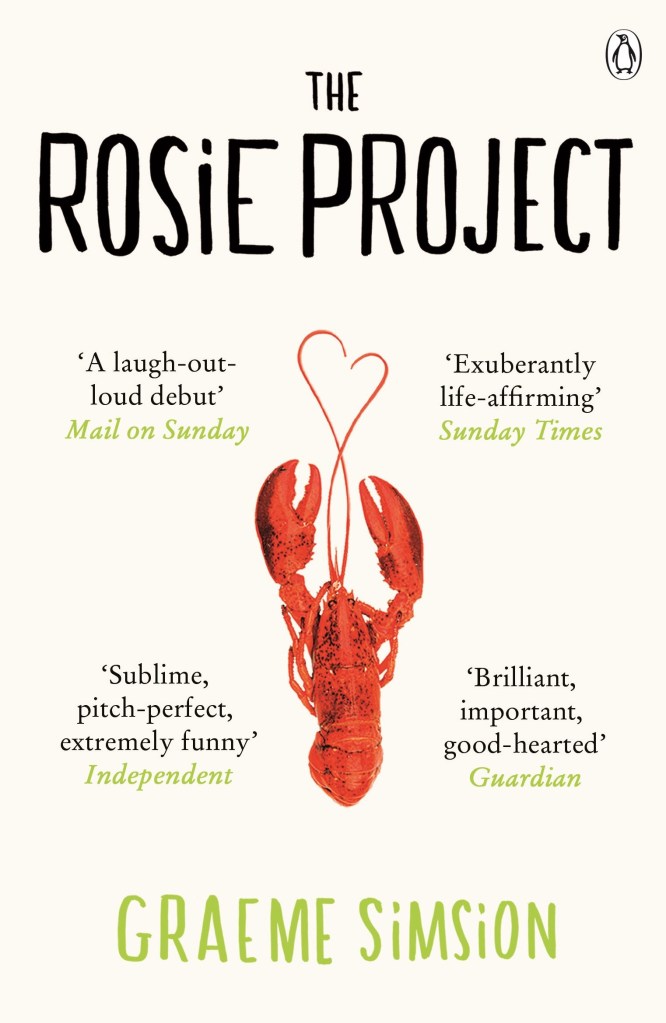
Don Tillman has decided it’s time for him to find a wife, and being a professor of genetics he decides to take a scientific approach. Surely if he comes up with a questionnaire, designed to eliminate women with the qualities he dislikes, he should find the one? However, one thing he knows for sure. It will definitely not be Rosie. Don believes Rosie is an applicant for his questionnaire, but she would fail on several counts. She smokes and drinks, is a vegetarian and can’t be punctual. Thankfully she’s there to ask for his help in finding her real father. To say Don is a bit socially challenged would be an understatement and this really is a laugh out loud funny book. Watching him struggle through meeting women is brilliant. He hasn’t realised that love has a language all of its own.
I do enjoy a bit of magic realism and that’s exactly what we get here from the incredible storyteller Patrick Ness. George Duncan is an honest, decent and good man. He lives by himself and could be said to have a lonely life. One night, he is disturbed by a noise outside and wakes up. When he looks outside there is a large crane in his garden, shot through the wing by an arrow. George is very moved by the bird’s plight and goes outside to help. When the bird flies away he feels a loss, not knowing that his life is about to be transformed. The next day, while working in his shop, he meets a customer he’s never seen before; mysterious, but kind woman, called Kumiko. A tentative friendship begins, then blossoms as Kumiko takes George on a journey through art and storytelling. They fall in love and together create beautiful pieces of art, stretching George’s ordinary life into something rare and fantastical. However, there’s a part of Kumiko he feels he hasn’t reached and he wonders whether this enigmatic woman has secrets. His need to know the the occasional secret side of her, may be his undoing. Can we love someone, knowing they are never just one set thing? Ness creates a beautiful fable here, but also a deep meditation on life itself.
“Love who you love while you have them. That’s all you can do. Let them go when you must. If you know how to love, you’ll never run out’.
Daniel has ‘the memory’, an ability to recall past lives and loves. It is both a blessing and a curse. Daniel has spent many lifetimes falling in love with Sophia across continents, dynasties and centuries. Each time they find each other, despite different names and appearances, and Daniel remembers every lifetime. Yet it is a love that’s always too short. For every time they come together, they are painfully torn apart again. In the present day, under the guise of Lucy. Sophia is awakening to the lover’s shared past, but just as she understands their strong attraction and familiarity they may be torn apart again. How can they confront what always pulls them apart and finally change their ending?
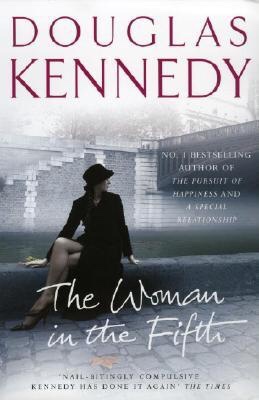
Douglas Kennedy has a real aptitude for writing about relationships and I’ve been a fan since his debut A Special Relationship. Here we meet Harry Ricks, down on his luck and running away from life. His career is in pieces after his boss slept with Harry’s wife then conspired to ruin him. He has a poor relationship with his daughter, who despises him. He takes a rash decision and flies off to Paris, where he books into a hotel and burns through any savings. He’s close to destitution when he gets a job as a night security guard. He’s guarding warehouses for a bunch of gangsters, but turns a blind eye to what happens inside. Just as life seems at its worst he meets Margit and is immediately enchanted by her. She’s a handsome woman rather than pretty, but incredible sensual and oozes sexual energy. She challenges his morals and the guilt he feels. Margit becomes his muse. He starts writing his novel in earnest – 1000 words a day – and he feels his masculinity being restored. She controls when he sees her, which only makes him want her all the more. People who have been looming over Harry’s life start to have nasty ‘accidents’. However, as with all seemingly perfectly arrangements, perhaps Margit isn’t all she seems to be. Atmospheric, addictive and an exceptional twist at the end.
Emma Donohue’s latest novel is an incredible piece of historical fiction, but is also a love story. Set in Ireland, just after WW1, Nurse Julia Powers works in a maternity unit. On the day in question she has been placed in charge of an isolation ward where expectant mums have ‘Spanish’ Flu. Julia is usually assisting a senior nurse, but today staff are so stretched that she’s in charge, with only volunteer helper Bridie Sweeney. Bridie says she’s had the flu and would be only too happy to help. What follows is a difficult, visceral and heart rending depiction of child birth in Ireland 100 years ago. So many bleak elements make up this story from the details of difficult births, to women from the Magdalene laundries, and exhausted women on their twelfth birth. This isn’t an easy read. Yet there is love: between the women supporting each other, the overwhelming love of a mother for a child (even where the child’s conception has been violent and traumatic) but there’s also romantic love too. The women work together and grow together, their feelings developing throughout the day towards a gloriously tender moment. These book shows us the consequences of love and the sacrifices women are prepared to make in love’s name.
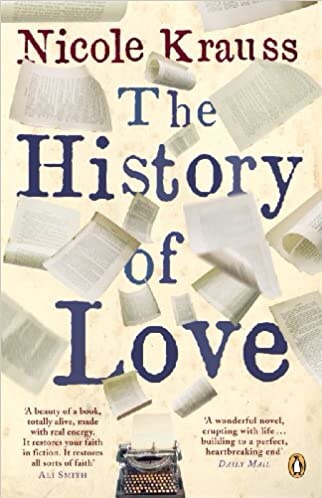
Set in New York, this is a story of people losing and finding each other. Fourteen-year-old Alma Singer is trying to find a cure for her mother’s loneliness. Believing she might discover it in an old book her mother is lovingly translating, she sets out in search of its author. Across New York an old man called Leo Gursky is trying to survive a little bit longer. He spends his days dreaming of the love lost that sixty years ago in Poland inspired him to write a book. And although he doesn’t know it yet, that book also survived: crossing oceans and generations, and changing lives. . . We have a brilliant depiction of old age in Leo, and his recollections of his boyhood in Poland are wonderful. There are several narrative strands woven together by the author, all based around the book ‘The History of Love’ but it is Leo’s story of his childhood love from the years before the Nazis came that stayed with me. Written beautifully, in such poetic prose, this is as much about the power of stories as it is about the power of love. It seems that it’s those who have lost so much in love, who value it most highly.
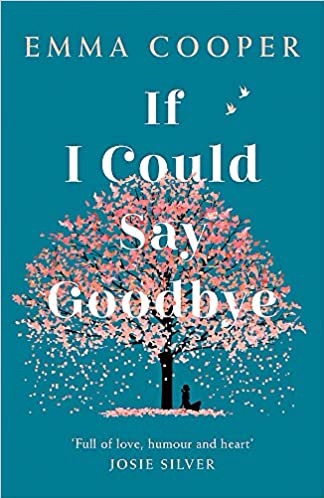
This novel is probably my most conventional choice and one of my favourites from last year. It quite literally broke me when I finished it in the middle of the night. Jennifer Jones’ life began when her little sister, Kerry, was born. So when her sister dies in a tragic accident, nothing seems to make sense any more. Despite the support of her husband, Ed, and their wonderful children, Jen can’t comprehend why she is still here, while bright, spirited Kerry is not.When Jen starts to lose herself in her memories of her sister, she doesn’t realise that the closer she feels to Kerry, the further she gets from her family. This is a wonderful depiction of married love, but also of familial love. Jennifer is torn between her love for her sister, her love for Ed and a mother’s love for her children. The way Ed supports Jen, and believes her when she says she can see Kerry, is a wonderful depiction of love and loyalty. I was so lost in this novel that I cried at the end.
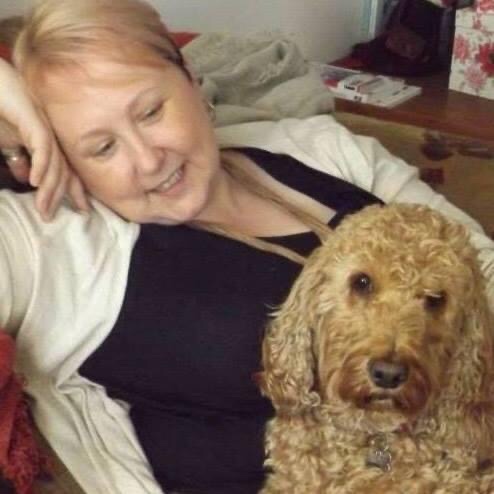
Finally I want to give special mention to a book that spoke to me personally when I most needed it. It prompted me to do something that helped me through grief, when I lost the person I most loved in the world. I lost my husband in 2007, after a long illness, and I was utterly lost. Due to my caring role, I’d had no time for me or my own interests for a couple of years. I’d given up work and struggled to see friends. Jez couldn’t eat, drink, or even breathe without someone there 24/7. So after his funeral, I woke up one morning with all this time to fill and nothing to fill it with. I had lots of support but at the end of the day, when the door closed at night I was so alone. It wasn’t just me and Jez, but all the carers, Marie Curie nurses, and hospice staff who were with us all through the day – and four nights a week. I decided after a couple of months to get a dog and I found my cockapoo Rafferty a few weeks later. I collected him on New Years Eve and it was just in time. Suddenly that night I fell into a black pit of despair. I couldn’t bear entering a year where Jez didn’t exist. As the night wore on I felt so black that I had I not had my little bundle of fur next to me I might have taken drastic action. I started to write a memoir a couple of years later and that was when mum gave me this book.
This is powerful memoir which mixes honest, personal revelation with literature, history, and inspirational self-help, Bel Mooney tells the story of her rescue dog, Bonnie, who in turn rescued Bel when her world fell apart with the all-too public break-up of her 35-year marriage. It really is a story of survival, and also one of love. This is an account of six years in Bel’s life, from when she first acquired Bonnie from a rescue home, through Bel’s years of personal heartbreak and disappointment, and on to the happiness which she has now found in a new marriage and a new life, with the Maltese at her side all the way. This is a book about transformation and change, about picking yourself up and attacking life in the way that a small dog will go for the postman’s trousers – and about celebrating life, much as your canine companion will always celebrate your return, even from the shortest trip. This is engaging, entertaining, full of personal anecdotes and deeply It takes you on an inspirational walk with one very small but very remarkable dog – a dog who represents all that is best about dogs, and about we humans too. I know that the love I have for my dog is one of the strongest feelings I’ve had. I have thoroughly enjoyed watching my partner and my stepdaughters fall in love with him over the last couple of years. He’s now a family dog and he’s bonded us in a way that wouldn’t have happened otherwise. I hope whatever loving relationships you choose to celebrate tomorrow, you have a lovely day. Valentine’s Day isn’t just for romantic love and we need all the celebrations we can get.
Something very strange happened when I first read Paul Sussman’s book. I was up at night feeling unwell and made it half way through the novel without even taking a break. I had never read any of his books so as far as I knew this could have been a debut novel or one of hundreds. I launch straight into books without reading introductions, forewords or acknowledgements because I don’t like to be swayed by them. I don’t want someone else to tell me how to read a book, or in what context; I like to make up my own mind. I must admit on this occasion I was drawn in by the cover, but beyond that and the back cover blurb I knew nothing.
I realised half way through that I was reading with a smile on my face, despite feeling physically grotty! It made me smile because of the dark subject matter, the humour and sheer ingenuity of Raphael. I put it to one side and thought ‘I really wish my husband Jez had been around so I could read this to him’. He died 14 years ago and prior to his death he couldn’t read for himself. This is one of those books he would have loved. I then turned to the foreword and noticed it was written by Paul Sussman’s wife Alicky. I was so sad to read that she had been through the same loss I had, but amazed by the parallel. Jez couldn’t hold a book and couldn’t see to read for himself. He could get listening books but there were certain, funny, books that we liked to share so we could fall about laughing together. They would usually be ingenious, darkly comic and just a little bit naughty – rather like this one.
The character of Raphael Phoenix is irresistible. A cantankerous old pensioner, living alone in a castle, he decides that 100 years of living is enough. He has a plan and he also has a pill. He has had the pill his whole life since his birthday party with his childhood friend Emily. Emily’s father is a chemist and in his poison cupboard, among the ribbed glass bottles, is an innocuous white pill with a simple nick in one side. It has very particular ingredients that ensure an almost instant and painless death and it is the only thing he wants for his birthday so the pair replace the pill with mint of the very same size, with a nick from the edge to match. Raphael keeps the pill with him through his incredible life either in his pocket, in a gold ring or in more difficult circumstances, sellotaped under his armpit. He trusts his pill and knows that it will deliver the death he wants as he sits in his observatory, with an expensive glass of red wine (over £30 a bottle) watching the millennium fireworks. However, before then he has a story to tell us, several stories in fact, which take us through some of the most important periods of the 20th Century and he has a very peculiar way of splitting these stories into sections. He orders them according to the person he killed.
I had no idea what to expect and so I was surprised and charmed by this magical piece of work. It manages to be both, earthy and funny, but also incredibly poignant. You need to have a black sense of humour fir this one. Raphael is funny, but cantankerous and violent. The only two things he can depend on through his life are the pill and his friend Emily. Emily isn’t always by his side, but just manages to be there at the right times and seems to set his various destinies in motion. Raphael works backwards with his tales until the reader is desperate to know how all of these incredible twists and turns are set in motion and also whether his trusty pill will work so he gets the end he has been working so hard towards. I would read this if you enjoy dark humour and tall tales and like your narrators to be unreliable, as well as ever so slightly, morally ambiguous. It is darkly enchanting and I fell in love with it.
Meet The Author
Both the following posts are from Paul’s website:
For as long as I can remember, the two great loves of my life have been writing and archaeology (three if you include travelling in out of the way places, especially deserts). For many years I worked as a field archaeologist in Egypt, notably in Luxor and the Valley of the Kings, and all my novels to a greater or lesser extent draw on my experiences excavating and living in Egypt and the Middle East. My main protagonist, Inspector Yusuf Khalifa of the Luxor Police, is a composite of a number of people I know, and while his colourful adventures are products purely of my imagination, the world he inhabits is very much a real one. Through Khalifa I try to explore issues such as terrorism, contemporary Middle East politics, religion and government corruption, all against a backdrop of the extraordinary history and archaeological heritage of that part of the world. To find out a bit more about me and my novels, check out my website: http://www.paul-sussman.com.
Hello, this is Paul’s wife Alicky. As many of you know already, Paul died very suddenly from a ruptured aneurysm in May 2012. As well as being a talented author, he was a truly unique person – a brilliant Dad and adored husband. We all miss him so much. Paul finished putting together this website shortly before he died. He loved the design and was very excited about adding more photographs and writing his blog. I am keeping the site up to date with the latest news on his books – including the posthumously published novel – The Final Testimony of Raphael Ignatius Phoenix – but am loathe to make dramatic changes so apologize for anything that may feel a bit disjointed.
I first read this book last year, but then the release date changed. When I was asked onto the blog tour, I was excited to read it again. I remember being so intrigued by the premise – I always get strangely giddy when an author does something unexpected or genre bending! On the second read I still had me the same sense of delight and wonder as Faye gets into her space hopper box and careers back into the 1970s.
This is a story about taking a leap of faith
And believing the unbelievable
They say those we love never truly leave us, and I’ve found that to be true. But not in the way you might expect. In fact, none of this is what you’d expect.
I’ve been visiting my mother who died when I was eight.
And I’m talking about flesh and blood, tea-and-biscuits-on-the-table visiting here.
Right now, you probably think I’m going mad.
Let me explain…
Although Faye is happy with her life, the loss of her mother as a child weighs on her mind even more now that she is a mother herself. So she is amazed when, in an extraordinary turn of events, she finds herself back in her childhood home in the 1970s. Faced with the chance to finally seek answers to her questions – but away from her own family – how much is she willing to give up for another moment with her mother?
This truly is a unique and original debut novel that mixes a heartfelt story about mothers and daughters, time travel, and the 1970s. I’m a child of the 1970s and though I never owned a space-hopper they were an instantly recognisable symbol of my childhood. The author takes these elements and brings us moments of intense delight – I was smiling to myself as Faye climbs into the ratty and tattered space-hopper box in the attic – but also a poignant and heart rending sense of loss. Faye has a photo of herself in the box, it was taken when she was six and it must have been taken by her mother, Jeanie. Although her Mum isn’t in this photo, everything about it tells her how much she was loved and how much was taken away from her. It’s Christmas and Faye remembers the decorations, the presents and can see the sense of wonder in her little face. She can also see the love, the trust and the sense that her Mum is her absolute world. Her presence in the photograph is so strong, even though we can’t see her. This photo is like a talisman for Faye, and the reader feels the strong emotional pull too.
Yet she doesn’t know her mum. There’s a moment, when adult Faye has hidden herself in the garden shed, and watches her mum open the back door and look down the garden.
‘hands on hips looking straight down the short, narrow garden, straight at me in fact, and took in a long deep breath of cold air. She closed her eyes and smiled. She looked so content and I realised I knew nothing about this woman.’
It questions whether we can ever truly know our mother, even though the emotional bond is so incredibly strong. Faye wonders if, through time travel, she can get to know her mother on an adult-adult level, especially if her mother doesn’t know who she is. Although in a philosophical chat with her friends, they point out that Faye would always know she was Jeanie’s daughter and can only relate to her in that role. The question is, can she tell them what has happened to her? There are pros and cons to having this portal to her past. When she’s with her mother, she worries whether she’ll be able to get back to her husband Eddie and her own daughters Esther and Evie. She wants to be there for her daughters, so they don’t have the very same experience of loss that she had. Eddie is training to be a vicar, so he has a belief in God and the afterlife. Faye has no belief, and worries about where she’ll fit as a vicar’s wife without faith. Now can she ask Eddie to belief she’s found a portal back to her childhood in a ratty, space-hopper box that’s hiding in the attic? Every character is so loving and supportive of Faye, but I have to mention her friend Louis who happens to be blind. I liked the sense in which he takes a leap every single day into a world he can’t see and doesn’t always understand in the same way we do. He makes the point that his inner world is very different from the sighted person’s world, although sighted people always think he sees like they do. If you’ve never seen a cat, you can only go on the way it feels. There’s a brilliant example where he’s asked to draw a bus and he draws one vertical line, followed by three smaller horizontal lines.
His experience of the bus is the vertical handle he holds to get on and three horizontal steps he climbs. Maybe Louis would understand the sense of different worlds?
When working in my day job, I sometimes counsel people who are bereaved. We talk about grief in many different ways, but one of the most popular metaphors is the sea. It tends to come in and out in waves. On anniversaries it sweeps in and then recedes again. There are times when it stays far out of sight and others when it comes in so fast and strong it’s like a grief tsunami! If Faye returns, having got to know her Mum as Jeanie, will she grieve for her all over again? If she’s stuck back there, she will grieve for her family and friends in the present. I was deeply touched by a section where she talks about her childhood grief and needing to ask questions about her mother.
‘ I searched my memory like it was a messy drawer, trying to find an image, some mental recording of a conversation, something to explain exactly why I’d felt so alone in dealing with losing my mum, when Em and Henry had been so supportive, so caring, in every other way. I could see Henry’s face in a memory so coated with dust I could barely picture it. It was his face with a worried look, glancing over at Em as I asked her a question or said something about my mother. What would it have been? ‘I miss my mother. I want to see my mother again. Do you think my mother was happy?’ I had seen those looks of his, and I’d filed them away. I hadn’t thought about it, but I realised what they were: he didn’t want me to upset his wife Em.’
So, in order to avoid upsetting Em she’d kept her questions and her grief to herself. My heart broke for this little girl so alone in her loss. However, despite being deep and poignant, the author has found a way of making the novel fantastical, quirky and even humorous. It’s suffused with love and joy. I’m so impressed with this magical debut, it absolutely charmed me from beginning to end.
Meet The Author
Helen Fisher spent her early life in America, but grew up mainly in Suffolk where she now lives with her two children. She studied Psychology at Westminster University and Ergonomics at UCL and worked as a senior evaluator in research at the RNIB. She is now a full-time author.Space Hopper is her first novel. She is currently working on her second novel.
Published: Penguin Paperback Edition 21st Jan 2021
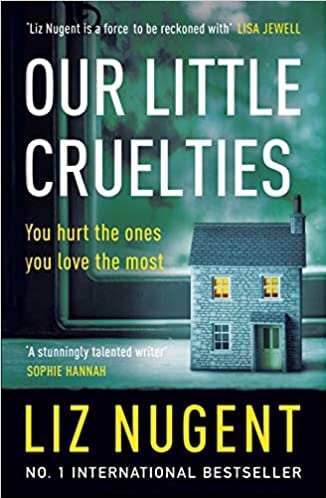
Never have the famous words of Phillip Larkin – ‘they fuck you up your Mum and Dad’ – been so apt. Reading this book was a very interesting experience and patience definitely paid off. Had I given in to my impulses and thrown the book down in frustration during the first part, I would have missed out on a great read. The story of three brothers over their lifetimes is compelling, interesting and a great study in how mental health difficulties can be passed on from one generation to the next.
The structure of the novel is what I had difficulty with at first. The first section was narrated by the eldest brother, Will. Written in short chapters, slipping between decades, we see aspects of his childhood through to the present day where he is a successful movie producer. He meets his wife Kate through his brother Brian,when she’s brought to a family dinner. They have a little girl called Daisy, but Will is much more focused on work than he is his family. We get the sense that Kate is a long suffering woman who gets more support from Brian, who is now Daisy’s godfather as well as her uncle. Brian is there for the birthdays and school concerts and has a great rapport with Daisy. Will is dismissive of Brian and his lack of ambition. He is also dismissive of Luke, despite Luke’s success as a pop star in his late teens. This section was difficult to read because I disliked him from page one. I didn’t think I could stand to listen to his perspective for a whole book. This made me think about my own bias and prejudice – what would I have done if he was a client and I was his counsellor? My main interest was in how close Will was to his Mum and through flashbacks we see she favours him, quite openly.
Luke, by contrast, really gets the brunt of their mother’s moods. He is the youngest, the weakest perhaps, but he is attractive and in his teenage years soon finds real success as a pop star. However, in the later fragments of his life he has times of struggle, where his mental health is poor and he turns to drink or experiments with drugs. He is an unusual child with a religious fixation to the extent where the family priest thinks he has a vocation! The other boys use his goodness against him, he is manipulated by them and by blaming him, they get extra food and attention. Only his Dad seemed wise to this, and just how poisonous the brothers, particularly Will, can be. There are moments where it seems his life is on track and he could be happy, but others where I wondered if he was just not meant for this world.
Finally, there’s Brian the middle brother. If Will is his Mum’s favourite and Luke is doted on by his Dad, who is left for Brian? He does seem mentally torn between both parents, but is without a champion in the same sense his brothers have one. Will is very dismissive of him, even though Brian does so much for his niece. He’s not grateful when Brian stands in for him, but instead is scornful that Brian has nothing more important to do. Will only recognises material success, not the strength or reward of happy relationships. Brian is the one who looks after Luke when his mental health deteriorates, but Will never recognises or appreciates this. In fact Brian’s relationship with Will becomes so destructive that other family members get caught in the crossfire.
The genius of this book is in the knowledge of family dynamics and how destructive they can be, but also in it’s clever structure. As mentioned, during the first part, narrated by Will, I was ready to put the book down. I couldn’t stand him. He was arrogant, self-centred and treats women appallingly. If the whole book had been his viewpoint I might have thrown it out of the window. Just when I was at the point of giving up, I saw Luke’s name across the next section and it was such a relief. As the tale goes back and forth in time and perspective we see a tiny bit more of the whole. At a Bob Dylan concert at a local castle, Will ends up in a fight and is taken to hospital with Dad and Luke following behind. Mum is left behind at the castle and doesn’t arrive at the hospital till late. We think that maybe she’s been caught out here, or that she simply cares more about enjoying herself than her son. But, this is Will’s perspective, for once his Mum has let him down. However, through Luke’s narrative we learn the truth, that something terrible happened to her, something that explains so much about how she behaves. When we finally get Brian’s section we see what a lifetime of being in the middle feels like; he feels overlooked, unconsidered and brushed aside. We find out things we already suspected and other things that surprise and enlighten us. Every single strand of this novel teaches us that we are only ever a small part of the picture and we must step back to see the whole.
This brings me to the second line of Larkin’s poem This Must Be The Verse and easily the best; – ‘they do not mean to but they do’. There are parts of this novel, particularly the way Dad behaves, where genuine mistakes are made and misunderstandings occur in the same way they do with any family. No parent, however hard they try, will get it completely right. However, there are other situations where the mental damage seems deliberate, especially in their mother’s attitude to Luke. Will’s intervention in Luke’s relationship, and the treatment of Will’s daughter Daisy towards the end of the novel are not mistakes. These acts are more than little cruelties. They are deliberately causing lifelong psychological disturbance. This is a complex and interesting novel that deftly moves from one narrow perspective to another, finally giving us all the pieces of the emotional jigsaw puzzle that makes up this family.
Meet The Author
Before becoming a full-time writer, Liz Nugent worked in Irish film, theatre and television. Her three novels – Unravelling Oliver, Lying in Wait and Skin Deep have each been Number One bestsellers in Ireland and she has won four Irish Book Awards (two for Skin Deep). She lives in Dublin with her husband.
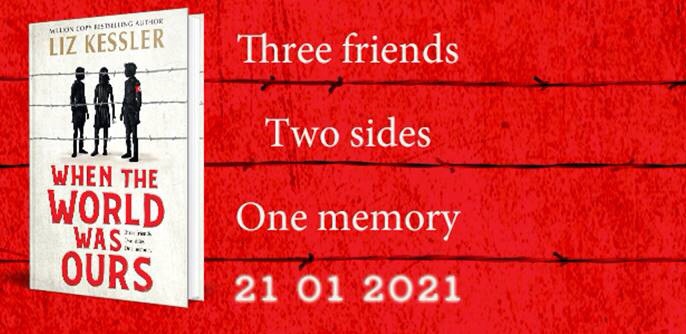
Leo, Elsa and Max have been best friends for years. Since the day they met they’ve been a team of three. But then the Nazis come, and their lives, once so tightly woven together, take very different paths.
LEO must rely on the kindness of strangers to escape the rising threat to the Jewish people.
ELSA, like Leo, is hated for simply being who she is. To be safe, she must run.
MAX suddenly finds that he is the danger his friends are trying to desperately escape as his father rise through the Nazi ranks.
Inspired by a true story, When The World Was Ours is as life-affirming as it is heartbreaking, and shows how the bonds of love, family and friendship allow glimmer of hope to flourish, even in the most hopeless of times
This novel is beautifully constructed and forces us to experience the events of WW2 in Europe, but through the eyes of three children – Leo, Max and Elsa. Written in alternate chapters, the voice of each child comes through loud and clear. From the fun, adventure of Leo’s birthday at the fairground in the first chapter, to the whispers and silences at home and the friendship broken apart by propaganda, hate and fear. There’s such an innocence about these three children, sharing their hopes and dreams for the future. It’s so hard to read when we, as readers, know what’s coming. The cracks are showing, for the adults in Vienna. For these friends it’s still tag in the park and through them we see the beauty of Vienna, the cherry blossom of spring and the view over the city from the top of a Ferris wheel.
In Elsa and Leo’s narratives we can see the confusion when their parents start acting differently and uncertainty creeps into their existence. The author paces the rise in tension so well, from those first whispers to open acts of violence. The children are at the age where their parents are solid, safe and stable. Everyone has a moment when they realise their parents aren’t infallible, they’re just human beings who feel fear and make mistakes. In the aftermath of the Anschluss, neighbours have become potential enemies and with Elsa’s family fleeing to Czechoslovakia, Max and Leo bewilderingly find themselves on opposite sides. I felt so deeply for Max, watching an innocent child groomed into hating others was really hard to take. My late husband was Polish and I have listened to their incredible stories of escape, loss, and dislocation from their home land. There’s a lot in Leo and Elsa’s stories that’s shocking and distressing, but familiar.
I remember being confronted with the reality of a child living within the Nazi regime in The Boy in the Striped Pyjamas, but he was kept largely separate from the truth of his father’s ‘work’. Here, Max has an authoritarian father anyway, constantly telling him to be a man, to be strong and definitely not to cry. Now his Dad tells him not to play with his best friends, tells him Jews are dirty and sly and even worse, forces him to repeat these things he doesn’t believe. It’s totally heartbreaking to read, especially when Max’s father’s rise in the party puts him in direct confrontation with Leo’s father, something he’s wanted for a long time. We can see how this is a manufactured rift has been created. It takes strong individuals to stand against the tide, something Leo realises when Jewish children are separated from the rest of the school. Max instinctively steps away from Leo, then has to apologise. The author depicts the innocence of these friendships, torn apart by hatred and adult choices. They are exactly the same people they were yesterday, how can they see each other as different?
Yet amongst all this hate, there are these little moments of courage and hope. Leo gains confidence by becoming the man of the house and helping to get him and his mother out of danger. Elsa meets a new friend at school in Czechoslovakia, their friendship is different because they’re both girls. There’s more talking than playing, but she’s found a little bit of happiness within the maelstrom surrounding them. Max is finding confidence and structure as a member of the Hitler Youth. He talks about being a cog in the wheel of this huge organisation and finds pride as part of this young army, not party to the bigger picture and truth of their purpose. These young characters are a brilliant way in for younger readers to connect with history and the long term lessons of the Holocaust. I can see it being an important text for schools in the future. That’s not to say it’s only for young readers – adults can also take a lot from this book. Often, young people are the best way to enlighten and teach adults and these three characters will get under your skin and make you think about their reality and part in this history. After all, the most frightening thing is that we don’t learn from books like this. As adults we should think about Elsa’s answer to the question we often ask about the Holocaust – how did this get that far? How did this happen? is that for these children, the bewildering changes they’re experiencing today could become the norm.
‘How rapidly something unthinkable can become commonplace. How easily we let the inconceivable become a new normal. How quickly we learn to stop questioning these things…’
Meet The Author
In a note at the beginning of the novel Liz Kessler writes about her father’s flight from Czechoslovakia when he was eight years old. Their chance of escape came from a British couple they’d happened to meet several years before. Just like the first chapter, when Leo and his friends are taken to the fairground for his birthday, and he literally bumps into a couple in the carriage of the Ferris wheel. Kessler has used her fathers story as the basis for this novel. She explains that it’s not just about honouring her heritage, but about helping young people come to informed decisions about social justice for the future.
She was first published in 2003 and her debut was the first in a series of books for 8-12 year olds about a half- mermaid girl. She has sold over five million copies worldwide and been published in 25 countries. She has written 23 books in total for both young adults and early readers. Liz lives in Cornwall where her hobbies and her inspiration come from the sea.
What secrets are hidden within the walls of a desolate farmhouse in a forgotten corner of Lapland?
I was chilled by this novel from the first page, as a young girl flits through the woods, only visible in flashes of a pale, frosty moon. She is making her way towards an all-night garage and truck stop, one of those places that feel weirdly outside of time. I could already sense the isolation of this part of Sweden, so far north it’s in the region of Lapland. I could also imagine the boredom and recklessness this teenage girl feels, then I worried about the home she is from.
Then we jump to the present day. Early spring has its icy grip on Ödesmark, a small village in northernmost Sweden, abandoned by many of its inhabitants. But Liv Björnlund never left. She lives in a derelict house together with her teenage son, Simon, and her ageing father, Vidar. They make for a peculiar family, and Liv knows that they are cause for gossip among their few remaining neighbours.
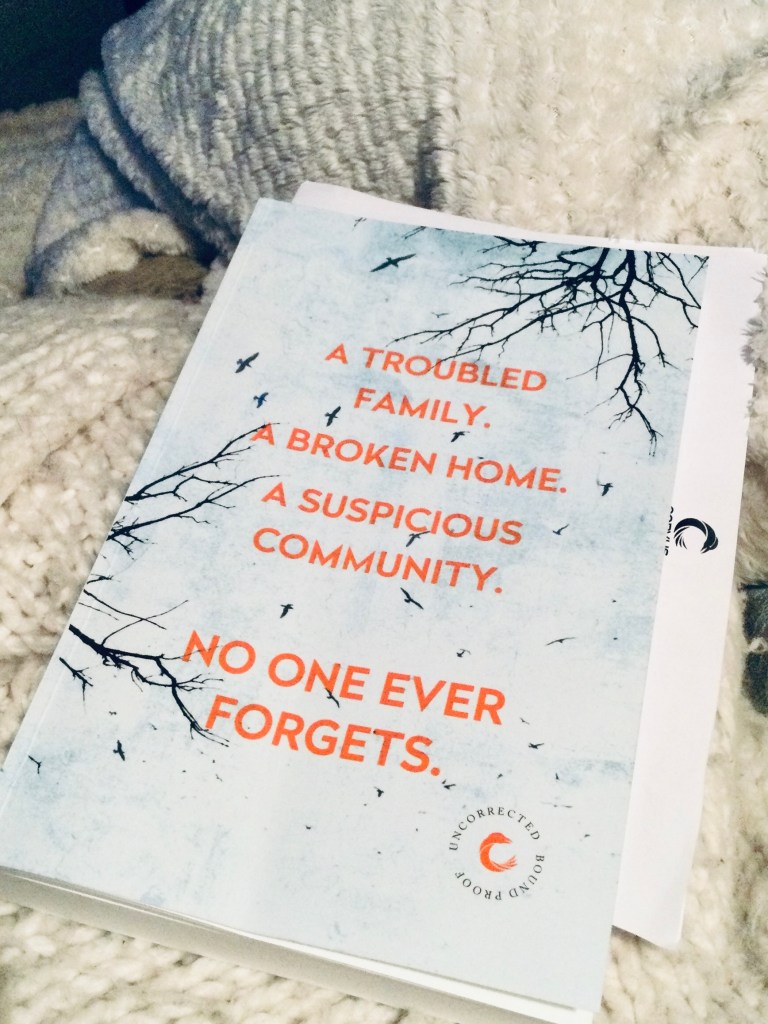
Just why has Liv stayed by her domineering father’s side all these years? And is it true that Vidar is sitting on a small fortune? His questionable business decisions have made him many enemies over the years, and in Ödesmark everyone knows everyone, and no one ever forgets.
Now someone wants back what is rightfully theirs. And they will stop at nothing to get it, no matter who stands in their way…
Usually when writing about a thriller I’m talking about the build up of tension, the breakneck pace of the writing as we reach each reveal. Here Stina Jackson has done completely the opposite and it’s so effective. The pace is glacial, quiet and even contemplative. The result is that you become so lost in the pages that you forget you’re supposed to be breathing. The dreamlike quality of those first lines stays as you are introduced to Liv, working her job in a filling station. There’s a sense that time has stood still. As her father draws up in his old car to pick her up, she could still be a teenager at her Saturday job. Then we find out she has a teenage son and realise she’s older, but very little has changed for Liv. I felt that sense of suffocation, as they return to the house that’s barely standing, with no neighbours in sight, and her father ruling the roost. There’s inertia here; Liv hates being here but can’t summon up the energy to leave. She’s beaten down mentally by privation and the harshness of her father and the landscape. This isn’t a formulaic crime novel, this is also about families and all the emotions encompassed in these relationships. There’s jealousy here, hate and resentment, but also love. Yet over all of that there’s that suffocating sense of paralysis. As if nothing will ever change here.
Liv does have an escape. It’s a tried and tested escape she’s used since she was a teenager. At night she makes her way to an old cabin on their land, takes off her clothes and climbs into bed with the tenant. There’s a calm and matter of fact feel to her liaison, she’s clearly been here many times before. Maybe this is the closest she can get to a relationship. It’s a step up from her midnight travels to the truck stop and the cab of any trucker she can find. At least now she’s a woman, her father Vidar doesn’t track her down and drag her home. Vidar is harsh, cold, mean and according to local gossip, sitting on a fortune. They needn’t live the way they do. Our other perspective in the novel is that of local drug dealer, Liam and his brother Gabriel. Liam feels like Liv’s counterpoint in the novel. He wants to change his life, but is controlled by his brother who has heard of Vidar’s supposed fortune. These two families will come together in a violent and brutal way. All of these characters are so well drawn and they come to the reader in the same way people do in life. Some are open from the beginning, like Vidar who doesn’t hide his cruelty and unpleasantness. Others are more quiet and sly, we have to work to get to know them. Between all of these characters though, there’s a volatile mix of bad blood, greed and so much suppressed rage. When this spills over we are left thinking we know who’s to blame, but we don’t.
The story does slip back and forth in time from the opening scenes in 1998 to a later point as the past informs the future and vice versa. It’s important to concentrate in the past sections, because it really does inform people’s motivations and character. It’s a slow burn, but still kept me gripped throughout. Then the ending comes and while it was shocking, it made sense. This felt like some of the best Scandi Noir series I’ve watched – heavy on atmosphere and character, but takes it time unfolding the narrative and showing us where everyone fits, till the final revealing scene.
Meet The Author
Stina Jackson (b. 1983) hails from the northern town of Skellefteå in Sweden. Just over a decade ago she relocated to Denver, Colorado, where she penned her debut novel, the acclaimed The Silver Road. A runaway bestseller, the novel established Jackson as a rising new star within Nordic suspense.
It was lovely to be back in the world of one of my favourite literary heroines, the archaeologist and academic Ruth Galloway. I always feel at home in this space Elly Griffiths has created, with an evocative feeling of Norfolk at its centre. She presents the wide skies, marshlands and seascapes and their flora and fauna so clearly I feel like I know it. Yet there’s always that sprinkling of the mystical, the pagan, and the long buried beliefs of a Norfolk long ago. This mix of the earthy, real and scientific as opposed to the mystery and magic is something also echoed in her characters: the craggy, straightforward, Nelson; the Druid Cathbad with his cloak, sayings and pronouncements; Ruth somewhere in-between – appreciating the science and procedure of her work, but not fully dismissing the beliefs and mysticism that surrounds the burials she visits and excavates.
The Night Hawks of the title are a local metal detecting group, who stumble upon a burial site out on the marshes towards the sea. Ruth has been here before, excavating a ‘henge site’ with her then professor, Eric – a man whose conflict between mysticism and science still hangs over this place. The group finds a hoard of Bronze Age weapons, but nearby they also find a body. Nelson thinks it might be an asylum seeker, desperately trying to cross the channel in tiny boats and fallen overboard. He rings Ruth anyway, because he knows she’ll be able to date the weapon find and know if there’s any link. The body turns out to be a local boy, Jem Taylor, who has just been released from prison and has a distinctive tattoo of a snake on his neck. Cathbad suggests this may be a nod to the local legend of the Norfolk Serpent. This could be an accidental drowning, but the second body suggests murder. There are no real clues to who might have wanted Jem dead.
The second case Nelson is called to investigate is that of a couple who seem to have died in a murder-suicide at a local farm. Black Dog Farm is linked to another local legend, that of the Black Shuck, a large black ghostly dog that is said to appear to people before they die. Nelson is sceptical of course, but since the suicide note ends with the ominous ‘he’s buried in the garden’ he asks Ruth to excavate. Ruth has already had a strange encounter with a large animal on a country lane, so her mind starts whirring when she finds large animal bones. Maybe Cathbad has more wisdom than they give him credit for. As Nelson and Judy talk to the couple’s children and Ruth thinks about the farm, it seems clear that there’s something very wrong about Black Dog Farm, something that might signal serious danger for all concerned.
I never stop talking about how much I love Ruth Galloway and here she’s back to herself after a period of time living with her partner Frank in Cambridge. Norfolk is in Ruth’s bones it seems. She and Kate seem to belong in the small cottage that looks out to the coastline, with their cat. Ruth seems to be still recovering and I love how Griffiths writes Ruth’s inner thoughts as she contemplates the choice she made: to be true to her love for someone unavailable, leaving her alone at times. As we’re all a bit battered by love and relationships as we hit our forties, I found her contemplation of loneliness within and without relationships truthful and moving. What I love most about this character is her authenticity. She doesn’t dumb down her intelligence, she doesn’t change her style and when absorbed in a really mucky dig can be decorated with mud from head to foot but doesn’t care. She is resigned to live on the fringes of Nelson’s life and knows his loyalty must be with his wife Michelle, but this case is a tricky one and may bring them close to danger once again. If one of of their lives is at risk, what will happen to those loyalties?
This was a great addition to the Galloway series and has all the ingredients I enjoy: a potentially sinister group of men, the appearance of a mystical creature, the mix of hard science, history and pagan ritual. All my favourite characters are present – I’m always intrigued with the attraction between Judy and Cathbad. There are new people too. There’s a new man in Ruth’s department at the university, a researcher whose very keen to take charge of the Bronze Age site and seems to be everywhere they turn on this case. Could he be a threat to Ruth’s settled life, her accord with Nelson, her academic prowess or something even more sinister? I found myself suspicious of him throughout. I was recently having a chat on Twitter, including Elly Griffiths, and we discussed casting for a potential TV series ( come on BBC what are you waiting for?). Ruth Jones seemed to be the choice for Ruth, David Tennant for Cathbad and either Debra Stephenson or Leanne Best as Michelle. Nobody had a good idea for Nelson. We all agreed he needed to be older, a bit craggy but somehow attractive, with a twinkle in the eye. I’m putting forward either David Morrissey or Phillip Glenister – both would have the necessary Northern bluntness I think. Till then I’ll wait patiently for the next instalment, when I expect big changes for my favourite archaeologist.
Meet The Author
I’m the author of two crime series, the Dr Ruth Galloway books and the Brighton Mysteries. Last year I also published a stand-alone, The Stranger Diaries, and a children’s book, A Girl Called Justice. I have previously written books under my real name, Domenica de Rosa (I know it sounds made up).
The Ruth books are set in Norfolk, a place I know well from childhood. It was a chance remark of my husband’s that gave me the idea for the first in the series, The Crossing Places. We were crossing Titchwell Marsh in North Norfolk when Andy (an archaeologist) mentioned that prehistoric people thought that marshland was sacred ground. Because it’s neither land nor sea, but something in-between, they saw it as a bridge to the afterlife; neither land nor sea, neither life nor death. In that moment, I saw Dr Ruth Galloway walking towards me out of the mist…
I live near Brighton with Andy. We have two grown-up children. I write in a garden shed accompanied by my cat, Gus.
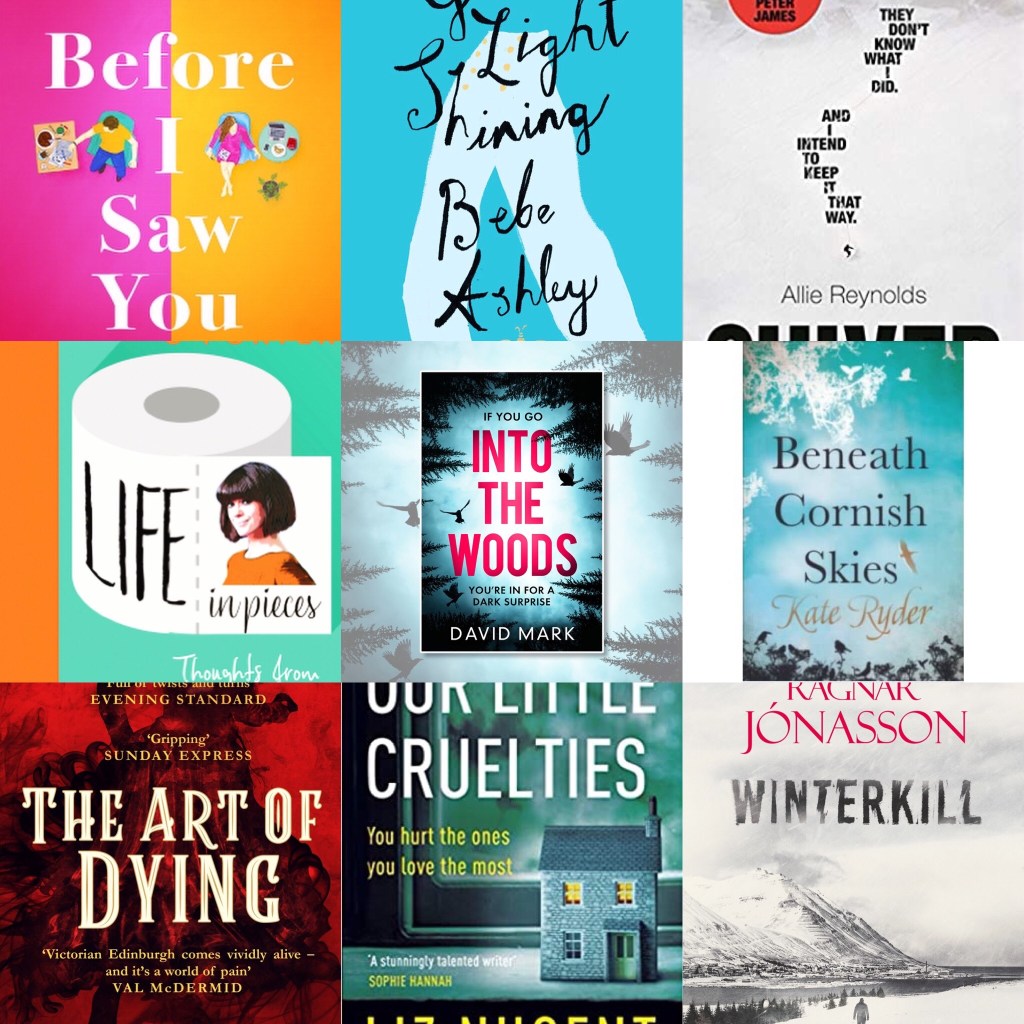
It’s been a fantastic start to the reading year, with so many great books and a lot of time on my hands to read them. January is one of those months where I tend to hibernate anyway, but this year even more so. I can’t go anywhere, because I don’t want to risk catching COVID on top of my MS. So it’s been a cosy month where, aside from walking the dog, I’m mainly indoors with a blanket, slowly becoming a human cat bed. So I’m passing the time by reading some great books and telling people all about them. For my best reads this month I couldn’t single out one book. I loved these three so much!
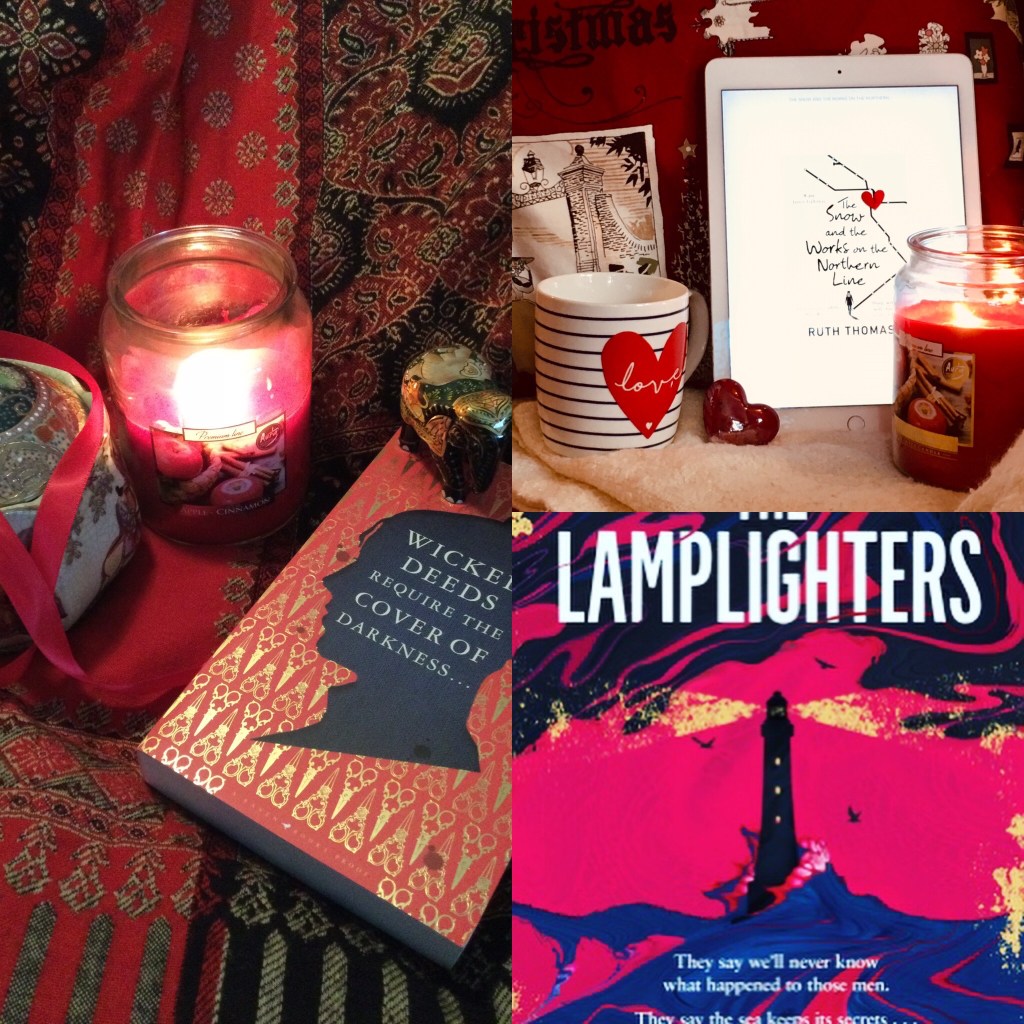
The Lamplighters by Emma Stonex – was my first read of the year and was an ARC courtesy of NetGalley. Inspired by true events, and set in Cornwall, 1972. This is a story of three lighthouse keepers who go missing while on duty in a lighthouse miles from shore and only accessible by the boat that brings supplies and the next shift. The lighthouse is locked from the inside, all the clocks have stopped and the principle keeper has recorded a huge storm in the log, when the skies have been clear all week. The story is stirred up again years later, by a writer who wants to solve the mystery. He visits the lighthouse keeper’s women – Helen, Jenny and Michelle – stirring up memories, secrets and emotions. The story itself will keep you hooked, but the author also explores ideas about truth and fiction, and who gets to write history. I was also fascinated by the authors take on effects of trauma – how far they radiate out like ripples on a pond, but also how deep they go through several generations. Quite simply, this is a stunning read. This is available for pre-order. Out on 4th March 2021 from Picador.
The Shape of Darkness by Laura Purcell – I’m a big fan of Laura Purcell and I was lucky enough to be on the Random Things blog tour for her latest book this month. Our heroine is Agnes Darken, a silhouette cutter who lives with her mother and her nephew Cedric. The mystery begins as one of Agnes’s sitters is found beaten to death, she was the last appointment in his diary. When another sitter turns up in the river, Agnes needs answers and turns to a spirit medium called The White Sylph who lodges in Bath with her sister and father. Her hope is that the murder victims will materialise and tell them who their murderer is. Instead they unleash something they never imagined. As usual, Purcell creates a dark and disturbing atmosphere, with just a sprinkling of the supernatural. As the bodies start to rack up, the tension starts building and it kept me guessing all the way to the last page. Out Now. Published by Raven Books.
Finally, I loved this beautiful novel kindly sent from Sandstone Press via NetGalley. Ruth Thomas has created a heroine to fall in love with. Sybil is a museum assistant at RIPS, where prehistoric exhibits and research have their home. Life is good for Sybil until her old university lecturer comes back into her life, thanks to an unfortunate skating accident where Sybil gets a bump on the head. Sybil has a long held resentment of Helene Hanson because she took part of Sybil’s dissertation and used it as her own theory. Now Helene seems determined to muscle in on Sybil’s life, at work and at home. She starts by stealing Sybil’s boyfriend Simon. Then attaches herself to the museum as a trustee, and starts making changes. Sybil starts to feel strange and not really in control of her life anymore, she takes risks, procrastinates and starts collecting lost things to inspire haikus for her poetry class. She also wants revenge. This is a book of quiet beauty, with a mix of haiku and stream of consciousness. You will fall in love with Sybil. I was rooting for her journey, through this tough time in her life and loved the unexpected ending. Published in paperback on 7th January 2021 by Sandstone Press.
So they’re my favourites for January and I hope you find something for your TBR or wish list. Below is everything else I read in January.
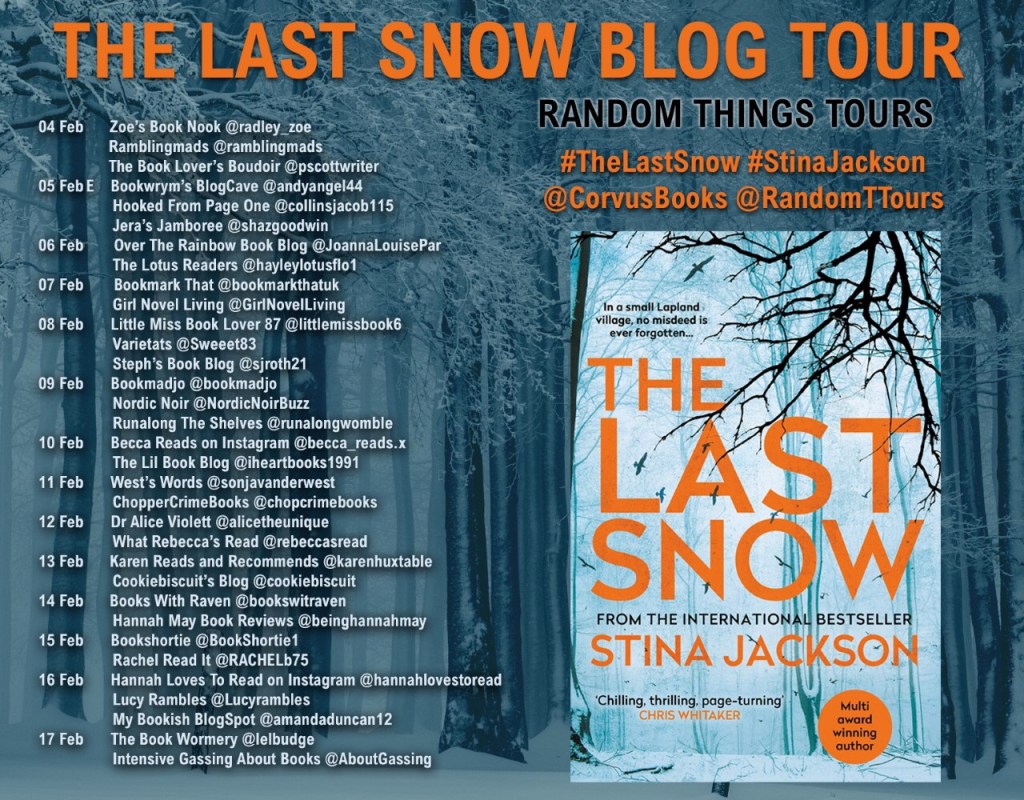
My current read is The Last Snow by Stina Jackson: Published by Corvus 4th February 2021
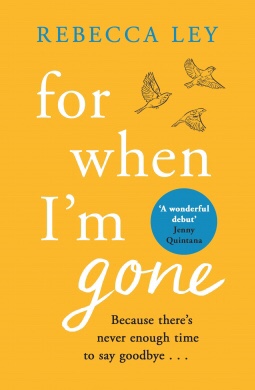
There is never enough time. Even when a loved one has been ill for so long and the prognosis is terminal, that moment when they’re gone is seismic. Everything in your world shakes up and resettles around you, but in a totally different shape. When my husband died it had been coming for a long time. He was also suffering. His MS had affected his ability to swallow so he was PEG fed and kept hydrated with a tube directly set into his stomach. He would aspirate saliva, then develop pneumonia in an endless cycle till he decided not to treat it anymore. He’d spent months in hospital, before I received the call from the hospital. Listening to him struggling for breath for 12 hours was torturous. Yet when he took his last breath at 5.15 am, my first thought was ‘no, I wasn’t ready.’
Rebecca Ley’s novel is about a life cut short in this way. Sylvie is given a terminal cancer diagnosis at the age of 38. She and Paul have a marriage that seems perfect. He is a doting husband and father, and loves Sylvie’s intelligence and beauty. There is a certain prickliness to her character, which could make her difficult, but they seem to compliment each other and are great parents to their children Megan and Jude. When Sylvie receives her diagnosis she knows she must help Paul with the aftermath. He needs a manual that helps him deal with a domestic life that’s more complicated than he realises. She also needs to disclose a secret that she’s been keeping for the whole of their married life. As Paul uses her manual to try and negotiate life after Sylvie, he begins to realise just how much she did for them, and how much more indebted he is than he realised. Ley writes about reconciling a life only half lived, but also those compromises made in a marriage and as a mother. This is where he truly gets to know his wife in a way he couldn’t when she was alive.
The book is divided into past and present chapters, so we can be let into Sylvie’s life, but also to form a contrast with after she’s gone. The manual is confessional and written in the first person. Then we have the third person viewpoints of both Paul and Sylvie. Through this we see the beginning of their relationship where everything is romantic to the trickier aspects of their shared life together. I liked that Sylvie isn’t perfect, it’s easy to make a lost loved one into a saint, but Ley avoids that here and it’s all the better for that. Throughout we see that same spiky element to her nature, it’s attractive in a way, but could be seen as hardness or being difficult. As we read through the manual though, after she’s gone, we see a reason for that hardness – Sylvie is this family’s structure, their backbone, and without it what do they have to keep them upright and together?
There is the constant tension of what Sylvie’s long held secret may be, but it wasn’t the thing that kept me reading. It was the slow revelation of her character that held my attention. In Sylvie, Ley has written a truly modern female character who has flaws and makes mistakes, but isn’t cast as a bad person. Often in books about cancer patients, or mothers, there is that temptation to turn them into saints and martyrs. I love that the author made a conscious choice not to do that. Through Sylvie’s choices and her inner monologue as she makes them, we see the complexity of being a woman, a mother and a wife. Sylvie is complicated, sometimes she hurts people and I didn’t always like, or understand her. She is so ‘real’ that I started to think about her in terms of my own friends and family; we don’t always like what they say or do, but we still love them. I felt like I’d got to know a real person and this only added to the devastation when she was gone. I would like to see more women like this in fiction.
The supporting characters were also well written, three dimensional people. I felt particularly for Megan who withdraws as the book goes on. There was also a great contrast between Sylvie and Paul’s mothers, with one very traditional Mum and the other very far from conventional. Ley shows us the chaotic, random and difficult nature of life. This brings home the fact that we never know what’s going to happen next, something people who’ve experienced loss and illness know only too well. I always make sure I tell my new partner and stepdaughters that they should take care and I love them, every time they leave the house. I never want them to wonder how I feel about them, or for something to happen when I haven’t reminded them how much they mean to me. I felt deeply for the family at the heart of this heart-breaking story and it will stay with me for a long time. This extraordinary book is Rebecca Ley’s debut, so I will be following her writing closely to see what’s next.
Meet The Author
I am new to being an author, but the idea that people might read my work and want to connect with me about it is honestly my biggest dream. I would love to hear what you think of For When I’m Gone. You can find click the ‘follow’ button on Amazon, or find me on Twitter or Instagram, where I share fragments of my life raising three children in Hackney, east London. I grew up by the sea in Cornwall and never expected to be raising a family in the inner city, but here we are! I have spent the last sixteen years working as a journalist. I’ve worked on staff at The Times, Sun and Daily Mail, as well as writing a column in The Guardian about my father’s dementia. I’ve also freelanced for a variety of other papers and magazines, including The Telegraph, Psychologies, Mother and Baby and Grazia. And I write scripts for an animation company too.



















 The Lotus Readers