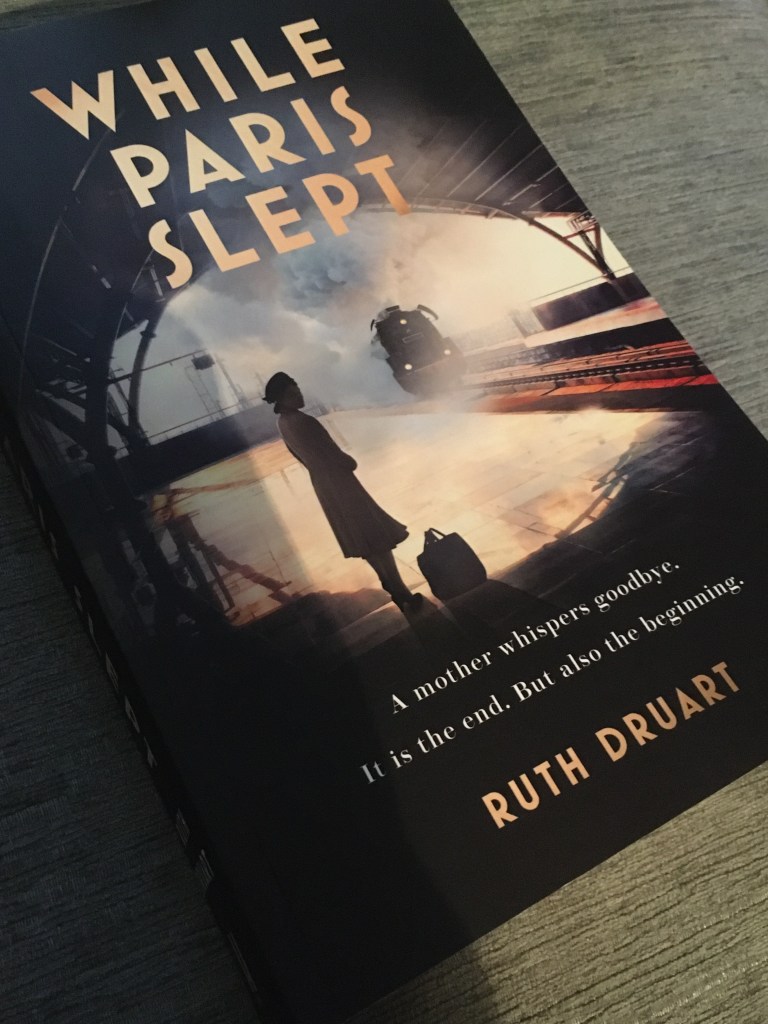
Publisher: Grand Central Publishing 23rd February 2021
ISBN: 9781538735183
On a platform in occupied Paris, a mother whispers goodbye. It is the end. But also the beginning.
Santa Cruz 1953. Jean-Luc thought he had left it all behind. The scar on his face a small price to pay for surviving the horrors of Nazi occupation. Now, he has a new life in California, a family. He never expected the past to come knocking on his door.
Paris 1944. A young woman’s future is torn away in a heartbeat. Herded on to a train bound for Auschwitz, in an act of desperation she entrusts her most precious possession to a stranger. All she has left now is hope.
On a darkened platform two destinies become entangled. Their choice will change the future in ways neither could have imagined.
Beginning on an ordinary day and ending on an extraordinary one, WHILE PARIS SLEPT is an unforgettable read.
Wow this book has some incredible reviews and I’m so lucky to have an ARC that I’m going to read over Christmas. Sarah is on a train bound for Auschwitz when she passes her baby son to Jean-Luc. He has been tasked with repairing a fault on the train, while the passengers are still on board. He takes the baby, and with his friend Charlotte he makes his way over to the USA, starting a new life on the West Coast. Nine years later, Samuel is growing up fast and Charlotte and Jean-Luc are the only parents he’s ever had. However, Sarah survived Auschwitz, and along with her husband has spent the last few years searching for her son. One morning, the police come knocking at Jean-Luc’s door. The narrative switches between 1953 and how to reconcile what has happened, to 1944 and how Sarah has survived to find her son, and what Jean-Luc and Charlotte went through to make a new life for the son they handed on a platform nine years ago. Regular readers will know about my late in-laws complicated war history. My mother-in-law had a family of half siblings in America, since her family had been torn apart in Poland. Each half of the family thought the other was lost. I can’t wait to tell you more about this book.
‘Both epic and intimate, this unexpected story had me completely and utterly enraptured. You’ll have your heart in your mouth and tears on your cheeks as it reaches its rich, life-affirming conclusion’ Louise Candlish
‘While Paris Slept made me think and cry and rage and smile at mankind’s capacity for both beautiful, selfless love and terrible, heartbreaking cruelty. Prepare to be thoroughly engrossed in this compelling book’ Natasha Lester
‘What a book… Emotional and heartrending…absolutely phenomenal. I was on tenterhooks throughout. A wonderful achievement’ Jill Mansell
Beautiful. Powerful. Unforgettable. A stunning portrait of the brutality of war and the tenacity of love. In the tradition of Virginia Baily’s Early One Morning and M. L. Stedman’s The Light Between Oceans.
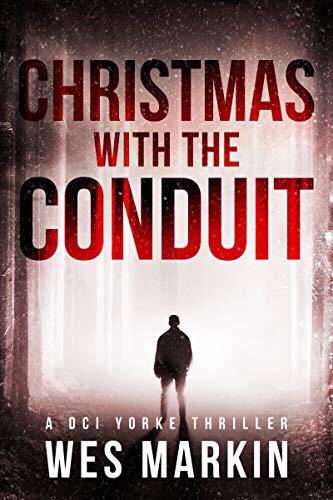
Publisher: Dark Heart Publishing 15th December 2020
ASIN: B086MK51JF
I’ve never read Wes Markin before and what a way to start. This is book 6 in the DCI Michael Yorke series and what an introduction! This author is certainly not for the faint hearted and this isn’t a cosy Christmas murder mystery. For this final instalment an old foe reappears at Christmas, tearing Yorke away from his family and bringing him closer to finding a lost friend and colleague.
If you fail to stop a killer, then they will only grow stronger.
DCI Michael Yorke and Emma Gardner are still plagued by guilt over their failure to catch the murderous psychiatrist known as the Conduit, and the loss of their former colleague to insanity. On Christmas Day, following a brutal massacre in Leeds, Yorke and Gardner find themselves once again chasing the ruthless puppeteer, believing that they have the initiative. But as the two investigators draw closer to the Conduit, they quickly discover that they were never truly in control, and completely vulnerable to what comes next. A rising tide of psychological warfare and the horrendous truth behind the fate of their former colleague.
I wonder, considering I’m a therapist, whether I should worry about the amount of books I’ve read recently featuring murderous psychologists/psychiatrists! I choose to think it’s a literary representation of the fear people often have about therapists – what we might magically discern about someone and how terrified they are about facing their fears. This particular sociopath is terrifying, but hides behind the tweedy and beardy disguise of a psychology lecturer. However, behind the new identity, lies the same twisted philosophy. The Conduit believes he can ‘heal’ psychological trauma by using hypnotherapy to take the patient back to the moment of trauma and changing the narrative. Yet the narrative is changed to something destructive and violent, shattering the psyche and planting the darkest rage, paranoia and thoughts of revenge.
The opening is Christmas Day at a nursing home for elderly people in Leeds, where Bernard is looking forward to spending the day with the new lady in his life. He’s been incredibly lonely since his wife died and he is grateful to find love again so late in life. Bernard struggles with PTSD following active service in the Falklands War, where both his friends were shot and killed in front of him. Every so often, loud noises or voices can take him straight back to the battlefield and the chaos of war. On this day, as his fellow residents start gathering for lunch, he receives a text message. From there it’s as if a switch has been thrown in his brain and his fellow residents and nursing staff become the Argentinian soldiers he faced that day back in the 1980s. He collects and gun from his room, makes his way back to the dining room and starts to gun down the soldiers who killed his friends and have come back for him. It’s only after multiple fatalities that Bernard returns and sees the full horror of what he’s done. He doesn’t link it to the genial man with the beard he’s been running into on his daily walk in the park. The man who offered to help with his trauma, if Bernard would trust him and open his mind to him. With no other choice, Bernard turns the gun on himself.
This terrible act drags DCI Yorke away from his family; his patient wife is understanding but he worries about how long this might last. He’s already had one shock this morning, his adopted teenage son has announced his engagement and Yorke isn’t sure he was supportive enough. He also has his previous colleague, Emma Gardener, on his coat tails. She believes Leeds is where her partner Mark Topham is, on the run since his violent reaction to the murder of his partner. Can Yorke really take her with him, when she’s no longer a police officer? Will they be able to unmask The Conduit before he takes over another mind and shatters even more lives? There is also the subplot – a female prisoner, victim and conspirator of The Conduit, having sessions with a prison psychiatrist. A game of cat and mouse seems to ensue between them, that becomes very dark and twisted.
The writing has an addictive energy within it, that means you can’t put it down, even when the horror you’re witnessing is too much. I would definitely suggest trigger warnings for violence and sexual violence. Sometimes, it’s not easy to read. Yet you can’t look away. The author is incredibly skilled at building up tension and it becomes unbearable towards the end. There are so many twists – I thought he’d be caught any minute, then he would elude them again. The way The Conduit burrows into people’s minds and unearths their greatest trauma is very disturbing. These people really have endured terrible experiences and watching this man re-traumatise them made me so angry. I was also horrified by the treatment and horrifying truth of his loyal dog. Yet I did find myself enjoying it. If you have met DCI Yorke before, I’m sure you’ll have been waiting for this novel. If not, this novel stands alone well, but why not look out for the whole series. But be prepared to read them all in one go because you won’t be able to stop once you’ve started! If you like your thrillers darker than dark, and your heroes and heroines battle scarred but steadfast and determined, then this is the perfect book for you.
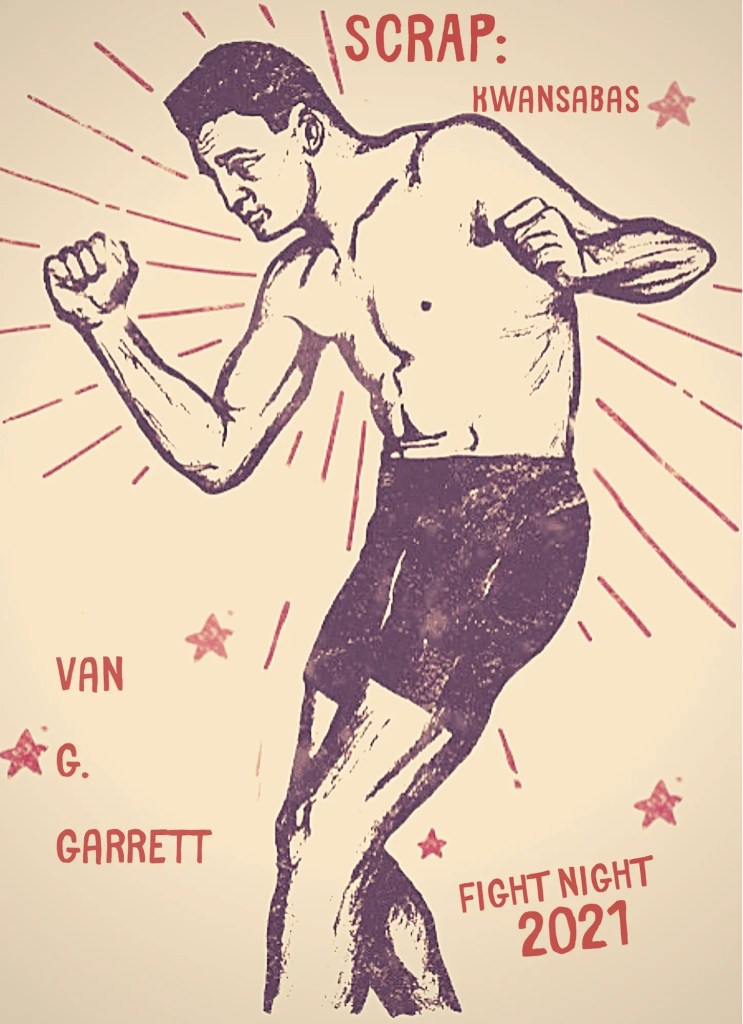
This book is for those who communicate thunder, rain, sunlight, hope, and pain with their hands.
When I was a baby my Dad used to help make ends meet by bare knuckle fighting at horse fairs. He would travel with local gypsies to fairs like Appleby and fight for them against other travellers. Then he would bring home wads of cash and the odd cut to his lip or round his eyes. Before I was born Dad was in the army and they saw the potential to train him as a boxer. He was the ABA champion at his weight and would have gone to the 1968 Olympics, except for a terrible incident where other soldiers attacked him in the night and threw him from a first floor window onto concrete. He suffered a head and neck injury, and never boxed again. I’m not sure I could ever have watched him box. To me, my Dad is my big cuddly and protective bear of a man. I couldn’t imagine him being aggressive or ruthless, even though he always tells me it’s a controlled aggression. This book of poetry lets us inside the mind of a boxer before and during a match.
Each short stanza cleverly gives the sense that the poem is split into rounds and there is sometimes even a bell punctuating the last line. These are short lines, and short punchy words suggesting the rhythm of a fight – dancing feet, short sharp jabs and staccato movement. This is a debut fight, so there’s no experience for him to fall back on. He’s never felt the bright lights of a proper ring with an audience. We hear his self talk: the talking up of the ‘golden road paved to a win’ but underneath there’s doubt and fear. Then he pulls it back and sounds like his own coach – this isn’t how I do things, I trained, I know what I’m doing, I didn’t come here to lose.
There are beautiful little insights into how it feels physically to take take a punch. I loved the image of the boxer back in his corner, the yelling of the coach and how the ‘water feels like gold, red bee stings.’ I also like his description of taking blows to the head, and the ringing in his ears. He needs the corner again and shake them off, reassess his game plan. He talks himself up, he can beat him because the opponent ‘wants’ to fall. He’s wobbly. It won’t take much. He needs to ‘try to turn his face to a puddle on the canvas’. It’s as much a mental battle as a physical one as the boxer reminds himself that he has a game plan, he just needs to follow it. His opponent is undisciplined: ‘Comes out with loose cannons on fire / Swiping air, wild with no game plan.’ Winning is about being sure of your own game and preparation, but finding chinks of weakness to exploit.
This was an interesting poem, full of insight into how a sportsman thinks and formulates a game plan. The rollercoaster of emotion from self-doubt to almost reckless confidence was fascinating. I could imagine my Dad when he started at 16, trying to keep his fear in check and follow his training. One line that resonated with me more than any of the others when I think of my Dad.
‘The bulbs from bright lights smack me/ as sweat shines like brand new money.’
He once told me that he was fighting in a club, the ring surrounded by tables where men and women in evening dress were shouting and almost baying for blood. It made him uncomfortable that his sweat and brute force were a currency, no more than a paid entertainment to them. That they might bet more than he was being paid to feel sick, to feel pain, to shed blood. This boxer’s thought that his sweat is money reminded me of that story and made me think this is a thought common to many fighters. I was amazed that in this relatively short poem, I could find so many connections between this young fighter and my father.
Kwansabas
The Kwansaba is a genuinely African-American poetry form. Created during the peak of the Black Arts Movement, in coordination with the creation of Kwanzaa itself, a kwansaba is praise poem that is seven lines long with seven words in each line with no word longer than seven letters. Given the significance of the number seven to Kwanzaa, the celebration’s meaning is literally built into the poem.
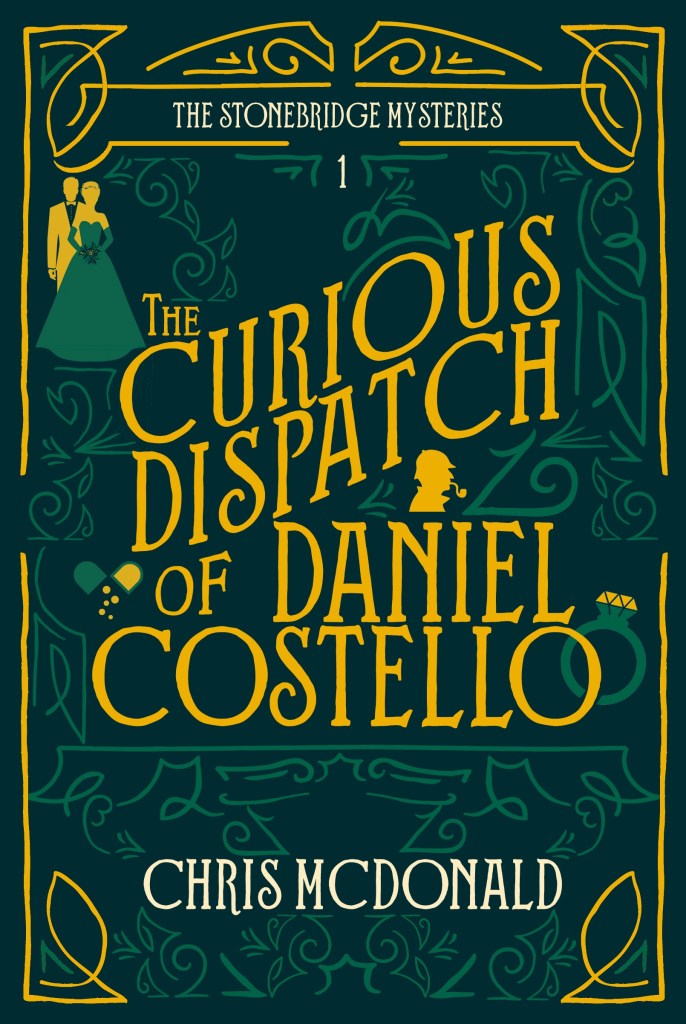
Today I’m taking part in the Red Dog Press Cover Reveal for Chris McDonald’s book The Curious Dispatch of Daniel Costello.
Wedding bells are chiming in the idyllic, coastal town of Stonebridge. For Sam and Emily, it should be the happiest day of their lives. But on the morning of the ceremony, the best man is found dead. The police quickly write his death off as a tragic accident, but something doesn’t seem right to wedding guest and groomsman, Adam Whyte.
Armed with an encyclopaedic, but ultimately ridiculous knowledge of television detective shows and an unwarranted confidence in his own abilities, Adam and his best friend (and willing Watson) Colin, set out to uncover what actually happened to Daniel Costello.
Originally hailing from the north coast of Northern Ireland and now residing in South Manchester, Chris McDonald has always been a reader. At primary school, The Hardy Boys inspired his love of adventure before his reading world was opened up by Chuck Palahniuk and the gritty world of crime. A Wash of Black is his first attempt at writing a book. He came up with the initial idea whilst feeding his baby in the middle of the night, which may not be the best thing to admit, considering the content. He is a fan of 5-a-side football, heavy metal and dogs. Whispers in the Dark is the second installment in the DI Erika Piper series, and Chris is currently working on his latest series, The Stonebridge Mysteries, to be published by Red Dog Press in 2021.
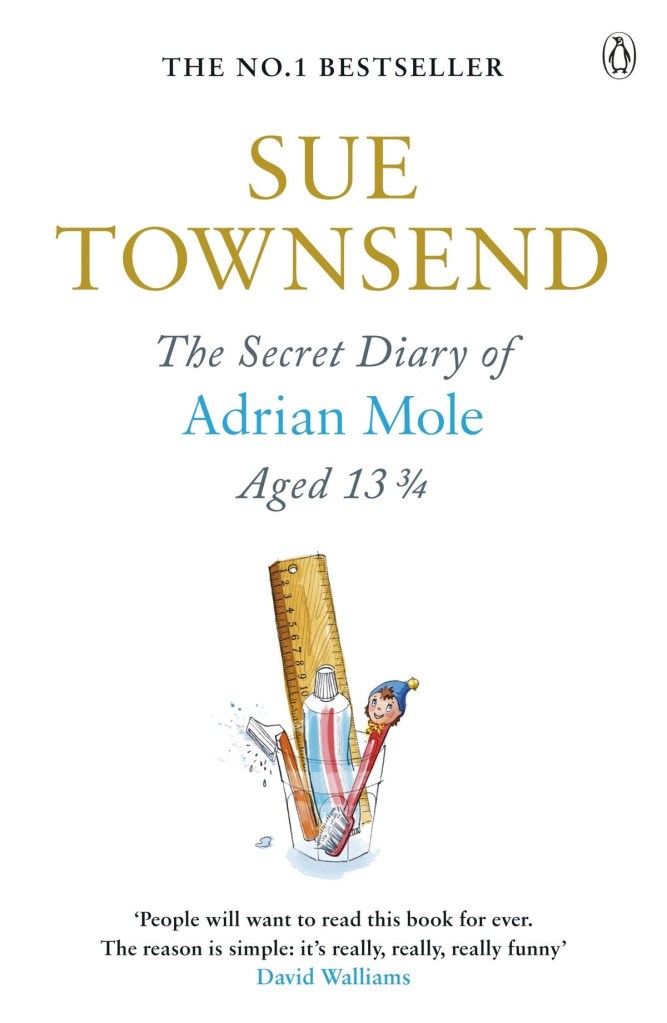
I went up to the bathroom and found my mother crying and running the turkey under the hot tap. She said, ‘The bloody thing won’t thaw out, Adrian. What am I going to do?’ I said, ‘Just bung it in the oven.’ So she did.”
Everybody’s favourite misunderstood, totally intellectual, teenage diarist, Adrian Mole, has perhaps experienced some of the most realistic Christmases in literature. His entry on one particular day sees him recall the hectic and hilarious events of the previous 24 hours, after his mum serves dinner to unexpected guests four hours late while his dad ends up drunk. We all know that feeling – of a parent acting manically and those annoying guests that just won’t leave – all too well. Also, I’m amused and touched that he gets Pandora a can of deodorant as her present. Other favourite details of the Mole family Christmases are the one where his prison warden Aunty Susan, brings a ‘friend’ in a disturbingly low cut top and the seasonal Fancy Dress Party at the Braithwaites where Pandora dresses as a belly dancer, much to Adrian’s disgust. Oh and the dog, who always manages to eat something he shouldn’t or has bizarre accidents like getting a model pirate stuck in his paws. His many Christmases, even into adulthood, are always disastrous and still make me laugh out loud.
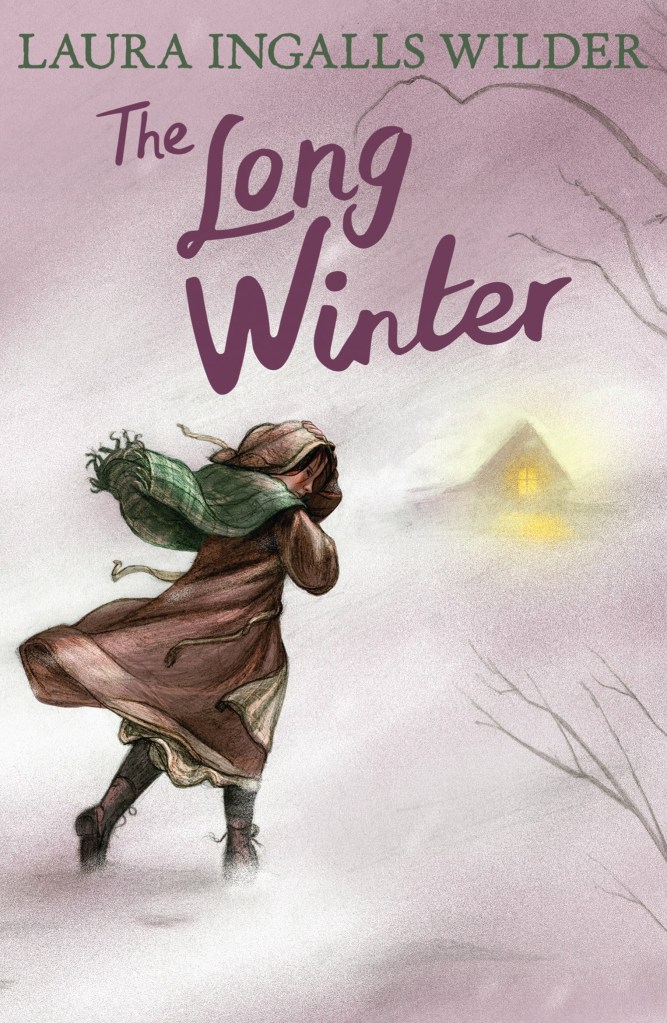
The Long Winter is just one of Laura Ingalls Wilder’s books with wintry scenes that make me feel Christmassy. There’s the party in Little House in the Big Woods where the girls stay with extended family so they can help with collecting maple sugar. There are such wonderful descriptions of making candy by freezing the maple sugar in the snow, beautiful descriptions of all the women’s best dresses as they get ready for the party and an incredible table groaning with food! Later, in her novel The Long Winter, Laura is a teenager and the family are living in North Dakota. As winter nears, the family move to their house in town from their ‘claim’ out on the open plains. Winters are harsh and this one is the worst, as blizzards rage for months. The Ingalls family have a very lean Christmas. They make presents for each other and sit down to a dinner of watery soup. It takes till May for the tracks to clear and the trains to run, but when they do a Christmas ‘barrel’ turns up with presents and food to allow them a second chance and they enjoy their first ‘Christmas in May’. A final favourite is Pa’s friend Mr Edwards arriving unexpectedly through a blizzard to ensure the Ingalls girls get a Christmas present. This scene can bring tears to my eyes:
“oh thank you, Mr. Edwards! Thank you!” they said, and they meant it with all their hearts. Pa shook Mr. Edwards’ hand, too, and shook it again. Pa and Ma and Mr. Edwards acted as if they were almost crying. Laura didn’t know why. So she gazed again at her beautiful presents.”
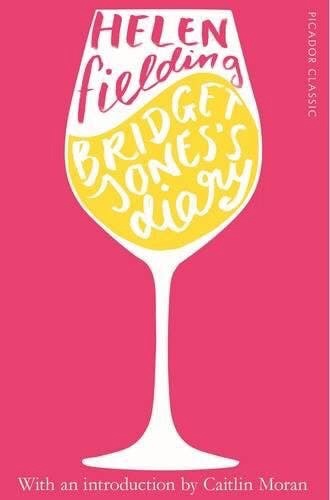
“It struck me as pretty ridiculous to be called Mr. Darcy and to stand on your own looking snooty at a party. It’s like being called Heathcliff and insisting on spending the entire evening in the garden, shouting “Cathy” and banging your head against a tree.”
This is a modern classic and nothing can beat those excruciating moments when Bridget’s parents take her to their friend’s Turkey Curry Buffet. Bridget in her antlers enduring endless insinuations about her love life, or lack of it. Mark Darcy in his ridiculous Christmas jumper. Oh dear, says a friend of her parent’s, have you lost another man Bridget. It’s always the same, off they go, wweeeeee…. It really is mortifying. It’s the perfect update of Pride and Prejudice, the modern equivalent of the ballroom arena. Bridget is simply herself, it’s those around her who are irritating and embarrassing, but we see the stiffness in Darcy and the way he makes judgement. It’s all so real. Fielding pitches the comedy and emotion perfectly. She completely represents the awkwardness of being an adult but returning home for Christmas and reverting to childhood. The childhood bedroom and the dreaded single bed! I think it’s wonderfully written.
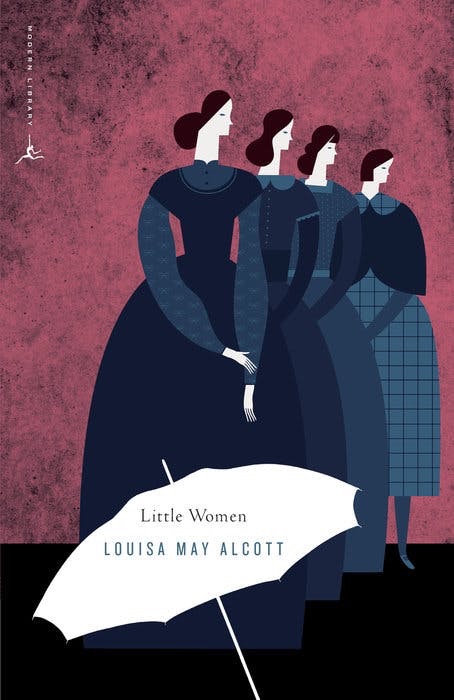
‘Nobody spoke for a minute; then Meg said in an altered tone, “You know the reason Mother proposed not having any presents this Christmas was because it is going to be a hard winter for everyone; and she thinks we ought not to spend money for pleasure, when our men are suffering so in the army. We can’t do much, but we can make our little sacrifices, and ought to do it gladly. But I am afraid I don’t,” and Meg shook her head, as she thought regretfully of all the pretty things she wanted.”
Of course no Christmas round up is complete without Little Women. ‘Christmas won’t be Christmas without any presents’ is the first line, but the March girls are going to learn the true meaning of Christmas. Christmas Day might be very lean on the present front, but the girls are excited about the breakfast Hannah has made for them. They’re just about to start when Marmee comes home to tell them that a poor German family nearby have no fire, no presents and are hungry. Their Mum has given birth the night before. With only the odd grumble from Amy they pack up their breakfast and take some firewood round to the Hummel’s shack. Witnessing the family on their errand, Theodore Lawrence is inspired to make a Christmas gesture of his own. He has watched the family, from his lonely position in the mansion next door with his Grandfather. To repay their kindness to the Hummel’s the Lawrence’s send an incredibly luxurious breakfast over to the Marches. Even Amy is inspired not to be selfish with her one dollar Christmas gift from Aunt March. Everyone else has used their dollar for a gift for Marmee, but Amy chose to gift a small bottle of cologne so she still had money for drawing pencils. But she goes back and buys a bigger bottle and returns her them. The girls Christmas gift is a letter from the their father who is a chaplain with the army, fighting in the Civil War. Even though this isn’t strictly a Christmas film, just watching any adaptation of Little Women with its opening of the festive season makes me feel that Christmas spirit.
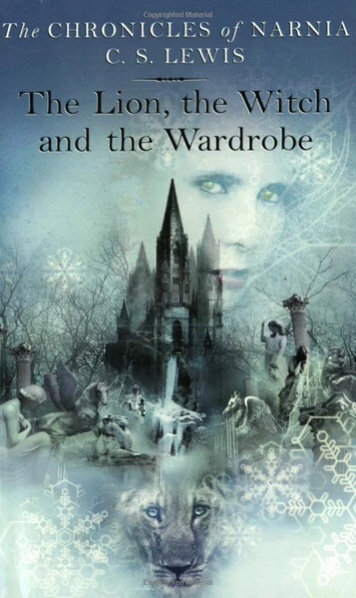
“Allow me to introduce myself. My name is Tumnus.” “I am very pleased to meet you, Mr. Tumnus,” said Lucy. “And may I ask, O Lucy, Daughter of Eve,” said Mr. Tumnus, “how you have come into Narnia?” “Narnia?” What’s that?” said Lucy. “This is the land of Narnia,” said the Faun, “where we are now; all that lies between the lamppost and the great castle of Cair Paravel on the Eastern Sea. And you–you have come from the wild woods of the west?” “I–I got in through the wardrobe in the spare room,” said Lucy. “Ah,” said Mr. Tumnus in a rather melancholy voice, “if only I had worked harder at geography when I was a little faun, I should no doubt know all about those strange countries. It is too late now.” “But they aren’t countries at all,” said Lucy, almost laughing. “It’s only just back there–at least–I’m not sure. It is summer there.” “Meanwhile,” said Mr. Tumnus, “it is winter in Narnia, and has been for ever so long, and we shall both catch cold if we stand here talking in the snow. Daughter of Eve from the far land of Spare Oom where eternal summer reigns around the bright city of War Drobe, how would it be if you came and had tea with me?”
Of course the worst thing about the country of Narnia is that it’s always winter, but never Christmas. In fact it takes Aslan’s amazing return from death for Christmas to finally be celebrated in Narnia, and Father Christmas brings the children the gifts they will need as they become Kings and Queens of Narnia. Yet for me, I get a Christmas feeling from the very first time Lucy finds her way through the wardrobe. She feels her way through the furs and can smell a pine forest and feel the cold. She finds a snowy forest landscape and slowly makes her way towards the light of a lamppost. It’s here she meets one of my favourite creatures in all literature – Mr Tumnus. I have a beautiful painting in my hallway of the way I imagine him, with his furry haunches, velvet coat, long striped scarf and carrying a pile of books and an umbrella. If I could be taken to any point in a book it would be tea in Mr Tumnus’s little house, next to a warm fire. There would be lots of books, a ticking clock and a wonderful tea tray of crumpets and cake. In this warm haven with snow falling outside I would feel completely relaxed and immersed in this magical world.
“Christmas ought to be brought up to date,” Maria said. “It ought to have gangsters, and aeroplanes and a lot of automatic pistols.”
Maybe the reason I associate this book with Christmas is that when I was primary school age this book was serialised on the BBC and shown on Sunday teatimes. It is set as a young boy called Kay travels home on the train for Christmas, and is waylaid by a travelling Punch and Judy man called Cole Hawlings. Hawlings is being pursued by a band of criminals dressed as clergymen. They are seeking the ‘box of delights’ – a magical box that can take the bearer on a world of adventures. My middle-aged brain remembers tiny mice appearing through the floorboards, meeting the King and Queen of the fairy folk inside a tree, a wonderful Christmas celebration and a plane that can take off vertically. I love the nostalgic feel of the book too, with Kay using terrible school slang – I haven’t a tosser to my kick – and the very lively heroine Maria who is toting guns she took from the villains! She had a very Agatha Christie view of Christmas thinking it should be filled with guns and gangsters!
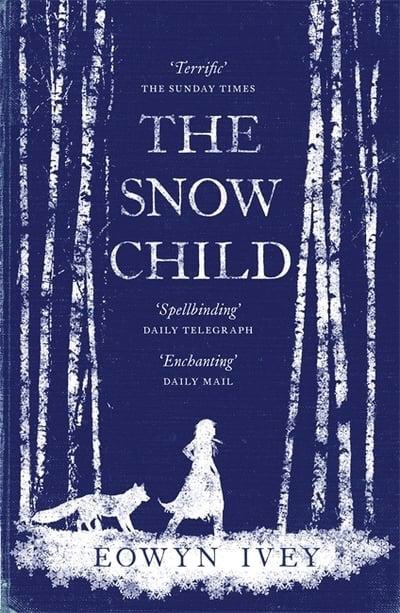
‘In my old age, I see that life itself is often more fantastic and terrible than the stories we believed as children, and that perhaps there is no harm in finding magic among the trees.’
The Snow Child is such a beautiful book and although it’s not specifically set at Christmas, it has such a snow filled setting and a fairy tale quality that makes me feel that Christmassy magic. Jack and Mabel are married, but don’t have any children after a traumatic miscarriage. They long for a child and one winter, at their homestead in Alaska, they build a snow child – complete with mittens. The next morning their snow child is gone and tiny footprints lead away into the forest. From time to time the couple see a little girl in the woods accompanied by a fox. We’re not sure whether she is a magical manifestation of their wish or exists just in their mind, but what is so stunning is the background. The Alaskan wilderness is not easy to survive in, but the author makes it so beautiful:
‘The sun was setting down the river, casting a cold pink hue along the white-capped mountains that framed both sides of the valley. Upriver, the willow shrubs and gravel bars, the spruce forests and low-lying poplar stands, swelled to the mountains in a steely blue. No fields or fences, homes or roads; not a single living soul as far as she could see in any direction. Only wilderness. It was beautiful, Mabel knew, but it was a beauty that ripped you open and scoured you clean so that you were left helpless and exposed, if you lived at all.’
This is an absolutely stunning book, full of magic and the realisation that life is short and we need to grab our happiness, wherever we can.
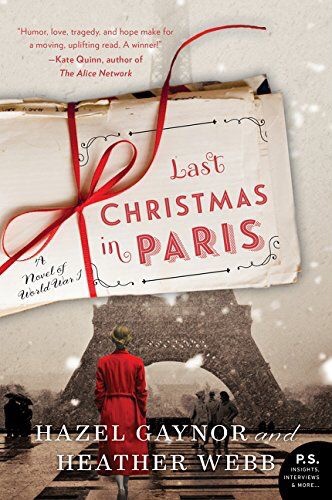
And finally these two little gems above and below are this year’s Christmas reads. Christmas is a time for romance and both of these novels are unashamedly romantic. In Last Christmas in Paris it’s 1914 and Evie Elliott watches her brother, Will, and his best friend, Thomas Harding, depart for the front, she believes—as everyone does—that it will be over by Christmas, when the trio plan to celebrate the holiday among the romantic cafes of Paris. But of course it all happened so differently. Evie and Thomas experience a very different war. Frustrated by life as a privileged young lady, Evie longs to play a greater part in the conflict—but how?—and as Thomas struggles with the unimaginable realities of war he also faces personal battles back home where War Office regulations on press reporting cause trouble at his father’s newspaper business. Through their letters, Evie and Thomas share their greatest hopes and fears—and grow ever fonder from afar. Can love flourish amid the horror of the First World War, or will fate intervene?In Christmas 1968, with failing health, Thomas returns to Paris—a cherished packet of letters in hand—determined to lay to rest the ghosts of his past. But one final letter is waiting for him…
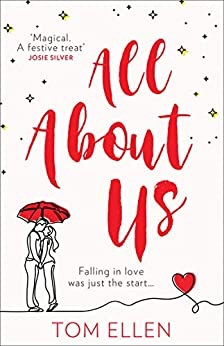
In Tom Ellen’s All About Us we meet Ben, tasked by his wife Daphne to put up the Christmas tree he decides to meet his friend Harvey for a drink instead. Daphne is at a work party, alone. Ben is at a crossroads in his marriage, he barely recognises his wife these days because she seems so angry and tense. His mind has been wandering to his old uni friend Alice, who he always imagined he’d get together with some day. There is one pivotal moment, at a university play, where he felt it was an unspoken agreement that he and Alice would take things further. Then in walked Daphne and he was instantly smitten. What if he made the wrong choice. In a format based on A Christmas Carol, Ben meets a watch seller who gives him a magical watch set at a few minutes to midnight and he’s astonished to wake up the next morning on 5th December 2005: the day he first kissed Daphne, leaving Alice behind. This is just the first of his stops into the past, and the possible future, to make the biggest decision of his life, all over again. But this time around, will he finally find the courage to follow his heart?
I’m so looking forward to curling up by the Christmas tree with some chocolate and both of these novels.
Publication: 3rd February 2021. Publisher: Red Dog Press.
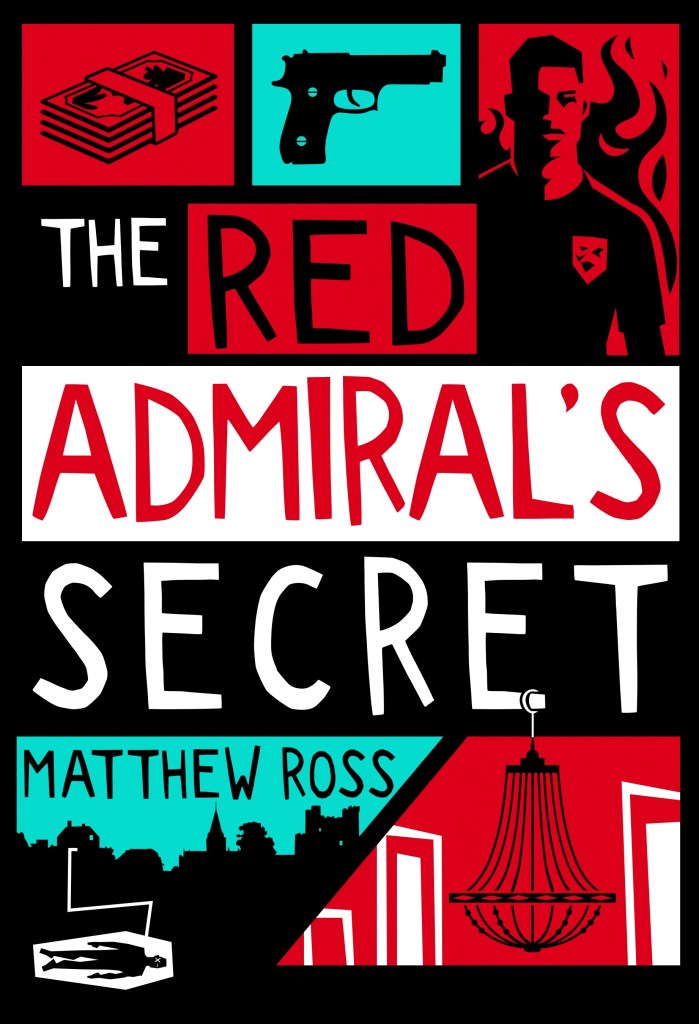
A Premier League bad-boy murdered at his newly refurbished home; a teenage runaway’s corpse uncovered on a construction site; a gunman shoots up the premises of the local gangland boss – all of them projects run by beleaguered builder Mark Poynter. Can he fix it?
Things seem to be on the up for builder, Mark Poynter. Mark’s got himself a nice little earner taking care of the sizeable property portfolio built up from the career earnings of former Premier League bad-boy and local celebrity, Danny Kidd. But when Danny Kidd puts an interested party’s nose out of joint by using his star status to gazump them on a development site – the derelict Admiral Guthrie pub – things turn ugly and incendiary, leaving Mark to deal with the consequences.
Meanwhile local villain, Hamlet, uses his subtle persuasion to dupe Mark into unwittingly help him launder vast sums of dirty cash but when it drags the area to the brink of gang warfare, Mark’s help is needed to try and broker a truce.
At the Admiral Guthrie secrets from the past meet conflicts of the present – will the rising flames reduce Mark’s future to ashes?
“The Red Admiral’s Secret” is the second in the series of darkly comic crime fiction novels featuring the beleaguered builder Mark Poynter, aided and hindered in equal measure by his trusted crew of slackers, idlers and gossips, and the lengths they go to just to earn a living.
Meet The Author
Matthew Ross was born and raised in the Medway Towns, England. He still lives in Kent with his Kiwi wife, his children and a very old cat.He was immersed in the building industry from a very early age helping out on his father’s sites during school holidays before launching into his own career at 17. He’s worked on projects ranging from the smallest domestic repair to £billion+ infrastructure, and probably everything in between.A lifelong comedy nerd, he ticked off a bucket-list ambition and tried his hand at stand-up comedy. Whilst being an experience probably best forgotten (for both him and audiences alike) it ignited a love for writing, leading to various commissions including for material broadcast on BBC Radio 4 comedy shows.
Matthew moved into the longer format of novel writing after graduating from the Faber Academy in London in 2017. ‘Death Of A Painter’ was his first novel and the first in a planned series of stories featuring Mark Poynter and his associates. Matthew enjoys reading all manner of books – especially crime and mystery; 80s music; and travelling and can’t wait for the next trip to New Zealand to spend time with family and friends.
The Synonym Tables invite the reader to examine language closely and investigate how it shifts over time. By extracting synonyms that are deemed “most relevant” by Thesaurus.com for common words used today and comparing them to synonyms for the same terms from a 1947 textbook via the scientific format of a table, the reader is asked to consider how the tool of language evolves, shrinks, expands, and fails.
I agreed to read this new volume of poetry because I am fascinated with how language changes and how it’s used. I rarely get political on the blog, but where we see changes in language everyday is the media and in politics. I have a disability and if we think about the language around people with illnesses and disabilities, there has been a shift. In fact activists think it has changed significantly in the last fifteen years. There was a move away from using neutral terms towards words that insinuated blame. Here Roche closely examines words surrounding certain subjects – health, employment, status – in order for the reader to see if: there’s a difference; whether tone or agenda has changed; to look for patterns. The main aim is to give the reader food for thought.
There were a few differences the stood out to me. The first table/poem tackles synonyms for poverty and I was interested to see how words had become ‘sanitised’. Instead of ‘destitution’, in 2020 we used the word ‘debt’. It had me thinking about what those words mean. Destitution conjures up images of extreme poverty, having absolutely no resources to draw on. Debt doesn’t quite conjure up the same image, possibly because it has become the norm to live with a certain amount of debt. When I think about destitution I imagine people in rags, no food and possibly no shelter. It conjured images of Victorian orphans. Destitution is something that happens to people, whereas debt carries an amount of blame – it’s something we get ourselves into. Destitution can only be rectified by others helping and giving. Debt is something that carries individual responsibility; only the debtor can rectify the situation. We give to the destitute, but look down on the debtor. We make programmes about bailiffs and watch as they chase down the debtors and take away people’s belongings, There’s a lack of compassion in the word ‘debt’.
In another table the author compares words for ‘opulence’ and there are far fewer words in 2020 than there were in 1947. I always think of opulence in terms of interiors – velvet and silk cushions, a richness in colour from jewel like tones, and chandeliers casting a warm glow over everything. It makes me think of stately homes. To see that our 2020 synonym is ‘worth’ made me feel a bit cross. I didn’t like the idea that riches were comparable to worth. I’ve always been taught that everyone is of the same worth, no matter what they have. I know we live in a world where money equals status, but it shouldn’t equal worth. The synonyms associated with femininity and masculinity were also interesting. On Strictly Come Dancing recently, there was a bit of uproar among feminists when Shirley Ballas kept describing Maisie has powerful. She also commented that about her being ‘feminine but strong’ as if the two things didn’t usually fit together. I saw many women on Twitter change the but for and, being feminine is not one set of traits. So it was interesting to note that in 2020 our thesaurus synonym for feminine is ‘soft’. Equally a word that has crept into our synonyms for masculine is ‘muscular’. This shows that men are now equally judged on appearance to women. There is now an ideal body and appearance for both sexes, written into the language.
From my own disability perspective there were two things I found disturbing in the comparison table. Of course there are many more synonyms for illness in 2020 – for good reason where it’s referring to whether someone’s illness is a virus or an infection. The word ‘syndrome’ also makes an appearance – referring to a bundle of symptoms that have unknown cause, but significant effect on the body. However, when I came across the word ‘defect’ it made me feel very uncomfortable. It signifies a fault with that person instead of a difference or variety. When things are defective we either have them fixed or throw them away. Then I saw the table for synonyms of healthy, and there were some instances where the words didn’t differ at all. Words like ‘robust’, ‘vigorous’ and ‘hearty’ were present both times. However, it was one of the extra words in 2020 that shocked me. In a time where I see use of this word being pulled up all the time when referring to sexuality or gender, one of the synonyms for healthy was ‘normal’. In a medical environment I can understand doctors having to use a word for when someone is functioning at peak condition. Medicine is very much about classification – another reason for the word ‘syndrome’ making an appearance, where someone does not fit an existing or traditionally detectable illness pattern. So, doctors must have a word for the body, that functions within acceptable levels of fluctuation. There’s never just ‘normal’ in the medical world because we all vary so much, so someone’s blood pressure might be ‘within the parameters of normal’. I love it when doctors use that phrase because it tells me that they allow for variations even within a healthy body. However, when we say normal without that caveat, it says that anything different from this narrow field of human functioning, is abnormal.
This very unconventional book of poetry shows us that far from being ‘just words’, the synonyms we choose are very important. Words are very powerful and the ones we choose are fraught with meaning and betray a political, social and economic outlook. It changes the whole meaning of what we say. Someone out of work and struggling financially can be seen as needing help or alternatively as ‘workshy’ or someone to look down on. Someone with a disability can be seen as a hero in context of being injured in military service or a Paralympian. However, when written about in the context of claiming disability benefits, I’ve seen the media use derogatory and offensive language. So, language matters and in the synonyms that we see in a Thesaurus we have to remember the context around their inclusion. We must think about the point in history and the socioeconomic factors in play at that time. It’s worth further study to look at where these synonyms are used most and what effect they have on the piece of writing and the reader. I found these unconventional pieces of poetry interesting and it left me wondering why the author had included certain words and how she’d chosen to place them. Perhaps the particular words I’ve chosen, jumped out at me due to how they’re placed. Maybe the poet wanted to create a certain effect in the reader. It reminds us we should always be aware of the intention behind language when reading. For me this was a fascinating look at the words we use and why.
Meet the Author
Jennifer Roche is a poet, writer, and text artist who lives in Chicago, IL. She is the author of “20,” a chapbook of erasure poems from Jules Verne’s 20,000 Leagues Under the Sea (Alternating Current Press). Her work has also appeared in Storm Cellar; Tule Review; Footnote: A Literary Journal of History (#2); Oyez Review; Rain, Party & Disaster Society; and Ghost Ocean. The Chicago Guild Literary Complex named her a “Writer to Watch in 2019 & Beyond,” and she was a 2016 Charter Oak Award Semifinalist for Best Historical writing
Publisher: Red Dog Press (29 Nov. 2020). ISBN: 978-1913331962
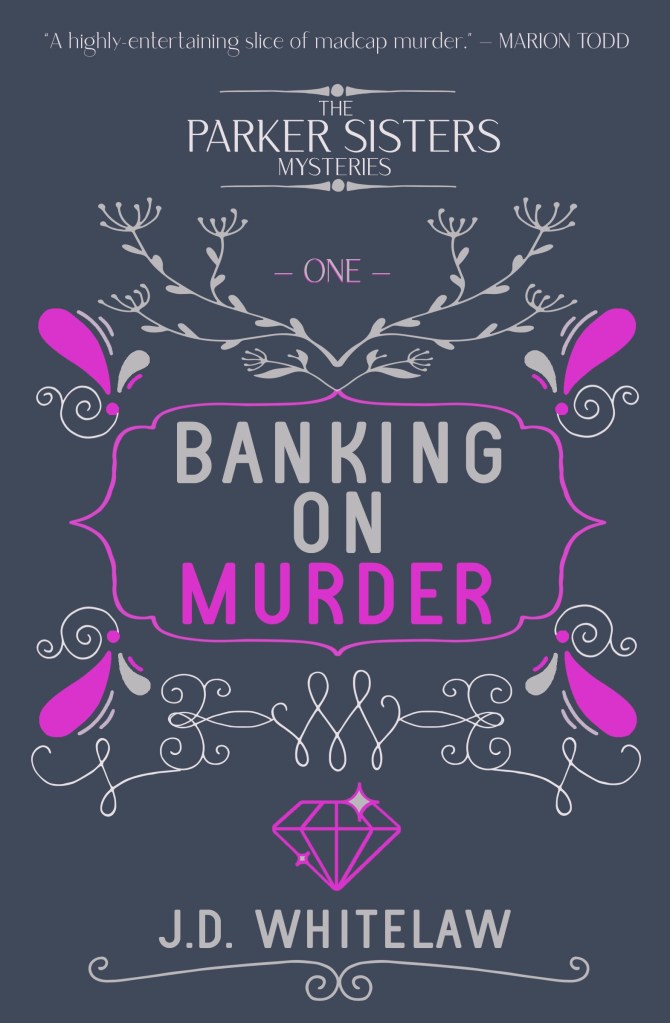
Well this book was a great surprise. I absolutely loved it. Three quirky sisters, a detective agency, a troublesome client and the backdrop of Glasgow just to finish it off. What’s not to love? I read it in two days, because it was just so much fun I couldn’t put it down. Now all I need is for someone to turn it into a Sunday evening series starring Kelly McDonald, Laura Fraser and Jessie Buckley and I’ll be content.
Martha is the eldest sister, slightly frumpy and very much a mother figure for her two younger sisters, Helen and Geri. She is dependable and the real business-like sister who keeps the agency ticking over. Helen is more of a mystery, but certainly has brains as the academic of the outfit. It turns out she’s also a very able dancer when she’s had enough to drink. Geri brings youth knowledge to the team as she’s the student of the trio. She may lurch in like she’s had no sleep, but she’s very sharp and knows how to use social media to the agency’s advantage. They’ve been requested at the home of Tracey Coulthard, who lives in a very smart home in a wealthy suburb of Glasgow. They arrive to find a maid, May, who is very worried about her employer who seems to be overwrought. They can hear screams and smashes coming from the bedroom. Mrs Coulthard is in bed crying, naked from the waist up and the fact that people are in her bedroom doesn’t seem to faze her at all. She offers the sisters £20,000 to find out the truth about her husband Gordon and his ‘extracurricular’ activities. This is the Parker sister’s meat and drink, most of their work is detecting whether partners are being unfaithful. However, the level of distress from this particular client is worrying Martha particularly. What might she do if they find out something she doesn’t want to hear? Martha senses a whole lot of trouble packaged alongside that cold hard cash.
The sisters manage to get themselves invited to a party for Gordon Coulthard’s company. Helen throws herself into the fray and Geri starts getting to know Gordon’s right hand man. As usual though, the sister’s don’t investigate quietly. Helen proceeds to get blind drunk and get a little over familiar with guests. In trying to find out more about Gordon, Martha ends up in a brawl with a statuesque blonde called Estelle who seems to be claiming that Gordon is her fiancé. She does indeed have a huge diamond on her finger and Martha is horrified, especially when Estelle starts dragging her round by her hair. As she fends her off, Martha tries to fathom why he would get engaged when he’s still married and be so open about it? This will mean the girls having to break the news to Tracey, setting in motion a chain of events that will end in murder.
I loved how the sisters worked in conflict, but somehow in unison. As Martha feels responsible for Tracey and what’s happened, Helen and Geri point out that they’ve done what they were paid for and can withdraw from what is becoming a media circus. Martha struggles a bit with the physical aspects of the job, leading to some amusingly clumsy moments. When chasing a suspect she falls through the fence they’ve just jumped over and when listening at a skylight she manages to fall straight through! More seriously, she runs up several flights of stairs to Coulthard’s penthouse and ends up in hospital with chest pain. I loved how Martha berates Geri for being ‘friends’ with Gordon’s colleague, but has to take it back when she realises how thoroughly she’s been stalking him on social media. I also enjoyed the introduction of Detective Pope, a stern Glasgow cop whose wheezing can be heard from the next room. Despite the asthma, she’s a tough customer and seems to be the sensible figure, there as a counterpoint to the sister’s madcap romp through this case. Yet, I could see an affinity growing between them, particularly Pope and Martha whose scenes are filled with sarcasm and wit. I’ll be interested to see how this develops.
Despite a few twists and turns, I did solve the case before the end, but I’m not sure it was meant to be a complex puzzle. This was an introduction to the sisters and their dynamic, and I will certainly be looking forward to their next adventure. This was was a wild ride that didn’t let up as the sisters were pulled from one side of Glasgow to the other. There’s no time to breathe, with the wheezing Pope almost collapsing in their wake. There’s just enough of a sprinkle of Christmas in the background too. I think there’s much more to come from Helen, and so much more about the Parker’s lives outside the agency. I thought this was a thoroughly enjoyable read, with incredibly engaging characters and so much promise for the series to come.
Meet The Author
J.D. Whitelaw is an author, journalist and broadcaster. After working on the frontline of Scottish politics, he moved into journalism. Subjects he has covered have varied from breaking news, the arts, culture and sport to fashion, music and even radioactive waste – with everything in between. He’s also a regular reviewer and talking head on shows for the BBC. Banking on Murder is the first of three Parker sister novels. They follow his hugely successful HellCorp series. His debut in 2015 was the critically acclaimed Morbid Relations.
Maybe it’s because I have a disability or because I worked on a PhD in Disability Theory, but I love books like this that cover a familiar part of history but from a disability perspective. The author has given herself freedom to create by using an interesting and unusual character, through which she can tell the story of a very tumultuous period of history. The book is set in the 17th Century, prior to the Civil War, in the royal court of King Charles I. Nat Davy is based on Sir Jeffrey Hudson, immortalised with the Queen in a painting by Van Dyck. Nat wants to be ‘normal’, but even when he reached adulthood he was only eighteen inches tall. He was born in Oakham and when the circus visited the town he was almost sold to them by his own father. However, his eventual fate is even more bizarre! He is sold by his father to the Duke of Buckingham and taken to the court of King Charles 1st. The Duke had him put into a pie to surprise Queen Henrietta Maria, who is only 15 and desperately unhappy and homesick. Nat becomes her ‘pet’ and he joins an existing menagerie of dogs and monkeys. However, the Queen and Nat are are both outsiders and they are both lonely, so the two form a bond, becoming close friends. I loved that he is seen as a harmless pet in the court, when actually he’s in a very powerful position; he has the ear of the woman who could trigger a Civil War. He will never be accepted by other boys his age at court, he can’t participate in masculine pursuits like hunting, but he is about embark on an epic adventure – much greater than his size might suggest.
Queen Henrietta Maria with Sir Jeffrey Hudson (1633)
Nat becomes the Queen’s closest protector and I found it fascinating that she trusts him in this role. They go on the run and he is looking after her all the way, determined to keep the Queen safe. There is something very satisfying in the fact he is underestimated at every turn, but always manages to surprise people. He has two friends, Henry and a girl named Arabella who is the most beautiful young woman at court. Nat loves her, but would she see past his disability and return his love? Nat wonders if the best plan would be to see her marry Henry, then he could still keep her close. Even now, the subject ołth disabilities as sexual beings, capable of being desired. The fact that this is the 17th Century shows us these types of relationships did possibly happened, just quietly and in the background. However, this wasn’t the most successful part of the novel. The success is in the way Nat copes in this world, considering how hard it can still be to be different in the 21st Century. Even though he is physically small, he stands head and shoulders above anyone else in the book.
The first part had the most pace and set the scene beautifully. The rest of the novel is slower and didn’t fully hold my attention in the same way. The depth of research is undeniable here and I learned a lot about this period of history, beyond the basic Royalist/Roundhead split. I loved that the author drew a parallel between Nat’s servitude and the situation the Queen is in. Even though she has riches and might seem lucky to some, she too is living in a form of slavery and this is why they connect. She was sent away from her home and loved ones, to marry a man she’d never met and didn’t love. I have seen reviews criticising the latter half for focussing too much on Nat’s love story, whilst glossing over huge historical events like the beheading of Charles 1st, but I think that misses the point. This isn’t the history of the royal court or the Civil War, that history has been written by the victors, who are primarily male, able-bodied and Parliamentarian. This novel is Nat’s story, not theirs and the biggest thing in his life is that he’s in love. That’s the whole point of ‘writing back’ – it takes a minority narrative and makes it centre of attention. It gives us a different window to view events through and imagines someone who would normally be without agency, having power over their own story.
Meet The Author
Frances Quinn read English at King’s College, Cambridge and is a journalist and copywriter. She has written for magazines like Prima and Good Housekeeping. She lives in Brighton with her husband and Tonkinese cats. The Smallest Man is her first novel.
Lies do not erase the truth, they simply delay it’s discovery.
This turned out to be quite a difficult read for me, because I spent some time in a relationship with someone who had narcissistic personality disorder. By the end of our relationship I was thousand of pounds in debt and had found out he had been trying to bully a vulnerable member of my family into an affair. It was like we’d been living totally separate lives, with his only intent to further his own interests and leave my confidence in tatters. I felt like I’d had a relationship with someone who didn’t exist. Years of gaslighting had left me doubting my own experience, my version of events and even my ability to make decisions. I thought this novel explained the concepts of narcissism and gaslighting very well and I think the accuracy is down to this being a true story at heart. The author wanted get this right for other survivors. I think she did a great job.
The style took me a while to settle into, but once I did I found it hard to put down – mainly because I was furious with this man. I needed him to be found out and get his come- uppance. The story is told through the narratives of several different women, each of them having an intense relationship with a man. What soon becomes clear is that all of these women are talking about the same man and the breath-taking audacity of his schemes start to become clear. This is not just an emotional catastrophe waiting to happen, it’s a financial disaster too.
Deborah Twelves
This man uses each women’s personality and vulnerabilities to his advantage. His wife of twenty years, Grace, wants to have a child but he is not at all keen, so their relationship follows a pattern of arguments followed by him buying something to keep her quiet. These gifts range from a puppy to a an incredibly expensive Portuguese horse for dressage and holidays in St Barths. All I kept thinking was ‘how on earth is he paying for these things?’ They are already over-leveraged thanks to a house purchase that his wife has sunk all her cash into – he had promised to pay her back as soon as a big deal came through at work. They’ve also bought a barge, which was meant to be somewhere quirky and fun to live temporarily while the house was renovated. Now he doesn’t want to let go of it. There is barely any cash left, and at least one family member has voiced their doubt that he will ever pay her back.
With Jane, who he finds via an online dating app, he presents himself as the busy businessman, travelling all over the country. They have sex on the first date and he seems to sense in this woman, someone who will be manipulated or even exploited. From a light smack during sex, he is soon initiating her into bondage, role play, and creating videos. She seems willing to do anything to keep him, even going one further than Grace and getting passed his ‘no children’ rule by throwing her contraceptive pills away. She figures that if she’s the mother of his child, she will have more of a hold on him and his many assets. In fact, she’s clever enough to start working on getting some of those assets into her name – so he can hide them from Grace should he ever leave. What Jane and Grace don’t know is that there’s also a Lorraine, and a woman in America who already has a daughter with a man she knows as Matthew. His cheating is international. It only takes one woman to find out about the others. To take action and expose everything. Then Daniel/Matthew’s house of cards really will collapse. This reckoning comes in an email, informing the others of his deceitful ways. From here, each woman behaves very differently and I found myself desperate, particularly for Grace, that Daniel would pay.
I really did recognise some of the tactics used by Daniel in his fight to keep his assets. My ex also sought to represent himself in court and when it wasn’t going his way claimed to have been too mentally ill to represent himself and wanted to overturn the proceedings. He withheld his agreement on certain things to try and get me to pay off his debts. When he was diagnosed with a narcissistic personality disorder, it was not a surprise. One thing I learned in therapy after this relationship was that the only way to deal with a narcissist is to ignore them, keep any direct contact minimal and assert a right to privacy in all legal matters. As a result he never found out where I moved to, I had to cut off mutual friends and avoid social media. I soon realised any contact lead to attempts to manipulate, gaslight and cause harm. It took a long time to de-program myself and start to trust other people and even my own judgement. This man had come along when I was a widow, I was vulnerable and I had money. It turns out this was a pattern, and the women before me and after me were also widows. Therapy really helped me understand how to deal with him during the divorce and why he had been able to manipulate me the way he did. I had to realise my role in the relationship, why I’d accepted his behaviour and why I’d stayed.
Grace needed to have the same advice and support. Any attention from her, even negative attention, would feed his ego. I really wanted one of the women to realised just how dangerous he really was. The money would be nothing next to the sense of freedom gained from simply walking away and starting afresh. I felt that the writer really captured Grace’s pain and bewilderment at what was happening, whereas the other women felt less fleshed out. They mainly existed as a counterpoint to Grace – the main woman in his life. One of the creepiest things for me was when she visited one of Daniel’s other women and found the house an exact replica of her own, they even had the same type of dog. I found the response of Grace’s friends very true to life – it’s amazing, once the deception comes to light, how many people admit they never liked your partner or suspected he wasn’t all he seemed. In this case friends had noticed his bragging and arrogance, the dodgy business practices and the fact that they never really seemed to know what he did for a living. Grace is shocked to find out that most of their social circle only tolerated Daniel for her sake. Would she have listened if they’d said something sooner?
I won’t reveal the ending, but will admit to a bit of a surprise when the truth of Daniel’s business came to light. Whereas a lot of the book felt more like a memoir – someone conversationally recounting their experience – the ending felt more like fiction, perhaps a case of wish fulfilment in some way? I think there were areas where characterisation could have been better and where I wanted to be shown a place or experience rather than being told about it. I think in this case the most successful parts were the ending, the experience of sailing and Grace’s time spent with her animals in the country. In these parts I felt really immersed in Grace’s experience and they felt the most real. I hope that the author gained some closure in writing the book, because as a writing therapist I can really understand the healing that comes from putting your experience on paper and even from imagining different endings to the story. It’s a fascinating study in coercive control and psychological abuse in general. I kept hearing Grace wondering why there was no legal punishment for Daniel’s treatment of her and I remember feeling the same rage. There is also the concern that this person will move on and do it all over again. The Government published guidance on coercive control and emotional abuse in 2012, but it took till 2015 to bring this guidance into law. I have no doubt that had this law been available, Grace could have easily provided enough evidence of emotional abuse to take the case to court. Whether this would have made her feel better, I’m not sure. However, books like these, relating the experience, can raise awareness of just how damaging it can be.
Meet The Author
Follow this link to an interview with Deborah Twelves.
Deborah Twelves was born in Sheffield, but raised in Ponteland, Northumberland. She studied French and Spanish at Edinburgh University and taught languages for some years while living in France, Spain and Northern Quebec. She now divides her time between her home in Pwllheli, on the Llyn Peninsula of North Wales and her family home in Northumberland but often travels abroad. She has a black Labrador called Nala and a black Lusitano horse called Recurso (Ric), who take up a lot of her spare time, although yacht racing, which she began at an early age with her father, remains her great passion.
Deborah has written many articles for the sailing press over the years and Twenty Years a Stranger is her debut novel, based on true events in her life.
It is the first book in the Stranger Trilogy. The other two books, Ghost of a Stranger and The Boy Stranger will follow soon.











 The Lotus Readers