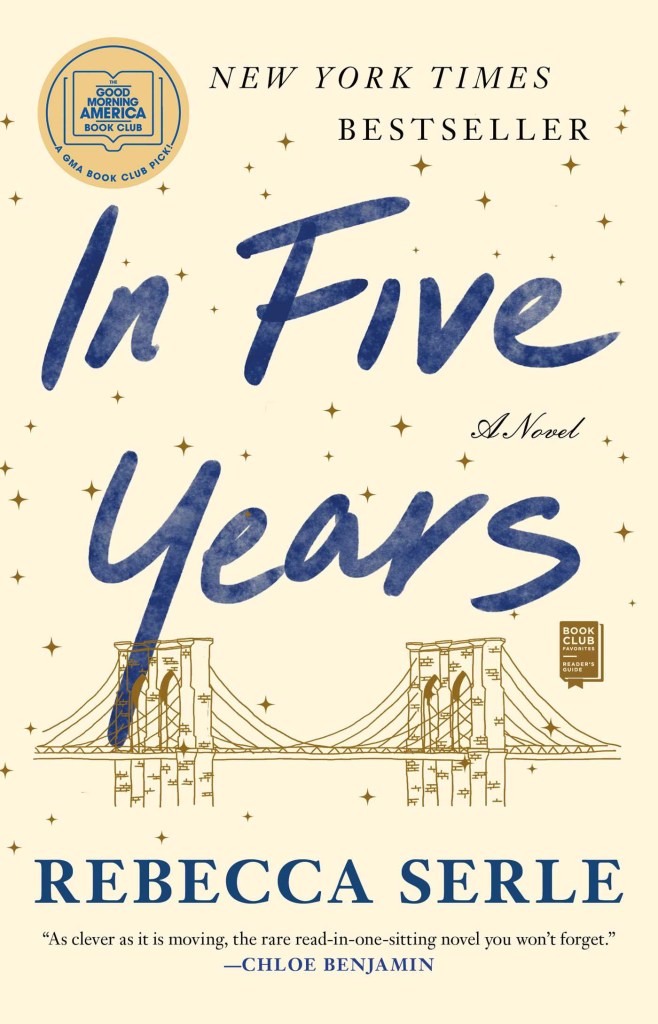
This book surprised me, delighted me and broke my heart. It was not at all what I expected, but was all the more special for that. Cleverly, Serle wrong foots the reader into thinking this is a straight forward romance, but it really isn’t. It’s about love and just as our heroine Dannie is some times unsure what love looks like, so is the reader. We are used to certain conventions and have expectations about how a love story will unfold. It teaches us that sometimes we don’t notice or fully appreciate what we already have.
Dannie is a corporate lawyer, living in Manhattan and dating the eminently eligible David. David and Dannie live together after dating for two years. They have done everything according to an unspoken, but very correct timetable; everything about their relationship is planned and just right. In fact their relationship is so predictable that when David suggests dinner at the Rainbow Room, Dannie knows he’s going to propose. She says yes when he presents the perfect engagement ring, but they don’t plan their wedding. They continue to drift along as they are, until Dannie has the dream. This vivid dream shows a loft apartment in Dumbo with interior design details such as an art print of an optician’s chart with a witty slogan. It’s nowhere Dannie can imagine living. It’s trendy and edgy. She and David live in Gramercy Park. A perfect location for their work and fitting for where they are in life. Yet, the Dumbo apartment feels comfortable. Then a man appears. She’s never met him before but yet there is a connection, something she can’t define. As he moves closer she feels actual electricity. She has never felt this before. Like some huge force compels them to be together. When she wakes, Dannie feels strange, like she’s questioning everything around her.
Dannie has planned to see her friend Bella. They have been friends since boarding school and are still incredibly close. Bella takes more risks than Dannie and in some ways Dannie sees her as someone who doesn’t finish things, perhaps a bit of a flake. Bella loves art, she lives to travel and has a more bohemian outlook on life. Dannie has a more settled and perhaps, conventional life where work is the priority and her stable relationship with David simply ticks along. Up until now Bella hasn’t had a stable relationship in her life, but she has brought someone important to meet Dannie. When he walks in, Dannie is shocked to see the man from her dream. She panics and decides to do everything she can to stop her dream from coming true. But life can take strange turns and a series of events unfold that she never imagined. They make her rethink everything about how to live life and how to love.
I became so involved with Dannie and Bella’s story that it was hard to put the book down towards the end. The story crept up on me from something very light to an emotional tale about the strength of female friendship. These girls are life partners. Their presence sustains each other in ways that romantic relationships sometimes don’t. Bella’s mother lets slip that she purposely placed her daughter in the same school as Dannie, because she saw them together and could not part them. The very structure of the book teaches the reader something. We learn, at the same time as Dannie, that the happy ending is not always about a man, because love comes in many forms. Also, that loss and love are the same thing. When we grieve it just proves how much we loved. I found myself becoming very emotional towards the end of the book and that rarely happens. I found the writing so truthful and similar to my own experience of grief that I had a lump in my throat. I loved the ending and the fact it wasn’t predictable elevated the book above the ordinary. I will be hugging my friends a little closer and appreciating all the people in my life who love me.
Meet the Author
Rebecca Serle is an author and television writer who lives in New York and Los Angeles. Serle developed the hit TV adaptation of her YA series Famous in Love, and is also the author of The Dinner List, and YA novels The Edge of Falling and When You Were Mine. She received her MFA from the New School in NYC. Find out more at RebeccaSerle.com.
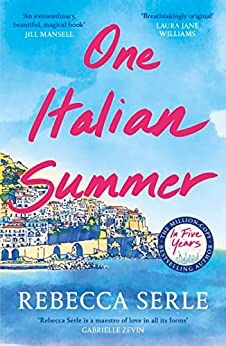
Her latest novel One Italian Summer came out in paperback last year and was a wonderful look at love, mothers and daughters, and the things we learn about ourselves through travelling.
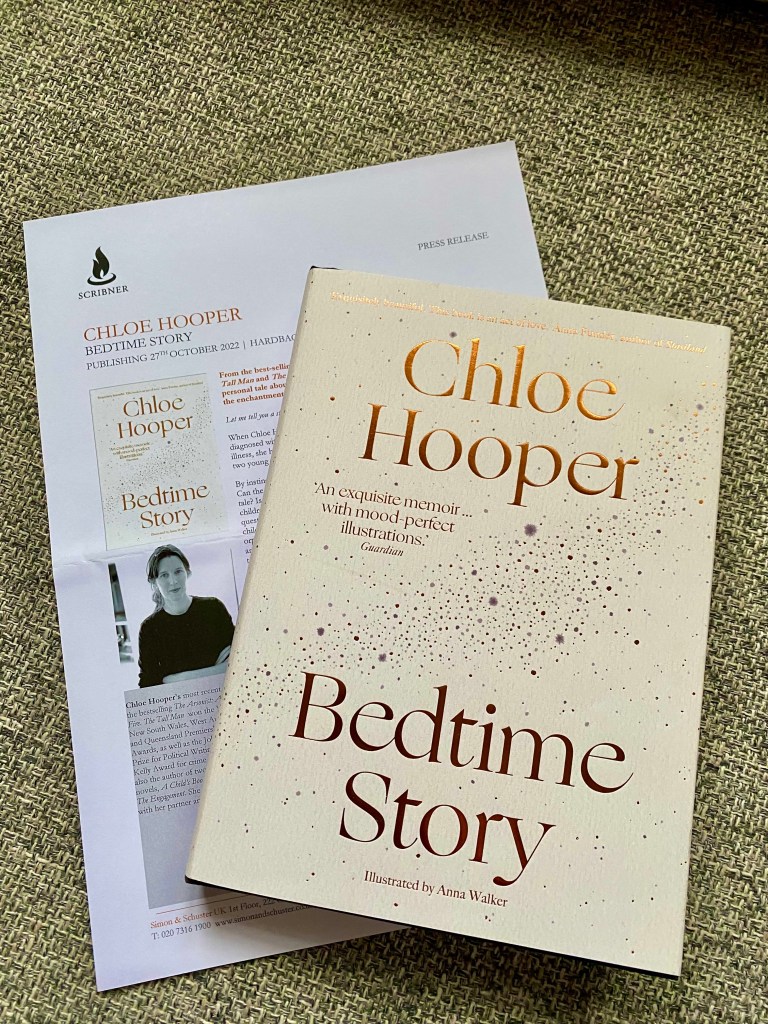
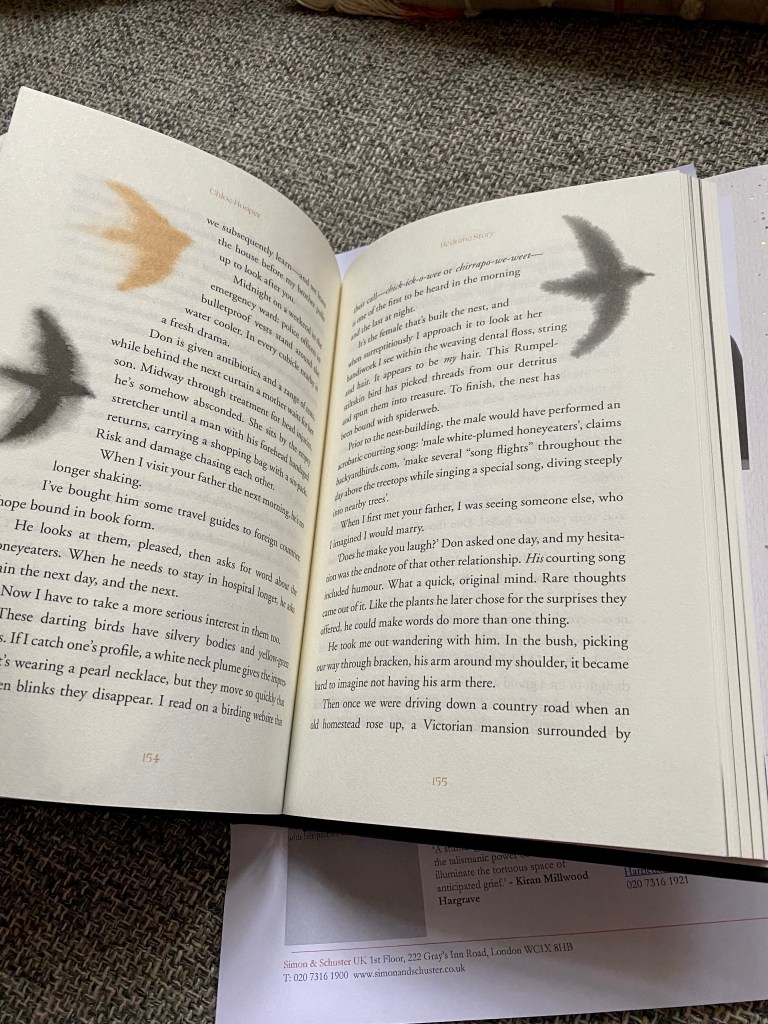
Whenever I’ve been faced with difficulties in life, my instinct is to reach for a book that helps. It might be a self-help or nonfiction manual, it might be a novel that closely echoes my own experience, or it could be a memoir that tells a similar story from a totally different perspective. I’ve been helped by so many books over the years: Havi Carel’s Illness helped me cope with my invisible disability, several books about coercive control and psychological abuse helped me through a terrible break-up and books like Small Dogs Can Save Your Life and The Year of Magical Thinking helped me negotiate my first year of being a widow. Books have helped me understand the world in so many different ways, so I was fascinated with the concept of Chloe Hooper’s beautiful book Bedtime Story. In the same way I’d always reached for literature, Chloe Hooper had turned to children’s stories to hopefully find a way through a terrible situation.
Let me tell you a story…
When Chloe Hooper’s partner was diagnosed with a rare and aggressive illness, she had to find a way to tell their two young sons. By instinct, she turned to their bookshelves. Could the news be broken as a bedtime tale? Is there a perfect book to prepare children for loss? Hooper embarks on a quest to find what practical lessons children’s literature—with its innocent orphans and evil adults, magic, monsters and anthropomorphic animals—can teach about grief and resilience in real life.
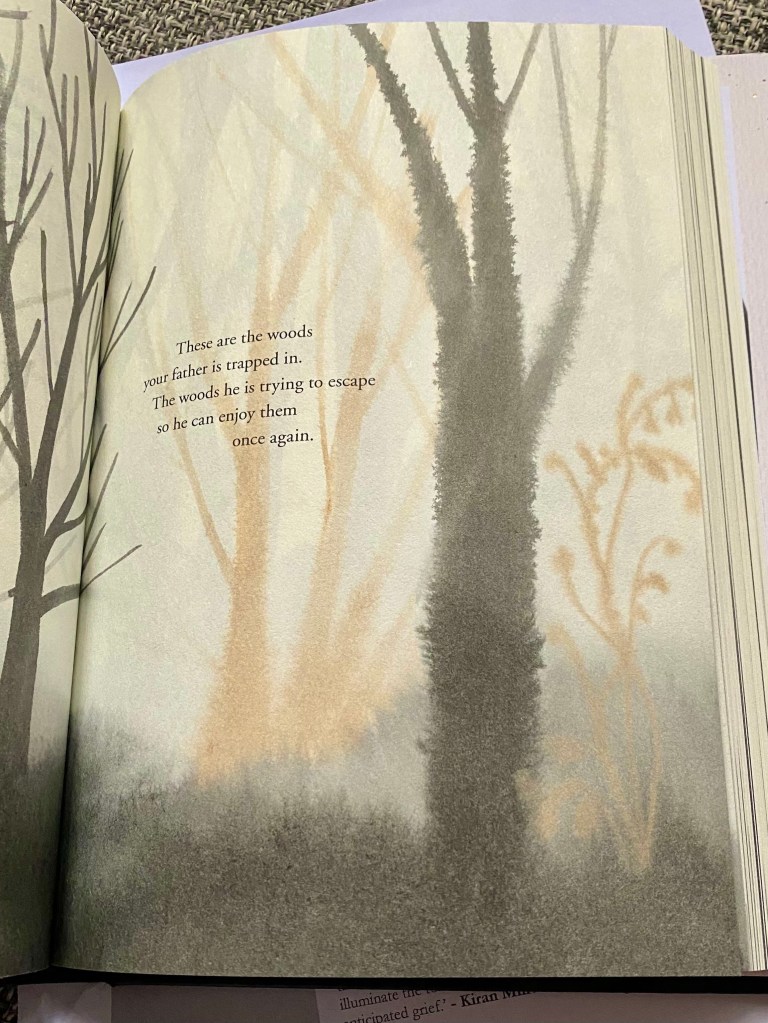
From the Brothers Grimm to Frances Hodgson Burnett and Tolkien and Dahl—all of whom suffered childhood bereavements—she follows the breadcrumbs of the world’s favourite authors, searching for the deep wisdom in their books and lives. Both memoir and manual, Bedtime Story is stunningly illustrated by the New York Times award-winning Anna Walker. In an age of worldwide uncertainty, here is a profound and moving exploration of the dark and light of storytelling.
I was first drawn by the look of this book and felt really lucky to receive such a beautiful proof copy. However, it wasn’t long before it was the beauty of the words that seduced me. Hooper manages to convey so much in her choice of words. She talks about childhood bedtimes and how ‘you lie in the fresh anarchy of the dark’ once reading is over and it’s time for the lights to go out. I loved the use of the word ‘anarchy’ because that’s exactly how it feels when the light goes off and the ordinary shapes of furniture and well worn toys become something completely different. The darkness allows them to metamorphose into whatever horror they like. It reminded me of childhood trips to the toilet in the middle of the night, when flushing the toilet and turning off the bathroom light would leave me momentarily without sight or hearing. I would run down the hallway on my tiptoes and leap from the threshold of my bedroom onto the bed, just in case whatever lurked under there grabbed hold of my ankle.
I completely understood the author’s need to move into researching children’s stories at a time of such great loss. When I lost my husband I was writing about my experience, but found myself veering off towards the Victorian form of mourning with all it’s rules and regulations. Reading about Queen Victoria’s loss of Prince Albert in a non-fiction format felt safer than reading a novel. It was all facts and couldn’t suddenly ambush me with emotion. The author was obviously looking for answers, but I wondered if she too was looking for reassurance in the dark. Trying to find a correct or right way to do something that is unimaginable. There is something strangely comforting about reading that someone else has faced this. In fact if you think about it this wre ads a mot ptyuuere are a lot of orphans and lost children in literature. Anne of Green Gables, Pip in Great Expectations, Jane Eyre, Mary Lennox in The Secret Garden, Heathcliff in Wuthering Heights – it was a more common experience to loo your parents in the 19th Century. In fact many of the authors themselves suffered childhood bereavements so perhaps their storytelling was a way of writing out that experience from the safety of adulthood, trying out what might have happened to them in that situation, or perhaps exploring their greatest fears at the time. So maybe from these stories there are clues to the better ways of helping a child through the experience, a way in which ‘the right words are an incantation, a spell of hope for the future’.
When working as a writing therapist with people who’ve had life-changing diagnoses, one of the first exercises I do with people is to imagine their illness is a monster. They must of course think about how it looks, but also how it smells and the texture of it’s skin or fur. How does it move across the room and if it came in now what would it do? Would it sit, talk to the group or slink off to a corner and stay aloof or separate? How does it behave with them? What is it’s personality and it’s drive? This is a fascinating exercise and brings so many different responses to the surface to talk about within the group. Of course this is only how we perceive it to be. Our illness and our symptoms, don’t care about us. We are irrelevant to them. It’s what their presence does to us that’s important, how we respond to it – anxiety, fear, dread, anger. Hooper writes about monsters within narratives in interesting ways. On one hand they are amoral, unstoppable and all powerful. As Hooper writes, her husband’s cancer cells are completely indifferent to him and what kind of person he is. Similarly, the Basilisk doesn’t care that it’s Harry Potter he’s trying to eat, because in the monster’s world Harry isn’t the poor, orphaned, centre of the universe, he’s just a meal. On the other hand, the monster can be fashioned from what lurks within ourselves such as the tree monster in Patrick Ness’s A Monster Calls. This monster is seemingly fashioned from Conor’s mother’s illness, but actually he isn’t there for her. He’s there for Conor. While adults feed him platitudes and half-truths, the monster is straight with him and confronts him with a terrible truth, so awful that Conor can’t bear to face it. He’s finally able to tell the monster of his terrible feelings, that he’s so tired of his mother’s illness that he wants her ordeal to end. He is ashamed of feeling this, but in saying it he becomes free. It shows the desperate need for an outlet, away from the parents, where the child can express everything they feel, even the negative and shameful narratives they tell themselves.
If all this sounds powerful, thit is. What I love about this book and the reason I want to use it with clients, is that it doesn’t sugar coat anything. It’s not syrupy sweet, but tells iiīiiooooôoothe truth about trying to live while potentially dying. Anticipating the death of someone you love is like a slow torture and Hooper doesn’t compromise. This is about that daily struggle to be a family and continue to make sense of a world that has suddenly become scary, hostile and uncertain. The love she has for her children won’t let her lie to them, but somehow they find solace in the stories and imaginary worlds she studies. There’s a way in which it teaches them how to accept that our time here and our time together is finite. Or, to quote from The Fault in our Stars, some infinities are bigger then others. I found Hooper’s narrative utterly unique and incredibly beautiful, full of strength, a resilience within the grief. She tells us that as soon as we describe something that’s happened to us in words, we’ve placed it a step or two further away, in order to examine it and understand it better. That’s what’s happening throughout the book and we go along that personal journey with her and her family. It’s such a privilege. However, it’s also a book that treasures literature and shows us how important stories are to our culture. When we bring our children up with stories, we’re sharing something imaginative and magical but we’re also equipping them for everything life can throw at them, because without stories we have no way to make meaning of our existence and experiences.
Out now from Scribner.
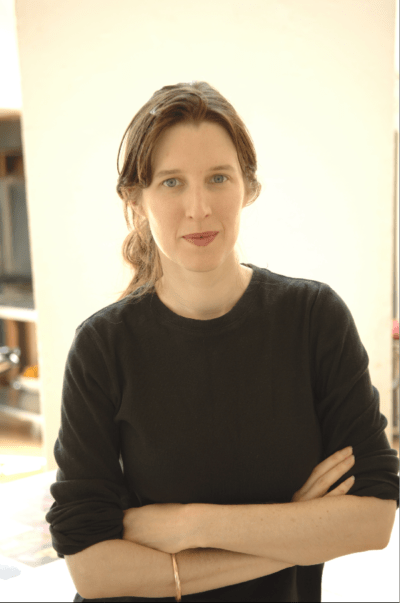
Meet the Author.
Chloe Hooper’s most recent book is the bestselling The Arsonist: A Mind on Fire. The Tall Man: Death and Life on Palm Island won the Victorian, New South Wales, West Australian and Queensland Premiers’ Literary Awards, as well as the John Button Prize for Political Writing, and a Ned Kelly Award for crime writing. She is also the author of two acclaimed novels, A Child’s Book of True Crime and The Engagement. She lives in Melbourne with her partner and her two sons.
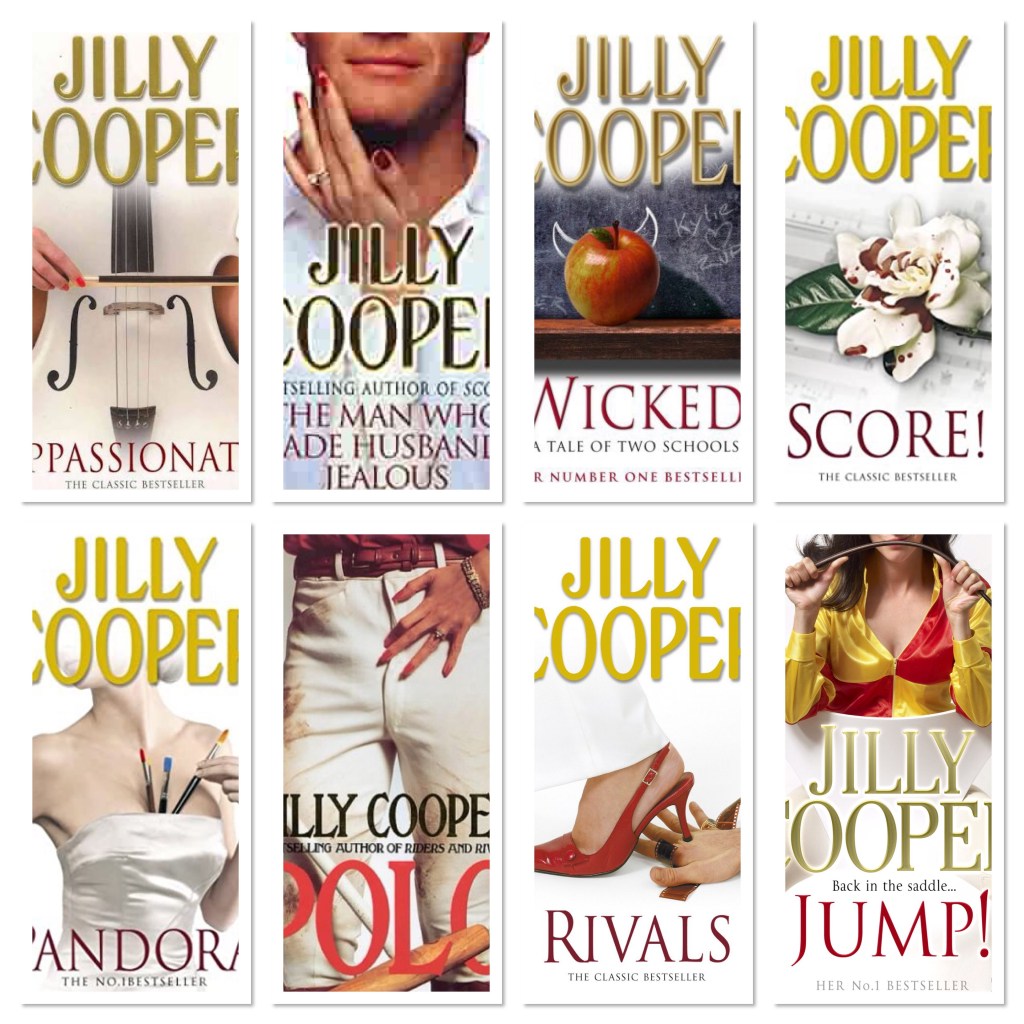
This month I’m supporting my fellow Squad Podders by highlighting writers of romance, whether that is their specific genre or just a part of their books mingled with fantasy, humour or mystery. If you want completely escapist romance with a side order of sexy, rich, characters cavorting around the English countryside then Jilly Cooper is your author. My first introduction to Jilly Cooper was finding her earlier 1970’s books on mum’s bookshelves. These weren’t the romances, but the humorous and witty digs at society found in her books on class and feminism. I remember very clearly my mum reading to me from one of them and as a working class family we found the middle classes utterly tragic so she would read descriptions of the Teale family. I’ll never forget Jen Teale who was so demure she wore six pairs of knickers. When mum was a bit low we would get a book down and I would read or act out the funnier bits and we’d all fall about laughing. It wasn’t until I was in sixth form that I encountered her handsome hero, Rupert Campbell-Black. One girl had brought Rivals into the common room and was reading out the filthy bits – ‘tit fault’ could be heard ringing round the tennis courts for weeks that summer term. I bought a copy of Riders and realised her work had so much story, as well as those famous rude bits. What I loved about Riders was the description of Penscombe and it’s jumble of treasures, dogs, books and grounds full of beautiful horses. Then as the rivalry became apparent between Rupert the school bully and his victim, the gypsy Jake Lovell I was completely caught up in the story. Her characters were well fleshed out and Rupert’s disastrous marriage to the American hunt saboteur Helen, was a fascinating clash of cultures, class and personality. I was soon utterly gripped by the world of showjumping, the bed hopping and the relationships sacrificed to ambition.
I think characters are a strength of Cooper’s even though some are almost caricatures and her rendering of Northern accents is hilariously wide of the mark. Each book tends to have a virtuous or kind woman – Taggie O’Hara, Kitty Rannaldini, Daisy or Lucy – who are perhaps not conventionally attractive, slightly shy and a bit downtrodden. It gives us someone to root for. On the other hand there are absolute horrors as well like narcissistic opera diva Hermione Harefield, the wicked but talented Roberto Rannaldini, or the chaotic and faithless Janey Lloyd-Foxe. It doesn’t matter that they’re not realistic, this is a romp through the upper classes – a part of society that Jilly Cooper knows more about than me. There’s always a lusty man to fall in love with too, someone tortured and secretive like the director Tristan de Montigny in Score, a bumbling innocent with looks to die for like Lysander Hawksley in The Man Who Made Husbands Jealous, or the gorgeous Luke Alderton in Polo, who loves the spoiled young polo player Perdita even when she chooses his brother Red. From showjumping, to television, to gigolos, polo players, orchestras, film making and horse racing Jilly takes us through each world with great knowledge and detail, often making the animals just as strong in character as the humans. I’m particularly fond of the labradors Mavis and Badger, and Taggie’s faithful little mongrel Gertrude.
Then there are the romances! There are several in every book and of course the over-arching love story of all – Rupert and Taggie. In Riders I felt so sad for Fenella whose hero worship of Billy Lloyd-Foxe becomes an unrequited crush, then a doomed love affair. In Polo I was rooting for Daisy, the mother of our heroine, who had been so focused on looking after others that she couldn’t believe the dashing polo player Ricky France-Lynch would be interested in her. I followed the fortunes of Rupert and Helen’s daughter Tabitha very closely. She’s impulsive and makes a passionate, but very difficult marriage to Isa Lovell, the eldest son of Rupert’s enemy Jake Lovell. Any chance she had of a more stable and loving relationship, through the novel Score particularly, had me keeping my fingers crossed. Of course it’s Rivals where the best and most beguiling love story begins and to see the bed-hopping Rupert Campbell-Black falling head over heels for the shy, dyslexic and unconventionally beautiful Taggie was deeply enjoyable. I was a similar age to Taggie when reading Rivals and still very romantic. Now I look at their relationship a little differently, but every few years I re-read a couple of the novels and I still feel a little starry eyed about them. They pop up in all the novels after Rivals and their relationship is probably the most successful in Cooper’s fictional Gloucestershire.
Cooper gives the reader a glimpse into a glamorous and wealthy world most of us would never know about. The hotels are 5 star, the fashion is designer, and the travel is first class. This is a world of elite sport and the game of kings – yes the Prince of Wales does pop up in Polo. There’s the world of classical music following the Rutshire orchestra in both Appassionata and Score, where the countryside becomes a backdrop for a twentieth century update to Don Giovanni. Pandora takes us into the art world and her latest Jump and Mount we’re back with horses, but in a horse-racing capacity rather than show jumping. Her only mis-steps for me are when she steps outside of this privileged world and tries to write about the working classes or a Northern character. Her book Wicked focuses on a struggling state school being mentored by the local public school where some of our usual suspects pop up, such as Rupert and Taggie Campbell Black’s children. I found her working class and city dwelling characters stereotypical and I inwardly cringed to such an extent I didn’t keep the book. Watch out for the accent of George Hungerford in Score for an example of how Northerners speak too. These are small quibbles though in a series of novels full of humour, bedroom romps, glamour, money and total escapism. The countryside is stunning and characters live in the most picturesque surroundings you’ll feel you’ve been on a holiday. Mainly though you’ll keep coming back for the love stories: hoping that the plump, bespectacled Kitty Rannaldini will escape the clutches of her evil husband with the handsome Lysander Hawksley; whether dog loving, shy, make-up artist Lucy will ever be noticed by the glamorous and mercurial Tristan de Montigny. Cooper uses all of the romantic conventions to her advantage. There are always obstacles to the couple’s love, distractions and conventions that can’t be crossed. There might be an age barrier, a man whose a confirmed bachelor, families that are locked into a bitter feud or a difficult marriage to negotiate. There are so many of these obstacles, that you’ll wait with your heart in your mouth as Taggie drives to collect Rupert Campbell-Black from his trip aboard, hoping desperately that he’ll overlook them and let her fall into his arms.
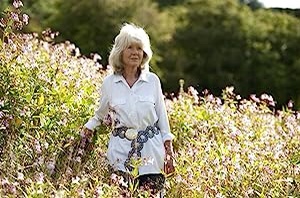
Meet the Author
Jilly Cooper is a journalist, author and media superstar. The author of many number one bestselling novels, she lives in Gloucestershire.
She has been awarded honorary doctorates by the Universities of Gloucestershire and Anglia Ruskin, and won the inaugural Comedy Women in Print lifetime achievement award in 2019. She was appointed CBE in 2018 for services to literature and charity.
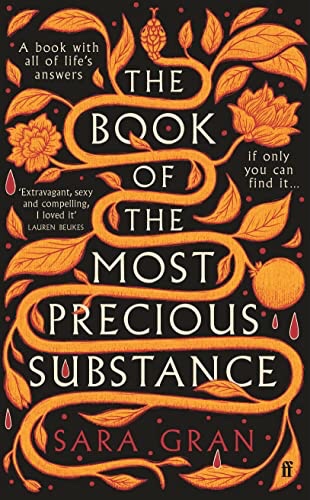
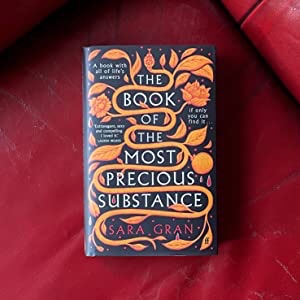
This was one of the most unusual books I’ve ever read, with a mix of history, mystery, philosophy, magic and erotica that was most unexpected. Lily Albrecht is a writer turned book dealer who lives in a farmhouse in upstate New York. Several years ago she met husband Abel, the love of her life. Abe was a brilliant man, a writer and professor who inspired others and drew friends and colleagues to their home as guests. Then he started to forget things and after spending a fortune on neurologists, tests and treatments she’d come to accept that Abe was not getting better. It was like a form of dementia. He was now using a wheelchair and was completely mute, and Lily was left grieving for him while he was still alive. With full time nursing care from Awe, Lily is able to travel into NYC to run a stand at a book fair. It’s there she runs into Lucas, a librarian and book dealer friend, and it’s through him that Lily first hears of the book.
They are approached by a third party who knows someone willing to pay upwards of half a million dollars for the book. Some of the most wealthy book collectors in the world tend to covet books about magic or sex. Dissatisfied with the paltry millions they have, they want to look at ancient ways to manipulate and accumulate power. This book has both, something Lily jokingly refers to as ‘sex magic’, but as she listens to how the book works she does feel a stirring. Sex is something she and Abe had to lay aside a long time ago. She’s used to early nights, flannel pyjamas and a bed to herself. She wouldn’t consider herself sexy, but as she sits with Lucas and they talk about the steps to the magic of the book. It contains a symbol, something that’s not quite a circle and not quite a triangle. The first step requires the sweat from a woman’s neck and from there each step requires a bodily fluid elicited during sex. The final step is to anoint the book with the most precious substance – a substance that a woman produces at her most aroused. Once all the steps are complete, the pair will receive the thing they most wish for which is usually money and power beyond their wildest dreams.
Finding this book takes them on an erotic odyssey from New York to LA, the humidity of New Orleans, then on to Munich and Paris. Lily and Lucas will find the book, convince the collector to sell it to their buyer and hopefully make a lot of money. They will also embark on a sexual relationship with no boundaries and no restrictions and neither tells the other what they’re hoping for from the book. Of course the money will be incredible, it would help Abe enormously, but Lily wants something more. She wants Abe back. More than that, she wants Abe to return to himself with all the vitality, intelligence and allure he’s always had. She wants them to spend evenings talking about books and watch him hosting friends at their home. She wants Able to have his life back. In the meantime she’s going to enjoy her first vacation for a long time, staying in five star hotels and experimenting with Lucas while they try to find the elusive book.
This is an incredible, escapist, fantasy and travelogue, that could have been quite shallow and empty without the skill of the author. She has put so much genuine emotion and compassion into the story, along with the gritty realism of living with a loved one who is leaving you piece by piece. Lily’s memories of Abe and their relationship are heartbreaking when you realise he is now a motionless, mute, man unable to do anything but watch TV. Lily emphasises the loss of this man’s intelligence. He looms large in her memory and there’s a little bit of hero worship with the love she has for him. She describes the loss of his voice, their friends slowly disappearing, the loneliness of separating their sleeping arrangements and the torture of Abe being there, but not. It’s heartbreaking and I’ve been through exactly this experience as I slowly lost my husband fifteen years ago. Perhaps this is why I empathised with Lily so strongly and I understood why she was taken in by this adventure and by being desired for the first time in a long time. It’s like watching a flower bloom as she slowly awakens again, but even though I could understand her need I worried that somehow the book was exploiting her vulnerability. I didn’t get to know Lucas as well as Lily, so his motivations were slightly unclear. He mentioned being used to a five star lifestyle, but his money running low. This felt greedy or shallow when compared to Lily’s motivation. I worried that most people wanting to acquire the book were greedy and materialistic and there would be some sort of come-uppance, but I didn’t know if Lily deserved that. Each time they performed a step, the magic felt dark and it seemed to have an addictive quality. A new avenue would open up as if the book was drawing them closer and making their path easier. It wanted to be found, but why?
The pace towards the end really picks up and I was racing through the action with my jaw dropped open. However, it was the chapter after Paris that really hit me emotionally. It emphasised how much we look at the people we’ve lost with rose tinted spectacles. No matter how much we feel nostalgic for a certain place and time in our lives, it can’t be replicated. It reminded me of the saying ‘you can’t wade into the same river twice; because you have changed and so has the river’. I’ve read erotica where it’s all sexual acts with barely any story in between. This was an incredible story that I could have read happily without the sex, but to make the sexual acts an integral part of the story and the search was clever. The author has achieved an intelligent and fantastical book, that succeeds in being both erotic and a fascinating mystery.
Published 30th August 2022 by Faber and Faber
Meet The Author
Sara Gran is the author of The Book of The Most Precious Substance. Previous work includes Saturn’s Return to New York, Come Closer, Dope, Marigold, and the Claire DeWitt series. She is the founder of small press Dreamland Books and writes for television and film.
I read this in two long bursts – one of which started at 3am. It’s a book I couldn’t put down because all I wanted was these two people back together. The harsh realities of grief and lifelong family rifts are well drawn by the author and completely believable. All of these people are trying to move forward despite their lives missing a beat one day on a country road, where a split second decision has lifelong consequences. This book explores grief, loss, loyalty, loneliness and the eventual incredible ability the human heart has to heal.
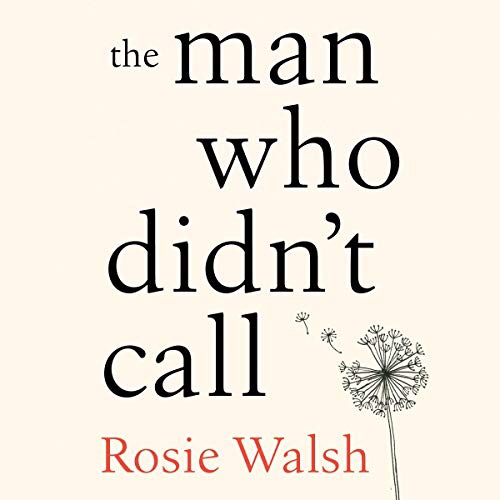
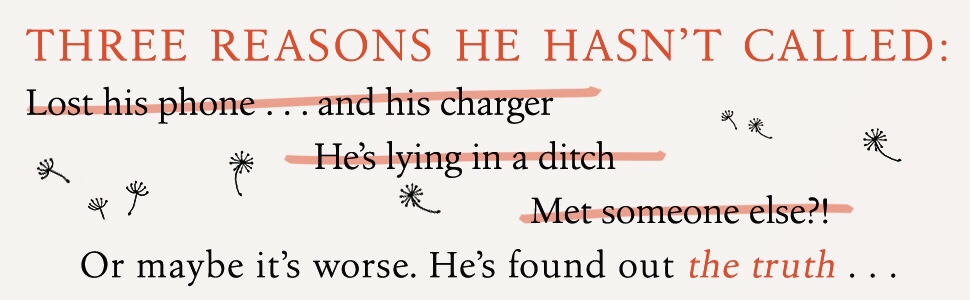
Sarah has a 7 day whirlwind romance with Eddie. They meet by chance on a country road while Sarah is visiting her parents. She thinks Eddie just might be the one. But, Eddie goes away on holiday and she never hears from him again. Is Eddie a heartless playboy who never intended to call? Did Sarah do something wrong? Or has something terrible happened to him? Instead of listening to friends and writing this off as a one night stand, Sarah begins to obsess and is determined to find the answer. Every clue she has comes to a dead end and she is in danger of completely losing her dignity. As her time back home in the UK starts to run out, Sarah looks for clues to track Eddie down. What she hears is confusing her further. His friend doesn’t give the simple answer, that Eddie has moved on, but gives her a warning; if she knows what’s best for her, she needs to stop looking for Eddie.
Walsh has successfully intertwined a love story with a mystery. I veered between wondering if Sarah was becoming irrational and willing her to succeed. Interspersed with the narrative are beautiful letters of love and loss addressed to the writer’s sister, affectionately nicknamed ‘Hedgehog’. The letter writer’s sister died when they were young, but we don’t know what happened or who the letter writer is. If Sarah is the author of the letters does this loss have something to do with the warning she’s been given? Is her sister the key – not just to Eddie’s disappearance, but to why Eddie was on that particular stretch of road on that day?
I quickly became invested in Sarah and Eddie’s story. I think we’ve all been subjected to the watched phone that never rings and how crazy it can make us. It could have made me dislike Eddie early on, but for some reason I never did. I’m definitely a hopeless romantic so I seemed to accept Sarah’s hope that this could still work out. The other characters in the novel are also well-written and compelling. I’m a therapist so I was particularly interested in Eddie’s mother and her mental ill health. I think her symptoms and the way she manipulated Eddie showed a streak of narcissism. She finds it impossible to see this situation from his point of view, only how it might her. Anything that threatens their dynamic as carer and patient is a huge threat to her and she responds with emotional blackmail and hostility. Eddie is as much a prisoner of her mental ill health as she is. I also had empathy for Sarah’s friend Jenny who is struggling to conceive and undergoes IVF treatment to the point of financial ruin. Her character probably leapt out at me because I’m also not able to have children, and know how difficult it can be to come to terms with. Her stoicism and determination to support her friend in the face of her own loss is very moving.
I stayed up until 2am to finish the book, because I had everything crossed that the mystery would be explained and these two people could move forward together. To different degrees, all the novels characters are imprisoned by the past and losses they can’t accept. My husband died when he was 42 and I was 35. It’s like a chasm opened up and I had to choose between staying on one side forever, with the past and my feelings of loss and fear. Or I could choose to jump over that chasm into a new future. I never forget what happened or the love I have for Jerzy, but twelve years later I have a wonderful partner and two beautiful stepdaughters. Thankfully, I had the bravery to move forward knowing I can’t lose my memories of the past, but I still have a future full of possibilities I never imagined. That’s what the characters in the novel are trying to do. Grief is different for everyone and there are always tensions between those who are trying to heal and those who can’t imagine healing because it feels like a betrayal. Rosie Walsh draws these different threads together beautifully, creating a bittersweet novel that captures the incredible ability the human heart has to heal.
Meet the Author
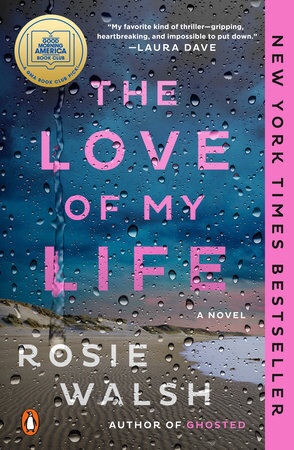
Rosie Walsh is the internationally bestselling author of two novels, the global smash hit THE MAN WHO DIDN’T CALL, and – new for 2022 – THE LOVE OF MY LIFE, a heart-wrenching, keep-you-up-all-night emotional thriller, which was an instant New York Times bestseller and stayed in the German top ten for several weeks.
Rosie Walsh lives on a medieval farm in Devon, UK, with her partner and two young children, after years living and travelling all over the world as a documentary producer and writer.
The Man Who Didn’t Call (UK) / Ghosted (US) was her first book under her own name, and was published around the world in 2018, going on to be a multimillion bestseller.
Prior to writing under her own name she wrote four romantic comedies under the pseudonym Lucy Robinson. When she isn’t parenting or writing, Rosie can be found walking on Dartmoor, growing vegetables and throwing raves for adults and children in leaking barns.
Rosie’s new novel The Love of my Life is another heartbreaking romance, mixed with an addictive mystery you’ll be begging for one more chapter.
I have held you every night for ten years and I didn’t even know your name. We have a child together. A dog, a house. Who are you?
Emma loves her husband Leo and their young daughter Ruby: she’d do anything for them. But almost everything she’s told them about herself is a lie. And she might just have got away with it, if it weren’t for her husband’s job. Leo is an obituary writer and Emma is a well-known marine biologist, so, when she suffers a serious illness, Leo copes by doing what he knows best – reading and writing about her life. But as he starts to unravel her past, he discovers the woman he loves doesn’t really exist. Even her name is fictitious.
When the very darkest moments of Emma’s past life finally emerge, she must somehow prove to Leo that she really is the woman he always thought she was . . . But first, she must tell him about the love of her other life.
Available now in hardback and on Kindle, but due out in paperback in July 2023.
“Surely you would like to be immortalised in art, fixed forever in perfection?”
I would kill to dance like her.
Disciplined and dedicated, Olivia is the perfect ballerina. But no matter how hard she works, she can never match identical twin Clara’s charm.
I would kill to be with her.
As rehearsals intensify for the ballet Coppélia, the girls feel increasingly like they are being watched. And, as infatuation turns to obsession, everything begins to unravel.
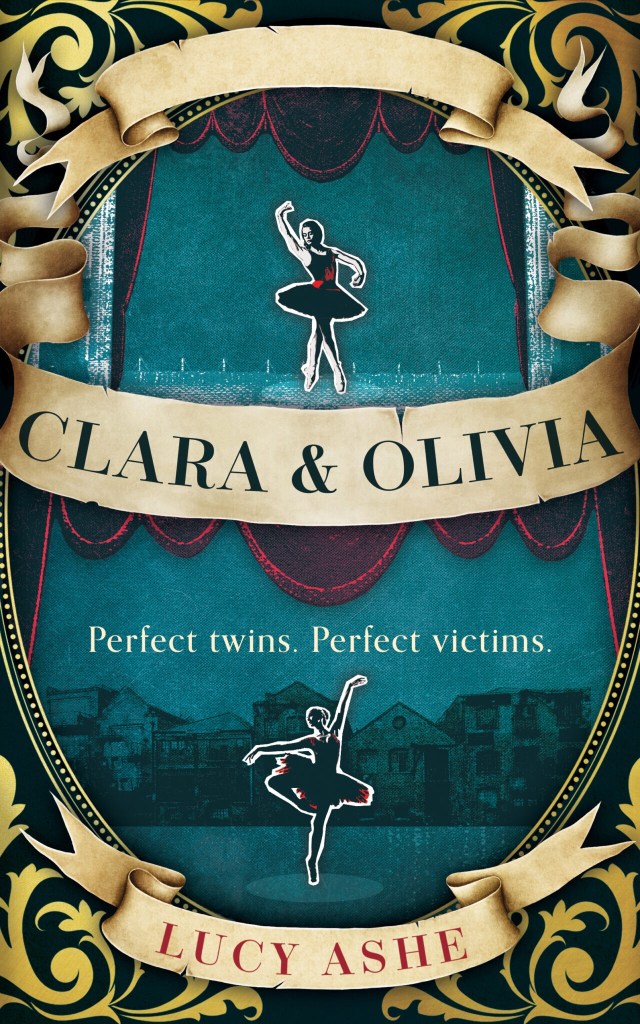
We’re in Black Swan territory here with the company at Sadler’s Wells as they rehearse Coppélia, which couldn’t be more apt for the story of Clara and Olivia. Clara and Olivia are identical twins, shaped by their ballet mad mother to become the perfect ballerinas. The girls are so identical that in order to assert her own identity Olivia wears her hair in a higher bun than her sister, with a rose attached. There are ballerinas who must be the epitome of perfection and blend in with the chorus so the audience sees perfectly synchronised ballet; the company as one rather than individuals. Olivia has taken her mother’s lessons to heart and is that perfect ballerina, she blends perfectly into the company, but she’ll never be the prima ballerina. Clara has that something extra.
Coppelia is about a man who creates a dancing doll, the image of a perfect ballerina. It’s so beautiful that Franz, a young man from the village, falls in love with it and sets aside his real sweetheart Swanhilda. To teach him a lesson Swanhilda dresses as the doll and pretends it has come to life. While the ballet is a comic one there is a more disturbing similarity, between the doll and the ballerina when each dancer stands at the barre every morning, identical in uniform and in movement. These are the parts the audience doesn’t see, that daily dedication to the same movements over and over until they are second nature. We are also blind to the years before this, where each dancer has persevered through pain and injury or given up sleep overs with friends, teenage boyfriends and even school work to become as light as air on the stage. To move like butterflies, while their worn out and broken shoes are the equivalent of Dorian Gray’s picture in the attic. When watching a ballet it’s not hard to imagine a giant puppet master behind the scenery controlling this whole row of ballerinas so they move as one. With the echoes of Black Swan in my head I was feeling a creeping sense of unease and psychological drama, both around the sisters and whoever it is who watches them.
There are two men in the book, employed or contracted by the ballet company and they too are caught up in this theme of appearances being deceptive. Samuel is a giant. A large, ungainly man whose looks mark him out as different. People would struggle to imagine that it is he who makes their pointe shoes; something that looks so delicate should not be made by people who look like him. When he finds out that the shoes he’s making are for Olivia Marionetta he knows he must find some way to mark them out as different from all the others, just as he noticed her among the other dancers in the company. He always writes the dancer’s name across the sole in pen, but her shoes should have something more. He takes his inspiration from the white rose he has seen pinned just about her bun and engraves it into the sole then, as he leaves the shoes in her pigeon hole, he places a white rose on top. Samuel is lucky that despite his size he can travel around the theatres and dance studios largely unnoticed. His contribution is unseen and therefore, he is invisible. So he has no doubt that Olivia won’t guess who has paid her this tribute, even if he has been hanging around the rehearsal room. He noticed that despite looking identical, the girls are not the same. Olivia is obedient and keeps her eyes cast down during rehearsals, not daring to challenge the dance mistress. Whereas Clara scares him, she knows she is an excellent dancer and there’s a challenge in her moves and the way she looks directly at the dance mistress. When given direction, she turns away and rolls her eyes at the other dancers. Clara knows she outshines the others, but he hopes his shoes will make Olivia feel adored too.
Nathan is even closer to the dancers during rehearsal because he is their practice pianist. He and Clara go out with the company at night while Olivia stays home, soaks her feet and mends her shoes for the following day. Her legs will be refreshed and her bag carefully packed, whereas Clara knows her feet will ache from practice, followed by dancing through the clubs till the early hours. She also knows that when she opens her bag, her tights will be full of hair grips. Usually the girls share clothes, but Clara has been wearing a dazzling green coat that Nathan bought her. Of late she has started to find the coat a little claustrophobic, the belt too restrictive and the shoulders too heavy. Nathan too seems to get a little closer each time, his hand always at her waist and his knee pressed tightly against hers under the table. She was also a little unnerved at the line of verse he scribbled when they were playing a game – ‘A lovely apparition, sent to be a moment’s ornament’ – while she isn’t sure what it means, something about it bothers her and I thought back to the puppet ballerina Coppelia. Nathan appears to be the perfect companion for a beautiful young dancer, but the closer he gets the more she wants to pull away. She imagines his houseboat, the ideal home for a young bohemian musician, but despite it being a few moments away from her flat he never takes her there. Is the look and idea of her more alluring than the reality? In their own private rehearsal he pushes her, far beyond tiredness and hunger. In the dressing room after he apologises, she notices how he looks at the dancer’s jumble of make up, jewellery and bits of costume that haven’t been returned to wardrobe. The one thing he becomes fixed on is a tiny figurine of a ballerina, like the ones you might find in a girl’s jewellery box, permanently on point and turning endlessly without exhaustion or hunger to mar her beauty. No real woman could be so perfect.
Although I found the novel a little slow at first, but I soon realised that the inner thoughts and feelings are slowly building towards action. Once strange things start happening around the theatre the pace picks up and I became intrigued. In the well under the theatre, where the dancers like to go for pre-performance rituals, a single shoe is found floating in the water like an evil portent. Then life changes start to come tick and fast. Clara receives an offer she has never imagined, but it will mean moving away from Nathan and choosing independence from her sister. Their mother, the woman who inspired their career choice, is deteriorating in a nursing home. Her imminent passing is another sign – do they still need to be in each other’s pockets? Usually they need their combined strength but without their mothers rigid ideals to live up to could they go it alone? The author hints at these changes of identity, with one sister choosing to borrow the other one’s clothes, perhaps hoping for a little of their attitude too. She often feels like a mere echo of her sister, but I worried that this ‘doubling’ would land one or both of them in further danger. This tension is offset by Samuel’s story, of being led away from an obsession towards something more real. Living instead of watching. If the ballerinas represent perfect objects of desire, he is being offered a real relationship. But is it Samuel who watches the twins and can he see that someone to love and support you is more important than appearance? As the hidden desires and obsessions of these characters come to the surface and explode into action more than one of them will be in danger. This thriller has real atmosphere and characters with fascinating psychological issues that drive the plot.
Published 2nd Feb by Magpie Publishing.
Meet the Author
LUCY ASHE trained at the Royal Ballet School for eight years, first as a Junior Associate and then at White Lodge. She has a diploma in dance teaching with the British Ballet Organisation. She decided to go to university to read English Literature at St Hugh’s College, Oxford (MA Oxon), while continuing to dance and perform. She then took a PGCE teaching qualification and became a teacher. She currently teaches English at Harrow School, an all-boys boarding school in North London. Her poetry and short stories have been published in a number of literary journals and she was shortlisted for the 2020 Impress Prize for New Writers. She also reviews theatre, in particular ballet, writing for the website Playstosee.com.
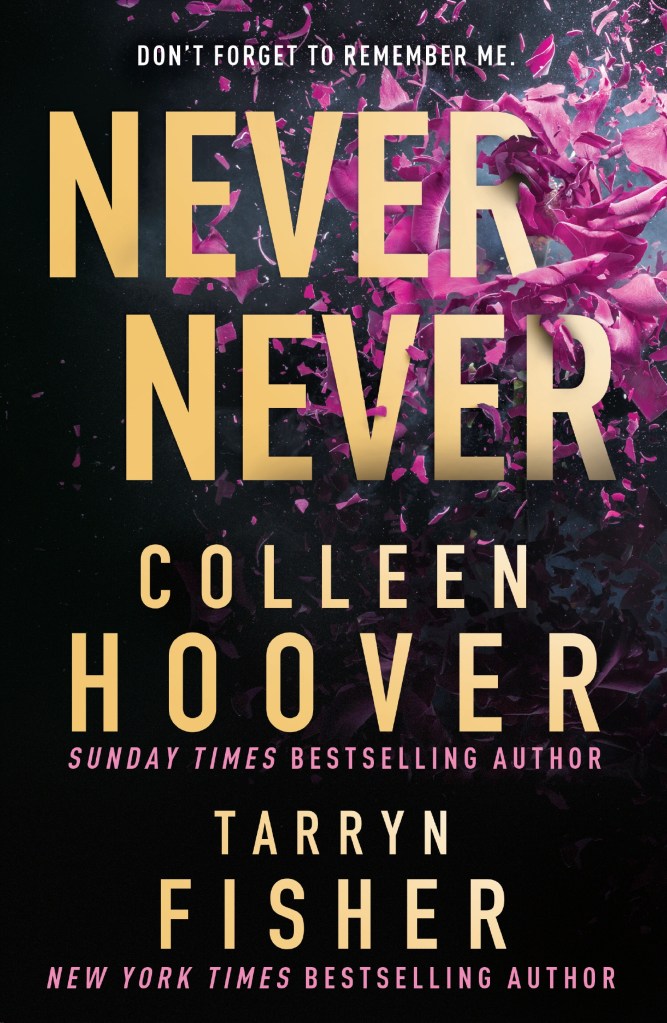
Charlie Wynwood and Silas Nash have been best friends since they could walk. They’ve been in love since the age of fourteen. But as of this morning… they are complete strangers. Their first kiss, their first fight, the moment they fell in love… every memory has vanished. Now Charlie and Silas must work together to uncover the truth about what happened to them and why. But the more they learn about the couple they used to be… the more they question why they were ever together to begin with.
Forgetting is terrifying but remembering may be worse…
The Number One Sunday Times bestselling author of It Ends with Us joins forces with the New York Times bestselling author of The Wives for a gripping, twisty, romantic mystery unlike any other.
1 Charlie
A crash. Books fall to the speckled linoleum floor. They skid a few feet, whirling in circles, and stop near feet. My feet. I don’t recognize the black sandals, or the red toenails, but they move when I tell them to, so they must be mine. Right? A bell rings. Shrill. I jump, my heart racing. My eyes move left to right as I scope out my environment, trying not to give myself away. What kind of bell was that? Where am I? Kids with backpacks walk briskly into the room, talking and laughing. A school bell. They slide into desks, their voices competing in volume. I see movement at my feet and jerk in surprise. Someone is bent over, gathering up books on the floor; a red-faced girl with glasses. Before she stands up, she looks at me with something like fear and then scurries off. People are laughing. When I look around I think they’re laughing at me, but it’s the girl with glasses they’re looking at. “Charlie!” someone calls. “Didn’t you see that?” And then, “Charlie…what’s your problem…hello…?” My heart is beating fast, so fast. Where is this? Why can’t I remember? “Charlie!” someone hisses. I look around. Who is Charlie? Which one is Charlie? There are so many kids; blond hair, ratty hair, brown hair, glasses, no glasses… A man walks in carrying a briefcase. He sets it on the desk. The teacher. I am in a classroom, and that is the teacher. High school or college? I wonder. I stand up suddenly. I’m in the wrong place. Everyone is sitting, but I’m standing…walking. “Where are you going, Miss Wynwood?” The teacher is looking at me over the rim of his glasses as he riffles through a pile of papers. He slaps them down hard on the desk and I jump. I must be Miss Wynwood. “She has cramps!” someone calls out. People snicker. I feel a chill creep up my back and crawl across the tops of my arms. They’re laughing at me, except I don’t know who these people are. I hear a girl’s voice say, “Shut up, Michael.” “I don’t know,” I say, hearing my voice for the first time. It’s too high. I clear my throat and try again. “I don’t know. I’m not supposed to be here.” There is more laughing. I glance around at the posters on the wall, the faces of presidents animated with dates beneath them. History class? High school. The man—the teacher—tilts his head to the side like I’ve said the dumbest thing. “And where else are you supposed to be on test day?” “I… I don’t know.”
“Sit down,” he says. I don’t know where I’d go if I left. I turn around to go back. The girl with the glasses glances up at me as I pass her. She looks away almost as quickly. As soon as I’m sitting, the teacher starts handing out papers. He walks between desks, his voice a flat drone as he tells us what percentage of our final grade the test will be. When he reaches my desk he pauses, a deep crease between his eyebrows. “I don’t know what you’re trying to pull.” He presses the tip of a fat pointer finger on my desk. “Whatever it is, I’m sick of it. One more stunt and I’m sending you to the principal’s office.” He slaps the test down in front of me and moves down the line. I don’t nod, I don’t do anything. I’m trying to decide what to do. Announce to the whole room that I have no idea who and where I am—or pull him aside and tell him quietly. He said no more stunts. My eyes move to the paper in front of me. People are already bent over their tests, pencils scratching. Fourth Period History Mr. Dulcott There is a space for a name. I’m supposed to write my name, but I don’t know what my name is. Miss Wynwood, he called me. Why don’t I recognize my own name? Or where I am? Or what I am? Every head is bent over their papers except mine. So I sit and stare, straight ahead. Mr. Dulcott glares at me from his desk. The longer I sit, the redder his face becomes. Time passes and yet my world has stopped. Eventually, Mr. Dulcott stands up, his mouth open to say something to me when the bell rings. “Put your papers on my desk on the way out,” he says, his eyes still on my face. Everyone is filing out of the door. I stand up and follow them because I don’t know what else to do. I keep my eyes on the floor, but I can feel his rage. I don’t understand why he’s so angry with me. I am in a hallway now, lined on either side by blue lockers. “Charlie!” someone calls. “Charlie, wait up!” A second later, an arm loops through mine. I expect it to be the girl with the glasses; I don’t know why. It’s not. But, I know now that I am Charlie. Charlie Wynwood. “You forgot your bag,” she says, handing over a white backpack. I take it from her, wondering if there’s a wallet with a driver’s license inside. She keeps her arm looped through mine as we walk. She’s shorter than me, with long, dark hair and dewy brown eyes that take up half her face. She is startling and beautiful. “Why were you acting so weird in there?” she asks. “You knocked the shrimp’s books on the floor and then spaced out.” I can smell her perfume; it’s familiar and too sweet, like a million flowers competing for attention. I think of the girl with the glasses, the look on her face as she bent to scoop up her books. If I did that, why don’t I remember? “I—”
“It’s lunch, why are you walking that way?” She pulls me down a different corridor, past more students. They all look at me…little glances. I wonder if they know me, and why I don’t know me. I don’t know why I don’t tell her, tell Mr. Dulcott, grab someone random and tell them that I don’t know who or where I am. By the time I’m seriously entertaining the idea, we’re through a set of double doors in the cafeteria. Noise and color; bodies that all have a unique smell, bright fluorescent lights that make everything look ugly. Oh, God. I clutch at my shirt. The girl on my arm is babbling. Andrew this, Marcy that. She likes Andrew and hates Marcy. I don’t know who either of them is. She corrals me to the food line. We get salad and Diet Cokes. Then we are sliding our trays on a table. There are already people sitting there: four boys, two girls. I realize we are completing a group with even numbers. All the girls are matched with a guy. Everyone looks up at me expectantly, like I’m supposed to say something, do something. The only place left to sit is next to a guy with dark hair. I sit slowly, both hands flat on the table. His eyes dart toward me and then he bends over his tray of food. I can see the finest beads of sweat on his forehead, just below his hairline. “You two are so awkward sometimes,” says a new girl, blonde, across from me. She’s looking from me to the guy I’m sitting next to. He looks up from his macaroni and I realize he’s just moving things around on his plate. He hasn’t taken a bite, despite how busy he looks. He looks at me and I look at him, then we both look back at the blonde girl. “Did something happen that we should know about?” she asks. “No,” we say in unison. He’s my boyfriend. I know by the way they’re treating us. He suddenly smiles at me with his brilliantly white teeth and reaches to put an arm around my shoulders. “We’re all good,” he says, squeezing my arm. I automatically stiffen, but when I see the six sets of eyes on my face, I lean in and play along. It’s frightening not knowing who you are—even more frightening thinking you’ll get it wrong. I’m scared now, really scared. It’s gone too far. If I say something now I’ll look…crazy. His affection seems to make everyone relax. Everyone except…him. They go back to talking, but all the words blend together: football, a party, more football. The guy sitting next to me laughs and joins in with their conversation, his arm never straying from my shoulders. They call him Silas. They call me Charlie. The dark-haired girl with the big eyes is Annika. I forget everyone else’s names in the noise. Lunch is finally over and we all get up. I walk next to Silas, or rather he walks next to me. I have no idea where I’m going. Annika flanks my free side, winding her arms through mine and chatting about cheerleading practice. She’s making me feel claustrophobic. When we reach an annex in the hallway, I lean over and speak to her so only she can hear. “Can you walk me to my next class?” Her face becomes serious. She breaks away to say something to her boyfriend, and then our arms are looped again. I turn to Silas. “Annika is going to walk me to my next class.” “Okay,” he says. He looks relieved. “I’ll see you…later.” He heads off in the opposite direction. Annika turns to me as soon as he’s out of sight. “Where’s he going?” I shrug. “To class.” She shakes her head like she’s confused. “I don’t get you guys. One day you’re all over each other, the next you’re acting like you can’t stand to be in the same room. You really need to make a decision about him, Charlie.”
She stops outside a doorway. “This is me…” I say, to see if she’ll protest. She doesn’t. “Call me later,” she says. “I want to know about last night.” I nod. When she disappears into the sea of faces, I step into the classroom. I don’t know where to sit, so I wander to the back row and slide into a seat by the window. I’m early, so I open my backpack. There’s a wallet wedged between a couple of notebooks and a makeup bag. I pull it out and flip it open to reveal a driver’s license with a picture of a beaming, dark-haired girl. Me. Charlize Margaret Wynwood 2417 Holcourt Way New Orleans, LA I’m seventeen. My birthday is March twenty-first. I live in Louisiana. I study the picture in the top left corner and I don’t recognize the face. It’s my face, but I’ve never seen it. I’m…pretty. I only have twenty-eight dollars. The seats are filling up. The one beside me stays empty, almost like everyone is too afraid to sit there. I’m in Spanish class. The teacher is pretty and young; her name is Mrs. Cardona. She doesn’t look at me like she hates me, like so many other people are looking at me. We start with tenses. I have no past. I have no past. Five minutes into class the door opens. Silas walks in, his eyes downcast. I think he’s here to tell me something, or to bring me something. I brace myself, ready to pretend, but Mrs. Cardona comments jokingly about his lateness. He takes the only available seat next to me and stares straight ahead. I stare at him. I don’t stop staring at him until finally, he turns his head to look at me. A line of sweat rolls down the side of his face. His eyes are wide. Wide…just like mine.
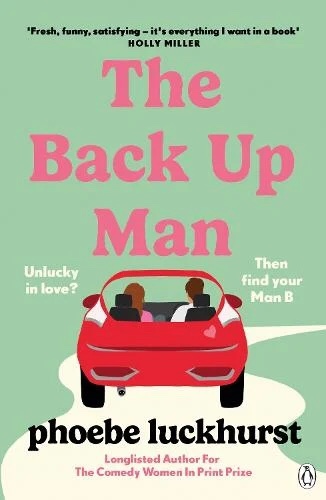
I was enticed into our heroine Anya’s world for two main reasons: Glasgow is one of my favourite cities and I too had a back up man. My best friend Elliot and I made a pact when we were moving on from sixth form. He didn’t know that I was head over heels in love with him, but he was my best friend and I didn’t want to ruin anything (we did ruin things a few years later, after university, but that’s another story). So we decided that if both of us were single at the age of 40, we’d get married. Life takes strange turns and although we were still in touch, Elliot had a long term partner and three children by then and I was a widow. We’ve all had a break up or other difficult life event and been overcome with a bout of nostalgia. Sometimes what has happened to us has been so scary and life changing, it makes more sense to lapse into the past, revisiting times and people who feel safe. We’re always doing this through rose tinted spectacles forgetting the negative aspects of the relationship or memory. So I could really understand Anya’s reasoning, especially after the shock she gets on a visit to Sunday lunch at her boyfriend’s mother’s home. In fact it’s on their way home, as they drop into a Shell garage, where Callum ends their four year relationship. Because he hadn’t wanted to upset his mum by doing it sooner. So Anya is facing a massive life change. The couple live together in Callum’s flat and while he can find somewhere to stay for a few days until she gets herself together, he will want her to move out by the end of the week. What else can go wrong?
Glasgow’s west end is a beautiful setting, giving both atmosphere and warmth to the story. I love the beautiful Victorian stone homes in the area and I have imagined myself living in one of them, but they’re pricey and only for the city’s professional classes. People like Anya’s cousin Claire. It’s her sister Georgie who suggests that Claire might want a lodger. Georgie gets on better with Claire than Anya does, because Anya finds her a bit stuck up and joyless. She also dislikes her creepy partner Richard. So once her best friend Paddy has helped her move to a single mattress in Claire’s back bedroom, Anya lies there wondering if life could get any worse? Then the next day she loses her job. As she’s going through her badly packed boxes she finds her old year book from school and a note from Euan. In her final year of school, Euan and Anya had a casual connection that could perhaps have become something more had he not been going away to university. They were never officially together, so they didn’t really break up, but they did make a pact. If they are both single when they are thirty years old they will make a go of it together. In a wave of nostalgia, borne out of feeling her life has fallen apart, Anya starts to search for Euan when she’s surprised by a message from a mutual friend. Jamie has also been looking for Euan, maybe they could join forces?
For me, this romcom worked because it is so much more than a simple boy meets girl. This period of time is transformative for Anya in so many different ways. She learns so much about herself and for me that is the most interesting part of the story. She and sister Georgie live in Glasgow with their parents living out in a suburb of the city. Anya and her mother have a spiky relationship because she has very set ideas about how life should be. Anya’s favourite pastime is cooking, in fact she finds that in the week where she’s alone in Callum’s flat, the night she cooks from scratch is when she feels most relaxed. For a little while she’s been running a page on Instagram called anyaeatstoomuch and her friend Paddy suggests that she could develop this hobby into a business. So she starts to look into turning it into a catering company, but in the meantime her mum isn’t going to let her sit around feeling sorry for herself. She finds her a job looking after the granddaughters of a woman she knows, their mother is working as a beauty influencer. These terrible twins are brilliant comic relief, being both unruly and sneaky, but subdued by Anya’s incredible food. It could be a complete waste of her time, or it could provide opportunities.
This is just one of the things that Anya has to learn. She can’t continue to drift and let life happen to her, she has to take control to get the life she wants. There was a sense of mystery too, in the search for Euan and the dead ends they find but I also wondered about Jamie. His interest legitimises Anya’s search, just when everyone else is telling her she’s behaving like a crazy person. I could understand her need to look back when everything else is falling apart, but what was Jamie’s reason for looking for Euan? I was also concerned about Claire’s fiancé Richard. He’s very furtive, lurking around corners and exercising his ability to soundlessly appear in the room. Their relationship also teaches Anya something important, just because someone’s life looks perfect it doesn’t mean it is. We all show a very edited version of life on social media and the reality is often very different. Another lesson is that having everything you want – the fiancé, the West End house, the great career – doesn’t necessarily mean you’re happy. It’s all these bits of learning and the potential growth Anya could make in her emotional life and career that really make this story. I was rooting her her to make the right choices, survive the terrible twins and forge an exciting life for herself, whether a man is involved or not.
Published 19th January 2023 by Penguin
Meet The Author
Phoebe Luckhurst is a journalist and author, who has written for publications including the Evening Standard, ES Magazine, ELLE, Grazia, Sunday Times Style, Guardian, Telegraph and Grazia. The Lock In is her first novel and this is her second.
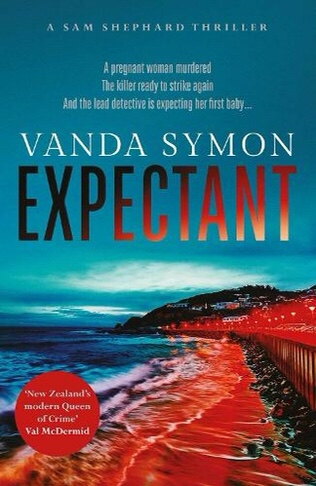
Expectant is the fifth novel in Vanda Symon’s Detective Sam Shephard series and I finished this late last night so I can reveal it’s brilliant and full of tension as the countdown to catch a murderer coincides with the last weeks of Sam’s pregnancy. This great series, set in Dunedin New Zealand, never lets me down. Sam is a fantastic character, who I’d happily go for a drink with. She’s professional and has one of those faces that people trust immediately, meaning she can elicit new leads and confessions from the unlikeliest criminal. She’s stubborn and outspoken, very ballsy and, although she tries her best not to use it, has an incredible swearing vocabulary. She and partner Paul are expecting their first child and she’s working up to two weeks before her due date. They haven’t found time to organise their endless piles of baby kit into a nursery when a case comes in that Sam can’t help but be drawn into. A group of kids who are hoping to tag the wall down a quiet side street find a woman covered in blood and only one of them has the conscience to stay and ring an ambulance. He’s willing to face the music for the graffiti if he can save her. At first it’s thought to be a stabbing, but it soon becomes clear this is something more sinister. A pregnant woman has been subjected to a rudimentary Caesarian and left for dead, even worse there’s no sign of the baby. This must be someone with a certain amount of medical skill. For Sam, who’s at her most vulnerable, it’s scary to think this might have been someone the victim trusted and it makes her more determined to catch her killer.
I found the pace slightly slower than previous novels, but I found that fitting considering that Sam is slowing down too. The days are winding down towards her maternity leave and her due date. In fact the days are dragging as her boss is reluctant to have her start something as important as a murder case before her leave starts. He feels it would be disruptive to the family and her colleagues, so she’s on desk duty, trawling through evidence. That’s before we factor in her physical condition, she’s so big that she gets stuck in some automatic barriers; a brilliant comic moment in this dark subject matter. Luckily it’s partner Paul on hand to lift her clear. Also, with unusual sensitivity, the boss thinks that placing a pregnant woman with the family would be distressing for them. Especially until they find the baby. This isn’t just a murder case, the baby is missing and the reasons why someone would steal a newborn baby are running through the heads of every team member. However, this is where Sam’s pregnancy could be a super power, being an expectant mum means her thoughts are different to the others. Could they provide a breakthrough?
The theme of mothers and their children, particularly daughters, is front and centre in this story. Whether it is Sam’s relationship with her own mother who has concerns about her working this close to her due date. There’s also Sam’s best friend, currently still living with her but due to move away imminently. She has a unique position in Sam’s life and is always there as a shoulder to cry on, but here she provides some important psychological insight. Sam’s need to be involved with this case could be linked to the spare room full of decorating supplies and boxed nursery furniture. There are so many changes coming, might Sam be paralysed from moving forward? Of course it is Sam who makes some major breakthroughs in the case in the final moments before she clears her desk. One of which seems to be a coincidence at first. As the final chapters started to race and fill with tension my heart was pounding. Just as Sam has let her guard down and accepted what’s next in her life, everything she’s looking forward to could be ripped away from her. In fact, if you are pregnant, maybe keep this one for after the birth. I was genuinely scared for her and even though she’s the one who most understood the killer’s motivations, will she still be shocked by their identity? You’ll be holding your breath to the very end with this one. Sam’s vulnerability is terrifying and I was praying that she would be okay while reading. As if she’s a living and breathing human being. That’s the power of Vanda Symon’s writing and how much of that magic she’s poured into this brilliant character.
Published 16th Feb 2023 by Orenda.
Meet the Author
Vanda Symon lives in Dunedin, New Zealand. As well as being a crime writer, she has a PhD in science communication and is a researcher at the Centre for Pacific Health at the University of Otago. Overkill was shortlisted for the 2019 CWA John Creasey Debut Dagger Award and she is a three-time finalist for the Ngaio Marsh Award for Best Crime Novel for her critically acclaimed Sam Shephard series. Vanda produces and hosts ‘Write On’, a monthly radio show focusing on the world of books at Otago Access Radio. When she isn’t working or writing, Vanda can be found in the garden, or on the business end of a fencing foil.
I love this book. Perhaps it’s because I had a Dan. A musician who started as my best friend and who I fell in love with. I was 18 and he took me to my first prom. His band were playing and it was 1991 so perms were everywhere and we were just adopting grunge. I would turn up for school in jumble sale floral dresses with my ever present oxblood Doc Martens. They played some of my favourite songs that night: some that were contemporary like Blur and others were classics like Wild Thing. I most remember Waterloo Sunset. Then, like a scene in a rom-com we walked across town to his house – me in a polka dot Laura Ashley ball gown and him in his dinner suit with the bow tie undone. He had a ruffled shirt underneath that he’d bought from Oxfam. We crept into the house and into the playroom so we didn’t wake anyone, then watched When Harry Met Sally. I remember a single kiss and then we fell asleep, but the love carried on over the years.
When I think of Elliot I always think of those famous best friend couples, like Harry and Sally or later, Emma and Dex in One Day. Now I can add Dan and Ali to the list. Alison and Dan live in Sheffield in the late 1970s when the city was still a thriving steel manufacturer. Dan is from the more family friendly Nether Edge, while Alison is from the rougher Attercliffe area, in the shadow of a steel factory. They meet while still at school and Dan is transfixed with her dark hair, her edge and her love of music. Their relationship is based on music and Dan makes mix tapes for her to listen to when they’re not together such as ‘The Last Best Two’ – the last two tracks from a series of albums. What he doesn’t know is how much Alison needs that music. To be able to put it on as a wall of sound between her and her family. Dan never sees where she lives and doesn’t push her, he only knows she prefers his home whether she’s doing her homework at the kitchen table, getting her nails painted by his sister or sitting with his Dad in the pigeon loft. Catherine, Alison’s mum, is a drinker. Not even a functioning alcoholic, she comes home battered and dirty with no care for who she lets into their home. Alison’s brother, Pete, is her only consolation and protection at home. Both call their mum by her first name and try to avoid her whenever possible. Even worse is her on-off lover Martin Baxter, who has a threatening manner and his own key. Alison could never let Dan know how they have to live.
In alternate chapters we see what Alison and Dan are doing in the present. Now a music writer, Dan splits his time between a canal boat in London and home with his partner Katelin in Edinburgh. Alison has written a new novel ‘Tell the Story Sing the Song’ set in her adopted home Australia and based round an indigenous singer. It’s a worldwide hit and she finds herself in demand, having to negotiate being interviewed and getting to grips with social media. She has an affluent lifestyle with husband Michael and has two grown up daughters. She has a Twitter account that she’s terrible at using and it’s this that alerts Dan, what could be the harm in following her? The secret at the heart of this book is what happened so long ago back in Sheffield to send a girl to the other side of the world? Especially when she has found her soulmate. She and Dan are meant to be together so what could have driven them apart? Dan sends her a link via Twitter, to Elvis Costelloe’s ‘Pump It Up’, the song she was dancing to at a party when he fell in love with her. How will Alison reply and will Dan ever discover why he lost her back in the 1970s?
I believed in these characters immediately, and I know Sheffield, and loved how it was described with affectionate detail by the writer. The accent, the warmth of people like Dan’s dad, the landmarks and the troubled manufacturing industry are so familiar and captured perfectly. Even the secondary characters, like the couple’s families and friends are well drawn and endearing. Cass over in Australia, as well as Sheila and Dora, are great characters. Equally, Dan’s Edinburgh friend Duncan with his record shop and the hippy couple on the barge next door in London are real and engaging. Special mention also to his dog McCullough who I was desperate to cuddle. Both characters have great lives and happy relationships. Dan loves Katelin, in fact her only fault is that she isn’t Alison. In Australia, Alison has been enveloped by Michael’s huge family and their housekeeper Beatriz who is like a surrogate Mum. It’s easy to see why the safety and security of Michael’s family, their money and lifestyle have appealed to a young Alison, still running away from her dysfunctional upbringing. She clearly wants different for her daughters and wishes them the sort of complacency Dan had, sure his parents are always there where he left them. But is the odd dinner party and most nights sat side by side watching TV enough for her? She also has Sheila, an old friend of Catherine’s, who emigrated in the 1970s and flourished in Australia. Now married to Dora who drives a steam train, they are again like surrogate parents to Alison. So much anchors her in Australia, but are these ties stronger than first love and the sense of belonging she had with Dan all those years before?
About three quarters of the way through the book I started to read gingerly, almost as if it was a bomb that might go off. I’ve never got over the loss of Emma in One Day and I was scared. What if these two soulmates didn’t end up together? Or worse what if one of them is killed off by the author before a happy ending is reached? I won’t ruin it by telling any more of the story. The tension and trauma of Alison’s family life is terrible and I dreaded finding out what had driven her away so dramatically. I think her shame about her mother is so sad, because the support was there for her and she wouldn’t let anyone help. She’s so fragile as a teenager and on edge. Dan’s mum had reservations, she was worried about her youngest son and whether Alison would break his heart. I love the music that goes back and forth between the pair, the meaning in the lyrics and how they choose them. This book is warm, moving and real. I loved it.
And what of my Daniel? Well he’s in Sheffield strangely enough. Happily partnered with three beautiful kids. I’m also happily partnered with two lovely stepdaughters. We’re very happy where we are and with our other halves. It’s nice though, just now and again, to catch up and remember the seventeen year old I was. Laid on his bedroom door, with my head in his lap listening to his latest find on vinyl. Or wandering the streets in my ballgown, high heels in one hand and him with his guitar case. Happy memories that will always make me smile.
Meet the Author
A former BBC Radio 4 producer, Jane Sanderson’s first novel – Netherwood – was published in 2011. She drew on much of her family’s background for this historical novel, which is set in a fictional mining town in the coalfields of Yorkshire. Ravenscliffe and Eden Falls followed in the two subsequent years, then in the early summer of 2017, This Much Is True was published, marking a change in direction for the author. This book is a contemporary tale of dog walks and dark secrets and the lengths a mother will go to protect her family.
Jane lives in Herefordshire with her husband, the journalist and author Brian Viner. They have three children.
Her book Waiting for Sunshine is published in paperback on 23rd March 2023, with my review coming soon.
‘Who would name a child Sunshine, then give her away?’
Chrissie has always wanted to be a mother. After months of trying to adopt, she and her husband Stuart finally get the news that a little girl named Sunshine is waiting for them.
Abandoned at a young age, the child comes to them without a family history, and it feels like a fresh start for all of them. But when fragments from Sunshine’s previous life start to intrude on her new one, the little girl’s mysterious past quickly becomes Chrissie’s greatest fear …










 The Lotus Readers